The present invention relates to a method of testing for the presence
of microorganisms in a gaseous environment comprising hydrogen peroxide, as
well as to cassettes containing an agar growth medium adapted to be implemented
in this method.
It is well known that, for the implementation of certain industrial
processes, in particular in the pharmaceutical industry, various actions or
manipulations must be performed in confined preparation zones, such as
isolators, separated from the outside world and rendered aseptic.
It is common, in order to test the asepsis of the gaseous
environment, generally air, existing in these confined zones, to take a gaseous
sample which may contain microorganisms, bacteria, yeasts or moulds, to apply
them to a layer of agar contained in a receptacle or cassette, and then to leave the
receptacle to incubate at temperature, for a predetermined time, such that these
microorganisms form colonies that are visible to the naked eye. It is thus possible
to visualize, count, and, where appropriate, identify the colonies of
microorganisms present in the analyzed air.
To sterilize these confined zones, it is possible to use in particular
hydrogen peroxide in gaseous form Hydrogen peroxide, introduced into a
gaseous environment for the purposes of asepsis, will be referred to herein as
"exogenous hydrogen peroxide"
Thus, in particular for the sterilization of isolators, three steps are
generally carried out:
- a dehumidifying step for drying the ambient air of the isolator,
during a period of about 15 to 20 minutes;
- a gassing step to bring a certain quantity of hydrogen peroxide
into contact with the internal environment of the isolator, and
- an aeration step, for eliminating the hydrogen peroxide.
At the end of this sterilization cycle, a test of the level of
microorganisms is carried out by sampling the air within the isolator to be sure of
its sterility.
Nevertheless, despite the precautions taken, in particular during the
aeration step, the applicant has found that the gaseous environment may contain
significant residual quantities of hydrogen peroxide, able to distort the results of
the test for the level of microorganisms and thereby lead to false negatives.
The applicant therefore sought to develop a method for solving the
problem of testing for the presence and/or level of microorganisms in a confined
zone, in the presence of a significant quantity of hydrogen peroxide, to avoid any
risk of false negatives.
It is also known that microorganisms having undergone stress may
enter into a state in which they are still active, but are unable to multiply on a
growth medium. More particularly, due to the stress, these microorganisms lose
their catalase and superoxide dismutase activity. Thus, when they are placed on
a rich nutritive medium, they no longer have means available for eliminating
peroxides, and in particular hydrogen peroxide, which they produce themselves
when they are placed in culture, or which are formed by photochemical reaction or
auto-oxidation of certain compounds present in the growth medium. In the
description which follows, the term "endogenous hydrogen peroxide" will be used
to refer to such hydrogen peroxide formed by the microorganisms themselves or
as a result of reactions involving the compounds making up the growth medium.
Certain authors have proposed the addition to the growth medium of
compounds known to break down the endogenous hydrogen peroxide, such as
catalases, or non-enzyme compounds such as α-ketoglutaric acid, 3,3'-thiodipropionic
acid, and sodium pyruvate, with the objective of identifying and/or
counting the microorganisms present in an environment, despite the stress
phenomenon.
Thus, R. M. Lee et al, in Journal of Food Protection, Vol.52, Feb.
1989, pp 119-121, described the addition of increasing amounts of sodium
pyruvate to an agar growth medium, to increase the recovery of coliform bacteria
from samples of food products and water.
J. P. Calabrese et al., in Can. J. Microbiol., Vol. 36, 1990, pp 544-550,
have shown that the addition of catalase, of sodium pyruvate or their
combination, make it possible to increase the recovery of coliform bacteria
stressed by acidic water. S. Czechowicz et al., in International Journal of Food
Microbiology 33 (1996), pp 275-284, and Y. Mizunoe et al., in Arch Microb. (1999)
172: 63-67, have used catalases, α-ketoglutaric acid, 3,3'-thiodipropionic acid,
and sodium pyruvate to increase the recovery of Escherichia coli degraded either
by food deprivation or by a thermal stress.
With a view to solving the problem which it had identified, as
mentioned above, the applicant initially envisaged the use of an agar growth
medium, supplemented with catalase.
However, it then encountered a difficulty, which the articles cited
above do not appear to have met, and which appears to be specific to the problem
of testing for the presence and level of microorganisms in a gaseous environment
comprising exogenous hydrogen peroxide. Thus, following certain of the authors
cited above, the applicant initially added catalase to the growth medium used. It
proved to be the case, however, that the breakdown of the hydrogen peroxide by
the catalase led to the formation of significant quantities of oxygen bubbles at the
surface and within the agar of the growth medium, and these bubbles made
visualization of the microorganism colonies very difficult. Furthermore, the use of
catalase in quantities up to 8000 IU/plate (that is to say per agar growth medium)
only enabled a relatively low level of microorganism recovery, as defined
hereinafter, of the order of 60%. Higher levels of catalase were not envisaged by
the applicant. This was because it was considered that this would lead to the
formation of such a quantity of oxygen bubbles that the visualization of the
microorganism colonies would be made still more difficult, or even impossible. In
addition, catalases are onerous products, such that their use in too large
quantities would be prohibitive, from an economic point of view, with no guarantee
that this would improve the level of recovery.
The applicant has continued with its research and has been able to
solve the problem raised above by means of the method constituting a first aspect
of this invention.
Thus the invention consists in a method of testing for the presence
of microorganisms in a gaseous environment comprising hydrogen peroxide,
characterized in that the following steps are implemented:
The salt of the pyruvic acid makes it possible to carry out the test for
the presence of microorganisms present in a gaseous environment, without risk of
false negative.
Furthermore, and in contrast with what it has been possible to
observe by the implementation of catalase, the salt of pyruvic acid does not hinder
the determination of the colonies of microorganisms and permits a high level of
recovery.
This was unexpected since certain of the authors mentioned above,
in order to enable the growth of colonies of microorganisms in the presence of
endogenous hydrogen peroxide, used indiscriminately a growth medium to which
had been added a catalase or sodium pyruvate.
The invention will now be described in detail by means of the
description which follows and the drawings.
Figure 1 represents a bar chart showing the effect of a concentration
of 0.3 ppm of hydrogen peroxide on the recovery level of the microorganisms.
Figure 2 represents a bar chart showing the effect of sodium
pyruvate in the presence of a concentration of 8 ppm of hydrogen peroxide on the
recovery level of the microorganisms.
Figure 3 represents a bar chart showing the effect of sodium
pyruvate after sterilization by gamma radiation on the recovery level of the
microorganisms.
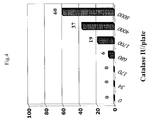
Figure 4 represents a bar chart showing the effect of a catalase in
increasing concentration in the presence of 3 ppm of hydrogen peroxide on the
recovery level of the microorganisms.
Figure 5 represents a bar chart showing the effect of increasing
pyruvate sodium weight concentration in the TSA agar growth medium from 2.5 %
to 10 % in the absence of hydrogen peroxide, on the recovery level of the
microorganisms.
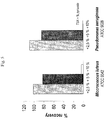
Figure 6 represents a bar chart showing the effect of increasing
pyruvate sodium weight concentration in the TSA agar growth medium from 1 %
to 5 % in the presence of 5-15 ppm of hydrogen peroxide, on the recovery level of
the microorganisms.
In the sense of the present invention, the expression 'level of
recovery of the microorganisms" is understood to mean the ratio between, on the
one hand, the number of colonies of microorganisms formed (cfu) on an agar
growth medium previously exposed to a particular gaseous environment, to which
an aqueous suspension has been applied containing a known number of
microorganisms (cfu), and, on the other hand, the number of colonies of
microorganisms formed (cfu) on an agar growth medium after application of the
same aqueous microorganism suspension, the agar growth medium having been
maintained beforehand in a sterile atmosphere and not having been exposed to
the particular gaseous environment, all other things being equal.
The hydrogen peroxide is generally vaporized or sprayed in the
gaseous environment.
Surprisingly It has been found by the Applicant that the inhibition of
microorganism growth is higher when the hydrogen peroxide is sprayed than
when it is vaporized.
Typically, the gaseous environment comprising hydrogen peroxide is
ambient air, in particular ambient air present in a confined zone, such as an
isolator.
The level of hydrogen peroxide in the gaseous environment may be
between 1 ppm (part per million) and 400 ppm, preferably between 0.1 ppm and
20 ppm, more preferably between 0.2 ppm and 10 ppm. One ppm of hydrogen
peroxide corresponds to 1.4 mg of hydrogen peroxide /m3.
The agar growth medium may comprise, in addition to the agar, a
product of enzyme digestion of a protein, such as casein, a plant flour, or yeast
extracts.
The agar growth medium may consist of a TSA (Tryptic Soy Agar)
medium comprising:
| * pancreatic digest of casein | 15 g |
| * papaic digest of soybean meal | 5 g |
| * sodium chloride | 5 g |
| *agar | 15g |
| * water ams | 1000 ml |
An appropriate TSA growth medium is sold by the company DIFCO
under the reference 236950.
The agar growth medium may comprise 0.1 to 3 % by weight, and
preferably 0.5 % to 1.5 % by weight, of at least one pyruvic acid salt.
The pyruvic acid salt, able to be implemented in the context of the
present invention, may be a salt of an alkali metal, such as that of sodium or
potassium, a salt of an alkaline earth metal, such as that of calcium or
magnesium, or a mixture of two or more of these salts. Preferably sodium
pyruvate is used.
It is also possible to apply the method of the present invention when
particular intensive sterilization is sought through the use of high or even very high
levels of hydrogen peroxide, which can be from 15 ppm up to 300 ppm, or even
400 ppm. Such high levels of hydrogen peroxide are also found when sterilization
cycles are carried out in shorter time than required. This occurs when the users do
not respect the instructions for carrying out said sterilization cycles or if the user
does not properly monitor the content of the peroxide hydrogen amount.
In such conditions, where high levels of hydrogen peroxide are
present in the gaseous environment, large amounts of pyruvic acid salt in the agar
growth medium can be successfully carried out in accordance with the method of
the present invention, to enable microorganism growth recovery. The amount of
pyruvic acid salt can thus be comprised between more than 1 % and 5 %,
preferably between 3 % and 5 % by weight.
The possible use of such a large amount of pyruvic acid salt was
unexpected since it was believed by one skilled in the art that this should lead to
inhibit rather than favor microorganism growth recovery.
It was still more unexpected that the growth of microorganism could
take place with such amounts of pyruvic acid salt in the presence of high
concentration of hydrogen peroxide, which, as seen above, also inhibits
microorganism growth recovery.
The agar growth medium preferably has a thickness of 1 to 20 mm,
and preferably 5 to 8 mm.
The growth medium may be prepared in a manner known to the
person skilled in the art, simply by mixing its constituents.
According to the method of the invention, the surface of the agar
growth medium is advantageously brought into contact with a controlled flow of
said gaseous environment comprising hydrogen peroxide, said flow having a
substantially constant rate of flow. By applying a flow thus controlled for a
predetermined period of time, it is possible to choose the volume of air, or of
another gaseous environment, that it is desired to apply to the surface of the agar
growth medium and thereby render the method of the invention reproducible.
Such a controlled flow may be achieved by means of a sampling
apparatus comprising means for air suction, such as a pump, as well as means for
holding a cassette or a box in which the agar growth medium has been set, so as
to permit the air to be brought into contact with the surface of the agar.
Such a device is described in the French patent applications No. 98
07299 and 98 05166 in the name of Millipore S.A., to which reference is made in
the present description. Such a device is also sold by the company Millipore,
under the trade mark M Air T ™ Isolator.
The culture of the growth medium having been brought into contact
with the gaseous environment may be implemented in any appropriate device,
such as a temperature-controlled incubator.
Generally, at the end of step (iii) of the method of the invention, the
number of colonies is counted and/or the nature of the microorganisms which
make up the colonies is identified, by means known to the person skilled in the art.
To facilitate the counting of the colonies, cassettes or box of grid
form can be used, which are filled with the agar growth medium.
According to another aspect of the invention, this consists of a
cassette or a box provided with means for attachment to an apparatus for
sampling air or another gaseous environment, as described above, and in which
an agar growth medium has been set comprising a salt of pyruvic acid.
Such a cassette, comprising a conventional agar growth medium, is
known per se. It is sold by the company Millipore, under the trade mark M air T™.
A cassette according to the invention may be implemented in the
method described above.
The object of the following examples is to illustrate the present
invention.
Example 1 (not according to the invention)
In order to test for the influence of traces of gaseous hydrogen
peroxide on the formation of colonies of different microorganisms, a sample of
1 m3 of air was first of all taken in a laminar air flow hood serving as a sterile
environment and being free from hydrogen peroxide. The air sampled in this
manner had been impacted on the surface of a TSA growth medium, sold by
the company DIFCO under the reference 236950.
The surface of the growth medium was spread with an aqueous
suspension comprising a predetermined number of microorganisms.
The TSA growth media were next placed in a temperature-controlled
incubator to enable the growth of the colonies of microorganisms.
This test was repeated, but with a TSA growth medium impacted
with 1 m3 of air comprising 0.3 ppm of sprayed hydrogen peroxide.
The results obtained are represented in Figure 1, where the x-axis
represents the nature of the microorganisms which developed on the surface of
the agar growth medium and the y-axis represents the level of recovery, that is
to say the ratio between the number of cfu determined in the presence of
hydrogen peroxide and the number of cfu determined in the sterile environment.
The results obtained show that a low hydrogen peroxide content
may lead to inhibiting of the formation of the colonies of microorganisms and
thus lead to false negatives.
Example 2 (not according to the invention)
Example 1 was reproduced but with the use of 1 m3 of air
comprising 3 ppm of hydrogen peroxide (instead of 0.3 ppm) which are
impacted this time on TSA growth media to which increasing levels of a
catalase (0 to 8000 IU/plate) were added. The only microorganism used was
Staphylococcus aureus.
The results obtained are shown in Figure 4, in which the x-axis
represents the amount of catalase and the y-axis represents the level of
recovery.
It is found that catalase, used at high doses (8000 IU/plate)
enables a maximum level of recovery of 60%, which is significantly less than the
results obtained with the method of the invention, which led to a level of
recovery of close to 120% for Staphylococcus aureus.
Furthermore, catalase gave rise to the formation of oxygen
bubbles which made the counting of the cfu's difficult.
Example 3
Example 1 was reproduced but with the use of 1 m3 of air
comprising 8 ppm (instead of 0.3 ppm) of hydrogen peroxide vapour (instead of
sprayed hydrogen peroxide which was impacted, firstly, on a TSA growth
medium, then, secondly, on the TSA medium to which 1% by weight of sodium
pyruvate was added.
The results obtained are shown in Figure 2, in which the x-axis
represents the nature of the microorganisms and the y-axis represents the level
of recovery.
It is observed that the sodium pyruvate permits the formation and
counting of colonies of microorganisms whereas the growth medium not having
this does not permit the formation of colonies of microorganisms.
In addition it is observed that the level of recovery is very good
since it is always at least 80%, whatever the microorganism considered.
Example 4
Example 3 was reproduced by sampling 1 m3 of air comprising 8
ppm of hydrogen peroxide which were impacted, firstly, on the same TSA
growth medium to which 1% by weight of sodium pyruvate was added, not
sterilized by the action of gamma radiation. Then, secondly, the same test was
repeated but, this time, on the same growth medium sterilized by the action of
gamma radiation.
The results obtained are shown in Figure 3, in which the x-axis
represents the nature of the microorganisms and the y-axis represents the level
of recovery.
It may be noted that the sodium pyruvate maintains its effect
whether the growth medium is sterilized or not by gamma radiation.
Example 5
The conditions of Example 3 were reproduced using high
concentrations of pyruvate (≥ 1 %), in the presence or absence of hydrogen
peroxide in the gaseous environment.
Miccrococcus luteus growth has been monitored using repectively
100 ppm and 300 ppm of hydrogen peroxide, whereas the concentration of
pyruvate by weight of TSA agar growth medium was 1 % and 5 %.
The results obtained in these conditions are reported in table I
| medium | TSA | TSA + 1% | TSA + 5% |
| Hydrogen Peroxide (ppm) | 0 | 100 | 300 | 100 | 300 |
| colonies | Mean Nb | Mean Nb | Recovery % | Mean Nb | Recovery % | Mean Nb | Recovery % | Mean Nb | Recovery % |
| Miccrococus luteus ATCC9342 | 46.8 | 46 | 98 | 0 | 0 | 49 | 105 | 32.2 | 69 |
As shown in Table I, the presence of both a high concentration of
hydrogen peroxide(300 ppm) and an important concentration of pyruvate (5%)
enable growth of Miccrococcus luteus.
Altogether the results presented in Example 5, show that a high
concentration of pyruvate has a strong ability to alleviate microorganism growth
inhibition in the presence of high hydrogen peroxide concentrations.
Therefore, according to the present invention, it is possible to test
for the presence of microorganisms in a gaseous environment comprising high
levels of hydrogen peroxide.