EP1329452A1 - Medicinal compositions, dose and method for treating malaria - Google Patents
Medicinal compositions, dose and method for treating malaria Download PDFInfo
- Publication number
- EP1329452A1 EP1329452A1 EP01976774A EP01976774A EP1329452A1 EP 1329452 A1 EP1329452 A1 EP 1329452A1 EP 01976774 A EP01976774 A EP 01976774A EP 01976774 A EP01976774 A EP 01976774A EP 1329452 A1 EP1329452 A1 EP 1329452A1
- Authority
- EP
- European Patent Office
- Prior art keywords
- artemisinin
- malaria
- sulfated
- salts
- crds
- Prior art date
- Legal status (The legal status is an assumption and is not a legal conclusion. Google has not performed a legal analysis and makes no representation as to the accuracy of the status listed.)
- Withdrawn
Links
- 201000004792 malaria Diseases 0.000 title claims abstract description 34
- 238000000034 method Methods 0.000 title claims abstract description 12
- 239000000203 mixture Substances 0.000 title description 13
- 229920001282 polysaccharide Polymers 0.000 claims abstract description 57
- 239000005017 polysaccharide Substances 0.000 claims abstract description 57
- 229960004191 artemisinin Drugs 0.000 claims abstract description 38
- 229930101531 artemisinin Natural products 0.000 claims abstract description 38
- BLUAFEHZUWYNDE-NNWCWBAJSA-N artemisinin Chemical compound C([C@](OO1)(C)O2)C[C@H]3[C@H](C)CC[C@@H]4[C@@]31[C@@H]2OC(=O)[C@@H]4C BLUAFEHZUWYNDE-NNWCWBAJSA-N 0.000 claims abstract description 21
- 238000011282 treatment Methods 0.000 claims abstract description 21
- 150000004676 glycans Chemical class 0.000 claims abstract description 10
- -1 artemisinin compound Chemical class 0.000 claims description 28
- WQZGKKKJIJFFOK-VFUOTHLCSA-N beta-D-glucose Chemical class OC[C@H]1O[C@@H](O)[C@H](O)[C@@H](O)[C@@H]1O WQZGKKKJIJFFOK-VFUOTHLCSA-N 0.000 claims description 13
- 150000003839 salts Chemical class 0.000 claims description 8
- 125000003178 carboxy group Chemical group [H]OC(*)=O 0.000 claims description 4
- 150000001768 cations Chemical class 0.000 claims description 4
- 125000001495 ethyl group Chemical group [H]C([H])([H])C([H])([H])* 0.000 claims description 4
- 239000003814 drug Substances 0.000 claims 3
- 239000008194 pharmaceutical composition Substances 0.000 abstract description 23
- 230000000078 anti-malarial effect Effects 0.000 abstract description 9
- 150000004804 polysaccharides Chemical class 0.000 description 51
- FIHJKUPKCHIPAT-AHIGJZGOSA-N artesunate Chemical compound C([C@](OO1)(C)O2)C[C@H]3[C@H](C)CC[C@@H]4[C@@]31[C@@H]2O[C@@H](OC(=O)CCC(O)=O)[C@@H]4C FIHJKUPKCHIPAT-AHIGJZGOSA-N 0.000 description 23
- 229960004991 artesunate Drugs 0.000 description 23
- 239000000902 placebo Substances 0.000 description 14
- 229940068196 placebo Drugs 0.000 description 14
- QAOWNCQODCNURD-UHFFFAOYSA-L Sulfate Chemical compound [O-]S([O-])(=O)=O QAOWNCQODCNURD-UHFFFAOYSA-L 0.000 description 9
- 239000003937 drug carrier Substances 0.000 description 9
- 206010010071 Coma Diseases 0.000 description 8
- 229920002558 Curdlan Polymers 0.000 description 8
- 239000001879 Curdlan Substances 0.000 description 8
- 235000019316 curdlan Nutrition 0.000 description 8
- 229940078035 curdlan Drugs 0.000 description 8
- 206010037660 Pyrexia Diseases 0.000 description 7
- 239000003430 antimalarial agent Substances 0.000 description 7
- 238000009472 formulation Methods 0.000 description 7
- 238000001802 infusion Methods 0.000 description 7
- 229920001503 Glucan Polymers 0.000 description 6
- PEDCQBHIVMGVHV-UHFFFAOYSA-N Glycerine Chemical compound OCC(O)CO PEDCQBHIVMGVHV-UHFFFAOYSA-N 0.000 description 6
- 238000001990 intravenous administration Methods 0.000 description 5
- 244000045947 parasite Species 0.000 description 5
- 238000012360 testing method Methods 0.000 description 5
- 229920002498 Beta-glucan Polymers 0.000 description 4
- 238000011084 recovery Methods 0.000 description 4
- 206010063094 Cerebral malaria Diseases 0.000 description 3
- FBPFZTCFMRRESA-KVTDHHQDSA-N D-Mannitol Chemical compound OC[C@@H](O)[C@@H](O)[C@H](O)[C@H](O)CO FBPFZTCFMRRESA-KVTDHHQDSA-N 0.000 description 3
- LFQSCWFLJHTTHZ-UHFFFAOYSA-N Ethanol Chemical compound CCO LFQSCWFLJHTTHZ-UHFFFAOYSA-N 0.000 description 3
- WQZGKKKJIJFFOK-GASJEMHNSA-N Glucose Natural products OC[C@H]1OC(O)[C@H](O)[C@@H](O)[C@@H]1O WQZGKKKJIJFFOK-GASJEMHNSA-N 0.000 description 3
- 229930195725 Mannitol Natural products 0.000 description 3
- NINIDFKCEFEMDL-UHFFFAOYSA-N Sulfur Chemical compound [S] NINIDFKCEFEMDL-UHFFFAOYSA-N 0.000 description 3
- 125000003277 amino group Chemical group 0.000 description 3
- 239000002552 dosage form Substances 0.000 description 3
- 239000008103 glucose Substances 0.000 description 3
- 239000007972 injectable composition Substances 0.000 description 3
- 239000000594 mannitol Substances 0.000 description 3
- 235000010355 mannitol Nutrition 0.000 description 3
- 235000000346 sugar Nutrition 0.000 description 3
- 239000011593 sulfur Substances 0.000 description 3
- 229910052717 sulfur Inorganic materials 0.000 description 3
- 238000013268 sustained release Methods 0.000 description 3
- 208000024891 symptom Diseases 0.000 description 3
- XLYOFNOQVPJJNP-UHFFFAOYSA-N water Substances O XLYOFNOQVPJJNP-UHFFFAOYSA-N 0.000 description 3
- 229920002307 Dextran Polymers 0.000 description 2
- 238000000729 Fisher's exact test Methods 0.000 description 2
- 208000013016 Hypoglycemia Diseases 0.000 description 2
- 229920001491 Lentinan Polymers 0.000 description 2
- 241000223960 Plasmodium falciparum Species 0.000 description 2
- LOUPRKONTZGTKE-WZBLMQSHSA-N Quinine Chemical compound C([C@H]([C@H](C1)C=C)C2)C[N@@]1[C@@H]2[C@H](O)C1=CC=NC2=CC=C(OC)C=C21 LOUPRKONTZGTKE-WZBLMQSHSA-N 0.000 description 2
- 150000003863 ammonium salts Chemical class 0.000 description 2
- 229960002521 artenimol Drugs 0.000 description 2
- BJDCWCLMFKKGEE-ISOSDAIHSA-N artenimol Chemical compound C([C@](OO1)(C)O2)C[C@H]3[C@H](C)CC[C@@H]4[C@@]31[C@@H]2O[C@H](O)[C@@H]4C BJDCWCLMFKKGEE-ISOSDAIHSA-N 0.000 description 2
- 230000037396 body weight Effects 0.000 description 2
- 238000013270 controlled release Methods 0.000 description 2
- 229940061607 dibasic sodium phosphate Drugs 0.000 description 2
- 229930016266 dihydroartemisinin Natural products 0.000 description 2
- BNIILDVGGAEEIG-UHFFFAOYSA-L disodium hydrogen phosphate Chemical compound [Na+].[Na+].OP([O-])([O-])=O BNIILDVGGAEEIG-UHFFFAOYSA-L 0.000 description 2
- 125000002791 glucosyl group Chemical group C1([C@H](O)[C@@H](O)[C@H](O)[C@H](O1)CO)* 0.000 description 2
- 150000002337 glycosamines Chemical class 0.000 description 2
- 150000002402 hexoses Chemical group 0.000 description 2
- 230000002218 hypoglycaemic effect Effects 0.000 description 2
- 239000007924 injection Substances 0.000 description 2
- 238000002347 injection Methods 0.000 description 2
- 229940115286 lentinan Drugs 0.000 description 2
- 159000000003 magnesium salts Chemical class 0.000 description 2
- HQKMJHAJHXVSDF-UHFFFAOYSA-L magnesium stearate Chemical compound [Mg+2].CCCCCCCCCCCCCCCCCC([O-])=O.CCCCCCCCCCCCCCCCCC([O-])=O HQKMJHAJHXVSDF-UHFFFAOYSA-L 0.000 description 2
- 239000002504 physiological saline solution Substances 0.000 description 2
- 239000011734 sodium Substances 0.000 description 2
- 239000012064 sodium phosphate buffer Substances 0.000 description 2
- 159000000000 sodium salts Chemical class 0.000 description 2
- 239000000243 solution Substances 0.000 description 2
- 239000012730 sustained-release form Substances 0.000 description 2
- WDQLRUYAYXDIFW-RWKIJVEZSA-N (2r,3r,4s,5r,6r)-4-[(2s,3r,4s,5r,6r)-3,5-dihydroxy-4-[(2r,3r,4s,5s,6r)-3,4,5-trihydroxy-6-(hydroxymethyl)oxan-2-yl]oxy-6-[[(2r,3r,4s,5s,6r)-3,4,5-trihydroxy-6-(hydroxymethyl)oxan-2-yl]oxymethyl]oxan-2-yl]oxy-6-(hydroxymethyl)oxane-2,3,5-triol Chemical compound O[C@@H]1[C@@H](CO)O[C@@H](O)[C@H](O)[C@H]1O[C@H]1[C@H](O)[C@@H](O[C@H]2[C@@H]([C@@H](O)[C@H](O)[C@@H](CO)O2)O)[C@H](O)[C@@H](CO[C@H]2[C@@H]([C@@H](O)[C@H](O)[C@@H](CO)O2)O)O1 WDQLRUYAYXDIFW-RWKIJVEZSA-N 0.000 description 1
- WHTVZRBIWZFKQO-AWEZNQCLSA-N (S)-chloroquine Chemical compound ClC1=CC=C2C(N[C@@H](C)CCCN(CC)CC)=CC=NC2=C1 WHTVZRBIWZFKQO-AWEZNQCLSA-N 0.000 description 1
- 244000215068 Acacia senegal Species 0.000 description 1
- 229920000310 Alpha glucan Polymers 0.000 description 1
- 235000003826 Artemisia Nutrition 0.000 description 1
- 235000003261 Artemisia vulgaris Nutrition 0.000 description 1
- 240000006891 Artemisia vulgaris Species 0.000 description 1
- 241000208838 Asteraceae Species 0.000 description 1
- 241000416162 Astragalus gummifer Species 0.000 description 1
- 229920001661 Chitosan Polymers 0.000 description 1
- 229920001287 Chondroitin sulfate Polymers 0.000 description 1
- 235000001258 Cinchona calisaya Nutrition 0.000 description 1
- 229920002261 Corn starch Polymers 0.000 description 1
- 229920000045 Dermatan sulfate Polymers 0.000 description 1
- 229920001353 Dextrin Polymers 0.000 description 1
- 239000004375 Dextrin Substances 0.000 description 1
- 235000019739 Dicalciumphosphate Nutrition 0.000 description 1
- ROSDSFDQCJNGOL-UHFFFAOYSA-N Dimethylamine Chemical class CNC ROSDSFDQCJNGOL-UHFFFAOYSA-N 0.000 description 1
- QUSNBJAOOMFDIB-UHFFFAOYSA-N Ethylamine Chemical class CCN QUSNBJAOOMFDIB-UHFFFAOYSA-N 0.000 description 1
- PIICEJLVQHRZGT-UHFFFAOYSA-N Ethylenediamine Chemical class NCCN PIICEJLVQHRZGT-UHFFFAOYSA-N 0.000 description 1
- 108010010803 Gelatin Proteins 0.000 description 1
- 229920000084 Gum arabic Polymers 0.000 description 1
- HTTJABKRGRZYRN-UHFFFAOYSA-N Heparin Chemical compound OC1C(NC(=O)C)C(O)OC(COS(O)(=O)=O)C1OC1C(OS(O)(=O)=O)C(O)C(OC2C(C(OS(O)(=O)=O)C(OC3C(C(O)C(O)C(O3)C(O)=O)OS(O)(=O)=O)C(CO)O2)NS(O)(=O)=O)C(C(O)=O)O1 HTTJABKRGRZYRN-UHFFFAOYSA-N 0.000 description 1
- DGAQECJNVWCQMB-PUAWFVPOSA-M Ilexoside XXIX Chemical compound C[C@@H]1CC[C@@]2(CC[C@@]3(C(=CC[C@H]4[C@]3(CC[C@@H]5[C@@]4(CC[C@@H](C5(C)C)OS(=O)(=O)[O-])C)C)[C@@H]2[C@]1(C)O)C)C(=O)O[C@H]6[C@@H]([C@H]([C@@H]([C@H](O6)CO)O)O)O.[Na+] DGAQECJNVWCQMB-PUAWFVPOSA-M 0.000 description 1
- 229920000288 Keratan sulfate Polymers 0.000 description 1
- KDXKERNSBIXSRK-YFKPBYRVSA-N L-lysine Chemical class NCCCC[C@H](N)C(O)=O KDXKERNSBIXSRK-YFKPBYRVSA-N 0.000 description 1
- BAVYZALUXZFZLV-UHFFFAOYSA-N Methylamine Chemical class NC BAVYZALUXZFZLV-UHFFFAOYSA-N 0.000 description 1
- 206010073261 Ovarian theca cell tumour Diseases 0.000 description 1
- 229920001218 Pullulan Polymers 0.000 description 1
- 239000004373 Pullulan Substances 0.000 description 1
- 229920002305 Schizophyllan Polymers 0.000 description 1
- FAPWRFPIFSIZLT-UHFFFAOYSA-M Sodium chloride Chemical compound [Na+].[Cl-] FAPWRFPIFSIZLT-UHFFFAOYSA-M 0.000 description 1
- 229930006000 Sucrose Natural products 0.000 description 1
- CZMRCDWAGMRECN-UGDNZRGBSA-N Sucrose Chemical compound O[C@H]1[C@H](O)[C@@H](CO)O[C@@]1(CO)O[C@@H]1[C@H](O)[C@@H](O)[C@H](O)[C@@H](CO)O1 CZMRCDWAGMRECN-UGDNZRGBSA-N 0.000 description 1
- HATRDXDCPOXQJX-UHFFFAOYSA-N Thapsigargin Natural products CCCCCCCC(=O)OC1C(OC(O)C(=C/C)C)C(=C2C3OC(=O)C(C)(O)C3(O)C(CC(C)(OC(=O)C)C12)OC(=O)CCC)C HATRDXDCPOXQJX-UHFFFAOYSA-N 0.000 description 1
- 229920001615 Tragacanth Polymers 0.000 description 1
- ZMANZCXQSJIPKH-UHFFFAOYSA-N Triethylamine Chemical class CCN(CC)CC ZMANZCXQSJIPKH-UHFFFAOYSA-N 0.000 description 1
- 239000000205 acacia gum Substances 0.000 description 1
- 235000010489 acacia gum Nutrition 0.000 description 1
- 239000000783 alginic acid Substances 0.000 description 1
- 235000010443 alginic acid Nutrition 0.000 description 1
- 229920000615 alginic acid Polymers 0.000 description 1
- 229960001126 alginic acid Drugs 0.000 description 1
- 150000004781 alginic acids Chemical class 0.000 description 1
- 229910052783 alkali metal Inorganic materials 0.000 description 1
- 229910052784 alkaline earth metal Chemical class 0.000 description 1
- 150000001413 amino acids Chemical class 0.000 description 1
- 230000000798 anti-retroviral effect Effects 0.000 description 1
- 125000000637 arginyl group Chemical class N[C@@H](CCCNC(N)=N)C(=O)* 0.000 description 1
- UVNHKOOJXSALHN-KYNHBKCMSA-N artelinate Chemical compound O([C@@H]1[C@H](C)[C@@H]2CC[C@H]([C@@H]3CCC4(C)O[C@H]([C@]23OO4)O1)C)CC1=CC=C(C(O)=O)C=C1 UVNHKOOJXSALHN-KYNHBKCMSA-N 0.000 description 1
- 229960000981 artemether Drugs 0.000 description 1
- 235000009052 artemisia Nutrition 0.000 description 1
- 229960002970 artemotil Drugs 0.000 description 1
- NLYNIRQVMRLPIQ-XQLAAWPRSA-N artemotil Chemical compound C1C[C@H]2[C@H](C)CC[C@H]3[C@@H](C)[C@@H](OCC)O[C@H]4[C@]32OO[C@@]1(C)O4 NLYNIRQVMRLPIQ-XQLAAWPRSA-N 0.000 description 1
- 239000011230 binding agent Substances 0.000 description 1
- 239000008280 blood Substances 0.000 description 1
- 210000004369 blood Anatomy 0.000 description 1
- 239000001506 calcium phosphate Substances 0.000 description 1
- 159000000007 calcium salts Chemical class 0.000 description 1
- 239000002775 capsule Substances 0.000 description 1
- 239000001913 cellulose Substances 0.000 description 1
- 229920002678 cellulose Polymers 0.000 description 1
- 229960003677 chloroquine Drugs 0.000 description 1
- WHTVZRBIWZFKQO-UHFFFAOYSA-N chloroquine Natural products ClC1=CC=C2C(NC(C)CCCN(CC)CC)=CC=NC2=C1 WHTVZRBIWZFKQO-UHFFFAOYSA-N 0.000 description 1
- 229940107200 chondroitin sulfates Drugs 0.000 description 1
- LOUPRKONTZGTKE-UHFFFAOYSA-N cinchonine Natural products C1C(C(C2)C=C)CCN2C1C(O)C1=CC=NC2=CC=C(OC)C=C21 LOUPRKONTZGTKE-UHFFFAOYSA-N 0.000 description 1
- 150000001875 compounds Chemical class 0.000 description 1
- 239000008120 corn starch Substances 0.000 description 1
- AVJBPWGFOQAPRH-FWMKGIEWSA-L dermatan sulfate Chemical compound CC(=O)N[C@H]1[C@H](O)O[C@H](CO)[C@H](OS([O-])(=O)=O)[C@@H]1O[C@H]1[C@H](O)[C@@H](O)[C@H](O)[C@H](C([O-])=O)O1 AVJBPWGFOQAPRH-FWMKGIEWSA-L 0.000 description 1
- 229940051593 dermatan sulfate Drugs 0.000 description 1
- 229960002086 dextran Drugs 0.000 description 1
- 229960000633 dextran sulfate Drugs 0.000 description 1
- 235000019425 dextrin Nutrition 0.000 description 1
- NEFBYIFKOOEVPA-UHFFFAOYSA-K dicalcium phosphate Chemical compound [Ca+2].[Ca+2].[O-]P([O-])([O-])=O NEFBYIFKOOEVPA-UHFFFAOYSA-K 0.000 description 1
- 229940038472 dicalcium phosphate Drugs 0.000 description 1
- 229910000390 dicalcium phosphate Inorganic materials 0.000 description 1
- ZBCBWPMODOFKDW-UHFFFAOYSA-N diethanolamine Chemical class OCCNCCO ZBCBWPMODOFKDW-UHFFFAOYSA-N 0.000 description 1
- HPNMFZURTQLUMO-UHFFFAOYSA-N diethylamine Chemical class CCNCC HPNMFZURTQLUMO-UHFFFAOYSA-N 0.000 description 1
- GLUUGHFHXGJENI-UHFFFAOYSA-N diethylenediamine Natural products C1CNCCN1 GLUUGHFHXGJENI-UHFFFAOYSA-N 0.000 description 1
- SXYIRMFQILZOAM-HVNFFKDJSA-N dihydroartemisinin methyl ether Chemical compound C1C[C@H]2[C@H](C)CC[C@H]3[C@@H](C)[C@@H](OC)O[C@H]4[C@]32OO[C@@]1(C)O4 SXYIRMFQILZOAM-HVNFFKDJSA-N 0.000 description 1
- 239000007884 disintegrant Substances 0.000 description 1
- 238000004090 dissolution Methods 0.000 description 1
- 210000001198 duodenum Anatomy 0.000 description 1
- 239000000975 dye Substances 0.000 description 1
- 230000002708 enhancing effect Effects 0.000 description 1
- 150000002148 esters Chemical class 0.000 description 1
- 150000002169 ethanolamines Chemical class 0.000 description 1
- 235000003599 food sweetener Nutrition 0.000 description 1
- 239000000499 gel Substances 0.000 description 1
- 238000005227 gel permeation chromatography Methods 0.000 description 1
- 239000008273 gelatin Substances 0.000 description 1
- 229920000159 gelatin Polymers 0.000 description 1
- 235000019322 gelatine Nutrition 0.000 description 1
- 235000011852 gelatine desserts Nutrition 0.000 description 1
- 229920000669 heparin Polymers 0.000 description 1
- 229960002897 heparin Drugs 0.000 description 1
- 125000002887 hydroxy group Chemical group [H]O* 0.000 description 1
- FZWBNHMXJMCXLU-BLAUPYHCSA-N isomaltotriose Chemical compound O[C@@H]1[C@@H](O)[C@H](O)[C@@H](CO)O[C@@H]1OC[C@@H]1[C@@H](O)[C@H](O)[C@@H](O)[C@@H](OC[C@@H](O)[C@@H](O)[C@H](O)[C@@H](O)C=O)O1 FZWBNHMXJMCXLU-BLAUPYHCSA-N 0.000 description 1
- KXCLCNHUUKTANI-RBIYJLQWSA-N keratan Chemical compound CC(=O)N[C@@H]1[C@@H](O)C[C@@H](COS(O)(=O)=O)O[C@H]1O[C@@H]1[C@@H](O)[C@H](O[C@@H]2[C@H](O[C@@H](O[C@H]3[C@H]([C@@H](COS(O)(=O)=O)O[C@@H](O)[C@@H]3O)O)[C@H](NC(C)=O)[C@H]2O)COS(O)(=O)=O)O[C@H](COS(O)(=O)=O)[C@@H]1O KXCLCNHUUKTANI-RBIYJLQWSA-N 0.000 description 1
- XMGQYMWWDOXHJM-UHFFFAOYSA-N limonene Chemical compound CC(=C)C1CCC(C)=CC1 XMGQYMWWDOXHJM-UHFFFAOYSA-N 0.000 description 1
- 150000002632 lipids Chemical class 0.000 description 1
- 239000000314 lubricant Substances 0.000 description 1
- 239000008176 lyophilized powder Substances 0.000 description 1
- 235000019359 magnesium stearate Nutrition 0.000 description 1
- 231100000252 nontoxic Toxicity 0.000 description 1
- 230000003000 nontoxic effect Effects 0.000 description 1
- 235000015097 nutrients Nutrition 0.000 description 1
- 239000007968 orange flavor Substances 0.000 description 1
- 239000006174 pH buffer Substances 0.000 description 1
- 150000002972 pentoses Chemical group 0.000 description 1
- 239000002304 perfume Substances 0.000 description 1
- 239000000546 pharmaceutical excipient Substances 0.000 description 1
- 239000006187 pill Substances 0.000 description 1
- 150000003053 piperidines Chemical class 0.000 description 1
- 229910052700 potassium Inorganic materials 0.000 description 1
- 159000000001 potassium salts Chemical class 0.000 description 1
- 229920001592 potato starch Polymers 0.000 description 1
- 239000000843 powder Substances 0.000 description 1
- INDBQLZJXZLFIT-UHFFFAOYSA-N primaquine Chemical compound N1=CC=CC2=CC(OC)=CC(NC(C)CCCN)=C21 INDBQLZJXZLFIT-UHFFFAOYSA-N 0.000 description 1
- 229960005179 primaquine Drugs 0.000 description 1
- 229960005385 proguanil Drugs 0.000 description 1
- SSOLNOMRVKKSON-UHFFFAOYSA-N proguanil Chemical compound CC(C)\N=C(/N)N=C(N)NC1=CC=C(Cl)C=C1 SSOLNOMRVKKSON-UHFFFAOYSA-N 0.000 description 1
- 235000019423 pullulan Nutrition 0.000 description 1
- WKSAUQYGYAYLPV-UHFFFAOYSA-N pyrimethamine Chemical compound CCC1=NC(N)=NC(N)=C1C1=CC=C(Cl)C=C1 WKSAUQYGYAYLPV-UHFFFAOYSA-N 0.000 description 1
- 229960000611 pyrimethamine Drugs 0.000 description 1
- 229960000948 quinine Drugs 0.000 description 1
- 229930009674 sesquiterpene lactone Natural products 0.000 description 1
- 150000002107 sesquiterpene lactone derivatives Chemical class 0.000 description 1
- 229910052708 sodium Inorganic materials 0.000 description 1
- 239000002904 solvent Substances 0.000 description 1
- 238000011301 standard therapy Methods 0.000 description 1
- 239000005720 sucrose Substances 0.000 description 1
- 150000005846 sugar alcohols Polymers 0.000 description 1
- 150000008163 sugars Chemical class 0.000 description 1
- 239000000829 suppository Substances 0.000 description 1
- 239000000725 suspension Substances 0.000 description 1
- 239000003765 sweetening agent Substances 0.000 description 1
- 235000020357 syrup Nutrition 0.000 description 1
- 239000006188 syrup Substances 0.000 description 1
- 239000003826 tablet Substances 0.000 description 1
- CBXCPBUEXACCNR-UHFFFAOYSA-N tetraethylammonium Chemical class CC[N+](CC)(CC)CC CBXCPBUEXACCNR-UHFFFAOYSA-N 0.000 description 1
- QEMXHQIAXOOASZ-UHFFFAOYSA-N tetramethylammonium Chemical class C[N+](C)(C)C QEMXHQIAXOOASZ-UHFFFAOYSA-N 0.000 description 1
- 208000001644 thecoma Diseases 0.000 description 1
- 230000001225 therapeutic effect Effects 0.000 description 1
- GETQZCLCWQTVFV-UHFFFAOYSA-N trimethylamine Chemical class CN(C)C GETQZCLCWQTVFV-UHFFFAOYSA-N 0.000 description 1
- 208000037972 tropical disease Diseases 0.000 description 1
- 235000013343 vitamin Nutrition 0.000 description 1
- 239000011782 vitamin Substances 0.000 description 1
- 229940088594 vitamin Drugs 0.000 description 1
- 229930003231 vitamin Natural products 0.000 description 1
- 229920001221 xylan Polymers 0.000 description 1
- 150000004823 xylans Chemical class 0.000 description 1
Images
Classifications
-
- C—CHEMISTRY; METALLURGY
- C07—ORGANIC CHEMISTRY
- C07D—HETEROCYCLIC COMPOUNDS
- C07D493/00—Heterocyclic compounds containing oxygen atoms as the only ring hetero atoms in the condensed system
- C07D493/12—Heterocyclic compounds containing oxygen atoms as the only ring hetero atoms in the condensed system in which the condensed system contains three hetero rings
- C07D493/18—Bridged systems
-
- A—HUMAN NECESSITIES
- A61—MEDICAL OR VETERINARY SCIENCE; HYGIENE
- A61K—PREPARATIONS FOR MEDICAL, DENTAL OR TOILETRY PURPOSES
- A61K31/00—Medicinal preparations containing organic active ingredients
- A61K31/70—Carbohydrates; Sugars; Derivatives thereof
- A61K31/715—Polysaccharides, i.e. having more than five saccharide radicals attached to each other by glycosidic linkages; Derivatives thereof, e.g. ethers, esters
-
- A—HUMAN NECESSITIES
- A61—MEDICAL OR VETERINARY SCIENCE; HYGIENE
- A61K—PREPARATIONS FOR MEDICAL, DENTAL OR TOILETRY PURPOSES
- A61K31/00—Medicinal preparations containing organic active ingredients
- A61K31/70—Carbohydrates; Sugars; Derivatives thereof
- A61K31/715—Polysaccharides, i.e. having more than five saccharide radicals attached to each other by glycosidic linkages; Derivatives thereof, e.g. ethers, esters
- A61K31/737—Sulfated polysaccharides, e.g. chondroitin sulfate, dermatan sulfate
-
- A—HUMAN NECESSITIES
- A61—MEDICAL OR VETERINARY SCIENCE; HYGIENE
- A61P—SPECIFIC THERAPEUTIC ACTIVITY OF CHEMICAL COMPOUNDS OR MEDICINAL PREPARATIONS
- A61P33/00—Antiparasitic agents
- A61P33/02—Antiprotozoals, e.g. for leishmaniasis, trichomoniasis, toxoplasmosis
- A61P33/06—Antimalarials
-
- C—CHEMISTRY; METALLURGY
- C07—ORGANIC CHEMISTRY
- C07D—HETEROCYCLIC COMPOUNDS
- C07D493/00—Heterocyclic compounds containing oxygen atoms as the only ring hetero atoms in the condensed system
- C07D493/12—Heterocyclic compounds containing oxygen atoms as the only ring hetero atoms in the condensed system in which the condensed system contains three hetero rings
- C07D493/20—Spiro-condensed systems
-
- Y—GENERAL TAGGING OF NEW TECHNOLOGICAL DEVELOPMENTS; GENERAL TAGGING OF CROSS-SECTIONAL TECHNOLOGIES SPANNING OVER SEVERAL SECTIONS OF THE IPC; TECHNICAL SUBJECTS COVERED BY FORMER USPC CROSS-REFERENCE ART COLLECTIONS [XRACs] AND DIGESTS
- Y02—TECHNOLOGIES OR APPLICATIONS FOR MITIGATION OR ADAPTATION AGAINST CLIMATE CHANGE
- Y02A—TECHNOLOGIES FOR ADAPTATION TO CLIMATE CHANGE
- Y02A50/00—TECHNOLOGIES FOR ADAPTATION TO CLIMATE CHANGE in human health protection, e.g. against extreme weather
- Y02A50/30—Against vector-borne diseases, e.g. mosquito-borne, fly-borne, tick-borne or waterborne diseases whose impact is exacerbated by climate change
Definitions
- the present invention relates to pharmaceutical compositions, unit dose systems and methods for the treatment of malaria. Specifically, the present invention relates to pharmaceutical compositions and unit dose systems combining a sulfated polysaccharide and artemisinin or an artemisinin dihydro derivative (artemisinin and artemisinin dihydro derivatives are collectively called "artemisinin compounds”) and methods for treating malaria by combining a sulfated polysaccharide and an artemisinin compound.
- Malaria is a serious health care problem posing a great menace to us in both of the number of patients and the mortality of patients as evidenced by about 500 million patients attacked annually predominantly in tropical and subtropical regions.
- Malaria is treated by administering chloroquine, pyrimethamine, quinine, proguanil, primaquine, artemisinin compounds, etc.
- Sulfated polysaccharides are known to have anti-retroviral activity (JPA S62-215529) or antimalarial activity (WO95/08334).
- Artemisinin is a sesquiterpene lactone having the structure of formula II:
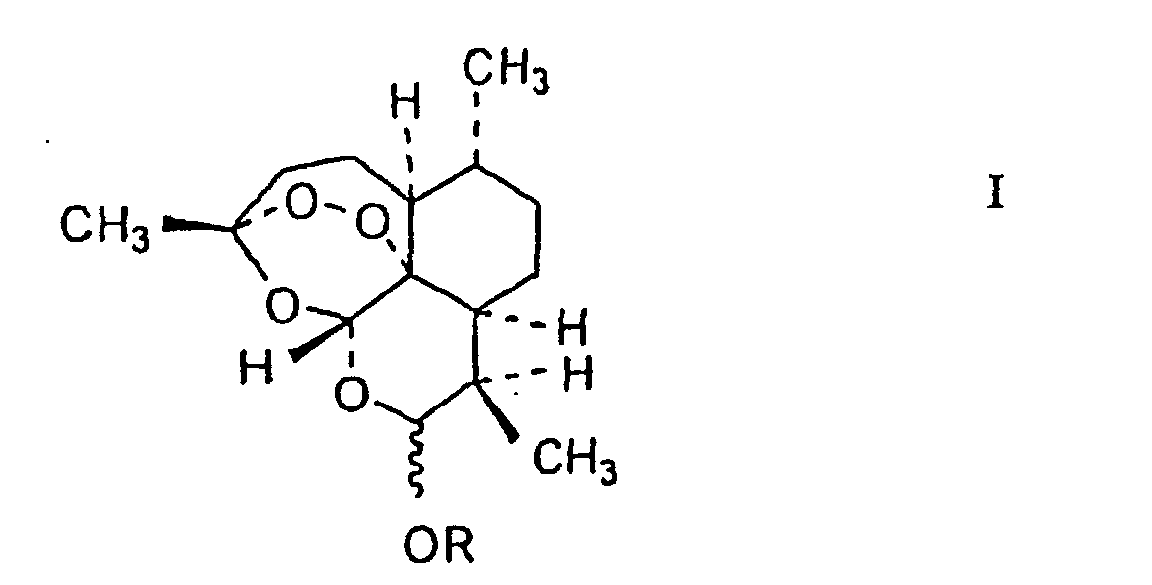
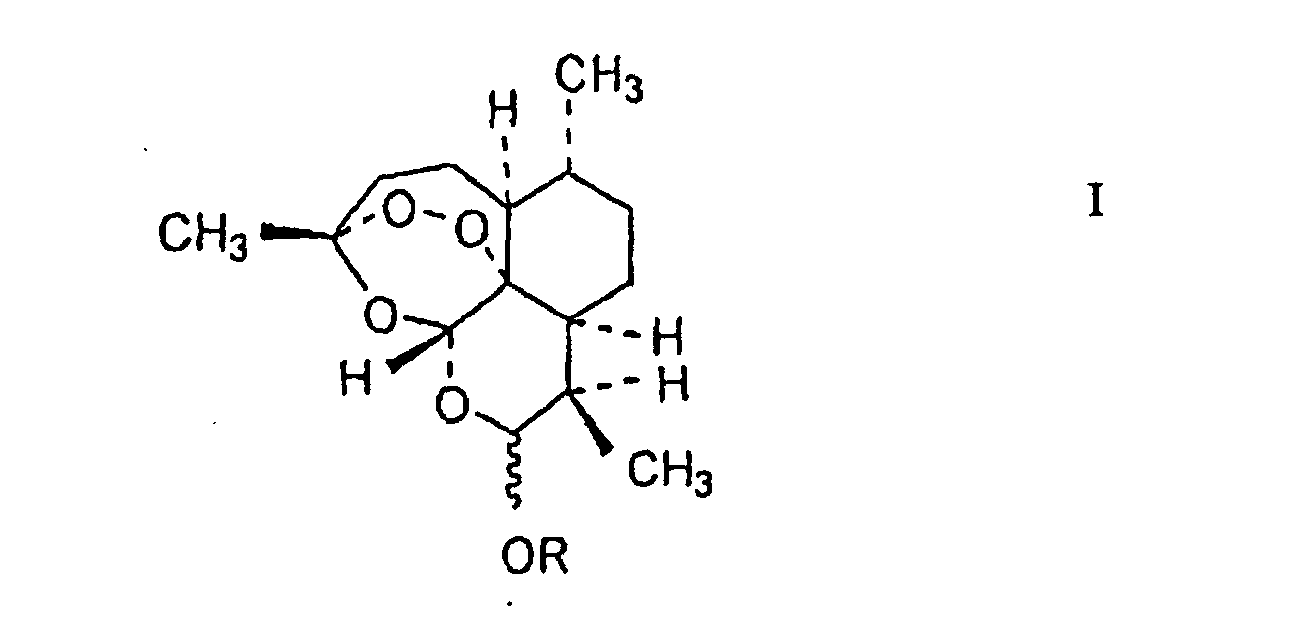
- Artemisinin dihydro derivatives having the structure of formula I are also known to have antimalarial activity, wherein R represents H (dihydroartemisinin), CH 3 (artemether), CH 2 CH 3 (arteether), CH 2 C 6 H 4 COOM (artelinate) or COCH 2 CH 2 COOM (artesunate) where M represents H or a cation that may replace H in the carboxyl group to form a salt
- the present invention aims to provide novel pharmaceutical compositions, unit dose systems and methods for the treatment of malaria by enhancing the antimalarial activity of sulfated polysaccharides.
- novel pharmaceutical compositions, unit dose systems and methods are effective for the treatment of malaria caused by parasites having resistance to conventional antimalarial drugs.
- a first aspect of the present invention is a pharmaceutical composition to be administered to patients in need of the treatment of malaria, comprising a sulfated polysaccharide and an artemisinin compound each in an effective amount for the treatment of malaria in combination with the other as well as a pharmaceutically acceptable carrier.
- the sulfated polysaccharide here is more preferably curdlan sulfate.
- a second aspect of the present invention is a unit dose system comprising a combination of a unit dose of a pharmaceutical composition to be administered to patients in need of the treatment of malaria containing a sulfated polysaccharide in an effective amount for the treatment of malaria in combination with an artemisinin compound and a pharmaceutically acceptable carrier and a unit dose of a pharmaceutical composition to be administered to patients in need of the treatment of malaria containing said artemisinin compound in an effective amount for the treatment of malaria in combination with said sulfated polysaccharide and a pharmaceutically acceptable carrier.
- the sulfated polysaccharide here is more preferably curdlan sulfate.
- Another aspect of the present invention is a method for treating malaria, comprising administering to patients in need of the treatment of malaria a combination of a sulfated polysaccharide and an artemisinin compound each in an effective amount for the treatment of malaria in combination with the other.
- the sulfated polysaccharide here is more preferably curdlan sulfate.
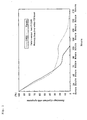
- FIG. 1 shows test results of recovery from fever by combined administration of curdlan sulfate (CRDS) and artesunate. Solid line shows CRDS + artesunate, and dotted line shows placebo + artesunate.
- CRDS curdlan sulfate
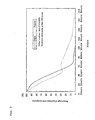
- FIG. 2 shows test results of recovery from coma by combined administration of curdlan sulfate (CRDS) and artesunate. Solid line shows CRDS + artesunate, and dotted line shows placebo + artesunate.
- CRDS curdlan sulfate
- sulfated polysaccharides have a sulfate moiety in their polysaccharide molecule.
- the sulfate moiety may be attached to the hydroxyl group of a sugar by an ester linkage (O-sulfate) or to the amino group of an amino sugar (N-sulfate).
- Sulfated polysaccharides having O-sulfate groups include those naturally occurring and those obtained by artificially introducing O-sulfate groups.
- Examples of naturally occurring sulfated polysaccharides having O-sulfate groups include chondroitin sulfates A, B, C, D, E, H and K, dermatan sulfate and keratan sulfate.
- Sulfated polysaccharides having artificially introduced O-sulfate groups are more preferred in the present invention.
- the sulfated polysaccharides having artificially introduced O-sulfate groups may have any polysaccharide moiety, e.g. it may consist essentially of pentose residues (pentosans) or hexose residues.
- Well known pentosans include arabinans and xylans.
- Polysaccharides consisting essentially of hexose residues are most preferably glucans consisting essentially of glucose residues.
- Glucose units of glucans may be joined by ⁇ -glycosidic linkages or ⁇ -glycosidic linkages or mixtures of ⁇ - and ⁇ -glycosidic linkages.
- the glycosidic linkages may occur at any positions including 1-3, 1-4 and 1-6 linkages.
- glucans include dextrans mainly containing ⁇ -1,6 linkages (which give a sulfated polysaccharide known as dextran sulfate), dextrin mainly containing ⁇ -1,4 linkages and pullulan containing mixed ⁇ -1,4 and ⁇ -1,6 linkages.
- the most preferred polysaccharide moieties of sulfated polysaccharides are ⁇ -glucans mainly containing ⁇ -glycosidic linkages.
- ⁇ -Glucans include those mainly containing ⁇ -1,4 glycosidic linkages (cellulose), those mainly containing ⁇ -1,6 glycosidic linkages and those mainly containing ⁇ -1,3 glycosidic linkages.
- the most preferred ⁇ -glucans in the present invention mainly contain ⁇ -1,3 glycosidic linkages.
- Polysaccharides often contain different linkages ( ⁇ -linkages, ⁇ -linkages, different positions of linkage) as both ⁇ - and ⁇ -glucans were described above by the term “essentially” or "mainly". Even glucans, for example, sometimes contain minor amounts of other sugar units than glucose.
- glucans mainly containing ⁇ -1,3 glycosidic linkages which are the most preferred polysaccharides in the present invention, include curdlan, succinoglucan, lentinan, schizophyllan, sclerotan and lutean.
- curdlan and lentinan are the most preferred.
- Sulfated polysaccharides having N-sulfate groups also include those naturally occurring (e.g. heparin) and those obtained by artificially introducing an N-sulfate group into the amino group of an amino sugar such as those having a sulfate group introduced into the amino group of chitosan.
- Sulfated polysaccharides of the present invention also include modified polysaccharides such as carboxymethylated polysaccharides.
- the sulfur content in sulfated polysaccharides is 5-25 % by weight, preferably 10-20 % by weight, especially 12-17 % by weight.
- the sulfated polysaccharides have a molecular weight of 5,000-500,000, preferably 20,000-200,000, especially 50,000-120,000 as an average molecular weight measured by gel permeation chromatography. Generally, retentivity in blood is higher as the molecular weight is higher.
- Sulfated polysaccharides are preferably formulated and administered in the form of pharmaceutically acceptable salts.
- the most preferred salts are alkali metal salts or alkali earth metal salts (sodium salts, potassium salts, calcium salts and magnesium salts, etc.), and ammonium salts or nontoxic amine salts (ammonium salts, tetramethylammonium salts, tetraethylammonium salts, methylammonium salts, dimethylammonium salts, trimethylammonium salts, triethylammonium salts, diethylammonium salts, ethylammonium salts, lysine salts, arginine salts, ethylenediamine salts, ethanolamine salts, diethanolamine salts, piperidine salts and piperazine salts).
- M is most preferably Na. Artemisinin dihydro derivatives may exist as ⁇ -isomers and ⁇ -isomers depending on the position of the OR group attached.
- compositions of the present invention contain a pharmaceutically acceptable carrier in addition to a sulfated polysaccharide and an artemisinin compound.
- the pharmaceutically acceptable carrier depends on the dosage form.
- compositions When used for oral administration, they may appropriately contain pharmaceutically acceptable carriers including binders such as gum tragacanth, gum arabic, corn starch and gelatin; excipients such as dicalcium phosphate; disintegrants such as potato starch and alginic acid; lubricants such as magnesium stearate; sweetening agents such as sucrose; dyes; and perfumes such as orange flavor; and solvents such as water, ethanol and glycerol.
- pharmaceutically acceptable carriers including binders such as gum tragacanth, gum arabic, corn starch and gelatin; excipients such as dicalcium phosphate; disintegrants such as potato starch and alginic acid; lubricants such as magnesium stearate; sweetening agents such as sucrose; dyes; and perfumes such as orange flavor; and solvents such as water, ethanol and glycerol.
- binders such as gum tragacanth, gum arabic, corn starch and gelatin
- excipients such as
- suitable pharmaceutically acceptable carriers include sterilized water, isotonic saline and pH buffers.
- injectable compositions of the present invention may be sterilized powder compositions or lyophilized powder compositions that can be used by simple dissolution in sterilized water.
- injectable pharmaceutical compositions of the present invention may contain sugars (glucose, mannitol and dextran, etc.), polyhydric alcohols (glycerol, etc.), and inorganic salts (sodium salts and magnesium salts, etc.).
- compositions of the present invention When administered by intravenous infusion, they may contain nutrients such as glucose, vitamins, amino acids and lipids.
- compositions for other administration modes such as nasal administration, inhalation and transdermal administration are also well-known to those skilled in the art.
- compositions of the present invention When pharmaceutical compositions of the present invention are orally administered, they may be in the form of controlled- or sustained-release formulations.
- sustained-release formulations include ordinary sustained- or controlled-release formulations such as gel-coated formulations and multicoated formulations as well as site-specific delivery formulations (e.g. burst release at pyloric regions or effervescent delivery to the duodenum).
- Oral compositions include, for example, tablets, pills, capsules, ampoules, sachets, elixirs, suspensions, syrups, etc.
- a sulfated polysaccharide and an artemisinin compound may be administered to patients with malaria as a pharmaceutical composition of the present invention in a single formulation, or a unit dose of a pharmaceutical composition containing a sulfated polysaccharide and a unit dose of a pharmaceutical composition containing an artemisinin compound may be administered to patients with malaria at an interval in any order.
- a unit dose system comprising a combination of a unit dose of a pharmaceutical composition containing a sulfated polysaccharide and a unit dose of a pharmaceutical composition containing an artemisinin compound is also included in one aspect of the present invention.
- the "unit dose” includes not only individually packaged unit doses such as vials but also aliquots dispensed from vials into syringes and compositions for infusion contained in infusion containers.
- the two unit doses may be combined in a single package or spatially and/or temporally separated.
- one unit dose may be a vial for injection (or an injectable composition contained in a syringe), and the other may be a unit dose to be orally administered at a time interval after administration of the former unit dose.
- a sulfated polysaccharide and an artemisinin compound are administered in combination.
- the sulfated polysaccharide and the artemisinin compound may be administered to patients simultaneously or separately at a time interval in any order.
- compositions or unit dose systems of the present invention can be administered via various routes such as transmucosal (sublingual, nasal, buccal), oral, enteral, transdermal or intravenous administration, inhalation, suppositories or intravenous infusion.
- transmucosal sublingual, nasal, buccal
- enteral enteral
- transdermal transdermal
- intravenous administration inhalation
- suppositories intravenous infusion.
- intravenous administration especially by injection and infusion is most preferred.
- a sulfated polysaccharide or a unit dose of a pharmaceutical composition containing a sulfated polysaccharide
- an artemisinin compound or a unit dose of a pharmaceutical composition containing an artemisinin compound
- a sulfated polysaccharide may be administered as an intravenous bolus and an artemisinin compound may be orally administered.
- the effective amount of sulfated polysaccharides used for the treatment of malaria in combination with artemisinin compounds is normally 1-1,000 mg/kg weight daily, preferably 5-500 mg/kg weight daily depending on the age, body weight and condition of the patient and the administration mode.
- the effective amount of artemisinin compounds used for the treatment of malaria in combination with sulfated polysaccharides is normally 1-5,000 mg/kg weight daily, preferably 100-3000 mg/kg weight daily depending on the age, body weight and condition of the patient and the administration mode.
- CRDS Sodium curdlan sulfate
- molecular weight 80,000 sulfur content 14.5 %
- artesunate dihydroartemisinin hemisuccinate, see formula I, J. Med. Chem., 30, 2147 (1987)
- CRDS was used as a solution containing 100 mg of CRDS, 50 mg of mannitol, 18 mg of dibasic sodium phosphate and phosphate buffer (pH 6.5) per vial.
- CRDS was intravenously administered (infusion) at 4 mg/kg every 8 hours in a total daily dose of 12 mg/kg for 4 days.
- Physiological saline was used as a placebo and administered according to the same schedule as for CRDS.
- Artesunate (60 mg/vial) was intravenously administered to both CRDS and placebo groups at a dose of initially 120 mg, and then 60 mg every 12 hours up to a total dose of 600 mg (according to the current standard therapy in the Bangkok Hospital for Tropical Diseases). If possible, tablets containing 50 mg of artesunate were orally administered.
- the febrile state was observed in the CRDS group and the placebo group.
- the patients who departed from this protocol were excluded, and the observation of the febrile state was completed on 22 patients in the CRDS group and 22 patients in the placebo group.
- CRDS molecular weight 80,000; sulfur content 14.5 %) was used as a sulfated polysaccharide and artesunate was used as an artemisinin compound.
- CRDS was used as a solution containing 100 mg of CRDS, 50 mg of mannitol, 18 mg of dibasic sodium phosphate and phosphate buffer (pH 6.5) per vial.
- CRDS was intravenously administered (infusion) at 4 mg/kg every 8 hours in a total daily dose of 12 mg/kg for 4 days.
- Physiological saline was used as a placebo and administered according to the same schedule as for CRDS.
- Artesunate (60 mg/vial) was intravenously administered to both CRDS and placebo groups at a dose of initially 120 mg, and then 60 mg every 12 hours up to a total dose of 600 mg. If possible, tablets containing 50 mg of artesunate were orally administered.
- Coma was determined by Glasgow Coma Score.
Landscapes
- Health & Medical Sciences (AREA)
- Chemical & Material Sciences (AREA)
- Organic Chemistry (AREA)
- Life Sciences & Earth Sciences (AREA)
- Veterinary Medicine (AREA)
- General Health & Medical Sciences (AREA)
- Medicinal Chemistry (AREA)
- Pharmacology & Pharmacy (AREA)
- Animal Behavior & Ethology (AREA)
- Public Health (AREA)
- Molecular Biology (AREA)
- Epidemiology (AREA)
- Tropical Medicine & Parasitology (AREA)
- Dermatology (AREA)
- General Chemical & Material Sciences (AREA)
- Nuclear Medicine, Radiotherapy & Molecular Imaging (AREA)
- Chemical Kinetics & Catalysis (AREA)
- Pharmaceuticals Containing Other Organic And Inorganic Compounds (AREA)
Abstract
Novel pharmaceutical compositions, unit dose systems and methods for the
treatment of malaria are provided whereby the antimalarial activity of sulfated
polysaccharides can be enhanced. The antimalarial activity of the sulfated
polysaccharides was remarkably enhanced when the sulfated polysaccharides and
artemisinin or artemisinin dihydro derivative were administered in combination.
Description
- The present invention relates to pharmaceutical compositions, unit dose systems and methods for the treatment of malaria. Specifically, the present invention relates to pharmaceutical compositions and unit dose systems combining a sulfated polysaccharide and artemisinin or an artemisinin dihydro derivative (artemisinin and artemisinin dihydro derivatives are collectively called "artemisinin compounds") and methods for treating malaria by combining a sulfated polysaccharide and an artemisinin compound.
- Malaria is a serious health care problem posing a great menace to us in both of the number of patients and the mortality of patients as evidenced by about 500 million patients attacked annually predominantly in tropical and subtropical regions.
- Malaria is treated by administering chloroquine, pyrimethamine, quinine, proguanil, primaquine, artemisinin compounds, etc.
- However, effective treatments have become difficult with conventional antimalarial drugs as malarial parasites having resistance to these antimalarial drugs (e.g. Plasmodium falciparum) are recently rapidly increasing.
- Sulfated polysaccharides are known to have anti-retroviral activity (JPA S62-215529) or antimalarial activity (WO95/08334).
- Artemisinin is a sesquiterpene lactone having the structure of formula II:

- This compound was isolated from a medicinal herb Artemisia annula L. Compositae used in China since ancient times and is known to have antimalarial activity (Chinese Med. J. 92, 811 (1979)). Artemisinin dihydro derivatives having the structure of formula I:are also known to have antimalarial activity, wherein R represents H (dihydroartemisinin), CH3 (artemether), CH2CH3 (arteether), CH2C6H4COOM (artelinate) or COCH2CH2COOM (artesunate) where M represents H or a cation that may replace H in the carboxyl group to form a salt
- Given the seriousness of the menace of malaria, novel pharmaceutical compositions, unit dose systems and methods for the treatment of malaria that are effective against parasites having resistance to conventional antimalarial drugs would be desirable.
- Accordingly, the present invention aims to provide novel pharmaceutical compositions, unit dose systems and methods for the treatment of malaria by enhancing the antimalarial activity of sulfated polysaccharides. These novel pharmaceutical compositions, unit dose systems and methods are effective for the treatment of malaria caused by parasites having resistance to conventional antimalarial drugs.
- We have continued our studies to enhance the antimalarial activity of sulfated polysaccharides which we had previously found to have an antimalarial mechanism potentially distinct from those of conventional antimalarial drugs. Then, we found that the antimalarial activity of these sulfated polysaccharides was remarkably enhanced when they were combined with artemisinin compounds. We also found that these sulfated polysaccharides had an enhanced therapeutic effect against malaria caused by parasites resistant to conventional antimalarial drugs when they were combined with artemisinin compounds.
- Accordingly, a first aspect of the present invention is a pharmaceutical composition to be administered to patients in need of the treatment of malaria, comprising a sulfated polysaccharide and an artemisinin compound each in an effective amount for the treatment of malaria in combination with the other as well as a pharmaceutically acceptable carrier. The sulfated polysaccharide here is more preferably curdlan sulfate.
- A second aspect of the present invention is a unit dose system comprising a combination of a unit dose of a pharmaceutical composition to be administered to patients in need of the treatment of malaria containing a sulfated polysaccharide in an effective amount for the treatment of malaria in combination with an artemisinin compound and a pharmaceutically acceptable carrier and a unit dose of a pharmaceutical composition to be administered to patients in need of the treatment of malaria containing said artemisinin compound in an effective amount for the treatment of malaria in combination with said sulfated polysaccharide and a pharmaceutically acceptable carrier. The sulfated polysaccharide here is more preferably curdlan sulfate.
- Another aspect of the present invention is a method for treating malaria, comprising administering to patients in need of the treatment of malaria a combination of a sulfated polysaccharide and an artemisinin compound each in an effective amount for the treatment of malaria in combination with the other.
- The sulfated polysaccharide here is more preferably curdlan sulfate.
- FIG. 1 shows test results of recovery from fever by combined administration of curdlan sulfate (CRDS) and artesunate. Solid line shows CRDS + artesunate, and dotted line shows placebo + artesunate.
- FIG. 2 shows test results of recovery from coma by combined administration of curdlan sulfate (CRDS) and artesunate. Solid line shows CRDS + artesunate, and dotted line shows placebo + artesunate.
- As used herein, "sulfated polysaccharides" have a sulfate moiety in their polysaccharide molecule. The sulfate moiety may be attached to the hydroxyl group of a sugar by an ester linkage (O-sulfate) or to the amino group of an amino sugar (N-sulfate).
- Sulfated polysaccharides having O-sulfate groups include those naturally occurring and those obtained by artificially introducing O-sulfate groups.
- Examples of naturally occurring sulfated polysaccharides having O-sulfate groups include chondroitin sulfates A, B, C, D, E, H and K, dermatan sulfate and keratan sulfate.
- Sulfated polysaccharides having artificially introduced O-sulfate groups are more preferred in the present invention. The sulfated polysaccharides having artificially introduced O-sulfate groups may have any polysaccharide moiety, e.g. it may consist essentially of pentose residues (pentosans) or hexose residues.
- Well known pentosans include arabinans and xylans.
- Polysaccharides consisting essentially of hexose residues are most preferably glucans consisting essentially of glucose residues.
- Glucose units of glucans may be joined by α-glycosidic linkages or β-glycosidic linkages or mixtures of α- and β-glycosidic linkages. The glycosidic linkages may occur at any positions including 1-3, 1-4 and 1-6 linkages.
- More specifically, glucans include dextrans mainly containing α-1,6 linkages (which give a sulfated polysaccharide known as dextran sulfate), dextrin mainly containing α-1,4 linkages and pullulan containing mixed α-1,4 and α-1,6 linkages.
- In the present invention, the most preferred polysaccharide moieties of sulfated polysaccharides are β-glucans mainly containing β-glycosidic linkages. β-Glucans include those mainly containing β-1,4 glycosidic linkages (cellulose), those mainly containing β-1,6 glycosidic linkages and those mainly containing β-1,3 glycosidic linkages. The most preferred β-glucans in the present invention mainly contain β-1,3 glycosidic linkages.
- Polysaccharides often contain different linkages (α-linkages, β-linkages, different positions of linkage) as both α- and β-glucans were described above by the term "essentially" or "mainly". Even glucans, for example, sometimes contain minor amounts of other sugar units than glucose.
- Examples of glucans mainly containing β-1,3 glycosidic linkages, which are the most preferred polysaccharides in the present invention, include curdlan, succinoglucan, lentinan, schizophyllan, sclerotan and lutean. Among these glucans having β-1,3 glycosidic linkages, curdlan and lentinan are the most preferred.
- Sulfated polysaccharides having N-sulfate groups also include those naturally occurring (e.g. heparin) and those obtained by artificially introducing an N-sulfate group into the amino group of an amino sugar such as those having a sulfate group introduced into the amino group of chitosan.
- Sulfated polysaccharides of the present invention also include modified polysaccharides such as carboxymethylated polysaccharides.
- Well known methods can be applied to introduce O-sulfate or N-sulfate groups into polysaccharides. The sulfur content in sulfated polysaccharides is 5-25 % by weight, preferably 10-20 % by weight, especially 12-17 % by weight.
- The sulfated polysaccharides have a molecular weight of 5,000-500,000, preferably 20,000-200,000, especially 50,000-120,000 as an average molecular weight measured by gel permeation chromatography. Generally, retentivity in blood is higher as the molecular weight is higher.
- Sulfated polysaccharides are preferably formulated and administered in the form of pharmaceutically acceptable salts. The most preferred salts are alkali metal salts or alkali earth metal salts (sodium salts, potassium salts, calcium salts and magnesium salts, etc.), and ammonium salts or nontoxic amine salts (ammonium salts, tetramethylammonium salts, tetraethylammonium salts, methylammonium salts, dimethylammonium salts, trimethylammonium salts, triethylammonium salts, diethylammonium salts, ethylammonium salts, lysine salts, arginine salts, ethylenediamine salts, ethanolamine salts, diethanolamine salts, piperidine salts and piperazine salts).
- In artemisinin dihydro derivatives of formula I, M is most preferably Na. Artemisinin dihydro derivatives may exist as α-isomers and β-isomers depending on the position of the OR group attached.
- Pharmaceutical compositions of the present invention contain a pharmaceutically acceptable carrier in addition to a sulfated polysaccharide and an artemisinin compound. The pharmaceutically acceptable carrier depends on the dosage form.
- When the pharmaceutical compositions are used for oral administration, they may appropriately contain pharmaceutically acceptable carriers including binders such as gum tragacanth, gum arabic, corn starch and gelatin; excipients such as dicalcium phosphate; disintegrants such as potato starch and alginic acid; lubricants such as magnesium stearate; sweetening agents such as sucrose; dyes; and perfumes such as orange flavor; and solvents such as water, ethanol and glycerol.
- When pharmaceutical compositions of the present invention are injectable compositions, suitable pharmaceutically acceptable carriers include sterilized water, isotonic saline and pH buffers. Alternatively, injectable compositions of the present invention may be sterilized powder compositions or lyophilized powder compositions that can be used by simple dissolution in sterilized water. Injectable pharmaceutical compositions of the present invention may contain sugars (glucose, mannitol and dextran, etc.), polyhydric alcohols (glycerol, etc.), and inorganic salts (sodium salts and magnesium salts, etc.).
- When pharmaceutical compositions of the present invention are administered by intravenous infusion, they may contain nutrients such as glucose, vitamins, amino acids and lipids.
- Pharmaceutical carriers to be added to dosage forms for other administration modes such as nasal administration, inhalation and transdermal administration are also well-known to those skilled in the art.
- When pharmaceutical compositions of the present invention are orally administered, they may be in the form of controlled- or sustained-release formulations. Well-known sustained-release formulations include ordinary sustained- or controlled-release formulations such as gel-coated formulations and multicoated formulations as well as site-specific delivery formulations (e.g. burst release at pyloric regions or effervescent delivery to the duodenum). Oral compositions include, for example, tablets, pills, capsules, ampoules, sachets, elixirs, suspensions, syrups, etc.
- The dosage forms and pharmaceutical carriers mentioned above are described in Remington's Pharmaceutical Sciences, 16th ed. (1980), Mack Publishing Company, which is incorporated herein as reference.
- A sulfated polysaccharide and an artemisinin compound may be administered to patients with malaria as a pharmaceutical composition of the present invention in a single formulation, or a unit dose of a pharmaceutical composition containing a sulfated polysaccharide and a unit dose of a pharmaceutical composition containing an artemisinin compound may be administered to patients with malaria at an interval in any order.
- That is, a unit dose system comprising a combination of a unit dose of a pharmaceutical composition containing a sulfated polysaccharide and a unit dose of a pharmaceutical composition containing an artemisinin compound is also included in one aspect of the present invention.
- As used herein, the "unit dose" includes not only individually packaged unit doses such as vials but also aliquots dispensed from vials into syringes and compositions for infusion contained in infusion containers.
- In the "unit dose system" comprising a combination of two unit doses according to the present invention, the two unit doses may be combined in a single package or spatially and/or temporally separated. For example, one unit dose may be a vial for injection (or an injectable composition contained in a syringe), and the other may be a unit dose to be orally administered at a time interval after administration of the former unit dose.
- In methods for treating malaria of the present invention, a sulfated polysaccharide and an artemisinin compound are administered in combination.
- In the combination of a sulfated polysaccharide and an artemisinin compound, the sulfated polysaccharide and the artemisinin compound may be administered to patients simultaneously or separately at a time interval in any order.
- Pharmaceutical compositions or unit dose systems of the present invention can be administered via various routes such as transmucosal (sublingual, nasal, buccal), oral, enteral, transdermal or intravenous administration, inhalation, suppositories or intravenous infusion. These administration modes depend on the amount of the sulfated polysaccharide to be administered, the condition of the patient and other factors. Among these administration modes, intravenous administration especially by injection and infusion is most preferred.
- The administration routes of a sulfated polysaccharide (or a unit dose of a pharmaceutical composition containing a sulfated polysaccharide) and an artemisinin compound (or a unit dose of a pharmaceutical composition containing an artemisinin compound) may be the same or different. For example, a sulfated polysaccharide may be administered as an intravenous bolus and an artemisinin compound may be orally administered.
- In the present invention, the effective amount of sulfated polysaccharides used for the treatment of malaria in combination with artemisinin compounds is normally 1-1,000 mg/kg weight daily, preferably 5-500 mg/kg weight daily depending on the age, body weight and condition of the patient and the administration mode.
- In the present invention, the effective amount of artemisinin compounds used for the treatment of malaria in combination with sulfated polysaccharides is normally 1-5,000 mg/kg weight daily, preferably 100-3000 mg/kg weight daily depending on the age, body weight and condition of the patient and the administration mode.
- This example demonstrates that the fever in patients with severe malaria is more effectively eliminated by combining a sulfated polysaccharide and an artemisinin compound.
- Sodium curdlan sulfate (hereinafter referred to as "CRDS"; molecular weight 80,000; sulfur content 14.5 %) was used as a sulfated polysaccharide and artesunate (dihydroartemisinin hemisuccinate, see formula I, J. Med. Chem., 30, 2147 (1987)) was used as an artemisinin compound.
- CRDS was used as a solution containing 100 mg of CRDS, 50 mg of mannitol, 18 mg of dibasic sodium phosphate and phosphate buffer (pH 6.5) per vial.
- CRDS was intravenously administered (infusion) at 4 mg/kg every 8 hours in a total daily dose of 12 mg/kg for 4 days.
- Physiological saline was used as a placebo and administered according to the same schedule as for CRDS.
- Artesunate (60 mg/vial) was intravenously administered to both CRDS and placebo groups at a dose of initially 120 mg, and then 60 mg every 12 hours up to a total dose of 600 mg (according to the current standard therapy in the Bangkok Hospital for Tropical Diseases). If possible, tablets containing 50 mg of artesunate were orally administered.
- Fifty patients were randomly divided into a CRDS group and a placebo group. The patients were males and females at the ages of 12-65 in whom P. falciparum was found. The patients had symptoms of severe malaria (with hypoglycemia corrected) and excluded those having symptoms of cerebral malaria.
- The febrile state was observed in the CRDS group and the placebo group. The patients who departed from this protocol were excluded, and the observation of the febrile state was completed on 22 patients in the CRDS group and 22 patients in the placebo group.
- The time required for each patient to recover from fever after starting the treatment was recorded. Fisher's exact test was used to compare the number of patients who recovered from fever within 120 hours between both groups (CRDS group and placebo group).
- The results are shown in FIG. 1. As shown from FIG. 1, all the patients in the CRDS group (combined with artesunate) recovered from fever within 5 days, as compared with the placebo group (artesunate alone) in which 9 days were required for all the patients to recover from fever. That is, combined administration of CRDS and artesunate remarkably shortened recovery from fever as compared with administration of artesunate alone. The result of the Fisher's test was P < 0.05.
- No recurrence of malaria was found for up to 28 days of observation.
- This example demonstrates that the come induced by malaria is more quickly eliminated by administering CRDS and artesunate in combination as compared with artesunate alone.
- CRDS (molecular weight 80,000; sulfur content 14.5 %) was used as a sulfated polysaccharide and artesunate was used as an artemisinin compound.
- CRDS was used as a solution containing 100 mg of CRDS, 50 mg of mannitol, 18 mg of dibasic sodium phosphate and phosphate buffer (pH 6.5) per vial.
- CRDS was intravenously administered (infusion) at 4 mg/kg every 8 hours in a total daily dose of 12 mg/kg for 4 days.
- Physiological saline was used as a placebo and administered according to the same schedule as for CRDS.
- Artesunate (60 mg/vial) was intravenously administered to both CRDS and placebo groups at a dose of initially 120 mg, and then 60 mg every 12 hours up to a total dose of 600 mg. If possible, tablets containing 50 mg of artesunate were orally administered.
- Thirty male patients at the ages of 18-65 in a coma were sampled who manifested symptoms of severe/cerebral malaria (with hypoglycemia corrected) as defined by the WHO criteria and also showed asexual malarial parasites and P-site test positive.
- Coma was determined by Glasgow Coma Score.
- For each of the CRDS group and the placebo group, 13 patients completed this protocol. The time required for each patient to recover from coma was recorded. Fisher's exact test was used to compare the number of patients who recovered from coma within 120 hours between both groups (CRDS group and placebo group).
- The results are shown in FIG. 2. As shown from FIG. 2, all the patients in CRDS group (combined with artesunate) recovered from coma within 5 days. However, 9 days were required for all the patients to recover from coma in the placebo group (artesunate alone). The result of the Fisher's test was 0.4800.
- No recurrence of malaria was found for up to 28 days of observation.
- As shown above, combined administration of CRDS and artesunate remarkably shortened recovery from the coma induced by cerebral malaria as compared with administration of artesunate alone in the same manner as in Example 1, though no significant difference was found.
Claims (5)
- A medicine for the treatment of malaria, which comprises a sulfated polysaccharide and an artemisinin compound selected from a group consisting of artemisinin and artemisinin dihydro derivatives defined by the formula I:(wherein R is H, CH3, CH2CH3, CH2C6H4COOM or COCH2CH2COOM, M represents H or a cation that may replace H in the carboxyl group to form a salt).

- A medicine for the treatment of malaria, which consists of a pharmaceutical unit comprising a sulfated polysaccharide and a pharmaceutical unit comprising an artemisinin compound selected from a group consisting of artemisinin and artemisinin dihydro derivatives defined by the formula I:(wherein R is H, CH3, CH2CH3, CH2C6H4COOM or COCH2CH2COOM, M represents H or a cation that may replace H in the carboxyl group to form a salt).

- A medicine according to claim 1 or 2, wherein the sulfated polysaccharide is sulfated curdlan.
- A Method for the treatment of malaria, which comprises administrating sulfated polysaccharide and artemisinin compound selected from a group consisted of artemisinin and artemisinin dihydro derivatives defined by the formula I:(wherein R is H, CH3, CH2CH3, CH2C6H4COOM or COCH2CH2COOM, M represents H or a cation that may replace H in the carboxyl group to form a salt).
- A method for the treatment of malaria according to claim 4, wherein the sulfated polysaccharide is sulfated curdlan.
Applications Claiming Priority (3)
| Application Number | Priority Date | Filing Date | Title |
|---|---|---|---|
| JP2000321022 | 2000-10-20 | ||
| JP2000321022 | 2000-10-20 | ||
| PCT/JP2001/009199 WO2002032905A1 (en) | 2000-10-20 | 2001-10-19 | Medicinal compositions, dose and method for treating malaria |
Publications (1)
| Publication Number | Publication Date |
|---|---|
| EP1329452A1 true EP1329452A1 (en) | 2003-07-23 |
Family
ID=18799218
Family Applications (1)
| Application Number | Title | Priority Date | Filing Date |
|---|---|---|---|
| EP01976774A Withdrawn EP1329452A1 (en) | 2000-10-20 | 2001-10-19 | Medicinal compositions, dose and method for treating malaria |
Country Status (5)
| Country | Link |
|---|---|
| US (1) | US20040038933A1 (en) |
| EP (1) | EP1329452A1 (en) |
| JP (1) | JPWO2002032905A1 (en) |
| AU (1) | AU2001295979A1 (en) |
| WO (1) | WO2002032905A1 (en) |
Families Citing this family (8)
| Publication number | Priority date | Publication date | Assignee | Title |
|---|---|---|---|---|
| US7842719B2 (en) | 2002-10-31 | 2010-11-30 | Kemin Foods, L.C. | Use of endoperoxides for the treatment of infections caused by flaviviridae, including hepatitis C, bovine viral diarrhea and classical swine fever virus |
| GB0720967D0 (en) * | 2007-10-25 | 2007-12-05 | Protophama Ltd | Anti-material pharmaceutical composition |
| WO2010149215A1 (en) * | 2009-06-25 | 2010-12-29 | Dafra Pharma N.V. | Artesunate pharmaceutical compositions soluble in aqueous solutions |
| CA2868921C (en) * | 2012-03-28 | 2022-03-01 | The Research Foundation For The State University Of New York | Methods and materials related to nutritional supplement compositions containing a potato polysaccharide preparation |
| JP6241792B2 (en) * | 2012-10-02 | 2017-12-06 | 三井製糖株式会社 | Peyer's board activator |
| EP3046566B1 (en) | 2013-09-19 | 2020-12-02 | The Research Foundation for The State University of New York | Methods and materials for treating liver steatosis |
| EP3273972A4 (en) | 2015-03-27 | 2018-10-31 | The Research Foundation for The State University of New York | Methods and materials for reducing amyloid beta levels within a mammal |
| CN109481692A (en) * | 2018-11-30 | 2019-03-19 | 东南大学 | A kind of Artesunate heparin derivatives and its pharmaceutical composition and application |
Family Cites Families (5)
| Publication number | Priority date | Publication date | Assignee | Title |
|---|---|---|---|---|
| IN166154B (en) * | 1987-05-08 | 1990-03-24 | Hoechst India | |
| DE68906345T2 (en) * | 1988-10-07 | 1993-10-28 | Hoechst Ag | Antimalarial compositions utilizing quinidine, artemisinin and their derivatives. |
| CN1058717A (en) * | 1990-08-08 | 1992-02-19 | 中国人民解放军军事医学科学院微生物流行病研究所 | New antimalarial agent-Coartem and preparation method thereof |
| DE69422496T2 (en) * | 1993-09-20 | 2002-07-11 | Ajinomoto Co., Inc. | AGENT AGAINST MALARIA |
| US6297272B1 (en) * | 1999-01-12 | 2001-10-02 | Hauser, Inc. | Artemisinin analogs having antimalarial antiproliferative and antitumor activities and chemoselective methods of making the same |
-
2001
- 2001-10-19 WO PCT/JP2001/009199 patent/WO2002032905A1/en not_active Ceased
- 2001-10-19 US US10/399,045 patent/US20040038933A1/en not_active Abandoned
- 2001-10-19 EP EP01976774A patent/EP1329452A1/en not_active Withdrawn
- 2001-10-19 JP JP2002536286A patent/JPWO2002032905A1/en active Pending
- 2001-10-19 AU AU2001295979A patent/AU2001295979A1/en not_active Abandoned
Non-Patent Citations (1)
| Title |
|---|
| See references of WO0232905A1 * |
Also Published As
| Publication number | Publication date |
|---|---|
| US20040038933A1 (en) | 2004-02-26 |
| WO2002032905A1 (en) | 2002-04-25 |
| JPWO2002032905A1 (en) | 2004-02-26 |
| AU2001295979A1 (en) | 2002-04-29 |
Similar Documents
| Publication | Publication Date | Title |
|---|---|---|
| JP2829545B2 (en) | Treatment of retroviral infections in humans with 2'3'-dideoxyinosine | |
| KR101753131B1 (en) | Formulations containing clopidogrel and sulfoalkyl ether cyclodextrin and methods of use | |
| EP0865789B1 (en) | Pharmaceutical compositions for intranasal administration of dihydroergotamine | |
| US5219865A (en) | Pharmaceutical combination for the prophylaxis and therapy of malaria | |
| US4435449A (en) | Treatment of minimal brain dysfunction (MBD) | |
| US20040038933A1 (en) | Pharmaceutical compositions, dose and method for treating malaria | |
| JP2702400B2 (en) | Sulodexide-containing drugs for the treatment of diabetic nephropathy | |
| ES2230873T3 (en) | USE OF GINKGO BILOBA EXTRACTS TO PREPARE A MEDICINES INTENDED TO TREAT LÑA AMYOTROPHIC SIDE STERHERISIS. | |
| Shwe et al. | The effect of mefloquine-artemether compared with quinine on patients with complicated falciparum malaria | |
| Li et al. | Pharmacokinetic and pharmacodynamic profiles of rapid-acting artemisinins in the antimalarial therapy | |
| US5817642A (en) | Clearing of atherosclerosis | |
| CN1312254A (en) | Novel nucleoside | |
| DE69936186T2 (en) | Dihydroartemisinin formulation for the treatment of various types of malaria | |
| BG64641B1 (en) | Use of camptothecin derivatives with reduced gastrointestinal toxicity | |
| JP3718849B2 (en) | Antimalarial | |
| WO2015041723A1 (en) | Artemisinin-based combination therapy for treating viral mediated disease | |
| US6395717B1 (en) | Therapeutic drug for endotoxin blood symptom and multi-organ failure induced thereby | |
| JPH06502428A (en) | Dextromethorphan antitussive composition | |
| CN1167423C (en) | Method of treating radiation injury | |
| US20140256761A1 (en) | Enhanced artemisinin-based combination therapy for treating parasitic mediated disease | |
| JPWO1995008334A1 (en) | antimalarial drugs | |
| ES2334178T3 (en) | USE OF TOPOTECAN IN THE MANUFACTURE OF A MEDICINAL PRODUCT FOR USE IN THE TREATMENT OF OVARIO CANCER. | |
| WO2003075912A1 (en) | Artelinic acid-l-lysine salt for treatment of severe and complicated malaria | |
| JP2579486B2 (en) | Central nervous system depressant | |
| AU2633195A (en) | Post exposure prevention of hiv |
Legal Events
| Date | Code | Title | Description |
|---|---|---|---|
| PUAI | Public reference made under article 153(3) epc to a published international application that has entered the european phase |
Free format text: ORIGINAL CODE: 0009012 |
|
| 17P | Request for examination filed |
Effective date: 20030509 |
|
| AK | Designated contracting states |
Designated state(s): AT BE CH CY DE DK ES FI FR GB GR IE IT LI LU MC NL PT SE TR |
|
| AX | Request for extension of the european patent |
Extension state: AL LT LV MK RO SI |
|
| STAA | Information on the status of an ep patent application or granted ep patent |
Free format text: STATUS: THE APPLICATION HAS BEEN WITHDRAWN |
|
| 18W | Application withdrawn |
Effective date: 20050824 |