EP1329451A1 - Spiro compounds and adhesion molecule inhibitors containing the same as the active ingredient - Google Patents
Spiro compounds and adhesion molecule inhibitors containing the same as the active ingredient Download PDFInfo
- Publication number
- EP1329451A1 EP1329451A1 EP01967819A EP01967819A EP1329451A1 EP 1329451 A1 EP1329451 A1 EP 1329451A1 EP 01967819 A EP01967819 A EP 01967819A EP 01967819 A EP01967819 A EP 01967819A EP 1329451 A1 EP1329451 A1 EP 1329451A1
- Authority
- EP
- European Patent Office
- Prior art keywords
- carbonylamino
- phenyl
- benzyl
- oxo
- methyl
- Prior art date
- Legal status (The legal status is an assumption and is not a legal conclusion. Google has not performed a legal analysis and makes no representation as to the accuracy of the status listed.)
- Granted
Links
- 239000003112 inhibitor Substances 0.000 title claims abstract description 21
- 239000004480 active ingredient Substances 0.000 title 1
- 150000003413 spiro compounds Chemical class 0.000 title 1
- 125000003003 spiro group Chemical group 0.000 claims abstract description 23
- 208000027866 inflammatory disease Diseases 0.000 claims abstract description 13
- -1 nitro, hydroxyl Chemical group 0.000 claims description 344
- 125000002496 methyl group Chemical group [H]C([H])([H])* 0.000 claims description 106
- 125000001797 benzyl group Chemical group [H]C1=C([H])C([H])=C(C([H])=C1[H])C([H])([H])* 0.000 claims description 81
- 125000000217 alkyl group Chemical group 0.000 claims description 77
- 125000001997 phenyl group Chemical group [H]C1=C([H])C([H])=C(*)C([H])=C1[H] 0.000 claims description 65
- 239000001257 hydrogen Substances 0.000 claims description 47
- 229910052739 hydrogen Inorganic materials 0.000 claims description 47
- 229910052736 halogen Inorganic materials 0.000 claims description 46
- 150000002367 halogens Chemical class 0.000 claims description 46
- 125000002924 primary amino group Chemical group [H]N([H])* 0.000 claims description 44
- 125000004093 cyano group Chemical group *C#N 0.000 claims description 43
- 150000003536 tetrazoles Chemical class 0.000 claims description 43
- 150000002431 hydrogen Chemical class 0.000 claims description 40
- 125000001424 substituent group Chemical group 0.000 claims description 38
- 108010008212 Integrin alpha4beta1 Proteins 0.000 claims description 30
- 125000003236 benzoyl group Chemical group [H]C1=C([H])C([H])=C(C([H])=C1[H])C(*)=O 0.000 claims description 30
- SIKJAQJRHWYJAI-UHFFFAOYSA-N Indole Chemical compound C1=CC=C2NC=CC2=C1 SIKJAQJRHWYJAI-UHFFFAOYSA-N 0.000 claims description 28
- 125000005257 alkyl acyl group Chemical group 0.000 claims description 28
- 150000003839 salts Chemical class 0.000 claims description 28
- 125000004433 nitrogen atom Chemical group N* 0.000 claims description 24
- 229910052757 nitrogen Inorganic materials 0.000 claims description 23
- 125000000956 methoxy group Chemical group [H]C([H])([H])O* 0.000 claims description 22
- 125000003170 phenylsulfonyl group Chemical group C1(=CC=CC=C1)S(=O)(=O)* 0.000 claims description 22
- 125000004209 (C1-C8) alkyl group Chemical group 0.000 claims description 21
- 125000003545 alkoxy group Chemical group 0.000 claims description 21
- 125000004432 carbon atom Chemical group C* 0.000 claims description 21
- 229910052799 carbon Inorganic materials 0.000 claims description 20
- 238000000034 method Methods 0.000 claims description 18
- PAYRUJLWNCNPSJ-UHFFFAOYSA-N Aniline Chemical compound NC1=CC=CC=C1 PAYRUJLWNCNPSJ-UHFFFAOYSA-N 0.000 claims description 14
- PZOUSPYUWWUPPK-UHFFFAOYSA-N indole Natural products CC1=CC=CC2=C1C=CN2 PZOUSPYUWWUPPK-UHFFFAOYSA-N 0.000 claims description 14
- RKJUIXBNRJVNHR-UHFFFAOYSA-N indolenine Natural products C1=CC=C2CC=NC2=C1 RKJUIXBNRJVNHR-UHFFFAOYSA-N 0.000 claims description 14
- 125000005119 alkyl cycloalkyl group Chemical group 0.000 claims description 12
- 125000004390 alkyl sulfonyl group Chemical group 0.000 claims description 12
- 230000002401 inhibitory effect Effects 0.000 claims description 12
- 125000000094 2-phenylethyl group Chemical group [H]C1=C([H])C([H])=C(C([H])=C1[H])C([H])([H])C([H])([H])* 0.000 claims description 11
- 125000005504 styryl group Chemical group 0.000 claims description 11
- 108010044426 integrins Proteins 0.000 claims description 9
- 102000006495 integrins Human genes 0.000 claims description 9
- 238000004519 manufacturing process Methods 0.000 claims description 9
- 125000002915 carbonyl group Chemical group [*:2]C([*:1])=O 0.000 claims description 8
- 125000004923 naphthylmethyl group Chemical group C1(=CC=CC2=CC=CC=C12)C* 0.000 claims description 8
- UFHFLCQGNIYNRP-UHFFFAOYSA-N Hydrogen Chemical compound [H][H] UFHFLCQGNIYNRP-UHFFFAOYSA-N 0.000 claims description 7
- 125000004430 oxygen atom Chemical group O* 0.000 claims description 7
- 125000003903 2-propenyl group Chemical group [H]C([*])([H])C([H])=C([H])[H] 0.000 claims description 5
- 125000005073 adamantyl group Chemical group C12(CC3CC(CC(C1)C3)C2)* 0.000 claims description 5
- 208000026935 allergic disease Diseases 0.000 claims 3
- 239000004615 ingredient Substances 0.000 claims 2
- 239000000126 substance Substances 0.000 abstract description 4
- 238000002560 therapeutic procedure Methods 0.000 abstract description 4
- OKKJLVBELUTLKV-UHFFFAOYSA-N Methanol Chemical compound OC OKKJLVBELUTLKV-UHFFFAOYSA-N 0.000 description 237
- YMWUJEATGCHHMB-UHFFFAOYSA-N Dichloromethane Chemical compound ClCCl YMWUJEATGCHHMB-UHFFFAOYSA-N 0.000 description 159
- HEDRZPFGACZZDS-UHFFFAOYSA-N Chloroform Chemical compound ClC(Cl)Cl HEDRZPFGACZZDS-UHFFFAOYSA-N 0.000 description 148
- 239000000203 mixture Substances 0.000 description 136
- 239000000243 solution Substances 0.000 description 107
- VEXZGXHMUGYJMC-UHFFFAOYSA-N Hydrochloric acid Chemical compound Cl VEXZGXHMUGYJMC-UHFFFAOYSA-N 0.000 description 92
- HEMHJVSKTPXQMS-UHFFFAOYSA-M Sodium hydroxide Chemical compound [OH-].[Na+] HEMHJVSKTPXQMS-UHFFFAOYSA-M 0.000 description 84
- HEDRZPFGACZZDS-MICDWDOJSA-N Trichloro(2H)methane Chemical compound [2H]C(Cl)(Cl)Cl HEDRZPFGACZZDS-MICDWDOJSA-N 0.000 description 78
- XBDQKXXYIPTUBI-UHFFFAOYSA-M Propionate Chemical compound CCC([O-])=O XBDQKXXYIPTUBI-UHFFFAOYSA-M 0.000 description 76
- ZMANZCXQSJIPKH-UHFFFAOYSA-N Triethylamine Chemical compound CCN(CC)CC ZMANZCXQSJIPKH-UHFFFAOYSA-N 0.000 description 75
- XEKOWRVHYACXOJ-UHFFFAOYSA-N Ethyl acetate Chemical compound CCOC(C)=O XEKOWRVHYACXOJ-UHFFFAOYSA-N 0.000 description 72
- UIIMBOGNXHQVGW-UHFFFAOYSA-M Sodium bicarbonate Chemical compound [Na+].OC([O-])=O UIIMBOGNXHQVGW-UHFFFAOYSA-M 0.000 description 67
- XBDQKXXYIPTUBI-UHFFFAOYSA-N dimethylselenoniopropionate Natural products CCC(O)=O XBDQKXXYIPTUBI-UHFFFAOYSA-N 0.000 description 60
- 235000019260 propionic acid Nutrition 0.000 description 58
- FAPWRFPIFSIZLT-UHFFFAOYSA-M Sodium chloride Chemical compound [Na+].[Cl-] FAPWRFPIFSIZLT-UHFFFAOYSA-M 0.000 description 57
- 125000006297 carbonyl amino group Chemical group [H]N([*:2])C([*:1])=O 0.000 description 56
- DUWWHGPELOTTOE-UHFFFAOYSA-N n-(5-chloro-2,4-dimethoxyphenyl)-3-oxobutanamide Chemical compound COC1=CC(OC)=C(NC(=O)CC(C)=O)C=C1Cl DUWWHGPELOTTOE-UHFFFAOYSA-N 0.000 description 56
- 238000003756 stirring Methods 0.000 description 53
- PMZURENOXWZQFD-UHFFFAOYSA-L Sodium Sulfate Chemical compound [Na+].[Na+].[O-]S([O-])(=O)=O PMZURENOXWZQFD-UHFFFAOYSA-L 0.000 description 51
- 238000006243 chemical reaction Methods 0.000 description 48
- 239000011541 reaction mixture Substances 0.000 description 44
- 150000001875 compounds Chemical class 0.000 description 33
- WEVYAHXRMPXWCK-UHFFFAOYSA-N Acetonitrile Chemical compound CC#N WEVYAHXRMPXWCK-UHFFFAOYSA-N 0.000 description 30
- 239000012074 organic phase Substances 0.000 description 30
- DTQVDTLACAAQTR-UHFFFAOYSA-N Trifluoroacetic acid Chemical compound OC(=O)C(F)(F)F DTQVDTLACAAQTR-UHFFFAOYSA-N 0.000 description 28
- VLKZOEOYAKHREP-UHFFFAOYSA-N n-Hexane Chemical compound CCCCCC VLKZOEOYAKHREP-UHFFFAOYSA-N 0.000 description 28
- 229910000030 sodium bicarbonate Inorganic materials 0.000 description 28
- 235000017557 sodium bicarbonate Nutrition 0.000 description 28
- UAOMVDZJSHZZME-UHFFFAOYSA-N diisopropylamine Chemical compound CC(C)NC(C)C UAOMVDZJSHZZME-UHFFFAOYSA-N 0.000 description 27
- 229920006395 saturated elastomer Polymers 0.000 description 26
- OKKJLVBELUTLKV-MZCSYVLQSA-N Deuterated methanol Chemical compound [2H]OC([2H])([2H])[2H] OKKJLVBELUTLKV-MZCSYVLQSA-N 0.000 description 24
- RTZKZFJDLAIYFH-UHFFFAOYSA-N Diethyl ether Chemical compound CCOCC RTZKZFJDLAIYFH-UHFFFAOYSA-N 0.000 description 24
- 238000004440 column chromatography Methods 0.000 description 23
- 125000005936 piperidyl group Chemical group 0.000 description 22
- ZMXDDKWLCZADIW-UHFFFAOYSA-N N,N-Dimethylformamide Chemical compound CN(C)C=O ZMXDDKWLCZADIW-UHFFFAOYSA-N 0.000 description 21
- 239000012044 organic layer Substances 0.000 description 21
- 238000004896 high resolution mass spectrometry Methods 0.000 description 19
- 239000002904 solvent Substances 0.000 description 18
- WYURNTSHIVDZCO-UHFFFAOYSA-N Tetrahydrofuran Chemical compound C1CCOC1 WYURNTSHIVDZCO-UHFFFAOYSA-N 0.000 description 16
- 239000012300 argon atmosphere Substances 0.000 description 14
- NXLNNXIXOYSCMB-UHFFFAOYSA-N (4-nitrophenyl) carbonochloridate Chemical compound [O-][N+](=O)C1=CC=C(OC(Cl)=O)C=C1 NXLNNXIXOYSCMB-UHFFFAOYSA-N 0.000 description 13
- 108010000134 Vascular Cell Adhesion Molecule-1 Proteins 0.000 description 13
- 102100023543 Vascular cell adhesion protein 1 Human genes 0.000 description 13
- WMFOQBRAJBCJND-UHFFFAOYSA-M Lithium hydroxide Chemical compound [Li+].[OH-] WMFOQBRAJBCJND-UHFFFAOYSA-M 0.000 description 12
- 210000000265 leukocyte Anatomy 0.000 description 12
- 235000018102 proteins Nutrition 0.000 description 12
- 102000004169 proteins and genes Human genes 0.000 description 12
- 108090000623 proteins and genes Proteins 0.000 description 12
- 230000000694 effects Effects 0.000 description 11
- XLYOFNOQVPJJNP-UHFFFAOYSA-N water Chemical compound O XLYOFNOQVPJJNP-UHFFFAOYSA-N 0.000 description 11
- 0 CBC(N(CC1)CCC1(C(*)(N(C)*)I)N(*(C)C)c1ccccc1)=O Chemical compound CBC(N(CC1)CCC1(C(*)(N(C)*)I)N(*(C)C)c1ccccc1)=O 0.000 description 10
- 210000004027 cell Anatomy 0.000 description 10
- 239000003814 drug Substances 0.000 description 10
- VCLOKANILBJBSI-UHFFFAOYSA-N 3-[(3-benzyl-4-oxo-1-phenyl-1,3,8-triazaspiro[4.5]decane-8-carbonyl)amino]-2-[(2,6-dimethoxybenzoyl)amino]propanoic acid Chemical compound COC1=CC=CC(OC)=C1C(=O)NC(C(O)=O)CNC(=O)N1CCC2(C(N(CC=3C=CC=CC=3)CN2C=2C=CC=CC=2)=O)CC1 VCLOKANILBJBSI-UHFFFAOYSA-N 0.000 description 9
- 229940043279 diisopropylamine Drugs 0.000 description 9
- 150000003512 tertiary amines Chemical class 0.000 description 9
- 101710178046 Chorismate synthase 1 Proteins 0.000 description 8
- 101710152695 Cysteine synthase 1 Proteins 0.000 description 8
- FBPFZTCFMRRESA-KVTDHHQDSA-N D-Mannitol Chemical compound OC[C@@H](O)[C@@H](O)[C@H](O)[C@H](O)CO FBPFZTCFMRRESA-KVTDHHQDSA-N 0.000 description 8
- 102100032831 Protein ITPRID2 Human genes 0.000 description 8
- 229940079593 drug Drugs 0.000 description 8
- 125000001495 ethyl group Chemical group [H]C([H])([H])C([H])([H])* 0.000 description 8
- 125000004123 n-propyl group Chemical group [H]C([H])([H])C([H])([H])C([H])([H])* 0.000 description 8
- 230000008569 process Effects 0.000 description 8
- YLQBMQCUIZJEEH-UHFFFAOYSA-N tetrahydrofuran Natural products C=1C=COC=1 YLQBMQCUIZJEEH-UHFFFAOYSA-N 0.000 description 8
- 108010067306 Fibronectins Proteins 0.000 description 7
- 102000016359 Fibronectins Human genes 0.000 description 7
- 230000002757 inflammatory effect Effects 0.000 description 7
- 125000001449 isopropyl group Chemical group [H]C([H])([H])C([H])(*)C([H])([H])[H] 0.000 description 7
- 125000004108 n-butyl group Chemical group [H]C([H])([H])C([H])([H])C([H])([H])C([H])([H])* 0.000 description 7
- 125000001280 n-hexyl group Chemical group C(CCCCC)* 0.000 description 7
- 125000000740 n-pentyl group Chemical group [H]C([H])([H])C([H])([H])C([H])([H])C([H])([H])C([H])([H])* 0.000 description 7
- 108090000765 processed proteins & peptides Proteins 0.000 description 7
- 125000006280 2-bromobenzyl group Chemical group [H]C1=C([H])C(Br)=C(C([H])=C1[H])C([H])([H])* 0.000 description 6
- 125000006282 2-chlorobenzyl group Chemical group [H]C1=C([H])C(Cl)=C(C([H])=C1[H])C([H])([H])* 0.000 description 6
- 125000004847 2-fluorobenzyl group Chemical group [H]C1=C([H])C(F)=C(C([H])=C1[H])C([H])([H])* 0.000 description 6
- 125000006290 2-hydroxybenzyl group Chemical group [H]OC1=C(C([H])=C([H])C([H])=C1[H])C([H])([H])* 0.000 description 6
- 125000004493 2-methylbut-1-yl group Chemical group CC(C*)CC 0.000 description 6
- 125000003229 2-methylhexyl group Chemical group [H]C([H])([H])C([H])([H])C([H])([H])C([H])([H])C([H])(C([H])([H])[H])C([H])([H])* 0.000 description 6
- 125000005916 2-methylpentyl group Chemical group 0.000 description 6
- 125000003469 3-methylhexyl group Chemical group [H]C([H])([H])C([H])([H])C([H])([H])C([H])(C([H])([H])[H])C([H])([H])C([H])([H])* 0.000 description 6
- 125000005917 3-methylpentyl group Chemical group 0.000 description 6
- DNIAPMSPPWPWGF-UHFFFAOYSA-N Propylene glycol Chemical compound CC(O)CO DNIAPMSPPWPWGF-UHFFFAOYSA-N 0.000 description 6
- 238000009472 formulation Methods 0.000 description 6
- 125000000959 isobutyl group Chemical group [H]C([H])([H])C([H])(C([H])([H])[H])C([H])([H])* 0.000 description 6
- 125000004491 isohexyl group Chemical group C(CCC(C)C)* 0.000 description 6
- 125000001972 isopentyl group Chemical group [H]C([H])([H])C([H])(C([H])([H])[H])C([H])([H])C([H])([H])* 0.000 description 6
- 238000002156 mixing Methods 0.000 description 6
- 125000006504 o-cyanobenzyl group Chemical group [H]C1=C([H])C(C#N)=C(C([H])=C1[H])C([H])([H])* 0.000 description 6
- 239000000047 product Substances 0.000 description 6
- 125000002914 sec-butyl group Chemical group [H]C([H])([H])C([H])([H])C([H])(*)C([H])([H])[H] 0.000 description 6
- 125000003548 sec-pentyl group Chemical group [H]C([H])([H])C([H])([H])C([H])([H])C([H])(*)C([H])([H])[H] 0.000 description 6
- KDLJPNSMOZUXHN-UHFFFAOYSA-N 2,3-bis[(4-oxo-1-phenyl-1,3,8-triazaspiro[4.5]decane-8-carbonyl)amino]propanoic acid Chemical compound C1CC2(C(NCN2C=2C=CC=CC=2)=O)CCN1C(=O)NC(C(=O)O)CNC(=O)N(CC1)CCC1(C(NC1)=O)N1C1=CC=CC=C1 KDLJPNSMOZUXHN-UHFFFAOYSA-N 0.000 description 5
- 125000003456 2,6-dinitrophenyl group Chemical group [H]C1=C([H])C(=C(*)C(=C1[H])[N+]([O-])=O)[N+]([O-])=O 0.000 description 5
- KOMCWGATMYVHSI-UHFFFAOYSA-N 2-(adamantane-2-carbonylamino)-3-[(3-benzyl-4-oxo-1-phenyl-1,3,8-triazaspiro[4.5]decane-8-carbonyl)amino]propanoic acid Chemical compound C1C2CC(C3)CC1CC3C2C(=O)NC(C(=O)O)CNC(=O)N(CC1)CCC1(C1=O)N(C=2C=CC=CC=2)CN1CC1=CC=CC=C1 KOMCWGATMYVHSI-UHFFFAOYSA-N 0.000 description 5
- XMAGYJIVGQXEQP-UHFFFAOYSA-N 2-[(2,6-dichlorobenzoyl)amino]-3-[(3-methyl-4-oxo-1-phenyl-1,3,8-triazaspiro[4.5]decane-8-carbonyl)amino]propanoic acid Chemical compound C1CN(C(=O)NCC(NC(=O)C=2C(=CC=CC=2Cl)Cl)C(O)=O)CCC21C(=O)N(C)CN2C1=CC=CC=C1 XMAGYJIVGQXEQP-UHFFFAOYSA-N 0.000 description 5
- JAYOWWFHHCDZTB-UHFFFAOYSA-N 2-[(2,6-dichlorobenzoyl)amino]-3-[(4-oxo-1-phenyl-1,3,8-triazaspiro[4.5]decane-8-carbonyl)amino]propanoic acid Chemical compound ClC=1C=CC=C(Cl)C=1C(=O)NC(C(=O)O)CNC(=O)N(CC1)CCC1(C(NC1)=O)N1C1=CC=CC=C1 JAYOWWFHHCDZTB-UHFFFAOYSA-N 0.000 description 5
- JFCMWMMKVWTQFN-UHFFFAOYSA-N 2-[(2,6-dichlorobenzoyl)amino]-3-[(4-oxo-1-phenyl-3-propyl-1,3,8-triazaspiro[4.5]decane-8-carbonyl)amino]propanoic acid Chemical compound C1CN(C(=O)NCC(NC(=O)C=2C(=CC=CC=2Cl)Cl)C(O)=O)CCC21C(=O)N(CCC)CN2C1=CC=CC=C1 JFCMWMMKVWTQFN-UHFFFAOYSA-N 0.000 description 5
- ZYHQGITXIJDDKC-UHFFFAOYSA-N 2-[2-(2-aminophenyl)ethyl]aniline Chemical group NC1=CC=CC=C1CCC1=CC=CC=C1N ZYHQGITXIJDDKC-UHFFFAOYSA-N 0.000 description 5
- VYQXPQXKKLPECU-UHFFFAOYSA-N 2-[[4-(2-methylpropanoylamino)-4-phenylpiperidine-1-carbonyl]amino]-3-[(4-oxo-1-phenyl-1,3,8-triazaspiro[4.5]decane-8-carbonyl)amino]propanoic acid Chemical compound C1CC(NC(=O)C(C)C)(C=2C=CC=CC=2)CCN1C(=O)NC(C(O)=O)CNC(=O)N(CC1)CCC1(C(NC1)=O)N1C1=CC=CC=C1 VYQXPQXKKLPECU-UHFFFAOYSA-N 0.000 description 5
- 125000006276 2-bromophenyl group Chemical group [H]C1=C([H])C(Br)=C(*)C([H])=C1[H] 0.000 description 5
- 125000004182 2-chlorophenyl group Chemical group [H]C1=C([H])C(Cl)=C(*)C([H])=C1[H] 0.000 description 5
- 125000004198 2-fluorophenyl group Chemical group [H]C1=C([H])C(F)=C(*)C([H])=C1[H] 0.000 description 5
- VYOYLGMMGPNRJA-UHFFFAOYSA-N 3-[(3-benzyl-4-oxo-1-phenyl-1,3,8-triazaspiro[4.5]decane-8-carbonyl)amino]-2-[(2,6-difluorobenzoyl)amino]propanoic acid Chemical compound FC=1C=CC=C(F)C=1C(=O)NC(C(=O)O)CNC(=O)N(CC1)CCC1(C1=O)N(C=2C=CC=CC=2)CN1CC1=CC=CC=C1 VYOYLGMMGPNRJA-UHFFFAOYSA-N 0.000 description 5
- FIEXFVZNKSHDIC-UHFFFAOYSA-N 3-[(3-benzyl-4-oxo-1-phenyl-1,3,8-triazaspiro[4.5]decane-8-carbonyl)amino]-2-[(2-bromo-6-methylbenzoyl)amino]propanoic acid Chemical compound CC1=CC=CC(Br)=C1C(=O)NC(C(O)=O)CNC(=O)N1CCC2(C(N(CC=3C=CC=CC=3)CN2C=2C=CC=CC=2)=O)CC1 FIEXFVZNKSHDIC-UHFFFAOYSA-N 0.000 description 5
- LFQSCWFLJHTTHZ-UHFFFAOYSA-N Ethanol Chemical compound CCO LFQSCWFLJHTTHZ-UHFFFAOYSA-N 0.000 description 5
- 108060003951 Immunoglobulin Proteins 0.000 description 5
- 238000009825 accumulation Methods 0.000 description 5
- 201000010099 disease Diseases 0.000 description 5
- 208000037265 diseases, disorders, signs and symptoms Diseases 0.000 description 5
- 102000018358 immunoglobulin Human genes 0.000 description 5
- 230000008595 infiltration Effects 0.000 description 5
- 238000001764 infiltration Methods 0.000 description 5
- ACFUGGCCGCHDAR-UHFFFAOYSA-N methyl 2-[(2,6-dichlorophenyl)methylamino]-3-[(3-methyl-4-oxo-1-phenyl-1,3,8-triazaspiro[4.5]decane-8-carbonyl)amino]propanoate Chemical compound ClC=1C=CC=C(Cl)C=1CNC(C(=O)OC)CNC(=O)N(CC1)CCC1(C(N(C)C1)=O)N1C1=CC=CC=C1 ACFUGGCCGCHDAR-UHFFFAOYSA-N 0.000 description 5
- VMAHVCYKQRTEKM-GFOWMXPYSA-N methyl 2-[[(4s)-3-acetyl-1,3-thiazolidine-4-carbonyl]amino]-3-[(3-methyl-4-oxo-1-phenyl-1,3,8-triazaspiro[4.5]decane-8-carbonyl)amino]propanoate Chemical compound O=C([C@@H]1N(CSC1)C(C)=O)NC(C(=O)OC)CNC(=O)N(CC1)CCC1(C(N(C)C1)=O)N1C1=CC=CC=C1 VMAHVCYKQRTEKM-GFOWMXPYSA-N 0.000 description 5
- 239000007787 solid Substances 0.000 description 5
- 229940126585 therapeutic drug Drugs 0.000 description 5
- NQPDZGIKBAWPEJ-UHFFFAOYSA-N valeric acid Chemical compound CCCCC(O)=O NQPDZGIKBAWPEJ-UHFFFAOYSA-N 0.000 description 5
- MBIZFBDREVRUHY-UHFFFAOYSA-N 2,6-Dimethoxybenzoic acid Chemical compound COC1=CC=CC(OC)=C1C(O)=O MBIZFBDREVRUHY-UHFFFAOYSA-N 0.000 description 4
- KLIDCXVFHGNTTM-UHFFFAOYSA-N 2,6-dimethoxyphenol Chemical group COC1=CC=CC(OC)=C1O KLIDCXVFHGNTTM-UHFFFAOYSA-N 0.000 description 4
- MHBZXVGRSBLLKV-UHFFFAOYSA-N 2-[(2,6-dichlorobenzoyl)amino]-3-[(4-oxo-1-phenyl-3-prop-2-enyl-1,3,8-triazaspiro[4.5]decane-8-carbonyl)amino]propanoic acid Chemical compound ClC=1C=CC=C(Cl)C=1C(=O)NC(C(=O)O)CNC(=O)N(CC1)CCC1(C(N(CC=C)C1)=O)N1C1=CC=CC=C1 MHBZXVGRSBLLKV-UHFFFAOYSA-N 0.000 description 4
- GHVIHFPODMSIKI-UHFFFAOYSA-N 2-[(2,6-dichlorobenzoyl)amino]-4-oxo-4-(4-oxo-1-phenyl-1,3,8-triazaspiro[4.5]decan-8-yl)butanoic acid Chemical compound ClC=1C=CC=C(Cl)C=1C(=O)NC(C(=O)O)CC(=O)N(CC1)CCC1(C(NC1)=O)N1C1=CC=CC=C1 GHVIHFPODMSIKI-UHFFFAOYSA-N 0.000 description 4
- WHWSXBOSZLMCFE-UHFFFAOYSA-N 2-[(2,6-dichlorobenzoyl)amino]-5-oxo-5-(4-oxo-1-phenyl-1,3,8-triazaspiro[4.5]decan-8-yl)pentanoic acid Chemical compound ClC=1C=CC=C(Cl)C=1C(=O)NC(C(=O)O)CCC(=O)N(CC1)CCC1(C(NC1)=O)N1C1=CC=CC=C1 WHWSXBOSZLMCFE-UHFFFAOYSA-N 0.000 description 4
- UKKURJSCQDVBRI-UHFFFAOYSA-N 2-[(2,6-dichlorophenyl)methylamino]-3-[(3-methyl-4-oxo-1-phenyl-1,3,8-triazaspiro[4.5]decane-8-carbonyl)amino]propanoic acid Chemical compound C1CN(C(=O)NCC(NCC=2C(=CC=CC=2Cl)Cl)C(O)=O)CCC21C(=O)N(C)CN2C1=CC=CC=C1 UKKURJSCQDVBRI-UHFFFAOYSA-N 0.000 description 4
- FAPNWUOEABGLEW-UHFFFAOYSA-N 3-[(3-benzyl-4-oxo-1-phenyl-1,3,8-triazaspiro[4.5]decane-8-carbonyl)amino]-2-[(2,6-dimethylbenzoyl)amino]propanoic acid Chemical compound CC1=CC=CC(C)=C1C(=O)NC(C(O)=O)CNC(=O)N1CCC2(C(N(CC=3C=CC=CC=3)CN2C=2C=CC=CC=2)=O)CC1 FAPNWUOEABGLEW-UHFFFAOYSA-N 0.000 description 4
- MPUMJYJIUVNXDI-UHFFFAOYSA-N 3-[(3-methyl-4-oxo-1-phenyl-1,3,8-triazaspiro[4.5]decane-8-carbonyl)amino]-2-(phenylmethoxycarbonylamino)propanoic acid Chemical compound C1CN(C(=O)NCC(NC(=O)OCC=2C=CC=CC=2)C(O)=O)CCC21C(=O)N(C)CN2C1=CC=CC=C1 MPUMJYJIUVNXDI-UHFFFAOYSA-N 0.000 description 4
- PTWIVBFWHDDFAX-UHFFFAOYSA-N CC(C(=O)O)(CNC(=O)N1CCC2(N(CN(C2=O)CC2=CC=CC=C2)C2=CC=CC=C2)CC1)NC(=O)C1=C(C=CC=C1C)C Chemical compound CC(C(=O)O)(CNC(=O)N1CCC2(N(CN(C2=O)CC2=CC=CC=C2)C2=CC=CC=C2)CC1)NC(=O)C1=C(C=CC=C1C)C PTWIVBFWHDDFAX-UHFFFAOYSA-N 0.000 description 4
- JGFZNNIVVJXRND-UHFFFAOYSA-N N,N-Diisopropylethylamine (DIPEA) Chemical compound CCN(C(C)C)C(C)C JGFZNNIVVJXRND-UHFFFAOYSA-N 0.000 description 4
- 229920002472 Starch Polymers 0.000 description 4
- RQPZNWPYLFFXCP-UHFFFAOYSA-L barium dihydroxide Chemical compound [OH-].[OH-].[Ba+2] RQPZNWPYLFFXCP-UHFFFAOYSA-L 0.000 description 4
- 229910001863 barium hydroxide Inorganic materials 0.000 description 4
- 230000021164 cell adhesion Effects 0.000 description 4
- 239000003795 chemical substances by application Substances 0.000 description 4
- KRKNYBCHXYNGOX-UHFFFAOYSA-N citric acid Chemical class OC(=O)CC(O)(C(O)=O)CC(O)=O KRKNYBCHXYNGOX-UHFFFAOYSA-N 0.000 description 4
- 238000001816 cooling Methods 0.000 description 4
- 210000003979 eosinophil Anatomy 0.000 description 4
- 239000012634 fragment Substances 0.000 description 4
- 210000004698 lymphocyte Anatomy 0.000 description 4
- 235000010355 mannitol Nutrition 0.000 description 4
- VMAHVCYKQRTEKM-ANYOKISRSA-N methyl 2-[[(4r)-3-acetyl-1,3-thiazolidine-4-carbonyl]amino]-3-[(3-methyl-4-oxo-1-phenyl-1,3,8-triazaspiro[4.5]decane-8-carbonyl)amino]propanoate Chemical compound O=C([C@H]1N(CSC1)C(C)=O)NC(C(=O)OC)CNC(=O)N(CC1)CCC1(C(N(C)C1)=O)N1C1=CC=CC=C1 VMAHVCYKQRTEKM-ANYOKISRSA-N 0.000 description 4
- OTRNRVPACHAXTG-UHFFFAOYSA-N methyl 2-amino-3-[(3-methyl-4-oxo-1-phenyl-1,3,8-triazaspiro[4.5]decane-8-carbonyl)amino]propanoate Chemical compound C1CN(C(=O)NCC(N)C(=O)OC)CCC21C(=O)N(C)CN2C1=CC=CC=C1 OTRNRVPACHAXTG-UHFFFAOYSA-N 0.000 description 4
- GRBHSOGTGVDGPU-UHFFFAOYSA-N methyl 3-[(3-methyl-4-oxo-1-phenyl-1,3,8-triazaspiro[4.5]decane-8-carbonyl)amino]-2-(phenylmethoxycarbonylamino)propanoate Chemical compound C=1C=CC=CC=1COC(=O)NC(C(=O)OC)CNC(=O)N(CC1)CCC1(C(N(C)C1)=O)N1C1=CC=CC=C1 GRBHSOGTGVDGPU-UHFFFAOYSA-N 0.000 description 4
- 210000001616 monocyte Anatomy 0.000 description 4
- 230000003287 optical effect Effects 0.000 description 4
- AHWALFGBDFAJAI-UHFFFAOYSA-N phenyl carbonochloridate Chemical compound ClC(=O)OC1=CC=CC=C1 AHWALFGBDFAJAI-UHFFFAOYSA-N 0.000 description 4
- 238000010898 silica gel chromatography Methods 0.000 description 4
- 239000008107 starch Substances 0.000 description 4
- 235000019698 starch Nutrition 0.000 description 4
- FYSNRJHAOHDILO-UHFFFAOYSA-N thionyl chloride Chemical compound ClS(Cl)=O FYSNRJHAOHDILO-UHFFFAOYSA-N 0.000 description 4
- JBLIDPPHFGWTKU-UHFFFAOYSA-N 2,6-dichlorobenzoyl chloride Chemical compound ClC(=O)C1=C(Cl)C=CC=C1Cl JBLIDPPHFGWTKU-UHFFFAOYSA-N 0.000 description 3
- VJCAPBLAAYWSNY-MUMRKEEXSA-N 2-[[(4s)-3-acetyl-1,3-thiazolidine-4-carbonyl]amino]-3-[(3-methyl-4-oxo-1-phenyl-1,3,8-triazaspiro[4.5]decane-8-carbonyl)amino]propanoic acid Chemical compound C1CN(C(=O)NCC(NC(=O)[C@@H]2N(CSC2)C(C)=O)C(O)=O)CCC21C(=O)N(C)CN2C1=CC=CC=C1 VJCAPBLAAYWSNY-MUMRKEEXSA-N 0.000 description 3
- WVDDGKGOMKODPV-UHFFFAOYSA-N Benzyl alcohol Chemical compound OCC1=CC=CC=C1 WVDDGKGOMKODPV-UHFFFAOYSA-N 0.000 description 3
- XTHFKEDIFFGKHM-UHFFFAOYSA-N Dimethoxyethane Chemical compound COCCOC XTHFKEDIFFGKHM-UHFFFAOYSA-N 0.000 description 3
- 229920002153 Hydroxypropyl cellulose Polymers 0.000 description 3
- 206010061218 Inflammation Diseases 0.000 description 3
- SJRJJKPEHAURKC-UHFFFAOYSA-N N-Methylmorpholine Chemical compound CN1CCOCC1 SJRJJKPEHAURKC-UHFFFAOYSA-N 0.000 description 3
- KWYUFKZDYYNOTN-UHFFFAOYSA-M Potassium hydroxide Chemical compound [OH-].[K+] KWYUFKZDYYNOTN-UHFFFAOYSA-M 0.000 description 3
- 229930006000 Sucrose Natural products 0.000 description 3
- CZMRCDWAGMRECN-UGDNZRGBSA-N Sucrose Chemical compound O[C@H]1[C@H](O)[C@@H](CO)O[C@@]1(CO)O[C@@H]1[C@H](O)[C@@H](O)[C@H](O)[C@@H](CO)O1 CZMRCDWAGMRECN-UGDNZRGBSA-N 0.000 description 3
- 239000002253 acid Substances 0.000 description 3
- 125000001246 bromo group Chemical group Br* 0.000 description 3
- 239000001768 carboxy methyl cellulose Substances 0.000 description 3
- 125000001309 chloro group Chemical group Cl* 0.000 description 3
- 208000037976 chronic inflammation Diseases 0.000 description 3
- 208000037893 chronic inflammatory disorder Diseases 0.000 description 3
- 150000002009 diols Chemical class 0.000 description 3
- 235000019441 ethanol Nutrition 0.000 description 3
- 238000001914 filtration Methods 0.000 description 3
- 125000004435 hydrogen atom Chemical group [H]* 0.000 description 3
- 230000003301 hydrolyzing effect Effects 0.000 description 3
- 239000001863 hydroxypropyl cellulose Substances 0.000 description 3
- 230000004054 inflammatory process Effects 0.000 description 3
- 125000001624 naphthyl group Chemical group 0.000 description 3
- 230000035484 reaction time Effects 0.000 description 3
- 229960004793 sucrose Drugs 0.000 description 3
- UCTWMZQNUQWSLP-VIFPVBQESA-N (R)-adrenaline Chemical compound CNC[C@H](O)C1=CC=C(O)C(O)=C1 UCTWMZQNUQWSLP-VIFPVBQESA-N 0.000 description 2
- 125000004098 2,6-dichlorobenzoyl group Chemical group O=C([*])C1=C(Cl)C([H])=C([H])C([H])=C1Cl 0.000 description 2
- HVAUUPRFYPCOCA-AREMUKBSSA-N 2-O-acetyl-1-O-hexadecyl-sn-glycero-3-phosphocholine Chemical compound CCCCCCCCCCCCCCCCOC[C@@H](OC(C)=O)COP([O-])(=O)OCC[N+](C)(C)C HVAUUPRFYPCOCA-AREMUKBSSA-N 0.000 description 2
- 125000003541 2-chlorobenzoyl group Chemical group ClC1=C(C(=O)*)C=CC=C1 0.000 description 2
- 125000003816 2-hydroxybenzoyl group Chemical group OC1=C(C(=O)*)C=CC=C1 0.000 description 2
- JJXPFPDHBFBGHH-UHFFFAOYSA-N 3-benzyl-1-phenyl-1,3,8-triazaspiro[4.5]decan-4-one Chemical compound C1N(C=2C=CC=CC=2)C2(CCNCC2)C(=O)N1CC1=CC=CC=C1 JJXPFPDHBFBGHH-UHFFFAOYSA-N 0.000 description 2
- CIWBSHSKHKDKBQ-JLAZNSOCSA-N Ascorbic acid Chemical compound OC[C@H](O)[C@H]1OC(=O)C(O)=C1O CIWBSHSKHKDKBQ-JLAZNSOCSA-N 0.000 description 2
- WKBOTKDWSSQWDR-UHFFFAOYSA-N Bromine atom Chemical compound [Br] WKBOTKDWSSQWDR-UHFFFAOYSA-N 0.000 description 2
- 229920002134 Carboxymethyl cellulose Polymers 0.000 description 2
- 108010069514 Cyclic Peptides Proteins 0.000 description 2
- 102000001189 Cyclic Peptides Human genes 0.000 description 2
- QOSSAOTZNIDXMA-UHFFFAOYSA-N Dicylcohexylcarbodiimide Chemical compound C1CCCCC1N=C=NC1CCCCC1 QOSSAOTZNIDXMA-UHFFFAOYSA-N 0.000 description 2
- RJUFJBKOKNCXHH-UHFFFAOYSA-N Methyl propionate Chemical compound CCC(=O)OC RJUFJBKOKNCXHH-UHFFFAOYSA-N 0.000 description 2
- YXYUOWKEBXJTLK-UHFFFAOYSA-N N=C=O.ClC1=CC=CC(Cl)=C1 Chemical compound N=C=O.ClC1=CC=CC(Cl)=C1 YXYUOWKEBXJTLK-UHFFFAOYSA-N 0.000 description 2
- 108010003541 Platelet Activating Factor Proteins 0.000 description 2
- CDBYLPFSWZWCQE-UHFFFAOYSA-L Sodium Carbonate Chemical compound [Na+].[Na+].[O-]C([O-])=O CDBYLPFSWZWCQE-UHFFFAOYSA-L 0.000 description 2
- GSEJCLTVZPLZKY-UHFFFAOYSA-N Triethanolamine Chemical class OCCN(CCO)CCO GSEJCLTVZPLZKY-UHFFFAOYSA-N 0.000 description 2
- 238000002835 absorbance Methods 0.000 description 2
- 125000002777 acetyl group Chemical group [H]C([H])([H])C(*)=O 0.000 description 2
- 239000000654 additive Substances 0.000 description 2
- 230000001476 alcoholic effect Effects 0.000 description 2
- 125000000539 amino acid group Chemical group 0.000 description 2
- 230000002421 anti-septic effect Effects 0.000 description 2
- 239000003963 antioxidant agent Substances 0.000 description 2
- 235000006708 antioxidants Nutrition 0.000 description 2
- 229940064004 antiseptic throat preparations Drugs 0.000 description 2
- 208000006673 asthma Diseases 0.000 description 2
- SESFRYSPDFLNCH-UHFFFAOYSA-N benzyl benzoate Chemical compound C=1C=CC=CC=1C(=O)OCC1=CC=CC=C1 SESFRYSPDFLNCH-UHFFFAOYSA-N 0.000 description 2
- 239000011230 binding agent Substances 0.000 description 2
- GDTBXPJZTBHREO-UHFFFAOYSA-N bromine Substances BrBr GDTBXPJZTBHREO-UHFFFAOYSA-N 0.000 description 2
- 229910052794 bromium Inorganic materials 0.000 description 2
- 150000001718 carbodiimides Chemical class 0.000 description 2
- PFKFTWBEEFSNDU-UHFFFAOYSA-N carbonyldiimidazole Chemical compound C1=CN=CN1C(=O)N1C=CN=C1 PFKFTWBEEFSNDU-UHFFFAOYSA-N 0.000 description 2
- 235000010948 carboxy methyl cellulose Nutrition 0.000 description 2
- 239000008112 carboxymethyl-cellulose Substances 0.000 description 2
- 229920002678 cellulose Polymers 0.000 description 2
- 239000001913 cellulose Substances 0.000 description 2
- 235000010980 cellulose Nutrition 0.000 description 2
- 239000007795 chemical reaction product Substances 0.000 description 2
- 239000003153 chemical reaction reagent Substances 0.000 description 2
- OSASVXMJTNOKOY-UHFFFAOYSA-N chlorobutanol Chemical compound CC(C)(O)C(Cl)(Cl)Cl OSASVXMJTNOKOY-UHFFFAOYSA-N 0.000 description 2
- HVYWMOMLDIMFJA-DPAQBDIFSA-N cholesterol Chemical compound C1C=C2C[C@@H](O)CC[C@]2(C)[C@@H]2[C@@H]1[C@@H]1CC[C@H]([C@H](C)CCCC(C)C)[C@@]1(C)CC2 HVYWMOMLDIMFJA-DPAQBDIFSA-N 0.000 description 2
- 230000001684 chronic effect Effects 0.000 description 2
- 125000006622 cycloheptylmethyl group Chemical group 0.000 description 2
- 125000004210 cyclohexylmethyl group Chemical group [H]C([H])(*)C1([H])C([H])([H])C([H])([H])C([H])([H])C([H])([H])C1([H])[H] 0.000 description 2
- 125000004851 cyclopentylmethyl group Chemical group C1(CCCC1)C* 0.000 description 2
- 238000011161 development Methods 0.000 description 2
- MKRTXPORKIRPDG-UHFFFAOYSA-N diphenylphosphoryl azide Chemical compound C=1C=CC=CC=1P(=O)(N=[N+]=[N-])C1=CC=CC=C1 MKRTXPORKIRPDG-UHFFFAOYSA-N 0.000 description 2
- HCUYBXPSSCRKRF-UHFFFAOYSA-N diphosgene Chemical compound ClC(=O)OC(Cl)(Cl)Cl HCUYBXPSSCRKRF-UHFFFAOYSA-N 0.000 description 2
- 238000002474 experimental method Methods 0.000 description 2
- 239000000833 heterodimer Substances 0.000 description 2
- 230000007062 hydrolysis Effects 0.000 description 2
- 238000006460 hydrolysis reaction Methods 0.000 description 2
- 125000002887 hydroxy group Chemical group [H]O* 0.000 description 2
- 235000010977 hydroxypropyl cellulose Nutrition 0.000 description 2
- 230000003993 interaction Effects 0.000 description 2
- 239000000314 lubricant Substances 0.000 description 2
- HQKMJHAJHXVSDF-UHFFFAOYSA-L magnesium stearate Chemical compound [Mg+2].CCCCCCCCCCCCCCCCCC([O-])=O.CCCCCCCCCCCCCCCCCC([O-])=O HQKMJHAJHXVSDF-UHFFFAOYSA-L 0.000 description 2
- 229920000609 methyl cellulose Polymers 0.000 description 2
- 239000001923 methylcellulose Substances 0.000 description 2
- 235000010981 methylcellulose Nutrition 0.000 description 2
- MXHTZQSKTCCMFG-UHFFFAOYSA-N n,n-dibenzyl-1-phenylmethanamine Chemical compound C=1C=CC=CC=1CN(CC=1C=CC=CC=1)CC1=CC=CC=C1 MXHTZQSKTCCMFG-UHFFFAOYSA-N 0.000 description 2
- VQXREYMEKBSLCD-UHFFFAOYSA-N n-(2-cyanophenyl)formamide Chemical compound O=CNC1=CC=CC=C1C#N VQXREYMEKBSLCD-UHFFFAOYSA-N 0.000 description 2
- 201000008383 nephritis Diseases 0.000 description 2
- OJMIONKXNSYLSR-UHFFFAOYSA-N phosphorous acid Chemical class OP(O)O OJMIONKXNSYLSR-UHFFFAOYSA-N 0.000 description 2
- 239000001267 polyvinylpyrrolidone Substances 0.000 description 2
- 229920000036 polyvinylpyrrolidone Polymers 0.000 description 2
- 235000013855 polyvinylpyrrolidone Nutrition 0.000 description 2
- 239000000843 powder Substances 0.000 description 2
- 230000002265 prevention Effects 0.000 description 2
- 108010031719 prolyl-serine Proteins 0.000 description 2
- IUVKMZGDUIUOCP-BTNSXGMBSA-N quinbolone Chemical compound O([C@H]1CC[C@H]2[C@H]3[C@@H]([C@]4(C=CC(=O)C=C4CC3)C)CC[C@@]21C)C1=CCCC1 IUVKMZGDUIUOCP-BTNSXGMBSA-N 0.000 description 2
- 238000010992 reflux Methods 0.000 description 2
- 206010039073 rheumatoid arthritis Diseases 0.000 description 2
- 229910052708 sodium Inorganic materials 0.000 description 2
- 239000011734 sodium Substances 0.000 description 2
- 239000011780 sodium chloride Substances 0.000 description 2
- 239000012453 solvate Substances 0.000 description 2
- 239000007858 starting material Substances 0.000 description 2
- 150000003431 steroids Chemical class 0.000 description 2
- 239000005720 sucrose Substances 0.000 description 2
- 239000000375 suspending agent Substances 0.000 description 2
- 125000000999 tert-butyl group Chemical group [H]C([H])([H])C(*)(C([H])([H])[H])C([H])([H])[H] 0.000 description 2
- 238000012360 testing method Methods 0.000 description 2
- 229940124597 therapeutic agent Drugs 0.000 description 2
- RZWIIPASKMUIAC-VQTJNVASSA-N thromboxane Chemical compound CCCCCCCC[C@H]1OCCC[C@@H]1CCCCCCC RZWIIPASKMUIAC-VQTJNVASSA-N 0.000 description 2
- ONDSBJMLAHVLMI-UHFFFAOYSA-N trimethylsilyldiazomethane Chemical compound C[Si](C)(C)[CH-][N+]#N ONDSBJMLAHVLMI-UHFFFAOYSA-N 0.000 description 2
- UCPYLLCMEDAXFR-UHFFFAOYSA-N triphosgene Chemical compound ClC(Cl)(Cl)OC(=O)OC(Cl)(Cl)Cl UCPYLLCMEDAXFR-UHFFFAOYSA-N 0.000 description 2
- 125000003774 valeryl group Chemical group O=C([*])C([H])([H])C([H])([H])C([H])([H])C([H])([H])[H] 0.000 description 2
- 239000004474 valine Substances 0.000 description 2
- 239000003981 vehicle Substances 0.000 description 2
- LNAZSHAWQACDHT-XIYTZBAFSA-N (2r,3r,4s,5r,6s)-4,5-dimethoxy-2-(methoxymethyl)-3-[(2s,3r,4s,5r,6r)-3,4,5-trimethoxy-6-(methoxymethyl)oxan-2-yl]oxy-6-[(2r,3r,4s,5r,6r)-4,5,6-trimethoxy-2-(methoxymethyl)oxan-3-yl]oxyoxane Chemical compound CO[C@@H]1[C@@H](OC)[C@H](OC)[C@@H](COC)O[C@H]1O[C@H]1[C@H](OC)[C@@H](OC)[C@H](O[C@H]2[C@@H]([C@@H](OC)[C@H](OC)O[C@@H]2COC)OC)O[C@@H]1COC LNAZSHAWQACDHT-XIYTZBAFSA-N 0.000 description 1
- MZOFCQQQCNRIBI-VMXHOPILSA-N (3s)-4-[[(2s)-1-[[(2s)-1-[[(1s)-1-carboxy-2-hydroxyethyl]amino]-4-methyl-1-oxopentan-2-yl]amino]-5-(diaminomethylideneamino)-1-oxopentan-2-yl]amino]-3-[[2-[[(2s)-2,6-diaminohexanoyl]amino]acetyl]amino]-4-oxobutanoic acid Chemical compound OC[C@@H](C(O)=O)NC(=O)[C@H](CC(C)C)NC(=O)[C@H](CCCN=C(N)N)NC(=O)[C@H](CC(O)=O)NC(=O)CNC(=O)[C@@H](N)CCCCN MZOFCQQQCNRIBI-VMXHOPILSA-N 0.000 description 1
- WXTBYSIPOKXCPM-YFKPBYRVSA-N (4r)-3-acetyl-1,3-thiazolidine-4-carboxylic acid Chemical compound CC(=O)N1CSC[C@H]1C(O)=O WXTBYSIPOKXCPM-YFKPBYRVSA-N 0.000 description 1
- WXTBYSIPOKXCPM-RXMQYKEDSA-N (4s)-3-acetyl-1,3-thiazolidine-4-carboxylic acid Chemical compound CC(=O)N1CSC[C@@H]1C(O)=O WXTBYSIPOKXCPM-RXMQYKEDSA-N 0.000 description 1
- AROJAPNFSINSHJ-UHFFFAOYSA-N (dodecylamino) propanoate Chemical compound CCCCCCCCCCCCNOC(=O)CC AROJAPNFSINSHJ-UHFFFAOYSA-N 0.000 description 1
- GEYOCULIXLDCMW-UHFFFAOYSA-N 1,2-phenylenediamine Chemical compound NC1=CC=CC=C1N GEYOCULIXLDCMW-UHFFFAOYSA-N 0.000 description 1
- RYHBNJHYFVUHQT-UHFFFAOYSA-N 1,4-Dioxane Chemical compound C1COCCO1 RYHBNJHYFVUHQT-UHFFFAOYSA-N 0.000 description 1
- ASOKPJOREAFHNY-UHFFFAOYSA-N 1-Hydroxybenzotriazole Chemical compound C1=CC=C2N(O)N=NC2=C1 ASOKPJOREAFHNY-UHFFFAOYSA-N 0.000 description 1
- VBICKXHEKHSIBG-UHFFFAOYSA-N 1-monostearoylglycerol Chemical compound CCCCCCCCCCCCCCCCCC(=O)OCC(O)CO VBICKXHEKHSIBG-UHFFFAOYSA-N 0.000 description 1
- IIZPXYDJLKNOIY-JXPKJXOSSA-N 1-palmitoyl-2-arachidonoyl-sn-glycero-3-phosphocholine Chemical compound CCCCCCCCCCCCCCCC(=O)OC[C@H](COP([O-])(=O)OCC[N+](C)(C)C)OC(=O)CCC\C=C/C\C=C/C\C=C/C\C=C/CCCCC IIZPXYDJLKNOIY-JXPKJXOSSA-N 0.000 description 1
- HTQWGIHCFPWKAS-UHFFFAOYSA-N 1-phenyl-1,3,8-triazaspiro[4.5]decan-4-one Chemical compound C1CNCCC11C(=O)NCN1C1=CC=CC=C1 HTQWGIHCFPWKAS-UHFFFAOYSA-N 0.000 description 1
- ZHQRKNUDMDYQMD-UHFFFAOYSA-N 1-phenyl-3-prop-2-enyl-1,3,8-triazaspiro[4.5]decan-4-one Chemical compound C1CNCCC21C(=O)N(CC=C)CN2C1=CC=CC=C1 ZHQRKNUDMDYQMD-UHFFFAOYSA-N 0.000 description 1
- DJRFJAVPROZZFL-UHFFFAOYSA-N 1975-52-6 Chemical compound CC1=CC=C([N+]([O-])=O)C=C1C(O)=O DJRFJAVPROZZFL-UHFFFAOYSA-N 0.000 description 1
- YQTCQNIPQMJNTI-UHFFFAOYSA-N 2,2-dimethylpropan-1-one Chemical group CC(C)(C)[C]=O YQTCQNIPQMJNTI-UHFFFAOYSA-N 0.000 description 1
- APXSHOMFBZOYIM-UHFFFAOYSA-N 2,3-bis[(3-benzyl-4-oxo-1-phenyl-1,3,8-triazaspiro[4.5]decane-8-carbonyl)amino]propanoic acid Chemical compound C1CC2(C(N(CC=3C=CC=CC=3)CN2C=2C=CC=CC=2)=O)CCN1C(=O)NC(C(=O)O)CNC(=O)N(CC1)CCC1(C1=O)N(C=2C=CC=CC=2)CN1CC1=CC=CC=C1 APXSHOMFBZOYIM-UHFFFAOYSA-N 0.000 description 1
- RAYGSGRFWOSBNB-UHFFFAOYSA-N 2,3-bis[(3-methyl-4-oxo-1-phenyl-1,3,8-triazaspiro[4.5]decane-8-carbonyl)amino]propanoic acid Chemical compound C1CN(C(=O)NCC(NC(=O)N2CCC3(CC2)C(N(C)CN3C=2C=CC=CC=2)=O)C(O)=O)CCC21C(=O)N(C)CN2C1=CC=CC=C1 RAYGSGRFWOSBNB-UHFFFAOYSA-N 0.000 description 1
- LXUPSVHGPVEBCJ-UHFFFAOYSA-N 2,3-bis[(4-oxo-1-phenyl-3-propyl-1,3,8-triazaspiro[4.5]decane-8-carbonyl)amino]propanoic acid Chemical compound C1CN(C(=O)NCC(NC(=O)N2CCC3(CC2)C(N(CCC)CN3C=2C=CC=CC=2)=O)C(O)=O)CCC21C(=O)N(CCC)CN2C1=CC=CC=C1 LXUPSVHGPVEBCJ-UHFFFAOYSA-N 0.000 description 1
- QRHUZEVERIHEPT-UHFFFAOYSA-N 2,6-difluorobenzoyl chloride Chemical compound FC1=CC=CC(F)=C1C(Cl)=O QRHUZEVERIHEPT-UHFFFAOYSA-N 0.000 description 1
- HCBHQDKBSKYGCK-UHFFFAOYSA-N 2,6-dimethylbenzoic acid Chemical compound CC1=CC=CC(C)=C1C(O)=O HCBHQDKBSKYGCK-UHFFFAOYSA-N 0.000 description 1
- QIAMWVAFNPWUQK-UHFFFAOYSA-N 2-(adamantane-2-carbonylamino)-3-[(3-ethyl-4-oxo-1-phenyl-1,3,8-triazaspiro[4.5]decane-8-carbonyl)amino]propanoic acid Chemical compound C1CN(C(=O)NCC(NC(=O)C2C3CC4CC(C3)CC2C4)C(O)=O)CCC21C(=O)N(CC)CN2C1=CC=CC=C1 QIAMWVAFNPWUQK-UHFFFAOYSA-N 0.000 description 1
- QMHJMCKJOZWJJR-UHFFFAOYSA-N 2-(adamantane-2-carbonylamino)-3-[(3-methyl-4-oxo-1-phenyl-1,3,8-triazaspiro[4.5]decane-8-carbonyl)amino]propanoic acid Chemical compound C1CN(C(=O)NCC(NC(=O)C2C3CC4CC(C3)CC2C4)C(O)=O)CCC21C(=O)N(C)CN2C1=CC=CC=C1 QMHJMCKJOZWJJR-UHFFFAOYSA-N 0.000 description 1
- DUYUKNLNCCLLFT-UHFFFAOYSA-N 2-(adamantane-2-carbonylamino)-3-[(4-oxo-1-phenyl-1,3,8-triazaspiro[4.5]decane-8-carbonyl)amino]propanoic acid Chemical compound C1C2CC(C3)CC1CC3C2C(=O)NC(C(=O)O)CNC(=O)N(CC1)CCC1(C(NC1)=O)N1C1=CC=CC=C1 DUYUKNLNCCLLFT-UHFFFAOYSA-N 0.000 description 1
- XDWPSKATZNTHJD-UHFFFAOYSA-N 2-(adamantane-2-carbonylamino)-3-[(4-oxo-1-phenyl-3-propyl-1,3,8-triazaspiro[4.5]decane-8-carbonyl)amino]propanoic acid Chemical compound C1CN(C(=O)NCC(NC(=O)C2C3CC4CC(C3)CC2C4)C(O)=O)CCC21C(=O)N(CCC)CN2C1=CC=CC=C1 XDWPSKATZNTHJD-UHFFFAOYSA-N 0.000 description 1
- PDFGFQUSSYSWNI-UHFFFAOYSA-N 2-(bromomethyl)-1,3-dichlorobenzene Chemical compound ClC1=CC=CC(Cl)=C1CBr PDFGFQUSSYSWNI-UHFFFAOYSA-N 0.000 description 1
- XKFNUSBKRWIYRE-UHFFFAOYSA-N 2-[(2,6-dichlorobenzoyl)amino]-3-[(3-ethyl-4-oxo-1-phenyl-1,3,8-triazaspiro[4.5]decane-8-carbonyl)amino]propanoic acid Chemical compound C1CN(C(=O)NCC(NC(=O)C=2C(=CC=CC=2Cl)Cl)C(O)=O)CCC21C(=O)N(CC)CN2C1=CC=CC=C1 XKFNUSBKRWIYRE-UHFFFAOYSA-N 0.000 description 1
- XDDCWSPTABSJRU-UHFFFAOYSA-N 2-[(2,6-difluorobenzoyl)amino]-3-[(3-ethyl-4-oxo-1-phenyl-1,3,8-triazaspiro[4.5]decane-8-carbonyl)amino]propanoic acid Chemical compound C1CN(C(=O)NCC(NC(=O)C=2C(=CC=CC=2F)F)C(O)=O)CCC21C(=O)N(CC)CN2C1=CC=CC=C1 XDDCWSPTABSJRU-UHFFFAOYSA-N 0.000 description 1
- OUIYGWKSKBVXTR-UHFFFAOYSA-N 2-[(2,6-difluorobenzoyl)amino]-3-[(3-methyl-4-oxo-1-phenyl-1,3,8-triazaspiro[4.5]decane-8-carbonyl)amino]propanoic acid Chemical compound C1CN(C(=O)NCC(NC(=O)C=2C(=CC=CC=2F)F)C(O)=O)CCC21C(=O)N(C)CN2C1=CC=CC=C1 OUIYGWKSKBVXTR-UHFFFAOYSA-N 0.000 description 1
- VPULUKVWIJKANE-UHFFFAOYSA-N 2-[(2,6-difluorobenzoyl)amino]-3-[(4-oxo-1-phenyl-3-propyl-1,3,8-triazaspiro[4.5]decane-8-carbonyl)amino]propanoic acid Chemical compound C1CN(C(=O)NCC(NC(=O)C=2C(=CC=CC=2F)F)C(O)=O)CCC21C(=O)N(CCC)CN2C1=CC=CC=C1 VPULUKVWIJKANE-UHFFFAOYSA-N 0.000 description 1
- LAEBHRPXWMRTGZ-UHFFFAOYSA-N 2-[(2,6-dimethoxybenzoyl)amino]-3-[(3-ethyl-4-oxo-1-phenyl-1,3,8-triazaspiro[4.5]decane-8-carbonyl)amino]propanoic acid Chemical compound C1CN(C(=O)NCC(NC(=O)C=2C(=CC=CC=2OC)OC)C(O)=O)CCC21C(=O)N(CC)CN2C1=CC=CC=C1 LAEBHRPXWMRTGZ-UHFFFAOYSA-N 0.000 description 1
- XKDNBJABIMQNQP-UHFFFAOYSA-N 2-[(2,6-dimethoxybenzoyl)amino]-3-[(3-methyl-4-oxo-1-phenyl-1,3,8-triazaspiro[4.5]decane-8-carbonyl)amino]propanoic acid Chemical compound COC1=CC=CC(OC)=C1C(=O)NC(C(O)=O)CNC(=O)N1CCC2(C(N(C)CN2C=2C=CC=CC=2)=O)CC1 XKDNBJABIMQNQP-UHFFFAOYSA-N 0.000 description 1
- IAVRMWPSHGTEER-UHFFFAOYSA-N 2-[(2,6-dimethoxybenzoyl)amino]-3-[(4-oxo-1-phenyl-1,3,8-triazaspiro[4.5]decane-8-carbonyl)amino]propanoic acid Chemical compound COC1=CC=CC(OC)=C1C(=O)NC(C(O)=O)CNC(=O)N1CCC2(C(NCN2C=2C=CC=CC=2)=O)CC1 IAVRMWPSHGTEER-UHFFFAOYSA-N 0.000 description 1
- BKQOCYBPVVSGME-UHFFFAOYSA-N 2-[(2,6-dimethoxybenzoyl)amino]-3-[(4-oxo-1-phenyl-3-propyl-1,3,8-triazaspiro[4.5]decane-8-carbonyl)amino]propanoic acid Chemical compound C1CN(C(=O)NCC(NC(=O)C=2C(=CC=CC=2OC)OC)C(O)=O)CCC21C(=O)N(CCC)CN2C1=CC=CC=C1 BKQOCYBPVVSGME-UHFFFAOYSA-N 0.000 description 1
- JMGULTSETYMJBV-UHFFFAOYSA-N 2-[(2,6-dimethylbenzoyl)amino]-3-[(3-ethyl-4-oxo-1-phenyl-1,3,8-triazaspiro[4.5]decane-8-carbonyl)amino]propanoic acid Chemical compound C1CN(C(=O)NCC(NC(=O)C=2C(=CC=CC=2C)C)C(O)=O)CCC21C(=O)N(CC)CN2C1=CC=CC=C1 JMGULTSETYMJBV-UHFFFAOYSA-N 0.000 description 1
- IPFMPVNWEDIETA-UHFFFAOYSA-N 2-[(2,6-dimethylbenzoyl)amino]-3-[(3-methyl-4-oxo-1-phenyl-1,3,8-triazaspiro[4.5]decane-8-carbonyl)amino]propanoic acid Chemical compound C1CN(C(=O)NCC(NC(=O)C=2C(=CC=CC=2C)C)C(O)=O)CCC21C(=O)N(C)CN2C1=CC=CC=C1 IPFMPVNWEDIETA-UHFFFAOYSA-N 0.000 description 1
- VCMXXHOBANZJMR-UHFFFAOYSA-N 2-[(2,6-dimethylbenzoyl)amino]-3-[(4-oxo-1-phenyl-1,3,8-triazaspiro[4.5]decane-8-carbonyl)amino]propanoic acid Chemical compound CC1=CC=CC(C)=C1C(=O)NC(C(O)=O)CNC(=O)N1CCC2(C(NCN2C=2C=CC=CC=2)=O)CC1 VCMXXHOBANZJMR-UHFFFAOYSA-N 0.000 description 1
- CYRSATCVHKQRQL-UHFFFAOYSA-N 2-[(2,6-dimethylbenzoyl)amino]-3-[(4-oxo-1-phenyl-3-propyl-1,3,8-triazaspiro[4.5]decane-8-carbonyl)amino]propanoic acid Chemical compound C1CN(C(=O)NCC(NC(=O)C=2C(=CC=CC=2C)C)C(O)=O)CCC21C(=O)N(CCC)CN2C1=CC=CC=C1 CYRSATCVHKQRQL-UHFFFAOYSA-N 0.000 description 1
- LLNXJBCAJSAELE-UHFFFAOYSA-N 2-[(2-bromo-6-methylbenzoyl)amino]-3-[(3-ethyl-4-oxo-1-phenyl-1,3,8-triazaspiro[4.5]decane-8-carbonyl)amino]propanoic acid Chemical compound C1CN(C(=O)NCC(NC(=O)C=2C(=CC=CC=2C)Br)C(O)=O)CCC21C(=O)N(CC)CN2C1=CC=CC=C1 LLNXJBCAJSAELE-UHFFFAOYSA-N 0.000 description 1
- RUBDZVZALNMYSL-UHFFFAOYSA-N 2-[(2-bromo-6-methylbenzoyl)amino]-3-[(3-methyl-4-oxo-1-phenyl-1,3,8-triazaspiro[4.5]decane-8-carbonyl)amino]propanoic acid Chemical compound C1CN(C(=O)NCC(NC(=O)C=2C(=CC=CC=2C)Br)C(O)=O)CCC21C(=O)N(C)CN2C1=CC=CC=C1 RUBDZVZALNMYSL-UHFFFAOYSA-N 0.000 description 1
- VTKCUDWACQFYBJ-UHFFFAOYSA-N 2-[(2-bromo-6-methylbenzoyl)amino]-3-[(4-oxo-1-phenyl-1,3,8-triazaspiro[4.5]decane-8-carbonyl)amino]propanoic acid Chemical compound CC1=CC=CC(Br)=C1C(=O)NC(C(O)=O)CNC(=O)N1CCC2(C(NCN2C=2C=CC=CC=2)=O)CC1 VTKCUDWACQFYBJ-UHFFFAOYSA-N 0.000 description 1
- CABULTQYQTWPJF-UHFFFAOYSA-N 2-[(2-bromo-6-methylbenzoyl)amino]-3-[(4-oxo-1-phenyl-3-propyl-1,3,8-triazaspiro[4.5]decane-8-carbonyl)amino]propanoic acid Chemical compound C1CN(C(=O)NCC(NC(=O)C=2C(=CC=CC=2C)Br)C(O)=O)CCC21C(=O)N(CCC)CN2C1=CC=CC=C1 CABULTQYQTWPJF-UHFFFAOYSA-N 0.000 description 1
- OMYBCJLJLFHUIP-UHFFFAOYSA-N 2-[(2-methyl-5-nitrobenzoyl)amino]-3-[(3-methyl-4-oxo-1-phenyl-1,3,8-triazaspiro[4.5]decane-8-carbonyl)amino]propanoic acid Chemical compound C1CN(C(=O)NCC(NC(=O)C=2C(=CC=C(C=2)[N+]([O-])=O)C)C(O)=O)CCC21C(=O)N(C)CN2C1=CC=CC=C1 OMYBCJLJLFHUIP-UHFFFAOYSA-N 0.000 description 1
- ZGXJUJNUULEZPP-UHFFFAOYSA-N 2-[(2-methyl-5-nitrobenzoyl)amino]-3-[(4-oxo-1-phenyl-1,3,8-triazaspiro[4.5]decane-8-carbonyl)amino]propanoic acid Chemical compound CC1=CC=C([N+]([O-])=O)C=C1C(=O)NC(C(O)=O)CNC(=O)N1CCC2(C(NCN2C=2C=CC=CC=2)=O)CC1 ZGXJUJNUULEZPP-UHFFFAOYSA-N 0.000 description 1
- WBMYTFHXYCORMV-UHFFFAOYSA-N 2-[(2-methyl-5-nitrobenzoyl)amino]-3-[(4-oxo-1-phenyl-3-propyl-1,3,8-triazaspiro[4.5]decane-8-carbonyl)amino]propanoic acid Chemical compound C1CN(C(=O)NCC(NC(=O)C=2C(=CC=C(C=2)[N+]([O-])=O)C)C(O)=O)CCC21C(=O)N(CCC)CN2C1=CC=CC=C1 WBMYTFHXYCORMV-UHFFFAOYSA-N 0.000 description 1
- MOCUOKMAQZMAOG-UHFFFAOYSA-N 2-[(4-acetamido-4-phenylpiperidine-1-carbonyl)amino]-3-[(3-benzyl-4-oxo-1-phenyl-1,3,8-triazaspiro[4.5]decane-8-carbonyl)amino]propanoic acid Chemical compound C1CC(NC(=O)C)(C=2C=CC=CC=2)CCN1C(=O)NC(C(O)=O)CNC(=O)N(CC1)CCC1(C1=O)N(C=2C=CC=CC=2)CN1CC1=CC=CC=C1 MOCUOKMAQZMAOG-UHFFFAOYSA-N 0.000 description 1
- YXLCEMUFSSAIDM-UHFFFAOYSA-N 2-[(4-acetamido-4-phenylpiperidine-1-carbonyl)amino]-3-[(3-ethyl-4-oxo-1-phenyl-1,3,8-triazaspiro[4.5]decane-8-carbonyl)amino]propanoic acid Chemical compound C1CN(C(=O)NCC(NC(=O)N2CCC(CC2)(NC(C)=O)C=2C=CC=CC=2)C(O)=O)CCC21C(=O)N(CC)CN2C1=CC=CC=C1 YXLCEMUFSSAIDM-UHFFFAOYSA-N 0.000 description 1
- KGJXGEKGPHTVTD-UHFFFAOYSA-N 2-[(4-acetamido-4-phenylpiperidine-1-carbonyl)amino]-3-[(3-methyl-4-oxo-1-phenyl-1,3,8-triazaspiro[4.5]decane-8-carbonyl)amino]propanoic acid Chemical compound C1CN(C(=O)NCC(NC(=O)N2CCC(CC2)(NC(C)=O)C=2C=CC=CC=2)C(O)=O)CCC21C(=O)N(C)CN2C1=CC=CC=C1 KGJXGEKGPHTVTD-UHFFFAOYSA-N 0.000 description 1
- CUTJOBIAFMVPHE-UHFFFAOYSA-N 2-[(4-acetamido-4-phenylpiperidine-1-carbonyl)amino]-3-[(4-oxo-1-phenyl-3-propyl-1,3,8-triazaspiro[4.5]decane-8-carbonyl)amino]propanoic acid Chemical compound C1CN(C(=O)NCC(NC(=O)N2CCC(CC2)(NC(C)=O)C=2C=CC=CC=2)C(O)=O)CCC21C(=O)N(CCC)CN2C1=CC=CC=C1 CUTJOBIAFMVPHE-UHFFFAOYSA-N 0.000 description 1
- PEWUMQKUEPOQHV-UHFFFAOYSA-N 2-[[4-(2-methylpropanoylamino)-4-phenylpiperidine-1-carbonyl]amino]-3-[(4-oxo-1-phenyl-3-propyl-1,3,8-triazaspiro[4.5]decane-8-carbonyl)amino]propanoic acid Chemical compound C1CN(C(=O)NCC(NC(=O)N2CCC(CC2)(NC(=O)C(C)C)C=2C=CC=CC=2)C(O)=O)CCC21C(=O)N(CCC)CN2C1=CC=CC=C1 PEWUMQKUEPOQHV-UHFFFAOYSA-N 0.000 description 1
- YGZFYDFBHIDIBH-UHFFFAOYSA-N 2-[bis(2-hydroxyethyl)amino]icosan-1-ol Chemical compound CCCCCCCCCCCCCCCCCCC(CO)N(CCO)CCO YGZFYDFBHIDIBH-UHFFFAOYSA-N 0.000 description 1
- QKNYBSVHEMOAJP-UHFFFAOYSA-N 2-amino-2-(hydroxymethyl)propane-1,3-diol;hydron;chloride Chemical compound Cl.OCC(N)(CO)CO QKNYBSVHEMOAJP-UHFFFAOYSA-N 0.000 description 1
- ICXBPDJQFPIBSS-UHFFFAOYSA-N 2-bromo-6-methylbenzoic acid Chemical compound CC1=CC=CC(Br)=C1C(O)=O ICXBPDJQFPIBSS-UHFFFAOYSA-N 0.000 description 1
- DQPZYFKOFCQCHO-UHFFFAOYSA-N 3-[(3-benzyl-4-oxo-1-phenyl-1,3,8-triazaspiro[4.5]decane-8-carbonyl)amino]-2-[(2,6-dichlorobenzoyl)amino]propanoic acid Chemical compound ClC=1C=CC=C(Cl)C=1C(=O)NC(C(=O)O)CNC(=O)N(CC1)CCC1(C1=O)N(C=2C=CC=CC=2)CN1CC1=CC=CC=C1 DQPZYFKOFCQCHO-UHFFFAOYSA-N 0.000 description 1
- MXNSTCUMURBXON-UHFFFAOYSA-N 3-[(3-benzyl-4-oxo-1-phenyl-1,3,8-triazaspiro[4.5]decane-8-carbonyl)amino]-2-[(2-methyl-5-nitrobenzoyl)amino]propanoic acid Chemical compound CC1=CC=C([N+]([O-])=O)C=C1C(=O)NC(C(O)=O)CNC(=O)N1CCC2(C(N(CC=3C=CC=CC=3)CN2C=2C=CC=CC=2)=O)CC1 MXNSTCUMURBXON-UHFFFAOYSA-N 0.000 description 1
- YZBITZPYSAUZFQ-UHFFFAOYSA-N 3-[(3-benzyl-4-oxo-1-phenyl-1,3,8-triazaspiro[4.5]decane-8-carbonyl)amino]-2-[(4-oxo-1-phenyl-1,3,8-triazaspiro[4.5]decane-8-carbonyl)amino]propanoic acid Chemical compound C1CC2(C(NCN2C=2C=CC=CC=2)=O)CCN1C(=O)NC(C(=O)O)CNC(=O)N(CC1)CCC1(C1=O)N(C=2C=CC=CC=2)CN1CC1=CC=CC=C1 YZBITZPYSAUZFQ-UHFFFAOYSA-N 0.000 description 1
- BMYOMEPPNMRALE-UHFFFAOYSA-N 3-[(3-benzyl-4-oxo-1-phenyl-1,3,8-triazaspiro[4.5]decane-8-carbonyl)amino]-2-[[4-(2-methylpropanoylamino)-4-phenylpiperidine-1-carbonyl]amino]propanoic acid Chemical compound C1CC(NC(=O)C(C)C)(C=2C=CC=CC=2)CCN1C(=O)NC(C(O)=O)CNC(=O)N(CC1)CCC1(C1=O)N(C=2C=CC=CC=2)CN1CC1=CC=CC=C1 BMYOMEPPNMRALE-UHFFFAOYSA-N 0.000 description 1
- PDCJSYFAGJMDOE-UHFFFAOYSA-N 3-[(3-benzyl-4-oxo-1-phenyl-1,3,8-triazaspiro[4.5]decane-8-carbonyl)amino]-2-[[4-phenyl-4-(propanoylamino)piperidine-1-carbonyl]amino]propanoic acid Chemical compound C1CC(NC(=O)CC)(C=2C=CC=CC=2)CCN1C(=O)NC(C(O)=O)CNC(=O)N(CC1)CCC1(C1=O)N(C=2C=CC=CC=2)CN1CC1=CC=CC=C1 PDCJSYFAGJMDOE-UHFFFAOYSA-N 0.000 description 1
- OCNZRMLFEIMMEK-UHFFFAOYSA-N 3-[(3-ethyl-4-oxo-1-phenyl-1,3,8-triazaspiro[4.5]decane-8-carbonyl)amino]-2-[(2-methyl-5-nitrobenzoyl)amino]propanoic acid Chemical compound C1CN(C(=O)NCC(NC(=O)C=2C(=CC=C(C=2)[N+]([O-])=O)C)C(O)=O)CCC21C(=O)N(CC)CN2C1=CC=CC=C1 OCNZRMLFEIMMEK-UHFFFAOYSA-N 0.000 description 1
- FHCBBBAJRNDATH-UHFFFAOYSA-N 3-[(3-ethyl-4-oxo-1-phenyl-1,3,8-triazaspiro[4.5]decane-8-carbonyl)amino]-2-[[4-(2-methylpropanoylamino)-4-phenylpiperidine-1-carbonyl]amino]propanoic acid Chemical compound C1CN(C(=O)NCC(NC(=O)N2CCC(CC2)(NC(=O)C(C)C)C=2C=CC=CC=2)C(O)=O)CCC21C(=O)N(CC)CN2C1=CC=CC=C1 FHCBBBAJRNDATH-UHFFFAOYSA-N 0.000 description 1
- FSQTXWXOLYWTOG-UHFFFAOYSA-N 3-[(3-methyl-4-oxo-1-phenyl-1,3,8-triazaspiro[4.5]decane-8-carbonyl)amino]-2-[(4-oxo-1-phenyl-1,3,8-triazaspiro[4.5]decane-8-carbonyl)amino]propanoic acid Chemical compound C1CN(C(=O)NCC(NC(=O)N2CCC3(CC2)C(NCN3C=2C=CC=CC=2)=O)C(O)=O)CCC21C(=O)N(C)CN2C1=CC=CC=C1 FSQTXWXOLYWTOG-UHFFFAOYSA-N 0.000 description 1
- NMSUSSUXFSHYRC-UHFFFAOYSA-N 3-[(3-methyl-4-oxo-1-phenyl-1,3,8-triazaspiro[4.5]decane-8-carbonyl)amino]-2-[[4-(2-methylpropanoylamino)-4-phenylpiperidine-1-carbonyl]amino]propanoic acid Chemical compound C1CC(NC(=O)C(C)C)(C=2C=CC=CC=2)CCN1C(=O)NC(C(O)=O)CNC(=O)N(CC1)CCC1(C(N(C)C1)=O)N1C1=CC=CC=C1 NMSUSSUXFSHYRC-UHFFFAOYSA-N 0.000 description 1
- LFADYWWWXBALGI-UHFFFAOYSA-N 3-[(3-methyl-4-oxo-1-phenyl-1,3,8-triazaspiro[4.5]decane-8-carbonyl)amino]-2-[[4-phenyl-4-(propanoylamino)piperidine-1-carbonyl]amino]propanoic acid Chemical compound C1CC(NC(=O)CC)(C=2C=CC=CC=2)CCN1C(=O)NC(C(O)=O)CNC(=O)N(CC1)CCC1(C(N(C)C1)=O)N1C1=CC=CC=C1 LFADYWWWXBALGI-UHFFFAOYSA-N 0.000 description 1
- HKESECNFSSUJBY-UHFFFAOYSA-N 3-[(4-oxo-1-phenyl-3-propyl-1,3,8-triazaspiro[4.5]decane-8-carbonyl)amino]-2-[[4-phenyl-4-(propanoylamino)piperidine-1-carbonyl]amino]propanoic acid Chemical compound C1CN(C(=O)NCC(NC(=O)N2CCC(CC2)(NC(=O)CC)C=2C=CC=CC=2)C(O)=O)CCC21C(=O)N(CCC)CN2C1=CC=CC=C1 HKESECNFSSUJBY-UHFFFAOYSA-N 0.000 description 1
- BMYNFMYTOJXKLE-UHFFFAOYSA-N 3-azaniumyl-2-hydroxypropanoate Chemical compound NCC(O)C(O)=O BMYNFMYTOJXKLE-UHFFFAOYSA-N 0.000 description 1
- IGPACMIJADAUNA-UHFFFAOYSA-N 3-methyl-1-phenyl-1,3,8-triazaspiro[4.5]decan-4-one Chemical compound C1CNCCC21C(=O)N(C)CN2C1=CC=CC=C1 IGPACMIJADAUNA-UHFFFAOYSA-N 0.000 description 1
- ARHYQEPMZRTKRC-UHFFFAOYSA-N 4-oxo-1-phenyl-1,3,8-triazaspiro[4.5]decane-8-carbonyl chloride Chemical compound C1CN(C(=O)Cl)CCC21C(=O)NCN2C1=CC=CC=C1 ARHYQEPMZRTKRC-UHFFFAOYSA-N 0.000 description 1
- JRLTTZUODKEYDH-UHFFFAOYSA-N 8-methylquinoline Chemical group C1=CN=C2C(C)=CC=CC2=C1 JRLTTZUODKEYDH-UHFFFAOYSA-N 0.000 description 1
- UCTWMZQNUQWSLP-UHFFFAOYSA-N Adrenaline Natural products CNCC(O)C1=CC=C(O)C(O)=C1 UCTWMZQNUQWSLP-UHFFFAOYSA-N 0.000 description 1
- GUBGYTABKSRVRQ-XLOQQCSPSA-N Alpha-Lactose Chemical compound O[C@@H]1[C@@H](O)[C@@H](O)[C@@H](CO)O[C@H]1O[C@@H]1[C@@H](CO)O[C@H](O)[C@H](O)[C@H]1O GUBGYTABKSRVRQ-XLOQQCSPSA-N 0.000 description 1
- 206010002198 Anaphylactic reaction Diseases 0.000 description 1
- 206010003210 Arteriosclerosis Diseases 0.000 description 1
- DCXYFEDJOCDNAF-UHFFFAOYSA-N Asparagine Natural products OC(=O)C(N)CC(N)=O DCXYFEDJOCDNAF-UHFFFAOYSA-N 0.000 description 1
- 208000032116 Autoimmune Experimental Encephalomyelitis Diseases 0.000 description 1
- 208000023275 Autoimmune disease Diseases 0.000 description 1
- FERIUCNNQQJTOY-UHFFFAOYSA-M Butyrate Chemical compound CCCC([O-])=O FERIUCNNQQJTOY-UHFFFAOYSA-M 0.000 description 1
- FJRRCBYQUCOYHN-UHFFFAOYSA-N C(C)(C)(C)C(C(=O)O)(CCC(N1CCC2(N(CNC2=O)C2=CC=CC=C2)CC1)=O)NC(=O)C1=C(C=CC=C1Cl)Cl Chemical compound C(C)(C)(C)C(C(=O)O)(CCC(N1CCC2(N(CNC2=O)C2=CC=CC=C2)CC1)=O)NC(=O)C1=C(C=CC=C1Cl)Cl FJRRCBYQUCOYHN-UHFFFAOYSA-N 0.000 description 1
- CRKHOWCGNZOOGL-UHFFFAOYSA-N CN(CC(Cc1ccccc1)CC1(CC2)CCN2C(NCC(C(O)=O)NC(OCc2ccccc2)=O)=O)C1=O Chemical compound CN(CC(Cc1ccccc1)CC1(CC2)CCN2C(NCC(C(O)=O)NC(OCc2ccccc2)=O)=O)C1=O CRKHOWCGNZOOGL-UHFFFAOYSA-N 0.000 description 1
- KZCCEGRSZOYBRP-CHQVSRGASA-N COC([C@H](CNC(N(CC1)CCC1(C(N(CC=C)C1)O)N1c1ccccc1)=O)NC(c(c(Cl)ccc1)c1Cl)=O)=O Chemical compound COC([C@H](CNC(N(CC1)CCC1(C(N(CC=C)C1)O)N1c1ccccc1)=O)NC(c(c(Cl)ccc1)c1Cl)=O)=O KZCCEGRSZOYBRP-CHQVSRGASA-N 0.000 description 1
- CZMOPBHEGIWINN-UHFFFAOYSA-N COC1OC1N Chemical compound COC1OC1N CZMOPBHEGIWINN-UHFFFAOYSA-N 0.000 description 1
- OYPRJOBELJOOCE-UHFFFAOYSA-N Calcium Chemical compound [Ca] OYPRJOBELJOOCE-UHFFFAOYSA-N 0.000 description 1
- 241000700199 Cavia porcellus Species 0.000 description 1
- 241000282693 Cercopithecidae Species 0.000 description 1
- 206010009900 Colitis ulcerative Diseases 0.000 description 1
- 229920002261 Corn starch Polymers 0.000 description 1
- 208000011231 Crohn disease Diseases 0.000 description 1
- XDTMQSROBMDMFD-UHFFFAOYSA-N Cyclohexane Chemical compound C1CCCCC1 XDTMQSROBMDMFD-UHFFFAOYSA-N 0.000 description 1
- 108090000695 Cytokines Proteins 0.000 description 1
- 102000004127 Cytokines Human genes 0.000 description 1
- FBPFZTCFMRRESA-FSIIMWSLSA-N D-Glucitol Natural products OC[C@H](O)[C@H](O)[C@@H](O)[C@H](O)CO FBPFZTCFMRRESA-FSIIMWSLSA-N 0.000 description 1
- FBPFZTCFMRRESA-JGWLITMVSA-N D-glucitol Chemical compound OC[C@H](O)[C@@H](O)[C@H](O)[C@H](O)CO FBPFZTCFMRRESA-JGWLITMVSA-N 0.000 description 1
- 239000004287 Dehydroacetic acid Substances 0.000 description 1
- 206010012438 Dermatitis atopic Diseases 0.000 description 1
- 239000004375 Dextrin Substances 0.000 description 1
- 229920001353 Dextrin Polymers 0.000 description 1
- YXHKONLOYHBTNS-UHFFFAOYSA-N Diazomethane Chemical compound C=[N+]=[N-] YXHKONLOYHBTNS-UHFFFAOYSA-N 0.000 description 1
- XBPCUCUWBYBCDP-UHFFFAOYSA-N Dicyclohexylamine Chemical class C1CCCCC1NC1CCCCC1 XBPCUCUWBYBCDP-UHFFFAOYSA-N 0.000 description 1
- LYCAIKOWRPUZTN-UHFFFAOYSA-N Ethylene glycol Chemical compound OCCO LYCAIKOWRPUZTN-UHFFFAOYSA-N 0.000 description 1
- 208000009386 Experimental Arthritis Diseases 0.000 description 1
- 108010037362 Extracellular Matrix Proteins Proteins 0.000 description 1
- 102000010834 Extracellular Matrix Proteins Human genes 0.000 description 1
- 108010010803 Gelatin Proteins 0.000 description 1
- WQZGKKKJIJFFOK-GASJEMHNSA-N Glucose Natural products OC[C@H]1OC(O)[C@H](O)[C@@H](O)[C@@H]1O WQZGKKKJIJFFOK-GASJEMHNSA-N 0.000 description 1
- JJGBXTYGTKWGAT-YUMQZZPRSA-N Gly-Pro-Glu Chemical compound NCC(=O)N1CCC[C@H]1C(=O)N[C@@H](CCC(O)=O)C(O)=O JJGBXTYGTKWGAT-YUMQZZPRSA-N 0.000 description 1
- 229940119155 Histamine release inhibitor Drugs 0.000 description 1
- 101000994375 Homo sapiens Integrin alpha-4 Proteins 0.000 description 1
- 101000935043 Homo sapiens Integrin beta-1 Proteins 0.000 description 1
- 108010001336 Horseradish Peroxidase Proteins 0.000 description 1
- 239000004354 Hydroxyethyl cellulose Substances 0.000 description 1
- 229920000663 Hydroxyethyl cellulose Polymers 0.000 description 1
- DGAQECJNVWCQMB-PUAWFVPOSA-M Ilexoside XXIX Chemical compound C[C@@H]1CC[C@@]2(CC[C@@]3(C(=CC[C@H]4[C@]3(CC[C@@H]5[C@@]4(CC[C@@H](C5(C)C)OS(=O)(=O)[O-])C)C)[C@@H]2[C@]1(C)O)C)C(=O)O[C@H]6[C@@H]([C@H]([C@@H]([C@H](O6)CO)O)O)O.[Na+] DGAQECJNVWCQMB-PUAWFVPOSA-M 0.000 description 1
- 102100032818 Integrin alpha-4 Human genes 0.000 description 1
- 102100025304 Integrin beta-1 Human genes 0.000 description 1
- 108090000978 Interleukin-4 Proteins 0.000 description 1
- DCXYFEDJOCDNAF-REOHCLBHSA-N L-asparagine Chemical compound OC(=O)[C@@H](N)CC(N)=O DCXYFEDJOCDNAF-REOHCLBHSA-N 0.000 description 1
- GUBGYTABKSRVRQ-QKKXKWKRSA-N Lactose Natural products OC[C@H]1O[C@@H](O[C@H]2[C@H](O)[C@@H](O)C(O)O[C@@H]2CO)[C@H](O)[C@@H](O)[C@H]1O GUBGYTABKSRVRQ-QKKXKWKRSA-N 0.000 description 1
- CFZZDVMBRYFFNU-QWRGUYRKSA-N Leu-His-Gly Chemical compound [H]N[C@@H](CC(C)C)C(=O)N[C@@H](CC1=CNC=N1)C(=O)NCC(O)=O CFZZDVMBRYFFNU-QWRGUYRKSA-N 0.000 description 1
- 239000000867 Lipoxygenase Inhibitor Substances 0.000 description 1
- 208000004852 Lung Injury Diseases 0.000 description 1
- 241000124008 Mammalia Species 0.000 description 1
- 229910021380 Manganese Chloride Inorganic materials 0.000 description 1
- GLFNIEUTAYBVOC-UHFFFAOYSA-L Manganese chloride Chemical compound Cl[Mn]Cl GLFNIEUTAYBVOC-UHFFFAOYSA-L 0.000 description 1
- KZNQNBZMBZJQJO-UHFFFAOYSA-N N-glycyl-L-proline Natural products NCC(=O)N1CCCC1C(O)=O KZNQNBZMBZJQJO-UHFFFAOYSA-N 0.000 description 1
- MBBZMMPHUWSWHV-BDVNFPICSA-N N-methylglucamine Chemical class CNC[C@H](O)[C@@H](O)[C@H](O)[C@H](O)CO MBBZMMPHUWSWHV-BDVNFPICSA-N 0.000 description 1
- 241000283973 Oryctolagus cuniculus Species 0.000 description 1
- 241001494479 Pecora Species 0.000 description 1
- 239000002202 Polyethylene glycol Substances 0.000 description 1
- 239000004372 Polyvinyl alcohol Substances 0.000 description 1
- FRKBNXCFJBPJOL-GUBZILKMSA-N Pro-Glu-Glu Chemical compound [H]N1CCC[C@H]1C(=O)N[C@@H](CCC(O)=O)C(=O)N[C@@H](CCC(O)=O)C(O)=O FRKBNXCFJBPJOL-GUBZILKMSA-N 0.000 description 1
- 206010039085 Rhinitis allergic Diseases 0.000 description 1
- VYPSYNLAJGMNEJ-UHFFFAOYSA-N Silicium dioxide Chemical compound O=[Si]=O VYPSYNLAJGMNEJ-UHFFFAOYSA-N 0.000 description 1
- DBMJMQXJHONAFJ-UHFFFAOYSA-M Sodium laurylsulphate Chemical compound [Na+].CCCCCCCCCCCCOS([O-])(=O)=O DBMJMQXJHONAFJ-UHFFFAOYSA-M 0.000 description 1
- LSNNMFCWUKXFEE-UHFFFAOYSA-N Sulfurous acid Chemical class OS(O)=O LSNNMFCWUKXFEE-UHFFFAOYSA-N 0.000 description 1
- 206010052779 Transplant rejections Diseases 0.000 description 1
- 108060008682 Tumor Necrosis Factor Proteins 0.000 description 1
- 102000000852 Tumor Necrosis Factor-alpha Human genes 0.000 description 1
- 206010067584 Type 1 diabetes mellitus Diseases 0.000 description 1
- 206010053613 Type IV hypersensitivity reaction Diseases 0.000 description 1
- 201000006704 Ulcerative Colitis Diseases 0.000 description 1
- 239000002250 absorbent Substances 0.000 description 1
- 230000002745 absorbent Effects 0.000 description 1
- 150000001242 acetic acid derivatives Chemical class 0.000 description 1
- DPXJVFZANSGRMM-UHFFFAOYSA-N acetic acid;2,3,4,5,6-pentahydroxyhexanal;sodium Chemical compound [Na].CC(O)=O.OCC(O)C(O)C(O)C(O)C=O DPXJVFZANSGRMM-UHFFFAOYSA-N 0.000 description 1
- 230000004913 activation Effects 0.000 description 1
- HJBCEJGCEQSHBV-UHFFFAOYSA-N adamantane-2-carbonyl chloride Chemical compound C1C(C2)CC3CC1C(C(=O)Cl)C2C3 HJBCEJGCEQSHBV-UHFFFAOYSA-N 0.000 description 1
- 230000000996 additive effect Effects 0.000 description 1
- 229940121359 adenosine receptor antagonist Drugs 0.000 description 1
- 229940102884 adrenalin Drugs 0.000 description 1
- 229910052784 alkaline earth metal Inorganic materials 0.000 description 1
- 230000000172 allergic effect Effects 0.000 description 1
- 230000009285 allergic inflammation Effects 0.000 description 1
- 201000010105 allergic rhinitis Diseases 0.000 description 1
- 150000001413 amino acids Chemical group 0.000 description 1
- 150000003863 ammonium salts Chemical class 0.000 description 1
- 230000036783 anaphylactic response Effects 0.000 description 1
- 208000003455 anaphylaxis Diseases 0.000 description 1
- 238000010171 animal model Methods 0.000 description 1
- 239000005557 antagonist Substances 0.000 description 1
- 239000000739 antihistaminic agent Substances 0.000 description 1
- 239000003420 antiserotonin agent Substances 0.000 description 1
- 208000011775 arteriosclerosis disease Diseases 0.000 description 1
- 235000010323 ascorbic acid Nutrition 0.000 description 1
- 229960005070 ascorbic acid Drugs 0.000 description 1
- 239000011668 ascorbic acid Substances 0.000 description 1
- 229960001230 asparagine Drugs 0.000 description 1
- 235000009582 asparagine Nutrition 0.000 description 1
- QVGXLLKOCUKJST-UHFFFAOYSA-N atomic oxygen Chemical compound [O] QVGXLLKOCUKJST-UHFFFAOYSA-N 0.000 description 1
- 201000008937 atopic dermatitis Diseases 0.000 description 1
- 208000010668 atopic eczema Diseases 0.000 description 1
- 239000011805 ball Substances 0.000 description 1
- 210000003651 basophil Anatomy 0.000 description 1
- 229960000686 benzalkonium chloride Drugs 0.000 description 1
- UREZNYTWGJKWBI-UHFFFAOYSA-M benzethonium chloride Chemical compound [Cl-].C1=CC(C(C)(C)CC(C)(C)C)=CC=C1OCCOCC[N+](C)(C)CC1=CC=CC=C1 UREZNYTWGJKWBI-UHFFFAOYSA-M 0.000 description 1
- 229960001950 benzethonium chloride Drugs 0.000 description 1
- 235000019445 benzyl alcohol Nutrition 0.000 description 1
- 229960004217 benzyl alcohol Drugs 0.000 description 1
- 229960002903 benzyl benzoate Drugs 0.000 description 1
- HSDAJNMJOMSNEV-UHFFFAOYSA-N benzyl chloroformate Chemical compound ClC(=O)OCC1=CC=CC=C1 HSDAJNMJOMSNEV-UHFFFAOYSA-N 0.000 description 1
- CADWTSSKOVRVJC-UHFFFAOYSA-N benzyl(dimethyl)azanium;chloride Chemical compound [Cl-].C[NH+](C)CC1=CC=CC=C1 CADWTSSKOVRVJC-UHFFFAOYSA-N 0.000 description 1
- WQZGKKKJIJFFOK-VFUOTHLCSA-N beta-D-glucose Chemical compound OC[C@H]1O[C@@H](O)[C@H](O)[C@@H](O)[C@@H]1O WQZGKKKJIJFFOK-VFUOTHLCSA-N 0.000 description 1
- 230000015572 biosynthetic process Effects 0.000 description 1
- 210000004204 blood vessel Anatomy 0.000 description 1
- 230000037396 body weight Effects 0.000 description 1
- 229940124630 bronchodilator Drugs 0.000 description 1
- 239000000168 bronchodilator agent Substances 0.000 description 1
- 239000000872 buffer Substances 0.000 description 1
- 239000006172 buffering agent Substances 0.000 description 1
- 230000003139 buffering effect Effects 0.000 description 1
- 125000004063 butyryl group Chemical group O=C([*])C([H])([H])C([H])([H])C([H])([H])[H] 0.000 description 1
- 239000011575 calcium Substances 0.000 description 1
- 229910052791 calcium Inorganic materials 0.000 description 1
- 235000001465 calcium Nutrition 0.000 description 1
- 159000000007 calcium salts Chemical class 0.000 description 1
- CJZGTCYPCWQAJB-UHFFFAOYSA-L calcium stearate Chemical compound [Ca+2].CCCCCCCCCCCCCCCCCC([O-])=O.CCCCCCCCCCCCCCCCCC([O-])=O CJZGTCYPCWQAJB-UHFFFAOYSA-L 0.000 description 1
- 235000013539 calcium stearate Nutrition 0.000 description 1
- 239000008116 calcium stearate Substances 0.000 description 1
- 239000002775 capsule Substances 0.000 description 1
- 125000005588 carbonic acid salt group Chemical group 0.000 description 1
- 150000003857 carboxamides Chemical class 0.000 description 1
- 239000000969 carrier Substances 0.000 description 1
- 238000001311 chemical methods and process Methods 0.000 description 1
- 229960004926 chlorobutanol Drugs 0.000 description 1
- 235000012000 cholesterol Nutrition 0.000 description 1
- 238000004587 chromatography analysis Methods 0.000 description 1
- 206010009887 colitis Diseases 0.000 description 1
- 239000008119 colloidal silica Substances 0.000 description 1
- 239000003086 colorant Substances 0.000 description 1
- 238000009833 condensation Methods 0.000 description 1
- 230000005494 condensation Effects 0.000 description 1
- 208000010247 contact dermatitis Diseases 0.000 description 1
- 238000007796 conventional method Methods 0.000 description 1
- 239000002285 corn oil Substances 0.000 description 1
- 235000005687 corn oil Nutrition 0.000 description 1
- 239000008120 corn starch Substances 0.000 description 1
- 238000002425 crystallisation Methods 0.000 description 1
- 230000008025 crystallization Effects 0.000 description 1
- 125000004122 cyclic group Chemical group 0.000 description 1
- 125000006639 cyclohexyl carbonyl group Chemical group 0.000 description 1
- 125000006638 cyclopentyl carbonyl group Chemical group 0.000 description 1
- 235000019258 dehydroacetic acid Nutrition 0.000 description 1
- 229940061632 dehydroacetic acid Drugs 0.000 description 1
- JEQRBTDTEKWZBW-UHFFFAOYSA-N dehydroacetic acid Chemical compound CC(=O)C1=C(O)OC(C)=CC1=O JEQRBTDTEKWZBW-UHFFFAOYSA-N 0.000 description 1
- PGRHXDWITVMQBC-UHFFFAOYSA-N dehydroacetic acid Natural products CC(=O)C1C(=O)OC(C)=CC1=O PGRHXDWITVMQBC-UHFFFAOYSA-N 0.000 description 1
- 235000019425 dextrin Nutrition 0.000 description 1
- 235000013681 dietary sucrose Nutrition 0.000 description 1
- ZBCBWPMODOFKDW-UHFFFAOYSA-N diethanolamine Chemical class OCCNCCO ZBCBWPMODOFKDW-UHFFFAOYSA-N 0.000 description 1
- LVTYICIALWPMFW-UHFFFAOYSA-N diisopropanolamine Chemical class CC(O)CNCC(C)O LVTYICIALWPMFW-UHFFFAOYSA-N 0.000 description 1
- 239000000839 emulsion Substances 0.000 description 1
- 150000002148 esters Chemical class 0.000 description 1
- 150000002169 ethanolamines Chemical class 0.000 description 1
- BEFDCLMNVWHSGT-UHFFFAOYSA-N ethenylcyclopentane Chemical compound C=CC1CCCC1 BEFDCLMNVWHSGT-UHFFFAOYSA-N 0.000 description 1
- IIEWJVIFRVWJOD-UHFFFAOYSA-N ethyl cyclohexane Natural products CCC1CCCCC1 IIEWJVIFRVWJOD-UHFFFAOYSA-N 0.000 description 1
- 238000001704 evaporation Methods 0.000 description 1
- 230000008020 evaporation Effects 0.000 description 1
- 208000012997 experimental autoimmune encephalomyelitis Diseases 0.000 description 1
- 210000002744 extracellular matrix Anatomy 0.000 description 1
- 238000000605 extraction Methods 0.000 description 1
- 235000003599 food sweetener Nutrition 0.000 description 1
- DYDNPESBYVVLBO-UHFFFAOYSA-N formanilide Chemical compound O=CNC1=CC=CC=C1 DYDNPESBYVVLBO-UHFFFAOYSA-N 0.000 description 1
- 238000001640 fractional crystallisation Methods 0.000 description 1
- 239000008273 gelatin Substances 0.000 description 1
- 229920000159 gelatin Polymers 0.000 description 1
- 235000019322 gelatine Nutrition 0.000 description 1
- 235000011852 gelatine desserts Nutrition 0.000 description 1
- 239000008103 glucose Substances 0.000 description 1
- 108010046775 glutamyl-isoleucyl-leucyl-aspartyl-valine Proteins 0.000 description 1
- 108010079413 glycyl-prolyl-glutamic acid Proteins 0.000 description 1
- 239000008187 granular material Substances 0.000 description 1
- 208000006454 hepatitis Diseases 0.000 description 1
- 231100000283 hepatitis Toxicity 0.000 description 1
- 125000003104 hexanoyl group Chemical group O=C([*])C([H])([H])C([H])([H])C([H])([H])C([H])([H])C([H])([H])[H] 0.000 description 1
- 239000003301 histamine release inhibitor Substances 0.000 description 1
- 150000004677 hydrates Chemical class 0.000 description 1
- NPZTUJOABDZTLV-UHFFFAOYSA-N hydroxybenzotriazole Substances O=C1C=CC=C2NNN=C12 NPZTUJOABDZTLV-UHFFFAOYSA-N 0.000 description 1
- 235000019447 hydroxyethyl cellulose Nutrition 0.000 description 1
- 229920003063 hydroxymethyl cellulose Polymers 0.000 description 1
- 229940031574 hydroxymethyl cellulose Drugs 0.000 description 1
- 239000001866 hydroxypropyl methyl cellulose Substances 0.000 description 1
- 235000010979 hydroxypropyl methyl cellulose Nutrition 0.000 description 1
- 229920003088 hydroxypropyl methyl cellulose Polymers 0.000 description 1
- UFVKGYZPFZQRLF-UHFFFAOYSA-N hydroxypropyl methyl cellulose Chemical compound OC1C(O)C(OC)OC(CO)C1OC1C(O)C(O)C(OC2C(C(O)C(OC3C(C(O)C(O)C(CO)O3)O)C(CO)O2)O)C(CO)O1 UFVKGYZPFZQRLF-UHFFFAOYSA-N 0.000 description 1
- 239000002955 immunomodulating agent Substances 0.000 description 1
- 229940121354 immunomodulator Drugs 0.000 description 1
- 208000030603 inherited susceptibility to asthma Diseases 0.000 description 1
- 239000007924 injection Substances 0.000 description 1
- 238000002347 injection Methods 0.000 description 1
- 238000001990 intravenous administration Methods 0.000 description 1
- 238000002955 isolation Methods 0.000 description 1
- 239000007951 isotonicity adjuster Substances 0.000 description 1
- 239000008101 lactose Substances 0.000 description 1
- 239000000787 lecithin Substances 0.000 description 1
- 235000010445 lecithin Nutrition 0.000 description 1
- 229940067606 lecithin Drugs 0.000 description 1
- 108010083708 leucyl-aspartyl-valine Proteins 0.000 description 1
- 239000007788 liquid Substances 0.000 description 1
- 239000012669 liquid formulation Substances 0.000 description 1
- 229960003511 macrogol Drugs 0.000 description 1
- 229920002521 macromolecule Polymers 0.000 description 1
- 159000000003 magnesium salts Chemical class 0.000 description 1
- 235000019359 magnesium stearate Nutrition 0.000 description 1
- 239000011565 manganese chloride Substances 0.000 description 1
- 239000011159 matrix material Substances 0.000 description 1
- 229910052751 metal Inorganic materials 0.000 description 1
- 239000002184 metal Substances 0.000 description 1
- 125000004170 methylsulfonyl group Chemical group [H]C([H])([H])S(*)(=O)=O 0.000 description 1
- 201000006417 multiple sclerosis Diseases 0.000 description 1
- 230000035772 mutation Effects 0.000 description 1
- CMRLEIHOFQKMCW-UHFFFAOYSA-N n-(2,6-dichlorophenyl)formamide Chemical compound ClC1=CC=CC(Cl)=C1NC=O CMRLEIHOFQKMCW-UHFFFAOYSA-N 0.000 description 1
- FVYPNBVKBVLCAO-UHFFFAOYSA-N n-(2,6-dihydroxyphenyl)formamide Chemical compound OC1=CC=CC(O)=C1NC=O FVYPNBVKBVLCAO-UHFFFAOYSA-N 0.000 description 1
- HZJRKTUGSAQXCA-UHFFFAOYSA-N n-(2,6-dimethoxyphenyl)formamide Chemical compound COC1=CC=CC(OC)=C1NC=O HZJRKTUGSAQXCA-UHFFFAOYSA-N 0.000 description 1
- AJLHOOOTXXVJCZ-UHFFFAOYSA-N n-(2,6-dimethylphenyl)formamide Chemical compound CC1=CC=CC(C)=C1NC=O AJLHOOOTXXVJCZ-UHFFFAOYSA-N 0.000 description 1
- MAOUDSKBVISZBO-UHFFFAOYSA-N n-(2,6-dinitrophenyl)formamide Chemical compound [O-][N+](=O)C1=CC=CC([N+]([O-])=O)=C1NC=O MAOUDSKBVISZBO-UHFFFAOYSA-N 0.000 description 1
- PFKINQXINHRVLL-UHFFFAOYSA-N n-(2-aminophenyl)formamide Chemical compound NC1=CC=CC=C1NC=O PFKINQXINHRVLL-UHFFFAOYSA-N 0.000 description 1
- OHWIHFWQMRBQMV-UHFFFAOYSA-N n-(2-bromophenyl)formamide Chemical compound BrC1=CC=CC=C1NC=O OHWIHFWQMRBQMV-UHFFFAOYSA-N 0.000 description 1
- DGRDTMLQUWBPSM-UHFFFAOYSA-N n-(2-chlorophenyl)formamide Chemical compound ClC1=CC=CC=C1NC=O DGRDTMLQUWBPSM-UHFFFAOYSA-N 0.000 description 1
- FIHZPTWOTZIPHS-UHFFFAOYSA-N n-(2-fluorophenyl)formamide Chemical compound FC1=CC=CC=C1NC=O FIHZPTWOTZIPHS-UHFFFAOYSA-N 0.000 description 1
- DCGLLVNYKPKJDK-UHFFFAOYSA-N n-(2-hydroxyphenyl)formamide Chemical compound OC1=CC=CC=C1NC=O DCGLLVNYKPKJDK-UHFFFAOYSA-N 0.000 description 1
- BZYJTNRRZYHLMH-UHFFFAOYSA-N n-(2-nitrophenyl)formamide Chemical compound [O-][N+](=O)C1=CC=CC=C1NC=O BZYJTNRRZYHLMH-UHFFFAOYSA-N 0.000 description 1
- 210000000822 natural killer cell Anatomy 0.000 description 1
- 239000000041 non-steroidal anti-inflammatory agent Substances 0.000 description 1
- 229940021182 non-steroidal anti-inflammatory drug Drugs 0.000 description 1
- 210000000056 organ Anatomy 0.000 description 1
- 239000001301 oxygen Substances 0.000 description 1
- 229910052760 oxygen Inorganic materials 0.000 description 1
- WVDDGKGOMKODPV-ZQBYOMGUSA-N phenyl(114C)methanol Chemical compound O[14CH2]C1=CC=CC=C1 WVDDGKGOMKODPV-ZQBYOMGUSA-N 0.000 description 1
- 239000008363 phosphate buffer Substances 0.000 description 1
- 150000003016 phosphoric acids Chemical class 0.000 description 1
- 229920001223 polyethylene glycol Polymers 0.000 description 1
- 229920002451 polyvinyl alcohol Polymers 0.000 description 1
- 235000019422 polyvinyl alcohol Nutrition 0.000 description 1
- 230000002980 postoperative effect Effects 0.000 description 1
- XAEFZNCEHLXOMS-UHFFFAOYSA-M potassium benzoate Chemical compound [K+].[O-]C(=O)C1=CC=CC=C1 XAEFZNCEHLXOMS-UHFFFAOYSA-M 0.000 description 1
- TYJJADVDDVDEDZ-UHFFFAOYSA-M potassium hydrogencarbonate Chemical compound [K+].OC([O-])=O TYJJADVDDVDEDZ-UHFFFAOYSA-M 0.000 description 1
- 125000001501 propionyl group Chemical group O=C([*])C([H])([H])C([H])([H])[H] 0.000 description 1
- 125000001436 propyl group Chemical group [H]C([*])([H])C([H])([H])C([H])([H])[H] 0.000 description 1
- 238000000746 purification Methods 0.000 description 1
- 239000000296 purinergic P1 receptor antagonist Substances 0.000 description 1
- 108020003175 receptors Proteins 0.000 description 1
- 102000005962 receptors Human genes 0.000 description 1
- 238000001953 recrystallisation Methods 0.000 description 1
- 208000037803 restenosis Diseases 0.000 description 1
- 239000008159 sesame oil Substances 0.000 description 1
- 235000011803 sesame oil Nutrition 0.000 description 1
- RMAQACBXLXPBSY-UHFFFAOYSA-N silicic acid Chemical compound O[Si](O)(O)O RMAQACBXLXPBSY-UHFFFAOYSA-N 0.000 description 1
- 235000012239 silicon dioxide Nutrition 0.000 description 1
- 229910000029 sodium carbonate Inorganic materials 0.000 description 1
- 235000019812 sodium carboxymethyl cellulose Nutrition 0.000 description 1
- 229920001027 sodium carboxymethylcellulose Polymers 0.000 description 1
- 239000001509 sodium citrate Substances 0.000 description 1
- NLJMYIDDQXHKNR-UHFFFAOYSA-K sodium citrate Chemical compound O.O.[Na+].[Na+].[Na+].[O-]C(=O)CC(O)(CC([O-])=O)C([O-])=O NLJMYIDDQXHKNR-UHFFFAOYSA-K 0.000 description 1
- 235000019333 sodium laurylsulphate Nutrition 0.000 description 1
- 159000000000 sodium salts Chemical class 0.000 description 1
- 235000010199 sorbic acid Nutrition 0.000 description 1
- 239000004334 sorbic acid Substances 0.000 description 1
- 229940075582 sorbic acid Drugs 0.000 description 1
- 229960002920 sorbitol Drugs 0.000 description 1
- 241000894007 species Species 0.000 description 1
- 230000002269 spontaneous effect Effects 0.000 description 1
- 230000000638 stimulation Effects 0.000 description 1
- 239000000758 substrate Substances 0.000 description 1
- 239000000829 suppository Substances 0.000 description 1
- 239000004094 surface-active agent Substances 0.000 description 1
- 239000000725 suspension Substances 0.000 description 1
- 239000003765 sweetening agent Substances 0.000 description 1
- 238000003786 synthesis reaction Methods 0.000 description 1
- 239000006188 syrup Substances 0.000 description 1
- 235000020357 syrup Nutrition 0.000 description 1
- 239000003826 tablet Substances 0.000 description 1
- 239000000454 talc Substances 0.000 description 1
- 229910052623 talc Inorganic materials 0.000 description 1
- 235000012222 talc Nutrition 0.000 description 1
- 238000002054 transplantation Methods 0.000 description 1
- LENZDBCJOHFCAS-UHFFFAOYSA-N tris Chemical class OCC(N)(CO)CO LENZDBCJOHFCAS-UHFFFAOYSA-N 0.000 description 1
- 230000005951 type IV hypersensitivity Effects 0.000 description 1
- 208000027930 type IV hypersensitivity disease Diseases 0.000 description 1
- 210000003556 vascular endothelial cell Anatomy 0.000 description 1
- 239000008215 water for injection Substances 0.000 description 1
- 239000000080 wetting agent Substances 0.000 description 1
Classifications
-
- C—CHEMISTRY; METALLURGY
- C07—ORGANIC CHEMISTRY
- C07D—HETEROCYCLIC COMPOUNDS
- C07D471/00—Heterocyclic compounds containing nitrogen atoms as the only ring hetero atoms in the condensed system, at least one ring being a six-membered ring with one nitrogen atom, not provided for by groups C07D451/00 - C07D463/00
- C07D471/02—Heterocyclic compounds containing nitrogen atoms as the only ring hetero atoms in the condensed system, at least one ring being a six-membered ring with one nitrogen atom, not provided for by groups C07D451/00 - C07D463/00 in which the condensed system contains two hetero rings
- C07D471/10—Spiro-condensed systems
-
- A—HUMAN NECESSITIES
- A61—MEDICAL OR VETERINARY SCIENCE; HYGIENE
- A61P—SPECIFIC THERAPEUTIC ACTIVITY OF CHEMICAL COMPOUNDS OR MEDICINAL PREPARATIONS
- A61P1/00—Drugs for disorders of the alimentary tract or the digestive system
-
- A—HUMAN NECESSITIES
- A61—MEDICAL OR VETERINARY SCIENCE; HYGIENE
- A61P—SPECIFIC THERAPEUTIC ACTIVITY OF CHEMICAL COMPOUNDS OR MEDICINAL PREPARATIONS
- A61P1/00—Drugs for disorders of the alimentary tract or the digestive system
- A61P1/04—Drugs for disorders of the alimentary tract or the digestive system for ulcers, gastritis or reflux esophagitis, e.g. antacids, inhibitors of acid secretion, mucosal protectants
-
- A—HUMAN NECESSITIES
- A61—MEDICAL OR VETERINARY SCIENCE; HYGIENE
- A61P—SPECIFIC THERAPEUTIC ACTIVITY OF CHEMICAL COMPOUNDS OR MEDICINAL PREPARATIONS
- A61P1/00—Drugs for disorders of the alimentary tract or the digestive system
- A61P1/16—Drugs for disorders of the alimentary tract or the digestive system for liver or gallbladder disorders, e.g. hepatoprotective agents, cholagogues, litholytics
-
- A—HUMAN NECESSITIES
- A61—MEDICAL OR VETERINARY SCIENCE; HYGIENE
- A61P—SPECIFIC THERAPEUTIC ACTIVITY OF CHEMICAL COMPOUNDS OR MEDICINAL PREPARATIONS
- A61P11/00—Drugs for disorders of the respiratory system
- A61P11/02—Nasal agents, e.g. decongestants
-
- A—HUMAN NECESSITIES
- A61—MEDICAL OR VETERINARY SCIENCE; HYGIENE
- A61P—SPECIFIC THERAPEUTIC ACTIVITY OF CHEMICAL COMPOUNDS OR MEDICINAL PREPARATIONS
- A61P11/00—Drugs for disorders of the respiratory system
- A61P11/06—Antiasthmatics
-
- A—HUMAN NECESSITIES
- A61—MEDICAL OR VETERINARY SCIENCE; HYGIENE
- A61P—SPECIFIC THERAPEUTIC ACTIVITY OF CHEMICAL COMPOUNDS OR MEDICINAL PREPARATIONS
- A61P13/00—Drugs for disorders of the urinary system
- A61P13/12—Drugs for disorders of the urinary system of the kidneys
-
- A—HUMAN NECESSITIES
- A61—MEDICAL OR VETERINARY SCIENCE; HYGIENE
- A61P—SPECIFIC THERAPEUTIC ACTIVITY OF CHEMICAL COMPOUNDS OR MEDICINAL PREPARATIONS
- A61P17/00—Drugs for dermatological disorders
-
- A—HUMAN NECESSITIES
- A61—MEDICAL OR VETERINARY SCIENCE; HYGIENE
- A61P—SPECIFIC THERAPEUTIC ACTIVITY OF CHEMICAL COMPOUNDS OR MEDICINAL PREPARATIONS
- A61P19/00—Drugs for skeletal disorders
- A61P19/02—Drugs for skeletal disorders for joint disorders, e.g. arthritis, arthrosis
-
- A—HUMAN NECESSITIES
- A61—MEDICAL OR VETERINARY SCIENCE; HYGIENE
- A61P—SPECIFIC THERAPEUTIC ACTIVITY OF CHEMICAL COMPOUNDS OR MEDICINAL PREPARATIONS
- A61P25/00—Drugs for disorders of the nervous system
-
- A—HUMAN NECESSITIES
- A61—MEDICAL OR VETERINARY SCIENCE; HYGIENE
- A61P—SPECIFIC THERAPEUTIC ACTIVITY OF CHEMICAL COMPOUNDS OR MEDICINAL PREPARATIONS
- A61P27/00—Drugs for disorders of the senses
- A61P27/02—Ophthalmic agents
- A61P27/14—Decongestants or antiallergics
-
- A—HUMAN NECESSITIES
- A61—MEDICAL OR VETERINARY SCIENCE; HYGIENE
- A61P—SPECIFIC THERAPEUTIC ACTIVITY OF CHEMICAL COMPOUNDS OR MEDICINAL PREPARATIONS
- A61P27/00—Drugs for disorders of the senses
- A61P27/16—Otologicals
-
- A—HUMAN NECESSITIES
- A61—MEDICAL OR VETERINARY SCIENCE; HYGIENE
- A61P—SPECIFIC THERAPEUTIC ACTIVITY OF CHEMICAL COMPOUNDS OR MEDICINAL PREPARATIONS
- A61P29/00—Non-central analgesic, antipyretic or antiinflammatory agents, e.g. antirheumatic agents; Non-steroidal antiinflammatory drugs [NSAID]
-
- A—HUMAN NECESSITIES
- A61—MEDICAL OR VETERINARY SCIENCE; HYGIENE
- A61P—SPECIFIC THERAPEUTIC ACTIVITY OF CHEMICAL COMPOUNDS OR MEDICINAL PREPARATIONS
- A61P3/00—Drugs for disorders of the metabolism
- A61P3/08—Drugs for disorders of the metabolism for glucose homeostasis
- A61P3/10—Drugs for disorders of the metabolism for glucose homeostasis for hyperglycaemia, e.g. antidiabetics
-
- A—HUMAN NECESSITIES
- A61—MEDICAL OR VETERINARY SCIENCE; HYGIENE
- A61P—SPECIFIC THERAPEUTIC ACTIVITY OF CHEMICAL COMPOUNDS OR MEDICINAL PREPARATIONS
- A61P37/00—Drugs for immunological or allergic disorders
- A61P37/02—Immunomodulators
- A61P37/06—Immunosuppressants, e.g. drugs for graft rejection
-
- A—HUMAN NECESSITIES
- A61—MEDICAL OR VETERINARY SCIENCE; HYGIENE
- A61P—SPECIFIC THERAPEUTIC ACTIVITY OF CHEMICAL COMPOUNDS OR MEDICINAL PREPARATIONS
- A61P37/00—Drugs for immunological or allergic disorders
- A61P37/08—Antiallergic agents
-
- A—HUMAN NECESSITIES
- A61—MEDICAL OR VETERINARY SCIENCE; HYGIENE
- A61P—SPECIFIC THERAPEUTIC ACTIVITY OF CHEMICAL COMPOUNDS OR MEDICINAL PREPARATIONS
- A61P43/00—Drugs for specific purposes, not provided for in groups A61P1/00-A61P41/00
-
- A—HUMAN NECESSITIES
- A61—MEDICAL OR VETERINARY SCIENCE; HYGIENE
- A61P—SPECIFIC THERAPEUTIC ACTIVITY OF CHEMICAL COMPOUNDS OR MEDICINAL PREPARATIONS
- A61P9/00—Drugs for disorders of the cardiovascular system
- A61P9/08—Vasodilators for multiple indications
-
- A—HUMAN NECESSITIES
- A61—MEDICAL OR VETERINARY SCIENCE; HYGIENE
- A61P—SPECIFIC THERAPEUTIC ACTIVITY OF CHEMICAL COMPOUNDS OR MEDICINAL PREPARATIONS
- A61P9/00—Drugs for disorders of the cardiovascular system
- A61P9/10—Drugs for disorders of the cardiovascular system for treating ischaemic or atherosclerotic diseases, e.g. antianginal drugs, coronary vasodilators, drugs for myocardial infarction, retinopathy, cerebrovascula insufficiency, renal arteriosclerosis
Definitions
- Adhesion molecules participate in adhesion between cells and cells, and between cells and cell matrix.
- Adhesion molecules include a number of families such as integrin family and immunoglobulin super family.
- the adhesion molecules belonging to integrin family are those expressed on leukocytes such as lymphocytes, monocytes, basophils and eosinophils.
- leukocytes such as lymphocytes, monocytes, basophils and eosinophils.
- These adhesion molecules have heterodimer structure, in which an ⁇ chain and a ⁇ chain are non-covalently bound, and are classified into some subfamilies depending on the species of the ⁇ chain.
- VLA-4 very late antigen-4 also called ⁇ 4 ⁇ 1 or CD49d/CD29, a member of the integrin family, participates in the interactions between leukocytes and vascular endothelial cells or extracellular matrix, and participates in infiltration of leukocytes into inflammatory site.
- VCAM-1 vascular cell adhesion molecule-1
- fibronectin are known as the adhesion molecules which interact with VLA-4.
- CS-1 The binding site on fibronectin, which binds to VLA-4 is a fibronectin fragment called CS-1. It has been reported that the minimum unit required for the binding in this fragment consists of 3 amino acid residues, that is, Leucine-Aspartic acid-Valine.
- VCAM-1 which is another adhesion molecule that also interacts with VLA-4
- a cytokine such as IL-I, TNF- ⁇ or IL-4
- VCAM-1 interacts with VLA-4 existing on cells such as lymphocytes, NK cells, monocytes and eosinophils.
- VLA-4 and VCAM-1 participate in the infiltration of leukocytes into inflammatory sites through blood vessels. From this view point, the interaction between VLA-4 and VCAM-1 is very important in inflammatory reaction.
- VCAM-1 belongs to the immunoglobulin super family, and 7-Ig-like-domain VCAM-1 and 6-Ig-like-domain VCAM-1 are known. Mutation experiments of VCAM-1 revealed that the binding sites on VCAM-1 for binding to VLA-4 are located in domain 1 and domain 4, and that the amino acid sequence of glutamine-isoleucine-aspartic acid-serine-proline on the CD loop is important for the binding to VLA-4 (e.g., J.Cell Biol., 124 , 601(1994)). J.H.WANG et al.
- VLA-4 plays an important role in inflammatory reaction
- animal models such as contact hypersensitivity, delayed type hypersensitivity models (mouse and rat), experimental autoimmune encephalomyelitis models (mouse and rat), nephrotic nephritis (rat), passive cutaneous anaphylaxis model (guinea pig), immunocomplex-induced pulmonary injury model (rat), spontaneous colitis model (monkey), asthma model (sheep) and adjuvant arthritis model.
- An object of the present invention is to discover a compound which inhibits cell infiltration via adhesion molecules, especially, adhesion molecule VLA-4, thereby making it possible to prevent and cure inflammatory diseases caused by infiltration of leukocytes such as monocytes, lymphocytes and eosinophils.
- the present inventors intensively studied to discover that specific novel spiro derivatives and pharmaceutically acceptable salts thereof have activities to inhibit cell adhesion via adhesion molecules, especially adhesion molecule VLA-4, thereby completing the present invention.
- the present invention provides a spiro derivative represented by the Formula I: [wherein l and m independently represent integers of 0 to 2; n represents an integer of 1 to 3; A represents an oxygen atom, carbon atom or a nitrogen atom (with the proviso that when A is an oxygen atom, R 3 does not exist); B represents a carbon atom or a nitrogen atom; C' and D represent hydrogen, or C' and D cooperatively represent carbonyl; X 1 and Y 1 independently represent hydrogen, halogen, C 1 -C 8 alkyl, C 1 -C 8 alkoxy, cyano, nitro, hydroxyl, amino or tetrazole; R 1 and R 2 independently represent hydrogen or C 1 -C 6 linear alkyl; R 3 and R 4 independently represent hydrogen, C 1 -C 6 linear alkyl, C 3 -C 8 branched alkyl, or phenyl or benzyl, this phenyl or benzyl being substituted with 0 to 2
- the present invention also provides an adhesion molecule inhibitor comprising the spiro derivative or a pharmaceutically acceptable salt thereof according to the present invention.
- the present invention further provides a medical use of the spiro derivative or a pharmaceutically acceptable salt thereof according to the present invention, and especially, a therapeutic agent for inflammatory diseases.
- the present invention still further provides a method for inhibiting an adhesion molecule, comprising administering an effective amount of the spiro derivative or a pharmaceutically acceptable salt thereof according to the present invention.
- the present invention still further provides a use of the spiro derivative or a pharmaceutically acceptable salt thereof according to the present invention for the production of a pharmaceutical.
- the present invention still further provides a use of the spiro derivative or a pharmaceutically acceptable salt thereof according to the present invention for the production of an adhesion molecule inhibitor.
- novel substances having activities to inhibit cell adhesion via adhesion molecules especially adhesion molecule VLA-4, were provided.
- prevention and therapy of the inflammatory diseases caused by infiltration of leukocytes such as monocytes, lymphocytes and eosinophils can be attained.
- the spiro derivatives according to the present invention are represented by the above-described Formula I.
- 1 represents an integer of 0 to 2; m represents an integer of 0 to 2; n represents an integer of 1 to 3;
- A represents an oxygen atom, carbon atom or a nitrogen atom (with the proviso that when A is an oxygen atom, R 3 does not exist);
- B represents a carbon atom or a nitrogen atom;
- C' and D represent hydrogen, or C' and D cooperatively represent carbonyl;
- X 1 and Y 1 independently represent hydrogen, halogen, C 1 -C 8 alkyl such as methyl, ethyl, n-propyl or isopropyl, C 1 -C 8 alkoxy such as methoxy, ethoxy, n-propyloxy or isopropyloxy, cyano, nitro, hydroxyl, amino or tetrazole;
- R 1 and R 2 represent hydrogen or C 1 -C 6 linear
- F represents -C(O)-;
- a and B independently represent carbon atom or nitrogen atom;
- C' and D represent hydrogen or C' and D cooperatively represent carbonyl;
- X and Y independently represent hydrogen, halogen, methyl, methoxy, cyano, nitro, hydroxyl, amino or tetrazole;
- R 1 and R 2 independently represent hydrogen or C 1 -C 6 linear alkyl;
- R 3 and R 4 independently represent hydrogen, C 1 -C 6 linear alkyl or C 3 -C 8 branched alkyl, or phenyl or benzyl, this phenyl or benzyl being substituted with 0 to 2 substituents selected from the group consisting of halogen, methyl, methoxy, cyano, nitro, hydroxyl, amino and tetrazole; when A is a nitrogen atom, R 3 , A and R 4 may cooperatively represent
- the compounds according to the present invention include 3-((2,4,8-triaza-1-oxo-4-phenylspiro[4.5]dec-8-yl)carbonylamino)-2-((2,6-dimethoxyphenyl)carbonylamino)propanoic acid, 3-((2,4,8-triaza-1-oxo-4-phenylspiro[4.5]dec-8-yl)carbonylamino)-2-((2,6-dimethylphenyl)carbonylamino)propanoic acid, 3-((2,4,8-triaza-1-oxo-4-phenylspiro[4.5]dec-8-yl)carbonylamino)-2-((2,6-dichlorophenyl)carbonylamino)propanoic acid, 3-((2,4,8-triaza-1-oxo-4-phenylspiro[4.5]dec-8-yl)carbonylamino)-2-((2,6-difuloroph
- the hydrolysis by the base such as aqueous sodium hydroxide solution-or aqueous barium hydroxide solution may usually be carried out at about 0°C to room temperature for about 1 hour to 24 hours, although the reaction conditions are not restricted thereto.
- the amount of the base to be added is not restricted, and may usually be about 1 to 4 equivalents with respect to Formula XI, XII or XIII.
- Formula XI, XII and XIII may be produced from Formula XIV, XV and XVI: (wherein X 2 , Y 2 , R 4 , and R 11 represent the same meanings as described above, Z 1 represents chloro, bromo or hydroxyl), respectively, and Formula XVII: (wherein X 1 , Y 1 and R 5 represent the same meanings as described above).
- the desired product may be produced by reacting Formula XIV or Formula XVI with Formula XVII in a solvent such as tetrahydrofuran, dimethylformamide, chloroform, dichloromethane or 1,4-dioxane in the presence of a tertiary amine such as triethylamine or diisopropylamine.
- a solvent such as tetrahydrofuran, dimethylformamide, chloroform, dichloromethane or 1,4-dioxane
- a tertiary amine such as triethylamine or diisopropylamine.
- the reaction between Formula XIV or XVI and XVII may usually be carried out at about 0°C to room temperature for about 1 hour to 24 hours, although the reaction conditions are not restricted thereto.
- a condensing agent such as dicyclohexylcarbodiimide (DCC), benzotriazol-1-yloxytris(dicyclopentylamino)phosphoniumhexafluoro phosphite salt (PyBOP), benzotriazol-1-yloxytris(dimethylamino)phosphoniumhexafluoro phosphite salt (BOP), diphenylphosphoryl azide (DPPA) or 1-ethyl-3-[3-(dimethylamino))propyl]carbodiimide (WSC) is used in a solvent such as tetrahydrofuran, dimethylformamide, chloroform or dichloromethane in the presence of a tertiary amine such as triethylamine, diisopropylamine or N-methylmorpholine.
- DCC dicyclohexylcarbodiimide
- PyBOP benzotriazol-1-yl
- the amount of such a condensing agent to be added is not restricted, and usually about 1 to 3 equivalents with respect to Formula XIV or XV. Addition of an additive such as 1-hydroxybenzotriazole (HOBT) may be advantageous in the proceeding of the reaction in some cases.
- HOBT 1-hydroxybenzotriazole
- Formula XI, XII and XIII may also be produced by treating Formula XVIII (wherein X 1 , Y 1 and R 5 represent the same meanings as described above) with usually 0.5 to 2 equivalents of diphosgene, triphosgene, 1,1-carbonyldiimidazole or the like in a solvent such as dichloromethane or chloroform, in the presence of a tertiary amine such as triethylamine or diisopropylamine, and by reacting the obtained product with Formula XX, XXI and XXII, respectively.
- Formula XVIII wherein X 1 , Y 1 and R 5 represent the same meanings as described above
- the mixing ratio of Formula XVIII to Formula XX, XXI or XXII may usually be, although not restricted, about 1:1 to 2:1, and the reaction may usually be carried out at about 0°C to room temperature for about 1 hour to 24 hours.
- the amount of the tertiary amine is not restricted, and is usually about 1 to 4 equivalents with respect to diphosgene, triphosgene or 1,1-carbonyldiimidazole.
- the desired product may be obtained by reacting Formula XX, XXI or XXII with Formula XIX in a solvent such as dimethylformamide, tetrahydrofuran or dimethoxyethane at about 0°C to room temperature for about 1 to 24 hours.
- Step 2 is the step of removing t-butoxycarbonyl group (referred to as "Boc" for short) on the nitrogen atom.
- This step may be carried out by usually using trifluoroacetic acid, hydrochloric acid, hydrobromic acid or the like in a halogen-containing solvent such as chloroform or dichloromethane. Alternatively, this step may be carried out by using trifluoroacetic acid alone.
- the reaction temperature is not restricted, and usually a temperature between 0°C and room temperature is selected.
- the reaction time may be appropriately selected depending on the reaction temperature and the like, and usually, the reaction time may be about 1 to 24 hours.
- the hydrolysis by the base such as aqueous sodium hydroxide solution or aqueous barium hydroxide solution may be carried out, although not restricted, usually at about 0°C to room temperature.
- the amount of the base to be added is not restricted and usually about 1 to 4 equivalents with respect to Formula XXXV, XXXVI or XXXVII.
- Formula XXXV, XXXI or XXXVII may also be produced by reacting Formula XXXXI, XXXXII or XXXXIII with Formula XVIII or Formula XIX. This production process may be carried out as in step 1 in the production process of Formula XVII. (wherein R 6 , R 7 , R 9 and R 10 represent the same meanings as described above).
- the compound represented by Formula I or a base addition salt thereof may be administered as it is in the form of powder, or may be administered as a medical composition in the form of an appropriate formulation, orally or parenterally (e.g., percutaneous administration, intravenous administration, rectal administration and inhalation) to mammals.
- solvents examples include water for injection, alcohol, propylene glycol, Macrogol, sesame oil and corn oil.
- solubilizers include polyethylene glycol, propylene glycol, D-mannitol, benzyl benzoate, ethanol, cholesterol, triethanolamine, sodium carbonate and sodium citrate.
- An example of the soothing agents is benzylalcohol.
- the antiseptics include p-oxybenzoic acid esters, chlorobutanol, benzylalcohol, phenetyl alcohol, dehydroacetic acid and sorbic acid.
- the antioxidants include sulfurous acid salts and ascorbic acid.
- the above-mentioned formulations may contain one or more other effective components for therapy of other disease(s).
- examples thereof include steroid drugs, nonsteroidal anti-inflammatory drug, lipoxygenase inhibitors, leucotriene inhibitors, bronchodilators, thromboxane synthesis inhibitors, thromboxane antagonists, histamine antagonists, histamine release inhibitors, platelet activating factor (PAF) inhibitors, serotonin antagonist, adenosine receptor antagonists, adrenalin p receptor stimulators, immunosuppressors and immunomodulators.
- steroid drugs nonsteroidal anti-inflammatory drug
- lipoxygenase inhibitors lipoxygenase inhibitors
- leucotriene inhibitors bronchodilators
- thromboxane synthesis inhibitors thromboxane antagonists
- histamine antagonists histamine release inhibitors
- platelet activating factor (PAF) inhibitors serotonin antagonist
- the wells were then washed twice with PBS(-), and 1% BSA solution in PBS, which BSA was heated at 80°C for 10 minutes, was placed in each well in an amount of 300 ⁇ l/well.
- the immunoplate was left to stand at 4°C for 3 hours, and then the solution in each well was removed by suction.
- VLA-4-IgG chimera protein 100 ⁇ l were preliminarily reacted at room temperature for 20 minutes, and then the resulting mixture was allowed to react with the CS-1 peptide in each well at 30°C for 3 hours. Thereafter, non-bound VLA-4-IgG chimera protein was removed by suction, and each well was washed twice with 0.1% BSA-containing TBS buffer (150mM NaCl, 25mM Tris-HCl, 1mM MnCl 2 , PH7.4).
- BSA-containing TBS buffer 150mM NaCl, 25mM Tris-HCl, 1mM MnCl 2 , PH7.4
- novel spiro derivatives according to the present invention have activities to inhibit cell adhesion via adhesion molecules, especially adhesion molecule VLA-4. Since the spiro acid derivatives according to the present invention are excellent in the effect of inhibiting cell adhesion via adhesion molecules, they are useful as therapeutic drugs against various inflammatory diseases.
Landscapes
- Health & Medical Sciences (AREA)
- Organic Chemistry (AREA)
- Chemical & Material Sciences (AREA)
- Bioinformatics & Cheminformatics (AREA)
- Engineering & Computer Science (AREA)
- Life Sciences & Earth Sciences (AREA)
- Veterinary Medicine (AREA)
- Nuclear Medicine, Radiotherapy & Molecular Imaging (AREA)
- General Chemical & Material Sciences (AREA)
- Pharmacology & Pharmacy (AREA)
- Chemical Kinetics & Catalysis (AREA)
- Animal Behavior & Ethology (AREA)
- General Health & Medical Sciences (AREA)
- Public Health (AREA)
- Medicinal Chemistry (AREA)
- Immunology (AREA)
- Pulmonology (AREA)
- Diabetes (AREA)
- Urology & Nephrology (AREA)
- Cardiology (AREA)
- Heart & Thoracic Surgery (AREA)
- Rheumatology (AREA)
- Biomedical Technology (AREA)
- Neurology (AREA)
- Neurosurgery (AREA)
- Pain & Pain Management (AREA)
- Transplantation (AREA)
- Ophthalmology & Optometry (AREA)
- Vascular Medicine (AREA)
- Emergency Medicine (AREA)
- Endocrinology (AREA)
- Hematology (AREA)
- Obesity (AREA)
- Gastroenterology & Hepatology (AREA)
- Dermatology (AREA)
- Orthopedic Medicine & Surgery (AREA)
- Physical Education & Sports Medicine (AREA)
- Otolaryngology (AREA)
- Pharmaceuticals Containing Other Organic And Inorganic Compounds (AREA)
- Plural Heterocyclic Compounds (AREA)
Abstract
Description
- The present invention relates to a novel spiro derivative or a pharmaceutically acceptable salt thereof, useful as an adhesion molecule inhibitor, especially VLA-4 inhibitor, to an adhesion molecule inhibitor, especially VLA-4 inhibitor, containing the same, and to a therapeutic agent against inflammatory diseases containing the same.
- Adhesion molecules participate in adhesion between cells and cells, and between cells and cell matrix. Adhesion molecules include a number of families such as integrin family and immunoglobulin super family. The adhesion molecules belonging to integrin family are those expressed on leukocytes such as lymphocytes, monocytes, basophils and eosinophils. These adhesion molecules have heterodimer structure, in which an α chain and a β chain are non-covalently bound, and are classified into some subfamilies depending on the species of the β chain. VLA-4 (very late antigen-4) also called α4β1 or CD49d/CD29, a member of the integrin family, participates in the interactions between leukocytes and vascular endothelial cells or extracellular matrix, and participates in infiltration of leukocytes into inflammatory site. VCAM-1 (vascular cell adhesion molecule-1) and fibronectin are known as the adhesion molecules which interact with VLA-4.
- The binding site on fibronectin, which binds to VLA-4 is a fibronectin fragment called CS-1. It has been reported that the minimum unit required for the binding in this fragment consists of 3 amino acid residues, that is, Leucine-Aspartic acid-Valine.
- Linear or cyclic peptidic VLA-4 adhesion inhibitor compounds based on the 3 amino acid residues, Leucine-Aspartic acid-Valine have been reported (WO/15973).
- On the other hand, it is known that the expression level of VCAM-1 which is another adhesion molecule that also interacts with VLA-4, is increased by stimulation by a cytokine such as IL-I, TNF-α or IL-4, and that VCAM-1 interacts with VLA-4 existing on cells such as lymphocytes, NK cells, monocytes and eosinophils. VLA-4 and VCAM-1 participate in the infiltration of leukocytes into inflammatory sites through blood vessels. From this view point, the interaction between VLA-4 and VCAM-1 is very important in inflammatory reaction.
- Among the adhesion molecules, VCAM-1 belongs to the immunoglobulin super family, and 7-Ig-like-domain VCAM-1 and 6-Ig-like-domain VCAM-1 are known. Mutation experiments of VCAM-1 revealed that the binding sites on VCAM-1 for binding to VLA-4 are located in domain 1 and domain 4, and that the amino acid sequence of glutamine-isoleucine-aspartic acid-serine-proline on the CD loop is important for the binding to VLA-4 (e.g., J.Cell Biol., 124 , 601(1994)). J.H.WANG et al. reported a cyclic peptide Cys*GlnIleAspSerProCys* (Cys*Cys* represents disulfide bond) which has an inhibitory activity against adhesion of VLA-4, which cyclic peptide is based on the glutamine-isoleucine-aspartic acid-serine-proline (Proc. Natl. Acad. Sci. USA , 92 , 5714 (1995)). Low molecular compounds having VLA-4-inhibitory activity have also been reported (e.g., US 5770573, US 5821231 and WO99/6436).
- The fact that VLA-4 plays an important role in inflammatory reaction has been proved by experiments using anti-VLA-4 antibody in animal models such as contact hypersensitivity, delayed type hypersensitivity models (mouse and rat), experimental autoimmune encephalomyelitis models (mouse and rat), nephrotic nephritis (rat), passive cutaneous anaphylaxis model (guinea pig), immunocomplex-induced pulmonary injury model (rat), spontaneous colitis model (monkey), asthma model (sheep) and adjuvant arthritis model.
- It has been proved that the cause of development of chronic inflammatory diseases such as allergic inflammation and chronic rheumatoid arthritis is the repetition of accumulation of leukocytes at the inflammatory site. However, as the drugs for the therapies of these diseases, drugs having activities to inhibit actions of chemical mediators, drugs having activities to inhibit production of chemical mediators, and drugs having activities to inhibit production of active oxygen are conventionally used. Drugs which inhibit activation of leukocytes, such as steroid drugs, are also used. Since these drugs do not have an activity to inhibit accumulation of leukocytes to the inflammatory site as their main actions, they cannot inhibit development of inflammation. In contrast, since adhesion molecules VLA-4 and VCAM-1 mainly participate in the process of accumulation of the leukocytes to the inflammatory site, a novel compound having an activity to inhibit the adhesion of VLA-4 and VCAM-1 is thought to inhibit the accumulation of the leukocytes to the inflammatory site. Thus, the probability that such a compound is an effective therapeutic drug against the above-mentioned diseases is high.
- An object of the present invention is to discover a compound which inhibits cell infiltration via adhesion molecules, especially, adhesion molecule VLA-4, thereby making it possible to prevent and cure inflammatory diseases caused by infiltration of leukocytes such as monocytes, lymphocytes and eosinophils.
- The present inventors intensively studied to discover that specific novel spiro derivatives and pharmaceutically acceptable salts thereof have activities to inhibit cell adhesion via adhesion molecules, especially adhesion molecule VLA-4, thereby completing the present invention.
- That is, the present invention provides a spiro derivative represented by the Formula I:[wherein l and m independently represent integers of 0 to 2; n represents an integer of 1 to 3; A represents an oxygen atom, carbon atom or a nitrogen atom (with the proviso that when A is an oxygen atom, R3 does not exist); B represents a carbon atom or a nitrogen atom; C' and D represent hydrogen, or C' and D cooperatively represent carbonyl; X1 and Y1 independently represent hydrogen, halogen, C1-C8 alkyl, C1-C8 alkoxy, cyano, nitro, hydroxyl, amino or tetrazole; R1 and R2 independently represent hydrogen or C1-C6 linear alkyl; R3 and R4 independently represent hydrogen, C1-C6 linear alkyl, C3-C8 branched alkyl, or phenyl or benzyl, this phenyl or benzyl being substituted with 0 to 2 substituents selected from the group consisting of halogen, C1-C8 alkyl, C1-C8 alkoxy, cyano, nitro, hydroxyl, amino and tetrazole; F represents -CH2- or -C(O)-;

when A is a nitrogen atom, R3, A and R4 may cooperatively represent
(i) Formula II:(wherein p represents an integer of 0 to 4; E represents a carbon atom or a nitrogen atom; R6 and R7 independently represent hydrogen, C1-C6 linear alkyl, C3-C8 branched alkyl, C1-C6 linear alkylacyl, C3-C8 branched alkylacyl, pyrrolidinecarbonyl, peperidinecarbonyl, or phenyl, phenylsulfonyl, benzoyl, benzyl, indole or N-phenylamide, this phenyl, phenylsulfonyl, benzoyl, benzyl, indole or N-phenylamide being substituted with 0 to 2 substituents selected from the group consisting of halogen, C1-C8 alkyl, C1-C8 alkoxy, cyano, nitro, hydroxyl, amino and tetrazole, or Formula III: (wherein R8 represents hydrogen, C1-C6 linear alkyl, C3-C8 branched alkyl, or phenyl or benzyl, this phenyl or benzyl being substituted with 0 to 2 substituents selected from the group consisting of halogen, C1-C8 alkyl, C1-C8 alkoxy, cyano, nitro, hydroxyl, amino and tetrazole),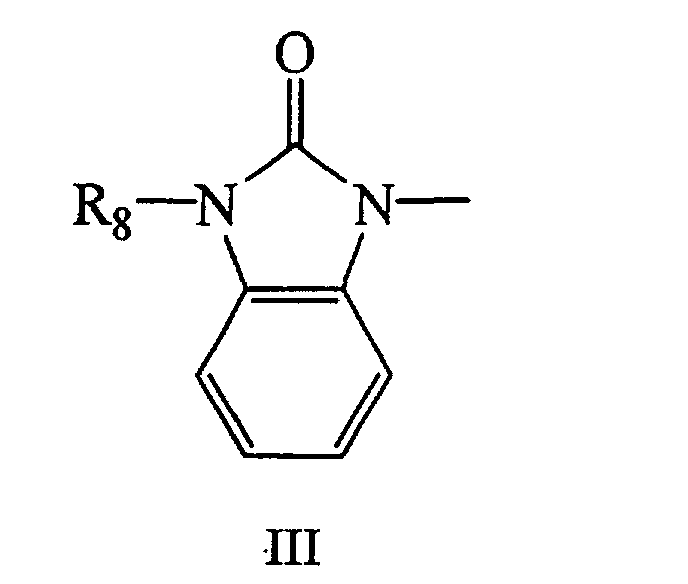
(ii) Formula IV:(wherein R9 represents C1-C6 linear alkyl, C3-C8 branched alkyl, C1-C6 linear alkylacyl, C3-C8 branched alkylacyl, C5-C7 cycloalkylacyl, C1-C6 linear alkylsulfonyl, C3-C8 branched alkylsulfonyl, or benzoyl, phenylsulfonyl or benzyl, this benzoyl, phenylsulfonyl or benzyl being substituted with 0 to 2 substituents selected from the group consisting of halogen, C1-C8 alkyl, C1-C8 alkoxy, cyano, nitro, hydroxyl, amino and tetrazole)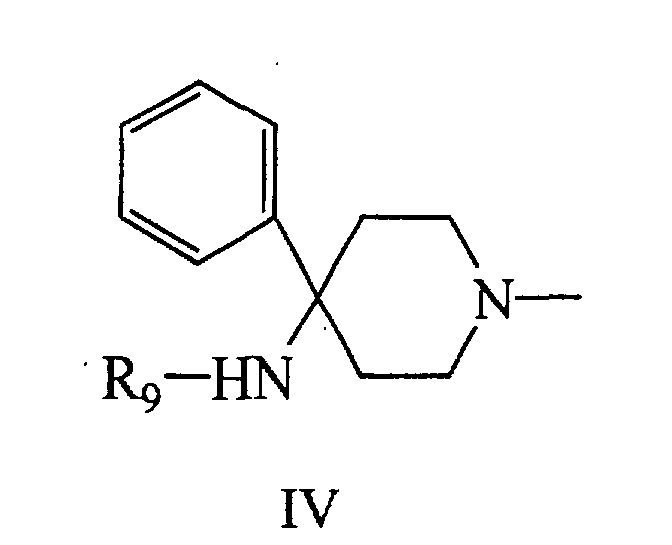
(iii) Formula V:(wherein R10 represents hydrogen, C1-C6 linear alkyl, C3-C8 branched alkyl, C6-C10 alkylcycloalkyl, or phenyl or benzyl, this phenyl or benzyl being substituted with 0 to 2 substituents selected from the group consisting of halogen, C1-C8 alkyl, C1-C8 alkoxy, cyano, nitro, hydroxyl, amino and tetrazole);
When A is a carbon atom, R3, A and R4 may cooperatively form adamantyl, Formula VI:(wherein definitions of X2 and Y2 are the same as those of X1 and Y1, respectively) or Formula VII: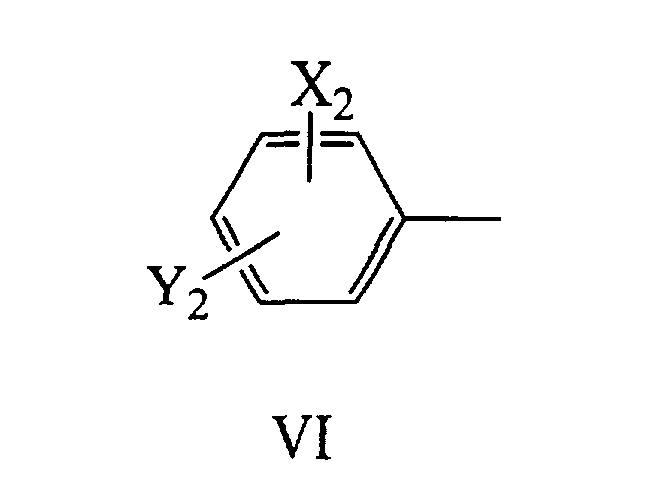 (wherein definition of R11 is the same as that of R9);
R5 represents hydrogen, C1-C6 linear alkyl, C3-C8 branched alkyl, allyl, homoallyl, C6-C10 alkylcycloalkyl, or phenyl, benzyl, phenethyl, styryl or naphthylmethyl, this phenyl, benzyl, phenethyl, styryl or naphthylmethyl being substituted with 0 to 2 substituents selected from the group consisting of halogen, C1-C8 alkyl, C1-C8 alkoxy, cyano, nitro, hydroxyl, amino and tetrazole]
or a pharmaceutically acceptable salt thereof. - The present invention also provides an adhesion molecule inhibitor comprising the spiro derivative or a pharmaceutically acceptable salt thereof according to the present invention. The present invention further provides a medical use of the spiro derivative or a pharmaceutically acceptable salt thereof according to the present invention, and especially, a therapeutic agent for inflammatory diseases. The present invention still further provides a method for inhibiting an adhesion molecule, comprising administering an effective amount of the spiro derivative or a pharmaceutically acceptable salt thereof according to the present invention. The present invention still further provides a use of the spiro derivative or a pharmaceutically acceptable salt thereof according to the present invention for the production of a pharmaceutical. The present invention still further provides a use of the spiro derivative or a pharmaceutically acceptable salt thereof according to the present invention for the production of an adhesion molecule inhibitor.
- By the present invention, novel substances having activities to inhibit cell adhesion via adhesion molecules, especially adhesion molecule VLA-4, were provided. By the present invention, prevention and therapy of the inflammatory diseases caused by infiltration of leukocytes such as monocytes, lymphocytes and eosinophils can be attained.
- As mentioned above, the spiro derivatives according to the present invention are represented by the above-described Formula I. In Formula I, 1 represents an integer of 0 to 2; m represents an integer of 0 to 2; n represents an integer of 1 to 3; A represents an oxygen atom, carbon atom or a nitrogen atom (with the proviso that when A is an oxygen atom, R3 does not exist); B represents a carbon atom or a nitrogen atom; C' and D represent hydrogen, or C' and D cooperatively represent carbonyl; X1 and Y1 independently represent hydrogen, halogen, C1-C8 alkyl such as methyl, ethyl, n-propyl or isopropyl, C1-C8 alkoxy such as methoxy, ethoxy, n-propyloxy or isopropyloxy, cyano, nitro, hydroxyl, amino or tetrazole; R1 and R2 represent hydrogen or C1-C6 linear alkyl, that is, methyl, ethyl, n-propyl, n-butyl, n-pentyl or n-hexyl; R3 and R4 independently represent hydrogen, C1-C6 linear alkyl, that is, methyl, ethyl, n-propyl, n-butyl, n-pentyl or n-hexyl, C3-C8 branched alkyl such as 1-methylethyl, 1-methylpropyl, 2-methylpropyl, 1-methylbutyl, 2-methylbutyl, 3-methylbutyl, 1-methylpentyl, 2-methylpentyl, 3-methylpentyl, 4-methylpentyl, 1-methylhexyl, 2-methylhexyl, 3-methylhexyl, 4-methylhexyl, 5-methylhexyl, 3,5-dimethylhexyl, 3,6-dimethylhexyl or 4,5-dimethylhexyl, or phenyl or benzyl, this phenyl or benzyl being substituted with 0 to 2 substituents selected from the group consisting of halogen, C1-C8 alkyl, C1-C8 alkoxy, cyano, nitro, hydroxyl, amino and tetrazole, such as phenyl, 2-cyanophenyl, 2-hydroxyphenyl, 2-chlorophenyl, 2-nitrophenyl, 2-aminophenyl, 2-bromophenyl, 2-fluorophenyl, 2-tetrazoylphenyl, 2,6-dihydroxyphenyl, 2,6-diemthoxyphenyl, 2,6-dichlorophenyl, 2,6-dinitrophenyl, 2,6-dimethylphenyl, benzyl, 2-cyanobenzyl, 2-hydroxybenzyl, 2-chlorobenzyl, 2-nitrobenzyl, 2-aminobenzyl, 2-bromobenzyl, 2-fluorobenzyl, 2-tetrazoylbenzyl, 2,6-dihydroxybenzyl, 2,6-dimethoxybenzyl, 2,6-dichlorobenzyl, 2,6-dinitrobenzyl or 2,6-dimethylbenzyl; F represents -CH2- or -C(O)-;
when A is a nitrogen atom, R3, A and R4 may cooperatively represent
(i) Formula II:(wherein p represents an integer of 0 to 4, E represents a carbon atom or a nitrogen atom; R6 and R7 independently represent hydrogen, C1-C6 linear alkyl, that is, methyl, ethyl, n-propyl, n-butyl, n-pentyl or n-hexyl, C3-C8 branched alkyl such as 1-methylethyl, 1-methylpropyl, 2-methylpropyl, 1-methylbutyl, 2-methylbutyl, 3-methylbutyl, 1-methylpentyl, 2-methylpentyl, 3-methylpentyl, 4-methylpentyl, 1-methylhexyl, 2-methylhexyl, 3-methylhexyl, 4-methylhexyl, 5-methylhexyl, 3,5-dimethylhexyl, 3,6-dimethylhexyl or 4,5-dimethylhexyl, C1-C6 linear alkylacyl such as acetyl, ethyloxy or n-propyloxy, C3-C8 branched alkylacyl such as isopropyloxy, isobutyloxy, isopentyloxy or isohexyloxy, pyrrolidinecarbonyl, peperidinecarbonyl, or phenyl, phenylsulfonyl, benzoyl, benzyl, indole or N-phenylamide, this phenyl, phenylsulfonyl, benzoyl, benzyl, indole or N-phenylamide being substituted with 0 to 2 substituents selected from the group consisting of halogen, C1-C8 alkyl, C1-C8 alkoxy, cyano, nitro, hydroxyl, amino and tetrazole, such as phenyl, 2-cyanophenyl, 2-hydroxyphenyl, 2-chlorophenyl, 2-nitrophenyl, 2-aminophenyl, 2-bromophenyl, 2-fluorophenyl, 2-tetrazoylphenyl, 2,6-dihydroxyphenyl, 2,6-dimethoxyphenyl, 2,6-dichlorophenyl, 2,6-dinitrophenyl, 2,6-dimethylphenyl, benzoyl, 2-cyanobenzoyl, 2-hydroxybenzoyl, 2-chlorobenzoyl, 2-nitrobenzoyl, 2-aminobenzoyl, 2-bromobenzoyl, 2-fluorobenzoyl, 2-tetrazoylbenzoyl, 2,6-dihydroxybenzoyl, 2,6-dimethoxybenzoyl, 2,6-dichlorobenzoyl, 2,6-dinitrobenzoyl, 2,6-dimethylbenzoyl, benzyl, 2-cyanobenzyl, 2-hydroxybenzyl, 2-chlorobenzyl, 2-nitrobenzyl, 2-amionobenzyl, 2-bromobenzyl, 2-fluorobenzyl, 2-tetrazoylbenzyl, 2,6-dihydroxybenzyl, 2,6-dimethoxybenzyl, 2,6-dichlorobenzyl, 2,6-dinitrobenzyl, 2,6-dimethylbenzyl, phenylsulfonyl, 2-cyanophenylsulfonyl, 2-hydroxyphenylsulfonyl, 2-chlorophenylsulfonyl, 2-nitrophenylsulfonyl, 2-aminophenylsulfonyl, 2-bromophenylsulfonyl, 2-fluorophenylsulfonyl, 2-tetrazoylphenylsulfonyl, 2,6-dihydroxyphenylsulfonyl, 2,6-dimethoxyphenylsulfonyl, 2,6-dichlorophenylsulfonyl, 2,6-dinitrophenylsulfonyl, 2,6-dimethylphenylsulfonyl, N-phenylcarboxamide, N-(2-cyanophenyl)carboxamide, N-(2-cyanophenyl)carboxamide, N-(2-hydroxyphenyl)carboxamide, N-(2-chlorophenyl)carboxamide, N-(2-nitrophenyl)carboxamide, N-(2-aminophenyl)carboxamide, N-(2-bromophenyl)carboxamide, N-(2-fluorophenyl)carboxamide, N-(2-tetrazoylphenyl)carboxamide, N-(2,6-dihydroxyphenyl)carboxamide, N-(2,6-dimethoxyphenyl)carboxamide, N-(2,6-dichlorophenyl)carboxamide, N-(2,6-dinitrophenyl)carboxamide or N-(2,6-dimethylphenyl)carboxamide, or Formula III: (wherein R8 represents hydrogen, C1-C6 linear alkyl, that is, methyl, ethyl, n-propyl, n-butyl, n-pentyl or n-hexyl, C3-C8 branched alkyl such as 1-methylethyl, 1-methylpropyl, 2-methylpropyl, 1-methylbutyl, 2-methylbutyl, 3-methylbutyl, 1-methylpentyl, 2-methylpentyl, 3-methylpentyl, 4-methylpentyl, 1-methylhexyl, 2-methylhexyl, 3-methylhexyl, 4-methylhexyl, 5-methylhexyl, 3,5-dimethylhexyl, 3,6-dimethylhexyl or 4,5-dimethylhexyl, or phenyl or benzyl, this phenyl or benzyl being substituted with 0 to 2 substituents selected from the group consisting of halogen, C1-C8 alkyl, C1-C8 alkoxy, cyano, nitro, hydroxyl, amino and tetrazole, such as phenyl, 2-cyanophenyl, 2-hydroxyphenyl, 2-chlorophenyl, 2-nitrophenyl, 2-aminophenyl, 2-bromophenyl, 2-fluorophenyl, 2-tetrazoylphenyl, 2,6-dihydroxyphenyl, 2,6-dimethoxyphenyl, 2,6-dichlorophenyl, 2,6-dinitrophenyl, 2,6-dimethylphenyl, benzyl, 2-cyanobenzyl, 2-hydroxybenzyl, 2-chlorobenzyl, 2-nitrobenzyl, 2-aminobenzyl, 2-bromobenzyl, 2-fluorobenzyl, 2-tetrazoylbenzyl, 2,6-dihydroxybenzyl, 2,6-dimethoxybenzyl, 2,6-dichlorobenzyl, 2,6-dinitrobenzyl or 2,6-dimethylbenzyl),
(ii) Formula IV:(wherein R9 represents hydrogen, C1-C6 linear alkyl, that is, methyl, ethyl, n-propyl, n-butyl, n-pentyl or n-hexyl, C3-C8 branched alkyl such as 1-methylethyl, 1-methylpropyl, 2-methylpropyl, 1-methylbutyl, 2-methylbutyl, 3-methylbutyl, 1-methylpentyl, 2-methylpentyl, 3-methylpentyl, 4-methylpentyl, 1-methylhexyl, 2-methylhexyl, 3-methylhexyl, 4-methylhexyl, 5-methylhexyl, 3,5-dimethylhexyl, 3,6-dimethylhexyl or 4,5-dimethylhexyl, C1-C6 linear alkylacyl, that is, acetyl, propionyl, butyryl, valeryl, pentanoyl or hexanoyl, C3-C8 branched alkylacyl such as isopropionyl, isobutyryl, pivaloyl, isopentanoyl, isohexanoyl or isoheptanoyl, C5-C7 cycloalkylacyl such as cyclopentylcarbonyl or cyclohexylcarbonyl, C1-C6 linear alkylsulfonyl such as mesyl, ethanesulfonyl, n-propansulfonyl, n-butanesulfonyl, n-pentanesulfonyl or n-hexanesulfonyl, C3-C8 branched alkylsulfonyl such as isopropanesulfonyl, isobutanesulfonyl, t-butanesulfonyl, isopentanesulfonyl, isohexanesulfonyl or isoheptanesulfonyl; or benzoyl, phenylsulfonyl or benzyl, this benzoyl, phenylsulfonyl or benzyl being substituted with 0 to 2 substituents selected from the group consisting of halogen, C1-C8 alkyl, C1-C8 alkoxy, cyano, nitro, hydroxyl, amino and tetrazole, such as benzoyl, 2-cyanobenzoyl, 2-hydroxybenzoyl, 2-chlorobenzoyl, 2-nitrobenzoyl, 2-aminobenzoyl, 2-bromobenzoyl, 2-fluorobenzoyl, 2-tetrazoylbenzoyl, 2,6-dihydroxybenzoyl, 2,6-dimethoxybenzoyl, 2,6-dichlorobenzoyl, 2,6-dinitrobenzoyl, 2,6-dimethylbenzoyl, phenylsulfonyl, 2-cyanophenylsulfonyl, 2-hydroxyphenylsulfonyl, 2-chlorophenylsulfonyl, 2-nitrophenylsulfonyl, 2-aminophenylsulfonyl, 2-bromophenylsulfonyl, 2-fluorophenylsulfonyl, 2-tetrazoylphenylsulfonyl, 2,6-dihydroxyphenylsulfonyl, 2,6-dimethoxyphenylsulfonyl, 2,6-dichlorophenylsulfonyl, 2,6-dinitrophenylsulfonyl, 2,6-dimethylphenylsulfonyl, benzyl, 2-cyanobenzyl, 2-hydroxybenzyl, 2-chlorobenzyl, 2-nitrobenzyl, 2-aminobenzyl, 2-bromobenzyl, 2-fluorobenzyl, 2-tetrazoylbenzyl, 2,6-dihydroxybenzyl, 2,6-dimethoxybenzyl, 2,6-dichlorobenzyl, 2,6-dinitrobenzyl or 2,6-dimethylbenzyl)
(iii) Formula V:(wherein R10 represents hydrogen, C1-C6 linear alkyl, that is, methyl, ethyl, n-propyl, n-butyl, n-pentyl or n-hexyl, C3-C8 branched alkyl such as 1-methylethyl, 1-methylpropyl, 2-methylpropyl, 1-methylbutyl, 2-methylbutyl, 3-methylbutyl, 1-methylpentyl, 2-methylpentyl, 3-methylpentyl, 4-methylpentyl, 1-methylhexyl, 2-methylhexyl, 3-methylhexyl, 4-methylhexyl, 5-methylhexyl, 3,5-dimethylhexyl, 3,6-dimethylhexyl or 4,5-dimethylhexyl, C6-C10 alkylcycloalkyl such as cyclopentylmethyl, cyclohexylmethyl or cycloheptylmethyl, or phenyl or benzyl, this phenyl or benzyl being substituted with 0 to 2 substituents selected from the group consisting of halogen, C1-C8 alkyl, C1-C8 alkoxy, cyano, nitro, hydroxyl, amino and tetrazole, such as phenyl, 2-cyanophenyl, 2-hydroxyphenyl, 2-chlorophenyl, 2-nitrophenyl, 2-aminophenyl, 2-bromophenyl, 2-fluorophenyl, 2-tetrazoylphenyl, 2,6-dihydroxyphenyl, 2,6-dimethoxyphenyl, 2,6-dichlorophenyl, 2,6-dinitrophenyl, 2,6-dimethylphenyl, benzyl, 2-cyanobenzyl, 2-hydroxybenzyl, 2-chlorobenzyl, 2-nitrobenzyl, 2-aminobenzyl, 2-bromobenzyl, 2-fluorobenzyl, 2-tetrazoylbenzyl, 2,6-dihydroxybenzyl, 2,6-dimethoxybenzyl, 2,6-dichlorobenzyl, 2,6-dinitrobenzyl or 2,6-dimethylbenzyl);
When A is a carbon atom, R3, A and R4 may cooperatively form adamantyl, Formula VI:(wherein definitions of X2 and Y2 are the same as those of X1 and Y1, respectively) or Formula VII: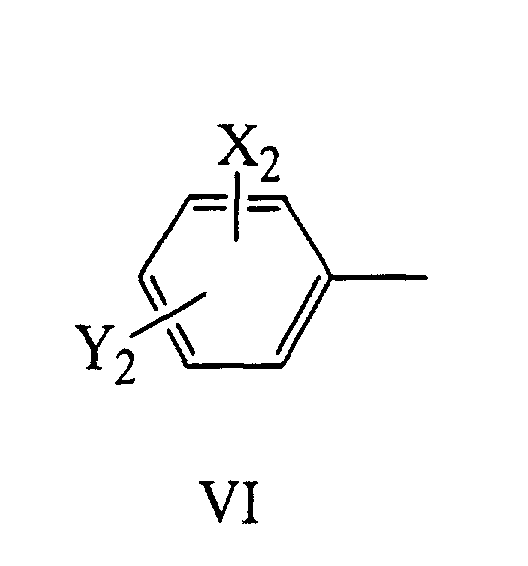 (wherein definition of R11 is the same as that of R9); R5 represents hydrogen, C1-C6 linear alkyl, that is, methyl, ethyl, n-propyl, n-butyl, n-pentyl or n-hexyl, C3-C8 branched alkyl such as 1-methylethyl, 1-methylpropyl, 2-methylpropyl, 1-methylbutyl, 2-methylbutyl, 3-methylbutyl, 1-methylpentyl, 2-methylpentyl, 3-methylpentyl, 4-methylpentyl, 1-methylhexyl, 2-methylhexyl, 3-methylhexyl, 4-methylhexyl, 5-methylhexyl, 3,5-dimethylhexyl, 3,6-dimethylhexyl or 4,5-dimethylhexyl, allyl, homoallyl, C6-C10 alkylcycloalkyl such as cyclopentylmethyl, cyclohexylmethyl or cycloheptylmethyl, or phenyl, benzyl, phenethyl, styryl or naphthyl, this phenyl, benzyl, phenethyl, styryl or naphthyl being substituted with 0 to 2 substituents selected from the group consisting of halogen, C1-C8 alkyl, C1-C8 alkoxy, cyano, nitro, hydroxyl, amino and tetrazole, such as phenyl, 2-cyanophenyl, 2-hydroxyphenyl, 2-chlorophenyl, 2-nitrophenyl, 2-aminophenyl, 2-bromophenyl, 2-fluorophenyl, 2-tetrazoylphenyl, 2,6-dihydroxyphenyl, 2,6-dimethoxyphenyl, 2,6-dichlorophenyl, 2,6-dinitrophenyl, 2,6-dimethylphenyl, benzyl, 2-cyanobenzyl, 2-hydroxybenzyl, 2-chlorobenzyl, 2-nitrobenzyl, 2-aminobenzyl, 2-bromobenzyl, 2-fluorobenzyl, 2-tetrazoylbenzyl, 2,6-dihydroxybenzyl, 2,6-dimethoxybenzyl, 2,6-dichlorobenzyl, 2,6-dinitrobenzyl, 2,6-dimethylbenzyl, phenethyl, 2-cyanophenethyl, 2-hydroxyphenethyl, 2-chlorophenethyl, 2-nitrophenethyl, 2-aminophenethyl, 2-bromophenethyl, 2-fluorophenethyl, 2-tetrazoylphenethyl, 2,6-dihydroxyphenethyl, 2,6-dimethoxyphenethyl, 2,6-dichlorophenethyl, 2,6-dinitrophenethyl, 2,6-dimethylphenethyl, styryl, 2-cyanostyryl, 2-hydroxystyryl, 2-chlorostyryl, 2-nitrostyryl, 2-aminostyryl, 2-bromostyryl, 2-fluorostyryl, 2-tetrazoylstyryl, 2,6-dihydroxystyryl, 2,6-dimethoxystyryl, 2,6-dichlorostyryl, 2,6-dinitrostyryl, 2,6-dimethylstyryl, naphthyl, 2-cyanonaphthyl, 2-hydroxynaphthyl, 2-chloronaphthyl, 2-nitronaphthyl, 2-aminonaphthyl, 2-bromonaphthyl, 2-fluoronaphthyl, 2-tetrazoylnaphthyl, 2,8-dihydroxynaphthyl, 2,8-dimethoxynaphthyl, 2,8-dichloronaphthyl, 2,8-dinitronaphthyl or 2,8-dimethylnaphthyl.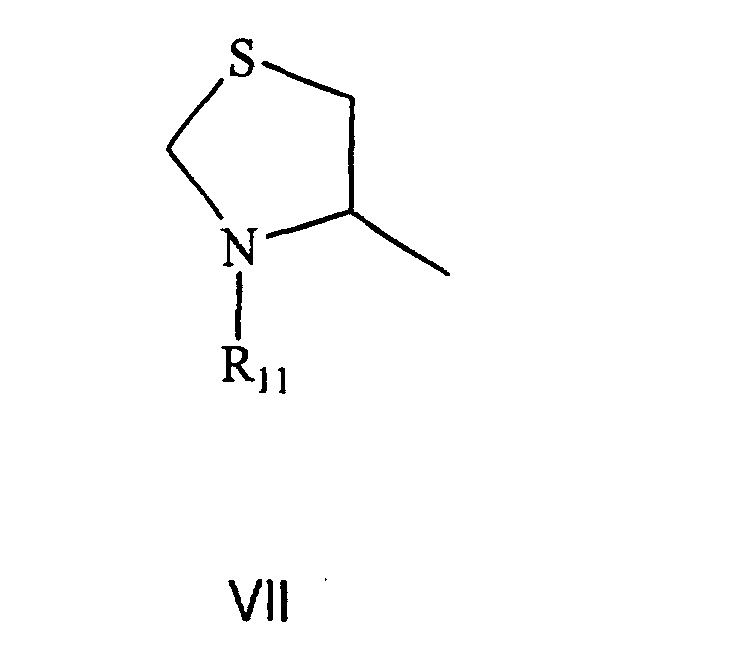
- Among the compounds represented by said Formula I, those wherein F represents -C(O)-; A and B independently represent carbon atom or nitrogen atom; C' and D represent hydrogen or C' and D cooperatively represent carbonyl; X and Y independently represent hydrogen, halogen, methyl, methoxy, cyano, nitro, hydroxyl, amino or tetrazole; R1 and R2 independently represent hydrogen or C1-C6 linear alkyl; R3 and R4 independently represent hydrogen, C1-C6 linear alkyl or C3-C8 branched alkyl, or phenyl or benzyl, this phenyl or benzyl being substituted with 0 to 2 substituents selected from the group consisting of halogen, methyl, methoxy, cyano, nitro, hydroxyl, amino and tetrazole;
when A is a nitrogen atom, R3, A and R4 may cooperatively represent - (i) said Formula II (wherein p represents an integer of 0 to 4; E represents a carbon atom or a nitrogen atom; R6 and R7 independently represent hydrogen, C1-C6 linear alkyl, C3-C8 branched alkyl, C1-C6 linear alkylacyl, C3-C8 branched alkylacyl, pyrrolidinecarbonyl, piperidinecarbonyl, or phenyl, phenylsulfonyl, benzoyl, benzyl, indole or N-phenylamide, this phenyl, phenylsulfonyl, benzoyl, benzyl, indole or N-phenylamide being substituted with 0 to 2 substituents selected from the group consisting of halogen, methyl, methoxy, cyano, nitro, hydroxyl, amino and tetrazole, or said Formula III (wherein R8 represents hydrogen, C1-C6 linear alkyl, C3-C8 branched alkyl, or phenyl or benzyl, this phenyl or benzyl being substituted with 0 to 2 substituents selected from the group consisting of halogen, methyl, methoxy, cyano, nitro, hydroxyl, amino and tetrazole),
- (ii) said Formula IV (wherein R9 represents C1-C6 linear alkyl, C3-C8 branched alkyl, C1-C6 linear alkylacyl, C3-C8 branched alkylacyl, C5-C7 cycloalkylacyl, C1-C6 linear alkylsulfonyl, C3-C8 branched alkylsulfonyl, or benzoyl, phenylsulfonyl or benzyl, this benzoyl, phenylsulfonyl or benzyl being substituted with 0 to 2 substituents selected from the group consisting of halogen, methyl, methoxy, cyano, nitro, hydroxyl, amino and tetrazole),
- (iii) said Formula V:
(wherein R10 represents hydrogen, C1-C6 linear alkyl, C3-C8 branched alkyl, C6-C10 alkylcycloalkyl, or phenyl or benzyl, this phenyl or benzyl being substituted with 0 to 2 substituents selected from the group consisting of halogen, methyl, methoxy, cyano, nitro, hydroxyl, amino and tetrazole);
when A is a carbon atom, R3, A and R4 may cooperatively represent adamantyl or said Formula VI (wherein X2 and Y2 represent the same definitions as described above); R5 represents hydrogen, C1-C6 linear alkyl, C3-C8 branched alkyl, allyl, homoallyl, C6-C10 alkylcycloalkyl, or phenyl, benzyl, phenethyl, styryl or naphthylmethyl, this phenyl, benzyl, phenethyl, styryl or naphthylmethyl being substituted with 0 to 2 substituents selected from the group consisting of halogen, methyl, methoxy, cyano, nitro, hydroxyl, amino and tetrazole, are also preferred. -
- Specific examples of the compounds according to the present invention include 3-((2,4,8-triaza-1-oxo-4-phenylspiro[4.5]dec-8-yl)carbonylamino)-2-((2,6-dimethoxyphenyl)carbonylamino)propanoic acid,
3-((2,4,8-triaza-1-oxo-4-phenylspiro[4.5]dec-8-yl)carbonylamino)-2-((2,6-dimethylphenyl)carbonylamino)propanoic acid,
3-((2,4,8-triaza-1-oxo-4-phenylspiro[4.5]dec-8-yl)carbonylamino)-2-((2,6-dichlorophenyl)carbonylamino)propanoic acid,
3-((2,4,8-triaza-1-oxo-4-phenylspiro[4.5]dec-8-yl)carbonylamino)-2-((2,6-difulorophenyl)carbonylamino)propanoic acid,
3-((2,4,8-triaza-1-oxo-4-phenylspiro[4.5]dec-8-yl)carbonylamino)-2-((2-bromo-6-methylphenyl)carbonylamino)propanoic acid,
3-((2,4,8-triaza-1-oxo-4-phenylspiro[4.5]dec-8-yl)carbonylamino)-2-((2-methyl-5-nitrophenyl)carbonylamino)propanoic acid,
2-((2,6-dichlorophenyl)carbonylamino)-3-((2,4,8-triaza-2-methyl-1-oxo-4-phenylspiro[4.5]dec-8-yl)carbonylamino)propanoic acid,
2-((2,6-dimethylphenyl)carbonylamino)-3-((2,4,8-triaza-2-methyl-1-oxo-4-phenylspiro[4.5]dec-8-yl)carbonylamino)propanoic acid,
2-((2,6-dimethoxyphenyl)carbonylamino)-3-((2,4,8-triaza-2-methyl-1-oxo-4-phenylspiro[4.5]dec-8-yl)carbonylamino)propanoic acid,
2-((2,6-difluorophenyl)carbonylamino)-3-((2,4,8-triaza-2-methyl-1-oxo-4-phenylspiro[4.5]dec-8-yl)carbonylamino)propanoic acid,
2-((2-bromo-6-methylphenyl)carbonylamino)-3-((2,4,8-triaza-2-methyl-1-oxo-4-phenylspiro[4.5]dec-8-yl)carbonylamino)propanoic acid,
2-((2-methyl-5-nitrophenyl)carbonylamino)-3-((2,4,8-triaza-2-methyl-1-oxo-4-phenylspiro[4.5]dec-8-yl)carbonylamino)propanoic acid,
2-((2,6-dichlorophenyl)carbonylamino)-3-((2,4,8-triaza-2-ethyl-1-oxo-4-phenylspiro[4.5]dec-8-yl)carbonylamino)propanoic acid,
2-((2,6-dimethylphenyl)carbonylamino)-3-((2,4,8-triaza-2-ethyl-1-oxo-4-phenylspiro[4.5]dec-8-yl)carbonylamino)propanoic acid,
2-((2,6-dimethoxyphenyl)carbonylamino)-3-((2,4,8-triaza-2-ethyl-1-oxo-4-phenylspiro[4.5]dec-8-yl)carbonylamino)propanoic acid,
2-((2,6-difluorophenyl)carbonylamino)-3-((2,4,8-triaza-2-ethyl-1-oxo-4-phenylspiro[4.5]dec-8-yl)carbonylamino)propanoic acid,
2-((2-bromo-6-methylphenyl)carbonylamino)-3-((2,4,8-triaza-2-ethyl-1-oxo-4-phenylspiro[4.5]dec-8-yl)carbonylamino)propanoic acid,
2-((2-methyl-5-nitrophenyl)carbonylamino)-3-((2,4,8-triaza-2-ethyl-1-oxo-4-phenylspiro[4.5]dec-8-yl)carbonylamino)propanoic acid,
2-((2,6-dichlorophenyl)carbonylamino)-3-((2,4,8-triaza-1-oxo-4-phenyl-2-propylspiro[4.5]dec-8-yl)carbonylamino)propanoic acid,
2-((2,6-dimethylphenyl)carbonylamino)-3-((2,4,8-triaza-1-oxo-4-phenyl-2-propylspiro[4.5]dec-8-yl)carbonylamino)propanoic acid,
2-((2,6-dimethoxyphenyl)carbonylamino)-3-((2,4,8-triaza-1-oxo-4-phenyl-2-propylspiro[4.5]dec-8-yl)carbonylamino)propanoic acid,
2-((2,6-difluorophenyl)carbonylamino)-3-((2,4,8-triaza-1-oxo-4-phenyl-2-propylspiro[4.5]dec-8-yl)carbonylamino)propanoic acid,
2-((2-bromo-6-methylphenyl)carbonylamino)-3-((2,4,8-triaza-1-oxo-4-phenyl-2-propylspiro[4.5]dec-8-yl)carbonylamino)propanoic acid,
2-((2-methyl-5-nitrophenyl)carbonylamino)-3 -((2,4,8-triaza-1-oxo-4-phenyl-2-propylspiro[4.5]dec-8-yl)carbonylamino)propanoic acid,
2-((2,6-dimethoxyphenyl)carbonylamino)-3-((2,4,8-triaza-2-(methylethyl)-1-oxo-4-phenylspiro[4.5]dec-8-yl)carbonylamino)propanoic acid,
2-((2,6-dimethylphenyl)carbonylamino)-3-((2,4,8-triaza-2-(methylethyl)-1-oxo-4-phenylspiro[4.5]dec-8-yl)carbonylamino)propanoic acid,
2-((2,6-dichlorophenyl)carbonylamino)-3-((2,4,8-triaza-2-(methylethyl)-1-oxo-4-phenylspiro[4.5]dec-8-yl)carbonylamino)propanoic acid,
2-((2,6-difluorophenyl)carbonylamino)-3-((2,4,8-triaza-2-(methylethyl)-1-oxo-4-phenylspiro[4.5]dec-8-yl)carbonylamino)propanoic acid,
2-((2-bromo-6-methylphenyl)carbonylamino)-3-((2,4,8-triaza-2-(methylethyl)-1-oxo-4-phenylspiro[4.5]dec-8-yl)carbonylamino)propanoic acid,
2-((2-methyl-5-nitrophenyl)carbonylamino)-3-((2,4,8-triaza-2-(methylethyl)-1-oxo-4-phenylspiro[4.5]dec-8-yl)carbonylamino)propanoic acid,
2-((2,6-dimethoxyphenyl)carbonylamino)-3-((2,4,8-triaza-2-(2-methylpropyl)-1-oxo-4-phenylspiro[4.5]dec-8-yl)carbonylamino)propanoic acid,
2-((2,6-dimethylphenyl)carbonylamino)-3-((2,4,8-triaza-2-(2-methylpropyl)-1-oxo-4-phenylspiro[4.5]dec-8-yl)carbonylamino)propanoic acid,
2-((2,6-dichlorophenyl)carbonylamino)-3-((2,4,8-triaza-2-(2-methylpropyl)-1-oxo-4-phenylspiro[4.5]dec-8-yl)carbonylamino)propanoic acid,
2-((2-methyl-5-nitrophenyl)carbonylamino)-3-((2,4,8-triaza-2-(2-methylpropyl)-1-oxo-4-phenylspiro[4.5]dec-8-yl)carbonylamino)propanoic acid,
2-((2-bromo-6-methylphenyl)carbonylamino)-3-((2,4,8-triaza-2-(2-methylpropyl)-1-oxo-4-phenylspiro[4.5]dec-8-yl)carbonylamino)propanoic acid,
2-((2,6-difluorophenyl)carbonylamino)-3-((2,4,8-triaza-2-(2-methylpropyl)-1-oxo-4-phenylspiro[4.5]dec-8-yl)carbonylamino)propanoic acid,
2-((2,6-dimethoxyphenyl)carbonylamino)-3-((2,4,8-triaza-1-oxo-4-phenyl-2-benzylspiro[4.5]dec-8-yl)carbonylamino)propanoic acid,
2-((2,6-dimethylphenyl)carbonylamino)-3-((2,4,8-triaza-1-oxo-4-phenyl-2-benzylspiro[4.5]dec-8-yl)carbonylamino)propanoic acid,
2-((2,6-dichlorophenyl)carbonylamino)-3-((2,4,8-triaza-1-oxo-4-phenyl-2-benzylspiro[4.5]dec-8-yl)carbonylamino)propanoic acid,
2-((2,6-difluorophenyl)carbonylamino)-3-((2,4,8-triaza-1-oxo-4-phenyl-2-benzylspiro[4.5]dec-8-yl)carbonylamino)propanoic acid,
2-((2-bromo-6-methylphenyl)carbonylamino)-3-((2,4,8-triaza- 1-oxo-4-phenyl-2-benzylspiro[4.5]dec-8-yl)carbonylamino)propanoic acid,
2-((2-methyl-5-nitrophenyl)carbonylamino)-3-((2,4,8-triaza-1-oxo-4-phenyl-2-benzylspiro[4.5]dec-8-yl)carbonylamino)propanoic acid,
2-((2,6-dimethoxyphenyl)carbonylamino)-3-((2,4,8-triaza-2-((2,6-dimethylphenyl)methyl)-1-oxo-4-phenylspiro[4.5]dec-8-yl)carbonylamino)propanoic acid,
2-((2,6-dimethylphenyl)carbonylamino)-3-((2,4,8-triaza-2-((2,6-dimethylphenyl)methyl)-1-oxo-4-phenylspiro[4.5]dec-8-yl)carbonylamino)propanoic acid,
2-((2,6-dichlorophenyl)carbonylamino)-3-((2,4,8-triaza-2-((2,6-dimethylphenyl)methyl)-1-oxo-4-phenylspiro[4.5]dec-8-yl)carbonylamino)propanoic acid,
2,3-di((2,4,8-triaza-1-oxo-4-phenylspiro[4.5]dec-8-yl)carbonylamino)propanoic acid, 2,3-di((2,4,8-triaza-2-methyl-1-oxo-4-phenylspiro[4.5]dec-8-yl)carbonylamino)propanoic acid,
2,3-di((2,4,8-triaza-1-oxo-4-phenyl-2-benzylspiro[4.5]dec-8-yl)carbonylamino)propanoic acid,
2,3-di((2,4,8-triaza-1-oxo-4-phenyl-2-propylspiro[4.5]dec-8-yl)carbonylamino)propanoic acid,
2,3-di((2,4,8-triaza-2-(2-methylpropyl)-1-oxo-4-phenylspiro[4.5]dec-8-yl)carbonylamino)propanoic acid,
2,3-di((2,4,8-triaza-2-(2-methylethyl)-1-oxo-4-phenylspiro[4.5]dec-8-yl)carbonylamino)propanoic acid,
3-((2,4,8-triaza-2-methyl-1-oxo-4-phenylspiro[4.5]dec-8-yl)carbonylamino)-2-((2,4,8-triaza-1-oxo-4-phenylspiro[4.5]dec-8-yl)carbonylamino)propanoic acid,
3-((2,4,8-triaza-2-(2-methylpropyl)-1-oxo-4-phenylspiro[4.5]dec-8-yl)carbonylamino)-2-((2,4,8-triaza-1-oxo-4-phenylspiro[4.5]dec-8-yl)carbonylamino)propanoic acid,
3-((2,4,8-triaza-2-(2-methylethyl)-1-oxo-4-phenylspiro[4.5]dec-8-yl)carbonylamino)-2-((2,4,8-triaza-1-oxo-4-phenylspiro[4.5]dec-8-yl)carbonylamino)propanoic acid,
3-((2,4,8-triaza-1-oxo-4-phenyl-2-benzylspiro[4.5]dec-8-yl)carbonylamino)-2-((2,4,8-triaza-1-oxo-4-phenylspiro[4.5]dec-8-yl)carbonylamino)propanoic acid,
2-((4-(2-methylpropanoylamino)-4-phenylpiperidyl)carbonylamino)-3-((2,4,8-triaza-1-oxo-4-phenylspiro[4.5]dec-8-yl)carbonylamino)propanoic acid,
2-((4-(2-methylpropanoylamino)-4-phenylpiperidyl)carbonylamino)-3-((2,4,8-triaza-2-(2-methylpropyl)-1-oxo-4-phenylspiro[4.5]dec-8-yl)carbonylamino)propanoic acid,
2-((4-(2-methylpropanoylamino)-4-phenylpiperidyl)carbonylamino)-3-((2,4,8-triaza-2-methyl-1-oxo-4-phenylspiro[4.5]dec-8-yl)carbonylamino)propanoic acid,
2-((4-(2-methylpropanoylamino)-4-phenylpiperidyl)carbonylamino)-3-((2,4,8-triaza-2-ethyl-1-oxo-4-phenylspiro[4.5]dec-8-yl)carbonylamino)propanoic acid,
2-((4-(2-methylpropanoylamino)-4-phenylpiperidyl)carbonylamino)-3-((2,4,8-triaza-1-oxo-4-phenyl-2-propylspiro[4.5]dec-8-yl)carbonylamino)propanoic acid,
2-((4-(2-methylpropanoylamino)-4-phenylpiperidyl)carbonylamino)-3-((2,4,8-triaza-1-oxo-4-phenyl-2-benzylspiro[4.5]dec-8-yl)carbonylamino)propanoic acid,
2-((4-(acetylamino)-4-phenylpiperidyl)carbonylamino)-3-((2,4,8-triaza-2-(2-methylpropyl)-1-oxo-4-phenylspiro[4.5]dec-8-yl)carbonylamino)propanoic acid,
2-((4-(acetylamino)-4-phenylpiperidyl)carbonylamino)-3-((2,4,8-triaza-2-methyl-1-oxo-4-phenylspiro[4.5]dec-8-yl)carbonylamino)propanoic acid,
2-((4-(acetylamino)-4-phenylpiperidyl)carbonylamino)-3-((2,4, 8-triaza-2-ethyl-1-oxo-4-phenylspiro[4.5]dec-8-yl)carbonylamino)propanoic acid,
2-((4-(acetylamino)-4-phenylpiperidyl)carbonylamino)-3-((2,4,8-triaza-1-oxo-4-phenyl-2-propylspiro[4.5]dec-8-yl)carbonylamino)propanoic acid,
2-((4-(acetylamino)-4-phenylpiperidyl)carbonylamino)-3-((2,4,8-triaza-1-oxo-4-phenyl-2-benzylspiro[4.5]dec-8-yl)carbonylamino)propanoic acid,
2-((4-phenyl-4-(propanoylamino)piperidyl)carbonylamino)-3-((2,4,8-triaza-2-(2-methylpropyl)-1-oxo-4-phenylspiro[4.5]dec-8-yl)carbonylamino)propanoic acid,
2-((4-phenyl-4-(propanoylamino)piperidyl)carbonylamino)-3-((2,4,8-triaza-2-methyl-1-oxo-4-phenylspiro[4.5]dec-8-yl)carbonylamino)propanoic acid,
2-((4-phenyl-4-(propanoylamino)piperidyl)carbonylamino)-3-((2,4,8-triaza-2-ethyl-1-oxo-4-ghenylspiro[4.5]dec-8-yl)carbonylamino)propanoic acid,
2-((4-phenyl-4-(propanoylamino)piperidyl)carbonylamino)-3-((2,4,8-triaza-1-oxo-4-phenyl-2-propylspiro[4.5]dec-8-yl)carbonylamino)propanoic acid,
2-((4-phenyl-4-(propanoylamino)piperidyl)carbonylamino)-3-((2,4,8-triaza-1-oxo-4-phenyl-2-benzylspiro[4.5]dec-8-yl)carbonylamino)propanoic acid,
2-((4-(2-oxo(3-hydrobenzimidazolyl))piperidyl)carbonylamino)-3-(2,4,8-triaza-1-oxo-4-phenylspiro[4.5]dec-8-yl)carbonylamino)propanoic acid,
2-((4-(2-oxo(3-hydrobenzimidazolyl))piperidyl)carbonylamino)-3-(2,4,8-triaza-1-oxo-4- phenyl-2-benzylspiro[4.5]dec-8-yl)carbonylamino)propanoic acid,
2-((4-(2-oxo(3-hydrobenzimidazolyl))piperidyl)carbonylamino)-3-(2,4,8-triaza-1-oxo-4-phenyl-2-propylspiro[4.5]dec-8-yl)carbonylamino)propanoic acid,
2-((4-(2-oxo(3-hydrobenzimidazolyl))piperidyl)carbonylamino)-3-(2,4,8-triaza-2-methyl-1-oxo-4-phenylspiro[4.5]dec-8-yl)carbonylamino)propanoic acid,
2-((4-(2-oxo(3-hydrobenzimidazolyl))piperidyl)carbonylamino)-3-(2,4,8-triaza-2-ethyl-1-oxo-4-phenylspiro[4.5]dec-8-yl)carbonylamino)propanoic acid,
2-((4-(2-oxo(3-hydrobenzimidazolyl))piperidyl)carbonylamino)-3-(2,4,8-triaza-2-(2-methylpropyl)-1-oxo-4- phenylspiro[4.5]dec-8-yl)carbonylamino)propanoic acid,
2-(adamantan-2-ylcarbonylamino)-3-((2,4,8-triaza-1-oxo-4-phenylspiro[4.5]dec-8-yl)carbonylamino)propanoic acid,
2-(adamantan-2-ylcarbonylamino)-3-((2,4,8-triaza- 1-oxo-4-phenyl-2-benzylspiro[4.5]dec-8-yl)carbonylamino)propanoic acid,
2-(adamantan-2-ylcarbonylamino)-3-((2,4,8-triaza-1-oxo-4-phenyl-2-propylspiro[4.5]dec-8-yl)carbonylamino)propanoic acid,
2-(adamantan-2-ylcarbonylamino)-3-((2,4,8-triaza-2-methyl-1-oxo-4-phenylspiro[4.5]dec-8-yl)carbonylamino)propanoic acid,
2-(adamantan-2-ylcarbonylamino)-3-((2,4,8-triaza-2-ethyl-1-oxo-4-phenylspiro[4.5]dec-8-yl)carbonylamino)propanoic acid,
2-(adamantan-2-ylcarbonylamino)-3-((2,4,8-triaza-2-(2-methylpropyl)-1-oxo-4-phenylspiro[4.5]dec-8-yl)carbonylamino)propanoic acid,
2-((2,6-dichlorophenyl)amino)carbonylamino)-3-((2,4,8-triaza-1-oxo-4-phenylspiro[4.5]dec-8-yl)carbonylamino)propanoic acid,
2-((2,6-dimethylphenyl)amino)carbonylamino)-3-((2,4,8-triaza-1-oxo-4-phenylspiro[4.5]dec-8-yl)carbonylamino)propanoic acid,
2-((2,6-dimethoxyphenyl)amino)carbonylamino)-3-((2,4,8-triaza-1-oxo-4-phenylspiro[4.5]dec-8-yl)carbonylamino)propanoic acid,
2-((2,6-dichlorophenyl)amino)carbonylamino)-3-((2,4,8-triaza-1-oxo-4-phenyl-2-benzylspiro[4.5]dec-8-yl)carbonylamino)propanoic acid,
2-((2,6-dimethylphenyl)amino)carbonylamino)-3-((2,4,8-triaza-1-oxo-4-phenyl-2-benzylspiro[4.5]dec-8-yl)carbonylamino)propanoic acid,
2-((2,6-dimethoxyphenyl)amino)carbonylamino)-3-((2,4,8-triaza-1-oxo-4-phenyl-2-benzylspiro[4.5]dec-8-yl)carbonylamino)propanoic acid,
2-((2,6-dichlorophenyl)amino)carbonylamino)-3-((2,4,8-triaza-2-(2-methylpropyl)-1-oxo-4-phenylspiro[4.5]dec-8-yl)carbonylamino)propanoic acid,
2-((2,6-dimethylphenyl)amino)carbonylamino)-3-((2,4,8-triaza-2-(2-methylpropyl)-1-oxo-4-phenylspiro[4.5]dec-8-yl)carbonylamino)propanoic acid, and
2-((2,6-dimethoxyphenyl)amino)carbonylamino)-3-((2,4,8-triaza-2-(2-methylpropyl)-1-oxo-4-phenylspiro[4.5]dec-8-yl)carbonylamino)propanoic acid, - The processes for producing the compounds represented by Formula I (hereinafter, for example, "the compounds represented by Formula I" may also be indicated simply as "Formula I") will now be described. However, the process for producing each of the compounds is not restricted to that described herein. In the various production processes, the reaction conditions may be appropriately selected from those described below.
- Among the compounds represented by Formula I, those wherein 1=0, m=1, n=1, A is a carbon atom, B is a nitrogen atom, C' and D cooperatively form carbonyl, F is -C(O)-, R1 and R2 are hydrogen atoms, and R3, A and R4 cooperatively form Formula VI, that is, those represented by Formula VIII, or cooperatively form Formula VII, that is, those represented by Formula IX, or A is an oxygen atom, that is, those represented by Formula X:(wherein X1, X2, Y1, Y2, R4, R5 and R11 represent the same meanings as described above)
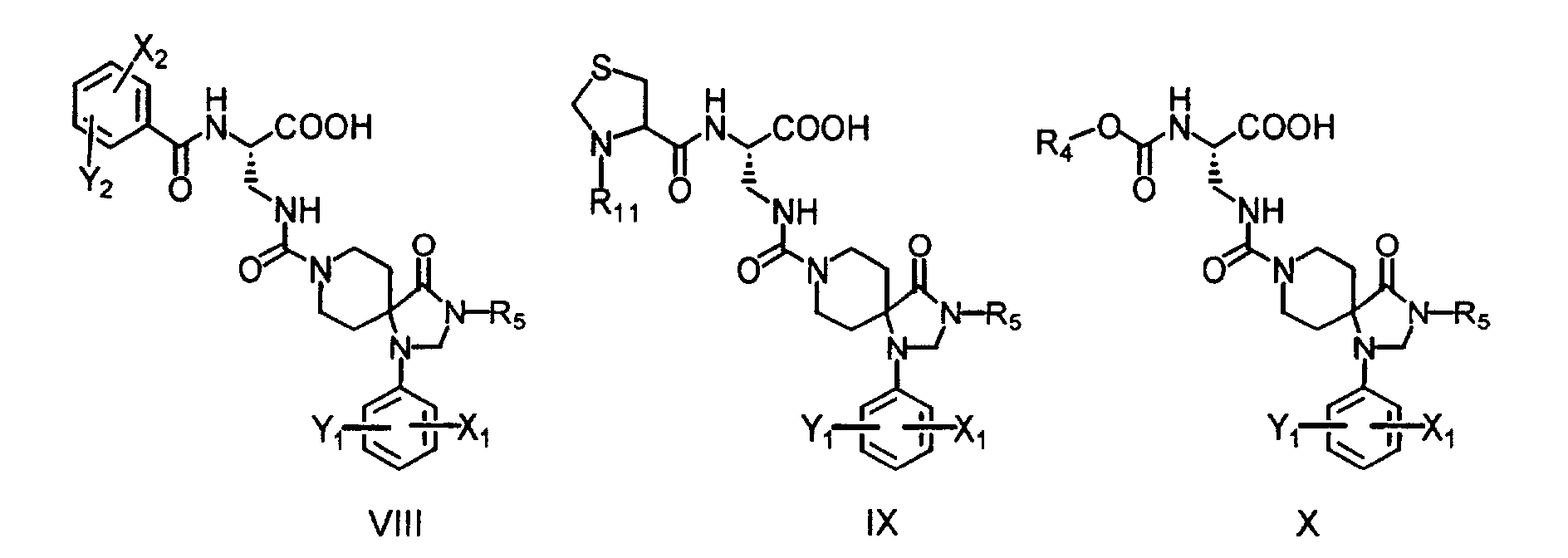
may be produced by hydrolyzing Formula XI, XII or XIII:(wherein X1, X2, Y1, Y2, R4, R5 and R11 represent the same meanings as described above)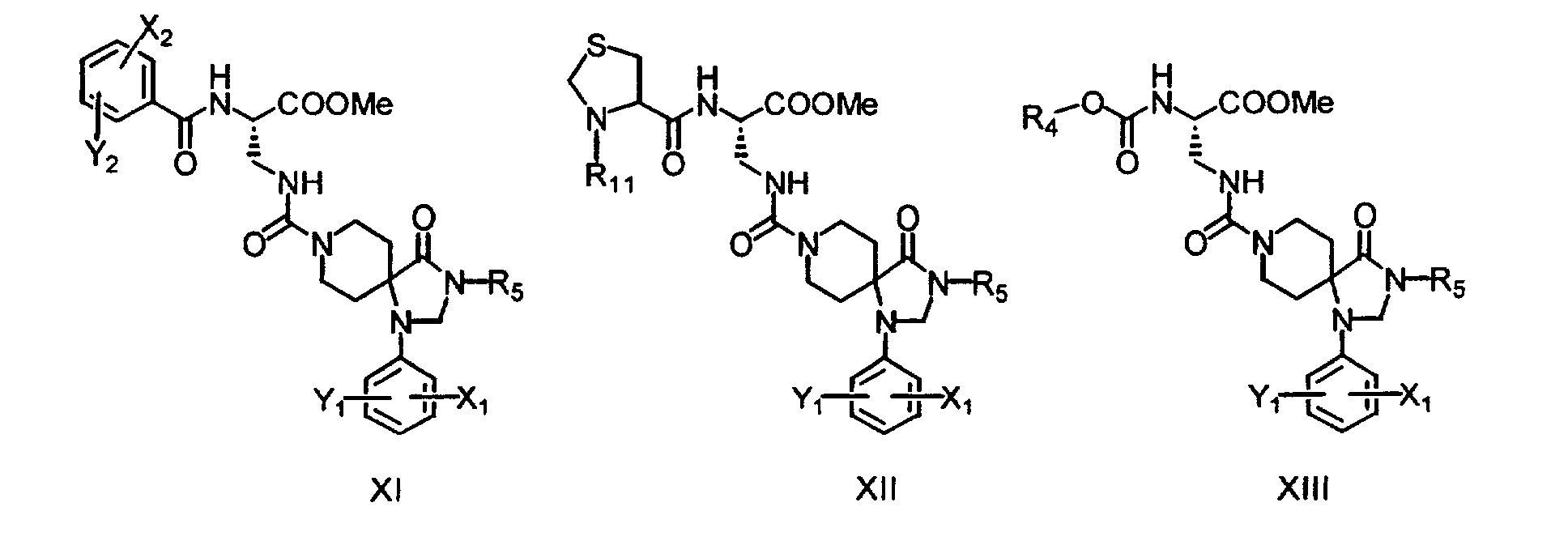
by a base such as aqueous sodium hydroxide solution or aqueous barium hydroxide solution in an alcoholic solvent such as methanol. The hydrolysis by the base such as aqueous sodium hydroxide solution-or aqueous barium hydroxide solution may usually be carried out at about 0°C to room temperature for about 1 hour to 24 hours, although the reaction conditions are not restricted thereto. The amount of the base to be added is not restricted, and may usually be about 1 to 4 equivalents with respect to Formula XI, XII or XIII. - Formula XI, XII and XIII may be produced from Formula XIV, XV and XVI:(wherein X2, Y2, R4, and R11 represent the same meanings as described above, Z1 represents chloro, bromo or hydroxyl),

respectively, and Formula XVII:(wherein X1, Y1 and R5 represent the same meanings as described above).
- In cases where one represented by Formula XIV wherein Z1 is chloro or bromo, or one represented by Formula XVI is used, the desired product may be produced by reacting Formula XIV or Formula XVI with Formula XVII in a solvent such as tetrahydrofuran, dimethylformamide, chloroform, dichloromethane or 1,4-dioxane in the presence of a tertiary amine such as triethylamine or diisopropylamine. The reaction between Formula XIV or XVI and XVII may usually be carried out at about 0°C to room temperature for about 1 hour to 24 hours, although the reaction conditions are not restricted thereto. The mixing ratio (molar ratio; unless otherwise specified, the term "mixing ratio" means molar ratio in the description below) of Formula XIV or XVI to Formula XVII may be, although not restricted, about 1:1 to 2:1, and the amount of the tertiary amine to be added is, although not restricted, about 1 to 4 equivalents with respect to Formula XIV or XVI.
- In cases where a compound of Formula XIV wherein Z1 is hydroxyl, or Formula XV is used, usually, a condensing agent such as dicyclohexylcarbodiimide (DCC), benzotriazol-1-yloxytris(dicyclopentylamino)phosphoniumhexafluoro phosphite salt (PyBOP), benzotriazol-1-yloxytris(dimethylamino)phosphoniumhexafluoro phosphite salt (BOP), diphenylphosphoryl azide (DPPA) or 1-ethyl-3-[3-(dimethylamino))propyl]carbodiimide (WSC) is used in a solvent such as tetrahydrofuran, dimethylformamide, chloroform or dichloromethane in the presence of a tertiary amine such as triethylamine, diisopropylamine or N-methylmorpholine. The amount of such a condensing agent to be added is not restricted, and usually about 1 to 3 equivalents with respect to Formula XIV or XV. Addition of an additive such as 1-hydroxybenzotriazole (HOBT) may be advantageous in the proceeding of the reaction in some cases.
- Formula XI, XII and XIII may also be produced by treating Formula XVIII(wherein X1, Y1 and R5 represent the same meanings as described above)
 with usually 0.5 to 2 equivalents of diphosgene, triphosgene, 1,1-carbonyldiimidazole or the like in a solvent such as dichloromethane or chloroform, in the presence of a tertiary amine such as triethylamine or diisopropylamine, and by reacting the obtained product with Formula XX, XXI and XXII, respectively. The mixing ratio of Formula XVIII to Formula XX, XXI or XXII may usually be, although not restricted, about 1:1 to 2:1, and the reaction may usually be carried out at about 0°C to room temperature for about 1 hour to 24 hours. The amount of the tertiary amine is not restricted, and is usually about 1 to 4 equivalents with respect to diphosgene, triphosgene or 1,1-carbonyldiimidazole. Alternatively, the desired product may be obtained by reacting Formula XX, XXI or XXII with Formula XIX in a solvent such as dimethylformamide, tetrahydrofuran or dimethoxyethane at about 0°C to room temperature for about 1 to 24 hours. The mixing ratio of Formula XX, XXI or XXII to XIX is not restricted, and usually about 1:1 to 1:3. Alternatively, the desired product may be obtained by reacting Formula XX, XXI or XXII with p-nitrophenyl chloroformate or phenyl chloroformate in a solvent such as acetonitrile, dichloromethane or dimethoxyethane, in the presence of a base such as sodium hydrogen carbonate or tribenzylamine (first step); and then reacting the obtained product with Formula XVIII in a solvent such as acetonitrile, dichloromethane or dimethoxyethane, in the presence of a tertiary amine such as triethylamine or diisopropylamine (second step). In this method, the amount of the base such as sodium hydrogen carbonate or tribenzylamine used in the reaction is not restricted, and usually about 1 to 4 equivalents with respect to p-nitrophenyl chloroformate or phenyl chloroformate. The amount of the tertiary amine to be added is not restricted, and usually about 1 to 4 equivalents with respect to Formula XVIII.
- In the first step, the reaction temperature of the reaction between Formula XX, XXI or XXII and p-nitrophenyl chloroformate or phenyl chloroformate is not restricted, and usually about 0°C to room temperature. The reaction temperature in the second step may usually be about 0°C to 50°C when p-nitrophenyl chloroformate is used, and may usually be about room temperature to refluxing temperature when phenyl chloroformate is used.
- Formula XVII may be produced by the following steps:(wherein X1, Y1 and R5 represent the same meanings as described above).

- Step 1 may be carried out in the same manner as in the reaction between Formula XVIII or XIX and XX, XXI or XXII.
- Step 2 is the step of removing t-butoxycarbonyl group (referred to as "Boc" for short) on the nitrogen atom. This step may be carried out by usually using trifluoroacetic acid, hydrochloric acid, hydrobromic acid or the like in a halogen-containing solvent such as chloroform or dichloromethane. Alternatively, this step may be carried out by using trifluoroacetic acid alone. The reaction temperature is not restricted, and usually a temperature between 0°C and room temperature is selected. The reaction time may be appropriately selected depending on the reaction temperature and the like, and usually, the reaction time may be about 1 to 24 hours.
- Formula XX may be produced by the following step using commercially available asparagine XXV as a starting material:(wherein X2 and Y2 represent the same meanings as described above).

- Step 1 may be carried out in the same manner as in the reaction between Formula XIV and XVII using Formula XXV and XIV. In cases where Z1 in Formula XIV is chloro or bromo, aqueous sodium hydroxide solution, aqueous potassium hydroxide solution or the like may be used as the base.
- Step 2 may be carried out by reacting Formula XXVI and bromine in a basic solvent such as aqueous sodium hydroxide solution, aqueous potassium hydroxide solution or the like, for about 1 to 8 hours, although not restricted. The reaction temperature is not restricted, and is usually about room temperature to 100°C. Bromine is usually used in excess to Formula XXVI. This step may also be carried out by the method described in J.Org.Chem. , 62, 6918(1997) or J.Org.Chem. , 49, 4272(1984).
- Step 3may be carried out by using thionyl chloride in a solvent such as methanol at about 0°C to room temperature. The reaction time is not restricted, and usually about 1 to 8 hours. The mixing ratio of Formula XXVII to thionyl chloride is not restricted, and is usually about 1:1 to 1:10. The reaction may also be carried out by treating the product with an excess amount of diazomethane or trimethylsilyldiazomethane in a solvent such as methanol at about 0°C to room temperature.
- Step 4 may be carried out by using aqueous sodium hydroxide solution, aqueous potassium hydroxide solution or aqueous potassium carbonate solution, in an excess amount with respect to Formula XXVIII, in a solvent such as chloroform or dichloromethane at about 0°C to room temperature.
- Formula XXIII may be produced by the following steps using commercially available Formula XXIX.

- Step 1 may be carried out in the same manner as in step 2 in the process of producing Formula XX.
- Step 2 may be carried out in the same manner as in step 3 in the process of producing Formula XX.
- Step 3 may be carried out in the same manner as in step 4 in the process of producing Formula XX.
- Among the compounds represented by Formula I, those wherein 1=0, m=1, n=1, both R1 and R2 are hydrogen atoms, both A and B are nitrogen atoms, C' and D cooperatively form carbonyl, F is -C(O)-, and R3, A and R4 cooperatively form Formula II, IV or V, that is, those represented by Formula XXXII, XXXIII and XXXIV:(wherein X1, Y1, R5, R6, R7, R9 and R10 represent the same meanings as described above)

may be produced by hydrolyzing Formula XXXV, XXXVI and XXXVII:(wherein X1, Y1, R5, R6, R7, R9 and R10 represent the same meanings as described above),
respectively, in an alcoholic solvent such as methanol by a base such as aqueous sodium hydroxide solution or aqueous barium hydroxide solution. The hydrolysis by the base such as aqueous sodium hydroxide solution or aqueous barium hydroxide solution may be carried out, although not restricted, usually at about 0°C to room temperature. The amount of the base to be added is not restricted and usually about 1 to 4 equivalents with respect to Formula XXXV, XXXVI or XXXVII. - Formula XXXV, XXXVI and XXXII may be produced in the same manner as in step 1 in the process of producing Formula XVII, by using Formula XVII and Formula XXXVIII, XXXIX and XXXX:(wherein R6, R7, R9 and R10 represent the same meanings as described above), respectively.

- Alternatively, Formula XXXV, XXXI or XXXVII may also be produced by reacting Formula XXXXI, XXXXII or XXXXIII with Formula XVIII or Formula XIX. This production process may be carried out as in step 1 in the production process of Formula XVII.(wherein R6, R7, R9 and R10 represent the same meanings as described above).

- Among the compounds represented by Formula I, those wherein 1=0, m=1, n=1, A is a carbon atom, B is a nitrogen atom, C' and D cooperatively form carbonyl, F is -CH2-, R1 and R2 are hydrogen atoms, R3, A and R4 cooperatively form Formula VI, that is, those represented by Formula XXXXIV:(wherein X1, X2, Y1 and Y2 represent the same meanings as described above)
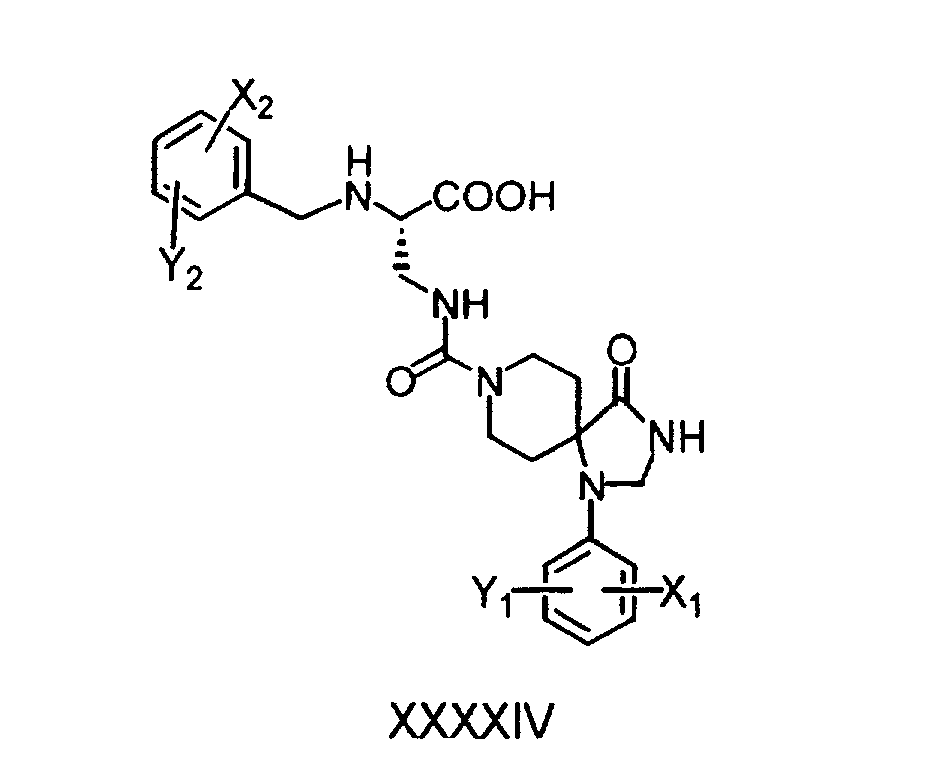
may be produced by reacting Formula XVII and Formula XXXXV:(wherein X2 and Y2 represent the same meanings as described above, and Z2 represents a leaving group such as halogen)
in a solvent such as tetrahydrofuran, dichloromethane, dimethylformamide or acetonitrile, in the presence of a tertiary amine such as triethylamine or diisopropylamine at, although not restricted, usually room temperature to refluxing temperature for about 1 to 24 hours, and then hydrolyzing the reaction product under the same conditions for producing Formula VIII from Formula XI. The mixing ratio of Formula XVII to Formula XXXXV is about 1:1 to 1:2. The amount of the tertiary amine to be added is not restricted, and usually 1 to 4 equivalents with respect to Formula XXXXV. - In cases where the novel spiro derivatives used in the present invention have one or more asymmetric carbon atoms, there exist racemic compounds, diasteromers and optical isomers. In the present invention, any of these may be used.
- The reaction products obtained by the above-described processes may be isolated and purified in the form of a free compound, a salt or a solvate such as hydrate. The salt may be produced by a usual salt-producing treatment.
- Isolation and purification may be carried out by ordinary chemical processes such as extraction, condensation, evaporation, crystallization, filtration, recrystallization and various column chromatography.
- Various isomers may be isolated by conventional methods utilizing the differences in the physicochemical properties between the isomers. Optical isomers may be separated by a general optical resolution method such as fractional crystallization or chromatography. Optical isomers may also be produced by an appropriate optically active compound as the starting material.
- Examples of the pharmaceutically acceptable salts of the compounds represented by Formula I include inorganic salts such as ammonium salt, alkaline metal salts (e.g., sodium salt and potassium salt), alkaline earth metal salts (e.g., calcium salt and magnesium salt); organic salts such as dicyclohexylamine salt, N-methyl-D-glucamine salt, ethanolamine salt, diethanolamine salt, triethanolamine salt, diisopropanolamine salt and tris(hydroxymethyl)aminomethane salt; and lysine- and arginate-addition salts.
- Further, various hydrates, solvates and crystalline polymorphs of the compounds (1) of the present invention and the salts thereof are included within the scope of the present invention.
- The inhibitory activity of the compound according to the present invention against the adhesion of VLA-4 may be determined by using an adhesion-measuring system in which the adhesion between VLA-4-expressing cells such as Ramos cells or Jurkat cells and fibronectin or fibronectin fragment such as a peptide containing CS-1 sequence (Gly Pro Glu Ile Leu Asp Val Pro Ser Thr) (hereinafter referred to as "CS-1 peptide"), immobilized on an immunoplate is measured. Alternatively, a binding-measuring system in which the adhesion between VLA-4 protein and fibronectin or fibronectin fragment such as CS-1 peptide, immobilized on an immunoplate may be used. In the present invention, it is preferred to evaluate the inhibitory activity of a compound using a binding-measuring system in which adhesion between a chimera protein of VLA-4-immunoglobulin (VLA-4-IgG chimera protein) and CS-1 peptide (Japanese Patent Application No. H9-234544), but the method is not restricted thereto. The "VLA-4-IgG chimera protein" herein means the heterodimer complex of the chimera protein between α4 of VLA-4 and immunoglobulin (hereinafter referred to as "VLAα4-IgG chimera protein") and a chimera protein between β1 of VLA-4 and immunoglobulin (hereinafter referred to as "VLAβ1-IgG chimera protein"). As the immunoglobulin, although heavy chain or light chain of IgG, IgM or the like may be used, IgG1 heavy chain is used in the present invention. When testing the inhibitory effect of a compound, it is preferred to mix VLA-4-IgG chimera protein and the test compound previously.
- Since the compounds according to the present invention have inhibitory activities against adhesion of VLA-4, and so inhibit accumulation of leukocytes at the inflammatory site, they may be used as therapeutic drugs against chronic inflammatory diseases. Examples of the chronic inflammatory diseases include allergic inflammatory diseases such as bronchial asthma, atopic dermatitis and allergic rhinitis, hepatitis, nephritis, autoimmune diseases such as chronic rheumatoid arthritis and multiple sclerosis, graft rejections after organ transplantation, type I diabetes, Crohn's disease and ulcerative colitis. In addition to these, they may be used as therapeutic drugs for the prevention of postoperative restenosis, arteriosclerosis and the like.
- When using the compound of the present invention as a therapeutic drug against the above-mentioned diseases, the compound represented by Formula I or a base addition salt thereof may be administered as it is in the form of powder, or may be administered as a medical composition in the form of an appropriate formulation, orally or parenterally (e.g., percutaneous administration, intravenous administration, rectal administration and inhalation) to mammals.
- Examples of the formulation for administration include tablets, powders, balls, capsules, granules, syrups, liquids, injection solutions, emulsions, suspensions and suppositories. These formulations may be prepared by the methods which per se are known, and contain various carriers usually used in the field of formulation. Examples thereof include vehicles, lubricants, binders and disintegrators for solid formulations; and solvents, solubilizers, suspending agents and soothing agents for liquid formulations. Additives such as antiseptics, antioxidants, coloring agents, sweeteners, absorbents, and wetting agents may be used.
- Examples of the vehicles include lactose, D-mannitol, starch, sucrose, corn starch, crystalline cellulose and light anhydrous silicic acid. Examples of the lubricants include magnesium stearate, calcium stearate, talc and colloidal silica. Examples of the binders include crystalline cellulose, saccharose, D-mannitol, dextrin, hydroxypropyl cellulose, hydroxypropylmethyl cellulose, polyvinylpyrrolidone, starch, sucrose, gelatin, methyl cellulose and sodium carboxymethyl cellulose. Examples of the disintegrators include starch, carboxymethyl cellulose, calcium carboxymethyl cellulose, cross carmelose sodium, sodium carboxymethyl starch and L-hydroxypropyl cellulose. Examples of the solvents include water for injection, alcohol, propylene glycol, Macrogol, sesame oil and corn oil. Examples of the solubilizers include polyethylene glycol, propylene glycol, D-mannitol, benzyl benzoate, ethanol, cholesterol, triethanolamine, sodium carbonate and sodium citrate. Examples of the suspending agents include surfactants such as stearyl triethanolamine, sodium lauryl sulfate, laurylamino propionate, lecithin, benzalkonium chloride, benzethonium chloride and glycerin monostearate, and hydrophilic macromolecules such as polyvinyl alcohol, polyvinyl pyrrolidone, methyl cellulose, hydroxymethyl cellulose, hydroxyethyl cellulose and hydroxypropyl cellulose. Examples of the isotonic agents include glucose, sodium chloride, D-sorbitol and D-mannitol. Examples of the buffering agents include buffering solutions containing a phosphoric acid salt, acetic acid salt, carbonic acid salt or citric acid salt. An example of the soothing agents is benzylalcohol. Examples of the antiseptics include p-oxybenzoic acid esters, chlorobutanol, benzylalcohol, phenetyl alcohol, dehydroacetic acid and sorbic acid. Examples of the antioxidants include sulfurous acid salts and ascorbic acid.
- The effective dose and the number of times of administration of the compounds represented by Formula I and pharmaceutically acceptable salts thereof differ depending on the administration form, age and bodyweight of the patient, the type and severity of the disease to be treated, and usually, 1 to 1000 mg, preferably 1 to 300 mg of the compound may be administered once or in several times per day per adult.
- The above-mentioned formulations may contain one or more other effective components for therapy of other disease(s). Examples thereof include steroid drugs, nonsteroidal anti-inflammatory drug, lipoxygenase inhibitors, leucotriene inhibitors, bronchodilators, thromboxane synthesis inhibitors, thromboxane antagonists, histamine antagonists, histamine release inhibitors, platelet activating factor (PAF) inhibitors, serotonin antagonist, adenosine receptor antagonists, adrenalin p receptor stimulators, immunosuppressors and immunomodulators.
- The effect of the present invention will now be described concretely by way of examples thereof. It should be noted that the present invention is not restricted to the examples.
-

- Under argon atmosphere, 672 mg of methyl 3-amino-2-((t-butoxy)carbonylamino) propionate was dissolved in 15 ml of acetonitrile and 15 ml of dichloromethane, and then 414 mg of saturated sodium hydrogen carbonate and 746 mg of chloroformic acid p-nitrophenyl ester were added thereto while cooling the mixture in ice, followed by stirring the resulting mixture at room temperature for 2.5 hours. To the reaction mixture, 1.385 g of 2,4,8-triaza-4-phenyl-2-benzylspiro[4.5]decane-1-one and 2.1 ml of triethylamine were added, and the resulting mixture was stirred at room temperature for 24 hours. After concentrating the reaction mixture, saturated aqueous sodium hydrogen carbonate solution was added, and the resulting mixture was extracted with chloroform. The organic layers were combined, washed with 0.1N hydrochloric acid and with saturated saline, dried over anhydrous sodium sulfate and concentrated. The residue was purified by column chromatography (dichloromethane/methanol=80:1) to obtain 1.275 g of methyl 2-((t-butoxy)carbonylamino)-3-((2,4,8-triaza-1-oxo-4-phenyl-2-benzylspiro[4.5]dec-8-yl)carbonylamino) propionate (yield: 73%).
LR-MS(m/z):565(M+)
NMR(300MHz,CDCl3, δ ppm):1.43(9H,s),1.62-1.75(2H,m),2.47-2.62(2H,m),3.53-3.80(3H,m),3.74(3H,s),3.81-3.98(2H,m),4.32-4.42(1H,m),4.55(2H,s), 4.60(2H,s), 5.42(1H,brs),5.93(1H,brs),6.63-6.71(2H,m),6.78-6.84(1H,m), 7.20-7.40(7H,m) -

- In 2 ml of dichloromethane, 45 mg of methyl 2-((t-butoxy)carbonylamino)-3-((2,4,8-triaza-1-oxo-4-phenyl-2-benzylspiro[4.5]dec-8-yl)carbonylamino) propionate was dissolved, and 1 ml of trifluoroacetic acid was added thereto, followed by stirring the resulting mixture at room temperature for 2 hours. After concentrating the reaction mixture, saturated aqueous sodium hydrogen carbonate solution was added to the residue, and the resulting mixture was extracted with chloroform. Organic layers were combined, washed with saturated saline, dried over anhydrous sodium sulfate and concentrated to obtain 41 mg of methyl 2-amino-3-((2,4,8-triaza-1-oxo-4-phenyl-2-benzylspiro[4.5]dec-8-yl)carbonylamino) propionate.
NMR(300MHz,CDCl3, δ ppm):1.72-1.85(2H,m),2.36-2.42(2H,m),3.40-4.20(6H,m),3.80(3H,s),4.15-4.21(1H,m),4.56(2H,s),4.58(2H,s),4.96(1H,brs), 6.64-6.70(2H,m),6.83-6.90( 1H,m),7.15-7.60(7H,m) -

- In 3.0 ml of DMF, methyl 3-amino-2-((2,6-dichlorophenyl)carbonylamino) propionate (175mg, 0.601mmol) was dissolved, and 2,4,8-triaza-1-oxo-4-phenylspiro[4.5]decane-8-carbonyl chloride (177mg, 0.601mmol) and triethylamine (250 µl, 1.80mmol) were added thereto, followed by stirring the resulting mixture at room temperature for 6 hours. After adding water to the reaction solution, precipitated solids were recovered by filtration and washed with water. The solids were dissolved in 3 ml of methanol, and 1 ml of 1N aqueous sodium hydroxide solution was added thereto, followed by stirring the mixture at room temperature for 2 hours. To the reaction solution, IN hydrochloric acid was added, and precipitated solids were recovered by filtration. The obtained solids were purified by column chromatography (ethyl acetate/methanol=1/1) to obtain 122 mg of 3-((2,4,8-triaza-1-oxo-4-phenylspiro[4.5]dec-8-yl)carbonylamino)-2-((2,6-dichlorophenyl)carbonylamino)propanoic acid (yield: 38%).
LR-MS(m/z):533(M+)
IR(KBr):3422, 2921, 1708, 1656, 1543, 1432, 1376, 1254cm-1 NMR(300MHz,CD3OD, δ ppm):1.68-1.80 (m, 2H), 2.50-2.64 (m, 2H), 3.55-3.80 (m, 4H), 3.90-4.05 (m, 2H), 4.75 (s, 2H), 4.80-4.90 (m, 1H), 6.80-6.90 (m, 3H), 7.23-7.35 (m, 2H), 7.38-7.50 (m, 3H).
HR-MS:C24H25Cl2N5O5 Calcd.: 532.1154, Found: 532.1140
[α]20 D:-10.5° (c=0.30,MeOH) -

- In 10 ml of dichloromethane, 199.2 mg of methyl 2-((t-butoxy)carbonylamino)-3-((2,4,8-triaza-1-oxo-4-phenylspiro[4.5]dec-8-yl)carbonylamino) propionate was dissolved, and 2 ml of trifluoroacetic acid was added thereto, followed by stirring the resulting mixture at room temperature for 6 hours. After concentrating the reaction solution, the residue was dissolved in 2 ml of dimethylformamide, and then 187 mg of BOP, 70 mg of 2,6-dimethoxybenzoic acid and 265 µl of diisopropylamine were added thereto, followed by stirring the resulting mixture under argon atmosphere at room temperature for 2 hours. To the reaction mixture, IN hydrochloric acid was added, and the resulting mixture was extracted with chloroform. Organic layers were combined, washed with saturated aqueous sodium hydrogen carbonate solution and with saturated saline, dried over anhydrous sodium sulfate, and concentrated. The residue was dissolved in 10 ml of methanol, and then 1 ml of 1N aqueous sodium hydroxide solution was added thereto, followed by stirring the resulting mixture at room temperature for 3 hours. To the reaction mixture, 0.1N hydrochloric acid was added, and the resulting mixture was extracted with chloroform. Organic phases were combined, washed with saturated saline, dried over anhydrous sodium sulfate, and concentrated. The residue was purified by column chromatography (DIOL, ethyl acetate/methanol=20:1) to obtain 44.6 mg of 2-((2,6-diemthoxyphenyl)carbonylamino)-3-((2,4,8-triaza- 1-oxo-4-phenylspiro[4.5]dec-8-yl)carbonylamino)propanoic acid (yield: 20%).
LR-MS(m/z):524(M+-H)
IR(KBr):3408,2927,1656,1602,1542,1468,1432,1381,1262,1196,800,749cm-1 NMR(300MHz,CDCl3, δ ppm):1.68-1.80(2H,m),2.41-2.61(2H,m),3.45-3.57(1H,m),3.62-3.74(2H,m),3.79(6H,s),3.82-3.97(3H,m),4.52-4.57(1H,m),4.70(2H,s),6.18(1H,brs),6.53-6.58(2H,m),6.71-6.78(2H,m),6.83-6.91(1H,m),7.11(1H,brs),7.21-7.32(2H,m),7.43-7.48(1H,m) HR-MS:C26H30N5O7 Calcd.: 524.2145, Found: 524.2173
[α]20 D:-10.0° (c=0.07,MeOH) -

- In 5 ml of acetonitrile, 120 mg of methyl 3-amino-2-((2,6-dichlorophenyl)carbonylamino) propionate was dissolved, and 55 mg of saturated sodium hydrogen carbonate and 83 mg of chloroformic acid p-nitrophenyl ester were added thereto, followed by stirring the resulting mixture at room temperature for 2 hours. To the reaction mixture, 139 mg of 2,4,8-triaza-4-phenyl-2-benzylspiro[4.5]decane-1-one and 143 µl of triethylamine were added, and the resulting mixture was stirred at room temperature for 3 hours. After concentrating the reaction mixture, saturated aqueous sodium hydrogen carbonate solution was added, and the resulting mixture was extracted with ethyl acetate. Organic layers were combined, washed with IN hydrochloric acid and with saturated saline, dried over anhydrous sodium sulfate, and concentrated. The residue was dissolved in 2 ml of methanol, and then 0.5 ml of 1N aqueous sodium hydroxide solution was added thereto, followed by stirring the resulting mixture at room temperature for 4 hours. To the reaction mixture, 0.1N hydrochloric acid was added, and the resulting mixture was extracted with chloroform. Organic phases were combined, washed with saturated saline, dried over anhydrous sodium sulfate, and concentrated. The residue was purified by column chromatography (DIOL, ethyl acetate/cyclohexane=2:1) to obtain 18 mg of 2-((2,6-dimethoxyphenyl)carbonylamino)-3-((2,4,8-triaza-1-oxo-4-phenyl-2-benzylspiro[4.5]dec-8-yl)carbonylamino)propanoic acid (yield: 7%).
LR-MS(m/z):622(M+-H)
IR(KBr):3385,2934,2841,1709,1637,1599,1534,1474,1434,1377,1254,1111,753 cm-1 NMR(300MHz,CD3OD, δ ppm): 1.64-1.73(2H,m),2.43-2.57(2H,m),3.60-3.77(4H,m),3.88-3.98(2H,m),,3.82-3.97(3H,m),4.41(2H,s),4.79-4.83(1 H,m),4.86(2H,s),6.75-6.82(3H,m),7.18-7.25(2H,m),7.24-7.44(8H,m)
HR-MS:C31H30Cl2N5O5 Calcd.: 622.1624, Found: 622..1669
[α]20 D:-11.6° (c=0.11,MeOH) -

- In 2 ml of dichloromethane, 49 mg of methyl 2-((t-butoxy)carbonylamino)-3-((2,4,8-triaza-1-oxo-4-phenyl-2-benzylspiro[4.5]dec-8-yl)carbonylamino) propionate was dissolved, and 1 ml of trifluoroacetic acid was added thereto, followed by stirring the resulting mixture at room temperature for 1.5 hours. After concentrating the reaction solution, 3 ml of dichloromethane, 44 mg of BOP, 18 mg of 2,6-dimethoxybenzoic acid and 61 µl ofdiisopropylamine were added to the residue, and the resulting mixture was stirred at room temperature under argon atmosphere for 3 hours. To the reaction mixture, 1N hydrochloric acid was added, and the resulting mixture was extracted with chloroform. Organic layers were combined, washed with saturated sodium hydrogen carbonate solution and with saturated saline, dried over anhydrous sodium sulfate, and concentrated. The residue was purified by column chromatography (dichloromethane/methanol=30:1) to obtain 22 mg of methyl 2-((2,6-dimethoxyphenyl)carbonylamino)-3-((2,4,8-triaza-1-oxo-4-phenyl-2-benzylspiro[4.5]dec-8-yl)carbonylamino) propionate (yield: 40%).
LR-MS(m/z):629(M+)
IR(KBr): 2934, 1743, 1698, 1653, 1598, 1525, 1472, 1370, 1254, 1112, 750cm-1 NMR(300MHz,CDCl3, δ ppm):1.63-1.77(2H,m),2.50-2.64(2H,m),3.62-4.06(6H,m),3.80(6H,s),3.81(3H,s),4.56(2H,s),4.60(2H,s),4.85-4.95(1H,m), 5.68(1H,brs),6.52-6.58(2H,m),6.64-6.73(2H,m),6.79-6.84(2H,m),7.18-7.40(7H,m)
[α]D 20:-24.0° (c=0.05, MeOH) -

- In 1 ml of methanol, 19 mg of methyl 2-((2,6-dimethoxyphenyl)carbonylamino)-3-((2,4,8-triaza- 1-oxo-4-phenyl-2-benzylspiro[4.5]dec-8-yl)carbonylamino) propionate was dissolved, and 0.15 ml of IN aqueous sodium hydroxide solution was added thereto, followed by stirring the resulting mixture at room temperature for 2 hours. To the reaction solution, 0.1N hydrochloric acid was added, and the resulting mixture was extracted with chloroform. Organic phases were combined, washed with saturated saline, dried over anhydrous sodium sulfate, and concentrated. The residue was reprecipitated from chloroform/n-hexane to obtain 16.5 mg of 2-((2,6-dimethoxyphenyl)carbonylamino)-3-((2,4,8-triaza-1-oxo-4-phenyl-2-benzylspiro[4.5]dec-8-yl)carbonylamino)propanoic acid (yield: 89%).
LR-MS(m/z):614(M+-H)
IR(KBr): 3397, 2931, 1700, 1653, 1599, 1525, 1510, 1473, 1255, 1112, 749cm-1 NMR(300MHz,CDCl3, δ ppm):1.67-1.80(2H,m),2.42-2.65(2H,m),3.40-3.50(1H,m),3.73-4.00(5H,m),3.78(6H,s),4.44-4.51(1H,m),4.57(2H,s), 4.62(2H,s),5.99(1H,brs),6.53-6.58(2H,m),6.64-6.77(2H,m),6.82-6.88(1H,m),7.20-7.40(7H,m),7.52-7.59( 1H,m)
HR-MS:C33H37N5O7 Calcd.: 614.2615, Found: 614.2587
[α]D 20: -5.3° (c=0.04, MeOH) -
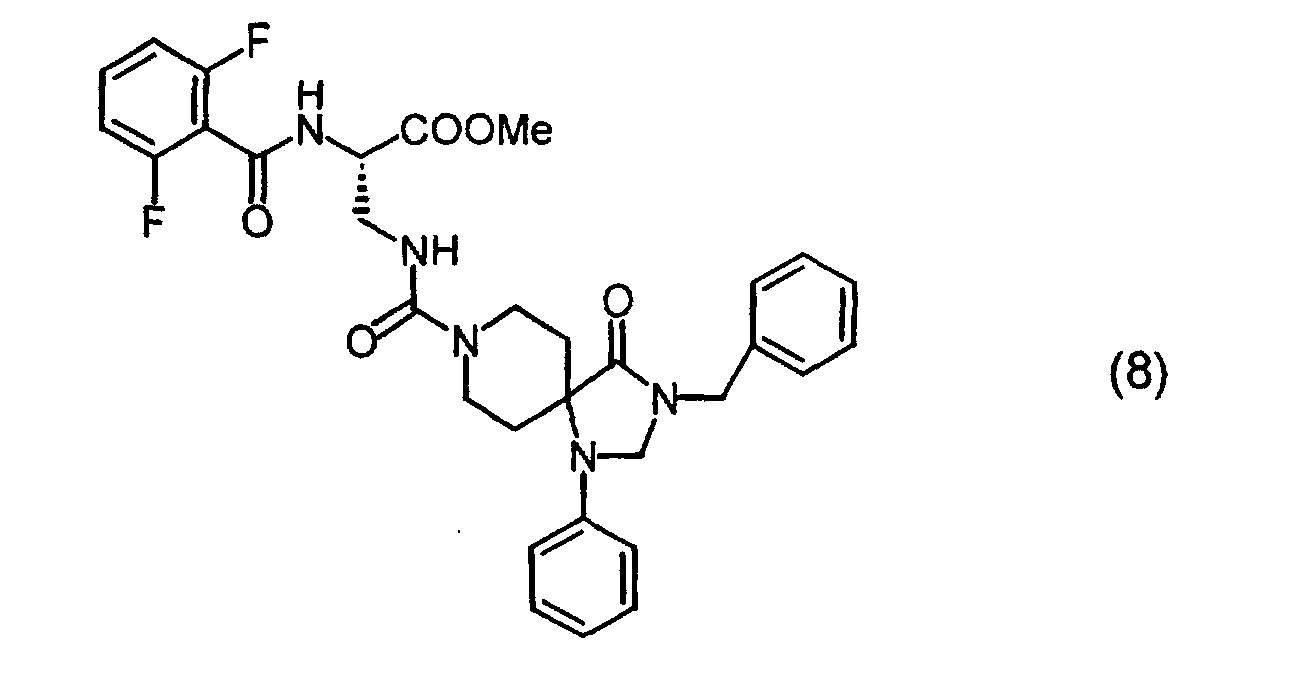
- In 2 ml of dichloromethane, 78 mg of methyl 2-((t-butoxy)carbonylamino)-3-((2,4,8-triaza-1-oxo-4-phenyl-2-benzylspiro[4.5]dec-8-yl)carbonylamino) propionate was dissolved, and 1 ml of trifluoroacetic acid was added thereto, followed by stirring the resulting mixture at room temperature for 1 hour. After concentrating the reaction solution, 2 ml of dichloromethane, 98 µl of triethylamine, and 26 µl of 2,6-difluorobenzoyl chloride were added to the residue, and the resulting mixture was stirred at room temperature for 12.5 hours. To the reaction mixture, saturated aqueous sodium hydrogen carbonate solution was added, and the resulting mixture was extracted with chloroform. Organic layers were combined, washed with 0.1N hydrochloric acid and with saturated saline, dried over anhydrous sodium sulfate, and concentrated. The residue was purified by column chromatography (dichloromethane/methanol=50:1) to obtain 24 mg of methyl 2-((2,6-difluorophenyl)carbonylamino)-3-((2,4,8-triaza-1-oxo-4-phenyl-2-benzylspiro[4.5]dec-8-yl)carbonylamino) propionate (yield: 28%).
LR-MS(m/z):605(M+)
IR(KBr): 3064, 3032, 2907, 1748, 1697, 1625, 1601, 1540, 1468, 1371, 1260, 1208, 1161, 1122, 1010, 910, 795 cm-1
NMR(300MHz,CDCl3, δ ppm):1.64-1.80(2H,m),2.51-2.63(2H,m),3.68-3.98(6H,m), 3.79(3H,s),4.58(2H,s),4.61(2H,s),4.79-4.84(1H,m),5.21(1H,brs),6.65-6.72(2H,m),6.78-6.84(1H,m),6.89-6.99(2H,m),7.20-7.40(7H,m),7.78(1H,m)
[α]D 20:-18.2° (c=0.11, MeOH) -

- In 1 ml of methanol, 19 mg of methyl 2-((2,6-difluorophenyl)carbonylamino)-3-((2,4,8-triaza-1-oxo-4-phenyl-2-benzylspiro[4.5]dec-8-yl)carbonylamino) propionate was dissolved, and 0.2 ml of IN aqueous sodium hydroxide solution was added thereto, followed by stirring the resulting mixture at room temperature for lhour. To the reaction solution, 0.1N hydrochloric acid was added, and the resulting mixture was extracted with chloroform. Organic phases were combined, washed with saturated saline, dried over anhydrous sodium sulfate, and concentrated. The residue was reprecipitated from chloroform/n-hexane to obtain 15.1 mg of 2-((2,6-difluorophenyl)carbonylamino)-3-((2,4,8-triaza-1-oxo-4-phenyl-2-benzylspiro[4.5]dec-8-yl)carbonylamino)propanoic acid (yield: 82%).
LR-MS(m/z):590(M+-H) IR(KBr): 3395, 2927, 1674, 1626, 1601, 1539, 1468, 1379, 1262, 1009, 749 cm-1 NMR(300MHz,CD3OD, δ ppm):1.71-1.82(2H,m),2.43-2.61(2H,m),3.43-3.54(1H,m),3.73-4.00(5H,m),4.45-4.53(1H,m),4.57(2H,s),4.60(2H,s), 5.85(1H,brs),6.66-6.75(2H,m),6.81-6.89(1H,m),6.90-7.00(2H,m),7.20-7.42(7H,m),8.02( 1H,m)
HR-MS:C31H31F2N5O5 Calcd.: 590.2215, Found: 590.2209
[α]D 20: -73.5° (c=0.02, MeOH) -
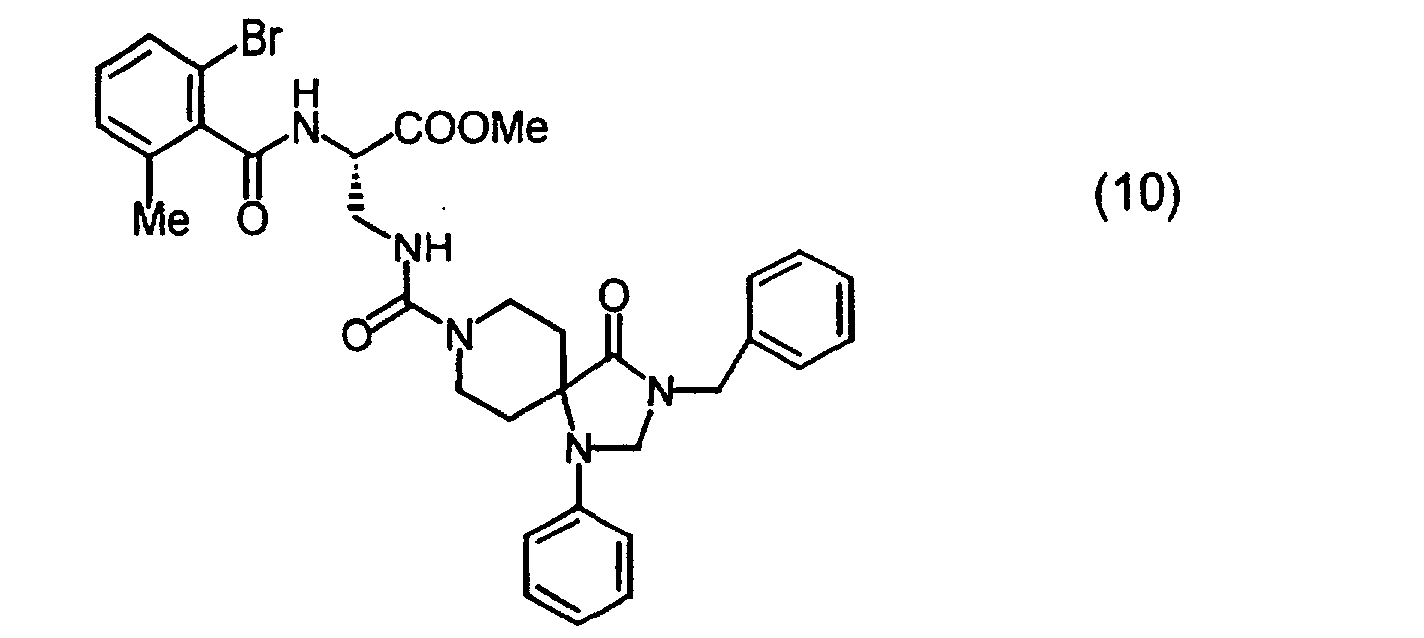
- In 2 ml of dichloromethane, 158 mg of methyl 2-((t-butoxy)carbonylamino)-3-((2,4,8-triaza-1-oxo-4-phenyl-2-benzylspiro[4.5]dec-8-yl)carbonylamino) propionate was dissolved, and 1 ml of trifluoroacetic acid was added thereto, followed by stirring the resulting mixture at room temperature for 2 hours. After concentrating the reaction solution, the residue was dissolved in 5 ml of dichloromethane, and then 50 mg of BOP, 67 mg of 2-bromo-6-methylbenzoic acid and 195 µl of diisopropylamine were added thereto, followed by stirring the resulting mixture at room temperature under argon atmosphere for 20 hours. To the reaction mixture, 1N hydrochloric acid was added, and the resulting mixture was extracted with chloroform. Organic layers were combined, washed with saturated aqueous sodium hydrogen carbonate solution and with saturated saline, dried over anhydrous sodium sulfate, and concentrated. The residue was purified by column chromatography (dichloromethane/methanol=60:1) to obtain 163 mg of methyl 2-((2-bromo-6-methylphenyl)carbonylamino)-3-((2,4,8-triaza-1-oxo-4-phenyl-2-benzylspiro[4.5]dec-8-yl)carbonylamino) propionate (yield: 88%).
LR-MS(m/z):661(M+)
IR(KBr): 2926, 1748, 1699, 1655, 1601, 1526, 1450, 1369, 1258, 1206, 1164, 845, 748 cm-1
NMR(300MHz,CDCl3, δ ppm):1.64-1.77(2H,m),2.39(3H,s),2.46-2.61(2H,m),3.65-3.94(6H,m),3.80(3H,s),4.57(2H,s),4.59(2H,s),4.80-4.90(1H,m),5.24(1H,brs),6.64-6.73(2H,m),6.80-6.87( 1H,m),7.10-7.40(10H,m)
[α]D 20: -4.95° (c=0.22, MeOH) -

- In 4 ml of methanol, 150 mg of methyl 2-((2-bromo-6-methylphenyl)carbonylamino)-3-((2,4,8-triaza- 1-oxo-4-phenyl-2-benzylspiro[4.5]dec-8-yl)carbonylamino) propionate was dissolved, and 1.2 ml of 1N aqueous sodium hydroxide solution was added thereto, followed by stirring the resulting mixture at room temperature for 5 hours. To the reaction solution, 1N hydrochloric acid was added, and the resulting mixture was extracted with chloroform. Organic phases were combined, washed with saturated saline, dried over anhydrous sodium sulfate, and concentrated. The residue was reprecipitated from chloroform/n-hexane to obtain 121.8 mg of 2-((2-bromo-6-methylphenyl)carbonylamino)-3-((2,4,8-triaza-1-oxo-4-phenyl-2-benzylspiro[4.5]dec-8-yl)carbonylamino)propanoic acid (yield: 82%).
LR-MS(m/z):646(M+-H)
IR(KBr): 3395, 2926, 1700, 1654, 1601, 1526, 1452, 1378, 1261, 749 cm-1 NMR(300MHz,CD3OD, δ ppm): 1.62-1.80(2H,m),2.36(3H,s),2.43-2.62(2H,m),3.53-3.62(1H,m),3.72-4.00(5H,m),4.57(2H,s),4.60(2H,s),5.99(1H,brs),6.66-6.72(2H,m),6.81-6.90(1H,m),7.12-7.40(9H,m),7.62-7.70(1H,m)
HR-MS:C32H34BrN5O5 Calcd.: 646.1665, Found: 646.1701
[α]D 20: -30.5° (c=0.04, MeOH) -
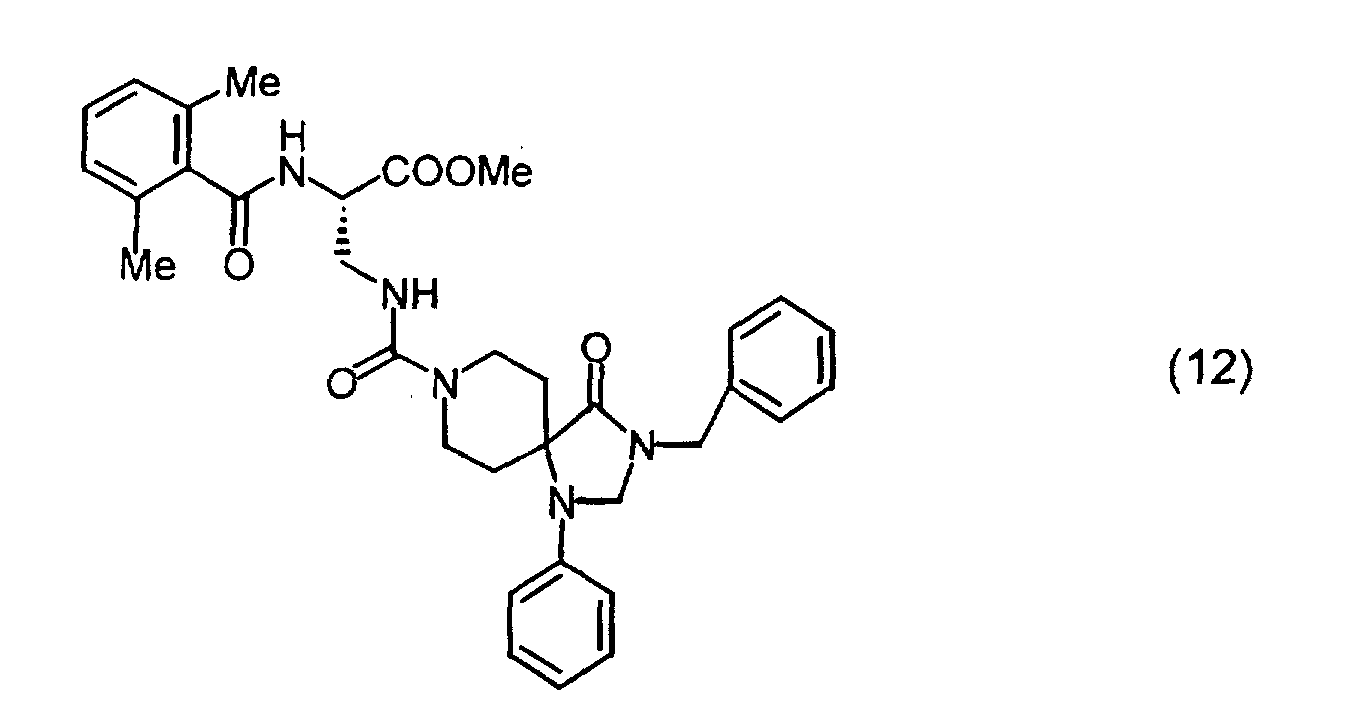
- In 1 ml of dichloromethane, 50 mg of methyl 2-((t-butoxy)carbonylamino)-3-((2,4,8-triaza-1-oxo-4-phenyl-2-benzylspiro[4.5]dec-8-yl)carbonylamino) propionate was dissolved, and 0.5 ml of trifluoroacetic acid was added thereto, followed by stirring the resulting mixture at room temperature for 1 hour. After concentrating the reaction solution, the residue was dissolved in 1 ml of dichloromethane, and then 50 mg of BOP, 15 mg of 2,6-dimethylbenzoic acid and 70 µl of diisopropylamine were added thereto, followed by stirring the resulting mixture overnight under argon atmosphere at room temperature. To the reaction mixture, 1N hydrochloric acid was added, and the resulting mixture was extracted with chloroform. Organic layers were combined, washed with saturated aqueous sodium hydrogen carbonate solution and with saturated saline, dried over anhydrous sodium sulfate, and concentrated. The residue was purified by column chromatography (ethyl acetate/n-hexane=2:1) to obtain 45.8 mg of methyl 2-((2,6-dimethylphenyl)carbonylamino)-3-((2,4,8-triaza-1-oxo-4-phenyl-2-benzylspiro[4.5]dec-8-yl)carbonylamino)propanoic acid (yield: 85%).
LR-MS(m/z):597(M+)
IR(KBr):3394,2925,1747,1700,1635,1527,1469,1378,1260,1207,1161,750cm-1 NMR(300MHz,CDCl3, δ ppm):1.62-1.71(2H,m),2.32(6H,s),2.40-2.54(2H,m),3.60-3.90(6H,m),3.78(3H,s),4.54(2H,s),4.58(2H,s),4.76-4.84(2H,m),5.63(1H,brs),6.63-6.70(2H,m),6.80-6.84(1H,m),6.93-7.00(2H,m),7.06-7.17(1H,m),7.18-7.43(7H,m),7.40(1H,brs)
[α]D 20: -18.0° (c=0.10, CHCl3) -
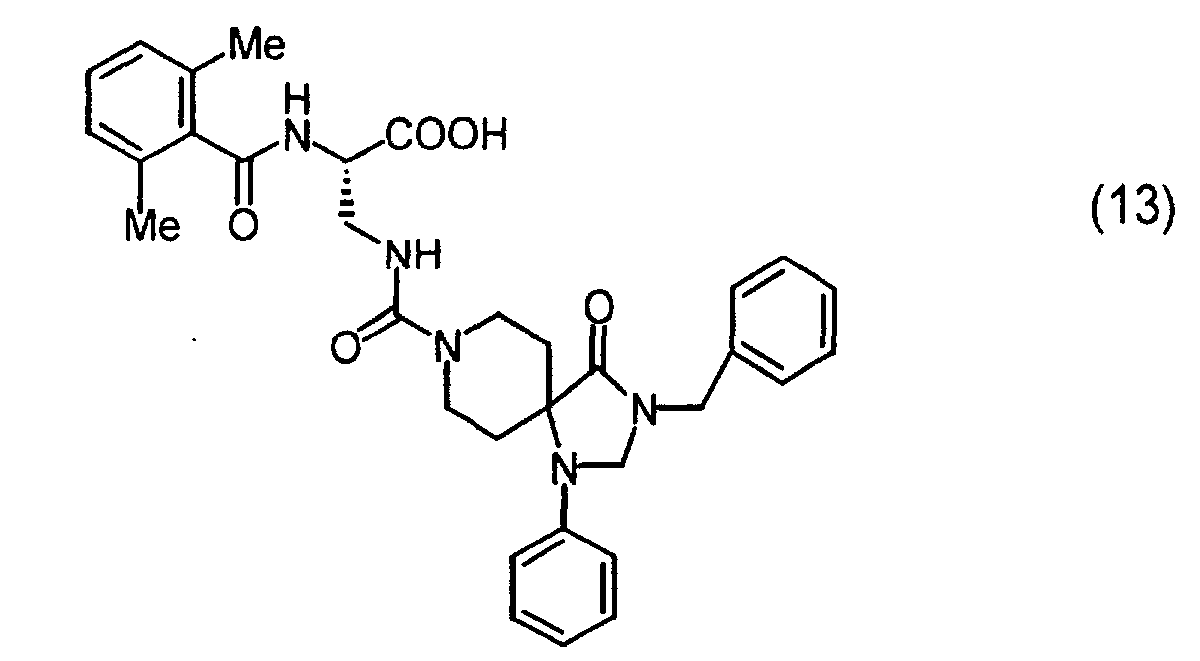
- In 1 ml of methanol, 44 mg of methyl 2-((2,6-dimethylphenyl)carbonylamino)-3-((2,4,8-triaza-1-oxo-4-phenyl-2-benzylspiro[4.5]dec-8-yl)carbonylamino) propionate was dissolved, and 0.4 ml of 1N aqueous sodium hydroxide solution was added thereto, followed by stirring the resulting mixture at room temperature for 2 hours. To the reaction solution, 1N hydrochloric acid was added, and the resulting mixture was extracted with chloroform. Organic phases were combined, washed with saturated saline, dried over anhydrous sodium sulfate, and concentrated. The residue was reprecipitated from chloroform/n-hexane to obtain 23.1 mg of 2-((2,6-dimethylphenyl)carbonylamino)-3-((2,4,8-triaza-1-oxo-4-phenyl-2-benzylspiro[4.5]dec-8-yl)carbonylamino)propanoic acid (yield: 54%).
LR-MS(m/z):682(M+-H)
IR(KBr):3384,2925,1698,1637,1601,1534,1468,1381,1262,1203,1163,749cm-1 NMR(300MHz,CD3OD, 6 ppm):1.72-1.80(2H,m),2.32(6H,s),2.43-2.62(2H,m),3.42-3.51 (2H,m),3.75-4.02(4H,m),4.50-4.53(1H,m),4.56(2H,s),4.61(2H,s), 5.83(1H,brs),6.68-6.71(2H,m),6.83-6.90(1H,m),7.01-7.05(2H,m),7.18-7.40(8H,m),7.88(1H,brs)
HR-MS: C33H36N5O5 Calcd.: 582.2716, Found: 582.2698
[α]20 D:-31.5° (c=0.10,CHCl3) -
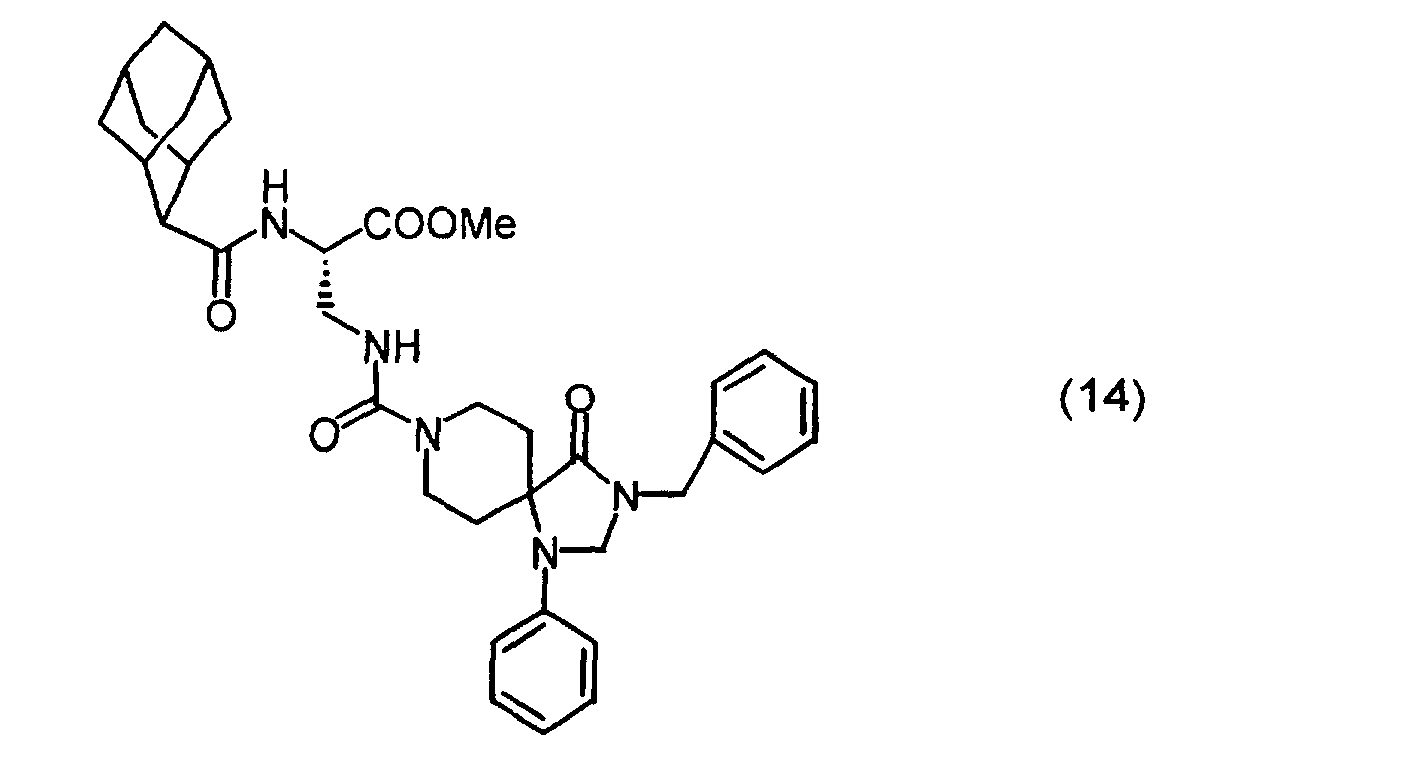
- In 1 ml of dichloromethane, 45 mg of methyl 2-((t-butoxy)carbonylamino)-3-((2,4,8-triaza-1-oxo-4-phenyl-2-benzylspiro[4.5]dec-8-yl)carbonylamino) propionate was dissolved, and 0.5 ml of trifluoroacetic acid was added thereto, followed by stirring the resulting mixture at room temperature for 2 hours. After concentrating the reaction solution, the residue was dissolved in 2 ml of dichloromethane, and then 45 µl of triethylamine and 25 mg of adamantan-2-carbonyl chloride were added thereto, followed by stirring the resulting mixture overnight at room temperature. To the reaction mixture, saturated aqueous sodium hydrogen carbonate solution was added, and the resulting mixture was extracted with chloroform. Organic layers were combined, washed with water and with saturated saline, dried over anhydrous sodium sulfate, and concentrated. The residue was purified by column chromatography (ethyl acetate/n-hexane=1:1) to obtain 33 mg of methyl 2-(adamantan-2-ylcarbonylamino)-3-((2,4,8-triaza-1-oxo-4-phenyl-2-benzylspiro[4.5]dec-8-yl)carbonylamino) propionate (yield: 65%).
LR-MS(m/z):627(M+)
IR(KBr):3423,2908,2851,1739,1702,1638,1526,1453,1370,1260,1203,1151,748cm-1 NMR(300MHz,CDCl3, δ ppm):1.61-1.78(8H,m),1.80-1.84(6H,m),1.97-2.05(3H,m),2.46-2.60(2H,m),3.51-3.98(6H,m),3.77(3H,s),4.52-4.60(2H,m),4.55(2H,s),4.61(2H,s),5.33(1H,brs),6.64-6.68(2H,m),6.80-6.84(1H,m),7.20-7.40(7H,m)
[α]20 D:-13.0° (c=0.10,CHCl3) -

- In 2 ml of methanol, 32.1 mg of methyl 2-(adamantan-2-ylcarbonylamino)-3-((2,4,8-triaza-1-oxo-4-phenyl-2-benzylspiro[4.5]dec-8-yl)carbonylamino) propionate was dissolved, and 0.3 ml of IN aqueous sodium hydroxide solution was added thereto, followed by stirring the resulting mixture at room temperature for 1.5 hours. To the reaction solution, 1N hydrochloric acid was added, and the resulting mixture was extracted with chloroform. Organic phases were combined, washed with saturated saline, dried over anhydrous sodium sulfate, and concentrated. The residue was reprecipitated from chloroform/ether to obtain 13.9 mg of 2-(adamantan-2-ylcarbonylamino)-3-((2,4,8-triaza-1-oxo-4-phenyl-2-benzylspiro[4.5]dec-8-yl)carbonylamino)propanoic acid (yield: 44%).
LR-MS(m/z):612(M+-H)
IR(KBr):3423,2907,2851,1701,1637,1526,1451,1365,1261,746cm-1 NMR(300MHz,CDCl3, δ ppm):1.60-1.81(8H,m),1.82-1.89(6H,m),2.02-2.09(3H,m),2.40-2.62(2H,m),3.40-3.44(2H,m),3.72-4.02(4H,m),4.23-4.28(1H,m),4.56(2H,s),4.61(2H,s),5.64(1H,brs),6.65-6,70(2H,m),6.82-6.87(1H,m),7.19-7.40(7H,m),8.47(1H,brs)
HR-MS: C35H42N5O5 Calcd.: 612.3186, Found: 612.3190
[α]20 D:-15.0° (c=0.1,MeOH) -
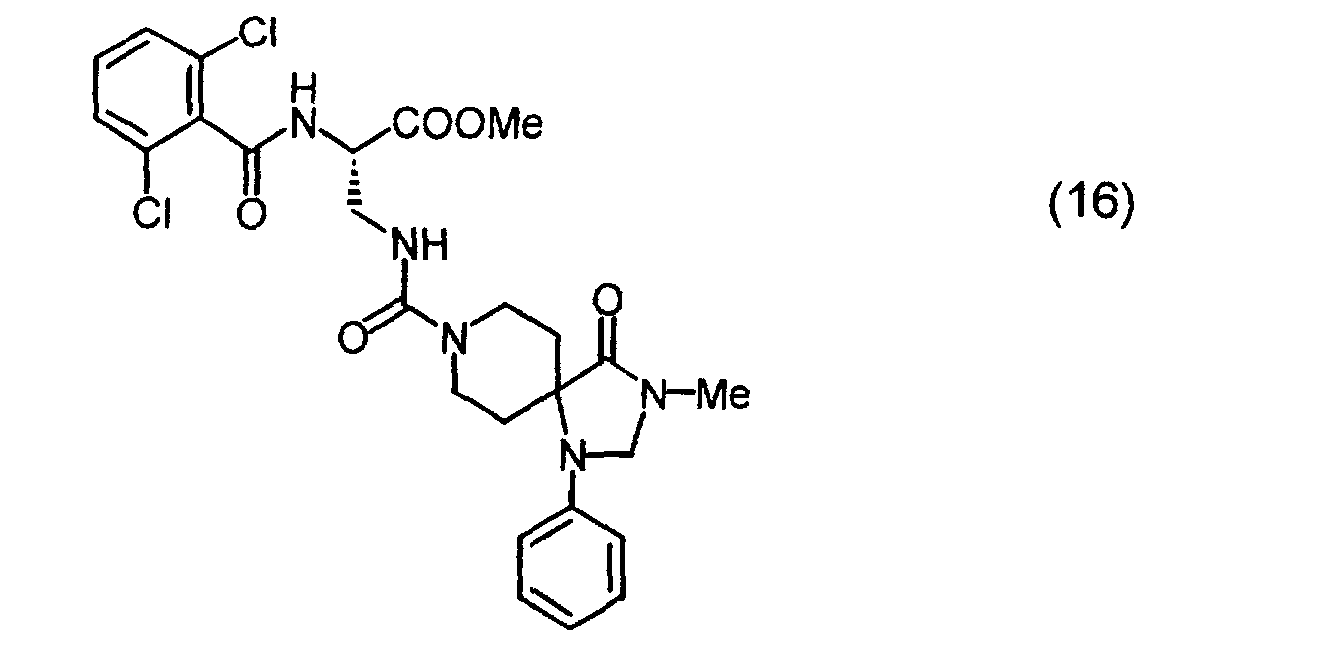
- In 10 ml of dichloromethane, 103 mg of methyl 3-amino-2-((2,6-dichlorophenyl)carbonylamino) propionate was dissolved, and 52.9 mg of saturated sodium hydrogen carbonate and 84.7 mg of chloroformic acid p-nitrophenyl ester were added thereto under argon atmosphere, followed by stirring the resulting mixture at room temperature for 1.5 hours. To the reaction mixture, 130 mg of 2,4,8-triaza-2-methyl-4-phenylspiro[4.5]decane-1-one and 123 µl of triethylamine were added, and the resulting mixture was stirred overnight at room temperature. After concentrating the reaction mixture, saturated aqueous sodium hydrogen carbonate solution was added, and the resulting mixture was extracted with chloroform. Organic layers were combined, washed with IN hydrochloric acid and with saturated saline, dried over anhydrous sodium sulfate, and concentrated. The residue was purified by column chromatography (ethyl acetate/methanol=50:1) to obtain 159.8 mg of methyl 2-((2,6-dichlorophenyl)carbonylamino)-3-((2,4,8-triaza-2-methyl-1-oxo-4-phenylspiro[4.5]dec-8-yl)carbonylamino) propionate (yield: 81%).
LR-MS(m/z):561(M+)
IR(KBr): 3395, 3278, 2952, 2932, 1742, 1703, 1655, 1616, 1532, 1520, 1432, 1272, 749 cm-1
NMR(300MHz,CDCl3, δ ppm):1.63-1.72(2H,m),2.46-2.60(2H,m),3.00(3H,s),3.63-3.92(2H,m),3.82(3H,s),4.68(2H,s),4.82-4.88(1H,m),5.26(1H,brs),6.73-6.78(2H,m),6.84-6.89(1H,m),7.23-7.34(5H,m),7.40( 1H,brs)
[α]D 20: -15.4° (c=0.10, MeOH) -

- In 2 ml of methanol, 140 mg of methyl 2-((2,6-dichlorophenyl)carbonylamino)-3-((2,4,8-triaza-2-methyl-1-oxo-4-phenylspiro[4.5]dec-8-yl)carbonylamino) propionate was dissolved, and 0.75 ml of IN sodium hydroxide solution was added thereto, followed by stirring the resulting mixture overnight at room temperature. To the reaction solution, IN hydrochloric acid was added, and the resulting mixture was extracted with chloroform. Organic phases were combined, washed with saturated saline, dried over anhydrous sodium sulfate, and concentrated. The residue was reprecipitated from chloroform/n-hexane to obtain 104 mg of 2-((2,6-dichlorophenyl)carbonylamino)-3-((2,4,8-triaza-2-methyl-1-oxo-4-phenylspiro[4.5]dec-8-yl)carbonylamino)propanoic acid (yield: 76%).
LR-MS(m/z):546(M+-H)
IR(KBr): 3383, 3064, 2930, 1685, 1603, 1533, 1432, 1369, 1265, 1197, 1171, 986, 800, 749 cm-1
NMR(300MHz,CDCl3, 6 ppm): 1.68-1.79(2H,m), 2.42-2.63(2H,m), 3.01(3H,s), 3.45-3.59(1H,m), 3.68-4.00(5H,m), 4.53-4.58(1H,m), 4.69(2H,s), 5.98(1H,brs), 6.74-6.78(2H,m), 6.85-6.92(1H,m), 7.24-7.35(5H,m), 7.64(1H,brs)
[α]D 20: -18.5° (c=0.10, CHCl3) -

- In 2.7 ml of dichloromethane, 72.2 mg of methyl 2-((t-butoxy)carbonylamino)-3-((2,4,8-triaza-1-oxo-4-phenyl-2-benzylspiro[4.5]dec-8-yl)carbonylamino) propionate was dissolved, and 0.3 ml of trifluoroacetic acid was added thereto, followed by stirring the resulting mixture at room temperature for 2 hours. After concentrating the reaction solution, the residue was dissolved in 2.7 ml of dichloromethane, and then 150 µl of triethylamine and 50 µl of 2,6-dichlorobenzoyl chloride were added thereto, followed by stirring the resulting mixture at room temperature for 5 hours. To the reaction mixture, saturated aqueous sodium hydrogen carbonate solution was added, and the resulting mixture was extracted with chloroform. Organic layers were combined, washed with 0.1N hydrochloric acid and with saturated saline, dried over anhydrous sodium sulfate, and concentrated. The residue was purified by column chromatography (chloroform/methanol=50:1) to obtain 58.7 mg of methyl 2-((2,6-dichlorophenyl)carbonylamino)-3-((2,4,8-triaza-2-(2-methylpropyl)-1-oxo-4-phenylspiro[4.5]dec-8-yl)carbonylamino) propionate (yield: 71%).
LR-MS(m/z):603(M+)
IR(KBr): 3383, 3063, 2958, 1747, 1694, 1528, 1469, 1433, 1375, 1259, 1200, 1169, 1128, 965, 800, 782, 749 cm-1
NMR(300MHz,CDCl3, δ ppm):0.95(6H,d,J=6.5),1.63-1.74(2H,m),1.95-2.08(1H,m),2.46-2.62(2H,m),3.23(2H,d,J=7.4),3.63-3.94(6H,m),3.83(3H,s),4.68(2H,s),4.82-4.88(1H,m),5.24-5.30(1H,m),6.74-6.79(2H,m),6.83-6.88(1H,m),7.23-7.40(6H,m)
[α]D 20: -82.0° (c=0.10, MeOH) -
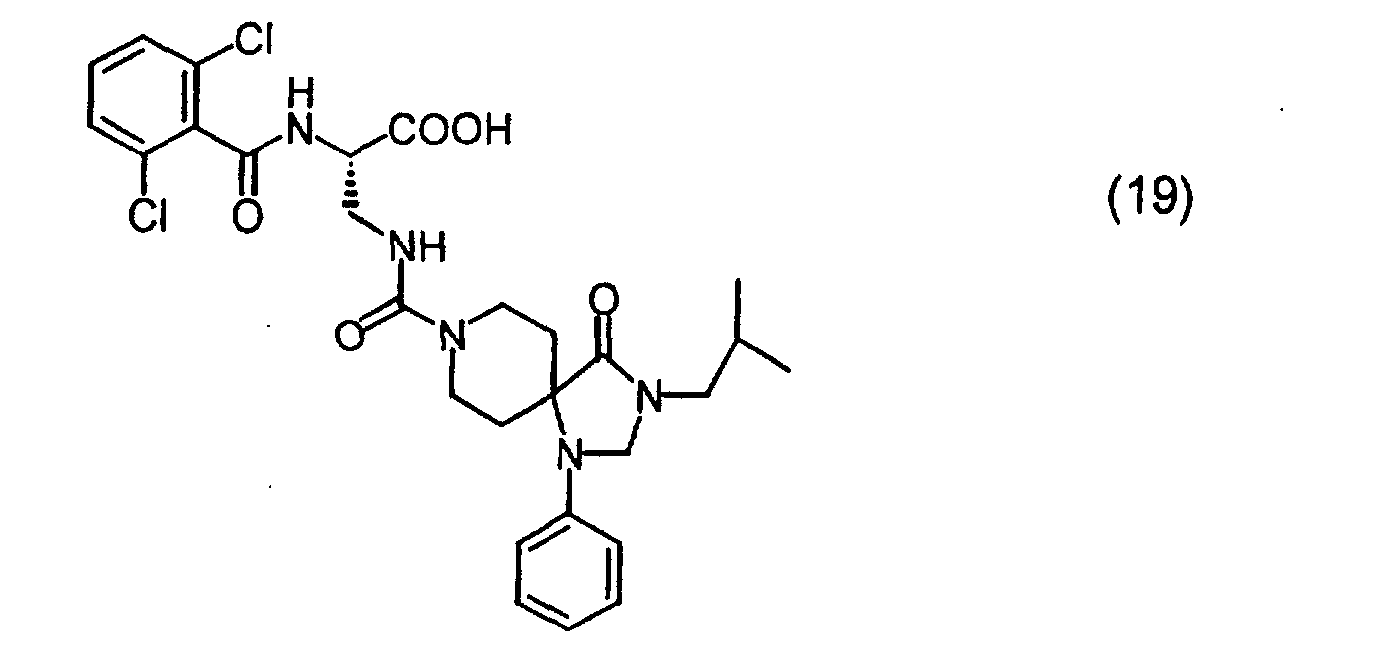
- In 2 ml of methanol, 55.6 mg of methyl 2-((2,6-dichlorophenyl)carbonylamino)-3 -((2,4,8-triaza-2-(2-methylpropyl)-1-oxo-4-phenylspiro[4.5]dec-8-yl)carbonylamino) propionate was dissolved, and 1 ml of 1N aqueous sodium hydroxide solution was added thereto, followed by stirring the resulting mixture at room temperature for 1.5 hours. To the reaction solution, 1N hydrochloric acid was added, and the resulting mixture was extracted with chloroform. Organic phases were combined, washed with saturated saline, dried over anhydrous sodium sulfate, and concentrated. The residue was reprecipitated from chloroform/ether to obtain 28.4 mg of 2-((2,6-dichlorophenyl)carbonylamino)-3-((2,4,8-triaza-2-(2-methylpropyl)-1-oxo-4-phenylspiro[4.5]dec-8-yl)carbonylamino)propanoic acid (yield: 52%).
LR-MS(m/z):588(M+-H)
IR(KBr): 3393, 2960, 2927, 2876, 1740, 1687, 1603, 1531, 1470, 1432, 1378, 1264, 1187, 1170, 967, 801, 749 cm-1
NMR(300MHz,CD3OD, δ ppm):0.97(6H,d,J=6.6),1.63-1.72(2H,m),1.96-2.17(1H,m),2.46-2.60(2H,m),3.25(2H,d,J=7.6),3.53-3.77(4H,m),3.86-3.98(2H,m),4.75(2H,s),4.80-4.85(2H,m),6.80-6.88(3H,m),7.22-7.31(2H,m),7.37-7.43(3H,m)
[α]20 D=-15.5° (c=0.10,MeOH)
HR-MS:C12H32Cl2N5O5 Calcd.: 588.1812, Found: 588.1812 -

- In 3 ml of dichloromethane, 54 mg of methyl 2-amino-3-((2,4,8-triaza-2-(2-methylpropyl)-1-oxo-4-phenylspiro[4.5]dec-8-yl)carbonylamino) propionate was dissolved, and then 71 mg of BOP, 25 mg of 2-methyl-5-nitrobenzoic acid and 91 µl of diisopropylamine were added, followed by stirring the resulting mixture under argon atmosphere at room temperature for 21 hours. Water was added to the reaction mixture and the resulting mixture was extracted with chloroform. Organic layers were combined, washed with saturated aqueous sodium hydrogen carbonate solution and with saturated saline, dried over anhydrous sodium sulfate, and concentrated. The residue was purified by column chromatography (dichloromethane/methanol=10:1) to obtain 60 mg of methyl 2-((2-methyl-5-nitrophenyl)carbonylamino)-3-((2,4,8-triaza-2-(2-methylpropyl)-1-oxo-4-phenylspiro[4.5]dec-8-yl)carbonylamino) propionate (yield: 78%).
LR-MS(m/z):594(M+)
IR(KBr): 2958, 2871, 1750, 1698, 1657, 1523, 1469, 1438, 1348, 1261, 1206, 1164, 1136, 912, 740 cm-1
NMR(300MHz,CDCl3, δ ppm):0.96(6H,d,J=6.6),1.64-1.78(2H,m),1.92-2.08(1H,m),2.50-2.61(2H,m),2.61(3H,s),3.23(2H,d,J=7.7),3.65-3.97(6H,m),3.80(3H,s),4.69(2H,s),4.66-4.75(1H,m),5.18(1H,brs),6.71-6.77(2H,m),6.79-6.84(1H,m),7.20-7.30(2H,m),7.33-7.40(1H,m),8.12-8.18(1H,m),8.37-8.40(1H,m),8.56(1H,brs)
[α]D 20: -18.7° (c=0.05, MeOH) -

- In 2 ml of methanol, 57 mg of methyl 2-((2-methyl-5-nitrophenyl)carbonylamino)-3-((2,4,8-triaza-2-(2-methylpropyl)-1-oxo-4-phenylspiro[4.5]dec-8-yl)carbonylamino) propionate was dissolved, and 0.5 ml of 1N aqueous sodium hydroxide solution was added thereto, followed by stirring the resulting mixture at room temperature for 1 hour. To the reaction solution, 1N hydrochloric acid was added, and the resulting mixture was extracted with chloroform. Organic phases were combined, washed with saturated saline, dried over anhydrous sodium sulfate, and concentrated. The residue was reprecipitated from chloroform/n-hexane to obtain 39.5 mg of 2-((2-methyl-5-nitrophenyl)carbonylamino)-3-((2,4,8-triaza-2-(2-methylpropyl)-1-oxo-4-phenylspiro[4.5]dec-8-yl)carbonylamino)propanoic acid (yield: 68%).
LR-MS(m/z):579(M+-H)
IR(KBr): 3383, 2960, 2929, 1689, 1658, 1523, 1471, 1349, 1265, 1166, 835, 745cm-1 NMR(300MHz,CD3OD, δ ppm):0.95(6H,d,J=6.6),1.65-1.80(2H,m),1.92-2.07(1H,m),2.43-2.56(2H,m),2.58(3H,s),3.23(2H,d,J=7.7),3.53-3.65(1H,m),3.66-3.99(5H,m),4.53-4.60(1H,m),4.68(2H,s),5.78(1H,brs),6.70-6.79(2H,m),6.80-6.88(1H,m),7.20-7.30(2H,m),7.33-7.40(1H,m),8.13-8.18(1H,m),8.35-8.38(1H,m),8.77(1H,brs)
HR-MS: C29H35N6O7 Calcd.: 579.2567, Found: 579.2516
[α]D 20: -40,8° (c=0.04, MeOH) -

- In 3 ml of acetonitrile and 8 ml of dichloromethane, 166 mg of methyl 3-amino-2-((2,6-dichlorophenyl)carbonylamino) propionate was dissolved, and 69 mg of saturated sodium hydrogen carbonate and 123 mg of chloroformic acid p-nitrophenyl ester were added thereto under argon atmosphere, followed by stirring the resulting mixture at room temperature for 1 hour. To the reaction mixture, 210 mg and 355 µl of triethylamine were added, and the reaction mixture was stirred at room temperature for 13 hours. After concentrating the reaction mixture, saturated aqueous sodium hydrogen carbonate solution was added, and the resulting mixture was extracted with chloroform. Organic layers were combined, washed with 0.1N hydrochloric acid and with saturated saline, dried over anhydrous sodium sulfate and concentrated. The residue was purified by column chromatography (dichloromethane/methanol=60:1) to obtain 232 mg of methyl 2-((2,6-dichlorophenyl)carbonylamino)-3-((2,4,8-triaza-1-oxo-4-phenyl-2-propylspiro[4.5]dec-8-yl)carbonylamino) propionate (yield: 77%).
LR-MS(m/z):589(M+)
IR(KBr): 2962, 2873, 1748, 1688, 1601, 1530, 1471, 1432, 1379, 1258, 1197, 1169, 1127, 989, 801, 781, 748 cm-1
NMR(300MHz,CDCl3, δ ppm):0.96(3H,t,J=7.1),1.61-1.72(2H,m),2.45-2.60(2H,m),3.40(2H,t,J=7.1),3.61-3.95(4H,m),3.83(3H,s),4.68(2H,s),4.82-4.88(1H,m),5.23(1H,brs),6.73-6.79(2H,m),6.82-6.88(1H,m),7.24-7.35(5H,m),7.39(1H,brs)
[α]D 20: -11.3° (c=0.27, MeOH) -

- In 5 ml of methanol, 211 mg of methyl 2-((2,6-dichlorophenyl)carbonylamino)-3-((2,4,8-triaza- 1-oxo-4-phenyl-2-propylspiro[4.5]dec-8-yl)carbonylamino) propionate was dissolved, and 2 ml of 1N aqueous sodium hydroxide solution was added thereto, followed by stirring the resulting mixture at room temperature for 1.5 hours. To the reaction solution, 1N hydrochloric acid was added, and the resulting mixture was extracted with chloroform. Organic phases were combined, washed with saturated saline, dried over anhydrous sodium sulfate, and concentrated. The residue was reprecipitated from chloroform/n-hexane to obtain 166.3 mg of 2-((2,6-dichlorophenyl)carbonylamino)-3-((2,4,8-triaza-1-oxo-4-phenyl-2-propylspiro[4.5]dec-8-yl)carbonylamino)propanoic acid (yield: 77%).
LR-MS(m/z):574(M+-H)
IR(KBr): 3383, 2965, 2932, 2874, 1684, 1601, 1533, 1475, 1432, 1381, 1261, 1197, 1172, 801, 782, 749 cm-1
NMR(300MHz,CDCl3, δ ppm):0.97(3H,t,J=7.4),1.60-1.76(4H,m),2.43-2.62(2H,m),3.38-3.43(2H,m),3.60-3.77(3H,m),3.81-3.97(3H,m),4.63-4.72(1H,m),4.70(2H,s),6.03(1H,brs),6.72-6.80(2H,m),6.82-6.90(1H,m),7.22-7.38(5H,m),7.77(1H,brs)
HR-MS: C27H30Cl2N5O5 Calcd.: 574.1624, Found: 574.1614
[α]D 20: -15.5° (c=0.04, MeOH) -

- Under argon atmosphere, 61 mg of methyl 2-amino-3-((2,4,8-triaza-1-oxo-4-phenylspiro[4.5]dec-8-yl)carbonylamino) propionate was dissolved in 2 ml of acetonitrile and 3 ml of dichloromethane, and then 22 mg of saturated sodium hydrogen carbonate and 36 mg of chloroformic acid p-nitrophenyl ester were added thereto while cooling the mixture in ice, followed by stirring the resulting mixture at room temperature for 1.5 hours. To the reaction mixture, 44 mg of 2,4,8-triaza-4-phenylspiro[4.5]decane-1-one and 56 µl of triethylamine were added, and the resulting mixture was stirred overnight at room temperature. After concentrating the reaction mixture, saturated aqueous sodium hydrogen carbonate solution was added, and the resulting mixture was extracted with ethyl acetate. Organic layers were combined, washed with IN hydrochloric acid and with saturated saline, dried over anhydrous sodium sulfate and concentrated. The residue was purified by column chromatography (dichloromethane/methanol=50:1) to obtain 54 mg of methyl 3-((2,4,8-triaza-1-oxo-4-phenylspiro[4.5]dec-8-yl)carbonylamino)-2-((2,4,8-triaza-1-oxo-4-phenylspiro[4.5]dec-8-yl)carbonylamino) propionate (yield: 53%).
LR-MS(m/z):632(M+)
IR(KBr): 2927, 2366, 1705, 1623, 1601, 1501, 1459,1375, 1256, 1187, 965, 910, 750 cm-1
NMR(300MHz,CDCl3, δ ppm):1.60-1.80(6H,m),2.43-2.62(4H,m),3.50-4.00(8H,m),3.71(3H,s),4.43-4.51(1H,m),4.71(4H,s),5.70-5.80(1H,brs),6.70-6.80(4H,m),6.72-6.90(2H,m),7.21-7.33(4H,m)
[α]D 20:-19.5° (c=0.11, MeOH) -

- In 2 ml of methanol, 36 mg of methyl 3-((2,4,8-triaza-1-oxo-4-phenylspiro[4.5]dec-8-yl)carbonylamino)-2-((2,4,8-triaza-1-oxo-4-phenylspiro[4.5]dec-8-yl)carbonylamino) propionate was dissolved, and 0.3 ml of 1N sodium hydroxide solution was added thereto, followed by stirring the resulting mixture at room temperature for 2.5 hours. To the reaction solution, 1N hydrochloric acid was added, and the resulting mixture was extracted with chloroform. Organic phases were combined, washed with saturated saline, dried over anhydrous sodium sulfate, and concentrated. The residue was reprecipitated from chloroform/ether to obtain 38.7 mg of 3-((2,4,8-triaza-1-oxo-4-phenylspiro[4.5]dec-8-yl)carbonylamino)-2-((2,4,8-triaza-1-oxo-4-phenylspiro[4.5]dec-8-yl)carbonylamino)propanoic acid (yield: 81%).
LR-MS(m/z):617(M+-H)
IR(KBr): 3347, 2929, 1708, 1601, 1533, 1501, 1397, 1255, 1189, 966, 751 cm-1
NMR(300MHz,CD3OD, δ ppm):1.63-1.80(3H,m),2.10-2.40(4H,m),2.41-2.60(3H,m),3.54-3.75(4H,m),3.76-3.87(2H,m),3.88-4.00(2H,m),4.24-4.35(1 H,m),4.73(4H,s),6.65-6.79(4H,m),6.82-6.92(2H,m),7.20-7.30(4H,m) [α]D 20: 26.3° (c=0.04, MeOH)
HR-MS:C31H38N8O6 Calcd.: 617.2836, Found: 617.2834 -

- Under argon atmosphere, 41 mg of methyl 2-amino-3-((2,4,8-triaza-1-oxo-4-phenylspiro[4.5]dec-8-yl)carbonylamino) propionate was dissolved in 2 ml of acetonitrile and 3 ml of dichloromethane, and then 11 mg of saturated sodium hydrogen carbonate and 18 mg of chloroformic acid p-nitrophenyl ester were added thereto while cooling the mixture in ice, followed by stirring the resulting mixture at room temperature for 2.5 hours. To the reaction mixture, 24 mg and 28 µl of triethylamine were added, and the resulting mixture was stirred at room temperature for 16 hours. After concentrating the reaction mixture, saturated aqueous sodium hydrogen carbonate solution was added, and the resulting mixture was extracted with ethyl acetate. Organic layers were combined, washed with 1N hydrochloric acid and with saturated saline, dried over anhydrous sodium sulfate and concentrated. The residue was purified by column chromatography (dichloromethane/methanol=40:1) to obtain 11 mg of methyl 2-((4-(2-methylpropanoylamino)-4-phenylpiperidyl)carbonylamino)-3-((2,4,8-triaza-1-oxo-4-phenylspiro[4.5]dec-8-yl)carbonylamino) propionate (yield: 19%).
LR-MS(m/z):647(M+)
NMR(300MHz,CDCl3, δ ppm):1.04-1.18(6H,m),1.63-1.76(2H,m),1.90-2.04(2H,m),2.28-2.41 (2H,m),2.51-2.64(2H,m),3.02-3.18(2H,m),3.53-4.00(8H,m), 3.78(3H,s),4.43-4.49(1H,m),4.58(2H,s),4.61(2H,s),5.35(1H,brs),5.58(1H,brs),6.64-6.71 (2H,m),6.78-6.85(1H,m),6.97-7.02(1H,m),7.16-7.40(11H,m) -
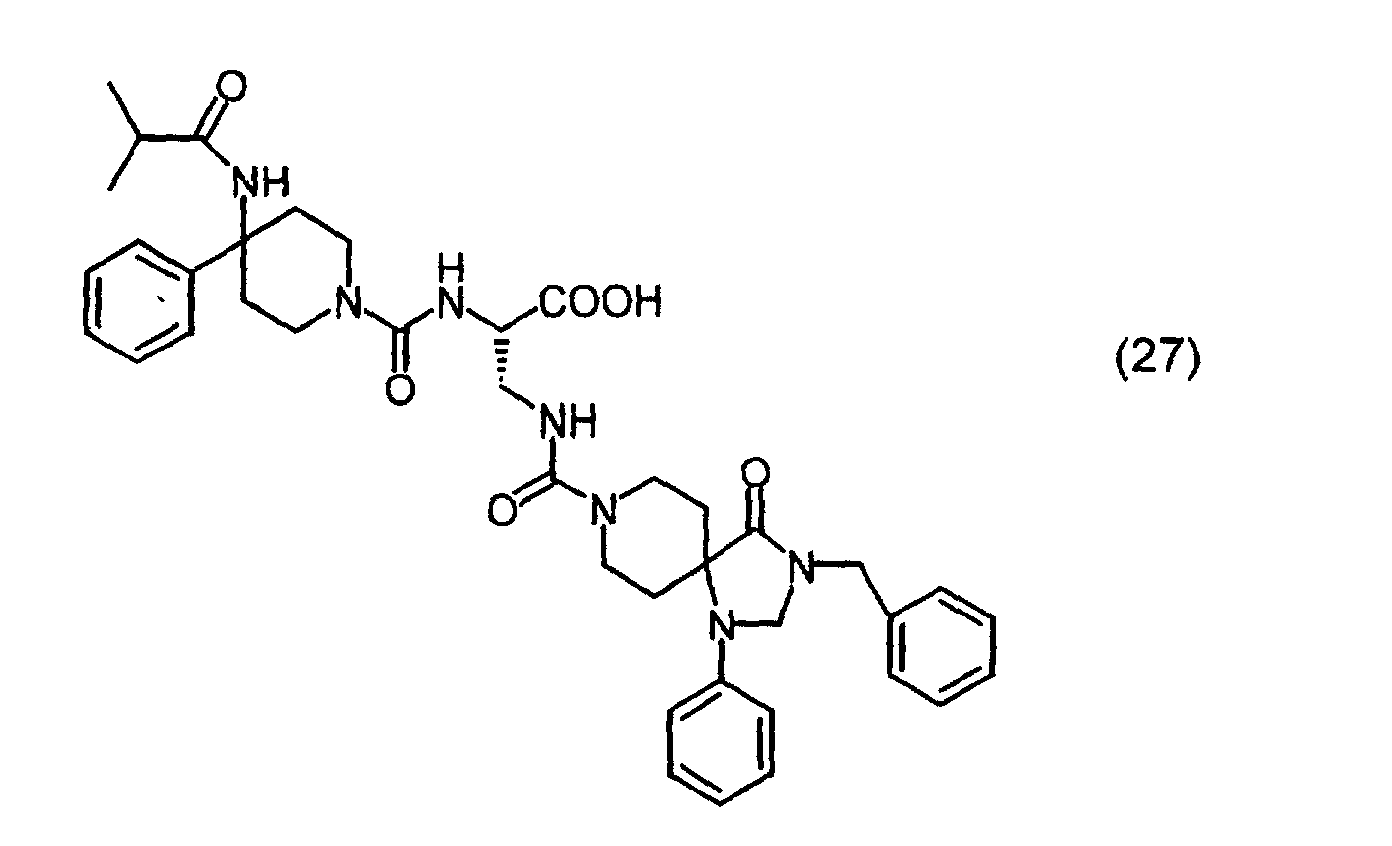
- In 1 ml of methanol, 11 mg of methyl 2-((4-(2-methylpropanoylamino)-4-phenylpiperidyl)carbonylamino)-3-((2,4,8-triaza-1-oxo-4-phenylspiro[4.5]dec-8-yl)carbonylamino) propionate was dissolved, and 0.1 ml of 1N aqueous sodium hydroxide solution was added thereto, followed by stirring the resulting mixture at room temperature for 2.5 hours. To the reaction solution, 1N hydrochloric acid was added, and the resulting mixture was extracted with chloroform. Organic phases were combined, washed with saturated saline, dried over anhydrous sodium sulfate, and concentrated. The residue was reprecipitated from chloroform/ether to obtain 6.4 mg of 2-((4-(2-methylpropanoylamino)-4-phenylpiperidyl)carbonylamino)-3-((2,4,8-triaza-1-oxo-4-phenylspiro[4.5]dec-8-yl)carbonylamino)propanoic acid (yield: 59%).
LR-MS(m/z):722(M+-H)
IR(KBr): 3369, 2966, 2929, 1688, 1628, 1603, 1530, 1469, 1381, 1262, 1207, 751 cm-1
NMR(300MHz,CDCl3, δ ppm): 1.10-1.20(6H,m),1.62-1.80(2H,m),1.93-2.10(2H,m),2.32-2.63(5H,m),,3.10-3.30(2H,m),3.55-4.00(8H,m),4.21--4.24(1H,m),4.58(2H,s),4.60(2H,s),5.52(1H,brs),5.61(1H,brs),6.61-6.70(2H,m),6.81-6.88(1H,m),7.20-740(12H,m),8.09(1H,brs)
[α]D 20: -5.00° (c=0.02, MeOH)
HR-MS:C40H49N7O6 Calcd.: 722.3666, Found: 722.3726 -

- Under argon atmosphere, 100.3 mg of methyl 3-amino-2-((4-(2-oxo(3-hydrobenzimidazolyl))piperidyl)carbonylamino) propionate was dissolved in 15 ml of dichloromethane, and 42 mg of saturated sodium hydrogen carbonate and 67 mg of chloroformic acid p-nitrophenyl ester were added thereto, followed by stirring the resulting mixture at room temperature for 2 hours. To the reaction mixture, 97 mg and 100 µl of triethylamine were added, and the resulting mixture was stirred overnight at room temperature. After concentrating the reaction mixture, saturated aqueous sodium hydrogen carbonate solution was added, and the resulting mixture was extracted with ethyl acetate. Organic layers were combined, washed with IN hydrochloric acid and with saturated saline, dried over anhydrous sodium sulfate and concentrated. The residue was purified by column chromatography (dichloromethane/methanol=10:1) to obtain 54.7 mg of methyl 2-((4-(2-oxo(3-hydrobenzimidazolyl))piperidyl)carbonylamino)-3 -(2,4,8-triaza-1-oxo-4-phenylspiro[4.5]dec-8-yl)carbonylamino) propionate (yield: 32%).
LR-MS(m/z):618(M+)
IR(KBr): 3427, 2927, 1704, 1624, 1540, 1381, 1254, 1158, 1087, 753 cm-1
NMR(300MHz,CDCl3, δ ppm):1.65-1.85(4H,m),2.23-2.40(2H,m),2.49-2.63(2H,m),2.83-2.98(2H,m),3.47-3.51(1H,m),3.60-3.98(5H,m),3.78(3H,s), 4.17-4.28(2H,m),4.38-4.52(2H,m),4.75(2H,s),5.40(1H,brs),6.70-6.78(2H,m), 6.84-6.92(1H,m),6.97-7.09(4H,m),7.24-7.35(2H,m),8.75(1H,brs)
[α]D 20: -6.85° (c=0.10, MeOH) -
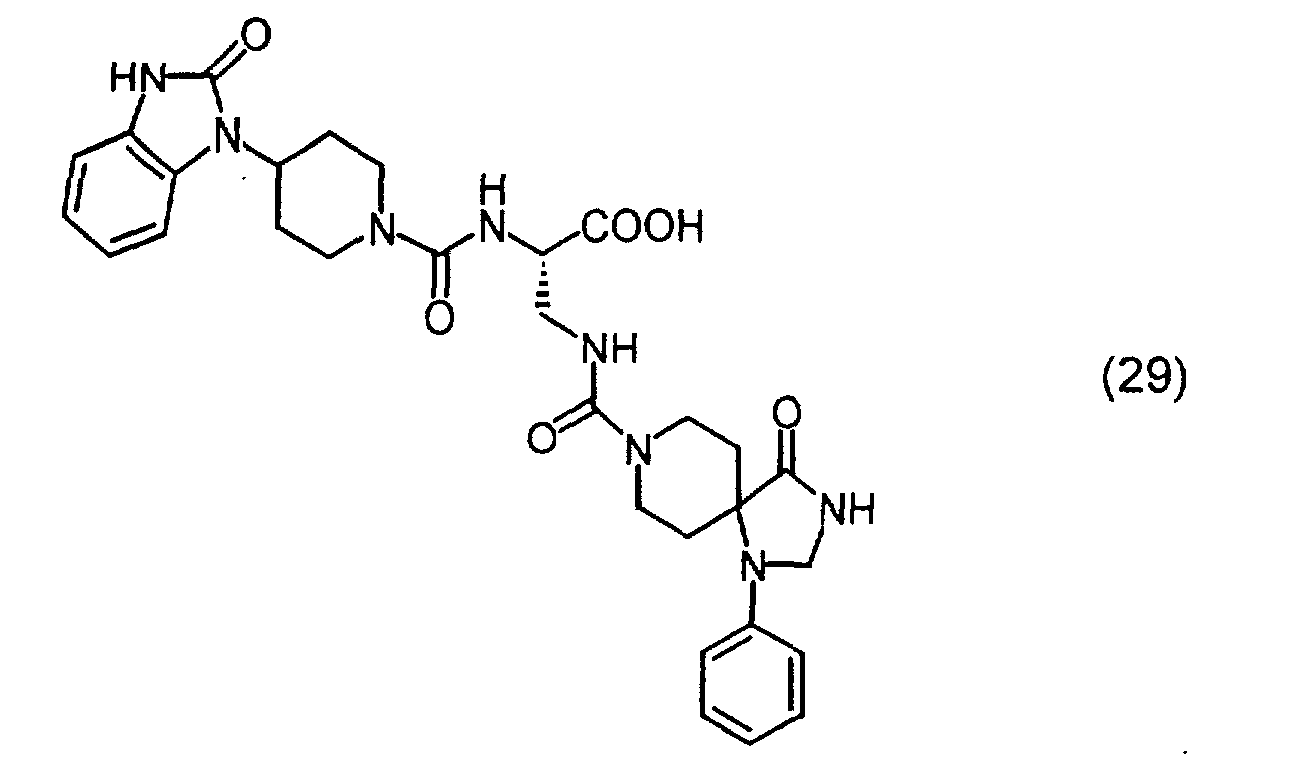
- In 2 ml of methanol, 48 mg of methyl 2-((4-(2-oxo(3-hydrobenzimidazolyl))piperidyl)carbonylamino)-3-(2,4,8-triaza-1-oxo-4-phenylspiro[4.5]dec-8-yl)carbonylamino) propionate was dissolved, and 0.3 ml of 1N sodium hydroxide solution was added thereto, followed by stirring the resulting mixture overnight at room temperature. To the reaction solution, 1N hydrochloric acid was added, and the resulting mixture was extracted with chloroform. Organic phases were combined, washed with saturated saline, dried over anhydrous sodium sulfate, and concentrated. The residue was reprecipitated from chloroform/ether to obtain 24.8 mg of 2-((4-(2-oxo(3-hydrobenzimidazolyl))piperidyl)carbonylamino)-3-(2,4,8-triaza-1-oxo-4-phenylspiro[4.5]dec-8-yl)carbonylamino)propanoic acid (yield: 53%).
LR-MS(m/z):603(M+-H)
IR(KBr): 3383, 2932, 1702, 1622, 1604, 1541, 1488, 1379, 1254, 1192, 1162, 1091, 966, 754 cm-1
NMR(300MHz,CD3OD, δ ppm):1.60-1.78(4H,m),2.20-2.40(2H,m),2.50-2.62(2H,m),2.86-3.00(2H,m),3.50-3.57(4H,m),3.86-4.00(2H,m),4.17-4.30(2H,m),4.31-4.37(1 H,m),4.40-4.52(1H,m),4.73(2H,s),6.75-6.83(3H,m),6.92-7.05(4H,m),7.21-7.30(2H,m)
[α]D 20: -14.7° (c=0.01, MeOH) -
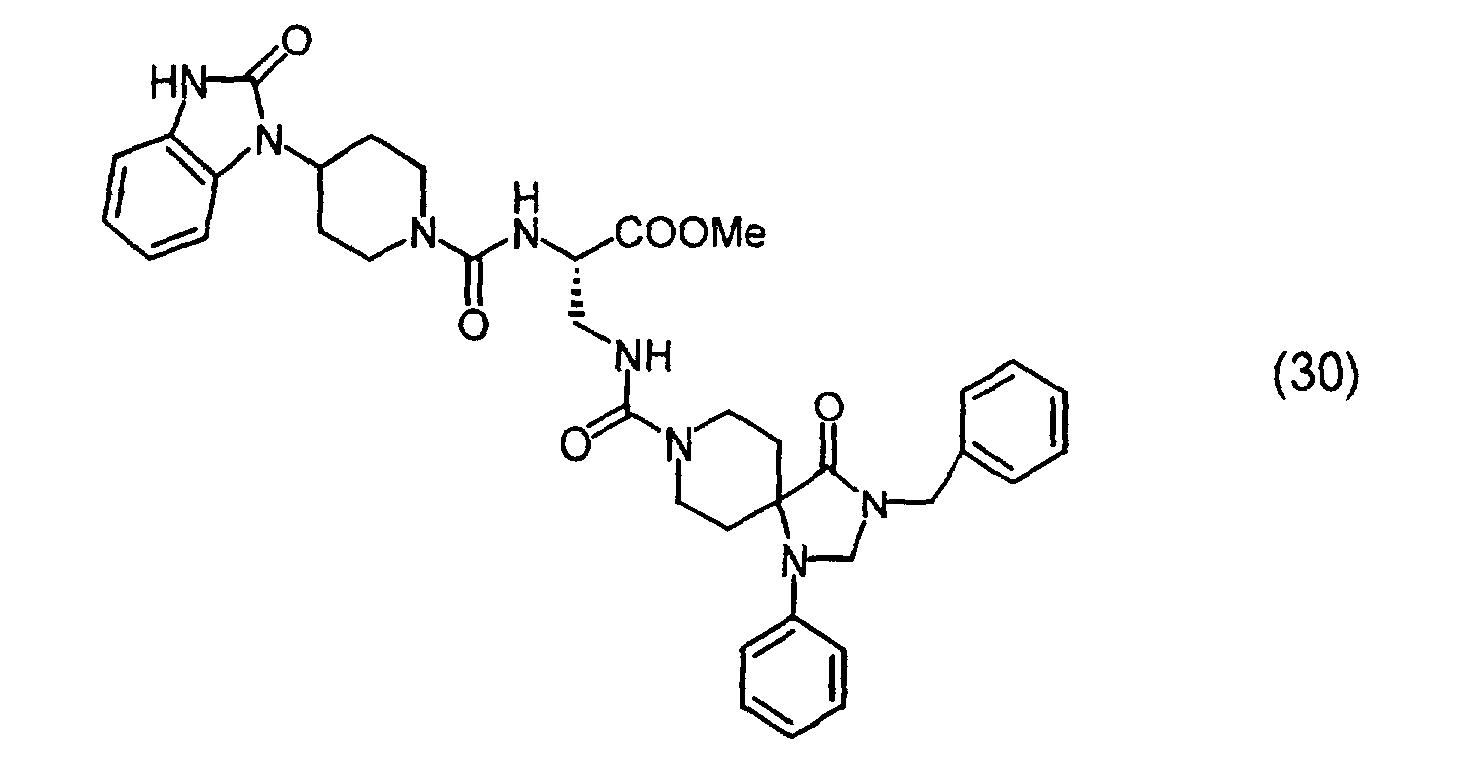
- Under argon atmosphere, 45.1 mg of methyl 2-amino-3-((2,4,8-triaza-1-oxo-4-phenyl-2-benzylspiro[4.5]dec-8-yl)carbonylamino) propionate was dissolved in 2 ml of dichloromethane, and then 11.1 mg of saturated sodium hydrogen carbonate and 21.3 mg ofchloroformic acid p-nitrophenyl ester were added thereto while cooling the mixture in ice, followed by stirring the resulting mixture at room temperature for 2.5 hours. To the reaction mixture, 28.7 mg of 1-(4-piperidyl)-3-hydrobenzimidazol-2-one and 65 µl of triethylamine were added, and the resulting mixture was stirred at room temperature for 8 hours. After concentrating the reaction mixture, saturated aqueous sodium hydrogen carbonate solution was added, and the resulting mixture was extracted with ethyl acetate. Organic layers were combined, washed with IN hydrochloric acid and with saturated saline, dried over anhydrous sodium sulfate and concentrated. The residue was purified by column chromatography (dichloromethane/methanol=20:1) to obtain 38.7 mg of methyl 2-((4-(2-oxo(3-hydrobenzimidazolyl))piperidyl)carbonylamino)-3-((2,4,8-triaza-1-oxo-4-phenyl-2-benzylspiro[4.5]dec-8-yl)carbonylamino) propionate (yield: 60%).
LR-MS(m/z):708(M+)
IR(KBr): 3387, 2931, 1689, 1623, 1543, 1484, 1379, 1267, 1204, 1137, 754 cm-1
NMR(300MHz,CDCl3, δ ppm):1.63-1.85(4H,m),2.22-2.38(2H,m),2.52-2.66(2H,m),2.83-2.99(2H,m),,3.60-3.88(4H,m),3.77(3H,s),3.91-4.00(1H,m),4.15--4.30(2H,m),4.40-4.53(2H,m),4.57(2H,s),4.61(2H,s),5.30-5.38(1H,m),6.63-6.72(2H,m),6.80-6.86(1H,m),6.90-7.08(6H,m),7.21-7.40(5H,m),8.57(1H,brs)
[α]D 20: -124.0° (c=0.10, MeOH) -

- In 1.5 ml of methanol, 36.6 mg of methyl 2-((4-(2-oxo(3-hydrobenzimidazolyl))piperidyl)carbonylamino)-3-((2,4,8-triaza-1-oxo-4-phenyl-2-benzylspiro[4.5]dec-8-yl)carbonylamino) propionate was dissolved, and 1 ml of 1N aqueous sodium hydroxide solution was added thereto, followed by stirring the resulting mixture at room temperature for 2.5 hours. To the reaction solution, 1N hydrochloric acid was added, and the resulting mixture was extracted with ethyl acetate. Organic phases were combined, washed with saturated saline, dried over anhydrous sodium sulfate, and concentrated. The residue was reprecipitated from chloroform/n-hexane to obtain 33.2 mg of 2-((4-(2-oxo(3-hydrobenzimidazolyl))piperidyl)carbonylamino)-3-((2,4,8-triaza-1-oxo-4-phenyl-2-benzylspiro[4.5]dec-8-yl)carbonylamino)propanoic acid (yield: 92%).
LR-MS(m/z):695(M++H)
IR(KBr): 3368, 2927, 2862, 1697, 1631, 1535, 1485, 1370, 1263, 1196, 1157, 1086, 1011, 970, 751 cm-1
NMR(300MHz,CD3OD, δ ppm):1.60-1.80(4H,m),2.20-2.40(2H,m),2.50-2.61(2H,m),2.89-3.01(2H,m),3.60-3.75(4H,m),3.91-4.02(2H,m),4.16-4.30(2H,m),4.30-4.55(2H,m),4.60(2H,s),4.62(2H,s),6.62-6.82(3H,m),6.87-7.07(4H,m),7.20-7.40(7H,m)
HR-MS:C37H43N8O6 Calcd.: 695.3306, Found: 695.3339
[α]20 D:-12.0° (c=0.10,MeOH) -
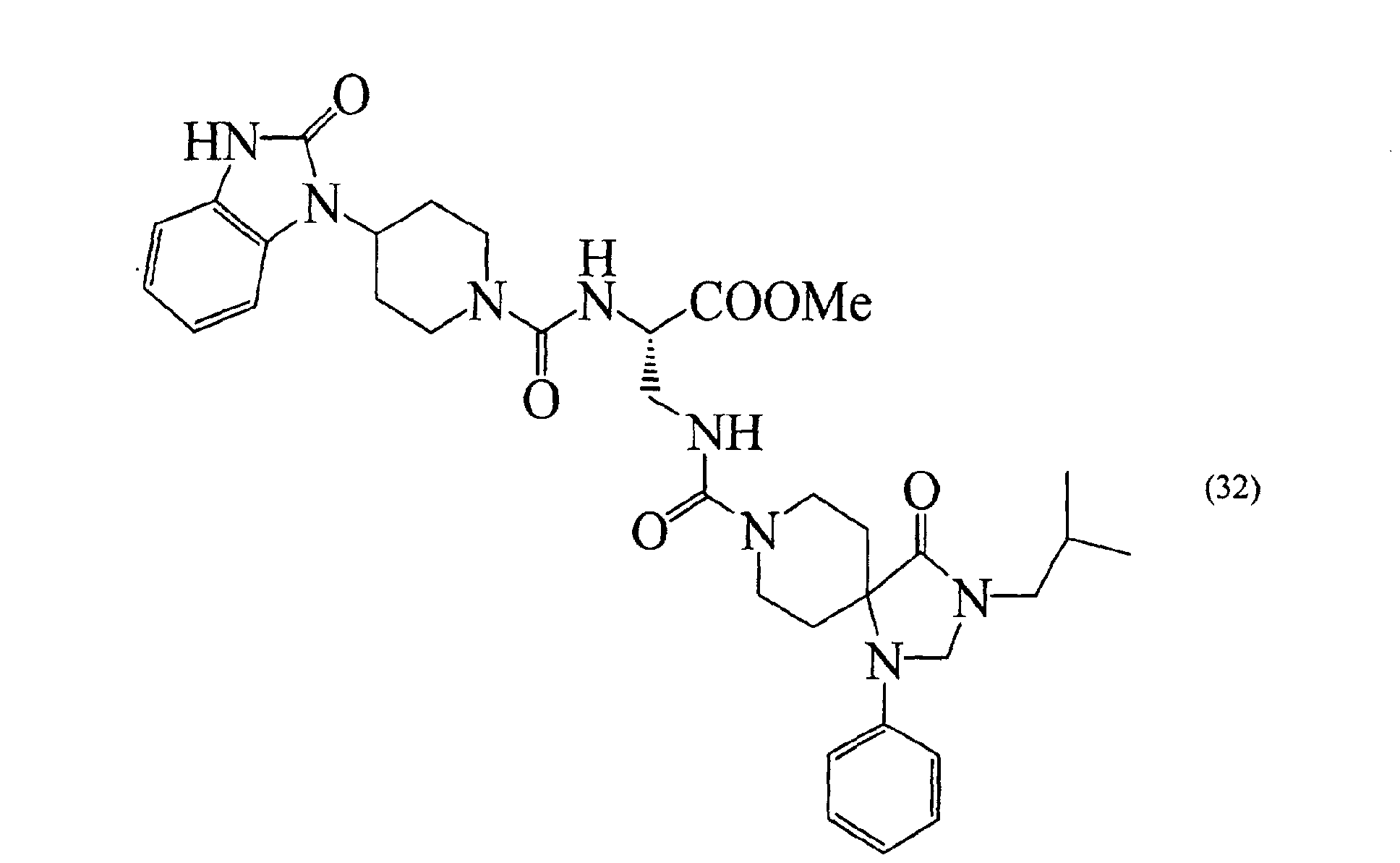
- In 2.7 ml of dichloromethane, 173.1 mg of methyl 2-((t-butoxy)carbonylamino)-3-((2,4,8-triaza-2-(2-methylpropyl)-1-oxo-4-phenylspiro[4.5]dec-8-yl)carbonylamino) propionate was dissolved, and 0.3 ml of trifluoroacetic acid was added thereto. The resulting mixture was stirred at room temperature for 2 hours, and then concentrated. Under argon atmosphere, the residue was dissolved in 2.4 ml of acetonitrile, and then 15.4 mg of saturated sodium hydrogen carbonate and 29.5 mg of chloroformic acid p-nitrophenyl ester were added thereto, followed by stirring the resulting mixture at room temperature for 4 hours. To the reaction mixture, 39.8 mg of 1-(4-piperidyl)-3-hydrobenzimidazol-2-one and 85 µl of triethylamine were added, and the resulting mixture was stirred overnight at room temperature. After concentrating the reaction mixture, saturated aqueous sodium hydrogen carbonate solution was added, and the resulting mixture was extracted with chloroform. Organic layers were combined, washed with 0.1N hydrochloric acid and with saturated saline, dried over anhydrous sodium sulfate and concentrated. The residue was purified by column chromatography (chloroform/methanol=30:1) to obtain 55.6 mg of methyl 2-((4-(2-oxo(3-hydrobenzimidazolyl))piperidyl)carbonylamino)-3-((2,4,8-triaza-2-(2-methylpropyl)-1-oxo-4-phenylspiro[4.5]dec-8-yl)carbonylamino) propionate (yield: 59%)
LR-MS(m/z):674(M+)
IR(KBr): 3363, 2957, 2869, 1697, 1629, 1536, 1483, 1371, 1265, 1200, 1153, 1087, 1011, 966, 752 cm-1
NMR(300MHz,CDCl3, δ ppm):0.95(6H,d,J=6.6),1.60-1.75(2H,m),1.78-1.85(2H,m),1.96-2.08(1H,m),2.22-2.38(2H,m),2.53-2.64(2H,m),2.84-3.00(2H,m),3.23(2H,d,J=7.4),3.60-4.00(6H,m),3.77(3H,s),4.17-4.30(2H,m),4.40-4.55(2H,m),4.70(2H,s),5.26-5.34(1H,m),6.72-6.77(2H,m),6.83-6.90(1H,m),6.98-7.10(5H,m),7.24-7.33(2H,m),8.39(1H,brs)
[α]20 D:-6.5° (c=0.10,MeOH) -
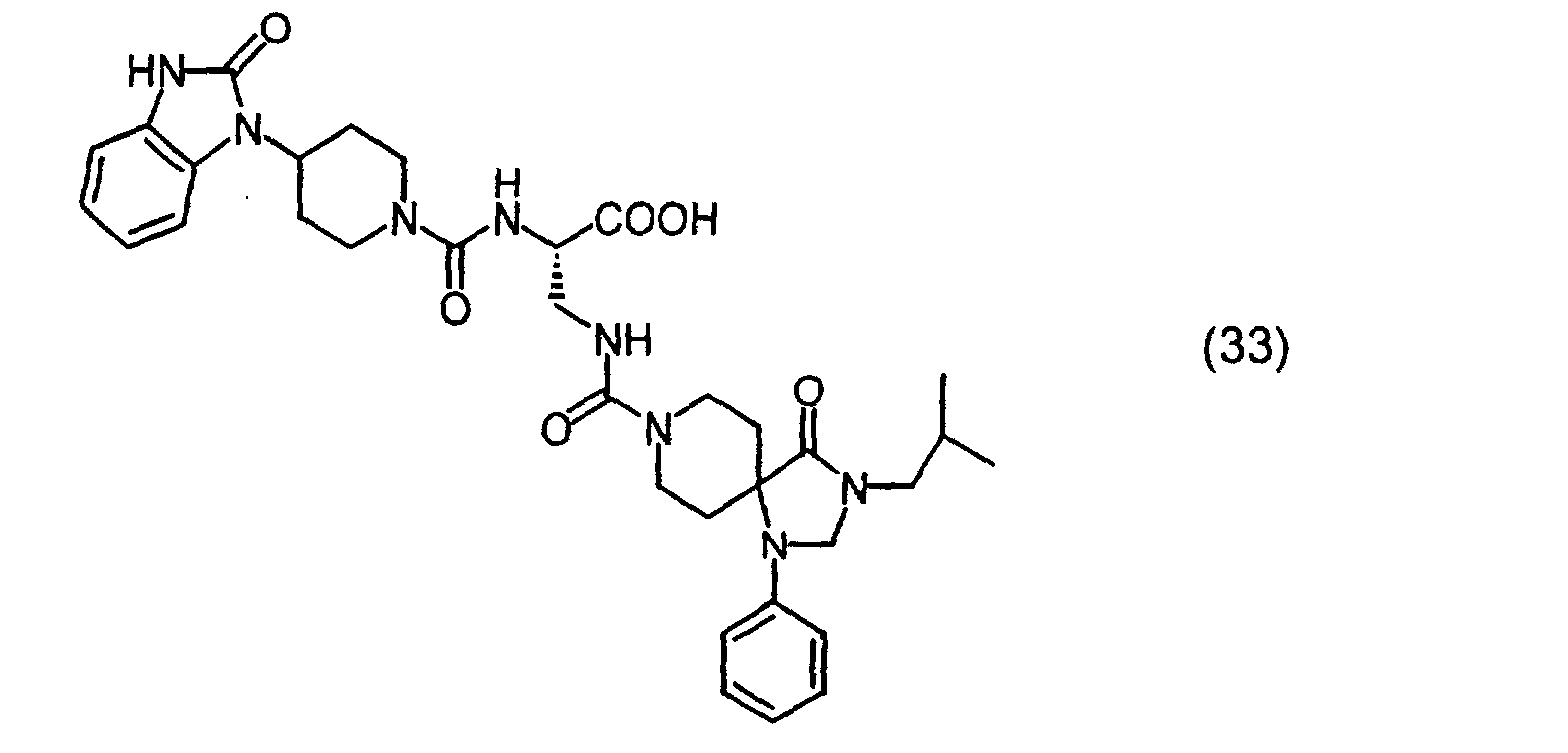
- In 1 ml of methanol, 53.2 mg of methyl 2-((4-(2-oxo(3-hydrobenzimidazolyl))piperidyl)carbonylamino)-3-((2,4,8-triaza-2-(2-methylpropyl)-1-oxo-4-phenylspiro[4.5]dec-8-yl)carbonylamino) propionate was dissolved, and 1 ml of 1N aqueous sodium hydroxide solution was added thereto, followed by stirring the resulting mixture at room temperature for 2 hours. To the reaction solution, 1N hydrochloric acid was added, and the resulting mixture was extracted with ethyl acetate. Organic phases were combined, washed with saturated saline, dried over anhydrous sodium sulfate, and concentrated. The residue was reprecipitated from chloroform/n-hexane to obtain 36.6 mg of 2-((4-(2-oxo(3-hydrobenzimidazolyl))piperidyl)carbonylamino)-3-((2,4,8-triaza-2-(2-methylpropyl)-1-oxo-4-phenylspiro[4.5]dec-8-yl)carbonylamino)propanoic acid (yield: 70%).
LR-MS(m/z):659(M+-H)
IR(KBr): 3372, 2959, 2871, 1696, 1634, 1536, 1483, 1376, 1266, 1197, 1163, 1090, 1011, 968, 752cm-1
NMR(300MHz,CD3OD, δ ppm):0.95(6H,d,J=6.6),1.59-1.69(2H,m),1.70-1.80(2H,m),1.99-2.17(1 H,m),2.22-2.40(2H,m),2.50-2.63(2H,m),2.90-3.03(2H,m),3.24(2H,d,J=7.7),3.58-3.70(4H,m),3.90-4.02(2H,m),4.18-4.31(2H,m),4.32-4.39(1H,m),4.40-4.53(1H,m),4.76(2H,s),6.80-6.87(3H,m),6.92-7.10(4H,m),7.24-7.33(2H,m)
[α]20 D:-10.0° (c=0.10,MeOH)
HR-MS:C34H45N8O6 Calcd.: 661.3462, Found: 661.3450 -
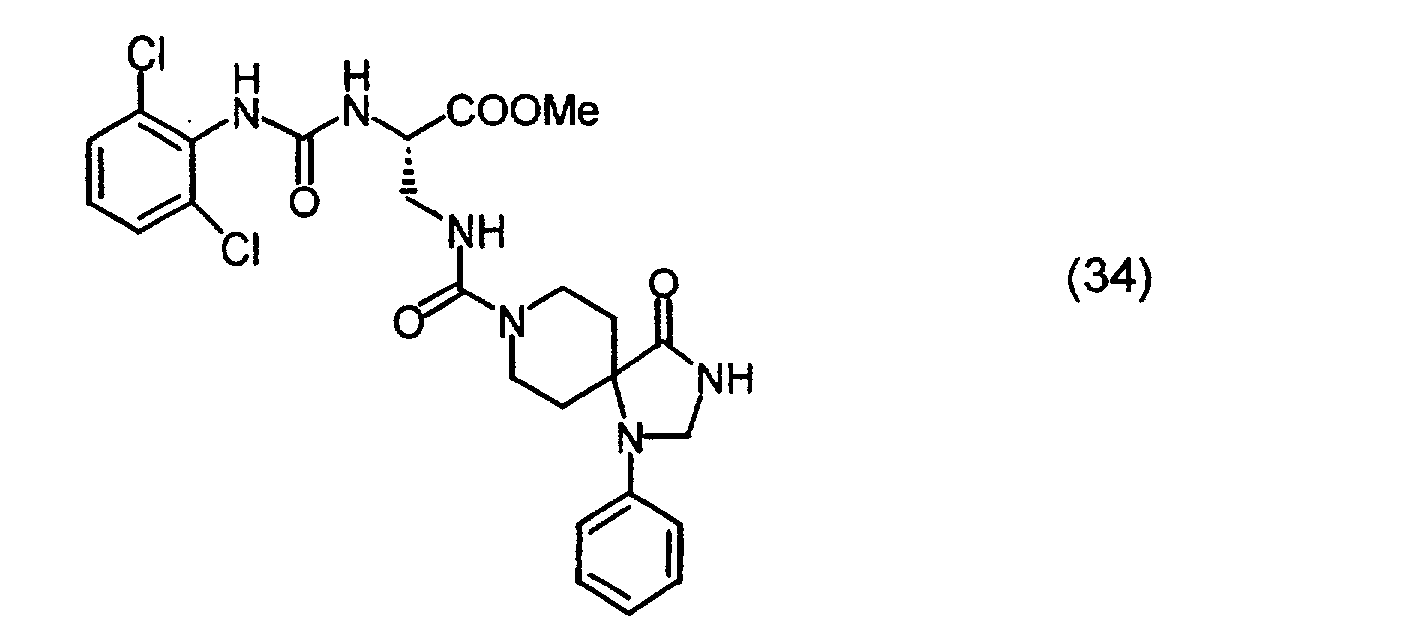
- In 2 ml of dichloromethane, 100 mg of methyl 2-((t-butoxy)carbonylamino)-3-((2,4,8-triaza-1-oxo-4-phenyl-2-benzylspiro[4.5]dec-8-yl)carbonylamino) propionate was dissolved, and 1 ml of trifluoroacetic acid was added thereto, followed by stirring the resulting mixture at room temperature for 2 hours. After concentrating the reaction solution, the residue was dissolved in 4 ml of dichloromethane, and then 150 µl of triethylamine and 43 mg of 2,6-dichlorobenzene isocyanate were added, followed by stirring the resulting mixture at room temperature for 3 hours. Saturated aqueous sodium hydrogen carbonate solution was added to the reaction mixture, and the resulting mixture was extracted with chloroform. Organic layers were combined, washed with water and with saturated saline, dried over anhydrous sodium sulfate, and concentrated to obtain 90.7 mg of methyl 2-((2,6-dichlorophenyl)amino)carbonylamino)-3-((2,4,8-triaza-1-oxo-4-phenylspiro[4.5]dec-8-yl)carbonylamino) propionate (yield: 77%).
LR-MS(m/z):562(M+)
IR(KBr):3371,2925,2852,1708,1624,1539,1457,1438,1372,1254,1078,782,750cm-1 NMR(300MHz,CDCl3, δ ppm):1.68-1.81(2H.m),2.43-2.57(2H,m),3.58-3.87(6H,m),3.75(3H,s),4.52-4.60(1H,m),4.75(2H,s),5.26(1H,brs),
6.13(1H,brs),6.25(1H,brs),6.33(1H,brs),6.72-6.78(2H,m),6.85-6.90(1H.m),7.10-7.20(2H,m),7.21-7.39(3H,m)
[α]20 D:-5.5° (c=0.10,CHCl3) -

- In 4 ml of methanol, 90 mg of methyl 2-((2,6-dichlorophenyl)amino)carbonylamino)-3-((2,4,8-triaza-1-oxo-4-phenylspiro[4.5]dec-8-yl)carbonylamino) propionate was dissolved, and 1.6 ml of 1N aqueous sodium hydroxide solution was added thereto, followed by stirring the resulting mixture at room temperature for 4 hours. To the reaction solution, 1N hydrochloric acid was added, and the resulting mixture was extracted with chloroform. Organic phases were combined, washed with saturated saline, dried over anhydrous sodium sulfate, and concentrated. The residue was reprecipitated from chloroform/ether to obtain 21.0 mg of 2-((2,6-dichlorophenyl)amino)carbonylamino)-3-((2,4,8-triaza-1-oxo-4-phenylspiro[4.5]dec-8-yl)carbonylamino)propanoic acid (yield: 52%).
LR-MS(m/z):547(M+-H)
IR(KBr):3355,2931,1707,1604,1539,1457,1437,1373,1255,1203,1164,1094,965,781 cm-1
NMR(300MHz,CD3OD, δ ppm):1.62-1.74(2H.m),2.45-2.60(2H,m),3.55-3.70(4H,m),3.83-3.99(2H,m),4.42-4.50(1H,m),4.71(2H,s), 6.78-6.83(3H,m),7.20-7.30(3H.m),7.38-7.41 (2H,m)
HR-MS:C24H25Cl2N6O5 Calcd.: 547.1263, Found: 547.1254
[α]20 D:-9.5(c=0.10,MeOH) -

- In 1 ml of dichloromethane, 50 mg of methyl 2-((t-butoxy)carbonylamino)-3-((2,4,8-triaza-1-oxo-4-phenyl-2-benzylspiro[4.5]dec-8-yl)carbonylamino) propionate was dissolved, and 0.5 ml of trifluoroacetic acid was added thereto, followed by stirring the resulting mixture at room temperature for 2 hours. After concentrating the reaction solution, the residue was dissolved in 2 ml of dichloromethane, and then 60 µl of triethylamine and 19 mg of 2,6-dichlorobenzene isocyanate were added, followed by stirring the resulting mixture overnight at room temperature. Saturated aqueous sodium hydrogen carbonate solution was added to the reaction mixture, and the resulting mixture was extracted with chloroform. Organic layers were combined, washed with water and with saturated saline, dried over anhydrous sodium sulfate, and concentrated. The residue was purified by column chromatography (ethyl acetate/n-hexane=1:1) to obtain 46.3 mg of methyl 2-((2,6-dichlorophenyl)amino)carbonylamino)-3-((2,4,8-triaza- 1-oxo-4-phenyl-2-benzylspiro[4.5]dec-8-yl)carbonylamino) propionate (yield: 80%).
LR-MS(m/z):652(M+)
IR(KBr):3392,2925,1740,1701,1651,1539,1455,1436,1375,1261,1201,1162,1063,75 2cm-1
NMR(300MHz,CDCl3, δ ppm):1.65-1.78(2H,m),2.45-2.60(2H,m),3.60-3.90(6H,m),3.78(3H,s),4.52-4.61(1H,m),4.54(2H,s),4.60(2H,s), 5.40(1H,brs), 6.44(1H,brs),6.63-6.78(3H,m),6.79-6.84(1H,m),7.07-7.12(1H,m),7.20-7.40(9H,m)
[α]20 D:-7.0° (c=0.10,CHCl3) -

- In 2 ml of methanol, 41.2 mg of methyl 2-((2,6-dichlorophenyl)amino)carbonylamino)-3-((2,4,8-triaza-1-oxo-4-phenyl-2-benzylspiro[4.5]dec-8-yl)carbonylamino) propionate was dissolved, and 0.6 ml of 1N aqueous sodium hydroxide solution was added thereto, followed by stirring the resulting mixture at room temperature for 2 hours. To the reaction solution, 1N hydrochloric acid was added, and the resulting mixture was extracted with chloroform. Organic phases were combined, washed with saturated saline, dried over anhydrous sodium sulfate, and concentrated. The residue was reprecipitated from chloroform/ether to obtain 21.0 mg of 2-((2,6-dichlorophenyl)amino)carbonylamino)-3 -((2,4,8-triaza-1-oxo-4-phenyl-2-benzylspiro[4.5]dec-8-yl)carbonylamino)propanoic acid (yield: 52%).
LR-MS(m/z):637(M+-H)
IR(KBr):3418,2926,1724,1700,1624,1539,1472,1377,1265,1194,1075,1025,786,750 cm-1
NMR(300MHz,CDCl3, δ ppm):1.64-1.78(2H,m),2.40-2.60(2H,m),3.44-3.55(2H,m),3.63-3.92(4H,m),4.30-4.40(1H,m),4.54(2H,s),4.60(2H,s), 5.19(1H,brs),5.73(1H,brs),6.63-6.70(2H,m),6.79-6.89(2H,m),7.10-7.45(9H,m)
[α]20 D:-6.0° (c=0.10,MeOH) -
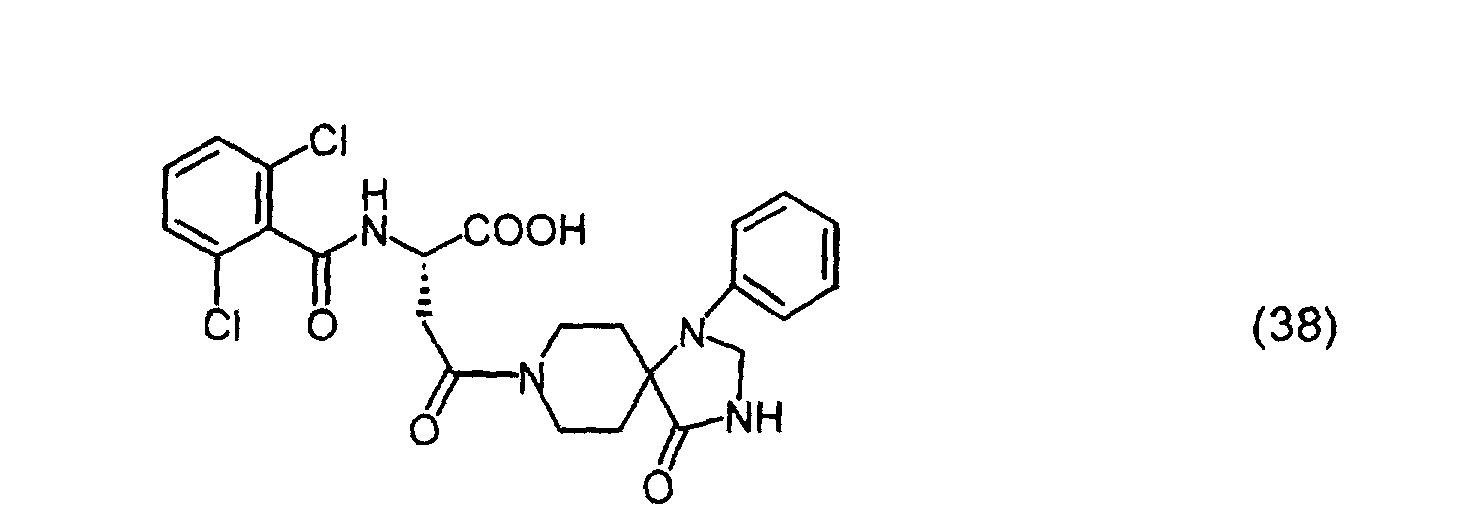
- In 2 ml of DMF, 150 mg of methyl 2-amino-4-oxo-4-(2,4,8-triaza-1-oxo-4-phenylspiro[4.5]dec-8-yl) butanoate was dissolved, and 97 µl of 2,6-dichlorobenzoyl chloride and 192 µl of triethylamine were added thereto, followed by stirring the resulting mixture at room temperature for 14 hours. Saturated aqueous sodium hydrogen carbonate solution was added to the reaction mixture, and the resulting mixture was extracted with ethyl acetate. Organic phases were combined, washed with 0.1N hydrochloric acid and with saturated saline, dried over anhydrous sodium sulfate, and concentrated. The residue was dissolved in 6 ml of methanol, and 2 ml of 1N aqueous sodium hydroxide solution was added thereto, followed by stirring the resulting mixture for 1.5 hours. To the reaction solution, 1N hydrochloric acid was added and the resulting mixture was extracted with ethyl acetate. Organic phases were combined, washed with saturated saline, dried over anhydrous sodium sulfate, and concentrated. The residue was purified by column chromatography (DIOL, ethyl acetate/methanol=10/1) to obtain 270 mg of 2-((2,6-dichlorophenyl)carbonylamino)-4-oxo-4-(2,4,8-triaza-1-oxo-4-phenylspiro[4.5]dec-8-yl)butanoic acid (yield: 80%).
LR-MS(m/z):517(M+-H)
IR(KBr):3408,2926,1709,1638,1601,1500,1459,1432,1382,1235,1195cm-1 NMR(300MHz,CDCl3, δ ppm):2.35-2.65(2H,m),3.00-3.25(2H,m),3.40-3.50(1H,m),3.80-4.00(2H,m),4.30-4.45(1H,m),4.71(2H,s),5.00-5.07(1H,m),6.80-6.90(3H,m),7.20-7.30(2H,m),7.50-7.65(3H,m)
HR-MS:C24H24Cl2N4O5 Calcd.: 517.1046, Found: 517.1092
[α]20 D:+3.37° (c=0.31,MeOH) -
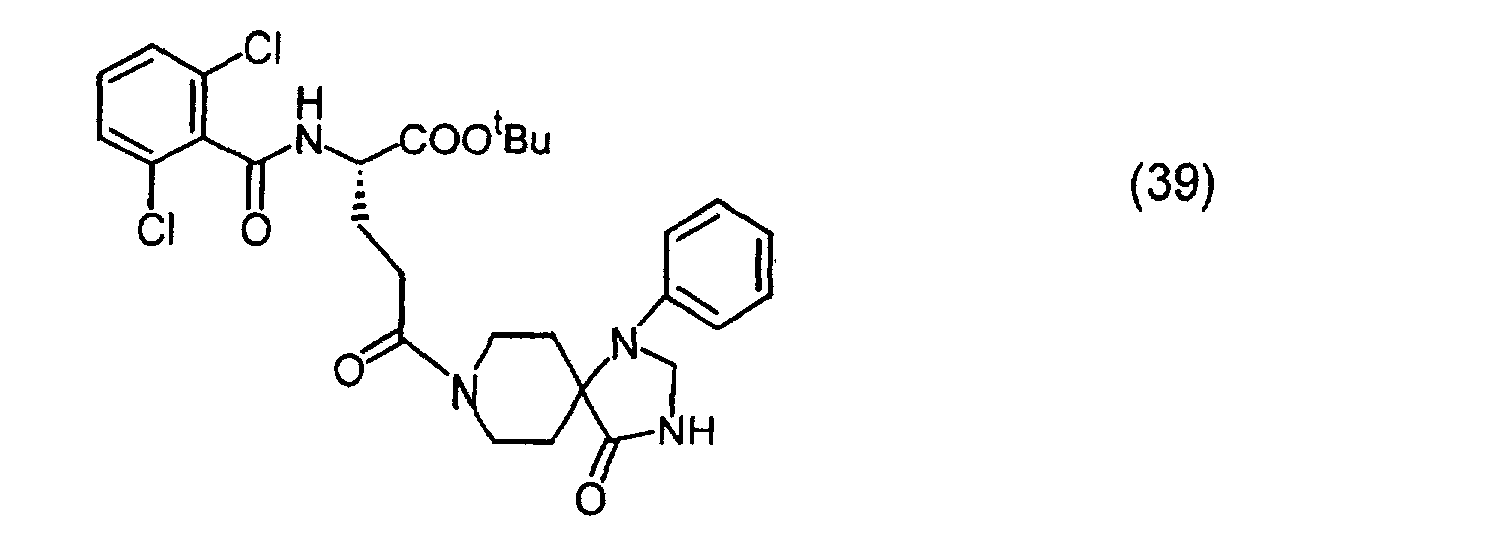
- In 2 ml of DMF, 339 mg of t-butyl 2-amino-5-oxo-5-(2,4,8-triaza-1-oxo-4-phenylspiro[4.5]dec-8-yl) pentanoate was dissolved, and 197 µl of 2,6-dichlorobenzoyl chloride and 385 µl of triethylamine were added thereto, followed by stirring the resulting mixture at room temperature for 3 hours. Saturated aqueous sodium hydrogen carbonate solution was added to the reaction mixture, and the resulting mixture was extracted with ethyl acetate. Organic phases were combined, washed with 0.1N hydrochloric acid and with saturated saline, dried over anhydrous sodium sulfate, and concentrated. The residue was purified by column chromatography (ethyl acetate/n-hexane=6/1) to obtain 468 mg of t-butyl 2-((2,6-dichlorophenyl)carbonylamino)-5-oxo-5-(2,4,8-triaza-1-oxo-4-phenylspiro[4.5]dec-8-yl) pentanoate (yield: 86%).
LR-MS(m/z):588(M+)
IR(KBr): 3259, 3066, 2979, 2932, 1717, 1627, 1502, 1432, 1367, 1299, 1249, 1155, 1088, 1046, 964, 846, 801, 749 cm-1
NMR(300MHz,CDCl3, δ ppm):1.50(9H,s),1.70-1.87(2H,m),2.00-2.20(1H,m),2.30-2.76(5H,m),3.35-3.45(1H,m),3.73-3.98(2H,m),4.46-4.61(1H,m),4.68-4.82(1H,m),4.76(2H,s),6.60(1H,brs),6.74-6.97(4H,m),7.21-7.33(4H,m)
[α]D 20: -32.8° (c=0.19, MeOH) -

- In 2 ml of dichloromethane, 436 mg of t-butyl 2-((2,6-dichlorophenyl)carbonylamino)-5-oxo-5-(2,4,8-triaza-1-oxo-4-phenylspiro[4.5]dec-8-yl)pentanoic acid was dissolved, and 1.5 ml of trifluoroacetic acid was added thereto, followed by stirring the resulting mixture at room temperature for 4 hours. After concentrating the reaction solution, the residue was reprecipitated from dichloromethane/ether to obtain 295 mg of 2-((2,6-dichlorophenyl)carbonylamino)-5-oxo-5-(2,4,8-triaza-1-oxo-4-phenylspiro[4.5]dec-8-yl)pentanoic acid (yield: 75%).
LR-MS(m/z):531(M+-H)
IR(KBr): 3258, 3066, 2929, 1716, 1657, 1625, 1601, 1501, 1433, 1381, 1366, 1194, 1089, 801, 751 cm-1
NMR(300MHz,CDCl3, δ ppm):NMR(300MHz,CDCl3, δ ppm):1.71-1.85(2H,m),2.00-2.22(1H,m),2.35-2.72(4H,m),2.78-2.83(1H,m),3.40-3.48(1H,m),3.78-4.00(2H,m),4.43-4.58(1H,m),4.70-4.82(1H,m),4.73(2H,s),6.72-6.93(3H,m),7.20-7.35(5H,m)
HR-MS:C25H25Cl2N4O5 Calcd.: 531.1202, Found: 531.1218
[α]D 20: -53.6° (c=0.04, MeOH) -
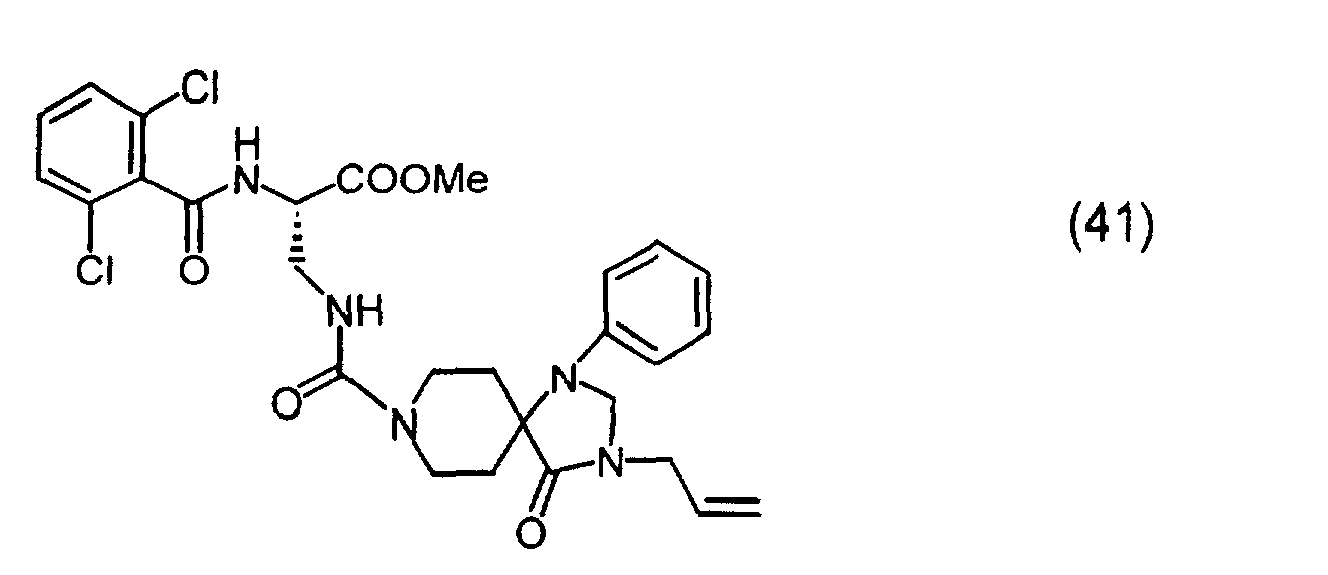
- In 3 ml of dichloromethane and 2 ml of acetonitrile, 67 mg of methyl 3-amino-2-((2,6-dichlorophenyl)carbonylamino) propionate was dissolved, and 31 mg of saturated sodium hydrogen carbonate and 56 mg of chloroformic acid p-nitrophenyl ester were added thereto under argon atmosphere, followed by stirring the resulting mixture at room temperature for 2.5 hours. To the reaction mixture, 95 mg of 2,4,8-triaza-4-phenyl-2-prop-2-enylspiro[4.5]decane-1-one and 167 µl of triethylamine were added, and the resulting mixture was stirred overnight at room temperature. After concentrating the reaction mixture, saturated aqueous sodium hydrogen carbonate solution was added, and the resulting mixture was extracted with chloroform. Organic layers were combined, washed with 0.1N hydrochloric acid and with saturated saline, dried over anhydrous sodium sulfate, and concentrated. The residue was purified by column chromatography (dichloromethane/methanol=60:1) to obtain 89.8 mg of methyl 2-((2,6-dichlorophenyl)carbonylamino)-3-((2,4,8-triaza-1-oxo-4-phenyl-2-prop-2-enylspiro[4.5]dec-8-yl)carbonylamino) propionate (yield: 66%).
LR-MS(m/z):587(M+)
IR(KBr): 3384, 3065, 2927, 1746, 1696, 1602, 1531, 1470, 1432, 1378, 1260, 1198, 1171, 1128, 802, 749 cm-1
NMR(300MHz,CDCl3, δ ppm):1.63-1.73(2H,m),2.45-2.60(2H,m),3.60-3.92(6H,m), 3.82(3H,s),4.02-4.07(2H,m),4.65(2H,s),4.80-4.87(1H,m),5.24-5.32(2H,m), 5.38(1H,brs),5.75-5.86(1H,m),6.73-6.80(2H,m),6.82-6.90(1H,m),7.22-7.34(5H,m), 7.45(1H,brs)
[α]D 20: -8.03° (c=0.07, MeOH) -
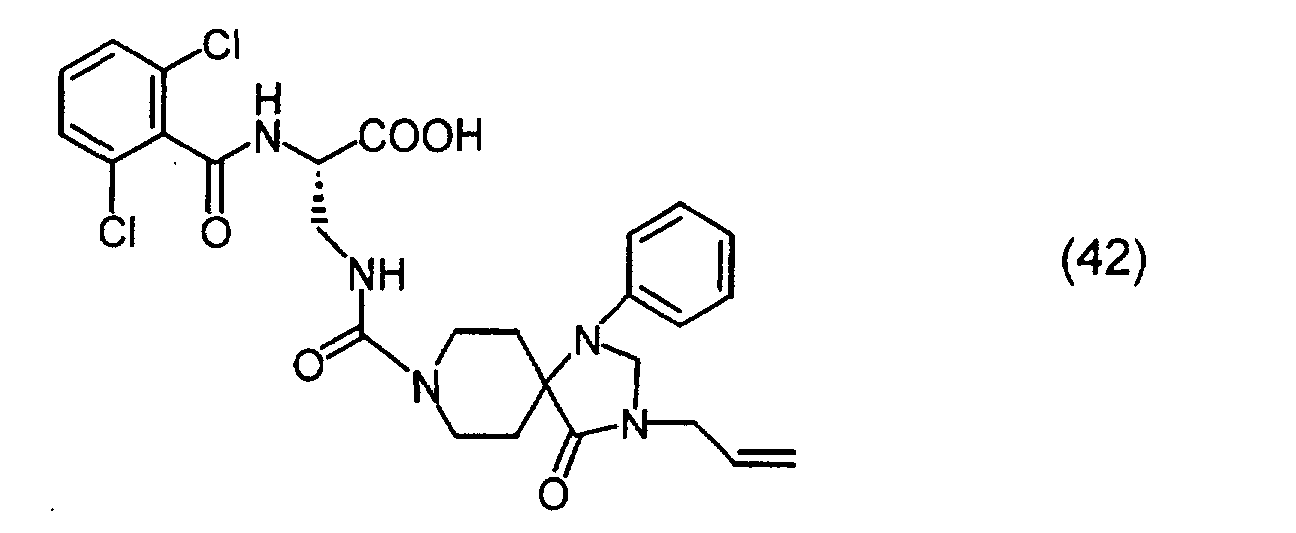
- In 3 ml of methanol, 86.3 mg of methyl 2-((2,6-dichlorophenyl)carbonylamino)-3-((2,4,8-triaza-1-oxo-4-phenyl-2-prop-2-enylspiro[4.5]dec-8-yl)carbonylamino) propionate was dissolved, and 0.75 ml of 1N aqueous sodium hydroxide solution was added thereto, followed by stirring the resulting mixture at room temperature for 1 hour. To the reaction solution, 1N hydrochloric acid was added, and the resulting mixture was extracted with chloroform. Organic phases were combined, washed with saturated saline, dried over anhydrous sodium sulfate, and concentrated. The residue was reprecipitated from chloroform/n-hexane to obtain 104 mg of 2-((2,6-dichlorophenyl)carbonylamino)-3-((2,4,8-triaza-1-oxo-4-phenyl-2-prop-2-enylspiro[4.5]dec-8-yl)carbonylamino)propanoic acid (yield:%).
LR-MS(m/z):572(M+-H)
IR(KBr): 3384, 2928, 1686, 1601, 1539, 1473, 1432, 1379, 1262, 1197, 801,749 cm-1 NMR(300MHz,CDCl3, δ ppm): 1.69-1.82(2H,m), 2.44-2.62(2H,m), 3.48-3.57(1H,m), 3.71-4.01(5H,m), 4.02-4.05(2H,m), 4.51-4.58(1H,m), 4.67(2H,s), 5.25-5.36(2H,m), 5.77-5.90(1H,m), 5.95(1H,brs), 6.73-6.81(2H,m), 6.54-6.97(1H,m), 7.23-7.37(5H,m), 7.63(1H,brs)
HR-MS:C27H29Cl2N5O5 Calcd.: 572.1467, Found: 572.1417
[α]D 20: -55.8° (c=0.04, MeOH) -
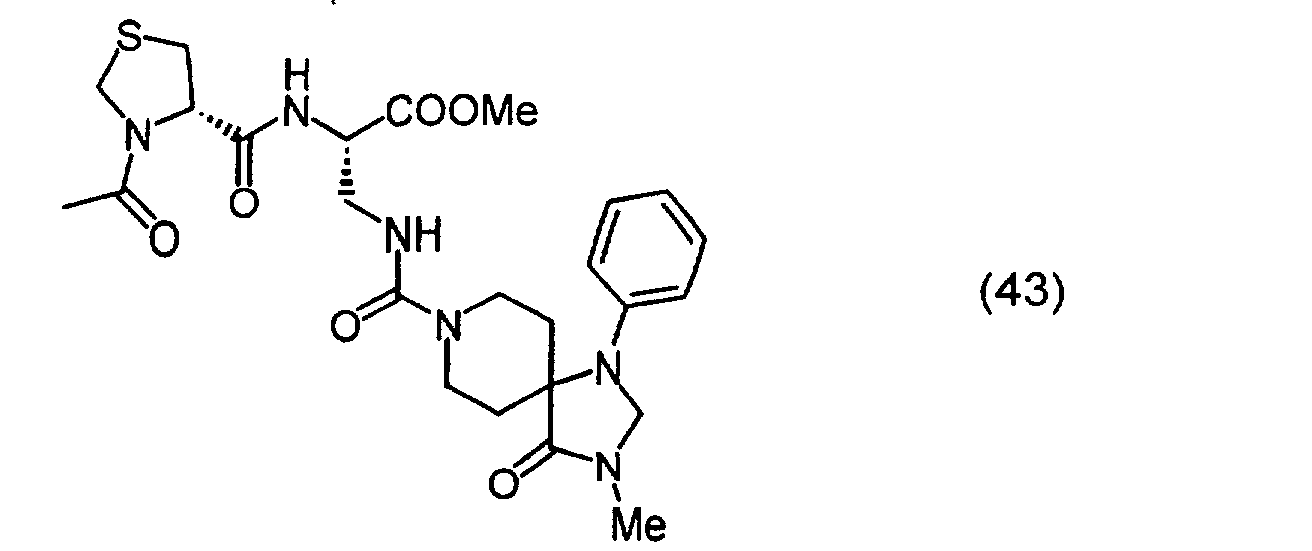
- To a solution of 331 mg (0.85 mmol) of 2-amino-3-((3-methyl-4-oxo-1-phenyl-1,3,8-triazaspiro[4.5]decane-8-carbonyl)amino)propionic acid methyl ester in 8.5 ml of dichloromethane, 149 mg (0.85mmol) of (S)-3-acetylthiazolidin-4-carboxylic acid, 376 mg (0.85mmol) of BOP reagent and 0.16 ml (0.95mmol) of N,N-diisopropylethylamine were added, and the resulting mixture was stirred overnight at room temperature. To the reaction mixture, 10 ml of semi-saturated saline was added, and the resulting mixture was extracted with ethyl acetate. Organic phases were combined, washed with 0.5M hydrochloric acid, with saturated aqueous sodium hydrogen carbonate solution and with saturated saline, dried over anhydrous sodium sulfate, and concentrated. The residue was purified by silica gel column chromatography (chloroform:methanol=100:1 - 10:1) to obtain 305 mg of 2-(((S)-3-acetylthiazolidin-4-carbonyl)amino)-3-((3 -methyl-4-oxo-1-phenyl-1,3,8-triazaspiro[4.5]decane-8-carbonyl)amino)propionic acid methyl ester (yield: 65%).
LR-MS (m/z) :547 (M+H)+
IR(KBr): 3376, 1750, 1699, 1651, 1639, 1532, 1404, 1268, 1204, 1153, 1128, 1055, 986 cm-1
NMR (300MHz, CDCl3, δppm):8.07 (1H, d, J = 6.2), 7.50-7.12 (3H, m), 6.87 (1H, t, J = 7.1Hz), 6.76 (2H, d, J = 8.2), 5.15 (1H, t, J = 5.5), 5.00 (1H, dd, J = 7.0, 2.9), 4.73-4.42 (5H, m), 3.93-3.15 (12H, m), 3.02 (3H, s), 2.66-2.46 (2H, m), 2.17 (3H, s) -

- To a solution of 176 mg (0.32mmol) of 2-(((S)-3-acetylthiazolidin-4-carbonyl)amino)-3-((3-methyl-4-oxo-1-phenyl-1,3,8-triazaspiro[4.5]decane-8-carbonyl)amino)propionic acid methyl ester in 4 ml of tetrahydrofuran, 4 ml of 0.1M aqueous lithium hydroxide solution was added, and the resulting mixture was stirred overnight at room temperature. To the reaction mixture, 0.1M hydrochloric acid was added, and the resulting mixture was extracted with ethyl acetate. Organic phases were combined, washed with saturated saline, dried over anhydrous sodium sulfate, and concentrated. The residue was reprecipitated from ether/chloroform to obtain 130 mg of 2-(3-acetylthiazolidine-4-carbonyl)amino)-3-((3-methyl-4-oxo-1-phenyl-1,3,8-triazaspiro[4.5]decane-8-carbonyl)amino)propionic acid (yield: 76%). LR-MS (m/z):533 (M+H)+
IR (KBr) : 3374, 1689, 1633, 1533, 1407, 1268, 1198, 1155, 1087, 1056, 987 cm-1 NMR (300MHz, CDCl3, δppm):8.79 (1H, d, J= 4.7), 7.48-7.13 (2H, m), 6.86 (1H, t, J = 7.2), 6.73 (2H, d, J = 7.2), 5.81 (1H, t, J = 6.2), 4.99 (1H, dd, J = 6.8, 3.0), 4.68 (2H, s), 4.61 (1H, d, J = 8.5), 4.54 (1H, d, J = 8.5), 4.27 (1H, m), 3.95-3.54 (6H, m), 3.38-3.16 (2H, m), 3.01 (3H, s), 2.62-2.42 (2H, m), 2.21 (3H, s), 1.69 (2H, d, J = 14.6) -

- To a solution of 301mg (0.77mmol) of 2-amino-3-((3-methyl-4-oxo-1-phenyl-1,3,8-triazaspiro[4.5]decane-8-carbonyl)amino)propionic acid methyl ester in 7.5 ml of dichloromethane, 135mg (0.77mmol) of(R)-3-acetylthiazolidin-4-carboxylic acid, 342mg (0.77mmol) of BOP reagent and 0.15ml (0.86mmol) of N,N-diisopropylethylamine were added, and the resulting mixture was stirred overnight at room temperature. To the reaction mixture, 10 ml of semi-saturated saline was added, and the resulting mixture was extracted with ethyl acetate. Organic phases were combined, washed with 0.5M hydrochloric acid, with saturated aqueous sodium hydrogen carbonate solution and with saturated saline, dried over anhydrous sodium sulfate, and concentrated. The residue was purified by silica gel column chromatography (chloroform:methanol=100:1 - 10:1) to obtain 309 mg of 2-(((R)-3-acetylthiazolidin-4-carbonyl)amino)-3-((3-methyl-4-oxo-1-phenyl-1,3,8-triazaspiro[4.5]decane-8-carbonyl)amino)propionic acid methyl ester (yield: 73%).
LR-MS (m/z) :547 (M+H)+
IR (KBr) : 3372, 1749, 1698, 1658, 1634, 1531, 1438, 1404, 1266, 1207, 1153, 1128, 1084, 1055, 986 cm-1
NMR (300MHz, CDCl3, δ ppm):8.98 (0.33H, d, J = 5.3), 7.63 (0.67H, d, J = 7.0), 7.48-7.13 (3H, m), 6.91-6.72 (3H, m), 5.45 (0.67H, t, J = 6.2), 4.98-4.48 (6.33H, m), 4.00-3.32 (11H, m), 3.16 (1H, dd, J= 11.5, 6.5Hz), 3.01 (3H, s), 2.65 -2.42 (2H, m), 2.18(1H,s),2.15(2H,s) -

- To a solution of 171 mg (0.31 mmol) of 2-(3-acetylthiazolidin-4-carbonyl)amino)-3-((3-methyl-4-oxo-1-phenyl-1,3,8-triazaspiro[4.5]decane-8-carbonyl)amino)propionic acid methyl ester in 4 ml of tetrahydrofuran, 4 ml of 0.1M aqueous lithium hydroxide solution was added, and the resulting mixture was stirred overnight at room temperature. To the reaction mixture, 0.1 M hydrochloric acid was added, and the resulting mixture was extracted with ethyl acetate. Organic phases were combined, washed with saturated saline, dried over anhydrous sodium sulfate, and concentrated. The residue was reprecipitated from ether/chloroform to obtain 135 mg of 2-(3-acetylthiazolidin-4-carbonyl)amino)-3-((3-methyl-4-oxo-1-phenyl-1,3,8-triazaspiro[4.5]decane-8-carbonyl)amino) propionic acid (yield: 81%).
LR-MS (m/z):533 (M+H)+
IR (KBr) : 3367, 1693, 1633, 1532, 1408, 1267, 1204, 1154, 1124, 1056, 986 cm-1 NMR (300MHz, CDCl3, δppm):9.17 (0.25H, d, J= 5.0), 8.38 (0.75H, d, J = 5.0), 7.48-7.13 (2H, m), 6.87 (1H, t, J = 7.3), 6.74 (2H, d, J = 8.2), 5.82 (1H, m), 4.92-4.33 (6H, m), 3.88-3.54 (6H, m), 3.31 (1H, dd, J = 11.9, 4.0), 3.20 (1H, dd, J = 11.9, 6.9), 3.01 (3H, s), 2.62-2.42 (2H, m), 2.17 (3H, s), 1.68 (2H, d, J = 13.2) -

- To a solution of 288mg (0.74mmol) of 2-amino-3-((3-methyl-4-oxo-1-phenyl-1,3,8-triazaspiro[4.5]decane-8-carbonyl)amino)propionic acid methyl ester in 4 ml of dichloromethane, 0.21ml (1.48mmol) of triethylamine and 0.1ml (0.89mmol) of benzyloxycarbonyl chloride were added, and the resulting mixture was stirred at room temperature for one day. To the reaction mixture, saturated aqueous sodium hydrogen carbonate solution was added, and the resulting mixture was extracted with chloroform. Organic phases were combined, washed with 10% aqueous citric acid solution and with saturated saline, dried over anhydrous sodium sulfate, and concentrated. The residue was purified by silica gel column chromatography (chloroform:methanol=60:1) to obtain 284 mg of2-benzyloxycarbonylamino-3-((3-methyl-4-oxo-1-phenyl-1,3,8,-triazaspiro[4.5]decane-8-carbonyl)amino)propionic acid methyl ester (yield: 73%)
LR-MS (m/z) :524 (M+H)+
NMR (300MHz, CDCl3, δppm):7.40-7.22 (7H, m), 6.94 (1H, d, J = 6.9), 6.74 (2H, d, J = 8.2), 6.31 (1H, br d, J = 6.6), 5.10 (1H, br s), 5.09 (2H, s), 3.92-3.57 (9H, m), 3.01 (3H, s), 2.62-2.48 (2H, m), 1.66 (2H, d, J = 13.5) -

- To a solution of 177 mg (0.34 mmol) of 2-benzyloxycarbonylamino-3-((3-methyl-4-oxo-1-phenyl-1,3,8,-triazaspiro[4.5]decane-8-carbonyl)amino)propionic acid methyl ester in 4 ml of tetrahydrofuran, 4 ml of 0.1M aqueous lithium hydroxide solution was added, and the resulting mixture was stirred overnight at 0°C. To the reaction mixture, 0.1 M hydrochloric acid was added, and the resulting mixture was extracted with ethyl acetate. Organic phases were combined, washed with saturated saline, dried over anhydrous sodium sulfate, and concentrated. The residue was reprecipitated from ether/chloroform to obtain 143 mg of 2-benzyloxycarbonylamino-3-((3-methyl-4-oxo-1-phenyl-1,3,8,-triazaspiro[4.5]decane-8-carbonyl)amino)propionic acid (yield: 83%).
LR-MS (m/z):510 (M+H)+
NMR (300MHz, CDCl3, δppm):7.38-7.20 (7H, m), 6.86 (1H, t, J = 7.4), 6.73 (2H, d, J = 8.2), 6.54 (1H, d, J = 5.0), 5.66 (1H, br s), 5.09 (2H, s), 4.66 (2H, s), 4.24 (1H, br s), 3.90-3.60 (5H, m), 3.45 (1H, br d, J = 12.3), 3.00 (3H, s), 2.60-2.40 (2H, m), 1.76-1.56 (2H, m) -
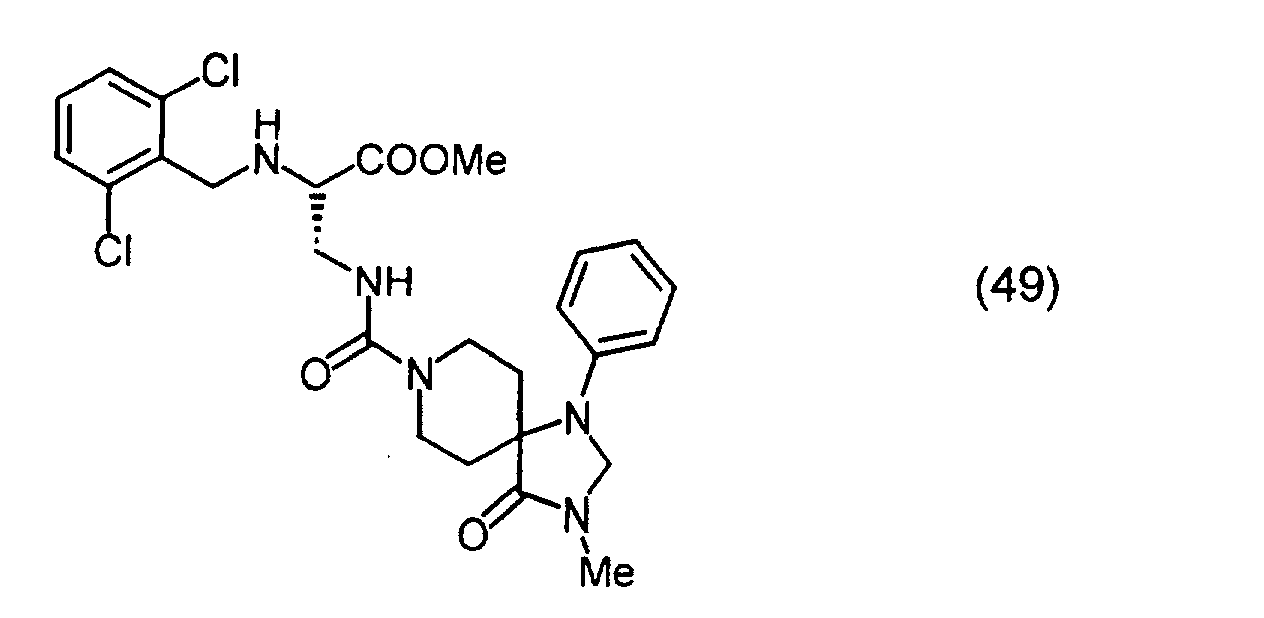
- To a solution of 288mg (0.74mmol) of 2-amino-3-((3-methyl-4-oxo-1-phenyl-1,3,8-triazaspiro[4.5]decane-8-carbonyl)amino)propionic acid methyl ester in 4 ml of dichloromethane, 0.21ml (1.48mmol) of triethylamine and 214mg (0.89mmol) of 2,6-dichlorobenzyl bromide were added, and the resulting mixture was stirred at room temperature for one day. To the reaction mixture, saturated aqueous sodium hydrogen carbonate solution was added, and the resulting mixture was extracted with chloroform. Organic phases were combined, washed with saturated saline, dried over anhydrous sodium sulfate, and concentrated. The residue was purified by silica gel column chromatography (chloroform:methanol=60:1) to obtain 195 mg of 2-(2,6-dichlorobenzylamino)-3-((3-methyl-4-oxo-1-phenyl-1,3,8-triazaspiro[4.5]decane-8-carbonyl)amino)propionic acid methyl ester (yield: 48%).
LR-MS (m/z) :548 (M+H)+
NMR (300MHz, CDCl3, δppm):7.31-7.23 (4H, m), 7.11 (1H, dd, J = 8.8, 7.3), 6.85 (1H, t, J = 7.5Hz), 6.73 (2H, d, J = 7.9), 5.28 (1H, dd, J = 6.1, 3.8), 4.68 (2H, s), 4.17 (1H, d, J = 12.6), 3.99 (1H, d, J = 12.6), 3.94-3.58 (5H, m), 3.72 (3H, s), 3.48 (1H, dd, J = 7.6, 4.4), 3.26 (1H, ddd, J = 13.2, 7.9, 3.8), 3.01 (3H, s), 2.60-2.46 (2H, m), 1.65 (2H,d,J=13.8) -
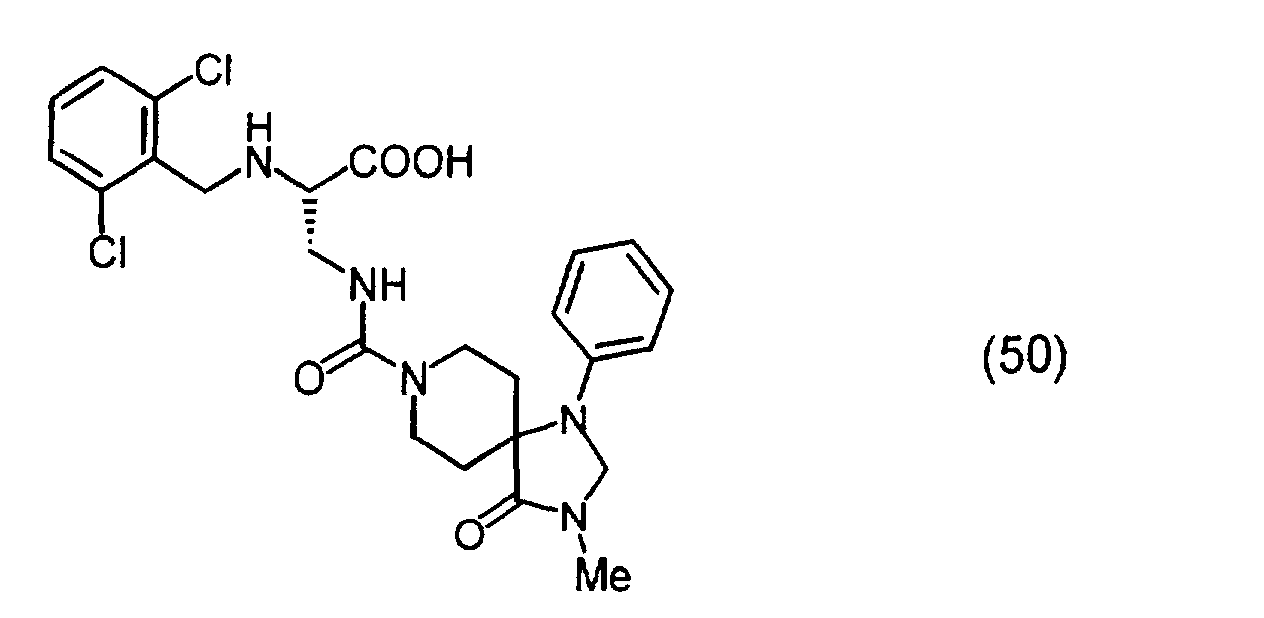
- To a solution of 132mg (0.24mmol) of 2-(2,6-dichlorobenzylamino)-3-((3-methyl-4-oxo-1-phenyl-1,3,8-triazaspiro[4.5]decane-8-carbonyl)amino)propionic acid methyl ester in 3 ml of tetrahydrofuran, 2.6 ml of 0.1M aqueous lithium hydroxide solution was added, and the resulting mixture was stirred overnight at room temperature. To the reaction mixture, 0.1M hydrochloric acid was added, and the resulting mixture was extracted with chloroform. Organic phases were combined, washed with saturated saline, dried over anhydrous sodium sulfate, and concentrated. The residue was reprecipitated from ether/chloroform to obtain 103 mg of 2-(2,6-dichlorobenzylamino)-3-((3-methyl-4-oxo-1-phenyl-1,3,8-triazaspiro[4.5]decane-8-carbonyl)amino)propionic acid (yield: 81%).
LR-MS (m/z):534 (M+H)+
NMR (300MHz, CDCl3, δppm):7.40-7.24 (5H, m), 6.85 (1H, t, J = 7.3), 6.73 (2H, d, J = 7.9), 6.71 (1H, br s), 4.65 (2H, s), 4.47 (1H, d, J = 13.5), 4.41 (1H, d, J = 13.5), 4.01-3.56 (7H, m), 3.00 (3H, s), 2.56-2.40 (2H, m), 1.67 (2H, d, J = 14.9) - In accordance with the teaching of a report (Humphrise,M.J. et al. J.Bio.Chem.,262,6886-6892(1987)), a conjugate between a peptide (Gys Leu His Gly Pro Glu Glu Ile Leu Asp Val Pro Ser Thr) containing CS-1 sequence and rabbit IgG (Sigma) was prepared. This was diluted with phosphate buffer (hereinafter referred to as "PBS(-)" for short), and the obtained solution was placed in the wells of a 96-well immunoplate (NUNC) in an amount of 100 µl/well, followed by leaving to stand the immunoplate at 4°C for 16 hours to immobilize the conjugate.
- The wells were then washed twice with PBS(-), and 1% BSA solution in PBS, which BSA was heated at 80°C for 10 minutes, was placed in each well in an amount of 300 µl/well. The immunoplate was left to stand at 4°C for 3 hours, and then the solution in each well was removed by suction.
- Each compound and VLA-4-IgG chimera protein (100 µl) were preliminarily reacted at room temperature for 20 minutes, and then the resulting mixture was allowed to react with the CS-1 peptide in each well at 30°C for 3 hours. Thereafter, non-bound VLA-4-IgG chimera protein was removed by suction, and each well was washed twice with 0.1% BSA-containing TBS buffer (150mM NaCl, 25mM Tris-HCl, 1mM MnCl2, PH7.4). To the bound VLA-4-IgG chimera protein, biotin-labelled anti-human IgG antibody (Vector) as a primary antibody was added, and then avidin-labelled horse radish peroxidase (Sigma) as a secondary antibody was added, thereby allowing the reactions. Then o-phenylenediamine as a substrate was added to color the reaction solution, and the absorbance at 490 nm was measured. From this absorbance, the binding inhibitory activity of each compound was determined. The inhibitory activities of the representative compounds are shown in Table 1.
Compound No. Inhibitory Activity (IC50:nM) 3 6.1 7 18 13 2.9 27 2.1 31 0.98 - The novel spiro derivatives according to the present invention have activities to inhibit cell adhesion via adhesion molecules, especially adhesion molecule VLA-4. Since the spiro acid derivatives according to the present invention are excellent in the effect of inhibiting cell adhesion via adhesion molecules, they are useful as therapeutic drugs against various inflammatory diseases.
Claims (21)
- A spiro derivative represented by the Formula I:[wherein l and m independently represent integers of 0 to 2; n represents an integer of 1 to 3; A represents an oxygen atom, carbon atom or a nitrogen atom (with the proviso that when A is an oxygen atom, R3 does not exist); B represents a carbon atom or a nitrogen atom; C' and D represent hydrogen, or C' and D cooperatively represent carbonyl; X1 and Y1 independently represent hydrogen, halogen, C1-C8 alkyl, C1-C8 alkoxy, cyano, nitro, hydroxyl, amino or tetrazole; R1 and R2 independently represent hydrogen or C1-C6 linear alkyl; R3 and R4 independently represent hydrogen, C1-C6 linear alkyl, C3-C8 branched alkyl, or phenyl or benzyl, this phenyl or benzyl being substituted with 0 to 2 substituents selected from the group consisting of halogen, C1-C8 alkyl, C1-C8 alkoxy, cyano, nitro, hydroxyl, amino and tetrazole; F represents -CH2- or -C(O)-;
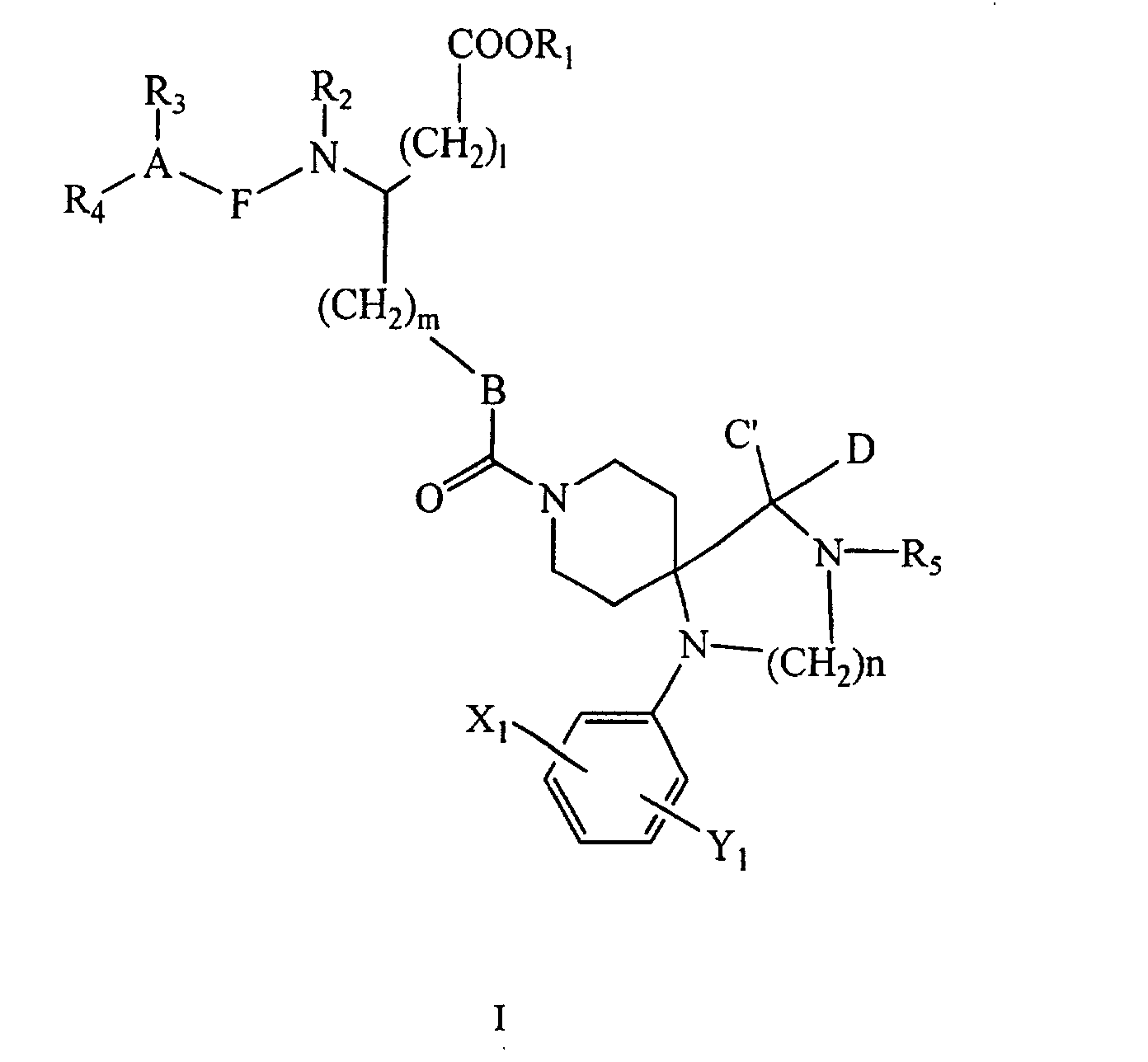
when A is a nitrogen atom, R3, A and R4 may cooperatively represent
(i) Formula II:(wherein p represents an integer of 0 to 4; E represents a carbon atom or a nitrogen atom; R6 and R7 independently represent hydrogen, C1-C6 linear alkyl, C3-C8 branched alkyl, C1-C6 linear alkylacyl, C3-C8 branched alkylacyl, pyrrolidinecarbonyl, peperidinecarbonyl, or phenyl, phenylsulfonyl, benzoyl, benzyl, indole or N-phenylamide, this phenyl, phenylsulfonyl, benzoyl, benzyl, indole or N-phenylamide being substituted with 0 to 2 substituents selected from the group consisting of halogen, C1-C8 alkyl, C1-C8 alkoxy, cyano, nitro, hydroxyl, amino and tetrazole, or Formula III: (wherein R8 represents hydrogen, C1-C6 linear alkyl, C3-C8 branched alkyl, or phenyl or benzyl, this phenyl or benzyl being substituted with 0 to 2 substituents selected from the group consisting of halogen, halogen, C1-C8 alkyl, C1-C8 alkoxy, cyano, nitro, hydroxyl, amino and tetrazole),
(ii) Formula IV:(wherein R9 represents C1-C6 linear alkyl, C3-C8 branched alkyl, C1-C6 linear alkylacyl, C3-C8 branched alkylacyl, C5-C7 cycloalkylacyl, C1-C6 linear alkylsulfonyl, C3-C8 branched alkylsulfonyl, or benzoyl, phenylsulfonyl or benzyl, this benzoyl, phenylsulfonyl or benzyl being substituted with 0 to 2 substituents selected from the group consisting of halogen, C1-C8 alkyl, C1-C8 alkoxy, cyano, nitro, hydroxyl, amino and tetrazole)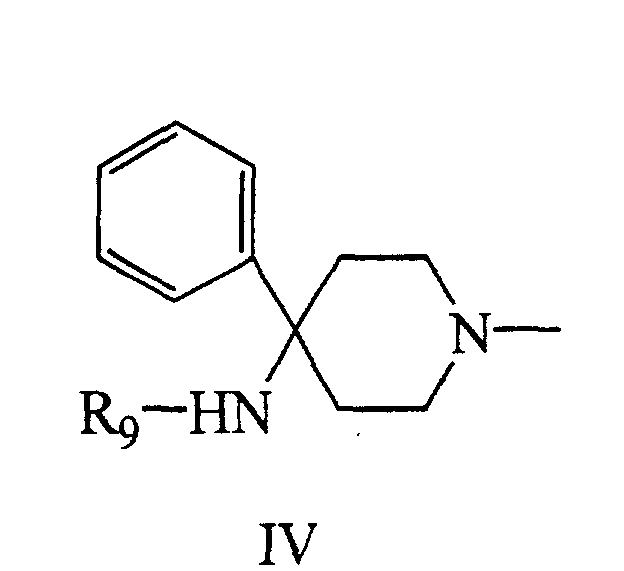
(iii) Formula V:(wherein R10 represents hydrogen, C1-C6 linear alkyl, C3-C8 branched alkyl, C6-C10 alkylcycloalkyl, or phenyl or benzyl, this phenyl or benzyl being substituted with 0 to 2 substituents selected from the group consisting of halogen, C1-C8 alkyl, C1-C8 alkoxy, cyano, nitro, hydroxyl, amino and tetrazole);
When A is a carbon atom, R3, A and R4 may cooperatively form adamantyl, Formula VI:(wherein definitions of X2 and Y2 are the same as those of X1 and Y1, respectively) or Formula VII: (wherein definition of R1 is the same as that of R9);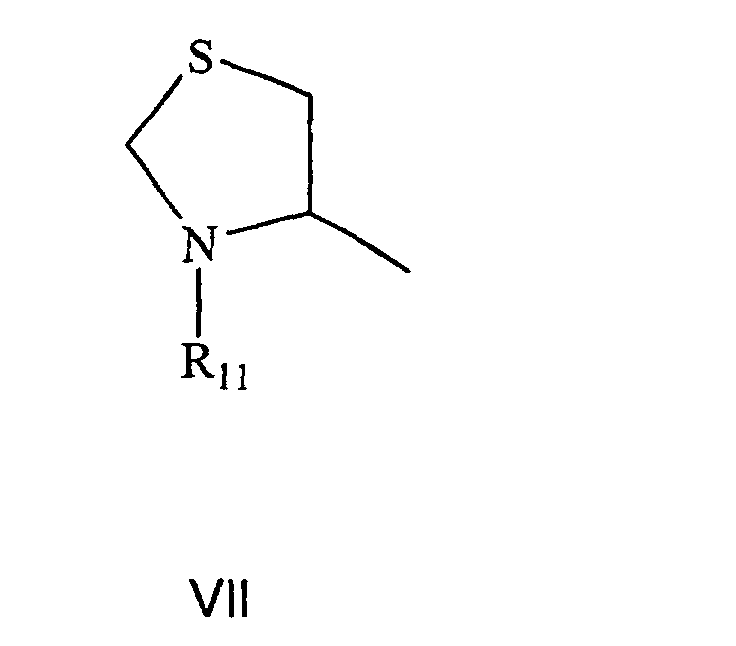
R5 represents hydrogen, C1-C6 linear alkyl, C3-C8 branched alkyl, allyl, homoallyl, C6-C10 alkylcycloalkyl, or phenyl, benzyl, phenethyl, styryl or naphthylmethyl, this phenyl, benzyl, phenethyl, styryl or naphthylmethyl being substituted with 0 to 2 substituents selected from the group consisting of halogen, C1-C8 alkyl, C1-C8 alkoxy, cyano, nitro, hydroxyl, amino and tetrazole]
or a pharmaceutically acceptable salt thereof. - The spiro derivative or the pharmaceutically acceptable salt thereof according to claim 1, wherein F represents -C(O)-; A and B independently represent carbon atom or nitrogen atom; C' and D represent hydrogen or C' and D cooperatively represent carbonyl; X and Y independently represent hydrogen, halogen, methyl, methoxy, cyano, nitro, hydroxyl, amino or tetrazole; R1 and R2 independently represent hydrogen or C1-C6 linear alkyl; R3 and R4 independently represent hydrogen, C1-C6 linear alkyl or C3-C8 branched alkyl, or phenyl or benzyl, this phenyl or benzyl being substituted with 0 to 2 substituents selected from the group consisting of halogen, methyl, methoxy, cyano, nitro, hydroxyl, amino and tetrazole; when A is a nitrogen atom, R3, A and R4 may cooperatively represent(i) said Formula II (wherein p represents an integer of 0 to 4; E represents carbon atom or nitrogen atom; R6 and R7 independently represent hydrogen, C1-C6 linear alkyl, C3-C8 branched alkyl, C1-C6 linear alkylacyl, C3-C8 branched alkylacyl, pyrrolidinecarbonyl, piperidinecarbonyl, or phenyl, phenylsulfonyl, benzoyl, benzyl, indole or N-phenylamide, this phenyl, phenylsulfonyl, benzoyl, benzyl, indole or N-phenylamide being substituted with 0 to 2 substituents selected from the group consisting of halogen, methyl, methoxy, cyano, nitro, hydroxyl, amino and tetrazole, or said Formula III (wherein R8 represents hydrogen, C1-C6 linear alkyl, C3-C8 branched alkyl, or phenyl or benzyl, this phenyl or benzyl being substituted with 0 to 2 substituents selected from the group consisting of halogen, methyl, methoxy, cyano, nitro, hydroxyl, amino and tetrazole),(ii) said Formula IV (wherein R9 represents C1-C6 linear alkyl, C3-C8 branched alkyl, C1-C6 linear alkylacyl, C3-C8 branched alkylacyl, C5-C7 cycloalkylacyl, C1-C6 linear alkylsulfonyl, C3-C8 branched alkylsulfonyl, or benzoyl, phenylsulfonyl or benzyl, this benzoyl, phenylsulfonyl or benzyl being substituted with 0 to 2 substituents selected from the group consisting of halogen, methyl, methoxy, cyano, nitro, hydroxyl, amino and tetrazole),(iii) said Formula V:
(wherein R10 represents hydrogen, C1-C6 linear alkyl, C3-C8 branched alkyl, C6-C10 alkylcycloalkyl, or phenyl or benzyl, this phenyl or benzyl being substituted with 0 to 2 substituents selected from the group consisting of halogen, methyl, methoxy, cyano, nitro, hydroxyl, amino and tetrazole);
when A is a carbon atom, R3, A and R4 may cooperatively represent adamantyl or said Formula VI (wherein X2 and Y2 represent the same definitions as described above); R5 represents hydrogen, C1-C6 linear alkyl, C3-C8 branched alkyl, allyl, homoallyl, C6-C10 alkylcycloalkyl, or phenyl, benzyl, phenethyl, styryl or naphthylmethyl, this phenyl, benzyl, phenethyl, styryl or naphthylmethyl being substituted with 0 to 2 substituents selected from the group consisting of halogen, methyl, methoxy, cyano, nitro, hydroxyl, amino and tetrazole. - The spiro derivative or the pharmaceutically acceptable salt thereof according to claim 1 or 2, wherein A represents a nitrogen atom, R3, A and R4 cooperatively represent (i) said Formula II (wherein R6 and R7 independently represent hydrogen, C1-C3 linear alkyl, C3-C6 branched alkyl, C1-C3 linear alkylacyl, C3-C6 branched alkylacyl, pyrrolidinecarbonyl, piperidinecarbonyl, or phenyl, benzoyl, benzyl, indole or N-phenylamide, this phenyl, benzoyl, benzyl, indole or N-phenylamide being substituted with 0 to 2 substituents selected from the group consisting of halogen, methyl, methoxy, cyano, nitro, hydroxyl, amino and tetrazole), or said Formula III (wherein R8 represents hydrogen, C1-C3 linear alkyl, C3-C6 branched alkyl, or phenyl or benzyl, this phenyl or benzyl being substituted with 0 to 2 substituents selected from the group consisting of halogen, methyl, methoxy, cyano, nitro, hydroxyl, amino and tetrazole), (ii) said Formula IV (wherein R9 represents C1-C3 linear alkyl, C3-C6 branched alkyl, C1-C3 linear alkylacyl, C3-C6 branched alkylacyl, C5-C7 cycloalkylacyl, C1-C3 linear alkylsulfonyl, C3-C8 branched alkylsulfonyl, or benzoyl or benzyl, this benzoyl or benzyl being substituted with 0 to 2 substituents selected from the group consisting of halogen, methyl, methoxy, cyano, nitro, hydroxyl, amino and tetrazole), or (iii) said Formula V (wherein R10 represents hydrogen, C1-C3 linear alkyl, C3-C6 branched alkyl, C6-C10 alkylcycloalkyl, or phenyl or benzyl, this phenyl or benzyl being substituted with 0 to 2 substituents selected from the group consisting of halogen, methyl, methoxy, cyano, nitro, hydroxyl, amino and tetrazole), the definitions of the symbols other than mentioned above are the same as those described in claim 1 or 2.
- The spiro derivative or the pharmaceutically acceptable salt thereof according to claim 1 or 2, wherein A represents a nitrogen atom, R3, A and R4 cooperatively represent (i) said Formula II (wherein R6 and R7 independently represent hydrogen, C1-C3 linear alkylacyl, C3-C6 branched alkylacyl, pyrrolidinecarbonyl, piperidinecarbonyl, or phenyl, benzoyl, benzyl, indole or N-phenylamide, this phenyl, benzoyl, benzyl, indole or N-phenylamide being substituted with 0 to 2 substituents selected from the group consisting of halogen, methyl, methoxy, cyano, nitro, hydroxyl, amino and tetrazole), or said Formula III (wherein R8 represents hydrogen, C1-C3 linear alkyl, C3-C6 branched alkyl, or benzyl substituted with 0 to 2 substituents selected from the group consisting of halogen, methyl, methoxy, cyano, nitro, hydroxyl, amino and tetrazole), (ii) said Formula IV (wherein R9 represents C1-C3 linear alkylacyl, C3-C6 branched alkylacyl, C5-C7 cycloalkylacyl, or benzoyl or benzyl, this benzoyl or benzyl being substituted with 0 to 2 substituents selected from the group consisting of halogen, methyl, methoxy, cyano, nitro, hydroxyl, amino and tetrazole), or (iii) said Formula V (wherein R10 represents hydrogen, C1-C3 linear alkyl, C3-C6 branched alkyl, C6-C10 alkylcycloalkyl, or phenyl or benzyl, this phenyl or benzyl being substituted with 0 to 2 substituents selected from the group consisting of halogen, methyl, methoxy, cyano, nitro, hydroxyl, amino and tetrazole), the definitions of the symbols other than mentioned above are the same as those described in claim 1 or 2.
- A pharmaceutical comprising said spiro derivative or a pharmaceutically acceptable salt thereof according to any one of claims 1 to 4 as an effective ingredient.
- An adhesion molecule inhibitor comprising said spiro derivative or a pharmaceutically acceptable salt thereof according to any one of claims 1 to 4 as an effective ingredient.
- The adhesion molecule inhibitor according to claim 6, wherein said adhesion molecule belongs to integrin family.
- The adhesion molecule inhibitor according to claim 7, wherein said integrin family is VLA-4.
- The adhesion molecule inhibitor according to any one of claims 6 to 8, which is for against inflammatory disease.
- The adhesion molecule inhibitor according to claim 9, wherein said inflammatory disease is an allergic disease.
- A method for inhibiting an adhesion molecule, comprising administering an effective amount of said spiro derivative or a pharmaceutically acceptable salt thereof according to any one of claims 1 to 4.
- The method according to claim 11, wherein said adhesion molecule belongs to integrin family.
- The method according to claim 12, wherein said integrin family is VLA-4.
- The method according to any one of claims 11 to 13, which is for against inflammatory disease.
- The adhesion molecule inhibitor according to claim 14, wherein said inflammatory disease is an allergic disease.
- Use of said spiro derivative or a pharmaceutically acceptable salt thereof according to any one of claims 1 to 4 for the production of a pharmaceutical.
- Use of said spiro derivative or a pharmaceutically acceptable salt thereof according to claim 1 or 4 for the production of an adhesion molecule inhibitor.
- The use according to claim 17, wherein said adhesion molecule belongs to integrin family.
- The use according to claim 18, wherein said integrin family is VLA-4.
- The use according to any one of claims 16 to 19, wherein said pharmaceutical or adhesion molecule inhibitor is for against inflammatory disease.
- The adhesion molecule inhibitor according to claim 20, wherein said inflammatory disease is an allergic disease.
Applications Claiming Priority (3)
| Application Number | Priority Date | Filing Date | Title |
|---|---|---|---|
| JP2000289658 | 2000-09-25 | ||
| JP2000289658 | 2000-09-25 | ||
| PCT/JP2001/008290 WO2002024697A1 (en) | 2000-09-25 | 2001-09-25 | Spiro compounds and adhesion molecule inhibitors containing the same as the active ingredient |
Publications (3)
| Publication Number | Publication Date |
|---|---|
| EP1329451A1 true EP1329451A1 (en) | 2003-07-23 |
| EP1329451A4 EP1329451A4 (en) | 2004-06-16 |
| EP1329451B1 EP1329451B1 (en) | 2006-08-23 |
Family
ID=18773016
Family Applications (1)
| Application Number | Title | Priority Date | Filing Date |
|---|---|---|---|
| EP01967819A Expired - Lifetime EP1329451B1 (en) | 2000-09-25 | 2001-09-25 | Spiro compounds and adhesion molecule inhibitors containing the same as the active ingredient |
Country Status (11)
| Country | Link |
|---|---|
| US (1) | US6919349B2 (en) |
| EP (1) | EP1329451B1 (en) |
| JP (1) | JP4997684B2 (en) |
| KR (1) | KR20030027076A (en) |
| CN (1) | CN1247577C (en) |
| AT (1) | ATE337318T1 (en) |
| AU (2) | AU8811401A (en) |
| CA (1) | CA2423007C (en) |
| DE (1) | DE60122555T2 (en) |
| ES (1) | ES2271071T3 (en) |
| WO (1) | WO2002024697A1 (en) |
Cited By (4)
| Publication number | Priority date | Publication date | Assignee | Title |
|---|---|---|---|---|
| EP1489081A4 (en) * | 2002-03-22 | 2007-06-20 | Toray Industries | Spiro derivatives and adhesion molecule inhibitors comprising the same as the active ingredient |
| WO2016065603A1 (en) * | 2014-10-31 | 2016-05-06 | Merck Sharp & Dohme Corp. | Inhibitors of the renal outer medullary potassium channel |
| WO2017005583A1 (en) * | 2015-07-03 | 2017-01-12 | F. Hoffmann-La Roche Ag | Triaza-spirodecanones as ddr1 inhibitors |
| US10618897B2 (en) | 2016-02-08 | 2020-04-14 | Hoffmann-La Roche Inc. | Spiroindolinones as DDR1 inhibitors |
Families Citing this family (13)
| Publication number | Priority date | Publication date | Assignee | Title |
|---|---|---|---|---|
| FR2870538B1 (en) * | 2004-05-19 | 2006-07-14 | Servier Lab | NOVEL DERIVATIVES OF PYRROLIDINES AND THIAZOLIDINES, PROCESS FOR THEIR PREPARATION AND PHARMACEUTICAL COMPOSITIONS CONTAINING THEM |
| AU2008219007A1 (en) | 2007-02-20 | 2008-08-28 | Merrimack Pharmaceuticals, Inc. | Methods of treating multiple sclerosis by administration of alpha-fetoprotein in combination with an integrin antagonist |
| JP5639039B2 (en) | 2008-04-11 | 2014-12-10 | メリマック ファーマシューティカルズ インコーポレーティッド | Human serum albumin linker and its conjugates |
| CN102282168A (en) | 2008-11-18 | 2011-12-14 | 梅里麦克制药股份有限公司 | Human serum albumin linker and its conjugate |
| CN102958311A (en) * | 2011-08-25 | 2013-03-06 | 深圳富泰宏精密工业有限公司 | Decorative shell and manufacturing method thereof |
| US9345766B2 (en) | 2012-08-30 | 2016-05-24 | Merrimack Pharmaceuticals, Inc. | Combination therapies comprising anti-ERBB3 agents |
| ES2987796T3 (en) | 2018-10-30 | 2024-11-18 | Gilead Sciences Inc | N-benzoyl-phenylalanine derivatives as alpha4beta7 integrin inhibitors for the treatment of inflammatory diseases |
| DK3873884T3 (en) | 2018-10-30 | 2025-02-17 | Gilead Sciences Inc | 3-(QUINOLIN-8-YL)-1,4-DIHYDROPYRIDO[3,4-D]PYRIMIDINE-2,4-DIONE DERIVATIVES AS ALPHA4BETA7 INTEGRIN INHIBITORS FOR THE TREATMENT OF INFLAMMATORY DISEASES |
| WO2020092394A1 (en) | 2018-10-30 | 2020-05-07 | Gilead Sciences, Inc. | Imidazopyridine derivatives as alpha4beta7 integrin inhibitors |
| WO2020092401A1 (en) | 2018-10-30 | 2020-05-07 | Gilead Sciences, Inc. | COMPOUNDS FOR INHIBITION OF ALPHA 4β7 INTEGRIN |
| US11338626B2 (en) | 2018-11-06 | 2022-05-24 | Peter Vogelpohl | Devices and systems for controlling tire pressure |
| CN109541237A (en) * | 2018-12-28 | 2019-03-29 | 吴江近岸蛋白质科技有限公司 | The Determination of biological activity method of fibronectin |
| AU2020329207B2 (en) | 2019-08-14 | 2024-02-29 | Gilead Sciences, Inc. | Compounds for inhibition of alpha 4 beta 7 integrin |
Family Cites Families (6)
| Publication number | Priority date | Publication date | Assignee | Title |
|---|---|---|---|---|
| JPH11500100A (en) * | 1993-09-09 | 1999-01-06 | サイオス ノバ インコーポレイテッド | Pseudopeptide and non-peptide bradykinin receptor antagonists |
| JPH08337569A (en) | 1995-06-15 | 1996-12-24 | Sankyo Co Ltd | Analgesic active substance |
| ZA972195B (en) * | 1996-03-15 | 1998-09-14 | Du Pont Merck Pharma | Spirocycle integrin inhibitors |
| KR100554815B1 (en) * | 1997-08-22 | 2006-02-22 | 에프. 호프만-라 로슈 아게 | N-aroylphenylalanine derivative |
| AU4242100A (en) | 1999-04-14 | 2000-11-14 | American Home Products Corporation | Methods for solid phase combinatorial synthesis of integrin inhibitors |
| EP1214292B1 (en) * | 1999-09-24 | 2007-06-13 | Genentech, Inc. | Tyrosine derivatives |
-
2001
- 2001-09-25 AU AU8811401A patent/AU8811401A/en active Pending
- 2001-09-25 KR KR10-2003-7002669A patent/KR20030027076A/en not_active Ceased
- 2001-09-25 WO PCT/JP2001/008290 patent/WO2002024697A1/en not_active Ceased
- 2001-09-25 JP JP2002529107A patent/JP4997684B2/en not_active Expired - Fee Related
- 2001-09-25 CN CNB018162274A patent/CN1247577C/en not_active Expired - Fee Related
- 2001-09-25 CA CA2423007A patent/CA2423007C/en not_active Expired - Fee Related
- 2001-09-25 EP EP01967819A patent/EP1329451B1/en not_active Expired - Lifetime
- 2001-09-25 US US10/381,367 patent/US6919349B2/en not_active Expired - Fee Related
- 2001-09-25 AT AT01967819T patent/ATE337318T1/en not_active IP Right Cessation
- 2001-09-25 ES ES01967819T patent/ES2271071T3/en not_active Expired - Lifetime
- 2001-09-25 DE DE60122555T patent/DE60122555T2/en not_active Expired - Lifetime
- 2001-09-25 AU AU2001288114A patent/AU2001288114B2/en not_active Ceased
Non-Patent Citations (2)
| Title |
|---|
| No further relevant documents disclosed * |
| See also references of WO0224697A1 * |
Cited By (6)
| Publication number | Priority date | Publication date | Assignee | Title |
|---|---|---|---|---|
| EP1489081A4 (en) * | 2002-03-22 | 2007-06-20 | Toray Industries | Spiro derivatives and adhesion molecule inhibitors comprising the same as the active ingredient |
| WO2016065603A1 (en) * | 2014-10-31 | 2016-05-06 | Merck Sharp & Dohme Corp. | Inhibitors of the renal outer medullary potassium channel |
| WO2017005583A1 (en) * | 2015-07-03 | 2017-01-12 | F. Hoffmann-La Roche Ag | Triaza-spirodecanones as ddr1 inhibitors |
| US10239876B2 (en) | 2015-07-03 | 2019-03-26 | Hoffman La-Roche Inc. | Triaza-spirodecanones as DDR1 inhibitors |
| US10435407B2 (en) | 2015-07-03 | 2019-10-08 | Hoffmann-La Roche Inc. | Triaza-spirodecanones as DDR1 inhibitors |
| US10618897B2 (en) | 2016-02-08 | 2020-04-14 | Hoffmann-La Roche Inc. | Spiroindolinones as DDR1 inhibitors |
Also Published As
| Publication number | Publication date |
|---|---|
| CA2423007A1 (en) | 2003-03-24 |
| WO2002024697A1 (en) | 2002-03-28 |
| CN1466586A (en) | 2004-01-07 |
| US20040087574A1 (en) | 2004-05-06 |
| ES2271071T3 (en) | 2007-04-16 |
| JPWO2002024697A1 (en) | 2004-01-29 |
| ATE337318T1 (en) | 2006-09-15 |
| JP4997684B2 (en) | 2012-08-08 |
| DE60122555T2 (en) | 2007-07-12 |
| AU2001288114B2 (en) | 2006-04-27 |
| CA2423007C (en) | 2010-06-01 |
| EP1329451A4 (en) | 2004-06-16 |
| CN1247577C (en) | 2006-03-29 |
| AU8811401A (en) | 2002-04-02 |
| DE60122555D1 (en) | 2006-10-05 |
| EP1329451B1 (en) | 2006-08-23 |
| KR20030027076A (en) | 2003-04-03 |
| US6919349B2 (en) | 2005-07-19 |
Similar Documents
| Publication | Publication Date | Title |
|---|---|---|
| EP1329451B1 (en) | Spiro compounds and adhesion molecule inhibitors containing the same as the active ingredient | |
| EP0303697B1 (en) | Derivatives of physiologically active substance k-252 | |
| KR100223662B1 (en) | Electronic money transfer system and method for paying money remitted using automatic teller machine | |
| AU2020210117B2 (en) | Novel substituted sulfonylurea derivatives | |
| US20040039040A1 (en) | Urea derivative and adhesive-molecule inhibitor containing the same as active ingredient | |
| US20100274013A1 (en) | Dipeptidyl peptidase-iv inhibiting compounds, methods of preparing the same, and pharmaceutical compositions containing the same as active agent | |
| BG65755B1 (en) | Cell adhesion inhibitors | |
| EP0400290A1 (en) | 5-Amino-4-hydroxyvalerianic acid derivatives useful as intermediates in the preparation of renin inhibitors | |
| KR19980702112A (en) | Thrombin inhibitor | |
| WO2001047868A1 (en) | Novel phenylalanine derivatives | |
| SK68694A3 (en) | Peptides phosphinyloxymethylketones as inhibitors of enzyme converting interleukin-1-beta | |
| HU211680A9 (en) | Pyrazolopyridine compounds which have useful pharmaceutical utility | |
| AU2020301443A1 (en) | Heterocyclo alkyl compounds used as ccr2/ccr5 antagonist | |
| WO2024126250A1 (en) | Imidazotriazine derivatives as il-17 modulators | |
| AU2690200A (en) | Heterocyclic compounds, intermediates thereof and elastase inhibitors | |
| EP4558223A1 (en) | Imidazotriazine derivatives as il-17 modulators | |
| EP1209147A1 (en) | Carboxylic acid derivatives and adhesion molecule inhibitors containing the same as the active ingredient | |
| CA2480039A1 (en) | Spiro derivatives and adhesion molecule inhibitors comprising the same as active ingredient | |
| WO1991010644A1 (en) | Cycloalkyl-substituted glutaramide diuretic agents | |
| WO2021048809A9 (en) | Novel substituted sulfoximine derivatives | |
| JPH05186437A (en) | Condensed pyrimidine derivative | |
| JPWO2002016404A1 (en) | Cyclic Peptide Derivatives | |
| FI88039B (en) | Process for preparing 2,3-dihydro-1-(8-methyl-1,2,4- triazolo[4,3-b]pyridazin-6-yl)-4-(1H)-pyridinone | |
| JPWO2001007400A1 (en) | Carboxylic acid derivatives and adhesion molecule inhibitors containing the same as active ingredients | |
| JPWO1988007045A1 (en) | Derivative of the physiologically active substance K-252 |
Legal Events
| Date | Code | Title | Description |
|---|---|---|---|
| PUAI | Public reference made under article 153(3) epc to a published international application that has entered the european phase |
Free format text: ORIGINAL CODE: 0009012 |
|
| 17P | Request for examination filed |
Effective date: 20030411 |
|
| AK | Designated contracting states |
Designated state(s): AT BE CH CY DE DK ES FI FR GB GR IE IT LI LU MC NL PT SE TR |
|
| AX | Request for extension of the european patent |
Extension state: AL LT LV MK RO SI |
|
| A4 | Supplementary search report drawn up and despatched |
Effective date: 20040507 |
|
| 17Q | First examination report despatched |
Effective date: 20050228 |
|
| GRAP | Despatch of communication of intention to grant a patent |
Free format text: ORIGINAL CODE: EPIDOSNIGR1 |
|
| GRAS | Grant fee paid |
Free format text: ORIGINAL CODE: EPIDOSNIGR3 |
|
| GRAA | (expected) grant |
Free format text: ORIGINAL CODE: 0009210 |
|
| AK | Designated contracting states |
Kind code of ref document: B1 Designated state(s): AT BE CH CY DE DK ES FI FR GB GR IE IT LI LU MC NL PT SE TR |
|
| PG25 | Lapsed in a contracting state [announced via postgrant information from national office to epo] |
Ref country code: BE Free format text: LAPSE BECAUSE OF FAILURE TO SUBMIT A TRANSLATION OF THE DESCRIPTION OR TO PAY THE FEE WITHIN THE PRESCRIBED TIME-LIMIT Effective date: 20060823 Ref country code: CH Free format text: LAPSE BECAUSE OF FAILURE TO SUBMIT A TRANSLATION OF THE DESCRIPTION OR TO PAY THE FEE WITHIN THE PRESCRIBED TIME-LIMIT Effective date: 20060823 Ref country code: NL Free format text: LAPSE BECAUSE OF FAILURE TO SUBMIT A TRANSLATION OF THE DESCRIPTION OR TO PAY THE FEE WITHIN THE PRESCRIBED TIME-LIMIT Effective date: 20060823 Ref country code: LI Free format text: LAPSE BECAUSE OF FAILURE TO SUBMIT A TRANSLATION OF THE DESCRIPTION OR TO PAY THE FEE WITHIN THE PRESCRIBED TIME-LIMIT Effective date: 20060823 Ref country code: AT Free format text: LAPSE BECAUSE OF FAILURE TO SUBMIT A TRANSLATION OF THE DESCRIPTION OR TO PAY THE FEE WITHIN THE PRESCRIBED TIME-LIMIT Effective date: 20060823 Ref country code: FI Free format text: LAPSE BECAUSE OF FAILURE TO SUBMIT A TRANSLATION OF THE DESCRIPTION OR TO PAY THE FEE WITHIN THE PRESCRIBED TIME-LIMIT Effective date: 20060823 |
|
| REG | Reference to a national code |
Ref country code: GB Ref legal event code: FG4D |
|
| REG | Reference to a national code |
Ref country code: CH Ref legal event code: EP |
|
| REG | Reference to a national code |
Ref country code: IE Ref legal event code: FG4D |
|
| PG25 | Lapsed in a contracting state [announced via postgrant information from national office to epo] |
Ref country code: IE Free format text: LAPSE BECAUSE OF NON-PAYMENT OF DUE FEES Effective date: 20060925 |
|
| PG25 | Lapsed in a contracting state [announced via postgrant information from national office to epo] |
Ref country code: MC Free format text: LAPSE BECAUSE OF NON-PAYMENT OF DUE FEES Effective date: 20060930 |
|
| REF | Corresponds to: |
Ref document number: 60122555 Country of ref document: DE Date of ref document: 20061005 Kind code of ref document: P |
|
| PG25 | Lapsed in a contracting state [announced via postgrant information from national office to epo] |
Ref country code: DK Free format text: LAPSE BECAUSE OF FAILURE TO SUBMIT A TRANSLATION OF THE DESCRIPTION OR TO PAY THE FEE WITHIN THE PRESCRIBED TIME-LIMIT Effective date: 20061123 Ref country code: SE Free format text: LAPSE BECAUSE OF FAILURE TO SUBMIT A TRANSLATION OF THE DESCRIPTION OR TO PAY THE FEE WITHIN THE PRESCRIBED TIME-LIMIT Effective date: 20061123 |
|
| RAP2 | Party data changed (patent owner data changed or rights of a patent transferred) |
Owner name: TORAY INDUSTRIES, INC. |
|
| PG25 | Lapsed in a contracting state [announced via postgrant information from national office to epo] |
Ref country code: PT Free format text: LAPSE BECAUSE OF FAILURE TO SUBMIT A TRANSLATION OF THE DESCRIPTION OR TO PAY THE FEE WITHIN THE PRESCRIBED TIME-LIMIT Effective date: 20070124 |
|
| NLV1 | Nl: lapsed or annulled due to failure to fulfill the requirements of art. 29p and 29m of the patents act | ||
| REG | Reference to a national code |
Ref country code: CH Ref legal event code: PL |
|
| ET | Fr: translation filed | ||
| REG | Reference to a national code |
Ref country code: ES Ref legal event code: FG2A Ref document number: 2271071 Country of ref document: ES Kind code of ref document: T3 |
|
| PLBE | No opposition filed within time limit |
Free format text: ORIGINAL CODE: 0009261 |
|
| STAA | Information on the status of an ep patent application or granted ep patent |
Free format text: STATUS: NO OPPOSITION FILED WITHIN TIME LIMIT |
|
| 26N | No opposition filed |
Effective date: 20070524 |
|
| PG25 | Lapsed in a contracting state [announced via postgrant information from national office to epo] |
Ref country code: GR Free format text: LAPSE BECAUSE OF FAILURE TO SUBMIT A TRANSLATION OF THE DESCRIPTION OR TO PAY THE FEE WITHIN THE PRESCRIBED TIME-LIMIT Effective date: 20061124 |
|
| PG25 | Lapsed in a contracting state [announced via postgrant information from national office to epo] |
Ref country code: LU Free format text: LAPSE BECAUSE OF NON-PAYMENT OF DUE FEES Effective date: 20060925 Ref country code: TR Free format text: LAPSE BECAUSE OF FAILURE TO SUBMIT A TRANSLATION OF THE DESCRIPTION OR TO PAY THE FEE WITHIN THE PRESCRIBED TIME-LIMIT Effective date: 20060823 |
|
| PG25 | Lapsed in a contracting state [announced via postgrant information from national office to epo] |
Ref country code: CY Free format text: LAPSE BECAUSE OF FAILURE TO SUBMIT A TRANSLATION OF THE DESCRIPTION OR TO PAY THE FEE WITHIN THE PRESCRIBED TIME-LIMIT Effective date: 20060823 |
|
| PGFP | Annual fee paid to national office [announced via postgrant information from national office to epo] |
Ref country code: DE Payment date: 20140917 Year of fee payment: 14 |
|
| PGFP | Annual fee paid to national office [announced via postgrant information from national office to epo] |
Ref country code: GB Payment date: 20140924 Year of fee payment: 14 Ref country code: ES Payment date: 20140812 Year of fee payment: 14 |
|
| PGFP | Annual fee paid to national office [announced via postgrant information from national office to epo] |
Ref country code: IT Payment date: 20140917 Year of fee payment: 14 |
|
| PGFP | Annual fee paid to national office [announced via postgrant information from national office to epo] |
Ref country code: FR Payment date: 20140906 Year of fee payment: 14 |
|
| REG | Reference to a national code |
Ref country code: DE Ref legal event code: R119 Ref document number: 60122555 Country of ref document: DE |
|
| PG25 | Lapsed in a contracting state [announced via postgrant information from national office to epo] |
Ref country code: IT Free format text: LAPSE BECAUSE OF NON-PAYMENT OF DUE FEES Effective date: 20150925 |
|
| GBPC | Gb: european patent ceased through non-payment of renewal fee |
Effective date: 20150925 |
|
| REG | Reference to a national code |
Ref country code: FR Ref legal event code: ST Effective date: 20160531 |
|
| PG25 | Lapsed in a contracting state [announced via postgrant information from national office to epo] |
Ref country code: GB Free format text: LAPSE BECAUSE OF NON-PAYMENT OF DUE FEES Effective date: 20150925 Ref country code: DE Free format text: LAPSE BECAUSE OF NON-PAYMENT OF DUE FEES Effective date: 20160401 |
|
| PG25 | Lapsed in a contracting state [announced via postgrant information from national office to epo] |
Ref country code: FR Free format text: LAPSE BECAUSE OF NON-PAYMENT OF DUE FEES Effective date: 20150930 |
|
| PG25 | Lapsed in a contracting state [announced via postgrant information from national office to epo] |
Ref country code: ES Free format text: LAPSE BECAUSE OF NON-PAYMENT OF DUE FEES Effective date: 20150926 |
|
| REG | Reference to a national code |
Ref country code: ES Ref legal event code: FD2A Effective date: 20180706 |