EP1327843A1 - Recovery of Krypton and Xenon - Google Patents
Recovery of Krypton and Xenon Download PDFInfo
- Publication number
- EP1327843A1 EP1327843A1 EP02029062A EP02029062A EP1327843A1 EP 1327843 A1 EP1327843 A1 EP 1327843A1 EP 02029062 A EP02029062 A EP 02029062A EP 02029062 A EP02029062 A EP 02029062A EP 1327843 A1 EP1327843 A1 EP 1327843A1
- Authority
- EP
- European Patent Office
- Prior art keywords
- stream
- synthesis gas
- gas stream
- xenon
- krypton
- Prior art date
- Legal status (The legal status is an assumption and is not a legal conclusion. Google has not performed a legal analysis and makes no representation as to the accuracy of the status listed.)
- Withdrawn
Links
Images




Classifications
-
- C—CHEMISTRY; METALLURGY
- C01—INORGANIC CHEMISTRY
- C01B—NON-METALLIC ELEMENTS; COMPOUNDS THEREOF; METALLOIDS OR COMPOUNDS THEREOF NOT COVERED BY SUBCLASS C01C
- C01B13/00—Oxygen; Ozone; Oxides or hydroxides in general
- C01B13/02—Preparation of oxygen
- C01B13/0229—Purification or separation processes
- C01B13/0248—Physical processing only
-
- C—CHEMISTRY; METALLURGY
- C01—INORGANIC CHEMISTRY
- C01B—NON-METALLIC ELEMENTS; COMPOUNDS THEREOF; METALLOIDS OR COMPOUNDS THEREOF NOT COVERED BY SUBCLASS C01C
- C01B23/00—Noble gases; Compounds thereof
- C01B23/001—Purification or separation processes of noble gases
-
- C—CHEMISTRY; METALLURGY
- C01—INORGANIC CHEMISTRY
- C01B—NON-METALLIC ELEMENTS; COMPOUNDS THEREOF; METALLOIDS OR COMPOUNDS THEREOF NOT COVERED BY SUBCLASS C01C
- C01B3/00—Hydrogen; Gaseous mixtures containing hydrogen; Separation of hydrogen from mixtures containing it; Purification of hydrogen; Reversible storage of hydrogen
- C01B3/02—Production of hydrogen; Production of gaseous mixtures containing hydrogen
- C01B3/32—Production of hydrogen; Production of gaseous mixtures containing hydrogen by reaction of gaseous or liquid organic compounds with gasifying agents, e.g. water, carbon dioxide or air
- C01B3/34—Production of hydrogen; Production of gaseous mixtures containing hydrogen by reaction of gaseous or liquid organic compounds with gasifying agents, e.g. water, carbon dioxide or air by reaction of hydrocarbons with gasifying agents
- C01B3/36—Production of hydrogen; Production of gaseous mixtures containing hydrogen by reaction of gaseous or liquid organic compounds with gasifying agents, e.g. water, carbon dioxide or air by reaction of hydrocarbons with gasifying agents using oxygen; using mixtures containing oxygen as gasifying agents
-
- C—CHEMISTRY; METALLURGY
- C07—ORGANIC CHEMISTRY
- C07C—ACYCLIC OR CARBOCYCLIC COMPOUNDS
- C07C29/00—Preparation of compounds having hydroxy or O-metal groups bound to a carbon atom not belonging to a six-membered aromatic ring
- C07C29/15—Preparation of compounds having hydroxy or O-metal groups bound to a carbon atom not belonging to a six-membered aromatic ring by reduction of oxides of carbon exclusively
- C07C29/151—Preparation of compounds having hydroxy or O-metal groups bound to a carbon atom not belonging to a six-membered aromatic ring by reduction of oxides of carbon exclusively with hydrogen or hydrogen-containing gases
- C07C29/1516—Multisteps
- C07C29/1518—Multisteps one step being the formation of initial mixture of carbon oxides and hydrogen for synthesis
-
- F—MECHANICAL ENGINEERING; LIGHTING; HEATING; WEAPONS; BLASTING
- F25—REFRIGERATION OR COOLING; COMBINED HEATING AND REFRIGERATION SYSTEMS; HEAT PUMP SYSTEMS; MANUFACTURE OR STORAGE OF ICE; LIQUEFACTION SOLIDIFICATION OF GASES
- F25J—LIQUEFACTION, SOLIDIFICATION OR SEPARATION OF GASES OR GASEOUS OR LIQUEFIED GASEOUS MIXTURES BY PRESSURE AND COLD TREATMENT OR BY BRINGING THEM INTO THE SUPERCRITICAL STATE
- F25J3/00—Processes or apparatus for separating the constituents of gaseous or liquefied gaseous mixtures involving the use of liquefaction or solidification
- F25J3/02—Processes or apparatus for separating the constituents of gaseous or liquefied gaseous mixtures involving the use of liquefaction or solidification by rectification, i.e. by continuous interchange of heat and material between a vapour stream and a liquid stream
- F25J3/0204—Processes or apparatus for separating the constituents of gaseous or liquefied gaseous mixtures involving the use of liquefaction or solidification by rectification, i.e. by continuous interchange of heat and material between a vapour stream and a liquid stream characterised by the feed stream
- F25J3/0223—H2/CO mixtures, i.e. synthesis gas; Water gas or shifted synthesis gas
-
- F—MECHANICAL ENGINEERING; LIGHTING; HEATING; WEAPONS; BLASTING
- F25—REFRIGERATION OR COOLING; COMBINED HEATING AND REFRIGERATION SYSTEMS; HEAT PUMP SYSTEMS; MANUFACTURE OR STORAGE OF ICE; LIQUEFACTION SOLIDIFICATION OF GASES
- F25J—LIQUEFACTION, SOLIDIFICATION OR SEPARATION OF GASES OR GASEOUS OR LIQUEFIED GASEOUS MIXTURES BY PRESSURE AND COLD TREATMENT OR BY BRINGING THEM INTO THE SUPERCRITICAL STATE
- F25J3/00—Processes or apparatus for separating the constituents of gaseous or liquefied gaseous mixtures involving the use of liquefaction or solidification
- F25J3/02—Processes or apparatus for separating the constituents of gaseous or liquefied gaseous mixtures involving the use of liquefaction or solidification by rectification, i.e. by continuous interchange of heat and material between a vapour stream and a liquid stream
- F25J3/0228—Processes or apparatus for separating the constituents of gaseous or liquefied gaseous mixtures involving the use of liquefaction or solidification by rectification, i.e. by continuous interchange of heat and material between a vapour stream and a liquid stream characterised by the separated product stream
- F25J3/028—Processes or apparatus for separating the constituents of gaseous or liquefied gaseous mixtures involving the use of liquefaction or solidification by rectification, i.e. by continuous interchange of heat and material between a vapour stream and a liquid stream characterised by the separated product stream separation of noble gases
-
- F—MECHANICAL ENGINEERING; LIGHTING; HEATING; WEAPONS; BLASTING
- F25—REFRIGERATION OR COOLING; COMBINED HEATING AND REFRIGERATION SYSTEMS; HEAT PUMP SYSTEMS; MANUFACTURE OR STORAGE OF ICE; LIQUEFACTION SOLIDIFICATION OF GASES
- F25J—LIQUEFACTION, SOLIDIFICATION OR SEPARATION OF GASES OR GASEOUS OR LIQUEFIED GASEOUS MIXTURES BY PRESSURE AND COLD TREATMENT OR BY BRINGING THEM INTO THE SUPERCRITICAL STATE
- F25J3/00—Processes or apparatus for separating the constituents of gaseous or liquefied gaseous mixtures involving the use of liquefaction or solidification
- F25J3/02—Processes or apparatus for separating the constituents of gaseous or liquefied gaseous mixtures involving the use of liquefaction or solidification by rectification, i.e. by continuous interchange of heat and material between a vapour stream and a liquid stream
- F25J3/04—Processes or apparatus for separating the constituents of gaseous or liquefied gaseous mixtures involving the use of liquefaction or solidification by rectification, i.e. by continuous interchange of heat and material between a vapour stream and a liquid stream for air
- F25J3/04521—Coupling of the air fractionation unit to an air gas-consuming unit, so-called integrated processes
- F25J3/04527—Integration with an oxygen consuming unit, e.g. glass facility, waste incineration or oxygen based processes in general
- F25J3/04539—Integration with an oxygen consuming unit, e.g. glass facility, waste incineration or oxygen based processes in general for the H2/CO synthesis by partial oxidation or oxygen consuming reforming processes of fuels
-
- C—CHEMISTRY; METALLURGY
- C01—INORGANIC CHEMISTRY
- C01B—NON-METALLIC ELEMENTS; COMPOUNDS THEREOF; METALLOIDS OR COMPOUNDS THEREOF NOT COVERED BY SUBCLASS C01C
- C01B2203/00—Integrated processes for the production of hydrogen or synthesis gas
- C01B2203/02—Processes for making hydrogen or synthesis gas
- C01B2203/025—Processes for making hydrogen or synthesis gas containing a partial oxidation step
-
- C—CHEMISTRY; METALLURGY
- C01—INORGANIC CHEMISTRY
- C01B—NON-METALLIC ELEMENTS; COMPOUNDS THEREOF; METALLOIDS OR COMPOUNDS THEREOF NOT COVERED BY SUBCLASS C01C
- C01B2210/00—Purification or separation of specific gases
- C01B2210/0029—Obtaining noble gases
- C01B2210/0035—Krypton
-
- C—CHEMISTRY; METALLURGY
- C01—INORGANIC CHEMISTRY
- C01B—NON-METALLIC ELEMENTS; COMPOUNDS THEREOF; METALLOIDS OR COMPOUNDS THEREOF NOT COVERED BY SUBCLASS C01C
- C01B2210/00—Purification or separation of specific gases
- C01B2210/0029—Obtaining noble gases
- C01B2210/0037—Xenon
-
- C—CHEMISTRY; METALLURGY
- C01—INORGANIC CHEMISTRY
- C01B—NON-METALLIC ELEMENTS; COMPOUNDS THEREOF; METALLOIDS OR COMPOUNDS THEREOF NOT COVERED BY SUBCLASS C01C
- C01B2210/00—Purification or separation of specific gases
- C01B2210/0043—Impurity removed
- C01B2210/0046—Nitrogen
-
- F—MECHANICAL ENGINEERING; LIGHTING; HEATING; WEAPONS; BLASTING
- F25—REFRIGERATION OR COOLING; COMBINED HEATING AND REFRIGERATION SYSTEMS; HEAT PUMP SYSTEMS; MANUFACTURE OR STORAGE OF ICE; LIQUEFACTION SOLIDIFICATION OF GASES
- F25J—LIQUEFACTION, SOLIDIFICATION OR SEPARATION OF GASES OR GASEOUS OR LIQUEFIED GASEOUS MIXTURES BY PRESSURE AND COLD TREATMENT OR BY BRINGING THEM INTO THE SUPERCRITICAL STATE
- F25J2200/00—Processes or apparatus using separation by rectification
- F25J2200/04—Processes or apparatus using separation by rectification in a dual pressure main column system
-
- F—MECHANICAL ENGINEERING; LIGHTING; HEATING; WEAPONS; BLASTING
- F25—REFRIGERATION OR COOLING; COMBINED HEATING AND REFRIGERATION SYSTEMS; HEAT PUMP SYSTEMS; MANUFACTURE OR STORAGE OF ICE; LIQUEFACTION SOLIDIFICATION OF GASES
- F25J—LIQUEFACTION, SOLIDIFICATION OR SEPARATION OF GASES OR GASEOUS OR LIQUEFIED GASEOUS MIXTURES BY PRESSURE AND COLD TREATMENT OR BY BRINGING THEM INTO THE SUPERCRITICAL STATE
- F25J2205/00—Processes or apparatus using other separation and/or other processing means
- F25J2205/02—Processes or apparatus using other separation and/or other processing means using simple phase separation in a vessel or drum
-
- F—MECHANICAL ENGINEERING; LIGHTING; HEATING; WEAPONS; BLASTING
- F25—REFRIGERATION OR COOLING; COMBINED HEATING AND REFRIGERATION SYSTEMS; HEAT PUMP SYSTEMS; MANUFACTURE OR STORAGE OF ICE; LIQUEFACTION SOLIDIFICATION OF GASES
- F25J—LIQUEFACTION, SOLIDIFICATION OR SEPARATION OF GASES OR GASEOUS OR LIQUEFIED GASEOUS MIXTURES BY PRESSURE AND COLD TREATMENT OR BY BRINGING THEM INTO THE SUPERCRITICAL STATE
- F25J2205/00—Processes or apparatus using other separation and/or other processing means
- F25J2205/40—Processes or apparatus using other separation and/or other processing means using hybrid system, i.e. combining cryogenic and non-cryogenic separation techniques
-
- F—MECHANICAL ENGINEERING; LIGHTING; HEATING; WEAPONS; BLASTING
- F25—REFRIGERATION OR COOLING; COMBINED HEATING AND REFRIGERATION SYSTEMS; HEAT PUMP SYSTEMS; MANUFACTURE OR STORAGE OF ICE; LIQUEFACTION SOLIDIFICATION OF GASES
- F25J—LIQUEFACTION, SOLIDIFICATION OR SEPARATION OF GASES OR GASEOUS OR LIQUEFIED GASEOUS MIXTURES BY PRESSURE AND COLD TREATMENT OR BY BRINGING THEM INTO THE SUPERCRITICAL STATE
- F25J2205/00—Processes or apparatus using other separation and/or other processing means
- F25J2205/60—Processes or apparatus using other separation and/or other processing means using adsorption on solid adsorbents, e.g. by temperature-swing adsorption [TSA] at the hot or cold end
-
- F—MECHANICAL ENGINEERING; LIGHTING; HEATING; WEAPONS; BLASTING
- F25—REFRIGERATION OR COOLING; COMBINED HEATING AND REFRIGERATION SYSTEMS; HEAT PUMP SYSTEMS; MANUFACTURE OR STORAGE OF ICE; LIQUEFACTION SOLIDIFICATION OF GASES
- F25J—LIQUEFACTION, SOLIDIFICATION OR SEPARATION OF GASES OR GASEOUS OR LIQUEFIED GASEOUS MIXTURES BY PRESSURE AND COLD TREATMENT OR BY BRINGING THEM INTO THE SUPERCRITICAL STATE
- F25J2205/00—Processes or apparatus using other separation and/or other processing means
- F25J2205/82—Processes or apparatus using other separation and/or other processing means using a reactor with combustion or catalytic reaction
-
- F—MECHANICAL ENGINEERING; LIGHTING; HEATING; WEAPONS; BLASTING
- F25—REFRIGERATION OR COOLING; COMBINED HEATING AND REFRIGERATION SYSTEMS; HEAT PUMP SYSTEMS; MANUFACTURE OR STORAGE OF ICE; LIQUEFACTION SOLIDIFICATION OF GASES
- F25J—LIQUEFACTION, SOLIDIFICATION OR SEPARATION OF GASES OR GASEOUS OR LIQUEFIED GASEOUS MIXTURES BY PRESSURE AND COLD TREATMENT OR BY BRINGING THEM INTO THE SUPERCRITICAL STATE
- F25J2210/00—Processes characterised by the type or other details of the feed stream
- F25J2210/04—Mixing or blending of fluids with the feed stream
-
- F—MECHANICAL ENGINEERING; LIGHTING; HEATING; WEAPONS; BLASTING
- F25—REFRIGERATION OR COOLING; COMBINED HEATING AND REFRIGERATION SYSTEMS; HEAT PUMP SYSTEMS; MANUFACTURE OR STORAGE OF ICE; LIQUEFACTION SOLIDIFICATION OF GASES
- F25J—LIQUEFACTION, SOLIDIFICATION OR SEPARATION OF GASES OR GASEOUS OR LIQUEFIED GASEOUS MIXTURES BY PRESSURE AND COLD TREATMENT OR BY BRINGING THEM INTO THE SUPERCRITICAL STATE
- F25J2210/00—Processes characterised by the type or other details of the feed stream
- F25J2210/18—H2/CO mixtures, i.e. synthesis gas; Water gas, shifted synthesis gas or purge gas from HYCO synthesis
-
- F—MECHANICAL ENGINEERING; LIGHTING; HEATING; WEAPONS; BLASTING
- F25—REFRIGERATION OR COOLING; COMBINED HEATING AND REFRIGERATION SYSTEMS; HEAT PUMP SYSTEMS; MANUFACTURE OR STORAGE OF ICE; LIQUEFACTION SOLIDIFICATION OF GASES
- F25J—LIQUEFACTION, SOLIDIFICATION OR SEPARATION OF GASES OR GASEOUS OR LIQUEFIED GASEOUS MIXTURES BY PRESSURE AND COLD TREATMENT OR BY BRINGING THEM INTO THE SUPERCRITICAL STATE
- F25J2210/00—Processes characterised by the type or other details of the feed stream
- F25J2210/40—Air or oxygen enriched air, i.e. generally less than 30mol% of O2
-
- F—MECHANICAL ENGINEERING; LIGHTING; HEATING; WEAPONS; BLASTING
- F25—REFRIGERATION OR COOLING; COMBINED HEATING AND REFRIGERATION SYSTEMS; HEAT PUMP SYSTEMS; MANUFACTURE OR STORAGE OF ICE; LIQUEFACTION SOLIDIFICATION OF GASES
- F25J—LIQUEFACTION, SOLIDIFICATION OR SEPARATION OF GASES OR GASEOUS OR LIQUEFIED GASEOUS MIXTURES BY PRESSURE AND COLD TREATMENT OR BY BRINGING THEM INTO THE SUPERCRITICAL STATE
- F25J2215/00—Processes characterised by the type or other details of the product stream
- F25J2215/34—Krypton
-
- F—MECHANICAL ENGINEERING; LIGHTING; HEATING; WEAPONS; BLASTING
- F25—REFRIGERATION OR COOLING; COMBINED HEATING AND REFRIGERATION SYSTEMS; HEAT PUMP SYSTEMS; MANUFACTURE OR STORAGE OF ICE; LIQUEFACTION SOLIDIFICATION OF GASES
- F25J—LIQUEFACTION, SOLIDIFICATION OR SEPARATION OF GASES OR GASEOUS OR LIQUEFIED GASEOUS MIXTURES BY PRESSURE AND COLD TREATMENT OR BY BRINGING THEM INTO THE SUPERCRITICAL STATE
- F25J2215/00—Processes characterised by the type or other details of the product stream
- F25J2215/36—Xenon
-
- F—MECHANICAL ENGINEERING; LIGHTING; HEATING; WEAPONS; BLASTING
- F25—REFRIGERATION OR COOLING; COMBINED HEATING AND REFRIGERATION SYSTEMS; HEAT PUMP SYSTEMS; MANUFACTURE OR STORAGE OF ICE; LIQUEFACTION SOLIDIFICATION OF GASES
- F25J—LIQUEFACTION, SOLIDIFICATION OR SEPARATION OF GASES OR GASEOUS OR LIQUEFIED GASEOUS MIXTURES BY PRESSURE AND COLD TREATMENT OR BY BRINGING THEM INTO THE SUPERCRITICAL STATE
- F25J2230/00—Processes or apparatus involving steps for increasing the pressure of gaseous process streams
- F25J2230/60—Processes or apparatus involving steps for increasing the pressure of gaseous process streams the fluid being hydrocarbons or a mixture of hydrocarbons
-
- F—MECHANICAL ENGINEERING; LIGHTING; HEATING; WEAPONS; BLASTING
- F25—REFRIGERATION OR COOLING; COMBINED HEATING AND REFRIGERATION SYSTEMS; HEAT PUMP SYSTEMS; MANUFACTURE OR STORAGE OF ICE; LIQUEFACTION SOLIDIFICATION OF GASES
- F25J—LIQUEFACTION, SOLIDIFICATION OR SEPARATION OF GASES OR GASEOUS OR LIQUEFIED GASEOUS MIXTURES BY PRESSURE AND COLD TREATMENT OR BY BRINGING THEM INTO THE SUPERCRITICAL STATE
- F25J2240/00—Processes or apparatus involving steps for expanding of process streams
- F25J2240/40—Expansion without extracting work, i.e. isenthalpic throttling, e.g. JT valve, regulating valve or venturi, or isentropic nozzle, e.g. Laval
-
- F—MECHANICAL ENGINEERING; LIGHTING; HEATING; WEAPONS; BLASTING
- F25—REFRIGERATION OR COOLING; COMBINED HEATING AND REFRIGERATION SYSTEMS; HEAT PUMP SYSTEMS; MANUFACTURE OR STORAGE OF ICE; LIQUEFACTION SOLIDIFICATION OF GASES
- F25J—LIQUEFACTION, SOLIDIFICATION OR SEPARATION OF GASES OR GASEOUS OR LIQUEFIED GASEOUS MIXTURES BY PRESSURE AND COLD TREATMENT OR BY BRINGING THEM INTO THE SUPERCRITICAL STATE
- F25J2245/00—Processes or apparatus involving steps for recycling of process streams
- F25J2245/02—Recycle of a stream in general, e.g. a by-pass stream
-
- F—MECHANICAL ENGINEERING; LIGHTING; HEATING; WEAPONS; BLASTING
- F25—REFRIGERATION OR COOLING; COMBINED HEATING AND REFRIGERATION SYSTEMS; HEAT PUMP SYSTEMS; MANUFACTURE OR STORAGE OF ICE; LIQUEFACTION SOLIDIFICATION OF GASES
- F25J—LIQUEFACTION, SOLIDIFICATION OR SEPARATION OF GASES OR GASEOUS OR LIQUEFIED GASEOUS MIXTURES BY PRESSURE AND COLD TREATMENT OR BY BRINGING THEM INTO THE SUPERCRITICAL STATE
- F25J2260/00—Coupling of processes or apparatus to other units; Integrated schemes
- F25J2260/60—Integration in an installation using hydrocarbons, e.g. for fuel purposes
-
- Y—GENERAL TAGGING OF NEW TECHNOLOGICAL DEVELOPMENTS; GENERAL TAGGING OF CROSS-SECTIONAL TECHNOLOGIES SPANNING OVER SEVERAL SECTIONS OF THE IPC; TECHNICAL SUBJECTS COVERED BY FORMER USPC CROSS-REFERENCE ART COLLECTIONS [XRACs] AND DIGESTS
- Y10—TECHNICAL SUBJECTS COVERED BY FORMER USPC
- Y10S—TECHNICAL SUBJECTS COVERED BY FORMER USPC CROSS-REFERENCE ART COLLECTIONS [XRACs] AND DIGESTS
- Y10S62/00—Refrigeration
- Y10S62/923—Inert gas
- Y10S62/925—Xenon or krypton
Definitions
- Air contains small concentrations of the valuable inert gases helium, neon, argon, krypton, and xenon.
- Neon, argon, krypton, and xenon historically have been recovered as secondary products in the cryogenic separation of air into oxygen and/or nitrogen products.
- Argon, krypton, and xenon also can be recovered from the purge gas generated in the production of ammonia from synthesis gas generated from air and natural gas.
- Krypton and xenon are useful in a number of specialized fields including research, medicine, instrumentation, lighting, and space applications, and demand is expected to increase as these applications expand.
- the invention described below and defined by the claims which follow offers a method for recovering krypton and xenon from air without the potential to form such flammable hydrocarbon-oxygen mixtures in the krypton-xenon separation process.
- the method can be integrated with processes for the production and conversion of synthesis gas into liquid synthesis products wherein the synthesis gas is produced by partial oxidation of hydrocarbons with oxygen.
- the invention relates to a method for recovering krypton and xenon from air which comprises:
- the hydrocarbon feed may be natural gas.
- the liquid synthesis product may comprise methanol or paraffinic hydrocarbons.
- the method may further comprise introducing steam into the synthesis gas generation process.
- the separating of the remaining portion of the unreacted synthesis gas stream into the purge gas stream and the gas product stream enriched in krypton and xenon may be effected by one or more process steps selected from the group consisting of catalytic combustion, amine-based absorption, condensation and phase separation, pressure swing adsorption, temperature swing adsorption, and cryogenic distillation.
- the method may further comprise reducing the pressure of the liquid product stream to yield a two-phase reduced-pressure product stream, and separating the two-phase reduced-pressure product stream into a final liquid synthesis product stream and a gas stream enriched in krypton and xenon.
- the method also may further comprise combining the gas stream enriched in krypton and xenon with another portion of the unreacted synthesis gas stream.
- the purge gas stream may comprise at least hydrogen, carbon monoxide, and methane, and optionally a portion of the purge gas stream may be recycled to the synthesis gas generation process. Optionally a portion of the purge gas stream may be recycled to the synthesis gas conversion process. Another portion of the purge gas stream may be recycled to the synthesis gas generation process
- the invention relates to a method for recovering krypton and xenon from air which comprises:
- a portion of the unreacted synthesis gas stream may be combined with the gas stream enriched in krypton and xenon prior to (f).
- the hydrocarbon feed may be natural gas and the liquid synthesis product may comprise methanol.
- the liquid synthesis product may comprise paraffinic hydrocarbons.
- the method of may further comprise introducing steam into the synthesis gas generation process.
- the separating of the remaining portion of the unreacted synthesis gas stream into the gas product stream enriched in krypton and xenon and the purge gas stream may be effected by one or more process steps selected from the group consisting of catalytic combustion, amine-based absorption, condensation and phase separation, pressure swing adsorption, temperature swing adsorption, and cryogenic distillation.
- the purge gas stream may comprise at least hydrogen, carbon monoxide, methane, krypton, and xenon. A portion of the purge gas stream may be recycled to the synthesis gas generation process.
- a portion of the purge gas stream may be recycled to the synthesis gas conversion process and optionally another portion of the purge gas stream may be recycled to the synthesis gas generation process.
- a portion of the purge gas stream may be recycled to the air separation process.
- Fig. 1 is a simplified flow diagram illustrating the present invention.
- Fig. 2 is a flammability chart showing a typical region of flammability for mixtures of hydrocarbon, oxygen, and inerts.
- Fig. 3 is a schematic flow diagram of an exemplary embodiment of the present invention.
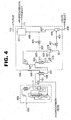
- Fig. 4 is a schematic flow diagram of another exemplary embodiment of the present invention.
- Fig. 5 is a schematic flow diagram of an alternative exemplary embodiment of the present invention.
- Fig. 6 is a schematic flow diagram of another alternative exemplary embodiment of the present invention.
- the cryogenic separation of air yields an oxygen product which is enriched in krypton and xenon.
- Krypton and xenon are present in ambient air at 1.14 and 0.087 ppmv, respectively, and typically are concentrated in the oxygen product by a factor of at least four.
- oxygen from a cryogenic air separation unit is reacted with a hydrocarbon feedstock such as natural gas to yield a synthesis gas product containing hydrogen, carbon oxides (i.e. carbon monoxide and carbon dioxide), methane, water, and inert gases including krypton and xenon.
- This synthesis gas contains essentially no oxygen, which means that the concentration of oxygen is below about 0.1 vol%.
- the recovery of krypton and xenon from this synthesis gas as described below is carried out with a significantly reduced possibility of forming flammable mixtures of hydrocarbons and oxygen compared with recovery by cryogenic separation from air.
- FIG. 1 A generalized schematic diagram of the invention is given in Fig. 1.
- Hydrocarbon stream 101 is reacted with oxygen-enriched stream 103 in reactor 105 to yield synthesis gas stream 107 which contains hydrogen, carbon monoxide, carbon dioxide, methane, water, and inert gases including krypton and xenon.
- This synthesis gas contains essentially no oxygen because hydrocarbon stream 101 is provided in excess of that required to consume the oxygen in oxygen-enriched stream 103. If any unconsumed oxygen is present in synthesis gas stream 107, it is at a concentration of less than 0.1 vol%.
- no flammable oxygen-hydrocarbon streams are created.
- Typical concentration locations of hydrocarbon stream 101, oxygen-enriched stream 103, and synthesis gas stream 107 are shown in the ternary flammability chart of Fig. 2. Controlled oxidation reactions consume essentially all of the oxygen in reactor 105 and as a result no separate oxygen-hydrocarbon streams that could have compositions within the region of flammabiity in Fig. 2 are generated.
- synthesis gas stream 107 is introduced into synthesis gas conversion and krypton-xenon recovery zone 109, wherein there is produced, as described in detail below, product gas stream 111 enriched krypton and xenon, waste or purge gas stream 113, and liquid hydrocarbon product stream 115.
- Hydrocarbon feed 101 may be any carbonaceous material which can be converted into synthesis gas by reaction with oxygen-enriched stream 103.
- stream 101 could be natural gas, naphtha, heavy hydrocarbons, petroleum coke, or biomass.
- synthesis gas stream 107 can be generated by the gasification of coal.
- Oxygen-enriched stream 101 is defined as a stream which contains oxygen at a higher concentration than that of air. Typically, the oxygen concentration in the oxygen-enriched stream may be greater than 80 vol%, may range up to 95 vol%, and in some applications may be as high as 99.5 vol%.
- Atmospheric air 301 is separated in air separation unit 303 to yield'at least oxygen-enriched product stream 103 and nitrogen-enriched product stream 305.
- Air separation unit 303 may use any of the numerous cryogenic air separation cycles known in the art.
- Oxygen-enriched product stream 103 has an oxygen concentration in the range recited above, and could be, for example, 99.5 vol% oxygen.
- Hydrocarbon feed stream 101, oxygen-enriched stream 103, and optionally steam stream 306 are reacted in synthesis gas generation system 105 to yield synthesis gas stream 107.
- Synthesis gas generation system 105 may be a partial oxidation reactor system which can utilize any of the partial oxidation processes known in the art. These include, for example, the following processes: autothermal reforming of natural gas; partial oxidation of hydrocarbon liquids such as naphtha; combined reforming, which is steam-methane reforming followed by oxygen-blown partial oxidation; or gas-heated reforming, which is combined reforming in which heat is provided to the endothermic steam-methane reforming step by the exothermic oxygen-blown partial oxidation step. These known processes are described in Methanol , Section 4.2, Synthesis Gas Generation Routes, in the Kirk-Othmer Encyclopedia of Chemical Technology, John Wiley & Sons, 1995, posted online December 4, 2000.
- Synthesis gas stream 107 which contains hydrogen, carbon monoxide, carbon dioxide, methane, water, and inert gases including krypton and xenon, is combined with recycle gas stream 307 (later defined) and combined stream 309 is introduced into synthesis gas conversion system 311.
- the synthesis gas is partially converted into a hydrocarbon product which leaves the reaction system in admixture with unreacted synthesis gas as reactor effluent stream 313.
- This reactor effluent is cooled and partially condensed in heat exchanger 315 and the cooled two-phase stream is separated in separator 319 into liquid synthesis product stream 321 and unreacted synthesis gas stream 323.
- Synthesis gas conversion system 311 may utilize any known process which converts synthesis gas into a liquid synthesis product.
- This synthesis product may be, for example, methanol, a mixture of paraffinic hydrocarbons, or a.mixture of methanol and dimethyl ether.
- Methanol may be produced from synthesis gas stream 107 by known methanol synthesis processes, for example, as described in Methanol, Section 4, Manufacturing and Processing, in the Kirk-Othmer Encyclopedia of Chemical Technology, John Wiley & Sons, 1995, posted online December 4, 2000.
- Paraffinic hydrocarbons may be produced by processes described in Fuels, Synthetic, Liquid Fuels, Section 2, Indirect Liquefaction/Conversion to Liquid Fuels, in the Kirk-Othmer Encyclopedia of Chemical Technology, John Wiley & Sons, 1995, posted online December 4, 2000. Mixtures of dimethly ether and methanol may be produced, for example, according to the process described in U.S. Patent 5,218,003.
- unreacted synthesis gas stream 323 is divided into recycle stream 325 and purge stream 329.
- Recycle stream 325 is compressed in compressor 327, and compressed unreacted synthesis gas stream 307 is combined with synthesis gas stream 107 as earlier described.
- krypton and xenon become increasingly concentrated in the synthesis loop and in unreacted synthesis gas 323.
- Purge stream 329 contains concentrations of krypton and xenon which may be 7 to 20 times higher than the respective concentrations in ambient air.
- This purge stream also contains, as shown in the Example below, significant concentrations of hydrogen, carbon monoxide, carbon dioxide, and methane.
- the purge stream also contains minor concentrations of nitrogen, argon, methanol, and water.
- Purge stream 329 may be processed in krypton/xenon recovery system 331 to concentrate the krypton and xenon further for final separation using any combination of known gas separation steps.
- carbon dioxide may be removed from purge stream 329 by an amine-based absorption process using monodiethanol amine (MDEA), the carbon dioxide-free purge gas may be cooled to condense and remove water and methanol, and the residual water and methanol in the purge gas may be removed by pressure or temperature swing adsorption.
- MDEA monodiethanol amine
- the remaining gas which contains major concentrations of hydrogen, carbon monoxide, and methane with minor concentrations of nitrogen, argon, krypton, and xenon, may be further separated by cryogenic distillation to yield enriched krypton/xenon product gas stream 111 and waste or purge stream 113.
- purge stream 329 may be reacted catalytically with stoichiometric amounts of oxygen from oxygen-enriched stream 103 to convert the hydrogen, carbon monoxide, methane, and methanol to carbon dioxide and water, and then using the additional separation steps outlined in the above embodiment.
- the final distillation step would be simpler than that of the above embodiment, since the final gas stream to be separated would be at a much lower flow rate and would contain only nitrogen, argon, krypton, and xenon. Typical krypton and xenon recoveries from air feed stream 301 using either embodiment may range from 50 to 95%.
- liquid synthesis product stream 321 is reduced in pressure across valve 401 to release dissolved gas (including krypton and xenon) and reduced-pressure two-phase stream 403 is separated in separator 405.
- Final liquid synthesis product stream 409 and released gas stream 407 are withdrawn therefrom, and released gas stream 407 is processed in krypton/xenon recovery system 331.
- a portion 329 of unreacted synthesis gas stream 323 may be reduced in pressure across valve 411 and combined with released gas stream 407. The combined stream then may be processed as described above in krypton/xenon recovery system 331.
- a portion of purge gas 113 from krypton/xenon recovery system 331 is recycled as stream 501 to air separation unit 303 to increase krypton and xenon recovery. Since stream 501 may contain residual hydrocarbons, it is likely that a hydrocarbon removal step (not shown) would be needed prior to air separation unit 303.
- Another optional embodiment is shown in Fig. 6.
- a portion of purge gas 113 from krypton/xenon recovery system 331 may be recycled via stream 601 to either synthesis gas generation system 105 as stream 603 or synthesis gas conversion system 311 as stream 605.
- a portion of purge gas 113 can be recycled to both synthesis gas generation system 105 as stream 603 and synthesis gas conversion system 311 as stream 605.
- oxygen stream 103 is provided by air separation unit and contains 99.51 vol% oxygen.
- This oxygen is reacted with natural gas stream 101 and steam 306 in partial oxidation reactor system 105 to yield synthesis gas stream 107 which has a hydrogen to carbon monoxide molar ratio of about 2.
- This synthesis gas is combined with recycle stream 307 and partially converted to methanol in methanol reaction system 311.
- This reaction yields reactor product stream 313, which is cooled and separated in separator 319 to yield methanol-rich pressurized liquid stream 321 and unreacted synthesis gas 323.
- Methanol-rich pressurized liquid stream 321 is reduced in pressure across valve 401 and the resulting two-phase stream 403 is separated into methanol liquid product stream 409 and gas stream 407 enriched in krypton and xenon.
- a portion of unreacted synthesis gas stream 323 is withdrawn as stream 329, which is reduced in pressure across valve 411.
- the reduced pressure gas is combined with gas stream 407 and the resulting combined stream 408 enriched in krypton and xenon is introduced into krypton and xenon recovery system 331.
- the remaining portion of unreacted synthesis gas stream 323 is recycled as stream 325 to compressor 327 and stream 309 is returned to methanol reaction system 311.
- Stream 408 enriched in krypton and xenon is further enriched in krypton and xenon recovery system 331 by the alternative embodiment described earlier.
- Final enriched product stream 111 is withdrawn and contains 73.9 vol% krypton and 6.33 vol% xenon. Individual krypton and xenon products may be recovered by a final cryogenic distillation step.
- the present invention offers an alternative method for the recovery of krypton and xenon from air without the potential to form flammable hydrocarbon-oxygen mixtures in the krypton-xenon recovery process.
- the method can be integrated with processes for the production and conversion of synthesis gas into liquid synthesis products wherein the synthesis gas is produced by partial oxidation of hydrocarbons with oxygen.
Landscapes
- Chemical & Material Sciences (AREA)
- Organic Chemistry (AREA)
- Engineering & Computer Science (AREA)
- Inorganic Chemistry (AREA)
- Mechanical Engineering (AREA)
- Thermal Sciences (AREA)
- General Engineering & Computer Science (AREA)
- Physics & Mathematics (AREA)
- Chemical Kinetics & Catalysis (AREA)
- Analytical Chemistry (AREA)
- Combustion & Propulsion (AREA)
- General Health & Medical Sciences (AREA)
- Health & Medical Sciences (AREA)
- Separation By Low-Temperature Treatments (AREA)
- Organic Low-Molecular-Weight Compounds And Preparation Thereof (AREA)
Abstract
A method for recovering krypton and xenon from air comprises (a) separating an
air feed stream (301) into oxygen-enriched (103) and nitrogen-enriched product streams (305); (b) reacting
the oxygen-rich product stream with a hydrocarbon feed (101) in a synthesis gas generation
process (105) to yield a synthesis gas stream (107) comprising hydrogen, carbon oxides, krypton,
and xenon, which synthesis gas stream contains essentially no oxygen; (c) introducing
the synthesis gas stream (107) into a synthesis gas conversion process (311) and converting the
synthesis gas stream into a liquid synthesis product stream (321) and an unreacted synthesis
gas stream (323); (d) recycling at least a portion (325) of the unreacted synthesis gas stream (323) to the
synthesis gas generation process (105); (e) reducing the pressure (401) of the liquid synthesis
product stream (321) to yield a two-phase reduced-pressure product stream (403), and separating (405)
the two-phase reduced-pressure product stream into a final liquid synthesis product
stream (409) and a gas stream enriched in krypton and xenon (407); and (f) separating the gas
stream enriched in krypton and xenon into a purge gas stream (113) and a gas product stream (111)
further enriched in krypton and xenon.
Description
- Air contains small concentrations of the valuable inert gases helium, neon, argon, krypton, and xenon. Neon, argon, krypton, and xenon historically have been recovered as secondary products in the cryogenic separation of air into oxygen and/or nitrogen products. Argon, krypton, and xenon also can be recovered from the purge gas generated in the production of ammonia from synthesis gas generated from air and natural gas. Krypton and xenon are useful in a number of specialized fields including research, medicine, instrumentation, lighting, and space applications, and demand is expected to increase as these applications expand.
- Because air contains only 1.14 and 0.087 ppmv of krypton and xenon, respectively, recovery of these components by the cryogenic separation of air is technically complex and costly. Recovery is complicated further by the presence of light hydrocarbons, particularly methane, in the air feed to air separation plants. Krypton, xenon, and methane, by virtue of their boiling points relative to oxygen and nitrogen, are concentrated in the liquid oxygen during the distillation process. In the separation of krypton and xenon from the liquid oxygen, the formation of flammable mixtures of methane and oxygen potentially can occur. Numerous processes have been developed in the air separation industry to circumvent this problem, but the processes are complex and safety is an ongoing concern in plant operation. Methods to recover krypton and xenon from air without the potential for forming flammable hydrocarbon-oxygen mixtures are therefore highly desirable.
- The invention described below and defined by the claims which follow offers a method for recovering krypton and xenon from air without the potential to form such flammable hydrocarbon-oxygen mixtures in the krypton-xenon separation process. The method can be integrated with processes for the production and conversion of synthesis gas into liquid synthesis products wherein the synthesis gas is produced by partial oxidation of hydrocarbons with oxygen.
- The invention relates to a method for recovering krypton and xenon from air which comprises:
- (a) separating an air feed stream into oxygen-enriched and nitrogen-enriched product streams;
- (b) reacting the oxygen-rich product stream with a hydrocarbon feed in a synthesis gas generation process to yield a synthesis gas stream comprising hydrogen, carbon oxides, krypton, and xenon, which synthesis gas stream contains essentially no oxygen;
- (c) introducing the synthesis gas stream into a synthesis gas conversion process and converting the synthesis gas stream into a liquid synthesis product stream and an unreacted synthesis gas stream;
- (d) recycling a portion of the unreacted synthesis gas stream to the synthesis gas conversion process; and
- (e) separating another portion of the unreacted synthesis gas stream into a purge gas stream and a gas product stream enriched in krypton and xenon.
-
- The hydrocarbon feed may be natural gas. The liquid synthesis product may comprise methanol or paraffinic hydrocarbons. The method may further comprise introducing steam into the synthesis gas generation process.
- The separating of the remaining portion of the unreacted synthesis gas stream into the purge gas stream and the gas product stream enriched in krypton and xenon may be effected by one or more process steps selected from the group consisting of catalytic combustion, amine-based absorption, condensation and phase separation, pressure swing adsorption, temperature swing adsorption, and cryogenic distillation.
- The method may further comprise reducing the pressure of the liquid product stream to yield a two-phase reduced-pressure product stream, and separating the two-phase reduced-pressure product stream into a final liquid synthesis product stream and a gas stream enriched in krypton and xenon. The method also may further comprise combining the gas stream enriched in krypton and xenon with another portion of the unreacted synthesis gas stream.
- The purge gas stream may comprise at least hydrogen, carbon monoxide, and methane, and optionally a portion of the purge gas stream may be recycled to the synthesis gas generation process. Optionally a portion of the purge gas stream may be recycled to the synthesis gas conversion process. Another portion of the purge gas stream may be recycled to the synthesis gas generation process
- In another embodiment, the invention relates to a method for recovering krypton and xenon from air which comprises:
- (a) separating an air feed stream into oxygen-enriched and nitrogen-enriched product streams in an air separation process;
- (b) reacting the oxygen-rich product stream with a hydrocarbon feed in a synthesis gas generation process to yield a synthesis gas stream comprising hydrogen, carbon oxides, krypton, and xenon, which synthesis gas stream contains essentially no oxygen;
- (c) introducing the synthesis gas stream into a synthesis gas conversion process and converting the synthesis gas stream into a liquid synthesis product stream and an unreacted synthesis gas stream;
- (d) recycling at least a portion of the unreacted synthesis gas stream to the synthesis gas generation process;
- (e) reducing the pressure of the liquid synthesis product stream to yield a two-phase reduced-pressure product stream, and separating the two-phase reduced-pressure product stream into a final liquid synthesis product stream and a gas stream enriched in krypton and xenon; and
- (f) separating the gas stream enriched in krypton and xenon into a purge gas stream and a gas product stream further enriched in krypton and xenon.
-
- A portion of the unreacted synthesis gas stream may be combined with the gas stream enriched in krypton and xenon prior to (f). The hydrocarbon feed may be natural gas and the liquid synthesis product may comprise methanol. Alternatively, the liquid synthesis product may comprise paraffinic hydrocarbons. The method of may further comprise introducing steam into the synthesis gas generation process.
- The separating of the remaining portion of the unreacted synthesis gas stream into the gas product stream enriched in krypton and xenon and the purge gas stream may be effected by one or more process steps selected from the group consisting of catalytic combustion, amine-based absorption, condensation and phase separation, pressure swing adsorption, temperature swing adsorption, and cryogenic distillation.
- The purge gas stream may comprise at least hydrogen, carbon monoxide, methane, krypton, and xenon. A portion of the purge gas stream may be recycled to the synthesis gas generation process.
- If desired, a portion of the purge gas stream may be recycled to the synthesis gas conversion process and optionally another portion of the purge gas stream may be recycled to the synthesis gas generation process. A portion of the purge gas stream may be recycled to the air separation process.
- Fig. 1 is a simplified flow diagram illustrating the present invention.
- Fig. 2 is a flammability chart showing a typical region of flammability for mixtures of hydrocarbon, oxygen, and inerts.
- Fig. 3 is a schematic flow diagram of an exemplary embodiment of the present invention.
- Fig. 4 is a schematic flow diagram of another exemplary embodiment of the present invention.
- Fig. 5 is a schematic flow diagram of an alternative exemplary embodiment of the present invention.
- Fig. 6 is a schematic flow diagram of another alternative exemplary embodiment of the present invention.
- The cryogenic separation of air yields an oxygen product which is enriched in krypton and xenon. Krypton and xenon are present in ambient air at 1.14 and 0.087 ppmv, respectively, and typically are concentrated in the oxygen product by a factor of at least four. In the present invention, oxygen from a cryogenic air separation unit is reacted with a hydrocarbon feedstock such as natural gas to yield a synthesis gas product containing hydrogen, carbon oxides (i.e. carbon monoxide and carbon dioxide), methane, water, and inert gases including krypton and xenon. This synthesis gas contains essentially no oxygen, which means that the concentration of oxygen is below about 0.1 vol%. The recovery of krypton and xenon from this synthesis gas as described below is carried out with a significantly reduced possibility of forming flammable mixtures of hydrocarbons and oxygen compared with recovery by cryogenic separation from air.
- A generalized schematic diagram of the invention is given in Fig. 1.
Hydrocarbon stream 101 is reacted with oxygen-enrichedstream 103 inreactor 105 to yieldsynthesis gas stream 107 which contains hydrogen, carbon monoxide, carbon dioxide, methane, water, and inert gases including krypton and xenon. This synthesis gas contains essentially no oxygen becausehydrocarbon stream 101 is provided in excess of that required to consume the oxygen in oxygen-enrichedstream 103. If any unconsumed oxygen is present insynthesis gas stream 107, it is at a concentration of less than 0.1 vol%. In convertinghydrocarbon stream 101 and oxygen-enrichedstream 103 intosynthesis gas stream 107, no flammable oxygen-hydrocarbon streams are created. Typical concentration locations ofhydrocarbon stream 101, oxygen-enrichedstream 103, andsynthesis gas stream 107 are shown in the ternary flammability chart of Fig. 2. Controlled oxidation reactions consume essentially all of the oxygen inreactor 105 and as a result no separate oxygen-hydrocarbon streams that could have compositions within the region of flammabiity in Fig. 2 are generated. - Referring again to Fig. 1,
synthesis gas stream 107 is introduced into synthesis gas conversion and krypton-xenon recovery zone 109, wherein there is produced, as described in detail below,product gas stream 111 enriched krypton and xenon, waste or purgegas stream 113, and liquidhydrocarbon product stream 115.Hydrocarbon feed 101 may be any carbonaceous material which can be converted into synthesis gas by reaction with oxygen-enrichedstream 103. For example,stream 101 could be natural gas, naphtha, heavy hydrocarbons, petroleum coke, or biomass. Alternatively,synthesis gas stream 107 can be generated by the gasification of coal. Oxygen-enrichedstream 101 is defined as a stream which contains oxygen at a higher concentration than that of air. Typically, the oxygen concentration in the oxygen-enriched stream may be greater than 80 vol%, may range up to 95 vol%, and in some applications may be as high as 99.5 vol%. - An exemplary embodiment of the invention is illustrated in Fig. 3.
Atmospheric air 301 is separated inair separation unit 303 to yield'at least oxygen-enrichedproduct stream 103 and nitrogen-enriched product stream 305.Air separation unit 303 may use any of the numerous cryogenic air separation cycles known in the art. Oxygen-enrichedproduct stream 103 has an oxygen concentration in the range recited above, and could be, for example, 99.5 vol% oxygen.Hydrocarbon feed stream 101, oxygen-enrichedstream 103, and optionally steamstream 306 are reacted in synthesisgas generation system 105 to yieldsynthesis gas stream 107. - Synthesis
gas generation system 105 may be a partial oxidation reactor system which can utilize any of the partial oxidation processes known in the art. These include, for example, the following processes: autothermal reforming of natural gas; partial oxidation of hydrocarbon liquids such as naphtha; combined reforming, which is steam-methane reforming followed by oxygen-blown partial oxidation; or gas-heated reforming, which is combined reforming in which heat is provided to the endothermic steam-methane reforming step by the exothermic oxygen-blown partial oxidation step. These known processes are described in Methanol, Section 4.2, Synthesis Gas Generation Routes, in the Kirk-Othmer Encyclopedia of Chemical Technology, John Wiley & Sons, 1995, posted online December 4, 2000. -
Synthesis gas stream 107, which contains hydrogen, carbon monoxide, carbon dioxide, methane, water, and inert gases including krypton and xenon, is combined with recycle gas stream 307 (later defined) and combinedstream 309 is introduced into synthesisgas conversion system 311. In this reaction system the synthesis gas is partially converted into a hydrocarbon product which leaves the reaction system in admixture with unreacted synthesis gas asreactor effluent stream 313. This reactor effluent is cooled and partially condensed inheat exchanger 315 and the cooled two-phase stream is separated inseparator 319 into liquidsynthesis product stream 321 and unreactedsynthesis gas stream 323. - Synthesis
gas conversion system 311 may utilize any known process which converts synthesis gas into a liquid synthesis product. This synthesis product may be, for example, methanol, a mixture of paraffinic hydrocarbons, or a.mixture of methanol and dimethyl ether. Methanol may be produced fromsynthesis gas stream 107 by known methanol synthesis processes, for example, as described in Methanol, Section 4, Manufacturing and Processing, in the Kirk-Othmer Encyclopedia of Chemical Technology, John Wiley & Sons, 1995, posted online December 4, 2000. Paraffinic hydrocarbons may be produced by processes described in Fuels, Synthetic, Liquid Fuels, Section 2, Indirect Liquefaction/Conversion to Liquid Fuels, in the Kirk-Othmer Encyclopedia of Chemical Technology, John Wiley & Sons, 1995, posted online December 4, 2000. Mixtures of dimethly ether and methanol may be produced, for example, according to the process described in U.S. Patent 5,218,003. - In the embodiment of Fig. 3, unreacted
synthesis gas stream 323 is divided intorecycle stream 325 andpurge stream 329.Recycle stream 325 is compressed incompressor 327, and compressed unreactedsynthesis gas stream 307 is combined withsynthesis gas stream 107 as earlier described. By virtue of this recycle step, krypton and xenon become increasingly concentrated in the synthesis loop and inunreacted synthesis gas 323.Purge stream 329 contains concentrations of krypton and xenon which may be 7 to 20 times higher than the respective concentrations in ambient air. This purge stream also contains, as shown in the Example below, significant concentrations of hydrogen, carbon monoxide, carbon dioxide, and methane. The purge stream also contains minor concentrations of nitrogen, argon, methanol, and water. -
Purge stream 329 may be processed in krypton/xenon recovery system 331 to concentrate the krypton and xenon further for final separation using any combination of known gas separation steps. In one embodiment, for example, carbon dioxide may be removed frompurge stream 329 by an amine-based absorption process using monodiethanol amine (MDEA), the carbon dioxide-free purge gas may be cooled to condense and remove water and methanol, and the residual water and methanol in the purge gas may be removed by pressure or temperature swing adsorption. The remaining gas, which contains major concentrations of hydrogen, carbon monoxide, and methane with minor concentrations of nitrogen, argon, krypton, and xenon, may be further separated by cryogenic distillation to yield enriched krypton/xenonproduct gas stream 111 and waste orpurge stream 113. - In an alternative embodiment,
purge stream 329 may be reacted catalytically with stoichiometric amounts of oxygen from oxygen-enrichedstream 103 to convert the hydrogen, carbon monoxide, methane, and methanol to carbon dioxide and water, and then using the additional separation steps outlined in the above embodiment. In this alternative embodiment, the final distillation step would be simpler than that of the above embodiment, since the final gas stream to be separated would be at a much lower flow rate and would contain only nitrogen, argon, krypton, and xenon. Typical krypton and xenon recoveries fromair feed stream 301 using either embodiment may range from 50 to 95%. - An alternative exemplary embodiment is illustrated in Fig. 4. In this alternative, liquid
synthesis product stream 321 is reduced in pressure acrossvalve 401 to release dissolved gas (including krypton and xenon) and reduced-pressure two-phase stream 403 is separated inseparator 405. Final liquidsynthesis product stream 409 and releasedgas stream 407 are withdrawn therefrom, and releasedgas stream 407 is processed in krypton/xenon recovery system 331. Optionally, aportion 329 of unreactedsynthesis gas stream 323 may be reduced in pressure acrossvalve 411 and combined with releasedgas stream 407. The combined stream then may be processed as described above in krypton/xenon recovery system 331. - An optional embodiment is illustrated in Fig. 5 in which a portion of
purge gas 113 from krypton/xenon recovery system 331 is recycled asstream 501 toair separation unit 303 to increase krypton and xenon recovery. Sincestream 501 may contain residual hydrocarbons, it is likely that a hydrocarbon removal step (not shown) would be needed prior toair separation unit 303. Another optional embodiment is shown in Fig. 6. In this option, a portion ofpurge gas 113 from krypton/xenon recovery system 331 may be recycled viastream 601 to either synthesisgas generation system 105 asstream 603 or synthesisgas conversion system 311 as stream 605. Alternatively, a portion ofpurge gas 113 can be recycled to both synthesisgas generation system 105 asstream 603 and synthesisgas conversion system 311 as stream 605. - The invention is illustrated but not limited by the following Example. The embodiment of Fig. 4 was simulated by a heat and material balance to illustrate the invention. In this embodiment,
oxygen stream 103 is provided by air separation unit and contains 99.51 vol% oxygen. This oxygen is reacted withnatural gas stream 101 andsteam 306 in partialoxidation reactor system 105 to yieldsynthesis gas stream 107 which has a hydrogen to carbon monoxide molar ratio of about 2. This synthesis gas is combined withrecycle stream 307 and partially converted to methanol inmethanol reaction system 311. This reaction yieldsreactor product stream 313, which is cooled and separated inseparator 319 to yield methanol-rich pressurizedliquid stream 321 andunreacted synthesis gas 323. - Methanol-rich pressurized
liquid stream 321 is reduced in pressure acrossvalve 401 and the resulting two-phase stream 403 is separated into methanolliquid product stream 409 andgas stream 407 enriched in krypton and xenon. A portion of unreactedsynthesis gas stream 323 is withdrawn asstream 329, which is reduced in pressure acrossvalve 411. The reduced pressure gas is combined withgas stream 407 and the resulting combinedstream 408 enriched in krypton and xenon is introduced into krypton andxenon recovery system 331. The remaining portion of unreactedsynthesis gas stream 323 is recycled asstream 325 tocompressor 327 andstream 309 is returned tomethanol reaction system 311. -
Stream 408 enriched in krypton and xenon is further enriched in krypton andxenon recovery system 331 by the alternative embodiment described earlier. Finalenriched product stream 111 is withdrawn and contains 73.9 vol% krypton and 6.33 vol% xenon. Individual krypton and xenon products may be recovered by a final cryogenic distillation step. - A stream summary of the heat and material balances for this Example is given in Table 1 below. It is seen that 64.9% of the krypton and 78.9% of the xenon in the
feed air stream 301 are recovered inproduct stream 111.
- Thus the present invention offers an alternative method for the recovery of krypton and xenon from air without the potential to form flammable hydrocarbon-oxygen mixtures in the krypton-xenon recovery process. The method can be integrated with processes for the production and conversion of synthesis gas into liquid synthesis products wherein the synthesis gas is produced by partial oxidation of hydrocarbons with oxygen.
Claims (24)
- A method for recovering krypton and xenon from air which comprises:(a) separating an air feed stream into oxygen-enriched and nitrogen-enriched product streams;(b) reacting the oxygen-rich product stream with a hydrocarbon feed in a synthesis gas generation process to yield a synthesis gas stream comprising hydrogen, carbon oxides, krypton, and xenon, which synthesis gas stream contains essentially no oxygen;(c) introducing the synthesis gas stream into a synthesis gas conversion process and converting the synthesis gas stream into a liquid synthesis product stream and an unreacted synthesis gas stream;(d) recycling a portion of the unreacted synthesis gas stream to the synthesis gas conversion process; and(e) separating another portion of the unreacted synthesis gas stream into a purge gas stream and a gas product stream enriched in krypton and xenon.
- The method of Claim 1 wherein the hydrocarbon feed is natural gas.
- The method of Claim 1 wherein the liquid synthesis product comprises methanol.
- The method of Claim 1 wherein the liquid synthesis product comprises paraffinic hydrocarbons.
- The method of Claim 1 which further comprises introducing steam into the synthesis gas generation process.
- The method of Claim 1 wherein the separating of the remaining portion of the unreacted synthesis gas stream into the purge gas stream and the gas product stream enriched in krypton and xenon is effected by one or more process steps selected from the group consisting of catalytic combustion, amine-based absorption, condensation and phase separation, pressure swing adsorption, temperature swing adsorption, and cryogenic distillation.
- The method of Claim 1 which further comprises reducing the pressure of the liquid product stream to yield a two-phase reduced-pressure product stream, and separating the two-phase reduced-pressure product stream into a final liquid synthesis product stream and a gas stream enriched in krypton and xenon.
- The method of Claim 7 which further comprises combining the gas stream enriched in krypton and xenon with another portion of the unreacted synthesis gas stream.
- The method of Claim 1 wherein the purge gas stream comprises at least hydrogen, carbon monoxide, and methane.
- The method of Claim 9 wherein a portion of the purge gas stream is recycled to the synthesis gas generation process.
- The method of Claim 9 wherein a portion of the purge gas stream is recycled to the synthesis gas conversion process.
- The method of Claim 11 wherein another portion of the purge gas stream is recycled to the synthesis gas generation process
- A method for recovering krypton and xenon from air which comprises:(a) separating an air feed stream into oxygen-enriched and nitrogen-enriched product streams in an air separation process;(b) reacting the oxygen-rich product stream with a hydrocarbon feed in a synthesis gas generation process to yield a synthesis gas stream comprising hydrogen, carbon oxides, krypton, and xenon, which synthesis gas stream contains essentially no oxygen;(c) introducing the synthesis gas stream into a synthesis gas conversion process and converting the synthesis gas stream into a liquid synthesis product stream and an unreacted synthesis gas stream;(d) recycling at least a portion of the unreacted synthesis gas stream to the synthesis gas generation process;(e) reducing the pressure of the liquid synthesis product stream to yield a two-phase reduced-pressure product stream, and separating the two-phase reduced-pressure product stream into a final liquid synthesis product stream and a gas stream enriched in krypton and xenon; and(f) separating the gas stream enriched in krypton and xenon into a purge gas stream and a gas product stream further enriched in krypton and xenon.
- The method of Claim 13 wherein a portion of the unreacted synthesis gas stream is combined with the gas stream enriched in krypton and xenon prior to (f).
- The method of Claim 13 wherein the hydrocarbon feed is natural gas.
- The method of Claim 13 wherein the liquid synthesis product comprises methanol.
- The method of Claim 13 wherein the liquid synthesis product comprises paraffinic hydrocarbons.
- The method of Claim 13 which further comprises introducing steam into the synthesis gas generation process.
- The method of Claim 13 wherein the separating of the remaining portion of the unreacted synthesis gas stream into the gas product stream enriched in krypton and xenon and the purge gas stream is effected by one or more process steps selected from the group consisting of catalytic combustion, amine-based absorption, condensation and phase separation, pressure swing adsorption, temperature swing adsorption, and cryogenic distillation.
- The method of Claim 13 wherein the purge gas stream comprises at least hydrogen, carbon monoxide, methane, krypton, and xenon.
- The method of Claim 20 wherein a portion of the purge gas stream is recycled to the synthesis gas generation process.
- The method of Claim 20 wherein a portion of the purge gas stream is recycled to the synthesis gas conversion process.
- The method of Claim 22 wherein another portion of the purge gas stream is recycled to the synthesis gas generation process.
- The method of Claim 20 wherein a portion of the purge gas stream is recycled to the air separation process.
Applications Claiming Priority (2)
| Application Number | Priority Date | Filing Date | Title |
|---|---|---|---|
| US39866 | 2002-01-04 | ||
| US10/039,866 US6735980B2 (en) | 2002-01-04 | 2002-01-04 | Recovery of krypton and xenon |
Publications (1)
| Publication Number | Publication Date |
|---|---|
| EP1327843A1 true EP1327843A1 (en) | 2003-07-16 |
Family
ID=21907741
Family Applications (1)
| Application Number | Title | Priority Date | Filing Date |
|---|---|---|---|
| EP02029062A Withdrawn EP1327843A1 (en) | 2002-01-04 | 2002-12-30 | Recovery of Krypton and Xenon |
Country Status (3)
| Country | Link |
|---|---|
| US (1) | US6735980B2 (en) |
| EP (1) | EP1327843A1 (en) |
| JP (1) | JP4065413B2 (en) |
Cited By (2)
| Publication number | Priority date | Publication date | Assignee | Title |
|---|---|---|---|---|
| EP1431691A3 (en) * | 2002-11-25 | 2004-07-07 | L'air liquide, Société anonyme à Directoire et Conseil de Surveillance pour l'Etude et l'Exploitation des Procédés G. Claude | Process and device for the production of a Krypton/Xenon-mixture from air |
| WO2008017583A1 (en) * | 2006-08-05 | 2008-02-14 | Messer Group Gmbh | Method and device for obtaining inert gas |
Families Citing this family (13)
| Publication number | Priority date | Publication date | Assignee | Title |
|---|---|---|---|---|
| DE10062564A1 (en) * | 2000-12-15 | 2002-06-20 | Linde Ag | Shielding gas and arc welding method |
| DE10062563A1 (en) * | 2000-12-15 | 2002-06-20 | Linde Ag | Shielding gas and arc welding method |
| US6843973B2 (en) * | 2002-05-01 | 2005-01-18 | Air Products And Chemicals | Krypton and xenon recovery system |
| DE102005037576A1 (en) * | 2005-08-09 | 2007-02-15 | Linde Ag | Method and apparatus for obtaining krypton and / or xenon |
| JP2011514833A (en) * | 2007-05-23 | 2011-05-12 | レール・リキード−ソシエテ・アノニム・プール・レテュード・エ・レクスプロワタシオン・デ・プロセデ・ジョルジュ・クロード | System and method for recovery and reuse of xenon from ventilators |
| CN106949377A (en) * | 2017-04-28 | 2017-07-14 | 马鞍山钢铁股份有限公司 | The method and apparatus that a kind of rare gas vacuum suction is reclaimed |
| CN112250050B (en) * | 2020-10-27 | 2021-07-09 | 深圳市博纯半导体材料有限公司 | Xenon production and preparation device and method |
| US12104850B2 (en) | 2021-05-06 | 2024-10-01 | Air Products And Chemicals, Inc. | Fluid recovery process and apparatus for xenon and or krypton recovery |
| CN113465292B (en) * | 2021-07-05 | 2023-02-21 | 乔治洛德方法研究和开发液化空气有限公司 | Method for increasing yield of krypton/xenon in air rectification device |
| KR102778306B1 (en) * | 2022-09-20 | 2025-03-10 | 주식회사 패리티 | Neon-Helium Mixed Gas Component Separation System |
| KR102779421B1 (en) * | 2022-09-20 | 2025-03-13 | 주식회사 패리티 | Xenon-Krypton Mixed Gas Component Separation System |
| US20240375958A1 (en) | 2023-05-12 | 2024-11-14 | Air Products And Chemicals, Inc. | Process and Apparatus for Xenon and or Krypton Recovery |
| CN117029381B (en) * | 2023-08-28 | 2024-05-07 | 宁夏大学 | System and method for extracting krypton and xenon in process of capturing liquid carbon dioxide |
Citations (8)
| Publication number | Priority date | Publication date | Assignee | Title |
|---|---|---|---|---|
| US3037359A (en) * | 1958-10-21 | 1962-06-05 | American Messer Corp | Rare gas recovery process |
| DE1146865B (en) * | 1957-03-27 | 1963-04-11 | Ici Ltd | Process for the production of methanol |
| FR1538659A (en) * | 1967-06-12 | 1968-09-06 | Leuna Werke Veb | Process for obtaining krypton, xenon and carbon derivatives enriched with a stable c 13 isotope, as well as the products conforming to those obtained by the present process or similar process |
| FR2036288A5 (en) * | 1968-04-11 | 1970-12-24 | Ingbuero Ratio Chem | Recirculation system esp for ammonia - synthesis |
| US3920717A (en) * | 1973-03-26 | 1975-11-18 | Texaco Development Corp | Production of methanol |
| US4782096A (en) * | 1986-02-10 | 1988-11-01 | Foster Wheeler Usa Corporation | Process for the production of synthesis gas |
| DE3922594A1 (en) * | 1988-08-16 | 1990-02-22 | Leipzig Chemieanlagen | Krypton and xenon recovery from synthesis of residual gases - by catalytic hydrogenation of higher boiling hydrocarbon(s) to methane |
| US5621155A (en) * | 1986-05-08 | 1997-04-15 | Rentech, Inc. | Process for the production of hydrocarbons |
Family Cites Families (15)
| Publication number | Priority date | Publication date | Assignee | Title |
|---|---|---|---|---|
| US2482304A (en) | 1946-12-05 | 1949-09-20 | Air Reduction | Recovery of the constituents of gaseous mixtures |
| US3274750A (en) | 1962-12-28 | 1966-09-27 | Gen Electric | Permeable polymeric membrane gas separation |
| JPS5263188A (en) | 1975-11-18 | 1977-05-25 | Terukatsu Miyauchi | Method of separating mixed gas |
| US4401448A (en) * | 1982-05-24 | 1983-08-30 | Union Carbide Corporation | Air separation process for the production of krypton and xenon |
| US4752311A (en) | 1986-02-24 | 1988-06-21 | The Boc Group, Inc. | Argon recovery from ammonia plant purge gas utilizing a combination of cryogenic and non-cryogenic separating means |
| US4687498A (en) | 1986-02-24 | 1987-08-18 | The Boc Group, Inc. | Argon recovery from hydrogen depleted ammonia plant purge gas utilizing a combination of cryogenic and non-cryogenic separating means |
| US5218003A (en) | 1988-01-14 | 1993-06-08 | Air Products And Chemicals, Inc. | Liquid phase process for dimethyl ether synthesis |
| US5100447A (en) | 1990-08-30 | 1992-03-31 | The Boc Group, Inc. | Argon recovery from partial oxidation based ammonia plant purge gases |
| US5122173A (en) | 1991-02-05 | 1992-06-16 | Air Products And Chemicals, Inc. | Cryogenic production of krypton and xenon from air |
| US5313802A (en) * | 1993-02-16 | 1994-05-24 | Air Products And Chemicals, Inc. | Process to produce a krypton/xenon enriched stream directly from the main air distillation column |
| WO1995021012A1 (en) | 1994-02-04 | 1995-08-10 | University Of Chicago | Apparatus for detection and separation of heavy noble gases |
| JP2981396B2 (en) * | 1994-03-31 | 1999-11-22 | 川崎製鉄株式会社 | Noble gas purification method |
| KR970008347B1 (en) | 1994-04-12 | 1997-05-23 | 한국에너지기술연구소 | Adsorptive separation method and apparatus for separating argon and hydrogen in high concentration from ammonia purge gas |
| DE19823526C1 (en) * | 1998-05-26 | 2000-01-05 | Linde Ag | Xenon production process |
| US6164089A (en) | 1999-07-08 | 2000-12-26 | Air Products And Chemicals, Inc. | Method and apparatus for recovering xenon or a mixture of krypton and xenon from air |
-
2002
- 2002-01-04 US US10/039,866 patent/US6735980B2/en not_active Expired - Fee Related
- 2002-12-30 EP EP02029062A patent/EP1327843A1/en not_active Withdrawn
-
2003
- 2003-01-06 JP JP2003000104A patent/JP4065413B2/en not_active Expired - Fee Related
Patent Citations (8)
| Publication number | Priority date | Publication date | Assignee | Title |
|---|---|---|---|---|
| DE1146865B (en) * | 1957-03-27 | 1963-04-11 | Ici Ltd | Process for the production of methanol |
| US3037359A (en) * | 1958-10-21 | 1962-06-05 | American Messer Corp | Rare gas recovery process |
| FR1538659A (en) * | 1967-06-12 | 1968-09-06 | Leuna Werke Veb | Process for obtaining krypton, xenon and carbon derivatives enriched with a stable c 13 isotope, as well as the products conforming to those obtained by the present process or similar process |
| FR2036288A5 (en) * | 1968-04-11 | 1970-12-24 | Ingbuero Ratio Chem | Recirculation system esp for ammonia - synthesis |
| US3920717A (en) * | 1973-03-26 | 1975-11-18 | Texaco Development Corp | Production of methanol |
| US4782096A (en) * | 1986-02-10 | 1988-11-01 | Foster Wheeler Usa Corporation | Process for the production of synthesis gas |
| US5621155A (en) * | 1986-05-08 | 1997-04-15 | Rentech, Inc. | Process for the production of hydrocarbons |
| DE3922594A1 (en) * | 1988-08-16 | 1990-02-22 | Leipzig Chemieanlagen | Krypton and xenon recovery from synthesis of residual gases - by catalytic hydrogenation of higher boiling hydrocarbon(s) to methane |
Cited By (2)
| Publication number | Priority date | Publication date | Assignee | Title |
|---|---|---|---|---|
| EP1431691A3 (en) * | 2002-11-25 | 2004-07-07 | L'air liquide, Société anonyme à Directoire et Conseil de Surveillance pour l'Etude et l'Exploitation des Procédés G. Claude | Process and device for the production of a Krypton/Xenon-mixture from air |
| WO2008017583A1 (en) * | 2006-08-05 | 2008-02-14 | Messer Group Gmbh | Method and device for obtaining inert gas |
Also Published As
| Publication number | Publication date |
|---|---|
| JP2003212524A (en) | 2003-07-30 |
| JP4065413B2 (en) | 2008-03-26 |
| US6735980B2 (en) | 2004-05-18 |
| US20030129127A1 (en) | 2003-07-10 |
Similar Documents
| Publication | Publication Date | Title |
|---|---|---|
| US8354457B2 (en) | Hydrocarbon synthesis | |
| CA1300885C (en) | Hydrogasification of biomass to produce high yields of methane | |
| US6706770B2 (en) | Co-production of hydrogen and methanol from steam reformate | |
| US11673805B2 (en) | Process and plant for preparation of hydrogen and separation of carbon dioxide | |
| US6735980B2 (en) | Recovery of krypton and xenon | |
| US9321639B2 (en) | Process for methanol and ammonia co-production | |
| US9340494B2 (en) | Process for producing ammonia and urea | |
| US11370658B2 (en) | Method for the preparation of ammonia synthesis gas | |
| US6534551B2 (en) | Process and apparatus for the production of synthesis gas | |
| UA127220C2 (en) | Process for the co-production of methanol and ammonia | |
| US7067558B2 (en) | Process for the production of carbon monoxide and methanol | |
| EP0167300A1 (en) | Process for the production of alcohols | |
| US6669744B2 (en) | Process and apparatus for the production of synthesis gas | |
| AU2019280397B2 (en) | Process for methanol production | |
| NO922120L (en) | Method of transferring natural gas to higher hydrocarbons | |
| US5102645A (en) | Method for manufacture of high purity carbon monoxide | |
| US20170088419A1 (en) | Membrane-Based Gas Separation Processes to Produce Synthesis Gas With a High CO Content | |
| AU2010265170B2 (en) | Process for the preparation of hydrocarbons from synthesis gas | |
| AU774093B2 (en) | Natural gas conversion to hydrocarbons and ammonia | |
| JP4914351B2 (en) | Preparation of synthesis gas for acetic acid synthesis by partial oxidation of methanol feedstock | |
| US20040029983A1 (en) | Production of hydrogen and higher hydrocarbons | |
| GB2237287A (en) | Production of synthesis gas | |
| GB2157688A (en) | Methanol production process using air | |
| TH56192A (en) | Production of liquid hydrocarbon products. | |
| ZA200200571B (en) | Natural gas conversion to hydrocarbons and ammonia. |
Legal Events
| Date | Code | Title | Description |
|---|---|---|---|
| PUAI | Public reference made under article 153(3) epc to a published international application that has entered the european phase |
Free format text: ORIGINAL CODE: 0009012 |
|
| AK | Designated contracting states |
Designated state(s): AT BE BG CH CY CZ DE DK EE ES FI FR GB GR IE IT LI LU MC NL PT SE SI SK TR |
|
| AX | Request for extension of the european patent |
Extension state: AL LT LV MK RO |
|
| 17P | Request for examination filed |
Effective date: 20030807 |
|
| AKX | Designation fees paid |
Designated state(s): AT BE BG CH CY CZ DE DK EE ES FI FR GB GR IE IT LI LU MC NL PT SE SI SK TR |
|
| STAA | Information on the status of an ep patent application or granted ep patent |
Free format text: STATUS: THE APPLICATION IS DEEMED TO BE WITHDRAWN |
|
| 18D | Application deemed to be withdrawn |
Effective date: 20061017 |