EP1327687A1 - Methods of infection with hepatitis c virus - Google Patents
Methods of infection with hepatitis c virus Download PDFInfo
- Publication number
- EP1327687A1 EP1327687A1 EP01961223A EP01961223A EP1327687A1 EP 1327687 A1 EP1327687 A1 EP 1327687A1 EP 01961223 A EP01961223 A EP 01961223A EP 01961223 A EP01961223 A EP 01961223A EP 1327687 A1 EP1327687 A1 EP 1327687A1
- Authority
- EP
- European Patent Office
- Prior art keywords
- virus
- hepatitis
- hcv
- small animal
- rna
- Prior art date
- Legal status (The legal status is an assumption and is not a legal conclusion. Google has not performed a legal analysis and makes no representation as to the accuracy of the status listed.)
- Withdrawn
Links
Images



Classifications
-
- C—CHEMISTRY; METALLURGY
- C12—BIOCHEMISTRY; BEER; SPIRITS; WINE; VINEGAR; MICROBIOLOGY; ENZYMOLOGY; MUTATION OR GENETIC ENGINEERING
- C12N—MICROORGANISMS OR ENZYMES; COMPOSITIONS THEREOF; PROPAGATING, PRESERVING, OR MAINTAINING MICROORGANISMS; MUTATION OR GENETIC ENGINEERING; CULTURE MEDIA
- C12N15/00—Mutation or genetic engineering; DNA or RNA concerning genetic engineering, vectors, e.g. plasmids, or their isolation, preparation or purification; Use of hosts therefor
- C12N15/09—Recombinant DNA-technology
- C12N15/63—Introduction of foreign genetic material using vectors; Vectors; Use of hosts therefor; Regulation of expression
- C12N15/79—Vectors or expression systems specially adapted for eukaryotic hosts
- C12N15/85—Vectors or expression systems specially adapted for eukaryotic hosts for animal cells
- C12N15/8509—Vectors or expression systems specially adapted for eukaryotic hosts for animal cells for producing genetically modified animals, e.g. transgenic
-
- A—HUMAN NECESSITIES
- A61—MEDICAL OR VETERINARY SCIENCE; HYGIENE
- A61P—SPECIFIC THERAPEUTIC ACTIVITY OF CHEMICAL COMPOUNDS OR MEDICINAL PREPARATIONS
- A61P31/00—Antiinfectives, i.e. antibiotics, antiseptics, chemotherapeutics
- A61P31/12—Antivirals
- A61P31/14—Antivirals for RNA viruses
-
- C—CHEMISTRY; METALLURGY
- C12—BIOCHEMISTRY; BEER; SPIRITS; WINE; VINEGAR; MICROBIOLOGY; ENZYMOLOGY; MUTATION OR GENETIC ENGINEERING
- C12N—MICROORGANISMS OR ENZYMES; COMPOSITIONS THEREOF; PROPAGATING, PRESERVING, OR MAINTAINING MICROORGANISMS; MUTATION OR GENETIC ENGINEERING; CULTURE MEDIA
- C12N15/00—Mutation or genetic engineering; DNA or RNA concerning genetic engineering, vectors, e.g. plasmids, or their isolation, preparation or purification; Use of hosts therefor
- C12N15/09—Recombinant DNA-technology
- C12N15/63—Introduction of foreign genetic material using vectors; Vectors; Use of hosts therefor; Regulation of expression
- C12N15/79—Vectors or expression systems specially adapted for eukaryotic hosts
- C12N15/85—Vectors or expression systems specially adapted for eukaryotic hosts for animal cells
- C12N15/86—Viral vectors
-
- A—HUMAN NECESSITIES
- A01—AGRICULTURE; FORESTRY; ANIMAL HUSBANDRY; HUNTING; TRAPPING; FISHING
- A01K—ANIMAL HUSBANDRY; AVICULTURE; APICULTURE; PISCICULTURE; FISHING; REARING OR BREEDING ANIMALS, NOT OTHERWISE PROVIDED FOR; NEW BREEDS OF ANIMALS
- A01K2227/00—Animals characterised by species
- A01K2227/10—Mammal
- A01K2227/106—Primate
-
- A—HUMAN NECESSITIES
- A01—AGRICULTURE; FORESTRY; ANIMAL HUSBANDRY; HUNTING; TRAPPING; FISHING
- A01K—ANIMAL HUSBANDRY; AVICULTURE; APICULTURE; PISCICULTURE; FISHING; REARING OR BREEDING ANIMALS, NOT OTHERWISE PROVIDED FOR; NEW BREEDS OF ANIMALS
- A01K2267/00—Animals characterised by purpose
- A01K2267/03—Animal model, e.g. for test or diseases
- A01K2267/0337—Animal models for infectious diseases
-
- C—CHEMISTRY; METALLURGY
- C12—BIOCHEMISTRY; BEER; SPIRITS; WINE; VINEGAR; MICROBIOLOGY; ENZYMOLOGY; MUTATION OR GENETIC ENGINEERING
- C12N—MICROORGANISMS OR ENZYMES; COMPOSITIONS THEREOF; PROPAGATING, PRESERVING, OR MAINTAINING MICROORGANISMS; MUTATION OR GENETIC ENGINEERING; CULTURE MEDIA
- C12N2770/00—MICROORGANISMS OR ENZYMES; COMPOSITIONS THEREOF; PROPAGATING, PRESERVING, OR MAINTAINING MICROORGANISMS; MUTATION OR GENETIC ENGINEERING; CULTURE MEDIA ssRNA viruses positive-sense
- C12N2770/00011—Details
- C12N2770/24011—Flaviviridae
- C12N2770/24211—Hepacivirus, e.g. hepatitis C virus, hepatitis G virus
- C12N2770/24241—Use of virus, viral particle or viral elements as a vector
- C12N2770/24243—Use of virus, viral particle or viral elements as a vector viral genome or elements thereof as genetic vector
-
- C—CHEMISTRY; METALLURGY
- C12—BIOCHEMISTRY; BEER; SPIRITS; WINE; VINEGAR; MICROBIOLOGY; ENZYMOLOGY; MUTATION OR GENETIC ENGINEERING
- C12N—MICROORGANISMS OR ENZYMES; COMPOSITIONS THEREOF; PROPAGATING, PRESERVING, OR MAINTAINING MICROORGANISMS; MUTATION OR GENETIC ENGINEERING; CULTURE MEDIA
- C12N2830/00—Vector systems having a special element relevant for transcription
- C12N2830/38—Vector systems having a special element relevant for transcription being a stuffer
Definitions
- the present invention relates to methods for efficiently infecting small animals with hepatitis C virus (hereinafter, referred to as "HCV").
- HCV hepatitis C virus
- the infection methods of the present invention can improve HCV infection rate, so that they are useful in the production of hepatitis C model animals.
- the present invention further relates to novel screening methods that are useful in searching for remedies against HCV-associated diseases or substances that inhibit the growth of HCV.
- HCV is a major causative virus of post-transfusion non-A, non-B hepatitis (Saito, I. et al., Proc. Natl. Acad. Sci. USA, 87, 6547-6549 (1990)). Hepatitis caused by this virus develops at a high rate into chronic hepatitis, and cirrhosis and hepatoma, so that hepatitis is a disease for which the discovery of reliable therapeutic measures is an urgent concern.
- the cDNA of this virus was cloned by Choo et al in 1989 (Choo, Q.
- HCV has been many reports concerning HCV as described above, however, HCV is still poorly understood.
- the mechanisms of HCV including infection, replication, extracellular release and the like are almost unknown under the present state of knowledge. Elucidation of these mechanisms are delayed because, for example, the number of types of animals that can be infected with HCV is limited, the production of appropriate disease model animals is difficult, and a simple screening system for studying anti-HCV action has not yet been established.
- the chimpanzee is known as a non-human animal that can be infected with HCV (Alter, H. J. et al., (1978) Lancet 1, 459-463, Bradley, D.W. et al., (1979) J. Med. Virol. 3, 253-269).
- HCV Hexadvant-HCV
- chimpanzees are few in number, expensive, and difficult to keep, so that they are inappropriate as model animals.
- Xie et al reported that tupaias, small Southeast Asian mammals, were infected with HCV (Zhi-Chun Xie et al., Viology 244, 513-520 (1998)). Tupaias are far easier to keep than chimpanzees, and thus the use of tupaias as a new model animal is expected. According to Xie et al's report, however, the infection rate of tupaias with HCV was approximately 30%, not necessarily considered high.
- An object of the present invention is to provide a means for producing more efficiently an HCV model animal by improving the HCV infection rates of various small animals including tupaias. Further, another object of the present invention is to provide a simple screening method for studying anti-HCV action.
- HCV infection rate among small animals is greatly improved by administering HCV genomic RNA (hereinafter, it may also be simply referred to as "HCV RNA”) to the liver of the small animal, and by introducing a vector that contains cDNA (hereinafter, it may also be simply referred to as "HCV cDNA”) corresponding to the HCV genomic RNA into an animal cell, and then administering the culture supernatant, resulting from culturing of the cell, into the small animal.
- HCV genomic RNA hereinafter, it may also be simply referred to as "HCV cDNA”
- the present invention is a method for infecting small animals with HCV, which comprises the following steps of (hereinafter, the method is referred to as "first infection method”):
- the present invention is a method for infecting small animals with HCV, which comprises the following steps of (hereinafter, the method is referred to as "second infection method”):
- the present invention is a small animal infected with HCV by the above method.
- the present invention is a screening method for remedies against HCV-associated diseases or substances that inhibit the growth of HCV using the yield of the virus as an indicator.
- the above screening method may be:
- the first infection method comprises the steps of preparing RNA containing HCV RNA and administering this RNA into the liver of a small animal.
- Any small animal that can be infected with HCV by the infection method of the present invention may be used.
- Preferred examples of such a small animal can include small animals of the order Rodentia, the order Macroscelidea, the order Lagomorpha and the order Scandentia.
- a particularly preferred small animal is Tupaia belangeri .
- RNA to be prepared herein may be RNA containing a part of HCV RNA, and preferably contains the full length HCV RNA.
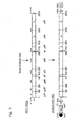
- the full length HCV RNA can be prepared using, for example, pCALN/HCV RBZ. As shown in Fig. 1, pCALN/HCV RBZ contains cDNA corresponding to the full length HCV RNA and sequences corresponding to ribozymes on its both ends. The transcription product of pCALN/HCV RBZ will be the full length HCV RNA by the self processing of the two ribozymes.
- RNA may be prepared intracellularly or extracellularly. Extracellular preparation can be performed using, for example, a vector containing HCV cDNA and a commercially available in vitro transcription kit. When transcription reaction of pCALN/HCV RBZ is performed extracellularly, RNA that contains the full length RNA of HCV having extra added sequences may be obtained because of incomplete self processing. Such RNA is also included in the above "RNA containing HCV RNA.”
- RNA can be administered into the liver by employing a general method for introducing polynucleotides into eukaryotic cells.
- the liposome method, lipofection method or the like can be exemplified as such a method.
- the dose is not specifically limited, and approximately 1 to 1000 ⁇ g of RNA is preferably administered.
- the second infection method comprises the steps of introducing a vector containing HCV cDNA into animal cells, culturing these cells, and administering the culture supernatant of the above cells to small animals.
- the cDNA contained in the vector may correspond to a part of the HCV RNA.
- a preferred cDNA corresponds to the full length HCV RNA.
- pCALN/HCV RBZ can be exemplified as a vector containing cDNA corresponding to the full length HCV RNA.
- Any animal cell that allows replication of HCV viral particles from an introduced vector may be used.
- animal cells that can be used herein include IMY cells, HuH-7 cells, HepG2 cells, MOLT-4 cells, MT-2 cells, Daudi cells, primary liver cells, and other cells or cell lines derived from liver and hemocyte.
- Vectors containing cDNAs can be introduced into animal cells by employing a general method for introducing polynucleotides into eukaryotic cells.
- a general method for introducing polynucleotides into eukaryotic cells As such a method, the liposome method, calcium phosphate method and electroporation method can be exemplified.
- the amount of vectors to be introduced is not specifically limited, and approximately 1 ng to 1 mg of the vector is preferably introduced.
- a vector expressing RNA polymerase may be introduced into an animal cell.
- T7 promoter is located upstream of HCV cDNA (Fig. 1).
- introduction of vectors expressing T7 RNA polymerase can increase the yield of HCV viral particles.
- a culturing method for animal cells can be determined according to animal cells to be used herein.
- the cells are preferably cultured in D-MEM media at 37°C for 12 to 72 hours.
- the dose of the culture supernatant is not specifically limited. For example, approximately 10 to 10 10 copies are preferably administered.
- the culture supernatant may be administered intact, or administered after treatment with DNaseI and/or RNase.
- the route of administration is also not specifically limited. For example, intravenous administration may be performed.
- the screening method of the present invention is a screening method for remedies against HCV-associated diseases, or substances that inhibit the growth of HCV using the yield of the virus as an indicator.
- the first screening method comprises the steps of administering a test substance to the small animal of the present invention, measuring HCV levels in the small animal, and selecting substances that cause decreases in HCV levels when compared to non-administration of the test substance.
- Any small animal that can be infected with HCV by the infection method of the present invention may be used.
- Preferred examples of such a small animal can include small animals of the order Rodentia, the order Macroscelidea, the order Lagomorpha and the order Scandentia.
- a particularly preferred small animal is Tupaia belangeri .
- the second screening method comprises the steps of bringing animal cells that can produce HCV in contact with a test substance, culturing these cells, measuring HCV levels in the culture supernatant of the cells, and selecting substances that cause decreases in HCV levels when compared to non-contact with the test substance.
- a preferred example of an animal cell that can produce the above HCV is an animal cell into which, according to the infection method of the present invention, a vector containing cDNA corresponding to HCV genomic RNA has been introduced.
- cDNA contained in the vector may be a cDNA corresponding to a part of the HCV RNA, and preferably, is a cDNA corresponding to the full length HCV RNA.
- pCALN/HCV RBZ can be exemplified.
- animal cells, a method for introducing the vector containing cDNA into an animal cell and a method for culturing animal cells are employed according to the above-mentioned infection method of the present invention.
- HCV levels of any subject may be measured, as long as the subjects represent directly or indirectly not only HCV itself but also HCV levels. Measuring RNA levels of HCV is simple and preferable. Further, any known measurement method may be used, such as absorbance measurement, RT-PCR, TMA-HPA, PCR-HPA or ELISA.
- HCV RNA was synthesized from pCALN/HCV RBZ using a MEGAscript in vitro transcription kit (Ambion).
- pCALN/HCV RBZ is a vector with which the full length HCV RNA (JP Patent Publication (Unexamined Application) No. 2000-152793) can be synthesized.
- Escherichia coli containing the vector was deposited with the International Patent Organism Depositary, National Institute of Advanced Industrial Science and Technology, Chuo-6, 1-1-1 Higashi, Tsukuba-shi, Ibaraki, Japan (Accession number: FERM BP-6763, Accession date: October 31, 1997).
- HCV RNA and cationic lipid were suspended in PBS(-).
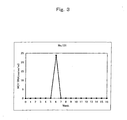
- the suspension was inoculated into the livers of tupaias anesthetized with ketamine hydrochloride (Ketalar; Sankyo) (Individual No. 129 and No. 131).
- the amounts of inoculated RNA and cationic lipid were 15 ⁇ g and 15 ⁇ l, respectively. Tupaias inoculated with the RNA were kept under normal conditions, and serum HCV RNA levels were measured over time.
- Tupaia serum was obtained by collecting and centrifuging blood from the venous plexus of the femur of the tupaia under anesthesia with ketamine hydrochloride.
- RNA was extracted by the guanidine thiocyanate and phenol/chloroform methods, and then Serum HCV RNA levels were measured by the Real-Time Detection PCR (RTD-PCR) method (T. Takeuchi et al., GASTROENTEROLOGY 116, 636-642 (1999)). The results are shown in Fig. 2 (No. 129) and Fig. 3 (No. 131).
- HCV infection by administration of culture supernatant of HCV cDNA-introduced cells
- pCALN/HCV RBZ 15 ⁇ g of pCALN/HCV RBZ and 40 ⁇ g of cationic lipid (DMRIE-C; GIBCO-BRL) were suspended in Opti-MEM (GIBCO-BRL). The suspension was allowed to stand for 15 minutes at room temperature. 7.8 ml of this suspension was mixed with IMY-N9 cells (Ito, T. et al., Hepatology 34 (2), 2001) cultured in a 10 cm dish. The mixture was incubated at 37°C for 5 hours, so that pCALN/HCV RBZ was transfected into the IMY-N9 cells.
- IMY-N9 cells Ito, T. et al., Hepatology 34 (2), 2001
- IMY cells treated as described above, were cultured at 37°C for 12 hours, and then the culture supernatant was collected from the dish.
- DNaseI (10 unit/0.1ml) was added to the culture supernatant, and reaction was allowed to proceed at 37°C for 10 minutes, and then RNase (5 ⁇ g/0.1 ml) was added to the same for the reaction to proceed at 37°C for 10 minutes.
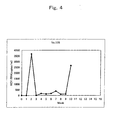
- the culture supernatant (containing 10 7 copies of HCV viral particles) was administered intravenously via the saphenous veins of two tupaias (Individual No. 135 and No. 143).
- tupaias administered with the culture supernatant were kept under normal conditions, and serum HCV RNA levels were measured over time in a manner similar to Example 1. The results are shown in Fig. 4 (No. 135) and Fig. 5 (No. 143).
- DNase I (10 unit/0.1 ml) was added to the serum collected from HCV patient, for the reaction to proceed at 37°C for 10 minutes. Then RNase (5 ⁇ g/0.1 ml) was added to the mixture and reaction was allowed to proceed at 37°C for 10 minutes.
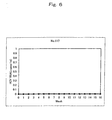
- the serum (containing 10 6 copies of HCV viral particles) was administered intravenously via the saphenous veins of two tupaias (Individual Nos: No. 117 and No. 165).
- RNA-inoculated tupaias were kept under normal conditions, and then serum HCV RNA levels were measured over time in a manner similar to Examples 1 and 2. The results are shown in Fig. 6 (No. 117) and Fig. 7 (No. 165).
- IMY42-5 cells were prepared by incorporating into IMY-N9 cells, pCALN/HCV RBZ and CAG-Mer-Cre-Mer (Nucleic Acids Res., 1996, 24(4), 543-548) that expresses active Cre recombinant enzyme by adding tamoxifen co-expressed constitutively therein.
- tamoxifen acts on the cells, the stuffer region of pCALN/HCV RBZ was looped out and HCV cDNA was expressed.
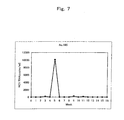
- IMY42-5 cells (2.5 x 10 5 /ml) were inoculated, 100 ⁇ l/well in a 96-well plate, and then cultured overnight at 37°C under 5% CO 2 atmosphere. Then 4-hydroxi-tamoxifen (Tam) was added at a concentration of 100 nM. On the next day and 3 days after the addition of Tam, the culture supernatant was collected. RNA in the culture supernatant was extracted using ISOGEN-LS (Wako Pure Chemical Industries, Ltd.), and then HCV RNA levels were quantified by the Real-time detection RT-PCR (Takeuchi T. et al; Gastroenterology 1999; 116: 636-642) method. Thus, as shown in Fig. 8, around 4000 copies/ml HCV RNA was detected 3 days after the addition of Tam.
- CsA Cyclosporin A
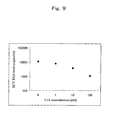
- CsA 100, 10, 1 and 0 nM was added simultaneously with the addition of Tam to IMY42-5 cells.
- the cells were cultured for 3 days, and then HCV RNA levels in the culture supernatant was measured by Real-time detection RT-PCR. As shown in Fig. 9, concentration-dependent decreases in HCV RNA levels were observed with the addition of CsA.
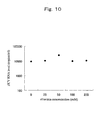
- Ribavirin (0, 25, 50, 100, 200 ⁇ M) was added simultaneously with the addition of Tam to IMY42-5 cells. The cells were cultured for 2 days, and then HCV RNA levels in the culture supernatant were measured. As shown in Fig. 10, no decrease due to ribavirin was observed in the yield of virus.
- the screening method of the present invention is useful in screening for remedies against HCV-associated diseases or substances that inhibit the growth of HCV using the yield of the virus as an indicator.
- the present invention provides novel methods of infection with HCV. These methods can improve the HCV infection rate of small animals, so that the methods are useful for the preparation of hepatitis C model animals.
- the present invention further provides novel methods for screening using the yield of the virus as an indicator. These methods are useful in screening for remedies against HCV-associated diseases or substances that inhibit the growth of HCV.
Landscapes
- Health & Medical Sciences (AREA)
- Life Sciences & Earth Sciences (AREA)
- Genetics & Genomics (AREA)
- Engineering & Computer Science (AREA)
- Organic Chemistry (AREA)
- Chemical & Material Sciences (AREA)
- Biotechnology (AREA)
- Wood Science & Technology (AREA)
- Biomedical Technology (AREA)
- General Engineering & Computer Science (AREA)
- Bioinformatics & Cheminformatics (AREA)
- Zoology (AREA)
- Molecular Biology (AREA)
- General Health & Medical Sciences (AREA)
- Microbiology (AREA)
- Virology (AREA)
- Physics & Mathematics (AREA)
- Biochemistry (AREA)
- Plant Pathology (AREA)
- Biophysics (AREA)
- Veterinary Medicine (AREA)
- Pharmacology & Pharmacy (AREA)
- Oncology (AREA)
- Chemical Kinetics & Catalysis (AREA)
- General Chemical & Material Sciences (AREA)
- Medicinal Chemistry (AREA)
- Nuclear Medicine, Radiotherapy & Molecular Imaging (AREA)
- Communicable Diseases (AREA)
- Animal Behavior & Ethology (AREA)
- Public Health (AREA)
- Medicines That Contain Protein Lipid Enzymes And Other Medicines (AREA)
- Measuring Or Testing Involving Enzymes Or Micro-Organisms (AREA)
- Investigating Or Analysing Biological Materials (AREA)
- Micro-Organisms Or Cultivation Processes Thereof (AREA)
Abstract
Description
The above screening method may be:
Claims (16)
- A method for infecting a small animal with hepatitis C virus, which comprises the following steps of:1) preparing RNA containing the genomic RNA of hepatitis C virus, and2) administering said RNA into the liver of a small animal.
- The method for infecting a small animal with hepatitis C virus of claim 1, wherein the small animal is a tupaia.
- The method for infecting a small animal with hepatitis C virus of claim 1 or 2, wherein the genomic RNA of a hepatitis C virus is the full length genomic RNA of the hepatitis C virus.
- The method for infecting a small animal with hepatitis C virus of any one of claims 1 to 3, wherein RNA containing the genomic RNA of hepatitis C virus is prepared using pCALN/HCV RBZ.
- The method for infecting a small animal with hepatitis C virus of any one of claims 1 to 4, wherein RNA containing the genomic RNA of hepatitis C virus is prepared extracellularly.
- A small animal, which is infected with hepatitis C virus by the method of any one of claims 1 to 5.
- A method for infecting a small animal with hepatitis C virus, which comprises the following steps of:1) introducing a vector that contains cDNA corresponding to the genomic RNA of hepatitis C virus into an animal cell,2) culturing said cells, and3) administering the culture supernatant of said cells to a small animal.
- The method for infecting a small animal with a hepatitis C virus of claim 7, wherein the small animal is a tupaia.
- The method for infecting a small animal with hepatitis C virus of claim 7 or 8, wherein the genomic RNA of hepatitis C virus is the full length genomic RNA of hepatitis C virus.
- The method for infecting a small animal with hepatitis C virus of any one of claims 7 to 9, wherein the vector is pCALN/HCV RBZ.
- A small animal, which is infected with hepatitis C virus by the method of any one of claims 7 to 10.
- A method for screening for remedies against hepatitis C virus-associated diseases or substances that inhibit the growth of hepatitis C virus, which comprises the following steps of:1) administering a test substance to the small animal of claim 6 or 11,2) measuring hepatitis C virus levels in said small animal, and3) selecting substances that cause decreases in hepatitis C virus levels when compared to non-administration of the test substance.
- A method for screening for remedies against hepatitis C virus-associated diseases or substances that inhibit the growth of hepatitis C virus, which comprises the following steps of:1) bringing an animal cell that can produce hepatitis C virus in contact with a test substance,2) culturing said cells,3) measuring hepatitis C virus levels in the culture supernatant of said cells, and4) selecting substances that cause decreases in hepatitis C virus levels when compared to non-contact with the test substance.
- A method for screening for remedies against hepatitis C virus-associated diseases or substances that inhibit the growth of hepatitis C virus, which comprises the following steps of:1) bringing an animal cell that has a vector introduced therein containing cDNA corresponding to the genomic RNA of hepatitis C virus in contact with a test substance,2) culturing said cells,3) measuring hepatitis C virus levels in the culture supernatant of said cells, and4) selecting substances that cause decreases in hepatitis C virus levels when compared to non-contact with the test substance.
- The screening method of claim 14, wherein the vector containing cDNA corresponding to the genomic RNA of hepatitis C virus expresses the full length RNA of HCV.
- The screening method of claim 14, wherein the vector is pCALN/HCV RBZ.
Applications Claiming Priority (3)
| Application Number | Priority Date | Filing Date | Title |
|---|---|---|---|
| JP2000303374 | 2000-10-03 | ||
| JP2000303374 | 2000-10-03 | ||
| PCT/JP2001/007498 WO2002028174A1 (en) | 2000-10-03 | 2001-08-30 | Methods of infection with hepatitis c virus |
Publications (2)
| Publication Number | Publication Date |
|---|---|
| EP1327687A1 true EP1327687A1 (en) | 2003-07-16 |
| EP1327687A4 EP1327687A4 (en) | 2004-08-11 |
Family
ID=18784582
Family Applications (1)
| Application Number | Title | Priority Date | Filing Date |
|---|---|---|---|
| EP01961223A Withdrawn EP1327687A4 (en) | 2000-10-03 | 2001-08-30 | METHODS OF HEPATITIS C VIRUS INFECTION |
Country Status (5)
| Country | Link |
|---|---|
| US (1) | US20040101827A1 (en) |
| EP (1) | EP1327687A4 (en) |
| JP (1) | JPWO2002028174A1 (en) |
| AU (1) | AU2001282560A1 (en) |
| WO (1) | WO2002028174A1 (en) |
Cited By (1)
| Publication number | Priority date | Publication date | Assignee | Title |
|---|---|---|---|---|
| CN109453155A (en) * | 2018-09-30 | 2019-03-12 | 广州医科大学附属第医院 | For assessing the construction method of the tree shrew model of anti-influenza virus medicament pharmacokinetics and pharmacodynamics |
Families Citing this family (1)
| Publication number | Priority date | Publication date | Assignee | Title |
|---|---|---|---|---|
| CA2769879C (en) * | 2009-08-28 | 2015-06-09 | Tokyo Metropolitan Institute Of Medical Science | Polynucleotide derived from novel hepatitis c virus strain and use thereof |
Family Cites Families (7)
| Publication number | Priority date | Publication date | Assignee | Title |
|---|---|---|---|---|
| US5858328A (en) * | 1991-06-04 | 1999-01-12 | Yeda Research And Development Co. Ltd. | Animal model for hepatitis virus infection |
| US6127116A (en) * | 1995-08-29 | 2000-10-03 | Washington University | Functional DNA clone for hepatitis C virus (HCV) and uses thereof |
| ATE377944T1 (en) * | 1995-09-27 | 2007-11-15 | Gen Hospital Corp | METHOD FOR TREATING HEPATITIS VIRUS INFECTION |
| US5851758A (en) * | 1995-10-25 | 1998-12-22 | Childrens Research Institute | Cytopathic replication of hepatitis C virus in a new cell line |
| JP2000152793A (en) * | 1998-06-24 | 2000-06-06 | Tokyoto Igaku Kenkyu Kiko | Vector expressing full length gene of RNA virus and its use |
| EP1090996A4 (en) * | 1998-06-24 | 2003-03-26 | Chugai Pharmaceutical Co Ltd | VECTOR EXPRESSING THE FULL LENGTH GENE OF RNA VIRUSES AND ITS USE |
| US6509514B1 (en) * | 2000-03-17 | 2003-01-21 | Kmt Hepatech, Inc. | Chimeric animal model susceptible to human hepatitis C virus infection |
-
2001
- 2001-08-30 AU AU2001282560A patent/AU2001282560A1/en not_active Abandoned
- 2001-08-30 WO PCT/JP2001/007498 patent/WO2002028174A1/en not_active Ceased
- 2001-08-30 JP JP2002531812A patent/JPWO2002028174A1/en active Pending
- 2001-08-30 EP EP01961223A patent/EP1327687A4/en not_active Withdrawn
- 2001-08-30 US US10/398,076 patent/US20040101827A1/en not_active Abandoned
Cited By (1)
| Publication number | Priority date | Publication date | Assignee | Title |
|---|---|---|---|---|
| CN109453155A (en) * | 2018-09-30 | 2019-03-12 | 广州医科大学附属第医院 | For assessing the construction method of the tree shrew model of anti-influenza virus medicament pharmacokinetics and pharmacodynamics |
Also Published As
| Publication number | Publication date |
|---|---|
| EP1327687A4 (en) | 2004-08-11 |
| JPWO2002028174A1 (en) | 2004-02-12 |
| US20040101827A1 (en) | 2004-05-27 |
| WO2002028174A1 (en) | 2002-04-11 |
| AU2001282560A1 (en) | 2002-04-15 |
Similar Documents
| Publication | Publication Date | Title |
|---|---|---|
| JP4903929B2 (en) | Hepatitis C virus cell culture system, hepatitis C virus-RNA-construct, use of cell culture system or construct, method for obtaining mutants compatible with hepatitis C virus-RNA-construct cell culture, hepatitis C Method for making a virus-full-length genome, hepatitis C virus-partial genome, or any hepatitis C virus-construct mutant, hepatitis C virus-construct adapted for cell culture, mutant thereof, hepatitis C virus -Full-length genome mutants, hepatitis C virus particles or virus-like particles, and cells infected therewith | |
| Yoo et al. | Transfection of a differentiated human hepatoma cell line (Huh7) with in vitro-transcribed hepatitis C virus (HCV) RNA and establishment of a long-term culture persistently infected with HCV | |
| Kato | Molecular virology of hepatitis C virus | |
| Seipp et al. | Establishment of persistent hepatitis C virus infection and replication in vitro. | |
| Hoofnagle | Therapy of viral hepatitis | |
| Ikeda et al. | Human hepatocyte clonal cell lines that support persistent replication of hepatitis C virus | |
| Beames et al. | GB virus B as a model for hepatitis C virus | |
| JPH0581600B1 (en) | ||
| Aizaki et al. | Full‐length complementary DNA of hepatitis C virus genome from an infectious blood sample | |
| WO2008017692A2 (en) | Methods, uses and compositions for modulating replication of hcv through the farnesoid x receptor (fxr) activation or inhibition | |
| Loriot et al. | Permissiveness of human biliary epithelial cells to infection by hepatitis C virus | |
| Drazan | Molecular biology of hepatitis C infection | |
| Serre et al. | Identification of alpha interferon-induced envelope mutations of hepatitis C virus in vitro associated with increased viral fitness and interferon resistance | |
| JP2004535809A (en) | Novel human liver cancer cell line, method for obtaining this cell and use thereof | |
| Date et al. | Replication and infectivity of a novel genotype 1b hepatitis C virus clone | |
| Schinazi et al. | Cell-based and animal models for hepatitis B and C viruses | |
| US20040101827A1 (en) | Methods of infection with hepatitis c virus | |
| Strader et al. | Hepatitis C: a brief clinical overview | |
| AU665204B2 (en) | Direct detection of hepatitis C virus RNA | |
| Myung et al. | Inducible model to study negative strand RNA synthesis and assembly of hepatitis C virus from a full-length cDNA clone | |
| Prabhu et al. | Interferon alpha-2b inhibits negative-strand RNA and protein expression from full-length HCV1a infectious clone | |
| Pessoa et al. | Hepatitis G: a virus in search of a disease | |
| Noorali et al. | Of lives and livers: emerging responses to the hepatitis C virus | |
| Dash et al. | Transmission of HCV to a chimpanzee using virus particles produced in an RNA‐transfected HepG2 cell culture | |
| US7183095B2 (en) | Cell culture system for synthesis of infectious hepatitis C virus |
Legal Events
| Date | Code | Title | Description |
|---|---|---|---|
| PUAI | Public reference made under article 153(3) epc to a published international application that has entered the european phase |
Free format text: ORIGINAL CODE: 0009012 |
|
| 17P | Request for examination filed |
Effective date: 20030430 |
|
| AK | Designated contracting states |
Designated state(s): AT BE CH CY DE DK ES FI FR GB GR IE IT LI LU MC NL PT SE TR |
|
| AX | Request for extension of the european patent |
Extension state: AL LT LV MK RO SI |
|
| A4 | Supplementary search report drawn up and despatched |
Effective date: 20040629 |
|
| RIC1 | Information provided on ipc code assigned before grant |
Ipc: 7C 07K 14/18 B Ipc: 7A 01K 67/027 A |
|
| 17Q | First examination report despatched |
Effective date: 20041122 |
|
| 17Q | First examination report despatched |
Effective date: 20041122 |
|
| STAA | Information on the status of an ep patent application or granted ep patent |
Free format text: STATUS: THE APPLICATION IS DEEMED TO BE WITHDRAWN |
|
| 18D | Application deemed to be withdrawn |
Effective date: 20090221 |