EP1326414B1 - Secure voice and data transmission via IP telephones - Google Patents
Secure voice and data transmission via IP telephones Download PDFInfo
- Publication number
- EP1326414B1 EP1326414B1 EP03000281A EP03000281A EP1326414B1 EP 1326414 B1 EP1326414 B1 EP 1326414B1 EP 03000281 A EP03000281 A EP 03000281A EP 03000281 A EP03000281 A EP 03000281A EP 1326414 B1 EP1326414 B1 EP 1326414B1
- Authority
- EP
- European Patent Office
- Prior art keywords
- voice
- packets
- outgoing
- processing module
- incoming
- Prior art date
- Legal status (The legal status is an assumption and is not a legal conclusion. Google has not performed a legal analysis and makes no representation as to the accuracy of the status listed.)
- Expired - Lifetime
Links
- 230000005540 biological transmission Effects 0.000 title abstract description 10
- 238000004891 communication Methods 0.000 claims abstract description 36
- 238000000034 method Methods 0.000 claims description 16
- 238000010586 diagram Methods 0.000 description 18
- 230000007246 mechanism Effects 0.000 description 8
- 230000007812 deficiency Effects 0.000 description 2
- 238000005516 engineering process Methods 0.000 description 2
- 230000000977 initiatory effect Effects 0.000 description 1
- 230000010354 integration Effects 0.000 description 1
- 230000006855 networking Effects 0.000 description 1
- 229920001690 polydopamine Polymers 0.000 description 1
- 230000008569 process Effects 0.000 description 1
- 230000004044 response Effects 0.000 description 1
Images





Classifications
-
- H—ELECTRICITY
- H04—ELECTRIC COMMUNICATION TECHNIQUE
- H04L—TRANSMISSION OF DIGITAL INFORMATION, e.g. TELEGRAPHIC COMMUNICATION
- H04L63/00—Network architectures or network communication protocols for network security
- H04L63/02—Network architectures or network communication protocols for network security for separating internal from external traffic, e.g. firewalls
- H04L63/0272—Virtual private networks
-
- H—ELECTRICITY
- H04—ELECTRIC COMMUNICATION TECHNIQUE
- H04L—TRANSMISSION OF DIGITAL INFORMATION, e.g. TELEGRAPHIC COMMUNICATION
- H04L63/00—Network architectures or network communication protocols for network security
- H04L63/02—Network architectures or network communication protocols for network security for separating internal from external traffic, e.g. firewalls
- H04L63/0281—Proxies
-
- H—ELECTRICITY
- H04—ELECTRIC COMMUNICATION TECHNIQUE
- H04L—TRANSMISSION OF DIGITAL INFORMATION, e.g. TELEGRAPHIC COMMUNICATION
- H04L63/00—Network architectures or network communication protocols for network security
- H04L63/04—Network architectures or network communication protocols for network security for providing a confidential data exchange among entities communicating through data packet networks
-
- H—ELECTRICITY
- H04—ELECTRIC COMMUNICATION TECHNIQUE
- H04L—TRANSMISSION OF DIGITAL INFORMATION, e.g. TELEGRAPHIC COMMUNICATION
- H04L63/00—Network architectures or network communication protocols for network security
- H04L63/04—Network architectures or network communication protocols for network security for providing a confidential data exchange among entities communicating through data packet networks
- H04L63/0428—Network architectures or network communication protocols for network security for providing a confidential data exchange among entities communicating through data packet networks wherein the data content is protected, e.g. by encrypting or encapsulating the payload
-
- H—ELECTRICITY
- H04—ELECTRIC COMMUNICATION TECHNIQUE
- H04L—TRANSMISSION OF DIGITAL INFORMATION, e.g. TELEGRAPHIC COMMUNICATION
- H04L63/00—Network architectures or network communication protocols for network security
- H04L63/16—Implementing security features at a particular protocol layer
- H04L63/164—Implementing security features at a particular protocol layer at the network layer
-
- H—ELECTRICITY
- H04—ELECTRIC COMMUNICATION TECHNIQUE
- H04L—TRANSMISSION OF DIGITAL INFORMATION, e.g. TELEGRAPHIC COMMUNICATION
- H04L65/00—Network arrangements, protocols or services for supporting real-time applications in data packet communication
- H04L65/10—Architectures or entities
- H04L65/102—Gateways
- H04L65/1023—Media gateways
- H04L65/103—Media gateways in the network
-
- H—ELECTRICITY
- H04—ELECTRIC COMMUNICATION TECHNIQUE
- H04L—TRANSMISSION OF DIGITAL INFORMATION, e.g. TELEGRAPHIC COMMUNICATION
- H04L65/00—Network arrangements, protocols or services for supporting real-time applications in data packet communication
- H04L65/10—Architectures or entities
- H04L65/102—Gateways
- H04L65/1033—Signalling gateways
- H04L65/104—Signalling gateways in the network
-
- H—ELECTRICITY
- H04—ELECTRIC COMMUNICATION TECHNIQUE
- H04L—TRANSMISSION OF DIGITAL INFORMATION, e.g. TELEGRAPHIC COMMUNICATION
- H04L65/00—Network arrangements, protocols or services for supporting real-time applications in data packet communication
- H04L65/1066—Session management
- H04L65/1101—Session protocols
-
- H—ELECTRICITY
- H04—ELECTRIC COMMUNICATION TECHNIQUE
- H04L—TRANSMISSION OF DIGITAL INFORMATION, e.g. TELEGRAPHIC COMMUNICATION
- H04L65/00—Network arrangements, protocols or services for supporting real-time applications in data packet communication
- H04L65/60—Network streaming of media packets
- H04L65/75—Media network packet handling
- H04L65/765—Media network packet handling intermediate
-
- H—ELECTRICITY
- H04—ELECTRIC COMMUNICATION TECHNIQUE
- H04M—TELEPHONIC COMMUNICATION
- H04M7/00—Arrangements for interconnection between switching centres
- H04M7/006—Networks other than PSTN/ISDN providing telephone service, e.g. Voice over Internet Protocol (VoIP), including next generation networks with a packet-switched transport layer
-
- H—ELECTRICITY
- H04—ELECTRIC COMMUNICATION TECHNIQUE
- H04M—TELEPHONIC COMMUNICATION
- H04M7/00—Arrangements for interconnection between switching centres
- H04M7/006—Networks other than PSTN/ISDN providing telephone service, e.g. Voice over Internet Protocol (VoIP), including next generation networks with a packet-switched transport layer
- H04M7/0066—Details of access arrangements to the networks
- H04M7/0069—Details of access arrangements to the networks comprising a residential gateway, e.g. those which provide an adapter for POTS or ISDN terminals
-
- H—ELECTRICITY
- H04—ELECTRIC COMMUNICATION TECHNIQUE
- H04M—TELEPHONIC COMMUNICATION
- H04M7/00—Arrangements for interconnection between switching centres
- H04M7/006—Networks other than PSTN/ISDN providing telephone service, e.g. Voice over Internet Protocol (VoIP), including next generation networks with a packet-switched transport layer
- H04M7/0078—Security; Fraud detection; Fraud prevention
-
- H—ELECTRICITY
- H04—ELECTRIC COMMUNICATION TECHNIQUE
- H04M—TELEPHONIC COMMUNICATION
- H04M2203/00—Aspects of automatic or semi-automatic exchanges
- H04M2203/60—Aspects of automatic or semi-automatic exchanges related to security aspects in telephonic communication systems
- H04M2203/609—Secret communication
Definitions
- This invention relates generally to internet telephony, and more particularly, to providing security for internet telephony communication.
- VPNs are secure communication channels that provide data protection using encryption and authentication techniques.
- VPNs can be implemented, for example, according to an IPSec protocol described in Internet Engineering Task Force Request for Comment 2401 entitled " Security Architecture for the Internet Protocol," November 1998 (hereinafter referred to as RFC 2401).
- RFC 2401 Internet Engineering Task Force Request for Comment 2401 entitled " Security Architecture for the Internet Protocol," November 1998 (hereinafter referred to as RFC 2401).
- VPNs have become an important element in enterprise networking for securely interconnecting multiple corporate sites, remote offices, and remote workers.
- VPN technology helps ensure that only authorized users can access corporate network resources, and that data traffic flowing between two sites cannot be intercepted, decoded, or spoofed.
- a method and system for notifying the outside that an awaiting state of a telephone set is kept at a time of a response to an incoming call.
- the known method and system detect an off-hook operation, stop a transmission of an incoming call and instruct, using an voice generation instruction function section, a tone generator to produce a signal voice informing an awaiting state.
- a method of sending streamed data over an IP network from a first node to a second node comprises using Internet Key Exchange (IKE) to establish an IKE Security Association (SA) between a first and a second node.
- IKE Internet Key Exchange
- SA IKE Security Association
- a shared secret is established between the first and the second node.
- the streamed data is encrypted at the first node and IP datagrams are constructed containing in their payload segments of the encrypted streamed data.
- the IP datagrams are then sent from the first node to the second node.
- the IP packets are VOIP packets.
- VPN technology allows secure voice communications over the internet via one of several methods, including security gateways, personal computers with IPSec stacks, or personal computers with dedicated secure phone software.
- FIG. 1 is a schematic block diagram of a network including conventional IP telephones 10, 12 and PCs 11, 13 transmitting and receiving voice-over-IP (VoIP) packets via security gateways 14, 16.
- the security gateways 14, 16 provide secure voice communication over an untrusted wide area network 18 by encoding and decoding VoIP packets.
- the security gateways also provide other network services such as firewall control and network address translation (NAT).
- NAT network address translation
- the use of security gateways for IPSec is sometimes referred to as a bump-in-the-wire (BITW), or network-to-network VPN, architecture.
- BITW bump-in-the-wire
- VPN network-to-network
- a deficiency with the BITW architecture is that a separate security gateway device having its own hardware and software needs to be purchased in addition to the IP telephone if secure communication is desired.
- Security gateway devices may be expensive.
- having a separate security gateway device implies increase in power consumption and setup complexity.
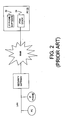
- FIG. 2 is a schematic block diagram of a network providing secure voice communication via a PC 20 without a security gateway device.
- the PC 20 includes an IP telephony software application 22 and an IPSec stack 24.
- the IP telephony software application provides the basic VoIP communication over the Internet.
- the encoding and decoding of VoIP packets is done via the IPSec stack 24 resident within the PC. Thus, no costs need to be incurred in purchasing and maintaining a separate security gateway.
- the use of the IPSec stack may be referred to as a bump-in-the-stack (BITS), or VPN client, implementation. Such an implementation, however, generally provides security only for the PC within which the IPSec stack resides.
- the IPSec stack may not be shared to provide secure voice communication to other IP telephony devices and/or appliances with which it may be associated.
- FIG. 3 is a schematic block diagram of an alternative network configured to provide secure voice communication via a PC 30.
- the secure voice communication is provided via dedicated secure phone software 32 (or hardware) installed in the PC 30.
- the software encrypts VoIP packets using encryption techniques, such as based on the Pretty Good Privacy (PGP) technique.
- PGP Pretty Good Privacy
- Such an architecture may be referred to as a bump-in-the-code (BITC) implementation.
- a PC with dedicated secure phone software is susceptible to the same deficiencies as a PC with an IPSec stack. That is, security services cannot be provided to applications other than the PC within which this software resides.
- the secure phone software may provide security for voice transmissions, it does not provide security for data transmission as is provided by security gateways or IPSec stacks. Instead, PCs with secure phone software transmit data in an unsecured manner using a standard IP stack 34 resident in the PC.
- the dedicated secure phone software is generally not IPSec compliant and therefore generally not interoperable with other VPN devices.
- the present invention is directed to an IP telephone appliance, referred to as a Virtual Private Phone (VPP), in a communications network according to claim 1.
- VPP Virtual Private Phone
- the IP telephone appliance is configured to receive and decode IP data packets in addition to VoIP packets.
- the IP telephone appliance receives encoded data packets and decodes them. If the decoded data packets are destined for another device in the communications network, the IP telephone appliance forwards the decoded data packets to the other device. Otherwise, it invokes the first processor to convert the decoded data packets into telephony signals for voice transmission to the user.
- the IP telephone appliance employs different encoding mechanisms based on the address of the destination device. Based on such destination address, the second processor may decide to encrypt only a payload portion or both a header and payload portion of a particular packet.
- the IP telephone appliance provides secure voice communication and data transmission not only for itself, but also for other devices and applications associated with the appliance.
- conventional devices and applications that would otherwise not be entitled to secure communication may communicate in a secure manner via the IP telephone appliance.
- the IP telephone appliance itself may communicate securely without additional security gateways or other types of external security devices, allowing it to be more cost-effective and efficient than other prior art devices.
- FIG. 4 is a schematic block diagram of a communications network supporting secure IP telephony and other types of secure communication according to one embodiment of the invention.
- the network includes an IP telephone appliance 40 coupled to a wide area network (WAN) 50 and a local area network (LAN) 48 over cables and/or other transmission media such as a wireless medium.
- the WAN 50 may be a private WAN or a public WAN such as a public internet.
- the IP telephone appliance 40 communicates with IP telephones 42, PCs 44, and other network devices 46 on the LAN using a LAN communication medium, such as Ethernet or Token Ring.
- Ethernet LAN communication media are not limited to 10 megabit Ethernet, but include other variants, such as Fast Ethernet, Gigabit Ethernet, 10 Gigabit Ethernet and 802.11b wireless Ethernet.
- the IP telephone appliance 40 also communicates with a host 54 on a host site 52 over the WAN 50 using a communication protocol such as, for example, a TCP/IP protocol.
- the IP telephone appliance 40 is an IP telephone that incorporates the look and feel of a traditional telephone with a keypad, function buttons, handset, and display. Unlike a traditional telephone, however, the IP telephone appliance is enhanced with the capability of providing secure IP telephony and data communication over the WAN for itself as well as for one or more of the network devices 42, 44, 46 on the LAN 48.
- This architecture may be referred to as a bump-in-the-phone (BITP) architecture.
- the IP telephone appliance 40 may be implemented as a portable telephone, portable digital assistant (PDA), personal computer, or any other wired or wireless end user device that is conventional in the art.
- PDA portable digital assistant
- a user may use the IP telephone appliance 40 to initiate and receive secure telephone calls with the host 54 on the host site 52 over the WAN 50 using any WAN interface that is conventional in the art.
- the host site 52 may include a device for providing the secure communication for the host 54, such as, for example, a security gateway 55 coupled to the host.
- the IP telephone appliance 40 receives voice and data packets from the devices 42, 44, 46 on the LAN 48, secures the packets, and transmits the secured packets to either the host 54 or to another remote destination device.
- the IP telephone appliance 40 also receives secured inbound voice and data packets, decodes these packets, and either provides them to the user of the appliance or forwards them to one of the destination devices on the LAN.
- the IP telephone appliance 40 includes firewall and NAT capability to prevent unauthorized access.
- the IP telephone appliance 40 secures voice for itself and on behalf of its clients, and also provides firewall protection for its telephone and on behalf of its LAN clients.
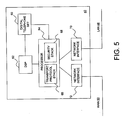
- FIG. 5 is a more detailed schematic block diagram of the IP telephone appliance 40 according to one embodiment of the invention.
- the appliance 40 includes a digital telephone set 60 coupled to a digital signal processor (DSP) 62 and central processor 64.
- the central processor is further coupled to two network interfaces 70, 72.
- the first network interface 70 is used to communicate with the devices 42, 44, 46 on the LAN 48 and the second network interface 72 is used to communicate with the host 54 over the WAN 50.
- the central processor 64 includes a security stack 68 and a network protocol stack 66.
- the security and network protocol stacks 68, 66 may be implemented in software, hardware, firmware (e.g. via an application-specific integration circuit), or in any combination thereof.
- the security and network protocol stacks may be separate processors implementing security and VoIP algorithms.
- the security and network protocol stacks may be software routines executed on a single processor.
- the security stack 68 is an IPSec stack as set forth in RFC 2401.
- the network protocol stack may be a conventional transport protocol stack such as, for example, a H.323 stack, Session Initiation Protocol (SIP) stack, media gateway control protocol (MGCP) stack, or the like.
- SIP Session Initiation Protocol
- MGCP media gateway control protocol
- FIG. 6 is a flow diagram illustrating the processing of an outgoing call initiated by a user of the IP telephone appliance 40 according to one embodiment of the invention.
- the process starts as a user of the IP telephone appliance 40 utilizes the digital telephone set 60 to initiate the outgoing call according to conventional mechanisms.
- the central processor 64 receives a request to initiate the call from the digital set, and in step 81, attempts to establish a security association (SA) with the callee device as set forth in RFC 2401.
- SA security association
- Voice signals initiated by the user are provided to the digital telephone set 60 which digitizes and forwards the signals to the DSP 62 in step 82.
- the DSP 62 segments, compresses, and packetizes the voice signals in a manner that is conventional in the art. If the SA negotiation of step 81 was unsuccessful, as determined in step 84, the central processor 64 transmits the voice packets to the callee device via its WAN network interface 72 without encrypting the packets. Alternatively, with a different IP telephone management/configuration setup, the central processor 64 does not transmit the voice packet at all.
- the central processor 64 invokes the security stack 68 for encoding the voice packets in step 86 in a manner well known in the art.
- the security stack encodes the voice packets in the same manner regardless of the destination of the packets.
- the security stack employs different encoding mechanisms depending on the source, destination, port, or other selectors as identified in RFC 2401. For example, a transport mode of encryption may be utilized for encoding voice packets transmitted to one device on the LAN 48, causing only the payload data to be encoded, while a tunnel mode of encryption may be utilized for encoding voice packets transmitted to another device outside the LAN, causing both the header and payload data to be encoded.
- the processor 64 invokes, in step 87, the network protocol stack 66 for transmitting the encoded voice packets to their destinations on the LAN 48 or over the WAN 50 via the respective network interfaces 72, 70.
- FIG. 7A is a flow diagram of the processing of inbound voice or data packets received by the IP telephone appliance 40 over its LAN interface according to one embodiment of the invention.
- the IP telephone appliance 40 receives an inbound packet communicated by one of the network devices 42, 44, 46 on the LAN 48, via the first network interface 70.
- the packet is forwarded to the central processor 64 which, in step 92, examines the packet's header data to determine if the IP telephone appliance 92 is the ultimate destination. If the answer is NO, the central processor 64 determines if the security stack 68 is to be invoked for encoding the packet prior to forwarding to its destination. If the answer is NO, the central processor 64 determines if the security stack 68 is to be invoked for encoding the packet prior to forwarding to its destination.
- the IP telephone appliance may decide to encode the packet even if already encoded, but using an encryption mode different than the one employed by the encoding device.
- the IP telephone appliance 40 may not encode the packet if it is to be forwarded to another device on the LAN 48, or if encoding is to be done, only the payload data may be encoded via the transport encryption mechanism. However, if the packet is to be forwarded to a device outside the LAN, both the header and payload data may be encoded via the tunnel encryption mechanism.
- the encoding determination may be based on whether a successful SA was negotiated with the ultimate destination.
- the packet is encoded if a successful SA negotiation was made.
- the packet is encoded in step 96, and the encoded packet transmitted to its destination in step 98. Otherwise, if no encoding is to be done, the packet is transmitted to the destination without encoding.
- step 92 if the IP telephone appliance 40 is the ultimate destination, a determination is made as to whether the received packet is an encoded packet that needs to be decoded, as is determined in step 100.
- step 102 the security stack 68 proceeds to decode the packet, and transmits the decoded packet to the DSP 62.
- the DSP 62 in step 104, converts the packet to a voice signal.
- the converted signal or data is transmitted to the telephone set 60.
- FIG. 7B is a flow diagram of the processing of inbound voice or data packets received by the IP telephone appliance 40 over a WAN interface according to one embodiment of the invention.
- the IP telephone appliance 40 receives an inbound voice or data packet communicated by the host 54 over the WAN 50 via the second network interface 72.
- the packet is forwarded to the central processor 64 which, in step 111, determines according to conventional mechanisms whether the packet has been encoded. If the packet has been encoded, the security stack 68 proceeds to decode the packet in step 112.
- step 113 the central processor 64 examines the decoded packet's header data for determining if the IP telephone appliance 92 is the ultimate destination. If the answer is NO, the decoded packet is forwarded to its ultimate destination in step 114.
- the packet is transmitted to the DSP 62. If the packet is a VoIP packet, the DSP 62, in step 115, converts the packet to a voice signal. In step 116, the converted signal is transmitted to the telephone set 60.
- FIG. 8 is a block diagram of an alternate communications network supporting secure IP telephony and other types of secure communication according to one embodiment of the invention.
- the network includes IP telephone appliances 120, 122, coupled to a LAN 140 over a first network interface 132, 134, and to a host 126, 128 over a second network interface 136, 138.
- the LAN 140 is in turn coupled to a gateway 124 that provides access to a WAN 130 in a manner that is conventional in the art.
- the LAN 140 may also support other devices such as a PC 142, a PC with an internal IPSec stack 144, an IP PBX 146, and a corporate server 148.
- the IP telephone appliances 120, 122 are similar to the IP telephone appliance 40 of FIGS. 4 and 5 .
- the hosts 126, 128 may be wired or wireless end user devices such as PCs, conventional IP telephones, PDAs, or the like. Although FIG. 8 depicts only one host attached to each IP telephone appliance 120, 122 a person skilled in the art should recognize that multiple hosts could also be attached.
- the gateway 124 may be a conventional gateway providing access to the WAN 130, and may provide other types of network services such as NAT, and firewall, and/or IPSec services.
- the gateway may implemented as a security gateway similar to the security gateway 14, 16 of FIG. 1 .
- a host 126 or 128 transmits a packet, such as an instant message packet, to its respective IP telephone appliance 120, 122.
- the IP telephone appliance attempts to establish an IPSec SA with a destination device. If the SA negotiation between a host and the destination is not successful, the packet is transmitted to the destination in an unprotected manner without encoding. In an alternative embodiment, the packet is not transmitted at all.
- the destination device has an internal IPSec stack, such as is the case with PC 144, or is attached to one of the IP telephone appliances 120, 122, such as host 126 or 128, the SA negotiation is successful.
- the packet is then encoded by the IP telephone appliance and transmitted to the destination in a secure manner.
- the IP telephone appliance 120, 122 determines the type of encoding based on the destination information.
- a table of IP addresses indicates whether a connection to the indicated address is to be based on a transport mode of encryption or a tunnel mode of encryption. If the transport mode of encryption is indicated, only a payload portion of the packet is encrypted as provided by IPSec. If the tunnel mode of encryption is indicated, both an address and payload portion of the packet are encrypted as also provided by IPSec. The address of the security gateway may also be encrypted in the tunnel mode of encryption. VoIP packets may also be encoded in the above-described manner.
- the table of IP addresses may indicate the transport mode of encryption for addresses of destination devices that reside on the LAN 140. However, if the destination resides on the LAN 140 behind the gateway 124, or on the WAN 130, an inherently untrustworthy network, the table of IP addresses may indicate the tunnel mode of encryption.
- the gateway 124 is a security gateway that implements the tunnel mode of encryption
- the IP telephone appliance 120, 122 encrypts packets according to the transport mode of encryption for all packets regardless of their destination.
- packets to be transmitted over the LAN are encrypted only in the payload area by the IP telephone appliance 120, 122 whereas packets to be transmitted to devices behind the gateway 124, such as, for example, to devices on the WAN 130, are encrypted in the payload area by the IP telephone appliance 120, 122 and in both the payload and header areas by the security gateway 124, providing double security for the packet.
Landscapes
- Engineering & Computer Science (AREA)
- Computer Networks & Wireless Communication (AREA)
- Signal Processing (AREA)
- Computer Security & Cryptography (AREA)
- Computing Systems (AREA)
- General Engineering & Computer Science (AREA)
- Computer Hardware Design (AREA)
- Multimedia (AREA)
- Business, Economics & Management (AREA)
- General Business, Economics & Management (AREA)
- Telephonic Communication Services (AREA)
- Data Exchanges In Wide-Area Networks (AREA)
- Telephone Function (AREA)
- Financial Or Insurance-Related Operations Such As Payment And Settlement (AREA)
Abstract
Description
- This invention relates generally to internet telephony, and more particularly, to providing security for internet telephony communication.
- In general terms, Virtual Private Networks (VPNs) are secure communication channels that provide data protection using encryption and authentication techniques. VPNs can be implemented, for example, according to an IPSec protocol described in Internet Engineering Task Force Request for Comment 2401 entitled "Security Architecture for the Internet Protocol," November 1998 (hereinafter referred to as RFC 2401). VPNs have become an important element in enterprise networking for securely interconnecting multiple corporate sites, remote offices, and remote workers. VPN technology helps ensure that only authorized users can access corporate network resources, and that data traffic flowing between two sites cannot be intercepted, decoded, or spoofed.
- From
US 2001/0043699 A1 a method and system are known for notifying the outside that an awaiting state of a telephone set is kept at a time of a response to an incoming call. The known method and system detect an off-hook operation, stop a transmission of an incoming call and instruct, using an voice generation instruction function section, a tone generator to produce a signal voice informing an awaiting state. - From
GB 2 363 549 A - Current VPN technology allows secure voice communications over the internet via one of several methods, including security gateways, personal computers with IPSec stacks, or personal computers with dedicated secure phone software.
-
FIG. 1 is a schematic block diagram of a network includingconventional IP telephones PCs security gateways security gateways wide area network 18 by encoding and decoding VoIP packets. The security gateways also provide other network services such as firewall control and network address translation (NAT). The use of security gateways for IPSec is sometimes referred to as a bump-in-the-wire (BITW), or network-to-network VPN, architecture. - A deficiency with the BITW architecture is that a separate security gateway device having its own hardware and software needs to be purchased in addition to the IP telephone if secure communication is desired. Security gateway devices may be expensive. In addition, having a separate security gateway device implies increase in power consumption and setup complexity.
-
FIG. 2 is a schematic block diagram of a network providing secure voice communication via a PC 20 without a security gateway device. Instead, the PC 20 includes an IPtelephony software application 22 and an IPSecstack 24. The IP telephony software application provides the basic VoIP communication over the Internet. The encoding and decoding of VoIP packets is done via the IPSec stack 24 resident within the PC. Thus, no costs need to be incurred in purchasing and maintaining a separate security gateway. - The use of the IPSec stack may be referred to as a bump-in-the-stack (BITS), or VPN client, implementation. Such an implementation, however, generally provides security only for the PC within which the IPSec stack resides. The IPSec stack may not be shared to provide secure voice communication to other IP telephony devices and/or appliances with which it may be associated.
-
FIG. 3 is a schematic block diagram of an alternative network configured to provide secure voice communication via a PC 30. The secure voice communication is provided via dedicated secure phone software 32 (or hardware) installed in the PC 30. The software encrypts VoIP packets using encryption techniques, such as based on the Pretty Good Privacy (PGP) technique. Such an architecture may be referred to as a bump-in-the-code (BITC) implementation. - A PC with dedicated secure phone software is susceptible to the same deficiencies as a PC with an IPSec stack. That is, security services cannot be provided to applications other than the PC within which this software resides. In addition, although the secure phone software may provide security for voice transmissions, it does not provide security for data transmission as is provided by security gateways or IPSec stacks. Instead, PCs with secure phone software transmit data in an unsecured manner using a
standard IP stack 34 resident in the PC. Furthermore, the dedicated secure phone software is generally not IPSec compliant and therefore generally not interoperable with other VPN devices. - Accordingly, there is a need for a simplified, cost-efficient, all-in-one secure IP telephony device for a remote office worker or application, that provides both secure voice communication and data transmission, both for itself and for additional IP devices and applications associated with it.
- The present invention is directed to an IP telephone appliance, referred to as a Virtual Private Phone (VPP), in a communications network according to
claim 1. - In one embodiment, the IP telephone appliance is configured to receive and decode IP data packets in addition to VoIP packets. The IP telephone appliance receives encoded data packets and decodes them. If the decoded data packets are destined for another device in the communications network, the IP telephone appliance forwards the decoded data packets to the other device. Otherwise, it invokes the first processor to convert the decoded data packets into telephony signals for voice transmission to the user.
- In one embodiment, the IP telephone appliance employs different encoding mechanisms based on the address of the destination device. Based on such destination address, the second processor may decide to encrypt only a payload portion or both a header and payload portion of a particular packet.
- It should be appreciated, therefore, that the IP telephone appliance according to the invention provides secure voice communication and data transmission not only for itself, but also for other devices and applications associated with the appliance. According to the invention, conventional devices and applications that would otherwise not be entitled to secure communication may communicate in a secure manner via the IP telephone appliance. In addition, the IP telephone appliance itself may communicate securely without additional security gateways or other types of external security devices, allowing it to be more cost-effective and efficient than other prior art devices.
- These and other features, aspects and advantages of the present invention will be more fully understood when considered with respect to the following detailed description, appended claims, and accompanying drawings where:
-
FIG. 1 is a schematic block diagram of a network including conventional IP telephones and PCs transmitting and receiving voice-over-IP (VoIP) packets via security gateways; -
FIG. 2 is a schematic block diagram of a network providing secure voice communication via a PC without a security gateway; -
FIG. 3 is a schematic block diagram of an alternative network providing secure voice communication via a PC; -
FIG. 4 is a schematic block diagram of a communications network supporting secure IP telephony and other types of secure communication according to one embodiment of the invention; -
FIG. 5 is a schematic block diagram of an IP telephone appliance according to one embodiment of the invention; -
FIG. 6 is a flow diagram illustrating the processing of an outgoing call initiated by a user of the IP telephone appliance ofFIG. 5 according to one embodiment of the invention; -
FIG. 7A is a flow diagram of the processing of inbound packets received by the IP telephone appliance ofFIG. 5 over a LAN interface according to one embodiment of the invention; and -
FIG. 7B is a flow diagram of the processing of inbound packets received by the telephone appliance ofFIG. 5 over a WAN interface according to one embodiment of the invention; and -
FIG. 8 is a block diagram of an alternate communications network supporting secure IP telephony and other types of secure communication according to one embodiment of the invention. -
FIG. 4 is a schematic block diagram of a communications network supporting secure IP telephony and other types of secure communication according to one embodiment of the invention. In the illustrated embodiment, the network includes anIP telephone appliance 40 coupled to a wide area network (WAN) 50 and a local area network (LAN) 48 over cables and/or other transmission media such as a wireless medium. TheWAN 50 may be a private WAN or a public WAN such as a public internet. - The
IP telephone appliance 40 communicates withIP telephones 42,PCs 44, andother network devices 46 on the LAN using a LAN communication medium, such as Ethernet or Token Ring. Ethernet LAN communication media are not limited to 10 megabit Ethernet, but include other variants, such as Fast Ethernet, Gigabit Ethernet, 10 Gigabit Ethernet and 802.11b wireless Ethernet. TheIP telephone appliance 40 also communicates with ahost 54 on ahost site 52 over theWAN 50 using a communication protocol such as, for example, a TCP/IP protocol. - According to one embodiment, the
IP telephone appliance 40 is an IP telephone that incorporates the look and feel of a traditional telephone with a keypad, function buttons, handset, and display. Unlike a traditional telephone, however, the IP telephone appliance is enhanced with the capability of providing secure IP telephony and data communication over the WAN for itself as well as for one or more of thenetwork devices LAN 48. This architecture may be referred to as a bump-in-the-phone (BITP) architecture. - In alternative embodiments, the
IP telephone appliance 40 may be implemented as a portable telephone, portable digital assistant (PDA), personal computer, or any other wired or wireless end user device that is conventional in the art. - A user may use the
IP telephone appliance 40 to initiate and receive secure telephone calls with thehost 54 on thehost site 52 over theWAN 50 using any WAN interface that is conventional in the art. Thehost site 52 may include a device for providing the secure communication for thehost 54, such as, for example, asecurity gateway 55 coupled to the host. - In addition, the
IP telephone appliance 40 receives voice and data packets from thedevices LAN 48, secures the packets, and transmits the secured packets to either thehost 54 or to another remote destination device. TheIP telephone appliance 40 also receives secured inbound voice and data packets, decodes these packets, and either provides them to the user of the appliance or forwards them to one of the destination devices on the LAN. - In addition to the above, the
IP telephone appliance 40 includes firewall and NAT capability to prevent unauthorized access. In this regard, theIP telephone appliance 40 secures voice for itself and on behalf of its clients, and also provides firewall protection for its telephone and on behalf of its LAN clients. -
FIG. 5 is a more detailed schematic block diagram of theIP telephone appliance 40 according to one embodiment of the invention. In the illustrated embodiment, theappliance 40 includes a digital telephone set 60 coupled to a digital signal processor (DSP) 62 andcentral processor 64. The central processor is further coupled to twonetwork interfaces first network interface 70 is used to communicate with thedevices LAN 48 and thesecond network interface 72 is used to communicate with thehost 54 over theWAN 50. - The
central processor 64 includes asecurity stack 68 and anetwork protocol stack 66. The security and network protocol stacks 68, 66 may be implemented in software, hardware, firmware (e.g. via an application-specific integration circuit), or in any combination thereof.For example, the security and network protocol stacks may be separate processors implementing security and VoIP algorithms. Alternatively, the security and network protocol stacks may be software routines executed on a single processor. - According to one embodiment of the invention, the
security stack 68 is an IPSec stack as set forth in RFC 2401. The network protocol stack may be a conventional transport protocol stack such as, for example, a H.323 stack, Session Initiation Protocol (SIP) stack, media gateway control protocol (MGCP) stack, or the like. A person skilled in the art should recognize that other types of conventional transport protocols and security mechanisms and may be utilized as is known in the art without being limited to the disclosed protocols and security mechanisms. -
FIG. 6 is a flow diagram illustrating the processing of an outgoing call initiated by a user of theIP telephone appliance 40 according to one embodiment of the invention. The process starts as a user of theIP telephone appliance 40 utilizes the digital telephone set 60 to initiate the outgoing call according to conventional mechanisms. Instep 80, thecentral processor 64 receives a request to initiate the call from the digital set, and in step 81, attempts to establish a security association (SA) with the callee device as set forth in RFC 2401. - Voice signals initiated by the user are provided to the digital telephone set 60 which digitizes and forwards the signals to the
DSP 62 instep 82. Instep 83, theDSP 62 segments, compresses, and packetizes the voice signals in a manner that is conventional in the art. If the SA negotiation of step 81 was unsuccessful, as determined instep 84, thecentral processor 64 transmits the voice packets to the callee device via itsWAN network interface 72 without encrypting the packets. Alternatively, with a different IP telephone management/configuration setup, thecentral processor 64 does not transmit the voice packet at all. - Otherwise, if the SA negotiation was successful, the
central processor 64 invokes thesecurity stack 68 for encoding the voice packets instep 86 in a manner well known in the art. According to one embodiment, the security stack encodes the voice packets in the same manner regardless of the destination of the packets. According to another embodiment, the security stack employs different encoding mechanisms depending on the source, destination, port, or other selectors as identified in RFC 2401. For example, a transport mode of encryption may be utilized for encoding voice packets transmitted to one device on theLAN 48, causing only the payload data to be encoded, while a tunnel mode of encryption may be utilized for encoding voice packets transmitted to another device outside the LAN, causing both the header and payload data to be encoded. - Once the voice packets are encoded, the
processor 64 invokes, instep 87, thenetwork protocol stack 66 for transmitting the encoded voice packets to their destinations on theLAN 48 or over theWAN 50 via the respective network interfaces 72, 70. -
FIG. 7A is a flow diagram of the processing of inbound voice or data packets received by theIP telephone appliance 40 over its LAN interface according to one embodiment of the invention. Instep 90, theIP telephone appliance 40 receives an inbound packet communicated by one of thenetwork devices LAN 48, via thefirst network interface 70. The packet is forwarded to thecentral processor 64 which, instep 92, examines the packet's header data to determine if theIP telephone appliance 92 is the ultimate destination. If the answer is NO, thecentral processor 64 determines if thesecurity stack 68 is to be invoked for encoding the packet prior to forwarding to its destination. If the answer is NO, thecentral processor 64 determines if thesecurity stack 68 is to be invoked for encoding the packet prior to forwarding to its destination. - Several factors may determine whether to encode the packet, and if so, the type of encoding to be performed. For example, if the packet received has already been encoded by the transmitting device itself, no encoding may be performed. Alternatively, the IP telephone appliance may decide to encode the packet even if already encoded, but using an encryption mode different than the one employed by the encoding device.
- In another example, the
IP telephone appliance 40 may not encode the packet if it is to be forwarded to another device on theLAN 48, or if encoding is to be done, only the payload data may be encoded via the transport encryption mechanism. However, if the packet is to be forwarded to a device outside the LAN, both the header and payload data may be encoded via the tunnel encryption mechanism. - In yet another example, the encoding determination may be based on whether a successful SA was negotiated with the ultimate destination. The packet is encoded if a successful SA negotiation was made.
- If the
security stack 68 determines that the packet should be encoded, the packet is encoded instep 96, and the encoded packet transmitted to its destination instep 98. Otherwise, if no encoding is to be done, the packet is transmitted to the destination without encoding. - Referring again to step 92, if the
IP telephone appliance 40 is the ultimate destination, a determination is made as to whether the received packet is an encoded packet that needs to be decoded, as is determined instep 100. Instep 102, thesecurity stack 68 proceeds to decode the packet, and transmits the decoded packet to theDSP 62. - If the packet is a VoIP packet, the
DSP 62, instep 104, converts the packet to a voice signal. Instep 106, the converted signal or data is transmitted to the telephone set 60. -
FIG. 7B is a flow diagram of the processing of inbound voice or data packets received by theIP telephone appliance 40 over a WAN interface according to one embodiment of the invention. Instep 110, theIP telephone appliance 40 receives an inbound voice or data packet communicated by thehost 54 over theWAN 50 via thesecond network interface 72. The packet is forwarded to thecentral processor 64 which, instep 111, determines according to conventional mechanisms whether the packet has been encoded. If the packet has been encoded, thesecurity stack 68 proceeds to decode the packet instep 112. - In
step 113, thecentral processor 64 examines the decoded packet's header data for determining if theIP telephone appliance 92 is the ultimate destination. If the answer is NO, the decoded packet is forwarded to its ultimate destination instep 114. - Otherwise, if the packet's ultimate destination is the
IP telephone device 40, the packet is transmitted to theDSP 62. If the packet is a VoIP packet, theDSP 62, instep 115, converts the packet to a voice signal. Instep 116, the converted signal is transmitted to the telephone set 60. -
FIG. 8 is a block diagram of an alternate communications network supporting secure IP telephony and other types of secure communication according to one embodiment of the invention. The network includesIP telephone appliances LAN 140 over afirst network interface host second network interface LAN 140 is in turn coupled to agateway 124 that provides access to aWAN 130 in a manner that is conventional in the art. TheLAN 140 may also support other devices such as aPC 142, a PC with aninternal IPSec stack 144, anIP PBX 146, and acorporate server 148. - The
IP telephone appliances IP telephone appliance 40 ofFIGS. 4 and5 . One difference, however, is the use of one of the network interfaces for connecting to thehost - The
hosts FIG. 8 depicts only one host attached to eachIP telephone appliance 120, 122 a person skilled in the art should recognize that multiple hosts could also be attached. - The
gateway 124 may be a conventional gateway providing access to theWAN 130, and may provide other types of network services such as NAT, and firewall, and/or IPSec services. In the embodiment where thegateway 124 provides IPSec services, the gateway may implemented as a security gateway similar to thesecurity gateway FIG. 1 . - According to the embodiment illustrated in
FIG. 8 , ahost IP telephone appliance - However, if the destination device has an internal IPSec stack, such as is the case with
PC 144, or is attached to one of theIP telephone appliances host - According to one embodiment, the
IP telephone appliance - For example, the table of IP addresses may indicate the transport mode of encryption for addresses of destination devices that reside on the
LAN 140. However, if the destination resides on theLAN 140 behind thegateway 124, or on theWAN 130, an inherently untrustworthy network, the table of IP addresses may indicate the tunnel mode of encryption. - According to another embodiment, if the
gateway 124 is a security gateway that implements the tunnel mode of encryption, theIP telephone appliance IP telephone appliance gateway 124, such as, for example, to devices on theWAN 130, are encrypted in the payload area by theIP telephone appliance security gateway 124, providing double security for the packet. - Although this invention has been described in certain specific embodiments, those skilled in the art will have no difficulty devising variations which in no way depart from the scope of the present invention. It is therefore to be understood that this invention may be practiced otherwise than is specifically described. Thus, the present embodiments of the invention should be considered in all respects as illustrative and not restrictive, the scope of the invention to be indicated by the appended claims and their equivalents rather than the foregoing description.
Claims (13)
- An internet protocol, IP, telephone appliance (40) in a communications network comprising:a voice input;a voice output; andat least one processing module (64);characterized in that:the voice input receives incoming voice signals from a user;the at least one processing module (64) converts the incoming voice signals into outgoing IP voice packets, encodes the outgoing IP voice packets and transmits the outgoing IP voice packets to a destination device;the at least one processing module (64) receives incoming IP voice packets encoded by a source device, decodes the incoming IP voice packets, and if the decoded packets are destined for another device in the communications network, forwards the decoded packets to the other device, and otherwise converts the decoded packets into outgoing voice signals and transmits the outgoing voice signals to the user via the voice output;and the at least one processing module (64) encodes and decodes packets according to an IP security protocol (68).
- The IP telephone appliance (40) of claim 1 further comprising:a wide area network interface for transmitting the outgoing IP voice packets encoded by the at least one processing module (64) and for receiving the incoming IP voice packets encoded by the source device; anda local area network interface for forwarding the incoming IP voice packets decoded by the at least one processing module (64).
- The IP telephone appliance (40) of claim 1 further comprising a local area network interface for receiving the IP voice or data packets from the second source device and a wide area network interface for transmitting the encoded packets to the second destination device.
- The IP telephone appliance (40) of claim 1 further comprising local area network interface for receiving the IP voice or data packets from the second source device and for transmitting the encoded packets to the second destination device.
- The IP telephone appliance (40) of claim 1 further characterized in that the at least one processing module (64), in encoding a particular packet, determines whether to encrypt a payload portion of the particular packet or both a header and the payload portion of the particular packet based on an address of the destination device.
- The IP telephone appliance (40) of claim 1, wherein a first processing module (64) converts the incoming voice signals into the outgoing IP voice packets, and further converts the decoded packets into the outgoing voice signals and transmits the outgoing voice signals to the user via the voice output, and wherein a second processing module (64) encodes the outgoing IP voice packets and transmits the outgoing IP voice packets to the destination device, and further receives the incoming IP voice packets encoded by the source device, decodes the incoming IP voice packets, and if the decoded packets are destined for the other device in the communications network, forwards the decoded packets to the other device, and otherwise invokes the first processing module (64) to convert the decoded packets into the outgoing voice signals and transmit the outgoing voice signals to the user via the voice output.
- The IP telephone appliance (40) of claim 1, wherein at least one processing module (64) provides firewall protection for preventing unauthorized access.
- A method for providing communication via an internet protocol, IP, telephone appliance (40) having a voice input, voice output, and at least one processing module (64), the method being characterized by:receiving incoming voice signals from a user via the voice input;using the at least one processing module (64) for converting the incoming voice signals into outgoing IP voice packets ;using the at least one processing module (64) for encoding the outgoing IP voice packets;transmitting the outgoing IP voice packets to a destination device;receiving incoming IP voice packets encoded by a source device;using the at least one processing module (64) for decoding the incoming IP voice packets;
if the decoded packets are destined for another device in the communications network, forwarding the decoded packets to the other device; and if the decoded packets are destined for the IP telephone appliance (40):using the at least one processing module (64) to convert the decoded packets into outgoing voice signals; andtransmitting the outgoing voice signals to the voice output; andusing the at least one processing module (64) to encode and to decode packets according to an IP security protocol (68). - The method of claim 8, wherein a wide area network interface is used for transmitting the outgoing IP voice packets encoded by the at least one processing module (64) and for receiving the incoming IP voice packets encoded by the source device, and a local area network interface is used for forwarding the incoming IP voice packets decoded by the at least one processing module (64).
- The method of claim 9, wherein a local area network interface is used for receiving the IP voice or data packets from the second source device and a wide area network interface is used for transmitting the encoded packets to the second destination device.
- The method of claim 9, wherein a local area network interface is used for receiving the IP voice or data packets from the second source device and for transmitting the encoded packets to the second destination device.
- The method of claim 9, wherein the encoding further comprises:determining based on an address of the destination device whether to encrypt a payload portion of the voice or data packets or both a header and the payload portion of the voice or data packets.
- The method of claim 9, wherein the encoding further comprises:determining based on an address of the destination device whether to encrypt a payload portion of the outgoing IP voice packets or both a header and the payload portion of the outgoing IP voice packets.
Applications Claiming Priority (2)
| Application Number | Priority Date | Filing Date | Title |
|---|---|---|---|
| US34664802P | 2002-01-08 | 2002-01-08 | |
| US346648P | 2002-01-08 |
Publications (3)
| Publication Number | Publication Date |
|---|---|
| EP1326414A2 EP1326414A2 (en) | 2003-07-09 |
| EP1326414A3 EP1326414A3 (en) | 2007-01-10 |
| EP1326414B1 true EP1326414B1 (en) | 2011-03-02 |
Family
ID=23360387
Family Applications (1)
| Application Number | Title | Priority Date | Filing Date |
|---|---|---|---|
| EP03000281A Expired - Lifetime EP1326414B1 (en) | 2002-01-08 | 2003-01-08 | Secure voice and data transmission via IP telephones |
Country Status (5)
| Country | Link |
|---|---|
| US (1) | US7480284B2 (en) |
| EP (1) | EP1326414B1 (en) |
| AT (1) | ATE500687T1 (en) |
| DE (1) | DE60336183D1 (en) |
| ES (1) | ES2361828T3 (en) |
Families Citing this family (40)
| Publication number | Priority date | Publication date | Assignee | Title |
|---|---|---|---|---|
| JP3852365B2 (en) * | 2002-04-25 | 2006-11-29 | 日本電気株式会社 | Internet protocol-compatible private branch exchange, terminal interface redundant configuration method, and program thereof |
| US7372826B2 (en) * | 2002-08-01 | 2008-05-13 | Starent Networks, Corp. | Providing advanced communications features |
| US8412808B2 (en) * | 2002-08-21 | 2013-04-02 | Hewlett-Packard Development Company, L.P. | Method and framework for service-based remote support delivery |
| US7571317B1 (en) * | 2002-09-11 | 2009-08-04 | Cisco Technology, Inc. | Providing user notification signals in phones that use encryption |
| WO2004025914A2 (en) * | 2002-09-11 | 2004-03-25 | Wynn Sol H | Network telephone system and methods therefor |
| JP3914861B2 (en) * | 2002-11-29 | 2007-05-16 | Necインフロンティア株式会社 | Communications system |
| US7587587B2 (en) | 2002-12-05 | 2009-09-08 | Broadcom Corporation | Data path security processing |
| US9015467B2 (en) * | 2002-12-05 | 2015-04-21 | Broadcom Corporation | Tagging mechanism for data path security processing |
| US7808974B2 (en) * | 2003-06-19 | 2010-10-05 | At&T Intellectual Property I, L.P. | Method and apparatus for Voice over Internet Protocol telephony using a virtual private network |
| US7460671B1 (en) * | 2003-06-19 | 2008-12-02 | Mindspeed Technologies, Inc. | Encryption processing apparatus and method for voice over packet networks |
| JP3809429B2 (en) * | 2003-07-25 | 2006-08-16 | キヤノン株式会社 | Management apparatus and control method thereof |
| US7577835B2 (en) | 2003-08-20 | 2009-08-18 | Telecommunication Systems, Inc. | Deployable secure communication system |
| US8850179B2 (en) * | 2003-09-15 | 2014-09-30 | Telecommunication Systems, Inc. | Encapsulation of secure encrypted data in a deployable, secure communication system allowing benign, secure commercial transport |
| US7626977B2 (en) * | 2003-09-15 | 2009-12-01 | Telecommunication Systems, Inc. | Standard telephone equipment (STE) based deployable secure communication system |
| US7707407B2 (en) | 2003-09-15 | 2010-04-27 | Telecommunication Systems, Inc. | Encryption of voice and data in a single data stream in a deployable, secure communication system |
| US7533259B2 (en) | 2003-09-15 | 2009-05-12 | Telecommunication Systems, Inc. | Encapsulation of secure encrypted data in a deployable, secure communication system allowing benign, secure commercial transport |
| US20050134155A1 (en) * | 2003-09-23 | 2005-06-23 | Anspach Steven S. | Encryption unit quick insert/ quick removal housing |
| CA2546743C (en) | 2003-12-15 | 2011-04-26 | Bce Inc. | Adapter for secure voip communications |
| US20050227670A1 (en) * | 2004-04-07 | 2005-10-13 | Bicker Dennis D | Methods and systems for providing voice over internet protocol communications via an intranet |
| US7620041B2 (en) * | 2004-04-15 | 2009-11-17 | Alcatel-Lucent Usa Inc. | Authentication mechanisms for call control message integrity and origin verification |
| JP4074266B2 (en) * | 2004-05-26 | 2008-04-09 | 株式会社東芝 | Packet filtering device and packet filtering program |
| US7822017B2 (en) * | 2004-11-18 | 2010-10-26 | Alcatel Lucent | Secure voice signaling gateway |
| US20070177578A1 (en) * | 2005-01-11 | 2007-08-02 | Anspach Steven S | Standard telephone equipment (STE) based deployable secure cellular communication system |
| US20060182131A1 (en) * | 2005-01-21 | 2006-08-17 | L-3 Communications Corporation | Gateway interface control |
| US7747013B2 (en) * | 2005-02-24 | 2010-06-29 | Mitel Networks Corporation | Early detection system and method for encrypted signals within packet networks |
| US20060236088A1 (en) * | 2005-04-13 | 2006-10-19 | Sbc Knowledge Ventures, L.P. | Technique for encrypting communications |
| US8130768B1 (en) * | 2005-07-14 | 2012-03-06 | Avaya Inc. | Enhanced gateway for routing between networks |
| US20070053512A1 (en) * | 2005-09-02 | 2007-03-08 | Sbc Knowledge Ventures Lp | Method and apparatus for improving security in a voice over internet protocol session |
| JP4880510B2 (en) * | 2007-03-27 | 2012-02-22 | 日本電気株式会社 | SIP communication system, call control server, and call control method |
| JP2008294957A (en) * | 2007-05-28 | 2008-12-04 | Oki Electric Ind Co Ltd | Media conversion system, media conversion method, media conversion program, call control device, media conversion apparatus |
| JP5205075B2 (en) * | 2008-02-13 | 2013-06-05 | パナソニック株式会社 | Encryption processing method, encryption processing device, decryption processing method, and decryption processing device |
| US7759168B2 (en) * | 2008-05-13 | 2010-07-20 | International Business Machines Corporation | Electromagnetic interference shield for semiconductors using a continuous or near-continuous peripheral conducting seal and a conducting lid |
| WO2010093037A1 (en) * | 2009-02-16 | 2010-08-19 | 日本電気株式会社 | Gateway device, system and method |
| US9350764B2 (en) * | 2009-03-13 | 2016-05-24 | Rakuten, Inc. | Gateway apparatus and method and communication system |
| US9160753B2 (en) * | 2009-05-22 | 2015-10-13 | Raytheon Company | Analog voice bridge |
| WO2011112767A2 (en) * | 2010-03-10 | 2011-09-15 | Sra International, Inc. | One vault voice encryption |
| US20120106540A1 (en) * | 2010-11-01 | 2012-05-03 | Tim Moyers | Secure Traffic Separation and Management Method |
| US8744083B2 (en) * | 2012-06-29 | 2014-06-03 | Mitel Networks Corporation | System and method for early cut through of encrypted and unencrypted voice streams |
| US9514310B2 (en) | 2013-05-09 | 2016-12-06 | Telecommunication Systems, Inc. | Gap services router (GSR) |
| US10567347B2 (en) * | 2015-07-31 | 2020-02-18 | Nicira, Inc. | Distributed tunneling for VPN |
Family Cites Families (11)
| Publication number | Priority date | Publication date | Assignee | Title |
|---|---|---|---|---|
| US6070198A (en) * | 1995-10-19 | 2000-05-30 | Hewlett-Packard Company | Encryption with a streams-based protocol stack |
| KR100923483B1 (en) * | 1996-02-09 | 2009-10-27 | 아이-링크 시스템즈, 아이엔씨. | Voice transmission system and method thereof |
| DE19605739C1 (en) | 1996-02-16 | 1997-09-04 | Wolfgang Dr Fleckenstein | Brain pO2 measuring device |
| US6272633B1 (en) * | 1999-04-14 | 2001-08-07 | General Dynamics Government Systems Corporation | Methods and apparatus for transmitting, receiving, and processing secure voice over internet protocol |
| ATE297645T1 (en) | 1999-10-22 | 2005-06-15 | Ericsson Telefon Ab L M | MOBILE PHONE WITH BUILT-IN SECURITY FIRMWARE |
| KR100338683B1 (en) * | 1999-12-29 | 2002-05-30 | 정 데이비드 | Integrated IP call router |
| US7006494B1 (en) * | 2000-01-04 | 2006-02-28 | Cisco Technology, Inc. | System and method for a virtual telephony intermediary |
| JP2001326706A (en) * | 2000-05-18 | 2001-11-22 | Nec Eng Ltd | Telephone set, and incoming call answering method used therefor |
| GB2363549B (en) | 2000-11-16 | 2002-05-29 | Ericsson Telefon Ab L M | Securing voice over IP traffic |
| US6865681B2 (en) * | 2000-12-29 | 2005-03-08 | Nokia Mobile Phones Ltd. | VoIP terminal security module, SIP stack with security manager, system and security methods |
| US20020162116A1 (en) * | 2001-04-27 | 2002-10-31 | Sony Corporation | VoIP telephony peripheral |
-
2003
- 2003-01-06 US US10/338,161 patent/US7480284B2/en not_active Expired - Lifetime
- 2003-01-08 AT AT03000281T patent/ATE500687T1/en not_active IP Right Cessation
- 2003-01-08 DE DE60336183T patent/DE60336183D1/en not_active Expired - Lifetime
- 2003-01-08 ES ES03000281T patent/ES2361828T3/en not_active Expired - Lifetime
- 2003-01-08 EP EP03000281A patent/EP1326414B1/en not_active Expired - Lifetime
Also Published As
| Publication number | Publication date |
|---|---|
| ATE500687T1 (en) | 2011-03-15 |
| US7480284B2 (en) | 2009-01-20 |
| EP1326414A3 (en) | 2007-01-10 |
| DE60336183D1 (en) | 2011-04-14 |
| EP1326414A2 (en) | 2003-07-09 |
| ES2361828T3 (en) | 2011-06-22 |
| US20030128696A1 (en) | 2003-07-10 |
Similar Documents
| Publication | Publication Date | Title |
|---|---|---|
| US7480284B2 (en) | Secure voice and data transmission via IP telephones | |
| EP4243372B1 (en) | Method and system for intercepting and decrypting fingerprint protected media traffic | |
| CN101268644B (en) | Method and apparatus for transporting encrypted media streams over a wide area network | |
| CA2524677C (en) | Method and apparatus for voice over internet protocol telephony using a virtual private network | |
| EP1374533B1 (en) | Facilitating legal interception of ip connections | |
| US7114005B2 (en) | Address hopping of packet-based communications | |
| US20060095766A1 (en) | System and method for secure transmission of RTP packets | |
| US7069432B1 (en) | System and method for providing security in a telecommunication network | |
| CA2546743C (en) | Adapter for secure voip communications | |
| US20050243803A1 (en) | Dual-path data network connection method and devices utilizing the public switched telephone network | |
| Ogundile et al. | A Secured Voice over Internet Protocol (VoIP) Setup Using MiniSipServer | |
| Detken et al. | VoIP security regarding the open source software Asterisk | |
| Eliasson | Secure Internet telephony: design, implementation and performance measurements | |
| TW200539645A (en) | Cryptographic system with ip telephone units used as terminating terminals | |
| Kamble et al. | Interoperability and Vulnerabilities in VoIP protocol (SIP, H. 323) | |
| JP2018042225A (en) | Voip communication system having applied internet vpn technique | |
| McBride et al. | Voice Communications: Voice-over-IP (VoIP) Security. | |
| Larsson et al. | IP telephony: Future investment or risk assessment | |
| JP2002176455A (en) | Security system and voice data security method used for it | |
| Bhupathiraju | Security aspects in voice over IP systems | |
| Khobragade et al. | Secure VoIP Transmission through VPN Utilization | |
| JP2004235697A (en) | External one-station private branch exchange IP phone system | |
| Wowra | RTP over Datagram TLS | |
| Rajeswari et al. | INTERNATIONAL JOURNAL OF ENGINEERING SCIENCES & RESEARCH TECHNOLOGY |
Legal Events
| Date | Code | Title | Description |
|---|---|---|---|
| PUAI | Public reference made under article 153(3) epc to a published international application that has entered the european phase |
Free format text: ORIGINAL CODE: 0009012 |
|
| AK | Designated contracting states |
Designated state(s): AT BE BG CH CY CZ DE DK EE ES FI FR GB GR HU IE IT LI LU MC NL PT SE SI SK TR |
|
| AX | Request for extension of the european patent |
Extension state: AL LT LV MK RO |
|
| PUAL | Search report despatched |
Free format text: ORIGINAL CODE: 0009013 |
|
| AK | Designated contracting states |
Kind code of ref document: A3 Designated state(s): AT BE BG CH CY CZ DE DK EE ES FI FR GB GR HU IE IT LI LU MC NL PT SE SI SK TR |
|
| AX | Request for extension of the european patent |
Extension state: AL LT LV MK RO |
|
| 17P | Request for examination filed |
Effective date: 20070703 |
|
| AKX | Designation fees paid |
Designated state(s): AT BE BG CH CY CZ DE DK EE ES FI FR GB GR HU IE IT LI LU MC NL PT SE SI SK TR |
|
| 17Q | First examination report despatched |
Effective date: 20090420 |
|
| GRAP | Despatch of communication of intention to grant a patent |
Free format text: ORIGINAL CODE: EPIDOSNIGR1 |
|
| GRAC | Information related to communication of intention to grant a patent modified |
Free format text: ORIGINAL CODE: EPIDOSCIGR1 |
|
| GRAS | Grant fee paid |
Free format text: ORIGINAL CODE: EPIDOSNIGR3 |
|
| GRAA | (expected) grant |
Free format text: ORIGINAL CODE: 0009210 |
|
| RAP1 | Party data changed (applicant data changed or rights of an application transferred) |
Owner name: ALCATEL LUCENT |
|
| AK | Designated contracting states |
Kind code of ref document: B1 Designated state(s): AT BE BG CH CY CZ DE DK EE ES FI FR GB GR HU IE IT LI LU MC NL PT SE SI SK TR |
|
| REG | Reference to a national code |
Ref country code: GB Ref legal event code: FG4D |
|
| REG | Reference to a national code |
Ref country code: CH Ref legal event code: EP |
|
| REG | Reference to a national code |
Ref country code: IE Ref legal event code: FG4D |
|
| REF | Corresponds to: |
Ref document number: 60336183 Country of ref document: DE Date of ref document: 20110414 Kind code of ref document: P |
|
| REG | Reference to a national code |
Ref country code: DE Ref legal event code: R096 Ref document number: 60336183 Country of ref document: DE Effective date: 20110414 |
|
| REG | Reference to a national code |
Ref country code: NL Ref legal event code: T3 |
|
| REG | Reference to a national code |
Ref country code: ES Ref legal event code: FG2A Ref document number: 2361828 Country of ref document: ES Kind code of ref document: T3 Effective date: 20110622 |
|
| PG25 | Lapsed in a contracting state [announced via postgrant information from national office to epo] |
Ref country code: SE Free format text: LAPSE BECAUSE OF FAILURE TO SUBMIT A TRANSLATION OF THE DESCRIPTION OR TO PAY THE FEE WITHIN THE PRESCRIBED TIME-LIMIT Effective date: 20110302 Ref country code: GR Free format text: LAPSE BECAUSE OF FAILURE TO SUBMIT A TRANSLATION OF THE DESCRIPTION OR TO PAY THE FEE WITHIN THE PRESCRIBED TIME-LIMIT Effective date: 20110603 |
|
| PG25 | Lapsed in a contracting state [announced via postgrant information from national office to epo] |
Ref country code: AT Free format text: LAPSE BECAUSE OF FAILURE TO SUBMIT A TRANSLATION OF THE DESCRIPTION OR TO PAY THE FEE WITHIN THE PRESCRIBED TIME-LIMIT Effective date: 20110302 Ref country code: BG Free format text: LAPSE BECAUSE OF FAILURE TO SUBMIT A TRANSLATION OF THE DESCRIPTION OR TO PAY THE FEE WITHIN THE PRESCRIBED TIME-LIMIT Effective date: 20110602 Ref country code: CY Free format text: LAPSE BECAUSE OF FAILURE TO SUBMIT A TRANSLATION OF THE DESCRIPTION OR TO PAY THE FEE WITHIN THE PRESCRIBED TIME-LIMIT Effective date: 20110302 Ref country code: FI Free format text: LAPSE BECAUSE OF FAILURE TO SUBMIT A TRANSLATION OF THE DESCRIPTION OR TO PAY THE FEE WITHIN THE PRESCRIBED TIME-LIMIT Effective date: 20110302 Ref country code: SI Free format text: LAPSE BECAUSE OF FAILURE TO SUBMIT A TRANSLATION OF THE DESCRIPTION OR TO PAY THE FEE WITHIN THE PRESCRIBED TIME-LIMIT Effective date: 20110302 |
|
| PG25 | Lapsed in a contracting state [announced via postgrant information from national office to epo] |
Ref country code: BE Free format text: LAPSE BECAUSE OF FAILURE TO SUBMIT A TRANSLATION OF THE DESCRIPTION OR TO PAY THE FEE WITHIN THE PRESCRIBED TIME-LIMIT Effective date: 20110302 |
|
| PG25 | Lapsed in a contracting state [announced via postgrant information from national office to epo] |
Ref country code: PT Free format text: LAPSE BECAUSE OF FAILURE TO SUBMIT A TRANSLATION OF THE DESCRIPTION OR TO PAY THE FEE WITHIN THE PRESCRIBED TIME-LIMIT Effective date: 20110704 Ref country code: EE Free format text: LAPSE BECAUSE OF FAILURE TO SUBMIT A TRANSLATION OF THE DESCRIPTION OR TO PAY THE FEE WITHIN THE PRESCRIBED TIME-LIMIT Effective date: 20110302 |
|
| PG25 | Lapsed in a contracting state [announced via postgrant information from national office to epo] |
Ref country code: SK Free format text: LAPSE BECAUSE OF FAILURE TO SUBMIT A TRANSLATION OF THE DESCRIPTION OR TO PAY THE FEE WITHIN THE PRESCRIBED TIME-LIMIT Effective date: 20110302 Ref country code: CZ Free format text: LAPSE BECAUSE OF FAILURE TO SUBMIT A TRANSLATION OF THE DESCRIPTION OR TO PAY THE FEE WITHIN THE PRESCRIBED TIME-LIMIT Effective date: 20110302 |
|
| PLBE | No opposition filed within time limit |
Free format text: ORIGINAL CODE: 0009261 |
|
| STAA | Information on the status of an ep patent application or granted ep patent |
Free format text: STATUS: NO OPPOSITION FILED WITHIN TIME LIMIT |
|
| 26N | No opposition filed |
Effective date: 20111205 |
|
| PG25 | Lapsed in a contracting state [announced via postgrant information from national office to epo] |
Ref country code: DK Free format text: LAPSE BECAUSE OF FAILURE TO SUBMIT A TRANSLATION OF THE DESCRIPTION OR TO PAY THE FEE WITHIN THE PRESCRIBED TIME-LIMIT Effective date: 20110302 |
|
| REG | Reference to a national code |
Ref country code: DE Ref legal event code: R097 Ref document number: 60336183 Country of ref document: DE Effective date: 20111205 |
|
| PG25 | Lapsed in a contracting state [announced via postgrant information from national office to epo] |
Ref country code: MC Free format text: LAPSE BECAUSE OF NON-PAYMENT OF DUE FEES Effective date: 20120131 |
|
| REG | Reference to a national code |
Ref country code: CH Ref legal event code: PL |
|
| REG | Reference to a national code |
Ref country code: IE Ref legal event code: MM4A |
|
| PG25 | Lapsed in a contracting state [announced via postgrant information from national office to epo] |
Ref country code: CH Free format text: LAPSE BECAUSE OF NON-PAYMENT OF DUE FEES Effective date: 20120131 Ref country code: LI Free format text: LAPSE BECAUSE OF NON-PAYMENT OF DUE FEES Effective date: 20120131 |
|
| PG25 | Lapsed in a contracting state [announced via postgrant information from national office to epo] |
Ref country code: IE Free format text: LAPSE BECAUSE OF NON-PAYMENT OF DUE FEES Effective date: 20120108 |
|
| REG | Reference to a national code |
Ref country code: GB Ref legal event code: 732E Free format text: REGISTERED BETWEEN 20130926 AND 20131002 |
|
| REG | Reference to a national code |
Ref country code: FR Ref legal event code: GC Effective date: 20131018 |
|
| PG25 | Lapsed in a contracting state [announced via postgrant information from national office to epo] |
Ref country code: TR Free format text: LAPSE BECAUSE OF FAILURE TO SUBMIT A TRANSLATION OF THE DESCRIPTION OR TO PAY THE FEE WITHIN THE PRESCRIBED TIME-LIMIT Effective date: 20110302 |
|
| PG25 | Lapsed in a contracting state [announced via postgrant information from national office to epo] |
Ref country code: LU Free format text: LAPSE BECAUSE OF NON-PAYMENT OF DUE FEES Effective date: 20120108 |
|
| PG25 | Lapsed in a contracting state [announced via postgrant information from national office to epo] |
Ref country code: HU Free format text: LAPSE BECAUSE OF FAILURE TO SUBMIT A TRANSLATION OF THE DESCRIPTION OR TO PAY THE FEE WITHIN THE PRESCRIBED TIME-LIMIT Effective date: 20030108 |
|
| REG | Reference to a national code |
Ref country code: FR Ref legal event code: RG Effective date: 20141016 |
|
| REG | Reference to a national code |
Ref country code: FR Ref legal event code: PLFP Year of fee payment: 13 |
|
| REG | Reference to a national code |
Ref country code: FR Ref legal event code: PLFP Year of fee payment: 14 |
|
| REG | Reference to a national code |
Ref country code: FR Ref legal event code: PLFP Year of fee payment: 15 |
|
| REG | Reference to a national code |
Ref country code: FR Ref legal event code: PLFP Year of fee payment: 16 |
|
| PGFP | Annual fee paid to national office [announced via postgrant information from national office to epo] |
Ref country code: FR Payment date: 20181213 Year of fee payment: 17 |
|
| PGFP | Annual fee paid to national office [announced via postgrant information from national office to epo] |
Ref country code: GB Payment date: 20190102 Year of fee payment: 17 Ref country code: ES Payment date: 20190201 Year of fee payment: 17 Ref country code: DE Payment date: 20181228 Year of fee payment: 17 Ref country code: NL Payment date: 20190116 Year of fee payment: 17 Ref country code: IT Payment date: 20190121 Year of fee payment: 17 |
|
| REG | Reference to a national code |
Ref country code: DE Ref legal event code: R119 Ref document number: 60336183 Country of ref document: DE |
|
| REG | Reference to a national code |
Ref country code: NL Ref legal event code: MM Effective date: 20200201 |
|
| GBPC | Gb: european patent ceased through non-payment of renewal fee |
Effective date: 20200108 |
|
| PG25 | Lapsed in a contracting state [announced via postgrant information from national office to epo] |
Ref country code: NL Free format text: LAPSE BECAUSE OF NON-PAYMENT OF DUE FEES Effective date: 20200201 Ref country code: FR Free format text: LAPSE BECAUSE OF NON-PAYMENT OF DUE FEES Effective date: 20200131 Ref country code: GB Free format text: LAPSE BECAUSE OF NON-PAYMENT OF DUE FEES Effective date: 20200108 Ref country code: DE Free format text: LAPSE BECAUSE OF NON-PAYMENT OF DUE FEES Effective date: 20200801 |
|
| PG25 | Lapsed in a contracting state [announced via postgrant information from national office to epo] |
Ref country code: IT Free format text: LAPSE BECAUSE OF NON-PAYMENT OF DUE FEES Effective date: 20200108 |
|
| REG | Reference to a national code |
Ref country code: ES Ref legal event code: FD2A Effective date: 20210602 |
|
| PG25 | Lapsed in a contracting state [announced via postgrant information from national office to epo] |
Ref country code: ES Free format text: LAPSE BECAUSE OF NON-PAYMENT OF DUE FEES Effective date: 20200109 |