EP1326413A2 - Computer-telephony integration (CTI) that uses features of an automatic call distribution system (ACD) - Google Patents
Computer-telephony integration (CTI) that uses features of an automatic call distribution system (ACD) Download PDFInfo
- Publication number
- EP1326413A2 EP1326413A2 EP02254941A EP02254941A EP1326413A2 EP 1326413 A2 EP1326413 A2 EP 1326413A2 EP 02254941 A EP02254941 A EP 02254941A EP 02254941 A EP02254941 A EP 02254941A EP 1326413 A2 EP1326413 A2 EP 1326413A2
- Authority
- EP
- European Patent Office
- Prior art keywords
- agent
- acd
- call
- host processor
- contact
- Prior art date
- Legal status (The legal status is an assumption and is not a legal conclusion. Google has not performed a legal analysis and makes no representation as to the accuracy of the status listed.)
- Granted
Links
Images


Classifications
-
- H—ELECTRICITY
- H04—ELECTRIC COMMUNICATION TECHNIQUE
- H04M—TELEPHONIC COMMUNICATION
- H04M3/00—Automatic or semi-automatic exchanges
- H04M3/22—Arrangements for supervision, monitoring or testing
-
- H—ELECTRICITY
- H04—ELECTRIC COMMUNICATION TECHNIQUE
- H04M—TELEPHONIC COMMUNICATION
- H04M3/00—Automatic or semi-automatic exchanges
- H04M3/42—Systems providing special services or facilities to subscribers
- H04M3/50—Centralised arrangements for answering calls; Centralised arrangements for recording messages for absent or busy subscribers ; Centralised arrangements for recording messages
- H04M3/51—Centralised call answering arrangements requiring operator intervention, e.g. call or contact centers for telemarketing
- H04M3/523—Centralised call answering arrangements requiring operator intervention, e.g. call or contact centers for telemarketing with call distribution or queueing
- H04M3/5232—Call distribution algorithms
- H04M3/5233—Operator skill based call distribution
-
- H—ELECTRICITY
- H04—ELECTRIC COMMUNICATION TECHNIQUE
- H04M—TELEPHONIC COMMUNICATION
- H04M3/00—Automatic or semi-automatic exchanges
- H04M3/42—Systems providing special services or facilities to subscribers
- H04M3/50—Centralised arrangements for answering calls; Centralised arrangements for recording messages for absent or busy subscribers ; Centralised arrangements for recording messages
- H04M3/51—Centralised call answering arrangements requiring operator intervention, e.g. call or contact centers for telemarketing
- H04M3/523—Centralised call answering arrangements requiring operator intervention, e.g. call or contact centers for telemarketing with call distribution or queueing
- H04M3/5232—Call distribution algorithms
-
- H—ELECTRICITY
- H04—ELECTRIC COMMUNICATION TECHNIQUE
- H04M—TELEPHONIC COMMUNICATION
- H04M2203/00—Aspects of automatic or semi-automatic exchanges
- H04M2203/60—Aspects of automatic or semi-automatic exchanges related to security aspects in telephonic communication systems
- H04M2203/6018—Subscriber or terminal logon/logoff
-
- H—ELECTRICITY
- H04—ELECTRIC COMMUNICATION TECHNIQUE
- H04M—TELEPHONIC COMMUNICATION
- H04M3/00—Automatic or semi-automatic exchanges
- H04M3/42—Systems providing special services or facilities to subscribers
- H04M3/50—Centralised arrangements for answering calls; Centralised arrangements for recording messages for absent or busy subscribers ; Centralised arrangements for recording messages
- H04M3/51—Centralised call answering arrangements requiring operator intervention, e.g. call or contact centers for telemarketing
- H04M3/5183—Call or contact centers with computer-telephony arrangements
Definitions
- This invention relates to automatic call distribution systems and to computer-telephony integration therewith.
- ACD Automatic call distribution
- An ACD system detects and answers incoming calls. It looks in its memory for instructions on what to do with the calls. Based on these instructions it enqueues each call in a call queue that corresponds to the call's type and gives the calls some "in-queue" treatment, such as messages indicating that someone will answer the call shortly and how long the caller is likely to wait for an answer, and/or connects the calls to a voice-response unit to collect more information about the calls. When a call reaches the head of its call queue and an agent who services this type of calls becomes available, the ACD system connects the call to that agent for servicing. Many sophisticated ACD systems provide a variety of additional features as well.
- An ACD system typically has an associated management information system (MIS).
- MIS management information system
- the MIS collects valuable information about the calls and the call center's performance.
- the collected information may include information on when, how many, on which lines, and from where calls arrived, how many callers were put on hold, how many on-hold callers abandoned their calls prior to being serviced, and information on the originations and logical destinations of calls such as ANI and DNIS.
- Many sophisticated MISs gather a variety of additional information as well.
- CTI Computer-telephony integration
- ACD Access-to-Network Interface
- ACD Access-to-Network Interface
- private branch exchange a host computer to which the computer issue commands to the switch to distribute the calls to the agents.
- the computer usually retrieves stored data relating to the calls (or, more precisely, to the callers) and displays the retrieved data on display screens of the agents to whom the calls are sent for servicing.
- the host computer manages these contacts akin to how the ACD system manages calls, and integrates management and servicing of calls with the management and servicing of the other contacts.
- ACD systems and MISs have been refined over decades of development to provide extensive sets of sophisticated features and data-gathering capabilities.
- An unfortunate characteristic of conventional CTI is that the CTI host assumes complete control over the ACD system and makes the ACD system and its MIS "dumb". For example, calls incoming to the ACD system are "parked" by the ACD system and are routed to agent extensions as extension calls and not as ACD calls. Call treatment while waiting for an agent to become available is thus very limited. The number of calls waiting to be routed to available agents can be very capacity-constrained. Because calls are not treated as ACD calls, the ACD switch's numerous ACD features can no longer be used.
- the ACD switch's MIS system can no longer provide measurements or reports of value.
- the CTI host's MIS system cannot be as complete as the ACD's MIS system, because rarely does a CTI host receive notification of every event that an MIS system would need.
- the customer's considerable investment in ACD products and infrastructure is therefore largely thrown away when transitioning to conventional CTI.
- the features of the ACD system and the MIS are no longer accessed and used; if they are wanted, they must be re-implemented on the CTI host. This is clearly duplicative and wasteful of the large effort that was expended in providing these features and capabilities in the ACD system and its MIS.
- the CTI host causes contacts that are calls to be enqueued as ACD calls in the ACD system, whereby the ACD system and its MIS provide ACD features to the calls.
- agents with call-handling skills log into the ACD system and the CTI host causes these agents to be enqueued as ACD agents in the ACD system, whereby the ACD system and its MIS provide ACD features to these agents.
- a method of operating a contact center that comprises an automatic call distribution (ACD) system and a host processor (e.g., a CTI host) separate from the ACD system comprises the following functions.
- the host processor enqueues a received contact in a contact queue of the host processor at least if the contact is not a call.
- the host processor enqueues any received contact in a contact queue of the host processor. If the contact is a call, the host processor also causes the ACD system to enqueue the received call as an ACD call in a selected one of a plurality of call queues of the ACD system, and the ACD system does so in response.
- the ACD system and preferably also its MIS system then treat the call as any other ACD call and provide ACD features thereto.
- the host processor dequeues the contact and assigns the contact to an agent for servicing at least if the contact is not a call.
- the host processor dequeues any contact from a contact queue of the host processor, and assigns the contact to an agent for servicing if the contact is not a call.
- the host processor causes the ACD system to assign the contact to a selected one of a plurality of ACD agents, and in response the ACD system dequeues the call from the selected one of its ACD call queues and sends the call to the selected one of the ACD agents for servicing.
- the host processor enqueues an agent in an agent queue of the host processor at least if the agent is not an ACD agent.
- the host processor enqueues any agent in an agent queue of the host processor.
- the agent is an ACD agent (e.g., if the agent has a call-handling skill)
- the host processor also causes the ACD system to enqueue the agent as an ACD agent in a selected agent queue of the ACD system, and the ACD system does so in response.
- the ACD system and preferably also its MIS system then treat the agent as any other ACD agent and provide ACD features thereto.
- the host processor dequeues the agent and assigns the agent to service a contact at least if the agent is not an ACD agent. Illustratively, the host processor dequeues any agent from an agent queue of the host processor, and assigns the agent to service a contact if the agent is not an ACD agent. If the agent is an ACD agent, the host processor causes the ACD system to assign the agent to service an ACD call, and in response the ACD system dequeues the agent from the selected one of its ACD agent queues and sends a call to the agent for servicing.
- the host processor provides services to non-call contacts and provides enhanced services to all contacts, but does so in a manner that allows much of the intrinsic value of the ACD system and its MIS to be preserved for calls.
- Calls are queued "logically” on the host processor, but are also queued “physically” in the ACD call queues.
- Agents log into and are enqueued on the host processor; ACD agents also log into and are enqueued on the ACD system as in a regular ACD configuration.
- the host processor assumes control of the allocation of calls to agents, but does so with minimal disruption to the ACD system.
- the ACD system continues to perform exactly as before, with the exception that it no longer allocates calls to agents and vice versa, when these calls are under control of the host processor.
- the host processor can focus on providing enhanced services and no longer is required to recreate the services that are already present in the ACD system.
- the ACD system is not made dumb, but continues to operate as a smart switch.
- the host processor's enhanced services are enabled while, at the same time, the value of the customers' considerable investment in existing products and infrastructure is preserved.
- the invention has been characterized in terms of a method, it also encompasses apparatus that performs the method.
- the apparatus preferably includes an effecter ⁇ any entity that effects the corresponding step, unlike a means ⁇ for each step.
- the invention further encompasses any computer-readable medium containing instructions which, when executed in a computer, cause the computer to perform the method steps.
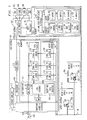
- FIG. 1 shows an illustrative multi-media contact center.
- the contact center comprises a plurality of telephone lines and/or trunks 100 over which it receives or generates telephone calls 168.
- Lines and/or trunks 100 are selectively interconnected with a plurality of agent positions 102-104 via an ACD system 101.
- Each agent position 102-104 includes a voice-and-data terminal 107 for use by a corresponding agent 106-108 in handling calls and other contacts.
- Terminals 107 are connected to ACD system 101 by a voice-and-data transmission medium 109.
- ACD system 101 includes a conventional management information system (MIS) 110 that monitors ACD calls and ACD agents and gathers call and agent records and statistics for use in managing ACD system 101 and in generating reports.
- MIS management information system
- ACD system 101 is illustratively the Avaya Inc. Definity® private-branch exchange (PBX)-based ACD system. It is a stored-program-controlled system that conventionally includes a communications switching fabric and interfaces (ports) 111 to external communications links 100 and 109, service circuits 113 (e.g., tone generators, announcement circuits, interactive voice response systems, etc.), a computer-readable medium such as memory 115 for storing ACD control programs 114 and data, and a processor 105 (i.e., a computer) for executing the stored ACD control programs and using the data to control the fabric and interfaces 111 and service circuits 113 to provide automatic call-distribution functionality and features.
- PBX private-branch exchange
- Each call queue 121-129 corresponds to a different agent skill (V1-V9) for servicing voice (V) calls, as does each agent queue 131-139.
- ACD control programs 114 in memory 115 include call vectors 140.
- ACD calls 168 incoming on lines or trunks 100 are assigned by call vectors 140 to different call queues 121-129 based upon the agent skill that they require for their proper handling.
- ACD agents 106-108 who are available for handling calls are assigned to agent queues 131-139 based upon the skills which they posses.
- An agent may have multiple skills, and hence may be assigned to multiple agent queues 131-139 simultaneously.
- ACD control programs 114 in memory 115 are also included among ACD control programs 114 in memory 115.
- selector 150 effects an assignment between available calls 168 and agents 106-108 available to service the calls in a way that tends to optimize the operation of ACD system 101. For example, selector 150 tends to optimize in-queue wait times for calls.
- ACD features 145 which use service circuits 113 to provide a rich array of features to ACD calls and agents, such as data collection, announcement messages and tones, etc.
- the contact center of FIG. 1 constitutes a call center for handling ACD telephone calls 168.
- the multi-media contact center further includes a CTI adjunct 160 that integrates other types of contacts, such as fax 162, e-mail 164, and Web messaging 166, into the contact center to turn it into a multi-media contact center.
- CTI adjunct 160 connects to sources of the other contacts 162-166 via conventional input and output (I/O) interfaces 174.
- CTI adjunct 160 is a stored-program controlled machine: it includes a computer-readable medium such as memory 172 that stores control programs and data and one or more host processors 170 that execute programs out of memory 172 and use data from memory 172 and from an external database 180.
- Host processor 170 is connected by I/O interfaces 174 to a CTI link 161 and thereby to ACD system 101.
- CTI link 161 connects through a data port 112 of ACD system 101 to processor 105 of ACD system 101.
- Host processor 170 receives call-related data and exerts CTI control over ACD system 101 through CTI link 161.
- Host processor 170 is also connected by I/O interfaces 174 to transmission medium 109, by means of which it connects the other contacts 162-166 to agent positions 102-104 for servicing by agents 106-108, supplies data from database 180 to agent positions 102-104 for display on terminals 107, and receives data from terminals 105 of agent positions 102-104 for storage in database 180.
- CTI adjunct is illustratively the CRM Central product of Avaya Inc.
- processor 170 While only one processor 170 is shown in FIG. 1 for simplicity, typically two or more cooperating processors would be employed, one to perform CTI functions and the others to perform work-allocation functions.
- CTI and work-allocation functions 182 include CTI and work-allocation functions 182.
- Functions 182 effect functionality that parallels and replaces the call-routing functionality of call vector 140 and agent and call selector 150 of ACD system 101 for calls 168 and for the other contacts 162-166 as well.
- Functions 182 implement contact queues 184 and agent queues 185 in memory 172.
- Contact queues 184 parallel call queues 120 for contacts 162-168.
- Contact queues 184 include fax queues 192 for fax contacts 162, e-mail queues 194 for e-mail contacts 164, Web message queues 196 for Web contacts 166, and call queues 120' for telephone calls 168. Call queues 120' duplicate call queues 120 of ACD system 101.
- each of queues 192-196 and 120' may include a plurality of queues each corresponding to a different skill.
- Agent queues 185 parallel agent queues 130 for contacts 162-168. Agent queues 185 include queues 193 for agents with fax skills (F), queues 195 for agents with e-mail skills (E), queues 197 for agents with Web skills (W), and queues 130' for agents with voice skills (V).
- Agent queues 130' duplicate agent queues 130 of ACD system 101 Normally, there is one agent queue 185 for each contact queue 184.
- An agent 106-108 may possess a plurality of skills and therefore may be enqueued when idle in a plurality of agent queues 185.
- Functions 182 illustratively comprise the Enterprise Advocate product of Avaya Inc.
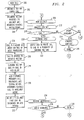
- FIGS. 2-5 The operation of the multi-media contact center of FIG. 1 is shown in FIGS. 2-5.
- agent and call selector 150 of ACD system 101 is turned off (disabled) and call vectors 140 are disabled from making routing decisions.
- an incoming call vector 140 detects its arrival and conventionally "parks" the call, at step 202.
- Incoming call vector 140 also notifies CTI adjunct 160 via CTI link 161 of the call and requests routing instructions from CTI adjunct 160, at step 204.
- Host processor 170 is notified of the arrival of any new contacts 162-168, at step 206, be they calls, faxes, e-mails, or Web messages.
- Host processor 170 analyzes the arrived contact to determine its type and what servicing the contact demands, at step 208. The analysis illustratively duplicates that which is normally performed for ACD calls by call vectors 140 to determine what skill the call requires for its servicing. If the contact is not a new call 168, as determined at step 210, on the basis of its analysis, host processor 170 checks the appropriate one of agent queues 185 to determine if a suitable agent 106-108 is available, at step 212. If a suitable agent is available, host processor 170 proceeds to steps 300 et seq. of FIG. 3 to select an agent to service the contact.
- host processor 170 enqueues the contact in a corresponding one of its contact queues 184, at step 214.
- CTI adjunct 160 is done with the contact until a suitable agent becomes available, as indicated at step 216.
- step 210 if the contact is a call, host processor 170 enqueues it in the call queue 121 '-129' that corresponds to the call's needed skill, at step 220. Conventionally, the call would not be enqueued in call queues 120 of ACD 101. According to the invention, however, if the contact is a call, host processor 170 directs processor 105 of ACD system 101 to route the call to a selected queuing vector 140, at step 222. In response, processor 105 flags the call as being under control of an external host, at step 224, and routes the call to the selected queuing vector 140, at step 226.
- Queuing vector 140 enqueues the call as an ACD call in the one call queue 121-129 that corresponds to the call queue 121'-129' in which the call has been enqueued in CTI adjunct 160, at step 220, and ACD system 101 does so, at step 228.
- This also exposes the call to MIS 110 and enables MIS to collect data concerning managing of the call by ACD system 101.
- MIS 110 provides measurements for agents' voice activities and also assists in forecasting and scheduling. Because the call is flagged in call queues 120 as an ACD call that is being controlled by an external host, ACD system 101 refrains from dequeuing and assigning the call to an available agent unless caused to do so by host processor 170. (In contrast, ACD-system 101 may dequeue calls that are not designated as being controlled by host processor 170 and send them for servicing to selected ACD agents, independently of and without being caused to do so by host processor 170). Processor 105 of ACD system also notifies CTI adjunct 160 that the call has been enqueued in call queues 120, at step 232.
- CTI adjunct 160 dispenses with call queues 120' and host processor 170 does not enqueue calls on CTI adjunct 160 and keeps track of the calls via CTI link 161.
- Host processor 170 decides what work should be serviced by what resource at what time. Upon receipt of the notification that the call has been enqueued on ACD system 101, at step 234, on the basis of its analysis of the call that was performed at step 208, host processor 170 checks the appropriate one of agent queues 130' to determine if a suitable agent 106-108 is available to service the call, at step 236. If a suitable agent is not available, CTI adjunct 160 is done with the call until a suitable agent becomes available, as indicated at step 238. But if it is determined at step 236 that a suitable agent is available to service the call, host processor 170 proceeds to steps 300 et seq. of FIG. 3 to select an agent to service the call.
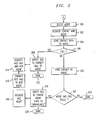
- Step 300 of FIG. 3 is accessed from step 212 or step 236 of FIG. 2.
- host processor 170 selects an available one of the suitable agents 102-104.
- Host processor 170 dequeues the selected agent from any agent queues 185 that the agent is enqueued on, and dequeues the contact that is to be serviced by the agent if it is enqueued, at step 302.
- Host processor 170 then retrieves data relating to the contact (e.g., to the caller) from database 180 and sends it to the selected agent, at step 304.
- processor 105 of ACD system 101 would conventionally route a parked call to an agent extension. According to the invention, however, processor 105 dequeues the ACD call from ACD call queues 120 and dequeues the selected ACD agent from ACD agent queues 130, at step 314, and connects the ACD call to the selected ACD agent's position 102-104 to cause the selected ACD agent to answer the call.
- step 306 if the contact that is assigned to the selected agent for servicing is not a call, host processor 170 sends the contact to the selected agent for servicing, at step 320.
- the agent would not be enqueued in agent queues 130.
- an agent 106-108 has any call skills, he or she is enqueued as an ACD agent in agent queues 130 as well. Therefore, if the selected agent has any call skills (i.e., if the selected agent is enqueued in any voice (V) skill agent queues 130'), as determined at step 322, host processor 170 directs ACD system 101 via CTI link 161 to change the agent's state to "unavailable", at step 326.
- V voice
- processor 105 of ACD system 101 dequeues the agent from agent queues 130, at step 340.
- host processor 170 is done with the contact for the time being, as indicated at steps 328 and 324, respectively.
- CTI adjunct 160 dispenses with agent queues 130' and host processor 170 does not enqueue agents on CTI adjunct 160 for voice skills. Host processor 170 then keeps track of the agents for voice skills via CTI link 161.
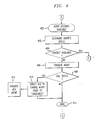
- An agent 106-108 becomes available to service contacts either by logging into CTI adjunct 160 or by becoming idle upon having completed servicing a contact.
- host processor 170 determines (looks up) the agent's skills, at step 402, and then examines the corresponding contact queues 184 to determine if a contact 162-168 is available for being serviced by the agent, at step 404. If a suitable contact is not available, host processor 170 enqueues the agent in the ones of agent queues 185 that correspond to the agent's skills, at step 406.
- agent queues 130 of ACD system 101 Normally, an agent would not be enqueued in agent queues 130 of ACD system 101 because CTI adjunct 160 and not ACD system 101 is in control of managing agents, and agent and call selector 150 is turned off. According to the invention, however, if the agent has any voice (V) skills (i.e., has been enqueued in any of agent queues 130'), as determined at step 408, host processor 170 directs ACD system 101 via CTI link 161 to change the agent's state to "available", at step 410, and in response processor 105 of ACD system 101 enqueues the agent as an ACD agent in corresponding agent queues 130, at step 412.
- V voice
- CTI adjunct 160 is done with the agent for the time being, as indicated at step 414.
- host processor 170 selects a contact from among the suitable contacts that are enqueued in contact queues 184, at step 502 of FIG. 5, and dequeues the selected contact, at step 504.
- Host processor 170 retrieves data relating to the contact (e.g., to the caller) from database 180 and sends it to terminal 107 of the agent who is servicing the call via transmission medium 109, at step 505. If the selected contact is not a call, as determined at step 506, host processor 170 sends the contact to agent position 102-104 of the available agent 106-108 for servicing, at step 508.
- host processor 170 directs processor 105 of ACD system 101 to connect the selected call to the available agent 106-108, at step 510, via a "redirect call from queue" message.
- the call would not be enqueued in call queues 120, and so processor 105 would merely connect the parked call to the agent extension as directed, at step 514.
- the call is enqueued as an ACD call in call queues 120, and so processor 105 dequeues the call from call queues 120, at step 512, and then connects it as an ACD call to the agent to cause the agent to answer and service the call, at step 514.
- Processor 105 treats the "redirect call from queue" message not as a request to route to an extension but as an answer from ACD queue. Consequently all ACD and MIS functionality downstream will treat and measure this call like any standard ACD call. I.e., MIS messaging statistics, zip-tone, RONA, etc., follow.
- the agent having been provided with a contact to serve at step 508 or 510, CTI adjunct 160 is done with the contact for the time being, as indicated at step 518.
- Another advantage provided by the above-described arrangement is that it enables calls to be handled in the system of FIG. 1 even when host processor 170 is no longer able to control the calls because of a system or link failure.
- ACD system 101 takes over control of all calls.
- CTI service failure may occur because of problems with either CTI adjunct 160 or CTI link 161. If the CTI and work-allocation functions are supported on different processors, this can also occur because of problems with work-allocation processors or the links between those processors and CTI adjunct 160.
- ACD system 101 may detect such service failures on its own, or may be informed of a service failure by means of a CTI message.
- host processor 170 stops delivering work of any kind to ACD agents, and ACD system 101 reverts to its conventional, stand-alone ACD, operation with call vector 140 and agent and call selector 150 active and responsible for enqueuing calls and ACD agents and assigning and delivering calls to ACD agents for servicing.
- CTI adjunct 160 does not immediately assume control of call delivery or of assignment of other work to agents, because there may be many calls enqueued in ACD system 101 that are unknown to CTI adjunct 160 because they have arrived while CTI adjunct 160 was out-of-service. Therefore, when CTI service is restored, the system initially goes into a "recovery" mode of operation.
- CTI adjunct 160 resumes control of any newly-arriving calls, but allows ACD system 101 to continue to deliver enqueued calls to agents until there are no calls that the CTI adjunct 160 does not know about in a call queue 120. At that point, ACD system 101 stops delivering calls to agents from that call queue and notifies CTI adjunct 160 that it may resume control of call delivery and other work for that skill (the skill that corresponds to the subject call queue). When all call queues 120 have been purged of calls unknown to CTI adjunct 160, normal operation of the system of FIG. 1 resumes.
- host processor 170 may continue assigning non-call work to agents who are not controlled by ACD system 101.
- ACD system 101 The failure and recovery operation of ACD system 101 is shown in FIG. 6, and the failure and recovery operation of CTI adjunct 160 is shown in FIG. 7.
- the occurrence of a failure usually manifests itself as the loss of communications between ACD system 101 and CTI adjunct 160. This can be due to failure of CTI adjunct 160 and/or failure of CTI link 161. If the work-allocation functions are performed on a separate processor, this can also be due to failure of the work-allocation system and/or the link between it and CTI adjunct 160.
- processor 105 of ACD system 101 detects or is informed of any failure that prevents host processor 170 from controlling calls, at step 600 of FIG. 6, it flags each call that is presently enqueued in call queues 120 as "ACD controlled", at step 602.
- Processor 105 then activates call vector 140 and agent and call selector 150 for all ACD skills, at step 604, thereby restoring conventional, stand-alone ACD, operation of ACD system 101, at step 608. However, processor 105 flags each new call arriving at ACD system 101 with the "ACD controlled" flag, at step 606.
- the failure detected by ACD system 101 at step 600 may have just been a failure of CTI link 161 and not of CTI adjunct 160.
- host processor 170 of CTI adjunct 160 is active and detects a failure that prevents it from being able to control calls at ACD system 101, at step 700 of FIG. 7.
- host processor 170 clears its call queues 120', at step 702, flags each voice (V) skill as "ACD controlled", at step 704, clears its voice-skilled agent queues 130', at step 706, and flags each agent who has a voice skill as "ACD controlled", at step 708.
- CTI adjunct 160 then continues to operate in "failover" mode, wherein it assigns contacts (i.e., contacts from non-flagged-skill contact queues) to only non-flagged agents, at step 710.
- processor 105 of ACD system 101 detects restoration of CTI adjunct 160 (which may merely have involved restoration of CTI link 161), at step 620, it deactivates call-routing functionality of call vector 140, at step 622, giving control of newly-arriving calls back to CTI adjunct 160.
- Processor 105 also stops flagging new calls as "ACD controlled", at step 624, and then continues to operate in a hybrid mode wherein CTI adjunct 160 controls enqueuing of new calls in call queues 120 but ACD system 101 controls allocation and delivery of ACD-controlled calls from call queues 120 to agents, at step 626.
- processor 105 Whenever processor 105 allocates a call from a call queue 121-128 to an agent, it checks whether any calls that are flagged as "ACD controlled" remain in that ACD call queue, at step 628. If so, processor 105 merely returns to step 626; if not, processor 105 notifies CTI adjunct 160 to resume CTI control of this skill, at step 630, and deactivates agent and call selector 150 for this skill, at step 632. Processor 105 then checks whether agent and call selector 150 is still active for any skills, at step 634. If so, processor 105 returns to step 626; if not, processor 105 resumes normal CTI operation of ACD system 101 where call vector 140 and agent and call selector 150 are turned off for all skills and all calls are controlled by CTI adjunct 160, at step 636.
- host processor 170 when host processor 170 detects restoration of CTI service (which may merely have involved restoration of CTI link 161), at step 720, it resumes control of calls newly-arriving at ACD system 101, at step 722. This includes resuming to enqueue newly-arriving calls in its call queues 120' and resuming to enqueue and dequeue in and from agent queues 130' any voice-skilled agents who become newly enqueued or dequeued by ACD system 101 in and from agent queues 130, at step 724. Host processor 170 then continues to operate in a "recovery" mode, wherein ⁇ as in the failover mode ⁇ it assigns contacts to non-flagged agents.
- host processor 170 When host processor 170 receives notification (see step 630) from ACD system 101 to resume control of a particular skill, at step 730, host processor 170 clears the "ACD controlled” flag of that skill, at step 732. Host processor 170 then compares the voice skills of each voice-skilled agent against the skill flags and clears the "ACD controlled” flag of each agent none of whose voice skills are flagged as "ACD controlled”, at step 734. This returns the unflagged agent to the pool of agents who are controlled and allocated by CTI adjunct 160.
- step 736 If any skills remain flagged as "ACD controlled”, as determined at step 736, host processor 170 returns to step 728; of no skills remain flagged as "ACD controlled", host processor 170 resumes normal CTI operation where CTI adjunct 160 controls and allocates all calls and agents of the system of FIG. 1, at step 738.
Landscapes
- Engineering & Computer Science (AREA)
- Signal Processing (AREA)
- Business, Economics & Management (AREA)
- Marketing (AREA)
- Telephonic Communication Services (AREA)
Abstract
Description
Claims (10)
- A control method for a contact center comprising an automatic call distribution (ACD) system (101) having a plurality of ACD call queues (120) and for providing ACD features (145) to ACD calls, and a host processor (170) being separate from the ACD system and having contact queues (184), comprising:the host processor enqueuing (214) a received contact in a contact queue of the host processor at least if the contact is not a call, and causing (222) the ACD system to enqueue the received contact in a selected one of a plurality of the ACD call queues of the ACD system if the contact is a call, to cause the ACD system to enqueue (228) the call as an ACD call in the selected one of its call queues and provide (230) ACD features to the call;the host processor dequeuing (302) the contact from the contact queue of the host processor and assigning (320) the contact to an agent for servicing at least if the contact is not a call, and if the contact is a call then causing (308) the ACD system to dequeue (314) the call from the selected one of its call queues to assign (316) the call to a selected one of a plurality of ACD agents, and to send the call for servicing to the selected one of the ACD agents.
- The method of claim 1 wherein the ACD system further has a plurality of ACD agent queues (130) and provides ACD features (145) to ACD agents, the method further comprising:the host processor enqueuing (406) an agent in an agent queue (185) of the host processor at least if the agent is not an ACD agent, and causing (410) the ACD system to enqueue the agent in a selected ACD agent queue of the ACD system if the agent is an ACD agent, to cause the ACD system to enqueue (412) the agent as an ACD agent in the selected one of its ACD agent queues and provide ACD features to the agent; andthe host processor dequeuing (504) the agent and assigning (508) the agent to service a contact at least if the agent is not an ACD agent, and causing (510) the ACD system to assign the agent to service a call if the agent is an ACD agent, to cause the ACD system to dequeue (512) the agent from the selected ACD agent queue of the ACD system and send (514) an ACD call to the agent for servicing.
- The method of claim 1 further comprising:in response to the causing to enqueue, the ACD system enqueuing (228) the call as an ACD call in the selected one of its plurality of call queues, andthe ACD system providing (230) ACD features to the call; andin response to the causing to dequeue to assign, the ACD system dequeuing (314) the call from the selected one of its call queues and sending (316) the call for servicing to the selected one of the ACD agents.
- The method of claim 3 wherein:the host processor enqueuing a received contact comprisesthe host processor enqueuing (214, 220) the received contact in the contact queue (192) of the host processor, andthe host processor further causing (222) the ACD system to enqueue the received contact in the selected one of the call queues (120) of the ACD system if the contact is a call; andthe host processor dequeuing the contact comprisesthe host processor dequeuing (302) the contact from the contact queue of the host processor,the host processor assigning (320) the contact to the agent for servicing if the contact is not a call, andthe host processor causing (308) the ACD system to assign (316) the contact to the selected ACD agent if the contact is a call.
- The method of claim 3 wherein:the host processor enqueuing a received contact comprisesthe host processor determining (208) a skill required for servicing the contact,the host processor enqueuing (214) the contact in a contact queue (184) of the host processor that corresponds to the determined skill, andif the contact is a call, the host processor causing (222) the ACD system to also enqueue (228) the received contact in a call queue (120) of the ACD system that corresponds to the determined skill; andthe host processor dequeuing the contact comprisesthe host processor selecting (300) an agent having the determined skill to service the contact,the host processor dequeuing (302) the contact from the contact queue (184) of the host processor,if the contact is not a call, the host processor assigning (320) the contact to the selected agent for servicing, andif the contact is a call, the host processor causing (308) the ACD system to assign (316) the contact to the selected agent for servicing.
- The method of claim 3 further comprising:the host processor enqueuing (406) an agent in an agent queue (185) of the host processor at least if the agent is not an ACD agent, and causing (410) the ACD system to enqueue the agent in a selected agent queue (130) of the ACD system if the agent is an ACD agent;in response to the causing to enqueue, the ACD system enqueuing (412) the agent as an ACD agent in the selected agent queue of the ACD system;the ACD system providing ACD features to the agent;the host processor dequeuing (302) the agent and assigning (304) the agent to service a contact at least if the agent is not an ACD agent, and causing (308) the ACD system to assign the agent to service an ACD call if the agent is an ACD agent; andin response to the causing to assign, the ACD system dequeuing (314) the agent from the selected agent queue of the ACD system and sending (316) an ACD call to the agent for servicing.
- The method of claim 6 wherein:the host processor enqueuing an agent comprisesthe host processor enqueuing (406) the agent in the agent queue (185) of the host processor, andthe host processor further causing (410) the ACD system to enqueue (412) the agent in the selected agent queue (130) of the ACD system if the agent is an ACD agent; andthe host processor dequeuing the agent comprisesthe host processor dequeuing (302) the agent from the agent queue (185) of the host processor,the host processor assigning (320) the agent to service the contact if the agent is not an ACD agent, andthe host processor causing (308) the ACD system to assign (316) the agent to service the ACD call if the agent is an ACD agent.
- The method of claim 6 wherein:the host processor enqueuing an agent comprisesthe host processor determining (402) a skill possessed by the agent,the host processor enqueuing (406) the agent in an agent queue (185) of the host processor that corresponds to the determined skill, andif the possessed skill is a call-handling skill, the host processor causing (410) the ACD system to also enqueue (412) the agent in an agent queue (130) of the ACD system that corresponds to the possessed call-handling skill; andthe host processor dequeuing the agent comprisesthe host processor selecting (300) the agent to service a contact needing the skill,the host processor dequeuing (302) the selected agent from the agent queue (185) of the host processor,if the needed skill is not a call-handling skill, the host processor assigning (320) the agent to service the contact, andif the needed skill is a call-handling skill, the host processor causing (308) the ACD system to assign (316) the agent to service the contact.
- An apparatus (160; 101 + 160) adapted to perform the method of one of the claims 1-8.
- A computer-readable medium (172; 115 + 172) containing instructions which, when executed in a computer, cause the computer to perform the method of one of the claims 1-8.
Applications Claiming Priority (2)
| Application Number | Priority Date | Filing Date | Title |
|---|---|---|---|
| US10/037,779 US6947543B2 (en) | 2002-01-03 | 2002-01-03 | Computer-telephony integration that uses features of an automatic call distribution system |
| US37779P | 2002-01-03 |
Publications (3)
| Publication Number | Publication Date |
|---|---|
| EP1326413A2 true EP1326413A2 (en) | 2003-07-09 |
| EP1326413A3 EP1326413A3 (en) | 2004-04-21 |
| EP1326413B1 EP1326413B1 (en) | 2005-05-18 |
Family
ID=21896285
Family Applications (1)
| Application Number | Title | Priority Date | Filing Date |
|---|---|---|---|
| EP02254941A Expired - Lifetime EP1326413B1 (en) | 2002-01-03 | 2002-07-12 | Computer-telephony integration (CTI) that uses features of an automatic call distribution system (ACD) |
Country Status (8)
| Country | Link |
|---|---|
| US (1) | US6947543B2 (en) |
| EP (1) | EP1326413B1 (en) |
| JP (1) | JP3934543B2 (en) |
| KR (1) | KR20030060076A (en) |
| CN (1) | CN100385895C (en) |
| CA (1) | CA2394219C (en) |
| DE (1) | DE60204208T2 (en) |
| IL (1) | IL153777A (en) |
Families Citing this family (67)
| Publication number | Priority date | Publication date | Assignee | Title |
|---|---|---|---|---|
| US7844504B1 (en) | 2000-04-27 | 2010-11-30 | Avaya Inc. | Routing based on the contents of a shopping cart |
| US7620169B2 (en) | 2002-06-17 | 2009-11-17 | Avaya Inc. | Waiting but not ready |
| US6931119B2 (en) * | 2002-08-30 | 2005-08-16 | Rockwell Electronic Commerce Technologies, L. L. C. | Apparatus and method for providing caller-specific data to agent station and for automatically launching corresponding application |
| US8335300B2 (en) | 2003-06-26 | 2012-12-18 | International Business Machines Corporation | Personalizing computerized customer service |
| US7170991B2 (en) * | 2003-08-25 | 2007-01-30 | Cisco Technology, Inc. | Method and system for utilizing proxy designation in a call system |
| US7770175B2 (en) | 2003-09-26 | 2010-08-03 | Avaya Inc. | Method and apparatus for load balancing work on a network of servers based on the probability of being serviced within a service time goal |
| US20050071212A1 (en) * | 2003-09-26 | 2005-03-31 | Flockhart Andrew D. | Method and apparatus for business time computation in a resource allocation system |
| US8094804B2 (en) | 2003-09-26 | 2012-01-10 | Avaya Inc. | Method and apparatus for assessing the status of work waiting for service |
| SE526559C2 (en) * | 2004-02-11 | 2005-10-11 | Teligent Ab | Procedure for operationally managing systems comprising communication services |
| US7729490B2 (en) | 2004-02-12 | 2010-06-01 | Avaya Inc. | Post-termination contact management |
| US8457300B2 (en) | 2004-02-12 | 2013-06-04 | Avaya Inc. | Instant message contact management in a contact center |
| US7885401B1 (en) | 2004-03-29 | 2011-02-08 | Avaya Inc. | Method and apparatus to forecast the availability of a resource |
| US8000989B1 (en) | 2004-03-31 | 2011-08-16 | Avaya Inc. | Using true value in routing work items to resources |
| US7953859B1 (en) | 2004-03-31 | 2011-05-31 | Avaya Inc. | Data model of participation in multi-channel and multi-party contacts |
| US7734032B1 (en) | 2004-03-31 | 2010-06-08 | Avaya Inc. | Contact center and method for tracking and acting on one and done customer contacts |
| GB2416089A (en) * | 2004-06-30 | 2006-01-11 | Siemens Ag | Sending cti messages in a communication system |
| US8234141B1 (en) | 2004-09-27 | 2012-07-31 | Avaya Inc. | Dynamic work assignment strategies based on multiple aspects of agent proficiency |
| US7949121B1 (en) | 2004-09-27 | 2011-05-24 | Avaya Inc. | Method and apparatus for the simultaneous delivery of multiple contacts to an agent |
| US7949123B1 (en) | 2004-09-28 | 2011-05-24 | Avaya Inc. | Wait time predictor for long shelf-life work |
| US7657021B2 (en) | 2004-09-29 | 2010-02-02 | Avaya Inc. | Method and apparatus for global call queue in a global call center |
| US7567653B1 (en) | 2005-03-22 | 2009-07-28 | Avaya Inc. | Method by which call centers can vector inbound TTY calls automatically to TTY-enabled resources |
| US7817796B1 (en) | 2005-04-27 | 2010-10-19 | Avaya Inc. | Coordinating work assignments for contact center agents |
| US7809127B2 (en) | 2005-05-26 | 2010-10-05 | Avaya Inc. | Method for discovering problem agent behaviors |
| US7779042B1 (en) | 2005-08-08 | 2010-08-17 | Avaya Inc. | Deferred control of surrogate key generation in a distributed processing architecture |
| US7881450B1 (en) | 2005-09-15 | 2011-02-01 | Avaya Inc. | Answer on hold notification |
| US8577015B2 (en) | 2005-09-16 | 2013-11-05 | Avaya Inc. | Method and apparatus for the automated delivery of notifications to contacts based on predicted work prioritization |
| US8073129B1 (en) | 2005-10-03 | 2011-12-06 | Avaya Inc. | Work item relation awareness for agents during routing engine driven sub-optimal work assignments |
| US8116446B1 (en) | 2005-10-03 | 2012-02-14 | Avaya Inc. | Agent driven work item awareness for tuning routing engine work-assignment algorithms |
| US10572879B1 (en) | 2005-10-03 | 2020-02-25 | Avaya Inc. | Agent driven media-agnostic work item grouping and sharing over a consult medium |
| US7822587B1 (en) | 2005-10-03 | 2010-10-26 | Avaya Inc. | Hybrid database architecture for both maintaining and relaxing type 2 data entity behavior |
| US8411843B1 (en) | 2005-10-04 | 2013-04-02 | Avaya Inc. | Next agent available notification |
| US7752230B2 (en) | 2005-10-06 | 2010-07-06 | Avaya Inc. | Data extensibility using external database tables |
| US7787609B1 (en) | 2005-10-06 | 2010-08-31 | Avaya Inc. | Prioritized service delivery based on presence and availability of interruptible enterprise resources with skills |
| US8238541B1 (en) | 2006-01-31 | 2012-08-07 | Avaya Inc. | Intent based skill-set classification for accurate, automatic determination of agent skills |
| US8737173B2 (en) | 2006-02-24 | 2014-05-27 | Avaya Inc. | Date and time dimensions for contact center reporting in arbitrary international time zones |
| US8442197B1 (en) | 2006-03-30 | 2013-05-14 | Avaya Inc. | Telephone-based user interface for participating simultaneously in more than one teleconference |
| US7936867B1 (en) | 2006-08-15 | 2011-05-03 | Avaya Inc. | Multi-service request within a contact center |
| US8391463B1 (en) | 2006-09-01 | 2013-03-05 | Avaya Inc. | Method and apparatus for identifying related contacts |
| US8811597B1 (en) | 2006-09-07 | 2014-08-19 | Avaya Inc. | Contact center performance prediction |
| US8938063B1 (en) | 2006-09-07 | 2015-01-20 | Avaya Inc. | Contact center service monitoring and correcting |
| US8855292B1 (en) | 2006-09-08 | 2014-10-07 | Avaya Inc. | Agent-enabled queue bypass to agent |
| US7835514B1 (en) | 2006-09-18 | 2010-11-16 | Avaya Inc. | Provide a graceful transfer out of active wait treatment |
| US8971520B1 (en) * | 2006-10-27 | 2015-03-03 | Answer Financial Inc. | Method for optimizing skill assignment in call center agent applications |
| US8767944B1 (en) | 2007-01-03 | 2014-07-01 | Avaya Inc. | Mechanism for status and control communication over SIP using CODEC tunneling |
| US7747705B1 (en) | 2007-05-08 | 2010-06-29 | Avaya Inc. | Method to make a discussion forum or RSS feed a source for customer contact into a multimedia contact center that is capable of handling emails |
| US8504534B1 (en) | 2007-09-26 | 2013-08-06 | Avaya Inc. | Database structures and administration techniques for generalized localization of database items |
| CN101483699A (en) * | 2008-01-09 | 2009-07-15 | 华为技术有限公司 | Method, system and apparatus for processing user call by the call center |
| US8856182B2 (en) | 2008-01-25 | 2014-10-07 | Avaya Inc. | Report database dependency tracing through business intelligence metadata |
| US8831206B1 (en) | 2008-05-12 | 2014-09-09 | Avaya Inc. | Automated, data-based mechanism to detect evolution of employee skills |
| US8385532B1 (en) | 2008-05-12 | 2013-02-26 | Avaya Inc. | Real-time detective |
| US10375244B2 (en) | 2008-08-06 | 2019-08-06 | Avaya Inc. | Premises enabled mobile kiosk, using customers' mobile communication device |
| DE102008046431A1 (en) * | 2008-09-09 | 2010-03-11 | Deutsche Telekom Ag | Speech dialogue system with reject avoidance method |
| US8116237B2 (en) | 2008-09-26 | 2012-02-14 | Avaya Inc. | Clearing house for publish/subscribe of status data from distributed telecommunications systems |
| US8621011B2 (en) | 2009-05-12 | 2013-12-31 | Avaya Inc. | Treatment of web feeds as work assignment in a contact center |
| US8964958B2 (en) | 2009-05-20 | 2015-02-24 | Avaya Inc. | Grid-based contact center |
| US8644491B2 (en) | 2009-08-21 | 2014-02-04 | Avaya Inc. | Mechanism for multisite service state description |
| US8385533B2 (en) | 2009-09-21 | 2013-02-26 | Avaya Inc. | Bidding work assignment on conference/subscribe RTP clearing house |
| US8565386B2 (en) | 2009-09-29 | 2013-10-22 | Avaya Inc. | Automatic configuration of soft phones that are usable in conjunction with special-purpose endpoints |
| US9516069B2 (en) | 2009-11-17 | 2016-12-06 | Avaya Inc. | Packet headers as a trigger for automatic activation of special-purpose softphone applications |
| US8306212B2 (en) | 2010-02-19 | 2012-11-06 | Avaya Inc. | Time-based work assignments in automated contact distribution |
| CN102148904B (en) * | 2010-11-16 | 2014-03-26 | 华为软件技术有限公司 | Method and device for processing call |
| US8675860B2 (en) | 2012-02-16 | 2014-03-18 | Avaya Inc. | Training optimizer for contact center agents |
| US20140108022A1 (en) * | 2012-10-12 | 2014-04-17 | American Well Systems | Brokerage System Employing Minimal Criteria Matching and Availability Queuing |
| JP2017011496A (en) * | 2015-06-22 | 2017-01-12 | 株式会社リコー | Information processing system, information processing device, and information processing program |
| JP2017011495A (en) * | 2015-06-22 | 2017-01-12 | 株式会社リコー | Information processing system, information processing apparatus, and information processing program |
| JP6582659B2 (en) * | 2015-07-17 | 2019-10-02 | 株式会社リコー | Communication management system, information processing apparatus, and program |
| JP2018137572A (en) * | 2017-02-21 | 2018-08-30 | 沖電気工業株式会社 | Communication device, communication program, and communication method |
Family Cites Families (9)
| Publication number | Priority date | Publication date | Assignee | Title |
|---|---|---|---|---|
| US5946387A (en) * | 1997-02-10 | 1999-08-31 | Genesys Telecommunications Laboratories, Inc, | Agent-level network call routing |
| US6122365A (en) | 1998-12-18 | 2000-09-19 | Genesys Telecommunications Laboratories, Inc. | Method and apparatus for load-balancing of call processing between multiple call-destination sites and routing of calls by way of call-destination site control |
| US6137862A (en) | 1998-03-16 | 2000-10-24 | Mci Communications Corporation | Failover mechanism for computer/telephony integration monitoring server |
| US6681010B1 (en) * | 1998-09-01 | 2004-01-20 | Genesys Telecommunications Laboratories, Inc. | Methods, systems and computer program products for automatic task distribution |
| US6934381B1 (en) | 1999-08-16 | 2005-08-23 | Avaya Technology Corp. | Contact routing system and method |
| JP2001168993A (en) * | 1999-12-06 | 2001-06-22 | Oki Electric Ind Co Ltd | Call center system |
| US6661889B1 (en) * | 2000-01-18 | 2003-12-09 | Avaya Technology Corp. | Methods and apparatus for multi-variable work assignment in a call center |
| US8416943B2 (en) * | 2001-07-31 | 2013-04-09 | Aspect Software, Inc. | System and method for distributing customer contacts |
| US6856680B2 (en) * | 2001-09-24 | 2005-02-15 | Rockwell Electronic Commerce Technologies, Llc | Contact center autopilot algorithms |
-
2002
- 2002-01-03 US US10/037,779 patent/US6947543B2/en not_active Expired - Lifetime
- 2002-07-12 EP EP02254941A patent/EP1326413B1/en not_active Expired - Lifetime
- 2002-07-12 DE DE60204208T patent/DE60204208T2/en not_active Expired - Lifetime
- 2002-07-18 CA CA002394219A patent/CA2394219C/en not_active Expired - Fee Related
- 2002-12-26 JP JP2002375762A patent/JP3934543B2/en not_active Expired - Fee Related
-
2003
- 2003-01-01 IL IL153777A patent/IL153777A/en active IP Right Grant
- 2003-01-03 KR KR10-2003-0000313A patent/KR20030060076A/en not_active Withdrawn
- 2003-01-03 CN CNB031002358A patent/CN100385895C/en not_active Expired - Lifetime
Also Published As
| Publication number | Publication date |
|---|---|
| JP2003229965A (en) | 2003-08-15 |
| CN1430397A (en) | 2003-07-16 |
| JP3934543B2 (en) | 2007-06-20 |
| IL153777A (en) | 2008-08-07 |
| US20030123642A1 (en) | 2003-07-03 |
| CA2394219A1 (en) | 2003-07-03 |
| DE60204208D1 (en) | 2005-06-23 |
| CA2394219C (en) | 2006-06-27 |
| IL153777A0 (en) | 2003-07-31 |
| DE60204208T2 (en) | 2006-02-02 |
| EP1326413B1 (en) | 2005-05-18 |
| EP1326413A3 (en) | 2004-04-21 |
| KR20030060076A (en) | 2003-07-12 |
| CN100385895C (en) | 2008-04-30 |
| US6947543B2 (en) | 2005-09-20 |
Similar Documents
| Publication | Publication Date | Title |
|---|---|---|
| EP1326413B1 (en) | Computer-telephony integration (CTI) that uses features of an automatic call distribution system (ACD) | |
| EP1021905B1 (en) | Method and apparatus for determining agent availability | |
| EP0954922B1 (en) | Method and system for determining and using multiple object states in a computer telephony integration system | |
| AU2018206690A1 (en) | Techniques for behavioral pairing in a contact center system | |
| JP2000307736A (en) | Method and system for processing communication in communication processing system | |
| CN101610322A (en) | Multi-platform-based call center and call access method | |
| CA2280002A1 (en) | Apparatus and methods enhancing call routing to and within call-centers | |
| KR20210066887A (en) | Techniques for adapting behavioral pairing to runtime conditions in a task assignment system | |
| CA2394262C (en) | Uninterrupted automatic call distribution during failure and recovery of computer-telephony integration | |
| KR20220024516A (en) | Techniques for Multi-Step Data Capture for Behavior Pairing in Task Allocation Systems | |
| US20070055777A1 (en) | Multi-media contact channel in agent state control system and method for use in a contact center | |
| JP2001077922A (en) | Call waiting algorithm for telephone exchange | |
| US20210241198A1 (en) | Techniques for assigning tasks in a task assignment system with an external pairing system | |
| US11019214B2 (en) | Techniques for pairing contacts and agents in a contact center system | |
| US20260141320A1 (en) | Techniques for multistep data capture for behavioral pairing in a task assignment system | |
| HK40060840A (en) | Techniques for multistep data capture for behavioral pairing in a task assignment system | |
| EP1111526A2 (en) | Dynamic distributed resources management system and method of provisioning therefor |
Legal Events
| Date | Code | Title | Description |
|---|---|---|---|
| PUAI | Public reference made under article 153(3) epc to a published international application that has entered the european phase |
Free format text: ORIGINAL CODE: 0009012 |
|
| 17P | Request for examination filed |
Effective date: 20020712 |
|
| AK | Designated contracting states |
Designated state(s): AT BE BG CH CY CZ DE DK EE ES FI FR GB GR IE IT LI LU MC NL PT SE SK TR |
|
| AX | Request for extension of the european patent |
Extension state: AL LT LV MK RO SI |
|
| PUAL | Search report despatched |
Free format text: ORIGINAL CODE: 0009013 |
|
| AK | Designated contracting states |
Kind code of ref document: A3 Designated state(s): AT BE BG CH CY CZ DE DK EE ES FI FR GB GR IE IT LI LU MC NL PT SE SK TR |
|
| AX | Request for extension of the european patent |
Extension state: AL LT LV MK RO SI |
|
| 17Q | First examination report despatched |
Effective date: 20040324 |
|
| GRAP | Despatch of communication of intention to grant a patent |
Free format text: ORIGINAL CODE: EPIDOSNIGR1 |
|
| AKX | Designation fees paid |
Designated state(s): DE FR GB |
|
| GRAA | (expected) grant |
Free format text: ORIGINAL CODE: 0009210 |
|
| GRAS | Grant fee paid |
Free format text: ORIGINAL CODE: EPIDOSNIGR3 |
|
| AK | Designated contracting states |
Kind code of ref document: B1 Designated state(s): DE FR GB |
|
| REG | Reference to a national code |
Ref country code: GB Ref legal event code: FG4D |
|
| REG | Reference to a national code |
Ref country code: IE Ref legal event code: FG4D |
|
| REF | Corresponds to: |
Ref document number: 60204208 Country of ref document: DE Date of ref document: 20050623 Kind code of ref document: P |
|
| PLBE | No opposition filed within time limit |
Free format text: ORIGINAL CODE: 0009261 |
|
| STAA | Information on the status of an ep patent application or granted ep patent |
Free format text: STATUS: NO OPPOSITION FILED WITHIN TIME LIMIT |
|
| ET | Fr: translation filed | ||
| 26N | No opposition filed |
Effective date: 20060221 |
|
| REG | Reference to a national code |
Ref country code: GB Ref legal event code: 732E Free format text: REGISTERED BETWEEN 20090430 AND 20090506 |
|
| PGFP | Annual fee paid to national office [announced via postgrant information from national office to epo] |
Ref country code: FR Payment date: 20130910 Year of fee payment: 12 |
|
| REG | Reference to a national code |
Ref country code: FR Ref legal event code: ST Effective date: 20150331 |
|
| PG25 | Lapsed in a contracting state [announced via postgrant information from national office to epo] |
Ref country code: FR Free format text: LAPSE BECAUSE OF NON-PAYMENT OF DUE FEES Effective date: 20140731 |
|
| PGFP | Annual fee paid to national office [announced via postgrant information from national office to epo] |
Ref country code: DE Payment date: 20200721 Year of fee payment: 19 Ref country code: GB Payment date: 20200727 Year of fee payment: 19 |
|
| REG | Reference to a national code |
Ref country code: DE Ref legal event code: R119 Ref document number: 60204208 Country of ref document: DE |
|
| GBPC | Gb: european patent ceased through non-payment of renewal fee |
Effective date: 20210712 |
|
| PG25 | Lapsed in a contracting state [announced via postgrant information from national office to epo] |
Ref country code: GB Free format text: LAPSE BECAUSE OF NON-PAYMENT OF DUE FEES Effective date: 20210712 Ref country code: DE Free format text: LAPSE BECAUSE OF NON-PAYMENT OF DUE FEES Effective date: 20220201 |