TECHNICAL FIELD
This invention relates to an inhibitor of heart muscule cell apoptosis, and a
prophylactic and/or therapeutic agent for heart diseases.
BACKGROUND ART
In recent years, it has been revealed that apoptosis is closely invloved in onset or
progress of various heart diseases (R. Sanders Williams, The New England Journal of
Medicine, vol. 341, p. 759, 1999).
Apoptosis is closely invloved in morphognesis and histogenesis in the
development process, maintenance of homeostasis, and bio-defence, and it is cell death
having an important role in maintaining individual lifes. When the death process
regulated by genes is congenitally or postnatally hindered, apoptosis is excessively
induced or inhibited to cause functional disorders in various organs, and thus diseases
(Shin Yonehara, Saishin Igaku, vol. 54, p. 825, 1999).
In a mammalian heart, it is considered that heart muscle cells are finally
differentiated cells, and lose proliferation activity. Accordingly, when heart muscle cells
disappear by apoptosis, the heart contraction should be maintained only by remaining
cells. Disappearance of heart muscle cells beyond threshold necessary for maintaining
the heart contraction would result in abnormal heart functions and diseases. Apoptosis
of heart muscle cells is actually observed in various animal models with cardiac
insufficiency or in human patients with cardiac insufficiency, and it is noted that
disappearance or lack of heart muscle cells by apoptosis may be involved in onset and
progress of cardiac insufficiency (Narula, J. et al., The New England Journal of Medicine,
vol. 335, p. 1182, 1996). It is further recognized that in heart muscle cells of human
patients with cardiac insufficiency, an apoptosis-inhibitory factor Bcl-2 is expressed in
excess, which is a possible compensation mechanism for cardiac insufficiency (Olivetti,
G. et al., The New England Journal of Medicine, vol. 336, p. 1131, 1997); that serum
levels of soluble Fas (sFas has an inhibitory activity on apoptosis) which lacks a
membrane penetration domain in the Fas receptor known as an apoptosis inducing
receptor, are increased significantly in proportion to severeness in NYHA class (New
York Heart Association Functional Class) but independently of fundamental diseases, and
thus an increase in serum levels of sFas is considered to be a compensatory mechanism to
inhibit promotion of apoptosis in cardiac insufficiency (Nishigaki, K. et al., Journal of the
American College of Cardiology, vol. 29, p. 1214, 1997); and that in the heart with
dilation-type myocardiosis, deoxyribonuclease I (DNase I) considered as a indicator of
apoptosis is increased 7-fold or more than in healthy persons (Yao, M. et al., Journal of
Molecular & Cell Cardiology, vol. 28, p. 95, 1996).
Recent important findings related to protection of heart muscle cells include
those from studies on mice with deficiency in gp130 specifically in the ventricle. As a
result of analysis of the mice, it is revealed that the signal from gp130-mediated receptors
(gp130 signal) play an important role in protecting the heart functions, and these studies
draw attention as a new development of heart muscle cell-protective signals leading to
therapy of heart diseases (Hirota, et al., Cell, vol. 97, p. 189, 1999, and Senior, K.
Molecular Medicine Today, vol. 5, p. 283, 1999). Therefore, it is highly possible that a
compound having an inhibitory action on apoptosis of heart muscle cells or an enhancing
action on heart muscle cell-protective signals may serves as a new preventive and/or
remedy for heart diseases.
When considered at the level of internal organs, the functions of the heart
muscle are lowered in human cardiac diseases, and insufficient heart muscle contraction
often endangers the maintenance of the life. Abnormalities, for example, myocardial
disorders, abnormal heart pumping, pressure burden due to high blood pressure, volume
burden due to acute nephritis, and insufficient blood pumping caused by these
abnormalities lead to the onset of cardiac insufficiency. Against these abnormalities, the
sympathetic nervous system, the internal secretion system, and the like work together to
start a compensating mechanism, resulting in cardiac hypertrophy accompanied by
hypertrophy of myocardial cells. However, when these abnormalities occur alone or in
combination persistently and chronically, the hypertrophied myocardial cells are not
sufficiently supplied with blood, and thus the myocardial cells disappear due to apoptosis,
etc. As a result, the compensating mechanism fails to work, leading to a cardiac
insufficiency syndrome accompanied by myocardial disorders such as insufficient heart
contraction, a reduction in pumped blood, circulatory disorders in internal organs,
venostasis, and body fluid retention. To treat these, amelioration of myocardial cell
disorders, enhancement of the heart-protecting action, recovery from the reduced cardiac
functions due to insufficient heart contraction, suppression of causative breakdown of
compensation in vivo, or amelioration of the excessive compensation is necessary.
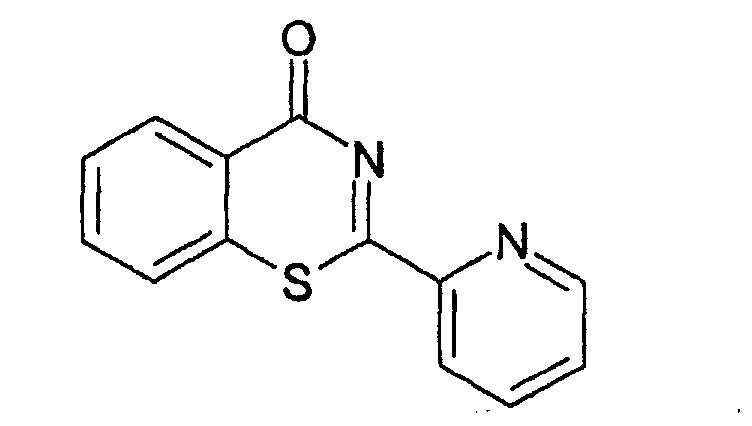
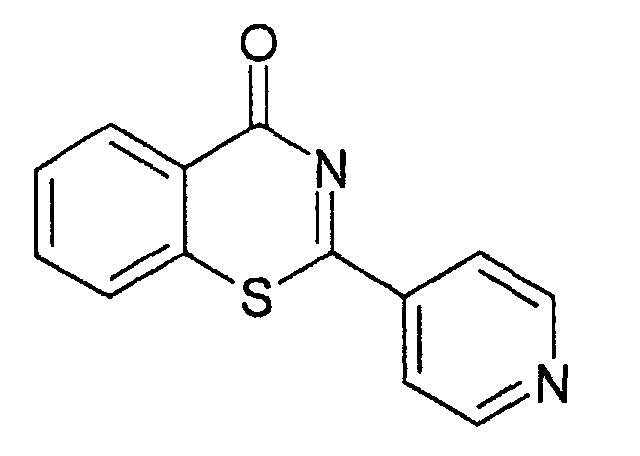
Incidentally, 2-substituted-4H-1,3-benzothiazin-4-one compounds such as 2-(2-pyridyl)-1,3-benzothiazin-4-one,
2-(3-pyridyl)-1,3-benzothiazin-4-one and 2-(4-pyridyl)-1,3-benzothiazin-4-one
are described in Chemical Abstracts, vol.51, 17927g (1957), but
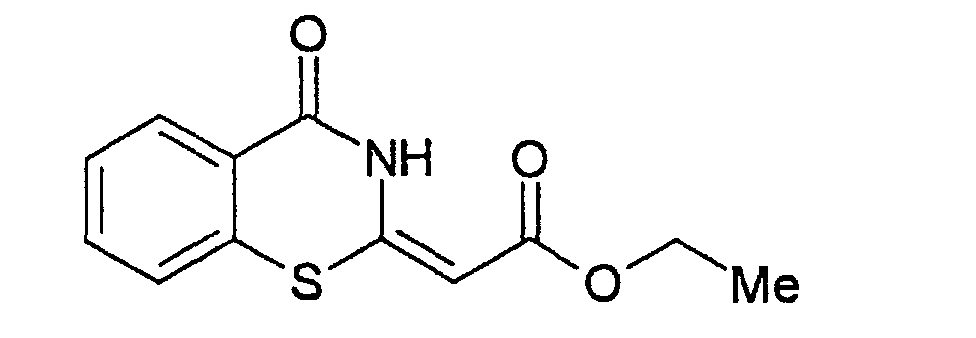
any specific action thereof is not described. 2-ethoxycarbonylmethyl-1,3-benzothiazin-4-one
is described in Heterocycles, vo1,22, 1677-1682 (1984), but any action thereof is
not described.
At present, the cardiac insufficiency syndrome is treated by using cardiotonic
glycosides such as digoxin, sympathetic agents such as dobutamine, phosphodiesterase
inhibitors such as amrinone, vasodilators such as hydralazine, calcium antagonist,
angiotensin converting enzyme inhibitor and angiotensin receptor antagonist, and dilated
cardiomyopathy is treated by β-blockers, etc. But for therapeutic methods for
suppressing the excessive compensation and for suppressing breakdown of compensation
including apoptosis, there are no reported pharmaceuticals entirely satisfactory in clinical
use.
DISCLOSURE OF THE INVENTION
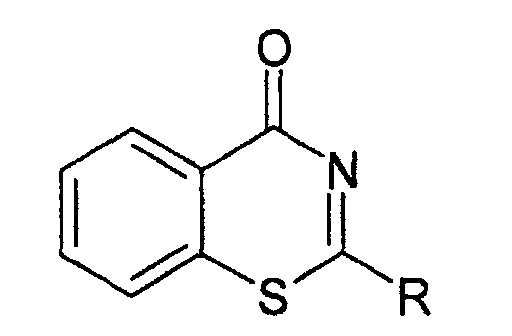
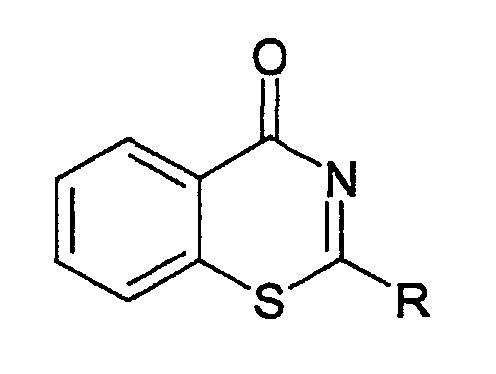
The present inventors found for the first time that a variety of 2-substituted -4H-1,
3-benzothiazin-4-one compounds have an inhibitory action on heart muscle cell
apoptosis. As a result of further investigation based on these findings, the present
inventors achieved the present invention.
Thus, the present invention provides:
BRIEF DESCRIPTION OF THE DRAWINGS
Fig. 1 shows the result of detection of phosphorylated STAT3 as described in
Example 2.
BEST MODE FOR CARRYING OUT THE INVENTION
In the "optionally substituted hydrocarbon group" as represented by R in the
formula above, the "hydrocarbon group" includes, e.g., alkyl, cycloalkyl, cycloalkylalkyl,
alkenyl, alkynyl, aryl, aralkyl, etc.
The "alkyl" includes, for example, C1-6 alkyl (e.g., methyl, ethyl, propyl,
isopropyl, butyl, isobutyl, sec-butyl, tert-butyl, pentyl, hexyl, etc.), etc.
The "cycloalkyl" includes, for example, C3-6 cycloalkyl (e.g., cyclopropyl,
cyclobutyl, cyclopentyl, cyclohexyl, etc.), etc.
The "cycloalkylalkyl" includes, for example, C4-7 cycloalkylalkyl groups (e.g.,
cyclopropylmethyl, cyclobutylmethyl, cyclopentylmethyl, cyclohexylmethyl, etc.), etc.
The "alkenyl" includes, for example, C2-6 alkenyl (e.g., vinyl, allyl, isopropenyl,
1-butenyl, 2-butenyl, 3-butenyl, 2-methyl-2-propenyl, 1-methyl-2-propenyl, 2-methyl-1-propenyl,
etc.), etc.
The "alkynyl" includes, for example, C2-6 alkynyl (e.g., ethynyl, propargyl, 1-butynyl,
2-butynyl, 3-butynyl, 1-hexynyl, etc.), etc.
The "aryl" includes, for example, C6-14 aryl (e.g., phenyl, naphthyl, biphenyl,
indanyl, 1,2,3,4-tetrahydronaphthyl, etc.), etc.
The "aralkyl" includes, for example, C7-16 aralkyl (e.g., benzyl, phenethyl,
phenylpropyl, naphthylmethyl, indanylmethyl, etc.), etc.
In the "optionally substituted hydrocarbon group" as represented by R, examples
of "substituent groups" include a halogen atom (e.g., fluorine, chlorine, bromine, iodine,
etc.), an aromatic heterocyclic group, oxo, hydroxy, C1-4 alkoxy (e.g., methoxy, ethoxy,
propoxy, butoxy, etc.), carboxy, C1-4 alkyl-carbonyl (e.g., acetyl, propionyl, etc.), C6-14
aryl-carbonyl (e.g., benzoyl, etc.), C1-4 alkoxy-carbonyl (e.g., methoxycarbonyl,
ethoxycarbonyl, propoxycarbonyl, butoxycarbonyl, etc.), C6-14 aryloxy-carbonyl (e.g.,
phenoxycarbonyl, etc.), C7-16 aralkyloxy-carbonyl (e.g., benzyloxycarbonyl, etc.),
carbamoyl, mono-C1-6 alkyl-carbamoyl (e.g., methylcarbamoyl, ethylcarbamoyl, etc.), di-C1-6
alkyl-carbamoyl (e.g., dimethylcarbamoyl, diethylcarbamoyl, ethylmethylcarbamoyl,
etc.), optionally halogenated C6-14 aryl-carbamoyl, 5- or 6-membered heterocyclic
carbamoyl (e.g., 2-pyridylcarbamoyl, 3-pyridylcarbamoyl, 4-pyridylcarbamoyl, 2-thienylcarbamoyl,
3-thienylcarbamoyl, etc.), and optionally substituted 5- to 7-membered
saturated cyclic amino-carbonyl, etc. Among these, C6-14 aryl-carbonyl, C1-4 alkoxy-carbonyl,
5- to 6-membered heterocyclic carbamoyl, and 5- to 7-membered saturated
cyclic amino-carbonyl are preferred.
The "aromatic heterocyclic group" includes, for example, a monovalent group
derived by removal of a hydrogen atom from a 5- to 14-membered (preferably 5- to 10-membered)
aromatic heterocycle containing 1 to 4 heteroatoms of one or two species
selected from a nitrogen atom, a sulfur atom and an oxygen atom in addition to the
carbon atoms. The "5- to 14-membered (preferably 5- to 10-membered) aromatic
heterocycle" includes, for example, aromatic heterocycles such as thiophene,
benzo[b]thiophene, benzo[b]furan, benzimidazole, benzoxazole, benzothiazole,
benzisothiazole, naphtho[2,3-b]thiophene, furan, pyrrole, imidazole, pyrazol, pyridine,
pyrazine, pyrimidine, pyridazine, indole, isoindole, 1H-indazole, purine, 4H-quinolizine,
isoquinoline, quinoline, phthalazine, naphthyridine, quinoxaline, quinazoline, cinnoline,
carbazole, β-carboline, phenanthridine, acridine, phenazine, thiazole, isothiazole,
phenothiazine, isoxazole, furazane, phenoxazine, etc.; and rings formed by condensing
any one of these rings (preferably monocycle) with one or more (preferably one or two)
aromatic rings (e.g., benzene ring, etc.).
The "aromatic heterocyclic group" includes, for example, thienyl (e.g., 2-thienyl,
3-thienyl), furyl (e.g., 2- furyl, 3-furyl), pyridyl (e.g., 2-pyridyl, 3-pyridyl, 4-pyridyl),
quinolyl (e.g., 2-quinolyl, 3-quinolyl, 4-quinolyl, 5-quinolyl, 8-quinolyl ), isoquinolyl
(e.g., 1-isoquinolyl, 3-isoquinolyl, 4-isoquinolyl, 5-isoquinolyl), pyrazinyl, pyrimidinyl
(e.g., 2-pyrimidinyl, 4-pyrimidinyl), pyrrolyl (e.g., 3-pyrrolyl), imidazolyl (e.g., 2-imidazolyl),
pyridazinyl (e.g., 3-pyridazinyl), isothiazolyl (e.g., 3-isothiazolyl),
isooxazolyl (e.g., 3-isooxazolyl), indolyl (e.g., 1-indolyl, 2-indolyl, 3-indolyl),
benzothiazolyl (e.g., 2-benzothiazolyl), benzothienyl (e.g., 2-benzo[b]thienyl, 3-benzo[b]thienyl),
benzofuranyl (e.g., 2-benzo[b]furanyl, 3-benzo[b]furanyl), etc.
Among these, a 5- to 6-membered heterocyclic group containing 1 to 3 heteroatoms
selected from a nitrogen atom, a sulfur atom and an oxygen atom in addition to the
carbon atoms (e.g., pyridyl such as 2-pyridyl, 3-pyridyl, 4-pyridyl)) is preferred.
The "optionally halogenated C6-14 aryl-carbamoyl" includes, for example, C6-14
aryl-carbamoyl (e.g., phenyl carbamoyl, 1-naphthyl carbamoyl, 2-naphthyl carbamoyl,
etc.) optionally substituted with 1 to 3 halogen atoms (e.g., fluorine, chlorine, etc.).
In the "optionally substituted 5- to 7-membered saturated cyclic amino-carbonyl",
the "5- to 7-membered saturated cyclic amino-carbonyl" includes, for example,
pyrrolidin-1-ylcarbonyl, piperidinocarbonyl, piperazin-1-ylcarbonyl, morpholinocarbonyl,
etc. Examples of "substituent groups" in the "optionally substituted 5- to 7-membered
saturated cyclic amino-carbonyl" include, for example, C1-3 alkyl (e.g., methyl, etc.),
phenyl, benzyl, etc.
The "optionally substituted hydrocarbon group" may have, for example, one to
five, preferably one to three, of the above-mentioned substituent groups at substitutable
positions. When the number of substituent groups is 2 or more, the respective
substituent groups may be the same or different.
In the "optionally substituted aromatic heterocyclic group" as represented by R,
the "aromatic heterocyclic group" includes, for example, a monovalent group derived by
removal of a hydrogen atom from a 5- to 14-membered (preferably 5- to 10-membered)
aromatic heterocycle containing 1 to 4 heteroatoms of one or two species selected from a
nitrogen atom, a sulfur atom and an oxygen atom in addition to the carbon atoms. The
"5- to 14-membered (preferably 5- to 10-membered) aromatic heterocycle" includes, for
example, aromatic heterocycles such as thiophene, benzo[b]thiophene, benzo[b]furan,
benzimidazole, benzoxazole, benzothiazole, benzisothiazole, naphtho[2,3-b]thiophene,
furan, pyrrole, imidazole, pyrazol, pyridine, pyrazine, pyrimidine, pyridazine, indole,
isoindole, 1H-indazole, purine, 4H-quinolizine, isoquinoline, quinoline, phthalazine,
naphthyridine, quinoxaline, quinazoline, cinnoline, carbazole, β-carboline,
phenanthridine, acridine, phenazine, thiazole, isothiazole, phenothiazine, isoxazole,
furazane, phenoxazine, etc.; and rings formed by condensing any one of these rings
(preferably monocycle) with one or more (preferably one or two) aromatic rings (e.g.,
benzene ring, etc.).
The "aromatic heterocyclic group" includes, for example, thienyl (e.g., 2-thienyl,
3-thienyl), furyl (e.g., 2- furyl, 3-furyl), pyridyl (e.g., 2-pyridyl, 3-pyridyl, 4-pyridyl),
quinolyl (e.g., 2-quinolyl, 3-quinolyl, 4-quinolyl, 5-quinolyl, 8-quinolyl), isoquinolyl
(e.g., 1-isoquinolyl, 3-isoquinolyl, 4-isoquinolyl, 5-isoquinolyl), pyrazinyl, pyrimidinyl
(e.g., 2-pyrimidinyl, 4-pyrimidinyl), pyrrolyl (e.g., 3-pyrrolyl), imidazolyl (e.g., 2-imidazolyl),
pyridazinyl (e.g., 3-pyridazinyl), isothiazolyl (e.g., 3-isothiazolyl),
isooxazolyl (e.g., 3-isooxazolyl), indolyl (e.g., 1-indolyl, 2-indolyl, 3-indolyl),
benzothiazolyl (e.g., 2-benzothiazolyl), benzothienyl (e.g., 2-benzo[b]thienyl, 3-benzo[b]thienyl),
benzofuranyl (e.g., 2-benzo[b]furanyl, 3-benzo[b]furanyl), etc.
Among these, a 5- to 6-membered heterocyclic group containing 1 to 3 heteroatoms
selected from a nitrogen atom, a sulfur atom and an oxygen atom in addition to the
carbon atoms (e.g., pyridyl such as 2-pyridyl, 3-pyridyl, 4-pyridyl)) is preferred.
In the "optionally substituted aromatic heterocyclic group" as represented by R,
examples of "substituent group" include, for example, the same substituent groups as
described above in the "optionally substituted hydrocarbon group". Among these
substituent groups, for example, hydroxy is preferred.
The "optionally substituted ammo group" as represented by R includes, for
example, amino, guanidino, amino having a substituent group, guanidino having a
substituent group, etc.
In the "amino having a substituent group" and "guanidino having a substituent
group", the "substituent group" includes, for example, the "optionally substituted
hydrocarbon group" as represented by R, etc.
Preferable examples of R include benzyl, benzoylmethyl, 3-pyridylaminocarbonylmethyl,
4-chlorophenylaminocarbonylmethyl,
ethoxycarbonylmethyl, piperidinocarbonylmethyl, 2-pyridyl, 3-pyridyl, 4-pyridyl, 3-hydroxy-2-benzo[b]furanyl,
guanidino, etc.
Further, Compound (I) can occur as a tautomer represented by the following
formulas, or as a salt thereof:
wherein X represents CH or a nitrogen atom, and R' represents a group derived by
removal of X-H from R. Compound (I) includes the tautomer, a salt thereof, and a
mixture thereof with Compound (I).
The salt of Compound (I) or its tautomer is preferably a pharmaceutically
acceptable salt, and includes a salt with an inorganic base, a salt with an organic base, a
salt with an inorganic acid, a salt with an organic acid, a salt with a basic or acidic amino
acid and so on. The preferred examples of salts with an inorganic base include an alkali
metal salt such as sodium salt, potassium salt; alkali earth metal salt, calcium salt and
magnesium salt; and aluminum salt, ammonium salt, etc. The preferred examples of
salts with an organic base include trimethylamine salt, triethylamine salt, pyridine salt,
picoline salt, ethanolamine salt, diethanolamine salt, triethanolamine salt,
dicyclohexylamine salt, N,N'-dibenzylethylenediamine salt, etc. The preferred
examples of salts with an inorganic acid include a salt of hydrochloric acid, hydrobromic
acid, nitric acid, sulfuric acid, phosphoric acid, etc. The preferred examples of salts
with an organic acid include a salt of formic acid, acetic acid, propionic acid, fumaric
acid, oxalic acid, tartaric acid, maleic acid, citric acid, succinic acid, malic acid,
methanesulfonic acid, benzenesulfonic acid, benzoic acid, etc. The preferred examples
of salts with a basic amino acid include a salt with arginine, lysine, ornithine, etc. The
preferred examples of salts with an acidic amino acid include a salt with aspartic acid,
glutamic acid, etc.
Compound (I) may be commercially purchased, or may be produced according
to a well-known method or a modification thereof.
Compound (I) has an excellent inhibitory action on heart muscle cell apoptosis
and an enhancing action on heart muscle-protecting signals (e.g., enhancing action on
gp1 30 signal, etc.), and is low toxic. The apoptosis of heart muscle cells induced by
various causes is usually observed as loss of heart muscle cells in the heart muscle, and
have an adverse affect on the cardiac functions. Accordingly, Compound (I) having an
inhibitory action on apoptosis of heart muscle cells can be used to protect the cardiac
functions from the adverse influence caused by loss of heart muscle cells. Further,
Compound (I) can enhance the gp130 signaling pathway, one of signaling pathways for
protecting heart muscle cells from apoptosis; and the other signaling pathway different
from the gp130 signaling pathway, for example, PI3 kinase/Akt pathway (Takihara,
"Igaku No Ayumi", vol.194, pp.33-86 (2000)). Thus, Compound (I) can be used to
prevent the cardiac functions from being lowered by loss of heart muscle cells.
Compound (I) can be formulated as a pharmaceutical composition in various
forms in accordance with a well-known method, and administered orally or parenterally
in safety to a mammal (e.g. human, monkey, etc.) to prevent and/or treat heart diseases
(e.g., congestive myocardiopathy, hypertrophic obstructive myocardiopathy, hypertrophic
non-obstructive myocardiopathy, idiopathic myocardiopathy, angina pectoris, myocardial
infarction, poor prognosis of myocardial infarction, chronic cardiac insufficiency, etc.).
Specifically, Compound (I) is mixed with pharmaceutically acceptable carriers
and administered orally as tablets, pills, granules, capsules, syrups, emulsions,
suspensions, etc. or parenterally, i.e. intravenously, subcutaneously or intramuscularly as
injections, suppositories, sublingual tablets. Compound (I) may be administered
sublingually, subcutaneously or intramuscularly as sustained-release preparations such as
sublingual tablets and microcapsules.
The pharmaceutically acceptable carriers include a wide variety of organic or
inorganic carrier materials conventionally used for pharmaceutical preparations, and are
mixed, for example, as excipients, lubricants, binders, disintegrators, solvents,
solubilizers, suspending agents, isotonizing agents, buffers and soothing agents. If
necessary, additives such as preservatives, antioxidants, coloring agents, sweeteners, etc.
can also be used.
Preferable examples of the excipients include e.g. lactose, white sugar, D-mannitol,
starch, crystalline cellulose and light silicic anhydride. Preferable examples
of the lubricants include e.g. magnesium stearate, calcium stearate, talc and colloidal
silica. Preferable examples of the binders include e.g. crystalline cellulose, white sugar,
D-mannitol, dextrin, hydroxypropyl cellulose, hydroxypropylmethyl cellulose and
polyvinyl pyrrolidone. Preferable examples of the disintegrators include e.g. starch,
carboxymethyl cellulose, calcium carboxymethyl cellulose, sodium croscarmellose and
sodium carboxymethyl starch. Preferable examples of the solvents include e.g. water
for injection, alcohol, propylene glycol, Macrogol, sesame oil and corn oil. Preferable
examples of the solubilizers include e.g. polyethylene glycol, propylene glycol, D-mannitol,
benzyl benzoate, ethanol, trisaminomethane, cholesterol, triethanolamine,
sodium carbonate and sodium citrate. Preferable examples of the suspending agents
include e.g. surfactants such as stearyl triethanolamine, sodium laurylsulfate, lauryl
aminopropionic acid, lecithin, benzalconium chloride, benzetonium chloride and
glycerine monostearate; and hydrophilic polymers such as polyvinyl alcohol, polyvinyl
pyrrolidone, sodium carboxymethyl cellulose, methyl cellulose, hydroxymethyl cellulose,
hydroxyethyl cellulose and hydroxypropyl cellulose. Preferable examples of the
isotonizing agents include e.g. sodium chloride, glycerine and D-mannitol. Preferable
examples of the buffers include e.g. buffers such as phosphates, acetates, carbonates and
citrates. Preferable examples of the soothing agents include e.g. benzyl alcohol.
Preferable examples of the preservatives include e.g. para-oxybenzoic acid esters,
chlorobutanol, benzyl alcohol, phenetyl alcohol, dehydroacetic acid and sorbic acid.
Preferable examples of the antioxidants include e.g. sulfites, ascorbic acid.
The does of Compound (I) varies depending on pathological severeness; age, sex
and weight of the subject; timing and interval of administration, nature, formulation and
type of the pharmaceutical composition; kinds of active ingredients. For treatment of
heart diseases, the daily dose for an adult is usually, but not limited to, about 10 µg to 100
mg/kg of body weight, preferably 100 µg to 50 mg/kg of body weight. The daily does is
usually divided and administered 1 to 4 times per day.
Compound (I) is present in an amount between about 0.01 and 100 % of the total
weight of the inhibitor of the present invention.
The present invention will be now further described specifically with reference
to the following Reference Examples, Examples, and Experimental Examples, which are
however not intended to limit the scope of the present invention.
In the following Reference Examples, "%" means % by weight unless otherwise
specified. 1H-NMR spectra were measured by Varian GEMINI 200 (200 MHz)
spectrometer with tetramethyl silane as the internal standard. All δ values are expressed
in ppm.
The abbreviations as used herein have the following meanings.
EXAMPLES
Reference Example 1
2-(2-Pyridyl)-4H-1,3-benzothiazin-4-one (Compound 1)
Methyl thiosalicylate (1.6 g, 9.51 mM) and 2-cyanopyridine (1.0 g, 9.60 mM)
were dissolved in toluene (2 ml), and then triethylamine (2 ml, 14.4 mM) was added
thereto. After heating the mixture under reflux for 8 hours, and the toluene was distilled
away. Ethanol was added to the residues, and the resulting precipitates were collected
by filtration to give crude crystals (1.7 g). The product was purified by silica gel
column chromatography (hexane:chloroform = 5:1 → chloroform) to give the title
compound as crystals (1.0 g, 43.4%).
| Elemental Analysis for C13H8N2OS |
| calcd.(%) C | 64.98, H: 3.36, N: 11.66 |
| found (%) C | 64.93, H: 3.31, N: 11.59 |
1H-NMR (CDCl
3) δ: 7.50-7.75 (m, 4H), 7.85-8.00 (m, 1H), 8.50-8.60 (m, 2H), 8.70-8.80
(m, 1H)
IR (KBr): 1660 cm
-1 Methyl thiosalicylate (1.8 g, 10.7 mM) and 3-cyanopyridine (1.1 g, 10.56 mM)
were dissolved in toluene (5 ml), and then triethylamine (2 ml, 14.4 mM) was added
thereto. After heating the mixture under reflux for 48 hours, the same processes as
described in Reference Example 1 were performed to give the title compound as crystals
(1.1 g, 43.4%).
| Elemental Analysis for C13H8N2OS |
| calcd.(%) C | 64.98, H: 3.36, N: 11.66 |
| found (%) C | 64.97, H: 3.33, N: 11.63 |
Methyl thiosalicylate (2.0 g, 11.9 mM) and 4-cyanopyridine (1.2 g, 11.5 mM)
were dissolved in toluene (5 ml), and then triethylamine (2 ml) was added thereto. After
heating the mixture under reflux for 22 hours, the same processes as described in
Reference Example 1 were performed to give the title compound as crystals (850 mg,
30.7%).
| Elemental Analysis for C13H8N2OS |
| calcd.(%) C | 64.98, H: 3.36, N: 11.66 |
| found (%) C | 65.07, H: 3.15, N: 11.62 |
Methyl thiosalicylate (6 g, 35.7 mM) and ethyl cyanoacetate (4 g, 35.4 mM)
were dissolved in toluene (10 ml), and then triethylamine (5 ml, 35.8 mM) was added
thereto. After heating under reflux for 7 hours, the reaction solution was concentrated.
Ethanol was added to the residues and kept still, and the precipitated crystals were
collected by filtration to give crude crystals. The product was recrystallized from
ethanol to give the title compound as needle crystals (5.4 g, 60.7%).
| Elemental Analysis for C12H11NO3S |
| calcd.(%) C | 57.82, H: 4.45, N: 5.62 |
| found (%) C | 57.86, H: 4.36, N: 5.51 |
1H-NMR (CDCl
3) δ: 1.31 (t, 3H, J=7.0 Hz), 4.22 (q, 2H, J=7.0 Hz), 5.57 (s, 1H), 7.35 (t,
2H, J=7.4 Hz), 7.50-7.60 (m, 1H), 8.28 (d, 1H, J=7.4 Hz), 9.73 (s, 1H)
IR (KBr): 1660, 1590, 1580, 1560, 1440, 1295, 1165, 730 (cm
-1)
Methyl thiosalicylate (1.7 g, 10.1 mM) and 1-cyanoacetyl piperidine (2.0 g, 13.1
mM) were dissolved in toluene (5 ml), and then triethylamine (2 ml, 14.4 mM) was
added thereto. After heating under reflux for 30 hours, the reaction solution was
concentrated to give crude crystals. The product was recrystallized from ethanol to give
the title compound as needle crystals (730 mg, 25%).
| Elemental Analysis for C15H16N2O2S |
| calcd.(%) C | 62.48, H: 5.59, N: 9.71 |
| found (%) C | 62.22, H: 5.58, N: 9.65 |
1H-NMR (CDCl
3) δ: 1.30-1.80 (m, 6H), 3.30-3.70 (m, 4H), 5.30 (s, 1H), 6.90-7.60 (m,
3H), 8.27 (dd, 1H, J=8Hz, J=2Hz)
IR (KBr): 1660, 1595, 1560 (cm
-1)
Tablets are produced in a conventional manner using Compound 1 (100 mg),
lactose (165 mg), corn starch (25 mg), polyvinyl alcohol (4 mg) and magnesium stearate
(1 mg).
Experimental Example 1
Inhibitory Activity on Heart Muscle Cell Apoptosis
Newborn rats (within 1 day after birth) were obtained from pregnant Wister rats
purchased from Charles River, anesthetized under ether, and sterilized with 70 % ethanol,
and then their hearts were excised with tweezers. The excised hearts were washed with
a phosphate-buffered physiological saline (T900; Takara) and cut into pieces with
surgical scissors. These tissue pieces were washed 4 to 5 times with a phosphate-buffered
physiological saline to remove a majority of blood-derived non-heart muscle
cells. To the tissue pieces derived from 10 newborns, 5 ml of enzyme solution (1.25 mg
trypsin (Difco) and 0.25 mg collagenase (Sigma) per ml of phosphate-buffered saline
(PBS)) was added and the mixture was stirred with a stirrer at 37°C for 15 mins. Another
2.5 ml enzyme solution was then added twice repeatedly at a 15-minutes interval. Then,
Medium 199 (Gibco) containing 10 % fetal calf serum (Biowiker) was added in a half
volume of the enzyme solution to terminate the enzyme reaction. The cells were filtered
through a Cell Strainer (Falcon) and then centrifuged at 400×g for 5 minutes, whereby
the cells were collected.
The cells thus collected from 10 newborns were suspended in 50 ml Medium
199 containing 10 % fetal calf serum, plated onto 100 mm Petri dishes (Iwaki) in a
volume of 10 ml/dish and cultured for 1 hour in a CO2 incubator set at 5 % CO2 and 37°C.
The cells were then recovered, filtered through a Cell Strainer and centrifuged at 400×g
for 5 minutes to collect the primary heart muscle cells derived from newborn rats.
Then, the heart muscle cells from 10 newborn rats were suspended in 2 ml low-isotonic
solution (prepared by dissolving 8.29 g NH4Cl, 1.0 g KHCO3, 37 mg EDTA/2Na
(ethylenediaminetetraacetic acid disodium)(Dojindo) in 1 L of water) and left for 3
minutes to disrupt erythrocytes. After 10 ml Medium 199 containing 10 % fetal calf
serum was added thereto, the primary heart muscle cells from newborn rats were
collected by centrifugation at 400×g for 5 minutes. The cells were suspended in
Medium 199 containing 10 % fetal calf serum and then filtered through a cell strainer.
After 0.3 % trypan blue was added to, and mildly mixed with, an aliquot of the resulting
cell suspension, the number of heart muscle cells was counted on an erythrocyte counting
plate.
The primary heart muscle cells from newborn rats were suspended at a density
of 3×10⁶ cells/ml in Medium 199 containing 10 % fetal calf serum, put onto a 96-well
plate in a volume of 0.1 ml/well, and then cultured in a CO2 incubator set at 5 % CO2 and
37°C. After the plate was stirred with a micromixer (Taiyo Kagaku Kogyo), the
medium was exchanged 3 times with serum-free Medium 199, and then test compounds
(Compounds 1 to 5 obtained in Reference Examples) were added thereto. The cells
were cultured for additional 4 days to induce apoptosis. Then, fetal calf serum was
added thereto at a concentration of 10 %, and the cells were further cultured for about 17
hours in a CO2 incubator set at 5 % CO2 and 37°C. Finally, the number of viable cells
was determined with Cell Counting Kit (Dojindo) using WST-8 (2-(2-methoxy-4-nitrophenyl)-3-(4-nitrophenyl)-5-(2,4-disulfophenyl)-2H-tetrazolium,
monosodium salt)
as the coloring substrate to determine the inhibition of the heart muscle cell apoptosis.
The above-mentioned exeriment was tripicated in an independent manner.
The Mean minimal effective concentration (±SD) was shown for each test
compound (
Compounds 1 to 5 obtained in Reference Examples) in Table 1. In Table 1,
the minimal effective concentration is defined as the concentration required to increase
the mean viable cell number by 30 % as compared with that in the absence of test
compounds.
| Compound No. | Minimal Effective Concentration (µM) |
| 1 | 0.015±0.011 |
| 2 | 0.041±0.018 |
| 3 | 0.014±0.0099 |
| 4 | 0.019±0.0078 |
| 5 | 0.06 ±0.041 |
This result shows that Compounds 1 to 5 have the inhibitory activiy on heart
muscle cell apoptosis.
Experimental Example 2
Confirmation of an enhancing action on gp130 signal
STAT3 (signal transducers and activators of transcription-3) is a primary positive
regulatory factor involved in transmission of gp130 signal. Phosphorylation of the
tyrosine residue at the 705th position (Tyr705) is essential for activation of STAT3.
Accordingly, this phosphorylation can be used as an indicator of activation of STAT3,
that is, of an enhancing action on gp130 signal.
Primary heart muscle cells derived from newborn rats were stimulated with a
small amount of LIF (Leukemia inhibitory factor) to induce gp130 signal in the presence
of a test compound (Compound 1 obtained in Reference Example 1). Phosphorylation
of Tyr705 was examined by immunoblotting with an antibody specifically recognizing
phosphorylated STAT3, to confirm the enhancing action of the test compound on gp130
signal.
[Method]
The primary heart muscle cells derived from newborn rats, obtained in the
method of Experimental Example 1, were suspended at a density of 5 x 10⁶ cells/ml in
Medium 199 containing 10% fetal bovine serum, then put to a 12-well plate (ASAHI
TECHNO GLASS CORPORATION) in a volume of 2.0 ml/well, and cultured for 1 day
in a 5% CO2 incubator set at 37°C. After the medium was exchanged 3 times with
serum-free Medium 199 to remove the serum, the cells were cultured for 24 hours, and
then the medium was again exchanged once with serum-free Medium 199, followed by
culture for additional 30 to 60 minutes.
A test compound (Compound 1 obtained in Reference Example 1) and human
LIF (PEPRO TECH) were added to the thus prepared cells, and incubated for reaction for
30 minutes. The reaction solution was washed 3 times with phosphate buffered
physiological saline (1 ml) containing 1 mM sodium orthovanadate (V) (Wako Pure
Chemical Industries, Ltd.), and then the cells were treated at 4°C for 15 minutes with 100
ml cell-lysis buffer [10 mM Tris(hydroxymethyl)aminomethane (Sigma), pH 7.4; 150
mM NaCl; 1 mM EDTA/2Na; 1 mM EGTA (ethylene glycol-bis-(2-aminoethylether)-N,N,N',N'-tetraacetic
acid)(Sigma); 0.5 mM p-APMSF ((p-aminophenyl)methanesulfonyl
fluoride hydrochloride)(Wako Pure Chemical Industries);
200 µM sodium β-glycerophosphate n-hydrate(Wako); 20 mM NaF; 2 mM sodium
diphosphate decahydrate; 1 mM sodium orthovanadate (V)(Wako); 10 µg/ml
aprotinin(Wako); 10 µg/ml leupeptin (Peptide Institute, Inc.); 1% Triton X-100; 0.5%
Nonident P40 (Fluka); 0.1% SDS (sodium dodesyl sulfate)].
Then, the cells were scratched off with a cell scraper (ASAHI TECHNO GLASS
CORPORATION), and the cell-lysis buffer was recovered. The recovered cell-lysis
buffer was mixed with an equal volume of a sample buffer (Tris-SDS-βME Sample
Buffer; Daiichi Pure Chemicals Co., Ltd.) and heated at 95°C for 5 minutes. This
sample was subjected to SDS polyacrylamide electrophoresis on Multi-Gel 7.5 (Daiichi
Pure Chemicals). Then, a nitrocellulose membrane (Hybond -ECL; Amersham
Pharmacia Biotech) previously immersed for 10 minutes or more in a blotting buffer [0.1
M tris(hydroxymethyl)aminomethane; 0.192 M glycine, 20% ethanol], a blotting filter
paper, a dialysis membrane and the gel were placed in Horize Blott (ATTO) to carry out
the transfer for 1 hour at 100 mA/gel (6.4 cm2). Thereafter, the blocking of the
nitrocellulose membrane was conducted by immersing for 1 hour in a blocking buffer
[TTBS buffer (20% Tris-HCl, pH 7.6; 0.137 M NaCl; 0.1% Tween-20) containing 5%
skim milk powder (BioRad)] at room temperature under stirring.
Then, the nitrocellulose membrane was immersed in a 1:1000 dilution of
primary antibody (anti-phosphorylated STAT3 (Tyr705) antibody; NEW ENGLAND
BioLabs) with the blocking buffer, and incubated for reaction at 4°C for 12 to 18 hours.
After the reaction was finished, the membrane was immersed repeatedly 3 times in an
appropriate amount (about 80 ml) of TTBS buffer for 5 minutes to remove an excess of
the antibody. The membrane was immersed in a 1:2000 dilution of secondary antibody
(HRP [horseradish peroxidase] labeled anti-rabbit IgG antibody; NEW ENGLAND
BioLabs) with the blocking buffer, and incubated for reaction at room temperature for 1
hour. The membrane was washed in the same manner with about 80 ml TTBS buffer,
and a Western blotting detection reagent (ECL+Plus; Amersham) was added in a volume
of 6.4 ml/gel (64 cm2), and incubated for reaction at room temperature for 5 minutes,
followed by detection with Hyperfilm ECL (Amersham).
[Results]
The results are shown in Fig. 1. In Fig. 1, the 1st lane from the left shows the
phosphorylation in the presence of 10 µM Compound 1 and 10 U/ml LIF; the 2nd lane
from the left shows the phosphorylation in the presence of 1 µM Compound 1 and 10
U/ml LIF; the 3rd lane from the left shows the phosphorylation in the presence of 0.1 µM
Compound 1 and 10 U/ml LIF; the 4th lane from the left shows the phosphorylation in
the presence of 0.01 µM Compound 1 and 10 U/ml LIF; the 5th lane from the left shows
the phosphorylation in the absence of Compound 1 and LIF; the 6th lane from the left
shows the phosphorylation in the absence of Compound 1 but the presence of 1000 U/ml
LIF and; and the 7th lane from the left shows the phosphorylation in the absence of
Compound 1 but the presence of 10 U/ml LIF.
The results confirmed that Compound 1 can further promote phosphorylation of
STAT3 induced by 10 U/ml human LIF in primary heart muscle cells derived from
newborn rats, and thus that Compound 1 has an enhancing action on gp130 signal.
INDUSTRIAL APPLICABILITY
The inhibitor of heart muscle cell apoptosis of the present invention is low toxic
and has an excellent prophylactic and/or therapeutic effect on heart diseases.