EP1325908A1 - Process for the preparation of an enantiomerically enriched thio compound - Google Patents
Process for the preparation of an enantiomerically enriched thio compound Download PDFInfo
- Publication number
- EP1325908A1 EP1325908A1 EP01000756A EP01000756A EP1325908A1 EP 1325908 A1 EP1325908 A1 EP 1325908A1 EP 01000756 A EP01000756 A EP 01000756A EP 01000756 A EP01000756 A EP 01000756A EP 1325908 A1 EP1325908 A1 EP 1325908A1
- Authority
- EP
- European Patent Office
- Prior art keywords
- enantiomerically enriched
- group
- mmol
- acid
- process according
- Prior art date
- Legal status (The legal status is an assumption and is not a legal conclusion. Google has not performed a legal analysis and makes no representation as to the accuracy of the status listed.)
- Withdrawn
Links
- 238000000034 method Methods 0.000 title claims abstract description 29
- 238000002360 preparation method Methods 0.000 title claims abstract description 19
- -1 thio compound Chemical class 0.000 title claims description 46
- 239000003446 ligand Substances 0.000 claims abstract description 23
- 150000003839 salts Chemical class 0.000 claims abstract description 22
- 238000006243 chemical reaction Methods 0.000 claims abstract description 21
- 125000005842 heteroatom Chemical group 0.000 claims abstract description 17
- 229910052723 transition metal Inorganic materials 0.000 claims abstract description 15
- 150000003624 transition metals Chemical class 0.000 claims abstract description 15
- 150000001875 compounds Chemical class 0.000 claims abstract description 11
- 125000000217 alkyl group Chemical group 0.000 claims abstract description 8
- 125000003118 aryl group Chemical group 0.000 claims abstract description 8
- QGZKDVFQNNGYKY-UHFFFAOYSA-O Ammonium Chemical compound [NH4+] QGZKDVFQNNGYKY-UHFFFAOYSA-O 0.000 claims abstract description 6
- 239000002841 Lewis acid Substances 0.000 claims abstract description 6
- 229910001413 alkali metal ion Inorganic materials 0.000 claims abstract description 6
- 229910001420 alkaline earth metal ion Inorganic materials 0.000 claims abstract description 6
- 150000007517 lewis acids Chemical class 0.000 claims abstract description 6
- 229910052735 hafnium Inorganic materials 0.000 claims abstract description 5
- 229910052719 titanium Inorganic materials 0.000 claims abstract description 5
- 229910052726 zirconium Inorganic materials 0.000 claims abstract description 5
- 239000011541 reaction mixture Substances 0.000 claims description 24
- 125000002496 methyl group Chemical group [H]C([H])([H])* 0.000 claims description 8
- 150000001412 amines Chemical class 0.000 claims description 6
- 125000001797 benzyl group Chemical group [H]C1=C([H])C([H])=C(C([H])=C1[H])C([H])([H])* 0.000 claims description 5
- 238000002425 crystallisation Methods 0.000 claims description 5
- 150000003899 tartaric acid esters Chemical class 0.000 claims description 5
- 150000001336 alkenes Chemical class 0.000 claims description 3
- 239000003054 catalyst Substances 0.000 abstract description 33
- YXFVVABEGXRONW-UHFFFAOYSA-N Toluene Chemical compound CC1=CC=CC=C1 YXFVVABEGXRONW-UHFFFAOYSA-N 0.000 description 60
- 239000000203 mixture Substances 0.000 description 31
- 238000004128 high performance liquid chromatography Methods 0.000 description 16
- 239000010936 titanium Substances 0.000 description 12
- KOUKXHPPRFNWPP-UHFFFAOYSA-N pyrazine-2,5-dicarboxylic acid;hydrate Chemical compound O.OC(=O)C1=CN=C(C(O)=O)C=N1 KOUKXHPPRFNWPP-UHFFFAOYSA-N 0.000 description 11
- SONHXMAHPHADTF-UHFFFAOYSA-M sodium;2-methylprop-2-enoate Chemical compound [Na+].CC(=C)C([O-])=O SONHXMAHPHADTF-UHFFFAOYSA-M 0.000 description 11
- NGULOVMSCOEJQZ-BYPYZUCNSA-N (2s)-2-methyl-4-sulfanylidenepentanoic acid Chemical compound OC(=O)[C@@H](C)CC(C)=S NGULOVMSCOEJQZ-BYPYZUCNSA-N 0.000 description 8
- 125000004432 carbon atom Chemical group C* 0.000 description 8
- PAFZNILMFXTMIY-UHFFFAOYSA-N cyclohexylamine Chemical compound NC1CCCCC1 PAFZNILMFXTMIY-UHFFFAOYSA-N 0.000 description 8
- YJLQLBXCKKJILM-LLVKDONJSA-N (2s)-2-benzyl-4-sulfanylidenepentanoic acid Chemical compound CC(=S)C[C@@H](C(O)=O)CC1=CC=CC=C1 YJLQLBXCKKJILM-LLVKDONJSA-N 0.000 description 6
- CERQOIWHTDAKMF-UHFFFAOYSA-N Methacrylic acid Chemical compound CC(=C)C(O)=O CERQOIWHTDAKMF-UHFFFAOYSA-N 0.000 description 6
- 239000002904 solvent Substances 0.000 description 6
- RYNDYESLUKWOEE-UHFFFAOYSA-N 2-benzylprop-2-enoic acid Chemical compound OC(=O)C(=C)CC1=CC=CC=C1 RYNDYESLUKWOEE-UHFFFAOYSA-N 0.000 description 4
- 239000003153 chemical reaction reagent Substances 0.000 description 4
- 239000000376 reactant Substances 0.000 description 4
- 238000003756 stirring Methods 0.000 description 4
- QTBSBXVTEAMEQO-UHFFFAOYSA-N Acetic acid Chemical compound CC(O)=O QTBSBXVTEAMEQO-UHFFFAOYSA-N 0.000 description 3
- WEVYAHXRMPXWCK-UHFFFAOYSA-N Acetonitrile Chemical compound CC#N WEVYAHXRMPXWCK-UHFFFAOYSA-N 0.000 description 3
- YMWUJEATGCHHMB-UHFFFAOYSA-N Dichloromethane Chemical compound ClCCl YMWUJEATGCHHMB-UHFFFAOYSA-N 0.000 description 3
- XEKOWRVHYACXOJ-UHFFFAOYSA-N Ethyl acetate Chemical compound CCOC(C)=O XEKOWRVHYACXOJ-UHFFFAOYSA-N 0.000 description 3
- IMNFDUFMRHMDMM-UHFFFAOYSA-N N-Heptane Chemical compound CCCCCCC IMNFDUFMRHMDMM-UHFFFAOYSA-N 0.000 description 3
- 125000000484 butyl group Chemical group [H]C([*])([H])C([H])([H])C([H])([H])C([H])([H])[H] 0.000 description 3
- 150000001732 carboxylic acid derivatives Chemical class 0.000 description 3
- 238000004821 distillation Methods 0.000 description 3
- SCOSMUXTKAXPDP-ZCFIWIBFSA-N (2s)-2-(acetylsulfanylmethyl)butanoic acid Chemical compound CC[C@@H](C(O)=O)CSC(C)=O SCOSMUXTKAXPDP-ZCFIWIBFSA-N 0.000 description 2
- AHIHUENMXGVXIU-MRVPVSSYSA-N (2s)-2-(acetylsulfanylmethyl)hexanoic acid Chemical compound CCCC[C@@H](C(O)=O)CSC(C)=O AHIHUENMXGVXIU-MRVPVSSYSA-N 0.000 description 2
- ONPJWQSDZCGSQM-UHFFFAOYSA-N 2-phenylprop-2-enoic acid Chemical compound OC(=O)C(=C)C1=CC=CC=C1 ONPJWQSDZCGSQM-UHFFFAOYSA-N 0.000 description 2
- 235000021513 Cinchona Nutrition 0.000 description 2
- 241000157855 Cinchona Species 0.000 description 2
- FEWJPZIEWOKRBE-JCYAYHJZSA-N Dextrotartaric acid Chemical compound OC(=O)[C@H](O)[C@@H](O)C(O)=O FEWJPZIEWOKRBE-JCYAYHJZSA-N 0.000 description 2
- WYURNTSHIVDZCO-UHFFFAOYSA-N Tetrahydrofuran Chemical compound C1CCOC1 WYURNTSHIVDZCO-UHFFFAOYSA-N 0.000 description 2
- 229930013930 alkaloid Natural products 0.000 description 2
- 150000003797 alkaloid derivatives Chemical class 0.000 description 2
- 150000004945 aromatic hydrocarbons Chemical class 0.000 description 2
- 239000002585 base Substances 0.000 description 2
- UIJGNTRUPZPVNG-UHFFFAOYSA-N benzenecarbothioic s-acid Chemical compound SC(=O)C1=CC=CC=C1 UIJGNTRUPZPVNG-UHFFFAOYSA-N 0.000 description 2
- 230000015572 biosynthetic process Effects 0.000 description 2
- 150000001735 carboxylic acids Chemical class 0.000 description 2
- YSAVZVORKRDODB-PHDIDXHHSA-N diethyl (2r,3r)-2,3-dihydroxybutanedioate Chemical compound CCOC(=O)[C@H](O)[C@@H](O)C(=O)OCC YSAVZVORKRDODB-PHDIDXHHSA-N 0.000 description 2
- 230000000694 effects Effects 0.000 description 2
- 150000002170 ethers Chemical class 0.000 description 2
- 125000001495 ethyl group Chemical group [H]C([H])([H])C([H])([H])* 0.000 description 2
- 125000000959 isobutyl group Chemical group [H]C([H])([H])C([H])(C([H])([H])[H])C([H])([H])* 0.000 description 2
- 229910052744 lithium Inorganic materials 0.000 description 2
- VLKZOEOYAKHREP-UHFFFAOYSA-N n-Hexane Chemical compound CCCCCC VLKZOEOYAKHREP-UHFFFAOYSA-N 0.000 description 2
- 125000001997 phenyl group Chemical group [H]C1=C([H])C([H])=C(*)C([H])=C1[H] 0.000 description 2
- 229910052708 sodium Inorganic materials 0.000 description 2
- 239000011734 sodium Substances 0.000 description 2
- IDSXQIVJXDSYLV-UHFFFAOYSA-M sodium;2-benzylprop-2-enoate Chemical compound [Na+].[O-]C(=O)C(=C)CC1=CC=CC=C1 IDSXQIVJXDSYLV-UHFFFAOYSA-M 0.000 description 2
- 239000007787 solid Substances 0.000 description 2
- 125000001424 substituent group Chemical group 0.000 description 2
- 229940095064 tartrate Drugs 0.000 description 2
- VXUYXOFXAQZZMF-UHFFFAOYSA-N titanium(IV) isopropoxide Chemical compound CC(C)O[Ti](OC(C)C)(OC(C)C)OC(C)C VXUYXOFXAQZZMF-UHFFFAOYSA-N 0.000 description 2
- 229910001428 transition metal ion Inorganic materials 0.000 description 2
- JJLYJHOTHKSCOW-AWEZNQCLSA-N (2s)-2,4-diphenyl-4-sulfanylidenebutanoic acid Chemical compound C([C@H](C(=O)O)C=1C=CC=CC=1)C(=S)C1=CC=CC=C1 JJLYJHOTHKSCOW-AWEZNQCLSA-N 0.000 description 1
- KVTHMAAGKKCLIH-QMMMGPOBSA-N (2s)-2-methyl-4-phenyl-4-sulfanylidenebutanoic acid Chemical compound OC(=O)[C@@H](C)CC(=S)C1=CC=CC=C1 KVTHMAAGKKCLIH-QMMMGPOBSA-N 0.000 description 1
- KVVMXQSELOLCPC-JTQLQIEISA-N (2s)-2-phenyl-4-sulfanylidenepentanoic acid Chemical compound CC(=S)C[C@H](C(O)=O)C1=CC=CC=C1 KVVMXQSELOLCPC-JTQLQIEISA-N 0.000 description 1
- WSLDOOZREJYCGB-UHFFFAOYSA-N 1,2-Dichloroethane Chemical compound ClCCCl WSLDOOZREJYCGB-UHFFFAOYSA-N 0.000 description 1
- NWUYHJFMYQTDRP-UHFFFAOYSA-N 1,2-bis(ethenyl)benzene;1-ethenyl-2-ethylbenzene;styrene Chemical compound C=CC1=CC=CC=C1.CCC1=CC=CC=C1C=C.C=CC1=CC=CC=C1C=C NWUYHJFMYQTDRP-UHFFFAOYSA-N 0.000 description 1
- YBYIRNPNPLQARY-UHFFFAOYSA-N 1H-indene Natural products C1=CC=C2CC=CC2=C1 YBYIRNPNPLQARY-UHFFFAOYSA-N 0.000 description 1
- FEUFEGJTJIHPOF-UHFFFAOYSA-N 2-butyl acrylic acid Chemical compound CCCCC(=C)C(O)=O FEUFEGJTJIHPOF-UHFFFAOYSA-N 0.000 description 1
- WROUWQQRXUBECT-UHFFFAOYSA-N 2-ethylacrylic acid Chemical compound CCC(=C)C(O)=O WROUWQQRXUBECT-UHFFFAOYSA-N 0.000 description 1
- GHIOEDDRBXZOQD-UHFFFAOYSA-N 4-[2,2-di(propan-2-yloxy)ethoxy]-2,3-dihydroxy-4-oxobutanoic acid Chemical compound CC(C)OC(COC(=O)C(C(C(=O)O)O)O)OC(C)C GHIOEDDRBXZOQD-UHFFFAOYSA-N 0.000 description 1
- 125000006281 4-bromobenzyl group Chemical group [H]C1=C([H])C(=C([H])C([H])=C1Br)C([H])([H])* 0.000 description 1
- 125000006283 4-chlorobenzyl group Chemical group [H]C1=C([H])C(=C([H])C([H])=C1Cl)C([H])([H])* 0.000 description 1
- 125000004217 4-methoxybenzyl group Chemical group [H]C1=C([H])C(=C([H])C([H])=C1OC([H])([H])[H])C([H])([H])* 0.000 description 1
- HEDRZPFGACZZDS-UHFFFAOYSA-N Chloroform Chemical compound ClC(Cl)Cl HEDRZPFGACZZDS-UHFFFAOYSA-N 0.000 description 1
- NTIZESTWPVYFNL-UHFFFAOYSA-N Methyl isobutyl ketone Chemical compound CC(C)CC(C)=O NTIZESTWPVYFNL-UHFFFAOYSA-N 0.000 description 1
- UIHCLUNTQKBZGK-UHFFFAOYSA-N Methyl isobutyl ketone Natural products CCC(C)C(C)=O UIHCLUNTQKBZGK-UHFFFAOYSA-N 0.000 description 1
- BZLVMXJERCGZMT-UHFFFAOYSA-N Methyl tert-butyl ether Chemical compound COC(C)(C)C BZLVMXJERCGZMT-UHFFFAOYSA-N 0.000 description 1
- SECXISVLQFMRJM-UHFFFAOYSA-N N-Methylpyrrolidone Chemical compound CN1CCCC1=O SECXISVLQFMRJM-UHFFFAOYSA-N 0.000 description 1
- 229910003074 TiCl4 Inorganic materials 0.000 description 1
- 230000002411 adverse Effects 0.000 description 1
- 150000001298 alcohols Chemical class 0.000 description 1
- 125000001931 aliphatic group Chemical group 0.000 description 1
- 150000001338 aliphatic hydrocarbons Chemical class 0.000 description 1
- 239000003513 alkali Substances 0.000 description 1
- 125000003342 alkenyl group Chemical group 0.000 description 1
- 150000004703 alkoxides Chemical class 0.000 description 1
- 125000003545 alkoxy group Chemical group 0.000 description 1
- 125000003277 amino group Chemical group 0.000 description 1
- 150000003863 ammonium salts Chemical class 0.000 description 1
- 150000004982 aromatic amines Chemical class 0.000 description 1
- 125000005160 aryl oxy alkyl group Chemical group 0.000 description 1
- 125000004104 aryloxy group Chemical group 0.000 description 1
- 125000004618 benzofuryl group Chemical group O1C(=CC2=C1C=CC=C2)* 0.000 description 1
- 125000003178 carboxy group Chemical group [H]OC(*)=O 0.000 description 1
- 150000001734 carboxylic acid salts Chemical class 0.000 description 1
- 230000003197 catalytic effect Effects 0.000 description 1
- 238000006555 catalytic reaction Methods 0.000 description 1
- 229960001701 chloroform Drugs 0.000 description 1
- 238000001816 cooling Methods 0.000 description 1
- 125000000113 cyclohexyl group Chemical group [H]C1([H])C([H])([H])C([H])([H])C([H])(*)C([H])([H])C1([H])[H] 0.000 description 1
- 230000001419 dependent effect Effects 0.000 description 1
- 150000002009 diols Chemical class 0.000 description 1
- XEBCWEDRGPSHQH-HTQZYQBOSA-N dipropan-2-yl (2r,3r)-2,3-dihydroxybutanedioate Chemical compound CC(C)OC(=O)[C@H](O)[C@@H](O)C(=O)OC(C)C XEBCWEDRGPSHQH-HTQZYQBOSA-N 0.000 description 1
- 150000002148 esters Chemical class 0.000 description 1
- RTZKZFJDLAIYFH-UHFFFAOYSA-N ether Substances CCOCC RTZKZFJDLAIYFH-UHFFFAOYSA-N 0.000 description 1
- 238000000605 extraction Methods 0.000 description 1
- 238000001914 filtration Methods 0.000 description 1
- 125000002541 furyl group Chemical group 0.000 description 1
- 229910052736 halogen Inorganic materials 0.000 description 1
- 150000002367 halogens Chemical class 0.000 description 1
- 239000008241 heterogeneous mixture Substances 0.000 description 1
- 125000002887 hydroxy group Chemical group [H]O* 0.000 description 1
- 125000002883 imidazolyl group Chemical group 0.000 description 1
- 238000011065 in-situ storage Methods 0.000 description 1
- 125000003454 indenyl group Chemical group C1(C=CC2=CC=CC=C12)* 0.000 description 1
- 239000003456 ion exchange resin Substances 0.000 description 1
- 229920003303 ion-exchange polymer Polymers 0.000 description 1
- 150000002500 ions Chemical class 0.000 description 1
- 238000002955 isolation Methods 0.000 description 1
- 150000002576 ketones Chemical class 0.000 description 1
- 239000007788 liquid Substances 0.000 description 1
- 238000004519 manufacturing process Methods 0.000 description 1
- 229910052751 metal Inorganic materials 0.000 description 1
- 239000002184 metal Substances 0.000 description 1
- 150000002825 nitriles Chemical class 0.000 description 1
- 239000012299 nitrogen atmosphere Substances 0.000 description 1
- 125000004433 nitrogen atom Chemical group N* 0.000 description 1
- 239000003960 organic solvent Substances 0.000 description 1
- 229910052760 oxygen Inorganic materials 0.000 description 1
- 125000004430 oxygen atom Chemical group O* 0.000 description 1
- 125000005359 phenoxyalkyl group Chemical group 0.000 description 1
- 230000008092 positive effect Effects 0.000 description 1
- 229910052700 potassium Inorganic materials 0.000 description 1
- 239000002243 precursor Substances 0.000 description 1
- 125000001436 propyl group Chemical group [H]C([*])([H])C([H])([H])C([H])([H])[H] 0.000 description 1
- 125000003226 pyrazolyl group Chemical group 0.000 description 1
- 125000004076 pyridyl group Chemical group 0.000 description 1
- 125000005344 pyridylmethyl group Chemical group [H]C1=C([H])C([H])=C([H])C(=N1)C([H])([H])* 0.000 description 1
- 125000000714 pyrimidinyl group Chemical group 0.000 description 1
- 125000000168 pyrrolyl group Chemical group 0.000 description 1
- 238000000926 separation method Methods 0.000 description 1
- 239000007858 starting material Substances 0.000 description 1
- 125000004434 sulfur atom Chemical group 0.000 description 1
- YLQBMQCUIZJEEH-UHFFFAOYSA-N tetrahydrofuran Natural products C=1C=COC=1 YLQBMQCUIZJEEH-UHFFFAOYSA-N 0.000 description 1
- 125000001544 thienyl group Chemical group 0.000 description 1
- XJDNKRIXUMDJCW-UHFFFAOYSA-J titanium tetrachloride Chemical compound Cl[Ti](Cl)(Cl)Cl XJDNKRIXUMDJCW-UHFFFAOYSA-J 0.000 description 1
- 125000002023 trifluoromethyl group Chemical group FC(F)(F)* 0.000 description 1
- 239000003039 volatile agent Substances 0.000 description 1
Images
Classifications
-
- C—CHEMISTRY; METALLURGY
- C07—ORGANIC CHEMISTRY
- C07C—ACYCLIC OR CARBOCYCLIC COMPOUNDS
- C07C327/00—Thiocarboxylic acids
- C07C327/20—Esters of monothiocarboxylic acids
- C07C327/32—Esters of monothiocarboxylic acids having sulfur atoms of esterified thiocarboxyl groups bound to carbon atoms of hydrocarbon radicals substituted by carboxyl groups
Definitions
- the invention relates to a process for the preparation of an enantiomerically enriched thio compound of formula 1 or a salt thereof, wherein R 1 and R 2 each independently represent a (hetero)alkyl or (hetero)aryl group, wherein a thio compound of formula 2 with R 1 as defined above, is reacted with an alkene of formula 3 or a salt thereof, with R 2 as defined above.
- JP-A-9278746 discloses the preparation of enantiomerically enriched 3-thioacyl-2-aralkyl propionic acid esters by contacting a thioacid with a 2-aralkyl acrylic acid ester in the presence of a cinchona alkaloid or a cinchona alkaloid whose OH is esterified.
- the aim of the invention is to provide a commercially attractive alternative process comprising the preparation of an enantiomerically enriched compound of formula 1 by asymmetric catalysis.
- Lewis acid and ligand are commonly known in the art and defined in for example "Advanced Inorganic Chemistry", F.A. Cotton and G. Wilkinson, John Wiley & Sons, 5 th ed., 1988, p. 35-36.
- M Ti, Zr or Hf.
- suitable salts or complexes are Ti halogenides, for example TiCl 4 , and Ti alkoxides, for example Ti(OC 2 H 5 ) 4 , Ti(OCH(CH 3 ) 2 ) 4 , Ti(O(CH 2 ) 3 CH 3 ) 4 and Ti(OCH(C 2 H 5 )(C 4 H 9 )) 4 .
- the catalyst can suitably be prepared starting form a transition metal complex containing achiral ligands, many of which are readily available and relatively cheap. If such starting materials are used it may be desirable to remove at least part of the achiral ligands before said catalyst is applied in the process according to the invention to avoid competition between such achiral ligands and the enantiomerically enriched ligand for binding to the transition metal and to avoid the formation of an achiral Lewis acid which may have an adverse effect on the process.
- a broad range of separation techniques may be used to remove said ligands, for example distillation and extraction.
- the catalyst contains Ti. It has been found that catalysts containing Ti and an enantiomerically enriched ligand possesses both a relatively high enantioselectivity and a high catalytic activity.
- the amount of transition metal used can vary within wide ranges and is dependent on for instance the type of transition metal and enantiomerically enriched ligand, the reactants and the reaction conditions, for example the temperature, the concentration of the transition metal and the enantiomerically enriched ligand and the reactants and the type of solvent.
- the enantiomerically enriched Lewis acid contains at least one enantiomerically enriched ligand with an e.e. of > 90 %, preferably > 95 %, more preferably > 98%.
- ligands may be used.
- suitable enantiomerically enriched ligands are (derivatives of) enantiomerically enriched alcohols.
- an enantiomerically enriched diol is present as the ligand, more preferably an enantiomerically enriched tartaric acid derivative, most preferably an enantiomerically enriched tartaric acid ester with formula R 3 OC(O)-CH 2 OH-CH 2 OH-C(O)OR 4 , R 3 and R 4 each independently representing a (hetero)alkyl or (hetero)aryl group having 1-50 carbon atoms.
- Enantiomerically enriched tartaric acid esters are commercially available or relatively easily synthesised.
- enantiomerically enriched tartaric acid esters are for instance enantiomerically enriched diethyl tartrate, enantiomerically enriched di- iso -propyl tartrate, enantiomerically enriched di- iso -propoxyethyl tartrate, enantiomerically enriched di-2,2,2-trichloorethyl tartrate and enantiomerically enriched di-4-benzyloxybutyl tartrate.
- the amount of enantiomerically enriched ligand relative to the amount of transition metal ion is not particularly critical. Preferably an approximately stoichiometric amount of enantiomerically enriched ligand is used based on the amount and valency of the transition metal ion.
- the ratio enantiomerically enriched ligand : M(IV) is preferably between 3 : 1 and 5 :1, more preferably between 3.5:1 and 4.5:1, most preferably between 3.8 :1 and 4.2 : 1, while in the case of a bidentate ligand, the ratio enantiomerically enriched ligand : M(IV) is preferably between 1.5 : 1 and 2.5 : 1, more preferably between 1.75 : 1 and 2.25 : 1, most preferably between 1.9:1 and 2.1 : 1.
- the process according to the invention is carried out in the presence of an alkali metal ion, an alkaline earth metal ion or an ammonium ion, which may be introduced to the reaction mixture in various ways, for example by adding as a salt, preferably as a salt of one of the reagents, or by using a "solid carrier", for example an ion exchange resin, containing the ion.
- a salt preferably as a salt of one of the reagents
- a solid carrier for example an ion exchange resin, containing the ion.
- Na + or Li + are used, more preferably a Na or Li salt of one of the reagents.
- reagent refers to either a thio compound according to formula 2 or an alkene according to formula 3.
- alkali metal ion Preferably between 0.1 and 50 mol% of alkali metal ion, alkaline earth metal ion or ammonium ion is used based on the amount of transition metal.
- R 1 and R 2 each independently represent a (hetero)alkyl or (hetero)aryl group.
- Suitable choices for R 1 and R 2 are an optionally substituted (hetero)alkyl group, optionally containing for instance one or more N, O or S atoms, with for example 1 to 50 C atoms, for example a methyl, ethyl, propyl, butyl, tertiary butyl, benzyl group or an optionally substituted (hetero)aryl group with for example 1 to 50 C atoms, for example a phenyl, naftyl, pyridyl, pyrrolyl, chinolyl, isochinolyl, furyl, thienyl, benzofuryl, indenyl, pyrimidinyl, pyrazolyl or imidazolyl group.
- the (hetero)alkyl or (hetero)aryl group of R 1 or R 2 is optionally substituted with one or more substituents which are inert under the chosen reaction conditions.
- substituents are an (hetero)alkyl group with for example 1 to 20 C atoms, for example a methyl, ethyl, isobutyl or trifluoromethyl group; an alkenyl group with for example 2 to 20 C atoms, an alkoxy group with for example 1 to 20 C atoms, a (hetero)aryl group with for example 1 to 20 C atoms, an aryloxy group with for example 1 to 20 C atoms, an amino group, a hydroxy group or a halogen.
- R 1 is a methyl group, a tertiary butyl group, a cyclohexyl group and a phenyl group.
- R 2 are a methyl group; a substituted or unsubstituted benzyl group, for example a benzyl group, a 4-chlorobenzyl group, a 4-bromobenzyl group and a 4-methoxybenzyl group; a 1-naphtalylmethyl group; a 2-naphtalylmethyl group; a 1,1'-biphenylmethyl group; a substituted or unsubstituted aryloxyalkyl group, for example a substituted or unsubstituted phenoxyalkyl group, for example a 3-(4-ethylphenoxy)propyl group, a 3-(4-benzoylphenoxy)propyl group, a 3-(4-methylphenoxy)propyl group, a 3-(3-ethylphenoxy)propyl group, a 3-(4-(phenylmethyl)phenoxy)propyl group, a 4-(3-cyan
- the compound of formula (3) may be used as a carboxylic acid or a carboxylic acid salt, for example an (alkali or alkaline earth) metal or ammonium salt.
- a carboxylic acid or a Na, K, Li salt thereof are used, more preferably a carboxylic acid is used.
- the compound of formula (3) may be formed in situ using a precursor that is capable of forming such compound under the applied reaction conditions.
- the process according to the invention is particularly suitable for the production of carboxylic acids according to formula 1 in which R 1 represents a methyl group and R 2 represents a benzyl or a methyl group.
- the temperature at which the process is performed is not particularly critical and can easily be optimised by the skilled person. Usually a reaction temperature between 0 and 150°C is applied, preferably between 20 and 110°C, more preferably between 30 and 80°C. Surprisingly it was found that in some cases at a relatively high temperature both the output and enantioselectivity were higher.
- the process according to the invention preferably is carried out in the presence of a solvent.
- a solvent is applied.
- organic solvents can be used in the process, as long as they are inert under the chosen reaction conditions, for example optionally substituted aliphatic hydrocarbons, for instance n-hexane, n-heptane, dichloromethane, 1,2-dichloroethane and trichloromethane, optionally substituted (hetero)aromatic hydrocarbons, for instance toluene or N-methyl pyrrolidon, optionally substituted ethers, for instance methyl t-butyl ether or tetrahydrofuran, optionally substituted carboxylic acids, for instance acetic acid, optionally substituted esters, for instance ethyl acetate, optionally substituted nitriles, for instance acetonitrile or
- solvents were found to have a positive effect on the selectivity of the reaction and thus on the ee of the product, the effect depending on e.g. the reactants and catalyst applied.
- an optionally substituted alifatic or aromatic hydrocarbon or an optionally substituted ether is used as the solvent, more preferably toluene.
- the enantiomerically enriched thio compound prepared by the method according to the invention can be isolated using various methods. Suitable methods are, for instance, isolation as the compound as such, for example by crystallisation, conversion of the compound with an achiral base into a salt and subsequent crystallisation of said salt or reacting the compound with an enantiomerically enriched base and subsequent crystallisation of the formed diastereomeric salt.
- the enantiomerically enriched thio compound prepared by the method according to the invention is isolated by contacting with an amine, followed by crystallisation of the formed salt of the enantiomerically enriched thio compound and the amine and conversion of the salt into the enantiomerically enriched thio compound and the amine using methods known per se . It was found that by applying such procedure the transition metal can be separated from the enantiomerically enriched thio compound and that the enantiomerically enriched thio compound can be obtained in high purity.
- Different types of amines can be used, both aliphatic and aromatic amines, the optimal choice of the amine depending on the compound to be isolated. For example, it has been found that (S)-3-thioacetyl-2-benzylpropionic acid can suitably isolated in the presence of cyclohexylamine.
- Example III preparation of enantiomerically enriched (S)-3-thioacetyl-2-benzyl propionic acid
- the reaction mixture was subsequently cooled to 35°C, after which the excess of thioacetic acid was removed by distillation at reduced pressure at 35°C until the total weight of the residue was 350 gram.
- 300 ml of toluene was added, followed by the addition of 20 grams of cyclohexylamine within 30 minutes, during which the product started to crystallise.
- the heterogeneous mixture was stirred at 25°C for an additional 2 hours. The solid was collected by filtration and washed with 250 ml of toluene.
- the wet cake was air dried at room temperature, yielding 46.4 g of the salt of (S)-3-thioacetyl-2-benzyl propionic acid and cyclohexylamine in a purity of > 98%, according to HPLC.
- the e.e. of the (S)-3-thioacetyl-2-benzyl propionic acid in the salt was 55%, which is higher than the e.e. before contacting with cyclohexylamine.
- the overall yield based on the amount of sodium 2-benzylacrylate and 2-benzylacrylic acid was 78%.
- Example IV preparation of enantiomerically enriched (S)-3-thioacetyl-2-methyl propionic acid
- Example V preparation of enantiomerically enriched (S)-3-thioacetyl-2-methyl propionic acid
- Example VII preparation of enantiomerically enriched (S)-2-(acetylthiomethyl)butyric acid
- Example VIII preparation of enantiomerically enriched (S)-2-(acetylthiomethyl)hexanoic acid
- Example IX preparation of enantiomerically enriched (S)-3-thioacetyl-2-methylproprionic acid
- Example X preparation of enantiomerically enriched (S)-3-thiobenzoyl-2-methylpropionic acid
- Example XI preparation of enantiomerically enriched (S)-3-thioacetyl-2-methylproprionic acid
- Example XII preparation of enantiomerically enriched (S)-3-thioacetyl-2-phenyl propionic acid
- Example XIII preparation of enantiomerically enriched (S)-3-thiobenzoyl-2-phenyl propionic acid
Landscapes
- Chemical & Material Sciences (AREA)
- Organic Chemistry (AREA)
- Organic Low-Molecular-Weight Compounds And Preparation Thereof (AREA)
- Low-Molecular Organic Synthesis Reactions Using Catalysts (AREA)
Abstract
The invention relates to a process for the preparation of an enantiomerically
enriched compound of formula 1 or a salt thereof, in which R1 and R2 each
independently represent an (hetero)alkyl or (hetero)aryl group, wherein R1-C(O)-SH or a
salt thereof, with R1 as defined above, is reacted with R2-C(C=CH2)-C(O)OH with R2 as
defined above, wherein the reaction takes place in the presence of catalyst is an
enantiomerically enriched Lewis acid containing a transition metal chosen from the
group of Ti, Zr and Hf or a combination thereof and at least one enantiomerically
enriched ligand, and in the presence of an alkali metal ion, an alkaline earth metal ion or
an ammonium ion.
Description
- The invention relates to a process for the preparation of an enantiomerically enriched thio compound of
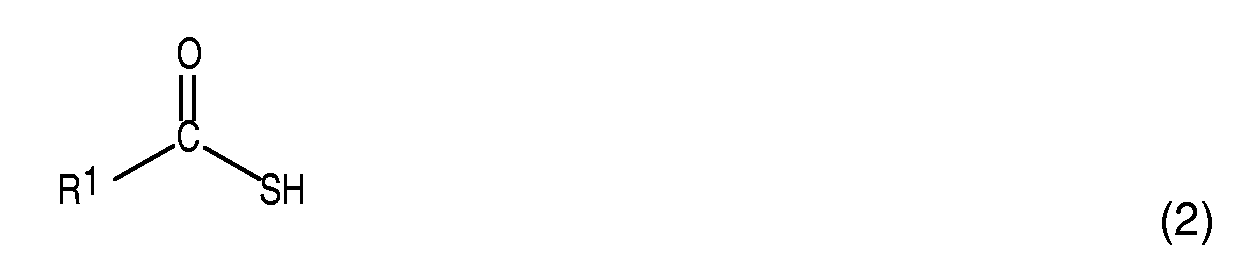
formula 1 or a salt thereof, wherein R1 and R2 each independently represent a (hetero)alkyl or (hetero)aryl group, wherein a thio compound of formula 2 with R1 as defined above, is reacted with an alkene of formula 3 or a salt thereof, with R2 as defined above. - Such a process is known from JP-A-9278746, which discloses the preparation of enantiomerically enriched 3-thioacyl-2-aralkyl propionic acid esters by contacting a thioacid with a 2-aralkyl acrylic acid ester in the presence of a cinchona alkaloid or a cinchona alkaloid whose OH is esterified.
- The aim of the invention is to provide a commercially attractive alternative process comprising the preparation of an enantiomerically enriched compound of
formula 1 by asymmetric catalysis. - This is achieved according to the invention by performing the reaction in the presence of an enantiomerically enriched Lewis acid containing a transition metal chosen from the group of Ti, Zr and Hf or a combination thereof and at least one enantiomerically enriched ligand, and in the presence of an alkali metal ion, an alkaline earth metal ion or an ammonium ion.
- It is surprising that such a process results in the formation of an enantiomerically enriched product.
- The terms Lewis acid and ligand are commonly known in the art and defined in for example "Advanced Inorganic Chemistry", F.A. Cotton and G. Wilkinson, John Wiley & Sons, 5th ed., 1988, p. 35-36.
- In the catalyst used in the process according to the invention the transition metal chosen from the group of Ti, Zr and Hf is preferably present as M(IV), in which M = Ti, Zr or Hf. As a source for the transition metal any salt or complex of the transition metal may be used. Examples of suitable salts or complexes are Ti halogenides, for example TiCl4, and Ti alkoxides, for example Ti(OC2H5)4, Ti(OCH(CH3)2)4, Ti(O(CH2)3CH3)4 and Ti(OCH(C2H5)(C4H9))4. The catalyst can suitably be prepared starting form a transition metal complex containing achiral ligands, many of which are readily available and relatively cheap. If such starting materials are used it may be desirable to remove at least part of the achiral ligands before said catalyst is applied in the process according to the invention to avoid competition between such achiral ligands and the enantiomerically enriched ligand for binding to the transition metal and to avoid the formation of an achiral Lewis acid which may have an adverse effect on the process. A broad range of separation techniques may be used to remove said ligands, for example distillation and extraction.
- Preferably the catalyst contains Ti. It has been found that catalysts containing Ti and an enantiomerically enriched ligand possesses both a relatively high enantioselectivity and a high catalytic activity.
- The amount of transition metal used can vary within wide ranges and is dependent on for instance the type of transition metal and enantiomerically enriched ligand, the reactants and the reaction conditions, for example the temperature, the concentration of the transition metal and the enantiomerically enriched ligand and the reactants and the type of solvent. Preferably 0.5-200 mol% of transition metal is used based on the amount of R2-C(=CH2)-COOH or a salt thereof, more preferably 1-100 mol%, most preferably 2-40 mol%.
- The enantiomerically enriched Lewis acid contains at least one enantiomerically enriched ligand with an e.e. of > 90 %, preferably > 95 %, more preferably > 98%. A wide range of such ligands may be used. Examples of suitable enantiomerically enriched ligands are (derivatives of) enantiomerically enriched alcohols. Preferably an enantiomerically enriched diol is present as the ligand, more preferably an enantiomerically enriched tartaric acid derivative, most preferably an enantiomerically enriched tartaric acid ester with formula R3OC(O)-CH2OH-CH2OH-C(O)OR4, R3 and R4 each independently representing a (hetero)alkyl or (hetero)aryl group having 1-50 carbon atoms. Enantiomerically enriched tartaric acid esters are commercially available or relatively easily synthesised. Examples of suitable enantiomerically enriched tartaric acid esters are for instance enantiomerically enriched diethyl tartrate, enantiomerically enriched di-iso-propyl tartrate, enantiomerically enriched di-iso-propoxyethyl tartrate, enantiomerically enriched di-2,2,2-trichloorethyl tartrate and enantiomerically enriched di-4-benzyloxybutyl tartrate.
- The amount of enantiomerically enriched ligand relative to the amount of transition metal ion is not particularly critical. Preferably an approximately stoichiometric amount of enantiomerically enriched ligand is used based on the amount and valency of the transition metal ion. For example, if M(IV) is used in combination with a monodentate ligand, the ratio enantiomerically enriched ligand : M(IV) is preferably between 3 : 1 and 5 :1, more preferably between 3.5:1 and 4.5:1, most preferably between 3.8 :1 and 4.2 : 1, while in the case of a bidentate ligand, the ratio enantiomerically enriched ligand : M(IV) is preferably between 1.5 : 1 and 2.5 : 1, more preferably between 1.75 : 1 and 2.25 : 1, most preferably between 1.9:1 and 2.1 : 1.
- The process according to the invention is carried out in the presence of an alkali metal ion, an alkaline earth metal ion or an ammonium ion, which may be introduced to the reaction mixture in various ways, for example by adding as a salt, preferably as a salt of one of the reagents, or by using a "solid carrier", for example an ion exchange resin, containing the ion. Preferably Na+ or Li+ are used, more preferably a Na or Li salt of one of the reagents. Herein reagent refers to either a thio compound according to formula 2 or an alkene according to formula 3.
- Preferably between 0.1 and 50 mol% of alkali metal ion, alkaline earth metal ion or ammonium ion is used based on the amount of transition metal.
- R1 and R2 each independently represent a (hetero)alkyl or (hetero)aryl group. Suitable choices for R1 and R2 are an optionally substituted (hetero)alkyl group, optionally containing for instance one or more N, O or S atoms, with for example 1 to 50 C atoms, for example a methyl, ethyl, propyl, butyl, tertiary butyl, benzyl group or an optionally substituted (hetero)aryl group with for example 1 to 50 C atoms, for example a phenyl, naftyl, pyridyl, pyrrolyl, chinolyl, isochinolyl, furyl, thienyl, benzofuryl, indenyl, pyrimidinyl, pyrazolyl or imidazolyl group. The (hetero)alkyl or (hetero)aryl group of R1 or R2 is optionally substituted with one or more substituents which are inert under the chosen reaction conditions. Suitable examples of such substituents are an (hetero)alkyl group with for example 1 to 20 C atoms, for example a methyl, ethyl, isobutyl or trifluoromethyl group; an alkenyl group with for example 2 to 20 C atoms, an alkoxy group with for example 1 to 20 C atoms, a (hetero)aryl group with for example 1 to 20 C atoms, an aryloxy group with for example 1 to 20 C atoms, an amino group, a hydroxy group or a halogen.
- Particularly suitable examples of R1 are a methyl group, a tertiary butyl group, a cyclohexyl group and a phenyl group.
- Particularly suitable examples of R2 are a methyl group; a substituted or unsubstituted benzyl group, for example a benzyl group, a 4-chlorobenzyl group, a 4-bromobenzyl group and a 4-methoxybenzyl group; a 1-naphtalylmethyl group; a 2-naphtalylmethyl group; a 1,1'-biphenylmethyl group; a substituted or unsubstituted aryloxyalkyl group, for example a substituted or unsubstituted phenoxyalkyl group, for example a 3-(4-ethylphenoxy)propyl group, a 3-(4-benzoylphenoxy)propyl group, a 3-(4-methylphenoxy)propyl group, a 3-(3-ethylphenoxy)propyl group, a 3-(4-(phenylmethyl)phenoxy)propyl group, a 4-(3-cyanophenoxy)butyl group, a 4-(4-phenoxyphenoxy)butyl group, a 4-(2,6-dimethylphenoxyl)butyl group, a 4-(4-n-propoxyphenoxy)butyl group, a 4-(4-iodophenoxy)butyl group, a 4-[4-(acetylamino)phenoxy]butyl group, a 4-[4-(phenoxymethyl)phenoxy]butyl group, a 4-[4-(trifluoromethyl)phenoxy]butyl group, a 4-(3-ethylphenoxy)butyl group, a 4-(3-chlorophenoxy)butyl group, a 5-[4-(phenoxymethyl)phenoxy]pentyl group, a 5-(4-ethoxyphenoxy)pentyl group and a 6-phenylhexyl group; a substituted or unsubstituted phenylcarbonylmethyl group, for example a (4-bromophenyl)carbonylmethyl group, a (3,4-dimethylphenyl)carbonylmethyl group, a (2,4-dimethylphenyl)carbonylmethyl group, a [4-(4-chlorophenoxy)phenyl]carbonylmethyl group, a (4-phenoxyphenyl)carbonylmethyl group, a (4-methoxyphenyl)carbonylmethyl group, a (4-isopropoxyphenyl)carbonylmethyl group, a (4-methylphenyl)carbonylmethyl group, a (4-bromophenyl)carbonylmethyl group, a (4-chlorophenyl)carbonylmethyl group and a (4-fluorophenyl)carbonylmethyl group; a substituted or unsubstituted pyridylmethyl group, for example a (2-aminopyridin-5-yl)methyl group, a [2-(t-butoxycarbonylamino)pyridin-5-yl]methyl group and a [2-(t-butoxycarbonylamino)-6-methyl-pyridin-5-yl]methyl group.
- The compound of formula (3) may be used as a carboxylic acid or a carboxylic acid salt, for example an (alkali or alkaline earth) metal or ammonium salt. Preferably a carboxylic acid or a Na, K, Li salt thereof are used, more preferably a carboxylic acid is used. The compound of formula (3) may be formed in situ using a precursor that is capable of forming such compound under the applied reaction conditions.
- The process according to the invention is particularly suitable for the production of carboxylic acids according to
formula 1 in which R1 represents a methyl group and R2 represents a benzyl or a methyl group. - The molar ratio between the reactants R1-C(O)-SH and R2-C(=CH2)-C(O)OH or a salt thereof is not particularly critical and may vary between for example 10:1 and 1:10, preferably between 5:1 and 1:5, more preferably between 2.5:1 and 1:2.5, most preferably between 1.6:1 and 1:1.1.
- The temperature at which the process is performed is not particularly critical and can easily be optimised by the skilled person. Usually a reaction temperature between 0 and 150°C is applied, preferably between 20 and 110°C, more preferably between 30 and 80°C. Surprisingly it was found that in some cases at a relatively high temperature both the output and enantioselectivity were higher.
- The process according to the invention preferably is carried out in the presence of a solvent. In the case of one or more liquid reagents the process can also be carried out in the absence of a solvent. Preferably a solvent is applied. A wide range of organic solvents can be used in the process, as long as they are inert under the chosen reaction conditions, for example optionally substituted aliphatic hydrocarbons, for instance n-hexane, n-heptane, dichloromethane, 1,2-dichloroethane and trichloromethane, optionally substituted (hetero)aromatic hydrocarbons, for instance toluene or N-methyl pyrrolidon, optionally substituted ethers, for instance methyl t-butyl ether or tetrahydrofuran, optionally substituted carboxylic acids, for instance acetic acid, optionally substituted esters, for instance ethyl acetate, optionally substituted nitriles, for instance acetonitrile or optionally substituted ketones, for instance methyl isobutyl ketone. Some of these solvents were found to have a positive effect on the selectivity of the reaction and thus on the ee of the product, the effect depending on e.g. the reactants and catalyst applied. Preferably an optionally substituted alifatic or aromatic hydrocarbon or an optionally substituted ether is used as the solvent, more preferably toluene.
- The enantiomerically enriched thio compound prepared by the method according to the invention can be isolated using various methods. Suitable methods are, for instance, isolation as the compound as such, for example by crystallisation, conversion of the compound with an achiral base into a salt and subsequent crystallisation of said salt or reacting the compound with an enantiomerically enriched base and subsequent crystallisation of the formed diastereomeric salt.
- In one embodiment of the invention the enantiomerically enriched thio compound prepared by the method according to the invention is isolated by contacting with an amine, followed by crystallisation of the formed salt of the enantiomerically enriched thio compound and the amine and conversion of the salt into the enantiomerically enriched thio compound and the amine using methods known per se. It was found that by applying such procedure the transition metal can be separated from the enantiomerically enriched thio compound and that the enantiomerically enriched thio compound can be obtained in high purity. Different types of amines can be used, both aliphatic and aromatic amines, the optimal choice of the amine depending on the compound to be isolated. For example, it has been found that (S)-3-thioacetyl-2-benzylpropionic acid can suitably isolated in the presence of cyclohexylamine.
- The invention will now be explained in more detail with reference to the following examples, without however being limited thereto.
- To 200 ml of toluene, 18.72 g (66 mmol) of titanium tetra-iso-propoxide and 28.32 g (137 mmol) of L-diethyl tartrate were added at 20°C under nitrogen atmosphere. The mixture was stirred for 48 hours at 20°C. After removal of the volatiles by distillation at reduced pressure (10 mg Hg) and elevated temperature (60ºC) an oil was obtained, which was dissolved in toluene to a total volume of 200 ml. The resulting catalyst solution, containing 0.33 mol Ti per liter, was used in examples II-XIV.
- To 90 ml of toluene, 110 mg (1 mmol) of sodium methacrylate and 3.24 g (20 mmol) of 2-benzylacrylic acid were added at 70°C. The resulting mixture was stirred for 15 minutes, followed by the addition of 8.5 ml of the catalyst solution prepared in example 1 (2.8 mmol Ti-catalyst) at 70°C. The mixture was stirred for an additional 15 minutes at 70°C. 1.56 ml (22.7 mmol) of thioacetic acid was dosed to the reaction mixture at 70°C within 15 minutes. The reaction mixture was stirred for 1 hour at 70°C to complete the conversion. The e.e. of (S)-3-thioacetyl-2-benzylpropionic acid in the reaction mixture, as determined by HPLC, was 44%.
- To 700 ml toluene, 4.93 g (26.8 mmol) of sodium 2-benzylacrylate and 24.0 g (148 mmol) of 2-benzylacrylic acid were added at 70°C. The resulting mixture was stirred for 15 minutes to dissolve most of the 2-benzylacrylic acid. 200 ml of the catalyst solution prepared in example 1 (66 mmol Ti-catalyst) was added at 70°C. The mixture was stirred for an additional 15 minutes at 70°C. A solution of 18 ml of thioacetic acid (262 mmol) in 50 ml toluene was dosed to the reaction mixture at 70°C within 30 minutes. The reaction mixture was stirred for 3 hours at 70°C to complete the conversion. The e.e. of S-3-thioacetyl-2-benzyl propionic acid in the reaction mixture, as determined by HPLC, was 50%. The reaction mixture was subsequently cooled to 35°C, after which the excess of thioacetic acid was removed by distillation at reduced pressure at 35°C until the total weight of the residue was 350 gram. After further cooling the mixture to 25°C, 300 ml of toluene was added, followed by the addition of 20 grams of cyclohexylamine within 30 minutes, during which the product started to crystallise. The heterogeneous mixture was stirred at 25°C for an additional 2 hours. The solid was collected by filtration and washed with 250 ml of toluene. The wet cake was air dried at room temperature, yielding 46.4 g of the salt of (S)-3-thioacetyl-2-benzyl propionic acid and cyclohexylamine in a purity of > 98%, according to HPLC. The e.e. of the (S)-3-thioacetyl-2-benzyl propionic acid in the salt was 55%, which is higher than the e.e. before contacting with cyclohexylamine. The overall yield based on the amount of sodium 2-benzylacrylate and 2-benzylacrylic acid was 78%.
- To 95 ml of toluene, 40.1 mg (0.37 mmol) of sodium methacrylate and 1.72 g (20 mmol) of methacrylic acid were added at 70°C. The resulting mixture was stirred for 15 minutes. 3 ml of the catalyst solution prepared in example 1(1 mmol of Ti-catalyst) was added at 70°C. After addition of the catalyst the mixture was stirred for an additional 15 minutes at 70°C. 1.56 ml (22.7 mmol) of thioacetic acid was dosed to the reaction mixture at 70°C within 15 minutes. The reaction mixture was stirred for 1 hour at 70°C to complete the conversion. The e.e. of (S)-3-thioacetyl-2-methylpropionic acid in the reaction mixture, as determined by HPLC, was 44%.
- To 95 ml of toluene, 82 mg (0.76 mmol) of sodium methacrylate and 1.72 g (20 mmol) of methacrylic acid were added at 70°C. The resulting mixture was stirred for 15 minutes. 6 ml of the catalyst solution prepared in example 1 (2 mmol of Ti-catalyst) was added at 70°C. After addition of the catalyst the mixture was stirred for an additional 15 minutes at 70°C. 1.56 ml (22.7 mmol) of thioacetic acid was dosed to the reaction mixture at 70°C within 15 minutes. The reaction mixture was stirred for 1 hour at 70°C for completion of the conversion. The e.e. of (S)-3-thioacetyl-2-methylpropionic acid in the reaction mixture, as determined by HPLC, was 53 %.
- To 95 ml of toluene, 156 mg (1.44 mmol) of sodium methacrylate and 1.72 g (20 mmol) of methacrylic acid were added at 70°C. The resulting mixture was stirred for 15 minutes. 12 ml of the catalyst solution prepared in example 1 (4 mmol Ti-catalyst) was added at 70°C. After addition of the catalyst the mixture was stirred for an additional 15 minutes at 70°C. 1.56 ml (22.7 mmol) of thioacetic acid was dosed to the reaction mixture at 70°C within 15 minutes. The reaction mixture was stirred for 1 hour at 70°C to complete the conversion. The e.e. of (S)-3-thioacetyl-2-methylpropionic acid in the reaction mixture, as determined by HPLC, was 48%.
- To 100 ml of toluene, 90 mg (0.83 mmol) of sodium methacrylate and 2.00 g (20 mmol) of 2-ethylacrylic acid were added at 70°C. The resulting mixture was stirred for 15 minutes. 8.5 ml of the catalyst solution prepared in example 1 (2.8 mmol Ti-catalyst) was added at 70°C. After addition of the catalyst the mixture was stirred for an additional 15 minutes at 70°C. 1.56 ml (22.7 mmol) of thioacetic acid was dosed to the reaction mixture at 70°C within 15 minutes. The reaction mixture was stirred for 1 hour at 70°C to complete the conversion. The e.e. of (S)-2-(acetylthiomethyl)butyric acid in the reaction mixture, as determined by HPLC, was 63%.
- To 100 ml of toluene, 104 mg (0.96 mmol) of sodium methacrylate and 2.75 g (21.5 mmol) of 2-butylacrylic acid were added at 70°C. The resulting mixture was stirred for 15 minutes. 9 ml of the catalyst solution prepared in example 1 (3 mmol Ti-catalyst) was added at 70°C. After addition of the catalyst the mixture was stirred for an additional 15 minutes at 70°C. 1.56 ml (22.7 mmol) of thioacetic acid was dosed to the reaction mixture at 70°C within 15 minutes. The reaction mixture was stirred for 1 hour at 70°C to complete the conversion. The e.e. of (S)-2-(acetylthiomethyl)hexanoic acid in the reaction mixture, as determined by HPLC, was 69 %.
- To 100 ml of toluene, 180 mg (1.67 mmol) of sodium methacrylate and 8.60 g (100 mmol) of methacrylic acid were added at 23°C. The resulting mixture was stirred for 15 minutes at 23°C. 15 ml of the catalyst solution prepared in example 1 was added at 23°C, followed by stirring the mixture for an additional 15 minutes at 23°C. 7.6 g (100 mmol) of thioacetic acid was added in 15 minutes and the mixture was stirred for 72 hours at 23°C. The conversion was > 90% according to HPLC. The e.e., as determined by HPLC, was 23%.
- To 100 ml of toluene, 180 mg (1.67 mmol) of sodium methacrylate and 8.60 g (100 mmol) of methacrylic acid were added at 70°C. The resulting mixture was stirred for 15 minutes at 70°C. 15 ml of the catalyst solution prepared in example 1 was added at 70°C, followed by stirring the mixture for an additional 15 minutes at 70°C. A solution of 13.8 g (100 mmol) of thiobenzoic acid in 50 ml of toluene was added in 18 minutes, after which the mixture was stirred for 3 hours at 70°C. The conversion was > 90% according to HPLC. The e.e., as determined by HPLC, was 35%.
- To 100 ml of toluene, 180 mg (1.67 mmol) of sodium methacrylate and 8.60 g (100 mmol) of methacrylic acid were added at 70°C. The resulting mixture was stirred for 15 minutes at 70°C. 15 ml of the catalyst solution prepared in example 1 was added at 70°C, followed by stirring the mixture for an additional 15 minutes at 70°C. 7.6 g (100 mmol) of thioacetic acid was added in 15 minutes and the mixture was stirred for 3 hours at 70°C. The conversion was > 90% according to HPLC. The e.e., as determined by HPLC, was 45%.
- To 100 ml of toluene, 110 mg (1.0 mmol) of sodium methacrylate and 2.96 g (20 mmol) of 2-phenylacrylic acid were added at 70°C. The resulting mixture was stirred for 15 minutes at 70°C. 9 ml of the catalyst solution prepared in example 1 was added at 70°C, followed by strirring the mixture for an additional 15 minutes at 70°C. 1.52 grams of thioacetic acid (20 mmol) was added in 15 minutes, after which the mixture was stirred for 0.5 hours at 70°C. The e.e., as determined by HPLC, was 48%.
- To 100 ml of toluene, 110 mg (1.0 mmol) of sodium methacrylate and 2.98 g (20 mmol) of 2-phenylacrylic acid were added at 70°C. The resulting mixture was stirred for 15 minutes at 70°C. 9 ml of the catalyst solution prepared in example 1 was added at 70°C, followed by stirring the mixture for an additional 15 minutes at 70°C. 2.60 g (20 mmol) of thiobenzoic acid was added in 15 minutes, after which the mixture was stirred for 0.5 hours at 70°C. The e.e., as determined by HPLC, was 38%.
Claims (8)
- Process for the preparation of an enantiomerically enriched compound of formula 1 or a salt thereof, wherein R1 and R2 each independently represent a (hetero)alkyl or (hetero)aryl group, wherein a thio compound of formula 2 with R1 as defined above, is reacted with an alkene of formula 3 or a salt thereof, with R2 as defined above, characterized in that the reaction takes place in the presence of an enantiomerically enriched Lewis acid containing a transition metal chosen from the group of Ti, Zr and Hf or a combination thereof and at least one enantiomerically enriched ligand, and in the presence of an alkali metal ion, an alkaline earth metal ion or an ammonium ion.
- Process according to claim 1, wherein the transition metal is Ti.
- Process according to claim 1 or 2, wherein the ligand is an enantiomerically enriched tartaric acid ester.
- Process according to any one of claims 1-3, wherein the alkali metal ion, the alkaline earth metal ion or the ammonium ion is Na+ or Li+.
- Process according any one of claims 1-4, wherein the R1 represents a methyl group.
- Process according to any one of claims 1-5, wherein R2 represents a methyl group or a benzyl group.
- Process according to any one of claims 1-6, characterised in that the molar ratio between R1-SH and R2-C(=CH2)-C(O)OH in the reaction mixture is between 2.5:1 and 1:2.5.
- Process according to any one of claims 1-7, characterised in that the enantiomerically enriched thio compound is isolated by contacting said compound with an amine and crystallisation of the salt formed.
Priority Applications (7)
| Application Number | Priority Date | Filing Date | Title |
|---|---|---|---|
| EP01000756A EP1325908A1 (en) | 2001-12-14 | 2001-12-14 | Process for the preparation of an enantiomerically enriched thio compound |
| PCT/NL2002/000781 WO2003051827A1 (en) | 2001-12-14 | 2002-12-02 | Process for the preparation of an enantiomerically enriched thio compound |
| US10/498,924 US20050107468A1 (en) | 2001-12-14 | 2002-12-02 | Process for the preparation of an enantiomerically enriched thio compound |
| EP02783845A EP1453797A1 (en) | 2001-12-14 | 2002-12-02 | Process for the preparation of an enantiomerically enriched thio compound |
| AU2002347665A AU2002347665A1 (en) | 2001-12-14 | 2002-12-02 | Process for the preparation of an enantiomerically enriched thio compound |
| JP2003552715A JP2005511786A (en) | 2001-12-14 | 2002-12-02 | Process for the production of enantiomerically enriched thio compounds |
| CNB028247744A CN1252048C (en) | 2001-12-14 | 2002-12-02 | Process for the preparation of an enantiomerically enriched thio compound |
Applications Claiming Priority (1)
| Application Number | Priority Date | Filing Date | Title |
|---|---|---|---|
| EP01000756A EP1325908A1 (en) | 2001-12-14 | 2001-12-14 | Process for the preparation of an enantiomerically enriched thio compound |
Publications (1)
| Publication Number | Publication Date |
|---|---|
| EP1325908A1 true EP1325908A1 (en) | 2003-07-09 |
Family
ID=8176110
Family Applications (2)
| Application Number | Title | Priority Date | Filing Date |
|---|---|---|---|
| EP01000756A Withdrawn EP1325908A1 (en) | 2001-12-14 | 2001-12-14 | Process for the preparation of an enantiomerically enriched thio compound |
| EP02783845A Withdrawn EP1453797A1 (en) | 2001-12-14 | 2002-12-02 | Process for the preparation of an enantiomerically enriched thio compound |
Family Applications After (1)
| Application Number | Title | Priority Date | Filing Date |
|---|---|---|---|
| EP02783845A Withdrawn EP1453797A1 (en) | 2001-12-14 | 2002-12-02 | Process for the preparation of an enantiomerically enriched thio compound |
Country Status (6)
| Country | Link |
|---|---|
| US (1) | US20050107468A1 (en) |
| EP (2) | EP1325908A1 (en) |
| JP (1) | JP2005511786A (en) |
| CN (1) | CN1252048C (en) |
| AU (1) | AU2002347665A1 (en) |
| WO (1) | WO2003051827A1 (en) |
Families Citing this family (1)
| Publication number | Priority date | Publication date | Assignee | Title |
|---|---|---|---|---|
| JP5546947B2 (en) * | 2010-05-13 | 2014-07-09 | 高砂香料工業株式会社 | Method for producing sulfur-containing carboxylic acid esters |
Citations (2)
| Publication number | Priority date | Publication date | Assignee | Title |
|---|---|---|---|---|
| JPH0399037A (en) * | 1989-09-12 | 1991-04-24 | Sumitomo Chem Co Ltd | Production of optically active carboxylic acid ester |
| JPH09278746A (en) * | 1996-04-04 | 1997-10-28 | Kanegafuchi Chem Ind Co Ltd | Process for producing optically active 2-aralkyl-3-acylthiopropionic acid ester |
-
2001
- 2001-12-14 EP EP01000756A patent/EP1325908A1/en not_active Withdrawn
-
2002
- 2002-12-02 CN CNB028247744A patent/CN1252048C/en not_active Expired - Fee Related
- 2002-12-02 US US10/498,924 patent/US20050107468A1/en not_active Abandoned
- 2002-12-02 EP EP02783845A patent/EP1453797A1/en not_active Withdrawn
- 2002-12-02 WO PCT/NL2002/000781 patent/WO2003051827A1/en not_active Ceased
- 2002-12-02 JP JP2003552715A patent/JP2005511786A/en not_active Withdrawn
- 2002-12-02 AU AU2002347665A patent/AU2002347665A1/en not_active Abandoned
Patent Citations (2)
| Publication number | Priority date | Publication date | Assignee | Title |
|---|---|---|---|---|
| JPH0399037A (en) * | 1989-09-12 | 1991-04-24 | Sumitomo Chem Co Ltd | Production of optically active carboxylic acid ester |
| JPH09278746A (en) * | 1996-04-04 | 1997-10-28 | Kanegafuchi Chem Ind Co Ltd | Process for producing optically active 2-aralkyl-3-acylthiopropionic acid ester |
Non-Patent Citations (2)
| Title |
|---|
| DATABASE WPI Section Ch Week 199123, Derwent World Patents Index; Class C03, AN 1991-167146, XP002196899 * |
| DATABASE WPI Section Ch Week 199802, Derwent World Patents Index; Class B05, AN 1998-014715, XP002196898 * |
Also Published As
| Publication number | Publication date |
|---|---|
| US20050107468A1 (en) | 2005-05-19 |
| AU2002347665A1 (en) | 2003-06-30 |
| EP1453797A1 (en) | 2004-09-08 |
| JP2005511786A (en) | 2005-04-28 |
| CN1602300A (en) | 2005-03-30 |
| WO2003051827A1 (en) | 2003-06-26 |
| CN1252048C (en) | 2006-04-19 |
Similar Documents
| Publication | Publication Date | Title |
|---|---|---|
| EP2172443B1 (en) | Method for producing optically active amine | |
| EP1478640A1 (en) | Process for the manufacture of hmg-coa reductase inhibitory mevalonic acid derivatives | |
| JP2581740B2 (en) | Optically active α-aminoaldehyde | |
| KR20040081157A (en) | Novel optically active compounds, method for kinetic optical resolution of carboxylic acid derivatives and catalysts therefor | |
| EP1325908A1 (en) | Process for the preparation of an enantiomerically enriched thio compound | |
| US8404853B2 (en) | Process for the preparation of optically pure or optically enriched enantiomers of sulphoxide compounds | |
| KR100598079B1 (en) | Novel boronate esters | |
| FR2742145A1 (en) | PROCESS FOR THE PREPARATION OF ORGANIC DISULFIDES AND POLYSULFIDES IN THE PRESENCE OF POLYSTYRENE-DIVINYLBENZENE (PS-DVB) RESINS HAVING GUANIDINE OR AMIDINE GROUPS | |
| US7112604B2 (en) | Process for the preparation of Atorvastatin and intermediates | |
| US6835851B2 (en) | Process for synthesizing N-(mercaptoacyl) amino acid derivatives from alpha-substituted acrylic acids | |
| JP2005511786A6 (en) | Process for the production of enantiomerically enriched thio compounds | |
| US6965038B2 (en) | Acylated aminothiol compound | |
| AU2003219965A1 (en) | Reagents for asymmetric allylation, aldol, and tandem aldol and allylation reactions | |
| EP0563878B1 (en) | Process for producing 4-substituted azetidinone derivatives | |
| KR20010071895A (en) | Preparation of (S)-2-Amino-6,6-dimethoxyhexanoic Acid Methyl Ester Via Novel Dioxolanes | |
| US4606865A (en) | Methods for the preparation of α-bromodiethylcarbonate | |
| JPH0523264B2 (en) | ||
| CN1035553C (en) | New process for the preparation of 3,3-diaryl acrylic acid amides | |
| JPH06220001A (en) | 3-imino-3-alkoxypropionic acid lactates and their tautomeric acylic acid lactates | |
| CN1269791A (en) | Method for preparing 1-phenylpyrrazolin-3-carboxylic acid derivatives | |
| JP4070608B2 (en) | Process for producing optically active dihydropyrone | |
| Kleijn et al. | Efficient recycling of fluorous versions of highly enantioselective S, N-chelated zinc aminoarene thiolate catalysts for the 1, 2-addition of diethylzinc to benzaldehydes | |
| US6172259B1 (en) | Production of enantiomer-free biarylketocarboxylic acids | |
| JPH06122643A (en) | Process for producing optically active 2- (1-hydroxyalkyl) benzaldehydes | |
| JP5501701B2 (en) | Method for asymmetric cyanation of imine |
Legal Events
| Date | Code | Title | Description |
|---|---|---|---|
| PUAI | Public reference made under article 153(3) epc to a published international application that has entered the european phase |
Free format text: ORIGINAL CODE: 0009012 |
|
| AK | Designated contracting states |
Designated state(s): AT BE CH CY DE DK ES FI FR GB GR IE IT LI LU MC NL PT SE TR |
|
| AX | Request for extension of the european patent |
Extension state: AL LT LV MK RO SI |
|
| RAP1 | Party data changed (applicant data changed or rights of an application transferred) |
Owner name: DSM IP ASSETS B.V. |
|
| STAA | Information on the status of an ep patent application or granted ep patent |
Free format text: STATUS: THE APPLICATION IS DEEMED TO BE WITHDRAWN |
|
| 18D | Application deemed to be withdrawn |
Effective date: 20040110 |


