EP1324561B1 - Low speed speech encoding method based on a network protocol - Google Patents
Low speed speech encoding method based on a network protocol Download PDFInfo
- Publication number
- EP1324561B1 EP1324561B1 EP01969198A EP01969198A EP1324561B1 EP 1324561 B1 EP1324561 B1 EP 1324561B1 EP 01969198 A EP01969198 A EP 01969198A EP 01969198 A EP01969198 A EP 01969198A EP 1324561 B1 EP1324561 B1 EP 1324561B1
- Authority
- EP
- European Patent Office
- Prior art keywords
- frame
- speech
- speech data
- optimized
- length
- Prior art date
- Legal status (The legal status is an assumption and is not a legal conclusion. Google has not performed a legal analysis and makes no representation as to the accuracy of the status listed.)
- Expired - Lifetime
Links
- 238000000034 method Methods 0.000 title claims abstract description 30
- 238000012545 processing Methods 0.000 claims abstract description 8
- 238000005070 sampling Methods 0.000 claims description 7
- 101100517648 Saccharomyces cerevisiae (strain ATCC 204508 / S288c) NUM1 gene Proteins 0.000 claims description 3
- 101100129590 Schizosaccharomyces pombe (strain 972 / ATCC 24843) mcp5 gene Proteins 0.000 claims description 3
- 230000000052 comparative effect Effects 0.000 claims description 3
- 230000005540 biological transmission Effects 0.000 abstract description 15
- 230000003044 adaptive effect Effects 0.000 abstract description 5
- 238000012360 testing method Methods 0.000 abstract description 2
- 230000002159 abnormal effect Effects 0.000 description 5
- 238000004891 communication Methods 0.000 description 3
- 230000006835 compression Effects 0.000 description 3
- 238000007906 compression Methods 0.000 description 3
- 238000005516 engineering process Methods 0.000 description 2
- 238000004364 calculation method Methods 0.000 description 1
- 238000012937 correction Methods 0.000 description 1
- 238000010586 diagram Methods 0.000 description 1
- 238000010295 mobile communication Methods 0.000 description 1
- 238000013139 quantization Methods 0.000 description 1
Images


Classifications
-
- G—PHYSICS
- G10—MUSICAL INSTRUMENTS; ACOUSTICS
- G10L—SPEECH ANALYSIS TECHNIQUES OR SPEECH SYNTHESIS; SPEECH RECOGNITION; SPEECH OR VOICE PROCESSING TECHNIQUES; SPEECH OR AUDIO CODING OR DECODING
- G10L19/00—Speech or audio signals analysis-synthesis techniques for redundancy reduction, e.g. in vocoders; Coding or decoding of speech or audio signals, using source filter models or psychoacoustic analysis
- G10L19/04—Speech or audio signals analysis-synthesis techniques for redundancy reduction, e.g. in vocoders; Coding or decoding of speech or audio signals, using source filter models or psychoacoustic analysis using predictive techniques
- G10L19/16—Vocoder architecture
- G10L19/18—Vocoders using multiple modes
-
- H—ELECTRICITY
- H04—ELECTRIC COMMUNICATION TECHNIQUE
- H04L—TRANSMISSION OF DIGITAL INFORMATION, e.g. TELEGRAPHIC COMMUNICATION
- H04L65/00—Network arrangements, protocols or services for supporting real-time applications in data packet communication
- H04L65/60—Network streaming of media packets
- H04L65/70—Media network packetisation
-
- H—ELECTRICITY
- H04—ELECTRIC COMMUNICATION TECHNIQUE
- H04L—TRANSMISSION OF DIGITAL INFORMATION, e.g. TELEGRAPHIC COMMUNICATION
- H04L65/00—Network arrangements, protocols or services for supporting real-time applications in data packet communication
- H04L65/1066—Session management
- H04L65/1101—Session protocols
Definitions
- the invention relates generally to a digital encoding method in a digital communication technology; and more particularly to a low speed speech encoding method for speech data based on the Internet protocol (IP).
- IP Internet protocol
- the transmission channel bandwidth is always limited. In order to increase a system capacity or users number as much as possible within the limited bandwidth, it is necessary to raise the channel bandwidth utilization.
- One of the important manners is by using low speed speech encoding method to compress the source data.
- the low speed speech encoding method is based on a fixed frame length.
- IP Internet protocol
- the working procedure including transmitting and receiving, of single frame or multiple frames with fixed length is as follow.
- PCM pulse code modulation
- the compressed encoded single frame or multiple frames of the speech signal are assembled into TCP packets based on the transport control protocol (TCP) or UDP packets based on the user datagram protocol (UDP) and TCP packets or UDP packets are assembled into IP packets based on the Internet protocol (IP).
- TCP transport control protocol
- UDP user datagram protocol
- IP Internet protocol
- the packet is disassembled based on the IP, and then on the TCP or the UDP. Then, whether the packet is error or delay, and whether there are packets lost are adjudged. If there is no any such abnormal situation, then the packet is normally decoded and recovered to a speech signal with PCM to output. Otherwise, the speech signal with PCM is outputted after a pre-decoding of a signal frame or multiple frames.
- the purpose of the invention as claimed in the independent claim is to provide a low speed speech encoding method based on the Internet protocol (IP) for solving the technical problems mentioned above.
- IP Internet protocol
- the low speed speech encoding method, provided by the invention has benefit of raising encoding efficiency, reducing compressed bits rate and guarantee speech decoding quality.
- a low speed speech encoding method based on IP comprises the following steps:
- the invention uses single frame, variable frame length and intra-frame adaptive low speed speech encoding method, which is benefit of raising compression of the encoding and, therefore, increasing transmission efficiency. Since an IP datagram is broken by an optimized frame length, so quality of encoding and decoding can be greatly raised.
- the characteristic of the invention is by using variable frame length for speech data compressed encoding, which is benefit of raising compression ratio of encoding and, therefore, raising transmission efficiency of speech data.
- variable length frame and single frame encoding when there are IP packet error, loss and delay, it is benefit of dealing with these abnormal situations at decoding. Therefore, it is benefit for decoding quality of speech data.
- Informal test shows that under same code error rate and same compression ratio, the invention can increase MOS (mean opinion score) value at 0.1 to 0.2.
- IP Internet protocol
- a PCM signal source is connected with the speech characteristics determining module201, and sends a quantized speech data to the module201.
- the speech data is sequentially inputted according to the sampling rate during the PCM quantization.
- the speech determining module201 determines the characteristic parameters of the speech data inputted at duration (TN ms). Length of the duration is determined by the followings: first, it is necessary to keep the compressed encoding efficiency as high as possible; second, the duration cannot be too long. Experience shows that it is optimized for 5ms ⁇ TN ⁇ 30ms.
- the variable length frame and variable bit rate module202 determines an optimized frame length (T) for the subsequent processing of the inputted speech data according to the speech characteristic parameters, i.e., the vary frequency of the speech.
- the signal frame assembling module for TCP packet or UDP packet 204 adds packet head of TCP or UDP to the encoded NUM bits of each optimized length frame, expressed as NUM _ P.
- the single frame assembling module for IP packet 205 adds route information to NUM_P to form a NUM_IP bits speech data for every frame and sends to receiving end through the channel 206.
- the disassembling module for IP packet 207 disassembles the NUM_IP bits speech data. Then, the output of module 207 is again disassembled by the disassembling module 208 for TCP packet or UDP packet.
- the speech data decoding module 210 makes a decoding normally. Nevertheless, during transmission, an error code or transmission delay etc. may happen because quality of the channel etc. In these cases, if module 209 has checked that there are packet error, loss or delay, the single frame predictive decoding module 211 makes decoding. Since there is only one frame transmission, it is easy for the speech data decoding module to deal with the abnormal situations. Finally, the speech data output module 212 recovers a PCM speech data to output.
- the working principle and flow shown in Figure1 and Figure2 include speech encoding and packet assembling based on IP at transmitting end and packet disassembling based on IP and speech decoding at receiving end.
- the basic operation steps for speech encoding and packet assembling are:
- the basic operation steps for IP packet disassembling and decoding are:
- the invention a variable length frame and variable bit rate encoding method, can be used in the IP speech transmission of public network and private network on the Internet network.
- the invention also can be used in the future mobile communication for speech transmission based on the IP core network.
- Figure3 shows IP speech transmission of a public telephone network on the Internet network.
- the IP gateway uses the variable length frame and variable bit rate encoding method proposed by the invention.
- the decoder can correct the decoding deviation according to the invention. Since the transmission is in a variable length frame, so there is a better correction quality for speech decoding.
- variable length frame and variable bit rate encoding method for the IP gateway.
- the encoding bit rates are 2kbit/s, 4kbit/s and 8kbit/s. The basic operation steps are shown below.
- Steps 401, 402, 403, 404, 405 and 406 constitute the speech encoding and IP packet assembling part.
- Steps 407, 408, 409, 410, 411 and 412 constitute the IP packet disassembling and speech decoding part.
- the invention is a low speed speech encoding method based on TCP/IP protocol.
- TCP/IP protocol Through single frame, variable frame length and intra-frame adaptive encoding, a compressed encoding can be obtained, so transmission efficiency of the speech data is further raised.
- an IP datagram is broken by every optimized length frame, so it is benefit of increasing quality of speech encoding and decoding.
Landscapes
- Engineering & Computer Science (AREA)
- Multimedia (AREA)
- Signal Processing (AREA)
- Audiology, Speech & Language Pathology (AREA)
- Computational Linguistics (AREA)
- Health & Medical Sciences (AREA)
- Computer Networks & Wireless Communication (AREA)
- Human Computer Interaction (AREA)
- Physics & Mathematics (AREA)
- Acoustics & Sound (AREA)
- Data Exchanges In Wide-Area Networks (AREA)
- Telephonic Communication Services (AREA)
- Communication Control (AREA)
- Compression, Expansion, Code Conversion, And Decoders (AREA)
Abstract
Description
- The invention relates generally to a digital encoding method in a digital communication technology; and more particularly to a low speed speech encoding method for speech data based on the Internet protocol (IP).
- In a digital communication system, the transmission channel bandwidth is always limited. In order to increase a system capacity or users number as much as possible within the limited bandwidth, it is necessary to raise the channel bandwidth utilization. One of the important manners is by using low speed speech encoding method to compress the source data. At present, the low speed speech encoding method is based on a fixed frame length. Based on the Internet protocol (IP) transmission, the data context of a speech signal is broken into one speech frame or multiple speech frames with fixed bits number.
- The working procedure, including transmitting and receiving, of single frame or multiple frames with fixed length is as follow. At the transmitting end, first determine speech characteristics of an inputted speech signal with pulse code modulation (PCM). Then, determine encoding bit rate according to the characteristics of the inputted speech signal and the frame length and make compressed encoding. Finally, the compressed encoded single frame or multiple frames of the speech signal are assembled into TCP packets based on the transport control protocol (TCP) or UDP packets based on the user datagram protocol (UDP) and TCP packets or UDP packets are assembled into IP packets based on the Internet protocol (IP). The IP packets are sent to the receiving end through channels. At the receiving end, first the packet is disassembled based on the IP, and then on the TCP or the UDP. Then, whether the packet is error or delay, and whether there are packets lost are adjudged. If there is no any such abnormal situation, then the packet is normally decoded and recovered to a speech signal with PCM to output. Otherwise, the speech signal with PCM is outputted after a pre-decoding of a signal frame or multiple frames.
- In the above procedure, no matter an IP packet is a single frame or a multiple frames packet, since using fixed frame length, the encoding efficiency is low, and it is difficult to decrease bit rate further. Furthermore, when an IP packet is a multiple frame packet, in situations of packet error, loss and delay, it is difficult to make any processing for signal decoding.
- A known speech codec is disclosed by Turner et al.: "A variable frame length linear predictive coder," Proceedings of ICASSP 1978, pages 454-457.
- The purpose of the invention as claimed in the independent claim is to provide a low speed speech encoding method based on the Internet protocol (IP) for solving the technical problems mentioned above. The low speed speech encoding method, provided by the invention, has benefit of raising encoding efficiency, reducing compressed bits rate and guarantee speech decoding quality.
- The technical scheme for implementing the purpose of the invention is that a low speed speech encoding method based on IP, comprises the following steps:
- (1) A speech signal, at the signal source, is sampled and quantized to a speech data, which is then inputted sequentially according to the sampling rate;
- (2) Determine characteristic parameters of the speech data according to the inputted speech data in TN duration that satisfies TN ≥ 5ms and TN ≤ 30ms;
- (3) Determine an optimized frame length T for subsequent speech data processing according to the characteristic parameters, by comparing the variances D of the inputted speech data for the frame lengths T=T1, T2,...TN to a threshold, where the threshold being a comparative value of the variance for period and being a compromise of encoding efficiency and encoding quality;
- (4) Make compressed encoding for the speech data in every optimized frame length T;
- (5) For speech data bits of every optimized length frame, first, assembling packet with TCP or UDP, then assembling packet with IP and finally outputting the packet.
- The invention uses single frame, variable frame length and intra-frame adaptive low speed speech encoding method, which is benefit of raising compression of the encoding and, therefore, increasing transmission efficiency. Since an IP datagram is broken by an optimized frame length, so quality of encoding and decoding can be greatly raised.
- The characteristic of the invention is by using variable frame length for speech data compressed encoding, which is benefit of raising compression ratio of encoding and, therefore, raising transmission efficiency of speech data. At the same time, by using variable length frame and single frame encoding, when there are IP packet error, loss and delay, it is benefit of dealing with these abnormal situations at decoding. Therefore, it is benefit for decoding quality of speech data. Informal test shows that under same code error rate and same compression ratio, the invention can increase MOS (mean opinion score) value at 0.1 to 0.2.
-
-
Figure1 shows a main flowchart of the encoding method of the invention. -
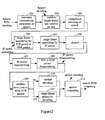
Figure2 shows a flowchart of a single frame IP speech transmission system based on adaptive variable frame length and variable bit rate. -
Figure3 shows a logical structure diagram of an embodiment communication system with the encoding method of the invention. -
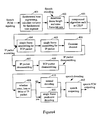
Figure4 shows an embodiment flowchart of a single frame IP speech transmission system based on adaptive variable frame length and variable bit rate. - The invention, a low speed speech encoding method based on Internet protocol (IP), will be described in more detail, hereinafter, with reference to the drawings and embodiments.
- Principle of the invention method will be described with reference to
Figure1 andFigure2 . - The main steps of the invention method, shown in
Figure1 , are as follow: - In
step 11, input a speech data having been quantized; - In step12, determine characteristic parameters of the inputted speech data;
- In step13, determine an optimized frame length according to the characteristic parameters of the speech data;
- In step14, make compressed encoding for the inputted speech data, based on the optimized frame length.
- In step15, for the compressed encoding speech data, make TCP packet or UDP packet assembling, and then make the IP packet assembling and finally output to the channel.
- In
Figure2 , a PCM signal source is connected with the speech characteristics determining module201, and sends a quantized speech data to the module201. The speech data is sequentially inputted according to the sampling rate during the PCM quantization. The speech determining module201 determines the characteristic parameters of the speech data inputted at duration (TN ms). Length of the duration is determined by the followings: first, it is necessary to keep the compressed encoding efficiency as high as possible; second, the duration cannot be too long. Experience shows that it is optimized for 5ms ≤ TN ≤ 30ms. The variable length frame and variable bit rate module202 determines an optimized frame length (T) for the subsequent processing of the inputted speech data according to the speech characteristic parameters, i.e., the vary frequency of the speech. The basic principles to determine the optimized frame length are as follow: under the condition that an inputted speech characteristics are unchanged during a short duration, the speech data is broken into frames with a length as long as possible. Specifically speaking, if the speech frequency is fast, then the frame length is shorter, otherwise it is longer. Therefore, within duration TN, the possible optimized frame length T is: T = T1, T2 ... TN, a limited set. The speech compressedencoding module 203 encodes speech data of each optimized length (T) frame with the intra-frame variable bit rate algorithm and outputs the encoded NUM bits. Within duration TN, encoded NUM bits of every frame with optimized length constitutes a limited set also, expressed as NUM = NUM1, NUM2 ... NUMM. The signal frame assembling module for TCP packet orUDP packet 204 adds packet head of TCP or UDP to the encoded NUM bits of each optimized length frame, expressed as NUM_P. The single frame assembling module forIP packet 205 adds route information to NUM_P to form a NUM_IP bits speech data for every frame and sends to receiving end through thechannel 206. - At the receiving end, first, the disassembling module for
IP packet 207 disassembles the NUM_IP bits speech data. Then, the output ofmodule 207 is again disassembled by the disassemblingmodule 208 for TCP packet or UDP packet. In a normal situation, the speechdata decoding module 210 makes a decoding normally. Nevertheless, during transmission, an error code or transmission delay etc. may happen because quality of the channel etc. In these cases, ifmodule 209 has checked that there are packet error, loss or delay, the single framepredictive decoding module 211 makes decoding. Since there is only one frame transmission, it is easy for the speech data decoding module to deal with the abnormal situations. Finally, the speechdata output module 212 recovers a PCM speech data to output. - In summary, the working principle and flow shown in
Figure1 andFigure2 include speech encoding and packet assembling based on IP at transmitting end and packet disassembling based on IP and speech decoding at receiving end. - The basic operation steps for speech encoding and packet assembling are:
- (1) A sampled and quantized speech data is inputted with the sampling sequence;
- (2) A speech characteristics determining module determines speech characteristic parameters according to the inputted speech data at every TN ms duration. Then, according to the characteristic parameters of the speech data, i.e., vary frequency of the speech, an optimized length T of a frame for subsequent speech processing is determined. T = T1, T2 ... TN is a limited set;
- (3) The speech data within the optimized length frame is encoded with the intra-frame variable bit rate algorithm, and the encoded NUM bits of every optimized length frame are outputted. The NUM is also a limited set, NUM = NUM1, NUM2 ... NUMM;
- (4) The encoded NUM bits are added with packet head of TCP or UDP to form a NUM_P bits for every optimized length frame;
- (5) The NUM_P bits are added with packed head of IP, which includes route information, to form a NUM_IP bits for every optimized length frame;
- (6) The NUM_IP bits for every optimized length frame are sent to the receiving end through the channel.
- The basic operation steps for IP packet disassembling and decoding are:
- (1) First, the received packet is disassembled with IP by the receiving end;
- (2) Then, the disassembled packet is again disassembled with TCP or UDP;
- (3) Under normal situation, the speech decoding module makes decoding normally;
- (4) Under abnormal situation, it is decoded by single frame predictive decoding module;
- (5) The recovered speech data are outputted.
- The invention, a variable length frame and variable bit rate encoding method, can be used in the IP speech transmission of public network and private network on the Internet network. The invention also can be used in the future mobile communication for speech transmission based on the IP core network.
-
Figure3 shows IP speech transmission of a public telephone network on the Internet network. Wherein the IP gateway uses the variable length frame and variable bit rate encoding method proposed by the invention. When an IP packet is transferred on the Internet network, if there are packet loss or error, the decoder can correct the decoding deviation according to the invention. Since the transmission is in a variable length frame, so there is a better correction quality for speech decoding. - Refer to
Figure4 , there is an embodiment of a variable length frame and variable bit rate encoding method for the IP gateway. The encoding bit rates are 2kbit/s, 4kbit/s and 8kbit/s. The basic operation steps are shown below. -
Steps - (1) The input signal is a sampled and quantized speech data with sampling rate 8000Hz and is inputted according to the sampling sequence. The optimized length frame T is that T1 = 5ms, T2 = 10ms, T3 = 15ms, T4 = 20ms, T5 = 25ms and T6 = 30ms.
- (2) The speech characteristics determination module determines the speech characteristic parameters according to the inputted data of every 30ms duration (TN = 30ms). The calculation method is as follow: taking 5ms as a fundamental tone period, and calculating, respectively, the variance D10, D15, D20, D25 and D30 of the fundamental tone periods 10ms, 15ms, 20ms, 25ms and 30ms (step 401).
- (3) The optimized frame length T and intra-frame variable bit rate, used for subsequent processing of the inputted speech data, are determined according to characteristic parameters of the speech data, i.e., the vary frequency of the speech. The infra-frame bit rate can be determined by the speech characteristics. Suppose the vowel code is with more bits and the consonant is with less bits, (step 402):
- When D30 < Threshold, then T = 30;
- When D25 < Threshold, then T = 25;
- When D20 < Threshold, then T = 20;
- When
D 15 < Threshold, then T = 15; - When D 10 < Threshold, then T = 10;
- Otherwise T = 5;
- (4) The speech data of an optimized frame length T is compressed encoded with an intra-frame variable bit rate algorithm, such as code excited linear prediction (CELP) etc. The number of bits for every encoded optimized length frame is NUM (step 403). There are three levels of NUM: T*2, T*4 and T*8.
- (5) The NUM bits of an optimized length frame are assembled with TCP packet head, and the number of bits of every optimized length frame is now changed to NUM_P bits (step 404).
- (6) The NUM_P bits is again assembled by the signal frame assembling module for IP packet, added with route information and changed to NUM_EP bits for every optimized length frame (step 405). The NUM_IP bits of every optimized length frame are transmitted to receiving end through a Gaussian channel (step406).
-
Steps - (1) The receiving end disassembles an IP packet (step 407).
- (2) Make TCP packet disassembling.
- (3) In a normal situation, the speech decoding module makes normal decoding (step 410).
- (4) In an abnormal situation, such as packet error, loss or delay (step 409), a single frame pre-decoding is made (step 411).
- (5) Output a recovered PCM speech data (step 412).
- The invention is a low speed speech encoding method based on TCP/IP protocol. Through single frame, variable frame length and intra-frame adaptive encoding, a compressed encoding can be obtained, so transmission efficiency of the speech data is further raised. Moreover, an IP datagram is broken by every optimized length frame, so it is benefit of increasing quality of speech encoding and decoding.
Claims (5)
- A low speed speech encoding method based on Internet protocol (IP), comprising:(1) according to the sampling rate, sequentially inputting a speech data obtained by sampling and quantizing a speech signal;(2) with a duration TN that satisfies TN ≥ 5ms and TN ≤ 30ms, determining speech characteristic parameters according to inputted speech data;(3) determining an optimized frame length T for subsequent processing of speech data according to the speech characteristic parameters by comparing the variances D of the characteristic parameters of the inputted speech data of the frame lengths T=T1, T2,...TN to a threshold, the threshold being a comparative value of the variance for a fundamental tone period and being a compromise of encoding efficiency and encoding quality;(4) making compressed encoding for speech data in every frame with the optimized frame length T;(5) for compressed encoded speech data bits of every optimized length frame, first, assembling packet with TCP protocol or UDP protocol, then assembling packet with IP protocol and finally outputting the packet.
- A method according to Claim1, wherein the duration satisfies TN=30ms and
wherein step (3) comprises:taking 5ms as a period, and respectively calculating the variance D10, D15, D20, D25 and D30 within the periods 10ms, 15ms, 20ms, 25ms and 30ms;determining an optimized frame length T for subsequent processing of speech data according to the speech characteristic parameters as follows:when D30 < threshold, then T = 30ms;when D25 < threshold, then T = 25 ms;when D20 < threshold, then T = 20 ms;when D15 < threshold, then T = 15 ms;when D10 < threshold, then T = 10 ms;otherwise T = 5 ms. - A method according to Claim1, wherein making compressed encoding for speech data in every frame with the optimized length T, in step (4), is using intra-frame variable bits rate algorithm.
- A method according to Claim 1, wherein the optimized frame length T is a limited set of the duration TN, T= T1 or T2 ... or TN.
- A method according to Claim 1, in the duration TN, the bits number NUM of compressed encoded speech data for every optimized length frame is a limited set of NUMM, NUM = NUM1 or NUM2 ... or NUMM.
Applications Claiming Priority (3)
| Application Number | Priority Date | Filing Date | Title |
|---|---|---|---|
| CN00126112 | 2000-08-19 | ||
| CN00126112A CN1338834A (en) | 2000-08-19 | 2000-08-19 | Low-speed speech encode method based on network protocol |
| PCT/CN2001/000964 WO2002017588A1 (en) | 2000-08-19 | 2001-06-12 | Low speed speech encoding method based on the network protocol |
Publications (3)
| Publication Number | Publication Date |
|---|---|
| EP1324561A1 EP1324561A1 (en) | 2003-07-02 |
| EP1324561A4 EP1324561A4 (en) | 2005-08-17 |
| EP1324561B1 true EP1324561B1 (en) | 2008-04-30 |
Family
ID=4591746
Family Applications (1)
| Application Number | Title | Priority Date | Filing Date |
|---|---|---|---|
| EP01969198A Expired - Lifetime EP1324561B1 (en) | 2000-08-19 | 2001-06-12 | Low speed speech encoding method based on a network protocol |
Country Status (8)
| Country | Link |
|---|---|
| US (1) | US6947887B2 (en) |
| EP (1) | EP1324561B1 (en) |
| CN (1) | CN1338834A (en) |
| AT (1) | ATE393952T1 (en) |
| AU (1) | AU2001289543A1 (en) |
| CA (1) | CA2418287C (en) |
| DE (1) | DE60133830T2 (en) |
| WO (1) | WO2002017588A1 (en) |
Families Citing this family (10)
| Publication number | Priority date | Publication date | Assignee | Title |
|---|---|---|---|---|
| US20050268656A1 (en) * | 2001-01-08 | 2005-12-08 | Alexander Raichel | Poly-crystalline compositions |
| US20030189904A1 (en) * | 2002-04-04 | 2003-10-09 | Li Jonathan Q. | Sampling fractal internet protocol traffic with bounded error tolerance and response time |
| US7423967B2 (en) * | 2002-05-09 | 2008-09-09 | Broadcom Corporation | Fairness scheme method and apparatus for pause capable and pause incapable ports |
| US20050143979A1 (en) * | 2003-12-26 | 2005-06-30 | Lee Mi S. | Variable-frame speech coding/decoding apparatus and method |
| JP4156568B2 (en) * | 2004-06-21 | 2008-09-24 | 富士通株式会社 | COMMUNICATION SYSTEM CONTROL METHOD, COMMUNICATION CONTROL DEVICE, PROGRAM |
| US20060070406A1 (en) * | 2004-09-28 | 2006-04-06 | Orgyr Technologies Ltd. | Use of coal ash for the safe disposal of mineral waste |
| US20100242715A1 (en) * | 2006-06-13 | 2010-09-30 | D&D Salomon Investment Ltd. | Glass-ceramic materials having a predominant spinel-group crystal phase |
| US8204038B2 (en) * | 2009-01-13 | 2012-06-19 | Mediatek Inc. | Method for efficient utilization of radio resources in wireless communications system |
| US9894421B2 (en) * | 2012-10-22 | 2018-02-13 | Huawei Technologies Co., Ltd. | Systems and methods for data representation and transportation |
| CN102970133B (en) * | 2012-11-12 | 2015-10-14 | 安徽量子通信技术有限公司 | The voice transmission method of quantum network and voice terminal |
Family Cites Families (11)
| Publication number | Priority date | Publication date | Assignee | Title |
|---|---|---|---|---|
| SE516526C2 (en) * | 1993-11-03 | 2002-01-22 | Telia Ab | Method and apparatus for automatically extracting prosodic information |
| JP3131542B2 (en) * | 1993-11-25 | 2001-02-05 | シャープ株式会社 | Encoding / decoding device |
| FI964975A7 (en) * | 1996-12-12 | 1998-06-13 | Nokia Mobile Phones Ltd | Method and device for encoding speech |
| GB2335335A (en) * | 1998-03-13 | 1999-09-15 | Northern Telecom Ltd | Carrying speech-band signals over power lines |
| AU3372199A (en) * | 1998-03-30 | 1999-10-18 | Voxware, Inc. | Low-complexity, low-delay, scalable and embedded speech and audio coding with adaptive frame loss concealment |
| AU1878299A (en) * | 1998-12-10 | 2000-06-26 | Nokia Networks Oy | Packet transmission method and apparatus |
| KR100322015B1 (en) * | 1998-12-23 | 2002-03-08 | 윤종용 | Frame Structure Variable Method in Local Area Network |
| CN1085456C (en) * | 1999-03-02 | 2002-05-22 | 中信通信项目管理有限责任公司 | Broadband multi-purpose digital intelligent telephone |
| US6366961B1 (en) * | 1999-03-03 | 2002-04-02 | Nokia Telecommunications, Oy | Method and apparatus for providing mini packet switching in IP based cellular access networks |
| US6785261B1 (en) * | 1999-05-28 | 2004-08-31 | 3Com Corporation | Method and system for forward error correction with different frame sizes |
| FR2798879B1 (en) | 1999-09-27 | 2001-10-19 | Commissariat Energie Atomique | PROCESS FOR TREATING, AND EXTRACTING ORGANIC COMPOUNDS FROM CORK, WITH A DENSITY FLUID UNDER PRESSURE |
-
2000
- 2000-08-19 CN CN00126112A patent/CN1338834A/en active Pending
-
2001
- 2001-06-12 AU AU2001289543A patent/AU2001289543A1/en not_active Abandoned
- 2001-06-12 AT AT01969198T patent/ATE393952T1/en not_active IP Right Cessation
- 2001-06-12 EP EP01969198A patent/EP1324561B1/en not_active Expired - Lifetime
- 2001-06-12 WO PCT/CN2001/000964 patent/WO2002017588A1/en not_active Ceased
- 2001-06-12 CA CA2418287A patent/CA2418287C/en not_active Expired - Lifetime
- 2001-06-12 DE DE60133830T patent/DE60133830T2/en not_active Expired - Lifetime
-
2003
- 2003-02-19 US US10/366,931 patent/US6947887B2/en not_active Expired - Lifetime
Also Published As
| Publication number | Publication date |
|---|---|
| CA2418287A1 (en) | 2003-02-04 |
| CN1338834A (en) | 2002-03-06 |
| AU2001289543A1 (en) | 2002-03-04 |
| CA2418287C (en) | 2010-08-24 |
| US6947887B2 (en) | 2005-09-20 |
| WO2002017588A1 (en) | 2002-02-28 |
| EP1324561A4 (en) | 2005-08-17 |
| ATE393952T1 (en) | 2008-05-15 |
| DE60133830T2 (en) | 2009-05-20 |
| DE60133830D1 (en) | 2008-06-12 |
| US20030182127A1 (en) | 2003-09-25 |
| WO2002017588A8 (en) | 2003-03-20 |
| EP1324561A1 (en) | 2003-07-02 |
Similar Documents
| Publication | Publication Date | Title |
|---|---|---|
| US20070206645A1 (en) | Method of dynamically adapting the size of a jitter buffer | |
| US5995923A (en) | Method and apparatus for improving the voice quality of tandemed vocoders | |
| US7092875B2 (en) | Speech transcoding method and apparatus for silence compression | |
| US6125343A (en) | System and method for selecting a loudest speaker by comparing average frame gains | |
| EP1129450B1 (en) | Low bit-rate coding of unvoiced segments of speech | |
| JP2006099124A (en) | Automatic voice/speaker recognition on digital radio channel | |
| EP1241664B1 (en) | Voice encoding/decoding apparatus with packet error resistance and method thereof | |
| US8320391B2 (en) | Acoustic signal packet communication method, transmission method, reception method, and device and program thereof | |
| EP1324561A1 (en) | Low speed speech encoding method based on the network protocol | |
| WO2003063136A1 (en) | Conversion scheme for use between dtx and non-dtx speech coding systems | |
| JPH11259100A (en) | Excitation vector coding method | |
| CA2293165A1 (en) | Method for transmitting data in wireless speech channels | |
| JPH10190498A (en) | Improved method generating comfortable noise during non-contiguous transmission | |
| JP2002221994A (en) | Method and apparatus for assembling packet of code string of voice signal, method and apparatus for disassembling packet, program for executing these methods, and recording medium for recording program thereon | |
| EP1982331B1 (en) | Method and arrangement for speech coding in wireless communication systems | |
| CN120710996A (en) | Low-latency intelligent communication system based on end-to-end speech large model | |
| EP1617417A1 (en) | Voice coding/decoding method and apparatus | |
| Harada et al. | Emerging ITU-T standard G. 711.0—Lossless compression of G. 711 pulse code modulation | |
| JP3496618B2 (en) | Apparatus and method for speech encoding / decoding including speechless encoding operating at multiple rates | |
| US8204753B2 (en) | Stabilization and glitch minimization for CCITT recommendation G.726 speech CODEC during packet loss scenarios by regressor control and internal state updates of the decoding process | |
| CN100349395C (en) | Speech communication unit and method for speech frame error reduction | |
| EP1739917B1 (en) | Terminal, system and method for discarding encoded parts of a sampled audio stream | |
| US20050147131A1 (en) | Low-rate in-band data channel using CELP codewords | |
| JPH11243396A (en) | Audio coding transmission system | |
| Blackman et al. | Variable-to-fixed rate conversion of narrowband LPC speech |
Legal Events
| Date | Code | Title | Description |
|---|---|---|---|
| PUAI | Public reference made under article 153(3) epc to a published international application that has entered the european phase |
Free format text: ORIGINAL CODE: 0009012 |
|
| 17P | Request for examination filed |
Effective date: 20030204 |
|
| AK | Designated contracting states |
Designated state(s): AT BE CH CY DE DK ES FI FR GB GR IE IT LI LU MC NL PT SE TR |
|
| AX | Request for extension of the european patent |
Extension state: AL LT LV MK RO SI |
|
| RIC1 | Information provided on ipc code assigned before grant |
Ipc: 7G 10L 19/14 A |
|
| A4 | Supplementary search report drawn up and despatched |
Effective date: 20050630 |
|
| GRAP | Despatch of communication of intention to grant a patent |
Free format text: ORIGINAL CODE: EPIDOSNIGR1 |
|
| RTI1 | Title (correction) |
Free format text: LOW SPEED SPEECH ENCODING METHOD BASED ON A NETWORK PROTOCOL |
|
| GRAS | Grant fee paid |
Free format text: ORIGINAL CODE: EPIDOSNIGR3 |
|
| GRAA | (expected) grant |
Free format text: ORIGINAL CODE: 0009210 |
|
| AK | Designated contracting states |
Kind code of ref document: B1 Designated state(s): AT BE CH CY DE DK ES FI FR GB GR IE IT LI LU MC NL PT SE TR |
|
| REG | Reference to a national code |
Ref country code: GB Ref legal event code: FG4D |
|
| REG | Reference to a national code |
Ref country code: CH Ref legal event code: EP |
|
| REG | Reference to a national code |
Ref country code: IE Ref legal event code: FG4D |
|
| REF | Corresponds to: |
Ref document number: 60133830 Country of ref document: DE Date of ref document: 20080612 Kind code of ref document: P |
|
| NLV1 | Nl: lapsed or annulled due to failure to fulfill the requirements of art. 29p and 29m of the patents act | ||
| PG25 | Lapsed in a contracting state [announced via postgrant information from national office to epo] |
Ref country code: FI Free format text: LAPSE BECAUSE OF FAILURE TO SUBMIT A TRANSLATION OF THE DESCRIPTION OR TO PAY THE FEE WITHIN THE PRESCRIBED TIME-LIMIT Effective date: 20080430 Ref country code: NL Free format text: LAPSE BECAUSE OF FAILURE TO SUBMIT A TRANSLATION OF THE DESCRIPTION OR TO PAY THE FEE WITHIN THE PRESCRIBED TIME-LIMIT Effective date: 20080430 Ref country code: PT Free format text: LAPSE BECAUSE OF FAILURE TO SUBMIT A TRANSLATION OF THE DESCRIPTION OR TO PAY THE FEE WITHIN THE PRESCRIBED TIME-LIMIT Effective date: 20080930 Ref country code: ES Free format text: LAPSE BECAUSE OF FAILURE TO SUBMIT A TRANSLATION OF THE DESCRIPTION OR TO PAY THE FEE WITHIN THE PRESCRIBED TIME-LIMIT Effective date: 20080810 |
|
| PG25 | Lapsed in a contracting state [announced via postgrant information from national office to epo] |
Ref country code: AT Free format text: LAPSE BECAUSE OF FAILURE TO SUBMIT A TRANSLATION OF THE DESCRIPTION OR TO PAY THE FEE WITHIN THE PRESCRIBED TIME-LIMIT Effective date: 20080430 |
|
| PG25 | Lapsed in a contracting state [announced via postgrant information from national office to epo] |
Ref country code: SE Free format text: LAPSE BECAUSE OF FAILURE TO SUBMIT A TRANSLATION OF THE DESCRIPTION OR TO PAY THE FEE WITHIN THE PRESCRIBED TIME-LIMIT Effective date: 20080731 Ref country code: DK Free format text: LAPSE BECAUSE OF FAILURE TO SUBMIT A TRANSLATION OF THE DESCRIPTION OR TO PAY THE FEE WITHIN THE PRESCRIBED TIME-LIMIT Effective date: 20080430 Ref country code: MC Free format text: LAPSE BECAUSE OF NON-PAYMENT OF DUE FEES Effective date: 20080630 |
|
| REG | Reference to a national code |
Ref country code: CH Ref legal event code: PL |
|
| EN | Fr: translation not filed | ||
| PG25 | Lapsed in a contracting state [announced via postgrant information from national office to epo] |
Ref country code: BE Free format text: LAPSE BECAUSE OF FAILURE TO SUBMIT A TRANSLATION OF THE DESCRIPTION OR TO PAY THE FEE WITHIN THE PRESCRIBED TIME-LIMIT Effective date: 20080430 |
|
| PLBE | No opposition filed within time limit |
Free format text: ORIGINAL CODE: 0009261 |
|
| STAA | Information on the status of an ep patent application or granted ep patent |
Free format text: STATUS: NO OPPOSITION FILED WITHIN TIME LIMIT |
|
| REG | Reference to a national code |
Ref country code: IE Ref legal event code: MM4A |
|
| 26N | No opposition filed |
Effective date: 20090202 |
|
| PG25 | Lapsed in a contracting state [announced via postgrant information from national office to epo] |
Ref country code: FR Free format text: LAPSE BECAUSE OF FAILURE TO SUBMIT A TRANSLATION OF THE DESCRIPTION OR TO PAY THE FEE WITHIN THE PRESCRIBED TIME-LIMIT Effective date: 20090227 Ref country code: IE Free format text: LAPSE BECAUSE OF NON-PAYMENT OF DUE FEES Effective date: 20080612 |
|
| PG25 | Lapsed in a contracting state [announced via postgrant information from national office to epo] |
Ref country code: CH Free format text: LAPSE BECAUSE OF NON-PAYMENT OF DUE FEES Effective date: 20080630 Ref country code: LI Free format text: LAPSE BECAUSE OF NON-PAYMENT OF DUE FEES Effective date: 20080630 |
|
| PG25 | Lapsed in a contracting state [announced via postgrant information from national office to epo] |
Ref country code: IT Free format text: LAPSE BECAUSE OF FAILURE TO SUBMIT A TRANSLATION OF THE DESCRIPTION OR TO PAY THE FEE WITHIN THE PRESCRIBED TIME-LIMIT Effective date: 20080430 |
|
| PG25 | Lapsed in a contracting state [announced via postgrant information from national office to epo] |
Ref country code: CY Free format text: LAPSE BECAUSE OF FAILURE TO SUBMIT A TRANSLATION OF THE DESCRIPTION OR TO PAY THE FEE WITHIN THE PRESCRIBED TIME-LIMIT Effective date: 20080430 Ref country code: LU Free format text: LAPSE BECAUSE OF NON-PAYMENT OF DUE FEES Effective date: 20080612 |
|
| PG25 | Lapsed in a contracting state [announced via postgrant information from national office to epo] |
Ref country code: TR Free format text: LAPSE BECAUSE OF FAILURE TO SUBMIT A TRANSLATION OF THE DESCRIPTION OR TO PAY THE FEE WITHIN THE PRESCRIBED TIME-LIMIT Effective date: 20080430 |
|
| PG25 | Lapsed in a contracting state [announced via postgrant information from national office to epo] |
Ref country code: GR Free format text: LAPSE BECAUSE OF NON-PAYMENT OF DUE FEES Effective date: 20080630 |
|
| PGFP | Annual fee paid to national office [announced via postgrant information from national office to epo] |
Ref country code: DE Payment date: 20200602 Year of fee payment: 20 |
|
| PGFP | Annual fee paid to national office [announced via postgrant information from national office to epo] |
Ref country code: GB Payment date: 20200603 Year of fee payment: 20 |
|
| REG | Reference to a national code |
Ref country code: DE Ref legal event code: R071 Ref document number: 60133830 Country of ref document: DE |
|
| REG | Reference to a national code |
Ref country code: GB Ref legal event code: PE20 Expiry date: 20210611 |
|
| PG25 | Lapsed in a contracting state [announced via postgrant information from national office to epo] |
Ref country code: GB Free format text: LAPSE BECAUSE OF EXPIRATION OF PROTECTION Effective date: 20210611 |