EP1324287A2 - Self service terminal - Google Patents
Self service terminal Download PDFInfo
- Publication number
- EP1324287A2 EP1324287A2 EP02255551A EP02255551A EP1324287A2 EP 1324287 A2 EP1324287 A2 EP 1324287A2 EP 02255551 A EP02255551 A EP 02255551A EP 02255551 A EP02255551 A EP 02255551A EP 1324287 A2 EP1324287 A2 EP 1324287A2
- Authority
- EP
- European Patent Office
- Prior art keywords
- sst
- deposited
- cheque
- media
- cash
- Prior art date
- Legal status (The legal status is an assumption and is not a legal conclusion. Google has not performed a legal analysis and makes no representation as to the accuracy of the status listed.)
- Withdrawn
Links
- 238000000034 method Methods 0.000 claims abstract description 36
- 238000012545 processing Methods 0.000 claims abstract description 22
- 230000003993 interaction Effects 0.000 claims description 4
- 230000032258 transport Effects 0.000 abstract description 8
- 238000010200 validation analysis Methods 0.000 description 6
- 238000010926 purge Methods 0.000 description 4
- 238000012015 optical character recognition Methods 0.000 description 3
- 230000008569 process Effects 0.000 description 3
- 238000012546 transfer Methods 0.000 description 3
- 238000012795 verification Methods 0.000 description 3
- 238000001514 detection method Methods 0.000 description 2
- 238000010586 diagram Methods 0.000 description 2
- 229920000914 Metallic fiber Polymers 0.000 description 1
- 238000013479 data entry Methods 0.000 description 1
- 238000000151 deposition Methods 0.000 description 1
- 238000005516 engineering process Methods 0.000 description 1
- 238000003384 imaging method Methods 0.000 description 1
- 238000012423 maintenance Methods 0.000 description 1
- 239000000203 mixture Substances 0.000 description 1
- 230000003287 optical effect Effects 0.000 description 1
- 238000012634 optical imaging Methods 0.000 description 1
- 230000004044 response Effects 0.000 description 1
- 239000000126 substance Substances 0.000 description 1
- 230000000007 visual effect Effects 0.000 description 1
Images



Classifications
-
- G—PHYSICS
- G07—CHECKING-DEVICES
- G07F—COIN-FREED OR LIKE APPARATUS
- G07F19/00—Complete banking systems; Coded card-freed arrangements adapted for dispensing or receiving monies or the like and posting such transactions to existing accounts, e.g. automatic teller machines
- G07F19/20—Automatic teller machines [ATMs]
-
- G—PHYSICS
- G07—CHECKING-DEVICES
- G07D—HANDLING OF COINS OR VALUABLE PAPERS, e.g. TESTING, SORTING BY DENOMINATIONS, COUNTING, DISPENSING, CHANGING OR DEPOSITING
- G07D11/00—Devices accepting coins; Devices accepting, dispensing, sorting or counting valuable papers
- G07D11/20—Controlling or monitoring the operation of devices; Data handling
- G07D11/22—Means for sensing or detection
-
- G—PHYSICS
- G07—CHECKING-DEVICES
- G07D—HANDLING OF COINS OR VALUABLE PAPERS, e.g. TESTING, SORTING BY DENOMINATIONS, COUNTING, DISPENSING, CHANGING OR DEPOSITING
- G07D11/00—Devices accepting coins; Devices accepting, dispensing, sorting or counting valuable papers
- G07D11/50—Sorting or counting valuable papers
-
- G—PHYSICS
- G07—CHECKING-DEVICES
- G07F—COIN-FREED OR LIKE APPARATUS
- G07F19/00—Complete banking systems; Coded card-freed arrangements adapted for dispensing or receiving monies or the like and posting such transactions to existing accounts, e.g. automatic teller machines
- G07F19/20—Automatic teller machines [ATMs]
- G07F19/202—Depositing operations within ATMs
Definitions
- the present invention relates to a self service terminal (SST), and to a method of processing media deposits made to an SST.
- SST self service terminal
- Self service terminals such as automated teller machines (ATMs) are used for a wide range of financial and other transactions.
- ATMs automated teller machines
- One such transaction is the deposit of valuable media, such as cash and cheques, into the SST, generally for the purpose of crediting the deposit to the user's bank or other financial institution account.
- valuable media such as cash and cheques
- MICR magnetic ink character recognition
- a method of processing media deposits into a self service terminal comprising the steps of:
- the step of determining whether each deposited media item is cash or a cheque may be carried out automatically by the SST, for example, as part of the analysing step. This allows the user to make a single deposit of a mixture of different types of media item.
- the determination may comprise the steps of asking the user to confirm whether the deposited items are cash or cheques; that is, the determination is carried out 'manually'.
- the media deposit comprises only a single type of media item; this may not however be entirely under the control of the operator of the SST, and in such situations where a mixed deposit is inadvertently made by the user, the method may comprise the step of returning those items which are not of the correct type to the user.
- the step of analysing the deposited items may comprise detecting one or more security features incorporated into genuine media items.
- these security features may include magnetic regions of banknotes; metallic threads; the notes' response to light of different wavelengths; the type of ink used; the type of paper used; and so forth. Methods for detecting and verifying these features will be known to those of skill in the art.
- Similar security features may be used in cheques, although it is common for cheques to incorporate fewer security features than banknotes.
- a common feature used in cheques is the use of magnetic ink for printing of numeric codes, as detected by MICR; verification of cheques may comprise simply detection of the codes printed on the cheque by MICR.
- the analysis may also include the step of determining the value of the deposited items; in the case of cash, it is usual for each denomination of banknote to include a characteristic pattern of security features, such that detection of the security features allows the note to be both verified and valued, while in the case of pre-printed cheques, the MICR codes typically do not include a representation of the value of the cheque.
- the value is typically determined from optical character recognition (OCR) of the cheque.
- the method may further comprise the steps of printing validation information onto deposited cheques, and obtaining an image of the printed cheque.
- information regarding the identity of the user and the determined value of the deposited cheque may be printed onto the cheque, as may be details of the SST operator and the like.
- the image of the printed cheque may then be electronically transferred to a financial institution for payment of the funds represented by the cheque.
- the cheque bin is located outside an SST safe, the steps of printing and scanning deposited cheques may also take place outside the safe. Once the cheque has been printed and an image obtained, the cheque itself need not be present for payment of the funds to take place; thus the value of the printed cheque is reduced. This allows these steps to be conducted outside a secure safe without compromising security.
- the cheque bin may comprise an escrow storage. This allows deposited cheques to be dispensed from the SST along the conventional media dispense path.
- the method may then further comprise the step of subsequently dispensing deposited cheques to an operator of the SST. This again reduces the need for operators with appropriate security clearance to gain access to the safe of the SST, since low-security cheques may be collected by operators with no access to the SST safe.
- the SST further comprises a safe, within which the cash bin is located.
- the cheque bin may also be located within the safe.
- the user interaction means may comprise any or all of: display screen, touch sensitive screen, numeric or alphanumeric keypad, function keys, magnetic or smart card reader, voice recognition systems, and the like.
- the analysis means may comprise any or all of: optical imaging device, magnetic sensors, ultraviolet or infrared imager devices, chemical sensors, size sensors, and the like.
- the SST may further comprise an escrow storage location for storing deposited items prior to transferring them to a selected one of the storage bins.
- the escrow storage location is preferably arranged to permit items in escrow to be returned to a user without passing through either of the bins.
- the SST may further comprise a forgery bin for storing items.
- the SST preferably also comprises means for determining the validity of deposited items.
- the SST may further comprise means for valuing deposited items. This may be part of the analysis means, or may be separate.
- the cheque bin may comprise a cheque escrow bin, together with means for selectively returning the contents of the cheque escrow bin to the deposit means. This allows the SST operator to collect deposited cheques from the SST without requiring access to the interior of the SST.
- the SST may further comprise means for recording information on deposited cheques, and means for obtaining an image of such cheques.
- the SST may still further comprise means for transferring obtained images to a remote location.
- a self service terminal comprising:
- a method of processing media deposits into a self service terminal (SST) having a safe comprising the steps of: receiving a media deposit comprising a plurality of media items of a single media type into an SST; receiving information from a user to determine whether each deposited item is cash or a cheque; analysing each deposited item, to verify the items; transferring each deposited cash item into a cash deposit bin located within a safe of an SST; and transferring each deposited cheque item into a cheque deposit bin located outside the safe of the SST.
- a method of processing media deposits into a self service terminal (SST) having a safe comprising the steps of: receiving a media deposit comprising a plurality of media items of a single media type into an SST; receiving information from a user to determine whether each deposited item is cash or a cheque; analysing each deposited item, to verify the items; transferring each deposited cash item into a cash deposit bin located within a safe of an SST; and transferring each deposited cheque item into a cheque deposit bin located within the safe of the SST.
- a method of processing media deposits into a self service terminal (SST) having a safe comprising the steps of: receiving a media deposit comprising a plurality of media items of one or more media types into an SST; determining whether each deposited item is cash or a cheque; analysing each deposited item, to verify the items; transferring each deposited cash item into a cash deposit bin located within a safe of an SST; and transferring each deposited cheque item into a cheque deposit bin located outside the safe of the SST.
- a method of processing media deposits into a self service terminal (SST) having a safe comprising the steps of: receiving a media deposit comprising a plurality of media items of one or more media types into an SST; determining whether each deposited item is cash or a cheque; analysing each deposited item, to verify the items; transferring each deposited cash item into a cash deposit bin located within a safe of an SST; and transferring each deposited cheque item into a cheque deposit bin located within the safe of the SST.
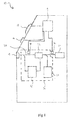
- a media validation sensor 30 is connected to the central processor 16, and located adjacent the media transport path 20 before the escrow storage 22, while a cheque printer and imager station 32 is located before the cheque bin 24.
- a secure safe 34 encloses the majority of the media transport path 20, together with the escrow storage 22, the banknote bin 26, and the purge bin 28.
- the cheque bin 24 is located outside the safe 34.
- FIG. 2 is a flow diagram of the transaction processing path.
- the user initially interacts with the SST 10 by means of the display screen 12, keypad 14, and card reader, if present, to establish the user's identity, and to obtain access to the user's bank account.
- the user may then select a desired transaction from a choice of available options presented to them by the SST 10, among the options being deposit of media.
- the user is then asked to confirm the type of media they will be depositing - banknotes, or cheques.
- the SST 10 as described here is not configured to be able to accept different media types in a single deposit, and so the user must manually separate their media into banknotes only or cheques only. Mixed denominations of banknotes are acceptable. As will be described below, however, embodiments of the present invention may be configured to accept mixed deposits.
- the deposited media is then stored in the escrow storage 22, 122 while the user is requested to confirm the value of the deposited media. If the user disagrees with the value as determined by the SST 10, the media may be diverted to the purge bin 28, 128, and then returned to the user via deposit aperture 18.
- unidentifiable media items for example, poor condition banknotes, or non-standard cheques
- Banknotes which can be identified as forgeries may be diverted to a specific forgery storage bin 131 (shown on Figure 2) for later disposal.
- the items are then transported to either the banknote bin 26, 126 or the cheque bin 24, 124, depending on the type of media which is being deposited.
- Banknotes will simply be transported to the bin 26 within the safe 34, and await subsequent collection by the SST operator, while the value of the deposited notes may be credited to the user's account immediately, as the banknotes have been validated by the SST.
- Cheques pass to the cheque deposit bin 24 located outside the safe 34, via a cheque printer and imaging station 32, 132. This station 32, 132 endorses the deposited cheque by printing various information thereon, while an image of the printed cheque is acquired.
- the transaction processing as described, and as shown in Figure 2 requires that the user manually sort the items to be deposited.
- a variation in this processing is shown in Figure 3, which illustrates a similar procedure with the exception that a mixed bundle of media may be deposited by the user.
- the validation scanner 30 may also be used, however, to determine the type of deposited media, as well as whether the media is genuine.
- the SST 10 then automatically determines whether each media item is to be directed to the banknote bin or the cheque bin, as appropriate.
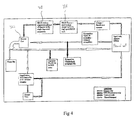
- Figures 4 and 5 show respectively manual and automatic sorting of deposited items, with the storage of deposited cheques being located within the safe 34, rather than outside the safe.
- Figures also illustrate in more detail the processing of deposited cheques before they enter escrow storage 22; an additional cheque escrow 336 is included which allows cheques to be passed through a high speed MICR scanner 338 to validate the cheque and determine its value, before passing the cheque to the main escrow 22, 322.
- the cheque bin 24 within the safe 34 may act as a cheque escrow storage, allowing deposited cheques to be returned through deposit aperture 18, when requested by an authorised user. This allows the SST operator to collect deposited cheques from within the safe without having access to the safe itself, or the deposited banknotes therein.
- the invention may be used with a number of different types of media.
- the invention may also be used to process payments from a user's bank account - a suitable remittance note may be deposited as if it were a cheque, and a suitably-configured SST may determine the value of the remittance and the payee from visual or other information recorded on the remittance note, and transfer the appropriate amount from the user's bank account to that of the payee.
- the cancelled remittance note may be returned to the user, rather than proceeding to a storage bin.
- the terminal may be operable to receive any financial instrument, including a cheque, a remittance note, and such like.
Landscapes
- Physics & Mathematics (AREA)
- General Physics & Mathematics (AREA)
- Business, Economics & Management (AREA)
- Accounting & Taxation (AREA)
- Finance (AREA)
- Inspection Of Paper Currency And Valuable Securities (AREA)
- Financial Or Insurance-Related Operations Such As Payment And Settlement (AREA)
Abstract
Description
Claims (10)
- A method of processing media deposits into a self service terminal (SST), the method comprising the steps of:a) receiving a media deposit comprising at least one media item into an SST;b) determining whether each deposited item is cash or a cheque;c) analysing each deposited item, to verify the items;d) transferring each deposited cheque item into a cheque deposit bin; ande) transferring each deposited cash item into a cash deposit bin.
- A self service terminal (SST) (10), the SST (10) comprising:user interaction means (12, 14) for interacting with a user;deposit means (18) for allowing a user to deposit one or more media items into the SST;means (16, 30; 12, 14) for determining whether each deposited item is cash or a cheque;analysis means (30) for analysing deposited items, to verify the items;a cheque bin (24) for storing deposited cheques;a cash bin (26) for storing deposited cash; andmeans (20) for transferring deposited items from the deposit means to a selected one of the bins via the analysis means.
- The SST of claim 2, further comprising a safe (34) within which the cash bin (26) is located.
- The SST of claim 3 wherein the cheque bin (24) is located within the safe.
- The SST of claims 2, 3, or 4, further comprising an escrow storage location (22) for storing deposited items prior to transferring them to a selected one of the storage bins (24, 26).
- The SST of any one of claims 2 to 5, wherein the cheque bin (24) comprises a cheque escrow bin, and the SST further comprises means for selectively returning the contents of the cheque escrow bin (24) to the deposit means (18).
- A method of processing media deposits into a self service terminal (SST) having a safe, the method comprising the steps of: receiving a media deposit comprising a plurality of media items of a single media type into an SST; receiving information from a user to determine whether each deposited item is cash or a cheque; analysing each deposited item, to verify the items; transferring each deposited cash item into a cash deposit bin located within a safe of an SST; and transferring each deposited cheque item into a cheque deposit bin located outside the safe of the SST.
- A method of processing media deposits into a self service terminal (SST) having a safe, the method comprising the steps of: receiving a media deposit comprising a plurality of media items of a single media type into an SST; receiving information from a user to determine whether each deposited item is cash or a cheque; analysing each deposited item, to verify the items; transferring each deposited cash item into a cash deposit bin located within a safe of an SST; and transferring each deposited cheque item into a cheque deposit bin located within the safe of the SST.
- A method of processing media deposits into a self service terminal (SST) having a safe, the method comprising the steps of: receiving a media deposit comprising a plurality of media items of one or more media types into an SST; determining whether each deposited item is cash or a cheque; analysing each deposited item, to verify the items; transferring each deposited cash item into a cash deposit bin located within a safe of an SST; and transferring each deposited cheque item into a cheque deposit bin located outside the safe of the SST.
- A method of processing media deposits into a self service terminal (SST) having a safe, the method comprising the steps of: receiving a media deposit comprising a plurality of media items of one or more media types into an SST; determining whether each deposited item is cash or a cheque; analysing each deposited item, to verify the items; transferring each deposited cash item into a cash deposit bin located within a safe of an SST; and transferring each deposited cheque item into a cheque deposit bin located within the safe of the SST.
Applications Claiming Priority (2)
| Application Number | Priority Date | Filing Date | Title |
|---|---|---|---|
| GB0130480 | 2001-12-20 | ||
| GBGB0130480.7A GB0130480D0 (en) | 2001-12-20 | 2001-12-20 | Self service terminal |
Publications (2)
| Publication Number | Publication Date |
|---|---|
| EP1324287A2 true EP1324287A2 (en) | 2003-07-02 |
| EP1324287A3 EP1324287A3 (en) | 2006-01-11 |
Family
ID=9928028
Family Applications (1)
| Application Number | Title | Priority Date | Filing Date |
|---|---|---|---|
| EP02255551A Withdrawn EP1324287A3 (en) | 2001-12-20 | 2002-08-08 | Self service terminal |
Country Status (3)
| Country | Link |
|---|---|
| US (1) | US6663001B2 (en) |
| EP (1) | EP1324287A3 (en) |
| GB (1) | GB0130480D0 (en) |
Cited By (3)
| Publication number | Priority date | Publication date | Assignee | Title |
|---|---|---|---|---|
| EP2028335A1 (en) | 2007-08-20 | 2009-02-25 | Brink's France | Safe for the deposit of valuables of different nature |
| WO2010049111A1 (en) * | 2008-10-27 | 2010-05-06 | Giesecke & Devrient Gmbh | Method for sorting bank notes in a bank note recycler and a bank note recycler |
| DE102011000784A1 (en) * | 2011-02-17 | 2012-08-23 | Wincor Nixdorf International Gmbh | Device for handling notes of value |
Families Citing this family (17)
| Publication number | Priority date | Publication date | Assignee | Title |
|---|---|---|---|---|
| CA2418663A1 (en) * | 2003-02-07 | 2004-08-07 | Namsys Inc. | Deposit taking system and method |
| CA2425782A1 (en) * | 2003-02-07 | 2004-08-07 | Canadian Imperial Bank Of Commerce | Deposit system and method of taking deposits |
| US7000830B2 (en) * | 2003-08-11 | 2006-02-21 | Diebold Self-Service Systems Division Of Diebold, Incorporated | Locking bolt work apparatus for automated banking machine |
| US7422118B2 (en) * | 2003-12-16 | 2008-09-09 | Cts Cashpro, S.P.A. | Equipment for the automatic deposit of banknotes |
| EP1640896B1 (en) * | 2004-09-28 | 2016-03-09 | Swisscom AG | Method for recycling products |
| CA2502344A1 (en) * | 2005-03-24 | 2006-09-24 | Cashcode Company Inc. | Validator with recycling cassette and stacker |
| US20080135610A1 (en) * | 2006-12-08 | 2008-06-12 | Nautilus Hyosung, Inc. | Method of recognizing characters on check in automated check processing machine |
| US11361374B2 (en) | 2007-08-02 | 2022-06-14 | Brink's Network, Inc. | Computerized system having a central process facilitator in communication with safes and operating process thereof |
| US20110035316A2 (en) * | 2007-08-02 | 2011-02-10 | Brink's Network, Inc. | Process of and system for advancing credit for cash collections |
| US7886965B2 (en) * | 2008-05-16 | 2011-02-15 | Ncr Corporation | Scaleable check processing module for a self-service check depositing terminal |
| EA201100217A1 (en) * | 2008-07-15 | 2011-06-30 | Бринкс Нетворк, Инк. | METHOD AND SYSTEM FOR FACILITATING PROCESSING OF CHECKS IN THE SALE AND ACCELERATION ITEM OF ACCOUNT FOR THE ACCOUNT OF THE ENTERPRISE OF THE MEANS FOR ACCEPTED CHECKS |
| KR101581725B1 (en) * | 2011-07-21 | 2016-01-21 | 노틸러스효성 주식회사 | Cash and check in module |
| US8645214B2 (en) | 2011-08-30 | 2014-02-04 | Brink's Network, Inc. | System for and process of facilitating financial transactions at point-of-sale employing electronic drop safes and point-of-sale terminals |
| US11120669B2 (en) * | 2013-11-26 | 2021-09-14 | Ncr Corporation | Media depository |
| KR101534412B1 (en) * | 2013-11-29 | 2015-07-07 | 노틸러스효성 주식회사 | Medium processing apparatus |
| JP6189797B2 (en) * | 2014-06-27 | 2017-08-30 | 日立オムロンターミナルソリューションズ株式会社 | Banknote handling equipment |
| US10692062B2 (en) * | 2017-04-28 | 2020-06-23 | Ncr Corporation | Auto lookup for a self-service terminal (SST) network |
Family Cites Families (19)
| Publication number | Priority date | Publication date | Assignee | Title |
|---|---|---|---|---|
| DE3216830C2 (en) * | 1981-05-09 | 1985-11-07 | Laurel Bank Machines Co., Ltd., Tokio/Tokyo | Banknote input / output device |
| US4597330A (en) * | 1984-11-28 | 1986-07-01 | Diebold, Incorporated | Depository envelope printing mechanism |
| US5422467A (en) * | 1993-01-15 | 1995-06-06 | Interbold | Article depositing apparatus |
| GB9303601D0 (en) * | 1993-02-23 | 1993-04-07 | Rue Inter Innovation De Ab | Document deposit apparatus |
| GB9313640D0 (en) | 1993-07-01 | 1993-08-18 | Ncr Int Inc | Document transaction apparatus |
| JP3313472B2 (en) | 1993-09-21 | 2002-08-12 | 株式会社東芝 | Cash processing system |
| GB9323709D0 (en) | 1993-11-15 | 1994-01-05 | Ncr Int Inc | Depository apparatus for envelopes and single sheets |
| US5553320A (en) * | 1994-03-16 | 1996-09-03 | Hitachi, Ltd. | Automatic cash transaction machine |
| JPH0922476A (en) * | 1995-07-07 | 1997-01-21 | Toshiba Corp | Automatic transaction device and method of handling rejected money in automatic transaction device |
| US5984177A (en) * | 1996-08-16 | 1999-11-16 | Transaction Technology, Inc. | Multiple configuration automatic teller machine |
| GB9624895D0 (en) * | 1996-11-29 | 1997-01-15 | Ncr Int Inc | Automatic teller machines |
| US6125947A (en) * | 1997-09-19 | 2000-10-03 | Baker Hughes Incorporated | Earth-boring drill bits with enhanced formation cuttings removal features and methods of drilling |
| US6109522A (en) * | 1997-11-28 | 2000-08-29 | Diebold, Incorporated | Automated banking machine with self auditing capabilities and system |
| GB9812839D0 (en) * | 1998-06-16 | 1998-08-12 | Ncr Int Inc | Sheet dispensing mechanism |
| GB9812841D0 (en) | 1998-06-16 | 1998-08-12 | Ncr Int Inc | Sheet dispensing mechanism |
| SE9804218L (en) * | 1998-12-04 | 2000-06-05 | Nybohov Dev Ab | Safes for valuables |
| JP4135238B2 (en) * | 1998-12-08 | 2008-08-20 | 日立オムロンターミナルソリューションズ株式会社 | Banknote deposit and withdrawal machine |
| AR031076A1 (en) * | 1999-09-21 | 2003-09-10 | Diebold Inc | MA QUICA AUTOMA TICA FOR TRANSACTIONS |
| US6474548B1 (en) * | 1999-11-30 | 2002-11-05 | Diebold, Incorporated | Deposit accepting and storage apparatus and method for automated banking machine |
-
2001
- 2001-12-20 GB GBGB0130480.7A patent/GB0130480D0/en not_active Ceased
-
2002
- 2002-08-08 EP EP02255551A patent/EP1324287A3/en not_active Withdrawn
- 2002-11-14 US US10/294,952 patent/US6663001B2/en not_active Expired - Lifetime
Cited By (5)
| Publication number | Priority date | Publication date | Assignee | Title |
|---|---|---|---|---|
| EP2028335A1 (en) | 2007-08-20 | 2009-02-25 | Brink's France | Safe for the deposit of valuables of different nature |
| FR2920182A1 (en) * | 2007-08-20 | 2009-02-27 | Brink S France Sa | STRUCTURE OF DEPOSIT BOX OF VALUES OF DIFFERENT NATURES. |
| WO2010049111A1 (en) * | 2008-10-27 | 2010-05-06 | Giesecke & Devrient Gmbh | Method for sorting bank notes in a bank note recycler and a bank note recycler |
| DE102011000784A1 (en) * | 2011-02-17 | 2012-08-23 | Wincor Nixdorf International Gmbh | Device for handling notes of value |
| US8939271B2 (en) | 2011-02-17 | 2015-01-27 | Wincor Nixdorf International Gmbh | Device for handling value documents |
Also Published As
| Publication number | Publication date |
|---|---|
| EP1324287A3 (en) | 2006-01-11 |
| US20030116622A1 (en) | 2003-06-26 |
| GB0130480D0 (en) | 2002-02-06 |
| US6663001B2 (en) | 2003-12-16 |
Similar Documents
| Publication | Publication Date | Title |
|---|---|---|
| US6663001B2 (en) | Self service terminal | |
| US7635082B2 (en) | Currency dispenser | |
| US7187795B2 (en) | Document processing system using full image scanning | |
| US7873576B2 (en) | Financial document processing system | |
| US6661910B2 (en) | Network for transporting and processing images in real time | |
| US8474697B2 (en) | Automated banking machine | |
| US6520408B1 (en) | Method for operating automated banking machine | |
| US7748611B2 (en) | Automated banking machine | |
| US7815104B2 (en) | Automated banking machine | |
| US7588182B2 (en) | Automated banking machine |
Legal Events
| Date | Code | Title | Description |
|---|---|---|---|
| PUAI | Public reference made under article 153(3) epc to a published international application that has entered the european phase |
Free format text: ORIGINAL CODE: 0009012 |
|
| AK | Designated contracting states |
Designated state(s): AT BE BG CH CY CZ DE DK EE ES FI FR GB GR IE IT LI LU MC NL PT SE SK TR |
|
| AX | Request for extension of the european patent |
Extension state: AL LT LV MK RO SI |
|
| PUAL | Search report despatched |
Free format text: ORIGINAL CODE: 0009013 |
|
| AK | Designated contracting states |
Kind code of ref document: A3 Designated state(s): AT BE BG CH CY CZ DE DK EE ES FI FR GB GR IE IT LI LU MC NL PT SE SK TR |
|
| AX | Request for extension of the european patent |
Extension state: AL LT LV MK RO SI |
|
| 17P | Request for examination filed |
Effective date: 20060711 |
|
| AKX | Designation fees paid |
Designated state(s): DE ES FR GB IT |
|
| 17Q | First examination report despatched |
Effective date: 20060821 |
|
| STAA | Information on the status of an ep patent application or granted ep patent |
Free format text: STATUS: THE APPLICATION IS DEEMED TO BE WITHDRAWN |
|
| 18D | Application deemed to be withdrawn |
Effective date: 20070228 |