EP1324248A2 - Schedule distribution system and schedule making method - Google Patents
Schedule distribution system and schedule making method Download PDFInfo
- Publication number
- EP1324248A2 EP1324248A2 EP02028412A EP02028412A EP1324248A2 EP 1324248 A2 EP1324248 A2 EP 1324248A2 EP 02028412 A EP02028412 A EP 02028412A EP 02028412 A EP02028412 A EP 02028412A EP 1324248 A2 EP1324248 A2 EP 1324248A2
- Authority
- EP
- European Patent Office
- Prior art keywords
- schedule
- waiting time
- specific places
- time
- user
- Prior art date
- Legal status (The legal status is an assumption and is not a legal conclusion. Google has not performed a legal analysis and makes no representation as to the accuracy of the status listed.)
- Ceased
Links
Images




Classifications
-
- G—PHYSICS
- G06—COMPUTING OR CALCULATING; COUNTING
- G06Q—INFORMATION AND COMMUNICATION TECHNOLOGY [ICT] SPECIALLY ADAPTED FOR ADMINISTRATIVE, COMMERCIAL, FINANCIAL, MANAGERIAL OR SUPERVISORY PURPOSES; SYSTEMS OR METHODS SPECIALLY ADAPTED FOR ADMINISTRATIVE, COMMERCIAL, FINANCIAL, MANAGERIAL OR SUPERVISORY PURPOSES, NOT OTHERWISE PROVIDED FOR
- G06Q10/00—Administration; Management
- G06Q10/10—Office automation; Time management
- G06Q10/109—Time management, e.g. calendars, reminders, meetings or time accounting
-
- G—PHYSICS
- G06—COMPUTING OR CALCULATING; COUNTING
- G06Q—INFORMATION AND COMMUNICATION TECHNOLOGY [ICT] SPECIALLY ADAPTED FOR ADMINISTRATIVE, COMMERCIAL, FINANCIAL, MANAGERIAL OR SUPERVISORY PURPOSES; SYSTEMS OR METHODS SPECIALLY ADAPTED FOR ADMINISTRATIVE, COMMERCIAL, FINANCIAL, MANAGERIAL OR SUPERVISORY PURPOSES, NOT OTHERWISE PROVIDED FOR
- G06Q30/00—Commerce
- G06Q30/02—Marketing; Price estimation or determination; Fundraising
Definitions
- the present invention relates to schedule distribution systems and schedule making methods. More specifically, the present invention relates to a method for optimally making a schedule for a user who desires to visit a plurality of places such as entertainment spots and sight-seeing spots in accordance with waiting time at those places and user's intended staying time.
- a visiting schedule that enables a user to visit a plurality of places such as entertainment spots or sight-seeing spots in optimal order.
- a visiting schedule is arranged based on traveling time to the places designated by the user as desired and traffic congestion of roads to those places.
- a user has to designate in advance all of the places he or she desires to visit, which is also quite burdensome.
- a visiting schedule is arranged in consideration of only traveling time to the desired places and traffic congestion. Therefore, possible waiting time at those places will affect the schedule.
- an object of the present invention is to provide a schedule making method of collecting waiting time at a plurality of places such as entertainment spots and sightseeing spots and, based on the waiting time, making a schedule that enables a user to visit those places in optimal order, and to provide a schedule distribution system using the above method.
- the present invention has the following features to attain the object mentioned above.
- a first aspect of the present invention is directed to the schedule distribution system for making a visiting schedule for a plurality of specific places, and distributing the schedule to a predetermined terminal.
- the schedule distribution system includes: a mobile communications terminal operable to issue a request for distribution of the visiting schedule for the plurality of specific places; a plurality of information provider apparatuses each placed at each of the specific places, the information provider apparatuses operable to transmit a waiting time for entering or using the specific place; and a server operable to collect the waiting time from each of the information provider apparatuses, to make a schedule based on the waiting time, upon the request from the mobile communications terminal, and to distribute the schedule to the mobile communications terminal.
- each of the information provider apparatuses in the first aspect includes: a number-of-people detector operable to detect the number of people waiting to enter or use the specific place; a waiting time calculator operable to calculate the waiting time required for entering or using the specific place from the number of people detected by the number-of-people detector; and a transmitter operable to transmit the waiting time calculated by the waiting time calculator to the server.
- the server in the first aspect includes: a first receiver operable to receive the waiting time transmitted from each of the information provider apparatuses; a storage unit operable to store the waiting time received by the first receiver; a second receiver operable to receive a schedule distribution request from the mobile communications terminal; a schedule maker operable to obtain, from the storage unit, a waiting time at each of specific places corresponding to the schedule distribution request received by the second receiver, and to make a visiting schedule for the corresponding specific places in ascending order of time taken before entering or using the corresponding specific places based on the obtained waiting time; and a transmitter operable to transmit the schedule made by the schedule maker to the mobile communications terminal.
- the mobile communications terminal in the first aspect includes: a request transmitter operable to transmit the schedule distribution request to the server; a receiver operable to receive the schedule made by the server; and a display operable to display the schedule received by the receiver.
- the schedule maker in the first aspect makes a schedule that enables a user to visit the corresponding specific places in ascending order of the waiting time.
- the schedule maker in the first aspect may obtain a current position of the mobile communications terminal transmitting the schedule distribution request, further calculate a traveling time from the current position to each of the corresponding specific places, and then make a schedule that enables a user to visit the corresponding specific places in ascending order of a sum of the waiting time and the traveling time.
- the mobile communications terminal in the first aspect may transmit the schedule distribution request including area information indicative of an area where a specific place desired for scheduling is located, and the schedule maker may obtain a waiting time of each of specific places corresponding to the area information from the storage unit, and make the schedule that enables a user to visit the corresponding and desired specific places in ascending order of the waiting time.
- the mobile communications terminal in the first aspect may transmit the schedule distribution request including area information indicative of an area where a specific place desired for scheduling is located, and obtain a waiting time of each of specific places corresponding to the area information from the storage unit, obtain a current position of the mobile communications terminal transmitting the schedule distribution request, further calculate a traveling time from the current position to each of the corresponding and desired specific places, and make a schedule that enables a user to visit the corresponding and desired specific places in ascending order of a sum of the waiting time and the traveling time.
- the user of the mobile communications terminal can automatically receive the schedule.
- the mobile communications terminal in the first aspect may transmit the schedule distribution request including user information indicative of an intended staying time at a specific place desired for scheduling.
- the schedule maker may further obtain a waiting time at each of specific places corresponding to the user information from the storage unit, and make a schedule that enables a user to visit the corresponding and desired specific places in ascending order of the waiting time and in consideration of the user information.
- the mobile communications terminal in the first aspect may transmit the schedule distribution request including user information indicative of an intended staying time at a specific place desired for scheduling.
- the schedule maker may further obtain a waiting time at each of specific places corresponding to the user information from the storage unit, obtain a current position of the mobile communications terminal transmitting the schedule distribution request, further calculate a traveling time from the current position to each of the corresponding and desired specific places, and make a schedule that enables a user to visit the corresponding and desired specific places in ascending order of a sum of the waiting time and the traveling time and in consideration of the user information.
- a second aspect of the present invention is directed to a method of making a visiting schedule for a plurality of specific places based on predetermined information given by the specific places.
- the method includes the steps of: detecting the number of people waiting for entering or using the specific places; calculating waiting times required to enter or use the specific places; extracting waiting times for specific places corresponding to a schedule making request from the calculated waiting times from the detected number of people; and making a schedule in ascending order of time taken before entering or using the corresponding specific places based on the extracted waiting times.
- a schedule is made to enable a user to visit the corresponding specific places in ascending order of the waiting time.
- a current position of a terminal transmitting the schedule making request may be obtained, a traveling time from the current position to each of the corresponding specific places may be calculated, and a schedule may be made to enable a user to visit the corresponding specific places in ascending order of a sum of the waiting time and the traveling time.
- the schedule making request includes area information indicative of an area where a specific place desired for scheduling is located.
- a waiting time at each of specific places corresponding to the area information may be obtained from the calculated waiting times, and a schedule may be made to enable a user to visit the corresponding and desired specific places in ascending order of the waiting time.
- the schedule making request includes area information indicative of an area where a specific place desired for scheduling is located.
- a waiting time at each of specific places corresponding to the area information may be obtained from the calculated waiting times
- a current position of a terminal transmitting the schedule making request may be obtained
- a traveling time from the current position to each of the corresponding and desired specific places may further be calculated
- a schedule may be made to enable a user to visit the corresponding and desired specific places in ascending order of a sum of the waiting time and the traveling time.
- the schedule making request includes user information indicative of an intended staying time at a specific place desired for scheduling.
- a waiting time at each of specific places corresponding to the user information may further be obtained from the calculated waiting times, and a schedule may be made to enable a user to visit the corresponding and desired specific places in ascending order of the waiting time and in consideration of the user information.
- the schedule making request includes user information indicative of an intended staying time at a specific place desired for scheduling.
- a waiting time at each of specific places corresponding to the user information may further be obtained from the calculated waiting times
- a current position of a terminal transmitting the schedule making request may be obtained
- a traveling time from the current position to each of the corresponding and desired specific places may further be calculated
- a schedule may be made to enable a user to visit the specific places in ascending order of a sum of the waiting time and the traveling time and in consideration of the user information.
- a third aspect of the present invention is directed to a server that generates a visiting schedule for a plurality of specific places based on waiting times at the specific places to enter or use, the waiting times transmitted from a plurality of information provider apparatuses each placed in each of the specific places.
- the server includes: a first receiver operable to receive the waiting times transmitted from the information provider apparatuses; a storage unit operable to store the waiting times received by the first receiver; a second receiver operable to receive a schedule distribution request from a predetermined terminal; and a schedule maker operable to obtain, from the storage unit, waiting times at specific places corresponding to the schedule distribution request received by the second receiver, and to make a visiting schedule for the corresponding specific places in ascending order of time taken before entering or using the corresponding specific places based on the obtained waiting times.
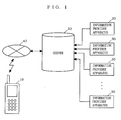
- FIG. 1 is an illustration showing an exemplary configuration of a schedule distribution system according to a first embodiment of the present invention.
- the schedule distribution system according to the first embodiment includes a mobile communications terminal 10, a server 20, and a plurality of information provider apparatuses 30.
- the mobile communications terminal 10 and the server 20 are wirelessly connected to each other via a network 40.
- the server 20 and the information provider apparatuses 30 form wired or wireless connection with each other.
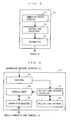
- the information provider apparatuses 30 are previously installed in public places, such as movie theaters, restaurants, and parks, or sight-seeing spots (such places are hereinafter referred to as specific places) . As illustrated in FIG. 2, these information provider apparatuses 30 each include a number-of-people detector 31, a waiting time calculator 32, and a transmitter 33.
- the number-of-people detector 31 detects the number of people waiting in a queue for entering or using the specific place. This detection can be performed by actually observing the length of the queue or by extracting the number of people who made a reservation by entering their names on a waiting list or in a management terminal.
- poles 311 for regulating queues and sensors 312 for detecting the existence of people with infrared rays are placed at an entrance of each specific place (refer to FIG. 5). By knowing which of these sensors 312 is the last to detect the existence of people, it is possible to detect the length of the queue, thereby finding an approximate number of people waiting in the queue.
- the waiting time calculator 32 calculates an approximate waiting time for a person who would line up at the end of the queue.
- the waiting time can be easily calculated by previously registering a time required for entering or using the specific place per person, and multiplying the time by the number of waiting people.
- the transmitter 33 transmits the waiting time calculated by the waiting time calculator 32 to the server 20. Normally, this waiting time is transmitted together with a unique identifier (ID) uniquely identifying the information provider apparatus 30 that calculated the waiting time. However, this identifier is not further described in the present embodiment.
- ID unique identifier
- the server 20 manages the waiting time transmitted from each of the information provider apparatuses 30, and makes and distributes a schedule according to a request from the mobile communications terminal 10. As illustrated in FIG. 3, the server 20 includes a receiver 21, a waiting time database controller 22, a waiting time database 23, a schedule maker 24, and a transmitter/receiver 25.
- the receiver 21 receives the waiting time transmitted from each of the information provider apparatuses 30.
- the waiting time database controller 22 stores the waiting time received by the receiver 21 in the waiting time database 23.
- the waiting time database controller 22 also receives and provides waiting time from the information provider apparatuses 30 required in accordance with a request from the schedule maker 24.
- the waiting time database 23 stores and manages the waiting time of each information provider apparatus 30.
- the information provider apparatuses 30 (that is, the specific places) are preferably classified in advance by area, such as state, city, town, or village.
- the transmitter/receiver 25 receives a schedule distribution request transmitted from the mobile communications terminal 10.
- the transmitter/receiver 25 also distributes a schedule made by the schedule maker 24 to the mobile communications terminal 10.
- the schedule maker 24 receives a current position of the mobile communications terminal 10 requesting schedule distribution. In consideration of the received current position and the waiting times stored in the waiting time database 23, the schedule maker 24 makes a schedule that enables the user of the mobile communications terminal 10 to visit the specific places (that is, the information provider apparatuses 30) in ascending order of waiting time. How to make such a schedule is described further below in detail.
- the mobile communications terminal 10 is a movable information terminal typified by a cell phone, a PDA, or a car navigation device. As illustrated in FIG. 4, the mobile communications terminal 10 includes a transmitter/receiver 11, an input unit 12, and a display 13.
- the input unit 12 is provided by the user with an instruction input for requesting schedule distribution.
- This instruction input does not give any specific information about which place to go, but gives rough information about which area to go. Even without such area information, it is possible to determine the area to go from the current position of the mobile communications terminal 10.
- the transmitter/receiver 11 transmits a schedule distribution request based on the instruction input entered via the input unit 12 to the server 20.
- the transmitter/receiver 11 also receives a schedule distributed from the server 20, and causes the display 13 to output the schedule.
- the display 13 shows the schedule received by the transmitter/receiver 11 on a screen.
- FIG. 6 is a flowchart for explaining a schedule making procedure performed by the schedule maker 24 of the server 20.
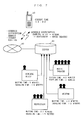
- FIG. 7 is an illustration showing an exemplary case where a movie theater, a bowling alley, a museum, and a restaurant are selected based on the current position of the mobile communications terminal 10, as specific places having the information provider apparatuses 30 placed therein.
- the schedule distribution request transmitted from the mobile communications terminal 10 is received by the transmitter/receiver 25 of the server 20, and is then forwarded to the schedule maker 24.
- the schedule maker 24 obtains a current position of the mobile communications terminal 10 (step S61).
- the schedule maker 24 may use information that specifies a base station on the network 40 to which the mobile communications terminal 10 is currently accessing.
- the current position may be included in the schedule distribution request issued from the mobile communications terminal 10.
- Bluetooth (R) is used for communications between the server 20 and the mobile communications terminal 10
- radio waves can be transmitted approximately 10 meters. Therefore, upon reception of radio waves from the mobile communications terminal 10, the server 20 can detect that the current position of the mobile communications terminal 10 is within a 10-meter radius of the base station.
- the schedule maker 24 obtains, through the waiting time database controller 22, the waiting time of each information provider apparatus 30 stored in the waiting time database 23 (step S62). At this time, the schedule maker 24 obtains waiting time of one or more of the information provider apparatuses 30 classified by area, based on the area specified by the schedule distribution request. The schedule maker 24 then calculates traveling time from the current position of the mobile communications terminal 10 to each specific place (that is, each information provider apparatus 30) whose waiting time has been obtained (step S63). The schedule maker 24 then adds the waiting time and the traveling time together for each information provider apparatus 30 to find the time required until the user actually enters or uses the specific place in which the information provider apparatus 30 is located (step S64). The schedule maker 24 then makes a schedule that enables the user to visit the specific places (that is, the information provider apparatuses 30) in ascending order of waiting time (step S65).
- the schedule may be made without calculation of traveling time to each of those apparatuses 30.
- a schedule is made in consideration of the waiting time such that the user will visit the bowling alley first (5 minutes + 10 minutes), the museum second (10 minutes + 12 minutes), the restaurant third (20 minutes + 15 minutes), and then the movie theater fourth (40 minutes + 5 minutes).
- a schedule is made only in consideration of the traveling time. Therefore, the schedule will become as follows : the user will visit the movie theater first (5 minutes), the bowling alley second (10 minutes), the museum third (12 minutes), and the restaurant fourth (15 minutes) .
- a schedule can be made based on the waiting time of each specific place and the current position of the mobile communications terminal 10, and can be then transmitted to the mobile communications terminal 10.
- the user of the mobile communications terminal 10 can automatically receive the schedule that enables the user to visit a plurality of specific places in ascending order of waiting time.
- the above-described schedule is preferably re-made every time use of a single specific place has been completed.
- the schedule maker 24 of the server 20 makes a schedule that enables the user of the mobile communications terminal 10 to visit the specific places in which the information provider apparatuses 30 are located in ascending order of waiting time without consideration of a user's own schedule is provided.
- a method of making a schedule that enables the user to visit the specific places in which the information provider apparatuses 30 are located in consideration of a user's own schedule at the specific places.
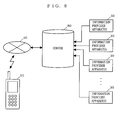
- FIG. 8 is an illustration showing an exemplary configuration of a schedule distribution system according to the second embodiment of the present invention.
- the schedule distribution system according to the second embodiment includes a mobile communications terminal 50, a server 60, and the plurality of information provider apparatuses 30.
- the mobile communications terminal 50 and the server 60 is wirelessly connected to each other via the network 40.
- the server 60 and the information provider apparatuses 30 form wired or wireless connection with each other.
- the configuration of the schedule distribution system according to the second embodiment of the present invention is different from that according to the first embodiment only in that the mobile communications terminal 50 and the server 60. Descriptions are now made to the schedule distribution system according to the second embodiment, mainly to the above-mentioned difference from the first embodiment.
- the server 60 manages the waiting time transmitted from the information provider apparatus 30, and makes and distributes a schedule according to a request supplied by the mobile communications terminal 50.
- the server 60 includes the receiver 21, the waiting time database controller 22, the waiting time database 23, a schedule maker 64, a transmitter/receiver 65, a user information database controller 66, and a user information database 67.
- the transmitter/receiver 65 receives a schedule distribution request transmitted from the mobile communications terminal 50.
- the transmitter/receiver 65 also distributes the schedule made by the schedule maker 24 to the mobile communications terminal 50.
- the user information database controller 66 extracts user information included in the schedule distribution request received by the transmitter/receiver 65, and stores the extracted user information in the user information database 67. Also, in response to a request from the schedule maker 64, the user information database controller 66 reads and provides the user information stored in the user information database 67.
- the user information database 67 stores and manages the user information given by the mobile communications terminal 50.
- the user information is information that indicates one or more specific places the user desires to visit and intended staying time at each specific place.
- the user information is, for example, movie-viewing time at a movie theater, or dining time at a restaurant.
- the schedule maker 64 first obtains the current position of the mobile communications terminal 50 that issued the schedule distribution request. Then, the schedule maker 64 makes a schedule in consideration of the waiting time stored in the waiting time database 23, the user information stored in the user information database 67, and the current position of the mobile communications terminal 50.
- the schedule is made so as to enable the user to visit the specific places (that is, the information provider apparatuses 30) in ascending order of waiting time. How to make such a schedule is described further below in detail.
- the mobile communications terminal 50 is a movable information terminal typified by a cell phone, a PDA, or a car navigation device. As illustrated in FIG. 10, the mobile communications terminal 50 includes a transmitter/receiver 51, an input unit 52, and a display 53.
- the input unit 52 is provided by the user with an instruction input for requesting schedule distribution.
- This instruction input includes the area information as described in the first embodiment, and also the above-described user information.
- the transmitter/receiver 51 transmits a schedule distribution request including the user information based on the instruction entered via the input unit 52 to the server 60.
- the transmitter/receiver 51 also receives a schedule distributed from the server 60, and causes the display 53 to output the schedule.
- the display 53 shows the schedule received by the transmitter/receiver 51 on a screen.
- FIG. 11 is a flowchart for explaining a schedule making procedure performed by the schedule maker 64 of the server 60.
- FIG. 12 is an illustration showing an exemplary case where a movie theater, a bowling alley, a museum, and a restaurant are selected based on the current position of the mobile communications terminal 50 and the current time, as specific places having the information provider apparatuses 30 placed therein.
- the mobile communications terminal 50 Prior to schedule distribution, the mobile communications terminal 50 generates user information (step S111). For this purpose, the mobile communications terminal 50 first obtains a list of the information provider apparatuses 30 from the server 60. Based on the list, the user determines the specific places he or she desires to visit, intended staying time at each of those places, priority for visiting the places, and going-home time, for example, to cause the mobile communications terminal 50 to generate user information in accordance with the user's determination. Note herein that the priority is determined only by user's preference, and does not reflect optimal order of actual visiting. Then, the mobile communications terminal 50 issues a schedule distribution request including the user information to the server 60 (step S112).
- the schedule distribution request transmitted from the mobile communications terminal 50 is received by the transmitter/receiver 65 of the server 60, and is then forwarded to the schedule maker 64 and the user information database controller 66.
- the schedule maker 64 obtains a current position of the mobile communications terminal 50 (step S113).
- the user information database controller 66 extracts the user information included in the schedule distribution request, and then stores the extracted user information in the user information database 67 (step S114). Then, the schedule maker 64 obtains, via the user information database controller 66, the user information stored in the user information database 67 (step S115).
- the schedule maker 64 then obtains, from the waiting time database 23, waiting time at each of the information provider apparatuses 30 that are located within the area given by the schedule distribution request and are included in the specific places designated by the user information (step S116).
- waiting time is obtained via the waiting time database controller 22.
- the schedule maker 64 calculates traveling time from the current position of the mobile communications terminal 50 to each specific place in which each information provider apparatus 30 is located (step S117).
- the schedule maker 64 adds the waiting time and the traveling time together for each information provider apparatus 30 to calculate time required for entering or using each specific place (that is, each information provider apparatus 30) (step S118).
- the schedule maker 64 then makes a schedule that enables the user to visit the specific places in ascending order of waiting time required before entering or using those place, with utmost consideration given to the specific places and the intended staying time thereat designated by the user information (step S119).
- a schedule is made in consideration of the user information as well as the waiting time such that the user will visit the movie theater first (40 minutes + 5 minutes; staying time 14:00-15:00), the bowling park second (5 minutes + 10 minutes), the museum third (10 minutes + 12 minutes), and then the restaurant fourth (20 minutes + 15 minutes; staying time 19:00-20:30).
- the user information stored in the user information database 67 may be deleted if no longer necessary after making of the schedule has been completed. This deletion can be automatically performed based on a decision made by the user information database controller 66, or can be performed by the user information database controller 66 upon request from the mobile communications terminal 50.
- a schedule can be made based on the user information as well as the waiting time at the specific places and the current position of the mobile communications terminal 50 for transmission to the mobile communications terminal 50.
- the user of the mobile communications terminal 50 can automatically receive a schedule that enables the user to visit a plurality of specific places in ascending order of waiting time and also in consideration of his or her own schedule.
- the above-described system covers a wide area including a plurality of specific places. This is not meant to be restrictive.
- the present invention can be applied also to a system that covers a small area, such as a theme park, including a plurality of attractions. In this case, the user can get information about desired attractions. At an attraction operator's side, it is possible to estimate the crowd for each attraction, thereby achieving an efficient attraction operation by, for example, allocating more staff to attractions expected to be crowded.
- the schedule making method described in the first and second embodiments is typically achieved by predetermined program data stored in a storage device (ROM, RAM, or a hard disk, for example) and capable of executing the above-described procedure being interpreted by a CPU.
- the program data may be loaded into the storage device via a recording medium such as CD-ROM or a flexible disk, or may be executed directly on the recording medium.
Landscapes
- Business, Economics & Management (AREA)
- Engineering & Computer Science (AREA)
- Strategic Management (AREA)
- Human Resources & Organizations (AREA)
- Entrepreneurship & Innovation (AREA)
- Physics & Mathematics (AREA)
- Accounting & Taxation (AREA)
- Finance (AREA)
- Economics (AREA)
- Marketing (AREA)
- Development Economics (AREA)
- General Business, Economics & Management (AREA)
- General Physics & Mathematics (AREA)
- Theoretical Computer Science (AREA)
- Game Theory and Decision Science (AREA)
- Data Mining & Analysis (AREA)
- Operations Research (AREA)
- Quality & Reliability (AREA)
- Tourism & Hospitality (AREA)
- Management, Administration, Business Operations System, And Electronic Commerce (AREA)
- Mobile Radio Communication Systems (AREA)
- Information Transfer Between Computers (AREA)
- Telephonic Communication Services (AREA)
Abstract
Description
calculating waiting times required to enter or use the specific places; extracting waiting times for specific places corresponding to a schedule making request from the calculated waiting times from the detected number of people; and making a schedule in ascending order of time taken before entering or using the corresponding specific places based on the extracted waiting times.
Claims (16)
- A schedule distribution system for making a visiting schedule for a plurality of specific places, and distributing the schedule to a predetermined terminal, comprising:a mobile communications terminal (10, 50) operable to issue a request for distribution of the visiting schedule for the plurality of specific places;a plurality of information provider apparatuses (30) each placed at each of the specific places, the information provider apparatuses (30) operable to transmit a waiting time for entering or using the specific place; anda server (20, 60) operable to collect the waiting time from each of the information provider apparatuses (30), to make a schedule based on the waiting time, upon the request from the mobile communications terminal (10, 50), and to distribute the schedule to the mobile communications terminal (10, 50).
- The schedule distribution system according to claim 1, wherein
each of the information provider apparatuses (30) includes:the server (20, 60) includes:a number-of-people detector (31) operable to detect the number of people waiting to enter or use the specific place;a waiting time calculator (32) operable to calculate the waiting time required for entering or using the specific place from the number of people detected by the number-of-people detector (31); anda transmitter (33) operable to transmit the waiting time calculated by the waiting time calculator (32) to the server (20),the mobile communications terminal (10, 50) includes:a first receiver (21) operable to receive the waiting time transmitted from each of the information provider apparatuses (30);a storage unit (22, 23) operable to store the waiting time received by the first receiver (21);a second receiver (25, 65) operable to receive a schedule distribution request from the mobile communications terminal (10, 50);a schedulemaker (24, 64, 66, 67) operable to obtain, from the storage unit (22, 23), a waiting time at each of specific places corresponding to the schedule distribution request received by the second receiver (25, 65), and to make a visiting schedule for the corresponding specific places in ascending order of time taken before entering or using the corresponding specific places based on the obtained waiting time; anda transmitter (25, 65) operable to transmit the schedule made by the schedule maker (24, 64, 66, 67) to the mobile communications terminal (10, 50), anda request transmitter (11, 51) operable to transmit the schedule distribution request to the server (20, 60);a receiver (11, 51) operable to receive the schedule made by the server (20, 60); anda display (13) operable to display the schedule received by the receiver (11, 51). - The schedule distribution system according to claim 2, wherein
the schedule maker (24) makes a schedule that enables a user to visit the corresponding specific places in ascending order of the waiting time. - The schedule distribution system according to claim 2, wherein
the schedule maker (24) obtains a current position of the mobile communications terminal (10) transmitting the schedule distribution request, further calculates a traveling time from the current position to each of the corresponding specific places, and then makes a schedule that enables a user to visit the corresponding specific places in ascending order of a sum of the waiting time and the traveling time. - The schedule distribution system according to claim 2, wherein
the mobile communications terminal (10) transmits the schedule distribution request including area information indicative of an area where a specific place desired for scheduling is located, and
the schedule maker (24) obtains a waiting time of each of specific places corresponding to the area information from the storage unit (22, 23), and makes a schedule that enables a user to visit the corresponding and desired specific places in ascending order of the waiting time. - The schedule distribution system according to claim 2, wherein
the mobile communications terminal (10) transmits the schedule distribution request including area information indicative of an area where a specific place desired for scheduling is located, and
the schedule maker (24) obtains a waiting time of each of specific places corresponding to the area information from the storage unit (22, 23), obtains a current position of the mobile communications terminal (10) transmitting the schedule distribution request, further calculates a traveling time from the current position to each of the corresponding and desired specific places, and makes a schedule that enables a user to visit the corresponding and desired specific places in ascending order of a sum of the waiting time and the traveling time. - The schedule distribution system according to claim 2, wherein
the mobile communications terminal (50) transmits the schedule distribution request including user information indicative of an intended staying time at a specific place desired for scheduling, and
the schedule maker (64, 66, 67) further obtains a waiting time at each of specific places corresponding to the user information from the storage unit (22, 23), and makes a schedule that enables a user to visit the corresponding and desired specific places in ascending order of the waiting time and in consideration of the user information. - The schedule distribution system according to claim 2, wherein
the mobile communications terminal (50) transmits the schedule distribution request including user information indicative of an intended staying time at a specific place desired for scheduling, and
the schedule maker (64, 66, 67) further obtains a waiting time at each of specific places corresponding to the user information from the storage unit (22, 23), obtains a current position of the mobile communications terminal (50) transmitting the schedule distribution request, further calculates a traveling time from the current position to each of the corresponding and desired specific places, and makes a schedule that enables a user to visit the corresponding and desired specific places in ascending order of a sum of the waiting time and the traveling time and in consideration of the user information. - A method of making a visiting schedule for a plurality of specific places based on predetermined information given by the specific places, comprising the steps of:detecting the number of people waiting for entering or using the specific places;calculating waiting times required to enter or use the specific places;extracting waiting times at specific places corresponding to a schedule making request from the calculated waiting times from the detected number of people; andmaking a schedule in ascending order of time taken before entering or using the corresponding specific places based on the extracted waiting times.
- The schedule making method according to claim 9, wherein
in the schedule making step, a schedule is made to enable a user to visit the corresponding specific places in ascending order of the waiting time. - The schedule making method according to claim 9, wherein
in the schedule making step, a current position of a terminal transmitting the schedule making request is obtained, a traveling time from the current position to each of the corresponding specific places is calculated, and a schedule is made to enable a user to visit the corresponding specific places in ascending order of a sum of the waiting time and the traveling time. - The schedule making method according to claim 9, wherein
when the schedule making request includes area information indicative of an area where a specific place desired for scheduling is located,
in the schedule making step, a waiting time at each of specific places corresponding to the area information is obtained from the calculated waiting times, and a schedule is made to enable a user to visit the corresponding and desired specific places in ascending order of the waiting time. - The schedule making method according to claim 9, wherein
when the schedule making request includes area information indicative of an area where a specific place desired for scheduling is located,
in the schedule making step, a waiting time at each of specific places corresponding to the area information is obtained from the calculated waiting times, a current position of a terminal transmitting the schedule making request is obtained, a traveling time from the current position to each of the corresponding and desired specific places is further calculated, and a schedule is made to enable a user to visit the corresponding and desired specific places in ascending order of a sum of the waiting time and the traveling time. - The schedule making method according to claim 9, wherein
when the schedule making request includes user information indicative of an intended staying time at a specific place desired for scheduling,
in the schedule making step, a waiting time at each of specific places corresponding to the user information is further obtained from the calculated waiting times, and a schedule is made to enable a user to visit the corresponding and desired specific places in ascending order of the waiting time and in consideration of the user information. - The schedule making method according to claim 9, wherein
when the schedule making request includes user information indicative of an intended staying time at a specific place desired for scheduling,
in the schedule making step, a waiting time at each of specific places corresponding to the user information is further obtained from the calculated waiting times, a current position of a terminal transmitting the schedule making request is obtained, a traveling time from the current position to each of the corresponding and desired specific places is further calculated, and a schedule is made to enable a user to visit the corresponding and desired specific places in ascending order of a sum of the waiting time and the traveling time and in consideration of the user information. - A server that generates a visiting schedule for a plurality of specific places based on waiting times at the specific places to enter or use, the waiting times transmitted from a plurality of information provider apparatuses (30) each placed in each of the specific places, comprising:a first receiver (21, 61) operable to receive the waiting times transmitted from the information provider apparatuses (30);a storage unit (22, 23) operable to store the waiting times received by the first receiver (21, 61);a second receiver (25, 65) operable to receive a schedule distribution request from a predetermined terminal (10, 50); anda schedule maker (24, 64) operable to obtain, from the storage unit (22, 23), waiting times at specific places corresponding to the schedule distribution request received by the second receiver (25, 65), and to make a visiting schedule for the corresponding specific places in ascending order of time taken before entering or using the corresponding specific places based on the obtained waiting times.
Applications Claiming Priority (2)
| Application Number | Priority Date | Filing Date | Title |
|---|---|---|---|
| JP2001391463 | 2001-12-25 | ||
| JP2001391463 | 2001-12-25 |
Publications (2)
| Publication Number | Publication Date |
|---|---|
| EP1324248A2 true EP1324248A2 (en) | 2003-07-02 |
| EP1324248A3 EP1324248A3 (en) | 2004-04-07 |
Family
ID=19188525
Family Applications (1)
| Application Number | Title | Priority Date | Filing Date |
|---|---|---|---|
| EP02028412A Ceased EP1324248A3 (en) | 2001-12-25 | 2002-12-18 | Schedule distribution system and schedule making method |
Country Status (2)
| Country | Link |
|---|---|
| US (1) | US20030120728A1 (en) |
| EP (1) | EP1324248A3 (en) |
Cited By (13)
| Publication number | Priority date | Publication date | Assignee | Title |
|---|---|---|---|---|
| WO2006052545A2 (en) | 2004-11-02 | 2006-05-18 | Sensormatic Electronics Corporation | Line monitoring system and method |
| EP2120197A1 (en) * | 2008-05-15 | 2009-11-18 | Vodafone Holding GmbH | Method and system for electronic creation of personal price values and/or bonus values |
| WO2010055286A1 (en) * | 2008-11-12 | 2010-05-20 | Lo-Q Plc. | System for regulating access to a resource |
| WO2011141561A1 (en) * | 2010-05-12 | 2011-11-17 | Lo-Q Plc | System for regulating access to a resource |
| GB2496264A (en) * | 2011-11-03 | 2013-05-08 | Ibm | Method for moving an activity down a physical queue |
| US8606605B2 (en) | 2006-09-28 | 2013-12-10 | Lo-Q, Plc | Reservation management system and method |
| US8779889B2 (en) | 2008-11-12 | 2014-07-15 | Lo-Q Plc. | System for regulating access to a resource |
| CN107895559A (en) * | 2017-10-30 | 2018-04-10 | 深圳市赛亿科技开发有限公司 | Intelligent guide method and system |
| CN107967657A (en) * | 2017-10-30 | 2018-04-27 | 深圳市赛亿科技开发有限公司 | Intelligent tour method and system |
| CN108090113A (en) * | 2017-10-30 | 2018-05-29 | 深圳市赛亿科技开发有限公司 | Travel at one's own expense's method and system |
| CN108109081A (en) * | 2017-10-30 | 2018-06-01 | 深圳市赛亿科技开发有限公司 | Tourism guide method and system |
| US10062234B2 (en) | 2008-11-12 | 2018-08-28 | Lo-Q, Plc | System for regulating access to a resource |
| US10410178B2 (en) | 2015-03-16 | 2019-09-10 | Moca Systems, Inc. | Method for graphical pull planning with active work schedules |
Families Citing this family (6)
| Publication number | Priority date | Publication date | Assignee | Title |
|---|---|---|---|---|
| DE10355477A1 (en) * | 2003-11-27 | 2005-06-23 | Daimlerchrysler Ag | Waiting, queuing or break time structuring method using a suitable data processing device, e.g. mobile phone, PDA or laptop, in which input data is used with stored data to estimate a waiting time and suggest possible activities |
| TW201007135A (en) * | 2008-08-06 | 2010-02-16 | Mitac Int Corp | Navigation systems and related navigation methods, and machine readable medium thereof |
| US8924381B2 (en) * | 2009-01-09 | 2014-12-30 | B4UGO Inc. | Determining usage of an entity |
| CN104011759A (en) * | 2011-12-22 | 2014-08-27 | 英特尔公司 | Use mobile Internet devices to obtain supplier information |
| GB2516875A (en) * | 2013-08-02 | 2015-02-11 | Barclays Bank Plc | Location-based navigation |
| CN106204404B (en) * | 2015-05-06 | 2019-06-21 | 北京千方城市信息科技有限公司 | A kind of method of adjustment and system of public transport transport power |
Family Cites Families (8)
| Publication number | Priority date | Publication date | Assignee | Title |
|---|---|---|---|---|
| US5163000A (en) * | 1990-10-19 | 1992-11-10 | Rogers John N | Vehicle waiting time indicator |
| JPH11213033A (en) * | 1998-01-23 | 1999-08-06 | Nippon Telegr & Teleph Corp <Ntt> | Event notification method and system, and storage medium storing event notification program |
| US7047205B2 (en) * | 1999-08-10 | 2006-05-16 | Disney Enterprises, Inc. | Management of the flow of persons in relation to centers of crowd concentration via priority control |
| US6813608B1 (en) * | 1999-10-11 | 2004-11-02 | Park Tours, Inc. | System and method for enhancing user experience in a wide-area facility having a distributed, bounded environment |
| US6650902B1 (en) * | 1999-11-15 | 2003-11-18 | Lucent Technologies Inc. | Method and apparatus for wireless telecommunications system that provides location-based information delivery to a wireless mobile unit |
| AU2001241430A1 (en) * | 2000-01-28 | 2001-08-07 | Pointserve, Inc. | Multi-layer engine using generic controls for optimal routing scheme |
| US6519530B2 (en) * | 2000-08-15 | 2003-02-11 | Ewatchdogs, Inc. | Intelligent remote location system |
| US6973322B2 (en) * | 2001-12-22 | 2005-12-06 | International Business Machines Corporation | Personal travel agent using push services |
-
2002
- 2002-12-18 EP EP02028412A patent/EP1324248A3/en not_active Ceased
- 2002-12-20 US US10/324,003 patent/US20030120728A1/en not_active Abandoned
Cited By (18)
| Publication number | Priority date | Publication date | Assignee | Title |
|---|---|---|---|---|
| EP1807739A4 (en) * | 2004-11-02 | 2011-04-27 | Sensormatic Electronics Llc | Line monitoring system and method |
| WO2006052545A2 (en) | 2004-11-02 | 2006-05-18 | Sensormatic Electronics Corporation | Line monitoring system and method |
| US8606605B2 (en) | 2006-09-28 | 2013-12-10 | Lo-Q, Plc | Reservation management system and method |
| US10198699B2 (en) | 2006-09-28 | 2019-02-05 | Lo-Q, Plc | Reservation management system and method |
| EP2120197A1 (en) * | 2008-05-15 | 2009-11-18 | Vodafone Holding GmbH | Method and system for electronic creation of personal price values and/or bonus values |
| US8779889B2 (en) | 2008-11-12 | 2014-07-15 | Lo-Q Plc. | System for regulating access to a resource |
| CN102209977A (en) * | 2008-11-12 | 2011-10-05 | Lo-Q公开有限公司 | System for regulating access to a resource |
| CN102209977B (en) * | 2008-11-12 | 2014-08-13 | Lo-Q公开有限公司 | A system for regulating access to resources |
| US10062234B2 (en) | 2008-11-12 | 2018-08-28 | Lo-Q, Plc | System for regulating access to a resource |
| WO2010055286A1 (en) * | 2008-11-12 | 2010-05-20 | Lo-Q Plc. | System for regulating access to a resource |
| WO2011141561A1 (en) * | 2010-05-12 | 2011-11-17 | Lo-Q Plc | System for regulating access to a resource |
| GB2496264A (en) * | 2011-11-03 | 2013-05-08 | Ibm | Method for moving an activity down a physical queue |
| US8924868B2 (en) | 2011-11-03 | 2014-12-30 | International Business Machines Corporation | Moving an activity along terminals associated with a physical queue |
| US10410178B2 (en) | 2015-03-16 | 2019-09-10 | Moca Systems, Inc. | Method for graphical pull planning with active work schedules |
| CN107895559A (en) * | 2017-10-30 | 2018-04-10 | 深圳市赛亿科技开发有限公司 | Intelligent guide method and system |
| CN107967657A (en) * | 2017-10-30 | 2018-04-27 | 深圳市赛亿科技开发有限公司 | Intelligent tour method and system |
| CN108090113A (en) * | 2017-10-30 | 2018-05-29 | 深圳市赛亿科技开发有限公司 | Travel at one's own expense's method and system |
| CN108109081A (en) * | 2017-10-30 | 2018-06-01 | 深圳市赛亿科技开发有限公司 | Tourism guide method and system |
Also Published As
| Publication number | Publication date |
|---|---|
| EP1324248A3 (en) | 2004-04-07 |
| US20030120728A1 (en) | 2003-06-26 |
Similar Documents
| Publication | Publication Date | Title |
|---|---|---|
| EP1324248A2 (en) | Schedule distribution system and schedule making method | |
| EP1205733B1 (en) | Method and device for providing information related to activity of user | |
| CN104463761A (en) | Method for providing mobile self-service in air port and system | |
| US20150215797A1 (en) | Information processing apparatus and information processing method | |
| CN104053127B (en) | For including the method and apparatus for enhancing driving experience of dynamic POI identification | |
| CN107024221B (en) | Navigation route making method and device | |
| US20050057373A1 (en) | Parking lot management system using wireless LAN system | |
| JP2004289828A (en) | Information transmission control method and computer readable storage medium | |
| JP2017010189A (en) | Shared vehicle management apparatus and shared vehicle management method | |
| EP1947826A1 (en) | Congestion information delivery system, mobile terminal, server, method of congestion information delivery and computer-readable medium storing program | |
| JP2016200984A (en) | Shared vehicle management apparatus | |
| CN112313698B (en) | Commercial vehicle operation system | |
| KR101147296B1 (en) | Climbing Support System and Method | |
| JP5965109B2 (en) | Parking lot guidance device and route search device | |
| JP7428264B2 (en) | Information provision device, information provision system, information provision method, and program | |
| JP2004312694A (en) | Information providing server, information providing method, recording medium, and program | |
| JP7219554B2 (en) | Parking lot server, carriage porch reservation method, program | |
| KR102487037B1 (en) | Indoor road guidance system for the transportation handicapped | |
| JP2005293420A (en) | Server apparatus and information processing method | |
| JP2007011904A (en) | Theme park management device, method of managing theme park, theme park management program, and recording medium | |
| JP2009245213A (en) | Customer attraction information providing system | |
| JP2003256508A (en) | Schedule distribution system and schedule creation method | |
| JP2007047883A (en) | Theme park management apparatus, theme park management method, theme park management program, and recording medium | |
| JP7192701B2 (en) | Information processing device, control method, and program | |
| KR20210064784A (en) | Method of providing traffic information service and system performing the same |
Legal Events
| Date | Code | Title | Description |
|---|---|---|---|
| PUAI | Public reference made under article 153(3) epc to a published international application that has entered the european phase |
Free format text: ORIGINAL CODE: 0009012 |
|
| AK | Designated contracting states |
Designated state(s): AT BE BG CH CY CZ DE DK EE ES FI FR GB GR IE IT LI LU MC NL PT SE SI SK TR |
|
| AX | Request for extension of the european patent |
Extension state: AL LT LV MK RO |
|
| RIN1 | Information on inventor provided before grant (corrected) |
Inventor name: OGAWA, NORIYUKI Inventor name: SAEKI, YUKO Inventor name: KURODA, KOUSUKE |
|
| PUAL | Search report despatched |
Free format text: ORIGINAL CODE: 0009013 |
|
| AK | Designated contracting states |
Kind code of ref document: A3 Designated state(s): AT BE BG CH CY CZ DE DK EE ES FI FR GB GR IE IT LI LU MC NL PT SE SI SK TR |
|
| AX | Request for extension of the european patent |
Extension state: AL LT LV MK RO |
|
| 17P | Request for examination filed |
Effective date: 20040611 |
|
| 17Q | First examination report despatched |
Effective date: 20040927 |
|
| AKX | Designation fees paid |
Designated state(s): DE FR GB |
|
| STAA | Information on the status of an ep patent application or granted ep patent |
Free format text: STATUS: THE APPLICATION HAS BEEN REFUSED |
|
| 18R | Application refused |
Effective date: 20051031 |