EP1324229A2 - Using point-in-time views to provide varying levels of data freshness - Google Patents
Using point-in-time views to provide varying levels of data freshness Download PDFInfo
- Publication number
- EP1324229A2 EP1324229A2 EP02258781A EP02258781A EP1324229A2 EP 1324229 A2 EP1324229 A2 EP 1324229A2 EP 02258781 A EP02258781 A EP 02258781A EP 02258781 A EP02258781 A EP 02258781A EP 1324229 A2 EP1324229 A2 EP 1324229A2
- Authority
- EP
- European Patent Office
- Prior art keywords
- data
- database
- enterprise
- user
- time
- Prior art date
- Legal status (The legal status is an assumption and is not a legal conclusion. Google has not performed a legal analysis and makes no representation as to the accuracy of the status listed.)
- Withdrawn
Links
Images



Classifications
-
- G—PHYSICS
- G06—COMPUTING OR CALCULATING; COUNTING
- G06F—ELECTRIC DIGITAL DATA PROCESSING
- G06F16/00—Information retrieval; Database structures therefor; File system structures therefor
Definitions
- An enterprise-wide data warehouse typically stores a wide variety of information from all areas of the enterprise's business activities, such as customer accounts, items purchased by customers, product sales and inventories at individual retail stores, product distribution, employee-personnel records, and financial records.
- customer accounts such as customer accounts, items purchased by customers, product sales and inventories at individual retail stores, product distribution, employee-personnel records, and financial records.
- employee-personnel records such as financial records.
- Such an enterprise-wide data-warehousing system gives decision-makers a single, detailed view of the entire business and allows them to base decisions on information representing the business as it really is, not simply as they suspect it to be.
- the enterprise's finance department might need data that is updated only once per week or once per month. Departments such as this typically do not require, and in fact are often hampered by, the extreme levels of data freshness needed in other areas of the business enterprise. A department that generates performance analyses covering week-long or month-long periods typically does not want the data for those periods to change while the analyses are under way.
- Enterprises have traditionally met demands for varying levels of data freshness by maintaining duplicate copies of data in multiple databases or tables.
- Some of these databases such as those that serve customer service departments, are updated very frequently, e.g. , every few minutes or seconds.
- the databases that serve other departments, such as finance departments are refreshed less frequently, e.g. , once per day, once per week, or even once per month, quarter, or year.
- a data-warehousing system that allows various areas of an enterprise to view data at varying levels of data freshness.
- a data warehouse allows decision-makers in the business to see some information (e.g ., customer transaction or account data) up-to-the-moment or as it stood at some specific point-in-time, such as at the end of the previous month.
- the data-warehousing system does this without requiring duplication of data, i.e. , without requiring the replication of data in multiple databases or tables.
- the system allows the enterprise to maintain all of its data in a single database with refresh periods as short as the enterprise wishes. Departments that demand data that is refreshed less frequently can view the data as it stood at some point prior to the last refresh.
- the invention resides in a method of allowing a user of a database system to view data representing events relevant to an enterprise.
- the data is stored in at least one table that includes a first column of information indicating when the events occurred and a second column of information indicating when the data was made available for retrieval from the table.
- the system receives from the user a request for data representing events that occurred at or before a selected point-in-time and accesses the information stored in the two columns.
- the system uses this information to select from the table only that data for which the first column indicates that the corresponding event occurred at or before the selected point-in-time and the second column indicates that the data was made available for retrieval before the selected point-in-time.
- the system then presents the selected data to the user.
- the invention resides in a method of retrieving from a database system data that represents events relevant to an enterprise, where at least some of the data has been updated by more current data.
- the system receives from a user information identifying a time period and events for which the user wants to view data.
- the system also constructs a database query that creates a table that stores data associated with that time period and those events.
- the system selects from the table the data that the user wants to view, where the selected data includes data for which more current data is available and excludes the more current data.
- the system then delivers the selected data to the user.
- the invention also resides in a database system comprising means operable to perform the above method and in a computer program comprising code means adapted to perform the above method when executed on a database system.
- the invention also resides in such a computer program embodied in a computer-readable storage medium or as a transmission medium.
- FIG. 1 shows a computer network 100 in which an enterprise-wide data-warehousing system 110 supports the activities of the various departments in a business enterprise.
- the data-warehousing system 110 stores vast amounts of business-critical information, which agents of the enterprise use in making strategic and tactical business decisions. These agents access the information in the data-warehouse through one or more computer systems 120, 130, 140 scattered throughout the various departments of the enterprise. For example, employees in the enterprise's customer service, finance, marketing, and strategic planning departments might all require access to some portion of the data stored in the data warehouse 110.
- the various departments of the enterprise have different requirements for the freshness of data stored in the data warehouse.
- the customer-service department might require data that is updated in near-real-time (e.g. , every few minutes or seconds) in dealing with customers for whom decisions must be made using up-to-date data.
- the finance department might require data that is updated only weekly or monthly and that remains consistent ( i.e. , does not change) during each weekly or monthly period.
- the data warehouse 105 shown here allows each of these departments to view data at the required level of freshness, and it does so without requiring duplication of data in multiple databases or tables.
- FIG. 2 shows one example of a detailed architecture for the data-warehousing system 200.
- the data warehouse 200 includes a relational database management system (RDBMS) built upon a massively parallel processing (MPP) platform.
- RDBMS relational database management system
- MPP massively parallel processing
- DDBMS object-relational database management systems
- SMP symmetric multi-processing
- the data warehouse 200 includes one or more processing modules 205 1...Y that manage the storage and retrieval of data in data-storage facilities 210 1...Y .
- Each of the processing modules 205 1...Y manages a portion of a database that is stored in a corresponding one of the data-storage facilities 210 1...Y .
- Each of the data-storage facilities 210 1...Y includes one or more disk drives.
- the system stores transaction data and other business-critical data in one or more tables in the data-storage facilities 210 1...Y .
- the rows 215 1...Z of the tables are stored across multiple data-storage facilities 210 1...Y to ensure that the system workload is distributed evenly across the processing modules 205 1...Y .
- a parsing engine 220 organizes the storage of data and the distribution of table rows 215 1...Z among the processing modules 205 1...Y .
- the parsing engine 220 also coordinates the retrieval of data from the data-storage facilities 210 1...Y in response to queries received from a user at a mainframe 230 or a client computer 235.
- the data warehouse usually receives queries in a standard format, such as the Structured Query Language (SQL) put forth by the American National Standards Institute (ANSI).
- SQL Structured Query Language
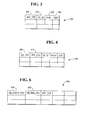
- FIG. 3 shows a database table 300 that might appear in a traditional data-warehousing system.
- Each column of the table 300 stores information about events that occur in the life of a business enterprise.
- a company that manages an employee health-insurance plan might store information identifying each covered employee (EE_ID, column 310), the type of coverage selected by the employee (PLAN, column 320), and the number of covered dependents claimed by the employee (DEP, column 330).
- the table also includes a date-time stamp (EFF_DTS, column 340) showing when the employee's coverage began.
- EPF_DTS date-time stamp
- Data warehouses that consist of tables like this one are useful in analyzing and understanding business-critical data but are not as well equipped for supporting organizations that have varying requirements for data freshness. Because of the latency inherent in loading data into a data warehouse and, in many cases, delivering data to the enterprise, a database query that selects data according to a traditional effective-date stamp often produces a different result when submitted again at a later time. For example, an employee health plan that covers 200 employees on January 31 might cover an additional person as soon as that person begins work on February 1. Because of the inherent delay in delivering the employee's paper work from the employer to the insurer, the employee might not appear in the insurer's data warehouse until several weeks after the employee's start date. If the insurer were to create a report of covered employees as of February 1 on February 1 and again on February 28 using a traditional data warehouse, the reports would differ ⁇ the February 1 report showing 200 employees and the February 28 report showing 201 employees.
- FIG. 4 shows a database table 400 that includes, in addition to the traditional column 410 showing the effective-date stamp, another column 420 that shows when the data was loaded into the data warehouse and was made available for viewing, or its observation date-time stamp (OB_DTS).
- the observation stamp allows the enterprise to see what data was available at any given time or during any given time period, and ensures that a query run at two different times will give the same result each time.
- the record for the new employee includes the effective-date stamp showing when the employee's coverage began, as well as an observation stamp showing when the record was added to the database and made available for observation. Viewing data based upon on the observation stamp allows the insurer to generate, if so desired, identical reports on February 1 and again on February 28.
- the observation stamp allows the insurer to view, quickly and easily, the data that was available to it on February 1, even after the insurer has updated the data to reflect the employee's eligibility as of February 1.
- transaction data i.e. , data which records transactional events that are routine in the life of the business, such as retail purchases by customers, call-detail records, bank deposits and withdrawals, and insurance claims ⁇
- the data warehouse need only create views of the data it stores for each data-freshness service level, and it need only store the data once. These views filter the data according to the observation stamps that are stored with the data.
- tx_dts represents a transaction date-time stamp (i.e. , a stamp indicating when a particular transaction took place)
- observation_dts represents the observation stamp for the corresponding transaction data.
- snapshot data ⁇ i.e. , data that records the current or past state of the business or one of its relationships, such as customer status, the status of a customer's account, and the membership or address of a customer household ⁇
- the data warehouse extracts all relevant data into a history table.
- the database-management system uses observation date-time stamps to select data from various tables 500, 510, 520 throughout the data warehouse and to place that data into a history table 530.
- the history table 530 creates a point-in-time view of the business as it stood at the selected point-in-time.
- a history table for snapshot data is one that captures the average account balance of banking customers on a particular day, such as the first day of every month. Below is a selection of sample SQL code that creates such a table.
- This technique is particularly useful for taking historical snapshots of data that an enterprise wishes to view with fixed periodicity.
- the account balance of a banking customer at the end of the customer's statement period is one example of the type of data that a business commonly wishes to view with fixed periodicity.
- the typical business enterprise also often wishes to view snapshot data on an ad-hoc basis, with no regularity or periodicity in its viewing patterns. For example, businesses often view data when some event occurs that changes the view of that data, such as the acquisition of new data or the modification of old data, realignment or reorganization of the enterprise, and changes in a customer's status or life situation.
- FIG. 6 shows such a table 600.
- the first of the observation stamps the "observation-start stamp” (OB_START_DTS) (column 610), indicates when the corresponding data has been loaded into the data warehouse and made available for viewing.
- the second of these stamps the “observation-end stamp” (OB_END_DTS) (column 620), indicates when the row of data has become stale as a result of some event, such as an update to the database records or the expiration of a time period for which the data is accurate.
- the value of the observation-end stamp is set to "NULL," or, alternatively, is set to a very distant future date.
- SQL code for use in querying a history table to calculate the average income of customers as of the date January 1, 2001.
- This example shows a code segment for use with a table that stores a single observation stamp.
- This code is relatively complex and is somewhat inefficient, because it includes a correlated sub-query to select all of the desired point-in-time data for the period of interest. Storing one or more additional observation date-time stamps, as described above, eliminates any need for a correlated sub-query and thus allows for more efficient queries with much simpler code.
- Below is a selection of sample SQL code for the same query as above, run against a table that stores two observation date-time stamps ⁇ an observation-start DTS and an observation-end DTS.
- FIG. 7 shows a sample code fragment that a database administrator might choose to run when setting up a database system.
- This code fragment creates a table, known here as a "calendar table," that simplifies end-user access to point-in-time information in the database.
- Creating a calendar table and defining views to that table insulates the end-user from the database-query code needed to extract point-in-time information from the database.
- Such a table is useful, for example, when the end-user wants to access information for a time period of selected length (i.e. , one week or one month) on an ad-hoc basis. (e.g. , with no particular regularity, beginning with a date or time chosen by the user).
- the user simply enters the point-in-time for which data is needed, and the database retrieves the appropriate data using the calendar table.
- the data pulled in response to the user's query remains consistent over time, so that the same query run at a later date produces the same result.
- the user enters the point-in-time query through a simple user-interface program, such as a Windows-compatible graphical user-interface (GUI) program, running in the client system, the likes of which are well-known and are not described here.
- GUI graphical user-interface
- each computer includes one or more processors, one or more data-storage components (e.g. , volatile and nonvolatile memory modules and persistent optical and magnetic storage devices, such as hard and floppy disk drives, CD-ROM drives, and magnetic tape drives), one or more input devices (e.g. , mice and keyboards), and one or more output devices (e.g. , display consoles and printers).
- data-storage components e.g. , volatile and nonvolatile memory modules and persistent optical and magnetic storage devices, such as hard and floppy disk drives, CD-ROM drives, and magnetic tape drives
- input devices e.g. , mice and keyboards
- output devices e.g. , display consoles and printers.
- the computer programs include executable code that is usually stored in a persistent storage medium and then copied into memory at run-time.
- the processor executes the code by retrieving program instructions from memory in a prescribed order.
- the computer receives data from the input and/or storage devices, performs operations on the data, and then delivers the resulting data to the output and/or storage devices.
Landscapes
- Engineering & Computer Science (AREA)
- Theoretical Computer Science (AREA)
- Data Mining & Analysis (AREA)
- Databases & Information Systems (AREA)
- Physics & Mathematics (AREA)
- General Engineering & Computer Science (AREA)
- General Physics & Mathematics (AREA)
- Management, Administration, Business Operations System, And Electronic Commerce (AREA)
- Information Retrieval, Db Structures And Fs Structures Therefor (AREA)
Abstract
Description


Claims (10)
- A method for use in allowing the user of a database to view data representing events relevant to an enterprise, where the data is stored in one or more database tables each including a first column of information indicating when the events occurred and a second column of information indicating when the data was made available for retrieval from the database, the method comprising the steps of:receiving a request for data representing events that occurred at or before a selected point-in-time;accessing the information stored in the columns that indicate when events occurred and when the corresponding data was made available for retrieval;selecting from the table only that data for which:(a) the first column indicates that the corresponding event occurred at or before the selected point-in-time; and(b) the second column indicates that the data was made available for retrieval at or before the selected point-in-time; andpresenting the selected data to the user.
- The method of claim 1, where the step of presenting the selected data to the user includes creating a database view through which the data is displayed.
- The method of claim 1, where the step of presenting the selected data to the user includes creating another database table and extracting the selected data into that table.
- The method of claim 1, where receiving a request from the user includes receiving input that does not include database-query code.
- The method of claim 4, where receiving input from the user includes receiving only information that identifies the selected point-in-time.
- A method for use in retrieving from a database system data representing events in the life of a business enterprise, where at least some of the data stored in the database has been updated by more current data, the method comprising:receiving information identifying a time period and events for which the user wants to view data;constructing a database query that creates a table that stores data associated with that time period and those events;selecting from the table the data that the user wants to view, where the selected data includes data for which more current data is available and excludes the more current data; anddelivering the selected data to the user.
- A database system comprising means operable to perform the method of any of claims 1 to 6.
- A computer program comprising code means adapted to perform the method of any of claims 1 to 6 when executed on a database system.
- The computer program according to claim 8, embodied in a computer-readable storage medium.
- The computer program according to claim 8, embodied as a transmission medium.
Applications Claiming Priority (4)
| Application Number | Priority Date | Filing Date | Title |
|---|---|---|---|
| US34840 | 1987-04-06 | ||
| US3484001A | 2001-12-27 | 2001-12-27 | |
| US10/109,025 US7882103B2 (en) | 2002-03-28 | 2002-03-28 | Using point-in-time views to provide varying levels of data freshness |
| US109025 | 2002-03-28 |
Publications (2)
| Publication Number | Publication Date |
|---|---|
| EP1324229A2 true EP1324229A2 (en) | 2003-07-02 |
| EP1324229A3 EP1324229A3 (en) | 2006-02-01 |
Family
ID=26711450
Family Applications (1)
| Application Number | Title | Priority Date | Filing Date |
|---|---|---|---|
| EP02258781A Withdrawn EP1324229A3 (en) | 2001-12-27 | 2002-12-19 | Using point-in-time views to provide varying levels of data freshness |
Country Status (1)
| Country | Link |
|---|---|
| EP (1) | EP1324229A3 (en) |
Cited By (2)
| Publication number | Priority date | Publication date | Assignee | Title |
|---|---|---|---|---|
| WO2006089263A3 (en) * | 2005-02-18 | 2007-08-02 | Oracle Int Corp | Method and mechanism of handling reporting transactions in database systems |
| CN100461177C (en) * | 2006-02-14 | 2009-02-11 | 北大方正集团有限公司 | A Method for Automatically Detecting News Events |
Family Cites Families (3)
| Publication number | Priority date | Publication date | Assignee | Title |
|---|---|---|---|---|
| GB8815988D0 (en) * | 1988-04-08 | 1988-08-10 | Ibm | Relational databases |
| DE19538448B4 (en) * | 1995-10-16 | 2006-04-06 | Logic Data Gmbh | Database management system and data transmission method |
| US6108664A (en) * | 1997-10-31 | 2000-08-22 | Oracle Corporation | Object views for relational data |
-
2002
- 2002-12-19 EP EP02258781A patent/EP1324229A3/en not_active Withdrawn
Cited By (2)
| Publication number | Priority date | Publication date | Assignee | Title |
|---|---|---|---|---|
| WO2006089263A3 (en) * | 2005-02-18 | 2007-08-02 | Oracle Int Corp | Method and mechanism of handling reporting transactions in database systems |
| CN100461177C (en) * | 2006-02-14 | 2009-02-11 | 北大方正集团有限公司 | A Method for Automatically Detecting News Events |
Also Published As
| Publication number | Publication date |
|---|---|
| EP1324229A3 (en) | 2006-02-01 |
Similar Documents
| Publication | Publication Date | Title |
|---|---|---|
| US10740283B2 (en) | Using point-in-time views in a database | |
| JP5209001B2 (en) | How to maintain information about multiple instances of an activity | |
| Marco | Building and managing the meta data repository | |
| US9684703B2 (en) | Method and apparatus for automatically creating a data warehouse and OLAP cube | |
| US5819263A (en) | Financial planning system incorporating relationship and group management | |
| US20040215656A1 (en) | Automated data mining runs | |
| US20100114992A1 (en) | Data importer for a sales prospector | |
| JP2002535756A (en) | Method and apparatus for processing business information from multi-enterprise | |
| Hobbs et al. | Oracle 10g data warehousing | |
| US10353782B2 (en) | Non-destructive data storage | |
| Griffin | Data warehousing: The latest strategic weapon for the lodging industry? | |
| Ahmad | Data warehousing in construction organizations | |
| Saagari et al. | Data Warehousing, Data Mining, OLAP and OLTP Technologies Are Essential Elements to Support Decision-Making Process in Industries | |
| US7437306B1 (en) | Customer buying pattern detection in customer relationship management systems | |
| US20090144245A1 (en) | Managing indicator values | |
| Ahmad et al. | Data warehousing in the construction industry: Organizing and processing data for decision-making | |
| Breitner | Data Warehousing and OLAP: Delivering Just-In-Time Information for Decision Support | |
| Gallegos | Data warehousing: A strategic approach | |
| Ramirez et al. | The cost of retrievals in what-if databases | |
| Ekowati et al. | Development of Warehouse Data Models to Support JNE Delivery Services | |
| Alur et al. | DB2 UDB's High-Function Business Intelligence in E-business | |
| Güratan | The design and development of a data warehouse using sales database and requirements of a retail group | |
| Dasary et al. | Data Warehousing and Data Mining | |
| Levine et al. | What the accountant must know about data warehousing | |
| Wu et al. | Enterprise Application Integration–the Case Study for a Financial Holding Company |
Legal Events
| Date | Code | Title | Description |
|---|---|---|---|
| PUAI | Public reference made under article 153(3) epc to a published international application that has entered the european phase |
Free format text: ORIGINAL CODE: 0009012 |
|
| AK | Designated contracting states |
Designated state(s): AT BE BG CH CY CZ DE DK EE ES FI FR GB GR IE IT LI LU MC NL PT SE SI SK TR |
|
| AX | Request for extension of the european patent |
Extension state: AL LT LV MK RO |
|
| PUAL | Search report despatched |
Free format text: ORIGINAL CODE: 0009013 |
|
| AK | Designated contracting states |
Kind code of ref document: A3 Designated state(s): AT BE BG CH CY CZ DE DK EE ES FI FR GB GR IE IT LI LU MC NL PT SE SI SK TR |
|
| AX | Request for extension of the european patent |
Extension state: AL LT LV MK RO |
|
| 17P | Request for examination filed |
Effective date: 20060801 |
|
| AKX | Designation fees paid |
Designated state(s): DE FR GB |
|
| 17Q | First examination report despatched |
Effective date: 20071122 |
|
| RAP1 | Party data changed (applicant data changed or rights of an application transferred) |
Owner name: TERADATA US, INC. |
|
| STAA | Information on the status of an ep patent application or granted ep patent |
Free format text: STATUS: THE APPLICATION IS DEEMED TO BE WITHDRAWN |
|
| 18D | Application deemed to be withdrawn |
Effective date: 20110615 |