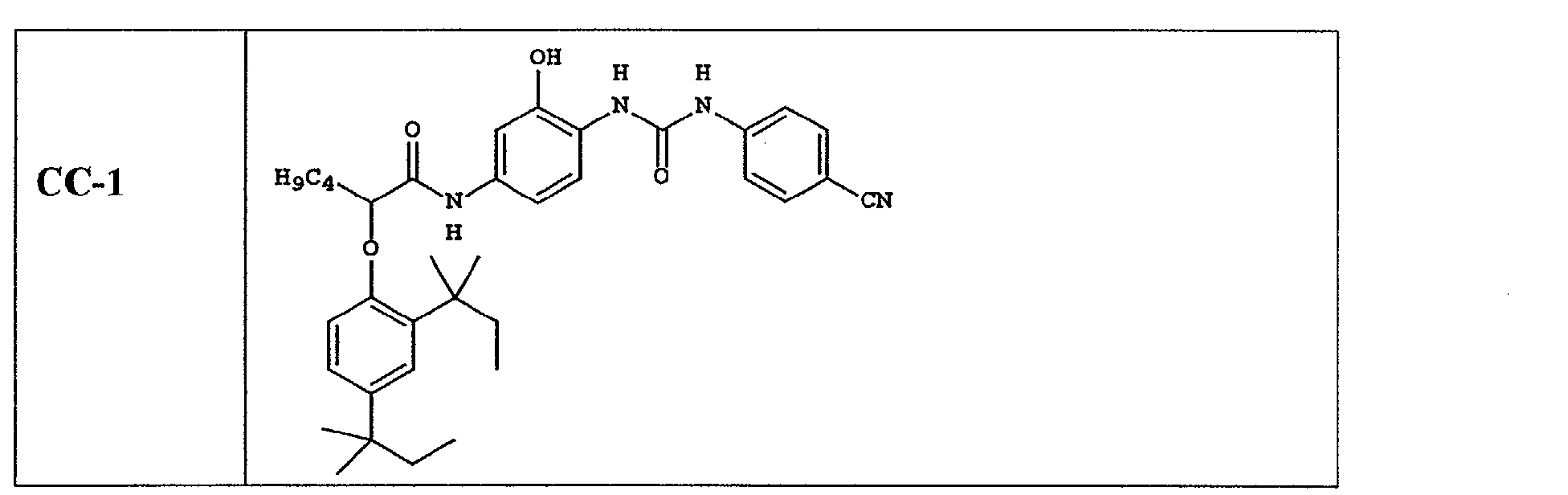
The present invention relates to a method of incorporating
sequestered silver ions into a hydrophilic colloid layer of a photographic element,
and to photographic elements containing sequestered silver ions which may be
released upon exposure to photographic processing solutions.
The photographic system, in its most basic form, is comprised of
silver halide (capable of detecting light and storing it as latent image) and
developer molecules (capable of converting the latent image to a visible image).
These two chemistries, however, are incompatible, as unexposed silver halide is
thermodynamically unstable with respect to reduction in the presence of developer
molecules. The consequence of this is that modem photography typically requires
multiple steps: exposure and processing.
The effect of Ag ion upon the photographic system has long been a
topic of study (see, e.g., "The Theory of the Photographic Process", T.H. James,
ed.; 4th ed., Chapter 13, 1977). Control of the Ag ion concentration is known to be
important in the manufacture of silver halide emulsions, and in the production and
processing of silver halide imaging elements. Most notably, the introduction of
Ag ion into a silver halide imaging element may induce a phenomenon known as
"solution physical development", in which silver ion in solution is adsorbed onto
developing silver halide grains. The silver ion is then reduced by the developer,
forming silver metal, and thereby can advantageously add to the overall density of
the image. This process, however, is most often indiscriminate and leads to the
build-up of fog in the system with no net gain in imaging efficiency. As a result
of this, solution physical development process is generally avoided in most
photographic systems, with the exception of some reversal processes. It would be
desirable to provide photographic materials in which silver ions are effectively
sequestered prior to photographic processing, so as to minimize build up of fog
density, and which are released upon introduction of common photographic
processing solutions and made available for enhancement of the photographic
image.
Incorporation of active chemistry directly into film formulations, to
either simplify or improve processing after exposure, has long been a goal in the
photographic industry. Some photographically useful compounds are difficult to
incorporate in a stable fashion into a light-sensitive material, however, or cause
serious deterioration in the photographic capability if incorporated. These
compounds, if incorporated directly into the photographic elements, typically need
to be stabilized or rendered harmless by chemical modification prior to
photographic processing. Methods of incorporating development and other active
chemistries into photographic element formulations have been described in a
number of patents and publications. Schleigh and Faul, in Research Disclosure
129 (1975) describe methods of appending color developers with "blocking"
chemistry to prevent premature reaction. U. S. Patent 6,261,757 to Irving et al.
describes photographic articles in which developers and other photographic
chemistries are ionically bound to the surface of ion-exchange resins.
US Pat. No. 4,942,119 discloses materials comprising radiation
sensitive silver compositions entrapped or encapsulated in the cages of a
microporous sodalite lattice, prepared from synthetic sodium sodalites by a silver
ion exchange process. There is no disclosure, however, of the use of such
materials as a source of silver ions during processing of a photographic element
comprising a silver halide emulsion.
EP 0 909 981 discloses silver halide photographic materials
comprising zeolites loaded with a photographically useful group. Use of zeolites
loaded with aqueous soluble silver salts and halide salts for the in situ preparation
of ultramicrocrystalline silver halides for ripening onto coarser silver halide grains
in a reaction vessel is also disclosed, but there is no disclosure of the use of such
materials to incorporate sequestered silver ions which are to be released during
processing of a photographic element.
Clearfield and Cheng (J. Inorg. Nucl. Chem., 42, 1341 (1980))
have reported compositions and methods of preparing the following materials:
Zr(AgPO4)2.H2O, ZrAg0.22H1.78(PO4)2 and ZrAg0.75H1.25(PO4)2. There is no
disclosure, however, of the use of such materials as a source of silver ions during
processing of a photographic element comprising a silver halide emulsion.
In accordance with one embodiment of the invention, a
photographic element is described comprising a support bearing one or more
hydrophilic colloid layers including at least one photographic silver halide
emulsion layer, wherein sequestered silver ions are incorporated into at least one
hydrophilic colloid layer in the form of a silver ion containing material which
sequesters silver ions prior to photographic processing and releases silver ions
upon exposure to photographic processing solutions.
In accordance with another embodiment of the invention, a method
for preparing a photographic element is described comprising forming a silver ion
containing material which sequesters silver ions, adding the silver ion containing
material to a hydrophilic colloid layer coating composition, and coating the
hydrophilic colloid layer coating composition to form a layer of the photographic
element, wherein the silver ion containing material which sequesters silver ions
releases silver ions upon exposure of the photographic element to photographic
processing solutions.
In accordance with a further embodiment of the invention, a
method of processing a photographic material after exposure is described
comprising contacting a photographic material according to the invention with a
photographic processing solution having a greater concentration of cations other
than silver ions relative to the silver ion containing material such that a cation
concentration gradient is established, and releasing silver ions from the silver ion
containing material by ion exchange with the silver ion containing material.
In accordance with particular embodiments of the invention, the
silver ion containing material comprises a silver ion-exchanged zeolite material or
an intercalation composition comprising a layered host material having silver ions
inserted as guest ions between the layers of the host material. The invention
provides novel photographic materials and a method of incorporating silver ions
directly into a photographic imaging element with improved stability and keeping
response. The incorporation of silver ion containing materials into a photographic
element in accordance with the invention enables increased upper scale density
without excessive build-up of fog in the system.
In accordance with the invention, sequestered silver ions are
incorporated into at least one hydrophilic colloid layer in the form of a silver ion
containing material which sequesters silver ions prior to photographic processing
and releases silver ions upon exposure to photographic processing solutions. In
accordance with particular embodiments, the silver ion containing material
comprises a silver ion-exchanged zeolite material or an intercalation composition
comprising a layered host material having silver ions inserted as guest ions
between the layers of the host material.
Intercalation is a process in which a layered material, referred to as
the host, swells or opens to accommodate other molecules or ions, referred to as
the guest:
Host + guest → Host(guest)x
Layered compounds capable of sequestering ions and molecules by intercalation
have been described in a number of publications. The choice of host material is
dependent upon the particular molecule to be intercalated, and a layered host
material for use in accordance with the present invention, e.g., may be chosen
which intercalates only cations. The choice of layered host materials for practice
of the invention can be discerned from reviewing the wide body of literature
available on intercalation chemistry and intercalation compounds. The following
publications are included for reference on this matter: "Intercalation Chemistry",
A.J. Jacobson and S. Whittingham, eds., Academic Press, NY 1982; "Intercalated
Layered Materials", F. Levy, D. Riedel Press, Dordrecht, Holland (1979); W.T.
Reichle, CHEMTECH" 16, 58 (1986); "An Introduction to Clay Colloid
Chemistry", H. van Olphen, 2nd Ed., Krieger Pub. Co., Malabar, Fla. (1991).
Preferred layered host materials for use in the present invention
include:
where M1 is a metal selected from Al, Fe, Mn or Co and M2 is a metal selected
from Mg, Fe, Ni, Zn or Li; Z is Al or Si; H
2O is chemically absorbed water and
M3 is a cation selected from, but not limited to K, Na, Li or Ca. n is a number
from 0 to 4, y is a number from 0 to 10 and w is a number from 0 to 1.
Intercalation of layered materials creates complex materials
consisting of guest molecules or ions captured within the host matrix. The layers
of the host solid, typically only a few angstroms thick, exfoliate and swell in direct
proportion to the size of the guest molecules or ions. The number of guest
molecules or ions captured within the layers is determined by their size and the
charge of the guest and the host. The process is reversible such that the guest
molecules or ions can later be recovered from the complex system.
In accordance with a preferred embodiment of the invention, the
silver ion containing composition host material comprises a layered metal
hydrogen phosphate composition, and the resulting silver ion containing material
comprises a silver ion exchangeable material of the formula:
M(H1-xAgxPO4)2:yH2O;
where M is Zr, Ti, Sn, Ge or Hf or any combination thereof; x is a number from 0
to 1; and y is a rational number between 0 and 10. It is preferred though not
necessary that the silver ion exchangeable material be insoluble in water and have
an average particle size between 0.01 and 10.0 µm, and more preferably between
0.05 and 1.0 µm.
Zeolites are hydrated metal aluminosilicate compounds with well-defined
(tetrahedral) crystalline structures. Because zeolite crystals, both natural
and synthetic, have a porous structure with connected channels extending through
them, they have been employed as molecular sieves for selectively adsorbing
molecules on the basis of size, shape and polarity. Natural zeolites include, e.g.,
clinoptilite, chabazite and mordenite, but most types of zeolite known today have
a synthetic origin. Reactants in zeolite synthesis have been described e.g. in
"Hydrothermal Chemistry of Zeolites" by R.M. Barrer FRS, 1982, Academic
Press, London New York. Differences in zeolite compositions are related with
differing ratios of silica and aluminum, going from indefinite (or 1:0) to 1:1, as in
a lattice structure it is impossible to have two trivalent aluminum ions in an
adjacent position. Substitution of a tetravalent silicium ion by a trivalent
aluminum ion brings about the presence of a less positive charge within the lattice
structure of zeolite crystals. A deficiency of positive ions should therefore be
compensated by the presence of "neutralizing" positive ions which are not
incorporated in the lattice structure. Ion-exchanging properties are thus provided.
Zeolites may have strongly differing properties as a consequence of their strongly
differing balance between hydrophobic and hydrophilic properties of their crystal
lattice. The presence of low amounts of aluminum ions provides hydrophobic
water-repelling lattices, whereas higher amounts of trivalent aluminum ions
provide water-attracting hydrophilic lattices. Less hydrophilic zeolite lattices
therefore act as molecular sieves, adsorbing dedicated molecules in a selective
way. Adsorbing properties further depend on the dimensions of the molecules and
of the pores of the zeolite sieves. It has been established, e.g., that dimensions of
zeolite pores are varying in the range from 0.4 to 4 nm.
Silver ions may be intercalated into a layered material structure or
otherwise sequestered in an ion exchangeable silver ion containing material by
various procedures. In a typical preparation the solid host compound having a
particle size of less than 50 µm, and preferably less than 10 µm, and more
preferably less than 1 µm is added to distilled water and a suspension is formed by
rapid stirring. The aqueous medium may comprise plain water, or a hydrophilic
colloid composition. The silver ion to be intercalated or ion exchanged is then
added to the suspension. The mixture is allowed to stir for many hours or until the
intercalation or ion exchange process is complete. Gentle heating may be applied
to the mixture to accelerate the process if necessary. Non-aqueous solvents or
mixtures may also be employed to carry out the reaction. The reaction progress
may be monitored using powder X-ray diffraction and other analytical techniques.
Powder X-ray diffraction provides direct information regarding the average
distance between two adjacent layers of a layered host compound, commonly
called the interlayer spacing. As intercalation proceeds the guest ions enter
between the layers and thus the interlayer spacing typically increases to account
for the guest ions. The interlayer spacing typically increases in direct proportion
to the size of the guest. Other analytical techniques such as elemental analysis
may be used to confirm the extent of reaction. Zeolites provided as fine powders
may similarly be easily loaded with silver ion to form silver ion containing
materials for use in accordance with the present invention by addition of the
zeolite powder to an aqueous solution of a silver salt, e.g. sliver nitrate.
After the intercalation or silver ion loading step, the resulting silver
ion containing composition may be recovered by filtration, centrifugation or other
means and may be washed free of any un-incorporated ions and may then be
stored until which time it is prepared for incorporation into a photographic
element.
Compositions of silver ion containing materials prepared in
accordance with the invention may be incorporated in photographic element
hydrophilic colloid layer coating compositions. The composition may be added as
a free solid or may be prepared by dispersing the solid into water or non-aqueous
medium or into an aqueous hydrophilic colloid medium such as gelatin, or into a
hydrophobic or hydrophilic polymer medium. A typical photographic light-sensitive
material is based on hydrophilic colloid layers comprising silver halide
emulsion compositions, though other types of materials are known using various
other kinds of light-sensitive components. The silver ion containing compositions
may be incorporated into a light sensitive emulsion layer or any other hydrophilic
colloid layer which may be in association with a light sensitive emulsion layer.
While improved results with respect to increased photographic speed, upper scale
density, and/or contrast may be obtained over a wide coverage range of
incorporated silver ions, in order to minimize adverse consequences with respect
to increases in fog density it is preferred to utilize the silver ion containing
materials at levels which provide less than or equal to 5 wt% incorporated
sequestered silver ions, more preferably less than or equal to 4 wt% and most
preferably less than or equal to 3 wt%, relative to the weight of silver of the silver
halide emulsions of the element. Preferred levels of incorporated sequestered
silver ions are from 0.01 to 5 wt%, more preferably from 0.05 to 4 wt% and most
preferably from 0.1 to 3 wt%, relative to the weight of silver of the silver halide
emulsion of the emulsion layer with which the silver ion containing material is
associated.
Silver ion containing compositions prepared in accordance with the
invention may be useful for single color elements (including black and white) or
multicolor photographic elements. Silver halide multicolor elements typically
contain a support and image dye-forming units sensitive to each of the three
primary regions of the spectrum. Each unit can comprise a single emulsion layer
or multiple emulsion layers sensitive to a given region of the spectrum. The
layers of the element, including the layers of the image-forming units, can be
arranged in various orders as known in the art. In an alternative format, the
emulsions sensitive to each of the three primary regions of the spectrum can be
disposed as a single segmented layer. Various arrangements and constructions of
silver halide color photographic materials may be employed for different types of
imaging processes including, for example, diffusion transfer color photography
and silver dye bleach color photography. Mixed grain photographic products and
multilayer products are also known.
A typical multicolor photographic element comprises a support
bearing a cyan dye image-forming unit comprised of at least one red-sensitive
silver halide emulsion layer having associated therewith at least one cyan dye-forming
coupler, a magenta dye image-forming unit comprising at least one green-sensitive
silver halide emulsion layer having associated therewith at least one
magenta dye-forming coupler, and a yellow dye image-forming unit comprising at
least one blue-sensitive silver halide emulsion layer having associated therewith at
least one yellow dye-forming coupler. The element can contain additional layers,
such as filter layers, interlayers, overcoat layers, subbing layers, and the like. If
desired, a photographic element containing a dispersed photographically useful
compound in accordance with the invention can be used in conjunction with an
applied magnetic layer as described in Research Disclosure, November 1992, Item
34390 published by Kenneth Mason Publications, Ltd., Dudley House, 12 North
Street, Emsworth, Hampshire P010 7DQ, ENGLAND.
Suitable materials for use in photographic emulsions and elements
that can be used in conjunction with silver ion containing compositions prepared
in accordance with the invention are further described in Research Disclosure,
September 1994, Item 36544, available as described above, hereinafter referred to
as Research Disclosure I. The contents of the Research Disclosure I, including the
patents and publications referenced therein and the Sections hereafter referred to
are Sections of the Research Disclosure, Item 36544. Silver halide emulsions
which may be employed in photographic elements can be either negative-working
or positive-working. Suitable emulsions and their preparation as well as methods
of chemical and spectral sensitization are described in Sections I, and III-IV.
Vehicles and vehicle related addenda are described in Section II. Dye image
formers and modifiers are described in Section X. Various additives such as UV
dyes, brighteners, luminescent dyes, antifoggants, stabilizers, light absorbing and
scattering materials, coating aids, plasticizers, lubricants, antistats and matting
agents are described, for example, in Sections VI-IX. Layers and layer
arrangements, color negative and color positive features, scan facilitating features,
supports, exposure and processing can be found in Sections XI-XX. It is also
specifically contemplated that the materials and processes described in an article
titled "Typical and Preferred Color Paper, Color Negative, and Color Reversal
Photographic Elements and Processing," published in Research Disclosure,
February 1995, Volume 370 may also be advantageously used with elements
prepared in accordance with the invention. It is further specifically contemplated
that the elements of the invention may further be used in combination with the
various photographic compounds and systems such as described in U. S. Patent
6,261,757 to Irving, et al.
The silver halide emulsion grains to be used in the silver halide
emulsion layer of the element of the invention may be of tabular or non-tabular
shape, and may be prepared according to methods known in the art, such as those
described in Research Disclosure I and James, The Theory of the Photographic
Process. These include methods such as ammoniacal emulsion making, neutral or
acidic emulsion making, and others known in the art. These methods generally
involve mixing a water soluble silver salt with a water soluble halide salt in the
presence of a protective colloid, and controlling the temperature, pAg, pH values,
etc, at suitable values during formation of the silver halide by precipitation. While
any conventional combinations of chloride, bromide, and iodide ions may be
employed in formation of silver halide emulsion grains for use in the elements of
the present invention, in a preferred embodiment the element comprises a color
paper print element and the silver halide emulsion layer comprises a high chloride
(i.e., greater than 50 mole percent chloride, based on total silver, preferably
greater than 70 mole percent chloride and more preferably greater than 90 mole
percent chloride) silver halide emulsion. Use of the silver ion containing
compositions described herein have been found to be particularly effective at
increasing photographic speed, developability, and upper scale density without the
build-up of fog in the system for color print elements comprising high chloride
emulsions which are subjected to conventional color paper processing solutions.
The photographic elements of the present invention, as is typical,
provide the silver halide in the form of an emulsion. The hydrophilic colloid in the
hydrophilic colloid layers of the element of the present invention is a binder or
protective colloid for the usual silver halide photographic light-sensitive materials.
Such hydrophilic colloids also function as a vehicle for coating the emulsion as a
layer of a photographic element. Useful hydrophilic colloid vehicles include both
naturally occurring substances such as proteins, protein derivatives, cellulose
derivatives (e.g., cellulose esters), gelatin (e.g., alkali-treated gelatin such as cattle
bone or hide gelatin, or acid treated gelatin such as pigskin gelatin), gelatin
derivatives (e.g., acetylated gelatin, phthalated gelatin, and the like), and others as
described in Research Disclosure I. Also useful as vehicles or vehicle extenders
are hydrophilic water-permeable colloids. These include synthetic polymeric
peptizers, carriers, and/or binders such as poly(vinyl alcohol), poly(vinyl lactams),
acrylamide polymers, polyvinyl acetals, polymers of alkyl and sulfoalkyl acrylates
and methacrylates, hydrolyzed polyvinyl acetates, polyamides, polyvinyl pyridine,
methacrylamide copolymers, and the like, as described in Research Disclosure I.
The vehicle can be present in the emulsion in any amount useful in photographic
emulsions. The emulsion can also include any of the addenda known to be useful
in photographic emulsions. The silver halide to be used in the invention may be
advantageously subjected to chemical sensitization with noble metal (for example,
gold) sensitizers, middle chalcogen (for example, sulfur) sensitizers, reduction
sensitizers and others known in the art. These chemical sensitizers include active
gelatin, sulfur, selenium, tellurium, gold, platinum, palladium, iridium, osmium,
rhenium, phosphorous, or combinations thereof. Compounds and techniques
useful for chemical sensitization of silver halide are known in the art and
described in Research Disclosure I and the references cited therein. Chemical
sensitization is generally carried out at pAg levels of from 5 to 10, pH levels of
from 5 to 8, and temperatures of from 30 to 80°C, as illustrated in Research
Disclosure, June 1975, item 13452 and U.S. Patent No. 3,772,031.
The silver halide may be spectrally sensitized by sensitizing dyes
by any method known in the art, such as described in Research Disclosure I. The
dye may be added to an emulsion of the silver halide grains and a hydrophilic
colloid at any time prior to (e.g., during or after chemical sensitization) or
simultaneous with the coating of the emulsion on a photographic element. The
dye/silver halide emulsion may be mixed with a dispersion of color image-forming
coupler immediately before coating or in advance of coating (for
example, 2 hours).
Photographic elements of the present invention are preferably
imagewise exposed using any of the known techniques, including those described
in Research Disclosure I, section XVI. This typically involves exposure to light in
the visible region of the spectrum, and typically such exposure is of a live image
through a lens, although exposure can also be exposure to a stored image (such as
a computer stored image) by means of light emitting devices (such as light
emitting diodes, CRT and the like).
In accordance with the invention, silver ions which are sequestered
in the silver ion containing materials described herein can advantageously be
released from the host materials upon exposure to a processing solution having a
greater local concentration of cations (other than silver ions) than the silver ion
exchangeable material such that a cation concentration gradient is established to
drive cation exchange and release of the sequestered silver ions. Alternatively,
silver ions may be released from the silver ion containing materials upon a change
in pH, or by other means such as heating or introduction of electrical current
during processing. Developer processing solutions are typically both basic and
contain a high concentration of cations and anions so as to facilitate release of the
silver ions.
Photographic elements of the invention can be processed in any of
a number of well-known photographic processes utilizing any of a number of
well-known processing compositions, described, for example, in Research
Disclosure referenced above, or in T.H. James, editor, The Theory of the
Photographic Process, 4th Edition, Macmillan, New York, 1977. In the case of
processing a negative working element, the element is treated with a color
developer (that is one which will form the colored image dyes with the color
couplers), and then with a oxidizer and a solvent to remove silver and silver
halide. In the case of processing a reversal color element, the element is first
treated with a black and white developer (that is, a developer which does not form
colored dyes with the coupler compounds) followed by a treatment to fog
unexposed silver halide (usually chemical or light fogging), followed by treatment
with a color developer. Preferred color developing agents are p-phenylenediamines.
Especially preferred are: 4-amino-N,N-diethylaniline
hydrochloride, 4-amino-3-methyl-N,N-diethylaniline hydrochloride, 4-amino-3-methyl-N-ethyl-N-(b-(methanesulfonamido)
ethylaniline sesquisulfate hydrate, 4-amino-3-methyl-N-ethyl-N-(b-hydroxyethyl)aniline
sulfate, 4-amino-3-b-(methanesulfonamido)ethyl-N,N-diethylaniline
hydrochloride and 4-amino-N-ethyl-N-(2-methoxyethyl)-m-toluidine
di-p-toluene sulfonic acid.
Development is followed by bleach-fixing, to remove silver or
silver halide, washing and drying. Bleaching and fixing can be performed with
any of the materials known to be used for that purpose. Bleach baths generally
comprise an aqueous solution of an oxidizing agent such as water soluble salts and
complexes of iron (III)(e.g., potassium ferricyanide, ferric chloride, ammonium or
potassium salts of ferric ethylenediaminetetraacetic acid), water-soluble
persulfates (e.g., potassium, sodium, or ammonium persulfate), water-soluble
dichromates (e.g., potassium, sodium, and lithium dichromate), and the like.
Fixing baths generally comprise an aqueous solution of compounds that form
soluble salts with silver ions, such as sodium thiosulfate, ammonium thiosulfate,
potassium thiocyanate, sodium thiocyanate, thiourea, and the like.
Photographic elements in accordance with this invention may also
be processed in amplification processes that use developer/amplifier solutions
described in U.S. Patent 5,324,624, for example. When processed in this way, the
low volume, thin tank processing system and apparatus described in U.S. Patent
5,436,118 preferably is employed.
EXAMPLES
Preparation of Zr(HPO4)2·H2O host material
Into 500 ml of distilled water was dissolved 200.0 g of
ZrOCl2•8H2O. This solution was then added dropwise to a hot solution (80 - 90
°C) of 42.5 % phosphoric acid in 1500 ml of water with vigorous stirring. After
the addition was complete the reaction mixture was stirred at 90 °C for 18 h. The
solid product was then collected by filtration and carefully washed with 2.01 of
water and 300 ml of ethanol, yielding 177 g of a white solid. The purity of the
product was confirmed by powder X-ray diffraction.
Preparation of Silver ion Exchanged Materials
Silver ion containing compositions SC-1 to SC-3 used in the
following examples were synthesized or otherwise obtained as indicated below.
Ag exchanged Zr(HPO
4)
2·nH
2O compositions SC-1 and SC-2 were
prepared by the following methods:
Silver-ion exchanged zeolite was also purchased from Aldrich
Chemical Corp. This material is hereafter referred to as SC-3.
Example 1
The ability of a material to sequester, and later release, Ag+ ions,
was measured using the following general procedure. 100 g of a photographic
silver halide emulsion melt is prepared which contains 3.85 % by weight of a
AgBr0.97I0.03 tabular grain emulsion and 5.6% by weight gelatin. The free silver
ion and the bromide ion concentration of the emulsion melt is then monitored
using a Ag/AgBr electrode. The silver ion containing materials SC-1 to SC-3 of
the present invention described above were then added to the above emulsion in
known quantities and the concentration of free Ag+ ion and Br- ion measured. A
mock photographic processing solution, which contains a known quantity of salts
common in commercial photographic developer solutions such as NaBr and
NaNO3 , but which does not contain the reducing agent of the developer, is then
added, and again the free Ag+ ion and Br- ion concentration measured. The
amount of Br- ion consumed in the reaction of the mock developer with the Agion
exchanger material is then equal to the quantity of silver released by the ion
exchanger, as given by the reaction:
Ag+ + Br- → AgBr(solid)
The data of these experiments is given in Table I below, the data
are normalized so that the amount of silver added as the ion exchanger material
initially in each case is, arbitrarily, 100.
| Material | Nominal Silver added (arb units) | [Ag+ ] before addition of "developer" | [Ag+ ] after addition of "developer" |
| SC-1 | 100 | less than 0.1 | 99.9 |
| SC-2 | 100 | less than 0.1 | 99.9 |
| SC-3 | 100 | less than 1.0 | 99.0 |
The data above show that the available free Ag
+ concentration is very small upon
initial addition of the silver ion exchange material. Thus, the silver ion is
effectively sequestered, or hidden, from the emulsion grains. The silver ion
becomes available upon addition of the mock developer solution as the Na
+
cations are effectively exchanged for silver ion.
Strips of each of the example coatings were tested for photographic
response by exposing to a 365 nm line source through a 21-step step tablet. The
strips were then developed for 3.15 minutes in C41 color negative developer and
the density of each step read using an optical densitometer. The Dmin, relative
photographic speed, and gamma (max contrast) results are given in Table II.
| Photographic data for examples and comparison examples 2.1 - 2.6. |
| Example | Ag ion added as SC-1 (g/m2) | Ag ion added as AgNO3 (g/m2) | change in Dmin vs. Ex. 2.1 | Speed | max contrast |
| 2.1 (comparison) | none | none | N.A. | 100 | 1.35 |
| 2.2 (invention) | 0.00035 | none | 0.0 | 127 | 1.33 |
| 2.3 (comparison) | none | 0.00035 | +0.02 | 100 | 1.29 |
| 2.4 (invention) | 0.0035 | none | 0.0 | 150 | 1.49 |
| 2.5 (comparison ) | none | 0.0035 | +0.03 | 126 | 1.46 |
| 2.6 (invention) | 0.035 | none | +0.07 | 223 | 1.20 |
As is observed from Table II, examples of the invention give
greater speed and/or higher contrast with less fog (measured as Dmin) than the
corresponding comparison examples in which Ag ion is added directly to the
coating. These results demonstrate the ability of the host lattice to sequester and
later release Ag ion to be made available to the photographic process.
Example 3
Comparison example 3.1. A photographic element was prepared according to
the coating structure shown below. Photosensitive Layer 2 comprised a blue
sensitized high chloride silver iodochloride emulsion. Yellow coupler YC-1 was
delivered via an oil-in-water dispersion with coupler solvent CS-1 prepared by
conventional means.
| Coating Structure |
| Layer 3 | GEL SUPERCOAT |
| Gelatin | 1.077 g.m-2 |
| Hardener | 0.112 g.m-2 |
| Alkanol XC® | 0.026 g.m-2 |
| FT-248 | 0.010 g.m-2 |
| Layer 2 | PHOTOSENSITIVE LAYER |
| Gelatin | 1.399 g.m-2 |
| Coupler YC-1 | 0.414 g.m-2 |
| CS-1 | 0.218 g.m-2 |
| St-1 | 0.080 g.m-2 |
| St-2 | 0.080 g.m-2 |
| St-3 | 0.080 g.m-2 |
| MHR | 0.0065 g.m-2 |
| PMT | 0.0013 g.m-2 |
| HQ-K | 0.00095 g.m-2 |
| Blue-sensitive emulsion | 0.213 g.m-2 (as Ag) |
| Layer 1 | GEL PAD |
| Gelatin | 3.230 g.m-2 |
| Support | Resin Coated Paper |
Invention Example 3.2. A photographic element was prepared identically as in
comparison example 3.1, except that silver ion containing composition SC-2 was
included in the photosensitive layer at 0.0054 g/m2.
Invention Example 3.3. A photographic element was prepared identically as in
comparison example 3.1, except that silver ion containing composition SC-2 was
included in the photosensitive layer at 0.0108 g/m2.
Invention Example 3.4. A photographic element was prepared identically as in
comparison example 3.1, except that silver ion containing composition SC-2 was
included in the photosensitive layer at 0.022 g/m2.
Comparison Example 3.5. A photographic element was prepared identically as in
comparison example 3.1, except that photosensitive Layer 2 comprised a red
sensitized silver chloride emulsion and the following associated components.
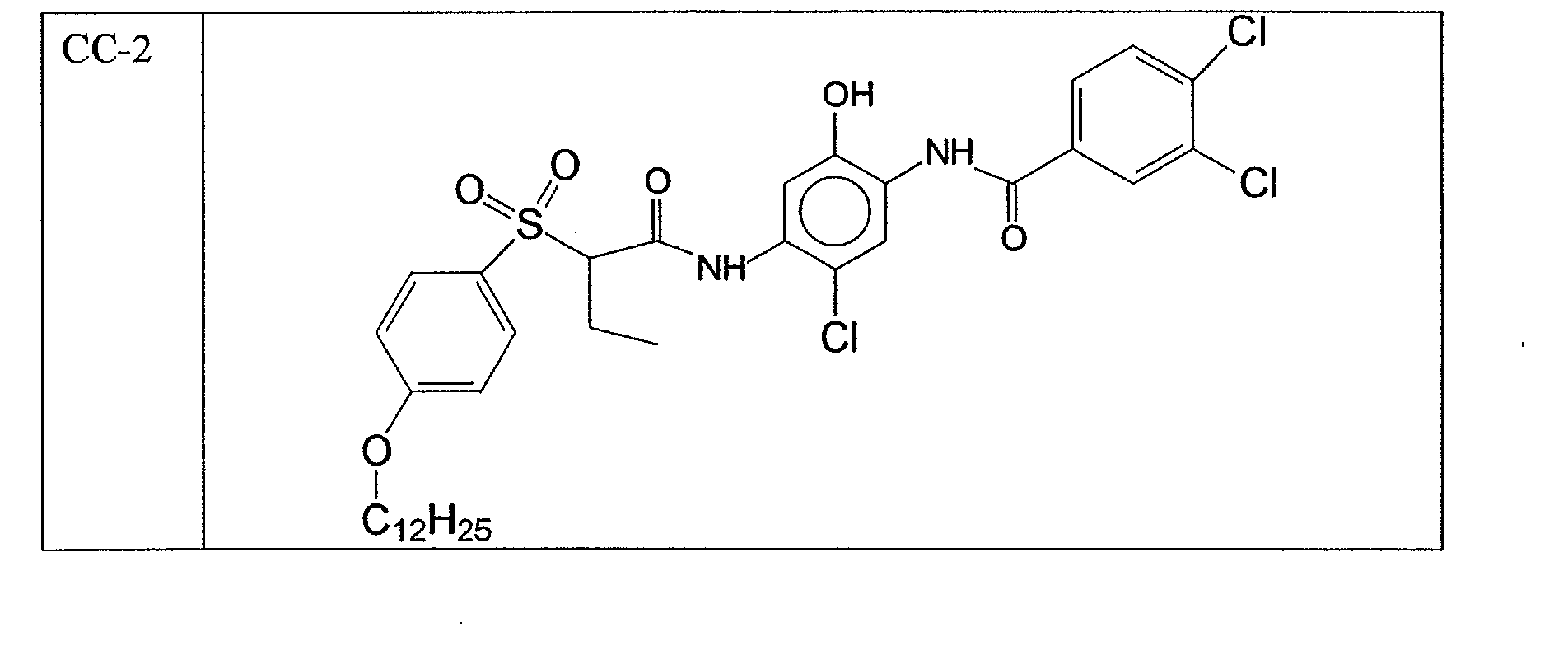
Cyan coupler CC-2 was delivered via an oil-in-water dispersion prepared by
conventional means.
| Layer 2 | PHOTOSENSITIVE LAYER |
| | Gelatin | 1.399 g.m-2 |
| | Coupler CC-2 | 0.245 g.m-2 |
| | Tinuvin 328® | 0.337 g.m-2 |
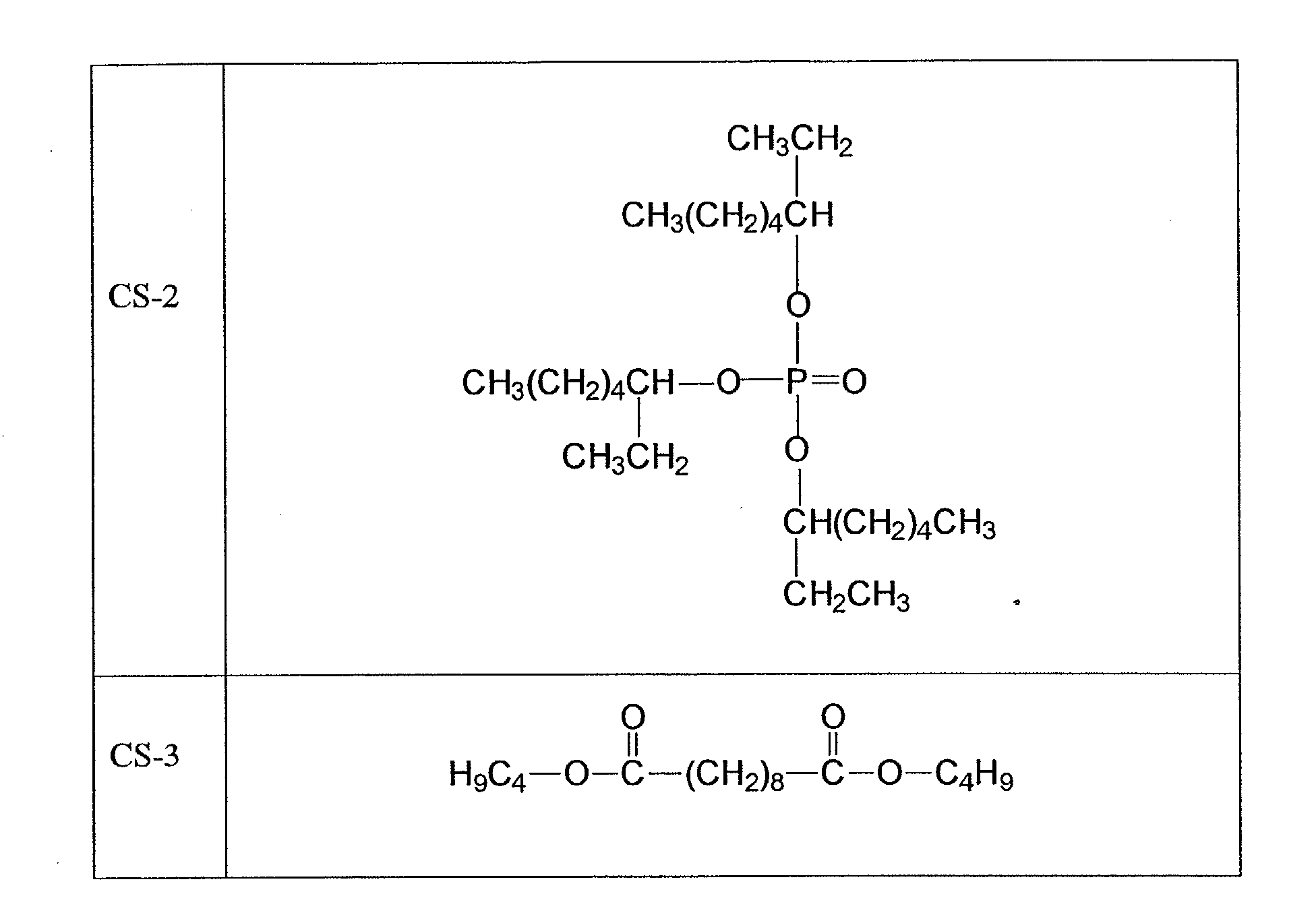
| | CS-2 | 0.138 g.m-2 |
| | CS-3 | 0.414 g.m-2 |
| | Red-sensitive emulsion | 0.173 g.m-2 (as Ag) |
Invention Example 3.6. A photographic element was prepared identically as in
comparison example 3.5, except that silver ion containing composition SC-2 was
included in the photosensitive layer at 0.0054 g/m2.
Invention Example 3.7. A photographic element was prepared identically as in
comparison example 3.5, except that silver ion containing composition SC-2 was
included in the photosensitive layer at 0.0108 g/m2.
Invention Example 3.8. A photographic element was prepared identically as in
comparison example 3.5, except that silver ion containing composition SC-2 was
included in the photosensitive layer at 0.022 g/m2.
Comparison Example 3.9. A photographic element was prepared identically as in
comparison example 3.1, except that photosensitive Layer 2 comprised a green
sensitized silver chloride emulsion and the following associated components.
Magenta coupler MC-1 was delivered via an oil-in-water dispersion prepared by
conventional means.
| Layer 2 | PHOTOSENSITIVE LAYER |
| | Gelatin | 1.399 g.m-2 |
| | Coupler MC-1 | 0.183 g.m-2 |
| | St-3 | 0.059 g.m-2 |
| | St-4 | 0.153 g.m-2 |
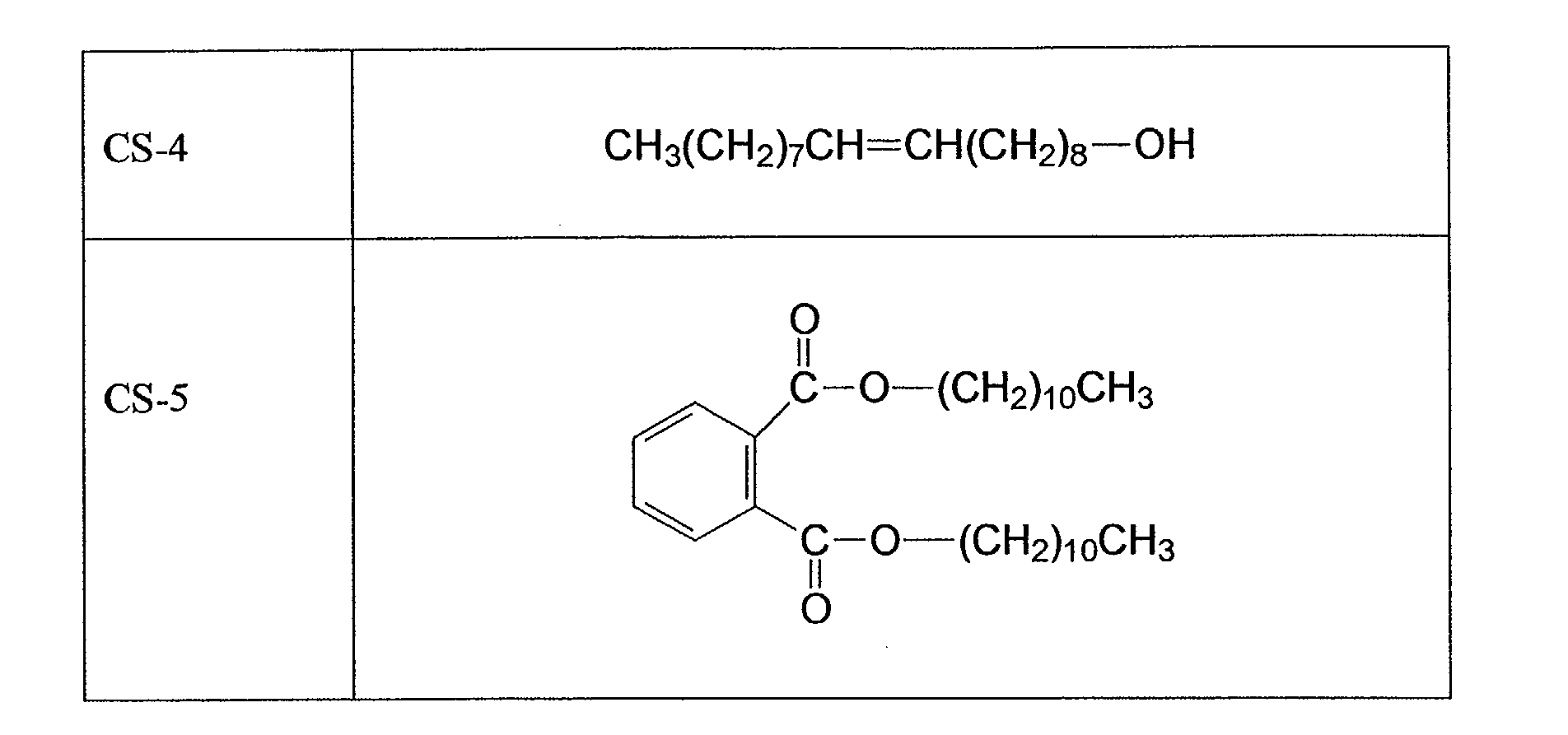
| | CS-4 | 0.218 g.m-2 |
| | CS-5 | 0.112 g.m-2 |
| | Green-sensitive emulsion | 0.104 g.m-2 (as Ag) |
Invention Example 3.10. A photographic element was prepared identically as in
comparison example 3.9, except that silver ion containing composition SC-2 was
included in the photosensitive layer at 0.0054 g/m2.
Invention Example 3.11. A photographic element was prepared identically as in
comparison example 3.9, except that silver ion containing composition SC-2 was
included in the photosensitive layer at 0.0108 g/m2.
Invention Example 3.12. A photographic element was prepared identically as in
comparison example 3.9, except that silver ion containing composition SC-2 was
included in the photosensitive layer at 0.022 g/m2.
Samples of each photographic element of examples 3.1 to 3.12
were given a neutral exposure and were processed according to the following
scheme: Development was carried out in color paper developer formulation
Developer-1 at 35°C for varied times; Bleach/Fix was carried out in
KODAK
EKTACOLOR Prime Bleach/
Fix at 35°C for 45 seconds; Wash was carried out in
water at 35°C for 90 seconds.
| Color paper developer formulation Developer-1. |
| Developer Component | Concentration |
| Triethanolamine 100% | 5.5 mL |
| Versa TL-73 | 0.15 mL |
| Potassium Sulfite (45%) | 0.5 mL |
| BD-89 | 5.64 mL |
| Blankophor REU 170 | 0.82 g |
| Lithium Sulfate | 2.00 g |
| KODAK Anti-Calcium No. 5 | 0.60 mL |
| Potassium Chloride | 5.72 g |
| Potassium Bromide | 0.024 g |
| KODAK Color Developing Agent, CD-3 | 2.0 g |
| Potassium Carbonate | 25.0 g |
| Water to make (adjust pH to 10.10) | 1 L |
For each of the example coatings Dmin, relative Speed, and
Shoulder Density (measured at an exposure 0.4 logE higher than the exposure
necessary to provide a density of 0.8) were measured, and the results are presented
in Table III. The developability for each of examples 3.1 to 3.7 was also
measured and are indicated in Table IV, where developability (DEV) is defined as
the ratio of the Status A maximum density with development arrested at 10
seconds relative to the Status A maximum density with 40 seconds development.
DEV = [Density at 10 s / Density at 40 s] x100%
| Example. | amount SC-2 added | Dmin | Speed | Shoulder Density |
| 3.1 (comparison) | none | 0.075 | 143 | 1.92 |
| 3.2 (invention) | 0.0051 | 0.079 | 149 | 1.96 |
| 3.3 (invention) | 0.0108 | 0.078 | 150 | 1.96 |
| 3.4 (invention) | 0.021 | 0.097 | 147 | 1.94 |
| 3.5 (comparison) | none | 0.107 | 132 | 2.1 |
| 3.6 (invention) | 0.0051 | 0.103 | 147 | 2.14 |
| 3.7 (invention) | 0.0108 | 0.120 | 151 | 2.11 |
| 3.8 (invention) | 0.021 | 0.32 | 157 | 1.94 |
| 3.9 (comparison) | none | 0.094 | 132 | 1.84 |
| 3.10 (invention) | 0.0051 | 0.113 | 135 | 1.81 |
| 3.11 (invention) | 0.0108 | 0.243 | 145 | 1.81 |
| 3.12 (invention) | 0.021 | 0.886 | 156 | 1.81 |
The improvement on photographic parameters and developability on the
addition of Zr(Ag
0.90H
0.10PO
4)
2•H
2O are given in Table IV.
| Example. | amount CS-2 added | DEV |
| 3.1 (comparison) | none | 24 |
| 3.2 (invention) | 0.0051 | 34.5 |
| 3.3 (invention) | 0.0108 | 38.5 |
| 3.4 (invention) | 0.021 | 39 |
| 3.5 (comparison) | none | 64.5 |
| 3.6 (invention) | 0.0051 | 91 |
| 3.7 (invention) | 0.0108 | 96 |
The data show that the addition of silver ion containing
composition SC-2 to the photographic coating generally improved upper scale
densities, speed, and contrast, and developability of the two high silver laydown
layers at shorter times of development, thus provides more robustness to the
process.