EP1322958B1 - Selective binding materials - Google Patents
Selective binding materials Download PDFInfo
- Publication number
- EP1322958B1 EP1322958B1 EP01972328A EP01972328A EP1322958B1 EP 1322958 B1 EP1322958 B1 EP 1322958B1 EP 01972328 A EP01972328 A EP 01972328A EP 01972328 A EP01972328 A EP 01972328A EP 1322958 B1 EP1322958 B1 EP 1322958B1
- Authority
- EP
- European Patent Office
- Prior art keywords
- template
- process according
- composition
- selectively
- frozen
- Prior art date
- Legal status (The legal status is an assumption and is not a legal conclusion. Google has not performed a legal analysis and makes no representation as to the accuracy of the status listed.)
- Expired - Lifetime
Links
- 239000000463 material Substances 0.000 title claims description 57
- 239000012530 fluid Substances 0.000 claims abstract description 18
- 238000000926 separation method Methods 0.000 claims abstract description 6
- 238000003556 assay Methods 0.000 claims abstract description 5
- 239000003054 catalyst Substances 0.000 claims abstract description 4
- 241000700605 Viruses Species 0.000 claims abstract description 3
- 239000000203 mixture Substances 0.000 claims description 21
- XLYOFNOQVPJJNP-UHFFFAOYSA-N water Substances O XLYOFNOQVPJJNP-UHFFFAOYSA-N 0.000 claims description 15
- 238000000034 method Methods 0.000 claims description 13
- 239000002904 solvent Substances 0.000 claims description 9
- 102000004169 proteins and genes Human genes 0.000 claims description 7
- 108090000623 proteins and genes Proteins 0.000 claims description 7
- 238000007710 freezing Methods 0.000 claims description 6
- 230000008014 freezing Effects 0.000 claims description 5
- 241000894007 species Species 0.000 claims description 5
- 239000007788 liquid Substances 0.000 claims description 4
- 229910052751 metal Inorganic materials 0.000 claims description 4
- 239000002184 metal Substances 0.000 claims description 4
- 150000002739 metals Chemical class 0.000 claims description 4
- 239000003960 organic solvent Substances 0.000 claims description 4
- 229920000642 polymer Polymers 0.000 claims description 4
- 210000001519 tissue Anatomy 0.000 claims description 4
- 210000004027 cell Anatomy 0.000 claims description 3
- 229940079593 drug Drugs 0.000 claims description 3
- 239000003814 drug Substances 0.000 claims description 3
- 239000007789 gas Substances 0.000 claims description 3
- 102000003886 Glycoproteins Human genes 0.000 claims description 2
- 108090000288 Glycoproteins Proteins 0.000 claims description 2
- HTTJABKRGRZYRN-UHFFFAOYSA-N Heparin Chemical compound OC1C(NC(=O)C)C(O)OC(COS(O)(=O)=O)C1OC1C(OS(O)(=O)=O)C(O)C(OC2C(C(OS(O)(=O)=O)C(OC3C(C(O)C(O)C(O3)C(O)=O)OS(O)(=O)=O)C(CO)O2)NS(O)(=O)=O)C(C(O)=O)O1 HTTJABKRGRZYRN-UHFFFAOYSA-N 0.000 claims description 2
- 102000004895 Lipoproteins Human genes 0.000 claims description 2
- 108090001030 Lipoproteins Proteins 0.000 claims description 2
- 102000001621 Mucoproteins Human genes 0.000 claims description 2
- 108010093825 Mucoproteins Proteins 0.000 claims description 2
- 102000011931 Nucleoproteins Human genes 0.000 claims description 2
- 108010061100 Nucleoproteins Proteins 0.000 claims description 2
- 239000003242 anti bacterial agent Substances 0.000 claims description 2
- 229940088710 antibiotic agent Drugs 0.000 claims description 2
- 239000003125 aqueous solvent Substances 0.000 claims description 2
- 150000001720 carbohydrates Chemical class 0.000 claims description 2
- 235000014633 carbohydrates Nutrition 0.000 claims description 2
- 210000000349 chromosome Anatomy 0.000 claims description 2
- 238000000909 electrodialysis Methods 0.000 claims description 2
- 150000004676 glycans Chemical class 0.000 claims description 2
- 229960002897 heparin Drugs 0.000 claims description 2
- 229920000669 heparin Polymers 0.000 claims description 2
- 229940088597 hormone Drugs 0.000 claims description 2
- 239000005556 hormone Substances 0.000 claims description 2
- 229960003444 immunosuppressant agent Drugs 0.000 claims description 2
- 239000003018 immunosuppressive agent Substances 0.000 claims description 2
- 150000002484 inorganic compounds Chemical class 0.000 claims description 2
- 229910010272 inorganic material Inorganic materials 0.000 claims description 2
- 238000004519 manufacturing process Methods 0.000 claims description 2
- 239000011159 matrix material Substances 0.000 claims description 2
- 230000008018 melting Effects 0.000 claims description 2
- 238000002844 melting Methods 0.000 claims description 2
- 244000005700 microbiome Species 0.000 claims description 2
- 102000039446 nucleic acids Human genes 0.000 claims description 2
- 108020004707 nucleic acids Proteins 0.000 claims description 2
- 150000007523 nucleic acids Chemical class 0.000 claims description 2
- 229920001542 oligosaccharide Polymers 0.000 claims description 2
- 150000002482 oligosaccharides Chemical class 0.000 claims description 2
- 150000002894 organic compounds Chemical class 0.000 claims description 2
- 229920001282 polysaccharide Polymers 0.000 claims description 2
- 239000005017 polysaccharide Substances 0.000 claims description 2
- 150000003431 steroids Chemical class 0.000 claims description 2
- 229940088594 vitamin Drugs 0.000 claims description 2
- 239000011782 vitamin Substances 0.000 claims description 2
- 229930003231 vitamin Natural products 0.000 claims description 2
- 235000013343 vitamin Nutrition 0.000 claims description 2
- 239000007787 solid Substances 0.000 claims 1
- 238000005406 washing Methods 0.000 claims 1
- 238000004090 dissolution Methods 0.000 abstract description 2
- 238000001962 electrophoresis Methods 0.000 abstract description 2
- 239000000126 substance Substances 0.000 abstract description 2
- WEVYAHXRMPXWCK-UHFFFAOYSA-N Acetonitrile Chemical compound CC#N WEVYAHXRMPXWCK-UHFFFAOYSA-N 0.000 description 12
- COLNVLDHVKWLRT-QMMMGPOBSA-N L-phenylalanine Chemical compound OC(=O)[C@@H](N)CC1=CC=CC=C1 COLNVLDHVKWLRT-QMMMGPOBSA-N 0.000 description 10
- HEDRZPFGACZZDS-UHFFFAOYSA-N Chloroform Chemical compound ClC(Cl)Cl HEDRZPFGACZZDS-UHFFFAOYSA-N 0.000 description 8
- 239000003463 adsorbent Substances 0.000 description 7
- 239000000243 solution Substances 0.000 description 7
- JWZZKOKVBUJMES-UHFFFAOYSA-N (+-)-Isoprenaline Chemical compound CC(C)NCC(O)C1=CC=C(O)C(O)=C1 JWZZKOKVBUJMES-UHFFFAOYSA-N 0.000 description 6
- 229940039009 isoproterenol Drugs 0.000 description 6
- 238000002474 experimental method Methods 0.000 description 4
- 238000002360 preparation method Methods 0.000 description 4
- 238000001179 sorption measurement Methods 0.000 description 4
- 229920005654 Sephadex Polymers 0.000 description 3
- 239000012507 Sephadex™ Substances 0.000 description 3
- 238000004458 analytical method Methods 0.000 description 3
- 239000000178 monomer Substances 0.000 description 3
- 229960005190 phenylalanine Drugs 0.000 description 3
- COLNVLDHVKWLRT-MRVPVSSYSA-N D-phenylalanine Chemical compound OC(=O)[C@H](N)CC1=CC=CC=C1 COLNVLDHVKWLRT-MRVPVSSYSA-N 0.000 description 2
- RTZKZFJDLAIYFH-UHFFFAOYSA-N Diethyl ether Chemical compound CCOCC RTZKZFJDLAIYFH-UHFFFAOYSA-N 0.000 description 2
- 239000012491 analyte Substances 0.000 description 2
- 239000007864 aqueous solution Substances 0.000 description 2
- 230000015572 biosynthetic process Effects 0.000 description 2
- 150000001875 compounds Chemical class 0.000 description 2
- 238000001914 filtration Methods 0.000 description 2
- 238000004128 high performance liquid chromatography Methods 0.000 description 2
- 229920000344 molecularly imprinted polymer Polymers 0.000 description 2
- 239000000758 substrate Substances 0.000 description 2
- 239000000725 suspension Substances 0.000 description 2
- 230000007704 transition Effects 0.000 description 2
- 229930182837 (R)-adrenaline Natural products 0.000 description 1
- LBOPECYONBDFEM-RFVHGSKJSA-N 2,3-dihydroxybutanedioic acid;4-[(1s)-1-hydroxy-2-(propan-2-ylamino)ethyl]benzene-1,2-diol Chemical compound OC(=O)C(O)C(O)C(O)=O.CC(C)NC[C@@H](O)C1=CC=C(O)C(O)=C1 LBOPECYONBDFEM-RFVHGSKJSA-N 0.000 description 1
- JWZZKOKVBUJMES-LLVKDONJSA-N 4-[(1S)-1-hydroxy-2-(propan-2-ylamino)ethyl]benzene-1,2-diol Chemical compound CC(C)NC[C@@H](O)C1=CC=C(O)C(O)=C1 JWZZKOKVBUJMES-LLVKDONJSA-N 0.000 description 1
- HBAQYPYDRFILMT-UHFFFAOYSA-N 8-[3-(1-cyclopropylpyrazol-4-yl)-1H-pyrazolo[4,3-d]pyrimidin-5-yl]-3-methyl-3,8-diazabicyclo[3.2.1]octan-2-one Chemical class C1(CC1)N1N=CC(=C1)C1=NNC2=C1N=C(N=C2)N1C2C(N(CC1CC2)C)=O HBAQYPYDRFILMT-UHFFFAOYSA-N 0.000 description 1
- GYHNNYVSQQEPJS-UHFFFAOYSA-N Gallium Chemical compound [Ga] GYHNNYVSQQEPJS-UHFFFAOYSA-N 0.000 description 1
- VYPSYNLAJGMNEJ-UHFFFAOYSA-N Silicium dioxide Chemical compound O=[Si]=O VYPSYNLAJGMNEJ-UHFFFAOYSA-N 0.000 description 1
- 238000005251 capillar electrophoresis Methods 0.000 description 1
- 238000006555 catalytic reaction Methods 0.000 description 1
- 238000006243 chemical reaction Methods 0.000 description 1
- 230000000295 complement effect Effects 0.000 description 1
- 230000009918 complex formation Effects 0.000 description 1
- 238000001514 detection method Methods 0.000 description 1
- 238000005516 engineering process Methods 0.000 description 1
- 229960005139 epinephrine Drugs 0.000 description 1
- 239000005350 fused silica glass Substances 0.000 description 1
- 229910052733 gallium Inorganic materials 0.000 description 1
- 239000007924 injection Substances 0.000 description 1
- 238000002347 injection Methods 0.000 description 1
- 230000003993 interaction Effects 0.000 description 1
- QSHDDOUJBYECFT-UHFFFAOYSA-N mercury Chemical compound [Hg] QSHDDOUJBYECFT-UHFFFAOYSA-N 0.000 description 1
- 229910052753 mercury Inorganic materials 0.000 description 1
- 229960002748 norepinephrine Drugs 0.000 description 1
- SFLSHLFXELFNJZ-UHFFFAOYSA-N norepinephrine Natural products NCC(O)C1=CC=C(O)C(O)=C1 SFLSHLFXELFNJZ-UHFFFAOYSA-N 0.000 description 1
- 230000003287 optical effect Effects 0.000 description 1
- 239000002245 particle Substances 0.000 description 1
- 239000011236 particulate material Substances 0.000 description 1
- 229960001802 phenylephrine Drugs 0.000 description 1
- 238000000746 purification Methods 0.000 description 1
- 239000012429 reaction media Substances 0.000 description 1
- 238000005057 refrigeration Methods 0.000 description 1
- RMAQACBXLXPBSY-UHFFFAOYSA-N silicic acid Chemical compound O[Si](O)(O)O RMAQACBXLXPBSY-UHFFFAOYSA-N 0.000 description 1
- 235000012239 silicon dioxide Nutrition 0.000 description 1
- 239000003643 water by type Substances 0.000 description 1
Images


Classifications
-
- G—PHYSICS
- G01—MEASURING; TESTING
- G01N—INVESTIGATING OR ANALYSING MATERIALS BY DETERMINING THEIR CHEMICAL OR PHYSICAL PROPERTIES
- G01N33/00—Investigating or analysing materials by specific methods not covered by groups G01N1/00 - G01N31/00
- G01N33/48—Biological material, e.g. blood, urine; Haemocytometers
- G01N33/50—Chemical analysis of biological material, e.g. blood, urine; Testing involving biospecific ligand binding methods; Immunological testing
- G01N33/53—Immunoassay; Biospecific binding assay; Materials therefor
- G01N33/531—Production of immunochemical test materials
-
- B—PERFORMING OPERATIONS; TRANSPORTING
- B01—PHYSICAL OR CHEMICAL PROCESSES OR APPARATUS IN GENERAL
- B01J—CHEMICAL OR PHYSICAL PROCESSES, e.g. CATALYSIS OR COLLOID CHEMISTRY; THEIR RELEVANT APPARATUS
- B01J20/00—Solid sorbent compositions or filter aid compositions; Sorbents for chromatography; Processes for preparing, regenerating or reactivating thereof
- B01J20/30—Processes for preparing, regenerating, or reactivating
- B01J20/305—Addition of material, later completely removed, e.g. as result of heat treatment, leaching or washing, e.g. for forming pores
- B01J20/3057—Use of a templating or imprinting material ; filling pores of a substrate or matrix followed by the removal of the substrate or matrix
-
- G—PHYSICS
- G01—MEASURING; TESTING
- G01N—INVESTIGATING OR ANALYSING MATERIALS BY DETERMINING THEIR CHEMICAL OR PHYSICAL PROPERTIES
- G01N2600/00—Assays involving molecular imprinted polymers/polymers created around a molecular template
-
- Y—GENERAL TAGGING OF NEW TECHNOLOGICAL DEVELOPMENTS; GENERAL TAGGING OF CROSS-SECTIONAL TECHNOLOGIES SPANNING OVER SEVERAL SECTIONS OF THE IPC; TECHNICAL SUBJECTS COVERED BY FORMER USPC CROSS-REFERENCE ART COLLECTIONS [XRACs] AND DIGESTS
- Y10—TECHNICAL SUBJECTS COVERED BY FORMER USPC
- Y10S—TECHNICAL SUBJECTS COVERED BY FORMER USPC CROSS-REFERENCE ART COLLECTIONS [XRACs] AND DIGESTS
- Y10S436/00—Chemistry: analytical and immunological testing
- Y10S436/815—Test for named compound or class of compounds
-
- Y—GENERAL TAGGING OF NEW TECHNOLOGICAL DEVELOPMENTS; GENERAL TAGGING OF CROSS-SECTIONAL TECHNOLOGIES SPANNING OVER SEVERAL SECTIONS OF THE IPC; TECHNICAL SUBJECTS COVERED BY FORMER USPC CROSS-REFERENCE ART COLLECTIONS [XRACs] AND DIGESTS
- Y10—TECHNICAL SUBJECTS COVERED BY FORMER USPC
- Y10S—TECHNICAL SUBJECTS COVERED BY FORMER USPC CROSS-REFERENCE ART COLLECTIONS [XRACs] AND DIGESTS
- Y10S436/00—Chemistry: analytical and immunological testing
- Y10S436/815—Test for named compound or class of compounds
- Y10S436/816—Alkaloids, amphetamines, and barbiturates
-
- Y—GENERAL TAGGING OF NEW TECHNOLOGICAL DEVELOPMENTS; GENERAL TAGGING OF CROSS-SECTIONAL TECHNOLOGIES SPANNING OVER SEVERAL SECTIONS OF THE IPC; TECHNICAL SUBJECTS COVERED BY FORMER USPC CROSS-REFERENCE ART COLLECTIONS [XRACs] AND DIGESTS
- Y10—TECHNICAL SUBJECTS COVERED BY FORMER USPC
- Y10S—TECHNICAL SUBJECTS COVERED BY FORMER USPC CROSS-REFERENCE ART COLLECTIONS [XRACs] AND DIGESTS
- Y10S436/00—Chemistry: analytical and immunological testing
- Y10S436/815—Test for named compound or class of compounds
- Y10S436/817—Steroids or hormones
-
- Y—GENERAL TAGGING OF NEW TECHNOLOGICAL DEVELOPMENTS; GENERAL TAGGING OF CROSS-SECTIONAL TECHNOLOGIES SPANNING OVER SEVERAL SECTIONS OF THE IPC; TECHNICAL SUBJECTS COVERED BY FORMER USPC CROSS-REFERENCE ART COLLECTIONS [XRACs] AND DIGESTS
- Y10—TECHNICAL SUBJECTS COVERED BY FORMER USPC
- Y10S—TECHNICAL SUBJECTS COVERED BY FORMER USPC CROSS-REFERENCE ART COLLECTIONS [XRACs] AND DIGESTS
- Y10S436/00—Chemistry: analytical and immunological testing
- Y10S436/815—Test for named compound or class of compounds
- Y10S436/817—Steroids or hormones
- Y10S436/818—Human chorionic gonadotropin
-
- Y—GENERAL TAGGING OF NEW TECHNOLOGICAL DEVELOPMENTS; GENERAL TAGGING OF CROSS-SECTIONAL TECHNOLOGIES SPANNING OVER SEVERAL SECTIONS OF THE IPC; TECHNICAL SUBJECTS COVERED BY FORMER USPC CROSS-REFERENCE ART COLLECTIONS [XRACs] AND DIGESTS
- Y10—TECHNICAL SUBJECTS COVERED BY FORMER USPC
- Y10S—TECHNICAL SUBJECTS COVERED BY FORMER USPC CROSS-REFERENCE ART COLLECTIONS [XRACs] AND DIGESTS
- Y10S436/00—Chemistry: analytical and immunological testing
- Y10S436/901—Drugs of abuse, e.g. narcotics, amphetamine
Definitions
- the present invention relates to selective binding materials, their preparation and uses.
- the present invention provides a process for preparing a selective binding material capable of selectively binding a template material comprising:
- the template material may be selected from proteins, biological receptors, nucleic acids, chromosomes, cells, viruses, microorganisms, tissue samples, carbohydrates, oligosaccharides, polysaccharides, nucleoproteins, mucoproteins, lipoproteins, synthetic proteins, glycoproteins, glucosaminoglycans, steroids, immunosuppressants, hormones, heparin, antibiotics, vitamins and drugs.
- the carrier fluid may be selected from water, aqueous solvents, aqueous solutions, inorganic liquids, organic solvents, metals, fusible organic compounds, fusible inorganic compounds, polymers and gases.
- the fluid When the template material is molecular, the fluid will generally be a solvent therefor.
- the composition may be a suspension, as it generally will be if the template material is a complex entity, such as a tissue sample.
- Molten metals will generally be restricted to low melting metals e.g. mercury and gallium. Gases that can be liquefied and solidified by control of temperature and/or pressure may also be used.
- compositions are aqueous solutions, e.g. of proteins.
- a composition may be a 2-phase system, e.g. with the template material partitioned between immiscible solvents (e.g. water.and an organic solvent such as chloroform or ether). Only the higher-freezing one of these may be frozen in step (b).
- immiscible solvents e.g. water.and an organic solvent such as chloroform or ether. Only the higher-freezing one of these may be frozen in step (b).
- step (c) will usually involve its dissolution, preferably using a solvent in which the frozen carrier fluid is not substantially soluble (e.g.. using chloroform, acetonitrile or other organic solvents or mixtures to remove materials from ice). Suitable materials may be removed by electrodialysis. Particularly for particulate material, mechanical removal may be appropriate.
- a solvent in which the frozen carrier fluid is not substantially soluble e.g. using chloroform, acetonitrile or other organic solvents or mixtures to remove materials from ice.
- Suitable materials may be removed by electrodialysis. Particularly for particulate material, mechanical removal may be appropriate.
- the invention preferably uses template molecules of molecular size exceeding 500Da.
- the frozen imprinted fluid has predetermined affinity and specificity superior to non-imprinted material and can be prepared much more easily than traditional cross-linked imprinted polymers.
- Materials prepared as described in this invention can be used as adsorbents in separation and purification, as catalysts and as recognition materials in sensors and assays.
- the present invention provides a selective binding material as prepared by the above process.
- the invention provides uses of such materials exploiting their selective binding abilities.
- Use as a separation matrix is exemplified below.
- An example of use in a sensor or array could involve using our materials in place of antibodies in immunosensors and assays employing them.
- An example of use as a catalyst would involve employing a transition state analogue as the template material to produce a material capable of catalysing a reaction that proceeds through such a transition state.
- the invention provides a process for detecting or assaying a molecular species comprising:
- MIPs Molecularly imprinted polymers
- the present invention in various aspects, describes the formation of the substrate-specific material by freezing the solvent or other fluid in the presence of a material which can serve as a template.
- this new approach relies on the ability of the frozen solvent to act as adsorbent.
- frozen solvent contains cavities occupied by template molecules which can be emptied and used for re-binding of the template molecules.
- the structure of the imprints formed should be complementary to the structure of the template or molecules with structure and shape similar to those of the template molecules.
- the material will remain immobilised. At least part of the molecules, suspension particles or tissue will remain exposed and available for a subsequent action (recognition, binding, catalysis, sensing etc.).
- a composition can be used as an element of sensor or assay.
- the adsorption properties of prepared adsorbents were evaluated by adding 0.15 ml aliquot of the corresponding analyte in the concentration ranging from 0.1 to 10 mg/ml. Concentration of isoproterenol in solution was measured spectrophotometrically at 280 nm. Results of the sorption analysis indicate that ice, prepared in the presence of template has higher affinity to the template than blank.sample Figure 1). At the same time Sephadex G25 itself has no affinity to isoproterenol.
- the experiment was done using capillary electrophoresis unit Quanta 4000E, Waters.
- a 35 cm portion of capillary (fused silica, 80cm, 100 um internal diameter - Polymicro Technologies, Hallow, UK) was inserted into insulated tubes connected with the refrigerating unit and cooled to a temperature of -14.5 °C.
- the capillary was filled with a 2 mM solution of L-Phe in 9.5 mM HCl, and incubated at -14.5 °C for 1 hour, to allow complete refrigeration of the liquid inside the capillary lumen.
- a voltage of 13 kV was applied to the capillary and maintained until the baseline is stabilised.
- the sample, D-Phe, L-Phe or the racemate, diluted to a concentration of 2 mM in 9.5 mM HCl were injected hydrodinamically into the capillary for 6 sec.
- the run was performed by applying 13 kV (the current is 10 uA).
- the same experiment was performed using blank ice, formed in the absence of the template.
- the result of this analysis shown that the ice formed in the capillary in the presence of the L-Phe has enhanced affinity to the template and can be used to separate optical enantiomers (Figure 4). No separation of L-Phe and D-Phe was observed when control (blank) ice filled capillary was used.
Landscapes
- Health & Medical Sciences (AREA)
- Chemical & Material Sciences (AREA)
- Immunology (AREA)
- Life Sciences & Earth Sciences (AREA)
- Engineering & Computer Science (AREA)
- Physics & Mathematics (AREA)
- Biomedical Technology (AREA)
- Hematology (AREA)
- Analytical Chemistry (AREA)
- Molecular Biology (AREA)
- Urology & Nephrology (AREA)
- General Physics & Mathematics (AREA)
- Thermal Sciences (AREA)
- Medicinal Chemistry (AREA)
- Biotechnology (AREA)
- Microbiology (AREA)
- Biochemistry (AREA)
- General Health & Medical Sciences (AREA)
- Cell Biology (AREA)
- Pathology (AREA)
- Food Science & Technology (AREA)
- Organic Chemistry (AREA)
- Chemical Kinetics & Catalysis (AREA)
- Peptides Or Proteins (AREA)
- Solid-Sorbent Or Filter-Aiding Compositions (AREA)
- Measuring Or Testing Involving Enzymes Or Micro-Organisms (AREA)
- Treatment Of Liquids With Adsorbents In General (AREA)
- Organic Low-Molecular-Weight Compounds And Preparation Thereof (AREA)
- Reciprocating, Oscillating Or Vibrating Motors (AREA)
- Physical Or Chemical Processes And Apparatus (AREA)
- Agricultural Chemicals And Associated Chemicals (AREA)
Abstract
Description
- The present invention relates to selective binding materials, their preparation and uses.
- Polyakov in the 1930's described substrate-specific materials prepared by condensing silicic acid in the presence of template molecules (Zhur.Fiz.Khim.2:799 (1931); 10:100(1937); 4:454 (1933)). More recent workers have used organic monomers, polymerized in the presence of template molecules (e.g. USA patents 5110833, 5728296, 5756717, WO 9641173).
- In a first aspect the present invention provides a process for preparing a selective binding material capable of selectively binding a template material comprising:
- (a) preparing a composition comprising template material and a carrier fluid;
- (b) freezing the composition; and
- (c) at least partially removing template material from the frozen composition so as to leave frozen carrier fluid with binding sites where template material has been removed.
- The template material may be selected from proteins, biological receptors, nucleic acids, chromosomes, cells, viruses, microorganisms, tissue samples, carbohydrates, oligosaccharides, polysaccharides, nucleoproteins, mucoproteins, lipoproteins, synthetic proteins, glycoproteins, glucosaminoglycans, steroids, immunosuppressants, hormones, heparin, antibiotics, vitamins and drugs.
- The carrier fluid may be selected from water, aqueous solvents, aqueous solutions, inorganic liquids, organic solvents, metals, fusible organic compounds, fusible inorganic compounds, polymers and gases. When the template material is molecular, the fluid will generally be a solvent therefor. The composition may be a suspension, as it generally will be if the template material is a complex entity, such as a tissue sample. Molten metals will generally be restricted to low melting metals e.g. mercury and gallium. Gases that can be liquefied and solidified by control of temperature and/or pressure may also be used.
- Preferred compositions are aqueous solutions, e.g. of proteins.
- A composition may be a 2-phase system, e.g. with the template material partitioned between immiscible solvents (e.g. water.and an organic solvent such as chloroform or ether). Only the higher-freezing one of these may be frozen in step (b).
- When the template material is soluble, step (c) will usually involve its dissolution, preferably using a solvent in which the frozen carrier fluid is not substantially soluble (e.g.. using chloroform, acetonitrile or other organic solvents or mixtures to remove materials from ice). Suitable materials may be removed by electrodialysis. Particularly for particulate material, mechanical removal may be appropriate.
- The invention preferably uses template molecules of molecular size exceeding 500Da.
- The frozen imprinted fluid has predetermined affinity and specificity superior to non-imprinted material and can be prepared much more easily than traditional cross-linked imprinted polymers. Materials prepared as described in this invention can be used as adsorbents in separation and purification, as catalysts and as recognition materials in sensors and assays.
- In a second aspect the present invention provides a selective binding material as prepared by the above process.
- In further aspects the invention provides uses of such materials exploiting their selective binding abilities. Use as a separation matrix is exemplified below. An example of use in a sensor or array could involve using our materials in place of antibodies in immunosensors and assays employing them. An example of use as a catalyst would involve employing a transition state analogue as the template material to produce a material capable of catalysing a reaction that proceeds through such a transition state.
- In a yet further aspect the invention provides a process for detecting or assaying a molecular species comprising:
- (a) preparing a composition comprising a selectively interactable material (which may be the same as a template material exemplified above) and a carrier fluid;
- (b) freezing the composition; and
- (c) contacting the frozen composition with a solution containing said molecular species so that it selectively interacts with said material in the frozen composition.
- Traditional imprinting polymerisation includes formation of a rigid polymer network around a template which may be a small organic substance, such as a drug, or a protein or even a cell. Molecularly imprinted polymers (MIPs) prepared in this way consist of monomer units linked together by predominantly covalent interactions.
- The present invention, in various aspects, describes the formation of the substrate-specific material by freezing the solvent or other fluid in the presence of a material which can serve as a template. In contrast to traditional MIP preparation, where solvent plays a secondary role, being at most a reaction medium which facilitates the complex formation between the functional monomers and the template, this new approach relies on the ability of the frozen solvent to act as adsorbent. When prepared in the presence of template, frozen solvent contains cavities occupied by template molecules which can be emptied and used for re-binding of the template molecules. The structure of the imprints formed should be complementary to the structure of the template or molecules with structure and shape similar to those of the template molecules.
- In embodiments in which the selectively interactable material is not removed from the frozen carrier fluid, the material will remain immobilised. At least part of the molecules, suspension particles or tissue will remain exposed and available for a subsequent action (recognition, binding, catalysis, sensing etc.). Such a composition can be used as an element of sensor or assay.
-
- Fig. 1 shows adsorption isotherms comparing adsorption of a template material to ice formed in the presence of the material ("mip") and ice formed in its absence.
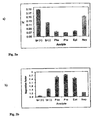
- Fig. 2(a) and 2(b) show capacity factors K' (a) and separation factors (b) of a range of analytes passed through a column containing a selective binding material prepared in the presence of one of them.
- Fig. 3 is a trace showing the result of electrophoresis of a mixture of D- and L-phenylalanine in a capillary filled with ice, formed in the presence of L-phenylalanine.
- Sephadex G25, 30 mg/sample were transferred into the wells of filtration microplates and swelled overnight in 0.2
ml 1 mg/ml solution of (+)-isoproterenol (+)-bitartrate salt. The excess of solution was removed by filtration under reduced pressure and adsorbent was flushed twice with 0.2 ml chloroform. The swelled adsorbent was frozen for 12 hours at -15°C. Adsorbent was washed four times with acetonitrile at -15°C. Blank material was prepared in the same way but in the absence of isoproterenol. The adsorption properties of prepared adsorbents were evaluated by adding 0.15 ml aliquot of the corresponding analyte in the concentration ranging from 0.1 to 10 mg/ml. Concentration of isoproterenol in solution was measured spectrophotometrically at 280 nm. Results of the sorption analysis indicate that ice, prepared in the presence of template has higher affinity to the template than blank.sample Figure 1). At the same time Sephadex G25 itself has no affinity to isoproterenol. - The same material, prepared in the presence of isoproterenol has been analysed by HPLC in experiments with compounds having structure similar to that of isoproterenol. Results of this analysis indicate that the ice has highest affinity to the target compound presented in solution (Figure 2). An HPLC column (100 x 4.6 mm i.d.) was packed with approximately 1 g Sephadex G25 swelled in 1 mg/ml (+) isoproterenol (MIP) or water (Blank). Column was washed with chloroform and frozen at -15 °C for 12 hours. All chromatographic experiments were performed at -10°C using detection at 280 nm and
flow rate 1 ml/min. The column was washed on-line with acetonitrile until a stable baseline was obtained and solvent replaced with 10% aqueous acetonitrile. 20 µl solution of the analyte in 0.1 mg/ml concentration were used for the injections. Ipr (+) - (+) isoproterenol, Ipr (-) - (-) isoproterenol, Phe- phenylephrine, Propropranolol, Epi - epinephrine, Nep - norepinephrine. - The experiment was done using capillary electrophoresis unit Quanta 4000E, Waters. A 35 cm portion of capillary (fused silica, 80cm, 100 um internal diameter - Polymicro Technologies, Hallow, UK) was inserted into insulated tubes connected with the refrigerating unit and cooled to a temperature of -14.5 °C. The capillary was filled with a 2 mM solution of L-Phe in 9.5 mM HCl, and incubated at -14.5 °C for 1 hour, to allow complete refrigeration of the liquid inside the capillary lumen. To elute the template from the ice a voltage of 13 kV was applied to the capillary and maintained until the baseline is stabilised. The sample, D-Phe, L-Phe or the racemate, diluted to a concentration of 2 mM in 9.5 mM HCl were injected hydrodinamically into the capillary for 6 sec. The run was performed by applying 13 kV (the current is 10 uA). The same experiment was performed using blank ice, formed in the absence of the template. The result of this analysis shown that the ice formed in the capillary in the presence of the L-Phe has enhanced affinity to the template and can be used to separate optical enantiomers (Figure 4). No separation of L-Phe and D-Phe was observed when control (blank) ice filled capillary was used.
Claims (15)
- A process for preparing a selective binding material capable of selectively binding a template material comprising:(a) preparing a composition comprising template material and a carrier fluid;(b) freezing the composition; and(c) at least partially removing template material from the frozen composition so as to leave frozen carrier fluid with binding sites where template material has been removed.
- A process according to claim 1 wherein in step (c) template material is removed mechanically.
- A process according to claim 1 wherein in step (c) template material is removed by washing with a solvent therefor.
- A process according to claim 1 wherein in step (c) template material is removed by electrodialysis.
- A process for detecting or assaying a molecular species comprising:(a) preparing a composition comprising a carrier fluid and a selectively interactable material which is capable of interacting selectively with said molecular species;(b) freezing the composition; and(c) contacting the frozen composition with a solution containing said molecular species so that it selectively interacts with said material in the frozen composition.
- A process according to any preceding claim where the template or selectively interactable material is selected from proteins, biological receptors, nucleic acids, chromosomes, cells, viruses, microorganisms, tissue samples, carbohydrates, oligosaccharides, polysaccharides, nucleoproteins, mucoproteins, lipoproteins, synthetic proteins, glycoproteins, glucosaminoglycans, steroids, immunosuppressants, hormones, heparin, antibiotics, vitamins and drugs.
- A process according to any preceding claim wherein the carrier fluid is selected from water, aqueous solvents, inorganic liquids, organic solvents, metals, fusible organic compounds, fusible inorganic compounds, polymers and gases.
- A process according to any preceding claim wherein said carrier fluid is a liquid and said composition prepared in step (a) is a solution of the template material.
- A process according to claim 8 where the solution is in water and the template material is a protein.
- A process according to any of claims 1-7 where the template or selectively interactable material is immobilised onto a solid support.
- A process according to any of claims 1-10 where the template or selectively interactable material is distributed between two phases, which have different melting points.
- A selective binding material as prepared by the process of any of claims 1-4 or any of claims 7-11 as appendant on any of claims 1-4 consisting of a frozen carrier fluid having binding sites whence template material has been removed.
- Use of the material of claim 12 as a separation matrix.
- Use of the material of claim 12 as a recognition element for a sensor or assay for sensing or assaying the template material or an analogue thereof.
- Use of the material of claim 12 as a catalyst.
Applications Claiming Priority (3)
| Application Number | Priority Date | Filing Date | Title |
|---|---|---|---|
| GBGB0024276.8A GB0024276D0 (en) | 2000-10-04 | 2000-10-04 | Substrate specific materials |
| GB0024276 | 2000-10-04 | ||
| PCT/GB2001/004446 WO2002029412A2 (en) | 2000-10-04 | 2001-10-04 | Selective binding materials |
Publications (2)
| Publication Number | Publication Date |
|---|---|
| EP1322958A2 EP1322958A2 (en) | 2003-07-02 |
| EP1322958B1 true EP1322958B1 (en) | 2006-02-22 |
Family
ID=9900650
Family Applications (1)
| Application Number | Title | Priority Date | Filing Date |
|---|---|---|---|
| EP01972328A Expired - Lifetime EP1322958B1 (en) | 2000-10-04 | 2001-10-04 | Selective binding materials |
Country Status (10)
| Country | Link |
|---|---|
| US (1) | US7682836B2 (en) |
| EP (1) | EP1322958B1 (en) |
| JP (1) | JP4485742B2 (en) |
| AT (1) | ATE318411T1 (en) |
| AU (2) | AU2001292104B2 (en) |
| CA (1) | CA2424637C (en) |
| DE (1) | DE60117396T2 (en) |
| ES (1) | ES2258551T3 (en) |
| GB (1) | GB0024276D0 (en) |
| WO (1) | WO2002029412A2 (en) |
Families Citing this family (2)
| Publication number | Priority date | Publication date | Assignee | Title |
|---|---|---|---|---|
| JP4853971B2 (en) * | 2007-07-18 | 2012-01-11 | 国立大学法人神戸大学 | Method for producing sensing chip for target molecule |
| CN108947854B (en) * | 2018-06-30 | 2020-09-08 | 常州市阳光药业有限公司 | Method for resolving meta-hydroxylamine bitartrate and isomers thereof |
Family Cites Families (8)
| Publication number | Priority date | Publication date | Assignee | Title |
|---|---|---|---|---|
| US1755795A (en) * | 1928-06-15 | 1930-04-22 | Cooper B Rhodes | Ice-cube tray |
| US4466936A (en) * | 1981-02-03 | 1984-08-21 | Bayer Aktiengesellschaft | Production of molds using gel compositions with depot action based on a polyurethane matrix and relatively high molecular weight polyols |
| US5756717A (en) * | 1995-05-24 | 1998-05-26 | Perseptive Biosystems, Inc | Protein imaging |
| US5630978A (en) * | 1995-06-07 | 1997-05-20 | Yissum Research Development Co. Of The Hebrew University Of Jerusalem | Preparation of biologically active molecules by molecular imprinting |
| US5728296A (en) * | 1996-03-20 | 1998-03-17 | Bio-Rad Laboratories, Inc. | Selective recognition of solutes in chromatographic media by artificially created affinity |
| US6051372A (en) * | 1997-09-09 | 2000-04-18 | Nimbus Biotechnologie Gmbh | Template induced patterning of surfaces and their reversible stabilization using phase transitions of the patterned material |
| US6129896A (en) * | 1998-12-17 | 2000-10-10 | Drawn Optical Components, Inc. | Biosensor chip and manufacturing method |
| US6713309B1 (en) * | 1999-07-30 | 2004-03-30 | Large Scale Proteomics Corporation | Microarrays and their manufacture |
-
2000
- 2000-10-04 GB GBGB0024276.8A patent/GB0024276D0/en not_active Ceased
-
2001
- 2001-10-04 CA CA2424637A patent/CA2424637C/en not_active Expired - Fee Related
- 2001-10-04 DE DE60117396T patent/DE60117396T2/en not_active Expired - Lifetime
- 2001-10-04 AU AU2001292104A patent/AU2001292104B2/en not_active Ceased
- 2001-10-04 ES ES01972328T patent/ES2258551T3/en not_active Expired - Lifetime
- 2001-10-04 US US10/381,593 patent/US7682836B2/en not_active Expired - Fee Related
- 2001-10-04 WO PCT/GB2001/004446 patent/WO2002029412A2/en not_active Ceased
- 2001-10-04 AU AU9210401A patent/AU9210401A/en active Pending
- 2001-10-04 AT AT01972328T patent/ATE318411T1/en not_active IP Right Cessation
- 2001-10-04 JP JP2002532935A patent/JP4485742B2/en not_active Expired - Fee Related
- 2001-10-04 EP EP01972328A patent/EP1322958B1/en not_active Expired - Lifetime
Also Published As
| Publication number | Publication date |
|---|---|
| AU9210401A (en) | 2002-04-15 |
| CA2424637C (en) | 2010-07-27 |
| ES2258551T3 (en) | 2006-09-01 |
| JP4485742B2 (en) | 2010-06-23 |
| US7682836B2 (en) | 2010-03-23 |
| WO2002029412A3 (en) | 2003-01-16 |
| ATE318411T1 (en) | 2006-03-15 |
| US20040063112A1 (en) | 2004-04-01 |
| WO2002029412A2 (en) | 2002-04-11 |
| DE60117396T2 (en) | 2006-10-19 |
| GB0024276D0 (en) | 2000-11-15 |
| AU2001292104B2 (en) | 2004-12-02 |
| CA2424637A1 (en) | 2002-04-11 |
| EP1322958A2 (en) | 2003-07-02 |
| JP2004510788A (en) | 2004-04-08 |
| DE60117396D1 (en) | 2006-04-27 |
Similar Documents
| Publication | Publication Date | Title |
|---|---|---|
| Mosbach et al. | Some new developments and challenges in non‐covalent molecular imprinting technology | |
| Guo et al. | Chitosan beads as molecularly imprinted polymer matrix for selective separation of proteins | |
| US6582971B1 (en) | Imprinting large molecular weight compounds in polymer composites | |
| Ye et al. | The technique of molecular imprinting–principle, state of the art, and future aspects | |
| Kempe et al. | An approach towards surface imprinting using the enzyme ribonuclease A | |
| US6852818B1 (en) | Molecularly imprinted polymers produced by template polymerization | |
| US7311832B2 (en) | Adsorption membranes, method of producing same and equipment, including the adsorption membranes | |
| JPH10501727A (en) | Macrocyclic antibiotics as separating agents | |
| Jadaun et al. | HPLC for Peptides and Proteins: Principles, Methods and Applications. | |
| EP2819778B1 (en) | Preparation of molecular imprinted polymers by cross-linking | |
| González et al. | Determination of digoxin in serum samples using a flow-through fluorosensor based on a molecularly imprinted polymer | |
| Ye et al. | Use of molecularly imprinted polymers in a biotransformation process | |
| EP0423938B1 (en) | Ligand-containing medium for chromatographic separation, process for preparing the medium, and use of the medium for isolating synthetic or natural molecules from a fluid mixture | |
| CA2424637C (en) | Selective binding materials | |
| Zhou et al. | Preparation of diclofenac‐imprinted polymer beads for selective molecular separation in water | |
| Andersson et al. | Molecular imprinting: the current status and future development of polymer-based recognition systems | |
| WO1994015951A1 (en) | Affinity purification by the use of a complexed ligand | |
| AU2001292104A1 (en) | Selective binding materials | |
| Yavuz et al. | Cibacron Blue F3GA incorporated poly (methylmethacrylate) beads for albumin adsorption in batch system | |
| US20030219828A1 (en) | Imprinting large molecular weight compounds in polymer composites | |
| Yilmaz et al. | The noncovalent approach | |
| Ye et al. | Molecularly imprinted materials: towards the next generation | |
| CN104403043B (en) | The molecular engram microsphere of discrete group albumen H4-K16 acetylation labeling polypeptide | |
| Wiseblatt et al. | The Selective Degradation Of Wheat Gluten | |
| Andersson et al. | Molecular imprinting—a versatile technique for the preparation of separation materials of predetermined selectivity |
Legal Events
| Date | Code | Title | Description |
|---|---|---|---|
| PUAI | Public reference made under article 153(3) epc to a published international application that has entered the european phase |
Free format text: ORIGINAL CODE: 0009012 |
|
| 17P | Request for examination filed |
Effective date: 20030423 |
|
| AK | Designated contracting states |
Designated state(s): AT BE CH CY DE DK ES FI FR GB GR IE IT LI LU MC NL PT SE TR |
|
| AX | Request for extension of the european patent |
Extension state: AL LT LV MK RO SI |
|
| 17Q | First examination report despatched |
Effective date: 20031218 |
|
| GRAP | Despatch of communication of intention to grant a patent |
Free format text: ORIGINAL CODE: EPIDOSNIGR1 |
|
| GRAS | Grant fee paid |
Free format text: ORIGINAL CODE: EPIDOSNIGR3 |
|
| GRAA | (expected) grant |
Free format text: ORIGINAL CODE: 0009210 |
|
| AK | Designated contracting states |
Kind code of ref document: B1 Designated state(s): AT BE CH CY DE DK ES FI FR GB GR IE IT LI LU MC NL PT SE TR |
|
| PG25 | Lapsed in a contracting state [announced via postgrant information from national office to epo] |
Ref country code: LI Free format text: LAPSE BECAUSE OF FAILURE TO SUBMIT A TRANSLATION OF THE DESCRIPTION OR TO PAY THE FEE WITHIN THE PRESCRIBED TIME-LIMIT Effective date: 20060222 Ref country code: NL Free format text: LAPSE BECAUSE OF FAILURE TO SUBMIT A TRANSLATION OF THE DESCRIPTION OR TO PAY THE FEE WITHIN THE PRESCRIBED TIME-LIMIT Effective date: 20060222 Ref country code: AT Free format text: LAPSE BECAUSE OF FAILURE TO SUBMIT A TRANSLATION OF THE DESCRIPTION OR TO PAY THE FEE WITHIN THE PRESCRIBED TIME-LIMIT Effective date: 20060222 Ref country code: FI Free format text: LAPSE BECAUSE OF FAILURE TO SUBMIT A TRANSLATION OF THE DESCRIPTION OR TO PAY THE FEE WITHIN THE PRESCRIBED TIME-LIMIT Effective date: 20060222 Ref country code: CH Free format text: LAPSE BECAUSE OF FAILURE TO SUBMIT A TRANSLATION OF THE DESCRIPTION OR TO PAY THE FEE WITHIN THE PRESCRIBED TIME-LIMIT Effective date: 20060222 Ref country code: BE Free format text: LAPSE BECAUSE OF FAILURE TO SUBMIT A TRANSLATION OF THE DESCRIPTION OR TO PAY THE FEE WITHIN THE PRESCRIBED TIME-LIMIT Effective date: 20060222 Ref country code: IT Free format text: LAPSE BECAUSE OF FAILURE TO SUBMIT A TRANSLATION OF THE DESCRIPTION OR TO PAY THE FEE WITHIN THE PRESCRIBED TIME-LIMIT;WARNING: LAPSES OF ITALIAN PATENTS WITH EFFECTIVE DATE BEFORE 2007 MAY HAVE OCCURRED AT ANY TIME BEFORE 2007. THE CORRECT EFFECTIVE DATE MAY BE DIFFERENT FROM THE ONE RECORDED. Effective date: 20060222 |
|
| REG | Reference to a national code |
Ref country code: GB Ref legal event code: FG4D |
|
| REG | Reference to a national code |
Ref country code: CH Ref legal event code: EP |
|
| REG | Reference to a national code |
Ref country code: IE Ref legal event code: FG4D |
|
| REF | Corresponds to: |
Ref document number: 60117396 Country of ref document: DE Date of ref document: 20060427 Kind code of ref document: P |
|
| PG25 | Lapsed in a contracting state [announced via postgrant information from national office to epo] |
Ref country code: DK Free format text: LAPSE BECAUSE OF FAILURE TO SUBMIT A TRANSLATION OF THE DESCRIPTION OR TO PAY THE FEE WITHIN THE PRESCRIBED TIME-LIMIT Effective date: 20060522 |
|
| REG | Reference to a national code |
Ref country code: SE Ref legal event code: TRGR |
|
| PG25 | Lapsed in a contracting state [announced via postgrant information from national office to epo] |
Ref country code: PT Free format text: LAPSE BECAUSE OF FAILURE TO SUBMIT A TRANSLATION OF THE DESCRIPTION OR TO PAY THE FEE WITHIN THE PRESCRIBED TIME-LIMIT Effective date: 20060724 |
|
| NLV1 | Nl: lapsed or annulled due to failure to fulfill the requirements of art. 29p and 29m of the patents act | ||
| REG | Reference to a national code |
Ref country code: CH Ref legal event code: PL |
|
| ET | Fr: translation filed | ||
| REG | Reference to a national code |
Ref country code: ES Ref legal event code: FG2A Ref document number: 2258551 Country of ref document: ES Kind code of ref document: T3 |
|
| PG25 | Lapsed in a contracting state [announced via postgrant information from national office to epo] |
Ref country code: IE Free format text: LAPSE BECAUSE OF NON-PAYMENT OF DUE FEES Effective date: 20061004 |
|
| PG25 | Lapsed in a contracting state [announced via postgrant information from national office to epo] |
Ref country code: MC Free format text: LAPSE BECAUSE OF NON-PAYMENT OF DUE FEES Effective date: 20061031 |
|
| PLBE | No opposition filed within time limit |
Free format text: ORIGINAL CODE: 0009261 |
|
| STAA | Information on the status of an ep patent application or granted ep patent |
Free format text: STATUS: NO OPPOSITION FILED WITHIN TIME LIMIT |
|
| 26N | No opposition filed |
Effective date: 20061123 |
|
| PG25 | Lapsed in a contracting state [announced via postgrant information from national office to epo] |
Ref country code: GR Free format text: LAPSE BECAUSE OF FAILURE TO SUBMIT A TRANSLATION OF THE DESCRIPTION OR TO PAY THE FEE WITHIN THE PRESCRIBED TIME-LIMIT Effective date: 20060523 |
|
| PG25 | Lapsed in a contracting state [announced via postgrant information from national office to epo] |
Ref country code: LU Free format text: LAPSE BECAUSE OF NON-PAYMENT OF DUE FEES Effective date: 20061004 Ref country code: TR Free format text: LAPSE BECAUSE OF FAILURE TO SUBMIT A TRANSLATION OF THE DESCRIPTION OR TO PAY THE FEE WITHIN THE PRESCRIBED TIME-LIMIT Effective date: 20060222 |
|
| PG25 | Lapsed in a contracting state [announced via postgrant information from national office to epo] |
Ref country code: CY Free format text: LAPSE BECAUSE OF FAILURE TO SUBMIT A TRANSLATION OF THE DESCRIPTION OR TO PAY THE FEE WITHIN THE PRESCRIBED TIME-LIMIT Effective date: 20060222 |
|
| PGFP | Annual fee paid to national office [announced via postgrant information from national office to epo] |
Ref country code: ES Payment date: 20100908 Year of fee payment: 10 |
|
| PGFP | Annual fee paid to national office [announced via postgrant information from national office to epo] |
Ref country code: SE Payment date: 20100924 Year of fee payment: 10 |
|
| PGFP | Annual fee paid to national office [announced via postgrant information from national office to epo] |
Ref country code: GB Payment date: 20100920 Year of fee payment: 10 |
|
| PGFP | Annual fee paid to national office [announced via postgrant information from national office to epo] |
Ref country code: FR Payment date: 20101011 Year of fee payment: 10 |
|
| PGFP | Annual fee paid to national office [announced via postgrant information from national office to epo] |
Ref country code: DE Payment date: 20100927 Year of fee payment: 10 |
|
| PGFP | Annual fee paid to national office [announced via postgrant information from national office to epo] |
Ref country code: IT Payment date: 20100929 Year of fee payment: 10 |
|
| GBPC | Gb: european patent ceased through non-payment of renewal fee |
Effective date: 20111004 |
|
| REG | Reference to a national code |
Ref country code: SE Ref legal event code: EUG |
|
| REG | Reference to a national code |
Ref country code: FR Ref legal event code: ST Effective date: 20120629 |
|
| PG25 | Lapsed in a contracting state [announced via postgrant information from national office to epo] |
Ref country code: DE Free format text: LAPSE BECAUSE OF NON-PAYMENT OF DUE FEES Effective date: 20120501 |
|
| REG | Reference to a national code |
Ref country code: DE Ref legal event code: R119 Ref document number: 60117396 Country of ref document: DE Effective date: 20120501 |
|
| PG25 | Lapsed in a contracting state [announced via postgrant information from national office to epo] |
Ref country code: IT Free format text: LAPSE BECAUSE OF NON-PAYMENT OF DUE FEES Effective date: 20111004 Ref country code: FR Free format text: LAPSE BECAUSE OF NON-PAYMENT OF DUE FEES Effective date: 20111102 Ref country code: GB Free format text: LAPSE BECAUSE OF NON-PAYMENT OF DUE FEES Effective date: 20111004 |
|
| PG25 | Lapsed in a contracting state [announced via postgrant information from national office to epo] |
Ref country code: SE Free format text: LAPSE BECAUSE OF NON-PAYMENT OF DUE FEES Effective date: 20111005 |
|
| REG | Reference to a national code |
Ref country code: ES Ref legal event code: FD2A Effective date: 20130417 |
|
| PG25 | Lapsed in a contracting state [announced via postgrant information from national office to epo] |
Ref country code: ES Free format text: LAPSE BECAUSE OF NON-PAYMENT OF DUE FEES Effective date: 20111005 |