EP1319464A1 - Assembly device for stacked ring - Google Patents
Assembly device for stacked ring Download PDFInfo
- Publication number
- EP1319464A1 EP1319464A1 EP01956891A EP01956891A EP1319464A1 EP 1319464 A1 EP1319464 A1 EP 1319464A1 EP 01956891 A EP01956891 A EP 01956891A EP 01956891 A EP01956891 A EP 01956891A EP 1319464 A1 EP1319464 A1 EP 1319464A1
- Authority
- EP
- European Patent Office
- Prior art keywords
- combinatorial
- data
- component data
- selecting
- condition
- Prior art date
- Legal status (The legal status is an assumption and is not a legal conclusion. Google has not performed a legal analysis and makes no representation as to the accuracy of the status listed.)
- Granted
Links
Images










Classifications
-
- G—PHYSICS
- G05—CONTROLLING; REGULATING
- G05B—CONTROL OR REGULATING SYSTEMS IN GENERAL; FUNCTIONAL ELEMENTS OF SUCH SYSTEMS; MONITORING OR TESTING ARRANGEMENTS FOR SUCH SYSTEMS OR ELEMENTS
- G05B19/00—Program-control systems
- G05B19/02—Program-control systems electric
- G05B19/418—Total factory control, i.e. centrally controlling a plurality of machines, e.g. direct or distributed numerical control [DNC], flexible manufacturing systems [FMS], integrated manufacturing systems [IMS] or computer integrated manufacturing [CIM]
- G05B19/41805—Total factory control, i.e. centrally controlling a plurality of machines, e.g. direct or distributed numerical control [DNC], flexible manufacturing systems [FMS], integrated manufacturing systems [IMS] or computer integrated manufacturing [CIM] characterised by assembly
-
- B—PERFORMING OPERATIONS; TRANSPORTING
- B23—MACHINE TOOLS; METAL-WORKING NOT OTHERWISE PROVIDED FOR
- B23P—METAL-WORKING NOT OTHERWISE PROVIDED FOR; COMBINED OPERATIONS; UNIVERSAL MACHINE TOOLS
- B23P19/00—Machines for simply fitting together or separating metal parts or objects, or metal and non-metal parts, whether or not involving some deformation; Tools or devices therefor so far as not provided for in other classes
- B23P19/04—Machines for simply fitting together or separating metal parts or objects, or metal and non-metal parts, whether or not involving some deformation; Tools or devices therefor so far as not provided for in other classes for assembling or disassembling parts
-
- F—MECHANICAL ENGINEERING; LIGHTING; HEATING; WEAPONS; BLASTING
- F16—ENGINEERING ELEMENTS AND UNITS; GENERAL MEASURES FOR PRODUCING AND MAINTAINING EFFECTIVE FUNCTIONING OF MACHINES OR INSTALLATIONS; THERMAL INSULATION IN GENERAL
- F16G—BELTS, CABLES, OR ROPES, PREDOMINANTLY USED FOR DRIVING PURPOSES; CHAINS; FITTINGS PREDOMINANTLY USED THEREFOR
- F16G5/00—V-belts, i.e. belts of tapered cross-section
- F16G5/16—V-belts, i.e. belts of tapered cross-section consisting of several parts
-
- G—PHYSICS
- G05—CONTROLLING; REGULATING
- G05B—CONTROL OR REGULATING SYSTEMS IN GENERAL; FUNCTIONAL ELEMENTS OF SUCH SYSTEMS; MONITORING OR TESTING ARRANGEMENTS FOR SUCH SYSTEMS OR ELEMENTS
- G05B2219/00—Program-control systems
- G05B2219/30—Nc systems
- G05B2219/32—Operator till task planning
- G05B2219/32082—Planing, material requiring planning MRP, request
-
- G—PHYSICS
- G05—CONTROLLING; REGULATING
- G05B—CONTROL OR REGULATING SYSTEMS IN GENERAL; FUNCTIONAL ELEMENTS OF SUCH SYSTEMS; MONITORING OR TESTING ARRANGEMENTS FOR SUCH SYSTEMS OR ELEMENTS
- G05B2219/00—Program-control systems
- G05B2219/30—Nc systems
- G05B2219/35—Nc in input of data, input till input file format
- G05B2219/35162—Determine workpiece placement, nesting in blank, optimize, minimize loss material
-
- G—PHYSICS
- G05—CONTROLLING; REGULATING
- G05B—CONTROL OR REGULATING SYSTEMS IN GENERAL; FUNCTIONAL ELEMENTS OF SUCH SYSTEMS; MONITORING OR TESTING ARRANGEMENTS FOR SUCH SYSTEMS OR ELEMENTS
- G05B2219/00—Program-control systems
- G05B2219/30—Nc systems
- G05B2219/49—Nc machine tool, till multiple
- G05B2219/49011—Machine 2-D slices, build 3-D model, laminated object manufacturing LOM
-
- Y—GENERAL TAGGING OF NEW TECHNOLOGICAL DEVELOPMENTS; GENERAL TAGGING OF CROSS-SECTIONAL TECHNOLOGIES SPANNING OVER SEVERAL SECTIONS OF THE IPC; TECHNICAL SUBJECTS COVERED BY FORMER USPC CROSS-REFERENCE ART COLLECTIONS [XRACs] AND DIGESTS
- Y02—TECHNOLOGIES OR APPLICATIONS FOR MITIGATION OR ADAPTATION AGAINST CLIMATE CHANGE
- Y02P—CLIMATE CHANGE MITIGATION TECHNOLOGIES IN THE PRODUCTION OR PROCESSING OF GOODS
- Y02P90/00—Enabling technologies with a potential contribution to greenhouse gas [GHG] emissions mitigation
- Y02P90/02—Total factory control, e.g. smart factories, flexible manufacturing systems [FMS] or integrated manufacturing systems [IMS]
-
- Y—GENERAL TAGGING OF NEW TECHNOLOGICAL DEVELOPMENTS; GENERAL TAGGING OF CROSS-SECTIONAL TECHNOLOGIES SPANNING OVER SEVERAL SECTIONS OF THE IPC; TECHNICAL SUBJECTS COVERED BY FORMER USPC CROSS-REFERENCE ART COLLECTIONS [XRACs] AND DIGESTS
- Y10—TECHNICAL SUBJECTS COVERED BY FORMER USPC
- Y10T—TECHNICAL SUBJECTS COVERED BY FORMER US CLASSIFICATION
- Y10T29/00—Metal working
- Y10T29/49—Method of mechanical manufacture
- Y10T29/49826—Assembling or joining
Definitions
- the present invention relates to an apparatus for assembling a laminated ring comprising a plurality of endless ring components, such as a belt for use in a continuously variable transmission (CVT) or the like.
- CVT continuously variable transmission
- ring components to be used for assembling a laminated ring are selected from the manufactured and stored ring components for use as respective layers, and combined into a laminated ring. Such an assembling process is repeated as many times as the number of required laminated rings.
- a laminated ring for use as a belt in a CVT or the like is required to meet predetermined standard requirements such that the difference between the circumferential lengths or radii of adjacent ring components thereof fall in a certain allowable range.
- predetermined combinatorial conditions to be satisfied for selecting and combining ring components of respective layers.
- the combinatorial conditions include a condition for determining which ring component of which layer is to be selected at first to obtain an individual laminated ring and a condition for determining which ring component of a layer adjacent to a selected ring component of a certain layer is to be selected.
- Those conditions are predetermined on the basis of the sizes, etc. of ring components.
- the former condition is determined to select a ring component whose measured data are closest to the design values from those ring components belonging to the radially innermost layer of the laminated ring.
- the latter condition is determined to select one of two ring components belonging to two adjacent layers, the difference between whose circumferential lengths fall in a predetermined range and is closest to the central value of the predetermined range.
- an apparatus for assembling a laminated ring of a plurality of laminated endless ring components comprising component data managing means for storing component data including size data representative of at least respective circumferential length values of a plurality of ring components prepared for each of layers of the laminated ring, combinatorial trial calculation means for variably setting a plurality of kinds of combinatorial conditions to assemble the ring components for all the layers of the laminated ring, and performing combinatorial trial calculations to combine the component data of the layers stored by the component data managing means based on each of the plurality of kinds of combinatorial conditions to generate lamination combinatorial data representing combined component data of all the layers matching the combinatorial conditions, combinatorial condition determining means for evaluating the number of the lamination combinatorial data obtained by the combinatorial trial calculations under the plurality of kinds of combinatorial conditions and determining a combinatorial condition which maximizes the number as an adequate combinatorial condition, and ring component selecting means for selecting ring
- the ring component selecting means selects ring components to actually assemble the laminated ring from the lamination combinatorial data generated when combinatorial trial calculations are performed under the adequate combinatorial condition.
- the laminated ring can be assembled of the ring components selected by the ring component selecting means.
- the adequate combinatorial condition is a combinatorial condition for obtaining an increased number of lamination combinatorial data. Insofar as the number of component data is equal to or smaller than the number of lamination combinatorial data, even if the number of laminated rings required to be assembled is large, a set of ring components of all layers of a laminated ring can be obtained from the prepared ring components.
- the combinatorial trial calculation means comprises means for performing the combinatorial trial calculations under each of the combinatorial conditions of each of the kinds by performing a particular layer data selecting process of successively selecting a plurality of component data of a predetermined particular layer, one by one, based on the combinatorial conditions, an interlayer selecting process of selecting, sequentially from a layer adjacent to the particular layer, component data of other layers to be combined with the selected component data of the particular layer based on the combinatorial conditions each time the component data of the particular layer are selected, and a process of excluding the component data of the layers of the lamination combinatorial data from component data that can be selected in following cycles of the interlayer selecting process when the lamination combinatorial data are generated by the interlayer selecting process.
- the combinatorial conditions of each of the kinds include a trial calculation starting point selecting condition that prescribes a sequence in which to select component data of the particular layer in the particular layer data selecting process, and an interlayer selecting condition that prescribes which component data of a layer adjacent to a layer whose component data have been selected by the interlayer selecting process is to be selected.
- the combinatorial trial calculation means variably sets at least one of the trial calculation starting point selecting condition and the interlayer selecting condition to set the plurality of kinds of combinatorial conditions.
- the interlayer selecting condition preferably includes a condition that prescribes the difference between circumferential length values of ring components of at least two layers which are adjacent to each other. Specifically, since the difference between the circumferential length values of ring components of at least two adjacent layers greatly affects the overall size of the laminated ring, including the inside diameter, the outside diameter, the thickness, etc., of the laminated ring that is finally assembled, the interlayer selecting condition should preferably include a condition prescribing the difference between the circumferential length values.
- the trial calculation starting point selecting condition is preferably determined based on size data representing the circumferential length values of the component data of the particular layer (e.g., the component data of the particular layer are selected sequentially from the component data of the particular layer having size data closer to a predetermined value). If the component data include data indicative of production dates, lot numbers, etc. of the ring components, then the trial calculation starting point selecting condition may be determined in view of those data.
- variable parameters are set in a range of size data to make the frequency relatively high, then selecting sequences of the component data of the particular layer under trial calculation starting point selecting conditions determined by the kinds of the variable parameters are highly likely to be different from each other. Thus, it is highly likely to obtain different lamination combinatorial data under the kinds of the trial calculation starting point selecting conditions.
- predetermined values are set as a plurality of variable parameters to obtain more different predetermined values closer to size data whose frequency is higher than to size data whose frequency is lower.
- relatively many trial calculation starting point selecting conditions to preferentially select component data which make the frequency of size data higher are set, and conversely, relatively few trial calculation starting point selecting conditions to preferentially select component data which make the frequency of size data lower are set.
- the number of set kinds of trial calculation starting point selecting conditions can be limited to a necessary value, and the time required for combinatorial trial calculations under all the trial calculation starting point selecting conditions can be shortened to allow the combinatorial trial calculations to be performed efficiently.
- the kind of one of the trial calculation starting point selecting condition and the interlayer selecting condition is variably set, and each time it is set, the kind of one of the selecting conditions is fixed, and the kind of the other selecting condition is variably set to a plurality of kinds to perform combinatorial trial calculations under the combinatorial conditions.
- the kind of the other selecting condition can be set so as to reflect the result of the combinatorial trial calculation (data of the number of lamination combinatorial data) corresponding to the kind of one of the selecting conditions before it is changed. Therefore, the selecting conditions of the other kind suitable for the kinds of one of the selecting conditions can flexibly be set. As a consequence, it is easy to set combinatorial conditions to increase the number of lamination combinatorial data. Furthermore, combinatorial trial calculations with unnecessary combinatorial conditions being set are prevented from being performed, and hence can be performed efficiently.
- variable parameter relative to the other selecting condition after the kind of one of the selecting conditions is changed is limited to a value in a range where it is highly likely for the number of lamination combinatorial data generated by the combinatorial trial calculations to be large. Therefore, combinatorial conditions for increasing the number of lamination combinatorial data can be set efficiently while dispensing with unnecessary combinatorial trial calculations.
- the combinatorial trial calculation means may set the kind of the one selecting condition depending on resultant data of the number of the lamination combinatorial data obtained when the combinatorial trial calculations have been carried out in the past under the plurality of kinds of combinatorial conditions.
- the combinatorial trial calculation means sets the predetermined value as a variable parameter prescribing a kind of the trial calculation starting point selecting condition, and variably sets the variable parameter within a predetermined range having, at its center, a value corresponding to the kind of the trial calculation starting point selecting condition which maximizes the number of the lamination combinatorial data in the resultant data.
- the kind of the other selecting condition may be set in view of not only the results of combinatorial trial calculations corresponding to the kind, before being changed, of one of the selecting conditions, but also the resultant data.
- the combinatorial trail calculation means may set the kind of the combinatorial conditions (e.g., one or both of the trial calculation starting point selecting condition and the interlayer selecting condition) depending on the resultant data of the number of the lamination combinatorial data obtained when the combinatorial trial calculations have been performed in the past under a plurality of kinds of combinatorial conditions.
- the kind of the combinatorial conditions e.g., one or both of the trial calculation starting point selecting condition and the interlayer selecting condition
- the combinatorial trial calculation means sets the predetermined value relative to the trial calculation starting point selecting condition and the predetermined value relative to the interlayer selecting condition as variable parameters prescribing types of the respective selecting conditions, and variably sets the variable parameters in predetermined ranges having, at their centers, values corresponding to the respective kinds of the trial calculation starting point selecting condition and the interlayer selecting condition which maximize the number of the lamination combinatorial data in resultant data of the number of the lamination combinatorial data obtained when the combinatorial trial calculations have been carried out in the past under the plurality of kinds of combinatorial conditions.
- the combinatorial trial calculation means When the combinatorial trial calculation means resumes the interlayer selecting process from the preceding layer, it may resume the interlayer selecting process while holding the interlayer selecting condition constant. However, the combinatorial trial calculation means may change the interlayer selecting condition for selecting one component data of the layer adjacent to the preceding layer temporarily to a predetermined condition, and select one component data of the layer adjacent to the preceding layer based on the changed interlayer selecting condition.
- combinatorial trial calculation means if the laminated ring is used as a pair of laminated rings with the component data of ring components of at least the particular layer satisfying a predetermined requirement, then combinatorial trial calculation means preferably has means for confirming component data which satisfy the predetermined requirement with respect to the component data of the particular layer before the combinatorial trial calculations are performed, the combinatorial trial calculation means performs combinatorial trial calculations on only other component data which satisfy the predetermined requirement of the component data of the particular layer, and, when the lamination combinatorial data are obtained by the combinatorial trial calculations, then performs the combinatorial trial calculations on the component data which satisfy the predetermined requirement with respect to the component data of the particular layer included in the lamination combinatorial data.
- the combinatorial trial calculations are performed on only those of the component data of the particular layer which have been confirmed in advance to include other component data satisfying the predetermined requirement.
- the combinatorial trial calculations are performed on the component data of the particular data included in the lamination combinatorial data and the component data satisfying the predetermined requirement.
- a pair of lamination combinatorial data corresponding to two laminated rings in a pair can thus be selected as a set, avoiding the above difficulties. Stated otherwise, many sets of two laminated rings that can be used reliably as pairs can be assembled.
- the apparatus further comprises preprocessing means for counting the number of component data which can be selected based on the interlayer selecting condition, of the component data of a layer adjacent to each layer except a layer to be selected finally in the interlayer selecting process, of the component data held by the component data managing means.
- the combinatorial trial calculation means performs the combinatorial trial calculations while excluding the component data whose combinable number counted by the preprocessing means is zero from component data which can be combined.
- the combinatorial trial calculation means selects component data whose combinable number counted by the preprocessing means is largest as an element of the lamination combinatorial data from the plurality of component data matching the interlayer selecting condition.
- the combinatorial trial calculation means select component data whose combinable number counted by the preprocessing means is smallest as an element of the lamination combinatorial data from the plurality of component data matching the interlayer selecting condition.
- the number of laminated rings required to be assembled may be smaller than the number of lamination combinatorial data obtained under the adequate combinatorial condition, then as many lamination combinatorial data as required can be selected according to a desired priority sequence requirement, and a laminated ring can be assembled based on the selected lamination combinatorial data.
- the priority sequence requirement may be considered as a requirement as to a variation of the differences between the circumferential length values of adjacent ring components of an individual laminated ring (the number of those differences is "1" smaller than the number of layers of the individual laminated ring), a requirement relative to the differences between the circumferential length values (or the sum of the differences between radii or diameters of adjacent ring components), or a requirement relative to the production dates, log numbers, etc. of ring components that make up each laminated ring.
- Those lamination combinatorial data with a smaller variation of the differences between the circumferential length values may be selected with priority, those lamination combinatorial data whose sum of differences between the circumferential length values is closer to a predetermined value may be selected with priority, those lamination combinatorial data which include ring components with the oldest production date may be selected with priority, or those lamination combinatorial data which include ring components with a certain lot number may be selected with priority.
- the ring components 4 1 , 4 2 , 4 3 , ⁇ , 4 N will hereinafter be referred to collectively as ring components 4 unless they need to be distinguished from each other, and layers of each of the laminated rings 3 will hereinafter be referred to as a first layer, a second layer, ⁇ , an N layer successively from the radially innermost layer.
- the set of the ring components 4 1 - 4 N of the first through Nth layers of each of the laminated rings 3 will hereinafter be referred to as set ring components (4). If the laminated rings 3 of the belt 1 need to be distinguished from each other, then one of the laminated rings 3 will be referred to as a first laminated ring 3a and the other as a second laminated ring 3b (see FIG. 1(b)).
- An apparatus serves as an apparatus for assembling the laminated rings 3 of the belt 1.
- the apparatus comprises a component storage facility 10 for classifying and storing ring components 4 1 - 4 N of respective layers of laminated rings 3, a loading device 11 for loading ring components 4 1 - 4 N of respective layers manufactured in a preprocessing station, not shown, and introduced therefrom into the component storage facility 10, an unloading device 12 for unloading set ring components (4) to assemble each laminated ring 3 from the component storage facility 10, a computer 13 for instructing the loading device 11 and the unloading device 12 to operate, and a laminating device 14 for laminating the ring components 4 1 - 4 N unloaded by the unloading device 12 thereby to assemble a laminated ring 3.
- the computer 13 has, as its major functional means, a component data managing means 15 for storing and managing component data relative to ring components 4 that are stored by the component storage facility 10, and a processing means 16 for carrying out various processing operations using the component data stored by the component data managing means 15.
- the component data stored by the component data managing means 15 are composite data made up of data identifying which layer of a laminated ring 3 each of the ring components 4 in the component storage facility 10 belongs to (hereinafter referred to as layer identifying data), data representing locations where the ring components 4 are stored by the component storage facility 10 (hereinafter referred to as storage address data), measured data of circumferential length values as size data of the ring components 4, data of production dates of the ring components 4, and data of lot numbers of the ring components 4.
- the size data may comprise radius or diameter data of the ring components 4 rather than the measured data of circumferential length values of the ring components 4, and may include data of thicknesses, widths, etc. of the ring components 4, if necessary.
- the data (indicated as loaded product production information in FIG. 2) except the storage address data are supplied to the computer 13 via the communication means from a computer (not shown) in a production station (not shown) when the ring components 4 are introduced from the production station into the apparatus.
- the storage address data are determined by the computer 13 while referring to the layer identifying data, etc. of the loaded product production information, when the introduced ring components 4 are loaded into the component storage facility 10 by the loading device 11.
- the computer 13 stores data (loaded ring production information) given from the computer of the production station, in combination with the storage address data, into the component data managing means 15.
- data loaded ring production information
- the computer 13 updates the data stored by the component data managing means 15. Specifically, when a new ring component 4 is loaded into the component storage facility 10, the computer 13 stores the component data of the new ring component 4 together with the component data of the ring components 4 already stored by the component storage facility 10, into the component data managing means 15.
- set ring components (4) are unloaded from the component storage facility 10 the computer 13 cancels the storage of the component data of the ring components of the 1st through Nth layers of those set ring components (4), and erases those component data from the component data managing means 15.
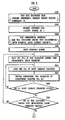
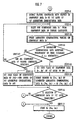
- the computer 13 reads basic requirement items, which are required for the processing means 16 to perform processes such as a combinatorial trial calculation, etc., as described later on, into the processing means 16 in STEP1.
- the requirement items represent standard requirements required as a laminated ring 3 for use in a CVT belt 1, a requirement for selecting a ring component 4 to be unloaded (hereinafter referred to as an unloaded product selecting requirement), etc.
- These requirement items are supplied to the computer 13 in advance, and saved in a hard disk or the like, not shown.
- the standard requirements required as a laminated ring 3 include a requirement that prescribes the difference between the radii of ring components 4 of two adjacent layers of a laminated ring 3 (hereinafter referred to as an inter-ring clearance ⁇ r), a requirement that prescribes the sum of inter-ring clearances ⁇ r for all layers (hereinafter referred to as a total clearance ⁇ r), and a requirement that prescribes the absolute value of the difference between the circumferential lengths of ring components 4 1 of the first layers (innermost layers) of a pair of first and second laminated rings 3a, 3b (see FIG. 1) used to make a CVT belt 1 (hereinafter referred to as a first layer circumferential length difference ⁇ L1).
- the inter-ring clearance ⁇ r includes N-1 inter-ring clearances which are, specifically, an inter-ring clearance between first and second layers, an inter-ring clearance between second and third layers, ⁇ , and an inter-ring clearance between (N-1)th and Nth layers.
- N-1 inter-ring clearances which are, specifically, an inter-ring clearance between first and second layers, an inter-ring clearance between second and third layers, ⁇ , and an inter-ring clearance between (N-1)th and Nth layers.
- the requirement (A - ⁇ ⁇ ⁇ r ⁇ A + ⁇ ) which prescribes the inter-ring clearance ⁇ r between any adjacent layers is the same.
- the inter-ring clearance ⁇ r represents the difference between the radius (inside radius) of the inner circumferential surface of the outer one of two adjacent ring components 4 and the radius (outside radius) of the outer circumferential surface of the inner one of two adjacent ring components 4. If the thicknesses of the ring components 4 of the respective layers are constant, then the difference between the inner radii of two adjacent ring components 4, or the difference between the outer radii of two adjacent ring components 4, or the remainder produced when the design value (constant) of the thickness of the ring component 4 of each layer is subtracted from one of these differences.
- the computer 13 organizes the component data stored by the component data managing means 15, i.e., organizes the component data of the ring components 4 that are currently stored by the component storage facility 10, in STEP2. Specifically, the computer 13 sorts the component data by classifying the component data by layer or arranging the component data of each layer in the order of the magnitudes of circumferential length data.
- the computer 13 reads a plurality of combinatorial conditions for combining component data of respective layers into the processing means 16 in STEP3.
- the computer 13 reads a plurality of combinatorial conditions for combining component data of respective layers into the processing means 16 in STEP3.
- a basic concept of combinatorial trial calculations that are performed by the processing means 16 will first be described below.
- lamination combinatorial data (corresponding to the set ring components (4)) is generated which represents a combination of the component data of all the layers (N layers) of a laminated ring 3.
- the above process of generating lamination combinatorial data is repeated to generate a plurality of lamination combinatorial data.
- the component data of the layers included in the generated lamination combinatorial data are excluded from the component data that can be selected in subsequent processes of generating new lamination combinatorial data.
- the trial calculation starting point selecting condition is basically determined in order to select component data of the first layer in a sequence from those having circumferential length value data closer to a particular circumferential length value.
- the particular circumferential length value is used as a variably set parameter, and a plurality of kinds of trial calculation starting point selecting conditions are set by setting the parameter (hereinafter referred to as a trial calculation starting point circumferential length parameter) to a plurality of kinds of values.
- a plurality of kinds (e.g., 10 kinds) of values that can be used as values of the trial calculation starting point circumferential length parameter, or set data that prescribe those values are determined in advance, and stored in the hard disk or the like of the computer 13.
- the above particular target value for the inter-ring clearance ⁇ r is used as a variably set parameter, and a plurality of kinds of interlayer selecting conditions are set by setting the parameter (hereinafter referred to as a target clearance parameter) to a plurality of kinds of values.
- the computer 13 reads the values of the plural kinds of trial calculation starting point circumferential length parameter and the values of the plural kinds of target clearance parameter as parameters that prescribe a plurality of combinatorial conditions into the processing means 16.
- the number of kinds of values of the trial calculation starting point circumferential length parameter is represented by X and those values are represented by P 1 , P 2 , ⁇ , P X .
- the number of kinds of values of the target clearance parameter is represented by Y, and those values are represented by Q 1 , Q 2 , ⁇ , Q Y .
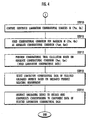
- the computer 13 performs a process of counting, in advance, the number of component data among the component data of each of the first through (N-1)th layers stored by the component data managing means 15, which can be combined with component data of a next adjacent layer (one of the second through Nth layers), or more specifically the number of component data whose inter-ring clearance ⁇ r satisfies the standard requirement (A - ⁇ ⁇ ⁇ r ⁇ A + ⁇ ), i.e., a combinable number counting process, in STEP4.
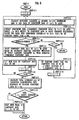
- the combinable number counting process is carried out according to a flowchart shown in FIG. 5.
- the computer 13 selects one (ith layer) of first through (N-1)th layers in STEP4-1. Then, the computer 13 select one component data Di from the component data of the selected ith layer in STEP4-2.
- the computer 13 calculates the inter-ring clearances ⁇ r between the component data Di of the selected ith layer and each of the component data of an (i+1)th layer that is adjacent to the ith layer in STEP4-3.
- the computer 13 then counts the number of component data of the (i+1)th layer whose inter-ring clearance ⁇ r satisfies the standard requirement (A - ⁇ ⁇ ⁇ r ⁇ A + ⁇ ), as a combinable number relative to the component data Di of the ith layer in STEP4-4.
- the inter-ring clearance ⁇ r is calculated from the circumferential length value data of the component data Di and the circumferential length value data of each component data of the (i+1)th layer (this calculation is also applicable below).
- the counter number is stored by association with the component data Di of the ith layer into the component data managing means 15.
- the computer 13 decides whether all the component data of the presently selected ith layer have been selected in STEP4-2 or not in STEP4-5. If there are any unselected component data of the ith layer, then the processing from STEP4-2 is repeated. In this case, the computer 13 selects one of the unselected component data from the component data of the ith layer in STEP4-2.
- the computer 13 may selects the component data of the ith layer one by one in STEP4-2 by, for example, selecting the component data of the ith layer according to the sequence in which the component data are stored by the component data managing means 15 with respect to the ith layer, or selecting the component data of the ith layer according to the sequence of the magnitudes of the circumferential value data included in the component data of the ith layer.
- the computer 13 decides whether all the first through (N-1)th layers have been selected in STEP4-1 or not in STEP4-6. If there are any unselected layers, then the computer 13 repeats the processing from STEP4-1. In this case, the computer 13 selects one of the unselected layers from the component data from the first through (N-1)th layers in STEP4-1.
- the number of component data whose inter-ring clearance ⁇ r satisfies the standard requirement, among all the component data of each of the first through (N-1)th layers stored by the component data managing means 15, is counted in advance as a combinable number.
- the combinable number thus counted is stored by association with the component data of each of the first through (N-1)th layers into the component data managing means 15.
- the component data of the Nth layer are excluded from the processing in STEP4 because they are finally selected and combined in the combinatorial trial calculations whose brief concept has been described above.
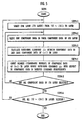
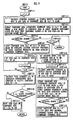
- the combinatorial trial calculation is carried out according to flowcharts shown in FIGS. 6 through 8.
- the trial calculation starting point selecting condition prescribed by the trial calculation starting point circumferential length parameter Pm that is being currently set basically prescribes a sequence in which to select the component data of the first layer as by selecting the component data D 1 of the first layer, one by one, in a sequence from those having circumferential length value data closer to the value of the parameter Pm.
- the processing in STEP7-1 is repeatedly carried out during the combinatorial trial calculation according to one kind of combinatorial condition (Pm, Qn).
- one component data D 1 of the first layer is selected according to the selecting sequence that is determined depending on the trial calculation starting point circumferential length parameter Pm as described above each time the processing in STEP7-1 is carried out.
- the used flag is set to ON as described later on during the combinatorial trial calculation with respect to the component data of each of the first through Nth layers.
- the used flag is initialized to OFF with respect to all the component data of all the layers.
- one of the component data is selected according to the sequence the component data are stored by the component data managing means 15, or one of the component data is selected in view of the production date data or the lot number data included in the component data.
- the processing means 16 calculates the absolute values of the differences between the circumferential length value data of the component data D 1 selected in STEP7-1 and the circumferential length value data of all the other component data of the first layer, i.e., the first layer circumferential length differences ⁇ L1, in STEP7-2.
- the processing means 16 counts the number (hereinafter referred to as a pairing candidate number) of component data of the first layer, as pairing candidates for the component data D 1 , whose first layer circumferential length differences ⁇ L1 satisfy the standard requirement 0 ⁇ ⁇ L1 ⁇ C in STEP7-3.
- the pairing candidate number thus counted represents the number of other component data of the first layer which can possibly be paired with the component data D 1 of the first layer selected in STEP7-1, with respect to the pair of laminated rings 3 that make up the CVT belt 1.
- the processing means 16 decides whether the pairing candidate number counted in STEP7-3 is "0" or not in STEP7-4. If the pairing candidate number is "0", i.e., if it is impossible to generate lamination combinatorial data to be paired with generated lamination combinatorial data including the component data D 1 , then control returns to STEP7-1 to select new component data D 1 of the first layer. This is because in the present embodiment two laminated rings 3 are assembled as one set since an individual CVT belt 1 needs a pair of laminated rings 3.
- the processing means 16 performs a lamination combinatorial process to combine the component data of the second through Nth layers, one by one, with the component data D 1 of the first layer, thereby generating lamination combinatorial data in STEP7-5.
- the selection inhibit flag is set to ON in STEP7-5-13, described later on, if there is no combinable component data with respect to each of the component data of the second through (N-1)th layers. As with the used flag, the selection inhibit flag is initialized to OFF with respect to all the component data of the second through (N-1)th layers when the processing in STEP7 is started.
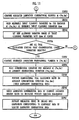
- the processing means 16 decides whether the number of combinable component data extracted in STEP7-5-3 is "0" or not in STEP7-5-4.
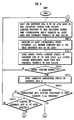
- the processing means 16 selects one component data Di+1 to be combined with the already selected component data D 1 - Di of the first through ith layers based on the interlayer selecting condition prescribed by the present target clearance parameter Qn set in STEP6, from the extracted combinable component data of the (i+1)th layer in STEP7-5-5. That is, the component data Di+1 whose ring clearance ⁇ r calculated in STEP7-5-2 with respect to the component data Di of the ith layer is closest to the value of the presently set target clearance parameter Qn is selected from the extracted combinable component data.
- the processing means 16 sets the used flag of the newly selected component data Di+1 of the (i+1)th layer to ON in STEP7-5-6.
- the processing means 16 increments the value of the layer number i from the present value by "1" in STEP7-5-7, and then decides whether or not the incremented value of the layer number i is equal to or greater than the number N of the layers of a laminated ring 3 in STEP7-5-8. If i ⁇ N, then the processing from STEP7-5-2 is repeated. If i ⁇ N, i.e., if the component data of all the layers ranging from the first through Nth layers have been selected one by one and lamination combinatorial data composed of the component data D 1 - D N of each of those layers has been generated, then the processing means 16 calculates a total clearance ⁇ r relative to the generated lamination combinatorial data in STEP7-5-9.
- the processing means 16 decides whether the calculated total clearance ⁇ r satisfies the standard requirement (0 ⁇ ⁇ r ⁇ B) or not in STEP7-5-10. If the calculated total clearance ⁇ r satisfies the standard requirement (0 ⁇ ⁇ r ⁇ B), then the processing means 16 finishes the lamination combinatorial process in STEP7-5. Control then returns to the processing sequence shown in FIG. 6.
- the processing means 16 If the calculated total clearance ⁇ r does not satisfy the standard requirement (0 ⁇ ⁇ r ⁇ B) in STEP7-5-10, then the processing means 16 resets the used flag, which has been set to ON with respect to each of the component data of the second through Nth layers in the lamination combinatorial data in STEP7-5-6, to OFF in STEP7-5-11. Control then returns to the processing sequence shown in FIG. 6.
- the above processing sequence is a basic sequence of the lamination combinatorial process.
- the component data D 2 - D N of each of the second through Nth layers are successively selected one by one with respect to the component data D 1 of the first layer which has been selected and determined in the processing ranging from STEP7-1 through STEP7-4, and they are combined into one lamination combinatorial data.
- the processing means 16 performs the following processing sequence:
- the processing means 16 sets the selection inhibit flag relative to the presently selected component data Di of the ith layer to ON in STEP7-5-13. At this time, the selection of the component data Di of the ith layer is canceled, and the component data D 1 through Di-1 of the first through (i-1)th layers are selected.
- the processing means 16 decrements the value of the layer number i by "1" in step S7-5-14, after which control goes back to the processing in STEP7-5-2.
- the component data Since the selection inhibit flag for the previously selected component data of the ith layer is set to ON in STEP7-5-13, the component data will not subsequently be extracted as combinable component data that can be combined with the component data of the (i-1)th layer, and will not subsequently be extracted as component data making up lamination combinatorial data in STEP7-5-5.
- the component data D 1 through D 3 of the first through third layers for example, being selected, if the number of combinable component data of the fourth layer which have been extracted in STEP7-5-3 with respect to the component data D 3 of the third layer is "0", then combinable component data of the third layer are extracted again with respect to the already selected component data D 2 of the second layer. Basically, then, the component data of the third layer which make up lamination combinatorial data are selected again in STEP7-5-5 from the newly extracted combinable component data (which do not include the previously selected component data D 3 of the third layer).
- setting the selection inhibit flag for the previously selected component data Di (component data D 3 of the third layer in the above example) of the ith layer to ON may possibly cause the number of combinable component data extracted again in STEP7-5-3 to be "0".
- control goes through the decision process in STEP7-5-4 to the processing in STEP 7-5-13 and STEP7-5-14 thereby to trace back the layer number i for selecting component data.
- the processing means 16 decides whether lamination combinatorial data satisfying the standard requirement of the total clearance ⁇ r is generated or not in STEP7-6.
- the processing means 16 confirms the generation of lamination combinatorial data in STEP7-6, and performs a process of generating lamination combinatorial data to be paired with the above lamination combinatorial data from STEP7-8 shown in FIG. 7.
- the lamination combinatorial data generated in STEP7-5 is associated with the first laminated ring 3a for the CVT belt 1 and referred to as first lamination combinatorial data, and lamination combinatorial data generated as described below is paired with the first lamination combinatorial data and referred to as second lamination combinatorial data (corresponding to the second laminated ring 3b).
- the processing means 16 After having generated the first lamination combinatorial data in STEP7-5, the processing means 16 extracts the pairing candidates, which have been counted in STEP7-3, with respect to the component data D 1 of the first layer of the first lamination combinatorial data, from the component data of the first layer in STEP7-8.
- the processing means 16 selects one component data D 1 ' from the component data of the pairing candidates of the first layer in STEP7-9. While the selected component data D 1 ' may be any arbitrary component data, one component data having circumferential length value data closer to the value of the circumferential length value data of the component data D 1 ' of the first layer of the first lamination combinatorial data, for example, is preferentially selected. At this time, it has been confirmed in STEP7-4 that the number of pairing candidates is at least one.
- the processing means 16 decides, in exactly the same manner as with the decision process in STEP7-6, whether lamination combinatorial data (second lamination combinatorial data) satisfying the standard requirement of the total clearance ⁇ r (0 ⁇ ⁇ r ⁇ B) is generated according to the lamination combinatorial process in STEP7-10 or not in STEP7-11.
- the processing means 16 decides whether all the component data of the pairing candidates extracted in STEP7-8 have been selected in STEP7-9 or not in STEP7-12. If there are any unselected pairing candidates, then control goes back to STEP7-9 in which the processing means 16 selects one new component data D 1 ' from the component data of the pairing candidates and then to STEP7-10 in which the processing means 16 performs the lamination combinatorial process in.
- component data D 1 ' are selected from the component data of the pairing candidates in a sequence from those having circumferential length value data closer to the circumferential length value data of the component data D 1 ' of the first layer of the first lamination combinatorial data, for example.
- the processing means 16 If the selection of all the pairing candidates in STEP7-9 is completed as confirmed in STEP7-12 (in this case, any second lamination combinatorial data satisfying the standard requirement of the total clearance ⁇ r is not generated), then the processing means 16 resets the used flags (which have been set to ON in STEP7-5) relative to the component data D 2 - D N of each of the second through Nth layers of the first lamination combinatorial data to OFF in STEP7-13, after which control goes to STEP7-16 described later on.
- the processing means 16 sets used flags relative to the component data D 1 of the first layer of the first lamination combinatorial data and the component data D 1 ' of the first layer of the second lamination combinatorial data to ON in STEP7-14. Thereafter, the processing means 16 counts the number M (Pm, Qn) of lamination combinatorial data generated up to present with respect to one kind of combinatorial condition (Pm, Qn) set in STEP 5 and STEP6 (see FIG. 3) in STEP7-15.
- the counting process is carried out by adding "2" which is the number of lamination combinatorial data successively generated in STEP7-5 and STEP7-10 to the present value of the number M (Pm, Qn) (hereinafter referred to as a generated lamination combinatorial number M (Pm, Qn)).
- the generated lamination combinatorial number M (Pm, Qn) has been initialized to "0" at the time of starting the processing in STEP7, for example.
- the lamination combinatorial data are basically generated as a pair of first and second lamination combinatorial data. If first lamination combinatorial data satisfying the standard requirement of the total clearance ⁇ r is generated and second lamination combinatorial data to be paired with the first lamination combinatorial data is not generated, then the generated lamination combinatorial number M (Pm, Qn) is not counted up. According to the present embodiment, therefore, the generated lamination combinatorial number M (Pm, Qn) is an even number, and a value produced by dividing the generated lamination combinatorial number M (Pm, Qn) by "2" represents the number of pairs of generated first and second lamination combinatorial data.
- the processing means 16 stores the finally obtained value of the generated lamination combinatorial number M (Pm, Qn) in the component data managing means 15 in association with the presently set combinatorial condition (Pm, Qn) in STEP7-17.
- the processing means 16 decides whether all target clearance parameters Q 1 through Q Y read in STEP3 have been selected in STEP6 or not in STEP8.
- the processing means 16 selects the unselected target clearance parameter Qn in STEP6 (at this time, the value of the trial calculation starting point circumferential length parameter Pm remains as it is), and the combinatorial trial calculation in STEP7 is carried out as described above based on a combinatorial condition (Pm, Qn) that is prescribed by the newly selected target clearance parameter Qn and the presently selected trial calculation starting point circumferential length parameter Pm.
- the processing means 16 selects the target clearance parameters Q 1 through Q Y , one by one, in STEP6 by sequentially selecting the target clearance parameters Q 1 through Q Y in the order of their magnitudes.
- the processing means 16 decides whether all trial calculation starting point circumferential length parameters P 1 through P X read in STEP3 have been selected in STEP5 or not in STEP9. If there is an unselected trial calculation starting point circumferential length parameter, then the processing means 16 selects the unselected trial calculation starting point circumferential length parameter Pm in STEP5. After one target clearance parameter Qn is selected, the combinatorial trial calculation in STEP7 is carried out as described above based on a combinatorial condition (Pm, Qn) that is prescribed by the trial calculation starting point circumferential length parameter Pm and the target clearance parameter Qn which have thus been selected.
- the processing means 16 selects the trial calculation starting point circumferential length parameters Pm, one by one, in STEP5 by sequentially selecting the trial calculation starting point circumferential length parameters P 1 through P X in the order of their magnitudes, as with STEP5.
- the combinatorial trial calculation in STEP7 is carried out for each of (X ⁇ Y) combinatorial conditions (Pm, Qn) that are prescribed by the X trial calculation starting point circumferential length parameters P 1 - P X and the Y target clearance parameters Q 1 - Q Y that read in STEP3 to generate lamination combinatorial data that satisfy the standard requirement of the total clearance ⁇ r and determine the number of generated lamination combinatorial data, i.e., the generated lamination combinatorial number M (Pm, Qn).
- the processing means 16 compares generated lamination combinatorial numbers M (Pm, Qn) corresponding to various combinatorial conditions (Pm, Qn) with each other in STEP10 and sets a combinatorial condition (Pm, Qn) whose generated lamination combinatorial number M (Pm, Qn) is maximum as an adequate combinatorial condition (Pm0, Qn0) in STEP11, as shown in the flowchart of FIG. 4.
- a combinatorial condition (Pm, Qn) having a trial calculation starting point circumferential length parameter Pm closer to the central value of a variable range of trial calculation starting point circumferential length parameters Pm and a target clearance parameter Qn closer to the central value of a variable range of target clearance parameters Qn is preferentially set as an adequate combinatorial condition (Pm0, Qn0).
- the processing in STEP12 may be dispensed with if the generated lamination combinatorial data is stored by association with the combinatorial condition (Pm, Qn) for each of various combinatorial conditions (Pm, Qn) in STEP7.
- the processing means 16 selects lamination combinatorial data of the number (hereinafter referred to as a required unloaded number) of laminated rings 3 that are required to be assembled, from the lamination combinatorial data corresponding to the adequate combinatorial condition (Pm0, Qn0) which has been stored as described above in STEP13.
- the required unloaded number is a numerical value in a unit of two (even number).
- the lamination combinatorial data is selected based on the unloaded product selecting requirement read in STEP1.
- the unloaded product selecting requirement serves to prescribe a priority sequence for selecting lamination combinatorial data.
- items that prescribe the priority sequence include a variation of the inter-ring clearance ⁇ r between adjacent layers in each of the lamination combinatorial data (e.g., a standard deviation of ⁇ r), a total clearance ⁇ r in each of the lamination combinatorial data, production dates of the ring components 4 of the first through Nth layers corresponding to each of the lamination combinatorial data, lot numbers of the ring components 4, etc.
- the unloaded product selecting requirement read in STEP1 is determined in order to select, with priority, lamination combinatorial data whose variation of the inter-ring clearance ⁇ r is smaller, or select, with priority, lamination combinatorial data whose total clearance ⁇ r is closer to a predetermined value, or select, with priority, lamination combinatorial data whose production date data include component data corresponding to the oldest ring component 4, or select, with priority, lamination combinatorial data including component data whose lot number data are in agreement with a predetermined value.
- lamination combinatorial data of the required unloaded number are selected according to the unloaded product selecting requirement thus determined. For example, if the unloaded product selecting requirement is determined in order to select, with priority, lamination combinatorial data whose variation of the inter-ring clearance ⁇ r is smaller, then both first and second lamination combinatorial data that are paired with each other are selected as many as the required unloaded number in a sequence from those having smaller variations of the inter-ring clearance ⁇ r between those layers, from the lamination combinatorial data generated under the adequate combinatorial condition (Pm0, Qn0).
- the computer 13 instructs the unloading device 12 to remove ring components 4 1 - 4 N corresponding to the component data contained in the selected lamination combinatorial data from the component storage facility 10 and supply the removed ring components 4 1 - 4 N to the laminating device 14 in STEP14.
- the unloading device 12 thus instructed removes a set of ring components 4 1 - 4 N corresponding to the component data of the first through Nth layers that make up the selected lamination combinatorial data (more specifically, the pair of first and second lamination combinatorial data), i.e., the set ring components (4), for each data from the component storage facility 10, and supplies the removed ring components 4 1 - 4 N to the laminating device 14.
- the ring components 4 1 - 4 N supplied to the laminating device 14 are laminated into the laminated ring 3 by the laminating device 14.
- combinatorial trial calculations are performed based on the respective plural (X ⁇ Y) combinatorial conditions, and a combinatorial condition for maximizing the generated lamination combinatorial number M (Pm, Qn) is obtained as an. adequate combinatorial condition (Pm0, Qn0).
- a combinatorial condition is found which is capable of assembling as many laminated rings 3 as possible from the ring components 4 stored by the component storage facility 10.
- a combinatorial trial calculation is carried out based on a combinatorial condition that is determined by each of a plurality of allowable target clearance parameters in a latest allowable variation range set immediately before the selection and a trial calculation starting point circumferential length parameter that is being selected.
- the allowable target clearance parameters for the trial calculation starting point circumferential length parameter in the first rank are all the target clearance parameters Q 1 - Q Y read in STEP24.
- FIG. 13 shows, by way of example, the manner in which allowable variation ranges of target clearance parameters are successively set in association with the respective trial calculation starting point circumferential length parameters P 1 - P X .
- the target clearance parameters Q 1 - Q Y read in STEP24 are of such magnitudes that are related to each other by Q 1 ⁇ Q 2 ⁇ ⁇ Q Y and the difference
- between adjacent target clearance parameters Qk+1, Qk (k 1, 2, ⁇ , Y-1) and that the widths of the allowable variation ranges of the target clearance parameters corresponding to the trial calculation starting point circumferential length parameters P 2 - P X other than the trial calculation starting point circumferential length parameter P 1 are constant.
- the allowable variation ranges target clearance parameters with respect to the trial calculation starting point circumferential length parameters P 4 , P 5 , ⁇ , P X are successively set, and combinatorial trial calculations are carried out under a plurality of combinatorial conditions that are determined by target clearance parameters belonging to the allowable variation ranges and corresponding trial calculation starting point circumferential length parameters.
- the apparatus offers the same advantages as those according to the first embodiment, and also offers the following advantages:
- the trial calculation starting point circumferential length parameters P 1 - P X that prescribe the trial calculation starting point selecting condition are set in a coarse/dense pattern depending on the frequency distribution of the circumferential length values of the ring components of the first layer that are stored by the product storage facility 10 as shown in FIG. 12.
- a target clearance parameter that maximizes the generated lamination combinatorial number when a combinatorial trial calculation is performed in combination with a trial calculation starting point circumferential length parameter Pj+1 (whose value is close to Pj) selected in the (j+1)th rank is highly likely to have a value close to Qk. Therefore, by setting an allowable variable range of target clearance parameters according to the present invention, the number of target clearance parameters selected to change the combinatorial condition can be limited to a necessary number. As a result, the time required for a combinatorial trial calculation can be shortened to allow the combinatorial trial calculation to be performed efficiently.
- the computer 13 refers to resultant log data obtained when a combinatorial trial calculation was performed, as described later on, upon a preceding unloading request, and sets the width Dp of an allowable variation range of trial calculation starting point circumferential length parameters and the width Dq of an allowable variation range of target clearance parameters based on the resultant log data in STEP54.
- the resultant log data are data representative of the relationship between each of a plurality of combinatorial conditions (Pm, Qn) prescribed by the plural values of trial calculation starting point circumferential length parameters and the plural values of target clearance parameters and the number of lamination combinatorial data generated under each of the combinatorial conditions, i.e., the generated lamination combinatorial number M (Pm, Qn), and were obtained when the process according to the present invention was carried out upon a preceding unloading request.
- the width Dp of an allowable variation range of trial calculation starting point circumferential length parameters and the width Dq of an allowable variation range of target clearance parameters are set, using a predetermined data table or the like, from the magnitude of the maximum value of the generated lamination combinatorial number M (Pm, Qn) in the resultant log data, i.e., the magnitude of the generated lamination combinatorial number M (Pm, Qn) relative to the adequate combinatorial condition (Pm0, Qn0) obtained upon a preceding unloading request.
- the processing means 16 Each time the processing means 16 successively selects a target clearance parameter, the processing means 16 performs the combinatorial trial calculation as described above in the first embodiment based on the combinatorial condition (Pm, Qn) determined by the selected allowable target clearance parameter Qn and the previously selected allowable trial calculation starting point circumferential length parameter Pm.
- processing means 16 If the processing means 16 has selected all the allowable target clearance parameters extracted in STEP61 in STEP64 (YES), then the processing means 16 performs the same processing as in STEP 33 and STEP34 according to the third embodiment in STEP65 and STEP66 as shown in FIG. 15.
- the processing means 16 stores the allowable target clearance parameter which maximizes the generated lamination combinatorial number M (Pm, Qn) determined in STEP63 which corresponds to various combinatorial conditions (Pm, Qn) that are determined by one trial calculation starting point circumferential length parameter Pm selected in STEP60 and each of the allowable target clearance parameters belonging to the allowable variation range presently set with respect to the target clearance parameters, as a reference target clearance parameter Qnm corresponding to the presently selected trial calculation starting point circumferential length parameter Pm.
- the processing means 16 sets a range which has the reference target clearance parameter Qnm at its center and the width Dq set in STEP54, i.e., a range indicated by Qnm ⁇ (Dq/2), as a new allowable variable range of target clearance parameters at the time an allowable trial calculation starting point circumferential length parameter in a next rank is selected in STEP67.
- the processing means 16 decides whether all the allowable trial calculation starting point circumferential length parameters extracted in STEP58 have been selected in STEP60 or not in STEP68. If there is an unselected allowable trial calculation starting point circumferential length parameter, then the processing means 16 selects the unselected trial calculation starting point circumferential length parameter according to the selecting sequence in STEP60. Then, the processing in STEP61 - STEP68 is carried out in the same manner as described above.
- the processing means 16 carries out the same processing as in STEP10 through STEP14 according to the first embodiment in STEP69 through STEP73. Specifically, a combinatorial condition (Pm, Qn) which maximizes the generated lamination combinatorial number is set as an adequate combinatorial condition (Pm, Qn), and as many lamination combinatorial data as the required unloaded number are selected from lamination combinatorial data generated under the adequate combinatorial condition (Pm, Qn).
- an allowable variation range of trial calculation starting point circumferential length parameters is determined based on resultant log date upon a preceding unloading request.
- a required unloaded number upon a preceding unloading request is smaller than the total number of ring components stored by the component storage facility 10, then it is highly possible that the generated lamination combinatorial number is maximum when a trial calculation starting point circumferential length parameter in the vicinity of the value of the trial calculation starting point circumferential length parameter Pm0 relative to the adequate combinatorial condition (Pm0, Qn0) found in the combinatorial trial calculation upon the preceding unloading request is selected for the combinatorial trial calculation.
- target clearance parameters are varied with respect to each of the trial calculation starting point circumferential length parameters in combinatorial trial calculations.
- an allowable variation range of target clearance parameters may be set based on the preceding resultant log data, and combinatorial trial calculations may be performed while changing trial calculation starting point circumferential length parameters relative to each of target clearance parameters belonging to the allowable variation range.
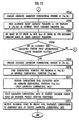
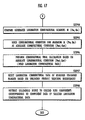
- a fifth embodiment of the present invention will be described below with reference to FIGS. 16 and 17.
- the apparatus according to the fifth embodiment is identical to the apparatus according to the first embodiment, but only the processing carried out by the processing means 16 of the computer 13 according to the fifth embodiment is different from that according to the first embodiment. Therefore, those structural details according to the fifth embodiment which are identical to those of the first embodiment are denoted by identical reference characters, and will not be described in detail below.
- the computer 13 carries out the same processing as in STEP1 and STEP2 (see FIG. 3) according to the first embodiment in STEP81 and STEP82 to read basic requirement items (the standard requirements of an inter-ring clearance ⁇ r, a total clearance ⁇ r, and a first layer circumferential length difference ⁇ L1), an unloaded product selecting requirement, etc. into the processing means 16, and organizes the component data stored by the component data managing means 15.
- basic requirement items the standard requirements of an inter-ring clearance ⁇ r, a total clearance ⁇ r, and a first layer circumferential length difference ⁇ L1
- the computer 13 reads a plurality of (X) trial calculation starting point circumferential length parameters P 1 - P X stored in the hard disk or the like as values which can be taken by trial calculation starting point circumferential length parameters prescribing a trial calculation starting point selecting condition, and a plurality of (Y) target clearance parameters Q 1 - Q Y stored in the hard disk or the like as values which can be taken by target clearance parameters prescribing an interlayer selecting condition, into the processing means 16 in STEP83.
- the computer 13 refers to resultant log data obtained when a combinatorial trial calculation was performed, as described later on, upon a preceding unloading request, and sets an allowable variation range of trial calculation starting point circumferential length parameters based on the resultant log data in STEP84.
- combinatorial trial calculations have been performed according to the first embodiment upon a preceding unloading request. Specifically, upon a preceding unloading request, combinatorial trial calculations have been carried out under X ⁇ Y combinatorial conditions using all X trial calculation starting point circumferential length parameters P 1 - P X and Y target clearance parameters Q 1 - Q Y .
- an allowable variation range of trial calculation starting point circumferential length parameters is set based on the resultant log data as an allowable variation range having a predetermined width and also having, at its center, the value of a trial calculation starting point circumferential length parameter which maximizes the generated lamination combinatorial number M (Pm, Qn) in the resultant log data, for example.
- the allowable variation range of trial calculation starting point circumferential length parameters is set to a range expressed by Pk ⁇ (Dp/2).
- the processing means 16 performs the same processing (combinable number counting process) as in STEP4 (see FIGS. 3 and 5) according to the first embodiment in STEP85 to count the number (combinable number) of component data of adjacent layers (second through Nth layers) that can be combined with the component data of the first through (N-1)th layers.
- the processing means 16 selects one allowable trial calculation starting point circumferential length parameter (Pm) from the allowable trial calculation starting point circumferential length parameters extracted in STEP86 in STEP87. While the processing means 16 may select the allowable trial calculation starting point circumferential length parameters in any sequence, it selects them in the order of the magnitudes of their values, for example.
- Pm allowable trial calculation starting point circumferential length parameter
- the processing means 16 sets an allowable variation range of target clearance parameters corresponding to the allowable trial calculation starting point circumferential length parameter Pm selected in STE87 based on the resultant log data used in STEP84 in STEP88. More specifically, a range having a predetermined width and also having, at its center, the value of the target clearance parameter relative to the maximum generated lamination combinatorial number of generated lamination combinatorial numbers M (Pm, Q 1 ), M (Pm, Q 2 ), ⁇ , M (Pm, Q Y ) corresponding to the presently selected allowable trial calculation starting point circumferential length parameter Pm in the resultant log data, is selected as an allowable variation range of target clearance parameters corresponding to the presently selected allowable trial calculation starting point circumferential length parameter Pm.
- the processing means 16 decides whether all the allowable trial calculation starting point circumferential length parameters extracted in STEP86 have been selected in STEP87 or not in STEP93. If there is an unselected allowable trial calculation starting point circumferential length parameter, then the processing means 16 selects the unselected trial calculation starting point circumferential length parameter in STEP87. Then, the processing in STEP88 - STEP93 is carried out in the same manner as described above.
- the processing means 16 carries out the same processing as in STEP10 through STEP14 according to the first embodiment in STEP94 through STEP98. Specifically, a combinatorial condition (Pm, Qn) which maximizes the generated lamination combinatorial number is set as an adequate combinatorial condition (Pm0, Qn0), and as many lamination combinatorial data as the required unloaded number are selected from lamination combinatorial data generated under the adequate combinatorial condition (Pm0, Qn0).
- Set ring components (4) corresponding to the selected lamination combinatorial data are removed from the component storage facility 10 by the unloading device 12 that is instructed by the computer 13, supplied to the laminating device 14, and assembled into a laminated ring 3 by the laminating device 14.
- the apparatus according to the present embodiment offers the same advantages as those according to the first embodiment, and also offers the same advantages as those according to the fourth embodiment.
- allowable variation ranges of trial calculation starting point circumferential length parameters and target clearance parameters are determined based on resultant log date upon a preceding unloading request.
- the widths of the allowable variation ranges are set depending on the maximum value of the generated lamination combinatorial numbers in the resultant log data.
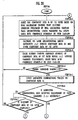
- FIGS. 18 through 22 A sixth embodiment of the present invention will be described below with reference to FIGS. 18 through 22.
- the apparatus according to the sixth embodiment is identical to the apparatus according to the first embodiment, but only the processing carried out by the processing means 16 of the computer 13 according to the sixth embodiment is different from that according to the first embodiment. Therefore, those structural details according to the sixth embodiment which are identical to those of the first embodiment are denoted by identical reference characters, and will not be described in detail below.
- the computer 13 executes an operation sequence shown in the flowcharts of FIGS. 18 and 19.
- the computer 13 carries out the same processing as in STEP1 and STEP2 (see FIG. 3) according to the first embodiment in STEP101 and STEP102 to read basic requirement items (the standard requirements of an inter-ring clearance ⁇ r, a total clearance ⁇ r, and a first layer circumferential length difference ⁇ L1), an unloaded product selecting requirement, etc. into the processing means 16, and organizes the component data stored by the component data managing means 15.
- basic requirement items the standard requirements of an inter-ring clearance ⁇ r, a total clearance ⁇ r, and a first layer circumferential length difference ⁇ L1
- the computer 13 reads a plurality of combinatorial conditions for combining component data of respective layers into the processing means 16 in STEP103.
- combinatorial trial calculations are performed under combinatorial conditions comprising a trial calculation starting point selecting condition and an interlayer selecting condition, as with the first embodiment.
- the trial calculation starting point selecting condition is a combinatorial condition variably set according to trial calculation starting point circumferential length parameters as with the first embodiment.
- the computer 13 reads a plurality of (X) trial calculation starting point circumferential length parameters P 1 - P X stored in the hard disk or the like as values that can be taken by trial calculation starting point circumferential length parameters prescribing the trial calculation starting point selecting condition, into the processing means 16.
- the processing means 16 performs the same processing (combinable number counting process) as in STEP4 (see FIGS. 3 and 5) according to the first embodiment in STEP104 to count the number (combinable number) of component data of adjacent layers (second through Nth layers) that can be combined with the component data of the first through (N-1)th layers.
- the processing means 16 then effects a combinatorial trial calculation on the component data stored by the component data managing means 15 based on the combinatorial condition Pm that is determined from the selected trial calculation starting point circumferential length parameter Pm in STEP106.
- the combinatorial trial calculation is carried out according to flowcharts shown in FIGS. 20 and 21.
- Basic process of the combinatorial trial calculation is the same as the process of the combinatorial trial calculation (see FIGS. 6 and 7) according to the first embodiment except that only a portion of the lamination combinatorial process in STEP106-5 shown in FIG. 20 and a portion of the lamination combinatorial process STEP106-10 shown in FIG. 21 (which correspond respectively to STEP7-5 shown in FIG. 6 and STEP7-10 shown in FIG. 7) are different.
- Other processing details shown in FIGS. 20 and 21 (STEP106-1 through STEP106-4, STEP106-6 through STEP106-9, and STEP106-11 through STEP106-17) are identical to those according to the first embodiment.
- only the trial calculation starting point selecting condition is a variably set condition, and the number of generated lamination combinatorial data in STEP106-15 and STEP106-17 shown in FIG. 21 is represented by M (Pm).
- the processing means 16 extracts combinable component data of (i+1)th layer whose inter-ring clearances ⁇ r satisfy the standard requirement (A - ⁇ ⁇ ⁇ r ⁇ A + ⁇ ), which is the interlayer selecting condition in the present embodiment, with respect to the component data Di of the ith layer in STEP106-5-3, if the number of extracted of combinable component data is "1" in STEP106-5-4 (YES), then component data Di+1 with the greatest combinable number calculated in STEP104, of the extracted combinable component data, is selected as component data to be combined with the component data D 1 through Di of the first through ith layers in STEP106-5-5.
- the component data Di+1 whose inter-ring clearance ⁇ r with respect to the selected component data Di of the ith layer is closer to the central value A of the allowable range (A - ⁇ ⁇ ⁇ r ⁇ A + ⁇ ) is selected. If the number of combinable component data extracted in STEP106-5-3 is "1", then that extracted component data Di+1 is selected.
- the lamination combinatorial process in STEP106-5 shown in FIG. 20 is the same as the lamination combinatorial process according to the first embodiment except the processing in STEP106-5-5.
- the lamination combinatorial process in STEP106-10 shown in FIG. 21, i.e., the lamination combinatorial process on component data D 1 ' of the first layer selected in STEP106-9 (component data relative to the second lamination combinatorial data) is performed in exactly the same manner as the lamination combinatorial process in STEP106-5.
- the generated lamination combinatorial number M (Pm, Qn) corresponding to the combinatorial condition (Pm, Qn), i.e., the total number of lamination combinatorial data that can be generated based on the combinatorial condition (Pm), is determined.
- the processing means 16 decides whether all the trial calculation starting point circumferential length parameters P 1 - P X read in STEP103 have been selected in STEP105 or not in STEP107.
- the processing means 16 selects the unselected trial calculation starting point circumferential length parameter Pm in STEP105, and carries out the combinatorial trial calculation in STEP106 as described above based on a combinatorial condition (Pm) that is prescribed by the selected trial calculation starting point circumferential length parameter Pm.
- the processing means 16 selects the trial calculation starting point circumferential length parameters Pm, one by one, in STEP105 by sequentially selecting the trial calculation starting point circumferential length parameters P 1 - P X in the order of their magnitudes.
- the processing means 16 carries out the same processing as in STEP10 through STEP14 (see FIG. 4) according to the first embodiment in STEP108 through STEP112. Specifically, a combinatorial condition (Pm) which maximizes the generated lamination combinatorial number M (Pm) is set as an adequate combinatorial condition (Pm0), and as many lamination combinatorial data as the required unloaded number are selected from lamination combinatorial data generated under the adequate combinatorial condition (Pm0).
- Pm combinatorial condition which maximizes the generated lamination combinatorial number M
- Set ring components (4) corresponding to the selected lamination combinatorial data are removed from the component storage facility 10 by the unloading device 12 that is instructed by the computer 13, supplied to the laminating device 14, and assembled into a laminated ring 3 by the laminating device 14.
- interlayer selecting condition is a fixed condition
- combinatorial trial calculations are carried out based on a plurality of combinatorial conditions (trial calculation starting point selecting conditions) determined by the plural (X) trial calculation starting point circumferential length parameters P 1 - P X to obtain a combinatorial condition which maximizes the generated lamination combinatorial number M (Pm) is obtained as an adequate combinatorial condition (Pm0).
- a combinatorial condition is found which is capable of assembling as many laminated rings 3 as possible from the ring components 4 stored by the component storage facility 10.
- the mass-productivity of laminated rings 3 can be increased, and ring components 4 manufactured and loaded into the component storage facility 10 can be used efficiently (with a good yield) to assemble laminated rings 3.
- the process of counting a combinable number prior to a combinatorial trial calculation (STEP104 shown in FIG. 18) and the process of generating lamination combinatorial data to be paired (STEP106-9, STEP106-10 shown in FIG. 21) are performed in the same manner as with the first embodiment and other embodiments. Therefore, the present embodiment offers the same advantages as those of the first embodiment with respect to these processes.
- the lamination combinatorial process (STEP106-5 and STEP106-10 in FIGS.
- a seventh embodiment of the present invention will be described below with reference to FIG. 23.
- the apparatus according to the seventh embodiment is identical to the apparatus according to the sixth embodiment, but only a portion of the processing carried out by the processing means 16 of the computer 13 according to the seventh embodiment is different from that according to the first embodiment. Therefore, those structural details and processing details according to the seventh embodiment which are identical to those of the sixth embodiment are denoted by identical reference characters in identical figures, and will not be described in detail below.
- a portion of the lamination combinatorial process (STEP106-5 shown in FIG. 20 and STEP106-10 shown in FIG. 21) carried out in a combinatorial trial calculation that is performed under each combinatorial condition by the processing means 16 of the computer 13 is different from the lamination combinatorial process according to the sixth embodiment.
- FIG. 23 is a flowchart of details of the processing in STEP106-5 according to the present embodiment. In the present embodiment, only the processing in STEP106-5-5' corresponding to STEP106-5-5 according to the sixth embodiment is different from the first embodiment.
- the processing means 16 of the computer 13 selects one component data Di+1 whose combinable number calculated in STEP104 (see FIG. 18) is the smallest, as component data to be combined with the already selected component data D 1 through Di of the first through ith layers, from the combinable component data of the (i+1)th layer extracted in STEP106-5-3 (which satisfy the standard requirement of the inter-ring clearance ⁇ r as the interlayer selecting condition with respect to the selected component data Di of the first layer).
- the component data Di+1 whose inter-ring clearance ⁇ r with respect to the selected component data Di of the ith layer is closer to the central value A of the allowable range (A - ⁇ ⁇ ⁇ r ⁇ A + ⁇ ) is selected.
- STEP106-5-5' Other processing details than STEP106-5-5' are identical to those according to the sixth embodiment.
- the processing in STEP106-5 according to the present embodiment is also carried out in STEP106-10 shown in FIG. 19.
- the present invention is useful as an apparatus of assembling a laminated ring for use in a belt for a CVT (continuously variable transmission) on a production line or the like of the belt.
Landscapes
- Engineering & Computer Science (AREA)
- General Engineering & Computer Science (AREA)
- Mechanical Engineering (AREA)
- Manufacturing & Machinery (AREA)
- Quality & Reliability (AREA)
- Physics & Mathematics (AREA)
- General Physics & Mathematics (AREA)
- Automation & Control Theory (AREA)
- Automatic Assembly (AREA)
Abstract
Description
Claims (19)
- An apparatus for assembling a laminated ring of a plurality of laminated endless ring components, comprising:whereby said laminated ring can be assembled of the ring components selected by said ring component selecting means.component data managing means for storing component data including size data representative of at least respective circumferential length values of a plurality of ring components prepared for each of layers of said laminated ring;combinatorial trial calculation means for variably setting a plurality of kinds of combinatorial conditions to assemble the ring components for all the layers of said laminated ring, and performing combinatorial trial calculations to combine the component data of the layers stored by said component data managing means based on each of the plurality of kinds of combinatorial conditions to generate lamination combinatorial data representing combined component data of all the layers matching the combinatorial conditions;combinatorial condition determining means for evaluating the number of said lamination combinatorial data obtained by said combinatorial trial calculations under said plurality of kinds of combinatorial conditions and determining a combinatorial condition which maximizes said number as an adequate combinatorial condition; andring component selecting means for selecting ring components of the respective layers to assemble said laminated ring from said lamination combinatorial data under said adequate combinatorial condition;
- An apparatus according to claim 1, wherein said combinatorial trial calculation means comprises means for performing said combinatorial trial calculations under each of the combinatorial conditions of each of said kinds by performing a particular layer data selecting process of successively selecting a plurality of component data of a predetermined particular layer, one by one, based on the combinatorial conditions, an interlayer selecting process of selecting, sequentially from a layer adjacent to said particular layer, component data of other layers to be combined with the selected component data of the particular layer based on said combinatorial conditions each time the component data of the particular layer are selected, and a process of excluding the component data of the layers of the lamination combinatorial data from component data that can be selected in following cycles of the interlayer selecting process when the lamination combinatorial data are generated by said interlayer selecting process;
wherein said combinatorial conditions of each of said kinds include a trial calculation starting point selecting condition that prescribes a sequence in which to select component data of said particular layer in said particular layer data selecting process, and an interlayer selecting condition that prescribes which component data of a layer adjacent to a layer whose component data have been selected by said interlayer selecting process is to be selected; and
wherein said combinatorial trial calculation means variably sets at least one of said trial calculation starting point selecting condition and said interlayer selecting condition to set said plurality of kinds of combinatorial conditions. - An apparatus according to claim 2, wherein said interlayer selecting condition includes a condition that prescribes the difference between circumferential length values of ring components of at least two layers which are adjacent to each other.
- An apparatus according to claim 2, wherein said combinatorial trial calculation means variably sets said trial calculation starting point selecting condition depending on a frequency distribution of the size data of the component data of said particular layer held by said component data managing means.
- An apparatus according to claim 4, wherein said trial calculation starting point selecting condition comprises a condition for selecting component data of the particular layer in a sequence from component data whose size data are closer to a predetermined value; and
wherein said combinatorial trial calculation means sets a plurality of variable parameters each comprising said predetermined value prescribing a kind of said trial calculation starting point selecting condition, such that the number of said variable parameters which differ from each other is greater closer to size data whose frequency in said frequency distribution is large than to size data whose frequency in said frequency distribution is small. - An apparatus according to claim 2, wherein said combinatorial trial calculation means comprises means for variably setting said trial calculation starting point selecting condition and said interlayer selecting condition to set a plurality of kinds of combinatorial conditions which include sets of said trial calculation starting point selecting condition and said interlayer selecting condition that differ from each other, and means for repeating said combinatorial trail calculations under combinatorial conditions which comprise one kind of one of said trial calculation starting point selecting condition and said interlayer selecting condition and a plurality of kinds of the other of said trial calculation starting point selecting condition and said interlayer selecting condition, while changing the kind of said one of the selecting conditions; and
wherein when carrying out said combinatorial trail calculations while changing the kind of said one of the selecting conditions, said combinatorial trial calculation means determines a kind of the other of the selecting conditions after the kind of said one of the selecting conditions is changed, based on data of the number of the lamination combinatorial data obtained by said combinatorial trial calculations under the combinatorial conditions which comprise one kind of one of the selecting conditions before it is changed and the plurality of kinds of the other of the selecting conditions. - An apparatus according to claim 6, wherein said trial calculation starting point selecting condition is a condition for selecting the component data of the particular layer in a sequence from the size data of the component data of the particular layer which are closer to a predetermined value, and said interlayer selecting condition is a condition for selecting component data of one layer selected in said interlayer selecting process, whose size data differs from the size data of the component data of a layer adjacent to said one layer by a value which falls within a predetermined standard range and is closer to a predetermined value, from the component data of said adjacent layer; and
wherein said combinatorial trial calculation means sets said predetermined value relative to said trial calculation starting point selecting condition and said predetermined value relative to said interlayer selecting condition as variable parameters prescribing types of the respective selecting conditions, and variably sets said variable parameter relative to said other selecting condition after the kind of said one selecting condition is changed within a predetermined range having, at its center, the value of said variable parameter relative to said other selecting condition corresponding to a combinatorial condition which maximizes the number of the lamination combinatorial data obtained by said combinatorial trial calculations before the kind of said one selecting condition is changed. - An apparatus according to claim 6, wherein said combinatorial trial calculation means sets the kind of said one selecting condition depending on resultant data of the number of the lamination combinatorial data obtained when said combinatorial trial calculations have been carried out in the past under the plurality of kinds of combinatorial conditions.
- An apparatus according to claim 8, wherein said trial calculation starting point selecting condition is a condition for selecting the component data of the particular layer in a sequence from the size data of the component data of the particular layer which are closer to a predetermined value; and
wherein said combinatorial trial calculation means sets said predetermined value as a variable parameter prescribing a kind of said trial calculation starting point selecting condition, and variably sets said variable parameter within a predetermined range having, at its center, a value corresponding to the kind of said trial calculation starting point selecting condition which maximizes the number of the lamination combinatorial data in said resultant data. - An apparatus according to claim 1, wherein said combinatorial trial calculation means sets a kind of said combinatorial conditions depending on resultant data of the number of said lamination combinatorial data obtained when said combinatorial trial calculations have been carried out in the past under the plurality of kinds of combinatorial conditions.
- An apparatus according to claim 2, wherein said trial calculation starting point selecting condition is a condition for selecting the component data of the particular layer in a sequence from the size data of the component data of the particular layer which are closer to a predetermined value, and said interlayer selecting condition is a condition for selecting component data of one layer selected in said interlayer selecting process, whose size data differs from the size data of the component data of a layer adjacent to said one layer by a value which falls within a predetermined standard range and is closer to a predetermined value, from the component data of said adjacent layer; and
wherein said combinatorial trial calculation means sets said predetermined value relative to said trial calculation starting point selecting condition and said predetermined value relative to said interlayer selecting condition as variable parameters prescribing types of the respective selecting conditions, and variably sets said variable parameters in predetermined ranges having, at their centers, values corresponding to the respective kinds of said trial calculation starting point selecting condition and said interlayer selecting condition which maximize the number of the lamination combinatorial data in resultant data of the number of the lamination combinatorial data obtained when said combinatorial trial calculations have been carried out in the past under the plurality of kinds of combinatorial conditions. - An apparatus according to claim 2, wherein when component data of a layer adjacent to a layer selected in said interlayer selecting process do not match said interlayer selecting condition, said combinatorial trial calculation means regards component data of said one layer as component data not to be selected, and resumes said interlayer selecting process from a layer preceding said one layer.
- An apparatus according to claim 12, wherein when said combinatorial trial calculation means resumes said interlayer selecting process from the layer preceding said one layer, said combinatorial trial calculation means temporarily changes the interlayer selecting condition for selecting one component data of a layer adjacent to the preceding layer to a predetermined condition, and selects one component data of the layer adjacent to the preceding layer based on the changed interlayer selecting condition.
- An apparatus according to claim 2, wherein said laminated ring is used as a pair of laminated rings with the component data of ring components of at least said particular layer satisfying a predetermined requirement, and
wherein said combinatorial trial calculation means has means for confirming component data which satisfy said predetermined requirement with respect to the component data of said particular layer before said combinatorial trial calculations are performed, said combinatorial trial calculation means performs combinatorial trial calculations on only other component data which satisfy said predetermined requirement of the component data of said particular layer, and, when said lamination combinatorial data are obtained by said combinatorial trial calculations, then performs said combinatorial trial calculations on the component data which satisfy said predetermined requirement with respect to the component data of said particular layer included in said lamination combinatorial data. - An apparatus according to claim 1, further comprising:wherein said combinatorial trial calculation means performs said combinatorial trial calculations while excluding the component data recognized not as an element of said lamination combinatorial data by said preprocessing means from component data which can be combined.preprocessing means for recognizing, in advance, component data of said component data held by said component data managing means, which cannot be an element of said lamination combinatorial data under said combinatorial conditions, before said combinatorial trial calculations start being performed by said combinatorial trial calculation means;
- An apparatus according to claim 2, further comprising:wherein said combinatorial trial calculation means performs said combinatorial trial calculations while excluding the component data whose combinable number counted by said preprocessing means is zero from component data which can be combined.preprocessing means for counting the number of component data which can be selected based on said interlayer selecting condition, of the component data of a layer adjacent to each layer except a layer to be selected finally in said interlayer selecting process, of said component data held by said component data managing means;
- An apparatus according to claim 16, wherein when there are a plurality of component data matching said interlayer selecting condition of the component data adjacent to one layer selected in said interlayer selecting process, said combinatorial trial calculation means select component data whose combinable number counted by said preprocessing means is largest as an element of said lamination combinatorial data from said plurality of component data matching said interlayer selecting condition.
- An apparatus according to claim 16, wherein when there are a plurality of component data matching said interlayer selecting condition of the component data adjacent to one layer selected in said interlayer selecting process, said combinatorial trial calculation means selects component data whose combinable number counted by said preprocessing means is smallest as an element of said lamination combinatorial data from said plurality of component data matching said interlayer selecting condition.
- An apparatus according to claim 1, wherein said ring component selecting means selects a predetermined required number of lamination combinatorial data from said lamination combinatorial data corresponding to said adequate combinatorial condition according to a predetermined priority sequence requirement for selecting lamination combinatorial data corresponding to said laminated ring to be actually assembled, and selects ring components of respective layers corresponding to component data included in the selected lamination combinatorial data as ring components to actually assemble said laminated ring.
Applications Claiming Priority (5)
| Application Number | Priority Date | Filing Date | Title |
|---|---|---|---|
| JP2000276325 | 2000-09-12 | ||
| JP2000276325 | 2000-09-12 | ||
| JP2000276324 | 2000-09-12 | ||
| JP2000276324 | 2000-09-12 | ||
| PCT/JP2001/007028 WO2002022305A1 (en) | 2000-09-12 | 2001-08-15 | Assembly device for stacked ring |
Publications (3)
| Publication Number | Publication Date |
|---|---|
| EP1319464A1 true EP1319464A1 (en) | 2003-06-18 |
| EP1319464A4 EP1319464A4 (en) | 2007-09-19 |
| EP1319464B1 EP1319464B1 (en) | 2008-12-03 |
Family
ID=26599742
Family Applications (1)
| Application Number | Title | Priority Date | Filing Date |
|---|---|---|---|
| EP01956891A Expired - Lifetime EP1319464B1 (en) | 2000-09-12 | 2001-08-15 | Assembly device for stacked ring |
Country Status (6)
| Country | Link |
|---|---|
| US (1) | US6868300B2 (en) |
| EP (1) | EP1319464B1 (en) |
| JP (1) | JP3745334B2 (en) |
| AU (1) | AU2001278732A1 (en) |
| DE (1) | DE60136831D1 (en) |
| WO (1) | WO2002022305A1 (en) |
Cited By (1)
| Publication number | Priority date | Publication date | Assignee | Title |
|---|---|---|---|---|
| EP3591596A1 (en) * | 2018-07-06 | 2020-01-08 | ThyssenKrupp Metalúrgica Campo Limpo Ltda. | A computer implemented method and process for crank train assembly |
Families Citing this family (1)
| Publication number | Priority date | Publication date | Assignee | Title |
|---|---|---|---|---|
| EP3371667B1 (en) * | 2015-11-06 | 2024-05-29 | Siemens Aktiengesellschaft | Intelligent workpieces |
Family Cites Families (14)
| Publication number | Priority date | Publication date | Assignee | Title |
|---|---|---|---|---|
| JPS5652139A (en) * | 1979-10-02 | 1981-05-11 | Nippon Seiko Kk | Method and device for automatic assembling of parts |
| US4533342A (en) * | 1983-06-06 | 1985-08-06 | Dayco Corporation | Belt construction for a continuously variable transmission, transverse belt element therefor and methods of making the same |
| JPH0724987B2 (en) * | 1985-03-06 | 1995-03-22 | 株式会社日立製作所 | A method for determining a parts extraction buffer in parts assembly production |
| JPH0724986B2 (en) * | 1985-03-06 | 1995-03-22 | 株式会社日立製作所 | A method for determining the order of parts placement in the parts selection process |
| JPH01321132A (en) * | 1988-06-24 | 1989-12-27 | Hitachi Ltd | Calculating method for necessary quantity of parts |
| JPH03178759A (en) * | 1989-12-05 | 1991-08-02 | Kao Corp | Method for carrying out production |
| JP3008764B2 (en) * | 1993-12-28 | 2000-02-14 | 日産自動車株式会社 | Spline manufacturing target dimension control method |
| JPH09314431A (en) | 1996-05-31 | 1997-12-09 | Fuji Oozx Inc | Automatic combination conveying device for two parts that fit together |
| JPH10301604A (en) * | 1997-04-23 | 1998-11-13 | Hitachi Ltd | Material requirement calculation device and material requirement calculation method |
| JP3186678B2 (en) * | 1997-12-10 | 2001-07-11 | 日産自動車株式会社 | Manufacturing method of metal belt for belt type continuously variable transmission |
| IES970934A2 (en) * | 1997-12-23 | 1998-02-25 | Delciana Int Ltd | A process for producing a steel structure |
| US6684473B1 (en) * | 1999-10-21 | 2004-02-03 | Honda Giken Kogyo Kabushiki Kaisha | Method of and apparatus for manufacturing belt for continuously variable transmission |
| JP2002048194A (en) * | 2000-08-03 | 2002-02-15 | Honda Motor Co Ltd | Assembly method of belt for continuously variable transmission |
| EP1332832B1 (en) * | 2000-09-12 | 2010-06-30 | Honda Giken Kogyo Kabushiki Kaisha | Assembly device for stacked ring |
-
2001
- 2001-08-15 WO PCT/JP2001/007028 patent/WO2002022305A1/en not_active Ceased
- 2001-08-15 JP JP2002526541A patent/JP3745334B2/en not_active Expired - Lifetime
- 2001-08-15 AU AU2001278732A patent/AU2001278732A1/en not_active Abandoned
- 2001-08-15 US US10/380,217 patent/US6868300B2/en not_active Expired - Fee Related
- 2001-08-15 DE DE60136831T patent/DE60136831D1/en not_active Expired - Lifetime
- 2001-08-15 EP EP01956891A patent/EP1319464B1/en not_active Expired - Lifetime
Cited By (1)
| Publication number | Priority date | Publication date | Assignee | Title |
|---|---|---|---|---|
| EP3591596A1 (en) * | 2018-07-06 | 2020-01-08 | ThyssenKrupp Metalúrgica Campo Limpo Ltda. | A computer implemented method and process for crank train assembly |
Also Published As
| Publication number | Publication date |
|---|---|
| EP1319464A4 (en) | 2007-09-19 |
| EP1319464B1 (en) | 2008-12-03 |
| JPWO2002022305A1 (en) | 2004-01-22 |
| DE60136831D1 (en) | 2009-01-15 |
| JP3745334B2 (en) | 2006-02-15 |
| WO2002022305A1 (en) | 2002-03-21 |
| US6868300B2 (en) | 2005-03-15 |
| AU2001278732A1 (en) | 2002-03-26 |
| US20040007311A1 (en) | 2004-01-15 |
Similar Documents
| Publication | Publication Date | Title |
|---|---|---|
| US7945466B2 (en) | Scheduling system | |
| JP2020502015A (en) | Delivery method and equipment | |
| Hung et al. | A multi-class multi-level capacitated lot sizing model | |
| Ghadiri Nejad et al. | An optimization model for cyclic scheduling problem in flexible robotic cells | |
| US10353959B2 (en) | Component assembly system and method using inspection information | |
| EP1319464B1 (en) | Assembly device for stacked ring | |
| CN114663024B (en) | Complete set of sex verification method and system based on central inventory | |
| EP1332832A1 (en) | Assembly device for stacked ring | |
| JP2013171481A (en) | Process plan creation system | |
| Chan et al. | Dynamic scheduling for a flexible manufacturing system-the pre-emptive approach | |
| CN119919057A (en) | Automotive industry supply chain coordination method based on knowledge graph | |
| JP3888844B2 (en) | Laminated ring assembly equipment | |
| JP3888843B2 (en) | Laminated ring assembly equipment | |
| JP3930239B2 (en) | Laminated ring assembly equipment | |
| JP5909251B2 (en) | Manufacturing method of laminated ring | |
| CN115356993A (en) | Intelligent monitoring method, system, medium and electronic equipment for steel member production process | |
| JP5905497B2 (en) | Manufacturing method of laminated ring | |
| CN119962944B (en) | Material supply and demand matching method, system and storage medium | |
| CN111598738A (en) | Method and device for determining position distribution, storage medium and electronic device | |
| CN120430599B (en) | Flexible scheduling method and system for variable batch size in discrete manufacturing workshops | |
| CN105761137A (en) | Bidding method and system based on price ranking in round | |
| CN120952360A (en) | Methods and systems for planning and ensuring the safe release of ammunition in bulk | |
| CN116934019A (en) | Method and device for scheduling production and electronic equipment | |
| CN117670166A (en) | Methods, devices, equipment and storage media for pulling materials | |
| CN121961116A (en) | Scheduling method and device based on MTO production mode and computing equipment |
Legal Events
| Date | Code | Title | Description |
|---|---|---|---|
| PUAI | Public reference made under article 153(3) epc to a published international application that has entered the european phase |
Free format text: ORIGINAL CODE: 0009012 |
|
| 17P | Request for examination filed |
Effective date: 20030407 |
|
| AK | Designated contracting states |
Designated state(s): AT BE CH CY DE DK ES FI FR GB GR IE IT LI LU MC NL PT SE TR |
|
| AX | Request for extension of the european patent |
Extension state: AL LT LV MK RO SI |
|
| RBV | Designated contracting states (corrected) |
Designated state(s): DE FR GB NL |
|
| A4 | Supplementary search report drawn up and despatched |
Effective date: 20070817 |
|
| 17Q | First examination report despatched |
Effective date: 20071126 |
|
| GRAP | Despatch of communication of intention to grant a patent |
Free format text: ORIGINAL CODE: EPIDOSNIGR1 |
|
| GRAS | Grant fee paid |
Free format text: ORIGINAL CODE: EPIDOSNIGR3 |
|
| GRAA | (expected) grant |
Free format text: ORIGINAL CODE: 0009210 |
|
| AK | Designated contracting states |
Kind code of ref document: B1 Designated state(s): DE FR GB NL |
|
| REG | Reference to a national code |
Ref country code: GB Ref legal event code: FG4D |
|
| REF | Corresponds to: |
Ref document number: 60136831 Country of ref document: DE Date of ref document: 20090115 Kind code of ref document: P |
|
| PLBE | No opposition filed within time limit |
Free format text: ORIGINAL CODE: 0009261 |
|
| STAA | Information on the status of an ep patent application or granted ep patent |
Free format text: STATUS: NO OPPOSITION FILED WITHIN TIME LIMIT |
|
| 26N | No opposition filed |
Effective date: 20090904 |
|
| PGFP | Annual fee paid to national office [announced via postgrant information from national office to epo] |
Ref country code: FR Payment date: 20110818 Year of fee payment: 11 Ref country code: GB Payment date: 20110810 Year of fee payment: 11 |
|
| PGFP | Annual fee paid to national office [announced via postgrant information from national office to epo] |
Ref country code: DE Payment date: 20120808 Year of fee payment: 12 |
|
| PGFP | Annual fee paid to national office [announced via postgrant information from national office to epo] |
Ref country code: NL Payment date: 20120809 Year of fee payment: 12 |
|
| GBPC | Gb: european patent ceased through non-payment of renewal fee |
Effective date: 20120815 |
|
| REG | Reference to a national code |
Ref country code: FR Ref legal event code: ST Effective date: 20130430 |
|
| PG25 | Lapsed in a contracting state [announced via postgrant information from national office to epo] |
Ref country code: GB Free format text: LAPSE BECAUSE OF NON-PAYMENT OF DUE FEES Effective date: 20120815 |
|
| PG25 | Lapsed in a contracting state [announced via postgrant information from national office to epo] |
Ref country code: FR Free format text: LAPSE BECAUSE OF NON-PAYMENT OF DUE FEES Effective date: 20120831 |
|
| REG | Reference to a national code |
Ref country code: NL Ref legal event code: V1 Effective date: 20140301 |
|
| PG25 | Lapsed in a contracting state [announced via postgrant information from national office to epo] |
Ref country code: NL Free format text: LAPSE BECAUSE OF NON-PAYMENT OF DUE FEES Effective date: 20140301 Ref country code: DE Free format text: LAPSE BECAUSE OF NON-PAYMENT OF DUE FEES Effective date: 20140301 |
|
| REG | Reference to a national code |
Ref country code: DE Ref legal event code: R119 Ref document number: 60136831 Country of ref document: DE Effective date: 20140301 |