EP1318688A2 - Location registration area configuring method, mobile communication system, base station and location information management server - Google Patents
Location registration area configuring method, mobile communication system, base station and location information management server Download PDFInfo
- Publication number
- EP1318688A2 EP1318688A2 EP02027293A EP02027293A EP1318688A2 EP 1318688 A2 EP1318688 A2 EP 1318688A2 EP 02027293 A EP02027293 A EP 02027293A EP 02027293 A EP02027293 A EP 02027293A EP 1318688 A2 EP1318688 A2 EP 1318688A2
- Authority
- EP
- European Patent Office
- Prior art keywords
- base station
- location registration
- location
- registration area
- management server
- Prior art date
- Legal status (The legal status is an assumption and is not a legal conclusion. Google has not performed a legal analysis and makes no representation as to the accuracy of the status listed.)
- Granted
Links
Images





Classifications
-
- H—ELECTRICITY
- H04—ELECTRIC COMMUNICATION TECHNIQUE
- H04W—WIRELESS COMMUNICATION NETWORKS
- H04W8/00—Network data management
- H04W8/02—Processing of mobility data, e.g. registration information at HLR [Home Location Register] or VLR [Visitor Location Register]; Transfer of mobility data, e.g. between HLR, VLR or external networks
- H04W8/04—Registration at HLR or HSS [Home Subscriber Server]
-
- H—ELECTRICITY
- H04—ELECTRIC COMMUNICATION TECHNIQUE
- H04W—WIRELESS COMMUNICATION NETWORKS
- H04W24/00—Supervisory, monitoring or testing arrangements
- H04W24/02—Arrangements for optimising operational condition
-
- H—ELECTRICITY
- H04—ELECTRIC COMMUNICATION TECHNIQUE
- H04B—TRANSMISSION
- H04B7/00—Radio transmission systems, i.e. using radiation field
- H04B7/24—Radio transmission systems, i.e. using radiation field for communication between two or more posts
- H04B7/26—Radio transmission systems, i.e. using radiation field for communication between two or more posts at least one of which is mobile
Definitions
- the present invention relates to a location registration area configuring method, a mobile communication system, a base station, and a location information management server and, more particularly, to a location registration area configuring method in a mobile communication system comprised of a plurality of base stations, a plurality of mobile stations, a network to which the base stations are connected, and a location information management server connected to the network (particularly, a method associated with a configuration of location registration areas on the occasion of newly installing a base station and on the occasion of removing a base station), the mobile communication system, and a base station and a location information management server forming the mobile communication system.
- control data traffic characteristic in the specification and in the scope of claims refers to a characteristic of traffic of control data for initiation of communication, and the “contents data traffic characteristic” to a characteristic of traffic of contents data between terminals in communication (mobile stations and others).
- the second generation cordless telephone system called PHS Personal Handyphone System
- PHS Personal Handyphone System
- This system adopts a location registration area system in which a location registration area for location registration of each mobile station is comprised of cells established by a plurality of base stations.
- Each mobile station is notified of location registration area information of a group to which it belongs, by broadcast information from a base station, compares the location registration area information thus notified of, with location registration area information about a location registration area where the mobile station itself registers, and performs location registration if the broadcast information is different from the registered information.
- each location registration area is of microcell structure of small radius, this system is characterized in that overlaps are large between the individual cells and the size of the location registration areas for location registration of the individual mobile stations is always fixed, regardless of whether traffic variation is great or not at each mobile station.
- a plurality of base stations forming the location registration areas are connected to switching centers by definite physical links, and this can lead to such a case that when a base station is newly installed in the location registration areas or is removed therefrom, it is connected to a switching center different even from that of its adjacent base stations and has a different paging area.
- This can raise a problem that a mobile station has to perform location registration frequently whenever it transfers between cells established by base stations, and it is thus essential to control the base stations and the location information management server in order to flexibly reconfigure the location registration areas on the occasion of new installation and removal of a base station.
- the present invention has been accomplished in order to solve the above problems and an object of the invention is to make improvement in the configuration of location registration areas.
- a location registration area configuring method is a location registration area configuring method in a mobile communication system which comprises a plurality of mobile stations, a plurality of base stations connected to a network, and a location information management server connected to the network and configured to manage location registration areas formed of cells established by the base stations and location information about locations of the mobile stations, and in which each of the base stations is allowed to establish communication with surrounding base stations through radio or wire link, the method comprising: a recognizing step wherein when a base station is newly installed in the mobile communication system, the base station recognizes a location of its own and recognizes state of location registration areas established by surrounding base stations, through communication with the surrounding base stations or through communication with the location information management server; a selecting step wherein the newly installed base station selects a location registration area to which it should belong, based on the location of its own and the state of the location registration areas thus recognized; and a broadcasting step wherein the newly installed base station attaches itself to the location registration area thus selected and not
- the location registration area configuring method described above comprises the recognizing step wherein when a base station is newly installed in the mobile communication system, it recognizes a location of its own and it also recognizes state of location registration areas established by surrounding base stations through communication with the surrounding base stations or through communication with the location information management server, and the selecting step wherein the newly installed base station selects a location registration area to which the base station should belong, based on the location of its own and the state of the location registration areas thus recognized.
- the newly installed base station attaches itself to the location registration area thus selected, notifies the location information management server that the base station is newly installed in the location registration area, and broadcasts a location registration area identifier for identifying the location registration area to the mobile stations through a broadcast channel.
- another location registration area configuring method is a location registration area configuring method in a mobile communication system which comprises a plurality of mobile stations, a plurality of base stations connected to a network, and a location information management server connected to the network and configured to manage location registration areas formed of cells established by the base stations and location information about locations of the mobile stations, and in which each of the base stations is allowed to establish communication with surrounding base stations through radio or wire link, the method comprising: a recognizing step wherein when a base station is newly installed in the mobile communication system, the base station recognizes a location of its own; a location notifying step wherein the newly installed base station notifies the location information management server of location information about the location of its own; a selecting step wherein the location information management server selects a location registration area to which the newly installed base station should belong, based on state of the location registration areas and the location information thus notified of; an area notifying step wherein the location information management server notifies the newly installed base station of the location registration area
- the location registration area configuring method as described comprises the recognizing step wherein when a base station is newly installed in the mobile communication system, it recognizes a location of its own and the location notifying step wherein the newly installed base station notifies the location information management server of the location information about the location of its own.
- the location information management server selects a location registration area to which the newly installed base station should belong, based on the sate of the location registration areas and the location information thus notified of, and in the area notifying step the location information management server notifies the newly installed base station of the selected location registration area.
- the newly installed base station attaches itself to the location registration area thus notified of, and broadcasts a location registration area identifier for identifying the location registration area, to the mobile stations through a broadcast channel.
- This permits the location registration areas to be flexibly reconfigured on the occasion of new installation of the base station, as in the case of the aforementioned method, and also permits a location registration area to be selected in consideration of the state of the location registration areas managed by the location information management server, thereby solving the problem that the adjacent base stations belong to different location registration areas.
- the location registration area configuring method of the two forms as described are more desirably configured to further comprise a registering step wherein the location information management server registers information about the newly installed base station on a registration table for base stations constituting the location registration area.
- the location registration area configuring methods of the two forms described above are more desirably configured to further comprise a removal notifying step wherein when a base station is removed from the mobile communication system, the base station notifies the location information management server that the base station is removed; and a deleting step wherein the location information management server deletes information about the removed base station from a registration table for base stations constituting a location registration area to which the removed base station has belonged.
- the location information management server is able to smoothly manage the registration condition of the base stations forming the location registration area, using the registration table for base stations, based on the notification from the base station.
- the location registration area configuring methods of the two forms described above are desirably configured to further comprise a measuring step wherein the base station measures a traffic characteristic in a cell established by the base station; a traffic notifying step wherein the base station notifies the location information management server of the traffic characteristic obtained by measurement; and an increasing/decreasing step wherein the location information management server increases or decreases the number of base stations constituting each location registration area so as to average traffics in the respective location registration areas, based on the traffic characteristic thus notified of.
- the base station measures the traffic characteristic in the cell established by the base station in the measuring step and notifies the location information management server of the traffic characteristic obtained by the measurement, in the traffic notifying step.
- the location information management server receives the notification, increases or decreases the number of base stations constituting each location registration area so as to average the traffics in the respective location registration areas, based on the traffic characteristic thus notified of. Since the numbers of base stations in the location registration areas are dynamically changed based on the traffic characteristic as described, this configuration has the effect of averaging the traffics and the effect of optimizing the size of the location registration areas, so as to improve the channel efficiency.
- the location registration area configuring methods of the two forms described above are desirably configured to further comprise a measuring step wherein the base station measures a traffic characteristic in a cell established by the base station; an information exchanging step wherein the base station exchanges information about the traffic characteristic through communication with surrounding base stations; and an increasing/decreasing step wherein the number of base stations constituting a location registration area to which the base station belongs is increased or decreased so as to average traffics in respective location registration areas, based on traffic characteristics obtained by exchange.
- the base station measures the traffic characteristic in the cell established by the base station, in the measuring step and exchanges the information about the traffic characteristic through communication with the surrounding base stations in the information exchanging step.
- the number of base stations constituting the location registration area to which the base station itself belongs is increased or decreased so as to average the traffics in the respective location registration areas, based on the traffic characteristic obtained by the exchange. Since the numbers of base stations in the location registration areas are dynamically changed based on the traffic characteristic as described, this configuration has the effect of averaging the traffics and the effect of optimizing the size of the location registration areas, so as to improve the channel efficiency.
- the process of increasing or decreasing the number of base stations in the above increasing/decreasing step may be implemented by an operation of a specific base station or by an autonomous operation among a plurality of base stations.
- the measuring step is desirably configured to measure both or one of a control data traffic characteristic and a contents data traffic characteristic, as the traffic characteristic in the cell.
- the location registration areas can be defined as spaces sectioned by latitude and longitude, three-dimensional structures and floors thereof, individual vehicle, individual train, individual ship, or individual airplane.
- the recognizing step is configured so that the base station can recognize the location of its own through communication with a global positioning system (GPS: Global Positioning System) or with surrounding base stations or through communication with the location information management server.
- GPS Global Positioning System
- the aspect of the invention associated with the location registration area configuring methods described above can also be described as an aspect of the invention associated with a mobile communication system, an aspect of the invention associated with a base station, and an aspect of the invention associated with a location information management server as described below. It is noted that these aspects are based on the substantially identical technical concept and provide similar operations and effects.
- a mobile communication system is a mobile communication system which comprises a plurality of mobile stations, a plurality of base stations connected to a network, and a location information management server connected to the network and configured to manage location registration areas formed of cells established by the base stations and location information about locations of the mobile stations, in which the cells established by the base stations form the location registration areas, and in which each of the base stations is allowed to establish communication with surrounding base stations through radio or wire link, wherein each of the base station comprises: recognizing means for, when the base stations is newly installed in the mobile communication system, recognizing a location of its own, and state of location registration areas established by surrounding base stations, through communication with the surrounding base stations or through communication with the location information management server; selecting means for selecting a location registration area to which the base station should belong, based on the location of its own and the state of the location registration areas thus recognized; and broadcasting means for notifying the location information management server that the base station is newly installed in the location registration area, and for broadcasting
- another mobile communication system is a mobile communication system which comprises a plurality of mobile stations, a plurality of base stations connected to a network, and a location information management server connected to the network and configured to manage location registration areas formed of cells established by the base stations and location information about locations of the mobile stations, in which the cells established by the base stations form the location registration areas, and in which each of the base stations is allowed to establish communication with surrounding base stations through radio or wire link, wherein each of the base stations comprises: recognizing means for, when the base station is newly installed in the mobile communication system, recognizing a location of its own; location notifying means for notifying the location information management server of location information about the location of its own thus recognized by the recognizing means; and broadcasting means for broadcasting a location registration area identifier for identifying a location registration area notified of by the location information management server, to the mobile stations through a broadcast channel, and wherein the location information management server comprises: selecting means for selecting a location registration area to which the newly installed base station should
- the location information management server is desirably configured to further comprise registering means for registering information about the newly installed base station on a registration table for base stations constituting the location registration area.
- the mobile communication systems of the two forms described above are desirably configured so that the base station further comprises removal notifying means for, when the base station is removed from the mobile communication system, notifying the location information management server that the base station is removed and so that the location information management server further comprises deleting means for deleting information about the removed base station from a registration table for base stations constituting a location registration area to which the removed base station has belonged.
- the mobile communication systems of the two forms described above are desirably configured so that the base station further comprises: measuring means for measuring a traffic characteristic in a cell. established by the base station; and traffic notifying means for notifying the location information management server of the traffic characteristic obtained by measurement by the measuring means and so that the location information management server further comprises: increasing/decreasing means for increasing or decreasing the number of base stations constituting each location registration area so as to average traffics in the respective location registration areas, based on the traffic characteristic thus notified of.
- the mobile communication systems of the two forms described above are desirably configured so that the base station comprises: measuring means for measuring a traffic characteristic in a cell established by the base station; information exchanging means for exchanging information about the traffic characteristic through communication with surrounding base stations; and increasing/decreasing means for increasing or decreasing the number of base stations constituting a location registration area to which the base station belongs, so as to average traffics in the respective location registration areas, based on the traffic characteristic obtained by exchange by the information exchanging means.
- the measuring means is desirably configured to measure both or one of a control data traffic characteristic and a contents data traffic characteristic, as the traffic characteristic in the cell.
- the location registration areas are desirably defined as spaces sectioned by latitude and longitude, three-dimensional structures and floors thereof, individual vehicle, individual train, individual ship, or individual airplane.
- the recognizing means is desirably configured to recognize the location of its own through communication with a global positioning system or with surrounding base stations or through communication with the location information management server.
- a base station is a base station which constitutes a mobile communication system together with a plurality of mobile stations, and a location information management server connected to a network and configured to manage location registration areas formed of cells and location information about locations of the mobile stations, which is connected to the network, and which is allowed to establish communication with surrounding base stations through radio or wire link, a location registration area being formed of cells established by the base station and surrounding base stations, the base station comprising: recognizing means for, when the base station is newly installed in the mobile communication system, recognizing a location of its own, and state of location registration areas established by surrounding base stations, through communication with the surrounding base stations or through communication with the location information management server; selecting means for selecting a location registration area to which the base station should belong, based on the location of its own and the state of the location registration areas thus recognized; and broadcasting means for notifying the location information management server that the base station is newly installed in the location registration area, and for broadcasting a location registration area identifier for identifying the location
- another base station is a base station which constitutes a mobile communication system together with a plurality of mobile stations, and a location information management server connected to a network and configured to manage location registration areas formed of cells and location information about locations of the mobile stations, which is connected to the network, and which is allowed to establish communication with surrounding base stations through radio or wire link, a location registration area being formed of cells established by the base station and surrounding base stations, the base station comprising: recognizing means for, when the base station is newly installed in the mobile communication system, recognizing a location of its own; location notifying means for notifying the location information management server of location information about the location of its own thus recognized by the recognizing means; and broadcasting means for broadcasting a location registration area identifier for identifying a location registration area notified of by the location information management server, to the mobile stations through a broadcast channel.
- the base stations of the two forms described above are desirably configured to further comprise measuring means for measuring a traffic characteristic in a cell established by the base station; and traffic notifying means for notifying the location information management server of the traffic characteristic obtained by measurement by the measuring means.
- the base stations of the two forms described above are desirably configured to further comprise measuring means for measuring a traffic characteristic in a cell established by the base station; information exchanging means for exchanging information about the traffic characteristic through communication with surrounding base stations; and increasing/decreasing means for increasing or decreasing the number of base stations constituting a location registration area to which the base station belongs, so as to average traffics in the respective location registration areas, based on the traffic characteristic obtained by exchange by the information exchanging means.
- the measuring means is desirably configured to measure both or one of a control data traffic characteristic and a contents data traffic characteristic, as the traffic characteristic in the cell.
- the recognizing means is desirably configured to recognize the location of its own through communication with a global positioning system or with surrounding base stations or through communication with the location information management server.
- a location information management server is a location information management server which constitutes a mobile communication system together with a plurality of mobile stations, and a base station connected to a network, allowed to establish communication with surrounding base stations through radio or wire link, and forming a location registration area as an aggregate of cells established by the base station and surrounding base stations, which is connected to the network, and which manages location registration areas formed of cells established by the base stations and location information about locations of the mobile stations, the location information management server comprising: selecting means for, based on state of the location registration areas and on location information notified of by a base station newly installed in the mobile communication system, selecting a location registration area to which the newly installed base station should belong; and area notifying means for notifying the newly installed base station of the location registration area selected by the selecting means.
- the location information management server is desirably configured to further comprise registering means for registering information about the newly installed base station on a registration table for base stations constituting the location registration area.
- the location information management server is desirably configured to further comprise deleting means for, when a base station removed from the mobile communication system notifies the location information management server that the base station is removed, deleting information about the removed base station from a registration table for base stations constituting a location registration area to which the removed base station has belonged.
- the location information management server is desirably configured to further comprise increasing/decreasing means for increasing or decreasing the number of base stations constituting each location registration area so as to average traffics in the respective location registration areas, based on traffic characteristic in a cell notified of by a base station.
- the first embodiment describes a form wherein a base station recognizes a location of its own when newly installed in a mobile communication system and selects a location registration area to which the base station itself should belong, through communication with surrounding base stations, and a form wherein a base station measures a traffic of a cell under control of its own and wherein the numbers of base stations in location registration areas are dynamically changed based on the traffic characteristic.
- Fig. 1 shows a mobile communication system 10 assumed in the present embodiment.
- the mobile communication system 10 is comprised of a base station 13 connected to a network 12; a mobile station 14 present in a cell 20 established by the base station 13; and a location information management server 11 connected to the network 12 and managing a location registration area 30 formed of cells 20 and location information about the location of the mobile station 14.
- a location information management server 11 connected to the network 12 and managing a location registration area 30 formed of cells 20 and location information about the location of the mobile station 14.
- Each base station 13 is allowed to establish communication with surrounding base stations 13 through radio or wire link.
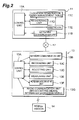
- the location information management server 11 is comprised of a location registration area management table 11C in which registration information about base stations 13 constituting each location registration area 30 is recorded for every location registration area; a registration unit 11D which registers information about a newly installed base station 13 on the location registration area management table 11C; a deleting unit 11E which deletes information about a removed base station 13 from the location registration area management table 11C; a network communication unit 11B which performs transmission/reception of information to or from each base station 13 through the network 12; and a control unit 11A which monitors and controls the operations of the respective units described above.
- the base station 13 is comprised of a network communication unit 13B which establishes communication with the location information management server 11 through the network 12 and notifies the location information management server 11 that the base station itself is newly installed in the location registration area 30; a recognizing unit 13C which, when the base station itself is newly installed in the mobile communication system 10, recognizes the location of its own, and state of location registration areas 30 established by surrounding base stations 13, through communication with the surrounding base stations 13 or through communication with the location information management server 11; a selecting unit 13D which selects a location registration area 30 to which the base station itself should belong, based on the location of its own and the state of the location registration areas 30 thus recognized; a measuring unit 13E which measures the traffic characteristic in the cell 20 established by itself; an increasing/decreasing unit 13F which increases or decreases the number of base stations 13 constituting the location registration area 30 to which the base station itself belongs, so as to average traffics in the respective location registration areas 30, based on the traffic characteristic obtained by exchange at information exchanging means; a radio communication unit 13G which
- the measuring unit 13E measures both or one of the control data traffic characteristic and the contents data traffic characteristic, as the traffic characteristic in the cell 20.
- the recognizing unit 13C recognizes the location of the base station of its own through communication or the like with GPS or with a plurality of surrounding base stations 13Q.
- the location registration areas can be defined as spaces sectioned by latitude and longitude, three-dimensional structures and floors thereof, individual vehicle, individual train, individual ship, or individual airplane.
- location registration area 30 will be used as a generic name of a plurality of location registration areas and so that specific location registration areas will be referred to as "location registration areas 30A, 30B" or the like.
- a base station 13P is newly installed in a location registration area 30A in Fig. 3.
- the recognizing unit 13C (Fig. 2) recognizes a location of its own through communication or the like with GPS or with a plurality of surrounding base stations 13Q. Then the base station 13P communicates with surrounding base stations 13Q to capture the status of surrounding location registration areas, and recognizes the location registration area 30A to which the base station itself should belong, based on the status of surrounding location registration areas and the location of its own.
- the location registration area 30 may be selected as follows: the location registration area 30 to which the base station 13P should belong is selected so as to average the control data traffics in the respective location registration areas 30; the location registration area 30 with the smallest number of base stations belonging thereto at the time of selection is selected so as to average the numbers of base stations in the respective location registration areas 30; or the location registration area 30 may be selected by a selecting means other than these.
- the newly installed base station 13P attaches itself to the location registration area 30A thus selected, also broadcasts a location registration area identifier of its belonging location registration area 30A to the mobile station 14 (Fig. 2) locating in the cell established by the base station 13P, and starts provision of service to the mobile station 14.
- the means for the base station 13P to recognize the location of its own may be communication with the location information management server 11, as well as the communication with GPS or with the surrounding base stations.
- the base station 13P determines whether it is a base station scheduled to be removed (S41) and determines whether it is a base station scheduled to be newly installed (S43). If it is a base station scheduled to be removed (yes at S41), the base station 13P notifies the location information management server 11 that it is to be removed (S42). If the base station 13P is a base station scheduled to be newly installed (yes at S43) on the other hand, the base station 13P lets the recognizing unit 13C (Fig. 2) recognize the location of its own through communication with GPS or with a plurality of surrounding base stations 13Q (S44).
- the base station 13P communicates with the surrounding base stations 13Q or the location information management server 11 to recognize the state of location registration area 30 established by the surrounding base stations 13Q (S45), and recognizes (or selects) a location registration area to which the base station itself should belong, based on the location information and the state of location registration area 30 obtained in these recognition steps (S46). Furthermore, the base station 13P notifies the location information management server 11 of the selected location registration area (S47), and it broadcasts a location registration area identifier thereof to the mobile station 14 (Fig. 2) locating under control of the newly installed base station 13P, so as to notify that the base station 13P is newly installed, and starts the service (S48).
- the location information management server 11 determines whether a notification of removal is received from the base station 13 (S51) and determines whether a notification of new installation is received from the base station 13 (S53). If a notification of removal is received from the base station 13 (yes at S51), the location information management server 11 deletes information about the base station scheduled to be removed, from the location registration area management table 11C (Fig. 2) of its own (S52), and reconfigures the location registration areas.
- the location information management server 11 registers information about the newly installed base station 13P in the information about the location registration area notified of by the base station 13P, on the location registration area management table 11C (S54), changes the number of base stations 13 in the location registration area to reconfigure the location registration areas (S55), and notifies the base station 13 that it is registered (S56).
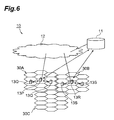
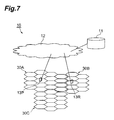
- the base station 13P in the location registration area 30A periodically or continuously measures the control data traffic to itself and contents data traffic (which will be generally referred to hereinafter as traffic) and shares the traffic information about the base stations 13P, 13Q, 13R, and 13S through direct communication with a plurality of surrounding base stations 13Q, 13R (wherein the base station 13R establishes communication with a plurality of surrounding base stations 13S). Then the base station 13P changes the number of base stations 13 constituting the location registration area 30, based on the shared traffic information.
- traffic contents data traffic
- the result of the measurement of traffic is that the traffic volume is low in the location registration area 30A and the traffic volume is high in the location registration area 30B, 30C.
- the area configuration is reconfigured so that some of the base stations in the location registration area 30B, 30C are transferred into the location registration area 30A.
- the base stations having the distance of not less than a fixed value from the center base station (e.g., the base station 13R) in the location registration area 30B, 30C are transferred into the location registration area 30A (i.e., where the location registration area 30A is expanded), while avoiding a scattered configuration in the boundary region of the expanded location registration area 30A, one base station or two or more base stations are selected with preference to those with large contents data traffic out of the base stations in the location registration area 30B, 30C and the base station or base stations thus selected are transferred into the location registration area 30A.
- the traffic may be determined by making reference to both of the control data traffic and the contents data traffic as described above, or by measuring only the control data traffic and making reference thereto, or by measuring only the contents data traffic and making reference thereto.
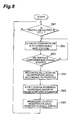
- the base station 13P measures the traffic in the cell under control of its own (S81), establishes the communication with surrounding base stations 13Q, 13R as to the traffic information obtained by the measurement (S82), and thereby acquires the traffic information about the surrounding base stations 13Q, 13R, 13S (S83).
- the base station 13P changes the number of base stations 13 constituting the location registration area 30 while preferentially selecting the base stations with large traffic according to the traffic information, as described previously on the basis of Figs. 6 and 7; whereby the location registration area 30 is reconfigured (S84).
- the base station 13P notifies the location information management server 11 of the information about the location registration area 30 after the reconfiguration (S85), and broadcasts a location registration area identifier thereof to the mobile station 14 under control through a broadcast channel (S86).
- the present embodiment provides the effect of averaging traffics and the effect of optimizing the sizes of the location registration areas, so as to increase the channel efficiency.
- the process of increasing or decreasing the number of base stations at above S84 may be implemented by an operation of a specific base station (e.g., a newly installed base station, a base station as a master station, or the like), or by an autonomous operation among a plurality of base stations.
- a specific base station e.g., a newly installed base station, a base station as a master station, or the like
- the second embodiment will describe a form wherein when a base station is newly installed in the mobile communication system, the location information management server selects a location registration area to which the newly installed base station should belong, based on the location information from the newly installed base station and the status of location registration areas, and a form wherein the location information management server dynamically changes the numbers of base stations in the location registration areas on the basis of the traffic characteristic information from each base station.
- the configuration of the mobile communication system 10 shown in Fig. 1 is much the same as in the first embodiment.
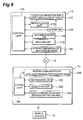
- the configurations of the location information management server 11 and the base station 13 are different in part from those in the first embodiment (Fig. 2), and thus differences of the configurations will be described referring to Fig. 9.
- the location information management server 11 of Fig. 9 is further provided with a selecting unit 11G which, based on the state of location registration areas 30 and the location information notified of by a newly installed base station 30, selects a location registration area 30 to which the newly installed base station 13 should belong; and an increasing/decreasing unit 11F which increases or decreases the number of base stations 13 constituting each location registration area 30, so as to average the traffics in the respective location registration areas 30, based on traffic characteristics notified of by the respective base stations 13; and the network communication unit 11B also has a function as an area notifying means of notifying the newly installed base station 13 of the selected location registration area 30.
- the selecting unit 13D and the increasing/decreasing unit 13F in Fig. 2 become dispensable in the base station 13, and the network communication unit 13B also functions as a location notifying means of notifying the location information management server 11 of the location information of its own station recognized and as a traffic notifying means of notifying the location information management server 11 of the traffic characteristic obtained by measurement.
- the radio communication unit 13G functions as a broadcasting means of broadcasting the mobile station 14 of a location registration area identifier for identifying the location registration area 30 notified of by the location information management server 11, through a broadcast channel.
- the recognizing unit 13C (Fig. 2) recognizes the location of its own through communication or the like with GPS or with a plurality of surrounding base stations 13Q. Then the base station 13P notifies the location information management server 11 of the location information obtained by the recognition.
- the location information management server 11 captures the status of surrounding location registration areas with reference to the location registration area management table 11C on the basis of the location information, selects a location registration area 30A to which the newly installed base station 13P should belong, based on the status of surrounding location registration areas and the location of the newly installed base station 13P, and notifies the base station 13P of the selected area.
- the location registration area 30 may be selected as follows: the location registration area 30 to which the base station 13P should belong is selected so as to average the control data traffics in the respective location registration areas 30; or the location registration area 30 with the smallest number of base stations belonging thereto at the time of selection is selected so as to average the numbers of base stations in the respective location registration areas 30; or the location registration area 30 may be selected by a selecting means other than these.
- the newly installed base station 13P receiving the notification, attaches itself to the location registration area 30A thus selected, also broadcasts a location registration area identifier of its belonging location registration area 30A to the mobile station 14 (Fig. 9) locating in the cell established by the base station 13P, and starts provision of service to the mobile station 14.
- the means for recognizing the location of its own in the base station 13P may be communication with the location information management server 11, as well as the communication with GPS or with the surrounding base stations.
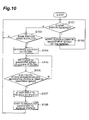
- the base station 13P determines whether it is a base station scheduled to be removed (S101) and determines whether it is a base station scheduled to be newly installed (S103). If it is a base station scheduled to be removed (yes at S101), the base station 13P notifies the location information management server 11 that it is to be removed (S102). If the base station 13P is a base station scheduled to be newly installed (yes at S103) on the other hand, the base station 13P lets the recognizing unit 13C (Fig. 9) recognize the location of its own, for example, through communication with GPS or with a plurality of surrounding base stations 13Q (S104). Then the base station notifies the location information management server 11 of the location information obtained in the recognition step (S105) and awaits a notification of a location registration area from the location information management server 11 (S106).
- the base station 13P When receiving a notification of a location registration area to which the base station itself should belong, which is selected by the processing in the location information management server 11 described later, the base station 13P registers itself in the location registration area thus notified of to attach itself thereto (S107), and then it broadcasts a location registration area identifier thereof through a broadcast channel to the mobile station 14 locating under control of the newly installed base station 13P, so as to notify that the base station 13P is newly installed, and starts the service (S108).
- the location information management server 11 determines whether a notification of removal is received from the base station 13P (S111) and determines whether a notification of new installation is received from the base station 13P (S113). If a notification of removal is received from the base station 13P (yes at S111), the location information management server 11 deletes information about the base station 13P scheduled to be removed, from the location registration area management table 11C (Fig. 9) of its own (S112), so as to reconfigure the location registration areas. On the other hand, if a notification of new installation is received from the base station 13P (yes at S113), the location information management server 11 then awaits a notification of location information from the base station 13P (S114).
- the location information management server 11 When the location information management server 11 then receives a notification of location information from the base station 13P (yes at S114), it makes reference to the location registration area management table 11C on the basis of the location information of the base station 13P notified of (S115), selects a location registration area to which the newly installed base station 13P should belong, based on the registration information on the location registration area management table 11C and the location information about the newly installed base station 13P (S116), and notifies the base station 13P of the selected location registration area (S117).
- the following will describe a method of reconfiguring the location registration areas, which is carried out by the location information management server 11, on the basis of Figs. 6 and 7.
- the base station 13P in the location registration area 30A periodically or continuously measures the control data traffic to itself and contents data traffic (generally referred to hereinafter as traffic), and notifies the location information management server 11 of the result of the measurement.
- the location information management server 11 changes the number of base stations 13 constituting the location registration area 30, based on the traffic characteristic thus notified of, and updates the location registration area management table 11C.
- the result of the measurement of traffic is that the traffic volume is low in the location registration area 30A and the traffic volume is high in the location registration area 30B, 30C.
- the area configuration is reconfigured so that some of the base stations in the location registration area 30B, 30C are transferred into the location registration area 30A.
- the base stations having the distance of not less than a fixed value from the center base station (e.g., the base station 13R) in the location registration area 30B, 30C are transferred into the location registration area 30A (i.e., where the location registration area 30A is expanded), while avoiding a scattered configuration in the boundary region of the expanded location registration area 30A, one base station or two or more base stations are selected with preference to those with large contents data traffic out of the base stations in the location registration area 30B, 30C and the base station or base stations thus selected are transferred into the location registration area 30A.
- the traffic may be determined by making reference to both of the control data traffic and the contents data traffic as described above, or by measuring only the control data traffic and making reference thereto, or by measuring only the contents data traffic and making reference thereto, as in the case of the first embodiment.
- the base station 13P measures the traffic in the cell under control thereof (S121) and notifies the location information management server 11 of the traffic information obtained by the measurement (S122). Then the base station 13P awaits a notification of a location registration area from the location information management server 11 (S123).
- the base station 13P When the base station 13P receives a notification of a location registration area to which the base station 13P should belong (yes at S123), as a result of a reconfiguration at the location information management server 11 as described later, it registers itself in the location registration area thus notified of and attaches itself thereto (S124), broadcasts through a broadcast channel a location registration area identifier of the area to the mobile station 14 locating under control of the base station 13P, so as to notify that the base station 13P is newly installed, and starts the service to the mobile station 14 (S125).
- the location information management server 11 awaits a notification of traffic information from the base station 13P (S131).
- the location information management server 11 analyzes the traffic characteristic in the location registration area (S132).
- the location information management server 11 changes the number of base stations 13 constituting the location registration area 30 while preferentially selecting the base stations with large traffic according to the traffic information, as described previously on the basis of Figs. 6 and 7; whereby the location registration areas 30 are reconfigured (S133).
- the location information management server 11 notifies the base station 13 in the location registration area 30 after the reconfiguration, of a location registration area identifier of the new location registration area 30 (S134), and updates the location registration area management table 11C (S135).
- the present embodiment provides the effect of averaging the traffics and the effect of optimizing the sizes of the location registration areas, so as to improve the channel efficiency.
- the present invention makes it feasible to flexibly reconfigure the location registration areas on the occasion of a base station being newly installed and to circumvent the problem that adjacent base stations belong to different location registration areas.
- the present invention provides the effect of averaging the traffics and the effect of optimizing the sizes of the location registration areas, so as to improve the channel efficiency, because the numbers of base stations in the location registration areas are dynamically changed based on the traffic characteristic.
Landscapes
- Engineering & Computer Science (AREA)
- Computer Networks & Wireless Communication (AREA)
- Signal Processing (AREA)
- Databases & Information Systems (AREA)
- Mobile Radio Communication Systems (AREA)
Abstract
Description
Claims (52)
- A location registration area configuring method in a mobile communication system which comprises a plurality of mobile stations, a plurality of base stations connected to a network, and a location information management server connected to the network and configured to manage location registration areas formed of cells established by the base stations and location information about locations of the mobile stations, and in which each of said base stations is allowed to establish communication with surrounding base stations through radio or wire link, said method comprising:a recognizing step wherein when a base station is newly installed in the mobile communication system, said base station recognizes a location of its own and recognizes state of location registration areas established by surrounding base stations, through communication with the surrounding base stations or through communication with the location information management server;a selecting step wherein said newly installed base station selects a location registration area to which it should belong, based on the location of its own and the state of the location registration areas thus recognized; anda broadcasting step wherein the newly installed base station attaches itself to the location registration area thus selected and notifies the location information management server that the base station is newly installed in the location registration area and wherein the newly installed base station broadcasts a location registration area identifier for identifying the location registration area, to said mobile stations through a broadcast channel.
- The location registration area configuring method according to Claim 1, further comprising a registering step wherein the location information management server registers information about the newly installed base station on a registration table for base stations constituting said location registration area.
- The location registration area configuring method according to Claim 2, further comprising:a removal notifying step wherein when a base station is removed from the mobile communication system, said base station notifies the location information management server that the base station is removed; anda deleting step wherein the location information management server deletes information about the removed base station from a registration table for base stations constituting a location registration area to which the removed base station has belonged.
- The location registration area configuring method according to Claim 1, further comprising:a measuring step wherein said base station measures a traffic characteristic in a cell established by the base station;a traffic notifying step wherein said base station notifies the location information management server of the traffic characteristic obtained by measurement; andan increasing/decreasing step wherein the location information management server increases or decreases the number of base stations constituting each location registration area so as to average traffics in the respective location registration areas, based on the traffic characteristic thus notified of.
- The location registration area configuring method according to Claim 4, wherein the measuring step is configured to measure both or one of a control data traffic characteristic and a contents data traffic characteristic, as the traffic characteristic in the cell.
- The location registration area configuring method according to Claim 1, further comprising;a measuring step wherein said base station measures a traffic characteristic in a cell established by the base station;an information exchanging step wherein said base station exchanges information about the traffic characteristic through communication with surrounding base stations; andan increasing/decreasing step wherein the number of base stations constituting a location registration area to which the base station belongs is increased or decreased so as to average traffics in respective location registration areas, based on traffic characteristics obtained by exchange.
- The location registration area configuring method according to Claim 6, wherein the measuring step is configured to measure both or one of a control data traffic characteristic and a contents data traffic characteristic, as the traffic characteristic in the cell.
- The location registration area configuring method according to Claim 1, wherein the location registration areas are defined as spaces sectioned by latitude and longitude, three-dimensional structures and floors thereof, individual vehicle, individual train, individual ship, or individual airplane.
- The location registration area configuring method according to Claim 1, wherein the recognizing step is configured so that said base station recognizes the location of its own through communication with a global positioning system or with surrounding base stations or through communication with the location information management server.
- A location registration area configuring method in a mobile communication system which comprises a plurality of mobile stations, a plurality of base stations connected to a network, and a location information management server connected to the network and configured to manage location registration areas formed of cells established by the base stations and location information about locations of the mobile stations, and in which each of said base stations is allowed to establish communication with surrounding base stations through radio or wire link, said method comprising:a recognizing step wherein when a base station is newly installed in the mobile communication system, said base station recognizes a location of its own;a location notifying step wherein said newly installed base station notifies the location information management server of location information about the location of its own;a selecting step wherein the location information management server selects a location registration area to which the newly installed base station should belong, based on the state of the location registration areas and the location information thus notified of;an area notifying step wherein the location information management server notifies the newly installed base station of the location registration area thus selected; anda broadcasting step wherein the newly installed base station attaches itself to the location registration area thus notified of and broadcasts a location registration area identifier for identifying the location registration area, to the mobile stations through a broadcast channel.
- The location registration area configuring method according to Claim 10, further comprising a registering step wherein the location information management server registers information about the newly installed base station on a registration table for base stations constituting said location registration area.
- The location registration area configuring method according to Claim 11, further comprising:a removal notifying step wherein when a base station is removed from the mobile communication system, said base station notifies the location information management server that the base station is removed; anda deleting step wherein the location information management server deletes information about the removed base station from a registration table for base stations constituting a location registration area to which the removed base station has belonged.
- The location registration area configuring method according to Claim 10, further comprising:a measuring step wherein said base station measures a traffic characteristic in a cell established by the base station;a traffic notifying step wherein said base station notifies the location information management server of the traffic characteristic obtained by measurement; andan increasing/decreasing step wherein the location information management server increases or decreases the number of base stations constituting each location registration area so as to average traffics in the respective location registration areas, based on the traffic characteristic thus notified of.
- The location registration area configuring method according to Claim 13, wherein the measuring step is configured to measure both or one of a control data traffic characteristic and a contents data traffic characteristic, as the traffic characteristic in the cell.
- The location registration area configuring method according to Claim 10, further comprising:a measuring step wherein said base station measures a traffic characteristic in a cell established by the base station;an information exchanging step wherein said base station exchanges information about the traffic characteristic through communication with surrounding base stations; andan increasing/decreasing step wherein the number of base stations constituting a location registration area to which the base station belongs is increased or decreased so as to average traffics in respective location registration areas, based on traffic characteristics obtained by exchange.
- The location registration area configuring method according to Claim 15, wherein the measuring step is configured to measure both or one of a control data traffic characteristic and a contents data traffic characteristic, as the traffic characteristic in the cell.
- The location registration area configuring method according to Claim 10, wherein the location registration areas are defined as spaces sectioned by latitude and longitude, three-dimensional structures and floors thereof, individual vehicle, individual train, individual ship, or individual airplane.
- The location registration area configuring method according to Claim 10, wherein the recognizing step is configured so that said base station recognizes the location of its own through communication with a global positioning system or with surrounding base stations or through communication with the location information management server.
- A mobile communication system which comprises a plurality of mobile stations, a plurality of base stations connected to a network, and a location information management server connected to the network and configured to manage location registration areas formed of cells established by the base stations and location information about locations of the mobile stations, in which the cells established by the base stations form the location registration areas, and in which each of said base stations is allowed to establish communication with surrounding base stations through radio or wire link,
wherein each of said base stations comprises:recognizing means for, when the base station is newly installed in the mobile communication system, recognizing a location of its own, and state of location registration areas established by surrounding base stations, through communication with the surrounding base stations or through communication with the location information management server;selecting means for selecting a location registration area to which the base station should belong, based on the location of its own and the state of the location registration areas thus recognized; andbroadcasting means for notifying the location information management server that the base station is newly installed in the location registration area, and for broadcasting a location registration area identifier for identifying the location registration area, to the mobile stations through a broadcast channel. - The mobile communication system according to Claim 19, wherein the location information management server further comprises registering means for registering information about the newly installed base station on a registration table for base stations constituting the location registration area.
- The mobile communication system according to Claim 20, wherein said base station further comprises removal notifying means for, when the base station is removed from the mobile communication system, notifying the location information management server that the base station is removed, and
wherein said location information management server further comprises deleting means for deleting information about the removed base station from a registration table for base stations constituting a location registration area to which the removed base station has belonged. - The mobile communication system according to Claim 19, wherein said base station further comprises:wherein said location information management server further comprises:measuring means for measuring a traffic characteristic in a cell established by the base station; andtraffic notifying means for notifying the location information management server of the traffic characteristic obtained by measurement by the measuring means, andincreasing/decreasing means for increasing or decreasing the number of base stations constituting each location registration area so as to average traffics in the respective location registration areas, based on the traffic characteristic thus notified of.
- The mobile communication system according to Claim 22, wherein the measuring means is configured to measure both or one of a control data traffic characteristic and a contents data traffic characteristic, as the traffic characteristic in the cell.
- The mobile communication system according to Claim 19, wherein said base station comprises:measuring means for measuring a traffic characteristic in a cell established by the base station;information exchanging means for exchanging information about the traffic characteristic through communication with surrounding base stations; andincreasing/decreasing means for increasing or decreasing the number of base stations constituting a location registration area to which the base station belongs, so as to average traffics in the respective location registration areas, based on the traffic characteristic obtained by exchange by the information exchanging means.
- The mobile communication system according to Claim 24, wherein the measuring means is configured to measure both or one of a control data traffic characteristic and a contents data traffic characteristic, as the traffic characteristic in the cell.
- The mobile communication system according to Claim 19, wherein the location registration areas are defined as spaces sectioned by latitude and longitude, three-dimensional structures and floors thereof, individual vehicle, individual train, individual ship, or individual airplane.
- The mobile communication system according to Claim 19, wherein the recognizing means is configured to recognize the location of its own through communication with a global positioning system or with surrounding base stations or through communication with the location information management server.
- A mobile communication system which comprises a plurality of mobile stations, a plurality of base stations connected to a network, and a location information management server connected to the network and configured to manage location registration areas formed of cells established by the base stations and location information about locations of the mobile stations, in which the cells established by the base stations form the location registration areas, and in which each of said base stations is allowed to establish communication with surrounding base stations through radio or wire link,
wherein each of said base stations comprises:wherein the location information management server comprises:recognizing means for, when the base station is newly installed in the mobile communication system, recognizing a location of its own;location notifying means for notifying the location information management server of location information about the location of its own thus recognized by the recognizing means; andbroadcasting means for broadcasting a location registration area identifier for identifying a location registration area notified of by the location information management server, to the mobile stations through a broadcast channel, andselecting means for selecting a location registration area to which the newly installed base station should belong, based on state of the location registration areas and the location information thus notified of; andarea notifying means for notifying the newly installed base station of the location registration area selected by the selecting means. - The mobile communication system according to Claim 28, wherein the location information management server further comprises registering means for registering information about the newly installed base station on a registration table for base stations constituting the location registration area.
- The mobile communication system according to Claim 29, wherein said base station further comprises removal notifying means for, when the base station is removed from the mobile communication system, notifying the location information management server that the base station is removed, and
wherein said location information management server further comprises deleting means for deleting information about the removed base station from a registration table for base stations constituting a location registration area to which the removed base station has belonged. - The mobile communication system according to Claim 28, wherein said base station further comprises:wherein said location information management server further comprises:measuring means for measuring a traffic characteristic in a cell established by the base station; andtraffic notifying means for notifying the location information management server of the traffic characteristic obtained by measurement by the measuring means, andincreasing/decreasing means for increasing or decreasing the number of base stations constituting each location registration area so as to average traffics in the respective location registration areas, based on the traffic characteristic thus notified of.
- The mobile communication system according to Claim 31, wherein the measuring means is configured to measure both or one of a control data traffic characteristic and a contents data traffic characteristic, as the traffic characteristic in the cell.
- The mobile communication system according to Claim 28, wherein said base station comprises:measuring means for measuring a traffic characteristic in a cell established by the base station;information exchanging means for exchanging information about the traffic characteristic through communication with surrounding base stations; andincreasing/decreasing means for increasing or decreasing the number of base stations constituting a location registration area to which the base station belongs, so as to average traffics in the respective location registration areas, based on the traffic characteristic obtained by exchange by the information exchanging means.
- The mobile communication system according to Claim 33, wherein the measuring means is configured to measure both or one of a control data traffic characteristic and a contents data traffic characteristic, as the traffic characteristic in the cell.
- The mobile communication system according to Claim 28, wherein the location registration areas are defined as spaces sectioned by latitude and longitude, three-dimensional structures and floors thereof, individual vehicle, individual train, individual ship, or individual airplane.
- The mobile communication system according to Claim 28, wherein the recognizing means is configured to recognize the location of its own through communication with a global positioning system or with surrounding base stations or through communication with the location information management server.
- A base station which constitutes a mobile communication system together with a plurality of mobile stations, and a location information management server connected to a network and configured to manage location registration areas formed of cells and location information about locations of the mobile stations, which is connected to the network, and which is allowed to establish communication with surrounding base stations through radio or wire link, a location registration area being formed of cells established by said base station and surrounding base stations, the base station comprising:recognizing means for, when the base station is newly installed in the mobile communication system, recognizing a location of its own, and state of location registration areas established by surrounding base stations, through communication with the surrounding base stations or through communication with the location information management server;selecting means for selecting a location registration area to which the base station should belong, based on the location of its own and the state of the location registration areas thus recognized; andbroadcasting means for notifying the location information management server that the base station is newly installed in the location registration area, and for broadcasting a location registration area identifier for identifying the location registration area, to the mobile stations through a broadcast channel.
- The base station according to Claim 37, further comprising:measuring means for measuring a traffic characteristic in a cell established by the base station; andtraffic notifying means for notifying the location information management server of the traffic characteristic obtained by measurement by the measuring means.
- The base station according to Claim 38, wherein the measuring means is configured to measure both or one of a control data traffic characteristic and a contents data traffic characteristic, as the traffic characteristic in the cell.
- The base station according to Claim 37, further comprising:measuring means for measuring a traffic characteristic in a cell established by the base station;information exchanging means for exchanging information about the traffic characteristic through communication with surrounding base stations; andincreasing/decreasing means for increasing or decreasing the number of base stations constituting a location registration area to which the base station belongs, so as to average traffics in the respective location registration areas, based on the traffic characteristic obtained by exchange by the information exchanging means.
- The base station according to Claim 40, wherein the measuring means is configured to measure both or one of a control data traffic characteristic and a contents data traffic characteristic, as the traffic characteristic in the cell.
- The base station according to Claim 37, wherein the recognizing means is configured to recognize the location of its own through communication with a global positioning system or with surrounding base stations or through communication with the location information management server.
- A base station which constitutes a mobile communication system together with a plurality of mobile stations, and a location information management server connected to a network and configured to manage location registration areas formed of cells and location information about locations of the mobile stations, which is connected to the network, and which is allowed to establish communication with surrounding base stations through radio or wire link, a location registration area being formed of cells established by said base station and surrounding base stations, the base station comprising:recognizing means for, when the base station is newly installed in the mobile communication system, recognizing a location of its own;location notifying means for notifying the location information management server of location information about the location of its own thus recognized by the recognizing means; andbroadcasting means for broadcasting a location registration area identifier for identifying a location registration area notified of by the location information management server, to the mobile stations through a broadcast channel.
- The base station according to Claim 43, further comprising:measuring means for measuring a traffic characteristic in a cell established by the base station; andtraffic notifying means for notifying the location information management server of the traffic characteristic obtained by measurement by the measuring means.
- The base station according to Claim 44, wherein the measuring means is configured to measure both or one of a control data traffic characteristic and a contents data traffic characteristic, as the traffic characteristic in the cell.
- The base station according to Claim 43, further comprising:measuring means for measuring a traffic characteristic in a cell established by the base station;information exchanging means for exchanging information about the traffic characteristic through communication with surrounding base stations; andincreasing/decreasing means for increasing or decreasing the number of base stations constituting a location registration area to which the base station belongs, so as to average traffics in the respective location registration areas, based on the traffic characteristic obtained by exchange by the information exchanging means.
- The base station according to Claim 46, wherein the measuring means is configured to measure both or one of a control data traffic characteristic and a contents data traffic characteristic, as the traffic characteristic in the cell.
- The base station according to Claim 43, wherein the recognizing means is configured to recognize the location of its own through communication with a global positioning system or with surrounding base stations or through communication with the location information management server.
- A location information management server which constitutes a mobile communication system together with a plurality of mobile stations, and a base station connected to a network, allowed to establish communication with surrounding base stations through radio or wire link, and forming a location registration area as an aggregate of cells established by the base station and surrounding base stations, which is connected to the network, and which manages location registration areas formed of cells established by the base stations and location information about locations of the mobile stations, the location information management server comprising:selecting means for, based on state of the location registration areas and on location information notified of by a base station newly installed in the mobile communication system, selecting a location registration area to which the newly installed base station should belong; andarea notifying means for notifying the newly installed base station of the location registration area selected by the selecting means.
- The location information management server according to Claim 49, further comprising registering means for registering information about the newly installed base station on a registration table for base stations constituting the location registration area.
- The location information management server according to Claim 50, further comprising deleting means for, when a base station removed from the mobile communication system notifies the location information management server that the base station is removed, deleting information about the removed base station from a registration table for base stations constituting a location registration area to which the removed base station has belonged.
- The location information management server according to Claim 49, further comprising increasing/decreasing means for increasing or decreasing the number of base stations constituting each location registration area so as to average traffics in the respective location registration areas, based on a traffic characteristic in a cell notified of by a base station.
Applications Claiming Priority (2)
| Application Number | Priority Date | Filing Date | Title |
|---|---|---|---|
| JP2001374644A JP3939142B2 (en) | 2001-12-07 | 2001-12-07 | Location registration area configuration method, mobile communication system, and radio base station |
| JP2001374644 | 2001-12-07 |
Publications (3)
| Publication Number | Publication Date |
|---|---|
| EP1318688A2 true EP1318688A2 (en) | 2003-06-11 |
| EP1318688A3 EP1318688A3 (en) | 2004-04-07 |
| EP1318688B1 EP1318688B1 (en) | 2006-08-30 |
Family
ID=19183178
Family Applications (1)
| Application Number | Title | Priority Date | Filing Date |
|---|---|---|---|
| EP02027293A Expired - Lifetime EP1318688B1 (en) | 2001-12-07 | 2002-12-06 | Location registration area configuring method, mobile communication system and base station |
Country Status (7)
| Country | Link |
|---|---|
| US (1) | US7035637B2 (en) |
| EP (1) | EP1318688B1 (en) |
| JP (1) | JP3939142B2 (en) |
| KR (1) | KR100564074B1 (en) |
| CN (1) | CN1228992C (en) |
| DE (1) | DE60214320T2 (en) |
| SG (1) | SG120902A1 (en) |
Cited By (8)
| Publication number | Priority date | Publication date | Assignee | Title |
|---|---|---|---|---|
| FR2907290A1 (en) * | 2006-10-17 | 2008-04-18 | France Telecom | METHOD FOR CONFIGURING A ACCESS TERMINAL TO A SERVICE, CONTROLLER, ACCESS NETWORK, ACCESS TERMINAL AND ASSOCIATED COMPUTER PROGRAM |
| EP1947811A1 (en) * | 2007-01-22 | 2008-07-23 | Nokia Siemens Networks Gmbh & Co. Kg | Discovery and configuration method for a network node |
| EP2079258A1 (en) * | 2008-01-11 | 2009-07-15 | Lucent Technologies Inc. | Automatic allocation of area codes for femtocell deployment |
| EP2112782A1 (en) * | 2008-04-25 | 2009-10-28 | Nokia Siemens Networks Oy | Assignment of network node identifier based on network environment information |
| CN102057713A (en) * | 2008-06-04 | 2011-05-11 | 株式会社Ntt都科摩 | Mobile communication method, mobile communication system, and information transmission device |
| WO2013082626A1 (en) * | 2011-12-02 | 2013-06-06 | Qualcomm Incorporated | Methods and apparatuses for improved paging area identifier selection in wireless networks containing low power base stations |
| EP2112851A3 (en) * | 2008-04-24 | 2014-04-02 | Hitachi, Ltd. | Wireless communication system and base station accommodation server |
| US10257883B2 (en) | 2005-11-07 | 2019-04-09 | Alcatel Lucent | Method for configuring a mobile communication network including an enhanced node B with tracking areas |
Families Citing this family (58)
| Publication number | Priority date | Publication date | Assignee | Title |
|---|---|---|---|---|
| US7477920B2 (en) * | 2002-10-25 | 2009-01-13 | Intel Corporation | System and method for automatically configuring and integrating a radio base station into an existing wireless cellular communication network with full bi-directional roaming and handover capability |
| EP1661413A4 (en) * | 2003-08-06 | 2011-07-20 | Intel Corp | SYSTEM AND METHOD FOR AUTOMATICALLY CONFIGURING AND INTEGRATING A BASE RADIO STATION IN A CELLULAR NETWORK OF WIRELESS COMMUNICATIONS EXISTING WITH TOTAL BIDIRECTIONAL ROAD AND TRANSFER CAPACITY |
| JP4600079B2 (en) | 2005-02-18 | 2010-12-15 | 沖電気工業株式会社 | Wireless communication apparatus and wireless communication network system |
| WO2006119454A1 (en) * | 2005-05-04 | 2006-11-09 | Mediacell Licensing Corp | Enclosure with ground plane |
| US7664504B2 (en) * | 2005-07-14 | 2010-02-16 | Sandwave Ip, Llc | Virtual cells for wireless networks |
| JP4374334B2 (en) * | 2005-08-16 | 2009-12-02 | Okiセミコンダクタ株式会社 | Method for obtaining position information of wireless terminal device |
| EP1775976B1 (en) * | 2005-10-13 | 2010-03-17 | Mitsubishi Electric R&D Centre Europe B.V. | Method for enabling a base station to connect to a wireless telecommunication network |
| US20070167171A1 (en) * | 2005-12-30 | 2007-07-19 | Mediacell Licensing Corp | Determining the Location of a Device Having Two Communications Connections |
| US8504678B2 (en) * | 2005-12-30 | 2013-08-06 | Sandwave Ip, Llc | Traffic routing based on geophysical location |
| US8582498B2 (en) * | 2006-03-07 | 2013-11-12 | Sandwave Ip, Llc | Service subscription using geophysical location |
| DE102006014590A1 (en) * | 2006-03-29 | 2007-10-04 | Siemens Ag | Network node integrating method, involves arranging network nodes of distributed data network at fixed position in case, and providing configuration data and positioning variable as planning data for data network for each node |
| JP4709064B2 (en) * | 2006-05-17 | 2011-06-22 | 株式会社エヌ・ティ・ティ・ドコモ | Base station and communication method |
| US8169927B2 (en) | 2006-05-29 | 2012-05-01 | Nec Corporation | Configuration management method and configuration management system of wireless access network, and wireless access network management device |
| JP4957174B2 (en) * | 2006-10-19 | 2012-06-20 | ソニー株式会社 | Location storage device, wireless terminal, location storage system, location registration method, location update method, and program |
| US8977839B2 (en) * | 2006-10-20 | 2015-03-10 | Interdigital Technology Corporation | Method and apparatus for self configuration of LTE E-Node Bs |
| US7894827B2 (en) | 2006-10-20 | 2011-02-22 | Adc Telecommunications, Inc. | Method of identifying a device by GPS coordinates |
| JP5021753B2 (en) * | 2006-10-27 | 2012-09-12 | テレフオンアクチーボラゲット エル エム エリクソン(パブル) | Method and apparatus for estimating the location of an access point in a wireless communication network |
| TWI599259B (en) | 2006-12-27 | 2017-09-11 | 無線創新信號信託公司 | Base station self-configuration method and device |
| JP5008402B2 (en) * | 2007-01-09 | 2012-08-22 | 株式会社エヌ・ティ・ティ・ドコモ | Mobile station apparatus, base station apparatus, and propagation status collection method |
| JP4703577B2 (en) * | 2007-01-17 | 2011-06-15 | 株式会社エヌ・ティ・ティ・ドコモ | Logical interface setting method, radio base station, communication management device |
| JP2008193364A (en) * | 2007-02-02 | 2008-08-21 | Ntt Docomo Inc | Base station apparatus, user apparatus, and tracking area setting method |
| JP4913618B2 (en) | 2007-02-02 | 2012-04-11 | 株式会社エヌ・ティ・ティ・ドコモ | Mobile communication system |
| US8514806B2 (en) * | 2007-03-02 | 2013-08-20 | Samsung Electronics Co., Ltd. | Apparatus and method for automatically setting a configuration of a home base station |
| KR101336197B1 (en) * | 2007-07-26 | 2013-12-05 | 삼성전자주식회사 | Home base station apparatus and method for automatic configuration |
| US8355378B2 (en) * | 2007-03-09 | 2013-01-15 | Intel Corporation | Hierarchical cell deployment |
| JP5128587B2 (en) * | 2007-04-27 | 2013-01-23 | 株式会社エヌ・ティ・ティ・ドコモ | Mobile communication system and base station state control method |
| CN101690313B (en) * | 2007-07-12 | 2014-07-09 | 夏普株式会社 | Mobile node, access gateway, position management device, and mobile packet communication system |
| DE102007045408A1 (en) * | 2007-09-21 | 2009-05-20 | T-Mobile International Ag | A method for the terminal-based detection of home base stations in a cellular mobile radio system by means of support by the mobile radio network |
| US8489102B2 (en) * | 2007-10-12 | 2013-07-16 | Alcatel Lucent | Methods of locating, paging and routing calls to wireless users in femto system |
| US8811334B2 (en) * | 2007-10-12 | 2014-08-19 | Alcatel Lucent | Methods for idle registration and idle handoff in a femto environment |
| EP2079259A1 (en) * | 2008-01-02 | 2009-07-15 | Alcatel Lucent | Method of determining a location of a base station in a wireless communication network and base station in a wireless communication network |
| CN103402252A (en) * | 2008-01-31 | 2013-11-20 | 日本电气株式会社 | Wireless communication system, base station device, movement control node, and method of wireless communication |
| JP5200595B2 (en) | 2008-03-14 | 2013-06-05 | 富士通株式会社 | Wireless terminal device |
| ATE509484T1 (en) * | 2008-05-14 | 2011-05-15 | Alcatel Lucent Usa Inc | ALLOCATION OF BASE STATIONS TO SITE AREAS IN CELLULAR TELECOMMUNICATIONS NETWORKS |
| US8897801B2 (en) | 2008-06-13 | 2014-11-25 | Qualcomm Incorporated | Transmission of location information by a transmitter as an aid to location services |
| JP5194123B2 (en) * | 2008-08-08 | 2013-05-08 | 株式会社エヌ・ティ・ティ・ドコモ | Mobile communication method and server device |
| KR101013301B1 (en) * | 2008-09-22 | 2011-02-09 | 주식회사 케이티 | System and method for location management and location authentication processing of femtocell base station |
| US20100075698A1 (en) * | 2008-09-23 | 2010-03-25 | Telefonaktiebolaget L M Ericsson (Publ) | Location registration and paging in telecommunications network |
| US9645225B2 (en) | 2008-11-21 | 2017-05-09 | Qualcomm Incorporated | Network-centric determination of node processing delay |
| US20100135178A1 (en) | 2008-11-21 | 2010-06-03 | Qualcomm Incorporated | Wireless position determination using adjusted round trip time measurements |
| US8892127B2 (en) | 2008-11-21 | 2014-11-18 | Qualcomm Incorporated | Wireless-based positioning adjustments using a motion sensor |
| US9125153B2 (en) | 2008-11-25 | 2015-09-01 | Qualcomm Incorporated | Method and apparatus for two-way ranging |
| US8768344B2 (en) | 2008-12-22 | 2014-07-01 | Qualcomm Incorporated | Post-deployment calibration for wireless position determination |
| US8750267B2 (en) | 2009-01-05 | 2014-06-10 | Qualcomm Incorporated | Detection of falsified wireless access points |
| WO2010083659A1 (en) * | 2009-01-24 | 2010-07-29 | Huawei Technologies Co., Ltd. | Method and apparatus of communication |
| JP5326853B2 (en) * | 2009-06-19 | 2013-10-30 | 富士通株式会社 | Information processing apparatus, security system, and function restriction method |
| JP5359623B2 (en) * | 2009-07-06 | 2013-12-04 | 富士通株式会社 | COMMUNICATION SYSTEM, BASE STATION, COMMUNICATION METHOD |
| US8494695B2 (en) * | 2009-09-02 | 2013-07-23 | General Electric Company | Communications system and method for a rail vehicle |
| US8781492B2 (en) | 2010-04-30 | 2014-07-15 | Qualcomm Incorporated | Device for round trip time measurements |
| JP5405409B2 (en) * | 2010-07-30 | 2014-02-05 | 株式会社Nttドコモ | Mobile communication method, positioning device, and radio base station |
| US8731536B2 (en) * | 2010-10-07 | 2014-05-20 | Cisco Technology, Inc. | Automated LAC assignments for enterprise Femtos |
| WO2013113355A1 (en) * | 2012-01-30 | 2013-08-08 | Nokia Siemens Networks Oy | Controlling radio measurements of a user equipment within a cellular network system |
| JP5488655B2 (en) * | 2012-08-24 | 2014-05-14 | 富士通株式会社 | Control device |
| KR102026331B1 (en) * | 2013-04-11 | 2019-09-27 | 에스케이텔레콤 주식회사 | Method and apparatus for verifying location information of base station |
| JP6145419B2 (en) * | 2014-03-28 | 2017-06-14 | Kddi株式会社 | Location management server, program and method for transmitting capture range list to mobile terminal |
| US9591553B1 (en) * | 2014-06-24 | 2017-03-07 | EMC IP Holding Company LLC | Content access based on mobile device geographical location |
| DE102017213716A1 (en) * | 2017-08-07 | 2019-02-07 | Deutsche Telekom Ag | Method for integrating a network component into a mobile radio network, system, network component, in particular base station device, computer program and computer program product |
| US11570707B2 (en) * | 2021-01-11 | 2023-01-31 | Dell Products L.P. | Systems and methods for comparison and scoring of network access points |
Family Cites Families (14)
| Publication number | Priority date | Publication date | Assignee | Title |
|---|---|---|---|---|
| US574959A (en) * | 1897-01-12 | Window-screen | ||
| JP2927920B2 (en) * | 1990-09-14 | 1999-07-28 | 日本電信電話株式会社 | Location registration control method |
| JPH07298340A (en) * | 1994-03-02 | 1995-11-10 | Fujitsu Ltd | Mobile communication system and mobile station |
| JP2986388B2 (en) * | 1995-10-19 | 1999-12-06 | エヌ・ティ・ティ移動通信網株式会社 | Perch channel setting method in mobile communication |
| US5974322A (en) * | 1995-12-04 | 1999-10-26 | Telefonaktiebolaget L/M Ericsson (Publ) | Method and apparatus for placing a fixed-site transceiver into service in a wireless communication network |
| US5864764A (en) * | 1996-11-25 | 1999-01-26 | Motorola, Inc. | Infrastructure transceiver and method for configuration based on location information |
| FI104139B1 (en) * | 1996-11-27 | 1999-11-15 | Nokia Telecommunications Oy | Use two SIM cards with the same MSISDN number |
| US6041228A (en) * | 1997-10-27 | 2000-03-21 | Telefonaktiebolaget Lm Ericsson | Open `plug and play` O and M architecture for a radio base station |
| JPH11155165A (en) * | 1997-11-21 | 1999-06-08 | Toshiba Corp | Mobile communication system, base station device and control station device |
| US6292891B1 (en) * | 1999-01-05 | 2001-09-18 | Nokia Networks Ov | Method of connecting base station to cellular system |
| JP2001069151A (en) * | 1999-08-26 | 2001-03-16 | Matsushita Electric Ind Co Ltd | Base station device, identifier management device, and identifier assignment method |
| US6882845B2 (en) * | 2000-02-03 | 2005-04-19 | Ntt Docomo, Inc. | Autonomous zone forming communication device and autonomous zone forming method |
| US6650900B1 (en) * | 2000-02-29 | 2003-11-18 | Avaya Technology Corp. | Dynamic logical coverage areas for wireless base stations |
| US7103040B2 (en) * | 2001-11-19 | 2006-09-05 | Telefonaktieboaget Lm Ericsson (Publ) | Method and apparatus for identifying a node for data communications using its geographical location |
-
2001
- 2001-12-07 JP JP2001374644A patent/JP3939142B2/en not_active Expired - Fee Related
-
2002
- 2002-12-05 KR KR1020020076870A patent/KR100564074B1/en not_active Expired - Fee Related
- 2002-12-05 SG SG200207469A patent/SG120902A1/en unknown
- 2002-12-06 DE DE60214320T patent/DE60214320T2/en not_active Expired - Lifetime
- 2002-12-06 CN CNB021540233A patent/CN1228992C/en not_active Expired - Fee Related
- 2002-12-06 US US10/310,834 patent/US7035637B2/en not_active Expired - Fee Related
- 2002-12-06 EP EP02027293A patent/EP1318688B1/en not_active Expired - Lifetime
Cited By (19)
| Publication number | Priority date | Publication date | Assignee | Title |
|---|---|---|---|---|
| US10257883B2 (en) | 2005-11-07 | 2019-04-09 | Alcatel Lucent | Method for configuring a mobile communication network including an enhanced node B with tracking areas |
| US10779361B2 (en) | 2005-11-07 | 2020-09-15 | Nokia Technologies Oy | Method for registering a radio access network entity with a core network for a tracking area, a radio access network entity thereof, and a core network entity thereof |
| EP3522447A1 (en) * | 2005-11-07 | 2019-08-07 | Alcatel Lucent | A method and apparatus for configuring a mobile communication network with tracking areas |
| EP1783962B1 (en) * | 2005-11-07 | 2019-04-10 | Alcatel Lucent | A method and apparatus for configuring a mobile communication network with tracking areas |
| WO2008047039A1 (en) * | 2006-10-17 | 2008-04-24 | France Telecom | Method for configuring a terminal for accessing a service, and associated controller, access network, access terminal and computer programme |
| FR2907290A1 (en) * | 2006-10-17 | 2008-04-18 | France Telecom | METHOD FOR CONFIGURING A ACCESS TERMINAL TO A SERVICE, CONTROLLER, ACCESS NETWORK, ACCESS TERMINAL AND ASSOCIATED COMPUTER PROGRAM |
| EP1947811A1 (en) * | 2007-01-22 | 2008-07-23 | Nokia Siemens Networks Gmbh & Co. Kg | Discovery and configuration method for a network node |
| WO2008090133A1 (en) * | 2007-01-22 | 2008-07-31 | Nokia Siemens Networks Gmbh & Co. Kg | Discovery and configuration method for a network node |
| RU2450469C2 (en) * | 2007-01-22 | 2012-05-10 | Нокиа Сименс Нетворкс Гмбх Унд Ко. Кг | Network node recognition and configuration method |
| EP2079258A1 (en) * | 2008-01-11 | 2009-07-15 | Lucent Technologies Inc. | Automatic allocation of area codes for femtocell deployment |
| WO2009087083A1 (en) * | 2008-01-11 | 2009-07-16 | Lucent Technologies Inc. | Automatic allocation of area codes for femtocell deployment |
| EP2112851A3 (en) * | 2008-04-24 | 2014-04-02 | Hitachi, Ltd. | Wireless communication system and base station accommodation server |
| EP2112782A1 (en) * | 2008-04-25 | 2009-10-28 | Nokia Siemens Networks Oy | Assignment of network node identifier based on network environment information |
| CN102057713B (en) * | 2008-06-04 | 2014-01-15 | 株式会社Ntt都科摩 | Mobile communication method, mobile communication system, and information transmission device |
| CN102057713A (en) * | 2008-06-04 | 2011-05-11 | 株式会社Ntt都科摩 | Mobile communication method, mobile communication system, and information transmission device |
| KR20140106638A (en) * | 2011-12-02 | 2014-09-03 | 퀄컴 인코포레이티드 | Methods and apparatuses for improved paging area identifier selection in wireless networks containing low power base stations |
| US9295030B2 (en) | 2011-12-02 | 2016-03-22 | Qualcomm Incorporated | Methods and apparatuses for improved paging area identifier selection in wireless networks containing low power base stations |
| US9320013B2 (en) | 2011-12-02 | 2016-04-19 | Qualcomm Incorporation | Methods and apparatuses for improved paging area identifier selection in wireless networks containing low power base stations |
| WO2013082626A1 (en) * | 2011-12-02 | 2013-06-06 | Qualcomm Incorporated | Methods and apparatuses for improved paging area identifier selection in wireless networks containing low power base stations |
Also Published As
| Publication number | Publication date |
|---|---|
| US7035637B2 (en) | 2006-04-25 |
| EP1318688A3 (en) | 2004-04-07 |
| SG120902A1 (en) | 2006-04-26 |
| EP1318688B1 (en) | 2006-08-30 |
| CN1430432A (en) | 2003-07-16 |
| DE60214320D1 (en) | 2006-10-12 |
| KR100564074B1 (en) | 2006-03-27 |
| KR20030047759A (en) | 2003-06-18 |
| CN1228992C (en) | 2005-11-23 |
| US20030109254A1 (en) | 2003-06-12 |
| DE60214320T2 (en) | 2007-09-13 |
| JP3939142B2 (en) | 2007-07-04 |
| JP2003174665A (en) | 2003-06-20 |
Similar Documents
| Publication | Publication Date | Title |
|---|---|---|
| EP1318688B1 (en) | Location registration area configuring method, mobile communication system and base station | |
| EP1301052B1 (en) | Method and associated apparatus for distributed dynamic paging area clustering under heterogeneous access network | |
| US6421328B1 (en) | Neighborhood list assimilation for cell-based microsystem | |
| US6839558B2 (en) | Integrated control system for radio service areas of base stations in mobile communication system | |
| US7574223B2 (en) | Method and associated apparatus for distributed dynamic paging area clustering under heterogeneous access networks | |
| US7864727B2 (en) | Congestion control method for wireless communication system and base station control apparatus | |
| CN101702964B (en) | Method and system enabling a mobile communication terminal to connect to a radio communication network | |
| US8095136B2 (en) | Method for determining if a first cell managed by a first base station is neighbour of a second cell managed by a second base station | |
| AU2793895A (en) | Subscriber paging control in a mobile communication system | |
| JPH06205459A (en) | Method of establishing low power wireless system for telephone service and its radio link | |
| JP2004207839A (en) | Wireless resource management system, method thereof, management apparatus used for the same, base station, and terminal | |
| EP1113681A3 (en) | Method and apparatus for stabilizing communication in mobile communication system | |
| EP1883258B1 (en) | Method of sharing radio resources, computer program product, radio resource management module, and radio communication network | |
| CN105120467A (en) | Dynamic distributed antenna deployment method for enhancing network capacity and coverage | |
| WO2009021359A1 (en) | Cell management set, distributed antennae system and reassignment method thereof | |
| EP1517487A1 (en) | Traffic based relaying in a mobile communication system | |
| KR100938907B1 (en) | Naver list management device and method | |
| EP1686819B1 (en) | A mobile communication system | |
| CN101102602B (en) | Community management method and equipment | |
| US20040111236A1 (en) | Method of gathering statistics of channel resource occupancy in mobile communication systems | |
| EP1534031B1 (en) | Method and associated apparatus for distributed dynamic paging area clustering in heterogeneous access networks | |
| CN102958061A (en) | Method and system for reconfiguring cellular network resource in cognitive radio | |
| SE523431C2 (en) | Method and apparatus in a cellular radio communication system | |
| JP2855624B2 (en) | Communication method of mobile communication | |
| JPH03117040A (en) | Traffic control system for mobile object communication |
Legal Events
| Date | Code | Title | Description |
|---|---|---|---|
| PUAI | Public reference made under article 153(3) epc to a published international application that has entered the european phase |
Free format text: ORIGINAL CODE: 0009012 |
|
| 17P | Request for examination filed |
Effective date: 20021206 |
|
| AK | Designated contracting states |
Designated state(s): AT BE BG CH CY CZ DE DK EE ES FI FR GB GR IE IT LI LU MC NL PT SE SI SK TR |
|
| AX | Request for extension of the european patent |
Extension state: AL LT LV MK RO |
|
| PUAL | Search report despatched |
Free format text: ORIGINAL CODE: 0009013 |
|
| AK | Designated contracting states |
Kind code of ref document: A3 Designated state(s): AT BE BG CH CY CZ DE DK EE ES FI FR GB GR IE IT LI LU MC NL PT SE SI SK TR |
|
| AX | Request for extension of the european patent |
Extension state: AL LT LV MK RO |
|
| AKX | Designation fees paid |
Designated state(s): DE GB IT |
|
| 17Q | First examination report despatched |
Effective date: 20050127 |
|
| GRAP | Despatch of communication of intention to grant a patent |
Free format text: ORIGINAL CODE: EPIDOSNIGR1 |
|
| RTI1 | Title (correction) |
Free format text: LOCATION REGISTRATION AREA CONFIGURING METHOD, MOBILE COMMUNICATION SYSTEM AND BASE STATION |
|
| GRAS | Grant fee paid |
Free format text: ORIGINAL CODE: EPIDOSNIGR3 |
|
| GRAA | (expected) grant |
Free format text: ORIGINAL CODE: 0009210 |
|
| AK | Designated contracting states |
Kind code of ref document: B1 Designated state(s): DE GB IT |
|
| REG | Reference to a national code |
Ref country code: GB Ref legal event code: FG4D |
|
| REF | Corresponds to: |
Ref document number: 60214320 Country of ref document: DE Date of ref document: 20061012 Kind code of ref document: P |
|
| PLBE | No opposition filed within time limit |
Free format text: ORIGINAL CODE: 0009261 |
|
| STAA | Information on the status of an ep patent application or granted ep patent |
Free format text: STATUS: NO OPPOSITION FILED WITHIN TIME LIMIT |
|
| 26N | No opposition filed |
Effective date: 20070531 |
|
| PGFP | Annual fee paid to national office [announced via postgrant information from national office to epo] |
Ref country code: DE Payment date: 20121128 Year of fee payment: 11 |
|
| PGFP | Annual fee paid to national office [announced via postgrant information from national office to epo] |
Ref country code: GB Payment date: 20121205 Year of fee payment: 11 Ref country code: IT Payment date: 20121213 Year of fee payment: 11 |
|
| REG | Reference to a national code |
Ref country code: DE Ref legal event code: R119 Ref document number: 60214320 Country of ref document: DE |
|
| REG | Reference to a national code |
Ref country code: DE Ref legal event code: R079 Ref document number: 60214320 Country of ref document: DE Free format text: PREVIOUS MAIN CLASS: H04Q0007340000 Ipc: H04W0028000000 |
|
| GBPC | Gb: european patent ceased through non-payment of renewal fee |
Effective date: 20131206 |
|
| REG | Reference to a national code |
Ref country code: DE Ref legal event code: R079 Ref document number: 60214320 Country of ref document: DE Free format text: PREVIOUS MAIN CLASS: H04Q0007340000 Ipc: H04W0028000000 Effective date: 20140818 Ref country code: DE Ref legal event code: R119 Ref document number: 60214320 Country of ref document: DE Effective date: 20140701 |
|
| PG25 | Lapsed in a contracting state [announced via postgrant information from national office to epo] |
Ref country code: DE Free format text: LAPSE BECAUSE OF NON-PAYMENT OF DUE FEES Effective date: 20140701 |
|
| PG25 | Lapsed in a contracting state [announced via postgrant information from national office to epo] |
Ref country code: GB Free format text: LAPSE BECAUSE OF NON-PAYMENT OF DUE FEES Effective date: 20131206 |
|
| PG25 | Lapsed in a contracting state [announced via postgrant information from national office to epo] |
Ref country code: IT Free format text: LAPSE BECAUSE OF NON-PAYMENT OF DUE FEES Effective date: 20131231 |
|
| PG25 | Lapsed in a contracting state [announced via postgrant information from national office to epo] |
Ref country code: IT Free format text: LAPSE BECAUSE OF NON-PAYMENT OF DUE FEES Effective date: 20131206 |