Technical Field
The present invention relates to a novel crystal of
N-hydroxy-2(S)-methyl-5-ethoxymethoxy-4(S)-[N-(4-phenoxyphenylcarbonyl)amino]pentanamide.
More specifically, the present invention relates to
Background
The compound (I) is a promising compound as a
pharmaceutical, for example, WO 99/19296 discloses that the
compound (I) has an inhibitory activity against matrix
metalloproteinase (abbreviated as MMP hereafter) and it is
useful for the treatment and/or prophylaxis of an agent for
the treatment and/or prophylaxis of rheumatoid arthritis,
arthrosteitis, pathological bone resorption, osteoporosis,
periodontitis, interstitial nephritis, arteriosclerosis,
pulmonary emphysema, cirrhosis hepatis, corneal damages,
diseases of metastasis and infiltration of cancer cells and
proliferation, autoimmune diseases (Crohn's diseases,
Sjogren's syndrome, etc.), diseases caused by vascular
emigration or infiltration of leukocytes, angiogenesis,
multiple sclerosis, aortic aneurysm and endometriosis.
In the specification of PCT/JP01/00914, it is
described that the compound (I) is useful as an agent for
the treatment and/or prophylaxis of osteoarthritis.
In the specification of PCT/JP01/02946, the
compound (I) is useful for the treatment and/or prophylaxis
of those diseases caused by constrictive vessel lesion, e.g.
restenosis after PTCA, unstable angina, acute myocardial
infarction and transient ischemic attack.
However, in the above literature no description or
implication is found whether the compound (I) has some
polymorphs or not.
Generally, polymorphs of a compound may show
different physical properties from each other.
Particularly, in pharmaceutical fields, it is known that
action intensity may vary, e.g. solubility, rate of
dissolving, stability, absorbability, etc. Therefore, even
when the same compound is used, there may be cases wherein
action intensity desired is not given or different action
intensity from prediction is caused, resulting in
unexpected situation because of the varieties of polymorphs.
Therefore it is desired to provide with a compound having
uniformed quality which is expected to have constant action
intensity.
Therefore, when a compound which possesses some
polymorphs, in order to secure uniformity of quality and a
uniformed action intensity which are required as
pharmaceuticals, it is necessary to provide with a compound
which has uniformed crystal form constantly. From a point
of view of preservation, it is desired to provide a crystal
which has uniformed quality.
The present inventors have investigated on the
compound (I) to find out that the compound (I) has several
polymorphs, i.e. a type-A crystal, a type-B crystal and a
type-C crystal.
On the other hand, example 71 in the specification
of WO 99/19296 discloses the method for the preparation of
compound (I) specifically, but nothing is described about
the existence of polymorphs. The present inventors
synthesized compound (I) according to the method in example
71 of the above specification and investigated the crystal
form of compound (I), and then it proved that it was the
type-C crystal.
The present inventors have investigated on each
crystals of type-A, B and C, so that the present inventors
have found that each crystal of type-A, B and C were
prepared selectively by recrystallization, and that in
order to prepare a uniformed crystal, a seed crystal is
required for the type-C crystal, but no seed crystal is
required for the type-A and B crystals.
If a compound has electrostatic property, then for
example, it may cause a problem such as sticking of the
compound to a stirring bar when subjected to stirring in
the manufacture or adhesion and aggregation in formulation,
so in the manufacture in industrial scale those compounds
which have weak electrostatic property are desired. And it
was confirmed that the type-A crystal was excellent when
stability and oral absorbability are tested.
From these above, it was found that in order to
provide compound (I) in a constant uniformed quality as a
stable pharmaceutical bulk, the type-A and type-B crystals
are preferable and the type-A crystal is excellent.
The present inventors have found the method for the
preparation of uniformed type-A crystal and type-B crystal.
Disclosure of the invention
The present invention related to
The type-A crystal of N-hydroxy-2(S)-methyl-5-ethoxymethoxy-4(S)-[N-(4-phenoxyphenylcarbonyl)amino]pentanamide
is characterized by
the data of diffraction angle (2 ), half bandwidth and
relative intensity, shown in the following table 1.
| diffraction angle (2) | half bandwidth | relative intensity |
| 5.4 | 0.3 | medium |
| 6.7 | 0.2 | medium |
| 12.5 | 0.3 | medium |
| 17.0 | 0.3 | medium |
| 17.9 | 0.3 | strong |
| 21.4 | 0.3 | medium |
| 21.9 | 0.3 | strong |
| 23.4 | 0.3 | rather strong |
| 26.6 | 0.3 | medium |
The type-B crystal of N-hydroxy-2(S)-methyl-5-ethoxymethoxy-4(S)-[N-(4-phenoxyphenylcarbonyl)amino]pentanamide
is characterized by
the data of diffraction angle (2) using Cu-Kα ray, half
bandwidth and relative intensity, shown in the following
table 2.
| diffraction angle (2) | half bandwidth | relative intensity |
| 6.5 | 0.1 | strong |
| 8.4 | 0.1 | medium |
| 11.3 | 0.1 | medium |
| 14.5 | 0.1 | medium |
| 16.8 | 0.2 | medium |
| 19.3 | 0.1 | rather strong |
| 20.2 | 0.1 | medium |
| 22.1 | 0.2 | medium |
| 25.0 | 0.1 | medium |
The type-A and type-B crystals of N-hydroxy-2(S)-methyl-5-ethoxymethoxy-4(S)-[N-(4-phenoxyphenylcarbonyl)amino]pentanamide
are characterized
by physiochemical properties described in the present
specification, but the spectra data may vary judging from
the nature of the spectra.
For example, judging from the nature of X-ray
powder diffraction spectrum, it is important for the
recognition of identity of the crystals to read the
diffraction angle (2 ), half bandwidth and overall
patterns and the relative intensity may vary to some degree
subjecting to the direction of crystal growth, particle
size, and conditions on measurement.
In data of differential scanning calorimetry (DSC),
overall pattern is important for the recognition of crystal
identity and it may depend on the condition of measurement.
Furthermore, in infrared absorption (IR) spectrum,
overall pattern is important for the recognition of
identifying crystals and therefore it may vary to some
degree subjecting to the condition of measurement.
Therefore, those crystals which have analogous data
and patterns in X-ray diffraction spectrum, differential
scanning calorimetry (DSC) or infrared absorption (IR)
spectrum with those of the type-A crystal and the type-B
crystal, are included in the type-A crystal and the type-B
crystal of the present invention.
Brief description of the figures
Fig.1 shows X-ray powder diffraction spectrum of
the type-A crystal.
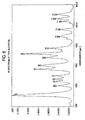
Fig.2 shows differentiation scanning calorimetry
(DSC) chart of the type-A crystal.
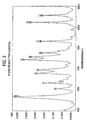
Fig.3 shows infrared absorption (IR) spectrum of
the type-A crystal.
Fig.4 shows X-ray powder diffraction spectrum of
the type-B crystal.
Fig.5 shows differentiation scanning calorimetry
(DSC) chart of the type-B crystal.
Fig.6 shows infrared absorption (IR) spectrum of
the type-B crystal.
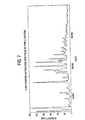
Fig.7 shows X-ray powder diffraction spectrum of
the type-C crystal.
Fig.8 shows differential scanning calorimetry (DSC)
chart of the type-C crystal.
Fig.9 shows infrared absorption (IR) spectrum of
the type-C crystal.
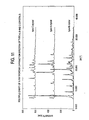
Fig.10 shows multiple chart of infrared absorption
(IR) spectrum of the crystals prepared in reference example
2 and comparative example 1.
Fig.11 shows multiple chart of X-ray powder
diffraction spectrum of the type-A, B and C crystals.
Fig.12 shows multiple chart of differential
scanning calorimetry (DSC) of the type-A, B and C crystals.
Fig.13 shows multiple chart of infrared absorption
(IR) spectrum of the type-A, B and C crystals.
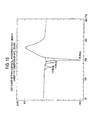
Fig.14 shows endothermic peak chart by differential
scanning calorimetry (DSC) of the type-A crystal.
Fig.15 shows endothermic amount chart by
differential scanning calorimetry (DSC) of the type-A
crystal, which was preserved under the condition of 40 °C-75%RH,
for 1 month.
Fig.16 shows endothermic amount chart by
differential scanning calorimetry (DSC) of the type-A
crystal, which was preserved under the condition of 40 °C,
for 6 months.
Fig.17 (A) shows X-ray powder diffraction spectrum
of the type-A crystal and (B) shows X-ray powder
diffraction spectrum of the type-A crystal, which was
preserved at 40 °C for 6 months.
Fig.18 shows the graph which represents the
transition of concentrations of the type-A and type-C
crystals in plasma.
Description of the present invention
Each crystal of the type-A, B or C of the compound
(I) is prepared by the method described in examples or the
following method.
That is, the type-A crystal, the type-B crystal and
the type-C crystal may be prepared by recrystallization of
compound (I) in a mixed solvent of rich solvent, which
solvates crude compound (I), and poor solvent, which does
not solvate it.
Concretely, the type-A crystal may be prepared by
recrystallizing crude compound (I) in a mixed solvent of
alcohol solvent (methanol, ethanol, propanol, isopropanol,
butanol, t-butanol, etc.) and water, or in a mixed solvent
of tetrahydrofuran and cyclohexane.
Preferable alcohol solvent includes ethanol and
isopropanol.
Preferable ratio of mixed solvent in volume is,
alcohol solvent : water = 1 : 3 ~ 3 : 1, and more
preferably 1 : 2.
Preferable ratio of mixed solvent in volume is,
tetrahydrofuran : cyclohexane = 2 : 1.
Preferable solvent volume of a mixture of alcohol
solvent and water and a mixture of tetrahydrofuran and
cyclohexane is, approximately 2 ∼ 50 ml versus 1 g of crude
compound (I), and more preferably approximately 30 ml.
The type-B crystal may be prepared by
recrystallizing crude compound (I) in a mixed solvent of
tetrahydrofuran and cyclohexane.
Preferable ratio of a mixed solvent in volume is
tetrahydrofuran : cyclohexane = 3 : 2.
The volume of a mixed solvent is approximately
2∼100 ml per 1 g of compound (I), more preferably
approximately 4∼48 ml, more preferably approximately 10 ml.
[Pharmaceutical effect]
It was confirmed that the compound of the present
invention has matrix metalloproteinase inhibitory activity
by the method described in pages 149~151 of the
specification of WO 99/19296.
[Toxicity]
The compound of the present invention is very low
and therefore it is safe enough for pharmaceutical use.
[Pharmaceutical Use]
The compound of the present invention has
inhibitory activity against matrix metalloproteinase and
therefore it is expected to be used as an agent for the
treatment and/or prophylaxis of rheumatoid arthritis,
arthrosteitis, pathological bone resorption, osteoporosis,
periodontitis, interstitial nephritis, arteriosclerosis,
pulmonary emphysema, cirrhosis hepatis, corneal damages,
diseases of metastasis and infiltration of cancer cells and
proliferation, autoimmune diseases (Crohn's diseases,
Sjogren's syndrome, etc.), diseases caused by vascular
emigration or infiltration of leukocytes, angiogenesis,
multiple sclerosis, aortic aneurysm, endometriosis,
constrictive vessel lesion, e.g. restenosis after PTCA,
unstable angina, acute myocardial infarction, transient
ischemic attack.
For the purpose described above, the compounds of
the present invention, may normally be administered
systemically or topically, usually by oral or parenteral
administration.
The doses to be administered are determined
depending upon, for example, age, body weight, symptom, the
desired therapeutic effect, the route of administration,
and the duration of the treatment. In the human adult, the
doses per person are generally from 1 mg to 1000 mg, by
oral administration, up to several times per day, and from
1 mg to 100 mg, by parenteral administration (preferably
intravenous administration), up to several times per day,
or continuous administration for from 1 to 24 hours per day
from vein.
As mentioned above, the doses to be used depend
upon various conditions. Therefore, there are cases
wherein doses lower than or greater than the ranges
specified above may be used.
The compound of the present invention may be
administered in the form of solid compositions for oral
administration or parenteral administration.
Solid compositions for oral administration include
compressed tablets, pills, capsules, dispersible powders
and granules, etc.
Capsules include hard capsules and soft capsules.
In such solid compositions, one or more of the
active compound(s) may be admixed with at least one inert
diluent (e.g. lactose, mannitol, glucose, hydroxypropyl
cellulose, microcrystalline cellulose, starch, polyvinyl
pyrrolidone or magnesium metasilicate aluminate). The
compositions may also comprise, as is normal practice,
additional substances other than inert diluents: e.g.
lubricating agents (e.g. magnesium stearate),
disintegrating agents (e.g. cellulose calcium glycolate),
stabilizing agents (e.g. lactose), and agents to assist
dissolution (e.g. glutamic acid or asparatic acid). The
tablets or pills may, if desired, be coated with a film of
gastric or enteric material (e.g. sugar, gelatin,
hydroxypropyl cellulose or hydroxypropylmethyl cellulose
phthalate), or be coated with two or more films. Further,
coating may include containment within capsules of
absorbable materials such as gelatin.
Solid compositions for parenteral administration
include suppositories for rectal administration and
pessaries for vaginal administration which comprise one or
more of the active compound(s) and may be prepared by
methods known per se.
Best mode for carrying out the invention
The following reference examples, examples,
comparative examples and test examples illustrate the new
crystal of compound (I) of the present invention, but the
present invention are not limited to them.
Reference example 1 : Preparation example of N-hydroxy-2(S)-methyl-5-ethoxymethoxy-4(S)-[N-(4-phenoxyphenylcarbonyl)amino]pentanamide
In a 100 L reaction pot was added N-(1-methoxy-1,1-dimethylmethyl)oxy-2(S)-methyl-5-ethoxymethoxy-4(S)-[N-(4-phenoxyphenylcarbonyl)amino]pentanamide
(5100 g; prepared
according to the method described in the specification of
WO 99/19296) and methanol (15 L) and the mixture was
dissolved by stirring.
To the above solution was added 1M aqueous
hydrochloric acid (313 ml) slowly and the mixture was
stirred for 1 hour at room temperature. After confirming
the termination of the reaction, the reaction mixture was
filtrated.
The filtrate was washed with methanol (5 L). The
filtrate and washed solution was combined and it was added
to a 100 L reaction pot. Hereto was added tap water (3 L)
and hexane (10 L). The above solution was stirred and was
allowed to stand and was separated. The methanol layer was
washed with hexane (10 L). The methanol layer was poured
into tap water (80 L) under stirring slowly and the mixture
was stirred for 30 minutes with internal temperature 20-30
°C and the mixture was cooled down to 0-5 °C and the
mixture was stirred for 30 minutes. The mixture was
centrifuged to give a crystal and was washed with tap water
(20 L).
The crystal was dried for 15 hours to give a crude
crystal of N-hydroxy-2(S)-methyl-5-ethoxymethoxy-4(S)-[N-(4-phenoxyphenylcarbonyl)amino]pentanamide
(4044 g).
Example 1 : Preparation of type-A crystal
In a 300 L dissolution pot was added isopropanol
(27 L) and tap water (27 L) (50% aqueous solution of
isopropanol) and thereto was added crude crystal of N-hydroxy-2(S)-methyl-5-ethoxymethoxy-4(S)-N-(4-phenoxyphenylcarbonyl)amino]pentanamide
(3.6 kg), which was
prepared in reference example 1 and the mixture was
dissolved by stirring with heating to adjust internal
temperature 50 °C. After the substance was completely
dissolved, the mixture was cooled down to adjust internal
temperature 40 °C. To another 300 L pot for
crystallization were added isopropanol (11 L) and tap water
(43 L) (aqueous 20% solution of isopropanol) and the
internal temperature was adjusted to 20∼25 °C. The
solution in the pot was added to the above pot for
crystallization with the internal temperature 20~35 °C
through 50L filter press which was warmed to approximately
40 °C. The dissolution pot and filter press were washed
with 50% aqueous solution of isopropanol and the solution
was added to the pot for crystallization. The internal
temperature of crystallization pot was lowered to 20 ∼ 25
°C and the mixture was stirred for 1 hour. After
confirming that the crystal precipitated to a great degree,
the mixture was cooled down to 0∼5 °C (internal
temperature) and the mixture was stirred for 30 minutes.
The precipitated crystal was centrifuged. The crystal
which separated out was washed with 35% aqueous solution of
isopropanol (7.2 L). The crystal was dried under reduced
pressure for more than 15 hours at 40 °C to give type-A,
crystal of N-hydroxy-2(S)-methyl-5-ethoxymethoxy-4(S)-[N-(4-phenoxyphenylcarbonyl)amino]pentanamide
(3.01 kg).
Physical data of type-A crystal
1) melting point : 137~140 °C
2) X-ray powder diffraction spectrum measured by the
following condition is shown in fig.1, the chart of
differential scanning calorimeter (DSC) in fig.2 and
infrared absorption (IR) spectrum is shown in fig.3, each
was measured under the following condition.
(1) X-ray powder diffraction spectrum
Apparatus : Rigaku X-ray powder diffraction apparatus RAD-2C, Target: Cu, Filter: not used, Voltage: 40 kV, electrical current : 20 mA, scanning speed : 2.0° /min
The chart of fig.1 is given after smoothing and
removal of background.
(2) Examining of Differential Scanning Calorimetry (DSC)
Apparatus : Shimadzu DSC-50, Sample: 3.90 mg, Sample cell : aluminum open cell, Nitrogen Gas Flow : 20 ml/min, heating rate : 10 °C/min. (3) Infrared absorption (IR) spectrum
Apparatus : ASI APPLIED SYSMTEMS REACT IR1000(brand name) Dissolution performance : 2 cm-1 Scanning number of times : 128
Example 2 : Preparation of B-type crystal
To tetrahydrofuran (18 ml) was added crude crystal
of N-hydroxy-2(S)-methyl-5-ethoxymethoxy-4(S)-[N-(4-phenoxyphenylcarbonyl)amino]pentanamide
(2.86 g) and the
mixture was dissolved by heating. To the mixture was added
cyclohexane (12 ml) slowly with internal temperature 62 °C
and was cooled down slowly. A crystal started to
precipitate (separate out) with internal temperature 53 °C.
When the internal temperature was below approximately 40 °C,
to the mixture was added a mixed solvent (tetrahydrofuran :
cyclohexane = 1 : 1, 10 ml). With internal temperature 25
°C the mixture was stirred for 30 minutes and the given
crystal was collected off under reduced pressure. Thus
obtained crystal was washed with a mixed solvent
(tetrahydrofuran : cyclohexane =1 : 1, 10 ml) and was
dried under reduced pressure at room temperature to give
type-B crystal of N-hydroxy-2(S)-methyl-5-ethoxymethoxy-4(S)-[N-(4-phenoxyphenylcarbonyl)amino]pentanamide
(2.38 g).
Physical data of type-B crystal
1) melting point : 141 ∼ 143 °C
2) Fig.4 shows the X-ray powder diffraction spectrum, fig.5
shows the chart of differential scanning calorimetry (DSC)
and fig.6 shows the infrared absorption (IR) spectrum, all
of which were measured under the following conditions,
respectively.
(1) X-ray powder diffraction spectrum
Apparatus : Rigaku X-ray powder diffraction apparatus RAD-2C, Target : Cu, Filter : not used, Voltage : 40 kV, Electric current : 20 mA, Scanning speed : 2.0 °C/min
The chart of fig.4 is given after smoothing and
removal of background.
(2) Differential Scanning Calorimetry (DSC)
Apparatus : Shimadzu DSC-50, Sample : 4.54 mg, Sample cell : aluminum open cell, Nitrogen gas flow: 20 ml/min, Heating rate : 10 °C/min. (3) Infrared absorption (IR) spectrum
Apparatus : ASI APPLIED SYSTEMS REACT IR1000 (brand name) Dissolution performance : 2cm-1 Scanning number of times : 128
Reference example 2 : Preparation of type-C crystal
To ethyl acetate (40 ml) was added crude crystal of
N-hydroxy-2(S)-methyl-5-ethoxymethoxy-4(S)-[N-(4-phenoxyphenylcarbonyl)amino]pentanamide
(2.0 g), which was
prepared in reference example 1, and the mixture was
dissolved by heating. This solution was cooled down slowly
and thereto was added seed crystal of type C crystal (20
mg) with internal temperature 65 °C. This solution was
cooled down slowly to give crystallization. The solution
was cooled down to 0∼5 °C and the mixture was stirred for
30 minutes with internal temperature 5 °C and the crystal
was collected off. The given crystal was washed with cool
ethyl acetate (4.0 ml). The crystal was dried under
reduced pressure at room temperature to give type-C crystal
of N-hydroxy-2(S)-methyl-5-ethoxymethoxy-4(S)-[N-(4-phenoxyphenylcarbonyl)amino]pentanamide
(1.54 g).
Physical data of type-C crystal
1) melting point : 138 ∼ 142 °C
2) Fig.7 shows the X-ray powder diffraction spectrum, fig.8
shows the chart of differential scanning calorimetry (DSC)
and fig.9 shows infrared absorption (IR) spectrum, all of
which were measured under the following conditions,
respectively.
(1) X-ray powder diffraction spectrum
Apparatus : Rigaku X-ray powder diffraction apparatus RAD-2C, Target : Cu, Filter : not used, voltage : 40 kV, Electric current : 20 mA, Scanning speed : 2.0 °C/min
The chart of fig.7 is given after smoothing and
removal of background.
(2) Differential Scanning Calorimetry (DSC)
Apparatus : Shimadzu DSC-50, Sample : 3.49 mg, Sample cell : aluminum open cell, Nitrogen gas flow: 20 ml/min, Heating rate : 10 °C/min. (3) Infrared absorption (IR) spectrum
Apparatus : ASI APPLIED SYSTEMS REACT IR1000 (brand name) Dissolution performance : 2cm-1 Scanning number of times : 128
Comparative example 1 :
As shown below, N-hydroxy-2(S)-methyl-5-ethoxymethoxy-4(S)-[N-(4-phenoxyphenylcarbonyl)amino]pentanamide
was synthesized
according to the method described in example 71 of the
specification of WO 99/19296.
To a solution of N-(1-methoxy-1,1-dimethylmethyl)oxy-2(S)-methyl-5-ethoxymethoxy-4(S)-[N-(4-phenoxyphenylcarbonyl)amino]pentanamide
(1.012 g) in
methanol (40 ml) was added 1N hydrochloric acid (8 drops).
The reaction mixture was stirred at room temperature.
After confirming that the starting material disappeared,
the reaction mixture was concentrated. The given residue
was washed with diethyl ether (30 ml) to give N-hydroxy-2(S)-methyl-5-ethoxymethoxy-4(S)-[N-(4-phenoxyphenylcarbonyl)amino]pentanamide
(709 mg).
As a result of measurement of infrared absorption
spectrum on N-hydroxy-2(S)-methyl-5-ethoxymethoxy-4(S)-[N-(4-phenoxyphenylcarbonyl)amino]pentanamide,
it proved that
the spectrum was the same as that of type-C crystal, which
was given in reference example 2 (see fig.10).
Table 3 shows the summary of data regarding crystal
forms of type-A, B and C crystals.
And fig.11 shows multiple chart of X-ray powder
diffraction spectra on type-A, B and C, fig.12 shows
multiple chart of differential scanning calorimetry (DSC)
and fig.13 shows multiple chart of infrared absorption (IR)
spectra.
As is apparent from table 3, fig. 1∼9 and fig.11~13,
type-A, B and C crystals have different crystal forms from
each other.
Stability test :
Weighing out over approximately 50 mg of type-A
crystal powder, it was preserved under the condition of
The type-A crystal preserved under above conditions
and another type-A crystal which was preserved at 5 °C were
subjected to measurement of differential scanning
calorimetry (DSC) and caloric transition (ΔH) per 1 g was
calculated from endothermic peak chart (see fig.14∼16)
And fig.17(A) shows X-ray diffraction spectrum of
type-A crystal and (B) shows X-ray diffraction spectrum of
type-A crystal, which was preserved for 6 months at 40 °C.
ΔH= peak area / sample weight
Table 4 shows the calorie variation (absolute
value) of peaks at each condition.
| | ΔH (J/g) |
| initial | 13.40 |
| 1 month, 40°C-75%RH | 14.80 |
| 6 months, 40°C | 13.41 |
As is apparent from DSC chart, type-A crystal is
transited to type-C crystal and type-B crystal, and
therefore it is generally thought to be unstable. However,
as is seen from above table 4, no significant difference in
calorie variety is recognized neither in 40 °C-75%RH-a
month nor in 40°C-6 month preservation (see fig.17) and so
crystal transition is not caused so it proved to be a
stable crystal.
Oral absorption test :
The compound of the present invention (2 g), DK
ester SS (Daiichi Kogyo Seiyaku) and lactose (2.9 g) were
weighed and the mixture was mixed slightly in a mortar and
the mixture was filtered through 60 mesh strainer twice to
give pharmaceutical powder. The pharmaceutical powder was
filled in No.0 gelatin capsule 250 mg/cap each. By this
method, capsule formulations containing type-A and type-C
crystal were prepared respectively.
A beagle was fed with solid food (240 g) and after
30 minutes above prepared capsules were administered in a
stomach using sonde for oral administration and tap water
(20 ml) was administered with sonde for oral administration.
After administration, 15 minutes, 30 minutes, 1
hour, 2 hours and 3 hours taken a blood of 1 ml from
cephalic vein using heparin dealt syringe. The taken
sample was disposed under 12000 rpm for 2 minutes and
plasma was separated and the concentration of the compound
in plasma (µg/ml) was measured.
The dose given to the beagle was 50 mg/kg and 4
beagles for type-A crystal and 3 beagles for type-C crystal.
The transition of blood-concentration-time was shown in
fig.18.
And table 5 shows the average value of area under
the (blood concentration-time) curve (AUC, µg × hr/ml) and
maximum drug concentration (Cmax, µg/ml).
| | Cmax (µg/mL) | AUC (mg x hr/mL) |
| Type-A crystal | 3.6 | 5.1 |
| Type-C crystal | 2.0 | 3.5 |
As is apparent from the above result, type-A
crystal has higher concentration in plasma than type-C
crystal.
[Formulation example]
Formulation example 1:
The following components were admixed in a
conventional method and punched out to give 100 tablets
each containing 50 mg of active ingredient.
| · Type-A crystal of N-hydroxy-2(S)-methyl-5-ethoxymethoxy-4(S)-[N-(4- phenoxyohenylcarbonyl)amino]pentanamide | 5.0 g |
| · Carboxymethylcellulose calcium (disintegrating agent) | 0.2 g |
| · magnesium stearate (lubricating agent) | 0.1 g |
| · microcrystalline cellulose | 4.7 g |
The following components were admixed in a
conventional method and punched out to give 100 tablets
each containing 50 mg of active ingredient.
| ·Type-B crystal of N-hydroxy-2(S)-methyl-5-ethoxymethoxy-4(S)-[N-(4-phenoxyohenylcarbonyl)amino]pentanamide | 5.0 g |
| ·Carboxymethylcellulose calcium (disintegrating agent) | 0.2 g |
| ·Magnesium stearate (lubricating agent) | 0.1 g |
| ·microcrystalline cellulose | 4.7 g |