EP1315517B1 - Mimetic peptides for epitope of apolipoprotein b-100, concatemer and modified peptides thereof, and the vaccine composition comprising the same - Google Patents
Mimetic peptides for epitope of apolipoprotein b-100, concatemer and modified peptides thereof, and the vaccine composition comprising the same Download PDFInfo
- Publication number
- EP1315517B1 EP1315517B1 EP01965715A EP01965715A EP1315517B1 EP 1315517 B1 EP1315517 B1 EP 1315517B1 EP 01965715 A EP01965715 A EP 01965715A EP 01965715 A EP01965715 A EP 01965715A EP 1315517 B1 EP1315517 B1 EP 1315517B1
- Authority
- EP
- European Patent Office
- Prior art keywords
- peptides
- concatemer
- seq
- peptide
- amino acid
- Prior art date
- Legal status (The legal status is an assumption and is not a legal conclusion. Google has not performed a legal analysis and makes no representation as to the accuracy of the status listed.)
- Expired - Lifetime
Links
- 108090000765 processed proteins & peptides Proteins 0.000 title claims description 113
- 102000004196 processed proteins & peptides Human genes 0.000 title claims description 34
- 108091028732 Concatemer Proteins 0.000 title claims description 33
- 239000000203 mixture Substances 0.000 title claims description 31
- 229960005486 vaccine Drugs 0.000 title claims description 30
- 102000006991 Apolipoprotein B-100 Human genes 0.000 title description 26
- 108010008150 Apolipoprotein B-100 Proteins 0.000 title description 26
- 108091005601 modified peptides Proteins 0.000 title description 13
- 239000000243 solution Substances 0.000 claims description 40
- 239000013598 vector Substances 0.000 claims description 23
- 208000008589 Obesity Diseases 0.000 claims description 21
- 235000020824 obesity Nutrition 0.000 claims description 21
- 238000002347 injection Methods 0.000 claims description 13
- 239000007924 injection Substances 0.000 claims description 13
- 230000015572 biosynthetic process Effects 0.000 claims description 5
- 238000004519 manufacturing process Methods 0.000 claims description 4
- 239000000843 powder Substances 0.000 claims description 4
- 239000003814 drug Substances 0.000 claims description 3
- 239000000839 emulsion Substances 0.000 claims description 3
- 239000000443 aerosol Substances 0.000 claims description 2
- 239000007903 gelatin capsule Substances 0.000 claims description 2
- 239000008187 granular material Substances 0.000 claims description 2
- 239000006187 pill Substances 0.000 claims description 2
- 239000006188 syrup Substances 0.000 claims description 2
- 235000020357 syrup Nutrition 0.000 claims description 2
- 239000003826 tablet Substances 0.000 claims description 2
- 230000001131 transforming effect Effects 0.000 claims description 2
- 125000003275 alpha amino acid group Chemical group 0.000 claims 12
- 108020004707 nucleic acids Proteins 0.000 claims 2
- 102000039446 nucleic acids Human genes 0.000 claims 2
- 150000007523 nucleic acids Chemical class 0.000 claims 2
- 238000012258 culturing Methods 0.000 claims 1
- 229940102223 injectable solution Drugs 0.000 claims 1
- 125000002924 primary amino group Chemical group [H]N([H])* 0.000 claims 1
- 108020004414 DNA Proteins 0.000 description 44
- HVYWMOMLDIMFJA-DPAQBDIFSA-N cholesterol Chemical compound C1C=C2C[C@@H](O)CC[C@]2(C)[C@@H]2[C@@H]1[C@@H]1CC[C@H]([C@H](C)CCCC(C)C)[C@@]1(C)CC2 HVYWMOMLDIMFJA-DPAQBDIFSA-N 0.000 description 38
- XSQUKJJJFZCRTK-UHFFFAOYSA-N Urea Chemical compound NC(N)=O XSQUKJJJFZCRTK-UHFFFAOYSA-N 0.000 description 34
- 239000013612 plasmid Substances 0.000 description 25
- 241000699670 Mus sp. Species 0.000 description 24
- 108091034117 Oligonucleotide Proteins 0.000 description 24
- 108090000623 proteins and genes Proteins 0.000 description 22
- 102000004169 proteins and genes Human genes 0.000 description 22
- 241000699666 Mus <mouse, genus> Species 0.000 description 20
- 239000000499 gel Substances 0.000 description 20
- 239000004202 carbamide Substances 0.000 description 17
- 235000012000 cholesterol Nutrition 0.000 description 17
- 238000012360 testing method Methods 0.000 description 17
- 101710085035 RNA-directed RNA polymerase catalytic subunit Proteins 0.000 description 16
- 239000000872 buffer Substances 0.000 description 16
- 241000588724 Escherichia coli Species 0.000 description 15
- 102100037516 Protein polybromo-1 Human genes 0.000 description 14
- FAPWRFPIFSIZLT-UHFFFAOYSA-M Sodium chloride Chemical compound [Na+].[Cl-] FAPWRFPIFSIZLT-UHFFFAOYSA-M 0.000 description 14
- 210000004027 cell Anatomy 0.000 description 14
- 238000000034 method Methods 0.000 description 14
- 108010007622 LDL Lipoproteins Proteins 0.000 description 13
- 102000007330 LDL Lipoproteins Human genes 0.000 description 13
- 238000010276 construction Methods 0.000 description 13
- 210000002966 serum Anatomy 0.000 description 13
- 210000004369 blood Anatomy 0.000 description 12
- 239000008280 blood Substances 0.000 description 12
- 239000006180 TBST buffer Substances 0.000 description 11
- 230000037396 body weight Effects 0.000 description 11
- 108010028554 LDL Cholesterol Proteins 0.000 description 10
- 101100189471 Mus musculus Pbx1 gene Proteins 0.000 description 10
- JLCPHMBAVCMARE-UHFFFAOYSA-N [3-[[3-[[3-[[3-[[3-[[3-[[3-[[3-[[3-[[3-[[3-[[5-(2-amino-6-oxo-1H-purin-9-yl)-3-[[3-[[3-[[3-[[3-[[3-[[5-(2-amino-6-oxo-1H-purin-9-yl)-3-[[5-(2-amino-6-oxo-1H-purin-9-yl)-3-hydroxyoxolan-2-yl]methoxy-hydroxyphosphoryl]oxyoxolan-2-yl]methoxy-hydroxyphosphoryl]oxy-5-(5-methyl-2,4-dioxopyrimidin-1-yl)oxolan-2-yl]methoxy-hydroxyphosphoryl]oxy-5-(6-aminopurin-9-yl)oxolan-2-yl]methoxy-hydroxyphosphoryl]oxy-5-(6-aminopurin-9-yl)oxolan-2-yl]methoxy-hydroxyphosphoryl]oxy-5-(6-aminopurin-9-yl)oxolan-2-yl]methoxy-hydroxyphosphoryl]oxy-5-(6-aminopurin-9-yl)oxolan-2-yl]methoxy-hydroxyphosphoryl]oxyoxolan-2-yl]methoxy-hydroxyphosphoryl]oxy-5-(5-methyl-2,4-dioxopyrimidin-1-yl)oxolan-2-yl]methoxy-hydroxyphosphoryl]oxy-5-(4-amino-2-oxopyrimidin-1-yl)oxolan-2-yl]methoxy-hydroxyphosphoryl]oxy-5-(5-methyl-2,4-dioxopyrimidin-1-yl)oxolan-2-yl]methoxy-hydroxyphosphoryl]oxy-5-(5-methyl-2,4-dioxopyrimidin-1-yl)oxolan-2-yl]methoxy-hydroxyphosphoryl]oxy-5-(6-aminopurin-9-yl)oxolan-2-yl]methoxy-hydroxyphosphoryl]oxy-5-(6-aminopurin-9-yl)oxolan-2-yl]methoxy-hydroxyphosphoryl]oxy-5-(4-amino-2-oxopyrimidin-1-yl)oxolan-2-yl]methoxy-hydroxyphosphoryl]oxy-5-(4-amino-2-oxopyrimidin-1-yl)oxolan-2-yl]methoxy-hydroxyphosphoryl]oxy-5-(4-amino-2-oxopyrimidin-1-yl)oxolan-2-yl]methoxy-hydroxyphosphoryl]oxy-5-(6-aminopurin-9-yl)oxolan-2-yl]methoxy-hydroxyphosphoryl]oxy-5-(4-amino-2-oxopyrimidin-1-yl)oxolan-2-yl]methyl [5-(6-aminopurin-9-yl)-2-(hydroxymethyl)oxolan-3-yl] hydrogen phosphate Polymers Cc1cn(C2CC(OP(O)(=O)OCC3OC(CC3OP(O)(=O)OCC3OC(CC3O)n3cnc4c3nc(N)[nH]c4=O)n3cnc4c3nc(N)[nH]c4=O)C(COP(O)(=O)OC3CC(OC3COP(O)(=O)OC3CC(OC3COP(O)(=O)OC3CC(OC3COP(O)(=O)OC3CC(OC3COP(O)(=O)OC3CC(OC3COP(O)(=O)OC3CC(OC3COP(O)(=O)OC3CC(OC3COP(O)(=O)OC3CC(OC3COP(O)(=O)OC3CC(OC3COP(O)(=O)OC3CC(OC3COP(O)(=O)OC3CC(OC3COP(O)(=O)OC3CC(OC3COP(O)(=O)OC3CC(OC3COP(O)(=O)OC3CC(OC3COP(O)(=O)OC3CC(OC3COP(O)(=O)OC3CC(OC3COP(O)(=O)OC3CC(OC3CO)n3cnc4c(N)ncnc34)n3ccc(N)nc3=O)n3cnc4c(N)ncnc34)n3ccc(N)nc3=O)n3ccc(N)nc3=O)n3ccc(N)nc3=O)n3cnc4c(N)ncnc34)n3cnc4c(N)ncnc34)n3cc(C)c(=O)[nH]c3=O)n3cc(C)c(=O)[nH]c3=O)n3ccc(N)nc3=O)n3cc(C)c(=O)[nH]c3=O)n3cnc4c3nc(N)[nH]c4=O)n3cnc4c(N)ncnc34)n3cnc4c(N)ncnc34)n3cnc4c(N)ncnc34)n3cnc4c(N)ncnc34)O2)c(=O)[nH]c1=O JLCPHMBAVCMARE-UHFFFAOYSA-N 0.000 description 10
- 239000012528 membrane Substances 0.000 description 10
- 238000006243 chemical reaction Methods 0.000 description 9
- QKNYBSVHEMOAJP-UHFFFAOYSA-N 2-amino-2-(hydroxymethyl)propane-1,3-diol;hydron;chloride Chemical compound Cl.OCC(N)(CO)CO QKNYBSVHEMOAJP-UHFFFAOYSA-N 0.000 description 8
- 238000008214 LDL Cholesterol Methods 0.000 description 8
- 239000011347 resin Substances 0.000 description 8
- 229920005989 resin Polymers 0.000 description 8
- AJPJDKMHJJGVTQ-UHFFFAOYSA-M sodium dihydrogen phosphate Chemical compound [Na+].OP(O)([O-])=O AJPJDKMHJJGVTQ-UHFFFAOYSA-M 0.000 description 8
- 238000002415 sodium dodecyl sulfate polyacrylamide gel electrophoresis Methods 0.000 description 8
- 229910000162 sodium phosphate Inorganic materials 0.000 description 8
- 238000001262 western blot Methods 0.000 description 8
- 239000002671 adjuvant Substances 0.000 description 7
- 238000002474 experimental method Methods 0.000 description 7
- 239000001963 growth medium Substances 0.000 description 7
- 150000002632 lipids Chemical class 0.000 description 7
- 239000008188 pellet Substances 0.000 description 7
- 238000002264 polyacrylamide gel electrophoresis Methods 0.000 description 7
- XLYOFNOQVPJJNP-UHFFFAOYSA-N water Substances O XLYOFNOQVPJJNP-UHFFFAOYSA-N 0.000 description 7
- 102100029727 Enteropeptidase Human genes 0.000 description 6
- 108010013369 Enteropeptidase Proteins 0.000 description 6
- OKKJLVBELUTLKV-UHFFFAOYSA-N Methanol Chemical compound OC OKKJLVBELUTLKV-UHFFFAOYSA-N 0.000 description 6
- 241000283973 Oryctolagus cuniculus Species 0.000 description 6
- 230000000890 antigenic effect Effects 0.000 description 6
- 238000000502 dialysis Methods 0.000 description 6
- 239000011780 sodium chloride Substances 0.000 description 6
- 206010003210 Arteriosclerosis Diseases 0.000 description 5
- 108010023302 HDL Cholesterol Proteins 0.000 description 5
- DBMJMQXJHONAFJ-UHFFFAOYSA-M Sodium laurylsulphate Chemical compound [Na+].CCCCCCCCCCCCOS([O-])(=O)=O DBMJMQXJHONAFJ-UHFFFAOYSA-M 0.000 description 5
- 239000000427 antigen Substances 0.000 description 5
- 102000036639 antigens Human genes 0.000 description 5
- 108091007433 antigens Proteins 0.000 description 5
- 208000011775 arteriosclerosis disease Diseases 0.000 description 5
- 238000012790 confirmation Methods 0.000 description 5
- 201000010099 disease Diseases 0.000 description 5
- 208000037265 diseases, disorders, signs and symptoms Diseases 0.000 description 5
- 230000000694 effects Effects 0.000 description 5
- 239000013604 expression vector Substances 0.000 description 5
- 239000002609 medium Substances 0.000 description 5
- 229940092253 ovalbumin Drugs 0.000 description 5
- 230000008569 process Effects 0.000 description 5
- 235000019333 sodium laurylsulphate Nutrition 0.000 description 5
- 239000006228 supernatant Substances 0.000 description 5
- 238000002965 ELISA Methods 0.000 description 4
- DHMQDGOQFOQNFH-UHFFFAOYSA-N Glycine Chemical compound NCC(O)=O DHMQDGOQFOQNFH-UHFFFAOYSA-N 0.000 description 4
- 108010058846 Ovalbumin Proteins 0.000 description 4
- 230000000903 blocking effect Effects 0.000 description 4
- 239000003795 chemical substances by application Substances 0.000 description 4
- 230000000295 complement effect Effects 0.000 description 4
- 238000011534 incubation Methods 0.000 description 4
- 210000002540 macrophage Anatomy 0.000 description 4
- 210000004681 ovum Anatomy 0.000 description 4
- 238000002360 preparation method Methods 0.000 description 4
- 238000000746 purification Methods 0.000 description 4
- 239000011541 reaction mixture Substances 0.000 description 4
- 238000011160 research Methods 0.000 description 4
- 108091008146 restriction endonucleases Proteins 0.000 description 4
- RAXXELZNTBOGNW-UHFFFAOYSA-N 1H-imidazole Chemical compound C1=CNC=N1 RAXXELZNTBOGNW-UHFFFAOYSA-N 0.000 description 3
- QTBSBXVTEAMEQO-UHFFFAOYSA-N Acetic acid Chemical compound CC(O)=O QTBSBXVTEAMEQO-UHFFFAOYSA-N 0.000 description 3
- 108091003079 Bovine Serum Albumin Proteins 0.000 description 3
- PEDCQBHIVMGVHV-UHFFFAOYSA-N Glycerine Chemical compound OCC(O)CO PEDCQBHIVMGVHV-UHFFFAOYSA-N 0.000 description 3
- 239000002033 PVDF binder Substances 0.000 description 3
- 108010067902 Peptide Library Proteins 0.000 description 3
- 229920001213 Polysorbate 20 Polymers 0.000 description 3
- 108010062497 VLDL Lipoproteins Proteins 0.000 description 3
- 159000000013 aluminium salts Chemical class 0.000 description 3
- 229910000329 aluminium sulfate Inorganic materials 0.000 description 3
- 150000001413 amino acids Chemical group 0.000 description 3
- BFNBIHQBYMNNAN-UHFFFAOYSA-N ammonium sulfate Chemical compound N.N.OS(O)(=O)=O BFNBIHQBYMNNAN-UHFFFAOYSA-N 0.000 description 3
- 229910052921 ammonium sulfate Inorganic materials 0.000 description 3
- 235000011130 ammonium sulphate Nutrition 0.000 description 3
- 229940098773 bovine serum albumin Drugs 0.000 description 3
- 239000007853 buffer solution Substances 0.000 description 3
- 230000008859 change Effects 0.000 description 3
- 238000004587 chromatography analysis Methods 0.000 description 3
- 238000007796 conventional method Methods 0.000 description 3
- 238000001962 electrophoresis Methods 0.000 description 3
- ZMMJGEGLRURXTF-UHFFFAOYSA-N ethidium bromide Chemical compound [Br-].C12=CC(N)=CC=C2C2=CC=C(N)C=C2[N+](CC)=C1C1=CC=CC=C1 ZMMJGEGLRURXTF-UHFFFAOYSA-N 0.000 description 3
- 229960005542 ethidium bromide Drugs 0.000 description 3
- 238000000605 extraction Methods 0.000 description 3
- 235000021588 free fatty acids Nutrition 0.000 description 3
- 230000002209 hydrophobic effect Effects 0.000 description 3
- 230000036039 immunity Effects 0.000 description 3
- 230000003053 immunization Effects 0.000 description 3
- 230000006698 induction Effects 0.000 description 3
- 230000002401 inhibitory effect Effects 0.000 description 3
- 239000007788 liquid Substances 0.000 description 3
- 239000000463 material Substances 0.000 description 3
- 238000005259 measurement Methods 0.000 description 3
- 230000007246 mechanism Effects 0.000 description 3
- 239000000256 polyoxyethylene sorbitan monolaurate Substances 0.000 description 3
- 235000010486 polyoxyethylene sorbitan monolaurate Nutrition 0.000 description 3
- 229920002981 polyvinylidene fluoride Polymers 0.000 description 3
- QRXMUCSWCMTJGU-UHFFFAOYSA-N 5-bromo-4-chloro-3-indolyl phosphate Chemical compound C1=C(Br)C(Cl)=C2C(OP(O)(=O)O)=CNC2=C1 QRXMUCSWCMTJGU-UHFFFAOYSA-N 0.000 description 2
- 229920001817 Agar Polymers 0.000 description 2
- 102000014914 Carrier Proteins Human genes 0.000 description 2
- 108010078791 Carrier Proteins Proteins 0.000 description 2
- 102000012410 DNA Ligases Human genes 0.000 description 2
- 108010061982 DNA Ligases Proteins 0.000 description 2
- 102000004190 Enzymes Human genes 0.000 description 2
- 108090000790 Enzymes Proteins 0.000 description 2
- 241001596967 Escherichia coli M15 Species 0.000 description 2
- 239000004471 Glycine Substances 0.000 description 2
- 108010010234 HDL Lipoproteins Proteins 0.000 description 2
- 102000015779 HDL Lipoproteins Human genes 0.000 description 2
- 108091006054 His-tagged proteins Proteins 0.000 description 2
- 208000035150 Hypercholesterolemia Diseases 0.000 description 2
- 108010046315 IDL Lipoproteins Proteins 0.000 description 2
- 102000000853 LDL receptors Human genes 0.000 description 2
- 108010001831 LDL receptors Proteins 0.000 description 2
- 102000004882 Lipase Human genes 0.000 description 2
- 108090001060 Lipase Proteins 0.000 description 2
- 239000004367 Lipase Substances 0.000 description 2
- 229920002684 Sepharose Polymers 0.000 description 2
- 239000012190 activator Substances 0.000 description 2
- 238000001042 affinity chromatography Methods 0.000 description 2
- 239000008272 agar Substances 0.000 description 2
- 238000000137 annealing Methods 0.000 description 2
- 210000003719 b-lymphocyte Anatomy 0.000 description 2
- 230000001413 cellular effect Effects 0.000 description 2
- 239000001913 cellulose Substances 0.000 description 2
- 229920002678 cellulose Polymers 0.000 description 2
- 238000003776 cleavage reaction Methods 0.000 description 2
- 150000001875 compounds Chemical class 0.000 description 2
- 230000003297 denaturating effect Effects 0.000 description 2
- 239000003085 diluting agent Substances 0.000 description 2
- 239000012153 distilled water Substances 0.000 description 2
- 229940079593 drug Drugs 0.000 description 2
- 238000006911 enzymatic reaction Methods 0.000 description 2
- 238000009472 formulation Methods 0.000 description 2
- 239000012634 fragment Substances 0.000 description 2
- 125000000487 histidyl group Chemical group [H]N([H])C(C(=O)O*)C([H])([H])C1=C([H])N([H])C([H])=N1 0.000 description 2
- 238000002649 immunization Methods 0.000 description 2
- 238000003780 insertion Methods 0.000 description 2
- 230000037431 insertion Effects 0.000 description 2
- 238000004255 ion exchange chromatography Methods 0.000 description 2
- 229930027917 kanamycin Natural products 0.000 description 2
- SBUJHOSQTJFQJX-NOAMYHISSA-N kanamycin Chemical compound O[C@@H]1[C@@H](O)[C@H](O)[C@@H](CN)O[C@@H]1O[C@H]1[C@H](O)[C@@H](O[C@@H]2[C@@H]([C@@H](N)[C@H](O)[C@@H](CO)O2)O)[C@H](N)C[C@@H]1N SBUJHOSQTJFQJX-NOAMYHISSA-N 0.000 description 2
- 229960000318 kanamycin Drugs 0.000 description 2
- 229930182823 kanamycin A Natural products 0.000 description 2
- 235000019421 lipase Nutrition 0.000 description 2
- 239000002502 liposome Substances 0.000 description 2
- 229920002521 macromolecule Polymers 0.000 description 2
- 239000003550 marker Substances 0.000 description 2
- 239000006174 pH buffer Substances 0.000 description 2
- 239000002245 particle Substances 0.000 description 2
- 229940023041 peptide vaccine Drugs 0.000 description 2
- 230000004526 pharmaceutical effect Effects 0.000 description 2
- 125000001997 phenyl group Chemical group [H]C1=C([H])C([H])=C(*)C([H])=C1[H] 0.000 description 2
- 229920002401 polyacrylamide Polymers 0.000 description 2
- 230000003014 reinforcing effect Effects 0.000 description 2
- 230000007017 scission Effects 0.000 description 2
- 239000012064 sodium phosphate buffer Substances 0.000 description 2
- 238000010186 staining Methods 0.000 description 2
- 239000000126 substance Substances 0.000 description 2
- 238000006467 substitution reaction Methods 0.000 description 2
- 239000000725 suspension Substances 0.000 description 2
- 238000003786 synthesis reaction Methods 0.000 description 2
- UFTFJSFQGQCHQW-UHFFFAOYSA-N triformin Chemical compound O=COCC(OC=O)COC=O UFTFJSFQGQCHQW-UHFFFAOYSA-N 0.000 description 2
- 239000003656 tris buffered saline Substances 0.000 description 2
- DGVVWUTYPXICAM-UHFFFAOYSA-N β‐Mercaptoethanol Chemical compound OCCS DGVVWUTYPXICAM-UHFFFAOYSA-N 0.000 description 2
- IHUKVJKKTBLTEE-QMMMGPOBSA-N (2s)-2-acetamido-5-[[amino-(methylcarbamoylamino)methylidene]amino]-n-methylpentanamide Chemical compound CNC(=O)NC(N)=NCCC[C@H](NC(C)=O)C(=O)NC IHUKVJKKTBLTEE-QMMMGPOBSA-N 0.000 description 1
- HSINOMROUCMIEA-FGVHQWLLSA-N (2s,4r)-4-[(3r,5s,6r,7r,8s,9s,10s,13r,14s,17r)-6-ethyl-3,7-dihydroxy-10,13-dimethyl-2,3,4,5,6,7,8,9,11,12,14,15,16,17-tetradecahydro-1h-cyclopenta[a]phenanthren-17-yl]-2-methylpentanoic acid Chemical compound C([C@@]12C)C[C@@H](O)C[C@H]1[C@@H](CC)[C@@H](O)[C@@H]1[C@@H]2CC[C@]2(C)[C@@H]([C@H](C)C[C@H](C)C(O)=O)CC[C@H]21 HSINOMROUCMIEA-FGVHQWLLSA-N 0.000 description 1
- ASWBNKHCZGQVJV-UHFFFAOYSA-N (3-hexadecanoyloxy-2-hydroxypropyl) 2-(trimethylazaniumyl)ethyl phosphate Chemical compound CCCCCCCCCCCCCCCC(=O)OCC(O)COP([O-])(=O)OCC[N+](C)(C)C ASWBNKHCZGQVJV-UHFFFAOYSA-N 0.000 description 1
- QRXMUCSWCMTJGU-UHFFFAOYSA-L (5-bromo-4-chloro-1h-indol-3-yl) phosphate Chemical compound C1=C(Br)C(Cl)=C2C(OP([O-])(=O)[O-])=CNC2=C1 QRXMUCSWCMTJGU-UHFFFAOYSA-L 0.000 description 1
- WURBVZBTWMNKQT-UHFFFAOYSA-N 1-(4-chlorophenoxy)-3,3-dimethyl-1-(1,2,4-triazol-1-yl)butan-2-one Chemical compound C1=NC=NN1C(C(=O)C(C)(C)C)OC1=CC=C(Cl)C=C1 WURBVZBTWMNKQT-UHFFFAOYSA-N 0.000 description 1
- PRBJTPCAKUBWAO-UHFFFAOYSA-N 2-aminoacetic acid;pentanedial Chemical compound NCC(O)=O.O=CCCCC=O PRBJTPCAKUBWAO-UHFFFAOYSA-N 0.000 description 1
- WBTFUMUXXHWTLD-UHFFFAOYSA-N 4-phenoxybutan-2-ol Chemical compound CC(O)CCOC1=CC=CC=C1 WBTFUMUXXHWTLD-UHFFFAOYSA-N 0.000 description 1
- HRPVXLWXLXDGHG-UHFFFAOYSA-N Acrylamide Chemical compound NC(=O)C=C HRPVXLWXLXDGHG-UHFFFAOYSA-N 0.000 description 1
- GUBGYTABKSRVRQ-XLOQQCSPSA-N Alpha-Lactose Chemical compound O[C@@H]1[C@@H](O)[C@@H](O)[C@@H](CO)O[C@H]1O[C@@H]1[C@@H](CO)O[C@H](O)[C@H](O)[C@H]1O GUBGYTABKSRVRQ-XLOQQCSPSA-N 0.000 description 1
- 102000005666 Apolipoprotein A-I Human genes 0.000 description 1
- 108010059886 Apolipoprotein A-I Proteins 0.000 description 1
- 102000007592 Apolipoproteins Human genes 0.000 description 1
- 108010071619 Apolipoproteins Proteins 0.000 description 1
- 101710192393 Attachment protein G3P Proteins 0.000 description 1
- XHVAWZZCDCWGBK-WYRLRVFGSA-M Aurothioglucose Chemical compound OC[C@H]1O[C@H](S[Au])[C@H](O)[C@@H](O)[C@@H]1O XHVAWZZCDCWGBK-WYRLRVFGSA-M 0.000 description 1
- OYPRJOBELJOOCE-UHFFFAOYSA-N Calcium Chemical compound [Ca] OYPRJOBELJOOCE-UHFFFAOYSA-N 0.000 description 1
- UXVMQQNJUSDDNG-UHFFFAOYSA-L Calcium chloride Chemical compound [Cl-].[Cl-].[Ca+2] UXVMQQNJUSDDNG-UHFFFAOYSA-L 0.000 description 1
- 241000283707 Capra Species 0.000 description 1
- 108010004103 Chylomicrons Proteins 0.000 description 1
- 241000037164 Collema parvum Species 0.000 description 1
- FBPFZTCFMRRESA-FSIIMWSLSA-N D-Glucitol Natural products OC[C@H](O)[C@H](O)[C@@H](O)[C@H](O)CO FBPFZTCFMRRESA-FSIIMWSLSA-N 0.000 description 1
- FBPFZTCFMRRESA-KVTDHHQDSA-N D-Mannitol Chemical compound OC[C@@H](O)[C@@H](O)[C@H](O)[C@H](O)CO FBPFZTCFMRRESA-KVTDHHQDSA-N 0.000 description 1
- FBPFZTCFMRRESA-JGWLITMVSA-N D-glucitol Chemical compound OC[C@H](O)[C@@H](O)[C@H](O)[C@H](O)CO FBPFZTCFMRRESA-JGWLITMVSA-N 0.000 description 1
- 229920002271 DEAE-Sepharose Polymers 0.000 description 1
- 238000001712 DNA sequencing Methods 0.000 description 1
- WQZGKKKJIJFFOK-GASJEMHNSA-N Glucose Natural products OC[C@H]1OC(O)[C@H](O)[C@@H](O)[C@@H]1O WQZGKKKJIJFFOK-GASJEMHNSA-N 0.000 description 1
- SXRSQZLOMIGNAQ-UHFFFAOYSA-N Glutaraldehyde Chemical compound O=CCCCC=O SXRSQZLOMIGNAQ-UHFFFAOYSA-N 0.000 description 1
- 241000700721 Hepatitis B virus Species 0.000 description 1
- 101000889953 Homo sapiens Apolipoprotein B-100 Proteins 0.000 description 1
- 206010020772 Hypertension Diseases 0.000 description 1
- 206010061216 Infarction Diseases 0.000 description 1
- 229920001202 Inulin Polymers 0.000 description 1
- GUBGYTABKSRVRQ-QKKXKWKRSA-N Lactose Natural products OC[C@H]1O[C@@H](O[C@H]2[C@H](O)[C@@H](O)C(O)O[C@@H]2CO)[C@H](O)[C@@H](O)[C@H]1O GUBGYTABKSRVRQ-QKKXKWKRSA-N 0.000 description 1
- 108010013563 Lipoprotein Lipase Proteins 0.000 description 1
- 102100022119 Lipoprotein lipase Human genes 0.000 description 1
- 102000004895 Lipoproteins Human genes 0.000 description 1
- 108090001030 Lipoproteins Proteins 0.000 description 1
- 239000006142 Luria-Bertani Agar Substances 0.000 description 1
- FYYHWMGAXLPEAU-UHFFFAOYSA-N Magnesium Chemical compound [Mg] FYYHWMGAXLPEAU-UHFFFAOYSA-N 0.000 description 1
- 241000124008 Mammalia Species 0.000 description 1
- 102000018697 Membrane Proteins Human genes 0.000 description 1
- 108010052285 Membrane Proteins Proteins 0.000 description 1
- 241001465754 Metazoa Species 0.000 description 1
- 239000004909 Moisturizer Substances 0.000 description 1
- 241001529936 Murinae Species 0.000 description 1
- 229910021204 NaH2 PO4 Inorganic materials 0.000 description 1
- 239000000020 Nitrocellulose Substances 0.000 description 1
- 108091028043 Nucleic acid sequence Proteins 0.000 description 1
- 101150103639 PB1 gene Proteins 0.000 description 1
- 229910019142 PO4 Inorganic materials 0.000 description 1
- 206010057249 Phagocytosis Diseases 0.000 description 1
- OAICVXFJPJFONN-UHFFFAOYSA-N Phosphorus Chemical compound [P] OAICVXFJPJFONN-UHFFFAOYSA-N 0.000 description 1
- 108091000080 Phosphotransferase Proteins 0.000 description 1
- 108010021757 Polynucleotide 5'-Hydroxyl-Kinase Proteins 0.000 description 1
- 102000008422 Polynucleotide 5'-hydroxyl-kinase Human genes 0.000 description 1
- 108010008281 Recombinant Fusion Proteins Proteins 0.000 description 1
- 102000007056 Recombinant Fusion Proteins Human genes 0.000 description 1
- 229930006000 Sucrose Natural products 0.000 description 1
- CZMRCDWAGMRECN-UGDNZRGBSA-N Sucrose Chemical compound O[C@H]1[C@H](O)[C@@H](CO)O[C@@]1(CO)O[C@@H]1[C@H](O)[C@@H](O)[C@H](O)[C@@H](CO)O1 CZMRCDWAGMRECN-UGDNZRGBSA-N 0.000 description 1
- 229940126530 T cell activator Drugs 0.000 description 1
- 210000001744 T-lymphocyte Anatomy 0.000 description 1
- 101710120037 Toxin CcdB Proteins 0.000 description 1
- 239000007983 Tris buffer Substances 0.000 description 1
- 229920000392 Zymosan Polymers 0.000 description 1
- UZQJVUCHXGYFLQ-AYDHOLPZSA-N [(2s,3r,4s,5r,6r)-4-[(2s,3r,4s,5r,6r)-4-[(2r,3r,4s,5r,6r)-4-[(2s,3r,4s,5r,6r)-3,5-dihydroxy-6-(hydroxymethyl)-4-[(2s,3r,4s,5s,6r)-3,4,5-trihydroxy-6-(hydroxymethyl)oxan-2-yl]oxyoxan-2-yl]oxy-3,5-dihydroxy-6-(hydroxymethyl)oxan-2-yl]oxy-3,5-dihydroxy-6-(hy Chemical compound O([C@H]1[C@H](O)[C@@H](CO)O[C@H]([C@@H]1O)O[C@H]1[C@H](O)[C@@H](CO)O[C@H]([C@@H]1O)O[C@H]1CC[C@]2(C)[C@H]3CC=C4[C@@]([C@@]3(CC[C@H]2[C@@]1(C=O)C)C)(C)CC(O)[C@]1(CCC(CC14)(C)C)C(=O)O[C@H]1[C@@H]([C@@H](O[C@H]2[C@@H]([C@@H](O[C@H]3[C@@H]([C@@H](O[C@H]4[C@@H]([C@@H](O[C@H]5[C@@H]([C@@H](O)[C@H](O)[C@@H](CO)O5)O)[C@H](O)[C@@H](CO)O4)O)[C@H](O)[C@@H](CO)O3)O)[C@H](O)[C@@H](CO)O2)O)[C@H](O)[C@@H](CO)O1)O)[C@@H]1O[C@H](CO)[C@@H](O)[C@H](O)[C@H]1O UZQJVUCHXGYFLQ-AYDHOLPZSA-N 0.000 description 1
- 238000009825 accumulation Methods 0.000 description 1
- NIXOWILDQLNWCW-UHFFFAOYSA-N acrylic acid group Chemical group C(C=C)(=O)O NIXOWILDQLNWCW-UHFFFAOYSA-N 0.000 description 1
- 230000003213 activating effect Effects 0.000 description 1
- 238000007792 addition Methods 0.000 description 1
- 239000011543 agarose gel Substances 0.000 description 1
- 238000004458 analytical method Methods 0.000 description 1
- 238000010171 animal model Methods 0.000 description 1
- 230000003579 anti-obesity Effects 0.000 description 1
- 230000002421 anti-septic effect Effects 0.000 description 1
- 230000005784 autoimmunity Effects 0.000 description 1
- 230000001580 bacterial effect Effects 0.000 description 1
- 239000000440 bentonite Substances 0.000 description 1
- 229910000278 bentonite Inorganic materials 0.000 description 1
- SVPXDRXYRYOSEX-UHFFFAOYSA-N bentoquatam Chemical compound O.O=[Si]=O.O=[Al]O[Al]=O SVPXDRXYRYOSEX-UHFFFAOYSA-N 0.000 description 1
- WQZGKKKJIJFFOK-VFUOTHLCSA-N beta-D-glucose Chemical compound OC[C@H]1O[C@@H](O)[C@H](O)[C@@H](O)[C@@H]1O WQZGKKKJIJFFOK-VFUOTHLCSA-N 0.000 description 1
- 239000003613 bile acid Substances 0.000 description 1
- 238000009835 boiling Methods 0.000 description 1
- 238000009395 breeding Methods 0.000 description 1
- 230000001488 breeding effect Effects 0.000 description 1
- UDSAIICHUKSCKT-UHFFFAOYSA-N bromophenol blue Chemical compound C1=C(Br)C(O)=C(Br)C=C1C1(C=2C=C(Br)C(O)=C(Br)C=2)C2=CC=CC=C2S(=O)(=O)O1 UDSAIICHUKSCKT-UHFFFAOYSA-N 0.000 description 1
- -1 cachet Substances 0.000 description 1
- 239000011575 calcium Substances 0.000 description 1
- 229910052791 calcium Inorganic materials 0.000 description 1
- 239000001110 calcium chloride Substances 0.000 description 1
- 229910001628 calcium chloride Inorganic materials 0.000 description 1
- 239000000378 calcium silicate Substances 0.000 description 1
- 229910052918 calcium silicate Inorganic materials 0.000 description 1
- OYACROKNLOSFPA-UHFFFAOYSA-N calcium;dioxido(oxo)silane Chemical compound [Ca+2].[O-][Si]([O-])=O OYACROKNLOSFPA-UHFFFAOYSA-N 0.000 description 1
- 238000011088 calibration curve Methods 0.000 description 1
- 230000000747 cardiac effect Effects 0.000 description 1
- 238000012754 cardiac puncture Methods 0.000 description 1
- 239000000969 carrier Substances 0.000 description 1
- 230000006037 cell lysis Effects 0.000 description 1
- 239000003153 chemical reaction reagent Substances 0.000 description 1
- 150000001841 cholesterols Chemical class 0.000 description 1
- 238000010367 cloning Methods 0.000 description 1
- 239000000701 coagulant Substances 0.000 description 1
- 238000004737 colorimetric analysis Methods 0.000 description 1
- NKLPQNGYXWVELD-UHFFFAOYSA-M coomassie brilliant blue Chemical compound [Na+].C1=CC(OCC)=CC=C1NC1=CC=C(C(=C2C=CC(C=C2)=[N+](CC)CC=2C=C(C=CC=2)S([O-])(=O)=O)C=2C=CC(=CC=2)N(CC)CC=2C=C(C=CC=2)S([O-])(=O)=O)C=C1 NKLPQNGYXWVELD-UHFFFAOYSA-M 0.000 description 1
- 208000029078 coronary artery disease Diseases 0.000 description 1
- 239000000287 crude extract Substances 0.000 description 1
- 238000012217 deletion Methods 0.000 description 1
- 230000037430 deletion Effects 0.000 description 1
- 238000000586 desensitisation Methods 0.000 description 1
- 238000013461 design Methods 0.000 description 1
- 239000008121 dextrose Substances 0.000 description 1
- 235000005911 diet Nutrition 0.000 description 1
- 230000000378 dietary effect Effects 0.000 description 1
- 235000014113 dietary fatty acids Nutrition 0.000 description 1
- BNIILDVGGAEEIG-UHFFFAOYSA-L disodium hydrogen phosphate Chemical compound [Na+].[Na+].OP([O-])([O-])=O BNIILDVGGAEEIG-UHFFFAOYSA-L 0.000 description 1
- 229910000397 disodium phosphate Inorganic materials 0.000 description 1
- 230000002500 effect on skin Effects 0.000 description 1
- 210000002969 egg yolk Anatomy 0.000 description 1
- 239000003995 emulsifying agent Substances 0.000 description 1
- 230000003203 everyday effect Effects 0.000 description 1
- 239000000284 extract Substances 0.000 description 1
- 239000000194 fatty acid Substances 0.000 description 1
- 229930195729 fatty acid Natural products 0.000 description 1
- 150000004665 fatty acids Chemical class 0.000 description 1
- 239000000835 fiber Substances 0.000 description 1
- 239000000945 filler Substances 0.000 description 1
- 238000011049 filling Methods 0.000 description 1
- 150000004676 glycans Chemical class 0.000 description 1
- 238000003306 harvesting Methods 0.000 description 1
- 102000052249 human APOB Human genes 0.000 description 1
- 230000002267 hypothalamic effect Effects 0.000 description 1
- 210000003016 hypothalamus Anatomy 0.000 description 1
- 230000028993 immune response Effects 0.000 description 1
- 230000005847 immunogenicity Effects 0.000 description 1
- 230000001939 inductive effect Effects 0.000 description 1
- 230000007574 infarction Effects 0.000 description 1
- 239000004615 ingredient Substances 0.000 description 1
- 238000011081 inoculation Methods 0.000 description 1
- JYJIGFIDKWBXDU-MNNPPOADSA-N inulin Chemical compound O[C@H]1[C@H](O)[C@@H](CO)O[C@@]1(CO)OC[C@]1(OC[C@]2(OC[C@]3(OC[C@]4(OC[C@]5(OC[C@]6(OC[C@]7(OC[C@]8(OC[C@]9(OC[C@]%10(OC[C@]%11(OC[C@]%12(OC[C@]%13(OC[C@]%14(OC[C@]%15(OC[C@]%16(OC[C@]%17(OC[C@]%18(OC[C@]%19(OC[C@]%20(OC[C@]%21(OC[C@]%22(OC[C@]%23(OC[C@]%24(OC[C@]%25(OC[C@]%26(OC[C@]%27(OC[C@]%28(OC[C@]%29(OC[C@]%30(OC[C@]%31(OC[C@]%32(OC[C@]%33(OC[C@]%34(OC[C@]%35(OC[C@]%36(O[C@@H]%37[C@@H]([C@@H](O)[C@H](O)[C@@H](CO)O%37)O)[C@H]([C@H](O)[C@@H](CO)O%36)O)[C@H]([C@H](O)[C@@H](CO)O%35)O)[C@H]([C@H](O)[C@@H](CO)O%34)O)[C@H]([C@H](O)[C@@H](CO)O%33)O)[C@H]([C@H](O)[C@@H](CO)O%32)O)[C@H]([C@H](O)[C@@H](CO)O%31)O)[C@H]([C@H](O)[C@@H](CO)O%30)O)[C@H]([C@H](O)[C@@H](CO)O%29)O)[C@H]([C@H](O)[C@@H](CO)O%28)O)[C@H]([C@H](O)[C@@H](CO)O%27)O)[C@H]([C@H](O)[C@@H](CO)O%26)O)[C@H]([C@H](O)[C@@H](CO)O%25)O)[C@H]([C@H](O)[C@@H](CO)O%24)O)[C@H]([C@H](O)[C@@H](CO)O%23)O)[C@H]([C@H](O)[C@@H](CO)O%22)O)[C@H]([C@H](O)[C@@H](CO)O%21)O)[C@H]([C@H](O)[C@@H](CO)O%20)O)[C@H]([C@H](O)[C@@H](CO)O%19)O)[C@H]([C@H](O)[C@@H](CO)O%18)O)[C@H]([C@H](O)[C@@H](CO)O%17)O)[C@H]([C@H](O)[C@@H](CO)O%16)O)[C@H]([C@H](O)[C@@H](CO)O%15)O)[C@H]([C@H](O)[C@@H](CO)O%14)O)[C@H]([C@H](O)[C@@H](CO)O%13)O)[C@H]([C@H](O)[C@@H](CO)O%12)O)[C@H]([C@H](O)[C@@H](CO)O%11)O)[C@H]([C@H](O)[C@@H](CO)O%10)O)[C@H]([C@H](O)[C@@H](CO)O9)O)[C@H]([C@H](O)[C@@H](CO)O8)O)[C@H]([C@H](O)[C@@H](CO)O7)O)[C@H]([C@H](O)[C@@H](CO)O6)O)[C@H]([C@H](O)[C@@H](CO)O5)O)[C@H]([C@H](O)[C@@H](CO)O4)O)[C@H]([C@H](O)[C@@H](CO)O3)O)[C@H]([C@H](O)[C@@H](CO)O2)O)[C@@H](O)[C@H](O)[C@@H](CO)O1 JYJIGFIDKWBXDU-MNNPPOADSA-N 0.000 description 1
- 229940029339 inulin Drugs 0.000 description 1
- 239000008101 lactose Substances 0.000 description 1
- 239000004816 latex Substances 0.000 description 1
- 229920000126 latex Polymers 0.000 description 1
- 230000037356 lipid metabolism Effects 0.000 description 1
- 210000004185 liver Anatomy 0.000 description 1
- 239000000314 lubricant Substances 0.000 description 1
- 239000011777 magnesium Substances 0.000 description 1
- 229910052749 magnesium Inorganic materials 0.000 description 1
- 238000013507 mapping Methods 0.000 description 1
- 235000012054 meals Nutrition 0.000 description 1
- 230000004060 metabolic process Effects 0.000 description 1
- 239000002207 metabolite Substances 0.000 description 1
- 229920000609 methyl cellulose Polymers 0.000 description 1
- 239000001923 methylcellulose Substances 0.000 description 1
- 235000010981 methylcellulose Nutrition 0.000 description 1
- 239000002480 mineral oil Substances 0.000 description 1
- 235000010446 mineral oil Nutrition 0.000 description 1
- 239000003226 mitogen Substances 0.000 description 1
- 238000002156 mixing Methods 0.000 description 1
- 230000001333 moisturizer Effects 0.000 description 1
- 238000010172 mouse model Methods 0.000 description 1
- 230000003387 muscular Effects 0.000 description 1
- JPXMTWWFLBLUCD-UHFFFAOYSA-N nitro blue tetrazolium(2+) Chemical compound COC1=CC(C=2C=C(OC)C(=CC=2)[N+]=2N(N=C(N=2)C=2C=CC=CC=2)C=2C=CC(=CC=2)[N+]([O-])=O)=CC=C1[N+]1=NC(C=2C=CC=CC=2)=NN1C1=CC=C([N+]([O-])=O)C=C1 JPXMTWWFLBLUCD-UHFFFAOYSA-N 0.000 description 1
- 229920001220 nitrocellulos Polymers 0.000 description 1
- 238000013116 obese mouse model Methods 0.000 description 1
- 239000003921 oil Substances 0.000 description 1
- 230000014207 opsonization Effects 0.000 description 1
- 230000003287 optical effect Effects 0.000 description 1
- 230000003647 oxidation Effects 0.000 description 1
- 238000007254 oxidation reaction Methods 0.000 description 1
- 230000037361 pathway Effects 0.000 description 1
- 239000002304 perfume Substances 0.000 description 1
- 230000008782 phagocytosis Effects 0.000 description 1
- 150000003904 phospholipids Chemical class 0.000 description 1
- 239000011574 phosphorus Substances 0.000 description 1
- 229910052698 phosphorus Inorganic materials 0.000 description 1
- 102000020233 phosphotransferase Human genes 0.000 description 1
- 239000013600 plasmid vector Substances 0.000 description 1
- 229920000642 polymer Polymers 0.000 description 1
- 229920001282 polysaccharide Polymers 0.000 description 1
- 239000005017 polysaccharide Substances 0.000 description 1
- 230000002265 prevention Effects 0.000 description 1
- 239000000047 product Substances 0.000 description 1
- 108020001775 protein parts Proteins 0.000 description 1
- 238000004445 quantitative analysis Methods 0.000 description 1
- 239000001397 quillaja saponaria molina bark Substances 0.000 description 1
- 239000011535 reaction buffer Substances 0.000 description 1
- 230000009257 reactivity Effects 0.000 description 1
- 239000011369 resultant mixture Substances 0.000 description 1
- 230000002207 retinal effect Effects 0.000 description 1
- NCYCYZXNIZJOKI-OVSJKPMPSA-N retinal group Chemical group C\C(=C/C=O)\C=C\C=C(\C=C\C1=C(CCCC1(C)C)C)/C NCYCYZXNIZJOKI-OVSJKPMPSA-N 0.000 description 1
- 238000012552 review Methods 0.000 description 1
- 239000012266 salt solution Substances 0.000 description 1
- 229930182490 saponin Natural products 0.000 description 1
- 150000007949 saponins Chemical class 0.000 description 1
- 229920006395 saturated elastomer Polymers 0.000 description 1
- 239000008159 sesame oil Substances 0.000 description 1
- 235000011803 sesame oil Nutrition 0.000 description 1
- 235000020183 skimmed milk Nutrition 0.000 description 1
- 229940083575 sodium dodecyl sulfate Drugs 0.000 description 1
- 238000000527 sonication Methods 0.000 description 1
- 239000000600 sorbitol Substances 0.000 description 1
- 238000001228 spectrum Methods 0.000 description 1
- 239000000758 substrate Substances 0.000 description 1
- 239000005720 sucrose Substances 0.000 description 1
- 239000000454 talc Substances 0.000 description 1
- 229910052623 talc Inorganic materials 0.000 description 1
- 230000032258 transport Effects 0.000 description 1
- 150000003626 triacylglycerols Chemical class 0.000 description 1
- LENZDBCJOHFCAS-UHFFFAOYSA-N tris Chemical compound OCC(N)(CO)CO LENZDBCJOHFCAS-UHFFFAOYSA-N 0.000 description 1
- 238000005406 washing Methods 0.000 description 1
Images





Classifications
-
- C—CHEMISTRY; METALLURGY
- C07—ORGANIC CHEMISTRY
- C07K—PEPTIDES
- C07K14/00—Peptides having more than 20 amino acids; Gastrins; Somatostatins; Melanotropins; Derivatives thereof
- C07K14/435—Peptides having more than 20 amino acids; Gastrins; Somatostatins; Melanotropins; Derivatives thereof from animals; from humans
- C07K14/775—Apolipopeptides
-
- A—HUMAN NECESSITIES
- A61—MEDICAL OR VETERINARY SCIENCE; HYGIENE
- A61P—SPECIFIC THERAPEUTIC ACTIVITY OF CHEMICAL COMPOUNDS OR MEDICINAL PREPARATIONS
- A61P3/00—Drugs for disorders of the metabolism
- A61P3/04—Anorexiants; Antiobesity agents
-
- A—HUMAN NECESSITIES
- A61—MEDICAL OR VETERINARY SCIENCE; HYGIENE
- A61P—SPECIFIC THERAPEUTIC ACTIVITY OF CHEMICAL COMPOUNDS OR MEDICINAL PREPARATIONS
- A61P3/00—Drugs for disorders of the metabolism
- A61P3/06—Antihyperlipidemics
-
- A—HUMAN NECESSITIES
- A61—MEDICAL OR VETERINARY SCIENCE; HYGIENE
- A61P—SPECIFIC THERAPEUTIC ACTIVITY OF CHEMICAL COMPOUNDS OR MEDICINAL PREPARATIONS
- A61P43/00—Drugs for specific purposes, not provided for in groups A61P1/00-A61P41/00
-
- A—HUMAN NECESSITIES
- A61—MEDICAL OR VETERINARY SCIENCE; HYGIENE
- A61K—PREPARATIONS FOR MEDICAL, DENTAL OR TOILETRY PURPOSES
- A61K39/00—Medicinal preparations containing antigens or antibodies
Definitions
- the present invention relates to a vaccine composition for treatment of obesity. More particularly, the present invention is directed to a vaccine composition which comprises mimetic peptide epitope of apolipoprotein B-100, concatemers or modified peptides thereof.
- Blood serum lipid is composed of cholesterol, triglycerides(TG), free fatty acid, phospholipid and the like, and exist in blood stream in the form of lipoprotein which is complex of lipid and apolipoprotein.
- LDL low density lipoprotein
- LDL-cholesterol a major etiological factor for adult disease related to lipid metabolism, may be converted to the form of high density lipoprotein(HDL) by macrophage.
- LDL-cholesterol may also be converted to another material or be converted to the form of bile acid in the liver. ( Brown, M.S. and Goldstein, J.L., 1983, Annu. Rev. Biochem., 52:223-261 ).
- Apolipoprotein B-100 is a major protein part of LDL and exists also in very low density lipoprotein (VLDL) and chylomicron.
- LDL-cholesterol in blood may be removed through phagocytosis by macrophage in case that an antibody in blood stream is induced by recognizing the apolipoprotein B-100, since apolipoprotein B-100 leads LDL particles to bind to LDL-receptors exposed on the cell surface ( Dalum I., et al., 1997, Mol. Immunol., 34(16-17): 1113-20 ).
- lipase such as lipoprotein lipase cannot hydrolize TG and the likes due to the steric hindrance caused by the macromolecule bound to apolipoprotein B-100. Consequently, the formation of free fatty acid, a major factor for obesity, can be inhibited by means of the antibody which can bind to apolipoprotein B-100.
- C.R. Alving reported that cholesterol may be modified by metabolites or its oxidation, and that the modified cholesterol can be a strong antigenic determinants in some cases ( Alving, C.R., et al., 1989, Biochem. Soc. Trans., 17(4): 637-9 ; Alving, C.R., et al., 1996, J. Lab. Clin. Med., 127: 40-49 ; Alving, C.R., et al., 1996, Curr. Top. Microbiol. Immunol., 210: 181-6 ).
- IgM immunoglobin M
- VLDL high density lipoprotein
- IDL intermediate density lipoprotein
- LDL low density lipoprotein
- the present inventors have found that obesity can be effectively prevented by mimetic peptide epitope of apolipoprotein B-100, and based on the above, have developed a vaccine composition for treatment of obesity.
- the object of the present invention is to provide an isolated concatemer of peptides as per claim 1 and 2.
- Another object of the present invention is to provide a process for preparing the above isolated concatemer of peptides as per claim 6.
- Yet another object of the present invention is to provide a vaccine composition for treatment of obesity as per claims 3 to 5.
- a peptide library system of phage was employed in order to screen an epitope of human apolipoprotein B-100 bound by monoclonal antibody (MabB23).
- the screened peptides in the above were mimetic peptides structurally similar to antigenic determinant which can be recognized by the antibody, and these mimetic peptides were synthesized according to the amino acid sequence of the screened peptide.
- Peptide library system is a kind of process for searching a three dimensional form of antigenic determinant. That is, DNA fragments which encode random-sequenced peptides are inserted into DNAs which encodes minor coat protein of phage, and then the above DNAs are inserted into RF (Reading frame) DNA and transformed to E.coli in order to express them. The peptides expressed on the surface of E.coli, are reacted with antigen in order to screen the peptides structurally similar to the antigenic determinant.
- RF Reading frame
- mice was immunized by introducing the above mimetic peptides. It was confirmed that the anti-serum thus obtained recognizes the original apolipoprotein B-100, mimetic peptides and LDL at the same times ( Identification of Antigenic Determinants for the Murine Monoclonal Antibodies against Apolipoprotein A-1 and Apolipoprotein B-100 by using Phage-displayed Random Peptide library, Chi-Hoon Kim, Hanyang Univ., 1997 ).
- the mimetic peptide for the epitope of apolipoprotein B-100 as disclosed herein can be selected from peptides of SEQ.ID. No.1, SEQ.ID. No.2, SEQ.ID. No.3 or the mixtures thereof.
- the mimetic peptides of the present invention may be used in the form of concatemer in order to improve their antigenic determinant.
- two or more mimetic peptides may be linked with each other.
- the concatemer composed of three(3) to fifteen(15) peptides is desirable. More preferably, the concatemer of the present invention comprises four(4) peptides of SEQ.ID. No. 1.
- Concatemer of the above mimetic peptide of the present invention refers to a polymer wherein the ends of the above mimetic peptides are linked with each other.
- the modified peptide of the above mimetic peptide of the present invention refers to mimetic peptides variants which can be recognized by monoclonal or polyclonal antibody for apolipoprotein B-100. Such variants include substitutions, deletions, addition, and chemical substitutions of one or more amino acid from the mimetic peptide of the present invention.
- Yet another object of the present invention is to provide a method for preparing mimetic peptide concatemer and modified peptides thereof, which comprises: i) a step for inserting DNAs which encodes the above mimetic peptide concatemer and the modified peptide thereof into a vector, ii) a step for transforming the above vector to host cells, and then incubating them, and iii) a step for isolating the above mimetic peptide concatemer or modified peptides thereof from the above host cells.
- Formulation of the vaccine composition may be prepared through any conventional method with the mimetic peptide concatemer or modified peptides thereof of the present invention.
- the composition wherein the active compound mixed or diluted with immune adjuvant, drug for reinforcing immunity, carrier, expient and diluent is selected from the group consisting of tablet, pill, granule, powder, cachet, suspension, emulsion, liquid, syrup, aerosol, soft or hard gelatin capsule, sterilized liquid for injection, sterilized powder and the likes.
- Immune adjuvant which may be employed in the composition of the present invention, is a sort of proteins containing the epitope of T cell (e.g. surface protein of hepatitis B virus), inert carrier such as aluminium salt, bentonite, latex, acrylic particle and the like; hydrophobic antigen (e.g. lipid), water-oil and oil-water emulsions, depot former (e.g. polysaccharide), T cell activator such as PPD, polyadenine, polyuracil and the likes; B cell activator (e.g.
- T cell e.g. surface protein of hepatitis B virus
- inert carrier such as aluminium salt, bentonite, latex, acrylic particle and the like
- hydrophobic antigen e.g. lipid
- water-oil and oil-water emulsions e.g. polysaccharide
- T cell activator such as PPD, polyadenine, polyuracil and the likes
- B cell mitogen B cell mitogen
- sulfactant such as saponin, lysolecithin, retinal, quil A, liposome and the likes
- material for reinforcing activity of macrophage and alternative pathway complement activators such as inulin, zymosan, endotozin, lebamisole, C. parvum and the likes.
- Carrier protein of the present invention means a pharmaceutically allowable material such as protein or aluminium salt which can transport the mimetic peptide, concatemer and modified peptides thereof of the present invention through blood stream.
- Aluminium salt phenoxyethyl ethanol, water, physiological salt solution, lactose, dextrose, sucrose, sorbitol, manitol, calcium silicate, cellulose, methyl cellulose, amorphous cellulose, polyvinylpyrolidon, metylhydroxy bezoate, propylhydroxybezoate, talc, magnesium stealate and a mineral oil may be used as suitable carriers, expients or diluents in the composition of the present invention.
- composition of the present invention may further comprise a filler, an anti-cohesive agent, a lubricant, a moisturizer, a perfume, an emulsifier and an antiseptic.
- composition of the present invention may be formulated by the conventional method well-known in this field to induce immune response on mammal through one (1) time or more inoculation.
- the vaccine composition for the treatment of obesity of the present invention may be administered through various routes such as oral, dermal, intradermal, venous or muscular administration, preferably, the intradermal administration.
- the effective dose of the vaccine composition of the present invention is 0.1 to 10 ⁇ g (active peptide)per kg of body weight, preferably, 0.5 to 1.0 ⁇ g per kg.
- the actual dosage of the active principle of the vaccine composition may be determined depends on several factors such as condition of immunity, administration routes, condition of patient, age, sex, body weight and the like. Therefore, the ranges of the said dosage amount do not limit the scope of the present invention in any way.
- the primary pharmaceutical effect of the vaccine composition of the present invention is to prevent or treat obesity through the mechanism that human antibody induced by mimetic peptide, concatemer or modified peptides thereof, binds on the epitope of apolipoprotein B-100 on the surface of LDL, and thereby hinders sterically and inhibits lipase from the generation of fatty acids, the major etiological factor for obesity.
- the vaccine composition of the present invention has an effect also on suppressing hyperlipoidemia through the mechanism wherein LDL is detected and removed easily by macrophage through the opsonization caused by the human antibody induced by mimetic peptide, concatemer or modified peptides thereof and conjugated on the epitope of apolipoprotein B-100 on the surface of LDL.
- composition of the present invention is to prevent or treat obesity by inhibiting accumulation of lipid as like cholesterol of free fatty acid in cell through the mechanism wherein human antibody induced by mimetic peptide, concatemer or modified peptides of the present invention binds to the epitope of apolipoprotein B-100 on the surface of LDL, and thereby prohibits LDL from binding specifically to LDL receptor exposed on cell surface.
- Example 1 synthesis and annealing of oligonucleotide
- oligonucleotides were chemically synthesized at Genemed Synthesis, Inc. (San Francisco, CA, USA) in accordance with the sequence requested from the present inventor.
- 50 ⁇ l of 100pmol/ ⁇ l oligonucleotide was incubated with 10 ⁇ l of 10mM ATP, 3 ⁇ l of 10U/ ⁇ l T4 polynucleotide kinase (Takara, Otsu, Japan) and 7 ⁇ l of 10X kinase buffer for two (2) hours at 37 °C .
- Ligation mixture was prepared by mixing 1 ⁇ l of vector DNA, 5 ⁇ l of insert DNA, 1 ⁇ l of T4 DNA ligase(NEB, Beverly, MA, USA), 1 ⁇ l of 10X enzyme reaction buffer solution(NEB, Beverly, MA) and 2 ⁇ l of distilled water, and then incubated at 16°C during the night and then incubated.
- Example 3 construction of pBX expression vector for expression of mimetic peptide of apolipoprotein B-100
- Step 1 design of the vector
- the plasmid vector for expression of mimetic peptide generally comprises a leader cassette and one or more PB1 peptide gene.
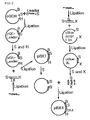
- the plasmid pBX1 which comprises one (1) PB1 gene was prepared by cloning the leader cassette ( Fig. 1a ) at the multicloning site of pQE30 plasmid(Qiagen, Hilden, Germany).
- the resulting plasmid was digested with HindIII and SalI and the small fragment was replaced by the LB cassette ( Fig .1b ) to give the plasmid pBX1 which is good for the insertion of multiple numbers of BL cassettes ( Fig.1c ) easily.
- the plasmid pBluescript II SK+ was cut with SalI and XhoI and ligated with BL cassettes in which single to multiple BL cassette insertions occurred randomly.
- the expected repeats of the PB1 peptide genes in the plasmid pBlue-BL were selected and cleaved oit and subcloned into pBX1 ( Fig.1d ).
- Step 2 Preparation of vector for expression of PB1 mono-peptide
- Leader cassette was prepared by annealing SEQ. ID. No.10 and SEQ. ID. No.11 oligonucleotide synthesized through the same process as Example 1 and 2. Then, the pQE30 vector (Qiagen, Hilden, Germany), which had been cleaved by SalI and BamH I, was ligated with the above leader cassette in order to prepare pQE-Leader plasmid. As a result of expression of the above pQE30 vector, six histidine residues were additionally incorporated to the N-terminus of the expressed protein in order for the protein to be purified easily.
- the above leader cassette was designed to comprise a recognition site (DDDDKI; SEQ. ID. No.12) for enterokinase in order to reduce the additional amino acid to a minimum.
- Example 1 According to the process of Example 1, four oligonucleotides of which sequences were represented by SEQ. ID. No. 4 to 7, were synthesized, phosphorylated, and then, annealed with complementary oligonucleotides respectively in order to synthesize the LB cassette of Fig. 1b (SEQ.ID. No.13 and 14). Forty micro-litter of the annealed oligonucleotides were mixed with 3 ⁇ l of 1 U/ ⁇ l T4 DNA ligase, 5 ⁇ l of 10X enzyme buffer and 2 ⁇ l of distilled water to prepare ligation mixture. Then, the ligation mixture was incubated during the night to link the oligonucleotides each other.
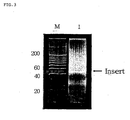
- the reaction mixture was loaded onto 20% polyacrylamide gel and electrophoresed.
- the LB cassette(52 bp oligonucleotides) ( Fig. 3 ) was identified by dying the gel with ethidium bromide (EtBr).
- lane M was a mark for 20 bp ladder DNA
- lane 1 was the reaction solution.
- LB cassette was obtained from the gel by means of QIAEX II gel extraction kit(Qiagen, Hilden, Germany).
- the above pQE-Leader was cleaved by HindIII and SalI, and then ligated with the above LB cassette according to Example 2 in order to prepare expression vector for PB1 mimetic peptide.
- the prepared expression vector was named pBX1 and the peptide expressed by the vector was named PB1 1 peptide (refers to Fig.2 ) .
- Step 3 preparation of expression vector for PB1 1 peptide concatemer
- Example 1 According to the process of Example 1, four oligonucleotides of which sequences shown at SEQ. ID. No. 4, 5, 8, and 9, were synthesized, phosphorylated and then, annealed with complementary oligonucleotides respectively in order to synthesize BL cassette of Fig. 1c (SEQ.ID.No.15 and 16). Subsequently such oligonucletides were ligated with each other like the process of Step 2 and then were loaded onto 20% polyacrylamide gel for electrophoresis. Fifty five bp oligonucleotide(leader cassette) was identified by staining the gel with EtBr. BL cassette was obtained from the gel through QIAEX II gel extraction kit and cleaved by SalI and Xho I.
- a pBluescript II SK(Stratagene, La Jolla, CA, U.S.A) was cleaved by Sal I and Xho I.
- the vector was electrophoresed on 0.8% agarose gel, and obtained by means of QIAEX II gel extraction kit (Qiagen, Hilden, Germany).
- Plasmid pBX2 was prepared by inserting such BL cassette into the Sal I site of the pBX1 vector prepared in Step 2.
- pBX3 and pBX4 vector were prepared by changing the number of the BL cassette which inserted into the Sal I site of the pBX1 vector from two (2) to three(3)(refers to Fig. 2 ).
- the peptides expressed from the pBX2, pBX3 and pBX4 vector were a concatemer which comprises two(2) to four(4) PB1 peptides. They were named PB1 2 , PB1 3 and PB1 4 respectively.
- Host cell E. coli M15 [pREP4]; Qiagen, Hilden, Germany
- E. coli M15 [pREP4] Qiagen, Hilden, Germany
- pBlue-BL plasmid was transformed with the pBlue-BL plasmid and spread onto 1% agar plate, and then incubated for 16 hours at 37°C so that colonies of E. coli could be formed.
- One of the colonies which had been formed on the agar plate was inoculated in 10ml of LB medium and incubated with shaking at 37°C for sixteen(16) hours, and then the plasmid was isolated through DNA purification system(Wizard PLUS SV DNA miniprep DNA purification system; Promega, Madison, W1, U.S.A).
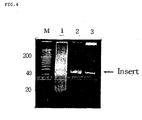
- coli was incubated with SalI and XhoI restriction enzyme in order to be cleaved at 37°C for one (1) hour, and analyzed through 20% PAGE( Fig. 4 ).
- lane M represents 20 bp ladder DNA
- lane 1 represents oligonucleotide product obtained from Step 3
- lane 2 represents BL cassette DNA isolated by 20% PAGE from step3
- lane 3 represents recombinant pBlue-BL plasmid treated with restriction enzyme.
- Fig. 4 it was confirmed that the pBlue-BL plasmid contained BL cassette.
- E. coli (M15[pREP4]) was transformed with pBX1 or pBX3 plasmid, and the plasmid DNA was isolated as explained above in order to confirm the number and orientation of the DNA cassette inserts.
- the isolated plasmid was cleaved by Sal I and HindIII restriction enzyme, and analyzed through 20% PAGE( Fig. 5 ).
- lane M represents 20 bp ladder DNA
- lane 1 and 3 represent the pBX1 plasmid containing an LB but not BL cassette
- lane 2 represents the plasmid harboring one LB and two BL cassettes with the right direction.
- lane 4 represents the plasmid having one LB and two BL cassettes, however, with reversed orientation.
- Fig. 5 how many B cassettes (BL or LB cassette) were inserted and what direction they were inserted into the pBX vector, could identify restriction enzyme mapping.
- the plasmids were prepared by Wizard PLUS DNA miniprep kit and were sequenced by using Sequennase(Ver. 2.1) DNA sequencing kit(Amersham, Cleveland, UK).
- Example 4 Expression of PB1 4 peptide in E.coli and its purification.
- Step 1 confirmation of expression of PB1 4 peptide
- E. coli M15[pREP4] were cultivated on LB agar broth containing amphicillin and kanamycin.
- One E.coli M15[pREP4] was transformed with the plasmid pBX4, another was mock transformed with pQE30, and the other was not transformed E.coli M15[pREP4].
- Each colonies formed from the solide culture was inoculated respectively in liquid LB culture medium which contained 100 ⁇ l/ml amphicillin and 25 ⁇ l/ml kanamycin, and incubated overnight. The culture was incubated at 37°C for one (1) hour with shaking until the O.D value reached in the scope of 0.5 to 0.7 at 600nm.
- IPTG isopropyl-thio- ⁇ -galactopyranoside
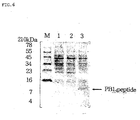
- the suspended solution was heated at 95 °C for five (5) min., and then 10 ⁇ l of the solution was loaded on the well of the casted gel and electrophoresed at 20mA for five(5) hours(Mighty Small II, Hoefer, USA).
- Acrylamide concentrations of the stacking gel and resolution gel which were employed, were 5% and 15% respectively, and pre-stained standard SeeBlue(250Kda to 4kDa; NOVEX, San Diego, CA, U.S.A) or wide-ranging standard Mark12 (200kDa to 2.5kDa) were used as a standard size marker protein.
- the gel was stained with Coomassie brilliant blue R-250 for one (1) hour and dyed destained with decolorizing solution (5% Methanol and 7% acetic acid) for ten(10) hours.
- lane M represents the pre-stained standard SeeBlue label
- lane 1 represents medium used for incubation of E.coli M15 [pREP4] which was not transformed
- lane 2 represents medium used for incubation of E.coli M15 [pREP4] which was transformed with pQE30 vector
- lane 3 represents medium used for incubation of E.coli M15 [pREP4] which was transformed with pBX4 vector.
- Step 2 Identification of solubility of the expressed peptide
- Step 3 purification of PB1 4 peptide
- Step 3-1 affinity chromatography
- Ni-NTA resin for purifying His-tagged proteins was used to purify the recombinant peptide in Step 1.
- the affinity chromatography using attractive force between Ni + saturated in resin and histidine residues at the end of the expressed protein, is a well known method for purifying interest protein easily.
- E.coli M15[pREP4] which had been transformed with pBX4 was inoculated in 11 of LB culture medium and incubated at 37°C to the extent that O.D value was over 0.6 at 600nm.
- the ratio of LB culture medium to pBX4 vector was fifty (50) to one (1).
- IPTG was added in a final concentration of 1mM and incubated again for five (5) hours. After incubation, the cell pellet was obtained by centrifuging the culture medium at 6,000 Xg for 30 min, and the pellet was stored at -70°C over night.
- the pellet thawed in ice was suspended in dissolving solution(300mM NaCl, 50mM NaH 2 PO 4 , 10mM imidazol pH 8.0) wherein 5ml of dissolving solution per 1 g of the pellet, was used.
- Cells are lyzed by sonication as the method of Step 2, and then centrifuged at room temperature at 10,000 Xg for 30 min..
- the same volume of buffer (8M urea, 0.1M NaH 2 PO 4 , 0.01M Tris-HCl pH 8.0) as the pellet, was added for re-suspending the cellular debris and for denaturing proteins there in, and the pellet-suspended solution was treated with brief ultrasonic wave so that more proteins could be dissolved in buffer.
- the suspension was centrifuged at 8,000rpm for 30 min. to remove cellular debris which had not been solubilized in 8M urea.
- 1ml of Ni-NTA resin was added at 4°C and shook 200rpm for 2 hours in order proteins containing His-tag to be captured.
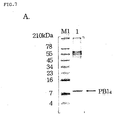
- the target proteins containing His-tag were eluted by pouring 5ml of low pH buffer(8M urea, 0.1M NaH 2 PO 4 0.01M Tris-HCl pH 5.9) two (2) times and subsequently 5ml of strong acid buffer(8M urea, 0.1M NaH 2 PO 4 0.01M Tris-HCl pH 4.5) four (4) times, and then SDS-PAGE was used to confirm the eluted target proteins by using 15% acryamide gel( Fig. 7 ).
- lane M represents pre-stained SeeBlue size marker and lane 1 represents the purified PB1 4 peptide.
- the above purified proteins are dialyzed against PBS(8g/L NaCl, 0.2g/L KCl, 1.44g/L Na 2 HPO 4 and 0.24g/L KH 2 PO 4 ) in order to regain their original conformations.
- Dialysis tube employed was 3,500 Da in molecular weight cut-off size. During dialysis, 3L of PBS containing 2M urea was used first for 5 hours, and then 5L of PBS without urea was used two (2) times overnight.
- Step 3-2 Hydrophobic chromatography
- Ammonium sulfate was added up to final 20% concentration little by little to the solution containing PB1 4 peptide, which was eluted from Ni-NTA resin in Step 3-1, and then adjusted to pH 7.0. The solution was left for three or more hours after 10% of ammonium sulfate had been melt completely, and then the solution was loaded on the phenyl sepharose column [a filling: Phenyl sepharose Fast Flow resin(Phamacia, Suweden); column size: 1 cm(id) x 3cm(h)].
- 2M urea was added to buffer solution (50mM NaCl, 20mM Tris-HCl, 2mM CaCl 2 pH7.4) which was good for removing denaturating agent and imidazol etc. from the purified his-tagged protein and also for activating enterokinase.
- the dialyzed PB1 4 peptide which had been obtained from Step 3-2, was dialyzed again by using the above urea containing buffer to desalt the PB1 4 peptide, and during which, the concentration of urea was lowered little by little by repeated dialysis against urea depleted buffer.
- enterokinase was added to the PB1 4 peptide-containing solution of which buffer was changed with the said second buffer, and incubated at 23°C. The solution which was taken at every hour, then was analyzed by SDS-PAGE in order to check the amount of his-tag removal from the his-tagged PB1(PB1 4 +his ) peptide.
- Step 3-4 Ion exchange chromatography
- the column was equilibrated with equilibrating buffer (50mM sodium phosphate buffer, 2M urea, pH 7.0) and the peptide was eluted under NaCl concentration gradient from 0 to 1M by using another buffer(50mM sodium phosphate buffer, 2M urea, 1M NaCl) (flow rate:0.5ml/min).
- equilibrating buffer 50mM sodium phosphate buffer, 2M urea, pH 7.0
- Another buffer(50mM sodium phosphate buffer, 2M urea, 1M NaCl) flow rate:0.5ml/min).
- Each fraction was recovered and target protein containing fraction were pooled.
- the presence of PB1 4 -his peptide was confirmed through SDS-PAGE after concentrating the compartments.
- Step 4 Quantitative analysis of PB1 4
- the purified PB1 4 peptide which had been obtained through the same method of Step 3 was quantitatively analyzed through colorimetric analysis by using micro BCA reagent(Pierce, Rockford, USA).
- the blotted membrane was incubated with a 5ml of blocking solution (TBS pH 7.5, 5% skim milk powder(w/v), 0.02% Tween 20) for 1.5 hours, and then was washed three times with TTBS(Tris-buffered saline solution containing 0.1% Tween 20) for 15 min., 5 min. and 5 min. respectively.
- the antiserum against the peptide PB1 refer to Step 1 of Example 2) was diluted with the TTBS solution in ratio of one (1) to five thousand (5,000), and then incubated with the membrane for 1.5 hours.
- TTBS Tris-buffered saline solution containing 0.1% Tween 20
- the membrane was incubated for 1.5 hours at room temperature with the solution in which alkaline phosphatase-F(ab)' 2 -goat anti-mouse IgG (H+L)(Zymed, San Fransisco, CA) was diluted with the TTBS solution in ratio of one (1) to one thousand (1000).
- the membrane was washed again with TTBS three times, and then colorized by adding BCIP/NBT (5-bromo-4-chloro-3-indolyl phosphate/nitro blue tetrazolium(Sigma)). BCIP/NBT solution was removed using TTBS solution after staining.
- BCIP/NBT BCIP/NBT solution was removed using TTBS solution after staining.
- PVDF membrane (Gelman Science, BioTrace R ) was used instead of nitrocellulose membrane.
- the first antibody was used in ratio of one (1) to ten thousand (10,000) and HRP-conjugated rabbit anti-mouse IgG (Pierce, Rockford, IL, U.S.A.) was used as the second antibody in ratio of one(1) to ten thousand(10,000).
- Fig. 8 In Fig.
- lane M represents a ECL detecting label (Gibco BRL) and lane 1 represents the PB1 4 peptide.
- lane M represents a ECL detecting label (Gibco BRL) and lane 1 represents the PB1 4 peptide.
- the expressed PB1 4 peptide could be recognized with the anti-PB1 4 serum.
- the PB1 4 peptide used herein was the PB1 4 -his peptide from which his-tag was removed, in step 3-3 of example 2.
- Step 1 Libation between PB1 4 peptide and OVA
- ovalbumin(OVA) As a carrier protein, ovalbumin(OVA), was added to the purified PB1 4 peptide in Step 3 in Example 2, in molar ration of one (1) to ten (10), and was incubated for one (1) hour at 4°C.
- 2% (v/v) glutaraldehyde was added with the same volume, and incubated for one (1) hour with continuous shaking. Then glycine was added to the reaction mixture until final concentration is to be 0.2M to stop the reaction proceeding therein.
- the peptide with which OVA was linked in Step 1 was concentrated and used to immunize mouse.
- the amount of the antigen to be injected to the mouse was 5ug which was the amount of PB1 4 peptide before linked with OVA.
- the antigen which was emulsified with the same amount of an adjuvant, was injected to intraperitoneum cavity of the mouse in amount of 0.2ml.
- CFA Complete Freund's Adjuvant
- IFA Incomplete Freund's Adjuvant
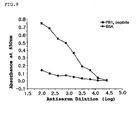
- Step 3 Measurement of avidity of anti-PB1 4 antibody by indirect ELISA
- the avidity of the antibody was measured by using blood serum obtained in Step 2. 100ul of PB1 4 peptide was distributed into each well of 96 well micro-titer plate(Flacon: pro-binding) and left alone at 4°C for 6 hours or more, and then washed three(3) times with TTBS(Tirs buffer saline solution containing 0.05% Tween 20). 200ul of blocking solution (1% BSA in TTBS) was added to each well and incubated at 37°C for one (1) hour, and then washed three(3) times with TTBS.
- Step 1 Induction of obesity in a mouse
- mice 5 week-old ICR mice (Korea Center for Animal Experiment Ltd., Seoul, Korea) were used herein.
- the mice were raised in a breeding farm in which temperature was kept from 17 °C to 25°C, and fed to a mixed feed(Sam Yang Feed Ltd., Seoul, Korea, [ingredient: water 11.8% or more, protein 20.0% or more, crude lipid 3.0% or more, crude fiber 10.0% or less, crude ash 10.0% or less, calcium 0.6% or less and phosphorus 0.4% or more]).
- Goldthioglucose(GTG) was administered to the mice to induce obesity.
- GTG have a role of inducing desensitization of ventero-medial hypothalamic nuclei (VMH).
- VMH ventero-medial hypothalamic nuclei
- mice administered with GTG did not feel satiated and always had a desire to eat.
- the GTG used herein is very unstable compound which is easily degraded in water or moisture. Therefore, 100mg of GTG (Sigma, Inc.) was diluted with 1ml of sesame oil(Sigma Inc.), and was used as the same method of Brecher et al( Brechere G. and Waxler, S. H. Proc. Soc. Exp. Biol. Med., 70: 498-501(1949 )) in order for a proper amount of GTG to be administered.
- mice were distributed to prepare a test (twenty (20) mice) and a control group (four (4) mice), and 25ml of GTG was injected to the test group whereas the control was injected with nothing.
- Body weight of the mice of the test group was measured prior to experiment and the mice of which deviation of body weight was not significant, were selected and applied to experiment.
- Body weight of the mice measured after one (1) week after GTG injection was in the range from 26.5 to 29.5grams.
- mice of the GTG-injected group were induced to be obese whereas the remainder was not.
- mice All of the obesity-induced mice were distributed in three (3) group. A week later from second GTG injection the PB1 4 peptide was injected to the mice of test group 1 consisting of seven (7) mice as the same method in Step 2 of Example 3. In addition, the mice (test group 2 containing seven (7) mice) of another group of the three, were injected with ovalbumin instead of PB1 4 peptide as a mock experiment, and vaccine was not injected to the other group (test group 3 containing six(6) mice) to induce obesity. On the other hand, 0.2ml of PBS was injected to the control group to be compared with the test groups to confirm the effect of the vaccine of the present invention.
- feed used herein was mixed with the yolk of an egg and dried at 50°C to induce intake of cholesterol so that the level of cholesterol could increase in mouse serum. Feed was also provided enough for disease related to the level of cholesterol to be caused. Body weight of the mouse was measured everyday.
- body weight of the vaccine-injected mice of test group 1(- ⁇ - ⁇ -) increased from 27.7 ⁇ 0.4g to 52.2 ⁇ 1.7g after twelve weeks (12) of GTG injection.
- the data justify a conclusion that there was no significant difference of an increase in body weight between the test group 1 and the control group (- ⁇ - ⁇ -) .
- body weight of the mice of both the test group 2(-•-•-) in which ovalbumin was injected after being obese and the test group (- ⁇ - ⁇ -) in which no vaccine was injected after the induction of obesity increased continuously from 28.3 ⁇ 0.5g to 68.9 ⁇ 2.8g. Therefore, it was confirmed that obesity could be inhibited by injection of PB1 4 peptide vaccine.
- G1 and G2 represent the time of GTG injection and V1, V2 and V3 represent the time of injection of PB1 4 peptide vaccine.
- Fig. 11 represents appearance of the obesity-induced mice. 20-week old mouse of the test group 1( Fig.11a : normal mouse) was compared with 20-week old mouse of the test group 3( Fig.11b :obese mouse). As depicted in Fig. 11 , it was confirmed that the vaccine of the present invention was effective in inhibiting obesity.
- Step 2 Measurement of the level of cholesterol in blood.
- O.D value for the interest was calculated based on the calibration curve to confirm the concentration and content of the lipid, the result was depicted in Table 1 and Fig. 12 .
- Total cholesterol TG HDL-C Control 79 ⁇ 3.7 180 ⁇ 26 59 ⁇ 3.4 Test group 1 118 ⁇ 3.6 217 ⁇ 47 92 ⁇ 4.7 20 ⁇ 1.7 Test group 2 and 3 131 ⁇ 8.8 218 ⁇ 70 119 ⁇ 7.5 30 ⁇ 4.5 TG: triglyceride, HDL-C: HDL-cholesterol LDL-C: LDL-cholesterol
- the vaccine composition of the present invention which contains mimetic peptide for the epitope of apolipoprotein B-100, the concatemers and modified peptide thereof, can be inhibit occurrence of obesity without causing auto-immunity in organism.
- LDL-related circulatory disease can be treated by vaccine of the present invention more effective than the transitory and high-priced conventional method in which cholesterol metabolism-related enzyme was inhibited.
Landscapes
- Health & Medical Sciences (AREA)
- Chemical & Material Sciences (AREA)
- Life Sciences & Earth Sciences (AREA)
- Organic Chemistry (AREA)
- General Health & Medical Sciences (AREA)
- Medicinal Chemistry (AREA)
- Public Health (AREA)
- Bioinformatics & Cheminformatics (AREA)
- General Chemical & Material Sciences (AREA)
- Chemical Kinetics & Catalysis (AREA)
- Nuclear Medicine, Radiotherapy & Molecular Imaging (AREA)
- Veterinary Medicine (AREA)
- Pharmacology & Pharmacy (AREA)
- Engineering & Computer Science (AREA)
- Animal Behavior & Ethology (AREA)
- Toxicology (AREA)
- Genetics & Genomics (AREA)
- Hematology (AREA)
- Proteomics, Peptides & Aminoacids (AREA)
- Obesity (AREA)
- Zoology (AREA)
- Gastroenterology & Hepatology (AREA)
- Biochemistry (AREA)
- Biophysics (AREA)
- Diabetes (AREA)
- Molecular Biology (AREA)
- Child & Adolescent Psychology (AREA)
- Peptides Or Proteins (AREA)
- Medicines Containing Antibodies Or Antigens For Use As Internal Diagnostic Agents (AREA)
- Medicines That Contain Protein Lipid Enzymes And Other Medicines (AREA)
- Preparation Of Compounds By Using Micro-Organisms (AREA)
- Medicinal Preparation (AREA)
Description
- The present invention relates to a vaccine composition for treatment of obesity. More particularly, the present invention is directed to a vaccine composition which comprises mimetic peptide epitope of apolipoprotein B-100, concatemers or modified peptides thereof.
- Blood serum lipid is composed of cholesterol, triglycerides(TG), free fatty acid, phospholipid and the like, and exist in blood stream in the form of lipoprotein which is complex of lipid and apolipoprotein.
- Of these lipoproteins, low density lipoprotein (LDL) is major carrier for TG and cholesterol. The number of patient suffering from arteriosclerosis, coronary artery disease, or cardiac infarction caused by elevated LDL-cholesterol level in blood, has been considerably increased due to the change of dietary life or other factors.
- Therefore, various researches for lowering the level of LDL-cholesterol and for showing the cause of above diseases, have been tried to treat patients suffering from the above diseases.
- LDL-cholesterol, a major etiological factor for adult disease related to lipid metabolism, may be converted to the form of high density lipoprotein(HDL) by macrophage. In addition, LDL-cholesterol may also be converted to another material or be converted to the form of bile acid in the liver. (Brown, M.S. and Goldstein, J.L., 1983, Annu. Rev. Biochem., 52:223-261).
- Apolipoprotein B-100 is a major protein part of LDL and exists also in very low density lipoprotein (VLDL) and chylomicron. LDL-cholesterol in blood may be removed through phagocytosis by macrophage in case that an antibody in blood stream is induced by recognizing the apolipoprotein B-100, since apolipoprotein B-100 leads LDL particles to bind to LDL-receptors exposed on the cell surface (Dalum I., et al., 1997, Mol. Immunol., 34(16-17): 1113-20).
- In case that a macromolecule such as an antibody has been bound to apolipoprotein B-100 which exists on the surface of LDL, lipase such as lipoprotein lipase cannot hydrolize TG and the likes due to the steric hindrance caused by the macromolecule bound to apolipoprotein B-100. Consequently, the formation of free fatty acid, a major factor for obesity, can be inhibited by means of the antibody which can bind to apolipoprotein B-100.
- Recently, several researches for lowering LDL-cholesterol level and for inhibiting the outbreak of arteriosclerosis by using a vaccine, have been tried in various animal models such as mouse and rabbit. For example, C.R. Alving reported that cholesterol may be modified by metabolites or its oxidation, and that the modified cholesterol can be a strong antigenic determinants in some cases (Alving, C.R., et al., 1989, Biochem. Soc. Trans., 17(4): 637-9; Alving, C.R., et al., 1996, J. Lab. Clin. Med., 127: 40-49; Alving, C.R., et al., 1996, Curr. Top. Microbiol. Immunol., 210: 181-6).
- Furthermore, it has been reported that an endogenous antibody for cholesterol exists in blood serum (Wu, J.T., L.L., 1997, Clin. Lab. Med., 17(3): 595-604, Review). It has also been reported that, in the experiment wherein arteriosclerosis and hypercholesterolemia are induced on rabbit by feeding cholesterol-containing meal, the occurrence of hypercholesterolemia and arteriosclerosis in the rabbit immunized by injecting cholesterol-containing liposome, is suppressed or lowered remarkably than those in control group.
- Such antibody induced by cholesterol vaccine, is immunoglobin M (IgM) which binds to VLDL, intermediate density lipoprotein (IDL) and LDL. Based on the above, it is believed that a vaccine for treatment or prevention of hyperlipoidemia or arteriosclerosis caused by high level of cholesterol, will be possible (Bailey, J.M., 1994, Science, 264: 1067-1068; Palinski, W. et al., 1995, Proc. Natl. Acad. Sci. U.S.A., 92(3): 821-5; Wu, R. et al, 1999, Hypertension, 33(1): 53-9).
- The present inventors have found that obesity can be effectively prevented by mimetic peptide epitope of apolipoprotein B-100, and based on the above, have developed a vaccine composition for treatment of obesity.
- Therefore, the object of the present invention is to provide an isolated concatemer of peptides as per
claim - Another object of the present invention is to provide a process for preparing the above isolated concatemer of peptides as per
claim 6. - Yet another object of the present invention is to provide a vaccine composition for treatment of obesity as per
claims 3 to 5. - A peptide library system of phage was employed in order to screen an epitope of human apolipoprotein B-100 bound by monoclonal antibody (MabB23). The screened peptides in the above were mimetic peptides structurally similar to antigenic determinant which can be recognized by the antibody, and these mimetic peptides were synthesized according to the amino acid sequence of the screened peptide.
- Peptide library system is a kind of process for searching a three dimensional form of antigenic determinant. That is, DNA fragments which encode random-sequenced peptides are inserted into DNAs which encodes minor coat protein of phage, and then the above DNAs are inserted into RF (Reading frame) DNA and transformed to E.coli in order to express them. The peptides expressed on the surface of E.coli, are reacted with antigen in order to screen the peptides structurally similar to the antigenic determinant.
- In order to prepare anti-serum, mice was immunized by introducing the above mimetic peptides. It was confirmed that the anti-serum thus obtained recognizes the original apolipoprotein B-100, mimetic peptides and LDL at the same times (Identification of Antigenic Determinants for the Murine Monoclonal Antibodies Against Apolipoprotein A-1 and Apolipoprotein B-100 by using Phage-displayed Random Peptide library, Chi-Hoon Kim, Hanyang Univ., 1997).
- The mimetic peptide for the epitope of apolipoprotein B-100 as disclosed herein, can be selected from peptides of SEQ.ID. No.1, SEQ.ID. No.2, SEQ.ID. No.3 or the mixtures thereof.
- The mimetic peptides of the present invention may be used in the form of concatemer in order to improve their antigenic determinant. As an embodiment of the present invention, two or more mimetic peptides may be linked with each other. The concatemer composed of three(3) to fifteen(15) peptides is desirable. More preferably, the concatemer of the present invention comprises four(4) peptides of SEQ.ID. No. 1.
- "Concatemer" of the above mimetic peptide of the present invention, refers to a polymer wherein the ends of the above mimetic peptides are linked with each other.
- "The modified peptide" of the above mimetic peptide of the present invention, refers to mimetic peptides variants which can be recognized by monoclonal or polyclonal antibody for apolipoprotein B-100. Such variants include substitutions, deletions, addition, and chemical substitutions of one or more amino acid from the mimetic peptide of the present invention.
- Yet another object of the present invention is to provide a method for preparing mimetic peptide concatemer and modified peptides thereof, which comprises: i) a step for inserting DNAs which encodes the above mimetic peptide concatemer and the modified peptide thereof into a vector, ii) a step for transforming the above vector to host cells, and then incubating them, and iii) a step for isolating the above mimetic peptide concatemer or modified peptides thereof from the above host cells.
- Formulation of the vaccine composition may be prepared through any conventional method with the mimetic peptide concatemer or modified peptides thereof of the present invention. In the process for preparing the above formulation, preferably, the composition wherein the active compound mixed or diluted with immune adjuvant, drug for reinforcing immunity, carrier, expient and diluent, is selected from the group consisting of tablet, pill, granule, powder, cachet, suspension, emulsion, liquid, syrup, aerosol, soft or hard gelatin capsule, sterilized liquid for injection, sterilized powder and the likes.
- Immune adjuvant which may be employed in the composition of the present invention, is a sort of proteins containing the epitope of T cell (e.g. surface protein of hepatitis B virus), inert carrier such as aluminium salt, bentonite, latex, acrylic particle and the like; hydrophobic antigen (e.g. lipid), water-oil and oil-water emulsions, depot former (e.g. polysaccharide), T cell activator such as PPD, polyadenine, polyuracil and the likes; B cell activator (e.g. B cell mitogen), sulfactant such as saponin, lysolecithin, retinal, quil A, liposome and the likes; material for reinforcing activity of macrophage; and alternative pathway complement activators such as inulin, zymosan, endotozin, lebamisole, C. parvum and the likes.
- "Carrier protein" of the present invention means a pharmaceutically allowable material such as protein or aluminium salt which can transport the mimetic peptide, concatemer and modified peptides thereof of the present invention through blood stream.
- Aluminium salt, phenoxyethyl ethanol, water, physiological salt solution, lactose, dextrose, sucrose, sorbitol, manitol, calcium silicate, cellulose, methyl cellulose, amorphous cellulose, polyvinylpyrolidon, metylhydroxy bezoate, propylhydroxybezoate, talc, magnesium stealate and a mineral oil may be used as suitable carriers, expients or diluents in the composition of the present invention.
- In addition, the composition of the present invention may further comprise a filler, an anti-cohesive agent, a lubricant, a moisturizer, a perfume, an emulsifier and an antiseptic.
- The composition of the present invention may be formulated by the conventional method well-known in this field to induce immune response on mammal through one (1) time or more inoculation.
- The vaccine composition for the treatment of obesity of the present invention may be administered through various routes such as oral, dermal, intradermal, venous or muscular administration, preferably, the intradermal administration.
- The effective dose of the vaccine composition of the present invention, is 0.1 to 10 µg (active peptide)per kg of body weight, preferably, 0.5 to 1.0 µg per kg. However, the actual dosage of the active principle of the vaccine composition may be determined depends on several factors such as condition of immunity, administration routes, condition of patient, age, sex, body weight and the like. Therefore, the ranges of the said dosage amount do not limit the scope of the present invention in any way.
- The primary pharmaceutical effect of the vaccine composition of the present invention, is to prevent or treat obesity through the mechanism that human antibody induced by mimetic peptide, concatemer or modified peptides thereof, binds on the epitope of apolipoprotein B-100 on the surface of LDL, and thereby hinders sterically and inhibits lipase from the generation of fatty acids, the major etiological factor for obesity.
- In addition, the vaccine composition of the present invention has an effect also on suppressing hyperlipoidemia through the mechanism wherein LDL is detected and removed easily by macrophage through the opsonization caused by the human antibody induced by mimetic peptide, concatemer or modified peptides thereof and conjugated on the epitope of apolipoprotein B-100 on the surface of LDL.
- Another pharmaceutical effect of the composition of the present invention, is to prevent or treat obesity by inhibiting accumulation of lipid as like cholesterol of free fatty acid in cell through the mechanism wherein human antibody induced by mimetic peptide, concatemer or modified peptides of the present invention binds to the epitope of apolipoprotein B-100 on the surface of LDL, and thereby prohibits LDL from binding specifically to LDL receptor exposed on cell surface.
- The above objects and other advantages of the present invention will become more apparent by describing in detail a preferred embodiment thereof with reference to the attached drawings, in which:
-
Fig.1a to 1d represent the structures and compositions of vector for expressing the mimetic peptide of the present invention.Fig 1a represents the structure of leader cassette,Fig. 1b represents the structure of LB cassette, Fig lc represents the structure of BL cassette andFig 1d represents the structure of pBX4 expression vector. -
Fig.2 represents the procedures for preparation of pBX1 and pBX4 vector for expressing the mimetic peptide of the present invention. -
Fig.3 represents the result of polyacrylamide gel electrophoresis(PAGE) for the identification of LB cassette. -
Fig.4 represents the result of PAGE for the identification BL cassette incorporated in plasmid pBlue-BL. -
Fig.5 represents the result of PAGE for the confirmation of the direction and the number of copy of DNA inserted in plasmid pBX1 and pBX3. -
Fig. 6 represents the result of western-blotting for identification of the expressed PB14 peptide. -
Fig. 7 represents the result of sodiumdodecyl sulfate(SDS) PAGE for confirmation of the purified PBl4 peptide. -
Fig. 8 represents the result of western-blotting for confirmation of the reactivity of the purified PBl4 peptide against anti-PB14 serum. -
Fig. 9 represents the result of ELISA for measurement of the avidity of the antibody of mouse induced by PBl4 peptide. -
Fig. 10 is the graph which illustrates the suppressing effect of PB14 on the increase of body weight of mouse. -
Fig. 11a and 11b are the graph illustrating the change of body weight of mice depends on administration of PB14 vaccine of the present invention in 20 weeks after injection of drug which can destroy of hypothalamus. -
Fig. 12 is the graph which represents the effect on the concentration of lipid in blood serum according to the injection of PB14 vaccine. - Hereinafter, the present invention will be described in more details. However, the present invention explained in below, is given only for the explanation of embodiment of the present invention and not intended to limit the scope of the present invention.
- The oligonucleotides were chemically synthesized at Genemed Synthesis, Inc. (San Francisco, CA, USA) in accordance with the sequence requested from the present inventor. In order to phosphorylate the 5' end of oligonucleotides, 50µℓ of 100pmol/µℓ oligonucleotide was incubated with 10µℓ of 10mM ATP, 3µℓ of 10U/µℓ T4 polynucleotide kinase (Takara, Otsu, Japan) and 7µℓ of 10X kinase buffer for two (2) hours at 37 °C .
- Each of 10µℓ aliquote of above phosphorylated oligonucleotides were mixed together, heated at 80°C for 5 min. and then chilled very slowly to the room temperature thus were annealed to the specific pairing between complementary strands.
- Ligation mixture was prepared by mixing 1µℓ of vector DNA, 5µℓ of insert DNA, 1µℓ of T4 DNA ligase(NEB, Beverly, MA, USA), 1µℓ of 10X enzyme reaction buffer solution(NEB, Beverly, MA) and 2µℓ of distilled water, and then incubated at 16°C during the night and then incubated.
- The plasmid vector for expression of mimetic peptide generally comprises a leader cassette and one or more PB1 peptide gene. As depicted in
Fig. 1 , the plasmid pBX1 which comprises one (1) PB1 gene was prepared by cloning the leader cassette (Fig. 1a ) at the multicloning site of pQE30 plasmid(Qiagen, Hilden, Germany). The resulting plasmid was digested with HindIII and SalI and the small fragment was replaced by the LB cassette (Fig .1b ) to give the plasmid pBX1 which is good for the insertion of multiple numbers of BL cassettes (Fig.1c ) easily. - Meanwhile,the plasmid pBluescript II SK+ was cut with SalI and XhoI and ligated with BL cassettes in which single to multiple BL cassette insertions occurred randomly. The expected repeats of the PB1 peptide genes in the plasmid pBlue-BL were selected and cleaved oit and subcloned into pBX1 (
Fig.1d ). - Leader cassette was prepared by annealing SEQ. ID. No.10 and SEQ. ID. No.11 oligonucleotide synthesized through the same process as Example 1 and 2. Then, the pQE30 vector (Qiagen, Hilden, Germany), which had been cleaved by SalI and BamHI, was ligated with the above leader cassette in order to prepare pQE-Leader plasmid. As a result of expression of the above pQE30 vector, six histidine residues were additionally incorporated to the N-terminus of the expressed protein in order for the protein to be purified easily. The above leader cassette was designed to comprise a recognition site (DDDDKI; SEQ. ID. No.12) for enterokinase in order to reduce the additional amino acid to a minimum.
- According to the process of Example 1, four oligonucleotides of which sequences were represented by SEQ. ID. No. 4 to 7, were synthesized, phosphorylated, and then, annealed with complementary oligonucleotides respectively in order to synthesize the LB cassette of
Fig. 1b (SEQ.ID. No.13 and 14). Forty micro-litter of the annealed oligonucleotides were mixed with 3µℓ of 1 U/µℓ T4 DNA ligase, 5µℓ of 10X enzyme buffer and 2µℓ of distilled water to prepare ligation mixture. Then, the ligation mixture was incubated during the night to link the oligonucleotides each other. - After the reaction being completed, the reaction mixture was loaded onto 20% polyacrylamide gel and electrophoresed. The LB cassette(52 bp oligonucleotides) (
Fig. 3 ) was identified by dying the gel with ethidium bromide (EtBr). - In
Fig. 3 , lane M was a mark for 20 bp ladder DNA, andlane 1 was the reaction solution. LB cassette was obtained from the gel by means of QIAEX II gel extraction kit(Qiagen, Hilden, Germany). - The above pQE-Leader was cleaved by HindIII and SalI, and then ligated with the above LB cassette according to Example 2 in order to prepare expression vector for PB1 mimetic peptide. The prepared expression vector was named pBX1 and the peptide expressed by the vector was named PB11 peptide (refers to
Fig.2 ) . - According to the process of Example 1, four oligonucleotides of which sequences shown at SEQ. ID. No. 4, 5, 8, and 9, were synthesized, phosphorylated and then, annealed with complementary oligonucleotides respectively in order to synthesize BL cassette of
Fig. 1c (SEQ.ID.No.15 and 16). Subsequently such oligonucletides were ligated with each other like the process ofStep 2 and then were loaded onto 20% polyacrylamide gel for electrophoresis. Fifty five bp oligonucleotide(leader cassette) was identified by staining the gel with EtBr. BL cassette was obtained from the gel through QIAEX II gel extraction kit and cleaved by SalI and XhoI. - Meanwhile, a pBluescript II SK(Stratagene, La Jolla, CA, U.S.A) was cleaved by SalI and XhoI. The vector was electrophoresed on 0.8% agarose gel, and obtained by means of QIAEX II gel extraction kit (Qiagen, Hilden, Germany).
- Same ligation reaction as Example 2 was carried out to obtain pBlue-BL plasmid by using 5µℓ of BL cassette DNA and 1µℓ of the above cleaved-vector DNA.
- The pBlue-BL was cleaved by SalI and XhoI, and the BL cassette was extracted. Plasmid pBX2 was prepared by inserting such BL cassette into the SalI site of the pBX1 vector prepared in
Step 2. In addition, pBX3 and pBX4 vector were prepared by changing the number of the BL cassette which inserted into the Sal I site of the pBX1 vector from two (2) to three(3)(refers toFig. 2 ). - The peptides expressed from the pBX2, pBX3 and pBX4 vector, were a concatemer which comprises two(2) to four(4) PB1 peptides. They were named PB12, PB13 and PB14 respectively.
- Host cell (E. coli M15 [pREP4]; Qiagen, Hilden, Germany) was transformed with the pBlue-BL plasmid and spread onto 1% agar plate, and then incubated for 16 hours at 37°C so that colonies of E. coli could be formed. One of the colonies which had been formed on the agar plate, was inoculated in 10mℓ of LB medium and incubated with shaking at 37°C for sixteen(16) hours, and then the plasmid was isolated through DNA purification system(Wizard PLUS SV DNA miniprep DNA purification system; Promega, Madison, W1, U.S.A). The plasmid harvested from the transformed E. coli was incubated with SalI and XhoI restriction enzyme in order to be cleaved at 37°C for one (1) hour, and analyzed through 20% PAGE(
Fig. 4 ). InFig. 4 , lane M represents 20 bp ladder DNA,lane 1 represents oligonucleotide product obtained fromStep 3,lane 2 represents BL cassette DNA isolated by 20% PAGE from step3 andlane 3 represents recombinant pBlue-BL plasmid treated with restriction enzyme. As shown inFig. 4 , it was confirmed that the pBlue-BL plasmid contained BL cassette. - E. coli (M15[pREP4]) was transformed with pBX1 or pBX3 plasmid, and the plasmid DNA was isolated as explained above in order to confirm the number and orientation of the DNA cassette inserts. The isolated plasmid was cleaved by SalI and HindIII restriction enzyme, and analyzed through 20% PAGE(
Fig. 5 ). InFig. 5 , lane M represents 20 bp ladder DNA,lane lane 2 represents the plasmid harboring one LB and two BL cassettes with the right direction. On the other hand,lane 4 represents the plasmid having one LB and two BL cassettes, however, with reversed orientation. As shown inFig. 5 , how many B cassettes (BL or LB cassette) were inserted and what direction they were inserted into the pBX vector, could identify restriction enzyme mapping. - In addition, the DNA sequence of the B cassettes incorporated into the plasmid which had been harvested from the transformed E. coli, was confirmed to be identical to the designed sequences. The plasmids were prepared by Wizard PLUS DNA miniprep kit and were sequenced by using Sequennase(Ver. 2.1) DNA sequencing kit(Amersham, Cleveland, UK).
- To confirm the expression of PB14 peptide, three kinds of transformed E. coli M15[pREP4] were cultivated on LB agar broth containing amphicillin and kanamycin. One E.coli M15[pREP4] was transformed with the plasmid pBX4, another was mock transformed with pQE30, and the other was not transformed E.coli M15[pREP4]. Each colonies formed from the solide culture was inoculated respectively in liquid LB culture medium which contained 100µℓ/mℓ amphicillin and 25µℓ/mℓ kanamycin, and incubated overnight. The culture was incubated at 37°C for one (1) hour with shaking until the O.D value reached in the scope of 0.5 to 0.7 at 600nm. Thereafter, 1 mM isopropyl-thio-β-galactopyranoside (IPTG) was added to the culture medium to facilitate the expression of the recombinant protein, and additional cultivation was made at 37°C for five(5) hours. 1mℓ of the culture medium was taken and centrifuged at 14,000rpm for two (2) min. to precipitate the bacterial cells. The cell pellet was suspended in 50µℓ of 2X SDS solution[100mM Tris-Cl pH 6.8, 20% glycerol(w/v), 4% SDS(w/v), 2% 2-mercaptoethanol, 0.001% bromophenol blue] to apply in SDS-PAGE. The suspended solution was heated at 95 °C for five (5) min., and then 10µℓ of the solution was loaded on the well of the casted gel and electrophoresed at 20mA for five(5) hours(Mighty Small II, Hoefer, USA). Acrylamide concentrations of the stacking gel and resolution gel which were employed, were 5% and 15% respectively, and pre-stained standard SeeBlue(250Kda to 4kDa; NOVEX, San Diego, CA, U.S.A) or wide-ranging standard Mark12 (200kDa to 2.5kDa) were used as a standard size marker protein. After electrophoresis, the gel was stained with Coomassie brilliant blue R-250 for one (1) hour and dyed destained with decolorizing solution (5% Methanol and 7% acetic acid) for ten(10) hours.
- To confirm that the expressed protein is PB14 peptide, the proteins in the electrophoresis gel, western-blotting was carried out using anti-PB1 rabbit antibody (
Fig. 6 ). Antiserum was produced by immunizing ovalbumin conjugated which was PB1 peptide chemically synthesized by Bio-Synthesis, Inc.(Lewisville, TX, USA). InFig. 6 , lane M represents the pre-stained standard SeeBlue label,lane 1 represents medium used for incubation of E.coli M15 [pREP4] which was not transformed,lane 2 represents medium used for incubation of E.coli M15 [pREP4] which was transformed with pQE30 vector,lane 3 represents medium used for incubation of E.coli M15 [pREP4] which was transformed with pBX4 vector. - As depicted in
Fig. 6 , only the pBX4 transformed E.coli expressed the recombinant PB14 peptide represented a specific immunity with anti-PB1 mouse serum. - E.coli M15 [pREP4] which had been transformed with pBX4 vector, was incubated as the same method of
Step 1. 10ml of the culture medium was taken and centrifuged to harvest the cells. The cell pellet was suspended in 5ml of cell lysis solution (300mM NaCl, 50mM NaH2PO4, 10mM imidazol pH 8.0) to obtain natural protein from the cell. After being chilled, the pellet-suspended solution was sonicated 20 cycles with ultrasonic wave in order to lyse the cells. The supernatant was taken by centrifuge at 4°C, 10,000rpm for 30 min.. The same volume of 2X SDS solution was mixed with solution and SDS-PAGE was carried out as the same method described inStep 1. After boiling each solution at 95°C for 5 min. As a result of SDS-PAGE, it was confirmed that PB14 peptide could be isolated and purified from the soluble extract A in that it was contained in the insoluble crude extract B. - Ni-NTA resin for purifying His-tagged proteins, was used to purify the recombinant peptide in
Step 1. The affinity chromatography using attractive force between Ni+ saturated in resin and histidine residues at the end of the expressed protein, is a well known method for purifying interest protein easily. - First of all, E.coli M15[pREP4] which had been transformed with pBX4, was inoculated in 11 of LB culture medium and incubated at 37°C to the extent that O.D value was over 0.6 at 600nm. The ratio of LB culture medium to pBX4 vector was fifty (50) to one (1). IPTG was added in a final concentration of 1mM and incubated again for five (5) hours. After incubation, the cell pellet was obtained by centrifuging the culture medium at 6,000 Xg for 30 min, and the pellet was stored at -70°C over night. The pellet thawed in ice, was suspended in dissolving solution(300mM NaCl, 50mM NaH2PO4, 10mM imidazol pH 8.0) wherein 5mℓ of dissolving solution per 1 g of the pellet, was used. Cells are lyzed by sonication as the method of
Step 2, and then centrifuged at room temperature at 10,000 Xg for 30 min.. The same volume of buffer (8M urea, 0.1M NaH2PO4, 0.01M Tris-HCl pH 8.0) as the pellet, was added for re-suspending the cellular debris and for denaturing proteins there in, and the pellet-suspended solution was treated with brief ultrasonic wave so that more proteins could be dissolved in buffer. The suspension was centrifuged at 8,000rpm for 30 min. to remove cellular debris which had not been solubilized in 8M urea. To the 4mℓ of the supernatant above, 1mℓ of Ni-NTA resin was added at 4°C and shook 200rpm for 2 hours in order proteins containing His-tag to be captured. - Such supernatant containing protein/Ni-NTA complex was poured carefully into the chromatography column (size 2cm(id)x2.7cm(h)). Excess buffer was drained by opening the cap after the resin had been sunk down. The column was washed with 20mℓ of medium pH buffer (8M urea, 0.1M NaH2PO4 0.01M Tris-HCl pH 8.0) and subsequently 20mℓ of another buffer(8M urea, 0.1M NaH2PO4 0.01M Tris-HCl pH 6.3) in order to wash out proteins which had been non-specifically bound to the Ni-NTA resin. The target proteins containing His-tag were eluted by pouring 5mℓ of low pH buffer(8M urea, 0.1M NaH2PO4 0.01M Tris-HCl pH 5.9) two (2) times and subsequently 5mℓ of strong acid buffer(8M urea, 0.1M NaH2PO4 0.01M Tris-HCl pH 4.5) four (4) times, and then SDS-PAGE was used to confirm the eluted target proteins by using 15% acryamide gel(
Fig. 7 ). InFig. 7 , lane M represents pre-stained SeeBlue size marker andlane 1 represents the purified PB14 peptide. - The above purified proteins are dialyzed against PBS(8g/L NaCl, 0.2g/L KCl, 1.44g/L Na2HPO4 and 0.24g/L KH2 PO4 ) in order to regain their original conformations. Dialysis tube employed, was 3,500 Da in molecular weight cut-off size. During dialysis, 3L of PBS containing 2M urea was used first for 5 hours, and then 5L of PBS without urea was used two (2) times overnight.
- Hydrophobic chromatography was carried out in order to improve the purity of the PB14 peptide which had been obtained in Step 3-1.
- Ammonium sulfate was added up to final 20% concentration little by little to the solution containing PB14 peptide, which was eluted from Ni-NTA resin in Step 3-1, and then adjusted to pH 7.0. The solution was left for three or more hours after 10% of ammonium sulfate had been melt completely, and then the solution was loaded on the phenyl sepharose column [a filling: Phenyl sepharose Fast Flow resin(Phamacia, Suweden); column size: 1 cm(id) x 3cm(h)].
- Each fraction which was eluted from the column by pouring eluting solution(8M urea, 0.1M NaH2PO4, 0.01M Tris-HCl pH 6.3) into the column at the flow rate of 0.5ml/min under the reverse gradient of ammonium sulfate from 10% to 0%, was loaded on the gel for SDS-PAGE. The fraction containing PB14 peptide was collected and dialyzed in a buffer solution to be desalted, and urea which had been used as a denaturating agent, was removed at the same time.
- 2M urea was added to buffer solution (50mM NaCl, 20mM Tris-HCl, 2mM CaCl2 pH7.4) which was good for removing denaturating agent and imidazol etc. from the purified his-tagged protein and also for activating enterokinase. The dialyzed PB14 peptide which had been obtained from Step 3-2, was dialyzed again by using the above urea containing buffer to desalt the PB14 peptide, and during which, the concentration of urea was lowered little by little by repeated dialysis against urea depleted buffer. 3U/ml of enterokinase was added to the PB14 peptide-containing solution of which buffer was changed with the said second buffer, and incubated at 23°C. The solution which was taken at every hour, then was analyzed by SDS-PAGE in order to check the amount of his-tag removal from the his-tagged PB1(PB14 +his ) peptide.
- Unwanted proteins and peptides which had been produced as a result of treatment of enterokinase, were removed through ion exchange chromatography.
- The solution containing PB14 -his peptide which had been obtained in Step 3-3, was dialyzed in dialysis buffer(2M urea, 0.1M NaH2 PO4 , 0.01M Tris-HCl, pH 7.0), and the buffer was exchanged sufficiently. The solution which had been dialyzed, was loaded on the DEAE sepharose resin(Phamacia, uppsala, Sweden). Thereafter, the column was equilibrated with equilibrating buffer (50mM sodium phosphate buffer, 2M urea, pH 7.0) and the peptide was eluted under NaCl concentration gradient from 0 to 1M by using another buffer(50mM sodium phosphate buffer, 2M urea, 1M NaCl) (flow rate:0.5ml/min). Each fraction was recovered and target protein containing fraction were pooled. The presence of PB14 -his peptide was confirmed through SDS-PAGE after concentrating the compartments.
- The purified PB14 peptide which had been obtained through the same method of
Step 3, was quantitatively analyzed through colorimetric analysis by using micro BCA reagent(Pierce, Rockford, USA). - Purity of the PB14 peptides which had been purified in
Step 3 and immunogenicity of them against anti-serum which had been obtained by using synthetic PB14 peptide as a antigen, were confirmed through western-blot assay by ECL(Amersham, Cleveland, UK). After SDS-PAGE (Example 2, Step 1), the gel was incubated together with PVDF membrane in buffer(0.3% Tris, 1.5% glycine, 20% methanol) at a constant voltage of 60V for three (3) hours in order for the protein in the gel to be transferred into the PVDF membrane. Then, the blotted membrane was incubated with a 5ml of blocking solution (TBS pH 7.5, 5% skim milk powder(w/v), 0.02% Tween 20) for 1.5 hours, and then was washed three times with TTBS(Tris-buffered saline solution containing 0.1% Tween 20) for 15 min., 5 min. and 5 min. respectively. The antiserum against the peptide PB1(refers to Step 1 of Example 2) was diluted with the TTBS solution in ratio of one (1) to five thousand (5,000), and then incubated with the membrane for 1.5 hours. To confirm the purity of the PB14 peptide, anti-serum against PB14 peptide (Example 3). After washing the gel with TTBS three times for 15 min., 5 min. and 5 min in turn, the membrane was incubated for 1.5 hours at room temperature with the solution in which alkaline phosphatase-F(ab)'2-goat anti-mouse IgG (H+L)(Zymed, San Fransisco, CA) was diluted with the TTBS solution in ratio of one (1) to one thousand (1000). The membrane was washed again with TTBS three times, and then colorized by adding BCIP/NBT (5-bromo-4-chloro-3-indolyl phosphate/nitro blue tetrazolium(Sigma)). BCIP/NBT solution was removed using TTBS solution after staining. As a result of western-blotting analysis, the expressed PB14 peptide could be recognized with the anti-PB14 serum. - In case of ECL, PVDF membrane(Gelman Science, BioTraceR) was used instead of nitrocellulose membrane. In addition, the first antibody was used in ratio of one (1) to ten thousand (10,000) and HRP-conjugated rabbit anti-mouse IgG (Pierce, Rockford, IL, U.S.A.) was used as the second antibody in ratio of one(1) to ten thousand(10,000). 1 ml of solution A of ECL+Plus western-blot agent (Amersham) per 25 ml of solution B, was used in color reaction. When color was generated sufficiently, the membrane was inserted into film cassette for 5, 10, 20 and 30 seconds respectively to be exposed to the film so that the bands on the gel could be detected (
Fig. 8 ). InFig. 8 , lane M represents a ECL detecting label (Gibco BRL) andlane 1 represents the PB14 peptide. As the result fromFig. 8 , the expressed PB14 peptide could be recognized with the anti-PB14 serum. - In addition, the result of western-blot analysis on which the PB14 peptide using polyclonal antibody isolated from rabbit serum by using Protein G column (Bio-Rad, USA), gave the same result.
- The PB14 peptide used herein was the PB14 -his peptide from which his-tag was removed, in step 3-3 of example 2.
- As a carrier protein, ovalbumin(OVA), was added to the purified PB14 peptide in
Step 3 in Example 2, in molar ration of one (1) to ten (10), and was incubated for one (1) hour at 4°C. To the PB14 peptide-ovalbumin solution, 2% (v/v) glutaraldehyde was added with the same volume, and incubated for one (1) hour with continuous shaking. Then glycine was added to the reaction mixture until final concentration is to be 0.2M to stop the reaction proceeding therein. - After the reaction, the remaining glutaraldehyde-glycine in reaction mixture, were removed by dialysis using MWCO 12,000-14,000 dialysis membrane (SpectrumR, Dominguez, CA, USA).
- The peptide with which OVA was linked in
Step 1, was concentrated and used to immunize mouse. The amount of the antigen to be injected to the mouse, was 5ug which was the amount of PB14 peptide before linked with OVA. The antigen which was emulsified with the same amount of an adjuvant, was injected to intraperitoneum cavity of the mouse in amount of 0.2ml. - Complete Freund's Adjuvant(CFA) was used as the adjuvant of the first injection, and Incomplete Freund's Adjuvant(IFA) was used as the adjuvant at the boosting immunization for two (2) times by two (2) weeks interval. In control mouse, BSA (bovine serum albumin) was injected.
- After five (5) days from the final injection, 1ml of blood was taken from mouse by cardiac puncture and the blood was clotted for 30 min. at 37°C. Then, the blood was centrifuged for 30min. at 4°C, 2500xg and the clot was removed from the blood. The supernatant (i.e., blood serum) was incubated overnight at 4°C for the remaining blood coagulants to be concentrated completely, and centrifuged for 20min. at 10,000xg. The resulting supernatant was aliquoted into several tubes. The blood serum which was to be used in experiment, was stored at 4°C, and the remainders were stored at -20°C.
- The avidity of the antibody was measured by using blood serum obtained in
Step 2. 100ul of PB14 peptide was distributed into each well of 96 well micro-titer plate(Flacon: pro-binding) and left alone at 4°C for 6 hours or more, and then washed three(3) times with TTBS(Tirs buffer saline solution containing 0.05% Tween 20). 200ul of blocking solution (1% BSA in TTBS) was added to each well and incubated at 37°C for one (1) hour, and then washed three(3) times with TTBS. 100ul of the isolated serum which had been diluted with the blocking solution in ratio of one (1) from 102 to 105, was added to the reaction solution and incubated at 37°C for 1 hour, and then washed three (3) times with 200ul of TTBS. 100ul of HRP-linked goat anti-rabbit IgG antibody (Pierce, Rockford, IL) which had been diluted with the blocking solution in ratio of one(1) to 103, was added to the reaction solution and incubated at 37°C for 1 hour, and washed three (3) times with 200ul of TTBS. Solution A of the HRP substrate kit (Bio-Rad) was mixed with solution B of the same in ratio of nine (9) to one (1). 100ul of the resultant mixture was added to the reaction solution and colorized for thirty(30) min., and then optical absorbency for the reaction mixture was measured at 405nm by using ELISA leader (EL312e, Bio-Tek Ins.) (Fig.9 ). InFig. 9 , it was confirmed that the mouse antibody specific for PB14 peptide could be applied to western-blot and ELISA analysis by one (1) thousand fold (3.0 of the X axis in figure). - 5 week-old ICR mice (Korea Center for Animal Experiment Ltd., Seoul, Korea) were used herein. The mice were raised in a breeding farm in which temperature was kept from 17 °C to 25°C, and fed to a mixed feed(Sam Yang Feed Ltd., Seoul, Korea, [ingredient: water 11.8% or more, protein 20.0% or more, crude lipid 3.0% or more, crude fiber 10.0% or less, crude ash 10.0% or less, calcium 0.6% or less and phosphorus 0.4% or more]). Goldthioglucose(GTG) was administered to the mice to induce obesity. GTG have a role of inducing desensitization of ventero-medial hypothalamic nuclei (VMH). Therefore, the mice administered with GTG did not feel satiated and always had a desire to eat. The GTG used herein is very unstable compound which is easily degraded in water or moisture. Therefore, 100mg of GTG (Sigma, Inc.) was diluted with 1ml of sesame oil(Sigma Inc.), and was used as the same method of Brecher et al(Brechere G. and Waxler, S. H. Proc. Soc. Exp. Biol. Med., 70: 498-501(1949)) in order for a proper amount of GTG to be administered.
- The mice were distributed to prepare a test (twenty (20) mice) and a control group (four (4) mice), and 25ml of GTG was injected to the test group whereas the control was injected with nothing.
- Body weight of the mice of the test group was measured prior to experiment and the mice of which deviation of body weight was not significant, were selected and applied to experiment. Body weight of the mice measured after one (1) week after GTG injection, was in the range from 26.5 to 29.5grams.
- Seven mice of the GTG-injected group were induced to be obese whereas the remainder was not. The mice which were not induced to be obese, was injected again with GTG, then all the mice were induced to be obese.
- All of the obesity-induced mice were distributed in three (3) group. A week later from second GTG injection the PB14 peptide was injected to the mice of
test group 1 consisting of seven (7) mice as the same method inStep 2 of Example 3. In addition, the mice (test group 2 containing seven (7) mice) of another group of the three, were injected with ovalbumin instead of PB14 peptide as a mock experiment, and vaccine was not injected to the other group (test group 3 containing six(6) mice) to induce obesity. On the other hand, 0.2ml of PBS was injected to the control group to be compared with the test groups to confirm the effect of the vaccine of the present invention. - In addition, feed used herein was mixed with the yolk of an egg and dried at 50°C to induce intake of cholesterol so that the level of cholesterol could increase in mouse serum. Feed was also provided enough for disease related to the level of cholesterol to be caused. Body weight of the mouse was measured everyday.
- As depicted in
Fig. 10 , body weight of the vaccine-injected mice of test group 1(-▲-▲-) , increased from 27.7±0.4g to 52.2±1.7g after twelve weeks (12) of GTG injection. The data justify a conclusion that there was no significant difference of an increase in body weight between thetest group 1 and the control group (-○-○-) . However, body weight of the mice of both the test group 2(-•-•-) in which ovalbumin was injected after being obese and the test group (-■-■-) in which no vaccine was injected after the induction of obesity, increased continuously from 28.3±0.5g to 68.9±2.8g. Therefore, it was confirmed that obesity could be inhibited by injection of PB14 peptide vaccine. - In
Fig. 10 , G1 and G2 represent the time of GTG injection and V1, V2 and V3 represent the time of injection of PB14 peptide vaccine. -
Fig. 11 represents appearance of the obesity-induced mice. 20-week old mouse of the test group 1(Fig.11a : normal mouse) was compared with 20-week old mouse of the test group 3(Fig.11b :obese mouse). As depicted inFig. 11 , it was confirmed that the vaccine of the present invention was effective in inhibiting obesity. - After the first GTG injection, blood cholesterol level of 12-week old mouse of the control group was compared with that of 12-week old GTG-injected mouse of the
test group Fig. 12 .Total cholesterol TG HDL-C Control 79±3.7 180±26 59±3.4 Test group 1118±3.6 217±47 92±4.7 20±1.7 Test group 131±8.8 218±70 119±7.5 30±4.5 TG: triglyceride, HDL-C: HDL-cholesterol LDL-C: LDL-cholesterol - As depicted in Table 1 and
Fig. 12 , as the result of the induction of obesity, it was confirmed that there was no significant difference in the content of cholesterol of both the test group and the control did not increase whereas overall blood concentration of total cholesterol, HDL-C and LDL-C increased in small amount (Fig.12 ). - The vaccine composition of the present invention, which contains mimetic peptide for the epitope of apolipoprotein B-100, the concatemers and modified peptide thereof, can be inhibit occurrence of obesity without causing auto-immunity in organism.
- Therefore, LDL-related circulatory disease can be treated by vaccine of the present invention more effective than the transitory and high-priced conventional method in which cholesterol metabolism-related enzyme was inhibited.
- While the present invention has been particularly shown and described with reference to particular examples thereof, it will be understood by those skilled in the art that various change in form and details may be conceived.
-
- <110> KIM, Hyo Joon
- <120> Mimetic peptides for epitope of apolipoprotein B-100, concatemer and modified peptides thereof, and the vaccine composition comprising the same
- <130> SJPA0103
- <150>
KR10-2000-0052055
<151> 2000-09-04 - <160> 16
- <170> KopatentIn 1.71
- <210> 1
<211> 15
<212> PRT
<213> Artificial Sequence - <220>
<223> mimetic peptide for apolipoprotein B-100 - <400> 1

- <210> 2
<211> 15
<212> PRT
<213> Artificial Sequence - <220>
<223> mimetic peptide for apolipoprotein B-100 - <400> 2

- <210> 3
<211> 15
<212> PRT
<213> Artificial Sequence - <220>
<223> mimetic peptide for apolipoprotein B-100 - <400> 3

- <210> 4
<211> 23
<212> DNA
<213> Artificial Sequence - <220>
<223> oligonucleotide for the construction of BL or LB cassette - <400> 4
tcgaccgtaa tgttcctcctatc 23 - <210> 5
<211> 28
<212> DNA
<213> Artificial Sequence - <220>
<223> oligonucleotide for the construction of BL or LB cassette - <400> 5
atcattgaag ataggaggaa cattacgg 28 - <210> 6
<211> 29
<212> DNA .
<213> Artificial Sequence - <220>
<223> oligonuclotide for the construction of LB cassette - <400> 6
ttcaatgatg tttattggat tgcattcta 29 - <210> 7
<211> 24
<212> DNA
<213> Artificial Sequence - <220>
<223> oligonucleotide for the construction of LB cassette - <400> 7
agcttagaat gcaatccaat aaac 24 - <210> 8
<211> 28
<212> DNA
<213> Artificial Sequence - <220>
<223> oligonucleotide for the construction of BL cassette - <400> 8
ttcaatgatg tttattggat tgcattcc 28 - <210> 9
<211> 23
<212> DNA
<213> Artificial Sequence - <220>
<223> oligonucleotide for the construction of BL cassette - <400> 9
tcgaggaatg caatccaataaac 23 - <210> 10
<211> 24
<212> DNA
<213> Artificial Sequence - <220>
<223> upper strand of the leader cassette - <400> 10
gatccgatga tgatgacaag atcg 24 - <210> 11
<211> 24
<212> DNA
<213> Artificial Sequence - <220>
<223> lower strand of the leader cassette - <400> 11
tcgacgatct tgtcatcatc atcg 24 - <210> 12
<211> 6
<212> PRT
<213> Artificial Sequence - <220>
<223> enterokinase cleavage site - <400> 12

- <210> 13
<211> 52
<212> DNA
<213> Artificial Sequence - <220>
<223> upper strand of the LB cassette - <400> 13
tcgaccgtaa tgttcctcct atcttcaatg atgtttattg gattgcattc ta 52 - <210> 14
<211> 52
<212> DNA
<213> Artificial Sequence - <220>
<223> lower strand of the LB cassette - <400> 14
agcttagaat gcaatccaat aaacatcatt gaagatagga ggaacattac gg 52 - <210> 15
<211> 51
<212> DNA
<213> Artificial Sequence - <220>
<223> upper strand of the BL cassette - <400> 15
tcgaccgtaa tgttcctcct atcttcaatg atgtttattg gattgcattc c 51 - <210> 16
<211> 51
<212> DNA
<213> Artificial Sequence - <220>
<223> lower strand of the BL cassette - <400> 16
tcgaggaatg caatccaata aacatcattg aagataggag gaacattacg g 51 - <110> KIM, Hyo Joon
- <120> Mimetic peptides for epitope of apolipoprotein B-100, concatemer and derivatives thereof, and the vaccine composition comprising the same
- <130> SJPA0103PCT
- <150>
KR10-2000-0052055
<151> 2000-09-04 - <160> 16
- <170> KopatentIn 1.71
- <210> 1
<211> 15
<212> PRT
<213> Artificial Sequence - <220>
<223> mimetic peptide for apolipoprotein B-100 - <400> 1

- <210> 2
<211> 15
<212> PRT
<213> Artificial Sequence - <220>
<223> mimetic peptide for apolipoprotein B-100 - <400> 2

- <210> 3
<211> 15
<212> PRT
<213> Artificial Sequence - <220>
<223> mimetic peptide for apolipoprotein B-100 - <400> 3

- <210> 4
<211> 23
<212> DNA
<213> Artificial Sequence - <220>
<223> oligonucleotide for the construction of BL or LB cassette - <400> 4
tcgaccgtaa tgttcctcctatc 23 - <210> 5
<211> 28
<212> DNA
<213> Artificial Sequence - <220>
<223> oligonucleotide for the construction of BL or LB cassette - <400> 5
atcattgaag ataggaggaa cattacgg 28 - <210> 6
<211> 29
<212> DNA
<213> Artificial Sequence - <220>
<223> oligonuclotide for the construction of LB cassette - <400> 6
ttcaatgatg tttattggat tgcattcta 29 - <210> 7
<211> 24
<212> DNA
<213> Artificial Sequence - <220>
<223> oligonucleotide for the construction of LB cassette - <400> 7
agcttagaat gcaatccaat aaac 24 - <210> 8
<211> 28
<212> DNA
<213> Artificial Sequence - <220>
<223> oligonucleotide for the construction of BL cassette - <400> 8
ttcaatgatg tttattggat tgcattcc 28 - <210> 9
<211> 23
<212> DNA
<213> Artificial Sequence - <220>
<223> oligonucleotide for the construction of BL cassette - <400> 9
tcgaggaatg caatccaataaac 23 - <210> 10
<211> 24
<212> DNA
<213> Artificial Sequence - <220>
<223> upper strand of the leader cassette - <400> 10
gatccgatga tgatgacaag atcg 24 - <210> 11
<211> 24
<212> DNA
<213> Artificial Sequence - <220>
<223> lower strand of the leader cassette - <400> 11
tcgacgatct tgtcatcatc atcg 24 - <210> 12
<211> 6
<212> PRT
<213> Artificial Sequence - <220>
<223> enterokinase cleavage site - <400> 12

- <210> 13
<211> 52
<212> DNA
<213> Artificial Sequence - <220>
<223> upper strand of the LB cassette - <400> 13
tcgaccgtaa tgttcctcct atcttcaatg atgtttattg gattgcattc ta 52 - <210> 14
<211> 52
<212> DNA
<213> Artificial Sequence - <220>
<223> lower strand of the LB cassette - <400> 14
agcttagaat gcaatccaat aaacatcatt gaagatagga ggaacattac gg 52 - <210> 15
<211> 51
<212> DNA
<213> Artificial Sequence - <220>
<223> upper strand of the BL cassette - <400> 15
tcgaccgtaa tgttcctcct atcttcaatg atgtttattg gattgcattc c 51 - <210> 16
<211> 51
<212> DNA
<213> Artificial Sequence - <220>
<223> lower strand of the BL cassette - <400> 16
tcgaggaatg caatccaata aacatcattg aagataggag gaacattacg g 51
Claims (6)
- An isolated concatemer of peptides, wherein said concatemer comprises two (2) to fifteen (15) peptides each having the amino add sequence of SEQ. I.D. NO:1, or the amino acid sequence of SEQ. I.D NO:2 or the amino acid sequence of SEQ. I.D. NO:3.
- The concatemer or Claim 1, wherein said concatemer comprises four (4) peptides each having the amino acid sequence SEQ. I.D. NO:1 or the amino acid sequence of SEQ. I.D. NO: 2 or the amino acid sequence of SEQ. I.D. NO:3.
- A vaccine composition for treatment of obesity comprising a peptide selected from the group consisting of a concatemer of peptides wherein said concatemer comprises two (2) to fifteen (15) peptides each having the amino acid sequence of SEQ. ID. No. 1
- The vaccine composition according to Claim 3 for the manufacture of a medicament for the treatment of obesity wherein the vaccine is to be administred by intradermal injection.
- The vaccine composition according to Claim 3, wherein said composition is in the form selected from the group consisting of tablets, pills, granules, cachets, elixira, supensions, emulsion, solution, syrups, aerosols, soft or hard gelatin capsules, sterilized injectable solution and sterilized powder.
- A process for preparing an isolated concatemer of peptides, wherein said concatemer comprises two (2) to fifteen (15) peptides each having the amino acid sequence of SEQ. I.D. NO:1, or the amino acid sequence of SEQ. I.D, NO:2 or the amino acid sequence of SEQ. I.D. NO:3, comprising:i) inserting, into a vector nucleic acid encoding a concatemer of peptides, wherein said concatemer comprises two (2) to fifteen (15) peptides each having an amino acid sequence of SEQ. I.D. NO:1, or the amino acid sequence of SEQ. I.D. NO:2 or the amino acid sequence of SEQ. I.D. NO:3;ii) transforming host cells with the vector obtained in step i);iii) culturing said transformed host cells under conditions that permit expression of the inserted nucleic acid and formation of the encoded concatemer of peptide; andiv) isolating said concatemer of peptides from the host cell.
Applications Claiming Priority (5)
| Application Number | Priority Date | Filing Date | Title |
|---|---|---|---|
| KR2000052055 | 2000-09-04 | ||
| KR20000052055 | 2000-09-04 | ||
| KR10-2001-0054005A KR100472841B1 (en) | 2000-09-04 | 2001-09-04 | Mimetic peptides for epitope of apolipoprotein B-100, concatemer and modified peptides thereof, and the vaccine composition comprising the same |
| KR2001054005 | 2001-09-04 | ||
| PCT/KR2001/001492 WO2002020040A1 (en) | 2000-09-04 | 2001-09-04 | Mimetic peptides for epitope of apolipoprotein b-100, concatemer and modified peptides thereof, and the vaccine composition comprising the same |
Publications (3)
| Publication Number | Publication Date |
|---|---|
| EP1315517A1 EP1315517A1 (en) | 2003-06-04 |
| EP1315517A4 EP1315517A4 (en) | 2005-02-09 |
| EP1315517B1 true EP1315517B1 (en) | 2010-10-20 |
Family
ID=26638363
Family Applications (1)
| Application Number | Title | Priority Date | Filing Date |
|---|---|---|---|
| EP01965715A Expired - Lifetime EP1315517B1 (en) | 2000-09-04 | 2001-09-04 | Mimetic peptides for epitope of apolipoprotein b-100, concatemer and modified peptides thereof, and the vaccine composition comprising the same |
Country Status (18)
| Country | Link |
|---|---|
| US (1) | US6825318B2 (en) |
| EP (1) | EP1315517B1 (en) |
| JP (1) | JP2004508029A (en) |
| CN (1) | CN1231262C (en) |
| AU (1) | AU8628601A (en) |
| BG (1) | BG106655A (en) |
| BR (1) | BR0107175A (en) |
| CA (1) | CA2389739A1 (en) |
| CZ (1) | CZ20021571A3 (en) |
| EE (1) | EE200200238A (en) |
| HU (1) | HUP0203251A2 (en) |
| IL (1) | IL149379A0 (en) |
| LT (1) | LT4989B (en) |
| MX (1) | MXPA02004505A (en) |
| NO (1) | NO20022147D0 (en) |
| RU (1) | RU2313536C2 (en) |
| SK (1) | SK6312002A3 (en) |
| WO (1) | WO2002020040A1 (en) |
Families Citing this family (9)
| Publication number | Priority date | Publication date | Assignee | Title |
|---|---|---|---|---|
| US7176013B2 (en) * | 2003-06-11 | 2007-02-13 | Schering Aktiengesellschaft | Modified corin molecules having substitute activation sequences and uses thereof |
| KR100639397B1 (en) * | 2004-03-18 | 2006-10-26 | (주)에스제이바이오메드 | Immunogenic Hybrid Polypeptides for Anti-Obesity and Anti-Obesity Vaccine Compositions Comprising the Same |
| US20070054298A1 (en) * | 2005-08-12 | 2007-03-08 | Kent Kirshenbaum | Methods for enzyme-mediated coupling of oligomers |
| WO2007075335A2 (en) * | 2005-12-16 | 2007-07-05 | The Regents Of The University Of California | Modulation of in utero immune programming |
| US8961982B2 (en) * | 2005-12-16 | 2015-02-24 | The Regents Of The University Of California | Modulation of developmental immune programming and protection against cardiovascular disease, diabetes, infectious diseases, and cancer |
| US20110002955A1 (en) * | 2006-09-25 | 2011-01-06 | Sj Biomed Inc. | Anti-obese immunogenic hybrid polypeptides and anti-obese vaccine composition comprising the same |
| CN103520713B (en) * | 2013-10-16 | 2015-10-28 | 西北农林科技大学 | A kind of ApoB100 yeast-recombinant vaccine and its preparation method and application |
| US10858422B2 (en) | 2016-05-31 | 2020-12-08 | Abcentra, Llc | Methods for treating systemic lupus erythematosus with an anti-apolipoprotein B antibody |
| WO2017210360A1 (en) | 2016-05-31 | 2017-12-07 | Cardiovax, Llc | Methods for diagnosing and treating systemic lupus erythematosus |
Family Cites Families (5)
| Publication number | Priority date | Publication date | Assignee | Title |
|---|---|---|---|---|
| DE3215310A1 (en) * | 1982-04-23 | 1983-10-27 | Boehringer Mannheim Gmbh, 6800 Mannheim | METHOD FOR DETERMINING THE LOW DENSITY LIPOPROTEINE (LDL) AND REAGENT FOR ITS IMPLEMENTATION |
| US6309853B1 (en) * | 1994-08-17 | 2001-10-30 | The Rockfeller University | Modulators of body weight, corresponding nucleic acids and proteins, and diagnostic and therapeutic uses thereof |
| DE69838544T2 (en) * | 1997-03-04 | 2008-07-24 | Savient Pharmaceuticals, Inc. | ISOLATION OF TISSUE-SPECIFIC PEPTIDE LIGANDS AND THEIR USE FOR ORIENTING PHARMACEUTICALS ON TARGET ORGANS |
| AU2801299A (en) * | 1998-03-04 | 1999-09-20 | Bio-Technology General Corporation | Isolation of tissue specific peptide ligands and their use for targeting pharmaceuticals to organs |
| WO2001064008A2 (en) * | 2000-03-03 | 2001-09-07 | Smithkline Beecham Biologicals S.A. | Vaccine for the treatment of artherosclerosis |
-
2001
- 2001-09-04 CZ CZ20021571A patent/CZ20021571A3/en unknown
- 2001-09-04 MX MXPA02004505A patent/MXPA02004505A/en unknown
- 2001-09-04 RU RU2003109439/13A patent/RU2313536C2/en not_active IP Right Cessation
- 2001-09-04 IL IL14937901A patent/IL149379A0/en unknown
- 2001-09-04 CN CNB018030572A patent/CN1231262C/en not_active Expired - Fee Related
- 2001-09-04 BR BR0107175-0A patent/BR0107175A/en not_active Application Discontinuation
- 2001-09-04 EE EEP200200238A patent/EE200200238A/en unknown
- 2001-09-04 AU AU86286/01A patent/AU8628601A/en not_active Abandoned
- 2001-09-04 WO PCT/KR2001/001492 patent/WO2002020040A1/en not_active Ceased
- 2001-09-04 SK SK631-2002A patent/SK6312002A3/en unknown
- 2001-09-04 CA CA002389739A patent/CA2389739A1/en not_active Abandoned
- 2001-09-04 EP EP01965715A patent/EP1315517B1/en not_active Expired - Lifetime
- 2001-09-04 HU HU0203251A patent/HUP0203251A2/en unknown
- 2001-09-04 JP JP2002524523A patent/JP2004508029A/en active Pending
-
2002
- 2002-04-25 BG BG106655A patent/BG106655A/en unknown
- 2002-04-29 LT LT2002051A patent/LT4989B/en not_active IP Right Cessation
- 2002-05-03 NO NO20022147A patent/NO20022147D0/en not_active Application Discontinuation
-
2003
- 2003-03-04 US US10/378,707 patent/US6825318B2/en not_active Expired - Lifetime
Also Published As
| Publication number | Publication date |
|---|---|
| JP2004508029A (en) | 2004-03-18 |
| NO20022147L (en) | 2002-05-03 |
| CA2389739A1 (en) | 2002-03-14 |
| CZ20021571A3 (en) | 2002-09-11 |
| CN1231262C (en) | 2005-12-14 |
| MXPA02004505A (en) | 2004-09-10 |
| HUP0203251A2 (en) | 2003-01-28 |
| WO2002020040A1 (en) | 2002-03-14 |
| EP1315517A4 (en) | 2005-02-09 |
| LT4989B (en) | 2003-01-27 |
| BG106655A (en) | 2004-08-31 |
| CN1392798A (en) | 2003-01-22 |
| BR0107175A (en) | 2002-07-02 |
| LT2002051A (en) | 2002-09-25 |
| US20030211997A1 (en) | 2003-11-13 |
| RU2003109439A (en) | 2004-07-20 |
| AU8628601A (en) | 2002-03-22 |
| IL149379A0 (en) | 2002-11-10 |
| EE200200238A (en) | 2003-06-16 |
| SK6312002A3 (en) | 2002-09-10 |
| RU2313536C2 (en) | 2007-12-27 |
| NO20022147D0 (en) | 2002-05-03 |
| EP1315517A1 (en) | 2003-06-04 |
| US6825318B2 (en) | 2004-11-30 |
Similar Documents
| Publication | Publication Date | Title |
|---|---|---|
| US6410022B1 (en) | Modulation of cholesteryl ester transfer protein (CETP) activity | |
| Ståhl et al. | A dual expression system for the generation, analysis and purification of antibodies to a repeated sequence of the Plasmodium falciparum antigen Pf155/RESA | |
| DE69630890T2 (en) | PEPTID-IMITATING SUBSTANCES IN CANCER THERAPY | |
| KR100500782B1 (en) | Expression system of heterologous antigens as fusion proteins | |
| FI110615B (en) | Process for producing protein which forms a modified capsid | |
| JPH07206707A (en) | Antigen-carbohydrate complex and its application to immunotherapy | |
| JPH05507197A (en) | Soluble peptide analogs containing binding sites | |
| CN102099372A (en) | Anti-amyloid immunogenic compositions, methods and uses | |
| US4521334A (en) | Synthetic polypeptide fragments | |
| US6825318B2 (en) | Mimetic peptides for an epitope of apolipoprotein B-100, concatemers of the peptides, and modified peptides, and compositions comprising the same | |
| Sjölander et al. | High antibody responses in rabbits immunized with influenza virus ISCOMs containing a repeated sequence of the Plasmodium falciparum antigen Pf155/RESA | |
| JPH03155787A (en) | Ebzd protein expression system | |
| KR100639397B1 (en) | Immunogenic Hybrid Polypeptides for Anti-Obesity and Anti-Obesity Vaccine Compositions Comprising the Same | |
| AU2007200834B2 (en) | Mimetic peptides for epitope of apolipoprotein B-100, concatemer and modified peptides thereof, and the vaccine composition comprising the same | |
| KR100472841B1 (en) | Mimetic peptides for epitope of apolipoprotein B-100, concatemer and modified peptides thereof, and the vaccine composition comprising the same | |
| WO2001027144A2 (en) | Ab5 toxin b subunit mutants with altered chemical conjugation characteristics | |
| CN101298615B (en) | A new anti-Plasmodium falciparum epitope and a vaccine containing it | |
| TRZYNA et al. | Schistosoma mansoni: genetic non‐response to p40, the major protein antigen of the egg, reveals a novel mechanism enhancing IgM production during infection | |
| CAvELIER et al. | Plasmodium falciparum: The Immune Response in Rabbits to the Clustered Asparagine-Rich Protein (CARP) after lmmunization in Freund's Adjuvant or Immunostimulating Complexes (ISCOMs) | |
| Sjolander et al. | Plasmodium falciparum: The Immune Response in Rabbits to the Clustered Asparagine-Rich Protein (CARP) after Immunization in Freund′ s Adjuvant or Immunostimulating Complexes (ISCOMS) | |
| WO2026046055A1 (en) | Pharmaceutical compositions and methods for preventing or treating cancers | |
| HK1050857A (en) | Mimetic peptides for epitope of apolipoprotein b-100, concatemer and modified peptides thereof, and the vaccine composition comprising the same | |
| WO2024111633A1 (en) | Production of antibodies against protein | |
| Mercereau‐Puijalon et al. | Cross‐reaction of antibodies to the nine‐amino acid repeats of Plasmodium falciparum antigen 11.1 with human serum albumin | |
| HK1154591A (en) | Anti-amyloid immunogenic compositions, methods and uses |
Legal Events
| Date | Code | Title | Description |
|---|---|---|---|
| PUAI | Public reference made under article 153(3) epc to a published international application that has entered the european phase |
Free format text: ORIGINAL CODE: 0009012 |
|
| 17P | Request for examination filed |
Effective date: 20020424 |
|
| AK | Designated contracting states |
Designated state(s): AT BE CH CY DE DK ES FI FR GB GR IE IT LI LU MC NL PT SE TR |
|
| AX | Request for extension of the european patent |
Extension state: AL LT LV MK RO SI |
|
| A4 | Supplementary search report drawn up and despatched |
Effective date: 20041230 |
|
| RIC1 | Information provided on ipc code assigned before grant |
Ipc: 7C 07K 14/775 B Ipc: 7A 61K 39/00 A |
|
| 17Q | First examination report despatched |
Effective date: 20050318 |
|
| 17Q | First examination report despatched |
Effective date: 20050318 |
|
| GRAP | Despatch of communication of intention to grant a patent |
Free format text: ORIGINAL CODE: EPIDOSNIGR1 |
|
| GRAS | Grant fee paid |
Free format text: ORIGINAL CODE: EPIDOSNIGR3 |
|
| GRAA | (expected) grant |
Free format text: ORIGINAL CODE: 0009210 |
|
| AK | Designated contracting states |
Kind code of ref document: B1 Designated state(s): AT BE CH CY DE DK ES FI FR GB GR IE IT LI LU MC NL PT SE TR |
|
| REG | Reference to a national code |
Ref country code: GB Ref legal event code: FG4D |
|
| REG | Reference to a national code |
Ref country code: CH Ref legal event code: EP |
|
| REG | Reference to a national code |
Ref country code: IE Ref legal event code: FG4D |
|
| REF | Corresponds to: |
Ref document number: 60143300 Country of ref document: DE Date of ref document: 20101202 Kind code of ref document: P |
|
| REG | Reference to a national code |
Ref country code: CH Ref legal event code: NV Representative=s name: BOHEST AG |
|
| REG | Reference to a national code |
Ref country code: NL Ref legal event code: VDEP Effective date: 20101020 |
|
| PG25 | Lapsed in a contracting state [announced via postgrant information from national office to epo] |
Ref country code: PT Free format text: LAPSE BECAUSE OF FAILURE TO SUBMIT A TRANSLATION OF THE DESCRIPTION OR TO PAY THE FEE WITHIN THE PRESCRIBED TIME-LIMIT Effective date: 20110221 Ref country code: SE Free format text: LAPSE BECAUSE OF FAILURE TO SUBMIT A TRANSLATION OF THE DESCRIPTION OR TO PAY THE FEE WITHIN THE PRESCRIBED TIME-LIMIT Effective date: 20101020 Ref country code: FI Free format text: LAPSE BECAUSE OF FAILURE TO SUBMIT A TRANSLATION OF THE DESCRIPTION OR TO PAY THE FEE WITHIN THE PRESCRIBED TIME-LIMIT Effective date: 20101020 Ref country code: AT Free format text: LAPSE BECAUSE OF FAILURE TO SUBMIT A TRANSLATION OF THE DESCRIPTION OR TO PAY THE FEE WITHIN THE PRESCRIBED TIME-LIMIT Effective date: 20101020 Ref country code: NL Free format text: LAPSE BECAUSE OF FAILURE TO SUBMIT A TRANSLATION OF THE DESCRIPTION OR TO PAY THE FEE WITHIN THE PRESCRIBED TIME-LIMIT Effective date: 20101020 |
|
| PG25 | Lapsed in a contracting state [announced via postgrant information from national office to epo] |
Ref country code: GR Free format text: LAPSE BECAUSE OF FAILURE TO SUBMIT A TRANSLATION OF THE DESCRIPTION OR TO PAY THE FEE WITHIN THE PRESCRIBED TIME-LIMIT Effective date: 20110121 Ref country code: BE Free format text: LAPSE BECAUSE OF FAILURE TO SUBMIT A TRANSLATION OF THE DESCRIPTION OR TO PAY THE FEE WITHIN THE PRESCRIBED TIME-LIMIT Effective date: 20101020 |
|
| PG25 | Lapsed in a contracting state [announced via postgrant information from national office to epo] |
Ref country code: ES Free format text: LAPSE BECAUSE OF FAILURE TO SUBMIT A TRANSLATION OF THE DESCRIPTION OR TO PAY THE FEE WITHIN THE PRESCRIBED TIME-LIMIT Effective date: 20110131 |
|
| PLBE | No opposition filed within time limit |
Free format text: ORIGINAL CODE: 0009261 |
|
| STAA | Information on the status of an ep patent application or granted ep patent |
Free format text: STATUS: NO OPPOSITION FILED WITHIN TIME LIMIT |
|
| PG25 | Lapsed in a contracting state [announced via postgrant information from national office to epo] |
Ref country code: DK Free format text: LAPSE BECAUSE OF FAILURE TO SUBMIT A TRANSLATION OF THE DESCRIPTION OR TO PAY THE FEE WITHIN THE PRESCRIBED TIME-LIMIT Effective date: 20101020 |
|
| 26N | No opposition filed |
Effective date: 20110721 |
|
| REG | Reference to a national code |
Ref country code: DE Ref legal event code: R097 Ref document number: 60143300 Country of ref document: DE Effective date: 20110721 |
|
| PGFP | Annual fee paid to national office [announced via postgrant information from national office to epo] |
Ref country code: IT Payment date: 20110919 Year of fee payment: 11 |
|
| PG25 | Lapsed in a contracting state [announced via postgrant information from national office to epo] |
Ref country code: MC Free format text: LAPSE BECAUSE OF NON-PAYMENT OF DUE FEES Effective date: 20110930 |
|
| REG | Reference to a national code |
Ref country code: IE Ref legal event code: MM4A |
|
| PG25 | Lapsed in a contracting state [announced via postgrant information from national office to epo] |
Ref country code: IE Free format text: LAPSE BECAUSE OF NON-PAYMENT OF DUE FEES Effective date: 20110904 |
|
| PGFP | Annual fee paid to national office [announced via postgrant information from national office to epo] |
Ref country code: GB Payment date: 20120905 Year of fee payment: 12 |
|
| PGFP | Annual fee paid to national office [announced via postgrant information from national office to epo] |
Ref country code: DE Payment date: 20120914 Year of fee payment: 12 |
|
| PGFP | Annual fee paid to national office [announced via postgrant information from national office to epo] |
Ref country code: CH Payment date: 20130328 Year of fee payment: 12 |
|
| PG25 | Lapsed in a contracting state [announced via postgrant information from national office to epo] |
Ref country code: CY Free format text: LAPSE BECAUSE OF EXPIRATION OF PROTECTION Effective date: 20101020 Ref country code: LU Free format text: LAPSE BECAUSE OF NON-PAYMENT OF DUE FEES Effective date: 20110904 |
|
| PG25 | Lapsed in a contracting state [announced via postgrant information from national office to epo] |
Ref country code: IT Free format text: LAPSE BECAUSE OF NON-PAYMENT OF DUE FEES Effective date: 20120904 |
|
| PGFP | Annual fee paid to national office [announced via postgrant information from national office to epo] |
Ref country code: FR Payment date: 20130423 Year of fee payment: 12 |
|
| PG25 | Lapsed in a contracting state [announced via postgrant information from national office to epo] |
Ref country code: TR Free format text: LAPSE BECAUSE OF FAILURE TO SUBMIT A TRANSLATION OF THE DESCRIPTION OR TO PAY THE FEE WITHIN THE PRESCRIBED TIME-LIMIT Effective date: 20101020 |
|
| REG | Reference to a national code |
Ref country code: CH Ref legal event code: PL |
|
| GBPC | Gb: european patent ceased through non-payment of renewal fee |
Effective date: 20130904 |
|
| REG | Reference to a national code |
Ref country code: DE Ref legal event code: R119 Ref document number: 60143300 Country of ref document: DE Effective date: 20140401 |
|
| REG | Reference to a national code |
Ref country code: FR Ref legal event code: ST Effective date: 20140530 |
|
| PG25 | Lapsed in a contracting state [announced via postgrant information from national office to epo] |
Ref country code: LI Free format text: LAPSE BECAUSE OF NON-PAYMENT OF DUE FEES Effective date: 20130930 Ref country code: GB Free format text: LAPSE BECAUSE OF NON-PAYMENT OF DUE FEES Effective date: 20130904 Ref country code: CH Free format text: LAPSE BECAUSE OF NON-PAYMENT OF DUE FEES Effective date: 20130930 |
|
| PG25 | Lapsed in a contracting state [announced via postgrant information from national office to epo] |
Ref country code: FR Free format text: LAPSE BECAUSE OF NON-PAYMENT OF DUE FEES Effective date: 20130930 Ref country code: DE Free format text: LAPSE BECAUSE OF NON-PAYMENT OF DUE FEES Effective date: 20140401 |