EP1314726A1 - Novel ester or amide derivatives - Google Patents
Novel ester or amide derivatives Download PDFInfo
- Publication number
- EP1314726A1 EP1314726A1 EP01958508A EP01958508A EP1314726A1 EP 1314726 A1 EP1314726 A1 EP 1314726A1 EP 01958508 A EP01958508 A EP 01958508A EP 01958508 A EP01958508 A EP 01958508A EP 1314726 A1 EP1314726 A1 EP 1314726A1
- Authority
- EP
- European Patent Office
- Prior art keywords
- alkyl
- group
- alkyl group
- ester
- pharmaceutically acceptable
- Prior art date
- Legal status (The legal status is an assumption and is not a legal conclusion. Google has not performed a legal analysis and makes no representation as to the accuracy of the status listed.)
- Withdrawn
Links
Classifications
-
- A—HUMAN NECESSITIES
- A61—MEDICAL OR VETERINARY SCIENCE; HYGIENE
- A61K—PREPARATIONS FOR MEDICAL, DENTAL OR TOILETRY PURPOSES
- A61K31/00—Medicinal preparations containing organic active ingredients
- A61K31/33—Heterocyclic compounds
- A61K31/395—Heterocyclic compounds having nitrogen as a ring hetero atom, e.g. guanethidine or rifamycins
- A61K31/435—Heterocyclic compounds having nitrogen as a ring hetero atom, e.g. guanethidine or rifamycins having six-membered rings with one nitrogen as the only ring hetero atom
- A61K31/47—Quinolines; Isoquinolines
- A61K31/4738—Quinolines; Isoquinolines ortho- or peri-condensed with heterocyclic ring systems
- A61K31/4741—Quinolines; Isoquinolines ortho- or peri-condensed with heterocyclic ring systems condensed with ring systems having oxygen as a ring hetero atom, e.g. tubocuraran derivatives, noscapine, bicuculline
-
- A—HUMAN NECESSITIES
- A61—MEDICAL OR VETERINARY SCIENCE; HYGIENE
- A61K—PREPARATIONS FOR MEDICAL, DENTAL OR TOILETRY PURPOSES
- A61K31/00—Medicinal preparations containing organic active ingredients
- A61K31/33—Heterocyclic compounds
- A61K31/395—Heterocyclic compounds having nitrogen as a ring hetero atom, e.g. guanethidine or rifamycins
- A61K31/435—Heterocyclic compounds having nitrogen as a ring hetero atom, e.g. guanethidine or rifamycins having six-membered rings with one nitrogen as the only ring hetero atom
- A61K31/4353—Heterocyclic compounds having nitrogen as a ring hetero atom, e.g. guanethidine or rifamycins having six-membered rings with one nitrogen as the only ring hetero atom ortho- or peri-condensed with heterocyclic ring systems
- A61K31/4375—Heterocyclic compounds having nitrogen as a ring hetero atom, e.g. guanethidine or rifamycins having six-membered rings with one nitrogen as the only ring hetero atom ortho- or peri-condensed with heterocyclic ring systems the heterocyclic ring system containing a six-membered ring having nitrogen as a ring heteroatom, e.g. quinolizines, naphthyridines, berberine, vincamine
-
- A—HUMAN NECESSITIES
- A61—MEDICAL OR VETERINARY SCIENCE; HYGIENE
- A61K—PREPARATIONS FOR MEDICAL, DENTAL OR TOILETRY PURPOSES
- A61K31/00—Medicinal preparations containing organic active ingredients
- A61K31/33—Heterocyclic compounds
- A61K31/395—Heterocyclic compounds having nitrogen as a ring hetero atom, e.g. guanethidine or rifamycins
- A61K31/435—Heterocyclic compounds having nitrogen as a ring hetero atom, e.g. guanethidine or rifamycins having six-membered rings with one nitrogen as the only ring hetero atom
- A61K31/47—Quinolines; Isoquinolines
- A61K31/4709—Non-condensed quinolines and containing further heterocyclic rings
-
- A—HUMAN NECESSITIES
- A61—MEDICAL OR VETERINARY SCIENCE; HYGIENE
- A61P—SPECIFIC THERAPEUTIC ACTIVITY OF CHEMICAL COMPOUNDS OR MEDICINAL PREPARATIONS
- A61P31/00—Antiinfectives, i.e. antibiotics, antiseptics, chemotherapeutics
- A61P31/04—Antibacterial agents
-
- C—CHEMISTRY; METALLURGY
- C07—ORGANIC CHEMISTRY
- C07D—HETEROCYCLIC COMPOUNDS
- C07D215/00—Heterocyclic compounds containing quinoline or hydrogenated quinoline ring systems
- C07D215/02—Heterocyclic compounds containing quinoline or hydrogenated quinoline ring systems having no bond between the ring nitrogen atom and a non-ring member or having only hydrogen atoms or carbon atoms directly attached to the ring nitrogen atom
- C07D215/16—Heterocyclic compounds containing quinoline or hydrogenated quinoline ring systems having no bond between the ring nitrogen atom and a non-ring member or having only hydrogen atoms or carbon atoms directly attached to the ring nitrogen atom with hetero atoms or with carbon atoms having three bonds to hetero atoms with at the most one bond to halogen, e.g. ester or nitrile radicals, directly attached to ring carbon atoms
- C07D215/48—Carbon atoms having three bonds to hetero atoms with at the most one bond to halogen
-
- C—CHEMISTRY; METALLURGY
- C07—ORGANIC CHEMISTRY
- C07D—HETEROCYCLIC COMPOUNDS
- C07D401/00—Heterocyclic compounds containing two or more hetero rings, having nitrogen atoms as the only ring hetero atoms, at least one ring being a six-membered ring with only one nitrogen atom
- C07D401/14—Heterocyclic compounds containing two or more hetero rings, having nitrogen atoms as the only ring hetero atoms, at least one ring being a six-membered ring with only one nitrogen atom containing three or more hetero rings
-
- C—CHEMISTRY; METALLURGY
- C07—ORGANIC CHEMISTRY
- C07D—HETEROCYCLIC COMPOUNDS
- C07D471/00—Heterocyclic compounds containing nitrogen atoms as the only ring hetero atoms in the condensed system, at least one ring being a six-membered ring with one nitrogen atom, not provided for by groups C07D451/00 - C07D463/00
- C07D471/02—Heterocyclic compounds containing nitrogen atoms as the only ring hetero atoms in the condensed system, at least one ring being a six-membered ring with one nitrogen atom, not provided for by groups C07D451/00 - C07D463/00 in which the condensed system contains two hetero rings
- C07D471/04—Ortho-condensed systems
Definitions
- the present invention relates to a novel ester or amide derivative, particularly an ester or amide derivative of 4-oxo-1,4-dihydroqunoline-2-carboxylic acid, or a pharmaceutically acceptable salt thereof, and a drug composition containing it as an active ingredient, particularly a preventive or remedy for Helicobacter pylori infectious diseases.
- Helicobacter pylori is a pathogenic bacterium discovered in 1983 and is called a background pathogenic factor of peptic ulcers (such as gastric ulcer and duodenal ulcer), inflammations (such as gastritis), diseases of upper digestive tracts such as gastric cancer, MALT (mucosa-associated lymphoid tissue) lymphoma, or chronic heart disease.
- peptic ulcers such as gastric ulcer and duodenal ulcer
- inflammations such as gastritis
- diseases of upper digestive tracts such as gastric cancer
- MALT mucosa-associated lymphoid tissue lymphoma
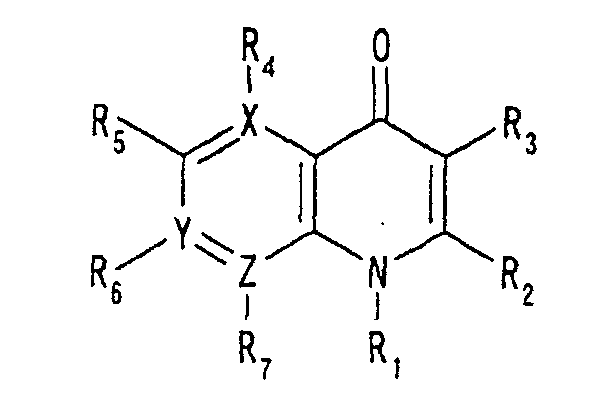
- EP811613 discloses derivatives of 4-oxo-1,4-dihydroquinoline or naphthyridine in terms of the following general formula.
- the substituent (R 2 group) at the 2-position of the ring is a C 1 to C 10 alkyl group, a (C 1 to C 10 alkyl)phenyl group, a C 2 to C 10 alkenyl group, a (C 2 to C 10 alkenyl)phenyl group, a C 2 to C 10 alkynyl group, a (C 2 to C 10 alkynyl)phenyl group, a phenyl group, a naphthyl group, a furyl group, a thiophenyl group, or a pyridyl group.
- JP-A-10-132784 discloses the following 3-methyl-4-oxo-1,4-dihydroquinone derivative as an anti-helicobacter pylori agent, in which, however, the substituent at the 2-position is a nonenyl group.
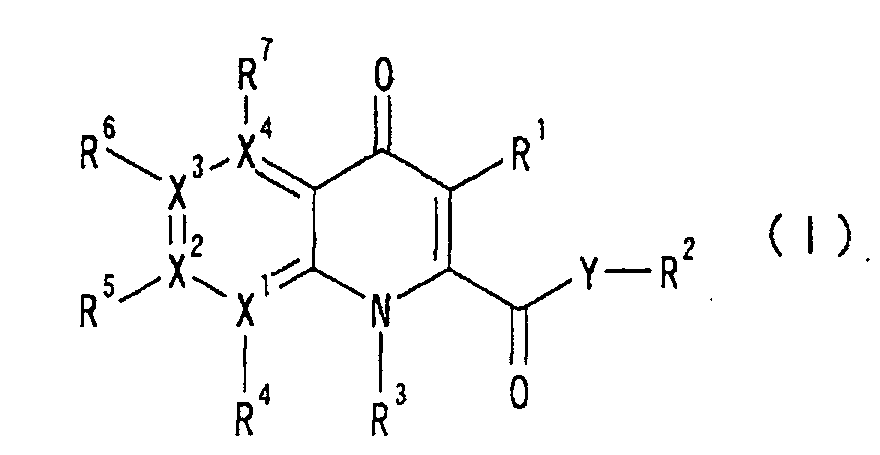
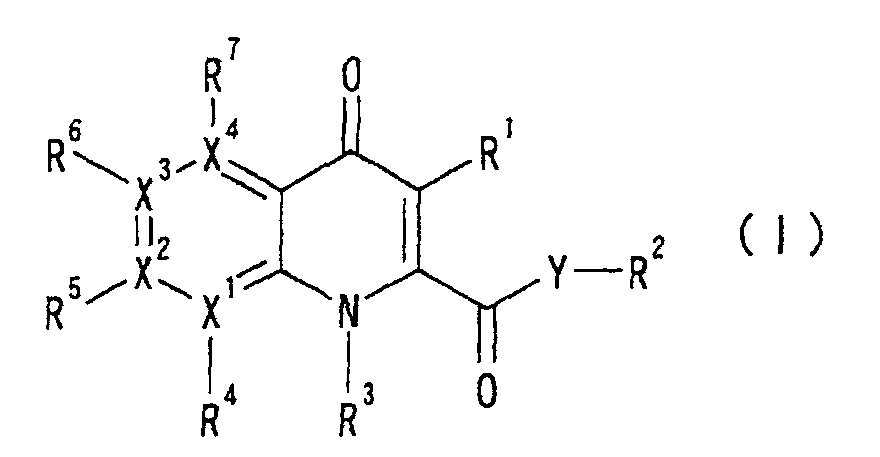
- the invention relates to a novel ester or amide derivative represented by the following general formula (I) or a salt thereof: wherein:
- the invention relates to a drug composition
- a drug composition comprising the ester or amide derivative represented by the foregoing general formula (I) or its pharmaceutically acceptable salt and a pharmaceutically acceptable carrier, a particularly a drug composition as a preventive or remedy for Helicobacter pylori infectious diseases.
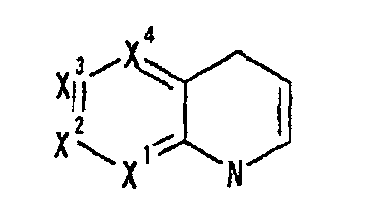
- the compound (I) of the invention is structurally characterized in that a substituent at the 2-position of the 1,4-dihydroquinoline ring or 1,4-dihydronaphthyridine ring is an ester residue or an substituted amide group and is superior to the known compounds having a hydrocarbon group as the substituent at the 2-position in the point that it undergoes strong bacterial elimination against Helicobacter pylori within digestive tracts by oral administration to mammals.
- halogen examples include a fluorine atom, a chlorine atom, a bromine atom, and an iodine atom.
- alkyl means a linear or branched saturated hydrocarbon group.
- Specific examples of the C 1 to C 10 alkyl include a methyl group, an ethyl group, a propyl group, a butyl group, a pentyl group, a hexyl group, a heptyl group, an octyl group, a nonyl group, a decyl group, and structural isomers thereof (such as an isopropyl group).
- C 1 to C 6 alkyl include a methyl group, an ethyl group, a propyl group, a butyl group, a pentyl group, a hexyl group, and structural isomers thereof (such as an isopropyl group).
- C 6 to C 8 alkyl include a hexyl group, a heptyl group, an octyl group, and structural isomers thereof (such as a methylhexyl group).
- alkylene means a divalent group resulted from removal of hydrogen from the foregoing alkyl.
- Specific examples of the C 1 to C 8 alkylene include methylene, ethylene, propylene, butylene, pentylene, hexylene, heptylene, octylene, and structural isomers thereof (such as 2-methylpropylene).
- aryl means an aromatic hydrocarbon group, and preferably a C 6 to C 14 aryl. Specific examples include phenyl, naphthyl, and biphenyl, and particularly preferably phenyl.
- heteroaryl means a 5-membered or 6-membered monocyclic heteroaryl having from 1 to 4 hetero atoms selected from N, S and O, or a bicyclic heteroaryl fused with a benzene ring, which may be partially saturated.
- monocyclic heteroaryl include furyl, thienyl, pyrrolyl, imidazolyl, pyrazolyl, thiazolyl, oxazolyl, pyridyl, pyrazinyl, pyrimidyl, triazolyl, thiazolyl, pyridazinyl, triazinyl, oxazolyl, and pyrimidyl.
- bicyclic heteroaryl examples include benzofuranyl, benzothienyl, benzothiadiazoyl, benzothiazolyl, benzoimidazolyl, indolyl, quinolyl, isoquinolyl, and quinoxalinyl. Of these are preferable 5-membered or 6-membered monocyclic heteroaryls, with furyl, thienyl, imidazolyl, thiazolyl and pyridyl being more preferable.
- cycloalkyl means a saturated hydrocarbon group having from 3 to 8 carbon atoms. Specific examples include cyclopropyl, cyclobutyl, cyclopentyl, cyclohexyl, cycloheptyl, and cyclooctyl.
- X 1 to X 4 , Y, and R 1 to R 7 have the same meanings as defined above.
- X 1 to X 4 , Y, and R 4 to R 7 have the same meanings as defined above.
- R 1 represents a methyl group
- R 4 to R 7 are all H is preferable.
- the compound of the invention there are optical isomers (such as optically active compounds and diastereomers) depending on the kinds of the groups.
- the compound of the invention includes a compound having an amide bond.
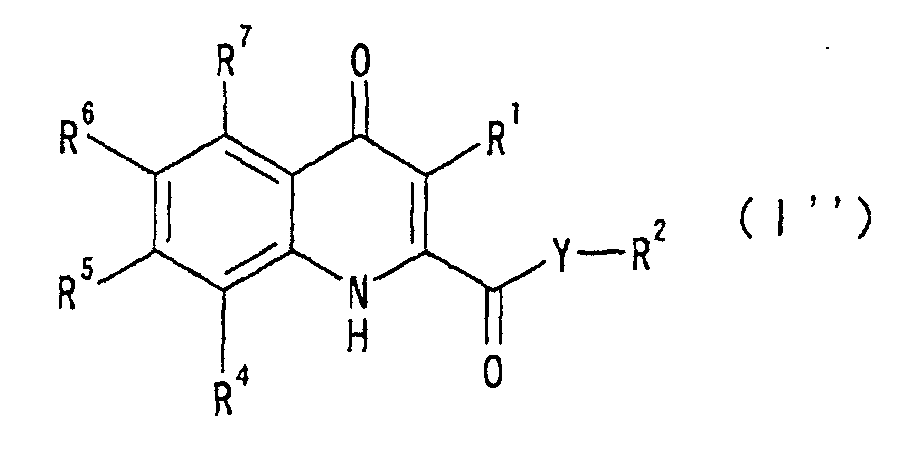
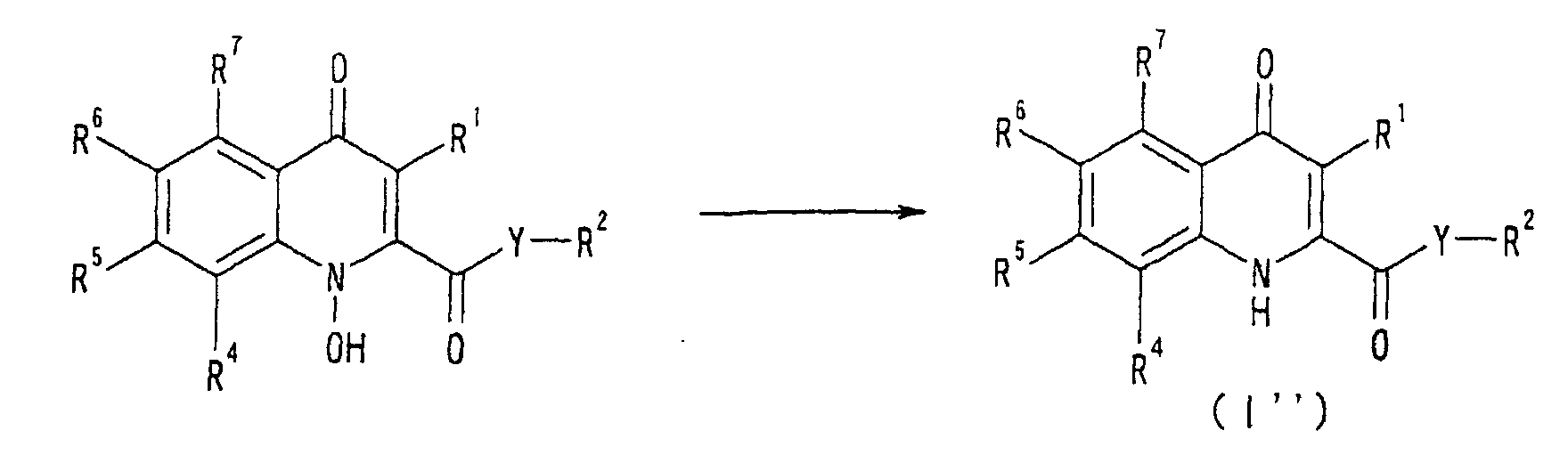
- the ester or amide derivatives of 3-alkyl-4-oxo-1,4-dihydroquinoline-2-carboxylic acid represented by the general formula (I") include the following tautomers.
- the invention includes isolated isomers and mixed isomers thereof.
- the compound (I) of the invention may form a salt with an acid or a base depending on the kinds of the substituents.
- a salt is a pharmaceutically acceptable salt.
- Specific examples include acid addition salts with an inorganic acid such as hydrochloric acid, hydrobromic acid, hydroiodic acid, sulfuric acid, nitric acid, and phosphoric acid, or with an organic acid such as formic acid, acetic acid, propionic acid, oxalic acid, malonic acid, succinic acid, fumaric acid, maleic acid, lactic acid, malic acid, tartaric acid, citric acid, methanesulfonic acid, ethanesulfonic acid, aspartic acid, and glutamic acid; salts with an inorganic base such as sodium, potassium, magnesium, calcium, and aluminum, or with an organic base such as methylamine, ethylamine, ethanolamine, lysine, and ornithine; and ammonium salts.
- the invention includes various hydrates, solvates and crystal polymorphisms of the compound (I) of the invention and its salt.
- the invention includes prodrugs of the substance of the formula (I) as obtained in the customary means.
- the prodrugs as used herein mean a compound having a substituent(s) capable of converting into the substituent(s) of the substance of the formula (I) by solvolysis or under physiological conditions, especially a compound that will be converted into the substance of the formula (I) within a living body.
- the substituent to form the prodrug are enumerated those groups described in Prog. Med., 5 , 2157-2161 (1985) and lyakuhin No Kaihatsu (Development of Drugs), Vol. 7, "Molecular Design", 163-198 (1990), by Hirokawa-shoten.
- the compound (I) and its salt of the invention can be produced through application of various known synthesis processes by utilizing the characteristic features based on the basic skeleton thereof or kinds of the substituents.
- an amide derivative (Ia) having a substituted amino group as the substituent at the 2-position of the 1,4-dihydroquinoline ring is produced by reacting a carboxylic acid derivative represented by the general formula (II) with an amine represented by the general formula (III) to form an amide bond.
- X 1 to X 4 and R 1 to R 7 have the same meanings as defined above.
- the reaction is usually carried out in a usual solvent such as acetone, dioxane, tetrahydrofuran, diethyl ether, diisopropyl ether, acetonitrile, chloroform, dichloromethane, 1,2-dichloroethane, ethyl acetate, N,N-dimethylformamide (DMF), toluene, and pyridine, or a mixture thereof.
- the reaction may also be carried out in other arbitrary organic solvent so far as it does not adversely affect the reaction.
- the reaction temperature and reaction time are not particularly limited, the reaction is usually carried out at room temperature overnight.
- the reaction can be carried out in the presence of a catalyst such as 1-hydroxybenzotriazole (HOBt) and 4-dimethylaminopyridine (DMAP), and/or a condensing agent such as dicyclohexylcarbodiimide (DCC), 1-[3-(dimethylamino)propyl-3-ethylcarbodiimide hydrochloride (WSCD-HCl) . and carbonyldiimidazole (CDI). Further, the reaction can also be carried out in the presence of N,N-dimethylformamide (DMF) via an acid chloride using thionyl chloride or oxalyl chloride. Alternatively, the reaction can be carried out via an active ester using an acid anhydride such as acetic anhydride, or an acid chloride such as mesyl chloride.
- a catalyst such as 1-hydroxybenzotriazole (HOBt) and 4-dimethylaminopyridine (DMAP)
- DCC dicyclo
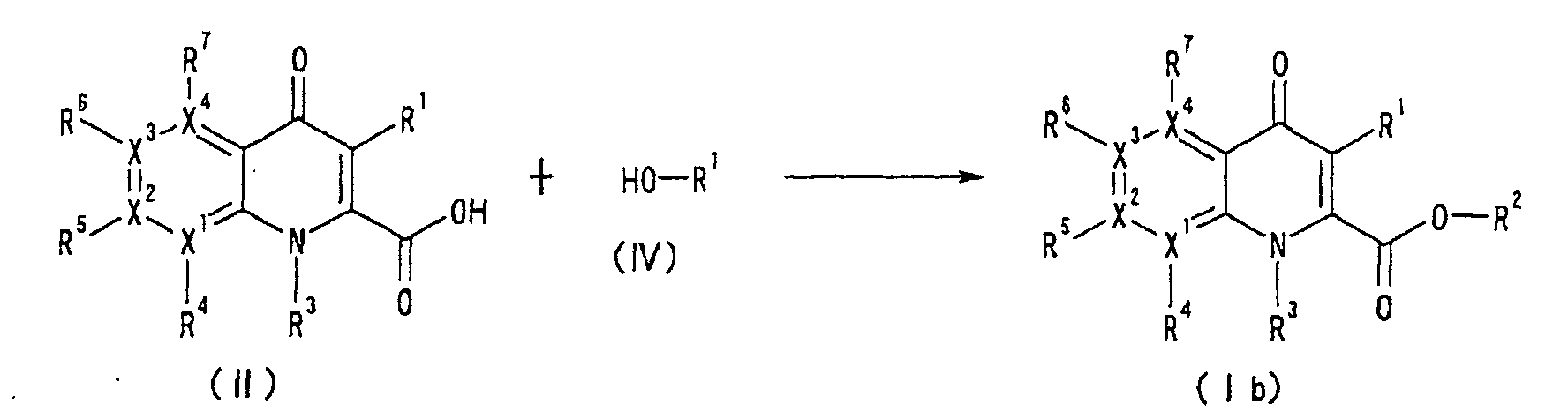
- an ester derivative (Ib) having an ester residue as the substituent at the 2-position of the 1,4-dihydroquinoline ring is produced by reacting the carboxylic acid derivative represented by the general formula (II) with an alcohol represented by the general formula (IV) to form an ester bond.
- X 1 to X 4 and R 1 to R 7 have the same meanings as defined above.
- the reaction is usually carried out in the foregoing usual solvent or a mixture thereof.
- the reaction may also be carried out in other arbitrary organic solvent so far as it does not adversely affect the reaction.
- the reaction temperature and reaction time are not particularly limited, the reaction is usually carried out at room temperature overnight.
- the reaction can be carried out in the presence of a catalyst such as 1-hydroxybenzotriazole (HOBt) and 4-dimethylaminopyridine (DMAP), and/or a condensing agent such as dicyclohexylcarbodiimide (DCC), 1-[3-(dimethylamino)propyl-3-ethylcarbodiimide hydrochloride (WSCD-HCl), and carbonyldiimidazole (CDI).
- a catalyst such as 1-hydroxybenzotriazole (HOBt) and 4-dimethylaminopyridine (DMAP)
- DCC dicyclohexylcarbodiimide
- WSCD-HCl 1-[3-(
- reaction can also be carried out in the presence of N,N-dimethylformamide (DMF) via an acid chloride using thionyl chloride or oxalyl chloride.
- DMF N,N-dimethylformamide
- the reaction can be carried out via an active ester using an acid anhydride such as acetic anhydride, or an acid chloride such as mesyl chloride.
- isomers such as a racemate, an optically active compound, and a diastereomer are present singly or as a mixture.
- the racemic compound can be introduced into a stereochemically pure isomer by using a proper starting material(s), or by general racemic resolution (such as a method in which the racemic compound is introduced into a diastereomer salt with a general optically active acid (such as tartaric acid), which is then subjected to optical resolution).
- general racemic resolution such as a method in which the racemic compound is introduced into a diastereomer salt with a general optically active acid (such as tartaric acid), which is then subjected to optical resolution.
- the mixture of diastereomers can be separated by a customary manner such as fractional crystallization and chromatography.
- the invention exhibits a selective anti-bacterial action against Helicobacter pylori and is effective for the therapy of infections of Helicobacter pylori in human being and related bacteria belonging to the genus Helicobacter in animals.
- the anti-helicobacter pylori agent of the invention is effective for prevention (including prevention of recurrence) or therapy of peptic ulcers (such as gastric or duodenal ulcer), inflammations (such as acute or chronic gastritis or duodenitis), diseases of upper digestive tracts such as gastric cancer, MALT (mucosa-associated lymphoid tissue) lymphoma, or chronic heart disease.
- a substance to be evaluated was dissolved in 100 % DMSO, and the solution was subjected to two-fold series dilution.
- the diluted solution was charged in a sterilized round Petri dish, to which was then added 10 mL of a brucella agar medium (0.1 % ⁇ -cyclodextrin or 5% sheep blood) which had been sterilized and kept at 50 °C. After intimate mixing, the mixture was solidified.
- the ultimate concentration of DMSO is 1 % or less.
- Helicobacter pylori such as Helicobacter pylori ATCC43504, which had been cultured at 37 °C for 3 days in a multigas incubator (N 2 : 80 %, CO 2 : 15 %, O 2 : 5 %) using a brucella agar medium (containing 5 % calf serum), was prepared using a brucella broth such that the number of bacteria was about 10 8 per mL depending on the turbidity.
- the bacterial solution was similarly diluted with a brucella broth 100-fold, about 1 or 5 uL of which was then inoculated on the surface of a drug-containing agar medium using a micro-planter.
- the inoculated agar plate was cultured at 37 °C for 3 days (72 hours) in the foregoing multigas incubator. The cultured agar plate was observed, and a minimal drug concentration at which the proliferation was not observed was designated as MIC.
- the infection test was carried out by using Mongolian gerbils as reported to be stably infected ( J. Gastroenterology 31: supple IX, 24-28, 1996).
- An overnight cultured inoculum of ATCC43504 was inoculated into a stomach of overnight-fasted Mongolian gerbils(MGS/Sea, male, 4-week-old)
- the therapy was started by orally administering a drug to be evaluated dissolved in a solvent according to the customary manner in a dose of 10 mg/kg, 3 mg/kg or 1 mL/kg twice per day for three days.
- the stomach was taken out and ground.
- a stomach homogenate solution was subjected to 10-fold series dilution, inoculated on a modified Skirrow medium, and then cultured at 37 °C for six to seven days under microaerophile conditions or 10 % CO 2 conditions.
- the number of bacteria within the stomach was calculated from the number of grown bacteria.
- any of the compounds of Examples 1 to 4 of the invention exhibited a bacterial elimination effect from at a dose of 1 mg/kg.
- the following known compounds exhibited a bacterial elimination effect from at a does of 10 mg/kg.
- the compounds of the invention have a stronger bacterial elimination effect by oral administration to mammals as compared with the known anti-helicobacter pylori agents.
- the drug containing the compound (I) of the invention or its salt and a pharmaceutically acceptable carrier can be prepared by a usually employed method using one or two or more of the compound represented by the general formula (I) or its salt and a pharmaceutical carrier, excipient and other additives as used for formulation.
- the administration may be in any form of oral administration by tablets, pills, capsules, granules, powders, liquids, etc., or parenteral administration by injections such as intravenous or intramuscular injection, suppositories, dermal administration, etc.
- a solid composition for the oral administration tablets, powders, or granules are used.
- one or more active substances are mixed with at least one inert diluent such as lactose, mannitol, glucose, hydroxypropyl cellulose, microcrystalline cellulose, starch, polyvinylpyrrolidone, magnesium metasilicate aluminate.
- the composition may contain additives other than the inert diluent, such as a lubricant such as magnesium stearate, a disintegrating agent such as cellulose calcium glycolate, a stabilizer such as lactose, and a dissolution aid such as glutamic acid and aspartic acid, according to the customary method.
- the tablets or pills may be coated by a sugar coating such as sugar, gelatin, hydroxypropyl cellulose, and hydroxypropylmethyl cellulose phthalate, or a film made of a gastric-soluble or intestinal soluble substance.
- the liquid composition for oral administration contains a pharmaceutically acceptable emulsion agent, solution agent, suspending agent, syrup, or elixir and contains a generally employed inert diluent such as purified water and ethanol.
- this composition may contain an auxiliary agent such as a wetting agent and a suspending agent, a sweetener, a flavor, an aromatic, or an antiseptic.
- the injection for parenteral administration contains a sterile aqueous or non-aqueous solution agent, suspending agent or emulsion agent.
- aqueous solution agent or suspending agent include distilled water or physiological saline for injection.
- non-aqueous solution agent or suspending agent include propylene glycol, polyethylene glycol, vegetable oils such as olive oil, alcohols such as ethanol, and Polysolvate 80 (trade name).
- Such a composition may also contain an auxiliary agent such as an antiseptic, a wetting agent, an emulsifier, a dispersing agent, a stabilizer (such as lactose), and a dissolution aid (such as glutamic acid and aspartic acid).
- compositions are sterilized by, for example, filtration through a bacteria-holding filter, compounding with an anti-bacterial agent, or irradiation. Further, these can be used by producing a sterile solid composition and dissolving it in sterile water or a sterile solvent for injection before the used.
- the dose of the drug per day is from about 0.001 to 30 mg per kg, and preferably from 0.1 to 5 mg per kg of the body weight and that the drug is administered once or dividedly two to four times.
- the dose of the drug per day is from about 0.001 to 30 mg per kg of the body weight and that the drug is administered once or dividedly several times. The dose is properly determined depending on the individuals while taking into consideration the symptom, age and sex.
- the compound (I) can be used singly or in combination with other anti-bacterial agents (preferably one to three kinds).
- other anti-bacterial agents can be used in combination simultaneously with the compound of the invention or after elapsing for a while.
- anti-bacterial agents examples include nitroimidazole antibiotics (such as tinidazole and metronidazole), tetracycline series drugs (such as tetracycline, minocycline, and doxycycline), penicillin series drugs (such as amoxicillin, ampicillin, talampicillin, bacampicillin, lenampicillin, mezlocillin, and sultamicillin), cephalosporin series drugs (such as cefaclor, cefadroxil, cefalexin, cefpodoxime proxetil, cefixime, cefdinir, ceftibuten, cefatiam hexetil, cefetamet pivoxil, cefcapene pivoxil, sefiditoren pivoxil, and cefloxime axetil), penenm series drugs (such as faropenem and ritipenem acoxil), macrolide series drugs (such as erythromycin, oleando
- lincomycin series drugs such as lincomycin and clindamycin
- aminoglycocide series drygs such as paromomycin
- quinolone series drugs such as ofloxacin, lebofloxacin, norfloxacin, enoxacin, ciprofloxacin, lomefloxacin, tosufloxacin, fleroxacin, spafloxacin, temafloxacin, nadifloxacin, grepafloxacin, balfloxacin, prulifloxacin, gatifloxacin, sitafloxacin, and pazufloxacin), and nitrofurantoin.
- combinations of the compound (I) of the invention with PPI such as omeprazole, rabeprazole, and lansoprazole
- anti-ulcer agents such as H 2 antagonists such as ranitidine, cimetidine, and famotidine, or gastric mucosal protective agents
- PPI such as omeprazole, rabeprazole, and lansoprazole
- anti-ulcer agents such as H 2 antagonists such as ranitidine, cimetidine, and famotidine, or gastric mucosal protective agents
Landscapes
- Chemical & Material Sciences (AREA)
- Organic Chemistry (AREA)
- Health & Medical Sciences (AREA)
- Medicinal Chemistry (AREA)
- Pharmacology & Pharmacy (AREA)
- Life Sciences & Earth Sciences (AREA)
- Animal Behavior & Ethology (AREA)
- General Health & Medical Sciences (AREA)
- Public Health (AREA)
- Veterinary Medicine (AREA)
- Epidemiology (AREA)
- Oncology (AREA)
- Chemical Kinetics & Catalysis (AREA)
- General Chemical & Material Sciences (AREA)
- Nuclear Medicine, Radiotherapy & Molecular Imaging (AREA)
- Communicable Diseases (AREA)
- Pharmaceuticals Containing Other Organic And Inorganic Compounds (AREA)
- Plural Heterocyclic Compounds (AREA)
Abstract
Description






1H-NMR: 0.87 (t, 2H), 1.28 to 1.34 (m, 8H), 1.51 to 1.58 (m, 2H), 1.98 (s, 3H), 3.27 (q, 2H), 7.27 to 7.31 (m, 1H), 7.58 to 7.65 (m, 2H), 8.08 to 8.10 (m, 1H) , 8.81 (t, 1H), 11.84 (s, 1H)
MS (m/z): 301 (M+ +1)
MS (m/z): 307 (M+ +1)
MS (m/z): 323 (M+ +1)
MS (m/z): 364 (M+ +1)
MS (m/z): 335 (M+ +1)
1H-NMR: 2.19 (s, 3H), 5.49 (s, 3H), 7.31 to 7.35 (m, 1H), 7.37 to 7.46 (m, 3H), 7.53 to 7.55 (m, 2H), 7.65 to 7.69 (m, 1H), 7.81 (d, 1H), 8.08 to 8.10 (m, 1H). 11.78 (s, 1H)
MS (m/z): 294 (M+ +1)
No.: compound number, Me: methyl, Cl: chloro, F: fluoro


Claims (10)
- An ester or amide derivative represented by the following general formula (I) or a pharmaceutically acceptable salt thereof:wherein:
 X1 to X4 each independently represents C or N, provided that at least one of X1 to X4 represents C;Y represents O or NH;R1 represents a C1 to C6 alkyl group;R2 represents (a) a C1 to C10 alkyl group, provided that when X represents O, R2 represents a C3 to C10 alkyl group, or (b) an aryl-C1 to C10 alkyl group, a heteroaryl-C1 to C10 alkyl group, or a cycloalkyl-C1 to C10 alkyl group, provided that the C1 to C10 alkyl group may be any carbon-carbon bond of the C1 to C10 alkyl group may be inserted by -O-, -NR8-, or -S(O)n-, wherein R8 represents H or a C1 to C6 alkyl group, and n is 0, 1 or 2, and that the aryl, heteroaryl and cycloalkyl may each be substituted with from one to three of halogen, C1 to C6 alkyl, C1 to C6 alkyl-O-, nitro, cyano, amino, hydroxycarbonyl, C1 to C6 alkyl-NH-, or di-C1 to C6 alkyl=N-;R3 represents H, a C1 to C6 alkyl group, an aryl-C1 to C6 alkyl group, a heteroaryl-C1 to C6 alkyl group, a cycloalkyl-C1 to C6 alkyl group, an aryl group, a heteroaryl group, or a cycloalkyl group, provided that the aryl, heteroaryl and cycloalkyl may each be substituted with from one to three of halogen, C1 to C6 alkyl, C1 to C6 alkyl-O-, nitro, cyano, amino, hydroxycarbonyl, C1 to C6 alkyl-NH-, or di-C1 to C6 alkyl=N-; andR4 to R7 may be the same or different and each represents H, a halogen, a nitro group, a cyano group, an amino group, a hydroxycarbonyl group, a C1 to C6 alkyl group, a C1 to C6 alkyl-O- group, a C1 to C6 alkyl-NH group, or a di-C1 to C6 alkyl=N- group,provided that in the case where X1 to X4 each represents N, R4 to R7 to be bound thereto are not present and that R3 and R4 may be taken together to form a linear or branched C1 to C8 alkylene which may be inserted by N, O or S.
- The ester or amide derivative or its pharmaceutically acceptable salt according to claim 1, wherein X1 to X4 are all C.
- The ester or amide derivative or its pharmaceutically acceptable salt according to claims 1 to 2, wherein R3 is H.
- The ester or amide derivative or its pharmaceutically acceptable salt according to any of claims 1 to 3, wherein R2 represents (a) a C1 to C10 alkyl group, provided that when X is O, R2 represents a C5 to C10 alkyl group, or (b) a phenyl-C1 to C6 alkyl group, provided that the C1 to C6 alkyl may be any carbon-carbon bond of the C1 to C10 alkyl group may be inserted by -O-, -NR8-, or -S(O)n-, wherein R8 represents H or a Ci to C6 alkyl, and n is 0, 1 or 2, and that the phenyl may be substituted with from one to three of halogen, C1 to C6 alkyl, C1 to C6 alkyl-O-, nitro, amino, C1 to C6 alkyl-NH-, or di-C1 to C6 alkyl=N-.
- The ester or amide derivative or its pharmaceutically acceptable salt according to any of claims 1 to 4, wherein R2 represents (a) a C6 to C8 alkyl group or (b) a benzyl group which may be substituted with one to three of halogen, C1 to C6 alkyl, C1 to C6 alkyl-O-, nitro, amino, C1 to C6 alkyl-NH-, or di-C1 to C6 alkyl=N-.
- The ester or amide derivative or its pharmaceutically acceptable salt according to any of claims 1 to 5, wherein R1 represents a methyl group.
- The ester or amide derivative or its pharmaceutically acceptable salt according to any of claims 1 to 6, wherein R4 to R7 are all H.
- The ester or amide derivative or its pharmaceutically acceptable salt according to any of claims 1 to 7, which is N-heptyl-3-methyl-4-oxo-1,4-dihydroquinoline-2-carboxamide, N-(4-methylbenzyl)-3-methyl-4-oxo-1,4-dihydroquinoline-2-carboxamide,
N-(3-methoxybenzyl)-3-methyl-4-oxo-1,4-dihydroquinoline-2-carboxamide,
Benzyl 3-methyl-4-oxo-1, 4-dihydroquinoline-2-carboxylate, or a salt thereof. - A drug composition comprising an ester or amide derivative represented by the foregoing general formula (I) or its pharmaceutically acceptable salt and a pharmaceutically acceptable carrier.
- The drug composition according to claim 9, which is a preventive or remedy for Helicobacter pylori infectious diseases.
Applications Claiming Priority (3)
| Application Number | Priority Date | Filing Date | Title |
|---|---|---|---|
| JP2000258498 | 2000-08-29 | ||
| JP2000258498 | 2000-08-29 | ||
| PCT/JP2001/007307 WO2002018344A1 (en) | 2000-08-29 | 2001-08-27 | Novel ester or amide derivatives |
Publications (2)
| Publication Number | Publication Date |
|---|---|
| EP1314726A1 true EP1314726A1 (en) | 2003-05-28 |
| EP1314726A4 EP1314726A4 (en) | 2005-07-13 |
Family
ID=18746802
Family Applications (1)
| Application Number | Title | Priority Date | Filing Date |
|---|---|---|---|
| EP01958508A Withdrawn EP1314726A4 (en) | 2000-08-29 | 2001-08-27 | NEW ESTERIC OR AMIDIC DERIVATIVES |
Country Status (7)
| Country | Link |
|---|---|
| US (2) | US6822098B2 (en) |
| EP (1) | EP1314726A4 (en) |
| KR (1) | KR20030027094A (en) |
| CN (1) | CN1212317C (en) |
| AU (1) | AU2001280176A1 (en) |
| CA (1) | CA2419616A1 (en) |
| WO (1) | WO2002018344A1 (en) |
Families Citing this family (5)
| Publication number | Priority date | Publication date | Assignee | Title |
|---|---|---|---|---|
| JP4561245B2 (en) * | 2004-08-31 | 2010-10-13 | 住友化学株式会社 | Chromone compounds and uses thereof |
| BRPI0608917A2 (en) * | 2005-04-12 | 2017-07-11 | Elan Pharma Int Ltd | ANTIBIOTIC CONTROLLED RELEASE COMPOSITION AND METHOD FOR THE TREATMENT OF BACTERIAL INFECTION |
| US20090069562A1 (en) * | 2005-12-26 | 2009-03-12 | Joseph Prabahar Koilpillai | Process for the preparation of alfuzosin |
| US7973022B2 (en) * | 2006-02-17 | 2011-07-05 | Idexx Laboratories, Inc. | Fluoroquinolone carboxylic acid salt compositions |
| AU2010340142B2 (en) * | 2009-12-17 | 2014-05-08 | Merck Sharp & Dohme Corp. | Quinoline amide M1 receptor positive allosteric modulators |
Family Cites Families (9)
| Publication number | Priority date | Publication date | Assignee | Title |
|---|---|---|---|---|
| JPS55151511A (en) * | 1979-05-16 | 1980-11-26 | Sankyo Co Ltd | Antiallergic agent consisting mainly of kynurenic ester derivative |
| IL100555A (en) * | 1991-02-07 | 2000-08-31 | Hoechst Marion Roussel Inc | N-substituted quinoline derivatives their preparation their use for the preparation of medicaments and the pharmaceutical compositions containing them |
| CN1168667A (en) * | 1994-10-27 | 1997-12-24 | 藤沢药品工业株式会社 | Pyridopyrimidones, quinolines and fused N-heretocycles as bradykinin antagonists |
| FR2733233B1 (en) * | 1995-04-20 | 1997-05-30 | Roussel Uclaf | NEW QUINOLEIN DERIVATIVES, THEIR PREPARATION PROCESS, THE NEW INTERMEDIATES OBTAINED, THEIR APPLICATION AS MEDICAMENTS AND THE PHARMACEUTICAL COMPOSITIONS CONTAINING THEM |
| JPH08311032A (en) * | 1995-05-18 | 1996-11-26 | Eisai Co Ltd | Alpha,beta-unsaturated ketone derivative |
| US5942619A (en) * | 1995-09-29 | 1999-08-24 | Pfizer Inc. | Quinolone compounds for the treatment of disorders caused by helicobacter pylori |
| JPH09309879A (en) * | 1996-05-20 | 1997-12-02 | Eisai Co Ltd | Alpha and beta-unsaturated ketone derivative |
| US6080757A (en) * | 1996-06-06 | 2000-06-27 | Pfizer Inc | Antibiotic quinolones and derivatives |
| JP3879171B2 (en) * | 1997-04-03 | 2007-02-07 | アステラス製薬株式会社 | Anti-Helicobacter pylori |
-
2001
- 2001-08-27 KR KR10-2003-7002902A patent/KR20030027094A/en not_active Ceased
- 2001-08-27 AU AU2001280176A patent/AU2001280176A1/en not_active Abandoned
- 2001-08-27 EP EP01958508A patent/EP1314726A4/en not_active Withdrawn
- 2001-08-27 WO PCT/JP2001/007307 patent/WO2002018344A1/en not_active Ceased
- 2001-08-27 CN CNB018147038A patent/CN1212317C/en not_active Expired - Fee Related
- 2001-08-27 US US10/363,033 patent/US6822098B2/en not_active Expired - Fee Related
- 2001-08-27 CA CA002419616A patent/CA2419616A1/en not_active Abandoned
-
2004
- 2004-11-19 US US10/992,134 patent/US7183412B2/en not_active Expired - Fee Related
Also Published As
| Publication number | Publication date |
|---|---|
| AU2001280176A1 (en) | 2002-03-13 |
| WO2002018344A1 (en) | 2002-03-07 |
| US7183412B2 (en) | 2007-02-27 |
| CN1449384A (en) | 2003-10-15 |
| CA2419616A1 (en) | 2003-02-13 |
| CN1212317C (en) | 2005-07-27 |
| US20040019214A1 (en) | 2004-01-29 |
| US6822098B2 (en) | 2004-11-23 |
| KR20030027094A (en) | 2003-04-03 |
| EP1314726A4 (en) | 2005-07-13 |
| US20050090497A1 (en) | 2005-04-28 |
Similar Documents
| Publication | Publication Date | Title |
|---|---|---|
| US11780841B2 (en) | 3,6-methano-1H-pyrrolo[3,2-b]pyridine and 3,6-methano-1H-pyrrolo[3,2-c]pyridine compounds and medicaments using same | |
| CZ299554B6 (en) | Compound with quinolone structure, pharmaceutical composition containing thereof and use of such compound | |
| JP2026016715A (en) | Cyclic amide compounds for treating rabies and methods thereof | |
| JP7693669B2 (en) | Salts and polymorphs of cethromycin for the treatment of diseases - Patents.com Salts and polymorphs of cethromycin | |
| WO2009030106A1 (en) | 7-(4-oximino-3-amino-1-piperidyl)quinolinecarboxylic acid derivatives and their preparation methods | |
| US6822098B2 (en) | Ester or amide derivatives | |
| CN112759545B (en) | 3- (dimethylamino methyl) piperidine-4-alcohol derivative and preparation method and pharmaceutical application thereof | |
| EP1767536B1 (en) | Quinolonecarboxylic acid compounds, preparation methods and pharmaceutical uses thereof | |
| CN111087409B (en) | Quinolone compound and preparation method and application thereof | |
| WO2014161412A1 (en) | Tricyclic quinolone derivative and preparation method and use thereof | |
| CN101450938B (en) | 7-(4-oximido-3-amido-3-alkyl-1-piperidine)quinoline carboxylic acid derivates and preparation method thereof | |
| RU2236408C2 (en) | 1-(6-amino-3,5-difluoropyridine-2-yl)-8-bromo-7-(3-ethylaminoazethidine-1-yl)-6-fluoro-4-oxo-1,4-dihydroquinoline-3-carboxylic acid, medicinal composition and method for treatment based on this compound | |
| CN1116301C (en) | Tetracyclic fluoroquinolone carboxylic acid, its preparation method and its pharmaceutical composition as active ingredient | |
| JPWO2002018344A1 (en) | Novel ester or amide derivatives | |
| US8217172B2 (en) | Solid forms of 1-ethyl-3-(5-(5-fluoropyridin-3-yl)-7-(pyrimidin-2-yl)-1H-benzo[d]imidazol-2-yl)urea | |
| CN101450947B (en) | 7-(3-oximido-4-amido-4-alkyl-1-piperidine)quinoline carboxylic acid derivates and preparation method thereof | |
| US7759362B2 (en) | Quinolonecarboxylic acid compounds, preparation methods and pharmaceutical uses thereof | |
| TWI313602B (en) | Gyrase inhibitors and uses thereof | |
| WO2010012138A1 (en) | 7-[4-(aminomethyl)-4-fluoro-3-(alkoxyimino)pyrrolidin-1-yl] quinoline carboxylic acid derivatives and methods for preparation | |
| JP2025028962A (en) | Compounds and medicines using the same | |
| TW202428270A (en) | 15-pgdh inhibitor | |
| JPH0649059A (en) | 7-@(3754/24)5-azaspiro(2,4)heptan-5-yl)-8-alkoxyquinoline-3-carboxylic acid derivative | |
| TW202434597A (en) | Compounds for inhibiting 15-pgdh and uses thereof | |
| WO1991016311A1 (en) | 7-(substituted hydrazino)-4-oxoquinoline-3-carboxylic acid derivative, its salt and its ester | |
| JP2000143632A (en) | New quinolone derivatives |
Legal Events
| Date | Code | Title | Description |
|---|---|---|---|
| PUAI | Public reference made under article 153(3) epc to a published international application that has entered the european phase |
Free format text: ORIGINAL CODE: 0009012 |
|
| 17P | Request for examination filed |
Effective date: 20030224 |
|
| AK | Designated contracting states |
Designated state(s): AT BE CH CY DE DK ES FI FR GB GR IE IT LI LU MC NL PT SE TR |
|
| AX | Request for extension of the european patent |
Extension state: AL LT LV MK RO SI |
|
| A4 | Supplementary search report drawn up and despatched |
Effective date: 20050601 |
|
| RAP1 | Party data changed (applicant data changed or rights of an application transferred) |
Owner name: ASTELLAS PHARMA INC. |
|
| 17Q | First examination report despatched |
Effective date: 20070612 |
|
| GRAP | Despatch of communication of intention to grant a patent |
Free format text: ORIGINAL CODE: EPIDOSNIGR1 |
|
| STAA | Information on the status of an ep patent application or granted ep patent |
Free format text: STATUS: THE APPLICATION IS DEEMED TO BE WITHDRAWN |
|
| 18D | Application deemed to be withdrawn |
Effective date: 20080311 |