TECHNICAL FIELD
The present invention relates generally to a method for converting
interlace scan video signals to progressive scan video signals and, in particular, to a
method of interpolating a value for a picture element (pixel) of an interstitial row of
pixels, lying on an edge between visually distinct regions of an interlace scan video
image.
BACKGROUND OF THE INVENTION
The image on the television screen consists of pixels, arranged
horizontally in rows, generally offset vertically by one pixel position from one another.
Each pixel is assigned three values, which indicate the respective intensities of the red,
green, and blue components of the pixel. A video image is generated by sequentially
displaying the rows of pixels as horizontal lines of the image.
Existing analog broadcast standards such as NTSC, PAL and SECAM use
two video fields to generate a single video frame. Each field includes one-half of the
horizontal lines that make up the image frame. One field includes all of the odd
numbered lines of the frame and the other field includes all of the even numbered lines.
Interlaced images exhibit distorting artifacts such as vertical line flicker or loss of
vertical detail that degrade the resulting frame image. One way to eliminate these
artifacts is to convert the interlace-scanned fields into progressive-scan frames. In a
progressive-scan frame, both the odd and even image lines are displayed sequentially as
a single image.
Interlace-scan to progressive-scan conversion systems are gaining
importance as more television viewers purchase high-definition television monitors that
can display progressive-scan signals. Both broadcast facilities and consumers may want
to have interlace-scan to progressive-scan conversion capability in order to avoid the
distorting artifacts of interlace-scan images.
One way to generate a progressive-scan frame from an interlace-scan field
is to interpolate interstitial lines in each field. Thus, the lines of the odd field are used to
interpolate even-numbered lines and the lines of the even field are used to interpolate
odd-numbered lines.
Each pixel of the interpolated line (or the "interpolated pixel") is
calculated based on the values of proximate pixels in adjacent interlace-scan lines. The
simplest method of generating the interpolated pixel is simply duplicating the pixel from
the corresponding position in the previously received scan line. For pixels which lie on
a diagonal edge, this could result in "jaggies" (a line which appears to be jagged or
stair-stepped, rather than smooth). For pixels which are not on an edge, such
duplication could result in pixels that do not correspond to the image being displayed,
resulting in a poor display to the viewer. This method also reduces the vertical
resolution of the image compared to an interlace-scan image and may result in areas of
the image flickering at a 30 Hz rate.
Another simple method is to set the value of the interpolated pixel as the
average of two vertically adjacent pixels. However, for a pixel on the edge of two
visually distinct regions, such an averaging could result in a pixel that matches neither
adjacent pixel. For example, the value generated for an interpolated pixel between a
blue pixel and green pixel may be cyan, which would not result in the image desired to
be presented to the viewer.
FIG. 1 shows an image on a television image 100, which includes two
visually distinct regions 102 and 104. The border 103 between the two visually distinct
regions is referred to herein as an edge. An image on a television screen may consist of
more than two visually distinct regions, and any one or more visually distinct regions
may not be entirely contained within the television screen, as is illustrated.
Visually distinct regions are defined by the edge 103 between them, in
contrast to a more gradual change, such as a shadow (which may have gradations of
gray and black) or light on a wall (which may have gradations of color). In generating
an interpolated pixel 108 which is to be on an edge, it is desirable to consider the visual
smoothness of the edge. If the value of the pixel 108 on the interpolated line 106 were
based solely on the pixels proximate in the received scan lines 105 and 107, the
calculated value may be a blend of the values of the two visually distinct regions, rather
than a distinctive edge separating the two regions. The result could be an edge without
sufficient clarity to distinguish between the two regions, a line that is not visually
smooth, or a pixel that has the correct value for an edge but is displayed at the wrong
pixel location.
SUMMARY OF THE INVENTION
To meet this and other needs, and in view of its purposes, the present
invention provides a method for generating an interpolated pixel in an interlaced to
progressive conversion system, comprising the steps of selecting a target pixel from the
interlaced scan signal; determining if said target pixel lies on an edge between first and
second visually distinct regions by determining gradient intensities in the horizontal and
vertical directions; calculating the angle of the edge by combining the gradient intensity
values using combinatorial logic; and calculating a value for a pixel from the
progressive scan signal as an average of the pixels proximate to the target pixel in the
direction of the calculated edge.
It is to be understood that both the foregoing general description and the
following detailed description are exemplary, but are not restrictive, of the invention.
BRIEF DESCRIPTION OF THE DRAWINGS
Fig. 1 is an example of visually distinct regions.
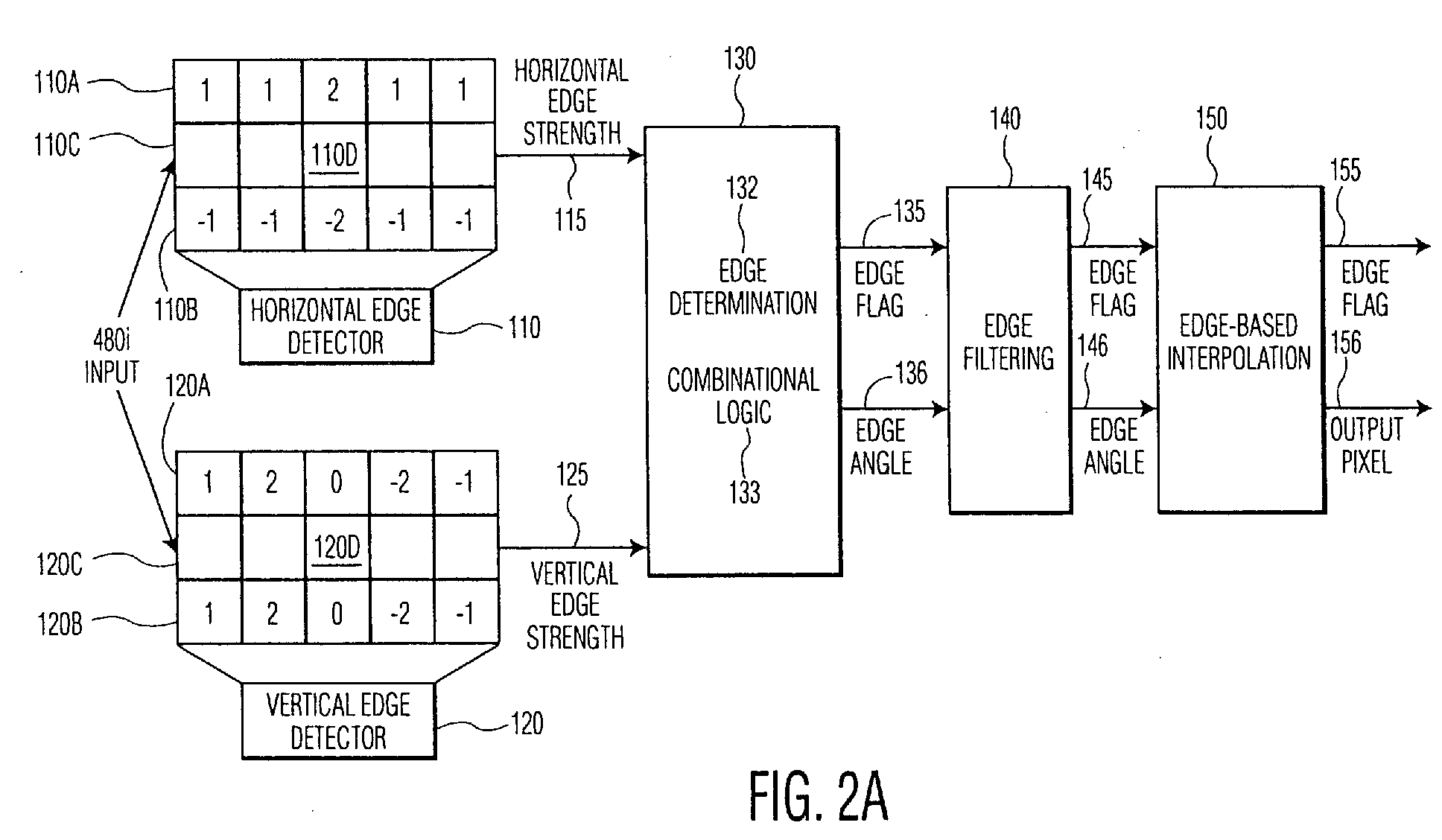
Fig. 2A is a block diagram of an exemplary embodiment of the present
invention
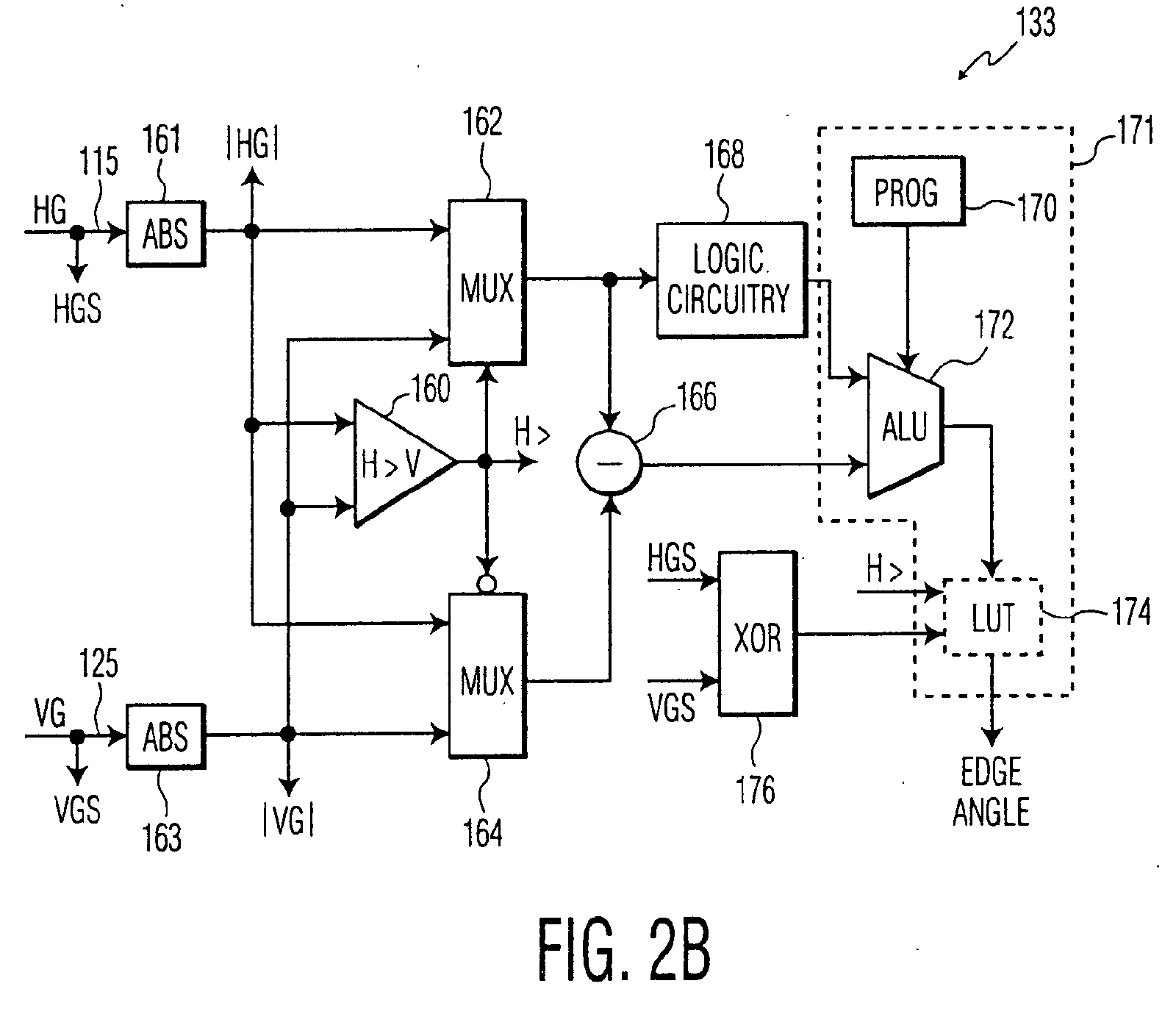
Figs 2B and 2C are block diagrams partly in logic diagram form of edge
determination combinational logic suitable for use in the embodiment of the invention
shown in Fig. 2A.
Fig. 3 is a flow diagram of an exemplary embodiment of the present
invention.
Fig. 4 is a data diagram that is useful for describing an angle calculation
according to an exemplary embodiment of the present invention.
Figs. 5A and 5B are exemplary edge masks that may be used in an
exemplary embodiment of the present invention.
Figs. 6A, 6B, 6C and 6D are image edge diagrams that are useful for
describing an angle calculation suitable for use with the present invention.
DETAILED DESCRIPTION OF THE INVENTION
The present invention relates to a method and apparatus for converting an
interlace scan video signal into a progressive scan video signal, and specifically for
generating picture elements (pixels) of interstitial lines in an interlaced field image,
which pixels lie on an edge between visually distinct regions in the interlaced field.
In an exemplary embodiment of the invention shown in Fig. 2A, an
arithmetic approximation technique is used to determine the angle of an edge at a
particular pixel position to yield an interpolated pixel well within acceptable tolerance
levels, while avoiding overhead of mathematical calculation or memory usage. The
arithmetic approximation is achieved using combinatorial logic. The exemplary
embodiment of the invention also allows for different degrees of precision in the result.
The exemplary embodiment uses a horizontal edge detector 110 and a
vertical edge detector 120, that are specifically designed for use with interlace-scan
video signals and that also serve as noise-reduction filters. Horizontal edge detector
110 and vertical edge detector 120 work by determining a numeric value, called "edge
strength," representing the degree of change in the values of the pixels in the scanned
rows adjacent to a target pixel.
The exemplary horizontal edge detector 110 includes two finite impulse
response (FIR) filters, 110A and 110B. In the exemplary embodiment of the invention,
each of these FIR filters is a five-tap filter having the coefficients shown in Figure 2.
Each of the filters multiplies five successive pixels on a line of the interlaced video
signal by the respective coefficients and sums the results.
The two filters of the horizontal edge detector 110 operate on consecutive
lines of one interlaced field. The output signal provided by the filter is an indication of
the horizontal edge strength at the interpolated pixel position, 110D, the center position
of the line 110C.
In the same way, the vertical edge detector 120 employs two FIR filters
120A and 120B to generate an output signal representing the vertical edge strength for
the interpolated pixel position, the center position, 120D, of the line 120C. The filters
120A and 120B also operate on consecutive lines of the interlaced field.
The edge strengths in the horizontal 115 and vertical 125 directions in the
region around the target pixel are the output signals of the edge detectors 110 and 120,
respectively. The horizontal edge strength 115 and vertical edge strength 125 are
evaluated in edge determination logic 130, to determine if an edge is present. An edge
is present if either or both of the horizontal edge strength value 115 and the vertical
edge strength value 125 exceed a threshold value.
The ratio of the horizontal and vertical gradient strength intensities is used
by the logic 130 to determine the angle of the edge. The Edge Determination
component 132 of block 130 sets an edge flag 135 to indicate the presence of an edge.
The combinational logic component 133 of block 130 calculates the value of the edge
angle 136. The edge determination component 132 of block 130 corresponds to Fig. 2C
and to steps 230 through 235 of Fig. 3. The combinational logic component 133 of
block 130 corresponds to Fig. 2B and to steps 240 through 270 of Fig. 3, described
below.
Edge filter 140 may process the image to be displayed, for example by
evaluating an "edge map" (a binary image in which all the pixels which lie on edges in
the image are represented by a logic one while all other pixels are represented by logic
zero). This edge map is processed in conjunction with the actual image pixels to ensure
that an edge is in fact detected, and to filter out noise. If the target pixel is determined
not to be on an edge, but to be an artifact of noise in the image, for example, the filter
140 may reset the edge flag 145 for the pixel and set the edge angle 146 for the pixel to
a predetermined value. Edge flag 145 and edge angle 146 are used by the edge
interpolator 150, as described below, to calculate the value of the target pixel. Edge
interpolator 150 provides an edge flag 155 and value 156 of the interpolated pixel.
The method of the exemplary embodiment of the present invention is
shown in Fig. 3. In block 210, the horizontal edge strength is calculated using the filter
110, shown in Fig. 2A. The vertical edge strength is calculated in step 220 using the
filter 120 shown in Fig. 2A. The horizontal and vertical edge detectors examine pixels
in the interlace scan rows proximate to the target pixel, and determine the relative
magnitude of changes in the intensity of the pixels. An abrupt change, for example
from red to green, may indicate an edge. The values selected for the edge detectors
return numeric values for the strength of this change in each direction. If the numeric
value is greater than a predetermined threshold, block 230, then an abrupt change in
intensity has been detected, and an edge is indicated. If the value is less than the
predetermined threshold, then there is no change or a gradual change, and no edge is
indicated, block 235. The relative magnitudes of the numeric values indicate whether
the edge is predominantly horizontal or vertical, and, as described below, a comparison
of the gradient intensities can yield the angle of the edge. By using the degree of
change across pixels in the scanned row adjacent to the target pixel, an edge can be
determined dynamically without the overhead of a pixel-by-pixel comparison.
One output signal of the edge determination section 132 is a flag
indicating if the target pixel is on an edge in the image. As described below, the edge
filtering process 140 may collect these edge flags to generate an edge map for the
image. In the exemplary embodiment, the edge map is an array of one-bit values
corresponding to the image field that is being interpolated, each bit indicating whether
the respective pixel is an edge pixel. The edge determination method of steps 230
through 235 corresponds to the Edge Determination component 132 of block 130 shown
in Fig. 2A.
As described below, the relative edge strengths of the horizontal and
vertical edges may be used to determine the angle of the edge at the target pixel
position. The first step in this process, step 240, is to express the magnitudes of the
horizontal edge strength and vertical edge strength values as bit strings. The difference
between these bit strings is calculated and also stored as a bit string in step 240. The
present invention operates by examining select bits from the larger of the horizontal
edge strength and vertical edge strength values and the difference value. According to
the method of the exemplary embodiment, the position of the most significant non-zero
bit of the greater gradient value bit string is located in step 250. The corresponding bit
position is located in the difference value bit string in block 260. In step 262, the
located bit positions and a predetermined less-significant bit positions are examined to
determine the angle of the edge. The number of less significant bit positions that are
examined varies as the level of precision desired.
As a first approximation, each difference bit represents a distinct level of
difference between the two values. These levels correspond to successive powers of 2;
i.e., the most significant bit is 2-1 (or .5), so a 1 in this position indicates the horizontal
edge strength and vertical edge strength values are at least 50% different. The
remaining bits express the difference between the horizontal edge strength and vertical
edge strength values in decreasing powers of 2; i.e., 2-2, 2-3, 2-4, etc., or .25, .125, .0625,
etc. Summing these values results in an approximation of the ratio of the two edge
strength values, with the accuracy of the approximation varying as the number of bits to
be examined. For example, an accuracy of approximately 6 percent may achieved by
checking 4 bits. If additional accuracy is required, the number of bits can be increased,
with each additional bit halving the error. The summation of the difference levels yields
the ratio between the difference and the larger gradient value.
The inverse tangent function may be used to calculate the angle of the
edge at the target pixel. For the inverse tangent function, the required ratio is of the
horizontal edge strength to the vertical edge strength. To approximate this, the
summation of the percentage differences calculated above is subtracted from 1.0, in step
264, and the inverse tangent applied at step 270 to yield the angle of the edge. The edge
calculation method of steps 240 through 270 corresponds to the Combinational Logic
component 133 of block 130 in Fig. 2A. In one exemplary embodiment of the
invention, the inverse tangent function is applied using a look-up table. The output
value provided by this look-up table is not an actual angle but a coded value indicating a
particular edge angle. For example, a value x"001" may indicate an angle of 22.5°,
x"010" an angle of 30°, x"011" an angle of 45°, x"110" an angle of 60°, and so on.
As described below with reference to Figs. 6A through 6D, the ratio of the
larger edge strength to the difference value may represent an angle of less than 45° or
greater than 45°, depending on whether the vertical or horizontal edge strength is larger,
respectively. The combinatorial logic 133 determines the appropriate angle based on
whether the larger value used in the comparison step is the vertical edge or the
horizontal edge. In addition, the angle may be positive or negative. If the signs of the
horizontal gradient and vertical gradient are the same, the angle is likely to be positive,
otherwise it is likely to be negative. The determination of whether the angle is positive
or negative may also be made using edge masks, described below with reference to
Figs. 5A and 5B.
In the exemplary embodiment at step 280, the unique edge masks that are
described below may be used both to identify positive and negative angles and to
compensate for pixels that were erroneously categorized as edges but which represent
image noise or small edge regions that can not be handled properly by the edge
interpolator. The use of edge masks as filters is well-suited for interlaced scan images,
to ensure that the interpolated pixel(s) correspond to the intended visual image. Step
280 of Fig. 3 represents processing performed by the edge filtering block 140, shown in
Fig. 2A. In step 290, the value of the target pixel may be provided and an edge
detection flag may be set. Step 290 represents processing performed by block 150 of
Fig. 2A.
Figs. 2B and 2C are block diagrams of circuitry suitable for use as the
edge determination combinational logic 130. Fig. 2B is an example of edge angle
determining combinational logic and Fig. 2C is an example of edge determination logic.
As shown in Fig. 2B, the horizontal gradient, HG, 115 and vertical gradient, VG, 125
are applied to respective absolute value circuits 161 and 163 that produce magnitude
signals |HG| and |VG| which are applied to corresponding input terminals of respective
multiplexers 162 and 164. The sign bits, HGS and VGS, of the horizontal gradient and
the vertical gradient values respectively are made available as separate signals.
The signals |HG| and |VG| are also applied to a comparator 160. The
comparator 160 produces an output signal H> which is logic-high when the magnitude
of the horizontal gradient 115 is greater than the magnitude of the vertical gradient 125.
This output signal is applied to the selection input terminal of multiplexer 162 and to an
inverted selection input terminal of multiplexer 164. Consequently, the output signal of
multiplexer 162 is always the greater magnitude value of the horizontal gradient 115
and the vertical gradient 125 while the output signal of multiplexer 164 is always the
lesser magnitude value. The output signal of multiplexer 162 is applied to the minuend
input port of a subtractor 166 while the output signal of multiplexer 164 is applied to the
subtrahend input port of the subtractor. Thus, the subtractor provides the difference
between the horizontal gradient and vertical gradient. This signal is applied to one input
port of an arithmetic and logic unit (ALU) 172. The greater gradient value provided by
multiplexer 162 is applied to logic circuitry 168 which determines the most significant
non-zero bit position of the greater value. This bit value is applied to a second input
port of the ALU 172.
As described above, the ALU 172 multiplies the binary value in the bit
position indicated by the logic circuitry 168 in the difference value provided by the
subtractor 166 and the values in N less significant bit positions by decreasing powers of
2. (i.e. .5, .25, .125, etc.) and sums the result. In an alternative embodiment of the
invention, logic circuitry 168 examines bit positions less significant than the output bit
position and provides a second value (not shown) to the ALU 172 which causes the
ALU 172 to select one coefficient set from among several coefficient sets and multiply
the values in the bit positions of the difference value by the selected coefficients. The
results of these multiplication are also summed. The operation of the ALU 172 is
controlled by a program in a program memory 170.
When the selected bits of the difference value are multiplied by decreasing
powers of two, the output value provided by the ALU 172 represents the tangent of the
angle of the edge. This value may be applied to a look-up-table (LUT) 174 to be
converted into an angle. When the coefficient sets are used, the value provided by the
ALU 172 is the angle of the edge so the LUT 174 is not needed.
As described above, the angle provided by the ALU 172 and/or LUT 174
is less than 45°. If the horizontal gradient value 115 is greater than the vertical gradient
value 125, the angle should be greater than 45°. Accordingly, in the exemplary
embodiment, the signal H> is also applied to the LUT 17 so that it can produce angles
that are both greater than and less than 45°. The signal H> is provided by the
comparator 160, as described above. The exclusive OR gate 176 determines whether
the angle of the edge is negative or positive. The sign bits, HGS and VGS of the
respective horizontal gradient value 115 and vertical gradient value 125 are applied to
the input terminals of the exclusive OR gate 176. If these two values are the same, then
the angle is positive. If these values differ, the angle is negative. The output signal of
the exclusive OR gate 176 is also applied to the LUT 174 so that it may produce both
positive and negative angles.
If the ALU 172 uses the coefficient sets to determine the angle of the edge
and the LUT 174 is not used, the ALU may provide, for example, the two least
significant bit positions of the angle value, the value of the signal H> may be the next
more significant bit and the output signal of the exclusive OR gate 176 may be the sign
bit. These values are illustrated in Table 2 below. In this exemplary configuration, the
angle values are represented in sign-magnitude format.
Fig. 2C is a block diagram of exemplary edge detection circuitry. This
circuitry includes two comparators 186 and 188 and an OR gate 192. The comparators
186 and 188 compare the signal |HG|, the magnitude of the horizontal gradient value
115, and the signal |VG|, the magnitude of the vertical gradient value 125 to a threshold
value 190. If either of these values exceeds the threshold value (e.g. 32), the
comparator produces a logic-high output signal. The output signals of the comparators
186 and 188 are applied to the OR gate 192 and the output signal of the OR gate is the
edge flag signal 135, shown in Fig. 2A.
An example according to the exemplary embodiment of the present
invention is shown in Fig. 4. For purposes of the example, the horizontal edge detector
and vertical edge detector filters have generated the binary values (shown in Fig. 4 as
"GradientX" and "GradientY" respectively) for a target pixel. For the purpose of the
example, these values have been determined to be greater than the predetermined
threshold. In this example, the horizontal edge strength value is 63, or x"00111111."
The vertical edge strength value is 44, or x"00101100" and the threshold value is 32.
The difference between the horizontal and vertical edge strengths is 19, or
x"00010011." The most significant non-zero bit of the larger gradient intensity value
(in this case, the horizontal gradient intensity value) is the third position from the left.
The value of the corresponding position in the difference bit string is x"0". For the
example shown, accuracy is desired to 4 bit positions, so the relevant substring of the
difference bit string is x"0100". Multiplying the value of each position by the
decreasing powers of 2 and summing the results as described above yields (0 * .5) + (1
* .25) + (0 * .125) + (0 * .0625) = .25. Subtracting this result from 1.0 results in an
estimate of .75. Finishing the calculation according to the present invention, but not
shown in the example in Fig. 4, the inverse tangent of 0.75 (calculated, for example,
using a look-up table) yields an angle of approximately 36 degrees. In the exemplary
embodiment of the invention, this angle maybe approximated as 30 degrees. Although
this method can generate accurate results, there may be instances where greater
accuracy may be desired. In these instances, processing a larger number of bits for each
edge strength value provides the desired improvement in accuracy.
Figs. 6A through 6D are image diagrams showing edges 610, 612, 614
and 616, respectively. Each of the edges is shown as a double line to indicate regions in
which a gradient exists. The arrows 611, 613, 615 and 617 indicate increasing pixel
values. Fig. 6A shows an edge having a negative angle less than 45°, Fig. 6B shows an
edge having a positive angle less than 45°, Fig. 6C shows an edge having a negative
angle greater than 45° and Fig. 6D shows an edge having a positive angle greater than
45°. As shown in the figures, the signs of the horizontal gradients (ΔX) and vertical
gradients (ΔY) are the same for positive angles and are different for negative angles.
Thus, the relative signs of the gradient values can be used to determine the sense,
positive or negative, of the angle formed by the edge.
As described above, in one embodiment of the invention, the angle of the
edge may be calculated directly from the edge strength values, without using the look-up
table. As described below, this may be done in the
combinational logic 133 with
minimal additional processing. Because the larger values (i.e., the values closer to the
selected most significant bit) can vary within a power of 2, the evaluation of the bit
patterns of the difference bits may also vary. An effective and accurate way to
approximate this variance is to evaluate the middle two bits of the larger gradient, and
select one of three ranges; essentially indicating if the larger value is closer to 2
N, 2
N-1,
or somewhere in the middle. A simple truth table of patterns indicates this:
Table 1 lists the sets of coefficients that indicate the interpretation of the
bits for each of these cases.
| Bit Pattern | First bit position | Second bit position | Third bit position | Fourth bit position |
| x"11" | .5 | .25 | .125 | .06 |
| x"10" | .75 | .38 | .19 | .095 |
| x"01" | .75 | .38 | .19 | .095 |
| x"00" | 1.0 | .5 | .25 | .125 |
When the result is subtracted from one, the first two-bits of the output
value define the angle as being closer to 0 degrees (x"00"), 22.5 degrees (x"01"), 30
degrees (x"10") or 45 degrees (x"11"). A third bit, more significant bit is set if the
horizontal edge strength value is larger and reset otherwise. The sign bit is set if the
horizontal edge strength value and vertical edge strength values have opposite signs and
is reset otherwise. This provides approximations of the edge angles shown in Table 2.
| Quantized value | Angle |
| x"0000" | 0° |
| x"0001" | 22.5° |
| x"0010" | 30° |
| x"0011" | 45° |
| x"0110" | 60° |
| x"0101" | 67.5° |
| x"0100" | 90° |
| x"1001" | -22.5° |
| x"1010" | -30° |
| x"1011" | -45° |
| x"1110" | -60° |
| x"1101" | -67.5° |
Although angles can be determined efficiently with this method using
LUTs and summing techniques, an even simpler approach can be used in cases where
the number of angles to be determined is limited. If only a small number of angles are
to be determined, selected bits from the difference value may be applied to minimized
combinational logic that produces an output value corresponding to each angle; this
contrast with LUTs, which span every possible bit combination, allowing as many
unique angles as bit patterns.
The first step in this process is to tabulate each possible bit pattern (16 bit
patterns when 4 bits are used), and interpret the value of each pattern according to the
coefficients in Table 1 to determine the corresponding angle. Angles (and their
corresponding bit patterns) close to desired angles are grouped together, and using
standard minimization techniques well known to those skilled in the art (e.g. Karnaugh
maps, etc.), a small combinational logic circuit is determined. For example, using the
top set of coefficents, the bit pattern "0011" corresponds to an angle of 36 degrees, the
bit pattern "0100" to an angle of 32 degrees, and the bit pattern "0101" to an angle of 28
degrees. These patterns may be combined to represent a 30 degree angle. In the same
way, each additional angle is associated with a set of bit patterns. Using the sets of
patterns corresponding to angles, along with the set remaining patterns classified to
angles of no interest, minimization techniques may be applied to determine minimized
combinational logic circuitry for each angle. In the exemplary embodiment of the
invention, this optimized combinational logic is represented by the dashed-line box 171
which replaces the ALU 170, program memory 172 and LUT 174 in Fig. 2B.
Although the combinatorial logic approach has merits for some
applications, in cases where many different angles are to be distinguished LUTs, or
explicit summing may be a more efficient realization.
Determination of the presence of edges at each position gives rise to an
edge map. Because edges are essentially derivative operators, edge maps tend to be
noisy and may contain many 'false' edges that do not belong to a distinct image
boundary. In addition, edges having a relatively small number of pixels may be
defined. These edges are difficult to process using an edge interpolator as the
interpolator uses a certain kernel size to calculate the interpolated value. For this
reason, the edge map is passed through a spatial filtering algorithm that eliminates noise
pixels and edges that are too small to process efficiently using the edge interpolator. As
described above, the edge filters also distinguish between positive and negative angles.
Examples of edge filters used by the exemplary embodiment of the present invention
are shown in Figs. 5A and 5B. The spatial filtering algorithm utilizes these shaped edge
filters, which roughly follow the direction of pre-selected angles (separate filters are
used for negative and positive angles) to determine if an edge pixel is along a visually
distinct edge region.
In the exemplary embodiment of the invention, only two filters are used,
corresponding to angles of 45° and -45°, respectively. It is contemplated, however, that
edge filters corresponding to other angles may be used in addition to or in place of these
filters.
The use of edge filters is well-suited for interlaced scan images, to ensure
that the interpolated pixel(s) correspond to the intended visual image. Edge filters,
according to the present invention, are masks of various pre-selected angles,
encompassing 3 or more rows (corresponding to at least the 2 interlaced scan rows and
the 1 interpolated row). Each mask is the pixel pattern of a pre-selected angle across a
predetermined number of rows. Each of the edge filters 140 may operate for example as
a matched filter. If the image pixels or edge map conforms to the edge filter a relatively
large output value is produced. The amplitude of the output value varies with the match
between the filter and the edge as represented in the edge map. The filters discriminate
between positive and negative angles because the 45° edge filter produces a larger
response for an edge having a positive angle than for an edge having a negative angle
and the -45° edge filter produces a larger response for edges having a negative angle
than for edges having a positive angle.
In one exemplary embodiment of the invention, only negative-angle edges
are applied to the negative angle filter and only positive-angle edges are applied to the
positive angle filter. In this embodiment, if the appropriate filter does not produce a
relatively large output value, then the pixel is determined not to be an edge pixel.
In an alternative embodiment, all edge pixels are filtered by all of the edge
filters. If the output value provided by at least one of the filters exceeds a threshold
value (i.e., indicates an approximate match between the filter and the edge map at that
pixel position), then the pixel is likely to be an actual edge pixel. If no match is found
among the edge filters, then the pixel is not an edge pixel but an artifact of noise in the
image and the edge flag is reset. As described above, the edge filters may also be used
to determine the sense of an edge. If, for example, a negative edge pixel produces a
relatively high output value from the positive edge filter but a relatively low output
value from the negative edge filter, then, in one embodiment of the invention, the sense
of the edge may be changed from negative to positive. If, however, a pixel produces
relatively high output values from both the positive edge filter and the negative edge
filter, it is likely the pixel is not an edge pixel and its edge flag is reset.
After filtering, pixels that are determined to be part of a continuous edge
are interpolated along that edge to maintain sharpness in the progressive output image.
The value of the target pixel may be calculated, for example, by averaging
the values of two pixels lying along the calculated angle of the edge, in scanned rows
adjacent to the target pixel. The value of the target pixel is provided as the interpolated
pixel value. The edge interpolator 150 provides both the actual value of the interpolated
edge pixel and a flag indicating that the value is an edge pixel.
In one exemplary embodiment of the invention, only the edge value for
the calculated edge sense is provided by the edge interpolator when the edge angle is
determined. In a first alternative embodiment, two values may be calculated for each
edge pixel as soon as the edge angle is determined: one value for the positive angle and
the other value for the negative angle. A selection between these two values may be
made after the edge map has been processed through the edge filters shown in Figs. 5A
and 5B. In another alternative embodiment, the edge angle may be stored for each pixel
and the interpolated pixel calculated only after the edge pixels or corresponding edge
map entries have been processed through the edge filters to confirm the angle of the
edge as positive or negative.
In alternate exemplary embodiments, the present invention can generate
edge pixels in parallel or sequentially with the processing of other components of a
progressive scanning conversion apparatus, depending on the apparatus with which it is
used. If the former, the several flags and intermediate values may be passed to and from
the other components of the progressive scan conversion apparatus for processing, and
components of the present invention may be utilized as appropriate. If the latter, the
present invention may implement some or all of the described steps and components, as
desired.
Although the invention has been described in terms of a mixed hardware
and software embodiment, it is contemplated that it may be practiced entirely in
hardware or entirely in software. A software embodiment of the invention or the
software component of a mixed hardware and software embodiment may be
implemented on a computer readable carrier such as a memory card, a magnetic or
optical disc or an audio-frequency, radio-frequency or optical carrier wave.
Although illustrated and described above with reference to certain specific
embodiments, the present invention is nevertheless not intended to be limited to the
details shown. Rather, various modifications may be made in the details within the
scope and range of equivalents of the claims and without departing from the invention.