EP1313288A2 - Method for controlling incoming call directed to group in voice over internet protocol system - Google Patents
Method for controlling incoming call directed to group in voice over internet protocol system Download PDFInfo
- Publication number
- EP1313288A2 EP1313288A2 EP02025111A EP02025111A EP1313288A2 EP 1313288 A2 EP1313288 A2 EP 1313288A2 EP 02025111 A EP02025111 A EP 02025111A EP 02025111 A EP02025111 A EP 02025111A EP 1313288 A2 EP1313288 A2 EP 1313288A2
- Authority
- EP
- European Patent Office
- Prior art keywords
- group
- call
- group call
- information
- directed
- Prior art date
- Legal status (The legal status is an assumption and is not a legal conclusion. Google has not performed a legal analysis and makes no representation as to the accuracy of the status listed.)
- Withdrawn
Links
Images




Classifications
-
- H—ELECTRICITY
- H04—ELECTRIC COMMUNICATION TECHNIQUE
- H04L—TRANSMISSION OF DIGITAL INFORMATION, e.g. TELEGRAPHIC COMMUNICATION
- H04L12/00—Data switching networks
- H04L12/66—Arrangements for connecting between networks having differing types of switching systems, e.g. gateways
-
- H—ELECTRICITY
- H04—ELECTRIC COMMUNICATION TECHNIQUE
- H04L—TRANSMISSION OF DIGITAL INFORMATION, e.g. TELEGRAPHIC COMMUNICATION
- H04L12/00—Data switching networks
- H04L12/02—Details
- H04L12/16—Arrangements for providing special services to substations
- H04L12/18—Arrangements for providing special services to substations for broadcast or conference, e.g. multicast
- H04L12/1813—Arrangements for providing special services to substations for broadcast or conference, e.g. multicast for computer conferences, e.g. chat rooms
-
- H—ELECTRICITY
- H04—ELECTRIC COMMUNICATION TECHNIQUE
- H04L—TRANSMISSION OF DIGITAL INFORMATION, e.g. TELEGRAPHIC COMMUNICATION
- H04L65/00—Network arrangements, protocols or services for supporting real-time applications in data packet communication
- H04L65/1066—Session management
- H04L65/1101—Session protocols
- H04L65/1106—Call signalling protocols; H.323 and related
-
- H—ELECTRICITY
- H04—ELECTRIC COMMUNICATION TECHNIQUE
- H04L—TRANSMISSION OF DIGITAL INFORMATION, e.g. TELEGRAPHIC COMMUNICATION
- H04L65/00—Network arrangements, protocols or services for supporting real-time applications in data packet communication
- H04L65/40—Support for services or applications
- H04L65/403—Arrangements for multi-party communication, e.g. for conferences
- H04L65/4038—Arrangements for multi-party communication, e.g. for conferences with floor control
-
- H—ELECTRICITY
- H04—ELECTRIC COMMUNICATION TECHNIQUE
- H04L—TRANSMISSION OF DIGITAL INFORMATION, e.g. TELEGRAPHIC COMMUNICATION
- H04L9/00—Cryptographic mechanisms or cryptographic arrangements for secret or secure communications; Network security protocols
- H04L9/40—Network security protocols
-
- H—ELECTRICITY
- H04—ELECTRIC COMMUNICATION TECHNIQUE
- H04M—TELEPHONIC COMMUNICATION
- H04M3/00—Automatic or semi-automatic exchanges
- H04M3/42—Systems providing special services or facilities to subscribers
- H04M3/46—Arrangements for calling a number of substations in a predetermined sequence until an answer is obtained
- H04M3/465—Arrangements for simultaneously calling a number of substations until an answer is obtained
-
- H—ELECTRICITY
- H04—ELECTRIC COMMUNICATION TECHNIQUE
- H04M—TELEPHONIC COMMUNICATION
- H04M7/00—Arrangements for interconnection between switching centres
- H04M7/006—Networks other than PSTN/ISDN providing telephone service, e.g. Voice over Internet Protocol (VoIP), including next generation networks with a packet-switched transport layer
-
- H—ELECTRICITY
- H04—ELECTRIC COMMUNICATION TECHNIQUE
- H04L—TRANSMISSION OF DIGITAL INFORMATION, e.g. TELEGRAPHIC COMMUNICATION
- H04L12/00—Data switching networks
- H04L12/02—Details
- H04L12/16—Arrangements for providing special services to substations
- H04L12/18—Arrangements for providing special services to substations for broadcast or conference, e.g. multicast
- H04L12/185—Arrangements for providing special services to substations for broadcast or conference, e.g. multicast with management of multicast group membership
-
- H—ELECTRICITY
- H04—ELECTRIC COMMUNICATION TECHNIQUE
- H04L—TRANSMISSION OF DIGITAL INFORMATION, e.g. TELEGRAPHIC COMMUNICATION
- H04L65/00—Network arrangements, protocols or services for supporting real-time applications in data packet communication
- H04L65/1066—Session management
- H04L65/1101—Session protocols
-
- H—ELECTRICITY
- H04—ELECTRIC COMMUNICATION TECHNIQUE
- H04M—TELEPHONIC COMMUNICATION
- H04M2203/00—Aspects of automatic or semi-automatic exchanges
- H04M2203/20—Aspects of automatic or semi-automatic exchanges related to features of supplementary services
- H04M2203/2044—Group features, e.g. closed user group
-
- H—ELECTRICITY
- H04—ELECTRIC COMMUNICATION TECHNIQUE
- H04M—TELEPHONIC COMMUNICATION
- H04M7/00—Arrangements for interconnection between switching centres
- H04M7/0024—Services and arrangements where telephone services are combined with data services
- H04M7/0033—Notification or handling of incoming calls by a computer
-
- H—ELECTRICITY
- H04—ELECTRIC COMMUNICATION TECHNIQUE
- H04M—TELEPHONIC COMMUNICATION
- H04M7/00—Arrangements for interconnection between switching centres
- H04M7/12—Arrangements for interconnection between switching centres for working between exchanges having different types of switching equipment, e.g. power-driven and step by step or decimal and non-decimal
- H04M7/1205—Arrangements for interconnection between switching centres for working between exchanges having different types of switching equipment, e.g. power-driven and step by step or decimal and non-decimal where the types of switching equipement comprises PSTN/ISDN equipment and switching equipment of networks other than PSTN/ISDN, e.g. Internet Protocol networks
- H04M7/126—Interworking of session control protocols
Definitions
- the present invention has been developed in view of the above problems, and it is an object of the present invention to provide a method for controlling an incoming call directed to a group in order to provide a group call capability in a voice over internet protocol (VoIP)system.
- VoIP voice over internet protocol
- VoIP voice over internet protocol
- a group call provision function is performed by the gatekeeper 10, which generally manages calls. No terminal participating in the group call can recognize the group call itself. In other words, the group call is independent of a terminal side.
- the gatekeeper 10 maintains compatibility with the terminal side in order to provide the group call.
- the group management function, the group call management function and the terminal management function performed by the gatekeeper 10 providing the group call in accordance with the present invention will be described in more detail below.
- the terminal manager 24 provides a release event to the real-time event handler 28 when the calls connected to respective terminals are released.
- the real-time event handler 28 allows a corresponding terminal to participate in the group call. In other words, the setup message is transmitted to the corresponding terminal.
- the general call manager 26 of the gatekeeper 10 transmits the terminal information to the terminal manager 24, and the terminal manager 24 updates existing terminal information. If any terminal whose call has been released by the update belongs to the group, that is, if any terminal belonging to the group is put in the idle state, an event corresponding to the idle state is provided to the real-time event handler 28.
- the present invention provides the group call capability in an H.323 (voice over internet protocol) system.
- the H.323 system can provide the group call capability without modifying the H.323 protocol.
- the present invention has an advantage in that the H.323 (voice over internet protocol) system can provide the group call capability only through expansion of a gatekeeper.
Landscapes
- Engineering & Computer Science (AREA)
- Signal Processing (AREA)
- Computer Networks & Wireless Communication (AREA)
- Multimedia (AREA)
- Business, Economics & Management (AREA)
- General Business, Economics & Management (AREA)
- General Engineering & Computer Science (AREA)
- Computer Security & Cryptography (AREA)
- Data Exchanges In Wide-Area Networks (AREA)
- Telephonic Communication Services (AREA)
Abstract
Description
- Each group call is created by the
group call manager 22, and contains caller information and member state information (shown in Fig. 5). - A call proceeding procedure of the caller is maintained separately from that of the member.
- Upon creating the group call, information related to all members is contained in group call information. The call proceeding procedure varies depending upon each member's state.
- According to the definition of the H.323 protocol, a call identifier (ID) is used for
distinguishing different calls, and the call identifier is generated by the caller. However, in terms of
an incoming call directed to the group, if the call identifier generated by the caller is used as an
identifier of each member belonging to the group, the different calls cannot be distinguished from one
another. Thus, the
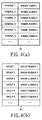
gatekeeper 10 should create a unique call identifier for each member. For this purpose, thegroup call manager 22 should create call information containing the unique call identifier about each of the members belonging to the group whenever the group call is created. The call information containing the unique call identifier about each of the members created by thegroup call manager 22 is shown in Fig. 5. The group call contains group information, a call identifier of a caller, a call state of the caller, and member information (members member group call queue 60 is shown in Fig. 5. The member information has only the link information for the call information, which already exists in a call information table 70 of thegeneral call manager 26. The member information contained in thegroup call queue 60 is managed in the call information table 70 by thegeneral call manager 26. The group call shown in Fig. 5 is created by thegroup call manager 22, which uses the group information provided by thegroup manager 20 and the call information provided from thegeneral call manager 26, and the group call is stored in thegroup call queue 60 within the group call manager 22.Group calls, configured as shown in Fig. 5, are sequentially stored in thegroup call queue 60 and sequentially processed by thegroup call manager 22 as shown in Fig. 6. The group calls are calls which are attempted using the same access number by different callers. When the caller attempts the group call first, another caller attempting another group call later should wait; however, when the caller attempting the general call first and a destination corresponding to the general call are in a call connection state, another general call attempted by another caller is terminated without waiting. In other words, although different callers attempt the group calls using the same access number, the group calls are sequentially stored in thegroup call queue 60. With reference to Fig. 6, agroup call 1 directed to agroup 1 stored in a queue Q1 is put in a call proceeding state, while group calls 2 and 4 directed to thegroup 1 are stored in queues Q2 and Q4, respectively, and exist in the waiting state. Thegroup call queue 60 is managed by thegroup call manager 22 of thegatekeeper 10 in order to sequentially process the group calls as described above. It is reasonable that one group call directed to one group is processed simultaneously with another group call directed to another group, although another group call directed to the other group is in the call proceeding state. Accordingly, thegroup call manager 22 independently processes the group calls with respect to respective groups. With reference to Fig. 6, thegroup call 1 directed togroup 1 and agroup call 3 directed togroup 3, which are processed independently from each other, are put in the call proceeding state simultaneously.When any group call directed to the group stored in thegroup call queue 60 reaches its turn to be processed, thegroup call manager 22 transmits a setup message to respective members belonging to the group. Then, because thegroup call manager 22 can identify a group call state from the group call information about the respective members belonging to the group, thegroup call manager 22 does not transmit the setup message to any member of the group taking the group call service.In the embodiment shown in Fig. 6, if the group calls 1 and 3 are in the call proceeding state and are then completed (the completion of the group calls 1 and 3 is known by an H.323 message from the terminal), thegroup call manager 22 removes the group calls 1 and 3 from thegroup call queue 60. Accordingly, a queue state transition of thegroup call queue 60 occurs as shown in Fig. 7. A case where the group call is removed from thegroup call queue 60 is divided into two cases. Firstly, when one of the members of the group receives the group call to proceed with the group call service, the group call is removed from thegroup call queue 60. Secondly, when no member belonging to the group receive the group call, and therefore an alerting timer for the group call is timed out, the group call is removed from thegroup call queue 60. Further, when the caller terminates the group call in mid-course, the group call is removed from thegroup call queue 60. For example, when a particular member belonging to the group receives the group call, the particular member transmits a connect message to thegatekeeper 10. Thegeneral call manager 26 of thegatekeeper 10 receives the connect message, and thegeneral call manager 26 transmits the connect message to thegroup call manager 22 if the connect message is unrelated to the general call. Thegroup call manager 22 identifies the group call related to the connect message to terminate the group call with which the members belonging to the group are proceeding. Accordingly, the transmission of the setup message to respective members belonging to the group is terminated. When the group call with which the members belonging to the group are proceeding is terminated, thegroup call manager 22 removes the group call from thegroup call queue 60, and thegroup call manager 22 notifies the real-time event handler 28, through thetimer handler 30, of information relating to an event indicating the removal of the group call.The real-time event handler 28, which is notified of the event information indicating the removal of the group call, uses thegroup call manager 22 to determine whether any group call of the waiting state exists in thegroup call queue 60. If any group call of the waiting state exists in thegroup call queue 60, the setup message is transmitted to the members in an idle state, and therefore the members proceed with the group call. In the case of event information notification, the setup message is transmitted to the members belonging to the group by the real-time event handler 28. In the general case, the setup message is transmitted by the group call manager 22.The case wherein the group call is removed from thegroup call queue 60 includes a first case where the particular member receives the group call to proceed with the group call service, and a second case where the group call is terminated in mid-course of proceeding with the group call service. In particular, where the group call is terminated in mid-course of proceeding with the group call service by an alerting timer among timers within thetimer handler 30, thegroup call manager 22 cannot identify the group call termination by the alerting timer. Accordingly, the real-time event handler 28 is notified of the event information from thetimer handler 30, and then the real-time event handler 28 allows thegroup call manager 22 to remove the group call from thegroup call queue 60. When thegatekeeper 10 transmits the alerting message to the caller in order to proceed with the group call, thegroup call manager 26 sets a timeout value of the alerting timer. The alerting timer is used for terminating the group call when the connect message is not received from the member within a pre-set timeout value (e.g., about 180 seconds).When the particular member belonging to the group receives the group call, and therefore the particular member is connected to the group call, the group call is changed to a general call. Thereafter, thegeneral call manager 70 manages the general call.
- Special management function related to the group call
- If a particular terminal is put in the call proceeding state, the particular terminal cannot receive the group call. However, after the particular terminal releases the group call in mid-course of proceeding with the group call, the particular terminal can receive the group call or participate in the group call.
Claims (16)
- A method for controlling an incoming call directed to a group in a voice over internet protocol (VoIP) system, comprising the steps of:(a) defining a plurality of terminals selected by an operator request as a group for taking a group call service;(b) creating terminal information for the selected plurality of terminals and group information for a plurality of defined groups in the form of a table;(c) determining, using the table, whether the incoming call is directed to the group upon receiving the incoming call;(d) generating a group call using the group information when the incoming call is directed to the group; and(g) transmitting the group call to respective members belonging to the group.
- The method according to claim 1, wherein step (b) further comprises managing the table.
- The method according to claims 1 or 2, wherein the incoming call is directed to a group in a gatekeeper of the voice over internet protocol (VoIP) system.
- The method according to claims 1 to 3, wherein the group information comprises at least access numbers or a number of members belonging to the group or the terminal information corresponding to the respective members belonging to the group.
- The method according to claims 1 to 4, wherein the terminal information comprises at least terminal numbers corresponding to the respective members belonging to the group.
- The method according to claims 1 to 5, wherein the group call comprises at least destination group information or the group information or caller call identifiers (IDs) or caller call states or member information.
- The method according to claim 6, wherein the member information comprises at least member call IDs or member call states.
- The method according to claim 7, wherein the member call ID is a unique member call ID.
- The method according to claims 1 to 8, wherein a plurality of incoming calls is directed to groups in a voice over internet protocol (VoIP) system and each of the incoming calls is directed to the group upon sequentially receiving the incoming calls.
- The method according to claim 9, further comprising:(e) storing group calls in a queue; and(f) distinguishing different groups for the group calls stored in the queue,
wherein the group call is transmitted to members in an idle state. - The method according to claim 10, further comprising the step of:(h) removing the group call from the queue when the group call is terminated.
- The method according to claim 11, wherein step (h) includes the steps of:(h-1) removing the group call from the queue when one of members belonging to the group receives the group call;(h-2) removing the group call from the queue when no member belonging to the group receives the group call; and(h-3) removing the group call from the queue when a caller terminates the group call in mid-course.
- The method according to claim 12, wherein step (h-2) further comprises timing out an alerting timer for the group call.
- The method according to claims 10 to 13, wherein step (g) further comprises independently transmitting the group call to the members in the idle state.
- The method according to claims 12 to 14, wherein the group call is removed from the queue when one of the members belonging to the group receives the group call to proceed with the group call service and wherein an alerting timer is timed out for the group call in step (h-2).
- An apparatus for controlling an incoming call directed to a group in a voice over internet protocol (VoIP) system, comprising:defining means for defining a plurality of terminals (14, 16) selected by an operator request as a group for taking a group call service;creating means for creating terminal information (40) for the selected plurality of terminals and group information (42) for a plurality of defined groups in the form of a table;determining means for determining, using the table, whether the incoming call is directed to the group upon receiving the incoming call;generating means for generating a group call using the group information when the incoming call is directed to the group; andtransmitting means for transmitting the group call to respective members belonging to the group.
Applications Claiming Priority (2)
| Application Number | Priority Date | Filing Date | Title |
|---|---|---|---|
| KR10-2001-0072466A KR100403725B1 (en) | 2001-11-20 | 2001-11-20 | Method for controlling group terminating call in voice over internet protocol system |
| KR2001072466 | 2001-11-20 |
Publications (2)
| Publication Number | Publication Date |
|---|---|
| EP1313288A2 true EP1313288A2 (en) | 2003-05-21 |
| EP1313288A3 EP1313288A3 (en) | 2005-07-13 |
Family
ID=19716129
Family Applications (1)
| Application Number | Title | Priority Date | Filing Date |
|---|---|---|---|
| EP02025111A Withdrawn EP1313288A3 (en) | 2001-11-20 | 2002-11-08 | Method for controlling incoming call directed to group in voice over internet protocol system |
Country Status (3)
| Country | Link |
|---|---|
| US (1) | US20030097466A1 (en) |
| EP (1) | EP1313288A3 (en) |
| KR (1) | KR100403725B1 (en) |
Cited By (3)
| Publication number | Priority date | Publication date | Assignee | Title |
|---|---|---|---|---|
| EP1562359A2 (en) * | 2004-02-05 | 2005-08-10 | AT&T Corp. | Control of calls over IP networks using an IP device connected to the network via a gateway |
| EP1672900A1 (en) * | 2004-12-16 | 2006-06-21 | Lucent Technologies Inc. | Group-hunting service for VOIP terminals |
| WO2009000205A1 (en) * | 2007-06-27 | 2008-12-31 | Huawei Technologies Co., Ltd. | Method, system, apparatus and terminal for transmitting voice packet over internet protocol |
Families Citing this family (11)
| Publication number | Priority date | Publication date | Assignee | Title |
|---|---|---|---|---|
| KR100415117B1 (en) * | 2002-03-04 | 2004-01-13 | 삼성전자주식회사 | Apparatus and method for called compulsive on multi call into internet protocol phone in an internet protocol telephony system |
| JP2004282336A (en) * | 2003-03-14 | 2004-10-07 | Matsushita Electric Ind Co Ltd | Private branch exchange |
| FI20031268A0 (en) * | 2003-09-05 | 2003-09-05 | Nokia Corp | Group service with information about group members |
| CN101835123A (en) * | 2010-05-11 | 2010-09-15 | 中兴通讯股份有限公司 | Method, system and base station for realizing compatibility between mobile call waiting and cluster call waiting |
| US9055429B2 (en) * | 2013-01-15 | 2015-06-09 | British Telecommunications Public Limited Company | Group subscriber number management system for a group messaging service |
| US9742711B2 (en) | 2013-03-15 | 2017-08-22 | Sorenson Ip Holdings, Llc | Communication systems and related methods for notifying devices having a plurality of unique identifiers about missed communications |
| US9294423B2 (en) | 2013-03-15 | 2016-03-22 | Sorenson Communications, Inc. | Communication systems and related methods for notifying devices having a plurality of unique identifiers about missed communications |
| US10082934B2 (en) | 2013-03-15 | 2018-09-25 | Sorenson Ip Holdings Llc | Systems, methods, and devices for replacing a contact entry corresponding to a communication device with a contact entry corresponding to a user group |
| US9204088B2 (en) | 2013-03-15 | 2015-12-01 | Sorenson Communications, Inc. | Systems including and methods of operating communication devices assigned individual and group identities |
| US9325753B2 (en) | 2013-03-15 | 2016-04-26 | Sorenson Communications, Inc. | User interface for creating and administering a user group, and methods of operating such |
| US9491205B2 (en) * | 2013-03-15 | 2016-11-08 | Sorenson Communications, Inc. | Communication systems and related methods for communicating with devices having a plurality of unique identifiers |
Family Cites Families (17)
| Publication number | Priority date | Publication date | Assignee | Title |
|---|---|---|---|---|
| JPH1098547A (en) * | 1996-09-20 | 1998-04-14 | Secom Co Ltd | Speech system |
| US6163531A (en) * | 1997-10-31 | 2000-12-19 | Intel Corporation | Method and apparatus to throttle connections to a H.323 multipoint controller by receiver terminals in a loosely-coupled conference |
| US6018668A (en) * | 1997-11-04 | 2000-01-25 | Ericsson Inc. | Method for auto answering a call based on caller ID |
| GB9802547D0 (en) * | 1998-02-05 | 1998-04-01 | British Telecomm | Call centre |
| US6154465A (en) * | 1998-10-06 | 2000-11-28 | Vertical Networks, Inc. | Systems and methods for multiple mode voice and data communications using intelligenty bridged TDM and packet buses and methods for performing telephony and data functions using the same |
| KR100575637B1 (en) * | 1999-01-14 | 2006-05-03 | 엘지전자 주식회사 | Extension Calling Methods on Heterogeneous Subnets |
| JP2000209230A (en) * | 1999-01-19 | 2000-07-28 | Nec Corp | Group incoming method and system for LAN telephone |
| US6178166B1 (en) * | 1999-05-28 | 2001-01-23 | Motorola, Inc. | Method and apparatus for group calls in a wireless CDMA communication system |
| KR100325426B1 (en) * | 1999-11-24 | 2002-02-25 | 윤종용 | Internet gateway system supporting VoIP |
| FI19992593A7 (en) * | 1999-12-02 | 2001-06-03 | Nokia Networks Oy | Call routing in a telecommunications system |
| KR20010054798A (en) * | 1999-12-08 | 2001-07-02 | 구자홍 | Selective communication method by interactive voice response for internet phone system |
| US7139378B2 (en) * | 1999-12-17 | 2006-11-21 | Siemens Aktiengesellschaft | Method for signaling an incoming call |
| JP3576906B2 (en) * | 1999-12-21 | 2004-10-13 | Necインフロンティア株式会社 | Telephone communication device connectable to the Internet network, main telephone control device, and method for managing IP address |
| CN100484176C (en) * | 2000-04-06 | 2009-04-29 | 诺基亚西门子通信有限责任两合公司 | Terminal of a packet-switching communication network terminal and method for operating a communication system with a packet-switching communication network |
| US7386000B2 (en) * | 2001-04-17 | 2008-06-10 | Nokia Corporation | Packet mode speech communication |
| JP2002359652A (en) * | 2001-05-31 | 2002-12-13 | Nakayo Telecommun Inc | Gatekeeper capable of receiving incoming call in multipoint |
| KR100450964B1 (en) * | 2001-10-13 | 2004-10-02 | 삼성전자주식회사 | Method for servicing of station group in internet protocol telephony exchange system |
-
2001
- 2001-11-20 KR KR10-2001-0072466A patent/KR100403725B1/en not_active Expired - Fee Related
-
2002
- 2002-10-07 US US10/265,433 patent/US20030097466A1/en not_active Abandoned
- 2002-11-08 EP EP02025111A patent/EP1313288A3/en not_active Withdrawn
Cited By (6)
| Publication number | Priority date | Publication date | Assignee | Title |
|---|---|---|---|---|
| EP1562359A2 (en) * | 2004-02-05 | 2005-08-10 | AT&T Corp. | Control of calls over IP networks using an IP device connected to the network via a gateway |
| US7715421B2 (en) | 2004-02-05 | 2010-05-11 | At&T Intellectual Property Ii, L.P. | Third party call control of all phones |
| EP1672900A1 (en) * | 2004-12-16 | 2006-06-21 | Lucent Technologies Inc. | Group-hunting service for VOIP terminals |
| US7653046B2 (en) | 2004-12-16 | 2010-01-26 | Alcatel-Lucent Usa Inc. | Method and apparatus for providing multiple simultaneous VOIP call sessions for a single directory number |
| WO2009000205A1 (en) * | 2007-06-27 | 2008-12-31 | Huawei Technologies Co., Ltd. | Method, system, apparatus and terminal for transmitting voice packet over internet protocol |
| CN101335608B (en) * | 2007-06-27 | 2011-10-26 | 华为技术有限公司 | Transmission method, system and apparatus for internet protocol to bear voice data packages |
Also Published As
| Publication number | Publication date |
|---|---|
| KR20030042053A (en) | 2003-05-28 |
| US20030097466A1 (en) | 2003-05-22 |
| EP1313288A3 (en) | 2005-07-13 |
| KR100403725B1 (en) | 2003-10-30 |
Similar Documents
| Publication | Publication Date | Title |
|---|---|---|
| EP0885530B1 (en) | Distributed architecture for services in a telephony system | |
| EP0997030B1 (en) | Multimedia call handling | |
| US5999965A (en) | Automatic call distribution server for computer telephony communications | |
| EP1081932B1 (en) | Call-me conference call system | |
| JPH07509816A (en) | call processing control system | |
| EP1313288A2 (en) | Method for controlling incoming call directed to group in voice over internet protocol system | |
| CA2331144C (en) | Simple supplementary service protocol (sssp) | |
| JP2000513190A (en) | Systems and methods for internet enabled services | |
| US6363142B1 (en) | Network directed call pickup service | |
| CN100574343C (en) | VoIP gateway device and calling and called control method of call in VoIP gateway device | |
| US7221683B2 (en) | Telecommunications system having a packet-switching communications network and method for operating such a telecommunications system | |
| JP2002314965A (en) | Video conference reservation system and its method | |
| US7561536B2 (en) | Method and apparatus for simultaneous incoming digital call processing using ISDN bonding channels | |
| US7190776B2 (en) | System and method for selecting a feature | |
| JP2916414B2 (en) | Communication service processing device | |
| CN1870762B (en) | Method and system for transmitting signalling message | |
| US20040114625A1 (en) | Method and apparatus for simultaneous incoming digital call processing using H.221 protocol | |
| JP2000509232A (en) | Non-uniform connection | |
| JPH08331262A (en) | Multi-party connection method between stations | |
| US20070127677A1 (en) | Server apparatus | |
| JP2002142238A (en) | Modular system for service calls, especially telecommunications service call management | |
| US20040114620A1 (en) | Method and apparatus for simultaneous incoming digital call processing using H.323 Protocol | |
| JPH03252289A (en) | Private branch of exchange | |
| JPH06343187A (en) | Terminal state management system on computer side of electronic exchange-computer linking service | |
| JPH03174893A (en) | Control system for collision of originating call |
Legal Events
| Date | Code | Title | Description |
|---|---|---|---|
| PUAI | Public reference made under article 153(3) epc to a published international application that has entered the european phase |
Free format text: ORIGINAL CODE: 0009012 |
|
| 17P | Request for examination filed |
Effective date: 20021108 |
|
| AK | Designated contracting states |
Designated state(s): AT BE BG CH CY CZ DE DK EE ES FI FR GB GR IE IT LI LU MC NL PT SE SK TR |
|
| AX | Request for extension of the european patent |
Extension state: AL LT LV MK RO SI |
|
| PUAL | Search report despatched |
Free format text: ORIGINAL CODE: 0009013 |
|
| AK | Designated contracting states |
Kind code of ref document: A3 Designated state(s): AT BE BG CH CY CZ DE DK EE ES FI FR GB GR IE IT LI LU MC NL PT SE SK TR |
|
| AX | Request for extension of the european patent |
Extension state: AL LT LV MK RO SI |
|
| AKX | Designation fees paid |
Designated state(s): DE GB IT |
|
| STAA | Information on the status of an ep patent application or granted ep patent |
Free format text: STATUS: THE APPLICATION HAS BEEN WITHDRAWN |
|
| 18W | Application withdrawn |
Effective date: 20080117 |