EP1312917A1 - Method for separating hydroxide ion and method for analyzing hydroxide ion and ion chromatograph - Google Patents
Method for separating hydroxide ion and method for analyzing hydroxide ion and ion chromatograph Download PDFInfo
- Publication number
- EP1312917A1 EP1312917A1 EP01941134A EP01941134A EP1312917A1 EP 1312917 A1 EP1312917 A1 EP 1312917A1 EP 01941134 A EP01941134 A EP 01941134A EP 01941134 A EP01941134 A EP 01941134A EP 1312917 A1 EP1312917 A1 EP 1312917A1
- Authority
- EP
- European Patent Office
- Prior art keywords
- ion
- hydroxide ion
- hydroxide
- chromatograph
- aqueous solution
- Prior art date
- Legal status (The legal status is an assumption and is not a legal conclusion. Google has not performed a legal analysis and makes no representation as to the accuracy of the status listed.)
- Withdrawn
Links
Images




Classifications
-
- G—PHYSICS
- G01—MEASURING; TESTING
- G01N—INVESTIGATING OR ANALYSING MATERIALS BY DETERMINING THEIR CHEMICAL OR PHYSICAL PROPERTIES
- G01N30/00—Investigating or analysing materials by separation into components using adsorption, absorption or similar phenomena or using ion-exchange, e.g. chromatography or field flow fractionation
- G01N30/96—Investigating or analysing materials by separation into components using adsorption, absorption or similar phenomena or using ion-exchange, e.g. chromatography or field flow fractionation using ion-exchange
-
- B—PERFORMING OPERATIONS; TRANSPORTING
- B01—PHYSICAL OR CHEMICAL PROCESSES OR APPARATUS IN GENERAL
- B01D—SEPARATION
- B01D15/00—Separating processes involving the treatment of liquids with solid sorbents; Apparatus therefor
- B01D15/08—Selective adsorption, e.g. chromatography
- B01D15/26—Selective adsorption, e.g. chromatography characterised by the separation mechanism
- B01D15/36—Selective adsorption, e.g. chromatography characterised by the separation mechanism involving ionic interaction, e.g. ion-exchange, ion-pair, ion-suppression or ion-exclusion
-
- B—PERFORMING OPERATIONS; TRANSPORTING
- B01—PHYSICAL OR CHEMICAL PROCESSES OR APPARATUS IN GENERAL
- B01D—SEPARATION
- B01D15/00—Separating processes involving the treatment of liquids with solid sorbents; Apparatus therefor
- B01D15/08—Selective adsorption, e.g. chromatography
- B01D15/26—Selective adsorption, e.g. chromatography characterised by the separation mechanism
- B01D15/36—Selective adsorption, e.g. chromatography characterised by the separation mechanism involving ionic interaction, e.g. ion-exchange, ion-pair, ion-suppression or ion-exclusion
- B01D15/365—Ion-exclusion
-
- B—PERFORMING OPERATIONS; TRANSPORTING
- B01—PHYSICAL OR CHEMICAL PROCESSES OR APPARATUS IN GENERAL
- B01D—SEPARATION
- B01D15/00—Separating processes involving the treatment of liquids with solid sorbents; Apparatus therefor
- B01D15/08—Selective adsorption, e.g. chromatography
- B01D15/42—Selective adsorption, e.g. chromatography characterised by the development mode, e.g. by displacement or by elution
- B01D15/424—Elution mode
- B01D15/426—Specific type of solvent
Definitions
- the invention of this application relates to a method for separating a hydroxide ion (OH - ), a method for analyzing a hydroxide ion (OH - ), and an ion chromatograph therefor.
- a hydroxide ion (OH - ) is the most basic and important substance in various fields including life science. Without regard to the presence and the chemical behavior of this hydroxide ion, it is impossible to understand a chemical reaction, a chemical equilibrium and an electrochemical phenomenon in which components or a solution system in the process of life participates. Although the hydroxide ion is such a basically important substance, it has been to date deemed quite difficult or impossible to separate the hydroxide ion.
- the invention of this application aims to provide, upon conquering the foregoing limits of the prior art, a new method that enables the selective separation of a hydroxide ion (OH - ) and its analysis, and an ion chromatograph for this method.
- the invention of this application first provides a method for separating a hydroxide ion, characterized in that a hydroxide ion (OH - ) in an aqueous solution is separated by a chromatograph, second provides the separating method, characterized in that a substance that recognizes a hydroxide ion (OH - ) of a separation column is a substance having a carboxyl group (COO - ), and third provides the separating method, characterized in that an aqueous solution containing at least one of a bicarbonate ion, a carbonate ion, a borate ion and a phosphate ion is used as an eluting solution.
- the invention of this application provides an ion chromatograph characterized by comprising a separation column of a hydroxide ion (OH - ) in an aqueous solution and a feed unit of its eluting solution
- sixth provides the ion chromatograph characterized in that a substance that recognizes the hydroxide ion (OH - ) of the separation column is a substance having a carboxyl group (COO - )
- seventh provides the ion chromatograph characterized in that the eluting solution contains at least one of a bicarbonate ion, a carbonate ion, a borate ion and a phosphate ion
- eighth provides any of the above-mentioned ion chromatographs characterized in that it has a quantitative analysis unit.
- the invention of this application as mentioned above is based on the novel knowledge obtained by the investigations of the inventors, namely the knowledge that a hydroxide ion (OH - ) in an aqueous solution is bound to a water molecule to form a special complex such as OH - (H 2 O) n .
- the novel chromatograph system of this invention using such a property of the hydroxide ion (OH - ) enables the hydroxide ion to be selectively separated and analyzed.
- a substance (stationary phase) having a carboxyl group (COO - ) as a functional group is preferably used.
- the hydroxide ion (OH - ) is bound to a water molecule (H 2 O) in an aqueous solution to form an "umbrella-type" complex as shown in Fig. 1.
- the effect of its negative charge is extremely low as compared with other anions.
- This complex is a special anion series which can penetrate and permeate a carboxy (COO - ) membrane completely dissociated, namely a so-called minus "Donnan's membrane".
- hydroxide ion (OH - ) is thereby selectively retained and separated.
- hydroxide ion (OH - ) is not considered to be the foregoing special anion. Quite another knowledge has been deemed to be required for the hydroxide ion (OH - ).
- a substance that recognizes a hydroxide ion (OH - ) for example, a commercially available anion exclusion column with a carboxyl group (COO - ) as a functional group can be used as such.
- a substance in which a surface of a highly hydrophobic stationary phase is modified with a polymer such as a hydrophobic polymer having a carboxyl group (COO - ) is taken as an example.
- the functional group of the stationary phase is not limited to the carboxyl group (COO - ). As noted earlier, any group will do so long as it can form a stationary phase having the same function as that of the carboxyl group (COO - ).
- an aqueous solution containing a hydroxide ion As an eluting solution mobile phase, it is preferable to use an electrolytic aqueous solution having relatively high pH.
- an aqueous solution containing at least one of a bicarbonate ion, a carbonate ion, a borate ion and a phosphate ion, or other various solutions are listed.
- a NaHCO 3 aqueous solution containing a bicarbonate ion is shown as an appropriate example.
- the pH of these eluting solutions is not limited and as a standard, it is generally from 7.5 to 10.5, preferably from 8.1 to 9.2.
- the hydroxide ion (OH - ) separated by the method of this application can be detected and quantitatively measured directly or indirectly using a conductivity method, a light absorbance method or the like. Since an intensity of a detection signal (for example, a conductivity or a light absorbance) is proportional to a concentration of a hydroxide ion, a calibration curve becomes linear (for example ⁇ 2 > 0.9998).
- the detection covers a range of from an alkaline solution to a neutral solution and an acid solution.
- FIG. 2 shows an example of its construction.
- it can basically comprise (1) a tank of an electrolytic eluting solution having high pH, (2) a unit for introducing an eluting solution into a separation column, (3) a sample injection part, (4) a hydroxide ion separation part, and (5) a detector of a hydroxide ion.
- a separation column As a separation column, a commercially available column (length 300 mm, inner diameter 7.6 mm) for anion exclusion ion chromatography with a carboxyl group (COO - ) as a functional group was used. The results were shown in Fig. 3. Sample concentrations correspond to 1.0 mM (left), 10.0 mM (middle) and 100 mM (right). Incidentally, a conductivity meter was used as a detector, and a flow rate of an eluting solution mobile phase was 1.0 mL/min.
- a separation column As a separation column, a commercially available column (length 300 mm, inner diameter 7.6 mm) for anion exclusion ion chromatography with a carboxyl group (COO - ) as a functional group was used. The results were shown in Fig. 4. Sample concentrations correspond to 1.0 mM (left), 10.0 mM (middle) and 100 mM (right) in Fig. 4.
- a UV detector (210 nm) was used as a detector, and a flow rate of an eluting solution mobile phase was 1.0 mL/min.
- H 2 SO 4 was added to a standard sample aqueous solution of 100.0 mM NaOH, followed by separation and analysis.
- 1 st trace the analysis was conducted by injecting a 100.0 mM NaOH aqueous solution as such.
- 2 nd , 3 rd trace and 4 th trace H 2 SO 4 was added to this 100.0 mM NaOH aqueous solution, and the mixture was then injected into a column for analysis.
- An injection amount of the sample was 20 ⁇ L.
- a 100.0 mM NaHCO 3 aqueous solution was used, and its flow rate was 1.0 mL/min.
- an anion exclusion-type column 300 x 7.6, mm, i.d., was used.
- Fig. 8 shows the results in case of using a conductivity meter as a detector
- hydroxide ion (OH - ) as an anion is retained and separated more selectively than the sulfate ion.
- the invention of this application enables the precise measurement of the hydroxide ion or its separation which could not be realized by ordinary methods, namely a pH titration method and a pH meter method. It can greatly contribute towards various fields as well as investigations of chemical industries, environmental science and life science. Further, it can selectively concentrate and extract hydroxide ions only from a substance containing large amounts of hydroxide ions.
- OH - hydroxide ion
Landscapes
- Chemical & Material Sciences (AREA)
- Analytical Chemistry (AREA)
- Chemical Kinetics & Catalysis (AREA)
- Physics & Mathematics (AREA)
- Health & Medical Sciences (AREA)
- Life Sciences & Earth Sciences (AREA)
- Biochemistry (AREA)
- General Health & Medical Sciences (AREA)
- General Physics & Mathematics (AREA)
- Immunology (AREA)
- Pathology (AREA)
- Treatment Of Liquids With Adsorbents In General (AREA)
- Investigating Or Analyzing Non-Biological Materials By The Use Of Chemical Means (AREA)
Abstract
A method for separating a hydroxide ion, characterized
in that a hydroxide ion (OH-) in an aqueous solution is separated
by a chromatograph. The method allows the separation and the
measurement with high precision of a hydroxide ion which has
not been achieved by a conventional pH titration method and
pH meter method, and further allows the selective extraction
and concentration thereof.
Description
- The invention of this application relates to a method for separating a hydroxide ion (OH-), a method for analyzing a hydroxide ion (OH-), and an ion chromatograph therefor.
- A hydroxide ion (OH-) is the most basic and important substance in various fields including life science. Without regard to the presence and the chemical behavior of this hydroxide ion, it is impossible to understand a chemical reaction, a chemical equilibrium and an electrochemical phenomenon in which components or a solution system in the process of life participates. Although the hydroxide ion is such a basically important substance, it has been to date deemed quite difficult or impossible to separate the hydroxide ion.
- Accordingly, the invention of this application aims to provide, upon conquering the foregoing limits of the prior art, a new method that enables the selective separation of a hydroxide ion (OH-) and its analysis, and an ion chromatograph for this method.
- The invention of this application first provides a method for separating a hydroxide ion, characterized in that a hydroxide ion (OH-) in an aqueous solution is separated by a chromatograph, second provides the separating method, characterized in that a substance that recognizes a hydroxide ion (OH-) of a separation column is a substance having a carboxyl group (COO-), and third provides the separating method, characterized in that an aqueous solution containing at least one of a bicarbonate ion, a carbonate ion, a borate ion and a phosphate ion is used as an eluting solution.
- Further, it provides fourth a method for analyzing a hydroxide ion, characterized in that a hydroxide ion (OH-) separated by the method of any of the first to third inventions is quantitatively analyzed.
- And, the invention of this application fifth provides an ion chromatograph characterized by comprising a separation column of a hydroxide ion (OH-) in an aqueous solution and a feed unit of its eluting solution, sixth provides the ion chromatograph characterized in that a substance that recognizes the hydroxide ion (OH-) of the separation column is a substance having a carboxyl group (COO-), seventh provides the ion chromatograph characterized in that the eluting solution contains at least one of a bicarbonate ion, a carbonate ion, a borate ion and a phosphate ion, and eighth provides any of the above-mentioned ion chromatographs characterized in that it has a quantitative analysis unit.
- The invention of this application as mentioned above is based on the novel knowledge obtained by the investigations of the inventors, namely the knowledge that a hydroxide ion (OH-) in an aqueous solution is bound to a water molecule to form a special complex such as OH-(H2O)n. The novel chromatograph system of this invention using such a property of the hydroxide ion (OH-) enables the hydroxide ion to be selectively separated and analyzed.
-
- Fig. 1 is a view showing a complex of a hydroxide ion (OH-) and a water molecule.
- Fig. 2 is a view showing a construction example of an ion chromatograph in this invention.
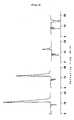
- Fig. 3 is a graph showing an example (Example 1) of results on separation of a hydroxide ion in case of using an NaHCO3 aqueous solution as an eluting solution.
- Fig. 4 is a graph showing an example (Example 2) different from Fig. 3.
- Fig. 5 is a graph showing a relation of an elution time of a hydroxide ion and a concentration of an electrolyte of an eluting solution (Example 3) in case of using an NaHCO3 aqueous solution as an eluting solution.
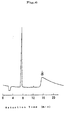
- Fig. 6 is a graph showing results of another example (Example 4) on separation of a hydroxide ion.
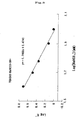
- Fig. 7 is a graph showing a relation of an elution time of a hydroxide ion and a concentration of an electrolyte of an eluting solution (Example 5).
- Fig. 8 is a graph showing results (Example 6) on separation of a hydroxide ion in case of using a conductivity meter as a detector.
- Fig. 9 is a graph showing the same results as in Example 8 in case of using a UV detector.
-
- The invention of this application has the foregoing characteristics. The embodiments thereof are described below.
- To begin with, what is emphasized above all things is that the selective separation of the hydroxide ion (OH-) and its analysis method have been realized as column chromatography for the first time by the invention of this application. Column chromatography is simple and easy to operate. Accordingly, the method of this invention makes it possible to separate and analyze hydroxide ions (OH-) with high precision and to easily extract selectively hydroxide ions only from a substance containing large amounts of hydroxide ions and concentrate the same.
- In the method for separating the hydroxide ion (OH-) in this invention as column chromatography, a substance (stationary phase) having a carboxyl group (COO-) as a functional group is preferably used.
- According to the knowledge acquired by the inventors of this invention, the hydroxide ion (OH-) is bound to a water molecule (H2O) in an aqueous solution to form an "umbrella-type" complex as shown in Fig. 1. The effect of its negative charge is extremely low as compared with other anions. This complex is a special anion series which can penetrate and permeate a carboxy (COO-) membrane completely dissociated, namely a so-called minus "Donnan's membrane".
- Accordingly, the hydroxide ion (OH-) is thereby selectively retained and separated.
- Of course, the following fact has been already known. That is, a chemical behavior of a carboxyl group (COO-) as a functional group present in a stationary phase depends on pH of an eluting solution (mobile phase). When pH of an eluting solution mobile phase is lower than pKa (dissociation constant) of a functional group, a carboxyl group is partially protonated into a molecular state. A carboxyl group in a molecular state plays such a part as a "molecular channel" that allows passage of a special anion series (for example, HCO3 -, H3PO4 -, NO3 - and F-). Since these anions are partially protonated into a molecular state under a low pH condition, they can be passed through this channel. That is, a carboxy stationary phase put in such a state can retain and separate a weak acidic anion series. The separation method based on this principle is called ion exclusion chromatography, and apparatus associated therewith are commercially available.
- However, a hydroxide ion (OH-) is not considered to be the foregoing special anion. Quite another knowledge has been deemed to be required for the hydroxide ion (OH-).
- That the use of a carboxyl group (COO-) as a functional group is effective for separation of a hydroxide ion (OH-) has been found for the first time by using it not under an ordinary low pH condition but under a high pH condition. Under such a condition, anion that can be passed through a so-called minus "Donnan's membrane" is only the hydroxide ion/water molecule complex as stated above. This knowledge has enabled the selective retention and separation of the hydroxide ion only for the first time.
- Specifically, in the separation method of this invention, with respect to a substance that recognizes a hydroxide ion (OH-), for example, a commercially available anion exclusion column with a carboxyl group (COO-) as a functional group can be used as such. Alternatively, the use of a substance in which a surface of a highly hydrophobic stationary phase is modified with a polymer such as a hydrophobic polymer having a carboxyl group (COO-) is taken as an example.
- Of course, in the invention of this application, the functional group of the stationary phase is not limited to the carboxyl group (COO-). As noted earlier, any group will do so long as it can form a stationary phase having the same function as that of the carboxyl group (COO-).
- And, in the, invention of this application, for the hydroxide ion (OH-) distributed in a stationary phase of a separation column to be eluted again in a mobile phase, it is necessary to use an aqueous solution containing a hydroxide ion as an eluting solution mobile phase. With respect to an eluting solution as a mobile phase, it is preferable to use an electrolytic aqueous solution having relatively high pH. Specifically, for example, an aqueous solution containing at least one of a bicarbonate ion, a carbonate ion, a borate ion and a phosphate ion, or other various solutions are listed. Among others, a NaHCO3 aqueous solution containing a bicarbonate ion is shown as an appropriate example. The pH of these eluting solutions is not limited and as a standard, it is generally from 7.5 to 10.5, preferably from 8.1 to 9.2.
- Further, the hydroxide ion (OH-) separated by the method of this application can be detected and quantitatively measured directly or indirectly using a conductivity method, a light absorbance method or the like. Since an intensity of a detection signal (for example, a conductivity or a light absorbance) is proportional to a concentration of a hydroxide ion, a calibration curve becomes linear (for example γ2> 0.9998). The detection covers a range of from an alkaline solution to a neutral solution and an acid solution.
- An ion chromatograph for the foregoing separation or analysis is also provided by this invention. Fig. 2 shows an example of its construction. For example, as shown in this Fig. 2, it can basically comprise (1) a tank of an electrolytic eluting solution having high pH, (2) a unit for introducing an eluting solution into a separation column, (3) a sample injection part, (4) a hydroxide ion separation part, and (5) a detector of a hydroxide ion.
- The invention of this application is illustrated more specifically below by referring to Examples. Of course, this application is not limited by the following Examples.
- Separation of a hydroxide ion of an NaOH aqueous solution was conducted using a 100 mM sodium bicarbonate aqueous solution (pH 8.79) as an eluting solution.
- As a separation column, a commercially available column (length 300 mm, inner diameter 7.6 mm) for anion exclusion ion chromatography with a carboxyl group (COO-) as a functional group was used. The results were shown in Fig. 3. Sample concentrations correspond to 1.0 mM (left), 10.0 mM (middle) and 100 mM (right). Incidentally, a conductivity meter was used as a detector, and a flow rate of an eluting solution mobile phase was 1.0 mL/min.
- The results shown in Fig. 3 reveal that a hydroxide ion (OH-) as an anion is selectively retained and separated.
- Separation of a hydroxide ion was conducted using a 100 mM sodium bicarbonate aqueous solution as an eluting solution as in Example 1
- As a separation column, a commercially available column (length 300 mm, inner diameter 7.6 mm) for anion exclusion ion chromatography with a carboxyl group (COO-) as a functional group was used. The results were shown in Fig. 4. Sample concentrations correspond to 1.0 mM (left), 10.0 mM (middle) and 100 mM (right) in Fig. 4.
- Incidentally, a UV detector (210 nm) was used as a detector, and a flow rate of an eluting solution mobile phase was 1.0 mL/min.
- A relation of an elution time of a hydroxide ion and a concentration of an electrolyte of an eluting solution mobile phase in case of using a sodium bicarbonate aqueous solution as an eluting solution was examined. Fig. 5 shows the results thereof. In the drawing, k' is a retention constant of a hydroxide ion in a column. The other conditions were the same as in Example 1.
- Separation of a hydroxide ion was conducted using a 40 mM sodium bicarbonate aqueous solution as an eluting solution mobile phase and a commercially available ODS column (length 250 mm, inner diameter 4.6 mm) for reversed phase HPLC modified with [-N+(R3-CH2-CH2-COO-] as a separation column. Fig. 6 shows the results thereof. Incidentally, a flow rate of the eluting solution mobile phase was 1.0 mL/min, and 100.0 mM KOH was used as a sample. A conductivity meter was used as a detector.
- The results in Fig. 6 reveal that a hydroxide ion (OH-) as an anion is selectively retained and separated.
- A relation of an elution time of a hydroxide ion and a concentration of an electrolyte of a mobile phase in case of using a sodium bicarbonate aqueous solution as an eluting solution was examined. The results were shown in Fig. 7. In the drawing, k' is a retention constant of a hydroxide ion in a column. The other conditions were the same as in Example 4.
- A small amount of H2SO4 was added to a standard sample aqueous solution of 100.0 mM NaOH, followed by separation and analysis. In 1st trace, the analysis was conducted by injecting a 100.0 mM NaOH aqueous solution as such. In 2nd, 3rd trace and 4th trace, H2SO4 was added to this 100.0 mM NaOH aqueous solution, and the mixture was then injected into a column for analysis. The concentrations of the hydroxide ion are 57 mM (2nd trace) and 7.4 mM (3rd trace), and H2SO4 is in an excessive amount (excess H2SO4=2.2 mM) in 4th trace. An injection amount of the sample was 20 µL. With respect to an eluting solution as a mobile phase, a 100.0 mM NaHCO3 aqueous solution was used, and its flow rate was 1.0 mL/min. As a separation column, an anion exclusion-type column (300 x 7.6, mm, i.d.,) was used. Fig. 8 shows the results in case of using a conductivity meter as a detector, and Fig. 9 shows the results in case of using a UV detector with UV=210 nm.
- It is found that the hydroxide ion (OH-) as an anion is retained and separated more selectively than the sulfate ion.
- As has been thus far described in detail, the invention of this application enables the precise measurement of the hydroxide ion or its separation which could not be realized by ordinary methods, namely a pH titration method and a pH meter method. It can greatly contribute towards various fields as well as investigations of chemical industries, environmental science and life science. Further, it can selectively concentrate and extract hydroxide ions only from a substance containing large amounts of hydroxide ions.
- Moreover, it can extract a hydroxide ion (OH-) from a brine and immobilize CO2 in a brine by a reaction of OH- extracted and CO2.
Claims (8)
- A method for separating a hydroxide ion, characterized in that a hydroxide ion (OH-) in an aqueous solution is separated by a chromatograph.
- The separating method of claim 1, characterized in that a substance that recognizes a hydroxide ion (OH-) of a separation column is a substance having a carboxyl group (COC-).
- The separating method of claim 1 or 2, characterized in that an aqueous solution containing at least one of a bicarbonate ion, a carbonate ion, a borate ion and a phosphate ion is used as an eluting solution.
- A method for analyzing a hydroxide ion, characterized in that a hydroxide ion (OH-) separated by the method of any of claims 1 to 3 is quantitatively analyzed.
- An ion chromatograph characterized by comprising a separation column of a hydroxide ion (OH-) in an aqueous solution and a feed unit of its eluting solution.
- The ion chromatograph of claim 5, characterized in that a substance that recognizes the hydroxide ion (OH-) of the separation column is a substance having a carboxyl group (COO-).
- The ion chromatograph of claim 5 or 6, characterized in that the eluting solution contains at least one of a bicarbonate ion, a carbonate ion, a borate ion and a phosphate ion.
- The ion chromatograph of any of claims 5 to 7, characterized in that it has a quantitative analysis unit.
Applications Claiming Priority (3)
| Application Number | Priority Date | Filing Date | Title |
|---|---|---|---|
| JP2000185292A JP3839641B2 (en) | 2000-06-20 | 2000-06-20 | Hydroxide ion separation and analysis method and ion chromatography apparatus |
| JP2000185292 | 2000-06-20 | ||
| PCT/JP2001/005277 WO2001098772A1 (en) | 2000-06-20 | 2001-06-20 | Method for separating hydroxide ion and method for analyzing hydroxide ion and ion chromatograph |
Publications (2)
| Publication Number | Publication Date |
|---|---|
| EP1312917A1 true EP1312917A1 (en) | 2003-05-21 |
| EP1312917A4 EP1312917A4 (en) | 2006-01-04 |
Family
ID=18685628
Family Applications (1)
| Application Number | Title | Priority Date | Filing Date |
|---|---|---|---|
| EP01941134A Withdrawn EP1312917A4 (en) | 2000-06-20 | 2001-06-20 | HYDROXIDE ION SEPARATION METHOD, HYDROXIDE ION ANALYSIS METHOD, AND ION CHROMATOGRAPH |
Country Status (7)
| Country | Link |
|---|---|
| US (1) | US20030173295A1 (en) |
| EP (1) | EP1312917A4 (en) |
| JP (1) | JP3839641B2 (en) |
| CN (1) | CN1226622C (en) |
| AU (1) | AU2001274573A1 (en) |
| CA (1) | CA2413569A1 (en) |
| WO (1) | WO2001098772A1 (en) |
Families Citing this family (2)
| Publication number | Priority date | Publication date | Assignee | Title |
|---|---|---|---|---|
| JP2002372521A (en) * | 2001-06-14 | 2002-12-26 | Tosoh Corp | Method for measuring alkalinity using ion chromatography and method for simultaneous measurement with monovalent cations |
| EP4563994A4 (en) | 2022-07-29 | 2025-10-08 | Mitsui Mining & Smelting Co Ltd | Device, hydroxide ion concentration measuring device comprising this device and method for measuring the hydroxide ion concentration using this device |
Family Cites Families (8)
| Publication number | Priority date | Publication date | Assignee | Title |
|---|---|---|---|---|
| US4154801A (en) * | 1978-02-01 | 1979-05-15 | The Dow Chemical Company | Process for purifying alkali metal hydroxide or carbonate solutions |
| JPS58169058A (en) * | 1982-03-31 | 1983-10-05 | Yokogawa Hokushin Electric Corp | Method and apparatus for analyzing anion |
| JPS6076664A (en) * | 1983-10-01 | 1985-05-01 | Toyo Soda Mfg Co Ltd | Anion analyzing method |
| JPS61194355A (en) * | 1985-02-25 | 1986-08-28 | Yokogawa Electric Corp | Method and apparatus for measuring minute amount of anion |
| JPH0820430B2 (en) * | 1987-10-27 | 1996-03-04 | 横河電機株式会社 | Anion analyzer |
| JP2570871B2 (en) * | 1989-11-09 | 1997-01-16 | 富士電機株式会社 | Method for analyzing anions in catalysts |
| JP2669255B2 (en) * | 1992-04-01 | 1997-10-27 | 株式会社日立製作所 | Method for analyzing hemoglobins, analyzer, and column deterioration suppressing liquid used therefor |
| US6482305B1 (en) * | 1999-09-01 | 2002-11-19 | Archer-Daniels-Midland Company | Electrodialysis water splitting process |
-
2000
- 2000-06-20 JP JP2000185292A patent/JP3839641B2/en not_active Expired - Fee Related
-
2001
- 2001-06-20 CA CA002413569A patent/CA2413569A1/en not_active Abandoned
- 2001-06-20 CN CN01811485.7A patent/CN1226622C/en not_active Expired - Fee Related
- 2001-06-20 EP EP01941134A patent/EP1312917A4/en not_active Withdrawn
- 2001-06-20 WO PCT/JP2001/005277 patent/WO2001098772A1/en not_active Ceased
- 2001-06-20 US US10/311,617 patent/US20030173295A1/en not_active Abandoned
- 2001-06-20 AU AU2001274573A patent/AU2001274573A1/en not_active Abandoned
Non-Patent Citations (4)
| Title |
|---|
| DE BORBA ET AL: "Ion Chromatographic Determination of Acidity" ANALYTICAL CHEMISTRY, vol. 72, 1 January 2000 (2000-01-01), pages 96-100, XP002353264 * |
| HU ET AL: "A novel ion chromatographic method based on cation-exchange and acid base interactions for the simultaneous determination of total alkalinity and monovalent cations in samples of microliter volume" ANALYST, vol. 126, 12 April 2001 (2001-04-12), pages 555-558, XP002353262 THE ROYAL SOCIETY OF CHEMISTRY * |
| PASTORE ET AL: "UV spectrophotometric detection in the ion chromatographic analysis of alkaline earth metal and ammonium cations" JOURNAL OF CHROMATOGRAPHY, vol. 591, 1992, pages 219-224, XP002353263 ELSEVIER * |
| See also references of WO0198772A1 * |
Also Published As
| Publication number | Publication date |
|---|---|
| US20030173295A1 (en) | 2003-09-18 |
| CN1437706A (en) | 2003-08-20 |
| JP3839641B2 (en) | 2006-11-01 |
| CA2413569A1 (en) | 2002-12-20 |
| WO2001098772A1 (en) | 2001-12-27 |
| AU2001274573A1 (en) | 2002-01-02 |
| JP2002005916A (en) | 2002-01-09 |
| CN1226622C (en) | 2005-11-09 |
| EP1312917A4 (en) | 2006-01-04 |
Similar Documents
| Publication | Publication Date | Title |
|---|---|---|
| Ammann | Speciation of heavy metals in environmental water by ion chromatography coupled to ICP–MS | |
| Jackson | Ion chromatography in environmental analysis | |
| Rethmeier et al. | Detection of traces of oxidized and reduced sulfur compounds in small samples by combination of different high-performance liquid chromatography methods | |
| Hall et al. | Rapid, small‐volume, flow injection analysis for SCO2, and NH4+ in marine and freshwaters | |
| Chen et al. | Separation of chromium (III) and chromium (VI) by capillary electrophoresis using 2, 6-pyridinedicarboxylic acid as a pre-column complexation agent | |
| Jermak et al. | Headspace single‐drop microextraction with in‐drop derivatization and capillary electrophoretic determination for free cyanide analysis | |
| Rong et al. | Determination of iodide and thiocyanate in seawater by liquid chromatography with poly (ethylene glycol) stationary phase | |
| Pyrzyńska et al. | Flow-injection speciation of aluminium | |
| CN107340355A (en) | A kind of method for directly detecting ammonia nitrogen in high salt and Complex water body | |
| CN102507765A (en) | Method for simultaneously detecting content of trace bromate and nitrite in drinking water | |
| Kautenburger et al. | Complexation studies with lanthanides and humic acid analyzed by ultrafiltration and capillary electrophoresis-inductively coupled plasma mass spectrometry | |
| US10877005B2 (en) | Method of measuring an analyte with a reductive detection waveform | |
| Vallejo-Pecharromán et al. | Determination of cyanide by a pervaporation–UV photodissociation–potentiometric detection approach | |
| Buldini et al. | On-line microdialysis–ion chromatographic determination of inorganic anions in olive-oil mill wastewater | |
| Garcia-Otero et al. | Size exclusion and anion exchange high performance liquid chromatography for characterizing metals bound to marine dissolved organic matter | |
| Hils et al. | Speciation of trace amounts of aluminium in percolating water of forest soil by online coupling HPLC-ICP-MS | |
| Pozdniakova et al. | Determination of EDTA in used fixing solutions by capillary electrophoresis | |
| Padarauskas et al. | Ion-pair chromatographic determination of chromium (VI) | |
| Chandramouleeswaran et al. | Ion-chromatographic determination of iodide in sea water with UV detection | |
| Kartsova et al. | Determination of catecholamines by capillary electrophoresis and reversed-phase high-performance liquid chromatography | |
| US20030173295A1 (en) | Method for separating hydroxide ion and method for analyzing hydroxide ion and ion chromatograph | |
| Fäldt et al. | Hyphenation of gas-diffusion separation and ion chromatography: Part 1: Determination of free sulfite in wines | |
| Saari-Nordhaus et al. | Elimination of matrix interferences in ion chromatography by the use of solid-phase extraction disks | |
| Barger et al. | Separation and indirect detection by capillary zone electrophoresis of ppb (w/w) levels of aluminum ions in solutions of multiple cations | |
| Miura et al. | Ion chromatographic determination of sulfide, sulfite and thiosulfate in mixtures by means of their postcolumn reactions with iodine |
Legal Events
| Date | Code | Title | Description |
|---|---|---|---|
| PUAI | Public reference made under article 153(3) epc to a published international application that has entered the european phase |
Free format text: ORIGINAL CODE: 0009012 |
|
| 17P | Request for examination filed |
Effective date: 20030117 |
|
| AK | Designated contracting states |
Designated state(s): AT BE CH CY DE DK ES FI FR GB GR IE IT LI LU MC NL PT SE TR |
|
| RBV | Designated contracting states (corrected) |
Designated state(s): CH DE FR GB IT LI NL |
|
| RAP1 | Party data changed (applicant data changed or rights of an application transferred) |
Owner name: JAPAN SCIENCE AND TECHNOLOGY AGENCY |
|
| A4 | Supplementary search report drawn up and despatched |
Effective date: 20051122 |
|
| STAA | Information on the status of an ep patent application or granted ep patent |
Free format text: STATUS: THE APPLICATION HAS BEEN WITHDRAWN |
|
| 18W | Application withdrawn |
Effective date: 20070831 |