BACKGROUND OF THE INVENTION
1. Field of the Invention
The present invention relates to a technique for
correcting white balance and density of a color image when
digital image processing is performed on an input image
signal to form a photographic print, more particularly, to
a method and an apparatus for correcting white balance, a
method for correcting density and a recording medium on
which a program for carrying out these methods is recorded.
2. Description of the Related Art
The conventional silver salt photography generally
uses an analog exposure (area exposure or direct exposure)
system to obtain a print. That is, a developed negative
film is positioned at a predetermined printing position and
irradiated with light from a white light source (halogen
lamp or the like), and light transmitted through the
negative film is imaged on photographic paper, thus making
an exposure.
In recent years, printing apparatuses using digital
exposure, i.e., digital photoprinters, have been put to
practical use. Digital photoprinters perform a process in
which an image recorded on a photographic film such as a
negative film or a color reversal film is photoelectrically
read to obtain a digital signal representing the read image,
various kinds of image processing is performed on the
digital signal to obtain image data for the recording
purposes, scanning exposure using recording light modulated
according to this image data is performed on a
photosensitive material to form an image (latent image) on
the photosensitive material to obtain a (finished) print.
Such digital photoprinters process images as digital
image data and can therefore perform image processing not
only on photographed images on photographic films but also
on images photographed with digital still cameras (DSC) or
the like, image data recorded in the form of digital data
on various kinds of recording media, e.g., magnetic
recording media, such as CD-R, flexible disks, and
removable hard disks (Zip, Jaz, etc.), and MO disks
(magneto-optical recording media) to output prints.
Color negative films have been commonly used by
typical users. The conditions of photography of original
images on negative films are not always uniform. For
example, subjects are photographed in light from various
light sources, e.g., daylight and fluorescent lamp.
Therefore, in case of forming prints from a developed
negative film when images in the developed negative film is
printed without changing the characteristics of light from
a printing light source, color tints of light from
photographing light sources in which subjects have been
photographed are directly reflected in the prints, which
leads to forming undesirable prints in some cases.
Various systems have therefore been contrived to
adjust white balance on the prints. A typical example of
such systems is a large area transmission density (LATD)
method based on the Evans' theorem (hypothesis) stating
that the average of all colors in the world is gray. The
LATD is the average transmission density through an entire
frame on a photographic film. In the LATD method, the LATD
of each frame on a color negative film is measured and the
characteristics of light from a printing light source are
changed according to the red, green, and blue density
levels so that the average color on the print is made close
to gray.
On the other hand, digital still cameras (DSCs) have
recently come into widespread use. An image forming
process in a DSC and an image forming process using a color
negative film can be regarded as the same with respect to
photographing a scene but differ essentially in that a DSC
image itself is an object of appreciation while an image on
a color negative film is not directly viewed as an object
of appreciation. DSC images themselves, therefore, must be
fine, well-white-balanced images when viewed before being
output as prints. DSCs are also used for photography with
various light sources like cameras using color negative
films and are unable to reliably obtain a satisfactory
image without a function for correcting white balance.
Therefore almost all the recent DSCs have an auto white
balance (AWB) function for automatically correcting white
balance.
The above-described LATD method has been practiced
with some measure of success but it is responsible for
production of undesirable prints. One of the printing
failures due to the LATD method is color failure that
imbalance of a color occurs in a print. For example, in a
case where white balance correction based on the LATD
method is made on an image obtained by photographing a
woman in red dress, a cyan color, which is a complementary
color to red, is added throughout the entire frame to make
the entire frame close to gray, thereby reducing the
vividness of the red of the dress and making the woman's
face pale.
In a case where the entire frame area of a
photographed scene is reddish, it is impossible to
ascertain whether the reddishness is ascribable to the
light source or the subject. In this case, the LATD method
achieves success in correction if the light source is the
cause, but it causes such a color failure described above
if the subject is the cause.
The above-mentioned AWB function of DSCs is
essentially based on the Evans' theorem like the negative
film/printing system and entails the same problem as that
of white balance correction based on the LATD in the
negative film/printing system.
That is, while about 60 to 70% of DSC images after AWB
are obtained as well-color-balanced good images as average
performance of the Evans' theorem, the remaining 30 to 40%
of the DSC images need some additional color balance
correction because of AWB function failure. If white
balancing is not performed at the time of printing from the
DSC images, about 30 to 40% of resulting prints are
unsatisfactory, unacceptable prints.
As described above, the conventional art LATD method
based on the Evans' theorem makes white balance correction
by assuming that the average of colors through the entire
frame of an image is gray, but it is not sufficiently
effective in correcting white balance because of its
inability to find true gray in an image, and often produces
a contrary correction effect.
Further, when printing, if LATD method as above is
employed to perform density correction through the entire
image, the density of a principal subject in the image will
be influenced by scene configurations and a print may be
formed with an improper density. In order to overcome such
a problem, it has been proposed to detect a principal
subject (a human face in many cases) in an image and
determine the print density in accordance with the density
of the detected subject. The judgment on whether or not
the print density is proper is made based on the density of
a principal subject rather than the density through an
entire frame. Consequently, it is important to detect a
human face as a principal subject and correct the density
of the entire image so that the density of the face may be
proper.
Detection of a human face as a principal subject is
generally performed employing shape recognition. However,
it is very difficult at present to detect human faces with
high accuracy by employing such measures. It has also been
attempted to detect human faces using color information,
where difficulties may again occur, if the type of a light
source is unknown.
SUMMARY OF THE INVENTION
The present invention has been devised in view of the
above-mentioned problem of the prior art and, it is a first
object of the present invention to provide a method and an
apparatus for white balance correction, which is a
technique for realizing white balance correction
appropriately and with high yield in applying digital image
processing to inputted image data to form prints, and a
recording medium having recorded therein a program for
executing this program.
In addition, the present invention has been devised in
view of the above-mentioned problem of the prior art and,
it is a second object of the present invention to provide a
method and an apparatus for density correction, which is a
technique for detecting an area of skin color out of an
image to obtain an appropriate print density based on
information on the area of skin color if a light source is
unknown, and a recording medium having recorded therein a
program for executing this method.
In order to attain the first object, the first aspect
of the present invention provides a white balance
correction method, comprising the steps of estimating, by
using at least gray and/or skin color information contained
in an input color image, a color temperature of a
photographing light source with which the color image has
been taken, and correcting image signals of the color image
based on the estimated color temperature.
Preferably, only the gray and skin color information
is used when correcting the image signals of the color
image.
Preferably, the estimating step includes multiplying
the image signals of respective pixels in the input color
image by set coefficients, setting pixels having the
multiplied image signals in the vicinity of a blackbody
locus curve of skin color as skin color candidate pixels
and/or pixels having the multiplied image signals in the
vicinity of a blackbody locus curve of gray as gray
candidate pixels, optimizing the set coefficients so that
the number of the skin color candidate pixels and/or the
gray candidate pixels is maximized, obtaining a group of
skin color candidate pixels and/or a group of gray
candidate pixels by using the optimized set coefficients,
and estimating the color temperature of the photographing
light source from an average color temperature of the group
of skin color candidate pixels and/or an average color
temperature of the group of gray candidate pixels, and
wherein the image signals of the color image multiplied by
the optimized set coefficients are corrected by an amount
corresponding to a difference between the estimated color
temperature and a color temperature of reference white.
Preferably, the color temperature of the photographing
light source is estimated from the average color
temperature of the group of skin color candidate pixels and
the average color temperature of the group of gray
candidate pixels obtained by optimizing the set
coefficients so that the number of the skin color candidate
pixels and the gray candidate pixels is maximized.
Preferably, the estimating step includes multiplying
the image signals of respective pixels in the input color
image by set coefficients, setting pixels having the
multiplied image signals in the vicinity of a blackbody
locus curve of skin color as skin color candidate pixels
and pixels having the multiplied image signals in the
vicinity of a blackbody locus curve of gray as gray
candidate pixels, optimizing the set coefficients so that a
difference between an average color temperature of the skin
color candidate pixels and an average color temperature of
the gray candidate pixels is minimized, obtaining a group
of skin color candidate pixels and a group of gray
candidate pixels by using the optimized set coefficients,
and estimating the color temperature of the photographing
light source from the average color temperature of the
group of skin color candidate pixels and the average color
temperature of the group of gray candidate pixels, and
wherein the image signals of the color image multiplied by
the optimized set coefficients are corrected by an amount
corresponding to a difference between the estimated color
temperature and a color temperature of reference white.
Preferably, the estimating step includes multiplying
the image signals of respective pixels in the input color
image by set coefficients, setting pixels having the
multiplied image signals in the vicinity of a blackbody
locus curve of skin color as skin color candidate pixels
and pixels having the multiplied image signals in the
vicinity of a blackbody locus curve of gray as gray
candidate pixels, optimizing the set coefficients so that
the number of the skin color candidate pixels and/or the
gray candidate pixels is maximized and a difference between
an average color temperature of the skin color candidate
pixels and an average color temperature of the gray
candidate pixels is minimized, obtaining a group of skin
color candidate pixels and a group of gray candidate pixels
by using the optimized coefficients, and estimating the
color temperature of the photographing light source from
the average color temperatures of the group of skin color
candidate pixels and the group of gray candidate pixels,
and wherein the image signals of the color image multiplied
by the optimized set coefficients are corrected by an
amount corresponding to a difference between the estimated
color temperature and a color temperature of reference
white.
Preferably, the estimating step includes multiplying
the image signals of respective pixels in the input color
image by set coefficients, setting pixels having the
multiplied image signals in the vicinity of blackbody locus
curve of skin color as skin color candidate pixels and
pixels having the multiplied image signals in the vicinity
of a blackbody locus curve of gray as gray candidate pixels,
optimizing the set coefficients so that the number of the
skin color candidate pixels and/or gray candidate pixels is
maximized and a difference between an average color
temperature of the group of skin color candidate pixels and
the group of gray candidate pixels is minimized, obtaining
a group of skin color candidate pixels and a group of gray
candidate pixels by using the optimized coefficients,
dividing the group of skin color candidate pixels into a
plurality of subgroups of skin color candidate pixels and
dividing the group of gray candidate pixels into a
plurality of subgroups of gray candidate pixels, and
estimating a color temperature of the photographing light
source from an average color temperature of a subgroup of
skin color candidate pixels with a high average color
temperature among the plurality of subgroups of skin color
candidate pixels and an average color temperature of a
subgroup of gray candidate pixels with a high average color
temperature among the plurality of subgroups of gray
candidate pixels, and wherein the color image signals
multiplied by the optimized coefficients are corrected by a
difference between the estimated color temperature and a
color temperature of reference white.
Preferably, the estimating step includes multiplying
the image signals of respective pixels in the input color
image by set coefficients, setting pixels having the
multiplied image signals in the vicinity of blackbody locus
curve of skin color as skin color candidate pixels and
pixels having the multiplied image signals in the vicinity
of a blackbody locus curve of gray as gray candidate pixels,
optimizing firstly the set coefficients so that the number
of the skin color candidate pixels and the gray candidate
pixels is maximized and a difference between an average
color temperature of the group of skin color candidate
pixels and an average color temperature of the group of
gray candidate pixels is minimized, estimating a first
color temperature of the photographing light source from
the average color temperature of a group of skin color
candidate pixels and the average color temperature of a
group of gray candidate pixels obtained by the first
optimization, optimizing secondly the set coefficients so
that the number of the gray candidate pixels is maximized
and a difference between an average color temperature of
the group of skin color candidate pixels and an average
color temperature of the group of gray candidate pixels is
minimized, and estimating a second color temperature of the
photographing light source from the average color
temperature of a group of skin color candidate pixels and
the average color temperature of a group of gray candidate
pixels obtained by the second optimization, and wherein the
color image signals multiplied by the optimized
coefficients are corrected by using both a first white
balance correction signal and a second white balance
correction signal, the first white balance correction
signal being adapted for correcting the color image signals
by a difference between the first estimated color
temperature and a color temperature of reference white, and
the second white balance correction signal being adapted
for correcting them by a difference between the second
estimated color temperature and a color temperature of
reference white.
Preferably, the estimating step includes multiplying
the image signals of respective pixels in the input color
image by set coefficients, setting pixels having the
multiplied image signals in the vicinity of blackbody locus
curve of skin color as skin color candidate pixels and
pixels having the multiplied image signals in the vicinity
of a blackbody locus curve of gray as gray candidate pixels,
optimizing firstly the set coefficients so that the number
of the gray candidate pixels is maximized and a difference
between an average color temperature of the group of skin
color candidate pixels and an average color temperature of
the group of gray candidate pixels is minimized, estimating
a first color temperature of the photographing light source
from the average color temperature of a group of skin color
candidate pixels and the average color temperature of a
group of gray candidate pixels obtained by the first
optimization, optimizing secondly the set coefficients so
that the number of the skin color candidate pixels is
maximized and a difference between an average color
temperature of the group of skin color candidate pixels and
an average color temperature of the group of gray candidate
pixels is minimized, estimating a second color temperature
of the photographing light source from the average color
temperature of a group of skin color candidate pixels and
the average color temperature of a group of gray candidate
pixels obtained by the second optimization, and wherein the
color image signals multiplied by the optimized
coefficients are corrected by using both a first white
balance correction signal and a second white balance
correction signal, the first white balance correction
signal being adapted for correcting the color image signals
by a difference between the first estimated color
temperature and a color temperature of reference white, and
the second white balance correction signal being adapted
for correcting them by a difference between the second
estimated color temperature and a color temperature of
reference white.
Preferably, the image signals of respective pixels in
the input color image are multiplied by set coefficients
and, as a result of the multiplication, when the
coefficients are optimized so that a set objective function
is minimized, a maximum value of the image signal of the
input image is detected, and an image signal is used which
is standardized so that the maximum value of the image
signal becomes 1.0 by dividing each image signal of the
input image by the maximum value.
Preferably, when each of the blackbody locus curve of
skin color and the blackbody locus curve of gray is set, a
spectral sensitivity of a photographing apparatus used to
form the input color image is used as a spectral
sensitivity distribution.
Preferably, when each of the blackbody locus curve of
skin color and the blackbody locus curve of gray is set, a
spectral sensitivity of BT709 is used as a spectral
sensitivity distribution.
Moreover, in order to attain the first object
described above, the second aspect of the present invention
provides a white balance correction apparatus for
correcting white balance when digital image processing is
performed on an input color image to form a print,
comprising means for estimating, by using at least gray
and/or skin color information contained in the input color
image, a color temperature of a photographing light source
with which the color image has been taken, and means for
correcting image signals of the color image based on the
estimated color temperature.
Preferably, the means for estimating a color
temperature of the photographing light source includes
means for multiplying the image signals of respective
pixels in the input color image by set coefficients, skin
color candidate pixel detection means for detecting pixels
having image signals in the vicinity of a blackbody locus
curve of skin color as a result of the multiplication and
gray candidate pixel detection means for detecting pixels
having image signals in the vicinity of a blackbody locus
curve of gray as a result of the multiplication, means for
optimizing the coefficients so that the number of the skin
color candidate pixels and/or the number of the gray
candidate pixels are maximized and a difference between an
average color temperature of the group of skin color
candidate pixels and an average temperature of the group of
gray candidate pixels is minimized, and means for computing
a color temperature of the photographing light source from
the average color temperature of the group of skin color
candidate pixels and the average color temperature of the
group of gray candidate pixels, and wherein the means for
correcting an image signal of the color image is means for
correcting the color image signals multiplied by the
optimized coefficients by a difference between the
estimated color temperature and a color temperature of
reference white.
Preferably, the means for estimating a color
temperature of the photographing light source includes
coefficient multiplication means for multiplying the image
signals of respective pixels in the input color image by
set coefficients, skin color candidate pixel detection
means for detecting pixels having the multiplied image
signals in the vicinity of a blackbody locus curve of skin
color as a result of the multiplication, and gray candidate
pixel detection means for detecting pixels having the
multiplied image signals in the vicinity of a blackbody
locus curve of gray as a result of the multiplication,
optimization means for optimizing the set coefficients so
that the number of the skin color candidate pixels and the
number of the gray candidate pixels are maximized and a
difference between an average color temperature of the skin
color candidate pixels and an average color temperature of
the gray candidate pixels is minimized, and color
temperature estimating and computing means for estimating
the color temperature of the photographing light source for
a group of skin color candidate pixels and a group of gray
candidate pixels obtained by optimizing the set
coefficients by the optimization means for optimizing the
set coefficients in which the group of skin color candidate
pixels is divided into a plurality of subgroups of skin
color candidate pixels and the group of gray candidate
pixels is divided into a plurality of subgroups of gray
candidate pixels, and a color temperature of the
photographing light source is estimated from an average
color temperature of a subgroup of skin color candidate
pixels with a high average color temperature among the
plurality of subgroups of skin color candidate pixels and
an average color temperature of a subgroup of gray
candidate pixels with a high average color temperature
among the plurality of subgroups of gray candidate pixels,
and wherein the means for correcting the image signals of
the color image is means for correcting the image signals
of the color image multiplied by the optimized set
coefficients by an amount corresponding to a difference
between the estimated color temperature and a color
temperature of reference white.
Further, in order to attain the second object
described above, the third aspect of the present invention
provides a density correction method, comprising the steps
of multiplying image signals of respective pixels in an
input color image by set coefficients to detect pixels
having the multiplied image signals in the vicinity of a
blackbody locus curve of skin color as skin color candidate
pixels, and assigning an average obtained for predetermined
color signals from the skin color candidate pixels detected
to a predetermined density of a color corresponding to the
color signals on a print.
Preferably, the predetermined color signals are G
signals and an average G signal obtained from the skin
color candidate pixels detected is assigned to a
predetermined G density on a print. Here, preferably, the
predetermined G density is 0.7 to 1.0.
And, in order to attain the first and second objects
described above, the fourth aspect of the present invention
provides a recording medium on which one or both of a white
balance correction method according to each of the above-mentioned
first aspect of the present invention and a
density correction method according to each of the above-mentioned
third aspect of the present invention are
recorded in a computer-readable manner as a program to be
executed by a computer.
BRIEF DESCRIPTION OF THE DRAWINGS
In the accompanying drawings:
DETAILED DESCRIPTION OF THE PREFERRED EMBODIMENTS
The method and apparatus for correcting white balance
and the method for correcting density, as well as the
recording medium on which a program for carrying out these
methods is recorded, all of which the present invention
provides, will be described below in detail with reference
to preferred embodiments of the invention shown in the
accompanying drawings.
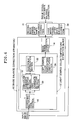
FIG. 1 is a block diagram schematically showing an
embodiment of a white balance correction apparatus of a
second aspect which performs a white balance correction
method of a first aspect in accordance with the present
invention.
The white balance correction apparatus shown in FIG. 1
is arranged to correct white balance when digital image
processing is performed on input image signal to form a
photographic print. For example, it is provided in an
image processor in a digital photoprinter or the like.
The white balance correction apparatus indicated by 10
in FIG. 1 is constituted mainly of a light source color
temperature estimation device 12 for estimating, from an
input color image, the color temperature of a light source
at the time of obtaining the color image by photographing a
subject, and an image signal correction device 14 for
making white balance correction by using the color
temperature of the photographing light source estimated by
the light source color temperature estimation device 12.
The light source color temperature estimation device
12 has a coefficient multiplication section 16, a skin
color candidate detection section 18, a gray candidate
detection section 20, a coefficient optimization section 22,
and a light source color temperature computation section 24.
Before describing the functions of these devices and
sections, the principle of the present invention will first
be described.
While the conventional white balance correction method
corrects a color imbalance on the basis of the Evans'
theorem so that the average of colors through the entire
frame is gray, the present invention is characterized by
positively searching for a gray portion in a frame and by
correcting an imbalance by performing exposure so that the
gray candidate point is finished in gray on a print.
Here, the same white balance correction method is
applied to an image forming process using a color negative
film and to an image forming process in a digital still
camera (DSC). The principle of the present invention will
be explained with respect to a case where a scene is
photographed with a DSC under ordinary conditions.
A case where a scene containing a gray portion (in
gray or in a color close to gray) is photographed with a
DSC in natural daylight at a color temperature of 4000 K
will be considered as an example.
Image signals (R, G, B) of the photographed gray
portion are plotted in a chromaticity diagram by being
converted into chromaticity coordinates (r, b) by the
following equations (1) :
r = R / (R + G + B) b = B / (R + G + B)
FIG. 2 shows the chromaticity diagram. A curve Gy in
FIG. 2 is a blackbody locus of gray. As is well known, a
blackbody locus is formed in such a manner that if T is
color temperature; a blackbody radiation energy
distribution at color temperature T is P(λ); a spectral
reflectance distribution of a subject is ρ(λ); and a
spectral sensitivity distribution of a CCD sensor is Si(λ)
(where i = B, G, R), Ei is computed by the following
equation (2),
Ei = ∫P(λ)ρ(λ)Si(λ)dλ
and this Ei is plotted in a chromaticity diagram by being
converted into chromaticity coordinates (r, b) by the
equation (1) shown above while color temperature T is
changed.
A blackbody locus exists with respect to each of
spectral distributions of a CCD sensor and each of the
colors of a subject, and a blackbody locus of gray is
obtained by setting the spectral reflectance ρ(λ) of a
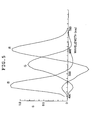
subject in gray at 1. FIG. 3 shows spectral sensitivity
distributions of a typical CCD sensor. It is preferable to
use such Si(λ) characteristic of a CCD sensor. However,
BT709 ideal spectral sensitivity distributions such as
shown in FIG. 5 may alternatively be used.
If the above-mentioned image signal of a gray portion
is plotted in the chromaticity diagram shown in FIG. 2, it
is considered to be scattered in the vicinity Gy0 of the
point at 4000 K on the blackbody locus of gray Gy.
In recent ordinary DSCs having an AWB (auto white
balance) function, the gray portion is scattered in the
vicinity Gy1 of a standard white (e.g., 5500 K) if the AWB
function is suitably performed. However, if the AWB
function is not suitably performed, the gray portion is
scattered in a region at an unknown position remote from
the photographing temperature 4000 K (e.g., a region
indicated by symbol A in FIG. 2).
To convert the gray portion at such an unknown
position indicated by symbol A in FIG. 2 as included in the
DSC image to the vicinity Gy1 of a reference white (e.g.,
5500 K), white balance correction is made in a printer. It
is possible to expect that a well-gray-balanced good print
will be obtained by performing this conversion with respect
to each of the pixels of the image.
Since the position of the region A shown in FIG. 2 is
unknown, it is impossible to make a direct conversion from
the region A to the vicinity Gy1 of a reference white (e.g.,
5500 K). Therefore, in the present invention, the desired
conversion is performed in two steps.
That is, conversions expressed by two vectors α and β
shown in FIG. 2 are made.
The vector α is a vector for correction of the amount
of deviation from the blackbody locus Gy due to the
imperfection of the AWB function of the DSC. The
conversion using the vector α is performed as a conversion
from the region A shown in FIG. 2 to the region Gy0 on the
blackbody locus Gy.
The vector β is a vector for conversion from the
region Gy0 to the vicinity Gy1 of the reference white (e.g.,
5500 K) along the blackbody locus Gy.
The conversion from the region A to the vicinity Gy1
of the reference white (e.g., 5500 K) as shown in FIG. 2
can be achieved by combining the two vectors α and β.
The description will again be made of the devices and
sections shown in FIG. 1.
It is difficult to obtain vector α expressing the
conversion from the region A shown in FIG. 2 to the region
Gy0 on the blackbody locus Gy in the above-described two
conversion steps using vectors α and β. If the region Gy0
can be obtained, the color temperature T of the
photographing light source can be estimated therefrom.
Thus, it is easy to obtain the vector β expressing the
conversion from Gy0 (color temperature T) to Gy1 (color
temperature of 5500 K) along the blackbody locus Gy.
The light source color temperature estimation device
12 obtains the vector α to make the corresponding
conversion, and the image signal correction device 14
obtains the vector β to make the corresponding conversion.
The AWB function of the DSC is performed in such a
manner that the image signals R, G, and B of all the pixels,
which are collected immediately after photographing, are
uniformly multiplied by constants. This multiplication
using constants is a linear transformation. If the image
signals have deviated from the blackbody locus by this
operation, the process of making the gray portion scattered
mainly at temperatures in the vicinity (Gy0 in FIG. 2) of
the color temperature of the photographing light source on
the blackbody locus (4000 K in this case) must be the
operation having the effect reverse to that of the
operation performed as the AWB function.
The transformation which is the reverse of the above-described
AWB function (linear transformation) of the DSC
is also a linear transformation. Therefore the DSC image
signals R, G and B are multiplied by predetermined
coefficients (in the process shown in FIG. 2, the image
signals R, G, and B are converted into chromaticity
coordinates). The coefficient multiplication section 16
performs this multiplication.
The coefficient multiplication section 16 respectively
multiplies R and G in the DSC image signals R, G and B by
predetermined coefficients α1 and α2 as shown by the
following equations (3) to convert R and G into R' and G'.
R' = α1R G' = α2G
For conversion in the coefficient multiplication
section 16, it is not necessary to change the three
signals; changing two of the signals may suffice.
The region A to which the point corresponding to the
original gray has been moved is unknown and it is
impossible to identify the portion corresponding to the
original gray. Therefore the gray candidate detection
section 20 compares the signal converted by the linear
transformation with the blackbody locus of gray, recognizes
pixels detected in the vicinity of the blackbody locus as
highly probable to correspond to the original gray, and
sets the pixels as gray candidate pixels. Determination as
to whether pixels are in the vicinity of the blackbody
locus may be made according to whether the distance in
terms of chromaticity coordinates (r, b) from the blackbody
locus is within the range of 0.01.
The coefficient optimization section 22 counts the
number of gray candidate pixels detected by the gray
candidate detection section 20, and optimizes the
coefficients α1 and α2 by making the coefficient
multiplication section 16 and the gray candidate detection
section 20 perform the above-described operations while
changing the predetermined coefficients α1 and α2 so that
the number of gray candidate pixels is maximized.
A suitable method, not particularly specified, may be
used for this optimization. For example, a simplex method,
which is a standard method for numerical value computation,
is preferably used. The coefficients α1 and α2 in the
equations (3) for linear transformation are obtained by the
above-described optimization as the components of vector α
corresponding to the operation reverse to the AWB function
of the DSC. That is, α = (α1, α2).
To improve the accuracy of optimization, information
on a color other than gray may also be used. Skin color
can be selected from subject colors as a color appearing
frequently in photographing and comparatively stable in
color tint among its variations. Skin color is thought to
vary considerably with respect to human races (white race,
yellow-skinned race, and black race). However, it is known
through spectrometric analysis that skin color varies
mainly in lightness among races and does not vary largely
in spectral composition, that is, skin color has only small
variation in the color tint. This characteristic of skin
color can be utilized for color identification.
Therefore the skin color candidate detection section
18 also sets a blackbody locus (not shown) with respect to
skin color as well as that of gray, and detects skin color
candidate pixels having a color close to the blackbody
locus of skin color from the image signals multiplied by
the coefficients in the coefficient multiplication section
16. Note that, here, as the skin color used in the
computation of the blackbody locus of skin color, for
example, light skin of the Macbeth chart can be used.
However, the present invention is not limited to this color.
The coefficient optimization section 22 also counts
the number of skin color candidate pixels detected by the
skin color candidate detection section 18, combines it with
the number of gray candidate pixels described above, and
optimizes the coefficients α1 and α2 so that the number of
these pixels is maximized, thus improving the accuracy with
which the coefficients α1 and α2 are optimized. Note that,
in the present invention, if primary importance is attached
to the skin color, the coefficients α1 and α2 may be
optimized so that the number of only the skin color
candidate pixels detected by the skin color candidate
detection section 18 is maximized.
It is also expected that if a scene including a gray
portion and a skin color portion is photographed with a
uniform light source, the average color temperatures of the
group of gray candidate pixels and the group of skin color
candidate pixels, detected as pixels having colors close to
the blackbody locus, coincide with each other. In
optimization in the coefficient optimization section 22,
therefore, optimization of the above-described coefficients
may be performed by setting an objective function for
"minimizing the difference between the average color
temperatures of the group of gray candidate pixels and the
group of skin color candidate pixels".
Further, the two above-described methods may be
combined to optimize the above-described coefficients by
setting the objective function for "maximizing the number
of at least one of gray candidate pixels and skin color
candidate pixels" and the objective function for
"minimizing the difference between the average color
temperatures of the group of gray candidate pixels and the
group of skin color candidate pixels".
The method using these two objective functions further
improves the optimization accuracy.
Next, the light source color temperature computation
section 24 converts the image signals by using the
coefficients α1 and α2 optimized in the above-described
coefficient optimization section 22, computes the average
color temperature Tg of the group of gray candidate pixels
on the blackbody locus of gray and/or the average color
temperature Tf of the group of skin color candidate pixels
on the blackbody locus of skin color, and computes the
color temperature T of the photographing light source from
these average color temperatures. The color temperature T
may. be computed by averaging as shown by T = (Tg + Tf) / 2
or may be obtained as T = Tg if only gray is present or if
gray is more important than skin color. It may also be
obtained as T = Tf if only the skin color is present or if
the skin color is more important than gray. The color
temperature T of the photographing light source is thus
estimated.
Further, since it can be considered that a
photographing light source for photographing a subject to
obtain a color image is usually one in the above-described
example, the number of photographing light sources for
which a color temperature is estimated is one, and an
appropriate photographing source is estimated. However, if
a subject is photographed indoors using a strobe (e.g.,
under a tungsten lamp), this precondition may not be
realized.
That is, one of the points that should be taken into
account here is handling of an image photographed with
strobe light, in particular, an image photographed indoors
with strobe light, for example, under presence of other
light sources such as a tungsten light source. In this
case, two light sources with completely different color
temperatures coexist. That is, light in a part illuminated
by the strobe light (e.g., a person in the center of a
frame image) has a color temperature in the order of 5000 K,
which is a color temperature of strobe light, and light in
a part not illuminated by the strobe light at the rim of
the image photographed with strobe light (illuminated by
the light of the tungsten lamp) has a color temperature in
the order of 3000 K, which is a color temperature of light
of a tungsten lamp.
As a result, a color temperature of a photographing
light source in the case in which the number of
photographing light sources is estimated to be one as in
the above-described example becomes an average of both the
color temperatures, for example, 4000 K, and is estimated
to be lower than 5000 K of the color temperature of the
strobe that is a main photographing light source. Thus,
the skin color of the person, who is the subject, is tinged
blue. Consequently, consideration for this problem is
required.
Therefore, in another embodiment of the present
invention, ingenuity is put into the method of computing a
color temperature of a light source in order to improve
white balance correction of an image photographed with
strobe light involving such light sources of different
types.
In this embodiment, the light source color temperature
computation section 24 converts an image signal using the
optimized coefficients α1 and α2 to compute an average
color temperature Tg of a group of gray candidate pixels on
a blackbody locus of gray and an average color temperature
Tf of a group of skin color candidate pixels on a blackbody
locus of skin color as in the above-described example. In
this case, the light source color temperature computation
section 24 in accordance with this embodiment divides the
above-mentioned group of gray candidate pixels and group of
skin color candidate pixels into two subgroups
corresponding to different light sources (a tungsten light
source and a strobe light source in this context),
respectively, (two subgroups of gray candidate pixels and
two subgroups of gray candidate pixels). The light source
color temperature computation section 24 then converts, for
example, the number of candidate pixels belonging to each
subgroup into a histogram and determines that the subgroup
with the larger number of the candidate pixels is a
principal (main) light source. That is, when the group of
gray candidate pixels and the group of skin color candidate
pixels are converted into a histogram, respectively, a
plurality of peaks (two peaks in the above-described
example) appear. Thus, the light source color temperature
computation section 24 divides the groups having each peak
into subgroups, respectively, and determines that the
subgroup with the higher peak, that is, the subgroup with
the larger number of candidate pixels is the principal
light source.
Then, the light source color temperature computation
section 24 finds average temperatures (Tf, Tg) of each
subgroup that is determined as the principal light source
and computes a color temperature T of a photographing light
source. In this computation of the color temperature T of
the photographing light source, for example, it is
sufficient to consider that T = Tf if only the skin color
is present or if the skin color is more important than gray
and consider that T = Tg if only gray is present or if gray
is more important than the skin color.
In this way, the color temperature T of the
photographing light source is estimated.
Finally, the image signal correction device 14 makes a
conversion from the thus estimated color temperature T to
the reference white (e.g., 5500 K) along the blackbody
locus. This conversion can be expressed as linear
transformation of the R and B signals shown by the
following equations:
R" = β1R' B" = β2B
These coefficients β1 and β2 are obtained as the
components of vector β.
The image signal correction device 14 performs
conversion using this vector β on each pixel to complete
white balance correction with respect to each pixel.
The above-described conversion process is summarized
below. The conversion from the point A to the reference
white (e.g., 5500 K) Gy1 as shown in FIG. 2 is realized as
a resultant of transformation by vector α and
transformation by vector β, as shown by the following
equations (5):
R" = α1β1R G" = α2G B" = β2B
The equations (5) include a change in lightness as
well as a color balance. These equations may be rewritten
as shown below by assuming that the G signal is constant.
R" = (α1β1 / α2)R G" = G B" = (β2 /α2)B
The operation of this embodiment will be described
with reference to the flowchart of FIG. 4.
First, in step 100, a scene is photographed in light
from a certain light source by using a digital still camera
(DSC).
In step 110, the image signals R, G, and B of the
image formed by the DSC are input.
In step 120, image signal optimization processing is
performed by the coefficient multiplication section 16, the
skin color candidate detection section 18, the gray
candidate detection section 20 and the coefficient
optimization section 22 of the light source color
temperature estimation device 12. This processing is
intended to restore the image signals, which are caused to
deviate from a blackbody locus by the AWB function of the
DSC, to signals (raw data) without a deviation in the
vicinity of the blackbody locus. The coefficient
multiplication section 16 multiplies all the image signals
by predetermined coefficients. The skin color candidate
detection section 18 compares this data with the blackbody
locus of skin color to detect data (skin color candidate
pixels) considered to have a color in the vicinity of the
skin color on the blackbody locus. The gray candidate
detection section 20 compares this data with the blackbody
locus of gray to detect data (gray candidate pixels)
considered to have a color in the vicinity of the gray on
the blackbody locus.
The coefficient optimization section 22 counts the
detected skin color candidate pixels and/or the detected
gray candidate pixels, and optimizes the above-described
coefficients by resetting the coefficients and repeating
setting the coefficients so that the number of the skin
color candidate pixels and/or gray candidate pixels is
maximized or the difference between the average color
temperature of the group of skin color candidate pixels and
the average color temperature of the group of gray
candidate pixels is minimized, or both of these conditions
are satisfied.
In step 130, the light source color temperature
computation section 24 computes the estimated value T of
the color temperature of the photographing light source
from the average color temperature Tf of the group of skin
color candidate pixels and the average color temperature Tg
of the group of gray candidate pixels, obtained by
multiplication by the optimized coefficients. Note that,
if illumination is considered to be formed of a plurality
of light sources, for example, two light sources, it is
preferable to compute an estimated value T of a color
temperature of the light sources taking into account a
result of sub-grouping described above.
Next, in step 140, the image signal correction device
14 determines the amount of correction from the light
source color temperature T estimated in the light source
color temperature computation section 24 to the reference
white (e.g., 5500 K), and corrects the white balance of all
the pixels by this amount of correction.
Finally, in step 150, other kinds of image processing
are performed on the image signals, and a finished print is
output from the printer.
As described above, according to the photoprinter
incorporating the white balance correction apparatus in
accordance with the present invention, an effect of
improvement in a white balance correction capability on a
finished print is recognized compared with the case of
printing by the conventional technique.
Here, a supplementary explanation will be given on
step 130 of FIG. 4 in the case in which two-light source
illumination is used.
A group of gray candidate pixels and a group of skin
color candidate pixels that are detected as near colors of
a blackbody locus curve are distributed dispersing
(separating) in two parts near a color temperature of an
incandescent lamp (3000 K) and near a color temperature of
strobe light (5000 K to 5500 K). In this embodiment, these
pixel groups are not simply averaged for the color
temperatures but a histogram (cumulative frequency
distribution) is created with respect to the color
temperatures.
Then, for skin color, the group of skin color
candidate pixels are divided into a first subgroup of skin
color candidate pixels and a second subgroup of skin color
candidate pixels with an inflection point of a skin color
cumulative frequency distribution as a boundary to find an
average color temperature of each subgroup. Then, a higher
average color temperature is regarded as an average color
temperature of the entire group of skin color candidate
pixels. For gray, in the same manner, the group of gray
candidate pixels are divided into a first subgroup of gray
candidate pixels and a second subgroup of gray candidate
pixels with an inflection point of a gray cumulative
frequency distribution as a boundary to find an average
color temperature of each subgroup. Then, a higher average
color temperature is regarded as an average color
temperature of the entire group of gray candidate pixels.
A color temperature of the photographing light source is
estimated according to an average value of the average
color temperature of the group of skin color candidate
pixels and the average color temperature of the group of
gray candidate pixels.
Note that if the inflection point of the cumulative
frequency distribution cannot be found, it is sufficient to
regard that single-light source illumination is used and
estimate a color temperature by the method in the case of
using the above-described single-light source illumination.
Further, in the present invention, for example, when
image signals of respective pixels in an input color image
are multiplied by set coefficients in the coefficient
multiplication section 16 and, as a result, when the
coefficient is optimized in the coefficient optimization
section 22 so that the above-described predetermined
objective function is minimized, it is preferable to detect
a maximum value of the image signal of the input image and
divide each image signal of the input image by this maximum
value, thereby using an image signal that is standardized
so that the maximum value of the image signal becomes 1.0.
In this way, the present invention can be applied to an
image even if it is photographed in a state of considerable
lack of exposure and/or excessive exposure
(underexposure/overexposure).
The present invention will be further described with
respect to concrete examples thereof.
Example 1
The performance of the above-described white balance
correction method was tested when prints were formed from
309 frames of DSC images obtained by picture-taking with
typical two DSC models from Fuji Photo Film Co., Ltd. For
comparison with the prints formed in accordance with the
present invention, original images (prints which were
output without correction after AWB in the DSCs) and prints
which were obtained by performing on the images from the
DSCs white balance correction based on the conventional art
were prepared. The prints evaluated were sorted into 3
groups; good ones (X), unsatisfactory ones (Y), and
defective ones (Z). Only the good ones (X) were counted as
passed items.
First, 8-bit DSC image signals R, G, and B were
converted into subject-linear signals R0, G0, and B0, as
described below.
8-bit DSC image signals R, G, and B obtained by
picture-taking with the DSC are processed as described
below. First, subject-linear signals Ro, Go, and Bo
generated from the CCD sensor are converted by gamma-0.45
nonlinear transformation shown by the following equations
(7) :
R1 = 1.099 x Ro 0.45 - 0.099 G1 = 1.099 x Go 0.45 - 0.099 B1 = 1.099 x Bo 0.45 - 0.099
Thereafter, color difference signals Y1, Cr1 and Cb1 are
formed therefrom as shown by the following equations (8):
Y1 = 0.30R1 + 0.59G1 + 0.11B1 Cr1 = 0.70R1 - 0.59G1 - 0.11B1 Cb1 = -0.30R1 - 0.59G1 + 0.89B1
A color-difference matrix operation is performed on
these signals to improve the chromaticity, thereby making
conversions into color-difference signals Y2, Cr2, and Cb2
shown by the following equations (9):
Y2 = Y1 Cr2 = 1.625Cr1 + 0.2734Cb1 Cb2 = -0.08203Cr1 + 1.6094Cb1
Finally, R, G and B signals are restored and converted
into 8-bit signals by the following equations (10) to
obtain 8-bit DSC image signals R, G, and B.
R = Y2 + Cr2 G = Y2 - 0.51Cr2 - 0.18Cb2 B = Y2 + Cb2
To convert 8-bit DSC image signals R, G, and B into
subject-linear signals R0, G0, and B0, therefore, the
inverse operation process starting from processing R, G,
and B signals and the operations in the order from
equations (10), equations (9), equations (8), and equations
(7) may be performed. This inverse operation process was
performed to obtain the subject-linear signals R0, G0, and
B0.
Next, the amounts of white balance correction based on
optimization of subject-linear signals R0, G0, and B0 were
computed.
To enable this computation, the blackbody locus of
gray and the blackbody locus of skin color were formed in
advance by using the spectral sensitivity of the DSC used
for picture-taking. Operations for optimizing the Ro, Go,
and Bo signals were performed by using these loci to obtain
vector α and vector β, and white balance correction signals
R", G", and B" were obtained as shown by equations (11)
below. This optimization computation was performed by
optimizing the coefficients so that the number of gray
candidate pixels and skin color candidate pixels was
maximized and the difference between the average color
temperature of the group of skin color candidate pixels and
the average color temperature of the group of gray
candidate pixels was minimized.
R" = (α1β1 / α2)R0 G" = G0 B" = (β2 / α2)B0
To convert these white balance correction signals R",
G", and B" into 8-bit image signals, the operations may
successively be performed in the order of equations (7),
equations (8), equations (9), and equations (10). These
signals were output from the printer to obtain a white-balance-corrected
print.
Table 1 shows the results of comparison between the
prints after white balance correction in accordance with
the present invention, the original images and those
obtained by the conventional art.
| | Original Images | Conventional art | Present Invention |
| Passing Rate (%) | 65.3 | 78.3 | 90.0 |
As shown in Table 1, the passing rate of the present
invention was higher by about 12 points than that of the
conventional art, and the high white balance correction
performance of the present invention was confirmed.
Example 2
In Example 1, the names of DSCs were known and the
spectral sensitivity and the color processing algorithm
were also known. However, if the white balance correction
method of the present invention is used as printing
software, it is desirable to ensure applicability to
correction of DSC images formed by unknown models (or to
ensure robustness).
In Example 2, a white balance correction test was made
with respect to 309 frames of DSC images obtained by
picture-taking with typical two DSC models from Fuji Photo
Film Co., Ltd, which are same as those used in Example 1,
and 240 frames of images obtained by picture-taking of the
same scenes (16 frames) with fifteen unidentified models
from other manufactures.
In this example, white balance correction in
accordance with the present invention was performed under
the assumption that all models were DSCs having ideal
spectral sensitivities, because, even if the model cannot
be identified, the performance of any model can be
approximated to the ideal spectral sensitivity
characteristics of BT709 as shown in FIG. 5 by virtue of
the combination of the spectral sensitivity and the color
processing algorithm.
That is, in this example, the spectral sensitivity
distributions of BT709 shown in FIG. 5 were used as
spectral sensitivity distribution Si (i = R, G, B) of the
CCD sensor in equation (2) for obtaining a blackbody locus.
In this example, since DSCs having the ideal spectral
sensitivities do not need the color processing algorithm
for improving the chromaticity, it is not necessary to
perform, for conversion of 8-bit DSC image signals R, G,
and B into subject-linear signals Ro, Go, and Bo, the
inverse operation process from equations (10) to equations
(7) required in Example 1, and the inverse operation of
equations (7) can be immediately performed.
The blackbody locus of gray and the blackbody locus of
skin color were formed in advance by using the ideal
spectral sensitivity of BT709, the operations for
optimizing R0, Go, and B0 signals were performed by using
these loci to obtain vector α and vector β, as in Example 1.
White balance correction signals R", G", and B" expressed
by equations (11) were obtained therefrom.
These signals were converted by gamma-0.45 nonlinear
conversion and converted signals were 8-bit quantized to
obtain 8-bit image signals, which were supplied to a
printer to obtain a white-balance-corrected print.
The prints thus obtained were evaluated, as were those
in Example 1. The prints evaluated were sorted into good
ones (X), unsatisfactory ones (Y), and defective ones (Z).
Only the good ones were counted as passed items. Table 2
shows the evaluation results.
| | Typical models from Fuji Photo Film Co., Ltd. (309 frames) | 16 scenes (240 frames) by 15 models from other manufacturers |
| | Present Invention | Original images | Conventional art | Present invention |
| Passing rate (%) | 88.0 | 47.1 | 70.0 | 76.2 |
As shown in Table 2, substantially the same passing
rate (88%) as that in Example 1, though slightly lower, was
maintained with respect to the two typical models from Fuji
Photo Film Co., Ltd. (309 frames). With respect to the
fifteen models from the other manufacturers (240 frames),
it is observed that the absolute value of the passing rate
achieved by the present invention was low (76%) than that
achieved by the two typical models from Fuji Photo Film Co.,
Ltd. but higher by about 6 points than that achieved by the
conventional art.
The reason for the low passing rate may be because, as
can be understood from the considerably low passing rate
(47%) of the original images, the number of evaluated
scenes was small (16 scenes) and the images had imbalance
details, and also because the actual DSCs were assumed to
be DSCs having ideal spectral sensitivities.
As described above, according to Example 2, the white
balance correction method of the present invention is
sufficiently effective when provided as common software and
achieves a sufficiently high white balance correction
effect even with respect to image forming apparatus models
whose spectral sensitivity and color processing algorithm
are unknown.
Further, in the above-mentioned examples, in the
optimization computation, a white balance correction signal
is found by optimizing coefficients so that the number of
gray candidate pixels Ng and the number of skin color
candidate pixels Nf are maximized and the difference
between the average color temperature Tg of the group of
gray candidate pixels and the average color temperature Tf
of the group of skin color candidate pixels is minimized.
In this case, there is one objective function F for
optimization, which is represented by the following
equation:
F = abs(Tg - Tf) - (Ng + Nf)
Here, abs indicates an absolute value. Since the simplex
method works so that a set objective function is minimized,
if maximization of the number of candidate pixels is
desired, it is sufficient to make (Ng + Nf) subtracted as
shown above.
Even if there is only one objective function, a
favorable result was obtained as a whole as described above.
However, looking at the prints in detail, defective prints
(prints of the evaluation Z (defective ones)) were found
here and there. Since it was important to reduce the
number of prints of the evaluation Z (defective ones) as
much as possible in the automatic printing work, an effect
in the case of an increased number of objective functions
was investigated. The number of objective functions was
increased to two. The following equation was used as a
second objective function:
F* = abs(Tg - Tf) - Ng
A first white balance correction signal obtained by
optimizing coefficients using the first objective function
and a second white balance correction signal obtained by
optimizing coefficients using the second objective function
were averaged to obtain a new white balance correction
signal to form prints. Then, approximately a half of the
prints that were given the evaluation Z (defective ones)
changed to prints of the evaluation Y (unsatisfactory ones).
The number of prints of the evaluation X (good ones) hardly
changed, and as a whole, the number of prints of the
evaluation Y (unsatisfactory ones) increased and the number
of prints of the evaluation Z (defective ones) decreased.
As a result, stable prints were obtained. Moreover, the
combination of two objective functions is not limited to
this. When other combinations were checked, a combination
of the following two objective functions were most
effective for stabilization of prints:
F = abs (Tg - Tf) - Ng
F* = abs(Tg - Tf) - Nf
A white balance correction method of the embodiment in
this case will be described with reference to FIG. 6.
As shown in FIG. 6, a first image signal after white
balance correction corresponding to the first objective
function, which is outputted from a white balance
correction apparatus 10, is saved in a memory 30.
Subsequently, a second image signal after white balance
correction corresponding to the second objective function
is saved in a memory 31. Thereafter, a new image signal
after white balance correction is generated from the first
and second image signals after white balance correction and
used as a signal for forming prints.
Moreover, as a method of stabilizing print outputs, it
was also found to be effective to form prints with weakened
correction rather than directly using an image signal after
gray balance correction obtained by an optimization
computation. A degree of weakening is preferably 60 to 80%.
In addition, correction may be weakened to 60 to 80%
according to a BV value (index indicating brightness of an
image) written in an Exif file of a DSC image.
In addition, in the optimization computation described
above, a pixel with a small signal value (dark pixel) was
considered to have little effective information in the past.
Thus, for saving a computation time, a pixel with a signal
value equal to or less than a lower limit value (0.08) was
not used in the computation. However, in an underexposed
image, since signal values of many pixels become lower than
the lower limit value of 0.08, the number of pixels that
can be used in the optimization computation considerably
decreases and computation accuracy falls. To the contrary,
in an overexposed image, for example, in the case in which
a white wall is illuminated by a tungsten lamp and exposure
is appropriate, all signal values of R = 1.0, G = 0.7, B =
0.5 of a signal are clipped to 1.0 such as R = 1.0, G = 1.0,
B = 1.0, and the signal turns into a signal just like that
of reference light source illumination. However, in the
case in which a signal value is 1.0, it is difficult to
determine whether it is a real value or a value caused by
clipping. Therefore, it is necessary to examine pixels to
be used for the optimization computation depending on
underexposure or overexposure. For example, it is possible
to lower a lower limit value and increase the number of
pixels. But it is bothersome to change a set value for
each image. Thus, in order to automatically examine pixels,
an image signal is standardized so that its maximum value
becomes 1.0 to allow the number of pixels that can be used
in the optimization computation to be maintained
substantially constant regardless of underexposure or
overexposure as described below.
That is, pixels in which at least one of R, G, and B
signals is 1.0 are excluded, and maximum values (Rmax, Gmax
and Bmax) are found for R, G and B signals, respectively,
for all the remaining pixels. A maximum value and a
minimum value among the maximum values are assumed to be
Tmax and Tmin, and R, G and B signals of an image are
standardized by Tmax. Consequently, an image just like an
image photographed by appropriate exposure is obtained. A
range of signal use is limited to a bright range of 1.0 to
0.25 x (Tmin / Tmax), whereby appropriate white balance
correction can be realized for any images of appropriate
underexposure and overexposure without using so many pixels
in the optimization computation. In a scene of snow under
overexposure, whiteness of the snow was successfully
detected and beautiful finish prints could be realized by
an effect of the standardization processing.
In the present embodiment of the present invention, as
described above in detail, an algorithm using only gray
and/or skin color information in a DSC image is constructed
to correct white balance at the time of printing, and the
apparatus and method of the present invention are
advantageously effective in correcting white balance in
comparison with the conventional art, as can also be
understood from the examples. The effect of determining
whether a color tint of the whole of an image is due to the
photographing light source or the subject in accordance
with the present invention, is advantageously improved in
comparison with the conventional art having an imperfection
with respect to this effect. In particular, the correction
performance of the present invention is substantially
perfect with respect to a high color temperature of a
shaded scene or a scene under cloudy weather (7000 to
10,000 K), so that while an entirely bluish print in which
a human face has color subsidence is formed in such a
situation by the conventional art, a print in which revived
white is exhibited and in which skin color is natural can
be obtained according to the present invention.
In addition, as described above, all signals of an
image are standardized so that a signal value of a
brightest pixel in the image becomes 1.0, whereby it
becomes possible to perform the optimization computation
and process the image regardless of underexposure or
overexposure. Consequently, an image of the same quality
as an image photographed by appropriate exposure can be
obtained.
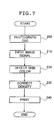
Next, the method for correcting density as a second
embodiment of the present invention is described with
reference to the flowchart of FIG. 7. If the type of a
light source is unknown, according to this method, skin
color (not limited specifically to that of a face) in an
image is detected utilizing the method for detecting skin
color candidate pixels as stated above in the description
of the first embodiment of the invention, and then the
print density is determined based on the information about
the color to form a proper print.
Apparatus for effecting the second embodiment of the
invention are exemplified by a digital photoprinter
comprising an image processor provided with the coefficient
multiplication section 16, the skin color candidate
detection section 18 and the coefficient optimization
section 22 in the white balance correction apparatus 10 as
stated above in the description of the first embodiment of
the invention (as well as a density correction section).
First in step 200, a scene is photographed in light
from a certain light source by using a digital still camera
(DSC) and then, in step 210, the image signals R, G and B
of the formed image are input. In step 220, the input
signals are subjected to the skin color candidate detection
processing as stated above in the description of the first
embodiment of the invention, so that skin color candidate
pixels are detected. In particular, all the input image
signals are multiplied by predetermined coefficients and
the data thus obtained are compared with the blackbody
locus of skin color to detect data, which are considered to
be in the vicinity of the skin color on the blackbody locus,
as skin color candidate pixels. At this time, the number
of the detected skin color candidate pixels may
additionally be counted and the coefficients for the
multiplication as above may be optimized so that the above
number is maximized, or so that the difference between the
average color temperature of a group of detected skin color
candidate pixels and the average color temperature of a
group of gray candidate pixels obtained in a similar way to
the skin color candidate pixels is minimized, or so that
these two conditions are both satisfied, to perform the
multiplication using the coefficients thus optimized and
obtain skin color candidate pixels.
In the next step 230, density correction is performed.
In particular, the average of the color signals (R, G and
B) of the skin color candidate pixels detected as stated
above is initially determined. For this purpose, it may be
available the average of the color signals R, G and B((R +
G + B) / 3), or any specific color signal, G signal, for
example. The signal to be used is not particularly limited,
although it is preferable to use G signal.
In the case of using G signal, density correction is
performed by assigning the average obtained for G signal to,
a predetermined G density D (D = 0.7, for example) on a
print. The G density D is preferably between 0.7 and 1.0
both inclusive.
In step 240, the data obtained at the end of density
correction are output by the printer.
In this way, even if the type of a photographing light
source is unknown, the density of a human face as a
principal subject will be made proper by detecting skin
color and performing density correction based on the
information about the color. In consequence, a print can
be properly finished.
As an example, density correction was performed with
respect to an image formed by photographing with a DSC a
backlighted scene (a scene where a person in the center is
backlighted), which often fails to be properly photographed
with a DSC under density correction by LATD method, and
following results were obtained.
The print formed under density correction by LATD
method was evidently not appropriate, because, although the
density through the print was satisfactory, the face of the
person looked pitch-dark.
In contrast, in the case of the print which was formed
under density correction utilizing the detection of skin
color according to the second embodiment of the invention,
assuming that the type of a light source is unknown, the
face of the person had a proper density, even though the
background density was rather lower, the print being
substantially satisfactory. This effected by virtue of the
fact that skin color was successfully detected and printing
was performed under density correction based on such a
detection of skin color. Proper print densities could also
he achieved with respect to other scenes than what is
referred to above.
As described above in detail, according to the above-mentioned
each embodiment, since an algorithm using only
gray and/or skin color information in a DSC image is
established to perform white balance correction at the time
of forming prints, a remarkably better correction
capability can be obtained compared with the conventional
technique.
Further, although a DSC image is described in the
above-mentioned embodiment, the white balance correction
method of the present invention can be applied not only to
a DSC image but also to an image photographed on a color
negative film.
If one or both of the white balance correction method
and the density correction method as described hereinabove
are recorded as a computer-executable program on a
computer-readable recording medium, the white balance
correction method or the density correction method of the
present invention may be carried out in a suitable
apparatus such as an image processor by loading the program
from the recording medium into the apparatus employed.
The apparatus for correcting white balance, the method
for correcting white balance and the method for correcting
density, as well as the recording medium on which a program
for carrying out these methods is recorded, all of which
the present invention provides, have been described in
detail with various embodiments and examples. Needless to
say, the present invention is not limited to the described
embodiments and examples, and various modifications and
changes of the described embodiments and examples can be
made without departing from the scope of the invention.
For example, in the above-mentioned embodiments, in
the optimization computation, coefficients are optimized so
that the number of gray candidate pixels Ng and the number
of skin color candidate pixels Nf are maximized and the
difference between the average color temperature Tg of the
group of gray candidate pixels and the average color
temperature Tf of the group of skin color candidate pixels
is minimized. However, it is possible to change this to
another objective function.
In addition, as described above, it is possible to
merchandise the present invention as a program for making a
computer execute the above-mentioned white balance
correction method and/or density correction method and a
recording medium having this program computer-readably
recorded thereon. Moreover, it is also possible to
commercialize the present invention as a white balance
correction apparatus and/or a density correction apparatus
that implements the above-mentioned white balance
correction method and/or density correction method.
According to each aspects of the present invention, as
described above, an algorithm is constructed to correct
white balance by estimating the color temperature of the
photographing light source used in photographing a color
image only from gray and/or skin color information
contained in the input color image, which enables suitable
white balance correction at a high hit rate with respect to
any input images regardless of DSC models used for forming
images, or even in a case of photographing indoors with
strobe light.
In particular, according to the present invention, in
the case in which an entire image is standardized using a
brightest pixel in the image, the optimization computation
can be performed to process the image regardless of
underexposure or overexposure, and an image of appropriate
exposure can be obtained.
Moreover, according to the present invention, by
detecting skin color in an image and performing density
correction based on the information about the color, the
print density can be made proper even with respect to those
images of scenes where it is difficult with prior arts to
make the print density proper.