EP1309201A1 - Image coding apparatus and image coding method - Google Patents
Image coding apparatus and image coding method Download PDFInfo
- Publication number
- EP1309201A1 EP1309201A1 EP01945779A EP01945779A EP1309201A1 EP 1309201 A1 EP1309201 A1 EP 1309201A1 EP 01945779 A EP01945779 A EP 01945779A EP 01945779 A EP01945779 A EP 01945779A EP 1309201 A1 EP1309201 A1 EP 1309201A1
- Authority
- EP
- European Patent Office
- Prior art keywords
- significance
- transmission unit
- macroblocks
- transmission
- image
- Prior art date
- Legal status (The legal status is an assumption and is not a legal conclusion. Google has not performed a legal analysis and makes no representation as to the accuracy of the status listed.)
- Withdrawn
Links
Images


Classifications
-
- H—ELECTRICITY
- H04—ELECTRIC COMMUNICATION TECHNIQUE
- H04N—PICTORIAL COMMUNICATION, e.g. TELEVISION
- H04N21/00—Selective content distribution, e.g. interactive television or video on demand [VOD]
- H04N21/60—Network structure or processes for video distribution between server and client or between remote clients; Control signalling between clients, server and network components; Transmission of management data between server and client, e.g. sending from server to client commands for recording incoming content stream; Communication details between server and client
- H04N21/63—Control signaling related to video distribution between client, server and network components; Network processes for video distribution between server and clients or between remote clients, e.g. transmitting basic layer and enhancement layers over different transmission paths, setting up a peer-to-peer communication via Internet between remote STB's; Communication protocols; Addressing
- H04N21/637—Control signals issued by the client directed to the server or network components
- H04N21/6375—Control signals issued by the client directed to the server or network components for requesting retransmission, e.g. of data packets lost or corrupted during transmission from server
-
- H—ELECTRICITY
- H04—ELECTRIC COMMUNICATION TECHNIQUE
- H04N—PICTORIAL COMMUNICATION, e.g. TELEVISION
- H04N19/00—Methods or arrangements for coding, decoding, compressing or decompressing digital video signals
- H04N19/10—Methods or arrangements for coding, decoding, compressing or decompressing digital video signals using adaptive coding
- H04N19/102—Methods or arrangements for coding, decoding, compressing or decompressing digital video signals using adaptive coding characterised by the element, parameter or selection affected or controlled by the adaptive coding
- H04N19/115—Selection of the code volume for a coding unit prior to coding
-
- H—ELECTRICITY
- H04—ELECTRIC COMMUNICATION TECHNIQUE
- H04N—PICTORIAL COMMUNICATION, e.g. TELEVISION
- H04N19/00—Methods or arrangements for coding, decoding, compressing or decompressing digital video signals
- H04N19/10—Methods or arrangements for coding, decoding, compressing or decompressing digital video signals using adaptive coding
- H04N19/134—Methods or arrangements for coding, decoding, compressing or decompressing digital video signals using adaptive coding characterised by the element, parameter or criterion affecting or controlling the adaptive coding
- H04N19/136—Incoming video signal characteristics or properties
- H04N19/14—Coding unit complexity, e.g. amount of activity or edge presence estimation
-
- H—ELECTRICITY
- H04—ELECTRIC COMMUNICATION TECHNIQUE
- H04N—PICTORIAL COMMUNICATION, e.g. TELEVISION
- H04N19/00—Methods or arrangements for coding, decoding, compressing or decompressing digital video signals
- H04N19/10—Methods or arrangements for coding, decoding, compressing or decompressing digital video signals using adaptive coding
- H04N19/134—Methods or arrangements for coding, decoding, compressing or decompressing digital video signals using adaptive coding characterised by the element, parameter or criterion affecting or controlling the adaptive coding
- H04N19/146—Data rate or code amount at the encoder output
-
- H—ELECTRICITY
- H04—ELECTRIC COMMUNICATION TECHNIQUE
- H04N—PICTORIAL COMMUNICATION, e.g. TELEVISION
- H04N19/00—Methods or arrangements for coding, decoding, compressing or decompressing digital video signals
- H04N19/10—Methods or arrangements for coding, decoding, compressing or decompressing digital video signals using adaptive coding
- H04N19/134—Methods or arrangements for coding, decoding, compressing or decompressing digital video signals using adaptive coding characterised by the element, parameter or criterion affecting or controlling the adaptive coding
- H04N19/146—Data rate or code amount at the encoder output
- H04N19/15—Data rate or code amount at the encoder output by monitoring actual compressed data size at the memory before deciding storage at the transmission buffer
-
- H—ELECTRICITY
- H04—ELECTRIC COMMUNICATION TECHNIQUE
- H04N—PICTORIAL COMMUNICATION, e.g. TELEVISION
- H04N19/00—Methods or arrangements for coding, decoding, compressing or decompressing digital video signals
- H04N19/10—Methods or arrangements for coding, decoding, compressing or decompressing digital video signals using adaptive coding
- H04N19/134—Methods or arrangements for coding, decoding, compressing or decompressing digital video signals using adaptive coding characterised by the element, parameter or criterion affecting or controlling the adaptive coding
- H04N19/146—Data rate or code amount at the encoder output
- H04N19/152—Data rate or code amount at the encoder output by measuring the fullness of the transmission buffer
-
- H—ELECTRICITY
- H04—ELECTRIC COMMUNICATION TECHNIQUE
- H04N—PICTORIAL COMMUNICATION, e.g. TELEVISION
- H04N19/00—Methods or arrangements for coding, decoding, compressing or decompressing digital video signals
- H04N19/10—Methods or arrangements for coding, decoding, compressing or decompressing digital video signals using adaptive coding
- H04N19/134—Methods or arrangements for coding, decoding, compressing or decompressing digital video signals using adaptive coding characterised by the element, parameter or criterion affecting or controlling the adaptive coding
- H04N19/164—Feedback from the receiver or from the transmission channel
- H04N19/166—Feedback from the receiver or from the transmission channel concerning the amount of transmission errors, e.g. bit error rate [BER]
-
- H—ELECTRICITY
- H04—ELECTRIC COMMUNICATION TECHNIQUE
- H04N—PICTORIAL COMMUNICATION, e.g. TELEVISION
- H04N19/00—Methods or arrangements for coding, decoding, compressing or decompressing digital video signals
- H04N19/10—Methods or arrangements for coding, decoding, compressing or decompressing digital video signals using adaptive coding
- H04N19/169—Methods or arrangements for coding, decoding, compressing or decompressing digital video signals using adaptive coding characterised by the coding unit, i.e. the structural portion or semantic portion of the video signal being the object or the subject of the adaptive coding
- H04N19/17—Methods or arrangements for coding, decoding, compressing or decompressing digital video signals using adaptive coding characterised by the coding unit, i.e. the structural portion or semantic portion of the video signal being the object or the subject of the adaptive coding the unit being an image region, e.g. an object
- H04N19/176—Methods or arrangements for coding, decoding, compressing or decompressing digital video signals using adaptive coding characterised by the coding unit, i.e. the structural portion or semantic portion of the video signal being the object or the subject of the adaptive coding the unit being an image region, e.g. an object the region being a block, e.g. a macroblock
-
- H—ELECTRICITY
- H04—ELECTRIC COMMUNICATION TECHNIQUE
- H04N—PICTORIAL COMMUNICATION, e.g. TELEVISION
- H04N19/00—Methods or arrangements for coding, decoding, compressing or decompressing digital video signals
- H04N19/10—Methods or arrangements for coding, decoding, compressing or decompressing digital video signals using adaptive coding
- H04N19/169—Methods or arrangements for coding, decoding, compressing or decompressing digital video signals using adaptive coding characterised by the coding unit, i.e. the structural portion or semantic portion of the video signal being the object or the subject of the adaptive coding
- H04N19/188—Methods or arrangements for coding, decoding, compressing or decompressing digital video signals using adaptive coding characterised by the coding unit, i.e. the structural portion or semantic portion of the video signal being the object or the subject of the adaptive coding the unit being a video data packet, e.g. a network abstraction layer [NAL] unit
-
- H—ELECTRICITY
- H04—ELECTRIC COMMUNICATION TECHNIQUE
- H04N—PICTORIAL COMMUNICATION, e.g. TELEVISION
- H04N19/00—Methods or arrangements for coding, decoding, compressing or decompressing digital video signals
- H04N19/46—Embedding additional information in the video signal during the compression process
-
- H—ELECTRICITY
- H04—ELECTRIC COMMUNICATION TECHNIQUE
- H04N—PICTORIAL COMMUNICATION, e.g. TELEVISION
- H04N19/00—Methods or arrangements for coding, decoding, compressing or decompressing digital video signals
- H04N19/60—Methods or arrangements for coding, decoding, compressing or decompressing digital video signals using transform coding
- H04N19/61—Methods or arrangements for coding, decoding, compressing or decompressing digital video signals using transform coding in combination with predictive coding
-
- H—ELECTRICITY
- H04—ELECTRIC COMMUNICATION TECHNIQUE
- H04N—PICTORIAL COMMUNICATION, e.g. TELEVISION
- H04N19/00—Methods or arrangements for coding, decoding, compressing or decompressing digital video signals
- H04N19/65—Methods or arrangements for coding, decoding, compressing or decompressing digital video signals using error resilience
- H04N19/67—Methods or arrangements for coding, decoding, compressing or decompressing digital video signals using error resilience involving unequal error protection [UEP], i.e. providing protection according to the importance of the data
-
- H—ELECTRICITY
- H04—ELECTRIC COMMUNICATION TECHNIQUE
- H04N—PICTORIAL COMMUNICATION, e.g. TELEVISION
- H04N19/00—Methods or arrangements for coding, decoding, compressing or decompressing digital video signals
- H04N19/85—Methods or arrangements for coding, decoding, compressing or decompressing digital video signals using pre-processing or post-processing specially adapted for video compression
- H04N19/89—Methods or arrangements for coding, decoding, compressing or decompressing digital video signals using pre-processing or post-processing specially adapted for video compression involving methods or arrangements for detection of transmission errors at the decoder
Definitions
- the present invention relates to an image coding apparatus and image coding method preferably used for an image transmission apparatus to transmit a digital moving-picture signal to a radio communication terminal such as a cellular telephone.
- ISO/IEC Standardization/International Electrotechnical Commission
- MPEG-4 Visual is a multimedia coding system and a technology which may code various kinds of video materials.
- the image coding technology has been realized by three technologies, namely, "Motion compensation prediction coding system”, “Discrete cosine transform”, and, “Variable-length coding”.
- the input image picture is compared with the previously encoded picture so as to predict the motion between those pictures , and an input image picture is predicted from the motion quantity and the previously encoded picture. Then, the difference (predicted error signal) between the predicted image and the input image picture is calculated, and the predicted error signal and the motion quantity which has been previously obtained is sent to the receiving side.
- Image information may be sent using a small amount of data through predicting the motion in the above-described manner.
- an intra coding system which does not code the difference between an input image picture and the previously encoded picture, but the image data themselves.
- the intra coding system has been often used when the arithmetic errors are initialized, or when degradation in the picture quality caused by transmission errors is recovered, and since the predicted errors are not used, the amount of generated codes is increased in this system.
- the discrete cosine transform converts the above-described predicted error signal into the frequency domain.
- Image information may be transmitted by a further smaller amount of data through combination of the following feature and the variable-length coding system, as the feature of this system is that the power concentrates on a specific frequency domain (low frequency domain) when the predicted error signal is converted into the frequency domain.
- variable-length coding system is a system intended to reduce an average code length by expressing the events with high frequency of occurrence in terms of short code lengths, and of events with low frequency of occurrence in terms of long code lengths, making use of bias the events when there is bias in the frequency of occurrence with regard to data to be coded.
- Image information may be transmitted by a small amount of data, using the above-described system.
- radio transmission technologies for moving-picture signals have been attracting much interest along with wide spread of radio communication terminals such as cellular telephones. Coding technologies with transmission error tolerance have been indispensable for radio transmission, as the radio transmission has a higher transmission-error rate compared with that of wire transmission.
- the technology suggests transmission of coded data of a plurality of macroblocks as one transmission unit (video packet).
- the videopacket comprises of a video packet header information and coded data of an arbitrary number of macroblocks.
- the video packet header includes a position address (the address denotes at which position the pertinent macroblock is in the picture) of a first macroblock, and a parameter necessary for decoding.
- the methods for forming the videopacket is the Japanese Patent Published Application No. Hei-7 (1995) -014514 in which the videopacket is formed when the amount of generated codes in macroblocks are accumulated and reaches a predetermined amount of codes.
- this method in the video packet which has no motion in the picture such as backgrounds, there is a small amount of codes comprises many macroblocks, and in the video packet which has large motion in the picture, there is a large amount of codes comprises few macroblocks. Therefore, a degraded range may be minimized as parts with large motion comprise a smaller amount of macroblocks even when there are occurred errors in the video packet caused by transmission errors. That is, the deterioration is not noticeable as there is no motion, though the background parts include a lot of macroblocks. Bits may be efficiently assigned by applying the above method.
- macroblocks with large amount of codes has large change in case of the motion compensation prediction coding system. That is, the macroblocks may be considered to represent parts with large motion. when there are generated transmission errors in the macroblocks, it is considered that effects on the image quality of regenerated images are large. That is, macroblocks with a large amount of generated codes is considered to have higher significance. On the other hand, degradation in the picture quality caused by transmission errors may be recovered, though there are a larger amount of generated codes because of no use of the prediction in the case of the intra coding. Then, this is also considered to have higher significance.
- the object of the present invention is to provide an image coding apparatus and system in which hierarchical coding is not required; the significance of moving-picture coded data may be decided with an extremely simple configuration; and retransmission may be effectively controlled.
- significance information is added to every transmission unit including a plurality of coded macroblocks, and the significance information is decided according to the amount of codes in the transmission unit in image transmission processing for retransmission control according to the significance of images.
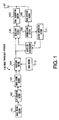
- FIG. 1 is a block diagram showing an image transmission apparatus according to embodiment 1 of the present invention.
- an image transmission apparatus 100 which has an image sensor element such as a CCD (Charge Coupled Device) comprises: an image sensing section 101 which outputs analog image signal, anA/D (Analog/Digital) converting section 102 which outputs the image signals outputted from the image sensing section 101 after conversion into a digital signal, an image coding section 103 (image coding apparatus) wherein image coding processing is executed to the digital image signals converted in the A/D converting section 102, and outputs encoded macroblocks, a packetizing section 104 (significance-information adding means) which packetizes the macroblocks coded in the image coding section 103 every one transmission unit, a modulating section 105 digitally modulates transmission packets generated in the packetizing section 104, a radio transmitting section 106 performs predetermined radio transmission processing of the modulated signals outputted from the modulating section 105, an antenna 107 emits the modulated signals as well as catches the received modulated signals, a radio receiving section 108
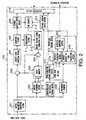
- FIG. 2 is a block diagram showing a detailed configuration of the image coding section 103.
- the image coding section 103 comprises a raster/macroblock converting section 201, a difference calculator 202, a motion evaluating section 203, a macroblock counter 204, a frame memory 205 holds a coded regenerated-image of the previous picture, an adder 206, a discrete cosine transform section 207, a quantizing section 208, a variable-length coding section 209, a multiplexing section 210, a dequantizing section 211, an inverse discrete cosine transform section 212, a variable-length coding section 213, a bit counter 214, a synchronization-unit division deciding section 215, a synchronization-word generating section 216 and a significance decision section 217.
- the raster/macroblock converting section 201 divides input digital image signals into coded macroblocks and inputs them to the difference calculator 202, motion evaluating section 203 and macroblock counter 204, respectively.
- the motion evaluating section 203 evaluates the motion quantity from. the previous picture which has been read out from the frame memory 205 based on coded blocks (current pictures) from the raster/macroblock converting section 201. Then, the evaluated results are input as motion vectors to both, the frame memory 205 and variable-length coding section 213.
- the variable-length coding section 213 performs variable-length coding process of the motion vectors inputted from the motion evaluating section 203, and inputs the results to both, the multiplexing section 210 and bit counter 214 .
- a predicted image corrected by the motion vectors is read out from the frame memory 205, and inputted as predicted signals to the difference calculator 202 and to adder 206.
- the difference calculator 202 obtains the difference between the predicted image outputted from the frame memory 205 and the coded macroblocks which are under current processing, and the obtained difference value is inputted to the discrete cosine transform section 207 which in turn transforms the difference value received from the difference calculator 202 into a frequency domain in order to be inputted to quantizing section 208.
- the quantizing section 208 quantizes the difference value from the discrete cosine transform section 207 based on a predetermined quantizing parameter, and inputs a quantized discrete cosine transform coefficient to both, variable-length coding section 209 and dequantizing section 211.
- the variable-length coding section 209 converts the discrete cosine transform coefficient outputted from the quantizing section 208 into variable-length codes to be inputted to the multiplexing section 210 and to the bit counter 214, respectively.
- the dequantizing section 211 dequantizes the discrete cosine transform coefficient which has been quantized in the quantizing section 208 for input to the inverse discrete cosine transform section 212.
- the inverse discrete cosine transform section 212 regenerates predicted error signals from the discrete cosine transform coefficient which has been dequantized for input to the adder 206.
- the adder 206 outputs the result of adding the predicted error signals outputted from the inverse discrete cosine transform section 212 and the predicted signals outputted from the frame memory 205. Regenerated images are reproduced by adding the predicted error signals and the predicted signals. The regenerated images are stored in the frame memory 205 as predicted images for coding the next picture.
- the macroblock counter 204 counts coded macroblocks outputted from the raster/macroblock converting section 201, and inputs the counted value to both, the synchronization-unit division deciding section 215 and significance decision section 217.
- the synchronization-unit division deciding section 215 notifies the synchronization-word generating section 216 to output a synchronization word in order to delimit transmission units, and at the same time initializes the macro block counter 204.
- the synchronization-word generating section 216 outputs the synchronization word from the synchronization-unit division deciding section 215.
- the synchronization word, the discrete cosine transform coefficient of which variable-length coding has been performed in the variable-length coding section 209, and the motion vector from the variable-length coding section 213 are all inputted to the multiplexing section 210 for multiplexing.
- the bit counter 214 counts the number of bits of the motion vector and the discrete cosine transform coefficient of which variable-length coding has been performed and inputs the counted value to the significance decision section 217.
- the significance decision section 217 outputs significance information, only when it is decided that division of synchronous units should be performed in the synchronization-unit division deciding section 215.
- the significance decision section 217 comprises a threshold calculating section 218, an averageamount-of-code calculating section 219 and a threshold comparing section 220.
- the average amount-of-code calculating section 219 calculates an average amount of codes with regard to one coded macroblock by dividing the amount of codes which has been counted in the bit counter 214 included in one transmission unit by the number of coded macroblocks in one transmission unit, and inputs the result to the threshold comparing section 220.
- the threshold calculating section 218 calculates a threshold for determining the significance of data of one transmission unit using frame rates and bit rates.
- the threshold comparing section 220 compares the average amount which has been calculated in the average amount-of-code calculating section 219 for codes of one transmission unit and the threshold value calculated in the threshold calculating section 218, and outputs significance information when the average amount of codes exceeds the threshold.
- the image transmission apparatus 100 is configured as described above.
- image signals output from the image sensing section 101 are converted into digital image signals in the A/D converting section 102, and input to the image coding section 103.
- the digital image signals input to the image coding section 103 are coded with a predetermined coding algorithm, coded data, and the significance information on the coded data are input to the packetizing section 104.
- coded data, the significance information and the time information for the coded data are given, and transmission packets are generated, then generated transmission packets are inputted to the modulating section 105.
- modulating section 105 carrier waves are modulated according to the input transmission packets to generate modulated signals, which are input to the radio transmitting section 106.
- the radio transmitting section 106 the power of the input modulated signals is amplified to a predetermined level, and the modulated signals are emitted from the antenna 107.
- modulated signals including a retransmission request are received in the radio receiving section 108 and input to the demodulating section 109 when there is the retransmission request from the receiving side based on erroneous transmission caused by errors generated during conveyance of transmission packets. Thereby, it is possible to recover degradation in the picture quality caused by the transmission errors.
- the demodulating section 109 the retransmission request is demodulated from the input modulated signals, and input to the buffer controlling section 111.
- the pertinent transmission packets are read out from buffer 110, under the control of buffer controlling section 111, for retransmission and input to the modulating section 105. Thereby, the transmission packets to be retransmitted are outputted from the radio transmitting section 106, and emitted through the antenna 107.
- Digital images input to the raster/macroblock converting section 201 are divided, for example, into coded macroblocks of 16 ⁇ 16 pixel size.
- the divided coded-macroblocks are input to the motion evaluating section 203 in which motion quantity from the previous picture stored in the frame memory 205 is evaluated, and a motion vector is outputted.
- Variable-length coding process of the output motion vector is performed in the variable-length coding section 213 for input to the multiplexing section 210 and then to the bit counter 21.
- a predicted image corrected by the motion vector is outputted from the frame memory 205, the difference between predicted image and coded macroblocks which are under current processing is calculated in the difference calculator 202, and the resultant value is outputted.
- the difference value outputted from the difference calculator 202 is converted into the frequency domain in the discrete cosine transform section 207 and input to the quantizing section 208 for quantization. Then, they are further converted into variable-length codes in the variable-length coding section 209 after the quantization.
- the quantized discrete cosine transform coefficient is input to the dequantizing section 211 and predicted error signals are regenerated in the inverse discrete cosine transform section 212 after the dequantization.
- the regenerated predicted-error signals and the predicted signals are added in the adder 206, then the regenerated image is regenerated.
- the reproduced regenerated-image is stored in the frame memory 205 as a predicted image in order to code the next picture.
- the coded macroblocks outputted from the raster/macroblock converting section 201 are counted in the macroblock counter 204 and the counted value is inputted to the synchronization-unit division deciding section 215.
- a synchronization word is outputted from the synchronization-word generating section 216 based on notification from the synchronization-unit division deciding section 215 to the synchronization-word generating section 216.
- the macro block counter 204 is initialized when the counted value of the coded macroblocks reaches a predetermined value.
- significance information is outputted from the significance decision section 217.
- an average amount of codes of coded blocks included in the transmission unit is calculated in the average amount-of-code calculating section 219 of the significance decision section 217 using the number of bits of the motion vector and the discrete cosine transform coefficient of which the variable-length coding has been performed and which have been counted in the bit counter 214.
- the calculated average amount of codes is compared with a threshold calculated in the threshold calculating section 218 and significance information is outputted as information with higher significance when the amount exceeds the threshold.
- the amount of codes included in one transmission unit is counted in the bit counter 214, the amount of codes counted in the bit counter 214 is divided by the number of the coded macroblocks included in one transmission unit in the significance decision section 217, the average amount of codes per one coded macroblock is calculated, and the significance of the pertinent transmission unit is decided by comparing the average amount of codes outputted from the significance decision section 217 to the calculated threshold based on frame rates and bit rates in the threshold comparing section 220. That is, the significance of image data in the image coding processing may be decided by an extremely simple configuration.
- retransmission control may be efficiently performed, and image information with good quality may be provided even in the case of radio environments with higher generation frequency of the transmission errors.
- excellent picture quality may be secured even when utilizing transmission paths with easily-caused transmission errors. For instance, distribution service of image information (for example, live distribution of video images).
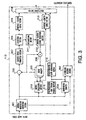
- FIG. 3 is a block diagram showing a configuration of an image coding section 113 of the image transmission apparatus according to the present embodiment.
- the sections having similar functions to those previously described in FIG. 2 are denoted in FIG. 3 by the same reference numbers as those in FIG. 2, and hence detailed description will be eliminated.
- a raster/macroblock converting section 301 outputs the vertical synchronizing timing indicating the head of a picture while changing and outputting an input image signals to a coded macroblocks.
- a significance decision section 302 outputs significance information only when there is a notification from a synchronization-unit division deciding section 215. The significance decision section 302 decides that only a transmission unit at the head of the picture has higher significance, and outputs significance information according to the vertical synchronizing timing received from the raster/macroblock converting section 301.
- the significance of image data in image coding processing may be decided by an extremely simple configuration in a similar manner to that of the image transmission apparatus according to the embodiment 1, as the significance of transmission units is decided based on whether picture header information required for decoding of pictures is included.
- retransmission control may be efficiently performed, and excellent picture quality may be secured even when utilizing transmission paths with easily-caused transmission errors. For instance distribution service of image information (for example, live distribution of video images).
- FIG. 4 is a block diagram showing a configuration of an image transmission apparatus according to the present embodiment.
- the sections having similar functions to those previously described in FIG. 1 are denoted in FIG. 4 by the same reference numbers as those in FIG. 1, and hence detailed description will be eliminated.
- a bit sequence which is called a bitstream comprises a plurality of transmission units is obtained.
- a transmission unit at the head of the picture includes information required to decode the whole picture, and is called a picture header.
- the transmission unit with the picture header is very important. It is possible to decide the significance of the transmission unit with the picture header, using even the bitstream of which coding processing has been already completed.
- FIG. 4 a significance decision section 401 decides the significance from the input bitstream after the completion of image coding.
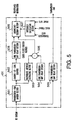
- FIG. 5 is a block diagram showing a detailed configuration of the significance decision section 401.
- the significance decision section 401 comprises a transmission unit partitioning (see 3GPP TS standardization) section 501, an ambunt-of-code counter 502, a macroblock address extracting section 503, one-transmission-unit delay sections 504, 506 and 509, a difference calculator 505, a threshold calculating section 507 and a significance decision section 508 (though it has the same name as that of the significance decision section 401, it forms a part of the section 401).
- the inputted bitstream is assumed to comprise a plurality of transmission units.
- a synchronization word to acquire the head of each transmission unit is inserted in each transmission unit, as shown in FIG. 6.
- the transmission unit partitioning section 501 searches for the synchronization word from the input bitstream, and divides the stream into the image transmission units.
- one transmission unit comprises codes from the current synchronization word to the code just before the next synchronization one.
- the divided transmission units are inputted to both, amount-of-code counter 502 and macroblock address extracting section 503.
- the amount-of-code counter 502 counts the number of bits constituting the input transmission unit and outputs the counted value.
- the macroblock address extracting section 503 reads out macroblock address information of the header information included in the head of the transmission unit and outputs the address information.
- the macro block address information is delayed by one transmission unit in the one-transmission-unit delay section 504 and the difference value is calculated by the difference calculator 505. This means that the difference of the macroblock address between the previous transmission unit and the current transmission one is calculated. Thereby, the number of coded blocks included in the previous transmission unit may be understood.
- the threshold calculating section 507 calculates a threshold using the frame rate the bit rate and the image format information.
- the method for deciding the threshold is the same method as that in the embodiment 1 applied for the image transmission apparatus.
- the method for decidingthe threshold in the present invention is not limited to the above-described one, and it may be easily analogized that the present invention effectively act even with other decision methods.
- the significance decision section 508 calculates the average amount of codes per coded macroblock included in the transmission unit using the number of bits and the number of coded macroblocks in the transmission unit, and then compares the average amount with a threshold calculated in the threshold calculating section 507. When the average amount of codes is larger than the threshold, significance information that has high significance is outputted.
- the significance of image data in image coding processing may be decided by an extremely simple configuration in a similar manner to that of the image transmission apparatus according to the embodiment 1 even for the bitstream of which the coding processing has been already completed , as the number of coded macroblocks included in the transmission unit and the amount of codes per transmission unit are counted.
- retransmission control may be efficiently performed, and excellent picture quality may be secured even when utilizing transmission paths with easily-caused transmission errors. For instance distribution service of accumulated image data (for example, an image data base access).
- the image transmission apparatus has the same configuration as that of embodiment 3 shown in FIG. 4 except the significance decision section.
- the significance decision section of the image transmission apparatus according to the present embodiment will be described, referring to FIG. 7.
- the significance decision section 510 is configured to comprise a transmission unit partitioning section501 and a transmission unit header analyzing section 601.
- the transmission unit header analyzing section 601 analyzes a bit string in the head of transmission units divided in the transmission unit partitioning section 501.
- synchronization words exist in the head of each transmission unit
- a synchronization word indicating the head of the picture uses different synchronization word from other synchronization words. Therefore, it is easily possible to decide by analysis of only the head of each transmission unit whether the synchronous unit is in the head of the picture.
- significance information which has high significance outputted.
- the significance of image data in image coding processing may be decided by an extremely simple configuration in a similar manner to that of the image transmission apparatus according to embodiment 1 even for the bit stream of which the coding processing has been already completed , as the bit string in the head of the transmission unit is analyzed.
- retransmission control may be efficiently performed, and excellent picture quality may be secured even when utilizing transmission paths with easily-caused transmission errors.
- distribution service of accumulated image data for example, an image data base.
- the present invention may be also realized by synthesizing circuits of special functions, or by software incorporated in microcomputers.
- microcomputers When microcomputers are used, it is configured that the present invention is stored as programs in writable recording media such as ROM (Read Only Memory), and the stored programs are processed by the microcomputers.
- writable recording media such as ROM (Read Only Memory)
- ROM Read Only Memory
- magnetic recording media, optical recording media, and magneto-optical media may be listed as the recording media, as well as semiconductor storage elements such as ROM.
- the present invention may be realized as an image coding apparatus by which only the image coding section has been treated as an independent apparatus and additionally, as a server which is provided by image transmission apparatus or image coding apparatus, for distribution of image information (image distribution server), as well as the image transmission apparatus.
- the invention may be applied for a communication terminal such as a base station apparatus and a mobile station apparatus in a digital radio communication system.
- the transmission is performed using given significance information which is decided from data after image coding
- the above-described technologies may use a relay located between a transmission side and a terminal to switch from a transmission unit with no information on the significance to the one with the significance information (protocol conversion).
- retransmission control may be performed, and excellent picture quality may be secured even when utilizing transmission paths with transmission errors.
- image data distribution service for example, live distribution of video images
- significance of image data may be decided in image coding processing with an extremely simple configuration.
- the present invention is preferably used for an image transmission apparatus, more particularly, for an image transmission apparatus to transmit digital moving-picture, signals to a radio communication terminal such as acellular telephone.
Landscapes
- Engineering & Computer Science (AREA)
- Multimedia (AREA)
- Signal Processing (AREA)
- Compression Or Coding Systems Of Tv Signals (AREA)
- Compression, Expansion, Code Conversion, And Decoders (AREA)
- Two-Way Televisions, Distribution Of Moving Picture Or The Like (AREA)
Abstract
Description
It may be considered that the threshold T is an average amount of codes per one coded macroblock.
Claims (22)
- An image coding apparatus comprising:means for performing coding processing of images on a macroblock-by-macroblock basis; andsignificance decision means for detecting an amount of codes included in a plurality of macroblocks whenever said plurality of macroblocks coded in said coding means are generated as one transmission unit, and deciding the significance in image decoding at a transmission end of the transmission unit according to the detected amount of codes.
- An image coding apparatus comprising:coding means for performing coding processing of images on macroblock-by-macroblock basis; andsignificance decision means for counting a number of macroblocks and an amount of codes included in one transmission unit whenever a plurality of macroblocks coded in said coding means are generated as said one transmission unit, obtaining an average amount of codes per macroblock from the counted results, and deciding the significance in image decoding of the transmission unit at a transmission end according to the obtained average amount of codes.
- An image coding apparatus comprising:coding means for dividing a digital image into macroblocks to perform coding processing on a macroblock-by-macroblock basis; andsignificance decision means for deciding the significance in image decoding of a transmission unit at a transmission end according to whether picture header information required for image decoding is included in a plurality of macroblocks whenever said plurality of macroblocks coded in said coding means are generated as one transmission unit.
- An image transmission apparatus comprising:significance decision means for detecting an amount of codes included in a plurality of macroblocks whenever one transmission unit having said plurality of coded macroblocks is input, and deciding the significance in image decoding of the transmission unit at a transmission end according to the detected amount of codes.
- An image transmission apparatus comprising:significance decision means for counting a number of macroblocks and an amount of codes included in one transmission unit whenever said one transmission unit having said plurality of coded macroblocks is input, obtaining an average amount of codes per macroblock from the counted results, and deciding the significance in image decoding of th transmission unit at a transmission end according to the obtained average amount of codes.
- An image transmission apparatus comprising:significance decision means for deciding the significance in image decoding of a transmission unit at a transmission end according to whether picture header information required for image decoding is included in a plurality of macroblocks whenever the transmission unit having said plurality of coded macroblocks is input.
- An image distribution server comprising the image transmission apparatus according to claim 5.
- A base station apparatus comprising the image transmission apparatus according to claim 5.
- An image coding method comprising:dividing a digital image into macroblocks to perform coding processing on a maccroblcok-by-macroblock;adding, whenever one transmission unit is generated from a plurality of coded macroblocks, significance information to the transmission unit; anddeciding the significance according to an amount of codes included in the transmission unit.
- An image coding method comprising:dividing a digital image into macroblocks to perform coding processing on a macroblock-by-macroblock basis;adding, whenever one transmission unit is generated from said plurality of coded macroblocks, significance information to the transmission unit; andobtaining an average amount of codes per macroblock from counted results of the number of macroblocks and an amount of codes included in the transmission unit, and deciding the significance according to the obtained average amount of codes.
- An image coding system, whereindividing a digital image into macroblocks to perform coding processing on a macroblock-by-macroblock basis;adding, whenever said one transmission unit is generated from said plurality of coded macroblocks, significance information to the transmission unit; anddeciding the significance according to whether picture header information required for image decoding is included in the transmission unit.
- A computer-readable recording medium which stores an image coding program comprising:a coding procedure of dividing a digital image into macroblocks to perform coding processing on a macroblock-by-macroblock basis;a transmission-unit generation procedure of generating one transmission unit from a plurality of macroblocks coded in said coding procedure; anda significance-information addition procedure of deciding, whenever the one transmission unit is generated in said transmission-unit generation procedure, the significance according to an amount of codes included in the transmission unit, and adding the decided significance as significance information to the transmission unit.
- A computer-readable recording medium which stores an image coding program comprising:a coding step for dividing a digital image into macroblocks to perform coding processing on a macroblock-by-macroblock basis;a transmission-unit generation procedure of generating one transmission unit from a plurality of macroblocks coded in said coding procedure; anda significance-information addition procedure of obtaining an average amount of codes per macroblock from counted results of the number of macroblocks and an amount of codes included in the transmission unit whenever the one transmission unit is generated in transmission-unit generation step, and adding the decided significance as significance information to the transmission unit.
- A computer-readable recording medium which stores an image coding program comprising:a coding procedure of dividing a digital image into macroblocks to perform coding processing on a macroblock-by-macroblock basis;a transmission-unit generation procedure of generating one transmission unit from a plurality of macroblocks coded in said coding procedure; anda significance-information addition procedure of deciding the significance according to whether picture header information required for image decoding is included in the one transmission unit whenever the one transmission unit is generated in said transmission-unit generation procedure, and adding the decided significance as significance information to the transmission unit.
- An image coding apparatus comprising the recording medium according to claim 12.
- A significance decision method comprising:detecting an amount of codes included in one transmission unit having a plurality of coded macroblocks; anddeciding the significance in image decoding of the transmission unit at a transmission end according to the detected amount of codes.
- A significance decision method comprising:counting the number of macroblocks and an amount of codes included in one transmission unit having a plurality of coded macroblocks;obtaining an average amount of codes per macroblock from the counted result; anddeciding the significance in image decoding of the transmission unit at a transmission end according to the obtained average amount of codes.
- A significance decision method, wherein the significance in image decoding of a transmission unit at a transmission end is decided according to whether picture header information required for image decoding is included in the transmission unit having a plurality of coded macroblocks.
- A computer-readable recording medium which stores a significance decision program comprising:an amount-of-code detection procedure of detecting an amount of codes included in one transmission unit having a plurality of coded macroblocks; anda significance decision procedure of deciding the significance in image decoding of the transmission unit at a transmission end according to' the amount of codes detected in said amount-of-code detection procedure.
- A computer-readable recording medium which stores a significance decision program comprising:a number-of-macroblock/amount-of-code detection procedure of counting the number of macroblocks and an amount of codes included in one transmission unit having a plurality of coded macroblocks; anda significance decision step of obtaining an average amount of codes per macroblock from the counted results in said number-of-macroblock/amount-of-code detection procedure, and deciding the significance in image decoding of the transmission unit at a transmission end according to the obtained average amount of codes.
- A computer-readable recording medium which stores a significance decision program comprising:a significance decision procedure of deciding the significance in image decoding of a transmission unit at a transmission end according to whether picture header information required for image decoding is included in the transmission unit having a plurality of coded macroblocks.
- An image transmission apparatus comprising the recording medium according to claim 19.
Applications Claiming Priority (3)
| Application Number | Priority Date | Filing Date | Title |
|---|---|---|---|
| JP2000207297 | 2000-07-07 | ||
| JP2000207297A JP2002027463A (en) | 2000-07-07 | 2000-07-07 | Image coding apparatus and method |
| PCT/JP2001/005739 WO2002005566A1 (en) | 2000-07-07 | 2001-07-03 | Image coding apparatus and image coding method |
Publications (2)
| Publication Number | Publication Date |
|---|---|
| EP1309201A1 true EP1309201A1 (en) | 2003-05-07 |
| EP1309201A4 EP1309201A4 (en) | 2005-04-20 |
Family
ID=18704075
Family Applications (1)
| Application Number | Title | Priority Date | Filing Date |
|---|---|---|---|
| EP01945779A Withdrawn EP1309201A4 (en) | 2000-07-07 | 2001-07-03 | IMAGE ENCODING APPARATUS AND IMAGE ENCODING METHOD |
Country Status (6)
| Country | Link |
|---|---|
| EP (1) | EP1309201A4 (en) |
| JP (1) | JP2002027463A (en) |
| KR (1) | KR20020064773A (en) |
| CN (2) | CN1181693C (en) |
| AU (1) | AU2001267908A1 (en) |
| WO (1) | WO2002005566A1 (en) |
Cited By (1)
| Publication number | Priority date | Publication date | Assignee | Title |
|---|---|---|---|---|
| CN101426133B (en) * | 2007-10-29 | 2014-04-16 | 佳能株式会社 | Method for transmitting moving image data and communication apparatus |
Families Citing this family (14)
| Publication number | Priority date | Publication date | Assignee | Title |
|---|---|---|---|---|
| US7450646B2 (en) | 2002-06-04 | 2008-11-11 | Panasonic Corporation | Image data transmitting apparatus and method and image data reproducing apparatus and method |
| US8454186B2 (en) | 2010-09-23 | 2013-06-04 | Willis Electric Co., Ltd. | Modular lighted tree with trunk electical connectors |
| US9157587B2 (en) | 2011-11-14 | 2015-10-13 | Willis Electric Co., Ltd. | Conformal power adapter for lighted artificial tree |
| US8569960B2 (en) | 2011-11-14 | 2013-10-29 | Willis Electric Co., Ltd | Conformal power adapter for lighted artificial tree |
| US8876321B2 (en) | 2011-12-09 | 2014-11-04 | Willis Electric Co., Ltd. | Modular lighted artificial tree |
| US9572446B2 (en) | 2012-05-08 | 2017-02-21 | Willis Electric Co., Ltd. | Modular tree with locking trunk and locking electrical connectors |
| US9044056B2 (en) | 2012-05-08 | 2015-06-02 | Willis Electric Co., Ltd. | Modular tree with electrical connector |
| US9179793B2 (en) | 2012-05-08 | 2015-11-10 | Willis Electric Co., Ltd. | Modular tree with rotation-lock electrical connectors |
| US9439528B2 (en) | 2013-03-13 | 2016-09-13 | Willis Electric Co., Ltd. | Modular tree with locking trunk and locking electrical connectors |
| JP5508605B1 (en) * | 2013-03-29 | 2014-06-04 | 楽天株式会社 | COMMUNICATION CONTROL SYSTEM, COMMUNICATION CONTROL METHOD, COMMUNICATION CONTROL PROGRAM, TERMINAL, AND TERMINAL PROGRAM |
| US9140438B2 (en) | 2013-09-13 | 2015-09-22 | Willis Electric Co., Ltd. | Decorative lighting with reinforced wiring |
| US9157588B2 (en) | 2013-09-13 | 2015-10-13 | Willis Electric Co., Ltd | Decorative lighting with reinforced wiring |
| US8870404B1 (en) | 2013-12-03 | 2014-10-28 | Willis Electric Co., Ltd. | Dual-voltage lighted artificial tree |
| CN115866253B (en) * | 2023-02-27 | 2023-06-06 | 鹏城实验室 | Inter-channel conversion method, device, terminal and medium based on self-modulation |
Family Cites Families (10)
| Publication number | Priority date | Publication date | Assignee | Title |
|---|---|---|---|---|
| JPH0622293A (en) * | 1992-05-08 | 1994-01-28 | Mitsubishi Electric Corp | Image coder |
| JPH05316355A (en) * | 1992-05-13 | 1993-11-26 | Matsushita Electric Ind Co Ltd | Picture data coding and decoding device |
| JPH0638050A (en) * | 1992-07-13 | 1994-02-10 | Hitachi Denshi Ltd | Still picture compressing transmitter |
| US5805762A (en) * | 1993-01-13 | 1998-09-08 | Hitachi America, Ltd. | Video recording device compatible transmitter |
| JPH08140049A (en) * | 1994-11-14 | 1996-05-31 | Sharp Corp | Digital magnetic recording / reproducing device |
| JP3351645B2 (en) * | 1995-01-31 | 2002-12-03 | 松下電器産業株式会社 | Video coding method |
| US5768533A (en) * | 1995-09-01 | 1998-06-16 | National Semiconductor Corporation | Video coding using segmented frames and retransmission to overcome channel errors |
| JPH09214721A (en) * | 1996-02-01 | 1997-08-15 | Nippon Telegr & Teleph Corp <Ntt> | Image communication device |
| DE69806624T2 (en) * | 1997-10-16 | 2003-02-20 | Thomson Licensing S.A., Boulogne | METHOD FOR SETTING PRIORITIES FOR DATA IN BIDIRECTIONAL BROADCASTING |
| JPH11331839A (en) * | 1998-05-13 | 1999-11-30 | Matsushita Electric Ind Co Ltd | Apparatus and method for video transmission retransmission |
-
2000
- 2000-07-07 JP JP2000207297A patent/JP2002027463A/en active Pending
-
2001
- 2001-07-03 EP EP01945779A patent/EP1309201A4/en not_active Withdrawn
- 2001-07-03 KR KR1020027002975A patent/KR20020064773A/en not_active Ceased
- 2001-07-03 CN CNB018018912A patent/CN1181693C/en not_active Expired - Fee Related
- 2001-07-03 WO PCT/JP2001/005739 patent/WO2002005566A1/en not_active Ceased
- 2001-07-03 AU AU2001267908A patent/AU2001267908A1/en not_active Abandoned
- 2001-07-03 CN CNB2004100472812A patent/CN1330188C/en not_active Expired - Fee Related
Cited By (1)
| Publication number | Priority date | Publication date | Assignee | Title |
|---|---|---|---|---|
| CN101426133B (en) * | 2007-10-29 | 2014-04-16 | 佳能株式会社 | Method for transmitting moving image data and communication apparatus |
Also Published As
| Publication number | Publication date |
|---|---|
| CN1383686A (en) | 2002-12-04 |
| JP2002027463A (en) | 2002-01-25 |
| KR20020064773A (en) | 2002-08-09 |
| CN1330188C (en) | 2007-08-01 |
| WO2002005566A1 (en) | 2002-01-17 |
| EP1309201A4 (en) | 2005-04-20 |
| AU2001267908A1 (en) | 2002-01-21 |
| CN1181693C (en) | 2004-12-22 |
| CN1571517A (en) | 2005-01-26 |
Similar Documents
| Publication | Publication Date | Title |
|---|---|---|
| US7474699B2 (en) | Moving picture encoding/transmission system, moving picture encoding/transmission method, and encoding apparatus, decoding apparatus, encoding method decoding method and program usable for the same | |
| US10230978B2 (en) | Filtering strength determination method, moving picture coding method and moving picture decoding method | |
| EP2258113B1 (en) | Fast macroblock delta qp decision | |
| US7058127B2 (en) | Method and system for video transcoding | |
| USRE44457E1 (en) | Method and apparatus for adaptive encoding framed data sequences | |
| US20110110423A1 (en) | Picture coding method, picture decoding method, picture coding apparatus, picture decoding apparatus, and program thereof | |
| EP1309201A1 (en) | Image coding apparatus and image coding method | |
| US20070030894A1 (en) | Method, device, and module for improved encoding mode control in video encoding | |
| KR20110045026A (en) | Intelligent Frame Skipping of Video Coding Based on Similarity Metrics in Compressed Domain | |
| US7792374B2 (en) | Image processing apparatus and method with pseudo-coded reference data | |
| JP2005151570A (en) | Indication of valid entry points in the video stream | |
| US20100239001A1 (en) | Video streaming system, transcoding device, and video streaming method | |
| US11323695B2 (en) | Bidirectional intra prediction signaling | |
| FI115946B (en) | Procedure for detecting errors in video information | |
| US7079582B2 (en) | Image coding apparatus and image coding method | |
| US20100329340A1 (en) | Method and apparatus for eliminating encoding delay when a telecine source material is detected | |
| KR20010108077A (en) | Method and device for robust decoding of header information in macroblock-based compressed video data | |
| EP1555788A1 (en) | Method for improving the quality of an encoded video bit stream transmitted over a wireless link, and corresponding receiver | |
| KR100363550B1 (en) | Encoder and decoder in a wireless terminal for retransmitting a moving picture | |
| EP1202579A1 (en) | A method and apparatus for adaptive encoding framed data sequences | |
| EP1204279A2 (en) | A method and apparatus for adaptive encoding framed data sequences | |
| JP2005072995A (en) | Rate converter | |
| JP2001333426A (en) | Video encoded data relay device and relay method | |
| Yang et al. | H. 264/AVC intra-only coding (iAVC) techniques for video over wireless networks | |
| KR20040026365A (en) | Improved method for inserting advertisement image for wire and/or wireless communication and apparatus therefor |
Legal Events
| Date | Code | Title | Description |
|---|---|---|---|
| PUAI | Public reference made under article 153(3) epc to a published international application that has entered the european phase |
Free format text: ORIGINAL CODE: 0009012 |
|
| 17P | Request for examination filed |
Effective date: 20030204 |
|
| AK | Designated contracting states |
Designated state(s): AT BE CH CY DE DK ES FI FR GB GR IE IT LI LU MC NL PT SE TR |
|
| AX | Request for extension of the european patent |
Extension state: AL LT LV MK RO SI |
|
| RBV | Designated contracting states (corrected) |
Designated state(s): DE FI FR GB SE |
|
| RIC1 | Information provided on ipc code assigned before grant |
Ipc: 7H 04N 7/50 B Ipc: 7H 04N 7/64 A |
|
| A4 | Supplementary search report drawn up and despatched |
Effective date: 20050303 |
|
| 17Q | First examination report despatched |
Effective date: 20080310 |
|
| RAP1 | Party data changed (applicant data changed or rights of an application transferred) |
Owner name: PANASONIC CORPORATION |
|
| STAA | Information on the status of an ep patent application or granted ep patent |
Free format text: STATUS: THE APPLICATION IS DEEMED TO BE WITHDRAWN |
|
| 18D | Application deemed to be withdrawn |
Effective date: 20130201 |