EP1308906A2 - System for managing attraction admission - Google Patents
System for managing attraction admission Download PDFInfo
- Publication number
- EP1308906A2 EP1308906A2 EP03002935A EP03002935A EP1308906A2 EP 1308906 A2 EP1308906 A2 EP 1308906A2 EP 03002935 A EP03002935 A EP 03002935A EP 03002935 A EP03002935 A EP 03002935A EP 1308906 A2 EP1308906 A2 EP 1308906A2
- Authority
- EP
- European Patent Office
- Prior art keywords
- attraction
- customer
- time
- queue
- assigned
- Prior art date
- Legal status (The legal status is an assumption and is not a legal conclusion. Google has not performed a legal analysis and makes no representation as to the accuracy of the status listed.)
- Withdrawn
Links
Images





Classifications
-
- G—PHYSICS
- G06—COMPUTING OR CALCULATING; COUNTING
- G06Q—INFORMATION AND COMMUNICATION TECHNOLOGY [ICT] SPECIALLY ADAPTED FOR ADMINISTRATIVE, COMMERCIAL, FINANCIAL, MANAGERIAL OR SUPERVISORY PURPOSES; SYSTEMS OR METHODS SPECIALLY ADAPTED FOR ADMINISTRATIVE, COMMERCIAL, FINANCIAL, MANAGERIAL OR SUPERVISORY PURPOSES, NOT OTHERWISE PROVIDED FOR
- G06Q10/00—Administration; Management
- G06Q10/04—Forecasting or optimisation specially adapted for administrative or management purposes, e.g. linear programming or "cutting stock problem"
-
- G—PHYSICS
- G06—COMPUTING OR CALCULATING; COUNTING
- G06Q—INFORMATION AND COMMUNICATION TECHNOLOGY [ICT] SPECIALLY ADAPTED FOR ADMINISTRATIVE, COMMERCIAL, FINANCIAL, MANAGERIAL OR SUPERVISORY PURPOSES; SYSTEMS OR METHODS SPECIALLY ADAPTED FOR ADMINISTRATIVE, COMMERCIAL, FINANCIAL, MANAGERIAL OR SUPERVISORY PURPOSES, NOT OTHERWISE PROVIDED FOR
- G06Q10/00—Administration; Management
- G06Q10/02—Reservations, e.g. for tickets, services or events
-
- G—PHYSICS
- G06—COMPUTING OR CALCULATING; COUNTING
- G06Q—INFORMATION AND COMMUNICATION TECHNOLOGY [ICT] SPECIALLY ADAPTED FOR ADMINISTRATIVE, COMMERCIAL, FINANCIAL, MANAGERIAL OR SUPERVISORY PURPOSES; SYSTEMS OR METHODS SPECIALLY ADAPTED FOR ADMINISTRATIVE, COMMERCIAL, FINANCIAL, MANAGERIAL OR SUPERVISORY PURPOSES, NOT OTHERWISE PROVIDED FOR
- G06Q10/00—Administration; Management
- G06Q10/02—Reservations, e.g. for tickets, services or events
- G06Q10/025—Coordination of plural reservations, e.g. plural trip segments, transportation combined with accommodation
-
- G—PHYSICS
- G06—COMPUTING OR CALCULATING; COUNTING
- G06Q—INFORMATION AND COMMUNICATION TECHNOLOGY [ICT] SPECIALLY ADAPTED FOR ADMINISTRATIVE, COMMERCIAL, FINANCIAL, MANAGERIAL OR SUPERVISORY PURPOSES; SYSTEMS OR METHODS SPECIALLY ADAPTED FOR ADMINISTRATIVE, COMMERCIAL, FINANCIAL, MANAGERIAL OR SUPERVISORY PURPOSES, NOT OTHERWISE PROVIDED FOR
- G06Q10/00—Administration; Management
- G06Q10/02—Reservations, e.g. for tickets, services or events
- G06Q10/028—Reservations, e.g. for tickets, services or events for seating or spaces in a venue
-
- G—PHYSICS
- G06—COMPUTING OR CALCULATING; COUNTING
- G06Q—INFORMATION AND COMMUNICATION TECHNOLOGY [ICT] SPECIALLY ADAPTED FOR ADMINISTRATIVE, COMMERCIAL, FINANCIAL, MANAGERIAL OR SUPERVISORY PURPOSES; SYSTEMS OR METHODS SPECIALLY ADAPTED FOR ADMINISTRATIVE, COMMERCIAL, FINANCIAL, MANAGERIAL OR SUPERVISORY PURPOSES, NOT OTHERWISE PROVIDED FOR
- G06Q30/00—Commerce
- G06Q30/02—Marketing; Price estimation or determination; Fundraising
-
- G—PHYSICS
- G07—CHECKING-DEVICES
- G07C—TIME OR ATTENDANCE REGISTERS; REGISTERING OR INDICATING THE WORKING OF MACHINES; GENERATING RANDOM NUMBERS; VOTING OR LOTTERY APPARATUS; ARRANGEMENTS, SYSTEMS OR APPARATUS FOR CHECKING NOT PROVIDED FOR ELSEWHERE
- G07C11/00—Arrangements, systems or apparatus for checking, e.g. the occurrence of a condition, not provided for elsewhere
-
- G—PHYSICS
- G07—CHECKING-DEVICES
- G07C—TIME OR ATTENDANCE REGISTERS; REGISTERING OR INDICATING THE WORKING OF MACHINES; GENERATING RANDOM NUMBERS; VOTING OR LOTTERY APPARATUS; ARRANGEMENTS, SYSTEMS OR APPARATUS FOR CHECKING NOT PROVIDED FOR ELSEWHERE
- G07C11/00—Arrangements, systems or apparatus for checking, e.g. the occurrence of a condition, not provided for elsewhere
- G07C2011/02—Arrangements, systems or apparatus for checking, e.g. the occurrence of a condition, not provided for elsewhere related to amusement parks
-
- G—PHYSICS
- G07—CHECKING-DEVICES
- G07C—TIME OR ATTENDANCE REGISTERS; REGISTERING OR INDICATING THE WORKING OF MACHINES; GENERATING RANDOM NUMBERS; VOTING OR LOTTERY APPARATUS; ARRANGEMENTS, SYSTEMS OR APPARATUS FOR CHECKING NOT PROVIDED FOR ELSEWHERE
- G07C11/00—Arrangements, systems or apparatus for checking, e.g. the occurrence of a condition, not provided for elsewhere
- G07C2011/04—Arrangements, systems or apparatus for checking, e.g. the occurrence of a condition, not provided for elsewhere related to queuing systems
Definitions
- the invention relates to a system for managing admission or entry to an attraction, such as a theme-park ride.
- An amusement park may have hundreds of attractions, including rides, shops, shows, stores, games, parades, displays, and food services. If a customer must wait in line for each attraction, the customer may only be able to utilize a small number of attractions in a visit. For particularly popular attractions, the lines can require waiting for a number of hours, so that a customer might only be able to utilize five or six attractions in a ten hour visit.
- This scheme requires a lot of guesswork by the customer, and provides no clear guidance for the customer as to when the customer should return. More often than not, the expected time delay between the current number being serviced and the customer's number is such that the customer feels compelled to wait at the establishment to avoid missing the customer's opportunity to be served. So although a physical line might be avoided in such a scheme, the waiting itself is not really avoided.
- Another problem with this first system or scheme is that a customer can line up for multiple tickets for the same scheduled attraction operation. If the customer keeps the multiple tickets, the attraction does not operate at peak capacity, leading to a situation where the efficiency of the attraction (number of riders per attraction cycle) is lower than if a simple wait in line scheme is used. In addition, the system does not take down time or slow downs into account, so that tickets for later operation are distributed when the attraction may not actually be operating, or when it may be still servicing customers from earlier operation times. This leads to waiting in line or to an inability to use the tickets at all.
- Another problem with the scheme is that it requires all customers to use the system. There is no alternative scheme available that a customer could use in place of the scheme, even when the scheme leads to more delays. If the customer does not obtain a ticket, then the customer is not permitted to access an attraction.
- Mahoney patent describes a waiting line management system where a customer is issued a card or electronic ID device and by which the customer is permitted to use a plurality of computer access terminals.
- the access terminals are located, for example, in an amusement park.
- a customer using the card at the access terminal is advised of time slot windows available for a number of attractions and performances.
- the customer chooses one or more time slots for one or more attractions and thereby is able to pre-schedule the use of attractions.
- Mahoney scheme allows customers to reserve the right to use a number of attractions, potentially preventing others from using the attractions.
- Another problem is that by allowing the customer to select a time slot, the Mahoney system lacks responsiveness to changing ride conditions and performance data.
- the slots themselves are determined by a pre-established allotment.
- Such advance assignment of time slots suffers from the same disadvantages as the above-described first known scheme in that there is no dynamic changing of time slot allocation based on actual attraction conditions. This condition could result in customers being required to stand in line if conditions have slowed down, eliminating the very benefit the system is intended to provide. Mahoney suggests that if such a situation occurs, then customers who do not have passes will be required to wait longer than customers that do have passes.
- time slots may be selected for certain periods of the day, such as 2-5 p.m., while few or none of the slots may be selected for other periods of the day, such as 12-1 p.m.
- the attraction may be underutilized during certain periods of time.
- the Mahoney scheme manages slot times allocation based on a fixed capacity of an individual attraction.
- the capacity of an attraction may not be achievable due to a variety of factors, including number of customers, the demographics of the customers, attraction performance, the number of customer vehicles associated with the ride which are in service over time, the number of staff members available to operate the ride, safety factors, weather, etc.
- the total number of customers in a park who may even desire to access any attraction may be much less at one time of day (such as at opening) than another time of day (such as mid-day).
- the capacity of an attraction may change due to a variety of circumstances.
- a ride may be taken out of service for a period of time or one or more "cars" or associated customer vehicles may be removed from the ride, lessening the capacity.
- the number of staff available to operate the ride may fluctuate during the day. If a fewer number of staff members are available, such as at a shift change, the number of patrons which may be loaded into each customer car or the number of cars which may be loaded may be reduced. When slow downs occur and customers with passes must wait in line, the time slots reserved by those customers for other attractions may expire. This not only frustrates the customers with passes, but leads to potentially empty seats on other attractions.
- Document GB-A-2,307,324 discloses a queue management system comprising a plurality of portable modules, at least one docking station, a queue manager, at least one module detector and a communication means.
- Each portable module includes memory means for containing a unique identification code, indicator means for indicating to the person or group of people carrying the module when it is time to join the or each queue, signal receiver means for receiving signals to cause the indicator means to be operative, transmitter means for transmitting the identification code over a short range, and docking means for downloading the identification code when the portable module is docked for registering the person or group of people in que sequence for a respective queue.
- Document GB-A-2,228,123 discloses a reservation system for an amusement park ride having a number of reservation stations positioned around the amusement park.
- Customers entering the amusement park are provided each with an electronic card, which can be inserted into any of the reservation stations. Then, using a key pad, the customer requests a reservation for a particular ride.
- the reservation system mantains a count of existing reservations, and calculates the expeted time taken for these existing reservations to be taken up. As a result of this calculation, the system offers the customer an earliest reservation time for the ride. The customer may then either accept that time or request a later time.
- the invention is a system for managing admission to an attraction that provides a customer with a choice of standing in line for the attraction or having a spot reserved for admission to the attraction at a later time without standing in line.
- the invention also provides an improved system for managing admission to an attraction that can be constantly adjusted to account for the dynamic real time capacity of the attraction.
- the system provides two access points or queues at an attraction.
- a first queue is a traditional "wait in line” queue where customers line up for the next available chance to use the attraction.
- a second queue provides a customer with access to the attraction which avoids the traditional, first queue.
- the system includes a first validator for validating the right of a customer to receive an assigned future time to access the second queue.
- the system also includes a media distributor for distributing an entitlement in the form of a pass to an entitled customer.
- the pass provides a time or time range assigned by the system during which the entitled customer is entitled to access the attraction in the future via the second queue.
- the system includes a second validator for validating that the customer is entitled to access to the attraction via the second queue at the assigned time.
- the pass issued to the customer establishes the entitlement of the customer to access the attraction via the second queue by the second validator.
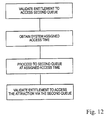
- a customer may access an attraction in a manner which avoids standing in a first waiting line by verifying entitlement to utilize a second queue, being assigned a future time for accessing the attraction via the second queue, returning to the attraction at the future time and validating the entitlement of the customer to gain access at the assigned time.
- a customer is issued a pass entitling the customer to access the attraction at a future time via the second queue and the customer uses the pass to establish entitlement to access the attraction at the future time. In this way, the customer may leave the vicinity of the attraction between when the pass is issued and the future time at which the customer is entitled to access to the attraction.
- system of the invention a variety of factors are utilized to determine the future time assigned to the customer and associated with the pass provided the customer.
- the system is arranged to continuously adjust the number of passes and/or assigned times in order to compensate for changes in ride capacity, demand and other factors in order to maintain the attraction at optimum operating conditions.
- a system is associated with more than one attraction, such as rides in an amusement park.
- the systems are linked in a manner which permits verification that a customer accessing the second queue of one attraction has not already been issued a pass entitling them to access the second queue of another attraction.
- a printed pass is generated that includes the time or the time range during which the patron can access the attraction without having to wait in a first physical line.
- the patron presents the pass at a second queue during the designated time and gains entry.
- the pass can include various features that allow for its authentication and/or validation at the second queue.
- the name of the designated attraction and the time or time range can be printed on the pass for the convenience of the patron.
- targeted advertising can be printed on the pass. This advertising can be varied by the system, and each pass could include its own unique message that is different from any other generated pass.
- Various advantages are realized by allowing targeted advertising to be printed on individual passes as they are generated. For example, special features or events that are occurring during the patrons wait can be identified. Thus, the patron maximizes his or her time while in the park and park management can promote various events and attractions. In addition, restaurants, shops, or other attractions that are within the area of the attraction the patron is waiting for could be identified and promoted through such advertising. Yet another advantage is that park management could utilize such advertising to influence pedestrian traffic patterns. That is, if a particular area is known to be overcrowded at a predetermined time, the generated advertising could promote places or events in a different location, before and during the predetermined time. Since the system is independent and variable, such traffic management could be generated instantaneously, whenever events (planned or unexpected) warrant.
- Yet another advantage of having the system print targeted material on the passes is the ability to send predetermined messages to individual patrons or groups of patrons.
- each patron is given a unique admission media or ticket that allows them to obtain the pass that allows them to avoid waiting in the physical queue.
- the admission media By using the admission media to obtain the pass, the system is then able to recognize and identify each patron.
- messages targeted to that patron can be printed or otherwise included on the pass. For example, "John Doe, please meet your wife at the main gate at 2:00 p.m.” could be printed on his pass by request.
- large groups of people (often younger children) tour such parks together.
- messages could be printed on their passes such as "meet the group at 2:00 p.m.” or “remember, the shuttle departs at 3:00 p.m.”
- predetermined messages, promotional information, or advertising can be customized and directed to specific patrons or groups or patrons.
- One or more embodiments of the invention comprise at least a system for managing admission to an attraction.
- the system is particularly applicable for use in an environment where the number of customers which desire access to an attraction is greater, at one or more times, than the capacity of the attraction.
- a condition may be referred to as a condition of insufficient capacity.
- insufficient capacity it is meant that fewer customers can be accommodated at/by the attraction than wish to be accommodated at a particular time or over a period of time.
- This condition may arise by an imposed limitation, such as where it is desired to limit the number of persons in a particular area at a given time. Such may be for safety or a variety of other purposes.
- This condition may also arise due to physical limitations, such as the number of seats on a particular ride and the cycle time of the ride.
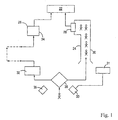
- FIG. 1 is an illustration of one embodiment of the present invention.
- the system is for use in controlling admission or entry to an attraction 22 (note, as used herein, the term “attraction” is meant to comprise any location or presentation to which one or more customers wish to gain access.
- the attraction may comprise a location at which a service is provided, such as a ride, stage or other show, theater, parade, restaurant or other food service, merchandise location, transportation or the like.
- the attraction may also comprise a geographic location, such as a natural wonder, art museum or the like.
- the system has particular applicability to and is described herein for use in controlling access to a ride-type attraction, the system may be used in a wide variety of other environments where it is desired to avoid lines).
- the system includes a first queue 24 by which customers gain access to the attraction 22 by waiting in a line, much as has been done in the prior art.
- the customers in the first queue 24 have an order in line based on a time at which they enter the queue, and are able to utilize the attraction in that order when a space or capability is available.
- the queue 24 includes a turnstile 28 (or similar device for controlling access) positioned at an entrance of the attraction 22.
- the queue 24 may also include ropes, fences 30 or the like for defining a space in which the customers line up.
- the customers in the first queue 24 are permitted to access the attraction when there is an open spot not filled by the customers accessing the attraction via the second queue 26.
- the number of customers which are permitted to access the attraction via the second queue 26 may be adjusted to provide a certain number of open spots for customers in the first queue 24. For example, 80% of the available spots for the attraction may be dedicated to and filled by customers from the second queue 26, while the remaining 20% are filled by customers from the first queue 24.
- one or more of the spots dedicated to the customers of the second queue 26 are not filled, such as if one or more customers who obtain passes for accessing the second queue 26 do not return to access the attraction, then these spots may be filled by customers in the first queue 24. As described in more detail below, this arrangement permits the attraction to operate at all times at optimum capacity.
- the system of the invention also includes a second queue 26 by which customers gain access to the attraction 22 without waiting in a line and thereby avoid the first queue 24.
- the system includes at least one validator for validating the right of a customer to receive an assigned time to access the attraction via the second queue.
- the system includes a first validator 32 validating the right of a customer to receive an assigned future time to utilize the second queue 26, and a second validator 34 for permitting the customer to access the attraction 22 at a future time via the second queue 26. In this manner, the customer can avoid the first queue 24.
- a customer utilizes the first validator 32 to obtain an assigned time in the future for accessing the attraction via the second queue 26.
- an entitled or "validated” customer may be issued a pass which includes a time or time range at which the customer is entitled to return and utilize the attraction.
- the amount of time between the time a pass is issued and the time at which the customer can utilize the attraction depends on a number of factors, including the number of people who have already obtained passes, the capacity of the attraction, the operating speed of the attraction, staffing availability, the capacity of the attraction allocated to the customers accessing it via the second queue, and any delays related to operation of the attraction.
- the customer When the assigned time or time range (such as that indicated on the pass) occurs, the customer is entitled to access the attraction without waiting in line.
- the customer accesses the second queue 26 and establishes entitlement to access the attraction via the second queue 26.
- the customer presents the issued pass at second validator 34 and if the pass is valid (i.e., the time or time range is appropriate, the pass is not counterfeit, etc.) the customer is admitted to the attraction.
- a customer may only use the second queue when the customer has not previously been issued a yet unused or unexpired pass. This scheme is to prevent customers from obtaining multiple passes for a single attraction, preventing others from enjoying it, or to prevent customers from reserving admittance to multiple attractions. A customer may be permitted to obtain multiple passes to one or more attractions, as described in greater detail below.
- a customer is presented with a point of decision 36 where the customer decides whether to access the attraction 22 via the first queue 24 or the second queue 26.
- the customer may decide to forego the second queue and utilize the attraction in a prior art manner. If the line in queue 24 is too long, or if the customer wishes to utilize the system of the invention, the customer chooses the second queue 26.
- the system includes a first queue wait time generator 31 and associated display 33.
- the first queue wait time generator 31 is configured to generate a time regarding the wait associated with accessing the attraction via the first queue 24 by a customer about to enter the first queue 24.
- the wait time may be calculated manually, such as by tracking the wait time of one or more particular customers through the first queue 24 from time of entry until time of attraction access.
- the first queue wait time generator 31 includes sensors which provide data for use by the generator 31 in determining a current length of the wait associated with that line. The sensors may provide information such as the physical length of the line.
- the generator 31 may use this information and information such as the current ride capacity, percentage of capacity allocated to customers accessing via the second queue 26, and other factors for generating an approximate first queue wait time.
- Various data for use by the generator 31 may be input manually as well. For example, a ride operator may visually estimate the physical length of a line and input line length data to the generator 31.
- the first queue wait time display 33 is configured to provide a customer at the point of decision 36 with the first queue wait time information.
- the display 33 may comprise a digital or other display for displaying hours and/or minutes of wait time.
- the system includes a second queue time display 35.
- This display 35 is configured to display the next time which will be assigned to a customer for accessing the attraction through the second queue 26.
- the display 35 may comprise a digital or other display displaying hours and/or minutes of wait time.
- a customer is aided in the process of deciding to access the attraction through the first or second queues 24,26.
- the first validator 32 for verifying entitlement of a customer to an assigned future time may be located remote from the attraction or there may be more than one first validator 32, one located near the attraction and one or more located remote therefrom.
- a first validator 32 may be located near an entrance to a theme park.
- a display 33 for displaying first queue waiting time and a display 35 for displaying the next available time for accessing the attraction via the second queue 26 may be located at the remote first validator 32 as well.
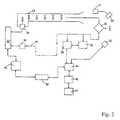
- Figure 2 illustrates one embodiment of a system having a first validator 32, a media distributor 38, and a second queue 26 having an associated second validator 34.
- the first validator 32 is arranged to determine or verify that a customer is entitled to an assigned future time for accessing the attraction via the second queue 26.
- the first validator 32 establishes the right of a customer to a pass having an assigned future time, the pass for use by the customer in gaining access to the attraction 22 via the second queue 26 at the future time.
- the first validator 32 may comprise a card-reader type device which is arranged to read a magnetic stripe on a ticket issued to the customer. In such an arrangement, each customer may be provided with a ticket or similar element which establishes a customer's right to access the attraction 22.
- the ticket which the customer uses for validation may be a ticket which is issued .to the customer by which the customer gains access to the park itself.
- the first validator 32 may be arranged to communicate with a main database containing information regarding the customer(s) (such as by ticket numbers) which are entitled to utilize the second queue 26.
- the first validator 32 may be arranged to read information on a card, to accept issued tokens, identify one or more biometric identifiers of a customer such as a radio-frequency identification (RFID); retina, voice, thermal, finger or hand geometry signature; or a visual identification of the customer or the like.
- RFID radio-frequency identification
- the first validator 32 may be arranged to read information on a card, to accept issued tokens, identify one or more biometric identifiers of a customer such as a radio-frequency identification (RFID); retina, voice, thermal, finger or hand geometry signature; or a visual identification of the customer or the like.
- RFID radio-frequency identification
- the media distributor 38 distributes a pass to a customer which the customer may utilize to access the attraction via the second queue 26.
- the media distributor 38 comprises a printer which prints a paper pass or similar element.
- the media distributor 38 may issue one or more of a wide variety of media as passes, such as magnetic-stripe encoded or "smart" cards, punch-type cards, coded tokens, biometric identifiers such as those set forth above and the like.
- the pass which is distributed to each customer by the media distributor 38 is arranged to permit the customer to gain access to the attraction 22 at a time in the future.
- the particular time as described below, may vary upon a wide variety of circumstances.
- the time comprises an assigned access time or time range which is printed on the pass which is issued to an entitled customer. (In the examples below, the pass is referred to as having a "time" associated with it. It will be understood that this contemplates both a specific time and/or a time range, time period, or time window).
- the first validator 32 and the media distributor 38 may be located adjacent to the attraction and/or remote therefrom. In the event the first validator 32 and media distributor 38 are located near the attraction, after obtaining a pass or the like, the customer may leave the area of the attraction 22 and need not return to the attraction 22 until the time provided on the pass. In the event the customer obtains a pass from a remote media distributor 38, the customer simply continues about their activities until it is necessary to travel to the vicinity of the attraction at the assigned time. As described in more detail below, the right of a customer to obtain passes may be a value added feature for which the customer pays additional monies (such as at the same time as purchasing a main ticket).
- the first validator 32 may be integral with a main ticket issuer/validator and second queue access passes may be issued at the same time or as part of a main ticket.
- a customer entering a theme park may be permitted, at the time they present or purchase their ticket, to obtain one or more passes providing future times assigned by the system. This permits a customer to plan or schedule their day ahead of time.
- the ticket which the customer uses to access the theme park may be encoded and/or printed with access time information for permitting the customer to access one or more attractions at future times, avoiding the need to issue separate passes.
- the system for permitting access to the attraction 22 includes a second validator 42 for establishing the right of a customer to access the attraction via the second queue 26 at assigned time.
- the second validator 42 validates the media or pass issued by the media distributor 38 and held by a customer.
- the second validator 42 comprises a human attendant which reads information printed on the pass and verifies the information. The attendant may verify the printed assigned time or time range against the current time, a date of the pass against a current date, and the attraction for which the pass is issued.
- the second validator 42 may comprise a card reader or other device for confirming the entitlement of a customer to access the attraction 22 via the second queue 26.
- the second validator 42 may be arranged to verify data associated with the element issued by the media distributor 38, such as a bar code.
- the pass issued to a customer may be issued only for reference by the customer for knowing and remembering the assigned time or range of time, and the second validator 34 may be configured to verify entitlement of the customer in a manner independent of the pass. For example, a customer may establish entitlement to a pass with a finger print at the first validator 32. The pass provides written indication of the assigned time to the customer. When the customer accesses the second queue 26, the customer may be required to establish validation at the second validator 34 with a fingerprint again.
- the second validator 34 determines that the customer is entitled to access the attraction by establishing that the identify of the customer with the fingerprint and determining if the time the customer is accessing the second queue 26 is at the time/in the range of time which was assigned to the customer. It may be appreciated that the second validator 34 may be configured to establish validation in one or more of the variety of manners described above with respect to the first validator 32. It should be appreciated that customers may not be issued passes at all.
- one or more schemes are provided for determining the access time which is associated with each media which is issued by the media distributor 38.
- a time at which a customer is permitted to gain access to the attraction 22 via the second queue 26 is dependent upon one or more of a variety of factors, including, but not limited to, the following: the capacity of the attraction, the capacity of the attraction which is allocated to customers accessing through the second queue 26, the total number of customers who may wish to access the attraction 22, the current and future staffing of the attraction, the demographics of the customers, the time of day and the day of the week.
- the system includes a controller 44. As illustrated, the controller 44 is arranged to control the media distributor 38. The controller 44 may also be arranged to control other aspects of the system, such as the first validator 40. In one or more embodiments, the controller 44 receives attraction capacity and/or time information and instructs the media distributor 38 what time to issue in association with each pass. The controller 44 may send a signal to the second queue time display 35 for displaying the next time to be assigned.
- a keypad 46 or other data entry/control device may be provided for manually entering data and controlling the controller 44.
- the keypad 46 may be used to enter specific time information, reset the controller and the like.
- a display screen 47 such as a CRT may be associated with the controller 44 and keypad 46 for permitting a user to view information regarding the system.
- a local server 48 is arranged to send and receive data.
- the local server 48 is arranged to receive data about the capacity and other characteristics of the attraction 22.
- various sensors may be associated with the attraction 22 for providing data.
- the sensors (not shown) may monitor ride speed, the number of customers passing through or standing in the first queue 24, the capacity of the ride, etc.
- the local server 48 may receive data from these sensors at various times or continuously, or may transmit specific requests for data. (In other embodiments, the local server 48 may be a remote server in communication with the attraction and sensors).
- Information may be inputted manually or automatically. For example, each staff member which is currently available to operate a ride may manually enter their employee code to indicate to the system that they are available to operate the system. Based on the number of employees which are indicated as available, adjustments may be made to the number of customers which are likely to be serviced during a period of time.
- the local server 48 may simply comprise an interface with the individual ride control systems for receiving information therefrom.
- the information which is provided to the server 48 is transmitted to an algorithm processor 50.
- the algorithm processor 50 utilizes the data to determine times for issuance by the media distributor 38. In general, it is desired that the algorithm processor 50 issue a time associated with each media which permits the customer to return to the attraction 22 at the predetermined time at the second media validator 42 and access the attraction 22 (such as via second validator 42) without standing in a line. In order to accurately balance demand and capacity, the algorithm processor 50 obtains information regarding a variety of factors which affect demand and capacity. (Although shown as separate entities in Figure 2, the controller 44 and algorithm processor 50 may be implemented as a single device or process).
- the algorithm processor 50 may be arranged to issue fewer numbers of access times or access times which are later in time so as to permit a greater number of customers from the first queue 24 to access the attraction 22 for a period of time. In the event the capacity of the attraction 22 suddenly decreases, the algorithm processor 50 may be arranged to respond in a similar fashion. In the event the capacity of the attraction 22 increases, then the algorithm processor 50 may be arranged to issue a greater number of access times.
- the algorithm processor 50 utilizes one or more algorithms to produce access time data.
- Set forth in Figure 4 is a flow diagram illustrating a configuration of a method by which the assigned or "wait" times are calculated (as used in Figure 4, "GC” represents the guest count).
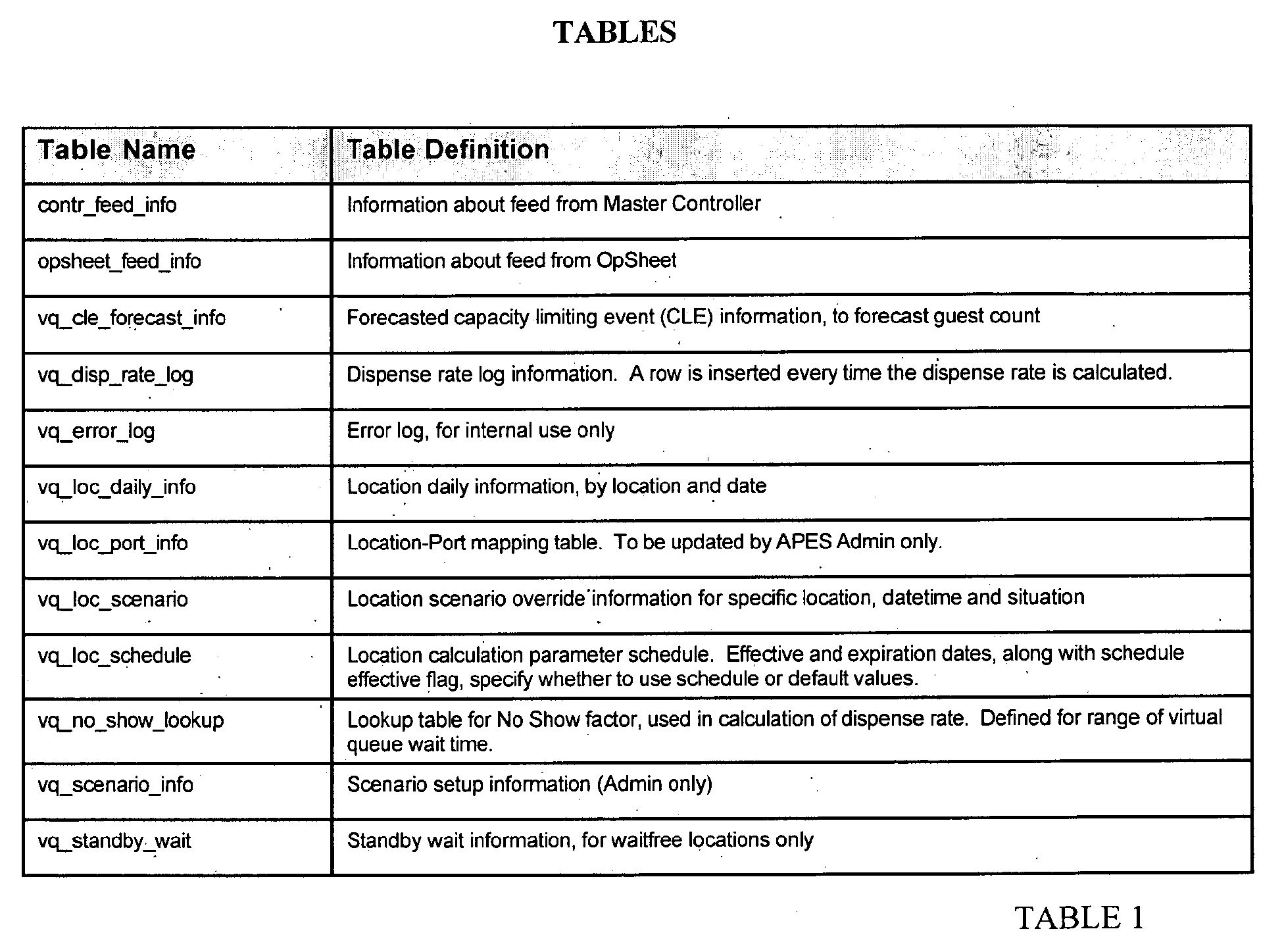
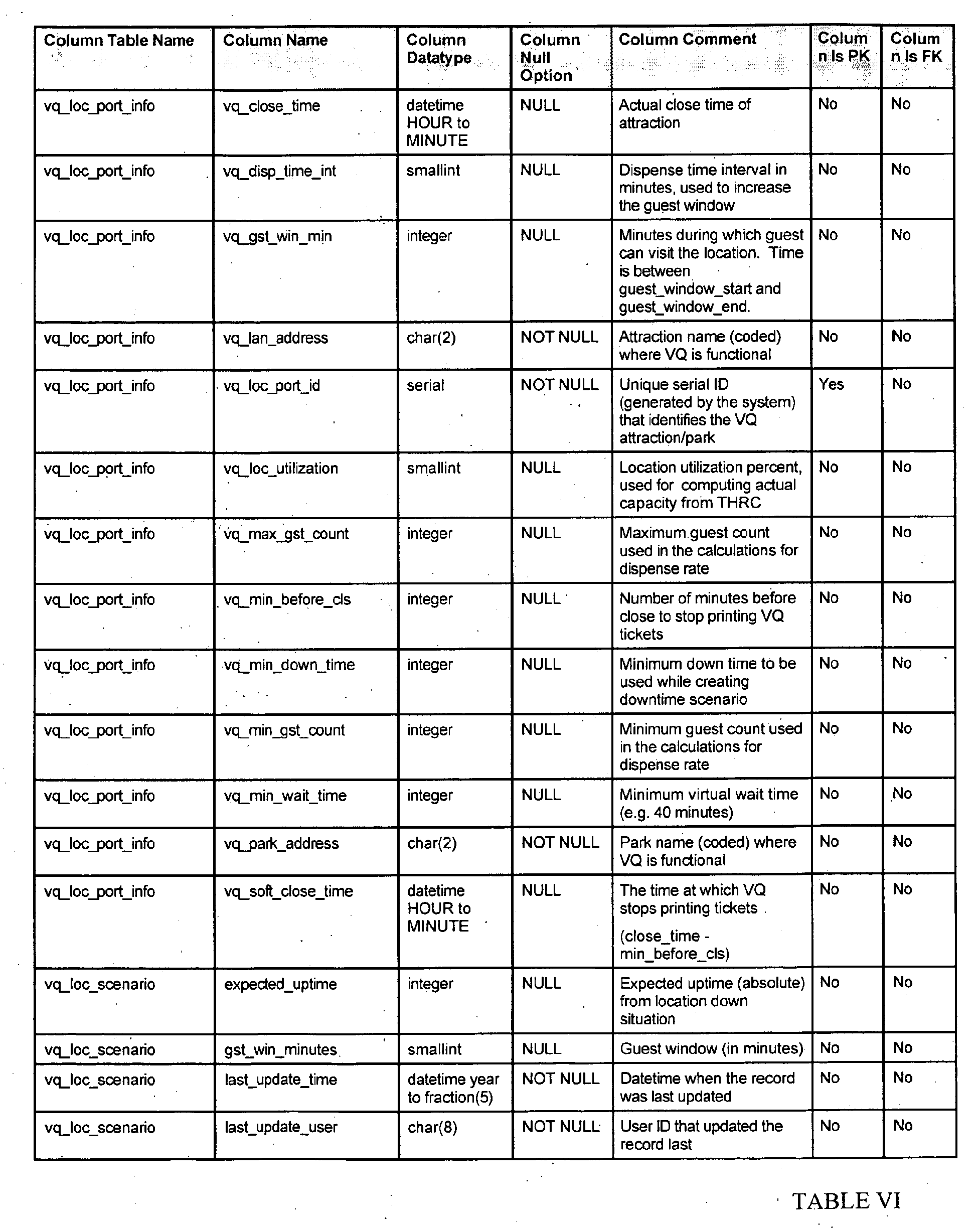
- Figures 5A-5H illustrate tables and a data dictionary for data element which may be used in the illustrated wait time calculation.
- the system may be arranged to employ a number of procedures at different times. For example, every 5 minutes, the system is arranged so that data associated with the controller 44 is uploaded to a master server (as described below in conjunction with Figure 3). The system may be arranged so that all data regarding customers which have been issued entitlements is cleared from the system at 3 a.m. each day.
- the system has following processes:
- a main systems process on a Bridge server will get the Master Controller data (as used herein and in the Figures, "master controller” includes controller 44 as described above and a master controller 244 as described below), call the stored procedure "put_me_data" on the Park server (the Park server may comprise a server such as server 104 described below with reference to Figure 3), and pass a series of values to the stored procedure.
- the stored procedure will insert these values into the synonymed "vq_contr_feed_info” table, which points back up to an attraction data server (such as the master server 102 as illustrated in Figure 4 and referred to in Tables I to IX as "OPSheet" or local server 48), and update the local Park server table "vq_last_feed_info".
- a row will be inserted into the vq_opsheet_feed table location on the attraction data server. This insert will trigger a stored procedure, which will activate a C routine.
- the C routine will build two files. The first file will contain the attraction identifier; the second file will contain k-shell script commands. The C routine will execute the k-shell file, and the k-shell file will ftp the first file to the Bridge server location.
- the main systems process will read the file to get the attraction ID. Using this attraction ID, the main systems process will call the stored procedure "get_me_data", located on the attraction data server. This stored procedure will return the values from the "vq_opsheet_feed_info” table for the attraction in question, and then indicate that this data has been processed.
- a main systems process When a card is read through the magnetic reader, a main systems process will trap the information, attach the attraction, and call a stored procedure called "abuse_check", which is located on the Park server. This stored procedure will determine whether or not a duplicate ticket exists for abuse purposes. It will also determine whether or not the close time has been reached. Based on several checks, either a 0 (successful), I (abuse), or 2 (past the close time) will be returned by the stored procedure to the main systems process. The main systems process will then determine how to proceed with printing a reservation ticket.
- a trigger mechanism Each time an attraction is created, updated, or deleted in the attraction data server, a trigger mechanism will be activated.
- the trigger mechanism will take the changes on the attraction data server and pass them to the correct Park server attraction table. This will be done via a stored procedure called "synclocs". This stored procedure will determine which park needs to be updated and, via a synonym, perform the updates.
- This process will be comprised of a C routine residing on the attraction data server.
- This C routine will be activated every minute, and will build a connection against the attraction data server database and each of the active Park server databases. It will also attempt ping against each of the active Bridge servers. If any component fails, a page will be sent to the development team.
- a Visual Basic process will run on a dedicated Windows NT server to keep the data flowing into the attraction data server.
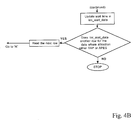
- the Down Time Process is used when a location must be closed to guests for a certain amount of time.
- a user at the location initiates this process through the attraction data server's line management module, which displays on the location's PC.
- the user selects the appropriate park and location.
- the process checks to see if the selected location is in Override mode.
- the process obtains the expected up time from the user and the current time. from the UNIX server.
- the process obtains the down time minutes by subtracting the current time from the expected up time.
- the process obtains the guest window start and end time from either the controller feed table or the attraction data server feed table. (Obtaining the most up-to-date time is critical. If the guest window start value in the OPSheet feed table is greater than the guest window start value in the controller feed table, the values from the attraction data server feed table are used. Otherwise, the values from the controller feed table are used.)
- the process checks to see if the location has previously been in down time mode. If the location has previously been in down time mode, the process does one of the following:
- the process obtains the location scenario id number to insert into the attraction data server feed table.
- the process checks to see if the location is in schedule mode. If the location is in schedule mode, the schedule's performance values are assigned to the appropriate tables via the location port ID.
- the process uses the values in the location's bc_port_info_data table.
- the process runs a stored procedure that calculates the new dispense rate using values obtained from the location port id.
- the algorithm processor 50 and controller 44 work with one another to control the issuance of passes by the media distributor 38.
- the access times that are provided by the algorithm processor 50 are forwarded to the controller 44.
- the access times are then provided sequentially to the media distributor 38 for printing on each successive pass.
- the controller 44 may instruct the media distributor 38 and/or first validator 40 to print or display a message that no more customers are being provided access to the attraction 22 via the second queue 26.
- the algorithm processor 50 may be arranged to provide for multiples of the same access time. For example, if the capacity of the attraction 22 permits, two or more passes may be issued with the same access time. On the other hand, if the capacity of the attraction 22 is limited, the access times may be spaced apart in time.
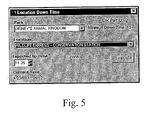
- FIG. 47 illustrates an information screen illustrating the current "downtime" of an attraction.
- a user of the system may input estimated downtime information to the system using the keypad 46. This information may be used by the algorithm processor 50 to adjust the times which are being calculated for assignment to customers by the input time.
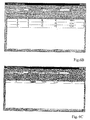
- Figures 6A-6C illustrate screens which permit a user to view current system settings and adjust those settings. For example, a user of the system may determine from such a screen that the current pass dispense rates for the second queue 26 are higher than desired, and input a lower percentage allocation value to the system for reducing the number of passes/entitlement issued to customers. The user may also set an expected level of "no shows" or the percentage of customers who obtain passes for accessing the second queue but do not use them.
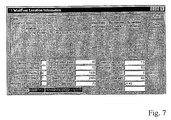
- Figure 7 illustrates a screen which enables a user to establish a variety of settings for a specific attraction. For example, using this displayed information a user can determine whether or not the system is configured to permit a customer to obtain multiple passes. If not (i.e. "abuse check" is "on"), the user may utilize the keypad 44 to change this setting, if desired. The user may also be permitted to view and adjust a wide variety of other information such as the time at which the ride will shut down and thus the last possible assigned time.
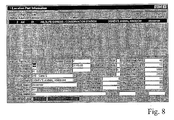
- Figure 8 illustrates a screen displaying information associated with the master server 102.
- a user may obtain information regarding any one or more attractions associated with the system.
- the user may be permitted to obtain and revise information with any particular attraction. This arrangement allows a user to avoid the need to travel to each attraction to view information, but instead obtain and edit information from a central location.
- the personnel which are permitted to access the system may be limited.
- a card-reader or similar device may be associated with the keypad 46 for reading an employee I.D. card and verifying that the employee is permitted to access the system.
- controller 44 keypad 46 and display 47 may comprise components of a general purpose computer.
- the algorithm processor 50 may comprise hardware, or may comprise software executed in a processing environment, such as a computer.
- a first system which is associated with a first attraction 22 is linked to a second system associated with second attraction and/or additional attractions.
- Figure 3 illustrates in greater detail such a master system 100 in accordance with one embodiment of the invention.
- the master system 100 includes a master server 102 which is linked to a local server 48 of a local system associated with a particular attraction.
- a main server 104 is linked to each local server 48.
- Figure 3 illustrates only one such local system in detail, and illustrates only the local servers of three additional local systems.
- the master server 102 serves the function of the algorithm processor 50 of the system described above.
- the algorithm processor 50 associated with each system is omitted and the master server 102 serves the functions of each individual algorithm processor.
- the master server 102 sends calculated access time information for each attraction 22 to its respective local server 48, which then provides the data to the media distributor 38.
- the main server 104 is arranged to permit communication to and between each of the local servers 48.
- the local server 48 associated with that attraction sends a request to the main server 104 to determine if the customer has already obtained an admission pass for another attraction. If so, the local server 48 can instruct the controller 44 (and first validator 40) to prevent the media distributor 38 from issuing an admission pass.
- the local server 48 may be arranged to send data to the main server 104 regarding the customer, the issued time and attraction so that the customer can be prevented from accessing another attraction at the same time or before the currently issued pass has been used or expired.
- the main server 104 stores or is linked to a database having information regarding customers entitled to access the second queue 26 of each local system to access an attraction.
- the main server 104 may store ticket codes of those tickets issued to customers each day at an amusement park.
- the first validator 40 when a customer wishes to access an attraction through the second queue and uses the first validator 40, the first validator 40 sends a request through the local server 48 to the main server 104 requesting verification that the customer is entitled to access the system. If the customer is verified, then such a response is transmitted to the first validator 40. If not, then such a response is transmitted to the first validator 40.
- the first validator 40 may be arranged to display an appropriate message to the customer, such as "invalid entitlement.”
- first queue there may be more than one "first queue” or other line in which customers wait. Further, in one or more embodiments, there may be no first queue. In such an arrangement, each customer who wishes to access the attraction is given an admission media (if so entitled) and permitted to access the attraction at the assigned time only.
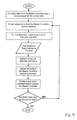
- FIG 9 is a flow diagram illustrating a protocol by which the master server 102 (referred to in the figure as the "Master Server Feed") communicates with the controller 44 of the system associated with each attraction in one implementation of an embodiment of the invention (this implementation is associated with the information provided in Figures 4 and Tables I to IX and described further above).
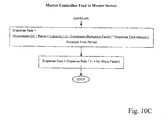
- Figures 10A - 10C show a flow diagram illustrating a protocol by which the controller 44 communicates with the master server 102.
- more than one media distributor 38 and first validator 40 may be provided at each attraction 22. More than one second media validator may be provided for permitting access to the attraction 22.
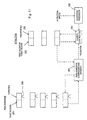
- FIG 11 schematically illustrates a system in accordance with an embodiment of the invention in which validation of park entry tickets and establishment of the entitlement of a customer to access the second queue 26 is centralized.
- a customer obtains a ticket, whether prepurchased or purchased at the gate.
- a central park admission controller and database 200 stores information regarding valid tickets.
- a customer is permitted to enter the park via a turnstile 202 or other monitored entry when the customer's ticket is validated.
- the customer's ticket may be read by a ticket reader 204 and the data thereon verified by the park admission controller 200 against the stored ticket information.
- the customer When a customer wishes to obtain an assigned time to access a second queue of an attraction, the customer establishes an entitlement via a first validator 232.
- the first validator 232 communicates with the central park admission controller 200 via a master controller 244. This arrangement permits a determination that the customer's ticket is valid for a specific day, has not be revoked or the like. If the ticket is validated, then the customer may be provided a pass, such as described above, by a media distributor 238.
- the master controller 244 is also arranged to send data to the central park admission controller 200 that a pass has been issued to the customer for that attraction. Then, if the customer attempts to gain a pass for that or another attraction while the first pass is outstanding, the database associated with the park admission controller 200 has a record of the outstanding pass and the customer will be denied the additional pass.
- an algorithm processor 250 is arranged to communicate with the master controller 244 to provide times to be assigned and printed by the media distributor 238.
- the system may be arranged so that not all customers are entitled to access the attraction 22 via the second queue.
- one or more customers may be permitted to access certain attractions via the second queue and other attractions only via the first queue.
- only customers which pay a premium amount or obtain some special entitlement are permitted to access one or more attractions via the second queue.
- a customer receives a ticket or other entitlement. For example, at an amusement park, a customer pays for a ticket to gain entry to the park. With respect to the embodiment of the invention illustrated in Figure 3, the main server 104 stores information regarding the customer's ticket.
- a customer may wish to access a particular attraction 22.
- the customer may access the attraction through the traditional first queue 24.
- the customer may access the attraction 22 via the second queue.
- the customer if the customer wishes to access the attraction 22 via the second queue 26, the customer first validates entitlement to receive an assigned time to access the second queue 26.
- the customer slides a portion of his ticket through a card reader portion of the first validator 40.
- validation may be performed by scanning a fingerprint or the like as described above.
- the first validator 40 then sends a confirmation request through the local server 48 to the main server 104.
- the main server 104 verifies that the ticket is on the list of valid tickets. If the ticket is not verified, then the main server 104 sends this data back to the first validator 40 which may illuminate or print out an indication of such to the customer.
- the first validator 40 is configured to verify that the customer has no other outstanding entitlements/passes.
- the first validator 40 sends a signal of such to the media distributor 38.
- the media distributor 38 then issues a pass to the customer.
- the pass includes an assigned access time at which the customer is entitled to return to the attraction 22 in the future and access the attraction 22 through the second queue 26.
- the customer may then leave the area of the attraction 22. During this time, the customer may shop, eat or engage in a wide variety of other activities.
- the customer returns to the attraction 22 and seeks access to the attraction via the second queue 26.
- the customer establishes entitlement to access the attraction via the second validator 42.
- the customer presents the issued pass to a person who verifies the current time and the time printed on the pass, the date of the pass and the attraction for which the pass provides access. If validated, then the customer is permitted to access the attraction 22.
- the customer may establish entitlement to access the attraction in accordance with other methods, such as by scanning a fingerprint again.
- the customers gaining access to the attraction through the first and second queues may be separated.
- the first two cars may be filled with customers from the first queue 24 and the second two cars filled with customers from the second queue 26.
- the customers gaining access to the attraction 22 are integrated in accordance with the allocated capacity to the first and second queue customers.
- one or more customers may be permitted to access an attraction via the second queue 26 apart from the standard method of establishing entitlement at the first validator 40 and then returning to the second queue 26 of the attraction at the assigned time.
- one or more passes may be issued to a number of customers which include pre-assigned times.
- One or more customers might, for example, be issued passes on the same day or days or weeks before the assigned date of access.
- a customer arranging a trip to a theme park may be permitted to purchase passes.
- these assigned "spots" are accounted for by the system when determining other passes to issue to those accessing the attraction with the first validator.
- one or more customers may be permitted to access an attraction via the second queue 26 or even a third queue without a pass.
- special VIP, disabled or other customers may be permitted to access the attraction via the second queue 26 or a third queue which permits the customer to access the attraction at any time.
- a customer is prevented from obtaining more than one entitlement or pass for accessing an attraction at a single time.
- some customers may be permitted to obtain multiple passes.
- the system may be arranged to permit customers to obtain multiple passes at some times and not at others. For example, if the wait time for accessing one or two attractions is particularly long (whether by the first or second queue 24,26) the system may be arranged to permit customers to obtain passes for different attractions so that the customer avoids the need to access one attraction before obtaining a pass for accessing another attraction.
- the system of the present invention permits one or more customers to gain access to an attraction without having to wait in a standard line to access the attraction. This permits the customer to engage in other activities instead of waiting in line. Such activities may comprise shopping or eating.
- the system advantageously permits "real-time" adjustment of the flow of customers to the attraction 22 via the first and second queues. This is advantageous since it permits optimization of the capacity of the attraction with the demand of customers.
- the system can provide for an adjustment in the number of customers permitted to access the attraction 22 via the second queue 26 and thus reduce the wait time associated with the first queue.
- the system can provide for an adjustment in the number of customers and/or access times via the second queue 26 to prevent a build up of customers accessing the attraction 22 via the first and/or second queues.
- the system can provide for an additional number of customers to access the attraction 22 via the second queue 26 and/or adjust the access times to permit more customers to access the attraction.
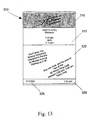
- Pass 300 contains various sections of text that can be varied from pass to pass and is selected by the system or system operator.
- An attraction identification 310 is provided to identify the particular ride or attraction that the patron has access too.
- a time section 320 identifies the particular time or time range that the patron can access the attraction without having to wait in the physical line or queue. As previously explained, the actual time or time range assigned to a given patron will be generated by the system based on various conditions.
- a promotional or advertising section 320 is provided and can include various messages that are generated by the system.
- the date 325 pass 300 was issued, along with the time 330 it was issued can also be printed. The arrangement, sizing, and presentation of the textual material can all be varied as desired. Though not separately shown, various elements can be provided on pass 300 to allow for authentication and validation.
- the textual material included in advertising section 320 can either be static or dynamically generated. That is, the particular message(s) chosen to be printed could be the same on each pass printed. This would simply serve as advertising or promotional material for certain preselected beneficiaries.
- targeted promotional material can by dynamically generated and printed on one or more passes. That is, each pass 300 or a grouping of such passes (i.e., those having the same times for entry) could have different material printed within advertising section 320.
- the ability to print targeted material on various printed passes 300 allows for a number of advantages. By offering patrons certain incentives to perform certain activities, pedestrian traffic patterns can be influenced and to some extent controlled. Thus, pedestrian traffic can be directed away from certain areas during times when crowding is severe. For example, if a major tour or attraction ends at 3:00 p.m. and introduces a large number of people into a particular location, the system will want to cause others to avoid that area around that time. Thus, the printed passes 300 for various relevant attractions could advertise an enjoyable event or offer a reduced price meal or other premium for the patron at a location remote from the congestion. Likewise, pedestrian traffic can be directed towards predetermined areas featuring certain events, attractions, or establishments. Thus, the system allows for the self promotion of areas deemed desirable for various reasons by the park management.
- park efficiency is increased. Patrons can be encouraged to follow predetermined paths that allow for a more even distribution of pedestrian traffic among the various shops, restaurants and attractions of the park. Thus, the park benefits through increased efficiency and the patrons benefit by being less affected by crowding.
- the material printed and the effects desired to be achieved can either be selected by the system or entered by park officials at any time. Thus, cyclic and predictable events can be accounted for automatically. Certain events that may occur more infrequently could still be accounted for by the automated system. For example, if a major attraction goes off line, this information can automatically be gathered and passed along to the various controllers operating within the system. Thus, the targeted advertising could be used to simply inform patrons of the attraction closure or to guide them to other areas of the park. Finally, information could be manually entered to cause specific material to be printed on certain passes 300.
- the material printed within advertising section 320 can vary depending upon the desired result. Coupons, discounts, and other promotions can be given for any number of patron activities. Specific events, attractions, restaurants, stores, or merchandise can be promoted. This can be done to alert patrons to new attractions or events that they may not have heard about. Alternatively, this could be used to promote events that have received less participation than expected. Finally, events which are known to be popular but often overlooked by busy patrons can be advertised simply as a helpful reminder to the patron. For example, parade times and locations can vary. Thus, a generated pass 300 might remind that patron of a parade occurring soon in a nearby location.
- the textual messaging printed or otherwise provided within section 320 is not limited to advertising or promotional material. Ultimately, any information may be provided for any number of purposes on single or multiple passes 300. For example, park management could print messages about a lost child, other welfare concerns, or items of general interest.
- the patron is provided with an item that uniquely identifies that patron to the system. For example, upon admission to the park the patron may be granted an admission ticket having a magnetic strip coded with identifying information. At various points throughout their visit, that admission ticket may be utilized for certain functions and at the same time, alert the particular system of the park to the identity of the patron.
- a message could be generated for a patron indicating that his wallet had been found and is now located at a particular security station.
- targeted messages could be directed to the members for various groups visiting the park together. As one example, members of a high school class could be spending the day in such an amusement park. When a member of that class requests pass 300, relevant messages could be printed such as where or when to meet the group. Of course, knowing who the patron is and if they belong to .a specific group may also allow for customized advertising to be generated.
- patron (or group) specific messages can be printed on pass 300. All that is required is providing a way of identifying the patron to the system as pass 300 is requested. There are many way of accomplishing this within the scope of the present invention. As discussed, admission media could be provided when entering the park. Any number of other identifying products could be provided throughout the park. In addition, a patron can be asked to manually enter or otherwise provide identification information at the point pass 300 is obtained.
- Pass 300 can be printed with any number of and types of messages. Advertising, promotional, patron or group specific messages can be generated in various combinations. Of course, any material may be printed, whether categorized or not. Thus, "informational material”; as used herein is meant to include any material that may be printed or otherwise added to pass 300, whether for purposes of advertising, promotion, communication, traffic management, information dissemination, or otherwise.
Landscapes
- Business, Economics & Management (AREA)
- Engineering & Computer Science (AREA)
- Strategic Management (AREA)
- Tourism & Hospitality (AREA)
- Development Economics (AREA)
- Economics (AREA)
- General Physics & Mathematics (AREA)
- Physics & Mathematics (AREA)
- Entrepreneurship & Innovation (AREA)
- Marketing (AREA)
- General Business, Economics & Management (AREA)
- Human Resources & Organizations (AREA)
- Theoretical Computer Science (AREA)
- Quality & Reliability (AREA)
- Operations Research (AREA)
- Accounting & Taxation (AREA)
- Finance (AREA)
- Game Theory and Decision Science (AREA)
- Management, Administration, Business Operations System, And Electronic Commerce (AREA)
- Devices For Checking Fares Or Tickets At Control Points (AREA)
- Two-Way Televisions, Distribution Of Moving Picture Or The Like (AREA)
- Selective Calling Equipment (AREA)
Abstract
Description
((2000 * .8)1 60 * 5 = 133.33
Rounded down to 133.
- If the location is in Override mode, the process prevents the user from continuing. (A down time cannot be assigned to a location in Overridemode.)
- If the location is not in Override mode, a location port ID is retrieved. This location port ID is used throughout the process to assign values to tables pertaining to the location's down time status. After the park and location are selected, the process provides a suggested "expected up time." The suggested expected up time is the current time + the default minimum down time. (Each location has a default minimum down time.) The user can modify the expected up time so it is greater than the suggested expected up time, but cannot modify it to be less than the suggested time.
- If the current time is less than the location scenario table's expected up time (that is, the user is modifying an existing expected up time), the process updates the location scenario table.
- If the current time is greater than the location scenario table's expected up time (that is, the user is entering a new expected up time), the process inserts a row into the location scenario table and updates the table.
to the customer. In an embodiment where the customer is not entitled to more than one pass or entitlement to a second queue at a time, the




Claims (23)
- A system for the real time adjustment of the flow of customers to one or more particular attractions (22), thereby permitting optimization of the capacity of the attraction with the demand of customers comprising:a first queue (24) by which said customer may access said particular attraction by waiting in line;a second queue (26) by which said customer may access said particular attraction (22) in a manner which avoids the first queue (24);a first validator (32) for validating an entitlement of said customer to access the second queue (26); CHARACTERIZED BYa controller (44) for unilaterally determining, generating and issuing an assigned range of time at which said customer may access said particular attraction (22) via the second queue (26), wherein said controller (44) comprises a processor for determining at one or more times, a real time operating capacity of said attraction, said processor providing data about said real time operating capacity to said system for generating said assigned range of time,a data storage device for storing data regarding times previously assigned to customers and wherein said system is arranged to permit or deny validation of said customer to entitlement to an assigned time based on said stored data; anda second validator (34, 42) for permitting the entitled customer access to assigned attraction (22) at the assigned range of time.
- A system according to claim 1 wherein said system is arranged to deny validation of said customer to entitlement to an assigned time if said customer has an outstanding unused assigned time associated with said at least one storage device.
- A system according to claim 1 wherein said system is arranged to permit validation of said customer to entitlement to multiple assigned times.
- A system according to claim 3 wherein said multiple assigned times are for the same attraction.
- A system according to claim 3 wherein said multiple assigned times are each for different attractions.
- A system according to claim 3 wherein said system permits validation to multiple assigned times at some times and not at others.
- A system according to any one of the preceding claims, wherein said assigned range of time comprises a next available range of time as determined by an algorithm performed by said system.
- A system according to anyone of the preceding claims, wherein only a single time range is generated and assigned to any one customer at any one time.
- A system according to anyone of the preceding claims, wherein said first validator (32) and/or said second validator (34, 42) is arranged to validate at least one type of identifying information from the group consisting of: magnetic strip, bar code, radio-frequency, iris, fingerprint, retina, voice, thermal, finger or hand geometry, and visual identification.
- A system according to anyone of the preceding claims including a media distributor (38) for distributing an admission media to each customer entitled to access the attraction, said admission media including said assigned time.
- The system in accordance with Claim 10 wherein said media is a printed pass.
- A system according to anyone of the preceding claims wherein said first validator (32) is a card reader for reading a ticket belonging to a customer.
- A system according to anyone of the preceding claims including a display (35) for displaying a time which is next to be assigned.
- A system according to anyone of the preceding claims including a media distributor (38) for distributing an admission media to each customer entitled to access the attraction, said admission media including informational material printed thereon.
- A system according to claim 14 wherein said informational material is correlated to the location of the media distributor and the time assigned.
- A system according to claim 14 or 15 wherein the informational material is generated specifically for the customer based upon an identification of that customer.
- A system according to anyone of claims 14 to 16 wherein the informational material is generated to influence pedestrian traffic patterns.
- A system according to anyone of the preceding claims including sensors associated with said attraction providing data regarding a capacity of said attraction to said controller for generating an assigned time.
- A system according to anyone of the preceding claims including a display (33) for displaying a wait time associated with said first queue.
- A system according to anyone of the preceding claims wherein the controller (44) generates said assigned range of time in the future based on at least one factor associated with said attraction selected from the group consisting of: capacity of said attraction (22), capacity of said attraction which is allocated to customers accessing said attraction via said at least one second queue (26), at total number of customers who may access said attraction, a current staffing level of said attraction, a future staffing level of said attraction, demographics of said customers, time information, and date information.
- A system according to anyone of the preceding claims including a wait time generator for generating said estimated wait time.
- A system according to claim 21 wherein said wait time generator includes at least one input device providing information regarding a length of a line associated with the first queue (24).
- A system according to anyone of the preceding claims wherein a predetermined number of spots associated with said attraction are assigned to customers accessing the attraction (22) via the second queue (26) is varied over time.
Applications Claiming Priority (5)
| Application Number | Priority Date | Filing Date | Title |
|---|---|---|---|
| US09/372,405 US6173209B1 (en) | 1999-08-10 | 1999-08-10 | Method and system for managing attraction admission |
| US617721 | 2000-07-17 | ||
| US372405 | 2000-07-17 | ||
| US09/617,721 US6889098B1 (en) | 1999-08-10 | 2000-07-17 | Method and apparatus for managing attraction admission |
| EP00116733A EP1076319B1 (en) | 1999-08-10 | 2000-08-03 | Method and apparatus for managing attraction admission |
Related Parent Applications (1)
| Application Number | Title | Priority Date | Filing Date |
|---|---|---|---|
| EP00116733A Division EP1076319B1 (en) | 1999-08-10 | 2000-08-03 | Method and apparatus for managing attraction admission |
Publications (2)
| Publication Number | Publication Date |
|---|---|
| EP1308906A2 true EP1308906A2 (en) | 2003-05-07 |
| EP1308906A3 EP1308906A3 (en) | 2003-12-03 |
Family
ID=23467969
Family Applications (2)
| Application Number | Title | Priority Date | Filing Date |
|---|---|---|---|
| EP03002935A Withdrawn EP1308906A3 (en) | 1999-08-10 | 2000-08-03 | System for managing attraction admission |
| EP00116733A Expired - Lifetime EP1076319B1 (en) | 1999-08-10 | 2000-08-03 | Method and apparatus for managing attraction admission |
Family Applications After (1)
| Application Number | Title | Priority Date | Filing Date |
|---|---|---|---|
| EP00116733A Expired - Lifetime EP1076319B1 (en) | 1999-08-10 | 2000-08-03 | Method and apparatus for managing attraction admission |
Country Status (7)
| Country | Link |
|---|---|
| US (2) | US6173209B1 (en) |
| EP (2) | EP1308906A3 (en) |
| JP (2) | JP3700833B2 (en) |
| CN (2) | CN1300993A (en) |
| AT (1) | ATE239279T1 (en) |
| DE (1) | DE60002405T2 (en) |
| ES (1) | ES2198247T3 (en) |
Cited By (2)
| Publication number | Priority date | Publication date | Assignee | Title |
|---|---|---|---|---|
| WO2005124699A1 (en) * | 2004-06-17 | 2005-12-29 | Monkwood Technologies Ltd. | A queue management system and method |
| US8606605B2 (en) | 2006-09-28 | 2013-12-10 | Lo-Q, Plc | Reservation management system and method |
Families Citing this family (126)
| Publication number | Priority date | Publication date | Assignee | Title |
|---|---|---|---|---|
| GB2307324B (en) * | 1995-11-15 | 1999-07-21 | Leonard Sim | Queue management system |
| US7749089B1 (en) * | 1999-02-26 | 2010-07-06 | Creative Kingdoms, Llc | Multi-media interactive play system |
| US7047205B2 (en) * | 1999-08-10 | 2006-05-16 | Disney Enterprises, Inc. | Management of the flow of persons in relation to centers of crowd concentration via priority control |
| US7532941B2 (en) * | 1999-08-10 | 2009-05-12 | Disney Enterprises, Inc. | Management of the flow of persons in relation to centers of crowd concentration via wireless control |
| US7720718B2 (en) * | 1999-08-10 | 2010-05-18 | Disney Enterprises, Inc. | Management of the flow of persons in relation to centers of crowd concentration via television control |
| US7400932B2 (en) * | 1999-08-10 | 2008-07-15 | Disney Enterprises, Inc. | Management of the flow of persons and advertisement distribution via wireless media |
| US7801629B2 (en) * | 1999-08-10 | 2010-09-21 | Disney Enterprises, Inc. | Management of the flow of passengers, baggage and cargo in relation to travel facilities |
| US7787965B2 (en) * | 1999-08-10 | 2010-08-31 | Disney Enterprises, Inc. | Management of the flow of persons in entertainment environments |
| US6173209B1 (en) | 1999-08-10 | 2001-01-09 | Disney Enterprises, Inc. | Method and system for managing attraction admission |
| US7222080B2 (en) * | 1999-08-10 | 2007-05-22 | Disney Enterprises, Inc. | Management of the flow of persons in relation to centers of crowd concentration |
| US7216110B1 (en) * | 1999-10-18 | 2007-05-08 | Stamps.Com | Cryptographic module for secure processing of value-bearing items |
| US7490065B1 (en) | 1999-10-18 | 2009-02-10 | Stamps.Com | Cryptographic module for secure processing of value-bearing items |
| WO2001029779A1 (en) * | 1999-10-18 | 2001-04-26 | Stamps.Com | Secure and recoverable database for on-line value-bearing item system |
| US6829583B1 (en) * | 1999-12-20 | 2004-12-07 | International Business Machines Corporation | Method and apparatus to determine mean time to service |
| US7257542B2 (en) * | 2000-02-16 | 2007-08-14 | Stamps.Com | Secure on-line ticketing |
| US6761637B2 (en) | 2000-02-22 | 2004-07-13 | Creative Kingdoms, Llc | Method of game play using RFID tracking device |
| US7878905B2 (en) | 2000-02-22 | 2011-02-01 | Creative Kingdoms, Llc | Multi-layered interactive play experience |
| US7445550B2 (en) | 2000-02-22 | 2008-11-04 | Creative Kingdoms, Llc | Magical wand and interactive play experience |
| US20070178912A1 (en) * | 2000-03-14 | 2007-08-02 | Robert Baranowski | System and method for enhancing user experience in a wide-area facility having a distributed, bounded environment |
| US20020007292A1 (en) * | 2000-03-28 | 2002-01-17 | Paxton Mark S. | Method and apparatus for reserving a place in line |
| US9697650B2 (en) * | 2000-06-09 | 2017-07-04 | Flash Seats, Llc | Method and system for access verification within a venue |
| US8346580B2 (en) * | 2000-06-09 | 2013-01-01 | Flash Seats, Llc | System and method for managing transfer of ownership rights to access to a venue and allowing access to the venue to patron with the ownership right |
| US20060095344A1 (en) * | 2000-06-09 | 2006-05-04 | Nakfoor Brett A | System and method for fan lifecycle management |
| US6496809B1 (en) * | 2000-06-09 | 2002-12-17 | Brett Nakfoor | Electronic ticketing system and method |
| SE0002251D0 (en) * | 2000-06-16 | 2000-06-16 | Matic Sweden Ab Q | Customer queue management method and device therefore |
| US7066781B2 (en) | 2000-10-20 | 2006-06-27 | Denise Chapman Weston | Children's toy with wireless tag/transponder |
| US7899717B2 (en) * | 2000-11-06 | 2011-03-01 | Raymond Anthony Joao | Apparatus and method for selling a ticket to an event and/or to a portion of an event or venue |
| WO2002045438A2 (en) * | 2000-11-28 | 2002-06-06 | Friedman, Mark, M. | Method for managing waiting line |
| ES2259337T3 (en) * | 2000-12-11 | 2006-10-01 | United Parcel Service Of America, Inc. | COMPRESSION DEVICE USED FOR SMART PRINTING OF A LABEL AND THE PRECARGA OF A PACKAGE. |
| US7555361B2 (en) * | 2000-12-25 | 2009-06-30 | Sony Corporation | Apparatus, system and method for electronic ticket management and electronic ticket distribution authentication |
| EP1366451A4 (en) * | 2001-02-07 | 2007-05-23 | Universal City Studios Inc | SYSTEM AND METHOD FOR RESERVATION FOR PARKS OF ATTRACTIONS |
| JP2002297900A (en) * | 2001-03-30 | 2002-10-11 | Ibm Japan Ltd | Business-specific response management system, customer-side terminal device, response-side terminal device, management server, queue monitoring device, response-side terminal assignment method, and storage medium |
| US7212983B2 (en) | 2001-05-15 | 2007-05-01 | William Gibbens Redmann | Method and apparatus for providing visitors with a personalized itinerary and managed access to attractions |
| WO2002095643A1 (en) * | 2001-05-24 | 2002-11-28 | Matsushita Electric Industrial Co., Ltd. | Attraction use scheduling apparatus, reservation information input apparatus, and system using them |
| US20030004762A1 (en) * | 2001-06-29 | 2003-01-02 | International Business Machines Corporation | Apparatus and method for augmenting a reservation system to provide user defined customized service |
| EP1407427A1 (en) * | 2001-07-10 | 2004-04-14 | Koninklijke Philips Electronics N.V. | A method and system for electronic route planning and virtual queue handling |
| US7083517B2 (en) * | 2001-07-17 | 2006-08-01 | American Wagering, Inc. | Remote wagering system |
| US20030114206A1 (en) * | 2001-08-24 | 2003-06-19 | United Parcel Service Of America, Inc. | Portable data acquisition and management system and associated device and method |
| WO2003034350A2 (en) * | 2001-10-19 | 2003-04-24 | Lo-Q, Plc | Queuing system and methods |
| US20030105685A1 (en) * | 2001-12-03 | 2003-06-05 | Ncr Corporation | System and method for adjusting transactiion length in an automated service device |
| JP2003187026A (en) * | 2001-12-19 | 2003-07-04 | Fujitsu Ltd | Facility management support device |
| US7996888B2 (en) * | 2002-01-11 | 2011-08-09 | Nokia Corporation | Virtual identity apparatus and method for using same |
| US7725402B2 (en) * | 2002-04-01 | 2010-05-25 | Booth John R | System and method for booking a performance venue |
| US6967566B2 (en) | 2002-04-05 | 2005-11-22 | Creative Kingdoms, Llc | Live-action interactive adventure game |
| US20070066396A1 (en) | 2002-04-05 | 2007-03-22 | Denise Chapman Weston | Retail methods for providing an interactive product to a consumer |
| US20040009809A1 (en) * | 2002-07-15 | 2004-01-15 | Salerno Victor J. | Method and system for regulating gaming |
| US20040022227A1 (en) * | 2002-08-02 | 2004-02-05 | Lynch Randall Gene | System and method for asset tracking |
| JP3904207B2 (en) * | 2002-11-22 | 2007-04-11 | 株式会社日立製作所 | Facility reservation method, facility reservation system, on-site reservation terminal device, reservation program, event reservation method, and event reservation system |
| WO2004079619A1 (en) * | 2003-03-07 | 2004-09-16 | National Institute Of Advanced Industrial Science And Technology | Distributed reservation system |
| US9446319B2 (en) | 2003-03-25 | 2016-09-20 | Mq Gaming, Llc | Interactive gaming toy |
| GB0315156D0 (en) * | 2003-06-28 | 2003-08-06 | Ibm | Identification system and method |
| US20050027608A1 (en) * | 2003-07-29 | 2005-02-03 | Andreas Wiesmuller | System and method for providing commercial services over a wireless communication network |
| US7536256B2 (en) * | 2003-07-31 | 2009-05-19 | International Business Machines Corporation | Agenda replicator system and method for travelers |
| JP2005092870A (en) * | 2003-08-13 | 2005-04-07 | Matsushita Electric Ind Co Ltd | Terminal device, IC card, service information providing system |
| US20050080675A1 (en) * | 2003-10-09 | 2005-04-14 | Long Range Systems, Inc. | System and method for automated dynamic wait listing |
| US20050096059A1 (en) * | 2003-10-31 | 2005-05-05 | Frances Jiang | Method of indicating delay |
| FR2863089B1 (en) * | 2003-12-01 | 2007-02-23 | Jcdecaux Sa | METHOD AND SYSTEM FOR AUTOMATICALLY RENTING ARTICLES. |
| WO2005091930A2 (en) * | 2004-03-03 | 2005-10-06 | Matthew Intihar | Transport, dispatch & entertainment system and method |
| FR2868860B1 (en) * | 2004-04-09 | 2009-01-30 | Juan Guerrero | DEVICE FOR SIGNALING THE PRESENCE OF PEOPLE |
| US7606632B2 (en) * | 2004-06-16 | 2009-10-20 | Cryovac, Inc. | Apparatus for dispensing activated monitoring devices |
| US7765128B2 (en) * | 2004-07-21 | 2010-07-27 | Smart Destinations Inc. | Programmable ticketing system |
| US7385499B2 (en) * | 2004-12-17 | 2008-06-10 | United Parcel Service Of America, Inc. | Item-based monitoring systems and methods |
| JP4625326B2 (en) * | 2004-12-28 | 2011-02-02 | 富士通株式会社 | Facility use information processing apparatus and information processing method thereof |
| US7739925B2 (en) * | 2005-03-09 | 2010-06-22 | Gordonrides, Llc | Method and apparatus for controlling admission to individual rides at an amusement park |
| US20100321149A1 (en) * | 2005-03-09 | 2010-12-23 | Foster Russell J | Method and Apparatus for Controlling Admission to Individual Rides at an Amusement Park |
| US7637809B2 (en) * | 2005-04-08 | 2009-12-29 | Sharad A Ghosh | Systems and methods for providing a player's ticket |
| US20070015531A1 (en) * | 2005-07-12 | 2007-01-18 | Mark Disalvo | Portable electronic device |
| US20090063205A1 (en) * | 2005-07-12 | 2009-03-05 | Pioneer Corporation | Theme park management apparatus, theme park management method, theme park management program, and recording medium |
| US20070015464A1 (en) * | 2005-07-12 | 2007-01-18 | Mark Disalvo | Interactive venue system |
| JP2007048132A (en) * | 2005-08-11 | 2007-02-22 | Tamura Gakuen | Visitor guidance system for large-scale facility, such as airport |
| US8621469B2 (en) * | 2006-12-04 | 2013-12-31 | Canon Kabushiki Kaisha | Image processing job control system with access control ticket including function restriction based on user, time of request and upper limit on exceptional output count |
| US9779556B1 (en) | 2006-12-27 | 2017-10-03 | Stamps.Com Inc. | System and method for identifying and preventing on-line fraud |
| US20080133283A1 (en) * | 2007-03-08 | 2008-06-05 | Alejandro Backer | Wireless remote queuing system and method |
| US7840340B2 (en) * | 2007-04-13 | 2010-11-23 | United Parcel Service Of America, Inc. | Systems, methods, and computer program products for generating reference geocodes for point addresses |
| US8571905B2 (en) | 2007-07-16 | 2013-10-29 | IT Casino Solutions, LLC | Casino operations management system |
| FR2927452B1 (en) * | 2008-02-12 | 2013-07-05 | Ingenico Sa | ACCESS CONTROL METHOD, DEVICE AND COMPUTER PROGRAM PRODUCT CORRESPONDING. |
| US20090298491A1 (en) * | 2008-06-03 | 2009-12-03 | United Parcel Service Of America, Inc. | Contract Acceptance Systems and Methods |
| US8082165B2 (en) * | 2008-06-16 | 2011-12-20 | Universal City Studios Llc | System and method for theme park line queue management |
| US8635126B2 (en) | 2010-11-17 | 2014-01-21 | It Casino Solutions Llc | Casino operations management system |
| US8335744B2 (en) * | 2008-09-26 | 2012-12-18 | Pitney Bowes Inc. | System and method for paper independent copy detection pattern |
| DE102009059077A1 (en) * | 2009-12-18 | 2011-06-22 | Braun, Uwe Peter, Dipl.-Ing., 14467 | External device with at least one memory |
| DE102010000985A1 (en) * | 2010-01-18 | 2011-07-21 | Tim 44267 Harbig | Method for separating group of people into several target audiences, involves linking basic pattern with each target audience by calculating target distribution and configuring associations of basic patterns to target audience |
| WO2011107933A1 (en) * | 2010-03-02 | 2011-09-09 | Eran Ben-Alexander | Queue management |
| JP5422532B2 (en) * | 2010-10-07 | 2014-02-19 | 株式会社日立国際電気 | Information transmission system |
| US9143881B2 (en) * | 2010-10-25 | 2015-09-22 | At&T Intellectual Property I, L.P. | Providing interactive services to enhance information presentation experiences using wireless technologies |
| US8775244B2 (en) * | 2010-11-09 | 2014-07-08 | International Business Machines Corporation | Optimal scheduling of venue attendance based on queue size and location |
| TWI503795B (en) * | 2011-02-24 | 2015-10-11 | Hon Hai Prec Ind Co Ltd | Queuing system and method |
| US8775303B2 (en) * | 2011-04-12 | 2014-07-08 | Matt Higgins | Systems and methods for validating an order purchased with an unspecified term |
| US9858537B2 (en) | 2011-06-15 | 2018-01-02 | Smart Destinations, Inc. | Systems and methods for location-based marketing for attraction access |
| US9361620B2 (en) | 2011-10-14 | 2016-06-07 | Leisure Pass Group Limited | Electronic transaction system with entitlement and promotion engines |
| US8510163B2 (en) | 2011-10-20 | 2013-08-13 | Sap Ag | Checkout queue virtualization system for retail establishments |
| WO2013061289A1 (en) | 2011-10-28 | 2013-05-02 | Qurami S.R.L. | Queue remote management system and method |
| US10304276B2 (en) | 2012-06-07 | 2019-05-28 | Universal City Studios Llc | Queue management system and method |
| GB201214432D0 (en) * | 2012-08-13 | 2012-09-26 | Lo Q Plc | Queue management system |
| US20140249866A1 (en) * | 2013-03-04 | 2014-09-04 | Robert Popkey | Queue management system and method |
| US11869022B2 (en) | 2012-11-09 | 2024-01-09 | Whitewater West Industries Ltd. | System and method for tracking guests or collecting feedback for an entertainment attraction |
| CA3173289A1 (en) | 2012-11-09 | 2014-05-15 | Denise Weston | Mobile application for an amusement park or waterpark |
| US9373109B2 (en) | 2013-01-31 | 2016-06-21 | Wal-Mart Stores, Inc. | Helping customers select a checkout lane with relative low congestion |
| FR3006838B1 (en) | 2013-06-06 | 2016-10-21 | Christophe Desnoyer | METHOD FOR MANAGING DATA QUEUE |
| US10417601B2 (en) | 2013-06-28 | 2019-09-17 | United Parcel Service Of America, Inc. | Confidence ratings for delivery of items |
| US20150026006A1 (en) * | 2013-07-17 | 2015-01-22 | Google Inc. | Point-of-interest latency prediction using mobile device location history |
| JP6006192B2 (en) * | 2013-10-28 | 2016-10-12 | ヤフー株式会社 | Numbered ticket information issuing system, numbered ticket information issuing server and numbered ticket information issuing method |
| GB201409764D0 (en) * | 2014-06-02 | 2014-07-16 | Accesso Technology Group Plc | Queuing system |
| US20160055429A1 (en) | 2014-08-20 | 2016-02-25 | Universal City Studios Llc | Virtual queuing system and method |
| US10121170B2 (en) * | 2014-12-18 | 2018-11-06 | Nbcuniversal Media, Llc | System and method for minimizing a physical queue |
| JP6304226B2 (en) | 2015-12-18 | 2018-04-04 | トヨタ自動車株式会社 | Vehicle exit management system and gate terminal |
| CA3296918A1 (en) * | 2015-12-21 | 2026-03-02 | Whitewater West Industries Ltd. | System And Method For Tracking Guests or Collecting Feedback For An Entertainment Attraction |
| US10152840B2 (en) | 2016-03-16 | 2018-12-11 | Universal City Studios Llc | Virtual queue system and method |
| US10943188B2 (en) * | 2016-11-09 | 2021-03-09 | Universal City Studios Llc | Virtual queuing techniques |
| US20180260849A1 (en) * | 2017-03-07 | 2018-09-13 | Facebook, Inc. | Multiple-Merchant Community |
| US20180260864A1 (en) * | 2017-03-07 | 2018-09-13 | Facebook, Inc. | Merchant-facing Queue Interface |
| WO2018170155A1 (en) * | 2017-03-14 | 2018-09-20 | Rutgers, The State University Of New Jersey | Method and system for dynamically improving the performance of security screening |
| US11640626B2 (en) * | 2017-11-03 | 2023-05-02 | Universal City Studios Llc | Queue monitoring techniques |
| WO2019165496A1 (en) * | 2018-02-23 | 2019-09-06 | Kch Innovations Pty Ltd | Computer-implemented purchaser prioritization system and method |
| JP6546676B1 (en) * | 2018-03-26 | 2019-07-17 | 株式会社リクルート | Order management system, order management server, and program |
| CN110334492B (en) * | 2018-03-30 | 2022-02-11 | 北京红马传媒文化发展有限公司 | User authentication method, user authentication device and electronic equipment |
| US11109188B2 (en) * | 2018-04-18 | 2021-08-31 | Disney Enterprises, Inc. | Real-time processing of spatiotemporal data |
| US11263608B2 (en) | 2018-06-28 | 2022-03-01 | ZM Ventures LLC | Electronic voucher management for attraction access |
| US11100742B2 (en) | 2018-08-23 | 2021-08-24 | Universal City Studios Llc | Unified access control system |
| US11568333B2 (en) | 2019-06-27 | 2023-01-31 | Universal City Studios Llc | Systems and methods for a smart virtual queue |
| CN111008730B (en) * | 2019-11-07 | 2023-08-11 | 长安大学 | Method and device for constructing crowd aggregation prediction model based on urban spatial structure |
| US11586993B2 (en) * | 2019-11-08 | 2023-02-21 | Inspirato LLC | Travel services with different rate categories |
| US11501591B2 (en) * | 2020-02-20 | 2022-11-15 | Universal City Studios Llc | System and method for monitoring queue characteristics and initiating adjustments |
| JP6924459B1 (en) * | 2020-11-11 | 2021-08-25 | 株式会社イデア・レコード | Reservation reception control device, reservation reception control program, and reservation reception control method |
| US12293121B2 (en) * | 2022-05-02 | 2025-05-06 | Universal City Studios Llc | Systems and methods for adjusting an image displayed via a food and/or drink container |
| WO2025231537A1 (en) * | 2024-05-07 | 2025-11-13 | Eduardo Farias | Dynamic pricing system for express queues |
Family Cites Families (74)
| Publication number | Priority date | Publication date | Assignee | Title |
|---|---|---|---|---|
| DE1006392B (en) | 1954-11-01 | 1957-04-18 | Leif Kristensen | Ring brush |
| US4081669A (en) | 1973-10-26 | 1978-03-28 | Klingman Iii Edwin E | Recognition system for class II robots |
| US3893097A (en) | 1974-06-03 | 1975-07-01 | Electrotec Inc | Dispatching system circuit |
| US3988570A (en) | 1975-01-10 | 1976-10-26 | Endyn Industries Ltd. | Controlled access and automatic revenue reporting system |
| US3998570A (en) | 1975-04-23 | 1976-12-21 | General Motors Corporation | Air conditioning compressor |
| US4086475A (en) | 1976-08-31 | 1978-04-25 | Churchill William M | Ticket taking system |
| US4095739A (en) | 1977-08-26 | 1978-06-20 | A-T-O Inc. | System for limiting access to security system program |
| US4097727A (en) | 1977-09-01 | 1978-06-27 | A-T-O Inc. | Circuit for controlling automatic off-line operation of an on-line card reader |
| NL7802132A (en) | 1978-02-27 | 1979-08-29 | Philips Nv | PORTABLE ELEMENT FOR RECORDING, REMEMBERING, DISPLAYING AND DISPLAYING DIGITAL INFORMATION AND BOOKING DEVICE FOR USE IN A BOOKING SYSTEM. |
| US4247759A (en) | 1978-10-10 | 1981-01-27 | Cubic Western Data | Self-service passenger ticketing system |
| US4398257A (en) | 1981-02-27 | 1983-08-09 | Ncr Corporation | Customer queue control method and system |
| DE3275490D1 (en) | 1981-03-04 | 1987-04-02 | Romm Doulton | Portable information device |
| US4538056A (en) | 1982-08-27 | 1985-08-27 | Figgie International, Inc. | Card reader for time and attendance |
| US4816658A (en) | 1983-01-10 | 1989-03-28 | Casi-Rusco, Inc. | Card reader for security system |
| US4598275A (en) | 1983-05-09 | 1986-07-01 | Marc Industries Incorporated | Movement monitor |
| DE3424162C2 (en) | 1984-06-30 | 1987-01-08 | Heinz Georg Hünibach Thun Baus | Device for information output |
| US4752776A (en) | 1986-03-14 | 1988-06-21 | Enguvu Ag/Sa/Ltd. | Identification system |
| US4818998A (en) | 1986-03-31 | 1989-04-04 | Lo-Jack Corporation | Method of and system and apparatus for locating and/or tracking stolen or missing vehicles and the like |
| GB2193359B (en) | 1986-07-31 | 1990-07-11 | Multitone Electronics Plc | Area communications systems |
| US4802218A (en) | 1986-11-26 | 1989-01-31 | Wright Technologies, L.P. | Automated transaction system |
| US4812630A (en) | 1986-10-08 | 1989-03-14 | Escorp, Inc. | Manually actuable, machine, readable menu card |
| US5210786A (en) | 1986-10-15 | 1993-05-11 | Iwatsu Electric Co. Ltd. | Portable telephone system using stratified exchange system |
| FR2612669A1 (en) | 1987-03-20 | 1988-09-23 | Doulton Romm | Interactive method for data exchange between users and a central unit as well as the associated device |
| US5134720A (en) | 1987-09-17 | 1992-07-28 | Amskan Limited | Signal locating apparatus |
| FR2620840B1 (en) | 1987-09-21 | 1991-08-16 | Thomson Semiconducteurs | SERVICE RESERVATION SYSTEM |
| JPH01134565A (en) | 1987-11-19 | 1989-05-26 | Tokico Ltd | card system |
| WO1990009002A1 (en) | 1989-02-02 | 1990-08-09 | Simon Peter Eddison | Reservation systems |
| GB8902243D0 (en) | 1989-02-02 | 1989-03-22 | Eddison Simon P | Queue reduction system |
| JPH0353189A (en) | 1989-07-21 | 1991-03-07 | Tohoku Pioneer Kk | Guide system and its device |
| US5006983A (en) | 1989-09-12 | 1991-04-09 | Addax, Inc. | Service allocation system |
| US5287269A (en) | 1990-07-09 | 1994-02-15 | Boardwalk/Starcity Corporation | Apparatus and method for accessing events, areas and activities |
| FR2665038B1 (en) | 1990-07-23 | 1994-04-01 | Alcatel Business Systems | RADIO-IDENTIFICATION SYSTEM WITH ANSWERING BADGES, UNITS CONSTITUTING SUCH A SYSTEM AND CORRESPONDING OPERATING ARRANGEMENT. |
| US5455851A (en) | 1993-07-02 | 1995-10-03 | Executone Information Systems, Inc. | System for identifying object locations |
| JP2648527B2 (en) | 1990-07-27 | 1997-09-03 | パイオニア株式会社 | Exhibit explanation system |
| IL98294A0 (en) | 1991-05-28 | 1992-06-21 | Taylor Inst Ind Management | Queue monitoring and control system |
| JPH0573596A (en) | 1991-09-17 | 1993-03-26 | Nippon Telegr & Teleph Corp <Ntt> | Method for managing entrance reservation interlocking with queue |
| US5429361A (en) | 1991-09-23 | 1995-07-04 | Bally Gaming International, Inc. | Gaming machine information, communication and display system |
| US5408417A (en) * | 1992-05-28 | 1995-04-18 | Wilder; Wilford B. | Automated ticket sales and dispensing system |
| JPH0619940A (en) | 1992-06-29 | 1994-01-28 | Mirai Gijutsu Kenkyusho:Kk | Reservation system by card |
| US5305197A (en) * | 1992-10-30 | 1994-04-19 | Ie&E Industries, Inc. | Coupon dispensing machine with feedback |
| JPH06203238A (en) | 1992-12-28 | 1994-07-22 | Toshiba Corp | Entrance management device |
| US5541835A (en) | 1992-12-29 | 1996-07-30 | Jean-Guy Bessette | Monitoring and forecasting customer traffic |
| US5724520A (en) | 1993-06-08 | 1998-03-03 | Anthony V. Pugliese | Electronic ticketing and reservation system and method |
| CA2127765C (en) | 1993-08-24 | 2000-12-12 | James Gifford Evans | Personalized image recording system |
| JPH07234893A (en) | 1994-02-22 | 1995-09-05 | Toshiba Corp | Mobility guidance device |
| US5576838A (en) | 1994-03-08 | 1996-11-19 | Renievision, Inc. | Personal video capture system |
| US5948040A (en) | 1994-06-24 | 1999-09-07 | Delorme Publishing Co. | Travel reservation information and planning system |
| WO1996015517A2 (en) | 1994-11-02 | 1996-05-23 | Visible Interactive Corporation | Interactive personal interpretive device and system for retrieving information about a plurality of objects |
| US5502806A (en) | 1994-11-17 | 1996-03-26 | Mahoney; Timothy S. | Waiting line management system |
| JP3614480B2 (en) | 1994-11-18 | 2005-01-26 | 株式会社日立製作所 | Electronic ticket sales / refund system and sales / refund method |
| US5491326A (en) | 1994-11-23 | 1996-02-13 | Xcp, Inc. | Card metering system |
| JPH08315188A (en) | 1995-05-22 | 1996-11-29 | Hitachi Ltd | Facility management method using portable storage device |
| JPH0962558A (en) | 1995-08-29 | 1997-03-07 | Fuji Xerox Co Ltd | Method and system for database management |
| GB2307324B (en) | 1995-11-15 | 1999-07-21 | Leonard Sim | Queue management system |
| US5940510A (en) | 1996-01-31 | 1999-08-17 | Dallas Semiconductor Corporation | Transfer of valuable information between a secure module and another module |
| JPH09327991A (en) | 1996-06-12 | 1997-12-22 | Dainippon Printing Co Ltd | Waiting numbered ticket and waiting numbered ticket issuing system |
| JPH1049571A (en) | 1996-08-06 | 1998-02-20 | Brother Ind Ltd | Admission control device |
| NZ506938A (en) | 1996-08-13 | 2001-09-28 | Kenneth J Schmier | Displaying messages on a bus using a GPS system on the bus transmits bus position to central processor |
| US5872887A (en) | 1996-10-08 | 1999-02-16 | Gte Laboratories Incorporated | Personal video, and system and method of making same |
| US6424623B1 (en) | 1996-10-15 | 2002-07-23 | Motorola, Inc. | Virtual queuing system using proximity-based short-range wireless links |
| US5966654A (en) * | 1996-11-01 | 1999-10-12 | Ericsson Inc. | Recyclable cellular telephone and method and apparatus for supporting the use of a recyclable cellular telephone within a cellular telephone network acting as a theme park communicator/scheduler |
| JP3682356B2 (en) | 1997-02-28 | 2005-08-10 | 光洋精工株式会社 | Ball bearing using corrugated cage |
| US5978770A (en) * | 1997-04-24 | 1999-11-02 | Visible Interactive Corporation | Assigning and managing patron reservations for distributed services using wireless personal communication devices |
| US6363351B1 (en) | 1997-11-18 | 2002-03-26 | Paolo Moro | Subscriber registration and access control system and related methods |
| JP3574559B2 (en) | 1998-01-27 | 2004-10-06 | 株式会社エヌ・ティ・ティ・データ | Electronic ticket system, collection terminal, service providing terminal, user terminal, electronic ticket collection method and recording medium |
| US5987421A (en) * | 1998-02-05 | 1999-11-16 | Morfun Systems, Inc. | Computerized system and method for locating individual members of discrete groups and for electronically registering and holding the ' groups position in waiting lines |
| US5987420A (en) * | 1998-02-11 | 1999-11-16 | Omron Corporation | Reservation media issuing system using fuzzy logic |
| US6216227B1 (en) | 1998-06-29 | 2001-04-10 | Sun Microsystems, Inc. | Multi-venue ticketing using smart cards |
| FR2780909B1 (en) | 1998-07-09 | 2000-10-06 | Renault Automation | DEVICE FOR STORING AND CHANGING TOOLS OF A MACHINE TOOL MACHINE AND METHOD FOR WORKING SUCH A DEVICE |
| US6463534B1 (en) | 1999-03-26 | 2002-10-08 | Motorola, Inc. | Secure wireless electronic-commerce system with wireless network domain |
| US6173209B1 (en) | 1999-08-10 | 2001-01-09 | Disney Enterprises, Inc. | Method and system for managing attraction admission |
| FR2805895A1 (en) | 2000-01-12 | 2001-09-07 | Philippe Coffin | Customers tracking system in an amusement park comprises customer identification device which is recognized by a sensor in each area and image and sound devices, whose data are recorded on a multimedia support |
| US6454174B1 (en) | 2000-05-19 | 2002-09-24 | Pitney Bowes Inc. | Method for reading electronic tickets |
| US6329919B1 (en) | 2000-08-14 | 2001-12-11 | International Business Machines Corporation | System and method for providing reservations for restroom use |
-
1999
- 1999-08-10 US US09/372,405 patent/US6173209B1/en not_active Expired - Lifetime
-
2000
- 2000-07-17 US US09/617,721 patent/US6889098B1/en not_active Expired - Lifetime
- 2000-08-03 EP EP03002935A patent/EP1308906A3/en not_active Withdrawn
- 2000-08-03 AT AT00116733T patent/ATE239279T1/en not_active IP Right Cessation
- 2000-08-03 DE DE60002405T patent/DE60002405T2/en not_active Expired - Lifetime
- 2000-08-03 EP EP00116733A patent/EP1076319B1/en not_active Expired - Lifetime
- 2000-08-03 ES ES00116733T patent/ES2198247T3/en not_active Expired - Lifetime
- 2000-08-10 CN CN00130599A patent/CN1300993A/en active Pending
- 2000-08-10 JP JP2000243297A patent/JP3700833B2/en not_active Expired - Fee Related
- 2000-08-10 CN CNA2006101274729A patent/CN1936944A/en active Pending
-
2003
- 2003-09-09 JP JP2003316203A patent/JP4475455B2/en not_active Expired - Lifetime
Cited By (3)
| Publication number | Priority date | Publication date | Assignee | Title |
|---|---|---|---|---|
| WO2005124699A1 (en) * | 2004-06-17 | 2005-12-29 | Monkwood Technologies Ltd. | A queue management system and method |
| US8606605B2 (en) | 2006-09-28 | 2013-12-10 | Lo-Q, Plc | Reservation management system and method |
| US10198699B2 (en) | 2006-09-28 | 2019-02-05 | Lo-Q, Plc | Reservation management system and method |
Also Published As
| Publication number | Publication date |
|---|---|
| JP2004078975A (en) | 2004-03-11 |
| EP1076319A1 (en) | 2001-02-14 |
| CN1300993A (en) | 2001-06-27 |
| EP1076319B1 (en) | 2003-05-02 |
| CN1936944A (en) | 2007-03-28 |
| US6173209B1 (en) | 2001-01-09 |
| ES2198247T3 (en) | 2004-02-01 |
| US6889098B1 (en) | 2005-05-03 |
| DE60002405D1 (en) | 2003-06-05 |
| DE60002405T2 (en) | 2004-03-25 |
| EP1308906A3 (en) | 2003-12-03 |
| JP3700833B2 (en) | 2005-09-28 |
| ATE239279T1 (en) | 2003-05-15 |
| JP4475455B2 (en) | 2010-06-09 |
| JP2001101461A (en) | 2001-04-13 |
Similar Documents
| Publication | Publication Date | Title |
|---|---|---|
| US6889098B1 (en) | Method and apparatus for managing attraction admission | |
| US7720718B2 (en) | Management of the flow of persons in relation to centers of crowd concentration via television control | |
| US7047205B2 (en) | Management of the flow of persons in relation to centers of crowd concentration via priority control | |
| US7801629B2 (en) | Management of the flow of passengers, baggage and cargo in relation to travel facilities | |
| US7532941B2 (en) | Management of the flow of persons in relation to centers of crowd concentration via wireless control | |
| US7400932B2 (en) | Management of the flow of persons and advertisement distribution via wireless media | |
| US5502806A (en) | Waiting line management system | |
| US7787965B2 (en) | Management of the flow of persons in entertainment environments | |
| US7222080B2 (en) | Management of the flow of persons in relation to centers of crowd concentration | |
| JP2007509393A5 (en) | ||
| EP1366451A2 (en) | Reservation system and methods for theme parks | |
| HK1102637A (en) | Method and apparatus for managing attraction admission | |
| HK1106848A (en) | Management of the flow of passengers, baggage and cargo in relation to travel facilities |
Legal Events
| Date | Code | Title | Description |
|---|---|---|---|
| PUAI | Public reference made under article 153(3) epc to a published international application that has entered the european phase |
Free format text: ORIGINAL CODE: 0009012 |
|
| AC | Divisional application: reference to earlier application |
Ref document number: 1076319 Country of ref document: EP Kind code of ref document: P |
|
| AK | Designated contracting states |
Designated state(s): AT BE CH CY DE DK ES FI FR GB GR IE IT LI LU MC NL PT SE |
|
| AX | Request for extension of the european patent |
Extension state: AL LT LV MK RO |
|
| PUAL | Search report despatched |
Free format text: ORIGINAL CODE: 0009013 |
|
| AK | Designated contracting states |
Kind code of ref document: A3 Designated state(s): AT BE CH CY DE DK ES FI FR GB GR IE IT LI LU MC NL PT SE |
|
| AX | Request for extension of the european patent |
Extension state: AL LT LV MK RO |
|
| 17P | Request for examination filed |
Effective date: 20040520 |
|
| AKX | Designation fees paid |
Designated state(s): AT BE CH CY DE DK ES FI FR GB GR IE IT LI LU MC NL PT SE |
|
| 17Q | First examination report despatched |
Effective date: 20040915 |
|
| 17Q | First examination report despatched |
Effective date: 20040915 |
|
| STAA | Information on the status of an ep patent application or granted ep patent |
Free format text: STATUS: THE APPLICATION IS DEEMED TO BE WITHDRAWN |
|
| 18D | Application deemed to be withdrawn |
Effective date: 20100420 |