EP1308871A2 - Controlling transactions - Google Patents
Controlling transactions Download PDFInfo
- Publication number
- EP1308871A2 EP1308871A2 EP02257452A EP02257452A EP1308871A2 EP 1308871 A2 EP1308871 A2 EP 1308871A2 EP 02257452 A EP02257452 A EP 02257452A EP 02257452 A EP02257452 A EP 02257452A EP 1308871 A2 EP1308871 A2 EP 1308871A2
- Authority
- EP
- European Patent Office
- Prior art keywords
- user equipment
- transaction message
- party
- transaction
- message
- Prior art date
- Legal status (The legal status is an assumption and is not a legal conclusion. Google has not performed a legal analysis and makes no representation as to the accuracy of the status listed.)
- Ceased
Links
Images

Classifications
-
- G—PHYSICS
- G06—COMPUTING OR CALCULATING; COUNTING
- G06Q—INFORMATION AND COMMUNICATION TECHNOLOGY [ICT] SPECIALLY ADAPTED FOR ADMINISTRATIVE, COMMERCIAL, FINANCIAL, MANAGERIAL OR SUPERVISORY PURPOSES; SYSTEMS OR METHODS SPECIALLY ADAPTED FOR ADMINISTRATIVE, COMMERCIAL, FINANCIAL, MANAGERIAL OR SUPERVISORY PURPOSES, NOT OTHERWISE PROVIDED FOR
- G06Q30/00—Commerce
- G06Q30/06—Buying, selling or leasing transactions
-
- G—PHYSICS
- G06—COMPUTING OR CALCULATING; COUNTING
- G06Q—INFORMATION AND COMMUNICATION TECHNOLOGY [ICT] SPECIALLY ADAPTED FOR ADMINISTRATIVE, COMMERCIAL, FINANCIAL, MANAGERIAL OR SUPERVISORY PURPOSES; SYSTEMS OR METHODS SPECIALLY ADAPTED FOR ADMINISTRATIVE, COMMERCIAL, FINANCIAL, MANAGERIAL OR SUPERVISORY PURPOSES, NOT OTHERWISE PROVIDED FOR
- G06Q20/00—Payment architectures, schemes or protocols
- G06Q20/02—Payment architectures, schemes or protocols involving a neutral party, e.g. certification authority, notary or trusted third party [TTP]
-
- G—PHYSICS
- G06—COMPUTING OR CALCULATING; COUNTING
- G06Q—INFORMATION AND COMMUNICATION TECHNOLOGY [ICT] SPECIALLY ADAPTED FOR ADMINISTRATIVE, COMMERCIAL, FINANCIAL, MANAGERIAL OR SUPERVISORY PURPOSES; SYSTEMS OR METHODS SPECIALLY ADAPTED FOR ADMINISTRATIVE, COMMERCIAL, FINANCIAL, MANAGERIAL OR SUPERVISORY PURPOSES, NOT OTHERWISE PROVIDED FOR
- G06Q20/00—Payment architectures, schemes or protocols
- G06Q20/04—Payment circuits
-
- G—PHYSICS
- G06—COMPUTING OR CALCULATING; COUNTING
- G06Q—INFORMATION AND COMMUNICATION TECHNOLOGY [ICT] SPECIALLY ADAPTED FOR ADMINISTRATIVE, COMMERCIAL, FINANCIAL, MANAGERIAL OR SUPERVISORY PURPOSES; SYSTEMS OR METHODS SPECIALLY ADAPTED FOR ADMINISTRATIVE, COMMERCIAL, FINANCIAL, MANAGERIAL OR SUPERVISORY PURPOSES, NOT OTHERWISE PROVIDED FOR
- G06Q20/00—Payment architectures, schemes or protocols
- G06Q20/22—Payment schemes or models
- G06Q20/229—Hierarchy of users of accounts
- G06Q20/2295—Parent-child type, e.g. where parent has control on child rights
-
- G—PHYSICS
- G06—COMPUTING OR CALCULATING; COUNTING
- G06Q—INFORMATION AND COMMUNICATION TECHNOLOGY [ICT] SPECIALLY ADAPTED FOR ADMINISTRATIVE, COMMERCIAL, FINANCIAL, MANAGERIAL OR SUPERVISORY PURPOSES; SYSTEMS OR METHODS SPECIALLY ADAPTED FOR ADMINISTRATIVE, COMMERCIAL, FINANCIAL, MANAGERIAL OR SUPERVISORY PURPOSES, NOT OTHERWISE PROVIDED FOR
- G06Q20/00—Payment architectures, schemes or protocols
- G06Q20/30—Payment architectures, schemes or protocols characterised by the use of specific devices or networks
- G06Q20/32—Payment architectures, schemes or protocols characterised by the use of specific devices or networks using wireless devices
- G06Q20/322—Aspects of commerce using mobile devices [M-devices]
Definitions
- the present invention relates to control of transactions, and in particular, but not exclusively, to provision of possibility to control transactions between two parties.
- Electronic transactions may be accomplished by means of various user equipment such as cashier terminals, credit or debit card terminals, automatic teller machines and so on. Solutions wherein a user may perform a transaction by means of his/her computer terminal are also known.
- a user may accomplish an electronic transaction by means of various mobile user equipment via a wireless interface.
- the mobile user equipment such as mobile phones, personal data assistants and portable computers are known.
- a mobile user equipment is typically provided with a capability of communication via a wireless interface with other devices such as a base station of a mobile telecommunication network or any other station. Any such mobile user equipment may be referred to as a mobile station.
- the mobile station can be adapted for voice, text message or data communication via the wireless link.
- the wireless link may be provided by means of a communication system such as a public land line mobile network (PLMN) or a local short range link.
- PLMN public land line mobile network
- Mobile stations are rapidly evolving such that much more services than just voice or data communication services are provided for the users thereof.
- the mobile station is thus transforming into a personal trusted device (PTD) with the capability to handle a wide variety of new services and applications. These include, without limiting to these services such as those enabling a user to accomplish various financial transactions by means of his/hers mobile user equipment.
- PTD personal trusted device
- a user equipment such as a computer terminal or a mobile user equipment may be used for exchange of any transaction data via a data communication media.
- any personal information required for a transaction may be exchanged between the parties of the transaction.
- the user equipment may be used e.g. for payment of bills and for other banking transactions, purchase of goods and services, for betting and so on.
- the transactions may also associate ticketing services, loyalty schemes, provision of a receipt, transactions associated with other financial services than pure banking, various other secure access based operations and so on.
- a party can accomplish a transactions such as a payment between him/her and another party e.g. by means of a mobile phone and/or other user equipment.
- the other party may be, for example, a shopkeeper, a vending machine, another user of a user equipment and so on.
- a typical basic electronic transaction concept is that the user signals electronic transaction data from his/her user equipment which is then processed at an appropriate transaction processing entity such that the other party receives e.g. a payment in a manner intended by the user.
- an appropriate transaction processing entity such that the other party receives e.g. a payment in a manner intended by the user.
- a common transaction mechanism is required.
- a typical transaction mechanism can be defined to comprise features such as the communication media between the parties of the transaction, transaction protocols and parameters, content transfer and presentation formats, security mechanisms and other functions that may also associate with an electronic transaction between the parties.
- a transaction can be performed in a local or in a remote environment. That is, the two parties may be physically close to each other or the parties can be remote, respectively.
- appropriate transaction data is transmitted between a user equipment and a appropriate devices of another party of the transaction.
- the local scheme it is possible to use either the communication system serving the user equipment for the signalling of the transaction data or the data can be signalled via a local or short range link, such as a local low power radio link (e.g. the BluetoothTM). If the parties are remote or any of the entities involved in the processing of the transaction data is remote, then use of a communication system is required for the signalling of the transaction data.
- a user equipment enabling electronic transactions can be used for all kind of payments or other electronic transactions.
- a third party could provide control on a transaction negotiated between other parties.
- a parent may wish to control the spending of a child.
- an employer might wish to be able to could control in real time employees who are per se allowed to purchase goods and/or services by using post invoicing or direct mobile user equipment activated payment methods.
- the control could e.g. include controlling of the amounts spent, where the money is spent, control of the actual payments, and so on.
- the third party wishes to control a payment transaction between two parties, this has required that the third party is either making the payment himself or that he is physically present when the payment is made. However, this is not always possible and/or may at least be difficult. For example, the parent may not always be with the child when he or she is in a shop.
- Embodiments of the present invention aim to address one or several of the above problems, and to provide a feasible way for a third party to control transactions between two other parties.
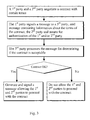
- a method for accomplishing a transaction between user equipment comprises: signalling a first transaction message between a first user equipment and a second user equipment, said transaction message being associated with a contract the users of the first and second user equipment are willing to enter; signalling to a third user equipment a second transaction message based on the first transaction message; processing the second transaction message at the third user equipment and based on the processing determining whether the contract is acceptable; and signalling from the third user equipment a third transaction message generated based on the outcome of the determination.
- a system for controlling transactions comprising means for signalling a first transaction message between a first user equipment and a second user equipment, said transaction message being associated with a contract the users of the first and second user equipment are willing to enter, means for signalling to a third user equipment a second transaction message generated based on the first transaction message, processor means at the third user equipment for processing the second transaction message and for determining whether the contract is acceptable, and means for signalling from the third user equipment a third transaction message based the outcome of the determination.
- the third transaction message enables the users of the first and second user equipment to proceed in accordance with the contract.
- the third transaction message may contain a payment in accordance with the contract or control instructions for initiation of a procedure to perform a payment in accordance with the contract.
- the third transaction message may be signalled to an entity holding an account for the user of the third user equipment.
- the third transaction message may also contain an indication that the user of the third user equipment approves the contract negotiated between the users of the first and second user equipment.
- the first user equipment may generate the second transaction message by attaching to the first transaction message an identification.
- the second transaction message may include information regarding the identity of the first and/or second user.
- the third user equipment may perform a check regarding the first and/or second user based on information in the second transaction message.
- the third transaction message may contain an authentication associated with the third user equipment or the user of the third user equipment.
- the first transaction message may be generated as a response to a request for an offer from the first user equipment.
- the first transaction message may comprise a message from the first user equipment to the second user equipment.
- At least one of the transaction messages may be communicated via a wireless interface.
- the first user equipment may be arranged to communicate at least one of the messages via a wireless interface.
- At least one message may be transported via a data communication network.
- a user equipment for provision of control of transactions between a first party and a second party, the user equipment comprising input means for receiving a transaction message, said transaction message being associated with a contract the first and second party are willing to enter and being based on a message signalled between the first and second parties, processor means for processing data included in the transaction message for determining whether the contract between the first and second parties is acceptable and for generating a response to the transaction message based the outcome of the determination, and means for signalling the response.
- the embodiments of the invention may provide a feasible solution for control of transactions between two parties.
- the third party providing the control does not need to be physically present. If an authorisation is required, the authorisation may be done by the third party. Improved security may be provided, especially since a human decision and/or third party intervention may be required in addition to processing of e.g. digital identifications and/or other authorisations and/or authentications. Security features of existing communication systems can be employed in the authorisations.
- Each of the user equipment 10 to 12 is adapted to facilitate use thereof for electronic transactions and for exchange of transaction data between the user equipment and a remote party.
- Possible transaction data processing means may comprise a processor means arranged for processing and/or controlling transactions between the user equipment and other parties.
- the transaction processor means may be integrated with at least one other processor function of the user equipment.
- the transaction processor means may alternatively be adapted to process data that associates with the transaction processing function only.
- a data storage means may also be provided, the storage means being either integrated with the other functions of the user equipment or be assigned solely for the transaction data processing functions. Separation of the transaction functions from other functions of the user equipment may be preferred e.g. for security or usability reasons.
- the user equipment of the first party 11 preferably consists of a mobile station.
- the user equipment 11 may comprise a mobile telephone, as shown in Figure 1, or a portable data processing device that is provided with transceiver means, as shown in Figure 2.
- the appropriate user equipment of the second party 10 may comprise any appropriate transaction terminal such as an electronic cashier machine of a shop, a mobile station, as shown in Figure 1, or a computer terminal connected to a data network, as shown in Figure 2, and so on.
- the only requirement with regard of the user equipment of the second party 10 is that is that the user equipment is capable of processing transaction data and communicating transaction data with another party.
- the third party 12 may also be provided with a mobile user equipment (see Figure 1), a computer terminal (see Figure 2) or any other means capable of receiving and sending messages that associate with transactions, as will be described below.
- Figure 1 shows three mobile user equipment 10 to 12, other type of user equipment may also be used.
- the second and third parties 10 and 12, respectively may use any type of appropriate user equipment in the embodiments which are described below with reference to Figures 1 and 2.
- the first party 11 is a user of a mobile user equipment.
- Various forms of the mobile user equipment have become very popular among the general public.
- the mobile user equipment of the first party 11 is arranged for communication via a wireless interface between the user equipment and a serving base station 15 of a telecommunication system.
- a mobile telecommunications system provides mobility for the users thereof by enabling the users to communicate by means of mobile user equipment.
- Examples of the mobile telecommunication systems providing mobility for the users include, without limiting to these GSM (Global System for Mobile Telecommunications), AMPS (American Mobile Phone System), digital AMPS, GPRS (General Packet Radio Service) and various third generations (3G) systems such as UMTS (Universal Mobile Telecommunication Service), IMTS2000, and I-Phone.
- Mobility may also be provided by means of a communication system such as the Wireless Local Area Network (WLAN).
- WLAN Wireless Local Area Network
- the terminals are typically connected to a fixed line data network, such as the LAN or to the Internet (for the Internet, see Figure 2).
- the user equipment 10 to 12 may each be used for signalling messages that associate with a transaction.
- Figure 1 shows an embodiment wherein a remote third party 12 makes a payment for a party 10 on behalf of another party 11 based on a message communicated between the first and second parties.
- signals 1 to 4 are shown to be transmitted between the user equipment 10 to 12 via a cellular communication system.
- the user of the first user equipment 11 is a party who wishes to purchase something from the user of the second user equipment 10, i.e. the merchant.
- the user of the third user equipment 12 is a party who wishes to control the spending of the user of the first user equipment 11.
- the user of the first user 11 equipment may be a child of the user of the third user equipment 12.
- the payment is made by means of the user equipment 12 of the third party and based on transaction data received from the user equipment 11 of the buyer.
- the buyer may initiate the operation by sending via the communication system a request for an offer to the merchant in message 1.
- the merchant receives the request and processes it to make an offer.
- the generated offer may be digitally signed by the merchant.
- the generated offer message may consist of various fields. For example, fields for the name of the product, price of the product, amount of product, the identity of the merchant and validity period may be provided.
- the offer is then sent in a message 2 via the communication system to the first party.
- the offer is received at the user equipment 11 of the first party.
- the offer can be processed in any appropriate manner at the first user equipment 11.
- An authorisation and/or identification information may be attached to the offer and/or a further message generated based on the offer.
- the offer may be digitally signed by means of the first user equipment 11.
- the offer is then sent via the communication system to the third party in message 3.
- a verification can be accomplished to check that the buyer has signed the offer (or any other message generated based on the offer).
- the third party user equipment 12 may also verify that the merchant is a trusted party.
- the third party may then make a decision whether to accept or reject the offer. Depending on the outcome of this procedure, the third party may initiate a transaction procedure between the third and second user equipment 12 and 10 such that the merchant receives a payment for the purchase. Signalling of the payment message via the communication system is indicated by arrow 4. The payment can be accomplished by means of any appropriate payment protocol.
- the third user equipment 12 may be provided with appropriate transaction functionality such as the those referred to by the term 'electronic wallet'.
- An electronic wallet may comprise a credit card type transaction facility or account means containing balance in the form of electronic money. The balance on the wallet may then be deducted from the account means whenever a payment is made.
- the user of the third user equipment 12 if the user of the third user equipment 12 considers the offer as acceptable, he signals by means of his user equipment 12 a message 4 to the merchant which enable the transaction to proceed between the users of the first and second user equipment 11, 10.
- the signal may comprise, in addition to transaction data for a direct payment of the purchase, any other control instructions for initiation of a procedure to pay for the purchase by the user of the first user equipment.
- the user of the third user equipment 12 may reject the offer, e.g. by means of the user interface of the user equipment.
- the third party may or may not notify the user of the first user equipment 11 of this.
- the third party may also send a counteroffer to the merchant.
- the counteroffer may be signalled via the first user equipment 11 of the buyer or sent directly to the user equipment 10 of the merchant.
- the merchant may either accept the counteroffer or make a new offer.
- the communication regarding the counteroffer and/or the new offer by the merchant may be signalled via the first user equipment 11. It is also possible to proceed such that the transaction signalling will now occur directly between the user equipment 12 of the third party and the user equipment 10 of the merchant.
- the second party user equipment 10 may be provided with an automatic "bargaining" functionality, such as with a code means that accept counteroffers within certain acceptable limits and or makes a new offer based on the original offer and the counteroffer.
- Figure 2 shows another embodiment wherein a third party 12 authorises a first party of a transaction (e.g. a buyer) 11 to pay something to a second party (e.g. a merchant) 10.
- the authorisation is done by the third party user equipment 12. That is, instead of directly making a payment on behalf of the first party, the third party 12 signals instructions based on which such a payment can be made.
- these instructions are signalled to a financial institution 20 holding an account 22 wherefrom electronic payments are possible.
- a typical example of such institution is a bank.
- the user of the first user equipment 11 may send a request for an offer to the user equipment 10 of the second party, as described above.
- the second party may then respond by sending an offer to the first user equipment 11.
- a message 3 is generated based on the offer and transmitted from the first user equipment to the third user equipment 12.
- the message 3 to the third user equipment 12 is generated based on the request and no offer is required.
- the message 3 may comprise the offer as such or be based on the offer received from the merchant.
- the message 3 may also include a digital signature that is attached by the first user equipment or any other security feature, depending on the application.
- the third party 12 receives the message 3 containing information about the offer and verifies that the message 3 originates from the first party 11 and that the second party 10 can be trusted.
- the third party 12 may authorise the purchase with his digital signature.
- the offer and authorisation is then signalled via the communication system in message 4 to the account holder 20.
- the authorisation message 4 may include the digital signature of the third user, the offer or other message as received from the buyer and any additional information as may be required. It shall be appreciated that the digital signatures are only an example of a possible authentication technique. The authentication may be accomplished based on any appropriate technique, such as based on symmetric passwords, public or private keys and so on, this being an implementation issue.
- the account holder 20 may then verify that the fist party and the third party are who they claim to be. If the account holder is satisfied, the imbursement is processed.
- the authentication and other actions in the account holder such as a bank may be done using any appropriate banking service protocols. Since the skilled person is familiar with possible payment procedures, and since these are not a part of the invention, these will thus not be explained in any greater detail herein.
- the account holder 20 may then accomplish the payment directly to the second party (e.g. the merchant) 10 by a message 5.
- the merchant may give the goods to the buyer or provide any other service in accordance with the offer accepted by the third party.
- a trusted authentication centre is provided.
- the authentication centre may be arranged to identify the first and second parties on the behalf of the third party.
- the third party would receive the message 3 together with an indication that the first and second parties are who they claim to be.
- a person (the first party) who wants to make a bet at a betting office (the second party) may signal a message to a second person (the third party) regarding the bet.
- the bet as such is negotiated between the first person and the betting office, but the first party may offer the third party e.g. with a possibility to join the bet and pay a share of the bet, ask the third party to accept and/or pay the bet, and so on.
- the message from first party to the third party may also indicate that the third party may forward the offer further to another party.
- the third party provides control on contracts negotiated between the first party and the second party in situations wherein the first party can be seen as a buyer and the second party as a seller is not the only possibility.
- the roles can also be switched such that the third party controls actions of a seller of goods/services.
- the party to be controlled is an agent (e.g. an estate agent), and the third party is the actual owner of the goods to be sold based on offers from buyers.
- the agent would send a message 3 by his/hers user equipment 11 based on an offer message 2 from the buyer user equipment 10 to the user equipment 12 of the owner. The owner may then proceed as he/she feels appropriate, e.g. accept the offer, make a counteroffer and so on.
- signalling in response to message from the first party user equipment is routed from the third party 12 to the second party user equipment 11.
- the first party 11 may then forward appropriate payment message or similar to the second party 10.
- the first party and second party (and/or the third party) may communicate via a local link, such as a short range radio link.
- a local link such as a short range radio link.
- An example of the local links are the short range radio links that are based on the BluetoothTM protocol.
- Other possibilities to communicate transaction data to and/or from the user equipment of the first party comprise communication via an infrared link, a WLAN system, or via a fixed line data communication network such as a LAN, the Internet or any intranet application.
- local links may be advantageous e.g. in situations wherein the second and third parties cannot communicate transaction data between each other or the second party is not connected to a communication system that provides a possibility to communicate with remote entities.
- An example of such application is purchase from a mobile trader (e.g. a ice cream trolley) who may only be provided with a BluetoothTM enabled user equipment.
- the message 3 may be communicated from the second party 10 to the third party 12.
- Communication between the various entities may be based on any appropriate technique and communication protocol.
- the possible protocols include, without limiting to these, a Short Message Service message (SMS), WAP (wireless application protocol) messages, email messages, multimedia messages (MMM) or any other messages such as messages that are based on the Internet protocol (IP) or Session Initiation Protocol (SIP).
- SMS Short Message Service message
- WAP wireless application protocol
- MMM multimedia messages
- IP Internet protocol
- SIP Session Initiation Protocol
- Examples of the possible means based on which the authorisation can be accomplished include, without limiting to these, a Subscriber Identity Module (SIM), a Number Assignment Module (NAM), and a WAP Identity Module (WIM).
- SIM Subscriber Identity Module
- NAM Number Assignment Module
- WIM WAP Identity Module
- the authorisation may also be based on identity codes such as a personal identity number (PIN) or a unique product code assigned for each user equipment, such as the IMEI (International Mobile station Equipment Identity), the international mobile subscriber identity (IMSI) code, various biometry applications and so on.
- PIN personal identity number
- IMEI International Mobile station Equipment Identity
- IMSI international mobile subscriber identity
Landscapes
- Business, Economics & Management (AREA)
- Engineering & Computer Science (AREA)
- Accounting & Taxation (AREA)
- Theoretical Computer Science (AREA)
- Strategic Management (AREA)
- Physics & Mathematics (AREA)
- General Business, Economics & Management (AREA)
- General Physics & Mathematics (AREA)
- Finance (AREA)
- Computer Security & Cryptography (AREA)
- Health & Medical Sciences (AREA)
- Computer Networks & Wireless Communication (AREA)
- General Health & Medical Sciences (AREA)
- Child & Adolescent Psychology (AREA)
- Development Economics (AREA)
- Economics (AREA)
- Marketing (AREA)
- Telephonic Communication Services (AREA)
- Information Transfer Between Computers (AREA)
- Management, Administration, Business Operations System, And Electronic Commerce (AREA)
Abstract
Description
Claims (19)
- A method for accomplishing a transaction between user equipment, the method comprising:signalling a first transaction message between a first user equipment and a second user equipment, said transaction message being associated with a contract the users of the first and second user equipment are willing to enter;signalling to a third user equipment a second transaction message based on the first transaction message;processing the second transaction message at the third user equipment and based on the processing determining whether the contract is acceptable; andsignalling from the third user equipment a third transaction message generated based on the outcome of the determination.
- A method as claimed in claim 1, wherein the third transaction message enables the users of the first and second user equipment to proceed in accordance with the contract.
- A method as claimed in claim 2, wherein the third transaction message contains a payment in accordance with the contract.
- A method as claimed in claim 2, wherein the third transaction message contains control instructions for initiation of a procedure to perform a payment in accordance with the contract.
- A method as claimed in claim 4, wherein the third transaction message is signalled to an entity holding an account for the user of the third user equipment.
- A method as claimed in claim 2, wherein the third transaction message contains an indication that the user of the third user equipment approves the contract negotiated between the users of the first and second user equipment.
- A method as claimed in any preceding claim, wherein the first user equipment generates the second transaction message by attaching to the first transaction message an identification.
- A method as claimed in claim 7, wherein the identification comprises a digital signature, password or other authentication means that can be associated with the first user equipment and/or the user of the first user equipment.
- A method as claimed in any preceding claim, wherein the second transaction message includes information regarding the identity of the second user.
- A method as claimed in any preceding claim, wherein the third user equipment performs a check regarding the first and/or second user based on information in the second transaction message.
- A method as claimed in any preceding claim, wherein the third transaction message contains an authentication associated with the third user equipment or the user of the third user equipment.
- A method as claimed in any preceding claim, wherein the first transaction message is generated as a response to a request for an offer from the first user equipment.
- A method as claimed in any of claims 1 to 11, wherein the first transaction message comprises a message from the first user equipment to the second user equipment.
- A method as claimed in any preceding claim, wherein at least one of the transaction messages is communicated via a wireless interface.
- A method as claimed in any preceding claim, wherein at least one message is transported via a data communication network.
- A method as claimed in any preceding claim, wherein the first user equipment communicates at least one of the messages via a wireless interface.
- A system for controlling transactions, the system comprising:means for signalling a first transaction message between a first user equipment and a second user equipment, said transaction message being associated with a contract the users of the first and second user equipment are willing to enter;means for signalling to a third user equipment a second transaction message generated based on the first transaction message;processor means at the third user equipment for processing the second transaction message and for determining whether the contract is acceptable; andmeans for signalling from the third user equipment a third transaction message based the outcome of the determination.
- A user equipment for provision of control of transactions between a first party and a second party, comprising:input means for receiving a transaction message, said transaction message being associated with a contract the first and second party are willing to enter and being based on a message signalled between the first and second parties;processor means for processing data included in the transaction message for determining whether the contract between the first and second parties is acceptable and for generating a response to the transaction message based the outcome of the determination; andmeans for signalling the response.
- A user equipment as claimed in claim 18, comprising means for communication via a wireless interface.
Applications Claiming Priority (2)
| Application Number | Priority Date | Filing Date | Title |
|---|---|---|---|
| GB0126384A GB2381633A (en) | 2001-11-02 | 2001-11-02 | Controlling transactions |
| GB0126384 | 2001-11-02 |
Publications (2)
| Publication Number | Publication Date |
|---|---|
| EP1308871A2 true EP1308871A2 (en) | 2003-05-07 |
| EP1308871A3 EP1308871A3 (en) | 2004-01-14 |
Family
ID=9925060
Family Applications (1)
| Application Number | Title | Priority Date | Filing Date |
|---|---|---|---|
| EP02257452A Ceased EP1308871A3 (en) | 2001-11-02 | 2002-10-25 | Controlling transactions |
Country Status (3)
| Country | Link |
|---|---|
| EP (1) | EP1308871A3 (en) |
| CN (1) | CN1417727A (en) |
| GB (1) | GB2381633A (en) |
Cited By (11)
| Publication number | Priority date | Publication date | Assignee | Title |
|---|---|---|---|---|
| FR2919742A1 (en) * | 2007-08-01 | 2009-02-06 | Phoum Lib | Transaction securing method for mobile terminal, involves relating transmitter with receiver, and loading connection to certify actions of user by generating ad hoc safety tests under form of non interpretable images by machine |
| WO2010070539A1 (en) * | 2008-12-19 | 2010-06-24 | Nxp B.V. | Enhanced smart card usage |
| US7793826B2 (en) | 2004-03-12 | 2010-09-14 | British Telecommunications Public Limited Company | Controlling transactions |
| EP2261849A1 (en) * | 2009-06-12 | 2010-12-15 | Alcatel Lucent | System for payment control |
| EP2538382A1 (en) * | 2011-06-22 | 2012-12-26 | Broadcom Corporation | Point of sale system for transaction payment delegation |
| EP2538383A1 (en) * | 2011-06-22 | 2012-12-26 | Broadcom Corporation | Mobile device for transaction payment delegation |
| CN102870129A (en) * | 2010-05-03 | 2013-01-09 | 国际商业机器公司 | Dynamic adaptive process discovery and compliance |
| EP2991015A1 (en) * | 2014-08-28 | 2016-03-02 | NCR Corporation | Device-enabled service handoff and collaboration |
| EP3276558A1 (en) * | 2016-07-28 | 2018-01-31 | Samsung Electronics Co., Ltd | Remote payment method and apparatus |
| WO2018069773A1 (en) * | 2016-10-14 | 2018-04-19 | Assa Abloy Ab | Transaction authentication based on contextual data presentation |
| EP3540673A1 (en) * | 2018-03-14 | 2019-09-18 | NoTie S.à r.l. | Identity based use of right to service |
Family Cites Families (10)
| Publication number | Priority date | Publication date | Assignee | Title |
|---|---|---|---|---|
| FI100137B (en) * | 1994-10-28 | 1997-09-30 | Vazvan Simin | Real-time wireless telecom payment system |
| US5708422A (en) * | 1995-05-31 | 1998-01-13 | At&T | Transaction authorization and alert system |
| AU9362498A (en) * | 1997-09-17 | 1999-04-05 | Akos Andrasev | Method for checking rightful use of a debit card or similar means giving right of disposing of a bank account |
| US5914472A (en) * | 1997-09-23 | 1999-06-22 | At&T Corp | Credit card spending authorization control system |
| FI980591L (en) * | 1998-03-17 | 2000-01-03 | Sonera Oy | Method and system for reliable and secure identification of a contracting party |
| NL1010702C2 (en) * | 1998-12-02 | 2000-06-06 | Koninkl Kpn Nv | Method for the remote execution of a transaction between a customer and a supplier using a communication network, as well as a communication network for applying the method. |
| FR2801995B1 (en) * | 1999-12-07 | 2005-09-09 | Bruno Duval | METHOD AND SYSTEM FOR MANAGING SECURE TRANSACTION THROUGH A COMMUNICATION NETWORK |
| GB2360383C (en) * | 2000-03-17 | 2005-10-10 | Tradesafely Com Ltd | Payment authorisation method and apparatus |
| AU2001249516A1 (en) * | 2000-03-27 | 2001-10-15 | Randall A. Russell | School commerce system and method |
| FR2815439A1 (en) * | 2000-10-12 | 2002-04-19 | Schlumberger Systems & Service | Internet shopping payment technique uses telephone company to accept mutual authorization of transaction, pay seller and re-invoice purchasing customer |
-
2001
- 2001-11-02 GB GB0126384A patent/GB2381633A/en not_active Withdrawn
-
2002
- 2002-10-25 EP EP02257452A patent/EP1308871A3/en not_active Ceased
- 2002-11-01 CN CN02149906A patent/CN1417727A/en active Pending
Cited By (17)
| Publication number | Priority date | Publication date | Assignee | Title |
|---|---|---|---|---|
| US7793826B2 (en) | 2004-03-12 | 2010-09-14 | British Telecommunications Public Limited Company | Controlling transactions |
| FR2919742A1 (en) * | 2007-08-01 | 2009-02-06 | Phoum Lib | Transaction securing method for mobile terminal, involves relating transmitter with receiver, and loading connection to certify actions of user by generating ad hoc safety tests under form of non interpretable images by machine |
| WO2010070539A1 (en) * | 2008-12-19 | 2010-06-24 | Nxp B.V. | Enhanced smart card usage |
| US20110251955A1 (en) * | 2008-12-19 | 2011-10-13 | Nxp B.V. | Enhanced smart card usage |
| US9208634B2 (en) | 2008-12-19 | 2015-12-08 | Nxp B.V. | Enhanced smart card usage |
| EP2261849A1 (en) * | 2009-06-12 | 2010-12-15 | Alcatel Lucent | System for payment control |
| FR2946776A1 (en) * | 2009-06-12 | 2010-12-17 | Alcatel Lucent | PAYMENT CONTROL SYSTEM |
| CN102870129A (en) * | 2010-05-03 | 2013-01-09 | 国际商业机器公司 | Dynamic adaptive process discovery and compliance |
| EP2538383A1 (en) * | 2011-06-22 | 2012-12-26 | Broadcom Corporation | Mobile device for transaction payment delegation |
| EP2538382A1 (en) * | 2011-06-22 | 2012-12-26 | Broadcom Corporation | Point of sale system for transaction payment delegation |
| EP2991015A1 (en) * | 2014-08-28 | 2016-03-02 | NCR Corporation | Device-enabled service handoff and collaboration |
| US20160063619A1 (en) * | 2014-08-28 | 2016-03-03 | Ncr Corporation | Device-enabled service handoff and collaboration |
| EP3276558A1 (en) * | 2016-07-28 | 2018-01-31 | Samsung Electronics Co., Ltd | Remote payment method and apparatus |
| WO2018069773A1 (en) * | 2016-10-14 | 2018-04-19 | Assa Abloy Ab | Transaction authentication based on contextual data presentation |
| US10560273B2 (en) | 2016-10-14 | 2020-02-11 | Assa Abloy Ab | Transaction authentication based on contextual data presentation |
| US11139986B2 (en) | 2016-10-14 | 2021-10-05 | Assa Abloy Ab | Transaction authentication based on contextual data presentation |
| EP3540673A1 (en) * | 2018-03-14 | 2019-09-18 | NoTie S.à r.l. | Identity based use of right to service |
Also Published As
| Publication number | Publication date |
|---|---|
| CN1417727A (en) | 2003-05-14 |
| EP1308871A3 (en) | 2004-01-14 |
| GB2381633A (en) | 2003-05-07 |
| GB0126384D0 (en) | 2002-01-02 |
Similar Documents
| Publication | Publication Date | Title |
|---|---|---|
| US10902397B2 (en) | Interoperable financial transactions via mobile devices | |
| US9342823B2 (en) | Payment clearing network for electronic financial transactions and related personal financial transaction device | |
| US9160741B2 (en) | Remote authentication system | |
| US20080257952A1 (en) | System and Method for Conducting Commercial Transactions | |
| US7014107B2 (en) | Wireless payment processing system | |
| US7336973B2 (en) | Mobile communication device equipped with a magnetic stripe reader | |
| US20090240622A1 (en) | Method and System for Payment Processing | |
| JP2021121975A (en) | Transaction token issuance authority | |
| US20130073463A1 (en) | Issuer trusted party system | |
| US20090063312A1 (en) | Method and System for Processing Secure Wireless Payment Transactions and for Providing a Virtual Terminal for Merchant Processing of Such Transactions | |
| EP1647952A2 (en) | Method and system for facilitating payment transactions using access devices | |
| WO2004012118A1 (en) | System and method for payment transaction authentication | |
| KR20110094176A (en) | The electronic payment application system and payment authorization method | |
| WO2008007162A1 (en) | Customer identification and authentication procedure for online internet payments using mobile phones | |
| JP2003532175A (en) | Method and system for wireless electronic commerce using a portable wireless communication device with unique identification information | |
| EP1308871A2 (en) | Controlling transactions | |
| WO2006023745A2 (en) | Conducting secure financial transactions independent of physical location | |
| CA2475275C (en) | Wireless data processing system for credit payment | |
| WO2026024473A1 (en) | Portable device and communication device interaction process | |
| WO2019222090A1 (en) | Mobile network operator authentication protocol | |
| HK1086103A (en) | Method and system for facilitating payment transactions using access devices |
Legal Events
| Date | Code | Title | Description |
|---|---|---|---|
| PUAI | Public reference made under article 153(3) epc to a published international application that has entered the european phase |
Free format text: ORIGINAL CODE: 0009012 |
|
| AK | Designated contracting states |
Designated state(s): AT BE BG CH CY CZ DE DK EE ES FI FR GB GR IE IT LI LU MC NL PT SE SK TR |
|
| AX | Request for extension of the european patent |
Extension state: AL LT LV MK RO SI |
|
| PUAL | Search report despatched |
Free format text: ORIGINAL CODE: 0009013 |
|
| RIC1 | Information provided on ipc code assigned before grant |
Ipc: 7G 07F 19/00 B Ipc: 7G 06F 17/60 A |
|
| AK | Designated contracting states |
Kind code of ref document: A3 Designated state(s): AT BE BG CH CY CZ DE DK EE ES FI FR GB GR IE IT LI LU MC NL PT SE SK TR |
|
| AX | Request for extension of the european patent |
Extension state: AL LT LV MK RO SI |
|
| 17P | Request for examination filed |
Effective date: 20021114 |
|
| AKX | Designation fees paid |
Designated state(s): AT BE BG CH CY CZ DE DK EE ES FI FR GB GR IE IT LI LU MC NL PT SE SK TR |
|
| 17Q | First examination report despatched |
Effective date: 20041208 |
|
| STAA | Information on the status of an ep patent application or granted ep patent |
Free format text: STATUS: THE APPLICATION HAS BEEN REFUSED |
|
| 18R | Application refused |
Effective date: 20051124 |