EP1308820A2 - Encrypted program distribution system using computer network - Google Patents
Encrypted program distribution system using computer network Download PDFInfo
- Publication number
- EP1308820A2 EP1308820A2 EP01309273A EP01309273A EP1308820A2 EP 1308820 A2 EP1308820 A2 EP 1308820A2 EP 01309273 A EP01309273 A EP 01309273A EP 01309273 A EP01309273 A EP 01309273A EP 1308820 A2 EP1308820 A2 EP 1308820A2
- Authority
- EP
- European Patent Office
- Prior art keywords
- file
- source file
- execution file
- examination
- execution
- Prior art date
- Legal status (The legal status is an assumption and is not a legal conclusion. Google has not performed a legal analysis and makes no representation as to the accuracy of the status listed.)
- Withdrawn
Links
Images


Classifications
-
- H—ELECTRICITY
- H04—ELECTRIC COMMUNICATION TECHNIQUE
- H04L—TRANSMISSION OF DIGITAL INFORMATION, e.g. TELEGRAPHIC COMMUNICATION
- H04L63/00—Network architectures or network communication protocols for network security
- H04L63/04—Network architectures or network communication protocols for network security for providing a confidential data exchange among entities communicating through data packet networks
- H04L63/0428—Network architectures or network communication protocols for network security for providing a confidential data exchange among entities communicating through data packet networks wherein the data content is protected, e.g. by encrypting or encapsulating the payload
-
- G—PHYSICS
- G06—COMPUTING OR CALCULATING; COUNTING
- G06F—ELECTRIC DIGITAL DATA PROCESSING
- G06F21/00—Security arrangements for protecting computers, components thereof, programs or data against unauthorised activity
- G06F21/10—Protecting distributed programs or content, e.g. vending or licensing of copyrighted material ; Digital rights management [DRM]
- G06F21/12—Protecting executable software
- G06F21/121—Restricting unauthorised execution of programs
- G06F21/125—Restricting unauthorised execution of programs by manipulating the program code, e.g. source code, compiled code, interpreted code, machine code
-
- G—PHYSICS
- G06—COMPUTING OR CALCULATING; COUNTING
- G06F—ELECTRIC DIGITAL DATA PROCESSING
- G06F21/00—Security arrangements for protecting computers, components thereof, programs or data against unauthorised activity
- G06F21/60—Protecting data
- G06F21/62—Protecting access to data via a platform, e.g. using keys or access control rules
- G06F21/6218—Protecting access to data via a platform, e.g. using keys or access control rules to a system of files or objects, e.g. local or distributed file system or database
- G06F21/6245—Protecting personal data, e.g. for financial or medical purposes
- G06F21/6254—Protecting personal data, e.g. for financial or medical purposes by anonymising data, e.g. decorrelating personal data from the owner's identification
-
- H—ELECTRICITY
- H04—ELECTRIC COMMUNICATION TECHNIQUE
- H04L—TRANSMISSION OF DIGITAL INFORMATION, e.g. TELEGRAPHIC COMMUNICATION
- H04L63/00—Network architectures or network communication protocols for network security
- H04L63/08—Network architectures or network communication protocols for network security for authentication of entities
- H04L63/0823—Network architectures or network communication protocols for network security for authentication of entities using certificates
-
- H—ELECTRICITY
- H04—ELECTRIC COMMUNICATION TECHNIQUE
- H04L—TRANSMISSION OF DIGITAL INFORMATION, e.g. TELEGRAPHIC COMMUNICATION
- H04L63/00—Network architectures or network communication protocols for network security
- H04L63/12—Applying verification of the received information
- H04L63/123—Applying verification of the received information received data contents, e.g. message integrity
-
- H—ELECTRICITY
- H04—ELECTRIC COMMUNICATION TECHNIQUE
- H04L—TRANSMISSION OF DIGITAL INFORMATION, e.g. TELEGRAPHIC COMMUNICATION
- H04L67/00—Network arrangements or protocols for supporting network services or applications
- H04L67/01—Protocols
- H04L67/06—Protocols specially adapted for file transfer, e.g. file transfer protocol [FTP]
-
- G—PHYSICS
- G06—COMPUTING OR CALCULATING; COUNTING
- G06F—ELECTRIC DIGITAL DATA PROCESSING
- G06F2221/00—Indexing scheme relating to security arrangements for protecting computers, components thereof, programs or data against unauthorised activity
- G06F2221/21—Indexing scheme relating to G06F21/00 and subgroups addressing additional information or applications relating to security arrangements for protecting computers, components thereof, programs or data against unauthorised activity
- G06F2221/2135—Metering
Definitions
- the present invention relates to an encrypted program distribution system for realizing verification, distribution and bug information feedback for an encrypted program with guaranteed safety.
- the high level language such as C language is often used in the program developing.
- the execution file is generated by compiling and linking the source file written in this high level language.
- the compiled and linked execution file contains data that will placed on a memory and data that will not be placed on a memory but that will be directly interpreted by a program loader.
- the former data includes machine language instruction sequences that are directly readable and executable by the CPU and data that will not be executed as instructions.
- the execution file includes machine language instruction sequences but does not include data written by language other than the machine language such as shell script.
- At least a part of the encrypted execution program must have a portion dependent on the unique key of the tamper resistant processor chip.
- the distribution by network is suitable.
- the programs distributed through a network face with threat of computer virus or worm. Although the fact that some program is not harmful can be passively verified by checking the signature and identity of the distributor, in general it is difficult to judge whether the program distributing entity is sufficiently trustworthy or not.
- the so called virus inspection program of a kind that directly analyzes the execution codes of the software can verify the safety of the program directly distributed through a network even though there are some limits.
- the program is encrypted according to the key unique to the chip of each tamper resistant processor, so that it has been difficult to verify the safety by using the general purpose virus inspection program.
- a portion for notifying the charging information to a charging server needs to be safe against the analysis and alteration by users.
- the protection of the user who actually uses the program is difficult in the environment in which the program protection is cryptographically guaranteed, such as the environment to which the tamper resistant processor is introduced, because the encrypted program acquired by the user cannot be verified before its execution.
- the program is encrypted by using the key unique to the chip of each tamper resistant processor so that the content of its execution file cannot be verified.
- the verification as to whether or not a given program can potentially be a computer virus or worm has been difficult because the tamper resistant processors have mutually different unique keys.
- a program distribution system comprising a source file sending device, an encrypted program distribution device and an execution file receiving device, which are interconnected through a network;
- the source file sending device having: a first sending unit configured to send a source file of a program to the encrypted program distribution device;
- the encrypted program distribution device having: a first receiving unit configured to receive the source file sent from the source file sending device; an examination unit configured to examine the source file received by the first receiving unit; an execution file generation unit configured to generate an execution file of the program from the source file examined by the examination unit, when the source file passes an examination by the examination unit;
- a public key receiving unit configured to receive a public key which is either unique to the execution file receiving device or unique to a processor of the execution file receiving device, from the execution file receiving device, when the source file passes an examination by the examination unit;
- an encryption unit configured to encrypt at least a part of the execution file by using the public key received by the public key receiving unit, when the source file passes an examination by the examination unit; and a
- a program distribution system comprising a source file sending device, an encrypted program distribution device and an execution file receiving device, which are interconnected through a network;
- the source file sending device having: a first sending unit configured to send a source file of a program to the encrypted program distribution device;
- the encrypted program distribution device having: a first receiving unit configured to receive the source file sent from the source file sending device; an examination unit configured to examine the source file received by the first receiving unit; an execution file generation unit configured to generate an execution file of the program from the source file examined by the examination unit, when the source file passes an examination by the examination unit;
- a first encryption unit configured to encrypt at least a part of the execution file by using a prescribed secret key, when the source file passes an examination by the examination unit;
- a public key receiving unit configured to receive a public key which is either unique to the execution file receiving device or unique to a processor of the execution file receiving device, from the execution file receiving device, when the source file passes an examination by the examination unit;
- a second encryption unit configured
- an encrypted program distribution device comprising: a receiving unit configured to receive a source file of a program sent from a source file sending device through a network; an examination unit configured to examine the source file received by the first receiving unit; an execution file generation unit configured to generate an execution file of the program from the source file examined by the examination unit, when the source file passes an examination by the examination unit; a public key receiving unit configured to receive a public key which is either unique to an execution file receiving device or unique to a processor of the execution file receiving device, from the execution file receiving device through the network, when the source file passes an examination by the examination unit; an encryption unit configured to encrypt at least a part of the execution file by using the public key received by the public key receiving unit, when the source file passes an examination by the examination unit; and a sending unit configured to send the execution file encrypted by the encryption unit to the execution file receiving device, when the source file passes an examination by the examination unit.
- an encrypted program distribution device comprising: a receiving unit configured to receive a source file of a program sent from a source file sending device through a network; an examination unit configured to examine the source file received by the first receiving unit; an execution file generation unit configured to generate an execution file of the program from the source file examined by the examination unit, when the source file passes an examination by the examination unit; a first encryption unit configured to encrypt at least a part of the execution file by using a prescribed secret key, when the source file passes an examination by the examination unit; a public key receiving unit configured to receive a public key which is either unique to an execution file receiving device or unique to a processor of the execution file receiving device, from the execution file receiving device through the network, when the source file passes an examination by the examination unit; a second encryption unit configured to encrypt the prescribed secret key by using the public key received by the public key receiving unit, when the source file passes an examination by the examination unit; and a sending unit configured to send the execution file encrypted by the first encryption unit and the
- a program distribution method in a program distribution system comprising a source file sending device, an encrypted program distribution device and an execution file receiving device, which are interconnected through a network, the method comprising:
- a program distribution method in a program distribution system comprising a source file sending device, an encrypted program distribution device and an execution file receiving device, which are interconnected through a network, the method comprising:
- a program distribution method comprising: (a) receiving a source file of a program sent from a source file sending device through a network; (b) examining the source file received by the step (a); (c) generating an execution file of the program from the source file examined by the step (b), when the source file passes an examination by the step (b); (d) receiving a public key which is either unique to an execution file receiving device or unique to a processor of the execution file receiving device, from the execution file receiving device through the network, when the source file passes an examination by the step (b); (e) encrypting at least a part of the execution file by using the public key received by the step (d), when the source file passes an examination by the step (b); and (f) sending the execution file encrypted by the step (e) to the execution file receiving device, when the source file passes an examination by the step (b).
- a program distribution method comprising: (a) receiving a source file of a program sent from a source file sending device through a network; (b) examining the source file received by the step (a); (c) generating an execution file of the program from the source file examined by the step (b), when the source file passes an examination by the step (b); (d) encrypting at least a part of the execution file by using a prescribed secret key, when the source file passes an examination by the step (b); (e) receiving a public key which is either unique to an execution file receiving device or unique to a processor of the execution file receiving device, from the execution file receiving device through the network, when the source file passes an examination by the step (b); (f) encrypting the prescribed secret key by using the public key received by the step (e), when the source file passes an examination by the step (b); and (g) sending the execution file encrypted by the step (d) and the prescribed secret key encrypted by the step (f) to the execution file receiving device
- a computer program product for causing a computer to function as an encrypted program distribution device, the computer program product comprising: first computer program codes for causing the computer to receive a source file of a program sent from a source file sending device through a network; second computer program codes for causing the computer to examine the source file received by the first computer program codes; third computer program codes for causing the computer to generate an execution file of the program from the source file examined by the second computer program codes, when the source file passes an examination by the second computer program codes; fourth computer program codes for causing the computer to receive a public key which is either unique to an execution file receiving device or unique to a processor of the execution file receiving device, from the execution file receiving device through the network, when the source file passes an examination by the second computer program codes; fifth computer program codes for causing the computer to encrypt at least a part of the execution file by using the public key received by the fourth computer program codes, when the source file passes an examination by the second computer program codes; and sixth computer program codes for causing the
- a computer program product for causing a computer to function as an encrypted program distribution device, the computer program product comprising: first computer program codes for causing the computer to receive a source file of a program sent from a source file sending device through a network; second computer program codes for causing the computer to examine the source file received by the first computer program codes; third computer program codes for causing the computer to generate an execution file of the program from the source file examined by the second computer program codes, when the source file passes an examination by the second computer program codes; fourth computer program codes for causing the computer to encrypt at least a part of the execution file by using a prescribed secret key, when the source file passes an examination by the second computer program codes; fifth computer program codes for causing the computer to receive a public key which is either unique to an execution file receiving device or unique to a processor of the execution file receiving device, from the execution file receiving device through the network, when the source file passes an examination by the second computer program codes; sixth computer program codes for causing the computer to encrypt the
- the present invention can be implemented either in hardware or on software in a general purpose computer. Further the present invention can be implemented in a combination of hardware and software. The present invention can also be implemented by a single processing apparatus or a distributed network of processing apparatuses.
- the present invention can be implemented by software, the present invention encompasses computer code provided to a general purpose computer on any suitable carrier medium.
- the carrier medium can comprise any storage medium such as a floppy disk, a CD ROM, a magnetic device or a programmable memory device, or any transient medium such as any signal e.g. an electrical, optical or microwave signal.
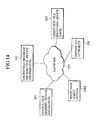
- the program distribution system comprises a source file sending device (which will also be referred to simply as developer in the following) 101 which is a computer of a software developer, an encrypted program distribution device (which will also be referred to simply as distributor in the following) 102 which is a computer of a software distributor, an execution file receiving device (which will also be referred to simply as user in the following) 103 which is a computer of a software user, and a certificate authority 104, all of which are connected through a network 105 and capable of carrying out communications each other.
- a source file sending device which will also be referred to simply as developer in the following
- an encrypted program distribution device which will also be referred to simply as distributor in the following
- an execution file receiving device which will also be referred to simply as user in the following
- certificate authority 104 all of which are connected through a network 105 and capable of carrying out communications each other.
- access from the computer to the network can be a direct access or an indirect access via a proxy server or the like.
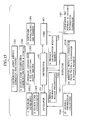
- the distributor is disclosing a guideline for user secret information protection (such as secret information operation rules) (201, 301, 401), and the developer acquires that guideline (302-303, 501) and produces the application program (software) according to that guideline (202, 304).
- user secret information protection such as secret information operation rules
- the developer makes a contract with the distributor on-line (305-308), and consigns the produced source codes to the distributor (203, 309-311, 402, 502).
- the distributor compiles the program, and produces an encrypted loading module (execution file) (204, 312).
- the encrypted loading module is encrypted by using an encryption key that is known only to the distributor (403). Also, the source codes are stored at a safe place after the compiling.
- the encrypted loading module is distributed to the user by attaching the decryption key corresponding to the CPU of the computer of the user (205-206, 313-315, 404-405, 602).
- the user utilizes the distributed program (316, 603) and discovers a trouble in the program, a program image on a memory (trouble information) at a time of the trouble occurrence is sent to the distributor (207, 317-318, 406-407, 603).
- the distributor removes information of a portion (secret information storage region) corresponding to the privacy information (secret information) that is reported from the developer in advance from this program image (319), and sends the program image to the developer (208-209, 320-321, 408, 504).
- the developer carries out the debugging of the program according to this information (322, 504).
- the distributor examines the source file of the program to verify that there is no illegality.
- the distributor is disclosing information such as the moral standard for providing the distribution agent service, the technical guideline for user secret information protection, the contract condition, and program developing environment, via the network.
- this distribution agent service condition information described in the html format is disclosed through a http server.
- the distributor may be capable of handling only a specific program developing environment (Linux, for example), or may be capable of handling a plurality of program developing environments (Linux and Windows, for example) from which any one can be selected.
- the developer selects the distributor who can handle the preferred program developing environment of the developer from a plurality of distributors.
- the developer acquires the distribution agent service condition information by using a web browser, develops the program according to this distribution agent service condition information and prepares materials necessary for the distribution contract.
- the developer accesses a web server of the distributor, makes a the distribution contract with the distributor, consigns the source codes of the program, and receives the source code receipt in return.
- the contract and the source code consignment are made by a web client, and no special program or server device is required on the developer side.
- a procedure for guaranteeing the safe exchange of the signed contract terms and source code consignment as described below will be used, but there is no need for the developer himself to be conscious of details of this procedure, and the developer can complete this procedure simply by preparing the source codes, selecting a type of the desired contract on a web browser screen, and sending materials.
- the execution of the contract procedure can be realized by the developer by executing a program (Java Script format, for example) provided on the web server of the distributor.
- a program Java Script format, for example
- the contract and the source code receiving as well as the subsequent distribution processing are automatically processed, and no human operator intervention is required basically. In the actual system, some operator intervention may be made during the respective procedures according to the need.
- each of the developer and the distributor exchanges with the other the contract terms signed by the other and shares a contract identifier CID.
- the certificate authority can issue in advance a certificate of the public key for certifying the identity of the distributor or the developer, and the distributor or the developer safely manages the own secret key, such that the safety of communications can be maintained by carrying out the appropriate encryption that can enable the receiving of messages only to one who has the secret key.
- the certificate authority may provide means for simultaneously exchanging the contract paper in order to prevent the fraud.
- the certificate authority may provide means for simultaneously exchanging the contract paper in order to prevent the fraud.
- the processing is basically carried out within the server of the distributor until the distribution of the loading module.
- the distributor formally examines the consigned program.
- the examination mechanically extracts a program portion and variables as follows.
- a portion at which this information is stored will be removed from the feedback information at a time of feedback of the trouble information as described below.
- the distributor matches the examination result with the privacy information reported from the developer, and compiles the program if they coincide. If they do not coincide, it is notified as an error to the developer.
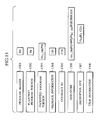
- the distributor compiles the consigned program to produce the plaintext loading module shown in Fig. 8.
- the loading module produced at this stage is not yet encrypted.
- the execution codes contain a portion (Pe) 803 which is to be encrypted by the subsequent processing and a portion (Pp) 802 which will not be encrypted and which will enable the operation such as relocation at a time of the execution.
- the source file is not absolutely necessary for all the programs, and it is also possible to link the loading module with a machine language library whose safety is already verified by the distributor such as the general purpose library function.
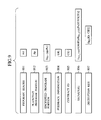
- the encryption target portion (Pe) is encrypted by the secret key encryption algorithm such as DES algorithm, for example, by using the program encryption key (secret key) Kx_CID determined by the distributor with respect to the contract, a feedback information 904 and a contract identifier CID 905 are added, and a signature 906 signed by using the program encryption key Kx_CID on a result of calculating the hash function H[] for the contents 901 to 905, so as to obtain the encrypted loading module.
- the hash function can be MD5 or SHA1, for example.
- the contract identifier CID is used in determining a range for which the privacy information of the user is to be removed by the distributor as described below.
- the feedback information contains the destination of the trouble information.
- the destination is described by a URI (Universal Resource Indicator) of the distributor.
- the last portion of the loading module is a decryption key 907 which is given by EKp[Kx_CID] obtained by encrypting the program encryption key Kx_CID by the public key algorithm such as RSA algorithm by using the public key Kp of the CPU (such as the tamper resistant processor) of the execution file receiving device (target system) of the user for executing the program.
- EKp[Kx_CID] obtained by encrypting the program encryption key Kx_CID by the public key algorithm such as RSA algorithm by using the public key Kp of the CPU (such as the tamper resistant processor) of the execution file receiving device (target system) of the user for executing the program.
- the processor of the target system internally maintains the secret key Ks corresponding to the public key Kp, so that it can extract Kx_CID by decrypting the decryption key 907 (EKp[Kx_CID]) and execute the encrypted program portion 903 by decrypting it.
- the user or the administrator who owns the execution file receiving device does not know the secret key Ks corresponding to the public key Kp so that the user or the administrator cannot decrypt the encrypted program portion 903 directly.
- the decryption of the program at the CPU is carried out within the chip so that it is impossible for the user to obtain the decrypted program and therefore the secret of the program can be protected.
- a protection mechanism for data to be handled by the executed program is also provided so that it is also possible to prevent the user from obtaining the data.
- These secret protections are based on the secrecy of the program encryption key Kx_CID, which implies that once Kx_CID is known, the recovery of the state before the encryption of the encrypted program portion 903 and the data handled by the program is possible by reading the encrypted program, data, and execution state (register information) in the main memory.
- the trustworthy program distributor distributes the already examined program so that there is an effect for eliminating this potential danger to the user. This completes the description of the procedure for compiling the program and producing the encrypted loading module.
- the content of the error is notified to the developer such that the developer will correct the source file and retry the above described procedure starting from the source file consignment (309).
- the distributor carries out tests based on the automatic testing script provided by the developer, with respect to each one of the plaintext loading module after the compiling and the encrypted loading module obtained by encrypting the plaintext loading module. If the test result does not satisfy the condition, the content of the error is also notified to the developer so that the developer will correct the source file and retry the above described procedure starting from the source file consignment (309).
- the encrypted loading module before the distribution is completed at this point but it is also possible to carry out the test of the completed loading module by the developer once again.
- the encrypted loading module is distributed from the distributor to the developer, and the developer requests the decryption key corresponding to the CPU of the target system for executing the loading module to the distributor.
- the developer can verify the influence of the compiling options and the encryption at the environment of the distributor on the performance of the program by using the same loading module that will actually be given to the user.
- the contract between the distributor and the developer is made by steps 305-308, and the distribution agent service fee is also determined there. At this point, it is possible to increase the distribution agent service fee according to the number of times for which the source file consignment was made in order to reflect the server load such as the source file examination and the compiling on the distribution agent service fee.
- the distributor may also check that there is no violation of the law and the rules regarding the public order and morals defined by the distributor in the program, by the inspection of the functions and the manual of the program to be done mainly by human inspectors.
- the encrypted loading module, the manual and the encryption key Kx_CID corresponding to the contract are stored at a safe place in the server of the distributor.
- the preparation for the distribution will begin in succession.
- the html format description of the downloading screen is prepared.
- Java Script located at the server specified that link is downloaded to the browser of the user and executed to download the program.
- the program encrypted by using the above described encryption key Kx_CID and the encryption key information E[Kp_u][Kx_CID] obtained by encrypting that encryption key Kx_CID by using the public key Kp_u of the processor of the user side computer 103 must be distributed to the user.
- E[X][Y] denotes some data Y encrypted by using the key X.
- the public key Kp_u for generating the encryption key information must be one that corresponds to the actually existing processor for the purpose of the program secret protection and the correct program execution.
- An exemplary method for downloading the program after checking the public key Kp_u of the processor is disclosed in the co-pending commonly assigned U.S. patent application serial No. 09/781,284.
- Java Script corresponding to it is executed to request the public key of the processor at the user side.
- the downloading procedure is executed at the distributor side in response to the downloading request issued from Java Script.
- the charging processing with respect to the user is executed.
- the charging processing may be started either before or during the downloading processing.
- the encrypted loading module and the encrypted key information are downloaded, and they are stored as a unified execution file on the user system.
- the encrypted loading module is decrypted and executed by the target system and utilized by the user as disclosed in the co-pending commonly assigned U.S. patent application serial No. 09/781,284.
- the program is usually more likely to contain troubles or the so called bugs when its functions become more complicated. Raising the level of perfection of the program by correcting bugs that occurred in the actual circumstance of the utilization by the user is an indispensable task in order to improve the quality of the program.
- the representative method for analyzing the trouble of the program that occurred at a time of the utilization by the user is a method for analyzing the memory image of the program or the so called core dump at a time of the trouble occurrence.
- OSs are provided with a mechanism for storing the image on the memory into a file and analyzing it when the continuation of the program execution becomes impossible or there is a sign of the trouble such as the reference to improper address.
- the developer can analyze the cause of the trouble and correct the trouble.
- this memory image has a possibility for containing information belonging to the privacy of the user such as a personal address book, health condition, credit card number, etc., for example.
- the handling of the privacy information including such an information should be permitted only to an organization with the social credibility and the strict inspection system, but in general it can be said that it is rather rare for the developer of the good program to have the social credibility and the strict inspection system.
- the inspection system here refers to the inspection system against the illegal use of the user information, not the audit system of the accounting.
- One possible solution is to remove the privacy information at a time of sending the trouble information from the user system. Namely, an information for specifying a region on the memory at which the privacy information of the user is to be stored (which will be referred to as a secret information storage region identifier) is stored in the distributed program in advance, and the program in which the trouble occurred itself or the user system produces the memory image from which the information of that memory region is removed according to the secret information storage region identifier, and sends it to the developer as the trouble information.
- a secret information storage region identifier an information for specifying a region on the memory at which the privacy information of the user is to be stored
- This removal is to be done by the user system so that it can be assumed that the user will not intentionally obstruct this removing procedure. However, the correct execution of this removing procedure presupposes the correctness of the secret information storage region identifier.
- the possibility of the incorrect secret information storage region identifier can be eliminated by requiring the trustworthy program distributor to sign the secret information storage region identifier. The user verifies the signature before the removal of the privacy information, and abandons the trouble information sending if there is alteration.
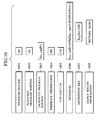
- the loading module format in this case is shown in Fig. 16.
- the secret information storage region identifier (SEC) 1608 is defined as a set of its start address (Saddr) and end address (Eaddr). Then, the alteration of the secret information storage region identifier is prevented by the signature 1606 by the distributor with respect to the entire loading module including the SEC.
- Another possible solution is to send the trouble information of the program to the distributor who has the strict inspection system by the following procedure, and transfer the trouble information to the developer after removing the privacy information there.
- the internal state of the program at that time is sent to the distributor by either one of the following two methods.
- the notification procedure included in the program in advance is called up, and the internal state of the program is sent to the distributor.
- the destination to be used here is specified by the distributor at a time of compiling the program, so that the internal state will not be sent directly to the developer.
- the internal state of the program that is encrypted on a memory is sent in a further encrypted form obtained by using the public key of the distributor.
- the user system sends the program image to the destination of the feedback information 904.
- the original program shown in Fig. 9 is to be attached to the program image.
- the program image can be sent more safely by requesting a certificate corresponding to the destination to the certificate authority, and encrypting the program image by using the encryption key of the certificate.
- the distributor that received the program image decrypts the encryption applied for the purpose of the network transfer, searches for the encryption key Kx_CID of that program from the database of the distributor according to the contract identifier 905, and decrypts the program and the data.
- the program contains the program decryption key 907 compatible with the CPU, but it can be decrypted only by the corresponding processor so that the distributor cannot decrypt it.
- the distributor system acquires the location of the privacy information stored in the database according t the contract identifier and removes data of the corresponding portion from the program image by replacing it by values "0", for example.
- the program image in the encrypted form is sent to the developer.
- the developer decrypts it by using the own secret key, analyze it, and use it to correct the trouble of the program.
- the developer can pay the reward with respect to the submission of the trouble information by the user in order to collect as many trouble information as possible.
- the developer submits a definition regarding what reward should be paid with respect to the submission of the trouble information, to the distributor in advance, and makes the contract.
- the electronic coupon that can be used at the site of the distributor will be given.
- the reward may not be given by the actual money.
- the known trouble patterns are stored in the server of the distributor in advance and the reward is reduced in the case where the submitted trouble information corresponds to the known trouble. If it is known that the trouble occurs under certain condition such as when the value of the variable becomes 0, for example, the reward for the trouble information that matches with that condition can be reduced.
- the contract with the distributor is newly made.
- the previous contract ID as an option, it is possible to receive a special handling such as the discount of the distribution agent service fee, and it is also possible to use the same name as the previous version for the identifier (URL) on the screen for explaining the downloading method to the user.
- the program is compiled again, a new value is allocated to the encryption key Kx_CID in correspondence to the new contract identifier (CID), and the encrypted loading module is produced.
- the contract is newly made and the loading module is newly produced in the case of changing the distribution agent service fee or the condition for the charging based on the number of times for use or the charging based on time, etc.
- the loading module will not be changed by the change of the amount of the reward with respect to the feedback information or the exclusion list.
- the encrypted program portion 903 is obtained by the encryption using the encryption key Kx_CID that is determined immediately after the completion of the compiling of the program.
- the encryption processing of the encrypted program portion 903 is carried out only once immediately after compiling the program, and there is no need to repeat the encryption processing again for every downloading request from the user.
- the procedure for determining the encryption key Kx_CID and encrypting the program may not necessarily be limited to the above described procedure.
- the determination of the program encryption key, the encryption of the encrypted program portion 903 and the production of the decryption key 908 can be carried out after receiving the request for downloading the program from the user.
- the first embodiment is directed to the exemplary case where the distributor system is directly connected to the public network.
- the source file of the program, the encryption key Kx_CID for encrypting the program, and the information for which the alteration must be prevented including the contract information and the secret information such as the privacy information region on the program are stored.
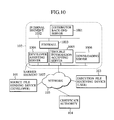
- the second embodiment is directed to a configuration shown in Fig. 10 in which the distributor system has front-end and back-end servers separated by a firewall so as to prevent attacks from the network.
- the distributor is disclosing the distribution agent service condition information by using a developer assisting server 1004.
- the developer 101 carries out the acquisition of the distribution agent service condition information and the contract making by communications with the developer assisting server 1004.
- the developer assisting server 1004 internally maintains the distribution agent service condition information, and carries out the distribution independently from the other servers of the distributor. However, the request for the contract from the developer 101 is transferred to the distributor back-end server 1001, and this distributor back-end server 1001 carries out the processing for verifying the identity certificate of the developer 101, confirming the contract condition, and storing the contract paper after the contract is made.
- the distributor back-end server 1001 is configured to accept only the request from the developer assisting server 1004.
- a firewall 1003 that connects a barrier segment 1007 with an internal segment 1002 is configured to transfer only requests from the servers provided in the barrier segment 1007, i.e., the developer assisting server 1004, a trouble information accepting server 1005, and a downloading server 1006. It is not possible to issue any request to the distributor back-end server 1001 directly from outside of the distributor system such as the developer 101 or the user 103.
- the distributor back-end server 1001 receives the source file through the developer assisting server 1004, examines and compiles the source file, and encrypts the compiled source file to produce the encrypted loading module that can be distributed. Then, the html document produced for the purpose of the distribution is transferred to the downloading server 1006 and disclosed there.
- the user system of the user 103 issues a downloading request for a specified document to the downloading server 1006, and presents the certificate of the public key Kp of the CPU of the user system to the downloading server 1006.
- the downloading server 1006 transfers the downloading request to the distributor back-end server 1001, and produces a file in which the loading module encryption key EKp[Kx_CID] encrypted by using the public key Kp of the CPU is attached to the encrypted loading module.
- the downloading server 1006 downloads this file to the user 103.
- the user 103 executes the program at the user system and when there is a trouble, the user 103 sends the trouble information to the trouble information accepting server 1005.
- the URI of the trouble information accepting server 1005 is written.
- the trouble information accepting server 1005 sends the trouble information and the source user information to the distributor back-end server 1001, and the distributor back-end server 1001 determines the privacy information region from the contract ID of the trouble information, removes information of that region, and sends the trouble information to the developer 101.
- the servers for directly receiving the requests from outside of the network and the back-end server for maintaining the secret information are separated in the second embodiment, such that the secret information can be managed more safely.
- the system that is both safe and inexpensive to both the program provider side and the user side is desirable.
- the main purpose for the program providing side is to prevent the illegal use for free, and the main purpose for the user side is to prevent the illegal charging by the third party.
- the most simple way for managing the utilization fee is that the program provider operates a server for managing the charging information and makes it impossible for the program to be executed by the user to be operative without accessing the server.
- the third embodiment is directed to the case where the distributor provides the agent service for managing the charging server on behalf of the developer.
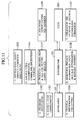
- Fig. 11 shows the outline of this embodiment, which differs from Fig. 2 in that the user 103 makes the utilization fee payment along with the trouble information submission at 1107.
- the operations at 1101-1106 and 1108-1009 are similar to those at 201-206 and 208-209 in Fig. 2.
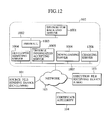
- Fig. 12 shows a configuration of the program distribution system in this embodiment, which differs from that of Fig. 10 in that a charging server 1208 is added to the distributor system.
- a charging server 1208 is added to the distributor system.
- the developer selects the utilization fee collecting agent service and the fee condition as the contract condition. Then, the developer develops the program in such a way that the charging function provided by the distributor will be called up in the program.
- the distributor examines the consigned program, and inspects whether the call up of the charging function is carried out correctly or not. When the inspection is passed, the distributor produces the encrypted loading module to which the charging function provided by the distributor is linked. The charging function is placed in a n encrypted region in order to prevent the alteration by the malicious user.
- the distributor sends a consent form for urging the content to the charging including the charging contract ID to the user, and the user returns that consent form by attaching the signature by using the secret key of the user (not the secret key of the CPU).
- the downloading server 1006 transfers the signature to the distributor back-end server 1001, and the distributor back-end server 1001 produces the encrypted loading module file in a format of Fig. 13 in which a user information 1308 is added to the basic format of the encrypted loading module shown in Fig. 9.
- the added user information 1308 comprises the charging contract ID and the hash value for the elements 1301 to 1307 and the charging contract ID
- the charging function verifies the hash value in the user information 1308, and if it is correct, the access to the charging server 1208 is made, the charging request is made, and the normal execution of the software is continued
- the charging function fails to verify the hash value, so that the execution of the software is stopped. In this way, the intentional avoidance of the charging by rewriting the charging information by the user is prevented.
- the portions that need to be rewritten for each user in the execution file are limited to just the elements 1306-1308, so that the processing load for the file rewriting by the server side is reduced.
- the single distributor carries out the inspection based on data obtained according to the feedback information from the user.
- the distributor receives comments or complaints along with the trouble information as the feedback information from the user.
- This information is stored in the database within the distributor back-end server. It is also possible to regularly conduct the questionnaire with respect to the users who are using the software, in order to gather in advance complaints such as "I think SPAM (mails such as advertisements that are sent regardless of the desire of the receiver) is increasing recently” and "I feel my personal information has been leaked".
- I think SPAM emails such as advertisements that are sent regardless of the desire of the receiver
- the relationship between the complaints and the software remains unclear in many cases. Even in such cases, there is a possibility for the software to contain some illegality, so that if there is a correlation between the number of complaints of the same kind and the utilization of the software, the distributor carries out the inspection starting from the software with a higher correlation, so as to realize the management for preventing the distribution of the illegal softwares.
- the software feedback information collecting and the software inspection are carried out by the distributor.
- the software distribution and the software inspection can be tasks with conflicting interests in some cases. For example, when the possibility of the user privacy violation arises for some software from which the distributor has earned considerable amount of the distribution handling fees, it can be easily expected that this distributor will not be very positive about the inspection of that software.
- This embodiment is directed to the case where the trouble information is collected by an inspection agent (inspector), which will now be described with references to Fig. 13 to Fig. 15.
- the operations 1501-1506 are the similar to the operations 201-206 of the first embodiment. The only difference is that, when the user request the downloading, the user specifies the inspection agent in the contract and signs the contract by using the secret key.
- the distributor produces the encrypted loading module in which the address of the specified inspection agent is stored as the feedback information 1304 in the loading module, and distributes it to the user.
- the user can select any desired inspection agent from a plurality of inspection agents regardless of who is the distributor.
- the trouble information is sent to the destination of the feedback information similarly as in the previous embodiments.
- the inspection agent removes the privacy information by either one of the following two methods.
- the inspection agent requests the decryption key corresponding to the contract ID and the information on the privacy information region to the distributor.
- the inspection agent then decrypts the feedback information, removes the privacy information in the privacy information region, and sends the feedback information to the developer.
- the inspection agent can see all of the plaintext execution codes of the loading module and the privacy information of the user in plaintext form, so that the inspection agent can actively carry out the inspection acts at the machine language level, but the inspection agent is required to handle the program and the privacy information in a strict manner.
- the inspection agent receives only the information on the privacy information region without decrypting the feedback information, and the removal of the privacy information in the privacy information region is carried out in a state where the feedback information remains encrypted.
- the locations of variables, the encryption block scheme, and the encryption algorithm need to be selected in advance such that the encryption of the privacy region has no relationship with the other regions.
- the inspection agent cannot read the plaintext machine language program without a help of the distributor, so that the active inspection acts will be limited.
- the circumstantial evidences are collected according to the user's complaints as already mentioned above, and the disclosure of the source file is demanded to the distributor with a significant doubt of the illegality by presenting these circumstantial evidences.
- the inspection agent may be given a limited right of the enforced investigation, such that the disclosure of the source file can be enforced against the distributor on a basis of the circumstantial evidences.
- the inspection agent inspects the disclosed source file, and if the illegality is detected, the inspection agent requires the distributor to stop the distribution and make an announcement to the users.
- the inspection agent may demand compensation to the developer of that software on behalf of the users without specialized knowledge who received damages by that software.
- the inspection agent pays a prescribed handling fee to the distributor.
- the inspection agent obviously has an obligation to maintain secrecy of the source file disclosed for the purpose of the inspection.
- the right for reverse engineering of the software is widely accepted right for the purpose of sharing the techniques.
- the reverse engineering is an indispensable technique in the case of correcting troubles in the software for which the developer of the software has abandoned the maintenance service.
- the source codes consigned to the distributor can be useful.
- the source codes are disclosed to the public after confirming that the developer of that software is out of contact.
- the party that wishes to exercise the maintenance of the software carries out the maintenance operations according to the disclosed source codes, Also, the distributor discloses the source codes of those softwares for which the protection period according to the copyright law has expired, so as to promote the sharing of the techniques.
- the present invention even in the case of distributing the encrypted program to the tamper resistant processor, it becomes possible to secure the safety of the execution file, and it also becomes possible to convey the trouble information such as bug information from the user to the program developer through the program distributor. It also becomes possible to determine the reward to the user who provided the trouble information for the distributed program, on a program by program basis.
- the encrypted program distribution device of each of the above described embodiments can be conveniently implemented in a form of a software package.
- Such a software package can be a computer program product which employs a storage medium including stored computer code which is used to program a computer to perform the disclosed function and process of the present invention.
- the storage medium may include, but is not limited to, any type of conventional floppy disks, optical disks, CD-ROMs, magneto-optical disks, ROMs, RAMs, EPROMs, EEPROMs, magnetic or optical cards, or any other suitable media for storing electronic instructions.
Landscapes
- Engineering & Computer Science (AREA)
- Computer Security & Cryptography (AREA)
- Computer Hardware Design (AREA)
- General Engineering & Computer Science (AREA)
- Computer Networks & Wireless Communication (AREA)
- Signal Processing (AREA)
- Software Systems (AREA)
- Theoretical Computer Science (AREA)
- Computing Systems (AREA)
- Physics & Mathematics (AREA)
- General Physics & Mathematics (AREA)
- Health & Medical Sciences (AREA)
- Bioethics (AREA)
- General Health & Medical Sciences (AREA)
- Technology Law (AREA)
- Multimedia (AREA)
- Medical Informatics (AREA)
- Databases & Information Systems (AREA)
- Storage Device Security (AREA)
- Information Transfer Between Computers (AREA)
Abstract
Description
Claims (32)
- A program distribution system, comprising a source file sending device, an encrypted program distribution device and an execution file receiving device, which are interconnected through a network;
the source file sending device having:a first sending unit configured to send a source file of a program to the encrypted program distribution device;
the encrypted program distribution device having:a first receiving unit configured to receive the source file sent from the source file sending device;an examination unit configured to examine the source file received by the first receiving unit;an execution file generation unit configured to generate an execution file of the program from the source file examined by the examination unit, when the source file passes an examination by the examination unit;a public key receiving unit configured to receive a public key which is either unique to the execution file receiving device or unique to a processor of the execution file receiving device, from the execution file receiving device, when the source file passes an examination by the examination unit;an encryption unit configured to encrypt at least a part of the execution file by using the public key received by the public key receiving unit, when the source file passes an examination by the examination unit; anda second sending unit configured to send the execution file encrypted by the encryption unit to the execution file receiving device, when the source file passes an examination by the examination unit; and
the execution file receiving device having:a public key sending unit configured to send the public key to the encrypted program distribution device;a second receiving unit configured to receive the execution file sent from the encrypted program distribution device; anda decryption unit configured to decrypt the execution file received by the second receiving unit by using a secret key corresponding to the public key. - The program distribution system of claim 1, wherein the encrypted program distribution device also has a detection unit configured to detect whether the source file violates a secret information handling rules or not according to the secret information handling rules predetermined between the source file sending device and the encrypted program distribution device;
wherein a generation of the execution file by the execution file generation unit, an encryption of the execution file by the encryption unit, and a sending of the execution file by the second sending unit are stopped when the detection unit detects a violation of the secret information handling rules by the source file. - The program distribution system of claim 2, wherein the encrypted program distribution device notifies information indicating the violation and/or a failure to the source file sending device when the detection unit detects the violation of the secret information handling rules by the source file and/or when the execution file generation unit fails to generate the execution file from the source file.
- The program distribution system of any of claims 1 to 3, wherein the source file sending device also has a third sending unit configured to send a region information specifying a secret information region in the execution file of the program to the encrypted program distribution device; and the encrypted program distribution device also has:a third receiving unit configured to receive the region information; anda secret information region determining unit configured to determine the secret information region that stores a secret information in the execution file according to the secret information handling rules predetermined between the source file sending device and the encrypted program distribution device and/or the region information.
- The program distribution system of any of claims 1 to 4, wherein the encrypted program distribution device also has a recording unit configured to record the source file, the execution file, the public key used in encrypting the execution file, and a region information for specifying a secret information region in the execution file in correspondence.
- The program distribution system of any of claims 1 to 5, wherein the execution file generation unit of the encrypted program distribution device generates functionally equivalent execution files having different machine language instructions at a time of generating the execution file from the source file.
- The program distribution system of any of claims 1 to 6, wherein the execution file generation unit of the encrypted program distribution device writes an information indicating a destination of a trouble information for the program as a part of the execution file at a time of generating the execution file from the source file.
- The program distribution system of claim 7 wherein the the destination of the trouble information is the encrypted program distribution device.
- The program distribution system of any of claims 1 to 9, wherein the execution file receiving device also has a third sending unit configured to send a trouble information regarding the execution file; and
the encrypted program distribution device also has a third receiving unit configured to receive the trouble information sent from the execution file receiving device. - The program distribution system of claim 9, wherein the encrypted program distribution system also has a fourth sending unit configured to send the trouble information received from the execution file receiving device to the source file sending device.
- A program distribution system, comprising a source file sending device, an encrypted program distribution device and an execution file receiving device, which are interconnected through a network;
the source file sending device having:a first sending unit configured to send a source file of a program to the encrypted program distribution device;
the encrypted program distribution device having:a first receiving unit configured to receive the source file sent from the source file sending device;an examination unit configured to examine the source file received by the first receiving unit;an execution file generation unit configured to generate an execution file of the program from the source file examined by the examination unit, when the source file passes an examination by the examination unit;a first encryption unit configured to encrypt at least a part of the execution file by using a prescribed secret key, when the source file passes an examination by the examination unit;a public key receiving unit configured to receive a public key which is either unique to the execution file receiving device or unique to a processor of the execution file receiving device, from the execution file receiving device, when the source file passes an examination by the examination unit;a second encryption unit configured to encrypt the prescribed secret key by using the public key received by the public key receiving unit, when the source file passes an examination by the examination unit; anda second sending unit configured to send the execution file encrypted by the first encryption unit and the prescribed secret key encrypted by the second encryption unit to the execution file receiving device, when the source file passes an examination by the examination unit; and
the execution file receiving device having:a public key sending unit configured to send the public key to the encrypted program distribution device;a second receiving unit configured to receive the execution file and the prescribed secret key sent from the encrypted program distribution device; anda first decryption unit configured to decrypt the prescribed secret key received by the second receiving unit by using a secret key corresponding to the public key; anda second decryption unit configured to decrypt the execution file received by the second receiving unit by using the prescribed secret key decrypted by the first decryption unit. - The program distribution system of claim 11, wherein the prescribed secret key is randomly generated according to the program.
- The program distribution system of either of claims 11 or 12, wherein the encrypted program distribution device also has a detection unit configured to detect whether the source file violates a secret information handling rules or not according to the secret information handling rules predetermined between the source file sending device and the encrypted program distribution device;
wherein a generation of the execution file by the execution file generation unit, an encryption of the execution file by the first encryption unit, an encryption of the prescribed secret key by the second encryption unit, and a sending of the execution file and the prescribed secret key by the second sending unit are stopped when the detection unit detects a violation of the secret information handling rules by the source file. - The program distribution system of claim 13, wherein the encrypted program distribution device notifies information indicating the violation and/or a failure to the source file sending device when the detection unit detects the violation of the secret information handling rules by the source file and/or when the execution file generation unit fails to generate the execution file from the source file.
- The program distribution system of any of claims 11 to 14, wherein the source file sending device also has a third sending unit configured to send a region information specifying a secret information region in the execution file of the program to the encrypted program distribution device; and
the encrypted program distribution device also has:a third receiving unit configured to receive the region information; anda secret information region determining unit configured to determine the secret information region that stores a secret information in the execution file according to the secret information handling rules predetermined between the source file sending device and the encrypted program distribution device and/or the region information. - The program distribution system of any of claims 11 to 15, wherein the encrypted program distribution device also has a recording unit configured to record the source file, the execution file, the prescribed secret key used in encrypting the execution file, and a region information for specifying a secret information region in the execution file in correspondence.
- The program distribution system of any of claims 11 to 16, wherein the execution file generation unit of the encrypted program distribution device generates functionally equivalent execution files having different machine language instructions at a time of generating the execution file from the source file.
- The program distribution system of any of claims 11 to 17, wherein the execution file generation unit of the encrypted program distribution device writes an information indicating a destination of a trouble information for the program as a part of the execution file at a time of generating the execution file from the source file.
- The program distribution system of claim 18, wherein the the destination of the trouble information is the encrypted program distribution device.
- The program distribution system of any of claims 11 to 19, wherein the execution file receiving device also has a third sending unit configured to send a trouble information regarding the execution file; and
the encrypted program distribution device also has a third receiving unit configured to receive the trouble information sent from the execution file receiving device. - The program distribution system of claim 20, wherein the encrypted program distribution system also has a fourth sending unit configured to send the trouble information received from the execution file receiving device to the source file sending device.
- The program distribution system of claim 20, wherein the encrypted program distribution device also has a reward determining unit configured to determine a prescribed reward to a user of the execution file receiving device who sent the trouble information.
- The program distribution system of any of claims 11 to 22, wherein the execution file receiving device also has a third sending unit configured to send a trouble information regarding the execution file; and
the encrypted program distribution device also has:a third decryption unit configured to decrypt a part of the trouble information sent from the execution file receiving device by using the prescribed secret key corresponding to the execution file;a removal unit configured to remove a prescribed secret information in a prescribed secret information storage region from the trouble information decrypted by the third decryption unit; anda third sending unit configured to send the trouble information from which the prescribed secret information is removed by the removing unit, to the source file sending device. - An encrypted program distribution device, comprising:a receiving unit configured to receive a source file of a program sent from a source file sending device through a network;an examination unit configured to examine the source file received by the first receiving unit;an execution file generation unit configured to generate an execution file of the program from the source file examined by the examination unit, when the source file passes an examination by the examination unit;a public key receiving unit configured to receive a public key which is either unique to an execution file receiving device or unique to a processor of the execution file receiving device, from the execution file receiving device through the network, when the source file passes an examination by the examination unit;an encryption unit configured to encrypt at least a part of the execution file by using the public key received by the public key receiving unit, when the source file passes an examination by the examination unit; anda sending unit configured to send the execution file encrypted by the encryption unit to the execution file receiving device, when the source file passes an examination by the examination unit.
- An encrypted program distribution device, comprising:a receiving unit configured to receive a source file of a program sent from a source file sending device through a network;an examination unit configured to examine the source file received by the first receiving unit;an execution file generation unit configured to generate an execution file of the program from the source file examined by the examination unit, when the source file passes an examination by the examination unit;a first encryption unit configured to encrypt at least a part of the execution file by using a prescribed secret key, when the source file passes an examination by the examination unit;a public key receiving unit configured to receive a public key which is either unique to an execution file receiving device or unique to a processor of the execution file receiving device, from the execution file receiving device through the network, when the source file passes an examination by the examination unit;a second encryption unit configured to encrypt the prescribed secret key by using the public key received by the public key receiving unit, when the source file passes an examination by the examination unit; anda sending unit configured to send the execution file encrypted by the first encryption unit and the prescribed secret key encrypted by the second encryption unit to the execution file receiving device, when the source file passes an examination by the examination unit.
- A program distribution method in a program distribution system comprising a source file sending device, an encrypted program distribution device and an execution file receiving device, which are interconnected through a network, the method comprising:(a) sending a source file of a program from the source file sending device to the encrypted program distribution device;(b) receiving the source file sent from the source file sending device at the encrypted program distribution device;(c) examining the source file received by the step (b) at the encrypted program distribution device;(d) generating an execution file of the program from the source file examined by the step (c), at the encrypted program distribution device, when the source file passes an examination by the step (c);(e) receiving a public key which is either unique to the execution file receiving device or unique to a processor of the execution file receiving device and which is from the execution file receiving device, at the encrypted program distribution device, when the source file passes an examination by the step (c);(f) encrypting at least a part of the execution file by using the public key received by the step (e), at the encrypted program distribution device, when the source file passes an examination by the step (c);(g) sending the execution file encrypted by the step (f) from the encrypted program distribution device to the execution file receiving device, when the source file passes an examination by the step (c);(h) receiving the execution file sent from the encrypted program distribution device at the execution file receiving device; and(i) decrypting the execution file received by the step (h) by using a secret key corresponding to the public key at the execution file receiving device.
- A program distribution method in a program distribution system comprising a source file sending device, an encrypted program distribution device and an execution file receiving device, which are interconnected through a network, the method comprising:(a) sending a source file of a program from the source file sending device to the encrypted program distribution device;(b) receiving the source file sent from the source file sending device at the encrypted program distribution device;(c) examining the source file received by the step (b) at the encrypted program distribution device;(d) generating an execution file of the program from the source file examined by the step (c), at the encrypted program distribution device, when the source file passes an examination by the step (c);(e) encrypting at least a part of the execution file by using a prescribed secret key, at the encrypted program distribution device, when the source file passes an examination by the step (c);(f) receiving a public key which is either unique to the execution file receiving device or unique to a processor of the execution file receiving device and which is sent from the execution file receiving device, at the encrypted program distribution device, when the source file passes an examination by the step (c);(g) encrypting the prescribed secret key by using the public key received by the step (f), at the encrypted program distribution device, when the source file passes an examination by the step (c);(h) sending the execution file encrypted by the step (e) and the prescribed secret key encrypted by the step (g) from the encrypted program distribution device to the execution file receiving device, when the source file passes an examination by the step (c);(i) receiving the execution file and the prescribed secret key sent from the encrypted program distribution device at the execution file receiving device;(j) decrypting the prescribed secret key received by the step (i) by using a secret key corresponding to the public key at the execution file receiving device; and(k) decrypting the execution file received by the step (i) by using the prescribed secret key decrypted by the step(j) at the execution file receiving device.
- A program distribution method, comprising:(a) receiving a source file of a program sent from a source file sending device through a network;(b) examining the source file received by the step (a);(c) generating an execution file of the program from the source file examined by the step (b), when the source file passes an examination by the step (b);(d) receiving a public key which is either unique to an execution file receiving device or unique to a processor of the execution file receiving device, from the execution file receiving device through the network, when the source file passes an examination by the step (b);(e) encrypting at least a part of the execution file by using the public key received by the step (d), when the source file passes an examination by the step (b); and(f) sending the execution file encrypted by the step (e) to the execution file receiving device, when the source file passes an examination by the step (b).
- A program distribution method, comprising:(a) receiving a source file of a program sent from a source file sending device through a network;(b) examining the source file received by the step (a);(c) generating an execution file of the program from the source file examined by the step (b), when the source file passes an examination by the step (b);(d) encrypting at least a part of the execution file by using a prescribed secret key, when the source file passes an examination by the step (b);(e) receiving a public key which is either unique to an execution file receiving device or unique to a processor of the execution file receiving device, from the execution file receiving device through the network, when the source file passes an examination by the step (b);(f) encrypting the prescribed secret key by using the public key received by the step (e), when the source file passes an examination by the step (b); and(g) sending the execution file encrypted by the step (d) and the prescribed secret key encrypted by the step (f) to the execution file receiving device, when the source file passes an examination by the step (b).
- A computer program product for causing a computer to function as an encrypted program distribution device, the computer program product comprising:first computer program codes for causing the computer to receive a source file of a program sent from a source file sending device through a network;second computer program codes for causing the computer to examine the source file received by the first computer program codes;third computer program codes for causing the computer to generate an execution file of the program from the source file examined by the second computer program codes, when the source file passes an examination by the second computer program codes;fourth computer program codes for causing the computer to receive a public key which is either unique to an execution file receiving device or unique to a processor of the execution file receiving device, from the execution file receiving device through the network, when the source file passes an examination by the second computer program codes;fifth computer program codes for causing the computer to encrypt at least a part of the execution file by using the public key received by the fourth computer program codes, when the source file passes an examination by the second computer program codes; andsixth computer program codes for causing the computer to send the execution file encrypted by the fifth computer program codes to the execution file receiving device, when the source file passes an examination by the second computer program codes.
- A computer program product for causing a computer to function as an encrypted program distribution device, the computer program product comprising:first computer program codes for causing the computer to receive a source file of a program sent from a source file sending device through a network;second computer program codes for causing the computer to examine the source file received by the first computer program codes;third computer program codes for causing the computer to generate an execution file of the program from the source file examined by the second computer program codes, when the source file passes an examination by the second computer program codes;fourth computer program codes for causing the computer to encrypt at least a part of the execution file by using a prescribed secret key, when the source file passes an examination by the second computer program codes;fifth computer program codes for causing the computer to receive a public key which is either unique to an execution file receiving device or unique to a processor of the execution file receiving device, from the execution file receiving device through the network, when the source file passes an examination by the second computer program codes;sixth computer program codes for causing the computer to encrypt the prescribed secret key by using the public key received by the fifth computer program codes, when the source file passes an examination by the second computer program codes; andseventh computer program codes for causing the computer to send the execution file encrypted by the fourth computer program codes and the prescribed secret key encrypted by the sixth computer program codes to the execution file receiving device, when the source file passes an examination by the second computer program codes.
- A carrier medium carrying computer readable instructions for controlling the computer to carry out the method of any one of claims 28 or 29.
Applications Claiming Priority (2)
| Application Number | Priority Date | Filing Date | Title |
|---|---|---|---|
| JP2000332068 | 2000-10-31 | ||
| JP2000332068A JP4067757B2 (en) | 2000-10-31 | 2000-10-31 | Program distribution system |
Publications (2)
| Publication Number | Publication Date |
|---|---|
| EP1308820A2 true EP1308820A2 (en) | 2003-05-07 |
| EP1308820A3 EP1308820A3 (en) | 2003-07-09 |
Family
ID=18808322
Family Applications (1)
| Application Number | Title | Priority Date | Filing Date |
|---|---|---|---|
| EP01309273A Withdrawn EP1308820A3 (en) | 2000-10-31 | 2001-10-31 | Encrypted program distribution system using computer network |
Country Status (3)
| Country | Link |
|---|---|
| US (1) | US20020053024A1 (en) |
| EP (1) | EP1308820A3 (en) |
| JP (1) | JP4067757B2 (en) |
Cited By (2)
| Publication number | Priority date | Publication date | Assignee | Title |
|---|---|---|---|---|
| CN103561091A (en) * | 2013-10-31 | 2014-02-05 | 上海上讯信息技术有限公司 | Document outgoing control system and method |
| CN104426989A (en) * | 2013-09-09 | 2015-03-18 | 联想(北京)有限公司 | Data presentation method, data requiring method and electronic equipment |
Families Citing this family (50)
| Publication number | Priority date | Publication date | Assignee | Title |
|---|---|---|---|---|
| JP4027482B2 (en) * | 1997-12-24 | 2007-12-26 | 富士通株式会社 | Translation apparatus and method for performing cryptographic restoration |
| US7320075B2 (en) * | 2001-11-20 | 2008-01-15 | Safenet, Inc. | Software protection method utilizing hidden application code in a protection dynamic link library object |
| US7280819B2 (en) * | 2003-02-19 | 2007-10-09 | Cingular Wireless Ii Llc | Interrogate-response communication system with privacy indication |
| US7676546B2 (en) * | 2003-03-25 | 2010-03-09 | Verisign, Inc. | Control and management of electronic messaging |
| JP4282472B2 (en) * | 2003-12-26 | 2009-06-24 | 株式会社東芝 | Microprocessor |
| GB0403705D0 (en) * | 2004-02-19 | 2004-03-24 | Waterleaf Ltd | Gaming facility and method of operation thereof |
| JP4559794B2 (en) * | 2004-06-24 | 2010-10-13 | 株式会社東芝 | Microprocessor |
| JP4612461B2 (en) * | 2004-06-24 | 2011-01-12 | 株式会社東芝 | Microprocessor |
| JP4204522B2 (en) * | 2004-07-07 | 2009-01-07 | 株式会社東芝 | Microprocessor |
| US20060064488A1 (en) * | 2004-09-17 | 2006-03-23 | Ebert Robert F | Electronic software distribution method and system using a digital rights management method based on hardware identification |
| US9489496B2 (en) * | 2004-11-12 | 2016-11-08 | Apple Inc. | Secure software updates |
| US7606370B2 (en) * | 2005-04-05 | 2009-10-20 | Mcafee, Inc. | System, method and computer program product for updating security criteria in wireless networks |
| JP4727278B2 (en) | 2005-04-05 | 2011-07-20 | 株式会社エヌ・ティ・ティ・ドコモ | Application program verification system, application program verification method, and computer program |
| US7757274B2 (en) * | 2005-04-05 | 2010-07-13 | Mcafee, Inc. | Methods and systems for exchanging security information via peer-to-peer wireless networks |
| US7822972B2 (en) * | 2005-04-05 | 2010-10-26 | Mcafee, Inc. | Remotely configurable bridge system and method for use in secure wireless networks |
| US7761710B2 (en) | 2005-04-05 | 2010-07-20 | Mcafee, Inc. | Captive portal system and method for use in peer-to-peer networks |
| US20060288411A1 (en) * | 2005-06-21 | 2006-12-21 | Avaya, Inc. | System and method for mitigating denial of service attacks on communication appliances |
| JP2007067630A (en) * | 2005-08-30 | 2007-03-15 | Ancl Inc | Data transmission system using network and its method |
| US7930557B2 (en) * | 2006-05-16 | 2011-04-19 | Autodesk, Inc. | Framework for embedding graphical processing unit programs in computer software |
| JP4818868B2 (en) * | 2006-10-05 | 2011-11-16 | 日本電信電話株式会社 | Quarantine network system using virtual terminal, method for quarantining virtual terminal, and program for quarantining virtual terminal |
| EP2053533A4 (en) | 2006-11-09 | 2011-03-23 | Panasonic Corp | FALSIFICATION DETECTION SYSTEM, FALSIFICATION DETECTION METHOD, FALSIFICATION DETECTION PROGRAM, RECORDING MEDIUM, INTEGRATED CIRCUIT, AUTHENTICATION INFORMATION GENERATION DEVICE, AND FALSE DETECTION DEVICE |
| US8302179B2 (en) * | 2006-12-13 | 2012-10-30 | Avaya Inc. | Embedded firewall at a telecommunications endpoint |
| US7934197B2 (en) | 2006-12-19 | 2011-04-26 | Telefonaktiebolaget Lm Ericsson (Publ) | Maintaining code integrity in a central software development system |
| JP4859775B2 (en) * | 2007-07-18 | 2012-01-25 | ヤフー株式会社 | Content distribution apparatus, content distribution control method, and content distribution control program |
| JP4976991B2 (en) * | 2007-11-22 | 2012-07-18 | 株式会社東芝 | Information processing apparatus, program verification method, and program |
| US9251339B2 (en) * | 2007-12-29 | 2016-02-02 | International Business Machines Corporation | Core dump privacy during application failure |
| JP2011515743A (en) * | 2008-03-04 | 2011-05-19 | アップル インコーポレイテッド | Managing code entitlements for software developers in a secure operating environment |
| US20090327712A1 (en) * | 2008-06-29 | 2009-12-31 | Amnon Sarig | System and method for variable encryption |
| US8010804B2 (en) * | 2008-08-08 | 2011-08-30 | International Business Machines Corporation | Method to protect secrets against encrypted section attack |
| JP5322620B2 (en) | 2008-12-18 | 2013-10-23 | 株式会社東芝 | Information processing apparatus, program development system, program verification method, and program |
| JP2010040051A (en) * | 2009-09-15 | 2010-02-18 | Spicysoft Kk | Content delivery system, content delivery method, and content delivery apparatus |
| DE102010003581A1 (en) * | 2010-04-01 | 2011-10-06 | Bundesdruckerei Gmbh | Electronic device, data processing system and method for reading data from an electronic device |
| US8719415B1 (en) | 2010-06-28 | 2014-05-06 | Amazon Technologies, Inc. | Use of temporarily available computing nodes for dynamic scaling of a cluster |
| US8260840B1 (en) * | 2010-06-28 | 2012-09-04 | Amazon Technologies, Inc. | Dynamic scaling of a cluster of computing nodes used for distributed execution of a program |
| US8832855B1 (en) * | 2010-09-07 | 2014-09-09 | Symantec Corporation | System for the distribution and deployment of applications with provisions for security and policy conformance |
| WO2013022999A1 (en) * | 2011-08-08 | 2013-02-14 | Bloomberg Finance Lp | System and method for electronic distribution of software and data |
| US8896858B2 (en) * | 2012-07-22 | 2014-11-25 | Xerox Corporation | Method for enforcing document privacy through third party systems |
| GB2531770A (en) * | 2014-10-30 | 2016-05-04 | Ibm | Confidential Extracting System Internal Data |
| WO2016114822A1 (en) | 2015-01-16 | 2016-07-21 | Cyph Inc. | A system and method of cryprographically signing web applications |
| US20160197897A1 (en) * | 2015-01-07 | 2016-07-07 | Cyph, Inc. | Cross-client communication method |
| US9954837B2 (en) | 2015-01-07 | 2018-04-24 | Cyph, Inc. | Method of multi-factor authenication during encrypted communications |
| US9965635B2 (en) * | 2015-04-24 | 2018-05-08 | Panasonic Intellectual Property Corporation Of America | Image tagging device |
| DE102016009439A1 (en) * | 2016-08-03 | 2018-02-08 | Giesecke+Devrient Mobile Security Gmbh | Individual encryption of control commands |
| CN108471411B (en) * | 2018-03-19 | 2020-11-13 | 银联商务股份有限公司 | Key processing method and device |
| JP7090903B2 (en) * | 2018-11-09 | 2022-06-27 | 国立大学法人東北大学 | Information processing system, data provision method, and manufacturing method of information processing system |
| JP7261566B2 (en) * | 2018-11-14 | 2023-04-20 | 日鉄ソリューションズ株式会社 | Program, storage medium, information processing device and information processing method |
| DE112019006051T5 (en) * | 2019-01-09 | 2021-09-30 | Mitsubishi Electric Corporation | SECURE COMPUTING SETUP AND CLIENT SETUP |
| JP2020202535A (en) * | 2019-06-13 | 2020-12-17 | 伊格拉斯▲控▼股有限公司 | Control system and control method applied to safe manufacturing |
| JP7448005B2 (en) * | 2020-06-03 | 2024-03-12 | 日本電気株式会社 | Backdoor inspection device, backdoor inspection method, and program |
| CN114301596A (en) * | 2021-11-18 | 2022-04-08 | 成都市卡蛙科技有限公司 | OTA (over the air) secure communication method and device for vehicle intranet, vehicle-mounted system and storage medium |
Family Cites Families (10)
| Publication number | Priority date | Publication date | Assignee | Title |
|---|---|---|---|---|
| US5509074A (en) * | 1994-01-27 | 1996-04-16 | At&T Corp. | Method of protecting electronically published materials using cryptographic protocols |
| US5701343A (en) * | 1994-12-01 | 1997-12-23 | Nippon Telegraph & Telephone Corporation | Method and system for digital information protection |
| SE504085C2 (en) * | 1995-02-01 | 1996-11-04 | Greg Benson | Methods and systems for managing data objects in accordance with predetermined conditions for users |
| NO302388B1 (en) * | 1995-07-13 | 1998-02-23 | Sigurd Sigbjoernsen | Procedure and apparatus for protecting software against unauthorized use |
| US5892904A (en) * | 1996-12-06 | 1999-04-06 | Microsoft Corporation | Code certification for network transmission |
| US6141698A (en) * | 1997-01-29 | 2000-10-31 | Network Commerce Inc. | Method and system for injecting new code into existing application code |
| US6108420A (en) * | 1997-04-10 | 2000-08-22 | Channelware Inc. | Method and system for networked installation of uniquely customized, authenticable, and traceable software application |
| US6044469A (en) * | 1997-08-29 | 2000-03-28 | Preview Software | Software publisher or distributor configurable software security mechanism |
| WO2001010076A2 (en) * | 1999-07-29 | 2001-02-08 | Intertrust Technologies Corp. | Systems and methods for protecting secure and insecure computing environments using cryptography |
| US6684389B1 (en) * | 1999-08-05 | 2004-01-27 | Canon Kabushiki Kaisha | Compiler that decrypts encrypted source code |
-
2000
- 2000-10-31 JP JP2000332068A patent/JP4067757B2/en not_active Expired - Fee Related
-
2001
- 2001-10-31 US US09/984,717 patent/US20020053024A1/en not_active Abandoned
- 2001-10-31 EP EP01309273A patent/EP1308820A3/en not_active Withdrawn
Cited By (3)
| Publication number | Priority date | Publication date | Assignee | Title |
|---|---|---|---|---|
| CN104426989A (en) * | 2013-09-09 | 2015-03-18 | 联想(北京)有限公司 | Data presentation method, data requiring method and electronic equipment |
| CN104426989B (en) * | 2013-09-09 | 2018-12-14 | 联想(北京)有限公司 | Data presentation method, data request method and electronic equipment |
| CN103561091A (en) * | 2013-10-31 | 2014-02-05 | 上海上讯信息技术有限公司 | Document outgoing control system and method |
Also Published As
| Publication number | Publication date |
|---|---|
| JP4067757B2 (en) | 2008-03-26 |
| US20020053024A1 (en) | 2002-05-02 |
| EP1308820A3 (en) | 2003-07-09 |
| JP2002140126A (en) | 2002-05-17 |
Similar Documents
| Publication | Publication Date | Title |
|---|---|---|
| US20020053024A1 (en) | Encrypted program distribution system using computer network | |
| EP1342149B1 (en) | Method for protecting information and privacy | |
| US8327453B2 (en) | Method and apparatus for protecting information and privacy | |
| US6195432B1 (en) | Software distribution system and software utilization scheme for improving security and user convenience | |
| US8332823B2 (en) | Application program verification system, application program verification method and computer program | |
| JP4506837B2 (en) | Authority transfer device, authority transfer system, authority transfer method, and authority transfer program | |
| US20060265337A1 (en) | Automated system for management of licensed digital assets | |
| US6446211B1 (en) | Method and apparatus for monitoring software using encryption | |
| CA2285392A1 (en) | Method and system for networked installation of uniquely customized, authenticable, and traceable software applications | |
| CN101201884A (en) | Software component, software component management method and software component management system | |
| JPH10269078A (en) | Software distribution method, server device and client device | |
| US20020055910A1 (en) | Program component distribution | |
| JPH1031587A (en) | Data terminal device and computer program | |
| CN119475310A (en) | Offline authorization verification method, system, terminal and storage medium for application program | |
| JP2003050641A (en) | Program management system, its program management method, and information management program | |
| WO2002035324A2 (en) | System and method for managing digital content | |
| US20030212639A1 (en) | Method and system for providing secure authoring services for protected software | |
| JP7548615B1 (en) | Unauthorized operation detection system, memory controller, information processing device, and method and program for detecting unauthorized operation | |
| Hachez et al. | Towards a practical secure framework for mobile code commerce | |
| CN103686367A (en) | Intelligent set top box application software download management method and system | |
| Framework | National Information Assurance Partnership | |
| Hachez¹ et al. | Towards a Practical Secure Framework for | |
| WO2007127287A2 (en) | Binding executable code to a software application |
Legal Events
| Date | Code | Title | Description |
|---|---|---|---|
| PUAI | Public reference made under article 153(3) epc to a published international application that has entered the european phase |
Free format text: ORIGINAL CODE: 0009012 |
|
| 17P | Request for examination filed |
Effective date: 20011112 |
|
| AK | Designated contracting states |
Designated state(s): AT BE CH CY DE DK ES FI FR GB GR IE IT LI LU MC NL PT SE TR |
|
| AX | Request for extension of the european patent |
Extension state: AL LT LV MK RO SI |
|
| PUAL | Search report despatched |
Free format text: ORIGINAL CODE: 0009013 |
|
| AK | Designated contracting states |
Designated state(s): AT BE CH CY DE DK ES FI FR GB GR IE IT LI LU MC NL PT SE TR |
|
| AX | Request for extension of the european patent |
Extension state: AL LT LV MK RO SI |
|
| AKX | Designation fees paid |
Designated state(s): DE FR GB |
|
| 17Q | First examination report despatched |
Effective date: 20070824 |
|
| STAA | Information on the status of an ep patent application or granted ep patent |
Free format text: STATUS: THE APPLICATION IS DEEMED TO BE WITHDRAWN |
|
| 18D | Application deemed to be withdrawn |
Effective date: 20080104 |