EP1308452A2 - Oligonucleotide labeling reactants based on acyclonucleosides and conjugates derived thereof - Google Patents
Oligonucleotide labeling reactants based on acyclonucleosides and conjugates derived thereof Download PDFInfo
- Publication number
- EP1308452A2 EP1308452A2 EP02396153A EP02396153A EP1308452A2 EP 1308452 A2 EP1308452 A2 EP 1308452A2 EP 02396153 A EP02396153 A EP 02396153A EP 02396153 A EP02396153 A EP 02396153A EP 1308452 A2 EP1308452 A2 EP 1308452A2
- Authority
- EP
- European Patent Office
- Prior art keywords
- group
- labeling
- amino
- labeling reactant
- pyrimidine
- Prior art date
- Legal status (The legal status is an assumption and is not a legal conclusion. Google has not performed a legal analysis and makes no representation as to the accuracy of the status listed.)
- Granted
Links
- 0 CCC(N(C*)Cc1nc(CN(C[U])C(*)C*)ccc1)[U] Chemical compound CCC(N(C*)Cc1nc(CN(C[U])C(*)C*)ccc1)[U] 0.000 description 6
- VCYXMBCDWRLDHR-UHFFFAOYSA-N OCC(CN(C=CC(N1CCCCCCNC(C(F)(F)F)=O)=O)C1=O)O Chemical compound OCC(CN(C=CC(N1CCCCCCNC(C(F)(F)F)=O)=O)C1=O)O VCYXMBCDWRLDHR-UHFFFAOYSA-N 0.000 description 1
Images
Classifications
-
- C—CHEMISTRY; METALLURGY
- C07—ORGANIC CHEMISTRY
- C07H—SUGARS; DERIVATIVES THEREOF; NUCLEOSIDES; NUCLEOTIDES; NUCLEIC ACIDS
- C07H21/00—Compounds containing two or more mononucleotide units having separate phosphate or polyphosphate groups linked by saccharide radicals of nucleoside groups, e.g. nucleic acids
-
- C—CHEMISTRY; METALLURGY
- C07—ORGANIC CHEMISTRY
- C07F—ACYCLIC, CARBOCYCLIC OR HETEROCYCLIC COMPOUNDS CONTAINING ELEMENTS OTHER THAN CARBON, HYDROGEN, HALOGEN, OXYGEN, NITROGEN, SULFUR, SELENIUM OR TELLURIUM
- C07F9/00—Compounds containing elements of Groups 5 or 15 of the Periodic Table
- C07F9/02—Phosphorus compounds
- C07F9/547—Heterocyclic compounds, e.g. containing phosphorus as a ring hetero atom
- C07F9/645—Heterocyclic compounds, e.g. containing phosphorus as a ring hetero atom having two nitrogen atoms as the only ring hetero atoms
- C07F9/6509—Six-membered rings
- C07F9/6512—Six-membered rings having the nitrogen atoms in positions 1 and 3
-
- C—CHEMISTRY; METALLURGY
- C07—ORGANIC CHEMISTRY
- C07F—ACYCLIC, CARBOCYCLIC OR HETEROCYCLIC COMPOUNDS CONTAINING ELEMENTS OTHER THAN CARBON, HYDROGEN, HALOGEN, OXYGEN, NITROGEN, SULFUR, SELENIUM OR TELLURIUM
- C07F9/00—Compounds containing elements of Groups 5 or 15 of the Periodic Table
- C07F9/02—Phosphorus compounds
- C07F9/547—Heterocyclic compounds, e.g. containing phosphorus as a ring hetero atom
- C07F9/6558—Heterocyclic compounds, e.g. containing phosphorus as a ring hetero atom containing at least two different or differently substituted hetero rings neither condensed among themselves nor condensed with a common carbocyclic ring or ring system
- C07F9/65583—Heterocyclic compounds, e.g. containing phosphorus as a ring hetero atom containing at least two different or differently substituted hetero rings neither condensed among themselves nor condensed with a common carbocyclic ring or ring system each of the hetero rings containing nitrogen as ring hetero atom
-
- C—CHEMISTRY; METALLURGY
- C07—ORGANIC CHEMISTRY
- C07B—GENERAL METHODS OF ORGANIC CHEMISTRY; APPARATUS THEREFOR
- C07B2200/00—Indexing scheme relating to specific properties of organic compounds
- C07B2200/11—Compounds covalently bound to a solid support
-
- Y—GENERAL TAGGING OF NEW TECHNOLOGICAL DEVELOPMENTS; GENERAL TAGGING OF CROSS-SECTIONAL TECHNOLOGIES SPANNING OVER SEVERAL SECTIONS OF THE IPC; TECHNICAL SUBJECTS COVERED BY FORMER USPC CROSS-REFERENCE ART COLLECTIONS [XRACs] AND DIGESTS
- Y02—TECHNOLOGIES OR APPLICATIONS FOR MITIGATION OR ADAPTATION AGAINST CLIMATE CHANGE
- Y02P—CLIMATE CHANGE MITIGATION TECHNOLOGIES IN THE PRODUCTION OR PROCESSING OF GOODS
- Y02P20/00—Technologies relating to chemical industry
- Y02P20/50—Improvements relating to the production of bulk chemicals
- Y02P20/55—Design of synthesis routes, e.g. reducing the use of auxiliary or protecting groups
Definitions
- This invention relates to compounds for labeling of oligonucleotides using either machine assisted solid phase chemistry or polymerases, and conjugates derived thereof.
- Synthetic oligonucleotides tethered to various ligands have been used as research tools in molecular biology [for reviews, see e.g. Iyer, R.P., Roland, A., Zhou, W., and Ghosh, K. Curr. Opin. Mol. Ther., 1999, 1, 344; Uhlman, E. and Peyman. A. Chem Rev , 1990, 90, 543; English. U. and Gauss, D.H. Angew. Chem. Int. Ed. Engl. 1991, 30, 613. Beaugace and Iyer, Tetrahedron , 1993, 49, 6123.; Wojczewski, C., Stolze, K. and Engels, J.W.
- Oligonucleotides carrying reporter groups have had widespread use for automated DNA sequencing, hybridization affinity chromatography and fluorescence microscopy. Oligonucleotide-biotin conjugates are widely used as hybridization probes. Antisense oligonucleotides covalently linked to intercalators, chain cleaving or alkylating agents have been shown to be efficient as gene expression regulators. The sequence specific artificial nucleases, when targeted against mRNA, may find applications even as chemotherapeutics.
- the labels can be attached to the target oligonucleotides or polynucleotides either chemically or enzymatically.
- the chemical approach includes often preparation of modified building blocks, and their subsequent insertion into synthetic oligonucletides during oligonucleotide synthesis.
- natural DNA can be transformed, for example by bisulfite catalyzed transamination of cytosine residues [Biochemistry, 1980, 19, 1774] followed by labeling of the amino functions with appropriate label molecules.
- the enzymatic approach in turn, consists of preparation of nucleoside triphosphates derivatized with appropriate tether molecules and their incorporation into RNA or DNA structure by a polymerase reaction.
- oligonucleotide structure For several applications, such as for DNA hybridization assays, it is desirable to introduce more than one reporter group to the oligonucleotide structure.
- This can be performed by three alternative methods: (i) by coupling several base- or carbohydrate-tethered nucleosidic building blocks or nucleoside triphosphates to the growing oligonucleotide chain, (ii) by functionalization of the internucleosidic phosphodiester linkages, or (iii) by using several multifunctional non-nucleosidic building blocks during oligonucleotide chain assembly. All of these methods have their own drawbacks.
- linker arms to the nucleobase is most commonly performed by allowing a nucleoside with a good leaving group ( N -tosyl, N -benzoyl, halogen, triazole, thiol) at C4 of pyrimidines or C2, C8 or C6 of purines to react with the appropriate nucleophilic linker molecule (e.g. an alkane- ⁇ , ⁇ -diamine). Since normally an excess of linker molecule and rather vigorous reaction conditions has to be used laborious purification procedures cannot be avoided. The basic reaction conditions needed gives additional requirements to the other protecting groups in the target molecule.
- a good leaving group N -tosyl, N -benzoyl, halogen, triazole, thiol
- the appropriate nucleophilic linker molecule e.g. an alkane- ⁇ , ⁇ -diamine
- linker molecules may be attached to C5 of pyrimidine bases by a palladium catalyzed coupling reaction between 5-halogeno pyrimidine nucleoside and an alkynyl- or allyl linker.
- linker arm to the N3 of 3', 5 '-O- protected thymidine [ J . Org. Chem., 1999, 64, 5083; Nucleosides, Nucleotides, 1999, 18, 1339] and 2'-deoxy-5'- O -(4,4'-dimethoxytrityl)uridine [ Org. Lett. 2001, 3, 2473] based on Mitsunobu reaction have been reported. Since the coupling reaction is performed under mild conditions, a wide range of tethers can be introduced.
- lanthanide(III) chelates are labels of choice since they do not suffer from this phenomenon.
- time-resolved luminescence spectroscopy using lanthanide chelates is well known [Hemmilä et al. Bioanalytical Applications of Labelling Technologies, Wallac Oy, 1994 ]. Therefore, a number of attempts have been made to develop new highly luminescent chelate labels suitable for time-resolved fluorometric applications. These include e.g.
- stabile chelates composed of derivatives of pyridines [US 4,920,195, US 4,801,722, US 4,761,481, PCT/FI91/00373, US 4,459,186, EP Appl.0770610, Remuinan et al, J. Chem. Soc. Perkin Trans 2, 1993, 1099], bipyridines [US 5,216,134], terpyridines [US 4,859,777, US 5,202,423, US 5,324,825] or various phenolic compounds [US 4,670,572, US 4,794,191, Ital Pat. 42508 A789] as energy mediating groups and polycarboxylic acids as chelating parts.
- oligonucleotides towards nucleases are desired. Most commonly this has been achieved by modifying the phosphodiester backbone (mono- and dithioates, phosphoramidites) or carbohydrate moiety.
- the object of the present invention is to provide versatile methods for chemical and enzymatic incorporation of tether groups into oligonucleotides, and to improve a recently developed approach for machine assisted oligonucleotide derivatization [ Org. Lett. 2001, 3, 2473].
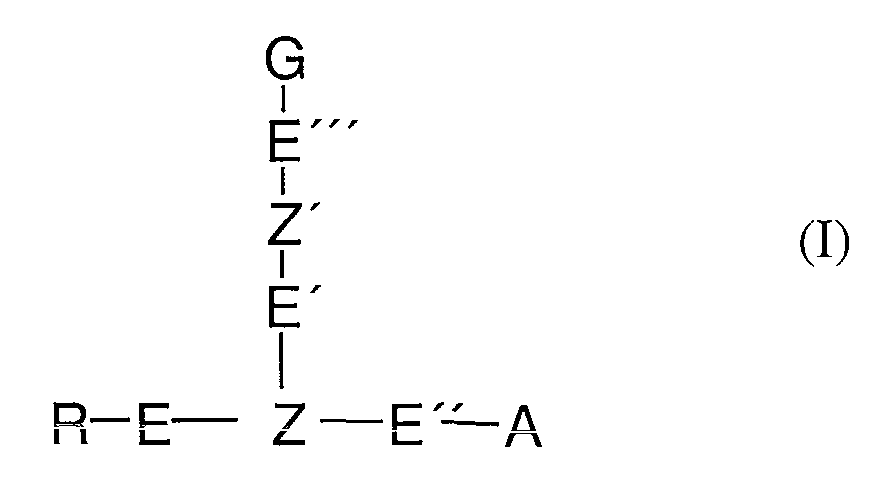
- the present invention concerns an oligonucleotide labeling reactant, optionally comprising a solid support, of formula (I) wherein:
- the present invention also concerns labeling reactants of formula (II) wherein:
- the invention further concerns an oligonucleotide or polynucleotide conjugate comprising a label that can be synthesized using a labeling reactant of formula (I) or formula (II).
- the conjugate comprises a coding sequence consisting of a natural DNA and/or RNA fragment or its monothioate, dithioate or phosphoramidate analogue, or a PNA oligonucleotide, or their mixture. Said label one or several, same or different, obtained, after
- the present invention for oligonucleotide derivatization combines several important features:
- the present invention improves the recently developed approach for oligonucleotide derivatization [ Org. Lett. 2001 , 3, 2473].
- the approach of the invention differs from the disclosed approach referred to in that an optically pure alcohol replaces the carbohydrate moiety while the base moiety is unchanged. Due to the lack of a carbohydrate moiety the oligonucleotide probes have enhanced stability towards nucleases [Nucleic Acids Res. 1991, 19, 2587].
- it is desirable that the labeled part does not hybridize with the target sequence.
- the labels are attached to the 3'- or 5'-terminus of the coding sequence.
- the labeling reactant is designed to have minimal hybridization properties, i.e. the label is attached to base moieties at positions needed for Watson-Crick base pairing, and the alcohol moiety of the labeling reactants is designed to decrease the melting temperature of a possible dublex at the point of labeling.
- the signaling moiety is attached to nucleobases not necessary for base pairing (e.g. C5 of pyrimidines) and the alcohol moiety is designed not to diminish the melting temperature [ Nucleic Acids Res . 1991, 19, 2587].
- This type of labeling reagents can also be converted to corresponding triphosphates and incorporated into the oligo- or polynucleotide structure using a polymerase reaction.
- the oligonucleotide labeling reactants of this invention are solid materials.
- the labeling reactants of the present invention are particularly suitable for the preparation of oligonucleotide conjugates bearing several functional groups or label molecules in their structure.
- a preferable alternative for G is a protected functional group, and for G ' a functional group, said functional group being preferably amino, carboxyl, aminooxy or thiol.
- G and G ' is an organic dye or a spin label.
- organic dyes are dabsyl, dansyl, fluorescein, rhodamine, Alexa, Cy or TAMRA.
- G and G ' is a hapten, especially biotin, dinitrophenol or digoxigenin.
- a particularly preferable transient protecting group R is 4,4'-dimethoxytrityl.
- the term 'bivalent' in the definition of G and G ' shall mean a chemical group bound to two neighboring atoms.
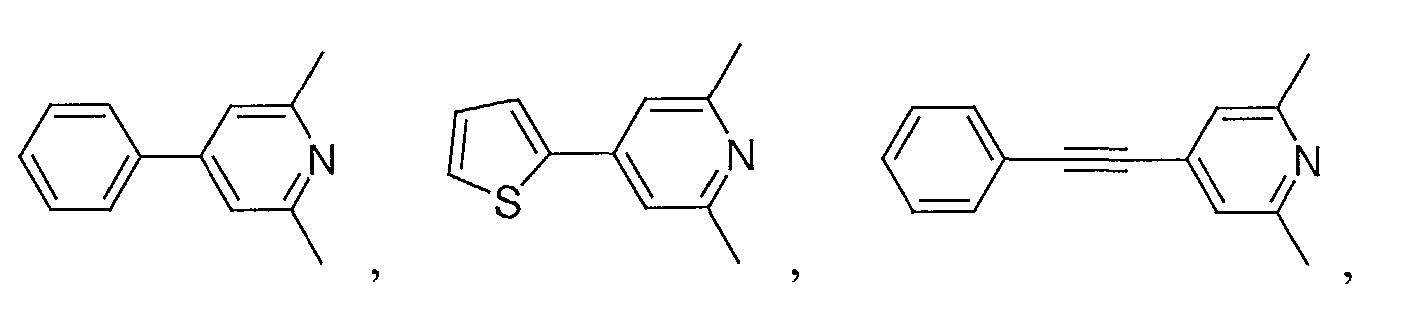
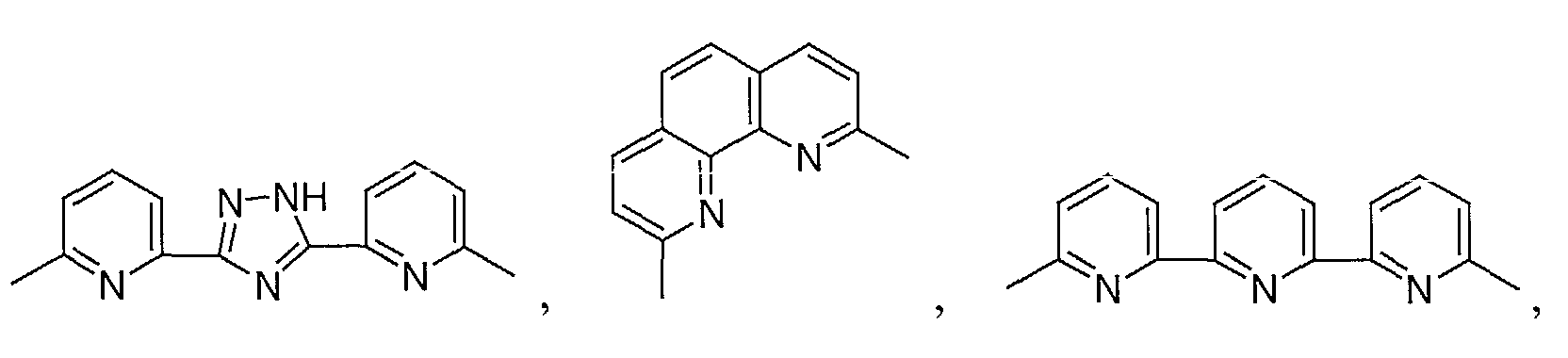
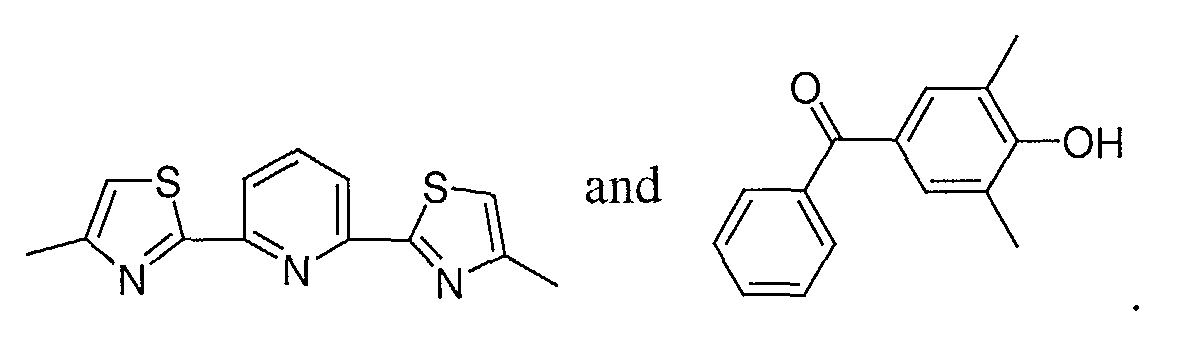
- the bivalent aromatic structure G and G ' is preferably selected from a group consisting of carbostyryl or structures disclosed in Scheme 1. Other applicable bivalent aromatic structures have been disclosed e.g. by M. Latva et al. [J. Luminesc., 75 , 149-169 (1997)] and V.-M. Mukkala et al. [Helv. Chim. Acta, 75 , 1621-1632 (1992)].
- the substituent R "' is preferably methyl, ethyl or allyl.
- the labeling reactant is ( S )-1-[3-(4,4'-dimethoxytrityl-2,3-dihydroxypropyl)-3- O -(2-cyanoethyl N,N -diisopropyl)phosphoramidato)-3-( N 6-trifluoroacetamidohexyl)uracil, ( S )-1-[3-(4,4'-dimethoxytrityl-2,3-dihydroxypropyl-2- O -(2-cyanoethyl N,N -diisopropyl)phosphoramidato)]-1- ⁇ tetramethyl 2,2',2", 2'''-[(4-(hex-5-yn-1-yl)pyridine-2,6-diyl)bis(methylene-nitrilo) ⁇ tetrakis(acetato)uracil, ( S )-1-[3-(4,4'-dimethoxytr
- Labels preferable for multilabeling are non-luminescent or luminescent lanthanide(III) chelates.
- the lanthanide chelate is preferably europium(III), terbium(III), samarium(III) or dysprosium(III) chelate.
- Scheme 2 illustrates the synthesis of the labeling reagents 6 .
- the experimental details are given in examples 1-5 and 16.
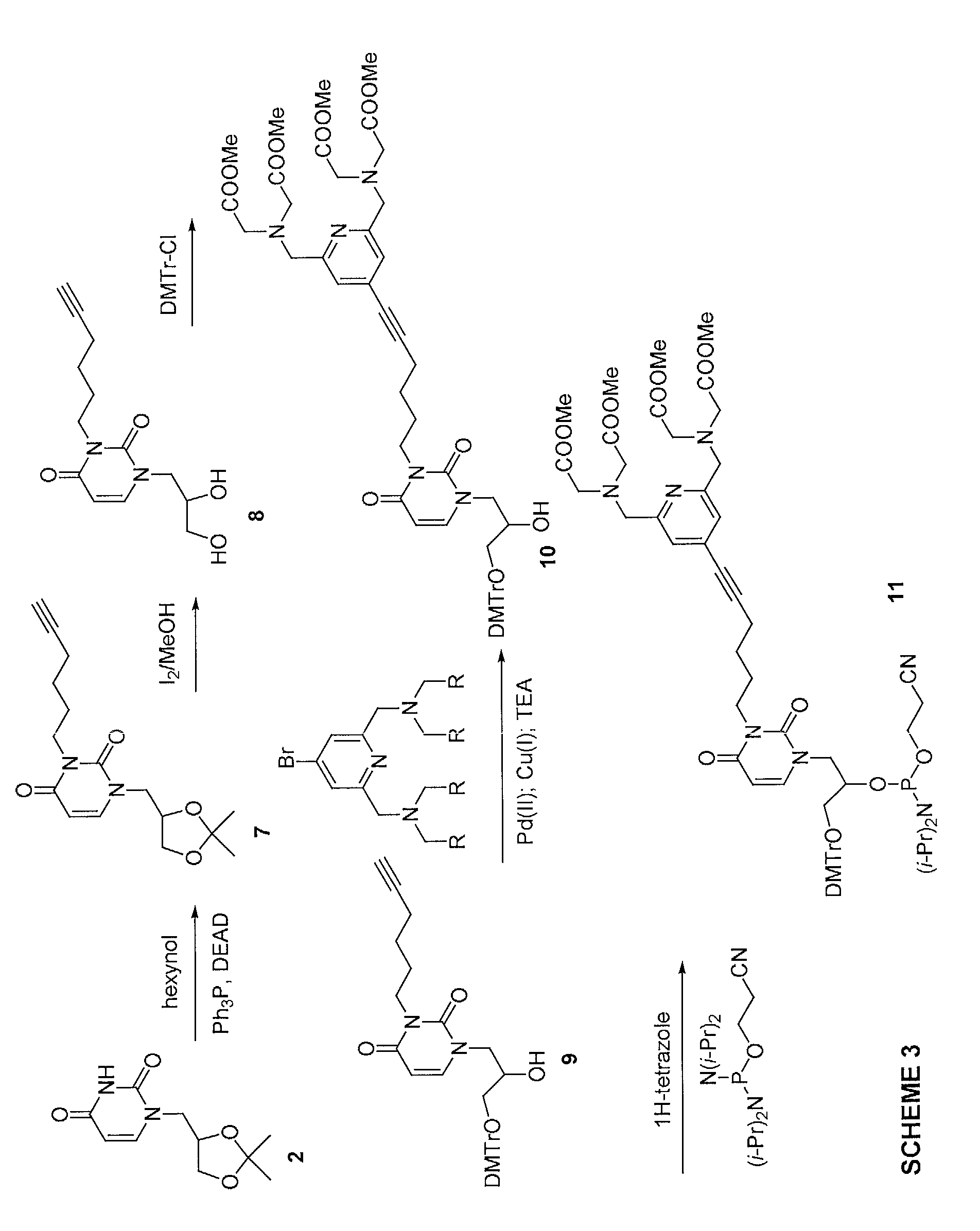
- Scheme 3 illustrates the synthesis of the labeling reagent 11 .
- the experimental details are given in examples 6-9 and 16.
- Scheme 4 illustrates the synthesis of the labeling reagent 13 .
- the experimental details are given in examples 10 and 16.
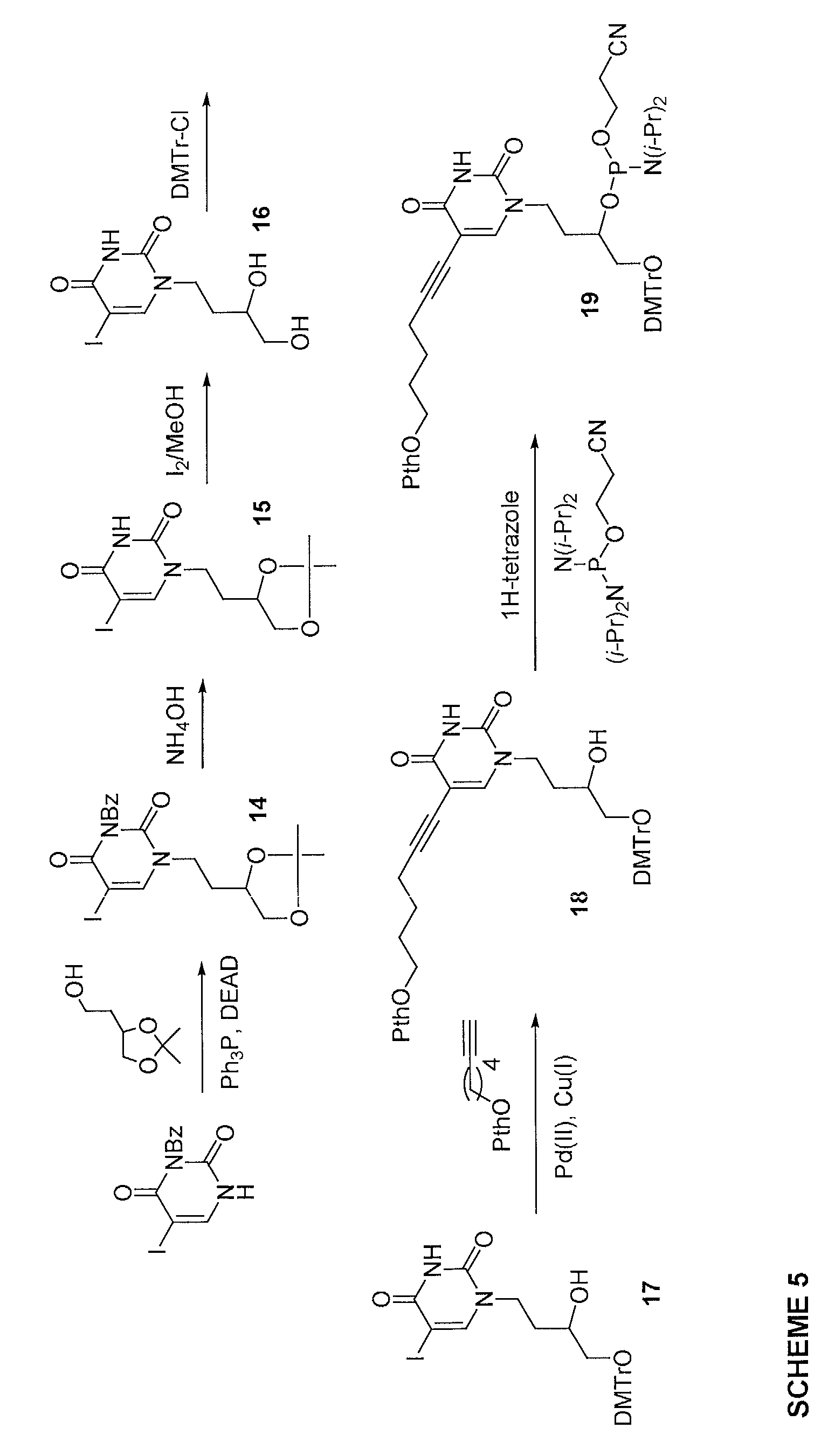
- Scheme 5 illustrates the preparation of a labeling reagent 19 .
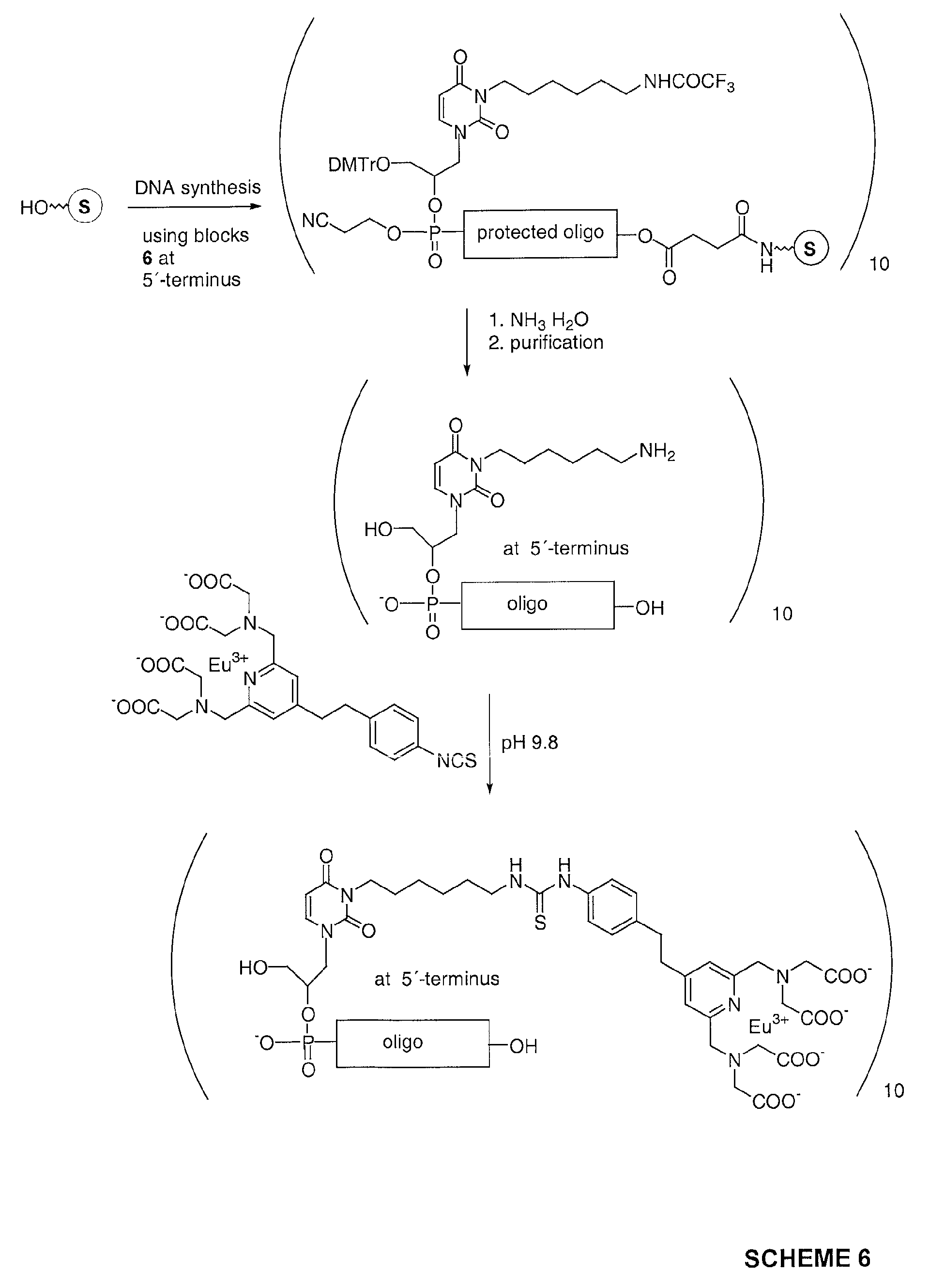
- Scheme 6 illustrates the method for the introduction of lanthanide(III) chelates to the oligonucletide structure using labeling reactant 6.
- Experimental details are given in example 17.
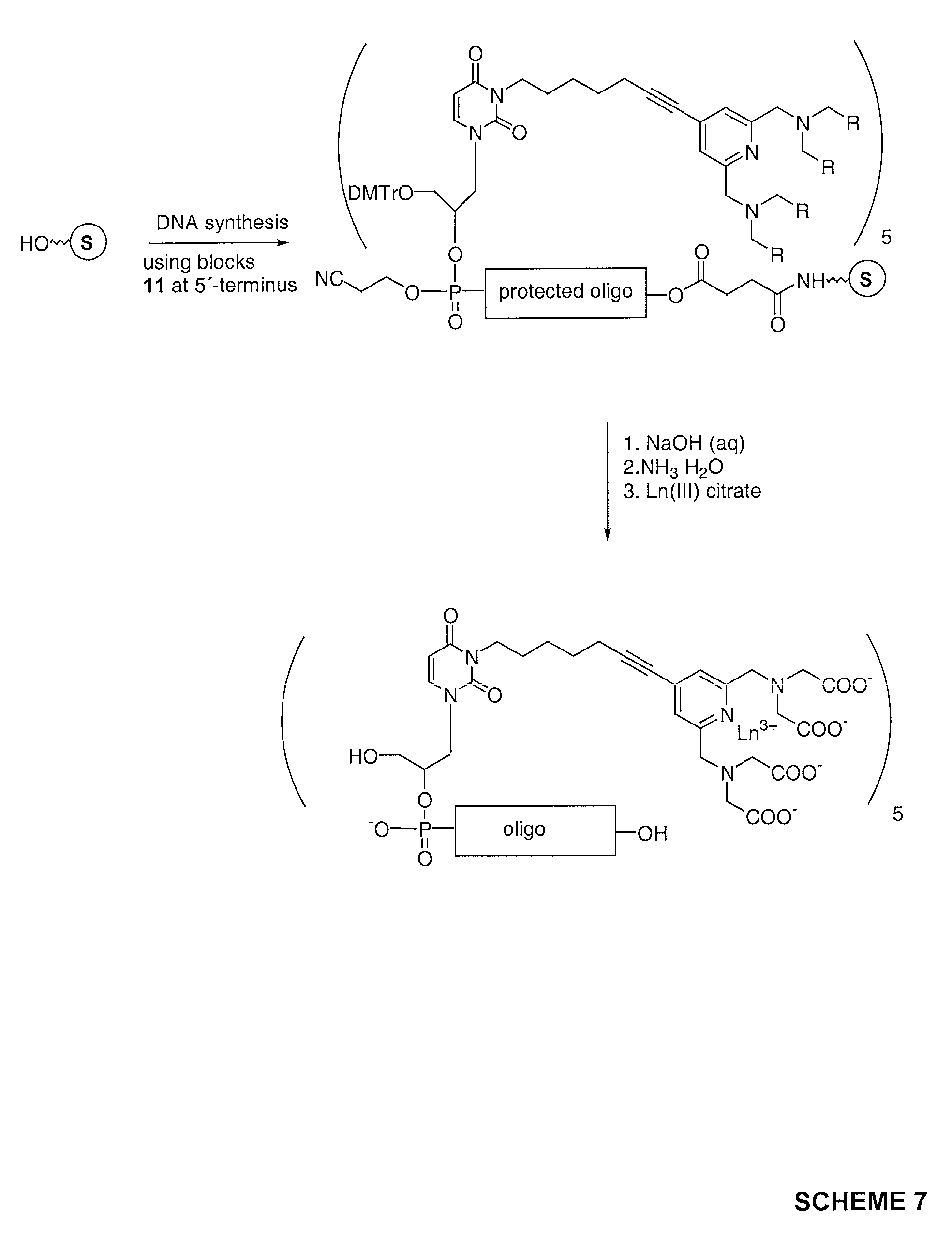
- Scheme 7 illustrates the method for the introduction of lanthanide(III) chelates to the oligonucletide structure using labeling reactant 11 .
- Experimental details are given in example 18.
- Example 19 describes principles of oligonucletide purification with HPLC techniques.
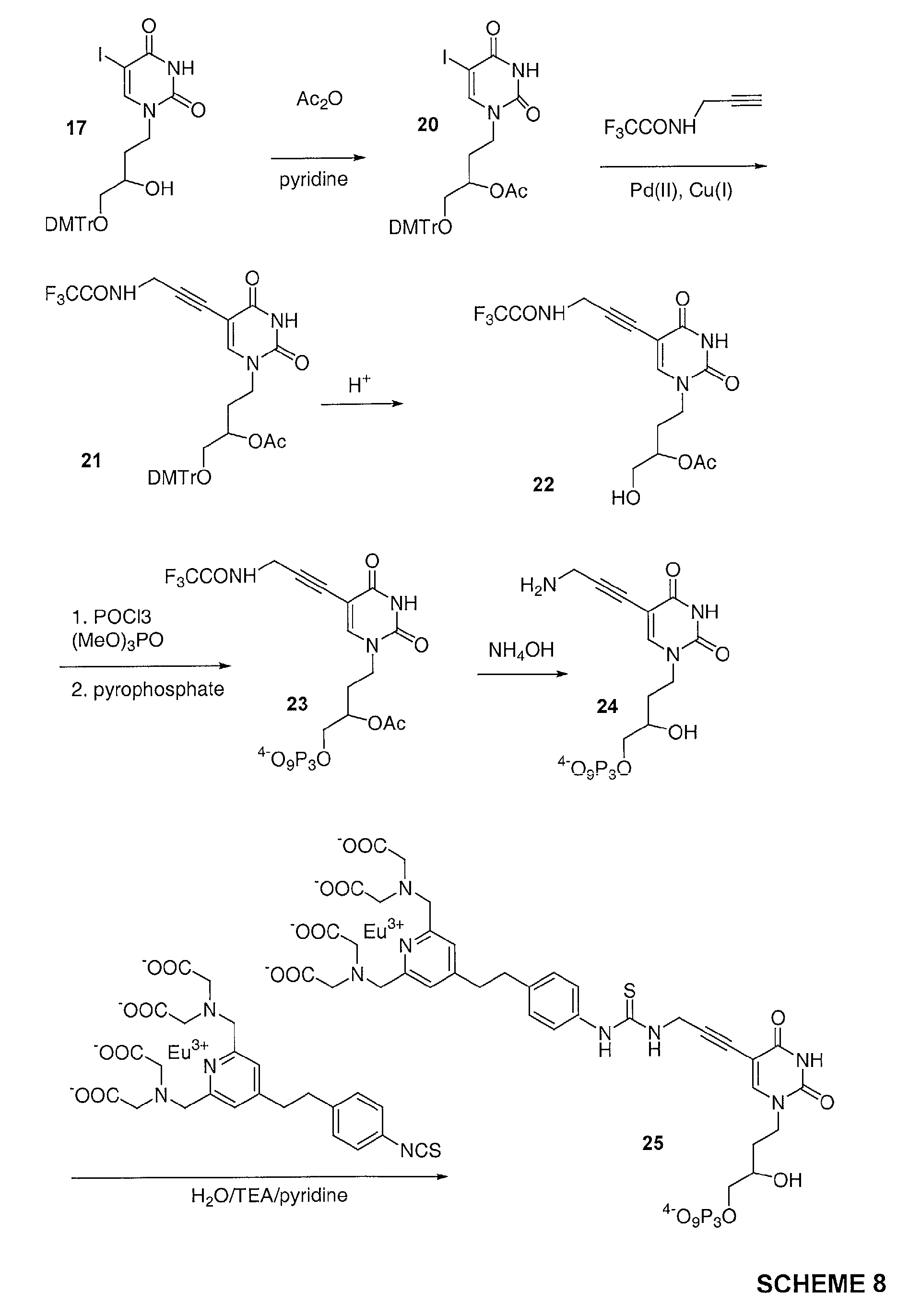
- Scheme 8 describes the synthetic route for the preparation of an acyclic nucloside triphosphate which allows enzymatic incorporation of lantanide(III) chelates to a polynucleotide structure.
- Reagents for machine assisted oligonucleotide synthesis were purchased from Applied Biosystems (Foster City, CA). 2-Cyanoethyl -N,N,N',N' -tetraisopropylphosphodiamidite, N 6-trifluoroacetamidohexanol and 3-benzoyluracils were synthesized using literature procedures. Adsorption column chromatography was performed on columns packed with silica gel 60 (Merck). NMR spectra were recorded on a Brucker 250 instrument operating at 250.13 MHz for 1 H, or a Jeol LA-400 spectrometer operating at 161.9 MHz for 31 P.
- Me 4 Si was used as an internal ( 1 H) and H 3 PO 4 as an external reference ( 31 P). Coupling constants are given in Hz.
- Mass spectra were recorded on a VG ZabSpec-ao TOF (EI) and Perseptive Biosystems Mariner (ESI-TOF) instruments. Oligonucleotides were assembled on an Applied Biosystems Expedite Synthesizer using phosphoramidite chemistry and recommended protocols (DMTr-Off-synthesis).
- N3 -Benzoyluracil (4.0 g, 18.5 mmol), S -solketal (3.2 g, 24.0 mmol) and triphenylphosphine (5.80 g, 22.0 mmol) were dissolved in dry THF (40 mL). Diethylazodicarboxylate (3.50 mL; 22.0 mmol) was added in five portions during 15 min, and the mixture was stirred at room temperature for additional 2h. After concentration in vacuo the product was purified on silica gel (eluent diethyl ether). Yield was 5.3 g (86%).
- oligonucletide conjugates were purified on reversed phase techniques using either HyPURITYTM Elite (ThermoQuest), Purospher RP-18e (Merck) or Inertsil ODS-3 (GL Sciences) columns and TEAA buffer and acetonitrile gradients as mobile phase.
- HyPURITYTM Elite ThermoQuest
- Purospher RP-18e Merck
- Inertsil ODS-3 GL Sciences
Landscapes
- Chemical & Material Sciences (AREA)
- Organic Chemistry (AREA)
- Biochemistry (AREA)
- Health & Medical Sciences (AREA)
- Molecular Biology (AREA)
- Life Sciences & Earth Sciences (AREA)
- General Health & Medical Sciences (AREA)
- Engineering & Computer Science (AREA)
- Biotechnology (AREA)
- Genetics & Genomics (AREA)
- Measuring Or Testing Involving Enzymes Or Micro-Organisms (AREA)
- Saccharide Compounds (AREA)
- Investigating Or Analysing Biological Materials (AREA)
Abstract


Description
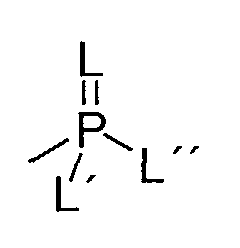
L is O, S, or not present
L' is H, XCH2CH2CN or XAr, where Ar is phenyl or its substituted derivative, where the substituent is nitro or chlorine, and X is O or S;
L" is O-, S-, Cl, N(i-Pr)2; or

R" is an alkyl of 1 to 4 carbon atoms, allyl, ethyltrimethylsilyl, phenyl or benzyl, which phenyl or benzyl can be substituted or unsubstituted, and
one of the hydrogen atoms is substituted with E"', and
said bivalent aromatic structure is capable of absorbing light or energy and transferring the excitation energy to a lanthanide ion after said labeling reactant has been deprotected and converted to a lanthanide chelate.
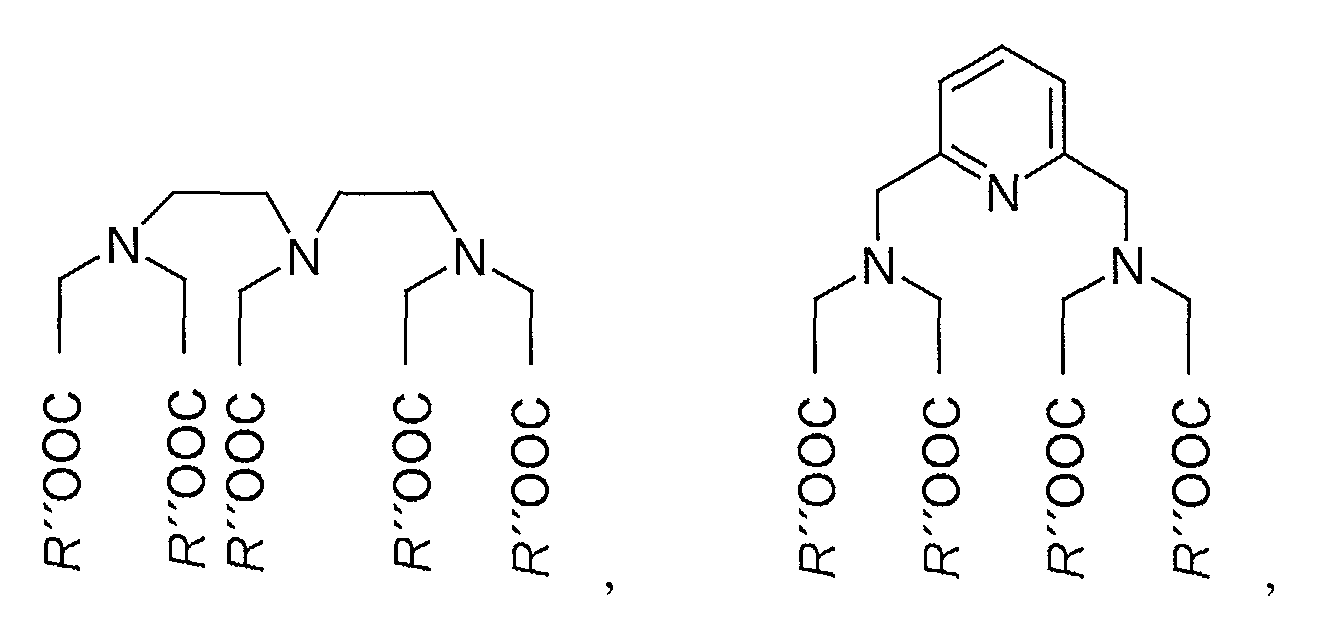
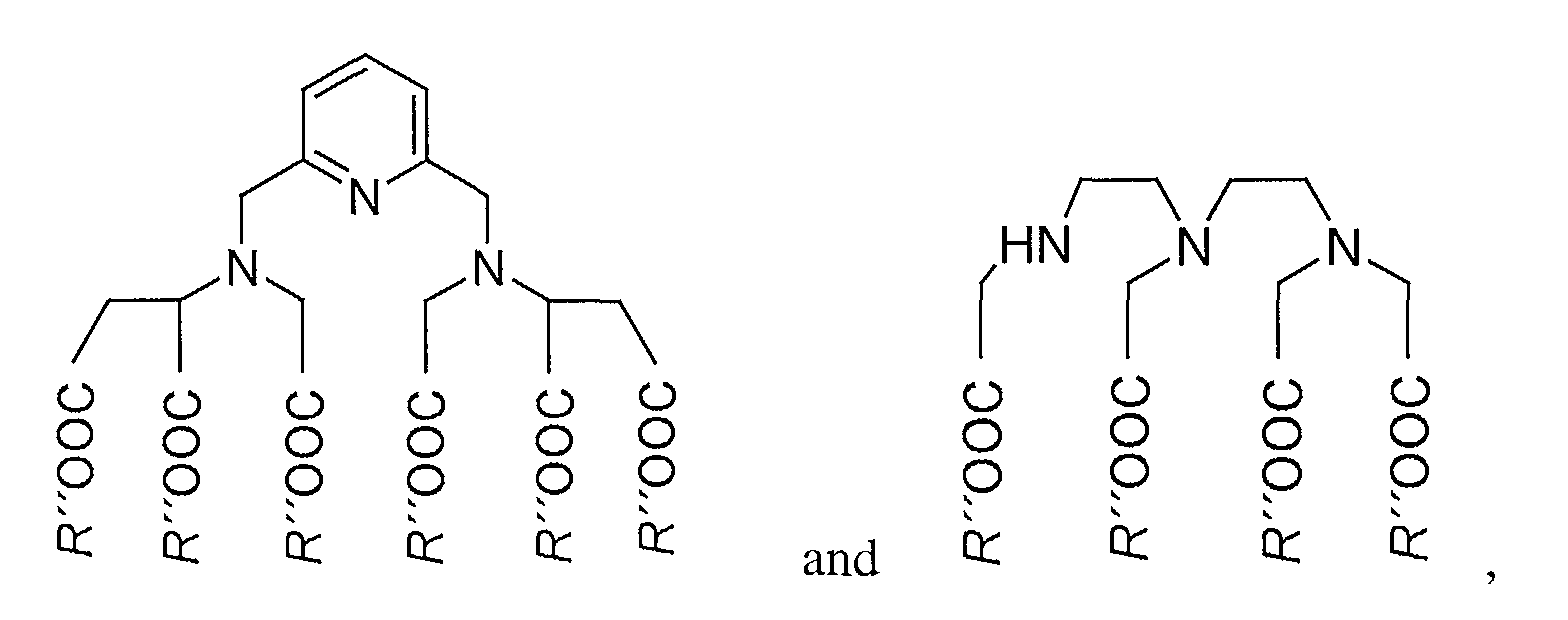
R" is an alkyl of 1 to 4 carbon atoms, allyl, ethyltrimethylsilyl, phenyl or benzyl, which phenyl or benzyl can be substituted or unsubstituted, and one of the hydrogen atoms is substituted with E"'.
Alternatively G is a protected or unprotected organic dye, hapten or a spin label.

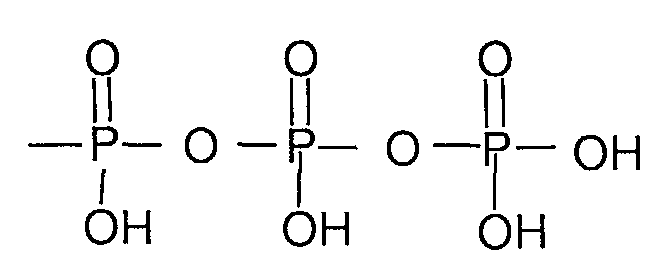

one of the hydrogen atoms is substituted with E"', and
the lantanide(III) (Ln) ion is europium (Eu), samarium (Sm), terbium (Tb), or dysprosium (Dy) and
said bivalent aromatic structure is capable of absorbing light or energy and transferring the excitation energy to said lanthanide ion.

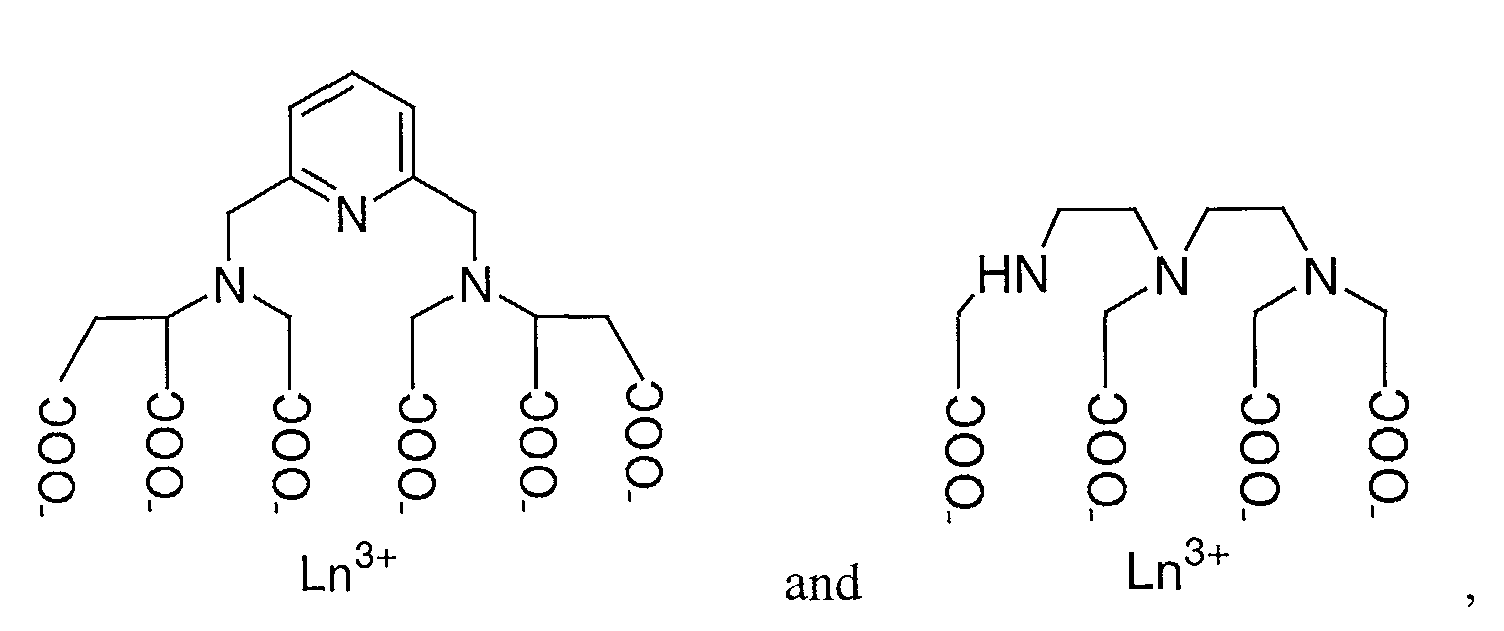
one of the hydrogen atoms is substituted with E"' and
Ln is Eu, Tb, Sm or Dy.
Alternatively G' is a organic dye, hapten or a spin label.
(S)-1-[3-(4,4'-dimethoxytrityl-2,3-dihydroxypropyl)-3-O-(2-cyanoethyl N,N-diisopropyl)phosphoramidato)-3-(N6-trifluoroacetamidohexyl)uracil,
(S)-1-[3-(4,4'-dimethoxytrityl-2,3-dihydroxypropyl-2-O-(2-cyanoethyl N,N-diisopropyl)phosphoramidato)]-1-{
(S)-1-[3-(4,4'-dimethoxytrityl-2,3-dihydroxypropyl)-2-O-(2-cyanoethyl N,N-diisopropyl)phosphoramidato)]-1-[3-(2,2',2'',2'''-{[4'-(4"-(5-hexyn-6-yl)phenyl)-2,2': 6',2"-terpyridine-6,6"-diyl]bis (methylenenitrilo)}tetrakis(acetato) uracil or
(S)-1-[(3,4-dihydroxybutyl-4-O-(4,4'-dimethoxytrityl)-3-O-(2-cyanoethyl N,N-diisopropyl)phosphoramidato]-1-(5-hydroxypthalimidohexyn-1-yl uracil).
(S)-1-[3-(4,4'-dimethoxytrityl-2,3-dihydroxypropyl)-3-O-(2-cyanoethyl N,N-diisopropyl)phosphoramidato)-3-(N6-trifluoroacetamidohexyl) uracil (6). 31P NMR: δ 152.46 (0.5 P); 152.30 (0.5 P).
(S)-1-[3-(4,4'-dimethoxytrityl-2,3-dihydroxypropyl-2-O-(2-cyanoethyl N,N-diisopropyl)phosphoramidato)]-1-{
(S)-1-[3-(4,4'-dimethoxytrityl-2,3-dihydroxypropyl)-2-O-(2-cyanoethyl N,N-diisopropyl) phosphoramidato)]-1-[3-(2,2',2'',2"'-{[4'-(4''-(5-hexyn-6-yl)phenyl)-2,2': 6",2"-terpyridine-6,6"-diyl]bis (methylenenitrilo)}tetrakis(acetato) uracil (13).
31P NMR: δ 152.97 (0.5 P); 152.81 (0.5 P).
(S)-1-[(3,4-dihydroxybutyl-4-O-(4,4'-dimethoxytrityl)-3-O-(2-cyanoethyl N,N-diisopropyl) phosphoramidato]-1-(5-hydroxypthalimidohexyn-1-yluracil) (19).
31P NMR: δ 152.85 (0.5 P); 152.74 (0.5 P).



Claims (16)
- A labeling reactant of formula (I), useful for labeling an oligonucleotide using solid phase chemistry,wherein

R is a temporary protecting group such as 4,4'dimethoxytrityl (DMTr), 4-methoxytrityl (MMTr), trityl (Tr), (9-phenyl)xanthen-9-yl (pixyl) or not present;
A is either a phosphorylating moietywhere
L is O, S, or not present
L' is H, XCH2CH2CN or XAr, where Ar is phenyl or its substituted derivative, where the substituent is nitro or chlorine, and X is O or S;
L" is O-, S-, Cl, N(i-Pr)2; or
A is a solid support, preferably controlled pore glass or polystyrene, tethered to Z via a linker arm E";
Z is a bridge point and is formed fromE is a linker arm between R and Z , E' is a linker arm between Z and Z', E" is a linker arm between Z and A and E"' is a linker arm between Z' and G, same or different, and is formed of one to ten moieties, each moiety being selected from the group consisting of phenylene, alkylene containing 1-12 carbon atoms, ethynediyl (-C≡C-), ether (-O-) thioether (-S-), amide (-CO-NH-, -CO-NH-, -CO-NR'-and -NR'-CO-), carbonyl (-CO-), ester (-COO- and -OOC-), disulfide (-S-S-), diaza (-N=N-), and tertiary amine (-N-R'), wherein R' represents an alkyl containing less than 5 carbon atoms;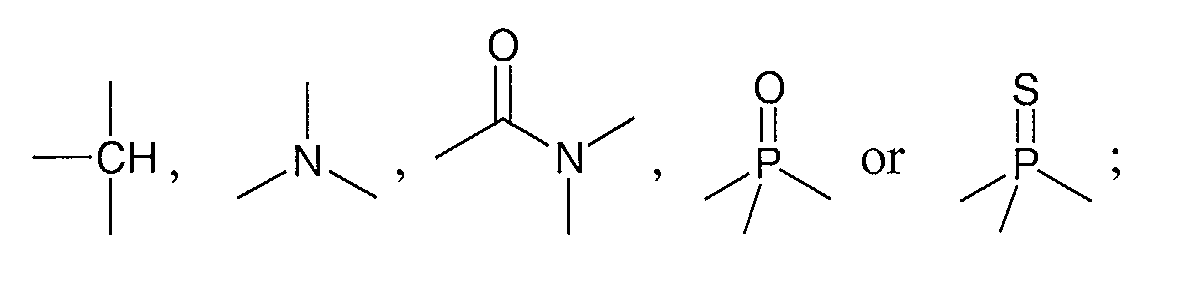
Z' is a purine or pyrimidine base selected from the group consisting of adenine, guanine, cytosine, thymine, uracil, 7-deazaadenine, 7-deazaguanine and hypoxantene, where E' is attached to N1 of pyrimidines and N9 of purines, and E"' is attached to C7 of 7-deazapurines, N3 or C5 of uracil, N3 of thymine, C5 or N4 of cytosine, C8, N2, N3 or O6 of guanine, C8, N6 or C2 of adenine, and where the exocyclic functional groups of said base are appropriately protected preferably with benzoyl, isobutyryl or acetyl, or
Z' is selected from the group consisting of imidazole, pyrazolo[3,4-d]pyrimidine, 4-amino-pyrazolo[3,4-d]pyrimidine, 1,2,4-triazine-3,5-dione, 5-amino-1,2,4-triazine-3-one, where E' is attached to N1 of imidazole, N2 of 1,2,4-triazine-3,5-dione and 5-amino-1,2,4-triazine-3-one, and N7 of 4-amino-pyrazolo[3,4-d]pyrimidine and pyrazolo[3,4-d]pyrimidine, and E" is attached to C4 or C5 of imidazole, C2 or C9 of 4-amino-pyrazolo[3,4-d]pyrimidine, C2, C4 or C9 of pyrazolo[3,4-d]pyrimidine, N4, C5 or C6 of 1,2,4-triazine-3,5-dione and N5 or C6 of N5-amino 1,2,4-triazine-3,5-dione and where the exocyclic functional groups of said base are appropriately protected preferably with benzoyl, isobutyryl or acetyl;
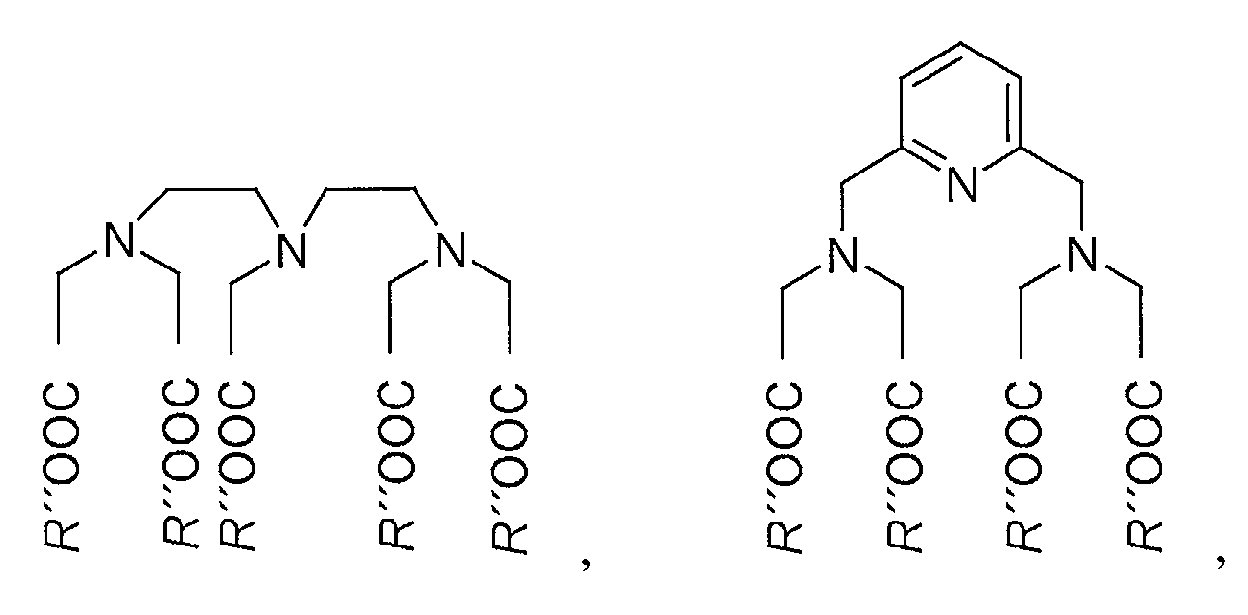
G is a protected bivalent aromatic structure, tethered to two iminodiacetic acid ester groups N(CH2COOR")2, where
R" is an alkyl of 1 to 4 carbon atoms, allyl, ethyltrimethylsilyl, phenyl or benzyl, which phenyl or benzyl can be substituted or unsubstituted, and one of the hydrogen atoms is substituted with E''', and
said bivalent aromatic structure is capable of absorbing light or energy and transferring the excitation energy to a lanthanide ion after said labeling reactant has been deprotected and converted to a lanthanide chelate, or
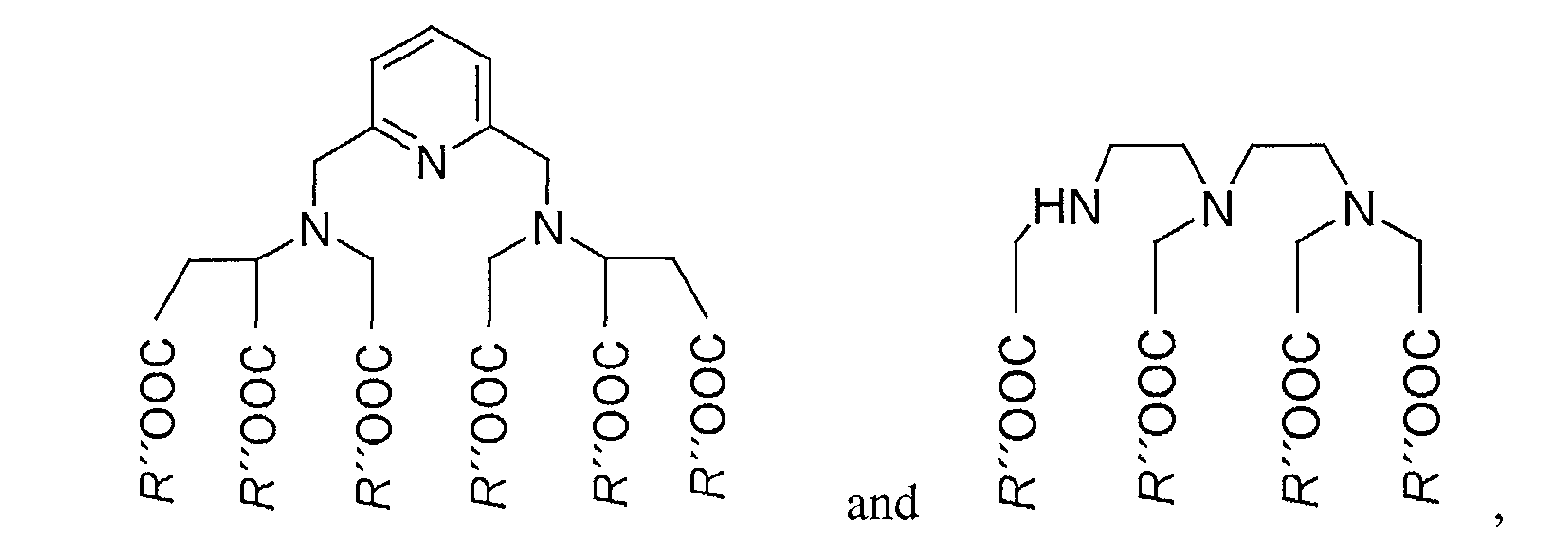
G is a structure selected from the group consisting of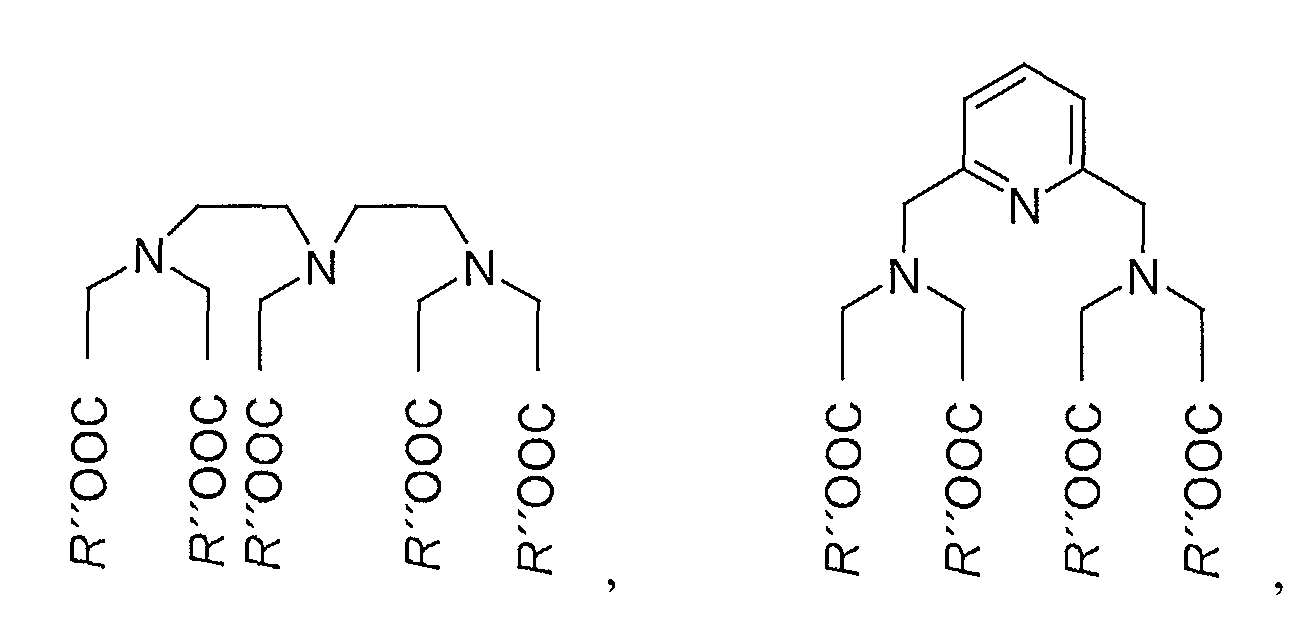 where
where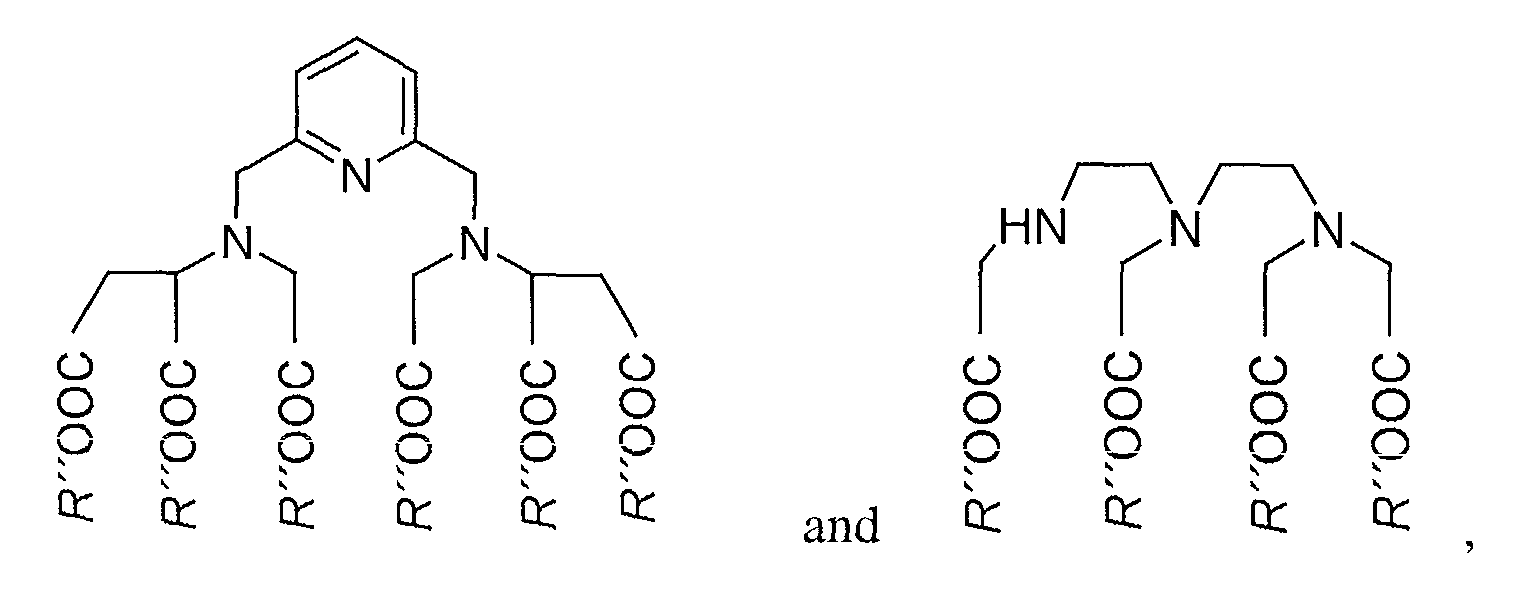
R" is an alkyl of 1 to 4 carbon atoms, allyl, ethyltrimethylsilyl, phenyl or benzyl, which phenyl or benzyl can be substituted or unsubstituted, and one of the hydrogen atoms is substituted with E"', or
G is a protected functional group, where the functional group is amino, aminooxy, carboxyl, thiol, and the protecting group is pthaloyl, trityl, 2-(4-nitrophenylsulfonyl)ethoxycarbonyl, fluorenylmethyloxycarbonyl, benzyloxycarbonyl, t-butoxycarbonyl or trifluoroacetuyl for amino and aminooxy, alkyl for carbonyl and alkyl or trityl for thiol, or
G is a protected or unprotected organic dye, hapten or a spin label. - The labeling reactant according to claim 1 wherein G is a protected functional group and said group is preferably selected from the group consisting of amino, carboxyl, aminooxy and thiol.
- The labeling reactant according to claim 1 wherein G is an organic dye and preferably selected from the group consisting of dabsyl, dansyl, fluorescein, rhodamine, TAMRA, Alexa, and Cy.
- The labeling reactant according to claim 1 wherein G is a hapten preferrably biotin, dinitrophenol or digoxigenin.
- The labeling reactant according to claim 1 wherein the temporary protecting group R is 4,4'dimethoxytrityl (DMTr).
- The labeling reactant according to claim 1 wherein G is a bivalent aromatic structure and preferably selected from the group consisting of carbostyryl,




- The labeling reactant according to claim 1 wherein said labeling reactant is non-luminescent and G is selected from the group consisting of
 where
where
R''' is an alkyl of 1 to 4 carbon atoms, allyl, ethyltrimethylsilyl, phenyl or benzyl, which phenyl or benzyl can be substituted or unsubstituted, and
one of the hydrogen atoms is substituted with E"'. - The labeling reactant according to claim 7 wherein R" is selected from the group consisting of methyl, ethyl and allyl.
- The labeling reactant according to claim 1 wherein the labeling reactant is selected from the group consisting of
(S)-1-[3-(4,4'-dimethoxytrityl-2,3-dihydroxypropyl)-3-O-(2-cyanoethyl N,N-diisopropyl) phosphoramidato)-3-(N6-trifluoroacetamidohexyl)uracil (6),
(S)-1-[3-(4,4'-dimethoxytrityl-2,3-dihydroxypropyl-2-O-(2-cyanoethyl N,N-diisopropyl) phosphoramidato)]-1-{tetramethyl 2,2',2'',2'''-[(4-(hex-5-yn-1-yl)pyridine-2,6-diyl)bis(methylenenitrilo)} tetrakis(acetato)uracil (11),
(S)-1-[3-(4,4'-dimethoxytrityl-2,3-dihydroxypropyl)-2-O-(2-cyanoethyl N,N-diisopropyl) phosphoramidato)]-1-[3-(2,2',2'',2'''-{[4'-(4''-(5-hexyn-6-yl)phenyl)-2,2': 6',2"-terpyridine-6,6"-diyl]bis (methylenenitrilo)}tetrakis(acetato) uracil (13) and
(S)-1-[(3,4-dihydroxybutyl-4-O-(4,4'-dimethoxytrityl)-3-O-(2-cyanoethyl N,N-diisopropyl) phosphoramidato]-1-(5-hydroxypthalimidohexynyluracil) (19). - A labeling reactant of formula (II), useful for labeling an oligonucleotide using polymerases,wherein:
 R"" isor salts thereof;
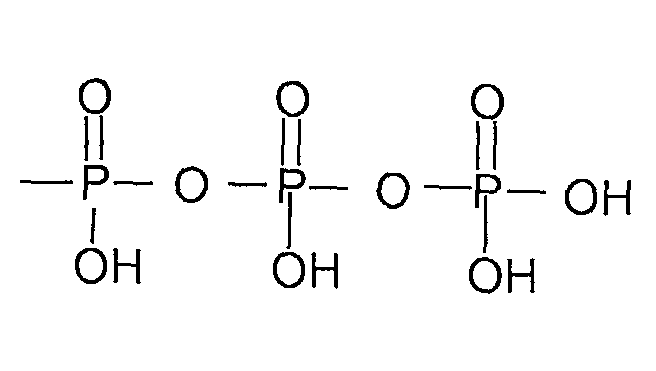 Z is a bridge point and is formed from
 E is a linker arm between R"" and Z , E' is a linker arm between Z and Z' , E" is a linker arm between Z and A and E"' is a linker arm between Z' and G', same or different, and is formed of one to ten moieties, each moiety being selected from the group consisting of phenylene, alkylene containing 1-12 carbon atoms, ethynediyl (-C≡C-), ether (-O-), thioether(-S-), amide (-CO-NH-, -CO-NH-, -CO-NR'-and -NR'-CO-), carbonyl (-CO-), ester (-COO- and -OOC-), disulfide (-S-S-), diaza (-N=N-), amine (-NH-) and tertiary amine (-N-R'), wherein R' represents an alkyl containing less than 5 carbon atoms;Z' is a purine or pyrimidine base selected from the group consisting of adenine, guanine, cytosine, thymine, uracil, 7-deazaadenine, 7-deazaguanine and hypoxantene, where E' is attached to N1 of pyrimidines and N9 of purines, and E"' is attached to C7 of 7-deazapurines, C5 of uracil, C5 or N4 of cytosine, C8, N2, N3 or O6 of guanine, C8, N6 or C2 of adenine, orZ' is selected from the group consisting of imidazole, pyrazolo[3,4-d]pyrimidine, 4-amino-pyrazolo[3,4-d]pyrimidine, 1,2,4-triazine-3,5-dione, 5-amino-1,2,4-triazine-3-one, where E' is attached to N1 of imidazole, N2 of 1,2,4-triazine-3,5-dione and 5-amino-1,2,4-triazine-3-one, and N7 of 4-amino-pyrazolo[3,4-d]pyrimidine and pyrazolo[3,4-d]pyrimidine, and E" is attached to C4 or C5 of imidazole, C2 or C9 of 4-amino-pyrazolo[3,4-d]pyrimidine, C2, C4 or C9 of pyrazolo[3,4-d]pyrimidine, N4, C5 or C6 of 1,2,4-triazine-3,5-dione and N5 or C6 of N5-amino 1,2,4-triazine-3,5-dione;G' is a bivalent aromatic structure, tethered to two iminodiacetic acid groups N(CH2COOH)2, or salts thereof, and is chelating a lantanide(III) ion where
one of the hydrogen atoms is substituted with E"', and the lantanide(III) (Ln) ion is europium (Eu), samarium (Sm), terbium (Tb), or dysprosium (Dy) and
said bivalent aromatic structure is capable of absorbing light or energy and transferring the excitation energy to a lanthanide ion, orG' is a structure selected from a group consisting of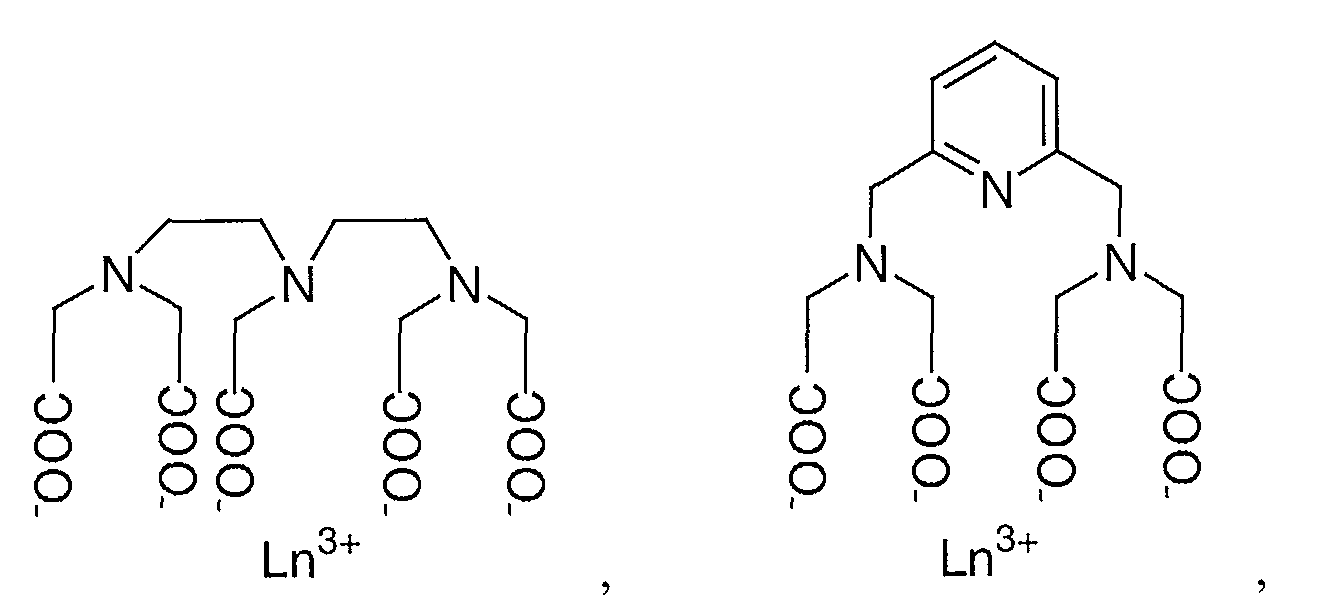 or salts thereof, where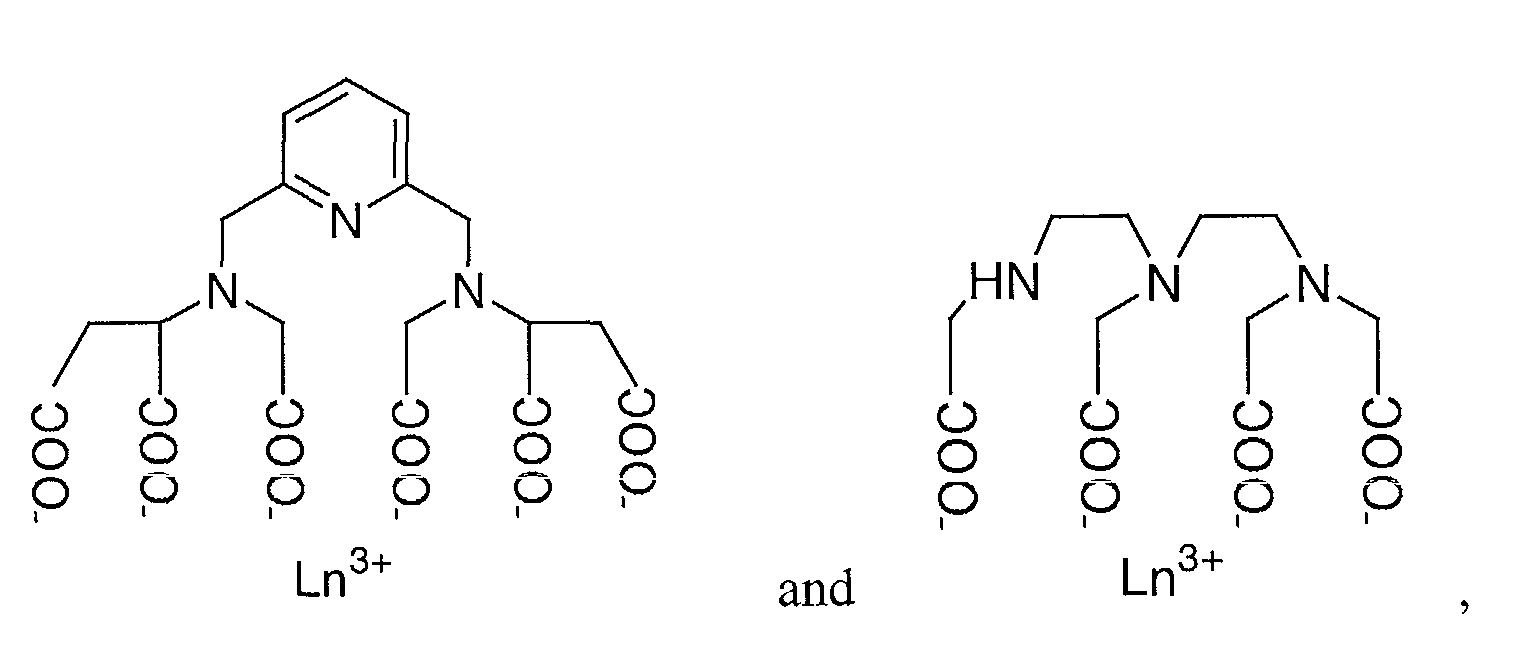
one of the hydrogen atoms is substituted with E"' and
Ln is Eu, Tb, Sm or Dy, orG' is a functional group, orG' is a organic dye, hapten or a spin label. - The labeling reactant according to claim 10 wherein G' is a functional group and said group is preferably selected from the group consisting of amino, carboxyl, aminooxy and thiol.
- The labeling reactant according to claim 10 wherein G' is an organic dye and preferably selected from the group consisting of dabsyl, dansyl, fluorescein, rhodamine, TAMRA, Alexa, and Cy.
- The labeling reactant according to claim 10 wherein G' is a hapten preferrably biotin, dinitrophenol or digoxigenin.
- The labeling reactant according to claim 10 wherein G' is a bivalent aromatic structure and preferably selected from the group consisting of carbostyryl,


- The labeling reactant according to claim 10 wherein said labeling reactant is non-luminescent and G' is selected from the group consisting of
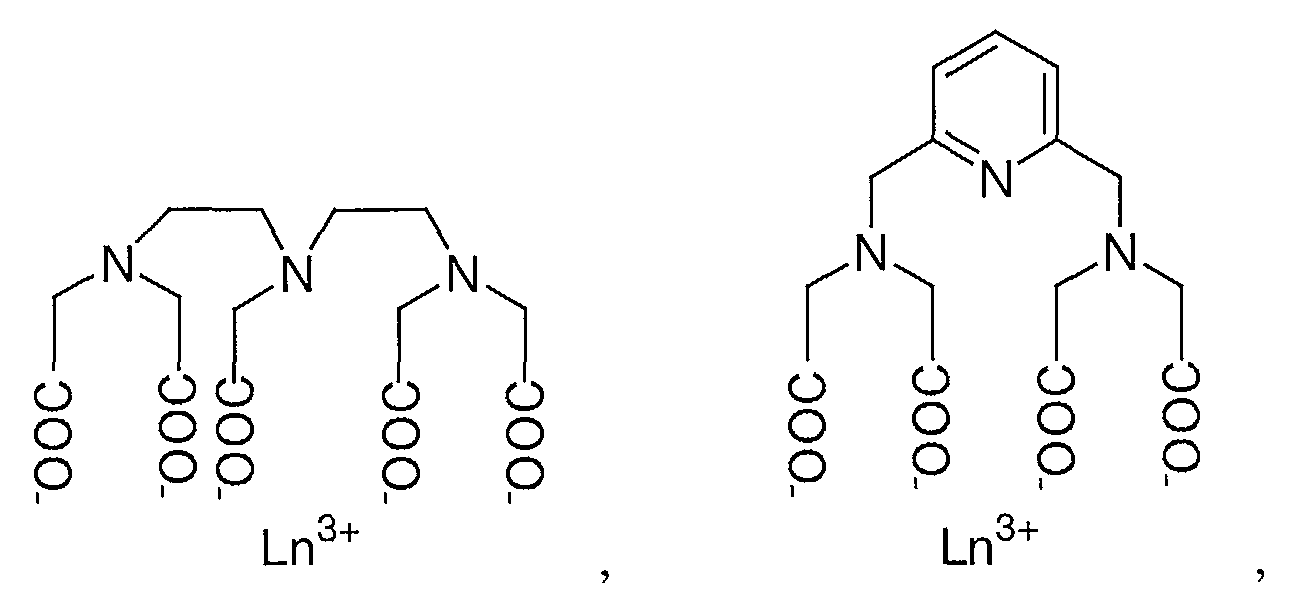 or salts thereof, where
one of the hydrogen atoms is substituted with E"' and
Ln is Eu, Tb, Sm or Dy. - An oligonucleotide conjugate comprising a label whereinis attached to the 3'- or/and 5'-terminus of the oligonucleotide chain or/and within the coding sequence.a) it can be synthesized using a labeling reactant according to claim 1 or 10,b) it comprises a coding sequence consisting of a natural DNA and/or RNA fragment or its monothioate, dithioate or phosphoramidate analogue, or a PNA oligonucleotide, or their mixture, andc) said label, one or several, same or different, obtained, afteri) introduction of said labeling reactant,ii) introduction and deprotection of said labeling reactant,iii) introduction and deprotection of said labeling reactant followed by introduction of a lanthanide(III) ion when the label is a luminescent or non-luminescent lanthanide(III) chelate, oriv) introduction and deprotection of said labeling reactant followed by introduction of a signaling moiety in solution as its thiocyanate, active ester, dichlorotriazine, aldehyde, ketone, or haloacetamido derivative when said labeling reactant comprises a deprotected functional group,
Applications Claiming Priority (2)
| Application Number | Priority Date | Filing Date | Title |
|---|---|---|---|
| US09/985,454 US7282581B2 (en) | 2001-11-02 | 2001-11-02 | Oligonucleotide labeling reactants based on acyclonucleosides and conjugates derived thereof |
| US985454 | 2001-11-02 |
Publications (3)
| Publication Number | Publication Date |
|---|---|
| EP1308452A2 true EP1308452A2 (en) | 2003-05-07 |
| EP1308452A3 EP1308452A3 (en) | 2004-10-27 |
| EP1308452B1 EP1308452B1 (en) | 2008-03-19 |
Family
ID=25531504
Family Applications (1)
| Application Number | Title | Priority Date | Filing Date |
|---|---|---|---|
| EP02396153A Expired - Lifetime EP1308452B1 (en) | 2001-11-02 | 2002-10-10 | Oligonucleotide labeling reactants based on acyclonucleosides and conjugates derived thereof |
Country Status (4)
| Country | Link |
|---|---|
| US (1) | US7282581B2 (en) |
| EP (1) | EP1308452B1 (en) |
| AT (1) | ATE389663T1 (en) |
| DE (1) | DE60225652T2 (en) |
Cited By (3)
| Publication number | Priority date | Publication date | Assignee | Title |
|---|---|---|---|---|
| WO2005065689A1 (en) * | 2004-01-08 | 2005-07-21 | Medivir Ab | Dutpase inhibitors |
| WO2014044916A1 (en) | 2012-09-24 | 2014-03-27 | Qi Wang | Chelates, chelating agents, conjugates derived thereof and their use |
| WO2018013999A1 (en) | 2016-07-15 | 2018-01-18 | Am Chemicals Llc | Non-nucleosidic solid supports and phosphoramidite building blocks for oligonucleotide synthesis |
Families Citing this family (2)
| Publication number | Priority date | Publication date | Assignee | Title |
|---|---|---|---|---|
| FI20055712A0 (en) * | 2005-12-29 | 2005-12-29 | Wallac Oy | Moacrocyclic oligonucleotide labeling reagents and conjugates derived therefrom |
| US8158782B2 (en) * | 2006-05-05 | 2012-04-17 | Wallac Oy | Biomolecule labeling reactants based on azacycloalkanes and conjugates derived thereof |
Family Cites Families (3)
| Publication number | Priority date | Publication date | Assignee | Title |
|---|---|---|---|---|
| US6054568A (en) * | 1998-01-16 | 2000-04-25 | The Perkin-Elmer Corporation | Nucleobase oligomers |
| US6080839A (en) * | 1998-06-25 | 2000-06-27 | Wallac Oy | Labeling reactants and their use |
| DE60141871D1 (en) * | 2000-05-05 | 2010-06-02 | Wallac Oy | Oligonucleotide labels and their use |
-
2001
- 2001-11-02 US US09/985,454 patent/US7282581B2/en not_active Expired - Fee Related
-
2002
- 2002-10-10 AT AT02396153T patent/ATE389663T1/en not_active IP Right Cessation
- 2002-10-10 DE DE60225652T patent/DE60225652T2/en not_active Expired - Lifetime
- 2002-10-10 EP EP02396153A patent/EP1308452B1/en not_active Expired - Lifetime
Cited By (7)
| Publication number | Priority date | Publication date | Assignee | Title |
|---|---|---|---|---|
| WO2005065689A1 (en) * | 2004-01-08 | 2005-07-21 | Medivir Ab | Dutpase inhibitors |
| US7795270B2 (en) | 2004-01-08 | 2010-09-14 | Medivir Ab | DUTPase inhibitors |
| US8017620B2 (en) | 2004-01-08 | 2011-09-13 | Medivir Ab | Dutpase inhibitors |
| WO2014044916A1 (en) | 2012-09-24 | 2014-03-27 | Qi Wang | Chelates, chelating agents, conjugates derived thereof and their use |
| WO2018013999A1 (en) | 2016-07-15 | 2018-01-18 | Am Chemicals Llc | Non-nucleosidic solid supports and phosphoramidite building blocks for oligonucleotide synthesis |
| US10781175B2 (en) | 2016-07-15 | 2020-09-22 | Am Chemicals Llc | Solid supports and phosphoramidite building blocks for oligonucleotide conjugates |
| US11447451B2 (en) | 2016-07-15 | 2022-09-20 | Am Chemicals Llc | Solid supports and phosphoramidite building blocks for oligonucleotide conjugates |
Also Published As
| Publication number | Publication date |
|---|---|
| EP1308452A3 (en) | 2004-10-27 |
| ATE389663T1 (en) | 2008-04-15 |
| DE60225652T2 (en) | 2009-04-02 |
| US7282581B2 (en) | 2007-10-16 |
| DE60225652D1 (en) | 2008-04-30 |
| EP1308452B1 (en) | 2008-03-19 |
| US20030118999A1 (en) | 2003-06-26 |
Similar Documents
| Publication | Publication Date | Title |
|---|---|---|
| KR101032008B1 (en) | Polynucleotide labeling reagents | |
| US7897758B2 (en) | Activators for oligonucleotide and phosphoramidite synthesis | |
| JPH08311091A (en) | Trishydroxymethylethane compound | |
| US6664058B2 (en) | Base analogues | |
| EP1152010B1 (en) | Oligonucleotide labeling reactants and their use | |
| WO2002079216A1 (en) | Labeled oligonucleotides, methods for making same, and compounds useful therefor | |
| EP1308452B1 (en) | Oligonucleotide labeling reactants based on acyclonucleosides and conjugates derived thereof | |
| US7601848B2 (en) | Multifunctional reagent for the synthesis of thiol modified oligomers | |
| WO2007128874A1 (en) | Biomolecule labeling reactants based on azacycloalkanes and conjugates derived thereof | |
| PT1538154E (en) | Quencher composition comprising anthraquinone moieties | |
| US7098326B2 (en) | Methods for the integrated synthesis and purification of oligonucleotides | |
| US7164014B2 (en) | Protected linker compounds | |
| AU2006316903B8 (en) | Polynucleotide labelling reagent | |
| US7276598B2 (en) | Phosphorylation reagents for improved processes to convert terminal hydroxyl groups of oligonucleotides into phosphate monoesters | |
| US20070167615A1 (en) | Macrocyclic oligonucleotide labeling reactants and conjugates derived thereof | |
| HK1126183B (en) | Polynucleotide labelling reagent | |
| HK1126224B (en) | Polynucleotide containing a phosphate mimetic | |
| AU2002254493A1 (en) | Labeled oligonucleotides, methods for making same, and compounds useful therefor |
Legal Events
| Date | Code | Title | Description |
|---|---|---|---|
| PUAI | Public reference made under article 153(3) epc to a published international application that has entered the european phase |
Free format text: ORIGINAL CODE: 0009012 |
|
| AK | Designated contracting states |
Designated state(s): AT BE BG CH CY CZ DE DK EE ES FI FR GB GR IE IT LI LU MC NL PT SE SK TR |
|
| AX | Request for extension of the european patent |
Extension state: AL LT LV MK RO SI |
|
| PUAL | Search report despatched |
Free format text: ORIGINAL CODE: 0009013 |
|
| AK | Designated contracting states |
Kind code of ref document: A3 Designated state(s): AT BE BG CH CY CZ DE DK EE ES FI FR GB GR IE IT LI LU MC NL PT SE SK TR |
|
| AX | Request for extension of the european patent |
Extension state: AL LT LV MK RO SI |
|
| 17P | Request for examination filed |
Effective date: 20050302 |
|
| AKX | Designation fees paid |
Designated state(s): AT BE BG CH CY CZ DE DK EE ES FI FR GB GR IE IT LI LU MC NL PT SE SK TR |
|
| 17Q | First examination report despatched |
Effective date: 20060906 |
|
| GRAP | Despatch of communication of intention to grant a patent |
Free format text: ORIGINAL CODE: EPIDOSNIGR1 |
|
| GRAS | Grant fee paid |
Free format text: ORIGINAL CODE: EPIDOSNIGR3 |
|
| GRAA | (expected) grant |
Free format text: ORIGINAL CODE: 0009210 |
|
| AK | Designated contracting states |
Kind code of ref document: B1 Designated state(s): AT BE BG CH CY CZ DE DK EE ES FI FR GB GR IE IT LI LU MC NL PT SE SK TR |
|
| REG | Reference to a national code |
Ref country code: GB Ref legal event code: FG4D |
|
| REG | Reference to a national code |
Ref country code: CH Ref legal event code: EP |
|
| REF | Corresponds to: |
Ref document number: 60225652 Country of ref document: DE Date of ref document: 20080430 Kind code of ref document: P |
|
| REG | Reference to a national code |
Ref country code: IE Ref legal event code: FG4D |
|
| PG25 | Lapsed in a contracting state [announced via postgrant information from national office to epo] |
Ref country code: FI Free format text: LAPSE BECAUSE OF FAILURE TO SUBMIT A TRANSLATION OF THE DESCRIPTION OR TO PAY THE FEE WITHIN THE PRESCRIBED TIME-LIMIT Effective date: 20080319 |
|
| PG25 | Lapsed in a contracting state [announced via postgrant information from national office to epo] |
Ref country code: AT Free format text: LAPSE BECAUSE OF FAILURE TO SUBMIT A TRANSLATION OF THE DESCRIPTION OR TO PAY THE FEE WITHIN THE PRESCRIBED TIME-LIMIT Effective date: 20080319 |
|
| NLV1 | Nl: lapsed or annulled due to failure to fulfill the requirements of art. 29p and 29m of the patents act | ||
| PG25 | Lapsed in a contracting state [announced via postgrant information from national office to epo] |
Ref country code: BE Free format text: LAPSE BECAUSE OF FAILURE TO SUBMIT A TRANSLATION OF THE DESCRIPTION OR TO PAY THE FEE WITHIN THE PRESCRIBED TIME-LIMIT Effective date: 20080319 |
|
| PG25 | Lapsed in a contracting state [announced via postgrant information from national office to epo] |
Ref country code: ES Free format text: LAPSE BECAUSE OF FAILURE TO SUBMIT A TRANSLATION OF THE DESCRIPTION OR TO PAY THE FEE WITHIN THE PRESCRIBED TIME-LIMIT Effective date: 20080630 Ref country code: PT Free format text: LAPSE BECAUSE OF FAILURE TO SUBMIT A TRANSLATION OF THE DESCRIPTION OR TO PAY THE FEE WITHIN THE PRESCRIBED TIME-LIMIT Effective date: 20080826 Ref country code: SK Free format text: LAPSE BECAUSE OF FAILURE TO SUBMIT A TRANSLATION OF THE DESCRIPTION OR TO PAY THE FEE WITHIN THE PRESCRIBED TIME-LIMIT Effective date: 20080319 Ref country code: SE Free format text: LAPSE BECAUSE OF FAILURE TO SUBMIT A TRANSLATION OF THE DESCRIPTION OR TO PAY THE FEE WITHIN THE PRESCRIBED TIME-LIMIT Effective date: 20080619 Ref country code: CZ Free format text: LAPSE BECAUSE OF FAILURE TO SUBMIT A TRANSLATION OF THE DESCRIPTION OR TO PAY THE FEE WITHIN THE PRESCRIBED TIME-LIMIT Effective date: 20080319 |
|
| PG25 | Lapsed in a contracting state [announced via postgrant information from national office to epo] |
Ref country code: NL Free format text: LAPSE BECAUSE OF FAILURE TO SUBMIT A TRANSLATION OF THE DESCRIPTION OR TO PAY THE FEE WITHIN THE PRESCRIBED TIME-LIMIT Effective date: 20080319 |
|
| EN | Fr: translation not filed | ||
| PLBE | No opposition filed within time limit |
Free format text: ORIGINAL CODE: 0009261 |
|
| STAA | Information on the status of an ep patent application or granted ep patent |
Free format text: STATUS: NO OPPOSITION FILED WITHIN TIME LIMIT |
|
| PG25 | Lapsed in a contracting state [announced via postgrant information from national office to epo] |
Ref country code: DK Free format text: LAPSE BECAUSE OF FAILURE TO SUBMIT A TRANSLATION OF THE DESCRIPTION OR TO PAY THE FEE WITHIN THE PRESCRIBED TIME-LIMIT Effective date: 20080319 |
|
| 26N | No opposition filed |
Effective date: 20081222 |
|
| PG25 | Lapsed in a contracting state [announced via postgrant information from national office to epo] |
Ref country code: BG Free format text: LAPSE BECAUSE OF FAILURE TO SUBMIT A TRANSLATION OF THE DESCRIPTION OR TO PAY THE FEE WITHIN THE PRESCRIBED TIME-LIMIT Effective date: 20080619 Ref country code: EE Free format text: LAPSE BECAUSE OF FAILURE TO SUBMIT A TRANSLATION OF THE DESCRIPTION OR TO PAY THE FEE WITHIN THE PRESCRIBED TIME-LIMIT Effective date: 20080319 |
|
| PG25 | Lapsed in a contracting state [announced via postgrant information from national office to epo] |
Ref country code: MC Free format text: LAPSE BECAUSE OF NON-PAYMENT OF DUE FEES Effective date: 20081031 |
|
| REG | Reference to a national code |
Ref country code: CH Ref legal event code: PL |
|
| PG25 | Lapsed in a contracting state [announced via postgrant information from national office to epo] |
Ref country code: IT Free format text: LAPSE BECAUSE OF FAILURE TO SUBMIT A TRANSLATION OF THE DESCRIPTION OR TO PAY THE FEE WITHIN THE PRESCRIBED TIME-LIMIT Effective date: 20080319 |
|
| PG25 | Lapsed in a contracting state [announced via postgrant information from national office to epo] |
Ref country code: CY Free format text: LAPSE BECAUSE OF FAILURE TO SUBMIT A TRANSLATION OF THE DESCRIPTION OR TO PAY THE FEE WITHIN THE PRESCRIBED TIME-LIMIT Effective date: 20080319 |
|
| PG25 | Lapsed in a contracting state [announced via postgrant information from national office to epo] |
Ref country code: IE Free format text: LAPSE BECAUSE OF NON-PAYMENT OF DUE FEES Effective date: 20081010 Ref country code: CH Free format text: LAPSE BECAUSE OF NON-PAYMENT OF DUE FEES Effective date: 20081031 Ref country code: LI Free format text: LAPSE BECAUSE OF NON-PAYMENT OF DUE FEES Effective date: 20081031 |
|
| PG25 | Lapsed in a contracting state [announced via postgrant information from national office to epo] |
Ref country code: LU Free format text: LAPSE BECAUSE OF NON-PAYMENT OF DUE FEES Effective date: 20081010 |
|
| PG25 | Lapsed in a contracting state [announced via postgrant information from national office to epo] |
Ref country code: TR Free format text: LAPSE BECAUSE OF FAILURE TO SUBMIT A TRANSLATION OF THE DESCRIPTION OR TO PAY THE FEE WITHIN THE PRESCRIBED TIME-LIMIT Effective date: 20080319 |
|
| PG25 | Lapsed in a contracting state [announced via postgrant information from national office to epo] |
Ref country code: GR Free format text: LAPSE BECAUSE OF FAILURE TO SUBMIT A TRANSLATION OF THE DESCRIPTION OR TO PAY THE FEE WITHIN THE PRESCRIBED TIME-LIMIT Effective date: 20080620 |
|
| PG25 | Lapsed in a contracting state [announced via postgrant information from national office to epo] |
Ref country code: FR Free format text: LAPSE BECAUSE OF FAILURE TO SUBMIT A TRANSLATION OF THE DESCRIPTION OR TO PAY THE FEE WITHIN THE PRESCRIBED TIME-LIMIT Effective date: 20090109 |
|
| PGFP | Annual fee paid to national office [announced via postgrant information from national office to epo] |
Ref country code: DE Payment date: 20181029 Year of fee payment: 17 |
|
| PGFP | Annual fee paid to national office [announced via postgrant information from national office to epo] |
Ref country code: GB Payment date: 20181029 Year of fee payment: 17 |
|
| REG | Reference to a national code |
Ref country code: DE Ref legal event code: R119 Ref document number: 60225652 Country of ref document: DE |
|
| PG25 | Lapsed in a contracting state [announced via postgrant information from national office to epo] |
Ref country code: DE Free format text: LAPSE BECAUSE OF NON-PAYMENT OF DUE FEES Effective date: 20200501 |
|
| GBPC | Gb: european patent ceased through non-payment of renewal fee |
Effective date: 20191010 |
|
| PG25 | Lapsed in a contracting state [announced via postgrant information from national office to epo] |
Ref country code: GB Free format text: LAPSE BECAUSE OF NON-PAYMENT OF DUE FEES Effective date: 20191010 |