EP1306724A1 - A system and method for assembling components of a photofinishing order - Google Patents
A system and method for assembling components of a photofinishing order Download PDFInfo
- Publication number
- EP1306724A1 EP1306724A1 EP02079242A EP02079242A EP1306724A1 EP 1306724 A1 EP1306724 A1 EP 1306724A1 EP 02079242 A EP02079242 A EP 02079242A EP 02079242 A EP02079242 A EP 02079242A EP 1306724 A1 EP1306724 A1 EP 1306724A1
- Authority
- EP
- European Patent Office
- Prior art keywords
- conveyor
- order
- components
- photofinishing
- dispensing
- Prior art date
- Legal status (The legal status is an assumption and is not a legal conclusion. Google has not performed a legal analysis and makes no representation as to the accuracy of the status listed.)
- Withdrawn
Links
- 238000000034 method Methods 0.000 title claims abstract description 55
- 230000001737 promoting effect Effects 0.000 claims abstract description 16
- 238000009826 distribution Methods 0.000 claims description 8
- 239000000047 product Substances 0.000 description 149
- 238000004590 computer program Methods 0.000 description 8
- 238000012546 transfer Methods 0.000 description 6
- 230000010006 flight Effects 0.000 description 5
- 238000004806 packaging method and process Methods 0.000 description 5
- 238000003860 storage Methods 0.000 description 4
- 238000013461 design Methods 0.000 description 3
- 238000004519 manufacturing process Methods 0.000 description 3
- 239000003351 stiffener Substances 0.000 description 3
- 230000032258 transport Effects 0.000 description 3
- 230000007547 defect Effects 0.000 description 2
- 238000012856 packing Methods 0.000 description 2
- 238000012545 processing Methods 0.000 description 2
- 238000007789 sealing Methods 0.000 description 2
- 229920006300 shrink film Polymers 0.000 description 2
- 230000015572 biosynthetic process Effects 0.000 description 1
- 239000006227 byproduct Substances 0.000 description 1
- 238000010586 diagram Methods 0.000 description 1
- 230000005484 gravity Effects 0.000 description 1
- 238000010438 heat treatment Methods 0.000 description 1
- 238000003780 insertion Methods 0.000 description 1
- 230000037431 insertion Effects 0.000 description 1
- -1 photographic prints Substances 0.000 description 1
- 238000000275 quality assurance Methods 0.000 description 1
- 238000011144 upstream manufacturing Methods 0.000 description 1
Images






Classifications
-
- G—PHYSICS
- G03—PHOTOGRAPHY; CINEMATOGRAPHY; ANALOGOUS TECHNIQUES USING WAVES OTHER THAN OPTICAL WAVES; ELECTROGRAPHY; HOLOGRAPHY
- G03D—APPARATUS FOR PROCESSING EXPOSED PHOTOGRAPHIC MATERIALS; ACCESSORIES THEREFOR
- G03D15/00—Apparatus for treating processed material
- G03D15/001—Counting; Classifying; Marking
- G03D15/005—Order systems, e.g. printsorter
Definitions
- the present invention relates to a system and method for assembling a photofinishing order that includes at least one component or product for subsequent distribution to a customer.
- the system of the present invention is designed to sequentially dispense a variety of intermixed photofinishing, retail and/or general components or products for subsequent distribution to the customer.
- the present invention is directed to a system and method for assembling a photofinishing customer order that has at least one photofinishing component or product such as photographic prints, film cartridges, and photo CD's; one retail component or product such as coupons and promotional literature; and one general component or product such as cardboard stiffeners and backing cards, for subsequent distribution to a customer.
- a photofinishing component or product such as photographic prints, film cartridges, and photo CD's
- retail component or product such as coupons and promotional literature
- one general component or product such as cardboard stiffeners and backing cards
- the present invention relates to a method of assembling a photofinishing customer order having at least one component for subsequent distribution to a customer.
- the method comprises the steps of: associating a customer order identification with the customer order; automatically dispensing at least one first type of component onto a first conveyor based on the customer order identification so as to form an order group which includes the at least one first type of component; conveying the order group from the first conveyor to a second conveyor; automatically dispensing at least one second type of component into the order group on the second conveyor to create an assembled product group; and shrink wrapping the assembled product group.
- the present invention also relates to a method of assembling a photofinishing customer order, which comprises the step of: dispensing at least one of photofinishing products, retail products or general products, in accordance with a customer order identification, onto a conveyor at different points along a direction of travel of the conveyor. The products are dispensed one on top of the other to form a stack of the products on the conveyor.
- the present invention also relates to a photofinishing assembling system which comprises: at least one first conveyor for conveying photofinishing components pertaining to a customer order; a first dispensing system for dispensing the photofinishing components onto the first conveyor in a manner in which an order group of the photofinishing components is formed on the first conveyor; a second conveyor adapted to receive the order group of photofinishing components from the first conveyor; and a second dispensing system for dispensing at least one of retail components or general components into the order group on the second conveyor to create an assembled product group which includes at least one of the photofinishing components, the retail components and the general components.
- the present invention further relates to a photofinishing assembling system which comprises: a conveying system adapted to convey products pertaining to a photofinishing customer order, and a dispensing system adapted to dispense the products onto the conveying system at different points along a direction of travel of the conveying system.
- the products are dispensed one on top of the other to form an assembled stack of products on the conveying system.
- the present invention further relates to a method of assembling products associated with a photofinishing customer order which comprises the steps of: placing product dispensers dedicated to a specific type of product along a conveying system, such that an order in which the products dispensers are placed establishes a sequence for dispensing the products onto the conveying system; and dispensing the products onto the conveying system in accordance with the customer order and in the sequence established by the placement of the product dispensers.
- the present invention also relates to a computer program product, comprising a computer readable storage medium having a computer program stored thereon, which when loaded into the computer causes the computer to control an assembling of a photofinishing customer order having at least one component by performing the steps of: associating a customer order identification with the customer order; dispensing at least one first type of component onto a first conveyor based on the customer order identification so as to form an order group which includes the at least one first type of component; conveying the order group from the first conveyor to a second conveyor; and dispensing at least one second type of component into the order group on the second conveyor to create an assembled product group.
- the present invention also relates to a computer program product, comprising a computer readable storage medium having a computer program stored thereon which when loaded into the computer causes the computer to control the assembling of a photofinishing customer order by performing the steps of: associating a customer order identification with the customer order; and dispensing at least one of photofinishing products, retail products or general products onto a conveyor at different points along a direction of travel of the conveyor. The products are dispensed one on top of the other to form a stack of the products on the conveyor.
- the present invention further relates to a computer program product, comprising a computer readable storage medium having a computer program stored thereon, which when loaded into the computer causes the computer to assemble a photofinishing customer order by performing the steps of: associating a customer order identification with the customer order; and automatically dispensing at least one of a photofinishing product, a retail product and a general product onto the conveying system in accordance with the customer order and a sequence defined by product dispensers which are laid out along the conveying system.
- the present invention also relates to a photofinishing assembling system which comprises: at least one first conveyor for conveying first components pertaining to a customer order; a plurality of first dispensers for dispensing the first components onto the first conveyor in a manner in which an order group of the first components is formed on the first conveyor; a second conveyor adapted to receive the order group of photofinishing components from the first conveyor, and a plurality of second component dispensers for dispensing second components into the order group on the second conveyor to create an assembled product group which includes the first components and the second components.
- the present invention further relates to a method of assembling a photofinishing customer order having at least one photofinishing component, one retail component and one general component for subsequent distribution to a customer.
- the method comprises the steps of: associating a customer order identification with the customer order; dispensing the at least one photofinishing component onto the first conveyor based on the customer order identification so as to form an order group which includes the at least one photofinishing component; conveying the order group from the first conveyor to a second conveyor; dispensing at least one retail component or general component into the order group on the second conveyor to create an assembled product group; and inserting the assembled product group into an enclosure.
- the system and method of the present invention enables the assembling of a photofinishing customer order that includes at least one photofinishing component or product, and optionally a retail component or product and a general component or product. Therefore, with the system and method of the present invention, it is possible to assemble both 35mm and APS finished film negatives, photographic prints, digital media products promotional literature, and a backing card into a single package suitable for return to a retailer with external or internal pricing and identification.
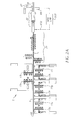
- Fig. 1A illustrates an assembling system 5 that essentially includes a series of sub or first conveyors 17a, 17b, 17c which preferably convey dispensed photofinishing components or products to a main or second conveyor 7. It is noted that conveyors 17a, 17b, 17c can also be used to convey retail components or products and/or general components or products to conveyor 7. As an example, associated with conveyor 17a is a dispensing system 19 which includes a series of product or component dispensers that dispense photofinishing products or components onto first conveyor 17a for subsequent conveyance to conveyor 7.
- a dispensing system 21 that includes a series of product or component dispensers which dispense photofinishing products or components onto conveyor 17b for subsequent conveyance to conveyor 7.
- a dispensing system 22 that includes a series of product or component dispensers which dispense photofinishing products or components onto first conveyor 17c for subsequent conveyance to second conveyor 7.
- a conveying system having 3 conveyors 17a, 17b, 17c is shown in Fig. 1A, it is recognized that the present invention is not limited thereto. It is noted that the number of conveyors 17a-17c, as well as the number of dispensers for each of the conveyors 17a-17c as shown can be varied based on design considerations, the size of the photofinishing operation, as well as the type of products or components being dispensed. It is also noted that the system of the present invention can be designed as a modular unit in which the number of dispensers associated with a specific conveyor 17a-17c can be varied based on the products or components, as well as the volume of production.
- system 5 includes dispensing systems 19, 21, 22 that dispense a first type of product or component, preferably photofinishing components, onto the appropriate conveyor 17a-17c.
- System 5 further includes a dispensing system 27 that includes a series of product or component dispensers that dispense a second type of component, preferably retail or general products or components onto conveyor 7.
- dispensing systems 19, 21, 22 are not limited to dispensing photofinishing components
- dispensing system 27 is not limited to dispensing retail or general components or products.
- photofinishing components or products that are dispensed by dispensing systems 19, 21, 22 can be components or products such as 35mm and APS (Advanced Photo System) finished film, negatives, photographic prints and digital media products such as CD's and disks.
- Retail or general products or components that are dispensed by dispensing system 27 can be items such as promotional inserts, upload cards, backing cards, coupons, etc.
- the present invention is not limited to dispensing photofinishing components or products along conveyors 17a-17c, and retail or general components or products along conveyor 7. It is recognized that any type of component or product can be dispensed onto any conveyor in accordance with the requirements of the processing lab.
- a central processing unit, computer or system (CPU) 9 monitors the assembling and packing process based on a customer order and a customer order identification which is associated with the customer order.
- CPU 9 is operationally associated with customer order processors or controllers 11a-11c which are each respectively integrated or associated with dispensing systems 19, 21 and 22. Controllers 11a-11c control the dispensing of photofinishing products or components onto a respective conveyor 17a, 17b and 17c.
- controllers 11a-11c respectively associated with dispensing systems 19, 21, 22 control a dispensing of components or products by way of the dispensers which make up part of the dispensing systems (for example, dispensers 501-506 of dispensing system 19, Fig. 1B). More specifically, controllers 11a-11c dictate which dispenser will be enabled or actuated to dispense a product or component in accordance with a customer order.
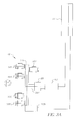
- Fig. 1B schematically illustrates the type of dispensers that can make up part of dispensing systems 19, 21, 22 and 27.
- dispensing system 19 and conveyor 17a leading to conveyor 7 are used as examples.
- dispensing system 19 can include dispenser 501 which dispenses an order bag onto conveyor 17a, and dispensers 502-507 which are respectively adapted to dispense cardboard stiffeners, an APS package, CD's, negatives, index prints and prints onto conveyor 17a and are located downstream of dispenser 501.
- these products or components are conveyed as an order group to conveyor 7 where they will be conveyed past dispensing system 27 which includes a series of dispensers 508-519 positioned along conveyor 7.
- Dispensers 508-512 can be adapted to dispense promotional inserts into the order group; dispensers 513-516 can be adapted to dispense wallet inserts into the order group; and dispensers 517-519 can be adapted to dispense a backer card or cardboard stiffener on the order group.
- the dispensers along the first and second conveyors are positioned to dispense the components or products at different points along the direction of travel of the conveyors.
- system 5 further includes a main line controller 15 which communicates with CPU 9 and is integrated with or operationally associated with dispensing system 27.
- Main line controller 15 controls the dispensing of products or components by way of the dispensers which make up part of dispensing system 27 (for example, dispensers 508-519 of dispensing system 27, Fig. 1B). That is, main line controller 15 dictates which dispenser will be enabled or actuated in accordance with the customer order.
- CPU 9 monitors the overall operation of system 5, while controllers 11a-11c and 15 control the dispensing of the components or products onto the appropriate conveyors.
- CPU 9 can respond to operator inputs of a customer order, a customer order identification, or a batch number, and query supporting systems such as, for example, a PfDf (photofinishing data file), a pricing system and associated servers to assemble all of the information necessary to perform an order assembly or packing function in accordance with the present invention.
- CPU 9 would then provide the information to each controller 11a-11c and 15 as needed to cany out the assembling process.
- Customer order controllers 11a-11c basically direct a manual operation or an automated operation of component or product dispensing systems 19, 21, 22 and their associated dispensers as necessary to (1) prepare each conveyor 17a, 17b, 17c for operation, and (2) control the conveyance of the components or products to conveyor 7.
- Main line controller 15 controls the automatic and/or manual dispensing of retail or general components or products via dispensing system 27 and the associated dispensers onto conveyor 7 to form an assembled product group.
- Main line controller 15 further controls the transportation of the assembled product group in a controlled manner to a bagger/heat/ take-away section or unit 30 (Fig. 1A) where the components can be, for example, inserted into an enclosure such as a bag, a box, or a container, and/or wrapped in shrink wrapping for distribution to a customer.
- Take away controller 30a is adapted to provide an external or internal label on the enclosed product.
- Take-away controller 30a is further adapted to control the sorting of the enclosed product for further handling or makeover, and provides a status signal to CPU 9.
- the system and process of the present invention can control dispensing through the use of scanners or readers on the dispensers, such as order bag dispenser 501 as an example.
- the order bag would include information such as a dealer and envelope number (unique order identifier or customer identification).
- the order identifier is read by the scanner or reader, and this information is provided to controllers 11a-11c and 15.
- This unique order identifier is associated with a specific flight on the appropriate conveyor to enable the appropriate downstream dispenser and form the order group. More specifically, based on the information read by the scanner or reader, controllers 11a-11c and 15 receive this information and operate the appropriate dispenser.
- system 5 includes first conveyors 17a-17b as illustrated in Fig. 1A, and rather than a third conveyor 17c, can include additional first conveyors 17d-17i for receiving a further variety of dispensed photofinishing, retail or general components or products. It is noted that the number as well as the layout of the first conveyors is shown for descriptive purposes only, and any layout arrangement or type of dispensed products or components are possible so long as the first conveyors convey the products or components to second conveyor 7.
- first conveyors 17a and 17b are designed to deliver APS or 35mm type photofinishing products or components to second conveyor 7.
- first conveyors 17a and 17b optionally include an APS package insertion station where an APS package is dispensed onto conveyor 17a (see, for example, dispenser 503 in Fig. 1B).
- the APS package generally includes an index print and an APS cartridge with exposed film.
- first conveyor 17a shown in Fig. 3A as an example, and recognizing that the process is applicable to any first conveyor 17a-17i, in the process and system of the present invention, based on an instruction from controller 11a, an order bag is first dispensed on first conveyor 17a by way of order bag dispenser 501. Thereafter, an APS package is dispensed on top of the order bag already on conveyor 17a by way of APS dispenser 503 to start an order group. Thereafter, the order group is transported via conveyor 17a to additional dispensers such as, for example, CD dispenser 504 where a CD is dispensed on top of the order group which at this point includes the order bag and the APS package (if part of customer order).
- additional dispensers such as, for example, CD dispenser 504 where a CD is dispensed on top of the order group which at this point includes the order bag and the APS package (if part of customer order).
- the order group is thereafter conveyed along conveyor 17a to a print dispenser 507.
- a print take-up multi-loader 61 transports finished prints through, for example, a conveyor to a print cutter 63 which is designed to cut each print from a batched roll of prints.
- the cut prints are thereafter transported either manually or automatically to a print bander 65 which wraps a band around the prints to keep them from separating later in the process, and dispenses the banded prints by way of dispenser 507 onto the order group.
- Dispenser 507 can be a pusher mechanism which pushes the banded prints onto the order group.
- multi-loader 61 can be eliminated and the invention can be practiced by an individual who loads prints onto print cutter 63 for subsequent conveyance to print bander 65.
- the process of the present invention can also proceed with the prints stacked but not banded, however, the use of a band is preferred since the band serves to keep the prints together and permits a more rapid conveyance.
- the order group includes the order bag having an APS package, a CD and banded prints stacked thereon.
- the present invention is being described under the assumption that the customer order includes all of the products or components noted above.
- the present invention can include different combinations of the above-noted products, i.e., an order can just include banded prints and CDs, banded prints and a picture disk, only an upload card, etc.
- conveyor 17a conveys the order group past 35mm index card dispenser 506 and a picture disk dispenser 506a which dispense the appropriate component or product into the order group if required by the customer order. Thereafter, conveyor 17a conveys the order group to a film negative dispenser 505 which can be adapted to dispense sleeved negatives into the order group.
- Film negative dispenser 505 is adapted to scan a barcode label and cut negatives from a batched roll of negatives until it has a complete customer order. The customer order of negatives is then sleeved to keep the negatives from getting scratched and to keep them from separating later in the process.
- dispensers noted above, as well as the dispensers along second conveyor 7 are configured to dispense a different type of product onto the associated conveyor. Additionally, the dispensers preferably include internal scanners to read barcodes. This helps confirm that the correct product or component has been dispensed for a particular customer order and helps control the assembly process.
- the order or sequence of the dispensers shown represents a preferred example which takes into account the geometry and dimensions of the dispensed products to facilitate the formation of the order group and/or the stacking of the products or components.
- the present invention is not limited to the order or sequence shown, and it is recognized that the order or sequence of the dispensers can be modified based on the requirements of the lab and the type of products or components dispensed. It is noted that the order in which the dispensers are placed along the respective conveyors establishes a sequence for dispensing products onto the conveyors. It is further noted that the types of components or products dispensed onto first conveyors 17a-17i is based on design considerations and the requirements of the photofinishing lab or station, as well as customer requirements.
- controllers 11a-11c control the actuation or enablement of the associated dispensers to assure the each order group includes the products or components ordered for that specific customer. This can be based on (1) the customer order identification which is identified in CPU 9 and includes information as to the specifics of the customer order, (2) information from the scanners or barcode readers on the dispensers which read the identification on the order bags, or (3) both (1) and (2).
- Conveyor 17a and the other conveyors 17b-17i, in combination with CPU 9 and controllers 11a-11c, as well as additional controllers dedicated to conveyors 17d-17i, are thus designed to sort and process all customer orders. For example, they can sort and process customer orders through APS package dispenser 503 where the APS package is fed onto an associated order bag (to start the order group) which has already been dispensed onto conveyor 17a by order bag dispenser 501. Thereafter, any associated prints are cut, banded and added to the order group at print dispenser 507, and any digital components, i.e., CDs and/or floppy disks are added by way of CD dispenser 504 and/or picture disk dispenser 506a.
- APS package dispenser 503 where the APS package is fed onto an associated order bag (to start the order group) which has already been dispensed onto conveyor 17a by order bag dispenser 501. Thereafter, any associated prints are cut, banded and added to the order group at print dispenser 507, and any digital components, i.e.
- each of the products or components of the order group are dispensed one on top of the other within a flight of the conveyor so as to form a stack of the products or components.
- This stack which forms the order group is thereafter delivered from any one of first conveyors 17a-17i onto second conveyor 7.
- Fig. 3B illustrates a typical dispenser which can be used in the present invention.
- dispenser 700 is adapted to dispense floppy disks.
- Dispenser 700 includes upper and lower endless belt type arrangements 702a, 702b which are respectively wrapped around a first set of rollers 704, 705 and a second set of rollers 707, 709.
- a component i.e., a disk
- the disk is transported between the belts to a flight 715 of a conveyor as illustrated in Fig. 3C.
- a typical flight can include rods 715 which can define the flight.
- Other examples for defining a flight include using crates, boxes, sensors, etc.
- Dispenser 700 illustrated in Figs. 3B-3C is shown for descriptive purposes. It is noted that the present invention is not limited to the dispenser shown and that any type of dispenser such as, for example, a friction feed-type dispenser, a gravity type dispenser, a push-type dispenser, a roll stock type dispenser or a vacuum type dispenser that can feed flat stock or multi-shape items can be used in the present invention.
- a friction feed-type dispenser such as, for example, a friction feed-type dispenser, a gravity type dispenser, a push-type dispenser, a roll stock type dispenser or a vacuum type dispenser that can feed flat stock or multi-shape items.
- first conveyors 17a-17i are designed to transport the components or products of a customer order in the form of an order group and/or stack past all of the dispensers as previously described. As the order group passes a dispenser, an additional component or product (if part of the order) is inserted into the order group and/or dispensed on top of the uppermost component or product of the stack.
- each of first conveyors 17a-17i can be made up of individual flights or separated sections, which will ensure that the customer orders stay separated while on the conveyor.
- Second conveyor 7 transports the order group and/or stack received from any of first conveyors 17a-17i past further component or product dispensers which will be described later.
- Second conveyor 7 like first conveyors 17a-17i can be made up of individual flights, which will ensure that customer orders stay separated while on conveyor 7. At the end of conveyor 7, the order will then be handed off to heating/bagging/take-away unit or section 30.
- an order group and/or stack After an order group and/or stack reaches second conveyor 7, it is transported along second conveyor 7 in direction 95. Thereafter, if the information entered in CPU 9 and provided to main line controller 15 includes instructions to dispense items such as promotional and wallet inserts, a backing card, an upload card, etc., the order group and/or stack can proceed to dispensing system 27 which includes, for example, dispensers 508-519 (Fig. 1B).
- dispensing system 27 components or products such as, for example, an upload card can be dispensed by an upload card dispenser where an upload card printer will print out a web address and a customer name on a label. The label will be placed on a pre-printed card. This enables a customer to gain access and download their pictures from the internet.
- the label will then be fed to the upload card dispenser which can be one of the dispensers within dispensing system 27.
- the upload card can be printed at this point.
- dispensing system 27 can include dispensers to dispense items such as promotional literature, wallet inserts, coupons, etc. After products or components such as wallet inserts, promotional literature and coupons etc. are dispensed onto the order group and/or stack, the order group which is now an assembled product group (all components or products pertinent to a customer order have been dispensed) is conveyed to a wrapper/bagger/take-away unit or section 30.
- Wrapper/bagger/take-away section 30 includes an enclosing unit which will place the assembled product group into an enclosure such as a bag, a box or a container, or wrap the assembled product group in a shrink film web and heat seal the web to enclose all of the components or products dispensed by the system. Based on instructions from controller 15, the enclosed or sealed package will then be sent to a conveyor 99 (Fig. 2A) for routing to a label application section and/or a shipping or sorting location, a conveyor 97 for quality assurance or a conveyor 98 for a makeover.
- a conveyor 99 Fig. 2A
- FIG. 2BA An example of a shrink wrapped order including a variety of products is illustrated in Fig. 2BA, which as an example, shows an order 800 with an order envelope 801, promotional inserts 802, banded prints 803, and a backing card 804 which adds rigidity to the package.
- a shrink wrap 805 can be provided around the order.
- the system of the present invention could include a minilab 900 (Fig. 2A) which receives jobs that need to be redone.
- Minilab 900 could be a known minilab system which includes any combination of a printer, processor and scanner. Therefore, as an example, an order having scratched prints can be diverted to conveyor 98, fed to minilab 900 to correct the scratched prints and re-routed back to conveyor 7 via conveyor 902 to be finalized and prepared for shipping. As an option, these scratched prints or other defects, can be identified by an operator upstream in the process by way of a preview station.
- minilab 900 could be placed adjacent to a dispenser, such as for example, print dispenser 507 shown in Fig. 3A.
- a dispenser such as for example, print dispenser 507 shown in Fig. 3A.
- an operator can identify scratched print(s) at a preview station and remove the scratched print(s) prior to being dispensed.
- the scratched print(s) can be diverted to a minilab for makeover and rejoined with the order on the conveyor by way of a further dispenser somewhere downstream of print dispenser 507.
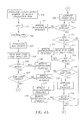
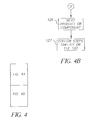
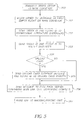
- Figs. 4A-4B show a flow chart which schematically illustrate an example of a customer order process in accordance with the present invention.
- an operator enters information relating to a batch number, a customer order, a customer identification and/or flight information to initiate a production run.
- CPU 9 (Fig. 1) receives this information and provides the information to the appropriate controllers 11a-11c, 15 and 30 (steps 101 and 102).
- CPU 9 could be a computer program product that comprises a computer readable storage medium having a computer program stored thereon.
- the program when loaded into CPU 9 will provide information to associated controllers 11a-11c, 15 and 30 which control an assembling of the components or products of the customer order in the manner already described, and can further control the process as will be described with reference to the flow charts of Figs. 4A-4B and Figs. 5-7.
- a production run starts (step 103) and a barcode from an order bag is read (step 104). Thereafter, there is a check to see if the barcode from the order bag has been read (step 105). If the barcode of the order bag has not been read, then manual intervention may be required (step 106).
- step 107 If a reading of the barcode of the order bag has been made, there is a check to see if the read barcode is a proper or correct barcode for the order (step 107). If the barcode is not the proper or correct barcode, a manual intervention is required (step 108).
- the order bag dispenser i.e., reference number 501 of Fig. 3A
- the order bag dispenser will dispense the order bag (step 109).
- step 110 there is a check to see if it has been a good dispense (for example, no jam has occurred at the dispenser) (step 110). If it has not been a good dispense, a manual intervention will be required (step 111). If it is a good dispense of an order bag, there is a check to see if the order includes an APS package (which includes an APS cartridge with negatives and an index print) (step 112). If there is no APS package included in the order, the process will proceed to step 126 (Fig.
- a reader on APS package dispenser 503 will read the barcode of the index print in the APS package (step 113). Thereafter, there is a check to see if the barcode on the index print has been read (step 114). If the barcode of the index print has not been read, manual intervention may be required (step 115). If the barcode of the index print has been read, there is a further check to see if it is the proper or correct barcode for the order (step 116). If the barcode is not the proper or correct barcode for the order, manual intervention is required (step 117).
- the APS package is dispensed into the order group (step 118). It is noted that within the context of the present intervention, the APS package as previously described is dispensed into an order group which in a preferred feature of the invention is dispensed on top of the order bag on the conveyor. Thereafter there is a check to see if it has been a good dispense (step 119). If there has not been a good dispense of the APS package, manual intervention is required (step 120). The system then proceeds to step 126 which as indicated above is a step which can be directly initiated after step 112 (Fig. 4A) if there is no APS package in the order, and the dispensing process is started for the next product or component.
- the dispensing process for the next product or component follows substantially the same process noted above for the order bag and the APS package, except that a different product or component, for example, a photo CD, 35mm prints, etc. is dispensed in accordance with the customer order (step 127). That is, for a subsequent product or component, the system will follow the process as noted above (steps 104-111 or 112-120 of Fig. 4A) in which a barcode on the product or component is read by the appropriate downstream dispenser, and there are checks to confirm that the barcode has been read, the barcode is correct for the customer order, and the product or component has been properly dispensed onto the order group on the conveyor as the order group passes the appropriate dispenser. After all the appropriate components which are to be dispensed, for example along first conveyor 17a, have been dispensed, the order group and/or stack of products or components is handed off from conveyor 17a to conveyor 7.
- step 200 CPU 9 and main line controller 15 which has already received the customer order identification for the order determines that there is to be a transfer from the first conveyor (i.e. conveyor 17a) to second conveyor 7.
- step 201 an order is given to transfer the order group or stack of products or components from the first conveyor to an empty flight on second conveyor 7.
- step 202 an order identification and optionally a flight identification identifying the flight is provided to the promotional literature dispensers for dispensing promotional literature into the order group or stack of products or components (i.e. dispensing system 27 having dispensers 508-519).
- step 203 an order identification and optionally a flight identification is supplied to a wallet dispenser for dispensing wallet inserts etc. into the order group or stack of products or components.
- step 204 there is a check to see if an upload card is to be included with the order. If the answer to step 204 is no, the process proceeds to step 206. If the answer to step 204 is yes, a message is sent to an upload card printer as well as a dispenser for dispensing an upload card. As a further option, the entire upload card can be printed.
- step 206 a message is sent to CPU 9 confirming that the dispensing of all the products or components associated with the customer order has been completed. At this point, an assembled product group has been formed.
- step 207 the assembled product group or stack of products or components is handed off to a bagging/wrapping/pricing unit.
- step 300 the order group or stack of products or components arrives at conveyor 7. Thereafter, a customer identification is provided to main line controller 15 (step 301). Main line controller 15 thereafter controls the dispensing of the products or components into the order group or onto the stack of products or components as the order group passes the appropriate dispenser (step 302). In step 303, there is a check to see if there has been a good dispense (i.e., no jam up of the product or component at the dispenser).
- step 304 If the answer to step 303 is no, manual intervention is required (step 304). If it has been a good dispense, then the system proceeds to step 305 where a message is sent to main line controller 15 as well as CPU 9 that the dispense has been completed (step 305).
- Fig. 7 an example of a bagging/wrapping/pricing process flow is illustrated in Fig. 7.
- an order identification pertaining to the customer order is received by CPU 9 and take-away controller 30a (step 400).
- the assembled product group or stack of products or components is transferred to section 30 in a controlled manner as well be described (step 401).
- the stack of products or components or order group is enclosed or bagged (step 402), and a price is printed and affixed to the enclosed or bagged order (step 403).
- the assembled product group or stack of products or components can be supplied to a heat tunnel where the assembled product group or stack of photofinishing components is shrinked wrapped.
- Fig. 8 schematically illustrates a transfer process for transferring the assembled group or stack of products from conveyor 7 to section 30.
- the group or order goes from conveyor 7 to a belted transfer conveyor 7a to another flighted conveyor 7b to a vacuum belt 7c which transfers the product to a heat tunnel or section 30.
- the speed of conveyor 7a can be controlled by a variable speed servomotor M1 to run slightly faster than the speed of conveyor 7.
- the purpose of conveyor 7a is to work with conveyor 7 (via speed and timing) to eliminate empty flights that may have occurred on conveyor 7.
- Flighted conveyor 7b can also be controlled by a variable speed servomotor M2.
- the purpose of conveyor 7b is to work with conveyor 7a and reduce empty flights.
- Orders approaching conveyor 7b are not uniformally spaced since orders can be of different lengths (pano vs 135) but in the same length flight. This allows control of the speed enough to account for empty flights being fed from the conveyor 7. After waiting for a predetermined amount of time, conveyor 7b will stop, and wait for the next order. Conveyor 7c can also be controlled by a variable speed servomotor M3. In order to control any gap between orders, conveyor 7b will "push" the order stack, for example, into the shrink film "tube” at section 30 while transferring to conveyor 7c which takes the order through the sealing unit in section 30. The speed of conveyor 7c can also be controlled by variable speed servo motor M3 to control the ratio of the speed of conveyor 7b to the speed of the order, which allows the system to maintain a constant distance between orders through the sealing unit in section 30.
- a message is sent to CPU 9 to confirm that the enclosing, bagging, wrapping and/or pricing is complete (step 404), and the enclosed, bagged and/or shrinked wrapped assembled product group or stack of products or components is handed off to a take away conveyor where it is prepared for delivery to the customer.
- an order group or stack having a defect such as a scratched print can be diverted to a minilab as previously described so as to be redone.
- Figs. 4A-4B and 5-7 illustrate a preferred workflow process
- the workflow process of the present invention is not limited to that shown, and that areas of the workflow can be varied depending on the products or components that are assembled, and the facilities available at the photofinishing station.
- Conveyor 7 can be U-shaped or can include a variety of curves in accordance with the location in which the photofinishing station is to be placed.
- conveyors 17a-17i can be placed at various locations and at various angles with respect to second conveyor 7 so long as the components are handed off to second conveyor 7.
- conveyors 17a-17i have been described with reference to receiving dispensed photofinishing components
- conveyor 7 has been described with reference to receiving dispensed retail and general components
- the present invention is not limited thereto. It is recognized that retail and general components can be dispensed at different points along any of conveyor 7 and conveyors 17a-17j; while photofinishing components can be dispensed at different points along any of conveyors 17a-17j and conveyor 7.
Landscapes
- Physics & Mathematics (AREA)
- General Physics & Mathematics (AREA)
- Auxiliary Devices For And Details Of Packaging Control (AREA)
Abstract
A system and method of assembling photofinishing components,
retail components and general components is designed to assemble the
components into an order group. The order group can be, for example, a stack of
the photofinishing components, retail components or general components. The
system of the present invention is adapted to receive a customer order, provide an
order identification with the order and control the dispensing of the components
onto a conveying system (17a, 17b, 17c, 7). In the system of the present
invention, the sequence for dispensing the components onto the conveying system
is dictated by the layout of product dispensers (19, 21, 22, 27) along the
conveying system and the control of the dispensers based on the customer order.
With the system of the present invention it is possible to assemble, for example,
35mm and APS finished film negatives, prints, digital media products and
promotional literature into a single package that is suitable for return to a retailer
for subsequent delivery or retrieval by a customer.
Description
- The present invention relates to a system and method for assembling a photofinishing order that includes at least one component or product for subsequent distribution to a customer. The system of the present invention is designed to sequentially dispense a variety of intermixed photofinishing, retail and/or general components or products for subsequent distribution to the customer.
- Current photofinishing systems do not facilitate the automated packaging of batches or orders with intermixed photofinishing, retail and general components or products. More specifically, current photofinishing equipment and/or systems do not facilitate the automatic packaging of orders which may include for example, film cartridges, photo CDs, finished negatives, photographic prints, digital media products, promotional literature and order bags. With the increasing demand for multiple products, an increase in orders from different dealer accounts, and an increase in different digital orders and products, there remains a need to provide for a system that dispenses intermixed photofinishing, retail and general components or products in accordance with a customer order, and also an assembly system for packaging the order.
- The present invention is directed to a system and method for assembling a photofinishing customer order that has at least one photofinishing component or product such as photographic prints, film cartridges, and photo CD's; one retail component or product such as coupons and promotional literature; and one general component or product such as cardboard stiffeners and backing cards, for subsequent distribution to a customer. In the system and method of the present invention, it is possible to assemble customer orders which may include, for example, film cartridges, photo CDs, finished negatives, photographic prints, digital media products and promotional literature into a single package. In the system and method of the present invention, the assembled order could be placed in an enclosure such as a product envelope or bag and/or shrink wrapped with externally visible pricing and identification for return to the customer.
- The present invention relates to a method of assembling a photofinishing customer order having at least one component for subsequent distribution to a customer. The method comprises the steps of: associating a customer order identification with the customer order; automatically dispensing at least one first type of component onto a first conveyor based on the customer order identification so as to form an order group which includes the at least one first type of component; conveying the order group from the first conveyor to a second conveyor; automatically dispensing at least one second type of component into the order group on the second conveyor to create an assembled product group; and shrink wrapping the assembled product group.
- The present invention also relates to a method of assembling a photofinishing customer order, which comprises the step of: dispensing at least one of photofinishing products, retail products or general products, in accordance with a customer order identification, onto a conveyor at different points along a direction of travel of the conveyor. The products are dispensed one on top of the other to form a stack of the products on the conveyor.
- The present invention also relates to a photofinishing assembling system which comprises: at least one first conveyor for conveying photofinishing components pertaining to a customer order; a first dispensing system for dispensing the photofinishing components onto the first conveyor in a manner in which an order group of the photofinishing components is formed on the first conveyor; a second conveyor adapted to receive the order group of photofinishing components from the first conveyor; and a second dispensing system for dispensing at least one of retail components or general components into the order group on the second conveyor to create an assembled product group which includes at least one of the photofinishing components, the retail components and the general components.
- The present invention further relates to a photofinishing assembling system which comprises: a conveying system adapted to convey products pertaining to a photofinishing customer order, and a dispensing system adapted to dispense the products onto the conveying system at different points along a direction of travel of the conveying system. The products are dispensed one on top of the other to form an assembled stack of products on the conveying system.
- The present invention further relates to a method of assembling products associated with a photofinishing customer order which comprises the steps of: placing product dispensers dedicated to a specific type of product along a conveying system, such that an order in which the products dispensers are placed establishes a sequence for dispensing the products onto the conveying system; and dispensing the products onto the conveying system in accordance with the customer order and in the sequence established by the placement of the product dispensers.
- The present invention also relates to a computer program product, comprising a computer readable storage medium having a computer program stored thereon, which when loaded into the computer causes the computer to control an assembling of a photofinishing customer order having at least one component by performing the steps of: associating a customer order identification with the customer order; dispensing at least one first type of component onto a first conveyor based on the customer order identification so as to form an order group which includes the at least one first type of component; conveying the order group from the first conveyor to a second conveyor; and dispensing at least one second type of component into the order group on the second conveyor to create an assembled product group.
- The present invention also relates to a computer program product, comprising a computer readable storage medium having a computer program stored thereon which when loaded into the computer causes the computer to control the assembling of a photofinishing customer order by performing the steps of: associating a customer order identification with the customer order; and dispensing at least one of photofinishing products, retail products or general products onto a conveyor at different points along a direction of travel of the conveyor. The products are dispensed one on top of the other to form a stack of the products on the conveyor.
- The present invention further relates to a computer program product, comprising a computer readable storage medium having a computer program stored thereon, which when loaded into the computer causes the computer to assemble a photofinishing customer order by performing the steps of: associating a customer order identification with the customer order; and automatically dispensing at least one of a photofinishing product, a retail product and a general product onto the conveying system in accordance with the customer order and a sequence defined by product dispensers which are laid out along the conveying system.
- The present invention also relates to a photofinishing assembling system which comprises: at least one first conveyor for conveying first components pertaining to a customer order; a plurality of first dispensers for dispensing the first components onto the first conveyor in a manner in which an order group of the first components is formed on the first conveyor; a second conveyor adapted to receive the order group of photofinishing components from the first conveyor, and a plurality of second component dispensers for dispensing second components into the order group on the second conveyor to create an assembled product group which includes the first components and the second components.
- The present invention further relates to a method of assembling a photofinishing customer order having at least one photofinishing component, one retail component and one general component for subsequent distribution to a customer. The method comprises the steps of: associating a customer order identification with the customer order; dispensing the at least one photofinishing component onto the first conveyor based on the customer order identification so as to form an order group which includes the at least one photofinishing component; conveying the order group from the first conveyor to a second conveyor; dispensing at least one retail component or general component into the order group on the second conveyor to create an assembled product group; and inserting the assembled product group into an enclosure.
- Fig. 1A schematically illustrates an assembling and packaging system in accordance with the present invention;
- Fig. 1B schematically illustrates an example of a dispenser configuration or arrangement;
- Fig. 2A illustrates the assembling and packaging system of the present invention in further detail;
- Fig. 2A shows an example of a shrink wrapped order;
- Fig. 3A illustrates an example of a conveying system and a product dispensing system in accordance with a feature of the present invention;
- Fig. 3B illustrates an example of a dispenser which can be used in the system of the present invention;
- Fig. 3C shows the dispenser of Fig. 3B as well as a conveyor;
- Figs. 4A-4B represent a flow chart illustrating an example of an order process flow in accordance with a feature of the present invention;
- Fig. 5 is a flow chart illustrating an example of a main line conveyor process flow in accordance with a feature of the present invention;
- Fig. 6 is a flow chart illustrating an example of a retail component process flow in accordance with the present invention;
- Fig. 7 is a flow chart illustrating an example of a enclosing and/or shrink wrapping process flow in accordance with a feature of the present invention; and
- Fig. 8 schematically illustrates a transfer from a main conveyor to a heat tunnel or shrink wrap machine.
-
- The system and method of the present invention enables the assembling of a photofinishing customer order that includes at least one photofinishing component or product, and optionally a retail component or product and a general component or product. Therefore, with the system and method of the present invention, it is possible to assemble both 35mm and APS finished film negatives, photographic prints, digital media products promotional literature, and a backing card into a single package suitable for return to a retailer with external or internal pricing and identification.
- Referring to the drawings, wherein like reference numerals represent identical or corresponding parts throughout the several views, Fig. 1A illustrates an
assembling system 5 that essentially includes a series of sub orfirst conveyors second conveyor 7. It is noted thatconveyors conveyor 7. As an example, associated withconveyor 17a is adispensing system 19 which includes a series of product or component dispensers that dispense photofinishing products or components ontofirst conveyor 17a for subsequent conveyance toconveyor 7. Associated withconveyor 17b is adispensing system 21 that includes a series of product or component dispensers which dispense photofinishing products or components ontoconveyor 17b for subsequent conveyance toconveyor 7. Associated withconveyor 17c is adispensing system 22 that includes a series of product or component dispensers which dispense photofinishing products or components ontofirst conveyor 17c for subsequent conveyance tosecond conveyor 7. - Although a conveying system having 3
conveyors conveyors 17a-17c, as well as the number of dispensers for each of theconveyors 17a-17c as shown can be varied based on design considerations, the size of the photofinishing operation, as well as the type of products or components being dispensed. It is also noted that the system of the present invention can be designed as a modular unit in which the number of dispensers associated with aspecific conveyor 17a-17c can be varied based on the products or components, as well as the volume of production. - Therefore,
system 5 includesdispensing systems appropriate conveyor 17a-17c.System 5 further includes adispensing system 27 that includes a series of product or component dispensers that dispense a second type of component, preferably retail or general products or components ontoconveyor 7. Of course,dispensing systems system 27 is not limited to dispensing retail or general components or products. - Within the context of the present invention, although not limited thereto, photofinishing components or products that are dispensed by dispensing
systems system 27 can be items such as promotional inserts, upload cards, backing cards, coupons, etc. Of course, as noted above, the present invention is not limited to dispensing photofinishing components or products alongconveyors 17a-17c, and retail or general components or products alongconveyor 7. It is recognized that any type of component or product can be dispensed onto any conveyor in accordance with the requirements of the processing lab. - With reference back to Fig. 1A, in one example of operation of the system of the present invention, a central processing unit, computer or system (CPU) 9 monitors the assembling and packing process based on a customer order and a customer order identification which is associated with the customer order.
CPU 9 is operationally associated with customer order processors orcontrollers 11a-11c which are each respectively integrated or associated with dispensingsystems Controllers 11a-11c control the dispensing of photofinishing products or components onto arespective conveyor controllers 11a-11c respectively associated with dispensingsystems system 19, Fig. 1B). More specifically,controllers 11a-11c dictate which dispenser will be enabled or actuated to dispense a product or component in accordance with a customer order. - Fig. 1B schematically illustrates the type of dispensers that can make up part of dispensing
systems system 19 andconveyor 17a leading toconveyor 7 are used as examples. As shown in Fig. 1B, dispensingsystem 19 can includedispenser 501 which dispenses an order bag ontoconveyor 17a, and dispensers 502-507 which are respectively adapted to dispense cardboard stiffeners, an APS package, CD's, negatives, index prints and prints ontoconveyor 17a and are located downstream ofdispenser 501. - In a manner which will be described in detail later, these products or components are conveyed as an order group to
conveyor 7 where they will be conveyed past dispensingsystem 27 which includes a series of dispensers 508-519 positioned alongconveyor 7. Dispensers 508-512 can be adapted to dispense promotional inserts into the order group; dispensers 513-516 can be adapted to dispense wallet inserts into the order group; and dispensers 517-519 can be adapted to dispense a backer card or cardboard stiffener on the order group. As a further option, you can have additional dispensers to dispense items such as upload cards. As shown, the dispensers along the first and second conveyors are positioned to dispense the components or products at different points along the direction of travel of the conveyors. - It is recognized that the number of dispensers used, the types of products or components dispensed, and the sequence by which the products or components are dispensed are based on design considerations and the requirements of the lab.
- With reference back to Fig. 1A,
system 5 further includes amain line controller 15 which communicates withCPU 9 and is integrated with or operationally associated with dispensingsystem 27.Main line controller 15 controls the dispensing of products or components by way of the dispensers which make up part of dispensing system 27 (for example, dispensers 508-519 of dispensingsystem 27, Fig. 1B). That is,main line controller 15 dictates which dispenser will be enabled or actuated in accordance with the customer order. - Therefore, within the context of the present invention,
CPU 9 monitors the overall operation ofsystem 5, whilecontrollers 11a-11c and 15 control the dispensing of the components or products onto the appropriate conveyors. For example,CPU 9 can respond to operator inputs of a customer order, a customer order identification, or a batch number, and query supporting systems such as, for example, a PfDf (photofinishing data file), a pricing system and associated servers to assemble all of the information necessary to perform an order assembly or packing function in accordance with the present invention.CPU 9 would then provide the information to eachcontroller 11a-11c and 15 as needed to cany out the assembling process. -
Customer order controllers 11a-11c basically direct a manual operation or an automated operation of component orproduct dispensing systems conveyor conveyor 7. -
Main line controller 15 controls the automatic and/or manual dispensing of retail or general components or products via dispensingsystem 27 and the associated dispensers ontoconveyor 7 to form an assembled product group.Main line controller 15 further controls the transportation of the assembled product group in a controlled manner to a bagger/heat/ take-away section or unit 30 (Fig. 1A) where the components can be, for example, inserted into an enclosure such as a bag, a box, or a container, and/or wrapped in shrink wrapping for distribution to a customer. - As shown in Fig. 1A, associated with
section 30 is a take-awaycontroller 30a. Take awaycontroller 30a is adapted to provide an external or internal label on the enclosed product. Take-away controller 30a is further adapted to control the sorting of the enclosed product for further handling or makeover, and provides a status signal toCPU 9. - As an alternative to or in addition to using
CPU 9 to trigger dispensing control viacontrollers 11a-11c and 15, the system and process of the present invention can control dispensing through the use of scanners or readers on the dispensers, such asorder bag dispenser 501 as an example. In this arrangement, the order bag would include information such as a dealer and envelope number (unique order identifier or customer identification). The order identifier is read by the scanner or reader, and this information is provided tocontrollers 11a-11c and 15. This unique order identifier is associated with a specific flight on the appropriate conveyor to enable the appropriate downstream dispenser and form the order group. More specifically, based on the information read by the scanner or reader,controllers 11a-11c and 15 receive this information and operate the appropriate dispenser. -
System 5 will now be described in more detail with reference to Figs. 2A and 3A. As illustrated in Fig. 2A,system 5 includesfirst conveyors 17a-17b as illustrated in Fig. 1A, and rather than athird conveyor 17c, can include additionalfirst conveyors 17d-17i for receiving a further variety of dispensed photofinishing, retail or general components or products. It is noted that the number as well as the layout of the first conveyors is shown for descriptive purposes only, and any layout arrangement or type of dispensed products or components are possible so long as the first conveyors convey the products or components tosecond conveyor 7. - In the example of Fig. 2A,
first conveyors second conveyor 7. For this purpose,first conveyors conveyor 17a (see, for example,dispenser 503 in Fig. 1B). The APS package generally includes an index print and an APS cartridge with exposed film. - Using
first conveyor 17a shown in Fig. 3A as an example, and recognizing that the process is applicable to anyfirst conveyor 17a-17i, in the process and system of the present invention, based on an instruction fromcontroller 11a, an order bag is first dispensed onfirst conveyor 17a by way oforder bag dispenser 501. Thereafter, an APS package is dispensed on top of the order bag already onconveyor 17a by way ofAPS dispenser 503 to start an order group. Thereafter, the order group is transported viaconveyor 17a to additional dispensers such as, for example,CD dispenser 504 where a CD is dispensed on top of the order group which at this point includes the order bag and the APS package (if part of customer order). The order group is thereafter conveyed alongconveyor 17a to aprint dispenser 507. Prior to being dispensed byprint dispenser 501, a print take-up multi-loader 61 transports finished prints through, for example, a conveyor to aprint cutter 63 which is designed to cut each print from a batched roll of prints. The cut prints are thereafter transported either manually or automatically to aprint bander 65 which wraps a band around the prints to keep them from separating later in the process, and dispenses the banded prints by way ofdispenser 507 onto the order group.Dispenser 507 can be a pusher mechanism which pushes the banded prints onto the order group. As a further example, multi-loader 61 can be eliminated and the invention can be practiced by an individual who loads prints ontoprint cutter 63 for subsequent conveyance to printbander 65. The process of the present invention can also proceed with the prints stacked but not banded, however, the use of a band is preferred since the band serves to keep the prints together and permits a more rapid conveyance. At this point, the order group includes the order bag having an APS package, a CD and banded prints stacked thereon. - The present invention is being described under the assumption that the customer order includes all of the products or components noted above. Of course, the present invention can include different combinations of the above-noted products, i.e., an order can just include banded prints and CDs, banded prints and a picture disk, only an upload card, etc.
- After the banded prints are inserted into the order group and specifically on top of the uppermost component or product in the stack,
conveyor 17a conveys the order group past 35mmindex card dispenser 506 and apicture disk dispenser 506a which dispense the appropriate component or product into the order group if required by the customer order. Thereafter,conveyor 17a conveys the order group to a filmnegative dispenser 505 which can be adapted to dispense sleeved negatives into the order group. - Film
negative dispenser 505 is adapted to scan a barcode label and cut negatives from a batched roll of negatives until it has a complete customer order. The customer order of negatives is then sleeved to keep the negatives from getting scratched and to keep them from separating later in the process. - Each of the dispensers noted above, as well as the dispensers along
second conveyor 7 are configured to dispense a different type of product onto the associated conveyor. Additionally, the dispensers preferably include internal scanners to read barcodes. This helps confirm that the correct product or component has been dispensed for a particular customer order and helps control the assembly process. - The order or sequence of the dispensers shown represents a preferred example which takes into account the geometry and dimensions of the dispensed products to facilitate the formation of the order group and/or the stacking of the products or components. However, the present invention is not limited to the order or sequence shown, and it is recognized that the order or sequence of the dispensers can be modified based on the requirements of the lab and the type of products or components dispensed. It is noted that the order in which the dispensers are placed along the respective conveyors establishes a sequence for dispensing products onto the conveyors. It is further noted that the types of components or products dispensed onto
first conveyors 17a-17i is based on design considerations and the requirements of the photofinishing lab or station, as well as customer requirements. Also,controllers 11a-11c control the actuation or enablement of the associated dispensers to assure the each order group includes the products or components ordered for that specific customer. This can be based on (1) the customer order identification which is identified inCPU 9 and includes information as to the specifics of the customer order, (2) information from the scanners or barcode readers on the dispensers which read the identification on the order bags, or (3) both (1) and (2). -
Conveyor 17a and theother conveyors 17b-17i, in combination withCPU 9 andcontrollers 11a-11c, as well as additional controllers dedicated toconveyors 17d-17i, are thus designed to sort and process all customer orders. For example, they can sort and process customer orders throughAPS package dispenser 503 where the APS package is fed onto an associated order bag (to start the order group) which has already been dispensed ontoconveyor 17a byorder bag dispenser 501. Thereafter, any associated prints are cut, banded and added to the order group atprint dispenser 507, and any digital components, i.e., CDs and/or floppy disks are added by way ofCD dispenser 504 and/orpicture disk dispenser 506a. - In a preferred feature of the invention, each of the products or components of the order group are dispensed one on top of the other within a flight of the conveyor so as to form a stack of the products or components. This stack which forms the order group is thereafter delivered from any one of
first conveyors 17a-17i ontosecond conveyor 7. - Fig. 3B illustrates a typical dispenser which can be used in the present invention. As shown in Fig. 3B,
dispenser 700 is adapted to dispense floppy disks.Dispenser 700 includes upper and lower endlessbelt type arrangements rollers rollers 707, 709. As a component (i.e., a disk) is fed between the upper and lower belt-type arrangements, the disk is transported between the belts to aflight 715 of a conveyor as illustrated in Fig. 3C. As shown in Fig. 3C, a typical flight can includerods 715 which can define the flight. Other examples for defining a flight include using crates, boxes, sensors, etc.Dispenser 700 illustrated in Figs. 3B-3C is shown for descriptive purposes. It is noted that the present invention is not limited to the dispenser shown and that any type of dispenser such as, for example, a friction feed-type dispenser, a gravity type dispenser, a push-type dispenser, a roll stock type dispenser or a vacuum type dispenser that can feed flat stock or multi-shape items can be used in the present invention. - Therefore,
first conveyors 17a-17i are designed to transport the components or products of a customer order in the form of an order group and/or stack past all of the dispensers as previously described. As the order group passes a dispenser, an additional component or product (if part of the order) is inserted into the order group and/or dispensed on top of the uppermost component or product of the stack. As an example, each offirst conveyors 17a-17i can be made up of individual flights or separated sections, which will ensure that the customer orders stay separated while on the conveyor. -
Second conveyor 7 transports the order group and/or stack received from any offirst conveyors 17a-17i past further component or product dispensers which will be described later.Second conveyor 7 likefirst conveyors 17a-17i can be made up of individual flights, which will ensure that customer orders stay separated while onconveyor 7. At the end ofconveyor 7, the order will then be handed off to heating/bagging/take-away unit orsection 30. - As shown in Fig. 2A, after an order group and/or stack reaches
second conveyor 7, it is transported alongsecond conveyor 7 indirection 95. Thereafter, if the information entered inCPU 9 and provided tomain line controller 15 includes instructions to dispense items such as promotional and wallet inserts, a backing card, an upload card, etc., the order group and/or stack can proceed to dispensingsystem 27 which includes, for example, dispensers 508-519 (Fig. 1B). At dispensingsystem 27 components or products such as, for example, an upload card can be dispensed by an upload card dispenser where an upload card printer will print out a web address and a customer name on a label. The label will be placed on a pre-printed card. This enables a customer to gain access and download their pictures from the internet. The label will then be fed to the upload card dispenser which can be one of the dispensers within dispensingsystem 27. As a further option, the upload card can be printed at this point. As a still further option, dispensingsystem 27 can include dispensers to dispense items such as promotional literature, wallet inserts, coupons, etc. After products or components such as wallet inserts, promotional literature and coupons etc. are dispensed onto the order group and/or stack, the order group which is now an assembled product group (all components or products pertinent to a customer order have been dispensed) is conveyed to a wrapper/bagger/take-away unit orsection 30. Wrapper/bagger/take-awaysection 30 includes an enclosing unit which will place the assembled product group into an enclosure such as a bag, a box or a container, or wrap the assembled product group in a shrink film web and heat seal the web to enclose all of the components or products dispensed by the system. Based on instructions fromcontroller 15, the enclosed or sealed package will then be sent to a conveyor 99 (Fig. 2A) for routing to a label application section and/or a shipping or sorting location, aconveyor 97 for quality assurance or aconveyor 98 for a makeover. - An example of a shrink wrapped order including a variety of products is illustrated in Fig. 2BA, which as an example, shows an
order 800 with anorder envelope 801,promotional inserts 802, bandedprints 803, and abacking card 804 which adds rigidity to the package. In the example of Fig. 2BA, ashrink wrap 805 can be provided around the order. - With respect to makeovers, the system of the present invention could include a minilab 900 (Fig. 2A) which receives jobs that need to be redone.
Minilab 900 could be a known minilab system which includes any combination of a printer, processor and scanner. Therefore, as an example, an order having scratched prints can be diverted toconveyor 98, fed to minilab 900 to correct the scratched prints and re-routed back toconveyor 7 viaconveyor 902 to be finalized and prepared for shipping. As an option, these scratched prints or other defects, can be identified by an operator upstream in the process by way of a preview station. - As a still further option,
minilab 900 could be placed adjacent to a dispenser, such as for example,print dispenser 507 shown in Fig. 3A. In this example, prior to prints being dispensed byprint dispenser 507, an operator can identify scratched print(s) at a preview station and remove the scratched print(s) prior to being dispensed. At this point, the scratched print(s) can be diverted to a minilab for makeover and rejoined with the order on the conveyor by way of a further dispenser somewhere downstream ofprint dispenser 507. - Figs. 4A-4B show a flow chart which schematically illustrate an example of a customer order process in accordance with the present invention. Referring specifically to Fig. 4A, at
step 100, an operator enters information relating to a batch number, a customer order, a customer identification and/or flight information to initiate a production run. CPU 9 (Fig. 1) receives this information and provides the information to theappropriate controllers 11a-11c, 15 and 30 (steps 101 and 102). As an example,CPU 9 could be a computer program product that comprises a computer readable storage medium having a computer program stored thereon. The program when loaded intoCPU 9 will provide information to associatedcontrollers 11a-11c, 15 and 30 which control an assembling of the components or products of the customer order in the manner already described, and can further control the process as will be described with reference to the flow charts of Figs. 4A-4B and Figs. 5-7. Based on instructions fromCPU 9 andcustomer order controllers 11a-11c, a production run starts (step 103) and a barcode from an order bag is read (step 104). Thereafter, there is a check to see if the barcode from the order bag has been read (step 105). If the barcode of the order bag has not been read, then manual intervention may be required (step 106). If a reading of the barcode of the order bag has been made, there is a check to see if the read barcode is a proper or correct barcode for the order (step 107). If the barcode is not the proper or correct barcode, a manual intervention is required (step 108). - If the barcode has been read and it is the proper or correct barcode for the order, then the order bag dispenser (i.e.,
reference number 501 of Fig. 3A) will dispense the order bag (step 109). Thereafter, there is a check to see if it has been a good dispense (for example, no jam has occurred at the dispenser) (step 110). If it has not been a good dispense, a manual intervention will be required (step 111). If it is a good dispense of an order bag, there is a check to see if the order includes an APS package (which includes an APS cartridge with negatives and an index print) (step 112). If there is no APS package included in the order, the process will proceed to step 126 (Fig. 4B) which will be described later. If there is an APS package in the order, a reader onAPS package dispenser 503 will read the barcode of the index print in the APS package (step 113). Thereafter, there is a check to see if the barcode on the index print has been read (step 114). If the barcode of the index print has not been read, manual intervention may be required (step 115). If the barcode of the index print has been read, there is a further check to see if it is the proper or correct barcode for the order (step 116). If the barcode is not the proper or correct barcode for the order, manual intervention is required (step 117). If the barcode has been read and it is the proper or correct barcode for the order, the APS package is dispensed into the order group (step 118). It is noted that within the context of the present intervention, the APS package as previously described is dispensed into an order group which in a preferred feature of the invention is dispensed on top of the order bag on the conveyor. Thereafter there is a check to see if it has been a good dispense (step 119). If there has not been a good dispense of the APS package, manual intervention is required (step 120). The system then proceeds to step 126 which as indicated above is a step which can be directly initiated after step 112 (Fig. 4A) if there is no APS package in the order, and the dispensing process is started for the next product or component. - The dispensing process for the next product or component follows substantially the same process noted above for the order bag and the APS package, except that a different product or component, for example, a photo CD, 35mm prints, etc. is dispensed in accordance with the customer order (step 127). That is, for a subsequent product or component, the system will follow the process as noted above (steps 104-111 or 112-120 of Fig. 4A) in which a barcode on the product or component is read by the appropriate downstream dispenser, and there are checks to confirm that the barcode has been read, the barcode is correct for the customer order, and the product or component has been properly dispensed onto the order group on the conveyor as the order group passes the appropriate dispenser. After all the appropriate components which are to be dispensed, for example along
first conveyor 17a, have been dispensed, the order group and/or stack of products or components is handed off fromconveyor 17a toconveyor 7. - Referring to Fig. 5, a schematic diagram of the process flow along
second conveyor 7 is shown. Instep 200,CPU 9 andmain line controller 15 which has already received the customer order identification for the order determines that there is to be a transfer from the first conveyor (i.e.conveyor 17a) tosecond conveyor 7. Instep 201, an order is given to transfer the order group or stack of products or components from the first conveyor to an empty flight onsecond conveyor 7. Instep 202, an order identification and optionally a flight identification identifying the flight is provided to the promotional literature dispensers for dispensing promotional literature into the order group or stack of products or components (i.e. dispensingsystem 27 having dispensers 508-519). Thereafter, instep 203, an order identification and optionally a flight identification is supplied to a wallet dispenser for dispensing wallet inserts etc. into the order group or stack of products or components. Instep 204, there is a check to see if an upload card is to be included with the order. If the answer to step 204 is no, the process proceeds to step 206. If the answer to step 204 is yes, a message is sent to an upload card printer as well as a dispenser for dispensing an upload card. As a further option, the entire upload card can be printed. Instep 206, a message is sent toCPU 9 confirming that the dispensing of all the products or components associated with the customer order has been completed. At this point, an assembled product group has been formed. Thereafter, instep 207, the assembled product group or stack of products or components is handed off to a bagging/wrapping/pricing unit. - With reference to Fig. 6, an example of a process flow for dispensing products or components such as promotional literature into the order group and/or stack of components is shown. This basic process flow is utilized in the dispensing steps of Fig. 5, for example, for dispensing promotional literature, wallet inserts, etc. With reference to Fig. 6, in
step 300 the order group or stack of products or components arrives atconveyor 7. Thereafter, a customer identification is provided to main line controller 15 (step 301).Main line controller 15 thereafter controls the dispensing of the products or components into the order group or onto the stack of products or components as the order group passes the appropriate dispenser (step 302). Instep 303, there is a check to see if there has been a good dispense (i.e., no jam up of the product or component at the dispenser). If the answer to step 303 is no, manual intervention is required (step 304). If it has been a good dispense, then the system proceeds to step 305 where a message is sent tomain line controller 15 as well asCPU 9 that the dispense has been completed (step 305). - Referring back to Fig. 5 and specifically step 207 relating to the hand off of the assembled product group or stack of products or components to the bagging/wrapping/pricing unit, an example of a bagging/wrapping/pricing process flow is illustrated in Fig. 7. As shown in Fig. 7, an order identification pertaining to the customer order is received by
CPU 9 and take-awaycontroller 30a (step 400). Based on the completed order, the assembled product group or stack of products or components is transferred tosection 30 in a controlled manner as well be described (step 401). Thereafter, the stack of products or components or order group is enclosed or bagged (step 402), and a price is printed and affixed to the enclosed or bagged order (step 403). Optionally, the assembled product group or stack of products or components can be supplied to a heat tunnel where the assembled product group or stack of photofinishing components is shrinked wrapped. - Fig. 8 schematically illustrates a transfer process for transferring the assembled group or stack of products from
conveyor 7 tosection 30. As shown in Fig. 8, the group or order goes fromconveyor 7 to a beltedtransfer conveyor 7a to anotherflighted conveyor 7b to avacuum belt 7c which transfers the product to a heat tunnel orsection 30. The speed ofconveyor 7a can be controlled by a variable speed servomotor M1 to run slightly faster than the speed ofconveyor 7. The purpose ofconveyor 7a is to work with conveyor 7 (via speed and timing) to eliminate empty flights that may have occurred onconveyor 7.Flighted conveyor 7b can also be controlled by a variable speed servomotor M2. The purpose ofconveyor 7b is to work withconveyor 7a and reduce empty flights.Orders approaching conveyor 7b are not uniformally spaced since orders can be of different lengths (pano vs 135) but in the same length flight. This allows control of the speed enough to account for empty flights being fed from theconveyor 7. After waiting for a predetermined amount of time,conveyor 7b will stop, and wait for the next order.Conveyor 7c can also be controlled by a variable speed servomotor M3. In order to control any gap between orders,conveyor 7b will "push" the order stack, for example, into the shrink film "tube" atsection 30 while transferring toconveyor 7c which takes the order through the sealing unit insection 30. The speed ofconveyor 7c can also be controlled by variable speed servo motor M3 to control the ratio of the speed ofconveyor 7b to the speed of the order, which allows the system to maintain a constant distance between orders through the sealing unit insection 30. - Thereafter, a message is sent to
CPU 9 to confirm that the enclosing, bagging, wrapping and/or pricing is complete (step 404), and the enclosed, bagged and/or shrinked wrapped assembled product group or stack of products or components is handed off to a take away conveyor where it is prepared for delivery to the customer. As a further option, an order group or stack having a defect such as a scratched print can be diverted to a minilab as previously described so as to be redone. - Although Figs. 4A-4B and 5-7 illustrate a preferred workflow process, it is noted that the workflow process of the present invention is not limited to that shown, and that areas of the workflow can be varied depending on the products or components that are assembled, and the facilities available at the photofinishing station. It is further noted that although a straight line arrangement is illustrated at Fig. 2A, the present invention is not limited thereto.
Conveyor 7 can be U-shaped or can include a variety of curves in accordance with the location in which the photofinishing station is to be placed. Also,conveyors 17a-17i can be placed at various locations and at various angles with respect tosecond conveyor 7 so long as the components are handed off tosecond conveyor 7. Further, althoughconveyors 17a-17i have been described with reference to receiving dispensed photofinishing components, andconveyor 7 has been described with reference to receiving dispensed retail and general components, the present invention is not limited thereto. It is recognized that retail and general components can be dispensed at different points along any ofconveyor 7 andconveyors 17a-17j; while photofinishing components can be dispensed at different points along any ofconveyors 17a-17j andconveyor 7.
Claims (10)
- A method of assembling a photofinishing customer order having at least one component for subsequent distribution to a customer, the method comprising the steps of:associating a customer order identification with said customer order;automatically dispensing at least one first type of component onto a first conveyor (17a, 17b, 17c) based on the customer order identification so as to form an order group which includes said at least one first type of component;conveying said order group from said first conveyor to a second conveyor (7);automatically dispensing at least one second type of component into said order group on said second conveyor to create an assembled product group; andshrink wrapping the assembled product group.
- A method according to claim 1, wherein said at least one first type of component includes at least one of an order bag, an APS package, negatives, an index card, individual prints, and digital products.
- A method according to claim 2, wherein said digital products include at least one of a photo CD or a floppy disk.
- A method according to claim 1, wherein said at least one second type of component includes at least one of wallet and promotional inserts, coupons, an on-line upload card, and a backing card.
- A method according to claim 1, further comprising a plurality of said first type of components, wherein said step of automatically dispensing the at least one first type of component onto the first conveyor comprises automatically dispensing each of the plurality of first type of components onto said first conveyor at different points along a longitudinal direction of said first conveyor.
- A photofinishing assembling system comprising:at least one first conveyor (17a, 17b, 17c) for conveying photofinishing components pertaining to a customer order;a first dispensing system (19, 21, 22) for dispensing the photofinishing components onto the first conveyor in a manner in which an order group of the photofinishing components is formed on the first conveyor;a second conveyor (7) adapted to receive the order group of photofinishing components from the first conveyor; anda second dispensing system (27) for dispensing at least one of retail components or general components into said order group on the second conveyor to create an assembled product group which includes at least one of said photofinishing components, said retail components and said general components.
- A photofinishing assembling system comprising:a conveying system (17a, 17b, 17c, 7) adapted to convey products pertaining to a photofinishing customer order, anda dispensing system (19, 21, 22, 27) adapted to dispense the products onto the conveying system at different points along a direction of travel of the conveying system, the products being dispensed one on top of the other to form an assembled stack of products on the conveying system.
- A method of assembling products associated with a photofinishing customer order, the method comprising the steps of:placing product dispensers (19, 21, 22, 27) dedicated to a specific type of product along a conveying system (17a, 17b, 17c, 7), such that an order in which the products dispensers are placed establishes a sequence for dispensing the products onto the conveying system; anddispensing said products onto said conveying system in accordance with said customer order and in the sequence established by the placement of said product dispensers.
- A photofinishing assembling system comprising:at least one first conveyor (17a, 17b, 17c) for conveying first components pertaining to a customer order;a plurality of first dispensers (19, 21, 22) for dispensing the first components onto the first conveyor in a manner in which an order group of the first components is formed on the first conveyor;a second conveyor (7) adapted to receive the order group of photofinishing components from the first conveyor; anda plurality of second component dispensers for dispensing (27) second components into said order group on the second conveyor to create an assembled product group which includes said first components and said second components.
- A method of assembling a photofinishing customer order having at least one photofinishing component, one retail component and one general component for subsequent distribution to a customer, the method comprising the steps of:associating a customer order identification with said customer order;dispensing the at least one photofinishing component onto said first conveyor (17a, 17b, 17c) based on the customer order identification so as to form an order group which includes said at least one photofinishing component;conveying said order group from said first conveyor to a second conveyor (7);dispensing at least one retail component or general component into said order group on said second conveyor to create an assembled product group; andinserting the assembled product group into an enclosure.
Applications Claiming Priority (2)
| Application Number | Priority Date | Filing Date | Title |
|---|---|---|---|
| US16515 | 2001-10-26 | ||
| US10/016,515 US20030079443A1 (en) | 2001-10-26 | 2001-10-26 | System and method for assembling components or products of a photofinishing order |
Publications (1)
| Publication Number | Publication Date |
|---|---|
| EP1306724A1 true EP1306724A1 (en) | 2003-05-02 |
Family
ID=21777520
Family Applications (1)
| Application Number | Title | Priority Date | Filing Date |
|---|---|---|---|
| EP02079242A Withdrawn EP1306724A1 (en) | 2001-10-26 | 2002-10-14 | A system and method for assembling components of a photofinishing order |
Country Status (2)
| Country | Link |
|---|---|
| US (1) | US20030079443A1 (en) |
| EP (1) | EP1306724A1 (en) |
Cited By (1)
| Publication number | Priority date | Publication date | Assignee | Title |
|---|---|---|---|---|
| EP1480076A1 (en) * | 2003-05-22 | 2004-11-24 | Fuji Photo Film Co., Ltd. | Apparatus and system for producing and packing prints |
Families Citing this family (2)
| Publication number | Priority date | Publication date | Assignee | Title |
|---|---|---|---|---|
| US7478514B2 (en) * | 2007-05-14 | 2009-01-20 | Pearson Education, Inc. | Shipping container packing method using shrink wrap |
| US10943207B2 (en) * | 2017-03-02 | 2021-03-09 | Walmart Apollo, Llc | Shipment receiving systems and methods including notification and reconciliation features |
Citations (4)
| Publication number | Priority date | Publication date | Assignee | Title |
|---|---|---|---|---|
| US4115981A (en) * | 1976-06-12 | 1978-09-26 | Agfa-Gevaert, A.G. | Apparatus for assembling and packing photographic prints with associated developed films |
| WO2000009408A1 (en) * | 1998-08-11 | 2000-02-24 | Icea A/S | Wrapper for the keeping of developed film strips, pictures and the like |
| EP0984326A1 (en) * | 1998-08-31 | 2000-03-08 | Eastman Kodak Company | Image printing |
| US6169597B1 (en) * | 1996-06-12 | 2001-01-02 | Giampaolo Sala | Container to manage and process photographic material and relative automated system of management and processing |
Family Cites Families (3)
| Publication number | Priority date | Publication date | Assignee | Title |
|---|---|---|---|---|
| US5070677A (en) * | 1991-02-20 | 1991-12-10 | Ray Hicks | Automated photographic print bagger |
| US5426481A (en) * | 1994-05-12 | 1995-06-20 | Eastman Kodak Company | Order finishing |
| US5649260A (en) * | 1995-06-26 | 1997-07-15 | Eastman Kodak Company | Automated photofinishing apparatus |
-
2001
- 2001-10-26 US US10/016,515 patent/US20030079443A1/en not_active Abandoned
-
2002
- 2002-10-14 EP EP02079242A patent/EP1306724A1/en not_active Withdrawn
Patent Citations (4)
| Publication number | Priority date | Publication date | Assignee | Title |
|---|---|---|---|---|
| US4115981A (en) * | 1976-06-12 | 1978-09-26 | Agfa-Gevaert, A.G. | Apparatus for assembling and packing photographic prints with associated developed films |
| US6169597B1 (en) * | 1996-06-12 | 2001-01-02 | Giampaolo Sala | Container to manage and process photographic material and relative automated system of management and processing |
| WO2000009408A1 (en) * | 1998-08-11 | 2000-02-24 | Icea A/S | Wrapper for the keeping of developed film strips, pictures and the like |
| EP0984326A1 (en) * | 1998-08-31 | 2000-03-08 | Eastman Kodak Company | Image printing |
Cited By (1)
| Publication number | Priority date | Publication date | Assignee | Title |
|---|---|---|---|---|
| EP1480076A1 (en) * | 2003-05-22 | 2004-11-24 | Fuji Photo Film Co., Ltd. | Apparatus and system for producing and packing prints |
Also Published As
| Publication number | Publication date |
|---|---|
| US20030079443A1 (en) | 2003-05-01 |
Similar Documents
| Publication | Publication Date | Title |
|---|---|---|
| US5414974A (en) | Automated document handling system | |
| US4115981A (en) | Apparatus for assembling and packing photographic prints with associated developed films | |
| CN1547715A (en) | automatic packaging | |
| EP3674235A1 (en) | System and method for transporting items to a packaging station | |
| US6499892B2 (en) | Processing of photographs in a photographic laboratory by operators | |
| CN115043041A (en) | Method and apparatus for packaging different types of articles | |
| EP1306724A1 (en) | A system and method for assembling components of a photofinishing order | |
| JP2002225823A (en) | System and method for procuring and packaging product | |
| JPH01240431A (en) | Packing system | |
| US6226071B1 (en) | Photographic processing system | |
| US7072022B2 (en) | Automatic processing of photographs in a photographic laboratory | |
| JP2006313401A (en) | Print creation processing apparatus and method, and print distributed processing system and method | |
| JP3709756B2 (en) | Sheet selection collation processing apparatus and sheet selection collation processing method | |
| JPH0844035A (en) | Photo finishing equipment | |
| JP3551402B2 (en) | Photo product production system and photo product production method | |
| JP3252413B2 (en) | Printing machine | |
| JP2739591B2 (en) | Coin payment processing device | |
| JP2736010B2 (en) | Sorting device | |
| JP3428830B2 (en) | Photo processing equipment | |
| JP2023124347A (en) | Information display object input system | |
| EP2364943A2 (en) | Apparatus and process for sorting a sequential flow of postal items according to a predetermined criterion and wrapping up the postal items so sorted | |
| JPH09292660A (en) | Index print, index print forming device and production method of the index print | |
| JPH09319060A (en) | Photo product production system | |
| JPH09274305A (en) | Print producing method, automatic printing device and print producing system | |
| JPH11102032A (en) | Photograph printing method |
Legal Events
| Date | Code | Title | Description |
|---|---|---|---|
| PUAI | Public reference made under article 153(3) epc to a published international application that has entered the european phase |
Free format text: ORIGINAL CODE: 0009012 |
|
| AK | Designated contracting states |
Designated state(s): AT BE BG CH CY CZ DE DK EE ES FI FR GB GR IE IT LI LU MC NL PT SE SK TR |
|
| AX | Request for extension of the european patent |
Extension state: AL LT LV MK RO SI |
|
| 17P | Request for examination filed |
Effective date: 20031013 |
|
| AKX | Designation fees paid |
Designated state(s): DE FR GB |
|
| 17Q | First examination report despatched |
Effective date: 20040827 |
|
| STAA | Information on the status of an ep patent application or granted ep patent |
Free format text: STATUS: THE APPLICATION IS DEEMED TO BE WITHDRAWN |
|
| 18D | Application deemed to be withdrawn |
Effective date: 20050108 |