EP1306432A1 - Human ii type 5 alpha-reductase promoter gene and use thereof - Google Patents
Human ii type 5 alpha-reductase promoter gene and use thereof Download PDFInfo
- Publication number
- EP1306432A1 EP1306432A1 EP01943855A EP01943855A EP1306432A1 EP 1306432 A1 EP1306432 A1 EP 1306432A1 EP 01943855 A EP01943855 A EP 01943855A EP 01943855 A EP01943855 A EP 01943855A EP 1306432 A1 EP1306432 A1 EP 1306432A1
- Authority
- EP
- European Patent Office
- Prior art keywords
- reductase
- transcription
- type
- polynucleotide
- dna molecule
- Prior art date
- Legal status (The legal status is an assumption and is not a legal conclusion. Google has not performed a legal analysis and makes no representation as to the accuracy of the status listed.)
- Withdrawn
Links
Images
Classifications
-
- C—CHEMISTRY; METALLURGY
- C12—BIOCHEMISTRY; BEER; SPIRITS; WINE; VINEGAR; MICROBIOLOGY; ENZYMOLOGY; MUTATION OR GENETIC ENGINEERING
- C12N—MICROORGANISMS OR ENZYMES; COMPOSITIONS THEREOF; PROPAGATING, PRESERVING, OR MAINTAINING MICROORGANISMS; MUTATION OR GENETIC ENGINEERING; CULTURE MEDIA
- C12N9/00—Enzymes; Proenzymes; Compositions thereof; Processes for preparing, activating, inhibiting, separating or purifying enzymes
- C12N9/0004—Oxidoreductases (1.)
- C12N9/001—Oxidoreductases (1.) acting on the CH-CH group of donors (1.3)
-
- C—CHEMISTRY; METALLURGY
- C12—BIOCHEMISTRY; BEER; SPIRITS; WINE; VINEGAR; MICROBIOLOGY; ENZYMOLOGY; MUTATION OR GENETIC ENGINEERING
- C12N—MICROORGANISMS OR ENZYMES; COMPOSITIONS THEREOF; PROPAGATING, PRESERVING, OR MAINTAINING MICROORGANISMS; MUTATION OR GENETIC ENGINEERING; CULTURE MEDIA
- C12N15/00—Mutation or genetic engineering; DNA or RNA concerning genetic engineering, vectors, e.g. plasmids, or their isolation, preparation or purification; Use of hosts therefor
- C12N15/09—Recombinant DNA-technology
- C12N15/63—Introduction of foreign genetic material using vectors; Vectors; Use of hosts therefor; Regulation of expression
- C12N15/79—Vectors or expression systems specially adapted for eukaryotic hosts
- C12N15/85—Vectors or expression systems specially adapted for eukaryotic hosts for animal cells
-
- C—CHEMISTRY; METALLURGY
- C12—BIOCHEMISTRY; BEER; SPIRITS; WINE; VINEGAR; MICROBIOLOGY; ENZYMOLOGY; MUTATION OR GENETIC ENGINEERING
- C12N—MICROORGANISMS OR ENZYMES; COMPOSITIONS THEREOF; PROPAGATING, PRESERVING, OR MAINTAINING MICROORGANISMS; MUTATION OR GENETIC ENGINEERING; CULTURE MEDIA
- C12N2830/00—Vector systems having a special element relevant for transcription
-
- C—CHEMISTRY; METALLURGY
- C12—BIOCHEMISTRY; BEER; SPIRITS; WINE; VINEGAR; MICROBIOLOGY; ENZYMOLOGY; MUTATION OR GENETIC ENGINEERING
- C12N—MICROORGANISMS OR ENZYMES; COMPOSITIONS THEREOF; PROPAGATING, PRESERVING, OR MAINTAINING MICROORGANISMS; MUTATION OR GENETIC ENGINEERING; CULTURE MEDIA
- C12N2830/00—Vector systems having a special element relevant for transcription
- C12N2830/80—Vector systems having a special element relevant for transcription from vertebrates
- C12N2830/85—Vector systems having a special element relevant for transcription from vertebrates mammalian
Definitions
- This invention relates to DNA molecules which can act as a promoter for the human type II 5 ⁇ -reductase gene and may optionally have an appropriate reporter gene operably linked thereto, as well as recombinant expression vectors thereof and Escherichia coli or mammalian cells containing such vectors. This invention also relates to uses of these DNA molecules and cells.
- 5 ⁇ -Reductase is an enzyme catalyzing the 5 ⁇ -position reduction of 4-ene-3-keto-steroids such as testosterone, 4-androstenedione and progesterone. Its typical role is to metabolize testosterone to 5 ⁇ -dihydrotestosterone (DHT) that is the most powerful androgen.
- DHT 5 ⁇ -dihydrotestosterone
- DHT performs important physiological functions (e.g., the differentiation of male external genital organs including the prostate gland at the embryonic stage and the manifestation of secondary sex characters at puberty) especially in males
- DHT is involved in androgen-dependent diseases such as prostatomegaly and prostatic carcinoma, and dermatological diseases such as androgenetic alopecia, polytrichia, seborrheic dermatitis and acne vulgaris.
- androgenetic alopecia polytrichia
- seborrheic dermatitis and acne vulgaris In order to prevent or treat these diseases, suppression of DHT production in target cells is considered to be effective and various 5 ⁇ -reductase inhibitors are being sought as a means therefor.
- type I In male adults, type I is relatively strongly expressed in the skin and the liver, while its weak activity is widely distributed over various parts of the body.
- type II is localized in androgen target tissues such as the prostate, epididymides and seminal vesicles (J. Clin. Invest. 92:903-910, 1993).
- DHT dexase
- 5 ⁇ -reductase activity in prostatomegaly and prostatic carcinoma has also been reported (J. Clin. Endocrinol. Metab. 67:806-816, 1988).
- various 5 ⁇ -reductase inhibitors have been developed.
- finasteride that is an specific inhibitor of type II 5 ⁇ -reductase is known to exhibit an excellent therapeutic effect on these diseases. Moreover, finasteride also exhibit a therapeutic effect on androgenetic alopecia and polytrichia (Biomed & Pharmacother 49:319-324, 1995).
- type II 5 ⁇ -reductase inhibitors are effective for certain androgen-dependent diseases, and some of them have been developed by evaluating an inhibitory activity against 5 ⁇ -reductase.
- one embodiment of the present invention relates to an isolated DNA molecule capable of acting as a promoter for the type II 5 ⁇ -reductase gene derived from human beings.
- This DNA molecule is selected from the group consisting of:
- the present invention also relates to uses of this DNA molecule, including a recombinant expression vector carrying the DNA molecule, and Escherichia coli or a mammalian cell containing the DNA molecule or the recombinant expression vector.
- the DNA molecule may further contain a reporter gene operably linked thereto.
- the DNA molecule further contains a reporter gene, there can be provided a system for evaluating the human type II 5 ⁇ -reductase transcription controlling ability of various test samples by using a mammalian cell as described above.
- test samples may be any compounds including natural organic compounds and chemically synthesized compounds. This evaluation system may be applied, for example, to a method for screening drugs having a human type II 5 ⁇ -reductase transcription controlling ability.
- the present invention not only provides a means for elucidating the mechanism controlling the expression of the human type II 5 ⁇ -reductase gene, but also serves to diagnose, prevent or treat diseases associated with the expression thereof. Moreover, there is a possibility that the present invention may be utilized, for example, for the purpose of screening drugs which are highly effective in promoting the production of type II 5 ⁇ -reductase (or activating the aforesaid transcription) or suppressing the production of type II 5 ⁇ -reductase (or inactivating the aforesaid transcription) in various types of cells.
- promoter means a region of DNA which is involved in the efficiency of the transcription initiation reaction. Accordingly, the expression “capable of acting as an operator” is used interchangeably with “having a transcription controlling ability”, and ultimately means that the DNA molecule has a transcription activating or inactivating effect which controls the expression of human type II 5 ⁇ -reductase positively or negatively, respectively. In the present invention, greater emphasis is placed on, but is not limited to, a transcription inactivating effect.
- operably linked means that an objective polynucleotide (e.g., a reporter gene) attached to the promoter or a transcription control region (or a region having a transcription controlling ability) is linked in such a manner as to be expressible in certain host cells.
- the polynucleotide is linked on the downstream side of a transcription control region.
- a polynucleotide (or oligonucleotide) having no adverse influence on the expression of the objective polynucleotide may intervene between the transcription control region and the objective polynucleotide.
- One isolated DNA molecule in accordance with the present invention is a polynucleotide comprising the DNA sequence represented by SEQ ID NO:1, the polynucleotide comprising a continuous DNA sequence extending from position 1 to 6022.
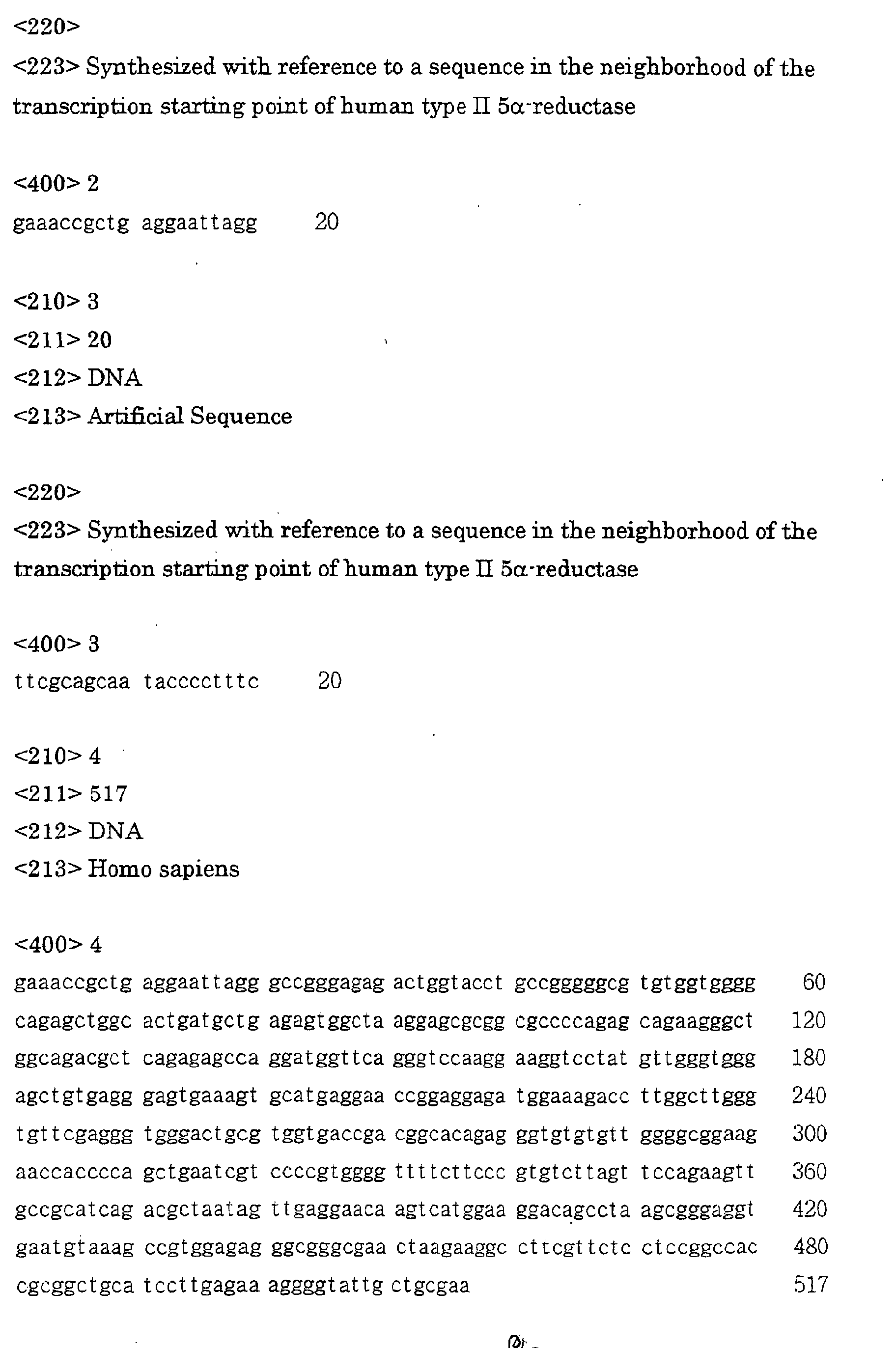
- this polynucleotide may be prepared in the following manner. First of all, a DNA fragment comprising a region in the neighborhood of the transcription starting point of human type II 5 ⁇ -reductase is obtained by a per se known PCR process using primers represented by SEQ ID NO:2 and 3 and human genomic DNA. This DNA fragment is labeled with digoxigenin and used as a probe for the screening of a human genomic DNA library. Then, phage DNA is prepared from positive plaques and digested with appropriate restriction enzymes. Thus, a desired DNA fragment is identified by Southern blotting using the aforesaid probe. This DNA fragment is subcloned into pBluescript II vector.
- Another isolated DNA molecule in accordance with the present invention is a fragment of the aforesaid polynucleotide, the fragment comprising a continuous DNA sequence of at least about 50 nucleotides including the transcription starting point at position 5952 (T) in the sequence of SEQ ID NO:1. Moreover, such fragments must be able to act as a promoter for the type II 5 ⁇ -reductase gene derived from human beings. These fragments may be any DNA molecules that satisfy the above-described requirements. The preparation of these fragments may be carried out according to the procedure described in Example 2 which will be given later. Specifically, these fragments may be obtained by digesting a polynucleotide comprising the DNA sequence represented by SEQ ID NO:1 with appropriate restriction enzymes in such a way as to cause the aforesaid transcription starting point to remain.
- a further isolated DNA molecule in accordance with the present invention is a polynucleotide having the aforesaid basic DNA sequence (i.e., the continuous DNA sequence extending from position 1 to 6022 in which one or more nucleotides have been modified by substitution, deletion and/or addition, and containing a polynucleotide comprising a continuous DNA sequence of at least about 50 nucleotides including the transcription starting point at position 5952 (T).
- such polynucleotides must also be able to act as a promoter for the type II 5 ⁇ -reductase gene derived from human beings.
- polynucleotides modified by deletion include polynucleotides preferably comprising a sequence in which one or more nucleotides are deleted so that any duplication of the aforesaid fragments can be avoided and the basic DNA sequence will be interrupted.
- the site(s) of deletion may be arbitrary in position and number, provided that the above-described requirements are satisfied, i.e., the transcription starting point remains and the polynucleotide can act as a promoter. However, it is usually preferable that they are positioned so as to cause one or more of the plurality of transcription factor binding motifs (as will be described later) to lose their functions (i.e., the corresponding transcription factors come to be unable to bind to them).
- one or more bases (A, T, C, G) in the basic DNA sequence may be replaced by any other bases, provided that the above-described requirements are satisfied.
- two or more consecutive bases may be replaced.
- Such substitution may also be effected so that some of the aforesaid transcription factor binding motifs will lose their functions.
- addition comprehends the addition of a nucleotide or a poly- or oligonucleotide to the 5'- or 3'-terminus, and the addition of the aforesaid nucleotide or the like so as to force itself into the basic DNA sequence.
- it is required to satisfy the above-described requirements.
- substitution, deletion and addition may occur concurrently. They may be effected by per se known techniques such as digestion with restriction enzymes and ligation with ligase, the introduction of a site-specific mutation, and PCR.
- the isolated DNA molecule as described above may further contain a reporter gene operably linked thereto.
- the reporter gene is linked on the downstream side of the DNA molecule so as to cause the frames to match with each other, optionally through the medium of a nucleotide sequence which has no adverse influence on the expression of the gene.
- the reporter gene may be any of those known in the art, it is preferable to use a reporter gene whose expression can be easily detected.
- reporter genes include, but are not limited to, the luciferase gene and the ⁇ -galactosidase gene.
- As the aforesaid linking method there may be used a per se known method.
- the present invention also provides vectors, preferably expression vectors, carrying the above-described DNA molecule or a structure comprising the DNA molecule containing a reporter gene operably linked thereto.
- vectors preferably expression vectors, carrying the above-described DNA molecule or a structure comprising the DNA molecule containing a reporter gene operably linked thereto.
- One type of such vectors may be plasmids, and another type thereof may be vectors derived from viruses. These vectors can autonomously replicate in host cells into which they have been introduced. In this description, such vectors are referred to as expression vectors or recombinant expression vectors.
- vectors For the construction of such expression vectors, a wide variety of vectors may be used according to the type of host cells to be transfected. For the purposes of the present invention, however, it is convenient to use, for example, pBluescript II (manufactured by Stratagene) when Escherichia coli can be used as the host, and pGL 3 basic vector (manufactured by Promega) when a mammalian cell is used as the host.
- the construction of such expression vectors may be carried out according to a per se known method.
- the present invention further provides Escherichia coli or a mammalian cell containing the aforesaid expression vector or recombinant expression vector, or the aforesaid DNA molecule which may have a reporter gene operably linked thereto.
- the introduction or transfection of an exogenous DNA molecule comprising the expression vector or the DNA molecule into host cells may also be carried out according to a per se known method. Such methods include coprecipitation with calcium phosphate or calcium chloride, DEAE-dextran-mediated transfection, lipofection and electroporation.
- the Escherichia coli into which the aforesaid exogenous DNA molecule has been introduced serves to amplify the DNA molecule
- the mammalian cell into which the aforesaid exogenous DNA molecule has been introduced may be utilized in a method for evaluating the human type II 5 ⁇ -reductase transcription controlling ability of test samples, as will be described later.
- the mammalian cells which can be used to accomplish this purpose include human prostatic stroma cells, human foreskin fibroblasts, human dermal papilla cells and the like.
- the aforesaid evaluation method may be carried out by introducing the aforesaid DNA molecule (in particular, the one containing a reporter gene) into a mammalian cell, culturing the mammalian cell in the presence of a test sample, and using a change in the degree of expression of the reporter gene in the culture as an indicator of the human type II 5 ⁇ -reductase transcription controlling ability of the test sample.
- the aforesaid DNA molecule in particular, the one containing a reporter gene
- the degree of expression of the reporter gene can be determined by measuring the level of the expression product by an appropriate detection means selected according to the reporter gene used, and a change in the degree of expression can be determined, for example, by comparing the measured degree of expression with the degree of expression of the reporter gene in a culture (control) obtained by culturing the cell under the same conditions, except that the test sample is absent.
- the cell may be cultured under any conditions known in the art, depending on the type of the host cell used.
- the above-described evaluation method may be applied to a method for screening type II 5 ⁇ -reductase controllers from compound libraries or natural substances according to a high throughput screening technique (Nature, 384, supp., 14-16, 1996) or the like. Specifically, the cell is treated with a test compound for a suitable period of time and its reporter activity is measured. Thus, substances capable of raising or reducing the activity are screened.
- the drugs obtained in this manner will be able to control the expression of human type II 5 ⁇ -reductase, either directly by acting, for example, on cis-elements or transcription factors, or indirectly by controlling the signal transfer system.
- transcription factors participating in the transcriptional control of type II 5 ⁇ -reductase can be predicted by retrieving transcription factor binding motifs on the basis of a database such as TRANSFAC.
- a database such as TRANSFAC.
- transcription factor binding motifs including SP-1, AP-1, CREBP1, Nkx-2.5, SOX5 and the like was recognized. It is believed that these transcription factors act on cis-elements in the type II 5 ⁇ -reductase transcription control region and thereby promote or suppress the transcription of type II 5 ⁇ -reductase. Accordingly, substances capable of controlling the production of these transcription factors, or substances inhibiting the binding of transcription factors to cis-elements will also be useful as type II 5 ⁇ -reductase transcription controllers.
- the present invention also provides a method for promoting or suppressing the expression of human type II 5 ⁇ -reductase which comprises providing an expression vector containing an isolated DNA molecule encoding transcription factors for transcription factor binding motifs present in the DNA sequence represented by SEQ ID NO:1, and culturing a mammalian cell having the expression vector introduced thereinto; and a method for evaluating the human type II 5 ⁇ -reductase transcription controlling ability of a test sample which comprises carrying out the aforesaid method in the presence of a test sample and using a change in the amount of expression of human type II 5 ⁇ -reductase caused by the presence of the test sample, as an indicator of the human type II 5 ⁇ -reductase transcription controlling ability of the test sample.
- This evaluation method can in turn be applied to a method for the screening of type II 5 ⁇ -reductase transcription controllers.
- the mammalian cells which can be used in the aforesaid evaluation method by introducing thereinto an expression vector containing a DNA molecule encoding transcription factors for transcription factor binding motifs include, for example, human prostatic stroma cells, human foreskin fibroblasts and human dermal papilla cells which may contain the aforesaid DNA molecule having a reporter gene operably linked thereto as an exogenous DNA molecule.
- Type II 5 ⁇ -reductase transcription suppressors which can be obtained by the screening method of the present invention will be effective for the prevention and treatment of androgen-dependent diseases such as prostatomegaly and prostatic carcinoma, or androgenetic alopecia and the like.
- This DNA fragment was labeled with digoxigenin and used as a probe to screen a human genomic DNA library.
- Escherichia coli K802 strain was infected with a human genomic DNA library (vector: EMBL3 SP6/T7) manufactured by Clontech, and allowed to form plaques. After these plaques were transferred to a nylon membrane, hybridization was carried out by using the aforesaid probe.
- a color reaction was carried out by using alkaline phosphatase-labeled anti-digoxigenin antibody (manufactured by Roche Diagnostics). As a result of the screening of about 2,000,000 plaques, two positive plaques #1 and #2 were obtained. Phage DNA was prepared therefrom, digested with various restriction enzymes, and then subjected to Southern blotting using the aforesaid probe. As a result, a plurality of DNA fragments proved to be positive.
- Example 2 Construction of a reporter plasmid comprising the human type II 5 ⁇ -reductase promoter and the luciferase reporter gene
- the DNA fragment represented by SEQ ID NO:1 contains, in addition to the 5'-upstream region of the human type II 5 ⁇ -reductase gene, a portion of the structural gene following the translation stating codon (ATG) (from position 6023 to 6224 in SEQ ID NO:1). Accordingly, if the luciferase gene is directly liked thereto, the expression of luciferase cannot be expected owing to a frame shift. For this reason, the procedure for removing the structural gene portion of type II 5 ⁇ -reductase from p6.2BS plasmid was carried out as follows.
- p6.2BS plasmid was digested with SacII to remove a portion extending from the SacII site at position 5823 in SEQ ID NO:1 to the SacII site derived from pBluescript II.
- SacII SacII recognition sequence attached to the 5'-terminus and represented by SEQ ID NO:5 and 6
- PCR was carried out by using p6.2BS plasmid as a template.
- This fragment was digested with SacII and then ligated into p6.2BS plasmid which had been digested with SacII as described above. The direction of the inserted fragment was determined, and a clone having the same direction as SEQ ID NO:1 was selected.
- This plasmid was named p6.0BS. Then, p6.0BS plasmid was digested with BssHII and the resulting about 6 kb DNA fragment of the human type II 5 ⁇ -reductase transcription control region was subcloned into pGL3 basic vector which had been digested with KpnI and HindIII. The plasmid thus obtained was named pRedII-Luc.
- pRedII-Luc was digested with a restriction enzyme to remove the 5' side from the cleavage site in the inserted type II 5 ⁇ -reductase transcription control region DNA. Thereafter, this plasmid was self-ligated to prepare a modification of pRedII-Luc.
- the names of actually prepared plasmid modifications and the restriction enzymes used for their preparation are shown in Table 1.
- Example 3 Measurement of promoter activities for human type II 5 ⁇ -reductase
- each of the aforesaid reporter plasmids was transfected into human dermal papilla cells and its promoter activity was measured.
- a 24-well plate was inoculated with an equal number of cells.
- each plasmid and pSV- ⁇ -Galactosidase Control Vector (manufactured by Promega), containing the ⁇ -galactosidase gene as an internal control for the measurement of gene introduction efficiency, were mixed with Lipofectamine Plus Reagent (manufactured by Lifetech Oriental), and this mixture was added to the cells in order to introduce the genes thereinto. After being incubated for 24 to 48 hours, the cells were lysed and measured for luciferase activity and ⁇ -galactosidase activity.
- the luciferase activity was measured by means of a Picagene Luminescence Kit (manufactured by Toyo Ink), and the ⁇ -galactosidase activity was measured by using CPRG as a color-producing substrate.
- the results thus obtained are shown in Table 2.
- the promoter activity was obtained by correcting the luciferase activity for the ⁇ -galactosidase activity and expressing it as a relative value based on the promoter activity of pRedII-Luc.
- a DNA fragment of up to about -60 bp, inclusive of the transcription starting point also has a strong promoter activity.
- Example 4 Screening of type II 5 ⁇ -reductase transcription controllers
- pRedII-Luc and pSV- ⁇ -Galactosidase Control Vector are transfected into dermal papilla cells in the same manner as in Example 3. After 24 hours, various substances are added and the incubation is continued for an additional 24-48 hours. Thereafter, the promoter activity is measured in the same manner as in Example 3. Thus, various substances capable of promoting or suppressing the expression of type II 5 ⁇ -reductase can be screened.
- Example 5 Promotion of the transcription of type II 5 ⁇ -reductase by transcription factor SRY (sex determining region Y)
- transcription factor binding motifs were retrieved on the basis of TRANSFAC database.
- a biding motif for the transcription factor SRY was recognized. This suggests that the transcription of type II 5 ⁇ -reductase may be controlled by SRY.
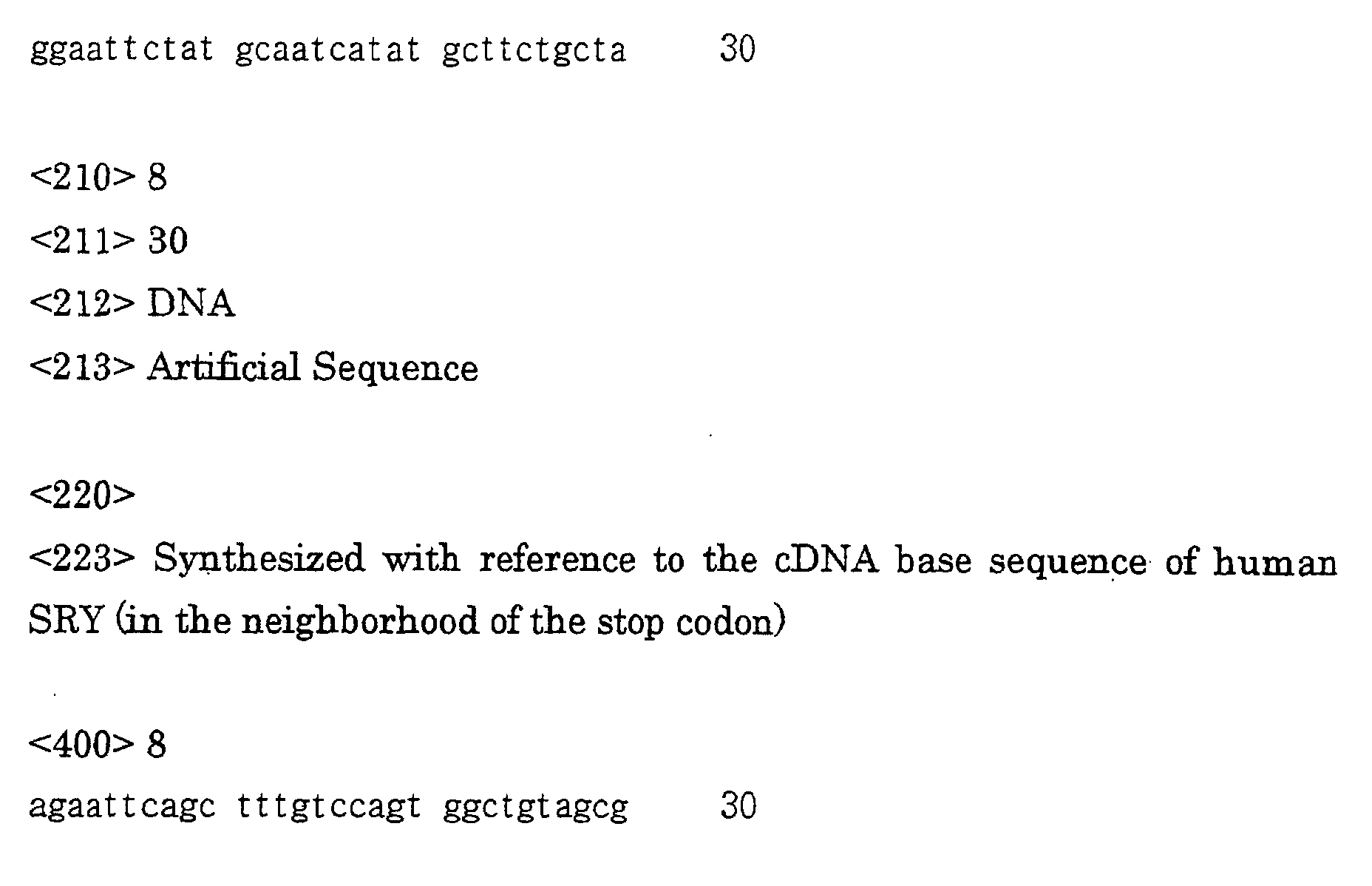
- a change in the expression of type II 5 ⁇ -reductase due to an over-expression of SRY was examined by using dermal papilla cells. Specifically, using PCR primers having an EcoRI recognition sequence attached to the 5'-terminus and represented by SEQ ID NO:7 and 8, the full-length structural gene of SRY was obtained by using human genomic DNA as a template.
- This fragment was digested with EcoRI and then subcloned into the expression vector pVP22/myc-His (manufactured by Invitrogen) which had been similarly digested with EcoRI.
- This plasmid was named pVP22-SRY/myc-His.
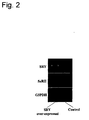
- pVP22-SRY/myc-His and pVP22/myc-His as a negative control were separately transfected into hair papillary cells in the same manner as in Example 3. After being incubated for 48 hours, the cells were harvested and RNA was extracted therefrom. Then, the expression of mRNAs for SRY and type II 5 ⁇ -reductase (5aRII) was examined by RT-PCR. The results thus obtained are shown in FIG. 2.
- substances capable of controlling the expression of human type II 5 ⁇ -reductase positively or negatively can be screened by providing a recombinant expression vector comprising a 5'-upstream gene containing a promoter for human type II 5 ⁇ -reductase and an appropriate reporter gene linked thereto, introducing this vector into an animal cell, and using the resulting reporter activity as an indicator.
- substances capable of suppressing the expression of the human type II 5 ⁇ -reductase gene will be effective for the prevention and treatment of androgen-dependent diseases such as prostatomegaly and prostatic carcinoma, or male pattern alopecia and the like.
- the present invention can be utilized in the pharmaceutical industry, the cosmetic industry and the like.
Landscapes
- Health & Medical Sciences (AREA)
- Life Sciences & Earth Sciences (AREA)
- Genetics & Genomics (AREA)
- Chemical & Material Sciences (AREA)
- Engineering & Computer Science (AREA)
- Zoology (AREA)
- Organic Chemistry (AREA)
- Bioinformatics & Cheminformatics (AREA)
- Wood Science & Technology (AREA)
- General Engineering & Computer Science (AREA)
- Biomedical Technology (AREA)
- Biotechnology (AREA)
- Microbiology (AREA)
- Biochemistry (AREA)
- Molecular Biology (AREA)
- General Health & Medical Sciences (AREA)
- Medicinal Chemistry (AREA)
- Physics & Mathematics (AREA)
- Biophysics (AREA)
- Plant Pathology (AREA)
- Micro-Organisms Or Cultivation Processes Thereof (AREA)
- Measuring Or Testing Involving Enzymes Or Micro-Organisms (AREA)
Abstract
A DNA molecule containing the promoter gene region of the
human type II 5α-reductase gene, its modifications, and a method for
screening type II 5α-reductase transcription controllers by using the
same.
Description
This invention relates to DNA molecules which can act as a
promoter for the human type II 5α-reductase gene and may
optionally have an appropriate reporter gene operably linked thereto,
as well as recombinant expression vectors thereof and Escherichia
coli or mammalian cells containing such vectors. This invention also
relates to uses of these DNA molecules and cells.
5α-Reductase is an enzyme catalyzing the 5α-position reduction
of 4-ene-3-keto-steroids such as testosterone, 4-androstenedione and
progesterone. Its typical role is to metabolize testosterone to
5α-dihydrotestosterone (DHT) that is the most powerful androgen.
Although DHT performs important physiological functions (e.g., the
differentiation of male external genital organs including the prostate
gland at the embryonic stage and the manifestation of secondary sex
characters at puberty) especially in males, it has been proved that
DHT is involved in androgen-dependent diseases such as
prostatomegaly and prostatic carcinoma, and dermatological diseases
such as androgenetic alopecia, polytrichia, seborrheic dermatitis and
acne vulgaris. In order to prevent or treat these diseases,
suppression of DHT production in target cells is considered to be
effective and various 5α-reductase inhibitors are being sought as a
means therefor.
It has been clarified that there are two isozymes (i.e., type I and
type II) of 5α-reductase, and their respective cDNAs have been cloned
(Proc. Natl. Acad. Sci. USA 87:3640-3644, 1990, Nature 354:159-161,
1991).
In male adults, type I is relatively strongly expressed in the
skin and the liver, while its weak activity is widely distributed over
various parts of the body. On the other hand, type II is localized in
androgen target tissues such as the prostate, epididymides and
seminal vesicles (J. Clin. Invest. 92:903-910, 1993). The
development of the prostate is controlled by DHT that is produced by
5α-reductase, and an elevation in 5α-reductase activity in
prostatomegaly and prostatic carcinoma has also been reported (J.
Clin. Endocrinol. Metab. 67:806-816, 1988). In recent years, various
5α-reductase inhibitors have been developed. Among others,
finasteride that is an specific inhibitor of type II 5α-reductase is
known to exhibit an excellent therapeutic effect on these diseases.
Moreover, finasteride also exhibit a therapeutic effect on
androgenetic alopecia and polytrichia (Biomed & Pharmacother
49:319-324, 1995).
As described above, type II 5α-reductase inhibitors are effective
for certain androgen-dependent diseases, and some of them have
been developed by evaluating an inhibitory activity against
5α-reductase. However, it would be desirable to provide a variety of
drugs having a site of action different from that of 5α-reductase
inhibitors.
In order to meet this demand, the present inventors have made
investigations with a view to establishing an evaluation system
which can control the in vivo production of type II 5α-reductase itself.
As a result, it has been found that a polynucleotide of a particular
region, in which the transcription starting point of the human type II
5α-reductase gene has been elucidated (Endocrinology 131:1571-1573,
1992) but a region including the transcription starting point has not
been fully analyzed as yet, and its certain modifications participate
closely in the transcriptional control of the type II 5α-reductase gene.
The present invention has been completed on the basis of these
findings.
Accordingly, one embodiment of the present invention relates to
an isolated DNA molecule capable of acting as a promoter for the
type II 5α-reductase gene derived from human beings. This DNA
molecule is selected from the group consisting of:
The present invention also relates to uses of this DNA molecule,
including a recombinant expression vector carrying the DNA
molecule, and Escherichia coli or a mammalian cell containing the
DNA molecule or the recombinant expression vector. The DNA
molecule may further contain a reporter gene operably linked thereto.
When the DNA molecule further contains a reporter gene, there can
be provided a system for evaluating the human type II 5α-reductase
transcription controlling ability of various test samples by using a
mammalian cell as described above. Such test samples may be any
compounds including natural organic compounds and chemically
synthesized compounds. This evaluation system may be applied, for
example, to a method for screening drugs having a human type II
5α-reductase transcription controlling ability.
Thus, the present invention not only provides a means for
elucidating the mechanism controlling the expression of the human
type II 5α-reductase gene, but also serves to diagnose, prevent or
treat diseases associated with the expression thereof. Moreover,
there is a possibility that the present invention may be utilized, for
example, for the purpose of screening drugs which are highly
effective in promoting the production of type II 5α-reductase (or
activating the aforesaid transcription) or suppressing the production
of type II 5α-reductase (or inactivating the aforesaid transcription) in
various types of cells.
The term "promoter" as used herein means a region of DNA
which is involved in the efficiency of the transcription initiation
reaction. Accordingly, the expression "capable of acting as an
operator" is used interchangeably with "having a transcription
controlling ability", and ultimately means that the DNA molecule has
a transcription activating or inactivating effect which controls the
expression of human type II 5α-reductase positively or negatively,
respectively. In the present invention, greater emphasis is placed
on, but is not limited to, a transcription inactivating effect.
First of all, the expression "operably linked" as used herein
means that an objective polynucleotide (e.g., a reporter gene)
attached to the promoter or a transcription control region (or a region
having a transcription controlling ability) is linked in such a manner
as to be expressible in certain host cells. Generally, the
polynucleotide is linked on the downstream side of a transcription
control region. In this case, a polynucleotide (or oligonucleotide)
having no adverse influence on the expression of the objective
polynucleotide may intervene between the transcription control
region and the objective polynucleotide.
One isolated DNA molecule in accordance with the present
invention is a polynucleotide comprising the DNA sequence
represented by SEQ ID NO:1, the polynucleotide comprising a
continuous DNA sequence extending from position 1 to 6022. For
example, this polynucleotide may be prepared in the following
manner. First of all, a DNA fragment comprising a region in the
neighborhood of the transcription starting point of human type II
5α-reductase is obtained by a per se known PCR process using
primers represented by SEQ ID NO:2 and 3 and human genomic
DNA. This DNA fragment is labeled with digoxigenin and used as a
probe for the screening of a human genomic DNA library. Then,
phage DNA is prepared from positive plaques and digested with
appropriate restriction enzymes. Thus, a desired DNA fragment is
identified by Southern blotting using the aforesaid probe. This DNA
fragment is subcloned into pBluescript II vector.
Another isolated DNA molecule in accordance with the present
invention is a fragment of the aforesaid polynucleotide, the fragment
comprising a continuous DNA sequence of at least about 50
nucleotides including the transcription starting point at position 5952
(T) in the sequence of SEQ ID NO:1. Moreover, such fragments
must be able to act as a promoter for the type II 5α-reductase gene
derived from human beings. These fragments may be any DNA
molecules that satisfy the above-described requirements. The
preparation of these fragments may be carried out according to the
procedure described in Example 2 which will be given later.
Specifically, these fragments may be obtained by digesting a
polynucleotide comprising the DNA sequence represented by SEQ ID
NO:1 with appropriate restriction enzymes in such a way as to cause
the aforesaid transcription starting point to remain.
A further isolated DNA molecule in accordance with the present
invention is a polynucleotide having the aforesaid basic DNA
sequence (i.e., the continuous DNA sequence extending from position
1 to 6022 in which one or more nucleotides have been modified by
substitution, deletion and/or addition, and containing a
polynucleotide comprising a continuous DNA sequence of at least
about 50 nucleotides including the transcription starting point at
position 5952 (T). Moreover, such polynucleotides must also be able
to act as a promoter for the type II 5α-reductase gene derived from
human beings. Furthermore, polynucleotides modified by deletion
include polynucleotides preferably comprising a sequence in which
one or more nucleotides are deleted so that any duplication of the
aforesaid fragments can be avoided and the basic DNA sequence will
be interrupted. The site(s) of deletion may be arbitrary in position
and number, provided that the above-described requirements are
satisfied, i.e., the transcription starting point remains and the
polynucleotide can act as a promoter. However, it is usually
preferable that they are positioned so as to cause one or more of the
plurality of transcription factor binding motifs (as will be described
later) to lose their functions (i.e., the corresponding transcription
factors come to be unable to bind to them). Moreover, with respect
to substitution, one or more bases (A, T, C, G) in the basic DNA
sequence may be replaced by any other bases, provided that the
above-described requirements are satisfied. Alternatively, two or
more consecutive bases may be replaced. Such substitution may
also be effected so that some of the aforesaid transcription factor
binding motifs will lose their functions. Furthermore, addition
comprehends the addition of a nucleotide or a poly- or oligonucleotide
to the 5'- or 3'-terminus, and the addition of the aforesaid nucleotide
or the like so as to force itself into the basic DNA sequence. Of
course, it is required to satisfy the above-described requirements.
Two or more of these substitution, deletion and addition may
occur concurrently. They may be effected by per se known
techniques such as digestion with restriction enzymes and ligation
with ligase, the introduction of a site-specific mutation, and PCR.
The isolated DNA molecule as described above may further
contain a reporter gene operably linked thereto. Usually, the
reporter gene is linked on the downstream side of the DNA molecule
so as to cause the frames to match with each other, optionally
through the medium of a nucleotide sequence which has no adverse
influence on the expression of the gene. Although the reporter gene
may be any of those known in the art, it is preferable to use a
reporter gene whose expression can be easily detected. Such
reporter genes include, but are not limited to, the luciferase gene and
the β-galactosidase gene. As the aforesaid linking method, there
may be used a per se known method.
The present invention also provides vectors, preferably
expression vectors, carrying the above-described DNA molecule or a
structure comprising the DNA molecule containing a reporter gene
operably linked thereto. One type of such vectors may be plasmids,
and another type thereof may be vectors derived from viruses.
These vectors can autonomously replicate in host cells into which
they have been introduced. In this description, such vectors are
referred to as expression vectors or recombinant expression vectors.
For the construction of such expression vectors, a wide variety
of vectors may be used according to the type of host cells to be
transfected. For the purposes of the present invention, however, it
is convenient to use, for example, pBluescript II (manufactured by
Stratagene) when Escherichia coli can be used as the host, and pGL 3
basic vector (manufactured by Promega) when a mammalian cell is
used as the host. The construction of such expression vectors may
be carried out according to a per se known method.
The present invention further provides Escherichia coli or a
mammalian cell containing the aforesaid expression vector or
recombinant expression vector, or the aforesaid DNA molecule which
may have a reporter gene operably linked thereto. The introduction
or transfection of an exogenous DNA molecule comprising the
expression vector or the DNA molecule into host cells (Escherichia
coli or mammalian cells) may also be carried out according to a per se
known method. Such methods include coprecipitation with calcium
phosphate or calcium chloride, DEAE-dextran-mediated transfection,
lipofection and electroporation. Methods suitable for the
transformation or transfection of host cells can be found in Sambrook
et al., "Molecular Cloning: A Laboratory Manual" (Second Edition,
Cold Spring Harbor Laboratory, Cold Spring Harbor Laboratory
Press, Cold Spring Harbor, NY, 1989) and other laboratory manuals.
The Escherichia coli into which the aforesaid exogenous DNA
molecule has been introduced (e.g., JM 109 strain) serves to amplify
the DNA molecule, while the mammalian cell into which the
aforesaid exogenous DNA molecule has been introduced may be
utilized in a method for evaluating the human type II 5α-reductase
transcription controlling ability of test samples, as will be described
later. The mammalian cells which can be used to accomplish this
purpose include human prostatic stroma cells, human foreskin
fibroblasts, human dermal papilla cells and the like.
The aforesaid evaluation method may be carried out by
introducing the aforesaid DNA molecule (in particular, the one
containing a reporter gene) into a mammalian cell, culturing the
mammalian cell in the presence of a test sample, and using a change
in the degree of expression of the reporter gene in the culture as an
indicator of the human type II 5α-reductase transcription controlling
ability of the test sample. The degree of expression of the reporter
gene can be determined by measuring the level of the expression
product by an appropriate detection means selected according to the
reporter gene used, and a change in the degree of expression can be
determined, for example, by comparing the measured degree of
expression with the degree of expression of the reporter gene in a
culture (control) obtained by culturing the cell under the same
conditions, except that the test sample is absent. The cell may be
cultured under any conditions known in the art, depending on the
type of the host cell used.
The above-described evaluation method may be applied to a
method for screening type II 5α-reductase controllers from compound
libraries or natural substances according to a high throughput
screening technique (Nature, 384, supp., 14-16, 1996) or the like.
Specifically, the cell is treated with a test compound for a suitable
period of time and its reporter activity is measured. Thus,
substances capable of raising or reducing the activity are screened.
The drugs obtained in this manner will be able to control the
expression of human type II 5α-reductase, either directly by acting,
for example, on cis-elements or transcription factors, or indirectly by
controlling the signal transfer system.
Moreover, with respect to the DNA sequence represented by
SEQ ID NO:1, transcription factors participating in the
transcriptional control of type II 5α-reductase can be predicted by
retrieving transcription factor binding motifs on the basis of a
database such as TRANSFAC. In practice, when retrieval was
carried out with respect to the entire DNA sequence represented by
SEQ ID NO:1, the presence of a large number of transcription factor
binding motifs including SP-1, AP-1, CREBP1, Nkx-2.5, SOX5 and
the like was recognized. It is believed that these transcription
factors act on cis-elements in the type II 5α-reductase transcription
control region and thereby promote or suppress the transcription of
type II 5α-reductase. Accordingly, substances capable of controlling
the production of these transcription factors, or substances inhibiting
the binding of transcription factors to cis-elements will also be useful
as type II 5α-reductase transcription controllers.
An actual example in which these transcription factors control
the expression of type II 5α-reductase is the promotion of the
expression of type II 5α-reductase by SRY (sex determining region Y).
Specific results thereof are shown in Example 5. Accordingly,
substances having a site of action involving the inhibition of SRY
production or the inhibition of the binding of SRY to a cis-element
will be useful as type II 5α-reductase transcription suppressor.
Accordingly, the present invention also provides a method for
promoting or suppressing the expression of human type II
5α-reductase which comprises providing an expression vector
containing an isolated DNA molecule encoding transcription factors
for transcription factor binding motifs present in the DNA sequence
represented by SEQ ID NO:1, and culturing a mammalian cell
having the expression vector introduced thereinto; and a method for
evaluating the human type II 5α-reductase transcription controlling
ability of a test sample which comprises carrying out the aforesaid
method in the presence of a test sample and using a change in the
amount of expression of human type II 5α-reductase caused by the
presence of the test sample, as an indicator of the human type II
5α-reductase transcription controlling ability of the test sample.
This evaluation method can in turn be applied to a method for the
screening of type II 5α-reductase transcription controllers. The
mammalian cells which can be used in the aforesaid evaluation
method by introducing thereinto an expression vector containing a
DNA molecule encoding transcription factors for transcription factor
binding motifs include, for example, human prostatic stroma cells,
human foreskin fibroblasts and human dermal papilla cells which
may contain the aforesaid DNA molecule having a reporter gene
operably linked thereto as an exogenous DNA molecule.
Type II 5α-reductase transcription suppressors which can be
obtained by the screening method of the present invention will be
effective for the prevention and treatment of androgen-dependent
diseases such as prostatomegaly and prostatic carcinoma, or
androgenetic alopecia and the like.
Now, the present invention is more specifically explained with
reference to the following examples. However, these examples are
not to be construed to limit the scope of the invention.
A DNA fragment of a region in the neighborhood of the
transcription starting point of human type II 5α-reductase, which is
represented by SEQ ID NO:4, was obtained by PCR using primers
represented by SEQ ID NO:2 and 3 and genomic DNA of human
placenta.

 This DNA fragment was labeled with digoxigenin and used as a
probe to screen a human genomic DNA library. Specifically,
Escherichia coli K802 strain was infected with a human genomic
DNA library (vector: EMBL3 SP6/T7) manufactured by Clontech, and
allowed to form plaques. After these plaques were transferred to a
nylon membrane, hybridization was carried out by using the
aforesaid probe. For the purpose of detection, a color reaction was
carried out by using alkaline phosphatase-labeled anti-digoxigenin
antibody (manufactured by Roche Diagnostics). As a result of the
screening of about 2,000,000 plaques, two positive plaques #1 and #2
were obtained. Phage DNA was prepared therefrom, digested with
various restriction enzymes, and then subjected to Southern blotting
using the aforesaid probe. As a result, a plurality of DNA fragments
proved to be positive. It was confirmed that, on the basis of the
known base sequence and restriction map of the human type II
5α-reductase gene, a DNA fragment of about 8 kb obtained by
digesting phage DNA #1 with BamHI covered the 5'-upstream region
including the transcription starting point over the longest range.
Consequently, this DNA fragment was used for subsequent
experiments. A fragment of about 6.2 kb obtained by digesting this
DNA fragment with EcoRI was subcloned into pBluescript II vector
which had been similarly digested with BamHI and EcoRI. This
plasmid was named p6.2BS. The entire base sequence of the
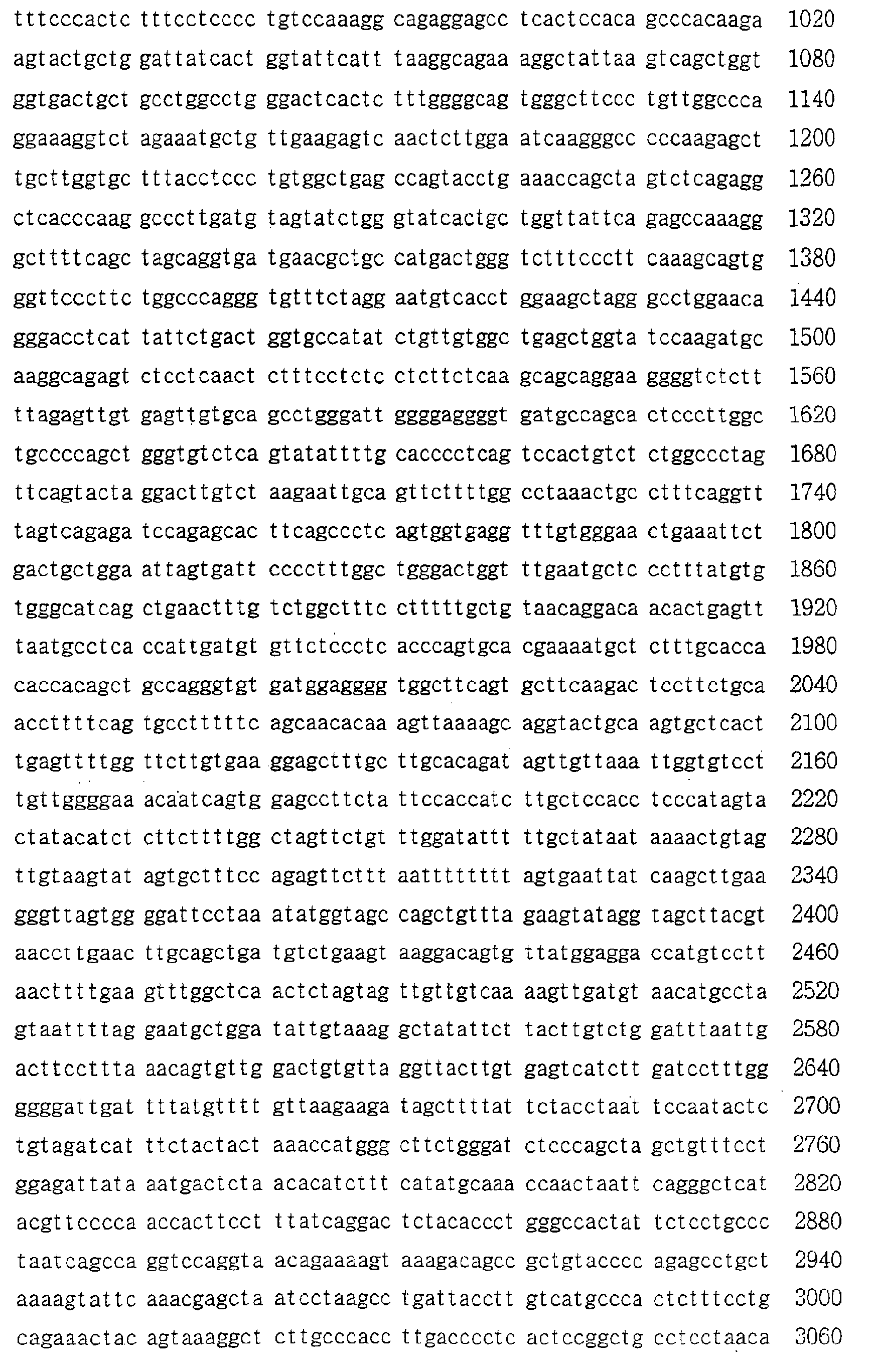
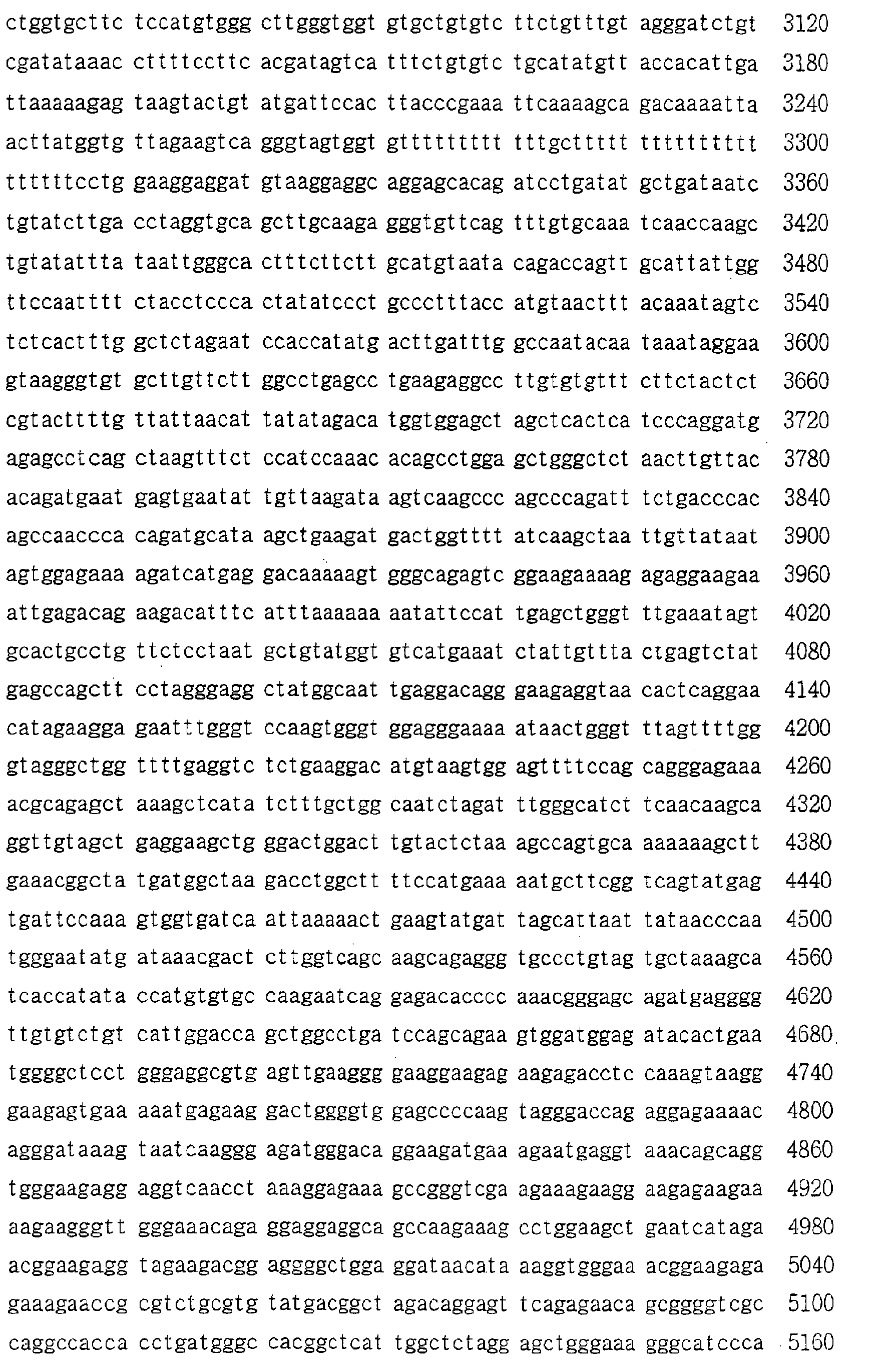
inserted fragment of about 6.2 kb is shown as SEQ ID NO:1, and its
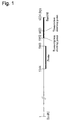
structure is shown in FIG. 1.
This DNA fragment was labeled with digoxigenin and used as a
probe to screen a human genomic DNA library. Specifically,
Escherichia coli K802 strain was infected with a human genomic
DNA library (vector: EMBL3 SP6/T7) manufactured by Clontech, and
allowed to form plaques. After these plaques were transferred to a
nylon membrane, hybridization was carried out by using the
aforesaid probe. For the purpose of detection, a color reaction was
carried out by using alkaline phosphatase-labeled anti-digoxigenin
antibody (manufactured by Roche Diagnostics). As a result of the
screening of about 2,000,000 plaques, two positive plaques #1 and #2
were obtained. Phage DNA was prepared therefrom, digested with
various restriction enzymes, and then subjected to Southern blotting
using the aforesaid probe. As a result, a plurality of DNA fragments
proved to be positive. It was confirmed that, on the basis of the
known base sequence and restriction map of the human type II
5α-reductase gene, a DNA fragment of about 8 kb obtained by
digesting phage DNA #1 with BamHI covered the 5'-upstream region
including the transcription starting point over the longest range.
Consequently, this DNA fragment was used for subsequent
experiments. A fragment of about 6.2 kb obtained by digesting this
DNA fragment with EcoRI was subcloned into pBluescript II vector
which had been similarly digested with BamHI and EcoRI. This
plasmid was named p6.2BS. The entire base sequence of the
inserted fragment of about 6.2 kb is shown as SEQ ID NO:1, and its
structure is shown in FIG. 1.
The DNA fragment represented by SEQ ID NO:1 contains, in
addition to the 5'-upstream region of the human type II 5α-reductase
gene, a portion of the structural gene following the translation
stating codon (ATG) (from position 6023 to 6224 in SEQ ID NO:1).
Accordingly, if the luciferase gene is directly liked thereto, the
expression of luciferase cannot be expected owing to a frame shift.
For this reason, the procedure for removing the structural gene
portion of type II 5α-reductase from p6.2BS plasmid was carried out
as follows. First of all, p6.2BS plasmid was digested with SacII to
remove a portion extending from the SacII site at position 5823 in
SEQ ID NO:1 to the SacII site derived from pBluescript II. On the
other hand, using PCR primers having a SacII recognition sequence
attached to the 5'-terminus and represented by SEQ ID NO:5 and 6,
PCR was carried out by using p6.2BS plasmid as a template. Thus,
there was obtained a DNA fragment extending from base "C" at
position 5820 in SEQ ID NO:1 (3 bases before the SacII site) to base
"G" at position 6022 immediately before the translation starting point.
This fragment was digested with SacII and then ligated into p6.2BS
plasmid which had been digested with SacII as described above.
The direction of the inserted fragment was determined, and a clone
having the same direction as SEQ ID NO:1 was selected. This
plasmid was named p6.0BS. Then, p6.0BS plasmid was digested
with BssHII and the resulting about 6 kb DNA fragment of the
human type II 5α-reductase transcription control region was
subcloned into pGL3 basic vector which had been digested with KpnI
and HindIII. The plasmid thus obtained was named pRedII-Luc.
Furthermore, pRedII-Luc was digested with a restriction enzyme to
remove the 5' side from the cleavage site in the inserted type II
5α-reductase transcription control region DNA. Thereafter, this
plasmid was self-ligated to prepare a modification of pRedII-Luc.
The names of actually prepared plasmid modifications and the
restriction enzymes used for their preparation are shown in Table 1.
| Name of plasmid | Restriction enzymes |
| pRedII/ApaI-Luc | ApaI |
| pRedII/SnaBI-Luc | SnaBI, XhoI |
| pRedII/PstI-Luc | PstI, XhoI |
| pRedII/BalI-Luc | BalI, XhoI |
| pRedII/NsiI-Luc | NsiI, XhoI |
| pRedII/BstXI-Luc | BstXI, XhoI |
| pRedII/HindIII-Luc | HindIII, XhoI |
| pRedII/PflMI-Luc | PflMI, XhoI |
| pRedII/KpnI-Luc | KpnI |
| pRedII/Eco065I-Luc | Eco065I, XhoI |
| pRedII/StuI-Luc | StuI, XhoI |
In this example, each of the aforesaid reporter plasmids was
transfected into human dermal papilla cells and its promoter activity
was measured.
On the day before transfection, a 24-well plate was inoculated
with an equal number of cells. On the next day, each plasmid and
pSV-β-Galactosidase Control Vector (manufactured by Promega),
containing the β-galactosidase gene as an internal control for the
measurement of gene introduction efficiency, were mixed with
Lipofectamine Plus Reagent (manufactured by Lifetech Oriental),
and this mixture was added to the cells in order to introduce the
genes thereinto. After being incubated for 24 to 48 hours, the cells
were lysed and measured for luciferase activity and β-galactosidase
activity. The luciferase activity was measured by means of a
Picagene Luminescence Kit (manufactured by Toyo Ink), and the
β-galactosidase activity was measured by using CPRG as a
color-producing substrate. The results thus obtained are shown in
Table 2. The promoter activity was obtained by correcting the
luciferase activity for the β-galactosidase activity and expressing it as
a relative value based on the promoter activity of pRedII-Luc.
Moreover, it has been confirmed that a DNA fragment of up to
about -60 bp, inclusive of the transcription starting point, also has a
strong promoter activity.
| Name of plasmid | Size from transcription starting point to 5'-terminus of transcription control region (bp) | Promoter activity |
| pRedII- | 5952 | 100 |
| pRedII/ApaI-Luc | 4763 | 587 |
| pRedII/SnaBI-Luc | 3553 | 393 |
| pRedII/PstI-Luc | 2949 | 1380 |
| pRedII/BalI-Luc | 2370 | 1512 |
| pRedII/NsiI-Luc | 2093 | 1586 |
| pRedII/BstXI-Luc | 1783 | 1385 |
| pRedII/HindIII-Luc | 1576 | 1652 |
| pRedII/PfIMI-Luc | 837 | 1943 |
| pRedII/KpnI-Luc | 570 | 2362 |
| pRedII/Eco065I-Luc | 346 | 2763 |
| pRedII/StuI-Luc | 149 | 2822 |
| pGL3 basic | - | 0 |
pRedII-Luc and pSV-β-Galactosidase Control Vector are
transfected into dermal papilla cells in the same manner as in
Example 3. After 24 hours, various substances are added and the
incubation is continued for an additional 24-48 hours. Thereafter,
the promoter activity is measured in the same manner as in Example
3. Thus, various substances capable of promoting or suppressing the
expression of type II 5α-reductase can be screened.
With respect to the base sequence of the type II 5α-reductase
transcription control region DNA, transcription factor binding motifs
were retrieved on the basis of TRANSFAC database. As a result, a
biding motif for the transcription factor SRY was recognized. This
suggests that the transcription of type II 5α-reductase may be
controlled by SRY. Then, a change in the expression of type II
5α-reductase due to an over-expression of SRY was examined by
using dermal papilla cells. Specifically, using PCR primers having
an EcoRI recognition sequence attached to the 5'-terminus and
represented by SEQ ID NO:7 and 8, the full-length structural gene of
SRY was obtained by using human genomic DNA as a template.
This fragment was digested with EcoRI and then subcloned into the
expression vector pVP22/myc-His (manufactured by Invitrogen)
which had been similarly digested with EcoRI. This plasmid was
named pVP22-SRY/myc-His. pVP22-SRY/myc-His and
pVP22/myc-His as a negative control were separately transfected into
hair papillary cells in the same manner as in Example 3. After
being incubated for 48 hours, the cells were harvested and RNA was
extracted therefrom. Then, the expression of mRNAs for SRY and
type II 5α-reductase (5aRII) was examined by RT-PCR. The results
thus obtained are shown in FIG. 2. Owing to the introduction of
pVP22-SRY/myc-His, the amount of expression of SRY was increased
about tenfold and that of type II 5α-reductase was increased about
fourfold. These results have revealed that SRY promotes the
expression of type II 5α-reductase.
According to the present invention, substances capable of
controlling the expression of human type II 5α-reductase positively or
negatively can be screened by providing a recombinant expression
vector comprising a 5'-upstream gene containing a promoter for
human type II 5α-reductase and an appropriate reporter gene linked
thereto, introducing this vector into an animal cell, and using the
resulting reporter activity as an indicator. In particular, substances
capable of suppressing the expression of the human type II
5α-reductase gene will be effective for the prevention and treatment
of androgen-dependent diseases such as prostatomegaly and prostatic
carcinoma, or male pattern alopecia and the like. Accordingly, the
present invention can be utilized in the pharmaceutical industry, the
cosmetic industry and the like.



Claims (8)
- An isolated DNA molecule capable of acting as a promoter for the type II 5α-reductase gene derived from human beings, the DNA molecule being selected from the group consisting of:(a) a polynucleotide comprising the DNA sequence represented by SEQ ID NO:1, the polynucleotide comprising a continuous DNA sequence extending from position 1 to 6022;(b) a fragment of polynucleotide (a), the fragment comprising a continuous DNA sequence of at least about 50 nucleotides including the transcription starting point at position 5952 (T); and(c) a polynucleotide having the DNA sequence of polynucleotide(a) in which one or more nucleotides have been modified by substitution, deletion and/or addition, and containing a polynucleotide comprising a continuous DNA sequence of at least about 50 nucleotides including the transcription starting point at position 5952 (T).
- A recombinant expression vector carrying the DNA molecule of claim 1.
- An expression vector as claimed in claim 2 which further carries a reporter gene operably linked to the DNA molecule,
- Escherichia coli or a mammalian cell containing the DNA molecule of claim 1 or the expression vector of claim 2.
- Escherichia coli or a mammalian cell as claimed in claim 4 which further contains a reporter gene operably linked to the DNA molecule.
- A method for evaluating the human type II 5α-reductase transcription controlling ability of a test sample which comprises culturing the mammalian cell of claim 5 in the presence of a test sample, and using a change in the degree of expression of the reporter gene in the culture as an indicator of the human type II 5α-reductase transcription controlling ability of the test sample.
- A method for promoting or suppressing the expression of human type II 5α-reductase which comprises providing an expression vector containing an isolated DNA molecule encoding transcription factors for transcription factor binding motifs present in the DNA sequence represented by SEQ ID NO:1, and culturing a mammalian cell having the expression vector introduced thereinto.
- A method for evaluating the human type II 5α-reductase transcription controlling ability of a test sample which comprises carrying out the method of claim 7 in the presence of a test sample, and using a change in the amount of expression of human type II 5α-reductase caused by the presence of the test sample, as an indicator of the human type II 5α-reductase transcription controlling ability of the test sample.
Applications Claiming Priority (3)
| Application Number | Priority Date | Filing Date | Title |
|---|---|---|---|
| JP2000228757 | 2000-07-28 | ||
| JP2000228757A JP2002034575A (en) | 2000-07-28 | 2000-07-28 | Promoter gene of human type II 5α-reductase and use thereof |
| PCT/JP2001/005549 WO2002010376A1 (en) | 2000-07-28 | 2001-06-28 | HUMAN II TYPE 5α-REDUCTASE PROMOTER GENE AND USE THEREOF |
Publications (2)
| Publication Number | Publication Date |
|---|---|
| EP1306432A1 true EP1306432A1 (en) | 2003-05-02 |
| EP1306432A4 EP1306432A4 (en) | 2004-07-07 |
Family
ID=18721991
Family Applications (1)
| Application Number | Title | Priority Date | Filing Date |
|---|---|---|---|
| EP01943855A Withdrawn EP1306432A4 (en) | 2000-07-28 | 2001-06-28 | Human ii type 5 alpha-reductase promoter gene and use thereof |
Country Status (4)
| Country | Link |
|---|---|
| US (1) | US20030157536A1 (en) |
| EP (1) | EP1306432A4 (en) |
| JP (1) | JP2002034575A (en) |
| WO (1) | WO2002010376A1 (en) |
Families Citing this family (3)
| Publication number | Priority date | Publication date | Assignee | Title |
|---|---|---|---|---|
| JP2005296003A (en) * | 2004-03-15 | 2005-10-27 | Sumitomo Chemical Co Ltd | Promoter of trimer G protein α subunit Gm1 and use thereof |
| EP1736544A4 (en) * | 2004-03-15 | 2007-12-19 | Sumitomo Chemical Co | Gm1 PROMOTER AND USE THEREOF |
| CN115247189A (en) * | 2022-05-17 | 2022-10-28 | 南京启真基因工程有限公司 | A method for constructing a hair loss model pig nuclear transplantation donor cell expressing human type II 5α-reductase |
Family Cites Families (2)
| Publication number | Priority date | Publication date | Assignee | Title |
|---|---|---|---|---|
| US5665543A (en) * | 1989-07-18 | 1997-09-09 | Oncogene Science, Inc. | Method of discovering chemicals capable of functioning as gene expression modulators |
| AU2001276371A1 (en) * | 2000-06-30 | 2002-01-14 | Epigenomics Ag | Method and nucleic acids for analysing the methylation of genes implicated pharmacogenomics |
-
2000
- 2000-07-28 JP JP2000228757A patent/JP2002034575A/en not_active Withdrawn
-
2001
- 2001-06-28 US US10/333,961 patent/US20030157536A1/en not_active Abandoned
- 2001-06-28 EP EP01943855A patent/EP1306432A4/en not_active Withdrawn
- 2001-06-28 WO PCT/JP2001/005549 patent/WO2002010376A1/en not_active Ceased
Also Published As
| Publication number | Publication date |
|---|---|
| US20030157536A1 (en) | 2003-08-21 |
| JP2002034575A (en) | 2002-02-05 |
| WO2002010376A1 (en) | 2002-02-07 |
| EP1306432A4 (en) | 2004-07-07 |
Similar Documents
| Publication | Publication Date | Title |
|---|---|---|
| Sullivan et al. | Structure, sequence and expression of the mouse Cx43 gene encoding connexin 43 | |
| JP6577969B2 (en) | Site-specific serine recombinases and methods for their use | |
| Kuroda et al. | Absence of Z-chromosome inactivation for five genes in male chickens | |
| US6120764A (en) | Adenoviruses for control of gene expression | |
| JP2003513635A (en) | Expression vectors, transfection systems, and methods of using them | |
| JPH0434559B2 (en) | ||
| WO1998037189A1 (en) | Ires sequences with high translational efficiency and expression vectors containing the sequence | |
| WO1998037189A9 (en) | Ires sequences with high translational efficiency and expression vectors containing the sequence | |
| Wierman et al. | Repression of gonadotropin-releasing hormone promoter activity by the POU homeodomain transcription factor SCIP/Oct-6/Tst-1: a regulatory mechanism of phenotype expression? | |
| Iannello et al. | Temporal and tissue-specific interactions involving novel transcription factors and the proximal promoter of the mouse Pdha-2 gene. | |
| Faraci et al. | An extracellular matrix-specific microarray allowed the identification of target genes downstream of discoidin domain receptors | |
| Ohlsson et al. | Transcriptional regulation of the rat tissue type plasminogen activator gene: localization of DNA elements and nuclear factors mediating constitutive and cyclic AMP-induced expression | |
| KANNIUS-JANSON et al. | Studies of the regulation of the mouse carboxyl ester lipase gene in mammary gland | |
| Faraonio et al. | The DNA sequence encompassing the transcription start site of a TATA-less promoter contains enough information to drive neuron-specific transcription | |
| US20030157536A1 (en) | Human II type 5alpha-reductase promoter gene and uses thereof | |
| US10711279B2 (en) | Promoter sequences | |
| Katsuoka et al. | One enhancer mediates mafK transcriptional activation in both hematopoietic and cardiac muscle cells | |
| Zhao et al. | Identification and preliminary function study of Xenopus laevis DRR1 gene | |
| Kondo et al. | The regulation of the murine Hox-2.5 gene expression during cell differentiation | |
| RU2183465C2 (en) | New methods to characterize compounds stimulating stf-i expression in the cells of pancreatic insulae | |
| LORENZINI et al. | Co-operation of the 5′ and 3′ untranslated regions of ornithine decarboxylase mRNA and inhibitory role of its 3′ untranslated region in regulating the translational efficiency of hybrid RNA species via cellular factor (s) | |
| JP2002535005A (en) | Transcriptional regulation of human β3 adrenergic receptor gene | |
| JP2004350553A (en) | Arabidopsis thaliana AN3 gene | |
| GELFMAN et al. | Differentiation of Retinal Pigment Epithelial CellsIn VitroUncovers Silencer Activity in the FGF-5 Gene Promoter | |
| Fabbro et al. | Analysis of regulatory regions of Emilin1 gene and their combinatorial contribution to tissue-specific transcription |
Legal Events
| Date | Code | Title | Description |
|---|---|---|---|
| PUAI | Public reference made under article 153(3) epc to a published international application that has entered the european phase |
Free format text: ORIGINAL CODE: 0009012 |
|
| 17P | Request for examination filed |
Effective date: 20030213 |
|
| AK | Designated contracting states |
Designated state(s): AT BE CH CY DE DK ES FI FR GB GR IE IT LI LU MC NL PT SE TR |
|
| RBV | Designated contracting states (corrected) |
Designated state(s): DE FR GB IT |
|
| A4 | Supplementary search report drawn up and despatched |
Effective date: 20040521 |
|
| 17Q | First examination report despatched |
Effective date: 20060622 |
|
| STAA | Information on the status of an ep patent application or granted ep patent |
Free format text: STATUS: THE APPLICATION IS DEEMED TO BE WITHDRAWN |
|
| 18D | Application deemed to be withdrawn |
Effective date: 20070103 |