EP1304835A2 - Network paging system and method - Google Patents
Network paging system and method Download PDFInfo
- Publication number
- EP1304835A2 EP1304835A2 EP02018545A EP02018545A EP1304835A2 EP 1304835 A2 EP1304835 A2 EP 1304835A2 EP 02018545 A EP02018545 A EP 02018545A EP 02018545 A EP02018545 A EP 02018545A EP 1304835 A2 EP1304835 A2 EP 1304835A2
- Authority
- EP
- European Patent Office
- Prior art keywords
- paging
- layer
- network
- network paging
- api
- Prior art date
- Legal status (The legal status is an assumption and is not a legal conclusion. Google has not performed a legal analysis and makes no representation as to the accuracy of the status listed.)
- Withdrawn
Links
- 238000000034 method Methods 0.000 title claims abstract description 36
- 238000004891 communication Methods 0.000 claims description 28
- 230000011664 signaling Effects 0.000 claims description 15
- 238000004590 computer program Methods 0.000 claims 5
- 230000000644 propagated effect Effects 0.000 claims 1
- 230000008901 benefit Effects 0.000 abstract description 10
- 230000006870 function Effects 0.000 description 18
- 230000008859 change Effects 0.000 description 5
- 230000007246 mechanism Effects 0.000 description 5
- 238000010586 diagram Methods 0.000 description 4
- 239000000463 material Substances 0.000 description 4
- 230000007812 deficiency Effects 0.000 description 2
- 238000011161 development Methods 0.000 description 2
- 238000005516 engineering process Methods 0.000 description 2
- 230000000977 initiatory effect Effects 0.000 description 2
- 230000006855 networking Effects 0.000 description 2
- 230000008569 process Effects 0.000 description 2
- 238000012545 processing Methods 0.000 description 2
- 230000003068 static effect Effects 0.000 description 2
- 239000011800 void material Substances 0.000 description 2
- 238000007792 addition Methods 0.000 description 1
- 230000003542 behavioural effect Effects 0.000 description 1
- 230000005540 biological transmission Effects 0.000 description 1
- 230000000903 blocking effect Effects 0.000 description 1
- 230000001413 cellular effect Effects 0.000 description 1
- 230000000295 complement effect Effects 0.000 description 1
- 238000004883 computer application Methods 0.000 description 1
- 230000000694 effects Effects 0.000 description 1
- 238000004134 energy conservation Methods 0.000 description 1
- 238000005265 energy consumption Methods 0.000 description 1
- 229910000078 germane Inorganic materials 0.000 description 1
- 230000010354 integration Effects 0.000 description 1
- 238000012986 modification Methods 0.000 description 1
- 230000004048 modification Effects 0.000 description 1
- 238000012544 monitoring process Methods 0.000 description 1
- 230000008450 motivation Effects 0.000 description 1
- 230000000737 periodic effect Effects 0.000 description 1
- 230000008707 rearrangement Effects 0.000 description 1
- 230000009467 reduction Effects 0.000 description 1
- 238000011160 research Methods 0.000 description 1
- 238000006467 substitution reaction Methods 0.000 description 1
- 230000008685 targeting Effects 0.000 description 1
- 238000012546 transfer Methods 0.000 description 1
Images











Classifications
-
- H—ELECTRICITY
- H04—ELECTRIC COMMUNICATION TECHNIQUE
- H04W—WIRELESS COMMUNICATION NETWORKS
- H04W68/00—User notification, e.g. alerting and paging, for incoming communication, change of service or the like
-
- H—ELECTRICITY
- H04—ELECTRIC COMMUNICATION TECHNIQUE
- H04W—WIRELESS COMMUNICATION NETWORKS
- H04W52/00—Power management, e.g. Transmission Power Control [TPC] or power classes
- H04W52/02—Power saving arrangements
- H04W52/0209—Power saving arrangements in terminal devices
- H04W52/0212—Power saving arrangements in terminal devices managed by the network, e.g. network or access point is leader and terminal is follower
- H04W52/0216—Power saving arrangements in terminal devices managed by the network, e.g. network or access point is leader and terminal is follower using a pre-established activity schedule, e.g. traffic indication frame
-
- Y—GENERAL TAGGING OF NEW TECHNOLOGICAL DEVELOPMENTS; GENERAL TAGGING OF CROSS-SECTIONAL TECHNOLOGIES SPANNING OVER SEVERAL SECTIONS OF THE IPC; TECHNICAL SUBJECTS COVERED BY FORMER USPC CROSS-REFERENCE ART COLLECTIONS [XRACs] AND DIGESTS
- Y02—TECHNOLOGIES OR APPLICATIONS FOR MITIGATION OR ADAPTATION AGAINST CLIMATE CHANGE
- Y02D—CLIMATE CHANGE MITIGATION TECHNOLOGIES IN INFORMATION AND COMMUNICATION TECHNOLOGIES [ICT], I.E. INFORMATION AND COMMUNICATION TECHNOLOGIES AIMING AT THE REDUCTION OF THEIR OWN ENERGY USE
- Y02D30/00—Reducing energy consumption in communication networks
- Y02D30/70—Reducing energy consumption in communication networks in wireless communication networks
Definitions
- Mobile IP defines a protocol that allows transparent routing of IP datagrams sent by a Correspondent Node (CN) (any Internet node that wants to communicate with a Mobile Node) to a Mobile Node (MN) in the Internet.
- CN Correspondent Node
- MN Mobile Node
- the present invention discloses an IP paging protocol that is an extension to Mobile IP to allow dormant mode operation, i.e. save battery when not receiving/sending IP datagrams.
- the Mobile Node alternates between dormant and active modes to conserve its power.
- the Mobile Node does not perform location updates as long as it is in dormant mode.
- the disclosed IP paging protocol is a Layer-3 protocol used to find the paging area, in which the MN is located and to alert MN to come out of dormant mode, whenever there is an incoming traffic.
- the present invention IP paging protocol benefits from a link layer (Layer-2 or L2) operation if the link layer (Layer-2 or L2) could provide timely information to network layer (Layer-3 or L3) about the progress of events in Layer-2.
- Layer-2 can pass information to Layer-3 using triggers.
- Triggers and their associated application programming interface (API) defined in this patent can be used in the implementations of IETF's IP paging protocol to permit gracefully bringing down Layer-3 interface of the MN.
- triggers are defined as callback functions in C-language within the context of Application Programming Interface (API). However, they may be implemented in a wide variety of other software mechanisms.
- Triggers related to handoff have been discussed in some prior art but this is not germane to the particular problem of providing paging triggers targeting energy conservation in mobile nodes.
- Layer-3 handoff and context transfer protocols use handoff triggers to reduce latency in configuring a new interface for the mobile node at the new access point.
- Paging triggers can be used to gracefully bring down Layer-3 configuration of MN and to detect the movement of MN in dormant mode to another subnet.
- the objectives of the present invention are (among others) to circumvent the deficiencies in the prior art and affect the following:
- the events in Layer-2 are notified to upper layers through triggers.
- Some preferred invention embodiments implement triggers related to IP paging and defines them in the form of an application programming interface (API). Any new IP paging protocol to be standardized by IETF and the potential implementations of IP paging protocol will benefit from the API defined in this document.
- API application programming interface
- Any new IP paging protocol to be standardized by IETF and the potential implementations of IP paging protocol will benefit from the API defined in this document.
- Basic uses of defining paging API can be listed as follows. The entities Mobile Node ( 0140 ) and Access Router ( 0120 ) are as indicated as illustrated in FIG. 1 ( 0100 ).
- the present invention may be aptly described in terms of exemplary system block diagrams and procedural flowcharts. While these items are sufficient to instruct one of ordinary skill in the art the teachings of the present invention, they should not be strictly construed as limiting the scope of the present invention.
- system block diagrams may be combined and rearranged with no loss of generality, and procedural steps may be added or subtracted, and rearranged in order to achieve the same effect with no loss of teaching generality.
- the present invention as depicted in the attached exemplary system block diagrams and procedural flowcharts is for teaching purposes only and may be reworked by one skilled in the art depending on the intended target application.
- asynchronous nature of the paging protocols illustrated herein should be understood to support asynchronous notification, paging, and/or triggering of events.
- exemplary API and illustrative flowcharts are sequential, there is nothing in the present invention that makes this a requirement for operation or implementation. Therefore, in the most general sense the triggering mechanisms illustrated herein should be thought of as asynchronous.
- PC personal computer
- the term 'personal computer' should be given a broad meaning in this regard, as in general any computing device may be utilized to implement the teachings of the present invention, and the scope of the invention is not limited just to personal computer applications.
- Intranet will be used generally to denote any network communication system or environment.
- Intranet will denote communications that are local to a given system or user, and Internet will describe communications in a more distant local.
- Internet will describe communications in a more distant local.
- the present invention specifically anticipates that in some implementations the GUI development framework (and/or its runtime component) will communicate with the data used to drive the GUI over the Internet.
- the application driving the user interface may reside on one computer system and the data used for presentation and control may be contained somewhere else on another computer system and be accessed via any number of networking protocols.
- API Application Programming Interface
- APIs Application Programming Interfaces
- SDKs Software Development Kits
- framework of the present invention may be incorporated into standard toolkits and the like which may or may not be integrated into an API framework for use in standard software development frameworks.
- the present invention may be embodied in a variety of data structures in some preferred embodiments.
- the form of such data structures as described herein is only exemplary.
- One skilled in the art would quickly realize that a wide variety of other data structures could be used equivalently in this application. Therefore, no data structure contained herein should be interpreted as limiting the scope of the present invention.
- the present invention may be embodied to affect transport of network protocol information over a variety of communication media.
- the signal format used to transmit such transmissions as described herein is only exemplary.
- One skilled in the art would quickly realize that a wide variety of other communication media could be used equivalently in this application. Therefore, no communication media contained herein should be interpreted as limiting the scope of the present invention.
- the present invention may be embodied to affect trigger implementations using a wide variety of software methods.
- the particular method used to affect these triggers as described herein is only exemplary.
- One skilled in the art would quickly realize that a wide variety of other software methods could be used equivalently in this application. Therefore, no trigger methodology contained herein should be interpreted as limiting the scope of the present invention.
- the network may be divided into a set of areas called L2 paging areas. As long as MN moves within a single paging area, it need not perform location updates.
- the paging area refers to a Layer-2 paging area as defined in the cellular systems of GPRS (or) UMTS standards.
- Layer-2 message used to notify MN that there is an incoming call.
- AR is a generic term used to refer to "Access Router” in Mobile IPv6 and "Foreign Agent" in Mobile IPv4.
- Layer-3 refers to the network layer in the OSI stack and does not refer to Layer-3 in 2.5 G / 3G terminology.
- the present invention makes the following assumptions regarding the underlying Layer-2 architecture:
- FIG. 1 A generalized invention system architecture incorporating these assumptions is illustrated in FIG. 1 ( 0100 ).
- the Internet 0110
- MN Mobile Node
- AP Access Points
- 0140 wireless communication media
- a preferred invention embodiment incorporating link layer (L2 or Layer-2) API for paging specifies the services (related to paging), provided by Layer-2 to Layer-3 in mobility networks.
- Layer-2 can serve upper layers by sending triggers to them during Layer-2 paging events. Possible events in Layer-2 are early notice of an upcoming change in the dormant mode status of mobile node or the change in paging area of mobile node.
- a preferred invention embodiment defines an API for the services related to dormant mode provided by Layer-2. Defining a Layer-2 API for paging helps in writing standard Layer-3 paging protocols.
- the disclosed preferred invention embodiment in the form of an API is specified in 'C' language.
- This API is a combination of attributes and triggers.
- attributes are static information about the network, where as triggers carry dynamic information which depends on the current state of the network.
- the disclosed API is defined for IPv6, but one skilled in the art will quickly recognize that this does not limit the scope of the invention.
- a trigger MAY be implemented in many ways:
- Each trigger is characterized by its name, time when it occurs, to whom the trigger is delivered and the parameters included in the trigger.
- the present invention specifies an IP host alerting protocol, which makes use of triggers from Layer-2 to detect the dormant mode status of the MN.
- the protocol assumes a mobility scenario in which multiple Layer-2 paging areas are part of a single Layer-3 subnet. It also assumes a partially micro mobility network in which inter-AR handoff is possible in visited domain of the mobile.
- the Access Router in visited domain maintains a binding cache, which has entries generally defined by (MN's home IP address, MN's LCOA, MN's dormant status, L2 paging area ID).
- MN When the MN is in active mode, it behaves in the same manner as in MIPv6. So, all the packets destined for MN will first be delivered to AR. AR in turn tunnels the packets to MN using LCOA.
- AR When MN is in idle mode, AR behaves in a different manner.
- Layer-3 at AR checks the dormant status of MN in its binding cache and detects that MN is in dormant mode.
- MN responds to Layer-2 paging AR updates its binding cache and delivers the packets to MN. Address auto-configuration of MN is not done because it is assumed that AR has complete knowledge of all the active addresses in its subnet.
- Layer-2 paging areas advertise dormant modesupport along with the IP identifier of access router (AR), in whose subnet the paging area is located.
- MN registers with the A/R (Normal MIPv6 registration).
- MN registers AR's address with Home Agent.
- MN can voluntarily change the mode ⁇ dormant /active ⁇ .
- This information is passed up to Layer-3 of AR using trigger.
- AR updates its binding cache. Using this trigger, AR can determine whether there is a direct routable L2 connection to reach MN (or) whether MN has to be paged before forwarding the packets.
- the MN when the MN moves to a different paging area, it needs to determine if the new Layer-2 paging area is in the area covered by same AR, with which it has registered its Layer-3 interface.
- "New paging area" trigger is sent to Layer-3 from Layer-2 at AR and MN.
- the trigger contains the information about the IP address of AR.
- MN can determine whether it needs to perform a new Layer-3 registration or not.
- AR can determine the Layer-2 paging area, in which MN is located.
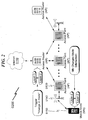
- FIG. 3 ( 0300 ) illustrates the case when a MN moves between two paging areas in the same subnet.
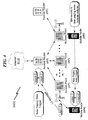
- FIG. 4 ( 0400 ) illustrates the case when a MN moves between paging areas of different subnets.
- FIG. 5 generally illustrates the signal and trigger flow when initiating Mobile Node Paging.
- the process generally begins with traffic for a MN ( 0510 ).
- the MN is paged at the Layer-3 level (0520). This generates a Layer-2 Page MN message (0530).
- the MN is then paged (0540). This results in a return Layer-2 message of "reachable” or “unreachable” ( 0550 ), which is then translated to a corresponding Layer-3 message (0560).
- FIG. 6 A preferred embodiment of the present invention paging protocol method is generically illustrated by the flowchart of FIG. 6 ( 0600 ).
- FIG. 5 A graphical illustration of communication flows associated with the paging protocol is illustrated in FIG. 5 ( 0500 ). This general sequence will now be discussed in detail.
- the trigger sequence generally starts with the MN using Layer-2 triggers to constantly update its Layer-2 paging area location in access router ( 0601 ). This sequence is also graphically illustrated in FIG. 3 ( 0300 ) and FIG. 4 ( 0400 ).
- the advantage with this new paging area trigger is that the MN need not come out of dormant mode to perform Layer-3 registrations. In this implementation all the required location updates and registrations are carried out by Layer-2.
- Layer-3 traffic for the MN is first intercepted by the access router ( 0602 ). Once the AR detects traffic for MN, it pages MN using Layer-2 paging ( 0603 ). The MN responds to Layer-2 paging ( 0604 ). The result of paging is made known to access router through Dormant mode reachable (or) Dormant mode unreachable trigger ( 0605 ). Since the connection is established, the access router can go ahead and forward the traffic ( 0606 ). The advantage of this triggering mechanism is that there is no need for another Layer-3 mechanism (or) messages to perform Layer-3 paging.
- FIG. 7 The general sequence of events that occur when a mobile node is not reachable is illustrated in FIG. 7 ( 0700 ). This general sequence will now be discussed in detail.
- the sequence begins with the incoming call for the MN being intercepted by the AR ( 0701 ).
- the AR then sends a paging request message to the last registered paging area of MN ( 0702 ).
- Layer-2 paging is done but in this case the MN did not respond to the paging message ( 0703 ).
- the AR receives a Layer-2 message that gives the result of paging (not found) ( 0704 ).
- Layer-2 at the AR then sends the trigger "MN not reachable" to Layer-2 (IP) ( 0705 ).
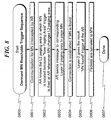
- FIG. 8 The general sequence of events that occur when a mobile node is found reachable is illustrated in FIG. 8 ( 0800 ). This general sequence will now be discussed in detail.
- the sequence begins when a communication for a MN is intercepted by the AR ( 0801 ).
- the AR knows the Layer-2 paging area in which the MN is located because a "New Paging Area" trigger is fired at the AR whenever the MN changes Layer-2 paging area (0802).
- the AR then sends a message to the corresponding Layer-2 paging area to page the MN ( 0803 ).
- a connection is established if the MN is found ( 0804 ).
- Layer-2 gives the result "MN found” trigger at the AR ( 0805 ). Packets can now be tunneled to the MN ( 0806 ).
- the protocol discussed previously does not specify how Layer-3 at AR has obtained the knowledge of the Layer-2 paging area, in which MN is located and the status of the MN (Dormant/Inactive/Active/etc.). Layer-2 triggers are used to fill up this gap.
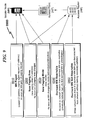
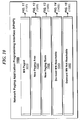
- the triggers used in the protocol are defined as illustrated in FIG. 9 ( 0900 ) and may generally be defined as follows:
- the disclosed paging API is designed to be used as a Layer-3 dormant mode host alerting protocol. Though the API disclosed is based on the triggers defined elsewhere, any Layer-3 paging protocol can make use of these Layer-2 triggers.
- the general elements present in the disclosed Network Paging API contain the following triggering components:
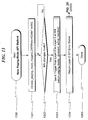
- this trigger ( 1101 ) must be sent to MN as soon as it gets a paging request.
- the access point from which it received the address and the ID of the paging area are the parameters of the trigger.
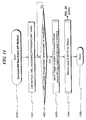
- this trigger ( 1201 ) must be sent to Layer-3 at MN as soon as MN finds that it has changed Layer-2 paging area.
- the new paging area ID is sent as parameter.
- Layer-2 informs Layer-3 at tracking agent and mobile host whenever MN changes Layer-2 paging area in dormant mode. This callback MUST be returned at Layer-3 of tracking agent and mobile host. New paging area ID is replied back to the calling function.
- the callback function at MN may be equivalently defined as Paging_Area_ID new_paging_area(L2APIReturnCode* code);
- the callback function at tracking agent may be equivalently defined as Paging_Area_ID new_paging_area (L2_address* MN, L2APIReturnCode* code) ;
- the Layer-3 at MN must be informed by Layer-2 whenever it changes its mode (Dormant/Active/Inactive). If this trigger ( 1301 ) can be used then the paging registration messages can be avoided.
- the callback at MN may be equivalently defined as int new_paging_mode_trigger (L2APIReturnCode* code);
- the callback at the tracking agent may be equivalently defined as int new_paging_mode_trigger (L2_address* MN_address,L2APIReturnCode* code);
- the MN's address is returned in the address referenced by MN_address.
- the return values of the callbacks may be typically defined as
- this trigger ( 1401 ) should be sent to Layer-3 at the Access Router, where MN has registered its Layer-3 interface. This trigger should be sent to Layer-3 only when MN's state in Layer-2 changes from “unreachable” to “reachable”.
- the callback function for this trigger may be equivalently defined as void pagingReply((L2 address* MN, L2APIReturnCode* code) ;
- this trigger ( 1501 ) should be sent at Layer-3 of the access router, as soon as network detects that MN is not reachable. This trigger should be sent to Layer-3 only when MN's state in Layer-2 changes from “reachable” to “unreachable”.
- This trigger is sent to Layer-3 of tracking agent when MN is paged and no reply is received from MN within "MAX_PAGING_TIME".
- the callback function for this trigger may be equivalently defined as void pagingTimeOut((L2_address* MN, L2APIReturnCode* code);
- Triggers are defined as callback functions. Applications register with these callback functions that in turn notify as soon as Layer-2 trigger is fired. The trigger functions are blocking, in the sense the applications are blocked at the point they call these trigger API, until the trigger is fired.
- the disclosed exemplary API assumes that characters are 8-bit wide and integers are 16-bit wide. All the strings (or) array of characters used in API are standard null terminated 'C' strings. Callbacks are used to define the API. A library of callbacks can be defined, each representing one function of Layer-2 API. Concurrency in processing these triggers can easily be provided by using threads or processes. The data types of structure elements given in this document are intended to be examples, not strict requirements.
- an exemplary complement of data structures that may be implemented within the present invention include the following:
- POSIX format is a standard format for defining APIs.
- uintN _ t means an unsigned integer of exactly 'N' bits.
- this data structure contains an array of sixteen 8-bit elements, which make up one 128-bit Ipv6 address.
- IPv6 address is stored in network byte order.
- the Layer-3 address is defined as illustrated in FIG. 17 ( 1704 ).
- Layer-3 address is defined as illustrated in FIG. 17 ( 1703 ). Otherwise, some other network address structure is used ( 1702 ).
- network_addr is typecast to the addressing structure ( 1705 ), used in the system as illustrated in FIG. 17 ( 1706, 1707, 1708 ).
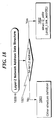
- this structure assumes ( 1801 ) that the size of Layer-2 address is 64 bits ( 1802 ). If a specific L2 has a different size it should be defined accordingly ( 1803 ).
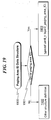
- the exemplary API assumes ( 1901 ) that paging area ID is of size 64 bits ( 1902 ). If the size of paging area ID is different, it should be changed accordingly ( 1903 ).
- This code is returned if the trigger is successfully caught.
- This code is returned when a function tries to register an undefined callback.
- This error code is returned when L3 tries to register a well-defined trigger, which is not supported by the underlying L2.
- This error code is returned if the callback of trigger is not allowed at the place, this function was called.
- This error code is returned, if the trigger did not occur for certain amount of time after the callback was registered. L2 does not remember this callback any more.
- This error code is returned if an application has already registered this callback and if the same callback cannot be registered by two or more applications.
- This error code is returned if an application tries to catch a trigger for MN, which has a state " unreachable" in Layer-2. This can be because MN has not performed location/periodic updates.
- Attributes convey information about the behavioral properties of the network, such as their processing speed limitations, time taken to do specific tasks and the specific mechanisms hey follow. They do not change with time.
- the disclosed embodiment defines a set of attributes related to paging. Attributes are not for managing the network; instead, they define the properties of the network. Layer-3 can get a rough idea of limitations and properties of the Layer-2 from these attributes.
- attribute access methods While a wide variety of attribute access methods are possible, one preferred API access method uses the function prototype char* get_L2_attribute(int id); The ID of the attribute should be as argument to the callback function.
- a wide variety of methods for attribute storage will be well known to one skilled in the art. Attributes MAY typically be stored in a file sequentially one after the other.
- the present invention ( 2110 ) may be generally described as permitting communication over the Internet ( 2120 ) between a home agent ( 2130 ) and an arbitrary wireless device ( 2140 ) using a network paging protocol designed to specifically limit the energy consumption of the mobile node ( 2140 ).
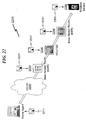
- the present invention anticipates the distributed nature of software as embodied in a variety of computer readable media, whether they be in one or more home agents ( 2211 ) or other network devices that communicate through the Internet ( 2221 ) via a series of software protocols to one or more Main Access Router ( 2231 ), Router ( 2241 ), and/or Base Station Router ( 2251 ) software components to one or more cooperating wireless devices ( 2261 ) operating under a coordinated software protocol embodied in a computer readable medium.
- one home agent ( 2310 ) or other network device communicates through the Internet ( 2320 ) via a series of one or more Main Access Routers ( 2330 ), Routers ( 2340 ), and/or Base Station Routers ( 2350 ) to one or more wireless devices ( 2360 ).
- the signaling in this context corresponds to the present invention protocol as described previously, and may generally incorporates
- a network paging system and method implementing a Mobile IP protocol that allows transparent routing of IP datagrams sent by a Correspondent Node (CN) (any Internet node that wants to communicate with a Mobile Node) to a Mobile Node (MN) in the Internet has been disclosed.
- the IP paging protocol disclosed is an extension to Mobile IP to allow dormant mode operation permitting conservation of battery power when not receiving/sending IP datagrams.
- the disclosed technique permits a mobile node to alternate between dormant and active modes to conserve its power resources.
- the mobile node does not perform location updates as long as it is in dormant mode.
- the implement IP paging protocol is a Layer-3 protocol used to find the paging area, in which the MN is located and to alert MN to come out of dormant mode, whenever there is an incoming traffic.
- the present invention in some preferred embodiments defines a new paging protocol, which uses triggers from Layer-2 to gracefully bring down the Layer-3 interface.
- the disclosed IP paging protocol benefits from a link layer (Layer-2 or L2) triggers, which provide timely information to network layer (Layer-3 or L3) about the progress of events in Layer-2.
- One preferred embodiment of the present invention provides for a Layer-2 API in C-language for IP paging.
- This API is presented in the form of callback functions but may be implemented in a wide variety of other means.
- upper layers are notified using triggers, which can be implemented using callback functions.
- Network and upper layer protocols can use these callbacks to fine tune Layer-3 protocols.
- Paging API defines callback functions for dormant mode related information, sent from Layer-2 to Layer-3.
- the disclosed API also defines a set of attributes that define static properties of the underlying network. Each Layer-2 technology may use this hierarchy to specify its properties and limitations.
Landscapes
- Engineering & Computer Science (AREA)
- Computer Networks & Wireless Communication (AREA)
- Signal Processing (AREA)
- Mobile Radio Communication Systems (AREA)
Abstract
Description
- Prepare for configuring Layer-3 interface when mobile node comes out of dormant mode.
- Gracefully bring down L3 configuration of MN when it switches to dormant mode
- Detect that current L3 configuration at MN may possibly be invalid. This includes detecting the movement of MN to a different subnet in idle mode.
- Detect the change in status of connection of MN(dormant/active/Inactive)
- Determine if the MN is reachable {i.e. not in Inactive mode}
- Communicate among themselves to quickly reconfigure MN, when it comes out of dormant mode
- Paging and dormant mode is totally controlled by Layer-2, i.e., the network (IP) layer neither has any control over dormant mode nor it can page the MN without using the Layer-2 paging.
- Multiple paging areas are part of single IP subnet.
- Network supports micro-mobility. Inter-AR handoff is possible in visited network. The Access Router is pushed down to SGSN (as in 3G networks).
- A hardware interrupt MAY be an indication of event on layer - an application or protocol stack may catch this interrupt.
- An operating system may provide a system call interface or a callback feature in device drivers for the applications to catch these triggers.
- If this trigger information is available at one place in the network and if it is needed at some other entity or node, the information can be passed using an upper layer protocol.
- MN Paged (0910) [issued as soon as MN gets L2 paging request];
- New Paging Area (0920) [issued as soon as L2 paging area changes];
- New Paging Mode (0930) [issued as soon as MN changes its mode (active/dormant/inactive)];
- Dormant MN Reachable (0940) [issued as soon as network detects that a dormant MN is reachable];
- Dormant MN Not Reachable (0950) [issued as soon as network loses track of a dormant MN].
- MN Paged (1010);
- New Paging Area (1020);
- New Paging Mode (1030);
- Dormant MN Reachable (1040); and
- Dormant MN Not Reachable (1050).
Paging_Area_ID new_paging_area(L2APIReturnCode* code);
The callback function at tracking agent may be equivalently defined as
Paging_Area_ID new_paging_area
(L2_address* MN, L2APIReturnCode* code) ;
int new_paging_mode_trigger (L2APIReturnCode* code);
The callback at the tracking agent may be equivalently defined as
int new_paging_mode_trigger
(L2_address* MN_address,L2APIReturnCode* code);
The MN's address is returned in the address referenced by MN_address. The return values of the callbacks may be typically defined as
- 0 for dormant mode
- 1 for Active mode
- 2 for inactive mode
void pagingReply((L2 address* MN, L2APIReturnCode* code) ;
void pagingTimeOut((L2_address* MN, L2APIReturnCode* code);
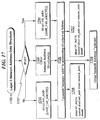
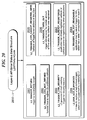
- Layer-3 Network Address Data Structure (1610);
- Layer-2 Network Address Data Structure (1620);
- Paging Area ID Data Structure (1630); and/or
- Layer-2 API Error Status Data Structure (1640).

- 1 if the layer-2 has support for paging;
- 0 otherwise
- This field is represented in microseconds.
- 0 if it uses time slotted paging;
- 1 Otherwise (i.e., if paging can be done at any time)
- 0 if MN requires a dedicated channel for paging
- 1 Otherwise (i.e., MN can also respond to broadcast paging)
char* get_L2_attribute(int id);
The ID of the attribute should be as argument to the callback function. A wide variety of methods for attribute storage will be well known to one skilled in the art. Attributes MAY typically be stored in a file sequentially one after the other.
- MN Paged Trigger signaling structure means (2401);
- New Paging Area Trigger signaling structure means (2402);
- New Paging Mode Trigger signaling structure means (2403);
- Dormant MN Reachable Trigger signaling structure means (2404); and/or
- Dormant MN Not Reachable Trigger signaling structure means (2405).
Claims (31)
- A network paging system comprising:wherein(a) home agent means;(b) Internet IP means;(c) network paging protocol means;(d) wireless device means;
said home agent means communicates with said wireless device means via said Internet means under supervision of said network paging protocol means; and
said Internet IP means further comprises one or more Main Access Routers, Routers, and/or Base Station Routers. - The network paging system of Claim 1 wherein said network paging protocol means further comprises:wherein(a) MN Paged triggering means;(b) New Paging Area triggering means;(c) New Paging Mode triggering means;(d) Dormant MN Reachable triggering means; and(e) Dormant MN Not Reachable triggering means;
said triggering means augment Mobile IP communication protocols to notify said MN and/or an Access Router (AR) based on the network availability and status of said MN. - The network paging system of Claim 1 wherein said network paging protocol means is implemented via an Application Programming Interface (API).
- The network paging system of Claim 2 wherein said triggering means is implemented via an Application Programming Interface (API).
- The network paging system of Claim 1 wherein said home agent means is also a wireless device means.
- The network paging system of Claim 1 wherein said network paging protocol means is distributed in software operating on main access routers, routers, and base station routers.
- The network paging system of Claim 1 wherein said communication occurs over the Internet.
- The network paging system of Claim 1 wherein one or more components of said system is implemented on a personal computer (PC).
- The network paging system of Claim 1 wherein one or more components of said system is implemented on a wireless radio transceiver.
- The network paging system of Claim 1 wherein said wireless device communicates to an Access Router (AR) via an Access Point (AP).
- A network paging method comprising:wherein(1) asynchronously triggering a Mobile Node (MN) when a paging request is received via a MN Paged API means;(2) asynchronously triggering a Mobile Node (MN) when said MN finds it has changed Layer-2 paging area via a New Paging Area API means;(3) asynchronously triggering a Mobile Node (MN) when said MN changes mode via a New Paging Mode API means;(4) asynchronously triggering an Access Router (AR) when a Mobile Node (MN) Layer-2 state changes from "unreachable" to "reachable" via a Dormant MN Reachable API means; and(5) asynchronously triggering an Access Router (AR) when a Mobile Node (MN) Layer-2 state changes from "reachable" to "unreachable" via a Dormant MN Not Reachable API means;
said triggering is via communication over an Internet IP means;
said communication occurs between a home agent means and a wireless device means; and
said communication is under supervision of a network paging protocol means. - The network paging method of Claim 11 wherein said network paging protocol means further comprises:wherein(a) Layer-3 Network Address structures;(b) Layer-2 Network Address structures;(c) Paging Area ID structures; and(d) Layer-2 API Error Status structures;
said structures augment Mobile IP communication protocols to affect network paging functionality between said home agent means and said wireless device means. - The network paging method of Claim 11 wherein said network paging protocol means is implemented via an Application Programming Interface (API).
- The network paging method of Claim 11 wherein said home agent means is also a wireless device means.
- The network paging method of Claim 11 wherein said network paging protocol means is distributed in software operating on main access routers, routers, and base station routers.
- The network paging method of Claim 11 wherein said communication occurs over the Internet.
- The network paging method of Claim 11 wherein one or more steps of said method is implemented on a personal computer (PC).
- The network paging method of Claim 11 wherein one or more steps of said method is implemented on a wireless radio transceiver.
- The network paging method of Claim 11 wherein one or more steps of said method is implemented on a wireless radio transceiver.
- The network paging method of Claim 11 wherein said wireless device communicates to an Access Router (AR) via an Access Point (AP).
- A computer usable medium having computer-readable program code means providing network paging functionality, said computer-readable program means comprising:(1) computer program code means for asynchronously triggering a Mobile Node (MN) when a paging request is received via a MN Paged API means;(2) computer program code means for asynchronously triggering a Mobile Node (MN) when said MN finds it has changed Layer-2 paging area via a New Paging Area API means;(3) computer program code means for asynchronously triggering a Mobile Node (MN) when said MN changes mode via a New Paging Mode API means;(4) computer program code means for asynchronously triggering an Access Router (AR) when a Mobile Node (MN) Layer-2 state changes from "unreachable" to "reachable" via a Dormant MN Reachable API means; and(5) computer program code means for asynchronously triggering an Access Router (AR) when a Mobile Node (MN) Layer-2 state changes from "reachable" to "unreachable" via a Dormant MN Not Reachable API means;
wherein
said triggering is via communication over an Internet IP means;
said communication occurs between a home agent means and a wireless device means; and
said communication is under supervision of a network paging protocol means. - The computer usable medium of Claim 21 wherein said network paging protocol means further comprises:wherein(a) Layer-3 Network Address structures;(b) Layer-2 Network Address structures;(c) Paging Area ID structures; and(d) Layer-2 API Error Status structures;
said structures augment Mobile IP communication protocols to affect network paging functionality between said home agent means and said wireless device means. - The computer usable medium of Claim 21 wherein said network paging protocol means is implemented via an Application Programming Interface (API).
- The computer usable medium of Claim 21 wherein said home agent means is also a wireless device means.
- The computer usable medium of Claim 21 wherein said network paging protocol means is distributed in software operating on main access routers, routers, and base station routers.
- The computer usable medium of Claim 21 wherein said communication occurs over the Internet.
- The computer usable medium of Claim 21 wherein said medium is compatible with a personal computer (PC).
- The computer usable medium of Claim 21 wherein said medium is compatible with a wireless radio transceiver.
- The computer usable medium of Claim 21 wherein said triggering is implemented on a wireless radio transceiver.
- The computer usable medium of Claim 21 wherein said wireless device communicates to an Access Router (AR) via an Access Point (AP).
- A network paging encoded propagated signal data stream constructed usingwherein(6) MN Paged Trigger signaling structure means;(7) New Paging Area Trigger signaling structure means;(8) New Paging Mode Trigger signaling structure means;(9) Dormant MN Reachable Trigger signaling structure means; and/or(10) Dormant MN Not Reachable Trigger signaling structure means;
said signal is at least partially communicated via wireless communication means; and
said encoded signal communicates between two nodes in a distributed network over the Internet.
Applications Claiming Priority (4)
| Application Number | Priority Date | Filing Date | Title |
|---|---|---|---|
| US32993401P | 2001-10-17 | 2001-10-17 | |
| US329934 | 2001-10-17 | ||
| US10/056,960 US7283496B2 (en) | 2001-10-17 | 2002-01-25 | Network paging system and method |
| US56960 | 2002-01-25 |
Publications (2)
| Publication Number | Publication Date |
|---|---|
| EP1304835A2 true EP1304835A2 (en) | 2003-04-23 |
| EP1304835A3 EP1304835A3 (en) | 2004-03-17 |
Family
ID=26735898
Family Applications (1)
| Application Number | Title | Priority Date | Filing Date |
|---|---|---|---|
| EP02018545A Withdrawn EP1304835A3 (en) | 2001-10-17 | 2002-08-17 | Network paging system and method |
Country Status (3)
| Country | Link |
|---|---|
| US (1) | US7283496B2 (en) |
| EP (1) | EP1304835A3 (en) |
| CN (1) | CN1413034A (en) |
Cited By (6)
| Publication number | Priority date | Publication date | Assignee | Title |
|---|---|---|---|---|
| EP1484863A1 (en) * | 2003-06-04 | 2004-12-08 | NTT DoCoMo, Inc. | Paging control apparatus, mobile node, paging control system and paging control method |
| WO2004064434A3 (en) * | 2003-01-08 | 2004-12-09 | Nortel Networks Ltd | Method and apparatus for updating locations of dormant mobile stations |
| EP1507430A3 (en) * | 2003-08-13 | 2006-11-08 | Alcatel | Apparatus and an associated method, for paging a mobile station operable in a radio communication system |
| EP1507429A3 (en) * | 2003-08-13 | 2006-11-08 | Alcatel | Apparatus, and an associated method, for performing link layer paging of a mobile station operable in a radio communication system |
| EP1623586A4 (en) * | 2003-04-25 | 2011-02-16 | Qualcomm Inc | Methods and apparatus for extending mobile ip |
| US9226139B2 (en) | 2002-04-15 | 2015-12-29 | Qualcomm Incorporated | Methods and apparatus for extending mobile IP |
Families Citing this family (20)
| Publication number | Priority date | Publication date | Assignee | Title |
|---|---|---|---|---|
| FR2833123B1 (en) * | 2001-12-03 | 2004-01-23 | France Telecom | METHOD FOR MANAGING A COMMUNICATION WITH MEANS FOR PROVIDING A MULTIPLE SERVER SERVICE |
| US7974294B2 (en) * | 2001-12-14 | 2011-07-05 | Interdigital Technology Corporation | System for context transfer for wireless internet devices |
| US7689225B2 (en) * | 2002-01-28 | 2010-03-30 | Ntt Docomo, Inc. | Method and apparatus for dormant mode support with paging |
| US7366524B2 (en) * | 2002-02-06 | 2008-04-29 | Ntt Docomo Inc. | Using subnet relations for paging, authentication, association and to activate network interfaces in heterogeneous access networks |
| JP4000906B2 (en) | 2002-05-22 | 2007-10-31 | 日本電気株式会社 | Packet transfer route optimization method, packet transfer apparatus, and program |
| US7539164B2 (en) * | 2002-06-14 | 2009-05-26 | Nokia Corporation | Method and system for local mobility management |
| KR100474451B1 (en) * | 2002-08-16 | 2005-03-10 | 삼성전자주식회사 | Optimized packet routing method in mobile IPv6 supporting localized mobility management |
| KR100510127B1 (en) * | 2002-12-31 | 2005-08-25 | 삼성전자주식회사 | A handover method and mobile node handover device in wireless LAN |
| JP4210168B2 (en) * | 2003-07-09 | 2009-01-14 | 株式会社エヌ・ティ・ティ・ドコモ | Mobile terminal, control device, home agent, and packet communication method |
| JP4494853B2 (en) * | 2004-04-20 | 2010-06-30 | 株式会社エヌ・ティ・ティ・ドコモ | Mobile node, mobile control node, packet communication system, and mobile detection method |
| CN1973489B (en) * | 2004-05-07 | 2011-09-14 | Lg电子株式会社 | IP addressing for broadband wireless access system |
| KR20060047692A (en) | 2004-05-07 | 2006-05-18 | 엘지전자 주식회사 | Sleep mode execution and control method applied to broadband wireless access system |
| KR101119372B1 (en) | 2004-05-10 | 2012-06-12 | 엘지전자 주식회사 | Method for ip connectivity establishment procedures |
| US7917142B2 (en) * | 2006-03-03 | 2011-03-29 | Samsung Electronics Co., Ltd. | Comprehensive registration method for wireless communication system |
| CN101523952B (en) * | 2006-10-13 | 2012-01-18 | 松下电器产业株式会社 | Handover processing method, and access point and mobile terminal for use in the method |
| US8094633B2 (en) * | 2007-06-29 | 2012-01-10 | Intel Corporation | Adaptive paging area |
| CN101330644B (en) * | 2007-07-16 | 2011-05-25 | 中兴通讯股份有限公司 | Method for controlling beep-page permission of multi-business flow of a mobile grouping field |
| US8260249B2 (en) * | 2007-09-17 | 2012-09-04 | Qualcomm Incorporated | Method and apparatus of power control for a public warning system |
| CN102196494A (en) * | 2010-03-12 | 2011-09-21 | 正文科技股份有限公司 | Wireless network system and related wireless routing circuit |
| US9584426B2 (en) * | 2013-04-11 | 2017-02-28 | Broadcom Corporation | Congestion management in overlay networks |
Family Cites Families (4)
| Publication number | Priority date | Publication date | Assignee | Title |
|---|---|---|---|---|
| SE9304119D0 (en) * | 1993-12-10 | 1993-12-10 | Ericsson Ge Mobile Communicat | Devices and mobile stations for providing packaged data communication in digital TDMA cellular systems |
| US7120453B2 (en) * | 2000-04-18 | 2006-10-10 | Lucent Technologies Inc. | Paging of mobile hosts on an internet protocol network |
| US7937096B2 (en) * | 2001-10-03 | 2011-05-03 | Ntt Docomo, Inc. | Method and associated apparatus for distributed dynamic paging area clustering under heterogeneous access networks |
| WO2003034683A1 (en) * | 2001-10-11 | 2003-04-24 | Nokia Corporation | Method and system for managing data flow between mobile nodes, access routers and peer nodes |
-
2002
- 2002-01-25 US US10/056,960 patent/US7283496B2/en not_active Expired - Fee Related
- 2002-08-17 EP EP02018545A patent/EP1304835A3/en not_active Withdrawn
- 2002-09-26 CN CN02143511A patent/CN1413034A/en active Pending
Non-Patent Citations (1)
| Title |
|---|
| No Search * |
Cited By (10)
| Publication number | Priority date | Publication date | Assignee | Title |
|---|---|---|---|---|
| US9226139B2 (en) | 2002-04-15 | 2015-12-29 | Qualcomm Incorporated | Methods and apparatus for extending mobile IP |
| WO2004064434A3 (en) * | 2003-01-08 | 2004-12-09 | Nortel Networks Ltd | Method and apparatus for updating locations of dormant mobile stations |
| US7236764B2 (en) | 2003-01-08 | 2007-06-26 | Nortel Networks Limited | Method and apparatus for updating locations of dormant mobile stations |
| EP1623586A4 (en) * | 2003-04-25 | 2011-02-16 | Qualcomm Inc | Methods and apparatus for extending mobile ip |
| EP1484863A1 (en) * | 2003-06-04 | 2004-12-08 | NTT DoCoMo, Inc. | Paging control apparatus, mobile node, paging control system and paging control method |
| KR100701808B1 (en) | 2003-06-04 | 2007-04-02 | 가부시키가이샤 엔티티 도코모 | Paging Control Device, Mobile Node, Paging Control System, and Paging Control Method |
| CN100346666C (en) * | 2003-06-04 | 2007-10-31 | 株式会社Ntt都科摩 | Paging control apparatus, mobile node, paging control system, and paging control method |
| EP1507430A3 (en) * | 2003-08-13 | 2006-11-08 | Alcatel | Apparatus and an associated method, for paging a mobile station operable in a radio communication system |
| EP1507429A3 (en) * | 2003-08-13 | 2006-11-08 | Alcatel | Apparatus, and an associated method, for performing link layer paging of a mobile station operable in a radio communication system |
| US7623876B2 (en) | 2003-08-13 | 2009-11-24 | Alcatel Lucent | Apparatus, and an associated method, for performing link layer paging of a mobile station operable in a radio communication system |
Also Published As
| Publication number | Publication date |
|---|---|
| EP1304835A3 (en) | 2004-03-17 |
| US20030076814A1 (en) | 2003-04-24 |
| US7283496B2 (en) | 2007-10-16 |
| CN1413034A (en) | 2003-04-23 |
Similar Documents
| Publication | Publication Date | Title |
|---|---|---|
| US7283496B2 (en) | Network paging system and method | |
| US6804221B1 (en) | Micromobility using multicast | |
| EP1289223B1 (en) | Micro-mobility network routing system and method | |
| US6578085B1 (en) | System and method for route optimization in a wireless internet protocol network | |
| EP1361702B1 (en) | A hierarchical wireless network and an associated method for delivering IP packets to mobile stations | |
| EP1206098B1 (en) | Home agent and IP packet transferring method | |
| US7751379B2 (en) | IP mobility mechanism for a packet radio network | |
| EP1298950B1 (en) | Paging method, mobile communication system, server, base station, mobile station, and paging program | |
| US7436762B2 (en) | Mobile communication network system for managing the location of a mobile IP terminal | |
| Kempf et al. | Requirements and functional architecture for an IP host alerting protocol | |
| CN101375614A (en) | Mobile Terminated Packet Data Call Setup Without Dormancy | |
| JP2005518735A (en) | Mobile IP registration method in wireless system | |
| US8144687B2 (en) | Method, apparatus and system for establishing a direct route between agents of a sender node and a receiver node | |
| US20070153738A1 (en) | Method for switching the use of an access point (AP) within a wireless communications network | |
| KR101040896B1 (en) | Methods and Apparatus for Extending Mobile IP | |
| JP2002540729A (en) | How to route data | |
| JP5008680B2 (en) | Communication system and mobile home agent | |
| Bernardos-Cano et al. | Nemo: Network mobility in ipv6 | |
| US8195807B2 (en) | System and method for providing a distributed virtual mobility agent | |
| CN100456718C (en) | The Method of Realizing Mobile Routing in Mobile IP Network | |
| EP1445915B1 (en) | System and method for route optimization in a wireless internet protocol network | |
| Shima et al. | SHISA: The IPv6 Mobility Framework for BSD Operating Systems | |
| KR100545775B1 (en) | An Efficient IP Paging Method Using Distance-based Location Registration | |
| CN101103637A (en) | Network node, communication network and method of operation thereof | |
| JP2002223230A (en) | Mobile data communication system, network address transfer device and foreign agent device provided in the system |
Legal Events
| Date | Code | Title | Description |
|---|---|---|---|
| PUAI | Public reference made under article 153(3) epc to a published international application that has entered the european phase |
Free format text: ORIGINAL CODE: 0009012 |
|
| AK | Designated contracting states |
Designated state(s): AT BE BG CH CY CZ DE DK EE ES FI FR GB GR IE IT LI LU MC NL PT SE SK TR |
|
| AX | Request for extension of the european patent |
Extension state: AL LT LV MK RO SI |
|
| PUAL | Search report despatched |
Free format text: ORIGINAL CODE: 0009013 |
|
| RIN1 | Information on inventor provided before grant (corrected) |
Inventor name: XU, XIAOFENG Inventor name: CHOYI, VINOD KUMAR Inventor name: SARIKAYA, BEHCET Inventor name: GURIVIREDDY, SRIDHAR |
|
| AK | Designated contracting states |
Kind code of ref document: A3 Designated state(s): AT BE BG CH CY CZ DE DK EE ES FI FR GB GR IE IT LI LU MC NL PT SE SK TR |
|
| AX | Request for extension of the european patent |
Extension state: AL LT LV MK RO SI |
|
| RIC1 | Information provided on ipc code assigned before grant |
Ipc: 7H 04L 12/28 B Ipc: 7H 04Q 7/38 A |
|
| RIN1 | Information on inventor provided before grant (corrected) |
Inventor name: XU, XIAOFENG Inventor name: CHOYI, VINOD KUMAR Inventor name: SARIKAYA, BEHCET Inventor name: GURIVIREDDY, SRIDHAR |
|
| 17P | Request for examination filed |
Effective date: 20040915 |
|
| AKX | Designation fees paid |
Designated state(s): AT BE BG CH CY CZ DE DK EE ES FI FR GB GR IE IT LI LU MC NL PT SE SK TR |
|
| 17Q | First examination report despatched |
Effective date: 20041228 |
|
| RAP1 | Party data changed (applicant data changed or rights of an application transferred) |
Owner name: ALCATEL LUCENT |
|
| STAA | Information on the status of an ep patent application or granted ep patent |
Free format text: STATUS: THE APPLICATION IS DEEMED TO BE WITHDRAWN |
|
| 18D | Application deemed to be withdrawn |
Effective date: 20080301 |