BACKGROUND OF THE INVENTION
1. FIELD OF THE INVENTION:
The present invention relates to a method for
preventing incidents, such as accidents and crimes, using
a dialog-type apparatus capable of performing dialog with
a human being, and a system including a plurality of such
dialog-type apparatuses.
2. DESCRIPTION OF THE RELATED ART:
Conventionally, an apparatus referred to as an
immobilizer is known as a robbery preventing apparatus for
protecting a vehicle from being stolen. The immobilizer
prevents the vehicle's engine from starting when an ID code
provided by a key and an ID code registered in the vehicle
do not match each other. The immobilizer prevents the
vehicle's engine from starting by an illegally copied key
which cannot transmit the ID registered in the vehicle. Thus,
the immobilizer effectively prevents the vehicle from being
stolen using an illegally copied key.
A vehicle robbery prevention system using GPS, which
is used in car navigation, has also been developed. According
to this system, a specific device is installed in a vehicle
in advance, such that the position of the vehicle can be
traced when the vehicle is stolen. Some of the security
companies adopting this system provide service of dispatching
a guard in a rush to the location where the stolen vehicle
has been tracked.
A system referred to as a home security system is
known. This system functions as follows. When a suspicious
person invades a residence, a security sensor senses
abnormality and a home controller sends an abnormality
signal to a control center. The control center is structured
so as to dispatch a guard in a rush to the location where
the security sensor has sensed the abnormality.
Japanese Laid-Open Publication No. 10-155749, for
example, discloses technology for preventing a serious
accident by detecting abnormality in a human body using a
sensor attached to the human body and reporting the detection
to a third party.
The above-described immobilizer is effective for
preventing a vehicle from being stolen using an illegally
copied key, but cannot prevent a vehicle from being stolen
using an authentic key. Accordingly, when the authentic key
is lost, there is a risk that the vehicle may be stolen.
The above-described vehicle robbery prevention
system cannot trace the stolen vehicle when the perpetrator
destroys the system, such that the stolen vehicle cannot
be tracked.
The above-described home security system cannot
prevent robbery when the security sensor cannot sense an
abnormality because, for example, the perpetrator behaves
as if he or she was a resident of the house.
The technology described in Japanese Laid-Open
Publication No. 10-155749 requires that the subject should
wear a sensor and the health state of the subject should
be monitored. The subject is inevitably subjected to
discomfort or difficulty in mobility since the sensor must
be worn.
SUMMARY OF THE INVENTION
The present inventors conceived that a crime can be
prevented by specifying a perpetrator or an invader to a
residence using a dialog-type apparatus. The present
inventors also conceived that a crime can be prevented by
allowing a plurality of dialog-type apparatuses to operate
in association with each other. The present inventors
further conceived that an incident can be prevented by
detecting generation of an abnormality using a dialog-type
apparatus.
According to one aspect of the invention, a method
for preventing an incident using a dialog-type apparatus
capable of performing a dialog with a human being is provided.
The includes the steps of the dialog-type apparatus detecting
a human being; the dialog-type apparatus performing a dialog
with the human being; the dialog-type apparatus determining
whether or not an abnormality has occurred based on a result
of the dialog; and the dialog-type apparatus making a report
when it is determined that the abnormality has occurred.
In one embodiment of the invention, the abnormality
refers to a situation where the human being is not a user
of the dialog-type apparatus, or the human being is a user
of the dialog-type apparatus and is not in a normal state.
According to another aspect of the invention, a method
for preventing an incident using a dialog-type apparatus
capable of performing a dialog with a human being is provided.
The includes the steps of the dialog-type apparatus detecting
a human being; the dialog-type apparatus performing a dialog
with the human being regarding a user of the dialog-type
apparatus; the dialog-type apparatus determining whether
or not the human being is the user based on a result of the
dialog; the dialog-type apparatus determining whether or
not the user is in a normal state when it is determined that
the human being is the user; and the dialog-type apparatus
making a report when it is determined that the user is not
in a normal state.
In one embodiment of the invention, the dialog-type
apparatus outputs a line of dialog to the user and checks
a response thereto, thereby determining whether or not the
user is in a normal state.
According to still another aspect of the invention,
a method for preventing a crime using a dialog-type apparatus
capable of performing a dialog with a human being is provided.
The method includes the steps of the dialog-type apparatus
detecting a human being; the dialog-type apparatus receiving
location information which indicates a location of a user
of the dialog-type apparatus; the dialog-type apparatus
determining whether or not the human being is the user based
on the location information; and the dialog-type apparatus
making a report when it is determined that the human being
is not the user.
In one embodiment of the invention, the dialog-type
apparatus receives the location information from another
dialog-type apparatus via a communication line.
In one embodiment of the invention, the step of the
dialog-type apparatus determining whether or not the human
being is the user based on the location information includes
the steps of the dialog-type apparatus determining whether
or not the user is absent based on the location information;
the dialog-type apparatus performing a dialog with the human
being regarding the user when it is determined that the user
is absent; and the dialog-type apparatus determining whether
or not the human being is the user based on a result of the
dialog.
In one embodiment of the invention, the method further
includes the steps of the dialog-type apparatus determining
whether or not the user is in a normal state when it is
determined that the human being is the user; and the
dialog-type apparatus making a report when it is determined
that the user is not in a normal state.
In one embodiment of the invention, the dialog-type
apparatus refers to dialog history in a dialog history
database of another dialog-type apparatus.
In one embodiment of the invention, the dialog-type
apparatus is installed in a vehicle.
In one embodiment of the invention, the dialog-type
apparatus is installed in a vehicle.
In one embodiment of the invention, the dialog-type
apparatus is installed in a vehicle.
In one embodiment of the invention, the dialog-type
apparatus is installed in a house.
In one embodiment of the invention, the dialog-type
apparatus is installed in a house.
In one embodiment of the invention, the dialog-type
apparatus is installed in a house.
According to still another aspect of the invention,
a system including a plurality of dialog-type apparatuses
which are connected to each other via a communication network
is provided. Each of the plurality of dialog-type
apparatuses is structured so as to be capable of performing
a dialog with a human being. Each of the plurality of
dialog-type apparatuses includes a detection section for
detecting a human being; a location information memory for
storing location information which indicates a location of
a user of the dialog-type apparatus; a receiving section
for receiving the location information from the location
information memory of another dialog-type apparatus in the
systemvia the communication network; a determination section
for determining whether or not the human being detected by
the detection section is the user based on the location
information received from the another dialog-type apparatus;
and a reporting section for making a report when it is
determined that the human being is not the user.
In one embodiment of the invention, the determination
section determines whether or not the user is absent based
on the location information; when it is determined that the
user is absent, performs a dialog regarding the user with
the human being detected by the detection section; and
determines whether or not the human being is the user based
on a result of the dialog.
In one embodiment of the invention, when it is
determined that the human being detected by the detection
section is the user, the determination section further
determines whether or not the user is in a normal state;
and when it is determined that the user is not in a normal
state, the reporting section makes a report.
Thus, the invention described herein makes possible
the advantages of providing a method for preventing incidents,
such as accidents and crimes, using a dialog-type apparatus,
and a system including a plurality of such dialog-type
apparatuses.
These and other advantages of the present invention
will become apparent to those skilled in the art upon reading
and understanding the following detailed description with
reference to the accompanying figures.
BRIEF DESCRIPTION OF THE DRAWINGS
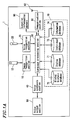
Figure 1A is a block diagram illustrating an exemplary
structure of a dialog-type agent 1;
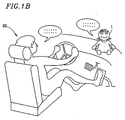
Figure 1B schematically shows a state where a driver
80 and the dialog-type agent 1 are involved in a dialog;
Figure 2 is a flowchart illustrating an exemplary
procedure of a crime prevention program which is executed
by the dialog-type agent 1 shown in Figure 1A;
Figure 3 is a flowchart illustrating an exemplary
procedure of a crime prevention program which is executed
by the dialog-type agent 1 shown in Figure 1A;
Figure 4 shows an example of a multi-agent
environment;
Figure 5 is a flowchart illustrating an example of
a detailed flow of the step ST6 shown in Figure 2;
Figure 6 is a flowchart illustrating an exemplary
procedure of a crime prevention program which is executed
by each of a house agent 81, a vehicle agent 82 and a mobile
agent 83;
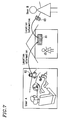
Figure 7 schematically shows a state where the house
agent 81 receives location information indicating the
location of user A from the vehicle agent 82 and receives
location information indicating the location of user B from
the mobile agent 83; and
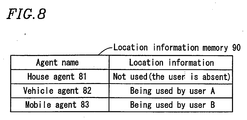
Figure 8 shows an example of the content of a location
information memory 90 of the house agent 81.
DESCRIPTION OF THE PREFERRED EMBODIMENTS
Hereinafter, the present invention will be described
by way of illustrative examples with reference to the
accompanying drawings.
(Example 1)
Figure 1A is an exemplary structure of a dialog-type
agent 1 as an example of a dialog-type apparatus.
The dialog-type agent 1 includes an image recognition
section 10, a voice recognition section 20, a language
processing section 30, a voice synthesis section 40, a voice
output section 50, a communication section 60, and a database
section 70.
The image recognition section 10 is connected to an
image input section 12 (for example, a camera), and performs
image recognition processing on an image which is input
through the image input section 12 so as to detect a human
being based on the image. The voice recognition section 20
is connected to a voice input section 22 (for example, a
microphone), and recognizes a voice which is input through
the voice input section 22.
The language processing section 30 understands the
content of a dialog based on a voice recognition result which
is output from the voice recognition section 20 and performs
a search in the database 70 so as to generate a response
suitable to the individual information of the human being
and the state of the dialog.
The response generated by the language processing
section 30 is synthesized into a voice by the voice synthesis
section 40. The voice synthesized in this manner is output
through the voice output section 50 (for example, a speaker).
The communication section 60 is used for performing
a report to a security company or a law enforcement agent
through a communication line. The communication line may
be a wireless communication line or a wired communication
line. When, for example, the wireless communication line
is used, the communication section 60 transmits or receives
data through an antenna 62.
The database 70 includes a dialog database 71 for
storing dialog patterns and rules for generating a response,
a dialog history database 72 for storing the history of past
dialog, an individual database 73 for storing information
used for specifying a subject individual (for example,
information regarding the subject individual's gender, age,
name, occupation, personality, interests and birth date)
or information that only the subject individual can know,
and an information database 74 for storing information
regarding weather, news and the like. The information
regarding weather, news and the like is, for example, acquired
from the outside of the dialog-type agent 1 through the
communication section 60 and the language processing section
30, and is stored in the information database 74.
Herein, the term "subject individual" is defined to
refer to a user (possessor) of the dialog-type agent 1. The
user can be one person or a plurality of persons. Information
on "who the user of the dialog-type agent 1 is" is registered
in the individual database 73 in advance. In this case, the
"subject individual" refers to a person who is registered
in advance in, for example, the individual database 73 as
the user of the dialog-type agent 1.
Thus, the dialog-type agent 1 is structured so as
to be capable of performing a dialog with a human being.
The dialog-type agent 1 preferably has a function of exploring
an information space such as the Internet and performing
information processing, such as an information search,
filtering, schedule adjustments and the like, on behalf of
a human being (a function of a software agent). The
dialog-type agent 1 performs a dialog as if it was a human
being, and therefore is sometimes referred to as a
"personified agent".
The dialog-type agent 1 is a type of computer. The
functions of the above-described elements 10 through 74 of
the dialog-type agent 1 can be implemented by, for example,
a CPU (not shown) in a computer executing various types of
programs which are stored in a memory (not shown) in the
computer. However, the functions of the elements 10 through
74 are not limited to be implemented by software. A part
of or all of the functions of the elements 10 through 74
of the dialog-type agent 1 can be implemented by hardware.
For the details of the research regarding a
dialog-type agent, refer to the web pages of Ministry of
International Trade and Industry, and Agency of Industrial
Science and Technology, Electrotechnical Laboratory,
Interactive Intermodal Integration Lab
(http://www.etl.go.jp/∼7233/).
Figure 1B schematically shows a state where a driver
80 of the vehicle is involved in a dialog with the dialog-type
agent 1. The dialog-type agent 1 can be installed at an
arbitrary position in the vehicle, for example, on or in
a dashboard.
Figure 2 is a flowchart illustrating an exemplary
procedure of a crime prevention program executed by the
dialog-type agent 1 shown in Figure 1A.
Hereinafter, each of the steps of the crime prevention
program shown in Figure 2 will be described with an example
of vehicle robbery prevention. It is assumed that the
dialog-type agent 1 is installed in a vehicle.
In step ST1, the image recognition section 10 detects
a human being based on an image which is input through the
image input section 12. The human being detected in step
ST1 may be the subject individual or may not be the subject
individual (may be, for example, a criminal).
In step ST2, the image recognition section 10 obtains
the probability that the detected human being is the subject
individual. The probability can be obtained, for example,
through calculation by comparing a feature amount indicating
the detected human being and a feature amount indicating
the subject individual which is stored in the individual
database 73. The probability that the detected human being
is the subject individual is represented by, for example,
a numerical value in the range of 0% to 100%.
In step ST2, the image recognition section 10
determines whether or not the probability that the detected
human being is the subject individual satisfies a
predetermined criterion (for example, 95% or higher). When
it is determined that the probability satisfies the
predetermined criterion, the image recognition section 10
determines that the detected human being is the subject
individual (i.e., the user). As a result, the processing
advances to step ST6, where a usual-mode dialog is performed
between the dialog-type agent 1 and the user. The dialog
is controlled by the language processing section 30. The
usual-mode dialog is, for example, a daily conversation.
The usual-mode dialog may be started with the dialog-type
agent 1 outputting a line of dialog, or with the user speaking
a line of dialog.
An example of a usual-mode dialog will be shown below.
Here, "S" refers to the lines of dialog of the dialog-type
agent
1, and "U1" refers to the lines of dialog of the user.
In step ST2, when it is determined that the
probability that the detected human being is the subject
individual does not satisfy the predetermined criterion (for
example, the probability is less than 95%), the image
recognition section 10 determines that the detected human
being is not the subject individual (i.e., the detected human
being is not the user). As a result, the processing advances
to step ST3, where the a doubt-mode dialog is performed between
the detected human being and the dialog-type agent 1. This
dialog is controlled by the language processing section 30.
Here, the doubt-mode dialog is performed in the following
form. The dialog-type agent 1 presents a question regarding
the subject individual for the purpose of confirming that
the detected human being is not the subject individual. Then,
the detected human being answers the question.
An example of a doubt-mode dialog is shown below.
Here, "S" again refers to the lines of dialog of the dialog-type
agent
1, and "U2" refers to the lines of dialog of a person
who is not the user (for example, a criminal).
In step ST4, the language processing section 30 makes
a final determination on whether or not the detected human
being is the subject individual based on the result of the
doubt-mode dialog in step ST3. When it is determined in step
ST4 that the detected human being is the subject individual,
the processing advances to step ST6, where the doubt-mode
dialog is changed to a usual-mode dialog. When it is
determined in step ST4 that the detected human being is not
the subject individual, the processing advances to step ST5.
In step ST5, the language processing section 30
instructs the communication section 60 to make a report to
a security company (or the police) through the communication
line. The dialog-type agent 1 may be structured such that
the communication section 60 makes the report and also sends
information on the position of the dialog-type agent 1 to
the security company (or the police).
As described above, according to the crime prevention
program shown in Figure 2, when it is determined that the
probability that the human being detected in step ST2 is
the subject individual is low, a doubt-mode dialog is
performed in step ST3. Based on the result of the doubt-mode
dialog, a final determination is made on whether or not the
detected human being is the subject individual. Only when
it is determined both in steps ST2 and ST4 that the detected
human being is "not the subject individual", a report is
made. It is twice determined that the detected human being
is "not the subject individual", so that the determination
is made with higher accuracy.
In the crime prevention program shown in Figure 2,
step ST2 may be omitted. In this case, when a human being
is detected in step ST1, a doubt-mode dialog is started in
step ST3. By omitting step ST2, the processing load of the
image recognition section 10 is alleviated.
As described above, in this example, it can be
determined whether or not the detected human being is the
user, using the dialog-type agent 1. When it is determined
that the detected human being is not the user (for example,
the detected human being is a criminal), a report is made
to a security company (or the police). Thus, a crime can
be prevented.
In the case where a vehicle having the dialog-type
agent 1 installed therein is left in the care of a valet
or a clerk in charge, it is preferable to turn off the
dialog-type agent 1. This is for preventing the dialog-type
agent 1 from initiating a dialog with the clerk.
Alternatively, the information on the position of the vehicle
is used, such that the dialog-type agent 1 is set not to
enter the doubt mode when the position of the vehicle is
in a parking lot or a hotel.
The human being(s) who is to be determined as the
subject individual may be one person or a plurality of persons.
For example, when one vehicle is used by four people (A,
B, C and D), information for specifying the subject individual
(for example, information regarding the subject individual's
gender, age, name, occupation, personality, interests and
birth date) or information that only the subject individual
can know is stored in the individual database 73 for each
of the four people.
This example is applicable for preventing a
suspicious person from invading a residence. For example,
the dialog-type agent 1 can be installed in an interphone,
and a dialog with the dialog-type agent 1 prevents a suspicious
person from invading the residence. When the dialog-type
agent 1 is installed inside the house, robbery can be prevented
even if the suspicious person invades the residence.
Figure 5 is a flowchart illustrating an example of
the detailed flow of step ST6 shown in Figure 2.
In step ST51, it is confirmed that the human being
detected in step ST1 is the subject individual (i.e., the
user). Therefore, a usual-mode dialog is performed between
the dialog-type agent 1 and the user. This dialog is
controlled by, for example, the language processing section
30.
In step ST52, based on the result of the dialog
performed in step ST51, it is determined whether or not the
user is in a normal state. This determination is performed
by, for example, the voice recognition section 20 and the
language processing section 30. For example, the voice
recognition section 20 extracts a keyword from the voice
of the user which is input through the voice input section
22. The language processing section 30 determines whether
or not the keyword extracted by the voice recognition section
20 matches one of predetermined keywords such as "pain" or
"help!" (i.e., a keyword showing that the user is not in
a normal state). The predetermined keywords are, for example,
stored in advance in the dialog database 71. When the keyword
extracted matches one of the predetermined keywords, the
language processing section 30 determines that the user is
not in a normal state (i.e., in an abnormal state), and
otherwise determines that the user is in a normal state.
Alternatively, the dialog-type agent 1 may operate as follows.
When the voice recognition section 20 detects that the voice
of the user which is input through the voice input section
22 includes a certain silent period, the voice recognition
section 20 may output a detection signal to the language
processing section 30. Upon receipt of the detection signal
from the voice recognition section 20, the language
processing section 30 determines that the user is not in
a normal state (i.e., in an abnormal state), and otherwise
determines that the user is in a normal state.
When the determination result in step ST52 is "YES",
the processing advances to step ST56. When the determination
result in step ST52 is "NO", the processing advances to step
ST53.
In step ST53, a line of dialog is output to the user
for confirming that the user is in an abnormal state. This
line of dialog is output by, for example, the language
processing section 30, the voice synthesis section 40 and
the voice output section 50. For example, the language
processing section 30 generates a response such as "Are you
all right?", and outputs the response to the voice synthesis
section 40. The voice synthesis section 40 synthesizes the
response to a voice. The synthesized voice is output from
the voice output section 50. As a result, a response for
confirming that the user is in an abnormal state, for example,
"Are you all right?", is output to the user.
In step ST54, based on the reaction from the user
to the line of dialog output by the dialog-type agent 1 in
step ST53 (for example, based on whether or not the user
responded, and/or the content of the response from the user),
a final determination is made on whether or not the user
is in a normal state. This determination is performed by,
for example, the voice recognition section 20 and the language
processing section 30. The determination in step ST54 is,
for example, made in the same manner as the determination
made in step ST52.
When the determination result in step ST54 is "YES",
the processing advances to step ST56. When the determination
result in step ST54 is "NO", the processing advances to step
ST55.
In step ST55, the language processing section 30
instructs the communication section 60 to make a report to
an emergency center through the communication line. The
dialog-type agent 1 may be structured such that the
communication section 60 makes the report and also sends
the individual information of the user (for example, the
user's age, gender, and clinical history stored in the
individual database 73) to the emergency center.
Alternatively, the communication section 60 may send
information on the position of the dialog-type agent to the
emergency center 1.
In step ST56, ausual-mode dialog is performed between
the dialog-type agent 1 and the user.
As described above, in the detailed flow shown in
Figure 5, the determination on whether or not the user is
in a normal state is made based on the dialog between the
dialog-type agent land the user. Such a determination method
is more user friendly than a conventional method of using
a sensor attached to the body of the user or using an image
to determine whether or not the user is in a normal state.
The user does not need to experience the discomfort of wearing
the sensor or being monitored by the dialog-type agent 1.
According to the detailed flow shown in Figure 5,
when it is determined in step ST52 that the user is not in
a normal state, a line of dialog is output in step ST53 in
order to confirm that the user is in an abnormal state, and
a final determination is made in step ST54 on whether or
not the user is in a normal state based on whether or not
the user responded to the line of dialog output by the
dialog-type agent 1 (or the content of the response). Only
when it is determined that "the user is not in a normal state"
both in steps ST52 and ST54, a report is made. It is twice
determined that "the user is not in a normal state", so that
the determination is made with higher accuracy.
According to the detailed flow shown in Figure 5,
the report to the emergency center is made after the human
being detected in step ST1 (Figure 2) is confirmed to be
the subject individual (i.e., the user). Accordingly, even
when the user cannot speak, the individual information on
the user (for example, the user's age, gender, and clinical
history) can be sent to the emergency center at the time
of reporting. Thus, the emergency center can obtain the
individual information of the user before the user is
transported to the emergency center. As a result, the user
can be appropriately treated at the emergency center quickly.
In the flow shown in Figure 5, steps ST53 and ST54
may be omitted. In this case, when it is determined in step
ST52 that the user is not in a normal state, a report is
immediately made to the emergency center.
As described above, in this example, it is determined
whether or not the detected human being is the user, using
the dialog-type agent 1. When it is determined that the
detected human being is not the user, a report is made to
a security company (or the police). Thus, a crime can be
prevented. When it is determined that the detected human
being is the user, it is further determined whether or not
the user is in a normal state (or whether or not the user
is in an abnormal state). When it is determined that the
user is not in a normal state, a report is made to the emergency
center. Thus, an accident can be prevented.
In this example, a dialog is performed between the
dialog-type agent 1 and the detected human being, and based
on the result of the dialog, it is determined whether or
not an abnormality has occurred. When it is determined that
an abnormality has occurred, a report is made. Here, the
term "abnormality" refers to the situation in which the
detected human being is not the user of the dialog-type agent
1. Alternatively, the term "abnormality" refers to the
situation in which the detected human being is the user of
the dialog-type agent 1 and the user is not in a normal state.
(Example 2)
Figure 3 is a flowchart illustrating an exemplary
procedure of a crime prevention program executed by the
dialog-type agent 1 shown in Figure 1A.
Hereinafter, each of the steps of the crime prevention
program shown in Figure 3 will be described with an example
of invasion prevention of a suspicious person to a residence.
It is assumed that the dialog-type agent 1 is installed in,
for example, a house, for example, a living room.
In step ST11, the image recognition section 10 detects
a human being based on an image which is input through the
image input section 12. The human being detected in step
ST11 may be the subject individual or may not be the subject
individual (may be, for example, a criminal).
In step ST12, the language processing section 30
receives location information indicating a location of the
subject individual. The language processing section 30 may
receive the location information which is input to the
dialog-type agent 1 through an input section (not shown)
by the subject individual or receive location information
through the communication section 60 from another dialog-type
agent.
In step ST13, the language processing section 30
determines whether or not the subject individual is at home
based on the location information received in step ST12.
When it is determined in step ST13 that the subject
individual is not at home (for example, the subject individual
is out), the processing advances to step ST14. When it is
determined in step ST13 that the subject individual is not
absent (for example, the subject individual is at home),
the processing advances to step ST17.
The processing in steps ST14 through ST17 is the same
as the processing in steps ST3 through ST6 shown in Figure
2, and the description thereof will be omitted here. As in
the first example, the flowchart in Figure 5 is applicable
to the detailed flow of step ST17 shown in Figure 3. In this
case, substantially the same effect as described above is
provided.
According to the crime prevention program shown in
Figure 3, when it is determined in step ST13 that the subject
individual is not at home, a doubt-mode dialog is performed
in step ST14. Based on the result of the doubt-mode dialog,
a final determination is made on whether or not the human
being detected in step ST11 is the subject individual. Only
when it is determined in step ST13 that "the subject individual
is not at home" and it is further determined in step ST15
that the detected human being is "not the subject individual",
a report is made. Two determinations, i.e., the
determination that "the subject individual is not at home"
and the determination that the detected human being is "not
the subject individual" are made, so that the determination
on whether or not the detected human being is the subject
individual can be made with higher accuracy.
In the flowchart shown in Figure 3, steps ST14 and
ST15 can be omitted. In this case, when it is determined
in step ST13 that the subject individual is not at home,
a report is immediately made to a security company (or the
police).
As described above, in this example, it can be
determined whether or not the detected human being is the
user, using the dialog-type agent 1. When it is determined
that the detected human being is not the subject individual
(for example, the detected human being is a criminal), a
report is made to a security company (or the police). Thus,
a crime can be prevented.
The procedure of the crime prevention program shown
in Figure 3 is applicable to a multi-agent environment.
Figure 4 shows an exemplary multi-agent environment.
In the example shown in Figure 4, a house agent 81, a vehicle
agent 82 and a mobile agent 83 are connected to a communication
network 84. The multi-agent environment shown in Figure 4
is an example of a system including a plurality of dialog-type
agents connected to each other via a communication network.
The number of agents in the multi-agent environment is not
limited to three. The number of agents in the multi-agent
environment can be any number of two or more.
As each of the three agents 81 through 83, the
dialog-type agent 1 shown in Figure 1A is usable. In order
to use the agents 81 through 83 in the multi-agent environment,
each of the agents 81 through 83 needs to further include
a location information memory 90 (see Figure 1A). The
location information memory 90 will be described in detail
below. The agents 81 through 83 are structured to be operated
in association with each other by communicating with each
other via the communication network 84.
The house agent 81 is provided in a house. The vehicle
agent 82 is provided in a vehicle. The mobile agent 83 is
provided such that the subject individual can carry the mobile
agent 83 in a portable manner. The mobile agent 83 is
preferably of a wrist watch type owing to its superb
portability.
It is assumed that, for example, the subject
individual is out of the house in a vehicle. In this case,
the vehicle agent 82 detects that the subject individual
is in the vehicle, and provides the house agent 81 with location
information of the subject individual which indicates that
the subject individual is in the vehicle. Upon receipt of
the location information from the vehicle agent 82, the house
agent 81 understands that the subject individual is out of
the house. Accordingly, the house agent 81 can determine
that the subject individual is absent in step ST13 in Figure
3.
The plurality of dialog-type agents can be operated
in association with each other, so that a dialog made in
the past is not repeated. For example, in the case where
a person is involved in a dialog with the house agent 81
regarding that day's weather when the person wakes up, it
is preferable that the person is involved in a dialog on
another topic (for example, the sporting events scheduled
for that day) when the person goes out in the vehicle, without
repeating the dialog on that day's weather. Such a control
on the dialog is achieved as follows. The dialogs made
between the house agent 1 and the person is stored in the
dialog history database 72 of the house agent 81, and the
vehicle agent 82 refers to the dialog history database 72
of the house agent 81 so as to avoid repeating the dialog
made in the past.
Dialog-type agents usable in the multi-agent
environment execute various agent functions (including the
function of reading electronic mails aloud) in various
situations in life, so as to interact with a human through
dialog. Such dialog-type agents are close to the user' s life,
user friendly, and useful. Therefore, the user utilizes the
dialog-type agents in various situations in life.
The procedure of the crime prevention program shown
in Figure 3 is for the case where there is one user (possessor).
Hereinafter, a procedure of a crime prevention program for
the case where there are a plurality of users in the multi-agent
environment will be described.
Figure 6 shows a procedure of a crime prevention
program which is executed by each of the house agent 81,
the vehicle agent 82 and the mobile agent 83. Here, it is
assumed that the house agent 81, the vehicle agent 82 and
the mobile agent 83 each have the same structure as that
of the dialog-type agent 1 shown in Figure 1A. It is also
assumed that the multi-agent environment is set such that
the house agent 81, the vehicle agent 82, and the mobile
agent 83 are connected through the communication network
84.
Here, it is assumed that the user includes two persons,
i.e., "user A" and "user B". In this case, the user name
of "user A" and the user name of "user B" are registered
in the individual database 73 of each agent. Like in the
first example, the individual database 73 may have
information for specifying the user (image, voice feature
amount, etc.) and the information which only the user can
know stored therein for each user.
Hereinafter, each of steps of the crime prevention
program shown in Figure 6 will be described with an example
of invasion prevention of a suspicious person to a residence.
The processing in step ST81 is the same as that of
step ST1 shown in Figure 2, and thus the description thereof
will be omitted. For example, the image recognition section
10 functions as a detection section for detecting a human
being.
In step ST82, the communication section 60 receives
location information indicating the location of the user
from another agent. Here, the term "another agent" refers
to an agent which is among the plurality of agents in the
multi-agent environment and is not the subject agent. For
example, the communication section 60 of the house agent
81 receives location information indicating the location
of user A from the vehicle agent 82 and receives location
information indicating the location of user B from the mobile
agent 83.
Thus, the communication section 60 acts as a receiving
section for receiving location information from the location
information memory 90 of another dialog-type agent via the
communication network 84.
Figure 7 schematically shows a state where the house
agent 81 receives the location information indicating the
location of user A from the vehicle agent 82 and the location
information indicating the location of user B from the mobile
agent 83. The location information of users A and B is stored
in the location information memory 90 of the house agent
81.
Figure 8 shows an example of the content of the
location information memory 90 of the house agent 81. In
the state shown in Figure 8, the house agent 81 is not being
used by user A or user B (i.e., the house agent 81 is not
in use, or the user is not at home), the vehicle agent 82
is being used by user A, and the mobile agent 83 is being
used by user B. When the location information memory 90 is
in an initial state, none of the agents is used by any of
the users.
In step ST83, the language processing section 30
refers to the location information memory 90 so as to determine
whether all the plurality of users are using another agent.
When the determination result in step ST83 is "YES",
the processing advances to step ST87, and when the
determination result in step ST83 is "NO", the processing
advances to step ST84.
When, for example, the content of the location
information memory 90 of the house agent 81 is as shown in
Figure 8, both users A and B are using another agent (i.e.,
the vehicle agent 82 and the mobile agent 83). In this case,
the processing advances to step ST87.
The processing in steps ST84, ST85 and ST86 is the
same as that of steps ST2, ST3 and ST4 shown in Figure 2,
and the description thereof will be omitted.
Thus, the language processing section 30 acts as a
determination section for determining whether or not the
detected human being is the user, based on the location
information received from another agent.
In step ST87, the language processing section 30
instructs the communication section 60 to make a report to
a security company (or the police) via the communication
line.
Thus, the language processing section 30 and the
communication section 60 act together as a reporting section
for making a report when it is determined that the detected
human being is not the subject individual.
When it is determined that at least one of the
plurality of users is not using another agent (step ST83)
and it is further determined that detected human being is
the user (steps ST84 and ST86), the processing advances to
step ST88.
In step ST88, the language processing section 30
records the user name in the location information memory
90 of the house agent 81.
When the location information received from another
agent in step ST82 indicates that one of the plurality of
users (for example, user A) is using another agent, the
determination in step ST84, on whether or not the detected
human being is the user, can be performed for the plurality
of users excluding the user who is using another agent. Thus,
the targets of the determination can be limited. For example,
when the language processing section 30 of the house agent
81 determines that the human being detected in step ST84
is the user (language processing section 30 also determines
the user name), the user name can be recorded as using the
house agent 81 in the location information memory 90 in step
ST88.
The processing in step ST89 is the same as that of
step ST6 shown in Figure 2, and description thereof will
be omitted. Like in the first example, the flowchart shown
in Figure 5 may be applied as the detailed flow of step ST89
shown in Figure 6. In this case, the same effect as described
above is provided.
(Example 3)
When the mobile agent 83 (Figure 4) detects that the
response from the user is different from the usual response
in a usual-mode dialog, it is preferable to change the usual
mode to the doubt mode and perform a dialog with the user
in the form of asking questions to obtain information for
specifying the subject individual (for example, the birth
date of the user). When the user cannot answer the question
to obtain information for specifying the subject individual,
it is preferable to determine that there is a high possibility
of the subject individual being harmed or of the mobile agent
83 being stolen, and report that to the security company
(or the police). The information on the location of the
mobile agent 83 may be sent to the security company (or the
police) simultaneously with the report.
Alternatively, the following arrangement is usable.
A keyword is predetermined between the mobile agent 83 and
the subject individual, such that when the subject individual
is exposed to danger, the subject individual says the keyword.
When the mobile agent 83 detects the keyword, the mobile
agent 83 makes a report to the security company (or the police).
The keyword is preferably a code word which does not convey
any meaning to a third party (for example, the word
"happa-fu-mi-fu-mi")
In the first through third examples, a dialog-type
agent is described as an example of a dialog-type apparatus.
The dialog-type apparatus is not limited to this. The
dialog-type apparatus may be any apparatus which is
structured so as to be capable of performing a dialog with
a human being. The dialog-type apparatus may be, for example,
a dialog-type toy.
According to the present invention, a criminal or
an invader to a house can be specified using a dialog-type
agent. Thus, a crime can be prevented. The present
invention can determine abnormality of a body of the user,
using the dialog-type agent. Thus, an accident can be
prevented by reporting the abnormality to a preset
institution or the like.
Various other modifications will be apparent to and
can be readily made by those skilled in the art without
departing from the scope and spirit of this invention.
Accordingly, it is not intended that the scope of the claims
appended hereto be limited to the description as set forth
herein, but rather that the claims be broadly construed.