EP1304321A2 - Process for preparing 3-Hydroxyesters from epoxide derivatives - Google Patents
Process for preparing 3-Hydroxyesters from epoxide derivatives Download PDFInfo
- Publication number
- EP1304321A2 EP1304321A2 EP02257183A EP02257183A EP1304321A2 EP 1304321 A2 EP1304321 A2 EP 1304321A2 EP 02257183 A EP02257183 A EP 02257183A EP 02257183 A EP02257183 A EP 02257183A EP 1304321 A2 EP1304321 A2 EP 1304321A2
- Authority
- EP
- European Patent Office
- Prior art keywords
- promoter
- hydrocarbon
- cobalt
- catalyst
- aliphatic hydrocarbon
- Prior art date
- Legal status (The legal status is an assumption and is not a legal conclusion. Google has not performed a legal analysis and makes no representation as to the accuracy of the status listed.)
- Withdrawn
Links
- 0 Cc1c(*)c(*)c(*)c(*)c1* Chemical compound Cc1c(*)c(*)c(*)c(*)c1* 0.000 description 1
Images


Classifications
-
- C—CHEMISTRY; METALLURGY
- C07—ORGANIC CHEMISTRY
- C07C—ACYCLIC OR CARBOCYCLIC COMPOUNDS
- C07C67/00—Preparation of carboxylic acid esters
- C07C67/36—Preparation of carboxylic acid esters by reaction with carbon monoxide or formates
- C07C67/37—Preparation of carboxylic acid esters by reaction with carbon monoxide or formates by reaction of ethers with carbon monoxide
Definitions
- the present invention relates to a process for preparing 3-hydroxyesters by carbonylating an epoxide derivative. More specifically, the present invention relates to converting an epoxide derivative into 3-hydroxyesters through reaction with carbon monoxide and alcohol in the presence of a catalyst system consisting of a cobalt catalyst and a promoter, followed by the efficient separation of the catalyst system from the resulting reaction product so as to recycle the catalyst system.
- a catalyst system consisting of a cobalt catalyst and a promoter
- Epoxide derivatives can be readily converted into a difunctional compound via carbonylation so that they can be used as an intermediate compound for preparing useful organic compounds.
- a 3-hydroxyester derivative has two functional groups, it has been known that it can be used as solvents, resins and coating materials. Further, it is possibly used as a raw material for pharmaceutical compounds or as an intermediate for organic synthesis due to its easy convertibility into other compounds and can also be used as an intermediate for synthesis of alkanediols, which are the raw material for polyesters.
- alkanediols particularly 1,3-alkanediols have been generally prepared by hydroformylating an epoxide derivative into a 3-hydroxyaldehyde derivative and then hydrogenating the 3-hydroxyaldehyde derivative to convert aldehyde group thereof into alcohol group. This process is fully described in US Patent Nos. 5,770,776, 5,723,389 and 5,731,478 by Shell Co.
- US Patent Nos. 5,770,776 discloses a process for preparing 1,3-propandiol, comprising: contacting ethylene oxide with carbon monoxide and hydrogen in a non-aqueous solvent in the presence of a catalyst system consisting of a cobalt catalyst and an alternative promoter, i.e., a metal complex or a ligand other than the phosphine oxide ligand; adding an aqueous solution to the resulting intermediate product to obtain a first aqueous phase product and a first organic phase material; isolating the first aqueous phase product from the first organic phase material; adding a non-aqueous solvent to the first aqueous phase product to obtain a second aqueous phase product and a second organic phase material; isolating the second aqueous phase product from the second organic phase material; and recycling the first and the second organic phase materials to the first step, wherein the isolated second aqueous phase product containing 3-hydroxypropanal is contacted with hydrogen in the
- US Patent Nos. 5,723,389 and 5,731,478 disclose a process for preparing alkanediols, comprising: contacting ethylene oxide with carbon monoxide and hydrogen in the presence of a catalyst system consisting of a cobalt catalyst and an alternative promoter, i.e., a metal complex or a ligand other than the phosphine oxide ligand in a non-aqueous solvent; adding an aqueous solution to the resulting intermediate product to obtain an aqueous phase product and organic phase materials; isolating the aqueous phase product from the organic phase materials; contacting the aqueous phase product containing 3-hydroxyaldehyde with hydrogen in the presence of a hydrogenation catalyst, and recovering the resulting alkanediols.
- a catalyst system consisting of a cobalt catalyst and an alternative promoter, i.e., a metal complex or a ligand other than the phosphine oxide ligand in a non-aqueous solvent
- US Patent Nos. 5,981,808 and 5,986,145 propose a process for preparing 1,3-propandiol, comprising contacting ethylene oxide with carbon monoxide and hydrogen in the presence of a catalyst system consisting of a cobalt catalyst and an alternative promoter, i.e., a metal complex or a ligand other than the phosphine oxide ligand in a non-aqueous solvent; adding an aqueous solution to the resulting intermediate product to obtain an aqueous phase product and an organic phase material; recycling the organic phase material to the first step, wherein the water-soluble cobalt catalyst is removed from the final reaction product, 3-hydroxypropanal, by contacting the aqueous phase product comprising 3-hydroxypropanal contaminated with the cobalt catalyst with oxygen or oxygen-containing gas(e.g., air) at 5 ⁇ 55°C for 1 ⁇ 15 minutes in the presence of an adequate amount of organic acid under a pressure of 50 ⁇ 200 psig by carbon monoxide to convert the water-soluble cobalt
- the conversion rate of an epoxide to a ⁇ -hydroxyester through hydroesterification has been reported to be only 40 ⁇ 60% (see: for example, Dalcanali, E., and Foa. M., Synthesis (1986) 492; Heck, R. F., J. Am. Chem. Soc. (1963) 85, 1460; and Eisenmann, J. L., Yamartino, R.L., Howard, Jr. J. F., J. Org. Chem. (1961) 26, 2102). It is surmised that such a low yield is due to the spontaneous isomerization of the starting material.
- US Patent No. 6,191,321 describes a process for preparing 1,3-propandiol through the hydrogenation of 3-hydroxymethyl propionate. This technique also has a very low production yield and provides no description on the recovery and recycling of cobalt, which are merely supposed to be conducted in an aqueous phase.
- reaction product and catalyst are separated from each other by the vacuum distillation or the extraction of the catalyst into an aqueous phase, and the catalyst thus separated can be reused.
- a feature of the present invention is to provide a novel process for preparing 3-hydroxyesters by reacting an epoxide derivative with carbon monoxide and alcohol in the presence of a catalyst system consisting of a cobalt catalyst and optionally a particular promoter to efficiently produce a 3-hydroxyester, followed by the isolation of the catalyst system form the reaction mixture in order to reuse it in another cycle of 3-hydroxyester preparation.
- Another feature of the present invention is to provide a simplified technique for isolating the cobalt catalyst system without requiring intricate equipments or procedures, which allows minimum production cost to be incurred in the preparation of desired 3-hydroxyesters.
- Still another feature of the present invention is to provide a novel process for preparing 3-hydroxyesters, comprising:
- the present invention relates to a novel process for preparing 3-hydroxyesters through the carbonylation of an epoxide derivative in the presence of a catalyst system consisting of a cobalt compound and optionally a promoter, wherein the catalyst system can be successfully separated from the reaction product, 3-hydroxyesters, and then be reused in another cycle of such carbonylation.
- a catalyst system consisting of a cobalt compound and optionally a promoter
- the present invention permits the production of 3-hydroxyesters with high efficiency at low cost by providing a progressive technique for recycling the catalyst consecutively.
- a cobalt catalyst Co 2 (CO) 8 can be used solely, or the cobalt catalyst Co 2 (CO) 8 can be used in combination with a promoter selected from the group consisting of imidazole, pyridine, pyrrole, pyrazine, pyrazole, pyrimidine, piperidine and derivatives thereof, provided that the promoter does not comprise any phosphine-based compound.
- the cobalt compound is combined with the promoter so that the molar ratio of cobalt atom: promoter is 1:0 ⁇ 1:100(mol/mol).
- each of R 14 , R 15 , R 16 and R 17 is, independently, hydrogen; C 1-10 branched aliphatic hydrocarbon, non-branched aliphatic hydrocarbon, saturated cyclic hydrocarbon, chain-type hydrocarbon containing ring structure, or aliphatic hydrocarbon containing aromatic ring; F; Cl; C 1-3 alkoxy group; OH; or OH-containing C 1-10 branched aliphatic hydrocarbon, non-branched aliphatic hydrocarbon, saturated cyclic hydrocarbon, chain-type hydrocarbon containing ring structure, or aliphatic hydrocarbon containing aromatic ring.
- the carbonylation is conducted in the presence of an alcohol by using an additional reaction solvent at a temperature of 30 ⁇ 150°C, preferably 40 ⁇ 120°C under a pressure of 50 ⁇ 3000psig, preferably 100 ⁇ 1500psig by CO gas.
- each of R 1 and R 2 is, independently, hydrogen; C 1-20 saturated non-branched aliphatic hydrocarbon, branched aliphatic hydrocarbon, saturated cyclic hydrocarbon, chain-type hydrocarbon containing ring structure, or aliphatic hydrocarbon containing aromatic ring; hydrocarbon formed by substitution of at least one hydrogen in at least one carbon chain of the above hydrocarbon species with F, Cl or Br; unsubstituted aromatic hydrocarbon; or aromatic hydrocarbon formed by substitution of at least one hydrogen in the aromatic ring with F, Cl, amine, nitrile or alkoxy group.
- Preferred examples of such epoxide derivatives include ethylene oxide, propylene oxide, 1-butene oxide, 1-pentene oxide, 1-hexene oxide, 1-heptene oxide, 1-octene oxide, 1-nonene oxide, 1-decene oxide, 2-methyl-propylene oxide, epifluorohydrin, epichlorohydrin, epibromohydrin, glycidol, methyl glycidate, ethyl glycidate, t-butyl glycidate, 2-methyl-1-butene oxide, 2-methyl-1-pentene oxide, 2-methyl-1-hexene oxide, 2-methyl-1-heptene oxide, 2-methyl-1-octene oxide, 2-methyl-nonene oxide, 2-methyl-1-decene oxide, 2-ethyl-1-butene oxide, 2-ethyl-1-pentene oxide, 2-ethyl-1-hexene oxide, 2-ethyl-1-heptene oxide, 2-
- the alcohols used in the carbonylation can be represented by the Formula R'OH, wherein R' is C 1-20 saturated or unsaturated linear hydrocarbon, branched hydrocarbon, cyclic hydrocarbon, aromatic hydrocarbon or linear hydrocarbon containing aromatic ring.
- R' is methyl, ethyl, isopropyl, cyclohexyl, phenyl or benzyl.
- the R'OH itself can be used solely, or alternatively, ether compounds, substituted aromatic compounds, acetate compounds or carbonate compounds can be additionally used.
- the ether compounds have the structure represented by the following Formulas (III), (IV), (V) or (VI): R 3 ⁇ O ⁇ R 4 wherein, each of R 3 , R 4 , R 5 , R 6 and R 7 is, independently, C 1-10 saturated non-branched aliphatic hydrocarbon, branched aliphatic hydrocarbon, saturated cyclic hydrocarbon, chain-type hydrocarbon containing ring structure, or aliphatic hydrocarbon containing aromatic ring; m is an integer of 1 to 10; n is an integer of 2 to 5; and each of x and y is, independently, an integer of 1 to 10.
- the substituted aromatic compounds can be exemplified by those represented by the following Formula (VII): wherein, each of R 8 , R 9 , R 10 , R 11 , R 12 and R 13 is, independently, hydrogen; C 1-4 saturated branched hydrocarbon; saturated non-branched hydrocarbon; F; Cl; or C 1-3 alkoxy group.
- the acetate compounds and the carbonate compounds are not specifically limited, while preferred examples of the acetate compound include methyl acetate, ethyl acetate, propyl acetate, butyl acetate, and isopropyl acetate, and preferred examples of the carbonate compound include methyl carbonate, ethyl carbonate, propyl carbonate, and butyl carbonate.
- 3-hydroxyesters and derivatives thereof produced from the carbonylation as described above are usually present in a concentration of 5 ⁇ 95wt% of the total reaction mixture, which are represented by the following Formulas (VIII) or (IX): wherein, each of R 1 , R 2 and R' has, independently, the same meaning as defined above.
- the present invention is characterized in that the final reaction product obtained from the carbonylation as described above as well as the reaction solvent used in the carbonylation are separated from the catalytic components (as used herein, by “catalytic components” are referred to the cobalt catalyst plus the promoter) in a stripping column by the use of a stabilizing gas.
- a stabilizing gas is referred to any substance which does not react with 3-hydroxyesters and is present in a gaseous state at the temperature where such separation occurs and which shows beneficial effect to stabilize the catalytic components.
- Preferred stabilizing gases can be exemplified by carbon monoxide, nitrogen, helium, hydrogen, carbon dioxide, argon, neon, xenon, and mixtures thereof.
- the choice of stabilizing gas and flow rate thereof, temperature of the stripping column, as well as inner diameter and length of the stripping column depends on which 3-hydroxyester compound to be separated. Temperature of the stripping column is controlled in the range of -30 ⁇ 200°C, preferably 0 ⁇ 150°C, and more preferably 10 ⁇ 120°C. Conventionally, when a compound is to be separated at a temperature lower than its boiling point, vacuum distillation technique has been used. However, the present inventors succeeded in separating the desired reaction product, 3-hydroxyesters, more efficiently at a temperature below the boiling point thereof utilizing a stripping system, which can operate in a non-vacuum condition at a low temperature and thus makes the separation process more economical.
- the stripping column has a cylinder-like shape. Supposing that they have the same volume, a stripping column with smaller inner diameter and longer length is advantageous over that with larger inner diameter and shorter length in the light of separation efficiency.
- cobalt is present in a concentration of 10ppm or less, so that it is desirable for the recovery of cobalt.
- the separation by a stripping column has a lot of advantages over either the extraction with an additional extraction solvent such as water or the vacuum distillation as follows:
- the use of additional extraction solvent is likely to cause a rise in production cost due to the necessity for the recovery of the extraction solvent in a separate step following the separation of desired product, as well as side-reactions due to the separation solvent.
- the use of a gas as in the present invention allows very easier separation of desired product by virtue of a large difference in boiling point and the suppression of any side-reactions.
- the separation of desired product by the conventional vacuum distillation incurs considerable cost for establishing vacuum distillation devices and maintaining vacuum condition, and there is also anxiety about a large-scale exposure of the product mixture when running commercial-scale vacuum distillation equipments at a vacuum condition.
- the separation in a stripping column with a gas as in the present invention minimizes the possibility for the product mixture to contact with outer atmosphere, because the separation is conducted under a positive pressure by the gas.
- the cobalt catalyst used in the present invention is very sensitive to air (or oxygen) and so the incidental contact with air (or oxygen) results in the significant reduction of catalytic activity.
- the product thus separated in a stripping column can be converted into 1,3-alkanediols through hydrogenation or can be converted into malonate or ⁇ -ketoester derivatives by oxidation. All or a part of the catalytic components (cobalt + promoter) can be recycled to the carbonylation reaction for continuous preparation of 3-hydroxyesters.
- FIG. 1 illustrates an example of preparation of 3-hydroxyesters according to the present invention.
- epoxide 3 is reacted with carbon monoxide 1 and alcohol 2 in the presence of the catalytic components 4 (a catalytic amount of a cobalt compound plus an effective amount of a promoter) at a temperature of 30 ⁇ 150°C under a pressure of 50 ⁇ 3000psig optionally by using an additional solvent to afford a 3-hydroxyester or derivatives thereof.
- the additional reactors 6, 7 may be connected to the rector 5 in a series as shown in Figure 1.
- reaction mixture in the rector 5 is transported to the rector 6 followed by the introduction of the additional reactants 1, 2 and 3 for further carbonylation to be continued, and then the reaction mixture in the rector 6 is transported to the rector 7 and subjected to further carbonylation in the similar manner.
- additional reactors may be connected to the reactor 7 .
- the reaction mixture 11 comprising reaction product, solvent, and catalytic components flows into the stripping column 12 , in which the reaction product 15 , the remaining reactant(s) 16 and the catalytic components(cobalt + promoter) 13 are separated from one another by using the stabilizing gas 14 at a temperature of -30 ⁇ 200°C.
- Catalytic components(cobalt-promoter complex) 13 thus separated are partially or fully recycled into the reactor 5 for use in the next carbonylation reaction.
- the solvent may be isolated from the catalytic components 13 together with the reaction product and then be applied to the subsequent hydrogenation step.
- the solvent may be completely separated and recovered from the reaction product in an additional separation step (for example, by vacuum distillation) following the process in the stripping column, so that the solvent may be directly applied to the subsequent hydrogenation step together with the reaction product or be recycled to the previous carbonylation step.
- an additional separation step for example, by vacuum distillation
- Example 2 the reaction mixture obtained from the Example 1 was introduced into a stripping column (length: 60cm; inner diameter 2.5 cm) at 60°C, and then heated at the same temperature for 2 hours with flowing CO gas up to down at the flow rate of 5L/min to separate catalyst, reaction product and solvent. 20% of the catalyst thus separated was replaced with fresh catalyst containing 1.36 mmol of cobalt. This catalyst was then introduced to the reactor again and the overall reaction procedures were repeated as in the Example 1.
- the selectivity for HPM represents the sum of that for HPM and that for dimer. This is applicable to Figures 3 ⁇ 5.
- the separation of the catalyst from the reaction mixture was conducted according to the vacuum distillation technique which had been previously disclosed in the present inventor's Korean Patent Application No. 2001-1784.
- the catalyst was the same as used in the Example 1, and detailed reaction conditions are described below.
- Example 6 was conducted according to the same manner as in the above Example 1, and the procedure of Example 7 was conducted according to the same manner as in the above Example 2, except that N 2 gas was substituted for CO gas in the catalyst separation step from the reaction mixture obtained from the Example 6.
- Example 8 ⁇ 10 the same procedures as in the Example 7 were further repeated using the catalyst recovered from the former Example as many times as described in the column 2 in the following Table 3.
- Example 11 was conducted according to the same manner as in the above Example 1, and the procedure of Example 12 was conducted according to the same manner as in the above Example 2, except that H 2 gas was substituted for CO gas in the catalyst separation step from the reaction mixture obtained from the Example 11.
- Example 13 the same procedures as in the Example 12 were further repeated using the catalyst recovered from the former Example as many times as described in the column 2 in the following Table 4.
Landscapes
- Chemical & Material Sciences (AREA)
- Organic Chemistry (AREA)
- Chemical Kinetics & Catalysis (AREA)
- Organic Low-Molecular-Weight Compounds And Preparation Thereof (AREA)
- Catalysts (AREA)
- Low-Molecular Organic Synthesis Reactions Using Catalysts (AREA)
Abstract
Description
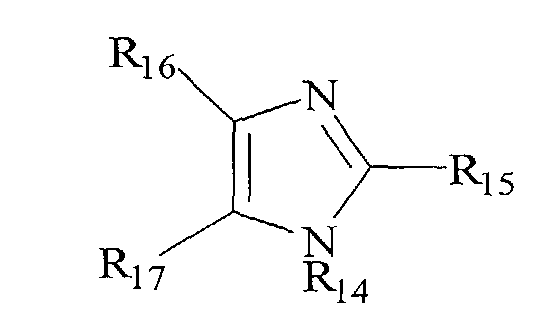
each of R14, R15, R16 and R17 is, independently, hydrogen; C1-10 branched aliphatic hydrocarbon, non-branched aliphatic hydrocarbon, saturated cyclic hydrocarbon, chain-type hydrocarbon containing ring structure, or aliphatic hydrocarbon containing aromatic ring; F; Cl; C1-3 alkoxy group; OH; or OH-containing C1-10 branched aliphatic hydrocarbon, non-branched aliphatic hydrocarbon, saturated cyclic hydrocarbon, chain-type hydrocarbon containing ring structure, or aliphatic hydrocarbon containing aromatic ring.

each of R1 and R2 is, independently, hydrogen; C1-20 saturated non-branched aliphatic hydrocarbon, branched aliphatic hydrocarbon, saturated cyclic hydrocarbon, chain-type hydrocarbon containing ring structure, or aliphatic hydrocarbon containing aromatic ring; hydrocarbon formed by substitution of at least one hydrogen in at least one carbon chain of the above hydrocarbon species with F, Cl or Br; unsubstituted aromatic hydrocarbon; or aromatic hydrocarbon formed by substitution of at least one hydrogen in the aromatic ring with F, Cl, amine, nitrile or alkoxy group.


each of R3, R4, R5, R6 and R7 is, independently, C1-10 saturated non-branched aliphatic hydrocarbon, branched aliphatic hydrocarbon, saturated cyclic hydrocarbon, chain-type hydrocarbon containing ring structure, or aliphatic hydrocarbon containing aromatic ring; m is an integer of 1 to 10; n is an integer of 2 to 5; and each of x and y is, independently, an integer of 1 to 10.
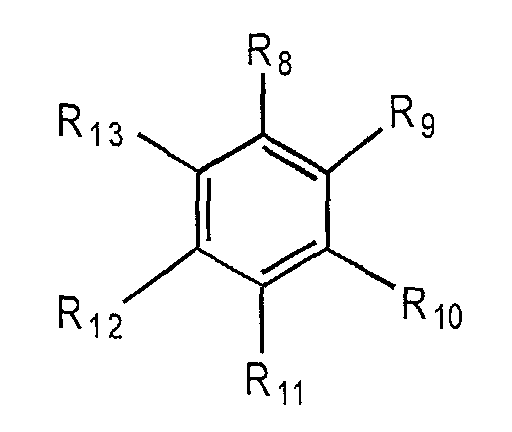
each of R8, R9, R10, R11, R12 and R13 is, independently, hydrogen; C1-4 saturated branched hydrocarbon; saturated non-branched hydrocarbon; F; Cl; or C1-3 alkoxy group.
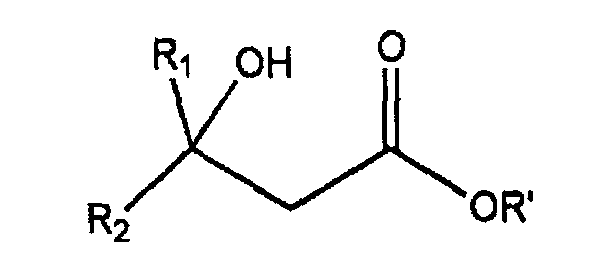

each of R1, R2 and R' has, independently, the same meaning as defined above.
| Exam. | The number of times of catalyst recycling | Conversion rate (%) | Selectivity(mol%) | ||||||
| DMA | AA | HPM | | Dimer | DD | ||||
| 1 | 0 | 83.2 | 0.3 | 9.1 | 74.9 | 2.8 | 11.2 | 0 | |
| 2 | 1 | 78.7 | 0.5 | 6.7 | 76.2 | 3.3 | 9.3 | 0 | |
| 3 | 2 | 80.0 | 0.4 | 6.0 | 72.1 | 3.5 | 12.1 | 0 | |
| 4 | 3 | 79.4 | 0.4 | 5.6 | 69.5 | 3.6 | 13.1 | 0 | |
| 5 | 4 | 80.9 | 0.1 | 5.9 | 65.8 | 3.4 | 15.9 | 0 |
| Comp. Exam. | The number of times of the catalyst recycling | Conversion rate (%) | Selectivity(mol%) | ||||||
| DMA | AA | HPM | | Dimer | DD | ||||
| 1 | 0 | 90 | 0.6 | 7.3 | 77 | 0 | 14 | 0 | |
| 2 | 1 | 79 | 0 | 1.4 | 71 | 2.3 | 4.9 | 0.2 | |
| 3 | 2 | 67 | 0 | 1.1 | 53 | 1.4 | 18 | 3.2 | |
| 4 | 3 | 59 | 0 | 0.9 | 56 | 1.5 | 23 | 5.4 | |
| 5 | 4 | 55 | 0.3 | 0.5 | 55 | 2.0 | 20 | 6.3 | |
| 6 | 5 | 48 | 0.1 | 2.0 | 50 | 1.8 | 21 | 7.8 | |
| Note) Tetraethylene glycol dimethyl ether = 100 ml; Methanol = 100 ml; Co2(CO)8 = 15 mmol; Imidazole = 30 mmol; Ethylene oxide = 1.5 mol; Reaction temperature = 80°C ; CO Pressure = 70 atm; Reaction time = 2 hours; Catalyst recycling time = 1 hour; Vacuum distillation temperature = 50 °C; Recycling temperature = 80 °C; CO/H2=2/1; Pressure = 100 bar |
| Exam. | The number of times of the catalyst recycling | Conversion rate (%) | Selectivity(mol%) | ||||||
| DMA | AA | HPM | | Dimer | DD | ||||
| 6 | 0 | 88.8 | 0 | 2.2 | 79.8 | 0 | 7.7 | 0.3 | |
| 7 | 1 | 86.1 | 0 | 2.0 | 71.1 | 0.8 | 17.8 | 0.3 | |
| 8 | 2 | 90.1 | 0 | 2.5 | 68.2 | 0.3 | 19.9 | 0 | |
| 9 | 3 | 87.5 | 0.1 | 2.3 | 69.1 | 0 | 18.6 | 0 | |
| 10 | 4 | 85.0 | 0 | 2.4 | 70.2 | 0 | 15.3 | 0 |
| Exam. | The number of times of the catalyst recycling | Conversion rate (%) | Selectivity(mol%) | |||||
| DMA1) | AA2) | HPM3) | ME4) | Dimer5) | DD6) | |||
| 11 | 0 | 98.0 | 0 | 5.0 | 91.9 | 0 | 3.1 | 0 |
| 12 | 1 | 89.7 | 0 | 1.9 | 77.3 | 1.0 | 11.2 | 0.9 |
| 13 | 2 | 91.0 | 0 | 2.0 | 79.5 | 0.6 | 12.0 | 0.5 |
Claims (8)
- A process for preparing a 3-hydroxyester, comprising:(a) reacting an epoxide derivative with carbon monoxide and alcohol in a solvent at a temperature of 30∼150°C under a pressure of 50∼3000psig in the presence of a catalyst system comprising a cobalt compound and optionally an effective amount of a promoter to produce a 3-hydroxyester or a derivative thereof;(b) separating the resulting product and the solvent from the cobalt compound and the promoter in a stripping column at a temperature of -30∼200°C in an atmosphere of a stabilizing gas; and(c) recycling a part or all of the separated cobalt compound and promoter to the step (a) and repeating the steps (a) through (c).
- The process according to claim 1, wherein the catalyst system is a cobalt catalyst Co2(CO)8 alone, or the cobalt catalyst Co2(CO)8 in combination with a promoter selected from imidazole, pyridine, pyrrole, pyrazine, pyrazole, pyrimidine, piperidine and derivatives thereof.
- The process according to claim 1 or 2, wherein molar ratio of cobalt atom : promoter in the catalyst system is in the range of 1:0 to 1:100(mol/mol).
- The process according to any of claims 1 to 3, wherein the promoter is an imidazole derivative represented by the following Formula (I):wherein,

each of R14, R15, R16 and R17 is, independently, hydrogen; a C1-10 branched aliphatic hydrocarbon, non-branched aliphatic hydrocarbon, saturated cyclic hydrocarbon, chain-type hydrocarbon containing ring structure, or an aliphatic hydrocarbon containing aromatic ring; F; Cl; C1-3 alkoxy group; OH; or OH-containing C1-10 branched aliphatic hydrocarbon, non-branched aliphatic hydrocarbon, saturated cyclic hydrocarbon, chain-type hydrocarbon containing ring structure, or an aliphatic hydrocarbon containing an aromatic ring. - The process according to claim 4, wherein the promoter is imidazole.
- The process according to any of claims 1 to 5, wherein the epoxide derivative is represented by the following Formula (II):wherein,

each of R1 and R2 is, independently, hydrogen; a C1-20 saturated non-branched aliphatic hydrocarbon, branched aliphatic hydrocarbon, saturated cyclic hydrocarbon, chain-type hydrocarbon containing ring structure, or an aliphatic hydrocarbon containing an aromatic ring; a hydrocarbon formed by substitution of at least one hydrogen in at least one carbon chain of the above hydrocarbon species with F, Cl or Br; unsubstituted aromatic hydrocarbon; or an aromatic hydrocarbon formed by substitution of at least one hydrogen in the aromatic ring with F, Cl, amine, nitrile or alkoxy group. - The process according to any of claims 1 to 6, wherein the solvent is an ether compound, a substituted aromatic compound, an acetate compound, a carbonate compound, or an alcohol.
- The process according to any of claims 1 to 7, wherein the stabilizing gas is carbon monoxide, nitrogen, helium, hydrogen, carbon dioxide, argon, neon, xenon, or a mixture thereof.
Applications Claiming Priority (4)
| Application Number | Priority Date | Filing Date | Title |
|---|---|---|---|
| KR20010063986 | 2001-10-17 | ||
| KR2001063986 | 2001-10-17 | ||
| KR2002060549 | 2002-10-04 | ||
| KR1020020060549A KR20030032844A (en) | 2001-10-17 | 2002-10-04 | Process for preparing 3-hydroxyesters from epoxide derivatives |
Publications (2)
| Publication Number | Publication Date |
|---|---|
| EP1304321A2 true EP1304321A2 (en) | 2003-04-23 |
| EP1304321A3 EP1304321A3 (en) | 2003-07-30 |
Family
ID=26639401
Family Applications (1)
| Application Number | Title | Priority Date | Filing Date |
|---|---|---|---|
| EP02257183A Withdrawn EP1304321A3 (en) | 2001-10-17 | 2002-10-16 | Process for preparing 3-Hydroxyesters from epoxide derivatives |
Country Status (4)
| Country | Link |
|---|---|
| US (1) | US6600065B2 (en) |
| EP (1) | EP1304321A3 (en) |
| JP (1) | JP2003183225A (en) |
| CN (1) | CN1412173A (en) |
Cited By (1)
| Publication number | Priority date | Publication date | Assignee | Title |
|---|---|---|---|---|
| JP2014527456A (en) * | 2011-05-13 | 2014-10-16 | ノボマー, インコーポレイテッド | Catalysts and methods for catalytic carbonylation |
Families Citing this family (3)
| Publication number | Priority date | Publication date | Assignee | Title |
|---|---|---|---|---|
| JP2009514969A (en) | 2005-11-09 | 2009-04-09 | コンビナトアールエックス インコーポレーティッド | Methods, compositions, and kits for treating medical conditions |
| CN102050736A (en) * | 2010-12-10 | 2011-05-11 | 广东石油化工学院 | Method for synthesizing methyl 3-hydroxypropanoate |
| CN117510305B (en) | 2023-11-07 | 2024-07-26 | 中国科学院兰州化学物理研究所 | A method for preparing high-concentration 1,3-propylene glycol with high time-space yield |
Family Cites Families (10)
| Publication number | Priority date | Publication date | Assignee | Title |
|---|---|---|---|---|
| US4973741A (en) | 1989-06-29 | 1990-11-27 | Eastman Kodak Company | Difunctional products from ethylene oxide and synthesis gas |
| US5310948A (en) | 1992-06-29 | 1994-05-10 | Shell Oil Company | Carbonylation of epoxides |
| US5981808A (en) | 1994-09-30 | 1999-11-09 | Shell Oil Company | Cobalt-catalyzed process for preparing 1, 3-propanediol from etylene oxide |
| US5770776A (en) | 1994-09-30 | 1998-06-23 | Shell Oil Company | Process for preparing 1,3-propanediol |
| US5723389A (en) | 1996-10-15 | 1998-03-03 | Shell Oil Company | Process for preparing alkanediols |
| US5731478A (en) | 1996-10-15 | 1998-03-24 | Shell Oil Company | Process for preparing alkanediols |
| US5986145A (en) | 1997-08-22 | 1999-11-16 | Shell Oil Company | Purification of 3-hydroxy-propanal |
| US6191321B1 (en) | 1998-09-30 | 2001-02-20 | Shell Oil Company | Process for preparing 1,3-propanediol from methyl 3-hydroxypropionate |
| KR20010001784A (en) | 1999-06-08 | 2001-01-05 | 장병우 | Operation information display apparatus and method for escalator |
| DE60013758T2 (en) * | 2000-02-03 | 2005-09-29 | Davy Process Technology Ltd. | Process for the preparation of 1,3-alkanediol from an epoxide derivative |
-
2002
- 2002-10-16 EP EP02257183A patent/EP1304321A3/en not_active Withdrawn
- 2002-10-17 US US10/272,380 patent/US6600065B2/en not_active Expired - Fee Related
- 2002-10-17 JP JP2002302618A patent/JP2003183225A/en not_active Withdrawn
- 2002-10-17 CN CN02151459.3A patent/CN1412173A/en active Pending
Cited By (3)
| Publication number | Priority date | Publication date | Assignee | Title |
|---|---|---|---|---|
| JP2014527456A (en) * | 2011-05-13 | 2014-10-16 | ノボマー, インコーポレイテッド | Catalysts and methods for catalytic carbonylation |
| US10221278B2 (en) | 2011-05-13 | 2019-03-05 | Novomer, Inc. | Catalytic carbonylation catalysts and methods |
| US10479861B2 (en) | 2011-05-13 | 2019-11-19 | Novomer, Inc. | Catalytic carbonylation catalysts and methods |
Also Published As
| Publication number | Publication date |
|---|---|
| EP1304321A3 (en) | 2003-07-30 |
| US6600065B2 (en) | 2003-07-29 |
| JP2003183225A (en) | 2003-07-03 |
| CN1412173A (en) | 2003-04-23 |
| US20030109744A1 (en) | 2003-06-12 |
Similar Documents
| Publication | Publication Date | Title |
|---|---|---|
| US4678857A (en) | Process for separation of product resulting from hydroformylation | |
| Nishibayashi et al. | Novel Ruthenium‐and Platinum‐Catalyzed Sequential Reactions: Synthesis of Tri‐and Tetrasubstituted Furans and Pyrroles from Propargylic Alcohols and Ketones | |
| US4263449A (en) | Process for producing alcohols | |
| JPH051769B2 (en) | ||
| US5177278A (en) | Preparation of cyclododecene | |
| SA00201006B1 (en) | A catalytic hydrogenation method in the liquid phase to convert aldehydes into corresponding alcohols. | |
| EP0805139A1 (en) | Hydroformylation method | |
| US6600065B2 (en) | Process for preparing 3-hydroxyesters from epoxide derivatives | |
| EP0155002A2 (en) | Hydroformylation of 3-methyl-3-buten-1-ol and use of such hydroformylation products | |
| EP1122235B1 (en) | Process for preparing 1,3-alkanediol from epoxide derivative | |
| EP0295361B1 (en) | Preparation of pseudoionones | |
| JP3812598B2 (en) | Method for producing polyhydric alcohol | |
| US6521801B2 (en) | Process for preparing 1,3-alkanediol from epoxide derivative | |
| US4556744A (en) | Process for the production of ethanol and/or acetaldehyde by the metal catalysed liquid phase reaction of methanol, carbon monoxide and hydrogen in the presence of a solvent | |
| JP3482371B2 (en) | Method for carbonylation of epoxide derivatives | |
| EP0040400B1 (en) | Process for preparing the mono-methallyl-ether of pyrocatechin | |
| KR100440872B1 (en) | Process for Preparing 1,3-alkanediol from Epoxide Derivatives | |
| US20020062047A1 (en) | Process for producing 2,4,5,-trialkylbenzaldehydes | |
| KR20230065738A (en) | Method for preparing isobutenol | |
| KR20020064670A (en) | Production of dimethylolcarboxylic acid | |
| JP3756537B2 (en) | Dimethyldecandial and process for producing the same | |
| EP0567263B1 (en) | Process for the preparation of 2-oxytetrahydrofurans | |
| KR20030032844A (en) | Process for preparing 3-hydroxyesters from epoxide derivatives | |
| EP0118258B1 (en) | Catalytic process for the preparation of ethylene glycol | |
| EP0292564B1 (en) | Process for preparing alkoxyalkyl-substituted phenols |
Legal Events
| Date | Code | Title | Description |
|---|---|---|---|
| PUAI | Public reference made under article 153(3) epc to a published international application that has entered the european phase |
Free format text: ORIGINAL CODE: 0009012 |
|
| AK | Designated contracting states |
Designated state(s): AT BE BG CH CY CZ DE DK EE ES FI FR GB GR IE IT LI LU MC NL PT SE SK TR |
|
| AX | Request for extension of the european patent |
Extension state: AL LT LV MK RO SI |
|
| PUAL | Search report despatched |
Free format text: ORIGINAL CODE: 0009013 |
|
| AK | Designated contracting states |
Designated state(s): AT BE BG CH CY CZ DE DK EE ES FI FR GB GR IE IT LI LU MC NL PT SE SK TR |
|
| AX | Request for extension of the european patent |
Extension state: AL LT LV MK RO SI |
|
| RIC1 | Information provided on ipc code assigned before grant |
Ipc: 7C 07C 67/37 B Ipc: 7C 07C 69/675 B Ipc: 7C 07C 67/26 A |
|
| AKX | Designation fees paid | ||
| REG | Reference to a national code |
Ref country code: DE Ref legal event code: 8566 |
|
| STAA | Information on the status of an ep patent application or granted ep patent |
Free format text: STATUS: THE APPLICATION IS DEEMED TO BE WITHDRAWN |
|
| 18D | Application deemed to be withdrawn |
Effective date: 20040203 |