EP1304045A1 - Mayonnaise-like foods and process for producing the same - Google Patents
Mayonnaise-like foods and process for producing the same Download PDFInfo
- Publication number
- EP1304045A1 EP1304045A1 EP00976380A EP00976380A EP1304045A1 EP 1304045 A1 EP1304045 A1 EP 1304045A1 EP 00976380 A EP00976380 A EP 00976380A EP 00976380 A EP00976380 A EP 00976380A EP 1304045 A1 EP1304045 A1 EP 1304045A1
- Authority
- EP
- European Patent Office
- Prior art keywords
- bisphenol
- endocrine
- amount
- bacteria
- disrupting chemicals
- Prior art date
- Legal status (The legal status is an assumption and is not a legal conclusion. Google has not performed a legal analysis and makes no representation as to the accuracy of the status listed.)
- Granted
Links
Images








Classifications
-
- A—HUMAN NECESSITIES
- A23—FOODS OR FOODSTUFFS; TREATMENT THEREOF, NOT COVERED BY OTHER CLASSES
- A23C—DAIRY PRODUCTS, e.g. MILK, BUTTER OR CHEESE; MILK OR CHEESE SUBSTITUTES; PREPARATION THEREOF
- A23C9/00—Milk preparations; Milk powder or milk powder preparations
- A23C9/12—Fermented milk preparations; Treatment using microorganisms or enzymes
- A23C9/123—Fermented milk preparations; Treatment using microorganisms or enzymes using only microorganisms of the genus lactobacteriaceae; Yoghurt
- A23C9/1234—Fermented milk preparations; Treatment using microorganisms or enzymes using only microorganisms of the genus lactobacteriaceae; Yoghurt characterised by using a Lactobacillus sp. other than Lactobacillus Bulgaricus, including Bificlobacterium sp.
-
- A—HUMAN NECESSITIES
- A23—FOODS OR FOODSTUFFS; TREATMENT THEREOF, NOT COVERED BY OTHER CLASSES
- A23L—FOODS, FOODSTUFFS OR NON-ALCOHOLIC BEVERAGES, NOT OTHERWISE PROVIDED FOR; PREPARATION OR TREATMENT THEREOF
- A23L11/00—Pulses, i.e. fruits of leguminous plants, for production of food; Products from legumes; Preparation or treatment thereof
- A23L11/40—Pulse curds
- A23L11/45—Soy bean curds, e.g. tofu
-
- A—HUMAN NECESSITIES
- A23—FOODS OR FOODSTUFFS; TREATMENT THEREOF, NOT COVERED BY OTHER CLASSES
- A23L—FOODS, FOODSTUFFS OR NON-ALCOHOLIC BEVERAGES, NOT OTHERWISE PROVIDED FOR; PREPARATION OR TREATMENT THEREOF
- A23L2/00—Non-alcoholic beverages; Dry compositions or concentrates therefor; Preparation or treatment thereof
- A23L2/52—Adding ingredients
-
- A—HUMAN NECESSITIES
- A23—FOODS OR FOODSTUFFS; TREATMENT THEREOF, NOT COVERED BY OTHER CLASSES
- A23L—FOODS, FOODSTUFFS OR NON-ALCOHOLIC BEVERAGES, NOT OTHERWISE PROVIDED FOR; PREPARATION OR TREATMENT THEREOF
- A23L27/00—Spices; Flavouring agents or condiments; Artificial sweetening agents; Table salts; Dietetic salt substitutes; Preparation or treatment thereof
- A23L27/60—Salad dressings; Mayonnaise; Ketchup
-
- A—HUMAN NECESSITIES
- A23—FOODS OR FOODSTUFFS; TREATMENT THEREOF, NOT COVERED BY OTHER CLASSES
- A23L—FOODS, FOODSTUFFS OR NON-ALCOHOLIC BEVERAGES, NOT OTHERWISE PROVIDED FOR; PREPARATION OR TREATMENT THEREOF
- A23L33/00—Modifying nutritive qualities of foods; Dietetic products; Preparation or treatment thereof
- A23L33/10—Modifying nutritive qualities of foods; Dietetic products; Preparation or treatment thereof using additives
- A23L33/135—Bacteria or derivatives thereof, e.g. probiotics
Definitions
- the present invention relates to an adsorbent for endocrine-disrupting chemicals which can adsorb and eliminate orally taken endocrine-disrupting chemicals and, more particularly, to an adsorbent for endocrine-disrupting chemicals and food containing the same, which not only can adsorb endocrine-disrupting chemicals in the enteric lumen of human or animals to suppress in vivo absorption of such chemicals, but also can accelerate excretion of such in vivo -absorbed chemicals.
- Endocrine-disrupting chemicals are noted as materials which cause a serious social problem since organotin compounds, which have been coated onto the bottoms of ships for preventing attachment of shellfish over a long time, were reported to cause abnormalities in the generative organs of shellfish (Gibbs et al., J. Mar. Biol. Assoc. UK, 66, 767, 1986).
- the endocrine system of organisms is a system essential for controlling the evolution of individuals, development of generative organs, and homeostatic maintenance of organs by the action of various hormones.
- Endocrine-disrupting chemicals are substances which disrupt the balance of the endocrine system and cause abnormal growth and reproduction of animals living in lakes and swamps polluted by domestic waste water.
- Bisphenol A is a chemical compound having the following formula (II).
- the compound is mainly used as a raw material for polycarbonate resin and epoxy resin, as a raw material for other resins such as phenol resin, plastic polyester, polysulfone, acrylic resin, etc., as a stabilizer for polyvinyl chloride, and as an antioxidant.
- Production of bisphenol A in Japan amounted to about 250,000 tons in 1996, of which 40,000 tons were used for food applications.
- polycarbonate resin made from bisphenol A excels in heat resistance and impact resistance, the resin is used in instruments used at high temperatures, such as coffee drippers, tableware for infants and school children, feeding bottles, and the like.
- Polycarbonate products not only contain unreacted bisphenol A, but also easily release bisphenol A from the polymer at high temperature.
- Epoxy resin contains bisphenol A as a raw material and vinyl chloride resin also contains bisphenol A as a stabilizer. The possibility that the bisphenol A remaining in the coating of the steel or aluminum cans may be dissolved from the coating into food has been pointed out (Brotons et. al, Environ. Health Perspect., 103, 608 (1995)).
- bisphenol A is included in polycarbonate plastic used as a dental sealant when treating cavities or as a tooth coating agent applied to children (Keith et al. "Environmental Endocrine Disruptors” Willey-Inteuscience, New York, p1232 (1997)). Risk of bisphenol A elusion from such a dental material when polymerization is imperfect or when heat is applied during high-pressure steam sterilization has been pointedout (Krishnan et al., Endocrinology, 132, 2279 (1993)).
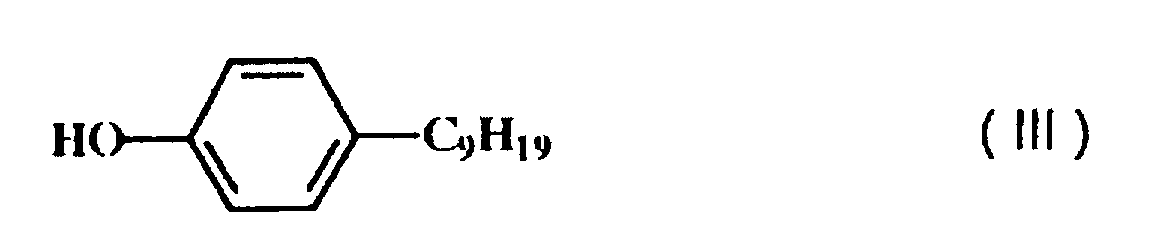
- 4-Nonylphenol of the following formula (III) is used as a nonionic surfactant in the form of nonylphenol ethoxylate.
- the annual production amounts to about 20,000 tons. Due to low foaming properties, nonylphenol ethoxylate is used mainly as an industrial detergent or dispersant in the textile industry, paper industry, metal industry, and pesticide industry in Japan.' Sewage treatment effluent containing 4-nonylphenol flowing into rivers and ocean pollutes fish and other animals.
- Endocrine-disrupting chemicals such as bisphenol A, 4-nonylphenol, and atrazine in everyday life. Therefore, urgent development of a material for preventing humans from being polluted by these chemicals and a method of removing these chemicals is desired.
- Endocrine-disrupting chemicals orally taken and absorbed from the intestinal tract reach all body organs through the blood flow and, as a result, may induce various adverse effects such as imbalance in the endocrine system.
- a substance that can adsorb endocrine-disrupting chemicals in the intestinal tract may be used for suppressing in vivo absorption of endocrine-disrupting chemicals and accelerating excretion of the endocrine-disrupting chemicals.
- the substance can protect biological organs from being disrupted by the endocrine-disrupting chemicals according to the above mechanism.
- Morita et al. reported that rice-bran fiber, spinach fiber, chlorella, and spirulina accelerate excretion of dioxines and some polychlorinated biphenyls (PCB), which are endocrine-disrupting chemicals (Morita et al., Jpn. J. Toxicol. Environ. Health, 43, 42-47 (1997)).
- PCB polychlorinated biphenyls
- the present invention has been achieved in view of this situation and has an object of providing a medicine which is taken orally in daily life together with endocrine-disrupting chemicals such as bisphenol A, 4-nonylphenol, and atrazine dissolved from tableware or food polluted by such endocrine-disrupting chemicals, and can suppress in vivo absorption of endocrine-disrupting chemicals and accelerate excretion of such chemicals once-absorbed.
- endocrine-disrupting chemicals such as bisphenol A, 4-nonylphenol, and atrazine dissolved from tableware or food polluted by such endocrine-disrupting chemicals
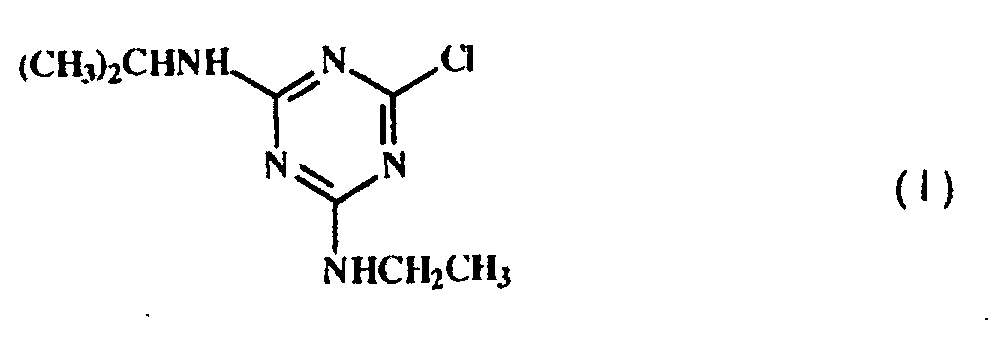
- the inventor of the present invention has conducted extensive studies to discover a substance which can adsorb endocrine-disrupting chemicals, particularly chemical compounds such as bisphenols, alkylphenols, and triazines. As a result, the inventor has found that cells of various enterobacteria or the constituents thereof can effectively adsorb these substances. This finding has led to the completion of the present invention.
- the present invention provides an adsorbent for endocrine-disrupting chemicals comprising live bacteria or dead bacteria of the enterobacteria or a constituent thereof as an active component.
- the present invention also provides food comprising the above adsorbent for endocrine-disrupting chemicals.
- the present invention further provides a method of suppressing absorption of endocrine-disrupting chemicals by the human body or a method of accelerating excretion of endocrine-disrupting chemicals from the human body, comprising administering the above adsorbent for endocrine-disrupting chemicals to humans.
- Enterobacteria used as the adsorbent for endocrine-disrupting chemicals of the present invention are microorganisms known as bacterial strains used for the production of food (lactic acid bacteria beverage, yogurt, etc.) and are extremely safe for humans.
- Enterobacteria of the present invention include not only bacteria present in the intestine, but also bacteria which are taken in food and drinks, and stay in the intestine for a long time.
- enterobacteria microorganisms belonging to Genuses Lactobacillus, Bifidobacterium, Lactococcus, Streptococcus, Enterococcus, Weissella, Leuconostoc, Tetragenococcus, Propionibacterium, Bacteroides, Clostridium, Eubacterium, Prevotella, Pediococcus, and Megasphaera can be given.
- microorganisms belonging to the above genuses are readily available. Specific examples of particularly preferable microorganisms are as follows.
- Live bacteria of enterobacteria of the present invention can be obtained by culturing these bacteria in a composite culture medium containing yeast extract and polypeptone.
- the composition of a preferable composite culture medium is given below.
- the above-described microorganisms may be used either individually or in combination of two or more as the enterobacteria of the present invention. Two or more microorganisms belonging to different species or genuses may be used in combination.
- Heated cells (dead bacteria) of the above enterobacteria can be obtained, for example, by heating the above live bacteria at a temperature between 80-120°C for about 15 to 30 minutes.
- the constituent of enterobacteria of the present invention can be obtained by a conventional method.
- a constituent may be a product obtained by processing the enterobacteria by a suitable means not adversely affecting the effect of the present invention, and may include protoplast fractions obtained by removing cell walls by treating the above cells with a cell wall digesting enzyme, soluble fractions obtained by treating the above cells with a cell wall digesting enzyme, cytoplasm membrane fractions obtained by treating the protoplast fractions with an organic solvent, pulverized products of the above cells, cell wall fractions obtained by treating the pulverized products of the above cells with a nuclease and proteinase.
- enterobacteria cells Live bacteria, heat treated bacteria (dead bacteria), and constituents of the enterobacteria thus obtained (hereinafter referred to as “enterobacteria cells”) are used as is, or in combination with known pharmaceutically acceptable carriers, as the adsorbent for endocrine-disrupting chemicals of the present invention.
- the adsorbent for endocrine-disrupting chemicals of the present invention may be formulated into a preparation appropriate for providing this amount of dosage.
- the adsorbent for endocrine-disrupting chemicals of the present invention may be incorporated into various food and beverages.
- various food and drinks fermented milk, fruit juice, soup, rice cracker, and cookie can be given.
- fermented milk, fruit juice, soup, rice cracker, and cookie can be given.
- the amount of adsorbent for endocrine-disrupting chemicals to be added to these foods and drinks such an amount should be sufficient for a person to ultimately receive the above-defined dosage.
- the adsorbent for endocrine-disrupting chemicals and food and drinks containing the adsorbent of the present invention thus obtained can adsorb various endocrine-disrupting chemicals, for example, bisphenols such as bisphenol A, alkylphenols such as 4-nonylphenol, and triazines such as atrazine, thereby preventing these chemicals from being absorbed in vivo, and accelerating excretion of these chemicals.
- the adsorbent for endocrine-disrupting chemicals thus can protect the endocrine system from being disrupted by these chemicals.
- One platinum loop of cells stored in a dispersion medium was inoculated into 10 ml of the above composite culture medium in a test tube (15 ml) and incubated at 37°C. After 24 hours, the content of one test tube was placed in a conical flask (500 ml) containing 240 ml of the same medium, and the mixture was allowed to stand for 16 hours at 37°C. After culturing, the culture broth was separated into cells and supernatant liquid by centrifugation with cooling under the following conditions.
- the cells were washed twice with a phosphate buffer (a mixture of a 20 mM aqueous solution of potassium dihydrogenphosphate and a 20 mM aqueous solution of dipotassium hydrogenphosphate, adjusted to pH 7.0).
- a phosphate buffer a mixture of a 20 mM aqueous solution of potassium dihydrogenphosphate and a 20 mM aqueous solution of dipotassium hydrogenphosphate, adjusted to pH 7.0.
- the washed cells or heat treated bacteria obtained by treating the cells at 80°C for 30 minutes were suspended in a phosphate buffer for use in the adsorption test.
- Bisphenol B of the following chemical formula (IV) was used as an internal standard substance.
- the amount of bisphenol A adsorbed by microorganisms was calculated from the amount of bisphenol A not adsorbed by microorganisms determined in (c) above according to the following equation.
- Y X - (SA x CB/SB x CA) x X
- the amount of 4-nonylphenol adsorbed by microorganisms was calculated from the amount of 4-nonylphenol not absorbed by microorganisms determined in (c) above according to the following equation.
- Y X - (SA x CB/SB x CA) x X
- the amount of atrazine adsorbed by microorganisms was calculated from the amount of atrazine not absorbed by microorganisms determined in (c) above according to the following equation.
- Y X - (S/C) x X
- Sample diet compositions shown in Table 2 were prepared according to AIN-76 composition (Report of the American Institute of Nutrition Ad Hoc Committee on Standards for Nutritional Studies; J. Nutr., 107, 1340, 1977). Four experimental groups, each consisting of 8 animals, were used. Diet containing lyophilized live bacteria in the amount of 2.5%, 5%, or 10% was fed to each of the three groups, and diet containing no bacteria was given to the remaining one group (a control group). Each diet contained 15% of skim milk powder which was used for the protective agent when lyophilizing the bacteria. The diet compositions are shown in Table 2.
- Fisher 344 female rats (age: 10 weeks, supplied by Clea Japan, Inc.) were bred to be acclimated (MF diet manufactured by Oriental Yeast Co., Ltd. was freely given.). After one week, the rats were classified into seven groups according to the weight. The test diet was administered for 12 days during which the animals were provided as much diet and water as they like. A cycle of 12-hour light condition and 12-hour dark condition at room temperature of 25°C and a relative humidity of 55% was applied to breeding.
- test sample diet containing 100 ⁇ g of bisphenol A was administered.
- the total amount of faeces was collected and lyophilized for seven days after start of bisphenol A administration.
- Bisphenol A was extracted from the feces according to the method described in MANUAL FOR INVESTIGATION OF ENDOCRINE DISRUPTING CHEMICALS IN SEWERAGE (Japan Institute of Wastewater Engineering Technology) and ANALYSIS OF ENDOCRINE DISRUPTING CHEMICALS (ENVIRONMENT HORMONES) (III) (GL Sciences, Inc.).
- the solution was loaded onto a silica gel column (40 mm x 12 mm) and 10 ml of n-hexane was fed, while discharging the eluate. Next, 10 ml of acetone was fed while collecting the eluate. The resulting eluate was dried to solidify, 0.26 ml of dichloromethane was added to the residue to redissolve the bisphenol A.
- BSTFA was added to convert the phenolic group into a trimethylsilyl group.
- the mixture was allowed to stand for one hour at room temperature.
- 0.1 ml of a solution of phenanthrene-d10 (the internal standard substance) in dichloromethane (10 ⁇ g/ml) was added and bisphenol A was quantitatively analyzed by gas chromatography/mass spectrometer (GC/MS) under the following conditions.
- the GC/MS was measured in the same manner as in (2) (d) above.
- the detected amount of bisphenol A was determined using a calibration curve from the ratio of the peak area of the trimethylsilylation product of bisphenol A and that of the bisphenol A-d16 determined by the GC/MS measurement.
- the cecum was collected from the rats to which the live bacteria were administered for 12 days according to (a) above under pentobarbital anesthesia, and stored in ice.
- the number of live bacteria in the cecum contents was measured according to the method of Yuki et al. (Norikatsu YUKI, Yukiko SAKAITANI, Yoko TAGAMI, and Masami MOROTOMI, Digestive Tract Remaining Properties Of Lactobacillus casei Strain Shirota In Fermented Milk, Journal of Nutrition Food 2, 1-6, 1999) or the method of Asahara et al.
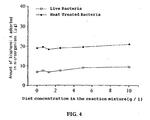
- Live bacteria and heat treated bacteria of Lactobacillus casei YIT 9029 were obtained according the method of sample preparation described in (1) (a) above. The relation between the microorganism concentration and the amount of bisphenol A adsorbed was investigated using these samples. Test samples of live bacteria and heat treated bacteria of Lactobacillus casei YIT 9029 with various concentrations (0, 0.625, 1.25, 2.5, 5, and 10 g/l) were prepared. 40 ⁇ g of bisphenol A was added to these samples and reacted, following which the amount of bisphenol A remaining in the supernatant liquid was analyzed by gas chromatography to determine the amount of bisphenol A adsorbed. The results are shown in Figure 1.
- the foods and drinks manufactured using these microorganisms does not necessarily require to include live bacteria, and such foods'an'd drinks may be manufactured under wide spectrum of conditions in terms of temperature, pH, and the like.
- the amount of bisphenol A adsorbed in the Lactobacillus casei YIT 9029 increased according to the increase in the concentration of the microorganism in the reaction solution.
- the amount of bisphenol A remaining in the supernatant of the reaction solution after centrifugation decreased according to the increase in the concentration of the microorganism.
- the total sum of the adsorbed bisphenol A and the bisphenol A remaining in the supernatant was equivalent to the amount of bisphenol A (20 ⁇ g) added to the reaction solution.
- the amount of bisphenol A adsorbed in Lactobacillus casei YIT 9029 increased in accordance with the increase in the cell concentration in the reaction solution in a certain range of diet concentration.
- the amount of bisphenol A adsorbed by Lactobacillus casei YIT 9029 cells of a certain concentration range was not affected by the diet concentration in the reaction solution.
- the relation between the pH and and the amount of bisphenol A adsorbed was investigated using live bacteria and heat treated bacteria of Lactobacillus casei YIT 9029 as the microorganism. 20 mg of Lactobacillus casei YIT 9029 cells and 40 ⁇ g of bisphenol A dissolved in 4 ml of a buffer solution was heated to 37°C, and the amount of adsorption was measured after 60 minutes. Sample solutions with a pH of 2-9 were prepared. Buffer solutions with a pH between 2 and 4 were prepared by adding hydrochloric acid to a 20 mM KH 2 PO 4 aqueous solution.
- Buffer solutions with a pH between 5 and 8 were prepared by mixing a 20 mM KH 2 PO 4 aqueous solution and a 20 mM K 2 HPO 4 aqueous solution, and a buffer solution with a pH of 9 was prepared by using a 20 mM K 2 HPO 4 aqueous solution. The results are shown in Figure 5.
- the relation between the reaction time and the amount of bisphenol A adsorbed was investigated using live bacteria and heat treated bacteria of Lactobacillus casei YIT 9029 as the microorganism. 20 mg of Lactobacillus casei YIT 9029 cells and 40 ⁇ g of bisphenol A suspended in 4 ml of a buffer solution was heated to 37°C, and the amount of adsorption was measured after 1 minute, 2 minutes, 5 minutes, 10 minutes, 30 minutes, 60 minutes, and 1440 minutes (24 hours) . The results are shown in Figure 6.
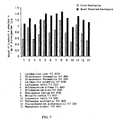
- all microorganisms of the present invention adsorbed bisphenol A, although the amount of adsorption differed according to the type of microorganisms. Both live bacteria and dead bacteria of any microorganisms adsorbed a larger amount of bisphenol A.
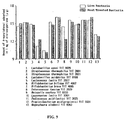
- all microorganisms of the present invention adsorbed 4-nonylphenol, although the amount of adsorption differed according to the type of microorganisms. Both live bacteria and dead bacteria of any microorganisms adsorbed a larger amount of 4-nonylphenol.
- all microorganisms of the present invention adsorbed atrazine, although the amount of adsorption differed according to the type of microorganisms. Both live bacteria and dead bacteria of any microorganisms adsorbed a larger amount of atrazine.
- Lactobacillus casei YIT 9029 or Bifidobacterium breve YIT 4065 were used as test samples.
- Animal diets prepared by adding lyophilized bacteria of Lactobacillus casei YIT 9029 or Bifidobacterium breve YIT 4065 to final concentrations of 0%, 2.5%, 5%, and 10% were used as test samples.
- diet prepared by adding food cellulose (manufactured by Toyo Roshi Co., Ltd.) to a final concentration of 10% was used.
- the animals were fasted over night five days after start of feeding the test diet, and 10 g of a test sample diet containing 100 ⁇ g of bisphenol A was administered.
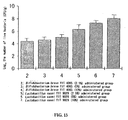
- the total amount of feces was collected for seven days after start of bisphenol A administration to measure the weight of feces, the amount of bisphenol A in the feces, the food consumption, and the body weight increase. In addition, the number of live bacteria in the cecum contents of rats was measured on the seventh day after start of sample diet administration.
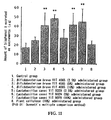
- the amount of bisphenol A excreted in feces by rats in the control group during seven days was 17 ⁇ g, only 17% of bisphenol A administered (100 ⁇ g).
- the amount of bisphenol A excreted in feces increased according to the increase in the amount of bacteria administered. It was confirmed that 45-48% of bisphenol A administered was excreted when the diet containing 10% of these bacteria was fed to the animals. There were no difference in the body weight and the amount of diet among the tested groups during the test period.
- the concentration of bisphenol A excreted in feces by rats varied among the groups, and all groups to which the bacteria were administered exhibited a significant increase as compared with the control group and the group to which plant cellulose was administered.
- Lactobacillus casei YIT 9029 and Bifidobacterium breve YIT 4065 can suppress absorption of bisphenol A taken together with diet from the intestinal tract and accelerate the excretion in feces.
- the results also indicate that the increase in the excretion of bisphenol A in feces by the administration of bacteria is caused not only by the increase of feces excretion due to administration of bacteria, but also by the increased adsorption of the substance by the bacteria.
- composition with the following formulation was made into tablets.
- Component Amount (wt%) Dried enterobacterial cells 1) 10 Plat extract powder 30 Royal jelly powder 5 Collagen powder 5 Lactose 25 Corn starch 20 Hydroxypropylcellulose 4 Magnesium stearate 1 1) Prepared by freeze-drying the live bacteria or heat treated bacteria of Lactobacillus casei YIT 9029 obtained in Example 1.
- a health promotion drink with the following formulation was prepared.
- (Component) Amount (wt%) Dried enterobacterial cells 1) 5 Honey 15 Citric acid 0.1 dl -malic acid 0.1 Plat extract liquid (cinnamon) 20 D-Sorbitol solution (70%) 10 Sodium benzoate 0.05 Perfume Appropriate amount Purified water Balance to make the total 100 1) Prepared by freeze-drying the live bacteria or heat treated bacteria of Lactobacillus casei YIT 9029 obtained in Example 1.
- Fermented milk was prepared as follows.
- Fermented milk was prepared by sterilizing a mixture of 10% skim milk powder and 5% glucose, and inoculating an enterobacterium.
- Eight types of fermented milk were prepared by using any one of the following enterobacteria: Lactobacillus casei YIT 9029, Lactobacillus acidphilus YIT 0168, Bifidobacterium breve YIT4065, Bifidobacterium bifidum YIT4007, lactoccocus lactis YIT2027, Streptoccocus thermophilus YIT2001, Streptococcus thermophilus YIT2021, and Enteroccocus faecium YIT2039.
- the amount of cells contained in the resulting fermented milks was between 0.1 g/l and 10 g/l (the number of live bacteria: about 4 x 10 8 to 4 x 10 10 cells/ml). All of the fermented milks had a good aroma and were highly tasty.
- Ten types of fermented milk were prepared by sterilizing a mixture of 10% skim milk powder and 5% glucose, and inoculating the following combinations of enterobacteria.
- the total amount of cells contained in the resulting fermented milks was between 0.1 g/l and 10 g/l (the number of live bacteria: about 4 x 10 8 to 4 x 10 10 cells/ml). All these fermented milks had a good aroma and were highly tasty.
- live bacteria or dead bacteria of enterobacteria or the constituents thereof can adsorb endocrine-disrupting chemicals which can adsorb and eliminate orally taken endocrine-disrupting chemicals such as bisphenol A, 4-nonylphenol, and atrazine in the intestinal tract of humans or animals, and not only can suppress in vivo absorption of such chemicals, but also accelerate excretion of such in vivo -absorbed chemicals.
- the cells and the constituents are extremely useful for preventing human organs from being polluted with endocrine-disrupting chemicals.
- the enterobacteria have been used for the production of foods such as lactic acid bacteria beverage, yogurt, and the like, and are extremely safe microorganisms free from pathogenicity.
- the adsorbent for endocrine-disrupting chemicals containing the above cells of enterobacteria of the present invention not only can be used as a medicine or oral administration, but also added to foods and taken in daily life.
- the adsorbent of the present invention is very useful for protecting humans from being polluted with endocrine-disrupting chemicals and maintaining health of humans.
Landscapes
- Life Sciences & Earth Sciences (AREA)
- Chemical & Material Sciences (AREA)
- Engineering & Computer Science (AREA)
- Food Science & Technology (AREA)
- Polymers & Plastics (AREA)
- Health & Medical Sciences (AREA)
- Nutrition Science (AREA)
- Mycology (AREA)
- Microbiology (AREA)
- Agronomy & Crop Science (AREA)
- Botany (AREA)
- Seasonings (AREA)
- Medicines Containing Material From Animals Or Micro-Organisms (AREA)
- Beans For Foods Or Fodder (AREA)
Abstract
Description

- Lactobacillus casei YIT 9029 FERM BP-1366 (May 1,1981)
- Lactobacillus acidphilus YIT 0168 FERM BP-7536(December 16,1981)
-
Biridobacterium breve YIT 4065 FERM BP-6223(February 29,1996) - Bifidobacterium bifidum YIT 4007 FERM BP-791(May 1,1981)
- Lactococcus lactis YIT 2027 FERM BP-6224(February 10,1997)
- Streptococcus thermophilus YIT 2001 FERM BP-7538(January 31,2001)
- Streptococcus thermophilus YIT 2021 FERM BP-7537(November 1,1996)
- Enterococcus faecium YIT 2039
- Weissella confusa YIT 0233
- Leuconostoc lactis YIT 3001
- Pediococcus acidilactici YIT 3025
- Propionibacterium acidipropionici YIT 3501
- Megasphaera elsdenii YIT 6063
| (Composite culture medium composition) | |
| Modified GAM broth (manufactured by NISSUI PHARMACEUTICAL CO., LTD.) | 41.7 g |
| D-(+)-glucose (manufactured by Wako Pure Chemical Industries Co., Ltd.) | 10.0 g |
| Polyoxyethylene (20) Sorbitan monooleate (manufactured by Wako Pure Chemical Industries Co., Ltd.) | 1.0 g |
| Deionized water | 1.0 l (pH 7.3) |

| Object of measurement | Measured ions |
| Bisphenol A | 357, 372 |
| Bisphenol A-d16 | 368, 371, 386 |
| Phenanthrene A-d10 | 188 |
| Component | Control Group | Bacteria administered group | ||
| 2.5% | 5% | 10% | ||
| Casein | 12.5 | 12.1 | 11.8 | 11.0 |
| DL-methionine | 0.3 | 0.3 | 0.3 | 0.3 |
| a-Cornstarch | 15.0 | 14.6 | 14.1 | 13.2 |
| Sucrose | 42.5 | 41.3 | 40.0 | 37.5 |
| Cellulose fiber | 5.0 | 4.9 | 4.7 | 4.4 |
| Corn oil | 5.0 | 4.9 | 4.7 | 4.4 |
| AIN-76 mineral added | 3.5 | 3.4 | 3.3 | 3.1 |
| AIN-76 vitamin added | 1.0 | 1.0 | 0.9 | 0.9 |
| Choline bitartrate | 0.2 | 0.2 | 0.2 | 0.2 |
| Defatted skim milk | 15.0 | 15.0 | 15.0 | 15.0 |
| Lyophilized live bacteria | 0.0 | 2.5 | 5.0 | 10.0 |
| (Component) | Amount (wt%) |
| Dried | 10 |
| | 30 |
| | 5 |
| | 5 |
| | 25 |
| | 20 |
| Hydroxypropylcellulose | 4 |
| | 1 |
| 1) Prepared by freeze-drying the live bacteria or heat treated bacteria of Lactobacillus casei YIT 9029 obtained in Example 1. |
| (Component) | Amount (wt%) |
| Dried | 5 |
| | 15 |
| Citric acid | 0.1 |
| dl-malic acid | 0.1 |
| Plat extract liquid (cinnamon) | 20 |
| D-Sorbitol solution (70%) | 10 |
| Sodium benzoate | 0.05 |
| Perfume | Appropriate amount |
| Purified water | Balance to make the total 100 |
| 1) Prepared by freeze-drying the live bacteria or heat treated bacteria of Lactobacillus casei YIT 9029 obtained in Example 1. |
| (Component) | Amount (wt%) |
| Dried | 5 |
| Liquid glucose | 33 |
| | 60 |
| Perfume | Appropriate amount |
| sourness additive | Appropriate amount |
| 1) Prepared by freeze-drying the live bacteria or heat treated bacteria of Lactobacillus casei YIT 9029 obtained in Example 1. |
- Combination 1:
- Lactobacillus acidphilus YIT0168 and Lactobacillus casei YIT9029
- Combination 2:
- Bifidobacterium breve YIT4065 and Lactobacillus casei YIT9029
- Combination 3:
- Bifidobacterium bifidum YIT4007 and Lactobacillus casei YIT9029
- Combination 4:
- Lactoccocus lactis YIT2027 and Lactobacillus casei YIT9029
- Combination 5:
- Streptococcus thermophilus YIT2001 and Lactobacillus casei YIT9029
- Combination 6:
- Streptoccocus thermophilus YIT2021 and Lactobacillus casei YIT9029
- Combination 7:
- Enteroccocus faecium YIT2039 and Lactobacillus casei YIT9029
- Combination 8:
- Bifidobacterium breve YIT4065, and Bifidobacterium bifidum YIT4007, and Lactobacillus acidphilus YIT0168
- Combination 9:
- Streptococcus thermophilus YIT2021, Bifidobacterium breve YIT4065, and Lactobacillus acidphilus YIT0168
- Combination 10:
- Streptococcus thermophilus YIT2001, Bifidobacterium breve YIT4065, and Lactoccocus lactis YIT2027
Claims (9)
- An adsorbent for endocrine-disrupting chemicals comprising live bacteria or dead bacteria of enterobacteria or a constituent thereof as an active component.
- The adsorbent for endocrine-disrupting chemicals according to claim 1, wherein the endocrine-disrupting chemicals are bisphenols, alkylphenols, or triazines.
- The adsorbent for endocrine-disrupting chemicals according to claim 1, wherein the enterobacteria is one or more microorganisms selected from the group consisting of enterobacteria belonging to genuses Lactobacillus, Bifidobacterium, Lactococcus, Streptococcus, Enterococcus, Weissella, Leuconostoc, Tetragenococcus, Propionibacterium, Bacteroides, Clostridium, Prevotella and Eubacterium.
- The adsorbent for endocrine-disrupting chemicals according to claim 1 or claim 3, wherein the enterobacteria has an effect of suppressing absorption of endocrine-disrupting chemicals in the intestinal tract of humans and animals.
- The adsorbent for endocrine-disrupting chemicals according to claim 1 or claim 3, wherein the enterobacteria has an effect of accelerating excretion of endocrine-disrupting chemicals.
- The adsorbent for endocrine-disrupting chemicals according to any one of claims 1 to 5, wherein heat treated bacteria of the enterobacteria are used.
- Food comprising the adsorbent for endocrine-disrupting chemicals according to any one of claims 1 to 6.
- A method of suppressing in vivo absorption of endocrine-disrupting chemicals by humans or animals comprising administering an adsorbent for endocrine-disrupting chemicals to humans or animals.
- A method of accelerating excretion of endocrine-disrupting chemicals from the human or animals body, comprising administering an adsorbent for endocrine-disrupting chemicals to the humans or animals.
Applications Claiming Priority (5)
| Application Number | Priority Date | Filing Date | Title |
|---|---|---|---|
| JP2000207730A JP3661123B2 (en) | 2000-07-10 | 2000-07-10 | Mayonnaise-like food using concentrated tofu and method for producing the same |
| JP2000207730 | 2000-07-10 | ||
| JP2000222894A JP3661124B2 (en) | 2000-07-24 | 2000-07-24 | Mayonnaise-like food using concentrated soymilk and method for producing the same |
| JP2000222894 | 2000-07-24 | ||
| PCT/JP2000/008189 WO2002003814A1 (en) | 2000-07-10 | 2000-11-20 | Mayonnaise-like foods and process for producing the same |
Publications (4)
| Publication Number | Publication Date |
|---|---|
| EP1304045A1 true EP1304045A1 (en) | 2003-04-23 |
| EP1304045A9 EP1304045A9 (en) | 2003-11-12 |
| EP1304045A4 EP1304045A4 (en) | 2005-06-15 |
| EP1304045B1 EP1304045B1 (en) | 2009-06-17 |
Family
ID=26595659
Family Applications (1)
| Application Number | Title | Priority Date | Filing Date |
|---|---|---|---|
| EP00976380A Expired - Lifetime EP1304045B1 (en) | 2000-07-10 | 2000-11-20 | Mayonnaise-like foods and process for producing the same |
Country Status (6)
| Country | Link |
|---|---|
| US (1) | US7029719B1 (en) |
| EP (1) | EP1304045B1 (en) |
| AU (2) | AU1418101A (en) |
| CA (1) | CA2415152C (en) |
| DE (1) | DE60042424D1 (en) |
| WO (1) | WO2002003814A1 (en) |
Families Citing this family (11)
| Publication number | Priority date | Publication date | Assignee | Title |
|---|---|---|---|---|
| JP2003144075A (en) * | 2001-08-31 | 2003-05-20 | Yoshimichi Hoshi | High concentration soybean milk paste and method for producing the same |
| JP2005529728A (en) * | 2002-06-18 | 2005-10-06 | マーテック・バイオサイエンシーズ・コーポレーション | Stable emulsion of oil in aqueous solution and process for its production |
| JP2004081203A (en) * | 2002-07-05 | 2004-03-18 | Yasutaka Shimazaki | Soybean-containing viscous food product, soybean curd-like base food material, and method for producing them |
| KR101576797B1 (en) | 2011-06-07 | 2015-12-11 | 후지세유 그룹 혼샤 가부시키가이샤 | Novel application of soybean emulsion composition to soybean-derived raw material-containing food or beverage |
| WO2013092086A1 (en) | 2011-12-22 | 2013-06-27 | Unilever N.V. | Edible oil-in-water emulsion comprising ground pulse seed and seed mucilage gum |
| ES2831703T3 (en) | 2012-06-21 | 2021-06-09 | Unilever Ip Holdings B V | EDTA-free mayonnaise and method for its production |
| RU2512467C1 (en) * | 2012-12-10 | 2014-04-10 | Олег Иванович Квасенков | Sandwich mustard production method |
| PH12018500847B1 (en) | 2015-11-13 | 2022-06-10 | Unilever Ip Holdings B V | Process for the manufacture of an aqueous dispersion comprising mustard bran and aqueous dispersion comprising mustard brad |
| EP3897165A4 (en) * | 2018-12-03 | 2023-01-25 | Viskase Companies, Inc. | Release agent for food netting, and related treated netting and methods |
| CA3200001A1 (en) * | 2020-11-25 | 2022-06-02 | David Jones | Composition and method of making plant-based food products |
| US20220304351A1 (en) * | 2021-03-25 | 2022-09-29 | Mccormick & Company, Inc. | Emulsified condiment |
Family Cites Families (10)
| Publication number | Priority date | Publication date | Assignee | Title |
|---|---|---|---|---|
| JPS5599173A (en) * | 1979-01-23 | 1980-07-28 | Nisshin Oil Mills Ltd:The | Production of semi-solid dressing |
| JPS59146555A (en) * | 1983-02-08 | 1984-08-22 | Taiyo Yushi Kk | Method for producing an emulsified composition using soy milk as a raw material |
| JPS6332461A (en) * | 1986-07-24 | 1988-02-12 | Kyodo Nyugyo Kk | Method for producing emulsified food using tofu |
| KR910005286B1 (en) * | 1989-07-07 | 1991-07-24 | 풀무원식품 주식회사 | How to make mayonnaise containing tofu as main ingredient |
| RU2092081C1 (en) * | 1995-08-15 | 1997-10-10 | Дальневосточный коммерческий институт | Mayonnaise |
| JP3210867B2 (en) * | 1996-09-10 | 2001-09-25 | ハウス食品株式会社 | Manufacturing method of tofu |
| JP3597083B2 (en) * | 1999-07-09 | 2004-12-02 | 日清オイリオグループ株式会社 | Production method of mayonnaise-like food |
| RU2159052C1 (en) * | 1999-08-24 | 2000-11-20 | Закрытое акционерное общество "Катализаторная компания" | Soy-bean paste, mayonnaise and mayonnaise production method |
| WO2001014049A1 (en) * | 1999-08-24 | 2001-03-01 | Zakrytoe Aktsionernoe Obschestvo 'katalizatornaya Kompaniya' | Rotor disperser and use thereof for manufacturing foodstuffs from vegetal materials |
| KR20020093155A (en) * | 2000-05-16 | 2002-12-13 | 가부시키가이샤 야쿠루트 혼샤 | Adsorbent for endocrine disruptors and foods and drinks containing the same |
-
2000
- 2000-11-20 US US10/312,802 patent/US7029719B1/en not_active Expired - Fee Related
- 2000-11-20 WO PCT/JP2000/008189 patent/WO2002003814A1/en not_active Ceased
- 2000-11-20 DE DE60042424T patent/DE60042424D1/en not_active Expired - Lifetime
- 2000-11-20 AU AU1418101A patent/AU1418101A/en active Pending
- 2000-11-20 EP EP00976380A patent/EP1304045B1/en not_active Expired - Lifetime
- 2000-11-20 AU AU2001214181A patent/AU2001214181B2/en not_active Ceased
- 2000-11-20 CA CA2415152A patent/CA2415152C/en not_active Expired - Fee Related
Also Published As
| Publication number | Publication date |
|---|---|
| EP1304045A4 (en) | 2005-06-15 |
| WO2002003814A1 (en) | 2002-01-17 |
| US7029719B1 (en) | 2006-04-18 |
| AU1418101A (en) | 2002-01-21 |
| CA2415152A1 (en) | 2003-01-10 |
| EP1304045B1 (en) | 2009-06-17 |
| AU2001214181B2 (en) | 2006-09-14 |
| EP1304045A9 (en) | 2003-11-12 |
| DE60042424D1 (en) | 2009-07-30 |
| CA2415152C (en) | 2011-01-25 |
Similar Documents
| Publication | Publication Date | Title |
|---|---|---|
| EP1304114A9 (en) | Adsorbent for endocrine disruptors and foods and drinks containing the same | |
| KR100686558B1 (en) | Body fat-lowering functional Lactobacillus plantarium and foods containing it | |
| Taranto et al. | Effect of Lactobacillus reuteri on the prevention of hypercholesterolemia in mice | |
| Lim et al. | Antimicrobial activity of 5-hydroxy-1, 4-naphthoquinone isolated from Caesalpinia sappan toward intestinal bacteria | |
| KR101618391B1 (en) | Lactic acid bacterium having high oxalic acid decomposition ability | |
| KR100686557B1 (en) | Body fat-lowering functional Lactobacillus rhamnosus and foods containing it | |
| EP2581092A1 (en) | Lipid metabolism-improving agent | |
| AU2014254813B2 (en) | Composition containing bacterium belonging to genus Lactobacillus | |
| CA2529288A1 (en) | Composition for lowering serum uric acid level | |
| EP1304045A1 (en) | Mayonnaise-like foods and process for producing the same | |
| KR20220059972A (en) | Lactobacillus fermented product containing vitamin K2, and composition for preventing or treating inflammation containing same | |
| KR101683686B1 (en) | LACTOBACILLUS PLANTARUM LLP5273 STRAIN HAVING INHIBITION ABILITY OF BILE ACID AND HIGH INIBITION ACTIVITY TO HMG-CoA REDUCTASE IN LIVER CELL, AND USES THEREOF | |
| KR100514592B1 (en) | New strains capable of producing conjugated linoleic acid, capsulated composition comprising them, and the functional food using them | |
| KR102275731B1 (en) | Composition for promoting growth of microbacterium including fermented Protaetia brevitarsis | |
| CN105899090A (en) | Intestinal barrier function enhancer containing lactic acid bacteria | |
| KR20220145458A (en) | Manufacturing methods of fermentation kiwi powder using strain-derived from kiwi and fermentation kiwi powder manufactured by thereof | |
| Sine et al. | Development of a yogurt drink produced from pigeon pea (Cajanus Cajan (L.) Millsp.) that exhibits glucose-lowering effects in diabetic mice | |
| JPWO2001087317A1 (en) | Adsorbent for endocrine disrupting chemicals and food and beverages containing the same | |
| EP3991740A1 (en) | Multifunctional nutraceutic composition modeling the gastrointestinal microbiota and the immune system response | |
| KR20260039021A (en) | A novel Lacticaseibacillus rhamnosus strain and the use thereof | |
| JP2003252771A (en) | Agent for prevention, improvement and treatment of age-related metabolic disorder | |
| AU2015201076B2 (en) | Lipid metabolism-improving agent |
Legal Events
| Date | Code | Title | Description |
|---|---|---|---|
| PUAI | Public reference made under article 153(3) epc to a published international application that has entered the european phase |
Free format text: ORIGINAL CODE: 0009012 |
|
| 17P | Request for examination filed |
Effective date: 20030210 |
|
| AK | Designated contracting states |
Designated state(s): AT BE CH CY DE DK ES FI FR GB GR IE IT LI LU MC NL PT SE TR |
|
| RBV | Designated contracting states (corrected) |
Designated state(s): DE FR GB IT |
|
| A4 | Supplementary search report drawn up and despatched |
Effective date: 20050502 |
|
| GRAP | Despatch of communication of intention to grant a patent |
Free format text: ORIGINAL CODE: EPIDOSNIGR1 |
|
| GRAS | Grant fee paid |
Free format text: ORIGINAL CODE: EPIDOSNIGR3 |
|
| GRAA | (expected) grant |
Free format text: ORIGINAL CODE: 0009210 |
|
| AK | Designated contracting states |
Kind code of ref document: B1 Designated state(s): DE FR GB IT |
|
| REG | Reference to a national code |
Ref country code: GB Ref legal event code: FG4D |
|
| REF | Corresponds to: |
Ref document number: 60042424 Country of ref document: DE Date of ref document: 20090730 Kind code of ref document: P |
|
| PLBE | No opposition filed within time limit |
Free format text: ORIGINAL CODE: 0009261 |
|
| STAA | Information on the status of an ep patent application or granted ep patent |
Free format text: STATUS: NO OPPOSITION FILED WITHIN TIME LIMIT |
|
| 26N | No opposition filed |
Effective date: 20100318 |
|
| PGFP | Annual fee paid to national office [announced via postgrant information from national office to epo] |
Ref country code: IT Payment date: 20121130 Year of fee payment: 13 Ref country code: GB Payment date: 20121130 Year of fee payment: 13 |
|
| PGFP | Annual fee paid to national office [announced via postgrant information from national office to epo] |
Ref country code: FR Payment date: 20121217 Year of fee payment: 13 |
|
| PGFP | Annual fee paid to national office [announced via postgrant information from national office to epo] |
Ref country code: DE Payment date: 20121228 Year of fee payment: 13 |
|
| GBPC | Gb: european patent ceased through non-payment of renewal fee |
Effective date: 20131120 |
|
| REG | Reference to a national code |
Ref country code: FR Ref legal event code: ST Effective date: 20140731 |
|
| REG | Reference to a national code |
Ref country code: DE Ref legal event code: R119 Ref document number: 60042424 Country of ref document: DE Effective date: 20140603 |
|
| PG25 | Lapsed in a contracting state [announced via postgrant information from national office to epo] |
Ref country code: DE Free format text: LAPSE BECAUSE OF NON-PAYMENT OF DUE FEES Effective date: 20140603 Ref country code: IT Free format text: LAPSE BECAUSE OF NON-PAYMENT OF DUE FEES Effective date: 20131120 |
|
| PG25 | Lapsed in a contracting state [announced via postgrant information from national office to epo] |
Ref country code: FR Free format text: LAPSE BECAUSE OF NON-PAYMENT OF DUE FEES Effective date: 20131202 Ref country code: GB Free format text: LAPSE BECAUSE OF NON-PAYMENT OF DUE FEES Effective date: 20131120 |