EP1303488B1 - Piperidine compounds for use as ccr-3 inhibitors - Google Patents
Piperidine compounds for use as ccr-3 inhibitors Download PDFInfo
- Publication number
- EP1303488B1 EP1303488B1 EP01960488A EP01960488A EP1303488B1 EP 1303488 B1 EP1303488 B1 EP 1303488B1 EP 01960488 A EP01960488 A EP 01960488A EP 01960488 A EP01960488 A EP 01960488A EP 1303488 B1 EP1303488 B1 EP 1303488B1
- Authority
- EP
- European Patent Office
- Prior art keywords
- och
- formula
- phenyl
- acid
- compounds
- Prior art date
- Legal status (The legal status is an assumption and is not a legal conclusion. Google has not performed a legal analysis and makes no representation as to the accuracy of the status listed.)
- Expired - Lifetime
Links
- AYZZHBAMOSDDBU-UHFFFAOYSA-N O=C(C1CCNCC1)I Chemical compound O=C(C1CCNCC1)I AYZZHBAMOSDDBU-UHFFFAOYSA-N 0.000 description 1
Classifications
-
- C—CHEMISTRY; METALLURGY
- C07—ORGANIC CHEMISTRY
- C07D—HETEROCYCLIC COMPOUNDS
- C07D401/00—Heterocyclic compounds containing two or more hetero rings, having nitrogen atoms as the only ring hetero atoms, at least one ring being a six-membered ring with only one nitrogen atom
- C07D401/02—Heterocyclic compounds containing two or more hetero rings, having nitrogen atoms as the only ring hetero atoms, at least one ring being a six-membered ring with only one nitrogen atom containing two hetero rings
- C07D401/06—Heterocyclic compounds containing two or more hetero rings, having nitrogen atoms as the only ring hetero atoms, at least one ring being a six-membered ring with only one nitrogen atom containing two hetero rings linked by a carbon chain containing only aliphatic carbon atoms
-
- A—HUMAN NECESSITIES
- A61—MEDICAL OR VETERINARY SCIENCE; HYGIENE
- A61P—SPECIFIC THERAPEUTIC ACTIVITY OF CHEMICAL COMPOUNDS OR MEDICINAL PREPARATIONS
- A61P11/00—Drugs for disorders of the respiratory system
-
- A—HUMAN NECESSITIES
- A61—MEDICAL OR VETERINARY SCIENCE; HYGIENE
- A61P—SPECIFIC THERAPEUTIC ACTIVITY OF CHEMICAL COMPOUNDS OR MEDICINAL PREPARATIONS
- A61P11/00—Drugs for disorders of the respiratory system
- A61P11/06—Antiasthmatics
-
- A—HUMAN NECESSITIES
- A61—MEDICAL OR VETERINARY SCIENCE; HYGIENE
- A61P—SPECIFIC THERAPEUTIC ACTIVITY OF CHEMICAL COMPOUNDS OR MEDICINAL PREPARATIONS
- A61P11/00—Drugs for disorders of the respiratory system
- A61P11/08—Bronchodilators
-
- A—HUMAN NECESSITIES
- A61—MEDICAL OR VETERINARY SCIENCE; HYGIENE
- A61P—SPECIFIC THERAPEUTIC ACTIVITY OF CHEMICAL COMPOUNDS OR MEDICINAL PREPARATIONS
- A61P17/00—Drugs for dermatological disorders
-
- A—HUMAN NECESSITIES
- A61—MEDICAL OR VETERINARY SCIENCE; HYGIENE
- A61P—SPECIFIC THERAPEUTIC ACTIVITY OF CHEMICAL COMPOUNDS OR MEDICINAL PREPARATIONS
- A61P17/00—Drugs for dermatological disorders
- A61P17/06—Antipsoriatics
-
- A—HUMAN NECESSITIES
- A61—MEDICAL OR VETERINARY SCIENCE; HYGIENE
- A61P—SPECIFIC THERAPEUTIC ACTIVITY OF CHEMICAL COMPOUNDS OR MEDICINAL PREPARATIONS
- A61P17/00—Drugs for dermatological disorders
- A61P17/14—Drugs for dermatological disorders for baldness or alopecia
-
- A—HUMAN NECESSITIES
- A61—MEDICAL OR VETERINARY SCIENCE; HYGIENE
- A61P—SPECIFIC THERAPEUTIC ACTIVITY OF CHEMICAL COMPOUNDS OR MEDICINAL PREPARATIONS
- A61P19/00—Drugs for skeletal disorders
-
- A—HUMAN NECESSITIES
- A61—MEDICAL OR VETERINARY SCIENCE; HYGIENE
- A61P—SPECIFIC THERAPEUTIC ACTIVITY OF CHEMICAL COMPOUNDS OR MEDICINAL PREPARATIONS
- A61P19/00—Drugs for skeletal disorders
- A61P19/02—Drugs for skeletal disorders for joint disorders, e.g. arthritis, arthrosis
-
- A—HUMAN NECESSITIES
- A61—MEDICAL OR VETERINARY SCIENCE; HYGIENE
- A61P—SPECIFIC THERAPEUTIC ACTIVITY OF CHEMICAL COMPOUNDS OR MEDICINAL PREPARATIONS
- A61P29/00—Non-central analgesic, antipyretic or antiinflammatory agents, e.g. antirheumatic agents; Non-steroidal antiinflammatory drugs [NSAID]
-
- A—HUMAN NECESSITIES
- A61—MEDICAL OR VETERINARY SCIENCE; HYGIENE
- A61P—SPECIFIC THERAPEUTIC ACTIVITY OF CHEMICAL COMPOUNDS OR MEDICINAL PREPARATIONS
- A61P3/00—Drugs for disorders of the metabolism
- A61P3/08—Drugs for disorders of the metabolism for glucose homeostasis
- A61P3/10—Drugs for disorders of the metabolism for glucose homeostasis for hyperglycaemia, e.g. antidiabetics
-
- A—HUMAN NECESSITIES
- A61—MEDICAL OR VETERINARY SCIENCE; HYGIENE
- A61P—SPECIFIC THERAPEUTIC ACTIVITY OF CHEMICAL COMPOUNDS OR MEDICINAL PREPARATIONS
- A61P31/00—Antiinfectives, i.e. antibiotics, antiseptics, chemotherapeutics
-
- A—HUMAN NECESSITIES
- A61—MEDICAL OR VETERINARY SCIENCE; HYGIENE
- A61P—SPECIFIC THERAPEUTIC ACTIVITY OF CHEMICAL COMPOUNDS OR MEDICINAL PREPARATIONS
- A61P37/00—Drugs for immunological or allergic disorders
-
- A—HUMAN NECESSITIES
- A61—MEDICAL OR VETERINARY SCIENCE; HYGIENE
- A61P—SPECIFIC THERAPEUTIC ACTIVITY OF CHEMICAL COMPOUNDS OR MEDICINAL PREPARATIONS
- A61P37/00—Drugs for immunological or allergic disorders
- A61P37/02—Immunomodulators
- A61P37/06—Immunosuppressants, e.g. drugs for graft rejection
-
- A—HUMAN NECESSITIES
- A61—MEDICAL OR VETERINARY SCIENCE; HYGIENE
- A61P—SPECIFIC THERAPEUTIC ACTIVITY OF CHEMICAL COMPOUNDS OR MEDICINAL PREPARATIONS
- A61P37/00—Drugs for immunological or allergic disorders
- A61P37/08—Antiallergic agents
-
- A—HUMAN NECESSITIES
- A61—MEDICAL OR VETERINARY SCIENCE; HYGIENE
- A61P—SPECIFIC THERAPEUTIC ACTIVITY OF CHEMICAL COMPOUNDS OR MEDICINAL PREPARATIONS
- A61P43/00—Drugs for specific purposes, not provided for in groups A61P1/00-A61P41/00
-
- A—HUMAN NECESSITIES
- A61—MEDICAL OR VETERINARY SCIENCE; HYGIENE
- A61P—SPECIFIC THERAPEUTIC ACTIVITY OF CHEMICAL COMPOUNDS OR MEDICINAL PREPARATIONS
- A61P9/00—Drugs for disorders of the cardiovascular system
-
- A—HUMAN NECESSITIES
- A61—MEDICAL OR VETERINARY SCIENCE; HYGIENE
- A61P—SPECIFIC THERAPEUTIC ACTIVITY OF CHEMICAL COMPOUNDS OR MEDICINAL PREPARATIONS
- A61P9/00—Drugs for disorders of the cardiovascular system
- A61P9/10—Drugs for disorders of the cardiovascular system for treating ischaemic or atherosclerotic diseases, e.g. antianginal drugs, coronary vasodilators, drugs for myocardial infarction, retinopathy, cerebrovascula insufficiency, renal arteriosclerosis
-
- C—CHEMISTRY; METALLURGY
- C07—ORGANIC CHEMISTRY
- C07D—HETEROCYCLIC COMPOUNDS
- C07D211/00—Heterocyclic compounds containing hydrogenated pyridine rings, not condensed with other rings
- C07D211/04—Heterocyclic compounds containing hydrogenated pyridine rings, not condensed with other rings with only hydrogen or carbon atoms directly attached to the ring nitrogen atom
- C07D211/06—Heterocyclic compounds containing hydrogenated pyridine rings, not condensed with other rings with only hydrogen or carbon atoms directly attached to the ring nitrogen atom having no double bonds between ring members or between ring members and non-ring members
- C07D211/08—Heterocyclic compounds containing hydrogenated pyridine rings, not condensed with other rings with only hydrogen or carbon atoms directly attached to the ring nitrogen atom having no double bonds between ring members or between ring members and non-ring members with hydrocarbon or substituted hydrocarbon radicals directly attached to ring carbon atoms
- C07D211/18—Heterocyclic compounds containing hydrogenated pyridine rings, not condensed with other rings with only hydrogen or carbon atoms directly attached to the ring nitrogen atom having no double bonds between ring members or between ring members and non-ring members with hydrocarbon or substituted hydrocarbon radicals directly attached to ring carbon atoms with substituted hydrocarbon radicals attached to ring carbon atoms
- C07D211/30—Heterocyclic compounds containing hydrogenated pyridine rings, not condensed with other rings with only hydrogen or carbon atoms directly attached to the ring nitrogen atom having no double bonds between ring members or between ring members and non-ring members with hydrocarbon or substituted hydrocarbon radicals directly attached to ring carbon atoms with substituted hydrocarbon radicals attached to ring carbon atoms with hydrocarbon radicals, substituted by doubly bound oxygen or sulfur atoms or by two oxygen or sulfur atoms singly bound to the same carbon atom
- C07D211/32—Heterocyclic compounds containing hydrogenated pyridine rings, not condensed with other rings with only hydrogen or carbon atoms directly attached to the ring nitrogen atom having no double bonds between ring members or between ring members and non-ring members with hydrocarbon or substituted hydrocarbon radicals directly attached to ring carbon atoms with substituted hydrocarbon radicals attached to ring carbon atoms with hydrocarbon radicals, substituted by doubly bound oxygen or sulfur atoms or by two oxygen or sulfur atoms singly bound to the same carbon atom by oxygen atoms
-
- C—CHEMISTRY; METALLURGY
- C07—ORGANIC CHEMISTRY
- C07D—HETEROCYCLIC COMPOUNDS
- C07D405/00—Heterocyclic compounds containing both one or more hetero rings having oxygen atoms as the only ring hetero atoms, and one or more rings having nitrogen as the only ring hetero atom
- C07D405/02—Heterocyclic compounds containing both one or more hetero rings having oxygen atoms as the only ring hetero atoms, and one or more rings having nitrogen as the only ring hetero atom containing two hetero rings
- C07D405/06—Heterocyclic compounds containing both one or more hetero rings having oxygen atoms as the only ring hetero atoms, and one or more rings having nitrogen as the only ring hetero atom containing two hetero rings linked by a carbon chain containing only aliphatic carbon atoms
-
- C—CHEMISTRY; METALLURGY
- C07—ORGANIC CHEMISTRY
- C07D—HETEROCYCLIC COMPOUNDS
- C07D417/00—Heterocyclic compounds containing two or more hetero rings, at least one ring having nitrogen and sulfur atoms as the only ring hetero atoms, not provided for by group C07D415/00
- C07D417/02—Heterocyclic compounds containing two or more hetero rings, at least one ring having nitrogen and sulfur atoms as the only ring hetero atoms, not provided for by group C07D415/00 containing two hetero rings
- C07D417/06—Heterocyclic compounds containing two or more hetero rings, at least one ring having nitrogen and sulfur atoms as the only ring hetero atoms, not provided for by group C07D415/00 containing two hetero rings linked by a carbon chain containing only aliphatic carbon atoms
Definitions
- This invention relates to organic compounds, their preparation and their use as pharmaceuticals.
- the invention provides compounds of formula I in free or salt form, where Ar 1 is: n is 1; Ar 2 is: R 1 is a group Rb; and is therefore a compound of formula XI; in free or salt form, where Ra' is hydrogen and Ra, Rb, Rc, Rd, Re, Rf, and Rg are as defined in the following table Ra Rb Rc Rd Re Rf Rg F H H CN H H H H F H CN H H H H F H H H CN OCH 3 H H H H H OCH 3 H F H OCH 3 H H H H H H H H H H H H F H H CN OCH 3 H H H F H OCH 3 H H H Br H F H CN H H H H H F OCH 3 H Br H F H OH H H Cl H Cl H Cl H OCH 3 H Br H F H OCH 3 H H CN H F H OCH 3 H Cl H F H OCH 2 CH 3 H H Cl H F H O(CH 2 ) 2 CH 3 H H Cl H F H H H H
- the compounds represented by formula XI are capable of forming acid addition salts, particularly pharmaceutically acceptable acid addition salts.
- Pharmaceutically acceptable acid addition salts of the compound of formula XI include those of inorganic acids, for example, hydrohalic acids such as hydrofluoric acid, hydrochloric acid, hydrobromic acid or hydroiodic acid, nitric acid, sulfuric acid, phosphoric acid; and organic acids, for example aliphatic monocarboxylic acids such as formic acid, acetic acid, trifluoroacetic acid, propionic acid and butyric acid, aliphatic hydroxy acids such as lactic acid, citric acid, tartaric acid or malic acid, dicarboxylic acids such as maleic acid or succinic acid, aromatic carboxylic acids such as benzoic acid, p-chlorobenzoic acid, diphenylacetic acid or triphenylacetic acid, aromatic hydroxy acids such as o-hydroxybenzoic acid, p-hydroxybenzoic acid, 1-hydroxynaphthalen
- Compounds of formula XI which contain acidic, e.g. carboxyl, groups, are also capable of forming salts with bases, in particular pharmaceutically acceptable bases such as those well known in the art; suitable such salts include metal salts, particularly alkali metal or alkaline earth metal salts such as sodium, potassium, magnesium or calcium salts, or salts with ammonia or pharmaceutically acceptable organic amines or heterocyclic bases such as ethanolamines, benzylamines or pyridine. These salts may be prepared from compounds of formula I by known salt-forming procedures.
- the carbon atom to which Rb is attached in formula XI is asymmetric, in which case the compounds exist in individual optically active isomeric forms or as mixtures thereof, e.g. as racemic or diastereomeric mixtures.
- the invention embraces both individual optically active R and S isomers as well as mixtures, e.g. racemic or diastereomeric mixtures, thereof.
- the invention also provides a process for the preparation of compounds of formula I which comprises
- the compound of formula II may be in free or salt form.
- Process variant (A) may be effected using known methods, for example by reacting a compound of formula II with an acid halide, particularly acid chloride, of the acid of formula III using known amide-forming procedures.
- the compound of formula II in free or salt form is reacted with a free carboxylic acid of formula III, for example using known procedures, such as reaction in the presence of a tertiary amine and a peptide coupling agent such as a phosphonium salt, 2-(1H benzotriazol-1-yl)-1,1,3,3-tetramethyluronium tetrafluoroborate or diisopropylcarbodiimide; this reaction may be carried out in an inert organic solvent, for example a halohydrocarbon such as dichloromethane; the reaction temperature is conveniently from 0 to 40°C, preferably ambient temperature.
- a tertiary amine and a peptide coupling agent such as a phosphonium salt, 2-(1H benzotriazol-1-yl)-1,1,3,3-tetramethyluronium tetrafluoroborate or diisopropylcarbodiimide
- this reaction may be carried out in an iner
- a compound of formula II preferably in salt form, is reacted with an amide-forming derivative of the acid of formula III which is a thioester of formula where Ar 2 is as hereinbefore defined.
- the reaction may be carried using known procedures or analogously as described hereinafter in the Examples. It may be effected in the presence of a tertiary base such as N-methylmorpholine. It is conveniently effected in an organic solvent, preferably an alcohol such as ethanol.
- the reaction temperature may be, for example, from 30 to 60°C, conveniently from 40 to 50°C.
- Process variant (B) may be effected using known methods, for example by reacting the substrate-bound compound with the free acid under known peptide coupling conditions, for example in the presence of a tertiary amine and a peptide coupling agent such as those mentioned above.
- the reaction may be effected in an inert organic solvent such as dimethylformamide (DMF).
- Suitable reaction temperatures are from 0 to 40°C, e.g. 15 to 25°C.
- the product may be detached from the substrate in a known manner, for example, where the N atom is linked to a CH 2 of a benzyl group in Z, by treatment with trifluoroacetic acid.
- Compounds of formula III are either available commercially or may be prepared by known methods.
- Compounds of formula IIIA may be obtained by reaction of an acid of formula III with 2, 2'-dibenzothiazolyl disulfide in the presence of triphenylphosphine and a tertiary base such as N-methylmorpholine, e.g. as described in the Examples.
- Compounds of formula II may be prepared by reacting a compound of formula with a compound of formula where Ar 1 , R 1 and n are as hereinbefore defined, with the proviso that when R 1 contains a reactive functional group such as a hydroxy group, the reactive group may be in protected form, for example a hydroxy group protected as a tert-butoxy group, R 7 is hydrogen or an amine-protective group, for example a tert-butoxycarbonyl group, and X is halogen and, where R 7 is a protective group, replacing R 7 in the product by hydrogen, and, where R 1 in the product contains a protected functional group, replacing the protecting group by hydrogen.
- reaction between a compound of formula V and a salt of a compound of formula VI may be effected by the procedures described in US4559349 .
- reaction between compounds of formulae V and VI may be effected using known methods, for example in the presence of a tertiary organic base such as triethylamine or 1,8-diazabicyclo[5,4,0]undec-7-ene (DBU), conveniently in an inert organic solvent, for example a polar solvent such as dimethylformamide, the reaction temperature suitably being from 0 to 40°C, preferably ambient temperature.
- a tertiary organic base such as triethylamine or 1,8-diazabicyclo[5,4,0]undec-7-ene (DBU)
- an inert organic solvent for example a polar solvent such as dimethylformamide
- Replacement of a protective group R 7 by hydrogen may be effected using known procedures; for example, where R 7 is tert-butoxycarbonyl, by treatment with a carboxylic acid such as trifluoroacetic acid.
- Replacement of a protecting group in R 1 may be affected using known procedures, for example, when R 1 contains a hydroxy group protected as an ether group, such as tert-butoxy, by treatment with HBr in a carboxylic acid such as acetic acid; when R 7 is a protective group, this treatment also replaces R 7 by hydrogen.
- Compounds of formulae V and VI are known or may be prepared by known procedures.
- the protecting groups may be chosen in accordance with the nature of the functional group, for example as described in Protective Groups in Organic Synthesis, T.W. Greene and P.G.M. Wuts, John Wiley & Sons Inc, Second Edition, 1991 , which reference also describes procedures suitable for replacement of the protecting groups by hydrogen.
- Compounds of formula II may also be prepared by reacting a compound of formula V with a compound of formula where R 1 , R 7 and n are as hereinbefore defined and a reducing agent such as sodium cyanoborohydride or sodium triacetoxyborohydride, for example using known reductive amination procedures, conveniently in an inert organic solvent, for example an ether such as tetrahydrofuran (THF), the reaction temperature suitably being from 0 to 40°C, and, where R 7 is a protective group, replacing it by hydrogen.
- Compounds of formula VII are known or may be prepared by known procedures.
- Compounds of formula II where R 1 is hydroxymethyl may also be prepared by reacting a compound of formula V with (R)-4-formyl-2,2-dimethyl-oxazolidine-3-carboxylic acid tert-butyl ester, of formula and a reducing agent such as sodium triacetoxyborohydride, for example under conditions described above for reaction of compounds of formulae V and VII, and reacting the product with a suitable reagent to cleave the oxazolidine ring and replace the nitrogen-bound ester group by hydrogen, for example hydrogen chloride in ethanol or dioxane as described hereinafter in the Examples, in which case the compound of formula II is obtained as a hydrochloride salt.
- a suitable reagent for example hydrogen chloride in ethanol or dioxane as described hereinafter in the Examples, in which case the compound of formula II is obtained as a hydrochloride salt.
- the reaction product of the compounds of formulae V and VIIa may, e.g. where it is desired to improve enantiometric purity, be treated with an optically active acid such as di-O,O-benzoyl-L-tartaric acid before cleavage of the oxazolidine ring.
- the compound of formula VIIa may be prepared as described by A D Campbell et al, Synthesis 1707-1709 (1998 ) or G Ageno et al, Tetrahedron 51, 8121-8134 (1995 ).
- Compounds of formula II where R 1 is C 1 -C 8 -alkoxymethyl or acyloxymethyl can be prepared by appropriate etherification or acylation of compounds of formula II where R 1 is hydroxymethyl.
- Compounds of formula IV may be prepared by reacting a compound of formula V with a compound of formula where R 1 , Z and n are as hereinbefore defined, for example using known procedures such as reaction in an inert organic solvent such as DMF in the presence of a tertiary amine, conveniently at a temperature of 40 to 60°C.
- Compounds of formula VIII may be prepared by reaction of a compound of formula where R 1 , Z and n are as hereinbefore defined, with iodine, for example using known procedures such as reaction in an inert organic solvent such as a mixture of THF and acetonitrile in the presence of a triarylphosphine and imidazole, conveniently at a temperature of 10 to 40°C.
- Compounds of formula IX may be prepared by reaction of a compound of formula where where R 1 and n are as hereinbefore defined, with a solid phase substrate Z having a group, such as an aldehyde group, reactive with amino.
- a solid phase substrate Z having a group, such as an aldehyde group reactive with amino.
- Such solid phase substrates including modified resins, particularly modified polystyrene resins, are commercially available.
- Compounds of formula X are known or may be prepared by known methods.
- Compounds of formula I in free form may be converted into salt form, and vice versa, in a conventional manner.
- the compounds in free or salt form can be obtained in the form of hydrates or solvates containing a solvent used for crystallization.
- Compounds of formula I can be recovered from reaction mixtures and purified in a conventional manner.
- Isomers, such as enantiomers, may be obtained in a conventional manner, e.g. by fractional crystallization or asymmetric synthesis from correspondingly asymmetrically substituted, e.g. optically active, starting materials.
- agents of the invention are useful as pharmaceuticals. Accordingly the invention also provides a compound of formula I in free or pharmaceutically acceptable salt form for use as a pharmaceutical.
- the agents of the invention act as CCR-3 receptor antagonists, thereby inhibiting the infiltration and activation of inflammatory cells, particularly eosinophils, and inhibiting allergic response.
- the inhibitory properties of agents of the invention can be demonstrated in the following assay :
- the effect of agents of the invention on the binding of human eotaxin to human CCR-3 is determined.
- Recombinant cells expressing human CCR-3 are captured by wheatgerm agglutinin (WGA) polyvinyltoluidene (PVT) SPA beads (available from Amersham), through a specific interaction between the WGA and carbohydrate residues of glycoproteins on the surface of the cells.
- WGA wheatgerm agglutinin
- PVT polyvinyltoluidene
- SPA beads available from Amersham
- Emitted â-particles from the [ 125 I]-human eotaxin excite, by its proximity, the fluorophore in the beads and produce light.
- Free [ 125 I]-human eotaxin in solution is not in close proximity to the scintillant and hence does not produce light.
- the scintillation count is therefore a measure of the extent to which the test compound inhibits binding of the eotaxin to the CCR-3.
- Assay Buffer 5.96 g HEPES and 7.0 g sodium chloride are dissolved in distilled water and 1M aqueous CaCl 2 (1 mL) and 1M aqueous MgCl 2 (5 mL) are added. The pH is adjusted to 7.6 with NaOH and the solution made to a final volume of 1 L using distilled water. 5 g bovine serum albumin and 0.1 g sodium azide are then dissolved in the solution and the resulting buffer stored at 4°C. A CompleteTM protease inhibitor cocktail tablet (available from Boehringer) is added per 50 mL of the buffer on the day of use.
- a CompleteTM protease inhibitor cocktail tablet available from Boehringer
- Preparation of Homogenisation Buffer Tris-base (2.42g) is dissolved in distilled water, the pH of the solution is adjusted to 7.6 with hydrochloric acid and the solution is diluted with distilled water to a final volume of 1L. The resulting buffer is stored at 4°C. A CompleteTM protease inhibitor cocktail tablet is added per 50 mL of the buffer on the day of use.
- Preparation of membranes Confluent rat basophil leukemia (RBL-2H3) cells stably expressing CCR3 are removed from tissue culture flasks using enzyme-free cell dissociation buffer and resuspended in phosphate-buffered saline.
- the cells are centrifuged (800 g, 5 minutes), the pellet resuspended in ice-cold homogenisation buffer using 1 mL homogenisation buffer per gram of cells and incubated on ice for 30 minutes.
- the cells are homogenised on ice with 10 strokes in a glass mortar and pestle.
- the homogenate is centrifuged (800 g, 5 minutes, 4°C), the supernatant further centrifuged (48,000 g, 30 minutes, 4°C) and the pellet redissolved in Homogenisation Buffer containing 10% (v/v) glycerol.
- the protein content of the membrane preparation is estimated by the method of Bradford (Anal.Biochem.
- the assay is performed in a final volume of 250 ⁇ L per well of an Optiplate (ex Canberra Packard). To selected wells of the Optiplate are added 50 ⁇ L of solutions of a test compound in Assay Buffer containing 5 % DMSO (concentrations from 0.01nM to 10 ⁇ M). To determine total binding, 50 ⁇ L of the Assay Buffer containing 5 % DMSO is added to other selected wells. To determine non-specific binding, 50 ⁇ L of 100nM human eotaxin (ex R&D Systems) in Assay Buffer containing 5 % DMSO is added to further selected wells.
- the compounds of the Examples hereinbelow have TC 50 values below 1 ⁇ M in the above assay.
- the compounds of Examples 1, 2, 4, 7, 9, 13, 20, 23, 25, 28, 30, 38, 40, 43 and 44 have IC 50 (nM) values of 125, 68, 13, 15, 5, 26, 8, 10, 11, 2, 13, 14, 6, 22 and 25 respectively.
- Cerebral cortices from male Sprague-Dawley rats (175-200 g) are dissected and homogenised in 10 volumes of ice cold 0.32 M sucrose (containing 1mM MgCl 2 dihydrate and 1mM K 2 HPO 4 ) with a glass/teflon homogeniser.
- the membranes are centrifuged at 1000 x g for 15 min., the pellet discarded and the centrifugation repeated.
- the supernatants are pooled and centrifuged at 18,000 x g for 15 min.
- the pellet is osmotically shocked in 10 volumes of water and kept on ice for 30 min.
- the suspension is centrifuged at 39,000 x g for 20 min., resuspended in Krebs-Henseleit buffer pH 7.4 (1.17mM MgSO 4 anhydrous, 4.69 mM KCl, 0.7mM K 2 HPO 4 anhydrous, 0.11M NaCl, 11 mM D-glucose and 25 mM NaHCO 3 )_containing 20mM Tris, and kept for 2 days at -20°C.
- the membranes are then thawed at 20-23°C, washed three times with Krebs-Henseleit buffer by centrifugation at 18,000 x g for 15 min., left overnight at 4°C and washed again three times.
- the final pellet is resuspended with a glass/teflon homogeniser in 125mL/100 membranes in the same buffer.
- a sample is taken to determine the protein concentration (using the Bradford Assay with gamma globulin as the standard) and the remainder aliquoted and stored at -80°C.
- the resulting membranes are subjected to a radioligand binding assay.
- the assay is conducted in triplicate using 96 well plates containing [ 125 I]-HEAT (Amersham) (40pM, K d : 58.9 ⁇ 18.7 pM), unlabelled test compound and membrane (57.1 ⁇ g/mL) to yield a final volume of 250 ⁇ l (assay buffer containing 50 mM Tris-base and 0.9% (w/v) NaCl, pH 7.4).
- the plates are incubated at 37°C for 60 min., after which rapid vacuum filtration over Whatman GF/C 96 well filter plates is carried out.
- Each plate is then washed three times with 10ml of ice cold assay buffer using a Brandel Cell harvester (Gaithersburg, MD). Following drying of the plates for 3 h. at 50°C, 40 ⁇ L of Microscint 20 is added to each well, the plates incubated at room temperature for a further 20 min. and the retained radioactivity quantified in a Packard Topcount NXT scintillation counter.
- test compounds are dissolved initially in 100 % DMSO and diluted with assay buffer to the required concentrations to yield 1 % (v/v) DMSO.
- IC 50 concentration of test compound at which 50% inhibition occurs.
- Compounds of Examples 1, 2, 6, 8, 10, 17, 20, 22, 25, 27 and 35 have IC 50 (nM) values of 210, 221, 48, 58, 53, 89, 131, 387, 72, 121, 1519, in this assay.
- agents of the invention are useful in the treatment of conditions mediated by CCR-3, particularly inflammatory or allergic conditions. Treatment in accordance with the invention may be symptomatic or prophylactic.
- agents of the invention are useful in the treatment of inflammatory or obstructive airways diseases, resulting, for example, in reduction of tissue damage, bronchial hyperreactivity, remodelling or disease progression.
- Inflammatory or obstructive airways diseases to which the present invention is applicable include asthma of whatever type or genesis including both intrinsic (non-allergic) asthma and extrinsic (allergic) asthma, mild asthma, moderate asthma, severe asthma, bronchitic asthma, excercise-induced asthma, occupational asthma and asthma induced following bacterial or viral infection.
- Treatment of asthma is also to be understood as embracing treatment of subjects, e.g.
- Prophylactic efficacy in the treatment of asthma will be evidenced by reduced frequency or severity of symptomatic attack, e.g. of acute asthmatic or bronchoconstrictor attack, improvement in lung function or improved airways hyperreactivity. It may further be evidenced by reduced requirement for other, symptomatic therapy, i.e. therapy for or intended to restrict or abort symptomatic attack when it occurs, for example anti-inflammatory (e.g. corticosteroid) or bronchodilatory.
- Prophylactic benefit in asthma may in particular be apparent in subjects prone to "morning dipping". "Morning dipping" is a recognised asthmatic syndrome, common to a substantial percentage of asthmatics and characterised by asthma attack, e.g. between the hours of about 4 to 6 am, i.e. at a time normally substantially distant form any previously administered symptomatic asthma therapy.
- inflammatory or obstructive airways diseases and conditions to which the present invention is applicable include acute lung injury (ALI), acute/adult respiratory distress syndrome (ARDS), chronic obstructive pulmonary, airways or lung disease (COPD, COAD or COLD), including chronic bronchitis or dyspnea associated therewith, emphysema, as well as exacerbation of airways hyperreactivity consequent to other drug therapy, in particular other inhaled drug therapy.
- the invention is also applicable to the treatment of bronchitis of whatever type or genesis including, e.g., acute, arachidic, catarrhal, croupus, chronic or phthinoid bronchitis.
- pneumoconiosis an inflammatory, commonly occupational, disease of the lungs, frequently accompanied by airways obstruction, whether chronic or acute, and occasioned by repeated inhalation of dusts
- pneumoconiosis an inflammatory, commonly occupational, disease of the lungs, frequently accompanied by airways obstruction, whether chronic or acute, and occasioned by repeated inhalation of dusts
- aluminosis an inflammatory, commonly occupational, disease of the lungs, frequently accompanied by airways obstruction, whether chronic or acute, and occasioned by repeated inhalation of dusts
- aluminosis anthracosis
- asbestosis chalicosis
- ptilosis ptilosis
- siderosis silicosis
- tabacosis tabacosis and byssinosis.
- agents of the invention are also useful in the treatment of eosinophil related disorders, e.g. eosinophilia, in particular eosinophil related disorders of the airways (e.g.
- eosinophilic infiltration of pulmonary tissues including hypereosinophilia as it effects the airways and/or lungs as well as, for example, eosinophil-related disorders of the airways consequential or concomitant to Löffler's syndrome, eosinophilic pneumonia, parasitic (in particular metazoan) infestation (including tropical eosinophilia), bronchopulmonary aspergillosis, polyarteritis nodosa (including Churg-Strauss syndrome), eosinophilic granuloma and eosinophil-related disorders affecting the airways occasioned by drug-reaction.
- Agents of the invention are also useful in the treatment of inflammatory or allergic conditions of the skin, for example psoriasis, contact dermatitis, atopic dermatitis, alopecia areata, erythema multiforma, dermatitis herpetiformis, scleroderma, vitiligo, hypersensitivity angiitis, urticaria, bullous pemphigoid, lupus erythematosus, pemphisus, epidermolysis bullosa acquisita, and other inflammatory or allergic conditions of the skin.
- Agents of the invention may also be used for the treatment of other diseases or conditions, in particular diseases or conditions having an inflammatory component, for example, treatment of diseases and conditions of the eye such as conjunctivitis, keratoconjunctivitis sicca, and vernal conjunctivitis, diseases affecting the nose including allergic rhinitis, e.g.
- atrophic, chronic, or seasonal rhinitis inflammatory conditions of the gastrointestinal tract, for example inflammatory bowel disease such as ulcerative colitis and Crohn's disease, diseases of the bone and joints including rheumatoid arthritis, psoriatic arthritis, ankylosing spondylitis and systemic sclerosis, and other diseases such as athersclerosis, multiple sclerosis, diabetes (type I), myasthenia gravis, hyper IgE syndrome and acute and chronic allograft rejection, e.g. following transplantation of heart, kidney, liver, lung or bone marrow.
- inflammatory bowel disease such as ulcerative colitis and Crohn's disease
- diseases of the bone and joints including rheumatoid arthritis, psoriatic arthritis, ankylosing spondylitis and systemic sclerosis
- other diseases such as athersclerosis, multiple sclerosis, diabetes (type I), myasthenia gravis, hyper IgE syndrome and acute and chronic allograft rejection,
- an agent of the invention in inhibiting inflammatory conditions, for example in inflammatory airways diseases, may be demonstrated in an animal model, e.g. a mouse or rat model, of airways inflammation or other inflammatory conditions, for example as described by Szarka et al, J. Immunol. Methods (1997) 202:49-57 ; Renzi et al, Am. Rev. Respir. Dis. (1993) 148:932-939 ; Tsuyuki et al., J. Clin. Invest. (1995) 96:2924-2931 ; and Cernadas et al (1999) Am. J. Respir. Cell Mol. Biol. 20:1-8 .
- the agents of the invention are also useful as co-therapeutic agents for use in combination with other drug substances such as anti-inflammatory, bronchodilatory or antihistamine drug substances, particularly in the treatment of obstructive or inflammatory airways diseases such as those mentioned hereinbefore, for example as potentiators of therapeutic activity of such drugs or as a means of reducing required dosaging or potential side effects of such drugs.
- An agent of the invention may be mixed with the other drug substance in a fixed pharmaceutical composition or it may be administered separately, before, simultaneously with or after the other drug substance.
- Such anti-inflammatory drugs include steroids, in particular glucocorticosteroids such as budesonide, beclamethasone, fluticasone, ciclesonide or mometasone, LTB4 antagonists such as those described in US5451700 , LTD4 antagonists such as montelukast and zafirlukast, dopamine receptor agonists such as cabergoline, bromocriptine, ropinirole and 4-hydroxy-7-[2-[[2-[[[3-(2-phenylethoxy)propyl]sulfonyl]ethyl]-amino]ethyl]-2(3H)-benzothiazolone and pharmaceutically acceptable salts thereof (the hydrochloride being Viozan ® - AstraZeneca), and PRE4 inhibitors such as Ariflo® (GlaxoSmith Kline), Roflumilast (Byk Gulden),V-11294A (Napp), BAY19-8004 (
- Such bronchodilatory drugs include anticholinergic or antimuscarinic agents, in particular ipratropium bromide, oxitropium bromide and tiotropium bromide, and beta-2 adrenoceptor agonists such as salbutamol, terbutaline, salmeterol and, especially, formoterol and pharmaceutically acceptable salts thereof, and compounds (in free or salt or solvate form) of formula I of PCT International Publication No. WO00/75114 , which document is incorporated herein by reference, preferably compounds of the Examples thereof, especially a compound of formula and pharmaceutically acceptable salts thereof.
- Co-therapeutic antihistamine drug substances include cetirizine hydrochloride, acetaminophen, clemastine fumarate, promethazine, loratidine, desloratidine, diphenhydramine and fexofenadine hydrochloride.
- Combinations of agents of the invention and steroids, beta-2 agonists, PDE4 inhibitors or LTD4 antagonists may be used, for example, in the treatment of COPD or, particularly, asthma.
- Combinations of agents of the invention and anticholinergic or antimuscarinic agents, PDE4 inhibitors, dopamine receptor agonists or LTB4 antagonists may be used, for example, in the treatment of asthma or, particularly, COPD.
- agents of the invention with anti-inflammatory drugs are those with other anatagonists of chemokine receptors, e.g. CCR-1, CCR-2, CCR-3, CCR-4, CCR-5, CCR-6, CCR-7, CCR-8, CCR-9 and CCR10, CXCR1, CXCR2, CXCR3, CXCR4, CXCR5, particularly CCR-5 antagonists such as Schering-Plough antagonists SC-351125, SCH-55700 and SCH-D, Takeda antagonists such as N-[[4-[[[[6,7-dihydro-2-(4-methylphenyl)-5H-benzocyclohepten-8-yl]carbonyl]amino]phenyl]-methyl]tetrahydro-N,N-dimethyl-2H-pyran-4-aminium chloride (TAK-770), and CCR-5 antagonists described in US6166037 (particularly claims 18 and 19), WO00/66558 (particularly claim 8), and WO00/6
- the invention also provides a method for the treatment of a condition mediated by CCR-3, for example an inflammatory or allergic condition, particularly an inflammatory or obstructive airways disease, which comprises administering to a subject, particularly a human subject, in need thereof an effective amount of a compound of formula I in a free or pharmaceutically acceptable salt form as hereinbefore described.
- the invention provides the use of a compound of formula I, in free or pharmaceutically acceptable salt form, as hereinbefore described for the manufacture of a medicament for the treatment of a condition mediated by CCR-3, for example an inflammatory or allergic condition, particularly an inflammatory or obstructive airways disease.
- the agents of the invention may be administered by any appropriate route, e.g. orally, for example in the form of a tablet or capsule; parenterally, for example intravenously; by inhalation, for example in the treatment of inflammatory or obstructive airways disease; intranasally, for example in the treatment of allergic rhinitis; topically to the skin, for example in the treatment of atopic dermatitis; or rectally, for example in the treatment of inflammatory bowel disease.
- any appropriate route e.g. orally, for example in the form of a tablet or capsule; parenterally, for example intravenously; by inhalation, for example in the treatment of inflammatory or obstructive airways disease; intranasally, for example in the treatment of allergic rhinitis; topically to the skin, for example in the treatment of atopic dermatitis; or rectally, for example in the treatment of inflammatory bowel disease.
- the invention also provides a pharmaceutical composition
- a pharmaceutical composition comprising as active ingredient a compound of formula I in free or pharmaceutically acceptable salt form, optionally together with a pharmaceutically acceptable diluent or carrier therefor.
- the composition may contain a co-therapeutic agent such as an anti-inflammatory or bronchodilatory drug as hereinbefore described.
- Such compositions may be prepared using conventional diluents or excipients and techniques known in the galenic art.
- oral dosage forms may include tablets and capsules.
- Formulations for topical administration may take the form of creams, ointments, gels or transdermal delivery systems, e.g. patches.
- Compositions for inhalation may comprise aerosol or other atomizable formulations or dry powder formulations.
- the invention includes (A) an agent of the invention in inhalable form, e.g. in an aerosol or other atomisable composition or in inhalable particulate, e.g. micronised form, (B) an inhalable medicament comprising an agent of the invention in inhalable form; (C) a pharmaceutical product comprising such an agent of the invention in inhalable form in association with an inhalation device; and (D) an inhalation device containing an agent of the invention in inhalable form.
- A an agent of the invention in inhalable form, e.g. in an aerosol or other atomisable composition or in inhalable particulate, e.g. micronised form
- B an inhalable medicament comprising an agent of the invention in inhalable form
- C a pharmaceutical product comprising such an agent of the invention in inhalable form in association with an inhalation device
- an inhalation device containing an agent of the invention in inhalable form.
- Dosages of agents of the invention employed in practising the present invention will of course vary depending, for example, on the particular condition to be treated, the effect desired and the mode of administration.
- suitable daily dosages for administration by inhalation are of the order of 0.01 to 30 mg/kg while for oral administration suitable daily doses are of the order of 0.01 to 100 mg/kg.
- Ra' is H in all Examples except Example 12, where it is F.
- the table also shows characterising mass spectrometry ([MH] + ) data and, where the Example is a salt, the identity of the salt-forming acid.
- reaction mixture is stirred at ambient temperature for 5 minutes and then a solution of 1-((R)-2-amino-3-pyridin-3-yl-propyl)-piperidin-4-yl]-(4-fluoro-phenyl)-methanone (0.036, 0.105mmol) in dichloromethane (1ml) is added. Stirring is continued for a further 1.5 hours, then the reaction mixture is filtered.
- reaction mixture is stirred at ambient temperature for 5 minutes and then a soultion of [1-((R)-2-amino-3-phenyl-propyl)-piperidin-4-yl]-(4-fluoro-phenyl)-methanone (0.075, 0.220mmol) in dichloromethane (1ml) is added. Stirring is continued for a further 3 hours, then the reaction mixture is diluted with dichloromethane (25ml) and washed with saturated sodium bicarbonate solution and saturated brine. The dichloromethane is dried over magnesium sulphate and the solvent evaporated.
- a THF / acetonitrile mixture (50ml, 1:1 v/v) is added to the dried resin followed by iodine (4.80g, 18.85mmol), imidazole (1.28g, 18.85mmol) and triphenylphosphine (4.90g,18.85mmol).
- iodine 4.80g, 18.85mmol
- imidazole 1.28g, 18.85mmol
- triphenylphosphine 4.90g,18.85mmol
- the resin is washed with THF and dried under vacuum.To the freshly prepared resin (0.50g, 0.35mmol) is added a solution of (4-chlorophenyl)-piperidin-4-yl-methanone hydrochloride (0.18g, 0.70mmol) dissolved in DMF (2ml) and diisopropylethylamine (0.36g, 2.8mmol). The mixture is heated at 50°C for 16 hours and then filtered. The resin is washed with DMF.
- the dichloromethane is evaporated and the residue disolved in water and basified with aqueous sodium bicarbonate solution and extracted into dichloromethane.
- the dichloromethane is dried over magnesium sulphate and evaporated to afford ⁇ (R)-1-(4-amino-benzyl)-2-[4-(4-fluoro-benzoyl)-piperidin-1-yl]-ethyl ⁇ -carbamic acid tert-butyl ester, [MH] + 456.5.
- reaction mixture is stirred at ambient temperature for 4.5 hours, then filtered and the filtrate washed with water (50ml), saturated sodium bicarbonate solution (50 ml), water (50ml) and brine (50ml).
- the organic phase is dried over magnesium sulphate, the solvent evaporated and the residue purified by flash silica chromatography (dichloramethane:methanol; 98 :2 to 92:8 elution gradient) to afford the product, [MH] + 466.1.
Landscapes
- Health & Medical Sciences (AREA)
- Chemical & Material Sciences (AREA)
- Organic Chemistry (AREA)
- Life Sciences & Earth Sciences (AREA)
- Engineering & Computer Science (AREA)
- Bioinformatics & Cheminformatics (AREA)
- Chemical Kinetics & Catalysis (AREA)
- General Chemical & Material Sciences (AREA)
- Medicinal Chemistry (AREA)
- Nuclear Medicine, Radiotherapy & Molecular Imaging (AREA)
- Veterinary Medicine (AREA)
- Pharmacology & Pharmacy (AREA)
- Public Health (AREA)
- Animal Behavior & Ethology (AREA)
- General Health & Medical Sciences (AREA)
- Immunology (AREA)
- Pulmonology (AREA)
- Diabetes (AREA)
- Dermatology (AREA)
- Heart & Thoracic Surgery (AREA)
- Rheumatology (AREA)
- Physical Education & Sports Medicine (AREA)
- Cardiology (AREA)
- Endocrinology (AREA)
- Obesity (AREA)
- Oncology (AREA)
- Urology & Nephrology (AREA)
- Emergency Medicine (AREA)
- Vascular Medicine (AREA)
- Hematology (AREA)
- Communicable Diseases (AREA)
- Pain & Pain Management (AREA)
- Orthopedic Medicine & Surgery (AREA)
- Transplantation (AREA)
- Pharmaceuticals Containing Other Organic And Inorganic Compounds (AREA)
- Hydrogenated Pyridines (AREA)
- Plural Heterocyclic Compounds (AREA)
- Medicines That Contain Protein Lipid Enzymes And Other Medicines (AREA)
Abstract
Description
- This invention relates to organic compounds, their preparation and their use as pharmaceuticals.
- In one aspect, the invention provides compounds of formula I

Ar1 is:
Ar2 is:
and is therefore a compound of formula XI;
Ra Rb Rc Rd Re Rf Rg F H H CN H H H F 
H CN H H H F 
H CN H H H F H H CN OCH3 H H F H OCH3 H H OCH3 H F H OCH3 H H Br H F 
H CN H H H F 
OCH3 H H Br H F H OH H H Cl H Cl H OCH3 H H Br H F H OCH3 H H CN H F H OCH3 H H Cl H F H OCH2CH3 H H Cl H F H O(CH2)2CH3 H H Cl H F H 
H H Cl H F H O(CH2)2CH3 H H Br H F H 
H H Br H F H OCH3 H H CH3 H F H 
H H CH3 H F 
H H H CN H F 
OCH3 H H OCH3 H F 
OCH3 H H Br H F 
H H H CN H F 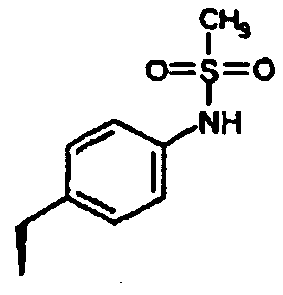
OCH3 H H OCH3 H F 
OCH3 H H CN H F 
OCH3 H H Br H F 
OCH3 H H CN H F 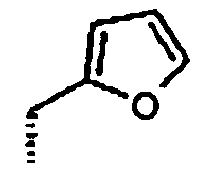
OCH3 H H CN H F H H H CH3 H H F H F F F F F F H H CF3 H CF3 H F H H NO2 H H H F H H COOCH3 OCH3 H OCH3 F 
OCH3 H H CN H Cl 
OCH3 H H CN H - The compounds represented by formula XI are capable of forming acid addition salts, particularly pharmaceutically acceptable acid addition salts. Pharmaceutically acceptable acid addition salts of the compound of formula XI include those of inorganic acids, for example, hydrohalic acids such as hydrofluoric acid, hydrochloric acid, hydrobromic acid or hydroiodic acid, nitric acid, sulfuric acid, phosphoric acid; and organic acids, for example aliphatic monocarboxylic acids such as formic acid, acetic acid, trifluoroacetic acid, propionic acid and butyric acid, aliphatic hydroxy acids such as lactic acid, citric acid, tartaric acid or malic acid, dicarboxylic acids such as maleic acid or succinic acid, aromatic carboxylic acids such as benzoic acid, p-chlorobenzoic acid, diphenylacetic acid or triphenylacetic acid, aromatic hydroxy acids such as o-hydroxybenzoic acid, p-hydroxybenzoic acid, 1-hydroxynaphthalene-2-carboxylic acid or 3-hydroxynaphthalene-2-carboxylic acid, and sulfonic acids such as methanesulfonic acid or benzenesulfonic acid. These salts may be prepared from compounds of formula XI by known salt-forming procedures.
- Compounds of formula XI which contain acidic, e.g. carboxyl, groups, are also capable of forming salts with bases, in particular pharmaceutically acceptable bases such as those well known in the art; suitable such salts include metal salts, particularly alkali metal or alkaline earth metal salts such as sodium, potassium, magnesium or calcium salts, or salts with ammonia or pharmaceutically acceptable organic amines or heterocyclic bases such as ethanolamines, benzylamines or pyridine. These salts may be prepared from compounds of formula I by known salt-forming procedures.
- When Rb is other than hydrogen, the carbon atom to which Rb is attached in formula XI is asymmetric, in which case the compounds exist in individual optically active isomeric forms or as mixtures thereof, e.g. as racemic or diastereomeric mixtures. The invention embraces both individual optically active R and S isomers as well as mixtures, e.g. racemic or diastereomeric mixtures, thereof.
- Specific especially preferred compounds of the invention are those described hereinafter in the Examples, particularly those of Examples 8, 9, 12, 15, 16, 17, 18, 20, 21, 22, 25, 26, 27, 34 and 35.
- The invention also provides a process for the preparation of compounds of formula I which comprises
- (i)
- (A) reacting a compound of formula


- (B) reacting a compound of formula III, or an amide forming derivative thereof, with a compound of formula

- (A) reacting a compound of formula
- (ii) recovering the product in free or salt form.
- In process variant (A), the compound of formula II may be in free or salt form. Process variant (A) may be effected using known methods, for example by reacting a compound of formula II with an acid halide, particularly acid chloride, of the acid of formula III using known amide-forming procedures. Conveniently, the compound of formula II in free or salt form is reacted with a free carboxylic acid of formula III, for example using known procedures, such as reaction in the presence of a tertiary amine and a peptide coupling agent such as a phosphonium salt, 2-(1H benzotriazol-1-yl)-1,1,3,3-tetramethyluronium tetrafluoroborate or diisopropylcarbodiimide; this reaction may be carried out in an inert organic solvent, for example a halohydrocarbon such as dichloromethane; the reaction temperature is conveniently from 0 to 40°C, preferably ambient temperature.
- In another method of effecting process variant (A), a compound of formula II, preferably in salt form, is reacted with an amide-forming derivative of the acid of formula III which is a thioester of formula

- Process variant (B) may be effected using known methods, for example by reacting the substrate-bound compound with the free acid under known peptide coupling conditions, for example in the presence of a tertiary amine and a peptide coupling agent such as those mentioned above. The reaction may be effected in an inert organic solvent such as dimethylformamide (DMF). Suitable reaction temperatures are from 0 to 40°C, e.g. 15 to 25°C. The product may be detached from the substrate in a known manner, for example, where the N atom is linked to a CH2 of a benzyl group in Z, by treatment with trifluoroacetic acid.
- Compounds of formula III are either available commercially or may be prepared by known methods. Compounds of formula IIIA may be obtained by reaction of an acid of formula III with 2, 2'-dibenzothiazolyl disulfide in the presence of triphenylphosphine and a tertiary base such as N-methylmorpholine, e.g. as described in the Examples.
- Compounds of formula II may be prepared by reacting a compound of formula


where R7 is a protective group, replacing R7 in the product by hydrogen, and, where R1 in the product contains a protected functional group, replacing the protecting group by hydrogen. When R7 is hydrogen, reaction between a compound of formula V and a salt of a compound of formula VI may be effected by the procedures described inUS4559349 . When R7 is a protective group, reaction between compounds of formulae V and VI may be effected using known methods, for example in the presence of a tertiary organic base such as triethylamine or 1,8-diazabicyclo[5,4,0]undec-7-ene (DBU), conveniently in an inert organic solvent, for example a polar solvent such as dimethylformamide, the reaction temperature suitably being from 0 to 40°C, preferably ambient temperature. Replacement of a protective group R7 by hydrogen may be effected using known procedures; for example, where R7 is tert-butoxycarbonyl, by treatment with a carboxylic acid such as trifluoroacetic acid. Replacement of a protecting group in R1 may be affected using known procedures, for example, when R1 contains a hydroxy group protected as an ether group, such as tert-butoxy, by treatment with HBr in a carboxylic acid such as acetic acid; when R7 is a protective group, this treatment also replaces R7 by hydrogen. Compounds of formulae V and VI are known or may be prepared by known procedures. - Where reference is made herein to protected functional groups or to protecting groups, the protecting groups may be chosen in accordance with the nature of the functional group, for example as described in Protective Groups in Organic Synthesis, T.W. Greene and P.G.M. Wuts, John Wiley & Sons Inc, Second Edition, 1991, which reference also describes procedures suitable for replacement of the protecting groups by hydrogen.
- Compounds of formula II may also be prepared by reacting a compound of formula V with a compound of formula
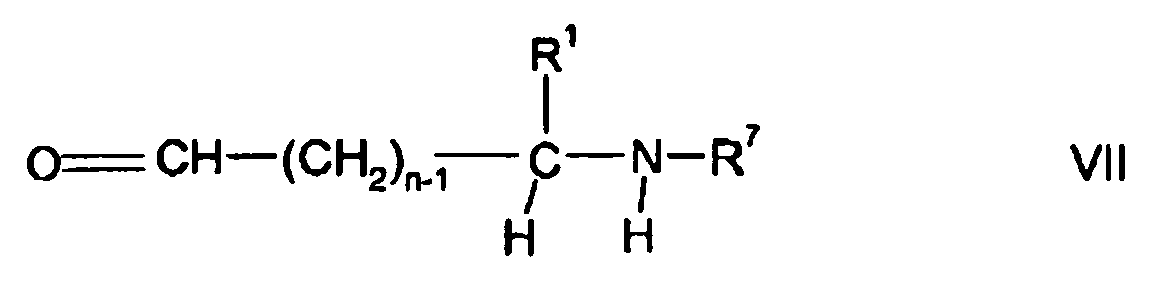
- Compounds of formula II where R1 is hydroxymethyl may also be prepared by reacting a compound of formula V with (R)-4-formyl-2,2-dimethyl-oxazolidine-3-carboxylic acid tert-butyl ester, of formula

Compounds of formula II where R1 is C1-C8-alkoxymethyl or acyloxymethyl can be prepared by appropriate etherification or acylation of compounds of formula II where R1 is hydroxymethyl. - Compounds of formula IV may be prepared by reacting a compound of formula V with a compound of formula


- Compounds of formula I in free form may be converted into salt form, and vice versa, in a conventional manner. The compounds in free or salt form can be obtained in the form of hydrates or solvates containing a solvent used for crystallization.Compounds of formula I can be recovered from reaction mixtures and purified in a conventional manner. Isomers, such as enantiomers, may be obtained in a conventional manner, e.g. by fractional crystallization or asymmetric synthesis from correspondingly asymmetrically substituted, e.g. optically active, starting materials.
- Compounds of formula I in free or pharmaceutically acceptable salt form, hereinafter referred to alternatively as agents of the invention, are useful as pharmaceuticals. Accordingly the invention also provides a compound of formula I in free or pharmaceutically acceptable salt form for use as a pharmaceutical. The agents of the invention act as CCR-3 receptor antagonists, thereby inhibiting the infiltration and activation of inflammatory cells, particularly eosinophils, and inhibiting allergic response. The inhibitory properties of agents of the invention can be demonstrated in the following assay :
- In this assay the effect of agents of the invention on the binding of human eotaxin to human CCR-3 is determined. Recombinant cells expressing human CCR-3 are captured by wheatgerm agglutinin (WGA) polyvinyltoluidene (PVT) SPA beads (available from Amersham), through a specific interaction between the WGA and carbohydrate residues of glycoproteins on the surface of the cells. [125I]-human eotaxin (available from Amersham) binds specifically to CCR-3 receptors bringing the [125I]-human eotaxin in close proximity to the SPA beads. Emitted â-particles from the [125I]-human eotaxin excite, by its proximity, the fluorophore in the beads and produce light. Free [125I]-human eotaxin in solution is not in close proximity to the scintillant and hence does not produce light. The scintillation count is therefore a measure of the extent to which the test compound inhibits binding of the eotaxin to the CCR-3.
- Preparation of Assay Buffer: 5.96 g HEPES and 7.0 g sodium chloride are dissolved in distilled water and 1M aqueous CaCl2 (1 mL) and 1M aqueous MgCl2 (5 mL) are added. The pH is adjusted to 7.6 with NaOH and the solution made to a final volume of 1 L using distilled water. 5 g bovine serum albumin and 0.1 g sodium azide are then dissolved in the solution and the resulting buffer stored at 4°C. A Complete™ protease inhibitor cocktail tablet (available from Boehringer) is added per 50 mL of the buffer on the day of use.
- Preparation of Homogenisation Buffer: Tris-base (2.42g) is dissolved in distilled water, the pH of the solution is adjusted to 7.6 with hydrochloric acid and the solution is diluted with distilled water to a final volume of 1L. The resulting buffer is stored at 4°C. A Complete™ protease inhibitor cocktail tablet is added per 50 mL of the buffer on the day of use. Preparation of membranes: Confluent rat basophil leukemia (RBL-2H3) cells stably expressing CCR3 are removed from tissue culture flasks using enzyme-free cell dissociation buffer and resuspended in phosphate-buffered saline. The cells are centrifuged (800 g, 5 minutes), the pellet resuspended in ice-cold homogenisation buffer using 1 mL homogenisation buffer per gram of cells and incubated on ice for 30 minutes.The cells are homogenised on ice with 10 strokes in a glass mortar and pestle.The homogenate is centrifuged (800 g, 5 minutes, 4°C), the supernatant further centrifuged (48,000 g, 30 minutes, 4°C) and the pellet redissolved in Homogenisation Buffer containing 10% (v/v) glycerol.The protein content of the membrane preparation is estimated by the method of Bradford (Anal.Biochem. (1976) 72:248) and aliquots are snap frozen and stored at -80°C. The assay is performed in a final volume of 250 µL per well of an Optiplate (ex Canberra Packard). To selected wells of the Optiplate are added 50 µL of solutions of a test compound in Assay Buffer containing 5 % DMSO (concentrations from 0.01nM to 10 µM). To determine total binding, 50 µL of the Assay Buffer containing 5 % DMSO is added to other selected wells. To determine non-specific binding, 50 µL of 100nM human eotaxin (ex R&D Systems) in Assay Buffer containing 5 % DMSO is added to further selected wells. To all wells are added 50 µL [125I]-Human eotaxin (ex Amersham) in Assay Buffer containing 5 % DMSO at a concentration of 250 pM (to give a final concentration of 50 pM per well), 50 µL of WGA-PVT SPA beads in Assay Buffer (to give a final concentration of 1.0mg beads per well) and 100 µL of the membrane preparation at a concentration of 100 µg protein in Assay Buffer (to give a final concentration of 10 µg protein per well). The plate is then incubated for 4 hours at room temperature. The plate is sealed using TopSeal-S (ex Canberra Packard) according to the manufacturer's instructions. The resulting scintillations are counted using a Canberra Packard TopCount, each well being counted for 1 minute. The concentration of test compound at which 50% inhibition occurs (IC50) is determined from concentration-inhibition curves in a conventional manner.
- The compounds of the Examples hereinbelow have TC50 values below 1µM in the above assay. For instance, the compounds of Examples 1, 2, 4, 7, 9, 13, 20, 23, 25, 28, 30, 38, 40, 43 and 44 have IC50(nM) values of 125, 68, 13, 15, 5, 26, 8, 10, 11, 2, 13, 14, 6, 22 and 25 respectively.
- Most of the compounds of the Examples exhibit selectivity for inhibition of CCR-3 binding relative to inhibition of binding of the alpha-1 adrenergic receptor. The inhibitory properties of agents of the invention on binding of the alpha-1 adrenergic receptor can be determined in the following assay:
- Cerebral cortices from male Sprague-Dawley rats (175-200 g) are dissected and homogenised in 10 volumes of ice cold 0.32 M sucrose (containing 1mM MgCl2 dihydrate and 1mM K2HPO4) with a glass/teflon homogeniser. The membranes are centrifuged at 1000 x g for 15 min., the pellet discarded and the centrifugation repeated. The supernatants are pooled and centrifuged at 18,000 x g for 15 min. The pellet is osmotically shocked in 10 volumes of water and kept on ice for 30 min. The suspension is centrifuged at 39,000 x g for 20 min., resuspended in Krebs-Henseleit buffer pH 7.4 (1.17mM MgSO4 anhydrous, 4.69 mM KCl, 0.7mM K2HPO4 anhydrous, 0.11M NaCl, 11 mM D-glucose and 25 mM NaHCO3)_containing 20mM Tris, and kept for 2 days at -20°C. The membranes are then thawed at 20-23°C, washed three times with Krebs-Henseleit buffer by centrifugation at 18,000 x g for 15 min., left overnight at 4°C and washed again three times. The final pellet is resuspended with a glass/teflon homogeniser in 125mL/100 membranes in the same buffer. A sample is taken to determine the protein concentration (using the Bradford Assay with gamma globulin as the standard) and the remainder aliquoted and stored at -80°C.
- The resulting membranes are subjected to a radioligand binding assay. The assay is conducted in triplicate using 96 well plates containing [125I]-HEAT (Amersham) (40pM, Kd: 58.9 ± 18.7 pM), unlabelled test compound and membrane (57.1µg/mL) to yield a final volume of 250µl (assay buffer containing 50 mM Tris-base and 0.9% (w/v) NaCl, pH 7.4). The plates are incubated at 37°C for 60 min., after which rapid vacuum filtration over Whatman GF/C 96 well filter plates is carried out. Each plate is then washed three times with 10ml of ice cold assay buffer using a Brandel Cell harvester (Gaithersburg, MD). Following drying of the plates for 3 h. at 50°C, 40 µL of Microscint 20 is added to each well, the plates incubated at room temperature for a further 20 min. and the retained radioactivity quantified in a Packard Topcount NXT scintillation counter.
- Stock solutions of test compounds are dissolved initially in 100 % DMSO and diluted with assay buffer to the required concentrations to yield 1 % (v/v) DMSO.
- The concentration of test compound at which 50% inhibition occurs (IC50) is determined from concentration-inhibition curves in a conventional manner. Compounds of Examples 1, 2, 6, 8, 10, 17, 20, 22, 25, 27 and 35 have IC50(nM) values of 210, 221, 48, 58, 53, 89, 131, 387, 72, 121, 1519, in this assay.
- Having regard to their inhibition of binding of CCR-3, agents of the invention are useful in the treatment of conditions mediated by CCR-3, particularly inflammatory or allergic conditions. Treatment in accordance with the invention may be symptomatic or prophylactic.
- Accordingly, agents of the invention are useful in the treatment of inflammatory or obstructive airways diseases, resulting, for example, in reduction of tissue damage, bronchial hyperreactivity, remodelling or disease progression. Inflammatory or obstructive airways diseases to which the present invention is applicable include asthma of whatever type or genesis including both intrinsic (non-allergic) asthma and extrinsic (allergic) asthma, mild asthma, moderate asthma, severe asthma, bronchitic asthma, excercise-induced asthma, occupational asthma and asthma induced following bacterial or viral infection. Treatment of asthma is also to be understood as embracing treatment of subjects, e.g. of less than 4 or 5 years of age, exhibiting wheezing symptoms and diagnosed or diagnosable as "wheezy infants", an established patient category of major medical concern and now often identified as incipient or early-phase asthmatics. (For convenience this particular asthmatic condition is referred to as "wheezy-infant syndrome".)
- Prophylactic efficacy in the treatment of asthma will be evidenced by reduced frequency or severity of symptomatic attack, e.g. of acute asthmatic or bronchoconstrictor attack, improvement in lung function or improved airways hyperreactivity. It may further be evidenced by reduced requirement for other, symptomatic therapy, i.e. therapy for or intended to restrict or abort symptomatic attack when it occurs, for example anti-inflammatory (e.g. corticosteroid) or bronchodilatory. Prophylactic benefit in asthma may in particular be apparent in subjects prone to "morning dipping". "Morning dipping" is a recognised asthmatic syndrome, common to a substantial percentage of asthmatics and characterised by asthma attack, e.g. between the hours of about 4 to 6 am, i.e. at a time normally substantially distant form any previously administered symptomatic asthma therapy.
- Other inflammatory or obstructive airways diseases and conditions to which the present invention is applicable include acute lung injury (ALI), acute/adult respiratory distress syndrome (ARDS), chronic obstructive pulmonary, airways or lung disease (COPD, COAD or COLD), including chronic bronchitis or dyspnea associated therewith, emphysema, as well as exacerbation of airways hyperreactivity consequent to other drug therapy, in particular other inhaled drug therapy. The invention is also applicable to the treatment of bronchitis of whatever type or genesis including, e.g., acute, arachidic, catarrhal, croupus, chronic or phthinoid bronchitis. Further inflammatory or obstructive airways diseases to which the present invention is applicable include pneumoconiosis (an inflammatory, commonly occupational, disease of the lungs, frequently accompanied by airways obstruction, whether chronic or acute, and occasioned by repeated inhalation of dusts) of whatever type or genesis, including, for example, aluminosis, anthracosis, asbestosis, chalicosis, ptilosis, siderosis, silicosis, tabacosis and byssinosis.
- Having regard to their anti-inflammatory activity, in particular in relation to inhibition of eosinophil activation, agents of the invention are also useful in the treatment of eosinophil related disorders, e.g. eosinophilia, in particular eosinophil related disorders of the airways (e.g. involving morbid eosinophilic infiltration of pulmonary tissues) including hypereosinophilia as it effects the airways and/or lungs as well as, for example, eosinophil-related disorders of the airways consequential or concomitant to Löffler's syndrome, eosinophilic pneumonia, parasitic (in particular metazoan) infestation (including tropical eosinophilia), bronchopulmonary aspergillosis, polyarteritis nodosa (including Churg-Strauss syndrome), eosinophilic granuloma and eosinophil-related disorders affecting the airways occasioned by drug-reaction.
- Agents of the invention are also useful in the treatment of inflammatory or allergic conditions of the skin, for example psoriasis, contact dermatitis, atopic dermatitis, alopecia areata, erythema multiforma, dermatitis herpetiformis, scleroderma, vitiligo, hypersensitivity angiitis, urticaria, bullous pemphigoid, lupus erythematosus, pemphisus, epidermolysis bullosa acquisita, and other inflammatory or allergic conditions of the skin.
- Agents of the invention may also be used for the treatment of other diseases or conditions, in particular diseases or conditions having an inflammatory component, for example, treatment of diseases and conditions of the eye such as conjunctivitis, keratoconjunctivitis sicca, and vernal conjunctivitis, diseases affecting the nose including allergic rhinitis, e.g. atrophic, chronic, or seasonal rhinitis, inflammatory conditions of the gastrointestinal tract, for example inflammatory bowel disease such as ulcerative colitis and Crohn's disease, diseases of the bone and joints including rheumatoid arthritis, psoriatic arthritis, ankylosing spondylitis and systemic sclerosis, and other diseases such as athersclerosis, multiple sclerosis, diabetes (type I), myasthenia gravis, hyper IgE syndrome and acute and chronic allograft rejection, e.g. following transplantation of heart, kidney, liver, lung or bone marrow.
- The effectiveness of an agent of the invention in inhibiting inflammatory conditions, for example in inflammatory airways diseases, may be demonstrated in an animal model, e.g. a mouse or rat model, of airways inflammation or other inflammatory conditions, for example as described by Szarka et al, J. Immunol. Methods (1997) 202:49-57; Renzi et al, Am. Rev. Respir. Dis. (1993) 148:932-939; Tsuyuki et al., J. Clin. Invest. (1995) 96:2924-2931; and Cernadas et al (1999) Am. J. Respir. Cell Mol. Biol. 20:1-8.
- The agents of the invention are also useful as co-therapeutic agents for use in combination with other drug substances such as anti-inflammatory, bronchodilatory or antihistamine drug substances, particularly in the treatment of obstructive or inflammatory airways diseases such as those mentioned hereinbefore, for example as potentiators of therapeutic activity of such drugs or as a means of reducing required dosaging or potential side effects of such drugs. An agent of the invention may be mixed with the other drug substance in a fixed pharmaceutical composition or it may be administered separately, before, simultaneously with or after the other drug substance. Such anti-inflammatory drugs include steroids, in particular glucocorticosteroids such as budesonide, beclamethasone, fluticasone, ciclesonide or mometasone, LTB4 antagonists such as those described in
US5451700 , LTD4 antagonists such as montelukast and zafirlukast, dopamine receptor agonists such as cabergoline, bromocriptine, ropinirole and 4-hydroxy-7-[2-[[2-[[3-(2-phenylethoxy)propyl]sulfonyl]ethyl]-amino]ethyl]-2(3H)-benzothiazolone and pharmaceutically acceptable salts thereof (the hydrochloride being Viozan® - AstraZeneca), and PRE4 inhibitors such as Ariflo® (GlaxoSmith Kline), Roflumilast (Byk Gulden),V-11294A (Napp), BAY19-8004 (Bayer), SCH-351591 (Schering-Plough), and PD189659 (Parke-Davis). Such bronchodilatory drugs include anticholinergic or antimuscarinic agents, in particular ipratropium bromide, oxitropium bromide and tiotropium bromide, and beta-2 adrenoceptor agonists such as salbutamol, terbutaline, salmeterol and, especially, formoterol and pharmaceutically acceptable salts thereof, and compounds (in free or salt or solvate form) of formula I ofPCT International Publication No. WO00/75114 
- Other useful combinations of agents of the invention with anti-inflammatory drugs are those with other anatagonists of chemokine receptors, e.g. CCR-1, CCR-2, CCR-3, CCR-4, CCR-5, CCR-6, CCR-7, CCR-8, CCR-9 and CCR10, CXCR1, CXCR2, CXCR3, CXCR4, CXCR5, particularly CCR-5 antagonists such as Schering-Plough antagonists SC-351125, SCH-55700 and SCH-D, Takeda antagonists such as N-[[4-[[[6,7-dihydro-2-(4-methylphenyl)-5H-benzocyclohepten-8-yl]carbonyl]amino]phenyl]-methyl]tetrahydro-N,N-dimethyl-2H-pyran-4-aminium chloride (TAK-770), and CCR-5 antagonists described in
US6166037 (particularly claims 18 and 19),WO00/66558 WO00/66559 - In accordance with the foregoing, the invention also provides a method for the treatment of a condition mediated by CCR-3, for example an inflammatory or allergic condition, particularly an inflammatory or obstructive airways disease, which comprises administering to a subject, particularly a human subject, in need thereof an effective amount of a compound of formula I in a free or pharmaceutically acceptable salt form as hereinbefore described. In another aspect the invention provides the use of a compound of formula I, in free or pharmaceutically acceptable salt form, as hereinbefore described for the manufacture of a medicament for the treatment of a condition mediated by CCR-3, for example an inflammatory or allergic condition, particularly an inflammatory or obstructive airways disease.
- The agents of the invention may be administered by any appropriate route, e.g. orally, for example in the form of a tablet or capsule; parenterally, for example intravenously; by inhalation, for example in the treatment of inflammatory or obstructive airways disease; intranasally, for example in the treatment of allergic rhinitis; topically to the skin, for example in the treatment of atopic dermatitis; or rectally, for example in the treatment of inflammatory bowel disease.
- In a further aspect, the invention also provides a pharmaceutical composition comprising as active ingredient a compound of formula I in free or pharmaceutically acceptable salt form, optionally together with a pharmaceutically acceptable diluent or carrier therefor. The composition may contain a co-therapeutic agent such as an anti-inflammatory or bronchodilatory drug as hereinbefore described. Such compositions may be prepared using conventional diluents or excipients and techniques known in the galenic art. Thus oral dosage forms may include tablets and capsules. Formulations for topical administration may take the form of creams, ointments, gels or transdermal delivery systems, e.g. patches. Compositions for inhalation may comprise aerosol or other atomizable formulations or dry powder formulations.
- The invention includes (A) an agent of the invention in inhalable form, e.g. in an aerosol or other atomisable composition or in inhalable particulate, e.g. micronised form, (B) an inhalable medicament comprising an agent of the invention in inhalable form; (C) a pharmaceutical product comprising such an agent of the invention in inhalable form in association with an inhalation device; and (D) an inhalation device containing an agent of the invention in inhalable form.
- Dosages of agents of the invention employed in practising the present invention will of course vary depending, for example, on the particular condition to be treated, the effect desired and the mode of administration. In general, suitable daily dosages for administration by inhalation are of the order of 0.01 to 30 mg/kg while for oral administration suitable daily doses are of the order of 0.01 to 100 mg/kg.
- The invention is illustrated by the following Examples.
- Compounds of formula I which are also of formula

Example No Ra Rb Rc Rd Re Rf Rg M/S Salt form Metho d 1 F H H CN H H H 406.1 CF3CO2H C 2 F 
H CN H H H 496.8 - B 3 F 
H CN H H H 448.5 - B 4 F H H CN OCH3 H H 436.2 CF3CO2H C 5 F H OCH3 H H OCH3 H 441.3 CF3CO2H C 6 F H OCH3 H H Br H 491.2 CF3CO2H C 7 F 
H CN H H H 497.4 CH3CO2H A 8 F 
OCH3 H H Br H 580.2 - A 9 F H OH H H Cl H 431.7 CF3CO2H C 10 Cl H OCH3 H H Br H 506.7 CF3CO2H C 11 F H OCH3 H H CN H 436.0 CF3CO2H C 12 F H OCH3 H H Cl H 445.2 CF3CO2H C 13 F H OCH2CH3 H H Cl H 459.3 CF3CO2H C 14 F H O(CH2)2CH3 H H Cl H 473.3 CF3CO2H C 15 F H 
H H Cl H 473.3 CF3CO2H C 16 F H O(CH2)2CH3 H H Br H 519.2 CF3CO2H C 17 F H 
H H Br H 519.2 CF3CO2H C 18 F H OCH3 H H CH3 H 425.3 CF3CO2H C 19 F H 
H H CH3 H 453.3 CF3CO2H C 20 F 
H H H CN H 486.4 - A 21 F 
OCH3 H H OCH3 H 521.4 - A 22 F 
OCH3 H H Br H 521.2 - B 23 F 
H H H CN H 503.4 - A 24 F 
OCH3 H H OCH3 H 624.4 - D,A 25 F 0 OCH3 H H CN H 516.5 - A 26 F 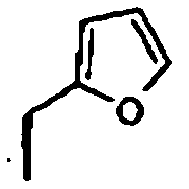
OCH3 H H Br H 571.1 - A 27 F 
OCH3 H H CN H 516.6 - B 28 F 
OCH3 H H CN H 516.5 - A 29 F H H H CH3 H H 395.4 CF3CO2H C 30 F H F F F F F 471.3 CF3CO2H C 31 F H H CF3 H CF3 H 517.4 CF3CO2H C 32 F H H NO2 H H H 426.3 CF3CO2H C 33 F H H COOCH3 OCH3 H OCH3 499.9 CF3CO2H C 34 F 
OCH3 H H CN H 466.1 - F 35 Cl 
OCH3 H H CN H 482.2 - E - To a solution of (R)-2-.tert.-butoxycarbonylamino-3-pyridin-3-yl-propionic acid (0.9g, 3.37mmol) in dimethoxyethane (18ml) is added N-methylmorpholine (0.44ml, 4.04mmol) and isobutylchloroformate (0.48ml, 3.71mmol). The reaction mixture is stirred at ambient temperature for 20 minutes and then filtered. The filtrate is treated with aqueous sodium borohydride solution (25ml, 10.11mmol) and the reaction mixture diluted immediately with water (200ml). Stirring is continued for 1 hr at ambient temperature. The reaction mixture is partitioned between ethylacetate and water. The organic phase is separated, dried over magnesium sulphate and evaporated. The crude product is purified by flash silica chromatography (EtOAc elution) to afford ((R)-2-hydroxy-1-pyridin-3-ylmethyl-ethyl)-carbamic acid tert-butyl ester. [MH]+ 253.5.
- To a solution of ((R)-2-hydroxy-1-pyridin-3-ylmethyl-ethyl)-carbamic acid tert-butyl ester (0.43, 1.70mmol) in dichloromethane (10ml) is added carbon tetrabromide (0.33g), 2.04mmol) and triphenylphosphine (0.23g, 1.70mmol). The reaction mixture is stirred at ambient temperature for 2 hours, filtered, and the filtrate portioned between ethylacetate and hydrochloric acid (1M). The aqueous phase is separated, neutralised with saturated sodium bicarbonate solution and extracted into dichloromethane. The dichloromethane is dried over magnesium sulphate and evaporated to afford ((R)-2-bromo-1-pyridin-3-ylmethyl-ethyl)-carbamic acid tert-butyl ester. 1H NMR (400MHz, CDCl3) δ 1.29 (s 9H), 3.05 (dd J 14.3 9.8 1H), 3.18 (dd J 14.3 4.9 1H), 3.51 (d J 4.9 2H) 4.07- 4.16 (m 1H) 7.84 (dd J 7.9 5.9 1H), 8.35 (d J 7.9 1H), 8.65 (d, J 5.41H), 8.86 (s, 1H).
- (4-Fluoro-phenyl)-piperidin-4-yl-methanone (0.15g, 0.73mmol) is added to a solution of ((R)-2-Bromo-1-pyridin-3-ylmethyl-ethyl)-carbamic acid tert-butyl ester (0.21g, 0.66mmol) and 1,8 diazabicyclo[5.4.0]undec-7-ene (0.12ml, 0.79mmol) in dimethylformamide (3ml). The reaction mixture is stirred at ambient temperature for 24 hours prior to partioning between ethylacetate and water. The ethylacetate is dried over magnesium sulphate and evaporated. The crude product is purified by flash silica chromatography (97:3 dichloromethane : methanol elution) to afford [(R)-2-[4-(4-fluoro-benzoyl)-piperidin-1-yl]-1-pyridin-3-ylmethyl-erhyl)-carbamic acid tert-butyl ester. 1H NMR (400MHz, CDCl3) δ 1.36 (s, 9H), 1.68-1.85 (br m, 4H), 2.00- 2.38 (br m, 4H), 2.78-2.91 (m, 4H), 3.05-3.19 (m 1H), 3.81-3.93 (m 1H) 7.05 (t J 8.8 2H), 7.12-7.18 (m 1H), 7.48 (d J 7.9 1H), 7.85-7.93 (dd J 8.8 5.4 2H), 8.36 (d J1.5 1H), 8.40 (dd J 4.9 1.5 1H).
- To a solution of {(R)-2-[4-(4-fluoro-benzoyl)-piperidin-1-yl]-1-pyridin-3-ylmethyl-ethyl}-carbamic acid tert-butyl ester (0.149g, 0.34mmol) in dichloromethane (2ml) is added trifluoroacetic acid (0.5ml) and the reaction mixture stirred at ambient temperature for 1 hour. The reaction mixture is evaporated and the residue takeup in hydrochloric acid (1M), the solution basified with sodium hydroxide solution (4M) and the precipitate extracted into dichloromethane. The dichloromethane was dried over magnesium sulphate and evaporated to afford [1-((R)-2-amino-3-pyridin-3-yl-propyl)-piperidin-4-yl]-(4-fluoro-phenyl)-methanone. 1H NMR (400MHz, CDCl3) δ 1.63-1.85 (m 4H), 1.88-2.00 (m 1H), 2.08- 2.32 (m 5H), 2.50 (dd J 13.5 7.9 1H), 2.67 (dd J 13.5 4.9 1H), 2.78-2.98 (m, 2H), 3.04-3.20 (m, 2H), 7.04 (t J 8.8 2H), 7.17 (dd J 6.9 4.9 1H) 7.48 (d J 7.9 1H), 7.88 (dd, J 8.8 5.4 2H), 8.33-8.45 (m, 2H).
- To a solution of (E)-3-(4-cyano-phenyl)-acrylic acid (0.022g, 0.126mmol) in dichloromethane (1ml) is added triethylamine (0.016ml, 0.126mmol) and (benzotriazo-1-yloxy)tripyrrolidino-phosphonium hexafluorophosphate (0.06g, 0.116mmol). The reaction mixture is stirred at ambient temperature for 5 minutes and then a solution of 1-((R)-2-amino-3-pyridin-3-yl-propyl)-piperidin-4-yl]-(4-fluoro-phenyl)-methanone (0.036, 0.105mmol) in dichloromethane (1ml) is added. Stirring is continued for a further 1.5 hours, then the reaction mixture is filtered. The filterate is evaporated and the crude product is purified by flash silica chromatography (dichloromethane: methanol: acetic acid, 10:0.5:0.05) to afford (E)-3-(3-cyano-phenyl)-N-{(R)-2-[4-(4-fluoro-benzoyl)-piperidin-1-yl]-1-pyridin-3-ylmethyl-ethyl}-acrylamide. [MH]+ 497.4.
- A solution of ((R)-1-benzyl-2-oxo-ethyl)-carbamic acid tert-butyl ester (0.5g, 2.0mmol), (4-fluoro-phenyl)-piperidin-4-yl-methanone (0.414g, 2.0mmol) and sodium triacetoxyborohydride (0.638g, 3.0mmol) in tetrahydrofuran (20ml) is stirred at ambient temperature for 24 hours. The solvent is evaporated and the residue redissolved in dichloromethane and washed with saturated sodium bicarbonate solution. The dichloromethane is dried over magnesium sulphate and evaporated. The crude product is purified by flash silica chromatography (ethylacetate:hexane, 3:1 elution) to afford {(R)-1-benzyl-2-[4-(4-fluoro-benzoyl)-piperidin-1-yl]-ethyl}-carbamic acid tert-butyl ester. [MH]+ 441.3.
- A solution of {(R)-1-benzyl-2-[4-(4-fluoro-benzoyl)-piperidin-1-yl]-ethyl}-carbamic acid tert-butyl ester (1.12g, 2.54mmol) and trifluoroacetic acid (3ml) in dichloromethane (6ml) is stirred at ambient temperature for 3 hours. The solvent is evaporated and the residue takenup in hydrochloric acid (2M), washed with ethylacetate and basified with sodium hydroxide solution (4M) to pH8-9. The suspension is extracted with dichloromethane, the dichloromethane dried over magnesium sulphate and the solvent evaporated to afford [1-((R)-2-amino-3-phenyl-propyl)-piperidin-4-yl]-(4-fluoro-phenyl)-methanone. [MH]+ 341.7.
- To a solution of (E)-3-(4-cyano-phenyl)-acrylic acid (0.042g, 0.242mmol) in dichloromethane (1ml) is added triethylamine (0.046ml, 0.331mmol) and (benzotriazo-1-yloxy)tripyrrolidino-phosphonium hexafluorophosphate (0.126g, 0.242mmol). The reaction mixture is stirred at ambient temperature for 5 minutes and then a soultion of [1-((R)-2-amino-3-phenyl-propyl)-piperidin-4-yl]-(4-fluoro-phenyl)-methanone (0.075, 0.220mmol) in dichloromethane (1ml) is added. Stirring is continued for a further 3 hours, then the reaction mixture is diluted with dichloromethane (25ml) and washed with saturated sodium bicarbonate solution and saturated brine. The dichloromethane is dried over magnesium sulphate and the solvent evaporated. The crude product is purified by flash silica chromatography (ethyl acetate : hexane, 5:1 elution) to afford (E)-N-{(R)-1-Benzyl-2-[4-(4-fluoro-benzoyl)-piperidin-1-yl]-ethyl}-3-(3-cyano-phenyl)-acrylamide. [MH]+ 496.8.
- To a suspension of 2-(formyl-3-methoxyphenoxy)ethyl polystyrene (AMEBA) resin (ex Novabiochem) (6.85g, 3.33mmol) in a mixture of methanol / dichloromethane (60ml, 1:1 v/v) is added 2-amino ethanol and sodium triacetoxyborohydride (4.00g, 18.85mmol) and the mixture shaken for 16 hours at 20°C, then filtered. The resin is washed with methanol, DMF and dichloromethane, then dried under vacuum. A THF / acetonitrile mixture (50ml, 1:1 v/v) is added to the dried resin followed by iodine (4.80g, 18.85mmol), imidazole (1.28g, 18.85mmol) and triphenylphosphine (4.90g,18.85mmol).The suspension obtained is shaken for 18hours at 20°C, then filtered. The resin is washed with THF and dried under vacuum.To the freshly prepared resin (0.50g, 0.35mmol) is added a solution of (4-chlorophenyl)-piperidin-4-yl-methanone hydrochloride (0.18g, 0.70mmol) dissolved in DMF (2ml) and diisopropylethylamine (0.36g, 2.8mmol). The mixture is heated at 50°C for 16 hours and then filtered. The resin is washed with DMF. To the washed resin are added (E)-3-(5-Bromo-2-methoxy-phenyl)-acrylic acid (0.27g, 1.05 mmol), 2-(1H benzotriazol-1-yl)-1,1,3,3,-tetramethyluronium tetrafluoroborate (0.34g, 1.05mmol), diisopropylethylamine (0.29g, 1.05 mmol) and DMF (4ml) and the mixture is shaken at 20°C for 16 hours, then washed with DMF and methanol, after which it is treated with trifluoroacetic acid /dichloromethane (6ml, 1:1 v/v) at 20°C for 1 hour to remove the product from the resin. The resulting mixture is filtered and the filtrate evaporated under vacuum to give the product, [MH]+ 506.7.
- To a solution of [(R)-2-[4-(4-fluoro-benzoyl)-piperidin-1-yl]-1-(4-nitro-benzyl)-ethyl]-carbamic acid tert-butyl ester (1.41g, 2.90mmol) in acetic acid (11ml), cooled to 0°C, is added an aqueous solution of calcium chloride (4ml, 0.47M) and zinc dust (3.9g, 59.6mmol). The reaction mixture is stirred at 0°C for 35 minutes and then filtered through a celite plug. The filtrate is evaporated and the residue dissolved in water and extracted into dichloromethane. The dichloromethane is evaporated and the residue disolved in water and basified with aqueous sodium bicarbonate solution and extracted into dichloromethane. The dichloromethane is dried over magnesium sulphate and evaporated to afford {(R)-1-(4-amino-benzyl)-2-[4-(4-fluoro-benzoyl)-piperidin-1-yl]-ethyl}-carbamic acid tert-butyl ester, [MH]+ 456.5.
- To a solution of {(R)-1-(4-amino-benzyl)-2-[4-(4-fluoro-benzoyl)-piperidin-1-yl]-ethyl}-carbamic acid tert-butyl ester (1.19g, 2.61 mmol) in dichloromethane (15ml) cooled to 0°C is added triethylamine (0.37ml, 2.65mmol) and methanesulfonylchloride (0.192ml, 2.49mmol). The reaction mixture is allowed to warm to ambient temperature with stirring for 1 hour, then washed with water and saturated brine solution, dried over magnesium sulphate and evaporated. The crude product is purified by flash silica chromatography (ethylacetate hexane gradient 6:4 to 1:0 elution) to afford [(R)-2-[4-(4-fluoro-benzoyl)-piperidin-1-yl]-1-(4-methanesulfonylamino-benzyl)-ethyl]-carbamic acid tert-butyl ester. [MH]+ 534.7.
- To a solution of (R)-4-formyl-2,2-dimethyl-oxazolidine-3-carboxylic acid tert-butyl ester (0.5g, 2.18mmol) in tetrahydrofuran (15 ml) is added (4-chloro-phenyl)-piperidin-4-yl-methanone (0.49g, 2.18mmol) and sodium triacetoxyborohydride (0.69g, 3.27mmol), and the reaction mixture stirred for 3.5 hours at ambient temperature. The solvent is evaporated and the residue partitioned between ethyl acetate (50ml) and saturated sodium bicarbonate solution (50ml). The ethyl acetate is dried over magnesium sulphate and evaporated. The crude product is purified by flash silica chromatography (ethyl acetate:hexane, 1:1 elution) to afford (S)-4-[4-(4-chloro-benzoyl)-piperidin-1-ylmethyl]-2,2-dimethyl-oxazolidine-3-carboxylic acid tert-butyl ester, [MH]+ 437.2.
- (S)-4-[4-(4-chloro-benzoyl)-piperidin-1-ylmethyl]-2,2-dimethyl-oxazolidine-3-carboxylic acid tert-buryl ester (0.68g, 1.55mmol) is added to a solution of hydrogen chloride in ethanol (5ml, 5.5M). The reaction mixture is stirred at ambient temperature for 1 hour, then evaporated to dryness to afford [1-((S)-2-amino-3-hydroxy-propyl)-piperidin-4-yl]-(4-chlorophenyl)-methanone hydrochloride. [MH]+ 297.0.
- To a suspension of palladium(II)acetate (0.77g, 3.42mmol) in N,N-dimethylacetamide (375ml) are added tetraethylammonium chloride (19.36g, 114.5mmol), dicyclohexyl methyl amine (35.1g, 174.5mmol), and 3-bromo-4-methoxybenzonitrile (25.51g, 118.0mmol) under a nitrogen atmosphere. The suspension is heated to 100-105 °C whereupon t-butyl acrylate (14.82g, 114.5mmol) is slowly added over a period of 45 min. After a further 30-60 min stirring at 100°C, the solution is cooled to room temperature and diluted with TBME (375ml). The resulting biphasic mixture is stirred vigorously for 10 min. The (upper) TBME phase is successively washed with water (100ml), 10% aq. citric acid (100ml) and 25% aq. NaCl (100my). The combined aqueous phases are extracted with TBME (100ml). After adding active charcoal (0.4g), the combined TBME phases are stirred vigorously for 10 min and filtered. Anhydrous Na2SO4 (10g) is added and the resulting suspension is stirred for another 10 min and filtered. The filtrate is concentrated to a volume of 50-70ml under reduced pressure and, over a period of 25-30 min, added at room temperature to anhydrous trifluoroacetic acid (150ml). The resulting solution is stirred at room temperature for 60 min (precipitation forms), cooled to 0-5°C in an ice bath, and diluted with ethyl acetate (410ml). After stirring vigorously at 0 °C for an additional 60 min, the suspension is filtered. The residue is dried under vacuum at 45-50°C to give (E)-3-(5-cyano-2-methoxy-phenyl)-acrylic acid as a crystalline solid, mp. 252-253°C. MS (ES): [M-H]- 202.
- A solution of (E)-3-(5-cyano-2-methoxy-phenyl)-acrylic acid (0.31g, 1.55mmol), triethylamine (0.2ml, 1.55mmol) and 2-(1H benzotriazol-1-yl)-1,1,3,3,tetramethyluronium tetrafluoroborate (0.49g 1.55mmol) in dichloromethane (5ml), is added to a solution of [1-((S)-2-amino-3-hydroxy-propyl)-piperidin-4-yl]-(4-chloro-phenyl)-methanone hydrochloride and triethylamine (0.4ml, 3.1mmol) in dichloromethane (5ml), and the reaction mixture stirred at ambient temperature for 1 hour. The reaction mixture is diluted with dichloromethane (20ml), washed successively with saturated sodium bicarbonate solution (25ml) and brine (25ml), then dried over magnesium sulphate. The solvent is evaporated and the crude residue purified by flash silica chromatography (methanol:dichloromethane; 5:95) to afford (E)-N-((S)-2-[4-(4-chloro-benzoyl)-piperidin-1-yl]-l-hydroxymethyl-ethyl)-3-(5-cyano-2-methoxy-phenyl)-acrylamide. [MH]+ 482.2.
- To a solution of (4-fluoro-phenyl)-piperidin-4-yl-methanone (3.5g, 17mmol) in dry tetrahydrofuran (50ml) is added (R)-4-formyl-2,2-dimethyl-oxazolidine-3-carboxylic acid tert-butyl ester (3.9g, 17mmol) and sodium triacetoxyborohydride (5.4g, 25mmol), and the reaction mixture stirred for 18 hours at ambient temperature. The reaction mixture is filtered and the solvent evaporated to give a white solid. The solid is taken up in dichloromethane (50ml) and washed with saturated sodium bicarbonate solution (50ml), water (2x 50ml) and brine (50ml). The organic phase is dried over magnesium sulphate and evaporated to afford the product, [MH]+ 420.9.
- To a suspension of (S)-4-[4-(4-fluoro-benzoyl)-piperidin-1-ylmethyl]-2,2-dimethyl-oxazolidine-3-carboxylic acid tert-butyl ester (4.9g, 11.7mmol) in ethanol (25ml) is added hydrogen chloride in dioxane (25ml, 4M). The resulting clear solution is stirred for 4 hours at ambient temperature during which time a white precipitate forms. The reaction mixture is cooled to O°C and the precipitate filtered to afford the product, [MH]+ 281.6.
- To a solution of [1-((S)-2-amino-3-hydroxy-propyl)-piperidin-4-yl]-(4-fluoro-phenyl)-methanone hydrochloride (1.8g, 5.7mmol) and diisopropylethylamine (2.0ml, 11.4memol) in dichloromethane (45ml) is added (E)-3-(5-cyano-2-methoxy-phenyl)-acrylic acid (1.1g, 5.7mmol) followed by 2-(1H benzotriazol-1-yl)-1,1,3,3,-tetramethyluronium tetrafluoroborate (1.83g, 5.7mmol). The reaction mixture is stirred at ambient temperature for 4.5 hours, then filtered and the filtrate washed with water (50ml), saturated sodium bicarbonate solution (50 ml), water (50ml) and brine (50ml). The organic phase is dried over magnesium sulphate, the solvent evaporated and the residue purified by flash silica chromatography (dichloramethane:methanol; 98 :2 to 92:8 elution gradient) to afford the product, [MH]+ 466.1.
Claims (6)
- A compound of formula

Ra Rb Rc Rd Re Rf Rg F H H CN H H H F 
H CN H H H F 
H CN H H H F H H CN OCH3 H H F H OCH3 H H OCH3 H F H OCH3 H H Br H F 
H CN H H H F 
OCH3 H H Br H F H OH H H Cl H Cl H OCH3 H H Br H F H OCH3 H H CN H F H OCH3 H H Cl H F H OCH2CH3 H H Cl H F H O(CH2)2CH3 H H Cl H F H O(CH2)2CH3 H H Br H F H 
H H Br H F H OCH3 H H CH3 H F H 
H H CH3 H F 
H H H CN H F 
OCH3 H H OCH3 H F 
OCH3 H H Br H F 
H H H CN H F 
OCH3 H H OCH3 H F 
OCH3 H H CN H F 
OCH3 H H Br H F 
OCH3 H H CN H F 
OCH3 H H CN H F H H H CH3 H H F H F F F F F F H H CF3 H CF3 H F H H NO2 H H H F H H COOCH3 OCH3 H OCH3 F 
OCH3 H H CN H Cl 
OCH3 H H CN H - A compound according to claim 1 in combination with an anti-inflammatory bronchodilatory or antihistamine drug substance.
- A compound according to any one of claims 1 or 2 for use as a pharmaceutical.
- A pharmaceutical composition comprising as active ingredient a compound according to any one of claims 1 or 2, optionally together with a pharmaceutically acceptable diluent or carrier therefor.
- Use of a compound according to any one of claims 1 or 2 for the manufacture of a medicament for the treatment of a condition mediated by CCR-3.
- Use of a compound according to any one of claims 1 or 2 for the manufacture of a medicament for the treatment of an inflammatory or allergic condition, particularly an inflammatory or obstructive airways disease.
Applications Claiming Priority (5)
| Application Number | Priority Date | Filing Date | Title |
|---|---|---|---|
| GB0017174A GB0017174D0 (en) | 2000-07-12 | 2000-07-12 | Organic compounds |
| GB0017174 | 2000-07-12 | ||
| GB0023326 | 2000-09-22 | ||
| GB0023326A GB0023326D0 (en) | 2000-09-22 | 2000-09-22 | Organic compounds |
| PCT/EP2001/007941 WO2002004420A1 (en) | 2000-07-12 | 2001-07-10 | Piperidine coumpounds for use as ccr-3 inhibitors |
Publications (2)
| Publication Number | Publication Date |
|---|---|
| EP1303488A1 EP1303488A1 (en) | 2003-04-23 |
| EP1303488B1 true EP1303488B1 (en) | 2009-11-04 |
Family
ID=26244644
Family Applications (1)
| Application Number | Title | Priority Date | Filing Date |
|---|---|---|---|
| EP01960488A Expired - Lifetime EP1303488B1 (en) | 2000-07-12 | 2001-07-10 | Piperidine compounds for use as ccr-3 inhibitors |
Country Status (25)
| Country | Link |
|---|---|
| US (1) | US6670379B2 (en) |
| EP (1) | EP1303488B1 (en) |
| JP (1) | JP2004502756A (en) |
| KR (1) | KR20030036603A (en) |
| CN (1) | CN1184204C (en) |
| AR (1) | AR031597A1 (en) |
| AT (1) | ATE447553T1 (en) |
| AU (2) | AU2001281972B2 (en) |
| BR (1) | BR0112456A (en) |
| CA (1) | CA2412941C (en) |
| CZ (1) | CZ200375A3 (en) |
| DE (1) | DE60140366D1 (en) |
| ES (1) | ES2334886T3 (en) |
| HU (1) | HUP0301341A2 (en) |
| IL (1) | IL153661A0 (en) |
| MX (1) | MXPA02012848A (en) |
| MY (1) | MY126139A (en) |
| NO (1) | NO324760B1 (en) |
| NZ (1) | NZ523414A (en) |
| PE (1) | PE20020616A1 (en) |
| PL (1) | PL358673A1 (en) |
| PT (1) | PT1303488E (en) |
| SK (1) | SK272003A3 (en) |
| TW (1) | TWI227231B (en) |
| WO (1) | WO2002004420A1 (en) |
Families Citing this family (30)
| Publication number | Priority date | Publication date | Assignee | Title |
|---|---|---|---|---|
| DE19952147A1 (en) * | 1999-10-29 | 2001-05-03 | Boehringer Ingelheim Pharma | New cyclopropanes, pharmaceutical compositions containing these compounds and process for their preparation |
| EP1330436B1 (en) * | 2000-10-09 | 2010-06-30 | Novartis AG | N-(4-aryloxypiperidin-1-ylalkyl) cinnamic amides as ccr3-3 receptor antagonists |
| GB0114699D0 (en) | 2001-06-15 | 2001-08-08 | Novartis Ag | Organic compounds |
| US8371292B2 (en) * | 2003-09-16 | 2013-02-12 | Nycomed Gmbh | Use of ciclesonide for the treatment of respiratory diseases |
| US9227978B2 (en) | 2013-03-15 | 2016-01-05 | Araxes Pharma Llc | Covalent inhibitors of Kras G12C |
| TW201524952A (en) * | 2013-03-15 | 2015-07-01 | Araxes Pharma Llc | Covalent inhibitors of KRAS G12C |
| JO3805B1 (en) | 2013-10-10 | 2021-01-31 | Araxes Pharma Llc | Inhibitors of kras g12c |
| MX382355B (en) | 2015-04-10 | 2025-03-13 | Araxes Pharma Llc | SUBSTITUTED QUINAZOLINE COMPOUNDS AND METHODS OF USING SAME. |
| EP3283462B1 (en) | 2015-04-15 | 2020-12-02 | Araxes Pharma LLC | Fused-tricyclic inhibitors of kras and methods of use thereof |
| US10144724B2 (en) | 2015-07-22 | 2018-12-04 | Araxes Pharma Llc | Substituted quinazoline compounds and methods of use thereof |
| EP3356351A1 (en) | 2015-09-28 | 2018-08-08 | Araxes Pharma LLC | Inhibitors of kras g12c mutant proteins |
| WO2017058728A1 (en) | 2015-09-28 | 2017-04-06 | Araxes Pharma Llc | Inhibitors of kras g12c mutant proteins |
| US10689356B2 (en) | 2015-09-28 | 2020-06-23 | Araxes Pharma Llc | Inhibitors of KRAS G12C mutant proteins |
| EP3356354A1 (en) | 2015-09-28 | 2018-08-08 | Araxes Pharma LLC | Inhibitors of kras g12c mutant proteins |
| EP3356349A1 (en) | 2015-09-28 | 2018-08-08 | Araxes Pharma LLC | Inhibitors of kras g12c mutant proteins |
| WO2017058792A1 (en) | 2015-09-28 | 2017-04-06 | Araxes Pharma Llc | Inhibitors of kras g12c mutant proteins |
| EP3356347A1 (en) | 2015-09-28 | 2018-08-08 | Araxes Pharma LLC | Inhibitors of kras g12c mutant proteins |
| EP3377481A1 (en) | 2015-11-16 | 2018-09-26 | Araxes Pharma LLC | 2-substituted quinazoline compounds comprising a substituted heterocyclic group and methods of use thereof |
| US10646488B2 (en) | 2016-07-13 | 2020-05-12 | Araxes Pharma Llc | Conjugates of cereblon binding compounds and G12C mutant KRAS, HRAS or NRAS protein modulating compounds and methods of use thereof |
| EP3519402A1 (en) | 2016-09-29 | 2019-08-07 | Araxes Pharma LLC | Inhibitors of kras g12c mutant proteins |
| US10377743B2 (en) | 2016-10-07 | 2019-08-13 | Araxes Pharma Llc | Inhibitors of RAS and methods of use thereof |
| WO2018140513A1 (en) | 2017-01-26 | 2018-08-02 | Araxes Pharma Llc | 1-(3-(6-(3-hydroxynaphthalen-1-yl)benzofuran-2-yl)azetidin-1yl)prop-2-en-1-one derivatives and similar compounds as kras g12c modulators for treating cancer |
| US11136308B2 (en) | 2017-01-26 | 2021-10-05 | Araxes Pharma Llc | Substituted quinazoline and quinazolinone compounds and methods of use thereof |
| EP3573954A1 (en) | 2017-01-26 | 2019-12-04 | Araxes Pharma LLC | Fused bicyclic benzoheteroaromatic compounds and methods of use thereof |
| CN110382482A (en) | 2017-01-26 | 2019-10-25 | 亚瑞克西斯制药公司 | Condensed miscellaneous-Heterobicyclic compounds and its application method |
| US11358959B2 (en) | 2017-01-26 | 2022-06-14 | Araxes Pharma Llc | Benzothiophene and benzothiazole compounds and methods of use thereof |
| CN110869358A (en) | 2017-05-25 | 2020-03-06 | 亚瑞克西斯制药公司 | Covalent inhibitors of KRAS |
| JP2020521741A (en) | 2017-05-25 | 2020-07-27 | アラクセス ファーマ エルエルシー | Compounds for the treatment of cancer and methods of their use |
| CN110831933A (en) | 2017-05-25 | 2020-02-21 | 亚瑞克西斯制药公司 | Quinazoline derivatives as modulators of mutated KRAS, HRAS or NRAS |
| BR112021001709A2 (en) | 2018-08-01 | 2021-05-04 | Araxes Pharma Llc | heterocyclic spiro compounds and methods of using them for the treatment of cancer |
Family Cites Families (6)
| Publication number | Priority date | Publication date | Assignee | Title |
|---|---|---|---|---|
| CA2296314A1 (en) * | 1997-07-25 | 1999-02-04 | Merck & Co., Inc. | Cyclic amine modulators of chemokine receptor activity |
| IL125658A0 (en) | 1997-08-18 | 1999-04-11 | Hoffmann La Roche | Ccr-3 receptor antagonists |
| US6339087B1 (en) | 1997-08-18 | 2002-01-15 | Syntex (U.S.A.) Llc | Cyclic amine derivatives-CCR-3 receptor antagonists |
| PT1131291E (en) * | 1998-11-17 | 2005-01-31 | Hoffmann La Roche | ANTAGONISTS III OF THE 4-AROIL-PIPERIDIN-CCR-3 RECEPTOR |
| AU3126700A (en) * | 1998-12-18 | 2000-07-03 | Du Pont Pharmaceuticals Company | N-ureidoalkyl-piperidines as modulators of chemokine receptor activity |
| EE200100502A (en) * | 1999-03-26 | 2002-12-16 | Astrazeneca Ab | Compounds |
-
2001
- 2001-07-09 TW TW090116691A patent/TWI227231B/en not_active IP Right Cessation
- 2001-07-10 MX MXPA02012848A patent/MXPA02012848A/en active IP Right Grant
- 2001-07-10 DE DE60140366T patent/DE60140366D1/en not_active Expired - Lifetime
- 2001-07-10 AU AU2001281972A patent/AU2001281972B2/en not_active Ceased
- 2001-07-10 AU AU8197201A patent/AU8197201A/en active Pending
- 2001-07-10 KR KR10-2003-7000445A patent/KR20030036603A/en not_active Withdrawn
- 2001-07-10 EP EP01960488A patent/EP1303488B1/en not_active Expired - Lifetime
- 2001-07-10 JP JP2002509087A patent/JP2004502756A/en active Pending
- 2001-07-10 SK SK27-2003A patent/SK272003A3/en not_active Application Discontinuation
- 2001-07-10 CA CA2412941A patent/CA2412941C/en not_active Expired - Fee Related
- 2001-07-10 NZ NZ523414A patent/NZ523414A/en unknown
- 2001-07-10 CN CNB018126111A patent/CN1184204C/en not_active Expired - Fee Related
- 2001-07-10 BR BR0112456-0A patent/BR0112456A/en not_active IP Right Cessation
- 2001-07-10 MY MYPI20013274A patent/MY126139A/en unknown
- 2001-07-10 CZ CZ200375A patent/CZ200375A3/en unknown
- 2001-07-10 AR ARP010103261A patent/AR031597A1/en unknown
- 2001-07-10 PT PT01960488T patent/PT1303488E/en unknown
- 2001-07-10 IL IL15366101A patent/IL153661A0/en unknown
- 2001-07-10 US US10/332,642 patent/US6670379B2/en not_active Expired - Fee Related
- 2001-07-10 ES ES01960488T patent/ES2334886T3/en not_active Expired - Lifetime
- 2001-07-10 AT AT01960488T patent/ATE447553T1/en not_active IP Right Cessation
- 2001-07-10 PE PE2001000683A patent/PE20020616A1/en not_active Application Discontinuation
- 2001-07-10 PL PL01358673A patent/PL358673A1/en not_active Application Discontinuation
- 2001-07-10 HU HU0301341A patent/HUP0301341A2/en unknown
- 2001-07-10 WO PCT/EP2001/007941 patent/WO2002004420A1/en not_active Ceased
-
2003
- 2003-01-10 NO NO20030135A patent/NO324760B1/en unknown
Also Published As
| Publication number | Publication date |
|---|---|
| US6670379B2 (en) | 2003-12-30 |
| NO20030135L (en) | 2003-02-19 |
| US20030176460A1 (en) | 2003-09-18 |
| EP1303488A1 (en) | 2003-04-23 |
| PE20020616A1 (en) | 2002-08-02 |
| DE60140366D1 (en) | 2009-12-17 |
| CZ200375A3 (en) | 2003-04-16 |
| BR0112456A (en) | 2003-07-22 |
| MY126139A (en) | 2006-09-29 |
| JP2004502756A (en) | 2004-01-29 |
| CN1441780A (en) | 2003-09-10 |
| KR20030036603A (en) | 2003-05-09 |
| WO2002004420A1 (en) | 2002-01-17 |
| SK272003A3 (en) | 2003-07-01 |
| MXPA02012848A (en) | 2003-05-15 |
| HUP0301341A2 (en) | 2003-08-28 |
| PT1303488E (en) | 2010-01-19 |
| CA2412941C (en) | 2011-01-04 |
| ATE447553T1 (en) | 2009-11-15 |
| NO20030135D0 (en) | 2003-01-10 |
| AU2001281972B2 (en) | 2004-06-03 |
| AR031597A1 (en) | 2003-09-24 |
| PL358673A1 (en) | 2004-08-09 |
| AU8197201A (en) | 2002-01-21 |
| ES2334886T3 (en) | 2010-03-17 |
| CN1184204C (en) | 2005-01-12 |
| CA2412941A1 (en) | 2002-01-17 |
| IL153661A0 (en) | 2003-07-06 |
| NZ523414A (en) | 2004-07-30 |
| NO324760B1 (en) | 2007-12-10 |
| TWI227231B (en) | 2005-02-01 |
Similar Documents
| Publication | Publication Date | Title |
|---|---|---|
| US6670379B2 (en) | Piperidine compounds for use as ccr-3 inhibitors | |
| AU2001281972A1 (en) | Piperidine coumpounds for use as CCR-3 inhibitors | |
| US7288537B2 (en) | Azetidine derivatives as CCR-3 receptor antagonists | |
| WO2002030899A1 (en) | N-(4-aryloxypiperidin-1-ylalkyl) cinnamic amides as ccr3 receptor antagonists | |
| EP1330436B1 (en) | N-(4-aryloxypiperidin-1-ylalkyl) cinnamic amides as ccr3-3 receptor antagonists | |
| WO2003007939A1 (en) | Azetidine derivatives and their use as ccr3 receptor antagonists | |
| US20070043013A1 (en) | 1,3 Disubstituted azetidine derivatives for use as ccr-3 receptor antagonists in the treatment of inflammatory and allergic diseases | |
| US7259173B2 (en) | Derivatives of 3-phenyl-n-(2-(4-benzyl)-piperidin-1-yl)-ethyl)-acrylamid with ccr-3-receptor antagonistic activity for use in the treatment of inflammations and allergic conditions | |
| EP1791815B1 (en) | Pyrrolidine derivatives acting as ccr3-receptor antagonists | |
| US20100048633A1 (en) | Piperidine-4-acrylamides | |
| RU2278856C2 (en) | Derivatives of piperidine and method for their preparing |
Legal Events
| Date | Code | Title | Description |
|---|---|---|---|
| PUAI | Public reference made under article 153(3) epc to a published international application that has entered the european phase |
Free format text: ORIGINAL CODE: 0009012 |
|
| 17P | Request for examination filed |
Effective date: 20030212 |
|
| AK | Designated contracting states |
Designated state(s): AT BE CH CY DE DK ES FI FR GB GR IE IT LI LU MC NL PT SE TR |
|
| AX | Request for extension of the european patent |
Extension state: AL LT LV MK RO SI |
|
| RIN1 | Information on inventor provided before grant (corrected) |
Inventor name: HOWE, TREVOR JOHN Inventor name: STORZ, THOMAS Inventor name: BHALAY, GURDIP Inventor name: LE GRAND, DARREN MARK |
|
| RAP1 | Party data changed (applicant data changed or rights of an application transferred) |
Owner name: NOVARTIS PHARMA GMBH Owner name: NOVARTIS AG |
|
| 17Q | First examination report despatched |
Effective date: 20071127 |
|
| GRAP | Despatch of communication of intention to grant a patent |
Free format text: ORIGINAL CODE: EPIDOSNIGR1 |
|
| GRAS | Grant fee paid |
Free format text: ORIGINAL CODE: EPIDOSNIGR3 |
|
| GRAA | (expected) grant |
Free format text: ORIGINAL CODE: 0009210 |
|
| AK | Designated contracting states |
Kind code of ref document: B1 Designated state(s): AT BE CH CY DE DK ES FI FR GB GR IE IT LI LU MC NL PT SE TR |
|
| AX | Request for extension of the european patent |
Extension state: RO SI |
|
| REG | Reference to a national code |
Ref country code: GB Ref legal event code: FG4D |
|
| REG | Reference to a national code |
Ref country code: CH Ref legal event code: EP |
|
| REG | Reference to a national code |
Ref country code: IE Ref legal event code: FG4D |
|
| REF | Corresponds to: |
Ref document number: 60140366 Country of ref document: DE Date of ref document: 20091217 Kind code of ref document: P |
|
| RAP2 | Party data changed (patent owner data changed or rights of a patent transferred) |
Owner name: NOVARTIS AG |
|
| REG | Reference to a national code |
Ref country code: PT Ref legal event code: SC4A Free format text: AVAILABILITY OF NATIONAL TRANSLATION Effective date: 20100113 |
|
| REG | Reference to a national code |
Ref country code: GR Ref legal event code: EP Ref document number: 20100400215 Country of ref document: GR |
|
| NLT2 | Nl: modifications (of names), taken from the european patent patent bulletin |
Owner name: NOVARTIS AG Effective date: 20100113 |
|
| REG | Reference to a national code |
Ref country code: ES Ref legal event code: FG2A Ref document number: 2334886 Country of ref document: ES Kind code of ref document: T3 |
|
| PG25 | Lapsed in a contracting state [announced via postgrant information from national office to epo] |
Ref country code: FI Free format text: LAPSE BECAUSE OF FAILURE TO SUBMIT A TRANSLATION OF THE DESCRIPTION OR TO PAY THE FEE WITHIN THE PRESCRIBED TIME-LIMIT Effective date: 20091104 Ref country code: SE Free format text: LAPSE BECAUSE OF FAILURE TO SUBMIT A TRANSLATION OF THE DESCRIPTION OR TO PAY THE FEE WITHIN THE PRESCRIBED TIME-LIMIT Effective date: 20091104 |
|
| PG25 | Lapsed in a contracting state [announced via postgrant information from national office to epo] |
Ref country code: CY Free format text: LAPSE BECAUSE OF FAILURE TO SUBMIT A TRANSLATION OF THE DESCRIPTION OR TO PAY THE FEE WITHIN THE PRESCRIBED TIME-LIMIT Effective date: 20091104 |
|
| PG25 | Lapsed in a contracting state [announced via postgrant information from national office to epo] |
Ref country code: DK Free format text: LAPSE BECAUSE OF FAILURE TO SUBMIT A TRANSLATION OF THE DESCRIPTION OR TO PAY THE FEE WITHIN THE PRESCRIBED TIME-LIMIT Effective date: 20091104 |
|
| PLBE | No opposition filed within time limit |
Free format text: ORIGINAL CODE: 0009261 |
|
| STAA | Information on the status of an ep patent application or granted ep patent |
Free format text: STATUS: NO OPPOSITION FILED WITHIN TIME LIMIT |
|
| 26N | No opposition filed |
Effective date: 20100805 |
|
| PGFP | Annual fee paid to national office [announced via postgrant information from national office to epo] |
Ref country code: ES Payment date: 20100813 Year of fee payment: 10 |
|
| PGFP | Annual fee paid to national office [announced via postgrant information from national office to epo] |
Ref country code: DE Payment date: 20100707 Year of fee payment: 10 Ref country code: FR Payment date: 20100805 Year of fee payment: 10 Ref country code: IT Payment date: 20100719 Year of fee payment: 10 |
|
| PGFP | Annual fee paid to national office [announced via postgrant information from national office to epo] |
Ref country code: GB Payment date: 20100707 Year of fee payment: 10 |
|
| BERE | Be: lapsed |
Owner name: NOVARTIS A.G. Effective date: 20100731 |
|
| REG | Reference to a national code |
Ref country code: NL Ref legal event code: V1 Effective date: 20110201 |
|
| PG25 | Lapsed in a contracting state [announced via postgrant information from national office to epo] |
Ref country code: MC Free format text: LAPSE BECAUSE OF NON-PAYMENT OF DUE FEES Effective date: 20100731 |
|
| REG | Reference to a national code |
Ref country code: CH Ref legal event code: PL |
|
| PG25 | Lapsed in a contracting state [announced via postgrant information from national office to epo] |
Ref country code: CH Free format text: LAPSE BECAUSE OF NON-PAYMENT OF DUE FEES Effective date: 20100731 Ref country code: LI Free format text: LAPSE BECAUSE OF NON-PAYMENT OF DUE FEES Effective date: 20100731 |
|
| PG25 | Lapsed in a contracting state [announced via postgrant information from national office to epo] |
Ref country code: NL Free format text: LAPSE BECAUSE OF NON-PAYMENT OF DUE FEES Effective date: 20110201 |
|
| PG25 | Lapsed in a contracting state [announced via postgrant information from national office to epo] |
Ref country code: BE Free format text: LAPSE BECAUSE OF NON-PAYMENT OF DUE FEES Effective date: 20100731 Ref country code: GR Free format text: LAPSE BECAUSE OF NON-PAYMENT OF DUE FEES Effective date: 20110202 |
|
| PG25 | Lapsed in a contracting state [announced via postgrant information from national office to epo] |
Ref country code: PT Free format text: LAPSE BECAUSE OF NON-PAYMENT OF DUE FEES Effective date: 20110411 Ref country code: IE Free format text: LAPSE BECAUSE OF NON-PAYMENT OF DUE FEES Effective date: 20100710 |
|
| PG25 | Lapsed in a contracting state [announced via postgrant information from national office to epo] |
Ref country code: AT Free format text: LAPSE BECAUSE OF NON-PAYMENT OF DUE FEES Effective date: 20100710 |
|
| REG | Reference to a national code |
Ref country code: DE Ref legal event code: R082 Ref document number: 60140366 Country of ref document: DE Representative=s name: DR. SCHOEN, NEYMEYR & PARTNER MBB, DE Ref country code: DE Ref legal event code: R082 Ref document number: 60140366 Country of ref document: DE Representative=s name: DR. SCHOEN & PARTNER, DE |
|
| GBPC | Gb: european patent ceased through non-payment of renewal fee |
Effective date: 20110710 |
|
| REG | Reference to a national code |
Ref country code: FR Ref legal event code: ST Effective date: 20120330 |
|
| PG25 | Lapsed in a contracting state [announced via postgrant information from national office to epo] |
Ref country code: FR Free format text: LAPSE BECAUSE OF NON-PAYMENT OF DUE FEES Effective date: 20110801 Ref country code: DE Free format text: LAPSE BECAUSE OF NON-PAYMENT OF DUE FEES Effective date: 20120201 |
|
| REG | Reference to a national code |
Ref country code: DE Ref legal event code: R119 Ref document number: 60140366 Country of ref document: DE Effective date: 20120201 |
|
| PG25 | Lapsed in a contracting state [announced via postgrant information from national office to epo] |
Ref country code: IT Free format text: LAPSE BECAUSE OF NON-PAYMENT OF DUE FEES Effective date: 20110710 |
|
| PG25 | Lapsed in a contracting state [announced via postgrant information from national office to epo] |
Ref country code: GB Free format text: LAPSE BECAUSE OF NON-PAYMENT OF DUE FEES Effective date: 20110710 |
|
| PG25 | Lapsed in a contracting state [announced via postgrant information from national office to epo] |
Ref country code: LU Free format text: LAPSE BECAUSE OF NON-PAYMENT OF DUE FEES Effective date: 20100710 |
|
| REG | Reference to a national code |
Ref country code: ES Ref legal event code: FD2A Effective date: 20130605 |
|
| PG25 | Lapsed in a contracting state [announced via postgrant information from national office to epo] |
Ref country code: ES Free format text: LAPSE BECAUSE OF NON-PAYMENT OF DUE FEES Effective date: 20110711 |
|
| PG25 | Lapsed in a contracting state [announced via postgrant information from national office to epo] |
Ref country code: TR Free format text: LAPSE BECAUSE OF FAILURE TO SUBMIT A TRANSLATION OF THE DESCRIPTION OR TO PAY THE FEE WITHIN THE PRESCRIBED TIME-LIMIT Effective date: 20091104 |
|
| REG | Reference to a national code |
Ref country code: PT Ref legal event code: MM4A Free format text: LAPSE DUE TO NON-PAYMENT OF FEES Effective date: 20110411 |
|
| REG | Reference to a national code |
Ref country code: GR Ref legal event code: ML Ref document number: 20100400215 Country of ref document: GR Effective date: 20110202 |