BACKGROUND OF THE INVENTION
Field of the Invention
The present invention relates to lithium-sulfur batteries, and more specifically, to an
electrolyte for use in a lithium-sulfur battery having excellent electrochemical properties such as
battery capacity, high rate performance, cycle life, and performance at a low temperature.
Description of the Related Art
The development of portable electronic devices has led to a corresponding increase
in the demand for secondary batteries having both a lighter weight and a higher capacity. To
satisfy these demands, the most promising approach is a lithium-sulfur battery with a positive
electrode made of sulfur-based compounds.
Lithium-sulfur batteries use sulfur-based compounds with sulfur-sulfur bonds as a
positive active material, and a lithium metal or a carbon-based compound as a negative active
material. The carbon-based compound is one which can reversibly intercalate or deintercalate
metal ions, such as lithium ions. Upon discharging (i.e., electrochemical reduction), the sulfur-sulfur
bonds are cleaved, resulting in a decrease in the oxidation number of sulfur (S). Upon
recharging (i.e., electrochemical oxidation), the sulfur-sulfur bonds are reformed, resulting in an
increase in the oxidation number of the S. The electrical energy is stored in the battery as the
chemical energy during charging, and it is converted back to electrical energy during
discharging.
With respect to specific density, the lithium-sulfur battery is the most attractive among
the currently developing batteries since lithium has a 3,830 mAh/g of specific capacity, and
sulfur has a 1,675 mAh/g of specific capacity. Further, the sulfur-based compounds are less
costly than other materials and are environmentally friendly.
Nevertheless, no lithium-sulfur batteries have yet been made widely commercially
available up to now. One reason these batteries have not been able to be commercialized
thus far is due to the poor sulfur utilization over repeated cycling, resulting in a low capacity.
The sulfur utilization is referred to as a ratio of the amount of the sulfur involved in the
electrochemical redox reaction of batteries to the amount of total injected sulfur. Further, the
sulfur is diffused away to electrolytes upon the redox reaction so as to deteriorate the cycle life
characteristics. Accordingly, unless the electrolyte is suitable, the reduced product of the sulfur,
lithium sulfide (Li2S), is deposited and, as a result, does not participate in further
electrochemical reactions.
U.S. Patent No. 6,030,720 describes liquid electrolyte solvents including a main
solvent having the general formula R1(CH2CH2O)nR2, where n ranges between 2 and 10, R1 and
R2 are different or identical alkyl or alkoxy groups, and having a donor solvent of a donor
number of 15 or more. Further, it includes a liquid electrolyte solvent including a solvent
having at least one of a crown ether, a cryptand, and a donor solvent, which are solvents
generating a catholyte after discharging. Despite using this kind of electrolyte, however,
lithium-sulfur batteries have failed to obtain satisfactory capacity, high rate performance, or
cycle life characteristics.
According to current research, an electrolyte of salts and an organic solvent are
anticipated to provide lithium ion batteries with a high ion conductivity and a high oxidation
potential. In such lithium ion batteries, lithium salts such as LiClO4, LiBF4, or LiPF6 are mainly
used. U.S. Patent No. 5,827,602 describes non-aqueous batteries having lithium salts
comprising triflate, imide, or methide-based anions. The aforementioned electrolyte shows
good performance for lithium ion batteries. However, in lithium-sulfur batteries, the electrolyte
causes problems by deteriorating the battery performance. This deterioration is due to the
electrochemical reaction of the polysulfide being very unstable in a carbonate-based electrolyte,
which is the most commonly used electrolyte in lithium-ion batteries. Thus, the lithium-sulfur
batteries cannot effectively use the electrolyte present in the lithium-ion batteries. The
electrolyte usable in lithium-sulfur batteries needs to have a stable electrochemical reaction with
the polysulfide and needs to have the highly concentrated polysulfide generated by the reaction
to be dissolvable.
Recently, attention has been drawn to a liquid-phase imidazolium cation-based salt
usable at room temperature, commercially available as IONIC LIQUIDS. These cation-based
salts are non-aqueous electrolyte salts capable of being applied to an electrical storage device
such as a high-capacity capacitor or a battery (Koch, et al., J. Electrochem. Soc., Vol. 143,
p155, 1996). As disclosed in US Patent No. 5,965,054, a non-aqueous electrolyte containing a
liquid salt such as 1-ethyl-3-methylimidazolium hexafluorophosphate (EMIPF6) is useful, having
a high conductivity (> 13 mS/cm), a large window of electrochemical stability (> 2.5 V), a high
salt concentration (> 1M), high thermal stability (> 100°C), and a large capacitance (> 100 F/g)
from activated carbon electrode, in a double-layer capacitor.
Further, U.S. Patent No. 5,965,054 discloses a liquid salt and an electrolyte in which
the liquid salt is mixed with various carbonate-based organic solvents (J. Electrochem. Soc. Vol.
146. p1687, 1999). The electrolyte shows improved characteristics, such as a high ion
conductivity (> 60 mS/cm), a large window of electrochemical stability (> 4 V at 20 uA/cm2), and
a higher salt concentration (> 3M). US Patent No. 5,973,913 discloses that, when the
electrical storage devices such as an electrochemical capacitor or a battery have used the
electrolytes including the above-mentioned liquid salts, they have improved characteristics such
as a high capacitance and a high energy density.
However, despite the fact that the battery performance depends upon the kind and
composition of the salt and organic solvent used in the electrolytes, none of the above-mentioned
patents and articles concretely disclose an optimum kind and composition of salts
and organic solvents for lithium-sulfur batteries, where the salts provide a high capacity, an
excellent high rate performance, and a good performance at a low temperature. Particularly,
lithium-sulfur batteries having liquid salts have thus far not been developed.
SUMMARY OF THE INVENTION
It is an object of the present invention to provide a lithium-sulfur battery having high
capacity and good cycle life characteristics, high rate performances and performance at a low
temperature.
Additional objects and advantages of the invention will be set forth in part in the
description which follows and, in part, will be obvious from the description, or may be learned by
practice of the invention.
In order to realize the above and other objects, the present invention provides an
electrolyte for use in a lithium-sulfur battery that includes salts of an organic cation to dissolve a
sulfur-based positive active material and having a high ion conductivity.
According to another embodiment of the present invention, a lithium-sulfur battery
includes a positive electrode having at least one positive active material selected from the
group consisting of an elemental sulfur, Li2Sn (n≥ 1), Li2Sn (n≥1) dissolved in catholytes, an
organosulfur compound, and a carbon-sulfur polymer ((C2Sx)n: x = 2.5 ∼ 50, n ≥ 2), an
electrolyte having salts of an organic cation, and a negative electrode having a negative active
material selected from the group consisting of a material capable of reversibly
intercalating/deintercalating lithium ions, a material capable of reversibly forming a lithium-containing
compound by a reaction with lithium ions, a lithium metal, and a lithium alloy.
BRIEF DESCRIPTION OF THE DRAWINGS
These and other objects and advantages of the invention will become apparent and
more readily appreciated from the following description of the preferred embodiments, taken in
conjunction with the accompanying drawings of which:
DETAILED DESCRIPTION OF THE EMBODIMENTS
Reference will now be made in detail to the present preferred embodiments of the
present invention, examples of which are illustrated in the accompanying drawings, wherein like
reference numerals refer to the like elements throughout. The embodiments are described
below in order to explain the present invention by referring to the figures.
When lithium-sulfur batteries are discharged, elemental sulfur (S8) is reduced so as to
generate sulfide (S-2) or polysulfide (Sn -1, Sn -2, wherein, n≥ 2). Thus, lithium-sulfur batteries use
the elemental sulfur, lithium sulfide (Li2S) or lithium polysulfide (Li2Sn, wherein n = 2, 4, 6, or 8)
as a positive active material. Among these, the elemental sulfur has a low polarity, while the
lithium sulfide and the lithium polysulfide have a high polarity. Further, the lithium sulfide is
present in a precipitated state, but lithium polysulfide is present in a dissolved sate. In order to
carry out an electrochemical reaction with the various states of the sulfur-based materials, it is
important to select a suitable electrolyte to dissolve all kinds of sulfur-based materials.
Conventionally, the electrolyte used in lithium-sulfur batteries is an organic solvent that can
dissolve solid-phase lithium salts.
In a lithium-sulfur battery of an embodiment of the present invention, the electrolyte is
a salt having an organic cation that is capable of dissolving sulfur-based positive active material,
and has a high ion conductivity. The salts having the organic cation do not contain lithium ions.
Further, the stability of the battery can be improved since it has a low vapor pressure and a high
flash point so it would be non-combustible. The battery also has advantages of a lack of
corrosiveness and a capability to be processed in a film form, which is mechanically stable.
The salt of the present invention comprises relatively large-sized organic cations having a van
der Waals volume of 100 Å3 or more, but it is understood other sizes can be used. As the van
der Waals volume increases, the lattice energy reduces, which results in enhancing ion
conductivity. The electrolyte therefore is able to improve the sulfur utilization in a lithium-sulfur
battery.
According to embodiments of the invention, the salt may be present in a liquid state at
a broad range of temperatures, particularly at a working temperature so as to be capable of
being used as an electrolyte. Thus, the salt is present in a liquid state at a temperature of
100°C or lower, preferably at 50°C or lower, and more preferably, 25°C or lower. However, it
is understood that other working temperatures are possible depending on the application.
While others may be used, the organic cation of the salt is a cation of heterocyclic
compounds. The heteroatom of the heterocyclic compound is selected from N, O, or S, or a
combination thereof. The number of heteroatoms is from 1 to 4, and preferably 1 or 2.
Examples of the cation of the heterocyclic compound include, but are not limited to, one
selected from the group consisting of pyridinium, pyridazinium, pyrimidinium, pyrazinium,
imidazolium, pyrazolium, thiazolium, oxazolium, and triazolium, or substitutes thereof.
Preferably, the organic cation includes a cation of an imidazolium compound such as 1-ethyl-3-methylimidazolium
(EMI), 1,2-dimethyl-3-propylimidazolium (DMPI), 1-byutyl-3-methylimidazolium
(BMI), and so on.
The anion to be linked with the cation is at least one selected from the group
consisting of bis(perfluoroethylsulfonyl)imide (N(C2F5SO2)2 -, Beti),
bis(trifluoromethylsulfonyl)imide (N(CF3SO2)2 -, Im), tris(trifluoromethylsulfonyl)methide
(C(CF3SO2)2 -, Me), trifluoromethane sulfonimide, trifluoromethylsulfonimide,
trifluoromethylsulfonate, AsF9 -, ClO4 -, PF6 -, and BF4 -.
Examples of the salt according to the present invention include, but are not limited to,
1-ethyl-3-methylimidazolium bis(perfluoroethyl sulfonyl) imide (EMIBeti), 1,2-dimethyl-3-propylimidazolium
bis(trifluoromethyl sulfonyl)imide (DMPllm), 1-butyl-3-methylimidazolium
hexafluorophosphate (BMIPF6), and so on.
The content of salt is 80% or less by volume. However, the content of the salt is
preferably 0.001 to 60% by volume, still more preferably 0.01 to 40% by volume, even still more
preferably 0.01 to 20% by volume, yet more preferably 5 to 20% by volume, and yet even more
preferably 5 to 10% by volume based on the total electrolyte. Further, the content of the salt is
90% or less by weight, preferably 0.001 to 70% by weight, and more preferably 0.01 to 50% by
weight of the total electrolyte.
Although the electrolyte of a lithium-sulfur battery may use only the salts having the
organic cations, the electrolyte according to another embodiment of the present invention uses
a mixture in which a solid-phase lithium salt is added to the salts. The lithium salt can include
any lithium salt that is a conventional lithium salt to be added to an electrolyte for batteries.
Examples of the lithium salts include, but are not limited to, LiPF6, LiBF4, LiSbF6, LiAsF6, LiClO4,
LiCF3SO3, Li(CF3SO2)2N, LiC4F9SO3, LiSbF6, LiAlO4, LiAlCl4, LiN(CxF2x+1SO2)(CyF2y+1SO2)
(wherein x and y are natural numbers), LiCI, Lil and so on. Among them, lithium
hexafluorophosphate (LiPF6), lithium tetrafluoroborate (LiBF4), lithium hexafluoroarsenate
(LiAsF6), lithium perchlorate (LiClO4), lithium bis(trifluoro methylsulfonyl) imide (LiN(CF3SO2)2),
lithium bis(perfluoroethylsulfonyl) imide (LiN(C2FSSO2)2), and lithium trifluorosulfonate
(CF3SO3Li) are preferable. The concentration of the lithium salt is in the range between 0 and
4 M, and preferably in the range between 0.05 and 1.5 M.
The electrolyte of another embodiment of the present invention further includes an
organic solvent as well as the salt having the organic cations. The organic solvent includes
any conventional organic solvent used in a lithium-sulfur battery. Examples of the organic
solvent include, but are not limited to, dimethoxy ethane, dioxolane, and so on. The content of
the dimethoxy ethane is from 0 to 90% by volume, and preferably from 0 to 80% by volume, of
the total electrolyte. The dioxolane is used between 0 and 60% by volume, and preferably
between 0 and 30% by volume, of the total electrolyte.
The organic solvent is either a single component solvent, or a mixed organic solvent
including two or more of the organic components as in the present inventive electrolyte.
According to an embodiment of the invention using the mixed organic solvent, the mixed
organic solvent includes at least two groups selected from a weak polar solvent group, a strong
polar solvent group and a lithium protecting solvent group. However, the mixed organic
solvent need not include the at least two groups in all circumstances.
The term "weak polar solvent," as used herein, is defined as a solvent capable of
dissolving elemental sulfur and having a dielectric constant of less than 15. The weak polar
solvent is selected from an aryl compound, a bicyclic ether, or an acyclic carbonate.
The term "strong polar solvent," as used herein, is defined as a solvent capable of
dissolving lithium polysulfide and having a dielectric constant of more than 15. The strong
polar solvent is selected from a bicyclic carbonate compound, a sulfoxide compound, a lactone
compound, a ketone compound, an ester compound, a sulfate compound, or a sulfite
compound.
The term "lithium protecting solvent," as used herein, is defined as a solvent capable
of providing the surface of the lithium metal with a good protective layer (i.e., a stable solid-electrolyte
interface (SEI) layer), and capable of showing a good cycle efficiency of 50% or
more. The lithium protecting solvent is selected from a saturated ether compound, an
unsaturated ether compound, or a heterocyclic compound including N, O, or S, or a
combination thereof.
Examples of the weak polar solvents include, but are not limited to, xylene,
dimethoxyethane, 2-methyltetrahydrofuran, diethyl carbonate, dimethyl carbonate, toluene,
dimethyl ether, diethyl ether, diglyme, tetraglyme, and so on.
Examples of the strong polar solvents include, but are not limited to, hexamethyl
phosphoric triamide,
-butyrolactone, acetonitrile, ethylene carbonate, propylene carbonate, N-methyl
pyrrolidone, 3-methyl-2-oxazolidone, dimethyl formamide, sulfolane, dimethyl acetamide,
dimethyl sulfoxide, dimethyl sulfate, ethylene glycol diacetate, dimethyl sulfite, ethylene glycol
sulfite, and so on.
Examples of the lithium protective solvents include, but are not limited to,
tetrahydrofuran, ethylene oxide, dioxolane, 3,5-dimethylisoxazole, 2,5-dimethyl furan, furan, 2-methylfuran,
1,4-oxane, 4-methyldioxolane, and so on.
As shown in FIG. 1, a lithium-sulfur battery according to an embodiment of the
present invention includes a case 1 containing a positive electrode 3, a negative electrode 4,
and a separator 2 interposed between the positive electrode 3 and the negative electrode 4.
An electrolyte is disposed between the positive and negative electrodes 3 and 4 and includes a
salt having an organic cation.
The positive electrode 3 includes sulfur-based compounds for a positive active
material, which include at least one selected from the group consisting of elemental sulfur, Li2Sn
(wherein n ≥1), Li2Sn (wherein n ≥1) dissolved in a catholyte, an organosulfur compound, and a
carbon-sulfur polymer ((C2Sx)n: wherein x=2.5∼50, n ≥2).
According to an additional embodiment, the positive electrode 3 may optionally
include at least one additive selected from the group consisting of a transition metal, a Group
IIIA element, a Group IVA element, a sulfur compound thereof, and alloys thereof. The
transition metal is preferably, but not limited to, at least one selected from the group consisting
of Sc, Ti, V, Cr, Mn, Fe, Co, Ni, Cu, Zn, Y, Zr, Nb, Mo, Tc, Ru, Rh, Pd, Ag, Cd, Ta, W, Re, Os,
Ir, Pt, Au, and Hg. The Group IIIA elements preferably include Al, Ga, In, and TI, and the
group IVA elements preferably include Si, Ge, Sn, and Pb.
According to further embodiments of the present invention, the positive electrode 3
further includes electrically conductive materials that facilitate the movement of the electrons
within the positive electrode. Examples of the conductive materials include, but are not limited
to, a conductive material such as graphite or carbon-based materials, or a conductive polymer.
The graphite based material includes KS 6 (manufactured by Timcal Company), the carbon-based
material includes SUPER P (manufactured by MMM Company), ketchen black, denka
black, acetylene black, carbon black, and so on. Examples of the conductive polymer include,
but are not limited to, polyaniline, polythiophene, polyacetylene, polypyrrole, and so on. The
conductive material can be used singularly or as a mixture of two or more thereof according to
embodiments of the invention.
According to yet another embodiment, a binder is added to enhance the adherence of
the positive active material to the current collector. Examples of the binder include poly(vinyl
acetate), poly vinyl alcohol, polyethylene oxide, polyvinyl pyrrolidone, alkylated polyethylene
oxide, cross-linked polyethylene oxide, polyvinyl ether, poly(methyl methacrylate),
polyvinylidene fluoride, a copolymer of polyhexafluoro propylene and polyvinylidene fluoride
(marketed under the name of KYNAR), poly(ethyl acrylate), polytetrafluoro ethylene, polyvinyl
chloride, polyacrylonitrile, polyvinylpyridine, polystyrene, and derivatives, blends, and
copolymers thereof.
A method of preparing a positive electrode 3 according to an embodiment of the
invention will now be illustrated in more detail. A binder is dissolved in a solvent and a
conductive material is dispersed therein to obtain a dispersion solution. Any solvent may be
used so long as it is capable of homogeneously dispersing a sulfur-based compound, the binder,
and the conductive material. Useful solvents include, but are not limited to, acetonitrile,
methanol, ethanol, tetrahydrofuran, water, isopropyl alcohol, dimethyl formamide, and so on.
A sulfur-based compound and an optional additive are homogeneously dispersed in
the dispersion solution to prepare a positive electrode slurry. The amounts of the solvent, the
sulfur compound, and the optional additive are not critical, but are sufficient to provide a
suitable viscosity such that the slurry can easily be coated.
The prepared slurry is coated onto a current collector, and the coated collector is
vacuum dried to prepare a positive electrode. The slurry is coated to a certain thickness,
depending on the viscosity of the slurry and the thickness of the positive electrode to be
prepared. Examples of the current collector include, but are not limited to, a conductive
material such as stainless steel, aluminum, copper, or titanium. It generally is preferable to
use a carbon-coated aluminum current collector. The carbon-coated aluminum current
collector has excellent adhesive properties for adhering to the active materials, shows a lower
contact resistance, and shows a better resistance to corrosion caused by the polysulfide as
compared to an uncoated aluminum current collector.
The negative electrode includes a negative active material selected from a material in
which the lithium intercalation reversibly occurs, materials in which a lithium-containing
compound is reversibly generated by reacting with lithium ions, lithium alloys, or lithium metals.
The materials in which lithium intercalation reversibly occurs are carbon-based compounds.
Any carbon material may be used as long as it is capable of intercalating and deintercalating
lithium ions. Examples of the carbon material include, but are not limited to, crystalline carbon,
amorphous carbon, or a mixture thereof. Further, examples of materials in which a lithium-containing
compound is reversibly generated by reacting with lithium ions include, but are not
limited to, tin dioxide (SnO2), titanium nitrate, silicon, and so on. Examples of the metals
capable of forming the lithium alloys include, but are not limited to, Na, K, Rb, Cs, Fr, Be, Mg,
Ca, Sr, Ba, Ra, Al, and Sn.
A material laminated with an inorganic protective layer, an organic protective layer, or
a mixture thereof on the surface of the lithium metal is used as a negative electrode according
to embodiments of the invention. Examples of the materials used as an inorganic protective
layer include, but are not limited to, the material selected from the group consisting of Mg, Al, B,
C, Sn, Pb, Cd, Si, In, Ga, lithium silicate, lithium borate, lithium phosphate, lithium
phosphornitride, lithium silicosulfide, lithium borosulfide, lithium aluminosulfide and lithium
phophosulfide. Examples of the organic protective materials include, but are not limited to,
conductive monomers, oligomers, or polymers selected from the group consisting of poly(p-phenylene),
polyacetylene, poly(p-phenylene vinylene), polyanyline, polypyrrol, polythiophene,
poly(2,5-ethylene vinylene), acetylene, poly(perinaphthalene), polyacene, and
poly(naphthalene-2,6-diyl).
Further, during the charging and discharging of the lithium-sulfur batteries, the sulfur
used as a positive active material may be inactivated and be attached to the surface of the
lithium negative electrode. The inactive sulfur is a sulfur that is incapable of being involved in a
further electrochemical reaction of the positive electrode resulting from undergoing a variety of
electrochemical or chemical reactions. On the other hand, the inactive sulfur has advantages
in that it forms a protective layer for the lithium negative electrode. Accordingly, the lithium
metals and the inactive sulfur formed on the lithium metal, for example, lithium sulfide, may be
used as the negative electrode.
A porosity of the electrode is a very important factor in determining the amount of
impregnation of an electrolyte. If the porosity is very low, discharging occurs locally, which
causes unduly concentrated lithium polysulfide and makes precipitation easy, which decreases
the sulfur utilization. Meanwhile, if the porosity is very high, the slurry density becomes low so
that it is difficult to prepare a battery with a high capacity. Thus, the porosity of the positive
electrode according to an embodiment of the invention is at least 5% of the volume of the total
positive electrode, preferably at least 10%, and more preferably 15 to 50%.
According to additional embodiments of the invention, a polymer layer of polyethylene
or polypropylene, or a multi-layer thereof is used as a separator between the positive electrode
and the negative electrode.
Hereinafter, the present invention will be explained in detail with reference to specific
examples. These specific examples, however, should not in any sense be interpreted as
limiting the scope of the present invention and equivalents thereof.
Example 1
67.5 wt.% elemental sulfur, 11.4 wt.% ketchen black as a conductive material, and
21.1 wt.% polyethylene oxide as a binder were mixed in an acetonitrile solvent to prepare a
positive active material slurry for a lithium-sulfur battery cell. The slurry was coated on a
carbon-coated Al current collector. The slurry-coated current collector was dried in a vacuum
oven at 60°C for over 12 hours. Thereby, the positive electrode with a current density of 2
mAh/cm2 was prepared to 25X50 mm2 in size. The positive electrode, the vacuum dried
separator, and the negative electrode were laminated and transferred into a pouch. An
electrolyte of 0.5 M LiSO3CF3 in a mixed solvent of dimethoxyethane/1-ethyl-3-methylimidazolium
bis(perfluoroethyl sulfonyl) imide (EMIBeti)/dioxolane in the volume ratio of
75:5:20 was injected into said pouch. Thereafter, the pouch was sealed and the resultant
pouch-type test cell was fabricated.
Example 2
A cell was fabricated by the same procedure as described in Example 1 except that
an electrolyte of 0.5 M LiSO3CF3 in a mixed solvent of dimethoxy ethane/EMIBeti/dioxolane in
the volume ratio of 70:10:20 was used.
Example 3
A cell was fabricated by the same procedure as described in Example 1 except that
an electrolyte of 0.5 M LiPF6 in a mixed solvent of dimethoxy ethane/EMIPF6/dioxolane in the
volume ratio of 75:5:20 was used.
Example 4
A cell was fabricated by the same procedure as described in Example 1 except that
an electrolyte of 0.5 M LiPF6 in a mixed solvent of dimethoxy ethane/EMIPF6/dioxolane in the
volume of 70:10:20 was used.
Example 5
A cell was fabricated by the same procedure as described in Example 1 except that
an electrolyte of EMIBeti was used.
Example 6
A cell was fabricated by the same procedure as described in Example 1 except that
an electrolyte of 0.5 M LiSO3CF3 in EMIBeti was used.
Comparative Example 1
A cell was fabricated by the same procedure as described in Example 1 except that
an electrolyte of 1.0 M LiSO3CF3 in a mixed solvent of dimethoxy ethane/dioxolane in the
volume ratio of 80:20 was used.
Comparative Example 2
A cell was fabricated by the same procedure as described in Example 1 except that
an electrolyte of 1.0 M LiPF6 in a mixed solvent of dimethoxy ethane/dioxolane in the volume
ratio of 80:20 was used.
Comparative Example 3
A cell was fabricated by the same procedure as described in Example 1 except that
an electrolyte of 1.0 M LiSO3CF3 in a mixed solvent of dimethoxy
ethane/diglyme/sulfolane/dioxolane in the volume ratio of 20:20:10:50 was used.
Evaluation of Cycle life Characteristics
Cycle life characteristics of the test cells according to Examples 1 to 6 and
Comparative Examples 1 to 3 were evaluated at ambient temperature. The lithium-sulfur
battery was initially discharged for 1 cycle at a discharging current density of 0.2 mA/cm2, since
the test cell had been charged on cell formation. To monitor the change of the capacity
depending upon the discharge current, a charge current density was set to 0.4 mA/cm2 and the
discharge current density was varied to 0.2, 0.4, 1.0, and 2.0 mA/cm2 (C-rate is 0.1C, 0.2C,
0.5C, and 1C, respectively) for 1 cycle, then the discharge current density was set to 1.0
mA/cm2 (0.5C), followed by charging and discharging for 50 cycles. The discharge cut-off
voltage was set to 1.5∼2.8 V.
FIG. 2 shows the cycle life characteristics by the number of cycles of cells according
to Examples 1 and 2 and Comparative Example 1. As shown in FIG. 2, at initial charge-discharge
cycles, the discharge capacities of the cells according to Examples 1 and 2
comprising EMIBeti salts were slightly lower as compared to that of Comparative Example 1.
However, for over 30 cycles, the capacities of Examples 1 and 2 were maintained until 50
cycles, whereas the capacity of Comparative Example 1 was significantly decreased. FIG. 3
shows the cycle life characteristics of the cells according to Examples 3 and 4 and Comparative
Example 2. As shown in FIG. 3, the capacities of Examples 1 and 2 maintained excellent
levels through 1 to 100 cycles, but the capacity of Comparative Example 2 was significantly
decreased after 30 cycles. It is shown that the cells according to the inventive Examples have
superior sulfur utilization and stable cycle life characteristics.
Evaluation of Discharging Characteristics
The charge and discharge evaluation was performed with the same procedure as
described in evaluating the cycle life characteristics, except that the cut-off voltage was 1.8∼2.8
V. FIG. 4 shows the results of Examples 1 and 2 and Comparative Example 1 when the
discharge current density was 1.0 mA/cm2 (0.5C), whereas FIG. 5 shows the results at the
discharge current density of 2.0 mA/cm2 (1 C). The specific energy (mWh/g) was calculated by
measuring an average discharge voltage and discharge capacity. In FIGs. 4 and 5, the x-axis
represents specific density (average discharge voltage X discharge capacity), while the y-axis
represents voltage.
As shown in FIGs. 4 and 5, the cells of Examples 1 and 2 are superior to the cell of
Comparative Example 1 in terms of values of the average discharge voltage and specific
density. The differences between values of the average discharge voltage and specific density
are enlarged at a high rate (2.0 mA/cm2 (1C)) compared to the low rate density (1.0 mA/ cm2
(0.5C). Therefore, the cells of Examples 1 and 2 have excellent discharge characteristics at a
high rate as well as at a low rate.
Further, the average discharge voltage of the cell according to Example 2 comprising
10% by volume of EMIBeti is higher than that of Example 1 comprising 5% by volume of
EMIBeti. Upon discharging at 1.0 mA/cm2 (0.5C), the specific density of Example 1 was similar
to that of Example 2, whereas upon discharging at 2.0 mA/cm2 (1C), the specific density of
Example 2 increased to more than that of Example 1.
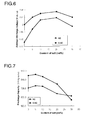
FIGs. 6 and 7 show the average discharge voltage and discharge capacity measured
on shifting the content of EMIBeti from 0 to 30% by volume in the electrolyte used in Example 1.
As shown in FIGs. 6 and 7, it can be confirmed that the average discharge voltage and
discharge capacity are excellent when the content of EMIBeti salts is between 5 and 10% by
volume.
Evaluation of Performance at Low Temperature
The performance at a low temperature was evaluated with the test cells of Example 1,
Example 2 and Comparative Example 1. The lithium-sulfur battery was initially discharged for 1
cycle at a discharge current density of 0.2 mA/cm
2 since the test cell was already charged.
The charge current density was set to 0.4 mA/cm
2 and the discharge current density was varied
to 0.2, 0.4, 1.0, and 2.0 mA/cm
2 (C-rate is 0.1C, 0.2C, 0.5C, and 1C, respectively) for 1 cycle,
and a charge and discharge were then performed at 0.4 mA/cm
2, which was set as the
discharge capacity at an ambient temperature. Thereafter, the charge current density was
maintained at 0.4 mA/cm
2 at the ambient temperature, followed by transferring the test cells to
a low temperature of -10 °C and -20 °C, leaving them for 2 hours, and discharging them at 0.4
mA/cm
2. Table 1 shows the discharge capacities on this occasion based on percent ratios
compared to the discharge capacity at ambient temperature. The discharge cut-off voltage
was set to 1.5∼2.8 V.
| Temperature | Example 1 | Example 2 |
| -10°C | 80% | 74% |
| -20°C | 67% | 58% |
As shown in Table 1, the discharge capacity of the cell of Example 1 is superior to
that of Example 2 at low temperatures.
In the Reference examples below, the electrochemical characteristics were evaluated
when the electrolyte of the inventive lithium-sulfur batteries was used for lithium-ion batteries.
Reference Example 1
A binder (polyvinylidene fluoride) was added to N-methyl pyrrolidone (NMP) to
provide a binder solution. A conductive material (Super P) and a positive active material of
LiCoO2 with an average particle size of 10 µm were added to the binder solution to prepare a
positive active material slurry for a lithium-sulfur battery. The weight ratio for the positive active
material/conductive material/binder was in 96:2:2. The slurry was coated on a carbon-coated
Al foil. Then, the slurry-coated Al-foil was dried in a vacuum oven at 60 °C for over 12 hours.
The positive electrode with a density of 2 mAh/cm2 was then prepared to 25X50 mm2 in size.
The positive electrode, the vacuum dried separator, and the negative electrode were laminated
and transferred into a pouch. The electrolyte of 1.0 M LiSO3CF3 in the mixed solvent of
ethylene carbonate and dimethyl carbonate in the volume ratio of 1:1 was injected into said
pouch to provide a pouch-type lithium ion cell.
Reference Example 2
A lithium ion cell was fabricated by the same procedure as described in Reference
Example 1 except that an electrolyte of EMIBeti was used.
Reference Example 3
A lithium ion cell was fabricated by the same procedure as described in Reference
Example 1 except that an electrolyte of 1.0 M LiSO3CF3 in EMIBeti was used.
Reference Example 4
A lithium cell was fabricated by the same procedure as described in Example 1
except that an electrolyte of 1.0 M LiSO3CF3 in a mixed solvent of dimethoxy
ethane/EMIBeti/dioxolane in the volume ratio of 70:10:20 was used.
The lithium ion cells according to Reference Examples 2 to 4 have discharge
capacities that are about 20% or less of that of Reference Example 1 and of about 10% or less
of those of the above inventive Examples. Thus, the electrolyte that improves the lithium-sulfur
batteries does not impart any improvements to the lithium-ion batteries. It seems that different
electrolytes are required due to the difference in the active materials between the two kinds of
batteries.
The lithium-sulfur batteries according to the present invention include organic cations
other than lithium ions, and salts as electrolytes having excellent ion conductivity at ambient
temperature resulting in increasing the sulfur utilization and improving cycle life characteristics
and discharge characteristics such as discharge capacity and average discharge voltage and
performance at low temperatures compared to conventional batteries using prior art electrolytes
including organic solvents and solid-phase lithium salts.
While the present invention has been described in detail with reference to the
preferred embodiments, those skilled in the art will appreciate that various modifications and
substitutions can be made thereto without departing from the spirit and scope of the present
invention as set forth in the accompanying claims and equivalents thereof.
Where technical features mentioned in any claim are followed by reference signs, those reference
signs have been included for the sole purpose of increasing the intelligibility of the claims and
accordingly, such reference signs do not have any limiting effect on the scope of each element
identified by way of example by such reference signs.