EP1300159A1 - Remedies for cancer - Google Patents
Remedies for cancer Download PDFInfo
- Publication number
- EP1300159A1 EP1300159A1 EP01945613A EP01945613A EP1300159A1 EP 1300159 A1 EP1300159 A1 EP 1300159A1 EP 01945613 A EP01945613 A EP 01945613A EP 01945613 A EP01945613 A EP 01945613A EP 1300159 A1 EP1300159 A1 EP 1300159A1
- Authority
- EP
- European Patent Office
- Prior art keywords
- cancer
- spla
- type
- treatment
- compound
- Prior art date
- Legal status (The legal status is an assumption and is not a legal conclusion. Google has not performed a legal analysis and makes no representation as to the accuracy of the status listed.)
- Granted
Links
- 0 CC(*)=C(CCC=C1*)C1=C Chemical compound CC(*)=C(CCC=C1*)C1=C 0.000 description 8
- MVAOLFCQWQECDS-UHFFFAOYSA-N CCCC(C)NCC Chemical compound CCCC(C)NCC MVAOLFCQWQECDS-UHFFFAOYSA-N 0.000 description 1
- GXXXUZIRGXYDFP-UHFFFAOYSA-N Cc1ccc(CC(O)=O)cc1 Chemical compound Cc1ccc(CC(O)=O)cc1 GXXXUZIRGXYDFP-UHFFFAOYSA-N 0.000 description 1
Classifications
-
- C—CHEMISTRY; METALLURGY
- C07—ORGANIC CHEMISTRY
- C07D—HETEROCYCLIC COMPOUNDS
- C07D487/00—Heterocyclic compounds containing nitrogen atoms as the only ring hetero atoms in the condensed system, not provided for by groups C07D451/00 - C07D477/00
- C07D487/02—Heterocyclic compounds containing nitrogen atoms as the only ring hetero atoms in the condensed system, not provided for by groups C07D451/00 - C07D477/00 in which the condensed system contains two hetero rings
- C07D487/04—Ortho-condensed systems
-
- A—HUMAN NECESSITIES
- A61—MEDICAL OR VETERINARY SCIENCE; HYGIENE
- A61K—PREPARATIONS FOR MEDICAL, DENTAL OR TOILETRY PURPOSES
- A61K31/00—Medicinal preparations containing organic active ingredients
-
- A—HUMAN NECESSITIES
- A61—MEDICAL OR VETERINARY SCIENCE; HYGIENE
- A61K—PREPARATIONS FOR MEDICAL, DENTAL OR TOILETRY PURPOSES
- A61K31/00—Medicinal preparations containing organic active ingredients
- A61K31/33—Heterocyclic compounds
- A61K31/395—Heterocyclic compounds having nitrogen as a ring hetero atom, e.g. guanethidine or rifamycins
- A61K31/40—Heterocyclic compounds having nitrogen as a ring hetero atom, e.g. guanethidine or rifamycins having five-membered rings with one nitrogen as the only ring hetero atom, e.g. sulpiride, succinimide, tolmetin, buflomedil
- A61K31/403—Heterocyclic compounds having nitrogen as a ring hetero atom, e.g. guanethidine or rifamycins having five-membered rings with one nitrogen as the only ring hetero atom, e.g. sulpiride, succinimide, tolmetin, buflomedil condensed with carbocyclic rings, e.g. carbazole
-
- A—HUMAN NECESSITIES
- A61—MEDICAL OR VETERINARY SCIENCE; HYGIENE
- A61K—PREPARATIONS FOR MEDICAL, DENTAL OR TOILETRY PURPOSES
- A61K31/00—Medicinal preparations containing organic active ingredients
- A61K31/33—Heterocyclic compounds
- A61K31/395—Heterocyclic compounds having nitrogen as a ring hetero atom, e.g. guanethidine or rifamycins
- A61K31/40—Heterocyclic compounds having nitrogen as a ring hetero atom, e.g. guanethidine or rifamycins having five-membered rings with one nitrogen as the only ring hetero atom, e.g. sulpiride, succinimide, tolmetin, buflomedil
- A61K31/403—Heterocyclic compounds having nitrogen as a ring hetero atom, e.g. guanethidine or rifamycins having five-membered rings with one nitrogen as the only ring hetero atom, e.g. sulpiride, succinimide, tolmetin, buflomedil condensed with carbocyclic rings, e.g. carbazole
- A61K31/404—Indoles, e.g. pindolol
-
- A—HUMAN NECESSITIES
- A61—MEDICAL OR VETERINARY SCIENCE; HYGIENE
- A61K—PREPARATIONS FOR MEDICAL, DENTAL OR TOILETRY PURPOSES
- A61K31/00—Medicinal preparations containing organic active ingredients
- A61K31/33—Heterocyclic compounds
- A61K31/395—Heterocyclic compounds having nitrogen as a ring hetero atom, e.g. guanethidine or rifamycins
- A61K31/435—Heterocyclic compounds having nitrogen as a ring hetero atom, e.g. guanethidine or rifamycins having six-membered rings with one nitrogen as the only ring hetero atom
- A61K31/4353—Heterocyclic compounds having nitrogen as a ring hetero atom, e.g. guanethidine or rifamycins having six-membered rings with one nitrogen as the only ring hetero atom ortho- or peri-condensed with heterocyclic ring systems
- A61K31/437—Heterocyclic compounds having nitrogen as a ring hetero atom, e.g. guanethidine or rifamycins having six-membered rings with one nitrogen as the only ring hetero atom ortho- or peri-condensed with heterocyclic ring systems the heterocyclic ring system containing a five-membered ring having nitrogen as a ring hetero atom, e.g. indolizine, beta-carboline
-
- A—HUMAN NECESSITIES
- A61—MEDICAL OR VETERINARY SCIENCE; HYGIENE
- A61K—PREPARATIONS FOR MEDICAL, DENTAL OR TOILETRY PURPOSES
- A61K31/00—Medicinal preparations containing organic active ingredients
- A61K31/33—Heterocyclic compounds
- A61K31/395—Heterocyclic compounds having nitrogen as a ring hetero atom, e.g. guanethidine or rifamycins
- A61K31/495—Heterocyclic compounds having nitrogen as a ring hetero atom, e.g. guanethidine or rifamycins having six-membered rings with two or more nitrogen atoms as the only ring heteroatoms, e.g. piperazine or tetrazines
- A61K31/4985—Pyrazines or piperazines ortho- or peri-condensed with heterocyclic ring systems
-
- A—HUMAN NECESSITIES
- A61—MEDICAL OR VETERINARY SCIENCE; HYGIENE
- A61K—PREPARATIONS FOR MEDICAL, DENTAL OR TOILETRY PURPOSES
- A61K31/00—Medicinal preparations containing organic active ingredients
- A61K31/33—Heterocyclic compounds
- A61K31/395—Heterocyclic compounds having nitrogen as a ring hetero atom, e.g. guanethidine or rifamycins
- A61K31/495—Heterocyclic compounds having nitrogen as a ring hetero atom, e.g. guanethidine or rifamycins having six-membered rings with two or more nitrogen atoms as the only ring heteroatoms, e.g. piperazine or tetrazines
- A61K31/50—Pyridazines; Hydrogenated pyridazines
- A61K31/5025—Pyridazines; Hydrogenated pyridazines ortho- or peri-condensed with heterocyclic ring systems
-
- A—HUMAN NECESSITIES
- A61—MEDICAL OR VETERINARY SCIENCE; HYGIENE
- A61P—SPECIFIC THERAPEUTIC ACTIVITY OF CHEMICAL COMPOUNDS OR MEDICINAL PREPARATIONS
- A61P35/00—Antineoplastic agents
Definitions
- the present invention relates to a composition for the prevention or treatment of cancer which contains an inhibitor against type-X sPLA 2 (secretary PLA 2 ) as an active ingredient.
- the inventors of the present invention examined the expression of type-X sPLA 2 in various kinds of human pathological tissues with anti-type-X sPLA 2 antibody. They found the elevated expression of type-X sPLA 2 in several tumor tissues.
- the immunohistochemical analysis of tumor tissues was performed as follows. At first, anti-human type-X sPLA 2 antibody was added to the slides prepared from normal adult tissues or tumor tissues from cancer patients and incubated for several hours. Next, in order to examine the expression of type-X sPLA 2 in the tissues, the expression of type-X sPLA 2 was visualized by using the methods such as the immunohistochemical labeling to detect the type-X sPLA 2 signals. Consequently, the type-X sPLA 2 signals were detected in the slides prepared from tumor tissues, suggesting that the expression of type-X sPLA 2 is elevated in tumor tissues.
- the inventors of the present invention performed the experiments for neutralization of type-X sPLA 2 signals. Precisely, before the addition of anti-human type-X sPLA 2 antibody to the slides, the slides were incubated with the purified type-X sPLA 2 protein for several hours. Hereafter, the slides were processed as the same procedures as described above to examine the type-X sPLA 2 signals. Consequently, the type-X sPLA 2 signals were disappeared in the slides prepared from tumor tissues.
- the inventors of the present invention examined the inhibitory effects of sPLA 2 inhibitor against the type-X sPLA 2 -induced release of oleic acid from tumor cell. Consequently, they confirmed that sPLA 2 inhibitors significantly blocked the type-X sPLA 2 -induced release of oleic acid from tumor cells.
- the inventors of the present invention achieved the following present invention based on the above experimental results.
- the present invention relates to I) a composition for prevention or treatment of cancer which contains a type-X sPLA 2 inhibitor as an active ingredient.
- the present invention relates to the following II) to XV).
- Type-X sPLA 2 inhibitors mean compounds which have an inhibitory activity against type-X sPLA 2 and other optional activities such as inhibitory activities against other enzymes or affinities for any receptors. Namely, the inhibitors include any compound having stronger activities against type-X sPLA 2 than that having no such activities in the evaluation test therefore. Especially, type-X sPLA 2 selective inhibitors are preferred as type-X sPLA 2 inhibitors of the present invention. For example, compounds whose IC 50 values against type-X sPLA 2 are 1 ⁇ M or less in the experiment of Example 2 are preferred. Compounds having IC 50 values 100 nM or less are more preferred.
- a type-X sPLA 2 inhibitor a compound having type-X sPLA 2 inhibitory activities, having one or more of chiral center(s), may exist as an optically active member.
- a compound containing alkenyl or alkenylene may be a cis- or trans-isomer. Mixtures of R- and S-isomers as well as of cis- and trans-isomers, and mixtures of R- and S-isomers containing a racemic mixture are included in the scope of the present invention.
- An asymmetric carbon atom may exist also in a substituent such as alkyl group. All such isomers and mixtures are included in the present invention.
- a specified stereoisomer can be manufactured by subjecting to stereospecific reaction well known to those skilled in the art applying a previously separated starting material having an asymmetrical center or by preparing a mixture of stereoisomers and separating the mixture in accordance with a well-known manner.
- Prodrug is a derivative of a compound with type-X sPLA 2 inhibitory activities, having a group which can be decomposed chemically or metabolically, and becoming pharmaceutically active by solvolysis or in vivo under a physiological condition.
- the derivative, acid derivative or basic derivative exhibits activity, an acid derivative is more advantageous in solubility, tissue affinity, and release control in mammal organism (Bungard, H., Design of Prodrugs, pp. 7-9, 21-24. Elsevier, Amsterdam, 1985).
- prodrugs including an acid derivative such as an ester which is prepared by reacting a basal acid compound with a suitable alcohol, or an amide which is prepared by reacting a basal acid compound with a suitable amine, are well known to those skilled in the art.
- Simple aliphatic or aromatic esters derived from acid groups contained in the compounds according to the present invention are preferable prodrugs.
- Particularly preferred esters as prodrugs are C1-C6 alkylester (e.g. methyl ester, ethyl ester).
- Double ester such as (acyloxy)alkyl ester or ((alkyloxycarbonyl)oxy)-alkyl ester type prodrugs may be optionally manufactured.
- salts having a higher water solubility and more physiologically suitable properties than those of the original compound can be formed.
- An example of typical pharmaceutically acceptable salts includes salts with alkali metal and alkaline earth metal such as lithium, sodium, potassium, magnesium, aluminum and the like, but it is to be noted that such pharmaceutically acceptable salts are not limited thereto.
- a salt is easily manufactured from a free acid by either treating an acid in a solution with a base, or allowing an acid to be in contact with an ion exchange resin.
- Addition salts of the compounds having type-X sPLA 2 inhibitory activities with relatively non-toxic inorganic bases and organic bases, for example, amine cation, ammonium, and quaternary ammonium derived from nitrogenous bases having a basicity sufficient for forming a salt of the compounds of the present invention are included in the definition of "pharmaceutically acceptable salts”. (e.g., S. M. Berge et al., "Pharmaceutical Salts, "J. Phar. Sci., 66, 1-19 (1977)).
- salts such as acetates, benzenesulfonates, benzoates, bicarbonates, bisulfates, bitartrate, borates, bromides, camsylates, carbonates, chlorides, clavulanates, citrates, edetates, edisylates, estolates, esylates, fluorides, fumarates, gluceptates, gluconates, glutamates, glycolylarsanilates, hexylresorcinates, hydroxynaphthoates, iodides, isothionates, lactates, lactobionates, laurates, malates, maleates, mandelates, mesylates, methylbromides, methylnitrates, methylsulfates, mucates, napsylates,
- salts such as acetates, benzenesulfonates, benzoates, bicarbonates, bisulfates, bit
- the solvate includes solvates with organic solvents and/or hydrates.
- a questioned compound may be coordinated with a suitable number of water molecules.
- pharmaceutically acceptable means that carriers, diluents, or additives are compatible with other ingredients in a formulation and are not harmful for recipients.
- the "cancer” means various malignant tumors originated from epithelial cells in various tissues, cells such as colon cancer, lung cancer, liver cancer, gastric cancer, renal cancer, gallbladder cancer, prostate cancer, pancreatic cancer, testis cancer, ovarian cancer, cutaneous cancer, esophagus cancer, laryngeal cancer, breast cancer or uterine cancer and exemplified.
- the inventor of the present invention confirmed the elevated expression of type-X sPLA 2 in various tumor tissues, including colon cancer, lung cancer, liver cancer, gastric cancer, renal cancer, gallbladder cancer, prostate cancer, pancreatic cancer, testis cancer, ovarian cancer or cutaneous cancer.
- the present invention is useful for the prevention or treatment of colon cancer, lung cancer, liver cancer, gastric cancer, renal cancer, gallbladder cancer, prostate cancer, pancreatic cancer, testis cancer, ovarian cancer or cutaneous cancer.
- alkyl employed alone or in combination with other terms means a straight- or branched chain monovalent hydrocarbon group having a specified number of carbon atoms.
- An example of the alkyl includes methyl, ethyl, n-propyl, isopropyl, n-butyl, isobutyl, sec-butyl, tert-butyl, n-pentyl, n-hexyl, n-heptyl, n-octyl, n-nonyl, n-decanyl, n-undecanyl, n-dodecanyl, n-tridecanyl, n-tetradecanyl, n-pentadecanyl, n-hexadecanyl, n-heptadecanyl, n-octadecanyl, n-nonadecanyl, n-eicosanyl and
- alkenyl employed alone or in combination with other terms in the present specification means a straight- or branched chain monovalent hydrocarbon group having a specified number of carbon atoms and at least one double bond.
- An example of the alkenyl includes vinyl, allyl, propenyl, crotonyl, isopentenyl, a variety of butenyl isomers and the like.
- alkynyl used in the present specification means a straight or branched chain monovalent hydrocarbon group having a specified number of carbon atoms and at least one triple bond.
- the alkynyl may contain (a) double bond(s).
- An example of the alkynyl includes ethynyl, propynyl, 6-heptynyl, 7-octynyl, 8-nonynyl and the like.
- carbocyclic group used in the present specification means a group derived from a saturated or unsaturated, substituted or unsubstituted 5 to 14 membered, preferably 5 to 10 membered, and more preferably 5 to 7 membered organic nucleus whose ring forming atoms (other than hydrogen atoms) are solely carbon atoms.
- a group containing two to three of the carbocyclic group is also included in the above stated group.
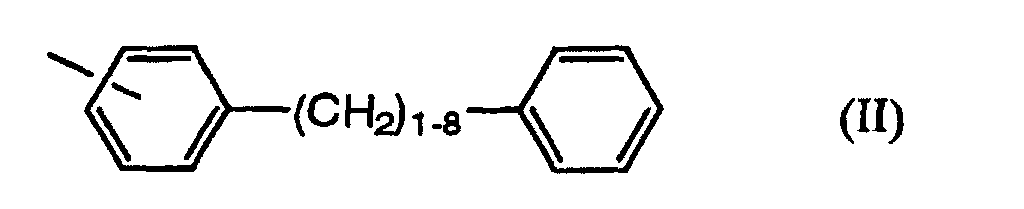
- carbocyclic groups includes cycloalkyl such as cyclopropyl, cyclobutyl, cyclopentyl, cyclohexyl, cycloheptyl, and cyclooctyl, cycloalkenyl such as cyclobutylenyl, cyclopentenyl, cyclohexenyl, cycloheptenyl, and cyclooctenyl, phenyl, naphthyl, norbornyl, bicycloheptadienyl, indenyl, stilbenyl, terphenylyl, phenylcyclohexenyl, acenaphthyl, anthryl, biphenylyl, bibenzyl, and a phenylalkylphenyl derivative represented by the formula (II):
- Phenyl, cycloalkyl or the like is preferred as a carbocyclic groups in the R 3 and R 4 .
- heterocyclic group used in the present specification means a group derived from monocyclic or polycyclic, saturated or unsaturated, substituted or unsubstituted heterocyclic nucleus having 5 to 14 ring atoms and containing 1 to 3 hetero atoms selected from the group consisting of nitrogen atom, oxygen atom, and sulfur atom.
- heterocyclic group includes pyridyl, pyrrolyl, furyl, benzofuryl, thienyl, benzothienyl, pyrazolyl, imidazolyl, phenylimidazolyl, triazolyl, isoxazolyl, oxazolyl, thiazolyl, thiadiazolyl, indolyl, carbazolyl, norharmanyl, azaindolyl, benzofuranyl, dibenzofuranyl, dibenzothiophenyl, indazolyl, imidazo[1,2-a]pyridinyl, benzotriazolyl, anthranilyl, 1,2-benzisoxazolyl, benzoxazolyl, benzothiazolyl, purinyl, puridinyl, dipyridinyl, phenylpyridinyl, benzylpyridinyl, pyrimidinyl, phenylpyrimidinyl
- Furyl, thienyl or the like is preferred as a heterocyclic group in the R 3 and R 4 .
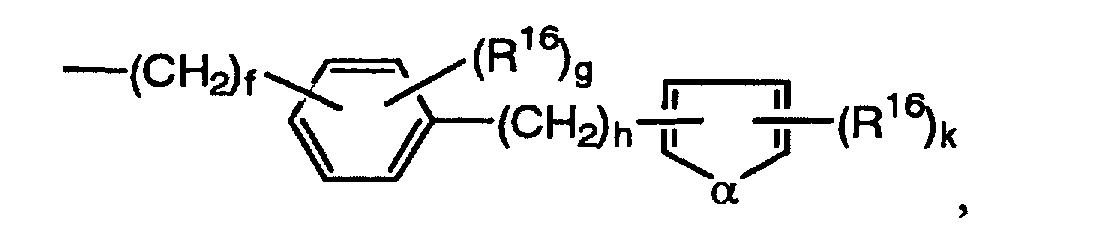
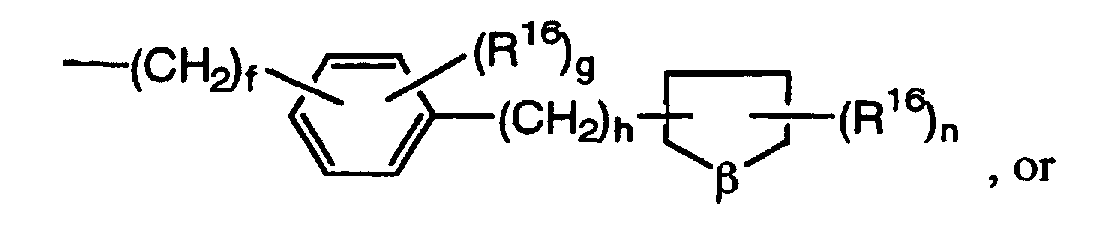
- R 5 Preferred carbocyclic and heterocyclic groups in R 5 represented by the formula: wherein h is an integer from 0 to 2, R 16 and R 17 are each independently halogen, C1-C10 alkyl, C1-C10 alkyloxy, C1-C10 alkylthio, aryloxy, or C1-C10 haloalkyl, ⁇ is oxygen atom or sulfur atom, ⁇ is -CH 2 - or -(CH 2 ) 2 -, ⁇ is oxygen atom or sulfur atom, c, i, and p are each independently an integer from 0 to 5, e is an integer from 0 to 7, g is an integer from 0 to 4, k and n are each independently an integer from 0 to 3.
- R 16 is a substituent on the naphthyl group
- the substituent may be substituted at any arbitrary position on the naphthyl group.
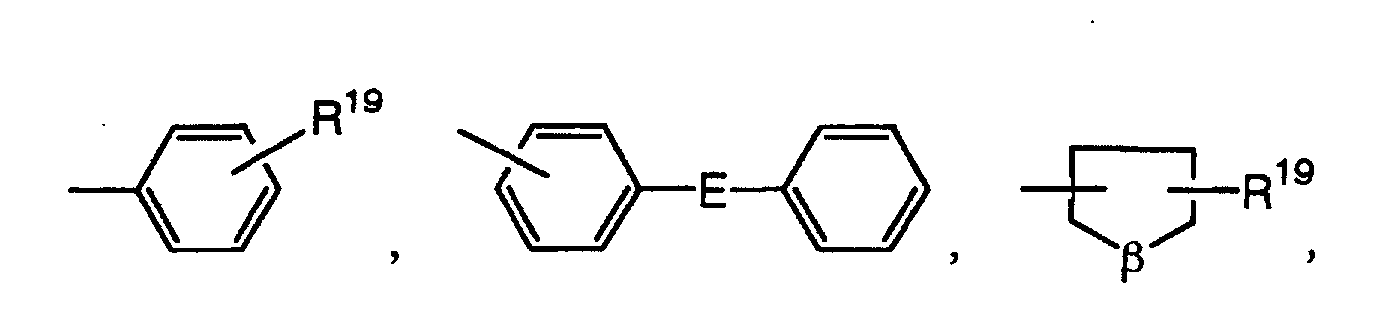
- a more preferable example includes a group represented by the formula: wherein R 19 is hydrogen atom, C1-C3 alkyl or halogen; E is a bond, -CH 2 -, or -O-; ⁇ is - CH 2 - or -(CH 2 ) 2 -as defined above.
- non-interfering substituent in the present specification means a group suitable for substitution of the above mentioned “carbocyclic group", “heterocyclic group”, and basic skeleton.
- An example of the non-interfering substituents includes C1-C10 alkyl, C2-C6 alkenyl, C2-C6 alkynyl, C7-C12 aralkyl such as benzyl and phenethyl, C7-C12 alkaryl, C3-C8 cycloalkyl, C3-C8 cycloalkenyl, phenyl, tolyl, xylyl, biphenylyl, C1-C10 alkyloxy, C1-C6 alkyloxy C1-C6 alkyl such as methyloxymethyl, ethyloxymethyl, methyloxyethyl, and ethyloxyethyl, C1-C6 alkyloxy C1-C6 alkyloxy such as methyloxymethyl,
- substituents selected from the group consisting of C1-C6 alkyl, C1-C6 alkyloxy, C2-C6 haloalkyloxy, C1-C6 haloalkyl, and halogen.
- halogen C1-C6 alkyl, C1-C6 alkyloxy, C1-C6 alkylthio, and C1-C6 haloalkyl as the "non-interfering substituent" of "substituted with non-interfering substituent" in the R 3 , R 4 , and R 5 .
- More preferable are halogen, C1-C3 alkyl, C1-C3 alkyloxy, C1-C3 alkylthio, and C1-C3 haloalkyl.
- C1-C6 alkyl Preferable are C1-C6 alkyl, aralkyl, C1-C6 alkyloxy, C1-C6 alkylthio, C1-C6 hydroxyalkyl, C2-C6 haloalkyloxy, halogen, carboxy, C1-C6 alkyloxycarbonyl, aryloxy, arylthio, a carbocyclic group, and a heterocyclic group as the "non-interfering substituent" in the R 1 , R 2 , R 3 , R 4 , and R 7 . More preferable are C1-C6 alkyl, aralkyl, carboxy, C1-C6 hydroxyalkyl, phenyl, and C1-C6 alkyloxycarbonyl.
- halogen in the present specification means fluorine, chlorine, bromine, and iodine.
- cycloalkyl in the present specification means a monovalent cyclic hydrocarbon group having a specified number of carbon atoms.
- An example of the cycloalkyl includes cyclopropyl, cyclobutyl, cyclopentyl, cyclohexyl, cycloheptyl, cyclooctyl and the like.
- cycloalkenyl in the present specification means a monovalent cyclic hydrocarbon group having a specified number of carbon atoms and at least one double bond(s).
- An example of the cycloalkenyl includes 1-cyclopropenyl, 2-cyclopropenyl, 1-cyclobutenyl, 2-cyclobutenyl and the like.
- alkyloxy includes methyloxy, ethyloxy, n-propyloxy, isopropyloxy, n-butyloxy, n-pentyloxy, n-hexyloxy and the like.
- alkylthio includes methylthio, ethylthio, n-propylthio, isopropylthio, n-butylthio, n-pentylthio, n-hexylthio and the like.
- the term "acidic group” in the present specification means an organic group functioning as a proton donor capable of hydrogen bonding when attached to a basic skeleton through a suitable linking atom (hereinafter defined as “acid linker”).
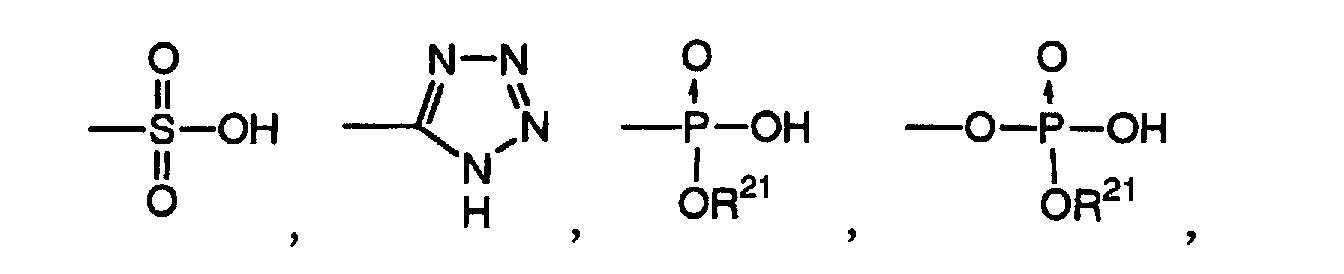
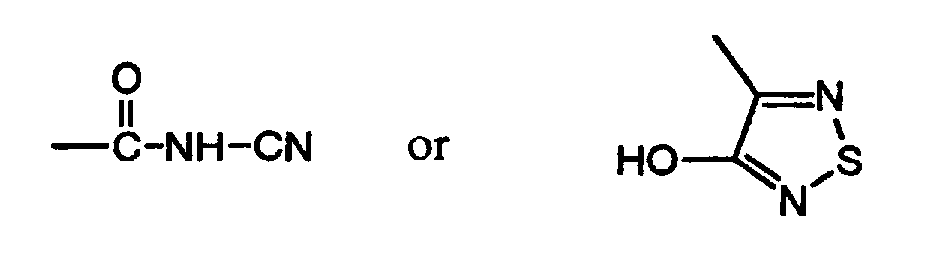
- An example of the acidic group includes a group represented by the formula: wherein R 21 is hydrogen atom, a metal, or C1-C10 alkyl; each R 22 is independently hydrogen atom or C1-C10 alkyl, provided that at least one of R 21 or R 22 is hydrogen atom in case of an acidic group having both R 21 and R 22 .
- Preferable is -COOH, -SO 3 H, - CONHSO 2 C 6 H 5 , or P(O)(OH) 2 . More preferable is -COOH.
- acid linker in the present specification means a divalent linking group represented by a symbol -(L 1 )-, and it functions to join a basic skeleton to an "acidic group" in the general relationship.
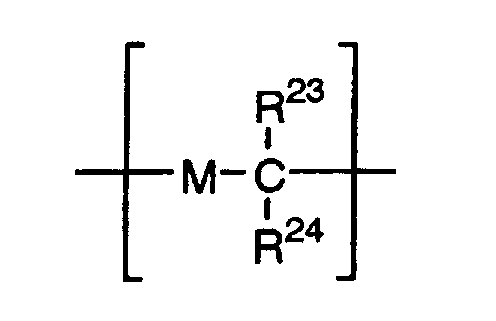
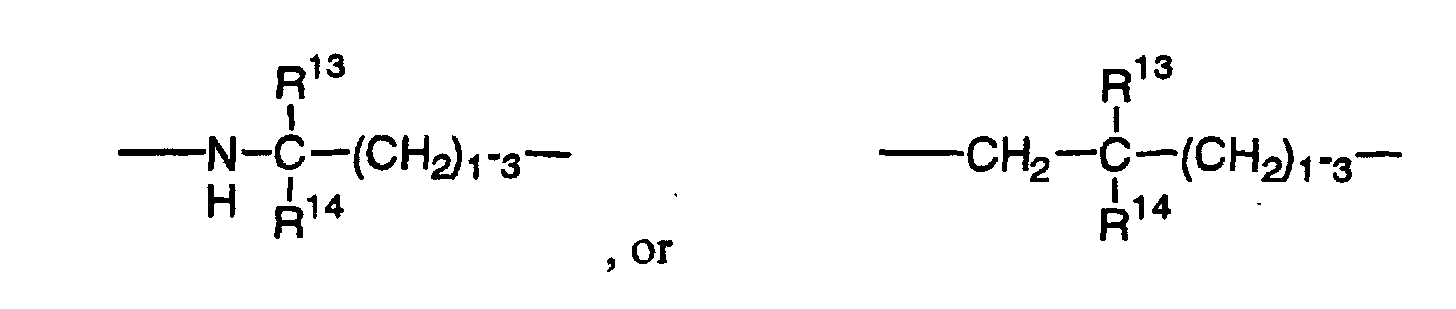
- An example of it includes a group represented by the formula: wherein M is -CH 2 -, -O-, -N(R 25 )-, or -S- wherein R 23 and R 24 are each independently hydrogen atom, C1-C10 alkyl, aryl, aralkyl, carboxy, or halogens and a group represented by the formula: wherein R 13 and R 14 are each independently hydrogen atom, C1-C10 alkyl, C1-C10 aralkyl, carboxy, alkyloxycarbonyl, or halogen.
- Preferable are -O-CH 2 -, - S-CH 2 -, -N(R 25 )-CH 2 -, -CH 2 -CH 2 -, -O-CH(CH 3 )-, or -O-CH((CH 2 ) 2 C 6 H 5 )- wherein R 25 is C1-C6 alkyl. More preferable is -O-CH 2 - or -S-CH 2 -.
- the term "acid linker length” means the number of atoms (except for hydrogen atoms) in the shortest chain of a linking group -(L 1 )- which connects a basic skeleton with the "acidic group".
- the presence of a carbocyclic ring in -(L 1 )- counts as the number of atoms approximately equivalent to the calculated diameter of the carbocyclic ring.
- a benzene and cyclohexane ring in the acid linker counts as two atoms in calculating the length of -(L 1 )-.
- a preferable length is 2 to 3.
- haloalkyl in the present specification means the aforementioned “alkyl” substituted with the aforementioned “halogen” at arbitrary position(s).
- An example of the haloalkyl includes chloromethyl, trifluoromethyl, 2-chloromethyl, 2-bromomethyl and the like.
- hydroxyalkyl in the present specification means the aforementioned "alkyl” substituted with hydroxy at arbitrary position(s).
- An example of the hydroxyalkyl includes hydroxymethyl, 2-hydroxyethyl, 3-hydroxypropyl and the like. In this case, hydroxymethyl is preferable.
- haloalkyl in “haloalkyloxy” is the same as defined above.
- An example of it includes 2-chloroethyloxy, 2-trifluoroethyloxy, 2-chloroethyloxy and the like.
- aryl in the present specification means a monocyclic or condensed cyclic aromatic hydrocarbon.
- An example of the aryl includes phenyl, 1-naphthyl, 2-naphthyl, anthryl and the like. Particularly, phenyl and 1-naphthyl are preferred.
- aralkyl in the present specification means a group wherein the aforementioned "alkyl” is substituted with the above-mentioned "aryl". Such aryl may have a bond at any substitutable position.
- aryl may have a bond at any substitutable position.
- An example of it includes benzyl, phenethyl, phenylpropyl such as 3-phenylpropyl, naphthylmethyl such as 1-naphthylmethyl and the like.
- alkyloxycarbonyl in the present specification includes methyloxycarbonyl, ethyloxycarbonyl, n-propyloxycarbonyl and the like.
- aryloxy in the present specification includes phenyloxy and the like.
- arylthio in the present specification includes phenylthio and the like.
- halophenyl in the present specification means phenyl substituted with the aforementioned "halogen" at one or more position(s).
- An example of the halophenyl includes fluorophenyl, chlorophenyl, bromophenyl, iodophenyl, difluorophenyl, dichlorophenyl, dibromophenyl, trifluorophenyl, trichlorophenyl, tribromophenyl, chlorofluorophenyl, bromochlorophenyl, and the like.
- cyclohexene ring of D ring in the present specification means a cyclohexene ring having only one double bond at the condensation part with the adjacent ring.
- the present invention relates to the prevention or treatment of cancer by a type-X sPLA 2 inhibitor.
- the type-X sPLA 2 inhibitor may be known one and selected from sPLA2 inhibitors, for example, compounds described in EP-620214 (JP Laid-Open (Tokukai) No. 95/010838, US-5578634), EP-620215 (JP Laid-Open (Tokukai) No. 95/025850, US-5684034), EP-675110 (JP Laid-Open (Tokukai) No. 95/285933, US-5654326), WO 96/03120 (JP Laid-Open No.
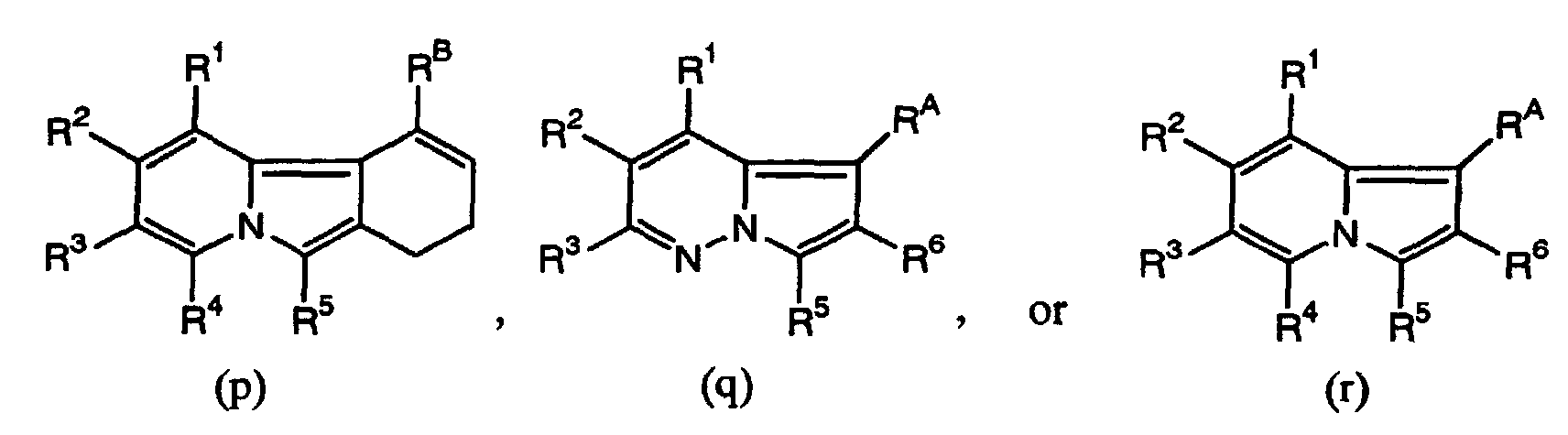
- R 1 , R 2 , R 3 , and R 4 are each independently hydrogen atom, a non-interfering substituent(s) and the like, R 5 is carbocyclic groups, heterocyclic groups, R 6 is hydrogen atom, C1-C3alkyl and the like, R A is -COCONH 2 and the like, R B is -CONH 2 , and the like.
- a cell expressing human type-X sPLA 2 is prepared. That is, cDNA sequence encoding human type-X sPLA 2 (Cupillard et al., J. Biol. Chem, 1997, 272, 15745-15752) is inserted into an expression vector for mammalian cells. The obtained expression vector is transfected into the host cell and the cell stably expressing human type-X sPLA 2 is obtained.
- the above-mentioned transfected cell is cultured in medium and its culture supernatant is used for the measurement of each enzyme activity.
- the following chromogenic assay is utilized.
- a general explanation for this assay is described in "Analysis of Human Synovial Fluid Phospholipase A 2 on Short Chain Phosphatidylcholine-Mixed Micelles: Development of a Spectrophotometric Assay Suitable for a Micortiterplate Reader" (Analytical Biochemistry, 204, pp 190-197, 1992 by Laure. J. Reynolds. Lori L. Hughes and Edward A. Dennis.
- composition for treatment or prevention of cancer in the present invention may be administered to a patient through a variety of routes including oral, aerosol, rectal, percutaneous, subcutaneous, intravenous, intramuscular, and nasal routes.
- a formulation according to the present invention may be manufactured by combining (for example, admixing) a curatively effective amount of a compound of the present invention with a pharmaceutically acceptable carrier or diluent.
- the formulation of the present invention may be manufactured with the use of well-known and easily available ingredients in accordance with a known method.
- active ingredients are admixed or diluted with a carrier, or they are contained in a carrier in the form of capsule, sacheier, paper, or another container.
- the carrier is a solid, semi-solid, or liquid material which functions as a medium.
- a formulation according to the present invention may be produced in the form of tablet, pill, powder medicine, intraoral medicine, elixir agent, suspending agent, emulsifier, dissolving agent, syrup agent, aerosol agent (solid in liquid medium), and ointment.
- Such a formulation may contain up to 10% of an active compound. It is preferred to formulate a compound having activities for the treatment or prevention of cancer prior to administration.
- a carrier is in the form of solid, liquid, or a mixture thereof.
- a compound having type-X sPLA 2 inhibitory activities is dissolved into 4% dextrose/0.5% sodium citrate aqueous solution so as to be 2 mg/mL concentration for intravenous injection.
- Solid formulation includes powder, tablet, and capsule.
- Solid carrier consists of one or more of material(s) for serving also as fragrant, lubricant, dissolving agent, suspension, binder, tablet disintegrator, capsule.
- a tablet for oral administration contains a suitable excipient such as calcium carbonate, sodium carbonate, lactose, calcium phosphate and the like together with a disintegrator such as corn starch, alginic acid and the like and/or a binder such as gelatin, acacia and the like, and a lubricant such as magnesium stearate, stearic acid, talc and the like.
- a suitable excipient such as calcium carbonate, sodium carbonate, lactose, calcium phosphate and the like together with a disintegrator such as corn starch, alginic acid and the like and/or a binder such as gelatin, acacia and the like, and a lubricant such as magnesium stearate, stearic acid, talc and the like.
- a carrier is a finely pulverized solid which is blended with finely pulverized active ingredients.
- active ingredients are admixed with a carrier having required binding power in a suitable ratio, and it is solidified in a desired shape and size.
- Powder medicine and tablet contain about 1 to about 99% by weight of the active ingredients being novel compounds according to the present invention.
- suitable solid carriers includes magnesium carbonate, magnesium stearate, talc, sugar, lactose, pectin, dextrin, starch, gelatin, tragacanth gum, methyl cellulose, sodium carboxymethylcellulose, low-melting wax, and cocoa butter.
- An axenic liquid formulation contains suspending agent, emulsifier, syrup agent, and elixir agent.
- Active ingredients may be dissolved or suspended into a pharmaceutically acceptable carrier such as sterile water, a sterile organic solvent, a mixture thereof and the like. Active ingredients may be dissolved frequently into a suitable organic solvent such as propylene glycol aqueous solution. When finely pulverized active ingredients are dispersed into aqueous starch, sodium carboxymethylcellulose solution, or suitable oil, the other compositions can be prepared.
- the dosage varies with the conditions of the disease, administration route, age and body weight of patient.
- the dosage can generally be between 0.01 to 10 mg/kg/h for adult, preferably 0.1 to 1 mg/kg/h.
- cDNA sequence encoding human type-X sPLA 2 (Cupillard et al., J. Biol. Chem, 1997, 272, 15745-15752) was inserted into the downstream region of the promoter of pSVL SV40 Late Promoter Expression Vector (Amersham Pharmacia Biotech Inc.) that is an expression vector for mammalian cells.
- the obtained expression vector was transfected into the host CHO cells with a LipofectAMINE reagent (Gibco BRL Inc.) according to the manufacture's instruction to obtain the CHO cells stably expressing human type-X sPLA 2 .
- the transfected cell was cultured in ⁇ -MEM medium containing 10% fetal calf serum for 3 days and its culture supernatant was used for the measurement of each enzyme activity.
- Test compounds were added according to the alignment of plates that had been previously set.
- Human type-X sPLA 2 was incubated (30 min at 40 °C (15 ⁇ l/well)) with diheptanoylthio PC (1 mM) in the presence of Triton X-100 (0.3 mM) and 5,5'-dithiobis(2-nitrobenzoic acid) (125 ⁇ M) in Tris-HCl buffer (25 mM, pH 7.5) containing CaCl 2 (10 mM), KCl (100 mM), and bovine serum albumin (1.0 mg/mL). The changes in the absorbance at 405 nm were measured and the inhibition activities were calculated.
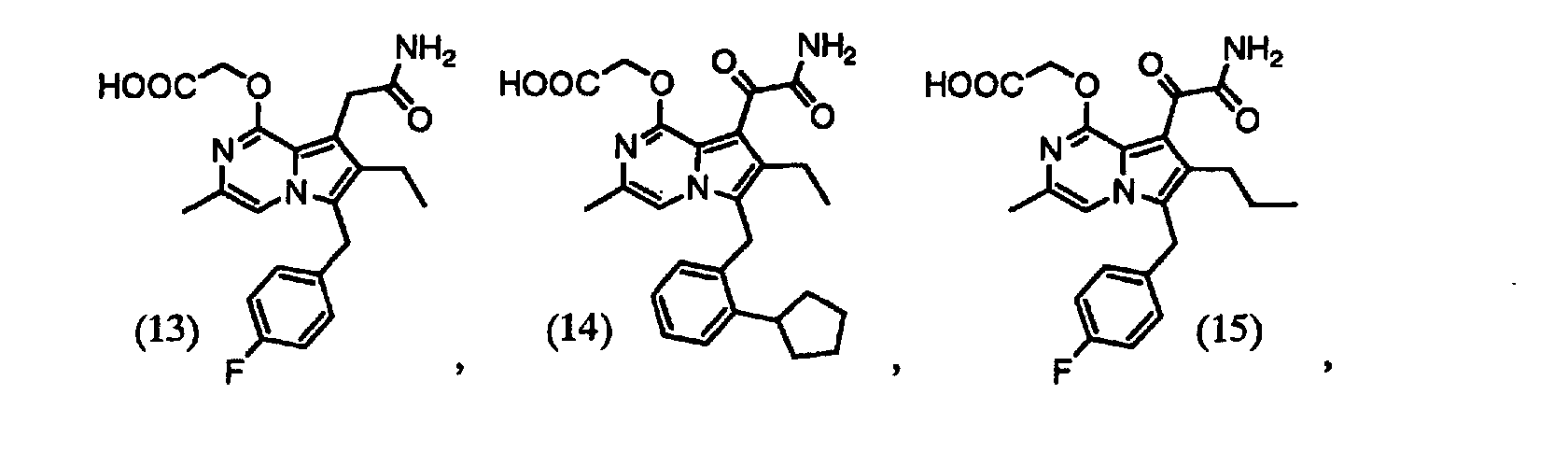
- the IC 50 value was determined by plotting the log concentration of the above-mentioned compounds (1)-(19) with respect to their inhibition values within 10% to 90% inhibitory range.
- Results of the type-X sPLA 2 inhibition test is shown in the following Table 1.
- Compound No. IC 50 (nM) Compound No. IC 50 (nM) 1 10 11 10 2 10 12 16 3 5 13 19 4 27 14 9 5 12 15 17 6 17 16 7 7 5 17 12 8 3 18 16 9 13 19 26 10 12
- anti-type-X sPLA 2 antibody that was described in "The Journal of Biological Chemistry Vol. 274, No. 48, pp.34203-34211 1999" was used.
- Paraffin embedded preparations of human colon cancer tissues and corresponding normal tissues were purchased from Biochain Inc. (San Leandro, CA). The tissue sections in the slides were dewaxed, treated in methanol containing 0.3% H 2 O 2 for 30 min to remove the endogenous peroxidase activity and incubated with 5% normal goat serum for 20 min. The slides were then incubated with anti-type-X sPLA 2 antibody (6 ⁇ g/mL) in PBS containing 0.1% bovine serum albumin for 14 hr at 4°C.
- Positive signals representative for type-X sPLA 2 expression was visualized as a dark-brownish color of diaminobenzidine deposit.
- the neutralization of type-X sPLA 2 specific signals was conducted by incubating anti-type-X sPLA 2 antibody with purified type-X sPLA 2 protein (60 ⁇ g/mL) for 2 hr before the addition to the slides.
- anti-type-X sPLA 2 antibody which was described in "The Journal of Biological Chemistry Vol. 274, No. 48, pp.34203-34211 1999" was used.
- Paraffin embedded preparations of human lung cancer tissues and corresponding normal tissues were purchased from Biochain Inc. (San Leandro, CA). The tissue sections in the slides were dewaxed, treated in methanol containing 0.3% H 2 O 2 for 30 min to remove the endogenous peroxidase activity and incubated with 5% normal goat serum for 20 min. The slides were then incubated with anti-type-X sPLA 2 antibody (6 ⁇ g/mL) in PBS containing 0.1% bovine serum albumin for 14 hr at 4°C.
- Positive signals representative for type-X sPLA 2 expression was visualized as a dark-brownish color of diaminobenzidine deposit.
- the neutralization of type-X sPLA 2 specific signals was conducted by incubating anti-type-X sPLA 2 antibody with purified type-X sPLA 2 protein (60 ⁇ g/mL) for 2 hr before the addition to the slides.
- anti-type-X sPLA 2 antibody which was described in "The Journal of Biological Chemistry Vol. 274, No. 48, pp.34203-34211 1999" was used.
- Paraffin embedded preparations of human liver cancer tissues and corresponding normal tissues were purchased from Biochain Inc. (San Leandro, CA). The tissue sections in the slides were dewaxed, treated in methanol containing 0.3% H 2 O 2 for 30 min to remove the endogenous peroxidase activity and incubated with 5% normal goat serum for 20 min. The slides were then incubated with anti-type-X sPLA 2 antibody (6 ⁇ g/mL) in PBS containing 0.1% bovine serum albumin for 14 hr at 4°C.
- Positive signals representative for type-X sPLA 2 expression was visualized as a dark-brownish color of diaminobenzidine deposit.
- the neutralization of type-X sPLA 2 specific signals was conducted by incubating anti-type-X sPLA 2 antibody with purified type-X sPLA 2 protein (60 ⁇ g/mL) for 2 hr before the addition to the slides.
- anti-type-X sPLA 2 antibody which was described in "The Journal of Biological Chemistry Vol. 274, No. 48, pp.34203-34211 1999" was used.
- Paraffin embedded preparations of human gastric cancer tissues and corresponding normal tissues were purchased from Biochain Inc. (San Leandro, CA). The tissue sections in the slides were dewaxed, treated in methanol containing 0.3% H 2 O 2 for 30 min to remove the endogenous peroxidase activity and incubated with 5% normal goat serum for 20 min. The slides were then incubated with anti-type-X sPLA 2 antibody (6 ⁇ g/mL) in PBS containing 0.1% bovine serum albumin for 14 hr at 4°C.
- Positive signals representative for type-X sPLA 2 expression was visualized as a dark-brownish color of diaminobenzidine deposit.
- the neutralization of type-X sPLA 2 specific signals was conducted by incubating anti-type-X sPLA 2 antibody with purified type-X sPLA 2 protein (60 ⁇ g/mL) for 2 hr before the addition to the slides.
- Example 7 Immunohistochemical analysis in human renal cancer tissues with anti-type-X sPLA 2 antibody.
- anti-type-X sPLA 2 antibody which was described in "The Journal of Biological Chemistry Vol. 274, No. 48, pp.34203-34211 1999" was used.
- Paraffin embedded preparations of human renal cancer tissues and corresponding normal tissues were purchased from Biochain Inc. (San Leandro, CA). The tissue sections in the slides were dewaxed, treated in methanol containing 0.3% H 2 O 2 for 30 min to remove the endogenous peroxidase activity and incubated with 5% normal goat serum for 20 min. The slides were then incubated with anti-type-X sPLA 2 antibody (6 ⁇ g/mL) in PBS containing 0.1% bovine serum albumin for 14 hr at 4°C.
- Positive signals representative for type-X sPLA 2 expression was visualized as a dark-brownish color of diaminobenzidine deposit.
- the neutralization of type-X sPLA 2 specific signals was conducted by incubating anti-type-X sPLA 2 antibody with purified type-X sPLA 2 protein (60 ⁇ g/mL) for 2 hr before the addition to the slides.
- anti-type-X sPLA 2 antibody which was described in "The Journal of Biological Chemistry Vol. 274, No. 48, pp.34203-34211 1999" was used.
- Paraffin embedded preparations of human gallbladder cancer tissues and corresponding normal tissues were purchased from Biochain Inc. (San Leandro, CA). The tissue sections in the slides were dewaxed, treated in methanol containing 0.3% H 2 O 2 for 30 min to remove the endogenous peroxidase activity and incubated with 5% normal goat serum for 20 min. The slides were then incubated with anti-type-X sPLA 2 antibody (6 ⁇ g/mL) in PBS containing 0.1% bovine serum albumin for 14 hr at 4°C.
- Positive signals representative for type-X sPLA 2 expression was visualized as a dark-brownish color of diaminobenzidine deposit.
- the neutralization of type-X sPLA 2 specific signals was conducted by incubating anti-type-X sPLA 2 antibody with purified type-X sPLA 2 protein (60 ⁇ g/mL) for 2 hr before the addition to the slides.
- anti-type-X sPLA 2 antibody which was described in "The Journal of Biological Chemistry Vol. 274, No. 48, pp.34203-34211 1999" was used.
- Paraffin embedded preparations of human prostate cancer tissues and corresponding normal tissues were purchased from Biochain Inc. (San Leandro, CA). The tissue sections in the slides were dewaxed, treated in methanol containing 0.3% H 2 O 2 for 30 min to remove the endogenous peroxidase activity and incubated with 5% normal goat serum for 20 min. The slides were then incubated with anti-type-X sPLA 2 antibody (6 ⁇ g/mL) in PBS containing 0.1% bovine serum albumin for 14 hr at 4°C.
- Positive signals representative for type-X sPLA 2 expression was visualized as a dark-brownish color of diaminobenzidine deposit.
- the neutralization of type-X sPLA 2 specific signals was conducted by incubating anti-type-X sPLA 2 antibody with purified type-X sPLA 2 protein (60 ⁇ g/mL) for 2 hr before the addition to the slides.
- anti-type-X sPLA 2 antibody which was described in "The Journal of Biological Chemistry Vol. 274, No. 48, pp.34203-34211 1999" was used.
- Paraffin embedded preparations of human pancreatic cancer tissues and corresponding normal tissues were purchased from Biochain Inc. (San Leandro, CA). The tissue sections in the slides were dewaxed, treated in methanol containing 0.3% H 2 O 2 for 30 min to remove the endogenous peroxidase activity and incubated with 5% normal goat serum for 20 min. The slides were then incubated with anti-type-X sPLA 2 antibody (6 ⁇ g/mL) in PBS containing 0.1% bovine serum albumin for 14 hr at 4°C.
- Positive signals representative for type-X sPLA 2 expression was visualized as a dark-brownish color of diaminobenzidine deposit.
- the neutralization of type-X sPLA 2 specific signals was conducted by incubating anti-type-X sPLA 2 antibody with purified type-X sPLA 2 protein (60 ⁇ g/mL) for 2 hr before the addition to the slides.
- anti-type-X sPLA 2 antibody which was described in "The Journal of Biological Chemistry Vol. 274, No. 48, pp.34203-34211 1999" was used.
- Paraffin embedded preparations of human testis cancer tissues and corresponding normal tissues were purchased from Biochain Inc. (San Leandro, CA). The tissue sections in the slides were dewaxed, treated in methanol containing 0.3% H 2 O 2 for 30 min to remove the endogenous peroxidase activity and incubated with 5% normal goat serum for 20 min. The slides were then incubated with anti-type-X sPLA 2 antibody (6 ⁇ g/mL) in PBS containing 0.1% bovine serum albumin for 14 hr at 4°C.
- Positive signals representative for type-X sPLA 2 expression was visualized as a dark-brownish color of diaminobenzidine deposit.
- the neutralization of type-X sPLA 2 specific signals was conducted by incubating anti-type-X sPLA 2 antibody with purified type-X sPLA 2 protein (60 ⁇ g/mL) for 2 hr before the addition to the slides.
- Example 12 Immunohistochemical analysis in human ovarian cancer tissues with anti-type-X sPLA 2 antibody
- anti-type-X sPLA 2 antibody which was described in "The Journal of Biological Chemistry Vol. 274, No. 48, pp.34203-34211 1999" was used.
- Paraffin embedded preparations of human ovarian cancer tissues and corresponding normal tissues were purchased from Biochain Inc. (San Leandro, CA). The tissue sections in the slides were dewaxed, treated in methanol containing 0.3% H 2 O 2 for 30 min to remove the endogenous peroxidase activity and incubated with 5% normal goat serum for 20 min. The slides were then incubated with anti-type-X sPLA 2 antibody (6 ⁇ g/mL) in PBS containing 0.1% bovine serum albumin for 14 hr at 4°C.
- Positive signals representative for type-X sPLA 2 expression was visualized as a dark-brownish color of diaminobenzidine deposit.
- the neutralization of type-X sPLA 2 specific signals was conducted by incubating anti-type-X sPLA 2 antibody with purified type-X sPLA 2 protein (60 ⁇ g/mL) for 2 hr before the addition to the slides.
- Example 13 Immunohistochemical analysis in human cutaneous cancer tissues with anti-type-X sPLA 2 antibody
- anti-type-X sPLA 2 antibody which was described in "The Journal of Biological Chemistry Vol. 274, No. 48, pp.34203-34211 1999" was used.
- Paraffin embedded preparations of human cutaneous cancer tissues (malignant melanoma) and corresponding normal tissues were purchased from Biochain Inc. (San Leandro, CA). The tissue sections in the slides were dewaxed, treated in methanol containing 0.3% H 2 O 2 for 30 min to remove the endogenous peroxidase activity and incubated with 5% normal goat serum for 20 min. The slides were then incubated with anti-type-X sPLA 2 antibody (6 ⁇ g/mL) in PBS containing 0.1% bovine serum albumin for 14 hr at 4°C.
- Positive signals representative for type-X sPLA 2 expression was visualized as a dark-brownish color of diaminobenzidine deposit.
- the neutralization of type-X sPLA 2 specific signals was conducted by incubating anti-type-X sPLA 2 antibody with purified type-X sPLA 2 protein (60 ⁇ g/mL) for 2 hr before the addition to the slides.
- HT-29 cells Human colon carcinoma cell lines, HT-29 cells (obtained from ATCC) were cultured in DMEM supplemented with 10% fetal calf serum. The cells were washed by phosphate-buffered saline (PBS), detached from culture plates by treatment with trypsin/EDTA solution and further washed by PBS. The resulting cells were resuspended in Hanks' buffered saline containing 0.1% bovine serum albumin (BSA) at a density of 12.5 x 10 6 cells/mL. Aliquots of the cell suspension (0.4 mL) were transferred into polypropylene tubes and test compounds dissolved in DMSO solution (final concentration; 10 ⁇ M) were added.
- PBS phosphate-buffered saline
- HT-29 cells were seeded into 24-well plates at a density of 2.5 ⁇ 10 5 cells/well. After incubation for 24 h, the cells were washed with PBS and incubated with 30 ng/mL of Tumor necrosis factor- ⁇ (R&D Systems, Inc.) in DMEM medium supplemented with 10% fetal bovine serum for 18 h. After washing with PBS, the cells were preincubated with or without test compounds (at a final concentration of 10 ⁇ M ; dissolved in DMSO) in Hanks' buffered saline containing 0.1% BSA for 10 min at 37°C, and then stimulated with 100 nM purified human type-X sPLA 2 enzyme in a final volume of 0.5 mL.
- Tumor necrosis factor- ⁇ R&D Systems, Inc.
- active ingredient means the compounds having an inhibitory activity against type-X PLA 2 , the prodrugs thereof, their pharmaceutical acceptable salts, or their hydrate.
- Hard gelatin capsules are prepared using of the following ingredients: Dose (mg/capsule) Active ingredient 250 Starch, dried 200 Magnesium stearate 10 Total 460 mg
- a tablet is prepared using of the following ingredients: Dose (mg/tablet) Active ingredient 250 Cellulose, microcrystals 400 Silicon dioxide, fumed 10 Stearic acid 5 Total 665 mg
- the components are blended and compressed to form tablets each weighing 665 mg.
- An aerosol solution is prepared containing the following components: Weight Active ingredient 0.25 Ethanol 25.75 Propellant 22 (chlorodifluoromethane) 74.00 Total 100.00
- the active compound is mixed with ethanol and the admixture added to a portion of the propellant 22, cooled to -30 °C and transferred to filling device. The required amount is then fed to stainless steel container and diluted with the reminder of the propellant. The valve units are then fitted to the container.
- Tablets each containing 60 mg of active ingredient, are made as follows. Active ingredient 60 mg Starch 45 mg Microcrystals cellulose 35 mg Polyvinylpyrrolidone (as 10% solution in water) 4 mg Sodium carboxymethyl starch 4.5 mg Magnesium stearate 0.5 mg Talc 1 mg Total 150 mg
- the active ingredient, starch, and cellulose are passed through a No. 45 mesh U.S. sieve, and the mixed thoroughly.
- the aqueous solution containing polyvinylpyrrolidone is mixed with the resultant powder, and the admixture then is passed through a No. 14 mesh U.S. sieve.
- the granules so produced are dried at 50°C and passed through a No. 18 mesh U.S. sieve.
- the sodium carboxymethyl starch, magnesium stearate, and talc previously passed through No. 60 mesh U.S. sieve, are then added to the granules which, after mixing, are compressed on a tablet machine to yield tablets each weighing 150 mg.
- Capsules each containing 80 mg of active ingredient, are made as follows: Active ingredient 80 mg Starch 59 mg Microcrystals cellulose 59 mg Magnesium stearate 2 mg Total 200 mg
- the active ingredient, cellulose, starch, and magnesium stearate are blended, passed through a No. 45 mesh U.S. sieve, and filled into hard gelatin capsules in 200 mg quantities.
- Suppository each containing 225 mg of active ingredient, are made as follows: Active ingredient 225 mg Saturated fatty acid glycerides 2000 mg Total 2225 mg
- the active ingredient is passed through a No. 60 mesh U.S. sieve and suspended in the saturated fatty acid glycerides previously melted using the minimum heat necessary. The mixture is then poured into a suppository mold of nominal 2g capacity and allowed to cool.
- Suspensions each containing 50 mg of active ingredient per 5 mL dose, are made as follows: Active ingredient 50 mg Sodium carboxymethyl cellulose 50 mg Syrup 1.25 mL Benzoic acid solution 0.10 mL Flavor q.v. Color q.v. Purified water to total 5 mL
- the active ingredient is passed through a No. 45 U.S. sieve, and mixed with the sodium carboxymethyl cellulose and syrup to form a smooth paste.
- the benzoic acid solution and flavor are diluted with a portion of the water and added, with stirring. Sufficient water is then added to produce the required volume.
- An intravenous formulation may be prepared as follows: Active ingredient 100 mg Saturated fatty acid glycerides 1000 mL
- the solution of the above ingredients generally is administered intravenously to a subject at a rate of 1 mL per minute.
- type X inhibitors are useful in preventing or treating cancer.
Landscapes
- Health & Medical Sciences (AREA)
- Chemical & Material Sciences (AREA)
- Veterinary Medicine (AREA)
- Medicinal Chemistry (AREA)
- Pharmacology & Pharmacy (AREA)
- Life Sciences & Earth Sciences (AREA)
- Animal Behavior & Ethology (AREA)
- General Health & Medical Sciences (AREA)
- Public Health (AREA)
- Epidemiology (AREA)
- Organic Chemistry (AREA)
- Chemical Kinetics & Catalysis (AREA)
- General Chemical & Material Sciences (AREA)
- Nuclear Medicine, Radiotherapy & Molecular Imaging (AREA)
- Pharmaceuticals Containing Other Organic And Inorganic Compounds (AREA)
- Steroid Compounds (AREA)
- Medicines That Contain Protein Lipid Enzymes And Other Medicines (AREA)
Abstract
Description


R3 and R4 are each independently hydrogen atom, non-interfering substituent, carbocyclic group, carbocyclic group substituted with a non-interfering substituent(s), heterocyclic group, or heterocyclic group substituted by a non-interfering substituent(s); and
-B- is represented by the formula (e) to (h):

R8 is a group selected from the groups (j) and (k);
R6 is hydrogen atom, halogen, C1 to C3 alkyl, C3 to C4 cycloalkyl, C3 to C4 cycloalkenyl, C1 to C3 alkyloxy, or C1 to C3 alkylthio;
R7 is hydrogen atom or non-interfering substituent;
RA is represented by the formula:

R2 is hydrogen atom or -(L4)-R12 wherein L4 is represented by the formula:





















| Compound No. | IC50(nM) | Compound No. | IC50(nM) |
| 1 | 10 | 11 | 10 |
| 2 | 10 | 12 | 16 |
| 3 | 5 | 13 | 19 |
| 4 | 27 | 14 | 9 |
| 5 | 12 | 15 | 17 |
| 6 | 17 | 16 | 7 |
| 7 | 5 | 17 | 12 |
| 8 | 3 | 18 | 16 |
| 9 | 13 | 19 | 26 |
| 10 | 12 |
| Compound (10 µM) | Oleic acid release | PGE2 production |
| No treatment group | 100±2.8 | 100±22.7 |
| (1) | -3.0±3.9** | -4.1±12.6** |
| (19) | 1.8±4.6** | 42.1±9.7** |
| Student's t-test (*P < 0.05, **P < 0.01) |
| Dose (mg/capsule) | |
| Active ingredient | 250 |
| Starch, dried | 200 |
| Magnesium stearate | 10 |
| Total | |
| Dose (mg/tablet) | |
| Active ingredient | 250 |
| Cellulose, microcrystals | 400 |
| Silicon dioxide, fumed | 10 |
| Stearic acid | 5 |
| Total | |
| Weight | |
| Active ingredient | 0.25 |
| Ethanol | 25.75 |
| Propellant 22 (chlorodifluoromethane) | 74.00 |
| Total | |
| Active ingredient | 60 mg |
| Starch | 45 mg |
| Microcrystals cellulose | 35 mg |
| Polyvinylpyrrolidone (as 10% solution in water) | 4 mg |
| Sodium carboxymethyl starch | 4.5 mg |
| Magnesium stearate | 0.5 mg |
| Talc | 1 mg |
| Total | |
| Active ingredient | 80 mg |
| Starch | 59 mg |
| Microcrystals cellulose | 59 mg |
| Magnesium stearate | 2 mg |
| Total | |
| Active ingredient | 225 mg |
| Saturated fatty acid glycerides | 2000 mg |
| Total | |
| Active ingredient | 50 mg |
| Sodium carboxymethyl cellulose | 50 mg |
| Syrup | 1.25 mL |
| Benzoic acid solution | 0.10 mL |
| Flavor | q.v. |
| Color | q.v. |
| Purified water to total | 5 mL |
| Active ingredient | 100 mg |
| Saturated fatty acid glycerides | 1000 mL |
Claims (17)
- A composition for prevention or treatment of cancer which contains a type-X sPLA2 inhibitor as an active ingredient.
- A composition for prevention or treatment of cancer which contains as an active ingredient a compound represented by the formula (I):wherein Ring A is represented by the formula (a) to (d):
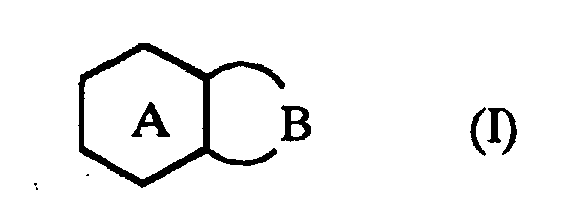 wherein R1 and R2 are each independently hydrogen atom, non-interfering substituent, or -(L1)-(acidic group) wherein L1 is an acid linker having an acid linker length of 1 to 5, provided that one of the R1 and R2 is -(L1)-(acidic group);
R3 and R4 are each independently hydrogen atom, non-interfering substituent, carbocyclic group, carbocyclic group substituted with a non-interfering substituent(s), heterocyclic group, or heterocyclic group substituted by a non-interfering substituent(s); and
-B- is represented by the formula (e) to (h):wherein R5 is (j) C1 to C20 alkyl, C2 to C20 alkenyl, C2 to C20 alkynyl, carbocyclic group, or heterocyclic group, (k) the group represented by (j) each substituted independently with at least one group selected from non-interfering substituents, or -(L2)-R8 wherein L2 is a divalent linking group of 1 to 18 atom(s) selected from hydrogen atom(s), nitrogen atom(s), carbon atom(s), oxygen atom(s), and sulfur atom(s), and
R8 is a group selected from the groups (j) and (k);
R6 is hydrogen atom, halogen, C1 to C3 alkyl, C3 to C4 cycloalkyl, C3 to C4 cycloalkenyl, C1 to C3 alkyloxy, or C1 to C3 alkylthio;
R7 is hydrogen atom or non-interfering substituent;
RA is represented by the formula:wherein R9 and R10 are each independently hydrogen atom, C1 to C3 alkyl, or halogen;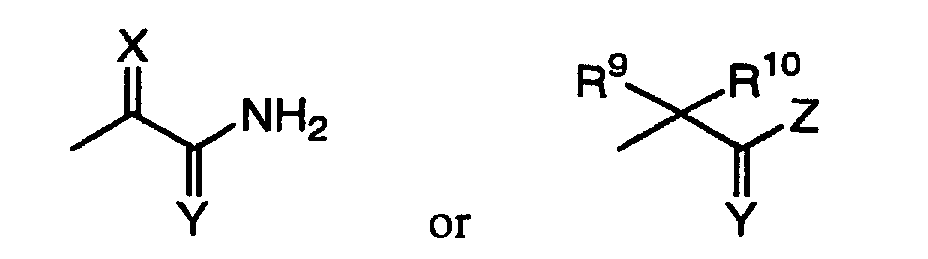 provided that Ring A is (b), (c), or (d) when -B- is (e) or (f), a prodrug thereof, its pharmaceutically acceptable salt, or its solvate.X and Y are each independently oxygen atom or sulfur atom; andZ is -NH2 or -NHNH2;RB is -CONH2 or -CONHNH2; and,Ring D is cyclohexene ring or benzene ring;
 - A composition for prevention or treatment of cancer which contains a compound, a prodrug thereof, its pharmaceutically acceptable salt, or its solvate as claimed in claim 2 as an active ingredient, wherein R1 is hydrogen atom or -(L3)-R11 wherein L3 is -OCH2-, -SCH2-, -NH-CH2-, -CH2-CH2-, -0-CH(CH3)-, or -O-CH(CH2CH2C6H5)-; R11 is -COOH, -CONHSO2C6H5, -SO3H, or -P(O)(OH)2; and
R2 is hydrogen atom or -(L4)-R12 wherein L4 is represented by the formula:
 wherein R13 and R14 are each independently hydrogen atom, C1 to C10 alkyl, C1 to C10 aralkyl, carboxy, alkyloxycarbonyl, or halogen; R12 is -COOH, -SO3H, or -P(O)(OH)2, provided R1 and R2 are not hydrogen atom at the same time.
- A composition for prevention or treatment of cancer which contains a compound, a prodrug thereof, its pharmaceutically acceptable salt, or its solvate as claimed in claim 2 as an active ingredient, wherein R3 is hydrogen atom, C1 to C6 alkyl, C3 to C6 cycloalkyl, aryl, or a heterocyclic group and R4 is hydrogen atom or halogen.
- A composition for prevention or treatment of cancer which contains a compound, a prodrug thereof, its pharmaceutically acceptable salt, or its solvate as claimed in claim 2 as an active ingredient, wherein R5 is -(CH2)1-6-R15 wherein R15 is represented by the formula:
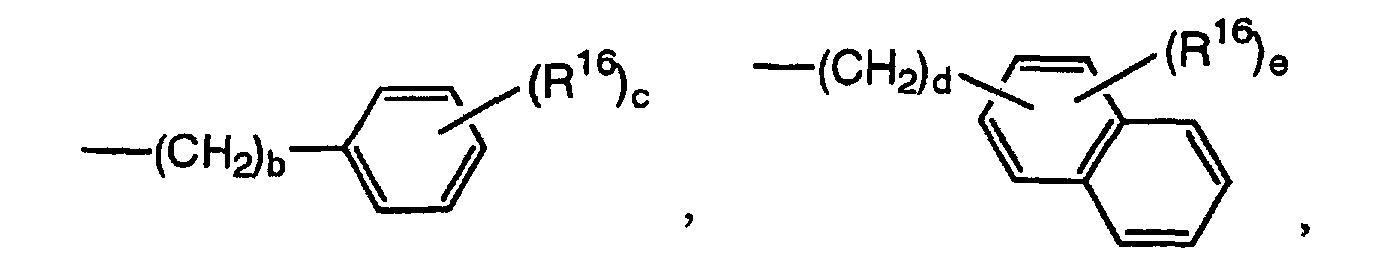
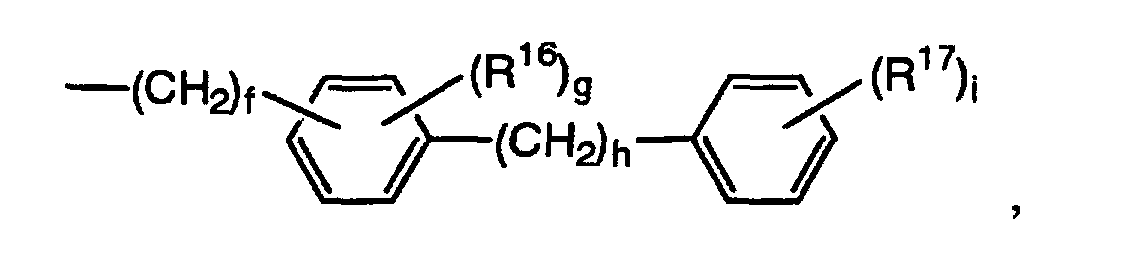

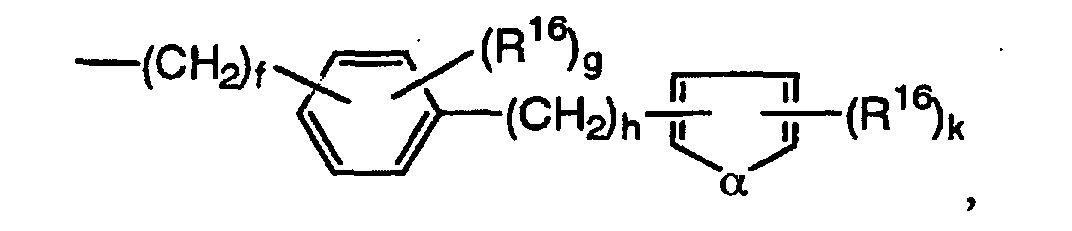 or
or wherein b, d, f, h, j, m, and o are independently an integer from 0 to 2; R16 and R17 are each independently halogen, C1 to C10 alkyl, C1 to C10 alkyloxy, C1 to C10 alkylthio, aryloxy, or C1 to C10 haloalkyl; α is oxygen atom or sulfur atom; β is -CH2- or -(CH2)2-; γ is oxygen atom or sulfur atom; c, i, and p are independently an integer from 0 to 5; e is an integer from 0 to 7; g is an integer from 0 to 4; k and n are each independently an integer from 0 to 3.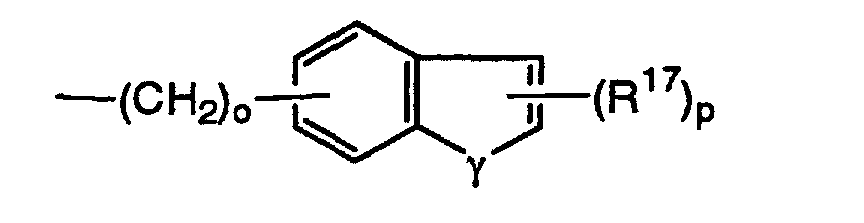
- A composition for prevention or treatment of cancer which contains a compound, a prodrug thereof, its pharmaceutically acceptable salt, or its solvate as claimed in claim 5 as an active ingredient, wherein R5 is -CH2-R18 wherein R18 is represented by the formula:
 or
or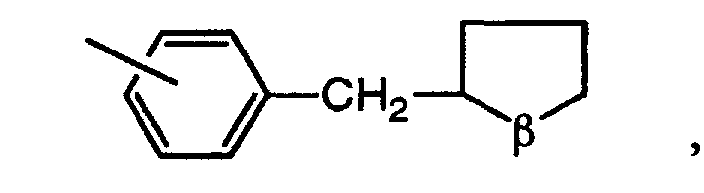 wherein β is -CH2- or -(CH2)2-; R19 is hydrogen atom, C1 to C3 alkyl, or halogen; E is a bond, -CH2- or -O-.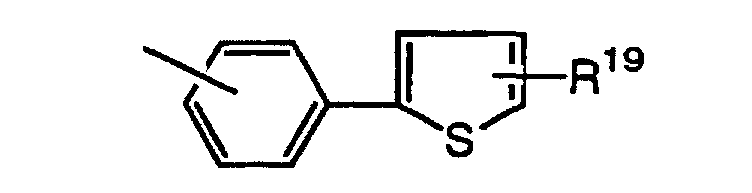
- A composition for prevention or treatment of cancer which contains a compound, a prodrug thereof, its pharmaceutically acceptable salt, or its solvate as claimed in claim 2 as an active ingredient, wherein R1 is - OCH2COOH.
- A composition for prevention or treatment of cancer which contains a compound, a prodrug thereof, its pharmaceutically acceptable salt, or its solvate as claimed in claim 2 as an active ingredient, wherein R2 is hydrogen atom.
- A composition for prevention or treatment of cancer which contains a compound, a prodrug thereof, its pharmaceutically acceptable salt, or its solvate as claimed in claim 2 as an active ingredient, wherein R6 is C1 to C3 alkyl.
- A composition for prevention or treatment of cancer which contains a compound, a prodrug thereof, its pharmaceutically acceptable salt, or its solvate as claimed in claim 2 as an active ingredient, wherein RA is -CH2CONH2 or -COCONH2.
- A composition for prevention or treatment of cancer which contains a compound as an active ingredient represented by the formula:


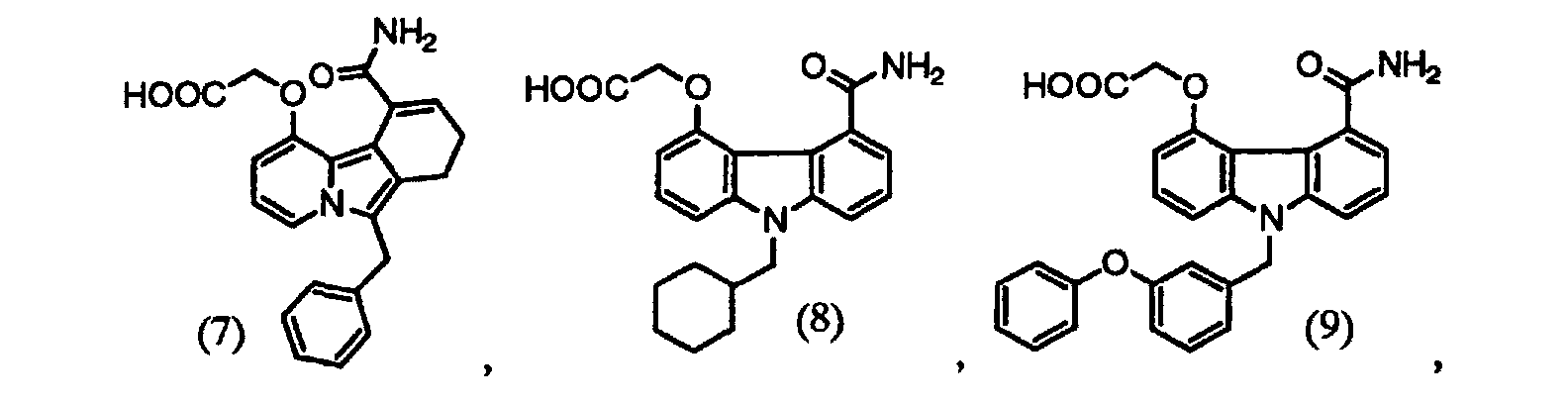

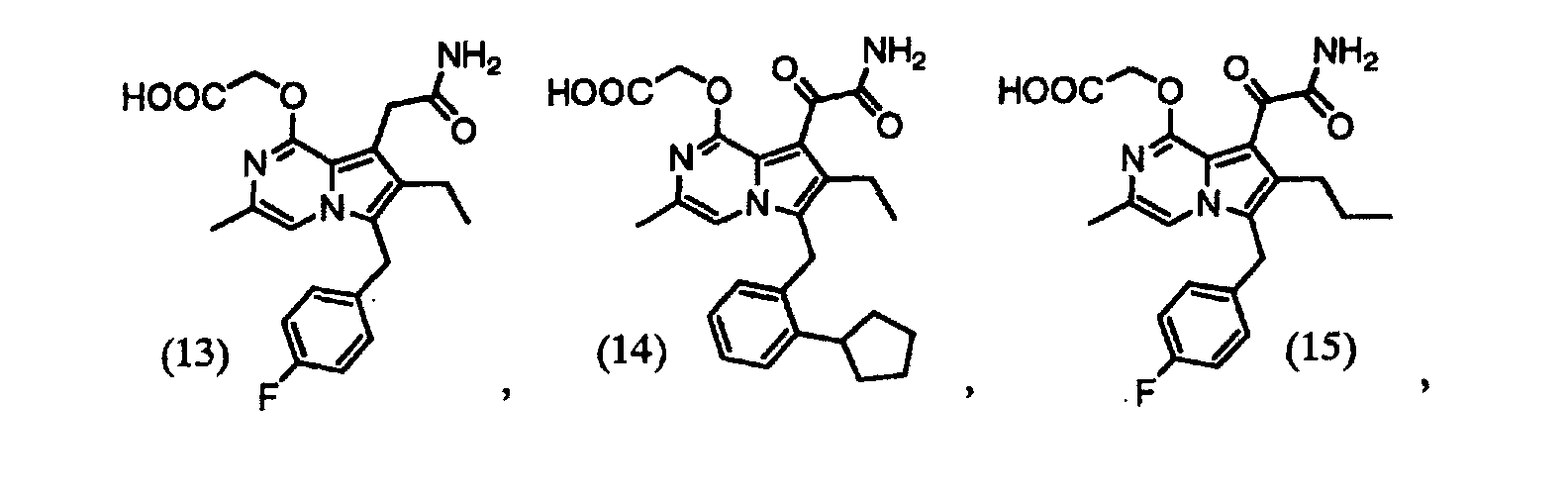
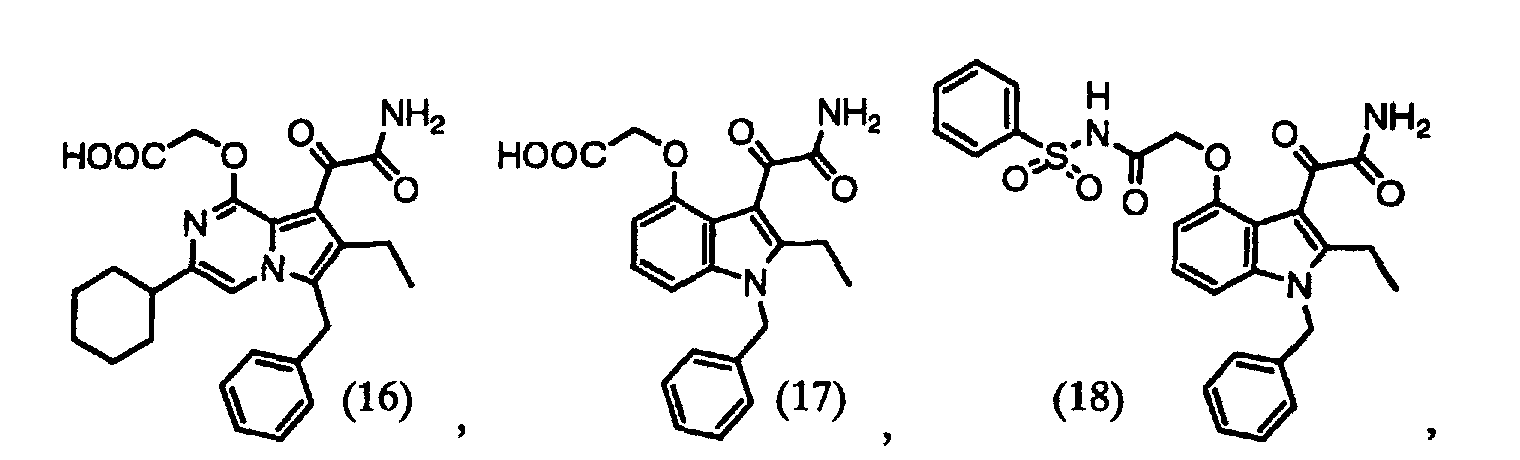 a prodrug thereof, its pharmaceutically acceptable salt, or its solvate.
- A composition for prevention or treatment of cancer as claimed in any one of claims 1 to 11 wherein the cancer is colon cancer, lung cancer, liver cancer, gastric cancer, renal cancer, gellbladder cancer, prostatic cancer, pancreatic cancer, testis cancer, ovary cancer or cutaneous cancer.
- A composition for prevention or treatment of cancer as claimed in any one of claims 1 to 11 wherein the cancer is colon cancer.
- Use of a type-X sPLA2 inhibitor for the preparation of a medicament for the treatment of cancer.
- Use as claimed in claim 14 wherein the type-X sPLA2 inhibitor is the compound claimed in any one of claims 2 to 11.
- A method of treating a mammal, including a human, to alleviate the pathological effects of cancer, which comprises administration to said mammal of a type-X sPLA2 inhibitor in a pharmaceutically effective amount.
- A method of treating a mammal as claimed in claim 16 wherein the type-X sPLA2 inhibitor is the compound claimed in any one of claims 2 to 11.
Applications Claiming Priority (3)
| Application Number | Priority Date | Filing Date | Title |
|---|---|---|---|
| JP2000195434 | 2000-06-29 | ||
| JP2000195434 | 2000-06-29 | ||
| PCT/JP2001/005480 WO2002000255A1 (en) | 2000-06-29 | 2001-06-27 | Remedies for cancer |
Publications (3)
| Publication Number | Publication Date |
|---|---|
| EP1300159A1 true EP1300159A1 (en) | 2003-04-09 |
| EP1300159A4 EP1300159A4 (en) | 2005-08-24 |
| EP1300159B1 EP1300159B1 (en) | 2007-10-10 |
Family
ID=18694096
Family Applications (1)
| Application Number | Title | Priority Date | Filing Date |
|---|---|---|---|
| EP01945613A Expired - Lifetime EP1300159B1 (en) | 2000-06-29 | 2001-06-27 | Remedies for cancer |
Country Status (8)
| Country | Link |
|---|---|
| US (1) | US20040077651A1 (en) |
| EP (1) | EP1300159B1 (en) |
| AT (1) | ATE375171T1 (en) |
| AU (1) | AU2001267824A1 (en) |
| DE (1) | DE60130891T2 (en) |
| ES (1) | ES2294003T3 (en) |
| TW (1) | TW583000B (en) |
| WO (1) | WO2002000255A1 (en) |
Cited By (1)
| Publication number | Priority date | Publication date | Assignee | Title |
|---|---|---|---|---|
| WO2004064822A1 (en) * | 2002-06-07 | 2004-08-05 | Kieran Francis Scott | Method of inhibiting prostate cancer cell proliferation |
Families Citing this family (5)
| Publication number | Priority date | Publication date | Assignee | Title |
|---|---|---|---|---|
| US8329913B2 (en) | 2004-10-29 | 2012-12-11 | Zeria Pharmaceutical Co., Ltd. | Carbazole derivative, solvate thereof, or pharmaceutically acceptable salt thereof |
| WO2008039023A1 (en) * | 2006-09-29 | 2008-04-03 | Green Cross Corporation | Heteroaryl-pyrazole derivatives as cannabinoid cb1 receptor antagonists |
| WO2010042562A2 (en) | 2008-10-06 | 2010-04-15 | Minerva Biotechnologies Corporation | Muc1* antibodies |
| NZ720946A (en) | 2009-04-29 | 2017-09-29 | Amarin Pharmaceuticals Ie Ltd | Pharmaceutical compositions comprising epa and a cardiovascular agent and methods of using the same |
| US9492460B2 (en) * | 2013-02-27 | 2016-11-15 | Bristol-Myers Squibb Company | Carbazole compounds useful as bromodomain inhibitors |
Family Cites Families (12)
| Publication number | Priority date | Publication date | Assignee | Title |
|---|---|---|---|---|
| IL109309A (en) * | 1993-04-16 | 2000-06-29 | Lilly Co Eli | 1-H-indole-3-acetic acid hydrazide SPLA2 inhibitors and pharmaceutical compositions containing them |
| US5478857A (en) * | 1993-12-23 | 1995-12-26 | Eli Lilly And Company | Use of PLA2 inhibitors as treatment for alzheimer's disease |
| JP3109974B2 (en) * | 1994-04-01 | 2000-11-20 | イーライ・リリー・アンド・カンパニー | 1H-indole-3-glyoxylamide sPLA2 inhibitor |
| US5641800A (en) * | 1994-07-21 | 1997-06-24 | Eli Lilly And Company | 1H-indole-1-functional sPLA2 inhibitors |
| US5935860A (en) * | 1995-03-07 | 1999-08-10 | The George Washington University | Use of uteroglobin expression as a molecular marker for prostatic intraepithelial neoplasia |
| WO1999024033A1 (en) * | 1997-11-12 | 1999-05-20 | Shionogi & Co., Ltd. | Method for the treatment of disorders associated with apoptosis using n-heterocyclic glyoxylamide compounds |
| CA2310250A1 (en) * | 1997-11-14 | 1999-05-27 | August Masaru Watanabe | Treatment for alzheimer's disease |
| JP3256513B2 (en) * | 1998-02-11 | 2002-02-12 | ファイザー製薬株式会社 | Benzimidazole cyclooxygenase-2 inhibitor |
| US6028116A (en) * | 1998-04-03 | 2000-02-22 | Cell Pathways, Inc. | Substituted condensation products of 1H-indenyl-hydroxyalkanes with aldehydes for neoplasia |
| DZ2769A1 (en) * | 1998-04-17 | 2003-12-01 | Lilly Co Eli | Substituted tricyclics. |
| WO2000028997A1 (en) * | 1998-11-12 | 2000-05-25 | Analytica Ltd | Phospholipase inhibitors for the treatment of cancer |
| AU7559600A (en) * | 1999-10-15 | 2001-04-23 | Shionogi & Co., Ltd. | V type and/or x type spla2 inhibitors |
-
2001
- 2001-06-27 WO PCT/JP2001/005480 patent/WO2002000255A1/en not_active Ceased
- 2001-06-27 EP EP01945613A patent/EP1300159B1/en not_active Expired - Lifetime
- 2001-06-27 ES ES01945613T patent/ES2294003T3/en not_active Expired - Lifetime
- 2001-06-27 AT AT01945613T patent/ATE375171T1/en not_active IP Right Cessation
- 2001-06-27 AU AU2001267824A patent/AU2001267824A1/en not_active Abandoned
- 2001-06-27 DE DE60130891T patent/DE60130891T2/en not_active Expired - Lifetime
- 2001-06-27 TW TW090115543A patent/TW583000B/en not_active IP Right Cessation
- 2001-06-27 US US10/312,451 patent/US20040077651A1/en not_active Abandoned
Cited By (3)
| Publication number | Priority date | Publication date | Assignee | Title |
|---|---|---|---|---|
| WO2004064822A1 (en) * | 2002-06-07 | 2004-08-05 | Kieran Francis Scott | Method of inhibiting prostate cancer cell proliferation |
| AU2003229143B2 (en) * | 2002-06-07 | 2009-07-23 | Kieran Francis Scott | Method of inhibiting prostate cancer cell proliferation |
| US7919458B2 (en) | 2002-06-07 | 2011-04-05 | Scott, Kieran, Francis | Method of inhibiting prostate cancer cell proliferation |
Also Published As
| Publication number | Publication date |
|---|---|
| ATE375171T1 (en) | 2007-10-15 |
| TW583000B (en) | 2004-04-11 |
| DE60130891T2 (en) | 2008-07-17 |
| ES2294003T3 (en) | 2008-04-01 |
| AU2001267824A1 (en) | 2002-01-08 |
| WO2002000255A1 (en) | 2002-01-03 |
| EP1300159B1 (en) | 2007-10-10 |
| US20040077651A1 (en) | 2004-04-22 |
| EP1300159A4 (en) | 2005-08-24 |
| DE60130891D1 (en) | 2007-11-22 |
Similar Documents
| Publication | Publication Date | Title |
|---|---|---|
| US20090286796A1 (en) | Compounds exhibiting type X sPLA2 inhibiting effect | |
| US11826363B2 (en) | Therapeutic agent for solid cancers, which comprises Axl inhibitor as active ingredient | |
| CN108966651A (en) | Indole amine 2,3-dioxygenase inhibitor and the preparation method and application thereof | |
| JP7300552B2 (en) | Fused ring pyrimidine amino compound, preparation method, pharmaceutical composition and use thereof | |
| CN107530353A (en) | MELK three ring kinase inhibitors and application method | |
| CN109535164B (en) | JAK kinase inhibitor, preparation method thereof and application thereof in medical field | |
| JP2019504879A (en) | Benzothiazole amphiphile | |
| CA2441110C (en) | Pharmaceutical compositions for treating arteriosclerosis | |
| US20040077651A1 (en) | Remedies for cancer | |
| JP2014504258A (en) | Selective proton-coupled folate transporter and folate receptor and inhibitor compounds of GAFTase and / or other folate-metabolizing enzymes and methods of use thereof | |
| JP6909236B2 (en) | Quinazoline derivative or salt thereof and a pharmaceutical composition containing it | |
| CA2346334A1 (en) | Composition for treating or preventing ischemia reperfusion injury | |
| CN115215807A (en) | Inhibition of OLIG2 activity | |
| US6967200B2 (en) | Remedies for cirrhosis | |
| US20040102442A1 (en) | Remedies for alzheimer's disease | |
| WO2015014283A1 (en) | Protein tyrosine kinase inhibitor and application thereof | |
| JPWO2002000256A1 (en) | Treatment for liver cirrhosis | |
| JPWO2002000257A1 (en) | Treatment for Alzheimer's disease | |
| US6673781B1 (en) | Tricyclic compounds having sPLA2-inhibitory activities | |
| HK40081930A (en) | Inhibition of olig2 activity | |
| TWI482757B (en) | Inhibitor of vegf-2/3 receptor and protein kinase and pharmaceutical use thereof | |
| WO2022102731A1 (en) | Cancer treatment by combined use of ep4 antagonist and immune checkpoint inhibitor | |
| WO2022263548A1 (en) | 3-substituted 1h-pyrrolo[2,3-b]pyridine as grk5 modulators | |
| WO2026061424A1 (en) | Compound, pharmaceutical composition comprising same, and use thereof | |
| EA028800B1 (en) | Combination of a imidazopyridazine derivative and a mitotic agent for the treatment of cancer |
Legal Events
| Date | Code | Title | Description |
|---|---|---|---|
| PUAI | Public reference made under article 153(3) epc to a published international application that has entered the european phase |
Free format text: ORIGINAL CODE: 0009012 |
|
| 17P | Request for examination filed |
Effective date: 20030129 |
|
| AK | Designated contracting states |
Kind code of ref document: A1 Designated state(s): AT BE CH CY DE DK ES FI FR GB GR IE IT LI LU MC NL PT SE TR |
|
| AX | Request for extension of the european patent |
Extension state: AL LT LV MK RO SI |
|
| A4 | Supplementary search report drawn up and despatched |
Effective date: 20050711 |
|
| RIC1 | Information provided on ipc code assigned before grant |
Ipc: 7A 61K 31/5025 B Ipc: 7C 07D 471/04 B Ipc: 7A 61K 31/437 B Ipc: 7C 07D 487/04 B Ipc: 7A 61P 35/00 B Ipc: 7A 61K 31/404 B Ipc: 7C 07D 209/86 B Ipc: 7A 61K 45/00 A Ipc: 7C 07D 405/04 B Ipc: 7A 61K 31/4985 B Ipc: 7A 61K 31/403 B |
|
| 17Q | First examination report despatched |
Effective date: 20060404 |
|
| GRAP | Despatch of communication of intention to grant a patent |
Free format text: ORIGINAL CODE: EPIDOSNIGR1 |
|
| GRAS | Grant fee paid |
Free format text: ORIGINAL CODE: EPIDOSNIGR3 |
|
| RAP1 | Party data changed (applicant data changed or rights of an application transferred) |
Owner name: ANTHERA PHARMACEUTICALS, INC. |
|
| GRAA | (expected) grant |
Free format text: ORIGINAL CODE: 0009210 |
|
| AK | Designated contracting states |
Kind code of ref document: B1 Designated state(s): AT BE CH CY DE DK ES FI FR GB GR IE IT LI LU MC NL PT SE TR |
|
| REG | Reference to a national code |
Ref country code: GB Ref legal event code: FG4D |
|
| REG | Reference to a national code |
Ref country code: CH Ref legal event code: EP |
|
| REG | Reference to a national code |
Ref country code: IE Ref legal event code: FG4D |
|
| REF | Corresponds to: |
Ref document number: 60130891 Country of ref document: DE Date of ref document: 20071122 Kind code of ref document: P |
|
| NLV1 | Nl: lapsed or annulled due to failure to fulfill the requirements of art. 29p and 29m of the patents act | ||
| REG | Reference to a national code |
Ref country code: ES Ref legal event code: FG2A Ref document number: 2294003 Country of ref document: ES Kind code of ref document: T3 |
|
| PG25 | Lapsed in a contracting state [announced via postgrant information from national office to epo] |
Ref country code: LI Free format text: LAPSE BECAUSE OF FAILURE TO SUBMIT A TRANSLATION OF THE DESCRIPTION OR TO PAY THE FEE WITHIN THE PRESCRIBED TIME-LIMIT Effective date: 20071010 Ref country code: SE Free format text: LAPSE BECAUSE OF FAILURE TO SUBMIT A TRANSLATION OF THE DESCRIPTION OR TO PAY THE FEE WITHIN THE PRESCRIBED TIME-LIMIT Effective date: 20080110 Ref country code: NL Free format text: LAPSE BECAUSE OF FAILURE TO SUBMIT A TRANSLATION OF THE DESCRIPTION OR TO PAY THE FEE WITHIN THE PRESCRIBED TIME-LIMIT Effective date: 20071010 Ref country code: CH Free format text: LAPSE BECAUSE OF FAILURE TO SUBMIT A TRANSLATION OF THE DESCRIPTION OR TO PAY THE FEE WITHIN THE PRESCRIBED TIME-LIMIT Effective date: 20071010 |
|
| REG | Reference to a national code |
Ref country code: CH Ref legal event code: PL |
|
| PG25 | Lapsed in a contracting state [announced via postgrant information from national office to epo] |
Ref country code: PT Free format text: LAPSE BECAUSE OF FAILURE TO SUBMIT A TRANSLATION OF THE DESCRIPTION OR TO PAY THE FEE WITHIN THE PRESCRIBED TIME-LIMIT Effective date: 20080310 |
|
| PG25 | Lapsed in a contracting state [announced via postgrant information from national office to epo] |
Ref country code: AT Free format text: LAPSE BECAUSE OF FAILURE TO SUBMIT A TRANSLATION OF THE DESCRIPTION OR TO PAY THE FEE WITHIN THE PRESCRIBED TIME-LIMIT Effective date: 20071010 |
|
| ET | Fr: translation filed | ||
| PG25 | Lapsed in a contracting state [announced via postgrant information from national office to epo] |
Ref country code: DK Free format text: LAPSE BECAUSE OF FAILURE TO SUBMIT A TRANSLATION OF THE DESCRIPTION OR TO PAY THE FEE WITHIN THE PRESCRIBED TIME-LIMIT Effective date: 20071010 |
|
| PLBE | No opposition filed within time limit |
Free format text: ORIGINAL CODE: 0009261 |
|
| STAA | Information on the status of an ep patent application or granted ep patent |
Free format text: STATUS: NO OPPOSITION FILED WITHIN TIME LIMIT |
|
| PG25 | Lapsed in a contracting state [announced via postgrant information from national office to epo] |
Ref country code: BE Free format text: LAPSE BECAUSE OF FAILURE TO SUBMIT A TRANSLATION OF THE DESCRIPTION OR TO PAY THE FEE WITHIN THE PRESCRIBED TIME-LIMIT Effective date: 20071010 |
|
| 26N | No opposition filed |
Effective date: 20080711 |
|
| PG25 | Lapsed in a contracting state [announced via postgrant information from national office to epo] |
Ref country code: MC Free format text: LAPSE BECAUSE OF NON-PAYMENT OF DUE FEES Effective date: 20080630 Ref country code: GR Free format text: LAPSE BECAUSE OF FAILURE TO SUBMIT A TRANSLATION OF THE DESCRIPTION OR TO PAY THE FEE WITHIN THE PRESCRIBED TIME-LIMIT Effective date: 20080111 |
|
| PG25 | Lapsed in a contracting state [announced via postgrant information from national office to epo] |
Ref country code: FI Free format text: LAPSE BECAUSE OF FAILURE TO SUBMIT A TRANSLATION OF THE DESCRIPTION OR TO PAY THE FEE WITHIN THE PRESCRIBED TIME-LIMIT Effective date: 20071010 |
|
| PG25 | Lapsed in a contracting state [announced via postgrant information from national office to epo] |
Ref country code: IE Free format text: LAPSE BECAUSE OF NON-PAYMENT OF DUE FEES Effective date: 20080627 |
|
| PG25 | Lapsed in a contracting state [announced via postgrant information from national office to epo] |
Ref country code: CY Free format text: LAPSE BECAUSE OF FAILURE TO SUBMIT A TRANSLATION OF THE DESCRIPTION OR TO PAY THE FEE WITHIN THE PRESCRIBED TIME-LIMIT Effective date: 20071010 |
|
| PG25 | Lapsed in a contracting state [announced via postgrant information from national office to epo] |
Ref country code: LU Free format text: LAPSE BECAUSE OF NON-PAYMENT OF DUE FEES Effective date: 20080627 |
|
| PG25 | Lapsed in a contracting state [announced via postgrant information from national office to epo] |
Ref country code: TR Free format text: LAPSE BECAUSE OF FAILURE TO SUBMIT A TRANSLATION OF THE DESCRIPTION OR TO PAY THE FEE WITHIN THE PRESCRIBED TIME-LIMIT Effective date: 20071010 |
|
| PGFP | Annual fee paid to national office [announced via postgrant information from national office to epo] |
Ref country code: FR Payment date: 20110621 Year of fee payment: 11 |
|
| PGFP | Annual fee paid to national office [announced via postgrant information from national office to epo] |
Ref country code: GB Payment date: 20110622 Year of fee payment: 11 |
|
| PGFP | Annual fee paid to national office [announced via postgrant information from national office to epo] |
Ref country code: IT Payment date: 20110622 Year of fee payment: 11 |
|
| PGFP | Annual fee paid to national office [announced via postgrant information from national office to epo] |
Ref country code: DE Payment date: 20110622 Year of fee payment: 11 Ref country code: ES Payment date: 20110715 Year of fee payment: 11 |
|
| GBPC | Gb: european patent ceased through non-payment of renewal fee |
Effective date: 20120627 |
|
| PG25 | Lapsed in a contracting state [announced via postgrant information from national office to epo] |
Ref country code: IT Free format text: LAPSE BECAUSE OF NON-PAYMENT OF DUE FEES Effective date: 20120627 |
|
| REG | Reference to a national code |
Ref country code: FR Ref legal event code: ST Effective date: 20130228 |
|
| REG | Reference to a national code |
Ref country code: DE Ref legal event code: R119 Ref document number: 60130891 Country of ref document: DE Effective date: 20130101 |
|
| PG25 | Lapsed in a contracting state [announced via postgrant information from national office to epo] |
Ref country code: FR Free format text: LAPSE BECAUSE OF NON-PAYMENT OF DUE FEES Effective date: 20120702 Ref country code: DE Free format text: LAPSE BECAUSE OF NON-PAYMENT OF DUE FEES Effective date: 20130101 Ref country code: GB Free format text: LAPSE BECAUSE OF NON-PAYMENT OF DUE FEES Effective date: 20120627 |
|
| REG | Reference to a national code |
Ref country code: ES Ref legal event code: FD2A Effective date: 20131022 |
|
| PG25 | Lapsed in a contracting state [announced via postgrant information from national office to epo] |
Ref country code: ES Free format text: LAPSE BECAUSE OF NON-PAYMENT OF DUE FEES Effective date: 20120628 |