EP1300145A1 - Therapeutic or preventive medicines for mood disorders or anxiety disorders - Google Patents
Therapeutic or preventive medicines for mood disorders or anxiety disorders Download PDFInfo
- Publication number
- EP1300145A1 EP1300145A1 EP01947800A EP01947800A EP1300145A1 EP 1300145 A1 EP1300145 A1 EP 1300145A1 EP 01947800 A EP01947800 A EP 01947800A EP 01947800 A EP01947800 A EP 01947800A EP 1300145 A1 EP1300145 A1 EP 1300145A1
- Authority
- EP
- European Patent Office
- Prior art keywords
- disorder
- hydrogen
- hydroxy
- alkyl
- bromine
- Prior art date
- Legal status (The legal status is an assumption and is not a legal conclusion. Google has not performed a legal analysis and makes no representation as to the accuracy of the status listed.)
- Withdrawn
Links
Images


Classifications
-
- C—CHEMISTRY; METALLURGY
- C07—ORGANIC CHEMISTRY
- C07D—HETEROCYCLIC COMPOUNDS
- C07D471/00—Heterocyclic compounds containing nitrogen atoms as the only ring hetero atoms in the condensed system, at least one ring being a six-membered ring with one nitrogen atom, not provided for by groups C07D451/00 - C07D463/00
- C07D471/02—Heterocyclic compounds containing nitrogen atoms as the only ring hetero atoms in the condensed system, at least one ring being a six-membered ring with one nitrogen atom, not provided for by groups C07D451/00 - C07D463/00 in which the condensed system contains two hetero rings
- C07D471/04—Ortho-condensed systems
-
- A—HUMAN NECESSITIES
- A61—MEDICAL OR VETERINARY SCIENCE; HYGIENE
- A61K—PREPARATIONS FOR MEDICAL, DENTAL OR TOILETRY PURPOSES
- A61K31/00—Medicinal preparations containing organic active ingredients
- A61K31/33—Heterocyclic compounds
- A61K31/395—Heterocyclic compounds having nitrogen as a ring hetero atom, e.g. guanethidine or rifamycins
- A61K31/435—Heterocyclic compounds having nitrogen as a ring hetero atom, e.g. guanethidine or rifamycins having six-membered rings with one nitrogen as the only ring hetero atom
- A61K31/47—Quinolines; Isoquinolines
- A61K31/4738—Quinolines; Isoquinolines ortho- or peri-condensed with heterocyclic ring systems
- A61K31/4745—Quinolines; Isoquinolines ortho- or peri-condensed with heterocyclic ring systems condensed with ring systems having nitrogen as a ring hetero atom, e.g. phenantrolines
-
- A—HUMAN NECESSITIES
- A61—MEDICAL OR VETERINARY SCIENCE; HYGIENE
- A61K—PREPARATIONS FOR MEDICAL, DENTAL OR TOILETRY PURPOSES
- A61K31/00—Medicinal preparations containing organic active ingredients
- A61K31/33—Heterocyclic compounds
- A61K31/395—Heterocyclic compounds having nitrogen as a ring hetero atom, e.g. guanethidine or rifamycins
- A61K31/495—Heterocyclic compounds having nitrogen as a ring hetero atom, e.g. guanethidine or rifamycins having six-membered rings with two or more nitrogen atoms as the only ring heteroatoms, e.g. piperazine or tetrazines
- A61K31/4985—Pyrazines or piperazines ortho- or peri-condensed with heterocyclic ring systems
-
- A—HUMAN NECESSITIES
- A61—MEDICAL OR VETERINARY SCIENCE; HYGIENE
- A61P—SPECIFIC THERAPEUTIC ACTIVITY OF CHEMICAL COMPOUNDS OR MEDICINAL PREPARATIONS
- A61P25/00—Drugs for disorders of the nervous system
- A61P25/18—Antipsychotics, i.e. neuroleptics; Drugs for mania or schizophrenia
-
- A—HUMAN NECESSITIES
- A61—MEDICAL OR VETERINARY SCIENCE; HYGIENE
- A61P—SPECIFIC THERAPEUTIC ACTIVITY OF CHEMICAL COMPOUNDS OR MEDICINAL PREPARATIONS
- A61P25/00—Drugs for disorders of the nervous system
- A61P25/22—Anxiolytics
-
- A—HUMAN NECESSITIES
- A61—MEDICAL OR VETERINARY SCIENCE; HYGIENE
- A61P—SPECIFIC THERAPEUTIC ACTIVITY OF CHEMICAL COMPOUNDS OR MEDICINAL PREPARATIONS
- A61P25/00—Drugs for disorders of the nervous system
- A61P25/24—Antidepressants
Definitions
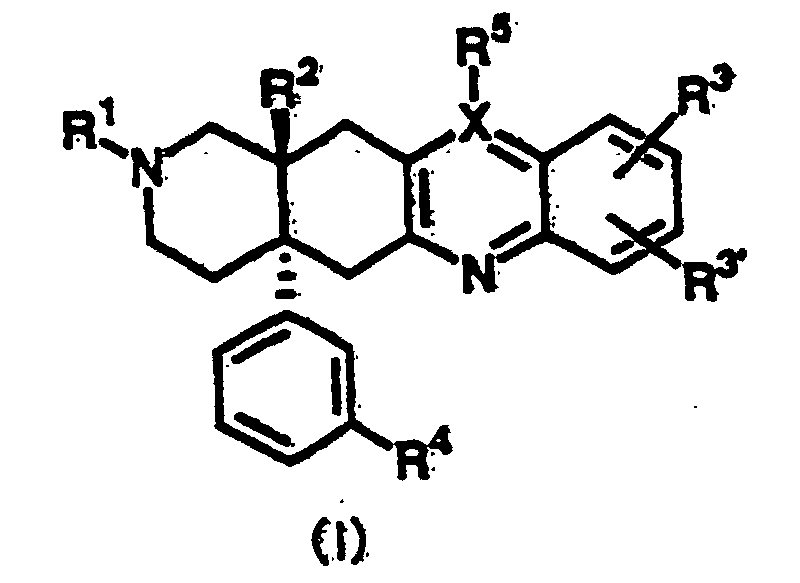
- the present invention relates to a drug for curing or preventing mood disorder or anxiety disorder comprising an isoquinoline derivative or a physiologically acceptable acid addition salt thereof, to a method for curing or preventing mood disorder or anxiety disorder using the same, and to a use of the isoquinoline derivative or the physiologically acceptable acid addition salt thereof for the manufacture of a medicament for curing or preventing mood disorder or anxiety disorder.
- Tricyclic antidepressants are used as the therapeutic drug for curing mood disorder. Representative examples thereof are imipramine and desipramine.
- tricyclic antidepressants have many side effects and thus there is a problem of tolerance. For example, tricyclic antidepressants require several weeks before their therapeutic effects. appear, are cardiotoxic if overdosed, and have various side effects such as dry mouth, constipation, and difficulty urinating. These side effects cause a decrease in tolerance.
- SSRIs selective serotonin reuptake inhibitors
- fluvoxamine and fluoxetine have been developed as mood disorder therapeutic drugs that have fewer and milder side effects than tricyclic antidepressants.
- SSRIs are safer than the existing drugs and are superior in that SSRIs are effective against newer adaptive disorders such as obsessive compulsive disorder and panic disorder.
- newer adaptive disorders such as obsessive compulsive disorder and panic disorder.
- side effects including digestive disorders such as nausea, vomiting, and diarrhea, sexual dysfunction, headache, and insomnia are still reported.
- SSRIs require several weeks before their therapeutic effects appear and have a low effectiveness against patients of severe depression. Development of therapeutic drugs for mood disorder that have fewer and milder side effects and can reliably achieve the effect is strongly desired.
- Benzodiazepine anxiolytics are used as the therapeutic drugs for anxiety disorder.
- the representative example thereof is diazepam.
- the drug has excessive sedative effects including drowsiness and dizziness, and induces side effects such as mental and physical dependence, memory disorder, and muscle relaxation, thereby often obstructing the everyday life of patients.
- the side effect of mental and physical dependence due to chronic administration has resulted in abuse, which is a serious problem.
- the drug administration must be optimized individually for each patient, and thus the use of this therapeutic drug is difficult.
- As therapeutic drugs for anxiety disorder that have fewer and milder side effects than the benzodiazepine anxiolytics, serotonergic anxiolytics have been developed.
- buspirone The representative example thereof is buspirone.
- the advantages of buspirone include milder sedative effects, low physical dependence, and less effect on mental activities when taken with ethanol.
- buspirone requires long time before the therapeutic effects to appear compared to benzodiazepine anxiolytics that work fast.
- the effectiveness for patients of severe anxiety disorder is low.
- development of therapeutic drugs for anxiety disorder that have fewer and milder side effects and can reliably achieve the effect is strongly desired.
- Examples or prior art related to isoquinoline derivatives include Japanese Unexamined Patent Application Publication No. 4-275288, WO 93/01186, and WO 99/02157.
- these documents only disclose immunosuppressants, analgesics, and antitussives and do not teach its use as a drug for curing or preventing psychiatric disorders.
- the present invention aims to provide a drug for curing or preventing mood disorder or anxiety disorder that have fewer and milder side effects and can reliably achieve its effect and a method for curing or preventing mood or anxiety disorders.
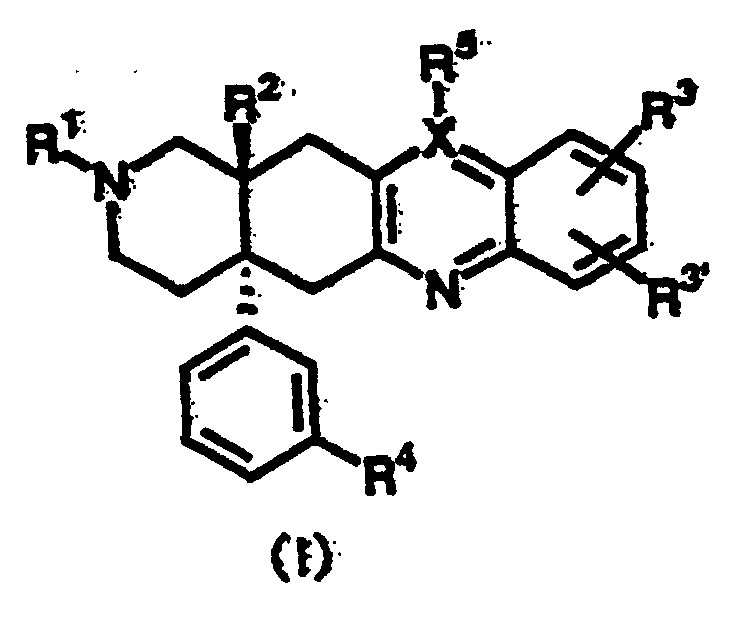
- the present invention includes a drug for curing or preventing mood disorder or anxiety disorder comprising an isoquinoline derivative represented by formula (I) below or a physiologically acceptable acid addition salt thereof; a method for curing or preventing mood disorder or anxiety disorder using the same; and a use of the isoquinoline derivative or the physiologically acceptable acid addition salt thereof for the manufacture of a medicament for curing or preventing mood disorder or anxiety disorder: wherein R 1 is hydrogen, C 1 -C 5 alkyl, C 4 -C 7 cycloalkylalkyl, C 5 -C 7 cycloalkenylalkyl, C 7 -C 14 aralkyl, C 4 -C 5 trans-alkenyl, allyl, furan-2-ylalkyl(C 1 -C 5 ), thien-2-ylalkyl(C 1 -C 5 ), C 1 -C 5 alkanoyl, benzoyl, vinyloxycarbonyl, trichloroethoxycarbonyl, benz
- R 1 is preferably, hydrogen, C 1 -C 5 alkyl, C 4 -C 7 cycloalkylalkyl, C 5 -C 7 cycloalkenylalkyl, C 7 -C 14 aralkyl, C 4 -C 5 trans-alkenyl, allyl, furan-2-ylalkyl (C 1 -C 5 ), or thien-2-ylalkyl(C 1 -C 5 ). More preferably, R 1 is hydrogen, methyl, ethyl, cyclopropylmethyl, allyl, phenethyl, furan-2-ylethyl, or thiophen-2-ylethyl.
- R 2 is hydrogen, hydroxy, methoxy, ethoxy, or acetoxy.
- R 3 and R 3' are, independently, C 1 -C 5 alkyl, hydrogen, chlorine, fluorine, bromine, iodine, hydroxy, C 1 -C 5 alkoxy, nitro, amino, C 1 -C 3 alkylamino, or C 2 -C 6 dialkylamino. More preferably, R 3 and R 3' are, independently, methyl, hydrogen, chlorine, fluorine, bromine, iodine, hydroxy, methoxy, nitro, amino, or dimethylamino.
- R 4 is preferably hydrogen, hydroxy, C 1 -C 3 alkoxy, or C 1 -C 5 alkanoyloxy. More preferably, R 4 is hydrogen, hydroxy, methoxy, or acetoxy.
- X is preferably carbon.
- R 5 is preferably C 1 -C 5 alkyl, hydrogen, chlorine, fluorine, bromine, iodine, hydroxy; C 1 -C 5 alkoxy, nitro, amino, C 1 -C 3 alkylamino, or C 2 -C 6 dialkylamino. More preferably, R 5 is methyl, hydrogen, chlorine, fluorine, bromine, iodine, hydroxy, methoxy, nitro, amino, or dimethylamino.
- physiologically acceptable acid addition salt include salts of inorganic acids such as hydrochloric acid, sulfuric acid, nitric acid, hydrobromic acid, hydriodic acid, phosphoric acid, salts of organic carboxylic acids such as acetic acid, lactic acid, citric acid, oxalic acid, glutaric acid, malic acid, tartaric acid, fumaric acid, mandelic acid, maleic acid, benzoic acid, and phthalic acid, and salts of organic sulfonic acids such as methanesulfonic acid, ethanesulfonic acid, benzenesulfonic acid, p-toluenesulfonic acid, camphorsulfonic acid.
- salts of hydrochloric acid, hydrobromic acid, phosphoric acid, tartaric acid, methanesulfonic acid, and the like are particularly preferred.
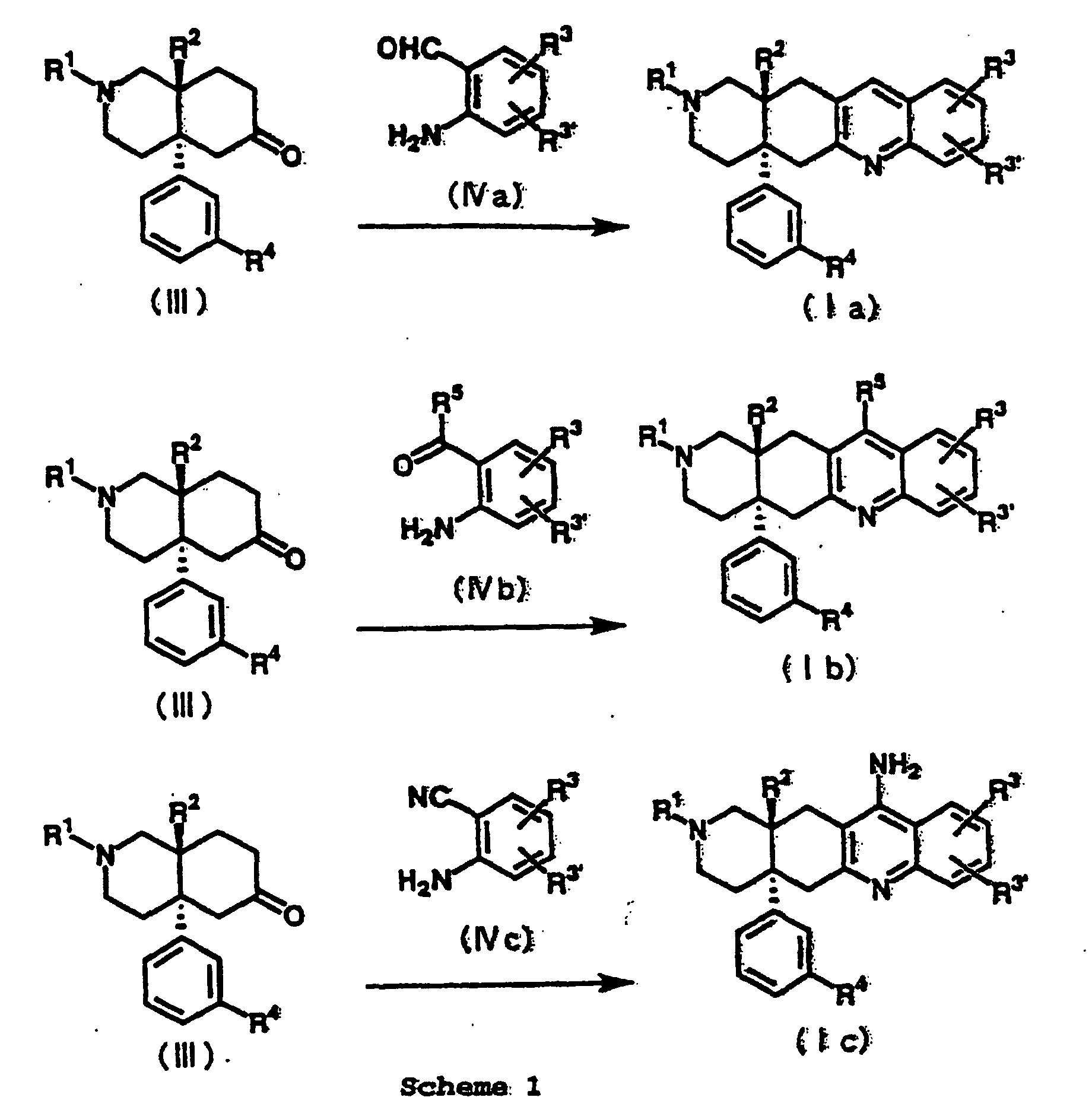
- the compound represented by formula (I) of the present invention can be prepared by, for example, a method described in Japanese Unexamined Patent Application Publication No. 4-275288 or WO 99/02157 whereby a ketone body (III), i.e., a raw material, is condensed with an o-aminobenzaldehyde derivative (IVa), an o-aminoacetophenone derivative (IVb), or an o-aminobenzonitrile. (IVc) in a solvent in the presence of an acid catalyst.
- an optically active substance is used as the raw ingredient, an optically active compound can be obtained (Scheme 1).
- the isoquinoline derivative represented by formula (I) has a marked effect in the forced swim test, which is the animal model for mood disorder, and in the elevated plus-maze test, which is the animal model for anxiety disorder.
- the isoquinoline derivative can be used as a drug for curing or preventing mood disorder or anxiety disorder of mammal and, in particular, human beings. It may also be used in manufacturing of a medicament for curing or preventing mood disorder or anxiety disorder.
- the evaluation using the above-described animal models can be conducted by a method described in published references [Nature vol. 266, 730 (1977) or Jpn. J. Psychopharmacol vol. 15, 125 (1995)], but the method is not limited to this.
- the term "mood disorder” refers to the state of uncontrollable mood or emotion. More specifically, the term refers to the disorders such as major depression disorder, bipolar disorder, dysthymic disorder, and cyclothymic disorder. Depression disorder due to the withdrawal from dependence-producing drugs and cognitive impairment due to aging are also included in the mood disorder.
- the anxiety disorder refers to the mental state that possibly obstructs the daily lives of the patients due to anxiety.
- Specific examples thereof include panic disorder, agoraphobia, social phobia, obsessive-compulsive disorder, posttraumatic stress disorder, acute stress disorder, and generalized anxiety disorder.
- the application of the drug of the present invention for curing or preventing mood disorder or anxiety disorder is not limited to the above-described examples.
- the drug may be a free base or a salt itself, and may adequately contain additives such as a filler, a stabilizer, a preservative, a buffer, a solubilizer, an emulsifier, a thinner, and an isotonizing agent.
- Either parenteral administration or oral administration can be employed.
- dosage forms of administration include injection, tablets, liquid, capsules, granules, and powder, and the drug in the above-described forms may be manufactured by known drug-making processes.
- the dosage is suitably selected according to the symptom, age, and weight of the patient, and the route of administration.
- the effective amount for an adult daily is 0.0001 mg to 10 g, and preferably, 0.001 mg to 1 g. This amount can be administered once or over several doses.
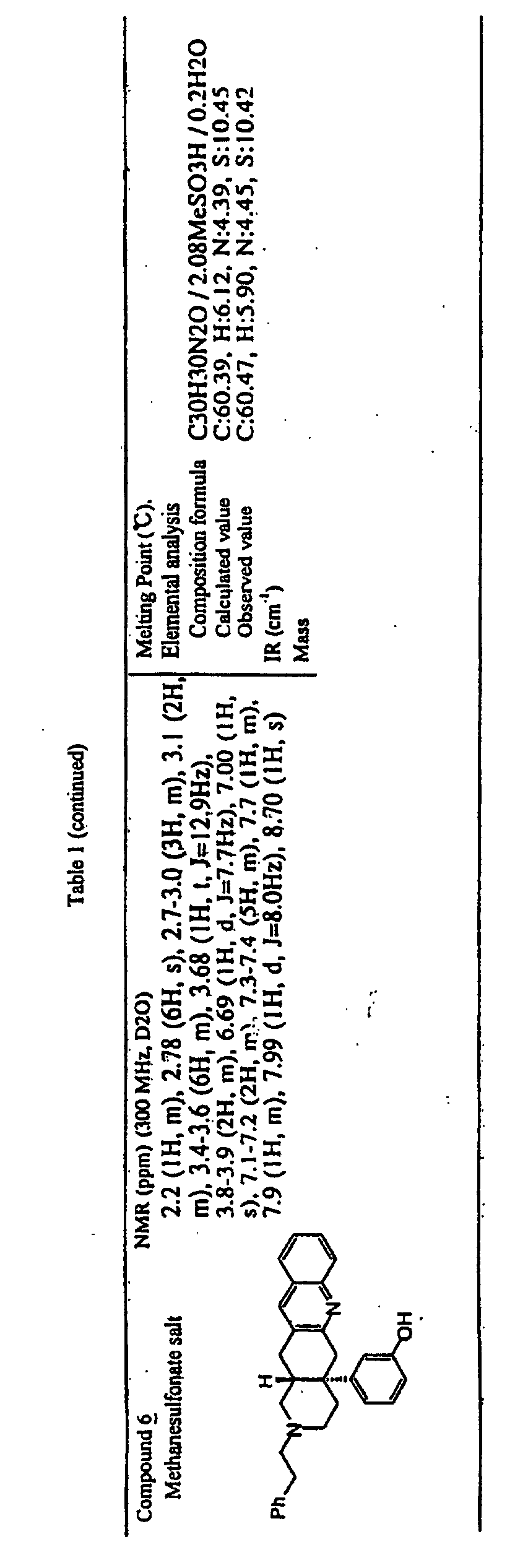
- the compound was prepared by a method described in Japanese Unexamined Patent Application Publication No. 4-275288.
- the elevated plus-maze test the elevated plus-maze (manufactured by NeuroScience, Inc.) consisting of closed arms and open arms was used.
- a rat was placed on an open arm 30 minutes after the drug administration (subcutaneous administration), and the number of entries to the open and closed arms and the time spent in the open arms were measured. The test was conducted for 3 minutes. The rat was assumed to have made entries when all four legs have entered the arm.
- Ratio of the time spent in the open arms (%) ⁇ (time spent in the open arms)/(total time) ⁇ ⁇ 100
- Ratio of the entries to the open arms (%) ⁇ (number of entries to the open arms)/(total number of entries) ⁇ ⁇ 100
- Fig. 1 The results are shown in Fig. 1.
- the vertical axis on the left indicates the ratio of the time spent in the open arms (%) and the ratio of the entries to the open arms (%).
- the vertical axis on the right indicates the total number of entries.
- the horizontal axis indicates a control group and treatment groups. Open columns indicate the ratio of the time spent in the open arms (%) and hatched columns indicate the ratio of the entries to the open arms (%). Closed circles indicate the total number of entries. All data are indicated by average ⁇ standard error. In a significance test, the difference was assumed to be significant at a significance level of 5% or less by Dunnett's multiple comparison.
- the tank for forced swim used was a transparent cylindrical tank made of plastic (inner diameter: 10 cm, height: 30 cm), and water at 25°C was contained up to 14 cm in height.
- a mouse was placed in water, and its swimming time during 2 to 6 minutes after placement was measured.
- the drug was subcutaneously administered 30 minutes before testing.
- the results are shown in Fig. 2.
- the vertical axis indicates the swimming time (sec) during the measurement time (4 min).
- the open column indicates a saline-treated group and the hatched columns indicate Compound 1 treatment groups. All data are indicated by average ⁇ standard error.
- the difference was assumed to be significant at a significance level of 5% or less by Dunnett's multiple comparison.
- the drug of the present invention is effective as a novel drug for curing or preventing mood disorder or anxiety disorder and has fewer and milder side effects.
Landscapes
- Health & Medical Sciences (AREA)
- Chemical & Material Sciences (AREA)
- Organic Chemistry (AREA)
- Veterinary Medicine (AREA)
- Public Health (AREA)
- General Health & Medical Sciences (AREA)
- Animal Behavior & Ethology (AREA)
- Life Sciences & Earth Sciences (AREA)
- Pharmacology & Pharmacy (AREA)
- Medicinal Chemistry (AREA)
- Engineering & Computer Science (AREA)
- Bioinformatics & Cheminformatics (AREA)
- Biomedical Technology (AREA)
- Nuclear Medicine, Radiotherapy & Molecular Imaging (AREA)
- General Chemical & Material Sciences (AREA)
- Chemical Kinetics & Catalysis (AREA)
- Neurosurgery (AREA)
- Neurology (AREA)
- Psychiatry (AREA)
- Epidemiology (AREA)
- Pain & Pain Management (AREA)
- Pharmaceuticals Containing Other Organic And Inorganic Compounds (AREA)
Abstract
Description


| Effect of | |
| Compound (dose) | Time spent on open arms (sec) |
| Saline,s.c. | 19.1 ± 6.3 |
| 3 (30 mg/kg) | 36.6 ± 13.2 |
| 5 (10 mg/kg) | 25.4 ± 10.2 |
| 6 (30 mg/kg) | 37.9 ± 4.4 |
| Effect of | |
| Compound (dose) | Immobility time (sec) |
| Saline,s.c. | 136.3 ± 11.4 |
| 3 (30 mg/kg) | 75.4 ± 11.6 |
| 5 (10 mg/kg) | 94.3 ± 13 |
| 6 (30 mg/kg) | 58.7 ± 9.1 |
Claims (12)
- A drug for curing or preventing mood disorder or anxiety disorder, comprising an effective amount of an isoquinoline derivative represented by formula (I) or a physiologically acceptable acid addition salt thereof:wherein R1 is hydrogen, C1-C5 alkyl, C4-C7 cycloalkylalkyl, C5-C7 cycloalkenylalkyl, C7-C14 aralkyl, C4-C5 trans-alkenyl, allyl, furan-2-ylalkyl (C1-C5), thien-2-ylalkyl (C1-C5), C1-C5 alkanoyl, benzoyl, vinyloxycarbonyl, trichloroethoxycarbonyl, benzyloxycarbonyl, or C8-C14 arylalkanoyl; R2 is hydrogen or OR6 (wherein R6 is hydrogen, C1-C5 alkyl, or C1-C5 alkanoyl); R3 and R3' are, independently, C1-C5 alkyl, hydrogen, chlorine, fluorine,. bromine, iodine., trifluoromethyl, cyano, hydroxy, C1-C3 alkoxycarbonyl, C1-C3 alkylcarbonylamino, C1-C5 alkoxy, nitro, amino, C1-C3 alkylamino, or C2-C6 dialkylamino; R4 is hydrogen, hydroxy, C1-C3 alkoxy, benzyloxy, C1-C5 alkanoyloxy, chlorine, fluorine, bromine, or iodine; X is nitrogen or carbon; R5 exists only when X is carbon and is C1-C5 alkyl, hydrogen, chlorine, fluorine, bromine, iodine, trifluoromethyl, cyano, hydroxy, C1-C3 alkoxycarbonyl, C1-C3 alkylcarbonylamino, C1-C5 alkoxy, nitro, amino, C1-C3 alkylamino, or C2-C6 dialkylamino.

- The drug for curing or preventing mood disorder or anxiety disorder according to claim 1, wherein, in formula (I), R1 is hydrogen, C1-C5 alkyl, C4-C7 cycloalkylalkyl, C5-C7 cycloalkenylalkyl, C7-C14 aralkyl, C4-C5 trans-alkenyl, allyl, furan-2-ylalkyl (C1-C5) , or thien-2-ylalkyl (C1-C5); R3 and R3' are, independently, C1-C5 alkyl, hydrogen, chlorine, fluorine, bromine, iodine, hydroxy, C1-C5 alkoxy, nitro, amino, C1-C3 alkylamino, or C2-C6 dialkylamino; R4 is hydrogen, hydroxy, C1-C3 alkoxy, or C1-C5 alkanoyloxy; X is carbon, and R5 is C1-C5 alkyl, hydrogen, chlorine, fluorine, bromine, iodine, hydroxy, C1-C5 alkoxy, nitro, amino, C1-C3 alkylamino, or C2-C6 dialkylamino.
- The drug for curing or preventing mood disorder or anxiety disorder according to claim 1, wherein, in formula (I), R1 is hydrogen, methyl, ethyl, cyclopropylmethyl, allyl, phenethyl, furan-2-ylethyl, or thiophen-2-ylethyl; R2 is hydrogen, hydroxy, methoxy, ethoxy, or acetoxy; R3 and R3' are, independently, methyl, hydrogen, chlorine, fluorine, bromine, iodine, hydroxy, methoxy, nitro, amino, or dimethylamino; R4 is hydrogen, hydroxy, methoxy, or acetoxy; X is carbon; and R5 is methyl, hydrogen, chlorine, fluorine, bromine, iodine, hydroxy, methoxy, nitro, amino, or dimethylamino.
- The drug for curing or preventing mood disorder or anxiety disorder according to any one of claims 1 to 3, wherein the target disorder is major depression disorder, bipolar disorder, dysthymic disorder, cyclothymic disorder, depression disorder due to withdrawal from dependence-producing drugs, cognitive impairment due to aging, panic disorder, agoraphobia, social phobia, obsessive-compulsive disorder, posttraumatic stress disorder, acute stress disorder, or generalized anxiety disorder.
- A method for curing or preventing mood disorder or anxiety disorder comprising administering an effective amount of an isoquinoline derivative represented by formula (I) or a physiologically acceptable acid addition salt thereof:wherein R1 is hydrogen, C1-C5 alkyl, C4-C7 cycloalkylalkyl, C5-C7 cycloalkenylalkyl, C7-C14 aralkyl, C4-C5 trans-alkenyl, allyl, furan-2-ylalkyl (C1-C5) , thien-2-ylalkyl(C1-C5), C1-C5 alkanoyl, benzoyl, vinyloxycarbonyl, trichloroethoxycarbonyl, benzyloxycarbonyl, or C8-C14 arylalkanoyl; R2 is hydrogen or OR6 (wherein R6 is hydrogen, C1-C5 alkyl, or C1-C5 alkanoyl); R3 and R3' are, independently, C1-C5 alkyl, hydrogen, chlorine, fluorine, bromine, iodine, trifluoromethyl, cyano, hydroxy, C1-C3 alkoxycarbonyl, C1-C3 alkylcarbonylamino, C1-C5 alkoxy, nitro, amino, or C1-C3 alkylamino; R4 is hydrogen, hydroxy, C1-C3 alkoxy, benzyloxy, C1-C5 alkanoyloxy, or halogen; X is nitrogen or carbon; R5 exists only when X is carbon and is C1-C5 alkyl, hydrogen, chlorine, fluorine, bromine, iodine, trifluoromethyl, cyano, hydroxy, C1-C3 alkoxycarbonyl, C1-C3 alkylcarbonylamino, C1-C5 alkoxy, nitro, amino, or C1-C3 alkylamino.
- The method for curing or preventing mood disorder or anxiety disorder according to claim 5, wherein, in formula (I), R1 is C1-C5 alkyl, C4-C7 cycloalkylalkyl, C5-C7 cycloalkenylalkyl, C7-C14 aralkyl, C4-C5 trans-alkenyl, allyl, furan-2-ylalkyl(C1-C5), or thien-2-ylalkyl(C1-C5); R3 and R3' are, independently, C1-C5 alkyl, hydrogen, chlorine, fluorine, bromine, iodine, hydroxy, C1-C5 alkoxy, nitro, amino, C1-C3 alkylamino, or C2-C6 dialkylamino; R4 is hydrogen, hydroxy, C1-C3 alkoxy, or C1-C5 alkanoyloxy; X is carbon, and R5 is C1-C5 alkyl, hydrogen, chlorine, fluorine, bromine, iodine, hydroxy, C1-C5 alkoxy, nitro, amino, C1-C3 alkylamino, or C2-C6 dialkylamino.
- The method for curing or preventing mood disorder or anxiety disorder according to claim 5, wherein, in formula (I), R1 is hydrogen, methyl, ethyl, cyclopropylmethyl, allyl, phenethyl, furan-2-ylethyl, or thiophen-2-ylethyl; R2 is hydrogen, hydroxy, methoxy, ethoxy, or acetoxy; R3 and R3' are, independently, methyl, hydrogen, chlorine, fluorine, bromine, iodine, hydroxy, methoxy, nitro, amino, or dimethylamino; R4 is hydrogen, hydroxy, methoxy, or acetoxy; X is carbon; and R5 is methyl, hydrogen, chlorine, fluorine, bromine, iodine, hydroxy, methoxy, nitro, amino, or dimethylamino.
- The method for curing or preventing mood disorder or anxiety disorder according to one of claims 5 to 7, wherein the target disorder is major depression disorder, bipolar disorder, dysthymic disorder, cyclothymic disorder, depression disorder due to withdrawal from dependence-producing drugs, cognitive impairment due to aging, panic disorder, agoraphobia, social phobia, obsessive-compulsive disorder, posttraumatic stress disorder, acute stress disorder, or generalized anxiety disorder.
- A use of an isoquinoline derivative represented by formula (I) or a physiologically acceptable acid addition salt thereof for the manufacture of a medicament for curing or preventing mood disorder or anxiety disorder:wherein R1 is hydrogen, C1-C5, alkyl, C4-C7 cycloalkylalkyl, C5-C7 cycloalkenylalkyl, C7-C14 aralkyl, C4-C5 trans-alkenyl, allyl, furan-2-ylalkyl (C1-C5), thien-2-ylalkyl (C1-C5), C1-C5 alkanoyl, benzoyl, vinyloxycarbonyl, trichloroethoxycarbonyl, benzyloxycarbonyl, or C8-C14 arylalkanoyl; R2 is hydrogen or OR6 (wherein R6 is hydrogen, C1-C5 alkyl, or C1-C5 alkanoyl); R3 and R3' are, independently, C1-C5 alkyl, hydrogen, chlorine, fluorine, bromine, iodine, trifluoromethyl, cyano, hydroxy, C1-C3 alkoxycarbonyl, C1-C3 alkylcarbonylamino, C1-C5 alkoxy, nitro, amino, or C1-C3 alkylamino; R4 is hydrogen, hydroxy, C1-C3 alkoxy, benzyloxy, C1-C5 alkanoyloxy, or halogen; X is nitrogen or carbon; R5 exists only when X is carbon and is C1-C5 alkyl, hydrogen, chlorine, fluorine, bromine, iodine, trifluoromethyl, cyano, hydroxy, C1-C3 alkoxycarbonyl, C1-C3 alkylcarbonylamino, C1-C5 alkoxy, nitro, amino, or C1-C3 alkylamino.

- The use of an isoquinoline derivative or a physiologically acceptable acid addition salt thereof for the manufacture of a medicament for curing or preventing mood disorder or anxiety disorder according to claim 9, wherein, in formula (I), R1 is C1-C5 alkyl, C4-C7 cycloalkylalkyl, C5-C7 cycloalkenylalkyl, C7-C14 aralkyl, C4-C5 trans-alkenyl, allyl, furan-2-ylalkyl(C1-C5), or thien-2-ylalkyl(C1-C5); R3 and R3' are, independently, C1-C5 alkyl, hydrogen, chlorine, fluorine, bromine, iodine, hydroxy, C1-C5 alkoxy, nitro, amino, C1-C3 alkylamino, or C2-C6 dialkylamino; R4 is hydrogen, hydroxy, C1-C3 alkoxy, or C1-C5 alkanoyloxy; X is carbon, and R5 is C1-C5 alkyl, hydrogen, chlorine, fluorine, bromine, iodine, hydroxy, C1-C5 alkoxy, nitro, amino, C1-C3 alkylamino, or C2-C6 dialkylamino.
- The use of an isoquinoline derivative or a physiologically acceptable acid addition salt for the manufacture of a medicament for curing or preventing mood disorder or anxiety disorder according to claim 9, wherein, in formula (I), R1 is hydrogen, methyl, ethyl, cyclopropylmethyl, allyl, phenethyl, furan-2-ylethyl, or thiophen-2-ylethyl; R2 is hydrogen, hydroxy, methoxy, ethoxy, or acetoxy; R3 and R3' are, independently, methyl, hydrogen, chlorine, fluorine, bromine, iodine, hydroxy, methoxy,. nitro, amino, or dimethylamino; R4 is hydrogen, hydroxy, methoxy, or acetoxy; X is carbon; and R5 is methyl, hydrogen, chlorine, fluorine, bromine, iodine, hydroxy, methoxy, nitro, amino, or dimethylamino.
- The use of an isoquinoline derivative or a physiologically acceptable acid addition salt thereof for the manufacture of a medicament for curing or preventing mood disorder or anxiety disorder according to any one of claims 9 to 11, wherein the target disorder is major depression disorder, bipolar disorder, dysthymic disorder, cyclothymic disorder, depression disorder due to withdrawal from dependence-producing drugs, cognitive impairment due to aging, panic disorder, agoraphobia, social phobia, obsessive-compulsive disorder, posttraumatic stress disorder, acute stress disorder, or generalized anxiety disorder.
Applications Claiming Priority (3)
| Application Number | Priority Date | Filing Date | Title |
|---|---|---|---|
| JP2000201865 | 2000-07-04 | ||
| JP2000201865 | 2000-07-04 | ||
| PCT/JP2001/005779 WO2002002117A1 (en) | 2000-07-04 | 2001-07-04 | Therapeutic or preventive medicines for mood disorders or anxiety disorders |
Publications (2)
| Publication Number | Publication Date |
|---|---|
| EP1300145A1 true EP1300145A1 (en) | 2003-04-09 |
| EP1300145A4 EP1300145A4 (en) | 2004-07-07 |
Family
ID=18699472
Family Applications (1)
| Application Number | Title | Priority Date | Filing Date |
|---|---|---|---|
| EP01947800A Withdrawn EP1300145A4 (en) | 2000-07-04 | 2001-07-04 | Therapeutic or preventive medicines for mood disorders or anxiety disorders |
Country Status (5)
| Country | Link |
|---|---|
| EP (1) | EP1300145A4 (en) |
| CN (1) | CN1440286A (en) |
| AU (1) | AU2001269433A1 (en) |
| CA (1) | CA2414971A1 (en) |
| WO (1) | WO2002002117A1 (en) |
Family Cites Families (4)
| Publication number | Priority date | Publication date | Assignee | Title |
|---|---|---|---|---|
| US4939259A (en) * | 1989-07-24 | 1990-07-03 | Eli Lilly And Company | 2-oxo-pyrido[2,3-g]quinoline derivatives |
| JP2985322B2 (en) * | 1991-03-01 | 1999-11-29 | 東レ株式会社 | Isoquinoline derivatives and their pharmaceutical uses |
| US6103722A (en) * | 1997-07-23 | 2000-08-15 | The Medical College Of Wisconsin Research Foundation Inc. | Ischemic preconditioning |
| WO2001040226A1 (en) * | 1999-11-30 | 2001-06-07 | Toray Industries, Inc. | Agents for improving learning or memory |
-
2001
- 2001-07-04 CN CN01812401A patent/CN1440286A/en active Pending
- 2001-07-04 AU AU2001269433A patent/AU2001269433A1/en not_active Abandoned
- 2001-07-04 EP EP01947800A patent/EP1300145A4/en not_active Withdrawn
- 2001-07-04 WO PCT/JP2001/005779 patent/WO2002002117A1/en not_active Ceased
- 2001-07-04 CA CA002414971A patent/CA2414971A1/en not_active Abandoned
Also Published As
| Publication number | Publication date |
|---|---|
| CN1440286A (en) | 2003-09-03 |
| CA2414971A1 (en) | 2002-12-31 |
| EP1300145A4 (en) | 2004-07-07 |
| WO2002002117A1 (en) | 2002-01-10 |
| AU2001269433A1 (en) | 2002-01-14 |
Similar Documents
| Publication | Publication Date | Title |
|---|---|---|
| EP1263438B1 (en) | Neutral antagonists and use thereof in treating drug abuse | |
| JP3221611B2 (en) | Pharmaceutical compositions for the treatment of substance abuse disorders | |
| JP3115119B2 (en) | Tramadol N-oxide materials, enantiomers and compositions thereof, and uses thereof | |
| KR20180099905A (en) | Organic compound | |
| KR101630467B1 (en) | Inhibitor of analgesic tolerance | |
| BG63190B1 (en) | The use of optically clean (+) norcisaprid for the treatment of emesis and disturbances of the central nervous system | |
| CN113423568A (en) | Organic compounds | |
| US6583151B2 (en) | Remedies for drug addiction | |
| US20220151990A1 (en) | Formulations and methods for treating acute cannabinoid overdose | |
| CN101437516B (en) | Treatment of diseases using nalmefene and its analogs | |
| WO1992014464A1 (en) | Use of sigma receptor antagonists for treatment of cocaine abuse | |
| WO2023039187A1 (en) | Ibogaine combination treatment | |
| US5714483A (en) | Antitussive | |
| US20030166656A1 (en) | Therapeutic or preventive medicines for mood disorders or anxiety disorders | |
| CN101778632B (en) | Remedy or preventive for integration dysfunction syndrome | |
| SK1912004A3 (en) | Nicotinic acetylcholine receptor agonists in the treatment of restless legs syndrome | |
| RU2419433C2 (en) | Mediciation for prevention and treatment of alcohol dependence and dependence from medications | |
| JP2004508272A (en) | Acetylcholine enhancer | |
| CA2414971A1 (en) | Drug for curing or preventing mood disorder or anxiety disorder | |
| HUT57584A (en) | Process for producing pharmaceutical compositions suitable for treating drug addiction and comprising dopamin-autoreceptor agonists | |
| KR20020012314A (en) | Remedies or preventives for frequent urination or urinary incontinence | |
| JPWO2002002117A1 (en) | Drugs for the treatment or prevention of mood or anxiety disorders | |
| CN1433418A (en) | Agents for improving learning or memory | |
| Truong | Novel Psychoactive Substances | |
| US3485921A (en) | Analgesic and antitussive methods and compositions employing trans - (l)-3-(o-chlorophenyl) - 1,6-dimethyl-5-phenyl-1,4,5,6-tetrahydro-as-triazine |
Legal Events
| Date | Code | Title | Description |
|---|---|---|---|
| PUAI | Public reference made under article 153(3) epc to a published international application that has entered the european phase |
Free format text: ORIGINAL CODE: 0009012 |
|
| 17P | Request for examination filed |
Effective date: 20021230 |
|
| AK | Designated contracting states |
Kind code of ref document: A1 Designated state(s): AT BE CH CY DE DK ES FI FR GB GR IE IT LI LU MC NL PT SE TR Designated state(s): AT BE CH CY DE DK ES FI FR GB GR IE IT LI LU MC NL PT SE TR |
|
| AX | Request for extension of the european patent |
Extension state: AL LT LV MK RO SI |
|
| RBV | Designated contracting states (corrected) |
Designated state(s): AT BE CH CY DE ES FR GB IT LI |
|
| RIC1 | Information provided on ipc code assigned before grant |
Ipc: 7C 07D 471/04 B Ipc: 7A 61K 31/495 B Ipc: 7A 61K 31/47 A |
|
| A4 | Supplementary search report drawn up and despatched |
Effective date: 20040526 |
|
| STAA | Information on the status of an ep patent application or granted ep patent |
Free format text: STATUS: THE APPLICATION IS DEEMED TO BE WITHDRAWN |
|
| 18D | Application deemed to be withdrawn |
Effective date: 20040729 |