EP1297337B1 - Method for increasing luminescence assay sensitivity - Google Patents
Method for increasing luminescence assay sensitivity Download PDFInfo
- Publication number
- EP1297337B1 EP1297337B1 EP01942027A EP01942027A EP1297337B1 EP 1297337 B1 EP1297337 B1 EP 1297337B1 EP 01942027 A EP01942027 A EP 01942027A EP 01942027 A EP01942027 A EP 01942027A EP 1297337 B1 EP1297337 B1 EP 1297337B1
- Authority
- EP
- European Patent Office
- Prior art keywords
- luminescence
- fold
- heteroaryl
- enzyme
- aryl
- Prior art date
- Legal status (The legal status is an assumption and is not a legal conclusion. Google has not performed a legal analysis and makes no representation as to the accuracy of the status listed.)
- Expired - Lifetime
Links
- 238000000034 method Methods 0.000 title claims abstract description 41
- 230000035945 sensitivity Effects 0.000 title claims abstract description 36
- 238000007422 luminescence assay Methods 0.000 title description 9
- 238000004020 luminiscence type Methods 0.000 claims abstract description 117
- 238000003556 assay Methods 0.000 claims abstract description 78
- 102000004190 Enzymes Human genes 0.000 claims abstract description 66
- 108090000790 Enzymes Proteins 0.000 claims abstract description 66
- 239000012491 analyte Substances 0.000 claims abstract description 64
- 230000001419 dependent effect Effects 0.000 claims abstract description 42
- 150000002894 organic compounds Chemical class 0.000 claims abstract description 42
- 150000001875 compounds Chemical class 0.000 claims description 107
- 238000006243 chemical reaction Methods 0.000 claims description 71
- YHIPILPTUVMWQT-UHFFFAOYSA-N Oplophorus luciferin Chemical compound C1=CC(O)=CC=C1CC(C(N1C=C(N2)C=3C=CC(O)=CC=3)=O)=NC1=C2CC1=CC=CC=C1 YHIPILPTUVMWQT-UHFFFAOYSA-N 0.000 claims description 70
- 125000003118 aryl group Chemical group 0.000 claims description 56
- 125000001072 heteroaryl group Chemical group 0.000 claims description 56
- -1 hydroxy, oxo, thioxo Chemical group 0.000 claims description 51
- 125000001589 carboacyl group Chemical group 0.000 claims description 43
- 125000004453 alkoxycarbonyl group Chemical group 0.000 claims description 40
- 125000003837 (C1-C20) alkyl group Chemical group 0.000 claims description 39
- 239000000758 substrate Substances 0.000 claims description 38
- 125000006552 (C3-C8) cycloalkyl group Chemical group 0.000 claims description 36
- 125000003342 alkenyl group Chemical group 0.000 claims description 35
- 125000006649 (C2-C20) alkynyl group Chemical group 0.000 claims description 32
- 125000005843 halogen group Chemical group 0.000 claims description 28
- 125000003178 carboxy group Chemical group [H]OC(*)=O 0.000 claims description 22
- XLYOFNOQVPJJNP-UHFFFAOYSA-N water Substances O XLYOFNOQVPJJNP-UHFFFAOYSA-N 0.000 claims description 22
- 108010052090 Renilla Luciferases Proteins 0.000 claims description 21
- 229910052739 hydrogen Inorganic materials 0.000 claims description 21
- 108090000331 Firefly luciferases Proteins 0.000 claims description 19
- 239000001257 hydrogen Substances 0.000 claims description 18
- 229910052717 sulfur Inorganic materials 0.000 claims description 15
- 150000003839 salts Chemical class 0.000 claims description 14
- 108060001084 Luciferase Proteins 0.000 claims description 13
- 125000004423 acyloxy group Chemical group 0.000 claims description 13
- 229910052799 carbon Inorganic materials 0.000 claims description 12
- 125000004093 cyano group Chemical group *C#N 0.000 claims description 12
- 125000000449 nitro group Chemical group [O-][N+](*)=O 0.000 claims description 12
- 125000000020 sulfo group Chemical group O=S(=O)([*])O[H] 0.000 claims description 12
- 125000000876 trifluoromethoxy group Chemical group FC(F)(F)O* 0.000 claims description 12
- 125000002023 trifluoromethyl group Chemical group FC(F)(F)* 0.000 claims description 12
- 125000003545 alkoxy group Chemical group 0.000 claims description 11
- OKTJSMMVPCPJKN-UHFFFAOYSA-N Carbon Chemical group [C] OKTJSMMVPCPJKN-UHFFFAOYSA-N 0.000 claims description 10
- 125000004435 hydrogen atom Chemical group [H]* 0.000 claims description 10
- UFHFLCQGNIYNRP-UHFFFAOYSA-N Hydrogen Chemical compound [H][H] UFHFLCQGNIYNRP-UHFFFAOYSA-N 0.000 claims description 8
- 229910052711 selenium Inorganic materials 0.000 claims description 8
- 125000004043 oxo group Chemical group O=* 0.000 claims description 7
- 108090000623 proteins and genes Proteins 0.000 claims description 7
- 239000002904 solvent Substances 0.000 claims description 7
- IJGRMHOSHXDMSA-UHFFFAOYSA-N Atomic nitrogen Chemical compound N#N IJGRMHOSHXDMSA-UHFFFAOYSA-N 0.000 claims description 6
- 239000005089 Luciferase Substances 0.000 claims description 6
- 239000007853 buffer solution Substances 0.000 claims description 6
- 229910052757 nitrogen Inorganic materials 0.000 claims description 6
- 108010000239 Aequorin Proteins 0.000 claims description 5
- 229910003827 NRaRb Inorganic materials 0.000 claims description 5
- 108010031180 cypridina luciferase Proteins 0.000 claims description 5
- 125000005842 heteroatom Chemical group 0.000 claims description 5
- 102000004169 proteins and genes Human genes 0.000 claims description 5
- 238000010791 quenching Methods 0.000 claims description 5
- 239000011669 selenium Substances 0.000 claims description 5
- MBLUWALPEKUVHJ-UHFFFAOYSA-N [Se].[C] Chemical compound [Se].[C] MBLUWALPEKUVHJ-UHFFFAOYSA-N 0.000 claims description 4
- 239000003795 chemical substances by application Substances 0.000 claims description 4
- YQCIWBXEVYWRCW-UHFFFAOYSA-N methane;sulfane Chemical compound C.S YQCIWBXEVYWRCW-UHFFFAOYSA-N 0.000 claims description 4
- 108010089433 obelin Proteins 0.000 claims description 3
- 230000000171 quenching effect Effects 0.000 claims description 3
- 229920006395 saturated elastomer Polymers 0.000 claims description 3
- 125000000446 sulfanediyl group Chemical group *S* 0.000 claims description 3
- 238000003149 assay kit Methods 0.000 claims description 2
- 238000006911 enzymatic reaction Methods 0.000 claims description 2
- 239000005022 packaging material Substances 0.000 claims description 2
- PXQLVRUNWNTZOS-UHFFFAOYSA-N sulfanyl Chemical class [SH] PXQLVRUNWNTZOS-UHFFFAOYSA-N 0.000 claims 3
- INULNSAIIZKOQE-YOSAUDMPSA-N [(3r,4ar,10ar)-6-methoxy-1-methyl-3,4,4a,5,10,10a-hexahydro-2h-benzo[g]quinolin-3-yl]-[4-(4-nitrophenyl)piperazin-1-yl]methanone Chemical compound O=C([C@@H]1C[C@H]2[C@H](N(C1)C)CC=1C=CC=C(C=1C2)OC)N(CC1)CCN1C1=CC=C([N+]([O-])=O)C=C1 INULNSAIIZKOQE-YOSAUDMPSA-N 0.000 claims 1
- IAZDPXIOMUYVGZ-UHFFFAOYSA-N Dimethylsulphoxide Chemical compound CS(C)=O IAZDPXIOMUYVGZ-UHFFFAOYSA-N 0.000 description 67
- UMGDCJDMYOKAJW-UHFFFAOYSA-N thiourea Chemical compound NC(N)=S UMGDCJDMYOKAJW-UHFFFAOYSA-N 0.000 description 52
- 230000000694 effects Effects 0.000 description 40
- 239000003599 detergent Substances 0.000 description 28
- XSQUKJJJFZCRTK-UHFFFAOYSA-N Urea Natural products NC(N)=O XSQUKJJJFZCRTK-UHFFFAOYSA-N 0.000 description 26
- UKWLRLAKGMZXJC-QIECWBMSSA-L disodium;[4-chloro-3-[(3r,5s)-1-chloro-3'-methoxyspiro[adamantane-4,4'-dioxetane]-3'-yl]phenyl] phosphate Chemical compound [Na+].[Na+].O1OC2([C@@H]3CC4C[C@H]2CC(Cl)(C4)C3)C1(OC)C1=CC(OP([O-])([O-])=O)=CC=C1Cl UKWLRLAKGMZXJC-QIECWBMSSA-L 0.000 description 24
- 210000004027 cell Anatomy 0.000 description 23
- 239000003153 chemical reaction reagent Substances 0.000 description 21
- 230000007423 decrease Effects 0.000 description 18
- IGXWBGJHJZYPQS-SSDOTTSWSA-N D-Luciferin Chemical compound OC(=O)[C@H]1CSC(C=2SC3=CC=C(O)C=C3N=2)=N1 IGXWBGJHJZYPQS-SSDOTTSWSA-N 0.000 description 16
- CYCGRDQQIOGCKX-UHFFFAOYSA-N Dehydro-luciferin Natural products OC(=O)C1=CSC(C=2SC3=CC(O)=CC=C3N=2)=N1 CYCGRDQQIOGCKX-UHFFFAOYSA-N 0.000 description 16
- BJGNCJDXODQBOB-UHFFFAOYSA-N Fivefly Luciferin Natural products OC(=O)C1CSC(C=2SC3=CC(O)=CC=C3N=2)=N1 BJGNCJDXODQBOB-UHFFFAOYSA-N 0.000 description 16
- DDWFXDSYGUXRAY-UHFFFAOYSA-N Luciferin Natural products CCc1c(C)c(CC2NC(=O)C(=C2C=C)C)[nH]c1Cc3[nH]c4C(=C5/NC(CC(=O)O)C(C)C5CC(=O)O)CC(=O)c4c3C DDWFXDSYGUXRAY-UHFFFAOYSA-N 0.000 description 16
- 239000000872 buffer Substances 0.000 description 14
- HWYHZTIRURJOHG-UHFFFAOYSA-N luminol Chemical compound O=C1NNC(=O)C2=C1C(N)=CC=C2 HWYHZTIRURJOHG-UHFFFAOYSA-N 0.000 description 14
- 102000002260 Alkaline Phosphatase Human genes 0.000 description 13
- 108020004774 Alkaline Phosphatase Proteins 0.000 description 13
- 230000003247 decreasing effect Effects 0.000 description 10
- 239000000203 mixture Substances 0.000 description 10
- 230000009467 reduction Effects 0.000 description 10
- 230000002255 enzymatic effect Effects 0.000 description 9
- 239000006144 Dulbecco’s modified Eagle's medium Substances 0.000 description 8
- 108010010803 Gelatin Proteins 0.000 description 8
- MHAJPDPJQMAIIY-UHFFFAOYSA-N Hydrogen peroxide Chemical compound OO MHAJPDPJQMAIIY-UHFFFAOYSA-N 0.000 description 8
- 229920000159 gelatin Polymers 0.000 description 8
- 239000008273 gelatin Substances 0.000 description 8
- 235000019322 gelatine Nutrition 0.000 description 8
- 235000011852 gelatine desserts Nutrition 0.000 description 8
- 238000005259 measurement Methods 0.000 description 8
- 238000002474 experimental method Methods 0.000 description 7
- 125000004434 sulfur atom Chemical group 0.000 description 7
- BUGBHKTXTAQXES-UHFFFAOYSA-N Selenium Chemical group [Se] BUGBHKTXTAQXES-UHFFFAOYSA-N 0.000 description 6
- 229910052760 oxygen Inorganic materials 0.000 description 6
- 239000000243 solution Substances 0.000 description 6
- OKOARRLHQZNSDP-RRKCRQDMSA-N 2-[(2r,4s,5r)-4-hydroxy-5-(hydroxymethyl)oxolan-2-yl]-6-methyl-3-sulfanylidene-1,2,4-triazin-5-one Chemical compound S=C1NC(=O)C(C)=NN1[C@@H]1O[C@H](CO)[C@@H](O)C1 OKOARRLHQZNSDP-RRKCRQDMSA-N 0.000 description 5
- BVTJGGGYKAMDBN-UHFFFAOYSA-N Dioxetane Chemical compound C1COO1 BVTJGGGYKAMDBN-UHFFFAOYSA-N 0.000 description 5
- 230000003833 cell viability Effects 0.000 description 5
- 230000003647 oxidation Effects 0.000 description 5
- 238000007254 oxidation reaction Methods 0.000 description 5
- 239000000523 sample Substances 0.000 description 5
- VUVPNTYTOUGMDG-UHFFFAOYSA-N 1-(2-hydroxyethyl)-3-prop-2-enylthiourea Chemical compound OCCNC(=S)NCC=C VUVPNTYTOUGMDG-UHFFFAOYSA-N 0.000 description 4
- XMTQQYYKAHVGBJ-UHFFFAOYSA-N 3-(3,4-DICHLOROPHENYL)-1,1-DIMETHYLUREA Chemical compound CN(C)C(=O)NC1=CC=C(Cl)C(Cl)=C1 XMTQQYYKAHVGBJ-UHFFFAOYSA-N 0.000 description 4
- 241000254173 Coleoptera Species 0.000 description 4
- 150000001204 N-oxides Chemical class 0.000 description 4
- 125000000304 alkynyl group Chemical group 0.000 description 4
- QVGXLLKOCUKJST-UHFFFAOYSA-N atomic oxygen Chemical compound [O] QVGXLLKOCUKJST-UHFFFAOYSA-N 0.000 description 4
- 239000001301 oxygen Substances 0.000 description 4
- 125000006413 ring segment Chemical group 0.000 description 4
- FBWNMEQMRUMQSO-UHFFFAOYSA-N tergitol NP-9 Chemical compound CCCCCCCCCC1=CC=C(OCCOCCOCCOCCOCCOCCOCCOCCOCCO)C=C1 FBWNMEQMRUMQSO-UHFFFAOYSA-N 0.000 description 4
- 125000003396 thiol group Chemical group [H]S* 0.000 description 4
- 125000000008 (C1-C10) alkyl group Chemical group 0.000 description 3
- 125000006374 C2-C10 alkenyl group Chemical group 0.000 description 3
- 241000254158 Lampyridae Species 0.000 description 3
- 125000006550 alkoxycarbonyl aryl group Chemical group 0.000 description 3
- 239000002518 antifoaming agent Substances 0.000 description 3
- 125000004429 atom Chemical group 0.000 description 3
- 238000005415 bioluminescence Methods 0.000 description 3
- 230000029918 bioluminescence Effects 0.000 description 3
- 238000004519 manufacturing process Methods 0.000 description 3
- 125000002950 monocyclic group Chemical group 0.000 description 3
- 150000002978 peroxides Chemical class 0.000 description 3
- 125000001997 phenyl group Chemical group [H]C1=C([H])C([H])=C(*)C([H])=C1[H] 0.000 description 3
- 229910052705 radium Inorganic materials 0.000 description 3
- 229910052701 rubidium Inorganic materials 0.000 description 3
- 238000010561 standard procedure Methods 0.000 description 3
- 239000000126 substance Substances 0.000 description 3
- 230000014616 translation Effects 0.000 description 3
- 125000004178 (C1-C4) alkyl group Chemical group 0.000 description 2
- 125000005913 (C3-C6) cycloalkyl group Chemical group 0.000 description 2
- 125000006325 2-propenyl amino group Chemical group [H]C([H])=C([H])C([H])([H])N([H])* 0.000 description 2
- 125000003903 2-propenyl group Chemical group [H]C([*])([H])C([H])=C([H])[H] 0.000 description 2
- CIWBSHSKHKDKBQ-JLAZNSOCSA-N Ascorbic acid Chemical compound OC[C@H](O)[C@H]1OC(=O)C(O)=C1O CIWBSHSKHKDKBQ-JLAZNSOCSA-N 0.000 description 2
- 241000035538 Cypridina Species 0.000 description 2
- KCXVZYZYPLLWCC-UHFFFAOYSA-N EDTA Chemical compound OC(=O)CN(CC(O)=O)CCN(CC(O)=O)CC(O)=O KCXVZYZYPLLWCC-UHFFFAOYSA-N 0.000 description 2
- 102000005744 Glycoside Hydrolases Human genes 0.000 description 2
- 108010031186 Glycoside Hydrolases Proteins 0.000 description 2
- 108010001336 Horseradish Peroxidase Proteins 0.000 description 2
- 102000004882 Lipase Human genes 0.000 description 2
- 108090001060 Lipase Proteins 0.000 description 2
- 239000004367 Lipase Substances 0.000 description 2
- 102000035195 Peptidases Human genes 0.000 description 2
- 108091005804 Peptidases Proteins 0.000 description 2
- 108700020962 Peroxidase Proteins 0.000 description 2
- 102000003992 Peroxidases Human genes 0.000 description 2
- 102000045595 Phosphoprotein Phosphatases Human genes 0.000 description 2
- 108700019535 Phosphoprotein Phosphatases Proteins 0.000 description 2
- 229920001213 Polysorbate 20 Polymers 0.000 description 2
- 239000004365 Protease Substances 0.000 description 2
- 241000242743 Renilla reniformis Species 0.000 description 2
- CDBYLPFSWZWCQE-UHFFFAOYSA-L Sodium Carbonate Chemical compound [Na+].[Na+].[O-]C([O-])=O CDBYLPFSWZWCQE-UHFFFAOYSA-L 0.000 description 2
- UIIMBOGNXHQVGW-UHFFFAOYSA-M Sodium bicarbonate Chemical compound [Na+].OC([O-])=O UIIMBOGNXHQVGW-UHFFFAOYSA-M 0.000 description 2
- FAPWRFPIFSIZLT-UHFFFAOYSA-M Sodium chloride Chemical compound [Na+].[Cl-] FAPWRFPIFSIZLT-UHFFFAOYSA-M 0.000 description 2
- NINIDFKCEFEMDL-UHFFFAOYSA-N Sulfur Chemical compound [S] NINIDFKCEFEMDL-UHFFFAOYSA-N 0.000 description 2
- 241000238584 Vargula Species 0.000 description 2
- 238000012801 analytical assay Methods 0.000 description 2
- 150000001450 anions Chemical class 0.000 description 2
- 125000001797 benzyl group Chemical group [H]C1=C([H])C([H])=C(C([H])=C1[H])C([H])([H])* 0.000 description 2
- 150000001721 carbon Chemical group 0.000 description 2
- 125000004432 carbon atom Chemical group C* 0.000 description 2
- 239000006143 cell culture medium Substances 0.000 description 2
- 210000000170 cell membrane Anatomy 0.000 description 2
- 238000000354 decomposition reaction Methods 0.000 description 2
- 230000014509 gene expression Effects 0.000 description 2
- 230000002068 genetic effect Effects 0.000 description 2
- 230000002209 hydrophobic effect Effects 0.000 description 2
- 230000003993 interaction Effects 0.000 description 2
- 125000001449 isopropyl group Chemical group [H]C([H])([H])C([H])(*)C([H])([H])[H] 0.000 description 2
- IZWSFJTYBVKZNK-UHFFFAOYSA-N lauryl sulfobetaine Chemical compound CCCCCCCCCCCC[N+](C)(C)CCCS([O-])(=O)=O IZWSFJTYBVKZNK-UHFFFAOYSA-N 0.000 description 2
- 235000019421 lipase Nutrition 0.000 description 2
- 238000003670 luciferase enzyme activity assay Methods 0.000 description 2
- 230000001404 mediated effect Effects 0.000 description 2
- 239000002609 medium Substances 0.000 description 2
- 239000002207 metabolite Substances 0.000 description 2
- 229930027945 nicotinamide-adenine dinucleotide Natural products 0.000 description 2
- BOPGDPNILDQYTO-NNYOXOHSSA-N nicotinamide-adenine dinucleotide Chemical compound C1=CCC(C(=O)N)=CN1[C@H]1[C@H](O)[C@H](O)[C@@H](COP(O)(=O)OP(O)(=O)OC[C@@H]2[C@H]([C@@H](O)[C@@H](O2)N2C3=NC=NC(N)=C3N=C2)O)O1 BOPGDPNILDQYTO-NNYOXOHSSA-N 0.000 description 2
- 125000004433 nitrogen atom Chemical group N* 0.000 description 2
- 239000002773 nucleotide Substances 0.000 description 2
- 125000003729 nucleotide group Chemical group 0.000 description 2
- 230000037361 pathway Effects 0.000 description 2
- 239000000256 polyoxyethylene sorbitan monolaurate Substances 0.000 description 2
- 235000010486 polyoxyethylene sorbitan monolaurate Nutrition 0.000 description 2
- 238000012545 processing Methods 0.000 description 2
- 125000001436 propyl group Chemical group [H]C([*])([H])C([H])([H])C([H])([H])[H] 0.000 description 2
- WBHQBSYUUJJSRZ-UHFFFAOYSA-M sodium bisulfate Chemical compound [Na+].OS([O-])(=O)=O WBHQBSYUUJJSRZ-UHFFFAOYSA-M 0.000 description 2
- 241000894007 species Species 0.000 description 2
- 239000003381 stabilizer Substances 0.000 description 2
- 125000001424 substituent group Chemical group 0.000 description 2
- 239000011593 sulfur Substances 0.000 description 2
- 238000013519 translation Methods 0.000 description 2
- LWIHDJKSTIGBAC-UHFFFAOYSA-K tripotassium phosphate Chemical compound [K+].[K+].[K+].[O-]P([O-])([O-])=O LWIHDJKSTIGBAC-UHFFFAOYSA-K 0.000 description 2
- 125000006651 (C3-C20) cycloalkyl group Chemical group 0.000 description 1
- 125000004973 1-butenyl group Chemical group C(=CCC)* 0.000 description 1
- 125000004972 1-butynyl group Chemical group [H]C([H])([H])C([H])([H])C#C* 0.000 description 1
- 125000006039 1-hexenyl group Chemical group 0.000 description 1
- 125000006017 1-propenyl group Chemical group 0.000 description 1
- 125000000530 1-propynyl group Chemical group [H]C([H])([H])C#C* 0.000 description 1
- YBYIRNPNPLQARY-UHFFFAOYSA-N 1H-indene Natural products C1=CC=C2CC=CC2=C1 YBYIRNPNPLQARY-UHFFFAOYSA-N 0.000 description 1
- 125000000022 2-aminoethyl group Chemical group [H]C([*])([H])C([H])([H])N([H])[H] 0.000 description 1
- 125000004974 2-butenyl group Chemical group C(C=CC)* 0.000 description 1
- 125000000069 2-butynyl group Chemical group [H]C([H])([H])C#CC([H])([H])* 0.000 description 1
- 125000006040 2-hexenyl group Chemical group 0.000 description 1
- KPGXRSRHYNQIFN-UHFFFAOYSA-N 2-oxoglutaric acid Chemical compound OC(=O)CCC(=O)C(O)=O KPGXRSRHYNQIFN-UHFFFAOYSA-N 0.000 description 1
- 125000006024 2-pentenyl group Chemical group 0.000 description 1
- 125000001494 2-propynyl group Chemical group [H]C#CC([H])([H])* 0.000 description 1
- 125000004975 3-butenyl group Chemical group C(CC=C)* 0.000 description 1
- 125000000474 3-butynyl group Chemical group [H]C#CC([H])([H])C([H])([H])* 0.000 description 1
- 125000006041 3-hexenyl group Chemical group 0.000 description 1
- 125000006042 4-hexenyl group Chemical group 0.000 description 1
- 125000006043 5-hexenyl group Chemical group 0.000 description 1
- QTBSBXVTEAMEQO-UHFFFAOYSA-M Acetate Chemical compound CC([O-])=O QTBSBXVTEAMEQO-UHFFFAOYSA-M 0.000 description 1
- ATRRKUHOCOJYRX-UHFFFAOYSA-N Ammonium bicarbonate Chemical compound [NH4+].OC([O-])=O ATRRKUHOCOJYRX-UHFFFAOYSA-N 0.000 description 1
- BVKZGUZCCUSVTD-UHFFFAOYSA-M Bicarbonate Chemical compound OC([O-])=O BVKZGUZCCUSVTD-UHFFFAOYSA-M 0.000 description 1
- 108091003079 Bovine Serum Albumin Proteins 0.000 description 1
- 239000004215 Carbon black (E152) Substances 0.000 description 1
- KRKNYBCHXYNGOX-UHFFFAOYSA-K Citrate Chemical compound [O-]C(=O)CC(O)(CC([O-])=O)C([O-])=O KRKNYBCHXYNGOX-UHFFFAOYSA-K 0.000 description 1
- ZWPWSXGBDMGKKS-ZDUSSCGKSA-N Cypridina luciferin Chemical compound C1=CC=C2C(C=3NC(CCCNC(N)=N)=C4N=C(C(N4C=3)=O)[C@@H](C)CC)=CNC2=C1 ZWPWSXGBDMGKKS-ZDUSSCGKSA-N 0.000 description 1
- JREHDCFHGRHVKG-ZDUSSCGKSA-N Cypridina luciferin Natural products CC[C@H](C)C1=NC2=C(CCCNC(=N)N)NC(=CN2C1=O)c3cc4ccccc4[nH]3 JREHDCFHGRHVKG-ZDUSSCGKSA-N 0.000 description 1
- FEWJPZIEWOKRBE-JCYAYHJZSA-N Dextrotartaric acid Chemical compound OC(=O)[C@H](O)[C@@H](O)C(O)=O FEWJPZIEWOKRBE-JCYAYHJZSA-N 0.000 description 1
- VEXZGXHMUGYJMC-UHFFFAOYSA-N Hydrochloric acid Chemical compound Cl VEXZGXHMUGYJMC-UHFFFAOYSA-N 0.000 description 1
- DGAQECJNVWCQMB-PUAWFVPOSA-M Ilexoside XXIX Chemical compound C[C@@H]1CC[C@@]2(CC[C@@]3(C(=CC[C@H]4[C@]3(CC[C@@H]5[C@@]4(CC[C@@H](C5(C)C)OS(=O)(=O)[O-])C)C)[C@@H]2[C@]1(C)O)C)C(=O)O[C@H]6[C@@H]([C@H]([C@@H]([C@H](O6)CO)O)O)O.[Na+] DGAQECJNVWCQMB-PUAWFVPOSA-M 0.000 description 1
- WHXSMMKQMYFTQS-UHFFFAOYSA-N Lithium Chemical compound [Li] WHXSMMKQMYFTQS-UHFFFAOYSA-N 0.000 description 1
- 108010047357 Luminescent Proteins Proteins 0.000 description 1
- 102000006830 Luminescent Proteins Human genes 0.000 description 1
- OFOBLEOULBTSOW-UHFFFAOYSA-L Malonate Chemical compound [O-]C(=O)CC([O-])=O OFOBLEOULBTSOW-UHFFFAOYSA-L 0.000 description 1
- AFVFQIVMOAPDHO-UHFFFAOYSA-N Methanesulfonic acid Chemical compound CS(O)(=O)=O AFVFQIVMOAPDHO-UHFFFAOYSA-N 0.000 description 1
- 101000574352 Mus musculus Protein phosphatase 1 regulatory subunit 17 Proteins 0.000 description 1
- 229910002651 NO3 Inorganic materials 0.000 description 1
- NHNBFGGVMKEFGY-UHFFFAOYSA-N Nitrate Chemical compound [O-][N+]([O-])=O NHNBFGGVMKEFGY-UHFFFAOYSA-N 0.000 description 1
- ZLMJMSJWJFRBEC-UHFFFAOYSA-N Potassium Chemical compound [K] ZLMJMSJWJFRBEC-UHFFFAOYSA-N 0.000 description 1
- 241000242739 Renilla Species 0.000 description 1
- QAOWNCQODCNURD-UHFFFAOYSA-L Sulfate Chemical compound [O-]S([O-])(=O)=O QAOWNCQODCNURD-UHFFFAOYSA-L 0.000 description 1
- OUUQCZGPVNCOIJ-UHFFFAOYSA-M Superoxide Chemical compound [O-][O] OUUQCZGPVNCOIJ-UHFFFAOYSA-M 0.000 description 1
- 102000040945 Transcription factor Human genes 0.000 description 1
- 108091023040 Transcription factor Proteins 0.000 description 1
- CIUQDSCDWFSTQR-UHFFFAOYSA-N [C]1=CC=CC=C1 Chemical compound [C]1=CC=CC=C1 CIUQDSCDWFSTQR-UHFFFAOYSA-N 0.000 description 1
- 125000002777 acetyl group Chemical group [H]C([H])([H])C(*)=O 0.000 description 1
- 239000002253 acid Substances 0.000 description 1
- 230000002378 acidificating effect Effects 0.000 description 1
- 230000009471 action Effects 0.000 description 1
- 239000000654 additive Substances 0.000 description 1
- 229910052783 alkali metal Inorganic materials 0.000 description 1
- 150000001340 alkali metals Chemical class 0.000 description 1
- 229910052784 alkaline earth metal Inorganic materials 0.000 description 1
- 150000001342 alkaline earth metals Chemical class 0.000 description 1
- 125000003282 alkyl amino group Chemical group 0.000 description 1
- 125000000217 alkyl group Chemical group 0.000 description 1
- HSFWRNGVRCDJHI-UHFFFAOYSA-N alpha-acetylene Natural products C#C HSFWRNGVRCDJHI-UHFFFAOYSA-N 0.000 description 1
- 239000001099 ammonium carbonate Substances 0.000 description 1
- 235000012501 ammonium carbonate Nutrition 0.000 description 1
- 238000004458 analytical method Methods 0.000 description 1
- 229940072107 ascorbate Drugs 0.000 description 1
- 235000010323 ascorbic acid Nutrition 0.000 description 1
- 239000011668 ascorbic acid Substances 0.000 description 1
- 238000002820 assay format Methods 0.000 description 1
- 150000007514 bases Chemical class 0.000 description 1
- WPYMKLBDIGXBTP-UHFFFAOYSA-N benzoic acid Chemical compound OC(=O)C1=CC=CC=C1 WPYMKLBDIGXBTP-UHFFFAOYSA-N 0.000 description 1
- 125000002618 bicyclic heterocycle group Chemical group 0.000 description 1
- 239000012620 biological material Substances 0.000 description 1
- 229940098773 bovine serum albumin Drugs 0.000 description 1
- 125000001246 bromo group Chemical group Br* 0.000 description 1
- 125000000484 butyl group Chemical group [H]C([*])([H])C([H])([H])C([H])([H])C([H])([H])[H] 0.000 description 1
- 125000004744 butyloxycarbonyl group Chemical group 0.000 description 1
- 125000004063 butyryl group Chemical group O=C([*])C([H])([H])C([H])([H])C([H])([H])[H] 0.000 description 1
- 150000001669 calcium Chemical class 0.000 description 1
- 150000001720 carbohydrates Chemical class 0.000 description 1
- 150000005323 carbonate salts Chemical class 0.000 description 1
- 230000003197 catalytic effect Effects 0.000 description 1
- 239000007795 chemical reaction product Substances 0.000 description 1
- 125000001309 chloro group Chemical group Cl* 0.000 description 1
- 230000001010 compromised effect Effects 0.000 description 1
- 238000011109 contamination Methods 0.000 description 1
- 239000013256 coordination polymer Substances 0.000 description 1
- JZCCFEFSEZPSOG-UHFFFAOYSA-L copper(II) sulfate pentahydrate Chemical compound O.O.O.O.O.[Cu+2].[O-]S([O-])(=O)=O JZCCFEFSEZPSOG-UHFFFAOYSA-L 0.000 description 1
- 125000001995 cyclobutyl group Chemical group [H]C1([H])C([H])([H])C([H])(*)C1([H])[H] 0.000 description 1
- 125000000113 cyclohexyl group Chemical group [H]C1([H])C([H])([H])C([H])([H])C([H])(*)C([H])([H])C1([H])[H] 0.000 description 1
- 125000001511 cyclopentyl group Chemical group [H]C1([H])C([H])([H])C([H])([H])C([H])(*)C1([H])[H] 0.000 description 1
- 125000001559 cyclopropyl group Chemical group [H]C1([H])C([H])([H])C1([H])* 0.000 description 1
- 238000001514 detection method Methods 0.000 description 1
- 238000009792 diffusion process Methods 0.000 description 1
- 229960001760 dimethyl sulfoxide Drugs 0.000 description 1
- 239000012153 distilled water Substances 0.000 description 1
- 238000005516 engineering process Methods 0.000 description 1
- 239000003623 enhancer Substances 0.000 description 1
- 125000003754 ethoxycarbonyl group Chemical group C(=O)(OCC)* 0.000 description 1
- 125000001495 ethyl group Chemical group [H]C([H])([H])C([H])([H])* 0.000 description 1
- 125000002534 ethynyl group Chemical group [H]C#C* 0.000 description 1
- 239000007850 fluorescent dye Substances 0.000 description 1
- 229910052731 fluorine Inorganic materials 0.000 description 1
- 125000001153 fluoro group Chemical group F* 0.000 description 1
- 238000009472 formulation Methods 0.000 description 1
- 125000002541 furyl group Chemical group 0.000 description 1
- 125000004051 hexyl group Chemical group [H]C([H])([H])C([H])([H])C([H])([H])C([H])([H])C([H])([H])C([H])([H])* 0.000 description 1
- 125000003707 hexyloxy group Chemical group [H]C([H])([H])C([H])([H])C([H])([H])C([H])([H])C([H])([H])C([H])([H])O* 0.000 description 1
- 125000005935 hexyloxycarbonyl group Chemical group 0.000 description 1
- 229930195733 hydrocarbon Natural products 0.000 description 1
- 125000002883 imidazolyl group Chemical group 0.000 description 1
- 125000003454 indenyl group Chemical group C1(C=CC2=CC=CC=C12)* 0.000 description 1
- 125000001041 indolyl group Chemical group 0.000 description 1
- 230000003834 intracellular effect Effects 0.000 description 1
- 230000004068 intracellular signaling Effects 0.000 description 1
- 125000002346 iodo group Chemical group I* 0.000 description 1
- 125000000959 isobutyl group Chemical group [H]C([H])([H])C([H])(C([H])([H])[H])C([H])([H])* 0.000 description 1
- 125000005928 isopropyloxycarbonyl group Chemical group [H]C([H])([H])C([H])(OC(*)=O)C([H])([H])[H] 0.000 description 1
- 125000005956 isoquinolyl group Chemical group 0.000 description 1
- 210000003292 kidney cell Anatomy 0.000 description 1
- 150000002632 lipids Chemical class 0.000 description 1
- 229910052744 lithium Inorganic materials 0.000 description 1
- 231100000053 low toxicity Toxicity 0.000 description 1
- 239000000891 luminescent agent Substances 0.000 description 1
- 239000000463 material Substances 0.000 description 1
- 239000012528 membrane Substances 0.000 description 1
- 108020004999 messenger RNA Proteins 0.000 description 1
- 125000001160 methoxycarbonyl group Chemical group [H]C([H])([H])OC(*)=O 0.000 description 1
- 125000002496 methyl group Chemical group [H]C([H])([H])* 0.000 description 1
- 239000000693 micelle Substances 0.000 description 1
- 239000003068 molecular probe Substances 0.000 description 1
- 125000001624 naphthyl group Chemical group 0.000 description 1
- 150000007524 organic acids Chemical class 0.000 description 1
- 125000003538 pentan-3-yl group Chemical group [H]C([H])([H])C([H])([H])C([H])(*)C([H])([H])C([H])([H])[H] 0.000 description 1
- 125000001147 pentyl group Chemical group C(CCCC)* 0.000 description 1
- 125000001148 pentyloxycarbonyl group Chemical group 0.000 description 1
- 125000003367 polycyclic group Chemical group 0.000 description 1
- 229920001184 polypeptide Polymers 0.000 description 1
- 230000004481 post-translational protein modification Effects 0.000 description 1
- 230000001323 posttranslational effect Effects 0.000 description 1
- 229910052700 potassium Inorganic materials 0.000 description 1
- 239000011591 potassium Substances 0.000 description 1
- 229910000160 potassium phosphate Inorganic materials 0.000 description 1
- 235000011009 potassium phosphates Nutrition 0.000 description 1
- 125000002924 primary amino group Chemical group [H]N([H])* 0.000 description 1
- 102000004196 processed proteins & peptides Human genes 0.000 description 1
- 108090000765 processed proteins & peptides Proteins 0.000 description 1
- 125000001325 propanoyl group Chemical group O=C([*])C([H])([H])C([H])([H])[H] 0.000 description 1
- 125000004742 propyloxycarbonyl group Chemical group 0.000 description 1
- 230000012846 protein folding Effects 0.000 description 1
- 238000001243 protein synthesis Methods 0.000 description 1
- 125000003373 pyrazinyl group Chemical group 0.000 description 1
- 125000003226 pyrazolyl group Chemical group 0.000 description 1
- 125000004076 pyridyl group Chemical group 0.000 description 1
- 125000000714 pyrimidinyl group Chemical group 0.000 description 1
- 125000000168 pyrrolyl group Chemical group 0.000 description 1
- 125000005493 quinolyl group Chemical group 0.000 description 1
- 230000002285 radioactive effect Effects 0.000 description 1
- 239000011541 reaction mixture Substances 0.000 description 1
- 102000005962 receptors Human genes 0.000 description 1
- 108020003175 receptors Proteins 0.000 description 1
- 125000002914 sec-butyl group Chemical group [H]C([H])([H])C([H])([H])C([H])(*)C([H])([H])[H] 0.000 description 1
- AWUCVROLDVIAJX-GSVOUGTGSA-N sn-glycerol 3-phosphate Chemical class OC[C@@H](O)COP(O)(O)=O AWUCVROLDVIAJX-GSVOUGTGSA-N 0.000 description 1
- 229910052708 sodium Inorganic materials 0.000 description 1
- 239000011734 sodium Substances 0.000 description 1
- 229910000030 sodium bicarbonate Inorganic materials 0.000 description 1
- 235000017557 sodium bicarbonate Nutrition 0.000 description 1
- 229910000029 sodium carbonate Inorganic materials 0.000 description 1
- 239000011780 sodium chloride Substances 0.000 description 1
- JVBXVOWTABLYPX-UHFFFAOYSA-L sodium dithionite Chemical compound [Na+].[Na+].[O-]S(=O)S([O-])=O JVBXVOWTABLYPX-UHFFFAOYSA-L 0.000 description 1
- 239000012064 sodium phosphate buffer Substances 0.000 description 1
- 230000002269 spontaneous effect Effects 0.000 description 1
- 239000007858 starting material Substances 0.000 description 1
- KDYFGRWQOYBRFD-UHFFFAOYSA-L succinate(2-) Chemical compound [O-]C(=O)CCC([O-])=O KDYFGRWQOYBRFD-UHFFFAOYSA-L 0.000 description 1
- 238000012360 testing method Methods 0.000 description 1
- 125000000383 tetramethylene group Chemical group [H]C([H])([*:1])C([H])([H])C([H])([H])C([H])([H])[*:2] 0.000 description 1
- 125000003831 tetrazolyl group Chemical group 0.000 description 1
- 125000000335 thiazolyl group Chemical group 0.000 description 1
- 125000001544 thienyl group Chemical group 0.000 description 1
- JOXIMZWYDAKGHI-UHFFFAOYSA-N toluene-4-sulfonic acid Chemical compound CC1=CC=C(S(O)(=O)=O)C=C1 JOXIMZWYDAKGHI-UHFFFAOYSA-N 0.000 description 1
- 238000013518 transcription Methods 0.000 description 1
- 230000035897 transcription Effects 0.000 description 1
- 125000004306 triazinyl group Chemical group 0.000 description 1
- 125000001425 triazolyl group Chemical group 0.000 description 1
- 230000035899 viability Effects 0.000 description 1
- 125000000391 vinyl group Chemical group [H]C([*])=C([H])[H] 0.000 description 1
- 229920002554 vinyl polymer Polymers 0.000 description 1
Images


Classifications
-
- C—CHEMISTRY; METALLURGY
- C12—BIOCHEMISTRY; BEER; SPIRITS; WINE; VINEGAR; MICROBIOLOGY; ENZYMOLOGY; MUTATION OR GENETIC ENGINEERING
- C12Q—MEASURING OR TESTING PROCESSES INVOLVING ENZYMES, NUCLEIC ACIDS OR MICROORGANISMS; COMPOSITIONS OR TEST PAPERS THEREFOR; PROCESSES OF PREPARING SUCH COMPOSITIONS; CONDITION-RESPONSIVE CONTROL IN MICROBIOLOGICAL OR ENZYMOLOGICAL PROCESSES
- C12Q1/00—Measuring or testing processes involving enzymes, nucleic acids or microorganisms; Compositions therefor; Processes of preparing such compositions
- C12Q1/66—Measuring or testing processes involving enzymes, nucleic acids or microorganisms; Compositions therefor; Processes of preparing such compositions involving luciferase
-
- G—PHYSICS
- G01—MEASURING; TESTING
- G01N—INVESTIGATING OR ANALYSING MATERIALS BY DETERMINING THEIR CHEMICAL OR PHYSICAL PROPERTIES
- G01N33/00—Investigating or analysing materials by specific methods not covered by groups G01N1/00 - G01N31/00
- G01N33/48—Biological material, e.g. blood, urine; Haemocytometers
- G01N33/50—Chemical analysis of biological material, e.g. blood, urine; Testing involving biospecific ligand binding methods; Immunological testing
- G01N33/58—Chemical analysis of biological material, e.g. blood, urine; Testing involving biospecific ligand binding methods; Immunological testing involving labelled substances
- G01N33/582—Chemical analysis of biological material, e.g. blood, urine; Testing involving biospecific ligand binding methods; Immunological testing involving labelled substances with fluorescent label
-
- G—PHYSICS
- G01—MEASURING; TESTING
- G01N—INVESTIGATING OR ANALYSING MATERIALS BY DETERMINING THEIR CHEMICAL OR PHYSICAL PROPERTIES
- G01N2333/00—Assays involving biological materials from specific organisms or of a specific nature
- G01N2333/90—Enzymes; Proenzymes
- G01N2333/902—Oxidoreductases (1.)
- G01N2333/90241—Oxidoreductases (1.) acting on single donors with incorporation of molecular oxygen, i.e. oxygenases (1.13)
-
- Y—GENERAL TAGGING OF NEW TECHNOLOGICAL DEVELOPMENTS; GENERAL TAGGING OF CROSS-SECTIONAL TECHNOLOGIES SPANNING OVER SEVERAL SECTIONS OF THE IPC; TECHNICAL SUBJECTS COVERED BY FORMER USPC CROSS-REFERENCE ART COLLECTIONS [XRACs] AND DIGESTS
- Y10—TECHNICAL SUBJECTS COVERED BY FORMER USPC
- Y10S—TECHNICAL SUBJECTS COVERED BY FORMER USPC CROSS-REFERENCE ART COLLECTIONS [XRACs] AND DIGESTS
- Y10S435/00—Chemistry: molecular biology and microbiology
- Y10S435/968—High energy substrates, e.g. fluorescent, chemiluminescent, radioactive
-
- Y—GENERAL TAGGING OF NEW TECHNOLOGICAL DEVELOPMENTS; GENERAL TAGGING OF CROSS-SECTIONAL TECHNOLOGIES SPANNING OVER SEVERAL SECTIONS OF THE IPC; TECHNICAL SUBJECTS COVERED BY FORMER USPC CROSS-REFERENCE ART COLLECTIONS [XRACs] AND DIGESTS
- Y10—TECHNICAL SUBJECTS COVERED BY FORMER USPC
- Y10S—TECHNICAL SUBJECTS COVERED BY FORMER USPC CROSS-REFERENCE ART COLLECTIONS [XRACs] AND DIGESTS
- Y10S435/00—Chemistry: molecular biology and microbiology
- Y10S435/975—Kit
Definitions
- the present invention relates generally to the fields of cell biology and molecular biology.
- this invention relates to methods, compositions and kits for increasing the sensitivity of a luminescence assay measurement.
- Reporter molecules are routinely used to monitor molecular events in the fields of biology, biochemistry, immunology, cell biology and molecular biology.
- reporter molecules are employed in assays where the levels of the reporter molecule are due to transcription from a specific promoter linked to the reporter molecule. These assays can be used to study eukaryotic gene expression, receptor activity, transcription factors, intracellular signaling, mRNA processing, protein folding, and the like.
- Reporter molecules that are typically used in such assays include radioactive isotopes, fluorescent agents, enzymes, and luminescent agents. See for example, Akhavan-Tafti, et al, in: Bioluminescence and Chemiluminescence. Fundamentals and Applied Aspects. Proceedings of the 8th International Symposium on Bioluminescence and Chemiluminescence. Cambridge, September 1994. Eds. Campbel, Kricka, Stanley. John Wiley and Sons 1994 .
- Two luminescent enzymes that are particularly useful in assay systems are firefly luciferase and Renilla reniformis luciferase.
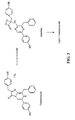
- the substrates for these luciferases and the reaction products they produce are shown in Figures 1 and 2 .
- the quantity of light (i.e. the number of photons) produced in the reaction can be measured and used to calculate the concentration of luminescent enzyme in the reaction.
- Firefly luciferase is a 61 kDa monomeric protein that does not require post-translational processing for enzymatic activity. Thus, it functions as a genetic reporter immediately upon translation. Photon emission is achieved through oxidation of beetle luciferin in a reaction that requires ATP, Mg 2+ and O 2 ( Figure 1 ).
- Renilla luciferase is a 36 kDa monomeric protein that is composed of 3% carbohydrate when purified from its natural source, Renilla reniformis. Like firefly luciferase, post-translational modification of Renilla luciferase is not required for its activity, and it functions as a genetic reporter immediately following translation.
- the luminescent reaction catalyzed by Renilla luciferase utilizes O 2 and coelenterate-luciferin, also called coelenterazine ( Figure 2 ).
- Luminescent reactions can be used to detect very small quantities of a particular analyte, the substance being identified and measured in an analysis.
- luminescent reactions can be used to detect and quantify proteases, lipases, phosphatases, peroxidases, glycosidases, and various metabolites such as ATP or NADH.
- Luminescent reactions can also be used to detect and quantify analytes through binding interactions, such as those mediated by antibodies and nucleotide probes.
- luminescent reactions can be used to detect less than 1x10 -16 moles of analyte in a sample, often less than 1x10 -19 moles.
- luminescence In luminescence, commonly detected analytes are the luciferases, especially firefly luciferase and Renilla luciferase. Most often these analytes are used to quantify phenomena associated with their creation through gene expression and protein synthesis.
- Other luminescent enzymes used as analytes include, but are not limited to, aequorin, Vargula luciferase, and other marine luciferases.
- Luminescence When using luminescence to measure an analyte, it is preferred that little or no light is produced by reactions that are not dependent on the presence of the analyte. This is the case with firefly luciferase. Under typical firefly luciferase assay conditions, luminescence cannot be detected when the firefly luciferase is not present. In contrast to assays employing firefly luciferase, light can generally be detected in Renilla luciferase assay systems when the Renilla luciferase is not present. Luminescence that is not dependent on the catalytic activity of a luminescent enzyme is termed autoluminescence. For example, autoluminescence can be caused by spontaneous oxidation of the luminogenic substrate coelenterazine.
- Luminescence that is not dependent on the on the presence of an analyte can limit the usefulness of an analytical assay by reducing the ability to accurately measure the quantity of light resulting from the activity of the analyte.
- the sensitivity of luminescent assays containing coelenterazine or its structural analogs is reduced due to autoluminescence.
- the addition of various components to the assay system such as lipids (especially above the critical micelle concentration or CMC), hydrophobic proteins (especially those with a defined three-dimensional structure), and cells or other biological materials containing hydrophobic microenvironments, can greatly increase autoluminescence.
- US 5 629 168 describes the use of enhancers such as aromatic organo boron compounds to improve the signal to noise ratio of luminescent reactions.
- EP 0 437 013 reduces the background in luminescent assays by using photoproteins.
- Assay sensitivity may also be reduced by luminescence from an unrelated luminogenic molecule.
- the unrelated luminogenic molecule may be present due to contamination of the analytical assay, or due to a separate analytical luminescence assay performed in the same reaction mixture. In either case, the sensitivity of an analytical luminescence assay could be improved by reducing the luminescence that is not dependent on the presence of the analyte.
- the invention is limited by its claims 1-28 Applicants have discovered that the sensitivity of luminescence assays can be improved by carrying out the assay in the presence of one or more organic compounds that reduce analyte-independent luminescence.
- Applicant has unexpectedly discovered that the analyte-independent luminescence can be reduced without similarly reducing analyte-dependent luminescence.
- the analyte-dependent luminescence is reduced by a lower fold than the analyte-independent luminescence, or the analyte dependent luminescence remains about the same or increases.
- the invention provides a method for increasing the sensitivity of a luminescent assay comprising carrying out the assay in the presence of an organic compound that reduces luminescence that is not dependent on the presence of an analyte by a factor of at least about 10 fold, and that reduces luminescence that is dependent on the presence of an analyte by less than about 7 fold.
- the invention also provides a method for increasing the sensitivity of a luminescent assay comprising carrying out the assay in the presence of an organic compound that reduces luminescence generated by luminogenic molecules not bound to an enzyme by at least about 10 fold, and that reduces the luminescence generated by luminogenic molecules bound to an enzyme by less than about 7 fold.
- the invention also provides a method for increasing the sensitivity of a luminescent assay comprising carrying out the assay in the presence of an organic compound that reduces autoluminescence by at least about 10 fold, and that reduces luminescence that is dependent on the presence of an analyte by less than about 7 fold.
- the invention also provides a method for increasing the sensitivity of a luminescent assay comprising carrying out the assay in the presence of an organic compound that comprises a selenium atom.
- the invention also provides a method for increasing the sensitivity of a luminescent assay comprising carrying out the assay in the presence of an organic compound that comprises a carbon-selenium bond.
- the invention also provides a method for increasing the sensitivity of a luminescent assay comprising carrying out the assay in the presence of an organic compound that comprises a carbon-selenium single bond (C-Se).
- C-Se carbon-selenium single bond
- the invention also provides a method for increasing the sensitivity of a luminescent assay comprising carrying out the assay in the presence of an organic compound that comprises a carbon atom bound to both a selenium atom and a nitrogen atom.
- the invention also provides a method for increasing the sensitivity of a luminescent assay comprising carrying out the assay in the presence of an organic compound that comprises a carbon atom bound to both a sulfur atom and a nitrogen atom.
- the invention also provides a method for increasing the sensitivity of a luminescent assay comprising carrying out the assay in the presence of an organic compound that comprises a sulfur atom bound to two carbon atoms, wherein the analyte-independent luminescence is reduced by at least about 10 fold.
- the analyte-dependent luminescence is reduced by less than 7 fold.
- the invention also provides an assay kit comprising packaging material containing 1) a luminogenic substrate of a luminescent enzyme, or a luminogenic enzyme; and 2) an organic compound for increasing the sensitivity of a luminescent assay.
- the organic molecule is capable of 1) reducing the luminescence that is not dependent on the presence of an analyte by a factor of at least about 10 fold, and reducing the luminescence that is dependent on the presence of an analyte by less than about 7 fold; 2) reducing the luminescence generated by luminogenic molecules not bound to an enzyme by at least about 10 fold, and reducing the luminescence generated by luminogenic molecules bound to an enzyme by less than about 7 fold; or 3) reducing autoluminescence by at least about 10 fold, and reducing luminescence that is dependent on the presence of an analyte by less than about 7 fold.
- the invention also provides novel compounds disclosed herein that are useful to increase the sensitivity of a luminescent assay.
- Applicant has discovered that it is possible to increase the sensitivity of a luminescent assay by carrying out the assay in the presence of an organic compound that reduces analyte-independent luminescence. This finding is unexpected. Using procedures similar to those described herein, one skilled in the art can identify compounds that are suitable for increasing the sensitivity of a luminescent assay. The structure of the compound is not critical provided the compound is capable of increasing the sensitivity of a luminescent assay.
- compounds that comprise a sulfur atom or a selenium atom are particularly useful for increasing the sensitivity of a luminescent assay.
- the remaining chemical structure of the compound that comprises a selenium atom or a sulfur atom is not critical, provided the structure does not interfere with the function of the compound.
- Preferred compounds have low toxicity at concentrations used in the invention, and can be stored, transported, and disposed of inexpensively.
- Suitable compounds that comprise a carbon sulfur double bond or a carbon selenium double bond include for example compounds of formula (I): wherein X is S or Se; R 1 and R 2 are each independently hydrogen, (C 1 -C 20 )alkyl, (C 3 -C 8 )cycloalkyl, (C 1 -C 20 )alkoxy, (C 2 -C 20 )alkenyl (C 2 -C 20 )alkynyl, aryl, heteroaryl, or NR a R b ; or R 1 and R 2 together with the carbon to which they are attached form a 5, 6, 7, or 8 membered saturated or unsaturated ring comprising carbon and optionally comprising 1, 2, or 3 heteroatoms selected from oxy (-O-), thio (-S-), or nitrogen (-NR c )-, wherein said ring is optionally substituted with 1, 2, or 3 halo, hydroxy, oxo, thioxo, carboxy, (C 1 -C
- Suitable compounds that comprise a mercapto group include for example compounds of the formula R 3 SH wherein: R 3 is (C 1 -C 20 )alkyl, (C 3 -C 8 )cycloalkyl,(C 2 -C 20 )alkenyl, (C 2 -C 20 )alkynyl, aryl, or heteroaryl; wherein any (C 1 -C 20 )alkyl, (C 3 -C 8 )cycloalkyl, (C 2 -C 20 )alkenyl, or (C 2 -C 20 )alkynyl of R 3 is optionally substituted with one or more (e.g 1, 2, 3, or 4) halo, hydroxy, mercapto oxo, thioxo, carboxy, (C 1 -C 20 )alkanoyl, (C 1 -C 20 )alkoxycarbonyl, aryl, heteroaryl, or NR d R e ; wherein R
- R 4 is (C 1 -C 20 )alkyl, (C 3 -C 8 )cycloalkyl,(C 2 -C 20 )alkenyl, (C 2 -C 20 )alkynyl, aryl, or heteroaryl; wherein any (C 1 -C 20 )alkyl, (C 3 -C 8 )cycloalkyl, (C 2 -C 20 )alkenyl, or (C 2 -C 20 )alkynyl of R 3 is optionally substituted with one or more (e.g 1, 2, 3, or 4) halo, hydroxy, mercapto oxo, thioxo, carboxy, (C 1 -C 20 )alkanoyl, (C 1 -C 20 )alkoxycarbonyl, aryl, heteroaryl, or NR f R g ; wherein R f and R g are each independently hydrogen
- Suitable compounds that comprise a carbon-selenium single bond or a carbon sulfur single bond include compounds of formula R 5 -X-R 6 wherein:
- (C 1 -C 20 )alkyl can be methyl, ethyl, propyl, isopropyl, butyl, iso-butyl, sec-butyl, pentyl, 3-pentyl, or hexyl;
- (C 3 -C 8 )cycloalkyl can be cyclopropyl, cyclobutyl, cyclopentyl, or cyclohexyl;
- (C 1 -C 20 )alkoxy can be methoxy, ethoxy, propoxy, isopropoxy, butoxy, iso-butoxy, sec-butoxy, pentoxy, 3-pentoxy, or hexyloxy;
- (C 2 -C 20 )alkenyl can be vinyl, allyl, 1-propenyl, 2-propenyl, 1-butenyl, 2-butenyl, 3-butenyl, 1,-pentenyl, 2-pentenyl, 3-pentenyl, 4-pen
- R 1 and R 2 can each independently be hydrogen, (C 1 -C 20 )alkyl, (C 3 -C 8 )cycloalkyl,(C 2 -C 20 )alkenyl, (C 2 -C 20 )alkynyl, aryl, heteroaryl, or NR a R b ; wherein R a and R b are each independently hydrogen, (C 1 -C 20 )alkyl, (C 3 -C 8 )cycloalkyl,(C 2 -C 20 )alkenyl, (C 1 -C 20 )alkanoyl, (C 1 -C 20 )alkoxycarbonyl, (C 2 -C 20 )alkynyl, aryl, or heteroaryl; wherein any (C 1 -C 20 )alkyl, (C 3 -C 8 )cycloalkyl, (C 1 -C 20 )alkoxy, (C 2 -C 20 )alken
- R 1 and R 2 can each independently be hydrogen, (C 1 -C 10 )alkyl,(C 2 -C 10 )alkenyl, (C 2 -C 10 )alkynyl, aryl, or NR a R b .
- R 1 and R 2 together with the carbon to which they are attached can form a 5 or 6 membered saturated or unsaturated ring comprising carbon and optionally comprising 1 or 2 heteroatoms selected from oxy (-O-), thio (-S-), or nitrogen (-NR c )-, wherein said ring is optionally substituted with 1, 2, or 3 halo, hydroxy, oxo, thioxo, carboxy, (C 1 -C 20 )alkyl, (C 3 -C 8 )cycloalkyl, (C 1 -C 20 )alkoxy, (C 1 -C 20 )alkanoyl, (C 1 -C 20 )alkoxycarbonyl, (C 2 -C 20 )alkenyl, (C 2 -C 20 )alkynyl, aryl, or heteroaryl; wherein R c is hydrogen, (C 1 -C 20 )alkyl, (C 3 -C 8 )cycloalkyl
- R 1 and R 2 can each independently be NR a R b ; wherein R a and R b are each independently hydrogen, (C 1 -C 20 )alkyl, (C 3 -C 8 )cycloalkyl, (C 2 -C 20 )alkenyl, (C 1 -C 20 )alkanoyl, (C 1 -C 20 )alkoxycarbonyl, (C 2 -C 20 )alkynyl, aryl, heteroaryl; wherein any (C 1 -C 20 )alkyl, (C 3 -C 8 )cycloalkyl, (C 2 -C 20 )alkenyl (C 1 -C 20 )alkanoyl, (C 1 -C 20 )alkoxycarbonyl, or (C 2 -C 20 )alkynyl is optionally substituted with one or more halo, hydroxy, mercapto, oxo, thioxo, carboxy
- R 1 and R 2 can each independently be amino, (C 1 -C 20 )alkyl, (C 1 -C 20 )alkylamino, allylamino, 2-hydroxyethylamino, phenylamino, or 4-thiazoylamino.
- R 1 and R 2 can each independently be amino, methyl, allylamino, 2-hydroxyethylamino, phenylamino, or 4-thiazoylamino.
- R 3 is (C 1 -C 20 )alkyl optionally substituted with one or more halo, mercapto oxo, thioxo, carboxy, (C 1 -C 20 )alkanoyl, (C 1 -C 20 )alkoxycarbonyl, aryl, heteroaryl, or NR d R e .
- R 3 is 2-aminoethyl, 2-amino-2-carboxyethyl, or 2-acylamino-2-carboxyethyl.
- a specific value for R 4 is aryl, optionally substituted with one or more halo, mercapto, hydroxy, oxo, carboxy, cyano, nitro, trifluoromethyl, trifluoromethoxy, (C 1 -C 20 )alkanoyl, (C 1 -C 20 )alkanoyloxy, sulfo or (C 1 -C 20 )alkoxycarbonyl.
- R 5 is (C 1 -C 10 )alkyl, (C 3 -C 6 )cycloalkyl,(C 2 -C 10 )alkenyl, (C 2 -C 10 )alkynyl, aryl, or heteroaryl; and R 6 is hydrogen, (C 1 -C 10 )alkyl, (C 3 -C 6 )cycloalkyl,(C 2 -C 10 )alkenyl, (C 2 -C 10 )alkynyl, aryl, or heteroaryl.
- R 5 and R 6 together with X form a heteroaryl.
- Preferred organic compounds exclude polypeptides and proteins comprising one or more mercapto (C-SH) groups.
- Preferred organic compounds exclude compounds that comprise one or more mercapto (C-SH) groups.
- a preferred organic compound is a compound of formula 1-11 as shown in figure 4 .
- a more preferred compound is thiourea.
- salts include organic acid addition salts, for example, tosylate, methanesulfonate, acetate, citrate, malonate, tartarate, succinate, benzoate, ascorbate, ⁇ -ketoglutarate, and ⁇ -glycerophosphate salts.
- suitable inorganic salts may also be formed, including hydrochloride, sulfate, nitrate, bicarbonate, and carbonate salts.
- Salts can be obtained using standard procedures well known in the art, for example by reacting a sufficiently basic compound with a suitable acid.
- Alkali metal for example, sodium, potassium or lithium
- alkaline earth metal for example calcium
- the compounds described herein can be present in a luminescence reaction at any concentration that increases the sensitivity of the assay.
- concentration The optimum concentration of a given compound will depend on the luminescent reagent(s) employed, and on the specific conditions under which a given assay is carried out. However, suitable concentrations can be determined using standard techniques that are available in the art.
- the compound that can increase the sensitivity of the assay can be present in a luminescence reaction at a concentration of at least about 0.1 ⁇ M, or at a concentration of at least about 0.1mM. More specifically, the compound can be present in the luminescence reaction at a concentration in the range from about 0.1 ⁇ M to about 500 mM (inclusive), or in the range from about 1 ⁇ M to about 250 mM (inclusive). Preferably, the compound is present at a concentration in the range from about 10 ⁇ M to about 100 mM (inclusive).
- the assay can be performed in the presence of whole cells.
- the assay can be carried out in a solvent comprising at least about 10% water. More specifically, the invention can be carried out in a solvent comprising at least about 25% water, or at least about 40% water.
- the analyte-independent luminescence is reduced by at least about 10 fold, or more preferably by at least about 20 fold, at least about 50 fold, or at least about 100 fold in the present of a compound, while the analyte-dependent luminescence is reduced by less than about 7 fold, about 5 fold, about 3 fold, or about 2 fold.
- a relative light unit value of 5 produced in the presence of the compound while a relative light unit value of 100 produced in the absence of the compound reflects a decrease in luminescence in the presence of the compound by 20 fold.
- the luminescence generated by luminogenic molecules not bound to an enzyme is reduced by at least about 10 fold, or more preferably by at least about 20 fold, at least about 50 fold, or at least about 100 fold, while the luminescence generated by luminogenic molecules bound to an enzyme is reduced by less than about 7 fold, about 5 fold, about 3 fold, or about 2 fold.
- the luminescence generated by luminonogenic molecules bound to an enzyme is preferably reduced by a lower fold than the fold decrease in luminescence generated by luminogenic molecules not bound to an enzyme.
- autoluminescence is reduced by at least about 10 fold, or more preferably by at least about 20 fold, at least about 50 fold, or at least about 100 fold, while luminescence that is dependent on the presence of an analyte is reduced by less than about 7 fold, about 5 fold, about 3 fold, or about 2 fold.
- the luminescence that is dependent on the presence of an analyte is preferably reduced by a lower fold than the fold decrease in autoluminescence.
- analyte-independent luminescence is reduced by at least about 10 fold, or more preferably by at least about 20 fold, at least about 50 fold, or at least about 100 fold.
- an assay when an assay is carried out in the presence of a compound that comprises a sulfur atom or a selenium atom, analyte-dependent luminescence is reduced by less than about 7 fold, about 5 fold, about 3 fold, or about 2 fold.
- the enzyme substrate, enzyme, and the compound can each be contained in a separate container, or they can be contained in a single container.
- the kit can optionally comprise a buffer solution suitable for use in a luminescent assay, and the enzyme substrate or enzyme, and the buffer solution can optionally be contained in a single container. Additionally, the compound and the buffer solution can optionally be contained in a single container.
- the kits can also optionally comprise a second substrate (e.g. a substrate for firefly luciferase or Renilla luciferase), or a quenching agent for a luminescent enzyme reaction.
- the kits can also optionally comprise ATP, or can optionally comprise both a luminogenic substrate of a luminescent enzyme, and a luminogenic enzyme.
- the ability of a compound to increase the sensitivity of a luminescent assay can be determined using assays that are well known to the art, or using the assays described in the Examples herein below.
- Compounds identified herein have been shown to be useful for increasing the sensitivity of luminescent assays.
- the compounds are particularly useful for reducing luminescence that results from the decomposition of intermediate dioxetane rings.
- the compounds are also useful for reducing luminescence in other systems that involve intermediate dioxetane rings and the like.
- Example 1 Improved assay sensitivity
- the compound to be tested was re-suspended in either SG or S+G reagent to a final concentration of SG or S+G of (1X).
- the compound was added so the final concentration in the 150 ⁇ l total volume would be that listed in Table 1 and the reagent was diluted to the a final of 50 ⁇ l with water.
- the SG or S+G reagent was brought up to 50 ⁇ l with water or with the solvent used to dissolve the compound of interest.
- DMSO dimethyl sulphoxide
- an equal volume of DMSO was added to the control reaction. Unless otherwise indicated, the compounds were first dissolved in water. The same result can be obtained by adding the compound to be tested directly to the media portion of the reaction instead of to the SG or S+G.
- a mixture containing all of the components in sufficient amounts for four reactions i.e. 200 ⁇ l media, 200 ⁇ l SG, 200 ⁇ l S+G
- 150 ⁇ l was dispensed into triplicate wells on a 96-well plate.
- reactions were sometimes assembled in each well of the plate by adding each of the 50 ⁇ l portions and mixing. The plate was incubated at 22°C and after 5 minutes the luminescence was measured using a Dynex plate luminometer (1 second measurement per well).
- reaction was assembled in 3 portions as follows: 50 ⁇ l MB (with or without enzyme 3 ) 50 ⁇ l MB with Coelenterazine (with or without detergent 4 ) 50 ⁇ l MB (with or without compound 5 ) 3 Enzyme was added to 1X MB to a concentration of approximately 2.5 ng/50 ⁇ l buffer 4 Detergents are known to increase the level of autoluminescence. For completeness, the effect of the compounds on autoluminescence and on enzymatic luminescence was evaluated in the presence and absence of detergent.
- 2X MB was used to make 1X MB without or with detergent at a concentration of 1%Tergitol NP-9, 1% antifoaming agent (0.33% in final reaction). To this portion, coelenterazine was added at a concentration of 180 ⁇ M in the version with detergent and of 60 ⁇ M in the version without detergent. These levels of substrate are needed to reach saturation conditions. Note: Other detergents, such as Tween-20 (Sigma Corp., St. Louis, MO) and Zwittergent® 3-08 (CalBiochem, Indianapolis, IN) were found to provide effects similar to those obtained with Tergitol NP-9. 5 2X MB was used to make 1X MB with the compound to be tested at various concentrations and water.
- Tween-20 Sigma Corp., St. Louis, MO
- Zwittergent® 3-08 CalBiochem, Indianapolis, IN
- 1X MB was made with only water or with water and the addition of the solvent used to solubilize the compound to be tested. For example, if the compound to be tested was dissolved in DMSO, an equal amount of only DMSO was added to the control MB sample.
- 1X Matthew's buffer standard composition consists of:
- the BSA functions as an enzyme stabilizer and, in the standard MB composition, enhances coelenterazine autoluminescence but not to the extent of the autoluminescence generated when detergent is.present.
- BSA was replaced with porcine gelatin as the enzyme stabilizer at a final concentration of 0.15 mg/ml or 0.45 mg/ml. Taking all the variants into account the format can be sub-divided in 4 different versions: B1 BSA/Detergent B2 BSA/No Detergent B3 Gelatin/Detergent B4 Gelatin/No Detergent
- Reactions were carried out in triplicate by adding each of the 50 ⁇ l portions to microtiter plate wells and mixing.
- the resulting relative light units generated per well was measured immediately using a Dynex MLX Microtiter plate luminometer or a Wallac 1450 MicroBeta Trilux plate luminometer (1 second/well) or alternatively, the plate was incubated at 22°C and read after 5 minutes in the same fashion.
- a result of "decreased 7.4 fold” indicates that the luminescence measurement in the presence of the compound was 7.4 times less than the luminescence measurement in the absence of the compound.
- the fold decrease in luminescence not associated with the presence of Renilla luciferase was greater than the fold decrease in luminescence associated with the presence of Renilla luciferase.
- the compounds reduce the luminescence not associated with enzymatic activity of the analyte to a greater degree than the luminescence associated with the enzymatic activity of the analyte.
- Table 1 See Figure 4 for compound identity.
- Example 3 Reduction of luminescence generated by chemiluminescent substrates CDP- Star ® and Luminol
- CDP- Star ® is a stabilized 1,2 -dioxetane chemiluminescent enzyme substrate, a high energy luminogenic molecule, used in the detection of alkaline phosphatase and alkaline phosphatase conjugates in solution and in membrane-based assays.
- CDP- Star ® was obtained from Tropix PE Biosystems, Bedford, Massachusetts.
- CDP-Star® substrate produces a light signal when it is activated by alkaline phosphatase. Alkaline phosphatase dephosphorylates the substrate, yielding an anion that accumulates due to its long half-life.
- Luminol (5-Amino-2,3-didydro-1,4-phthalazinedione) was obtained from Sigma, St. Louis, Missouri. Luminol is a widely used chemiluminescent reagent, that luminesces upon oxidation. Experimental conditions are grouped under Format D, sub-divided as follows:
- CDP- Star ® reagent as listed below were mixed with the representative compound in water (or water alone as control) and measured in a luminometer as previously described (1 second/well).
- Matthew's buffer was made at a 2X concentration (standard formulation as described in Example 1) and divided in several aliquots. Aliquots were adjusted from pH 4 to pH 9 in one pH unit increments. For each pH, versions of the buffer were made with or without 1%Tergitol NP-9/1%antifoaming agent (referred to as "detergent") and with or without 3 mM thiourea. Coelenterazine was added to a concentration of 180 mM for the version with detergent, and to a concentration of 60 mM for the version without detergent. The buffers were then brought to a final 1X concentration with water.
- detergent 1%Tergitol NP-9/1%antifoaming agent
- Coelenterazine was added to a concentration of 180 mM for the version with detergent, and to a concentration of 60 mM for the version without detergent.
- the buffers were then brought to a final 1X concentration with water.
- the media was removed from the cells and replaced with media containing the substrate for firefly luciferase, beetle luciferin, and the organic compounds at various concentrations. Passive diffusion of luciferin across the cell membrane together with the ATP oxygen and luciferase enzyme already contained within the cell, results in light production. Whereas, in compromised or damaged cells, intracellular ATP concentration is rapidly depleted, decreasing the firefly luminescence. The level of luminescence was compared to controls containing only luciferin to identify the effect of the compounds, if any, on light output as an indicator of cell viability.
- the media was removed from the cells and replaced with media containing the compounds at various concentrations and coelenterazine. Since there is no Renilla luciferase enzyme being expressed in these cells, the only luminescence observed is autoluminescence. The level of autoluminescence was compared to controls containing only coelenterazine to identify the effect of the compounds on reducing autoluminescence.
- the reagents were prepared as follows:
- Luciferin substrate available from Promega Corporation, Madison WI, USA was initially prepared in 10mM sodium phosphate buffer, pH 7.4 as a 100mM stock. This luciferin stock was used to make DMEM solution containing a final concentration of 2mM luciferin.
- 6-aza-thio-thymidine was dissolved in DMSO as a 750mM stock.
- the 6-aza-thio-thymidine was subsequently added to the DMEM/luciferin reagent at a final concentration of 30mM, 10 mM, and 1 mM, while maintaining a final DMSO concentration of 4%.
- a DMEM/luciferin reagent was used as the control with which to compare the effect of the compound and was also made to contain a final DMSO concentration of 4%.
- Coelenterazine substrate was initially dissolved in Stop & Glo® Reagent Solvent (both available from Promega Corporation, Madison WI, USA) as a 30mM stock. This coelenterazine stock was used to make DMEM media containing 0.6mM coelenterazine as the final concentration. DMEM/coelenterazine reagents were made in a similar fashion as the DMEM/luciferin reagents described in a).
- the cell culture medium was removed from the cells and replaced with medium containing substrate (+/- compound) and luminescence was measured immediately. All luminescent values obtained from wells containing cells were background subtracted using the corresponding luminescent values from those wells that did not contain cells. Fold reduction in autoluminescence was calculated by dividing the background-subtracted autoluminescence in minus compound controls by the background-subtracted autoluminescence containing the compounds. Results for representative compounds are shown in the following Table. Compound Concentration Additives to Media?
Landscapes
- Life Sciences & Earth Sciences (AREA)
- Chemical & Material Sciences (AREA)
- Health & Medical Sciences (AREA)
- Engineering & Computer Science (AREA)
- Organic Chemistry (AREA)
- Molecular Biology (AREA)
- Immunology (AREA)
- Zoology (AREA)
- General Health & Medical Sciences (AREA)
- Proteomics, Peptides & Aminoacids (AREA)
- Microbiology (AREA)
- Urology & Nephrology (AREA)
- Analytical Chemistry (AREA)
- Wood Science & Technology (AREA)
- Physics & Mathematics (AREA)
- Biochemistry (AREA)
- Hematology (AREA)
- Biomedical Technology (AREA)
- Biotechnology (AREA)
- Genetics & Genomics (AREA)
- General Engineering & Computer Science (AREA)
- Cell Biology (AREA)
- Bioinformatics & Cheminformatics (AREA)
- Biophysics (AREA)
- Food Science & Technology (AREA)
- Medicinal Chemistry (AREA)
- General Physics & Mathematics (AREA)
- Pathology (AREA)
- Measuring Or Testing Involving Enzymes Or Micro-Organisms (AREA)
- Investigating Or Analysing Materials By The Use Of Chemical Reactions (AREA)
- Plural Heterocyclic Compounds (AREA)
Abstract
Description
- The present invention relates generally to the fields of cell biology and molecular biology. In particular, this invention relates to methods, compositions and kits for increasing the sensitivity of a luminescence assay measurement.
- Reporter molecules are routinely used to monitor molecular events in the fields of biology, biochemistry, immunology, cell biology and molecular biology. For example, reporter molecules are employed in assays where the levels of the reporter molecule are due to transcription from a specific promoter linked to the reporter molecule. These assays can be used to study eukaryotic gene expression, receptor activity, transcription factors, intracellular signaling, mRNA processing, protein folding, and the like. Reporter molecules that are typically used in such assays include radioactive isotopes, fluorescent agents, enzymes, and luminescent agents. See for example, Akhavan-Tafti, et al, in: Bioluminescence and Chemiluminescence. Fundamentals and Applied Aspects. Proceedings of the 8th International Symposium on Bioluminescence and Chemiluminescence. Cambridge, September 1994. Eds. Campbel, Kricka, Stanley. John Wiley and Sons 1994.
- Two luminescent enzymes that are particularly useful in assay systems are firefly luciferase and Renilla reniformis luciferase. The substrates for these luciferases and the reaction products they produce are shown in
Figures 1 and 2 . The quantity of light (i.e. the number of photons) produced in the reaction, can be measured and used to calculate the concentration of luminescent enzyme in the reaction. - Firefly luciferase is a 61 kDa monomeric protein that does not require post-translational processing for enzymatic activity. Thus, it functions as a genetic reporter immediately upon translation. Photon emission is achieved through oxidation of beetle luciferin in a reaction that requires ATP, Mg2+ and O2 (
Figure 1 ). - Renilla luciferase is a 36 kDa monomeric protein that is composed of 3% carbohydrate when purified from its natural source, Renilla reniformis. Like firefly luciferase, post-translational modification of Renilla luciferase is not required for its activity, and it functions as a genetic reporter immediately following translation. The luminescent reaction catalyzed by Renilla luciferase utilizes O2 and coelenterate-luciferin, also called coelenterazine (
Figure 2 ). - Luminescent reactions can be used to detect very small quantities of a particular analyte, the substance being identified and measured in an analysis. For example, luminescent reactions can be used to detect and quantify proteases, lipases, phosphatases, peroxidases, glycosidases, and various metabolites such as ATP or NADH. Luminescent reactions can also be used to detect and quantify analytes through binding interactions, such as those mediated by antibodies and nucleotide probes. Typically, luminescent reactions can be used to detect less than 1x10-16 moles of analyte in a sample, often less than 1x10-19 moles. In luminescence, commonly detected analytes are the luciferases, especially firefly luciferase and Renilla luciferase. Most often these analytes are used to quantify phenomena associated with their creation through gene expression and protein synthesis. Other luminescent enzymes used as analytes include, but are not limited to, aequorin, Vargula luciferase, and other marine luciferases.
- When using luminescence to measure an analyte, it is preferred that little or no light is produced by reactions that are not dependent on the presence of the analyte. This is the case with firefly luciferase. Under typical firefly luciferase assay conditions, luminescence cannot be detected when the firefly luciferase is not present. In contrast to assays employing firefly luciferase, light can generally be detected in Renilla luciferase assay systems when the Renilla luciferase is not present. Luminescence that is not dependent on the catalytic activity of a luminescent enzyme is termed autoluminescence. For example, autoluminescence can be caused by spontaneous oxidation of the luminogenic substrate coelenterazine.
- Luminescence that is not dependent on the on the presence of an analyte (e.g. autoluminescence) can limit the usefulness of an analytical assay by reducing the ability to accurately measure the quantity of light resulting from the activity of the analyte. In particular, the sensitivity of luminescent assays containing coelenterazine or its structural analogs is reduced due to autoluminescence. Additionally, the addition of various components to the assay system, such as lipids (especially above the critical micelle concentration or CMC), hydrophobic proteins (especially those with a defined three-dimensional structure), and cells or other biological materials containing hydrophobic microenvironments, can greatly increase autoluminescence.
US 5 629 168 describes the use of enhancers such as aromatic organo boron compounds to improve the signal to noise ratio of luminescent reactions.EP 0 437 013 - Assay sensitivity may also be reduced by luminescence from an unrelated luminogenic molecule. The unrelated luminogenic molecule may be present due to contamination of the analytical assay, or due to a separate analytical luminescence assay performed in the same reaction mixture. In either case, the sensitivity of an analytical luminescence assay could be improved by reducing the luminescence that is not dependent on the presence of the analyte.
- The invention is limited by its claims 1-28 Applicants have discovered that the sensitivity of luminescence assays can be improved by carrying out the assay in the presence of one or more organic compounds that reduce analyte-independent luminescence. In particular, Applicant has unexpectedly discovered that the analyte-independent luminescence can be reduced without similarly reducing analyte-dependent luminescence. Preferably, the analyte-dependent luminescence is reduced by a lower fold than the analyte-independent luminescence, or the analyte dependent luminescence remains about the same or increases. Accordingly, the invention provides a method for increasing the sensitivity of a luminescent assay comprising carrying out the assay in the presence of an organic compound that reduces luminescence that is not dependent on the presence of an analyte by a factor of at least about 10 fold, and that reduces luminescence that is dependent on the presence of an analyte by less than about 7 fold.
- The invention also provides a method for increasing the sensitivity of a luminescent assay comprising carrying out the assay in the presence of an organic compound that reduces luminescence generated by luminogenic molecules not bound to an enzyme by at least about 10 fold, and that reduces the luminescence generated by luminogenic molecules bound to an enzyme by less than about 7 fold.
- The invention also provides a method for increasing the sensitivity of a luminescent assay comprising carrying out the assay in the presence of an organic compound that reduces autoluminescence by at least about 10 fold, and that reduces luminescence that is dependent on the presence of an analyte by less than about 7 fold.
- The invention also provides a method for increasing the sensitivity of a luminescent assay comprising carrying out the assay in the presence of an organic compound that comprises a selenium atom.
- The invention also provides a method for increasing the sensitivity of a luminescent assay comprising carrying out the assay in the presence of an organic compound that comprises a carbon-selenium bond.
- The invention also provides a method for increasing the sensitivity of a luminescent assay comprising carrying out the assay in the presence of an organic compound that comprises a carbon selenium double bond (C=Se).
- The invention also provides a method for increasing the sensitivity of a luminescent assay comprising carrying out the assay in the presence of an organic compound that comprises a carbon-selenium single bond (C-Se).
- The invention also provides a method for increasing the sensitivity of a luminescent assay comprising carrying out the assay in the presence of an organic compound that comprises a carbon-sulfur double bond (C=S).
- The invention also provides a method for increasing the sensitivity of a luminescent assay comprising carrying out the assay in the presence of an organic compound that comprises a carbon atom bound to both a selenium atom and a nitrogen atom.
- The invention also provides a method for increasing the sensitivity of a luminescent assay comprising carrying out the assay in the presence of an organic compound that comprises a carbon atom bound to both a sulfur atom and a nitrogen atom.
- The invention also provides a method for increasing the sensitivity of a luminescent assay comprising carrying out the assay in the presence of an organic compound that comprises a sulfur atom bound to two carbon atoms, wherein the analyte-independent luminescence is reduced by at least about 10 fold. Preferably, the analyte-dependent luminescence is reduced by less than 7 fold.
- The invention also provides an assay kit comprising packaging material containing 1) a luminogenic substrate of a luminescent enzyme, or a luminogenic enzyme; and 2) an organic compound for increasing the sensitivity of a luminescent assay. Preferably, the organic molecule is capable of 1) reducing the luminescence that is not dependent on the presence of an analyte by a factor of at least about 10 fold, and reducing the luminescence that is dependent on the presence of an analyte by less than about 7 fold; 2) reducing the luminescence generated by luminogenic molecules not bound to an enzyme by at least about 10 fold, and reducing the luminescence generated by luminogenic molecules bound to an enzyme by less than about 7 fold; or 3) reducing autoluminescence by at least about 10 fold, and reducing luminescence that is dependent on the presence of an analyte by less than about 7 fold.
- The invention also provides novel compounds disclosed herein that are useful to increase the sensitivity of a luminescent assay.
-
-
FIG. 1 illustrates chemiluminescent reaction catalyzed by firefly luciferase. -
FIG. 2 illustrates chemiluminescent reaction catalyzed by Renilla luciferase. -
FIG. 3 illustrates a dioxetane intermediate in the colenterazine autoluminescence pathway. -
FIG. 4 shows representative compounds (1-11) that reduce autoluminescence. - Before the present invention is disclosed and described in detail, it is to be understood that this invention is not limited to specific assay formats, materials or reagents, as such may vary. It is also to be understood that the terminology used herein is for the purpose of describing particular embodiments only and is not intended to be limiting.
- As used in the specification and the appended claims, the singular forms "a", "an" and "the" include plural referents unless the context clearly dictates otherwise. In this specification and in the claims that follow, reference will be made to a number of terms that shall be defined to have the following meanings, unless otherwise described:
- The term "halo" as used herein denotes fluoro, chloro, bromo, or iodo.
- The terms "Alkyl", "alkoxy", "alkenyl", "alkynyl", etc. as used herein denote both branched and unbranched groups; but reference to an individual radical such as "propyl" embraces only the straight, unbranched chain radical, a branched chain isomer such as "isopropyl" being specifically referred to.
- The term "Aryl", as used herein, denotes a monocyclic or polycyclic hydrocarbon radical comprising 6 to 30 atoms wherein at least one ring is aromatic. Preferably, aryl denotes a phenyl radical or an ortho-fused bicyclic carbocyclic radical having about nine to ten ring atoms in which at least one ring is aromatic. "Heteroaryl" encompasses a radical of a monocyclic aromatic ring containing five or six ring atoms consisting of carbon and one to four heteroatoms each selected from the group consisting of non-peroxide oxygen, sulfur, and N(X) wherein X is absent or is H, O, (C1-C4)alkyl, phenyl or benzyl, as well as a radical of a polycyclic ring comprising 8 to 30 atoms derived therefrom. Preferably, heteroaryl encompasses a radical attached via a ring carbon of a monocyclic aromatic ring containing five or six ring atoms consisting of carbon and one to four heteroatoms each selected from the group consisting of non-peroxide oxygen, sulfur, and N(X) wherein X is absent or is H, O, (C1-C4)alkyl, phenyl or benzyl, as well as a radical of an ortho-fused bicyclic heterocycle of about eight to ten ring atoms derived therefrom, particularly a benz-derivative or one derived by fusing a propylene, trimethylene, or tetramethylene diradical thereto.
- The term "analyte", as used herein is a substance to be detected in a test sample. In luminescence assays, commonly detected analytes include the luciferases, especially firefly luciferase and Renilla luciferase. Other luminescent enzymes used as analytes include, but are not limited to, aequorin, Vargula luciferase, and other marine luciferases. Additionally, luminescent reactions can be used to detect and quantify analytes such as proteases, lipases, phosphatases, peroxidases, glycosidases, and various metabolites such as ATP or NADH. Luminescent reactions can also be used to detect and quantify analytes through binding interactions, such as those mediated by antibodies and nucleotide probes. In certain cases, analyte-dependent luminescence can be coupled to the activity of a luminescent enzyme. For example, alkaline phosphatase (AP) could be detected by using a phospho derivative of luciferin. By this strategy, luciferin is generated by the action of AP, which then yields light by reaction with luciferase. The instant invention would allow the AP assay to be run after a separate horseradish peroxidase/luminol reaction. With respect to the analyte AP, a compound as described herein, could be added to reduce the analyte-independent luminescence caused by horseradish peroxidase.
- The term "autoluminesence" as used herein, refers to the release of light from a luminogenic molecule that does not result from enzymatic action on the luminogenic molecule.
- The term "increase the sensitivity of a luminescent assay" as used herein means increasing the precision of the assay or improving the ability to measure the presence of a small amount of an analyte with the assay. For example, the sensitivity of a luminescent assay can be increased by reducing analyte-independent luminescence. Preferably, analyte-independent luminescence is reduced, and a minimal reduction, no reduction, or an increase in analyte-dependent luminescence results. Additionally, analyte-independent luminesence is preferably reduced by a greater fold than analyte-dependent luminescence.
- The term "luminescent," as used herein, includes bioluminescence (i.e light produced by a living organism), chemi-luminescence (light produced when a chemical reaction proceeds), and electrochemical-luminescence. When the enzyme involved has evolved in an organism by natural selection for the purpose of generating light, or the enzyme involved is a mutated derivative of such an enzyme, the luminescent reactions are also called "bioluminescent reactions" and the enzyme involved is also called a "bioluminescent enzyme." Examples are firefly luciferase, Renilla luciferase, Cypridina luciferase, Aequorin photoprotein, Obelin photoprotein, and the like.
- The term "luminescent assay" or "luminescence assay" includes any assay that generates light based on the presence of an analyte. Such assays include assays that employ one or more luciferase enzymes (e.g. firefly luciferase, Renilla luciferase, Cypridina luciferase, and the like).
- The term "luminogenic enzyme," as used herein includes enzymes that catalyze a reaction that produces light, or that lead to the production of light. For example, the term includes firefly luciferase, Renilla luciferase, Cypridina luciferase, Aequorin photoprotein, Obelin photoprotein, and the like.
- The term "luminogenic molecule" as used herein refers to a molecule capable of creating light via a chemical reaction (e.g. luciferin, coelenterazine, or a functional analog thereof). Generally, a luminogenic molecule is either a high energy molecular species (e.g. a stabilized dioxetane), or it is transformed into a high energy molecular species by a chemical reaction. The chemical reaction is usually oxidation by oxygen, superoxide, or peroxide. In each case, the energy within the luminogenic molecule is released by the chemical reaction. Although at least some of this energy is released as photons of light, the energy can also be released in other forms, such as heat. The luminogenic molecules that do not yield light disperse their energy through alternative modes, often termed "dark pathways".
- The term "luminogenic molecule not bound to an enzyme" as used herein, includes a luminogenic molecule that is not bound to an enzyme (e.g. firefly luciferase, Renilla luciferase, Cypridina luciferase, and the like) that catalyzes a reaction that produces light.
- The term "luminogenic molecules bound to an enzyme" as used herein includes a luminogenic molecule that is bound to an enzyme that catalyzes a reaction that produces light.
- The term "luminescence that is dependent on the presence of an analyte," or "analyte-dependent luminescence" as used herein, includes luminescence that results from a chemical reaction that involves an analyte, as well as luminescence that correlates with the presence of an analyte either directly or indirectly.
- The term "luminescence that is not dependent on the presence of an analyte," or "analyte-independent luminescence" as used herein, includes luminescence resulting from autoluminescence of a luminogenic substrate as well as luminescence resulting from an unrelated luminogenic molecule present in an assay mixture.
- The term "quench" as used herein means to reduce the yield of photons from a luminescent reaction. The term includes preventing an analyte from being detected or being detectable, and may occur either directly or indirectly. Agents that can be used to quench a reaction are known as "quenching agents."
- Applicant has discovered that it is possible to increase the sensitivity of a luminescent assay by carrying out the assay in the presence of an organic compound that reduces analyte-independent luminescence. This finding is unexpected. Using procedures similar to those described herein, one skilled in the art can identify compounds that are suitable for increasing the sensitivity of a luminescent assay. The structure of the compound is not critical provided the compound is capable of increasing the sensitivity of a luminescent assay.
- In particular, applicant has discovered that compounds that comprise a sulfur atom or a selenium atom are particularly useful for increasing the sensitivity of a luminescent assay. The remaining chemical structure of the compound that comprises a selenium atom or a sulfur atom is not critical, provided the structure does not interfere with the function of the compound. Preferred compounds have low toxicity at concentrations used in the invention, and can be stored, transported, and disposed of inexpensively.
- Suitable compounds include organic compounds (i.e. compounds that comprise one or more carbon atoms). Suitable organic compounds can comprise a carbon-sulfur bond or a carbon-selenium bond, for example suitable organic compounds can comprise a carbon-sulfur double bond (C=S), a carbon selenium double bond (C=Se), a carbon-sulfur single bond (C-S), or carbon-selenium single bond (C-Se). Suitable organic compounds can also comprise a carbon bound mercapto group (C-SH) or a sulfur atom bound to two catbon atoms (C-S-C). Preferred compounds are lipophyllic in nature.
- Suitable compounds that comprise a carbon sulfur double bond or a carbon selenium double bond include for example compounds of formula (I):

- Suitable compounds that comprise a mercapto group include for example compounds of the formula R3SH wherein: R3 is (C1-C20)alkyl, (C3-C8)cycloalkyl,(C2-C20)alkenyl, (C2-C20)alkynyl, aryl, or heteroaryl; wherein any (C1-C20)alkyl, (C3-C8)cycloalkyl, (C2-C20)alkenyl, or (C2-C20)alkynyl of R3 is optionally substituted with one or more (e.g 1, 2, 3, or 4) halo, hydroxy, mercapto oxo, thioxo, carboxy, (C1-C20)alkanoyl, (C1-C20)alkoxycarbonyl, aryl, heteroaryl, or NRdRe; wherein Rd and Re are each independently hydrogen, (C1-C20)alkyl, (C3-C8)cycloalkyl,(C2-C20)alkenyl, (C2-C20)alkynyl, (C1-C20)alkanoyl, (C1-C20)alkoxycarbonyl aryl, or heteroaryl; and wherein any aryl or heteroaryl is optionally substituted with one or more (1, 2, 3, or 4) halo, mercapto, hydroxy, oxo, carboxy, cyano, nitro, trifluoromethyl, trifluoromethoxy, (C1-C20)alkanoyl, (C1-C20)alkanoyloxy, sulfo or (C1-C20)alkoxycarbonyl; or a salt thereof.
- Other suitable compounds include for example compounds of the formula R4NCS wherein: R4 is (C1-C20)alkyl, (C3-C8)cycloalkyl,(C2-C20)alkenyl, (C2-C20)alkynyl, aryl, or heteroaryl; wherein any (C1-C20)alkyl, (C3-C8)cycloalkyl, (C2-C20)alkenyl, or (C2-C20)alkynyl of R3 is optionally substituted with one or more (e.g 1, 2, 3, or 4) halo, hydroxy, mercapto oxo, thioxo, carboxy, (C1-C20)alkanoyl, (C1-C20)alkoxycarbonyl, aryl, heteroaryl, or NRfRg; wherein Rf and Rg are each independently hydrogen, (C1-C20)alkyl, (C3-C8)cycloalkyl,(C2-C20)alkenyl, (C2-C20alkynyl, (C1-C20)alkanoyl, (C1-C20)alkoxycarbonyl aryl, or heteroaryl; and wherein any aryl or heteroaryl is optionally substituted with one or more (1, 2, 3, or 4) halo, mercapto, hydroxy, oxo, carboxy, cyano, nitro, trifluoromethyl, trifluoromethoxy, (C1-C20)alkanoyl, (C1-C20)alkanoyloxy, sulfo or (C1-C20)alkoxycarbonyl; or a salt thereof.
- Other suitable compounds that comprise a carbon-selenium single bond or a carbon sulfur single bond include compounds of formula R5-X-R6 wherein:
- X is -S- or -Se-;
- R5 is (C1-C20)alkyl, (C3-C8)cycloalkyl,(C2-C20)alkenyl, (C2-C20)alkynyl, aryl, or heteroaryl; and R6 is hydrogen, (C1-C20)alkyl, (C3-C8)cycloalkyl,(C2-C20)alkenyl, (C2-C20)alkynyl, aryl, or heteroaryl;
- or R5 and R6 together with X form a heteroaryl;
- wherein any (C1-C20)alkyl, (C3-C8)cycloalkyl, (C2-C20)alkenyl, or (C2-C20)alkynyl of R5 or R6 is optionally substituted with one or more (e.g 1, 2, 3, or 4) halo, hydroxy, mercapto oxo, thioxo, carboxy, (C1-C20)alkanoyl, (C1-C20)alkoxycarbonyl, aryl, heteroaryl, or NRkRm;
- wherein Rk and Rm are each independently hydrogen, (C1-C20)alkyl, (C3-C8)cycloalkyl,(C2-C20)alkenyl, (C2-C20)alkynyl, (C1-C20)alkanoyl, (C1-C20)alkoxycarbonyl aryl, or heteroaryl; and
- wherein any aryl or heteroaryl is optionally substituted with one or more (1, 2, 3, or 4) halo, mercapto, hydroxy, oxo, carboxy, cyano, nitro, trifluoromethyl, trifluoromethoxy, (C1-C20)alkanoyl, (C1-C20)alkanoyloxy, sulfo or (C1-C20)alkoxycarbonyl; or a salt thereof.
- Specific and preferred values listed below for radicals, substituents, and ranges, are for illustration only; they do not exclude other defined values or other values within defined ranges for the radicals and substituents.
- Specifically, (C1-C20)alkyl can be methyl, ethyl, propyl, isopropyl, butyl, iso-butyl, sec-butyl, pentyl, 3-pentyl, or hexyl; (C3-C8)cycloalkyl can be cyclopropyl, cyclobutyl, cyclopentyl, or cyclohexyl; (C1-C20)alkoxy can be methoxy, ethoxy, propoxy, isopropoxy, butoxy, iso-butoxy, sec-butoxy, pentoxy, 3-pentoxy, or hexyloxy; (C2-C20)alkenyl can be vinyl, allyl, 1-propenyl, 2-propenyl, 1-butenyl, 2-butenyl, 3-butenyl, 1,-pentenyl, 2-pentenyl, 3-pentenyl, 4-pentenyl, 1- hexenyl, 2-hexenyl, 3-hexenyl, 4-hexenyl, or 5-hexenyl; (C2-C20)alkynyl can be ethynyl, 1-propynyl, 2-propynyl, 1-butynyl, 2-butynyl, 3-butynyl, 1-pentynyl, 2-pentynyl, 3-pentynyl, 4-pentynyl, 1- hexynyl, 2-hexynyl, 3-hexynyl, 4-hexynyl, or 5-hexynyl; (C1-C20)alkanoyl can be acetyl, propanoyl or butanoyl; (C1-C20)alkoxycarbonyl can be methoxycarbonyl, ethoxycarbonyl, propoxycarbonyl, isopropoxycarbonyl, butoxycarbonyl, pentoxycarbonyl, or hexyloxycarbonyl; (C2-C20)alkanoyloxy can be acetoxy, propanoyloxy, butanoyloxy, isobutanoyloxy, pentanoyloxy, or hexanoyloxy; aryl can be phenyl, indenyl, or naphthyl; and heteroaryl can be furyl, imidazolyl, triazolyl, triazinyl, oxazoyl, isoxazoyl, thiazolyl, isothiazoyl, pyrazolyl, pyrrolyl, pyrazinyl, tetrazolyl, pyridyl, (or its N-oxide), thienyl, pyrimidinyl (or its N-oxide), indolyl, isoquinolyl (or its N-oxide) or quinolyl (or its N-oxide).
- Specifically, R1 and R2 can each independently be hydrogen, (C1-C20)alkyl, (C3-C8)cycloalkyl,(C2-C20)alkenyl, (C2-C20)alkynyl, aryl, heteroaryl, or NRaRb; wherein Ra and Rb are each independently hydrogen, (C1-C20)alkyl, (C3-C8)cycloalkyl,(C2-C20)alkenyl, (C1-C20)alkanoyl, (C1-C20)alkoxycarbonyl, (C2-C20)alkynyl, aryl, or heteroaryl; wherein any (C1-C20)alkyl, (C3-C8)cycloalkyl, (C1-C20)alkoxy, (C2-C20)alkenyl (C1-C20)alkanoyl, (C1-C20)alkoxycarbonyl, or (C2-C20)alkynyl of R1, R2, Ra, and Rb is optionally substituted with 1 or 2 halo, hydroxy, mercapto, oxo, thioxo, carboxy, (C1-C20)alkanoyl, (C1-C20)alkoxycarbonyl, aryl, or heteroaryl; and wherein any aryl or heteroaryl is optionally substituted with one or more halo, hydroxy, mercapto, carboxy, cyano, nitro, trifluoromethyl, trifluoromethoxy, (C1-C20)alkanoyl, (C1-C20)alkanoyloxy, sulfo or (C1-C20)alkoxycarbonyl.
- Specifically, R1 and R2 can each independently be hydrogen, (C1-C10)alkyl,(C2-C10)alkenyl, (C2-C10)alkynyl, aryl, or NRaRb.
- Specifically, R1 and R2 together with the carbon to which they are attached can form a 5 or 6 membered saturated or unsaturated ring comprising carbon and optionally comprising 1 or 2 heteroatoms selected from oxy (-O-), thio (-S-), or nitrogen (-NRc)-, wherein said ring is optionally substituted with 1, 2, or 3 halo, hydroxy, oxo, thioxo, carboxy, (C1-C20)alkyl, (C3-C8)cycloalkyl, (C1-C20)alkoxy, (C1-C20)alkanoyl, (C1-C20)alkoxycarbonyl, (C2-C20)alkenyl, (C2-C20)alkynyl, aryl, or heteroaryl; wherein Rc is hydrogen, (C1-C20)alkyl, (C3-C8)cycloalkyl,(C2-C20)alkenyl, (C1-C20)alkanoyl, (C1-C20)alkoxycarbonyl, (C2-C20)alkynyl, aryl, heteroaryl; wherein any (C1-C20)alkyl, (C3-C20)cycloalkyl, (C1-C20)alkoxy, (C2-C20)alkenyl (C1-C20)alkanoyl, (C1-C20)alkoxycarbonyl, or (C2-C20)alkyllyl of R1, R2, and Rc is optionally substituted with one or more halo, hydroxy, mercapto, oxo, thioxo, carboxy, (C1-C20)alkanoyl, (C1-C20)alkoxycarbonyl, aryl, or heteroaryl; and wherein any aryl or heteroaryl is optionally substituted with one or more halo, hydroxy, mercapto, carboxy, cyano, nitro, trifluoromethyl, trifluoromethoxy, (C1-C20)alkanoyl, (C1-C20)alkanoyloxy, sulfo or (C1-C20)alkoxycarbonyl.
- Specifically, R1 and R2 can each independently be NRaRb; wherein Ra and Rb are each independently hydrogen, (C1-C20)alkyl, (C3-C8)cycloalkyl, (C2-C20)alkenyl, (C1-C20)alkanoyl, (C1-C20)alkoxycarbonyl, (C2-C20)alkynyl, aryl, heteroaryl; wherein any (C1-C20)alkyl, (C3-C8)cycloalkyl, (C2-C20)alkenyl (C1-C20)alkanoyl, (C1-C20)alkoxycarbonyl, or (C2-C20)alkynyl is optionally substituted with one or more halo, hydroxy, mercapto, oxo, thioxo, carboxy, aryl, or heteroaryl; and wherein any aryl or heteroaryl is optionally substituted with one or more halo, hydroxy, mercapto, carboxy, cyano, nitro, trifluoromethyl, trifluoromethoxy, (C1-C20)alkanoyl, (C1-C20)alkanoyloxy, sulfo or (C1-C20)alkoxycarbonyl.
- Specifically, R1 and R2 can each independently be amino, (C1-C20)alkyl, (C1-C20)alkylamino, allylamino, 2-hydroxyethylamino, phenylamino, or 4-thiazoylamino.
- Specifically, R1 and R2 can each independently be amino, methyl, allylamino, 2-hydroxyethylamino, phenylamino, or 4-thiazoylamino.
- A specific value for R3 is (C1-C20)alkyl optionally substituted with one or more halo, mercapto oxo, thioxo, carboxy, (C1-C20)alkanoyl, (C1-C20)alkoxycarbonyl, aryl, heteroaryl, or NRdRe.
- A specific value for R3 is 2-aminoethyl, 2-amino-2-carboxyethyl, or 2-acylamino-2-carboxyethyl.
- A specific value for R4 is aryl, optionally substituted with one or more halo, mercapto, hydroxy, oxo, carboxy, cyano, nitro, trifluoromethyl, trifluoromethoxy, (C1-C20)alkanoyl, (C1-C20)alkanoyloxy, sulfo or (C1-C20)alkoxycarbonyl.
- Specifically, R5 is (C1-C10)alkyl, (C3-C6)cycloalkyl,(C2-C10)alkenyl, (C2-C10)alkynyl, aryl, or heteroaryl; and R6 is hydrogen, (C1-C10)alkyl, (C3-C6)cycloalkyl,(C2-C10)alkenyl, (C2-C10)alkynyl, aryl, or heteroaryl.
- Specifically, R5 and R6 together with X form a heteroaryl.
- Preferred organic compounds exclude polypeptides and proteins comprising one or more mercapto (C-SH) groups.
- Preferred organic compounds exclude compounds that comprise one or more mercapto (C-SH) groups.
- A preferred organic compound is a compound of formula 1-11 as shown in
figure 4 . A more preferred compound is thiourea. - The compounds described hereinabove are available from commercial sources or can be prepared from commercially available starting materials using procedures that are known in the field of synthetic chemistry. For example, see Jerry March, Advanced Organic Chemistry, 4th ed. Wiley-Interscience, John Wiley and Sons, New York, 1992.
- In cases where compounds are sufficiently basic or acidic to form stable salts, use of the compounds as salts in the methods of the invention may be appropriate. Examples of suitable salts include organic acid addition salts, for example, tosylate, methanesulfonate, acetate, citrate, malonate, tartarate, succinate, benzoate, ascorbate, α-ketoglutarate, and α-glycerophosphate salts. Suitable inorganic salts may also be formed, including hydrochloride, sulfate, nitrate, bicarbonate, and carbonate salts.
- Salts can be obtained using standard procedures well known in the art, for example by reacting a sufficiently basic compound with a suitable acid. Alkali metal (for example, sodium, potassium or lithium) or alkaline earth metal (for example calcium) salts can also be used.
- When used in accord with the methods of the invention, the compounds described herein can be present in a luminescence reaction at any concentration that increases the sensitivity of the assay. The optimum concentration of a given compound will depend on the luminescent reagent(s) employed, and on the specific conditions under which a given assay is carried out. However, suitable concentrations can be determined using standard techniques that are available in the art.
- Specifically, the compound that can increase the sensitivity of the assay can be present in a luminescence reaction at a concentration of at least about 0.1µM, or at a concentration of at least about 0.1mM. More specifically, the compound can be present in the luminescence reaction at a concentration in the range from about 0.1µM to about 500 mM (inclusive), or in the range from about 1µM to about 250 mM (inclusive). Preferably, the compound is present at a concentration in the range from about 10 µM to about 100 mM (inclusive).
- Specifically, the assay can be performed in the presence of whole cells.
- Specifically, the assay can be carried out in a solvent comprising at least about 10% water. More specifically, the invention can be carried out in a solvent comprising at least about 25% water, or at least about 40% water.
- Preferably, in the practice of the methods of the invention, the analyte-independent luminescence is reduced by at least about 10 fold, or more preferably by at least about 20 fold, at least about 50 fold, or at least about 100 fold in the present of a compound, while the analyte-dependent luminescence is reduced by less than about 7 fold, about 5 fold, about 3 fold, or about 2 fold. For example, a relative light unit value of 5 produced in the presence of the compound while a relative light unit value of 100 produced in the absence of the compound reflects a decrease in luminescence in the presence of the compound by 20 fold.
- Preferably in the practice of the methods of the invention, the luminescence generated by luminogenic molecules not bound to an enzyme is reduced by at least about 10 fold, or more preferably by at least about 20 fold, at least about 50 fold, or at least about 100 fold, while the luminescence generated by luminogenic molecules bound to an enzyme is reduced by less than about 7 fold, about 5 fold, about 3 fold, or about 2 fold. The luminescence generated by luminonogenic molecules bound to an enzyme is preferably reduced by a lower fold than the fold decrease in luminescence generated by luminogenic molecules not bound to an enzyme.
- Preferably in the practice of the methods of the invention, autoluminescence is reduced by at least about 10 fold, or more preferably by at least about 20 fold, at least about 50 fold, or at least about 100 fold, while luminescence that is dependent on the presence of an analyte is reduced by less than about 7 fold, about 5 fold, about 3 fold, or about 2 fold. The luminescence that is dependent on the presence of an analyte is preferably reduced by a lower fold than the fold decrease in autoluminescence.
- Preferably in the practice of the methods of the invention, when an assay is carried out in the presence of a compound that comprises a sulfur atom or a selenium atom, analyte-independent luminescence is reduced by at least about 10 fold, or more preferably by at least about 20 fold, at least about 50 fold, or at least about 100 fold.
- Preferably in the practice of the methods of the invention, when an assay is carried out in the presence of a compound that comprises a sulfur atom or a selenium atom, analyte-dependent luminescence is reduced by less than about 7 fold, about 5 fold, about 3 fold, or about 2 fold.
- For kits of the invention the enzyme substrate, enzyme, and the compound can each be contained in a separate container, or they can be contained in a single container. The kit can optionally comprise a buffer solution suitable for use in a luminescent assay, and the enzyme substrate or enzyme, and the buffer solution can optionally be contained in a single container. Additionally, the compound and the buffer solution can optionally be contained in a single container. The kits can also optionally comprise a second substrate (e.g. a substrate for firefly luciferase or Renilla luciferase), or a quenching agent for a luminescent enzyme reaction. The kits can also optionally comprise ATP, or can optionally comprise both a luminogenic substrate of a luminescent enzyme, and a luminogenic enzyme.
- The ability of a compound to increase the sensitivity of a luminescent assay can be determined using assays that are well known to the art, or using the assays described in the Examples herein below.
- Compounds identified herein have been shown to be useful for increasing the sensitivity of luminescent assays. The compounds are particularly useful for reducing luminescence that results from the decomposition of intermediate dioxetane rings. Thus, in addition to being useful for increasing the sensitivity of luminescent assays (e.g. bioluminescent, chemiluminescent, or electroluminescent assays), the compounds are also useful for reducing luminescence in other systems that involve intermediate dioxetane rings and the like.
- The invention will now be illustrated by the following nonlimiting Examples. Compounds 1-11 (
Figure 4 ) are readily available from commercial sources. - Experiments to assess the ability of representative organic compounds ("compounds") to increase luminescence assay sensitivity were performed under the conditions described below in Format A and Format B. Improved luminescence assay sensitivity is demonstrated by the ability of the compounds to decrease the analyte-independent luminescence resulting from the oxidation of coelenterazine, while causing lesser or minimal reduction to the analyte-dependent luminescence, i.e. coelenterazine in the presence of Renilla luciferase. It is demonstrated herein that the compound causes a lower-fold decrease in luminescence when the analyte of interest is present than the fold decrease in luminescence when the analyte of interest is absent. The enzymatic luminescence measurement may have an autoluminescence component.
- In fact, for the majority of experiments described herein, an increase in the enzymatic luminescence measurement was observed when the compound being tested was present. Because autoluminescence is typically very low, in order to observe a more pronounced effect of the compounds on autoluminescence, autoluminescence was enhanced by adding a detergent, increasing the pH, adding hydrogen peroxide, adding DMSO, adding BSA, or adding sodium hydrosulfite.
- Assays were performed in the presence of Steady Glo® reagent (SG) and Stop & Glo® reagent (S+G), (Promega Corporation, Madison Wisconsin). A total reaction volume of 150 µl consisted of:
- 50 µl F-12 (Ham) media + 1 mg/ml gelatin (with or without enzyme1)
- 50 µl S+G (containing substrate2)
- 50 µl SG
- The compound to be tested was re-suspended in either SG or S+G reagent to a final concentration of SG or S+G of (1X). The compound was added so the final concentration in the 150 µl total volume would be that listed in Table 1 and the reagent was diluted to the a final of 50 µl with water. For controls, the SG or S+G reagent was brought up to 50 µl with water or with the solvent used to dissolve the compound of interest. For example, if a compound needed to be dissolved in DMSO (dimethyl sulphoxide), an equal volume of DMSO was added to the control reaction. Unless otherwise indicated, the compounds were first dissolved in water. The same result can be obtained by adding the compound to be tested directly to the media portion of the reaction instead of to the SG or S+G.
- For each concentration of a particular compound, a mixture containing all of the components in sufficient amounts for four reactions (i.e. 200 µl media, 200 µl SG, 200 µl S+G) was assembled. From this mixture, 150 µl was dispensed into triplicate wells on a 96-well plate. Alternatively, reactions were sometimes assembled in each well of the plate by adding each of the 50 µl portions and mixing. The plate was incubated at 22°C and after 5 minutes the luminescence was measured using a Dynex plate luminometer (1 second measurement per well).
- Experiments were performed in a reaction volume of 150 µl Matthew's Buffer (referred to herein as MB) as either a standard MB composition or a modified MB composition as described below. As with Format A, reactions with and without Renilla luciferase were carried out to observe the effect of the organic compounds on assay sensitivity. In order to be able to add the reaction components such as enzyme, substrate, detergent, and compound to be tested; the reaction was assembled in 3 portions as follows:
50 µl MB (with or without enzyme3) 50 µl MB with Coelenterazine (with or without detergent4) 50 µl MB (with or without compound5)
4 Detergents are known to increase the level of autoluminescence. For completeness, the effect of the compounds on autoluminescence and on enzymatic luminescence was evaluated in the presence and absence of detergent.
2X MB was used to make 1X MB without or with detergent at a concentration of 1%Tergitol NP-9, 1% antifoaming agent (0.33% in final reaction). To this portion, coelenterazine was added at a concentration of 180 µM in the version with detergent and of 60 µM in the version without detergent. These levels of substrate are needed to reach saturation conditions.
Note: Other detergents, such as Tween-20 (Sigma Corp., St. Louis, MO) and Zwittergent® 3-08 (CalBiochem, Indianapolis, IN) were found to provide effects similar to those obtained with Tergitol NP-9.
5 2X MB was used to make 1X MB with the compound to be tested at various concentrations and water. For controls, 1X MB was made with only water or with water and the addition of the solvent used to solubilize the compound to be tested. For example, if the compound to be tested was dissolved in DMSO, an equal amount of only DMSO was added to the control MB sample.
1X Matthew's buffer standard composition consists of: - 100mM potassium phosphate
- 500mM sodium chloride
- 1mM ethylenediaminetetraacetic acid (EDTA)
- 0.1mg/ml bovine serum albumin (BSA)
- pH 7.4
- The BSA functions as an enzyme stabilizer and, in the standard MB composition, enhances coelenterazine autoluminescence but not to the extent of the autoluminescence generated when detergent is.present. In order to observe the autoluminescence enhanced only by the detergent, for the majority of the experiments, BSA was replaced with porcine gelatin as the enzyme stabilizer at a final concentration of 0.15 mg/ml or 0.45 mg/ml. Taking all the variants into account the format can be sub-divided in 4 different versions:
B1 BSA/Detergent B2 BSA/No Detergent B3 Gelatin/Detergent B4 Gelatin/No Detergent - Reactions were carried out in triplicate by adding each of the 50µl portions to microtiter plate wells and mixing. The resulting relative light units generated per well was measured immediately using a Dynex MLX Microtiter plate luminometer or a Wallac 1450 MicroBeta Trilux plate luminometer (1 second/well) or alternatively, the plate was incubated at 22°C and read after 5 minutes in the same fashion.
- Results in Table 1 herein below are shown as:
- a) fold-decrease in non-enzymatic autoluminescence measurement in the presence of the compound when compared to the absence of the compound and,
- b) effect of the compound on enzymatic luminescence measurement in the presence of the compound when compared to control samples lacking only the compound.
- For example, a result of "decreased 7.4 fold" indicates that the luminescence measurement in the presence of the compound was 7.4 times less than the luminescence measurement in the absence of the compound. In all cases, the fold decrease in luminescence not associated with the presence of Renilla luciferase (autoluminescence) was greater than the fold decrease in luminescence associated with the presence of Renilla luciferase. Thus, the compounds reduce the luminescence not associated with enzymatic activity of the analyte to a greater degree than the luminescence associated with the enzymatic activity of the analyte.
Table 1. See Figure 4 for compound identity. Format overview: A Media:Steady Glo:Stop & Glo B1 Matthew's Buffer with BSA and detergent B2 Matthew's Buffer with BSA without detergent B3 Matthew's Buffer with gelatin and detergent B4 Matthew's Buffer with gelatin without detergent Compound mM compound
(in final soln)Format Fold decrease autoluminescence Effect on luminescence 1 33 A 15 No effect 1 316 B2 2 Increased 1.2 fold 1 10 B4 2 Increased 2.1 fold 1 100 B3 290 No effect 1 100 B4 8.5 Increased 1.4 fold 1 50 B3 + 17% DMSO 500 Increased 5 fold 1 50 B4 + 15 Increased 7 fold 17% DMSO 1 3 B3 + 10mM sodium hydrosulfate 21.8 Decreased 7.4 fold 1 3 B4 + 10mM sodium hydrosulfate 2.6 No effect 1 3 B3 120 No effect 1 3 B3 with Tween-20 100 No effect 1 3 B3 with Zwittergent 6 Increased 1.6 fold 4 10 A 3 No effect 4 30 B3 500 Decreased 4.6 fold 4 30 B4 3.9 Increased 1.2 fold 5 10 A 115 Decreased 10 fold 6 32 A + 17% DMSO 65 Decreased 1.5 fold 6 32 B3 + 33% DMSO 660 Increased 1.6 fold 6 32 B4 + 33% DMSO 120 Increased 4.7 fold 2 10 A 100 No effect 2 10 B3 70 No effect 3 33 A 100 Increased 1.2 fold 3 33 B3 545 Increased 1.2 fold 3 33 B4 3.4 Increased 2.3 fold K SCN 10 B3 55 No effect K SCN 10 B4 1.7 Increased 1.2 fold 7 30 B3 7 Increased 1.2 fold 7 30 B4 6.2 Increased 2.9 fold 8 100 A 6 No effect 8 30 B3 20 No effect 8 30 B4 3.5 Increased 1.5 fold 9 30 B3 13 Decreased 1.4 fold 9 30 B4 2.5 No effect 9 100 B4 3 Increased 4.7 fold 12 30 B3 2 No effect 12 30 B4 2.3 Increased 1.5 fold 12 100 B4 3.7 Increased 1.8 fold - In addition to looking at the effect of representative compounds on autoluminescence generated from native coelenterazine (Promega Corporation, Madison Wisconsin) the effect of representative compounds on autoluminescence generated by other substrates was investigated. Coelenterazine analogs N, F, H, HPC, and CP were obtained from Molecular Probes, Eugene Oregon. Cypridina luciferin was obtained from NanoLight Technology, Pittsburgh, Pennsylvania. Beetle luciferin was obtained from Promega Corporation, Madison Wisconsin. In order to see a more pronounced effect of the compounds, autoluminescence was enhanced as described in Example 1 by the addition of DMSO or detergent (1%Tergitol NP-9/1%Antifoam®) in Matthew's Buffer. Autoluminescence was also enhanced by addition of H2O2 or by raising the pH of the reaction containing native coelenterazine. Experimental conditions are grouped under Format C, sub-divided as follows:
C1 Alternative substrates in DMSO 100 µl per well consisting of: 94 µl DMSO 1 µl substrate at 3 mM (30 µM final substrate concentration) 5 µl of compound dissolved in water or water as the control C2 Alternative substrates in MB with detergent 100 µl per well consisting of: 94 µl MB with gelatin in place of BSA and detergent 1 µl substrate at 3 mM (30 µm final substrate concentration) 5 µl of compound dissolved in water or water as the control C3 MB with BSA, pH 9100 µl per well consisting of: 90 µl MB (standard composition but at pH 9, 30 µM coelenterazine, no detergent present)5 µl H2O2 at 30.7% (1.5% final) 5 µl of compound dissolved in water or water as the control - Reactions were carried out in triplicate by adding each of the components to microtiter plate wells and mixing. The light output was measured immediately using a Dynex MLX Microtiter plate luminometer or a Wallac 1450 MicroBeta Trilux plate luminometer (1 second/well). Results are shown in Table 2.
Table 2 Substrate mM thiourea Concentration Format Fold decrease autoluminescence native coelenterazine 25 C1 4.8 coelenterazine analog N 25 C1 5 coelenterazine analog F 25 C1 2.6 coelenterazine analog H 25 C1 1.8 coelenterazine analog HPC 25 C1 7.2 coelenterazine analog CP 25 C1 8.7 Cypridina coelenterazine 25 C1 4.2 Beetle luciferin 25 C1
in alkaline environment3.8 native coelenterazine 25 C2 1100 coelenterazine analog N 25 C2 950 coelenterazine analog F 25 C2 770 coelenterazine analog H 25 C2 720 coelenterazine analog HPC 25 C2 910 coelenterazine analog CP 25 C2 900 Cypridina coelenterazine 25 C2 310 native coelenterazine 50 C3 48 - The effect of a representative compound on chemiluminescent reactions containing CDP-Star® or Luminol was measured. CDP-Star® is a stabilized 1,2 -dioxetane chemiluminescent enzyme substrate, a high energy luminogenic molecule, used in the detection of alkaline phosphatase and alkaline phosphatase conjugates in solution and in membrane-based assays. CDP-Star® was obtained from Tropix PE Biosystems, Bedford, Massachusetts. CDP-Star® substrate produces a light signal when it is activated by alkaline phosphatase. Alkaline phosphatase dephosphorylates the substrate, yielding an anion that accumulates due to its long half-life. Since the ultimate light production involves decomposition of the anion, a delay precedes constant signal output, resulting in a glow of light that lasts for hours to days. Luminol (5-Amino-2,3-didydro-1,4-phthalazinedione) was obtained from Sigma, St. Louis, Missouri. Luminol is a widely used chemiluminescent reagent, that luminesces upon oxidation. Experimental conditions are grouped under Format D, sub-divided as follows:
- In microtiter plate wells, various amounts of CDP-Star® reagent as listed below were mixed with the representative compound in water (or water alone as control) and measured in a luminometer as previously described (1 second/well).
50% 50 µl CDP-Star® + 50 µl 0.5 M thiourea (250 mM CDP-Star® final conc.) 75% 75 µl CDP-Star® + 25 µl 0.5 M thiourea (125 mM CDP-Star® final conc.) 95% 95 µl CDP-Star® + 5 µl 0.5 M thiourea (25 mM CDP-Star® final conc.) - Thiourea was dissolved directly into CDP-Star® reagent at a concentration of 10 mM. Control reactions contained CDP-Star® reagent alone (100 µl per well) and light output was measured on a MLX Microtiter plate luminometer or a Wallac 1450 MicroBeta Trilux plate luminometer (1 second read per well).
- Parallel wells containing 0.28 pg alkaline phosphatase were also measured to monitor the CDP-Star's integrity and activity in these conditions.
- When a solution containing Luminol comes in contact with H2O2, a chemiluminescent reaction occurs. The effect of thiourea on this Luminol
reaction was measured on the following reactions assembled in a microtiter plate: - 50 µl Luminol solution6
- 45 µl 0.0015% or 0.00015% H2O2
- 5 µl 0.5 M thiourea (25 mM final conc.) or water as control
- 0.4 gm sodium carbonate
- 0.02 gm luminol
- 2.4 gm sodium bicarbonate
- 0.05 gm ammonium carbonate
- 0.04 gm copper (II) sulfate pentahydrate distilled water to 100ml
- pH 9.0
- The following experiment was performed to determine the ability of thiourea to reduce autoluminescence at various pH values.
- Matthew's buffer was made at a 2X concentration (standard formulation as described in Example 1) and divided in several aliquots. Aliquots were adjusted from pH 4 to
pH 9 in one pH unit increments. For each pH, versions of the buffer were made with or without 1%Tergitol NP-9/1%antifoaming agent (referred to as "detergent") and with or without 3 mM thiourea. Coelenterazine was added to a concentration of 180 mM for the version with detergent, and to a concentration of 60 mM for the version without detergent. The buffers were then brought to a final 1X concentration with water. - A 150 µl aliquot of each reaction was dispensed in triplicate into microtiter plate wells and the plate was incubated at 22°C. After 5 minutes the luminescence was measured using a plate luminometer as previously described (1sec per well) and the results are shown in the following tables:
-
pH 4 pH 5pH 6pH 7pH 8pH 9Luminescence without thiourea
(relative light units)1.45 3.78 56 137.5 224.7 361.1 Luminescence with 3mM thiourea
(relative light units).0375 .04625 .21 .71 1.62 1.77 Fold Reduction 38.3 81.7 266.8 193.6 138.4 204.4 -
pH 4 pH 5pH 6pH 7pH 8pH 9Luminescence without thiourea (
relative light units)0.0925 0.2 0.78 3.63 39.62 56.36 Luminescence with 3mM thiourea
(relative light units)0.025 0.024 0.063 0.259 1.52 1.785 Fold Reduction 3.7 8.4 12.4 14 26.1 31.6 - These results demonstrate that increasing the pH of the buffer increases coelenterazine autoluminescence. The addition of 3 mM thiourea effectively decreases autoluminescence even at high pHs.
- To determine the effect of organic compounds on cell viability and to determine the ability of such compounds to reduce autoluminescence in the presence of living cells, the following experiment was performed. Human embryonic kidney cells (293, ATCC, Rockville, MD) were used to generate a cell line that stably expresses the firefly luciferase (Luc+) gene. This stable cell line was made using the pCl-neo vector (Promega Corporation, Madison Wisconsin, USA) and inserting the Luc+ gene between the Xba I and Sal I sites. The stable cell line was prepared using standard methods and the transformed cells were grown in wells of a microtiter plate in the presence of DMEM medium containing 10% FBS and 0.15 mg/ml G418. For experimental purposes, duplicate plates of cells were prepared using 96 well microtiter plates. One plate was used to examine viability, and the other plate was used to examine the effect on autoluminescence.
- To examine the effect of the organic compounds in cell viability, the media was removed from the cells and replaced with media containing the substrate for firefly luciferase, beetle luciferin, and the organic compounds at various concentrations. Passive diffusion of luciferin across the cell membrane together with the ATP oxygen and luciferase enzyme already contained within the cell, results in light production. Whereas, in compromised or damaged cells, intracellular ATP concentration is rapidly depleted, decreasing the firefly luminescence. The level of luminescence was compared to controls containing only luciferin to identify the effect of the compounds, if any, on light output as an indicator of cell viability.
- To determine the ability of the organic compounds to reduce autoluminescence, the media was removed from the cells and replaced with media containing the compounds at various concentrations and coelenterazine. Since there is no Renilla luciferase enzyme being expressed in these cells, the only luminescence observed is autoluminescence. The level of autoluminescence was compared to controls containing only coelenterazine to identify the effect of the compounds on reducing autoluminescence.
- Half of the microtiter plate contained no cells. To these wells, the same reagents were added as to the cell counterpart to measure cell-independent luminescence (i.e. background luminescence). The reagents (media with luciferin or coelenterazine, with or without compounds at various concentrations) were prepared as follows:
- Luciferin substrate available from Promega Corporation, Madison WI, USA was initially prepared in 10mM sodium phosphate buffer, pH 7.4 as a 100mM stock. This luciferin stock was used to make DMEM solution containing a final concentration of 2mM luciferin.
- Thiourea and 1-allyl-3-(2-hydroxyethyl)-2-thiourea were dissolved directly in this solution (DMEM/luciferin) to a fmal concentration of 30mM. These were subsequently diluted to contain final compound concentrations of 10mM and 1mM.
- Another compound 6-aza-thio-thymidine was dissolved in DMSO as a 750mM stock. The 6-aza-thio-thymidine was subsequently added to the DMEM/luciferin reagent at a final concentration of 30mM, 10 mM, and 1 mM, while maintaining a final DMSO concentration of 4%. A DMEM/luciferin reagent was used as the control with which to compare the effect of the compound and was also made to contain a final DMSO concentration of 4%.
- Since it is believed that DMSO may help organic molecules permeat cell membranes, an additional control was included that consisted of thiourea (10 mM) reconstituted in DMSO (4%).
- Coelenterazine substrate was initially dissolved in Stop & Glo® Reagent Solvent (both available from Promega Corporation, Madison WI, USA) as a 30mM stock. This coelenterazine stock was used to make DMEM media containing 0.6mM coelenterazine as the final concentration. DMEM/coelenterazine reagents were made in a similar fashion as the DMEM/luciferin reagents described in a).
- The cell culture medium was removed from the cells and replaced with medium containing substrate (+/- compound) and luminescence was measured immediately. All luminescent values obtained from wells containing cells were background subtracted using the corresponding luminescent values from those wells that did not contain cells. Fold reduction in autoluminescence was calculated by dividing the background-subtracted autoluminescence in minus compound controls by the background-subtracted autoluminescence containing the compounds. Results for representative compounds are shown in the following Table.
Compound Concentration Additives to Media? Effects on firefly luminescence Fold Decrease in Autoluminescence Thiourea 30 mM No Yes, decreases 40 Thiourea 10 mM No No 16 Thiourea 1 mM No No 3.4 Thiourea 10 mM 4% DMSO No 12 1-Allyl-3-(2-hydroxyethyl)-2-thiourea 30 mM No Yes, decreases 35 1-Allyl-3-(2-hydroxyethyl)-2- thiourea 10 mM No Yes, decreases 12 1-Allyl-3-(2-hydroxyethyl)-2-thiourea 1 mM No No 3.5 6-aza-thio-thymidine 30 mM 4% DMSO Yes, decreases 525 6-aza-thio- thymidine 10 mM 4% DMSO No 23 6-aza-thio-thymidine 1 mM 4 % DMSO No 3 - These results demonstrate that these compounds can be used to reduce autoluminescence in luminescent assays employing whole cells without significantly decreasing cell viability.
2 The S+G reagent was prepared as per manufacturer's instructions, with the exception that for these experiments a S+G solvent three times more concentrated than normal was used to resuspend the S+G substrate. Under these conditions, a higher concentration of coelenterazine in the S+G was needed for substrate to reach saturation conditions.
| Substrate | mM thiourea conc. (final) | Format | Fold decrease luminescence |
| CDP-Star | 250 | D1 50% | 40 |
| CDP-Star | 125 | D1 75% | 6 |
| CDP-Star | 25 | D1 95% | 2 |
| CDP- | 10 | D2 | 1.6* |
| Luminol | 25 | D3 0.0015% H2O2 | 150,000 |
| Luminol | 25 | D3 0.00015% H2O2 | 3840 |
| *A parallel reaction was conducted containing Alkaline Phospatase (AP) to monitor the effect of thiourea on CDP-Star® stability. The reaction containing AP also decreased the luminescence output but at a lesser magnitude than that of the CDP-Star® alone. The AP reaction decreased 1.4 fold in the presence of thiourea. |
Claims (28)
- A method for increasing the sensitivity of an assay comprising:a) carrying out a bioluminescent reaction in the presence of an organic compound that reduces luminescence that is not dependent on the presence of an analyte by at least 10 fold, and that reduces luminescence that is dependent on the presence of an analyte by less than 7 fold orb) currying out the assay in the presence of an organic compound that reduces luminescence generated by luminogenic molecules not bound to a bioluminescent enzyme by at least 10 fold, and that reduces the luminescence generated by luminogenic molecules bound to a bioluminescent enzyme by less than 7 fold orc) carrying out a bioluminescent reaction in the presence of an organic compound that reduces autoluminescence by at least 10 fold, and that reduces luminescence that is dependent on the presence of a bioluminescent enzyme by less than 7 fold ord) carrying out the assay in the presence of an organic compound that reduces the luminescence that does not result from a bio-luminescent reaction by at least 10 fold, and that reduces luminescence that does result from a bioluminescent reaction by less than 7 fold,wherein the organic compound comprises a carbon-sulfur single bond (C-S), a carbon-sulfur double (C=S), a carbon-selenium single (C-Se), or a carbon-selenium double bond (C=Se), and wherein the organic compound does not include proteins that comprise one or more mercapto (C-SH) groups.
- The method of claim 1 wherein the assay employs a luciferase, aequorin, or obelin enzyme.
- The method of claim 2 wherein the assay employs firefly luciferase, Renilla luciferase or Cypridina luciferase.
- The method of any one of claims 1 to 3 wherein the organic compound is present in a concentration of at least 0.1 µM or at least 0.1 mM.
- The method of any one of claims 1-4 wherein the organic compound is present in a concentration of from 0.1 µM to 500 mM, 100 µM to 100 mM or 10 mM to 100 mM.
- The method of any one of claims 1-5 wherein the assay is performed in the presence of whole cells.
- The method of any one of claims 1 to 6 wherein the assay is carried out in a solvent comprising at least 10% or at least 25% water by weight.
- The method of any one of claims 1 to 7 wherein the luminescence that is eithera) dependent on the presence of an analyteb) generated by luminogenic molecules bound to a bioluminescent enzymec) dependent on the presence of a bioluminescent enzymed) results from a bio-luminescent reactionis reduced by less than about 5 fold.
- The method of any one of claims 1 to 8 wherein the luminescence that is eithera) dependent on the presence of an analyteb) generated by luminogenic molecules bound to a bioluminescent enzymec) dependent on the presence of a bioluminescent enzymed) results from a bio-luminescent reactionis reduced by less than 2 fold, remains the same, or is increased.
- The method of any one of claims 1 to 9 wherein the luminescence that is eithera) not dependent on the presence of an analyteb) generated by luminogenic molecules not bound to a bioluminescent enzymec) autoluminescenced) not the result of a bio-luminescent reactionis chemi-luminescence that does not result from a bio-luminescent reaction.
- The method of any one of claims 1 to 10 wherein the luminescence that is eithera) dependent on the presence of an analyteb) generated by luminogenic molecules bound to a bioluminescent enzymec) dependent on the presence of a bioluminescent enzymed) the result of a bio-luminescent reaction comprises luminescence generated within a living cell.
- The method of any one of claims 1 to 11 wherein luminescence that is eithera) not dependent on the presence of an analyteb) generated by luminogenic molecules not bound to a bioluminescent enzymec) autoluminescenced) not the result of a bio-luminescent reactioncomprises luminescence generated by a chemical reaction of coelenterazine or an analog thereof.
- The method of any one of claims 1 to 12 wherein the organic compound is a compound of formula (I):

- The method of any one of claims 1 to 12 wherein the organic compound is a compound of formula R3SH wherein R3 is (C1-C20)alkyl, (C3-C8)cycloalkyl, (C2-C20)alkenyl (C2-C20)alkynyl, aryl, or heteroaryl; wherein any (C1-C20)alkyl, (C3-C8)cycloalkyl, (C2-20)alkenyl, or (C2-C20)alkynyl of R3 is optionally substituted with one or more halo, hydroxy, mercapto oxo, thioxo, carboxy, (C1-C20)alkanoyl, (C1-C20)alkoxycarbonyl, aryl, heteroaryl, or NRdRe; wherein Rd and Re are each independently hydrogen, (C1-C20)alkyl, (C3-C8)cycloalkyl,(C2-C20)alkenyl (C2-C20)alkynyl, (C1-C20)alkanoyl, (C1-C20)alkoxycarbonyl, aryl, or heteroaryl; and wherein any aryl or heteroaryl is optionally substituted with one or more (1,2, 3, or 4) halo, mercapto, hydroxy, oxo, carboxy, cyano, nitro, trifluoromethyl, trifluoromethoxy, (C1-C20)alkanoyl, (C1-C20)alkanoyloxy, sulfo or (C1-C20)alkoxycarbonyl; or a salt thereof.
- The method of any one of claims 1 to 12 wherein the organic compound is a compound of formula R4NCS wherein: R4 is (C1-C20)alkyl, (C3-C8)cycloalkyl, (C2-C20)alkenyl, (C2-C20)alkynyl, aryl, or heteroaryl; wherein any (C1-C20)alkyl, (C3-C8)cycloalkyl, (C2-C20)alkenyl, or (C2-C20)alkynyl of R4 is optionally substituted with one or more halo, hydroxy, mercapto, oxo, thioxo, carboxy, (C1-C20)alkanoyl, (C1-C20)alkoxycarbonyl, aryl, heteroaryl, orNRfRg wherein Rf and Rg are each independently hydrogen, (C1-C20)alkyl, (C3-C8)cycloalkyl, (C2-C20)alkenyl, (C2-C20)alkynyl, (C1-C20)alkanoyl, (C1-C20)alkoxycarbonyl, aryl, or heteroaryl; and wherein any aryl or heteroaryl is optionally substituted with one or more (1,2,3, or 4) halo, mercapto, hydroxy, oxo, carboxy, cyano, nitro, trifluoromethyl, trifluoromethoxy, (C1-C20)alkanoyl, (C1-C20)alkanoyloxy, sulfo or (C1-C20)alkoxycarbonyl; or a salt thereof.
- The method of any one of claims 1 to 12 wherein the organic compound is a compound of formula R5-X-R6 wherein:X is -S- or -Se-;R5 is (C1-C20)alkyl, (C3-C8)cycloalkyl, (C2-C20)alkenyl, (C2-C20)alkynyl, aryl, or heteroaryl; and R6 is hydrogen, (C1-C20)alkyl, (C3-C8)cycloalkyl, (C2-C20)alkenyl, (C2-C20)alkynyl, aryl, or heteroaryl;or R5 and R6 together with X form a heteroaryl;wherein any (C1- C20)alkyl, (C3-C8)cycloalkyl, (C2-C20)alkenyl, or (C2-C20)alkynyl of R5 or R6 is optionally substituted with one or more halo, hydroxy, mercapto, oxo, thioxo, carboxy, (C1-C20)alkanoyl, (C1-C20)alkoxycarbonyl, aryl, heteroaryl, or NRkRm;wherein Rk and Rm, are each independently hydrogen, (C1-C20)alkyl, (C3-C8)cycloalkyl, (C2-C20)alkenyl, (C2-C20)alkynyl, (C1-C20)alkanoyl, (C1-C20)alkoxycarbonyl, aryl, or heteroaryl: andwherein any aryl or heteroaryl is optionally substituted with one or more halo, mercapto, hydroxy, oxo, carboxy, cyano, nitro, trifluoromethyl, trifluoromethoxy, (C1-C20)alkanoyl, (C1-C20)alkanoyloxy, sulfo or (C1-C20)alkoxycarbonyl; or a salt thereof.
- The method of any one of claims 1 to 12 wherein the organic compound is a compound of any one of formulae 1-11 of Figure 4.
- The method of claim 1 wherein the compound does not comprise one or more mercapto (C-SH) groups.
- An assay kit comprising packaging material containing 1) a luminogenic substrate of a luminescent enzyme, or a luminogenic enzyme; and 2) an organic compound as defined in any one of claims 1 to 17, wherein said compound is for reducing luminescence that is eithera) in the context of a bioluminescent reaction, not dependent on the presence of an analyte by at least 10 fold, and for reducing luminescence that is dependent on the presence of an analyte by less than 7-fold.b) generated by luminogenic molecules not bound to a bioluminescent enzyme by at least 10 fold, and for reducing luminescence generated by luminogenic molecules bound to a bioluminescent enzyme by less than 7 fold.c) autoluminescence by at least 10 fold, and for reducing luminescence that is dependent on the presence of a bioluminescent enzyme by less than 7 fold ord) does not result from a bio-luminescent reaction by at least 10 fold, and that reduces luminescence does result from a bioluminescent reaction by less than 7 fold.
- The kit of claim 18 wherein the enzyme substrate and the compound are each contained in separate containers or in a single container.
- The kit of claim 18 or 19 further comprising a buffer solution suitable for use in a luminescent assay.
- The kit of claim 20 wherein the enzyme substrate and the buffer solution or the compound and the buffer solution are contained in a single container.
- The kit of any one of claims 18 to 21 further comprising a substrate for a second luminescent enzyme.
- The kit of any one of claims 18 to 22 further comprising a quenching agent for a luminescent enzyme reaction.
- The kit of any one of claims 18 to 23 wherein the substrate is a substrate for firefly luciferase or Renilla luciferase.
- The kit of any one of claims 18 to 24 further comprising ATP.
- The kit of any one of claims 18 to 25 that comprises both a luminogenic substrate of a luminescent enzyme, and a luminogenic enzyme.
- The kit of claim 17 wherein the compound does not comprise one or more mercapto (C-SH) groups.
Applications Claiming Priority (3)
| Application Number | Priority Date | Filing Date | Title |
|---|---|---|---|
| US590884 | 1975-06-27 | ||
| US09/590,884 US7118878B1 (en) | 2000-06-09 | 2000-06-09 | Method for increasing luminescence assay sensitivity |
| PCT/US2001/018363 WO2001096862A2 (en) | 2000-06-09 | 2001-06-07 | Method for increasing luminescence assay sensitivity |
Publications (2)
| Publication Number | Publication Date |
|---|---|
| EP1297337A2 EP1297337A2 (en) | 2003-04-02 |
| EP1297337B1 true EP1297337B1 (en) | 2011-01-19 |
Family
ID=24364121
Family Applications (1)
| Application Number | Title | Priority Date | Filing Date |
|---|---|---|---|
| EP01942027A Expired - Lifetime EP1297337B1 (en) | 2000-06-09 | 2001-06-07 | Method for increasing luminescence assay sensitivity |
Country Status (8)
| Country | Link |
|---|---|
| US (3) | US7118878B1 (en) |
| EP (1) | EP1297337B1 (en) |
| JP (2) | JP4685325B2 (en) |
| AT (1) | ATE496298T1 (en) |
| AU (2) | AU2001275325B2 (en) |
| CA (1) | CA2411179A1 (en) |
| DE (1) | DE60143888D1 (en) |
| WO (1) | WO2001096862A2 (en) |
Cited By (2)
| Publication number | Priority date | Publication date | Assignee | Title |
|---|---|---|---|---|
| US8809529B2 (en) | 2010-11-02 | 2014-08-19 | Promega Corporation | Imidazo[1,2-α]pyrazine derivatives |
| US9487520B2 (en) | 2010-11-02 | 2016-11-08 | Promega Corporation | Coelenterazine derivatives and methods of using same |
Families Citing this family (23)
| Publication number | Priority date | Publication date | Assignee | Title |
|---|---|---|---|---|
| US7118878B1 (en) * | 2000-06-09 | 2006-10-10 | Promega Corporation | Method for increasing luminescence assay sensitivity |
| AU2003267245C1 (en) | 2002-09-20 | 2008-05-29 | Promega Corporation | Luminescence-based methods and probes for measuring cytochrome P450 activity |
| AU2003300008B2 (en) | 2002-12-23 | 2007-04-05 | Promega Corporation | Improved luciferase-based assays |
| AU2004210982B2 (en) * | 2003-02-12 | 2008-12-18 | Promega Corporation | Methods and kits for dual enzymatic assays whereby light is quenched from luminescent reactions |
| EP2272973B1 (en) | 2005-05-31 | 2015-05-27 | Promega Corporation | Luminogenic and fluorogenic compounds and methods to detect molecules or conditions |
| WO2008045121A1 (en) * | 2006-10-13 | 2008-04-17 | Charm Sciences, Inc. | Method and apparatus for reducing luminescent test result interferences |
| US20080248511A1 (en) * | 2007-03-26 | 2008-10-09 | Promega Corporation | Methods to quench light from optical reactions |
| US8431698B2 (en) * | 2007-08-29 | 2013-04-30 | Biolume Inc. | Bioluminescent endoscopy methods and compounds |
| US8512968B2 (en) | 2007-10-29 | 2013-08-20 | Perkinelmer Health Sciences B.V. | Methods, reagents and kits for luciferase assay |
| US8288559B2 (en) * | 2008-08-18 | 2012-10-16 | Promega Corporation | Luminogenic compounds and methods to detect cytochrome P450 3A enzymes |
| DK2456864T3 (en) | 2009-05-01 | 2015-12-21 | Promega Corp | SYNTHETIC OPLOPHORUS luciferases WITH IMPROVED LIGHT MISSION |
| JP6117703B2 (en) * | 2010-12-14 | 2017-04-19 | ステイックティング カソリエケ ユニベルシテイト | Chemoluminescence-based hemostasis assay |
| US20120204906A1 (en) * | 2011-02-15 | 2012-08-16 | 3M Innovative Properties Company | Method of controlling a decontamination process |
| EP2780707B1 (en) | 2012-05-02 | 2016-02-24 | Charles River Laboratories, Inc. | Method of detecting viable cells in a cell sample |
| CN104685346B (en) | 2012-05-02 | 2018-05-29 | 查尔斯河实验室公司 | Cell capture system and its use |
| US8993259B2 (en) | 2012-05-02 | 2015-03-31 | Charles River Laboratories, Inc. | Method of viability staining with membrane permeable fluorescent dye and membrane impermeable fluorescence quencher |
| US9927430B2 (en) | 2014-01-29 | 2018-03-27 | Promega Corporation | Pro-substrates for live cell applications |
| WO2015116867A1 (en) | 2014-01-29 | 2015-08-06 | Promega Corporation | Quinone-masked probes as labeling reagents for cell uptake measurements |
| WO2017155036A1 (en) | 2016-03-11 | 2017-09-14 | 国立研究開発法人産業技術総合研究所 | Light-emitting enzyme protein |
| WO2019028272A1 (en) | 2017-08-04 | 2019-02-07 | Promega Corporation | Compositions and methods for stabilizing benzothiazole luciferin analogs |
| KR20220007058A (en) * | 2019-04-10 | 2022-01-18 | 프로메가 코포레이션 | Compositions and Methods for Analyte Detection Using Bioluminescence |
| WO2024262411A1 (en) * | 2023-06-22 | 2024-12-26 | 国立研究開発法人産業技術総合研究所 | Serum albumin detection agent |
| CN119551880B (en) * | 2025-02-06 | 2025-04-08 | 山东黄金矿业科技有限公司选冶实验室分公司 | A method for removing thiocyanate from cyanide-containing wastewater |
Family Cites Families (28)
| Publication number | Priority date | Publication date | Assignee | Title |
|---|---|---|---|---|
| SE428379B (en) | 1978-05-31 | 1983-06-27 | Lkb Produkter Ab | DETERMINATION OF ATOL AND REAGENTS OF BIOLUMINISM |
| DE2828658C3 (en) | 1978-06-29 | 1981-10-22 | Lkb-Produkter Ab, Stockholm | Method for the photometric determination of subunit B of creatine kinase and reagent therefor |
| DE2901919C2 (en) | 1979-01-18 | 1987-04-02 | Laboratorium Prof. Dr. Rudolf Berthold, 7547 Wildbad | Method for photometric serial measurement of reaction processes in liquid samples and device for carrying out the method |
| SE432112B (en) * | 1979-07-12 | 1984-03-19 | Lkb Produkter Ab | PROCEDURE FOR DETERMINING CREATINKINASES IN SAMPLES CONTAINING ATP |
| DE3048884A1 (en) | 1980-12-23 | 1982-07-15 | Boehringer Mannheim Gmbh, 6800 Mannheim | METHOD FOR ENZYME IMMUNE DETERMINATION IN HETEROGENEOUS PHASE |
| US4650770A (en) * | 1981-04-27 | 1987-03-17 | Syntex (U.S.A.) Inc. | Energy absorbing particle quenching in light emitting competitive protein binding assays |
| EP0247796A1 (en) | 1986-05-22 | 1987-12-02 | Unilever Plc | Solid phase immunoassay method |
| GB8811294D0 (en) | 1988-05-12 | 1988-06-15 | Kabivitrum Peptide Hormones Ab | Luminescent/luminometric assays |
| DE69026851T2 (en) * | 1989-02-14 | 1996-10-31 | Wako Pure Chem Ind Ltd | Process for increasing chemiluminescence |
| FI901681A7 (en) * | 1989-04-10 | 1990-10-11 | Ela Tech Inc | Method for increasing the sensitivity of luminescence analyses |
| JPH03167288A (en) | 1989-11-27 | 1991-07-19 | Chisso Corp | Method for sensitized luminescence of aequorin by surface active agent |
| US5283179A (en) * | 1990-09-10 | 1994-02-01 | Promega Corporation | Luciferase assay method |
| US5629168A (en) * | 1992-02-10 | 1997-05-13 | British Technology Group Limited | Chemiluminescent enhancers |
| AT401526B (en) | 1993-02-10 | 1996-09-25 | Scheirer Winfried | REAGENT SOLUTION TO STABILIZE LUMINESCENCE IN LUCIFERASE MEASUREMENT |
| CA2104815A1 (en) * | 1993-02-26 | 1994-08-27 | Naotaka Kuroda | Method for measuring adenyl group-containing substances |
| JPH0767696A (en) | 1993-09-06 | 1995-03-14 | Tosoh Corp | Background emission reduction method |
| US5744320A (en) * | 1995-06-07 | 1998-04-28 | Promega Corporation | Quenching reagents and assays for enzyme-mediated luminescence |
| US6602657B1 (en) | 1995-12-28 | 2003-08-05 | Tropix, Inc. | Multiple reporter gene assay |
| US5795729A (en) * | 1996-02-05 | 1998-08-18 | Biometric Imaging, Inc. | Reductive, energy-transfer fluorogenic probes |
| US6416960B1 (en) * | 1996-08-08 | 2002-07-09 | Prolume, Ltd. | Detection and visualization of neoplastic tissues and other tissues |
| US5814504A (en) * | 1996-08-22 | 1998-09-29 | Kikkoman Corporation | Protein involved in regenerating firefly luciferin |
| JPH1087621A (en) | 1996-09-13 | 1998-04-07 | Sankyo Co Ltd | Enhancer for lucigenin chemiluminescence |
| US6221612B1 (en) * | 1997-08-01 | 2001-04-24 | Aurora Biosciences Corporation | Photon reducing agents for use in fluorescence assays |
| US6200762B1 (en) | 1997-08-01 | 2001-03-13 | Aurora Biosciences Corporation | Photon reducing agents and compositions for fluorescence assays |
| DE69915468T2 (en) | 1999-09-01 | 2005-01-20 | Invitrogen Corp., Carlsbad | Photon damper for fluorescence assays |
| US7118878B1 (en) | 2000-06-09 | 2006-10-10 | Promega Corporation | Method for increasing luminescence assay sensitivity |
| US6867005B2 (en) * | 2001-10-24 | 2005-03-15 | Beckman Coulter, Inc. | Method and apparatus for increasing the dynamic range and accuracy of binding assays |
| AU2004210982B2 (en) | 2003-02-12 | 2008-12-18 | Promega Corporation | Methods and kits for dual enzymatic assays whereby light is quenched from luminescent reactions |
-
2000
- 2000-06-09 US US09/590,884 patent/US7118878B1/en not_active Expired - Lifetime
-
2001
- 2001-06-07 CA CA002411179A patent/CA2411179A1/en not_active Abandoned
- 2001-06-07 WO PCT/US2001/018363 patent/WO2001096862A2/en not_active Ceased
- 2001-06-07 AT AT01942027T patent/ATE496298T1/en not_active IP Right Cessation
- 2001-06-07 AU AU2001275325A patent/AU2001275325B2/en not_active Ceased
- 2001-06-07 DE DE60143888T patent/DE60143888D1/en not_active Expired - Lifetime
- 2001-06-07 AU AU7532501A patent/AU7532501A/en active Pending
- 2001-06-07 JP JP2002510941A patent/JP4685325B2/en not_active Expired - Lifetime
- 2001-06-07 EP EP01942027A patent/EP1297337B1/en not_active Expired - Lifetime
-
2003
- 2003-10-24 US US10/692,587 patent/US7078181B2/en not_active Expired - Lifetime
-
2004
- 2004-11-18 US US10/991,759 patent/US7108996B2/en not_active Expired - Lifetime
-
2010
- 2010-10-18 JP JP2010234065A patent/JP2011064690A/en active Pending
Cited By (3)
| Publication number | Priority date | Publication date | Assignee | Title |
|---|---|---|---|---|
| US8809529B2 (en) | 2010-11-02 | 2014-08-19 | Promega Corporation | Imidazo[1,2-α]pyrazine derivatives |
| US9139836B2 (en) | 2010-11-02 | 2015-09-22 | Promega Corporation | Imidazo[1,2-a]pyrazine derivatives |
| US9487520B2 (en) | 2010-11-02 | 2016-11-08 | Promega Corporation | Coelenterazine derivatives and methods of using same |
Also Published As
| Publication number | Publication date |
|---|---|
| ATE496298T1 (en) | 2011-02-15 |
| JP4685325B2 (en) | 2011-05-18 |
| JP2004503777A (en) | 2004-02-05 |
| WO2001096862A3 (en) | 2002-07-18 |
| US7118878B1 (en) | 2006-10-10 |
| DE60143888D1 (en) | 2011-03-03 |
| CA2411179A1 (en) | 2001-12-20 |
| US7108996B2 (en) | 2006-09-19 |
| EP1297337A2 (en) | 2003-04-02 |
| WO2001096862A2 (en) | 2001-12-20 |
| AU7532501A (en) | 2001-12-24 |
| US20060051827A1 (en) | 2006-03-09 |
| JP2011064690A (en) | 2011-03-31 |
| US7078181B2 (en) | 2006-07-18 |
| AU2001275325B2 (en) | 2006-10-05 |
| US20040096924A1 (en) | 2004-05-20 |
Similar Documents
| Publication | Publication Date | Title |
|---|---|---|
| US7078181B2 (en) | Kits for increasing luminescence assay sensitivity | |
| AU2001275325A1 (en) | Method for increasing luminescence assay sensitivity | |
| Berger et al. | Different mechanisms of energy coupling for the shock-sensitive and shock-resistant amino acid permeases of Escherichia coli | |
| Nyrén et al. | Enzymatic method for continuous monitoring of inorganic pyrophosphate synthesis | |
| Pohl et al. | A rapid method for assaying the metabolism of 7-ethoxyresorufin by microsomal subcellular fractions | |
| Kramer et al. | The structure of the molybdenum cofactor. Characterization of di-(carboxamidomethyl) molybdopterin from sulfite oxidase and xanthine oxidase. | |
| Costa et al. | Selective phosphorylation of the alpha subunit of the sodium channel by cAMP-dependent protein kinase. | |
| Cohen et al. | Hepatic sulfite oxidase: congruency in mitochondria of prosthetic groups and activity | |
| Ronner et al. | Luminometric assays of ATP, phosphocreatine, and creatine for estimation of free ADP and free AMP | |
| Dodgson et al. | Inhibition of CA V decreases glucose synthesis from pyruvate | |
| CA1148456A (en) | Process and reagent for determining triglycerides | |
| US6171809B1 (en) | Method and compositions for detecting luciferase biological samples | |
| JP2001224398A (en) | Luciferase compositions and methods | |
| Kean et al. | Studies on the respiratory chain-linked nicotinamide adenine dinucleotide dehydrogenase: XXII. Rhein, a competitive inhibitor of the dehydrogenase | |
| Lemasters et al. | [48] Continuous measurement of adenosine triphosphate with firefly luciferase luminescence | |
| Ford et al. | Use of firefly luciferase for ATP measurement: other nucleotides enhance turnover | |
| Barile et al. | Thiamine pyrophosphate uptake into isolated rat liver mitochondria | |
| EP1592805A1 (en) | Methods and kits for dual enzymatic assays whereby light is quenched from luminescent reactions | |
| Turner et al. | Electron transport in phosphorylating mitochondria from Tetrahymena pyriformis strain ST | |
| Marsh et al. | Further investigations of the metabolism of fluroxene and the degradation of cytochromes P-450 in vitro | |
| GB2213261A (en) | Assay of salicylates or reduced pyridine nucleatides | |
| KR900005623B1 (en) | Method for measuring NAG azease and reagents thereof | |
| EP0342984A2 (en) | Method for the determination of NAD(P)H | |
| Anderson et al. | Induction of dimethylnitrosamine demethylase activity in mouse liver by polychlorinated biphenyls and 3-methylcholanthrene | |
| West et al. | Liver microsomal electron transport systems: properties of a reconstituted, NADH-mediated benzo [a] pyrene hydroxylation system |
Legal Events
| Date | Code | Title | Description |
|---|---|---|---|
| PUAI | Public reference made under article 153(3) epc to a published international application that has entered the european phase |
Free format text: ORIGINAL CODE: 0009012 |
|
| 17P | Request for examination filed |
Effective date: 20030109 |
|
| AK | Designated contracting states |
Kind code of ref document: A2 Designated state(s): AT BE CH CY DE DK ES FI FR GB GR IE IT LI LU MC NL PT SE TR |
|
| AX | Request for extension of the european patent |
Extension state: AL LT LV MK RO SI |
|
| GRAP | Despatch of communication of intention to grant a patent |
Free format text: ORIGINAL CODE: EPIDOSNIGR1 |
|
| GRAS | Grant fee paid |
Free format text: ORIGINAL CODE: EPIDOSNIGR3 |
|
| GRAA | (expected) grant |
Free format text: ORIGINAL CODE: 0009210 |
|
| AK | Designated contracting states |
Kind code of ref document: B1 Designated state(s): AT BE CH CY DE DK ES FI FR GB GR IE IT LI LU MC NL PT SE TR |
|
| REG | Reference to a national code |
Ref country code: GB Ref legal event code: FG4D |
|
| REG | Reference to a national code |
Ref country code: CH Ref legal event code: EP |
|
| REG | Reference to a national code |
Ref country code: IE Ref legal event code: FG4D |
|
| REF | Corresponds to: |
Ref document number: 60143888 Country of ref document: DE Date of ref document: 20110303 Kind code of ref document: P |
|
| REG | Reference to a national code |
Ref country code: DE Ref legal event code: R096 Ref document number: 60143888 Country of ref document: DE Effective date: 20110303 |
|
| REG | Reference to a national code |
Ref country code: NL Ref legal event code: VDEP Effective date: 20110119 |
|
| PG25 | Lapsed in a contracting state [announced via postgrant information from national office to epo] |
Ref country code: SE Free format text: LAPSE BECAUSE OF FAILURE TO SUBMIT A TRANSLATION OF THE DESCRIPTION OR TO PAY THE FEE WITHIN THE PRESCRIBED TIME-LIMIT Effective date: 20110119 Ref country code: GR Free format text: LAPSE BECAUSE OF FAILURE TO SUBMIT A TRANSLATION OF THE DESCRIPTION OR TO PAY THE FEE WITHIN THE PRESCRIBED TIME-LIMIT Effective date: 20110420 Ref country code: ES Free format text: LAPSE BECAUSE OF FAILURE TO SUBMIT A TRANSLATION OF THE DESCRIPTION OR TO PAY THE FEE WITHIN THE PRESCRIBED TIME-LIMIT Effective date: 20110430 Ref country code: PT Free format text: LAPSE BECAUSE OF FAILURE TO SUBMIT A TRANSLATION OF THE DESCRIPTION OR TO PAY THE FEE WITHIN THE PRESCRIBED TIME-LIMIT Effective date: 20110519 |
|
| PG25 | Lapsed in a contracting state [announced via postgrant information from national office to epo] |
Ref country code: FI Free format text: LAPSE BECAUSE OF FAILURE TO SUBMIT A TRANSLATION OF THE DESCRIPTION OR TO PAY THE FEE WITHIN THE PRESCRIBED TIME-LIMIT Effective date: 20110119 Ref country code: BE Free format text: LAPSE BECAUSE OF FAILURE TO SUBMIT A TRANSLATION OF THE DESCRIPTION OR TO PAY THE FEE WITHIN THE PRESCRIBED TIME-LIMIT Effective date: 20110119 Ref country code: AT Free format text: LAPSE BECAUSE OF FAILURE TO SUBMIT A TRANSLATION OF THE DESCRIPTION OR TO PAY THE FEE WITHIN THE PRESCRIBED TIME-LIMIT Effective date: 20110119 Ref country code: NL Free format text: LAPSE BECAUSE OF FAILURE TO SUBMIT A TRANSLATION OF THE DESCRIPTION OR TO PAY THE FEE WITHIN THE PRESCRIBED TIME-LIMIT Effective date: 20110119 Ref country code: CY Free format text: LAPSE BECAUSE OF FAILURE TO SUBMIT A TRANSLATION OF THE DESCRIPTION OR TO PAY THE FEE WITHIN THE PRESCRIBED TIME-LIMIT Effective date: 20110119 |
|
| PG25 | Lapsed in a contracting state [announced via postgrant information from national office to epo] |
Ref country code: DK Free format text: LAPSE BECAUSE OF FAILURE TO SUBMIT A TRANSLATION OF THE DESCRIPTION OR TO PAY THE FEE WITHIN THE PRESCRIBED TIME-LIMIT Effective date: 20110119 |
|
| PLBE | No opposition filed within time limit |
Free format text: ORIGINAL CODE: 0009261 |
|
| STAA | Information on the status of an ep patent application or granted ep patent |
Free format text: STATUS: NO OPPOSITION FILED WITHIN TIME LIMIT |
|
| 26N | No opposition filed |
Effective date: 20111020 |
|
| PG25 | Lapsed in a contracting state [announced via postgrant information from national office to epo] |
Ref country code: IT Free format text: LAPSE BECAUSE OF FAILURE TO SUBMIT A TRANSLATION OF THE DESCRIPTION OR TO PAY THE FEE WITHIN THE PRESCRIBED TIME-LIMIT Effective date: 20110119 |
|
| REG | Reference to a national code |
Ref country code: CH Ref legal event code: PL |
|
| REG | Reference to a national code |
Ref country code: DE Ref legal event code: R097 Ref document number: 60143888 Country of ref document: DE Effective date: 20111020 |
|
| REG | Reference to a national code |
Ref country code: IE Ref legal event code: MM4A |
|
| PG25 | Lapsed in a contracting state [announced via postgrant information from national office to epo] |
Ref country code: IE Free format text: LAPSE BECAUSE OF NON-PAYMENT OF DUE FEES Effective date: 20110607 Ref country code: LI Free format text: LAPSE BECAUSE OF NON-PAYMENT OF DUE FEES Effective date: 20110630 Ref country code: CH Free format text: LAPSE BECAUSE OF NON-PAYMENT OF DUE FEES Effective date: 20110630 |
|
| REG | Reference to a national code |
Ref country code: AT Ref legal event code: MK05 Ref document number: 496298 Country of ref document: AT Kind code of ref document: T Effective date: 20110119 |
|
| PG25 | Lapsed in a contracting state [announced via postgrant information from national office to epo] |
Ref country code: MC Free format text: LAPSE BECAUSE OF NON-PAYMENT OF DUE FEES Effective date: 20110630 |
|
| PG25 | Lapsed in a contracting state [announced via postgrant information from national office to epo] |
Ref country code: LU Free format text: LAPSE BECAUSE OF NON-PAYMENT OF DUE FEES Effective date: 20110607 |
|
| PG25 | Lapsed in a contracting state [announced via postgrant information from national office to epo] |
Ref country code: TR Free format text: LAPSE BECAUSE OF FAILURE TO SUBMIT A TRANSLATION OF THE DESCRIPTION OR TO PAY THE FEE WITHIN THE PRESCRIBED TIME-LIMIT Effective date: 20110119 |
|
| REG | Reference to a national code |
Ref country code: FR Ref legal event code: PLFP Year of fee payment: 16 |
|
| REG | Reference to a national code |
Ref country code: FR Ref legal event code: PLFP Year of fee payment: 17 |
|
| REG | Reference to a national code |
Ref country code: FR Ref legal event code: PLFP Year of fee payment: 18 |
|
| PGFP | Annual fee paid to national office [announced via postgrant information from national office to epo] |
Ref country code: FR Payment date: 20200625 Year of fee payment: 20 Ref country code: DE Payment date: 20200629 Year of fee payment: 20 |
|
| PGFP | Annual fee paid to national office [announced via postgrant information from national office to epo] |
Ref country code: GB Payment date: 20200629 Year of fee payment: 20 |
|
| REG | Reference to a national code |
Ref country code: DE Ref legal event code: R071 Ref document number: 60143888 Country of ref document: DE |
|
| REG | Reference to a national code |
Ref country code: GB Ref legal event code: PE20 Expiry date: 20210606 |
|
| PG25 | Lapsed in a contracting state [announced via postgrant information from national office to epo] |
Ref country code: GB Free format text: LAPSE BECAUSE OF EXPIRATION OF PROTECTION Effective date: 20210606 |