EP1294238B1 - Dietary regime for pet animals - Google Patents
Dietary regime for pet animals Download PDFInfo
- Publication number
- EP1294238B1 EP1294238B1 EP01943611A EP01943611A EP1294238B1 EP 1294238 B1 EP1294238 B1 EP 1294238B1 EP 01943611 A EP01943611 A EP 01943611A EP 01943611 A EP01943611 A EP 01943611A EP 1294238 B1 EP1294238 B1 EP 1294238B1
- Authority
- EP
- European Patent Office
- Prior art keywords
- food
- fat
- product
- afternoon
- content
- Prior art date
- Legal status (The legal status is an assumption and is not a legal conclusion. Google has not performed a legal analysis and makes no representation as to the accuracy of the status listed.)
- Expired - Lifetime
Links
- 235000021004 dietary regimen Nutrition 0.000 title claims abstract description 21
- 241001465754 Metazoa Species 0.000 title abstract description 35
- 235000013305 food Nutrition 0.000 claims abstract description 94
- 235000021073 macronutrients Nutrition 0.000 claims description 14
- 230000003050 macronutrient Effects 0.000 claims description 13
- 241000282324 Felis Species 0.000 claims description 2
- 230000006461 physiological response Effects 0.000 abstract description 5
- 235000012054 meals Nutrition 0.000 description 38
- 235000005911 diet Nutrition 0.000 description 30
- 230000037213 diet Effects 0.000 description 30
- 108090000623 proteins and genes Proteins 0.000 description 25
- 102000004169 proteins and genes Human genes 0.000 description 25
- 235000018102 proteins Nutrition 0.000 description 24
- 235000019625 fat content Nutrition 0.000 description 17
- 241000282326 Felis catus Species 0.000 description 11
- 235000014633 carbohydrates Nutrition 0.000 description 10
- 150000001720 carbohydrates Chemical class 0.000 description 10
- 239000000835 fiber Substances 0.000 description 8
- 239000000203 mixture Substances 0.000 description 6
- 238000004806 packaging method and process Methods 0.000 description 5
- 235000019624 protein content Nutrition 0.000 description 4
- 244000068988 Glycine max Species 0.000 description 3
- 235000010469 Glycine max Nutrition 0.000 description 3
- 235000019197 fats Nutrition 0.000 description 3
- 235000013372 meat Nutrition 0.000 description 3
- 235000011888 snacks Nutrition 0.000 description 3
- IJGRMHOSHXDMSA-UHFFFAOYSA-N Atomic nitrogen Chemical compound N#N IJGRMHOSHXDMSA-UHFFFAOYSA-N 0.000 description 2
- 244000298479 Cichorium intybus Species 0.000 description 2
- 235000007542 Cichorium intybus Nutrition 0.000 description 2
- 108010068370 Glutens Proteins 0.000 description 2
- 229920002472 Starch Polymers 0.000 description 2
- 240000008042 Zea mays Species 0.000 description 2
- 235000002017 Zea mays subsp mays Nutrition 0.000 description 2
- 235000015895 biscuits Nutrition 0.000 description 2
- 239000004615 ingredient Substances 0.000 description 2
- 235000004213 low-fat Nutrition 0.000 description 2
- 235000016709 nutrition Nutrition 0.000 description 2
- 235000019629 palatability Nutrition 0.000 description 2
- 235000019698 starch Nutrition 0.000 description 2
- 239000008107 starch Substances 0.000 description 2
- 241000251468 Actinopterygii Species 0.000 description 1
- 235000007319 Avena orientalis Nutrition 0.000 description 1
- 244000075850 Avena orientalis Species 0.000 description 1
- 241000219310 Beta vulgaris subsp. vulgaris Species 0.000 description 1
- 235000013162 Cocos nucifera Nutrition 0.000 description 1
- 244000060011 Cocos nucifera Species 0.000 description 1
- 101000937129 Drosophila melanogaster Cadherin-related tumor suppressor Proteins 0.000 description 1
- 241000287828 Gallus gallus Species 0.000 description 1
- 240000005979 Hordeum vulgare Species 0.000 description 1
- 235000007340 Hordeum vulgare Nutrition 0.000 description 1
- 235000019687 Lamb Nutrition 0.000 description 1
- 240000007594 Oryza sativa Species 0.000 description 1
- 235000007164 Oryza sativa Nutrition 0.000 description 1
- 235000021536 Sugar beet Nutrition 0.000 description 1
- ATJFFYVFTNAWJD-UHFFFAOYSA-N Tin Chemical class [Sn] ATJFFYVFTNAWJD-UHFFFAOYSA-N 0.000 description 1
- 241000209140 Triticum Species 0.000 description 1
- 235000021307 Triticum Nutrition 0.000 description 1
- 240000000359 Triticum dicoccon Species 0.000 description 1
- 235000005824 Zea mays ssp. parviglumis Nutrition 0.000 description 1
- 235000016383 Zea mays subsp huehuetenangensis Nutrition 0.000 description 1
- 238000007792 addition Methods 0.000 description 1
- 235000015278 beef Nutrition 0.000 description 1
- 230000006399 behavior Effects 0.000 description 1
- 235000021152 breakfast Nutrition 0.000 description 1
- 235000012182 cereal bars Nutrition 0.000 description 1
- 235000013339 cereals Nutrition 0.000 description 1
- 235000013351 cheese Nutrition 0.000 description 1
- 239000012141 concentrate Substances 0.000 description 1
- 235000008504 concentrate Nutrition 0.000 description 1
- 235000009508 confectionery Nutrition 0.000 description 1
- 235000005822 corn Nutrition 0.000 description 1
- 239000006071 cream Substances 0.000 description 1
- 235000013365 dairy product Nutrition 0.000 description 1
- 230000000694 effects Effects 0.000 description 1
- 235000012041 food component Nutrition 0.000 description 1
- 235000021312 gluten Nutrition 0.000 description 1
- 229910052500 inorganic mineral Inorganic materials 0.000 description 1
- 238000002372 labelling Methods 0.000 description 1
- 235000009973 maize Nutrition 0.000 description 1
- 239000000463 material Substances 0.000 description 1
- 239000011159 matrix material Substances 0.000 description 1
- 239000002184 metal Substances 0.000 description 1
- 235000013336 milk Nutrition 0.000 description 1
- 239000008267 milk Substances 0.000 description 1
- 210000004080 milk Anatomy 0.000 description 1
- 239000011707 mineral Substances 0.000 description 1
- 229910052757 nitrogen Inorganic materials 0.000 description 1
- 235000015097 nutrients Nutrition 0.000 description 1
- 235000006180 nutrition needs Nutrition 0.000 description 1
- 210000002381 plasma Anatomy 0.000 description 1
- 235000009566 rice Nutrition 0.000 description 1
- 235000015067 sauces Nutrition 0.000 description 1
- 238000000926 separation method Methods 0.000 description 1
- 230000007958 sleep Effects 0.000 description 1
- 235000009561 snack bars Nutrition 0.000 description 1
- 241000894007 species Species 0.000 description 1
- 235000013343 vitamin Nutrition 0.000 description 1
- 229940088594 vitamin Drugs 0.000 description 1
- 229930003231 vitamin Natural products 0.000 description 1
- 239000011782 vitamin Substances 0.000 description 1
Images
Classifications
-
- A—HUMAN NECESSITIES
- A23—FOODS OR FOODSTUFFS; TREATMENT THEREOF, NOT COVERED BY OTHER CLASSES
- A23K—FODDER
- A23K50/00—Feeding-stuffs specially adapted for particular animals
- A23K50/40—Feeding-stuffs specially adapted for particular animals for carnivorous animals, e.g. cats or dogs
- A23K50/48—Moist feed
-
- A—HUMAN NECESSITIES
- A23—FOODS OR FOODSTUFFS; TREATMENT THEREOF, NOT COVERED BY OTHER CLASSES
- A23K—FODDER
- A23K50/00—Feeding-stuffs specially adapted for particular animals
- A23K50/40—Feeding-stuffs specially adapted for particular animals for carnivorous animals, e.g. cats or dogs
-
- A—HUMAN NECESSITIES
- A23—FOODS OR FOODSTUFFS; TREATMENT THEREOF, NOT COVERED BY OTHER CLASSES
- A23K—FODDER
- A23K50/00—Feeding-stuffs specially adapted for particular animals
- A23K50/40—Feeding-stuffs specially adapted for particular animals for carnivorous animals, e.g. cats or dogs
- A23K50/42—Dry feed
Definitions
- the present invention provides the use of a first food product and a second food product in a dietary regime for a companion animal.
- the dietary regime comprises feeding the companion animal a food product which is designed for administration for a particular event.
- the present invention includes a sequence of products for feeding at prescribed times or in a prescribed order to accommodate a physiological need or modify a physiological response.
- a first aspect of the present invention provides use of a first food product for administration during the afternoon or during the evening and a second food product for administration during the morning in a feline dietary regime to accommodate a physiological need to meet a macronutrient preference for different times of the day, wherein the fat content of the first food product is higher than the fat content of the second food product by at least 5% of the total calorie content of the food and wherein the fat content of the second food product is between 20% and 70% and the fat content of the first food product is between 25% and 75% of the total calorie content of the food.
- the dietary regime comprises feeding the companion animal a food product which is designed for administration for a particular event.
- the present invention also provides a sequence of products for feeding (or fed) at prescribed times or in a prescribed order that accommodate a physiological need or modify a physiological response.
- the first aspect of the invention includes a sequence of products for feeding (or fed) at prescribed times or in a prescribed order that accommodate a physiological need or modify a physiological response.
- the dietary regime includes feeding the animal one or more food products at one or more times.
- the times may be in the same day, week or year.
- the use of the food products in a dietary regime according to the present invention enables the provision, to a companion animal, of meals specifically formulated to meet their macronutrient preference for different events.
- a macronutrient preference, by companion animals, for different events, has been identified by the inventors and provides the technical basis for the present invention.
- the dietary regime of the present invention enhances the animal's enjoyment of the food and provides an increase (perceived or real) in enjoyment or satisfaction by the carer/owner of the companion animal.
- the event may be a particular part of the day, a particular day of the week or a particular day of the year.
- the event is a particular part of the day.
- food products are provided as meals in the morning and in the afternoon or evening. Additional food products may be provided in between, such as mid-morning, during the middle part of the day, mid-afternoon, or in the evening.
- Companion animals have, in accordance with the findings of the present invention, shown preferences for macronutrient content for such particular events.
- carers/owners of companion animals are able to easily identify suitable food products, according to the present invention by their labelling for administration for a particular event.
- the invention describes the use of a first food product and a second food product in any dietary regime or sequence of products fed at prescribed times or in a prescribed order that either accommodate a physiological need or modify a physiological response and/or are designed for administration for a particular event and includes:
- the companion animal of the present invention is the domestic cat ( Felis domesticus ).
- Different nutrient profiles of food include different contents of one or more of fat, protein, carbohydrate, calorie density, fibre, vitamins or minerals.
- the composition of one pet food product may have a higher or lower content of one or more of these nutritional components compared to the composition of another pet food product.
- the dietary regime of the present invention preferably comprises one pet food product for feeding as the morning meal and one pet food product for feeding as the afternoon/evening meal. Additional snacks for in between meals or additions to the main meal (e.g. kibbles) may be included.
- the dietary regime of the invention includes one of the pet food products having a higher content of fat than one other pet food product in a daily regime.
- the product with the higher fat content is fed to the companion animal as the afternoon/evening meal.
- the dietary regime of the present invention may include one pet food product having a higher content of protein than one other pet food product in a daily regime.
- the product with the higher protein content is preferably fed to the pet animal as the main morning meal.
- a preferred feature of the present invention results from a demonstrated increase in relative intake for the higher fat product in the afternoon/evening meal compared with products with a lower fat content.
- the higher fat content is preferably in replacement of protein or in replacement of carbohydrate.
- the fat content of the afternoon/evening food is higher than the fat content of the morning food by at least 5% of the total calorie content of the food.
- the calories contributed by the fat content of the food for the morning are between 20% and 70% of the total calorie content of the food and the fat content of the food for the afternoon/evening contributes between 25% and 75% of the total calorie content of the food.
- the food fed in the afternoon/evening is higher in fat content than the morning food by at least 5% of the total calorific value of the product, preferably by 10%, more preferably by 15%.
- Each pet food product may be a dry, semi-moist or a moist (wet) product.
- Wet food includes food that is usually sold in tins and has a moisture content of 70% to 90%.
- Dry food includes food having a similar composition but with 5% to 15% moisture, often presented as small biscuit - like kibbles.
- Semi-moist food includes food having a moisture content of from above 15% up to 70%. The amount of moisture in any product may influence the type of packaging that can be used or is required.
- the pet food products as part of the dietary regime according to the present invention encompass any product that a pet consumes in its diet.
- the invention covers the standard food products as well as pet food snacks (for example snack bars, cereal bars, snacks, biscuits and sweet products).
- the food product may be a cooked product. It may incorporate meat or animal-derived material (such as beef, chicken, turkey, lamb, fish, blood plasma, marrowbone, etc or one or more thereof).
- the product alternative may be meat-free (preferably including a meat substitute such as soya, maize gluten or a soya product) in order to provide a protein source.
- the product may contain additional protein sources such as soya protein concentrate, milk, protein, gluten, etc.
- the product may also contain a starch source such as one or more grains (e.g. wheat, corn, rice, oats, barley, etc) or may be starch-free.
- a starch source such as one or more grains (e.g. wheat, corn, rice, oats, barley, etc) or may be starch-free.
- the product may incorporate or be a gelatinised starch matrix.
- the product may incorporate one or more types of fibre such as sugar beet pulp, chicory pulp, chicory, coconut endosperm fibre, wheat fibre etc.
- the content of the product/ingredients contributes towards the macronutrient profile of the food.
- Dairy products such as those incorporating a cream or a cheese sauce, may be suitable.
- the present invention is particularly relevant for a pet food product as described herein which is sold as a pet food, in particular a pet food for a cat.
- the present invention provides a pet food product which is part of a dietary regime according to the first aspect of the invention.
- the present invention provides for the use of a first pet food product and a second pet food product in a dietary regime.
- the regime may include packs of food, individual or possibly combined (as a "multi-pack") for periods of time such as one week, or even longer. Accordingly, such a "multi-pack" may comprise seven individual food packs, each one for a day of the week. Alternatively, they may include weekend multipacks, or holiday multipacks.
- the individual food packs may be identical or different.
- the foodstuff is preferably packaged. In this way, the consumer is able to identify, from the packaging, the ingredients in the foodstuff and confirm that it is suitable for the particular pet in question.
- the packaging may be metal (usually in the form of a tin or flexifoil), plastic (usually in the form of a pouch or bottle), paper or card. The amount of moisture in any product may influence the type of packaging, which can be used or is required.
- the dietary regime according to the present invention provides benefits to the companion animal of increased acceptance (includes palatability), increased enjoyment in feeding and/or increase in enjoyment or satisfaction by the carer/owner of the animal.
- the enjoyment of the animal and/or increase in acceptance/palatability can be determined, for example, by one or more of the following:
- Example 1 Studies with wet cat food diets of varying protein and fat contents
- Diets were designed containing different levels of the macronutrients protein and fat. All diets were isocaloric and contained 3 different ratios of protein to fat calories i.e. 10%: 90%, 40%: 60% and 70%: 30% respectively (increasing in calories derived from protein). All 3 diets were fed in rotation for 30 days, i.e. each cat was fed one diet per day; therefore each diet was experienced 10 times. Food was provided for 45 minutes in the morning, then the same diet was fed overnight.
- Feeding data from the first 20 minutes of the morning meal and the first 20 minutes of the afternoon meal showed that in the morning, there was similar separation of 10%, 40% & 70% protein calorie diets. Overall, these data indicate that cats prefer diets containing higher protein in the morning.
- the consumption of each product is expressed as a percentage of the total eaten within the all the meals in the morning or all the meals in the afternoon.
- Example 2 Studies with wet cat food diets of varying protein, fat and carbohydrate contents
- Canned diets were designed that had the same base meat recipe, to which was added isocaloric amounts of protein, fat and carbohydrate. All 3 diets were fed in rotation for 30 days, i.e. each cat was fed one diet per day; therefore each diet was experienced 10 times. Food was provided for 45 minutes in the morning, then the same product was fed for 45 minutes in the afternoon.
- Feeding data from the first 20 minutes of the morning meal and the first 20 minutes of the afternoon meal showed that in the morning, preference was for the products supplemented with protein over the products supplemented with fat over the products supplemented with carbohydrate.
- the consumption of each product is expressed as a percentage of the total eaten within the all the meals in the morning or all the meals in the afternoon.
- Example 3 Studies with dry diets of various fat and carbohydrate contents
- the diets had fat contents of 21%, 16.5%, 12%, 10% and 9% on a dry matter basis, equivalent to fat energy contents of 44%, 37%, 28%, 25% and 23%.
- the % protein, fat, ash, moisture and/or crude fibre are determined in accordance with the Standard Proximate Analysis as set out in Pearson's Composition and Analysis of Foods, Ninth Edition (1991 ).
Landscapes
- Chemical & Material Sciences (AREA)
- Life Sciences & Earth Sciences (AREA)
- Polymers & Plastics (AREA)
- Engineering & Computer Science (AREA)
- Zoology (AREA)
- Birds (AREA)
- Animal Husbandry (AREA)
- Food Science & Technology (AREA)
- Fodder In General (AREA)
- Feed For Specific Animals (AREA)
- Medicines Containing Material From Animals Or Micro-Organisms (AREA)
- Medicines Containing Plant Substances (AREA)
- Coloring Foods And Improving Nutritive Qualities (AREA)
- General Preparation And Processing Of Foods (AREA)
Abstract
Description
- The present invention provides the use of a first food product and a second food product in a dietary regime for a companion animal. The dietary regime comprises feeding the companion animal a food product which is designed for administration for a particular event. The present invention includes a sequence of products for feeding at prescribed times or in a prescribed order to accommodate a physiological need or modify a physiological response.
- It is a constant desideratum to determine novel feeding regimes and novel food combinations for companion animals. Such feeding regimes can contribute to overcoming feeding problems in fussy animals, unhealthy eating, lack of enjoyment of eating for the animals and lack of enjoyment or satisfaction experienced by the animal carer/owner.
- Accordingly, a first aspect of the present invention provides use of a first food product for administration during the afternoon or during the evening and a second food product for administration during the morning in a feline dietary regime to accommodate a physiological need to meet a macronutrient preference for different times of the day, wherein the fat content of the first food product is higher than the fat content of the second food product by at least 5% of the total calorie content of the food and wherein the fat content of the second food product is between 20% and 70% and the fat content of the first food product is between 25% and 75% of the total calorie content of the food. The dietary regime comprises feeding the companion animal a food product which is designed for administration for a particular event. The present invention also provides a sequence of products for feeding (or fed) at prescribed times or in a prescribed order that accommodate a physiological need or modify a physiological response. The first aspect of the invention includes a sequence of products for feeding (or fed) at prescribed times or in a prescribed order that accommodate a physiological need or modify a physiological response.
- The dietary regime includes feeding the animal one or more food products at one or more times. The times may be in the same day, week or year.
- The use of the food products in a dietary regime according to the present invention enables the provision, to a companion animal, of meals specifically formulated to meet their macronutrient preference for different events. A macronutrient preference, by companion animals, for different events, has been identified by the inventors and provides the technical basis for the present invention. In accordance with the findings for macronutrient preferences, the dietary regime of the present invention enhances the animal's enjoyment of the food and provides an increase (perceived or real) in enjoyment or satisfaction by the carer/owner of the companion animal.
- In the dietary regime, the event may be a particular part of the day, a particular day of the week or a particular day of the year. Preferably, the event is a particular part of the day.
- In accordance with typical feeding patterns for companion animals, food products are provided as meals in the morning and in the afternoon or evening. Additional food products may be provided in between, such as mid-morning, during the middle part of the day, mid-afternoon, or in the evening. Companion animals have, in accordance with the findings of the present invention, shown preferences for macronutrient content for such particular events. In addition, carers/owners of companion animals are able to easily identify suitable food products, according to the present invention by their labelling for administration for a particular event.
- The invention describes the use of a first food product and a second food product in any dietary regime or sequence of products fed at prescribed times or in a prescribed order that either accommodate a physiological need or modify a physiological response and/or are designed for administration for a particular event and includes:
- A breakfast food for administration as the first food of the day, containing an energy content and a macronutrient profile appropriate to the level of expected activity in the day.
- A dinner or supper food for administration as the last food of the day, with an energy content and macronutrient profile appropriate to a inactive or sleeping animal.
- A fibre-controlled diet for avoiding toileting during the night.
- Food for particular seasons, for example designed in relation to the nutritional needs of the skin and coat.
- The companion animal of the present invention is the domestic cat (Felis domesticus).
- Different nutrient profiles of food (nutritional compositions) include different contents of one or more of fat, protein, carbohydrate, calorie density, fibre, vitamins or minerals. The composition of one pet food product may have a higher or lower content of one or more of these nutritional components compared to the composition of another pet food product.
- The dietary regime of the present invention preferably comprises one pet food product for feeding as the morning meal and one pet food product for feeding as the afternoon/evening meal. Additional snacks for in between meals or additions to the main meal (e.g. kibbles) may be included.
- One macronutrient preference which has been shown by companion animals is for an increase in the total fat content of the afternoon/evening meal compared to the morning meal. Accordingly, the dietary regime of the invention includes one of the pet food products having a higher content of fat than one other pet food product in a daily regime. The product with the higher fat content is fed to the companion animal as the afternoon/evening meal.
- Another macronutrient preference has been shown by companion animals. It is a composition having a higher protein content for the morning food compared to the afternoon/evening meal. Accordingly, the dietary regime of the present invention may include one pet food product having a higher content of protein than one other pet food product in a daily regime. The product with the higher protein content is preferably fed to the pet animal as the main morning meal.
- A preferred feature of the present invention results from a demonstrated increase in relative intake for the higher fat product in the afternoon/evening meal compared with products with a lower fat content. The higher fat content is preferably in replacement of protein or in replacement of carbohydrate.
- In accordance with the guidelines for complete nutritional adequacy, the following are preferred limits for all foods of the present invention; no less than 20% of the calories should be from fat; no less than 25% of the calories should come from protein; no food should contain more than 75% of calories derived from fat. Accordingly, the preferred food should contain between 20% and 75% of calories from fat.
- Further features of the food products of the dietary regime of the present invention are that the fat content of the afternoon/evening food is higher than the fat content of the morning food by at least 5% of the total calorie content of the food. The calories contributed by the fat content of the food for the morning are between 20% and 70% of the total calorie content of the food and the fat content of the food for the afternoon/evening contributes between 25% and 75% of the total calorie content of the food. The food fed in the afternoon/evening is higher in fat content than the morning food by at least 5% of the total calorific value of the product, preferably by 10%, more preferably by 15%.
- Each pet food product may be a dry, semi-moist or a moist (wet) product. Wet food includes food that is usually sold in tins and has a moisture content of 70% to 90%. Dry food includes food having a similar composition but with 5% to 15% moisture, often presented as small biscuit - like kibbles. Semi-moist food includes food having a moisture content of from above 15% up to 70%. The amount of moisture in any product may influence the type of packaging that can be used or is required.
- The pet food products as part of the dietary regime according to the present invention encompass any product that a pet consumes in its diet. Thus, the invention covers the standard food products as well as pet food snacks (for example snack bars, cereal bars, snacks, biscuits and sweet products). The food product may be a cooked product. It may incorporate meat or animal-derived material (such as beef, chicken, turkey, lamb, fish, blood plasma, marrowbone, etc or one or more thereof). The product alternative may be meat-free (preferably including a meat substitute such as soya, maize gluten or a soya product) in order to provide a protein source. The product may contain additional protein sources such as soya protein concentrate, milk, protein, gluten, etc. The product may also contain a starch source such as one or more grains (e.g. wheat, corn, rice, oats, barley, etc) or may be starch-free. The product may incorporate or be a gelatinised starch matrix. The product may incorporate one or more types of fibre such as sugar beet pulp, chicory pulp, chicory, coconut endosperm fibre, wheat fibre etc. The content of the product/ingredients contributes towards the macronutrient profile of the food. Thus, food products which according to the present invention provide a higher fat content will be designed accordingly. Dairy products, such as those incorporating a cream or a cheese sauce, may be suitable. The present invention is particularly relevant for a pet food product as described herein which is sold as a pet food, in particular a pet food for a cat.
- The present invention provides a pet food product which is part of a dietary regime according to the first aspect of the invention.
- The present invention provides for the use of a first pet food product and a second pet food product in a dietary regime.
- Packaging of the products in the regime enables the regime to be labelled appropriately. The regime may include packs of food, individual or possibly combined (as a "multi-pack") for periods of time such as one week, or even longer. Accordingly, such a "multi-pack" may comprise seven individual food packs, each one for a day of the week. Alternatively, they may include weekend multipacks, or holiday multipacks. The individual food packs may be identical or different.
- The foodstuff is preferably packaged. In this way, the consumer is able to identify, from the packaging, the ingredients in the foodstuff and confirm that it is suitable for the particular pet in question. The packaging may be metal (usually in the form of a tin or flexifoil), plastic (usually in the form of a pouch or bottle), paper or card. The amount of moisture in any product may influence the type of packaging, which can be used or is required.
- The dietary regime according to the present invention provides benefits to the companion animal of increased acceptance (includes palatability), increased enjoyment in feeding and/or increase in enjoyment or satisfaction by the carer/owner of the animal.
- The enjoyment of the animal and/or increase in acceptance/palatability can be determined, for example, by one or more of the following:
- An increase in the quantity of food consumed;
- A decrease in the frequency of refusals to eat over an extended period of time;
- An increase in enthusiasm during the meal as indicated by a reduction in the time taken to start a meal and/or an increase in the speed at which food is consumed;
- The animal chooses the food over another food;
- The animal refuses other foods;
- The animal rubs around the owner /carer when serving the food.
- The animal is inactive/rests or sleeps after eating.
- The animal licks itself or washes after eating.
- The invention is described with reference to the drawings, where:
-
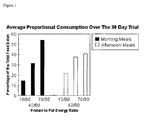
Figure 1 shows average quantities consumed in the first 20 minutes of a meal in relation to wet diets that differ in terms of their protein and fat content for morning and afternoon meals. -
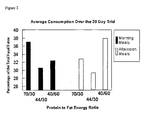
Figure 2 shows average quantities consumed in the first 20 minutes of a meal in relation to wet diets that differ in terms of their content of protein fat and carbohydrate for morning and afternoon meals. -
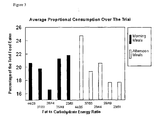
Figure 3 shows average quantities consumed of dry diets in a 60 minute morning meal and a 30 minute afternoon meal where the diets vary in their content of fat and carbohydrate. - The invention will now be described with reference to the following, non-limiting examples:
- Macronutrient energy content for all examples (and in accordance with the embodiments of the present invention) is determined by the calculations in Annex 1. The following data demonstrate the difference between morning and afternoon macronutrient preferences.
- Diets were designed containing different levels of the macronutrients protein and fat. All diets were isocaloric and contained 3 different ratios of protein to fat calories i.e. 10%: 90%, 40%: 60% and 70%: 30% respectively (increasing in calories derived from protein). All 3 diets were fed in rotation for 30 days, i.e. each cat was fed one diet per day; therefore each diet was experienced 10 times. Food was provided for 45 minutes in the morning, then the same diet was fed overnight.
- Feeding data from the first 20 minutes of the morning meal and the first 20 minutes of the afternoon meal showed that in the morning, there was similar separation of 10%, 40% & 70% protein calorie diets. Overall, these data indicate that cats prefer diets containing higher protein in the morning.
- In the afternoon meal, there was less preference for the 70% diet relative to 40% & 10% PER diets. Overall, these data indicate that cats preferred relatively lower protein (and hence higher fat) in the afternoon.
- The average intake of each diet over the whole 30 days of the trial, for morning and afternoon meals, is shown in
figure 1 . The consumption of each product is expressed as a percentage of the total eaten within the all the meals in the morning or all the meals in the afternoon. - Canned diets were designed that had the same base meat recipe, to which was added isocaloric amounts of protein, fat and carbohydrate. All 3 diets were fed in rotation for 30 days, i.e. each cat was fed one diet per day; therefore each diet was experienced 10 times. Food was provided for 45 minutes in the morning, then the same product was fed for 45 minutes in the afternoon.
- Feeding data from the first 20 minutes of the morning meal and the first 20 minutes of the afternoon meal showed that in the morning, preference was for the products supplemented with protein over the products supplemented with fat over the products supplemented with carbohydrate.
- In the afternoon meal fat is significantly preferred over the other products. Overall these data, indicate that cats preferred higher fat (rather than protein or carbohydrate) in the afternoon.
- The average intake of each diet over the whole 30 days of the trial, for morning and afternoon meals, is shown in
figure 2 . The consumption of each product is expressed as a percentage of the total eaten within the all the meals in the morning or all the meals in the afternoon. - Further data have been obtained using these same products under a different feeding regimen, i.e. a 45-minute meal in the morning followed by an overnight meal of the same product. Feeding data from the first 20 minutes of the morning meal and the first 20 minutes of the afternoon meal showed that the preference was clearly for fat in the afternoon. A preference is also shown for protein in the morning.
- Five dry diets of approximately constant protein content, but varying in fat and carbohydrate content were fed in rotation for 5 days, i.e. each cat was fed one diet per day but different groups of cats were exposed to the diets in different orders. Food was provided for 60 minutes in the morning and then the same product was fed for 30 minutes in the afternoon.
- The diets had fat contents of 21%, 16.5%, 12%, 10% and 9% on a dry matter basis, equivalent to fat energy contents of 44%, 37%, 28%, 25% and 23%.
- In the morning meals there was little difference in the mean intakes of the high and low fat dry diets. However, in the afternoon meal, the average data showed a clear trend to higher intakes for the high fat products rather than the low fat products, see
figure 3 . - Calculations for predicting the metabolisable energy (PME) of foods for companion animals.
- These calculations use modified Atwater factors based on recommended texts e.g. Association of American Feed Control Officials, and species specific studies.
-


-


- The % protein, fat, ash, moisture and/or crude fibre are determined in accordance with the Standard Proximate Analysis as set out in Pearson's Composition and Analysis of Foods, Ninth Edition (1991).
Claims (1)
- Use of a first food product for administration during the afternoon or during the evening and a second food product for administration during the morning in a feline dietary regime to accommodate a physiological need to meet a macronutrient preference for different times of the day, wherein the fat content of the first food product is higher than the fat content of the second food product by at least 5% of the total calorie content of the food and wherein the fat content of the second food product is between 20% and 70% and the fat content of the first food product is between 25% and 75% of the total calorie content of the food.
Applications Claiming Priority (3)
| Application Number | Priority Date | Filing Date | Title |
|---|---|---|---|
| GB0015440 | 2000-06-23 | ||
| GBGB0015440.1A GB0015440D0 (en) | 2000-06-23 | 2000-06-23 | Dietary regime |
| PCT/GB2001/002760 WO2001097630A1 (en) | 2000-06-23 | 2001-06-21 | Dietary regime for companion animals |
Publications (2)
| Publication Number | Publication Date |
|---|---|
| EP1294238A1 EP1294238A1 (en) | 2003-03-26 |
| EP1294238B1 true EP1294238B1 (en) | 2012-01-04 |
Family
ID=9894282
Family Applications (1)
| Application Number | Title | Priority Date | Filing Date |
|---|---|---|---|
| EP01943611A Expired - Lifetime EP1294238B1 (en) | 2000-06-23 | 2001-06-21 | Dietary regime for pet animals |
Country Status (7)
| Country | Link |
|---|---|
| US (2) | US20040091572A1 (en) |
| EP (1) | EP1294238B1 (en) |
| AT (1) | ATE539619T1 (en) |
| AU (2) | AU6614801A (en) |
| GB (2) | GB0015440D0 (en) |
| WO (1) | WO2001097630A1 (en) |
| ZA (1) | ZA200300380B (en) |
Families Citing this family (16)
| Publication number | Priority date | Publication date | Assignee | Title |
|---|---|---|---|---|
| US7608291B2 (en) * | 2000-03-10 | 2009-10-27 | Mars, Inc. | Treatment of infection in animals |
| GB0229839D0 (en) | 2002-12-20 | 2003-01-29 | Mars Uk Ltd | Method for optimising diets |
| GB0229838D0 (en) * | 2002-12-20 | 2003-01-29 | Mars Uk Ltd | Multi-component meal |
| FR2847769B1 (en) * | 2002-12-20 | 2006-02-10 | Mars Inc | FOOD PROFILE |
| GB0229842D0 (en) * | 2002-12-20 | 2003-01-29 | Mars Uk Ltd | Multi-component meal |
| EP1578209A1 (en) * | 2002-12-20 | 2005-09-28 | Mars Uk Limited | Foodstuff profile for cats |
| AU2010204614B2 (en) * | 2009-01-16 | 2013-08-22 | Hill's Pet Nutrition, Inc. | Companion animal compositions including pyruvic acid and salts thereof and methods of use thereof |
| US20110052752A1 (en) * | 2009-08-25 | 2011-03-03 | GlobalOne Pet Products, Inc. | Rotational pet-food formulation and method |
| GB201011988D0 (en) | 2010-07-16 | 2010-09-01 | Mars Inc | Food product |
| WO2012024093A2 (en) | 2010-08-17 | 2012-02-23 | Borgwarner Inc. | Pneumatic clutch with improved friction member |
| DE102012007310A1 (en) * | 2012-04-13 | 2013-10-17 | Futalis Gmbh | A method of providing a pet food product for a pet and pet food product provided therewith |
| JP6124407B2 (en) * | 2013-07-03 | 2017-05-10 | 日清ペットフード株式会社 | Pet food products and pet food salary methods |
| EP3200609B1 (en) | 2014-09-30 | 2019-05-08 | Mars, Incorporated | Refusal-based methods of establishing a cat or dog food preference |
| US11547125B2 (en) | 2015-02-13 | 2023-01-10 | Mars, Incorporated | Pet food feeding system |
| GB201522304D0 (en) | 2015-12-17 | 2016-02-03 | Mars Inc | Food product for reducing muscle breakdown |
| MX2020007179A (en) * | 2017-12-21 | 2020-08-24 | Nestle Sa | Systems for managing weight loss and body mass. |
Family Cites Families (11)
| Publication number | Priority date | Publication date | Assignee | Title |
|---|---|---|---|---|
| US4971820A (en) * | 1989-06-02 | 1990-11-20 | Canada Packers Inc. | Animal feeds and processes for their manufacture |
| GB9018674D0 (en) * | 1990-08-24 | 1990-10-10 | Pet Mate Ltd | Dispensing device |
| JPH1175710A (en) * | 1997-09-01 | 1999-03-23 | Akira Takashima | Dog food comprising vegetable crude fibrous material as main component and its production |
| JP2000014326A (en) * | 1998-06-29 | 2000-01-18 | Wanwan:Kk | Pet food |
| US6203825B1 (en) * | 1998-09-02 | 2001-03-20 | Heska Corporation | Method and composition to protect an obligate carnivore from a disease of abnormal carbohydrate metabolism |
| US6156355A (en) * | 1998-11-02 | 2000-12-05 | Star-Kist Foods, Inc. | Breed-specific canine food formulations |
| US6358546B1 (en) * | 1999-01-15 | 2002-03-19 | Ralston Purina Company | Methods for customizing pet food |
| US6737078B1 (en) * | 1999-11-24 | 2004-05-18 | The Iams Company | Process for enhancing canine and feline reproductive performance |
| US6669975B1 (en) * | 2000-02-03 | 2003-12-30 | Mars Incorporated | Customized dietary health maintenance system for pets |
| US20010048955A1 (en) * | 2000-05-30 | 2001-12-06 | Foreman Gary A. | Method of feeding an animal a balanced meal |
| US6410063B1 (en) * | 2000-06-13 | 2002-06-25 | Hill's Pet Nutrition, Inc. | Composition and method |
-
2000
- 2000-06-23 GB GBGB0015440.1A patent/GB0015440D0/en not_active Ceased
-
2001
- 2001-06-21 EP EP01943611A patent/EP1294238B1/en not_active Expired - Lifetime
- 2001-06-21 AU AU6614801A patent/AU6614801A/en active Pending
- 2001-06-21 GB GB0300396A patent/GB2379855B/en not_active Expired - Lifetime
- 2001-06-21 AT AT01943611T patent/ATE539619T1/en active
- 2001-06-21 WO PCT/GB2001/002760 patent/WO2001097630A1/en not_active Ceased
- 2001-06-21 AU AU2001266148A patent/AU2001266148B2/en not_active Expired
- 2001-06-21 US US10/312,460 patent/US20040091572A1/en not_active Abandoned
-
2003
- 2003-01-14 ZA ZA200300380A patent/ZA200300380B/en unknown
-
2007
- 2007-11-28 US US11/946,324 patent/US7731996B2/en not_active Expired - Fee Related
Also Published As
| Publication number | Publication date |
|---|---|
| ZA200300380B (en) | 2004-01-22 |
| AU2001266148B2 (en) | 2005-08-18 |
| WO2001097630A1 (en) | 2001-12-27 |
| ATE539619T1 (en) | 2012-01-15 |
| GB2379855A (en) | 2003-03-26 |
| US20080069921A1 (en) | 2008-03-20 |
| AU6614801A (en) | 2002-01-02 |
| US20040091572A1 (en) | 2004-05-13 |
| GB2379855B (en) | 2004-10-27 |
| EP1294238A1 (en) | 2003-03-26 |
| US7731996B2 (en) | 2010-06-08 |
| GB0015440D0 (en) | 2000-08-16 |
| GB0300396D0 (en) | 2003-02-05 |
Similar Documents
| Publication | Publication Date | Title |
|---|---|---|
| US7731996B2 (en) | Dietary regime for companion animals | |
| US20080089984A1 (en) | Food pack | |
| AU2001266148A1 (en) | Dietary regime for companion animals | |
| GB2514854A (en) | Weight control method, apparatus, system | |
| AU2001274304A1 (en) | Food pack | |
| US20080057152A1 (en) | Foodstuff profile | |
| CA2805493C (en) | Food product | |
| EP1578210B1 (en) | Multi-component meal for felines | |
| EP1578207B1 (en) | Multi-component feed for animals for weight maintenance | |
| US8088420B2 (en) | Method for optimising diets for companion animals | |
| EP2592947B1 (en) | Food product |
Legal Events
| Date | Code | Title | Description |
|---|---|---|---|
| PUAI | Public reference made under article 153(3) epc to a published international application that has entered the european phase |
Free format text: ORIGINAL CODE: 0009012 |
|
| 17P | Request for examination filed |
Effective date: 20030110 |
|
| AK | Designated contracting states |
Kind code of ref document: A1 Designated state(s): AT BE CH CY DE DK ES FI FR GB GR IE IT LI LU MC NL PT SE TR |
|
| AX | Request for extension of the european patent |
Extension state: AL LT LV MK RO SI |
|
| 17Q | First examination report despatched |
Effective date: 20050908 |
|
| RAP1 | Party data changed (applicant data changed or rights of an application transferred) |
Owner name: MARS, INCORPORATED |
|
| GRAP | Despatch of communication of intention to grant a patent |
Free format text: ORIGINAL CODE: EPIDOSNIGR1 |
|
| RIN1 | Information on inventor provided before grant (corrected) |
Inventor name: BRADLEY, RICHARD, G. Inventor name: BRUCE, JENNIFER, SUSAN Inventor name: HALL, SIMON, REGINALD |
|
| RIN1 | Information on inventor provided before grant (corrected) |
Inventor name: HALL, SIMON, REGINALD Inventor name: BRUCE, JENNIFER, SUSAN Inventor name: BRADLEY, RICHARD, G. |
|
| GRAS | Grant fee paid |
Free format text: ORIGINAL CODE: EPIDOSNIGR3 |
|
| GRAA | (expected) grant |
Free format text: ORIGINAL CODE: 0009210 |
|
| AK | Designated contracting states |
Kind code of ref document: B1 Designated state(s): AT BE CH CY DE DK ES FI FR GB GR IE IT LI LU MC NL PT SE TR |
|
| REG | Reference to a national code |
Ref country code: GB Ref legal event code: FG4D |
|
| REG | Reference to a national code |
Ref country code: CH Ref legal event code: EP |
|
| REG | Reference to a national code |
Ref country code: AT Ref legal event code: REF Ref document number: 539619 Country of ref document: AT Kind code of ref document: T Effective date: 20120115 |
|
| REG | Reference to a national code |
Ref country code: IE Ref legal event code: FG4D |
|
| REG | Reference to a national code |
Ref country code: DE Ref legal event code: R096 Ref document number: 60145901 Country of ref document: DE Effective date: 20120301 |
|
| REG | Reference to a national code |
Ref country code: NL Ref legal event code: VDEP Effective date: 20120104 |
|
| PG25 | Lapsed in a contracting state [announced via postgrant information from national office to epo] |
Ref country code: NL Free format text: LAPSE BECAUSE OF FAILURE TO SUBMIT A TRANSLATION OF THE DESCRIPTION OR TO PAY THE FEE WITHIN THE PRESCRIBED TIME-LIMIT Effective date: 20120104 Ref country code: BE Free format text: LAPSE BECAUSE OF FAILURE TO SUBMIT A TRANSLATION OF THE DESCRIPTION OR TO PAY THE FEE WITHIN THE PRESCRIBED TIME-LIMIT Effective date: 20120104 |
|
| PG25 | Lapsed in a contracting state [announced via postgrant information from national office to epo] |
Ref country code: GR Free format text: LAPSE BECAUSE OF FAILURE TO SUBMIT A TRANSLATION OF THE DESCRIPTION OR TO PAY THE FEE WITHIN THE PRESCRIBED TIME-LIMIT Effective date: 20120405 Ref country code: PT Free format text: LAPSE BECAUSE OF FAILURE TO SUBMIT A TRANSLATION OF THE DESCRIPTION OR TO PAY THE FEE WITHIN THE PRESCRIBED TIME-LIMIT Effective date: 20120504 Ref country code: FI Free format text: LAPSE BECAUSE OF FAILURE TO SUBMIT A TRANSLATION OF THE DESCRIPTION OR TO PAY THE FEE WITHIN THE PRESCRIBED TIME-LIMIT Effective date: 20120104 |
|
| REG | Reference to a national code |
Ref country code: AT Ref legal event code: MK05 Ref document number: 539619 Country of ref document: AT Kind code of ref document: T Effective date: 20120104 |
|
| PG25 | Lapsed in a contracting state [announced via postgrant information from national office to epo] |
Ref country code: CY Free format text: LAPSE BECAUSE OF FAILURE TO SUBMIT A TRANSLATION OF THE DESCRIPTION OR TO PAY THE FEE WITHIN THE PRESCRIBED TIME-LIMIT Effective date: 20120104 |
|
| PG25 | Lapsed in a contracting state [announced via postgrant information from national office to epo] |
Ref country code: DK Free format text: LAPSE BECAUSE OF FAILURE TO SUBMIT A TRANSLATION OF THE DESCRIPTION OR TO PAY THE FEE WITHIN THE PRESCRIBED TIME-LIMIT Effective date: 20120104 Ref country code: SE Free format text: LAPSE BECAUSE OF FAILURE TO SUBMIT A TRANSLATION OF THE DESCRIPTION OR TO PAY THE FEE WITHIN THE PRESCRIBED TIME-LIMIT Effective date: 20120104 |
|
| PLBE | No opposition filed within time limit |
Free format text: ORIGINAL CODE: 0009261 |
|
| STAA | Information on the status of an ep patent application or granted ep patent |
Free format text: STATUS: NO OPPOSITION FILED WITHIN TIME LIMIT |
|
| PG25 | Lapsed in a contracting state [announced via postgrant information from national office to epo] |
Ref country code: IT Free format text: LAPSE BECAUSE OF FAILURE TO SUBMIT A TRANSLATION OF THE DESCRIPTION OR TO PAY THE FEE WITHIN THE PRESCRIBED TIME-LIMIT Effective date: 20120104 |
|
| 26N | No opposition filed |
Effective date: 20121005 |
|
| PG25 | Lapsed in a contracting state [announced via postgrant information from national office to epo] |
Ref country code: MC Free format text: LAPSE BECAUSE OF NON-PAYMENT OF DUE FEES Effective date: 20120630 Ref country code: AT Free format text: LAPSE BECAUSE OF FAILURE TO SUBMIT A TRANSLATION OF THE DESCRIPTION OR TO PAY THE FEE WITHIN THE PRESCRIBED TIME-LIMIT Effective date: 20120104 |
|
| REG | Reference to a national code |
Ref country code: DE Ref legal event code: R097 Ref document number: 60145901 Country of ref document: DE Effective date: 20121005 Ref country code: CH Ref legal event code: PL |
|
| REG | Reference to a national code |
Ref country code: CH Ref legal event code: PL |
|
| REG | Reference to a national code |
Ref country code: IE Ref legal event code: MM4A |
|
| PG25 | Lapsed in a contracting state [announced via postgrant information from national office to epo] |
Ref country code: LI Free format text: LAPSE BECAUSE OF NON-PAYMENT OF DUE FEES Effective date: 20120630 Ref country code: IE Free format text: LAPSE BECAUSE OF NON-PAYMENT OF DUE FEES Effective date: 20120621 Ref country code: ES Free format text: LAPSE BECAUSE OF FAILURE TO SUBMIT A TRANSLATION OF THE DESCRIPTION OR TO PAY THE FEE WITHIN THE PRESCRIBED TIME-LIMIT Effective date: 20120415 Ref country code: CH Free format text: LAPSE BECAUSE OF NON-PAYMENT OF DUE FEES Effective date: 20120630 |
|
| PG25 | Lapsed in a contracting state [announced via postgrant information from national office to epo] |
Ref country code: TR Free format text: LAPSE BECAUSE OF FAILURE TO SUBMIT A TRANSLATION OF THE DESCRIPTION OR TO PAY THE FEE WITHIN THE PRESCRIBED TIME-LIMIT Effective date: 20120104 |
|
| PG25 | Lapsed in a contracting state [announced via postgrant information from national office to epo] |
Ref country code: LU Free format text: LAPSE BECAUSE OF NON-PAYMENT OF DUE FEES Effective date: 20120621 |
|
| REG | Reference to a national code |
Ref country code: FR Ref legal event code: PLFP Year of fee payment: 16 |
|
| REG | Reference to a national code |
Ref country code: FR Ref legal event code: PLFP Year of fee payment: 17 |
|
| REG | Reference to a national code |
Ref country code: FR Ref legal event code: PLFP Year of fee payment: 18 |
|
| PGFP | Annual fee paid to national office [announced via postgrant information from national office to epo] |
Ref country code: FR Payment date: 20200625 Year of fee payment: 20 Ref country code: DE Payment date: 20200629 Year of fee payment: 20 |
|
| PGFP | Annual fee paid to national office [announced via postgrant information from national office to epo] |
Ref country code: GB Payment date: 20200629 Year of fee payment: 20 |
|
| REG | Reference to a national code |
Ref country code: DE Ref legal event code: R071 Ref document number: 60145901 Country of ref document: DE |
|
| REG | Reference to a national code |
Ref country code: GB Ref legal event code: PE20 Expiry date: 20210620 |
|
| PG25 | Lapsed in a contracting state [announced via postgrant information from national office to epo] |
Ref country code: GB Free format text: LAPSE BECAUSE OF EXPIRATION OF PROTECTION Effective date: 20210620 |