Technical Field
The present invention relates to a home network system.
Background Art
In the past, since it was seldom that general network
service users at home keep their machine connecting to a public
network all the time, they were little conscious of network
security.
Conventionally, corporate network security management
has been performed, using firewalls or the like.
It is substantially impossible for general home users
to provide their machine or system with a firewall and carry out
firewall operation and maintenance for which a lot of technical
expertise is required
If general household computers and equipment keep
connecting to a public network all the time without being
protected by a firewall, it is easy for a third party to intrude
into the intra-home network. Consequently, there is a
possibility that secret information such as a password, credit
ID and ID for electronic commerce (EC) be stolen.
Even when general household computers and equipment keep
connecting to a public network all the time via a router,
filtering can be performed, but personal authentication or the
like must be performed separately. Because building an
authentication system requires technical expertise, it is
substantially impossible for general home users to use
authentication management.
When a cellular mobile device operating outdoors is
accessing a network device installed in a home, the absence of
an authentication system is a bottleneck of security, so that
it will be impossible to remotely operate a crime prevention and
security system and download data from a server in the home.
Telephonic communication via networks using Voice over
IP (VoIP) or the like is normally arranged such that a subscriber
calls another subscriber connecting to a connection server
except intra-corporate use thereof. The subscriber, however,
cannot call another subscriber that is not connecting to the
connection server, which is different from general telephony
systems in which calling another subscriber by dialing its
telephone number makes the connection thereto.
At the present, when connecting computers and equipment
to a public network such as the Internet all the time, a connection
device such as a router is used for filtering and connection
control or a firewall is installed on a large scale. In this
case, because individual devices in a network are concealed,
receiving push-type information distribution is generally
difficult, requiring knowledge of networking.
Disclosure of the Invention
In view of the above network usage situation of general
users, the object of the present invention is to allow even
general users who are not familiar with security expertise to
communicate with the outside world with assured security that
is provided in a simple and dependable way.
In one implementation of the present invention, a home
network system including first and second networks is provided.
The network system comprises detection means for detecting the
direction of access between the first network and the second
network; storage means for storing information required for
executing an authentication process; authentication means for
executing the authentication process, based on the information
stored in the storage means, when the detection means has detected
an access attempt in the direction from the first network toward
the second network; and control means for controlling connection
of an access attempt from the first network toward the second
network, according to the result of authentication executed by
the authentication means.
The authentication means can be configured not to execute
the authentication process when the detection means has detected
an access attempt in the direction from the second network toward
the first network.
The control means can be configured to control connection,
using VPN.
The second network can be configured to accommodate a
plurality of home nodes of individual networks formed inside each
home.
The individual networks formed inside each home can be
configured to include Ethernet or IEEE1394.
The authentication means can be configured to execute
the authentication process, using a telephone number or a device
ID obtained from a wireless mobile device.
The storage means can be configured to further store
information required for push-type distribution of information
received across said first network to the home nodes over said
second network.
The information to be distributed by the push-type
distribution includes advertising or public relations,
information from a government office, disasters information, or
emergency information.
In another implementation of the present invention, a
connection control method in a home network system including
first and second networks is provided. The connection control
method comprises the steps of detecting the direction of access
between the first network and the second network; storing
beforehand information required for executing a authentication
process; executing the authentication process, based on the
information thus stored, upon the detection of an access attempt
in the direction from the first network toward the second network;
and controlling connection of an access attempt from the first
network toward the second network, according to the result of
authentication.
Under a home node included in the network system of the
present invention, a network system is built in which intra-home
computers and equipment are interconnected. In this
network system, a bridge or the like is used to connect networks
of different physical layers, running different protocols, so
that inter-network communication can be performed.
The home node can be embodied in a device such as a router
that is capable of routing and filtering data to be communicated
and can be configured to be able to keep connecting to the outside
network all the time.
By adding a connection control to the above device, the
node can be configured to be able to keep connecting to the outside
network all the time.
The above device can be configured to have the functions
of controlling connection from the outside and enabling
connection from a reliable device, using a VPN technique or the
like.
A community area network included in the present
invention is formed to accommodate a plurality of nodes at homes
(including condominiums, apartment houses, etc.) or in a
residential area. A wide area community network included in the
present invention is comprised of a plurality of community area
networks.
The network system of the present invention can be
configured to include servers for diverse services such as a
content distribution mirror server and an advertising
distribution server, and moreover, a security server for
maintaining security.
In the wide area community network included in the
present invention, the security server executes user
authentication for connection attempts from the public network
and sets up connection to the target node such as the router or
gateway of the intra-home network of the user, using the VPN
technique or the like.
In the wide area community network included in the
present invention, when a connection attempt is offered from a
mobile terminal device such as a cellular phone or PDA via the
public network, the device identifying information such as the
telephone number and the device ID is transferred to the security
server where the information is then used for user
authentication.
In a community area network of certain coverage in the
wide area community network included in the present invention,
the security server supervises and records traffic and the
statuses of the connection devices such as the routers, and issues
an alarm in case of a trouble occurring and performs
troubleshooting and analysis, thereby ensuring security.
Brief Description of the Drawings
FIG. 1 is a block diagram showing a network system to
which the present invention is applied.
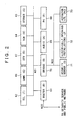
FIG. 2 is a block diagram showing an exemplary structure
of an intra-home network.
FIG. 3 is a block diagram showing another exemplary
structure of an intra-home network.
FIG. 4 is a flowchart explaining a connection procedure
to be executed by a security server.
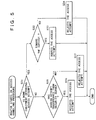
FIG. 5 is a flowchart explaining an access handling
procedure to be executed by a router.
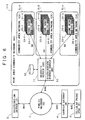
FIG. 6 is a block diagram showing a wide area community
network to which the present invention is applied.
FIG. 7 is a diagram explaining a communication procedure.
Best Mode for Carrying Out the Invention
FIG. 1 shows a basic exemplary structure of a network
system to which the present invention is applied.
In the network system configured as shown in FIG. 1, a
public network 1 such as, typically, the Internet, and a
distribution server for distributing content or the like are
connected by paths N101 and N102 and a wireless mobile device
3 such as a cellular phone or a Personal Digital Assistant (PDA)
is connected to the public network 1 via a carrier gateway 4,
using paths N141, N142, N151, and N152.
A community area network 5-1 which is included in the
system as an inward network may be formed, depending on a
geographical area to cover a residential area, condominiums, or
apartment houses, or formed in a geographically independent
network provided by an Internet Service Provider (ISP).
In the community area network 5-1, a security server 11-1
for providing and maintaining security and a distribution mirror
server 13-1 for distributing content in high-quality mode inward
the community area network 5-1 are installed, together with a
database 12-1 for retaining authentication data and profiles for
obtaining access to a home node.
The distribution mirror server 13-1 cashes and mirrors
content delivered from the distribution server 2 to be
distributed inward the community area network 5-1.
The distribution mirror server 13-1 may be unnecessary
in the community area network 5-1, according to the communication
line usage conditions of the network 5-1.
When the security server 11-1 receives a request for
access to any home node in the community area network 5-1,
transferred across the pubic network 1 and through a path N42,
the server 11-1 authenticates the device that issued the access
request by comparing the device ID (its unique ID, telephone
number, etc.) and a password with the corresponding data within
the database 12-1, thus determining whether the device can obtain
the access.
In the network system example shown in FIG. 1, another
community area network 5-2 of the same structure as the community
area network 5-1 is also connected to the public network 1.
When a home node is accessing the distribution server
2 via the public network 1, the connection between the home node
and the distribution server is made as follows. For example,
a home node 21-1 is connected to the public network 1 by a path
N2 and then connected to the distribution server 2 by a path N101
from the public network 1 thereto. Accordingly, the security
server 11 is not used substantially for access from the community
area network 5-1 to the external (even if it is used,
authentication need not be performed).
After the above connection is made, if packets are
transmitted by, for example, Transmission Control
Protocol/Internet Protocol (TCP/IP), the first packet includes
the SYN bit that is set and the ACK bit that is reset.
Reply from the distribution server 2 is sent across the
path N102, pubic network 1, and path 3 to the home node 21-1.
For reply packets transferred by, for example, TCP/IP,
the SYN bit is set and the ACK bit is set.
Thereafter, for packets to be communicated through the
established connection, the ACK bit is set.
Unless the home node 21-1 initiates communication,
packets from the public network 1 first passes across the path
N3 to the home node 21-1 and its first packet includes the SYN
bit that is set and the ACK bit that is reset when communication
begins.
On the home node 21-1, there is a router 61 (which is
included in FIG. 2 to be described later) that can determine which
is the home node 21-1 or the public network 1 that is the origin
of the flow of packets to be communicated, according to the
direction of transfer (destination address) of the first packet
including the ACK bit that is reset.
When the router 61 determines that access to the home
node 21-1 is attempted from the public network 1, it can reject
intrusion from the public network 1 by rejecting the connection.
When a user authorized to access the home node 21-1
attempts to access the home node 21-1 from the outside, carriers
are first transmitted from the wireless mobile device 3 such as
a portable phone or PDA via a radio channel path N152 to the
carrier gateway 4 and the communication channel is thus set up.
At the carrier gateway 4, a protocol conversion process
is performed to enable communication over the public network 1.
The wireless mobile device is connected to the public network
1 by a path N141 and then connected to the security server 11-1
by a path N42.
As described above, the security server 11-1
authenticates the wireless mobile device 3, based on its device
ID and a password. When the authentication is successful, the
wireless mobile device is connected to the node to terminate,
for example, the home node 21-1, through a path N9, according
the profile stored in the database 12-1, wherein a Virtual Private
Network (VPN) technique or the like is used.
The home node 21-1 (router 61) permits the connection
only when the reliable security server 11-1 requests it to make
the connection, using the VPN technique or the like, and the
connection is established by the path N9.
In the above-described manner, connection from a device
operating outside to the home node 21-1 can be made.
When information is distributed by push-type
distribution, it is sent from the distribution server 2 across
the path N102, public network 1, and path N 42 to the security
server 11-1.
The security server 11-1 determines whether the
information is to be distributed, according to pre-registered
information in the database 12-1. If the information is to be
distributed, it is distributed to the home nodes and equipments,
using the VPN technique or the like, based on the information
arranged for distribution or the pre-registered information in
the database 12-1. In this way, localized advertising, or public
relations, information from a government office, emergency
information, disasters information, etc. can be distributed by
push-type distribution. For this purpose, in the database 12-1,
information required for the security server to determine
whether to permit push-type distribution must be registered
beforehand.
In the community area network 5-1, in principle,
connection between the home nodes, for example, the home node
21-1 and the home node 22-2, must not be made for communication.
Therefore, each home node (router 61) need to reject
connection from other home nodes in the same community area
network 5-1, for example, connection by a path N12 (for
communication between the home node 21-1 and the home node 22-1)
and a path N11 (for communication between the home node 21-1 and
the home node 23-1) for access attempts for communication from
the external, as for access attempts from the public network 1.
However, there is exception. Assume that, for example,
for the home node 22-1 and the home node 23-1, the other node
address is appointed as the address to contact in case of
emergency. When the home node 22-1 transmits emergency
information to the security server 11-1, the security server 11-1
connects to the home node 23-1, using the VPN technique or the
like, based on the information registered in the database 12-1,
and sends the emergency information to the home node 23-1 and
specified equipment by push-type distribution.
In this way, mutual assistance in case of emergency is
made possible in the community area network 5-1.
FIG. 2 shows a basic exemplary structure of an intra-home
network formed under one of the home nodes constituting the
community area network 5-1 or 5-2 in FIG. 1.
For example, a path N 21 forming part of the intra-home
network, is connected to the public network 1 and the security
server 11-1 via the router 61 and across the path N 20.
The router 61 is provided with a fundamental filtering
function by set conditions of address, port, input/output, etc.,
and implements the above-described filtering function, a
function of receiving connection requests only from a specific
reliable device (the security server 11-1 in the example case
of FIG. 1), and a tunneling function such as VPN.
Furthermore, the router 61 has an address/port
translation function, a Quality of Service (QoS) function if it
can handle streaming, a HUB function if necessary, and device
discovery functions such as Domain Name System (DNS) and Dynamic
Host Configuration Protocol (DHCP).
The path N21 is a high-speed network part serving as an
intra-home backbone, for example, Ethernet (a trademark) or the
like is used for this path.
The path N21 as the high-speed network part is provided
with a VoIP function. To the path N21, the following are
connected: a telephone (TEL) 62 that enables communication via
the networks; a server 63 for recording, reproducing, and
redistributing streams and data; a video cassette recorder (VCR)
64 that records streams and data on tape or disk media, reproduces
them therefrom, and redistributes them; an audio device 65 that
receives streaming audio or network radio broadcasting and
redistributes it; a game device 66 that supports games to play
across people joined in via the network; a digital television
receiver (DTV) 67 that receives streaming broadcasts and
displays pictures; a personal computer (PC) 68; and so on.
A path N22 forms a low-speed part of the intra-home
network. To the path N22, the following are connected: a
security sensor 71 for prevention of crime and fire; electrically
operated installations 72 such as a hot water supply system,
lighting, and a power feed system; and an actuator controller
73 for controlling door lock/unlock and other mechanisms using
an actuator; and so on.
The above equipment and installations are connected to
the path N21 as the high-speed network part by a bridge 70 and
the bridge 70 executes protocol conversion, physical medium
conversion, and the like.
FIG. 3 shows another exemplary structure of an intra-home
network formed under one of the home nodes constituting the
community area network 5-1 or 5-2 in FIG. 1. In this example,
a specialized network such as, for example, IEEE1394, directed
to a specific use is further connected to the network shown in
FIG. 2.
A path N33 forms a network for an AV system; the network
is embodied in, for example, IEEE1394. A path N31 serves as an
intra-house backbone as the path N21 does, and is embodied in,
for example, Ethernet.
The path N33 is connected to the path N31 by a bridge
91 and the bridge 91 executes protocol conversion, physical
medium conversion, and the like between the path N33 and the path
N 31.
By applying this manner of connecting different kinds
of networks via a bridge, an intra-house network can flexibly
be adapted to advanced technology.
The security server 11-1 executes a connection procedure
that is summarized in a flowchart shown in FIG. 4. In step S11,
the security server 11-1 detects the direction of access. That
is, the server detects an access attempt that is offered in the
direction from the community area network 5-1 toward the public
network 1 or in the reverse direction from the public network
1 toward the community area network 5-1 (access inward from the
outside) . According to the direction detected in the step S11,
the security server 11-1 determines whether the access attempt
is offered inward from the outside in step S12. If the access
attempt is offered inward from the outside, the security server
11-1 goes to step S13 and executes the above-described
authentication process. For authentication, for example, the
telephone number and device ID obtained from the wireless mobile
device 3 that offered the access attempt are compared with the
corresponding data registered in the database 12-1 as described
above.
In step S14, the security server 11-1 determines whether
the authentication is successful. If the authentication is
successful, the security server 11-1 goes to step S15 and executes
the connection process. That is, the security server 11-1
executes processing for connecting the external device that
offered the access attempt over the public network 1 to a home
node 21-1 and equipment. This processing corresponds to the
connection setup with the paths N42 and N9.
If the authentication is unsuccessful in the step S14,
the security server 11-1 goes to step S16 and rejects connection.
If, at the step S12, it is determined that the access
attempt is offered from inward to the outside, the security server
11-1 skips the step S13, goes to the step S15, and immediately
executes the connection process. This processing corresponds
to the connection setup with the path N2.
The router 61 executes an access handling procedure that
is summarized in a flowchart shown in FIG. 5.
In step S31, the router 61 determines whether the home
equipment is offering an access attempt. If the home equipment
is offering an access attempt, the router not receiving an access
attempt to the equipment, the router 61 goes to step S32 and
determines whether the home equipment is offering the access
attempt toward the outside. If the home equipment is offering
the access attempt toward the outside, the router 61 goes to step
S33 and routes the access attempt to its destination. This
processing corresponds to routing the access attempt through the
path N2, for example.
If, at the step S32, it is determined that the home
equipment is offering the access attempt toward another node
within the community area network, the router 61 goes to step
S34 and rejects the access attempt. This processing corresponds
to the rejection of access through the path N11, for example.
If, at the step S31, it is determined that the router
is receiving an access attempt to the home equipment, the router
61 goes to step S35 and determines whether the access attempt
has been transferred from the security server 11-1. If the
access attempt has been transferred from the security server 11-1,
the router 61 goes to step S36 and accepts the access attempt.
This access attempt corresponds to the access attempt carried
across the path N 42 and the path N9, for example.
If, at the step S35, it is determined that the router
receives the access attempt not transferred from the security
server 11-1, the router 61 goes to step S37 and rejects the access
attempt. This access attempt corresponds to the access attempt
carried across the path N3, for example.
FIG. 6 represents another network system example wherein
a wide area community network 111 covering a larger area is used
as an inward network. The wide area community network 111 is
comprised of a plurality of community area networks 5-1 to 5-n.
A database 12, a security server 11, and a distribution mirror
server 13 are shared across the plurality of community area
networks 5-1 to 5-n.
FIG. 7 represents yet another network system example
wherein a telephone number conversion and routing server 121 is
incorporated into the system structure so that telephone users
can easily take advantage of VoIP telephonic communication via
networks.
Normally, the VoIP requires telephone users to specify
an IP address by which a communication path is established to
connect a call. However, IP addresses are hard to remember and
not generally pervaded for telephony and they change, according
to the connection mode. Thus, ITU-T E.164 or the like is used.
In FIG. 7, when a VoIP-compliant telephone 66 connected
to the home node 21-1 offers a call attempt to a similar telephone
connected to the home node 23-1 by entering the telephone number,
the call attempt is transferred across a path N52, the public
network 1, and a path N561 to the telephone number conversion
and routing server 121. On this server, call connection setup
processing is executed.
The telephone number conversion and routing server 121
translates the telephone number into IP address, based on the
mapping information registered in its database 122. Then, the
server 121 connects the call attempt to the VoIP-compliant
telephone connected to the home node 23-1 via a path N562, the
public network 1, a path N522, the security server 11-1, and a
path N510.
In this case, the security server 11-1 retrieves
information about the VoIP-compliant telephone connected to the
home node 23-1 from the database 12-1 and sends back a reply as
a proxy for the VoIP-compliant telephone connected to the home
node 23-1.
In environment where IP addresses change, it is necessary
to provide means for dynamically updating the mapping between
a telephone number and an IP address registered on the database
of the telephone number conversion and routing server 121 from
a VoIP-compliant telephone or its proxy.
As explained in the described embodiments, the security
server 11, database 12, and distribution mirror server 13 are
provided per community area network 5 or wide area community
network 111 which is an inward network, so that each home node
can keep connecting to the outside network all the time with
security assured, wherein users at home need not take security
measures separately, based on technical expertise thereof.
Accordingly, the present invention is applicable to
building a network that makes it possible to offer the following
services:
(1) Security-related service
Information: Network security service without
requiring network service users at home to provide their machine
and system with a firewall.
Crime prevention: The following service is implemented.
Should an abnormal event in view of crime prevention be detected,
notification thereof is automatically transmitted to the
appointed address or number to contact and a police box, a police
station, and the like in the community.
Safety: Mutual assistance service in a community.
Trouble of emergency happened in a home (should gas leaking or
a fire be detected or in case of sudden illness) is reported to
the appointed neighboring home node(s) and equipment(s).
(2) Access service from outdoors
Secure connection service from a mobile terminal such
as a portable phone or PDA operating outdoors to the home node.
(3) VoIP telephony service
Network-oriented telephony service in which VoIP is
easier to use. By telephone number to IP address conversion and
the security server's proxy function, call connection across
networks can be made by specifying a telephone number.
(4) Advertising or public relations distribution service
A service of distributing localized advertising or
public relations by push-type distribution, using the
distribution mirror server in the community network.
(5) Information service from a government office
A service of distributing information from a government
office and disasters information such as emergency warning or
alerts by push-type distribution.
Industrial Applicability
Even when general household computers and equipment keep
connecting to a public network such as the Internet all the time,
users can take advantage of security-assured network environment
without being conscious of security and learning security
expertise.
By providing security-assured access environment for
access using a mobile terminal such as a cellular phone or PDA
operating outdoors to an intra-home network, remote supervision
and operation of intra-home computers and equipment and
communication with them can be performed. Communication can be
used for measures for crime prevention, safety, and emergency
such as sudden illness and seamless transmission of kinds of data
can be carried out.
By defining network coverage such as a community area
network, the network situation or state can easily be grasped
and stable system operation and security can be assured.
By permitting connection through a specific path from
a security server or the like, remote setting and maintenance
of a connection device such a router can be performed with
security maintained.
In the same manner as described above, remote maintenance
of an intra-home network device or the like can be performed with
security maintained.