EP1291430A1 - Ceramide kinase and dna encoding the same - Google Patents
Ceramide kinase and dna encoding the same Download PDFInfo
- Publication number
- EP1291430A1 EP1291430A1 EP01936941A EP01936941A EP1291430A1 EP 1291430 A1 EP1291430 A1 EP 1291430A1 EP 01936941 A EP01936941 A EP 01936941A EP 01936941 A EP01936941 A EP 01936941A EP 1291430 A1 EP1291430 A1 EP 1291430A1
- Authority
- EP
- European Patent Office
- Prior art keywords
- protein
- ceramide
- dna
- amino acid
- medicament
- Prior art date
- Legal status (The legal status is an assumption and is not a legal conclusion. Google has not performed a legal analysis and makes no representation as to the accuracy of the status listed.)
- Withdrawn
Links
Classifications
-
- C—CHEMISTRY; METALLURGY
- C12—BIOCHEMISTRY; BEER; SPIRITS; WINE; VINEGAR; MICROBIOLOGY; ENZYMOLOGY; MUTATION OR GENETIC ENGINEERING
- C12N—MICROORGANISMS OR ENZYMES; COMPOSITIONS THEREOF; PROPAGATING, PRESERVING, OR MAINTAINING MICROORGANISMS; MUTATION OR GENETIC ENGINEERING; CULTURE MEDIA
- C12N9/00—Enzymes; Proenzymes; Compositions thereof; Processes for preparing, activating, inhibiting, separating or purifying enzymes
- C12N9/10—Transferases (2.)
- C12N9/12—Transferases (2.) transferring phosphorus containing groups, e.g. kinases (2.7)
- C12N9/1205—Phosphotransferases with an alcohol group as acceptor (2.7.1), e.g. protein kinases
-
- A—HUMAN NECESSITIES
- A61—MEDICAL OR VETERINARY SCIENCE; HYGIENE
- A61K—PREPARATIONS FOR MEDICAL, DENTAL OR TOILETRY PURPOSES
- A61K31/00—Medicinal preparations containing organic active ingredients
- A61K31/70—Carbohydrates; Sugars; Derivatives thereof
- A61K31/7088—Compounds having three or more nucleosides or nucleotides
- A61K31/7125—Nucleic acids or oligonucleotides having modified internucleoside linkage, i.e. other than 3'-5' phosphodiesters
-
- A—HUMAN NECESSITIES
- A61—MEDICAL OR VETERINARY SCIENCE; HYGIENE
- A61P—SPECIFIC THERAPEUTIC ACTIVITY OF CHEMICAL COMPOUNDS OR MEDICINAL PREPARATIONS
- A61P25/00—Drugs for disorders of the nervous system
-
- A—HUMAN NECESSITIES
- A61—MEDICAL OR VETERINARY SCIENCE; HYGIENE
- A61P—SPECIFIC THERAPEUTIC ACTIVITY OF CHEMICAL COMPOUNDS OR MEDICINAL PREPARATIONS
- A61P29/00—Non-central analgesic, antipyretic or antiinflammatory agents, e.g. antirheumatic agents; Non-steroidal antiinflammatory drugs [NSAID]
-
- A—HUMAN NECESSITIES
- A61—MEDICAL OR VETERINARY SCIENCE; HYGIENE
- A61P—SPECIFIC THERAPEUTIC ACTIVITY OF CHEMICAL COMPOUNDS OR MEDICINAL PREPARATIONS
- A61P3/00—Drugs for disorders of the metabolism
- A61P3/04—Anorexiants; Antiobesity agents
-
- A—HUMAN NECESSITIES
- A61—MEDICAL OR VETERINARY SCIENCE; HYGIENE
- A61P—SPECIFIC THERAPEUTIC ACTIVITY OF CHEMICAL COMPOUNDS OR MEDICINAL PREPARATIONS
- A61P3/00—Drugs for disorders of the metabolism
- A61P3/08—Drugs for disorders of the metabolism for glucose homeostasis
- A61P3/10—Drugs for disorders of the metabolism for glucose homeostasis for hyperglycaemia, e.g. antidiabetics
-
- A—HUMAN NECESSITIES
- A61—MEDICAL OR VETERINARY SCIENCE; HYGIENE
- A61P—SPECIFIC THERAPEUTIC ACTIVITY OF CHEMICAL COMPOUNDS OR MEDICINAL PREPARATIONS
- A61P31/00—Antiinfectives, i.e. antibiotics, antiseptics, chemotherapeutics
- A61P31/12—Antivirals
- A61P31/14—Antivirals for RNA viruses
- A61P31/18—Antivirals for RNA viruses for HIV
-
- A—HUMAN NECESSITIES
- A61—MEDICAL OR VETERINARY SCIENCE; HYGIENE
- A61P—SPECIFIC THERAPEUTIC ACTIVITY OF CHEMICAL COMPOUNDS OR MEDICINAL PREPARATIONS
- A61P35/00—Antineoplastic agents
-
- A—HUMAN NECESSITIES
- A61—MEDICAL OR VETERINARY SCIENCE; HYGIENE
- A61P—SPECIFIC THERAPEUTIC ACTIVITY OF CHEMICAL COMPOUNDS OR MEDICINAL PREPARATIONS
- A61P7/00—Drugs for disorders of the blood or the extracellular fluid
Definitions
- the present invention relates to a novel protein having ceramide kinase activity which may be a target of a medicament preventing or treating neuronal disease, inflammation, HIV infection, type 2 diabetes mellitus, obesity, septicemia, arteriosclerosis and cancer, DNA which encodes the protein, a recombinant DNA vector comprising the DNA, a host transformed with the recombinant DNA vector, a method for producing the ceramide kinase, and use of the protein.
- Sphingolipids have been conventionally considered to be one of the major components of cell membrane as glycerophospholipids and cholesterol. It has been known that glycerophospholipids not only maintain cell membrane structure but also let the cells produce a lot of physiologically active substances as metabolites thereof. However, a physiological activity of sphingolipid metabolites has been hardly known until recently. In these years, physiological activities of some sphingolipid metabolites such as induction of apoptosis and cell proliferation-stimulating activity, have come to be known, and the possibility that enzymes metabolizing sphingolipid closely participate in physiological reactions or various diseases has been suggested. Especially, ceramide attracts attention as a regulator which controls a lot of cell mechanisms (See Hannun, Y.A.and Obeid, L.M. (1995) TIBS 20, 73-77).
- ceramide functions as a second messenger of inflammatory cytokines, such as TNF- ⁇ and IL-1 ⁇ , and activates arachidonic acid pathways such as phospholipase A 2 and the like (See Spiegel, S. et al.(1996) Curr. Opini. Cell Biol. 8, 159-167 and Mathias S. et al., (1993) Science 259, 519-522). That is, ceramide can be considered to be an exacerbating factor in various inflammatory disorders.
- ceramide functions as an exacerbating factor in reduction of CD4 + T cell accompanied by apoptosis and HIV infection of brain cells in patients infected with HIV (See Coline, M. G et al. (1997) Proc. Assoc. Am. Physicians 109, 146-153 and Wilt, S. et al. (1995) Ann. Neurol. 37, 381-394). Furthermore, it is known that TNF- ⁇ causes insulin resistance in type 2 diabetes mellitus and obesity, and it is thought that ceramide functions as an exacerbating factor also on the downstream thereof (See Begum, N. et al. (1996) Eur. J. Biochem.
- ceramide functions as a second messenger in septicemia caused by lipopolysaccharide (LPS) or the like as a trigger (see Beutler, B. and Kruys, V. (1995) J. Cardiovasc. Pharmacol. 25, S1-S8). Furthermore, it has also been reported that increase of ceramide accompanied by the activation of sphingomyelinase functions as an exacerbating factor in the aggregating reaction of LDL which is to be a trigger of arteriosclerosis lesions (See Schissel, S. L. et al. (1996) J. Clin. Invest. 98, 1455-1464).
- ceramide promotes apoptosis of cancer cells in radiotherapy and chemotherapy for cancer treatments (See Michael, J. M. et al. (1997) Cancer Res. 57, 3600-3605 and Bose, R. et al.(1995) Cell 82, 405-414 and Jaffrezou, J. P. et al. (1996) EMBO J. 15, 2417-2424).
- ceramide-1-phosphate a metabolite of ceramide and ceramide kinase, a ceramide-1-phosphate-producing enzyme.
- ceramide-1-phosphate produced through the activation of ceramide kinase responding to calcium stimulus regulates the release of neuronal transmitters from brain synapses (Bajjalieh, S. M. et al.(1989) J. Biol. Chem. 264, 14354-14360 and Shinghal, R. et al. (1993) J. Neurochem. 61, 2279 -2285).
- ceramide-1-phosphate has an activity to block the various mechanisms of ceramides mentioned above (See Dressler, K. A. et al. (1990) J. Biol. Chem. 265, 14917-14921). That is, it is thought that the disorders to which ceramide acts as an exacerbating factor, including various inflammatory disorders such as chronic arthritis, HIV infection, and type 2 diabetes mellitus caused by insulin resistance as a trigger, obesity, septicemia and arteriosclerosis, can be suppressed by using ceramide-1-phosphate.
- it can be a method for treating various inflammatory disorders, HIV infection, type 2 diabetes, obesity, septicemia, arteriosclerosis and the like to activate ceramide kinase with a medicament or the like.
- the amount of ceramide can be maintained and the therapeutic efficacy can be improved by inhibiting ceramide kinase activity.
- ceramide kinase By using ceramide kinase, it is possible to provide a simple, specific and highly sensitive method for quantifying the ceramide content in a cell or a tissue. Although a lot of methods such as mass spectrometry and HPLC are known as methods for quantifying ceramide, there are problems in sensitivity or simplicity. While a method using diacylglycerol kinase is also known (See Van Veldhoven, P. P. et al. (1995) Biochem. Mol. Biol. Int.
- said enzyme is an enzyme which essentially phosphorylates diacylglycerol, and is not sufficient in its specificity and specific activity for ceramide. Therefore, a specific and sensitive method for quantifying or detecting ceramide can be established by using ceramide kinase.
- ceramide kinase which is an enzyme for producing ceramide-1-phosphate is purified or cloned, and many of its details have remained unknown. Then, it has been desired to clone the ceramide kinase gene and express the protein encoded thereby, so that it may be preferably used for screening a therapeutic or prophylactic medicament for the various above-mentioned disorders.
- an expresseed sequence tag (hereinafter referred to as "EST") corresponding to a part of the DNA which encodes the protein of the present invention is known, when a homology search is performed by using the dbEST database of NCBI (National Center for Biotechnology Information, U.S.A.) based on the sequence of known mouse sphingosine kinase.
- NCBI National Center for Biotechnology Information, U.S.A.
- the purpose of the present invention is to clone the gene encoding a novel ceramide kinase which exists in a human, to provide a novel method for screening a candidate substance as a medicament for treating neuronal disorders, an anti-inflammatory medicament, a medicament for treating the HIV infection, an anti-type 2 diabetes mellitus medicament, an anti-obesity medicament, a medicament for treating septicemia, an anti-arteriosclerosis medicament and an anticancer medicament thereby, and to provide a method for analyzing various conditions of the disorders.
- Such a search for candidate substances as a novel type of medicament is performed by screening substances which activate or inhibit the ceramide kinase activity of the protein of the present invention.
- the analysis of various conditions of the disorders can be performed by labeling ceramides in various samples with the protein of the present invention.
- the inventors of the present invention cloned cDNA which encodes a novel protein which is partially homologous to mouse sphingosine kinase, and determined successfully the primary structure of the full length novel protein. Furthermore, they successfully allowed the novel protein to be expressed, and confirmed that the novel protein has ceramide kinase activity. Thereby, the present invention was completed.
- the present invention relates to a protein described in any one of the following (i) to (iii):
- the present invention relates to DNA which encodes the above-mentioned protein.
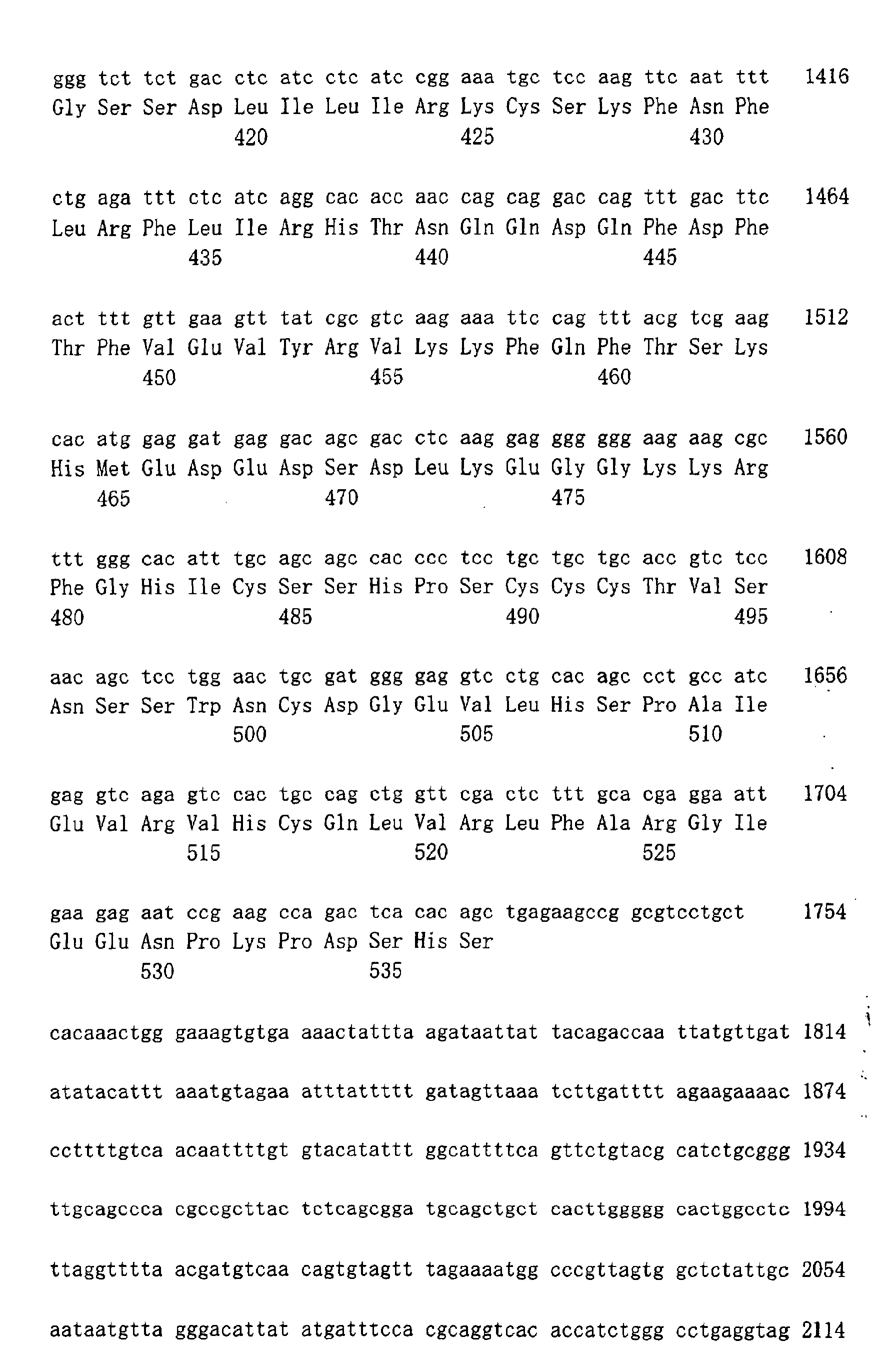
- DNA of the present invention is preferably DNA comprising a nucleotide sequence shown in the nucleotide numbers 124-1734 of SEQ ID No. 1 of the Sequencing Listing; DNA which hybridizes with the DNA which comprises a nucleotide sequence shown in the nucleotide numbers 124-1734 of SEQ ID No. 1 of the Sequencing Listing under stringent conditions, and encodes a protein having ceramide kinase activity; or DNA inserted in the plasmid which is carried by transformed Escherichia coli E.coli pCR3.1-CERK1 SANK 70300 (FERM BP-7184).
- the present invention is not limited thereto, but includes all the DNAs having the nucleotide sequence which encodes the above-mentioned protein.
- the present invention relates to a recombinant DNA vector comprising the above-mentioned DNA.
- the preferable recombinant DNA vector of the present invention is pCR3.1-CERK1, a recombinant DNA vector, which is carried by transformed Escherichia coli E.coli pCR3.1-CERK1 SANK 70300 (FERM BP-7184), or a recombinant DNA vector which is an expression vector
- the present invention is not limited thereto.
- the present invention relates to a host cell transformed with the above-mentioned recombinant DNA vector.
- a host cell of the present invention is preferably transformed Escherichia coli E.coli pCR3.1-CERK1 SANK 70300 (FERM BP-7184), or a host cell transformed with the recombinant DNA vector which is an expression vector of the present invention, but the present invention is not limited thereto.
- the present invention relates to a method for producing the above-mentioned protein.
- One example thereof is one based on a genetic engineering procedure wherein the host cell transformed with the above-mentioned expression vector is cultured under conditions wherein the protein having ceramide kinase activity can be produced, and subsequently a protein having ceramide kinase activity is collected from the culture.
- Another example of the method for producing the protein of the present invention is based on a biochemical procedure which comprises the following steps (i) to (iii):
- the present invention relates to a method for testing the ceramide kinase-activating or inhibiting activity of a compound or a composition wherein the above-mentioned protein, a substrate which can be specifically phosphorylated by the protein, and the compound or the composition sample are allowed to coexist, and then the amount of the substrate phosphorylated by the protein is measured, and the resulting amount is compared with that without addition of the compound or the composition sample thereto.
- the present invention relates to a method for detecting or quantifying ceramide in a sample wherein the above-mentioned protein, the sample to be tested, and labeled adenosine 5'-triphosphate (hereinafter referred to as "ATP") are allowed to coexist and then the labeled ceramide is detected or quantified.
- ATP labeled adenosine 5'-triphosphate
- the present invention relates to an antibody which specifically binds to the above-mentioned protein which is a novel protein.
- the present invention provides a novel protein, DNA which encodes the protein, a recombinant vector comprising the DNA, a host cell transformed with the vector, a method for producing the protein, use of the protein, and an antibody specifically binding to the protein.
- the word “ceramide kinase activity” means an activity to phosphorylate the hydroxyl group at the 1-position of various ceramides such as the N-acetyl form of D-erythro-sphingosine (hereinafter referred to as "C 2 -ceramide”), the N-hexanoyl form of D-erythro-sphingosine (hereinafter referred to as “C 6 -ceramide”), the N-octanoyl form of D-erythro-sphingosine (hereinafter referred to as "C 8 -ceramide”), the N-palmitoyl form of D-erythro-sphingosine, (hereinafter referred to as "C 16 -ceramide”), and ceramide derived from bovine fetal brain, and various optical isomers thereof, resulting in the production of ceramide-1-phosphate.
- C 2 -ceramide N-acetyl form of D-erythro-sphingosine
- R represents CH 3 (in the case of C 2 -ceramide), C 5 H 11 (in the case of C 6 -ceramide), C 7 H 15 (in the case of C 8 -ceramide), C 15 H 31 (in the case of C 16 -ceramide), C 17 H 35 (in the case of C 18 -ceramide), or the like.
- the preferable substrates which can be phosphorylated by the ceramide kinase activity possessed by the protein of the present invention are various ceramides such as C 2 -ceramide, C 6 -ceramide, C 8 -ceramide, C 16 -ceramide, and a ceramide derived from bovine fetal brain (mainly containing C 18 -ceramide) and the various optical isomers thereof, and more preferably C 6 -ceramides, but not limited thereto.
- DNA which encodes the protein of the present invention can be obtained by a method well known to the skilled person in the art of the present invention, for example, by preparing mRNA from the cultured cells which expresses the protein, then synthesizing cDNA using it as a template, and screening cDNA which encodes the protein of the present invention by a well-known method, or the like.
- part or all of the DNA which encodes the protein of the present invention can be obtained by preparing a probe based on the full sequence or a partial sequence of cDNA of mouse sphingosine kinase, and analyzing the sequence of the clones obtained from a cDNA library derived from mammals by performing a colony-hybridization method under the conditions of low stringency, and selecting the clone having a sequence highly homologous to the nucleotide sequence shown in the nucleotide numbers 124-1734 of SEQ ID No. 1 of the Sequencing Listing.
- a part of the DNA which encodes the protein of the present invention can be obtained also by preparing primers based on the known sequence of mouse sphingosine kinase (preferably primers are prepared based on the sequence of the conserved region in phylogeny), and performing a polymerase chain reaction (hereinafter referred to as "PCR", see Saiki R. K.
- RT-PCR reverse-transcriptase polymerase chain reaction
- full length cDNA which encodes the protein of the present invention can be obtained, for example, by preparing a probe based on the partial sequence obtained as mentioned above, and analyzing the sequence of the clone obtained by conducting colony-hybridization under stringent conditions over the cDNA library derived from mammals, or by preparing a probe based on the partial sequence, and performing PCR using the cDNA library derived from mammals as a template or RT-PCR using mRNA derived from mammals as a template, and then analyzing the sequence of the product, and furthermore performing the rapid amplification of cDNA ends (hereinafeter referred to as "RACE", See Jikken-Igaku, (1994), 12 (6), 35-38) if necessary, using a primer based on a partial sequence and mRNA derived from mammals or using commercially available kit and a commercially available cDNA library.
- RACE rapid amplification of cDNA ends
- An animal cell used as a source of the mRNA is preferably human embryo kidney cell HEK293 (ATCC CRL-1573), but cells or tissues derived from mammals, or the other cultured-cell strains (including those of human origin) can also be used.
- Extraction of mRNA can be performed by the guanidinium - cesium chloride ultracentrifugation method, the guanidinium thiocyanate-hot phenol method, the guanidinium thiocyanate - HCl method, the acidic guanidinium thiocyanate - phenol-chloroform method, but a commercially available mRNA separation kit can also be used.
- mRNA can be adsorbed on a biotinized oligo (dT) probe on the basis of this property, and purified by catching mRNA to the paramagnetic grain wherein streptoavidin is fixed by using the binding between biotin and streptoavidin, and eluting the mRNA after a washing operation.
- mRNA can also be further fractionated by the sucrose density gradient centrifugation method or the like.
- mRNA can be translated into protein, and the enzyme activity thereof can be examined.
- a method for identifying the protein with an antibody specific to the protein can be used.
- mRNA is injected into an oocyte of a Xenopus (Xenopus laevis), and can be translated (Gardon j. B. et al. (1972) Nature 233, 177-182).
- non-cell translation systems such as a rabbit reticulocyte system and a wheat-germ system, can also be used (Schleif, R. F. and Wensink, P. C. (1981): “Practical Methods in Molecular Biology", Springer-Verlag, and NY).
- a double stranded cDNA is prepared from this single stranded cDNA. It can be conducted by a method such as the S1 nuclease method (Efstratiadis, A. et al. (1976) Cell 7, 279-288), the Land method (Land, H. et al. (1981) Nucleic Acids Res. 9.2251-2266), the O. Joon Yoo method (Yoo, O. J. et al. (1983) Proc. Natl. Acad. Sci. USA 79, 1049-1053) or the like. However, the Okayama-Berg method (Okayama, H. and Berg, P. (1982) Mol. Cell. Biol. 2, 161-170) is preferable for the purpose of the present invention.
- a recombinant phage having a cDNA fragment can be stably maintained and amplified by incorporating the resultant cDNA fragment into a lambda phage vector and allowing it to self-replicate.
- lambda phage ⁇ ZAPII manufactured by Stratagene corporation
- Escherichia coli XL1-Blue MRF' or JM 109 is allowed to make a plaque.
- the recombinant can be selected based on the existence of coloring due to the metabolism of 5-Bromo-4-chloro-3-indolyl- ⁇ -D-galactopyranoside (X-gal) in the plaques.
- a vector not only the lambda phage vector but also a plasmid vector can be used.
- cDNA libraries for example, manufactured by Clonetech corporation
- any one of the various methods as shown below, for example, can be employed.
- amino acid sequence of the full length or part of the desired protein has been elucidated (the sequence can be that in any region of the protein, as long as it is specific and containing continuous amino acids), oligonucleotides corresponding thereto may be synthesized (For an amino acid having codon degeneracy, a codon which is highly frequent in the host can be used, or any possible codons corresponded to said amino acid can be used to synthesize the mixture of more than one nucleotides.
- the number of oligonucleotides to be used can be reduced by incorporating inosine thereinto), and used as a probe after being labeled with 32 P, 35 S, biotin or the like, hybridizing with recombinant phage DNA immobilized on a nitrocellulose or a nylon filter to search and select a positive clone.
- an oligonucleotide of the antisense strand chain corresponding to a part of the C terminus thereof is synthesized as well as the sense strand chain corresponding to a part of the amino terminus thereof, and PCR is performed, and then a DNA fragment which encodes the desired protein is amplified.
- the cDNA synthesized by reverse transcriptase reaction of mRNA derived from a cell producing the protein of the present invention or the genomic DNA can be used as a template of the reaction.
- the prepared DNA fragment is labeled with 32 P, 35 S, or biotin, and the cDNA library or the genomic library was screened by plaque hybridization or colony hybridization using the DNA fragment as a probe, and the desired clone is selected.
- An animal host cell is transformed with a plasmid (a plasmid which is self-replicable and contains transcription promoter region, or which is integrated into the chromosome of an animal cell) which is an expression vector wherein the obtained cDNA as mentioned above is inserted, and is allowed to produce the protein encoded by the cDNA.
- a strain which has a cDNA encoding the protein of the present invention is selected by measuring ceramide kinase activity in the conditioned medium of the cell culture or the extract of the cell, or by detecting the existence of the protein of the present invention using an antibody that specifically binds to the protein of the present invention and a second antibody to said antibody.
- Conventional cells such as COS and CHO can be used as an animal host cell.
- the host cell itself does not produce the protein of the present invention under a regular culture condition.
- the cDNA obtainable from the transformant is blotted on a nitrocellulose filter or nylon filter, and mRNA extracted from tissues or cells having an ability to produce the protein of the present invention are allowed to hybridize thereto, and then mRNA hybridizing to the cDNA is dissociated and collected.
- the collected mRNA is translated into protein by using a protein translation system (for example, injection into an oocyte of a Xenopus, or a cell free system such as a rabbit reticulocyte lysate and wheat germ system), and the ceramide kinase activity of the protein is examined, or the protein is detected by using an antibody to the protein having ceramide kinase activity, to select the desired strain.
- a protein translation system for example, injection into an oocyte of a Xenopus, or a cell free system such as a rabbit reticulocyte lysate and wheat germ system
- Harvest of DNA encoding the protein of the present invention from the desired transformant which is obtained as mentioned above can be performed by known techniques (Maniatis, T., et al., in “Molecular Cloning A Laboratory Manual", Cold Spring Harbor Laboratory, NY, (1982)).
- the region corresponding to the cDNA can be cut out from plasmid DNA after separating the fraction corresponding to the plasmid DNA from the cells.
- the gene which encodes the protein of the present invention can also be obtained preferably by the DNA/RNA amplifying method according to PCR method. Especially when full length cDNA can not be obtained from a library, the full length of the cDNA containing the both ends can be obtained by the above-mentioned RACE.
- the primer used for said PCR method can be suitably designed on the basis of the sequence information of the gene of the present invention, and can be synthesized according to conventional methods.
- DNA thus obtained may be sequenced by, for example, Maxam-Gilbert's chemical modification technique [cf. Maxam, A. M. and Gilbert. W. (1980) in "Methods in Enzymology” 65, 499-576], the dideoxy chain termination method using M13 phage [cf. Messing J. and Vieira J. (1982) Gene, 19, 269-276] or the like.
- automatic DNA sequence analyzers for example, the model 373A manufactured by Parkin Elmer Japan Applied Biosystems
- fluorochromes instead of radio-isotopes
- the transformed Escherichia coli strain E.coli pCR3.1-CERK1 SANK 70300 carrying the plasmid wherein the cDNA encoding the most preferable protein of the present invention is inserted was deposited internationally on June 2, 2000 at the National Institute of Bioscience and Human-Technology, Agency of Industrial Science and Technology at 1-1-3, Higashi-cho, Tsukuba-shi, Ibaraki-ken, Japan, and was accorded the deposition number FERM BP-7184. Therefore, the gene which encodes the protein of the present invention is obtainable from said strain.
- a fragment containing a gene which encodes the protein of the present invention cloned as described above can be inserted into a vector DNA, and used for the transformation of other prokaryotic host cells or eukaryotic host cells.
- the gene can be expressed in each host cell by introducing a suitable promoter and sequences regarding the expression of phenotype thereinto.
- Suitable prokaryotic host cells include, for example, E. coli (Escherichia coli), Bacillus subtilis, and the like.
- E. coli Esscherichia coli
- Bacillus subtilis Bacillus subtilis
- these host cells can be transformed with a plasmid vector containing a replicon, an origin for replication, derived from a species compatible with the host and regulatory sequences.
- These vectors preferably have sequences capable of giving selectivity of the phenotype to the transformed cell.
- K12 strain can be conventionally used as E. coli.
- Suitable vectors include pBR322 and the pUC-derived plasmids can be used, without being limited thereto. Other known strains and vectors can also be utilized.
- Suitable promoters include the tryptophan promoter (trp), the lactose promoter (lac), the tryptophan lactose promoter (tac), the lipoprotein promoter (lpp), and the polypeptide chain elongation factor Tu promoter (tufB) can be used for producing the protein of the present invention, without being limited thereto.
- a preferred strain of Bacillus subtilis is 207-25 strain, and a preferred vector is pTUB228 [cf. Ohmura, K., et al., (1984), J. Biochem., 95, 87-93], without being limited thereto.
- DNA sequence encoding the signal peptide sequence of Bacillus subtilis ⁇ -amylase is linked to the DNA of the present invention, it becomes possible to express the protein of the present invention outside the cells via the secretion thereof.
- Examples of the eukaryotic host cells include vertebrate cells, insect cells, and yeasts or the like.
- vertebrate cells include: COS cells (Gluzman, Y.(1981) Cell 23, 175-182, ATCC CRL-1650) which are cells derived from an ape, a dihydrofolate reductase-deficient strain of chinese hamster ovary cells (CHO cell, ATCC CCL-61), or the like, but it is not limited thereto (Urlaub, G. and Chasin, L.A. (1980) Proc. Natl. Acad. Sci. USA 77, 4126-4220).
- expression promoters for vertebrate cells those comprising: a promoter which is usually located in the upstream region of a gene to be expressed; a splicing site of RNA; a polyadenylation site; and a transcriptional termination sequence can be used. It can also comprise an origin of replication if necessary.
- An example of said expression vector is pSV2dhfr containing the SV40 early promoter (Subramani, S., et. al. (1981), Mol. Cell. Bio., 1, 854-864), without being limited thereto.
- expression vectors suitably comprise the SV40 replication origin which enables the cell to self-replicate, a transcription promoter, a transcription termination signal and an RNA splicing site.
- the expression vectors can be used to transform COS cells by a method, such as the diamino ethyl (DEAE)-dextran method [cf. Luthman. H, and Magnusson. G (1983), Nucleic Acids Res., 11, 1295-1308], the calcium phosphate -DNA co-precipitation method [Graham, F. L. and Van der Eb, A. J., (1973), Virology, 52, 456-457] and the electric pulse electroporation method [cf.
- DEAE diamino ethyl
- the transformed cells stably producing the protein of the present invention can be obtained by co-transfecting with an expression vector and a vector which can express the neo gene which functions as a marker for antibiotic G418-resistance, for example, PRSVneo (Sambrook, J. et al. (1989): “Molecular Cloning A Laboratory Manual” Cold Spring Harbor Laboratory, NY), pSV2-neo (Southern, P. J. and Berg, P. (1982) J. Mol. Appl. Genet. 1, 327-341) or the like, and selecting G-418 resistant colonies.
- PRSVneo Standardbrook, J. et al. (1989): "Molecular Cloning A Laboratory Manual” Cold Spring Harbor Laboratory, NY
- pSV2-neo Southern, P. J. and Berg, P. (1982) J. Mol. Appl. Genet. 1, 327-341
- selecting G-418 resistant colonies for example, PRSVneo (Sambrook, J. et al. (19
- Emery (1993) The use of baculoviruses as expression vectors, Applied Biochemistry and Biotechnology 42,137-159). Besides it, a vector utilizing a promoter of P10 or the basic protein of baculovirus is also available. Furthermore, it is possible to express recombinant protein as a secretory protein by joining the secretion-signal sequence of the envelope surface protein GP67 of AcNPV to the N-terminus of the desired protein (Zhe-mei Wang, et al. (1998) Biol. Chem., 379, 167-174).
- yeast As an expression system using a eukaryotic microorganism as a host cell, yeast is generally well-known, and Saccharomyces yeasts, for example, baker's yeast, Saccharomyces cerevisiae, and petroleum yeast, Pichia pastoris are preferable.
- Saccharomyces yeasts for example, baker's yeast, Saccharomyces cerevisiae, and petroleum yeast, Pichia pastoris are preferable.
- an expression vector of eukaryotic microorganisms such as yeasts, the promoter of the alcohol dehydrogenase gene (Bennetzen, J. L. and Hall, B. D. (1982) J. Biol. Chem. 257, 3018-3025), the promoter of the acid-phosphatase gene (Miyanohara, A. et al. (1983) Proc. Natl. Acad. Sci.
- a secreting protein it is possible to be also expressed as a recombinant protein which has a secretion signal sequence and the cleavage site at the N-terminus thereof for an endogenous protease which the host cell has or a known protease.
- an active form of human mast cell tryptase a trypsin-type serin protease
- a trypsin-type serin protease can be secreted into a medium by connecting the secretion signal sequence of the alpha factor derived from yeast and the cleavage site for KEX2 protease to the N-terminal part of the tryptase, and subsequentely expressing in an expression system of petroleum yeast.
- Transformants obtained by the above-mentioned methods can be cultured according to conventional methods, and thereby protein of the present invention can be produced either in or outside said transformants.
- Suitable culture media include various conventionally used media, depending on the host chosen.
- COS cells there can be used RPMI-1640 and Dulbecco's Modified Eagle Medium (hereinafter referred to as DMEM), which can be supplemented with, if necessary, serum component such as fetal bovine serum.
- DMEM Dulbecco's Modified Eagle Medium
- the protein expressed as described above may be isolated and purified by various methods for separation according to the physical and chemical properties thereof (See “the biochemistry data book II", 1175 -1259, the 1st edition, 1st printing, June 23, 1980 published by Tokyokagakudojin; Biochemistry, vol.25, No.25, p8274-8277 (1986); and Eur.J.Biochem., 163, and P313-321 (1987)".
- specific methods for separation include: common reconstruction treatment; treatment using protein precipitating-agents (salting out); centrifugation; osmotic shock method, freezing and melting method, ultrasonic lysis; various methods of chromatography such as ultrafiltration, gel filtration, adsorption chromatography, ion exchange chromatography, affinity chromatography and high performance liquid chromatography (HPLC), dialysis and combinations thereof.
- the protein of the present invention can be easily manufactured in large scale with high yield and high purity by combining the above-mentioned methods.
- amino acid sequence of the protein of the present invention purified as mentioned above can be confirmed by using automatic protein amino acid sequence analyzers (for example, Model 492 manufactured by Perkin Elmer Japan applied biosystems).
- the protein obtained from DNA of the present invention by the genetic engineering-procedure it is not necessary for the protein to consist of a sequence which is completely the same as the amino acid sequence shown in the amino acid number 1-537 of SEQ ID No. 2 of the Sequencing Listing.
- a partial sequence thereof is also included in the protein of the present invention as long as it exhibits ceramide kinase activity.
- DNA encoding said protein is also included in the present invention.
- genes of a eukaryotic organism can show polymorphism, as known for the interferon gene or the like. (See, for example, Nishi, T. et al. (1985) J. Biochem. 97, 153-159).
- polymorphism one or more than one of the amino acids can be replaced in some cases. In other cases, a replacement in a nucleotide sequence may result in no change in the corresponding amino acid sequence.
- Many of the proteins wherein one or more amino acid residues are deleted, added, inserted or replaced in one or more than one positions in the protein of the present invention comprising an amino acid sequence shown in the amino acid numbers 1-537 of SEQ ID No.
- DNAs of the present invention can also be produced by chemical synthesis based on information of the above-mentioned protein having a ceramide kinase activity, according to a conventional method such as the phosphite triester method (Hunkapiller, M. et al. (1984) Nature 310, 105-111) or the like.
- a conventional method such as the phosphite triester method (Hunkapiller, M. et al. (1984) Nature 310, 105-111) or the like.
- the selection of the codon corresponding to a desired amino acid can be done at random and, for example, it can be determined according to a conventional method, taking the frequency of codons in the host to be used into account (Grantham, R. et al. (1981) Nucleic Acids Res. 9, 143-174). Partial modification of the codon in the nucleotide sequence can be accomplished by site-directed mutagenesis utilizing synthetic oligonucleotide primers encoding the desired modifications [cf. Mark, D. F., et al., (1984), Proc. Natl. Acad. Sci. USA, 81, 5662-5666] or the like, by conventional techniques.
- Constructing a mutant wherein one or more than one amino acids in an amino acid sequence are deleted may be performed, for example, in accordance with a method of deleting DNA from the terminal using exonuclease Bal31 or the like (Toshimitsu Kishimoto et al., "Zoku-Seikagaku Jikken Kouza 1, Idenshi-Kenkyu-hou II” 335-354), or the cassette mutagenesis method [cf. Toshimitsu Kishimoto, "Shin-Seikagaku Jikken Kouza 2: Kakusan III Kumikae DNA Gijutsu", 242-251].
- the protein having ceramide kinase activity as described above is preferably those comprising 537 amino acids of an amino acid sequence shown in SEQ ID No. 2 of the Sequencing Listing wherein the amino terminus thereof is the methionine residue having the amino acid number 1.
- DNA can hybridize to DNA comprising the nucleotide sequence shown in the nucleotide numbers 124-1734 of SEQ ID No. 1 of the Sequencing Listing, for example, by using a probe DNA which is labeled with ( ⁇ - 32 P)dCTP or the like, according to the random primer method [cf. Feinberg, A. P. and Vogelstein, B. (1983), Anal. Biochem., 132, 6-13], or to the nick translation method [cf. Maniatis, T., et al., (1982), in "Molecular Cloning A Laboratory Manual", Cold Spring Harbor Laboratory, NY] or the like.
- DNA used for hybridization is adsorbed onto nitrocellulose or nylon membrane, and then fixed by heating or UV irradiation.
- the membrane is next soaked in prehybridisation solution containing 6 x SSC, 5% v/v Denhardt solution and 0.1% v/v sodium dodecyl sulphate (hereinafter referred to as SDS), and incubated at 55°C for 4 hours or more.
- SDS prehybridisation solution
- the probe previously prepared is dissolved in similar prehybridisation solution to a final specific activity of 1 x 10 6 cpm/ml, followed by incubation at 60°C overnight.
- the membrane is washed 5 times at 57°C for 5 minutes and further at 57°C for 20 minutes, and is then subjected to autoradiography.
- cDNA hybridizing to the DNA comprising the nucleotide sequence shown in the nucleotide numbers 124 to 1734 of SEQ ID No. 1 of the Sequencing Listing can be isolated from any cDNA library of various animal cells (Maniatis, T., et al., (1982), "Molecular Cloning A Laboratory Manual", Cold Spring Harbor Laboratory, NY).
- DNA which encodes the protein of the present invention DNA which comprises a nucleotide sequence shown in the nucleotide numbers 1 to 4463 of SEQ ID No. 1 of the Sequencing Listing is preferable, and DNA which comprises a nucleotide sequence shown in the nucleotide numbers 124 to 1734 of SEQ ID No. 1 of the Sequencing Listing is more preferable.
- ceramide kinase activity can be confirmed according to the following method wherein the Spiegel method (See Olivera, A. and Spiegel, (1993) Nature 365, 557 to 560) for measuring sphingosine kinase activity using radioactive 32 P-ATP is modified.
- the solution containing the protein HEPES buffer solution (pH 7.0) containing magnesium chloride, EDTA, dithiothreitol, sodium vanadate, and protease inhibitor (for example, Complete (trademark), manufactured by Boehringer Manheim), C 6 ceramide dissolved in a substrate [bovine serum albumin (hereinafter referred to as "BSA") solution having a concentration of 4 mg/ml or ceramide micellized by using octyl glucoside (a preparation purified from bovine fetal brain, manufactured by Sigma), and radio-labeled 32 P-ATP are mixed and incubated at 37°C to perform a ceramide kinase reaction.
- BSA bovine serum albumin
- the reaction is stopped by adding IN hydrochloric acid thereto and chloroform: methanol: concentrated hydrochloric acid (100:200:1 v/v) is added thereto and extracted.
- chloroform phase The resultant lower layer (chloroform phase) is developed on thin layer chromatography (hereinafter referred to as "TLC"), and analyzed.
- TLC thin layer chromatography
- the ceramide kinase activity can be determined by quantifying the spot in said TLC corresponded to ceramide-1-phosphate (hereinafter referred to as "Cer-1-P”) which is a product.
- the method for detecting a ceramide kinase activity which the protein of the present invention has is not restricted thereto, but it is also possible to use other substrates which can be phosphorylated limitedly by the protein of the present invention (for example, 3 H-, 14 C- radio-labeled ceramide, or various fluorescent-labeled ceramides, or the like).
- the evaluation or screening of ceramide kinase activators or inhibitors can be conducted, by allowing a sample to be tested such as a synthesized compound or an extract from a microorganism culture or the like to be brought together, and determining whether the sample to be tested activates or inihibits the ceramide kinase activity of the protein of the present invention, in the above-mentioned ceramide kinase activity detection method.
- a the amount of a substrate specifically phosphorylated by the protein in the presence of the compound during substrate phosphorylation reaction
- b the amount of the substrate specifically phosphorylated by the protein in the absence of the compound
- the compound can be determined to posses an activity of activating ceramide kinase.
- the compound can be determined to posses an activity of inhibiting ceramide kinase.
- a substance which strongly and specifically activates the ceramide kinase activity of the protein of the present invention, but does not influence the activity of other phosphorylation enzymes (kinases) can be expected to have a pharmaceutical effect as a ceramide kinase specific activator in the various above-mentioned diseases (various inflammatory disorders, HIV infection, type 2 diabetes mellitus, obesity, septicemia, arteriosclerosis, or the like).
- a substance which strongly and specifically inhibits the ceramide kinase activity of the protein of the present invention, but does not influence the activity of other phosphorylation enzymes (kinases) can be expected to have a pharmaceutical effect as a ceramide kinase specific inhibitor for the above-mentioned uses (improvement in the treatment effect for the radiotherapy and chemotherapy of cancer or the like).
- An example of an antibody which specifically binds to the protein of the present invention can be a monoclonal antibody which specifically binds to the protein of the present invention, which can be obtained by the following method.
- the method for the preparation of a monoclonal antibody is described below in more detail, in line with the above described steps. However, the method for preparing the antibody is not limited thereto. Antibody producing cells other than spleen cells and myeloma cells can also be used.
- proteins of the present invention prepared as described above or a part thereof can be used as an antigen. Furthermore, since the primary structure of the protein of the present invention is disclosed in the present invention, a partial peptide thereof can be chemically synthesized by a method well-known to the person skilled in the art, and used as the antigen.
- the antigen produced in step (a) is mixed with an adjuvant such as Freund's complete and incomplete adjuvant, or supplementing agent such as potassium alum, and an experimental animal is administrated with said antigen as an immunogen.
- an adjuvant such as Freund's complete and incomplete adjuvant, or supplementing agent such as potassium alum
- an experimental animal is administrated with said antigen as an immunogen.
- the most preferable experimental animal for use is a mouse, without being limited thereto.
- Suitable administration routes for immunizing the mouse include the subcutaneous, intraperitoneal, intravenous, intradermal and intramuscular injection routes, with subcutaneous and intraperitoneal injections being preferred.
- Immunization can be done once, or several times, repeatedly with appropriate intervals (preferably 1 to 5 weeks per interval). Immunized animals are monitored for antibody titer in their sera, and an animal exhibiting a sufficiently high antibody titer is selected as the source of antibody producing cells. Selection of an animal exhibiting a high titer allows the subsequent process to be more efficient. Cells for the subsequent fusion are generally harvested from the animal 3 to 5 days after the final immunization.
- Methods for assaying antibody titer include various well known techniques such as radioimmunoassay (hereinafter, referred to as RIA), enzyme-linked immunosorbent assay (hereinafter, referred to as ELISA), fluorescent antibody assay and passive hemagglutination assay, with RIA and ELISA more preferred for the detection sensitivity, the rapidity, the accuracy, and the potential for automation.
- RIA radioimmunoassay
- ELISA enzyme-linked immunosorbent assay
- fluorescent antibody assay and passive hemagglutination assay
- Determination of antibody titer can be performed, for example, by ELISA, as follows. First, purified or partially purified antigen is adsorbed onto the surface of a solid phase, such as a 96-well ELISA plate, followed by blocking any remaining surface wherein antigen is not bound, with a protein unrelated to the antigen such as bovine serum albumin (hereinafter referred to as BSA). After washing, the well surfaces are contacted with a sample diluted stepwise as the first antibody (for example, mouse serum) to enable binding of the monoclonal antibody in the samples to the antigen. An enzyme-labeled anti-mouse antibody as the secondary antibody, is added to be bound to the mouse antibody. After washing, the substrate for the enzyme is added, and antibody titer can then be calculated by measuring the absorbance change due to color development which is caused by the decomposition of the substrate or the like.
- a protein unrelated to the antigen such as bovine serum albumin
- cells from established mouse cell lines serve as the source of myeloma cells, for example, 8-azaguanine resistant mouse (BALB/c)-derived myeloma strains P3X63Ag8U.1 (P3-U1) [Yelton, D. E., et al., Current Topics in Microbiology and Immunology, 81, 1-7, (1978)], P3/NSI/1-Ag4-1(NS-1) [Kohler, G, et al., European J. Immunology, 6, 511-519 (1976)], Sp2/0-Ag14 (SP-2) [Shulman, M., et al., Nature, 276.
- BALB/c 8-azaguanine resistant mouse
- the cell lines are subcultured in an appropriate medium such as 8-azaguanine containing medium [RPMI-1640 medium supplemented with glutamine, 2-mercaptoethanol, gentamicin, fetal calf serum (hereinafter referred to as FCS), and 8-azaguanine], Iscove's Modified Dulbecco's Medium (hereinafter referred to as IMDM) or Dulbecco's Modified Eagle Medium (hereinafter referred to as DMEM).
- IMDM Iscove's Modified Dulbecco's Medium
- DMEM Dulbecco's Modified Eagle Medium
- the antibody producing cells to be used are plasma cells and lymphocytes which are the precursor cells thereof, which can be obtained from any part of an individual. Typically, they can be obtained from spleen, lymph nodes, peripheral blood, or any appropriate combination thereof, and spleen cells are most generally used.
- tissue wherein antibody producing cells are present such as the spleen
- tissue wherein antibody producing cells are present is removed from mouse exhibiting the predetermined antibody titer, and spleen cells as antibody producing cells are prepared.
- the currently most favorable technique for fusing the spleen cells with the myeloma cells obtained in step (c), is a method using polyethylene glycol which shows relatively low cytotoxicity, and the procedures thereof are simple. An example of this technique is as follows.
- the spleen cells and myeloma cells are washed well with serum-free medium (such as RPMI 1640) or phosphate buffer saline (hereinafter referred to as PBS), and then mixed, so that the ratio of the number of spleen cells to that of myeloma cells is approximately between 5 : 1 and 10:1, and then centrifuged. After the supernatant is discarded and the pelleted cells are sufficiently dispersed, 1 ml of serum-free medium containing 50% (w/v) polyethylene glycol (m.w. 1,000 to 4,000) is added thereto dropwise with mixing. Subsequently, 10 ml of serum-free medium is slowly added and then centrifuged.
- serum-free medium such as RPMI 1640
- PBS phosphate buffer saline
- HAT hypoxanthine - aminopterin - thymidine
- IL-2 mouse interleukin-2
- any unfused myeloma cells and any myeloma-myeloma fusions are unable to survive in the HAT medium.
- HGPRT hypoxanthine guanine phosphoribosyl transferase
- any unfused myeloma cells and any myeloma-myeloma fusions are unable to survive in the HAT medium.
- fusions of antibody producing cells with each other, as well as hybridomas of antibody producing cells with myeloma cells can survive, but the former only having a limited lifetime. Accordingly, continuous culture in HAT medium results in the survival of only the hybridomas wherein an antibody producing cell and a myeloma cell are fused, and the hybridoma can be selected.
- the resulting hybridomas grown up into colonies are then transferred into HAT medium lacking aminopterin (hereinafter referred to as HT medium). Thereafter, for example, an aliquot of the conditioned medium is collected to determine antibody titer using ELISA.
- HAT medium lacking aminopterin hereinafter referred to as HT medium.
- Suitable cloning methods include: the limiting dilution method wherein hybridomas are diluted to be one cell per well of a plate and then cultured; the soft agar method wherein colonies are recovered after culturing in soft agar medium; the method of using a micromanipulator to separate a single cell for culture; and "sort-a-clone" wherein a single cell is separated by a cell sorter.
- the limiting dilution method is simple and is commonly used.
- the cloning procedure according to, for example, the limiting dilution method is repeated 2 to 4 times on each well wherein the antibody titer is detected, and the clones exhibiting stable antibody titers are selected as the monoclonal antibody producing hybridomas of the present invention.
- the hybridoma obtained by the cloning is then cultured in normal medium which is replaced with HT medium.
- Large-scale culture can be performed by rotating culture using large culture bottles, or by spinner culture.
- the supernatant from the large-scale culture is applied to be purified by a suitable method, such as gel filtration, which is well known to those skilled in the art, and a monoclonal antibody specifically binding to the protein of the present invention can be obtained.
- the hybridoma may also be grown intraperitoneally in a mouse having the same phyletic lineage such as BALB/c mouse, or in Nu/Nu mouse, to obtain ascites containing a large amount of the monoclonal antibody of the present invention. Easier purification can be conducted through the use of commercially available monoclonal antibody purification kits (for example, MAbTrap GII Kit; Pharmacia).
- the monoclonal antibody prepared as mentioned above has high antigen specificity to the protein of the present invention.
- Suitable identification methods include the Ouchterlony method, ELISA and RIA.
- the Ouchterlony method is simple, but it is necessary to concentrate the solution when the concentration thereof is low.
- ELISA or RIA is used, the conditioned medium can be reacted directly with an antigen adsorbed on a solid phase and further can be reacted with secondary antibodies having specificity for the various immunoglobulin isotypes and subclasses, and then the isotype and subclass of the monoclonal antibody can be identified.
- kits for identification such as a Mouse Typer Kit (manufactured by BioRad) can be used with simpler methods.
- the monoclonal antibody thus obtained can be used for detecting, separating and purifying the protein of the present invention based on its specificity.
- the polynucleotide comprising the nucleotide sequence which encodes the protein of the present invention can be used for gene therapy of diseases (various inflammatory disorders, HIV infection, type 2 diabetes mellitus, obesity, septicemia, arteriosclerosis, or the like) which are effectively treated or prevented by ceramide kinase activity of the protein.
- diseases various inflammatory disorders, HIV infection, type 2 diabetes mellitus, obesity, septicemia, arteriosclerosis, or the like
- the polynucleotide comprising the nucleotide sequence which encodes the protein of the present invention is inserted into a virus vector, and a patient is infected with the virus (which has been detoxicated) having the recombinant virus vector. Since the protein of the present invention is produced and ceramide kinase activity is exhibited in the patient body, the symptoms can be improved, or the progress thereof can be attenuated in the above-mentioned disorder.
- a method for introducing the gene therapeutic agent into cells either a method for introducing the gene using a virus vector or a non-viral method for introducing the gene can be adopted (Nikkei Science, April, 1994, 20-45; Jikkenigaku Zoukan, 12(15)(1994); Jikkenigaku Bessatu, "Idenshichiryo no Kisogijutu", Yodosha, (1996)).
- Examples of a method for introducing a gene using a virus vector can be the method comprising inserting DNA encoding TR4 or variant TR4 into a DNA virus or RNA virus such as a retrovirus, adenovirus, adenovirus related virus, Herpesvirus, vaccinia virus, poxvirus, poliomyelitis virus, and Sindbis virus or the like.
- a method using retrovirus, adenovirus, adenovirus related virus and vaccinia virus is especially preferable.
- non-viral methods include the method comprising administering an expression plasmid directly into muscle (DNA vaccine method), the liposome method, the lipofectin method, the microinjection method, the calcium phosphate method, the electroporation method, or the like, and the DNA vaccine method and the liposome method are preferable.
- a gene therapeutic agent can be effective as a medicament if it is introduced by an in vivo method comprising introducing DNA directly into the body or by an ex vivo method wherein some kinds of cells are taken out from a human, and DNA is introduced thereinto outside the body, and then the cells are returned to the body (Nikkei Science, April 1994, 20-45; Gekkanyakuji, 36(1), 23-48 (1994); Jikkenigaku Zoukan, 12 (15), (1994)).
- a gene therapeutic agent when administered to a patient by the in vivo method, it is done through a suitable route such as intravenous, intraarterial, hypodermical, intradermical and intramuscular or the like, depending on the disease or the symptom or the like.
- said gene therapeutic agent is generally formulated as an injection or the like when it is administrated by the in vivo method, conventional carriers can be added thereto if necessary.
- it when it is formulated in the form of a liposome or membrane-fusion liposome (Sendai-virus liposome or the like), it can be formulated as a liposome preparation such as a suspended agent, cryogen, and cryogen for centrifugation and subsequent concentration or the like.
- Anucleotide sequence complementary to a partial sequence of the nucleotide sequence shown in SEQ ID No. 1 of the Sequencing Listing can be used for so-called anti sense treatment.
- An antisense molecule may be used as DNA which usually consists of a 15 or 30 mer complementary to a part of the nucleotide sequence shown in SEQ ID No. 1 of the Sequencing Listing, or a stable DNA derivative such as a phosphorothioate, methyl phosphonate, or a morpholino derivative or the like, or a stable RNA derivative such as 2'-O-alkyl RNA.
- Such an antisense molecule can be introduced into a cell by a method well known in the technical field of the present invention, such as microinjection, liposome capsulation, or expression using a vector having an antisense sequence or the like.
- the therapeutic efficacy can be expected to be improved when the activity of the protein encoded by the nucleotide sequence shown in the nucleotide numbers 124 to 1734 of SEQ ID No. 1 of the Sequence Listing is reduced by the antisense therapy.
- a composition useful as a medicament containing the above-mentioned antisense oligonucleotide may be manufactured according to well-known methods such as mixing with a pharmaceutically acceptable carrier. Examples of such carriers and manufacture methods are described in Pharmaceutical Sciences by Remington.
- the effective dose may be varied due to various factors such as conditions, weight, sex, and age, and due to difference in the administration method such as hypodermical, local, oral and intramuscular. For example, it can be administrated at 0.02 to 0.2 mg/kg/hour for 2 hours when it is done by the intravenous injection, and at 1 to 200 mg/m 2 /day in the case of hypodermical administration.
- Homology search was performed by using the algorithm of tblastn to the dbEST database of NCBI based on the known amino acid sequence of mouse sphingosine kinase 1, and an EST clone (GenBank accesion number AA355581) which shares the homology with mouse sphingosine kinase 1 was found.
- PCR was performed with the LA PCR kit version 2.1 (Takara Shuzo Co., Ltd., Japan) by using a commercially available cDNA library as a template. Namely, 50 ⁇ l of reaction mixture consisting of 5 ⁇ l of cDNA library (Marathon-Ready human leukemia (manufactured by Clontech corporation)), 1 x LA PCR buffer solution containing 0.4 ⁇ M each of oligonucleotide primer (cerk1 and cerka1), 400 ⁇ M each of dATP, dGTP, dCTP and dTTP, 2.5 mM magnesium chloride and 0.05 units of LA Taq DNA polymerase (included in the kit) were prepared.
- the reaction mixture was heated at 94°C for 2 minutes, after that a cycle consisting of heating at 94°C for 1 minute, at 60°C for 1 minute and at 72°C for 2 minutes, was repeated 30 times. And then, the reaction solution was heated at 72°C for 10 minutes. Those heating steps were performed by using Takara PCR thermal cycler MP (manufactured by Takara Shuzo Co., Ltd., Japan). As a result of analyzing this reaction mixture by 1% agarose gel electrophoresis, a band having a size near 300bp which the desired DNA fragment would have was observed.
- the piece of the gel containing this band was cut out, and the DNA fragment in the band was collected from the piece by using a kit for extraction (QIA Quick Gel Extraction Kit manufactured by Qiagen).
- the obtained DNA fragment was inserted in a pCR2.1 vector (inserted with a TA cloning Kit for Eukaryotes manufactured by Invitrogen Corporation) according to the T/A cloning process (Clark and J. M. et al.(1988) Nucleic Acid Res.16: 9677-9686), and was introduced into the Escherichia coli TOP10F' strain (attached to TA cloning Kit for Eukaryotes).
- the plasmid DNA pCR2.1-CERKM was extracted from the obtained transformant, and the nucleotide sequence was determined for all the nucleotide sequences of cDNA inserted according to the dideoxy nucleotide chain termination method. Consequently, the obtained nucleotide sequence was that encoding a part of the nucleotide sequence of the above-mentioned EST clone AA 355581 (nucleotide numbers 611-910 of SEQ ID No. 1 of the Sequencing Listing).
- Library screening was performed by using a commercially available cDNA library (Lambda ZAP II library manufactured by Stratagene corpozation).
- the titer of a Lambda ZAP II library was determined by the method described below.
- the Escherichia coli XL-1 Blue MRF' strain was cultured at 37 °C in LB culture medium (a culture medium wherein 10 g of sodium chloride, 10 g of bactotrypton, and 5 g of yeast extract were dissolved in 1 l of water and the pH was adjusted to 7.0) containing 10 mM of magnesium sulfate and 0.2 % of maltose.
- Escherichia coli cells were collected by centrifugation at the logarithmic phase of the growth, and 10 mM magnesium sulfate solution added thereto, and then suspended so that the absorbance (OD 600) at 600 nm was 0.5.
- the phage containing solution was diluted to 10 4 to 10 7 times with TE buffer solution, and 1 ⁇ l of each diluent was mixed with 200 ⁇ l of the Escherichia coli suspension, and incubated at 37 °C for 15 minutes, and the soft-agar culture medium [LB culture medium (a culture medium wherein 10 g of sodium chloride, 10 g of bactotrypton, and 5 g of yeast extract were dissolved in 1 l of water and the pH was adjusted to 7.0) wherein 0.7 % of agar was added.] preheated at 48°C was added, and then inoculated on a sterilized plastics laboratory dish. After incubation at 37°C for 6 to 8 hours, the titer was calculated by counting the plaques. The resulting titer of the primary library was 4.6 x 10 6 plaque forming units (hereinafter referred to as "pfu").
- DNA from 5 x 10 5 plaques among the Lambda ZAP II libraries was fixed on a nitrocellulose filter (manufactured by Stratagene corporation). That is, the Escherichia coli infected with the phage having a cDNA library was spread so that 5 x 10 4 plaques per plate with a diameter of 15 cm might be formed.
- the nitrocellulose filter was put on the plate, and was penetrated at three points on a plate with a needle of 18G for identifying the positions thereof later.
- the plaques were transferred by leaving it for 2 minutes at room temperature, and then the filter was removed, and soaked in an alkali solution (0.5 M sodium hydroxide, 1.5 N sodium chloride) for 2 minutes, and then soaked in a neutralization solution (1.5 M sodium chloride, 0.5 M Tris-hydrochloric acid (pH 8.0)) for 5 minutes, and further soaked in a washing solution containing 2 x SSC and 0.2 M Tris-hydrochloric acid (pH 7.5) for 30 seconds, and subsequently air-dried completely at room temperature for 2 hours. After air drying, the filter was baked at 80°C for 2 hours in order to immobilize the plaques.
- an alkali solution 0.5 M sodium hydroxide, 1.5 N sodium chloride
- a neutralization solution 1.5 M sodium chloride, 0.5 M Tris-hydrochloric acid (pH 8.0)
- a washing solution containing 2 x SSC and 0.2 M Tris-hydrochloric acid (pH 7.5) for 30 seconds, and subsequently
- the plasmid pCR2.1-CERKM obtained by the above 2) was digested with a restriction enzyme, EcoRI.
- the resultant inserted DNA fragment (300 bp) was labeled with 32 P by using a DNA labeling kit (Random Primer Labeling System, manufactured by Gibco BRL: Feinberg, A. P. and Vogelstein, B. (1983) Anal. Biochem. 132, 6).
- the unincorporated nucleotides were removed by using a micro spin column (Probe Quant G-50 Micro Column, manufactured by Pharmacia) which was filled with a gel filtration resin.
- the nitrocellulose filter wherein the plaques were transferred as prepared in the above 3) was incubated at 37 °C for 2 hour in a solution containing 50 % formamide, 5 x SSC, 5 x Denhardt solution, 0.1 % SDS and 100 ⁇ g/ml denatured salmon sperm DNA (prehybridization). After then, the probe labeled with 32 P was added to be 1 x 10 6 cpm/filter, and incubated at 37 °C for 12 to 18 hours (hybridization).
- the filter was washed in a solution containing 1 X SSC, 0.1% SDS at 37 °C for 20 minutes, and then washed in a solution containing 0.1 X SSC, 0.1 % SDS at 60°C for one hour. Then, the filter was subjected to autoradiography.
- phage DNA were digested with a restriction enzyme, EcoRI, and subjected to polyacrylamide gel electrophoresis, and the length of the desired cDNA was determined.
- a restriction enzyme EcoRI
- pBK-33 three plasmids (pBK-29, pBK-5, and pBK-33) of which the length of inserted cDNAs were about 1.5 kbps, about 3.5 kbps, and about 4.4 kbps respectively were obtained.
- nucleotide sequences of cDNA inserted in plasmids pBK-29, pBK-5, and pBK-33 obtained by the above 4 were determined by the dideoxy nucleotide chain termination method. In addition, parts of the sequences were analyzed by using full automatic DNA sequence analysis apparatus (model 373A, manufactured by Perkin Elmer Japan Applied Biosystems corporation). Consequently, cDNA inserted in pBK-33 had the nucleotide sequence which consists of 4463 bp(s) (SEQ ID No. 1 of the Sequencing Listing) including all of the sequences of the inserted cDNAs of pBK-29 and pBK-5.
- this nucleotide sequence and the amino acid sequence encoded by the open reading frame (hereinafter referred to as "ORF") included in this nucleotide sequence were subjected to homology search with DNA databases, GenBank and EMBL, and a protein database, SWISS-PLOT.
- ORF open reading frame
- the hCERK1 obtained in Example 1 was expressed using a vertebrate cell expression system, and expressed protein was obtained.
- a eukaryote expression vector for expressing cDNA which has the cDNA encoding the amino acid numbers 1-537 of the amino acid sequence shown in SEQ ID No. 2 of the Sequencing Listing at the down stream of a cytomegalovirus promoter was constructed.
- pBK-33 obtained in 4) of Example 1 was digested with a restriction enzyme, SacII, and a fragment of about 2.3 kbp(s) including the inserted cDNA was isolated.
- the vector pCR3.1 manufactured by Invitrogen
- EcoRI a restriction enzyme
- dephosphorylated with alkaline phosphatase was digested with EcoRI.
- the above-mentioned 2.3 kbp fragment and pCR3.1 vector were blunt-ended by using a DNA Blunting Kit (Manufactured by Takara Shuzo Co., Ltd., Japan), and connected to each other by a reaction using T4 DNA ligase (Manufactured by Takara Shuzo Co., Ltd., Japan), and then introduced into the Escherichia coli TOP10F' strain.
- the plasmid DNApCR3.1-CERK1 was extracted from the obtained transformant, and the full nucleotide sequence of the inserted cDNA was confirmed by the dideoxy chain termination method.
- the transformed Escherichia coli strain E.coli pCR3.1-CERK1 SANK 70300 carrying this plasmid pCR3.1-CERK1 for expression was internationally deposited on June 2, 2000 at the National Institute of Bioscience and Human-Technology, Agency of Industrial Science and Technology at 1-1-3, Higashi-cho, Tsukuba-shi, Ibaraki-ken, Japan, and the deposition number FERM BP-7184 was given.
- the human embryo kidney cell HEK293 (ATCC CRL-1573) was transfected with the expression vector pCR3.1-CERK1 obtained above. That is, after putting 6 x 10 5 HEK293 cells per well into a polylysine-coated 6-well plate for tissue culture (manufactured by Iwaki Glass) and incubating at 37 °C for 24 hours, they were transfected with one ⁇ g of pCR3.1-CERK1 by using a transfection reagent (Lipofectamin plus, manufactured by Life technology) according to the directions attached thereto.
- a transfection reagent Lipofectamin plus, manufactured by Life technology
- cells were cultured at 37 °C for one day and the conditioned medium was removed. Then, the cells were collected by using buffer solution A (10 % glycerol, 1 mM dithiothreitol, 1 mM EDTA, 1 mM sodium vanadate, protease inhibitor (CompleteTM, manufactured by Boeheringer Mannheim), a 200 mM Hepes buffer solution, pH 7.0).
- buffer solution A 10 % glycerol, 1 mM dithiothreitol, 1 mM EDTA, 1 mM sodium vanadate, protease inhibitor (CompleteTM, manufactured by Boeheringer Mannheim), a 200 mM Hepes buffer solution, pH 7.0.
- a probe-type sonicater Cell Disrupter 200, manufactured by Branson
- the pCR3.1 expression vector has the neo gene which functions as a marker for antibiotics G418 resistance
- G418 resistant colonies were selected by culturing HEK293 cells after transfection of pCR3.1-CERK1 in the presence of G418.
- the transformed cell which produces the protein of the present invention stably was obtained.
- Measurement of ceramide kinase activity was performed according to the method described below using the cell lysate containing the protein of the present invention which was prepared in Example 2 above, by using [ 32 P]- ⁇ -ATP and various ceramides as a substrate.
- the ceramide kinase activity was determined by quantifying the radioactivity of the spot corresponding to ceramide-1-phosphate (hereinafter referred to as "Cer-1-P") with an imaging analyzer (BAS2000, Fuji film) as a product (identified as the spot which appears stronger with the extract of the reaction using the sample derived from the cell which was transformed with pCR3.1-CERK1 than that which appeared with the extract of the negative-control reaction mixture using a sample derived from the cell which was transformed with an empty vector pCR3.1) in the above TLC.
- Cer-1-P ceramide-1-phosphate
- the ceramide kinase activity of the enzyme solution which contains the protein of the present invention obtained in Example 2 was 1280 pmol/min/mg when the substrate was C 6 -ceramide.
- the Km value over C 6 -ceramide was 7 ⁇ M.
- the ceramide kinase activity measured similarly for the cell lysate obtained when HEK293 cell was transfected with only pCR3.1 vector as negative-reaction control was 7 pmol/min/mg.
- micellize the ceramide using surface active agents such as an octyl glucoside when natural type ceramides such as ceramide derived from bovine fetal brain is used as the substrate. That is, a necessary amount of ceramide dissolved in chloroform was dried to be solid under a nitrogen air current, and the buffer solution B which contains 0.2% of octyl glucoside was added thereto, and then subjected to ultrasonication, and finally 100 ⁇ M ceramide solution was provided.
- C 6 -ceramide was used as a substrate and the optimum assay conditions for the protein of the present invention were examined.
- the optimum pH of the protein of the present invention was 7 to 7.5, and was activated by magnesium chloride and calcium chloride.
- this ceramide kinase activity was inhibited by surface active agents such as Triton X-100 and cholic acid, phosphatidylserine, and Tris buffer.
- the cell lysate wherein the protein of the present invention was expressed was divided into a membrane fraction and a cytoplasmic soluble fraction by centrifugation at 100000 x g after the removal of non-lysed cells through centrifugation at 3000 x g, and then the ceramide kinase activity of each fraction was measured, the stronger ceramide kinase activity was observed in the membrane fraction.
- DG diacylglycerol
- the phosphorylation activity of HEK293 cells expressing pCR3.1-CERK1 was compared with that of the cells expressing only pCR3.1 vector (the enzyme activity which HEK293 cell has endogenously), by using various lipids as substrates (Table 1).
- Substrate Phosphorylation activity pmol/min/mg
- C 6 -ceramide 1280 7 183 Ceramide derived from bovine fetal brain 200 10 20 DG 150 130 1 D-erythro-sphingosine 50 1
- the protein of the present invention phosphorylated various ceramides such as C 6 -ceramide and ceramide derived from bovine fetal brain, a natural type, with high efficiency.
- various ceramides such as C 6 -ceramide and ceramide derived from bovine fetal brain, a natural type, with high efficiency.
- ceramide kinase under the optimum assay conditions for the above-mentioned ceramide kinase, it hardly phosphorylated the lipids such as DG and sphingosine. Namely, it has high substrate specificity to ceramides.
- the present invention also provides a method for testing a ceramide kinase activator or inhibitor using the protein, and a specific and highly sensitive method for detecting or quantifying ceramide using the protein.
- the protein of the present invention or DNA encoding it are useful for searching for novel compounds which have a specifically activating or inhibiting activity against ceramide kinase as a medicament for treating neuronal disorder, an anti-inflammatory medicament, a medicament for treating HIV infection, an anti-type 2 diabetes mellitus medicament, an anti-obesity medicament, an anti-septicemia medicament, an anti-arteriosclerosis medicament and an anticancer medicament, and for analyzing the various conditions of the above-mentioned diseases.
Landscapes
- Health & Medical Sciences (AREA)
- Life Sciences & Earth Sciences (AREA)
- Chemical & Material Sciences (AREA)
- Organic Chemistry (AREA)
- Medicinal Chemistry (AREA)
- General Health & Medical Sciences (AREA)
- Animal Behavior & Ethology (AREA)
- Pharmacology & Pharmacy (AREA)
- Public Health (AREA)
- Veterinary Medicine (AREA)
- Bioinformatics & Cheminformatics (AREA)
- Engineering & Computer Science (AREA)
- General Chemical & Material Sciences (AREA)
- Nuclear Medicine, Radiotherapy & Molecular Imaging (AREA)
- Chemical Kinetics & Catalysis (AREA)
- Molecular Biology (AREA)
- Diabetes (AREA)
- Genetics & Genomics (AREA)
- Wood Science & Technology (AREA)
- Biochemistry (AREA)
- Zoology (AREA)
- Biomedical Technology (AREA)
- Hematology (AREA)
- Virology (AREA)
- Microbiology (AREA)
- Biotechnology (AREA)
- Epidemiology (AREA)
- General Engineering & Computer Science (AREA)
- Obesity (AREA)
- Tropical Medicine & Parasitology (AREA)
- Neurosurgery (AREA)
- Communicable Diseases (AREA)
- Oncology (AREA)
- Emergency Medicine (AREA)
- Endocrinology (AREA)
- Neurology (AREA)
- AIDS & HIV (AREA)
- Pain & Pain Management (AREA)
- Rheumatology (AREA)
- Child & Adolescent Psychology (AREA)
Abstract
Description



| Substrate | Phosphorylation activity (pmol/min/mg) | Ratio of activities | |
| Transformed with pCR3.1-CERK1 | Transformed with pCR3.1 | (pCR3.1-CERK1/pCR3.1) | |
| C6-ceramide | 1280 | 7 | 183 |
| Ceramide derived from bovine fetal brain | 200 | 10 | 20 |
| DG | 150 | 130 | 1 |
| D-erythro-sphingosine | 50 | 50 | 1 |




Claims (23)
- Aprotein having a property of the following i) or ii):i) a protein which comprises an amino acid sequence shown in the amino acid numbers 1-537 of SEQ ID No. 2 of the Sequencing Listing;ii) a protein which comprises an amino acid sequence wherein one or more than one amino acids are added, deleted and/or replaced in the amino acid sequence shown in the amino acid numbers 1-537 of SEQ ID No. 2 of the Sequencing Listing, and has ceramide kinase activity.
- A protein comprising an amino acid sequence shown in the amino acid numbers 1-537 of SEQ ID No. 2 of the Sequencing Listing.
- A protein encoded by DNA which is inserted in the plasmid carried by a transformed Escherichia coli E.coli pCR3.1-CERK1 SANK 70300 (FERM BP-7184).
- A DNA which encodes a protein according to any one of Claims 1 to 3.
- A DNA comprising a nucleotide sequence shown in the nucleotide numbers 124-1734 of SEQ ID No. 1 of the Sequencing Listing.
- A DNA which hybridizes to a DNA comprising a nucleotide sequence shown in the nucleotide numbers 124-1734 of SEQ ID No. 1 of the Sequencing Listing under stringent conditions, and encodes a protein having ceramide kinase activity.
- A DNA inserted in the plasmid which is carried by transformed Escherichia coli E.coli pCR3.1-CERK1 SANK 70300 (FERM BP-7184).
- A recombinant DNA vector comprising DNA of any one of Claims 4 to 7.
- A recombinant DNA vector according to claim 8, said recombinant DNA vector being carried by transformed Escherichia coli E.coli pCR3.1-CERK1 SANK70300 (FERM BP-7184).
- A recombinant DNA vector according to claim 9, said recombinant DNA vector being an expression vector.
- A host cell transformed with the recombinant DNA vector according to any one of Claims 8 to 10.
- A host cell according to Claim 11, said host cell being transformed Escherichia coli E.coli pCR3.1-CERK1 SANK 70300 (FERM BP-7184).
- A host cell transformed with the recombinant DNA vector according to Claim 10.
- A method for producing a protein having ceramide kinase activity wherein a host cell according to Claim 13 is cultured under the conditions in which the protein having ceramide kinase activity can be produced, and subsequently the protein having ceramide kinase activity is collected from the culture.
- A method for producing the protein according to any one of claims 1 to 5 comprising the following steps (i) to (iii):(i) an extract of a material containing the protein according to any one of Claims 1 to 3 dissolved in a solvent which does not contain calmodulin is allowed to adsorb on affinity-chromatography resin having calmodulin as a substituent;(ii) the resin of (i) is washed with a solvent which does not contain calmodulin;(iii) the protein having ceramide kinase activity is eluted with a solvent containing EGTA or EDTA from the resin washed in the step (ii).
- A method for testing the ceramide kinase activating or inhibiting effect of a compound or a composition sample, said method comprises the following steps (i) to (iv):(i) preparing a mixture wherein a protein according to any one of claims 1 to 3, a substrate which can be phosphorylated specifically by the protein and said compound or composition sample are brought together, and a mixture wherein the protein and the substrate are bought together but the compound or composition sample is not added,(ii) measuring and comparing the amount of the substrate phosphorylated in each of the mixtures prepared in (i).
- A method according to claim 16, said method being characterized in that the substrate which can be phosphorylated specifically by a protein according to any one of claims 1 to 3 is one selected from the group consisting of C2 ceramide, C6 ceramide, C8 ceramide, C16 ceramide, and ceramide derived from bovine fetal brain.
- A method for detecting or quantifying ceramide in a sample, said method being characterized in that a protein according to any one of claims 1 to 3, the sample to be tested, and labeled adenosine 5'-triphosphate are brought together, and then the labeled ceramide is detected or quantified.
- Use of a protein according to any one of claims 1 to 3 for the production of a kit for detecting or quantifying ceramide.
- An antibody which specifically binds to a protein according to any one of claims 1 to 3.
- A pharmaceutical composition comprising a DNA according to any one of Claims 4 to 7 as an active ingredient.
- A nucleic acid comprising the antisense sequence to a nucleotide sequence consisting of 15 to 30 continuous nucleotides in the nucleotide sequence shown in SEQ ID No.1 of Sequencing Listing.
- A pharmaceutical composition comprising a nucleic acid according to claim 22.
Applications Claiming Priority (3)
| Application Number | Priority Date | Filing Date | Title |
|---|---|---|---|
| JP2000178039 | 2000-06-14 | ||
| JP2000178039 | 2000-06-14 | ||
| PCT/JP2001/004889 WO2001096575A1 (en) | 2000-06-14 | 2001-06-11 | Ceramide kinase and dna encoding the same |
Publications (2)
| Publication Number | Publication Date |
|---|---|
| EP1291430A1 true EP1291430A1 (en) | 2003-03-12 |
| EP1291430A4 EP1291430A4 (en) | 2004-06-30 |
Family
ID=18679544
Family Applications (1)
| Application Number | Title | Priority Date | Filing Date |
|---|---|---|---|
| EP01936941A Withdrawn EP1291430A4 (en) | 2000-06-14 | 2001-06-11 | Ceramide kinase and dna encoding the same |
Country Status (6)
| Country | Link |
|---|---|
| US (1) | US20030162206A1 (en) |
| EP (1) | EP1291430A4 (en) |
| AU (2) | AU2001262734B2 (en) |
| CA (1) | CA2412876A1 (en) |
| IL (1) | IL153331A0 (en) |
| WO (1) | WO2001096575A1 (en) |
Cited By (3)
| Publication number | Priority date | Publication date | Assignee | Title |
|---|---|---|---|---|
| WO2005021754A1 (en) * | 2003-08-27 | 2005-03-10 | Genpath Pharmaceuticals, Inc. | Gp131: methods and compositions for treating cancer |
| US7037700B2 (en) | 2000-10-06 | 2006-05-02 | Bayer Aktiengesellschaft | Regulation of human ceramide kinase |
| US7629385B2 (en) | 2004-06-29 | 2009-12-08 | MAX-PLANCK-Gesellschaft zur Förderung der Wissenschaften e.V. | Sphingolipid-derived pharmaceutical compositions |
Families Citing this family (1)
| Publication number | Priority date | Publication date | Assignee | Title |
|---|---|---|---|---|
| US20030125533A1 (en) * | 2000-10-06 | 2003-07-03 | Sophia Kossida | Regulation of human sphingosine kinase-like protein |
Family Cites Families (4)
| Publication number | Priority date | Publication date | Assignee | Title |
|---|---|---|---|---|
| AU2899900A (en) * | 1999-03-02 | 2000-09-21 | Nps Allelix Corp. | Cloned human sphingosine kinase homologues |
| WO2000058473A2 (en) * | 1999-03-31 | 2000-10-05 | Curagen Corporation | Nucleic acids including open reading frames encoding polypeptides; 'orfx' |
| CA2402148A1 (en) * | 2000-02-14 | 2001-08-23 | Curagen Corporation | Novel sphingosine kinases |
| US20030125533A1 (en) * | 2000-10-06 | 2003-07-03 | Sophia Kossida | Regulation of human sphingosine kinase-like protein |
-
2001
- 2001-06-11 WO PCT/JP2001/004889 patent/WO2001096575A1/en not_active Ceased
- 2001-06-11 EP EP01936941A patent/EP1291430A4/en not_active Withdrawn
- 2001-06-11 CA CA002412876A patent/CA2412876A1/en not_active Abandoned
- 2001-06-11 AU AU2001262734A patent/AU2001262734B2/en not_active Expired - Fee Related
- 2001-06-11 AU AU6273401A patent/AU6273401A/en active Pending
- 2001-06-11 IL IL15333101A patent/IL153331A0/en unknown
-
2002
- 2002-12-10 US US10/315,597 patent/US20030162206A1/en not_active Abandoned
Cited By (3)
| Publication number | Priority date | Publication date | Assignee | Title |
|---|---|---|---|---|
| US7037700B2 (en) | 2000-10-06 | 2006-05-02 | Bayer Aktiengesellschaft | Regulation of human ceramide kinase |
| WO2005021754A1 (en) * | 2003-08-27 | 2005-03-10 | Genpath Pharmaceuticals, Inc. | Gp131: methods and compositions for treating cancer |
| US7629385B2 (en) | 2004-06-29 | 2009-12-08 | MAX-PLANCK-Gesellschaft zur Förderung der Wissenschaften e.V. | Sphingolipid-derived pharmaceutical compositions |
Also Published As
| Publication number | Publication date |
|---|---|
| IL153331A0 (en) | 2003-07-06 |
| US20030162206A1 (en) | 2003-08-28 |
| CA2412876A1 (en) | 2002-12-13 |
| EP1291430A4 (en) | 2004-06-30 |
| AU6273401A (en) | 2001-12-24 |
| WO2001096575A1 (en) | 2001-12-20 |
| AU2001262734B2 (en) | 2004-09-30 |
Similar Documents
| Publication | Publication Date | Title |
|---|---|---|
| EP0590126B1 (en) | Polypeptides having kinase activity, their preparation and use | |
| US5846824A (en) | Polypeptides having kinase activity, their preparation and use | |
| US6238903B1 (en) | SH2-containing inositol-phosphatase | |
| AU2001263952B2 (en) | Tumour suppressor and uses thereof | |
| JP2002508961A (en) | GTPase from human lymph nodes affects endothelial cell morphology and cytoskeletal organization | |
| AU2001263952A1 (en) | Tumour suppressor and uses thereof | |
| US6040173A (en) | Nucleic acid encoding a novel mammalian protein associated with uncontrolled cell division | |
| AU2001262734B2 (en) | Ceramide kinase and DNA encoding the same | |
| WO1997042212A1 (en) | Sok-1 and methods of use | |
| US20030073120A1 (en) | Protein tyrosine phosphatase PTP20 and related products and methods | |
| WO1993021330A1 (en) | Human glutamine:fructose-6-phosphate amino-transferase | |
| HK1051054A (en) | Ceramide kinase and dna encoding the same | |
| KR100482249B1 (en) | Antibody against protein tyrosine phosphatase intracellular domains | |
| EP1134230A1 (en) | Novel polypeptide | |
| JP2002330773A (en) | Ceramide kinase and dna encoding the same | |
| US20030022311A1 (en) | Human CIS protein | |
| WO2001066716A1 (en) | Polypeptide having phosphodiesterase activity | |
| WO2001027288A1 (en) | Atr-2 cell cycle checkpoint | |
| US5840536A (en) | Growth factor receptor-binding insulin receptor | |
| JP2004201681A (en) | New lipid kinase | |
| JP2002516333A (en) | priA | |
| JP2003523181A (en) | DNA helicase, DNA molecule encoding human NHL | |
| JPH08131178A (en) | Protein having reducing ability, and DNA encoding the protein | |
| EP1108725A1 (en) | Novel polypeptide | |
| JPWO2000031132A1 (en) | Novel Polypeptides |
Legal Events
| Date | Code | Title | Description |
|---|---|---|---|
| PUAI | Public reference made under article 153(3) epc to a published international application that has entered the european phase |
Free format text: ORIGINAL CODE: 0009012 |
|
| 17P | Request for examination filed |
Effective date: 20021213 |
|
| AK | Designated contracting states |
Designated state(s): AT BE CH CY DE DK ES FI FR GB GR IE IT LI LU MC NL PT SE TR Kind code of ref document: A1 Designated state(s): AT BE CH CY DE DK ES FI FR GB GR IE IT LI LU MC NL PT SE TR |
|
| A4 | Supplementary search report drawn up and despatched |
Effective date: 20040513 |
|
| 17Q | First examination report despatched |
Effective date: 20040914 |
|
| STAA | Information on the status of an ep patent application or granted ep patent |
Free format text: STATUS: THE APPLICATION IS DEEMED TO BE WITHDRAWN |
|
| 18D | Application deemed to be withdrawn |
Effective date: 20050125 |
|
| REG | Reference to a national code |
Ref country code: HK Ref legal event code: WD Ref document number: 1051054 Country of ref document: HK |