(Background Art)
The present invention relates to a novel photochromic
cured product having excellent photochromic properties and
base material properties, and to a curable composition
that gives the above cured product.
Photochromism is a phenomenon that is drawing
attention in the past several years, and is a reversible
action in that a compound quickly changes its color when
it is irradiated with light containing ultraviolet rays
such as of sunlight or light of a mercury lamp, and
resumes its initial color when it is no longer irradiated
with light and is placed in a dark place. The compound
having such properties is called photochromic compound.
A variety of compounds have heretofore been synthesized
without, however, any particular common nature in their
structures.
The present inventors have forwarded the study
concerning a series of photochromic compounds, have
succeeded in synthesizing novel photochromic compounds
such as fulgimide compounds, spirooxazine compounds and
chromene compounds, have discovered that these compounds
exhibit excellent photochromic properties, and have
already proposed them.
Through the study conducted by the present inventors
up to now, it has been learned that the photochromic
properties such as color density and fading rate of the
photochromic compounds are retarded to a considerable
degree in high molecules as compared to those in a
solution. This phenomenon becomes conspicuous
particularly when the compound has photochromic molecules
of large sizes. The occurrence of this phenomenon is
attributed to that a free space in which the molecules of
the photochromic compound are allowed to freely move is
very smaller in a matrix such as of high molecules than in
a solution.
In order to solve this problem, it can be contrived
to soften the base material by lowering the glass
transition temperature of a high-molecular material that
constitutes a matrix, or to expand free space in the
matrix.
When a base material having a low glass transition
temperature is simply used, however, the hardness is lost
arousing a problem when the composition is used for such
applications as lenses that require hardness. Further,
when the high-molecular material having a large free space
is used as a matrix, the hardness usually varies to a
large extent depending upon the temperature. Namely, a
relatively high hardness may be exhibited near room
temperature but the hardness sharply decreases as the
temperature rises (hereinafter also referred to as "heat
resistance is low"), and the shock resistance decreases,
too.
For example, the specification of U.S. Patent No.
5739243 teaches a system of a combination of an alkylene
glycol dimethacrylate of a predetermined long chain and a
polyfunctional methacrylate having not less than three
radically polymerizable groups. According to this
combination, the color density and the fading rate are
improved to a considerable degree, which, however, are not
still satisfactory, and it is desired to further improve
the properties. Besides, the above technology is to
obtain a base material having excellent flexibility.
Therefore, the base materials concretely demonstrated in
the Examples have low hardnesses, permit heat resistance
to decrease, and involve much optical distortion.
The specification of U.S. Patent No. 5811503 teaches
a system of a combination of a long-chain alkylene glycol
dimethacrylate, a dimethacrylate and a polyfunctional
methacrylate having three or more radically polymerizable
groups. However, even this combination has room for
improvement concerning the color-developing rate and
fading rate. Like those described above, further, the
hardness of the base material decreases, heat resistance
decreases, and optical distortion is much involved.
Further, the specification of U.S. Patent No. 5708064
discloses a combination of a dimethacrylate using
bisphenol A as a skeleton and a monofunctional alkylene
glycol methacrylate. Though this combination exhibits
considerably good color-developing sensitivity and fading
rate which constitute photochromic properties, there still
remains room for further improvement.
As described above, photochromic properties and base
material properties have not all been satisfied yet.
(Disclosure of the Invention)
It is therefore an object of the present invention to
provide a photochromic cured product having excellent
photochromic properties such as a high color density and a
high fading rate, as well as excellent base material
properties such as a high hardness and a high heat
resistance.
The present invention was proposed in order to
achieve the above-mentioned object, and was completed
based on a knowledge that when a combination of a
particular allyl ether or allylthio ether compound and
other radically polymerizable monomer, is mixed with a
photochromic compound and when the thus obtained curable
composition is cured to obtain a cured product, there are
exhibited excellent photochromic properties such as a high
color density and a large fading rate and, besides,
excellent base material properties are exhibited, such as
a high hardness and a high heat resistance.
That is, the present invention is concerned with a
curable composition comprising:
Another invention is concerned with a photochromic
cured product obtained by curing the above curable
composition.
(Best Mode for Carrying Out the Invention)
An allyl ether or allylthio ether compound used for
the curable composition of the present invention is
represented by the following general formula (1),
wherein R
1 and R
2 are, independently from each other,
hydrogen atoms or alkyl groups, R
3 is an alkyl group,
an acyl group, an acryloyl group, a methacryloyl
group, a vinyl group or a styryl group, Z is an
oxygen atom or a sulfur atom, and a and b are,
independently from each other, from 0 to 20 in
average, a + b being from 3 to 20.
Owing to the use of the above allyl ether or
allylthio ether compound, the photochromic cured product
obtained by curing the curable composition of the present
invention exhibits a very high color density and a
markedly high fading rate.
Many of the existing curable compositions that have
been known for their relatively excellent photochromic
properties, exhibit low hardnesses and low heat
resistances even after they have been cured. However, the
curable composition of the present invention using the
above-mentioned particular monomer does not permit the
hardness and heat resistance to decrease greatly after it
has been cured. Therefore, when there is used a monomer
that could become a cured product of a high hardness as
other radically polymerizable monomer that is to be
copolymerized, it is made possible to obtain a
photochromic cured product exhibiting excellent
photochromic properties such as a high color density and a
high fading rate, as well as a high hardness and a high
heat resistance.
Here, it is desired that R1 and R2 are alkyl groups
having 1 to 5 carbon atoms and, particularly, alkyl groups
having 1 to 2 carbon atoms, such as methyl groups or ethyl
groups.
It is further desired that R3 is an alkyl group same
as the one denoted by R1 and R2. It is desired that the
acyl group is the one having 2 to 15 atoms, such as acetyl
group, propionyl group, butyryl group, benzoyl group or
naphthoyl group.
The monomer represented by the above-mentioned
general formula (1) is usually obtained in the form of a
mixture of molecules of different molecular weights.
Therefore, a and b representing the numbers of the
alkylene oxide units, express average numbers of units of
the mixture as a whole. When the unit numbers are thus
expressed, a and b are, independently from each other,
from 0 to 20 in average, and a + b is from 3 to 20. When
either a or b is 0, the alkylene oxide units are those of
a single kind. When a and b are not simultaneously 0, the
alkylene oxide units of different kinds are recurring in a
unit of a block.
From the standpoint of obtaining excellent
photochromic properties in relation to the color density
and the fading rate in the present invention, it is
particularly desired that R1 and R2 are hydrogen atoms or
alkyl groups having 1 to 2 carbon atoms, R3 is an alkyl
group having 1 to 2 carbon atoms or an acyl group having 2
to 10 carbon atoms, and a and b are, independently from
each other, from 0 to 10 in average, a + b being from 4 to
12.
Concrete examples of the allyl ether or allylthio
ether compound that can be preferably used in the present
invention include the following compounds.
Methoxypolyethylene glycol allyl ether having an
average molecular weight of 550, methoxypolyethylene
glycol allyl ether having an average molecular weight of
350, methoxypolyethylene glycol allyl ether having an
average molecular weight of 1500, polyethylene glycol
allyl ether having an average molecular weight of 450,
methoxypolyethylene glycol-polypropylene glycol allyl
ether having an average molecular weight of 750,
butoxypolyethylene glycol-polypropylene glycol allyl ether
having an average molecular weight of 1600,
methacryloxypolyethylene glycol-polypropylene glycol allyl
ether having an average molecular weight of 560,
phenoxypolyethylene glycol allyl ether having an average
molecular weight of 600, methacryloxypolyethylene glycol
allyl ether having an average molecular weight of 430,
acryloxypolyethylene glycol allyl ether having an average
molecular weight of 420, vinyloxypolyethylene glycol allyl
ether having an average molecular weight of 560,
styryloxypolyethylene glycol allyl ether having an average
molecular weight of 650, and methoxypolyethylene
thioglycol allyl thioether having an average molecular
weight of 730. These allyl ethers or allyl thioether
compounds can be used in a single kind or in a combination
of a plurality of kinds.
In the present invention, there can be used any known
radically polymerizable monomer (hereinafter also referred
to simply as "other radically polymerizable monomer")
other than the above-mentioned allyl ether or allylthio
ether compounds without limitation provided it is
copolymerizable with the allyl ether or allylthio ether
compounds. As the radically polymerizable group, there
can be exemplified methacryloyl group, acryloyl group,
vinyl group and allyl group.
It is desired that the other radically polymerizable
monomer is polymerized with a bifunctional or a
polyfunctional polymerizable monomer (hereinafter also
referred to simply as a "high-hard monomer") that exhibits
an L-scale Rockwell hardness of not smaller than 60, more
preferably, from 65 to 130 and, particularly, from 80 to
130 when it is homopolymerized to form a polymer. Upon
using the high-hard monomer, the photochromic cured
product of the present invention exhibits particularly
excellent base material properties such as a hardness and
a heat resistance.
Here, the L-scale Rockwell hardness stands for a
hardness measured in compliance with JIS-B7726. Upon
taking a measurement from the homopolymers of the
monomers, it is allowed to easily judge whether the above-mentioned
hardness conditions are satisfied. Concretely,
the monomer is polymerized to obtain a polymer having a
thickness of 2 mm, which is, then, left to stand in a
chamber of 25°C a whole day. Thereafter, by using a
Rockwell hardness tester, the polymer is easily measured
for its L-scale Rockwell hardness as will be described
later in Examples.
The polymer from which the L-scale Rockwell hardness
is measured, is obtained by the cast polymerization by
selecting a suitable polymerization initiator and a
polymerization temperature depending upon the kind of the
radically polymerizable monomer and under such conditions
that the monomer that is fed is polymerized by an amount
of not less than 90 mol% and, preferably, not less than 95
mol%. Upon using the radically polymerizable monomer
which exhibits the L-scale Rockwell hardness satisfying
the above value when it is homopolymerized to form a
polymer at the above weight ratio, the present invention
makes it possible to obtain a vary favorable effect
concerning the base material properties such as a hardness
and a heat resistance.
Among the high-hard monomers, there can be used,
without limitation, any known polyfunctional polymerizable
monomer which, when homopolymerized, exhibits the L-scale
Rockwell hardness of not smaller than 60 (hereinafter also
referred to simply as "high-hard monomer 1") provided the
homopolymer obtained through the homopolymerization
exhibits the L-scale Rockwell hardness satisfying the
above value and provided it is a radically polymerizable
monomer having not less than three radically polymerizable
groups in the molecule. It is desired that the radically
polymerizable monomer has 3 to 6 radically polymerizable
groups in the molecule from the standpoint of easy
availability on an industrial scale.
As the highly hard monomer 1 that can be favorably
used, there can be exemplified trimethacrylate derivative,
triacrylate derivative, tetramethacrylate derivative,
tetraacrylate derivative, triisocyanate derivative,
tetraisocyanate derivative, triol derivative, trithiol
derivative, tetrathiol derivative, triepoxy derivative,
triurethane methacrylate derivative, tetraurethane
methacrylate derivative, hexaurethane methacrylate
derivative, trivinyl derivative, tetravinyl derivative and
triallyl derivative. Among them, there are preferably
used those having a methacryloyl group or an acryloyl
group, such as trimethacrylate derivative, triacrylate
derivative, tetramethacrylate derivative, tetraacrylate
derivative, triurethane methacrylate derivative,
tetraurethane methacrylate derivative and hexaurethane
methacrylate derivative.
Among them, it is desired to use the polyfunctional
polymerizable monomer represented by the following general
formula (2),
wherein R
4 and R
5 are, independently from each other,
hydrogen atoms or alkyl groups having 1 to 2 carbon
atoms (or methyl groups or ethyl groups), R
6 is an
organic residue having a valency of 3 to 6, c is from
0 to 3 in average, c' is from 0 to 3 in average, and
d is an integer of from 3 to 6,
from the standpoint of easy availability of the starting
materials and easy adjustment of the hardness of the cured
product.
In the above-mentioned general formula, R6 is an
organic residue having a valency of 3 to 6. Concrete
examples include a group derived from polyol, a
hydrocarbon group having a valency of 3 to 6, or an
organic group containing an ester bond or an urethane
bond.
Concrete examples of the polyfunctional polymerizable
monomer represented by the above-mentioned general formula
(2) that can be preferably used include trimethylolpropane
trimethacrylate, trimethylolpropane triacrylate,
tetramethylolmethane trimethacrylate, tetramethylolmethane
triacrylate, trimethylolpropane trimethacrylate,
tetramethylolmethane tetramethacrylate,
tetramethylolmethane tetraacrylate, trimethylolpropane
triethylene glycol trimethacrylate, trimethylolpropane
triethylene glycol triacrylate, ethoxylated
pentaerythritol tetraacrylate, ethoxylated pentaerythritol
tetramethacrylate, pentaerythritol trimethacrylate,
pentaerythritol tetramethacrylate, dipentaerythritol
hexaacrylate, polyester oligomer hexaacrylate,
caprolactone-modified dipentaerythritol hexaacrylate,
triurethane oligomer tetraacrylate, and urethane oligomer
hexamethacrylate. These polyfunctional polymerizable
monomers may be used being mixed in two or more kinds
together.
Among the high-hard monomers, there can be used,
without limitation, any bifunctional polymerizable monomer
which, when homopolymerized, exhibits the L-scale Rockwell
hardness of not smaller than 60 (hereinafter also referred
to simply as "high-hard monomer 2") provided the
homopolymer obtained through the homopolymerization
exhibits the L-scale Rockwell hardness satisfying the
above value and provided it is a radically polymerizable
monomer having two radically polymerizable groups in the
molecule.
As the bifunctional polymerizable monomer that can be
preferably used, there can be exemplified dimethacrylate
derivative, diacrylate derivative, divinyl derivative,
diallyl derivative, dicyano derivative, diol derivative,
dithiol derivative, urethane dimethacrylate derivative,
urethane diacrylate derivative and diepoxy derivative.
Among them, there can be exemplified those having a
methacryloyl group, such as dimethacrylate derivative,
urethane dimethacrylate derivative and urethane diacrylate
derivative.
Among them, it is particularly desired to use a
bifunctional polymerizable monomer represented by the
following general formula (3) or by the following general
formula (4) from the standpoint of easy availability of
the starting materials and easy adjustment of the
hardness.
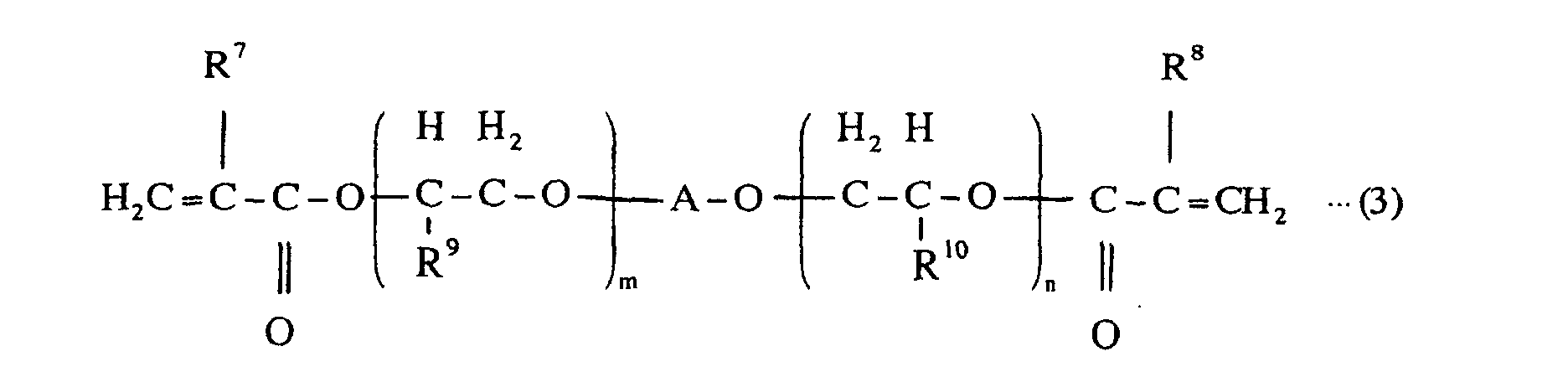
That is, as the high-hardness polymer 2, there can be
preferably used a bifunctional polymerizable monomer
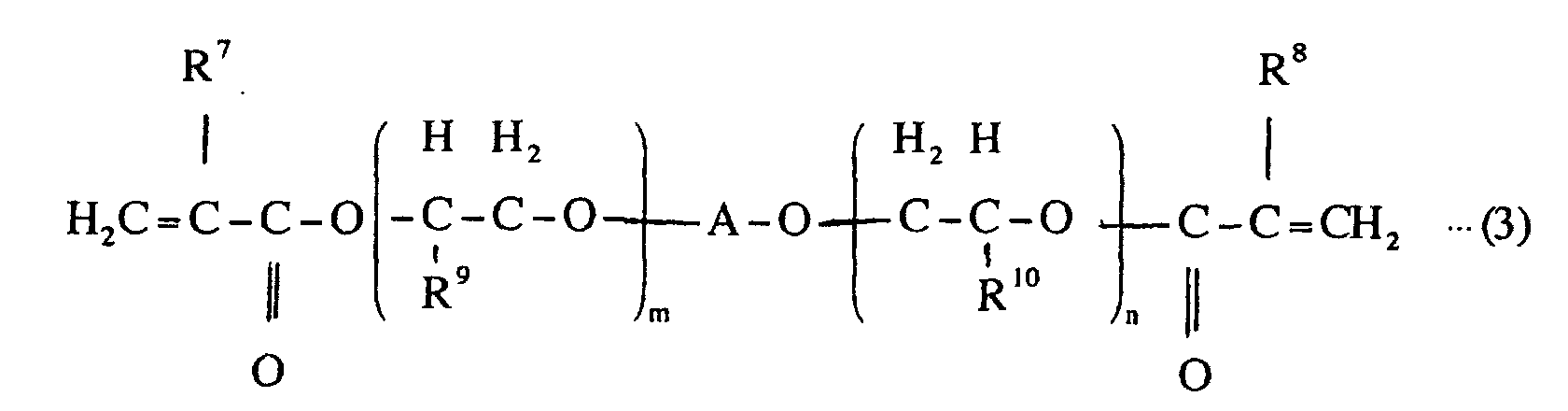
represented by the following general formula (3),
wherein R
7 and R
8 are methyl groups, R
9 and R
10 are,
independently from each other, hydrogen atoms or
alkyl groups having 1 to 2 carbon atoms, and A is a
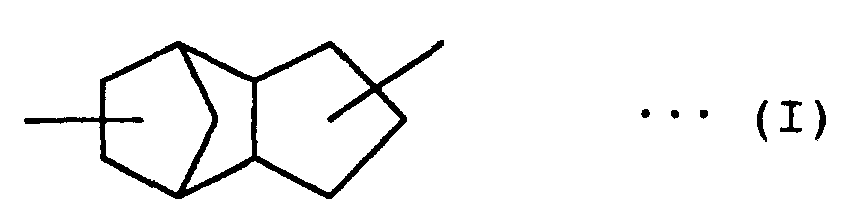
straight-chain or branched alkylene group, a
substituted or unsubstituted phenylene group, a group
represented by the following formula (I),
or a group represented by the following formula (II),
wherein R
11 and R
12 are, independently from each
other, alkyl groups having 1 to 4 carbon atoms (or
methyl groups, ethyl groups, propyl groups, butyl
groups etc.), chlorine atoms or bromine atoms, p and
q are, independently from each other, integers of
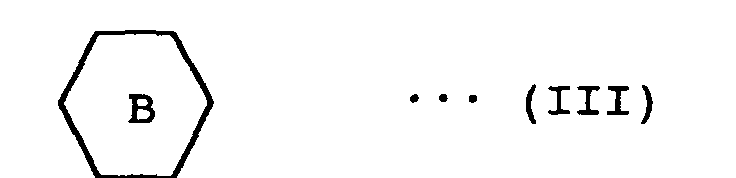
from 0 to 4, a ring represented by the following
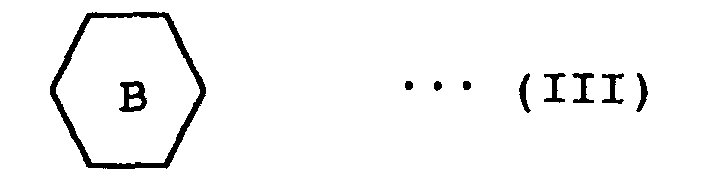
formula (III)
is a benzene ring or a cyclohexane ring, and when the
ring represented by the following formula (III)
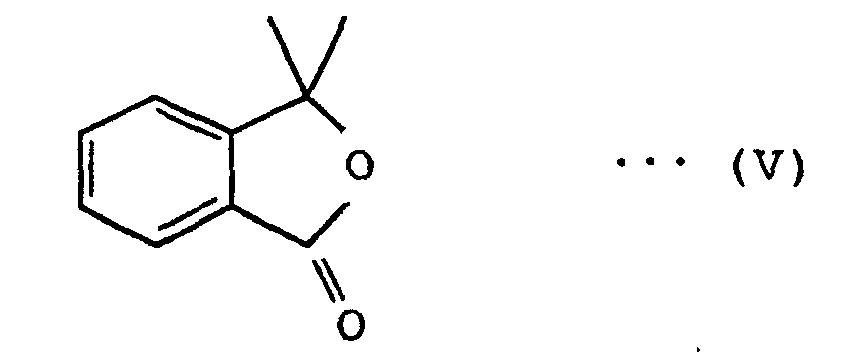
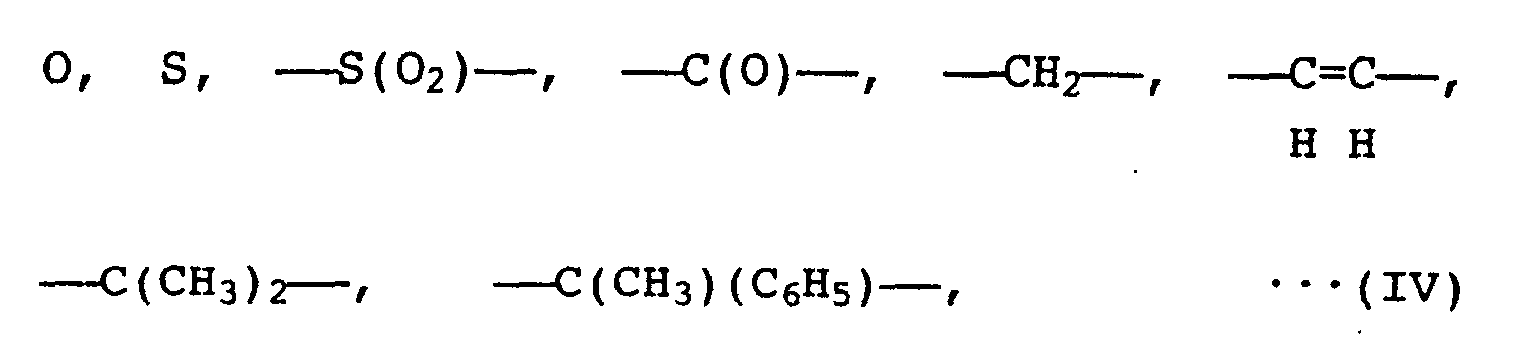
is a benzene ring, X is any one of the groups
represented by the following formulas (IV)
or is a group represented by the following formula
(V)
and when the ring represented by the following
formula (III)
is a cyclohexane ring, X is any one of the groups
represented by the following formulas (VI)
and m and n are not smaller than 1, respectively, m +
n being from 2 to 6 in average.
In the above general formula (3), the straight-chain
or branched alkylene group represented by A may be the one
having 2 to 9 carbon atoms, such as ethylene group,
propylene group, butylene group, neopentylene group,
hexylene group or nonylene group. As the substituent for
the phenylene group represented by A, there can be
preferably used an alkyl group having 1 to 4 carbon atoms
(or methyl group, ethyl group, propyl group, butyl group,
etc.), chlorine atom or bromine atom.
The bifunctional polymerizable monomer represented by
the above general formula (3) is usually obtained in the
form of a mixture of molecules with m and n which are not
the same. In the above formula, therefore, m and n
represent average values.
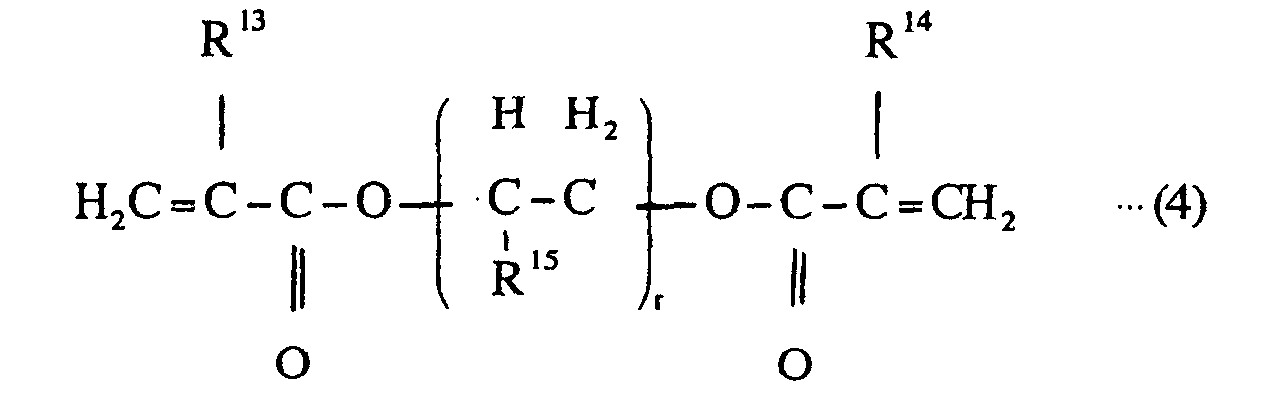
As the high-hard monomer 2, further, there is
preferably used a bifunctional polymerizable monomer
represented by the following formula (4),
wherein R
13 and R
14 are methyl groups, R
15 is a
hydrogen atom or an alkyl group having 1 to 2 carbon
atoms, and r is from 1 to 6 in average and is,
preferably, from 2 to 6.
In the bifunctional polymerizable monomer represented
by the above general formula (4), too, r is an average
value.
Concrete examples of the bifunctional polymerizable
monomer represented by the above formula (3) or the above
formula (4) include diethylene glycol dimethacrylate,
triethylene glycol dimethacrylate, tetraethylene glycol
dimethacrylate, tripropylene glycol dimethacrylate,
tetrapropylene glycol dimethacrylate, nonaethylene glycol
dimethacrylate, nonapropylene glycol dimethacrylate,
ethylene glycol bisglycidyl methacrylate, bisphenol A
dimethacrylate, 2,2-bis(4-methacryloyloxyethoxyphenyl)propane,
2,2-bis(3,5-dibromo-4-methacryloyloxyethoxyphenyl)propane,
1,4-butylene glycol
ethylenedimethacrylate, 1,9-nonylene glycol
dimethacrylate, neopentylene glycol dimethacrylate, and
bis(2-methacryloyloxyethylthioethyl)sulfide. These
bifunctional polymerizable monomers may be used being
mixed in two or more kinds together.
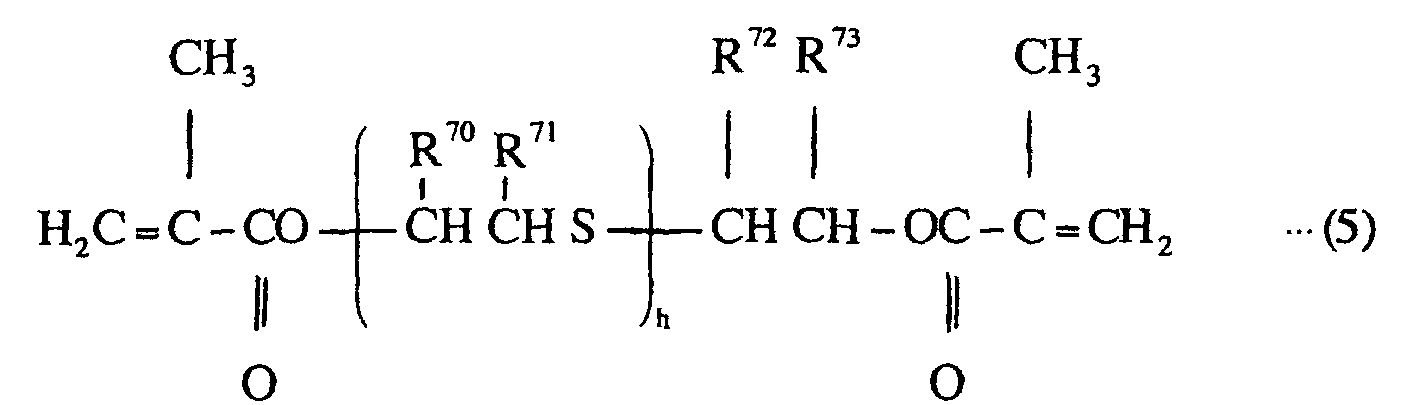
Other examples of the high-hard monomer 2
(bifunctional polymerizable monomer) include those
represented by the following formula (5),
wherein R
70, R
71, R
72 and R
73 may be the same or
different, and are hydrogen atoms or methyl groups,
and h is an integer of from 1 to 10.
Concrete examples of the bifunctional polymerizable
monomer represented by the above formula (5) include
bis(methacryloyloxyethyl)sulfide, 1,2-bis(methacryloyloxyethylthio)methane,
bis(2-methacryloyloxyethylthioethyl)sulfide,
1,2-bis(methacryloyloxyethylthioethylthio)ethane,
and 1,2-bis(methacryloyloxyisopropylthioisopropylethyl)sulfide.
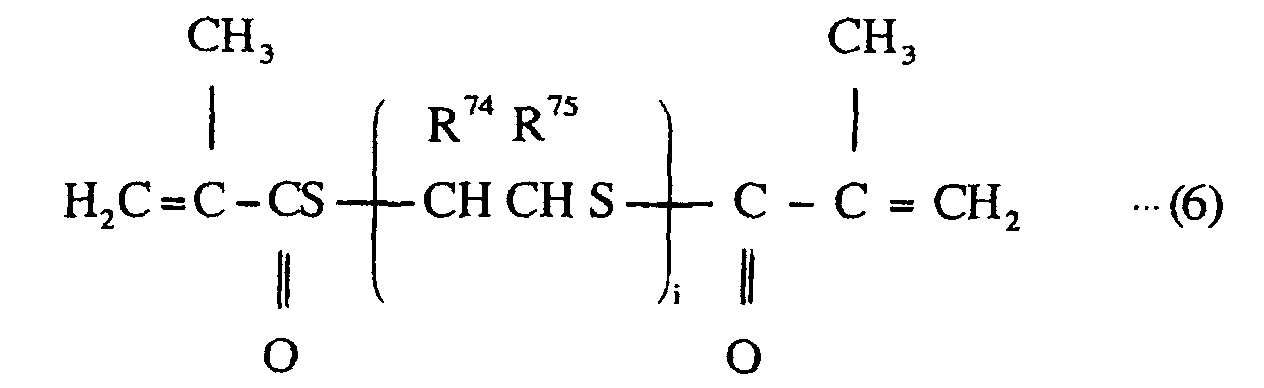
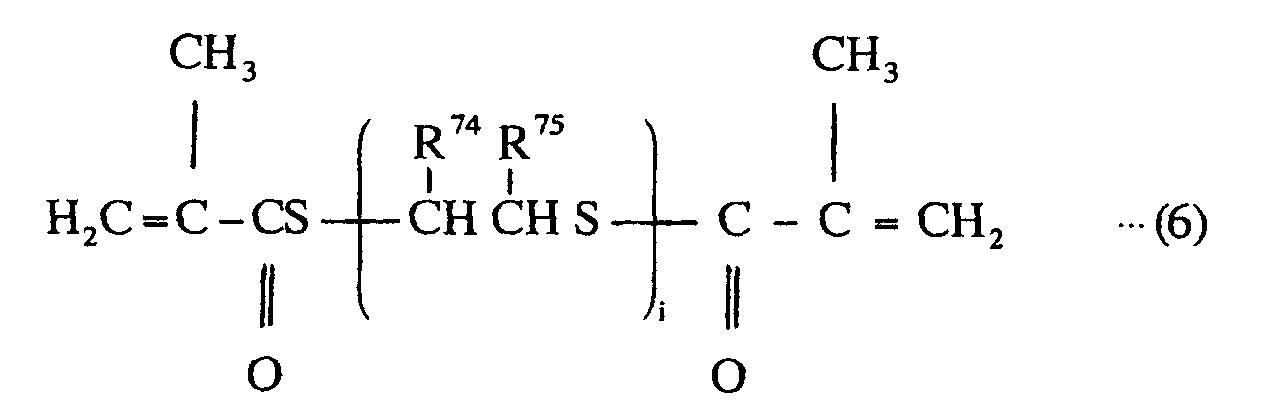
Further examples of the high-hard monomer 2
(bifunctional polymerizable monomer) include those
represented by the following formula (6),
wherein R
74 and R
75 may be the same or different, and
are hydrogen atoms or methyl groups, and i is an
integer of from 1 to 10.
Concrete examples of the bifunctional polymerizable
monomer represented by the above formula (6) include 1,2-bis(methacryloylthio)ethane,
bis(2-methacryloylthioethyl)sulfide,
and bis(2-methacryloylthioethylthioethyl)sulfide.
The cured products obtained from the compounds
represented by the above general formulas (5) and (6)
exhibit high refractive indexes or, concretely, refractive
indexes of not smaller than 1.56 and high Abbe's numbers,
lending themselves well for obtaining photochromic lenses.
In the present invention, it is desired to use the
high-hard monomer 1 and the high-hard monomer 2 in
combination from the standpoint of improving the hardness
and heat resistance of the cured product and of improving
the moldability. In this case, it is desired that the
ratio of the two is such that the high-hard monomer 1 is
from 2 to 50% by mass and, particularly, from 3 to 40% by
mass and that the high-hard monomer 2 is from 50 to 98% by
mass and, particularly, from 60 to 97% by mass based on
the weight of the high-hard monomers as a whole.
In the present invention, further, other radically
polymerizable monomer is preferably a compound
(hereinafter also referred to simply as "epoxy monomer")
having one radically polymerizable group and at least one
epoxy group in the molecule from the standpoint of
excellent color-developing sensitivity and fading rate
which are photochromic properties and excellent light
resistance. It is particularly desired that the epoxy
monomer is used in combination with the above-mentioned
high-hard monomers.
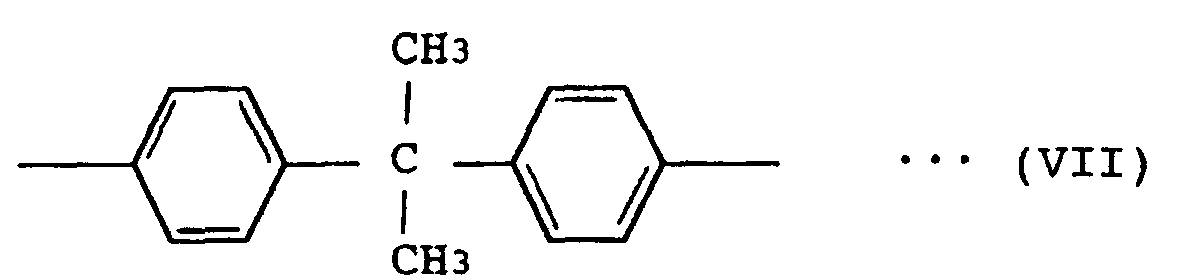
As the epoxy monomer, there can be preferably used a
compound represented by the following general formula (7),
wherein R
16 and R
17 are, independently from each
other, hydrogen atoms or methyl groups, R
18 and R
19
are, independently from each other, alkylene groups
having 1 to 4 carbon atoms which may be substituted
with a hydroxy group, or groups represented by the
formula (VII),
and s and t are from 0 to 20 in average,
respectively.
As the alkylene group represented by R18 and R19,
there can be exemplified methylene group, ethylene group,
propylene group, butylene group, trimethylene group and
tetramethylene group. Further, s and t are average
values.
Among the compounds represented by the above formula
(7), preferred examples include glycidyl acrylate,
glycidyl methacrylate, β-methyl glycidyl methacrylate,
bisphenol A-monoglycidyl ether methacrylate, 4-glycidyloxy
methacrylate, 3-(glycidyl-2-oxyethoxy)-2-hydroxypropyl
methacrylate, 3-(glycidyloxy-1-isopropyloxy)-2-hydroxypropyl
acrylate, 3-glycidyloxy-2-hydroxypropyloxy)-2-hydroxypropyl
acrylate, and glycidyloxypolyethylene
glycol methacrylate having an average molecular weight of
540. Among them, glycidyl acrylate and glycidyl
methacrylate are particularly desired.
When the epoxy monomer is used in combination with
the radically polymerizable monomer such as the high-hard
monomer, it is desired that the ratio of blending the
epoxy monomer is from 0.01 to 30% by mass and,
particularly, from 0.1 to 20% by mass based on the whole
weight of the other radically polymerizable monomer.
In the present invention, further, the other
radically polymerizable monomer is desirably a
polymerizable monomer (hereinafter also referred to simply
as "low-hard monomer") which, when homopolymerized,
exhibits the L-scale Rockwell hardness of not larger than
40 from the standpoint of further improving the strength
of the lens and improving the fading rate which
constitutes the photochromic properties. It is
particularly desired that the low-hard monomer is used in
combination with the high-hard monomer described above.
As the low-hard monomer, there can be used, without
limitation, a known polymerizable monomer that satisfies
the requirements related to the hardness of the
homopolymer. In particular, it is desired to use the one
represented by the following general formula (8) or by the
following general formula (9).
That is, a compound represented by the general
formula (8),
wherein R
20, R
21 and R
22 are, independently from each
other, hydrogen atoms or alkyl groups having 1 to 2
carbon atoms, R
23 is a hydrogen atom, an alkyl group
having 1 to 25 carbon atoms, an alkoxyalkyl group, an
aryl group, an acyl group, an alkyloxy group having
an epoxy group at the terminal, a methacryloyl group,
an acryloyl group, a haloalkyl group or an oleyl
group, Z is an oxygen atom or a sulfur atom, v and v'
are, independently from each other, from 0 to 70 in
average, and when R
20 is an alkyl group and R
23 is a
methacryloyl group, v + v' is 7 to 70, when R
20 is an
alkyl group and R
23 is a group other than the
methacryloyl group or the acryloyl group, v + v' is 4
to 70, and when R
20 is a hydrogen atom, v + v' is 1
to 70.
It is further desired that when R20 is an alkyl group
and R23 is a methacryloyl group, v + v' is 7 to 12 and,
particularly, 8 to 10 in average, when R20 is an alkyl
group and R23 is a group other than the methacryloyl group
or the acryloyl group, v + v' is 4 to 40 and,
particularly, 6 to 23 in average and when R20 is a
hydrogen atom, v + v' is 1 to 25 and, particularly, 1 to
10 in average from the standpoint of further improving the
fading rate which constitutes the photochromic properties
and to further improve the moldability of the lens.
Among them, it is desired that R20 in the general
formula (8) is a hydrogen atom (acryloyl group) from the
standpoint of lowering the hardness. It is further
desired that R20 in the general formula (8) is a hydrogen
atom and R23 is an acryloyl group from the standpoint of
maintaining the strength of the cured product while
lowering the hardness.
When R20 in the general formula (8) is an alkyl
group, on the other hand, it is desired that R23 is an
alkyl group having 1 to 25 carbon atoms, an alkoxyalkyl
group, an acyl group, an aryl group, an alkyl group having
an epoxy group at a terminal thereof, a haloalkyl group or
an oleyl group.
It is further desired that R21 and R22 are hydrogen
atoms.
Concrete examples of the compound represented by the
above formula (8) include polyethylene glycol methacrylate
having an average molecular weight of 526, polyethylene
glycol methacrylate having an average molecular weight of
360, methyl ether polyethylene glycol methacrylate having
an average molecular weight of 496, methyl ether
polyethylene glycol methacrylate having an average
molecular weight of 1000, polypropylene glycol
methacrylate having an average molecular weight of 375,
polypropylene glycol methacrylate having an average
molecular weight of 430, polypropylene glycol methacrylate
having an average molecular weight of 622, methyl ether
polyethylene glycol methacrylate having an average
molecular weight of 620, methyl ether polyethylene glycol
polypropylene glycol methacrylate having an average
molecular weight of 596, polytetramethylene glycol
methacrylate having an average molecular weight of 566,
octylphenyl ether polyethylene glycol methacrylate having
an average molecular weight of 2034, nonyl ether
polyethylene glycol methacrylate having an average
molecular weight of 610, methoxyethyl acrylate, methyl
ether polyethylene glycol acrylate having an average
molecular weight of 262, methyl ether polyethylene glycol
acrylate having an average molecular weight of 482, methyl
ether polyethylene glycol polypropylene glycol acrylate
having an average molecular weight of 582, methylthio
ether polyethylene glycol methacrylate having an average
molecular weight of 640, perfluoroheptylethylene glycol
methacrylate having an average molecular weight of 630,
glycidyl polyethylene glycol methacrylate having an
average molecular weight of 538, glycidyl acrylate,
acetyloxyethyl acrylate, phenoxyethyl acrylate,
benzyloxyethyl acrylate, acetylpolyethylene glycol
methacrylate having an average molecular weight of 524,
butylylpolyethylene glycol methacrylate having an average
molecular weight of 566, benzoylpolyethylene glycol
methacrylate having an average molecular weight of 586,
nonylbenzoylpolyethylene glycol methacrylate having an
average molecular weight of 689, butoxymethyl ether
polyethylene glycol methacrylate having an average
molecular weight of 568, polyethylene glycol
dimethacrylate having an average molecular weight of 875,
polytetramethylene glycol dimethacrylate having an average
molecular weight of 650, polytetramethylene glycol
dimethacrylate having an average molecular weight of 1400,
polypropylene glycol dimethacrylate having an average
molecular weight of 560, polyethylene glycol diacrylate
having an average molecular weight of 214, polyethylene
glycol diacrylate having an average molecular weight of
258, polyethylene glycol diacrylate having an average
molecular weight of 302, polyethylene glycol diacrylate
having an average molecular weight of 522, polyethylene
glycol methacrylate acrylate having an average molecular
weight of 272, and polyethylene glycol methacrylate
acrylate having an average molecular weight of 536.
Further, there is used compounds of the general
formula (9),
wherein R
24 is a hydrogen atom or a methyl group, and
R
25 is an alkyl group having 1 to 40 carbon atoms
when R
24 is a hydrogen atom, and is an alkyl group
having 8 to 40 carbon atoms when R
24 is a methyl
group.
Among them, it is desired to use the one in which R25
is an alkyl group having 8 to 25 carbon atoms when R24 is
a methyl group, and the one in which R25 is an alkyl group
having 1 to 20 carbon atoms when R24 is a hydrogen atom,
from the standpoint of easy availability of the starting
materials and photochromic properties.
Among the compounds represented by the above formula
(9), preferred examples include stearyl methacrylate,
lauryl methacrylate, ethyl hexyl methacrylate, methyl
acrylate, ethyl acrylate, butyl acrylate and lauryl
acrylate. Among them, methyl acrylate, ethyl acrylate,
butyl acrylate and lauryl acrylate are particularly
preferred.
When these low-hard monomers are used in combination
with the radically polymerizable monomers which are the
high-hard monomers described above, it is desired that the
low-hard monomers are blended at a ratio of 0.1 to 20% by
mass and, particularly, 0.5 to 10% by mass based on the
weight of the whole other radically polymerizable
monomers.
As the other radically polymerizable monomers, there
can be used polymerizable monofunctional monomers, i.e.,
multi-valent allyl compounds such as diallyl phthalate,
diallyl isophthalate, diallyl tartarate, diallyl
epoxysuccinate, diallyl fumarate, diallyl chloroendoate,
diallyl hexaphthalate and allyl diglycol carbonate; multi-valent
thioacrylic acid and multi-valent thiomethacrylic
acid ester compounds such as 1,2-bis(methacryloylthio)ethane,
bis(2-acryloylthioethyl)ether,
and 1,4-bis(methacryloylthiomethyl)benzene;
unsaturated carboxylic
acids such as acrylic acid, methacrylic acid and maleic
anhydride; acrylic acid and methacrylic acid ester
compounds such as methyl methacrylate, butyl methacrylate,
benzyl methacrylate, phenyl methacrylate, 2-hydroxyethyl
methacrylate and biphenyl methacrylate; fumaric acid ester
compounds such as diethyl fumarate and diphenyl fumarate;
thioacrylic acid and thiomethacrylic acid ester compounds
such as methylthio acrylate, benzylthio acrylate, and
benzylthio methacrylate; vinyl compounds such as styrene,
chlorostyrene, methyl styrene, vinyl naphthalene, α-methylstyrene
dimer, bromostyrene, and divinyl benzene;
and (meth)acrylates having an unsaturated bond in the
molecules and in which the hydrocarbon chain has 6 to 25
carbon atoms, such as oleyl methacrylate, nerol
methacrylate, geraniol methacrylate, linalool
methacrylate, and farnesol methacrylate. These compounds
can be used in one kind or in two or more kinds, or in
combination with the above-mentioned high-hard monomers
and epoxy monomers without any limitation.
In the present invention, the allyl ether or
allylthio ether compound and other radically polymerizable
monomer are blended at such a ratio that the amount of the
allyl ether or allylthio ether compound is from 0.001 to
30% by mass and the amount of the other radically
polymerizable monomer is from 99.999 to 70% by mass per
the total amount of the two of 100% by mass. More
desirably, the amount of the allyl ether or allylthio
ether compound is from 0.01 to 25% by mass and the amount
of the other radically polymerizable monomer is from 99.99
to 75% by mass and, particularly, the amount of the allyl
ether or allylthio ether compound is from 0.1 to 20% by
mass and the amount of the other radically polymerizable
monomer is from 99.9 to 80% by mass. When the blended
amount of the allyl ether or allylthio ether compound is
smaller than 0.001% by mass, the heat resistance of the
lens tends to become small. When the blended amount
exceeds 30% by mass, on the other hand, the color-developing
sensitivity and the fading rate, which are the
photochromic properties, tend to become small.
A known photochromic compound can be used without any
limitation for the curable composition of the present
invention. Known examples of the photochromic compound
include fulgimide compounds, spirooxazine compounds and
chromene compounds. These photochromic compounds can be
used for the present invention.
As the fulgimide compounds, spirooxazine compounds
and chromene compounds, there can be preferably used those
compounds that have been disclosed in, for example,
Japanese Unexamined Patent Publication (Kokai) No.
28154/1990, Japanese Unexamined Patent Publication (Kokai)
No. 288830/1987, PCT International Patent Application
94/22850, and PCT International Patent Application
96/14596.
As the compounds that exhibit excellent photochromic
properties, further, there can be preferably used those
compounds that were newly found by the present inventors
and have been disclosed in the pending patent applications
(Japanese Patent Application No. 207871/1997, Japanese
Patent Application No. 23110/1999, Japanese Patent
Application No. 27959/1999, Japanese Patent Application
No. 27961/1999, Japanese Patent Application No.
27960/1999, Japanese Patent Application No. 140836/1999,
Japanese Patent Application No. 144072/1999, Japanese
Patent Application No. 150690/1999, Japanese Patent
Application No. 144074/1999, Japanese Patent Application
No. 156270/1999, Japanese Patent Application No.
154272/1999, Japanese Patent Application No. 188146/1999,
and Japanese Patent Application No. 188902/1999).
Among these photochromic compounds, the chromene
compounds exhibit photochromic properties maintaining
light resistance larger than that of other photochromic
compounds, and are preferably used since they help greatly
improve the color-developing sensitivity and fading rate
which are the photochromic properties of the invention
compared to other photochromic compounds. Among these
chromene compounds, further, those compounds having
molecular weights of not smaller than 540 are preferably
used since they help greatly improve the color-developing
sensitivity and fading rate which are the photochromic
properties of the invention compared to other chromene
compounds.
As the chromene compound that can be preferably used
in the present invention, there can be exemplified the one
represented by the following general formula (10),
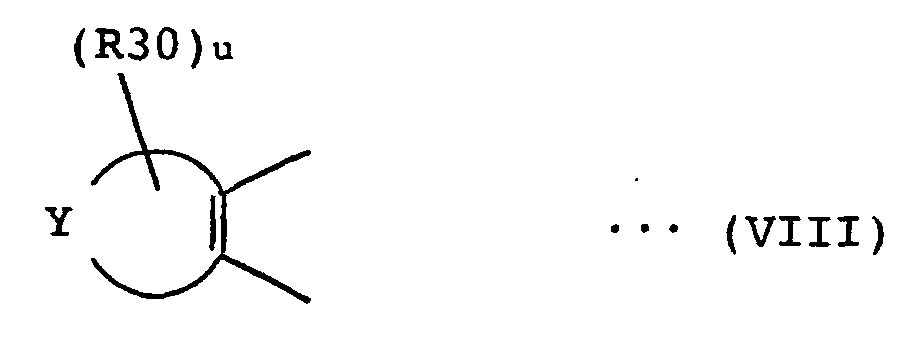
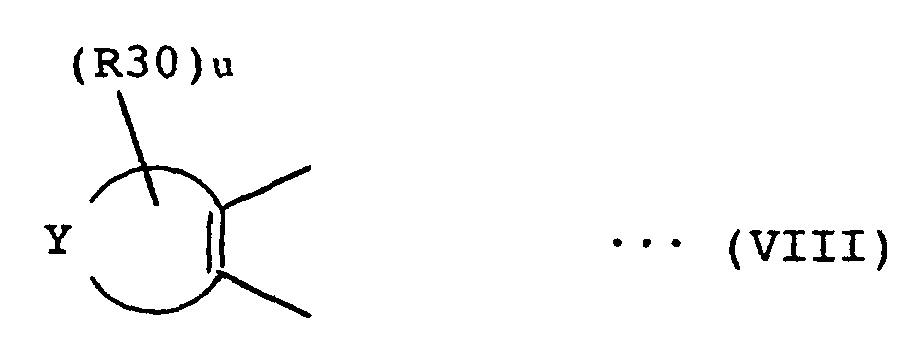
wherein a group represented by the following formula
(VIII)
is a substituted or unsubstituted aromatic
hydrocarbon group, or a substituted or unsubstituted
unsaturated heterocyclic group, R
28, R
29 and R
30 are
alkyl groups, alkoxy groups, aralkoxy groups, amino
groups, substituted amino groups, cyano groups,
substituted or unsubstituted aryl groups, halogen
atoms, aralkyl groups, hydroxy groups, substituted or
unsubstituted alkenyl groups, substituted or
unsubstituted heterocyclic groups having a nitrogen
atom as a hetero atom and in which the nitrogen atom
is bonded to a pyran ring or to a ring of a group
represented by the above formula (10), or condensed
heterocyclic groups in which the hetercyclic group is
condensed with an aromatic hydrocarbon ring or an
aromatic heterocyclic ring, u is an integer of 0 to
6, and R
26 and R
27 are, independently from each other,
groups represented by the following formula (IX),
wherein R
31 is a substituted or unsubstituted aryl
group, or a substituted unsubstituted heteroaryl
group, R
32 is a hydrogen atom, an alkyl group or a
halogen atom, and w is an integer of 1 to 3, groups
represented by the following formula (X),
wherein R
33 is a substituted or unsubstituted
aryl group, or a substituted or unsubstituted
heteroaryl group, and W' is an integer of 1 to
3,
substituted or unsubstituted aryl groups, substituted
or unsubstituted heteroaryl groups, or alkyl groups,
or R
26 and R
27 together may constitute an aliphatic
hydrocarbon ring or an aromatic hydrocarbon ring.
Here, the substituents defined in connection with R28
and R30 can be applied to the substituents in the above-mentioned
formulas (IX) and (X), and to the substituents
of the substituted aryl group or of the substituted
heteroaryl group described in connection with R26 and R27.
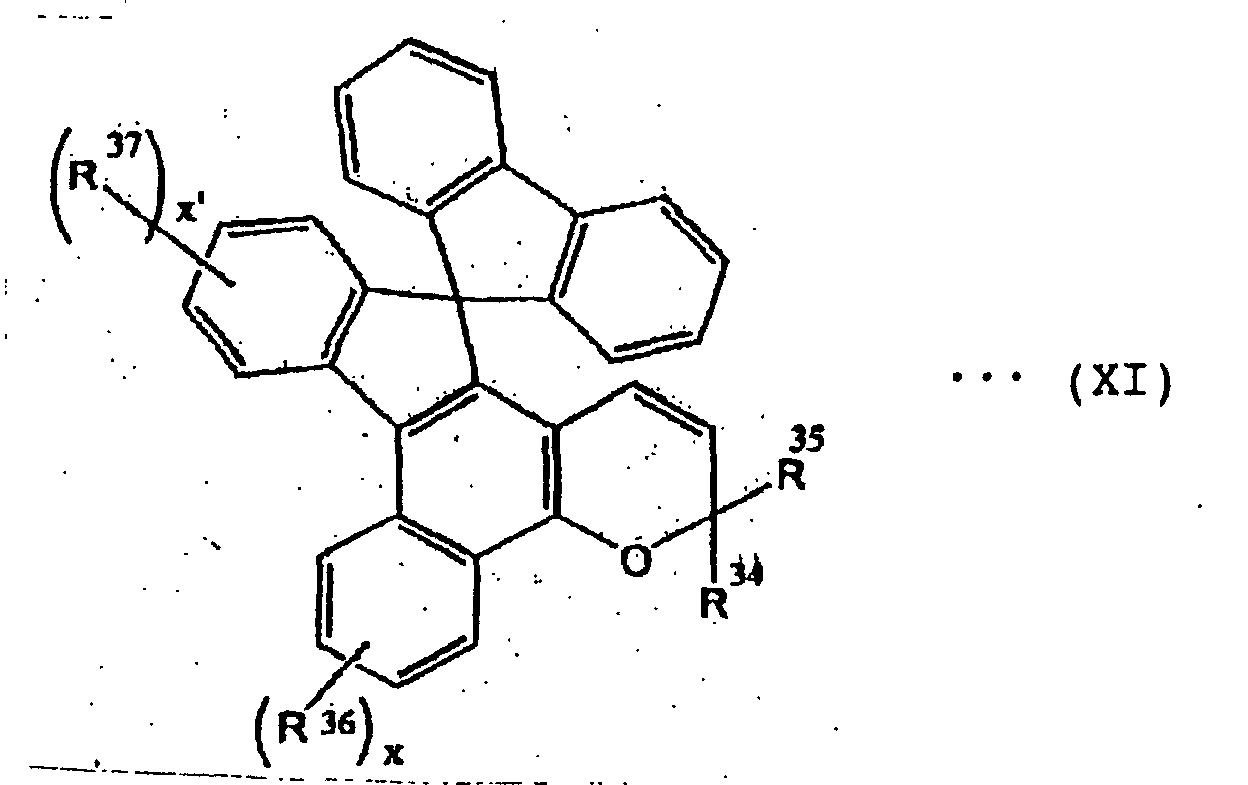
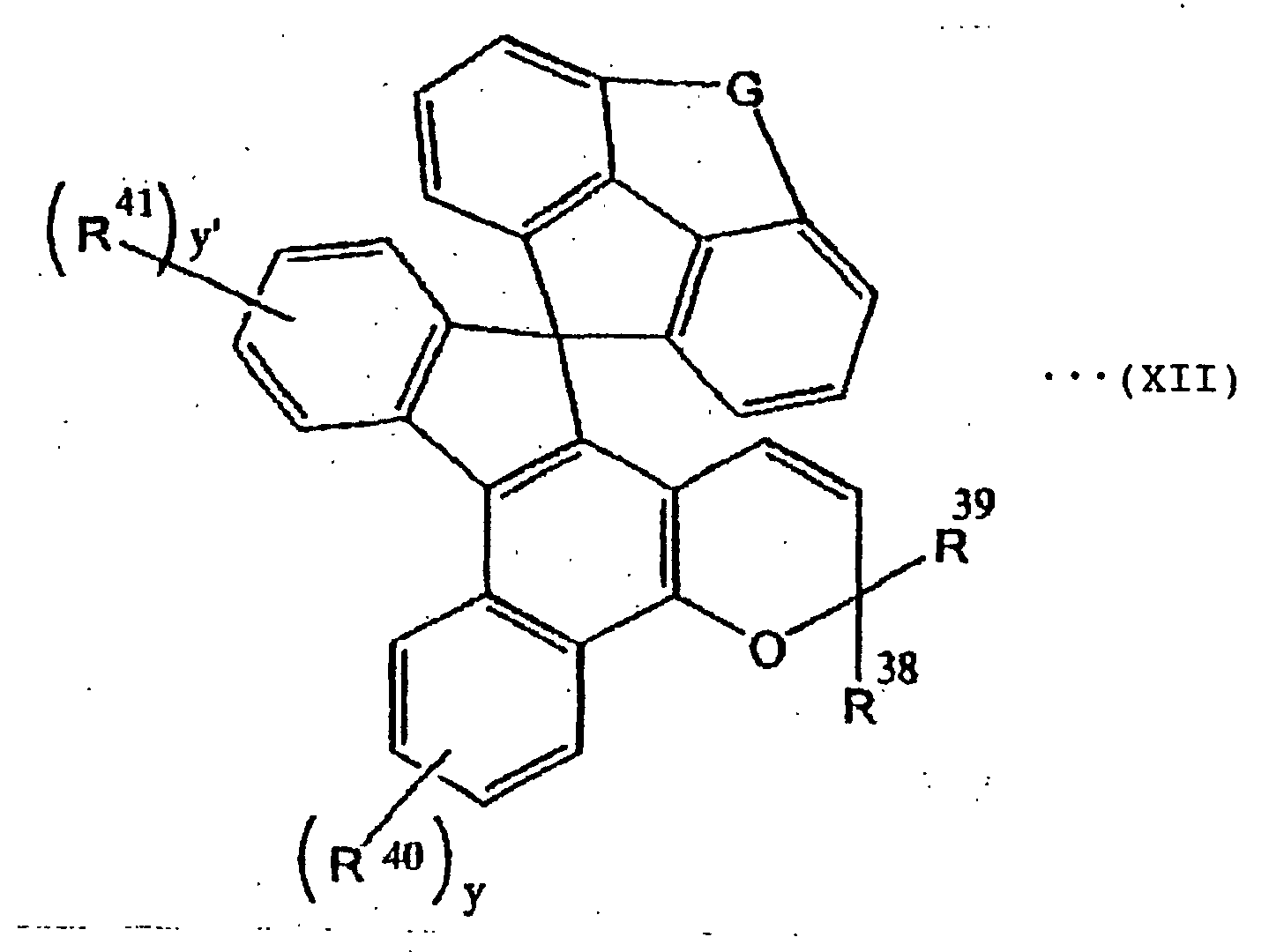
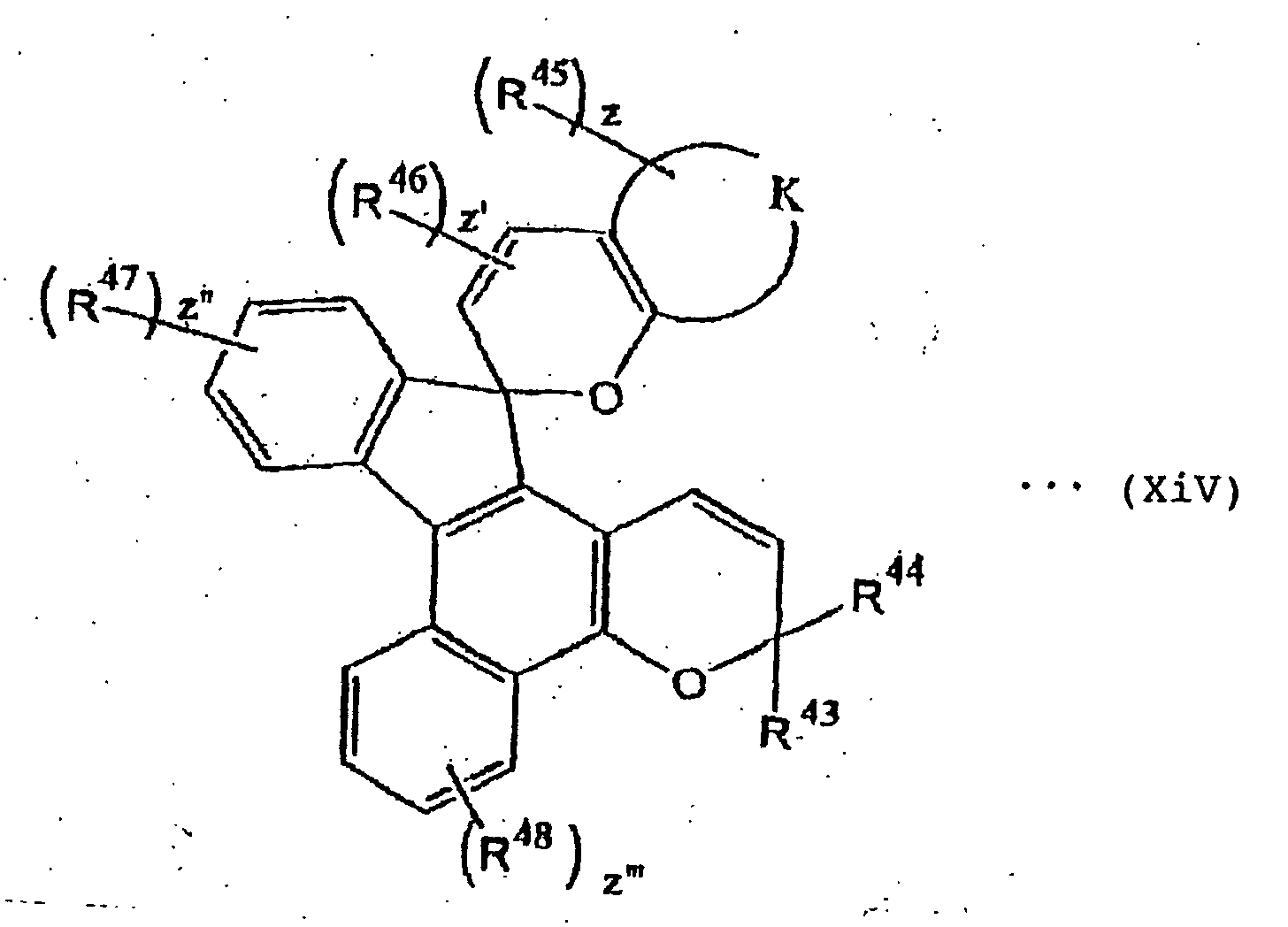
More preferred chromene compounds are those compounds
represented by the following general formulas (XI) to
(XIX),
wherein R
34 and R
35 are the same as R
26 and R
27
described in the above general formula (10), R
36 and
R
37 are the same as R
28, R
29 and R
30 described in the
above formula (10), and x and x' are integers of 0 to
4,
wherein R
38 and R
39 are the same as R
26 and R27
described in the above general formula (10), R
40 and
R
41 are the same as R
28, R
29 and R
30 described in the
above formula (10), y and y' are integers of 0 to 4,
and G is any one of the groups represented by the
following formula (XIII),
wherein J is an oxygen atom or a sulfur atom, R
42 is
an alkylene group having 1 to 6 carbon atoms, and e,
f, g and h are integers of 1 to 4,
wherein R
43 and R
44 are the same as R
26 and R27
described in the above general formula (10), R
45, R
46,
R
47 and R
48 are the same as R
28, R
29 and R
30 described
in the above formula (10), z is an integer of 0 to 6,
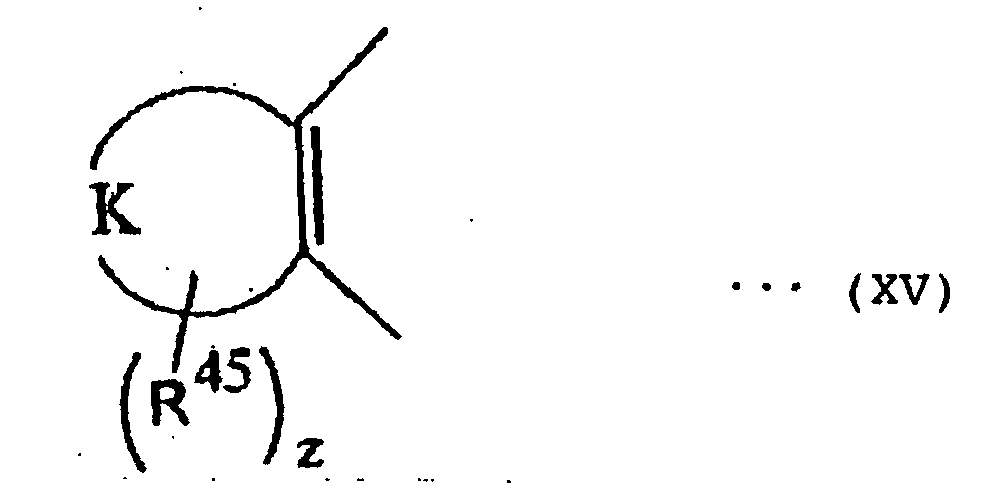
z', z" and z"' are integers of 0 to 4, and a group
represented by the following formula (XV)
is a substituted or unsubstituted aromatic
hydrocarbon group, or a substituted or unsubstituted
unsaturated heterocyclic group,
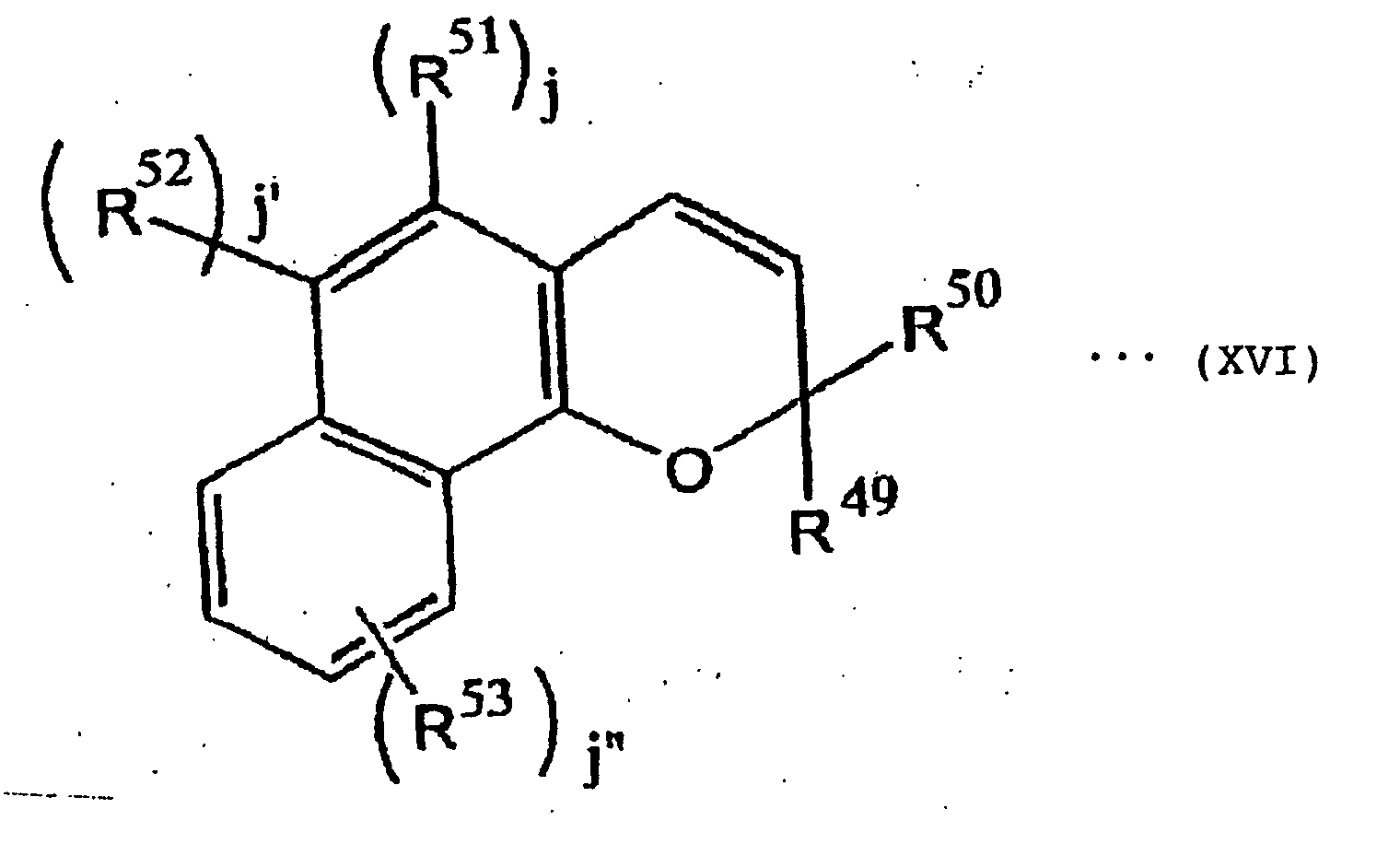
wherein R
49 and R
50 are the same as R
26 and R
27
describedin the above general formula (10), R51, R52
and R
53 are the same as R
28, R
29 and R
30 described in
the above formula (10), j and j' are 0 or 1, and j"
is an integer of 0 to 4,
wherein R
54 and R
55 are the same as R
26 and R
27
described in the above general formula (10), R
56 and
R57 are the same as R
28, R
29 and R
30 described in the
above formula (10), k is an integer of 0 to 2, and k'
is an integer of 0 to 4,
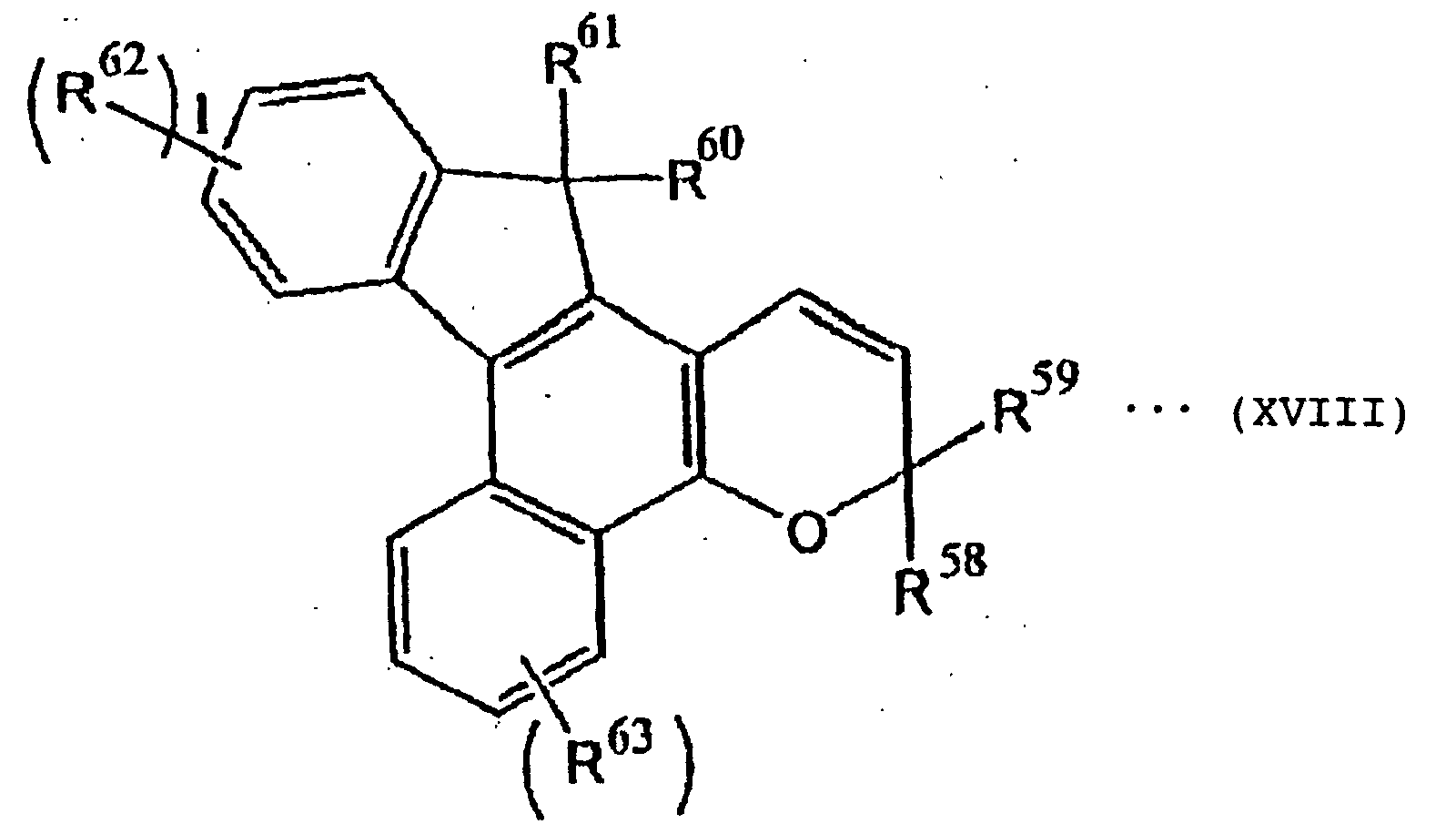
wherein R
58 and R
59 are the same as R26 and R27
described in the above general formula (10), R
60, R
61,
R
62 and R
63 are the same as R
28, R
29 and R
30 described
in the above formula (10), and 1 and 1' are integers
of 0 to 4,
wherein R
64 and R
55 are the same as R26 and R27
described in the above general formula (10), R
66, R
67
and R
68 are the same as R
28, R
29 and R
30 described in
the above formula (10), o and o' are integers of 0 to
4, o" is an integer of 0 to 6, and a ring represented
by the following formula (XX),
is an aliphatic hydrocarbon ring which may have up to
6 substituents.
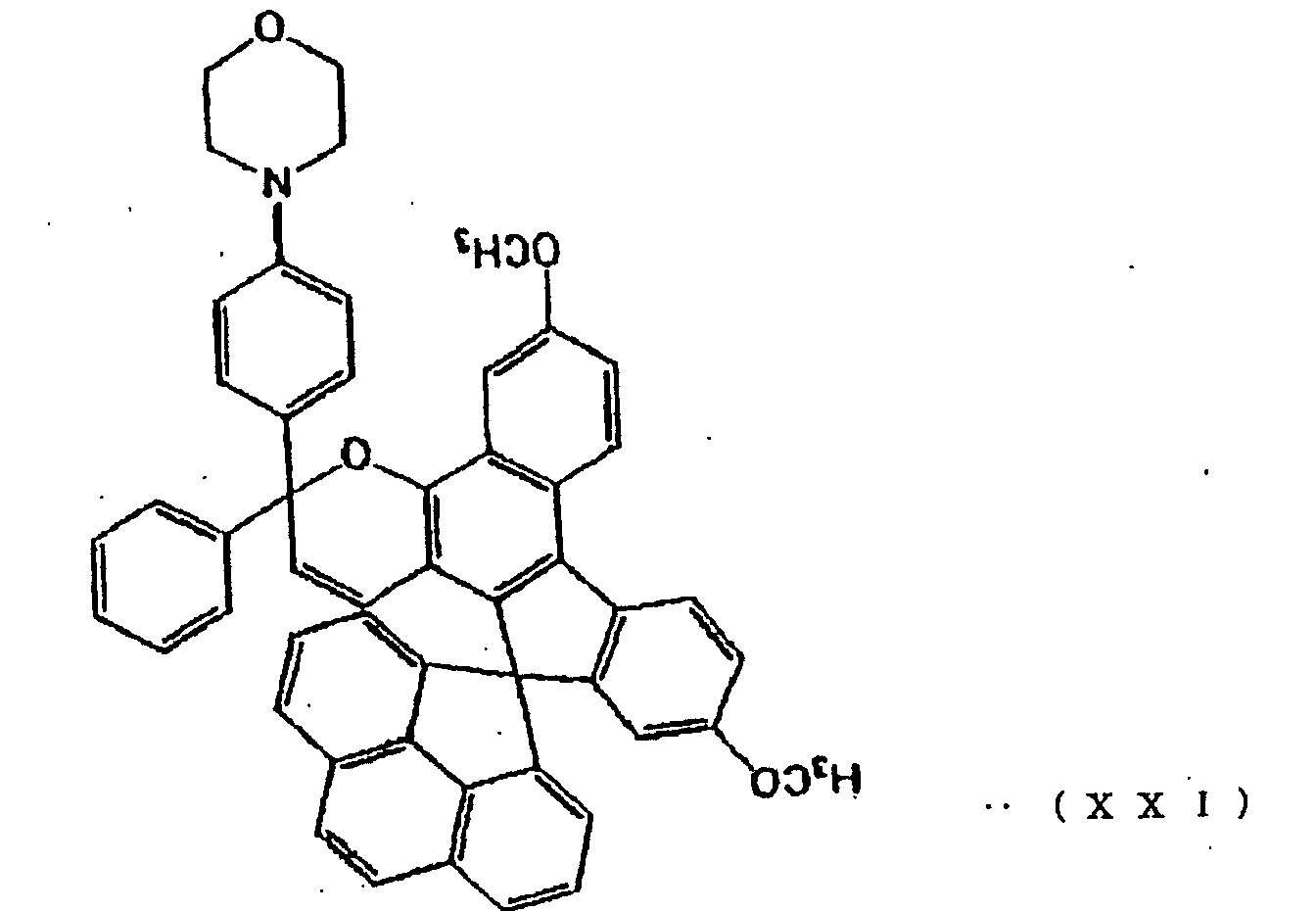
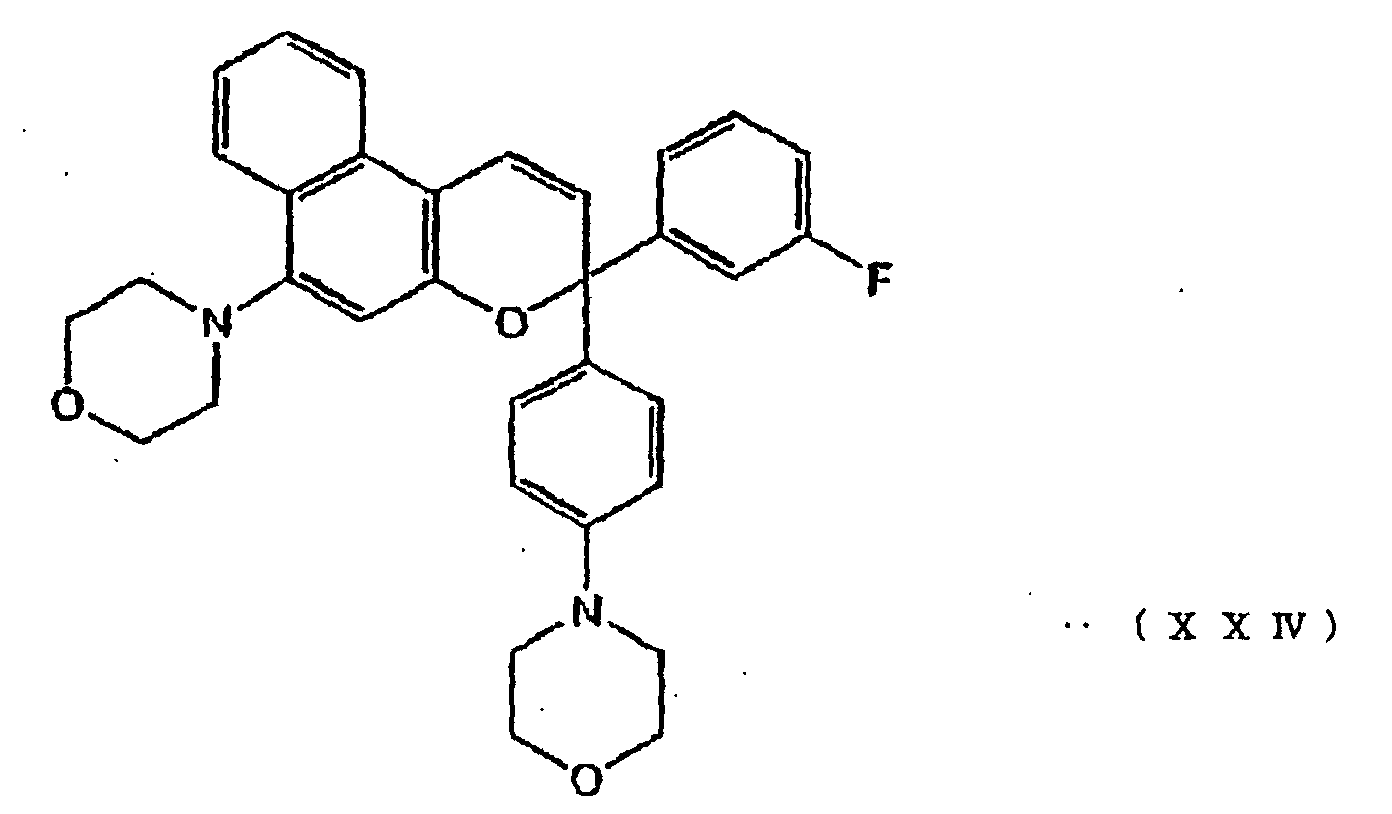
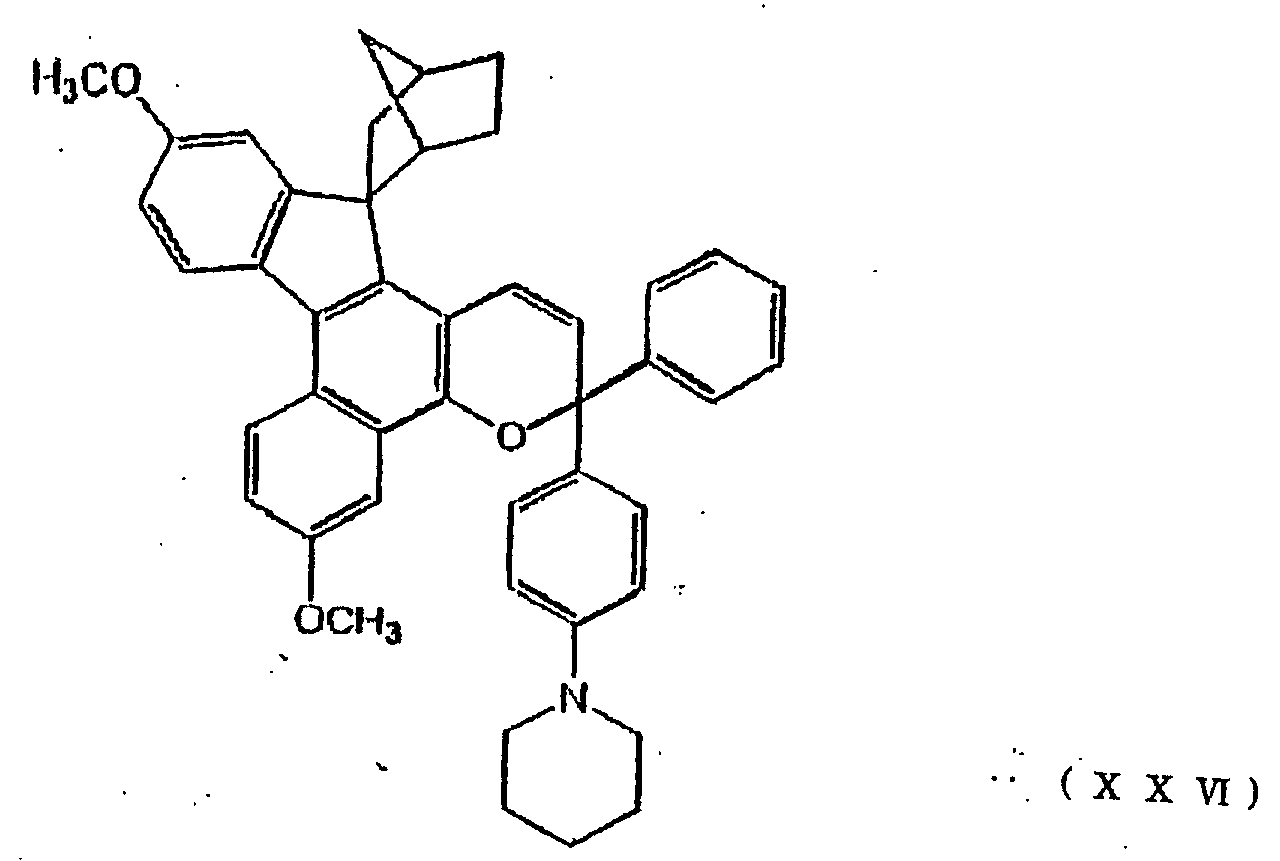
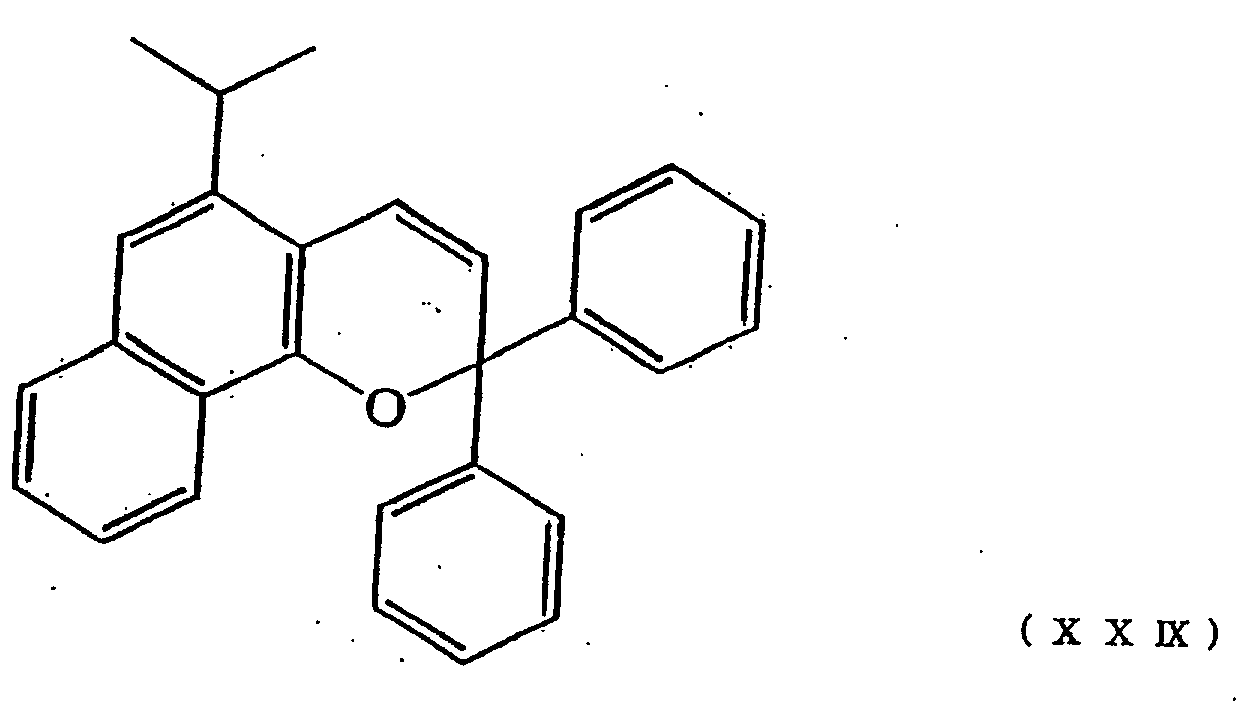
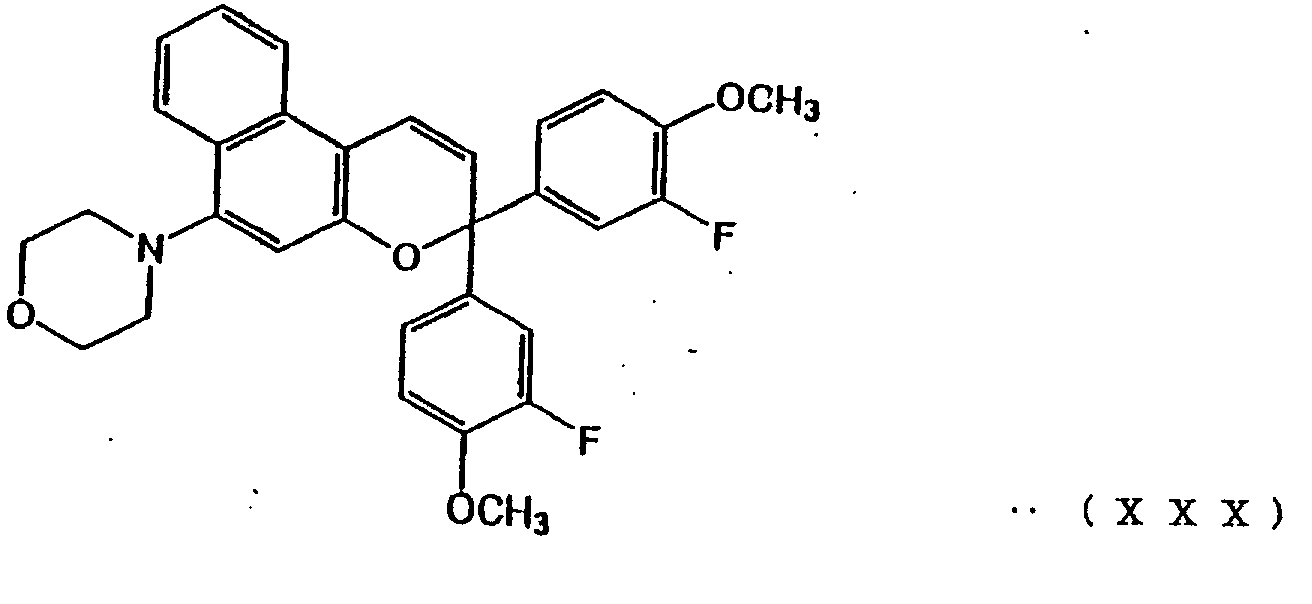
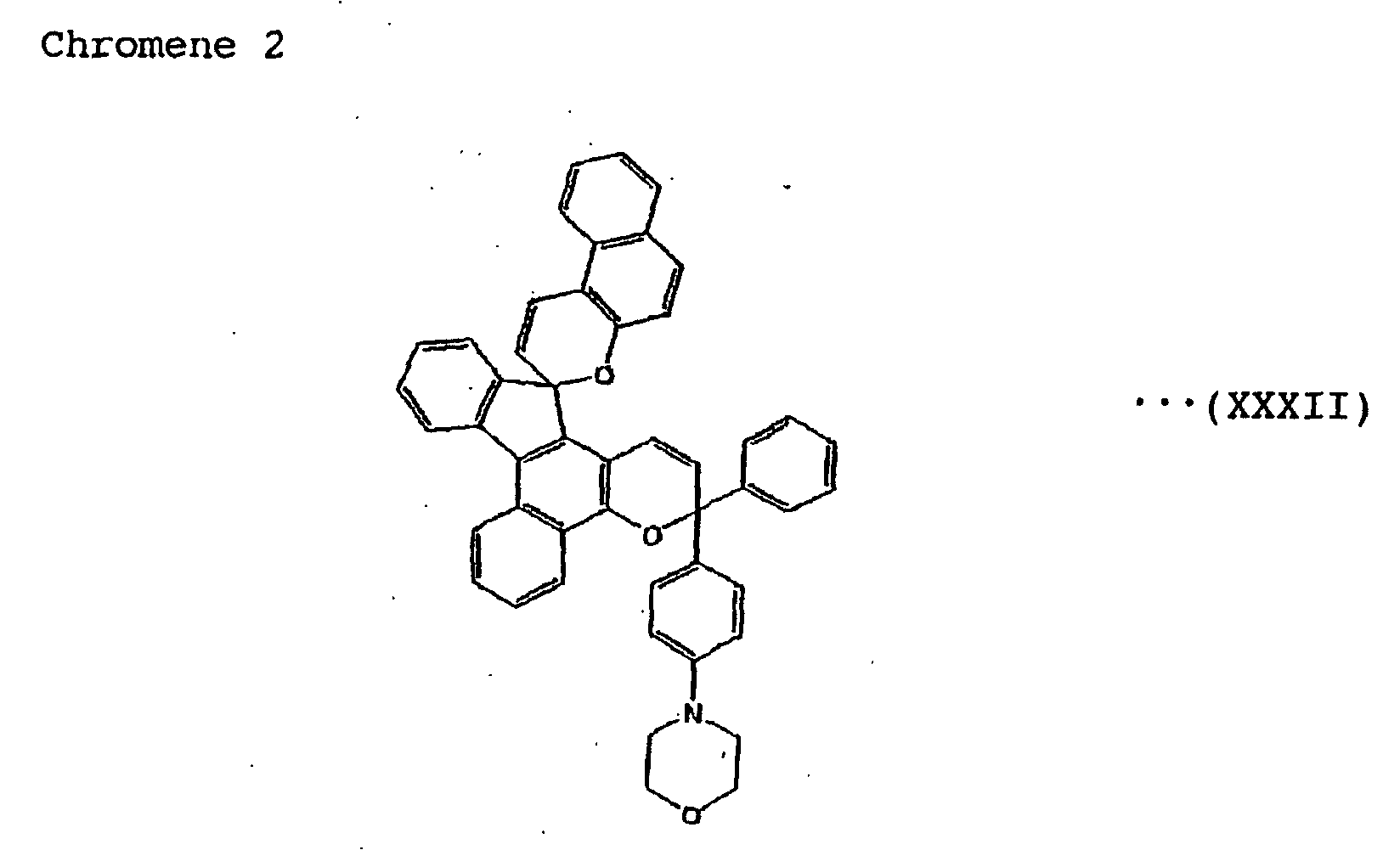
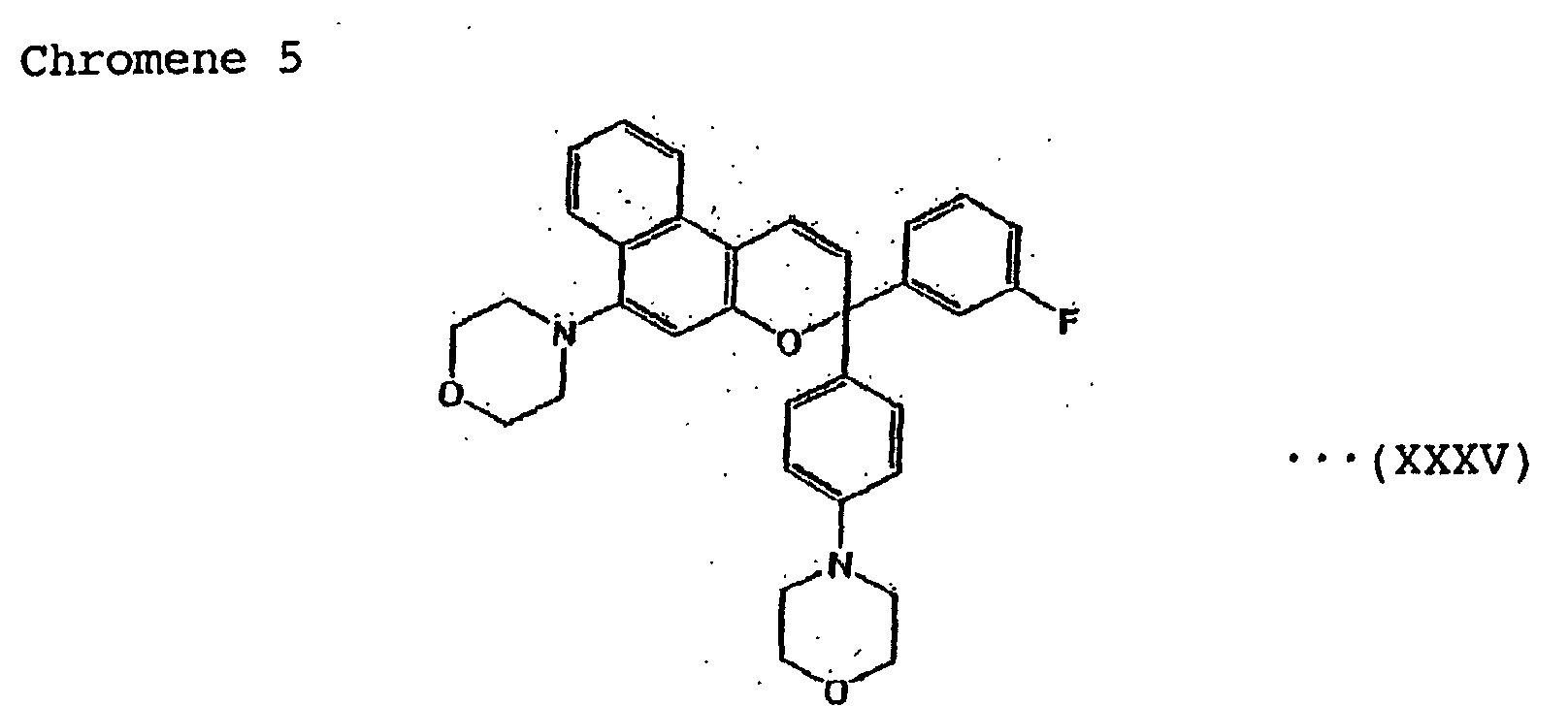
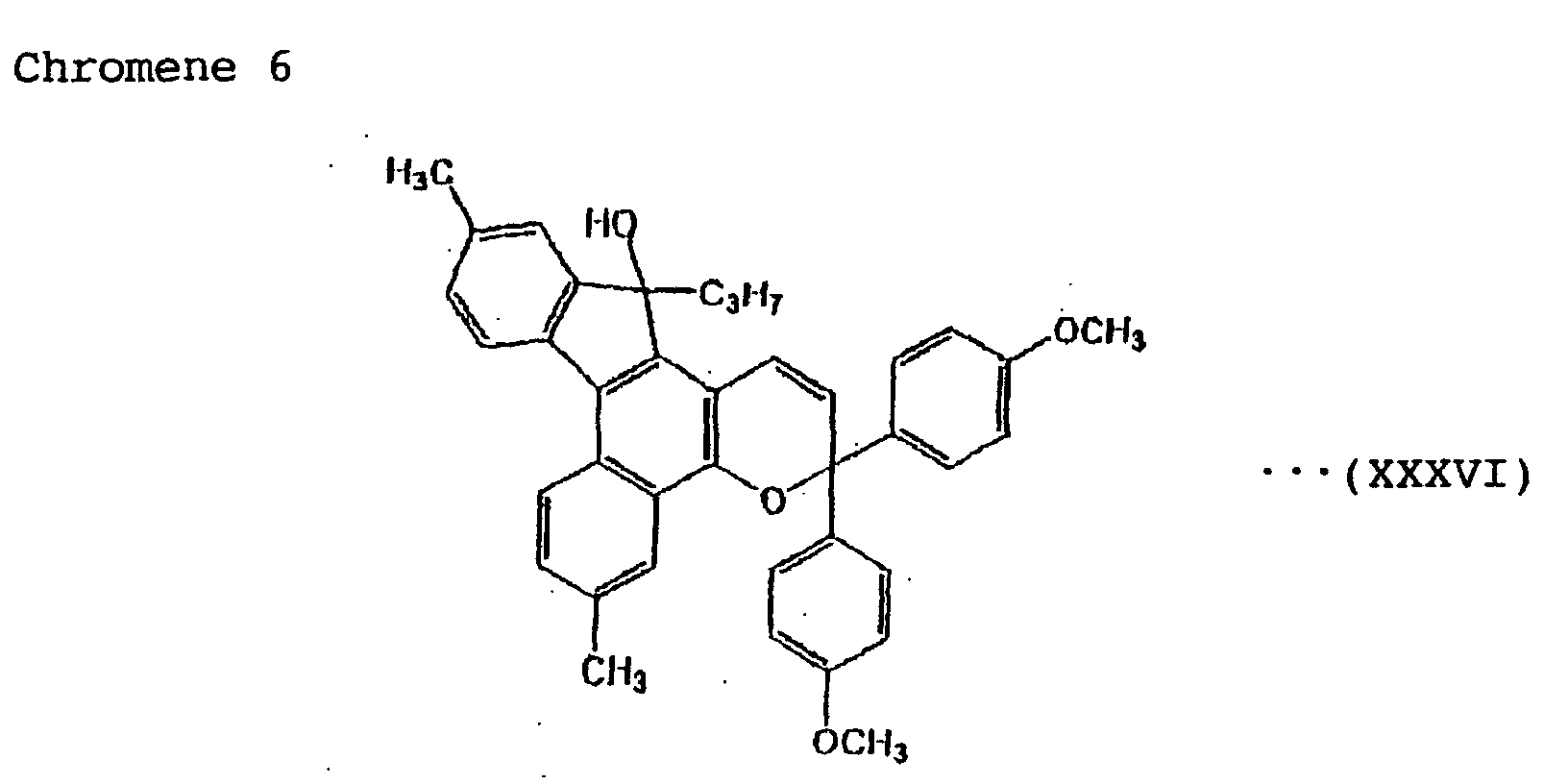
More preferred chromene compounds of the present
invention are those chromene compounds having the
following structures:
In the curable composition of the present invention,
the photochromic compound is blended in an amount of from
0.0001 to 10 parts by weight, preferably, from 0.001 to 5
parts by weight and, more preferably, from 0.001 to 1 part
by weight per a total amount (whole radically
polymerizable monomers) of 100 parts by weight of the
allyl ether or allylthio ether compound and other
radically polymerizable monomers. When the blended amount
of the photochromic compound is smaller than 0.0001 part
by weight, the color density often becomes small. When
the blended amount is not smaller than 10 parts by weight,
on the other hand, the photochromic compound does not
dissolve in the polymerizable monomer to a sufficient
degree, and becomes nonuniform causing the color density
to become irregular.
The curable composition of the present invention may
be further blended with such additives as surfactant,
antioxidant, radical-trapping agent, ultraviolet-ray
stabilizer, ultraviolet-ray absorber, parting agent, tint-preventing
agent, antistatic agent, fluorescent dye, dye,
pigment, perfume and plasticizer, in order to improve
light resistance of the photochromic compound, to improve
color-developing rate, to improve fading rate and to
improve moldability. As additives, known compounds can be
used without any limitation.
As the surfactant, for example, there can be used any
one of the nonionic, anionic or cationic surfactant. It
is, however, desired to use the nonionic surfactant since
it dissolves in the polymerizable monomer. Concrete
examples of the nonionic surfactant that can be preferably
used include sorbitan fatty acid ester, glycerin fatty
acid ester, decaglycerin fatty acid ester, propylene
glycol/pentaerythritol fatty acid ester, polyoxyethylene
sorbitan fatty acid ester, polyoxyethylene sorbit fatty
acid ester, polyoxyethylene glycerin fatty acid ester,
polyethylene glycol fatty acid ester, polyoxyethylenealkyl
ether, polyoxyethylene phytosterol/phytostanol,
polyoxyethylenepolyoxypropylenealkyl ether,
polyoxyethylenealkylphenyl ether, polyoxyethylene castor
oil/cured castor oil, polyoxyethylenelanolin/lanolin
alcohol/ bees wax derivative,
polyoxyethylenealkylamine/fatty acid amide,
polyoxyethylenealkylphenylformaldehyde condensate, and
single-chain polyoxyethylenealkyl ether. The surfactants
may be used in two or more kinds being mixed together. It
is desired that the surfactant is added in an amount of
from 0.1 to 20 parts by weight per the whole amount of
radically polymerizable monomers of 100 parts by weight.
As the antioxidant, radical-trapping agent,
ultraviolet-ray stabilizer and ultraviolet-ray absorber,
there can be preferably used hindered amine
photostabilizer, hindered phenol antioxidant, phenolic
radical-trapping agent, sulfur-containing antioxidant,
benzotriazole compound, and benzophenone compound. These
antioxidant, radical-trapping agent, ultraviolet-ray
stabilizer and ultraviolet-ray absorber may be used in two
or more kinds in combination. In using these
nonpolymerizable compounds, further, the surfactant may be
used in combination with the antioxidant, radical-trapping
agent, ultraviolet-ray stabilizer and ultraviolet-ray
absorber. It is desired that these antioxidant, radical-trapping
agent, ultraviolet-ray stabilizer and
ultraviolet-ray absorber are added in amounts over a range
of from 0.001 to 1 part by weight per 100 parts by weight
of the whole radically polymerizable monomers.
There is no particular limitation on the method of
preparing the curable composition of the present
invention; i.e., predetermined amounts of components are
weighed and mixed together. There is no particular
limitation on the order of adding the components. All
components may be simultaneously added, or the monomer
components only may be mixed in advance and, then, the
photochromic compounds and other additives may be added
thereto just prior to the polymerization as will be
described later. In conducting the polymerization, a
polymerization initiator may further be added, as
required, as will be described later.
There is no particular limitation on the method of
obtaining the photochromic cured product of the present
invention by curing the curable composition of the present
invention, and any known polymerization method can be
employed depending upon the kind of the monomer that is
used. Means for initiating the polymerization is
conducted by using various peroxides or a radical
polymerization initiator such as an azo compound, or by
the irradiation with ultraviolet rays, α-rays, β-rays or
γ-rays, or by the use of the two in combination.
There is no particular limitation on the
polymerization method. From the standpoint of use as
optical materials such as photochromic lenses, however, it
is desired to conduct the cast polymerization. A typical
cast polymerization method will now be described in
detail.
According to this method, the curable composition of
the present invention to which the radical polymerization
initiator has been added is poured into between the molds
that are held by an elastomer gasket or by a spacer, and
is heated in an air oven so as to be cured by
polymerization, and the cured product is taken out.
There is no particular limitation on the radical
polymerization initiator, and any known one can be used.
Representative examples include diacyl peroxides such as
benzoyl peroxide, p-chlorobenzoyl peroxide, decanoyl
peroxide, lauroyl peroxide and acetyl peroxide; peroxy
esters such as t-butylperoxy-2-ethyl hexanoate, t-butylperoxy
dicarbonate, cumylperoxy neodecanoate, and t-butylperoxy
benzoate; percarbonates such as
diisopropylperoxy dicarbonate, di-2-ethylhexylperoxy
dicarbonate and di-sec-butyloxy carbonate; and azo
compounds such as 2,2'-azobisisobutylonitrile, 2,2'-azobis(4-dimethylvalenonitrile),
2,2'-azobis(2-methylbutylonitrile)
and 1,1'-azobis(cyclohexane-1-carbonitrile).
The amount of the radical polymerization initiator
that is used varies depending upon the polymerization
conditions, kind of the initiator, kind and composition of
the curable composition of the invention, and cannot be
exclusively defined, but is, generally, in a range of from
0.01 to 10 parts by weight per 100 parts by weight of the
whole radically polymerizable monomers.
Among the polymerization conditions, temperature
particularly affects the properties of the resin that is
obtained. The temperature conditions are affected by the
kind and amount of the initiator and by the kind of the
monomer, and cannot be exclusively determined. In
general, however, it is desired to conduct the
polymerization in two steps in a so-called tapered manner
by starting the polymerization at a relatively low
temperature, slowly raising the temperature, and
conducting the curing at a high temperature at the end of
the polymerization.
Like the temperature, the polymerization time, too,
varies depending upon a variety of factors, and it is
desired to determine an optimum time in advance depending
upon these conditions. Generally, however, it is desired
to so select the conditions that the polymerization is
completed in 2 to 40 hours.
The cast polymerization can similarly be carried out
even by a known photopolymerization method by using
ultraviolet rays. In this case, the photopolymerization
initiator may be benzoin, benzoinmethyl ether,
benzoinbutyl ether, benzophenol, acetophenone 4,4'-dichlorobenzophenone,
diethoxyacetophenone, 2-hydroxy-2-methyl-1-phenylpropane-1-one,
benzylmethyl ketal, 1-(4-isopropylphenyl)-2-hydroxy-2-methylpropane-1-one,
1-hydroxycyclohexylphenyl
ketone and 2-isopropylthioxanthone.
In general, these
photopolymerization initiators are used in a range of from
0.001 to 5 parts by weight per 100 parts by weight of the
whole radically polymerizable monomers.
The cured product of the invention obtained by the
above-mentioned method can be treated as described below
depending upon the use. That is, dying by using a dye
such as dispersion dye; coating with a hard coating agent
comprising chiefly a silane coupling agent or a sol of an
oxide of silicon, zirconium, antimony or aluminum, or with
a hard coating agent comprising chiefly an organic high-molecular
material; reflection-preventing treatment by the
deposition of a thin film of a metal oxide such as SiO2,
TiO2 or ZrO2, or by the application with a thin film of an
organic high-molecular material; or the working such as
antistatic treatment and the secondary treatment.
EXAMPLES
The invention will now be described in further detail
by way of Examples to which only, however, the invention
is in no way limited.
The compounds used in the following examples are as
described below.
(Example 1)
0.03 Parts by weight of the chromene 1 and 1 part by
weight of the Perbutyl ND as a polymerization initiator
were added to 100 parts by weight of the polymerizable
monomers comprising 40 parts by weight of a 2,2-bis(4-methacryloyloxyethoxyphenyl)propane,
59.9 parts by weight
of a tetraethylene glycol dimethacrylate and 0.1 part by
weight of the ALMePEG (550), and were mixed together to a
sufficient degree. The mixed solution was poured into a
mold constituted by a glass plate and a gasket of an
ethylene-vinyl acetate copolymer to conduct the cast
polymerization. The polymerization was conducted by using
an air furnace, gradually raising the temperature from
30°C to 90°C over 18 hours and, then, maintaining the
temperature at 90°C for 2 hours. After the
polymerization, the polymer was taken out from the mold of
the glass. The thus obtained polymer sample (2 mm thick)
was irradiated with light by using a xenon lamp L-2480
(300W) SHL-100 manufactured by Hamamatsu Photonics Co.
through an aeromass filter (manufactured by Coning Co.) at
20°C ± 1°C at beam intensities on the polymer surface of
365 nm = 2.4 mW/cm
2 and 245 nm = 24 µW/cm
2 for 120 seconds
to develop color and to measure the photochromic
properties. The photochromic properties were evaluated by
the following methods.
The results were as shown in Tables 1 and 2.
Photochromic cured products were obtained in the same
manner as in Example 1 but using polymerizable monomer
compositions, chromene compounds and other additives shown
in Tables 1 and 2, and were evaluated for their
properties. The results were as shown in Tables 1 and 2.
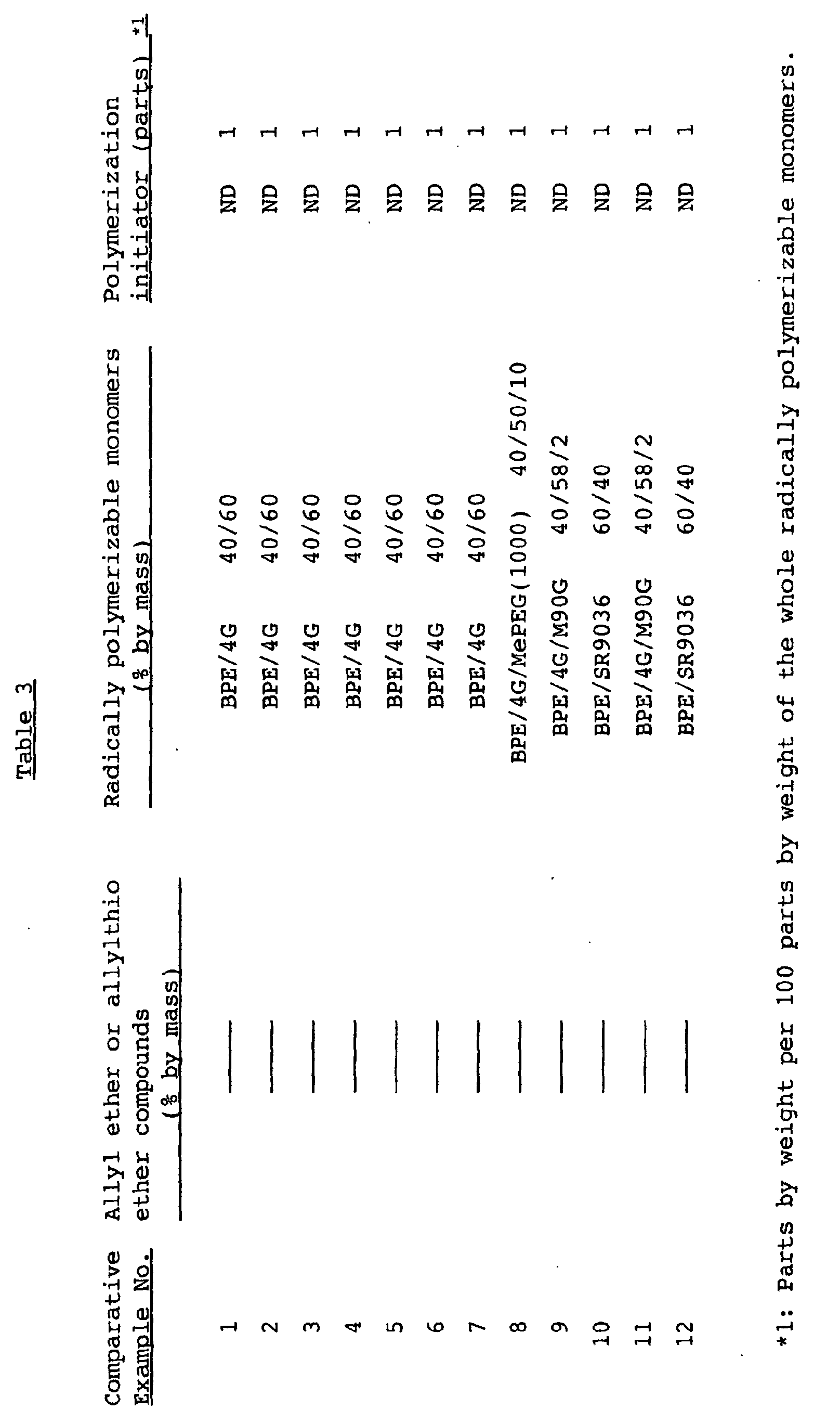
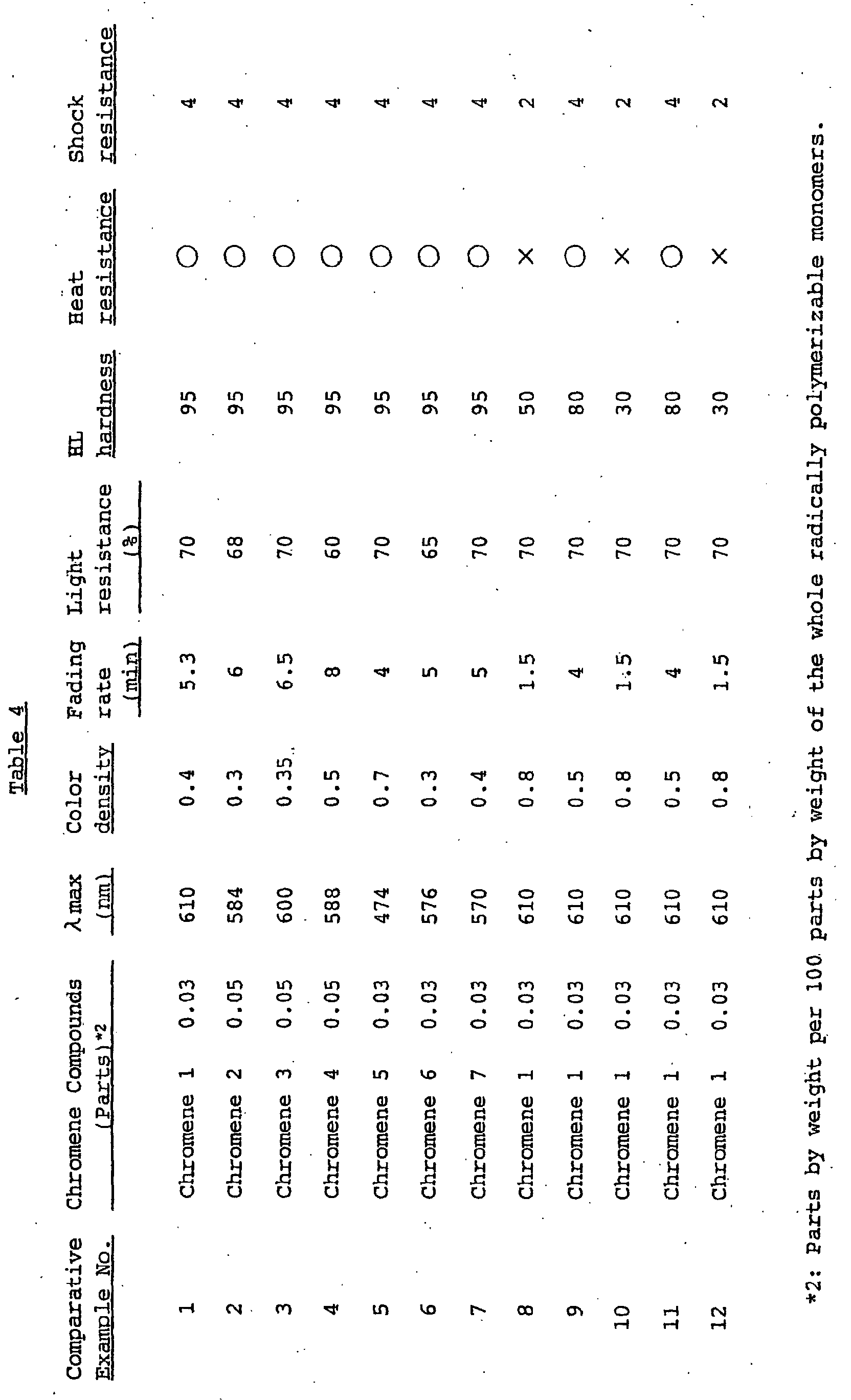
(Comparative Examples 1 to 12)
For the purpose of comparison, photochromic cured
products were obtained in the same manner as in Example 1
but using polymerizable monomer compositions and chromene
compounds shown in Tables 3 and 4, and were evaluated for
their properties. The results were as shown in Tables 3
and 4.
As described above, the base material obtained from a
polymerizable monomer without containing an allyl ether or
allylthio ether compound exhibits practicable heat
resistance but is not really practically usable because of
its small fading rate which is one of the photochromic
properties. These properties, i.e., photochromic
properties and base material properties are satisfied by a
combination of the allyl ether or allylthio ether compound
and the radically polymerizable monomers. Photochromic
cured products of Examples 1 to 27 of the present
invention exhibit well-balanced photochromic properties
such as color density, fading rate and hardness, as well
as shock resistance and heat resistance which are
properties of the base member, which are superior to those
of Comparative Examples 1 to 12.
(Industrial Applicability)
The photochromic cured product of the present
invention obtained by curing the curable composition
exhibits excellent photochromic properties such as a high
color density and a large fading rate, and exhibits
excellent base material properties such as a high
hardness, a high heat resistance and a high shock
resistance.
Therefore, the cured product obtained from the
curable composition of the present invention is very
useful as an optical material such as a photochromic lens
material.





























 (B) a radically polymerizable monomer other than (A) above; and(C) a photochromic compound.
 is a substituted or unsubstituted aromatic hydrocarbon group, or a substituted or unsubstituted unsaturated heterocyclic group, R28, R29 and R30 are alkyl groups, alkoxy groups, aralkoxy groups, amino groups, substituted amino groups, cyano groups, substituted or unsubstituted aryl groups, halogen atoms, aralkyl groups, hydroxy groups, substituted or unsubstituted alkenyl groups, substituted or unsubstituted heterocyclic groups having a nitrogen atom as a hetero atom and in which the nitrogen atom is bonded to a pyran ring or to a ring of a group represented by the above formula (10), or condensed heterocyclic groups in which the hetercyclic group is condensed with an aromatic hydrocarbon ring or an aromatic heterocyclic ring, u is an integer of 0 to 6, and R26 and R27 are, independently from each other, groups represented by the following formula (IX),
 wherein R31 is a substituted or unsubstituted aryl group, or a substituted unsubstituted heteroaryl group, R32 is a hydrogen atom, an alkyl group or a halogen atom, and w is an integer of 1 to 3, groups represented by the following formula (X),
 wherein R33 is a substituted or unsubstituted aryl group, or a substituted or unsubstituted heteroaryl group, and w' is an integer of 1 to 3, substituted or unsubstituted aryl groups, substituted or unsubstituted heteroaryl groups, or alkyl groups, or R26 and R27 together may constitute an aliphatic hydrocarbon ring or an aromatic hydrocarbon ring.

 or a group represented by the following formula (II),
 wherein R11 and R12 are, independently from each other, alkyl groups having 1 to 4 carbon atoms, chlorine atoms or bromine atoms, p and q are, independently from each other, integers of from 0 to 4, a ring represented by the following formula (III)
 is a benzene ring or a cyclohexane ring, and when the ring represented by the following formula (III)
 is a benzene ring, X is any one of the groups represented by the following formulas (IV)
 or is a group represented by the following formula (V)
 and when the ring represented by the following formula (III)
 is a cyclohexane ring, X is any one of the groups represented by the following formulas (VI)
 and m and n are not smaller than 1, respectively, m + n being from 2 to 6 in average,