EP1290003B1 - Inhibiting denaturation of nucleic acid duplexes - Google Patents
Inhibiting denaturation of nucleic acid duplexes Download PDFInfo
- Publication number
- EP1290003B1 EP1290003B1 EP01936687A EP01936687A EP1290003B1 EP 1290003 B1 EP1290003 B1 EP 1290003B1 EP 01936687 A EP01936687 A EP 01936687A EP 01936687 A EP01936687 A EP 01936687A EP 1290003 B1 EP1290003 B1 EP 1290003B1
- Authority
- EP
- European Patent Office
- Prior art keywords
- nucleic acid
- solution
- filter
- protein
- dna
- Prior art date
- Legal status (The legal status is an assumption and is not a legal conclusion. Google has not performed a legal analysis and makes no representation as to the accuracy of the status listed.)
- Expired - Lifetime
Links
- 102000039446 nucleic acids Human genes 0.000 title claims abstract description 103
- 108020004707 nucleic acids Proteins 0.000 title claims abstract description 103
- 150000007523 nucleic acids Chemical class 0.000 title claims abstract description 103
- 230000002401 inhibitory effect Effects 0.000 title claims abstract description 23
- 238000004925 denaturation Methods 0.000 title claims description 18
- 230000036425 denaturation Effects 0.000 title claims description 18
- 108090000623 proteins and genes Proteins 0.000 claims abstract description 87
- 102000004169 proteins and genes Human genes 0.000 claims abstract description 86
- 239000000203 mixture Substances 0.000 claims abstract description 42
- 238000003505 heat denaturation Methods 0.000 claims abstract description 34
- 150000001768 cations Chemical class 0.000 claims abstract description 30
- 108020004414 DNA Proteins 0.000 claims description 132
- 239000000243 solution Substances 0.000 claims description 117
- 238000000034 method Methods 0.000 claims description 95
- 102000053602 DNA Human genes 0.000 claims description 47
- 210000002966 serum Anatomy 0.000 claims description 31
- 239000000523 sample Substances 0.000 claims description 23
- 108091003079 Bovine Serum Albumin Proteins 0.000 claims description 21
- 239000012894 fetal calf serum Substances 0.000 claims description 21
- 230000008569 process Effects 0.000 claims description 17
- 238000010438 heat treatment Methods 0.000 claims description 16
- 230000000717 retained effect Effects 0.000 claims description 15
- TWRXJAOTZQYOKJ-UHFFFAOYSA-L Magnesium chloride Chemical compound [Mg+2].[Cl-].[Cl-] TWRXJAOTZQYOKJ-UHFFFAOYSA-L 0.000 claims description 10
- 238000002105 Southern blotting Methods 0.000 claims description 8
- 230000004048 modification Effects 0.000 claims description 8
- 238000012986 modification Methods 0.000 claims description 8
- 239000012465 retentate Substances 0.000 claims description 8
- 238000000636 Northern blotting Methods 0.000 claims description 6
- 239000013592 cell lysate Substances 0.000 claims description 6
- 239000007983 Tris buffer Substances 0.000 claims description 5
- 230000002934 lysing effect Effects 0.000 claims description 5
- 229910001629 magnesium chloride Inorganic materials 0.000 claims description 5
- LENZDBCJOHFCAS-UHFFFAOYSA-N tris Chemical group OCC(N)(CO)CO LENZDBCJOHFCAS-UHFFFAOYSA-N 0.000 claims description 5
- -1 Mg2+ ions Chemical class 0.000 claims description 4
- 239000000872 buffer Substances 0.000 claims description 4
- 244000309466 calf Species 0.000 claims description 4
- 230000001605 fetal effect Effects 0.000 claims description 4
- 230000003993 interaction Effects 0.000 claims description 4
- 238000005406 washing Methods 0.000 claims description 4
- 241000283690 Bos taurus Species 0.000 claims description 3
- 239000012472 biological sample Substances 0.000 claims description 3
- 238000001914 filtration Methods 0.000 claims description 3
- 239000000356 contaminant Substances 0.000 claims description 2
- 229910001414 potassium ion Inorganic materials 0.000 claims description 2
- 230000000979 retarding effect Effects 0.000 claims description 2
- 229910001415 sodium ion Inorganic materials 0.000 claims description 2
- 239000011824 nuclear material Substances 0.000 claims 2
- 230000006037 cell lysis Effects 0.000 claims 1
- 230000009089 cytolysis Effects 0.000 claims 1
- 238000010828 elution Methods 0.000 claims 1
- 238000002474 experimental method Methods 0.000 description 24
- 238000005185 salting out Methods 0.000 description 23
- 230000000694 effects Effects 0.000 description 17
- 239000003153 chemical reaction reagent Substances 0.000 description 16
- 210000004369 blood Anatomy 0.000 description 15
- 239000008280 blood Substances 0.000 description 15
- 238000003556 assay Methods 0.000 description 14
- 239000011534 wash buffer Substances 0.000 description 13
- 238000007400 DNA extraction Methods 0.000 description 10
- 238000009396 hybridization Methods 0.000 description 9
- 150000003839 salts Chemical class 0.000 description 9
- 108010086093 Mung Bean Nuclease Proteins 0.000 description 7
- 238000000605 extraction Methods 0.000 description 7
- 238000002360 preparation method Methods 0.000 description 7
- LFQSCWFLJHTTHZ-UHFFFAOYSA-N Ethanol Chemical compound CCO LFQSCWFLJHTTHZ-UHFFFAOYSA-N 0.000 description 6
- 102100021519 Hemoglobin subunit beta Human genes 0.000 description 6
- 108091005904 Hemoglobin subunit beta Proteins 0.000 description 6
- 108020004682 Single-Stranded DNA Proteins 0.000 description 6
- 230000009471 action Effects 0.000 description 6
- 238000012545 processing Methods 0.000 description 6
- 238000002415 sodium dodecyl sulfate polyacrylamide gel electrophoresis Methods 0.000 description 6
- 238000002944 PCR assay Methods 0.000 description 5
- 230000027455 binding Effects 0.000 description 5
- 210000004027 cell Anatomy 0.000 description 5
- 238000012546 transfer Methods 0.000 description 5
- 108010033040 Histones Proteins 0.000 description 4
- 238000004458 analytical method Methods 0.000 description 4
- 230000008859 change Effects 0.000 description 4
- 238000011143 downstream manufacturing Methods 0.000 description 4
- 230000005764 inhibitory process Effects 0.000 description 4
- 238000011160 research Methods 0.000 description 4
- 239000002699 waste material Substances 0.000 description 4
- 239000012888 bovine serum Substances 0.000 description 3
- 238000005194 fractionation Methods 0.000 description 3
- 238000011065 in-situ storage Methods 0.000 description 3
- 238000011534 incubation Methods 0.000 description 3
- 239000000463 material Substances 0.000 description 3
- 238000002844 melting Methods 0.000 description 3
- 230000008018 melting Effects 0.000 description 3
- 239000012528 membrane Substances 0.000 description 3
- 238000002493 microarray Methods 0.000 description 3
- 230000009871 nonspecific binding Effects 0.000 description 3
- 238000000746 purification Methods 0.000 description 3
- 238000000926 separation method Methods 0.000 description 3
- 230000009870 specific binding Effects 0.000 description 3
- 102000052510 DNA-Binding Proteins Human genes 0.000 description 2
- 241000206602 Eukaryota Species 0.000 description 2
- 102000006947 Histones Human genes 0.000 description 2
- ZYFVNVRFVHJEIU-UHFFFAOYSA-N PicoGreen Chemical compound CN(C)CCCN(CCCN(C)C)C1=CC(=CC2=[N+](C3=CC=CC=C3S2)C)C2=CC=CC=C2N1C1=CC=CC=C1 ZYFVNVRFVHJEIU-UHFFFAOYSA-N 0.000 description 2
- 239000008004 cell lysis buffer Substances 0.000 description 2
- 230000001413 cellular effect Effects 0.000 description 2
- 238000006243 chemical reaction Methods 0.000 description 2
- 230000006835 compression Effects 0.000 description 2
- 238000007906 compression Methods 0.000 description 2
- 238000011109 contamination Methods 0.000 description 2
- 230000001419 dependent effect Effects 0.000 description 2
- 230000027832 depurination Effects 0.000 description 2
- 150000002500 ions Chemical class 0.000 description 2
- 210000000265 leukocyte Anatomy 0.000 description 2
- 102000035118 modified proteins Human genes 0.000 description 2
- 108091005573 modified proteins Proteins 0.000 description 2
- 230000035772 mutation Effects 0.000 description 2
- 239000000047 product Substances 0.000 description 2
- 238000012552 review Methods 0.000 description 2
- 239000007790 solid phase Substances 0.000 description 2
- 241000894007 species Species 0.000 description 2
- 238000003860 storage Methods 0.000 description 2
- 239000000126 substance Substances 0.000 description 2
- IHPYMWDTONKSCO-UHFFFAOYSA-N 2,2'-piperazine-1,4-diylbisethanesulfonic acid Chemical compound OS(=O)(=O)CCN1CCN(CCS(O)(=O)=O)CC1 IHPYMWDTONKSCO-UHFFFAOYSA-N 0.000 description 1
- JKMHFZQWWAIEOD-UHFFFAOYSA-N 2-[4-(2-hydroxyethyl)piperazin-1-yl]ethanesulfonic acid Chemical compound OCC[NH+]1CCN(CCS([O-])(=O)=O)CC1 JKMHFZQWWAIEOD-UHFFFAOYSA-N 0.000 description 1
- YIMDLWDNDGKDTJ-QLKYHASDSA-N 3'-deamino-3'-(3-cyanomorpholin-4-yl)doxorubicin Chemical compound N1([C@H]2C[C@@H](O[C@@H](C)[C@H]2O)O[C@H]2C[C@@](O)(CC=3C(O)=C4C(=O)C=5C=CC=C(C=5C(=O)C4=C(O)C=32)OC)C(=O)CO)CCOCC1C#N YIMDLWDNDGKDTJ-QLKYHASDSA-N 0.000 description 1
- 241000894006 Bacteria Species 0.000 description 1
- 108020004638 Circular DNA Proteins 0.000 description 1
- 108020004635 Complementary DNA Proteins 0.000 description 1
- 108700020911 DNA-Binding Proteins Proteins 0.000 description 1
- 230000004568 DNA-binding Effects 0.000 description 1
- 101710096438 DNA-binding protein Proteins 0.000 description 1
- 101710141836 DNA-binding protein HU homolog Proteins 0.000 description 1
- 239000007995 HEPES buffer Substances 0.000 description 1
- 108050008922 Histone-like DNA-binding proteins Proteins 0.000 description 1
- 101710174628 Modulating protein YmoA Proteins 0.000 description 1
- 229910004879 Na2S2O5 Inorganic materials 0.000 description 1
- 239000000020 Nitrocellulose Substances 0.000 description 1
- 239000004677 Nylon Substances 0.000 description 1
- 239000007990 PIPES buffer Substances 0.000 description 1
- 235000014676 Phragmites communis Nutrition 0.000 description 1
- 239000004698 Polyethylene Substances 0.000 description 1
- 101000844752 Saccharolobus solfataricus (strain ATCC 35092 / DSM 1617 / JCM 11322 / P2) DNA-binding protein 7d Proteins 0.000 description 1
- XUIMIQQOPSSXEZ-UHFFFAOYSA-N Silicon Chemical compound [Si] XUIMIQQOPSSXEZ-UHFFFAOYSA-N 0.000 description 1
- 241000205091 Sulfolobus solfataricus Species 0.000 description 1
- 240000004922 Vigna radiata Species 0.000 description 1
- 235000010721 Vigna radiata var radiata Nutrition 0.000 description 1
- 235000011469 Vigna radiata var sublobata Nutrition 0.000 description 1
- 230000002378 acidificating effect Effects 0.000 description 1
- 230000002776 aggregation Effects 0.000 description 1
- 238000004220 aggregation Methods 0.000 description 1
- 150000001450 anions Chemical class 0.000 description 1
- 238000000137 annealing Methods 0.000 description 1
- 239000004599 antimicrobial Substances 0.000 description 1
- 241000617156 archaeon Species 0.000 description 1
- 230000001580 bacterial effect Effects 0.000 description 1
- 239000006177 biological buffer Substances 0.000 description 1
- 239000012620 biological material Substances 0.000 description 1
- 230000015572 biosynthetic process Effects 0.000 description 1
- 238000010804 cDNA synthesis Methods 0.000 description 1
- 230000015556 catabolic process Effects 0.000 description 1
- 238000004113 cell culture Methods 0.000 description 1
- 238000005119 centrifugation Methods 0.000 description 1
- 229910001914 chlorine tetroxide Inorganic materials 0.000 description 1
- 210000000349 chromosome Anatomy 0.000 description 1
- 238000003776 cleavage reaction Methods 0.000 description 1
- 238000005056 compaction Methods 0.000 description 1
- 239000002299 complementary DNA Substances 0.000 description 1
- 238000004132 cross linking Methods 0.000 description 1
- 235000013365 dairy product Nutrition 0.000 description 1
- 230000007423 decrease Effects 0.000 description 1
- 238000006731 degradation reaction Methods 0.000 description 1
- 238000013461 design Methods 0.000 description 1
- 238000001514 detection method Methods 0.000 description 1
- 230000029087 digestion Effects 0.000 description 1
- 230000003292 diminished effect Effects 0.000 description 1
- 230000001909 effect on DNA Effects 0.000 description 1
- 239000003792 electrolyte Substances 0.000 description 1
- 230000003028 elevating effect Effects 0.000 description 1
- 239000003480 eluent Substances 0.000 description 1
- IDGUHHHQCWSQLU-UHFFFAOYSA-N ethanol;hydrate Chemical compound O.CCO IDGUHHHQCWSQLU-UHFFFAOYSA-N 0.000 description 1
- 239000012467 final product Substances 0.000 description 1
- 239000011521 glass Substances 0.000 description 1
- 239000003365 glass fiber Substances 0.000 description 1
- 229910052739 hydrogen Inorganic materials 0.000 description 1
- 239000001257 hydrogen Substances 0.000 description 1
- 230000002209 hydrophobic effect Effects 0.000 description 1
- 230000002977 hyperthermial effect Effects 0.000 description 1
- 230000002779 inactivation Effects 0.000 description 1
- 230000003834 intracellular effect Effects 0.000 description 1
- 238000002955 isolation Methods 0.000 description 1
- 239000007791 liquid phase Substances 0.000 description 1
- 238000007403 mPCR Methods 0.000 description 1
- 230000007246 mechanism Effects 0.000 description 1
- 230000000813 microbial effect Effects 0.000 description 1
- 239000008267 milk Substances 0.000 description 1
- 235000013336 milk Nutrition 0.000 description 1
- 210000004080 milk Anatomy 0.000 description 1
- 238000002156 mixing Methods 0.000 description 1
- 230000007935 neutral effect Effects 0.000 description 1
- 229920001220 nitrocellulos Polymers 0.000 description 1
- 229920001778 nylon Polymers 0.000 description 1
- 230000036961 partial effect Effects 0.000 description 1
- VLTRZXGMWDSKGL-UHFFFAOYSA-M perchlorate Chemical compound [O-]Cl(=O)(=O)=O VLTRZXGMWDSKGL-UHFFFAOYSA-M 0.000 description 1
- 229920000573 polyethylene Polymers 0.000 description 1
- 239000011148 porous material Substances 0.000 description 1
- 238000001742 protein purification Methods 0.000 description 1
- 239000012460 protein solution Substances 0.000 description 1
- 238000011084 recovery Methods 0.000 description 1
- 230000009467 reduction Effects 0.000 description 1
- 230000002829 reductive effect Effects 0.000 description 1
- 238000004153 renaturation Methods 0.000 description 1
- 238000009877 rendering Methods 0.000 description 1
- 108091008146 restriction endonucleases Proteins 0.000 description 1
- 238000009938 salting Methods 0.000 description 1
- 230000007017 scission Effects 0.000 description 1
- 230000035945 sensitivity Effects 0.000 description 1
- 238000012163 sequencing technique Methods 0.000 description 1
- 229910052710 silicon Inorganic materials 0.000 description 1
- 239000010703 silicon Substances 0.000 description 1
- HRZFUMHJMZEROT-UHFFFAOYSA-L sodium disulfite Chemical compound [Na+].[Na+].[O-]S(=O)S([O-])(=O)=O HRZFUMHJMZEROT-UHFFFAOYSA-L 0.000 description 1
- 239000007787 solid Substances 0.000 description 1
- 238000002798 spectrophotometry method Methods 0.000 description 1
- 230000006641 stabilisation Effects 0.000 description 1
- 230000003019 stabilising effect Effects 0.000 description 1
- 239000000758 substrate Substances 0.000 description 1
- 238000010257 thawing Methods 0.000 description 1
- 210000001519 tissue Anatomy 0.000 description 1
- 238000005199 ultracentrifugation Methods 0.000 description 1
- XLYOFNOQVPJJNP-UHFFFAOYSA-N water Substances O XLYOFNOQVPJJNP-UHFFFAOYSA-N 0.000 description 1
- 238000001262 western blot Methods 0.000 description 1
Images

Classifications
-
- C—CHEMISTRY; METALLURGY
- C12—BIOCHEMISTRY; BEER; SPIRITS; WINE; VINEGAR; MICROBIOLOGY; ENZYMOLOGY; MUTATION OR GENETIC ENGINEERING
- C12Q—MEASURING OR TESTING PROCESSES INVOLVING ENZYMES, NUCLEIC ACIDS OR MICROORGANISMS; COMPOSITIONS OR TEST PAPERS THEREFOR; PROCESSES OF PREPARING SUCH COMPOSITIONS; CONDITION-RESPONSIVE CONTROL IN MICROBIOLOGICAL OR ENZYMOLOGICAL PROCESSES
- C12Q1/00—Measuring or testing processes involving enzymes, nucleic acids or microorganisms; Compositions therefor; Processes of preparing such compositions
- C12Q1/68—Measuring or testing processes involving enzymes, nucleic acids or microorganisms; Compositions therefor; Processes of preparing such compositions involving nucleic acids
- C12Q1/6806—Preparing nucleic acids for analysis, e.g. for polymerase chain reaction [PCR] assay
-
- C—CHEMISTRY; METALLURGY
- C12—BIOCHEMISTRY; BEER; SPIRITS; WINE; VINEGAR; MICROBIOLOGY; ENZYMOLOGY; MUTATION OR GENETIC ENGINEERING
- C12N—MICROORGANISMS OR ENZYMES; COMPOSITIONS THEREOF; PROPAGATING, PRESERVING, OR MAINTAINING MICROORGANISMS; MUTATION OR GENETIC ENGINEERING; CULTURE MEDIA
- C12N15/00—Mutation or genetic engineering; DNA or RNA concerning genetic engineering, vectors, e.g. plasmids, or their isolation, preparation or purification; Use of hosts therefor
- C12N15/09—Recombinant DNA-technology
- C12N15/10—Processes for the isolation, preparation or purification of DNA or RNA
-
- C—CHEMISTRY; METALLURGY
- C12—BIOCHEMISTRY; BEER; SPIRITS; WINE; VINEGAR; MICROBIOLOGY; ENZYMOLOGY; MUTATION OR GENETIC ENGINEERING
- C12Q—MEASURING OR TESTING PROCESSES INVOLVING ENZYMES, NUCLEIC ACIDS OR MICROORGANISMS; COMPOSITIONS OR TEST PAPERS THEREFOR; PROCESSES OF PREPARING SUCH COMPOSITIONS; CONDITION-RESPONSIVE CONTROL IN MICROBIOLOGICAL OR ENZYMOLOGICAL PROCESSES
- C12Q1/00—Measuring or testing processes involving enzymes, nucleic acids or microorganisms; Compositions therefor; Processes of preparing such compositions
- C12Q1/68—Measuring or testing processes involving enzymes, nucleic acids or microorganisms; Compositions therefor; Processes of preparing such compositions involving nucleic acids
- C12Q1/6813—Hybridisation assays
Definitions
- This invention is in the field of nucleic acid preparation and relates to a solution for treating a nucleic acid duplex, its preparation and its uses.
- nucleic acid duplex which comprises two single nucleic acid strands specifically or non-specifically bound together may be separated when subjected to harsh processing conditions such as heating to an elevated temperature.
- certain DNA purification techniques require or usefully may include a heating step. It is known that in such techniques it is difficult to purify double stranded DNA, for example, from blood or other biological samples because heating causes denaturing of the double stranded DNA to form single stranded DNA. This creates a problem because many downstream DNA processing techniques, such as Southern blotting, may only be carried out usefully using a certain quantity of double stranded DNA. Accordingly, it is often necessary with some existing DNA purification techniques to return to an individual patient in order to collect further samples so that a sufficient quantity of double stranded DNA is recovered in order to be able to perform downstream analysis of the DNA.
- thermodegradation A distinction is drawn in reference 4 between the problems of thermodegradation and thermodenaturation of covalently closed DNA in hyperthermic conditions. A reduction in thermodenaturation due to stabilising of the DNA primary structure in the presence of K + or Mg 2+ is reported.
- nucleic acid duplex stability The effects of cation counter ion on nucleic acid duplex stability are the subject of reference 6. It is suggested that nucleic acid stability may be accounted for by nearest-neighbour interactions. A passive effect of cations bound to a double helix on nucleic acid duplex stability is suggested. It is suggested that there are preferential base pairs or nearest-neighbour base pairs for the counter ion bonding. Various physiological salt concentrations were studied.
- DNA associated with a protein which closely resembles the histones of eukaryotes is more stable than free DNA against thermal denaturation by about 40oC.
- the protein is tightly bound to the DNA.
- Reference 8 reviews the factors that might contribute to the stability of the genomes of hypothermophiles. Extrinsic factors such as the intracellular ionic environment and so-called histone-like DNA binding proteins are discussed. It is mentioned that circular DNA molecules are intrinsically more resistant to heat denaturation than are linear DNA molecules. The role of DNA binding proteins in eukaryotes and prokaryotes in genome compaction and thermostabilisation is suggested.
- a specific histone from a family of archaeal histones that bind and compact DNA molecules into nucleosome-like structures is the subject of reference 9. It is stated that the DNA-binding and compacting activities of the protein are resistant to heat inactivation, for example at 95°C for 5 minutes. This feature is suggested as a mechanism to resist heat denaturation of DNA.
- Reference 10 relates to protecting DNA from thermal denaturation using the non-specific binding protein Sso7d of the hyperthermophilic archaeon Sulfolobus solfataricus.
- the authors report on promotion of renaturation of complementary DNA strands at temperatures above the melting point of the duplex by the non-specific DNA-binding protein.
- Reference 20 describes processes and kits for the isolation of gram positive bacterial nucleic acids from biological materials such as blood, wine and cell cultures by binding the nucleic acids to a solid phase, followed by the separation of the liquid and solid phases.
- the present invention aims to at least partially address the above problem.
- the invention provides a solution for treating a nucleic acid duplex which is capable of inhibiting denaturation such as heat denaturation of a nucleic acid duplex or, more specifically, a double-stranded DNA.
- the invention provides a solution for treating a nucleic acid duplex having a pH of from 3 to 11, comprising: a soluble protein or mixture of proteins; and 0.1mM to 10mM divalent cations, wherein the nature and concentration of the protein or mixture of proteins is selected so that the solution is capable of inhibiting heat denaturation of a nucleic acid duplex.
- nucleic acid duplex Once a nucleic acid duplex has been contacted with the solution of the invention, this enables the nucleic acid duplex to undergo more stringent processing conditions without extensive denaturation of the duplex.
- the invention provides use of the solution of the invention for inhibiting heat denaturation of a nucleic acid complex.
- the invention also provides a method for making a solution, comprising the steps of:
- the invention also provides a method for inhibiting heat denaturation of a nucleic acid duplex comprising the step of contacting the solution of the invention with a nucleic acid duplex.
- Methods of purifying a nucleic acid duplex and Northern or Southern blotting including the step of contacting the solution of the invention with a nucleic acid duplex are also provided.
- kit for isolating nucleic acid from a sample comprising cells containing nucleic acid comprising:
- the nucleic acid duplex may be a DNA-DNA, RNA-DNA or RNA-RNA duplex.
- the solution of the invention should have a pH of from about 3 to about 11.
- the pH may be controlled using any physiological or biological buffer, such as Tris, PIPES or HEPES.
- a solution having a pH in the range of about 3 to about 11 is in accordance with the invention.
- DNA undergoes depurination and structural degradation.
- double-stranded DNA tends to denature to form single-stranded DNA.
- a solution of the invention having a pH in the range of from 8 to 9 is optimal.
- a soluble protein or mixture of proteins is very important to the functioning of the solution. It is envisaged that the nature of the protein or mixture of proteins may take any form and any concentration may be used so long as the solution is capable of inhibiting heat denaturation of a nucleic acid duplex. This functional requirement may be readily tested by the skilled person by a comparison of resistance to heat denaturation of a nucleic acid duplex sample or, more specifically, a double-stranded DNA sample resuspended in (i) the solution of the invention and (ii) a standard wash solution, namely water or a low salt nucleic acid preserving solution such as AE or the like.
- a solution may be taken to be capable of inhibiting heat denaturation of a nucleic acid duplex if resistance to heat denaturation in the circumstances described above is observed to any extent.
- the source of the soluble protein or mixture of proteins may range from milk to a mammalian blood serum component or mixture of components or the like.
- Mammalian blood serum may be obtained by any process involving the separation of the cellular component of mammalian blood from a non-cellular fraction. Examples of techniques currently employed in this process include separation by filtration or by centrifugation.
- Components within a blood serum can be isolated using a variety of techniques.
- An affinity capture technique using columns modified with DNA can be used to capture any active components as they pass through the column. Details of such a technique can be found in reference 12.
- a fractionation technique involving fractionation of a protein solution by ultra-centrifugation using salt gradients can be used. Details of such a technique can be found in reference 13.
- the invention also provides a solution for treating a nucleic acid duplex having a pH of from 3 to 11, comprising a mammalian blood serum or mammalian blood serum component; and 0.1mM to 10mM divalent cations wherein the nature and concentration of the mammalian blood serum or mammalian blood serum component is selected so that the solution is capable of inhibiting heat denaturation of a nucleic acid duplex.
- a fetal calf whole blood serum or adult bovine whole blood serum comprising a mixture of proteins has been found to be particularly effective in inhibiting heat denaturation of a nucleic acid duplex when included in the solution of the invention.
- a preferred concentration for the fetal calf blood serum or adult bovine blood serum is about 0.1% to about 5.0%, more preferably about 1.2%.
- a candidate soluble protein or mixture of proteins for use in the present solution and to optimise its concentration.
- a candidate may be selected using standard protein purification procedures for example, fractionation or specific capture.
- the protein or mixture of protein prefferably treated by a modification process to improve the capability of the solution to inhibit heat denaturation of a nucleic acid duplex.
- the modification process must cause the protein to undergo a conformational change and possibly also must denature the protein.
- modification process itself or the extent of modification is not important so long as the resultant protein or mixture of proteins incorporated into the solution of the invention is modified so that the protein or mixture of proteins still is soluble and the capability of the solution to inhibit heat denaturation of a nucleic acid duplex is improved.
- Modification of the protein or mixture of proteins may be effected chemically or physically. When modified by heating, the skilled person would be able to optimise the processing conditions by varying the temperature and time of heating in a heat modification step.
- the protein or mixture of proteins will be "modified" after treating by a heating process as described above.
- fetal calf blood serum or adult bovine serum is used in the present solution it is modified by heating at a temperature of from 30°C to 76°C. Preferably, it is modified by heating at about 56°C for 30 minutes.
- results obtained using one batch of a particular protein serum are substantially the same as results obtained under otherwise identical conditions using a second batch of the same type of protein serum.
- the protein in the solution causes a stability change in the nucleic acid duplex. It is thought that the stability change may involve the protein loosely wrapping-around or even coiling around the duplex as a result of specific or non-specific binding to the protein. An analogy could be drawn with the action of a histone condensing DNA into chromosomes. Alternatively, it is thought that the stability change may involve the duplex loosely wrapping around or coiling around the protein.
- the effectiveness of the solution has been found to be dependent upon the presence of divalent cations at a concentration of from about 0.1mM to about 10mM. Within this range, the action of the solution to inhibit denaturation of has been found to be optimal. The presence of divalent cations at a concentration outside this range has been found to render the solution not capable of effectively inhibiting denaturation of a nucleic acid.
- a preferred concentration for the divalent cations is about 3mM.
- Preferred divalent cations are Mg 2+ ions.
- a solution of the invention additionally contains about 0.1mM to about 10mM monovalent cations, although the presence of monovalent cations in the solution is not essential. Within this range, the action of the present solution to inhibit denaturation of has been found to be optimal. The presence of monovalent cations at a concentration outside this range in the solution has been found to render the solution not capable of effectively inhibiting denaturation of a nucleic acid duplex.
- a preferred concentration for the monovalent cations is about 8mM.
- Preferred cations are K + or Na + ions.
- One preferred solution of the invention comprises 3mM MgCl 2 , 8mM KCl, 10mM Tris pH 7.7 and 1.0 to 1.2% fetal calf serum.
- the specific combination of the above components in the solution has unexpectedly been found effectively to inhibit heat denaturation of a nucleic acid duplex after the solution is contacted with the nucleic acid duplex.
- the extent of inhibition may range from a relatively small degree to substantially complete inhibition depending on the pH of the solution; the nature and concentration of the divalent cations; the nature and concentration of the soluble protein or mixture of proteins; and the potentially denaturing conditions to which the duplex is subjected, for example, the temperature and duration of heating.
- the extent of inhibition is optimised so that in excess of 50%, preferably 70-80%, of a nucleic acid duplex sample is maintained in the duplex form when the sample is subjected to a temperature of 90°C for up to 30 minutes, more preferably 100°C for up to 1 hour.
- a solution of the invention may be prepared by any convenient method for mixing the components in solution. However, it is preferred that a solution containing the optionally modified, soluble protein or mixture of proteins is added to the solution last. This is to ensure that the protein is not precipitated upon addition.
- step (i) When the present solution contains monovalent cations, it is preferable that these are added to the solution containing the divalent cations in step (i).
- a preferred method for making a solution of the invention comprises the steps of:
- the solution may be used in any method where it is desirable to inhibit heat denaturation of a nucleic acid duplex, specifically to inhibit heat denaturation of double-stranded DNA.
- One example of such a method is a method for extracting or purifying double-stranded DNA from, for example, a biological sample comprising cells, such as blood.
- step (b) comprises lysing the retentate whilst it is entrapped within the filter.
- the filter composition and dimensions are selected so that the nucleic acid is retained by the filter in step (c) substantially in the absence of ionic interaction. More preferably, the filter composition and dimensions are selected so that the nucleic acid is retained by the filter by a physical retarding of the movement of a nucleic acid down the filter. Preferably, the filter composition and dimensions are selected so that the nucleic acid is retained by the filter in step (c) in the form of a web.
- the nucleic acid is heated to an elevated temperature of from about 4°C to 100°C for up to 1 hour, more preferably from 60°C to 100°C, even more preferably about 90°C for approximately 15 minutes whilst retained by the filter.
- Extraction of double-stranded DNA by the above method enables a required sample of double-stranded DNA to be obtained in a significantly shorter period of time as compared with previous extraction methods.
- a small amount of protein which is undetectable by spectrophotometry may be present in the eluent. This small amount does not lead to any significant problems in downstream processing of the double stranded DNA product.
- DNA can be transferred onto solid membranes by capillary action as described in reference 16.
- DNA migrates from a gel onto a membrane, such as nylon or nitrocellulose, by simple capillary action or by an alternative method such as electro-transfer [ref. 17] or applying a vacuum [ref. 18].
- RNA can be transferred onto a membrane in a process known as Northern blotting [19]. This transfer would employ the same transfer procedures as for Southern blotting methods.
- immobilised nucleic acid fragments can be detected by hybridising a suitably labelled probe to the immobilized nucleic acid to form a nucleic acid duplex.
- annealing between the probe and immobilized nucleic acid can be specific or non-specific.
- Variables in the conditions of hybridisation include temperature and salt concentration. Hybridisation at low temperatures results in non-specific binding. Elevating the temperature results in more specific binding. Low salt levels will encourage specific binding whereas high salt concentrations encourage non-specific interactions.
- nucleic acid duplex Once formed, it is desirable to protect the nucleic acid duplex against denaturation during downstream processing and particularly during any washing steps. It has been found that, by contacting the solution of the invention with the nucleic acid duplex, this can be realised.
- a nucleic acid duplex can be protected against denaturation by contacting it with the present solution.
- the specificity of binding of a probe to a nucleic acid can be controlled by altering salt and temperature conditions.
- Other hybridisation systems include in situ hybridisation, detection of mutations by observing the specificity of probe binding, and analysis of microarrays when looking at the RNA content of a tissue.
- Microarrays typically employ silicon platforms or glass slides.
- probes are added to specially preserved and fixed material and the resulting analysis is performed within the material of interest.
- the nucleic acid duplex may be subjected to more stringent downstream conditions without affecting the structure of the nucleic acid duplex.
- the nucleic acid duplex may be subjected to more stringent wash conditions, such as washing at an elevated temperature, without affecting the structure of the nucleic acid duplex than would otherwise have been possible.
- the efficacy of the present solution may be controlled so as to inhibit denaturation at a particular temperature of a nucleic acid duplex having a specific strength of binding whilst allowing other nucleic acid duplexes which are bound to a lesser strength to be denatured.
- the solution of the invention is contacted with a nucleic acid duplex prior to subjecting the duplex to stringent processing conditions, for example a heating step, it is envisaged that the nucleic acid duplex could be heated to some degree followed by contacting the present solution with the duplex and then heating more vigorously.
- the solution of the invention also may be used in hybridisation assays such as in situ hybridisation and microarrays, PCR assays, mutation analysis, and in the methods known under the trade names FTA / FTA eluteTM, GenspinTM and GenprepTM .
- the solution of the invention contains substances that may be susceptible to microbial contamination optimal conditions for storage should be employed. It is likely that the final product will contain a low concentration of an antimicrobial agent such as Na 2 S 2 O 5 . However, this does not appear to inhibit extraction of DNA with the present solution. Other factors that will influence storage conditions are the longevity of fetal calf serum (FCS) at 4°C, whether the efficacy of the solution reduces upon repeated freeze thawing and how quickly the solution becomes contaminated with microbes.
- FCS fetal calf serum
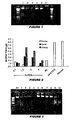
- Figure 1 shows a comparison of the resistance of double-stranded DNA to heat denaturation when suspended in the present solution as compared with resuspension in AE.
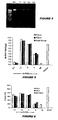
- Figure 2 shows a comparison of the yield of double-stranded DNA obtained from a sample of blood using the DNA purification process described in reference 15, when using different sources of a soluble protein or mixture of proteins.
- Figure 3 shows a comparison of the yield of double-stranded DNA extracted from blood when using different extraction methods.
- AE wash buffer was used in lanes 1 and 2.
- a solution according to the present invention was used in place of the AE wash buffer.
- the solution according to the present invention contained 0.1% FCS.
- the solution according to the present invention contained 1.2% FCS.
- the solution according to the present invention contained 2% FCS.
- the solution according to the present invention contained 5% FCS. In all cases, the FCS was heat modified FCS.
- Lane M1 is a manual salting out preparation included for comparison.
- Figure 4 shows a comparison of double-stranded DNA yield from blood when using different extraction methods.
- AE wash buffer was used in lanes 11 and 12.
- a solution according to the present invention was used in place of the AE wash buffer.
- the solution according to the present invention contained 1.2% non-heat modified FCS.
- Lane M1 is a manual salting preparation included for comparison.
- Figure 5 shows the double-stranded DNA yield from a 1ml blood sample when using the present solution containing fetalcalf blood serum or an adult bovine serum from different batches. Results are shown for varying concentrations of heat modified protein.
- Figure 6 shows the ratio of double-stranded to single-stranded DNA obtained from a 1ml blood sample when using a standard AE wash buffer as compared with a solution according to the present invention. Results are shown for varying concentrations of heat modified protein.
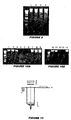
- Figures 7a and 7b show the results of 7.5kb ß-globin PCR and 1.3kb ß-globin PCR respectively when performed on DNA obtained from different extraction methods.
- Lanes 1-5 of Figure 7(a) show assays performed on DNA extracted by a manual salting out method.
- Lanes 6-10 of Figure 7(a) show assays performed on DNA extracted by the protocol of Experiment 2.
- the assay was performed with 0.1ml DNA template.
- the assay was performed on 1ml DNA template.
- lanes 3 and 8 the assay was performed on 2ml DNA template.
- lanes 4 and 9 the assay was performed on 3ml DNA template.
- lanes 5 and 10 the assay was performed on 5ml DNA template.
- Lanes 1-8 of Figure 7(b) show PCR assays performed on DNA extracted by the protocol of Experiment 2.
- Lanes 9-12 of Figure 7(b) show PCR assays performed on DNA extracted by a manual salting out method.
- the assay was performed with 0.01ml DNA template.
- the assay was performed with 0.1ml DNA template.
- the assay was performed with 1ml DNA template.
- lanes 7, 8 and 12 the assay was performed with 5ml DNA template.
- Figures 8a and 8b show the results of Hinf-1 restriction digests on DNA extracted by differing methods.
- Lanes 1-3 in Figure 8(a) show Hinf-1 restriction digests on DNA extracted using the 10ml protocol of Experiment 2. The NFB reagent according to the present invention was used.
- Lanes 5 and 6 of Figure 8(b) show Hinf-1 restriction digests on DNA extracted using a manual salting out method.
- Figure 9 shows the results of EcoR1 restriction digests on DNA extracted by differing methods. Lanes 1-3 of Figure 9 show EcoR1 restriction digest on DNA extracted using the 10ml protocol of experiment 2. Lane 4 shows an EcoR1 restriction digest on DNA using a manual salting out method.
- Figure 10 shows the results of Mungbean nuclease digests on DNA extracted by differing methods.
- Lanes 1-3 of Figure 10(a) show Mungbean nuclease digests on DNA extracted using the NFB reagent according to the present invention in the 10ml protocol of Experiment 2.
- Lanes 4-6 show Mungbean nuclease digests on denatured DNA.
- Lanes 7-9 show undigested samples of DNA extracted using the 10ml protocol of experiment 2.
- Lanes 10 and 11 show Mungbean nuclease digests on DNA extracted using a manual salting out method.
- Lanes 12 and 13 show Mungbean nuclease digests for denatured DNA.
- Lane 14 shows an undigested DNA sample extracted using a manual salting out method.
- Figure 11 is an illustration of a 10ml disposable column.
- A is a compression ring;
- B is a GF/L filter;
- C is a frit;
- D is an upper cap;
- E is an area of interference fit (reduce column diameter by 0.2mm);
- F is the base of column;
- G is a spur for polarising columns on a vacuum manifold; and
- H is a nozzle cap.
- NFB reagent consists of 3mM MgCl 2 , 8mM KCl, 10mM Tris pH 7.7 and 1.2% heat modified, fetal calf serum (FCS).
- FCS heat modified, fetal calf serum
- the efficacy of NFB to maintain double stranded DNA (dsDNA) is demonstrated using the 1ml DNA extraction process described in the above protocol. The efficacy is diminished if the concentration of MgCl 2 exceeds 10mM or falls below 0.1mM.
- the action of NFB reagent is dependant on pH, with an optimal pH range observed between 8 and 9, although pH values as low as 3 and as high as 11 yield moderate amounts of dsDNA.
- NFB reagent to prevent heat denaturation of DNA is entirely dependant on the concentration of serum used, with low ( ⁇ 0.1%) and high (>2%) concentrations giving lower yields of dsDNA (Fig 3 and 5).
- FCS concentration of protein
- M1 is a manual salting out preparation included on each gel for comparison.
- FCS A and FCS B 0.5ml blood was extracted and assayed by Picogreen for the total yield of dsDNA.
- FCS A and FCS B Different batches of FCS were used (FCS A and FCS B) along with adult bovine serum over a range of concentrations in the present solution.
- AE wash buffer and manual salting out preparations were included for comparison.
- NFB reagent as a wash buffer during the 1ml DNA extraction process gives yields of both total (ss+ds) and dsDNA equivalent to that observed in manual salting out methods (Fig 5 and Table 1). Furthermore, the amount of dsDNA recovered from blood is several fold higher using NFB reagent compared to AE wash buffer (Fig 5). 70-80% of the total DNA recovered from blood using NFB reagent is double stranded compared to 20% with AE wash buffer (Fig 6). It should be noted that in many instances only 80-90% of the DNA recovered using a manual salting out method is dsDNA.
- the 10ml DNA extraction protocol of Experiment 2 was repeated using the 10ml disposable column shown in Figure 12.
- the 10ml disposable column has a unique design that allows the efficient capture of blood leukocytes.
- Leukocytes are entrapped in a glass fiber filter (GF/L) that is supported by a 35 ⁇ pore size, 1.5mm thick polyethylene frit.
- a compression ring that is located above the GF/L allows easy assembly and prevents dislocation of the filter frit arrangement during transport. This is aided by a 0.2mm reduced diameter located at the bottom of the column allowing an interference fit between the frit/filter and column.
- An upper cap attached to the column can be used to prevent or control preferential sample flow through one particular column when processing multiple samples through multiple columns.
- a snap off nozzle plug can be used during the incubation stages to prevent sample contamination of the heating block.
- a spur situated near the nozzle allows the columns to be polarized on a vacuum manifold thus preventing contact through the lids of adjacent columns.
- the new disposable column produces consistently higher yields of dsDNA (Table 3), equivalent to that observed in a manual salting out method. This suggests that the disposable column is assembled more precisely than the older syringe barrel column.
- Figures 7a & 7b show ⁇ -globin single locus gene PCR assays for (a) long (7.5kb) and (b) short (1.3kb) range products was performed.
- the 7.5kb ⁇ -globin assay was performed on Experiment 2 protocol (lanes 6-10) or manual salting out (lanes 1-5) extracted DNA with 0.1 ⁇ l (lanes 1 and 6), 1 ⁇ l (lanes 2 and 7), 2 ⁇ l (lanes 3 and 8), 3 ⁇ l (lanes 4 and 9), and 5 ⁇ l (lanes 5 and 10) DNA template.
- the 1.3 kb assay was performed using 0.01 ⁇ l (lanes 1, 2 and 9), 0.1 ⁇ l (lanes 3, 4 and 10), 1 ⁇ l (lanes 5, 6 and 11) and 5 ⁇ l (lanes 7, 8 and 12) template for Experiment 2 protocol (lanes 1-8) and manual salting out (lanes 9-12) extracted DNA.
- Figure 8 shows Hinf-1 restriction digests on DNA extracted using one of (a) the method according to the 10ml Experiment 2 protocol (lanes 1-3) using NFB reagent or (b) a manual salting out method (lanes 5-6). The digests are almost identical.
- Figure 9 shows EcoR1 restriction digests on DNA extracted using one of (a) the method according to the 10ml Experiment 2 protocol (lanes 1-3) using NFB reagent or (b) a manual salting out method (lane 4).
- DNA extracted from blood using the NFB reagent is resistant to digestion using Mungbean nuclease, which digests specifically single stranded DNA (Fig 10 (a) and (b).
- Figure 10 shows Mungbean nuclease digests on DNA extracted using one of (a) the method according to the 10ml Experiment 2 protocol using NFB reagent (lanes 1-3) or (b) a manual salting out method (lanes 10-11).
- denatured DNA samples were included as controls (a) lanes 4-6 and (b) 12-13, respectively.
- Undigested samples were also included for comparison against mungbean digested DNA in both Experiment 2 protocol (lanes 7-9) and salting out (lane 14) DNA extraction methods.
- DNA extracted using the present solution has also been subjected to eight point multiplex PCR and profiles have been generated that show the DNA can be employed in such studies.
Landscapes
- Chemical & Material Sciences (AREA)
- Life Sciences & Earth Sciences (AREA)
- Organic Chemistry (AREA)
- Health & Medical Sciences (AREA)
- Engineering & Computer Science (AREA)
- Zoology (AREA)
- Wood Science & Technology (AREA)
- Genetics & Genomics (AREA)
- Bioinformatics & Cheminformatics (AREA)
- Proteomics, Peptides & Aminoacids (AREA)
- Biotechnology (AREA)
- General Engineering & Computer Science (AREA)
- Microbiology (AREA)
- Molecular Biology (AREA)
- Biophysics (AREA)
- Biochemistry (AREA)
- General Health & Medical Sciences (AREA)
- Physics & Mathematics (AREA)
- Analytical Chemistry (AREA)
- Immunology (AREA)
- Biomedical Technology (AREA)
- Chemical Kinetics & Catalysis (AREA)
- Crystallography & Structural Chemistry (AREA)
- Plant Pathology (AREA)
- Measuring Or Testing Involving Enzymes Or Micro-Organisms (AREA)
- Peptides Or Proteins (AREA)
- Pharmaceuticals Containing Other Organic And Inorganic Compounds (AREA)
- External Artificial Organs (AREA)
- Medicines Containing Material From Animals Or Micro-Organisms (AREA)
- Saccharide Compounds (AREA)
Abstract
Description
- This invention is in the field of nucleic acid preparation and relates to a solution for treating a nucleic acid duplex, its preparation and its uses.
- It is well known in this art that a nucleic acid duplex which comprises two single nucleic acid strands specifically or non-specifically bound together may be separated when subjected to harsh processing conditions such as heating to an elevated temperature.
- Specifically, certain DNA purification techniques require or usefully may include a heating step. It is known that in such techniques it is difficult to purify double stranded DNA, for example, from blood or other biological samples because heating causes denaturing of the double stranded DNA to form single stranded DNA. This creates a problem because many downstream DNA processing techniques, such as Southern blotting, may only be carried out usefully using a certain quantity of double stranded DNA. Accordingly, it is often necessary with some existing DNA purification techniques to return to an individual patient in order to collect further samples so that a sufficient quantity of double stranded DNA is recovered in order to be able to perform downstream analysis of the DNA.
- Various forces affecting the conformation of DNA and, in particular, the stability of the double-helix structure are known. These are discussed in general terms in
reference 1. Electrostatic forces attributable to ionisation, base-stacking forces, hydrogen bonding and hydrophobic forces are mentioned. - The effect of salts of 1:1 electrolytes on the thermal denaturation temperature of DNA secondary structure at neutral pH is discussed in
reference 2. A lowering of the thermal denaturation temperature is observed. This effect is attributed mainly to the presence of the anions: CCl3COO-, CF3COO-, CNS- and ClO4. - The formation of heat labile interstrand crosslinks formed when cyanomorpholinoadriamycin is reacted with DNA is the subject of
reference 3. Interstrand crosslinking was detected as a resistance of DNA to separate under normal DNA denaturing conditions. The interstrand crosslinks had a midpoint melting temperature of 70°C. Clearly, these crosslinks do not inhibit heat denaturation of DNA. - A distinction is drawn in
reference 4 between the problems of thermodegradation and thermodenaturation of covalently closed DNA in hyperthermic conditions. A reduction in thermodenaturation due to stabilising of the DNA primary structure in the presence of K+ or Mg2+ is reported. - A study of the effect of physiological concentrations of KCl (50-500mM) and MgCl2 (1-25mM) on the chemical stability of double-stranded and single-stranded DNA at temperatures typical for hyperthermophiles is reported in
reference 5. It is proposed that these two salts act to protect both double-stranded and single-stranded DNA against heat induced cleavage by inhibiting depurination. This effect is rationalised for double-stranded DNA by the proposal that these salts stabilise the double helix. - The effects of cation counter ion on nucleic acid duplex stability are the subject of
reference 6. It is suggested that nucleic acid stability may be accounted for by nearest-neighbour interactions. A passive effect of cations bound to a double helix on nucleic acid duplex stability is suggested. It is suggested that there are preferential base pairs or nearest-neighbour base pairs for the counter ion bonding. Various physiological salt concentrations were studied. - A physiological stabilisation of DNA by a prokaryotic histone-like protein is reported in
reference 7. It is stated that DNA associated with a protein which closely resembles the histones of eukaryotes is more stable than free DNA against thermal denaturation by about 40oC. The protein is tightly bound to the DNA. -
Reference 8 reviews the factors that might contribute to the stability of the genomes of hypothermophiles. Extrinsic factors such as the intracellular ionic environment and so-called histone-like DNA binding proteins are discussed. It is mentioned that circular DNA molecules are intrinsically more resistant to heat denaturation than are linear DNA molecules. The role of DNA binding proteins in eukaryotes and prokaryotes in genome compaction and thermostabilisation is suggested. - A specific histone from a family of archaeal histones that bind and compact DNA molecules into nucleosome-like structures is the subject of
reference 9. It is stated that the DNA-binding and compacting activities of the protein are resistant to heat inactivation, for example at 95°C for 5 minutes. This feature is suggested as a mechanism to resist heat denaturation of DNA. -
Reference 10 relates to protecting DNA from thermal denaturation using the non-specific binding protein Sso7d of the hyperthermophilic archaeon Sulfolobus solfataricus. The authors report on promotion of renaturation of complementary DNA strands at temperatures above the melting point of the duplex by the non-specific DNA-binding protein. - In
reference 11 the effect of ethanol concentration on the thermal stability and structure of aggregated DNA in an ethanol-water solution is discussed. It is observed that with increasing ethanol concentration the melting point of DNA decreases. It is stated that at a critical ethanol concentration aggregation of the DNA molecules sets in and that aggregated DNA molecules are thermally more stable than dissolved ones. The effect of the nature of the counter ion on the stability of aggregated DNA is considered to some extent. - Reference 20 describes processes and kits for the isolation of gram positive bacterial nucleic acids from biological materials such as blood, wine and cell cultures by binding the nucleic acids to a solid phase, followed by the separation of the liquid and solid phases.
- In view of the above, there still remains a problem to provide a simple, cost-effective method of inhibiting denaturation such as heat denaturation of a nucleic acid duplex or, more specifically, a double-stranded DNA.
- Accordingly, the present invention aims to at least partially address the above problem.
- The invention provides a solution for treating a nucleic acid duplex which is capable of inhibiting denaturation such as heat denaturation of a nucleic acid duplex or, more specifically, a double-stranded DNA.
- The invention provides a solution for treating a nucleic acid duplex having a pH of from 3 to 11, comprising: a soluble protein or mixture of proteins; and 0.1mM to 10mM divalent cations, wherein the nature and concentration of the protein or mixture of proteins is selected so that the solution is capable of inhibiting heat denaturation of a nucleic acid duplex.
- Once a nucleic acid duplex has been contacted with the solution of the invention, this enables the nucleic acid duplex to undergo more stringent processing conditions without extensive denaturation of the duplex.
- In a further aspect, the invention provides use of the solution of the invention for inhibiting heat denaturation of a nucleic acid complex.
- The invention also provides a method for making a solution, comprising the steps of:
- (i) preparing a solution containing 0.1mM to 10mM divalent cations and optionally 0.1mM to 10mM monovalent cations;
- (ii) introducing a protein or mixture of proteins to the solution prepared in step (i);
- (iii) optionally adjusting the pH; wherein the pH is in the
-
- The invention also provides a method for inhibiting heat denaturation of a nucleic acid duplex comprising the step of contacting the solution of the invention with a nucleic acid duplex.
- Methods of purifying a nucleic acid duplex and Northern or Southern blotting including the step of contacting the solution of the invention with a nucleic acid duplex are also provided.
- There is further provided a kit for isolating nucleic acid from a sample comprising cells containing nucleic acid comprising:
- (a) a filter supported by a support;
- (b) a solution according to the invention.
-
- Specifically, according to the invention, the nucleic acid duplex may be a DNA-DNA, RNA-DNA or RNA-RNA duplex.
- The effectiveness of the solution of the invention is dependent on pH. Therefore, the solution should have a pH of from about 3 to about 11. The pH may be controlled using any physiological or biological buffer, such as Tris, PIPES or HEPES.
- A solution having a pH in the range of about 3 to about 11 is in accordance with the invention. Under more acidic conditions DNA undergoes depurination and structural degradation. At a more alkaline pH double-stranded DNA tends to denature to form single-stranded DNA. Particularly in the context of inhibiting denaturation of double-stranded DNA, it has been found that a solution of the invention having a pH in the range of from 8 to 9 is optimal.
- The presence of a soluble protein or mixture of proteins is very important to the functioning of the solution. It is envisaged that the nature of the protein or mixture of proteins may take any form and any concentration may be used so long as the solution is capable of inhibiting heat denaturation of a nucleic acid duplex. This functional requirement may be readily tested by the skilled person by a comparison of resistance to heat denaturation of a nucleic acid duplex sample or, more specifically, a double-stranded DNA sample resuspended in (i) the solution of the invention and (ii) a standard wash solution, namely water or a low salt nucleic acid preserving solution such as AE or the like. For the purposes of the invention, a solution may be taken to be capable of inhibiting heat denaturation of a nucleic acid duplex if resistance to heat denaturation in the circumstances described above is observed to any extent.
- It is envisaged that the source of the soluble protein or mixture of proteins may range from milk to a mammalian blood serum component or mixture of components or the like. Mammalian blood serum may be obtained by any process involving the separation of the cellular component of mammalian blood from a non-cellular fraction. Examples of techniques currently employed in this process include separation by filtration or by centrifugation.
- Components within a blood serum can be isolated using a variety of techniques. An affinity capture technique using columns modified with DNA can be used to capture any active components as they pass through the column. Details of such a technique can be found in
reference 12. Also, a fractionation technique involving fractionation of a protein solution by ultra-centrifugation using salt gradients can be used. Details of such a technique can be found inreference 13. These techniques allow the identification of an active fraction of a blood serum. The active fraction can then be analysed further to determine the exact nature of the protein(s) involved. - Another methodology for isolating the components of a blood serum would involve:
- (i) performing SDS-PAGE on the blood serum;
- (ii) preparing a solution of the invention containing the blood serum;
- (iii) using the prepared solution in the DNA extraction process of the invention as described below;
- (iv) performing SDS-PAGE on the eluate of the solution of the invention;
- (v) re-using the eluate in a further DNA extraction process of the invention;
- (vi) performing SDS-PAGE on the new eluate of the solution of the invention;
- (vii) repeating steps (v) and (vi) as required; and
- (viii) comparing the SDS-PAGE results. Components of interest in the blood serum can be identified by depletion studies of the SDS-PAGE results. Depletion indicates binding of a component to DNA held on the filter. Repeating steps (v) and (vi) eventually leads to the loss of a particular band or bands observed by SDS-PAGE. Subsequent protein transfer by Western blotting [14] followed by standard N-terminal sequencing techniques would allow the protein(s) of interest to be identified.
-
- The invention also provides a solution for treating a nucleic acid duplex having a pH of from 3 to 11, comprising a mammalian blood serum or mammalian blood serum component; and 0.1mM to 10mM divalent cations wherein the nature and concentration of the mammalian blood serum or mammalian blood serum component is selected so that the solution is capable of inhibiting heat denaturation of a nucleic acid duplex.
- A fetal calf whole blood serum or adult bovine whole blood serum comprising a mixture of proteins has been found to be particularly effective in inhibiting heat denaturation of a nucleic acid duplex when included in the solution of the invention. A preferred concentration for the fetal calf blood serum or adult bovine blood serum is about 0.1% to about 5.0%, more preferably about 1.2%.
- It is envisaged that the skilled person will be able to select by routine methods of experimentation a candidate soluble protein or mixture of proteins for use in the present solution and to optimise its concentration. For example, a candidate may be selected using standard protein purification procedures for example, fractionation or specific capture.
- It has been found that it is preferable for the protein or mixture of protein to be treated by a modification process to improve the capability of the solution to inhibit heat denaturation of a nucleic acid duplex. Without wishing to be bound by theory, it is thought that the modification process must cause the protein to undergo a conformational change and possibly also must denature the protein.
- The modification process itself or the extent of modification is not important so long as the resultant protein or mixture of proteins incorporated into the solution of the invention is modified so that the protein or mixture of proteins still is soluble and the capability of the solution to inhibit heat denaturation of a nucleic acid duplex is improved. Modification of the protein or mixture of proteins may be effected chemically or physically. When modified by heating, the skilled person would be able to optimise the processing conditions by varying the temperature and time of heating in a heat modification step.
- For the purposes of the present invention, the protein or mixture of proteins will be "modified" after treating by a heating process as described above.
- It is preferred that when fetal calf blood serum or adult bovine serum is used in the present solution it is modified by heating at a temperature of from 30°C to 76°C. Preferably, it is modified by heating at about 56°C for 30 minutes.
- It should be noted here that the effectiveness of the solution of the invention is not batch sensitive. In other words, results obtained using one batch of a particular protein serum are substantially the same as results obtained under otherwise identical conditions using a second batch of the same type of protein serum.
- Without wishing to be bound by theory, it is thought that the protein in the solution causes a stability change in the nucleic acid duplex. It is thought that the stability change may involve the protein loosely wrapping-around or even coiling around the duplex as a result of specific or non-specific binding to the protein. An analogy could be drawn with the action of a histone condensing DNA into chromosomes. Alternatively, it is thought that the stability change may involve the duplex loosely wrapping around or coiling around the protein.
- The effectiveness of the solution has been found to be dependent upon the presence of divalent cations at a concentration of from about 0.1mM to about 10mM. Within this range, the action of the solution to inhibit denaturation of has been found to be optimal. The presence of divalent cations at a concentration outside this range has been found to render the solution not capable of effectively inhibiting denaturation of a nucleic acid.
- A preferred concentration for the divalent cations is about 3mM. Preferred divalent cations are Mg2+ ions.
- It is preferred that a solution of the invention additionally contains about 0.1mM to about 10mM monovalent cations, although the presence of monovalent cations in the solution is not essential. Within this range, the action of the present solution to inhibit denaturation of has been found to be optimal. The presence of monovalent cations at a concentration outside this range in the solution has been found to render the solution not capable of effectively inhibiting denaturation of a nucleic acid duplex.
- A preferred concentration for the monovalent cations is about 8mM. Preferred cations are K+ or Na+ ions.
- One preferred solution of the invention comprises 3mM MgCl2, 8mM KCl, 10mM Tris pH 7.7 and 1.0 to 1.2% fetal calf serum.
- The specific combination of the above components in the solution has unexpectedly been found effectively to inhibit heat denaturation of a nucleic acid duplex after the solution is contacted with the nucleic acid duplex. The extent of inhibition may range from a relatively small degree to substantially complete inhibition depending on the pH of the solution; the nature and concentration of the divalent cations; the nature and concentration of the soluble protein or mixture of proteins; and the potentially denaturing conditions to which the duplex is subjected, for example, the temperature and duration of heating.
- It is preferable that the extent of inhibition is optimised so that in excess of 50%, preferably 70-80%, of a nucleic acid duplex sample is maintained in the duplex form when the sample is subjected to a temperature of 90°C for up to 30 minutes, more preferably 100°C for up to 1 hour.
- A solution of the invention may be prepared by any convenient method for mixing the components in solution. However, it is preferred that a solution containing the optionally modified, soluble protein or mixture of proteins is added to the solution last. This is to ensure that the protein is not precipitated upon addition.
- When the present solution contains monovalent cations, it is preferable that these are added to the solution containing the divalent cations in step (i).
- Accordingly, a preferred method for making a solution of the invention comprises the steps of:
- (i) preparing a solution containing 0.1mM to 10mM divalent cations and optionally, 0.1mM to 10mM monovalent cations;
- (ii) introducing an optionally modified, protein or mixture of proteins to the solution prepared in step (i);
- (iii) optionally adjusting the pH; wherein the pH is in the
-
- The solution may be used in any method where it is desirable to inhibit heat denaturation of a nucleic acid duplex, specifically to inhibit heat denaturation of double-stranded DNA.
- One example of such a method is a method for extracting or purifying double-stranded DNA from, for example, a biological sample comprising cells, such as blood.
- It has been found that yields of double-stranded DNA equivalent to yields obtained by a salting-out method are obtainable by using the present solution in the process set out in reference 15. The process involves the steps of:
- (a) applying a sample comprising cells containing nucleic acid to a filter, whereby the cells are retained as a retentate and contaminants are removed;
- (b) lysing the retentate from step (a) whilst the retentate is retained by the filter to form a cell lysate containing the nucleic acid;
- (c) filtering the cell lysate with the filter to retain the nucleic acid and remove remaining cell lysate;
- (d) washing the nucleic acid retained by the filter with the present solution; and
- (e) heating the nucleic acid to an elevated temperature whilst retained by the filter; and
- (f) eluting the nucleic acid, wherein the filter composition and dimensions are selected so that the filter is capable of retaining the cells and the nucleic acid.
-
- Preferably, step (b) comprises lysing the retentate whilst it is entrapped within the filter.
- Preferably, the filter composition and dimensions are selected so that the nucleic acid is retained by the filter in step (c) substantially in the absence of ionic interaction. More preferably, the filter composition and dimensions are selected so that the nucleic acid is retained by the filter by a physical retarding of the movement of a nucleic acid down the filter. Preferably, the filter composition and dimensions are selected so that the nucleic acid is retained by the filter in step (c) in the form of a web.
- Preferably, the nucleic acid is heated to an elevated temperature of from about 4°C to 100°C for up to 1 hour, more preferably from 60°C to 100°C, even more preferably about 90°C for approximately 15 minutes whilst retained by the filter.
- Approximately 80 to 100% of DNA recovered using the above process is double-stranded.
- Extraction of double-stranded DNA by the above method enables a required sample of double-stranded DNA to be obtained in a significantly shorter period of time as compared with previous extraction methods.
- A small amount of protein which is undetectable by spectrophotometry may be present in the eluent. This small amount does not lead to any significant problems in downstream processing of the double stranded DNA product.
- Further methods where protection of a nucleic acid duplex from heat denaturation is desirable include Northern and Southern blotting methods.
- DNA can be transferred onto solid membranes by capillary action as described in reference 16. During this Southern blotting process DNA migrates from a gel onto a membrane, such as nylon or nitrocellulose, by simple capillary action or by an alternative method such as electro-transfer [ref. 17] or applying a vacuum [ref. 18]. Similarly, RNA can be transferred onto a membrane in a process known as Northern blotting [19]. This transfer would employ the same transfer procedures as for Southern blotting methods.
- In both of these systems, immobilised nucleic acid fragments can be detected by hybridising a suitably labelled probe to the immobilized nucleic acid to form a nucleic acid duplex. By altering the conditions of the hybridisation reaction, annealing between the probe and immobilized nucleic acid can be specific or non-specific. Variables in the conditions of hybridisation include temperature and salt concentration. Hybridisation at low temperatures results in non-specific binding. Elevating the temperature results in more specific binding. Low salt levels will encourage specific binding whereas high salt concentrations encourage non-specific interactions.
- Once formed, it is desirable to protect the nucleic acid duplex against denaturation during downstream processing and particularly during any washing steps. It has been found that, by contacting the solution of the invention with the nucleic acid duplex, this can be realised.
- More generally, in other hybridisation systems, a nucleic acid duplex can be protected against denaturation by contacting it with the present solution. As for Southern and Northern blotting methods, the specificity of binding of a probe to a nucleic acid can be controlled by altering salt and temperature conditions. Other hybridisation systems include in situ hybridisation, detection of mutations by observing the specificity of probe binding, and analysis of microarrays when looking at the RNA content of a tissue.
- These other systems do not always require the transfer of material onto a substrate. Microarrays typically employ silicon platforms or glass slides. In the context of in situ hybridisation, probes are added to specially preserved and fixed material and the resulting analysis is performed within the material of interest.
- Once the nucleic acid duplex has been contacted with the present solution in any one of the above methods, the nucleic acid duplex may be subjected to more stringent downstream conditions without affecting the structure of the nucleic acid duplex. In particular the nucleic acid duplex may be subjected to more stringent wash conditions, such as washing at an elevated temperature, without affecting the structure of the nucleic acid duplex than would otherwise have been possible.
- In one aspect of the present invention, it is envisaged that the efficacy of the present solution may be controlled so as to inhibit denaturation at a particular temperature of a nucleic acid duplex having a specific strength of binding whilst allowing other nucleic acid duplexes which are bound to a lesser strength to be denatured. In other words, it is possible to achieve controlled inhibition of the denaturation of, for example, specifically rather than non-specifically bound homologues or complimentary strands of DNA.
- Although it is preferred that the solution of the invention is contacted with a nucleic acid duplex prior to subjecting the duplex to stringent processing conditions, for example a heating step, it is envisaged that the nucleic acid duplex could be heated to some degree followed by contacting the present solution with the duplex and then heating more vigorously.
- It is envisaged that the solution of the invention also may be used in hybridisation assays such as in situ hybridisation and microarrays, PCR assays, mutation analysis, and in the methods known under the trade names FTA/FTA elute™, Genspin™ and Genprep™.
- Since the solution of the invention contains substances that may be susceptible to microbial contamination optimal conditions for storage should be employed. It is likely that the final product will contain a low concentration of an antimicrobial agent such as Na2S2O5. However, this does not appear to inhibit extraction of DNA with the present solution. Other factors that will influence storage conditions are the longevity of fetal calf serum (FCS) at 4°C, whether the efficacy of the solution reduces upon repeated freeze thawing and how quickly the solution becomes contaminated with microbes.
- Figure 1 shows a comparison of the resistance of double-stranded DNA to heat denaturation when suspended in the present solution as compared with resuspension in AE.
- Figure 2 shows a comparison of the yield of double-stranded DNA obtained from a sample of blood using the DNA purification process described in reference 15, when using different sources of a soluble protein or mixture of proteins.
- Figure 3 shows a comparison of the yield of double-stranded DNA extracted from blood when using different extraction methods. In
lanes lanes lanes lanes lanes - Figure 4 shows a comparison of double-stranded DNA yield from blood when using different extraction methods. In
lanes lanes - Figure 5 shows the double-stranded DNA yield from a 1ml blood sample when using the present solution containing fetalcalf blood serum or an adult bovine serum from different batches. Results are shown for varying concentrations of heat modified protein.
- Figure 6 shows the ratio of double-stranded to single-stranded DNA obtained from a 1ml blood sample when using a standard AE wash buffer as compared with a solution according to the present invention. Results are shown for varying concentrations of heat modified protein.
- Figures 7a and 7b show the results of 7.5kb ß-globin PCR and 1.3kb ß-globin PCR respectively when performed on DNA obtained from different extraction methods. Lanes 1-5 of Figure 7(a) show assays performed on DNA extracted by a manual salting out method. Lanes 6-10 of Figure 7(a) show assays performed on DNA extracted by the protocol of
Experiment 2. Inlanes lanes lanes lanes lanes Experiment 2. Lanes 9-12 of Figure 7(b) show PCR assays performed on DNA extracted by a manual salting out method. Inlanes lanes lanes lanes - Figures 8a and 8b show the results of Hinf-1 restriction digests on DNA extracted by differing methods. Lanes 1-3 in Figure 8(a) show Hinf-1 restriction digests on DNA extracted using the 10ml protocol of
Experiment 2. The NFB reagent according to the present invention was used.Lanes - Figure 9 shows the results of EcoR1 restriction digests on DNA extracted by differing methods. Lanes 1-3 of Figure 9 show EcoR1 restriction digest on DNA extracted using the 10ml protocol of
experiment 2.Lane 4 shows an EcoR1 restriction digest on DNA using a manual salting out method. - Figure 10 shows the results of Mungbean nuclease digests on DNA extracted by differing methods. Lanes 1-3 of Figure 10(a) show Mungbean nuclease digests on DNA extracted using the NFB reagent according to the present invention in the 10ml protocol of
Experiment 2. Lanes 4-6 show Mungbean nuclease digests on denatured DNA. Lanes 7-9 show undigested samples of DNA extracted using the 10ml protocol ofexperiment 2.Lanes Lanes Lane 14 shows an undigested DNA sample extracted using a manual salting out method. - Figure 11 is an illustration of a 10ml disposable column. A is a compression ring; B is a GF/L filter; C is a frit; D is an upper cap; E is an area of interference fit (reduce column diameter by 0.2mm); F is the base of column; G is a spur for polarising columns on a vacuum manifold; and H is a nozzle cap.
- This experiment shows that DNA resuspended in the present solution (NFB reagent) is resistant to heat denaturation. Results are shown in Figure 1. DNA was resuspended in either AE (lanes 1-3) or NFB reagent (lanes 4-6). Samples were heated at 100°C for 1min (
lanes 1 and 4), 2.5 min (lanes 2 and 5) or 5 min (lanes 3 and 6). -
1ml 10ml Apply blood to reaction vessel 0.2-1ml 1-10ml Equal volume of RBCL 0.2-1ml 1-10ml Elute to waste under vacuum Apply red cell lysis buffer 1ml 20ml Elute to waste under vacuum Apply white cell lysis buffer 1ml 20ml Elute to waste under vacuum Apply wash buffer either (i) AE 1ml 20ml (ii) NFB 1ml 10ml Elute to waste under vacuum Apply AE incubation buffer 0.1ml 0.25ml Incubate at 90°C, (i) AE 10min 30min (ii) NFB 1min 10-20min Elute sample in AE. 0.2ml 3x0.5ml - NFB reagent consists of 3mM MgCl2, 8mM KCl, 10mM Tris pH 7.7 and 1.2% heat modified, fetal calf serum (FCS). The efficacy of NFB to maintain double stranded DNA (dsDNA) is demonstrated using the 1ml DNA extraction process described in the above protocol. The efficacy is diminished if the concentration of MgCl2 exceeds 10mM or falls below 0.1mM. The action of NFB reagent is dependant on pH, with an optimal pH range observed between 8 and 9, although pH values as low as 3 and as high as 11 yield moderate amounts of dsDNA.
- Replacing FCS with serum from other species (at a range of concentrations) affords partial protection from the effects of heat denaturation during the incubation stages of the DNA extraction process. This can be seen from the results in Fig 2.
- The ability of NFB reagent to prevent heat denaturation of DNA is entirely dependant on the concentration of serum used, with low (<0.1%) and high (>2%) concentrations giving lower yields of dsDNA (Fig 3 and 5).
- It is preferred for extracting high yields of dsDNA using NFB reagent to modify the protein serum at 56°C for 30 minutes. The effects of this can be seen from Fig 4.
- The effects of the present solution containing serum from various species on the yield of dsDNA recovered from 0.5ml blood using the 1ml DNA extraction protocol of
Experiment 2 was investigated. The yields of dsDNA recovered using the same protocol in each case were compared to the yield using the present NFB reagent containing 1.2% FCS. Results from the same protocol using AE as a wash buffer and manual salting out preparations were also included for comparison. Double stranded DNA was assayed using Picogreen. Results are shown in Fig 2. - This experiment shows that the concentration of protein (FCS) in the present solution is critical to the recovery of large amounts of DNA using the 1ml extraction protocol of
Experiment 2. Results are shown in Figures 3, 4 and 5. - AE wash buffer (lanes 1-2) was compared to the present solution containing 0.1% (lanes 3-4), 1.2% (lanes 5-6), 2% (lanes 7-8) and 5% (lanes 9-10) heat-modified FCS. Results are shown in Figure 3.
- AE wash buffer (lanes 11-12) was compared to the present solution with 1.2% unmodified FCS (lanes 13-14). Results are shown in Figure 4.
- In both Figures 3 and 4, M1 is a manual salting out preparation included on each gel for comparison.
- 0.5ml blood was extracted and assayed by Picogreen for the total yield of dsDNA. Different batches of FCS were used (FCS A and FCS B) along with adult bovine serum over a range of concentrations in the present solution. AE wash buffer and manual salting out preparations were included for comparison.


- Using NFB reagent as a wash buffer during the 1ml DNA extraction process gives yields of both total (ss+ds) and dsDNA equivalent to that observed in manual salting out methods (Fig 5 and Table 1). Furthermore, the amount of dsDNA recovered from blood is several fold higher using NFB reagent compared to AE wash buffer (Fig 5). 70-80% of the total DNA recovered from blood using NFB reagent is double stranded compared to 20% with AE wash buffer (Fig 6). It should be noted that in many instances only 80-90% of the DNA recovered using a manual salting out method is dsDNA.
- Interestingly when using recycled columns consisting of 50ml syringe barrels for a 10ml DNA extraction pocess, yields of dsDNA are slightly less than that observed in a manual salting out method (Table 2). This suggests that reusing columns have some effect on DNA reovery, other data suggests that column assembly has a critical effect. Heating of the columns can cause distortions and the likely reason for lower yields with reused columns is that the heat has affected the frit/column interface.
- The 10ml DNA extraction protocol of
Experiment 2 was repeated using the 10ml disposable column shown in Figure 12. The 10ml disposable column has a unique design that allows the efficient capture of blood leukocytes. Leukocytes are entrapped in a glass fiber filter (GF/L) that is supported by a 35µ pore size, 1.5mm thick polyethylene frit. A compression ring that is located above the GF/L allows easy assembly and prevents dislocation of the filter frit arrangement during transport. This is aided by a 0.2mm reduced diameter located at the bottom of the column allowing an interference fit between the frit/filter and column. An upper cap attached to the column can be used to prevent or control preferential sample flow through one particular column when processing multiple samples through multiple columns. A snap off nozzle plug can be used during the incubation stages to prevent sample contamination of the heating block. Finally, a spur situated near the nozzle allows the columns to be polarized on a vacuum manifold thus preventing contact through the lids of adjacent columns. The new disposable column produces consistently higher yields of dsDNA (Table 3), equivalent to that observed in a manual salting out method. This suggests that the disposable column is assembled more precisely than the older syringe barrel column.
- Downstream processing of DNA extracted using the present buffer shows that both long (7.5kb β-globin) and short (1.3kb β-globin) range single locus PCR assays perform equally well and in some instances better compared to DNA extracted using a manual salting out method (Fig 7 a & b).
- Figures 7a & 7b show β-globin single locus gene PCR assays for (a) long (7.5kb) and (b) short (1.3kb) range products was performed. The 7.5kb β-globin assay was performed on
Experiment 2 protocol (lanes 6-10) or manual salting out (lanes 1-5) extracted DNA with 0.1µl (lanes 1 and 6), 1µl (lanes 2 and 7), 2µl (lanes 3 and 8), 3µl (lanes 4 and 9), and 5µl (lanes 5 and 10) DNA template. The 1.3 kb assay was performed using 0.01µl (lanes lanes lanes lanes Experiment 2 protocol (lanes 1-8) and manual salting out (lanes 9-12) extracted DNA. - Extracting DNA from a 10ml sample volume yields dsDNA of sufficient concentration to perform a range of restriction enzyme digests (Fig 8 & 9).
- Figure 8 shows Hinf-1 restriction digests on DNA extracted using one of (a) the method according to the
10ml Experiment 2 protocol (lanes 1-3) using NFB reagent or (b) a manual salting out method (lanes 5-6). The digests are almost identical. - Figure 9 shows EcoR1 restriction digests on DNA extracted using one of (a) the method according to the
10ml Experiment 2 protocol (lanes 1-3) using NFB reagent or (b) a manual salting out method (lane 4). - DNA extracted from blood using the NFB reagent is resistant to digestion using Mungbean nuclease, which digests specifically single stranded DNA (Fig 10 (a) and (b).
- Figure 10 shows Mungbean nuclease digests on DNA extracted using one of (a) the method according to the
10ml Experiment 2 protocol using NFB reagent (lanes 1-3) or (b) a manual salting out method (lanes 10-11). For bothExperiment 2 protocol and salting out methods, denatured DNA samples were included as controls (a) lanes 4-6 and (b) 12-13, respectively. Undigested samples were also included for comparison against mungbean digested DNA in bothExperiment 2 protocol (lanes 7-9) and salting out (lane 14) DNA extraction methods. - DNA extracted using the present solution has also been subjected to eight point multiplex PCR and profiles have been generated that show the DNA can be employed in such studies.
- It will be understood that the invention has been described by way of example only and modifications may be made whilst remaining within the scope of the invention.
-
- 1. Josse & Eigner (1966) Annu Rev Biochem 35:789-834.
- 2. JACS (1962) 84:1329-1338.
- 3. Nucleic Acids Research (1993) 21:1857-1862.
- 4. Nucleic Acids Research (1994) 22:1681-1686.
- 5. Extremophiles (1998) 2:115-122.
- 6. Nucleic Acid Research (1999) 27:2957-2965.
- 7. Science (1978) 202:219-221.
- 8. Advances in Protein Chemistry (1996) 48:437-467.
- 9. FEMS Microbiology Reviews (1996) 18:203-213.
- 10. J. Mol. Biol. (1997) 267:841-848.
- 11. FEBS Letters (1995) 375:174-178.
- 12. Biochem. Biophys Acta. (1975) 378: 424-438.
- 13. J. Dairy Sci. (1972) 55:696-711.
- 14. Proc. Natl. Acad. Sci. USA. (1979) 79:4350-4354.
- 15. International patent application WO00/21973 (PCT/GB99/03357).
- 16. Southern (1975) J. Mol. Biol. 98:503-517.
- 17. Reed & Mann (1985) Nucleic Acids Research 13:7207-7221.
- 18. Medveczky et al (1987) Biotechniques 5:242ff.
- 19. White & Bancroft (1982) J. Biol. Chem. 257: 8569ff.
- 20. International Patent Application WO 95/04140
-
Claims (29)
- A method for isolating nucleic acid which comprises:wherein the filter composition and dimensions are selected so that the filter is capable of retaining the cells and the nucleic acid.(a) applying a sample comprising cells containing nucleic acid to a filter, whereby the cells are retained as a retentate and contaminants are removed;(b) lysing the retentate from step (a) whilst the retentate is retained by the filter to form a cell lysate containing the nucleic acid;(c) filtering the cell lysate with the filter to retain the nucleic acid and remove remaining cell lysate;(d) washing the nucleic acid retained by the filter with a solution having a pH of from 3 to 11 and comprising (1) a soluble protein or mixture of proteins and (2) 0.1mM to 10mM divalent cations, wherein the nature and concentration of the protein or mixture of proteins is selected so that the solution is capable of inhibiting beat denaturation of a nucleic acid duplex;(e) heating the nucleic acid to an elevated temperature whilst retained by the filter; and(f) eluting the nucleic acid,
- The method of claim 1, wherein step (b) comprises lysing the retentate whilst it is entrapped within the filter.
- The method of claim 1 or 2, wherein the filter composition and dimensions are selected so that the nucleic acid is retained by the filter in step (c) substantially in the absence of ionic interaction.
- The method of any one of claims 1 to 3, wherein the filter composition and dimensions are selected so that the nucleic acid is retained by the filter in step (c) by a physical retarding of the movement of the nucleic acid through the filter.
- The method of any one of claims 1 to 4, wherein the filter composition and dimensions are selected so that the nucleic acid is retained by the filter in step (c) in the form of a web.
- The method of any one of claims 1 to 5, wherein the protein or mixture of proteins in the solution used in step (d) is treated by a modification process to improve the capability of the solution to inhibit heat denaturation of a nucleic acid duplex.
- The method of any one of claims 1 to 6, wherein the solution used in step (d) further comprises 0.1mM to 10mM monovalent cations.
- The method of any one of claims 1 to 7, wherein the protein or mixture of proteins in the solution used in step (d) comprises a mammalian blood serum component.
- The method of claim 8, wherein the serum comprises fetal calf blood serum or adult bovine blood serum.
- The method of claim 8 or claim 9, wherein the protein or mixture of proteins used in step (d) comprises whole serum.
- The method of claim 9 or claim 10, wherein the protein or mixture of proteins used in step (d) comprises about 0.1 % to 5.0% serum.
- The method of any one of claims 1 to 11, wherein the solution used in step (d) comprises about 3mM divalent cations.
- The method of claim 12, wherein the divalent cations comprise Mg2+ ions.
- The method of any one of claims 1 to 12, wherein the solution used in step (d) comprises about 8mM monovalent cations.
- The method of claim 14, wherein the monovalent cations comprise K+ or Na+ ions.
- The method of any one of claims 1 to 15, wherein the solution used in step (d) has a pH of from 8 to 9.
- The method of any one of claims 1 to 16, wherein the solution used in step (d) further comprises a physiological buffer.
- The method of claim 17, wherein the physiological buffer is Tris.
- The method of any one of claims 1 to 18, wherein the solution used in step (d) comprises 3mM MgCl2, 8mM KCl, 10mM Tris pH 7.7 and 1.2% fetal calf serum.
- The method of any one of claims 1 to 19, wherein the nucleic acid comprises DNA.
- A kit for isolating nucleic acid from a sample comprising cells containing nucleic acid, comprising: (a) a filter supported by a support; (b) a solution having a pH of from 3 to 11 and comprising (1) a soluble protein or mixture of proteins and (2) 0.1mM to 10mM divalent cations, wherein the nature and concentration of the protein or mixture of proteins is selected so that the solution is capable of inhibiting heat denaturation of a nucleic acid duplex.
- The kit of claim 21, wherein (b) the solution is as defined in any one of claims 6 to 19.
- The kit of claim 21 or claim 22, further comprising one or more solutions selected from a red cell lysis solution, a solution for rupturing intact whole cells to leave condensed nuclear material, a lysis solution for lysing nuclear material and an elution solution.
- Use of a kit as defined in any one of claims 21 to 23, in a method for isolating nucleic acid from a sample comprising cells containing nucleic acid.
- Use of a solution having a pH of from 3 to 11 and comprising (a) a soluble protein or mixture of proteins and (b) 0.1mM to 10mM divalent cations, wherein the nature and concentration of the protein or mixture of proteins is selected so that the solution is capable of inhibiting heat denaturation of a nucleic acid duplex, for inhibiting heat denaturation of a nucleic acid duplex and extracting double-stranded DNA from a biological sample comprising cells.
- Use of claim 25, wherein the solution is as defined in any one of claims 6 to 19.
- Use of claim 25 or claim 26 in a method of Northern or Southern blotting.
- A Northern or Southern blotting method comprising (i) a step of inhibiting heat denaturation of a nucleic acid duplex, by contacting it with a solution comprising (a) a soluble protein or mixture of proteins and (b) 0.1mM to 10mM divalent cations, wherein the nature and concentration of the protein or mixture of proteins is selected so that the solution is capable of inhibiting heat denaturation of a nucleic acid duplex, prior to (ii) a step of heating the nucleic acid duplex to an elevated temperature.
- The blotting method of claim 28, wherein the solution used in (i) is as defined in any one of claims 6 to 19.
Applications Claiming Priority (3)
| Application Number | Priority Date | Filing Date | Title |
|---|---|---|---|
| GB0014324A GB2363381B (en) | 2000-06-12 | 2000-06-12 | Solution |
| GB0014324 | 2000-06-12 | ||
| PCT/GB2001/002564 WO2001096351A1 (en) | 2000-06-12 | 2001-06-11 | Inhibiting denaturation of nucleic acid duplexes |
Publications (2)
| Publication Number | Publication Date |
|---|---|
| EP1290003A1 EP1290003A1 (en) | 2003-03-12 |
| EP1290003B1 true EP1290003B1 (en) | 2005-12-07 |
Family
ID=9893476
Family Applications (1)
| Application Number | Title | Priority Date | Filing Date |
|---|---|---|---|
| EP01936687A Expired - Lifetime EP1290003B1 (en) | 2000-06-12 | 2001-06-11 | Inhibiting denaturation of nucleic acid duplexes |
Country Status (7)
| Country | Link |
|---|---|
| US (2) | US7244561B2 (en) |
| EP (1) | EP1290003B1 (en) |
| AT (1) | ATE312113T1 (en) |
| AU (1) | AU2001262554A1 (en) |
| DE (1) | DE60115637T2 (en) |
| GB (1) | GB2363381B (en) |
| WO (1) | WO2001096351A1 (en) |
Families Citing this family (3)
| Publication number | Priority date | Publication date | Assignee | Title |
|---|---|---|---|---|
| GB0129662D0 (en) | 2001-12-11 | 2002-01-30 | Whatman Internat Ltd | Stabilisation of double-stranded nucleic acids |
| US7794932B2 (en) | 2004-04-16 | 2010-09-14 | Piotr Chomczynski | Reagents and methods for isolation of purified RNA |
| EP3115039B1 (en) * | 2015-07-09 | 2021-12-15 | beniag GmbH | Method for producing a fusion mixture for transferring a charged molecule into and/or through a lipid membrane |
Family Cites Families (12)
| Publication number | Priority date | Publication date | Assignee | Title |
|---|---|---|---|---|
| US4668618A (en) * | 1981-09-14 | 1987-05-26 | Thornthwaite Jerry T | Nuclear isolation medium and procedure for separating cell nuclei |
| EP0310913A3 (en) * | 1987-09-30 | 1990-04-25 | Biotechnica Diagnostics Inc | Dna isolation procedure |
| US5756126A (en) * | 1991-05-29 | 1998-05-26 | Flinders Technologies Pty. Ltd. | Dry solid medium for storage and analysis of genetic material |
| CA2031659A1 (en) * | 1990-01-26 | 1991-07-27 | John B. Findlay | Water-insoluble reagent, nucleic acid probe, test kit and diagnostic and purification methods |
| US5866429A (en) * | 1991-04-03 | 1999-02-02 | Bloch; Will | Precision and accuracy of anion-exchange separation of nucleic acids |
| WO1992018649A1 (en) * | 1991-04-12 | 1992-10-29 | Microprobe Corporation | Compositions and methods for improved extraction and hybridization of nucleic acid |
| WO1995004140A1 (en) | 1993-07-28 | 1995-02-09 | Akzo Nobel N.V. | Process for isolating nucleic acid from gram positive microorganisms |
| DE69719409T2 (en) * | 1996-06-18 | 2004-01-15 | Rikagaku Kenkyusho | Procedure for purifying DNA |
| US5922536A (en) * | 1996-10-18 | 1999-07-13 | Nivens; David E. | Method for nucleic acid isolation using supercritical fluids |
| US6844158B1 (en) * | 1997-12-22 | 2005-01-18 | Hitachi Chemical Co., Ltd. | Direct RT-PCR on oligonucleotide-immobilized PCR microplates |
| US20020010323A1 (en) | 1998-10-09 | 2002-01-24 | Andrew Martin Mitchell | Isolation method and apparatus |
| WO2002014560A1 (en) * | 2000-08-16 | 2002-02-21 | Whatman, Inc. | Transfusion medicine leukodepletion filter devices as a source of genetic material for genotyping studies |
-
2000
- 2000-06-12 GB GB0014324A patent/GB2363381B/en not_active Expired - Fee Related
-
2001
- 2001-06-11 WO PCT/GB2001/002564 patent/WO2001096351A1/en not_active Ceased
- 2001-06-11 AU AU2001262554A patent/AU2001262554A1/en not_active Abandoned
- 2001-06-11 AT AT01936687T patent/ATE312113T1/en not_active IP Right Cessation
- 2001-06-11 EP EP01936687A patent/EP1290003B1/en not_active Expired - Lifetime
- 2001-06-11 DE DE60115637T patent/DE60115637T2/en not_active Expired - Fee Related
- 2001-06-11 US US10/276,886 patent/US7244561B2/en not_active Expired - Fee Related
-
2007
- 2007-06-05 US US11/810,593 patent/US7501500B2/en not_active Expired - Fee Related
Also Published As
| Publication number | Publication date |
|---|---|
| DE60115637T2 (en) | 2006-08-24 |
| WO2001096351A1 (en) | 2001-12-20 |
| GB0014324D0 (en) | 2000-08-02 |
| EP1290003A1 (en) | 2003-03-12 |
| US20030157520A1 (en) | 2003-08-21 |
| GB2363381B (en) | 2004-11-24 |
| US7501500B2 (en) | 2009-03-10 |
| AU2001262554A1 (en) | 2001-12-24 |
| ATE312113T1 (en) | 2005-12-15 |
| GB2363381A (en) | 2001-12-19 |
| US20070281316A1 (en) | 2007-12-06 |
| US7244561B2 (en) | 2007-07-17 |
| DE60115637D1 (en) | 2006-01-12 |
Similar Documents
| Publication | Publication Date | Title |
|---|---|---|
| US6992182B1 (en) | Method for isolating DNA from biological materials | |
| AU2005323451B2 (en) | Kits and processes for removing contaminants from nucleic acids in environmental and biological samples | |
| EP1641944B1 (en) | Room temperature elution of nucleic acids | |
| US9890413B2 (en) | Isolation of nucleic acid from stool samples and other biological materials which are rich in inhibitors | |
| EP3347491B1 (en) | Purification of nucleic acid from environmental or biological samples | |
| AU1183795A (en) | Method for extracting nucleic acids from a wide range of organisms | |
| WO1995014768A9 (en) | Method for extracting nucleic acids from a wide range of organisms | |
| JPH10501246A (en) | A general method for isolating and purifying nucleic acids from extremely diverse starting materials that are extremely small and very contaminated | |
| EP0745849A2 (en) | Sample processing method for whole blood | |
| CA2169271A1 (en) | In situ extraction of microbial dna | |
| US20050164204A1 (en) | Single use lyophilized rnase reagents, and kits and methods for using same | |
| US7501500B2 (en) | Inhibiting denaturation of nucleic acid duplexes | |
| Bickley et al. | Inhibitors and enhancers of PCR | |
| EP1404862B1 (en) | Thermostable proteinases from thermophilic bacteria | |
| AU2002311702A1 (en) | Thermostable proteinases from thermophilic bacteria | |
| AU2005253903B2 (en) | Purification methods and uses thereof | |
| JPH01120291A (en) | Method for isolation of dna | |
| AU2008201675B2 (en) | Thermostable Proteinases From Thermophilic Bacteria | |
| US20020042078A1 (en) | Method for testing the sterility of, in particular, liquid media | |
| HK1099074B (en) | Purification methods and uses thereof | |
| NZ560456A (en) | Purification technique | |
| HK1064710B (en) | Thermostable proteinases from thermophilic bacteria |
Legal Events
| Date | Code | Title | Description |
|---|---|---|---|
| PUAI | Public reference made under article 153(3) epc to a published international application that has entered the european phase |
Free format text: ORIGINAL CODE: 0009012 |
|
| 17P | Request for examination filed |
Effective date: 20020902 |
|
| AK | Designated contracting states |
Kind code of ref document: A1 Designated state(s): AT BE CH CY DE DK ES FI FR GB GR IE IT LI LU MC NL PT SE TR |
|
| AX | Request for extension of the european patent |
Extension state: AL LT LV MK RO SI |
|
| RIN1 | Information on inventor provided before grant (corrected) |
Inventor name: PATHIRANA, NAVIN,C/O WHATMAN BIOSCIENCE LIMITED Inventor name: BAKER, MATTHEW,C/O WHATMAN BIOSCIENCE LIMITED Inventor name: BUTT, NEIL,C/O WHATMAN BIOSCIENCE LIMITED |
|
| 17Q | First examination report despatched |
Effective date: 20041005 |
|
| GRAP | Despatch of communication of intention to grant a patent |
Free format text: ORIGINAL CODE: EPIDOSNIGR1 |
|
| GRAS | Grant fee paid |
Free format text: ORIGINAL CODE: EPIDOSNIGR3 |
|
| RAP1 | Party data changed (applicant data changed or rights of an application transferred) |
Owner name: WHATMAN INTERNATIONAL LIMITED |
|
| RBV | Designated contracting states (corrected) |
Designated state(s): AT BE CH CY DE DK ES FI FR GR IE IT LI LU MC NL PT SE TR |
|
| GRAA | (expected) grant |
Free format text: ORIGINAL CODE: 0009210 |
|
| AK | Designated contracting states |
Kind code of ref document: B1 Designated state(s): AT BE CH CY DE DK ES FI FR GR IE IT LI LU MC NL PT SE TR |
|
| PG25 | Lapsed in a contracting state [announced via postgrant information from national office to epo] |
Ref country code: IT Free format text: LAPSE BECAUSE OF FAILURE TO SUBMIT A TRANSLATION OF THE DESCRIPTION OR TO PAY THE FEE WITHIN THE PRESCRIBED TIME-LIMIT;WARNING: LAPSES OF ITALIAN PATENTS WITH EFFECTIVE DATE BEFORE 2007 MAY HAVE OCCURRED AT ANY TIME BEFORE 2007. THE CORRECT EFFECTIVE DATE MAY BE DIFFERENT FROM THE ONE RECORDED. Effective date: 20051207 Ref country code: FI Free format text: LAPSE BECAUSE OF FAILURE TO SUBMIT A TRANSLATION OF THE DESCRIPTION OR TO PAY THE FEE WITHIN THE PRESCRIBED TIME-LIMIT Effective date: 20051207 Ref country code: NL Free format text: LAPSE BECAUSE OF FAILURE TO SUBMIT A TRANSLATION OF THE DESCRIPTION OR TO PAY THE FEE WITHIN THE PRESCRIBED TIME-LIMIT Effective date: 20051207 Ref country code: AT Free format text: LAPSE BECAUSE OF FAILURE TO SUBMIT A TRANSLATION OF THE DESCRIPTION OR TO PAY THE FEE WITHIN THE PRESCRIBED TIME-LIMIT Effective date: 20051207 Ref country code: CH Free format text: LAPSE BECAUSE OF FAILURE TO SUBMIT A TRANSLATION OF THE DESCRIPTION OR TO PAY THE FEE WITHIN THE PRESCRIBED TIME-LIMIT Effective date: 20051207 Ref country code: BE Free format text: LAPSE BECAUSE OF FAILURE TO SUBMIT A TRANSLATION OF THE DESCRIPTION OR TO PAY THE FEE WITHIN THE PRESCRIBED TIME-LIMIT Effective date: 20051207 Ref country code: LI Free format text: LAPSE BECAUSE OF FAILURE TO SUBMIT A TRANSLATION OF THE DESCRIPTION OR TO PAY THE FEE WITHIN THE PRESCRIBED TIME-LIMIT Effective date: 20051207 |
|
| REG | Reference to a national code |
Ref country code: CH Ref legal event code: EP |
|
| REG | Reference to a national code |
Ref country code: IE Ref legal event code: FG4D |
|
| REF | Corresponds to: |
Ref document number: 60115637 Country of ref document: DE Date of ref document: 20060112 Kind code of ref document: P |
|
| PG25 | Lapsed in a contracting state [announced via postgrant information from national office to epo] |
Ref country code: DK Free format text: LAPSE BECAUSE OF FAILURE TO SUBMIT A TRANSLATION OF THE DESCRIPTION OR TO PAY THE FEE WITHIN THE PRESCRIBED TIME-LIMIT Effective date: 20060307 Ref country code: SE Free format text: LAPSE BECAUSE OF FAILURE TO SUBMIT A TRANSLATION OF THE DESCRIPTION OR TO PAY THE FEE WITHIN THE PRESCRIBED TIME-LIMIT Effective date: 20060307 Ref country code: GR Free format text: LAPSE BECAUSE OF FAILURE TO SUBMIT A TRANSLATION OF THE DESCRIPTION OR TO PAY THE FEE WITHIN THE PRESCRIBED TIME-LIMIT Effective date: 20060307 |
|
| PG25 | Lapsed in a contracting state [announced via postgrant information from national office to epo] |
Ref country code: ES Free format text: LAPSE BECAUSE OF FAILURE TO SUBMIT A TRANSLATION OF THE DESCRIPTION OR TO PAY THE FEE WITHIN THE PRESCRIBED TIME-LIMIT Effective date: 20060318 |
|
| PG25 | Lapsed in a contracting state [announced via postgrant information from national office to epo] |
Ref country code: PT Free format text: LAPSE BECAUSE OF FAILURE TO SUBMIT A TRANSLATION OF THE DESCRIPTION OR TO PAY THE FEE WITHIN THE PRESCRIBED TIME-LIMIT Effective date: 20060508 |
|
| NLV1 | Nl: lapsed or annulled due to failure to fulfill the requirements of art. 29p and 29m of the patents act | ||
| PG25 | Lapsed in a contracting state [announced via postgrant information from national office to epo] |
Ref country code: IE Free format text: LAPSE BECAUSE OF NON-PAYMENT OF DUE FEES Effective date: 20060612 |
|
| REG | Reference to a national code |
Ref country code: CH Ref legal event code: PL |
|
| PG25 | Lapsed in a contracting state [announced via postgrant information from national office to epo] |
Ref country code: MC Free format text: LAPSE BECAUSE OF NON-PAYMENT OF DUE FEES Effective date: 20060630 |
|
| ET | Fr: translation filed | ||
| PLBE | No opposition filed within time limit |
Free format text: ORIGINAL CODE: 0009261 |
|
| STAA | Information on the status of an ep patent application or granted ep patent |
Free format text: STATUS: NO OPPOSITION FILED WITHIN TIME LIMIT |
|
| 26N | No opposition filed |
Effective date: 20060908 |
|
| REG | Reference to a national code |
Ref country code: IE Ref legal event code: MM4A |
|
| PG25 | Lapsed in a contracting state [announced via postgrant information from national office to epo] |
Ref country code: TR Free format text: LAPSE BECAUSE OF FAILURE TO SUBMIT A TRANSLATION OF THE DESCRIPTION OR TO PAY THE FEE WITHIN THE PRESCRIBED TIME-LIMIT Effective date: 20051207 Ref country code: LU Free format text: LAPSE BECAUSE OF NON-PAYMENT OF DUE FEES Effective date: 20060611 |
|
| PG25 | Lapsed in a contracting state [announced via postgrant information from national office to epo] |
Ref country code: CY Free format text: LAPSE BECAUSE OF FAILURE TO SUBMIT A TRANSLATION OF THE DESCRIPTION OR TO PAY THE FEE WITHIN THE PRESCRIBED TIME-LIMIT Effective date: 20051207 |
|
| PGFP | Annual fee paid to national office [announced via postgrant information from national office to epo] |
Ref country code: DE Payment date: 20090604 Year of fee payment: 9 |
|
| REG | Reference to a national code |
Ref country code: FR Ref legal event code: ST Effective date: 20110228 |
|
| PG25 | Lapsed in a contracting state [announced via postgrant information from national office to epo] |
Ref country code: DE Free format text: LAPSE BECAUSE OF NON-PAYMENT OF DUE FEES Effective date: 20110101 |
|
| PG25 | Lapsed in a contracting state [announced via postgrant information from national office to epo] |
Ref country code: FR Free format text: LAPSE BECAUSE OF NON-PAYMENT OF DUE FEES Effective date: 20100630 |
|
| PGFP | Annual fee paid to national office [announced via postgrant information from national office to epo] |
Ref country code: FR Payment date: 20090611 Year of fee payment: 9 |