EP1289171A2 - Mobile packet communications system, mobile packet communications method, and radio network controller - Google Patents
Mobile packet communications system, mobile packet communications method, and radio network controller Download PDFInfo
- Publication number
- EP1289171A2 EP1289171A2 EP02016302A EP02016302A EP1289171A2 EP 1289171 A2 EP1289171 A2 EP 1289171A2 EP 02016302 A EP02016302 A EP 02016302A EP 02016302 A EP02016302 A EP 02016302A EP 1289171 A2 EP1289171 A2 EP 1289171A2
- Authority
- EP
- European Patent Office
- Prior art keywords
- packet
- call
- currently set
- mobile
- implemented
- Prior art date
- Legal status (The legal status is an assumption and is not a legal conclusion. Google has not performed a legal analysis and makes no representation as to the accuracy of the status listed.)
- Granted
Links
Images



Classifications
-
- H—ELECTRICITY
- H04—ELECTRIC COMMUNICATION TECHNIQUE
- H04L—TRANSMISSION OF DIGITAL INFORMATION, e.g. TELEGRAPHIC COMMUNICATION
- H04L47/00—Traffic control in data switching networks
- H04L47/10—Flow control; Congestion control
- H04L47/15—Flow control; Congestion control in relation to multipoint traffic
-
- H—ELECTRICITY
- H04—ELECTRIC COMMUNICATION TECHNIQUE
- H04L—TRANSMISSION OF DIGITAL INFORMATION, e.g. TELEGRAPHIC COMMUNICATION
- H04L47/00—Traffic control in data switching networks
- H04L47/10—Flow control; Congestion control
- H04L47/28—Flow control; Congestion control in relation to timing considerations
-
- H—ELECTRICITY
- H04—ELECTRIC COMMUNICATION TECHNIQUE
- H04L—TRANSMISSION OF DIGITAL INFORMATION, e.g. TELEGRAPHIC COMMUNICATION
- H04L47/00—Traffic control in data switching networks
- H04L47/70—Admission control; Resource allocation
-
- H—ELECTRICITY
- H04—ELECTRIC COMMUNICATION TECHNIQUE
- H04L—TRANSMISSION OF DIGITAL INFORMATION, e.g. TELEGRAPHIC COMMUNICATION
- H04L47/00—Traffic control in data switching networks
- H04L47/70—Admission control; Resource allocation
- H04L47/78—Architectures of resource allocation
- H04L47/788—Autonomous allocation of resources
-
- H—ELECTRICITY
- H04—ELECTRIC COMMUNICATION TECHNIQUE
- H04L—TRANSMISSION OF DIGITAL INFORMATION, e.g. TELEGRAPHIC COMMUNICATION
- H04L47/00—Traffic control in data switching networks
- H04L47/70—Admission control; Resource allocation
- H04L47/82—Miscellaneous aspects
- H04L47/822—Collecting or measuring resource availability data
-
- H—ELECTRICITY
- H04—ELECTRIC COMMUNICATION TECHNIQUE
- H04L—TRANSMISSION OF DIGITAL INFORMATION, e.g. TELEGRAPHIC COMMUNICATION
- H04L47/00—Traffic control in data switching networks
- H04L47/70—Admission control; Resource allocation
- H04L47/82—Miscellaneous aspects
- H04L47/824—Applicable to portable or mobile terminals
-
- H—ELECTRICITY
- H04—ELECTRIC COMMUNICATION TECHNIQUE
- H04W—WIRELESS COMMUNICATION NETWORKS
- H04W28/00—Network traffic management; Network resource management
- H04W28/02—Traffic management, e.g. flow control or congestion control
-
- H—ELECTRICITY
- H04—ELECTRIC COMMUNICATION TECHNIQUE
- H04W—WIRELESS COMMUNICATION NETWORKS
- H04W76/00—Connection management
- H04W76/10—Connection setup
- H04W76/18—Management of setup rejection or failure
-
- H—ELECTRICITY
- H04—ELECTRIC COMMUNICATION TECHNIQUE
- H04W—WIRELESS COMMUNICATION NETWORKS
- H04W8/00—Network data management
- H04W8/02—Processing of mobility data, e.g. registration information at HLR [Home Location Register] or VLR [Visitor Location Register]; Transfer of mobility data, e.g. between HLR, VLR or external networks
- H04W8/04—Registration at HLR or HSS [Home Subscriber Server]
-
- H—ELECTRICITY
- H04—ELECTRIC COMMUNICATION TECHNIQUE
- H04W—WIRELESS COMMUNICATION NETWORKS
- H04W72/00—Local resource management
Definitions
- This invention relates to a mobile packet communications system, a mobile packet communications method, and a radio network controller that are adapted to provide a packet communications service to mobile stations.
- a typical mobile packet communications system employs, in view of the efficiency in use of frequency as well as a permissible delay in the packet communications, a method of time-multiplexing data of a plurality of users in a single radio channel.
- this mobile packet communications system which has as equipment to its radio base station or radio network controller a user data buffer provided every user for temporary storage of data of the user, the limit in amount of data that can be stored in the user data buffer does constitute a hardware-dependent limitation to the number of concurrently connectable users, that is, the number of concurrently settable packet calls (calls for packet communications).
- the user data buffer has a sufficient region secured for data storage thereto, which could admit packet calls as setup-requested from users until the user data buffer fills up. In such situation, it is regarded as a problem that increased transmission delay causing a degraded quality occurs.
- the setup of packet call setup-requested from user is controlled not for admission up to a limit of hardware, but for admission in dependence on the condition of use of down-link transmission power.
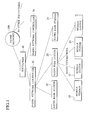
- FIG. 1 An entire configuration of the mobile packet communications system is shown in Fig. 1.
- This mobile packet communications system is configured, as shown in Fig. 1, with mobile stations 10, radio base stations 20, radio network controllers 30, and an exchanger 40.
- Each mobile station 10, connected by a radio connection to a radio base station 20, is configured with a radio communications terminal, such as a portable telephone terminal (with an IMT-2000 conforming portable telephone terminal inclusive), or a portable information terminal (PDA).
- a radio communications terminal such as a portable telephone terminal (with an IMT-2000 conforming portable telephone terminal inclusive), or a portable information terminal (PDA).
- Each radio network controller 30 is connected to the exchanger 40 and to radio base stations 20, and controls the radio base stations 20 to control radio communications of mobile stations 10.
- Radio network controller 30 receives a "call admission request (setup request of packet call)" from a mobile station 10, as it is transmitted via a radio base station 20, and performs a decision of whether or not to admit packet call for the admission request, and upon a decision for admission of packet call, transfers to the exchanger 40 a request for the setup of packet call.
- Fig. 2 diagrams simply part of configuration of radio network controller 30 associated with the above-noted control in the mobile packet communications system described.
- radio network controller 30 is configured with a call processor 31, a call admission controller 32, and a memory 33.
- the call admission controller 32 connected to the call processor 31, decides whether or not to admit packet call for the call admission request transferred from the call processor 31, and transmits a result of the decision to the call processor 31.
- the call processor 31 is periodically reported from radio base station 20 of "down-link transmission power P" in current use at the radio base station 20.
- the call admission controller 32 holding a "prescribed threshold T", performs a decision of whether or not to admit packet call for the call admission request transferred from the call processor 31, depending on a result of comparison of the "down-link transmission power P" and the "prescribed threshold T".
- the memory 33 connected to the call admission controller 32, stores therein information on currently set packet calls.
- the information encompasses, as shown in Fig. 2 for example, a "call ID” that is information for discrimination of a currently connected packet call, a "release timer” that indicates a residual time up to a release of the packet call, a "connected number of calls” that indicates the number of currently connected packet calls, etc.
- the exchanger 40 connected to radio network controller 30, performs an exchange process relative to a setup request of packet call transferred from the radio network controller 30.
- the exchanger 40 is connected via a trunk network 100 to other exchangers.
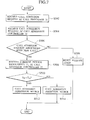
- Fig. 3 shows actions to be taken when a call admission request is transmitted from a mobile station 10 in the mobile packet communications system described.
- the call processor 31 of a radio network controller 30 receives a call admission request transmitted from the mobile station 10 via a radio base station 20.
- the call admission controller 32 of the radio network controller 30 receives the call admission request transferred from the call processor 31.
- the call admission controller 32 compares a magnitude of "down-link transmission power P", which is periodically reported from the radio base station 20 as in current use at the radio base station 20, with a "prescribed threshold T" under own control.
- step S808 the call admission controller 32 transmits to the call processor 31 a "call admission permission notice" notifying an admission of packet call to be effected for the above-noted call admission request, and stores in the memory 33 information on a call associated with the call admission request.
- step S810 the call admission controller 32 transmits to the call processor 31 a "call admission rejection notice" notifying no admission of packet call to be effected for the above-noted call admission request.
- the call processor 31 is responsible for the "call admission permission notice” or “call admission rejection notice” transmitted from the call admission controller 32 to execute a necessary process relative to the call admission request from the mobile station 10.
- a controller for setting a circuit-switching-oriented call is applied to the setup of packet call as well, with an occasional failure to exhibit an expected effect.
- the call admission controller 32 of an associated radio network controller 30 may admit setup admission of an excessive number of packet calls, with the result that an increased transmission delay causes a degraded quality, as a problem under the above-noted condition in the mobile packet communications system described.
- a mobile packet communications system comprises a memory configured to store information on currently set packet calls, a new call decider implemented, upon reception of a setup request of a packet call transmitted from a mobile station, to make a decision depending on the information stored in the memory, as to whether or not the packet call setup-requested is a new call, and an admission concluder implemented, upon a decision for the packet call to be the new call, to conclude whether or not to admit the packet call.
- a mobile packet communications system may preferably have the memory configured to store a number of the currently set packet calls, and the admission concluder implemented to sample the number of the currently set packet calls, and to give a conclusion as to whether or not to admit the packet call depending on the sampled number of the currently set packet calls.
- a mobile packet communications system may preferably comprise a buffer configured to store data addressed and transmitted to the currently set packet calls, and a queue processor implemented to transfer onto the packet call the data stored in the buffer, measuring an amount of data transferred onto the packet call per unit time, and have the admission concluder implemented to give a conclusion as to whether or not to admit the packet call depending on the amount of data measured at the queue processor.
- a mobile packet communications system may preferably comprise a buffer configured to store data addressed and transmitted to the currently set packet calls, a queue processor implemented to transfer onto the packet call the data stored in the buffer, a delay time calculator implemented to calculate a delay time depending on a time when the data is stored in the buffer and a time when the data is transferred onto the packet call by the queue processor, and a delay time averager implemented to determine an average within a prescribed interval with respect to the delay time calculated by the delay time calculator, and have the admission concluder is implemented to give a conclusion as to whether or not to admit the packet call depending on the average determined by the delay time averager.
- a mobile packet communications method of a W-CDMA system implemented with a mobile packet communications method according to the second aspect of this invention may preferably have the concluding comprising sampling a number of currently set A-DPCH's from the memory, and giving a conclusion as to whether or not to admit the packet call depending on the sampled number of the currently set A-DPCH's.
- a mobile packet communications method may preferably comprise the steps of storing in a buffer data addressed and transmitted to the currently set packet calls, and transferring onto the packet call the data stored in the buffer, measuring an amount of data transferred onto the packet call per unit time, and have the concluding comprising giving a conclusion as to whether or not to admit the packet call depending on the measured amount of data.
- a mobile packet communications method may preferably comprise the steps of storing in a buffer data addressed and transmitted to the currently set packet calls, transferring onto the packet call the data stored in the buffer, calculating a delay time depending on a time when the data is stored in the buffer and a time when the data is transferred onto the packet call, and determining an average within a prescribed interval with respect to the calculated delay time, and have the concluding comprising giving a conclusion as to whether or not to admit the packet call depending on the determined average.
- FIG. 1 shows an example of an entire configuration of a mobile packet communications system according to this embodiment of the invention, as a diagram simply taken of part associated with the invention.
- the entire configuration of the mobile packet communications system according to the embodiment is analogous to that of the conventional mobile packet communications system described.
- the mobile packet communications system according to the embodiment includes mobile stations 10, radio network controllers 30, and an exchanger 40 analogous to those employed in the conventional mobile packet communications system.
- radio network controller 30 is configured, like the conventional mobile packet communications system, for connections to the exchanger 40 and to radio base stations 20, and for controlling the radio base stations 20 to control radio communications of mobile stations 10. Further, in the mobile packet communications system according to the embodiment, radio network controller 30 is configured to receive a "call admission request (setup request of packet call)" from a mobile station 10, as it is transmitted via a radio base station 20, and to make a decision of whether or not to admit packet call for the admission request, and upon a decision for admission of packet call, to transfer to the exchanger 40 a request for the setup of packet call.
- call admission request setup request of packet call
- the call processor 31 is further implemented to answer the mobile station 10 of a result of a decision transmitted from the call admission controller 32 as to whether or not to admit packet call for the above-noted call admission request.
- the call processor 31 is implemented, as the setup of packet call is admitted (with a packet call connected relative to the mobile station 10), to order the user data buffer 34 to have a region set for the admitted packet call (i.e. the mobile station 10), and when the connection of packet call is released, to order the user data buffer 34 to release a region that has been dedicated as the region for the packet call (mobile station 10).
- the call admission controller 32 connected to the call processor 31, the memory 33, the user data buffer 34, the queue processor 35, and the delay tme storing averager 36, is configured as a new call decider implemented, upon reception of a "call admission request (a setup request of a packet call)" transmitted from a mobile station 10, to make a decision depending on whether or not it is stored in the memory 33 as a currently set packet call, as to whether or not the packet call associated with the above-noted call admission request is a "new call (that is a packet call not currently set)".
- a call admission request a setup request of a packet call
- the call admission controller 32 is further configured as an admission concluder implemented to give a conclusion as to whether or not to admit the packet call associated with the call admission request transferred from the call processor 31, and to transmit a result of the conclusion to the call processor 31.
- the call admission controller 32 is implemented to release the connection of a packet call of which a "release timer” stored in the memory 33 is time out (that is, a value of the "release timer” has become “0"), updating information on the packet call in the memory 33.
- the call admission controller 32 is implemented to control setup and release of an A-DPCH, updating information on the number of connections of A-DPCH's in the memory 33 in accordance with the setup and release of the A-DPCH.
- the memory 33 connected to the call admission controller 32, is configured to serve as a memory for storing therein information on currently set packet calls.
- the information encompasses, as shown in Fig. 4 for example, a "call ID” that is information for discrimination of a currently connected packet call, the "release timer” that indicates a residual time up to a release of the packet call, a "connected number of calls” that indicates the number of currently connected packet calls, etc.
- the memory 33 is implemented to store the number of connections of current A-DPCH's.
- the user data buffer 34 connected to the call processor 31, the queue processor 35, and the delay time storing averager 36, is configured to have a region secured every currently set packet call (mobile station 10 with a packet call set therefor), serving as a buffer to store, for a temporary interval of time before transmission to a radio base station 20, a data (packet) addressed and transmitted, every set packet call (mobile station 10), from the exchanger 40 to the packet call.
- the user data buffer 34 is configured with a total of n user data buffers #1 to #n for adaptation to have secured regions for n mobile stations 10.
- the user data buffer 34 is implemented to store the time when a transmitted data from exchanger 40 to packet call (mobile station 10) is stored and the time when the data is transferred to the radio base station 20 (or the time when the data is read by the queue processor 35), and to transmit a difference therebetween as a delay time to the delay time storing averager 36.
- the region to be secured and released at the user data buffer 34 is controlled by an order transmitted from the call processor 31 in accordance with an instruction from the call admission controller 32.
- the delay time storing averager 36 connected to the call admission controller 32 and the user data buffer 34, is configured as a delay time storing averager for determining an average within a prescribed interval with respect to the delay time transmitted from the user data buffer 34, to transmit an average of delay time thus determined to the call admission controller 32.
- the call processor 31 of a radio network controller 30 receives a call admission request transmitted from a mobile station 10 via a radio base station 20.
- the call admission controller 32 of the radio network controller 30 receives the call admission request transferred from the call processor 31.
- the call admission controller 32 retrieves whether or not a packet call associated with the above-noted call admission request is stored as a currently set packet call in the memory 33.
- the call admission controller 32 recognizes the packet call as an "existing call (i.e., currently set packet call)", and the flow of control goes to a step S316, where a "release timer" associated with the packet call in the memory 33 is set (reset) to a maximum. Then, the action of mobile packet communications system according to this embodiment goes to an end.
- the call admission controller 32 recognizes the packet call as a "new call (i.e., packet call not currently set)", and the flow of control goes to a step S308.
- step S312 the call admission controller 32 gives a conclusion to admit the packet call associated with the above-noted call admission request, and transmits to the call processor 31 a "call admission permission notice" as a notice of the effect, storing in the memory 33 information on the packet call associated with the call admission request, updating the content of storage in the memory 33.
- the flow goes to a step S314, where the call admission controller 32 gives a conclusion not to admit the packet call associated with the above-noted call admission request, and transmits to the call processor 31 a "call admission rejection notice" as a notice of the effect.
- the call processor 31 is responsible for the "call admission permission notice” or “call admission rejection notice” transmitted from the call admission controller 32 to execute a necessary process relative to the call admission request from the mobile station 10.
- the second sequence is for a mobile packet communications system according to this embodiment, as it is applied to a mobile packet communications network using a W-CDMA system.
- the number of set packet calls (mobile stations 10) in the mobile packet communications network of W-CDMA system is substantially equivalent to the number of DPCH's (A-DPCH's) accompanying radio channels for the packet calls (mobile stations 10).
- the call processor 31 of a radio network controller 30 receives a call admission request transmitted from a mobile station 10 via a radio base station 20.
- the call admission controller 32 of the radio network controller 30 receives the call admission request transferred from the call processor 31.
- the call admission controller 32 retrieves whether or not a packet call associated with the above-noted call admission request is stored as a currently set packet call in the memory 33.
- the call admission controller 32 recognizes the packet call as an "existing call (i.e., currently set packet call)", and the flow of control goes to a step S416, where a "release timer" associated with the packet call in the memory 33 is set (reset) to a maximum. Then, the action of mobile packet communications system according to this embodiment goes to an end.
- the call admission controller 32 recognizes the packet call as a "new call (i.e., packet call not currently set)", and the flow of control goes to a step S408.
- the call admission controller 32 samples from the memory 33 an "A-DPCH concurrent number of connections N A-DPCH " that indicates the number of currently set A-DPCH's. Then, at a step S410, the call admission controller 32 compares the sampled "A-DPCH concurrent number of connections N A-DPCH " with a "prescribed threshold M A-DPCH " under own control, where the "prescribed threshold M A-DPCH " is a prescribed upper limit in number of concurrently settable A-DPCH's.
- the flow goes to a step S412, where the call admission controller 32 gives a conclusion to admit the packet call associated with the above-noted call admission request, and transmits to the call processor 31 a "call admission permission notice" as a notice of the effect, storing in the memory 33 information on the packet call associated with the call admission request, updating the content of storage in the memory 33.
- the flow goes to a step S414, where the call admission controller 32 gives a conclusion not to admit the packet call associated with the above-noted call admission request, and transmits to the call processor 31 a "call admission rejection notice" as a notice of the effect.
- the call processor 31 is responsible for the "call admission permission notice” or "call admission rejection notice” transmitted from the call admission controller 32 to execute a necessary process relative to the call admission request from the mobile station 10.
- the call processor 31 of a radio network controller 30 receives a call admission request transmitted from a mobile station 10 via a radio base station 20.
- the call admission controller 32 of the radio network controller 30 receives the call admission request transferred from the call processor 31.
- the call admission controller 32 retrieves whether or not a packet call associated with the above-noted call admission request is stored as a currently set packet call in the memory 33.
- the call admission controller 32 recognizes the packet call as an "existing call (i.e., currently set packet call)", and the flow of control goes to a step S516, where a "release timer" associated with the packet call in the memory 33 is set (reset) to a maximum. Then, the action of mobile packet communications system according to this embodiment goes to an end.
- the call admission controller 32 recognizes the packet call as a "new call (i.e., packet call not currently set)", and the flow of control goes to a step S508.
- the call admission controller 32 determines a "current system throughput TN" based on a result of count periodically transmitted from the queue processor 35. Then, at a step S510, the call admission controller 32 compares the determined "current system throughput TN" with a "prescribed threshold TA" under own control, where the "prescribed threshold TA" is a prescribed upper limit of throughput per unit time.
- step S512 the call admission controller 32 gives a conclusion to admit the packet call associated with the above-noted call admission request, and transmits to the call processor 31 a "call admission permission notice" as a notice of the effect, storing in the memory 33 information on the packet call associated with the call admission request, updating the content of storage in the memory 33.
- the call processor 31 of a radio network controller 30 receives a call admission request transmitted from a mobile station 10 via a radio base station 20.
- the call admission controller 32 of the radio network controller 30 receives the call admission request transferred from the call processor 31.
- the call admission controller 32 retrieves whether or not a packet call associated with the above-noted call admission request is stored as a currently set packet call in the memory 33.
- the call admission controller 32 recognizes the packet call as an "existing call (i.e., currently set packet call)", and the flow of control goes to a step S616, where a "release timer" associated with the packet call in the memory 33 is set (reset) to a maximum. Then, the action of mobile packet communications system according to this embodiment goes to an end.
- the call admission controller 32 recognizes the packet call as a "new call (i.e., packet call not currently set)", and the flow of control goes to a step S608.
- the call admission controller 32 determines a "current average delay time TD" based on the delay time transmitted from the delay time storing averager 36. Then, at a step S610, the call admission controller 32 compares the determined "current average delay time TD" with a "prescribed threshold AD" under own control, where the "prescribed threshold TD" is a prescribed upper limit of permissible delay time.
- step S612 the call admission controller 32 gives a conclusion to admit the packet call associated with the above-noted call admission request, and transmits to the call processor 31 a "call admission permission notice" as a notice of the effect, storing in the memory 33 information on the packet call associated with the call admission request, updating the content of storage in the memory 33.
- the flow goes to a step S614, where the call admission controller 32 gives a conclusion not to admit the packet call associated with the above-noted call admission request, and transmits to the call processor 31 a "call admission rejection notice" as a notice of the effect.
- the call processor 31 is responsible for the "call admission permission notice” or “call admission rejection notice” transmitted from the call admission controller 32 to execute a necessary process relative to the call admission request from the mobile station 10.
- a call admission controller 32 is adapted to give a conclusion depending on a "connected number of calls UN" as the number of currently set packet calls, as to whether or not to admit the packet call, thus allowing for utilization of an advantage of mobile packet communications that users are allowed to perform radio communications unless their data have temporal overlaps even when many mobile stations 10 perform radio communications in places relatively distant from a radio base station 20, overcoming the problem that the throughput of an entirety of the mobile packet communications system might otherwise have been reduced.
- a call admission controller 32 is adapted to give a conclusion depending on a "current system throughput TN" as the amount of data measured by a queue processor 35, as to whether or not to admit the packet call, thus preventing occurrences of an increased delay time due to reduced throughput even when many mobile stations 10 perform radio communications in places relatively vicinal to a radio base station 20.
- a call admission controller 32 is adapted to give a conclusion depending on a "current average delay time TD" as an average within a prescribed interval with respect to a delay time calculated by combination of a user data buffer 34 and a delay time storing averager 36, as to whether or not to admit the packet call, thus preventing increase in delay time even when many mobile stations 10 perform radio communications in places relatively vicinal to a radio base station 20.
- a mobile packet communications system allowing for utilization of advantage of mobile packet communications to have an improved efficiency in use of radio channel resources, while limiting increase in transmission delay to prevent degradation of quality.
Landscapes
- Engineering & Computer Science (AREA)
- Computer Networks & Wireless Communication (AREA)
- Signal Processing (AREA)
- Databases & Information Systems (AREA)
- Mobile Radio Communication Systems (AREA)
- Data Exchanges In Wide-Area Networks (AREA)
Abstract
Description
Claims (15)
- A mobile packet communications system comprising:a memory configured to store information on currently set packet calls;a new call decider implemented, upon reception of a setup request of a packet call transmitted from a mobile station, to make a decision depending on the information stored in the memory, as to whether or not the packet call setup-requested is a new call; andan admission concluder implemented, upon a decision for the packet call to be the new call, to conclude whether or not to admit the packet call.
- A mobile packet communications system according to claim 1, wherein
the memory is configured to store a number of the currently set packet calls, and
the admission concluder is implemented to sample the number of the currently set packet calls, and to give a conclusion as to whether or not to admit the packet call depending on the sampled number of the currently set packet calls. - A mobile packet communications system of a W-CDMA system configured with a mobile packet communications system according to claim 1, wherein
the memory is configured to store a number of currently set A-DPCH's, and
the admission concluder is implemented to sample the number of the currently set A-DPCH's, and to give a conclusion as to whether or not to admit the packet call depending on the sampled number of the currently set A-DPCH's. - A mobile packet communications system according to claim 1, comprising:a buffer configured to store data addressed and transmitted to the currently set packet calls; anda queue processor implemented to transfer onto the packet call the data stored in the buffer, measuring an amount of data transferred onto the packet call per unit time, whereinthe admission concluder is implemented to give a conclusion as to whether or not to admit the packet call depending on the amount of data measured at the queue processor.
- A mobile packet communications system according to claim 1, comprising:a buffer configured to store data addressed and transmitted to the currently set packet calls;a queue processor implemented to transfer onto the packet call the data stored in the buffer;a delay time calculator implemented to calculate a delay time depending on a time when the data is stored in the buffer and a time when the data is transferred onto the packet call by the queue processor, anda delay time averager implemented to determine an average within a prescribed interval with respect to the delay time calculated by the delay time calculator, whereinthe admission concluder is implemented to give a conclusion as to whether or not to admit the packet call depending on the average determined by the delay time averager.
- A mobile packet communications method comprising the steps of:making, upon reception of a setup request of a packet call transmitted from a mobile station, a decision depending on information on currently set packet calls stored in a memory, as to whether or not the packet call setup-requested is a new call; andconcluding, upon a decision for the packet call to be the new call, whether or not to admit the packet call.
- A mobile packet communications method according to claim 6, wherein the concluding comprises:sampling a number of the currently set packet calls from the memory; andgiving a conclusion as to whether or not to admit the packet call depending on the sampled number of the currently set packet calls.
- A mobile packet communications method of a W-CDMA system implemented with a mobile packet communications method according to claim 6, wherein the concluding comprises:sampling a number of currently set A-DPCH's from the memory; andgiving a conclusion as to whether or not to admit the packet call depending on the sampled number of the currently set A-DPCH's.
- A mobile packet communications method according to claim 6, comprising the steps of:storing in a buffer data addressed and transmitted to the currently set packet calls; andtransferring onto the packet call the data stored in the buffer, measuring an amount of data transferred onto the packet call per unit time, whereinthe concluding comprises giving a conclusion as to whether or not to admit the packet call depending on the measured amount of data.
- A mobile packet communications method according to claim 6, comprising the steps of:storing in a buffer data addressed and transmitted to the currently set packet calls;transferring onto the packet call the data stored in the buffer;calculating a delay time depending on a time when the data is stored in the buffer and a time when the data is transferred onto the packet call; anddetermining an average within a prescribed interval with respect to the calculated delay time, whereinthe concluding comprises giving a conclusion as to whether or not to admit the packet call depending on the determined average.
- A radio network controller for a mobile packet communications system comprising:a memory configured to store information on currently set packet calls;a new call decider implemented, upon reception of a setup request of a packet call transmitted from a mobile station, to make a decision depending on the information stored in the memory, as to whether or not the packet call setup-requested is a new call; andan admission concluder implemented, upon a decision for the packet call to be the new call, to conclude whether or not to admit the packet call.
- A radio network controller for a mobile packet communications system according to claim 11, wherein
the memory is configured to store a number of the currently set packet calls, and
the admission concluder is implemented to sample the number of the currently set packet calls, and to give a conclusion as to whether or not to admit the packet call depending on the sampled number of the currently set packet calls. - A radio network controller for a mobile packet communications system of a W-CDMA system configured with a radio network controller for a mobile packet communications system according to claim 11, wherein
the memory is configured to store a number of currently set A-DPCH's, and
the admission concluder is implemented to sample the number of the currently set A-DPCH's, and to give a conclusion as to whether or not to admit the packet call depending on the sampled number of the currently set A-DPCH's. - A radio network controller for a mobile packet communications system according to claim 11, comprising:a buffer configured to store data addressed and transmitted to the currently set packet calls; anda queue processor implemented to transfer onto the packet call the data stored in the buffer, measuring an amount of data transferred onto the packet call per unit time, whereinthe admission concluder is implemented to give a conclusion as to whether or not to admit the packet call depending on the amount of data measured at the queue processor.
- A radio network controller for a mobile packet communications system according to claim 11, comprising:a buffer configured to store data addressed and transmitted to the currently set packet calls;a queue processor implemented to transfer onto the packet call the data stored in the buffer;a delay time calculator implemented to calculate a delay time depending on a time when the data is stored in the buffer and a time when the data is transferred onto the packet call by the queue processor, anda delay time averager implemented to determine an average within a prescribed interval with respect to the delay time calculated by the delay time calculator, whereinthe admission concluder is implemented to give a conclusion as to whether or not to admit the packet call depending on the average determined by the delay time averager.
Applications Claiming Priority (2)
| Application Number | Priority Date | Filing Date | Title |
|---|---|---|---|
| JP2001224867A JP3990882B2 (en) | 2001-07-25 | 2001-07-25 | Mobile packet communication system, mobile packet communication method, and radio control apparatus |
| JP2001224867 | 2001-07-25 |
Publications (3)
| Publication Number | Publication Date |
|---|---|
| EP1289171A2 true EP1289171A2 (en) | 2003-03-05 |
| EP1289171A3 EP1289171A3 (en) | 2003-11-12 |
| EP1289171B1 EP1289171B1 (en) | 2006-09-13 |
Family
ID=19057957
Family Applications (1)
| Application Number | Title | Priority Date | Filing Date |
|---|---|---|---|
| EP20020016302 Expired - Lifetime EP1289171B1 (en) | 2001-07-25 | 2002-07-24 | Mobile packet communications system, mobile packet communications method, and radio network controller |
Country Status (5)
| Country | Link |
|---|---|
| US (1) | US7242666B2 (en) |
| EP (1) | EP1289171B1 (en) |
| JP (1) | JP3990882B2 (en) |
| CN (1) | CN1221098C (en) |
| DE (1) | DE60214638T2 (en) |
Cited By (1)
| Publication number | Priority date | Publication date | Assignee | Title |
|---|---|---|---|---|
| WO2005006795A1 (en) * | 2003-07-12 | 2005-01-20 | Motorola Inc | Communication system, communication unit and method of power saving therein |
Families Citing this family (12)
| Publication number | Priority date | Publication date | Assignee | Title |
|---|---|---|---|---|
| KR100569303B1 (en) * | 2003-04-11 | 2006-04-10 | 임재성 | Communication method and device with 7 or more terminals in Bluetooth system |
| CN100502271C (en) * | 2003-09-17 | 2009-06-17 | 华为技术有限公司 | Calling admission control method of WCDMA access system |
| US7535932B2 (en) * | 2003-12-26 | 2009-05-19 | Ntt Docomo, Inc. | Radio communications system, radio network controller and base station |
| US7613111B2 (en) * | 2005-04-18 | 2009-11-03 | Santera Systems, Llc | Methods, systems, and computer program products for dynamic blocking an unblocking of media over packet resources |
| US7660286B2 (en) * | 2006-02-03 | 2010-02-09 | Broadcom Corporation | Jitter management for packet data network backhaul of call data |
| EP2070271A1 (en) * | 2006-09-28 | 2009-06-17 | Nxp B.V. | Improved process for transferring data in a dual transfer mode between a mobile network and mobile stations, and corresponding circuit mobility management entity |
| JP2009272959A (en) * | 2008-05-08 | 2009-11-19 | Nec Corp | Call reception control method, call reception control device, and control program |
| EP2294877B1 (en) * | 2008-07-01 | 2015-10-21 | Telefonaktiebolaget L M Ericsson (PUBL) | Cellular congestion and admission control based on ringing tones in unanswered calls |
| ES2380983B1 (en) * | 2010-10-27 | 2013-04-15 | Vodafone España, S.A.U. | PROCEDURE AND DEVICE FOR OPTIMIZING THE SIGNALING LOAD IN A CELLULAR COMMUNICATION NETWORK. |
| US20140153577A1 (en) * | 2012-12-03 | 2014-06-05 | Aruba Networks, Inc. | Session-based forwarding |
| US9706595B2 (en) | 2013-08-23 | 2017-07-11 | Nec Corporation | Call processing control device, mobile communication system, method for restricting reception of call connection request, and readable medium |
| US10548063B1 (en) * | 2015-11-24 | 2020-01-28 | Sprint Spectrum L.P. | Call admission control for relay access nodes |
Family Cites Families (14)
| Publication number | Priority date | Publication date | Assignee | Title |
|---|---|---|---|---|
| JP2649964B2 (en) | 1989-02-15 | 1997-09-03 | 富士通株式会社 | Traffic control method |
| JP3066910B2 (en) | 1990-11-14 | 2000-07-17 | 沖電気工業株式会社 | ATM admission network call admission control method |
| JPH06164621A (en) | 1992-11-20 | 1994-06-10 | Kokusai Denshin Denwa Co Ltd <Kdd> | ATM call admission control system |
| US5862335A (en) * | 1993-04-01 | 1999-01-19 | Intel Corp. | Method and apparatus for monitoring file transfers and logical connections in a computer network |
| JP3192039B2 (en) | 1993-09-13 | 2001-07-23 | 株式会社日立製作所 | Traffic control method and network control system |
| US5757772A (en) * | 1995-09-18 | 1998-05-26 | Telefonaktiebolaget Lm Ericsson | Packet switched radio channel traffic supervision |
| JPH1084386A (en) | 1996-09-10 | 1998-03-31 | Toshiba Corp | Control input calculation device, control input calculation method, communication quality calculation device, and communication quality calculation method in congestion control of packet communication system |
| US6377548B1 (en) * | 1997-10-14 | 2002-04-23 | Lucent Technologies Inc. | Method for admitting new connections based on measured quantities in a multiple access system for communications networks |
| JP3500060B2 (en) | 1998-02-19 | 2004-02-23 | 三洋電機株式会社 | Mobile communication method and mobile communication device |
| KR100334767B1 (en) * | 2000-09-30 | 2002-05-03 | Samsung Electronics Co Ltd | Adaptive admission control method for assuring qos of hand-off in radio network and apparatus therefor |
| KR100868689B1 (en) * | 2002-05-06 | 2008-11-13 | 삼성전자주식회사 | Method and apparatus for call admission control of mobile communication network |
| KR100617846B1 (en) * | 2002-05-27 | 2006-08-28 | 삼성전자주식회사 | Call Acceptor and Method for Guaranteeing Quality of Service in Mobile Communication Systems |
| US6944461B2 (en) * | 2002-06-03 | 2005-09-13 | Lucent Technologies Inc. | Communication system and method for quality-based call admission control and scheduling |
| JP4543842B2 (en) * | 2004-09-09 | 2010-09-15 | 日本電気株式会社 | Radio base station apparatus and resource management method |
-
2001
- 2001-07-25 JP JP2001224867A patent/JP3990882B2/en not_active Expired - Fee Related
-
2002
- 2002-07-24 EP EP20020016302 patent/EP1289171B1/en not_active Expired - Lifetime
- 2002-07-24 CN CNB02140769XA patent/CN1221098C/en not_active Expired - Fee Related
- 2002-07-24 DE DE2002614638 patent/DE60214638T2/en not_active Expired - Lifetime
- 2002-07-24 US US10/201,076 patent/US7242666B2/en not_active Expired - Lifetime
Cited By (2)
| Publication number | Priority date | Publication date | Assignee | Title |
|---|---|---|---|---|
| WO2005006795A1 (en) * | 2003-07-12 | 2005-01-20 | Motorola Inc | Communication system, communication unit and method of power saving therein |
| US7209750B2 (en) | 2003-07-12 | 2007-04-24 | Motorola, Inc. | Communication system, communication unit and method of power saving therein |
Also Published As
| Publication number | Publication date |
|---|---|
| EP1289171A3 (en) | 2003-11-12 |
| JP2003037619A (en) | 2003-02-07 |
| US7242666B2 (en) | 2007-07-10 |
| CN1399430A (en) | 2003-02-26 |
| DE60214638T2 (en) | 2007-09-06 |
| CN1221098C (en) | 2005-09-28 |
| DE60214638D1 (en) | 2006-10-26 |
| US20030021288A1 (en) | 2003-01-30 |
| EP1289171B1 (en) | 2006-09-13 |
| JP3990882B2 (en) | 2007-10-17 |
Similar Documents
| Publication | Publication Date | Title |
|---|---|---|
| US6553232B1 (en) | System and method for calendar-based cellular smart switching | |
| US6075990A (en) | Handoff control method and communication system in a multiple frequency environment | |
| EP0894408B1 (en) | Flow control of short message service messages in a cellular telephone network | |
| US7286814B2 (en) | Location registration system, mobile terminal, control equipment, methods of location registration in the location registration system | |
| US6529733B1 (en) | Method of handoff control and a handoff control system using thereof | |
| RU2434366C2 (en) | Network selection | |
| US6487409B2 (en) | Handoff control system handoff control method, and storage medium storing handoff control program | |
| US7242666B2 (en) | Mobile packet communications system, mobile packet communications method, and radio network controller | |
| EP2053804A2 (en) | Radio controller, radio base station, radio communication system, call admission control method, program and recording medium | |
| US6771618B1 (en) | Packet transfer method and system | |
| NZ534291A (en) | A mobile communication system which reduces the delay time in voice packet transmission with use of a PTT function | |
| CN101431748A (en) | Method and apparatus for determining which device should manage data associated with a mobile terminal | |
| US6359876B1 (en) | CDMA cellular communication system using frame offset distribution of all base stations to avoid traffic peak | |
| JPH07177558A (en) | Packetized cellular communication method | |
| JP2010524272A (en) | Mobile communication system location / route registration update procedure | |
| AU767531B2 (en) | Method of providing roaming service for a mobile communication terminal | |
| EP1188253B1 (en) | Method and apparatus for assigning a mobile station to a communication resource | |
| US6980799B2 (en) | Method for preserving calls when service is interrupted to a mobile unit in a wireless communication system | |
| US6970720B2 (en) | Service apparatus for a public and private mobile communication network | |
| JP2621783B2 (en) | Handover method | |
| US6122518A (en) | Mobile communication system including base stations each having definite number of traffic channels | |
| KR100997049B1 (en) | Method, system and apparatus for limiting function of mobile communication terminal in specific zone | |
| EP2257106B1 (en) | Mobile assisted handover in mobile communications networks | |
| EP1059816B1 (en) | Signalling radio service requirements | |
| US20080102771A1 (en) | Method and system for providing service in a network |
Legal Events
| Date | Code | Title | Description |
|---|---|---|---|
| PUAI | Public reference made under article 153(3) epc to a published international application that has entered the european phase |
Free format text: ORIGINAL CODE: 0009012 |
|
| 17P | Request for examination filed |
Effective date: 20020724 |
|
| AK | Designated contracting states |
Kind code of ref document: A2 Designated state(s): AT BE BG CH CY CZ DE DK EE ES FI FR GB GR IE IT LI LU MC NL PT SE SK TR |
|
| AX | Request for extension of the european patent |
Extension state: AL LT LV MK RO SI |
|
| PUAL | Search report despatched |
Free format text: ORIGINAL CODE: 0009013 |
|
| AK | Designated contracting states |
Kind code of ref document: A3 Designated state(s): AT BE BG CH CY CZ DE DK EE ES FI FR GB GR IE IT LI LU MC NL PT SE SK TR |
|
| AX | Request for extension of the european patent |
Extension state: AL LT LV MK RO SI |
|
| RIC1 | Information provided on ipc code assigned before grant |
Ipc: 7H 04Q 7/38 B Ipc: 7H 04B 7/26 A |
|
| 17Q | First examination report despatched |
Effective date: 20040126 |
|
| AKX | Designation fees paid |
Designated state(s): DE GB |
|
| GRAP | Despatch of communication of intention to grant a patent |
Free format text: ORIGINAL CODE: EPIDOSNIGR1 |
|
| GRAS | Grant fee paid |
Free format text: ORIGINAL CODE: EPIDOSNIGR3 |
|
| GRAA | (expected) grant |
Free format text: ORIGINAL CODE: 0009210 |
|
| AK | Designated contracting states |
Kind code of ref document: B1 Designated state(s): DE GB |
|
| REG | Reference to a national code |
Ref country code: GB Ref legal event code: FG4D |
|
| REF | Corresponds to: |
Ref document number: 60214638 Country of ref document: DE Date of ref document: 20061026 Kind code of ref document: P |
|
| PLBE | No opposition filed within time limit |
Free format text: ORIGINAL CODE: 0009261 |
|
| STAA | Information on the status of an ep patent application or granted ep patent |
Free format text: STATUS: NO OPPOSITION FILED WITHIN TIME LIMIT |
|
| 26N | No opposition filed |
Effective date: 20070614 |
|
| PGFP | Annual fee paid to national office [announced via postgrant information from national office to epo] |
Ref country code: DE Payment date: 20180710 Year of fee payment: 17 |
|
| PGFP | Annual fee paid to national office [announced via postgrant information from national office to epo] |
Ref country code: GB Payment date: 20180718 Year of fee payment: 17 |
|
| REG | Reference to a national code |
Ref country code: DE Ref legal event code: R119 Ref document number: 60214638 Country of ref document: DE |
|
| GBPC | Gb: european patent ceased through non-payment of renewal fee |
Effective date: 20190724 |
|
| PG25 | Lapsed in a contracting state [announced via postgrant information from national office to epo] |
Ref country code: DE Free format text: LAPSE BECAUSE OF NON-PAYMENT OF DUE FEES Effective date: 20200201 Ref country code: GB Free format text: LAPSE BECAUSE OF NON-PAYMENT OF DUE FEES Effective date: 20190724 |