EP1288300A1 - Plasmid to be used in chromosome recombination of escherichia coli - Google Patents
Plasmid to be used in chromosome recombination of escherichia coli Download PDFInfo
- Publication number
- EP1288300A1 EP1288300A1 EP01919803A EP01919803A EP1288300A1 EP 1288300 A1 EP1288300 A1 EP 1288300A1 EP 01919803 A EP01919803 A EP 01919803A EP 01919803 A EP01919803 A EP 01919803A EP 1288300 A1 EP1288300 A1 EP 1288300A1
- Authority
- EP
- European Patent Office
- Prior art keywords
- escherichia coli
- plasmid
- escherichia
- genes
- ferm
- Prior art date
- Legal status (The legal status is an assumption and is not a legal conclusion. Google has not performed a legal analysis and makes no representation as to the accuracy of the status listed.)
- Withdrawn
Links
- 0 CC*CCC=CC=C(*=CCC1)C(C)=CC=C1[C@@](CC1=C(C)C)C=CC1=C*=C Chemical compound CC*CCC=CC=C(*=CCC1)C(C)=CC=C1[C@@](CC1=C(C)C)C=CC1=C*=C 0.000 description 1
Images
Classifications
-
- C—CHEMISTRY; METALLURGY
- C12—BIOCHEMISTRY; BEER; SPIRITS; WINE; VINEGAR; MICROBIOLOGY; ENZYMOLOGY; MUTATION OR GENETIC ENGINEERING
- C12N—MICROORGANISMS OR ENZYMES; COMPOSITIONS THEREOF; PROPAGATING, PRESERVING, OR MAINTAINING MICROORGANISMS; MUTATION OR GENETIC ENGINEERING; CULTURE MEDIA
- C12N15/00—Mutation or genetic engineering; DNA or RNA concerning genetic engineering, vectors, e.g. plasmids, or their isolation, preparation or purification; Use of hosts therefor
- C12N15/09—Recombinant DNA-technology
- C12N15/63—Introduction of foreign genetic material using vectors; Vectors; Use of hosts therefor; Regulation of expression
- C12N15/70—Vectors or expression systems specially adapted for E. coli
Definitions
- the present invention relates to a plasmid to be used for integrating genes into a microorganism belonging to the genus Escherichia other than Escherichia coli K-12, a method for integrating the genes into the chromosome, a recombinant strain constructed according to the method, and a method for producing useful substances by using the recombinant strain.
- P1 transduction using P1 phage is known to be the most versatile technique to deliberately and rationally manipulate the chromosome of Escherichia coli [Zinder, N. D. and Lederberg J., J. Bacteriol., 64 , 679 (1952)].
- Chromosomal manipulation techniques other than P1 transduction are roughly classified into 2 types.
- One type is directed to a method which comprises inserting a gene of interest into a plasmid capable of autonomous replication in microorganisms other than Escherichia coli but incapable of autonomous replication in Escherichia coli and transforming Escherichia coli with the plasmid to obtain a strain in which the gene of interest is integrated into its chromosome according to the principle of homologous recombination [A. Chen et al., J. Bacteriol., 176 , 1542 (1994)].
- this method involves a drawback that a desired chromosomal recombinant strain is obtained only at a very low frequency because a plasmid which has been prepared by using a microorganism other than Escherichia coli as a host cell, is decomposed by restriction enzymes within Escherichia coli.
- the other type is directed to the method in which a plasmid being capable of autonomous replication under the normal growth conditions in Escherichia coli K-12 but incapable of autonomous replication under certain conditions such as a high temperature condition is used and a gene of interest is integrated into a chromosome in accordance with the principle of homologous recombination [T. Hashimoto, and M. Sekiguchi, J. Bactereiol., 127 , 1561 (1976)].
- Escherichia coli that have been widely used in the research and industrial areas include several types such as the K-12, B, and W strains. Many of the genetic recombination techniques have been developed by using the K-12 strain.
- Escherichia coli W is suitable for the production of useful substances such as amino acids, etc. [S. Furukawa et al ., Appl. Microbiol. Biotechnol., 29 , 253 (1988)] and serves many uses in fermentative production as it assimilates sucrose and has been actually subjected to high density cell culture successfully [I. E. Gleiser and S. Bauer, Biotechnol. Bioeng., 23 , 1015 (1981)].
- the object of the present invention is to establish a new chromosomal recombination technique in microorganisms belonging to the genus Escherichia other than the K-12 strain and solve the above problems.
- the present invention relates to the following (1)-(14).
- pMW119 (available from Nippon Gene Co., Ltd.) or a plasmid having the same ori region and the rep gene as those of pMW119 is used.
- An ori region is a region containing the initiation site of replication and the rep gene is a gene encoding replicase.
- Mutagenic treatment of the plasmid is carried out according to a known method using hydroxylamine [G. O. Humphreys et al., Mol. Gen. Genet., 145 , 101 (1976)], etc.
- the plasmid can be mutated by dissolving about 10 ⁇ g of the plasmid in phosphate buffer [50 mmol/l NaH 2 PO 4 , 1 mmol/l EDTA2Na, pH 6.0 (NaOH)] containing 0.4 mol/l hydroxylamine hydrochloride, and heating the solution at 75°C for 30 to 60 minutes.
- phosphate buffer 50 mmol/l NaH 2 PO 4 , 1 mmol/l EDTA2Na, pH 6.0 (NaOH)
- a plasmid showing temperature-sensitivity in Escherichia coli K-12 can be obtained by a known method [T. Hashimoto, and M. Sekiguchi, J. Bacteriol., 127, 1561 (1976)].
- Escherichia coli K-12 is transformed with the plasmid to which a mutagenic treatment has been given to obtain a strain having resistance to a drug such as ampicillin within the range of 10-32°C. While any method of transformation that can transform Escherichia coli K-12 may be used, electroporation [W. J. Dower et al ., Nucleic Acids Res., 16 , 6127 (1988)] that offers high transformation efficiency is preferred.
- Escherichia coli K-12 to which a transformation treatment has been given is spread on LB agar medium [1.0% Bacto Tryptone (Difco), 0.5% Yeast Extract (Difco), 1.0% NaCl] containing a drug to be used as a marker and cultured at 10-32°C for 6-24 hours.
- transformants are selected as transformants.
- the transformants are cultured on an agar medium without containing any drug added at a temperature of 33°C or more at which the transformants can grow.
- strains grown are spread on an agar medium containing a drug such as ampicillin and cultured at a temperature of 33°C or more at which the strains can grow for 6-24 hours.
- Strains corresponding to those that can not grow under these conditions are separated from the above agar medium without containing any drug added and cultured again on the medium without containing any drug added.
- a plasmid is separated from the strains according to a conventional method. The plasmid is the temperature-sensitive plasmid.
- the plasmid of the present invention that is, the plasmid incapable of replication in the cells of a microorganism belonging to the genus Escherichia other than Escherichia coli K-12, can be selected from plasmids showing temperature sensitivity in Escherichia coli K-12, which are obtained according to the method described in (1) above.
- the microorganisms belonging to the genus Escherichia other than Escherichia coli K-12 herein may be any microorganisms that belong to the genus Escherichia other than the K-12 type strain. Examples thereof include microorganisms belonging to Escherichia coli of such types as Escherichia coli W, Escherichia coli B, Escherichia coli C, Escherichia coli 15, etc. and Escherichia coli W or Escherichia coli B is preferred.
- transformation of a microorganism belonging to the genus Escherichia other than Escherichia coli K-12 is carried out by using the plasmid that shows temperature sensitivity in Escherichia coli K-12 to obtain transformants. If the transformants are unable to grow at any temperature when they are cultured in a medium containing a drug, such temperature-sensitive plasmid is the plasmid having the property of the present invention.
- the plasmid which can not replicate in a microorganism belonging to the genus Escherichia other than Escherichia coli K-12 at any temperature obtained in accordance with the above-described method (hereinafter referred to as the plasmid of the present invention) is used for integration into a chromosome.
- the gene may be any gene that participates in the production of a desired useful substance and has a sequence homologous to a gene of interest in the chromosome of a microorganism belonging to the genus Escherichia other than Escherichia coli K-12.
- the useful substance may be any useful substance so far as the gene participates in the production thereof.
- amino acids such as leucine, etc.
- organic acids such as isocitric acid, etc.
- nucleic acids or nucleic acid-related substances such as flavin adenine dinucleotide, etc.
- sugars such as fructose, etc.
- lipids such as phospholipid, glycolipid, etc.
- vitamins such as biotin, etc.
- pigments such as carotene, etc., derivatives thereof
- proteins such as enzymes encoded by the gene, etc.
- Cloning of the gene can be carried out from Escherichia coli K-12 according to a known method [Molecular Cloning, A Laboratory Manual, Second Edition, Cold Spring Harbor Laboratory Press (1989)] (hereinafter referred to as Molecular Cloning, Second Edition). Furthermore, it is possible to artificially modify the nucleotide sequence of the cloned gene according to a known method (Molecular Cloning, Second Edition). For the cloning of the gene and modification of the cloned gene, Escherichia coli K-12 is used as a host cell and culturing is carried out at 32°C or less.
- the thus constructed recombinant plasmid is used to transform a microorganism belonging to the genus Escherichia other than Escherichia coli K-12 and the strain is cultured on a medium containing a drug such as ampicillin to obtain a drug resistance strain, whereby chromosomal recombinant strain in which plasmid containing the gene of interest has been integrated into the chromosome can be obtained.
- a drug such as ampicillin
- chromosomal recombinant strain in which plasmid containing the gene of interest has been integrated into the chromosome can be obtained.
- any of known methods such as electroporation, calcium chloride method (Molecular Cloning, Second Edition), etc. can be used.
- a strain transformed with the plasmid of the present invention is cultured on a medium without containing a drug such as ampicillin.
- a medium without containing a drug such as ampicillin.
- Either a solid agar medium or a liquid medium without containing agar may be used for the culturing so far as the transformants can grow thereon.
- the cultured cell is properly diluted with sterilized physiological saline, spread on LB agar medium without containing a drug such as ampicillin, and cultured.
- a drug such as ampicillin
- Each of the colonies grown is spread on an agar medium containing a drug such as ampicillin and the strains corresponding to the strains that have not grown are separated from the original medium without containing a drug. From the separated strains, the strain in which the gene on the plasmid of the present invention and the gene originally present on the chromosome of a microorganism belonging to the genus Escherichia other than Escherichia coli K-12 are substituted by homologous recombination can be selected.
- the chromosomal recombinant strain in which the plasmid containing a gene of interest is integrated into its chromosome or the strain in which the gene originally carried by a microorganism belonging to the genus Escherichia other than Escherichia coli K-12 is substituted with the gene cloned on the plasmid is hereinafter referred to as the microorganism of the present invention.
- the integration of the plasmid on the chromosome is designed so that the site of integration is in the nucleotide sequence of a target gene, it is possible to disrupt the target gene by inserting a new sequence to the target gene.
- the gene disruption according to this method has an advantage of higher reliability as compared with inactivation of a gene by mutation.
- any of natural media and synthetic media may be used so far as it is a medium that enables efficient culturing of the microorganism of the present invention which contains carbon sources, nitrogen sources, inorganic salts, etc. which can be assimilated by the microorganism of the present invention.
- any carbon sources that can be assimilated by the microorganism of the present invention can be used.
- suitable carbon sources include carbohydrates such as glucose, fructose, sucrose, molasses containing them, starch and starch hydrolyzate; organic acids such as acetic acid and propionic acid; and alcohols such as ethanol and propanol.
- ammonia, ammonium salts of various organic or inorganic acids such as ammonium chloride, ammonium sulfate, ammonium acetate and ammonium phosphate, and other nitrogen-containing compounds can be used as well as peptone, meat extract, yeast extract, corn steep liquor, casein hydrolyzate, soybean cake, soybean cake hydrolyzate, and various fermented microbial cells and digested products thereof.
- inorganic salts examples include potassium dihydrogenphosphate, dipotassium hydrogenphosphate, magnesium phosphate, magnesium sulfate, sodium chloride, ferrous sulfate, manganese sulfate, copper sulfate and calcium carbonate.
- Culturing is carried out under aerobic conditions, for example, by shaking culture or submerged spinner culture under aeration.
- the suitable culturing temperature is 15-40°C and the culturing period is usually 16 hours to 7 days.
- the pH is maintained preferably at 3.0-9.0 during the culturing.
- the pH adjustment is carried out using an organic or inorganic acid, an alkali solution, urea, calcium carbonate, ammonia, etc.
- antibiotics such as ampicillin, tetracycline, etc. may be added to the medium during the culturing.
- a useful substance can be accumulated in the culture.
- the useful substance can be recovered from the culture by removing precipitates such as the cell and using a combination of various methods such as ion exchange treatment, condensation, salting-out, etc.
- the protein can be isolated and purified by conventional methods for isolating and purifying proteins. For example, when the protein is expressed in a soluble form in the cells, after the completion of culturing, the cells are recovered by centrifugation and suspended in an aqueous buffer, followed by disruption using a sonicator, French press, Manton Gaulin homogenizer, Dynomill or the like to obtain a cell-free extract.
- a purified protein can be obtained from the supernatant obtained by centrifuging the cell-free extract, by using conventional methods for isolation and purification of proteins such as extraction with a solvent, salting-out with ammonium sulfate, etc., desalting, precipitation with an organic solvent, anion exchange chromatography using resins such as diethylaminoethyl(DEAE)-Sepharose and DIAION HPA-75 (Mitsubishi Kasei Corporation), cation exchange chromatography using resins such as S-Sepharose FF (Pharmacia), hydrophobic chromatography using resins such as butyl Sepharose and phenyl Sepharose, gel filtration using a molecular sieve, affinity chromatography, chromatofocusing, electrophoresis such as isoelectric focusing, or the like alone or in combination.
- anion exchange chromatography using resins such as diethylaminoethyl(DEAE)-Sepharose and DIAION HPA-
- the cells When the protein is expressed as an inclusion body in cells, the cells are similarly recovered and disrupted, followed by centrifugation to obtain the inclusion body of the protein as a precipitate fraction.
- the inclusion body of the protein recovered is solubilized with a protein-denaturing agent.
- the solubilized protein solution is diluted or dialyzed to reduce the concentration of the protein-denaturing agent contained in the solubilized protein solution, whereby the normal steric structure of the protein is restored. Then, a purified protein preparation can be obtained through the same isolation and purification procedures as mentioned above.
- a typical plasmid vector of Escherichia coli, pMW119 (product of Nippon Gene Co., Ltd.), was subjected to an in vitro mutagenic treatment.
- the mutagenic treatment was carried out according to the following method using hydroxylamine described in G. O. Humphreys et al ., Mol. Gen. Genet., 145, 101 (1976).
- pMW119 prepared by ultracentrifugation was dissolved in phosphate buffer [50 mmol/l NaH 2 PO 4 , 1 mmol/l EDTA2Na, pH 6.0 (NaOH)] containing 0.4 mol/l hydroxylamine hydrochloride. The solution was heated at 75°C for 40 min. Thereafter, the treated DNA was precipitated by the addition of ethanol and dissolved in TE solution [10 mmol/l tris(hydroxymethyl)methane, 1 mmol/l EDTA2Na, pH 8.0 (HCl)].
- Escherichia coli K-12 DH5 ⁇ (Bethesda Research Laboratories) was transformed using the DNA solution.
- the strain was cultured on LB agar medium [1% Bacto Tryptone (Difco), 0.5% yeast extract, 0.5% NaCl, 2% agar] containing 50 mg/l ampicillin at 30°C and about 1700 strains grown were selected.
- the selected strains were replicated on LB agar medium without containing ampicillin and cultured at 42°C.
- the colonies grown were again replicated on LB agar medium containing ampicillin and cultured at 42°C and 22 strains that could not grow were selected from the original plate.
- Escherichia coli W ATCC-11105
- Escherichia coli B ATCC-11303
- pMTS11910 and pMTS11914 Two kinds of plasmids by which transformants showing resistance to ampicillin were obtained at a frequency of 1/10 7 or less in comparison to the frequency with pMW119 to obtain such transformants were respectively named pMTS11910 and pMTS11914.
- Escherichia coli DH5 ⁇ was transformed with pMTS11910 or pMTS11914.
- pMW218 (Nippon Gene Co., Ltd.) was decomposed with restriction enzyme Bam HI and treated with alkali phosphatase. The DNA solutions thus treated were mixed and subjected to ligation reaction with T4 DNA ligase.
- an L-leucine requiring Escherichia coli strain, CV437 [M. G. Davis and J. M. Calvo, J. Bacteriol., 129 , 1078 (1977)] was transformed by electroporation.
- 66 strains showing kanamycin resistance and L-leucine nonrequirement were obtained.
- the L-leucine non-requiring strains were obtained by selecting strains that could grow when cultured on M9 minimal medium without containing L-leucine.
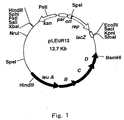
- a restriction map of the DNA fragment inserted to pLEUR12 as prepared coincides with the map corresponded with that of leu ABCD gene of Escherichia coli K-12 whose nucleotide sequence has already been determined [T. Ura et al ., Nucleic Acids Research, 20 , 3305 (1992)].
- the cloned leu operon was inserted to pMTS11914 according to the following procedures.
- pLEUR12 was cleaved with restriction enzymes Eco RI and Xba I, the cleaved DNA fragments were subjected to agarose gel electrophoresis, and an about 9 kb fragment containing leu operon was extracted from the gel.
- pMTS11914 was cleaved with restriction enzymes Eco RI and Xba I and further treated with alkali phosphatase.
- the treated DNA solutions were mixed and subjected to ligation reaction with T4 DNA ligase.
- T4 DNA ligase By using the DNA undergoing the ligation treatment, an L-leucine requiring Escherichia coli strain, C600 [Brenner S., and J. R. Beckwith, J. Mol. Biol., 13 , 629 (1965)], was transformed by electroporation. As a result, about 500 ampicillin resistance strains were obtained.
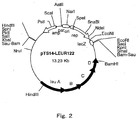
- L-leucine non-requiring strains were selected in accordance with the method described above, and cultured at 42°C and strains showing sensitivity to ampicillin were selected. Plasmid was extracted from the selected strains, the cleavage pattern of the plasmid with restriction enzymes was examined and the plasmid to which the desired leu operon was inserted was named pTS14-LEUR122 (Fig. 2).
- Escherichia coli W 113-3 [ATCC-11105, J. Bcteriol., 60 , 17 (1950)] was transformed with pTS14-LEUR122 by electroporation. Whether or not the ampicillin-resistant strains obtained by the transformation had the L-leucine productivity was examined by the bioassay method.
- the ampicillin-resistant strains obtained were spread on M9 minimal agar medium (5 g/l glucose, 6 g/l Na 2 HPO 4 , 3 g/l KH 2 PO 4 , 0.5 g/l NaCl, 1 g/l NH 4 Cl, 1 mmol/l MgSO 4 , 0.1 mmol/l CaCl 2 , 20 mg/l DL-methionine, 2% agar) containing the above-described L-leucine requiring strain CV524 at a concentration of about 1 x 10 7 cells/ml and cultured at 37°C for 12 hours.
- M9 minimal agar medium 5 g/l glucose, 6 g/l Na 2 HPO 4 , 3 g/l KH 2 PO 4 , 0.5 g/l NaCl, 1 g/l NH 4 Cl, 1 mmol/l MgSO 4 , 0.1 mmol/l CaCl 2 , 20 mg/l DL-methionine,
- the CV524 strain was grown and a white-turbid circle (hereinafter called halo) was formed.
- Strains forming a halo bigger than the average size of the halos formed were separated and cultured on LB agar medium containing ampicillin at 42°C.
- those showing resistance to ampicillin were selected as strains in which pTS14-LEUR122 was integrated into the chromosome and one of such strains was named Escherichia coli WLA-131.
- Escherichia coli WLA-131 has been deposited under Budapest Treaty with National Institute of Advanced Industrial Science and Technology, International Patent Organism Depositary: Tsukuba Central 6, 1-1-1 Higashi, Tsukuba, Ibaraki, Japan (former Agency of Industrial Science and Technology, National Institute of Bioscience and Human-Technology: 1-1-3 Higashi, Tsukuba, Ibaraki, Japan) as of September 30, 1999 as FERM BP-6902.
- Escherichia coli WLA-131 was inoculated into 5 ml of LB medium and cultured with shaking at 33°C for 24 hours.
- the resulting culture (100 ⁇ l) was again inoculated into 5 ml of LB medium and cultured with shaking at 33°C for 24 hours.
- the culture was properly diluted and spread on LB agar medium.
- the colonies grown were replicated on LB agar medium containing or without containing ampicillin to select ampicillin-sensitive strains. L-leucine productivity of the ampicillin-sensitive strains was examined according to the bioassay method described in Example 3 and one of the strains that formed a halo was named Escherichia coli WLA-1133.
- Escherichia coli WLA-1133 has been deposited under the Budapest Treaty with National Institute of Advanced Industrial Science and Technology, International Patent Organism Depositary: Tsukuba Central 6, 1-1-1 Higashi, Tsukuba, Ibaraki, Japan (former Agency of Industrial Science and Technology, National Institute of Bioscience and Human-Technology: 1-1-3 Higashi, Tsukuba, Ibaraki, Japan) as of September 30, 1999 as FERM BP-6903.
- the separated DNA was transferred to a nitrocellulose membrane and subjected to hybridization with the probe, followed by color development operation.
- Escherichia coli W113-3 and Escherichia coli WL-1133 which are the parent strains, only an about 17 kb fragment containing leu ABCD was detected.
- Escherichia coli WLA-131 two 11 kb and about 19 kb fragments were detected.
- pTS14-LEUR122 which was used for integration into the chromosome contains one Kpn I site in its multi-cloning site. Therefore, if leu operon on the plasmid was integrated on the chromosome by homologous recombination as we presumed, two 19 kb and 11kb fragments should be detected. Thus, it could be confirmed that Escherichia coli WLA-131 carries pTS14-LEUR122 integrated on leu operon on its chromosome and that in Escherichia coli WL-1133, the integrated plasmid is missing by repeated homologous recombination.
- pMTS11914-derived region of pTS14-LEUR122 integrated on the chromosome is missing from the chromosome and one copy of leu operon is present on the chromosome of Escherichia coli WL-1133.
- Escherichia coli W113-3, Escherichia coli WLA-131, and Escherichia coli WL-1133 were respectively inoculated into 20 ml of a seed medium (2% glucose, 1% peptone, 1% yeast extract, 0.25% NaCl, pH 7.0) in a 250-ml Erlenmeyer flask and cultured with shaking at 30°C for 16 hours.
- a seed medium 2% glucose, 1% peptone, 1% yeast extract, 0.25% NaCl, pH 7.0
- the obtained seed cultures (2.5 ml each) were respectively inoculated into 25 ml of a production medium (3% glucose, 1.6% ammonium sulfate, 0.1% potassium dihydrogenphosphate, 0.2% corn steep liquor, 150 mg/l DL-methionine, 4% trimagnesium phosphate, 1% calcium carbonate, pH 7.0) in a 250-ml Erlenmeyer flask and cultured with shaking at 30°C for 48 hours. Accumulation of L-leucine in the culture after the completion of culturing was quantitatively determined by high performance liquid chromatography.
- a production medium 3% glucose, 1.6% ammonium sulfate, 0.1% potassium dihydrogenphosphate, 0.2% corn steep liquor, 150 mg/l DL-methionine, 4% trimagnesium phosphate, 1% calcium carbonate, pH 7.0
Landscapes
- Genetics & Genomics (AREA)
- Health & Medical Sciences (AREA)
- Engineering & Computer Science (AREA)
- Life Sciences & Earth Sciences (AREA)
- Chemical & Material Sciences (AREA)
- Wood Science & Technology (AREA)
- Organic Chemistry (AREA)
- Biotechnology (AREA)
- General Engineering & Computer Science (AREA)
- Biomedical Technology (AREA)
- Zoology (AREA)
- Bioinformatics & Cheminformatics (AREA)
- Molecular Biology (AREA)
- Microbiology (AREA)
- Plant Pathology (AREA)
- Physics & Mathematics (AREA)
- Biochemistry (AREA)
- General Health & Medical Sciences (AREA)
- Biophysics (AREA)
- Micro-Organisms Or Cultivation Processes Thereof (AREA)
- Preparation Of Compounds By Using Micro-Organisms (AREA)
Abstract
Description
| Strain | Leu (mg/l) |
| Escherichia coli W113-3 | 0 |
| Escherichia coli WLA-131 | 151 |
| Escherichia coli WL-1133 | 145 |
Claims (14)
- A temperature-sensitive plasmid which is capable of autonomous replication in Escherichia coli K-12 at 10-30°C, but, at a temperature of 33°C or more, is incapable of autonomous replication in Escherichia coli K-12 or is distributed unhomogeneously upon the cell division of Escherichia coli K-12, thereby not to be stably carried within cells of Escherichia coli K-12 under said temperature, and which is incapable of autonomous replication in a microorganism belonging to the genus Escherichia other than Escherichia coli K-12 or is distributed unhomogeneously upon cell division of said microorganism at any temperature, thereby not to be stably carried within cells of said microorganism.
- The plasmid according to claim 1, wherein the microorganism belonging to the genus Escherichia other than Escherichia coli K-12 is Escherichia coli W or Escherichia coli B.
- The plasmid according to claim 1 or 2, wherein the plasmid is a plasmid containing a DNA fragment capable of undergoing homologous recombination with the chromosome of Escherichia coli.
- The plasmid according to any one of claims 1 to 3, wherein the plasmid is carried by Escherichia coli DH5α/pMTS11910 (FERM BP-6904) or Escherichia coli DH5α/pMTS11914 (FERM BP-6905).
- A plasmid having one or more genes integrated therein, which is obtainable by integrating any genes into the plasmid according to any one of claims 1 to 3.
- A method for integrating one or more genes, which comprises introducing the plasmid according to any one of claims 1 to 5 to a microorganism belonging to the genus Escherichia other than Escherichia coli K-12.
- The method for integrating one or more genes according to claim 6, wherein the microorganism belonging to the genus Escherichia other than Escherichia coli K-12 is Escherichia coli W or Escherichia coli B.
- The method for integrating one or more genes according to claim 6 or 7, wherein the integration of the genes is an integration in which the plasmid is integrated into a chromosome.
- The method for integrating one or more genes according to any of claims 6 to 8, wherein the integration of one or more genes is an integration in which a DNA fragment on the plasmid is substituted with a DNA fragment on a chromosome by homologous recombination.
- A transformant obtainable by the method according to any of claims 6 to 9.
- The transformant according to claim 10, wherein the transformant is a transformant selected from the group consisting of Escherichia coli DHSα/pMTS11910 (FERM BP-6904), Escherichia coli DH5α/pMTS11914 (FERM BP-6905), Escherichia coli WLA-131 (FERM BP-6902), and Escherichia coli WL-1133 (FERM BP-6903).
- A method for producing a useful substance, which comprises culturing the transformant according to claim 10 or 11 in a medium, allowing the useful substance to produce and accumulate in a culture and recovering the useful substance from the culture.
- The method according to claim 12, wherein the useful substance is selected from the group consisting of amino acids, organic acids, nucleic acids, nucleic acid-related substances, sugars, lipids, vitamins, and pigments, and derivatives thereof.
- The method for producing a useful substance according to claim 12, wherein the useful substance is a protein.
Applications Claiming Priority (3)
| Application Number | Priority Date | Filing Date | Title |
|---|---|---|---|
| JP2000105086 | 2000-04-06 | ||
| JP2000105086 | 2000-04-06 | ||
| PCT/JP2001/002980 WO2001077345A1 (en) | 2000-04-06 | 2001-04-06 | Plasmid to be used in chromosome recombination of escherichia coli |
Publications (2)
| Publication Number | Publication Date |
|---|---|
| EP1288300A1 true EP1288300A1 (en) | 2003-03-05 |
| EP1288300A4 EP1288300A4 (en) | 2004-07-14 |
Family
ID=18618514
Family Applications (1)
| Application Number | Title | Priority Date | Filing Date |
|---|---|---|---|
| EP01919803A Withdrawn EP1288300A4 (en) | 2000-04-06 | 2001-04-06 | PLASMID FOR USE IN THE RECOMBINATION OF ESCHERICHIA COLI CHROMOSOMES |
Country Status (9)
| Country | Link |
|---|---|
| US (1) | US7223559B2 (en) |
| EP (1) | EP1288300A4 (en) |
| KR (1) | KR100814313B1 (en) |
| CN (1) | CN1230545C (en) |
| AU (1) | AU2001246849A1 (en) |
| CA (1) | CA2405326A1 (en) |
| HK (1) | HK1052370A1 (en) |
| RU (1) | RU2314346C2 (en) |
| WO (1) | WO2001077345A1 (en) |
Families Citing this family (1)
| Publication number | Priority date | Publication date | Assignee | Title |
|---|---|---|---|---|
| CN106011162A (en) * | 2016-01-27 | 2016-10-12 | 浙江大学 | New method for in-situ evolution of target protein in escherichia coli cells |
Family Cites Families (4)
| Publication number | Priority date | Publication date | Assignee | Title |
|---|---|---|---|---|
| US4710473A (en) * | 1983-08-10 | 1987-12-01 | Amgen, Inc. | DNA plasmids |
| US4743546A (en) * | 1985-02-13 | 1988-05-10 | Biotechnica International, Inc. | Controlled gene excision |
| ATE177784T1 (en) * | 1990-12-07 | 1999-04-15 | Univ Florida | RECOMBINANT CELLS THAT EXPRESS HIGHLY CHROMOSOMAL-INTEGRATED HETEROLOGUE GENES |
| FR2688515B1 (en) * | 1992-03-13 | 1995-03-31 | Institut Rech Agronomique | THERMOSENSITIVE PLASMID. |
-
2001
- 2001-04-06 EP EP01919803A patent/EP1288300A4/en not_active Withdrawn
- 2001-04-06 WO PCT/JP2001/002980 patent/WO2001077345A1/en not_active Ceased
- 2001-04-06 KR KR1020027013391A patent/KR100814313B1/en not_active Expired - Fee Related
- 2001-04-06 RU RU2002129572/13A patent/RU2314346C2/en not_active IP Right Cessation
- 2001-04-06 US US10/240,712 patent/US7223559B2/en not_active Expired - Fee Related
- 2001-04-06 CN CNB018076130A patent/CN1230545C/en not_active Expired - Fee Related
- 2001-04-06 CA CA002405326A patent/CA2405326A1/en not_active Abandoned
- 2001-04-06 HK HK03104616.3A patent/HK1052370A1/en unknown
- 2001-04-06 AU AU2001246849A patent/AU2001246849A1/en not_active Abandoned
Also Published As
| Publication number | Publication date |
|---|---|
| AU2001246849A1 (en) | 2001-10-23 |
| US7223559B2 (en) | 2007-05-29 |
| RU2314346C2 (en) | 2008-01-10 |
| HK1052370A1 (en) | 2003-09-11 |
| KR20030072207A (en) | 2003-09-13 |
| CA2405326A1 (en) | 2001-10-03 |
| CN1422335A (en) | 2003-06-04 |
| US20030049846A1 (en) | 2003-03-13 |
| CN1230545C (en) | 2005-12-07 |
| KR100814313B1 (en) | 2008-03-18 |
| EP1288300A4 (en) | 2004-07-14 |
| WO2001077345A1 (en) | 2001-10-18 |
Similar Documents
| Publication | Publication Date | Title |
|---|---|---|
| EP0136359B1 (en) | Process for preparing l-histidine | |
| EP0197335B1 (en) | Process for producing l-lysine | |
| EP1369486B1 (en) | Plasmid shuttle vector between escherichia coli and brevibacillus | |
| EP0088166A2 (en) | Method for expressing a gene | |
| JPS6012995A (en) | Production of l-threonine and l-isoleucine by fermentation | |
| CN116802283A (en) | ATP-PRT variant with reduced feedback inhibition caused by histidine and histidine-producing strain expressing the variant | |
| CN116745412A (en) | ATP-PRT variant with reduced feedback inhibition caused by histidine and histidine-producing strain expressing the variant | |
| CN116783290A (en) | ATP-PRT variant with reduced feedback inhibition caused by histidine and histidine-producing strain expressing the variant | |
| KR102433200B1 (en) | ATP-PRT variant with reduced feedback inhibition by histidine and histidine-producing strain expressing the same | |
| US20240060057A1 (en) | Atp-prt variant with reduced feedback inhibition by histidine, and histidine-producing strain expressing same | |
| EP0401735B1 (en) | Process for producing -L-tryptophan | |
| EP0233019B1 (en) | Recombinant dna plasmid for xanthan gum synthesis | |
| CA1218025A (en) | Process for producing histidine | |
| EP0164754B1 (en) | Process for producing n-acetylneuraminate lyase | |
| US7223559B2 (en) | Plasmids for chromosomal recombination of Escherichia coli | |
| KR20180111680A (en) | Method of Preparing Corynebacterium Variant Based on CRISPR/Cas System, Recombinase, and ssODN | |
| EP0412688A1 (en) | Modified DNA and its use | |
| US5405777A (en) | Acetic acid assimilating gene and a method for preventing accumulation of acetic acid in culture medium | |
| EP0537553A2 (en) | Farnesyl pyrophosphate synthetase and DNA sequence encoding the same | |
| EP0385415B1 (en) | Process for producing NADH oxidase | |
| EP0183006B1 (en) | A recombinant dna-molecule, coryneform bacteria carrying recombinant dna and process for producing an aromatic amino acid by using the same | |
| EP0180192B1 (en) | Novel plasmids | |
| JP4162383B2 (en) | Genes involved in the production of homoglutamic acid and use thereof | |
| EP0240105B1 (en) | A gene coding for biotin synthetase and utilization thereof | |
| JPS63157986A (en) | Production of l-phenylalanine by gene recombination |
Legal Events
| Date | Code | Title | Description |
|---|---|---|---|
| PUAI | Public reference made under article 153(3) epc to a published international application that has entered the european phase |
Free format text: ORIGINAL CODE: 0009012 |
|
| 17P | Request for examination filed |
Effective date: 20021016 |
|
| AK | Designated contracting states |
Kind code of ref document: A1 Designated state(s): AT BE CH CY DE DK ES FI FR GB GR IE IT LI LU MC NL PT SE TR Designated state(s): AT BE CH CY DE DK ES FI FR GB GR IE IT LI LU MC NL PT SE TR |
|
| AX | Request for extension of the european patent |
Extension state: AL LT LV MK RO SI |
|
| XX | Miscellaneous (additional remarks) |
Free format text: THE APPLICANT REQUESTS CORRECTION OF OBVIOUS ERRORS PURSUANT TO RULE 88 EPC. |
|
| A4 | Supplementary search report drawn up and despatched |
Effective date: 20040527 |
|
| 17Q | First examination report despatched |
Effective date: 20050530 |
|
| GRAP | Despatch of communication of intention to grant a patent |
Free format text: ORIGINAL CODE: EPIDOSNIGR1 |
|
| STAA | Information on the status of an ep patent application or granted ep patent |
Free format text: STATUS: THE APPLICATION IS DEEMED TO BE WITHDRAWN |
|
| 18D | Application deemed to be withdrawn |
Effective date: 20081129 |
|
| REG | Reference to a national code |
Ref country code: HK Ref legal event code: WD Ref document number: 1052370 Country of ref document: HK |