EP1287158B1 - Screening system for antibiotics - Google Patents
Screening system for antibiotics Download PDFInfo
- Publication number
- EP1287158B1 EP1287158B1 EP01934165A EP01934165A EP1287158B1 EP 1287158 B1 EP1287158 B1 EP 1287158B1 EP 01934165 A EP01934165 A EP 01934165A EP 01934165 A EP01934165 A EP 01934165A EP 1287158 B1 EP1287158 B1 EP 1287158B1
- Authority
- EP
- European Patent Office
- Prior art keywords
- microorganism
- promoter
- transformed
- signal
- reporter gene
- Prior art date
- Legal status (The legal status is an assumption and is not a legal conclusion. Google has not performed a legal analysis and makes no representation as to the accuracy of the status listed.)
- Expired - Lifetime
Links
- 239000003242 anti bacterial agent Substances 0.000 title claims abstract description 29
- 229940088710 antibiotic agent Drugs 0.000 title claims description 20
- 238000012216 screening Methods 0.000 title description 9
- 244000005700 microbiome Species 0.000 claims abstract description 51
- 238000000034 method Methods 0.000 claims abstract description 40
- 108700008625 Reporter Genes Proteins 0.000 claims abstract description 28
- 230000003115 biocidal effect Effects 0.000 claims abstract description 23
- 230000000694 effects Effects 0.000 claims abstract description 15
- 230000001105 regulatory effect Effects 0.000 claims abstract description 13
- 230000019491 signal transduction Effects 0.000 claims abstract description 13
- 150000007523 nucleic acids Chemical class 0.000 claims abstract description 12
- 108091023040 Transcription factor Proteins 0.000 claims abstract description 11
- 108020004707 nucleic acids Proteins 0.000 claims abstract description 11
- 102000039446 nucleic acids Human genes 0.000 claims abstract description 11
- 230000004044 response Effects 0.000 claims abstract description 11
- 239000012528 membrane Substances 0.000 claims abstract description 9
- 230000000638 stimulation Effects 0.000 claims abstract description 8
- 108090000623 proteins and genes Proteins 0.000 claims description 32
- 210000004027 cell Anatomy 0.000 claims description 28
- 239000013598 vector Substances 0.000 claims description 17
- 230000035945 sensitivity Effects 0.000 claims description 11
- 102000004169 proteins and genes Human genes 0.000 claims description 9
- 241000894006 Bacteria Species 0.000 claims description 8
- 210000002421 cell wall Anatomy 0.000 claims description 8
- 241000187747 Streptomyces Species 0.000 claims description 5
- 241000894007 species Species 0.000 claims description 5
- 230000000875 corresponding effect Effects 0.000 claims description 4
- 238000002360 preparation method Methods 0.000 claims description 3
- 230000015572 biosynthetic process Effects 0.000 claims description 2
- 230000002596 correlated effect Effects 0.000 claims description 2
- 239000012228 culture supernatant Substances 0.000 claims description 2
- 238000001514 detection method Methods 0.000 claims description 2
- 238000012545 processing Methods 0.000 claims description 2
- 239000002689 soil Substances 0.000 claims description 2
- 238000003786 synthesis reaction Methods 0.000 claims description 2
- 239000000047 product Substances 0.000 claims 2
- 230000001131 transforming effect Effects 0.000 claims 1
- 150000001875 compounds Chemical class 0.000 description 13
- 238000003556 assay Methods 0.000 description 11
- 229930027917 kanamycin Natural products 0.000 description 11
- 229960000318 kanamycin Drugs 0.000 description 11
- SBUJHOSQTJFQJX-NOAMYHISSA-N kanamycin Chemical compound O[C@@H]1[C@@H](O)[C@H](O)[C@@H](CN)O[C@@H]1O[C@H]1[C@H](O)[C@@H](O[C@@H]2[C@@H]([C@@H](N)[C@H](O)[C@@H](CO)O2)O)[C@H](N)C[C@@H]1N SBUJHOSQTJFQJX-NOAMYHISSA-N 0.000 description 11
- 229930182823 kanamycin A Natural products 0.000 description 11
- 239000013612 plasmid Substances 0.000 description 10
- 239000000523 sample Substances 0.000 description 10
- 108020004414 DNA Proteins 0.000 description 8
- 102000004190 Enzymes Human genes 0.000 description 8
- 108090000790 Enzymes Proteins 0.000 description 8
- 229940088598 enzyme Drugs 0.000 description 8
- 108010059993 Vancomycin Proteins 0.000 description 7
- 229960003165 vancomycin Drugs 0.000 description 7
- MYPYJXKWCTUITO-LYRMYLQWSA-N vancomycin Chemical compound O([C@@H]1[C@@H](O)[C@H](O)[C@@H](CO)O[C@H]1OC1=C2C=C3C=C1OC1=CC=C(C=C1Cl)[C@@H](O)[C@H](C(N[C@@H](CC(N)=O)C(=O)N[C@H]3C(=O)N[C@H]1C(=O)N[C@H](C(N[C@@H](C3=CC(O)=CC(O)=C3C=3C(O)=CC=C1C=3)C(O)=O)=O)[C@H](O)C1=CC=C(C(=C1)Cl)O2)=O)NC(=O)[C@@H](CC(C)C)NC)[C@H]1C[C@](C)(N)[C@H](O)[C@H](C)O1 MYPYJXKWCTUITO-LYRMYLQWSA-N 0.000 description 7
- MYPYJXKWCTUITO-UHFFFAOYSA-N vancomycin Natural products O1C(C(=C2)Cl)=CC=C2C(O)C(C(NC(C2=CC(O)=CC(O)=C2C=2C(O)=CC=C3C=2)C(O)=O)=O)NC(=O)C3NC(=O)C2NC(=O)C(CC(N)=O)NC(=O)C(NC(=O)C(CC(C)C)NC)C(O)C(C=C3Cl)=CC=C3OC3=CC2=CC1=C3OC1OC(CO)C(O)C(O)C1OC1CC(C)(N)C(O)C(C)O1 MYPYJXKWCTUITO-UHFFFAOYSA-N 0.000 description 7
- JGSARLDLIJGVTE-MBNYWOFBSA-N Penicillin G Chemical compound N([C@H]1[C@H]2SC([C@@H](N2C1=O)C(O)=O)(C)C)C(=O)CC1=CC=CC=C1 JGSARLDLIJGVTE-MBNYWOFBSA-N 0.000 description 6
- 102000006635 beta-lactamase Human genes 0.000 description 6
- 238000004166 bioassay Methods 0.000 description 6
- 230000012010 growth Effects 0.000 description 6
- 125000001475 halogen functional group Chemical group 0.000 description 6
- 239000000411 inducer Substances 0.000 description 6
- 230000001939 inductive effect Effects 0.000 description 6
- 108090000204 Dipeptidase 1 Proteins 0.000 description 5
- 108010081391 Ristocetin Proteins 0.000 description 5
- BGTFCAQCKWKTRL-YDEUACAXSA-N chembl1095986 Chemical compound C1[C@@H](N)[C@@H](O)[C@H](C)O[C@H]1O[C@@H]([C@H]1C(N[C@H](C2=CC(O)=CC(O[C@@H]3[C@H]([C@@H](O)[C@H](O)[C@@H](CO)O3)O)=C2C=2C(O)=CC=C(C=2)[C@@H](NC(=O)[C@@H]2NC(=O)[C@@H]3C=4C=C(C(=C(O)C=4)C)OC=4C(O)=CC=C(C=4)[C@@H](N)C(=O)N[C@@H](C(=O)N3)[C@H](O)C=3C=CC(O4)=CC=3)C(=O)N1)C(O)=O)=O)C(C=C1)=CC=C1OC1=C(O[C@@H]3[C@H]([C@H](O)[C@@H](O)[C@H](CO[C@@H]5[C@H]([C@@H](O)[C@H](O)[C@@H](C)O5)O)O3)O[C@@H]3[C@H]([C@@H](O)[C@H](O)[C@@H](CO)O3)O[C@@H]3[C@H]([C@H](O)[C@@H](CO)O3)O)C4=CC2=C1 BGTFCAQCKWKTRL-YDEUACAXSA-N 0.000 description 5
- 239000012634 fragment Substances 0.000 description 5
- 230000014509 gene expression Effects 0.000 description 5
- 230000010354 integration Effects 0.000 description 5
- 229950004257 ristocetin Drugs 0.000 description 5
- 238000012360 testing method Methods 0.000 description 5
- 238000013518 transcription Methods 0.000 description 5
- 230000035897 transcription Effects 0.000 description 5
- ZHNUHDYFZUAESO-UHFFFAOYSA-N Formamide Chemical compound NC=O ZHNUHDYFZUAESO-UHFFFAOYSA-N 0.000 description 4
- 108010015899 Glycopeptides Proteins 0.000 description 4
- 102000002068 Glycopeptides Human genes 0.000 description 4
- 108060001084 Luciferase Proteins 0.000 description 4
- 239000005089 Luciferase Substances 0.000 description 4
- 108091028043 Nucleic acid sequence Proteins 0.000 description 4
- 241001446311 Streptomyces coelicolor A3(2) Species 0.000 description 4
- 108010053950 Teicoplanin Proteins 0.000 description 4
- 210000000349 chromosome Anatomy 0.000 description 4
- 230000004927 fusion Effects 0.000 description 4
- 230000001965 increasing effect Effects 0.000 description 4
- 108010001478 Bacitracin Proteins 0.000 description 3
- 241001045988 Neogene Species 0.000 description 3
- 241000187432 Streptomyces coelicolor Species 0.000 description 3
- DDTDNCYHLGRFBM-YZEKDTGTSA-N chembl2367892 Chemical compound CC(=O)N[C@H]1[C@@H](O)[C@H](O)[C@H](CO)O[C@H]1O[C@@H]([C@H]1C(N[C@@H](C2=CC(O)=CC(O[C@@H]3[C@H]([C@H](O)[C@H](O)[C@@H](CO)O3)O)=C2C=2C(O)=CC=C(C=2)[C@@H](NC(=O)[C@@H]2NC(=O)[C@@H]3C=4C=C(O)C=C(C=4)OC=4C(O)=CC=C(C=4)[C@@H](N)C(=O)N[C@H](CC=4C=C(Cl)C(O5)=CC=4)C(=O)N3)C(=O)N1)C(O)=O)=O)C(C=C1Cl)=CC=C1OC1=C(O[C@H]3[C@H]([C@@H](O)[C@H](O)[C@H](CO)O3)NC(C)=O)C5=CC2=C1 DDTDNCYHLGRFBM-YZEKDTGTSA-N 0.000 description 3
- 238000010276 construction Methods 0.000 description 3
- 230000006870 function Effects 0.000 description 3
- 238000003780 insertion Methods 0.000 description 3
- 230000037431 insertion Effects 0.000 description 3
- 231100000636 lethal dose Toxicity 0.000 description 3
- 230000002101 lytic effect Effects 0.000 description 3
- 101150091879 neo gene Proteins 0.000 description 3
- 229940056360 penicillin g Drugs 0.000 description 3
- 229960001608 teicoplanin Drugs 0.000 description 3
- OHKOGUYZJXTSFX-KZFFXBSXSA-N ticarcillin Chemical compound C=1([C@@H](C(O)=O)C(=O)N[C@H]2[C@H]3SC([C@@H](N3C2=O)C(O)=O)(C)C)C=CSC=1 OHKOGUYZJXTSFX-KZFFXBSXSA-N 0.000 description 3
- 229960004659 ticarcillin Drugs 0.000 description 3
- 150000003952 β-lactams Chemical class 0.000 description 3
- 108700007698 Genetic Terminator Regions Proteins 0.000 description 2
- 229930193140 Neomycin Natural products 0.000 description 2
- 229930182555 Penicillin Natural products 0.000 description 2
- 229960003022 amoxicillin Drugs 0.000 description 2
- LSQZJLSUYDQPKJ-NJBDSQKTSA-N amoxicillin Chemical compound C1([C@@H](N)C(=O)N[C@H]2[C@H]3SC([C@@H](N3C2=O)C(O)=O)(C)C)=CC=C(O)C=C1 LSQZJLSUYDQPKJ-NJBDSQKTSA-N 0.000 description 2
- 229960003071 bacitracin Drugs 0.000 description 2
- 229930184125 bacitracin Natural products 0.000 description 2
- CLKOFPXJLQSYAH-ABRJDSQDSA-N bacitracin A Chemical compound C1SC([C@@H](N)[C@@H](C)CC)=N[C@@H]1C(=O)N[C@@H](CC(C)C)C(=O)N[C@H](CCC(O)=O)C(=O)N[C@@H]([C@@H](C)CC)C(=O)N[C@@H]1C(=O)N[C@H](CCCN)C(=O)N[C@@H]([C@@H](C)CC)C(=O)N[C@H](CC=2C=CC=CC=2)C(=O)N[C@@H](CC=2N=CNC=2)C(=O)N[C@H](CC(O)=O)C(=O)N[C@@H](CC(N)=O)C(=O)NCCCC1 CLKOFPXJLQSYAH-ABRJDSQDSA-N 0.000 description 2
- 230000001580 bacterial effect Effects 0.000 description 2
- 230000008859 change Effects 0.000 description 2
- 238000006243 chemical reaction Methods 0.000 description 2
- 101150101524 cseB gene Proteins 0.000 description 2
- 230000007423 decrease Effects 0.000 description 2
- 238000012217 deletion Methods 0.000 description 2
- 230000037430 deletion Effects 0.000 description 2
- 238000009396 hybridization Methods 0.000 description 2
- 230000000977 initiatory effect Effects 0.000 description 2
- 229940041009 monobactams Drugs 0.000 description 2
- -1 monocyclic β-lactams Chemical class 0.000 description 2
- 238000002703 mutagenesis Methods 0.000 description 2
- 231100000350 mutagenesis Toxicity 0.000 description 2
- 229960004927 neomycin Drugs 0.000 description 2
- 239000002773 nucleotide Substances 0.000 description 2
- 125000003729 nucleotide group Chemical group 0.000 description 2
- 235000015097 nutrients Nutrition 0.000 description 2
- LSQZJLSUYDQPKJ-UHFFFAOYSA-N p-Hydroxyampicillin Natural products O=C1N2C(C(O)=O)C(C)(C)SC2C1NC(=O)C(N)C1=CC=C(O)C=C1 LSQZJLSUYDQPKJ-UHFFFAOYSA-N 0.000 description 2
- 150000002960 penicillins Chemical class 0.000 description 2
- 108090000765 processed proteins & peptides Proteins 0.000 description 2
- 102000004196 processed proteins & peptides Human genes 0.000 description 2
- UCSJYZPVAKXKNQ-HZYVHMACSA-N streptomycin Chemical compound CN[C@H]1[C@H](O)[C@@H](O)[C@H](CO)O[C@H]1O[C@@H]1[C@](C=O)(O)[C@H](C)O[C@H]1O[C@@H]1[C@@H](NC(N)=N)[C@H](O)[C@@H](NC(N)=N)[C@H](O)[C@H]1O UCSJYZPVAKXKNQ-HZYVHMACSA-N 0.000 description 2
- 238000006467 substitution reaction Methods 0.000 description 2
- 241000194108 Bacillus licheniformis Species 0.000 description 1
- 108090000363 Bacterial Luciferases Proteins 0.000 description 1
- 102100026189 Beta-galactosidase Human genes 0.000 description 1
- 108020004256 Beta-lactamase Proteins 0.000 description 1
- 102000014914 Carrier Proteins Human genes 0.000 description 1
- 108010078791 Carrier Proteins Proteins 0.000 description 1
- 229930186147 Cephalosporin Natural products 0.000 description 1
- IGXWBGJHJZYPQS-SSDOTTSWSA-N D-Luciferin Chemical compound OC(=O)[C@H]1CSC(C=2SC3=CC=C(O)C=C3N=2)=N1 IGXWBGJHJZYPQS-SSDOTTSWSA-N 0.000 description 1
- 108010054814 DNA Gyrase Proteins 0.000 description 1
- 102000004163 DNA-directed RNA polymerases Human genes 0.000 description 1
- 108090000626 DNA-directed RNA polymerases Proteins 0.000 description 1
- CYCGRDQQIOGCKX-UHFFFAOYSA-N Dehydro-luciferin Natural products OC(=O)C1=CSC(C=2SC3=CC(O)=CC=C3N=2)=N1 CYCGRDQQIOGCKX-UHFFFAOYSA-N 0.000 description 1
- 206010059866 Drug resistance Diseases 0.000 description 1
- 102000004533 Endonucleases Human genes 0.000 description 1
- 108010042407 Endonucleases Proteins 0.000 description 1
- 241000194031 Enterococcus faecium Species 0.000 description 1
- 101100102350 Enterococcus faecium vanH gene Proteins 0.000 description 1
- 241000588724 Escherichia coli Species 0.000 description 1
- BJGNCJDXODQBOB-UHFFFAOYSA-N Fivefly Luciferin Natural products OC(=O)C1CSC(C=2SC3=CC(O)=CC=C3N=2)=N1 BJGNCJDXODQBOB-UHFFFAOYSA-N 0.000 description 1
- 108700028146 Genetic Enhancer Elements Proteins 0.000 description 1
- 108700039691 Genetic Promoter Regions Proteins 0.000 description 1
- 241000238631 Hexapoda Species 0.000 description 1
- 206010020751 Hypersensitivity Diseases 0.000 description 1
- 108010025815 Kanamycin Kinase Proteins 0.000 description 1
- DDWFXDSYGUXRAY-UHFFFAOYSA-N Luciferin Natural products CCc1c(C)c(CC2NC(=O)C(=C2C=C)C)[nH]c1Cc3[nH]c4C(=C5/NC(CC(=O)O)C(C)C5CC(=O)O)CC(=O)c4c3C DDWFXDSYGUXRAY-UHFFFAOYSA-N 0.000 description 1
- 102000016943 Muramidase Human genes 0.000 description 1
- 108010014251 Muramidase Proteins 0.000 description 1
- 241000186362 Mycobacterium leprae Species 0.000 description 1
- 241000187480 Mycobacterium smegmatis Species 0.000 description 1
- 241000187479 Mycobacterium tuberculosis Species 0.000 description 1
- 108010062010 N-Acetylmuramoyl-L-alanine Amidase Proteins 0.000 description 1
- YJQPYGGHQPGBLI-UHFFFAOYSA-N Novobiocin Natural products O1C(C)(C)C(OC)C(OC(N)=O)C(O)C1OC1=CC=C(C(O)=C(NC(=O)C=2C=C(CC=C(C)C)C(O)=CC=2)C(=O)O2)C2=C1C YJQPYGGHQPGBLI-UHFFFAOYSA-N 0.000 description 1
- 108091000080 Phosphotransferase Proteins 0.000 description 1
- 241001655322 Streptomycetales Species 0.000 description 1
- NSFFHOGKXHRQEW-UHFFFAOYSA-N Thiostrepton B Natural products N1C(=O)C(C)NC(=O)C(=C)NC(=O)C(C)NC(=O)C(C(C)CC)NC(C(C2=N3)O)C=CC2=C(C(C)O)C=C3C(=O)OC(C)C(C=2SC=C(N=2)C2N=3)NC(=O)C(N=4)=CSC=4C(C(C)(O)C(C)O)NC(=O)C(N=4)CSC=4C(=CC)NC(=O)C(C(C)O)NC(=O)C(N=4)=CSC=4C21CCC=3C1=NC(C(=O)NC(=C)C(=O)NC(=C)C(N)=O)=CS1 NSFFHOGKXHRQEW-UHFFFAOYSA-N 0.000 description 1
- 102000040945 Transcription factor Human genes 0.000 description 1
- 241000607618 Vibrio harveyi Species 0.000 description 1
- 230000004913 activation Effects 0.000 description 1
- 239000012190 activator Substances 0.000 description 1
- 229960000723 ampicillin Drugs 0.000 description 1
- AVKUERGKIZMTKX-NJBDSQKTSA-N ampicillin Chemical compound C1([C@@H](N)C(=O)N[C@H]2[C@H]3SC([C@@H](N3C2=O)C(O)=O)(C)C)=CC=CC=C1 AVKUERGKIZMTKX-NJBDSQKTSA-N 0.000 description 1
- 239000012491 analyte Substances 0.000 description 1
- 238000004458 analytical method Methods 0.000 description 1
- 230000000845 anti-microbial effect Effects 0.000 description 1
- 238000013459 approach Methods 0.000 description 1
- 239000003782 beta lactam antibiotic agent Substances 0.000 description 1
- 108010005774 beta-Galactosidase Proteins 0.000 description 1
- 102000023732 binding proteins Human genes 0.000 description 1
- 108091008324 binding proteins Proteins 0.000 description 1
- 230000033228 biological regulation Effects 0.000 description 1
- 230000001851 biosynthetic effect Effects 0.000 description 1
- 239000000872 buffer Substances 0.000 description 1
- QYIYFLOTGYLRGG-GPCCPHFNSA-N cefaclor Chemical compound C1([C@H](C(=O)N[C@@H]2C(N3C(=C(Cl)CS[C@@H]32)C(O)=O)=O)N)=CC=CC=C1 QYIYFLOTGYLRGG-GPCCPHFNSA-N 0.000 description 1
- 229960005361 cefaclor Drugs 0.000 description 1
- 229960004841 cefadroxil Drugs 0.000 description 1
- NBFNMSULHIODTC-CYJZLJNKSA-N cefadroxil monohydrate Chemical compound O.C1([C@@H](N)C(=O)N[C@H]2[C@@H]3N(C2=O)C(=C(CS3)C)C(O)=O)=CC=C(O)C=C1 NBFNMSULHIODTC-CYJZLJNKSA-N 0.000 description 1
- 229960002588 cefradine Drugs 0.000 description 1
- 210000000170 cell membrane Anatomy 0.000 description 1
- 230000001413 cellular effect Effects 0.000 description 1
- 229940106164 cephalexin Drugs 0.000 description 1
- ZAIPMKNFIOOWCQ-UEKVPHQBSA-N cephalexin Chemical compound C1([C@@H](N)C(=O)N[C@H]2[C@@H]3N(C2=O)C(=C(CS3)C)C(O)=O)=CC=CC=C1 ZAIPMKNFIOOWCQ-UEKVPHQBSA-N 0.000 description 1
- 229940124587 cephalosporin Drugs 0.000 description 1
- 150000001780 cephalosporins Chemical class 0.000 description 1
- RDLPVSKMFDYCOR-UEKVPHQBSA-N cephradine Chemical compound C1([C@@H](N)C(=O)N[C@H]2[C@@H]3N(C2=O)C(=C(CS3)C)C(O)=O)=CCC=CC1 RDLPVSKMFDYCOR-UEKVPHQBSA-N 0.000 description 1
- 238000012512 characterization method Methods 0.000 description 1
- 239000003795 chemical substances by application Substances 0.000 description 1
- 230000002759 chromosomal effect Effects 0.000 description 1
- 238000010367 cloning Methods 0.000 description 1
- 101150032057 cseA gene Proteins 0.000 description 1
- 101150037293 cseC gene Proteins 0.000 description 1
- 230000002950 deficient Effects 0.000 description 1
- 230000003413 degradative effect Effects 0.000 description 1
- 238000013461 design Methods 0.000 description 1
- 230000029087 digestion Effects 0.000 description 1
- 238000002474 experimental method Methods 0.000 description 1
- 239000000284 extract Substances 0.000 description 1
- 108091006047 fluorescent proteins Proteins 0.000 description 1
- 102000034287 fluorescent proteins Human genes 0.000 description 1
- 108091008053 gene clusters Proteins 0.000 description 1
- 230000002068 genetic effect Effects 0.000 description 1
- 238000010353 genetic engineering Methods 0.000 description 1
- 244000052637 human pathogen Species 0.000 description 1
- 238000001727 in vivo Methods 0.000 description 1
- 230000006698 induction Effects 0.000 description 1
- 238000002955 isolation Methods 0.000 description 1
- 230000001320 lysogenic effect Effects 0.000 description 1
- 238000004519 manufacturing process Methods 0.000 description 1
- 239000000463 material Substances 0.000 description 1
- 239000011159 matrix material Substances 0.000 description 1
- 230000001404 mediated effect Effects 0.000 description 1
- 238000010369 molecular cloning Methods 0.000 description 1
- 125000002950 monocyclic group Chemical group 0.000 description 1
- 239000013642 negative control Substances 0.000 description 1
- 229930189801 nocardicin Natural products 0.000 description 1
- CTNZOGJNVIFEBA-UPSUJEDGSA-N nocardicin A Chemical compound C1=CC(OCC[C@@H](N)C(O)=O)=CC=C1C(=N\O)\C(=O)N[C@@H]1C(=O)N([C@@H](C(O)=O)C=2C=CC(O)=CC=2)C1 CTNZOGJNVIFEBA-UPSUJEDGSA-N 0.000 description 1
- CTNZOGJNVIFEBA-SCTDSRPQSA-N nocardicin A Natural products N[C@@H](CCOc1ccc(cc1)C(=NO)C(=O)N[C@@H]2CN([C@H](C(=O)O)c3ccc(O)cc3)C2=O)C(=O)O CTNZOGJNVIFEBA-SCTDSRPQSA-N 0.000 description 1
- 229960002950 novobiocin Drugs 0.000 description 1
- YJQPYGGHQPGBLI-KGSXXDOSSA-N novobiocin Chemical compound O1C(C)(C)[C@H](OC)[C@@H](OC(N)=O)[C@@H](O)[C@@H]1OC1=CC=C(C(O)=C(NC(=O)C=2C=C(CC=C(C)C)C(O)=CC=2)C(=O)O2)C2=C1C YJQPYGGHQPGBLI-KGSXXDOSSA-N 0.000 description 1
- 230000003287 optical effect Effects 0.000 description 1
- UWYHMGVUTGAWSP-JKIFEVAISA-N oxacillin Chemical compound N([C@@H]1C(N2[C@H](C(C)(C)S[C@@H]21)C(O)=O)=O)C(=O)C1=C(C)ON=C1C1=CC=CC=C1 UWYHMGVUTGAWSP-JKIFEVAISA-N 0.000 description 1
- 229960001019 oxacillin Drugs 0.000 description 1
- 230000008488 polyadenylation Effects 0.000 description 1
- 239000003910 polypeptide antibiotic agent Substances 0.000 description 1
- 230000003389 potentiating effect Effects 0.000 description 1
- 210000001938 protoplast Anatomy 0.000 description 1
- 230000006798 recombination Effects 0.000 description 1
- 238000005215 recombination Methods 0.000 description 1
- 230000010076 replication Effects 0.000 description 1
- 230000003362 replicative effect Effects 0.000 description 1
- 238000012163 sequencing technique Methods 0.000 description 1
- 231100000161 signs of toxicity Toxicity 0.000 description 1
- 238000001228 spectrum Methods 0.000 description 1
- 229960005322 streptomycin Drugs 0.000 description 1
- 239000000758 substrate Substances 0.000 description 1
- 229930188070 thiostrepton Natural products 0.000 description 1
- 229940063214 thiostrepton Drugs 0.000 description 1
- NSFFHOGKXHRQEW-AIHSUZKVSA-N thiostrepton Chemical compound C([C@]12C=3SC=C(N=3)C(=O)N[C@H](C(=O)NC(/C=3SC[C@@H](N=3)C(=O)N[C@H](C=3SC=C(N=3)C(=O)N[C@H](C=3SC=C(N=3)[C@H]1N=1)[C@@H](C)OC(=O)C3=CC(=C4C=C[C@H]([C@@H](C4=N3)O)N[C@H](C(N[C@@H](C)C(=O)NC(=C)C(=O)N[C@@H](C)C(=O)N2)=O)[C@@H](C)CC)[C@H](C)O)[C@](C)(O)[C@@H](C)O)=C\C)[C@@H](C)O)CC=1C1=NC(C(=O)NC(=C)C(=O)NC(=C)C(N)=O)=CS1 NSFFHOGKXHRQEW-AIHSUZKVSA-N 0.000 description 1
- NSFFHOGKXHRQEW-OFMUQYBVSA-N thiostrepton A Natural products CC[C@H](C)[C@@H]1N[C@@H]2C=Cc3c(cc(nc3[C@H]2O)C(=O)O[C@H](C)[C@@H]4NC(=O)c5csc(n5)[C@@H](NC(=O)[C@H]6CSC(=N6)C(=CC)NC(=O)[C@@H](NC(=O)c7csc(n7)[C@]8(CCC(=N[C@@H]8c9csc4n9)c%10nc(cs%10)C(=O)NC(=C)C(=O)NC(=C)C(=O)N)NC(=O)[C@H](C)NC(=O)C(=C)NC(=O)[C@H](C)NC1=O)[C@@H](C)O)[C@](C)(O)[C@@H](C)O)[C@H](C)O NSFFHOGKXHRQEW-OFMUQYBVSA-N 0.000 description 1
- 230000009466 transformation Effects 0.000 description 1
- 230000017105 transposition Effects 0.000 description 1
- 230000035899 viability Effects 0.000 description 1
- 239000002132 β-lactam antibiotic Substances 0.000 description 1
- 229940124586 β-lactam antibiotics Drugs 0.000 description 1
Images

Classifications
-
- C—CHEMISTRY; METALLURGY
- C12—BIOCHEMISTRY; BEER; SPIRITS; WINE; VINEGAR; MICROBIOLOGY; ENZYMOLOGY; MUTATION OR GENETIC ENGINEERING
- C12Q—MEASURING OR TESTING PROCESSES INVOLVING ENZYMES, NUCLEIC ACIDS OR MICROORGANISMS; COMPOSITIONS OR TEST PAPERS THEREFOR; PROCESSES OF PREPARING SUCH COMPOSITIONS; CONDITION-RESPONSIVE CONTROL IN MICROBIOLOGICAL OR ENZYMOLOGICAL PROCESSES
- C12Q1/00—Measuring or testing processes involving enzymes, nucleic acids or microorganisms; Compositions therefor; Processes of preparing such compositions
- C12Q1/02—Measuring or testing processes involving enzymes, nucleic acids or microorganisms; Compositions therefor; Processes of preparing such compositions involving viable microorganisms
- C12Q1/18—Testing for antimicrobial activity of a material
Definitions
- the present invention relates to methods and materials for screening for compounds which have potential as antibiotics. It further relates to methods for generating microorganisms having utility in screening, tools which can be generally used in such methods, the microorganisms themselves, and biosensing methods employing the microorganisms.
- E. coli PG8 lacking both chromosomal ⁇ -lactamase and the cell wall biosynthetic enzyme PBP 1B as an indicator strain led to the discovery of the monocyclic ⁇ -lactams [the nocardicins (Aoki et al., 1976) and the monobactams (Imada et al., 1981)].
- the present inventors have provided a novel system to provide a broad-range, generic screen for antibiotics, lytic enzymes and other compounds which target the cell envelope.
- the system is based on the use of a promoter, linked to a suitable reporter gene, which promoter is regulated by a two-component signal transduction system.
- the two components are (i) a cell membrane located sensor, and (ii) a trans-acting factor which is activated in response to a stimulus to the sensor such that it induces transcription of the reporter gene linked to the promoter.
- the inventors have established that the promoter from the gene encoding ⁇ E ( sigE ) can be used as a generic detector of antibiotics or enzymes that interfere with the physical integrity of the cell envelope when tested in Streptomyces coelicolor A3(2).
- a method of detecting an activity of an antibiotic analyte in a sample comprising the steps of:
- antibiotic is used broadly in this aspect to cover all antimicrobial compounds (natural, semi-synthetic or synthetic) which inhibit or kill (susceptible) microorganisms and to embrace compounds which interfere with the physical integrity of the cell envelope.
- Suitable antibiotics include but are not limited to penicillins (such as penicillin G, amoxycillin and ticarcillin), glycopeptides (such as teicoplanin, ristocetin and vancomycin) and peptides such as bacitracin. Glycopeptides and peptide antibiotics are preferred.
- the method can also be used to detect activity of lytic enzymes. Where the term “antibiotic” is used hereinafter, the skilled person will appreciate that this applies mutatis mutandis to such enzymes.
- the activity detected may be correlated with the presence or absence of an antibiotic, or putative antibiotic, in the sample in a qualitative manner. Alternatively it may be used to make a quantitative assessment.
- the "two components” are (i) a sensor (e.g. receptor), which will be receptive to changes in the cell envelope or membrane of the microorganism (and will generally be membrane bound) and (ii) a trans-acting factor which is activated (e.g. phosphorylated) in response to stimulation of the sensor such that it activates the promoter and induces transcription of the reporter gene linked to the promoter.
- a sensor e.g. receptor
- a trans-acting factor which is activated (e.g. phosphorylated) in response to stimulation of the sensor such that it activates the promoter and induces transcription of the reporter gene linked to the promoter.
- Fig 1 shows the sigE promoter, which is regulated by CseB and CseC.
- operably linked refers to the linkage of a promoter to an RNA-encoding DNA sequence, and especially to the ability of the promoter to induce production of RNA transcripts corresponding to the DNA sequence when the promoter or regulatory sequence is recognized by a suitable polymerase.
- linked DNA sequences e.g. promoter, reporter gene, terminator sequence
- linked DNA sequences are operational or functional, i.e. work for their intended purposes.
- observing is meant ascertaining by any means (directly or indirectly) the presence or absence of the selected signal which is indicative of the binding event.
- the invention provides, inter alia, a method of detecting in a sample the activity of an antibiotic which affects cell integrity, which method comprises the steps of:(a) providing a transformed microorganism which comprises a nucleic acid encoding a promoter operably linked to a heterologous reporter gene capable of causing a detectable signal,(b) contacting the sample with the transformed microorganism, (c) observing said microorganism for said detectable signal, wherein the promoter is regulated by a two-component signal transduction system, which signal components are (i) a receptor responsive to changes in the cell envelope or membrane of the microorganism (ii) a trans-acting factor which is activated in response to stimulation by the receptor, and which regulates the promoter.
- Samples may be selected from any suitable source.
- samples may be selected from culture supernatants and extracts from soil isolates, compounds produced by chemical synthesis including combinatorial chemistry; and compounds produced by combinatorial biosynthesis.
- the promoter is the sigE promoter or an active variant thereof.
- the nucleotide sequence of the sigE operon is published (Paget et al. , 1999b).
- promoter activity by which is meant the ability to bind an RNA polymerase (and other factors that initiate or modulate transcription under the e.g. sigE promoter) whereby an RNA transcript is produced from the reporter gene under the appropriate conditions i.e. activation of the component signal transduction pathway.
- Variants may be modified from an 'authentic' native sequence e.g. by introducing changes into the full-length or part-length sequence, for example substitutions, insertions, and/or deletions. This may be achieved by any appropriate technique, including restriction of the sequence with an endonuclease followed by the insertion of a selected base sequence (using linkers if required) and ligation. Also possible is PCR-mediated mutagenesis using mutant primers.
- Modified sequences according to the present invention may have a sequence at least 70% identical to the sequence of the full or part-length inducible promoter or operon protein as appropriate. Typically there is 80% or more, 90% or more 95% or more or 98% or more identity between the modified sequence and the authentic sequence. There may be up to five, for example up to ten or up to twenty or more nucleotide deletions, insertions and/or substitutions made to the full-length or part length sequence provided functionality is not totally lost.
- Gapopen (penalty for the first residue in a gap): -16 for DNA Gapext (penalty for additional residues in a gap): -4 for DNA KTUP word length: 6 for DNA.
- homology in this context can be judged by probing under appropriate stringency conditions.
- the T m is 57°C.
- the T m of a DNA duplex decreases by 1 - 1.5°C with every 1% decrease in homology.
- targets with greater than about 75% sequence identity would be observed using a hybridization temperature of 42°C.
- Such a sequence would be considered substantially homologous to the nucleic acid sequence of the present invention.
- the observed signal arises in consequence to an increased expression of a reporter protein from the reporter gene.
- the reporter protein provides resistance against a particular antibiotic (or otherwise lethal concentration of antibiotic).
- the detection in this case is the viability and/or increased rate of growth of the host microorganism in the presence of the antibiotic. This can be visualised e.g. directly, as a bacterial lawn on a nutrient plate.
- An example is the neo gene which confers resistance to both neomycin and kanamycin.
- Alternative reporter genes may be used for increased ease of scoring and/or sensitivity.
- the activity of the signal protein, or the protein itself can be estimated photometrically (especially by fluorimetry or luminometry). This may be directly e.g. using instance green (and red) fluorescent protein, insect luciferase, and photobacterial luciferase. Alternatively it may be indirect e.g. whereby the signal gene causes a change which is detected by a colour indicator e.g. a pH change.
- the lux genes of Vibrio harveyi have been used successfully in Streptomyces.
- signal proteins which have a readily detectable activity
- suitable signal proteins e.g. ⁇ -galactosidase, which can generate a coloured substrate.
- the signal may utilise cofactors.
- the reporter gene may be introduced into the host such that it is operably linked to an appropriate existing inducible promoter. Typically this will be achieved by initiating targeted integration using aspects of the sequence forming part of the promoter region or operon.
- Direct integration of a signal gene system such as luciferase (e.g. luxAB operon) into an environmentally responsive regulon in the host microorganism can be achieved by transposition or by illegitimate or legitimate recombination between a genetic construct introduced into the cell and the target operon or gene cluster located on either the chromosome or an episomal element.
- luciferase e.g. luxAB operon
- the reporter gene is "heterologous" to the promoter, by which is meant that the gene in question has been introduced into the cell using genetic engineering, i.e. by human intervention.
- the heterologous gene will be non-naturally occurring in cells of that type.
- nucleic acid encoding the promoter operably linked to the heterologous reporter gene capable of causing a detectable signal is in the form of an extrachromosomal vector.
- Vector unless further specified, is defined to include, inter alia, any plasmid DNA, lysogenic phage DNA and/or transposon DNA, in double or single stranded linear or circular form which may or may not be self transmissible or mobilizable, and which can transform a prokaryotic or eukaryotic host either by integration into the cellular genome or exist extrachromosomally (e.g. autonomous replicating plasmid with an origin of replication).
- Strain derivatives encoding different gene dosage levels of the promoter/signal gene can be created by integration of the construct into the chromosome (low copy number/low sensitivity) or by use of medium or high copy number plasmids (medium or high sensitivity).
- pIJ486 neo reporter plasmid
- pIJ4866 neo reporter plasmid
- Suitable vectors can be chosen or constructed, containing appropriate regulatory sequences, including promoter sequences, terminator fragments, polyadenylation sequences, enhancer sequences and other sequences as appropriate.
- appropriate regulatory sequences including promoter sequences, terminator fragments, polyadenylation sequences, enhancer sequences and other sequences as appropriate.
- Molecular Cloning a Laboratory Manual: 2nd edition, Sambrook et al , 1989, Cold Spring Harbor Laboratory Press.
- Many known techniques and protocols for manipulation of nucleic acid for example in preparation of nucleic acid constructs, mutagenesis, sequencing, introduction of DNA into cells and gene expression, and analysis of proteins, are described in detail in Current Protocols in Molecular Biology, Second Edition, Ausubel et al. eds., John Wiley & Sons, 1992.
- Vectors for use in the invention will typically include: (a) a promoter which is regulated by a two-component signal transduction system operably linked to, (b) a heterologous reporter gene capable of causing a detectable signal, wherein the "two components" are (i) a sensor, which will be receptive to changes in the cell envelope or membrane of the microorganism and (ii) a trans-acting factor which is activated in response to stimulation of the sensor such that it activates the promoter.
- the sigE promoter is on a plasmid replicon with a copy number of 100-200 per chromosome.
- the gene ( cseB ) encoding the activator of the promoter is present in single copy in the chromosome.
- additional copies of cseB may enhance the sensitivity of the assay.
- changing the copy number of the sensor kinase gene ( cseC ) or of cseA (which is believed to function as a negative regulator of the system) might have this effect.
- operon genes(optionally modified) may be included in a vector, optionally operably linked to a strong promoter or even the inducible promoter.
- the vector may or may not be the same vector as that carrying the inducible promoter and reporter gene.
- Vectors as described above form one aspect of the present invention, as do methods of using them to produce a transformed host cell.
- the vector may remain discrete in the host. Alternatively it may integrate into the genome of the host.
- the assay may use any suitable species of bacteria.
- the assay uses a strain of Streptomyces e.g. M600, which is a plasmid-free derivative of wild-type S. coelicolor A3(2).
- the sigEp-neo fusion plasmid (pIJ6880) may then be introduced into the strain in question in order to perform the invention.
- Streptomyces species that may have greater sensitivity to cell wall-specific antibiotics.
- specialised S. coelicolor host mutants may be employed that are defective in the cell wall and therefore hypersensitive to cell wall-specific antibiotics.
- strains in which enzymes which may otherwise degrade antibiotics (thereby reducing the sensitivity of the assay) have been inactivated may be used.
- S. coelicolor produces one or more ⁇ -lactamases (enzymes that inactivate ⁇ -lactams), and construction of a specialised host in which the ⁇ -lactamase structural genes have been inactivated would increase sensitivity of the bioassay in detecting ⁇ -lactams.
- the availability of the S. coelicolor genome sequence means that the identification of host genes for disruption is straightforward; for example, there are putative ⁇ -lactamase structural genes on cosmids H63 and J11. Similarly, there is a putative vancomycin resistance locus on cosmid 66T3, and disruption of this locus might increase sensitivity of the bioassay in detecting vancomycin-related glycopeptides.
- the promoter employed in the invention may also be preferred to use genera of bacteria in which the promoter employed in the invention is non-native. This may permit different spectra of inducing compounds to be revealed. In such cases it may be required to express other heterologous genes in the bacteria in order to ensure the functionality of the two-component assay system. Generally the other genes may include transport and binding proteins, as well as the sensor and trans-acting factor(s).
- the operon could be present on the same vector as that carrying the promoter and reporter gene, if preferred.
- suitable bacteria may include, for example, the mycobacteria which are closely related to the streptomycetes, and include important human pathogens such as Mycobacterium tuberculosis and Mycobacterium leprae.
- the four-gene sigE operon (in single copy) and the sigEp-neo fusion (in multicopy) could be expressed in Mycobacterium smegmatis to permit screening therein.
- the host microorganism is the same species as that which provided the source of the inducible promoter, and will therefore naturally express the other components of the system required to give screening function.
- the host cells described above which may include vectors of the present invention, or heterologous reporter genes, form a further aspect of the present invention.
- An example transformed microorganism for use in a method described above would be one which is transformed with a vector comprising (a) a promoter operably linked to (b) a heterologous reporter gene capable of causing a detectable signal, wherein the promoter is regulated by a two-component signal transduction system, which signal components are (i) a receptor responsive to changes in the cell envelope or membrane of the microorganism (ii) a trans-acting factor which is activated in response to stimulation by the receptor, and which regulates the promoter.
- kits for performing the various aspects of the invention may comprise a preparation of the microorganism, plus further means for carrying out the contact or observation steps e.g. buffers, cofactors (e.g. luciferin for addition to luciferase).
- cofactors e.g. luciferin for addition to luciferase
- kits for detecting an activity of an antibiotic in a sample comprising:
- the signal is bacterial luciferase
- this may be detected extracellularly using a photomultiplier or photodiode or any other photosensitive device.
- the reporter gene encodes an antibiotic resistance gene (e.g. the neo gene in the Examples below) this could be used in parallel processing system in which assays for multiple potential inducers are assessed using multiple nutrient plates.
- an automated 96-well microtitre dish assay kanamycin-resistant growth may be assayed automatically by optical density.
- kits of the invention described above could be used as a primary screen, with further screens (e.g. based on antibiosis of target organisms, which may be different species to the screening microorganism) being employed to further exclude compounds not having the desired activity.
- further screens e.g. based on antibiosis of target organisms, which may be different species to the screening microorganism
- Table 1 summarises the results of the experiment described in Example 2, in which 20 antibiotics were tested for ability to induce the sigE promoter.
- the sigEp fragment was re-isolated from pIJ5953 as a ⁇ 750bp Bgl II fragment and cloned into the multicopy promoter probe plasmid pIJ486 (Ward et al. , 1986) cut with Bam HI, such that expression of the vector aminoglycoside phosphotransferase gene ( neo ), which confers resistance to both neomycin and kanamycin, depends on sigEp.
- the orientation of the insert was determined by digestion with Sph I.
- the resulting plasmid was designated pIJ6880.
- Plasmid pIJ6880 was introduced by protoplast transformation (Hopwood et al., 1985) into M600 (Chakraburtty and Bibb, 1997), a plasmid-free derivative of wild-type S. coelicolor A3(2), and was found to confer resistance to approximately 80 ⁇ g ml -1 kanamycin (on MMT medium; Katz et al. , 1983).
- glycopeptides teicoplanin, ristocetin and vancomycin were particularly potent inducers.
- 'negative control' antibiotics that target the ribosome e.g. thiostrepton, streptomycin
- DNA gyrase novobiocin
- penicillins e.g. penicillin G, oxacillin, ampicillin, ticarcillin
- cephalosporins e.g. cefaclor, cefadroxil, cephradine, cephalexin
- glycopeptides e.g.
- spores of the host microorganism for example, M600 carrying pIJ6880, are spread on MMT medium carrying a lethal concentration of kanamycin (100 ⁇ g ml -1 )at concentration of approximately 5 x 10 6 / 12cm 2 plate.
- Test compound is applied on paper discs to a number of freshly spread plates in parallel using a different concentration of the test compound in each plate.
- a halo of kanamycin-resistant growth indicates that the test compound represents a cell envelope-specific antibiotic.
- KdpD and KdpE proteins that control expression of the kdpABC operon, are members of the two-component sensor-effector class of regulators. J Bacteriol 174: 2152-2159.
Landscapes
- Chemical & Material Sciences (AREA)
- Health & Medical Sciences (AREA)
- Organic Chemistry (AREA)
- Life Sciences & Earth Sciences (AREA)
- Wood Science & Technology (AREA)
- Engineering & Computer Science (AREA)
- Zoology (AREA)
- Proteomics, Peptides & Aminoacids (AREA)
- Immunology (AREA)
- Bioinformatics & Cheminformatics (AREA)
- Analytical Chemistry (AREA)
- Microbiology (AREA)
- Molecular Biology (AREA)
- Physics & Mathematics (AREA)
- Toxicology (AREA)
- Biophysics (AREA)
- Biochemistry (AREA)
- Biotechnology (AREA)
- General Engineering & Computer Science (AREA)
- General Health & Medical Sciences (AREA)
- Genetics & Genomics (AREA)
- Measuring Or Testing Involving Enzymes Or Micro-Organisms (AREA)
- Micro-Organisms Or Cultivation Processes Thereof (AREA)
- Preparation Of Compounds By Using Micro-Organisms (AREA)
- Eye Examination Apparatus (AREA)
- Transplanting Machines (AREA)
- Compounds Of Unknown Constitution (AREA)
- Agricultural Chemicals And Associated Chemicals (AREA)
Abstract
Description
- The present invention relates to methods and materials for screening for compounds which have potential as antibiotics. It further relates to methods for generating microorganisms having utility in screening, tools which can be generally used in such methods, the microorganisms themselves, and biosensing methods employing the microorganisms.
- There is an ongoing requirement for novel compounds that have antibiotic activity, for instance to counteract the problem of drug resistance. Methods for screening potential sources of antibiotic that have been used in the prior art include those which are based on particular 'indicator' or 'reporter' strains of bacteria.
- For instance, the use of E. coli PG8 (lacking both chromosomal β-lactamase and the cell wall biosynthetic enzyme PBP 1B) as an indicator strain led to the discovery of the monocyclic β-lactams [the nocardicins (Aoki et al., 1976) and the monobactams (Imada et al., 1981)].
- Another screening approach has exploited the fact that the β-lactamase of Bacillus licheniformis is induced by β-lactams; the β-lactamase produced is easily detected by a chromogenic reaction, and this reporter system led to the independent discovery of the monobactams (Sykes et al., 1981).
- Ulijasz et al. (1996) disclose a two component signal transduction system that is based on VanS/VanR which activates transcription from the vanH promoter (vanHp) in Enterococcus faecium.
- It can thus be seen that novel indicator systems would provide a contribution to the art.
- The present inventors have provided a novel system to provide a broad-range, generic screen for antibiotics, lytic enzymes and other compounds which target the cell envelope.
- The system is based on the use of a promoter, linked to a suitable reporter gene, which promoter is regulated by a two-component signal transduction system. The two components are (i) a cell membrane located sensor, and (ii) a trans-acting factor which is activated in response to a stimulus to the sensor such that it induces transcription of the reporter gene linked to the promoter.
- As a test system, the inventors have established that the promoter from the gene encoding σE (sigE) can be used as a generic detector of antibiotics or enzymes that interfere with the physical integrity of the cell envelope when tested in Streptomyces coelicolor A3(2).
- It was already known that the gene encoding sigE was regulated at the level of transcription by a two-component signal transduction system (CseB and CseC) (Paget et al., 1999b). However, although the sigE transcription factor (σE) was believed to control certain cell wall-related functions in S. coelicolor A3(2) in response to changes in the cell envelope (Lonetto et al., 1994; Paget et al., 1999a; Paget et al., 1999b) the precise nature of the initiating signal was unknown. There was no suggestion in any of these publications that the system had utility as a screening agent.
- Thus in a first aspect of the invention there is disclosed a method of detecting an activity of an antibiotic analyte in a sample comprising the steps of:
- (a) providing a transformed microorganism which comprises a nucleic acid encoding a promoter which is regulated by a two-component signal transduction system operably linked to a heterologous reporter gene capable of causing a detectable signal,
- (b) contacting the sample with the transformed microorganism,
- (c) observing said bacterium for said detectable signal;
-
- The term "antibiotic" is used broadly in this aspect to cover all antimicrobial compounds (natural, semi-synthetic or synthetic) which inhibit or kill (susceptible) microorganisms and to embrace compounds which interfere with the physical integrity of the cell envelope. Suitable antibiotics include but are not limited to penicillins (such as penicillin G, amoxycillin and ticarcillin), glycopeptides (such as teicoplanin, ristocetin and vancomycin) and peptides such as bacitracin. Glycopeptides and peptide antibiotics are preferred. As stated above, the method can also be used to detect activity of lytic enzymes. Where the term "antibiotic" is used hereinafter, the skilled person will appreciate that this applies mutatis mutandis to such enzymes.
- The activity detected may be correlated with the presence or absence of an antibiotic, or putative antibiotic, in the sample in a qualitative manner. Alternatively it may be used to make a quantitative assessment.
- As described above, the "two components" are (i) a sensor (e.g. receptor), which will be receptive to changes in the cell envelope or membrane of the microorganism (and will generally be membrane bound) and (ii) a trans-acting factor which is activated (e.g. phosphorylated) in response to stimulation of the sensor such that it activates the promoter and induces transcription of the reporter gene linked to the promoter. An example of such a system is shown in Fig 1, which shows the sigE promoter, which is regulated by CseB and CseC.
- The term "operably linked" refers to the linkage of a promoter to an RNA-encoding DNA sequence, and especially to the ability of the promoter to induce production of RNA transcripts corresponding to the DNA sequence when the promoter or regulatory sequence is recognized by a suitable polymerase. The term means that linked DNA sequences (e.g. promoter, reporter gene, terminator sequence) are operational or functional, i.e. work for their intended purposes.
- By "observing" is meant ascertaining by any means (directly or indirectly) the presence or absence of the selected signal which is indicative of the binding event.
- Thus the invention provides, inter alia, a method of detecting in a sample the activity of an antibiotic which affects cell integrity, which method comprises the steps of:(a) providing a transformed microorganism which comprises a nucleic acid encoding a promoter operably linked to a heterologous reporter gene capable of causing a detectable signal,(b) contacting the sample with the transformed microorganism, (c) observing said microorganism for said detectable signal, wherein the promoter is regulated by a two-component signal transduction system, which signal components are (i) a receptor responsive to changes in the cell envelope or membrane of the microorganism (ii) a trans-acting factor which is activated in response to stimulation by the receptor, and which regulates the promoter.
- Some particular embodiments and aspects will now be discussed in more detail.
- Samples may be selected from any suitable source. In particular, samples may be selected from culture supernatants and extracts from soil isolates, compounds produced by chemical synthesis including combinatorial chemistry; and compounds produced by combinatorial biosynthesis.
- By isolating the antibiotic from the sample of the above method, an isolated antibiotic which affects cell integrity can be produced.
- In one embodiment, the promoter is the sigE promoter or an active variant thereof. The nucleotide sequence of the sigE operon is published (Paget et al., 1999b).
- 'Variants' in this context will have promoter activity, by which is meant the ability to bind an RNA polymerase (and other factors that initiate or modulate transcription under the e.g. sigE promoter) whereby an RNA transcript is produced from the reporter gene under the appropriate conditions i.e. activation of the component signal transduction pathway.
- Variants may be modified from an 'authentic' native sequence e.g. by introducing changes into the full-length or part-length sequence, for example substitutions, insertions, and/or deletions. This may be achieved by any appropriate technique, including restriction of the sequence with an endonuclease followed by the insertion of a selected base sequence (using linkers if required) and ligation. Also possible is PCR-mediated mutagenesis using mutant primers.
- It may, for instance, be preferable to add in or remove restriction sites in order to facilitate further cloning. Modified sequences according to the present invention may have a sequence at least 70% identical to the sequence of the full or part-length inducible promoter or operon protein as appropriate. Typically there is 80% or more, 90% or more 95% or more or 98% or more identity between the modified sequence and the authentic sequence. There may be up to five, for example up to ten or up to twenty or more nucleotide deletions, insertions and/or substitutions made to the full-length or part length sequence provided functionality is not totally lost.
- Similarity or identity may be as defined and determined by the TBLASTN program, of Altschul et al. (1990) J. Mol. Biol. 215: 403-10, or BestFit, which is part of the Wisconsin Package, Version 8, September 1994, (Genetics Computer Group, 575 Science Drive, Madison, Wisconsin, USA, Wisconsin 53711). Preferably sequence comparisons are made using FASTA and FASTP (see Pearson & Lipman, 1988. Methods in Enzymology 183: 63-98). Parameters are preferably set, using the default matrix, as follows:
- Gapopen (penalty for the first residue in a gap): -16 for DNA Gapext (penalty for additional residues in a gap): -4 for DNA KTUP word length: 6 for DNA.
- Alternatively, homology in this context can be judged by probing under appropriate stringency conditions. One common formula for calculating the stringency conditions required to achieve hybridization between nucleic acid molecules of a specified sequence homology is (Sambrook et al., 1989):
- As an illustration of the above formula, using [Na+] = [0.368] and 50-% formamide, with GC content of 42% and an average probe size of 200 bases, the Tm is 57°C. The Tm of a DNA duplex decreases by 1 - 1.5°C with every 1% decrease in homology. Thus, targets with greater than about 75% sequence identity would be observed using a hybridization temperature of 42°C. Such a sequence would be considered substantially homologous to the nucleic acid sequence of the present invention.
- Use of the promoters discussed above, particularly the sigE promoter or an active variant thereof, in the methods or systems described herein, forms one aspect of the present invention.
- Generally the observed signal arises in consequence to an increased expression of a reporter protein from the reporter gene.
- In the examples herein, the reporter protein provides resistance against a particular antibiotic (or otherwise lethal concentration of antibiotic). The detection in this case is the viability and/or increased rate of growth of the host microorganism in the presence of the antibiotic. This can be visualised e.g. directly, as a bacterial lawn on a nutrient plate. An example is the neo gene which confers resistance to both neomycin and kanamycin.
- Alternative reporter genes may be used for increased ease of scoring and/or sensitivity. Most preferably the activity of the signal protein, or the protein itself, can be estimated photometrically (especially by fluorimetry or luminometry).
This may be directly e.g. using instance green (and red) fluorescent protein, insect luciferase, and photobacterial luciferase. Alternatively it may be indirect e.g. whereby the signal gene causes a change which is detected by a colour indicator e.g. a pH change. In particular, the lux genes of Vibrio harveyi have been used successfully in Streptomyces. - Other suitable signal proteins (which have a readily detectable activity) are known in the art e.g. β-galactosidase, which can generate a coloured substrate. The signal may utilise cofactors.
- Methods for introducing signal genes into appropriate hosts are described in further detail below.
- In one embodiment, the reporter gene may be introduced into the host such that it is operably linked to an appropriate existing inducible promoter. Typically this will be achieved by initiating targeted integration using aspects of the sequence forming part of the promoter region or operon.
Direct integration of a signal gene system such as luciferase (e.g. luxAB operon) into an environmentally responsive regulon in the host microorganism can be achieved by transposition or by illegitimate or legitimate recombination between a genetic construct introduced into the cell and the target operon or gene cluster located on either the chromosome or an episomal element. - In such cases, although the promoter is native to the cell, the reporter gene is "heterologous" to the promoter, by which is meant that the gene in question has been introduced into the cell using genetic engineering, i.e. by human intervention. Generally the heterologous gene will be non-naturally occurring in cells of that type.
- Preferably the nucleic acid encoding the promoter operably linked to the heterologous reporter gene capable of causing a detectable signal is in the form of an extrachromosomal vector.
- "Vector", unless further specified, is defined to include, inter alia, any plasmid DNA, lysogenic phage DNA and/or transposon DNA, in double or single stranded linear or circular form which may or may not be self transmissible or mobilizable, and which can transform a prokaryotic or eukaryotic host either by integration into the cellular genome or exist extrachromosomally (e.g. autonomous replicating plasmid with an origin of replication).
- Strain derivatives encoding different gene dosage levels of the promoter/signal gene can be created by integration of the construct into the chromosome (low copy number/low sensitivity) or by use of medium or high copy number plasmids (medium or high sensitivity).
- One example herein is based on the neo reporter plasmid, pIJ486, which was published in 1986 (Ward et al., 1986) and has been used widely in the Streptomyces community to identify promoter-containing fragments and to quantify the strength of promoters in vivo. It has also been used to identify compounds which induce given promoters (e.g. Salah-Bey et al., 1995; Murakami et al., 1989). This has been used to generate the sigEp-neo fusion plasmid (pIJ6880) as described hereinafter.
- Generally speaking, those skilled in the art are well able to construct vectors and design protocols for recombinant gene expression in common bacterial hosts. Suitable vectors can be chosen or constructed, containing appropriate regulatory sequences, including promoter sequences, terminator fragments, polyadenylation sequences, enhancer sequences and other sequences as appropriate. For further details see, for example, Molecular Cloning: a Laboratory Manual: 2nd edition, Sambrook et al, 1989, Cold Spring Harbor Laboratory Press. Many known techniques and protocols for manipulation of nucleic acid, for example in preparation of nucleic acid constructs, mutagenesis, sequencing, introduction of DNA into cells and gene expression, and analysis of proteins, are described in detail in Current Protocols in Molecular Biology, Second Edition, Ausubel et al. eds., John Wiley & Sons, 1992.
- Vectors for use in the invention will typically include: (a) a promoter which is regulated by a two-component signal transduction system operably linked to, (b) a heterologous reporter gene capable of causing a detectable signal, wherein the "two components" are (i) a sensor, which will be receptive to changes in the cell envelope or membrane of the microorganism and (ii) a trans-acting factor which is activated in response to stimulation of the sensor such that it activates the promoter.
- In one assay described hereinafter, the sigE promoter is on a plasmid replicon with a copy number of 100-200 per chromosome. However the gene (cseB) encoding the activator of the promoter is present in single copy in the chromosome. In order to improve sensitivity it may be desired to increase the copy number of all or some of the genes encoding the two component system, which will generally be part of the promoter's native operon. For instance, in the assay employed in the examples below, additional copies of cseB may enhance the sensitivity of the assay. Similarly, changing the copy number of the sensor kinase gene (cseC) or of cseA (which is believed to function as a negative regulator of the system) might have this effect.
- One way of increasing copy number would be for the operon genes(optionally modified) to be included in a vector, optionally operably linked to a strong promoter or even the inducible promoter. The vector may or may not be the same vector as that carrying the inducible promoter and reporter gene.
- Vectors as described above form one aspect of the present invention, as do methods of using them to produce a transformed host cell. The vector may remain discrete in the host. Alternatively it may integrate into the genome of the host.
- The assay may use any suitable species of bacteria. Preferably the assay uses a strain of Streptomyces e.g. M600, which is a plasmid-free derivative of wild-type S. coelicolor A3(2). The sigEp-neo fusion plasmid (pIJ6880) may then be introduced into the strain in question in order to perform the invention.
- However it may be preferred to use other Streptomyces species that may have greater sensitivity to cell wall-specific antibiotics. For instance, specialised S. coelicolor host mutants may be employed that are defective in the cell wall and therefore hypersensitive to cell wall-specific antibiotics.
- In addition, it may be preferred to use strains in which enzymes which may otherwise degrade antibiotics (thereby reducing the sensitivity of the assay) have been inactivated.
- For example, it is known that S. coelicolor produces one or more β-lactamases (enzymes that inactivate β-lactams), and construction of a specialised host in which the β-lactamase structural genes have been inactivated would increase sensitivity of the bioassay in detecting β-lactams. The availability of the S. coelicolor genome sequence (at the 'sanger.ac.uk/Projects/S_coelicolor' website) means that the identification of host genes for disruption is straightforward; for example, there are putative β-lactamase structural genes on cosmids H63 and J11. Similarly, there is a putative vancomycin resistance locus on cosmid 66T3, and disruption of this locus might increase sensitivity of the bioassay in detecting vancomycin-related glycopeptides.
- It may also be preferred to use genera of bacteria in which the promoter employed in the invention is non-native. This may permit different spectra of inducing compounds to be revealed. In such cases it may be required to express other heterologous genes in the bacteria in order to ensure the functionality of the two-component assay system. Generally the other genes may include transport and binding proteins, as well as the sensor and trans-acting factor(s).
- As described above, the operon could be present on the same vector as that carrying the promoter and reporter gene, if preferred.
- Examples of suitable bacteria may include, for example, the mycobacteria which are closely related to the streptomycetes, and include important human pathogens such as Mycobacterium tuberculosis and Mycobacterium leprae. The four-gene sigE operon (in single copy) and the sigEp-neo fusion (in multicopy) could be expressed in Mycobacterium smegmatis to permit screening therein.
- Preferably, however, the host microorganism is the same species as that which provided the source of the inducible promoter, and will therefore naturally express the other components of the system required to give screening function.
- The host cells described above, which may include vectors of the present invention, or heterologous reporter genes, form a further aspect of the present invention. An example transformed microorganism for use in a method described above would be one which is transformed with a vector comprising (a) a promoter operably linked to (b) a heterologous reporter gene capable of causing a detectable signal, wherein the promoter is regulated by a two-component signal transduction system, which signal components are (i) a receptor responsive to changes in the cell envelope or membrane of the microorganism (ii) a trans-acting factor which is activated in response to stimulation by the receptor, and which regulates the promoter.
- Also embraced within the scope of the present invention are kits for performing the various aspects of the invention. For instance a kit suitable for use in the first aspect may comprise a preparation of the microorganism, plus further means for carrying out the contact or observation steps e.g. buffers, cofactors (e.g. luciferin for addition to luciferase).
- Thus in a further aspect of the present invention there is provided a kit for detecting an activity of an antibiotic in a sample comprising:
- (a) a transformed microorganism as described above,
- (b) means for detecting the signal produced from the reporter gene.
-
- For example, where the signal is bacterial luciferase, this may be detected extracellularly using a photomultiplier or photodiode or any other photosensitive device.
- Where the reporter gene encodes an antibiotic resistance gene (e.g. the neo gene in the Examples below) this could be used in parallel processing system in which assays for multiple potential inducers are assessed using multiple nutrient plates. Alternatively, using an automated 96-well microtitre dish assay, kanamycin-resistant growth may be assayed automatically by optical density.
- Naturally the methods and kits of the invention described above could be used as a primary screen, with further screens (e.g. based on antibiosis of target organisms, which may be different species to the screening microorganism) being employed to further exclude compounds not having the desired activity.
- The invention will now be further described with reference to the following Figures and Examples.
-
- Figure 1 shows a model for regulation of the sigE promoter in response to signals from the cell envelope.
- Figure 2 shows induction of the sigE promoter by cell wall-specific antibodies.
-
- Table 1 summarises the results of the experiment described in Example 2, in which 20 antibiotics were tested for ability to induce the sigE promoter.
- A ∼750bp PvuII-SmaI fragment carrying the sigE promoter (sigEp), was blunt-end cloned into pIJ2925 (Janssen and Bibb, 1993) cut with SmaI and EcoRI to create pIJ5953.
- The sigEp fragment was re-isolated from pIJ5953 as a ∼750bp BglII fragment and cloned into the multicopy promoter probe plasmid pIJ486 (Ward et al., 1986) cut with BamHI, such that expression of the vector aminoglycoside phosphotransferase gene (neo), which confers resistance to both neomycin and kanamycin, depends on sigEp. The orientation of the insert was determined by digestion with SphI. The resulting plasmid was designated pIJ6880.
- Plasmid pIJ6880 was introduced by protoplast transformation (Hopwood et al., 1985) into M600 (Chakraburtty and Bibb, 1997), a plasmid-free derivative of wild-type S. coelicolor A3(2), and was found to confer resistance to approximately 80 µg ml-1 kanamycin (on MMT medium; Katz et al., 1983).
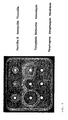
- To see if the sigE promoter could be induced by control-antibiotics known to target the cell envelope, spores of M600 carrying pIJ6880 were spread on MMT medium carrying a lethal concentration of kanamycin (100 µg ml-1) and potential inducers were applied on paper discs to the freshly spread plates. The results are shown for nine antibiotics in Figure 2. Inducers of the sigE promoter (penicillin G, amoxycillin, ticarcillin, teicoplanin, ristocetin and vancomycin) raised the level of expression of the neo gene and hence induced a halo of kanamycin-resistant growth around the disc. The glycopeptides teicoplanin, ristocetin and vancomycin (and the peptide bacitracin; data not shown) were particularly potent inducers. In contrast, 'negative control' antibiotics that target the ribosome (e.g. thiostrepton, streptomycin) or DNA gyrase (novobiocin) do not induce a halo.
- Table 1 summarises the results of the assay for the antibiotics used in Figure 2 and for a further 11 antibiotics tested (= induced a halo of kanamycin resistant growth, indicating ability to induce the sigEp-neo fusion; X= did not induce a halo of kanamycin resistant growth). A wide range of penicillins (e.g. penicillin G, oxacillin, ampicillin, ticarcillin), cephalosporins (e.g. cefaclor, cefadroxil, cephradine, cephalexin), glycopeptides (e.g. teicoplanin, ristocetin, vancomycin) and peptides (bacitracin) were found to induce the sigE promoter (Table 1). Thus it is clear that this sigE promoter bioassay detects structurally unrelated antibiotics with varied targets in the cell envelope, allowing the system to provide a broad-range, generic screen for cell envelope-specific antibiotics.

- Although it is still unknown precisely which physical characteristic of the cell envelope the CseB/CseC signal transduction system responds too, these results clearly show the utility of the system as a screen. For instance, an initial assessment of sensitivity demonstrated that 75 ng of ristocetin gives a positive reaction in the bioassay.
- It should be noted that many of the antibiotics acted as inducers without showing any signs of toxicity (e.g. vancomycin, Figure 2). With such antibiotics, the induced kanamycin-resistant halo grows to the edge of the antibiotic disc. The cell wall degradative enzyme lysozyme also acted as an inducer (data not shown), demonstrating that the sigE promoter bioassay can also be used to detect lytic enzymes that target the cell envelope.

- In order to perform the assay of the invention,spores of the host microorganism , for example, M600 carrying pIJ6880, are spread on MMT medium carrying a lethal concentration of kanamycin (100 µg ml-1 )at concentration of approximately 5 x 10⁶ / 12cm2 plate. Test compound is applied on paper discs to a number of freshly spread plates in parallel using a different concentration of the test compound in each plate. A halo of kanamycin-resistant growth indicates that the test compound represents a cell envelope-specific antibiotic.
- Aoki et al. (1976) Nocardicin A, a new monocyclic β-lactam antibiotic. I. Discovery, isolation and characterisation. J. Antibiotics. 29: 492-500.
- Chakraburtty, R. and Bibb, M.J. (1997) The ppGpp synthetase gene (relA) of Streptomyces coelicolor A3(2) plays a conditional role in antibiotic production and morphological differentiation. J Bacteriol 179: 5854-5861.
- Hopwood, D.A., Bibb, M..J., Chater, K.F., Kieser, T., Bruton, C.J., Kieser, H.M.., Lydiate, D.J., Smith, C.P., Ward, J.M., and Schrempf, H. (1985) Genetic Manipulation of Streptomyces: A Laboratory Manual. Norwich: The John Innes Foundation.
- Imada, A., Kitano, K., Kintana, K., Muroi, M., and Asai, M. (1981) Sulfazecin and isosulfazecin, novel β-lactam antibiotics of bacterial origin. Nature 289: 590-591.
- Janssen, G.R., and Bibb, M.J. (1993) Derivatives of pUC18 that have BglII sites flanking a multiple cloning site and that retain ability to identify recombinant clones by visual screening of Escherichia coli colonies. Gene 124: 133-134.
- Katz, E., Thompson, C.J., and Hopwood, D.A. (1983) Cloning and expression of the tyrosinase gene from Streptomyces antibioticus in Streptomyces lividnas. J Gen Microbiol 129: 2703-2714.
- Lonetto, M.A., Brown, K.L., Rudd, K.E., and Buttner, M.J. (1994) Analysis of the Streptomyces coelicolor sigE gene reveals the existence of a subfamily of eubacterial RNA polymerase σ factors involved in the regulation of extracytoplasmic functions. Proc Natl Acad Sci USA 91: 7573-7577.
- Murakami, T., Holt, T.G., and Thompson, C.J. (1989) Thiostrepton-induced gene expression in Streptomyces lividans. J Bacteriol 171: 1459-1466.
- Paget, M.S.B., Chamberlin, L. Atrih, A., Foster, S.J. and Buttner, M.J. (1999a) Evidence that the ECF sigma factor, σE, is required for normal cell wall structure in Streptomyces coelicolor A3(2). J Bacteriol 181: 204-211.
- Paget, M.S.B., Leibovitz, E., and Buttner, M.J. (1999b) A putative two-component signal transduction system regulates σE, a sigma factor required for normal cell wall integrity in Streptomyces coelicolor A3(2). Mol. Microbiol. 33: 97-107.
- Salah-Bey, K., Blanc, V., and Thompson, C.J. (1995) Stress-activated expression of a Streptomyces pristinaespiralis multidrug resistance gene (ptr) in various Streptomyces spp. and Escherichia coli. Mol. Microbiol. 17: 1001-1012.
- Sykes, R.B et al. (1981) Monocyclic β-lactam antibiotics produced by bacteria. Nature 291: 489-491.
- Sugiura, A., Hirokawa, K., Nakashima, K., and Mizuno, T. (1994) Signal-sensing mechanisms of the putative osmosensor KdpD in Escherichia coli. Mol Microbiol 14: 929-938.
- Ulijasz, A.T., Grenader, A., and Weisblum, B. (1996) A vancomycin-inducible lacZ reporter system in Bacillus subtilis: induction by antibiotics that inhibit cell wall synthesis and by lysozyme. J Bacteriol 178: 6305-6309.
- Walderhaug, M.O., Polarek, J.W., Voelkner, P., Daniel, J.M., Hesse, J.E., Altendorf, K., and Epstein, W. (1992) KdpD and KdpE, proteins that control expression of the kdpABC operon, are members of the two-component sensor-effector class of regulators. J Bacteriol 174: 2152-2159.
- Ward, J.M., Janssen, G.R., Kieser, T., Bibb, M.J., Buttner, M.J. and Bibb, M.J. (1986) Construction and characterisation of a series of multi-copy promoter-probe plasmid vectors for Streptomyces using the aminoglycoside phosphotransferase gene from Tn5 as indicator. Mol. Gen. Genet. 203: 468-478.
Claims (21)
- A method of detecting in a sample the activity of an antibiotic which affects cell integrity, which method comprises the steps of:characterised in that the signal components are derived from CseB and CseC which regulate a sigE promoter.(a) providing a transformed microorganism which comprises a nucleic acid encoding a promoter operably linked to a heterologous reporter gene capable of causing a detectable signal,(b) contacting the sample with the transformed microorganism,(c) observing said microorganism for said detectable signal, wherein the promoter is regulated by a two-component signal transduction system, which signal components are (i) a receptor responsive to changes in the cell envelope or membrane of the microorganism (ii) a trans-acting factor which is activated in response to stimulation by the receptor, and which regulates the promoter.
- A method as claimed in claim 1 wherein the reporter gene encodes a reporter protein which provides the microorganism with resistance to an antibiotic.
- A method as claimed in claim 1 or claim 2 wherein the reporter gene encodes a reporter protein which can be detected photometrically.
- A method as claimed in any one of the preceding claims wherein the promoter encoded by the nucleic acid is native to the microorganism or the species of the microorganism.
- A method as claimed in any one of the preceding claims wherein the nucleic acid is in the form of an extrachromosomal vector.
- A method as claimed in any one of the preceding claims wherein the some or all of the genes encoding the two component system are present at enhanced copy number in the transformed microorganism relative to the corresponding untransformed microorganism.
- A method as claimed in any one of the preceding claims wherein some or all of the genes encoding the two component system are operably linked to a strong promoter such as to enhance their concentration in the microorganism.
- A method as claimed in any one of the preceding claims wherein the microorganism is selected such as to have an enhanced sensitivity to cell wall-specific antibiotics.
- A method as claimed in any one of the preceding claims wherein the microorganism is a bacterium.
- A method as claimed in claim 9 wherein the bacterium is selected from the following species: Streptomyces; Mycobacteria.
- A method as claimed in any one of the preceding claims wherein the sample is selected from: a culture supernatant; a soil isolate; the product of combinatorial chemical synthesis; the product of combinatorial biosynthesis.
- A method as claimed in any one of the preceding claims wherein the activity is qualitatively correlated with the presence or absence of an antibiotic.
- A method as claimed in any one of the preceding claims wherein the activity of the sample is further screened for antibiosis of a target organism.
- A process of producing a transformed microorganism for use in any one of the preceding claims, which process comprises transforming a microorganism with a vector comprising (a) a promoter operably linked to (b) a heterologous reporter gene capable of causing a detectable signal, wherein the promoter is regulated by a two-component signal transduction system, which signal components are (i) a receptor responsive to changes in the cell envelope or membrane of the microorganism (ii) a trans-acting factor which is activated in response to stimulation by the receptor, and which regulates the promoter,
characterised in that the signal components are derived from CseB and CseC which regulate a sigE promoter. - A process as claimed in claim 14 wherein the copy number of the genes encoding the two component system is enhanced in the transformed microorganism relative to the corresponding untransformed microorganism.
- A transformed microorganism for use in a method of any one of claims 1 to 13, which microorganism is transformed with a vector comprising (a) a promoter operably linked to (b) a heterologous reporter gene capable of causing a detectable signal, wherein the promoter is regulated by a two-component signal transduction system, which signal components are (i) a receptor responsive to changes in the cell envelope or membrane of the microorganism (ii) a trans-acting factor which is activated in response to stimulation by the receptor, and which regulates the promoter,
characterised in that the signal components are derived from CseB and CseC which regulate a sigE promoter. - A transformed microorganism as claimed in claim 16 wherein the copy number of the genes encoding the two component system is enhanced in the transformed microorganism relative to the corresponding untransformed microorganism.
- A kit for performing a method according to any one of claims 1 to 13, which kit comprises:(a) a preparation of the microorganism of claim 16 or claim 17, plus(b) further means for carrying out the contact or observation steps.
- A kit as claimed in claim 18 comprising means for detecting the signal produced from the reporter gene.
- A kit as claimed in claim 19 wherein the means are a photosensitive device.
- A kit as claimed in claim 19 or claim 20 which is a parallel processing system in which detection of multiple activities is assessed using multiple cultures of transformed microorganisms.
Applications Claiming Priority (3)
| Application Number | Priority Date | Filing Date | Title |
|---|---|---|---|
| GB0013384 | 2000-06-01 | ||
| GBGB0013384.3A GB0013384D0 (en) | 2000-06-01 | 2000-06-01 | Screening system |
| PCT/GB2001/002400 WO2001092559A2 (en) | 2000-06-01 | 2001-05-30 | Screening system for antibiotics |
Publications (2)
| Publication Number | Publication Date |
|---|---|
| EP1287158A2 EP1287158A2 (en) | 2003-03-05 |
| EP1287158B1 true EP1287158B1 (en) | 2004-08-11 |
Family
ID=9892826
Family Applications (1)
| Application Number | Title | Priority Date | Filing Date |
|---|---|---|---|
| EP01934165A Expired - Lifetime EP1287158B1 (en) | 2000-06-01 | 2001-05-30 | Screening system for antibiotics |
Country Status (8)
| Country | Link |
|---|---|
| US (1) | US20040014066A1 (en) |
| EP (1) | EP1287158B1 (en) |
| AT (1) | ATE273397T1 (en) |
| AU (1) | AU2001260471A1 (en) |
| CA (1) | CA2408903A1 (en) |
| DE (1) | DE60104843T2 (en) |
| GB (1) | GB0013384D0 (en) |
| WO (1) | WO2001092559A2 (en) |
Families Citing this family (2)
| Publication number | Priority date | Publication date | Assignee | Title |
|---|---|---|---|---|
| ES2396820B1 (en) | 2011-07-26 | 2014-01-31 | Universidad Autónoma de Madrid | METHOD FOR EVALUATING THE INTEGRITY OF THE BACTERIAL CELL WALL. |
| CN105085613B (en) * | 2014-05-20 | 2021-06-08 | 中国科学院上海有机化学研究所 | Novel thiostrepton analogue and its preparation method and use |
Family Cites Families (1)
| Publication number | Priority date | Publication date | Assignee | Title |
|---|---|---|---|---|
| EP0877755A1 (en) * | 1995-12-22 | 1998-11-18 | Smithkline Beecham Plc | Two-component signal transduction response regulator polypeptides from staphylococcus aureus |
-
2000
- 2000-06-01 GB GBGB0013384.3A patent/GB0013384D0/en not_active Ceased
-
2001
- 2001-05-30 CA CA002408903A patent/CA2408903A1/en not_active Abandoned
- 2001-05-30 AU AU2001260471A patent/AU2001260471A1/en not_active Abandoned
- 2001-05-30 WO PCT/GB2001/002400 patent/WO2001092559A2/en not_active Ceased
- 2001-05-30 US US10/297,031 patent/US20040014066A1/en not_active Abandoned
- 2001-05-30 DE DE60104843T patent/DE60104843T2/en not_active Expired - Fee Related
- 2001-05-30 EP EP01934165A patent/EP1287158B1/en not_active Expired - Lifetime
- 2001-05-30 AT AT01934165T patent/ATE273397T1/en not_active IP Right Cessation
Also Published As
| Publication number | Publication date |
|---|---|
| EP1287158A2 (en) | 2003-03-05 |
| DE60104843D1 (en) | 2004-09-16 |
| DE60104843T2 (en) | 2005-08-18 |
| ATE273397T1 (en) | 2004-08-15 |
| AU2001260471A1 (en) | 2001-12-11 |
| CA2408903A1 (en) | 2001-12-06 |
| WO2001092559A3 (en) | 2002-08-15 |
| WO2001092559A2 (en) | 2001-12-06 |
| GB0013384D0 (en) | 2000-07-26 |
| US20040014066A1 (en) | 2004-01-22 |
Similar Documents
| Publication | Publication Date | Title |
|---|---|---|
| Myronovskyi et al. | β-Glucuronidase as a sensitive and versatile reporter in actinomycetes | |
| Guariglia-Oropeza et al. | Bacillus subtilis σV confers lysozyme resistance by activation of two cell wall modification pathways, peptidoglycan O-acetylation and D-alanylation of teichoic acids | |
| Sassine et al. | Functional redundancy of division specific penicillin‐binding proteins in Bacillus subtilis | |
| Kepplinger et al. | Mode of action and heterologous expression of the natural product antibiotic vancoresmycin | |
| Ahmed et al. | Identification of butenolide regulatory system controlling secondary metabolism in Streptomyces albus J1074 | |
| Neumüller et al. | The two‐component regulatory system BacRS is associated with bacitracin ‘self‐resistance’of Bacillus licheniformis ATCC 10716 | |
| St‐Onge et al. | Nucleotide second messenger‐mediated regulation of a muralytic enzyme in Streptomyces | |
| Liu et al. | The Legionella pneumophila EnhC protein interferes with immunostimulatory muramyl peptide production to evade innate immunity | |
| US20110124522A1 (en) | Methods of Disrupting Quorum Sensing to Affect Microbial Population Cell Density | |
| Hao et al. | Streptomyces global regulators AfsR and AfsS interact to co‐regulate antibiotic production and morphological development | |
| Luo et al. | Extracellular lipopeptide bacillomycin L regulates serial expression of genes for modulating multicellular behavior in Bacillus velezensis Bs916 | |
| US20040014066A1 (en) | Screening system | |
| US9175330B2 (en) | Method for screening and quantifying isoprene biosynthesis enzyme activity | |
| WO2003012128A2 (en) | Method of detecting the activity of antibiotic which affects cell integrity | |
| Sandmann et al. | A transposon-based strategy to scale up myxothiazol production in myxobacterial cell factories | |
| Chen et al. | Functional analysis of TetR-family regulator AmtRsav in Streptomyces avermitilis | |
| KR102359972B1 (en) | Compositions and methods for the preparation of compounds | |
| WO2011089260A1 (en) | Method for producing a biosensor for an in vitro screening system for identifying anti-infective substances, and uses thereof | |
| EP1260590B1 (en) | Method of screening substance specifically inhibiting non-mevalonate pathway | |
| Jimenez-Diaz et al. | Antibiotic sensitivity of ribosomes from wild-type and clindamycin resistant Bacteroides vulgatus strains | |
| Wasserstrom et al. | Non-sporulating ftsZ mutants in Streptomyces coelicolor reveal amino acid residues critical for FtsZ polymerization dynamics | |
| US20070059704A1 (en) | Detection system | |
| Tröger-Görler et al. | The fungal transcription factor SmpR coordinates secondary metabolism and antibacterial defence in Aspergillus fumigatus during interspecies interaction | |
| Nicholls | The characterization of two novel Class II lanthipeptides from Thalassomonas viridans by heterologous expression in Escherichia coli | |
| AU2004245739B2 (en) | Screen for novel protein inhibitors based upon engineered cell line containing an inducible overactivity gene and compensatory gene |
Legal Events
| Date | Code | Title | Description |
|---|---|---|---|
| PUAI | Public reference made under article 153(3) epc to a published international application that has entered the european phase |
Free format text: ORIGINAL CODE: 0009012 |
|
| 17P | Request for examination filed |
Effective date: 20021202 |
|
| AK | Designated contracting states |
Kind code of ref document: A2 Designated state(s): AT BE CH CY DE DK ES FI FR GB GR IE IT LI LU MC NL PT SE TR Designated state(s): AT BE CH CY DE DK ES FI FR GB GR IE IT LI LU MC NL PT SE TR |
|
| AX | Request for extension of the european patent |
Extension state: AL LT LV MK RO SI |
|
| 17Q | First examination report despatched |
Effective date: 20030530 |
|
| GRAP | Despatch of communication of intention to grant a patent |
Free format text: ORIGINAL CODE: EPIDOSNIGR1 |
|
| GRAS | Grant fee paid |
Free format text: ORIGINAL CODE: EPIDOSNIGR3 |
|
| GRAA | (expected) grant |
Free format text: ORIGINAL CODE: 0009210 |
|
| AK | Designated contracting states |
Kind code of ref document: B1 Designated state(s): AT BE CH CY DE DK ES FI FR GB GR IE IT LI LU MC NL PT SE TR |
|
| AX | Request for extension of the european patent |
Extension state: AL LT LV MK RO SI |
|
| PG25 | Lapsed in a contracting state [announced via postgrant information from national office to epo] |
Ref country code: TR Free format text: LAPSE BECAUSE OF FAILURE TO SUBMIT A TRANSLATION OF THE DESCRIPTION OR TO PAY THE FEE WITHIN THE PRESCRIBED TIME-LIMIT Effective date: 20040811 Ref country code: NL Free format text: LAPSE BECAUSE OF FAILURE TO SUBMIT A TRANSLATION OF THE DESCRIPTION OR TO PAY THE FEE WITHIN THE PRESCRIBED TIME-LIMIT Effective date: 20040811 Ref country code: IT Free format text: LAPSE BECAUSE OF FAILURE TO SUBMIT A TRANSLATION OF THE DESCRIPTION OR TO PAY THE FEE WITHIN THE PRESCRIBED TIME-LIMIT;WARNING: LAPSES OF ITALIAN PATENTS WITH EFFECTIVE DATE BEFORE 2007 MAY HAVE OCCURRED AT ANY TIME BEFORE 2007. THE CORRECT EFFECTIVE DATE MAY BE DIFFERENT FROM THE ONE RECORDED. Effective date: 20040811 Ref country code: FI Free format text: LAPSE BECAUSE OF FAILURE TO SUBMIT A TRANSLATION OF THE DESCRIPTION OR TO PAY THE FEE WITHIN THE PRESCRIBED TIME-LIMIT Effective date: 20040811 Ref country code: AT Free format text: LAPSE BECAUSE OF FAILURE TO SUBMIT A TRANSLATION OF THE DESCRIPTION OR TO PAY THE FEE WITHIN THE PRESCRIBED TIME-LIMIT Effective date: 20040811 |
|
| REG | Reference to a national code |
Ref country code: GB Ref legal event code: FG4D |
|
| REG | Reference to a national code |
Ref country code: CH Ref legal event code: EP |
|
| REG | Reference to a national code |
Ref country code: IE Ref legal event code: FG4D |
|
| REF | Corresponds to: |
Ref document number: 60104843 Country of ref document: DE Date of ref document: 20040916 Kind code of ref document: P |
|
| PG25 | Lapsed in a contracting state [announced via postgrant information from national office to epo] |
Ref country code: SE Free format text: LAPSE BECAUSE OF FAILURE TO SUBMIT A TRANSLATION OF THE DESCRIPTION OR TO PAY THE FEE WITHIN THE PRESCRIBED TIME-LIMIT Effective date: 20041111 Ref country code: GR Free format text: LAPSE BECAUSE OF FAILURE TO SUBMIT A TRANSLATION OF THE DESCRIPTION OR TO PAY THE FEE WITHIN THE PRESCRIBED TIME-LIMIT Effective date: 20041111 Ref country code: DK Free format text: LAPSE BECAUSE OF FAILURE TO SUBMIT A TRANSLATION OF THE DESCRIPTION OR TO PAY THE FEE WITHIN THE PRESCRIBED TIME-LIMIT Effective date: 20041111 |
|
| PG25 | Lapsed in a contracting state [announced via postgrant information from national office to epo] |
Ref country code: ES Free format text: LAPSE BECAUSE OF FAILURE TO SUBMIT A TRANSLATION OF THE DESCRIPTION OR TO PAY THE FEE WITHIN THE PRESCRIBED TIME-LIMIT Effective date: 20041122 |
|
| LTIE | Lt: invalidation of european patent or patent extension |
Effective date: 20040811 |
|
| NLV1 | Nl: lapsed or annulled due to failure to fulfill the requirements of art. 29p and 29m of the patents act | ||
| ET | Fr: translation filed | ||
| PGFP | Annual fee paid to national office [announced via postgrant information from national office to epo] |
Ref country code: CH Payment date: 20050524 Year of fee payment: 5 |
|
| PGFP | Annual fee paid to national office [announced via postgrant information from national office to epo] |
Ref country code: IE Payment date: 20050525 Year of fee payment: 5 |
|
| PG25 | Lapsed in a contracting state [announced via postgrant information from national office to epo] |
Ref country code: LU Free format text: LAPSE BECAUSE OF NON-PAYMENT OF DUE FEES Effective date: 20050530 Ref country code: CY Free format text: LAPSE BECAUSE OF FAILURE TO SUBMIT A TRANSLATION OF THE DESCRIPTION OR TO PAY THE FEE WITHIN THE PRESCRIBED TIME-LIMIT Effective date: 20050530 |
|
| PGFP | Annual fee paid to national office [announced via postgrant information from national office to epo] |
Ref country code: BE Payment date: 20050530 Year of fee payment: 5 |
|
| PG25 | Lapsed in a contracting state [announced via postgrant information from national office to epo] |
Ref country code: MC Free format text: LAPSE BECAUSE OF NON-PAYMENT OF DUE FEES Effective date: 20050531 |
|
| PLBE | No opposition filed within time limit |
Free format text: ORIGINAL CODE: 0009261 |
|
| STAA | Information on the status of an ep patent application or granted ep patent |
Free format text: STATUS: NO OPPOSITION FILED WITHIN TIME LIMIT |
|
| 26N | No opposition filed |
Effective date: 20050512 |
|
| PGFP | Annual fee paid to national office [announced via postgrant information from national office to epo] |
Ref country code: GB Payment date: 20060519 Year of fee payment: 6 |
|
| PGFP | Annual fee paid to national office [announced via postgrant information from national office to epo] |
Ref country code: FR Payment date: 20060522 Year of fee payment: 6 |
|
| PGFP | Annual fee paid to national office [announced via postgrant information from national office to epo] |
Ref country code: DE Payment date: 20060526 Year of fee payment: 6 |
|
| PG25 | Lapsed in a contracting state [announced via postgrant information from national office to epo] |
Ref country code: IE Free format text: LAPSE BECAUSE OF NON-PAYMENT OF DUE FEES Effective date: 20060530 |
|
| PG25 | Lapsed in a contracting state [announced via postgrant information from national office to epo] |
Ref country code: LI Free format text: LAPSE BECAUSE OF NON-PAYMENT OF DUE FEES Effective date: 20060531 Ref country code: CH Free format text: LAPSE BECAUSE OF NON-PAYMENT OF DUE FEES Effective date: 20060531 Ref country code: BE Free format text: LAPSE BECAUSE OF NON-PAYMENT OF DUE FEES Effective date: 20060531 |
|
| REG | Reference to a national code |
Ref country code: CH Ref legal event code: PL |
|
| REG | Reference to a national code |
Ref country code: IE Ref legal event code: MM4A |
|
| BERE | Be: lapsed |
Owner name: *PLANT BIOSCIENCE LTD Effective date: 20060531 |
|
| PG25 | Lapsed in a contracting state [announced via postgrant information from national office to epo] |
Ref country code: PT Free format text: LAPSE BECAUSE OF NON-PAYMENT OF DUE FEES Effective date: 20050111 |
|
| GBPC | Gb: european patent ceased through non-payment of renewal fee |
Effective date: 20070530 |
|
| REG | Reference to a national code |
Ref country code: FR Ref legal event code: ST Effective date: 20080131 |
|
| PG25 | Lapsed in a contracting state [announced via postgrant information from national office to epo] |
Ref country code: DE Free format text: LAPSE BECAUSE OF NON-PAYMENT OF DUE FEES Effective date: 20071201 |
|
| PG25 | Lapsed in a contracting state [announced via postgrant information from national office to epo] |
Ref country code: GB Free format text: LAPSE BECAUSE OF NON-PAYMENT OF DUE FEES Effective date: 20070530 |
|
| PG25 | Lapsed in a contracting state [announced via postgrant information from national office to epo] |
Ref country code: FR Free format text: LAPSE BECAUSE OF NON-PAYMENT OF DUE FEES Effective date: 20070531 |