EP1286637B1 - Absorbent article having a spacer maintaining a void space - Google Patents
Absorbent article having a spacer maintaining a void space Download PDFInfo
- Publication number
- EP1286637B1 EP1286637B1 EP01939199.4A EP01939199A EP1286637B1 EP 1286637 B1 EP1286637 B1 EP 1286637B1 EP 01939199 A EP01939199 A EP 01939199A EP 1286637 B1 EP1286637 B1 EP 1286637B1
- Authority
- EP
- European Patent Office
- Prior art keywords
- spacer
- absorbent article
- alignment guide
- topsheet
- diaper
- Prior art date
- Legal status (The legal status is an assumption and is not a legal conclusion. Google has not performed a legal analysis and makes no representation as to the accuracy of the status listed.)
- Expired - Lifetime
Links
Images



Classifications
-
- A—HUMAN NECESSITIES
- A61—MEDICAL OR VETERINARY SCIENCE; HYGIENE
- A61F—FILTERS IMPLANTABLE INTO BLOOD VESSELS; PROSTHESES; DEVICES PROVIDING PATENCY TO, OR PREVENTING COLLAPSING OF, TUBULAR STRUCTURES OF THE BODY, e.g. STENTS; ORTHOPAEDIC, NURSING OR CONTRACEPTIVE DEVICES; FOMENTATION; TREATMENT OR PROTECTION OF EYES OR EARS; BANDAGES, DRESSINGS OR ABSORBENT PADS; FIRST-AID KITS
- A61F13/00—Bandages or dressings; Absorbent pads
- A61F13/15—Absorbent pads, e.g. sanitary towels, swabs or tampons for external or internal application to the body; Supporting or fastening means therefor; Tampon applicators
- A61F13/45—Absorbent pads, e.g. sanitary towels, swabs or tampons for external or internal application to the body; Supporting or fastening means therefor; Tampon applicators characterised by the shape
- A61F13/49—Absorbent pads, e.g. sanitary towels, swabs or tampons for external or internal application to the body; Supporting or fastening means therefor; Tampon applicators characterised by the shape specially adapted to be worn around the waist, e.g. diapers, nappies
- A61F13/495—Absorbent pads, e.g. sanitary towels, swabs or tampons for external or internal application to the body; Supporting or fastening means therefor; Tampon applicators characterised by the shape specially adapted to be worn around the waist, e.g. diapers, nappies with faecal cavity
Definitions
- This invention is directed to hygienic absorbent articles, such as diapers, adult incontinence articles, feminine protection articles and the like.
- Absorbent articles are well known in the art. These articles typically have an absorbent core; which is held or positioned against the body of the wearer during use by a fastening system, such that the bodily exudates are caught by the article.
- Typical absorbent articles include a topsheet facing the wearer which permits fluid exudates to pass through and a backsheet which prevents the exudates from escaping from the absorbent article.
- apertures have been provided in the topsheet which allow the feces to pass to the absorbent core.
- spacers have been provided to maintain a void space in the diaper for receiving the feces.
- the aperture/spacer combinations are difficult to position during application of the diaper and often move from the desired position when the diaper is worn.
- absorbent articles with improved fit and alignment capability which can be sustained during use. It would also be desirable to provide an article which can maintain a desired configuration for accepting and storing bodily exudates, especially feces, during use. Further, it would be advantageous to provide such an article with a topical or body adhesive which helps maintain the article in the desired configuration (e.g., the aperture is aligned with the anus) without irritating or harming the wearer's skin.
- an absorbent article such as an adult incontinence article, baby diaper or feminine hygiene pad, having a void space maintained by a spacer is provided having an alignment guide which aids in keeping an opening in the spacer in a desired configuration for receiving and storing bodily exudates.
- the absorbent article comprises a topsheet including an aperture in communication with a void space for receiving fecal waste therein, a backsheet joined with at least a portion of the topsheet, and an absorbent core disposed between at least a portion of the topsheet and the backsheet.
- a spacer is disposed between the topsheet and the backsheet with an opening defining a passageway between the aperture and the void space. The opening also provides at least a portion of the void space which is maintained under applied pressures generated by the wearer.
- An alignment guide extends from the spacer, between a wearer's legs holding the spacer in the correct longitudinal and lateral position in order to maintain the opening in the correct Z-direction orientation with the wearer's anus.
- “Absorbent article” refers to devices which absorb and contain liquid, and more specifically, refers to devices which are placed against or in proximity to the body of the wearer to absorb and contain the various exudates discharged from the body.
- Longitudinal is a direction running parallel to the maximum linear dimension of the article and includes directions within ⁇ 45° of the longitudinal direction.
- the "lateral” or “transverse” direction is orthogonal to the longitudinal direction.
- the "Z-direction" is orthogonal to both the longitudinal and transverse directions.
- absorbent articles which generally are not intended to be laundered or otherwise restored or reused as an absorbent article (i.e., they are intended to be discarded after a single use and, preferably, to be recycled, composted or otherwise disposed of in an environmentally compatible manner).
- disposed is used to mean that an element(s) is formed (joined and positioned) in a particular place or position as a unitary structure with other elements or as a separate element joined to another element.
- joind encompasses configurations whereby an element is directly secured to another element by affixing the element directly to the other element, and configurations whereby an element is indirectly secured to another element by affixing the element to intermediate member(s) which in turn are affixed to the other element.
- a "unitary" absorbent article refers to absorbent articles which are formed of separate parts united together to form a coordinated entity so that they do not require separate manipulative parts like a separate holder and liner.
- the term "diaper” refers to an absorbent article generally worn by infants and incontinent persons about the lower torso.
- void space is a cavity sized to accept bodily exudates such as fecal material.
- the present invention provides an absorbent article having a spacer which maintains an opening for receiving bodily exudates therein in proximity with a point of discharge on a wearer through use of an alignment guide.
- the spacer is equally applicable to absorbent articles such as incontinence briefs, incontinence undergarments, absorbent inserts, diaper holders and liners, feminine hygiene garments, bandages and the like, however, a preferred embodiment of an absorbent article of the present invention is a unitary disposable absorbent article, such as the disposable diaper 20, shown in Figure 1 .
- Figure 1 is a plan view of the diaper 20 in its flat out, uncontracted state (i.e., without elastic induced contraction) with portions of the structure being cut away to more clearly show the underlying structure of the diaper 20 and with the portion of the diaper 20 which contacts the wearer facing the viewer.
- One end portion 36 of the diaper 20 is configured as a first waist region of the diaper 20.
- the opposite end portion 38 is configured as a second waist region of the diaper 20.
- An intermediate portion 37 of the diaper 20 is configured as a crotch region which extends longitudinally between the first and second waist regions 36 and 38.
- the waist regions 36 and 38 generally comprise those portions of the diaper 20 which, when worn, encircle the waist of the wearer.
- the waist regions 36 and 38 may include elastic elements such that they gather about the waist of the wearer to provide improved fit and containment.
- the crotch region 37 is that portion of the diaper 20 which, when the diaper 20 is worn, is generally positioned between the legs of the wearer.
- the diaper 20 preferably comprises a liquid pervious topsheet 24, a liquid impervious backsheet 26, and an absorbent core 28 encased between the topsheet 24 and the backsheet 26.
- the topsheet 24 may be fully or partially elasticated or may be foreshortened so as to provide a void space between the topsheet 24 and the core 28.
- Exemplary structures including elasticized or foreshortened topsheets are described in more detail in U.S. Pat. No. 4,892,536 issued to DesMarais et al. on January 9, 1990 entitled “Absorbent Article Having Elastic Strands"; U.S. Pat. No. 4,990,147 issued to Freeland on February 5,1991 entitled “Absorbent Article With Elastic Liner For Waste Material Isolation"; U.S. Pat. No.
- the diaper 20 preferably also includes a fastener such as a hook and loop type fastening system 40 including at least one engaging component (male fastening component) and at least one landing zone (female fastening component).
- a fastener such as a hook and loop type fastening system 40 including at least one engaging component (male fastening component) and at least one landing zone (female fastening component).
- the diaper 20 may also include such other features as are known in the art including leg cuffs, front and rear ear panels, waist cap features, elastics and the like to provide better fit, containment and aesthetic characteristics. Such additional features are well known in the art and are described in U.S. Pat. No. 3,860,003 ; and U.S. Pat. No. 5,151,092
- the present invention may be suitable for other diaper embodiments including those disclosed in U.S. Patent No. 6,010,491 titled “Viscous Fluid Bodily Waste Management Article” issued January 4, 2000; U.S. Patent No. 5,873,870 titled “Fit And Sustained Fit Of A Diaper Via Chassis And Core Modifications” issued February 23, 1999; U.S. Patent No. 5,897,545 titled “Elastomeric Side Panel for Use with Convertible Absorbent Articles” issued April 27, 1999; U.S. Patent No. 5,904,673 titled “Absorbent Article With Structural Elastic-Like Film Web Waist Belt” issued May 18, 1999; U.S. Patent No.
- Preferred embodiments of the present invention are particularly suited to the entrapment or encapsulation of bodily waste and thus reduce the amount and area of contamination of the wearer's skin by the waste.
- other embodiments of the present invention for limiting the movement of waste and/or providing the containment thereof may include pockets for receiving and containing waste, barriers for limiting the movement of waste in the article, compartments or voids which accept and contain waste materials deposited in the diaper 20, and the like, or any combinations thereof. Examples of pockets and spacers for use in absorbent products are described in U.S. Patent 5,514,121 issued to Roe et al. on May 7, 1996 , entitled "Diaper Having Expulsive Spacer"; U.S.
- Patent 5,171,236 issued to Dreier et al. on December 15, 1992 entitled “Disposable Absorbent Article Having Core Spacers”
- U.S. Patent 5,397,318 issued to Dreier on March 14, 1995 entitled “Absorbent Article Having A Pocket Cuff”
- U.S. Patent 5,540,671 issued to Dreier on July 30, 1996 entitled “Absorbent Article Having A Pocket Cuff With An Apex”
- PCT Application WO 93/25172 published December 3, 1993 entitled “Spacers For Use In Hygienic Absorbent Articles And Disposable Absorbent Articles Having Such Spacer”
- Patent 5,306,266 entitled “Flexible Spacers For Use In Disposable Absorbent Articles” issued to Freeland on April 26, 1994; and U.S. Patent 5,997,520 entitled “Disposable Absorbent Article With Selectively Expandable or Inflatable Component” issued to Ahr et al. on December 7, 1999.
- Examples of compartments or voids are disclosed in U.S. Patent 4,968,312 entitled “Disposable Fecal Compartmenting Diaper” issued to Khan on November 6, 1990; U.S. Patent 4,990,147 entitled “Absorbent Article With Elastic Liner For Waste Material Isolation” issued to Freeland on February 5,1991; U.S.
- Patent 5,62,840 entitled “Disposable Diapers” issued to Holt et al on November 5, 1991; and U.S. Patent 5,269,755 entitled “Trisection Topsheets For Disposable Absorbent Articles And Disposable Absorbent Articles Having Such Trisection Topsheets” issued to Freeland et al on December 14, 1993.
- suitable transverse barriers are described in U.S. Pat. No. 5,554,142 entitled “Absorbent Article Having Multiple Effective Height Transverse Partition” issued September 10, 1996 in the name of Dreier et al.; PCT Patent WO 94/14395 entitled “Absorbent Article Having An Upstanding Transverse Partition” published July 7, 1994 in the name of Freeland, et al.; and U.S.
- Examples of other structures especially suitable for management of low viscosity feces are disclosed in U.S. Patents 5,941,864 issued to Roe et al. on August 24, 1999; U.S. Patent No. 5,977,430 issued to Roe et al. on Nov. 2, 1999 and 6,013,063 issued to Roe et al. on January 11, 2000.
- the diaper should provide a void space for the waste which is at least partially maintained even under applied pressures which are typical of those generated by a wearer on the crotch region of the article while the wearer is in a seated position.
- the diaper should have means for maintaining a passageway between the void space and a waste exit point (e.g., anus) on the wearer.
- preferred embodiments of the present invention include one or more spacers 60.
- the spacer 60 is intended to space the topsheet 24 or other covering layer away from the absorbent core 28 and/or other underlying layers such as sublayers, acquisition layers and the like in order to provide a void space for entrapping or encapsulating bodily waste. It is also contemplated that the spacer 60 may space apart any other two elements of the diaper 20, including but not limited to the topsheet 24 and the backsheet 26, the acquisition layer and the core 28, the core 28 and the backsheet 26, etc.
- the spacer 60 generally includes a body 62 defining an opening 70 providing either all or a portion of a void space for entrapping or encapsulating bodily waste.
- the opening 70 is in register with an aperture 25 in the topsheet 24.
- the opening 70 creates a void space 72 between the absorbent core 28 and the topsheet 24.
- the opening 70 may be at least partially maintained under pressure induced by the weight of the wearer.
- Nonlimiting, exemplary spacers 60 are disclosed in the aforementioned patents above.
- the spacer may define an opening providing a passageway between an aperture in an upper layer and a void space between the upper layer and an underlying layer.
- the embodiment shown in Figures 3a and 3b includes a secondary topsheet 123 covering a primary topsheet 124, disposed in a face-to-face arrangement therewith and joined thereto along the edges, creating a primary void space 80 for receiving bodily exudates therein.
- the primary void space 80 is in communication with an aperture 125 in the secondary topsheet 123.
- the spacer 60 is interposed between the primary and secondary topsheets 123, 124 with the opening 70 aligned with the aperture 125 to provide a passageway to the primary void space 80.
- the opening 70 may also provide a secondary void space capable of receiving bodily exudates.
- the secondary void space may be at least partially maintained by the body 62 of the spacer 60 even when the article is compressed by the weight of the wearer.
- the spacer 60 may be of any suitable size and/ or shape. As shown in Figure 5a , the spacer has a first end 64 and a second end 66 longitudinally opposite the first end 64 and a length L measured therebetween. In preferred embodiments, the spacer 60 has a topside 61 facing the body of the wearer, a bottom side 63 opposite the topside 61 and a thickness, T, measured between the topside and the bottom side as shown in Figure 5b . The thickness, T, of the spacer 60 preferably ranges between about 0.5 cm and about 3.0 cm in use. The spacer 60 is preferably disposed in the crotch region 37 of the diaper 20 and oriented such that the first end 64 is located toward the first waist region 36 of the diaper 20 and the second end 66 is located toward the second waist region 38 of the diaper 20.
- the spacer 60 defines an opening 70 providing the void space ( Figures 2a and 2b ) or provides a portion of the void space while defining a passageway to the larger void space (primary void space 80 shown in Figures 3a and 3b ), it is preferred that the volume of the opening 70 ranges between about 10 cubic cm and about 150 cubic cm, and preferably between about 25 cubic cm and about 75 cubic cm. It is also preferred that the lateral dimension X of the opening 70 be large enough to accommodate the feces, but narrow enough such that the spacer 60 can support the ischia of the wearer. Preferably, the lateral dimension X of the opening 70, defined by the spacer 60 in the area corresponding to the anus of the wearer, is between about 1 cm and about 5 cm, and more preferably between about 1.5 cm and about 3.5 cm.
- the shape of the spacer 60 is not critical, "keyhole” shaped spacers (e.g. the spacer shown in Figure 5a ) and “elliptically shaped" spacers perform particularly well. As shown in Figure 5a , it is preferred that the spacer 60 have a width, W 1 , at the first end 64 which is narrower than a width, W 2 , at the second end 66 in order to provide a smaller radius of curvature at the first end 64 which comfortably accommodates the thighs of the wearer.
- the spacer 60 width, W 1 preferably ranges from about 0.5 cm to about 2.0 cm while the spacer width, W 2 , preferably ranges from about 5.0 cm to about 8.0 cm.
- U-shaped (or other open ended) spacers may be suitable for use in certain embodiments (preferably with the open end of the spacer oriented toward the second waist region 38 of the diaper 20 as shown in Figure 4a ).
- the opening 70 provides a passageway to the primary void space 80 as depicted in Figure 4b .
- the opening 70 may also provide a secondary void space 75 capable of receiving bodily exudates.
- a portion of the secondary void space 75 may be at least partially maintained by the body 62 of the spacer 60 even when the article is compressed by the weight of the wearer, as shown in Figure 4c .
- the passageway to the primary void space 80 may also be at least partially maintained when the article is in the compressed state.
- the spacer 60 may be unitary or may comprise a multiplicity of separate or operatively associated parts. Further, the spacer 60 may have a closed perimeter 65 or may comprise openings, holes, or channels extending from the passageway 70 through the spacer body 62 to the perimeter 65 of the spacer 60. Such embodiments may be useful to allow distribution of feces from the opening 70 to another void space or other parts of the diaper 20.
- the spacer 60 may comprise any material or combination of materials which are suitable for use in an absorbent article to be worn by a human wearer.
- the spacer 60 may include foams, woven or nonwoven webs, thermoplastic materials, organic materials, fibers, gels, rubber or synthetic rubber, etc.
- the spacer comprises an air filled bladder.
- the spacer 60 comprises an absorbent foam made from a 16:1 water/oil emulsion, having a glass transition temperature of about 10°C, and having a compression of about 40% in a dry state and about 30% in a wet state (i.e., when saturated with water) under about 1.0 psi 6890.0 N/m 2 applied pressure.
- the compression under about 1.0 psi in the wet state may be less than the compression under about 1 psi 6890.0 N/m 2 in the dry state.
- a suitable foam includes high internal phase emulsions as disclosed in U.S. Pat. No. 5,625,222 entitled “Absorbent Foam Materials For Aqueous Fluids Made From High Internal Phase Emulsions Having Very High Water-To-Oil Ratios" issued to DesMarais et al. on July 22, 1997.
- the spacer 60 is relatively soft, but resilient and capable of withstanding the forces typical of a baby's movements and/or the weight of a baby sitting or lying on the spacer 60.
- the spacer 60 should be capable of withstanding at least 0.5 psi 3450.0 N/m 2 and preferably at least about 1.0 psi 6890.0 N/m 2 while compressing no more than about 60%, and preferably no more than about 30% in both wet and dry conditions.
- the spacer 60 may be activatable during use. That is, the spacer 60 may be stored in the diaper 20 in one configuration and may be activated by some event or material which changes the configuration of the spacer 60 or the surrounding structure so as to provide the diaper 20 with a desired configuration for receiving and/or storing bodily exudates.
- the spacer 60 may include a material which expands when contacted by water, urine, feces, enzymes or other means associated with the wearer's body or bodily exudates. Changes in temperature, pH and saline concentration are also "triggers" which can activate the spacer 60.
- the spacer 60 may increase in thickness, change shape or otherwise orient itself in the diaper 20 to provide a passageway 70 into which urine and/or feces can flow.
- the diaper 20 of the present invention includes a means for maintaining the spacer opening 70 in alignment with the aperture and the wearer's anus.
- the diaper 20 includes an alignment guide 90 that is operatively connected to the spacer 60.
- operatively connected it is meant that the alignment guide can be joined to the spacer (adhesively or via a fastener such as thread, string etc.) or integral with the spacer as an extension thereof.
- the alignment guide 90 includes a first end edge 92, a second end edge 94 longitudinally opposite the first end edge 92 with an elongate portion having a length, L' therebetween, a topside 91 and a bottom side 93.
- the alignment guide 90 may be disposed between the topsheet 24 and the absorbent core 28 and/or other underlying layers such as sublayers, acquisition layers and the like.
- the first end edge 92 is integral with the first end 64 of the spacer 60 while the second end edge 94 of the alignment guide 90 is cantilevered from the spacer 60.
- the second end edge 94 of the alignment guide 90 extends forward from the spacer 60 into the first waist region 36 toward the front waist of the diaper 20.
- the alignment guide 90 is preferably long enough so that the second end edge 94 extends between a wearer's legs when the diaper 20 is worn. This results in the spacer 60 being held in the correct longitudinal and lateral position on the diaper 20 and in the correct Z-direction orientation to the point of discharge on the wearer (eg. wearer's anus) to facilitate receiving feces.
- the alignment guide 90 is preferably sized so that the ratio of the alignment guide length, L', to the spacer length, L, ranges from about 0.1 to about 5.0, more preferably from about 0.5 to about 2.0.
- the alignment guide 90 can be made of the same material as the spacer 60, particularly where the alignment guide 90 is integral with the spacer 60, or can be made of material which is distinct from the spacer material.
- the alignment guide 90 may be inelastic and include stiff materials such as foam or cardboard, thermoplastic materials, or organic materials or else may be elastic and include flexible materials such as woven or nonwoven webs, fibers, gels, rubber or synthetic rubber, paper etc. Further, the alignment guide 90 may be unitary or may comprise a multiplicity of separate or operatively associated parts.
- the spacer 60/alignment guide 90 combination may be joined to the absorbent article in a number of different arrangements in order to keep the spacer opening 70 aligned with the point of discharge on the wearer (e.g. wearer's anus).
- the bottom side 63 of the spacer near the first end 64 may be joined with at least a portion of the layer which underlies the spacer 60, such as the core 28, a primary topsheet 124 ( Figures 3a and 3b ), a sublayer or the backsheet 28, and at least a portion of the second end edge 94 of the alignment guide 90 may be joined to either the same underlying layer as the spacer 60 or an upper layer.
- the second end edge 94 of the alignment guide 90 is joined to an upper layer such as a secondary topsheet 123 while a portion of the bottom side 63 of the spacer 60 near the first end 64 is joined to an underlying layer.
- Figure 6 shows a portion of the topside 91 of the alignment guide near the second end edge may be joined to an upper layer such as a secondary topsheet 123 while a portion of the bottom side 63 of the spacer 60 near the first end 64 may be joined to the underlying layer such as a primary topsheet 124.
- the spacer 60 may be joined directly or indirectly by any means known in the art. Typical joining means include adhesives, heat, pressure, static, magnetism, snaps, hook and loop fasteners and the like.
- the alignment guide comprises at least two different materials having distinct physical properties.
- the alignment guide 90 shown in Figure 7 includes an extension element 100 joined to the second end edge 94.
- the extension element 100 is preferably elastic and is particularly suitable for embodiments incorporating inelastic alignment guides in order to facilitate and maintain attachment to the article. Stiff inelastic alignment guides may break or pull away from a point of attachment as a result of forces induced by an active wearer.
- the extension element 100 is joined to either the secondary topsheet 123, underlying layer or both as previously described.
- the diaper 20 includes a topical adhesive or body adhering composition which acts to hold an aperture in the topsheet in place during use.
- the topical adhesive may be located on the topsheet 24.
- the body adhering composition may also be integral with the material making up the topsheet 24 or other element of the absorbent article or may be a separate material disposed directly or indirectly on all or any portion of the absorbent article. Further, the body adhering composition may be disposed on any portion of the absorbent article in any pattern or configuration including, but not limited to lines, stripes, dots, and the like.
- the topical adhesive 50 is disposed on the topsheet 24 in a continuous ring about the aperture 25.
- the topical adhesive 50 surrounds only a portion of the aperture 25 and/or is disposed in locations not directly adjacent the aperture 25, such as around the edge of the topsheet 24, on the leg cuffs 32 or in one or both of the waist regions.
- topical adhesive 50 may be disposed on the spacer 60 itself. If this is done, the topical adhesive 50 may be on an exposed surface of the spacer 60 or may be located beneath an apertured, slit or otherwise reticulated layer such that the topical adhesive 50 can contact the wearer in use.
- Types of body adhering composition may include any one or more substances capable of releasably adhering to the skin of the wearer. Further, the body adhering composition may be in the form of a gel, lotion, film, web or the like.
- suitable body adhering compositions include adhesives, gelatin, petrolatum, waxes such as silicone or petroleum waxes, oils such as silicone or petroleum based oils, skin care compositions or ingredients thereof, as described below, and the like.
- Suitable topical adhesives include, but are not limited to, hydrogel or hydrocolloid adhesives such as acrylic based polymeric adhesives, and the like. (Some exemplary hydrogel and/or hydrocolloid adhesives are disclosed in U.S.
- Topical adhesives may also include any "medical adhesive" which is compatible for use with biological tissue, such as skin.
- Acrylic medical adhesives suitable for use as body adhering compositions include adhesives available from Adhesive Research, Inc., of Glen Rock, PA, under the designations MA-46, MA-312, "MTTM” High MVTR adhesive, and AS-17. Rubber-based medical adhesives, such as SB-2 from Adhesive Research Inc. may also be suitable.
- exemplary adhesives include Dow Corning Medical Adhesive (Type B) available from Dow Coming, Midland, MI; "MEDICAL ADHESIVE” from Hollister Inc., of Libertyville, IL; 3M Spray Adhesives #79, 76, 77 and 90 available from the 3M Corp. of St. Paul, MN; and "MATISOL” liquid adhesive available from Ferndale Laboratories of Ferndale, MI.
- Other medical adhesives are described in U.S. Patent Nos. 4,078,568 ; 4,140,115 ; 4,192,785 ; 4,393,080 ; 4,505,976 ; 4,551,490 ; 4,768,503 and polyacrylate and polymethacrylate hydrogel adhesives are disclosed in U.S.
- Patents 5,614,586 and 5,674,275 the disclosure of each of which is incorporated by reference herein.
- Yet another exemplary adhesive comprising polyvinyl pyrollidone and a multi-functional amine-containing polymer is disclosed in WO 94/13235A1 .
- Alternative body adhering means which may be used in place of or in addition to those described above include static electricity, suction and the like.
- the body adhering composition permit vapors to pass (i.e., breathable), be compatible with the skin and otherwise skin friendly.
- the body adhesive be at least partially hydrophobic, preferably 60%, more preferably 80%, by weight of the adhesive consist of hydrophobic components.
- hydrophilic adhesives are contemplated in certain embodiments of the present invention.
Landscapes
- Health & Medical Sciences (AREA)
- Epidemiology (AREA)
- Engineering & Computer Science (AREA)
- Biomedical Technology (AREA)
- Heart & Thoracic Surgery (AREA)
- Vascular Medicine (AREA)
- Life Sciences & Earth Sciences (AREA)
- Animal Behavior & Ethology (AREA)
- General Health & Medical Sciences (AREA)
- Public Health (AREA)
- Veterinary Medicine (AREA)
- Orthopedics, Nursing, And Contraception (AREA)
- Absorbent Articles And Supports Therefor (AREA)
Description
- This invention is directed to hygienic absorbent articles, such as diapers, adult incontinence articles, feminine protection articles and the like.
- Absorbent articles are well known in the art. These articles typically have an absorbent core; which is held or positioned against the body of the wearer during use by a fastening system, such that the bodily exudates are caught by the article. Typical absorbent articles include a topsheet facing the wearer which permits fluid exudates to pass through and a backsheet which prevents the exudates from escaping from the absorbent article.
- Many advancements have been made in the art since the introduction of the disposable absorbent article. However, problems still exist relating to the acceptance and storage of feces, and especially runny and pasty feces. The problem has been difficult to resolve because feces generally will not pass through a topsheet and thus, remains free to move about in the diaper until the diaper is changed. This often leads to feces escaping the diaper or soiling of the wearer's skin.
- In order to prevent the feces from escaping the diaper or soiling the skin, apertures have been provided in the topsheet which allow the feces to pass to the absorbent core. In addition, spacers have been provided to maintain a void space in the diaper for receiving the feces. However, the aperture/spacer combinations are difficult to position during application of the diaper and often move from the desired position when the diaper is worn.
- Thus, it would be desirable to provide absorbent articles with improved fit and alignment capability which can be sustained during use. It would also be desirable to provide an article which can maintain a desired configuration for accepting and storing bodily exudates, especially feces, during use. Further, it would be advantageous to provide such an article with a topical or body adhesive which helps maintain the article in the desired configuration (e.g., the aperture is aligned with the anus) without irritating or harming the wearer's skin.
- In order to solve one or more of the problems found in the art, an absorbent article, such as an adult incontinence article, baby diaper or feminine hygiene pad, having a void space maintained by a spacer is provided having an alignment guide which aids in keeping an opening in the spacer in a desired configuration for receiving and storing bodily exudates.
- The absorbent article comprises a topsheet including an aperture in communication with a void space for receiving fecal waste therein, a backsheet joined with at least a portion of the topsheet, and an absorbent core disposed between at least a portion of the topsheet and the backsheet. A spacer is disposed between the topsheet and the backsheet with an opening defining a passageway between the aperture and the void space. The opening also provides at least a portion of the void space which is maintained under applied pressures generated by the wearer. An alignment guide extends from the spacer, between a wearer's legs holding the spacer in the correct longitudinal and lateral position in order to maintain the opening in the correct Z-direction orientation with the wearer's anus.
- While the specification concludes with claims particularly pointing out and distinctly claiming the subject matter which is regarded as forming the present invention, it is believed that the invention will be better understood from the following description which is taken in conjunction with the accompanying drawings in which like designations are used to designate substantially identical elements, and in which:
-
Figure 1 is a plan view of a disposable diaper. -
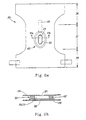
Figure 2a is a plan view of a disposable diaper configuration of the present invention. -
Figure 2b is a cross-sectional view of the embodiment depicted inFigure 2a showing the spacer opening providing the void space. -
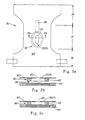
Figure 3a is a plan view of a disposable diaper configuration of the present invention. -
Figure 3b is a cross-sectional view of the embodiment depicted inFigure 3a showing the spacer opening providing a passageway to a primary void space. -
Figure 3c is a cross-sectional view of the embodiment depicted inFigure 3a showing the configuration of the spacer when the article is compressed under the weight of the wearer. -
Figure 4a is a plan view of a disposable diaper configuration of the present invention having an open ended spacer. -
Figure 4b is a cross-sectional view of the embodiment depicted inFigure 4a showing the spacer opening providing a passageway to a primary void space. -
Figure 4c is a cross-sectional view of the embodiment depicted inFigure 4a showing the configuration of the spacer when the article is compressed under the weight of the wearer. -
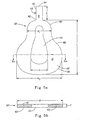
Figure 5a is a plan view of a spacer suitable for use with the present invention. -
Figure 5b is a cross sectional view of the spacer depicted inFigure 5a . -
Figure 6 is a cross-sectional view of a spacer and alignment guide configuration illustrating the locations where the spacer/alignment guide configuration is joined to the absorbent article. -
Figure 7 is a cross-sectional view of a spacer and alignment guide configuration including an extension element attached to the end of the alignment guide - While this specification concludes with claims particularly pointing out and distinctly claiming that which is regarded as the invention, it is anticipated that the invention can be more readily understood through reading the following detailed description of the invention and study of the included drawings.
- As used herein, the following terms have the following meanings:
- "Absorbent article" refers to devices which absorb and contain liquid, and more specifically, refers to devices which are placed against or in proximity to the body of the wearer to absorb and contain the various exudates discharged from the body.
- "Longitudinal" is a direction running parallel to the maximum linear dimension of the article and includes directions within ±45° of the longitudinal direction.
- The "lateral" or "transverse" direction is orthogonal to the longitudinal direction.
- The "Z-direction" is orthogonal to both the longitudinal and transverse directions.
- The term "disposable" is used herein to describe absorbent articles which generally are not intended to be laundered or otherwise restored or reused as an absorbent article (i.e., they are intended to be discarded after a single use and, preferably, to be recycled, composted or otherwise disposed of in an environmentally compatible manner).
- As used herein, the term "disposed" is used to mean that an element(s) is formed (joined and positioned) in a particular place or position as a unitary structure with other elements or as a separate element joined to another element.
- As used herein, the term "joined" encompasses configurations whereby an element is directly secured to another element by affixing the element directly to the other element, and configurations whereby an element is indirectly secured to another element by affixing the element to intermediate member(s) which in turn are affixed to the other element.
- A "unitary" absorbent article refers to absorbent articles which are formed of separate parts united together to form a coordinated entity so that they do not require separate manipulative parts like a separate holder and liner.
- As used herein, the term "diaper" refers to an absorbent article generally worn by infants and incontinent persons about the lower torso.
- As used herein, the term "void space" is a cavity sized to accept bodily exudates such as fecal material.
- The present invention provides an absorbent article having a spacer which maintains an opening for receiving bodily exudates therein in proximity with a point of discharge on a wearer through use of an alignment guide. The spacer is equally applicable to absorbent articles such as incontinence briefs, incontinence undergarments, absorbent inserts, diaper holders and liners, feminine hygiene garments, bandages and the like, however, a preferred embodiment of an absorbent article of the present invention is a unitary disposable absorbent article, such as the
disposable diaper 20, shown inFigure 1 . -
Figure 1 is a plan view of thediaper 20 in its flat out, uncontracted state (i.e., without elastic induced contraction) with portions of the structure being cut away to more clearly show the underlying structure of thediaper 20 and with the portion of thediaper 20 which contacts the wearer facing the viewer. Oneend portion 36 of thediaper 20 is configured as a first waist region of thediaper 20. Theopposite end portion 38 is configured as a second waist region of thediaper 20. Anintermediate portion 37 of thediaper 20 is configured as a crotch region which extends longitudinally between the first andsecond waist regions waist regions diaper 20 which, when worn, encircle the waist of the wearer. Thewaist regions crotch region 37 is that portion of thediaper 20 which, when thediaper 20 is worn, is generally positioned between the legs of the wearer. - The
diaper 20 preferably comprises a liquidpervious topsheet 24, a liquidimpervious backsheet 26, and anabsorbent core 28 encased between thetopsheet 24 and thebacksheet 26. Thetopsheet 24 may be fully or partially elasticated or may be foreshortened so as to provide a void space between thetopsheet 24 and thecore 28. Exemplary structures including elasticized or foreshortened topsheets are described in more detail inU.S. Pat. No. 4,892,536 issued to DesMarais et al. on January 9, 1990 entitled "Absorbent Article Having Elastic Strands";U.S. Pat. No. 4,990,147 issued to Freeland on February 5,1991 entitled "Absorbent Article With Elastic Liner For Waste Material Isolation";U.S. Pat. No. 5,037,416 issued to Allen et al. on August 6, 1991 entitled "Disposable Absorbent Article Having Elastically Extensible Topsheet"; andU.S. Pat. No. 5,269,775 issued to Freeland et al. on December 14, 1993 entitled "Trisection Topsheets For Disposable Absorbent Articles and Disposable Absorbent Articles Having Such Trisection Topsheets" - The
diaper 20 preferably also includes a fastener such as a hook and looptype fastening system 40 including at least one engaging component (male fastening component) and at least one landing zone (female fastening component). Thediaper 20 may also include such other features as are known in the art including leg cuffs, front and rear ear panels, waist cap features, elastics and the like to provide better fit, containment and aesthetic characteristics. Such additional features are well known in the art and are described inU.S. Pat. No. 3,860,003 ; andU.S. Pat. No. 5,151,092 - In addition, the present invention may be suitable for other diaper embodiments including those disclosed in
U.S. Patent No. 6,010,491 titled "Viscous Fluid Bodily Waste Management Article" issued January 4, 2000;U.S. Patent No. 5,873,870 titled "Fit And Sustained Fit Of A Diaper Via Chassis And Core Modifications" issued February 23, 1999;U.S. Patent No. 5,897,545 titled "Elastomeric Side Panel for Use with Convertible Absorbent Articles" issued April 27, 1999;U.S. Patent No. 5,904,673 titled "Absorbent Article With Structural Elastic-Like Film Web Waist Belt" issued May 18, 1999;U.S. Patent No. 5,931,827 titled "Disposable Pull On Pant" issued August 3, 1999;U.S. Patent No. 5,977,430 titled "Absorbent Article With Macro-Particulate Storage Structure" issued November 2, 1999 andU.S. Patent No. 6,004,306 titled "Absorbent Article With MultiDirectional Extensible Side Panels" issued December 21, 1999. - Preferred embodiments of the present invention are particularly suited to the entrapment or encapsulation of bodily waste and thus reduce the amount and area of contamination of the wearer's skin by the waste. In addition to spacers, other embodiments of the present invention for limiting the movement of waste and/or providing the containment thereof may include pockets for receiving and containing waste, barriers for limiting the movement of waste in the article, compartments or voids which accept and contain waste materials deposited in the
diaper 20, and the like, or any combinations thereof. Examples of pockets and spacers for use in absorbent products are described inU.S. Patent 5,514,121 issued to Roe et al. on May 7, 1996 , entitled "Diaper Having Expulsive Spacer";U.S. Patent 5,171,236 issued to Dreier et al. on December 15, 1992 entitled "Disposable Absorbent Article Having Core Spacers";U.S. Patent 5,397,318 issued to Dreier on March 14, 1995 entitled "Absorbent Article Having A Pocket Cuff";U.S. Patent 5,540,671 issued to Dreier on July 30, 1996 entitled "Absorbent Article Having A Pocket Cuff With An Apex";PCT Application WO 93/25172 published December 3, 1993 U.S. Patent 5,306,266 entitled "Flexible Spacers For Use In Disposable Absorbent Articles" issued to Freeland on April 26, 1994; andU.S. Patent 5,997,520 entitled "Disposable Absorbent Article With Selectively Expandable or Inflatable Component" issued to Ahr et al. on December 7, 1999. Examples of compartments or voids are disclosed inU.S. Patent 4,968,312 entitled "Disposable Fecal Compartmenting Diaper" issued to Khan on November 6, 1990;U.S. Patent 4,990,147 entitled "Absorbent Article With Elastic Liner For Waste Material Isolation" issued to Freeland on February 5,1991;U.S. Patent 5,62,840 , entitled "Disposable Diapers" issued to Holt et al on November 5, 1991; andU.S. Patent 5,269,755 entitled "Trisection Topsheets For Disposable Absorbent Articles And Disposable Absorbent Articles Having Such Trisection Topsheets" issued to Freeland et al on December 14, 1993. Examples of suitable transverse barriers are described inU.S. Pat. No. 5,554,142 entitled "Absorbent Article Having Multiple Effective Height Transverse Partition" issued September 10, 1996 in the name of Dreier et al.;PCT Patent WO 94/14395 U.S. Patent No. 5,653,703 Absorbent Article Having Angular Upstanding Transverse Partition issued Aug. 5, 1997 to Roe, et al. Examples of other structures especially suitable for management of low viscosity feces are disclosed inU.S. Patents 5,941,864 issued to Roe et al. on August 24, 1999;U.S. Patent No. 5,977,430 issued to Roe et al. on Nov. 2, 1999 and 6,013,063 issued to Roe et al. on January 11, 2000. - In order to achieve the desired level of entrapment or encapsulation of bodily waste, especially for viscous bodily waste such as feces, at least two functions should be performed. First, the diaper should provide a void space for the waste which is at least partially maintained even under applied pressures which are typical of those generated by a wearer on the crotch region of the article while the wearer is in a seated position. Second, the diaper should have means for maintaining a passageway between the void space and a waste exit point (e.g., anus) on the wearer.
- In order to provide a void space which can be at least partially maintained under pressure, preferred embodiments of the present invention include one or
more spacers 60. As shown inFigures 2a and 2b , thespacer 60 is intended to space thetopsheet 24 or other covering layer away from theabsorbent core 28 and/or other underlying layers such as sublayers, acquisition layers and the like in order to provide a void space for entrapping or encapsulating bodily waste. It is also contemplated that thespacer 60 may space apart any other two elements of thediaper 20, including but not limited to thetopsheet 24 and thebacksheet 26, the acquisition layer and thecore 28, thecore 28 and thebacksheet 26, etc. - The
spacer 60 generally includes abody 62 defining anopening 70 providing either all or a portion of a void space for entrapping or encapsulating bodily waste. For the embodiment shown inFigures 2a and 2b , theopening 70 is in register with anaperture 25 in thetopsheet 24. Theopening 70 creates a void space 72 between theabsorbent core 28 and thetopsheet 24. Theopening 70 may be at least partially maintained under pressure induced by the weight of the wearer. Nonlimiting,exemplary spacers 60 are disclosed in the aforementioned patents above. - Alternatively, the spacer may define an opening providing a passageway between an aperture in an upper layer and a void space between the upper layer and an underlying layer. For example, the embodiment shown in
Figures 3a and 3b , includes asecondary topsheet 123 covering aprimary topsheet 124, disposed in a face-to-face arrangement therewith and joined thereto along the edges, creating aprimary void space 80 for receiving bodily exudates therein. Theprimary void space 80 is in communication with anaperture 125 in thesecondary topsheet 123. Thespacer 60 is interposed between the primary andsecondary topsheets opening 70 aligned with theaperture 125 to provide a passageway to theprimary void space 80. Theopening 70 may also provide a secondary void space capable of receiving bodily exudates. In one embodiment as shown inFigure 3c , the secondary void space may be at least partially maintained by thebody 62 of thespacer 60 even when the article is compressed by the weight of the wearer. - The
spacer 60 may be of any suitable size and/ or shape. As shown inFigure 5a , the spacer has afirst end 64 and asecond end 66 longitudinally opposite thefirst end 64 and a length L measured therebetween. In preferred embodiments, thespacer 60 has a topside 61 facing the body of the wearer, abottom side 63 opposite the topside 61 and a thickness, T, measured between the topside and the bottom side as shown inFigure 5b . The thickness, T, of thespacer 60 preferably ranges between about 0.5 cm and about 3.0 cm in use. Thespacer 60 is preferably disposed in thecrotch region 37 of thediaper 20 and oriented such that thefirst end 64 is located toward thefirst waist region 36 of thediaper 20 and thesecond end 66 is located toward thesecond waist region 38 of thediaper 20. - Whether the
spacer 60 defines anopening 70 providing the void space (Figures 2a and 2b ) or provides a portion of the void space while defining a passageway to the larger void space (primary void space 80 shown inFigures 3a and 3b ), it is preferred that the volume of theopening 70 ranges between about 10 cubic cm and about 150 cubic cm, and preferably between about 25 cubic cm and about 75 cubic cm. It is also preferred that the lateral dimension X of theopening 70 be large enough to accommodate the feces, but narrow enough such that thespacer 60 can support the ischia of the wearer. Preferably, the lateral dimension X of theopening 70, defined by thespacer 60 in the area corresponding to the anus of the wearer, is between about 1 cm and about 5 cm, and more preferably between about 1.5 cm and about 3.5 cm. - Although the shape of the
spacer 60 is not critical, "keyhole" shaped spacers (e.g. the spacer shown inFigure 5a ) and "elliptically shaped" spacers perform particularly well. As shown inFigure 5a , it is preferred that thespacer 60 have a width, W1, at thefirst end 64 which is narrower than a width, W2, at thesecond end 66 in order to provide a smaller radius of curvature at thefirst end 64 which comfortably accommodates the thighs of the wearer. Even though thespacer 60 may be made according to any suitable size, for disposable diapers, thespacer 60 width, W1, preferably ranges from about 0.5 cm to about 2.0 cm while the spacer width, W2, preferably ranges from about 5.0 cm to about 8.0 cm. - Alternatively, U-shaped (or other open ended) spacers may be suitable for use in certain embodiments (preferably with the open end of the spacer oriented toward the
second waist region 38 of thediaper 20 as shown inFigure 4a ). For this embodiment, theopening 70 provides a passageway to theprimary void space 80 as depicted inFigure 4b . Theopening 70 may also provide a secondary void space 75 capable of receiving bodily exudates. For this embodiment, a portion of the secondary void space 75 may be at least partially maintained by thebody 62 of thespacer 60 even when the article is compressed by the weight of the wearer, as shown inFigure 4c . In addition, since the spacer is open ended, the passageway to theprimary void space 80 may also be at least partially maintained when the article is in the compressed state. - Nevertheless, the
spacer 60 may be unitary or may comprise a multiplicity of separate or operatively associated parts. Further, thespacer 60 may have a closedperimeter 65 or may comprise openings, holes, or channels extending from thepassageway 70 through thespacer body 62 to theperimeter 65 of thespacer 60. Such embodiments may be useful to allow distribution of feces from theopening 70 to another void space or other parts of thediaper 20. - The
spacer 60 may comprise any material or combination of materials which are suitable for use in an absorbent article to be worn by a human wearer. For example, thespacer 60 may include foams, woven or nonwoven webs, thermoplastic materials, organic materials, fibers, gels, rubber or synthetic rubber, etc. In one embodiment, the spacer comprises an air filled bladder. In another embodiment, thespacer 60 comprises an absorbent foam made from a 16:1 water/oil emulsion, having a glass transition temperature of about 10°C, and having a compression of about 40% in a dry state and about 30% in a wet state (i.e., when saturated with water) under about 1.0 psi 6890.0 N/m2 applied pressure. Thus, in certain embodiments, the compression under about 1.0 psi in the wet state may be less than the compression under about 1 psi 6890.0 N/m2 in the dry state. A suitable foam includes high internal phase emulsions as disclosed inU.S. Pat. No. 5,625,222 entitled "Absorbent Foam Materials For Aqueous Fluids Made From High Internal Phase Emulsions Having Very High Water-To-Oil Ratios" issued to DesMarais et al. on July 22, 1997. - In a preferred embodiment, the
spacer 60 is relatively soft, but resilient and capable of withstanding the forces typical of a baby's movements and/or the weight of a baby sitting or lying on thespacer 60. Thus, thespacer 60 should be capable of withstanding at least 0.5 psi 3450.0 N/m2 and preferably at least about 1.0 psi 6890.0 N/m2 while compressing no more than about 60%, and preferably no more than about 30% in both wet and dry conditions. - In yet another embodiment, the
spacer 60 may be activatable during use. That is, thespacer 60 may be stored in thediaper 20 in one configuration and may be activated by some event or material which changes the configuration of thespacer 60 or the surrounding structure so as to provide thediaper 20 with a desired configuration for receiving and/or storing bodily exudates. For example, thespacer 60 may include a material which expands when contacted by water, urine, feces, enzymes or other means associated with the wearer's body or bodily exudates. Changes in temperature, pH and saline concentration are also "triggers" which can activate thespacer 60. Thus, when the wearer urinates, thespacer 60 may increase in thickness, change shape or otherwise orient itself in thediaper 20 to provide apassageway 70 into which urine and/or feces can flow. - The advantages of a diaper including an apertured topsheet and a
spacer 60 are significantly reduced if the aperture in the topsheet and theopening 70 provided by thespacer 60 do not stay aligned with the point of discharge (i.e. wearer's anus) throughout the time of use (or at least until the wearer has a bowel movement). Accordingly, thediaper 20 of the present invention includes a means for maintaining thespacer opening 70 in alignment with the aperture and the wearer's anus. Preferably, thediaper 20 includes analignment guide 90 that is operatively connected to thespacer 60. By "operatively connected" it is meant that the alignment guide can be joined to the spacer (adhesively or via a fastener such as thread, string etc.) or integral with the spacer as an extension thereof. - In the configuration depicted in
Figure 5a , thealignment guide 90 includes afirst end edge 92, asecond end edge 94 longitudinally opposite thefirst end edge 92 with an elongate portion having a length, L' therebetween, atopside 91 and abottom side 93. Like thespacer 60, thealignment guide 90 may be disposed between thetopsheet 24 and theabsorbent core 28 and/or other underlying layers such as sublayers, acquisition layers and the like. For the embodiment shown inFigure 5a , thefirst end edge 92 is integral with thefirst end 64 of thespacer 60 while thesecond end edge 94 of thealignment guide 90 is cantilevered from thespacer 60. For the embodiments shown inFigures 2a and3a , thesecond end edge 94 of thealignment guide 90 extends forward from thespacer 60 into thefirst waist region 36 toward the front waist of thediaper 20. Thealignment guide 90 is preferably long enough so that thesecond end edge 94 extends between a wearer's legs when thediaper 20 is worn. This results in thespacer 60 being held in the correct longitudinal and lateral position on thediaper 20 and in the correct Z-direction orientation to the point of discharge on the wearer (eg. wearer's anus) to facilitate receiving feces. Thealignment guide 90 is preferably sized so that the ratio of the alignment guide length, L', to the spacer length, L, ranges from about 0.1 to about 5.0, more preferably from about 0.5 to about 2.0. - The
alignment guide 90 can be made of the same material as thespacer 60, particularly where thealignment guide 90 is integral with thespacer 60, or can be made of material which is distinct from the spacer material. Thealignment guide 90 may be inelastic and include stiff materials such as foam or cardboard, thermoplastic materials, or organic materials or else may be elastic and include flexible materials such as woven or nonwoven webs, fibers, gels, rubber or synthetic rubber, paper etc. Further, thealignment guide 90 may be unitary or may comprise a multiplicity of separate or operatively associated parts. - The
spacer 60/alignment guide 90 combination may be joined to the absorbent article in a number of different arrangements in order to keep thespacer opening 70 aligned with the point of discharge on the wearer (e.g. wearer's anus). Preferably, thebottom side 63 of the spacer near thefirst end 64 may be joined with at least a portion of the layer which underlies thespacer 60, such as thecore 28, a primary topsheet 124 (Figures 3a and 3b ), a sublayer or thebacksheet 28, and at least a portion of thesecond end edge 94 of thealignment guide 90 may be joined to either the same underlying layer as thespacer 60 or an upper layer. However, more preferably as shown inFigure 6 , at least a portion of thesecond end edge 94 of thealignment guide 90 is joined to an upper layer such as asecondary topsheet 123 while a portion of thebottom side 63 of thespacer 60 near thefirst end 64 is joined to an underlying layer. Further,Figure 6 shows a portion of thetopside 91 of the alignment guide near the second end edge may be joined to an upper layer such as asecondary topsheet 123 while a portion of thebottom side 63 of thespacer 60 near thefirst end 64 may be joined to the underlying layer such as aprimary topsheet 124. Nonetheless, thespacer 60 may be joined directly or indirectly by any means known in the art. Typical joining means include adhesives, heat, pressure, static, magnetism, snaps, hook and loop fasteners and the like. - In an alternate embodiment, the alignment guide comprises at least two different materials having distinct physical properties. For instance, the
alignment guide 90 shown inFigure 7 includes anextension element 100 joined to thesecond end edge 94. Theextension element 100 is preferably elastic and is particularly suitable for embodiments incorporating inelastic alignment guides in order to facilitate and maintain attachment to the article. Stiff inelastic alignment guides may break or pull away from a point of attachment as a result of forces induced by an active wearer. For this embodiment theextension element 100 is joined to either thesecondary topsheet 123, underlying layer or both as previously described. - In one embodiment, the
diaper 20 includes a topical adhesive or body adhering composition which acts to hold an aperture in the topsheet in place during use. The topical adhesive may be located on thetopsheet 24. However, the body adhering composition may also be integral with the material making up thetopsheet 24 or other element of the absorbent article or may be a separate material disposed directly or indirectly on all or any portion of the absorbent article. Further, the body adhering composition may be disposed on any portion of the absorbent article in any pattern or configuration including, but not limited to lines, stripes, dots, and the like. - In one preferred embodiment shown in
Figure 2a , thetopical adhesive 50 is disposed on thetopsheet 24 in a continuous ring about theaperture 25. However, embodiments are contemplated wherein the topical adhesive 50 surrounds only a portion of theaperture 25 and/or is disposed in locations not directly adjacent theaperture 25, such as around the edge of thetopsheet 24, on the leg cuffs 32 or in one or both of the waist regions. Alternatively,topical adhesive 50 may be disposed on thespacer 60 itself. If this is done, thetopical adhesive 50 may be on an exposed surface of thespacer 60 or may be located beneath an apertured, slit or otherwise reticulated layer such that thetopical adhesive 50 can contact the wearer in use. - Types of body adhering composition may include any one or more substances capable of releasably adhering to the skin of the wearer. Further, the body adhering composition may be in the form of a gel, lotion, film, web or the like. Examples of suitable body adhering compositions include adhesives, gelatin, petrolatum, waxes such as silicone or petroleum waxes, oils such as silicone or petroleum based oils, skin care compositions or ingredients thereof, as described below, and the like. Suitable topical adhesives include, but are not limited to, hydrogel or hydrocolloid adhesives such as acrylic based polymeric adhesives, and the like. (Some exemplary hydrogel and/or hydrocolloid adhesives are disclosed in
U.S. Patents 4,231,369 ;4,593,053 ;4,699,146 ;4,738,257 ; and5,726,250 ; The topical adhesives may also include any "medical adhesive" which is compatible for use with biological tissue, such as skin. Acrylic medical adhesives suitable for use as body adhering compositions, include adhesives available from Adhesive Research, Inc., of Glen Rock, PA, under the designations MA-46, MA-312, "MTTM" High MVTR adhesive, and AS-17. Rubber-based medical adhesives, such as SB-2 from Adhesive Research Inc. may also be suitable. Other exemplary adhesives include Dow Corning Medical Adhesive (Type B) available from Dow Coming, Midland, MI; "MEDICAL ADHESIVE" from Hollister Inc., of Libertyville, IL; 3MSpray Adhesives # 79, 76, 77 and 90 available from the 3M Corp. of St. Paul, MN; and "MATISOL" liquid adhesive available from Ferndale Laboratories of Ferndale, MI. Other medical adhesives are described inU.S. Patent Nos. 4,078,568 ;4,140,115 ;4,192,785 ;4,393,080 ;4,505,976 ;4,551,490 ;4,768,503 and polyacrylate and polymethacrylate hydrogel adhesives are disclosed inU.S. Patents 5,614,586 and5,674,275 ; the disclosure of each of which is incorporated by reference herein. Yet another exemplary adhesive comprising polyvinyl pyrollidone and a multi-functional amine-containing polymer is disclosed inWO 94/13235A1 - Alternative body adhering means which may be used in place of or in addition to those described above include static electricity, suction and the like. In any case, it is preferred that the body adhering composition permit vapors to pass (i.e., breathable), be compatible with the skin and otherwise skin friendly. Further, it is preferred that the body adhesive be at least partially hydrophobic, preferably 60%, more preferably 80%, by weight of the adhesive consist of hydrophobic components. However, hydrophilic adhesives are contemplated in certain embodiments of the present invention.
- While particular embodiments and/or individual features of the present invention have been illustrated and described, it would be obvious to those skilled in the art that various other changes and modifications can be made without departing from the scope of the invention. Further, it should be apparent that all combinations of such embodiments and features are possible and can result in preferred executions of the invention. Therefore, the appended claims are intended to cover all such changes and modifications that are within the scope of this invention.
Claims (11)
- An absorbent article comprising:a topsheet (24) having an aperture (25);an absorbent core (28);a spacer (60), the spacer including a body (62) with an opening (70) therein defining void space between the absorbent core (28) and the topsheet (24) for receiving bodily exudates from a point of discharge on the wearer, said opening (70) being in register with the aperture (25) in the topsheet (24); andan alignment guide disposed between the topsheet (24) and the absorbent core (28) for maintaining the spacer opening in alignment with the point of discharge, said alignment guide being joined to said spacer or being integral with said spacer as an extension thereof.
- The absorbent article as defined in claim 1 wherein the alignment guide comprises a first end edge and a second end edge with an elongate portion therebetween and wherein the first end edge is attached to the spacer and the second end edge is attached to the absorbent article.
- The absorbent article as defined in claim 1 wherein the spacer has a spacer length and a spacer width perpendicular to the length wherein the spacer width at the first end of the spacer is more narrow than the spacer width at the second end of the spacer.
- The absorbent article of any of the preceding claims wherein the spacer comprises an air filled bladder.
- The absorbent article of any of the preceding claims wherein the alignment guide has a length and wherein a ratio of the alignment guide length to the spacer length ranges from about 0.1 to about 5.
- The absorbent article of any of claims 1 to 5 wherein the spacer material is selected from a group consisting of foam, rubber or thermoplastic.
- The absorbent article of any of the preceding claims wherein the alignment guide is elastically extensible.
- The absorbent article of any of claims 1 to 7 wherein the alignment guide is inelastic.
- The absorbent article of any of the preceding claims wherein the alignment guide comprises a separate element joined to the spacer.
- The absorbent article of any of claims 1 to 9 wherein the alignment guide is integral with the spacer.
- The absorbent article of any of the preceding claims wherein the spacer is activatable.
Applications Claiming Priority (3)
| Application Number | Priority Date | Filing Date | Title |
|---|---|---|---|
| US579904 | 2000-05-26 | ||
| US09/579,904 US6595972B1 (en) | 2000-05-26 | 2000-05-26 | Wearable article having a spacer maintaining a void space |
| PCT/US2001/016355 WO2001091683A2 (en) | 2000-05-26 | 2001-05-18 | Absorbent article having a spacer maintaining a void space |
Publications (2)
| Publication Number | Publication Date |
|---|---|
| EP1286637A2 EP1286637A2 (en) | 2003-03-05 |
| EP1286637B1 true EP1286637B1 (en) | 2013-07-17 |
Family
ID=24318821
Family Applications (1)
| Application Number | Title | Priority Date | Filing Date |
|---|---|---|---|
| EP01939199.4A Expired - Lifetime EP1286637B1 (en) | 2000-05-26 | 2001-05-18 | Absorbent article having a spacer maintaining a void space |
Country Status (5)
| Country | Link |
|---|---|
| US (1) | US6595972B1 (en) |
| EP (1) | EP1286637B1 (en) |
| JP (1) | JP4738702B2 (en) |
| AU (1) | AU2001264743A1 (en) |
| WO (1) | WO2001091683A2 (en) |
Families Citing this family (24)
| Publication number | Priority date | Publication date | Assignee | Title |
|---|---|---|---|---|
| US6716204B1 (en) * | 1998-10-28 | 2004-04-06 | The Procter & Gamble Company | Absorbent article with improved feces containment characteristics |
| US6908458B1 (en) * | 2000-08-25 | 2005-06-21 | Kimberly-Clark Worldwide, Inc. | Swellable structure having a pleated cover material |
| US7749208B2 (en) * | 2002-03-21 | 2010-07-06 | Sca Hygiene Products Ab | Insert for absorbent article having a feces retaining layer and spacer element |
| US8167861B2 (en) * | 2003-12-31 | 2012-05-01 | Kimberly-Clark Worldwide, Inc. | Disposable garment with stretchable absorbent assembly |
| US7160280B2 (en) * | 2004-02-13 | 2007-01-09 | Brenda Lee Bailey | Diaper with segregated reservoir |
| JP3919019B2 (en) * | 2005-10-14 | 2007-05-23 | 王子ネピア株式会社 | Disposable diapers |
| CN101484110A (en) * | 2006-07-05 | 2009-07-15 | 尤妮佳股份有限公司 | Absorptive article |
| JP2008220524A (en) * | 2007-03-09 | 2008-09-25 | Oji Nepia Kk | Water-like stool leakage prevention sheet and absorbent article using the same |
| JP5185669B2 (en) * | 2008-03-26 | 2013-04-17 | ユニ・チャーム株式会社 | Disposable pants-type diapers |
| WO2009119376A1 (en) * | 2008-03-26 | 2009-10-01 | ユニ・チャーム株式会社 | Disposable, pants-type diaper |
| JP5280226B2 (en) * | 2009-01-28 | 2013-09-04 | ユニ・チャーム株式会社 | Body fluid treatment article and wearing article including the same |
| US20100305542A1 (en) * | 2009-05-28 | 2010-12-02 | Stemple Gordon A | Diaper or Diaper Like Undergarment and Separation Device for Undergarments |
| JP5606866B2 (en) * | 2010-10-20 | 2014-10-15 | 株式会社リブドゥコーポレーション | Containment articles |
| JP2012157596A (en) * | 2011-02-01 | 2012-08-23 | Livedo Corporation | Excrement storage product |
| JP5734242B2 (en) * | 2012-06-20 | 2015-06-17 | 株式会社ユニケア | Diapers |
| AU2016416499B2 (en) | 2016-07-29 | 2022-01-13 | Kimberly-Clark Worldwide, Inc. | Absorbent article with improved fecal matter containment flaps |
| US11523946B2 (en) | 2017-03-31 | 2022-12-13 | Kimberly-Clark Worldwide, Inc. | Absorbent article with an exudate management layer |
| US11596561B2 (en) * | 2017-03-31 | 2023-03-07 | Kimberly-Clark Worldwide, Inc. | Absorbent article with an exudate management layer |
| CN110366402B (en) | 2017-03-31 | 2022-10-04 | 金伯利-克拉克环球有限公司 | Absorbent article with exudate management layer |
| JP6950980B2 (en) * | 2019-10-04 | 2021-10-20 | 秀俊 河合 | Diapers for disposal |
| WO2020080358A1 (en) * | 2018-10-15 | 2020-04-23 | 秀俊 河合 | Disposable urination tool, and urination tool set and disposable diaper using same |
| WO2023212809A1 (en) * | 2022-05-02 | 2023-11-09 | EasyDay Health Products Inc. | Diaper with collection pouch |
| US12201504B1 (en) * | 2023-11-28 | 2025-01-21 | Thomas C. Chan | Reusable diaper with feces sensing |
| US12121430B1 (en) * | 2023-11-28 | 2024-10-22 | Chi Chen HSIEN | Reusable diaper |
Family Cites Families (54)
| Publication number | Priority date | Publication date | Assignee | Title |
|---|---|---|---|---|
| US3860003B2 (en) | 1973-11-21 | 1990-06-19 | Contractable side portions for disposable diaper | |
| US4140115A (en) | 1973-12-03 | 1979-02-20 | Johnson & Johnson | Pressure sensitive adhesive compositions for coating articles to be attached to skin |
| US4078568A (en) | 1976-10-12 | 1978-03-14 | Northern Illinois Research, Inc. | Plastic composition and method |
| GB1576522A (en) | 1977-05-24 | 1980-10-08 | Colorplast International A S | Sealing material for ostomy devices |
| US4192785A (en) | 1977-06-08 | 1980-03-11 | E. R. Squibb & Sons, Inc. | Ostomy adhesive |
| GB2046764B (en) | 1979-02-08 | 1983-04-20 | Matburn Holdings Ltd | Polymeric sealant compositions |
| US4393080A (en) | 1981-12-24 | 1983-07-12 | E. R. Squibb & Sons, Inc. | Adhesive compositions |
| US4699146A (en) | 1982-02-25 | 1987-10-13 | Valleylab, Inc. | Hydrophilic, elastomeric, pressure-sensitive adhesive |
| GB2133987B (en) * | 1983-01-24 | 1986-12-10 | Yutaka Yamada | Sanitary napkin |
| US4505976A (en) | 1983-02-15 | 1985-03-19 | Johnson & Johnson Products, Inc. | Stoma seal adhesive |
| US4551490A (en) | 1983-06-27 | 1985-11-05 | E. R. Squibb & Sons, Inc. | Adhesive composition resistant to biological fluids |
| FR2561078A1 (en) * | 1984-02-21 | 1985-09-20 | Lefebvre Serge | Method for removing urine and excrement for napkins for babies and incontinent adults |
| US4593053A (en) | 1984-12-07 | 1986-06-03 | Medtronic, Inc. | Hydrophilic pressure sensitive biomedical adhesive composition |
| US4738257A (en) | 1986-06-11 | 1988-04-19 | Hollister Incorporated | Occlusive wound care dressing |
| US4968312A (en) | 1988-06-03 | 1990-11-06 | Sarbuland Khan | Disposable fecal compartmenting diaper |
| US4892536A (en) | 1988-09-02 | 1990-01-09 | The Procter & Gamble Company | Absorbent article having elastic strands |
| US4990147A (en) | 1988-09-02 | 1991-02-05 | The Procter & Gamble Company | Absorbent article with elastic liner for waste material isolation |
| US5037416A (en) | 1989-03-09 | 1991-08-06 | The Procter & Gamble Company | Disposable absorbent article having elastically extensible topsheet |
| US5062840B1 (en) | 1989-05-22 | 1995-01-03 | John N Holt | Disposable diapers |
| US5151092A (en) | 1991-06-13 | 1992-09-29 | The Procter & Gamble Company | Absorbent article with dynamic elastic waist feature having a predisposed resilient flexural hinge |
| US5387207A (en) * | 1991-08-12 | 1995-02-07 | The Procter & Gamble Company | Thin-unit-wet absorbent foam materials for aqueous body fluids and process for making same |
| US5171236A (en) | 1991-12-20 | 1992-12-15 | The Procter & Gamble Company | Disposable absorbent article having core spacers |
| EP0644748B1 (en) | 1992-06-12 | 1997-12-29 | The Procter & Gamble Company | Spacers for use in hygienic absorbent articles and disposable absorbent articles having such spacer |
| US5269755A (en) | 1992-09-11 | 1993-12-14 | Sherwood Medical Company | Catheter with outer membrane medicament delivery system |
| US5306504A (en) | 1992-12-09 | 1994-04-26 | Paper Manufactures Company | Skin adhesive hydrogel, its preparation and uses |
| US6010490A (en) | 1992-12-18 | 2000-01-04 | The Procter & Gamble Company | Absorbent article having an upstanding transverse partition |
| US5306266A (en) | 1992-12-21 | 1994-04-26 | The Procter & Gamble Company | Flexible spacers for use in disposable absorbent articles |
| US5540671A (en) | 1993-06-10 | 1996-07-30 | The Procter & Gamble Company | Absorbent article having a pocket cuff with an apex |
| US5397318A (en) | 1993-06-10 | 1995-03-14 | The Procter & Gamble Company | Absorbent article having a pocket cuff |
| US5330459A (en) * | 1993-06-23 | 1994-07-19 | The Procter & Gamble Company | Disposable absorbent article having an inflatable spacer |
| AU6919194A (en) | 1993-06-23 | 1995-01-17 | Procter & Gamble Company, The | Disposable absorbent article with selectively expandable or inflatable components |
| US5941864A (en) | 1993-08-17 | 1999-08-24 | The Procter & Gamble Company | Disposable absorbent article having improved fecal storage |
| JPH07142627A (en) | 1993-11-18 | 1995-06-02 | Fujitsu Ltd | Semiconductor device and manufacturing method thereof |
| CN1130182C (en) | 1993-11-19 | 2003-12-10 | 普罗克特和甘保尔公司 | Absorbent article with multi-directional extensible side panels |
| JP3421045B2 (en) | 1993-11-19 | 2003-06-30 | ザ、プロクター、エンド、ギャンブル、カンパニー | Absorbent article with structural elastic film web waist belt |
| US5582604A (en) * | 1994-05-31 | 1996-12-10 | The Procter & Gamble Company | Disposable absorbent article having a pump and an inflatable component |
| US5726250A (en) | 1994-07-11 | 1998-03-10 | Adhesives Research, Inc. | Covalently crosslinked water-absorbent graft copolymer |
| US5558660A (en) * | 1994-09-08 | 1996-09-24 | The Procter & Gamble Company | Absorbent article having a pocket cuff with a gluteal groove spacer |
| US5554142A (en) | 1994-11-30 | 1996-09-10 | The Procter & Gamble Company | Absorbent article having multiple effective height transverse partition |
| US5653703A (en) | 1994-11-30 | 1997-08-05 | The Procter & Gamble Company | Absorbent article having angular upstanding transverse partition |
| US5514121A (en) | 1994-12-09 | 1996-05-07 | The Procter & Gamble Company | Diaper having expulsive spacer |
| JPH10511280A (en) | 1994-12-22 | 1998-11-04 | ザ、プロクター、エンド、ギャンブル、カンパニー | Improving diaper compatibility and sustainability by changing the framework and core |
| US5685874A (en) | 1996-02-22 | 1997-11-11 | The Procter & Gamble Company | Disposable pull-on pant |
| US5897545A (en) | 1996-04-02 | 1999-04-27 | The Procter & Gamble Company | Elastomeric side panel for use with convertible absorbent articles |
| US6132409A (en) | 1996-08-29 | 2000-10-17 | Kimberly-Clark Worldwide, Inc. | Personal care article with aperture aligned for receiving fecal material |
| US6133501A (en) * | 1996-10-24 | 2000-10-17 | Kimberly-Clark Worldwide, Inc. | Absorbent article with retaining structure for receiving and retaining fecal material |
| JP2000051270A (en) * | 1998-08-04 | 2000-02-22 | Panetto:Kk | Diaper with feces separating function and diaper pad |
| US5977430A (en) | 1997-11-14 | 1999-11-02 | The Procter & Gamble Company | Absorbent article with macro-particulate storage structure |
| US6013063A (en) | 1997-11-14 | 2000-01-11 | The Procter & Gamble Company | Viscous fluid bodily waste management article |
| US6186991B1 (en) * | 1998-06-29 | 2001-02-13 | The Procter & Gamble Company | Disposable article having a responsive system including a mechanical actuator |
| JP2002519104A (en) * | 1998-06-26 | 2002-07-02 | ザ プロクター アンド ギャンブル カンパニー | Fecal collector with an anatomically shaped skin-mounted attachment |
| AU4839199A (en) * | 1998-06-26 | 2000-01-17 | Procter & Gamble Company, The | Shaped flange for a urine collector |
| US6716204B1 (en) | 1998-10-28 | 2004-04-06 | The Procter & Gamble Company | Absorbent article with improved feces containment characteristics |
| US6280426B1 (en) * | 1999-02-19 | 2001-08-28 | Kimberly-Clark Worldwide, Inc. | Absorbent article with a flap and biasing spacer |
-
2000
- 2000-05-26 US US09/579,904 patent/US6595972B1/en not_active Expired - Lifetime
-
2001
- 2001-05-18 EP EP01939199.4A patent/EP1286637B1/en not_active Expired - Lifetime
- 2001-05-18 WO PCT/US2001/016355 patent/WO2001091683A2/en not_active Ceased
- 2001-05-18 JP JP2001587700A patent/JP4738702B2/en not_active Expired - Fee Related
- 2001-05-18 AU AU2001264743A patent/AU2001264743A1/en not_active Abandoned
Also Published As
| Publication number | Publication date |
|---|---|
| US6595972B1 (en) | 2003-07-22 |
| WO2001091683A2 (en) | 2001-12-06 |
| AU2001264743A1 (en) | 2001-12-11 |
| EP1286637A2 (en) | 2003-03-05 |
| JP4738702B2 (en) | 2011-08-03 |
| JP2003534098A (en) | 2003-11-18 |
| WO2001091683A3 (en) | 2002-04-04 |
Similar Documents
| Publication | Publication Date | Title |
|---|---|---|
| US6595972B1 (en) | Wearable article having a spacer maintaining a void space | |
| AU2002227236B2 (en) | Elasticated topsheet with an elongate slit opening | |
| AU2002227236A1 (en) | Elasticated topsheet with an elongate slit opening | |
| US6506185B1 (en) | Absorbent article with a flap and spacer | |
| US6280426B1 (en) | Absorbent article with a flap and biasing spacer | |
| CA2467968C (en) | Wearable disposable article having a wetness sensation member | |
| AU645145B2 (en) | Pocket-like diaper or absorbent article | |
| US5674213A (en) | Absorbent article having containment flaps with receiving reservoirs | |
| EP1933799B1 (en) | Absorbent article including barrier leg cuff structure and an elastically stretchable side panel | |
| EP0109126A1 (en) | Disposable garment with breathable leg cuffs | |
| US20020169427A1 (en) | Wearable article having a temperature change element | |
| EP2060247A1 (en) | Disposable diaper | |
| JP2002528173A (en) | Nursing care products with openings aligned with skin adhesive for receiving feces, vaginal discharge, etc. | |
| JP2010507440A (en) | Method of using disposable absorbent articles as swimming pants | |
| CA2275179A1 (en) | Vertically pleated diaper liner | |
| US6746437B2 (en) | Absorbent article containment liner and assembly thereof | |
| EP0889708B1 (en) | Wet resilient absorbent article | |
| EP0729328A1 (en) | Disposable absorbent article | |
| HK1081426B (en) | Elasticated topsheet with an elongate slit opening | |
| MXPA00004146A (en) | Disposable diaper with improved system of fluids retention by means of impermeable interior barriers. |
Legal Events
| Date | Code | Title | Description |
|---|---|---|---|
| PUAI | Public reference made under article 153(3) epc to a published international application that has entered the european phase |
Free format text: ORIGINAL CODE: 0009012 |
|
| 17P | Request for examination filed |
Effective date: 20021122 |
|
| AK | Designated contracting states |
Kind code of ref document: A2 Designated state(s): AT BE CH CY DE DK ES FI FR GB GR IE IT LI LU MC NL PT SE TR |
|
| AX | Request for extension of the european patent |
Extension state: AL LT LV MK RO SI |
|
| 17Q | First examination report despatched |
Effective date: 20070416 |
|
| GRAP | Despatch of communication of intention to grant a patent |
Free format text: ORIGINAL CODE: EPIDOSNIGR1 |
|
| INTG | Intention to grant announced |
Effective date: 20130327 |
|
| GRAS | Grant fee paid |
Free format text: ORIGINAL CODE: EPIDOSNIGR3 |
|
| GRAA | (expected) grant |
Free format text: ORIGINAL CODE: 0009210 |
|
| AK | Designated contracting states |
Kind code of ref document: B1 Designated state(s): AT BE CH CY DE DK ES FI FR GB GR IE IT LI LU MC NL PT SE TR |
|
| REG | Reference to a national code |
Ref country code: GB Ref legal event code: FG4D |
|
| REG | Reference to a national code |
Ref country code: CH Ref legal event code: EP |
|
| REG | Reference to a national code |
Ref country code: IE Ref legal event code: FG4D |
|
| REG | Reference to a national code |
Ref country code: AT Ref legal event code: REF Ref document number: 621709 Country of ref document: AT Kind code of ref document: T Effective date: 20130815 |
|
| REG | Reference to a national code |
Ref country code: DE Ref legal event code: R096 Ref document number: 60148155 Country of ref document: DE Effective date: 20130905 |
|
| REG | Reference to a national code |
Ref country code: AT Ref legal event code: MK05 Ref document number: 621709 Country of ref document: AT Kind code of ref document: T Effective date: 20130717 |
|
| REG | Reference to a national code |
Ref country code: NL Ref legal event code: VDEP Effective date: 20130717 |
|
| PG25 | Lapsed in a contracting state [announced via postgrant information from national office to epo] |
Ref country code: CY Free format text: LAPSE BECAUSE OF NON-PAYMENT OF DUE FEES Effective date: 20130518 Ref country code: AT Free format text: LAPSE BECAUSE OF FAILURE TO SUBMIT A TRANSLATION OF THE DESCRIPTION OR TO PAY THE FEE WITHIN THE PRESCRIBED TIME-LIMIT Effective date: 20130717 Ref country code: PT Free format text: LAPSE BECAUSE OF FAILURE TO SUBMIT A TRANSLATION OF THE DESCRIPTION OR TO PAY THE FEE WITHIN THE PRESCRIBED TIME-LIMIT Effective date: 20131118 Ref country code: SE Free format text: LAPSE BECAUSE OF FAILURE TO SUBMIT A TRANSLATION OF THE DESCRIPTION OR TO PAY THE FEE WITHIN THE PRESCRIBED TIME-LIMIT Effective date: 20130717 Ref country code: BE Free format text: LAPSE BECAUSE OF FAILURE TO SUBMIT A TRANSLATION OF THE DESCRIPTION OR TO PAY THE FEE WITHIN THE PRESCRIBED TIME-LIMIT Effective date: 20130717 |
|
| PG25 | Lapsed in a contracting state [announced via postgrant information from national office to epo] |
Ref country code: GR Free format text: LAPSE BECAUSE OF FAILURE TO SUBMIT A TRANSLATION OF THE DESCRIPTION OR TO PAY THE FEE WITHIN THE PRESCRIBED TIME-LIMIT Effective date: 20131018 Ref country code: FI Free format text: LAPSE BECAUSE OF FAILURE TO SUBMIT A TRANSLATION OF THE DESCRIPTION OR TO PAY THE FEE WITHIN THE PRESCRIBED TIME-LIMIT Effective date: 20130717 Ref country code: NL Free format text: LAPSE BECAUSE OF FAILURE TO SUBMIT A TRANSLATION OF THE DESCRIPTION OR TO PAY THE FEE WITHIN THE PRESCRIBED TIME-LIMIT Effective date: 20130717 Ref country code: ES Free format text: LAPSE BECAUSE OF FAILURE TO SUBMIT A TRANSLATION OF THE DESCRIPTION OR TO PAY THE FEE WITHIN THE PRESCRIBED TIME-LIMIT Effective date: 20131028 |
|
| PG25 | Lapsed in a contracting state [announced via postgrant information from national office to epo] |
Ref country code: CY Free format text: LAPSE BECAUSE OF NON-PAYMENT OF DUE FEES Effective date: 20130717 |
|
| PG25 | Lapsed in a contracting state [announced via postgrant information from national office to epo] |
Ref country code: DK Free format text: LAPSE BECAUSE OF FAILURE TO SUBMIT A TRANSLATION OF THE DESCRIPTION OR TO PAY THE FEE WITHIN THE PRESCRIBED TIME-LIMIT Effective date: 20130717 |
|
| PLBE | No opposition filed within time limit |
Free format text: ORIGINAL CODE: 0009261 |
|
| STAA | Information on the status of an ep patent application or granted ep patent |
Free format text: STATUS: NO OPPOSITION FILED WITHIN TIME LIMIT |
|
| PG25 | Lapsed in a contracting state [announced via postgrant information from national office to epo] |
Ref country code: IT Free format text: LAPSE BECAUSE OF FAILURE TO SUBMIT A TRANSLATION OF THE DESCRIPTION OR TO PAY THE FEE WITHIN THE PRESCRIBED TIME-LIMIT Effective date: 20130717 |
|
| 26N | No opposition filed |
Effective date: 20140422 |
|
| REG | Reference to a national code |
Ref country code: DE Ref legal event code: R097 Ref document number: 60148155 Country of ref document: DE Effective date: 20140422 |
|
| PGFP | Annual fee paid to national office [announced via postgrant information from national office to epo] |
Ref country code: FR Payment date: 20140424 Year of fee payment: 14 |
|
| PG25 | Lapsed in a contracting state [announced via postgrant information from national office to epo] |
Ref country code: LU Free format text: LAPSE BECAUSE OF FAILURE TO SUBMIT A TRANSLATION OF THE DESCRIPTION OR TO PAY THE FEE WITHIN THE PRESCRIBED TIME-LIMIT Effective date: 20140518 |
|
| REG | Reference to a national code |
Ref country code: CH Ref legal event code: PL |
|
| PG25 | Lapsed in a contracting state [announced via postgrant information from national office to epo] |
Ref country code: MC Free format text: LAPSE BECAUSE OF FAILURE TO SUBMIT A TRANSLATION OF THE DESCRIPTION OR TO PAY THE FEE WITHIN THE PRESCRIBED TIME-LIMIT Effective date: 20130717 Ref country code: CH Free format text: LAPSE BECAUSE OF NON-PAYMENT OF DUE FEES Effective date: 20140531 Ref country code: LI Free format text: LAPSE BECAUSE OF NON-PAYMENT OF DUE FEES Effective date: 20140531 |
|
| REG | Reference to a national code |
Ref country code: IE Ref legal event code: MM4A |
|
| PG25 | Lapsed in a contracting state [announced via postgrant information from national office to epo] |
Ref country code: IE Free format text: LAPSE BECAUSE OF NON-PAYMENT OF DUE FEES Effective date: 20140518 |
|
| REG | Reference to a national code |
Ref country code: FR Ref legal event code: ST Effective date: 20160129 |
|
| PG25 | Lapsed in a contracting state [announced via postgrant information from national office to epo] |
Ref country code: FR Free format text: LAPSE BECAUSE OF NON-PAYMENT OF DUE FEES Effective date: 20150601 |
|
| PG25 | Lapsed in a contracting state [announced via postgrant information from national office to epo] |
Ref country code: TR Free format text: LAPSE BECAUSE OF FAILURE TO SUBMIT A TRANSLATION OF THE DESCRIPTION OR TO PAY THE FEE WITHIN THE PRESCRIBED TIME-LIMIT Effective date: 20130717 |
|
| PGFP | Annual fee paid to national office [announced via postgrant information from national office to epo] |
Ref country code: DE Payment date: 20170509 Year of fee payment: 17 Ref country code: GB Payment date: 20170517 Year of fee payment: 17 |
|
| REG | Reference to a national code |
Ref country code: DE Ref legal event code: R119 Ref document number: 60148155 Country of ref document: DE |
|
| GBPC | Gb: european patent ceased through non-payment of renewal fee |
Effective date: 20180518 |
|
| PG25 | Lapsed in a contracting state [announced via postgrant information from national office to epo] |
Ref country code: GB Free format text: LAPSE BECAUSE OF NON-PAYMENT OF DUE FEES Effective date: 20180518 Ref country code: DE Free format text: LAPSE BECAUSE OF NON-PAYMENT OF DUE FEES Effective date: 20181201 |