EP1286163A2 - Evaluation of agents for treatment of Schizophrenia - Google Patents
Evaluation of agents for treatment of Schizophrenia Download PDFInfo
- Publication number
- EP1286163A2 EP1286163A2 EP02078387A EP02078387A EP1286163A2 EP 1286163 A2 EP1286163 A2 EP 1286163A2 EP 02078387 A EP02078387 A EP 02078387A EP 02078387 A EP02078387 A EP 02078387A EP 1286163 A2 EP1286163 A2 EP 1286163A2
- Authority
- EP
- European Patent Office
- Prior art keywords
- edg2
- human animal
- transgenic non
- schizophrenia
- protein
- Prior art date
- Legal status (The legal status is an assumption and is not a legal conclusion. Google has not performed a legal analysis and makes no representation as to the accuracy of the status listed.)
- Granted
Links
Images


Classifications
-
- C—CHEMISTRY; METALLURGY
- C12—BIOCHEMISTRY; BEER; SPIRITS; WINE; VINEGAR; MICROBIOLOGY; ENZYMOLOGY; MUTATION OR GENETIC ENGINEERING
- C12N—MICROORGANISMS OR ENZYMES; COMPOSITIONS THEREOF; PROPAGATING, PRESERVING, OR MAINTAINING MICROORGANISMS; MUTATION OR GENETIC ENGINEERING; CULTURE MEDIA
- C12N15/00—Mutation or genetic engineering; DNA or RNA concerning genetic engineering, vectors, e.g. plasmids, or their isolation, preparation or purification; Use of hosts therefor
- C12N15/09—Recombinant DNA-technology
- C12N15/87—Introduction of foreign genetic material using processes not otherwise provided for, e.g. co-transformation
- C12N15/90—Stable introduction of foreign DNA into chromosome
- C12N15/902—Stable introduction of foreign DNA into chromosome using homologous recombination
- C12N15/907—Stable introduction of foreign DNA into chromosome using homologous recombination in mammalian cells
-
- A—HUMAN NECESSITIES
- A01—AGRICULTURE; FORESTRY; ANIMAL HUSBANDRY; HUNTING; TRAPPING; FISHING
- A01K—ANIMAL HUSBANDRY; AVICULTURE; APICULTURE; PISCICULTURE; FISHING; REARING OR BREEDING ANIMALS, NOT OTHERWISE PROVIDED FOR; NEW BREEDS OF ANIMALS
- A01K67/00—Rearing or breeding animals, not otherwise provided for; New or modified breeds of animals
- A01K67/027—New or modified breeds of vertebrates
- A01K67/0275—Genetically modified vertebrates, e.g. transgenic
- A01K67/0276—Knock-out vertebrates
-
- C—CHEMISTRY; METALLURGY
- C07—ORGANIC CHEMISTRY
- C07K—PEPTIDES
- C07K14/00—Peptides having more than 20 amino acids; Gastrins; Somatostatins; Melanotropins; Derivatives thereof
- C07K14/435—Peptides having more than 20 amino acids; Gastrins; Somatostatins; Melanotropins; Derivatives thereof from animals; from humans
- C07K14/705—Receptors; Cell surface antigens; Cell surface determinants
-
- C—CHEMISTRY; METALLURGY
- C12—BIOCHEMISTRY; BEER; SPIRITS; WINE; VINEGAR; MICROBIOLOGY; ENZYMOLOGY; MUTATION OR GENETIC ENGINEERING
- C12N—MICROORGANISMS OR ENZYMES; COMPOSITIONS THEREOF; PROPAGATING, PRESERVING, OR MAINTAINING MICROORGANISMS; MUTATION OR GENETIC ENGINEERING; CULTURE MEDIA
- C12N15/00—Mutation or genetic engineering; DNA or RNA concerning genetic engineering, vectors, e.g. plasmids, or their isolation, preparation or purification; Use of hosts therefor
- C12N15/09—Recombinant DNA-technology
- C12N15/63—Introduction of foreign genetic material using vectors; Vectors; Use of hosts therefor; Regulation of expression
- C12N15/79—Vectors or expression systems specially adapted for eukaryotic hosts
- C12N15/85—Vectors or expression systems specially adapted for eukaryotic hosts for animal cells
- C12N15/8509—Vectors or expression systems specially adapted for eukaryotic hosts for animal cells for producing genetically modified animals, e.g. transgenic
-
- G—PHYSICS
- G01—MEASURING; TESTING
- G01N—INVESTIGATING OR ANALYSING MATERIALS BY DETERMINING THEIR CHEMICAL OR PHYSICAL PROPERTIES
- G01N33/00—Investigating or analysing materials by specific methods not covered by groups G01N1/00 - G01N31/00
- G01N33/48—Biological material, e.g. blood, urine; Haemocytometers
- G01N33/50—Chemical analysis of biological material, e.g. blood, urine; Testing involving biospecific ligand binding methods; Immunological testing
- G01N33/5005—Chemical analysis of biological material, e.g. blood, urine; Testing involving biospecific ligand binding methods; Immunological testing involving human or animal cells
- G01N33/5008—Chemical analysis of biological material, e.g. blood, urine; Testing involving biospecific ligand binding methods; Immunological testing involving human or animal cells for testing or evaluating the effect of chemical or biological compounds, e.g. drugs, cosmetics
- G01N33/5082—Supracellular entities, e.g. tissue, organisms
- G01N33/5088—Supracellular entities, e.g. tissue, organisms of vertebrates
-
- A—HUMAN NECESSITIES
- A01—AGRICULTURE; FORESTRY; ANIMAL HUSBANDRY; HUNTING; TRAPPING; FISHING
- A01K—ANIMAL HUSBANDRY; AVICULTURE; APICULTURE; PISCICULTURE; FISHING; REARING OR BREEDING ANIMALS, NOT OTHERWISE PROVIDED FOR; NEW BREEDS OF ANIMALS
- A01K2217/00—Genetically modified animals
- A01K2217/07—Animals genetically altered by homologous recombination
- A01K2217/075—Animals genetically altered by homologous recombination inducing loss of function, i.e. knock out
-
- A—HUMAN NECESSITIES
- A01—AGRICULTURE; FORESTRY; ANIMAL HUSBANDRY; HUNTING; TRAPPING; FISHING
- A01K—ANIMAL HUSBANDRY; AVICULTURE; APICULTURE; PISCICULTURE; FISHING; REARING OR BREEDING ANIMALS, NOT OTHERWISE PROVIDED FOR; NEW BREEDS OF ANIMALS
- A01K2227/00—Animals characterised by species
- A01K2227/10—Mammal
- A01K2227/105—Murine
-
- A—HUMAN NECESSITIES
- A01—AGRICULTURE; FORESTRY; ANIMAL HUSBANDRY; HUNTING; TRAPPING; FISHING
- A01K—ANIMAL HUSBANDRY; AVICULTURE; APICULTURE; PISCICULTURE; FISHING; REARING OR BREEDING ANIMALS, NOT OTHERWISE PROVIDED FOR; NEW BREEDS OF ANIMALS
- A01K2267/00—Animals characterised by purpose
- A01K2267/03—Animal model, e.g. for test or diseases
-
- A—HUMAN NECESSITIES
- A01—AGRICULTURE; FORESTRY; ANIMAL HUSBANDRY; HUNTING; TRAPPING; FISHING
- A01K—ANIMAL HUSBANDRY; AVICULTURE; APICULTURE; PISCICULTURE; FISHING; REARING OR BREEDING ANIMALS, NOT OTHERWISE PROVIDED FOR; NEW BREEDS OF ANIMALS
- A01K2267/00—Animals characterised by purpose
- A01K2267/03—Animal model, e.g. for test or diseases
- A01K2267/0306—Animal model for genetic diseases
-
- A—HUMAN NECESSITIES
- A01—AGRICULTURE; FORESTRY; ANIMAL HUSBANDRY; HUNTING; TRAPPING; FISHING
- A01K—ANIMAL HUSBANDRY; AVICULTURE; APICULTURE; PISCICULTURE; FISHING; REARING OR BREEDING ANIMALS, NOT OTHERWISE PROVIDED FOR; NEW BREEDS OF ANIMALS
- A01K2267/00—Animals characterised by purpose
- A01K2267/03—Animal model, e.g. for test or diseases
- A01K2267/035—Animal model for multifactorial diseases
- A01K2267/0356—Animal model for processes and diseases of the central nervous system, e.g. stress, learning, schizophrenia, pain, epilepsy
-
- C—CHEMISTRY; METALLURGY
- C12—BIOCHEMISTRY; BEER; SPIRITS; WINE; VINEGAR; MICROBIOLOGY; ENZYMOLOGY; MUTATION OR GENETIC ENGINEERING
- C12N—MICROORGANISMS OR ENZYMES; COMPOSITIONS THEREOF; PROPAGATING, PRESERVING, OR MAINTAINING MICROORGANISMS; MUTATION OR GENETIC ENGINEERING; CULTURE MEDIA
- C12N2840/00—Vectors comprising a special translation-regulating system
- C12N2840/20—Vectors comprising a special translation-regulating system translation of more than one cistron
- C12N2840/203—Vectors comprising a special translation-regulating system translation of more than one cistron having an IRES
-
- G—PHYSICS
- G01—MEASURING; TESTING
- G01N—INVESTIGATING OR ANALYSING MATERIALS BY DETERMINING THEIR CHEMICAL OR PHYSICAL PROPERTIES
- G01N2333/00—Assays involving biological materials from specific organisms or of a specific nature
- G01N2333/435—Assays involving biological materials from specific organisms or of a specific nature from animals; from humans
- G01N2333/46—Assays involving biological materials from specific organisms or of a specific nature from animals; from humans from vertebrates
-
- G—PHYSICS
- G01—MEASURING; TESTING
- G01N—INVESTIGATING OR ANALYSING MATERIALS BY DETERMINING THEIR CHEMICAL OR PHYSICAL PROPERTIES
- G01N2800/00—Detection or diagnosis of diseases
- G01N2800/52—Predicting or monitoring the response to treatment, e.g. for selection of therapy based on assay results in personalised medicine; Prognosis
Definitions
- One of the symptoms of schizophrenia is a decrease in the capacity to filter and process novel sensory or cognitive stimuli. This can be demonstrated in both animals and humans by using a paradigm called prepulse inhibition (PPI). If an intense, sudden stimulus is presented, it elicits a startle response, which can be monitored in animals by measuring the flinching of the animal. If the startling stimulus is preceded by a weak prepulse, then the startle response is inhibited.
- schizophrenia patients show a deficient or weak PPI, reflecting a lack of inhibitory function or sensorimotor gating (Braff et al Arch. Gen. Phychiatry 1990; 47(2) PP 181-8).
- Prepulse inhibition in animals has been used as a model for screening drugs to treat schizophrenia.
- a weak PPI can be reversed in an animal model by a drug, then it is indicative that the drug could be used to treat schizophrenia.
- Current models are generated by inducing the phenotype either by external stimuli, for example pre or postweaning social isolation, or chemically by compounds such as apomorphine or quinpirole.
- a neurodevelopmental model that naturally develops some of the symptoms of schizophrenia such as PPI would provide an extremely useful tool for screening compounds to treat schizophrenia.
- Such a model, as presented herein, provides advantages over the prior art in that it mimics the natural development of schizophrenia, rather than having to be artificially induced.
- Endothelial differentiation gene 2 has enriched embryonic expression in the developing cerebral cortex and dorsal olfactory bulb, and postnatal expression in myelinating glia including Schwann cells and other oligodendrocytes. It is a lysophosphatidic acid receptor, and has been shown to couple to at least two different G-proteins: G i/o and a pertussis toxin insenstive G protein that appears to be G 12 or G 13 . (Fukushima and Chun, Prostaglandins & other Lipid Mediators (2001) 64 pp21-32). However, no role has been postulated for EDG2 in schizophrenia. The present inventors have surprisingly managed to develop a developmental model for schizophrenia by a targeted knockout of the EDG2 gene.
- the present inventors have generated a transgenic non-human animal model of schizophrenia. They have found that the use of a construct which produces a targeted disruption in the EDG2 locus such that no functional EDG2 is produced, results in a transgenic non-human animal which naturally develops a convincing schizophrenia phenotype comprising a deficit in prepulse inhibition. Such animals allow compounds and other therapeutic regimens to be screened and evaluated in vivo as possible treatments for schizophrenia. Accordingly, the present invention provides a method of evaluating a therapeutic agent for use in the treatment of schizophrenia, which method comprises:
- said non-human transgenic animal comprises a targeted disruption in the EDG2 gene such that no functional EDG2 protein is expressed.
- the present invention also provides a kit for screening agents for use in the treatment of Schizophrenia, which kit comprises a transgenic non-human animal incapable of expressing functional EDG2 protein, and a means for determining whether a therapuetic agent can ameliorate the phenotype associated with non-expression of functional EDG2 protein.
- the present invention further provides a method of treating schizophrenia comprising administration of a therapuetically effective amount of a therapeutic agent identified in a screening method as herein described.
- transgene as used herein is intended to mean a nucleic acid vector which comprises nucleotide sequences which have been manipulated in-vitro and subsequently introduced into the genome of a species such that it is stably and heritably maintained in that genome.
- a transgenic animal is an animal that contains such a transgene within its cells.
- a "knock-out" animal is a sub family of transgenic animals, and is an animal wherein the transgenic construct has caused an endogenous gene not to be expressed.
- the present invention provides a method of evaluating compounds for their efficacy in the treatment of schizophrenia, which method involves the use of a transgenic non-human animal which is incapable of expressing functional EDG2 protein.
- This may be a natural incapability, or it may be engineered by genetic techniques.
- it is engineered, and particularly preferably, said non-human animal contains a targeted disruption in the EDG2 locus such that the non-human animal does not express functional EDG2 protein.
- the targeted disruption may be anywhere in the EDG2 gene, subject only to the requirement that it inhibits expression of functional EDG2 protein. This may be achieved, for example, by inhibiting expression of the protein completely, or by causing expression of a truncated protein, or a protein that is mutated such that it cannot perform its function, for example by engineering amino acid mutations within the active site.
- the targeted disruption is such that a truncated, non-functional EDG2 protein is translated.
- the disruption is caused by the insertion of a stop codon into an exon.
- the stop codon is inserted into exon 3 such that truncated, non-functional forms of both EDG2, and the variant of EDG2 also contained within the EDG2 locus, the orphan receptor mrec-1 are expressed.
- the targeted disruption of the EDG2 locus is caused by the integration into the genome of the transgenic construct.
- This integration is preferably achieved by homologous recombination.
- two regions of nucleotide sequence are designed that are homologous to the regions of the gene upstream (5') or downstream (3') of the target region. If recombination between the homologous areas of the gene and the transgenic construct occurs, then the target region of the gene is replaced with the region of the transgenic construct contained between the two areas of homology. This technique is described in Joyner, AL. Gene Targeting-A Practical Approach(Second Edition). (Oxford Univ. Press, Oxford, 2000).
- the construct may be engineered to contain a reporter gene such as luciferase, green fluorescent protein or derivatives thereof, or a ⁇ galactosidase gene.
- a reporter gene such as luciferase, green fluorescent protein or derivatives thereof, or a ⁇ galactosidase gene.
- a reporter gene is preferably engineered to be immediately downstream of an internal ribosomal entry site such that transcription of the reporter gene occurs.
- the site of integration of the transgene in the non-human transgenic animal can be determined by observing and/or measuring expression of the reporter gene.
- the transgenic construct also comprises a selectable marker such as an antibiotic resistance marker, preferably neomycin resistance. The marker enables selection of those cells that have taken up the transgenic construct following the transfection of the construct into cells.
- the assembly of the transgenic construct follows standard cloning techniques, that are well known in the art (for example see Sambrook et al, Molecular Cloning: A laboratory Manual, 2 nd Ed. Cold Spring Harbor Laboratory Press, Cold Spring Harbor, N.Y. (1989)).
- the areas of homology designed to the regions upstream and downstream of the target region, and any other desired components such as stop codons, an IRES, a selectable expression marker or a reporter gene can then be inserted into a cloning vector by restriction digest and ligation.
- Suitable cloning vectors for the assembly of transgenes are those which provide for acceptable yields of DNA. Any commercially available plasmid vector or phage that can carry the desired regions of homology and which can be manipulated to contain a selection marker is suitable.
- the transgenic non-human animal of the invention may be any animal that comprises an endogenous EDG2 gene.
- endogenous is meant that the gene is comprised in the genome of that animal, and would under normal circumstances be expressed to produce EDG2 protein.
- the animal is a mammal. More preferably it is a rodent, and particularly preferred is when the transgenic animal is a mouse or a rat.
- the non-human transgenic animals of the invention may be generated by the use of any appropriate protocol.
- a suitable method comprises:
- Transgenic non-human animals of the invention may be produced by methods well known in the art. There are a number of techniques that permit the introduction of genetic material, such as a transgene, into the germline.
- the most commonly used, and preferred protocol comprises direct injection of the transgene into the male pronucleus of the fertilised egg (Hogan et al., Manipulating the mouse embryo (A laboratory manual) Second edition, CSHL Press 1994), resulting in the random integration into one locus of a varying number of copies, usually in a head to tail array (Costantini and Lacy, Nature 294 , 92, 1981).
- the injected eggs are then re-transferred into the uteri of pseudo-pregnant recipient mothers.
- Some of the resulting offspring may have one or several copies of the transgene integrated into their genomes, usually in one integration site. These "founder” animals are then bred to establish transgenic lines and to back-cross into the genetic background of choice. It is preferable to have the transgene insertion on both chromosomes (homozygosity) as this obviates the need for repeated genotyping in the course of routine mouse husbandry.
- transgenes can be introduced via embryonic stem (ES) cells, using electroporation, retroviral vectors or lipofection for gene transfer. This is followed by the random insertion into the genome of the pluripotent embryonic stem (ES) cells, followed by the production of chimeric mice and subsequent germline transmission.
- Transgenes of up to several hundred kilobases of rodentian DNA have been used to produce transgenic mice in this manner (for example Choi et al., Nature Genet. 4, 117-123 (1993); Strauss et al., Science 259, 1904-07 (1993)).
- the transgenic animals can be subsequently tested to ensure the required genotypic change has been effected, in any suitable fashion. This can be done by, for example, detecting the presence of the transgene by PCR with specific primers, or by Southern blotting of tail DNA with a specific probe. Testing for homologous recombination leading to insertion of the transgene is done by restriction digestion. The band sizes seen if recombination has taken place are different to those seen if it has not. Suitable methods for this procedure are given in the examples. Testing for homozygosity of the transgene insertion may be carried out using quantitative Southern blotting to detect a twofold difference in signal strength between hetero- and homozygous transgenic animals .
- EDG2 has been identified as a lysophosphatidic acid (LPA) receptor, and confirmation that the EDG2 gene is not being expressed can be achieved by measuring response to LPA.
- LPA lysophosphatidic acid
- the transgenic animal line can be subjected to various tests to determine the phenotype.
- the tests involved in this phenotypic characterisation depend on what genotypic change has been effected, and may include, for example, morphological, biochemical and behavioural studies.
- phenotypic tests will involve testing for a pre-pulse inhibition deficit, or measuring for a decrease in 5-HIAA levels, or a decrease in the 5HIAA/5HT ratio as described in the examples.
- non-human animal models which overexpress or lack more than one gene can provide important insights into the interaction of different genetic loci in particular diseases, for example diabetes (Mauvais-Jarvis and Kahn, Diabetes and Metabolism, 26, 433-448, 2000). Consequently the interbreeding of the transgenic non-human animals of the present invention with non-human animal models which overexpress or underexpress a different gene may produce alternative and potentially superior animal models of diseases such as schizophrenia.
- Cross-breeding of the non-human EDG2 knockout transgenic animals of the invention with other transgenics or knockouts could also enable the identification of genes which pre-dispose for or protect against diseases such as schizophrenia.
- Such crosses, wherein one predecessor transgenic non-human animal demonstrates a schizophrenic phenotype as a result of non-expression of functional EDG2 may also be used as described herein.
- the transgenic non-human animal may be used to screen for drugs which reverse the phenotype demonstrated, for example ameliorate the prepulse inhibition deficit, and hence may be useful in treating schizophrenia.
- the invention extends to such method of screening.
- a method of evaluating a therapeutic agent for use in the treatment of Schizophrenia is therefore provided, which method comprises:
- the effect of the therapuetic agent on the animal may be evaluated by determining whether the candidate substance causes a reversal, or ameliorates in any way any of the cellular or physiological changes caused by the condition.
- physiological changes preferably include a pre-pulse inhibition deficit, and a decrease in the 5HIAA/5HT ratio.
- Suitable candidate substances which may be tested in the above methods include antibody products (for example, monoclonal and polyclonal antibodies, single chain antibodies, chimeric antibodies and CDR grafted antibodies). Furthermore, combinatorial libraries, defined chemical identities, small molecules, peptide and peptide mimetics, oligonucleotides and natural product libraries, such as display libraries (e.g. phage display libraries) may also be tested.
- the candidate substances may be chemical compounds. Batches of the candidate substances may be used in an initial screen of, for example, ten substances per reaction, and the substances of batches which show inhibition tested individually.
- Compounds can be tested using the assays and tests used to characterise the invention.
- the response of the transgenic animal may be assessed by looking for an improvement in the pre-pulse inhibition deficit, or an increase in the 5HIAA/5HT ratio as described in the Examples.
- Agents identified in the screening methods of the invention may be used to prevent or treat schizophrenia.
- the condition of a patient suffering from such a disease can therefore be improved by administration of such a product.
- the formulation of the product for use in preventing or treating the disease will depend upon factors such as the nature of the agent identified, the precise combination of symptoms, and the severity of the disease.
- the agent is formulated for use with a pharmaceutically acceptable carrier or diluent.
- a pharmaceutically acceptable carrier or diluent may be formulated for intracranial, parenteral, intravenous, intramuscular, subcutaneous, transdermal or oral administration.
- a physician will be able to determine the required route of administration for each particular patient.
- the pharmaceutical carrier or diluent may be, for example, an isotonic solution.
- the dose of product may be determined according to various parameters, especially according to the substance used; the age, weight and condition of the patient to be treated; the route of administration; the severity of the disease, and the required regimen.
- a suitable dose may however be from 0.1 to 100 mg/kg body weight such as 1 to 40 mg/kg body weight. Again, a physician will be able to determine the required route of administration and dosage for any particular patient.
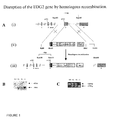
- homologous recombination was designed to result in the replacement of all but the first 51 bp of exon 3 of the EDG2 gene (and therefore almost all of the coding regions of the EDG2 and mrec transcripts) with a cassette containing the IacZ gene preceded by an internal ribosome entry site, downstream of which is a neomycin resistance gene cassette.
- the arms of homology were cloned from a 129SVJ genomic BAC library.
- the 5' arm was an approximately 4.2kb /bgIII-HpaII restriction fragment (generated by joining a 4.0kb BgIII restriction fragment to a 0.2kb BgIII-HpaII restriction fragment) where the 5'Bglll site lies in intron 2 and the Hpall site lies in exon 3, 102bp and 48bp downstream of the EDG2 and mrec1.3 tranlslation intiation codons respctively.
- the 3' arm of homology was an approximately 3.5 kb XbaI/EcoRI restriction fragment from within intron 3.
- the targeting strategy is demonstrated diagramatically in figure 1A.
- the arms of homology are indicated by the dotted lines.
- Homologous recombination in neomycin resistant embryonic stem cells was confirmed by Southern blot of BamH1 digested genomic DNA.
- the 5' probe is an approximately 15. kb Accl restriction fragment which is derived from a 3.7kb EcoRV/BgIII restriction fragment which lies immediately 5' to the 5' arm of homology.
- Homologous recombintation is shown by the presence of a 9kb BamHI fragment (shown on part iii of figure 1A), and wild type is shown by the presence of a 17kb fragment (shown on part i of figure 1A).
- Approximately 1 in 20 G418 resistant clones had undergone homologous recombination.
- N1F0 offspring were successively back-crossed to C57B16/J females to generate N5F0 mices. These were intercrossed to create an N5F1 study population. Genotype analysis during back-crossing and for the generattion of the N5F1 study popultation was performed by PCR of tail DNA. Primers were designed to generate PCR products specific to the wild type (giving a product of 224bp) and to the targeted locus (giving a product of 170bp). Results from the genotype analysis of the N5F1 offspring is shown in figure 1C.
- a rabbit polyclonal antiserum was raised against a C-terminal peptide of the mouse EDG2 sequence (LAGVHSNDHSVV-amide) as previously described (Hervieu GJ, Cluderay JE, Harrison DC, Roberts JC, Leslie RA; Gene expression and protein distribution of the Orexin-1 receptor in the rat brain and spinal cord. Neuroscience. 2001;103,(3):777-797) and affinity purified using an affinity chromatography column with a Sulfolink matrix covalantly linked to the N-terminal Cysteine-extended immunogenic peptide. Immunohistochemistry was carried out using an avidin:biotin amplification technique as previously described (Herv et al supra).
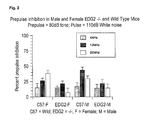
- mice were individually placed in a startle chamber and left for a pretrial delay of at least 1 minute. The mice were then exposed to a series of acoustic stimuli which were configured in six blocks of trials. The following block is an example of how the trials within a block were configured: PP(T/12/80/10), ISD 100, P(W/110/10) ⁇ 5 P(W/110/10) ⁇ 3
- the block was composed of 5 trials of a prepulse (PP) tone (T), 12 kHz and 80 dB for 10 msec followed by an interstimulus delay (ISD) of 100 msec followed by a pulse (P) of white noise (W), 110 dB for 10 msec; and 3 trials of a pulse (P) of white noise (W), 110 dB for 10 msec.
- the order of the eight trials within each block were randomised.
- the house light was on throughout, and there was a constant background of 60 dB white noise.
- the intertrial delay was set to a minimum of 15 sec and maximum of 30 sec with the trial condition set to "quiet". Under these conditions, there was a minimum trial delay of 15 sec following the preceding trial after which the next trial was triggered at the moment when the subject was not moving within the following 15 sec.
- mice When all the mice had been tested, the tests were repeated at a prepulse of 80 dB: PP(T/20/80/10), ISD 100, P(W/110/10) ⁇ 5 P(W/110/10) ⁇ 3 PP(T/4/80/10), ISD 100, P(W/110/10) ⁇ 5 P(W/110/10) ⁇ 3 PP(T/12/80/10), ISD 100, P(W/110/10) ⁇ 5 P(W/110/10) ⁇ 3 PP(T/12/80/10), ISD 100, P(W/110/10) ⁇ 5 P(W/110/10) ⁇ 3 PP(T/4/80/10), ISD 100, P(W/110/10) ⁇ 5 P(W/110/10) ⁇ 3 PP(T/20/80/10), ISD 100, P(W/110/10) ⁇ 5 P(W/110/10) ⁇ 3 PP(T/20/80/10), ISD 100, P(W/110/10) ⁇ 5 P(W/110/10)
- mice were individually placed in a startle chamber and left for a pretrial delay of at least 1 minute. The mice were then exposed to a series of acoustic stimuli which were configured in one block of trials.
- the block consisted of the following trials: P(4/80/10) ⁇ 8, P(12/80/10) ⁇ 8, P(20/80/10) ⁇ 8, P(W/80/10) ⁇ 8 P(4/90/10) ⁇ 8, P(12/90/10) ⁇ 8, P(20/90/10) ⁇ 8, P(W/90/10) ⁇ 8 P(4/110/10) ⁇ 8, P(12/110/10) ⁇ 8, P(20/110/10) ⁇ 8, P(W/110/10) ⁇ 8
- P(4/80/10) consisted of a pulse of 4kHz, 80dB and 10 msec.
- the block was composed of 8 trials each of a pulse (P) tone of 4, 12 or 20 kHz or white noise, at 80 or 90 or 110dB for 10 msec giving a total of 96 trials.
- the order of the 96 trials within each block was fully randomised.
- the house light was on throughout, and there was a constant background of 60 dB white noise.
- the intertrial delay was set to a minimum of 15 sec and maximum of 30 sec with the trial condition set to "quiet". Under these conditions, there was a minimum trial delay of 15 sec following the preceding trial after which the next trial was triggered at the moment when the subject was not moving within the following 15 sec.
- homozygous EDG2 receptor knockout caused a deficit in prepulse inhibition or startle compared to the C57BI/6 wildtype littermates.
- mice brain tissue samples were dissected from the dorsal striatum, nucleus accumbens, hippocampus, hypothalamus, cerebellum and frontal cortex (both left and right hemispheres) and snap frozen in 1.5ml Eppendorf sample tubes on cardice and stored at - 80°C until assay . The frozen samples were then transferred into a pre-weighed 1.5ml Eppendorf sample tube.
- a volume of 10 I of homogenising buffer (0.1% - w / v Na Metabisulphite, 0.01% w / v EDTA, 0.1% w / v L-cysteine, 0.4M Perchloric Acid) per mg of tissue was then added to each sample region and sonicated using an soniprep 150 (Gallenkamp, Fisons Instruments, Crawley, Hampshire).
- a volume of the resultant slurry was put into a 1.5ml Eppendorf and spun on a centrifuge (Labofuge 400R, Heraeus Instruments, Germany) at 10,000rpm, 4°C for 10 minutes.
- Risperidone and amperozide have been shown to elevate 5-HIAA levels in this region of the brain whilst having no effect on 5-HIAA levels in the striatum (Hertel et al., Psychopharmacology 124: 74-86 (1996)).
- clozapine has been shown to elevate both 5-HT and 5-HIAA levels in plasma of schizophrenic patients (Dursun et al ., Journal of Psychiatry and Neuroscience 25:347-52 (2000)).
- Rats reared in isolation have been shown to have deficits in prepulse inhibition which are thought to model the sensorimotor gating deficits observed in schizophrenic patients (Cilia et al ., Psychopharmacology 156:327-337 (2001)).
- Pharmacological studies investigating the effects of enhancing or reducing 5-HT neurotransmission show that both increases and decreases in 5-HT activity disrupt PPI (Fletcher et al ., Neuropsyuchopharmacology 124: 74-86 (2001); Kehne et al ., Psychopharmacology 124:96-106 (1996)). Therefore it is possible that the changes observed in the neurochemistry of the EDG2 knockout mice could contribute to the disruption of PPI observed in these mice.
Landscapes
- Health & Medical Sciences (AREA)
- Life Sciences & Earth Sciences (AREA)
- Engineering & Computer Science (AREA)
- Genetics & Genomics (AREA)
- Chemical & Material Sciences (AREA)
- Biomedical Technology (AREA)
- Organic Chemistry (AREA)
- Zoology (AREA)
- Molecular Biology (AREA)
- Biotechnology (AREA)
- Bioinformatics & Cheminformatics (AREA)
- General Health & Medical Sciences (AREA)
- General Engineering & Computer Science (AREA)
- Wood Science & Technology (AREA)
- Cell Biology (AREA)
- Immunology (AREA)
- Biochemistry (AREA)
- Biophysics (AREA)
- Physics & Mathematics (AREA)
- Microbiology (AREA)
- Plant Pathology (AREA)
- Veterinary Medicine (AREA)
- Hematology (AREA)
- Toxicology (AREA)
- Medicinal Chemistry (AREA)
- Environmental Sciences (AREA)
- Urology & Nephrology (AREA)
- Animal Husbandry (AREA)
- Gastroenterology & Hepatology (AREA)
- Biodiversity & Conservation Biology (AREA)
- Proteomics, Peptides & Aminoacids (AREA)
- Tropical Medicine & Parasitology (AREA)
- Animal Behavior & Ethology (AREA)
- Mycology (AREA)
- Food Science & Technology (AREA)
- Analytical Chemistry (AREA)
- General Physics & Mathematics (AREA)
- Pathology (AREA)
- Investigating Or Analysing Biological Materials (AREA)
- Medicines That Contain Protein Lipid Enzymes And Other Medicines (AREA)
Abstract
Description
- making a suitable cell of the invention;
- allowing the cell to develop into an animal of the invention; and
- optionally, breeding the animal true.
A method of evaluating a therapeutic agent for use in the treatment of Schizophrenia is therefore provided, which method comprises:
Homologous recombination in neomycin resistant embryonic stem cells was confirmed by Southern blot of BamH1 digested genomic DNA. The 5' probe is an approximately 15. kb Accl restriction fragment which is derived from a 3.7kb EcoRV/BgIII restriction fragment which lies immediately 5' to the 5' arm of homology. Homologous recombintation is shown by the presence of a 9kb BamHI fragment (shown on part iii of figure 1A), and wild type is shown by the presence of a 17kb fragment (shown on part i of figure 1A). Approximately 1 in 20 G418 resistant clones had undergone homologous recombination. Three targeted clones were injected into C57B16/J-derived blastocysts. Male chimaeras were crossed with C57B16/J females to give N1F0 offspring, which were subsequently intecrossed to generate N1F1 offspring. Genotype analysis by Southern blot of tail DNA of the N1F1 offspring is shown in figure 1B.
In addition N1F0 offspring were successively back-crossed to C57B16/J females to generate N5F0 mices. These were intercrossed to create an N5F1 study population. Genotype analysis during back-crossing and for the generattion of the N5F1 study popultation was performed by PCR of tail DNA. Primers were designed to generate PCR products specific to the wild type (giving a product of 224bp) and to the targeted locus (giving a product of 170bp). Results from the genotype analysis of the N5F1 offspring is shown in figure 1C.
Scale bars: 80um. Abbreviations: aca, anterior commisure; cc, corpus callosum; CPu, caudate putamen; LV, lateral ventricle.
The test chamber consisted of a perspex chamber with a moving base that was used to measure shifts in the subject's weight . The moving base was supported by 4 springs. Perspex walls mounted on the top face of a steel plate provided rigid support for a steel rod floor. The springs were positioned, one in each corner, to allow adequate movement of the base when startle movements occurred, and the measurement was performed by an accelerometer mounted on the metal plate (frequency response 0.2 - 500 Hz and linearity of 0.001-20 G). A sawdust tray was inserted in the space between the steel plate and the grid floor, being mounted on rods attached to the Perspex base plate. The test chamber enclosure was used to mount a light and speaker. The complete system incorporated 12 identical enclosures, and isolation between test chambers was performed by placing each chamber within a soundproof box (500x500x500mm) constructed from 2mm aluminium plate and 2" acoustic foam. The front side of the box was hinged to give access to the test chamber.
| Neurochemcial indexes were assessed in the frontal cortex (FC), hippocampus (HIPP), hypothalamus (HYPO), nucleus accumbens (NAC) and dorsal striatum. Data are mean ± SEM a: p< 0.050, b: p< 0.010 denotes significant changes in Knockout (KO) vs. Wild-type (WT) mice | ||||||||||
| Amine | Brain Region | |||||||||
| FC | Hipp | Hypo | NAC | Striatum | ||||||
| KO | WT | KO | WT | KO | WT | KO | WT | KO | WT | |
| 5HIAA | 216.8 ± 10.33 b ↓ | 268.4 ± 12.66 | 421.5 ± 42.17 b ↓ | 599.3 ± 33.67 | 431.0 ± 38.63 a ↓ | 606.6 ± 62.60 | 279.2 ± 49.95 a ↓ | 417.1 ± 20.83 | 69.42 ± 22.04 | 65.79 ± 10.18 |
| 5HT | 631.1 ± 6.006 | 608.9 ± 19.14 | 487.0 ± 44.41 | 542.9 ± 20.37 | 953.4 ± 69.35 | 964.0 ± 77.95 | 720.6 ± 60.25 | 679.3 ± 56.89 | 242.1 ± 52.98 | 272.5 ± 35.64 |
| DA | 142.4 ± 119.1 | 22.42 ± 5.618 | 15.08 ± 4.333 | 25.40 ± 15.40 | 351.6 ± 18.13 | 420.9 ± 55.40 | 4833.3 ± 697.4 | 5876.0 ± 670.8 | 8236.0 ± 1648.0 a ↑ | 9324.9 ± 167.2 |
| 5-HIAA/5-HT | 0.344 ± 0.018 b ↓ | 0.441 ± 0.014 | 0.876 ± 0.057 b ↓ | 1.103 ± 0.038 | 0.541 ± 0.060 b ↓ | 0.627 ± 0.033 | 0.371 ± 0.054 b ↓ | 0.628 ± 0.042 | 0.782 ± 0.518 | 0.249 ± 0.027 |
| Dopac/DA | 1.236 ± 0.338 | 1.914 ± 0.230 | 1.973 ± 0.745 | 2.171 ± 0.494 | 0.274 ± 0.022 | 0.276 ± 0.022 | 0.137 ± 0.012 | 0.115 ± 0.017 | 0.155 ± 0.008 | 0.164 ± 0.005 |
| HVA/DA | 2.244 ± 0.814 | 4.328 ± 0.668 | 1.620 ± 0.382 | 2.618 ± 0.613 | 0.267 ± 0.044 | 0.302 ± 0.030 | 0.125 ± 0.016 | 0.144 ± 0.010 | 0.413 ± 0.236 | 0.157 ± 0.010 |
| Dopac/HVA | 0.686 ± 0.096 | 0.457 ± 0.034 | 1.187 ± 0.199 | 0.852 ± 0.058 | 1.049 ± 0.104 | 0.931 ± 0.053 | 1.199 ± 0.177 | 0.803 ± 0.115 | 0.897 ± 0.081 | 1.059 ± 0.064 |
Reduction in metabolism of 5-HT has been observed in the nucleus accumbens, hippocampus and prefrontal cortex of rats reared in isolation- a putative model of schizophrenia (Wright et al., J. Neuroscience Methods 29:283 (1989); Bickerdike et al., Behavioural Pharmacology 4:231-36 (1993); Wilkinson et al., Neuropsychopharmacology 10:61-72 (1994); Robbins et al., J. Psychopharmacology 10:39-47 (1996)). Rats reared in isolation have been shown to have deficits in prepulse inhibition which are thought to model the sensorimotor gating deficits observed in schizophrenic patients (Cilia et al., Psychopharmacology 156:327-337 (2001)). Pharmacological studies investigating the effects of enhancing or reducing 5-HT neurotransmission show that both increases and decreases in 5-HT activity disrupt PPI (Fletcher et al., Neuropsyuchopharmacology 124: 74-86 (2001); Kehne et al., Psychopharmacology 124:96-106 (1996)). Therefore it is possible that the changes observed in the neurochemistry of the EDG2 knockout mice could contribute to the disruption of PPI observed in these mice.
Microdialysis studies in isolated rats have shown an elevation in dopamine release in both caudate putamen and nucleus accumbens (Robbins et al., J. Psychopharmacology 10:39-47 1996) The increase in levels of DA observed in the dorsal striatum (but not nucleus accumbens) of EDG2 knockout mice vs. wildtype may reflect selective activation of the nigrostriatal dopaminergic pathway.
Claims (14)
- A method of evaluating a therapeutic agent for use in the treatment of Schizophrenia, which method comprises:i) administering the said agent to a transgenic non-human animal which is incapable of expressing functional EDG2 protein, andii) evaluating the effect of the said agent on the transgenic non-human animal.
- A method according to claim 1 wherein said transgenic non-human animal comprises a targeted disruption in the EDG2 gene such that no EDG2 protein is expressed.
- A method according to claim 1 or 2 wherein the non-human animal displays a phenotype characterised by a deficit in pre-pulse inhibition.
- A method according to claim 3 wherein the effect of the therapeutic agent on the transgenic non-human animal is determined by measuring pre-pulse inhibition.
- A method according to claim 4 wherein the therapuetic agent has the ability to reverse the deficit in pre-pulse inhibition.
- A kit for screening agents for use in the treatment of Schizophrenia, which kit comprises a transgenic non-human animal which is incapable of expressing functional EDG2 protein, and a means for determining whether a therapuetic agent can ameliorate the phenotype associated with non-expression of functional EDG2 protein.
- A kit according to claim 6, wherein said transgenic non-human animal contains a targeted disruption in the EDG2 gene such that no functional EDG2 protein is produced.
- A kit according to claim 6 or 7 wherein said means comprises evaluating the effect of is the pre-pulse inhibtion test.
- A method according to any of claims 1 to 5, or a kit according to any of claims 6 to 8 wherein said transgenic non-human animal is a mammal.
- A method according to any of claims 1 to 5, or a kit according to any of claims 6 to 8 wherein said mammal is a rodent.
- A method according to any of claims 1 to 5, or a kit according to any of claims 6 to 8 wherein said rodent is a mouse.
- A nucleic acid construct comprising a cassette containing an internal ribosmal entry site, a reporter gene and an antibiotic resistance marker, said cassette being flanked by regions of homology to the EDG2 locus.
- An embryonic stem cell comprising a nucleic acid construct according to claim 12.
- Use of an embryonic stem cell according to claim 13, in the preparation of a transgenic non-human animal which is incapable of expressing functional EDG2 protein.
Applications Claiming Priority (2)
| Application Number | Priority Date | Filing Date | Title |
|---|---|---|---|
| GB0120349 | 2001-08-22 | ||
| GBGB0120349.6A GB0120349D0 (en) | 2001-08-22 | 2001-08-22 | Model |
Publications (3)
| Publication Number | Publication Date |
|---|---|
| EP1286163A2 true EP1286163A2 (en) | 2003-02-26 |
| EP1286163A3 EP1286163A3 (en) | 2003-04-16 |
| EP1286163B1 EP1286163B1 (en) | 2006-10-25 |
Family
ID=9920767
Family Applications (1)
| Application Number | Title | Priority Date | Filing Date |
|---|---|---|---|
| EP02078387A Expired - Lifetime EP1286163B1 (en) | 2001-08-22 | 2002-08-16 | Evaluation of agents for treatment of Schizophrenia |
Country Status (5)
| Country | Link |
|---|---|
| US (1) | US7038105B2 (en) |
| EP (1) | EP1286163B1 (en) |
| AT (1) | ATE343786T1 (en) |
| DE (1) | DE60215594T2 (en) |
| GB (1) | GB0120349D0 (en) |
Families Citing this family (2)
| Publication number | Priority date | Publication date | Assignee | Title |
|---|---|---|---|---|
| EP3224381B1 (en) | 2014-11-25 | 2019-09-04 | The Brigham and Women's Hospital, Inc. | Method of identifying a person having a predisposition to or afflicted with a cardiometabolic disease |
| WO2016085876A1 (en) | 2014-11-25 | 2016-06-02 | The Broad Institute Inc. | Clonal haematopoiesis |
Family Cites Families (3)
| Publication number | Priority date | Publication date | Assignee | Title |
|---|---|---|---|---|
| CA2199455A1 (en) * | 1997-03-07 | 1998-09-07 | Jerold J. M. Chun | Cloned lysophosphatidic acid receptors |
| US20020061558A1 (en) * | 2000-06-12 | 2002-05-23 | Nabil Elshourbagy | Mouse G protein coupled receptor EDG7 |
| US20020090691A1 (en) * | 2000-07-13 | 2002-07-11 | Elshourbagy Nabil A. | Mouse seven trans-membrane receptor EDG4 |
-
2001
- 2001-08-22 GB GBGB0120349.6A patent/GB0120349D0/en not_active Ceased
-
2002
- 2002-08-16 EP EP02078387A patent/EP1286163B1/en not_active Expired - Lifetime
- 2002-08-16 DE DE60215594T patent/DE60215594T2/en not_active Expired - Fee Related
- 2002-08-16 AT AT02078387T patent/ATE343786T1/en not_active IP Right Cessation
- 2002-08-22 US US10/225,835 patent/US7038105B2/en not_active Expired - Fee Related
Also Published As
| Publication number | Publication date |
|---|---|
| US7038105B2 (en) | 2006-05-02 |
| GB0120349D0 (en) | 2001-10-17 |
| EP1286163A3 (en) | 2003-04-16 |
| ATE343786T1 (en) | 2006-11-15 |
| DE60215594D1 (en) | 2006-12-07 |
| US20030056236A1 (en) | 2003-03-20 |
| EP1286163B1 (en) | 2006-10-25 |
| DE60215594T2 (en) | 2007-08-23 |
Similar Documents
| Publication | Publication Date | Title |
|---|---|---|
| Langa et al. | Generation and phenotypic analysis of sigma receptor type I (σ1) knockout mice | |
| Nekrasova et al. | Targeted disruption of the Pak5 and Pak6 genes in mice leads to deficits in learning and locomotion | |
| US6180849B1 (en) | Trangenic mice with a disruption in the tiar gene | |
| WO2016137966A1 (en) | Transgenic mice | |
| EP1286163B1 (en) | Evaluation of agents for treatment of Schizophrenia | |
| WO2007088857A1 (en) | Genetically modified animal and use thereof | |
| US6984771B2 (en) | Mice heterozygous for WFS1 gene as mouse models for depression | |
| Xu et al. | A polymorphic glucocorticoid receptor in a mouse population may explain inherited altered stress response and increased anxiety‐type behaviors | |
| AU2002318920B2 (en) | Animal model for fatty acid amide-related neurobehaviors | |
| Lahiri et al. | Nephropathy and defective spermatogenesis in mice transgenic for a single isoform of the Wilms' tumour suppressor protein, WT1− KTS, together with one disrupted Wt1 Allele | |
| AU2002318920A1 (en) | Animal model for fatty acid amide-related neurobehaviors | |
| Enns et al. | Clinical relevance of transgenic mouse models for aging research | |
| US20080260753A1 (en) | Mouse Models of Crohn's Disease and a Method to Develop Specific Therapeutics | |
| JP2015021853A (en) | Drug screening using psychiatric model animals | |
| US7445904B2 (en) | Cysteine string protein and its role in neurodegenerative diseases | |
| Racay | Genetically modified animals and human medicine | |
| US20090077680A1 (en) | Genetically Engineered and Photyped Mice and Stem Cell Clones for Producing the Same | |
| WO2003046172A2 (en) | Alzheimer’s disease model | |
| US20060123496A1 (en) | Animal models | |
| JP2001299141A (en) | Knock-in non-human mammal | |
| Flechner | Role of the CREB pathway in glucose homeostasis | |
| Lucena et al. | Research article Essential role of the N-terminal region of TFII-I in viability and behavior | |
| Cantero et al. | Generation and phenotypic analysis of sigma receptor type I (s1) knockout mice | |
| US20090113564A1 (en) | Genetically Engineered and Phenotyped Mice and Stem Cell Clones for Producing the Same | |
| US20150245597A1 (en) | Heterozygous mouse with an inactivated brd1 allele and uses in psychiatry |
Legal Events
| Date | Code | Title | Description |
|---|---|---|---|
| PUAI | Public reference made under article 153(3) epc to a published international application that has entered the european phase |
Free format text: ORIGINAL CODE: 0009012 |
|
| 17P | Request for examination filed |
Effective date: 20020816 |
|
| AK | Designated contracting states |
Kind code of ref document: A2 Designated state(s): AT BE BG CH CY CZ DE DK EE ES FI FR GB GR IE IT LI LU MC NL PT SE SK TR Designated state(s): AT BE BG CH CY CZ DE DK EE ES FI FR GB GR IE IT LI LU MC NL PT SE SK TR |
|
| AX | Request for extension of the european patent |
Extension state: AL LT LV MK RO SI |
|
| PUAL | Search report despatched |
Free format text: ORIGINAL CODE: 0009013 |
|
| RIC1 | Information provided on ipc code assigned before grant |
Ipc: 7C 07K 14/705 B Ipc: 7C 12N 5/10 B Ipc: 7C 12N 15/00 B Ipc: 7A 01K 67/027 B Ipc: 7G 01N 33/50 A |
|
| AK | Designated contracting states |
Designated state(s): AT BE BG CH CY CZ DE DK EE ES FI FR GB GR IE IT LI LU MC NL PT SE SK TR |
|
| AX | Request for extension of the european patent |
Extension state: AL LT LV MK RO SI |
|
| 17Q | First examination report despatched |
Effective date: 20030903 |
|
| AKX | Designation fees paid |
Designated state(s): AT BE BG CH CY CZ DE DK EE ES FI FR GB GR IE IT LI LU MC NL PT SE SK TR |
|
| GRAP | Despatch of communication of intention to grant a patent |
Free format text: ORIGINAL CODE: EPIDOSNIGR1 |
|
| GRAS | Grant fee paid |
Free format text: ORIGINAL CODE: EPIDOSNIGR3 |
|
| GRAA | (expected) grant |
Free format text: ORIGINAL CODE: 0009210 |
|
| AK | Designated contracting states |
Kind code of ref document: B1 Designated state(s): AT BE BG CH CY CZ DE DK EE ES FI FR GB GR IE IT LI LU MC NL PT SE SK TR |
|
| PG25 | Lapsed in a contracting state [announced via postgrant information from national office to epo] |
Ref country code: SK Free format text: LAPSE BECAUSE OF FAILURE TO SUBMIT A TRANSLATION OF THE DESCRIPTION OR TO PAY THE FEE WITHIN THE PRESCRIBED TIME-LIMIT Effective date: 20061025 Ref country code: FI Free format text: LAPSE BECAUSE OF FAILURE TO SUBMIT A TRANSLATION OF THE DESCRIPTION OR TO PAY THE FEE WITHIN THE PRESCRIBED TIME-LIMIT Effective date: 20061025 Ref country code: CZ Free format text: LAPSE BECAUSE OF FAILURE TO SUBMIT A TRANSLATION OF THE DESCRIPTION OR TO PAY THE FEE WITHIN THE PRESCRIBED TIME-LIMIT Effective date: 20061025 Ref country code: AT Free format text: LAPSE BECAUSE OF FAILURE TO SUBMIT A TRANSLATION OF THE DESCRIPTION OR TO PAY THE FEE WITHIN THE PRESCRIBED TIME-LIMIT Effective date: 20061025 |
|
| REG | Reference to a national code |
Ref country code: GB Ref legal event code: FG4D |
|
| RIN1 | Information on inventor provided before grant (corrected) |
Inventor name: REAVILL, CHARLES ALAN Inventor name: MAYCOX, PETER RONALD |
|
| REG | Reference to a national code |
Ref country code: CH Ref legal event code: EP |
|
| REG | Reference to a national code |
Ref country code: IE Ref legal event code: FG4D |
|
| REG | Reference to a national code |
Ref country code: CH Ref legal event code: NV Representative=s name: ISLER & PEDRAZZINI AG |
|
| REF | Corresponds to: |
Ref document number: 60215594 Country of ref document: DE Date of ref document: 20061207 Kind code of ref document: P |
|
| PG25 | Lapsed in a contracting state [announced via postgrant information from national office to epo] |
Ref country code: DK Free format text: LAPSE BECAUSE OF FAILURE TO SUBMIT A TRANSLATION OF THE DESCRIPTION OR TO PAY THE FEE WITHIN THE PRESCRIBED TIME-LIMIT Effective date: 20070125 Ref country code: BG Free format text: LAPSE BECAUSE OF FAILURE TO SUBMIT A TRANSLATION OF THE DESCRIPTION OR TO PAY THE FEE WITHIN THE PRESCRIBED TIME-LIMIT Effective date: 20070125 |
|
| PG25 | Lapsed in a contracting state [announced via postgrant information from national office to epo] |
Ref country code: ES Free format text: LAPSE BECAUSE OF FAILURE TO SUBMIT A TRANSLATION OF THE DESCRIPTION OR TO PAY THE FEE WITHIN THE PRESCRIBED TIME-LIMIT Effective date: 20070205 |
|
| REG | Reference to a national code |
Ref country code: SE Ref legal event code: TRGR |
|
| PG25 | Lapsed in a contracting state [announced via postgrant information from national office to epo] |
Ref country code: PT Free format text: LAPSE BECAUSE OF FAILURE TO SUBMIT A TRANSLATION OF THE DESCRIPTION OR TO PAY THE FEE WITHIN THE PRESCRIBED TIME-LIMIT Effective date: 20070326 |
|
| ET | Fr: translation filed | ||
| PLBE | No opposition filed within time limit |
Free format text: ORIGINAL CODE: 0009261 |
|
| STAA | Information on the status of an ep patent application or granted ep patent |
Free format text: STATUS: NO OPPOSITION FILED WITHIN TIME LIMIT |
|
| REG | Reference to a national code |
Ref country code: CH Ref legal event code: PCAR Free format text: ISLER & PEDRAZZINI AG;POSTFACH 1772;8027 ZUERICH (CH) |
|
| 26N | No opposition filed |
Effective date: 20070726 |
|
| PG25 | Lapsed in a contracting state [announced via postgrant information from national office to epo] |
Ref country code: MC Free format text: LAPSE BECAUSE OF NON-PAYMENT OF DUE FEES Effective date: 20070831 Ref country code: GR Free format text: LAPSE BECAUSE OF FAILURE TO SUBMIT A TRANSLATION OF THE DESCRIPTION OR TO PAY THE FEE WITHIN THE PRESCRIBED TIME-LIMIT Effective date: 20070126 |
|
| PG25 | Lapsed in a contracting state [announced via postgrant information from national office to epo] |
Ref country code: IE Free format text: LAPSE BECAUSE OF NON-PAYMENT OF DUE FEES Effective date: 20070816 |
|
| PGFP | Annual fee paid to national office [announced via postgrant information from national office to epo] |
Ref country code: NL Payment date: 20080715 Year of fee payment: 7 Ref country code: DE Payment date: 20080829 Year of fee payment: 7 Ref country code: CH Payment date: 20080708 Year of fee payment: 7 |
|
| PGFP | Annual fee paid to national office [announced via postgrant information from national office to epo] |
Ref country code: IT Payment date: 20080816 Year of fee payment: 7 Ref country code: FR Payment date: 20080807 Year of fee payment: 7 |
|
| PGFP | Annual fee paid to national office [announced via postgrant information from national office to epo] |
Ref country code: GB Payment date: 20080708 Year of fee payment: 7 |
|
| PG25 | Lapsed in a contracting state [announced via postgrant information from national office to epo] |
Ref country code: EE Free format text: LAPSE BECAUSE OF FAILURE TO SUBMIT A TRANSLATION OF THE DESCRIPTION OR TO PAY THE FEE WITHIN THE PRESCRIBED TIME-LIMIT Effective date: 20061025 |
|
| PGFP | Annual fee paid to national office [announced via postgrant information from national office to epo] |
Ref country code: SE Payment date: 20080808 Year of fee payment: 7 Ref country code: BE Payment date: 20080828 Year of fee payment: 7 |
|
| PG25 | Lapsed in a contracting state [announced via postgrant information from national office to epo] |
Ref country code: LU Free format text: LAPSE BECAUSE OF NON-PAYMENT OF DUE FEES Effective date: 20070816 Ref country code: CY Free format text: LAPSE BECAUSE OF FAILURE TO SUBMIT A TRANSLATION OF THE DESCRIPTION OR TO PAY THE FEE WITHIN THE PRESCRIBED TIME-LIMIT Effective date: 20061025 |
|
| PG25 | Lapsed in a contracting state [announced via postgrant information from national office to epo] |
Ref country code: TR Free format text: LAPSE BECAUSE OF FAILURE TO SUBMIT A TRANSLATION OF THE DESCRIPTION OR TO PAY THE FEE WITHIN THE PRESCRIBED TIME-LIMIT Effective date: 20061025 |
|
| BERE | Be: lapsed |
Owner name: SMITHKLINE BEECHAM P.L.C. Effective date: 20090831 |
|
| REG | Reference to a national code |
Ref country code: NL Ref legal event code: V1 Effective date: 20100301 Ref country code: CH Ref legal event code: PL |
|
| GBPC | Gb: european patent ceased through non-payment of renewal fee |
Effective date: 20090816 |
|
| PG25 | Lapsed in a contracting state [announced via postgrant information from national office to epo] |
Ref country code: LI Free format text: LAPSE BECAUSE OF NON-PAYMENT OF DUE FEES Effective date: 20090831 Ref country code: CH Free format text: LAPSE BECAUSE OF NON-PAYMENT OF DUE FEES Effective date: 20090831 |
|
| REG | Reference to a national code |
Ref country code: FR Ref legal event code: ST Effective date: 20100430 |
|
| PG25 | Lapsed in a contracting state [announced via postgrant information from national office to epo] |
Ref country code: BE Free format text: LAPSE BECAUSE OF NON-PAYMENT OF DUE FEES Effective date: 20090831 |
|
| PG25 | Lapsed in a contracting state [announced via postgrant information from national office to epo] |
Ref country code: NL Free format text: LAPSE BECAUSE OF NON-PAYMENT OF DUE FEES Effective date: 20100301 Ref country code: FR Free format text: LAPSE BECAUSE OF NON-PAYMENT OF DUE FEES Effective date: 20090831 Ref country code: DE Free format text: LAPSE BECAUSE OF NON-PAYMENT OF DUE FEES Effective date: 20100302 |
|
| PG25 | Lapsed in a contracting state [announced via postgrant information from national office to epo] |
Ref country code: GB Free format text: LAPSE BECAUSE OF NON-PAYMENT OF DUE FEES Effective date: 20090816 |
|
| PG25 | Lapsed in a contracting state [announced via postgrant information from national office to epo] |
Ref country code: IT Free format text: LAPSE BECAUSE OF NON-PAYMENT OF DUE FEES Effective date: 20090816 |
|
| PG25 | Lapsed in a contracting state [announced via postgrant information from national office to epo] |
Ref country code: SE Free format text: LAPSE BECAUSE OF NON-PAYMENT OF DUE FEES Effective date: 20090817 |